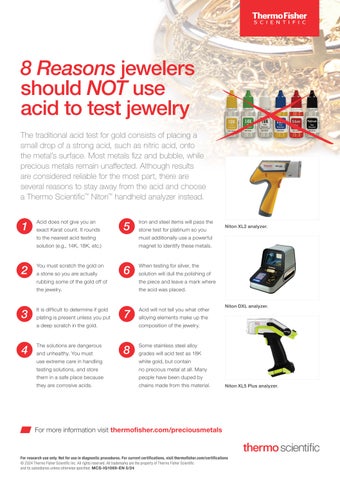
8 Reasons jewelers should NOT use acid to test jewelry
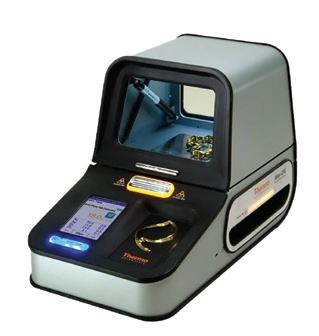
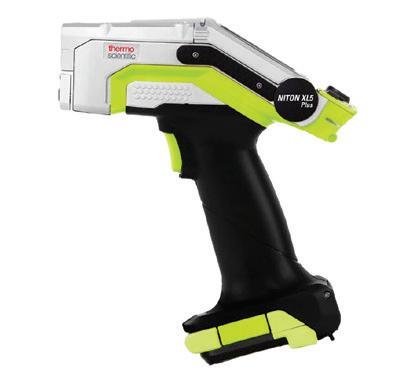
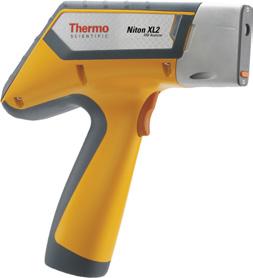
The traditional acid test for gold consists of placing a small drop of a strong acid, such as nitric acid, onto the metal’s surface. Most metals fizz and bubble, while precious metals remain unaffected. Although results are considered reliable for the most part, there are several reasons to stay away from the acid and choose a Thermo Scientific™ Niton™ handheld analyzer instead.
1 3 2 4
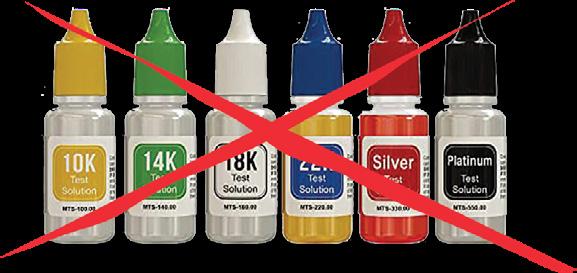
Acid does not give you an exact Karat count. It rounds to the nearest acid testing solution (e.g., 14K, 18K, etc.)
You must scratch the gold on a stone so you are actually rubbing some of the gold off of the jewelry.
It is difficult to determine if gold plating is present unless you put a deep scratch in the gold.
The solutions are dangerous and unhealthy. You must use extreme care in handling testing solutions, and store them in a safe place because they are corrosive acids.
5 7 6 8
Iron and steel items will pass the stone test for platinum so you must additionally use a powerful magnet to identify these metals.
When testing for silver, the solution will dull the polishing of the piece and leave a mark where the acid was placed.
Acid will not tell you what other alloying elements make up the composition of the jewelry.
Some stainless steel alloy grades will acid test as 18K white gold, but contain no precious metal at all. Many people have been duped by chains made from this material.