REV. FR. LOUIE R. CORONEL, O.P., E.H.L. EDITOR-IN-CHIEF MS. MICHAELLA O. LAGNITON, M.A. EDITOR MS. KATHERINE PATRICE B. SIBUG, M.Eng. ASSOC. PROF. EMMANUEL M. BATULAN, Ph.D. MR. PHILIPPE JOSE S. HERNANDEZ, M.Eng. ASSOCIATE EDITORS MS. CHRISTIE ELISE C. CRUZ SENIOR STAFF WRITER MS. MONICA LOUISE G. NACIONALES JUNIOR STAFF WRITER MR. JOHN RAY SEBASTIAN M. BARRAQUIO LAYOUT ARTIST DMD PHOTOGRAPHY MR. KENNETT ROGER T. GARCIA MR. JOHN RAY SEBASTIAN M. BARRAQUIO PHOTOGRAPHERS
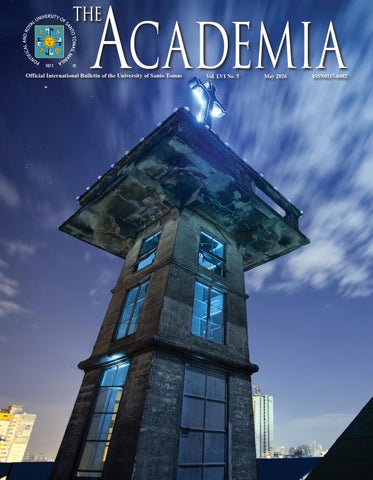
About the Cover Each year, graduating students turn their gaze to the luminous blue cross atop the Main Building during the Baccalaureate Mass. This symbol serves as a poignant reminder of their mission as graduates of a Catholic university. Once the geographic center of Manila, the cross now stands as a beacon, embodying the values of competence, commitment, and compassion—as well as the virtues of faith, hope, and love—instilled in every Thomasian. Photo by Thomasian Alumnus Paul Quiambao.
COORDINATOR CORRESPONDENTS Accountancy Mr. Fermin Antonio D. Yabut, Ph.D. Admissions Office Mr. Daryl Bryan D. Arceta Alumni Relations Ms. Danielle Joyce E. Factora Architecture Ar. Jose Marie Tan Archives Ms. Joyce Ann SG. De Lara Arts and Letters Asst. Prof. Louie Benedict R. Ignacio, Ph.D. Center for Campus Ministry Mr. Benjohn B. Espares Center for Conservation of Cultural Property and Environment in the Tropics Ms. Beverly M. Bautista, MAEd Center for Continuing Professional Education and Development Mr. Aaeron C. Borlongan Center for Creative Writing and Literary Studies Prof. Augusto Antonio A. Aguila, Ph.D. Center for Innovative Teaching and Educational Delivery Assoc. Prof. Kim Gerald G. Medallon, Ph.D. Commerce and Business Administration Assoc. Prof. Marie Antoinette L. Rosete, Ph.D. Community Development Ms. Veronica Moreno Counseling and Career Center Ms. Via Katrina G. Portera Ecclesiastical Faculties Mr. Blaise D. Ringor, Ph.D. Education Mr. Mark Anthony S. Angeles Education High School Assoc. Prof. Ma. Juana P. Lacuata, EdD Educational Technology Center Mr. Aaron Tan Engineering Engr. Rhovee Vistan Fine Arts and Design Mr. Raphael Emmanuelle V. Kalaw
2 The Academia | May 2026
Graduate School Prof. Camilla J. Vizconde, Ph.D. Graduate School of Law Ms. Leidy May G. Alnajes Grants, Endowments, and Partnerships in Higher Education Mr. Levine Andro H. Lao Information and Communications Technology Assoc. Prof. Maricel A. Balais, DT Information and Computing Sciences Assoc. Prof. Donata D. Acula, Ph.D. Institute of Physical Education and Athletics Mr. Steve Michael M. Moore, Jr. Institute of Religion Mr. Ivan Efreaim A. Gozum, M.A. International Relations and Programs Prof. Karen S. Santiago, Ph.D. Junior High School Mr. Euric Llamado Library Ms. Rosemary B. Balbin Museum Ms. Maita Zita Oebanda Nursing Asst. Prof. Ritzmond F. Loa, Ph.D. Office of the Assistant to the Rector for UST Manila Annex Engr. Seigfred V. Prado, Ph.D. Publishing House Ms. Lorraine Villarina Pharmacy Mr. Clive Ivan S. Mercado QS/THE Ranking Engr. Nestor R. Ong / Mr. Rodablas P. Nicolas Rehabilitation Sciences Ms. Mary Ann Gisselle O. Esguerra and Assoc. Prof. Kim Gerald G. Medallon Research Center for Health Research and Movement Science Mr. Lyle Patrick D. Tangcuangco Research Center for Natural and Applied Sciences Assoc. Prof. Alan Rodelle M. Salcedo, Ph.D. Research Center for Social Sciences and Education Dr. Jeremaiah Opiniano Research Center for Theology, Religious Studies, and Ethics Asst. Prof. Leo-Martin Angelo R. Ocampo Science Prof. Rey Donne S. Papa, Ph.D. Tourism and Hospitality Management Asst. Prof. Jame Monren Mercado
Inside
12
4
14
4
11,523 graduates begin their journey beyond UST
6
Bautista of UST FMS highlights community healthcare in 9th professorial chair lecture
8
Thomasian judge receives inaugural Justice Ronald B. Moreno, DCL Professorial Chair in Law
12
Robinsons Retail Holdings Inc. President, CEO highlights curiosity, resilience, gratitude in 2026 Student Awards Day
14
UST successfully closes UAAP Season 88, secures 9th consecutive General Championship
18
Ambassador Fontanel of France highlights climate resilience, student mobility at UST World Lenses
study finds Holy Spirit plays key role 18 21 New in mental health and resilience
23
23
UST research team undergoes VR training at SCHU in Korea for pediatric rehabilitation project
28
ELS academic staff, students present studies at LSPIC 2026
30
University Visitors
The Academia | May 2026
3
News
11,523 graduates begin their journey beyond UST
T
he University of Santo Tomas (UST) marked both an ending and a beginning on May 28, 2026, as 11,523 graduating students gathered for the Baccalaureate Mass ahead of the Graduation Ceremonies throughout the month of June. The celebration signified the culmination of their Thomasian journey and the start of a new chapter as they pursue their chosen professions. The morning Eucharistic celebration was presided over by Very Rev. Fr. Richard G. Ang, O.P., Ph.D., who emphasized the enduring importance of the Christian virtues of faith, hope, and love, alongside the Thomasian values of competence, commitment, and compassion. Expressing confidence in the graduating class, the Rector encouraged them to remain steadfast as they face the challenges of life beyond the University. "Standing up for the Gospel values will
The Baccalaureate Masses were held in morning and afternoon sessions by UST Rector Very Rev. Fr. Richard G. Ang, O.P., Ph.D., and Vice-Rector Rev. Fr. Isaias D. Tiongco, O.P., JCD
be one of the most profound tests of your character, serving as a crucible for your personal growth and a catalyst for social reformation. When you choose to defend what is right rather than what is convenient, you often find yourself at odds with the world. This journey is rarely easy, but it is deeply transformative. When you stand your ground, those who oppose you may distance themselves from you." Reflecting on the day's Gospel, Fr. Ang explained that Jesus' farewell discourse prepared His disciples for the trials they would encounter. He likened this to the graduating students' own farewell to the University after years of growth, challenges, and achievements, reminding them that graduation is not merely an end but a redirection toward a life of purpose, fulfillment, and service. Concluding his homily, Fr. Ang urged the graduates to become living witnesses
of the Gospel. "You receive Christ in the Eucharist specifically to carry Him out into the world. You are called to be living tabernacles for the values and virtues that I have spoken of because your life may be the only Gospel your neighbor ever encounters. ... Go forth not just as a people who believe in the Gospel but as a people who have become the Gospel for everyone. So, Batch 2026, kayo ang mabuting balita (you are the Good News)." The afternoon Baccalaureate Mass was presided over by Vice-Rector Rev. Fr. Isaias Antonio D. Tiongco, O.P., JCD, who underscored the meaning of authentic success amid emerging trends and challenges to moral values. He emphasized the indispensable role of Catholic education in forming not only competent professionals but also individuals of integrity. "A university does not exist only to produce competent professionals. A Catholic university, especially, must form 11,523 UST GRADUATES TO PAGE 5
4
4 The Academia | May 2026
News
Students raise their Mission Crosses as they recite the Thomasian Pledge of Loyalty
11,523 UST GRADUATES FROM PAGE 4
The Ceremony of Light, shared among fellow graduating students, lit up the open spaces on the night of the Baccalaureate Mass.
people who can stand for truth even when it becomes uncomfortable. The real test of education is not simply whether a person earns well or succeeds publicly. The deeper question is: What kind of person have I become?" Fr. Tiongco reminded the graduating class that their education carries with it a lifelong mission. "As you leave this University, carry your education not merely as a personal achievement but as a mission. Use your knowledge to build, not destroy; use your influence to lift others; use your success to serve, not simply to accumulate. Wherever you go, bring with you the values you have received and lived by." During the Post-Mass Program, the graduates received the Thomasian Mission Cross, a symbolic reminder of the ideals and values nurtured throughout their years at the University. The presentation was followed by the blessing of the crosses and the collective recitation of the Thomasian
Pledge of Loyalty. One of the evening's most anticipated traditions was the Ceremony of Light (Lumina Pandit), symbolizing the University's mission to illuminate the world through education and evangelization. In a solemn display of unity and shared purpose, the flame from the presider's torch was passed to the Deans and Regents, who in turn shared the light with their respective graduates. The celebration concluded with the traditional recessional through the historic Arch of the Centuries. Led by the University's academic officials, the graduates symbolically departed through the same gateway where they had entered as freshmen years before. Their passage through the Arch marked the completion of their Thomasian formation and the beginning of their lifelong mission beyond the walls of the University.
[Photos courtesy of Fotomasino - The Thomasian Photographers Guild]
The awaited fireworks display at the end of the post-mass celebration
TheThe Academia | March Academia | May2026 2026
5
News
Bautista of UST FMS highlights community healthcare in 9th professorial chair lecture
(From left:) Dean Maglinao, UST Secretary-General and REFI Executive Director Rev. Fr. Louie R. Coronel, O.P., E.H.L., Metrobank Foundation, Inc. Grants and Partnerships Head Ms. Marivic Mariano, Mr. Dy, Dr. Bautista, Fr. Ang, Fr. Abogado, UST FMS Assistant Dean Assoc. Prof. Maria Victoria D. Garcia, M.D., and FMS Secretary Assoc. Prof. Citadel C. de Castro, M.D. Dr. Bautista (third from left) holds her plaque of the Doña Victoria Ty Tan Professorial Chair in Medical Education. Joining her are (from left) Vice-Rector for Research and Innovation Rev. Fr. Jannel N. Abogado, O.P., D.Th.Pat.Sc., Metrobank Foundation, Inc. President Mr. Philip Francisco U. Dy, and UST Rector Very Rev. Fr. Richard G. Ang, O.P., Ph.D.
Dr. Bautista during her professorial lecture
6 The Academia | May 2026
P
rof. Ma. Teresa Tricia G. Bautista, M.D., former Chair of the Department of Preventive and Community Medicine and SIMBAHAYAN Community Development Coordinator of the University of Santo Tomas (UST) Faculty of Medicine and Surgery (FMS) received the Doña Victoria Ty Tan Professorial Chair in Medical Education on May 28, 2026, for her unwavering commitment to promoting continuous community healthcare and development in FMS. The professorial medal was awarded by Metrobank Foundation President Mr. Philip Francisco U. Dy, UST Rector Very Rev. Fr. Richard G. Ang, O.P., Ph.D., and Vice-Rector for Research and Innovation Rev. Fr. Jannel N. Abogado, O.P., D.Th.Pat.Sc. Dr. Bautista rooted her professorial lecture in the shared realities and struggles of the indigent population, bearing the title “Bawal Pumikit ‘Pag Namulat Ka Na.” Her lecture ultimately
highlighted the vital role of the community in healthcare, narrowing the topic to three P’s: Pulse, People, and Purpose. With the community’s pulse long indicating poor health and overall well-being, medical students and professionals are seen as bridges to close these gaps, while being aware of the truths the patients go through. “Hindi natin kayang gamutin ang sakit ng tao—at lalo na ng komunidad— gamit lang ang reseta,” (We cannot treat a person’s illness—much more a community’s—with just a prescription.) Dr. Bautista emphasized the importance of practicing medicine while accounting for patients’ humanity and living conditions. Dr. Bautista expressed that projects such as health worker training, nutrition programs embedded with lessons on mental values, and livelihood projects that target health help build communities’ self-reliance. 9TH PROFESSORIAL CHAIR LECTURE TO PAGE 7
News 9TH PROFESSORIAL CHAIR LECTURE FROM PAGE 6
Continuing the lecture, Dr. Bautista stressed the value of truly understanding the demographic they assisted, “The medication is not intervention, it is connection,” she shared, pointing out that community development projects in the field of medicine should address more than just instant and perceived “urgent” matters, making a point to see the people not simply as recipients of assistance, but as partners in making the community better. “Minsan, ang kailangan ng komunidad ay hindi agarang solusyon. Kundi, may kasama sa gitna ng kanilang pinagdaraanan,” (Sometimes, the community does not need immediate solutions. Rather, someone to accompany them with what they’re going through.) Dr. Bautista expressed. Conferred by UST, through the Research and Endowment Foundation, Inc. (REFI), in partnership with the Metrobank Foundation, the professorial chair in medical education values the social responsibility that aligns with teaching the next generation of healthcare professionals, ensuring that FMS remains a “holistic medical school” with the development of socially-responsive
servant leaders among professional physicians. FMS Dean Prof. Ma. Lourdes D. Maglinao, M.D. shared that “medicine is ultimately about people and communities,” reflecting the true heart of the healthcare profession: extending medical assistance beyond hospital walls. Furthermore, in his remarks, Dy underscored that, “Medicine is not merely a profession of science and skill but a vocation of service – a commitment to uphold human dignity wherever suffering, inequality, and vulnerability exists…” The reactors for the lecture, namely UST SIMBAHAYAN Director Asst. Prof. Froilan A. Alipao, M.C.D., and National Shrine of Our Lady of Loreto Parish Senior Minister Representative Ms. Flordeliza Acena further strengthened Bautista’s contributions to the community through their testimonies of partnership and outreach, noting the continuity of these projects and how these have helped improve the wellbeing of the partner communities. Through these initiatives and recognitions, the University continues to solidify its commitment to developing professionals with compassion, social responsibility, and integrity.
Ms. Acena expresses her appreciation for the community partnership with UST through FMS
Asst. Prof. Alipao acknowledges Dr. Bautista’s contributions to UST SIMBAHAYAN and partner communities in his lecture reaction
Dr. Bautista (back, seventh from left), together with UST officials, is joined by representatives of the faculty’s partner communities
The Academia | May 2026
7
News
Cabbat (sixth from left) is joined by UST Vice-Rector Fr. Isaias D. Tiongco, O.P. (fifth from left), GS Law administrators, officials, and her guests
Thomasian judge receives inaugural Justice Ronald B. Moreno, DCL Professorial Chair in Law
T
Judge Wee-Cabbat (center) receives her professorial chair medal from Vice-Rector Rev. Fr. Isaias D. Tiongco, O.P., JCD (right) and Vice-Rector for Academic Affairs Prof. Cheryl R. Peralta, Dr.P.H. (left)
Justice Moreno
he University of Santo Tomas (UST), through its Graduate School of Law (GS Law) and the UST Research and Endowment Foundation, Inc. (REFI), conferred the first Hon. Justice Ronald B. Moreno, D.C.L. Professorial Chair in Law upon Hon. Judge Edith Cynthia A. WeeCabbat, D.C.L., on May 5, 2026, at the Dr. Robert C. Sy Grand Ballroom in the Bl. Buenaventura G. Paredes, O.P. building. The inaugural awards ceremony featured a professorial lecture by Judge Wee-Cabbat on cybersecurity, digital privacy, and access seen as a privilege. Her lecture titled “The Principle of Least Privilege in the Era of Digital Dependency” showcased the necessity of being more vigilant in the online world as Judge Cabbat emphasized “layers of defense” such as reviewing app permissions, using alphanumeric passwords and avoiding the use of the same password for multiple accounts, utilizing biometric authentication partnered with multifactor authentication, and applying the “Zero Trust Privilege Approach,” ultimately protecting oneself online through giving out information only when and where necessary. Judge Wee-Cabbat’s talk was a timely wake-up call to stay vigilant in an era when the internet has become an integral part of people’s lives. Judge Wee-Cabbat was a 2026 recipient of the Philippine Women Judges Association academic excellence award in light of her valuable contributions in the judiciary field and legal education. Previously having worked under the Regional Trial Courts of Makati and Baler, she now serves as presiding judge of the
Municipal Circuit Trial Court of Baler and San Luis, Aurora Province. The Professorial Chair Award, as shared by its namesake Justice Moreno, is proof of one’s unwavering commitment to excellence in legal scholarship and a drive to advance academics in the judiciary. The award goes beyond recognition as it becomes “a space where ideas can be explored with care, where difficult and sometimes uncomfortable questions can be asked and where scholarship remains connected to realities we face as a society.” GS Law Dean Atty. Jacqueline O. Lopez-Kaw, D.C.L. concurred, stating that both Judges present in the conferment ceremony exemplify the values that GS Law aims to uphold and advance. “Our mission has always been to advance legal education beyond the confines of the classroom and legal practice.” She added that research in GS Law will continue as a valuable tool to create critical thinkers that push for reform and address real-world challenges. The Professorial Chair in Law was formally established in April of the same year through the ceremonial signing of a Memorandum of Agreement.
Dean Lopez-Kaw during her remarks
8 The Academia | May 2026
News
(From left:) COL Vice President and Head of Strategic Execution Mr. Mark Jasson C. Ilao, UST-SHS Principal Assoc. Prof. Mary Erika N. Bolaños, L.P.T., Ph.D., COL Head of Partnerships Mr. Jed L. Velarde
SHS forges partnership with COL Financial Group for financial literacy education
R
einforcing its commitment to holistic and future-ready education, the University of Santo Tomas Senior High School (UST-SHS) has formally entered into a partnership with COL Financial Group, Inc. (COL) through the signing of a Memorandum of Understanding (MOU), establishing a collaborative framework to promote financial literacy and capital market awareness among students and academic staff. The MOU, signed on April 28, 2026, outlines a non-exclusive collaboration between UST-SHS and COL to deliver educational initiatives centered on investments and the capital markets. Among the key initiatives envisioned under the partnership are faculty immersion programs, curriculum enrichment collaborations,
career guidance sessions, financial literacy campaigns, and participation in investment simulations and case competitions. Selected students and academic staff may likewise be granted priority access to COL-led webinars, forums, and conferences, further broadening their exposure to the financial industry. The collaboration reflects the mutual recognition by both institutions of the critical importance of financial education in preparing young Filipinos for the demands of a rapidly evolving economic landscape. By integrating capital market literacy into the academic experience of UST-SHS, the partnership aims to equip students not only with theoretical knowledge of financial concepts but with the practical awareness necessary for sound economic decision-making.
Representatives from COL and UST-SHS sign the MOU
Velarde shares with the audience the potential programs and collaborations between COL and UST-SHS
The Academia | May 2026
9
News De Guzman of CICS IT dep’t elected CSTA int’l representative, local board director
A
sst. Prof. Edwin S. de Guzman, D.I.T., academic staff of the University of Santo Tomas (UST) College of Information and Computing Sciences (CICS) Department of Information Technology, has been elected as the International Teacher Representative and a member of the Board of Directors of the Computer Science Teachers Association (CSTA), where he also serves as the President of the organization’s Philippines chapter. CSTA is a professional organization aimed at supporting and promoting teaching computer science and information technology. Asst. Prof. de Guzman
CICS & FMS students emerge as Philippine champions for the AI-Ready ASEAN Youth Challenge 2026
A
UST Team CATS (from left:) Josh Kenn Viray, John Harold Peralta, and Wilmargherix M. Castaneda
student team from the University of Santo Tomas (UST) emerged as the Philippines’ national champion in the prestigious AI-Ready ASEAN Youth Challenge 2026, earning the distinction of representing the country at the Grand Finals in Singapore, held from May 18 to 24, 2026. The AI-Ready ASEAN Youth Challenge 2026 is a premier regional artificial intelligence competition involving participants from the eleven ASEAN member states. Organized by AngelHack Pte. Ltd. in direct partnership with AI Singapore (AISG)—the national AI program of the Singapore government and one of the world’s most recognized public AI institutions—the challenge gathers the region’s top student innovators to develop AIpowered solutions addressing pressing social problems across Southeast Asia. Submissions were evaluated based on technical depth, feasibility, scalability, and regional impact. Representing the university under the team name CATS, student representatives Wilmargherix M. Castaneda (CICS-4CSC), Josh Kenn Viray (CICS-4CSC), and John
AI-READY ASEAN YOUTH CHALLENGE 2026 TO PAGE 11
10 The Academia | May 2026
News AI-READY ASEAN YOUTH CHALLENGE 2026 FROM PAGE 10
Harold Peralta (FMS-2MEDC) presented NutriGuide. NutriGuide is an AI-powered pediatric nutrition platform designed to bridge the gap between clinical recommendations and actual feeding practices across Southeast Asia. With more than 33.8 million children under the age of five affected by stunting in the region, NutriGuide directly addresses one of ASEAN’s most urgent healthcare challenges. The platform supports both caregivers and pediatricians through four integrated capabilities: Bridging food literacy: An AI-powered tool that converts clinical prescriptions into culturally appropriate and budgetadjusted meal plans using local ASEAN food databases; Simulating growth: A digital twin growth simulator that allows families and doctors to visualize projected child outcomes before implementing nutrition plans; Screening pre-consultations: An AIassisted screening system featuring real-time WHO z-score computation and urgent referral flagging; and Securing clinical safety: A dualarchitecture safety model where all clinical decision pathways remain deterministic and rule-based, while the AI operates strictly under a pediatrician-in-the-loop framework. During the Grand Finals in Singapore, the team operated the Philippine country booth, conducted live NutriGuide demonstrations, and engaged directly with international judges and stakeholders from across the ASEAN innovation ecosystem. Beyond the title, the competition opened opportunities for collaborative research partnerships with ASEAN healthtech institutions, provided visibility within AISG scholarship and funding networks, and brought broader recognition to Filipino student innovation on the global stage. For UST, the oldest university in Asia, this milestone highlights its growing excellence in artificial intelligence, interdisciplinary innovation, and social impact research. The achievement firmly places UST among a select group of Philippine academic institutions recognized at the ASEAN level for AI innovation and health technology.
The Academia | May 2026
11
News
Fr. Ang emphasizes the importance of resilience in building one’s character
Stanley Co (center) receives his certificate and token of appreciation from UST Rector, Very Rev. Fr. Richard G. Ang, O.P. (left) and UST Secretary-General Rev. Fr. Louie R. Coronel, O.P., E.H.L. (right)
Robinsons Retail Holdings Inc. President, CEO highlights curiosity, resilience, gratitude in 2026 Student Awards Day
A Mr. Co shares words of encouragement and congratulations to student awardees
s the academic year concludes, the University of Santo Tomas (UST) once again celebrated its learners’ accomplishments through the 2026 Student Awards Day, with prominent alumnus and Robinsons Retail Holdings, Inc. (Robinsons) President and Chief Executive Officer (CEO) Mr. Stanley Co as the keynote speaker for this year’s day of recognitions. Co, an alumnus of the College of Commerce and Business Administration (CCBA), extended his congratulations to the awardees, while recollecting his formative years as a college student. The business giant recalled, “...I was a
student sitting where you are now, with just as many questions and not always a clear plan,” further sharing his endeavors during his student life, from being in a choir to volunteering in the World Youth Day in 1995; such experiences sprouted from his curiosity, which Co believed was a trait common among Thomasians. Despite the uncertainty of the future, Co emphasized the value of remaining curious — through “expanding the foundations” of one’s comfort zone or leading someone else’s beginnings — and trying, even if a person fails. The “uncomfortable but useful” experiences stand as valuable sources of learning, 2026 STUDENT AWARDS DAY TO PAGE 13
12 The Academia | May 2026
News
Recipients of the Benavides Outstanding Achievement Award gather for one group photo. The awards were conferred by Office of Student Affairs Director Asst. Prof. Jaezamie V. Ong (front, center) and Vice-Rector for Academic Affairs Prof. Cheryl R. Peralta, Dr.P.H. (front, ninth from right) 2026 STUDENT AWARDS DAY FROM PAGE 12
existing as scaffolds for each student’s growth. Co underscored at the end of his speech to “remember the people who helped you get here,” amplifying the significance of recognition among individuals who made the effort to achieve their goals with the help of their loved ones — those who allowed the students to learn and grow with grace despite the doubts. Reflecting these sentiments were the words of batch valedictorian Ms. Allyah Amboy, in which she expressed her gratitude to her mentors such as her teachers, academic peers, and loved ones. Amboy also acknowledged the extraordinary paths each student has taken to achieve their goals, reminding them that “history was never made by being regular.” UST Rector Very Rev. Fr. Richard G. Ang, O.P., Ph.D. supported these ideas during his opening remarks, sharing that “recognition… reminds a young person that you carry possibilities greater than your doubts.” The speakers reminded this year’s awardees that courage and curiosity outweigh the doubt in one’s potential to succeed. “Resilience is… the decision to continue despite difficulty,” Fr. Ang expressed, underscoring integrity, endurance, and adaptability as the core of true success. For the current academic year, 17 students received the Rector’s Academic Award, and 35 students received the Quezon Leadership Award, given for their academic distinction and vast leadership expertise, respectively. The University likewise commended
11 individual students and 13 student groups for their active participation in community development and service through the Pope Leo XIII Community Development Award, Amboy (center) is joined by (from left:) University Registrar wherein the Central Student Mr. Cesar M. Velasco, Jr., M.B.A., Fr. Ang, her family, CCBA Council also achieved the Regent Rev. Fr. Senen R. Ecleo, O.P., and CCBA Dean Prof. Tradition of Excellence Al Faithrich C. Navarrete, Ph.D. Award for sustaining its efforts in community development for five consecutive years. 18 students and 32 groups who represented the University in local, national, and international competitions in the field of academics and science were also recognized through the Benavides Outstanding Achievement Award. Meanwhile, 31 individuals and 12 groups received the Pope John Paul II Outstanding Achievement Awards for obtaining recognitions in local and international competitions for sports and arts. Furthermore, in appreciation of their efficient teamwork toward conducting student-led activities in the University, 10 groups received the St. Dominic De Guzman Award. Lastly, for representing UST through their successful presentations or publication of research papers, 48 individuals and 24 groups were conferred the St. Albertus Magnus Award. The 2026 Student Awards Day was held on May 21, 2026, where students Students from the Conservatory of Music from undergraduate and graduate studies perform songs from their recent production were duly recognized for their outstanding of the musical “South Pacific” performances and achievements throughout the academic year.
The Academia | May 2026
13
News
The UST Salinggawi Dance Troupe perform.
UST successfully closes UAAP Season 88, secures 9th consecutive General Championship
The UST group, led by UST Rector and UAAP S88 Chairman Very Rev. Fr. Richard G. Ang, O.P., Ph.D. (fifth from left) and IPEA Director/Regent and UAAP S88 President Rev. Fr. Rodel Cansancio, O.P., (fourth from left), receives the trophies for the General Championship for UAAP Season 88 collegiate and junior divisions. With them are (from left:) Incoming UAAP S89 Chairman and FEU President Mr. Juan Miguel Montinola, Physical Education Moderator Asst. Prof. Pauline Gabayan, Assistant Director Asst. Prof. Gilda Ma. Paz Kamus, Athletics Moderator Asst. Prof. Rodrigo Sambuang Jr., Institute Secretary Prof. Jerome Porto, Ph.D., Fitness and Sports Management Chair Assoc. Prof. Raymond Anselmo, Ph.D., and incoming UAAP S89 President Mr. Mark Molina. The FEU Dance Company
14 The Academia | May 2026
A
s the UAAP Season 88 (S88) came to a close, the host University of Santo Tomas (UST) raised its glass to all athlete-awardees in the S88 Closing Ceremonies on May 15, 2026, at the Quadricentennial Pavilion, with the same level of grandeur the Opening Ceremonies exhibited last September 2025. Dressed in their finest red carpetready outfits styled by Thomasian fashion designers, UAAP athletes received recognition for their major achievements over the past season.
UST Rector and UAAP S88 Chairman Very Rev. Fr. Richard G. Ang, O.P., Ph.D. (left) turns over the UAAP flag and the hosting duties to the incoming UAAP S89 Chairman and FEU President Mr. Juan Miguel Montinola
The University of Santo Tomas earned its 9th straight and 49th overall collegiate General Championship, and their eighth consecutive juniors’ title. In the seniors’ division, UST amassed 356 points after collecting 13 gold medals, six silver medals and two bronze medals, surpassing Season 87’s 346-point total. Rhiane Meshell Perez of the Junior Tigresses was recognized as one of the Athletes of the Year for high school team sports, while Kent Pastrana (Growling UAAP CLOSING TO PAGE 15
News
Rhiane Meshell Perez (center) wins the Athlete of the Year award for the high school division, presented by Fr. Ang and Fr. Cansancio
Zkeana Mekyla Valdez and Kent Jane Pastrana receive the AthleteScholar award for the collegiate division, presented by Fr. Cansancio and Asst. Prof. Kamus
UAAP CLOSING FROM PAGE 14
Tigresses) and Zkeana Mekyla Valdez (Lady Judokas) earned Athlete-Scholar of the Year honors for excelling in both academics and athletics. The Oscars-inspired program also featured performances from Thomasian acts, including musical theater artists and Conservatory of Music alumni Katrine Sunga and David Ezra, as well as the UST Singers, accompanied by the UST Symphony Orchestra under the baton of Conservatory of Music academic staff Mr. Michael Jacinto. The UST Sinag Ballroom Dance Company, the UST Salinggawi Dance Troupe, and the FEU Dance Company also had special dance performances. UST Rector Very Rev. Fr. Richard G. Ang, O.P., Ph.D., in his message, commended the UAAP community, saying, “To our student athletes, the soul of this league, you moved with strength and you inspired with hope. To our coaches and officials, the guardians of the games, you led with integrity and purpose. To our fans, the heartbeat of every gathering, you brought life to every arena, to every colosseum and every stream, turning moments into memories we will never forget, because here in the UAAP, competition does not divide. It binds us as a community, and tonight, we can say we lived that truth. We stood united in the service of sports and in the service of the Filipino nation.” During the closing ceremony, Fr. Ang officially turned over the hosting duties to FEU, through the symbolic lowering and transfer of the UAAP flag, saying, “As we close this chapter, we do not do so with an ending, but with the passing of a torch. We
now entrust the next season, UAAP Season 89, to the Far Eastern University, under the distinguished and capable leadership of Juan Miguel Montinola. We stand with you, ready to support you as you carry forward the new UAAP legacy into its next great story. So let us rise louder, prouder, and stronger, ready to cheer and to carry on the UAAP spirit forward.” UAAP Season 89 Chairman and FEU President Mr. Juan Miguel Montinola also unveiled the theme for the next UAAP season: “For Everyone, UAAP”, which will start on September 12, 2026.
Musical theater artist and Conservatory of Music alumna Katrine Sunga sings a stunning rendition of We Are The Champions accompanied by the UST Symphony Orchestra and the UST Singers
IPEA Director/Regent and UAAP S88 President Rev. Fr. Rodel Cansancio, O.P. leads the toast commending the athletes for their performance during the season
The Academia | May 2026
15
News
The inaugural External Advisory Committee (ExACom) of the UST Faculty of Engineering, composed of fourteen companies and organizations, is formed to provide industry support for the improvement of engineering education.
UST Faculty of Engineering launches IM-PaCT 2026 Summit and constitutes inaugural External Advisory Committee
O
UST Vice-Rector for Finance and Faculty of Engineering Regent Rev. Fr. Roberto Luanzon, O.P. and Vice-Rector for Academic Affairs Prof. Cheryl R. Peralta, DrPh present the signed agreement for the inaugural external advisory committee.
UST Faculty of Engineering Dean Prof. Angelo R. Dela Cruz, Ph.D. delivers the opening remarks.
16 The Academia | May 2026
n May 19, 2026, the UST Faculty of Engineering launched the inaugural IM-PaCT 2026: UST Engineering Partners Summit, bringing together leaders from academia, industry, government, and the alumni sector in a shared commitment to advancing engineering education in the Philippines. Held at the University of Santo Tomas as part of the University’s 415th Foundation Anniversary celebrations, the summit takes its name from its central mission: Institutional and Multi-Sectoral Partnership for Collaboration and Transformation. It also coincides with the Faculty of Engineering's 119th founding anniversary, under the theme "ThoM-PaCT: Uniting Thomasians and Multi-Sectoral Partners as One 1NS19NIA of Excellence Towards 120." In his opening remarks, Engineering Dean Prof. Angelo dela Cruz emphasized the urgency of strengthening collaboration between higher education institutions and industry. He noted that digitalization, artificial intelligence, sustainability imperatives, and rapidly evolving workforce demands continue to reshape the engineering profession. "The engineer of the future can no longer be formed by classroom instruction alone," he said, stressing that meaningful reform demands sustained dialogue between the university and the world beyond its walls.
The highlight of IM-PaCT 2026 Summit is the formation of the inaugural External Advisory Committee (ExACom) of the UST Faculty of Engineering composed of fourteen companies and organizations that aims to intensify industry support for the improvement of engineering education. ExACom is a consultative body composed of distinguished representatives from industry, government, professional organizations, and the alumni sector. Its mandate is broad and deliberate: to serve as a strategic partner of the Faculty in strengthening the relevance, quality, and responsiveness of engineering programs by providing insights into emerging industry trends, technological developments, and workforce competencies. The formal signing of the Memorandum of Understanding (MoU) marked a significant milestone, with the UST represented by University officials who affixed their signatures alongside those of each partner organization. Signing on behalf of UST were Prof. Cheryl R. Peralta, DrPh, PTRP, ViceRector for Academic Affairs; Rev. Fr. Roberto L. Luanzon Jr., O.P., SThD, DL, Vice-Rector for Finance and Regent of the Faculty of Engineering; and Prof. Angelo R. dela Cruz, Dean of the Faculty of Engineering. They were joined by chief executive officers, presidents, vice presidents, and IM-PACT 2026 & EXACOM LAUNCHED AT UST TO PAGE 17
News IM-PACT 2026 & EXACOM LAUNCHED AT UST FROM PAGE 16
senior executives representing the partner organizations. They affirmed that ExACom is not a peripheral initiative but a priority embedded at the heart of UST's academic and administrative leadership. The composition of the inaugural ExACom reflects the advisory committee's vision. Members span energy and power, semiconductors, telecommunications, construction and infrastructure, environmental services, and the alumni sector, a cross-sectoral lineup that mirrors the diversity of engineering disciplines the Faculty offers. The inclusion of the UST Engineering Alumni Association, Inc. is particularly significant, reinforcing the idea that alumni are not merely beneficiaries of the Faculty's legacy but active stakeholders of its future. The opening ceremonies also featured a formal recognition of the industry partners who demonstrated exemplary support for Thomasian engineering interns during the 2025–2026 immersion cycle. Out of more than 200 Host Training Establishments, twenty-one organizations earned consistently high marks across a multi-criteria evaluation covering student engagement data, learning outcome alignment, and direct intern satisfaction ratings. Eight award categories were conferred, including the Internship Champion Award, Career Impact Award, Collaboration Excellence Award, Engineering Convergence Award, Growth Catalyst Award, Safety Champion Award, Student Excellence Partner Award, and the Legacy Partnership Award. Two stand out as the summit's most distinguished honors. The Student Excellence Partner Award recognizes the industry partner's dedication and exemplary commitment to ensuring an engaging, transformative, and highly valued engineering internship experience. It is given to the partners with the highest overall rating of student intern satisfaction. This year's awardees are Analog Devices (Gen. Trias) Inc., QB Mace Construction Corporation, and Officials and academic staff from the Faculty of Engineering during the Engineering Career Fair
Dean Angelo R. dela Cruz (leftmost) and Rev. Fr. Roberto L. Luanzon, Jr., O.P. (rightmost) award certificates and plaques of appreciation to partners from Eastern Telecommunications, Analog Devices Gen Trias Inc., and QB MACE Construction Corporation Eastern Telecommunications Philippines, Inc. The Legacy Partnership Award, the highest recognition conferred during the ceremony, is given to the industry partner that consistently accommodates engineering interns throughout successive immersion cycles, exemplifying mentorship excellence and strong industry-academe collaboration. This year's awardees are Makati Development Corporation, Salinas (IM) Corporation, and Globe Telecom, Inc. With the Faculty's 120th anniversary arriving in February 2027, the summit and everything that unfolded during its opening, the ExACom MoU signings, and the awarding of industry partners serve both as a celebration of its distinguished heritage and as a declaration of its future direction. As the pioneering engineering school in the Philippines, UST's Faculty of Engineering has shaped generations of builders and innovators. Through IM-PaCT, its leadership is signaling that the next
chapter will be written not in isolation, but in full partnership with the industries and communities it serves. "Together, as One 1NS19NIA of Excellence," Dean dela Cruz concluded, "let us ensure that the UST Faculty of Engineering does not merely celebrate 120 years of history, but prepares boldly for the next 120 years of innovation, service, and nation-building." The opening ceremony gave way to the ribbon-cutting of the IM-PaCT Career Fair, in collaboration with the UST Counseling and Career Center, welcoming the graduating students and fresh graduates seeking opportunities with the summit's industry partners. Day 2 of the IM-PaCT Summit, held on May 20, 2026, featured career talks, round-table discussions with students, and consultative sessions with industry partners. Among the key topics discussed were the revised Philippine Qualifications Framework and its implications for engineering education, the growing impact of microcredentials on workforce readiness and curriculum design, improvements to the current On-the-Job Training program structure, and the potential offering of professional enhancement courses developed and delivered in partnership with ExACom members. The discussions underscored a shared resolve: that the Faculty of Engineering and its partners are not merely aligned in principle, but prepared to act together in building a more responsive, future-ready engineering education for the next generation of Thomasian engineers.
The Academia | May 2026
17
Internationalization
Ambassador Fontanel with UST administrators and participants
(From left:) Embassy of France Higher Education and Scientific Cooperation Officer Ms. Claire Châles, Cooperation Attaché Ms. Delphine Derniaux, UST Office of Public Affairs Director Ms. Michaella Lagniton, Ambassador of France to the Philippines and Micronesia Her Excellency Marie Fontanel, UST Office of International Relations and Programs Associate Director Prof. Karen Santiago, Ph.D., UST OPA Assistant Director Ms. Katherine Patrice Sibug, and Campus France Philippines Officer Ms. Jamie Mendoza.
Ambassador Fontanel of France highlights climate resilience, student mobility at UST World Lenses
T
he Ambassador of France to the Philippines and Micronesia Her Excellency Marie Fontanel led the 6th installment of the UST World Lenses with her talk “Across Oceans: FrancePhilippines Cooperation” on May 12, 2026, at the Beato Angelico AVR of the University of Santo Tomas. Her talk focused on what unites France and the Philippines despite being separated by more than 10,000 kilometers, while also sharing experiences as an Ambassador
with the students. Ambassador Fontanel also shared insights on diplomatic priorities such as building stronger people-to-people ties, developing new areas of cooperation, and enhancing climate resilience especially as the two maritime nations approach 79 years of bilateral relations in July 2026. She also positively noted the increasing number of Filipino students taking education programs in France for a year or more, and vice versa, with more French students also choosing to take programs here.
Ambassador Fontanel explained the Embassy’s priorities toward strengthened bilateral relations, particularly in terms of defense and security, climate preparedness, as well as development in sustainable energy, food, and public transportation. She also highlighted the importance of cooperation in terms of climate resilience. Aside from France and the Philippines both being maritime nations susceptible to climate disasters and high heat indeces, she also reminded the participants that the United Nations’ 21st session of the Conference of the Parties (COP21) in 2015, where the Paris Climate Agreement was signed, started in Manila. “In February 2015, the French President, François Hollande at the time, made the first visit of the French President to the Philippine President, [Benigno] UST WORLD LENSES TO PAGE 19
18 The Academia | May 2026
Internationalization UST WORLD LENSES FROM PAGE 18
Aquino III at the time, and together they made the Manila Call to Action on Climate Change. It was a call of two heads of states to all heads of states all over the world to gather in Paris at the end of 2015 for COP21 and the success of the conference is the Paris Agreement.” Ambassador Fontanel brings with her over 20 years of experience in public administration. Her most recent posts prior to the diplomatic mission in the Philippines include serving as Health and Solidarity Advisor to the Office of the President of the French Republic Emmanuel Macron between 2017 and 2020, before being appointed ambassador and permanent representative of France to the Council of Europe in Strasbourg from 2020 to 2023. After the engaging open forum, where students asked the Ambassador many questions on cultural exchange, diversity, and the process of becoming a diplomat, the Higher Education and Scientific Cooperation Officer Ms. Claire Châles also shared more opportunities for international student mobility in France. For almost 10 years now, the University of Santo Tomas has sustained academic partnerships with HEIs in France, namely the Université Catholique de Lille and Université Catholique de Toulouse, while teachers from Alliance française de Manille provide French language lessons to students of the College of Tourism and Hospitality Management. The UST World Lenses Series, true to its name, is a space to see more clearly beyond borders and appreciate how dialogue, cooperation, and shared understanding help shape responsible global citizens. It is a joint initiative between the UST Office of International Relations and Programs and the Office of Public Affairs. As Ambassador Fontanel puts it, “Diplomacy is about finding ways to better understand the country we are posted in, and making our country better known in order to be stronger together. That is what we are trying to achieve, and so occasions to connect with you, to have these discussions with you, are really precious.”
Ambassador Fontanel (left) answers questions from the students during the open forum moderated by UST Office of Public Affairs Assistant Director Ms. Katherine Patrice Sibug
UST OIRP Director Dean Emeritus Prof. Lilian J. Sison, Ph.D. delivers the welcome remarks
Ambassador of France to the Philippines and Micronesia Her Excellency Marie Fontanel
Higher Education and Scientific Cooperation Officer Ms. Claire Châles discusses student mobility options in France
The Academia | May 2026
19
Internationalization UST GS, RCSSED welcome scholars from University of Toronto, Trent Durham
The delegates of UST GS led by Dean Vasco (fourth from left) with Cupchik (third from left) and Damasco (fifth from left)
T
Cupchik during his lecture
20 The Academia | May 2026
(From left:) Sr. Lontoc, Cupchik, Damasco, Topacio and Vizconde during the closing of the session
he University of Santo Tomas (UST) Graduate School (GS), in collaboration with the Research Center for Social Sciences and Education (RCSSED), welcomed visiting scholars from Canada, Prof. Gerald Cupchik, Ph.D. of the University of Toronto and Asst. Prof. Valerie Damasco, Ph.D. of Trent University, Durham, on May 15, 2026. One of the highlights of the visit was Cupchik’s lecture titled “From Cave Art to Chatbots: Emotion, Agency, and the Making of Meaning,” held at the Tanghalang Teresita Quirino of the Benavides Building. The hybrid lecture brought together people onsite and online and invited everyone to pause and reflect on how human beings have managed to create meaning across time. From early artistic expressions to the present-day era, when artificial intelligence and virtual reality seem to appear everywhere, the emphasis of the session has remained straightforward. Cupchik’s interdisciplinary work in psychology, the humanities, and the arts was complemented by Damasco, whose sociological scholarship addresses issues of migration, labor, inclusion,
and community living. They engaged in meaningful discussions on culture, human life, education, social change, and the value of research in addressing current challenges. Following the lecture, representatives from the three organizations met to discuss potential institutional collaborations. Those present were UST GS Dean Prof. Michael Anthony C. Vasco, Ph.D., Assistant Dean Prof. Camilla J. Vizconde, Ph.D., and RCSSED Acting Director Assoc. Prof. Katrina Ninfa M. Topacio, Ph.D.; Asst. Prof. Gina Lontoc, O.P., Ph.D., who facilitated the linkages with these Canadian institutions and UST GS, also joined the exchange. They discussed ways to work together in graduate education and interdisciplinary research, as well as visiting professorships and faculty and student exchange programs. There were some discussions regarding jointly authored publications and community-engaged research. The whole event confirmed UST's dedication to establishing international academic partnerships rooted in collaborative inquiry and social accountability.
Research New study finds Holy Spirit plays key role in mental health and resilience
New study finds Holy Spirit plays key role in mental health and resilience
A
new publication by Mr. Ivan Efreaim A. Gozum, M.A., and Prof. Allan A. Basas, S.Th.D. of the Institute of Religion (IR) and the Research Center for Theology, Religious Studies and Ethics (RCTRSE) explores the relationship between theology, resilience, and mental health through the lens of the thought of Saint Thomas Aquinas. Their article, “Thomistic Pneumatology and the Adversity Quotient: The Role of the Holy Spirit in Fostering Resilience and Mental Health,” was recently published in the journal Pastoral Psychology. Drawing from Thomistic theology, the authors present the Holy Spirit as Gift, Love, and Consoler who strengthens the human person amid suffering and adversity. By showing how Aquinas’s understanding of the Holy Spirit can contribute to contemporary discussions on mental health and psychological resilience, they argue that this theological framework offers a complementary perspective to modern psychological concepts such as the “adversity quotient”, which refers to a person’s capacity to endure and overcome difficulties.
According to the article, resilience is presented as a spiritual reality shaped by grace, rather than merely as a psychological mechanism or personal trait. Rather than reducing mental health to purely clinical or behavioral categories, the study argues that the human person possesses a spiritual dimension that must also be considered in the pursuit of healing and flourishing. The Holy Spirit, in Aquinas’ thought, does not replace human effort or psychological interventions but perfects human nature and strengthens the person toward authentic freedom and wholeness. Through a qualitative analysis of Aquinas’s Summa Theologiae and related writings, the authors explain how the indwelling of the Holy Spirit fosters interior healing, hope, fortitude, charity, and human integration. In this way, the study proposes a holistic approach to mental health that bridges spiritual theology and contemporary psychology and demonstrates how spiritual resources can support individuals facing anxiety, depression, trauma, and various forms of human suffering.
The Academia | May 2026
21
Research Picadizo presents her research
Ms. Maglalang with her poster exhibit
Science research presented in Tsukuba and Busan conferences
T
he month of May proved to be a productive month for microbiology and biology students of the University of Santo Tomas (UST) Graduate School (GS) as they showcased their research in two international conferences held in Tsukuba, Japan and Busan, Korea. Ms. Alaissa Mae A. Picadizo, an M.Sc. Microbiology student of UST GS, presented her study during the 70th Anniversary Meeting of the Mycological Society of Japan held at the University of Tsukuba in Japan last May 15 to 17, 2026. She presented her research study titled, An "OSMAC-Driven Metabolite Production by Endolichenic Fungi and Assessment of their Antibacterial Activities" during the student oral presentation session. Her presentation focused on the potential of endolichenic fungi as sources of bioactive metabolites with antibacterial properties. Meanwhile, Jochebed Hope H. Punzalan and Ma. Clariz Isabelle Maglalang, biology students of the UST GS, presented their research in the Korean Society for Biochemistry and Molecular Biology (KSBMB) held in Busan Exhibition and Convention Center in South Korea, last May 26 to 29, 2026. The conference brought together students, researchers, educators, and
22 The Academia | May 2026
professionals from institutions worldwide to share new findings and best practices in molecular biology and biochemistry. Activities included keynote speeches, panel discussions, oral presentations, poster presentations, and networking opportunities. Maglalang presented the study "Assessment of Ficus septica Burm F. Leaf Extracts in Reducing Tau Hyperphosphorylation in Alzheimer’s Disease Using SH-SY5Y Cells." Alzheimer’s disease is a progressive neurodegenerative disorder, one of the leading causes of death worldwide, and is quite costly to manage. Although there are currently available medications, most primarily target the disease's early pathological features. The study investigated the potential of Ficus septica, a native plant in the Philippines, to target tau hyperphosphorylation, a hallmark of the disease spanning the midto late stages. Using cultured neuronal cells and several molecular biomarkers, the researchers whether the leaf extract could reduce abnormal tau phosphorylation. Results showed that the hexane leaf extract reduced these disease-associated biomarkers, suggesting its potential to modulate the molecular processes involved in Alzheimer’s disease progression. While
Ms. Punzalan and her poster exhibit these findings are promising, further studies are needed to identify the active compounds and validate their effects in animal models and humans. Punzalan, on the other hand, presented the study "y-Oryzanol Rescues Motor and Social Deficits in Rotenone-Induced Zebrafish Neurotoxicity via Restoration of Superoxide Dismutase Activity." This study examines how y-oryzanol, a natural compound found in rice bran, aids in the recovery of adult zebrafish with nervous system damage caused by the toxic pesticide rotenone. Treatment with y-oryzanol resulted in noticeable improvements in the zebrafish's behavior and brain chemistry. Specifically, it increases levels of an antioxidant enzyme, which protects cells from damage. In essence, y-oryzanol helps zebrafish recover from rotenone-induced nervous system toxicity. According to the researchers, the insights gained from the conference can significantly elevate University of Santo Tomas’ international visibility in molecular biology and biochemistry. Feedback from poster presentations can enhance current research and support future publications. Additionally, the networking opportunities may foster valuable collaborations for research initiatives.
Research UST research team undergoes VR training at SCHU in Korea for pediatric rehabilitation project
The UST CRS delegates are welcomed and joined by representatives from SCHU Cheonan Hospital
The team from UST CRS is welcomed by Dr. Chomyoung Kim, Ph.D. (left), Dr. Yaena Ha, Ph.D. (second from left), and Dr. Yunyoung Nam, Ph.D. (rightmost)
A
research team from the University of Santo Tomas (UST) completed a virtual reality (VR) training and institutional visit at Soonchunhyang University (SCHU) in South Korea from May 25 to 28, 2026, as part of an international research collaboration focused on pediatric rehabilitation. The UST team was composed of Asst. Prof. Nikka Karla R. Santos, O.T.D., Prof. Ivan Neil B. Gomez, Ph.D., Assoc. Prof. Kim Gerald G. Medallon, Ph.D., and Asst. Prof. Kathlene Anne Hernandez, M.H.P.Ed. The project is implemented through the UST Center for Health Research and Movement Science, in collaboration with the Department of Occupational Therapy, and is funded by the National Research Foundation of Korea. The team was hosted by Computer Science and Engineering Department Head and Intelligence Child Care System Convergence Research Center Director Dr. Yunyoung Nam, Ph.D., joined by Korean research collaborators Dr. Chomyoung Kim, Ph.D. and Dr. Yaena Ha, Ph.D. The training aimed to prepare the UST research team for the implementation of a VR-based screening tool in the Philippine setting. A key focus of the visit was learning how to administer the system using the translated Tagalog version,
which is intended to support culturally responsive screening and future pediatric rehabilitation initiatives in the country. Aside from the VR training, the UST team visited SCHU Hospital Cheonan and SCHU Hospital Seoul. They also met with representatives from the School of Nursing at SCHU Hospital Cheonan, visited Soonchunhyang University Department of Occupational Therapy and its research laboratories, and engaged in collaborative discussions with the Vice Director of International Exchange. The collaboration between UST and Soonchunhyang University (SCHU) seeks to advance the development of AI-powered and VR-based technologies for pediatric rehabilitation in the Philippines. Through this initiative, the project aims to respond to key challenges in early childhood care, including limited access to culturally adapted screening tools, shortage of trained professionals, and stigma related to developmental disabilities. By strengthening international research partnerships, the UST team hopes to contribute to more accessible, evidence-informed, and culturally responsive services for Filipino children with developmental concerns, their families, clinicians, and partner communities.
The group experiences VR training simulations one by one
The Academia | May 2026
23
Research
Gozum of IR co-authors study on AI in Catholic religious education
A
recent publication in the Journal of Religious Education explores the growing role of artificial intelligence (AI) in Catholic religious education, emphasizing that while AI can enhance learning, it cannot replace the human dimension of faith formation. The article, titled “The Role of Artificial Intelligence in Catholic Religious Education: A Tool for Engagement, Not a Substitute for Human Presence,” was co-authored by Jose Ma W. Gopez, Ivan Efreaim A. Gozum, and Beatriz B. Gopez. Gozum is an instructor at the Institute of Religion (IR) of the University of Santo Tomas and a research associate at the Research Center for Theology, Religious Studies, and Ethics. The study examines how AI technology like adaptive learning systems, translation tools, and interactive platforms can improve accessibility and engagement in
24 The Academia | May 2026
religious education. These tools, the authors note, may help educators respond to diverse learning needs and support more personalized instruction. At the same time, the article underscores that Catholic religious education goes beyond the transmission of information. It is a formative process that involves personal witness, community, and spiritual development which are dimensions that AI cannot replicate. The authors also highlight ethical and pedagogical concerns associated with AI, including risks of overreliance, misinformation, and the potential loss of critical thinking. They stress the importance of guiding AI use with clear ethical frameworks and maintaining the central role of educators. The study concludes that AI should be integrated responsibly as a tool that supports teaching and learning, while preserving the relational and incarnational nature of Catholic education.
Research
IR academic staff publish study on Catholic identity in superdiverse universities
M
embers of the academic staff from the University of Santo Tomas (UST) Institute of Religion (IR) have recently published a scholarly article examining how Catholic universities can preserve their religious identity while responding to the realities of cultural and religious diversity in contemporary education. The article, titled “Maintaining Catholic identity in a superdiverse Filipino Catholic university: realities, challenges, and opportunities,” was authored by Mr. Joseph Renus F. Galang, Mr. Patrick Meryll J. Garcia, and Mr. John Mary Francis M. Nuqui and was published in the international journal British Journal of Religious Education. The study explores how a Filipino Catholic university navigates the increasingly “superdiverse” educational landscape, where students and stakeholders come from varied religious, cultural, and social backgrounds. The authors highlight that Catholic
universities today are called not only to remain faithful to their evangelizing mission but also to foster dialogue, inclusivity, and interreligious understanding. Through content analysis, the researchers examined how the University’s institutional identity and mission are sustained amid pluralism. The article particularly emphasizes the role of undergraduate theology education in forming socially responsible and interreligiously aware graduates while remaining grounded in Catholic teachings and the Dominican-Thomistic tradition. The study further discusses how theology curricula can integrate diverse perspectives through inclusive pedagogies that respect different faith traditions. At the same time, the authors identify several ongoing challenges faced by Catholic institutions, including navigating moral pluralism, maintaining curricular integrity, and ensuring faculty preparedness in increasingly diverse classroom
settings. Despite these challenges, the article underscores important opportunities for Catholic universities to deepen their identity through dialogue, critical engagement, and authentic witness rooted in faith and intellectual tradition. By contributing to contemporary discussions on Catholic education and pluralism, the publication offers valuable insights for Catholic schools and universities seeking to remain faithful to their mission while engaging meaningfully with today’s diverse societies.
The Academia | May 2026
25
Lectures and Conferences Integral ecology framework presented in Economy of Francesco Conference in Assisi, Italy
Gozum pictured with author and environmental advocate Dr. David Ko and Miss Gabriele Costa B. Garcia who is the Founder and President of Think Twice Brazil and one of the organizers behind the event
U
niversity of Santo Tomas (UST) Institute of Religion (IR) academic staff and Research Center for Theology, Religious Studies and Ethics (RCTRSE) associate Mr. Ivan Efreaim Gozum, participated in the international academic conference “At the Roots of Economic Ethics: 1800 Years of Poverty and Wealth in the Name of Francesco,” held at the Istituto Serafico in Assisi, Italy from May 7 to 9, 2026. Organized by The Economy of Francesco Foundation, the conference gathered more than a hundred scholars, researchers, and practitioners from over thirty countries to reflect on the ethical, spiritual, ecological, and social dimensions of economic thought inspired by the Franciscan tradition. Held in commemoration of the 800th anniversary of the death of St. Francis of Assisi, the conference fostered interdisciplinary dialogue on how Franciscan principles can shape contemporary approaches to economics, theology, ecology, governance, and the social sciences. Inspired by the vision of an “economy of relationships,” the gathering emphasized the dignity of the poor and vulnerable, care for creation, and the interconnectedness of all life.
26 The Academia | May 2026
During the conference, Gozum presented a paper titled “Integral Ecology as Franciscan Economic Witness: Corruption, Care for Creation, and Ecological Justice in the Philippine Context.” His presentation examined the ecological and governance challenges confronting the Philippines, particularly the ways environmental degradation, extractive economic systems, and systemic corruption disproportionately affect vulnerable communities. Drawing from Catholic Social Teaching, especially Laudato Si' and Fratelli Tutti, as well as Franciscan spirituality, he proposed “integral ecology” as a framework for rethinking economic life in terms of solidarity, stewardship, fraternity, and the common good. Italian News Agency, Servizio Informazione Religiosa (SIR), highlighted the presentation of Gozum and the way it “analyzes how integral ecology can redefine economic thought in contexts marked by environmental degradation and governance challenges.” Central to his presentation was the idea of integral ecology as a “Franciscan Economic Witness,” or “FEW,” which critiques technocratic and profit-driven economic systems while advocating
for an economy rooted in ethical responsibility, ecological justice, and communal flourishing. Gozum argued that corruption should be understood not only as a political or economic issue but also as an “ecological sin,” since the misuse of public resources harms both human communities and creation itself. The presentation also highlighted Filipino cultural values such as bayanihan and pakikipagkapwa as important resources for developing contextualized forms of Franciscan economic ethics in the Philippine setting. Gozum pointed as well to grassroots ecological initiatives led by Church communities and civil society organizations as concrete expressions of ecological conversion and participatory stewardship. Through his participation, Gozum contributed a distinctly Filipino and interdisciplinary perspective to the global conversation on economic ethics, sustainability, and integral ecology. His work underscored the continuing relevance of the Franciscan vision in addressing contemporary ecological crises and in promoting an economy centered on human dignity, social responsibility, and care for our common home.
Lectures and Conferences Saint Antoninus of Florence lecture revisits nuclear energy for the Philippines’ future
Fr. Aligan opens the ceremony with a prayer
D
r. Carlo Arcilla, retired Director of the Philippine Nuclear Research Institute (PNRI), delivered the 2026 Saint Antoninus of Florence lecture, titled “Nuclear Power as Energy Source for the Philippines”. His lecture served as a venue for scientific learning and meaningful dialogue on energy security, one of the Philippines' most pressing concerns recently. Given high electricity costs and ongoing dependence on imported fossil fuels, the country faces severe vulnerabilities that require strategic, longterm solutions. In response to this concern, Dr. Arcilla emphasized that nuclear energy offers unique advantages in terms of reliability and efficiency. He introduced key scientific principles, explaining that nuclear reactions release energy from the atomic nucleus, which can produce significantly greater output than conventional chemical reactions, like those of the combustion of coal or natural gas. He then emphasized the importance of the capacity factor in evaluating energy sources, noting that nuclear power plants can operate at around 93% availability, far higher than other renewable sources like solar and wind; hence, they can provide a relatively more stable source of electricity. “The Philippines already has a nuclear power plant, the Bataan Nuclear Power Plant (BNPP), which is the first in Southeast
Asia. However, the BNPP, built in the 1980s, was never activated despite being fully completed. Nevertheless, it remains structurally intact and could potentially be rehabilitated within a few years if pursued,” said Arcilla. He noted that rehabilitating the facility could offer a faster pathway UST GS Assistant Dean Prof. Camilla J. Vizconde, Ph.D. (left) and Faculty to nuclear energy Secretary Prof. Elizabeth H. Arenas, Ph.D. (center) converse with Arcilla adoption compared on other matters after the lecture to constructing new plants from scratch. While concerns about participants raised questions on policy, nuclear energy are valid, Arcilla noted safety, and implementation, specifically that public perception is often shaped by key topics on grid limitations, energy mix misinformation and exaggerated portrayals strategies, and governance challenges, in movies and other popular media. He underscoring the need for a holistic emphasized that modern nuclear power approach to national energy planning. As the Philippines explores sustainable plants are designed with multiple safety systems and that lessons from the and secure energy solutions, initiatives like past incidents have led to continuous this lecture provide essential platforms for improvements in reactor safety and design. education and collaboration. The lecture Arcilla also addressed important is organized annually in honor of St. institutional requirements for nuclear Antoninus of Florence, the patron saint of adoption, including establishing an the University of Santo Tomas Graduate independent regulatory body, enhancing School (USTGS). This year’s installment grid infrastructure, and developing was held on May 16, 2026. local expertise. During the open forum,
The Academia | May 2026
27
Lectures and Conferences
Awardees from UST at the 8th LSPIC
The UST group led by Lintao (second from left)
ELS academic staff, students present studies at LSPIC 2026
T
he University of Santo Tomas (UST) Department of English and the English Language Studies (ELS) Cluster of the Graduate School (GS) assembled their faculty and students to the 8th Linguistic Society of the Philippines International Conference (LSPIC) held on April 23 to 26, 2026 at the West Visayas State University in Iloilo City, where they presented research papers on forensic linguistics, legal discourse, pragmatics, and LGBTQ+ digital culture. With the theme “Charting FutureProof Paths in Linguistics and Language Education,” the conference gathered students, linguists, language enthusiasts, educators, and researchers from the Philippines and across the globe for three days of meaningful dialogue and research exchange. LSP President, UST Department of English Chair, and GS ELS cluster head Prof. Rachelle B. Lintao, Ph.D. said the theme was inspired by the need to anticipate the evolving needs of the field. "LSP conferences provide venues for academics, researchers, practitioners, and students to present issues and new advances pertinent to linguistics and language education," Lintao said. She added that the conference seeks to bring together scholars, educators, practitioners, and students to explore emerging trends, innovative methodologies, and transformative practices that can strengthen linguistic research and advance language education.
Asked how to “future-proof” linguistics in the Philippines today, Lintao highlighted a gap in understanding how language operates in high-stakes contexts, including institutional and justice-related settings. “While language education often focuses on structure and proficiency, it may overlook how language shapes interpretation, accessibility, and power," the LSP president said. Lintao was part of the ASEAN roundtable discussion on applied linguistics which also included presidents and representatives from applied linguistics organizations in Singapore, Malaysia, and Indonesia. In her presentation, Lintao argued on future-proofing language education through forensic linguistics, viewing it as a valuable extension of language education, equipping learners to navigate complex communicative environments more effectively and responsibly. Mr. John Paulo Q. Herrera, an academic staff member from the Department of English also joined the roster. He presented his study titled “SLAY-PH: Sociolinguistic Lexicon and Agency of Young LGBTQ+ Filipinos in Digital Queer Spaces." During the conference, Thomasian students were also recognized for excellence in their presented research papers. Leading the awardees was Kian Margaret L. Makiramdam, whose study titled, “Language on Trial: The Employment of Translanguaging in Examinations of
Selected Courtroom Hearings in the Philippines” earned the inaugural Young Scholars Best Paper Award. The study examined the role of translanguaging in courtroom examinations and how multilingual language practices shape comprehension, interaction, and power relations in legal discourse. Grounded in translanguaging theory, theory of linguistic capital, and critical discourse analysis (CDA), the research highlighted how Filipino and English are strategically used by courtroom participants such as lawyers, witnesses, and judges during examinations and crossexaminations. The researcher emphasized that translanguaging functions not merely as a communicative strategy, but also as a linguistic resource that may either facilitate understanding or reinforce institutional power. The study contributes to ongoing discussions in forensic linguistics and multilingual communication in the Philippines, particularly in relation to linguistic inclusivity and accessibility to justice in courtroom settings. Also recognized during the conference was Raymond Vince G. Manaloto, whose research titled, “Police Awareness, Acceptability, and Alignment of the Méndez Principles with Philippine Laws and PNP Protocols” was named one of the finalists in the Young Scholars category. Their study examined the integration of the Méndez Principles—an international framework for ethical investigative interviewing— into the Philippine justice system through a Corpus-Assisted Discourse Study of LSPIC 2026 TO PAGE 29
28 The Academia | May 2026
Lectures and Conferences LSPIC 2026 FROM PAGE 28
national laws and Philippine National Police (PNP) manuals, surveys, and focus group discussions with police officers. The study revealed a gap between human rights-oriented legal safeguards and the operational language used in local police interviewing practices, particularly in concepts such as rapport-building, false confessions, and vulnerability. The researchers emphasized the importance of training and discourse reform in strengthening ethical investigative interviewing and improving the reliability of evidence within the Philippine justice system. Along with Makiramdam and Manaloto, three other undergraduate students from
the English Language Studies program of the Faculty of Arts and Letters presented their undergraduate thesis papers: Nerine Janelle G. Dionisio on “A Pragmatic Analysis of Constructing and Responding to Backhanded Compliments on Facebook;” Alyzza Mari M. Lagsac on “Language, Law, and Trust: Analysis of Securities Account Opening Form in the Philippine Financial Sector;” and Kissy N. Mendoza on “Performing the Perfect Victim: A Pragmatic Inquiry of (Im)Politeness, Implicature, and Gendered Power in Gone Girl." Two graduate students under the Ph.D. in English Studies program also presented their papers during the conference: Mearie Jean A. Faustino on “Gendered Verbs in Children’s YouTube Shows: Analyzing Input
for L2 Learners” and Gernah May Santianes for her paper on “YouTube Viewers’ (Im) Politeness Stance on the Arrest of Former President Rodrigo Roa Duterte: A Latent Content Analysis”. The Thomasian delegation’s strong showing at this year’s LSPIC underscored the Department of English’s commitment to fostering applied linguistics research – from Senate hearings, courtroom discourse, police interviews, and financial language to digital and media spaces. As Lintao put it, future-proofing linguistics means recognizing that language is never neutral, and that the next generation of researchers must be equipped to navigate the highstakes contexts where language holds power.
Intelligent career profiling tool study presented at Asia Pacific int’l conference
H
ighlighting the intersection of technology, evidence-based guidance, and technical-vocational education, Dr. Lucila O. Bance of the University of Santo Tomas (UST) Graduate School (GS) presented a study focusing on career profiling during the Asia Pacific Career Development Association (APCDA) International Conference, held at Universiti Malaya from April 27 to 30, 2026. Dr. Bance, an international lifetime Career Development Awardee of the APCDA, joined career development practitioners and scholars from across the globe under this year’s theme, “Inclusive Career Development in Global Transitions.” Discussions throughout the event centered on ensuring equitable access to career opportunities and responding dynamically to the diverse needs of students and working professionals. Dr. Bance presented alongside her co-authors, Dr. Sheila Marie Hocson and Dr. Richard Gonzales. Their presentation detailed a collaborative project with the Technical Education and Skills Development Authority (TESDA) aimed at transforming
Technical-Vocational Education and Training (TVET). The study establishes the conceptual and methodological foundation for an Intelligent Career Profiling Tool (CPT)—a system designed to optimize learner guidance, improve academic program matching, and close the gap between vocational training and labor market requirements. Throughout the sessions, important insights were gained into inclusive career development practices, research-based approaches to working with students, and the use of technology to support career planning. The discussions highlighted the importance of creating programs and services that take into account students' varied needs, backgrounds, and goals. Overall, the APCDA 2026 Conference became a valuable learning experience that strengthened understanding of career development practices. It also emphasized the importance of inclusivity and evidencebased approaches in supporting students as they plan for their academic and career paths.
Ferlie Beth Belano and Myael Ursolino, both scholarship recipients from the Philippines of the APCDA 2026 Hybrid Conference, pose with Dr. Lucila Bance, professor and conference presenter, during the event held at Universiti Malaya in Kuala Lumpur, Malaysia.
The 126 APCDA scholarship grantees from various countries come together during the APCDA 2026 Hybrid Conference
The Academia | May 2026
29
University Visitors Honorary Consul of the Philippines in Arizona
A delegation led by the Honorary Consul of the Philippines in Arizona (second from left, first row) Hon. Jenny Lynn Ho-Vijungco and (center, first row) Dr. Samantha Alvis, Executive Director of the Najafi 100 Million Learners Global Initiative of the Arizona State University Thunderbird School of Global Management, visited the UST College of Commerce and Business Administration to explore opportunities for collaboration in advancing global education and expanding access to learning resources. The guests were welcomed on May 19, 2026, by the UST-CCBA administrators led by the CCBA (leftmost, first row) Dean Prof. Al Faithrich C. Navarrete, Ph.D., and UST Office of Public Affairs Director (rightmost, first row) Ms. Michaella Lagniton, MA.
Board Topnotcher Licensure Examination for Professional Teachers May 2026
UST Passing Rate: 100% (Elementary and Secondary) National Passing Rate: 56.08% (Elementary); 73.14% (Secondary)
6th - 94.00% Dominguez Mulbert Morillo
30 The Academia | May 2026
(Est. 1969) The official international bulletin of the University of Santo Tomas, Manila Published monthly by the University of Santo Tomas Office of Public Affairs Address all communications to the Office of Public Affairs, University of Santo Tomas España Boulevard, Manila, 1008 Philippines To share your news with The Academia, email us at opa.infomgmt@ust.edu.ph or call us through 8731-3544. Follow the UST Office of Public Affairs on Facebook (/USTPublicAffairs)
https://www.ust.edu.ph/
/UST1611official
/UST1611Manila