
BOARD OF DIRECTORS
2025 - 2027
President: Rev. Fr. Richard G. Ang, O.P., Ph.D.
Vice President: Rev. Fr. Aloysius A. Maranan, OSB, EdD
Corporate Secretary: Sr. Ma. Marissa R. Viri, RVM
Treasurer: Br. Bernard S. Oca FSC, EdD
Members of the Board
Rev. Fr. Francisco Antonio T. Estepa, SVD, Ph.D.
Br. Joaquin S. Martinez FSC, DMin
Rev. Fr. Daniel Franklin E. Pilario, CM, Ph.D.
Rev. Fr. Gilbert B. Sales, CICM, Ph.D.
Rev. Fr. Karel S. San Juan, SJ, Ph.D.
Secretary-General:
Ms. Michaella O. Lagniton, MA Editor
Secretariat:
Ms. Katherine Patrice B. Sibug, MEng
Associate Editor
Ms. Shenine Levina P. Pascual
Office Assistant
Ms. Christie Elise C. Cruz
Senior Writer
Mr. Kennett Roger T. Garcia
Layout Artist, Photographer
Ms. Monica Louise G. Nacionales
Junior Writer
Mr. John Ray Sebastian M. Barraquio
Junior Creatives Officer
Mr. Mac Arthur Z. Abaya
Office Secretary

Special Thanks
Ateneo de Naga University 2026 Host Institution
AdNU Office of the President
Rev. Fr. Aristotle C. Dy, SJ, Ph.D.
Dr. Marshal Q. Murillo
Mr. Aaron G. Infeliz
Additional photos from Ms. Jillian Kate G. Reola Photographer/Documenter
Mr. Mark Jovit Verona
Drone Documenter
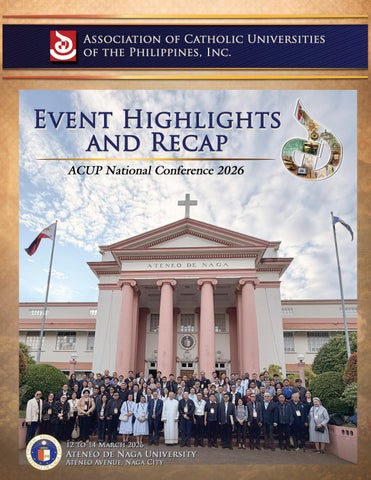
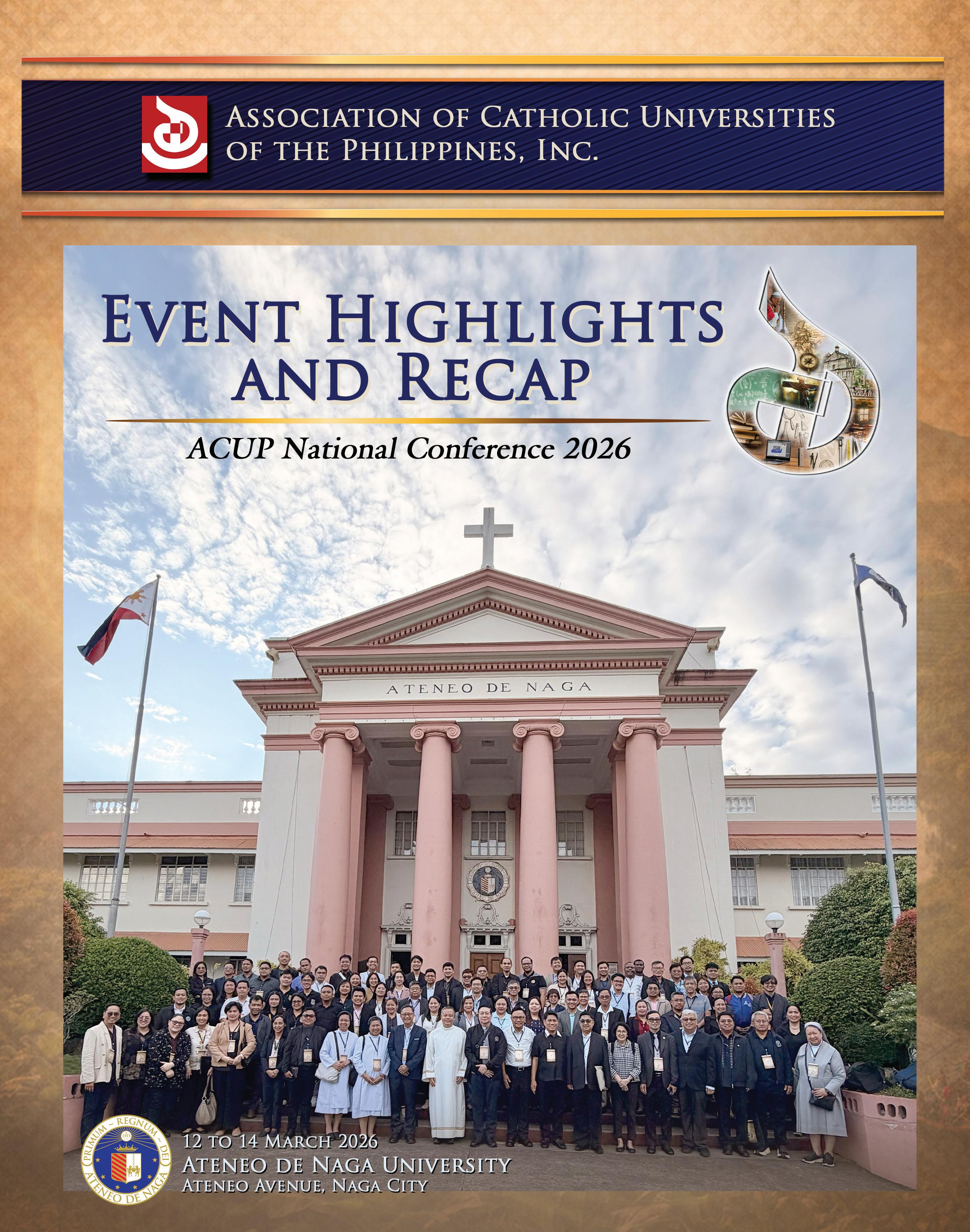
The 2026 National Conference of the Association of Catholic Universities of the Philippines, Inc. (ACUP) brought together educators, administrators, researchers, and students from Catholic higher education institutions (CHEIs) across the country from March 12 to 14, 2026, at the Ateneo de Naga University. Anchored on the theme “The Response of Catholic Higher Education Institutions to the Philippine Educational Crisis,” the three-day gathering served as a venue for collective discernment, dialogue, and synodal collaboration in addressing the most pressing challenges confronting Philippine higher education.
In his welcome remarks, ACUP President and University of Santo Tomas (UST) Rector Rev. Fr. Richard G. Ang, O.P, Ph.D., set the direction of the three-day gathering, saying that “The ACUP National Conference is a call to renewal. It invites us to rediscover our common vocation as educators who form minds and shape consciences in the light of Christ. If education is indeed an act of evangelization, then every lecture hall, research center, and community engagement site becomes a sacred space for encounter. With renewed conviction and shared responsibility, may this conference inspire a united commitment among Catholic higher
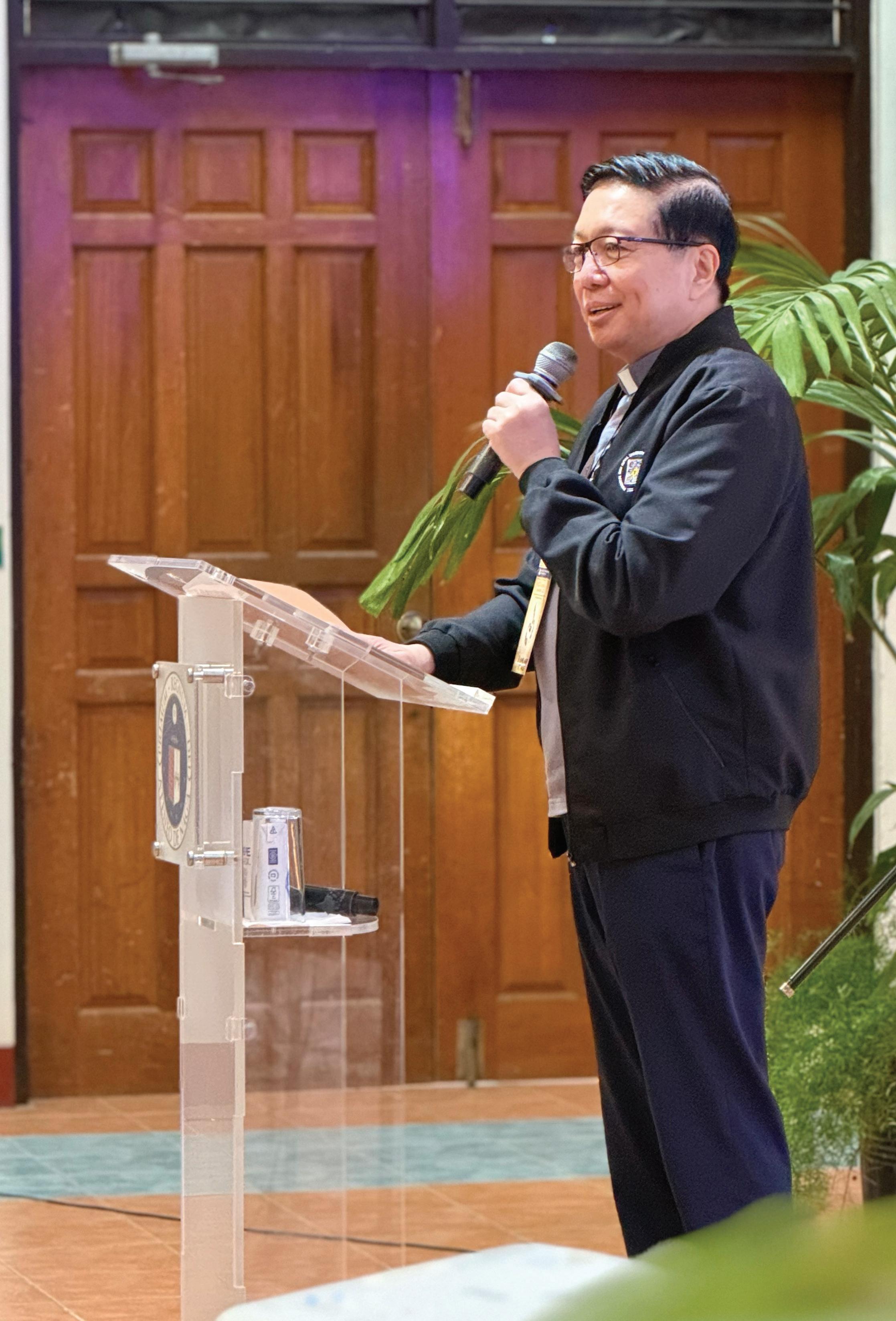
ACUP President and UST Rector Rev. Fr. Richard G. Ang, O.P., Ph.D., delivers the opening remarks and welcomes the participants
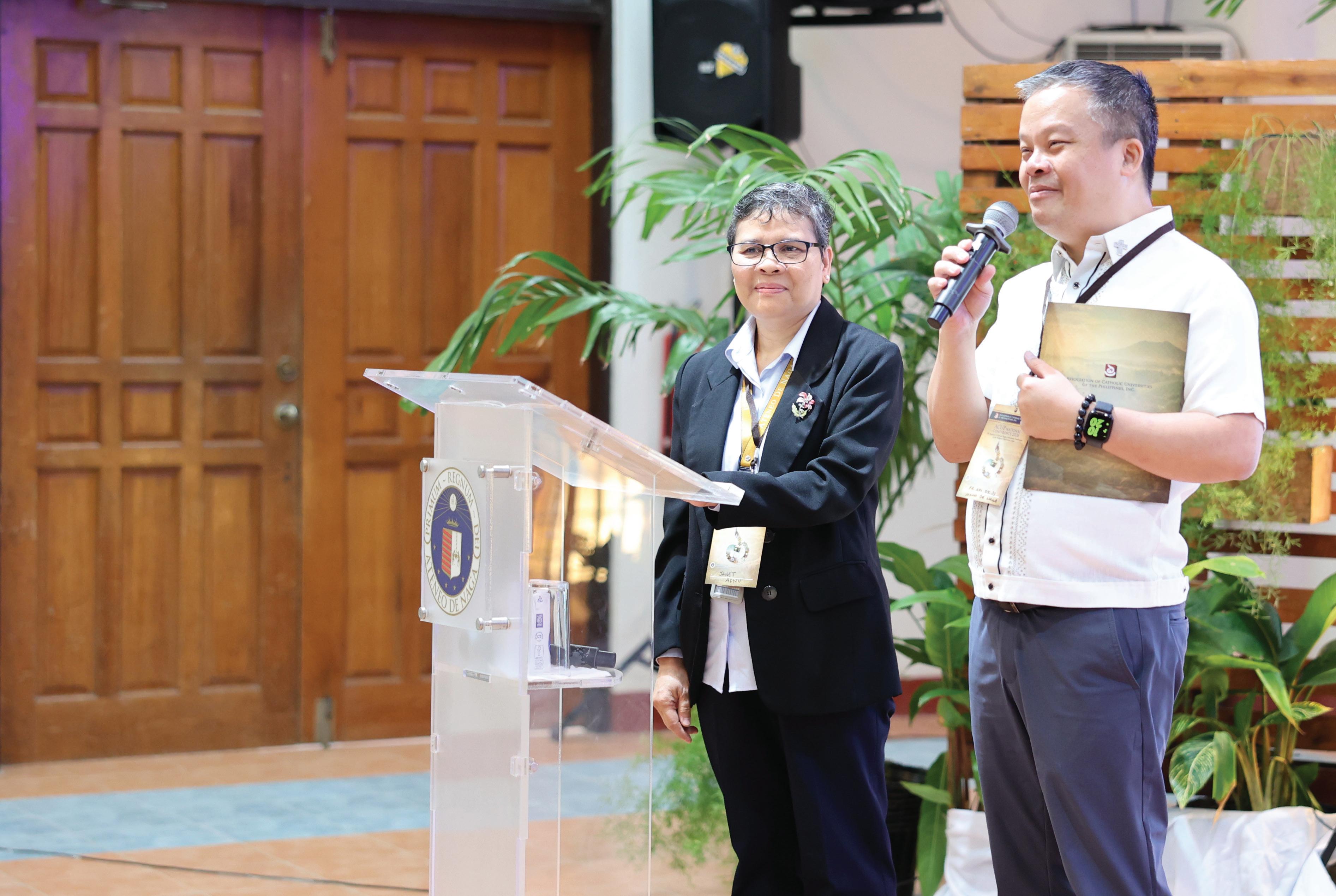
AdNU President Rev. Fr.
Aristotle C. Dy, SJ, Ph.D. (right) and Executive Director for the AdNU Office of Mission and Identity
Ms. Janet Badilla welcomes the participants to the 2026 ACUP National Conference, hosted by Ateneo de Naga University for the first time
educational institutions in the Philippines to become authentic bearers of truth, stewards of justice, and heralds of hope for the nation and the world.”
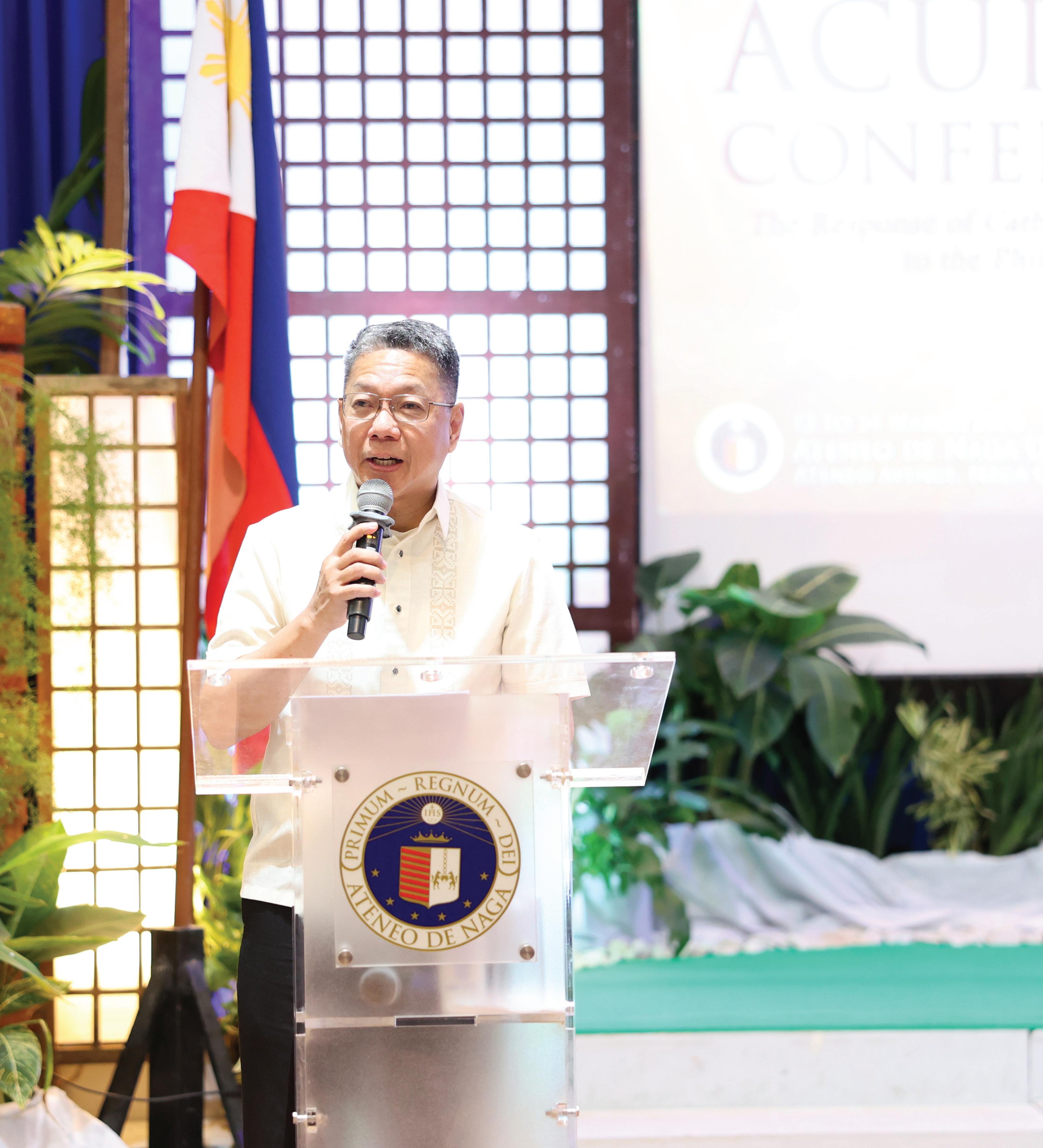
Building on this call to renewal, the keynote speaker Rev. Fr. Wilmer Joseph Tria, Ph.D., President of Catholic Educational Association of Caceres and Libmanan (CEACAL) and Bicol Association of Catholic Schools (BACS), Vice President of Catholic Educational Association of the Philippines (CEAP), and Secretary-General of Church Leaders Council for National Transformation (CLCNT), gave deep and experiential reflections on his experience as an educator-priest through the lens of the Apostolic Letter of Pope Leo XIV, “Drawing New Maps of Hope” and the Apostolic Exhortation “Dilexi Te” (I Have Loved You).
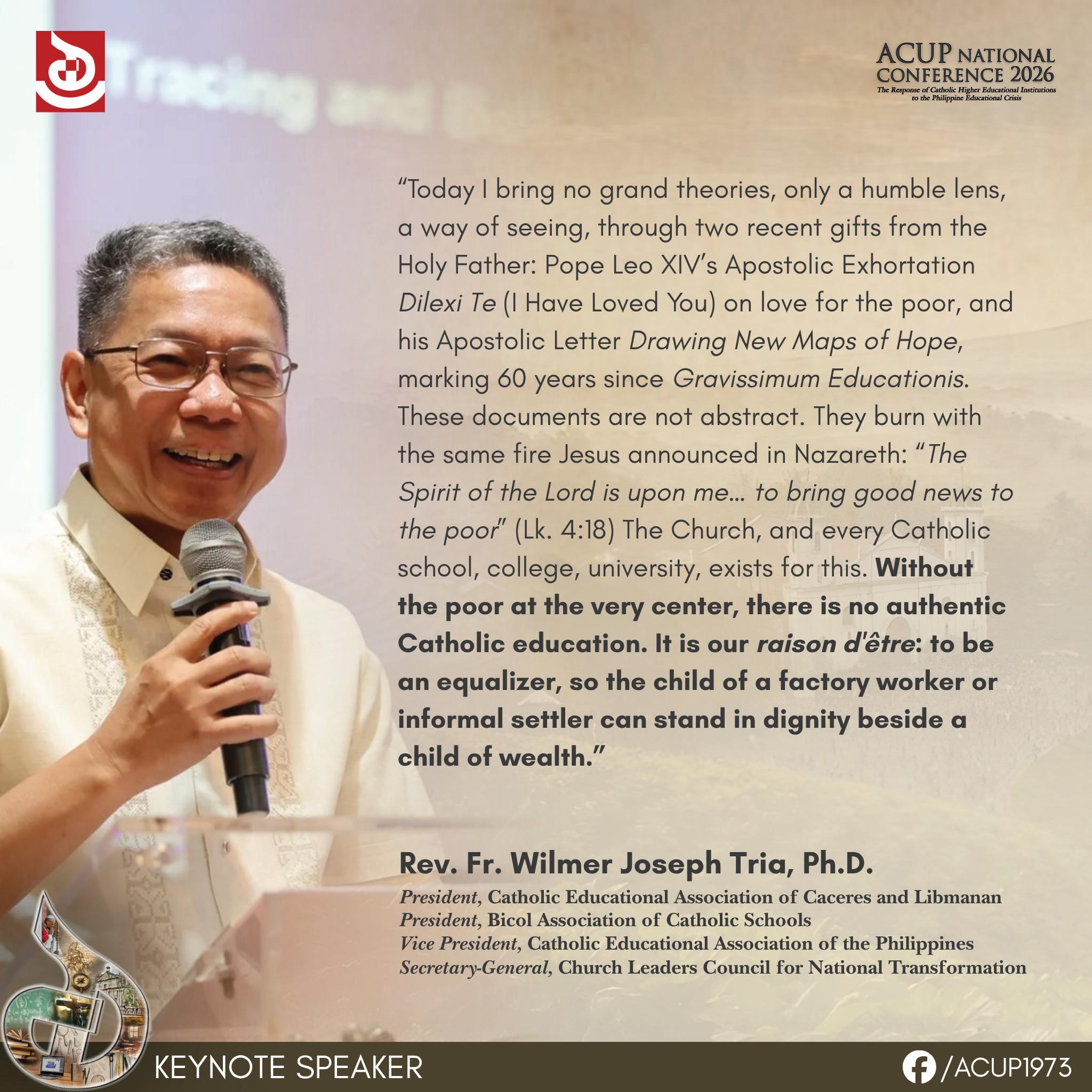
“These documents are not abstract. They burn with the same fire Jesus announced in Nazareth: ‘The Spirit of the Lord is upon me… to bring good news to the poor (Lk. 4:18)’ The Church, and every Catholic school, college, university, exists for this. Without the poor at the very center, there is no authentic Catholic education. It is our raison d’être: to be an equalizer, so the child of a factory worker or informal settler can stand in dignity beside a child of wealth,” emphasized Fr. Tria.
Fr. Tria also underscored the importance of synodal collaboration, not just among Catholic educational institutions, but also in partnership with the communities surrounding schools and particularly uplifting the poor, citing the potential of ‘Catholic educational constellations’, as mentioned in Pope Leo XIV’s Drawing New Maps of Hope, to be beacons that guide the people, saying that “Synodal collaboration must begin from the margins.”
“Much work lies ahead, but education is exactly this: a paradigm shift. Leading from Plato’s cave, shadows of revenues, tech upgrades, beautiful campuses, out into the light. Not for its own sake, but for the mission Jesus proclaimed: good news to the poor, sight to the blind, freedom to captives, liberty to the oppressed. Let us draw these new maps of hope together. Let the poor lead the way, for they know the terrain better. May Mary, seat of Wisdom, guide our steps,” concluded Fr. Tria.
Keynote speaker Rev. Fr. Wilmer Joseph Tria, Ph.D., President of Catholic Educational Association of Caceres and Libmanan (CEACAL) and Bicol Association of Catholic Schools (BACS), Vice President of Catholic Educational Association of the Philippines (CEAP), and SecretaryGeneral of Church Leaders Council for National Transformation (CLCNT), shares his reflections and insights.
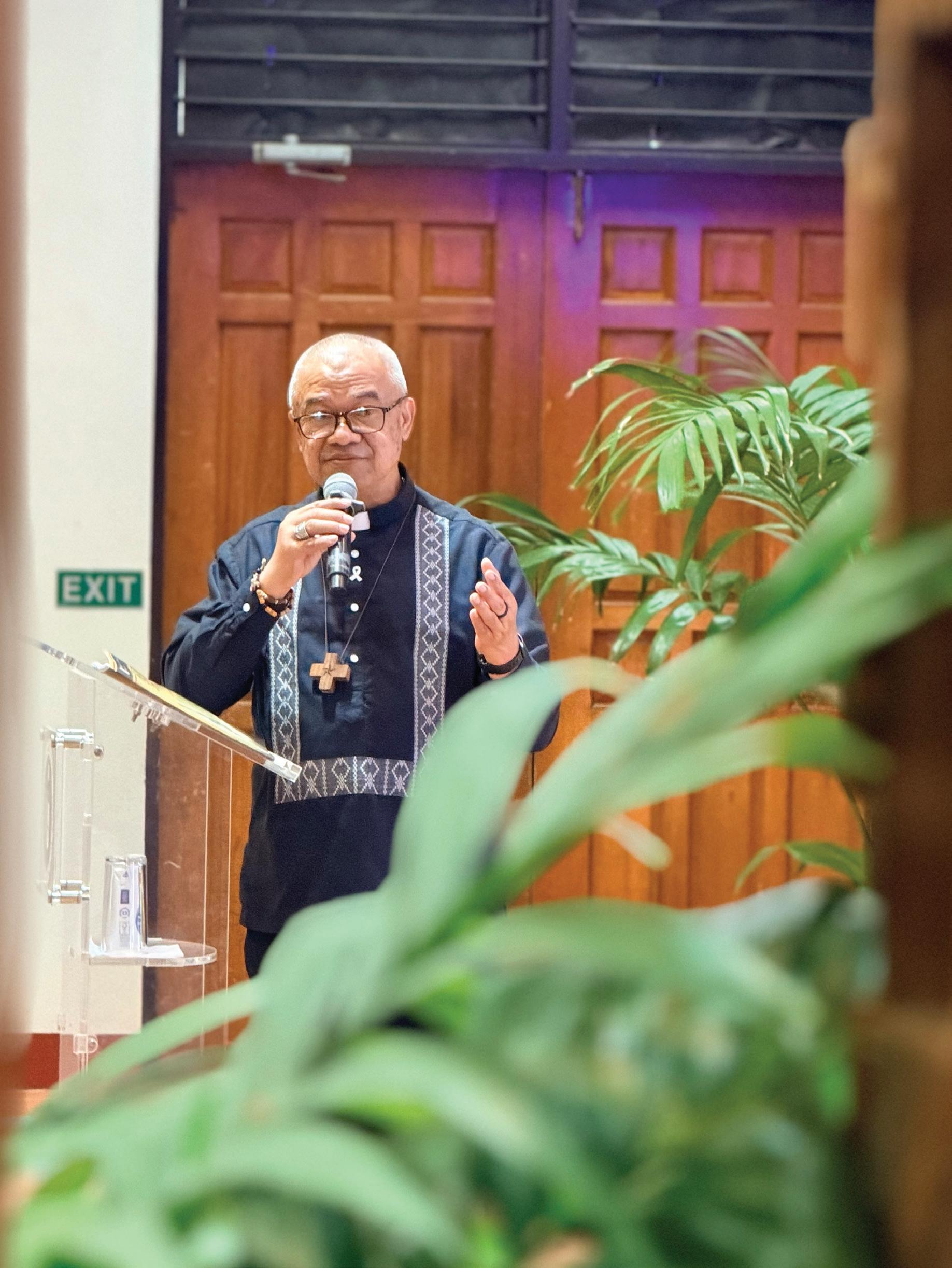
CBCP Social Action, Justice, and Peace Chair H.E. Most Rev. Gerardo Alminaza, D.D., shares how Catholic HEIs can shape wellrounded youth with intellect and integrity.
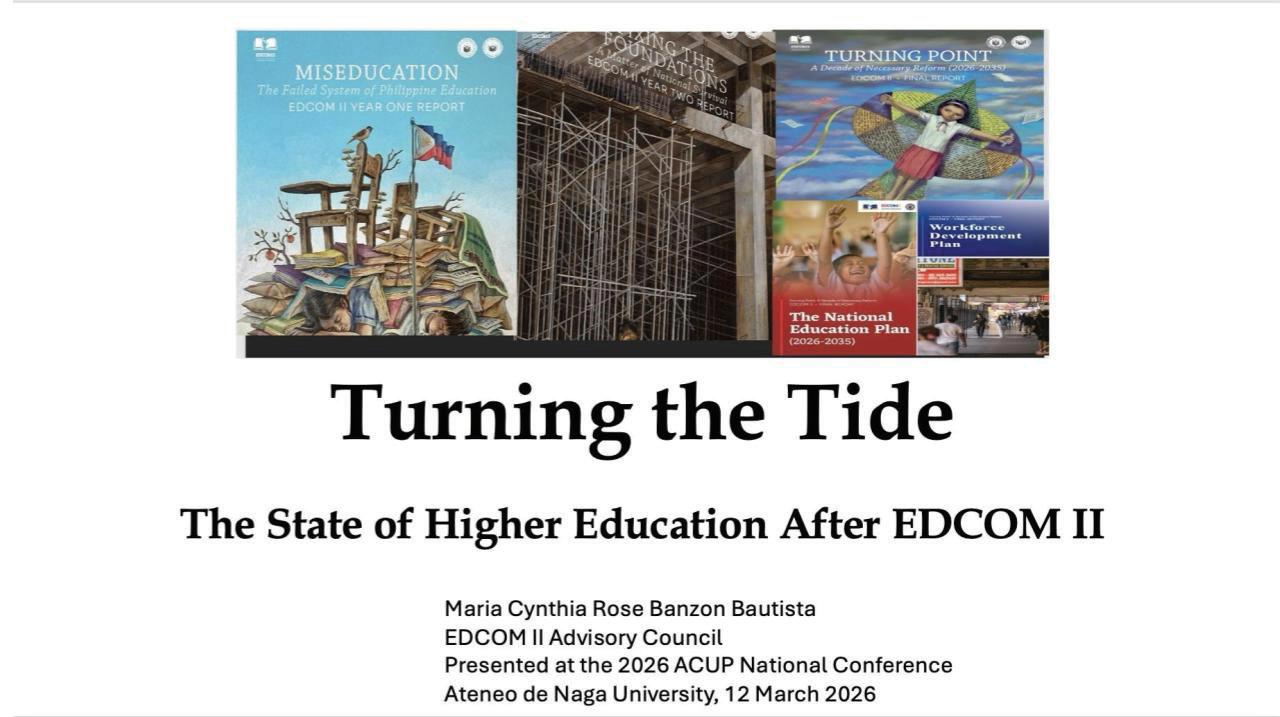
Dr. Cynthia Bautista of the EDCOM II Advisory Council updates participants on the changes in the state of Philippine higher education after EDCOM II
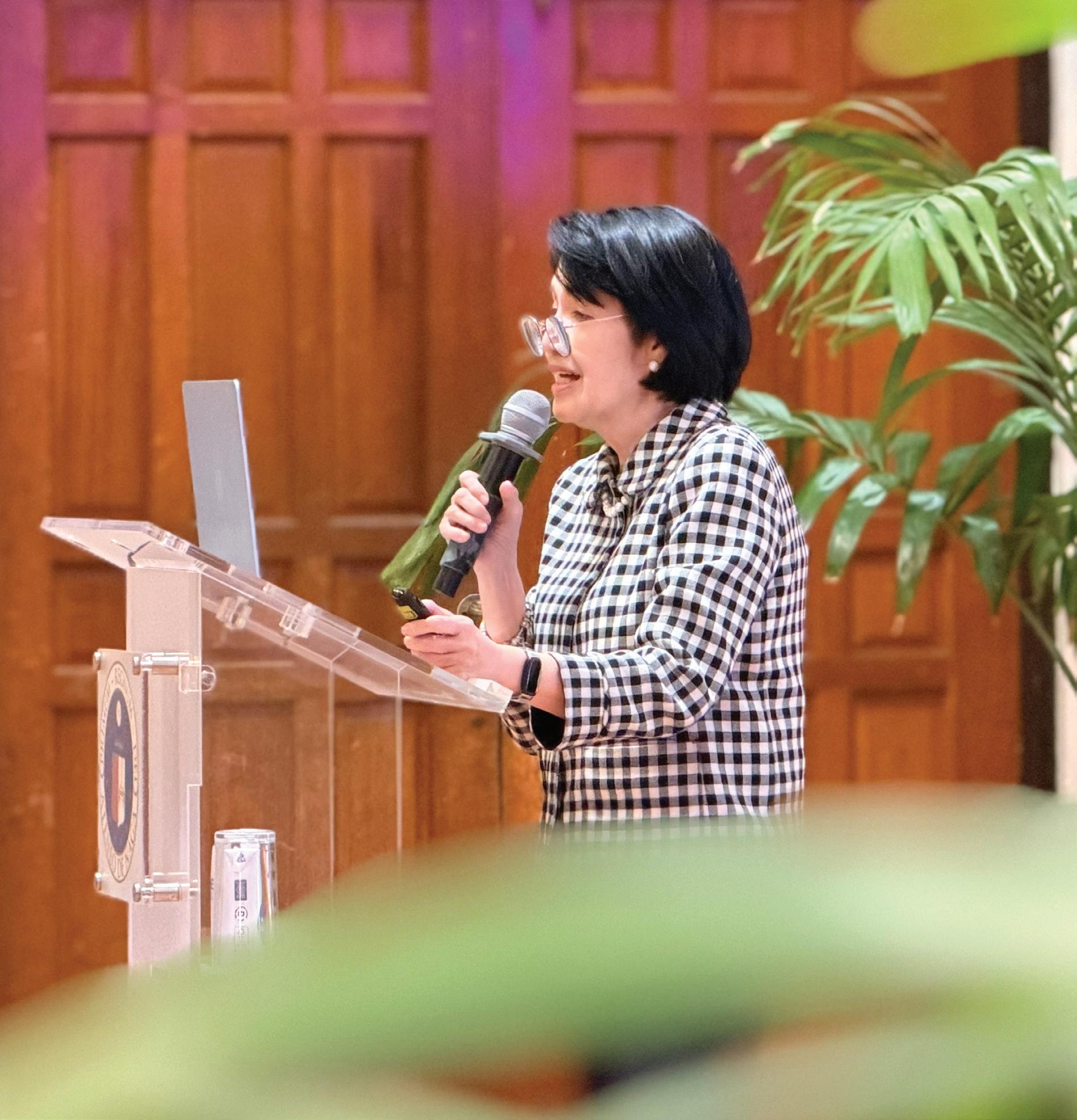
Continuing the reflection on the social mission of Catholic education, CBCP Social Action, Justice, and Peace Chair H.E. Most Rev. Gerardo Alminaza, D.D., underscored the urgent role of Catholic educators in forming socially conscious and morally grounded young leaders who can contribute to national transformation. He emphasized that education must shape students not only intellectually but also ethically and spiritually, cultivating compassion, justice-oriented leadership, and solidarity with marginalized communities. He also reflected on the pressing Philippine social realities that directly and indirectly affect the ongoing educational crisis, citing the concept of “Hayuma” or the act of mending broken nets. He then reminded participants that when something essential in society is broken, the community must come together to mend it.
Shifting to the broader policy and structural context of Philippine education, EDCOM II Advisory Council Member Dr. Cynthia Rose Bautista then presented key insights from the EDCOM II reports on the current landscape of Philippine higher education. She outlined current statuses, progress made, and pending actions in identifying systemic gaps in the education sector, including challenges in quality assurance, the Philippine Qualifications Framework, teacher preparation, research productivity, and alignment between education and labor market needs. She emphasized the need for consistency and permanence in well-planned reforms.
Day 1 concluded with a Eucharistic Celebration presided over by the Archbishop of Caceres Most Rev. Rex Andrew Alarcon, D.D., at the Ateneo de Naga University’s Christ the King Church and a fellowship dinner.
1
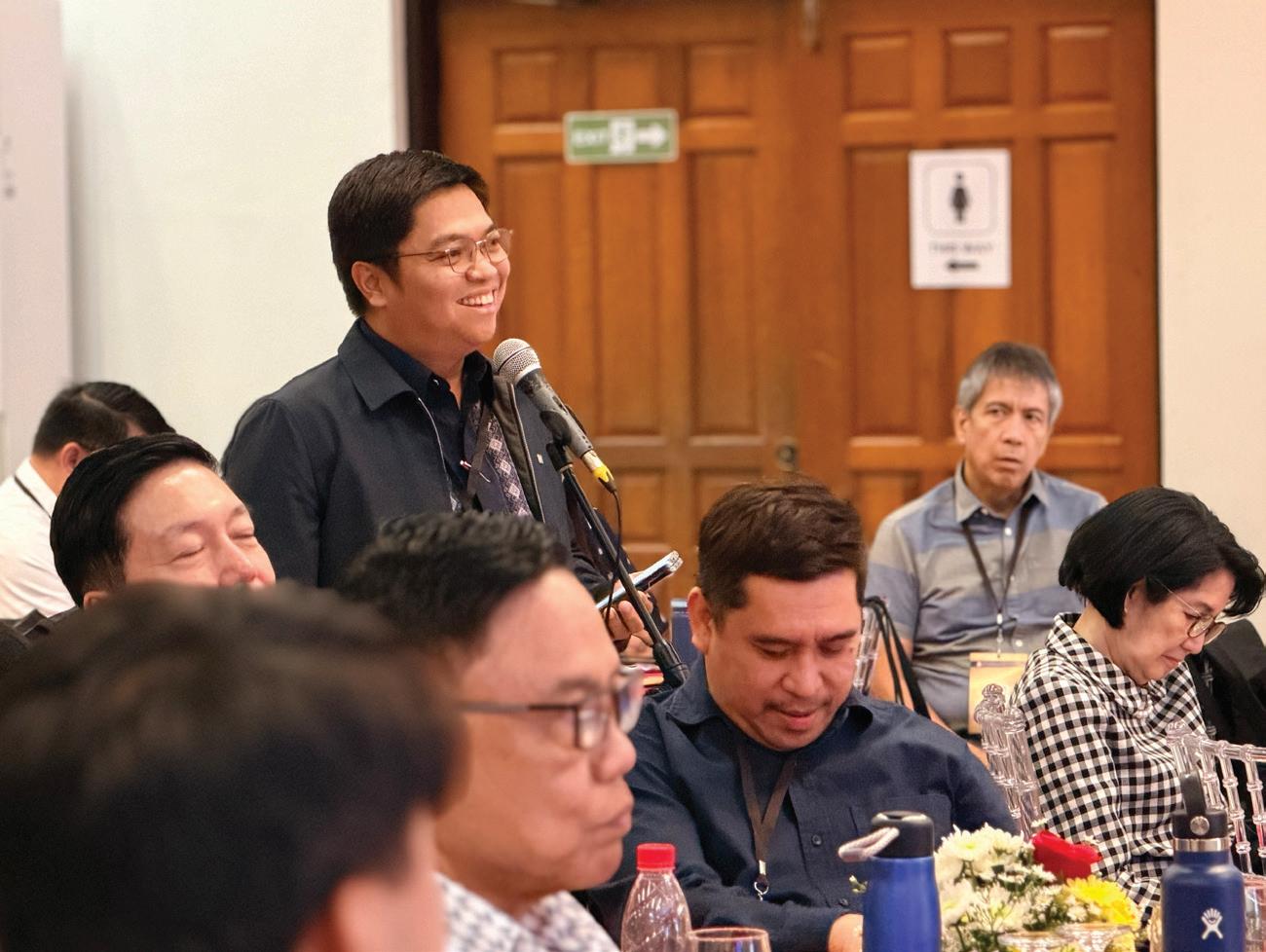
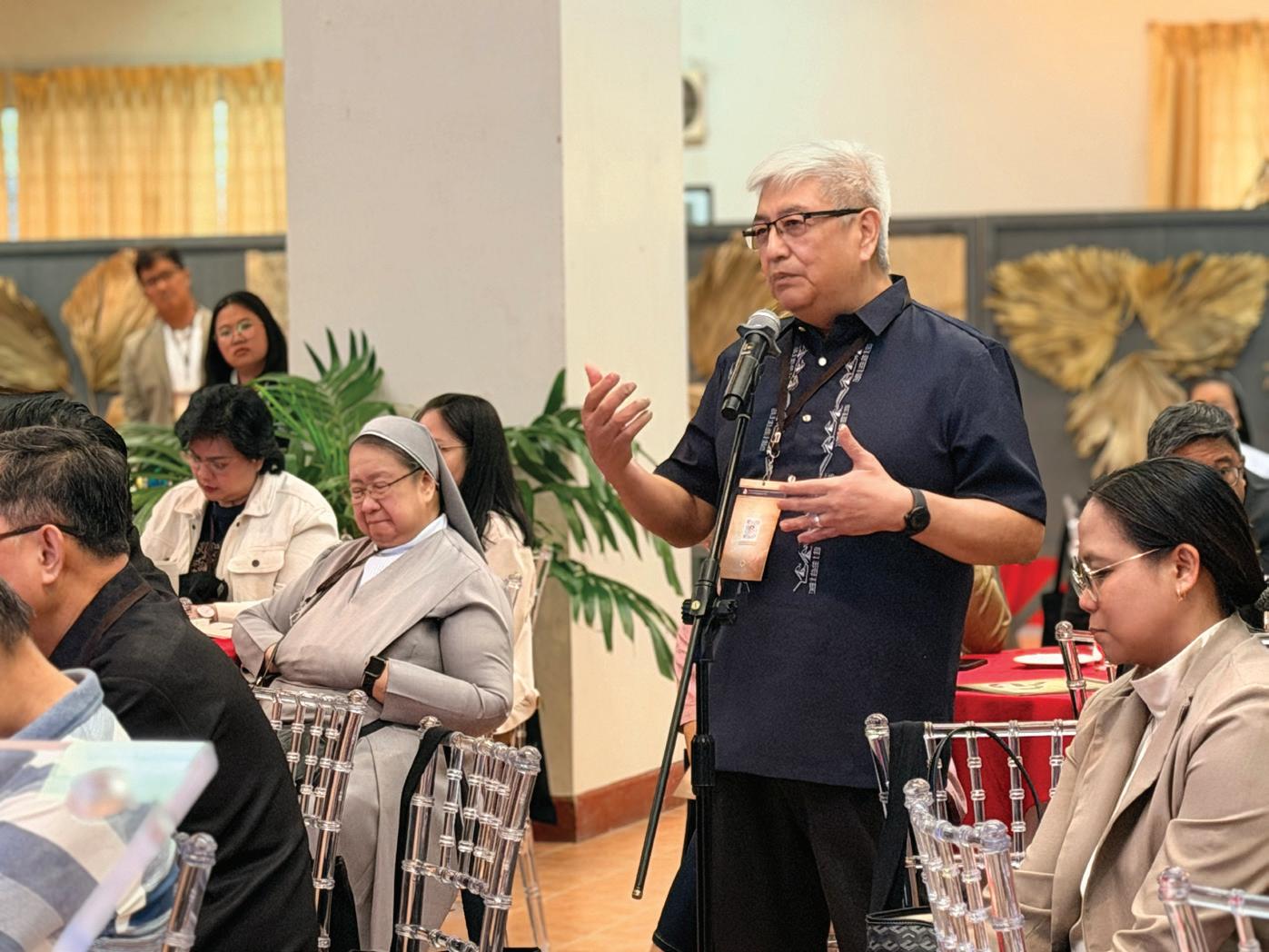
Rev. Fr. Oliver Yalung, DL, Ph.D., President of the University of the Assumption, interacts with the speakers during the open forum
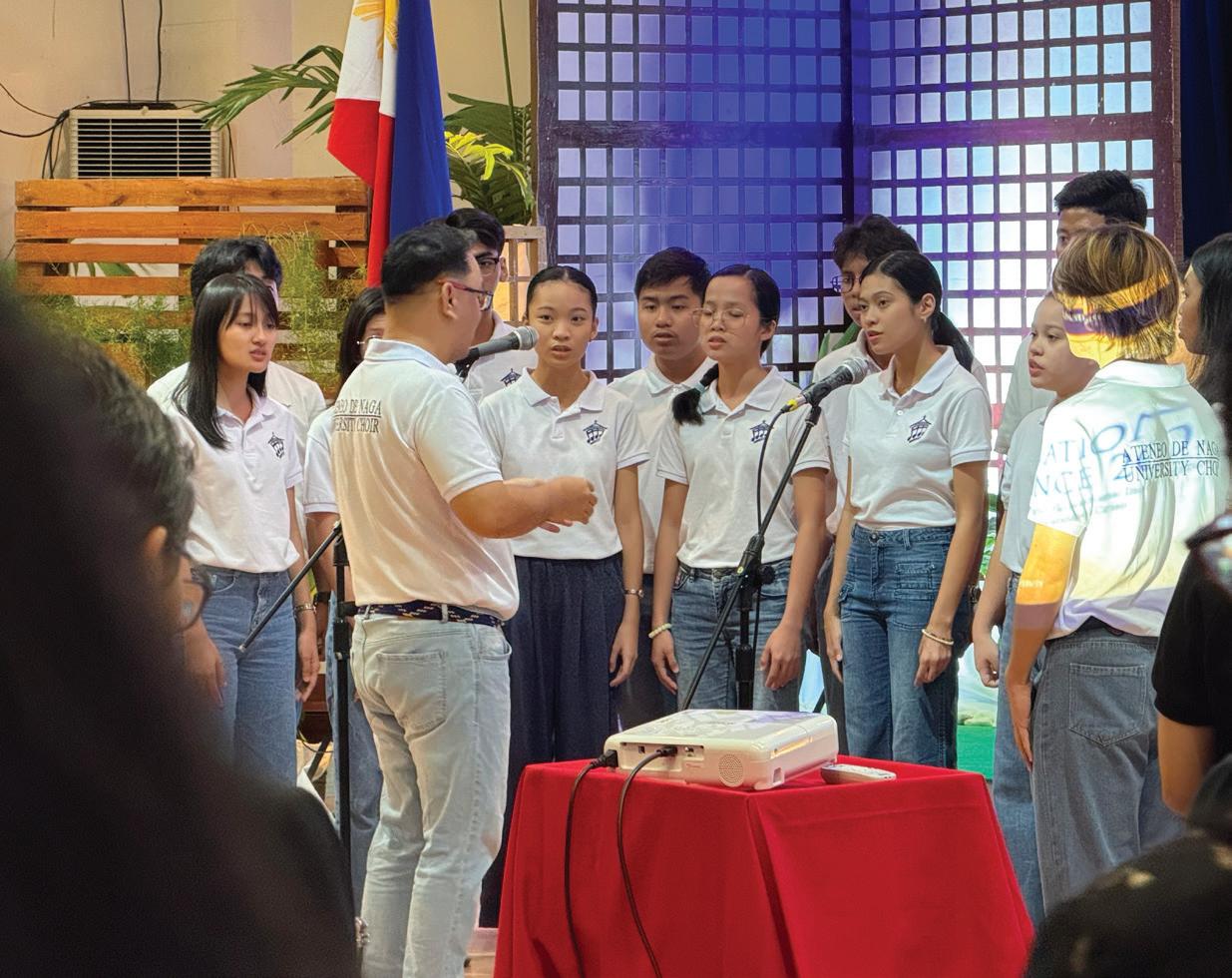
Mr. Rex Alba and the AdNU Choir led the congregation through the Conference’s Eucharistic Celebrations over the 3-day gathering
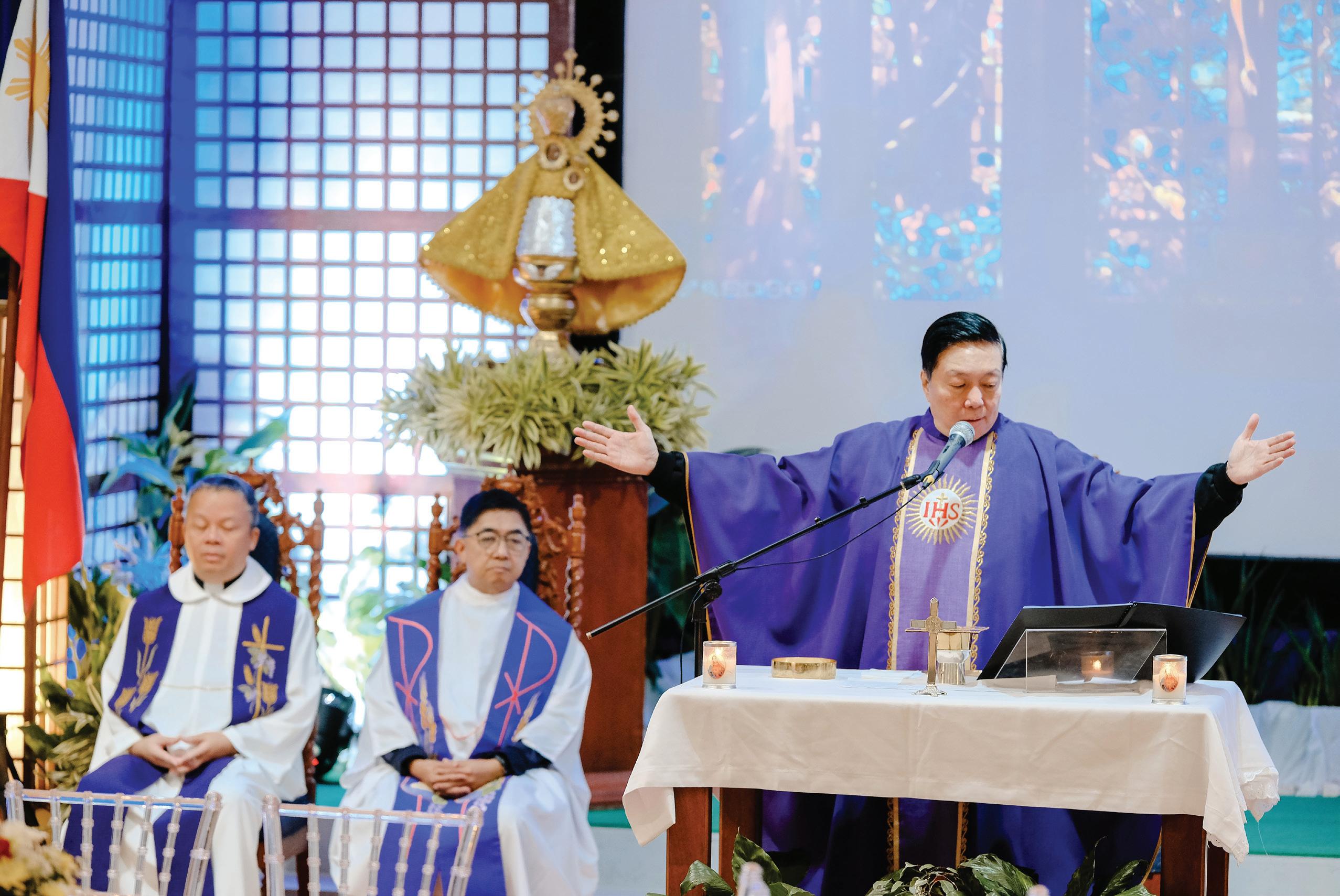
The second day of the conference continued the dialogue on strengthening Philippine higher education by focusing on the preparation of educators, the enhancement of institutional quality assurance, and the responsible and ethical integration of emerging technologies in the academe while putting priority on integrity, the relational presence in human interaction, and higher critical thinking. It emphasized the need for higher education institutions (HEIs) to remain responsive to evolving educational demands while upholding values of inclusivity, accountability, and innovation.
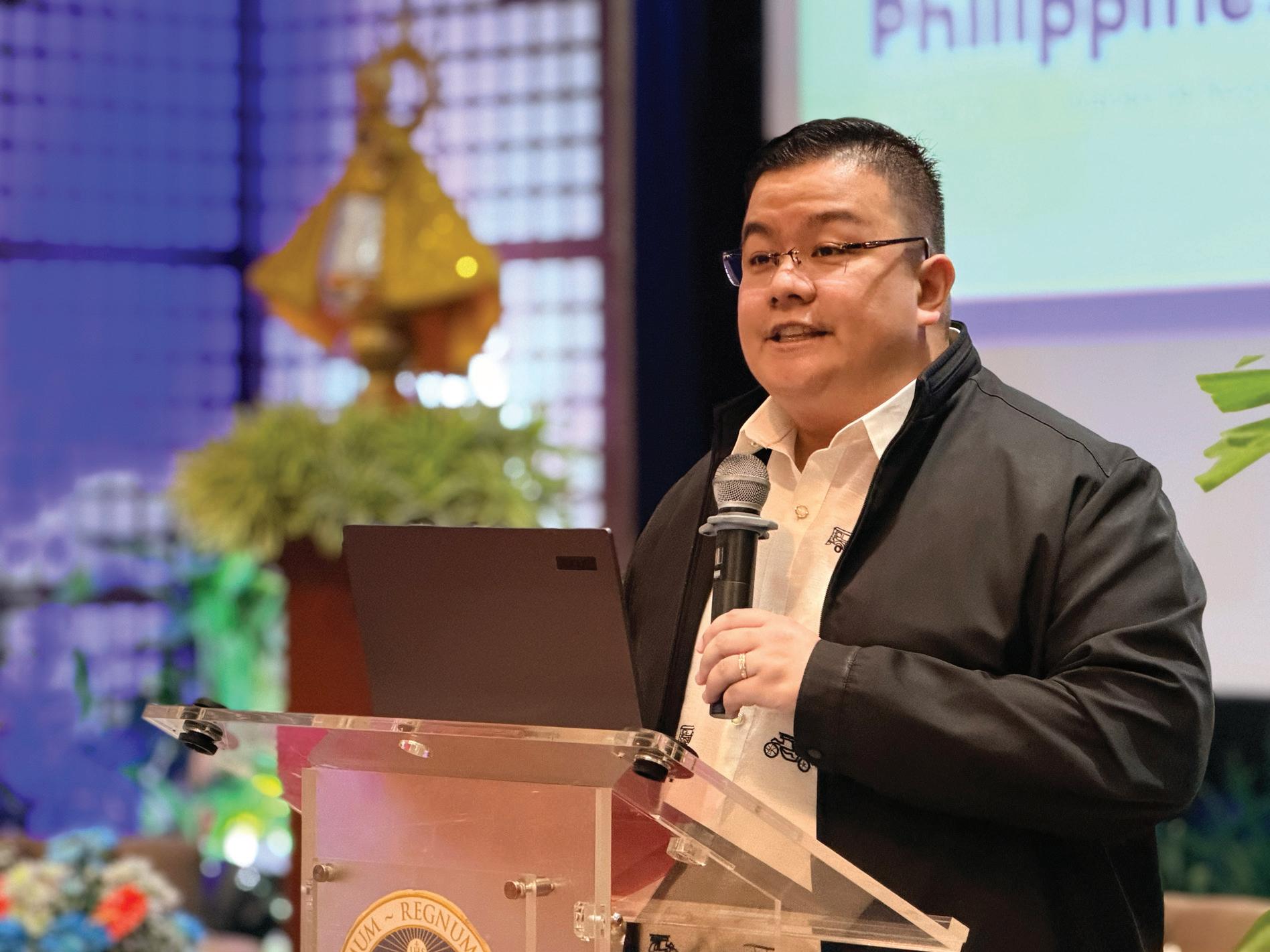
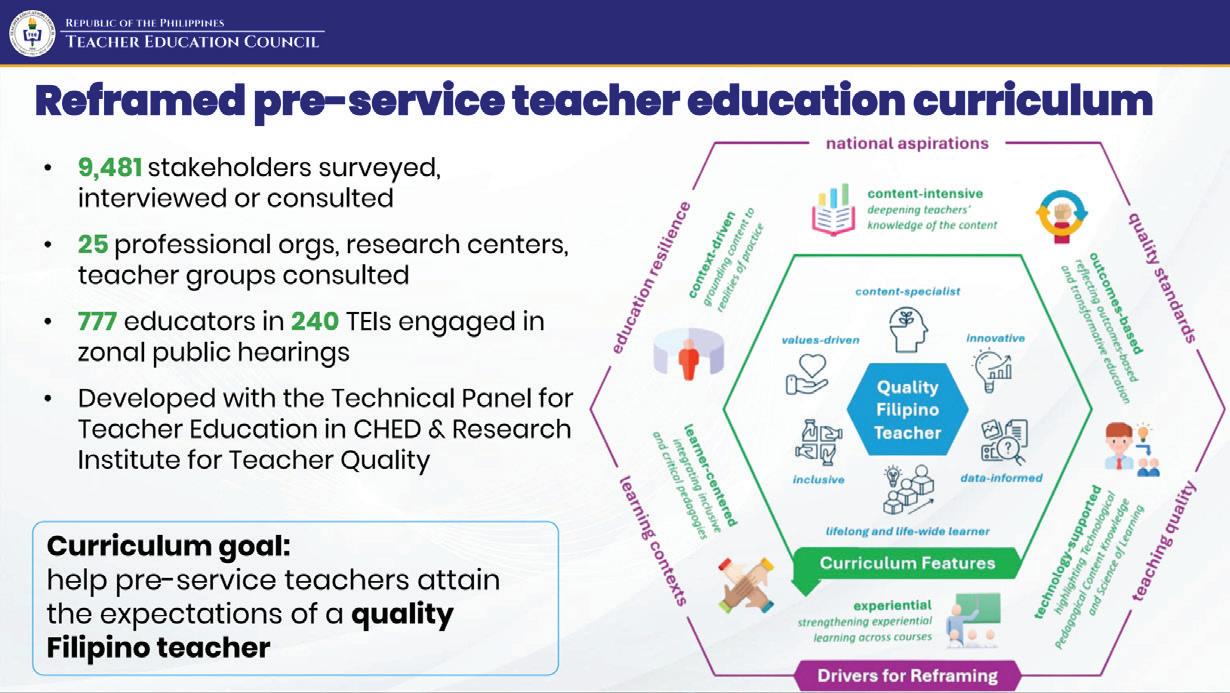
The morning session opened with a Eucharistic Celebration presided by the ACUP President and UST Rector Rev. Fr. Richard G. Ang, O.P., followed by a presentation by Dr. Neil Vincent Sandoval, Deputy Executive Director III of the Teacher Education Council (TEC) Secretariat, on “Developing a Future-Ready Teaching Workforce: Teacher Education in the Philippines.”
Dr. Sandoval’s talk highlighted the critical role of teacher education institutions in equipping educators with competencies that respond to both local and global challenges, and underscored opportunities for strengthening teacher preparation and continuous professional development,
ACUP President and UST Rector
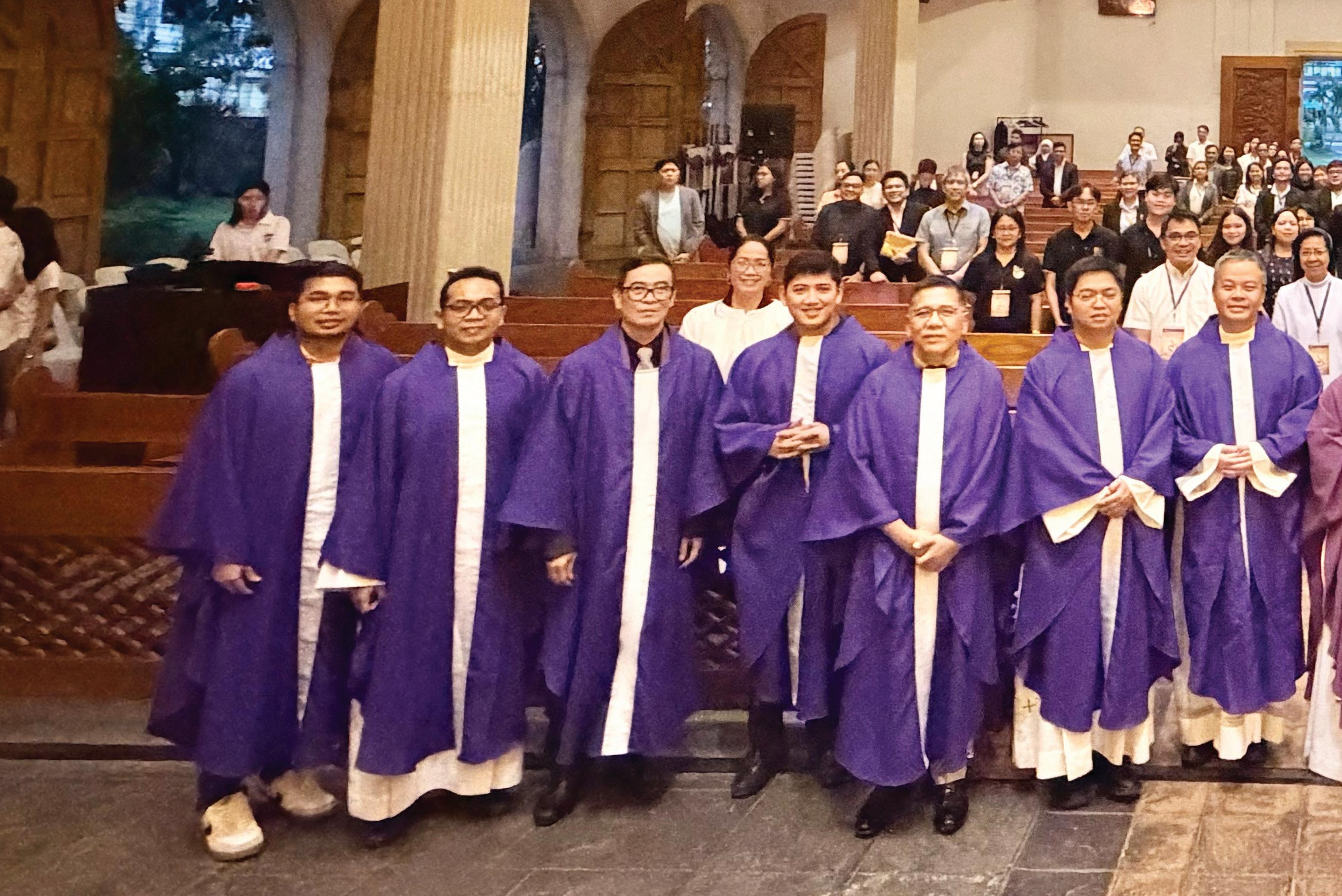
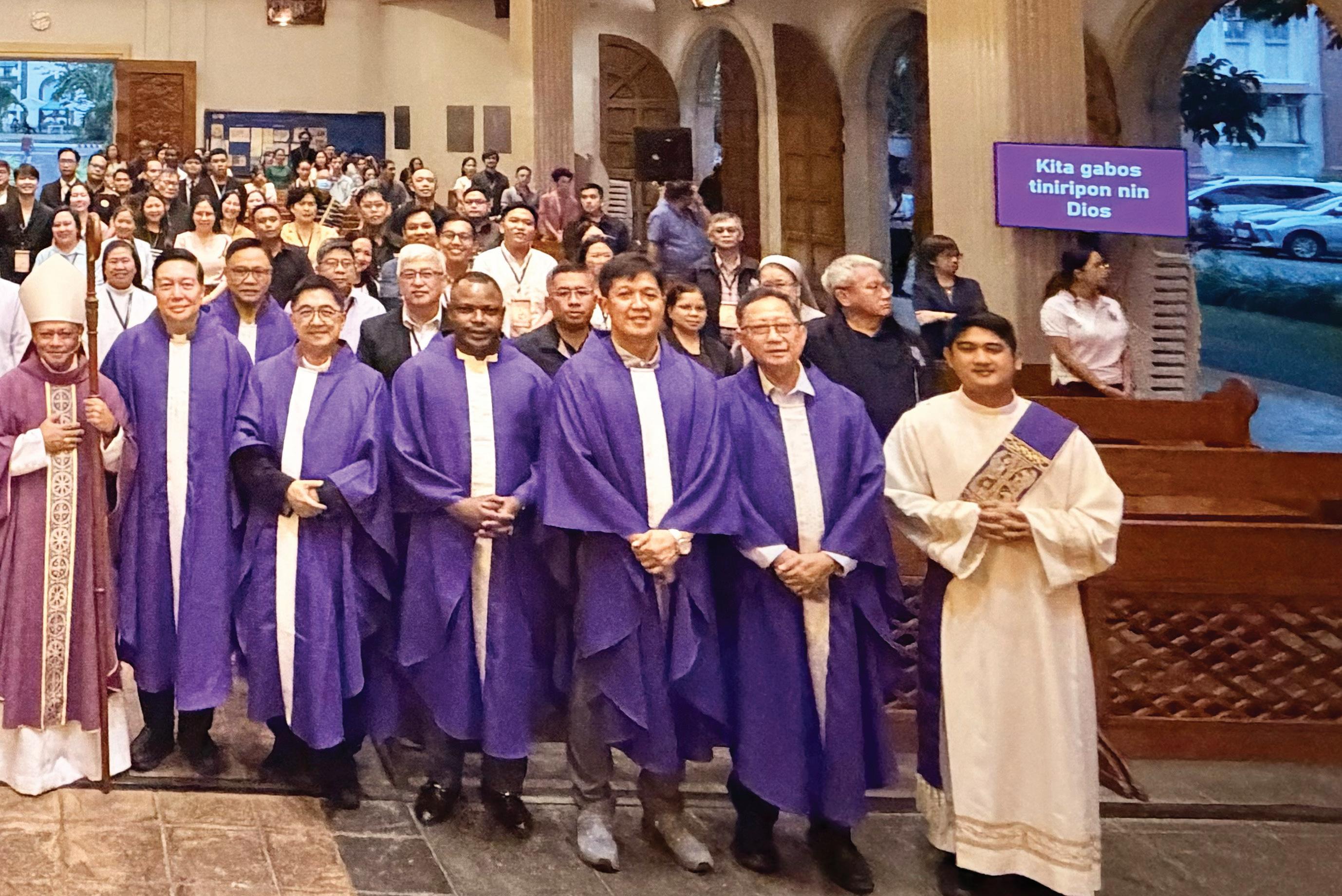
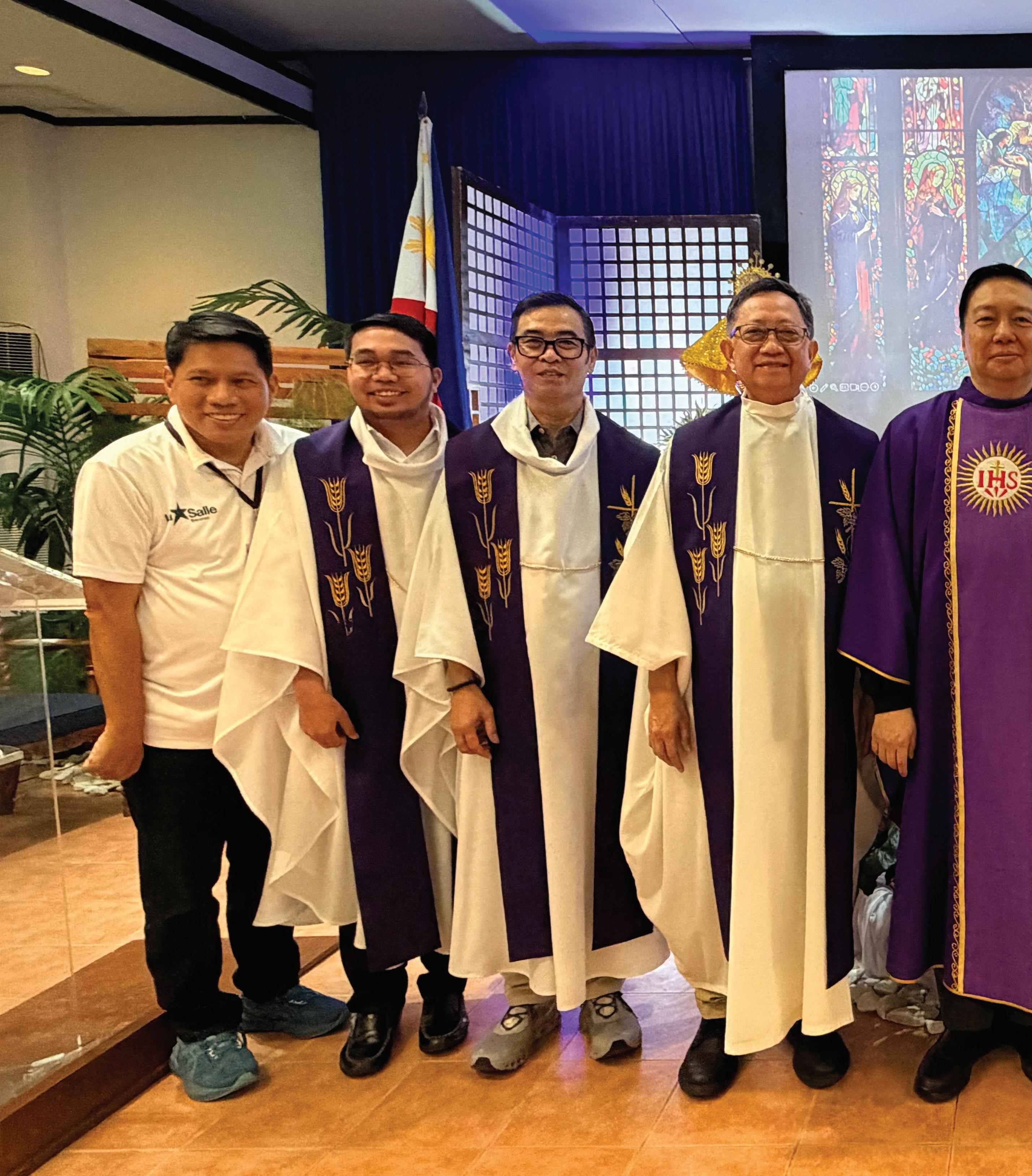
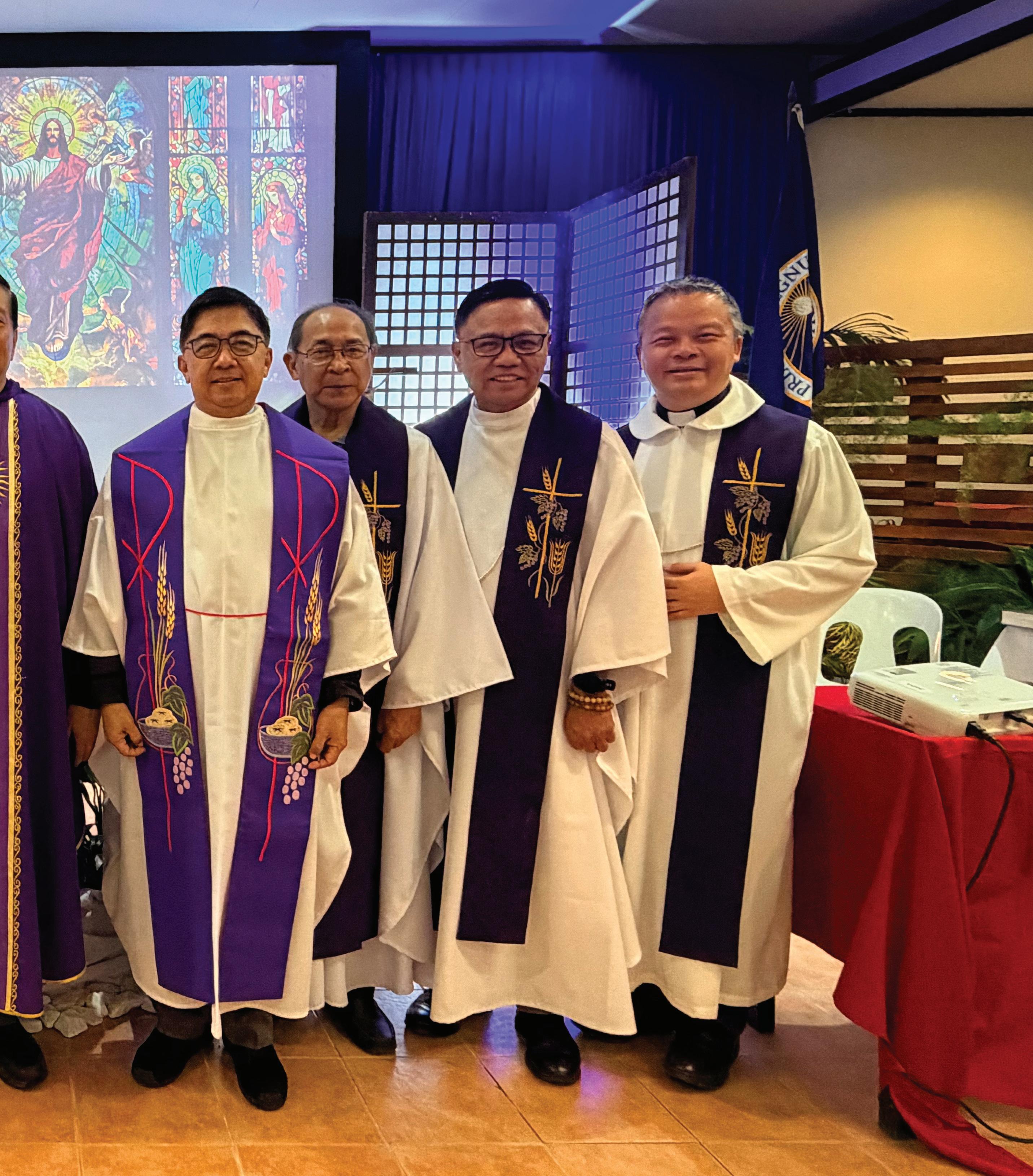
Rev. Fr. Richard Ang, OP (center), the main presider of the Day 2 Eucharistic Celebration, is with the concelebrants and Br. Joaquin Martinez FSC (leftmost)
DLSU Quality Assurance Office
Executive Director
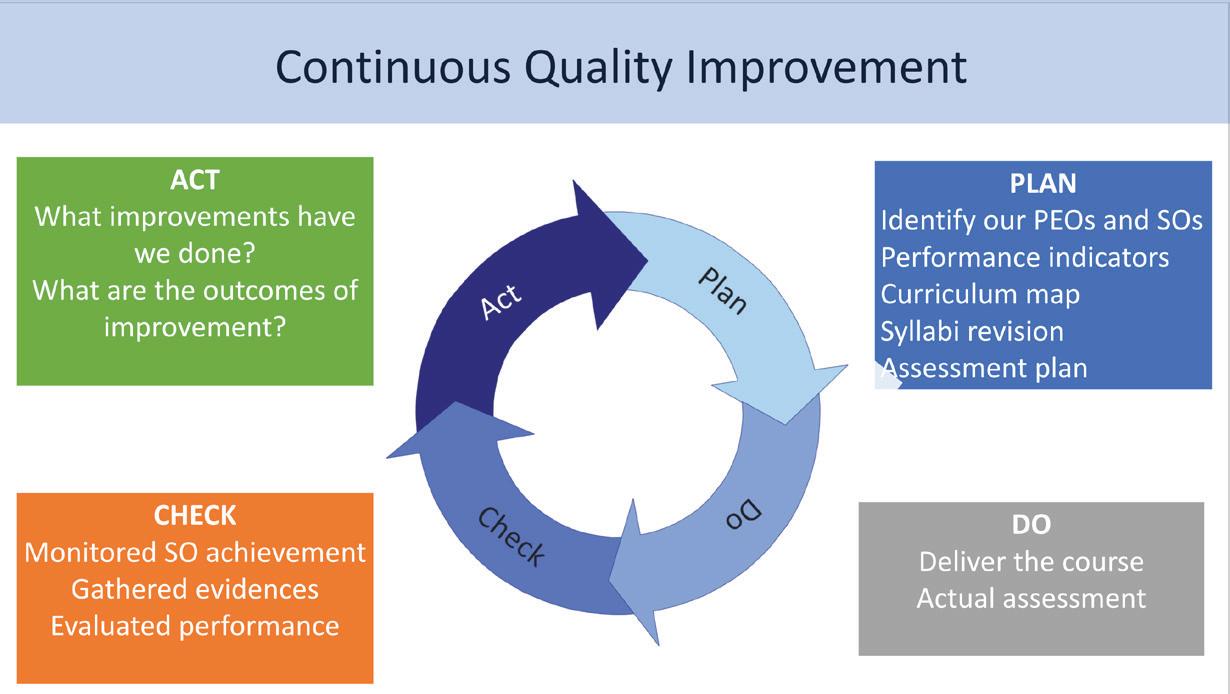
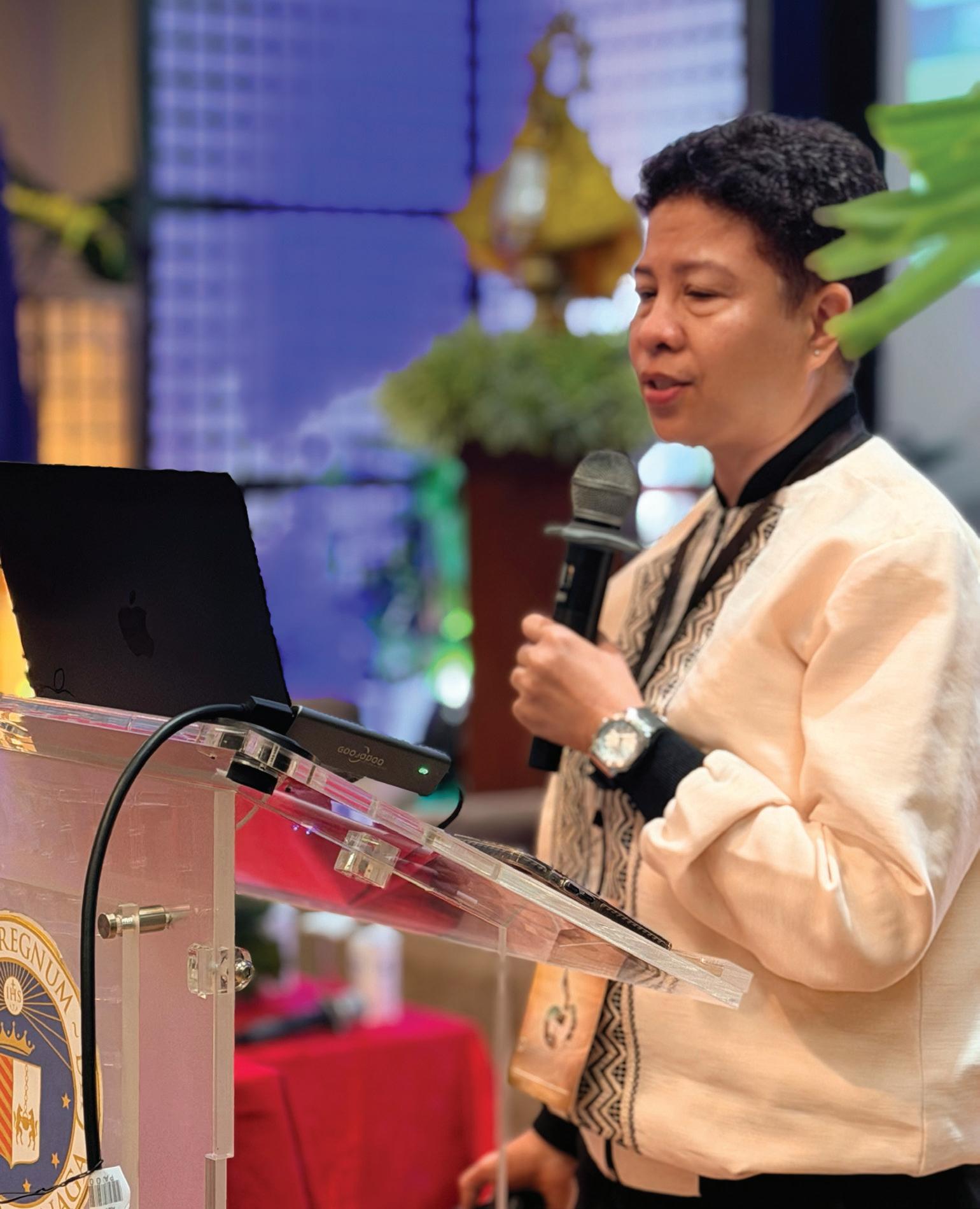
Dr. Rosemary Seva shared insights and best practices on developing a culture of continuous quality improvement within institutions.
stressing that sustained capacitybuilding and aligning the EDCOM II with the National Education Plan are essential for educators to effectively contribute to inclusive, equitable, and sustainable educational outcomes in the country.
Prof. Rosemary Seva, Ph.D., Executive Director of the De La Salle University Quality Assurance Office, focused on “Enhancing the Quality Assurance of
Philippine HEI Programs: Strategies and Best Practices.” The lecture examined the current landscape of quality assurance in Philippine higher education institutions, including recent developments in accreditation processes and compliance with both national and international standards. She discussed key challenges and common quality issues faced by institutions, particularly those operating in underserved areas where
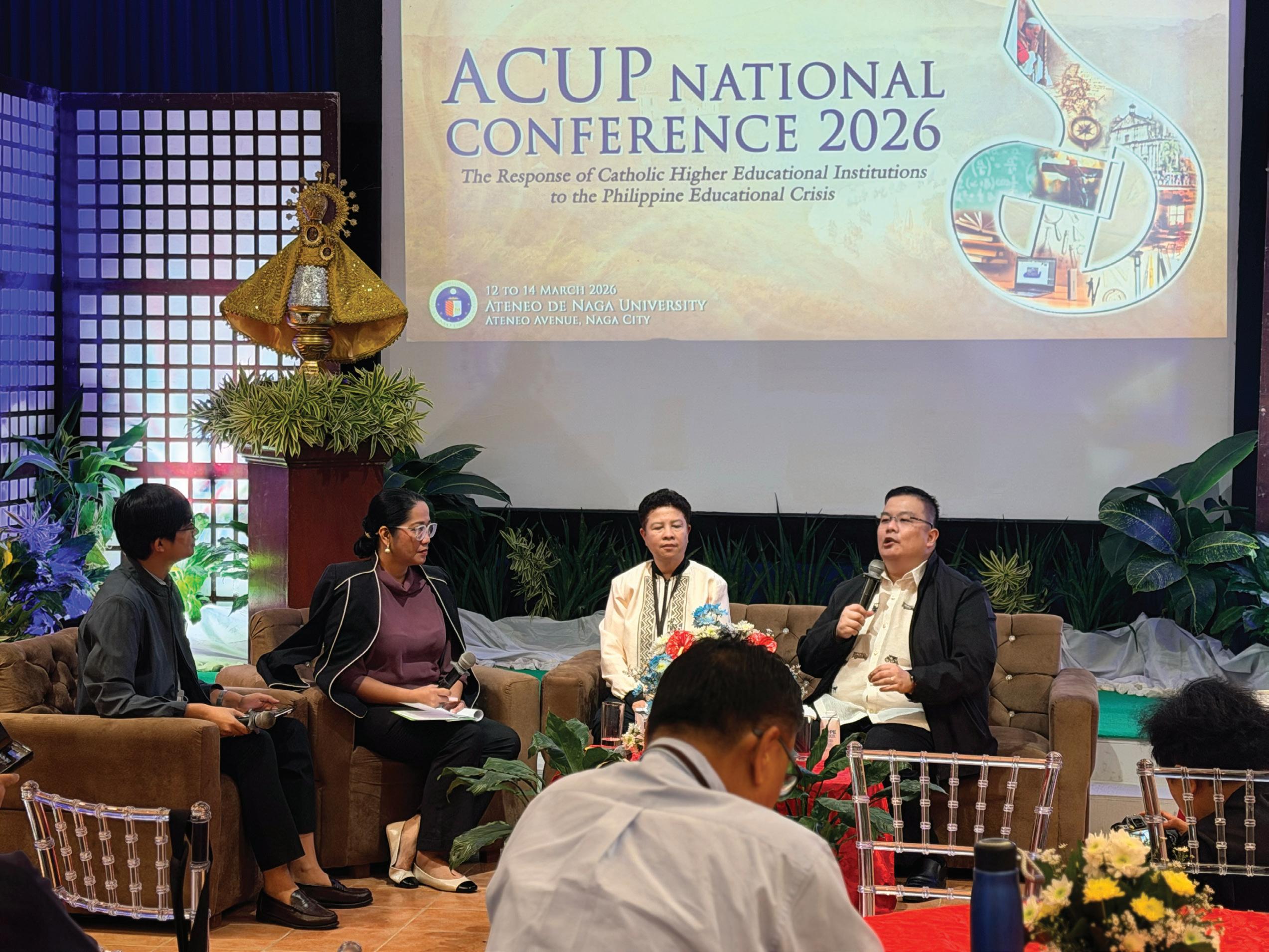
Quality assurance and teacher education are discussed in an in-depth open forum after the individual lectures by the Executive Director of the De La Salle University Quality Assurance Office Dr. Rosemary Seva (third from left) and Teacher Education Council (TEC) Secretariat Deputy Executive Director III Dr. Neil Vincent Sandoval (rightmost)
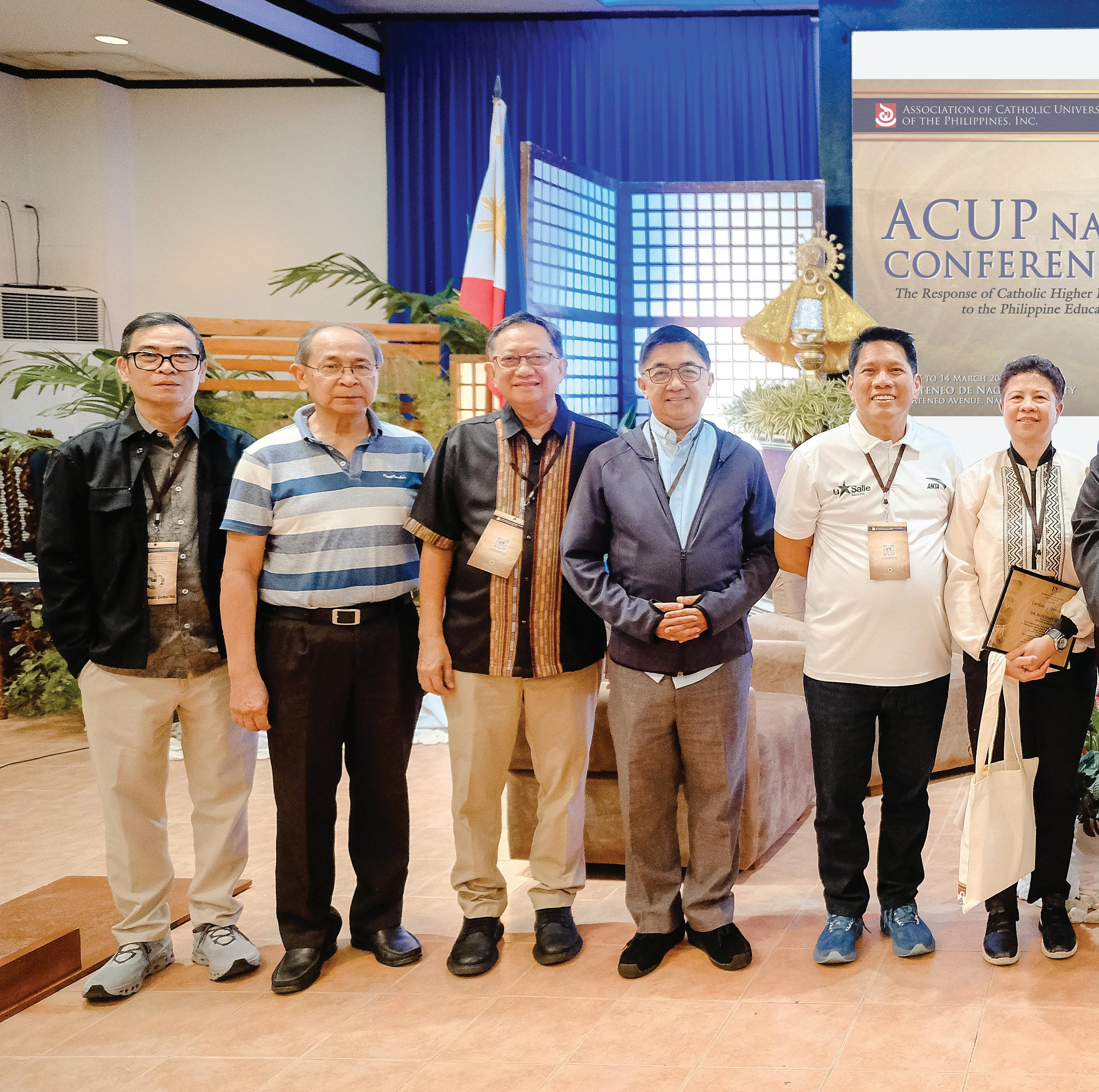
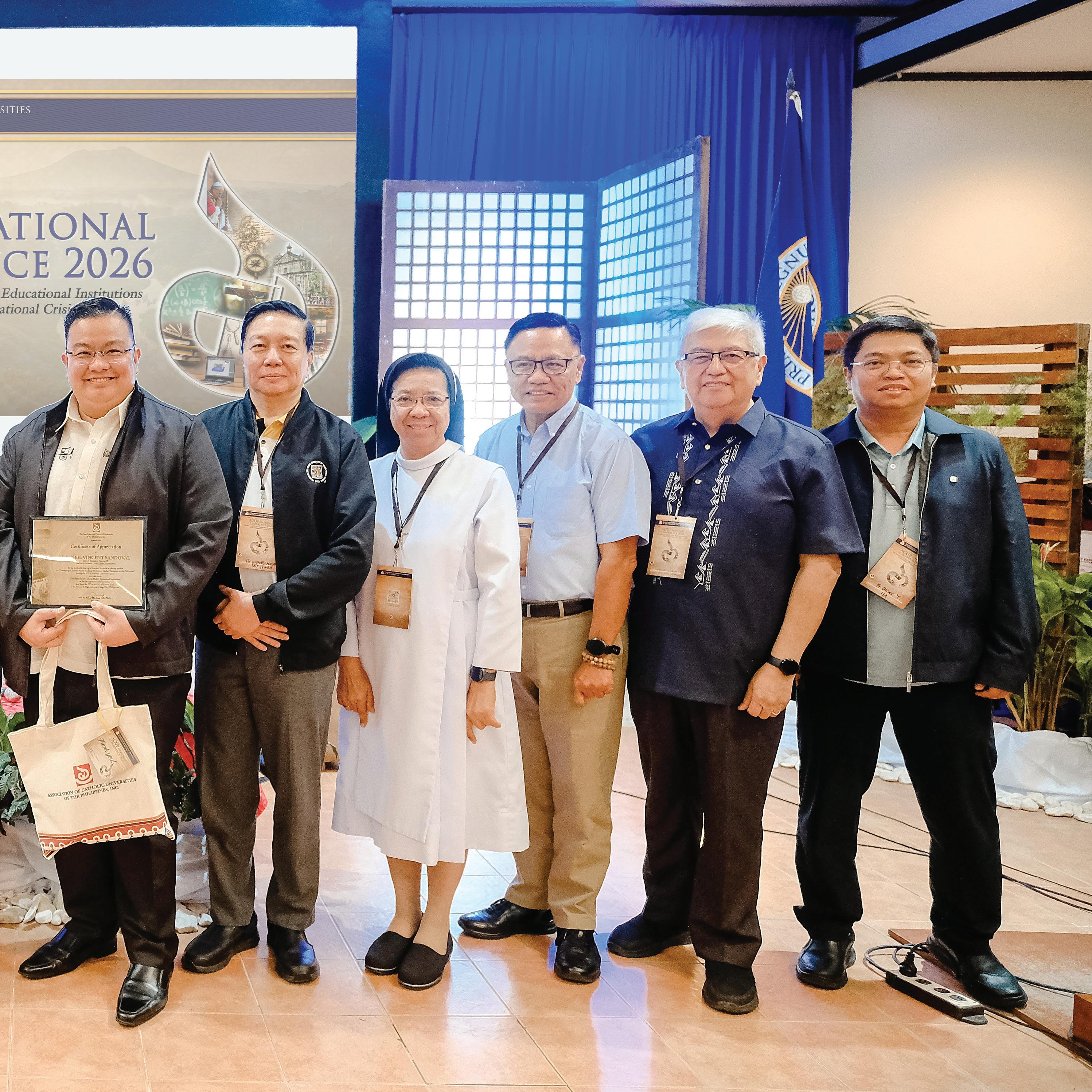
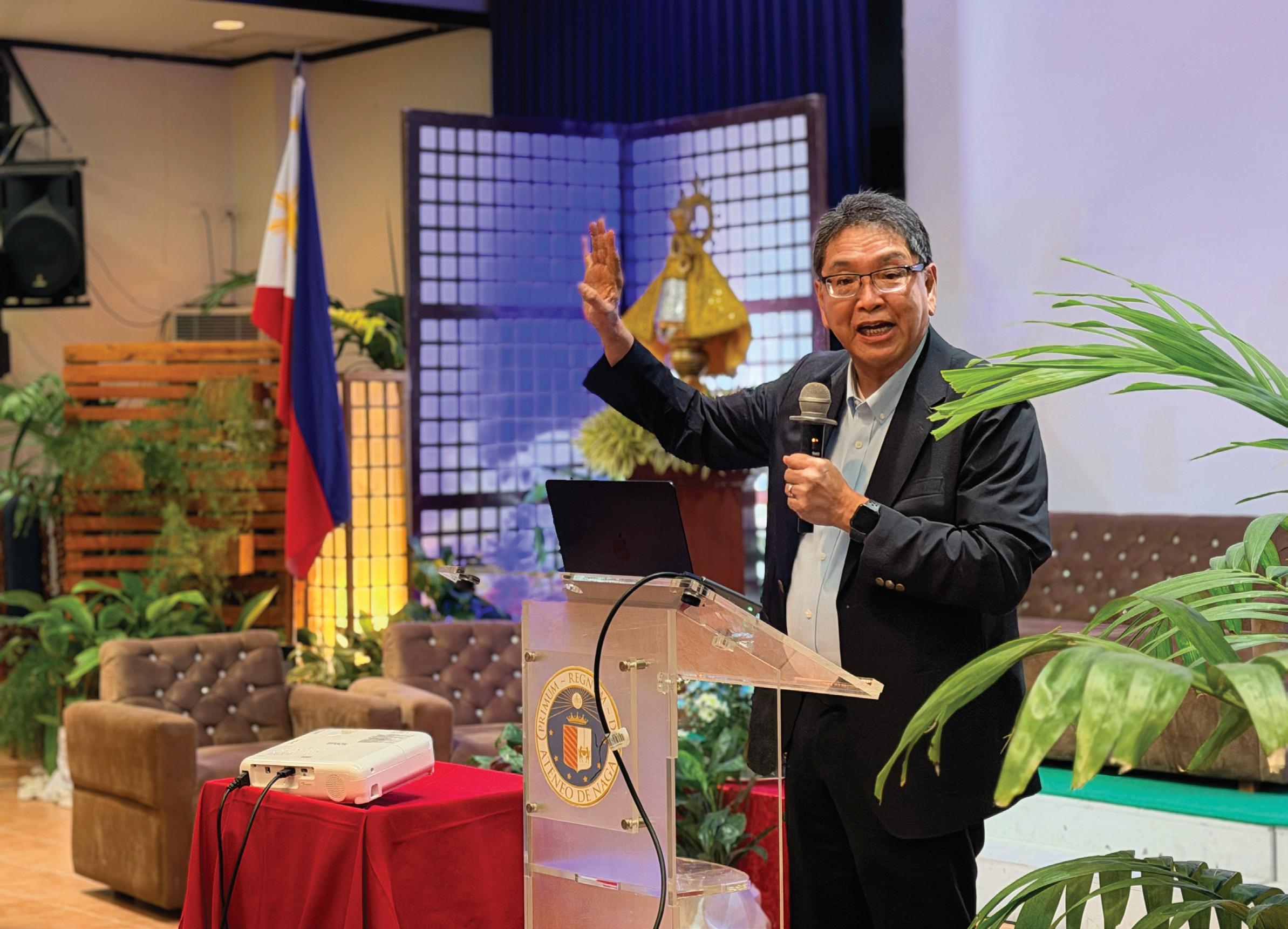
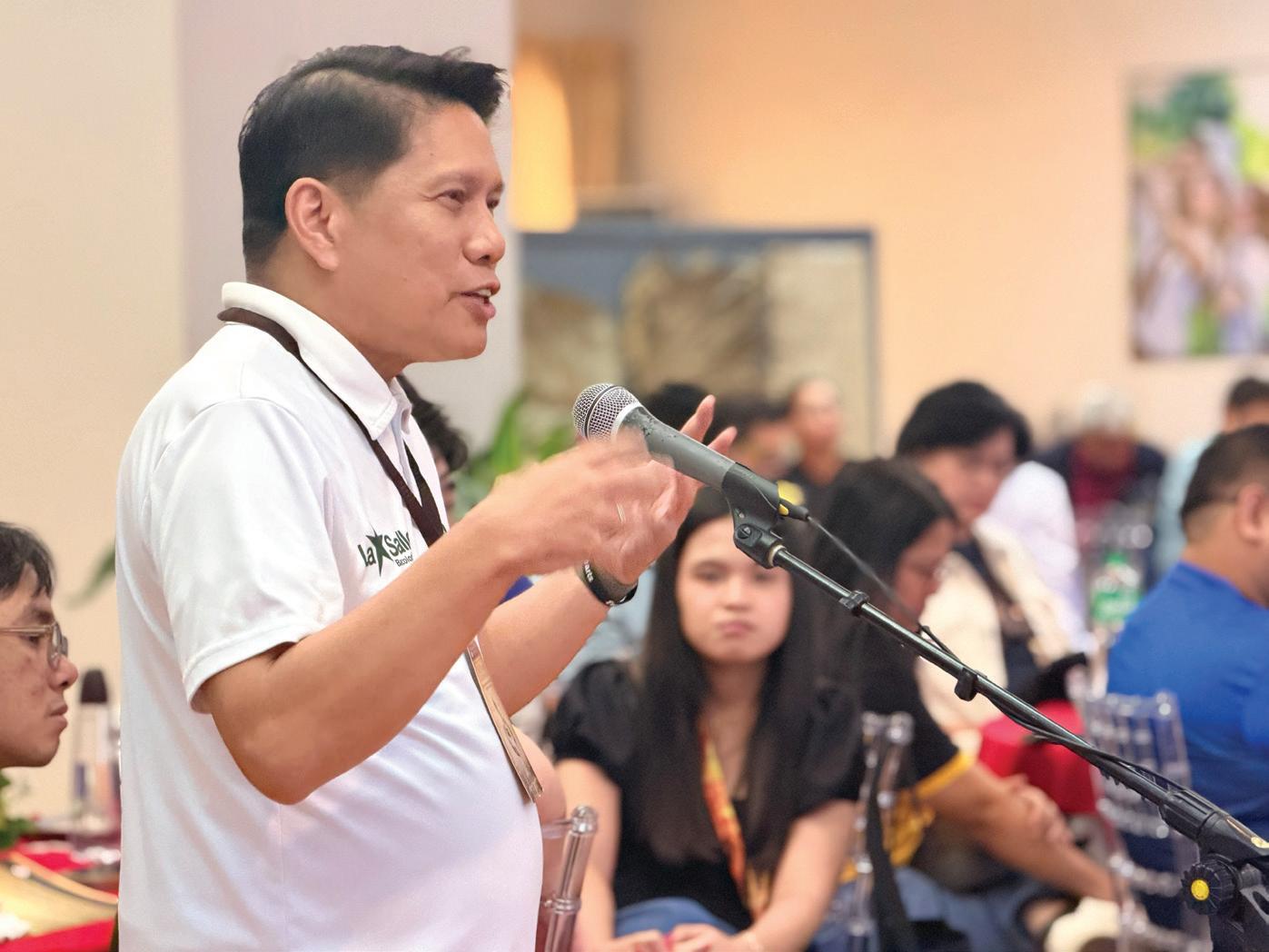
Mr. Edwin Lopez emphasizes the need for ethics and the human guardrail when it comes to the use of AI, noting that quality relational presence remains significant in the way we treat people.
access to resources and accreditation support may be limited. Emphasizing that quality assurance should go beyond compliance, Prof. Seva advocated for cultivating a culture of continuous quality improvement within institutions, one that promotes proactive monitoring, reflective practices, right investments, indepth training, support from top management, and collaborative institutional learning.
Following the morning presentations was a talk on “AI and Ethics: Communion through Presence” delivered by Mr. Edwin Lopez, Executive Secretary of the CBCP Episcopal Commission on Social Communications and Senior Director for Asia-Pacific of the Eternal Word Television Network (EWTN). He addressed the ethical implications of emerging technologies, particularly artificial intelligence, within the context of higher education and society. He emphasized that quality relational presence is the rarest form of communication and that universities carry a social responsibility not only to adopt technological innovations but also to guide students and educators toward ethical, responsible, and human-centered uses of technology that elevate human dignity.
This was followed by a panel discussion with Asst. Prof. Jerralyn T. Padua, MSCS, Assistant to the Rector
for Information and Communications Technology at the University of Santo Tomas, joining Mr. Lopez. They examined the rapidly evolving role of artificial intelligence in higher education, including emerging trends in how both students and educators engage with AI-powered tools such as large language models. Panelists reflected on the opportunities and challenges presented by these technologies, particularly in relation to academic integrity, critical thinking, and meaningful learning. The discussion explored how institutions can foster responsible AI use while maintaining academic standards and integrity, and ensuring that technology enhances rather than replaces deep learning and intellectual engagement.
A community engagement activity followed, where Mr. Dhan Cea of the Naga City Environment and Natural Resources Office and the AdNU Center for Community Development guided the participants in a tree planting activity at the “Forest in Our Midst” site. Two hundred seedlings were planted, and these efforts supported the LGU and AdNU’s joint city regreening and water retention project at Brgy. Carolina, Naga.
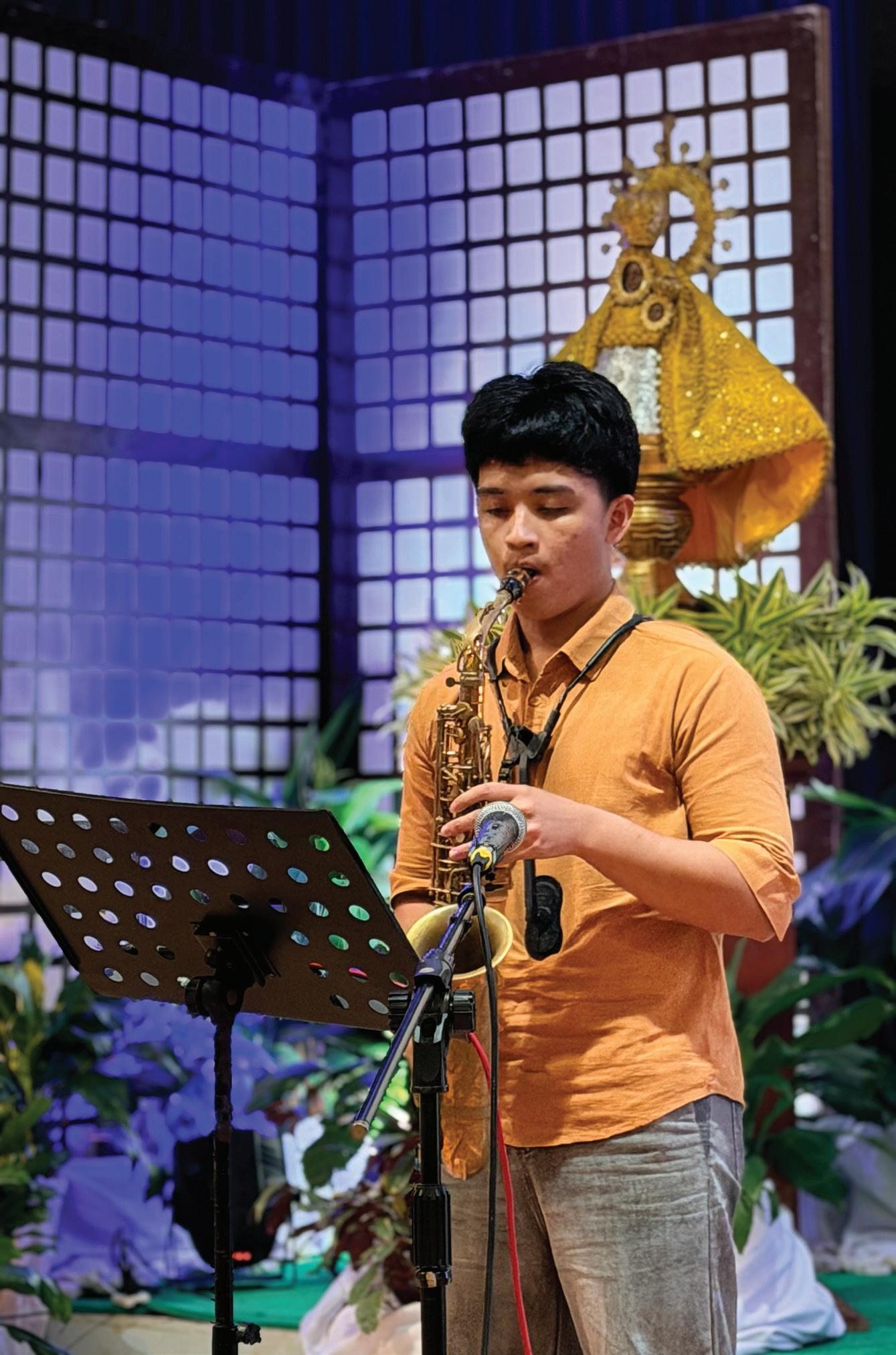
Day 2 ended with a cultural presentation led by AdNU students, including members of the Ignacio Dance Company and musician Sean Axel Alcomendas.
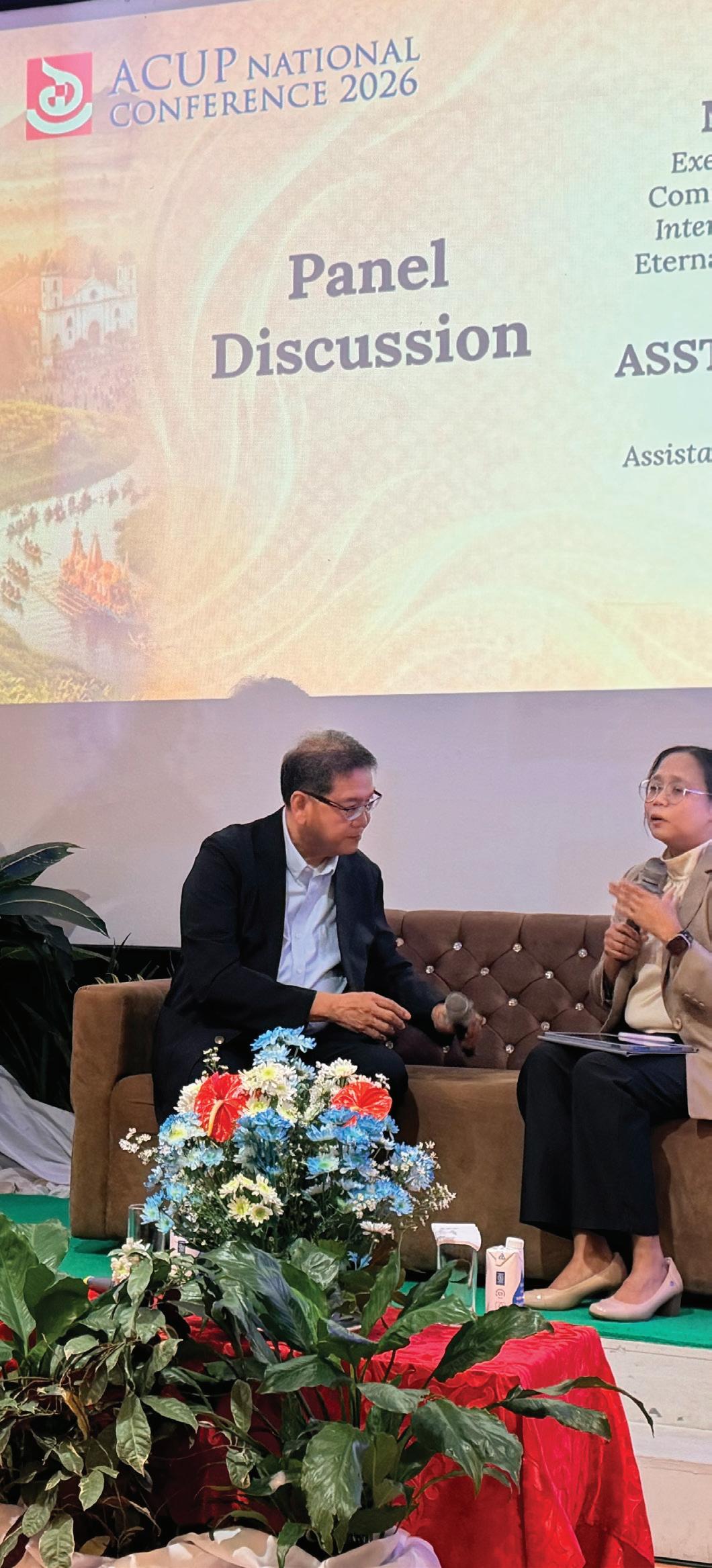
UST Assistant to the Rector Communications Technology Asst. joins Mr. Lopez in a panel discussion, AI Ethics for situations
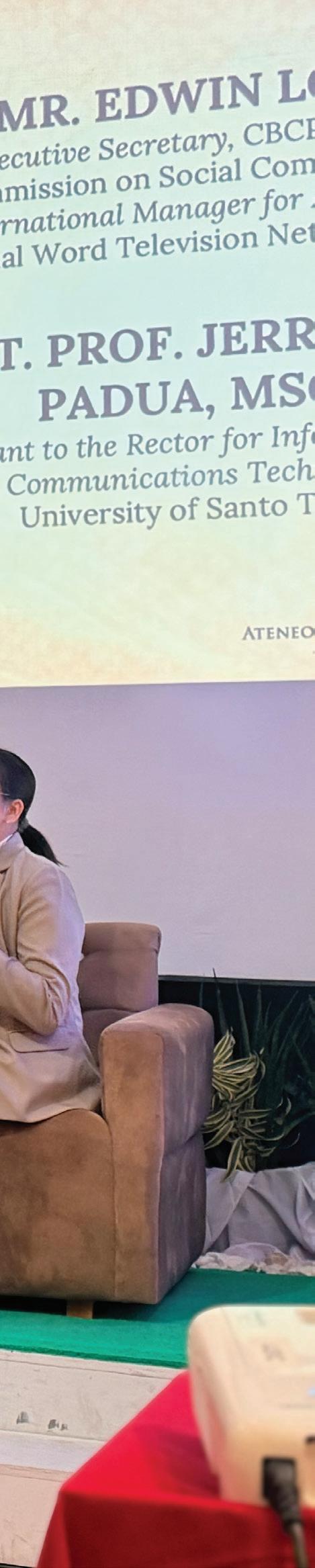
Rector for Information and Asst. Prof.
discussion, contextualizing situations in the academe.
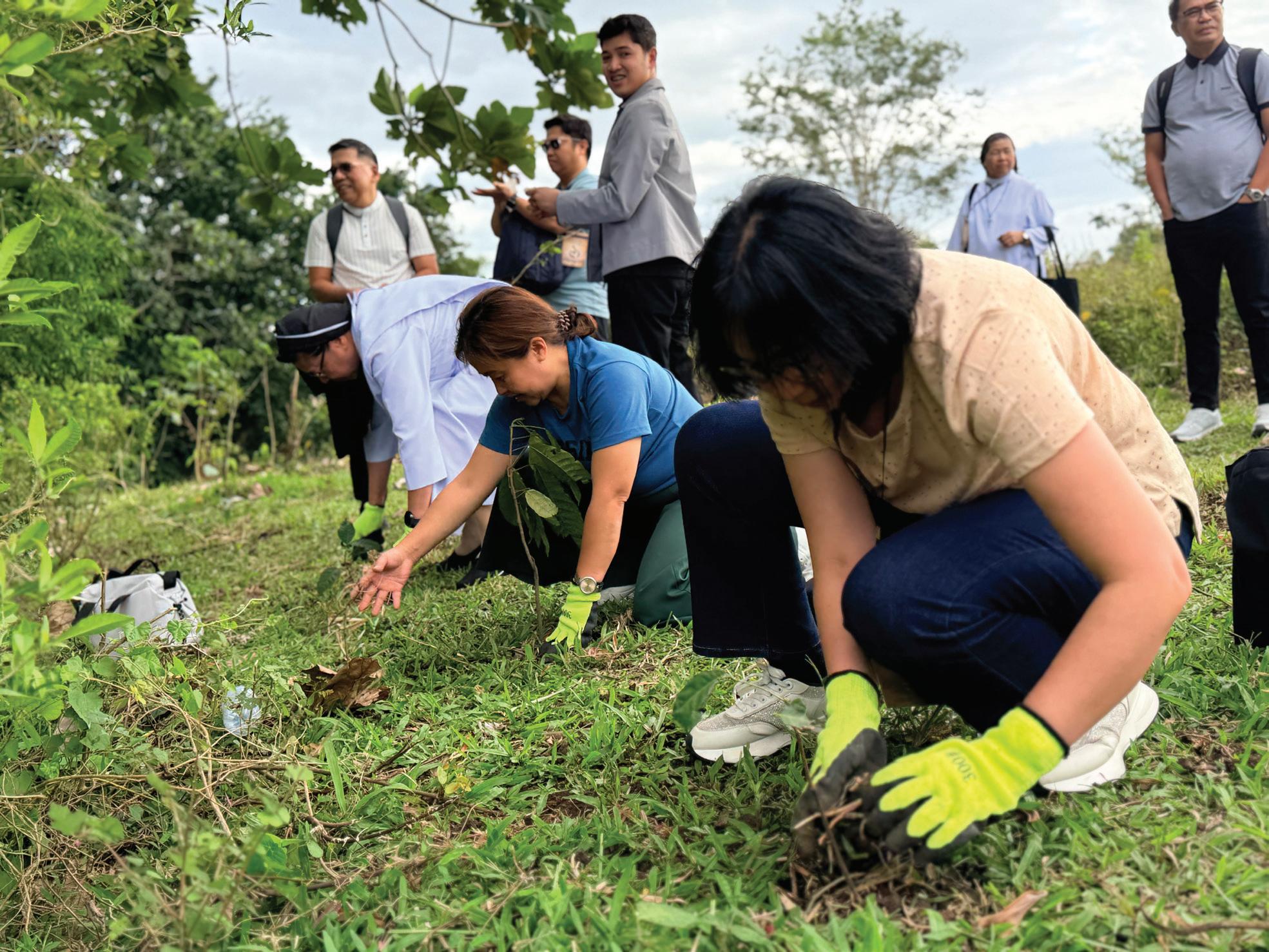
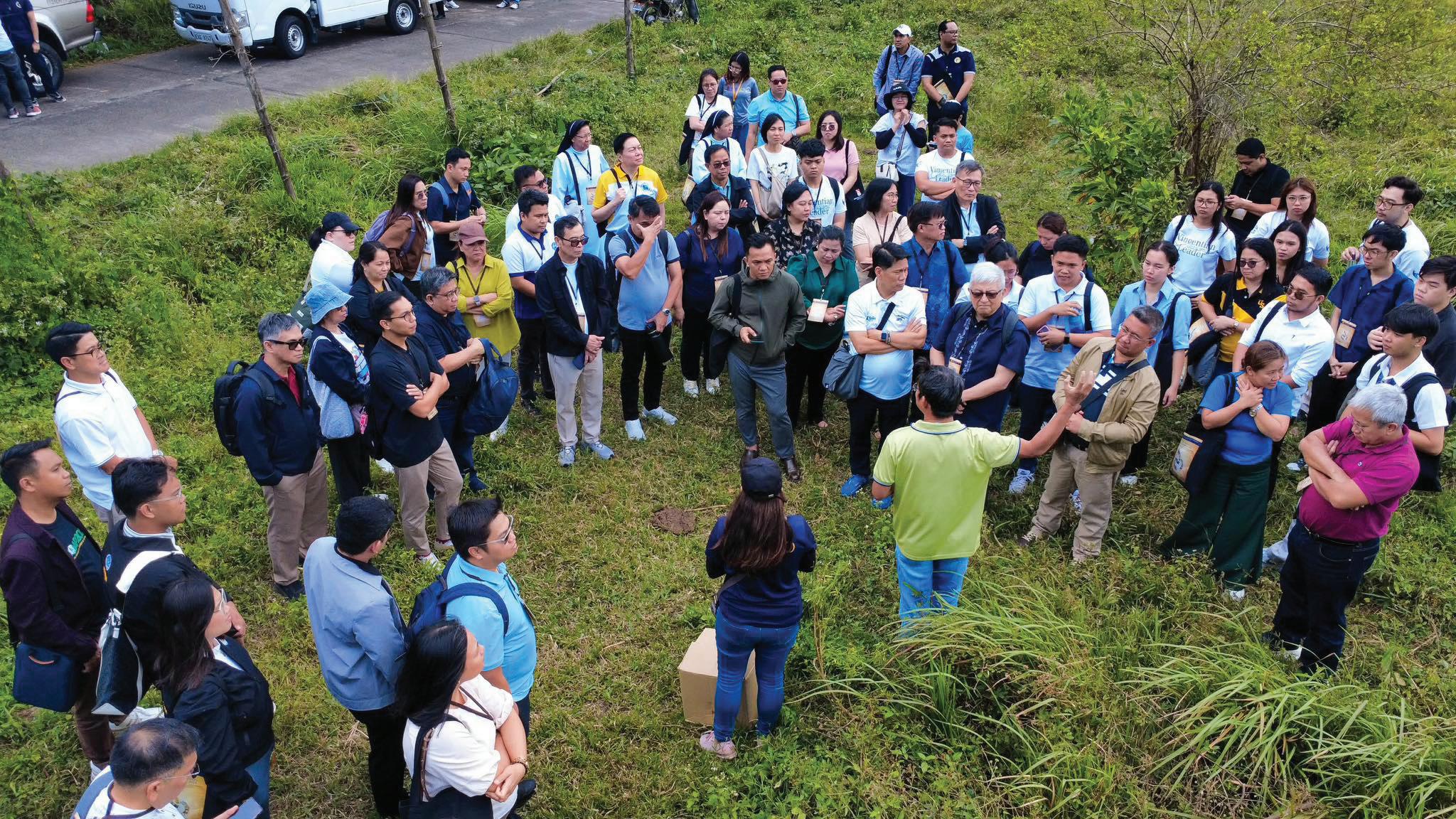
Participants planted trees during the afternoon of Day 2 and contributed to the city re-greening efforts of the
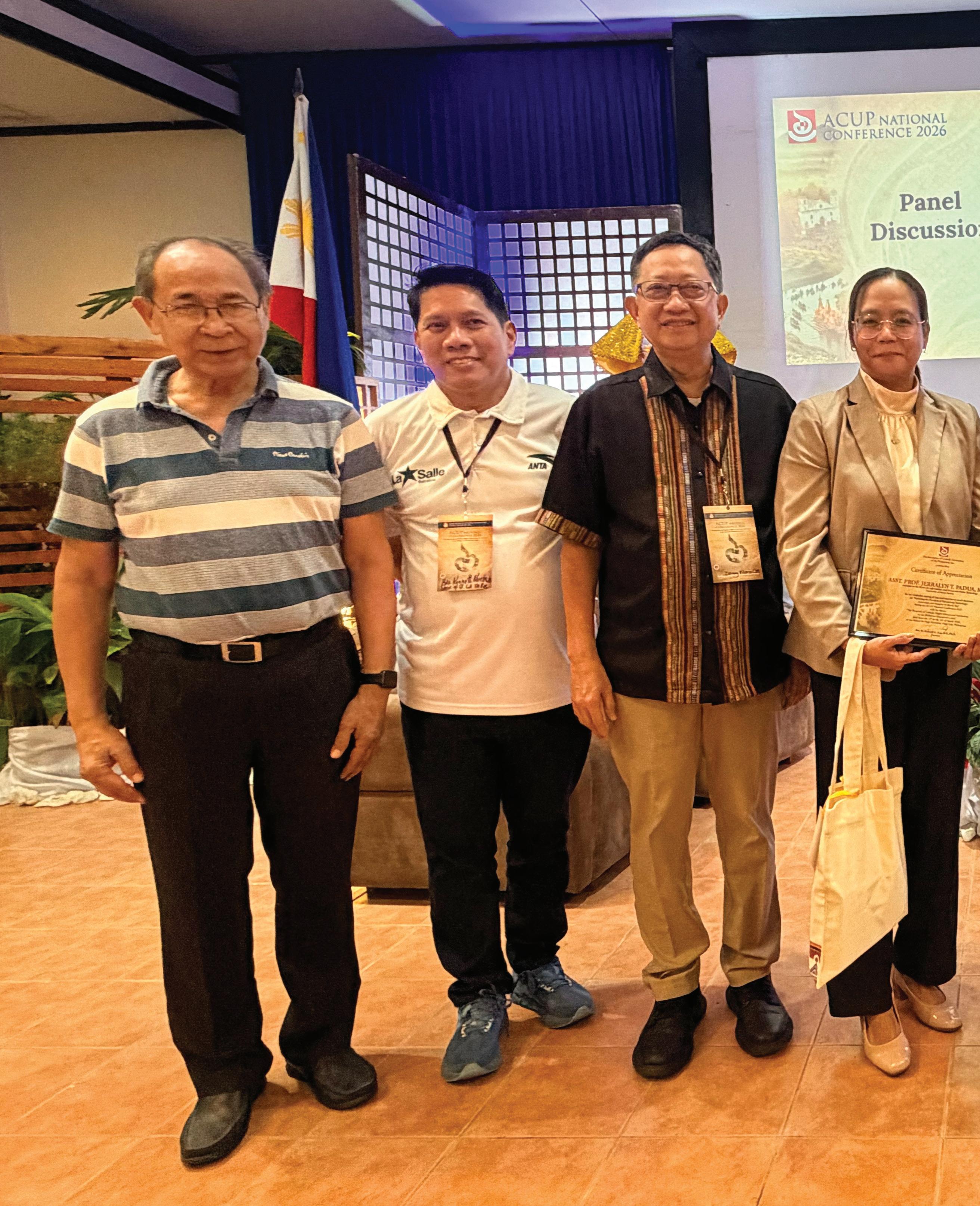
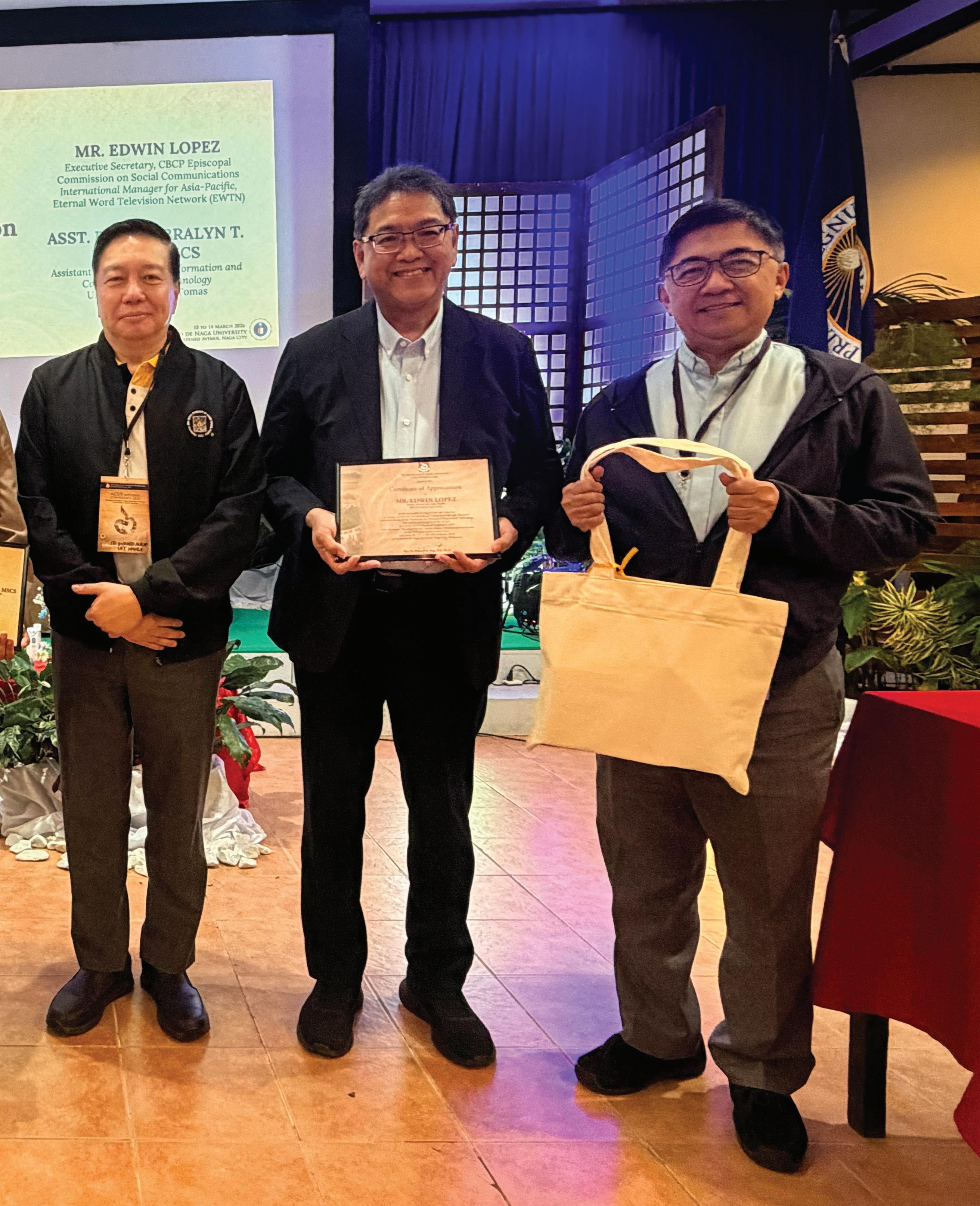
Executive Secretary of the CBCP Episcopal Commission on Social Communications and Senior Director for Asia-Pacific of the Eternal Word Television Network (EWTN) Mr. Edwin Lopez (sixth from left) and UST Assistant to the Rector for Information and Communications Technology Asst. Prof. Jerralyn Padua (fourth from left) with the ACUP Board.
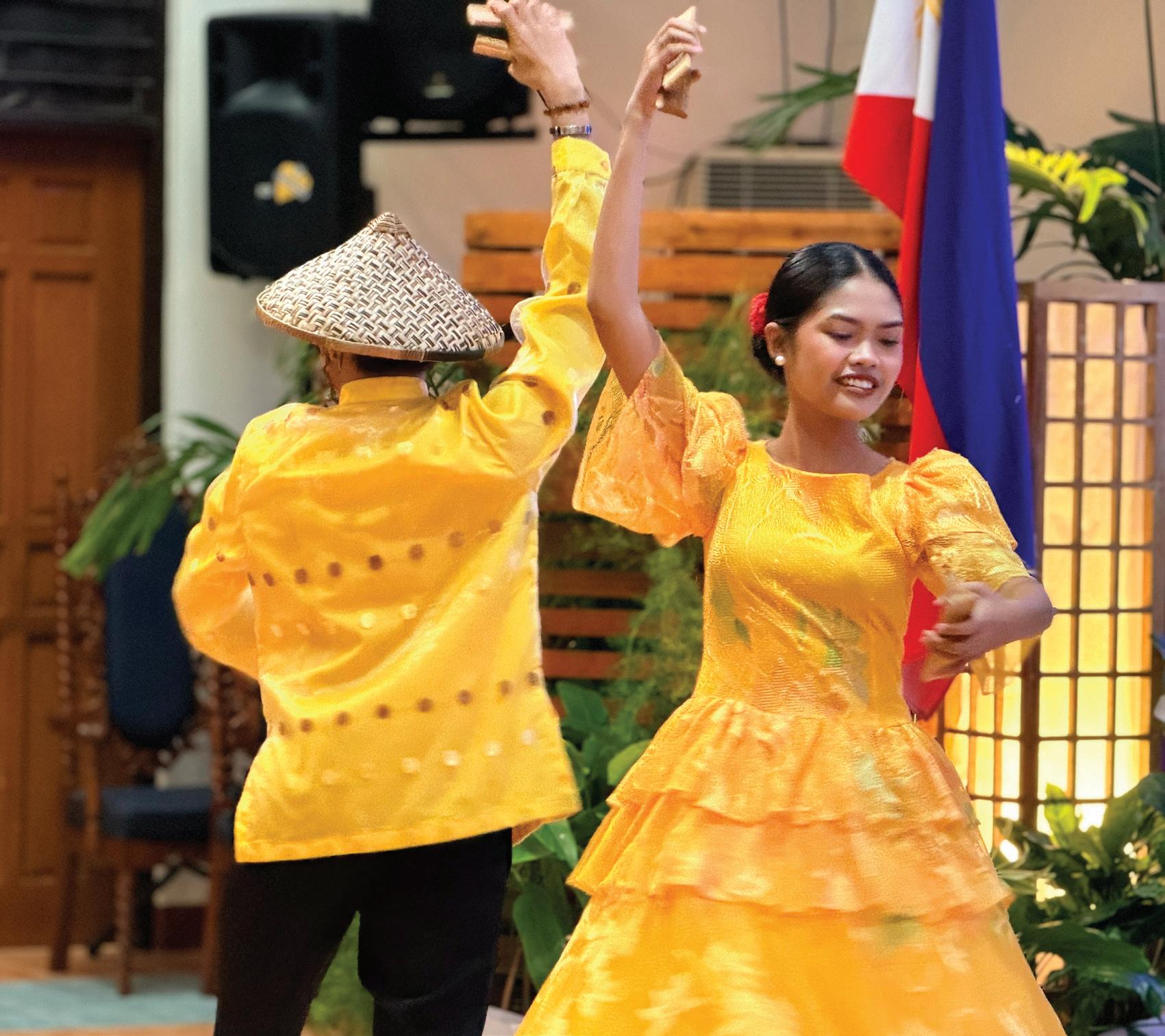
Members of the Ignacio Dance Company (top) and musician Mr. Sean Axel Alcomendas (right), students of AdNU, showcase their talents and Bikolano heritage during the cultural show on Day 2.
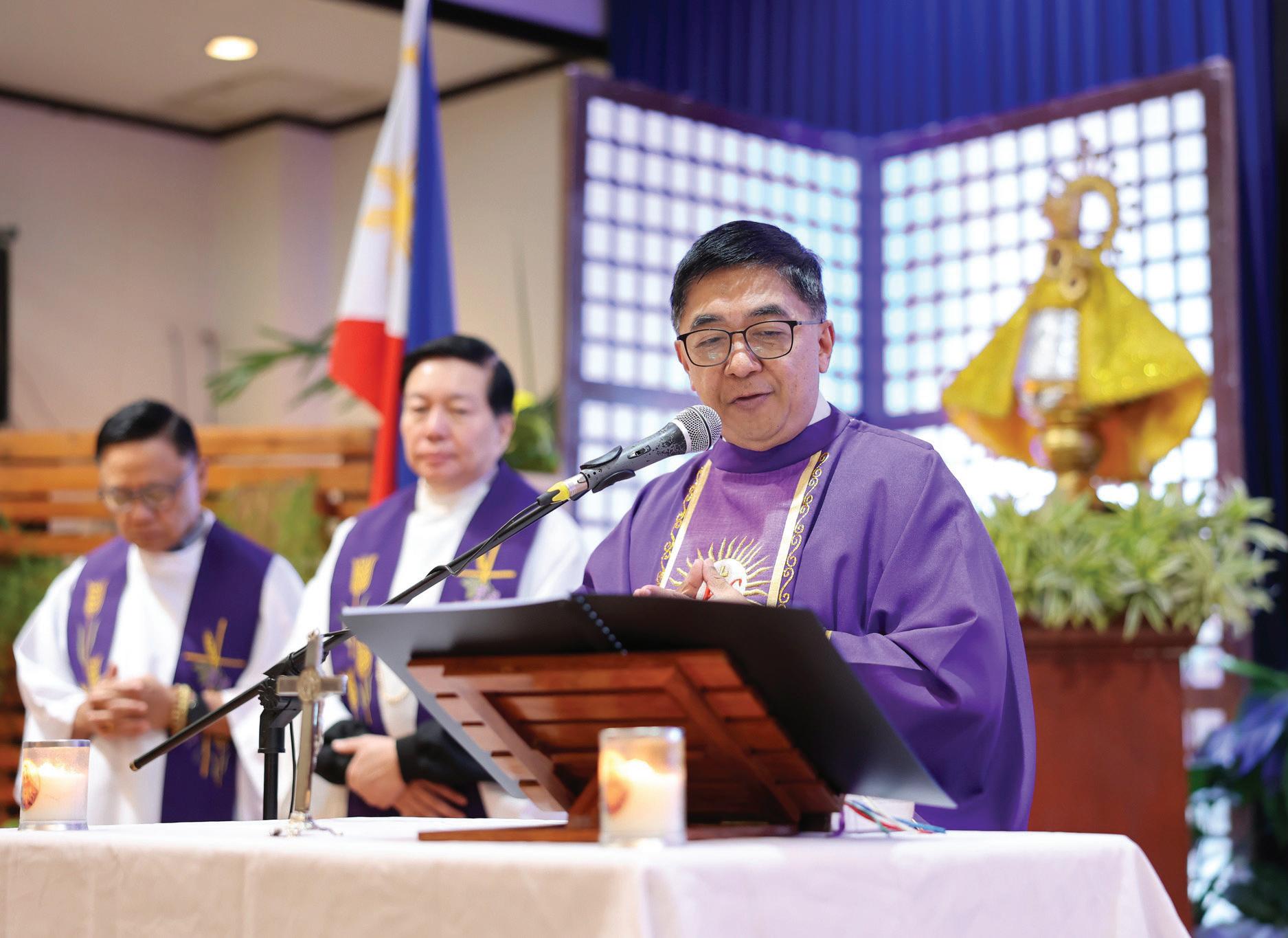
The ACUP Vice President and San Beda University Rector-President Rev. Fr. Aloysius Maranan, OSB (presides over the Day 3 Eucharistic Celebration.
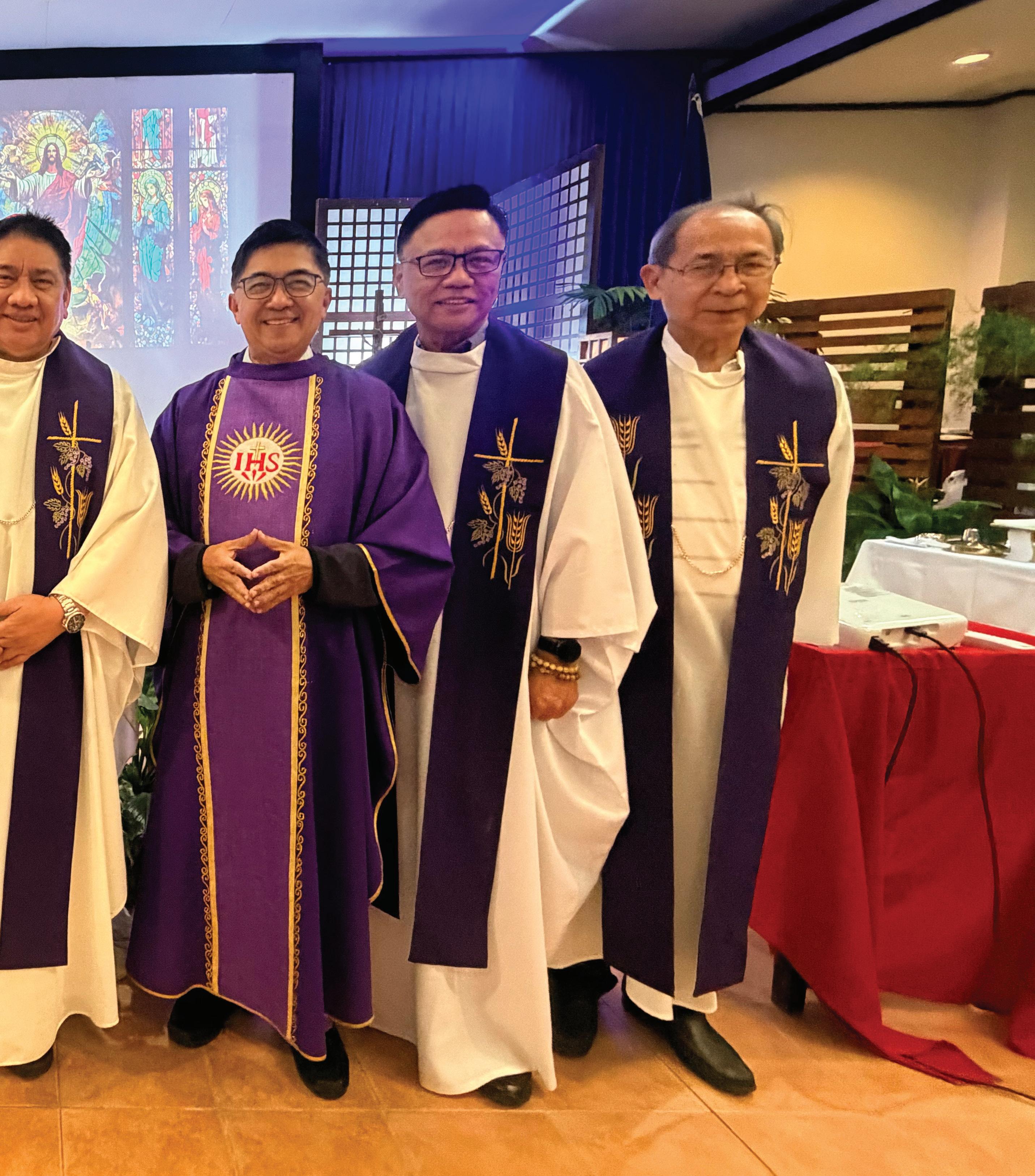
The third and final day of the 2026 ACUP National Conference started with a Eucharistic Celebration with ACUP Vice President and San Beda University Rector-President Rev. Fr. Aloysius Maranan, OSB serving as presider, while the CBCP Episcopal Commission on Catholic Education (ECCE) Chair H.E. Most Rev. Charlie Inzon, OMI, D.D., was among the concelebrants.
Participants then attended simultaneous workshops focusing on key areas of Catholic higher education.
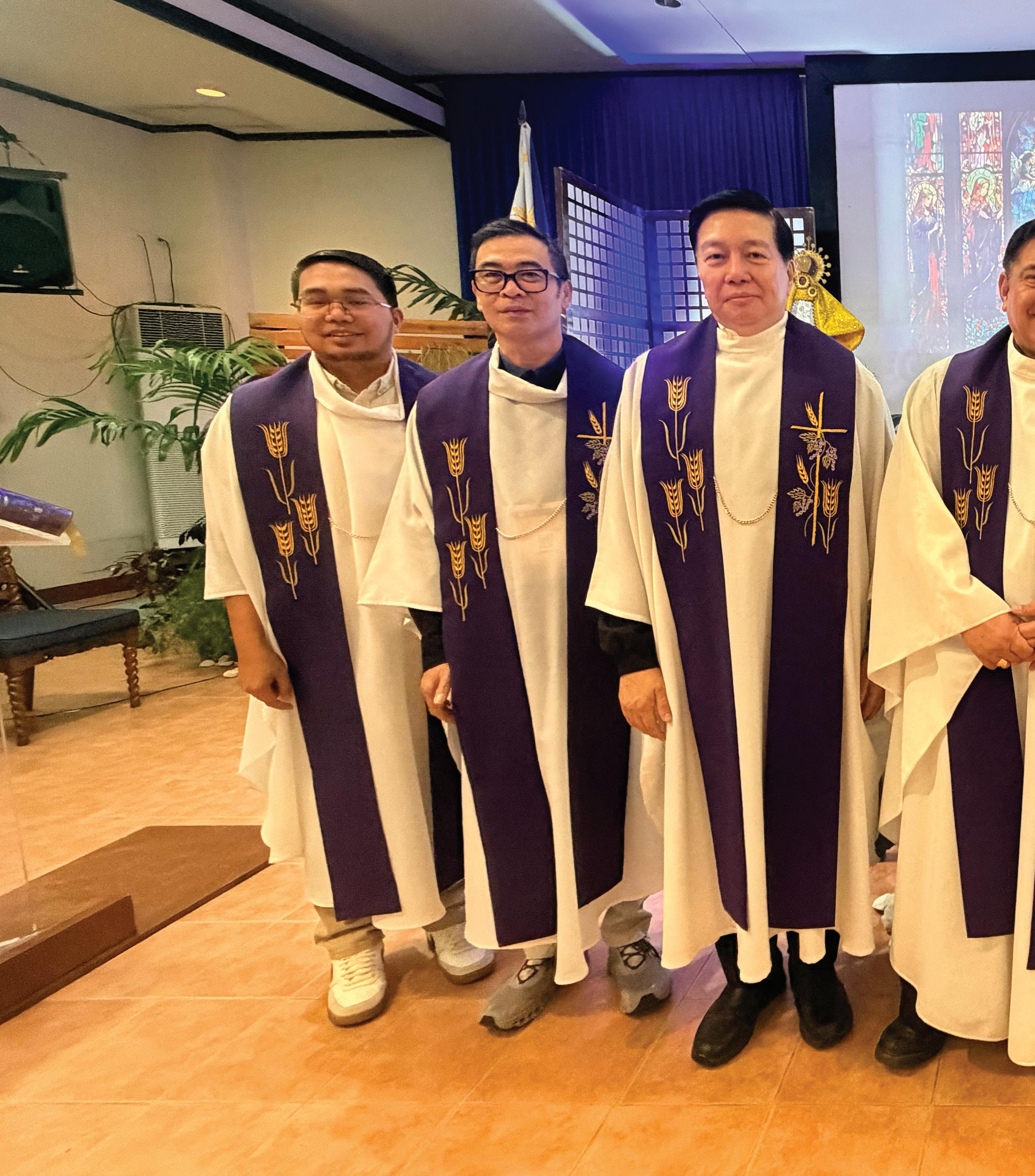
The ACUP Vice President and San Beda University Rector-President Rev. Fr. Aloysius Maranan, OSB (fifth from left) with the Day 3 Mass concelebrants, which includes the CBCP Episcopal Commission on Catholic Education (ECCE) Chair H.E. Most Rev. Charlie Inzon, OMI, D (center)
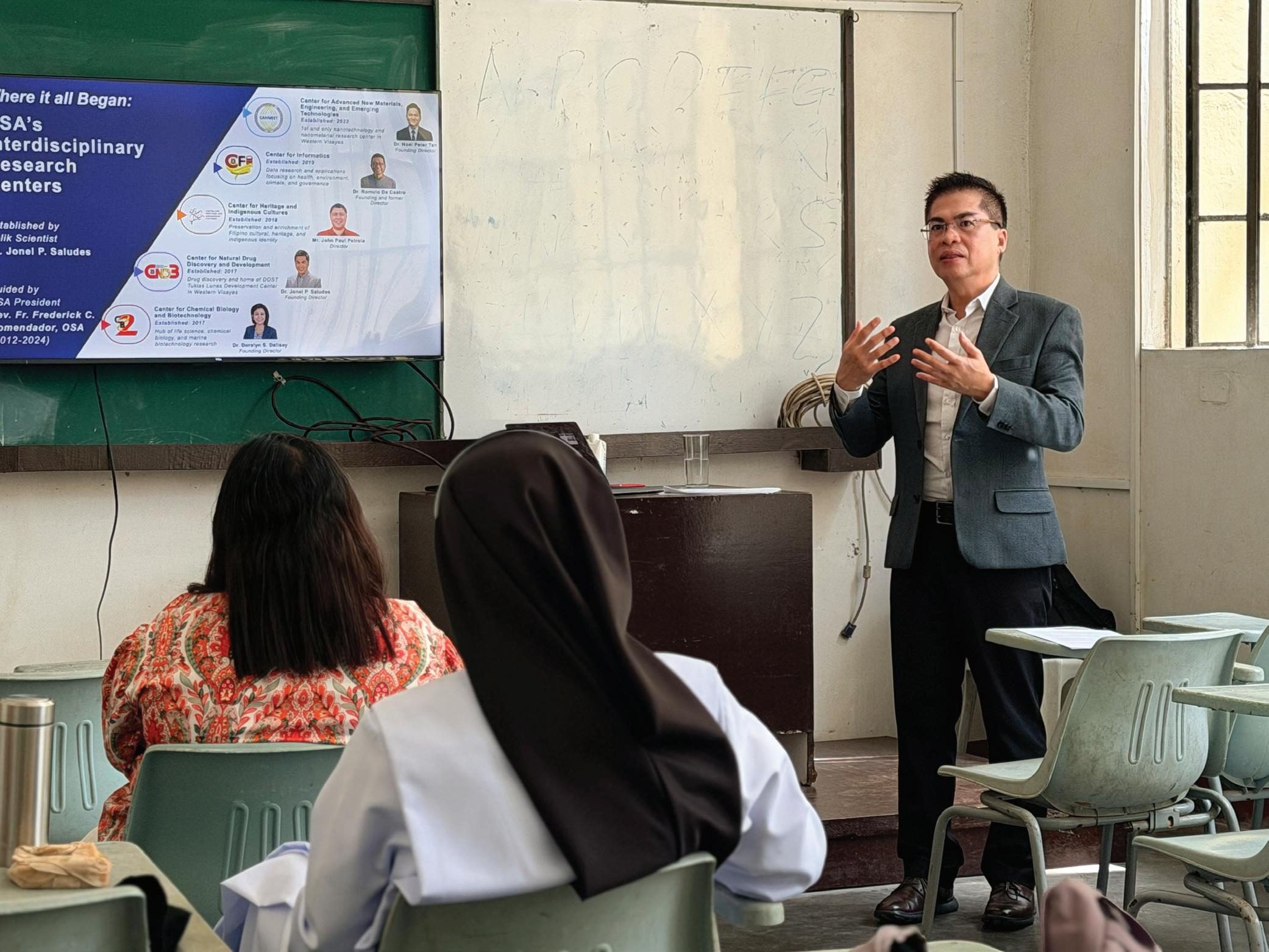
Dr. Jonel Saludes leads the workshop on Interdisciplinary Research
“Interdisciplinary Research in Catholic HEIs”, facilitated by Dr. Jonel P. Saludes (Vice President for Research and Innovation, University of San Agustin), explored ways to make research more responsive to the needs of local communities, particularly the underserved, while encouraging collaboration among research offices, ethics committees and funding units. The session also identified opportunities for ACUP member institutions to pool expertise and develop interdisciplinary research partnerships.
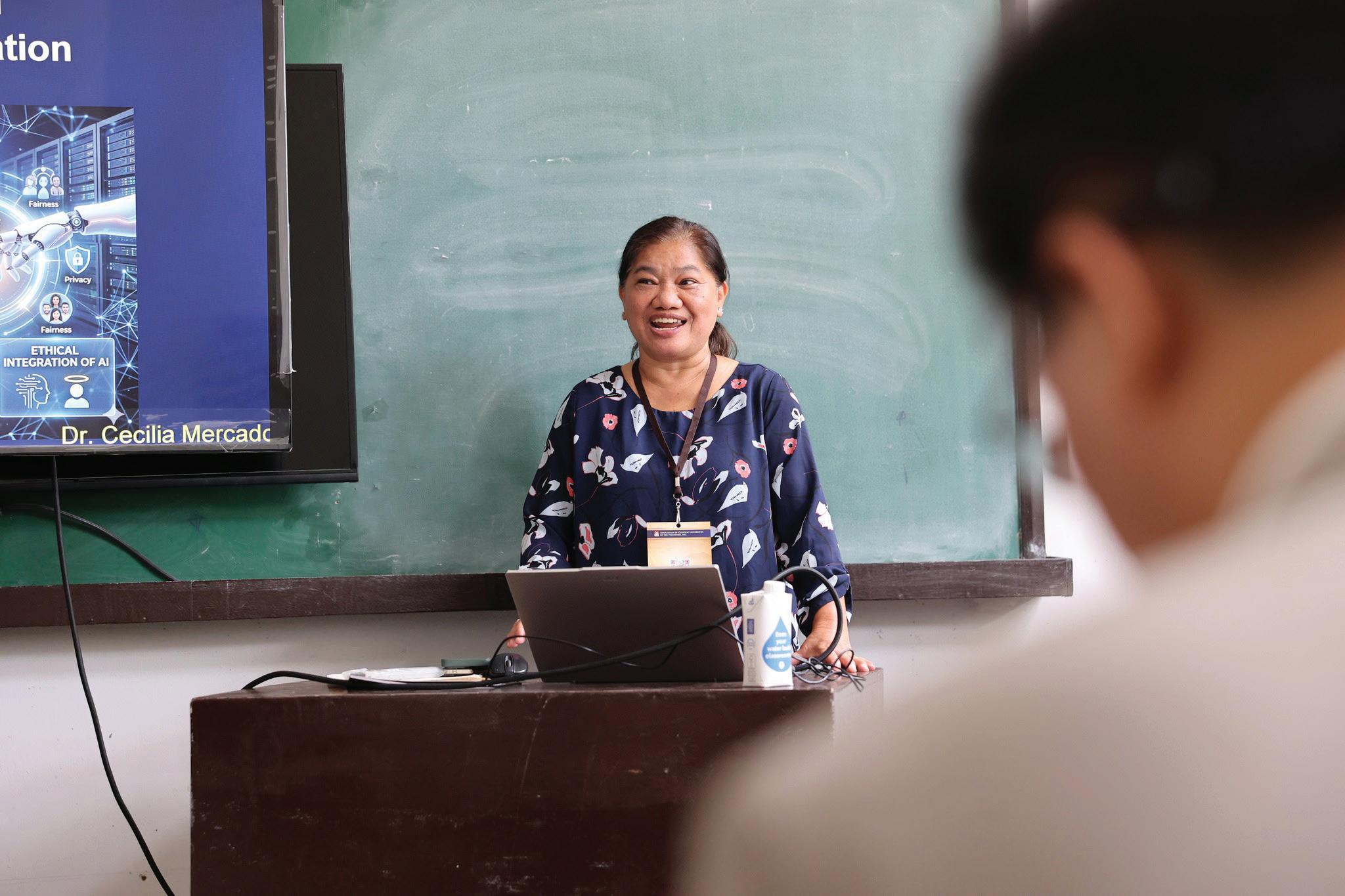
“Digital Transformation and Ethical AI Integration” facilitated by Dr. Cecilia Mercado (Chief Information Technology Officer, Saint Louis University), examined how institutions can responsibly integrate artificial intelligence while remaining faithful to their mission of forming competent, ethical, and socially responsible Filipino professionals. The discussion addressed ethical concerns such as environmental impact, energy consumption, algorithmic bias, data privacy, and overreliance on automated systems, and highlighted how Catholic moral and social teachings, including the document Antiqua et Nova, can guide governance and policy development in universities for AI use that uplifts human dignity and academic integrity.
Dr. Cecilia Mercado facilitates the workshop on Digital Transformation and Ethical AI Integration
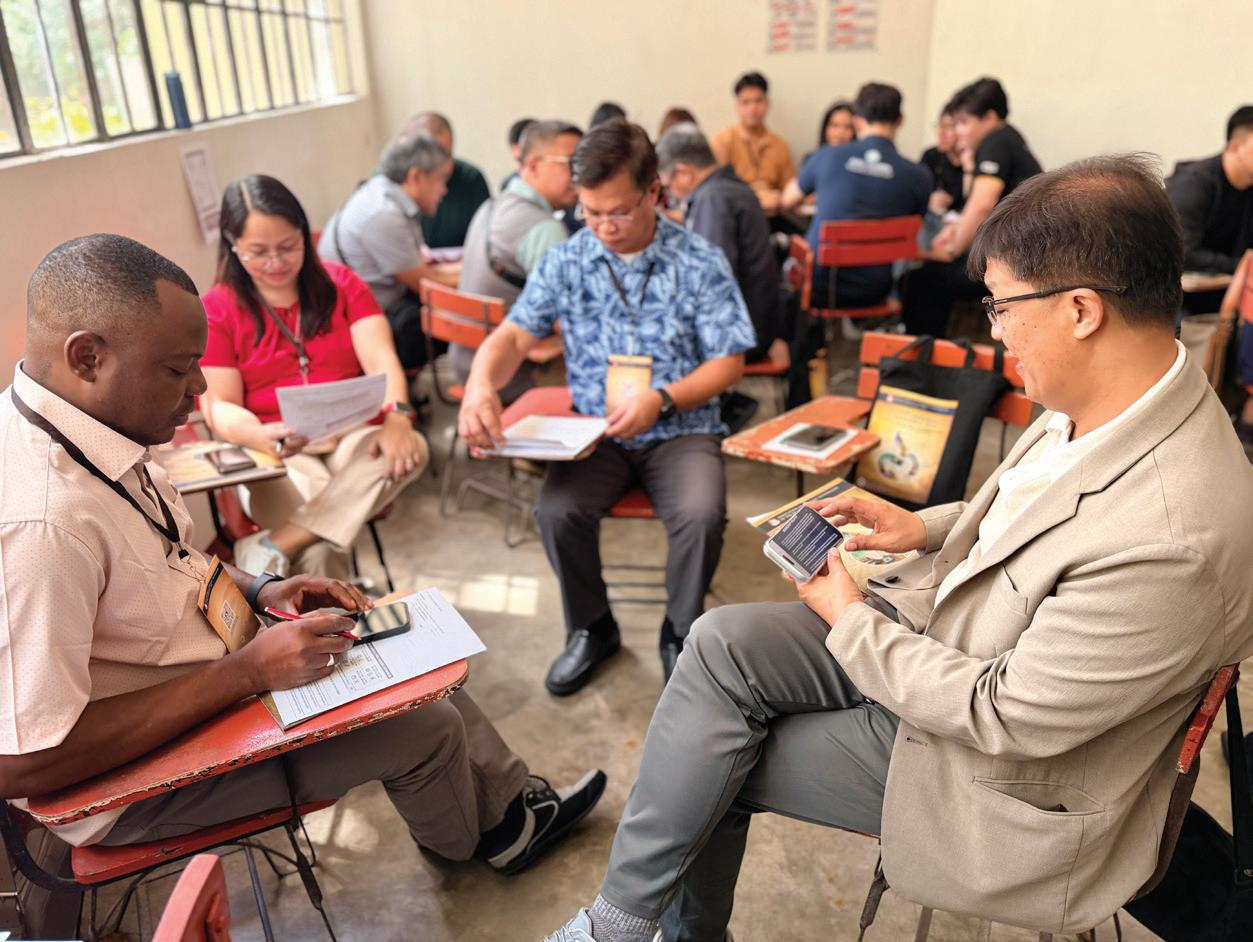
Participants discuss the guide questions during the workshop
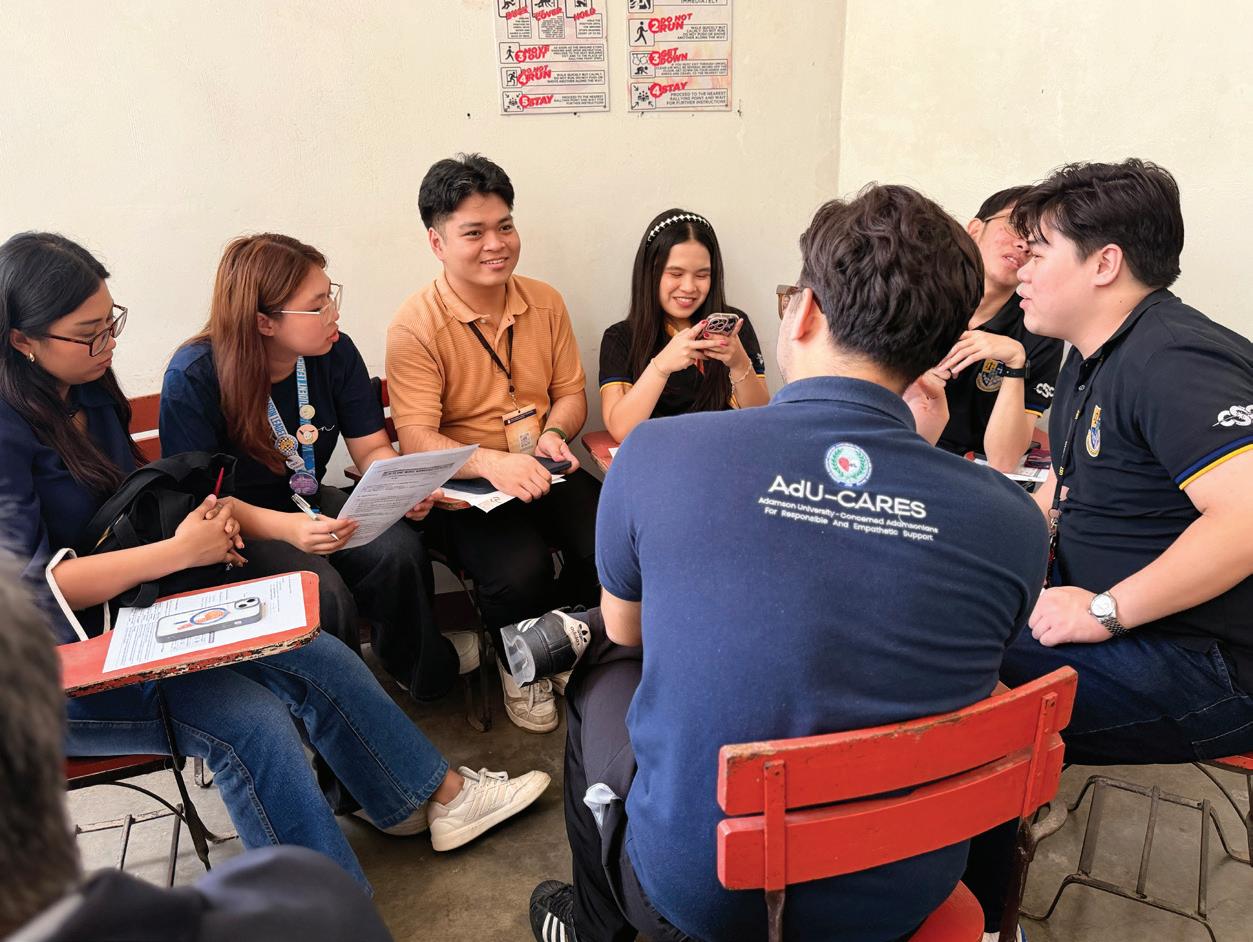
Students from different universities gather in a group to coordinate their workshop outputs
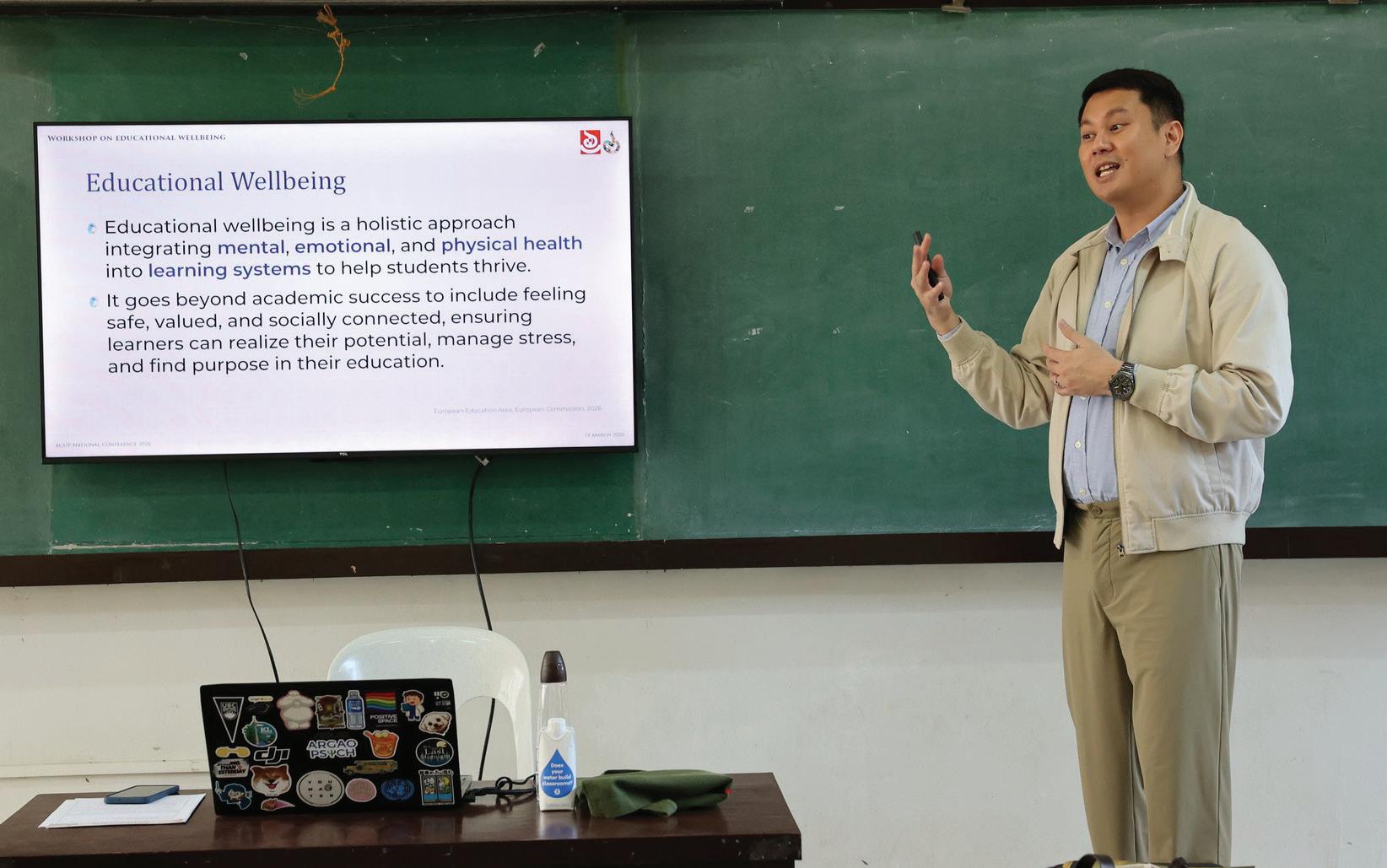
“Educational Well-being” led by Dr. Renz Christian Argao (President and CEO of Argao Health Inc.), focused on strengthening the well-being of students, academic staff, and administrators through institutional policies and programs. The session also discussed methods for assessing the effectiveness of well-being initiatives and identifying strategies, resources, and support systems that promote mental health and overall wellness within the academic community.
Following the workshops, participants gathered for a long-term direction setting in light of the Jubilee of Redemption in 2033, marking the 2000th anniversary of the Passion, Death, and Resurrection of Jesus Christ titled “The Future of Catholic Higher Education in the Philippines: New Maps, One Synodal Mission” delivered by H.E. Most Rev. Charlie M. Inzon, OMI, D.D., Chair of the CBCP Episcopal Commission on Catholic Education and Archbishop of Cotabato.
The final talk of the conference was a long-term direction setting on the future of Catholic Higher Education delivered by H.E. Most Rev. Charlie M. Inzon, OMI, D.D., Chair of the CBCP Episcopal Commission on Catholic Education and Archbishop of Cotabato.
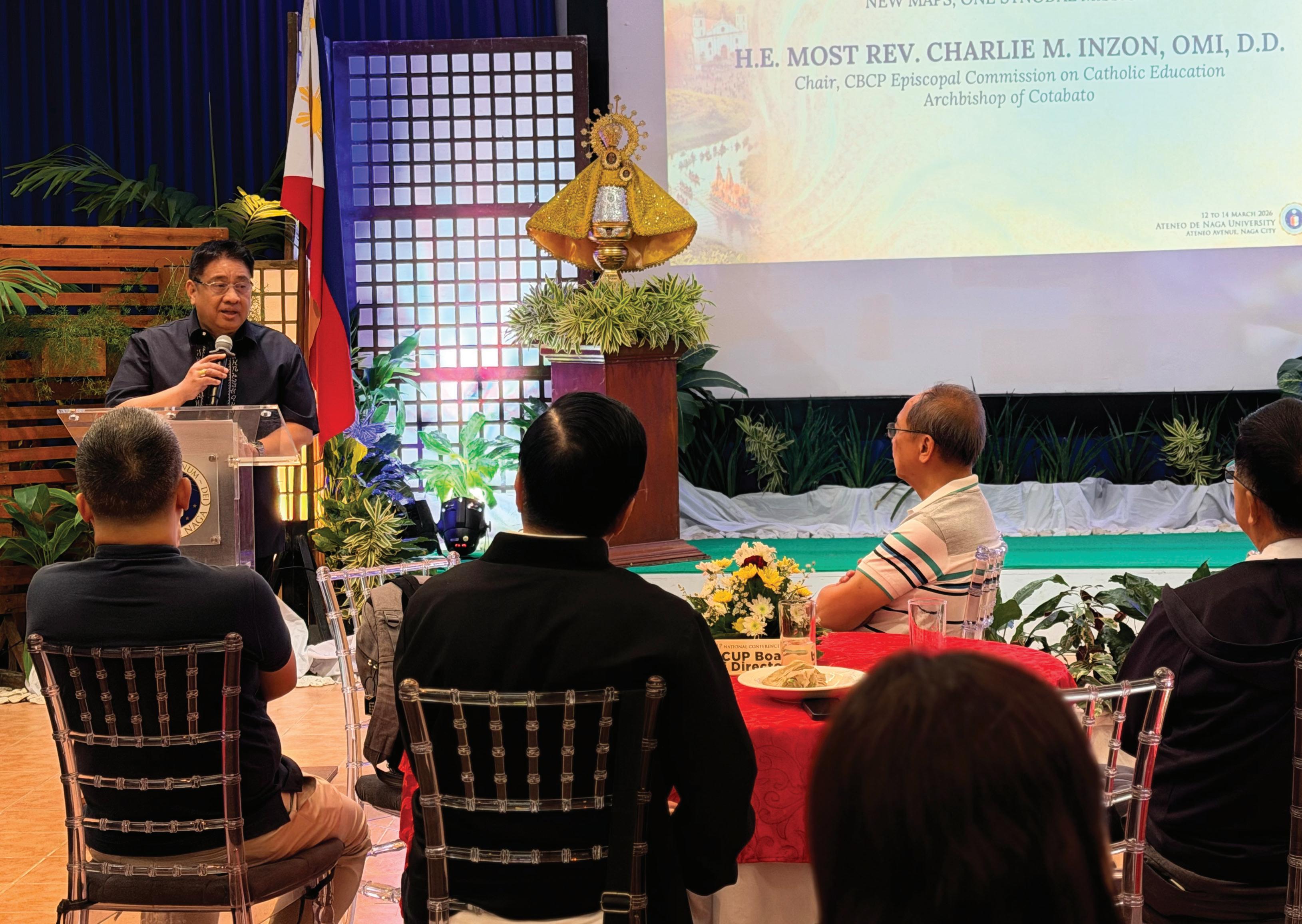
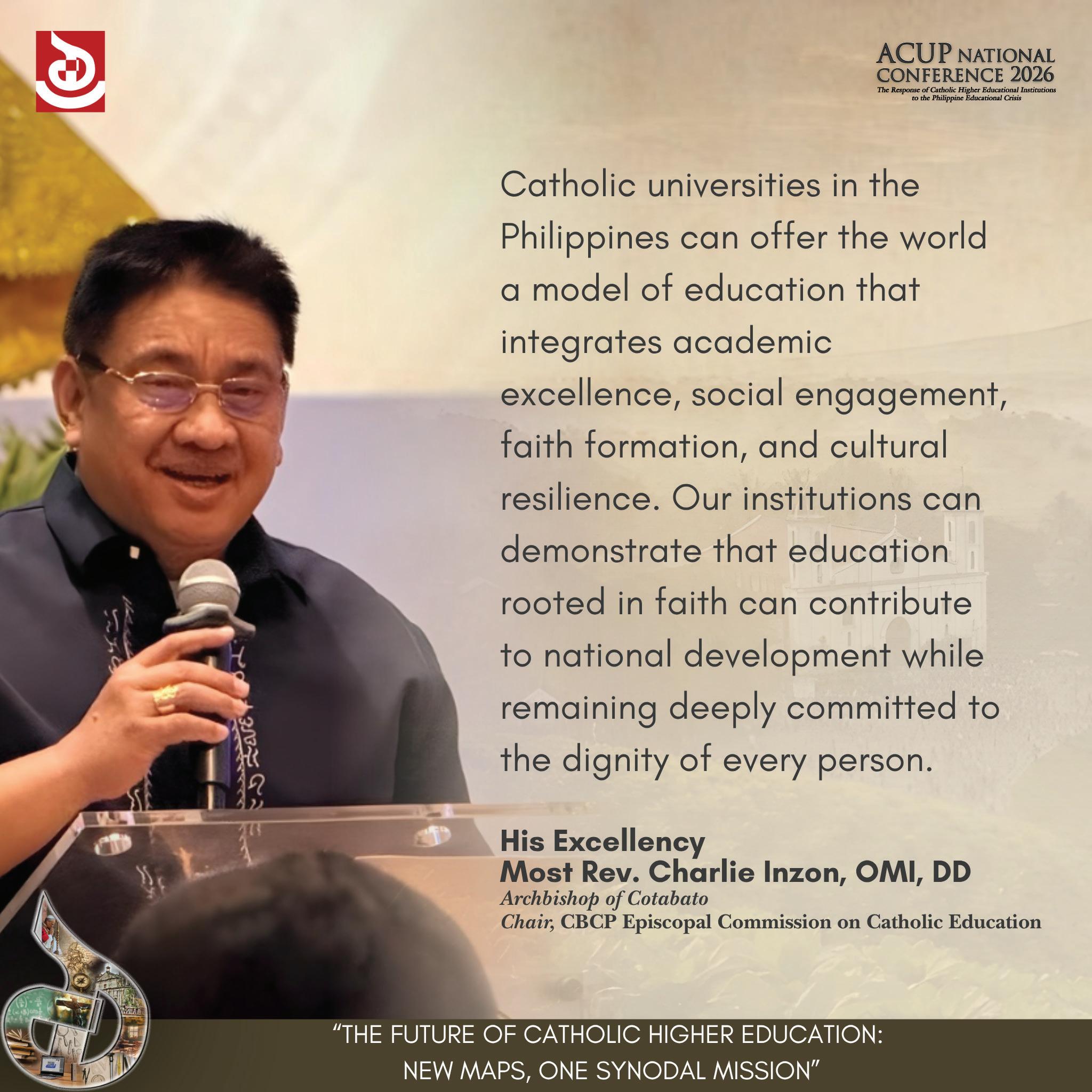
Archbishop Inzon mentioned five directions for Catholic schools to take toward preparing for the Jubilee of Redemption: First is to form a community where faith and reason would dovetail together. Next, Catholic universities should not be separated from the daily life of the people for they should lead to social transformation. Third, form graduates who possess intellectual competence, moral integrity, social responsibility, and spiritual depth. Fourth, innovation, such as AI integration and other digital technologies must be guided by ethics. Fifth, the Catholic university of the future must be part of a synodal network of collaboration. The challenges of the future
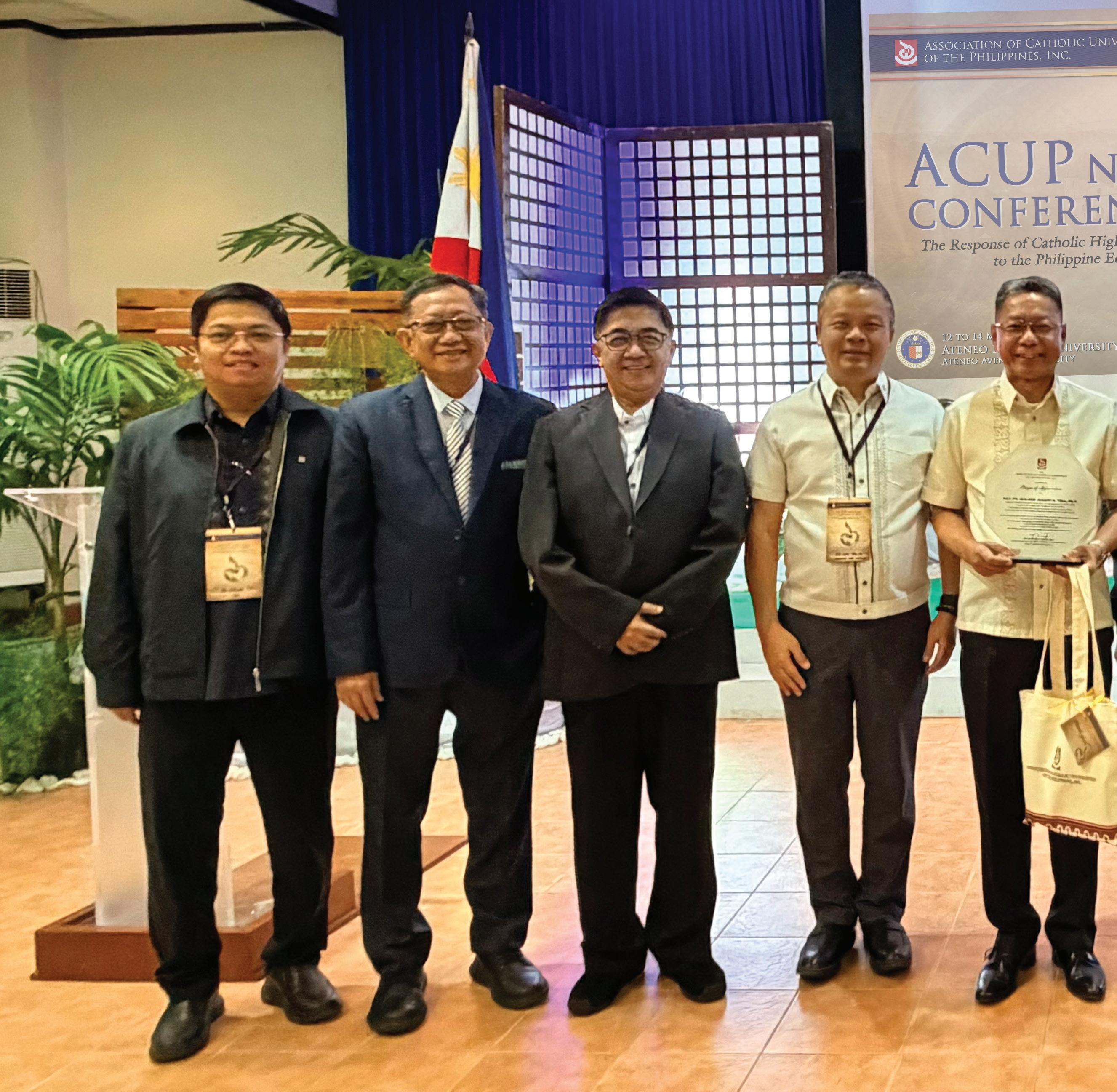
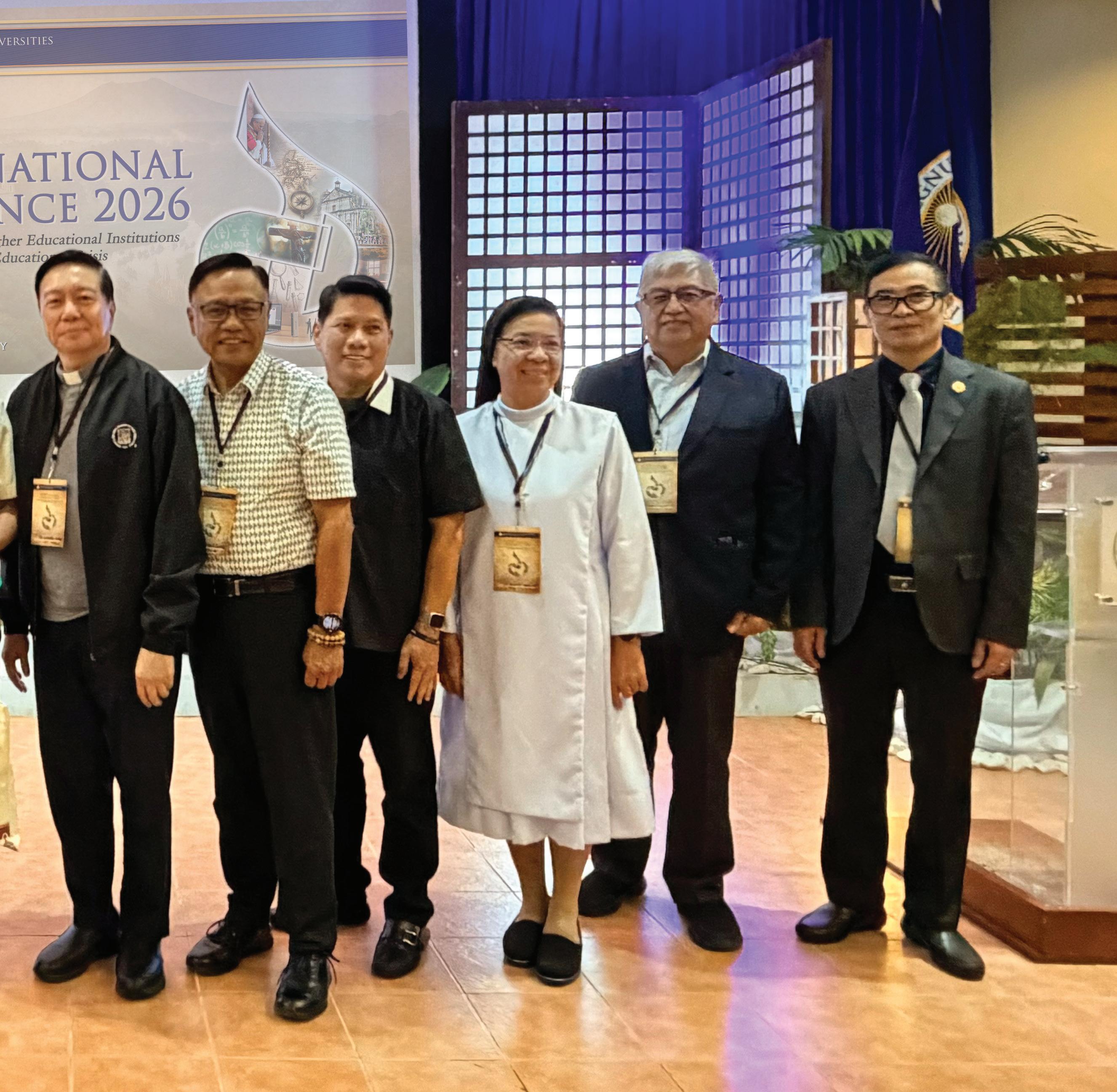
H.E. Most Rev. Charlie M. Inzon, OMI, D.D. (fourth from left), Chair of the CBCP Episcopal Commission on Catholic Education and Archbishop of Cotabato receives his certificate and token from Rev. Fr. Francisco Estepa, SVD, Rev. Fr. Aristotle Dy, SJ, Rev. Fr. Richard Ang, O.P., Rev. Fr. Aloysius Maranan, OSB, and Rev. Fr. Gilbert Sales, CICM
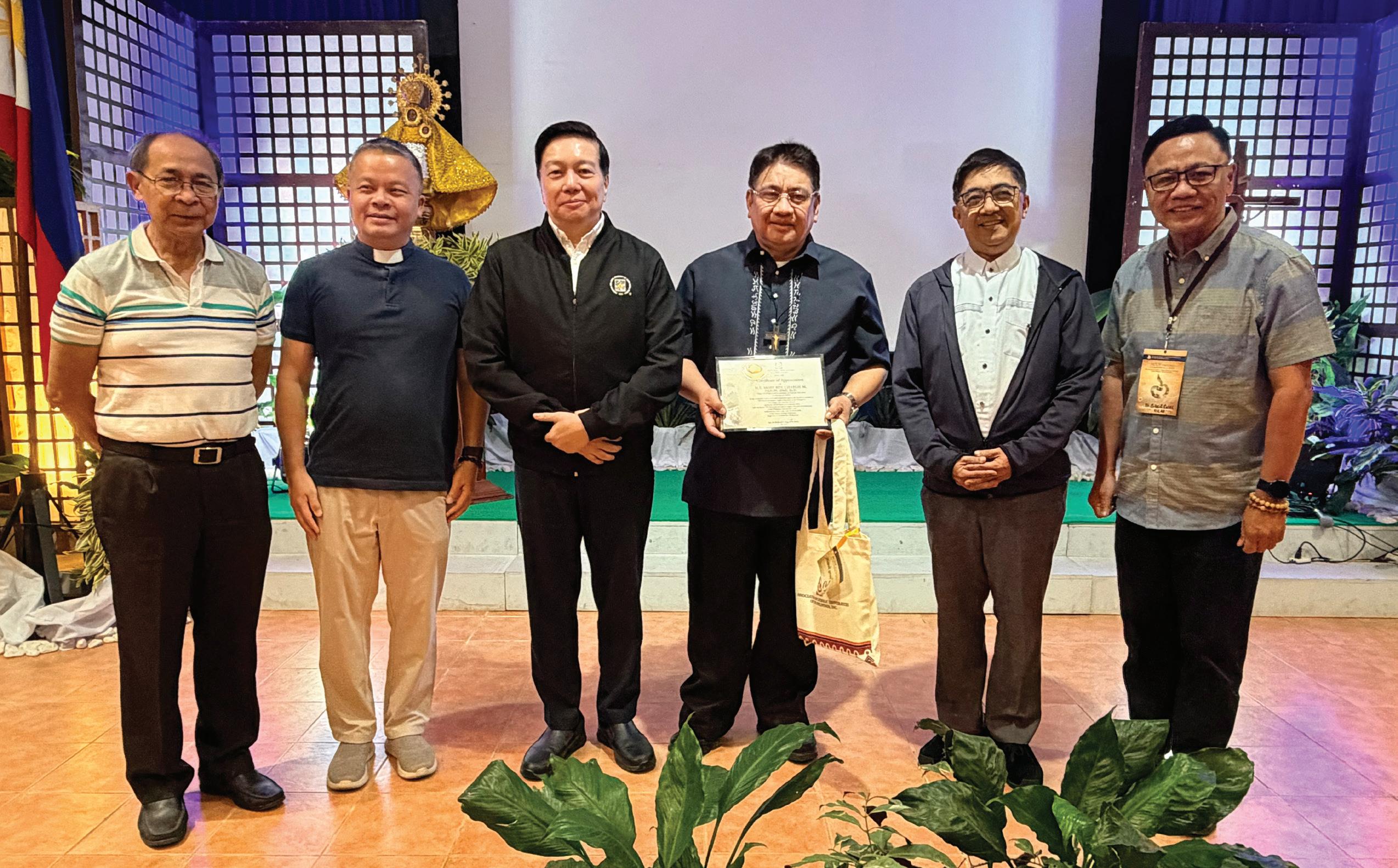
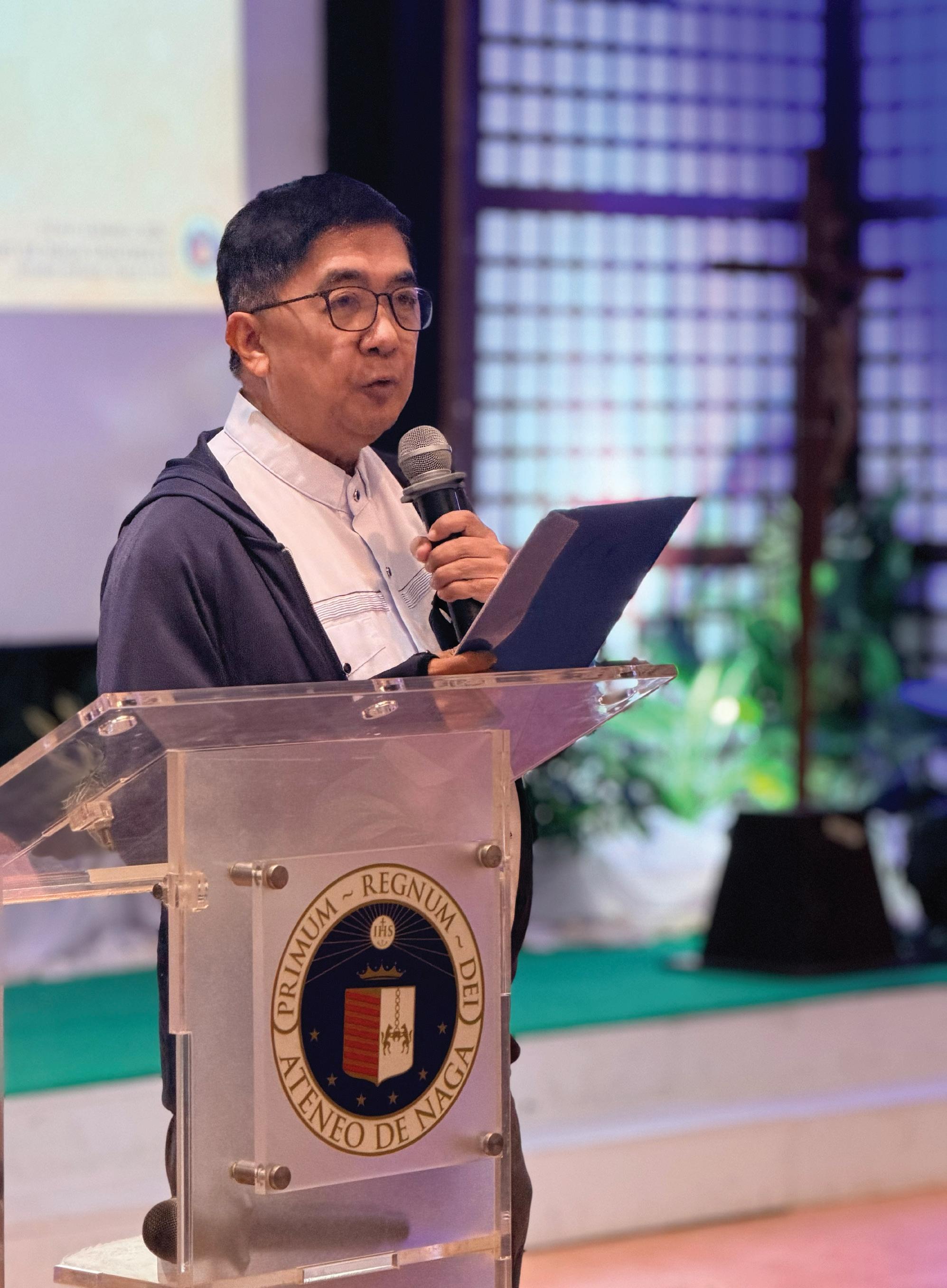
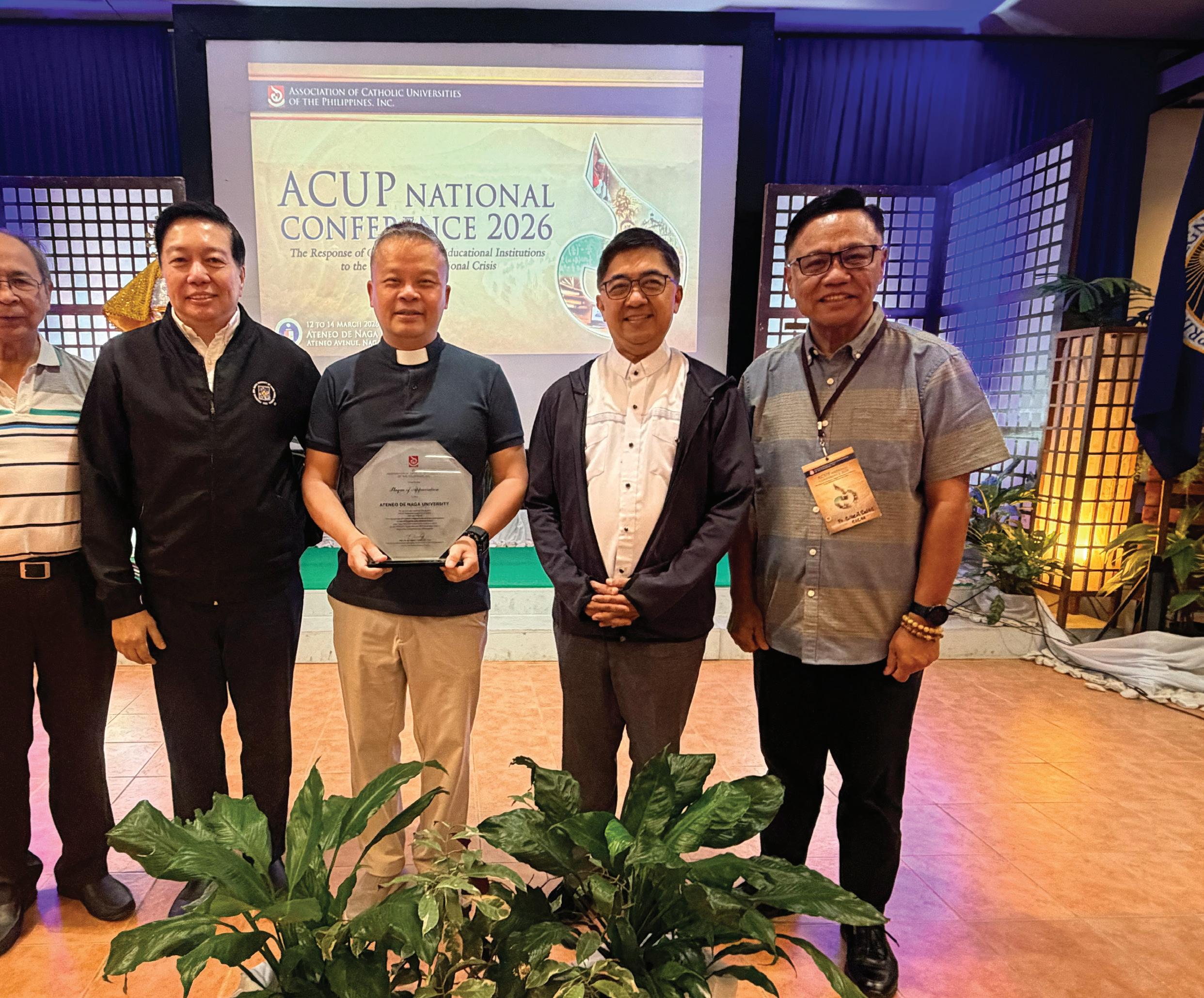
ACUP showed its profound gratitude to the Ateneo de Naga University (AdNU) for hosting the 2026 National Conference through a Plaque of Appreciation, received by AdNU President Rev. Fr. Aristotle Dy, SJ
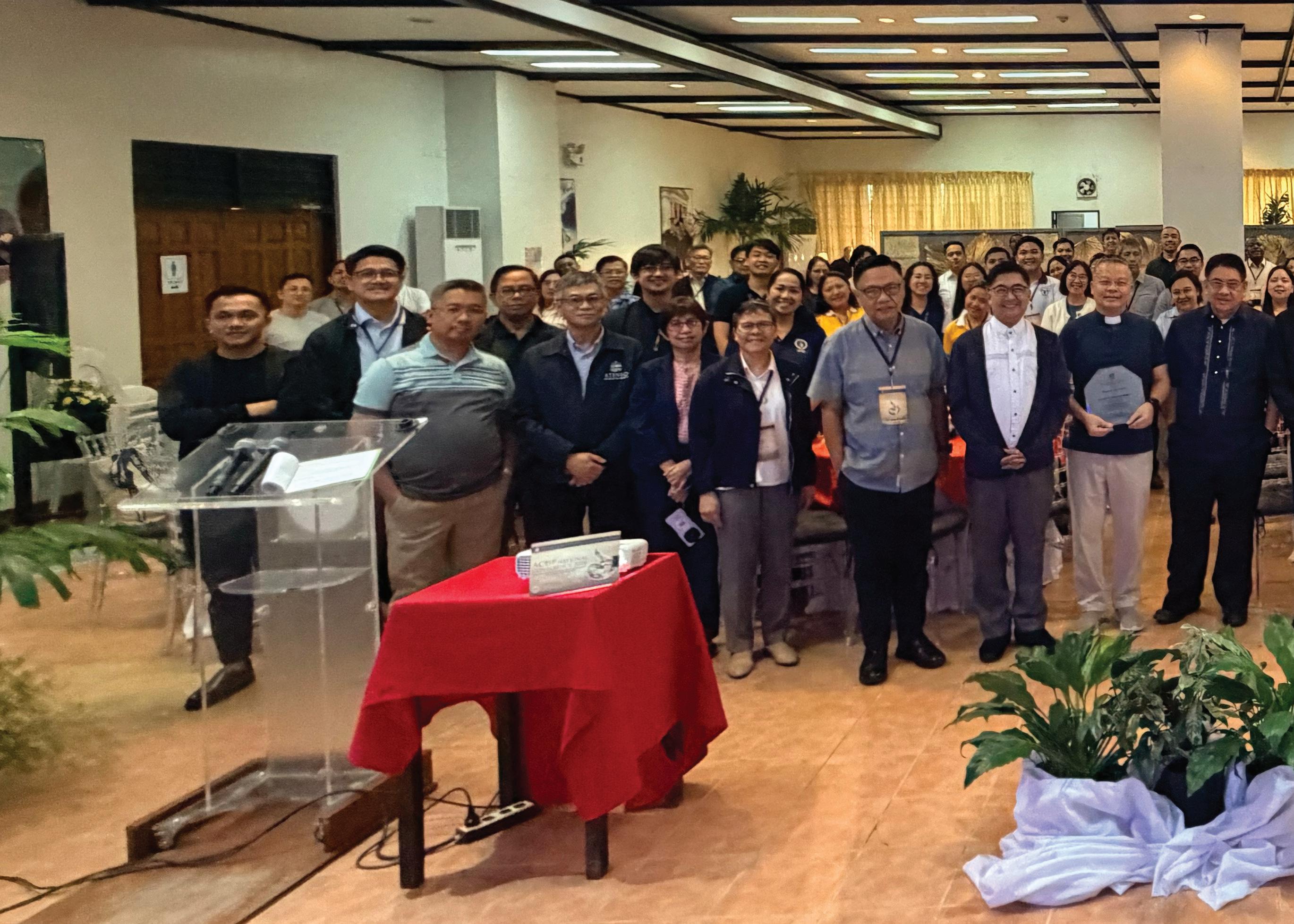
are too complex for a single institution to address alone. Catholic universities must therefore work together, sharing resources, research initiatives, and mission strategies, and collaborate not just with educational institutions, but with government, industry partners, civil society organizations, and the global academic community.
“Catholic universities in the Philippines can offer the world a model of education that integrates academic excellence, social engagement, faith formation, and
cultural resilience. Our institutions can demonstrate that education rooted in faith can contribute to national development while remaining deeply committed to the dignity of every person,” emphasized Archbishop Inzon.
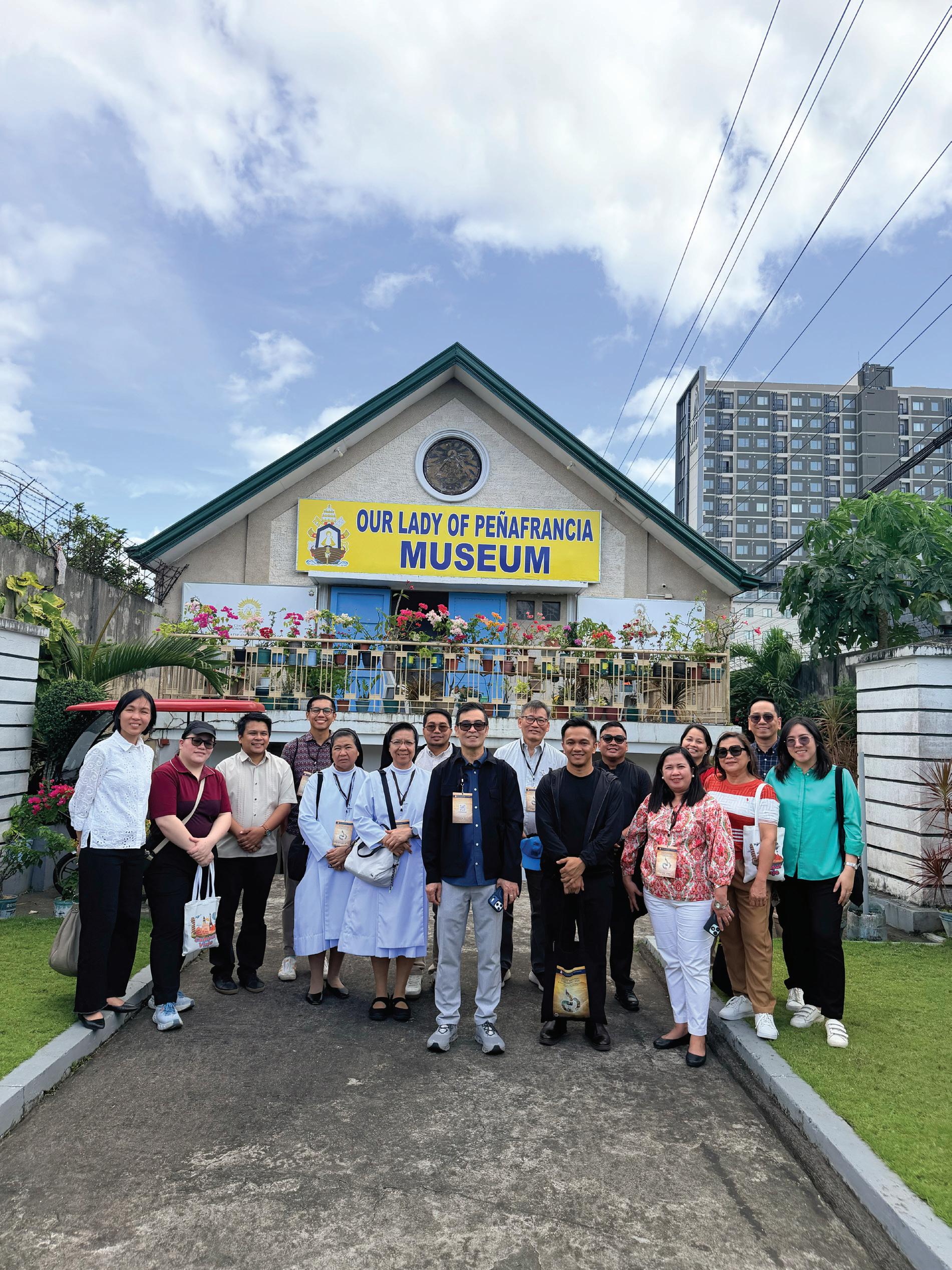
The conference formally concluded with closing remarks by ACUP Vice President and San Beda University Rector-President Rev. Fr. Aloysius Maranan, OSB. In the afternoon, there was an optional guided tour of Naga City, which included visits to several historic churches, a museum,
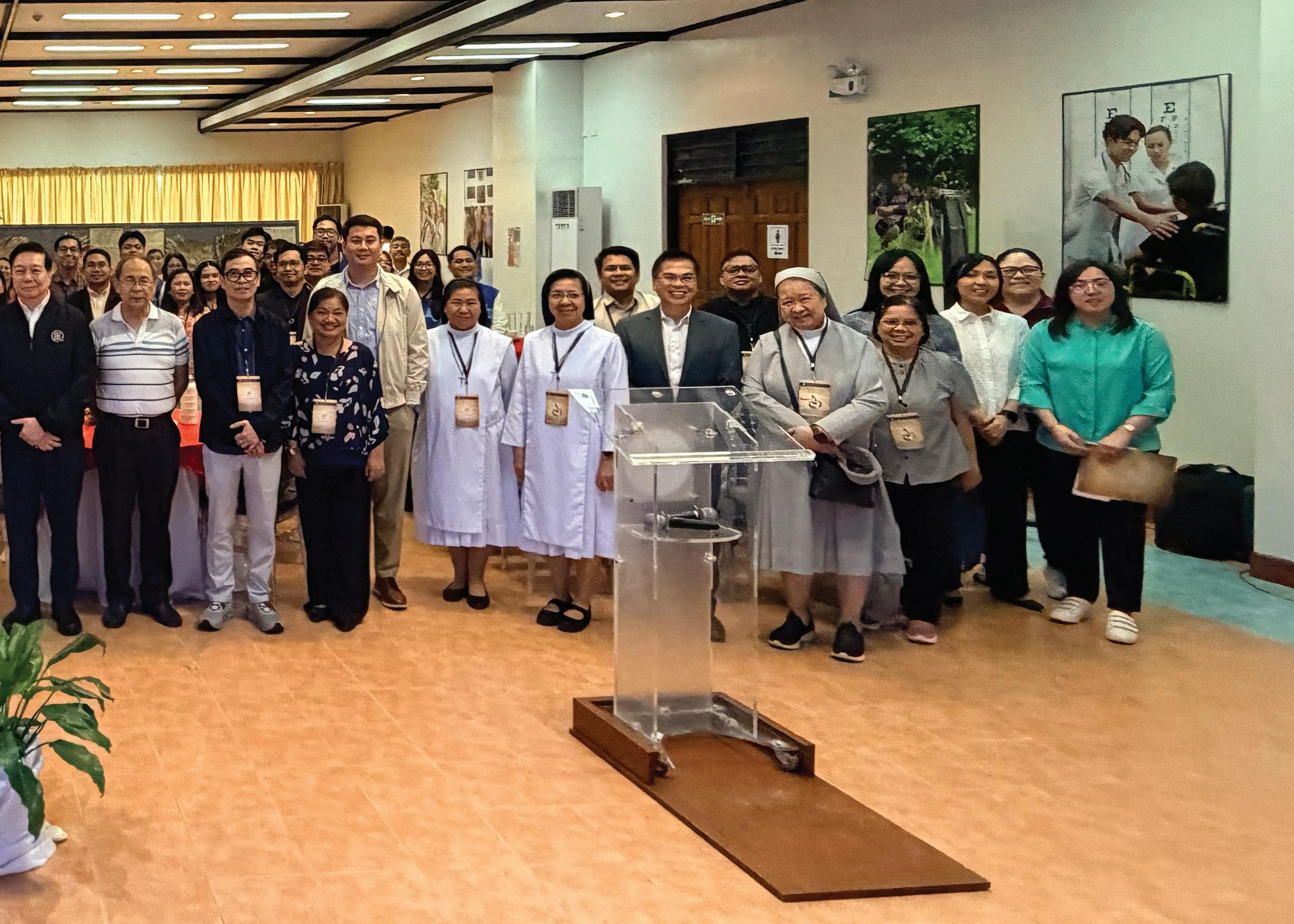
The participants of the conference with Abp. Inzon, the workshop facilitators, and the presidents of ACUP member universities and a local delicacy shop. The threeday gathering was supported by Private Education Assistance Committee (PEAC), Scuola Philippines, C&E Adaptive Learning Solutions, and Rex Education.
Through the discussions, workshops, community engagement, and fellowship, the 2026 ACUP National Conference fostered a spirit of synodal collaboration among Catholic higher education institutions (CHEIs). Participants were able to strengthen and build partnerships, left with actionable strategies, and
renewed the vision of Catholic higher education as a force for ethical intellectual leadership and social transformation in the Philippines. It also reaffirmed the vital role of CHEIs in addressing the Philippine educational crisis within their own capacities and communities, by integrating faith and reason, promoting justice and inclusivity, and shaping young adults into people who are committed to the common good.
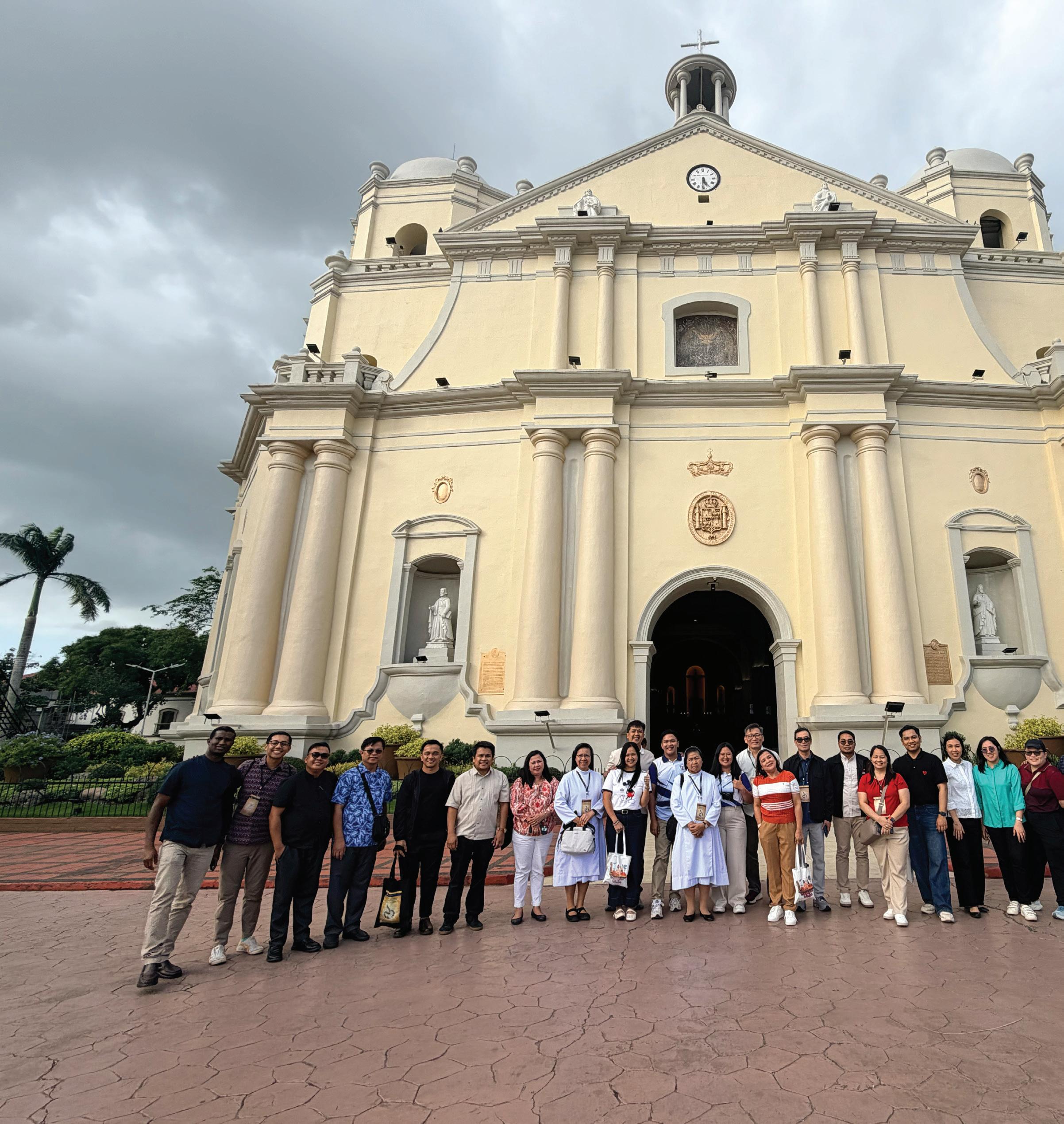
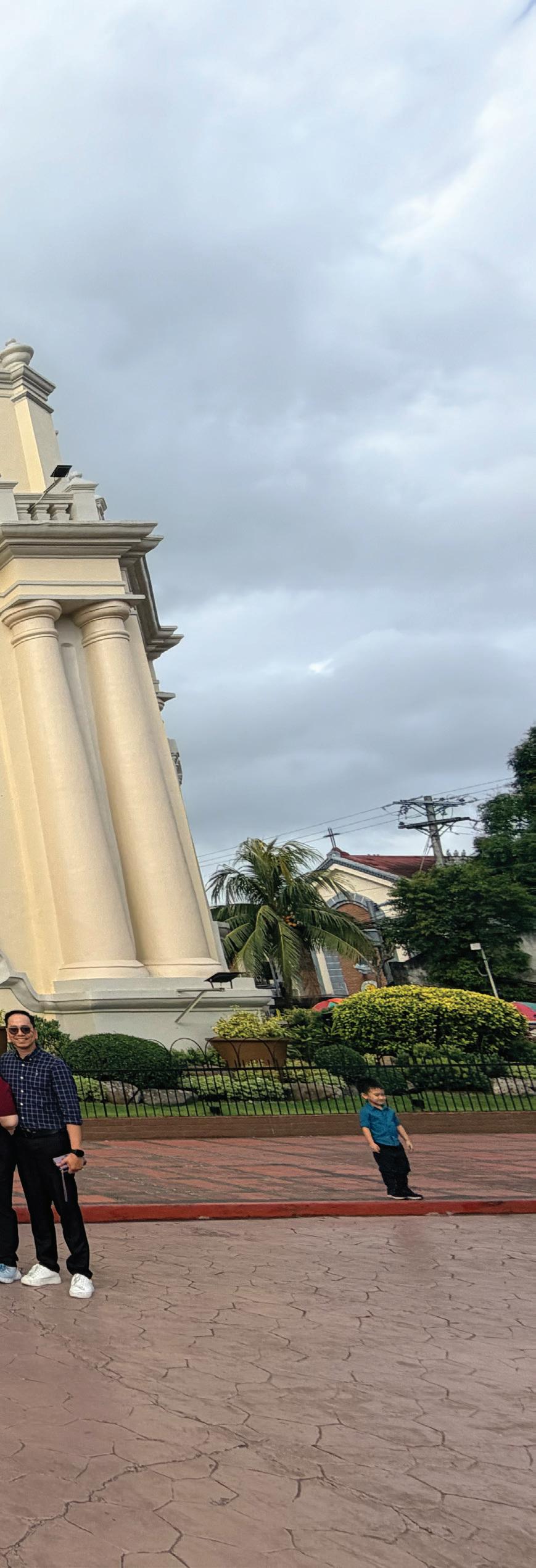
After the conclusion of the conference, there was an optional city tour of Naga with key stops at cultural and religious sites within the area, including the Naga Metropolitan Cathedral and the Our Lady of Peñafrancia Museum