

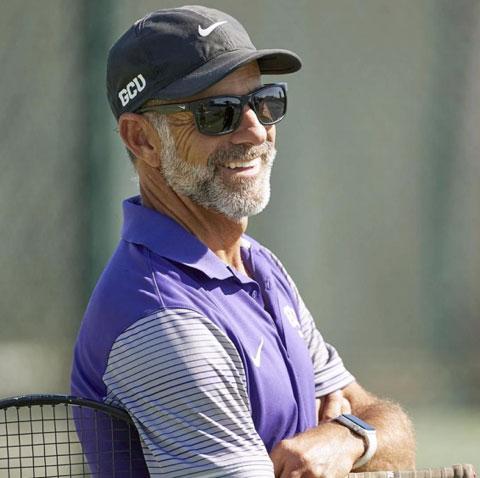
Greg Prudhomme PhD RSPA Southwest President
Hello RSPA Southwest Pros!
I hope everyone is doing well and that you’re looking forward to some summer tennis. I imagine many of you are preparing for summer camps, seasonal programming, tournaments, and all the activity that comes with this time of year. I also hope you’ll be able to enjoy some welldeserved rest, relaxation, and vacation time with family and friends during the summer months.
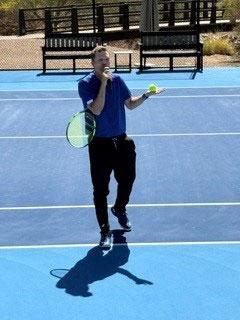
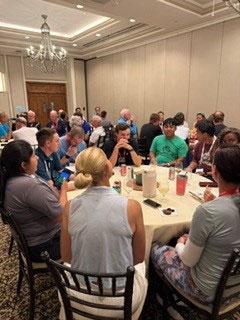
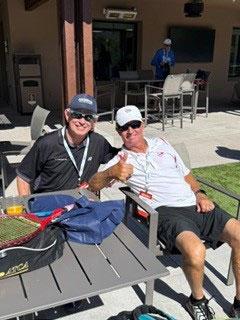
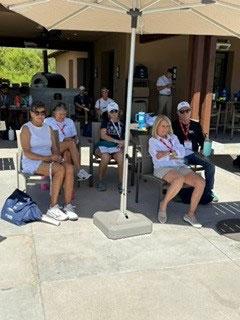
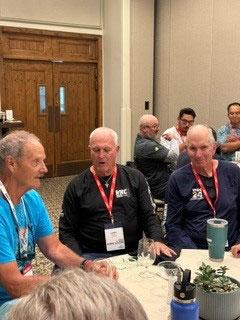
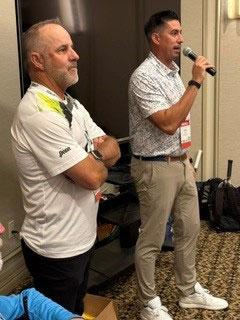
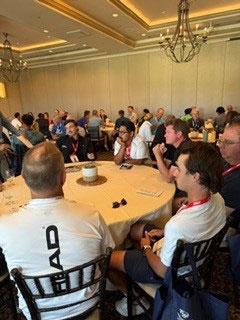
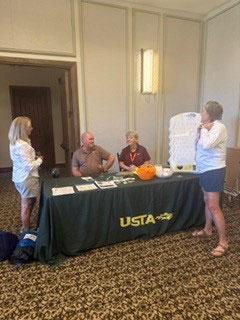
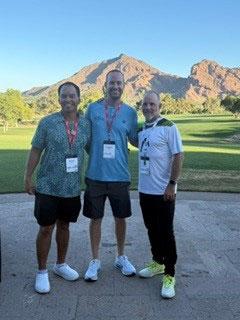
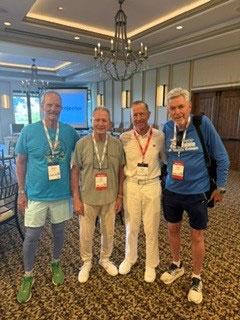
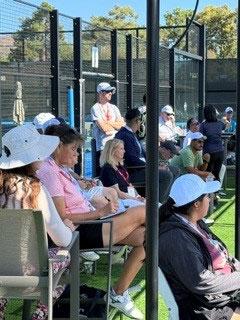
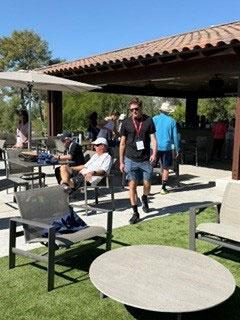
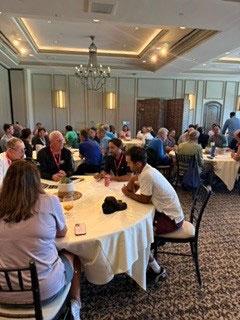
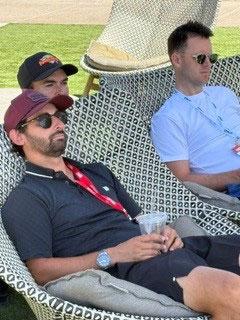
In my Q1 message, I spoke about the importance of relationships, continuing education, and serving as ambassadors for our sport and profession. Over the past few months, it has been exciting to see many of our RSPA Southwest professionals putting those values into action. We have already had a successful area pro meeting in Tucson, with another scheduled in Phoenix, creating valuable opportunities for members to connect and collaborate. Additionally, although I am writing this prior to our annual Division Conference, we are encouraged by another strong turnout of members who have registered to take advantage of the outstanding educational and relationship-building opportunities the conference provides.
Speaking of the Southwest Division Conference, I would also like to extend my sincere appreciation to our Executive Director, Jack Michalko, along with our Conference Committee, Ryan Johnson and John Perry, and our Awards Committee, Leslie Banks and Suk Ong, for the work they put into organizing another outstanding Division Conference. Events like these require a great deal of planning, coordination, and dedication behind the scenes, and we are fortunate to have leaders who care so much about providing meaningful educational, networking, and professional development opportunities for our members.
Our board remains focused on continuing the
service-oriented initiatives I mentioned previously, including building stronger relationships with local tennis communities and creating opportunities to showcase the expertise and professionalism of our RSPA Southwest members. We are excited about the continued planning surrounding future workshops, tournaments, and member engagement opportunities in the months ahead.
One of our initiatives as a board are to grow our southwest division through our relationshipbuilding and community outreach. I’d like to encourage all of us to help recruit and welcome new members into the RSPA. Many of us can point to relationships, mentors, and educational opportunities within this organization that have positively shaped our careers, and we have the opportunity to provide those same experiences to the next generation of professionals. Whether it is inviting a fellow coach to attend an event, encouraging an aspiring professional to pursue certification, or simply sharing the value of RSPA membership, each of us can play a role in growing our organization. Expanding our membership not only strengthens the RSPA Southwest Division, but it also helps elevate our profession and grow the game of tennis throughout our communities.
Finally, I want to encourage everyone to consider attending the 2026 RSPA World Racquets Conference this September 20–23 at the Omni Dallas Hotel in Dallas, Texas. The World Conference is one of the best opportunities we have as professionals to continue learning, networking, and gaining new ideas that can positively impact our programs, facilities, and careers. In addition to outstanding educational sessions and industryleading speakers, the conference provides a unique opportunity to connect with racquet sports professionals from across the country who share the same passion for growing the game and elevating our profession. I highly encourage you to take advantage of this outstanding event and represent the Southwest Division in Dallas this fall. More information and registration details can be found through the RSPA World Racquets Conference 2026.
As always, thank you for everything you all do to grow the game and positively impact players of all ages and levels. I look forward to continuing to connect, collaborate, and learn alongside all of you as we move through the rest of the year together.
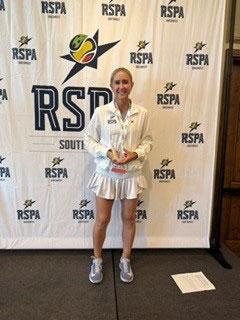
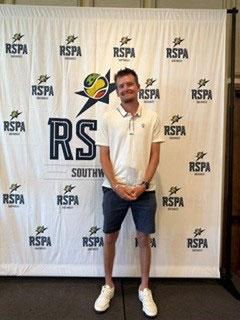
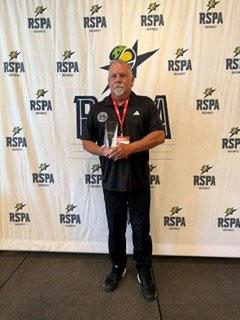
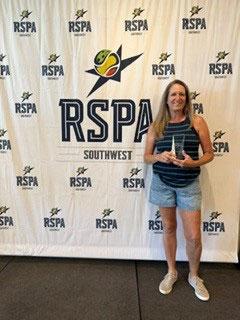
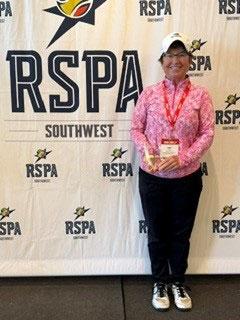
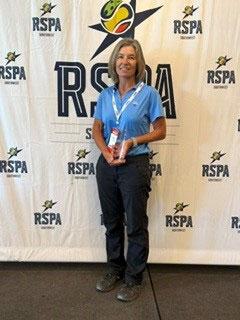
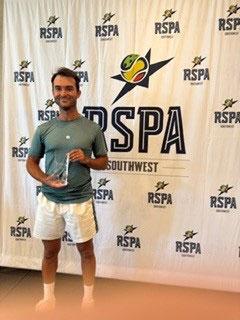
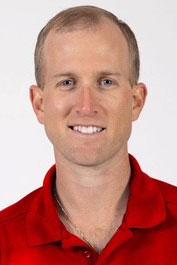
Ruth Ann Gardner is one of the most respected tennis professionals and administrators in Arizona tennis history. Over several decades she has made significant contributions as a collegiate coach, tennis professional, tennis official, and leader in national and regional tennis organizations. Gardner gained national recognition as the head women’s tennis coach at Grand Canyon University.
During her tenure she built a highly competitive program and earned NAIA Coach of the Year honors in 1983 after leading the team to a third-place finish at the NAIA National Championships.
Across her coaching stints at Grand Canyon University (including 1983 and 1997–2002), her teams compiled a 98–59 record, consistently competing at a national level. The program maintained national prominence through the 1990s, with the team posting a 174–74 overall record during that decade, reflecting the strong foundation she helped build.
In addition to coaching, Gardner served in athletic administration at Grand Canyon University as As-sistant Athletic Director and Senior Women’s Advisor, helping guide the university’s athletics programs and supporting the growth of women’s sports.
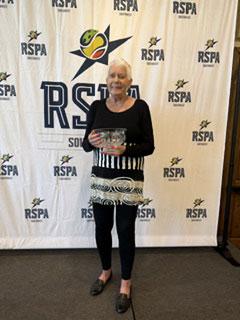
Gardner has also been a majorleader in the broader tennis community. She served on the CentralArizona Board of the United States Tennis Association (USTA) andwas active in developing leagues and competitive opportunities for players of all levels. She worked as the Adult/Senior League Coordi- nator for the USTA Southwest Section from 1989–1991, helping expand league participation in the region.
A pioneer in league development, Gardner helped implement some of the first NTRP (National Tennis Rating Program) initiatives in public parks, local tournaments, and leagues, and helped introduce a computerized ranking system for USTA Volvo League competition.
Nationally, Gardner spent five years working for tennis legend Billie Jean King as National Recreational Coordinator, contributing to grassroots tennis development across the United States.
Her professional leadership in the coaching community has also been substantial. Gardner was only one of three professionals to serve two terms (four years) as President of the Southwest Division of the United States Professional Tennis Association (USPTA) and spent 14 years on its executive board. In recognition of her impact on the profession, she was named Southwest Pro of the Year in 2001.
Beyond coaching and administration, Gardner has been deeply involved in community service through tennis. She helped organize and support charity events including American Liver Foundation benefit tournaments and breast cancer awareness tennis events at Grand Canyon University. Through her decades of service—as a coach, teacher, administrator, and volunteer—Ruth Ann Gardner played a pivotal role in the growth of tennis in Arizona and the Southwest. Her leadership has influenced generations of players, coaches, and tennis professionals, leaving a lasting legacy in the sport.
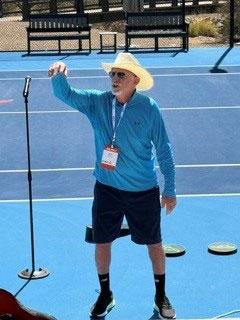


By Doug MacCurdy

Technique is a function of a tactic. For that reason, technical instruction should be taught in its tactical context.
Coaches should learn and understand basic biomechanical principles and their application to tennis.
Tennis is an open skill. The sequence on each shot requires perception, decision, action and feedback. Do not concentrate solely on the action (or actual hitting phase) of the strokes.
Virtually all tennis technique should be mastered by the age of 13. As players continue to get stronger, well-learned techniques can begin to transform into weapons. Weapons are generally necessary to succeed in professional tennis.
The forehand and backhand groundstrokes are very frequently the best part of many juniors’ games. However, three observations should be noted:
* Groundstrokes are often much further developed in most young players than their serving and net-play. Some coaches feel that these skills are of secondary importance to groundstrokes in terms of winning matches in the younger age groups. This is a very short-term view and will severely jeopardize the chance of a young player reaching his or her full potential.
* In countries where most of the tennis is played on relatively fast hard courts, variation and spin on the groundstrokes is somewhat limited. Most players try to hit “through the court” on most shots, rather than creating angles, changing the ball’s height, or varying the spin.
* Very few players have effective slice backhands.
While young players are learning to play with more spin and greater power, consistency must be maintained. One example of this is on high balls in the mid court. Juniors everywhere hit this ball extremely hard, but tend to make too many errors. This is a good example of the fundamental principle of limiting unforced errors while developing more power.
The serve deserves special attention. Without a consistent, aggressive serve, the business of winning matches becomes much more difficult and the rest of a player’s game and physical skills must be nearly flawless.
In the early stages, the serve should consist of:
* A simple motion
* A continuous motion
* Good balance and control of the toss
* A reasonably correct grip which will allow the player to hit all types of serves.
From this base, the player can begin to add power to develop the serve into a weapon. In developing the serve, the coach’s knowledge of biomechanics and advanced technique, along with skills of observation, diagnosis and correction, and communication skills can make a huge difference. The player should have the ability to hit all types of serves with power and accuracy.
The return of serve ranks very closely to the serve in importance. Generally, players do not practice it enough. A good receiver is both consistent and aggressive. Against a good first serve they are often able at least neutralize the point. When receiving most second serves, they are able to put the server under pressure.
Junior players should be very comfortable at the net. Since younger players find it difficult to cover the net in singles matches, frequent approaches are rare. For this reason volleying skills must be fully developed in practice and in doubles matches. If the players are not competent with the techniques used in net-play at a young age, they may never become good at the net later on.
Working on all variations of the volley and perfecting the overhead smash are investments in the future that can greatly benefit the development of complete players. Failure to work on this aspect of the game early on is a major error that will limit the eventual effectiveness of the player.
Corrections of technique can be relatively minor and can have an immediate positive impact the player’s performance. Major changes should be undertaken with care and attention given to the following:
* Ensure that the player is committed to correcting.
* Ensure that major corrections are made during a preparation period.
* Do not have too many correction goals at one time.
* Both the coach and player should understand that there will probably be a short-term decrease in performance before the correction begins to take positive effect.
* Use video when possible so the player can visualize what you are saying.
In future articles we would look at specific technical competencies that players should achieve at different ages.







by Andrea Meyer

RSPA NAZ News, May 10, 2026
I said a tearful goodbye to my five graduating seniors in May, off to nearby colleges (Yavapai in Prescott and NAU) and my #2 – seeded player off to become a Duck at the University of Oregon on a full-ride academic scholarship.
Instead of a formal awards banquet, we put on a family red ball tournament preceding the awards. Parents who’d never played before gained an appreciation for the sport and younger siblings became eager to try tennis in high school or at one of my summer clinics.
To promote May as National Tennis Month, Sedona-based RSPA Instructor Grace Hakopian and I hosted an entry-level tennis night at Mingus Union, featuring Live Ball, Triples, and Red Ball. In July, I’ll be traveling to northern Maine where a friend has a cabin. I’ve arranged to do some youth programming with Elite Pro Luke Korzekwa on the U of Maine Presque Isle campus courts while I’m there. Luke has been recognized by the USTA for his steadfast work to bring grass roots tennis to remote northern Maine.
Grace Hakopian continues to fill her Live Ball sessions in Sedona. She’s now hosting the sessions every weekend instead of twice a month since demand has been so strong.
Grace will continue to coach her younger brother, George, on the 25K PTT Pro Tour in May and June in Newport Beach. “I’m working with my brother on that mental connection, consistency, and smart aggression,” Grace says. A closely connected family (and vegans for 19 years!), the Hakopians, including Grace and George’s mom and dad, often travel to tournaments together.
Master Professional Larry Lineberry, who volunteers with the Mingus Union boys’ team, (9-5 this season), has high hopes for next season with every boy returning. Larry will again teach a four- day clinic in June for Mingus players.
Larry is excited about joining the USTA coaching staff, as well, as a coordinator. He’ll be creating seminars for the USTA. “I teach the physics of the sport and let the individual’s style emerge after that,” Larry notes.
In Kitty Hawk, NC in June, Larry will have another challenge at the 50th Annual Lineberry Family Olympics. Larry said there will be some surprise events, but he knows for certain that he’ll have to golf and walk 30 yards with a half-filled glass of water on his head to win the gold.
Bringing in other ancillary sponsorships for the three Oxendale Auto Group tennis tournaments is one of Larry’s pursuits in NAZ, including the June Oxendale Open at NAU. To date, Larry’s drive to gain sponsorships has yielded $5,500 for junior tennis in NAZ.
Prescott Elite Pro Chris Howard’s star student, Andrew Bogdanov, continues his climb among elite international wheelchair athletes, and he has secured the #1 US ranking for quad players. Andrew recently competed in Korea and Japan, earning 130 ITF points and maintaining his #16 world ranking.
In partnership with another instructor, Chris has begun a Saturday morning beginner- advanced beginner group for new players or those getting back into the game after a long hiatus. Traveling to Phoenix on Sundays for his own play “helps keep my game vibrant,” Chris says. “Not bad for this 71-year-old who could retire if he wanted—and I don’t.”
Flagstaff’s racquet sports community continues to make a remarkable impact with several outstanding achievements highlighting the growth of tennis and community engagement across Northern Arizona. The “first ACEing Autism program in Flagstaff launched in August 2025 and quickly
established itself as a tremendous success. Recognized as one of the 2025 ACEing Autism Award Winners, the Flagstff program earned praise from participating families, with parents reporting high satisfaction and a strong sense of community. The program recently completed its inaugural fall session, providing meaningful tennis instruction and valuable social opportunities for local children with autism. Nicole Chambers, RSPA Elite Professional, serves as a volunteer trainer for the many dedicated high school students who generously donate their time to support these extraordinary children and help create a welcoming, inclusive environment.

In another significant honor, Garrett Lakey, Head Racquet Professional at Forest Highlands Golf Club, was named RSPA Southwest Professional of the Year.
Garrett’s commitment to growing the game of tennis in both Flagsta? and at Forest Highlands, combined with his volunteer leadership through the Flagstaff Tennis Association, made him a highly deserving recipient of this prestigious recognition. Adding to the year’s accomplishments, Forest Highlands Golf Club’s Racquet Facility was awarded Best Small Facility of the Year for the Southwest. What began as a modest court tennis facility with a small pro shop and a dedicated membership has evolved into a premier racquet sports destination o?ering a full tennis and pickleball experience.
The department has expanded its programming to include innovative offerings such as Spec Tennis and TYPTI, further enriching the member’s experience. Under the leadership of Nicole and Garrett, the Forest Highlands racquet team continues to set a standard of excellence.
by Cameron Hamilton

Tucson put on an excellent showing at the 2026 Arizona High School State Championships. Catalina Foothills Boys Tennis won its 19th state championship. Catalina Foothills Girls’ tennis also reached the final in a competitive run, coming up short against fellow Tucsonans from Salpointe Catholic. From Salpointe, Lacey Kauffman and Emma Murphy took home the doubles title, with
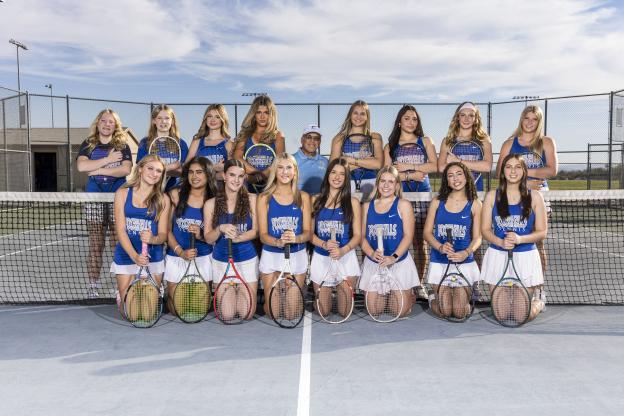
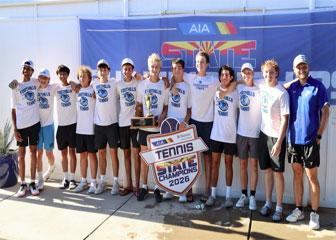
Dillon Nye taking home the singles title, giving Salpointe the state sweep. Congratulations to all athletes representing tennis in Southern Arizona.
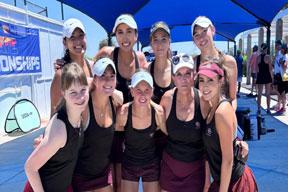
On top of all of our high school success down south, our USTA seasons are in full swing. Special congratulations to our La Paloma 3.0 and 3.5 teams who qualified for sections in the 40+ Winter season.
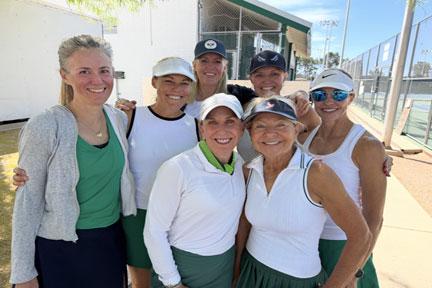
The Spring season is still underway, and racquet sports in Tucson look as they have always looked.
by Dick Johnson
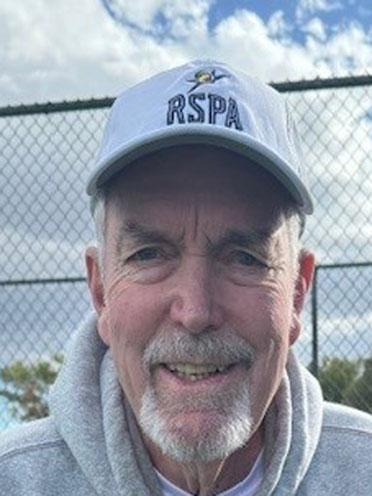
Hi everybody!
I am looking forward to the upcoming RSPA Southwest Conference coming up on May 29th and 30th. It is always great to see old friends, and networking is always very rewarding.
On the home front, I am going to be helping Amy Badger at the Albuquerque Academy Racquet Center this summer with our Junior Tennis Camps. We expect a huge turnout as this is always the case.
The State High School Tennis championships are wrapping up today, and I am hoping that my former team (35 yrs) La Cueva High School will be victorious! Anyways, I am certainly looking forward to seeing everyone in Paradise Valley in the next few weeks.
As the racquet center begins its second year of operation, I can proudly report that our 14-court facility has been at the forefront of adult and junior events and programming within our community. Highlights are always centered around USTA Sectionals, the NMAA High School Championships, RSPA Certifications, USTA Coaching Education Center workshops, regular middle school and high school tennis seasons, USTA League play, and daily clinics and lessons. Our nonprofit, Beyond the Baseline, is gearing up for 60 students this summer for an engaging six weeks of tennis, life skills, and enrichment classes. We held a successful RSPA Level 2 workshop with RSPA SW Hall of Famer Mike Van Zutphen as our tester. Congratulations to our most recent employee, Assistant Director Mike Smolskis, who participated and earned his certification! We also held our first USTA ITC (Introduction to Coaching) workshop. The Academy Chargers just won
their 7th straight team title (10th overall for Coach Badger). We also came in first and second in the state singles title, and 3rd in the state doubles. We look forward to the upcoming USTA SW Sectionals as well as over 100 summer campers starting early June.
John A Damgaard III
USTA Leagues have been up and running in NNM Lots of teams and individuals are participating in NNM
Thirty-One Teams in USTA Leagues in NNM Eleven in 18+ Fourteen in 40+ Six in 55+
Forked Lightning has over 350 individual members participating in pickleball, tennis, and padel
The Godfather of Padel was at Forked Lightning Racquet Club May 8th, 9th and 10th, Marcos del Pilar’s Pádel Palooza! Special Guest: Jonathan Di Pierro
Top Dog/Dual Dog/Leagues and Ladders have been the programs at FLRC, along with clinics at different levels and special events - also: Jr Tennis Programs.
The First Serve Program is going strong at FLRC with their GALA
The Santa Fe Pickleball Club at Marcy Park has 622+members. They are scheduled to receive a 5 million dollar renovation with walkways and other projects around the pickleball courts and baseball complex
Joe Felice:
Joe Felice is finishing his 19th year of the Super Senior Tennis Program, which is 6 weeks of Lessons twice a week, followed by 6 weeks of Round Robin Play twice a week.
They are having all ten courts resurfaced at Sierra Vista Tennis Center. The last time they were resurfaced was in 2005.
Sierra Vista Grand Prix Doubles Tournament, celebrating 30 Years, August 28-30.
by Alex Mouquin
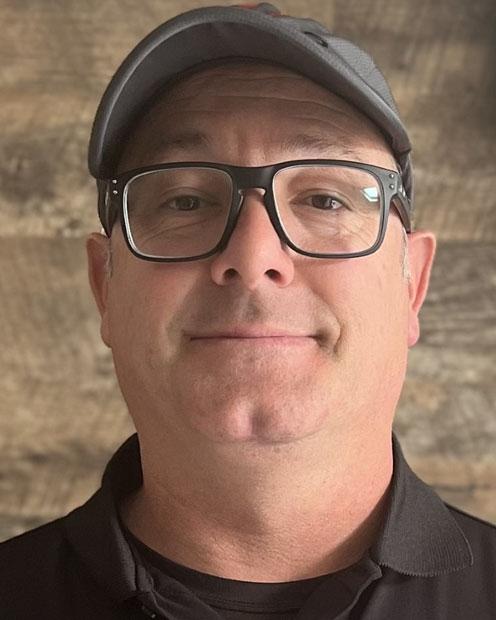
Hello all from the “Sun City”, the beautiful El Paso, Texas. Summer has arrived! The heat is on but the courts in El Paso and Southern New Mexico are packed. RSPA coaches are busy as ever, and the racket sports scene is expanding as well. Being the USTA summer leagues season, the new pickleball leagues growing in the area, the USTA tournaments, the padel instruction expanding, and a multitude of local events, the industry is strong! With the summer starting up, many junior camps are on the calendar, and many will be run by RSPA coaches in El Paso.
Some of our district pros went to the southwest division conference at the end of last month, shared and learned, connected and networked with other successful professionals. One of Tennis West pros, Erick Torres took advantage of the pickleball certification held the same weekend, and succeeded, making him certified in two racket sports now.
Stay tuned for a summer recap next. Stay hydrated and protected from the sun.

President
Greg Prudhomme PhD 602-301-1394
pruperformance@gmail.com
Regional VP
Ryan Johnson 704-281-1713
m.ryanjohnson@gmail.com
Vice President
John Perry 520-403-8290
jptennis25@gmail.com
Secretary
Leslie Banks 419-302-7663
lesliealison16@gmail.com
Treasurer
Nicole Chambers 928-225-9474
nchambers@fhgc.com
Past President
Suk Ong 602-881-0467
sukong.uspta@gmail.com
Executive Director
Jack Michalko 602-740-0126
jack.michalko@rspa.net
Northern New Mexico
Dick Johnson 505-507-6795
lctenniscamps@gmail.com
Phoenix
Eusebio Sarabia 310-292-2788
eusebio.sarabia@gmail.com
Southeastern Arizona
Cameron Hamilton 480-276-1123
chamilton8815@gmail.com
Northern Arizona
Andrea Meyer 928-300-4352
andreameyertennis@gmail.com
Southern New Mexico & l Paso
Alex Mouquin 575-571-0389
frenchtouchtennis@hotmail.com
Tennis Coach Developer
Mike Van Zutphen 480-292-2159
mikevanzu@gmail.com
Pickleball Coach Developer
Ryan Johnson 704-281-1713
m.ryanjohnson@gmail.com
by Eusebio Sarabia
The nation’s top 12-andunder tennis players gathered in Tucson for the prestigious Brewer Team Cup, one of the premier junior team competitions in American tennis.
ing, and advanced tactical awareness at an early age.
Parents, coaches, and USTA player development staff praised the event for creating a professional and inspiring atmosphere for junior competitors. Team events like the Brewer Cup continue to play an important role in helping young athletes develop both competitive excellence and character.
The energy at Kiwanis Tennis Center in Tempe was elevated during the weekend of April 25th as junior players from across the Southwest gathered for a high-level USTA Southwest Sectional Camp, focused on development, competition, and performance training.
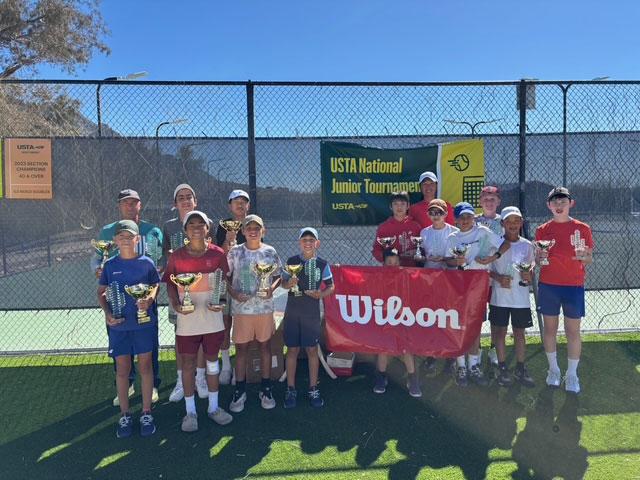
Hosted at the beautiful El Conquistador Tennis facility, the event brought together elite boys and girls from across the country to compete in a highenergy format that emphasized team spirit, sportsmanship, and highlevel performance. The Brewer Team Cup has become a major steppingstone in the USTA player development pathway. Unlike traditional individual tournaments, players compete as teams, creating a unique environment where athletes learn leadership, communication, resilience, and competitive toughness alongside match-play skills. The tournament featured many of the top-ranked 12-andunder players in the nation, showcasing the future generation of American tennis.
Throughout the weekend, Tucson’s courts were filled with intensity and enthusiasm. Players battled through singles and doubles matches while coaches emphasized energy, teamwork, and positive culture. The event highlighted how the modern junior game continues to evolve, with young athletes displaying impressive athleticism, heavy groundstrokes, aggressive court position-
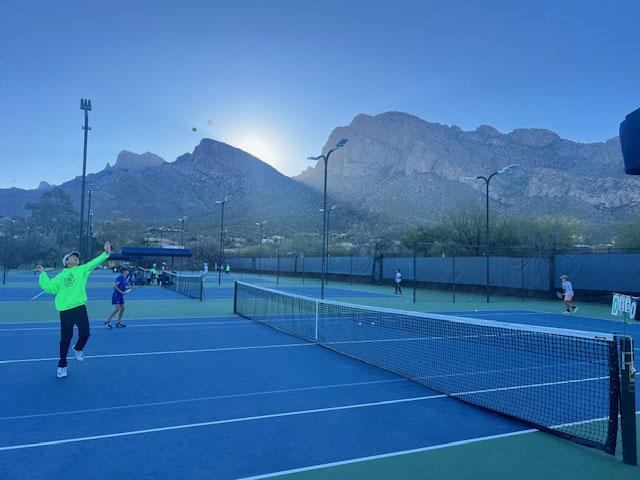
Hosted at one of Arizona’s premier public tennis facilities, the sectional camp brought together motivated junior athletes looking to sharpen their skills alongside experienced USTA coaches and performance staff. Players participated in intensive on-court sessions designed to improve tactical awareness, movement efficiency, point construction, and competitive mindset.
Throughout the camp, athletes trained in a demanding but positive environment that emphasized effort, resilience, and learning. Sessions included live-ball drills, pattern-based training, serve and return development, transition play, and competitive match scenarios that challenged players to apply decision-making under pressure.
USTA Southwest coaches worked closely with participants, providing individualized feedback and encouraging players to compete with purpose and discipline. In addition to technical and tactical training, the camp highlighted important themes in player development such as professionalism, recovery habits, emotional control, and teamwork.
Hit to Be Fit Invigorates Tempe with Community Tennis. Tempe recently hosted the thrilling “Hit to Be Fit” USTA community tennis event, which brought together local coaches, players, and families for a day centered around movement, health, and enjoyment via tennis. The event demonstrated how tennis is still becoming one of the most accessible lifetime sports for players of all ages and abilities. Participants moved through a variety of tennis-based fitness stations, cardio games, team competitions, and skill-building exercises in a friendly and lively setting. While still honing their athletic and tennis fundamentals, players were able to experience tennis in a non-traditional format that prioritized movement, teamwork, and enjoyment.
The goal of USTA’s Hit to Be Fit program is to encourage communities to stay active while learning tennis in a supportive social setting by tying
fitness and tennis participation together. Beginners, recreational players, and competitive athletes could all participate together thanks to the efforts of coaches and volunteers.
The vibrant sense of community was one of the day’s highlights. Young players stayed active through enjoyable tennis games, families took part, and more seasoned players supported younger players. Tennis can promote physical fitness, self-assurance, and social interaction outside of traditional competition, as events like Hit to Be Fit continue to show.
The significance of developing more accessible and community-driven tennis experiences across Arizona was stressed by local tennis leaders. Initiatives like Hit to Be Fit provide an active and entertaining way for existing tennis players to enjoy the sport while also introducing new players to it.



A Publication of the RSPA Southwest Division
Jack Michalko / editor
77 East Missouri Avenue, Suite 62, Phoenix, AZ 85012
602-740-0126 / e-mail: jack.michalko@rspa.net
The Southwest Magazine is published quarterly by the Southwest Division of the Racquet Sports Professionals Association.
The opinions expressed in the Southwest Magazine are those of the authors and not necessarily those of Southwest Magazine or the RSPA Southwest Division.
Copyright© Southwest Division/Racquet Sports Professionals Association, Inc. 2026. All rights reserved. Reproduction of any portion of this newsletter is not permitted without written permission from the RSPA Southwest Division. Advertising information: All ads must be camera ready and in color if possible. Prices are per issue.
Full Page.............$150
Half Page............$100
1/4 Page..............$70