Bishop calls for partnership across Anglican Communion to support Malaysian churches
Anglican Churches in the west need to keep moving from a ‘paternal’ to a ‘fraternal’ dynamic in how they relate to churches around the globe.
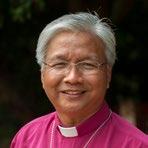
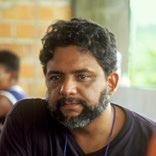
This was the message of Bishop Donald Jute (pictured), of Kuching Diocese, Malaysia, who was speaking at the USPG Conference 2018 in July.
He told conference delegates that his vision for the Communion was to see all churches as ‘generous in both giving and receiving’.
Taking ‘partnership’ as the theme for his talk, the bishop explained: ‘Partnership is vital; on our own we are less than the body of Christ. Of course, partnership is challenging – it is an art. We have to learn to be sensitive, truthful and respectful.’
He continued: ‘For us, in Malaysia, we belong to a church that has mostly been a receiver rather than a giver – and this has not helped to build our confidence.
‘But this is changing. Regarding our relationship with the west, over the decades we have been moving from a paternal to a fraternal dynamic – moving away from a traditional donor/receiver relationship – and this has been healthy for us all because we need each other –the relationship doesn’t go one way.
‘We still need you [in the west] and we believe we can also contribute to the wider body of the church. Because it’s only together that we can see the miracles of God.’
Bishop Donald also talked
about challenges facing Christians in Malaysia.
He said: ‘Malaysia is an Islamic State, so life is not easy for the church. Churches have been set on fire and bricks and stones thrown at us. A pastor was kidnapped and is still missing – and we know this was the work of the previous government.’
Bishop Donald was so concerned about the situation that he called publicly for the country to vote in a new government during recent elections – even though he risked his safety doing so.
But a new government was elected. The bishop said: ‘Happily, there are signs of change. On 9 May we managed to vote out a very corrupt government.’
• Read more from Bishop Donald in our prayer diary. ▪
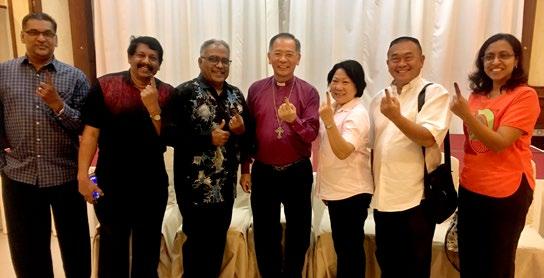
Pictured: Archbishop Datuk Ng Moon Hing, of South East Asia, and colleagues show inky fingers after voting in Malaysia’s elections.
Credit: Archbishop of South East Asia
‘It’s wonderful to see something beautiful instead of violence’
A USPG-supported programme run by the Diocese of the Amazon, in Brazil, is helping community workers reach out to young people and families trapped by discrimination and a lack of opportunities.
Life can be tough in Brazil’s majority black communities. For young people, especially, the future can seem very bleak.
Schools are overstretched and there are few job opportunities. With little to do, some young people get caught up in drugs and crime – lured by the promise of big money. So when the police target the drugs gangs, young people get caught in the crossfire and have been killed – but there is rarely an uproar; it is as though their deaths are acceptable collateral damage.
Meanwhile, girls face their own particular hardships. With few prospects, many are forced into early marriages which ends their hope for an education and decent employment.
Against this backdrop, Anglicans in the Amazon are training community workers,
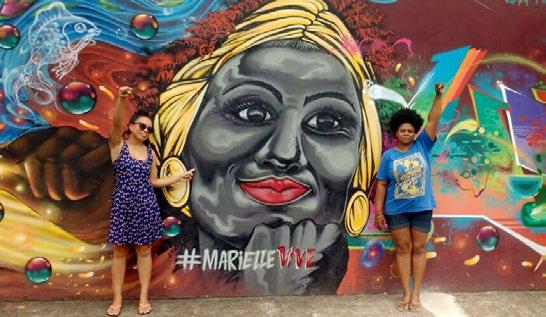
known as Popular Educators. Two trainees are Margarida and Minna, based in Belem. Margarida is a leader in the Black Women’s Movement, which is raising awareness of rights and giving children more options in life. Minna is using street art and rap music to help teenagers find inspiration.
MARGARIDA’S STORY
At the age of 13, my father told me I had to marry a man with a ranch who was 40 years old. We lived in a predominately-black community in Maranhão State, in the north. Our community had a mindset that we’re destined for a life of servitude, which is probably linked to our ancestry.
However, the thought of marrying this man horrified me so I ran away, and somehow I got to Belem, in the next state.
It was early in the morning when I arrived
at the bus station. I didn’t know what to do, but I saw a kindly-looking woman who was on her way to work. She noticed me and said if I was still there in the evening she would help. So I waited from 7am until 5pm, too scared to move in case she came back and I wasn’t there.
That evening, the woman helped me. We phoned my father and I said I didn’t want to get married, and he said I could come home and it would be ok.
I went home but before long my father was insisting again that I got married. I was so upset I went on hunger strike. Finally, my father said I could return to Belem to live my own life – and that’s what I did. I ended up back at the woman’s house working as her home help.
It seemed that, because I’m black, I was expected to live a life of servitude and only have children. But I wanted a different life: my dream was to study.
So I studied and, when I was older, I joined the Black Women’s Movement. I had finally found myself. Now, my biggest motivation is to make sure other girls don’t experience what I went through.
The Popular Educators programme really helped me. I learned how to run an organisation and manage people. We go on marches and host workshops.
The church is helping many groups like mine to mobilise people in forgotten communities so they can have better lives.
MINNA’S STORY
to raise awareness about the importance of education.
We use art and music. The young people get excited. They like creativity and the chance to express themselves. It can be very healing. It also brings young people together – they talk, have fun and glimpse a positive way of life. They’ve seen so much violence, so it’s wonderful that they can see something beautiful instead.
Music and art are like an education. With the music, the focus is on rap, which is a kind of poetry – the young people write lyrics and rap about their situations and about justice.
With the art, some of it is about creating inspirational imagery that encourages people to seek a better life. We also make art that highlights injustices to help people understand what’s going on.
Unfortunately, street art is not easy or cheap: we need permission to paint a mural on a wall, and the paints are expensive. So we have to make a lot of grant applications – and the Popular Educators programme has helped by showing us how to organise ourselves. ▪
The schools are under-funded, so a cycle of poor education is being repeated for generations. When young people from these communities go for jobs, no-one will employ them because of the stereotype that they will steal. Also, there is a lot of racism.
With my friend Marcela, I’m working in some of the forgotten communities, trying
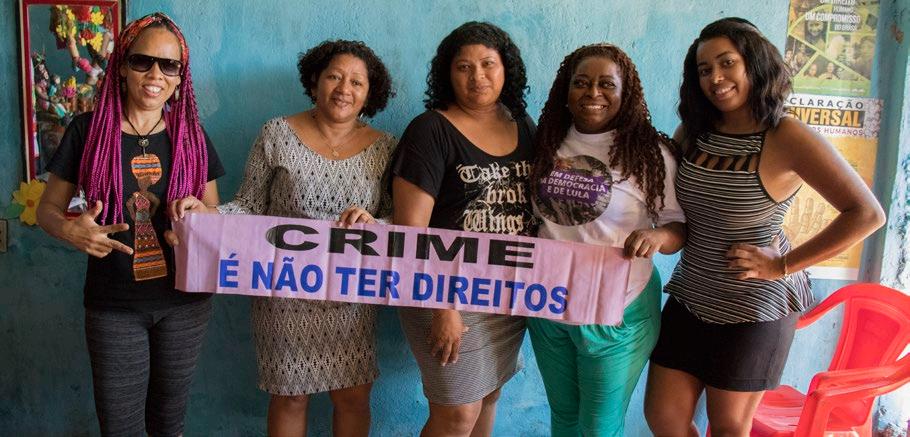
Pictured top left: Margarida (middle) and trainees on the Popular Educators course. Pictured above: Minna and Marcela with their mural of assassinated politician Marielle Franco, Belem.
Credit: USPG/Naomi Herber; Minna
‘The church needs to move out of its comfort zone’
USPG is supporting the gender justice programme of Hope Africa, which is the social development arm of the Anglican Church in Southern Africa. The programme includes support groups, workshops and campaigns. In this article we hear from two programme participants.
BOITU’S STORY
Boitu speaks about her experience of gender violence at university and in South Africa as a whole. She is a member of a student discussion group and calls on the church to take action.
Earlier this year, a girl was murdered by her ex-boyfriend. When the boyfriend appeared in court for sentencing he was smiling and laughing like he did not see anything wrong with what he did. It was like he was proud of his actions. Before that, there was a girl who
was burned by her boyfriend. And these are just two stories among many.
Now I live in fear. Every time I'm approached or asked to be in a relationship I think: ‘What does he want from me? Am I also going to be part of the statistics of the increasing number of women and girls being killed by men?’
I hope and pray that these church discussion groups help to address the issues women face regarding sexual violence and make men realise that women are not their
objects but equally human. Men might be taught that they are the head of a family/ household, but a head is useless without the body and the body carries the most important parts, such as the heart.
These workshops help women to speak about what they’re going through and encourage men to acknowledge when they’ve done wrong and take responsibility, rather than hiding behind culture or the Bible.
When women report cases to the police, we are asked what we were wearing and what we were doing, as if it’s our fault that the man decided to behave inhumanly. But the way we dress and what we do is no excuse for rape and murder. Women are raped even if they dress ‘appropriately’ and stay at home – often by people they know, love and trust.
I think it’s the way men are raised: masculinity just gives them that position.
It’s not my culture but, in Zulu culture, whatever the man says goes. The young men go to the mountains to be taught about manhood – and when they come back they expect to sleep with someone. When I was growing up my aunt used to lock us in the house saying: ‘The boys are coming from the mountain this weekend so nobody is going anywhere for the whole week.’
The church needs to move out of its comfort zone and speak about the issues we face in everyday life. The church should be relevant. It needs to come to the people, maybe speak to the youth and ask about the problems we face and what could be done to help.
Hope Africa’s gender office is promoting gender equality and trying to change perspectives. If we have more of this then hopefully things will change.
KENNY’S STORY
Kenny grew up with an abusive stepfather and is now able to reflect on the value of listening to one’s feelings and listening to each other. He was part of a USPG-supported masculinity group.
My stepfather was extremely abusive, especially when he had a drink. One day, when I was 11 or 12, my face was dirty and my stepfather came home with drink in him and cleaned my face with one those wire brushes used to clean paint off walls.
He abused me and my mother up to the age of 16 when I turned around and I smashed him up; I couldn’t take it anymore. I never raised my hand again after that.
When this masculinity programme started I felt I could contribute because of what I have been through.
My wife has been a school teacher for 40 years. I listen to how she describes the children and how she feels, and this has changed my life. I’ve learned that reality isn’t just about what you are doing [externally], but also about what’s happening inside you.
The church is ideally a space where we can relate to each other – where we can talk about spirituality, faith and growth. Through the Men’s Masculinity programme we could relate as men. We could share each other’s ideas and problems and, in doing so, we found that a lot of our problems and ideas were the same.
It was good that men from all walks of life participated in the programme. We had lawyers, teachers, cleaners, and even some with Down’s syndrome. We learned how to evaluate situations before acting, how to listen, and when to speak.
As for myself, I have travelled a road of poverty and had many health challenges but, through my belief in God, the Men’s Masculinity programme has allowed me to continue. ▪
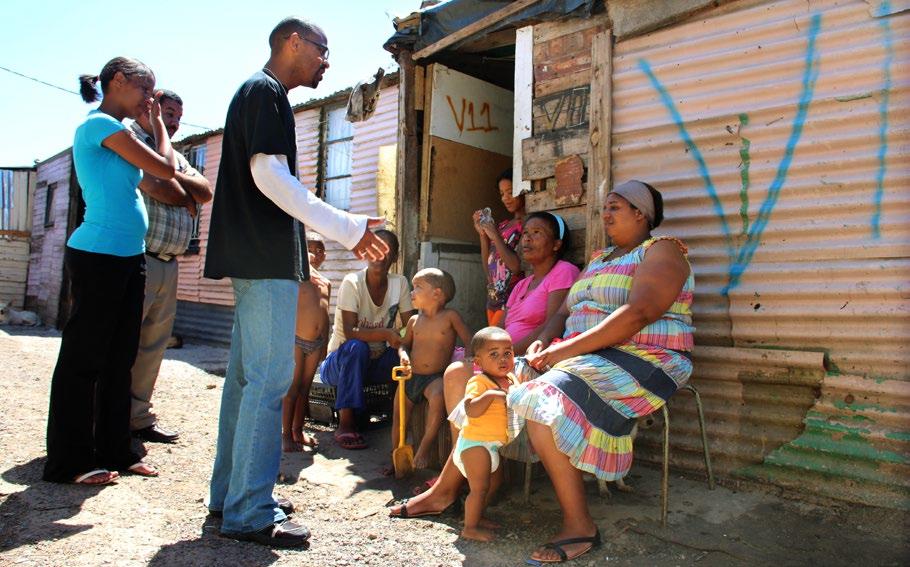
Pictured: Discussing gender based violence in Valhalla Park township, Cape Town, South Africa.
‘The youth are not the leaders of tomorrow, but of today’
Shakeel Nurmahi, chair of the Church of England Youth Council, was sponsored by USPG to attend the first youth congress organised by the Council of Anglican Provinces of Africa (CAPA), in Kenya last April. He reports.
Speaking as a young person (I’m 22) who is also exploring a calling to full-time church ministry this trip to Africa felt like a real answer to prayer: I was excited that God was offering me an opportunity to learn from new experiences.
This was my first trip to Africa. We arrived in a lush and vibrant Nairobi and were driven to the university campus where we were staying. I saw warthogs and monkeys on the campus grounds, an early indication that my week in Kenya was going to be something very different for me.
The welcome we received was of absolute
hospitality. Every need was cared for and we were made to feel treasured and important.
The week was to be spent exploring the theme ‘Releasing Youth Potential’, with a range of speakers and workshops discussing issues affecting Africa’s young people. I learned the incredible statistic that 60 per cent of Africa’s population is aged under 25 – which is clearly a situation that cries out for fresh insight and theology.
Each morning began with worship and, throughout the day, the whole room would burst into impromptu worship and dancing. This vibrant atmosphere offered an expression of Anglican identity I’ve never seen in the UK
and this challenged my understanding of what it means to be an Anglican.
Indeed, I loved seeing how African culture is central to the African expression of faith. As a British-Asian, this reassured me that being Anglican is not about being white and British, culturally speaking, but that God welcomes all of my authentic self.
YOUNG PEOPLE
CAPA and the Anglican Churches in Africa are putting young people at the forefront of their ministry. They recognise that young people are the largest demographic in Africa, and churches are shaping their ministry accordingly.
CAPA recognises that the church belongs to people of all ages, so it is right that young people are included and involved. Furthermore, the African Churches are not seeking nominal involvement from young people but want them to be a driving force in their churches and nations.
I heard phrases such as ‘The youth are not the leaders of tomorrow but the leaders of today’ and ‘The people best able to change this generation are this generation.’ And it was particularly encouraging to hear these comments being made by bishops, who are inviting young people to step up and be a dynamic part of the church. Indeed, it was incredible to witness senior church leaders seeking inspiration from the younger generation; these bishops recognise that problems of their generation need new ideas.
COLONIALISM
The enduring impact of colonialism was a recurrent theme during the week, with many speakers calling for Africans to stop living like they were in a colony and to step up and
Come and hear more
lead for Africa. I understood this as a call for Africans to stop looking to other continents first, but to instead consider how Africans can work for Africa.
A related issue is the brain drain whereby young Africans find themselves longing for the life (wealth, media, culture) of the West, ie the former colonisers. In response, African churches are looking to help their young people use their talents and skills in Africa.
Also on the topic of colonialism, one of the speakers remarked that the missionary endeavour was not purely a Christian practice but a European colonising practice. So, while missionaries might have been seeking to spread the gospel, they were also, perhaps at times unwittingly, supporting the conquest of Africa by imposing their religious beliefs.
I wondered whether, to some extent, this colonising practice continues to this day. For example, as Anglicans we look to Canterbury, but I wonder if this could be misinterpreted as encouraging African Churches to continue looking to their former colonisers – which is exactly what the Anglican Churches in Africa want to avoid; they want Africans to seek to develop themselves and not run to others for help.
My lasting impression is that Anglican Churches in Africa are seeking to be true to what God is calling them to be in their nations and communities – and we in the Church of England have a lot to learn from this; there is a theology and an understanding of God that we can and do miss out on. ▪
Shakeel Nurmahi will be speaking at our USPG Regional Day in Peterborough on Friday 2 November. See back page for more details.
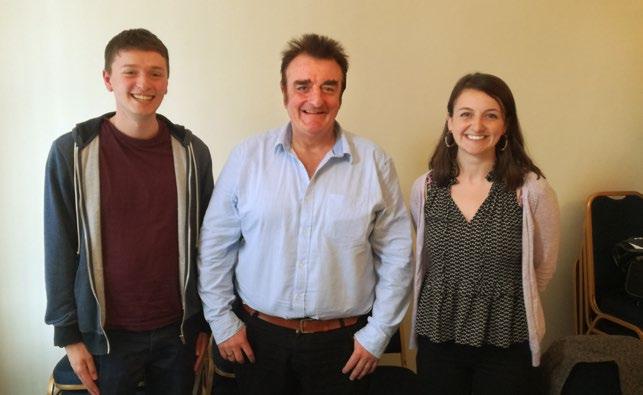
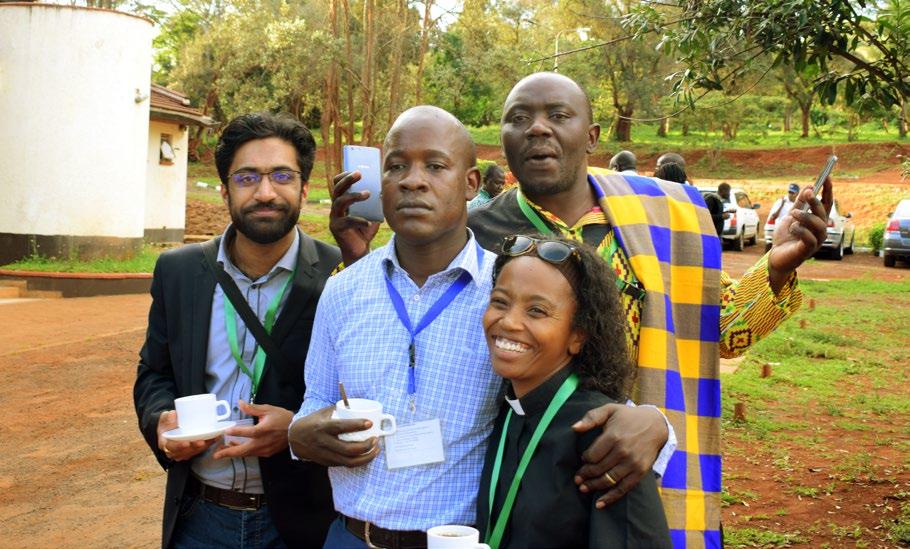
Pictured: Shakeel Nurmahi (left) with fellow delegates at the youth congress.
Credit: Shakeel Nurmahi
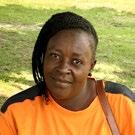
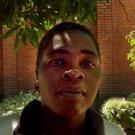
‘When I was on the brink of giving up, their teachings changed everything’
The USPG-supported HIV Stigma Reduction programme, run by the Anglican Church in Zimbabwe, is saving lives and giving hope. Three beneficiaries of the programme share their stories.
CHERRY’S STORY
I’m 46 years and HIVpositive. I got involved in the HIV Stigma Reduction Programme in 2016 and was trained by the diocese to work with the church and community on HIV stigma. Now I give talks in schools and in the community and raise awareness about the situation. I also lead by example.
Before this programme people would gossip about me saying I’m a bad woman and not talk to me. I had suicidal thoughts and my weight fell to only 19kg. Also, my child was abused in school about me. But this has now stopped.
I can see many changes because of the programme. Before it was difficult to stand up in church and speak about living with HIV because a person could be labelled as a prostitute. But now the church doesn’t discriminate; during Holy Communion we share the same cup. Also, I’m no longer alone. Six other people in my church have openly declared their HIV-positive status.
The stigma programme has helped the community to know the facts about HIV and this has challenged stigma and brought acceptance of HIV status.
Previously, my husband had rejected me – he had run away for three years – but then he came back. He went for testing and was
found to be HIV-positive. So now we are both on medication and living happily together.
We were stigmatised in our churches and communities, but the diocese has strengthened us to be where we are today.
YEMURAI’S STORY
I live in Mkoba. I’m the mother of seven children – two biological and five orphans from my late sister. I learned I was HIVpositive 12 years ago while I was four months pregnant. When I told my husband he surprised me by saying he was also HIVpositive and was already taking anti-retroviral treatment [which reduces the impact of HIV].
I knew his first wife had died.
My husband told me I should start taking the medication like him – so, to this day, we have both been on medication.
At that time, the clinic gave me a caesarean delivery and I delivered a baby boy, who is now 12 years old. Because I had started the treatment, he was born HIVnegative.
Last year I got involved in the HIV Stigma Reduction programme which runs a Hope for Life support group. I’ve become much more productive and I’m now better able to support my children. Compared with before, I am much less stressed.
In the group
we learn income generation activities, such as making washing up brushes and soap and selling clothes. We talk and learn from each other. I wasn’t producing much in my smallholding but through the support group I’ve learned how to improve my farming methods and now I’m producing more crops. I’ve also started cultivating a herbal garden.
clergy to our communities.
The support group also has a savings scheme: we all contribute a small amount and at the end of the year the money is shared out to buy groceries and other essentials.
CHIEDZA’S STORY
I’m 40 years old. I live in the Manyene district. I’m a single mother with four children and I’m HIV-positive.
Five years ago, when I discovered my HIV status, I was labelled a prostitute in my community. Even my fellow church members sidelined me – no-one wanted to share utensils with me.
My children were mocked by their classmates, and even by some members of our community. I thought about taking them out of school and letting them stay at home with me.
I felt so much shame and suffering that I even contemplated suicide, which I think I would have done except I was worried about who would look after my children.
Then, in 2017, the wonderful stigma reduction programme came to my church – and I am so grateful. It came when I was on the brink of giving up, but their teachings changed everything – coming down from the
I felt accepted. I joined the local support group. This time, rather than being rejected, not only did people start sharing their utensils with me, but now I am helping with catering activities. I was even elected to be a church warden and now I am encouraging others to disclose their status. We also support income generation activities for those who are HIV-positive, such as rearing poultry and gardening. ▪
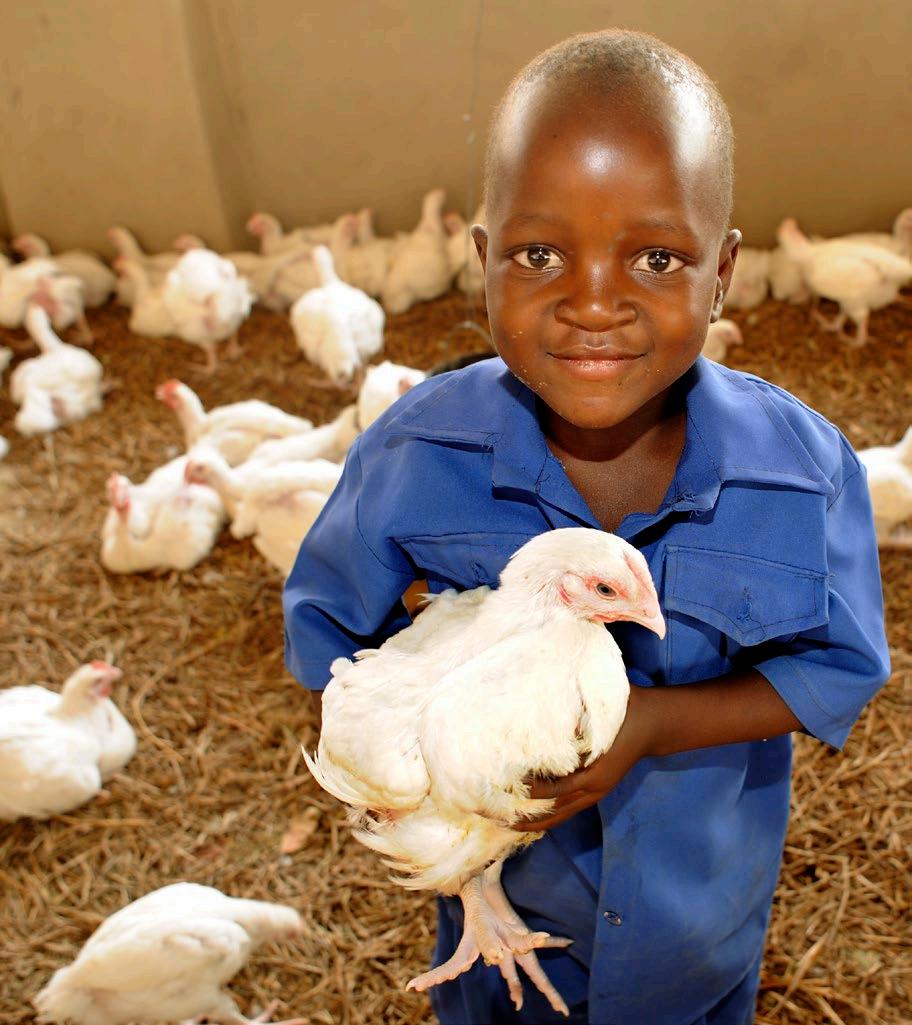
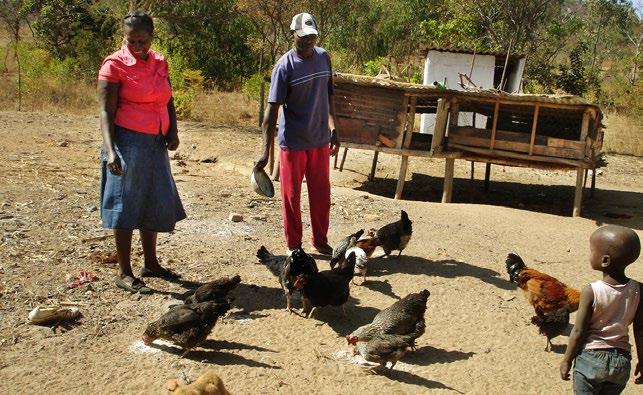
Pictured: The HIV Stigma Reduction programme supports income generation initiatives, like this chicken farming project in Manicaland, Zimbabwe.
Credit: USPG/Fran Mate
Make a donation to support this work
You can directly fund the Church of Zimbabwe’s programme to support people living with HIV through USPG’s Partners In Mission scheme. More at www.uspg.org.uk/pim
OUT AND ABOUT IN BRITAIN AND IRELAND
USPG Volunteering and Stewardship Manager Rebecca Woollgar pays tribute to how churches and supporters are engaging with USPG and the world church.
FILIPINO DANCING
Marie de Coster, our USPG Diocesan Representative in Brussels, hosted a Filipino dinner and dance, in May, with traditional Filipino dishes and outfits.
Marie showed off her choreography skills by orchestrating a dance routine which showed off the many beautiful traditional Filipino costumes.
There was an opportunity to sample traditional Filipino food, craft stalls, and a teddy bear raffle.
They had a brilliant evening that raised 800 Euros for USPG’s work in the Philippines.
PUTTING A STAMP ON IT
We are so grateful to long-serving volunteer and fundraiser John Wallis, who organises Lent boxes at his church, St Peter’s Monkseaton, and who collects and sells stamps in exchange for donations to USPG.
Since 2002 he has raised an incredible £12,000 for USPG. It all adds up!
We’d love to hear how you are raising money for USPG. Get in touch and send your photos to Rebecca by emailing rebeccaw@uspg.org.uk
GREENBELT FESTIVAL
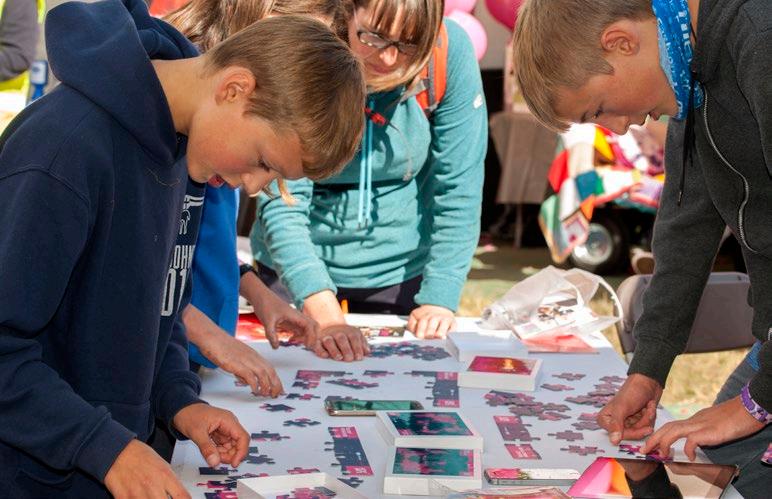
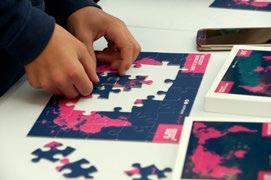
Visitors to the USPG stand at this year’s Greenbelt Festival were encouraged to look at the world from a different perspective – with a challenge to complete an upside-
down jigsaw map of the world (pictured). You can see more photos and listen to some of the Greenbelt talks at www.uspg.org.uk/ greenbelt
GOING THE EXTRA MILE
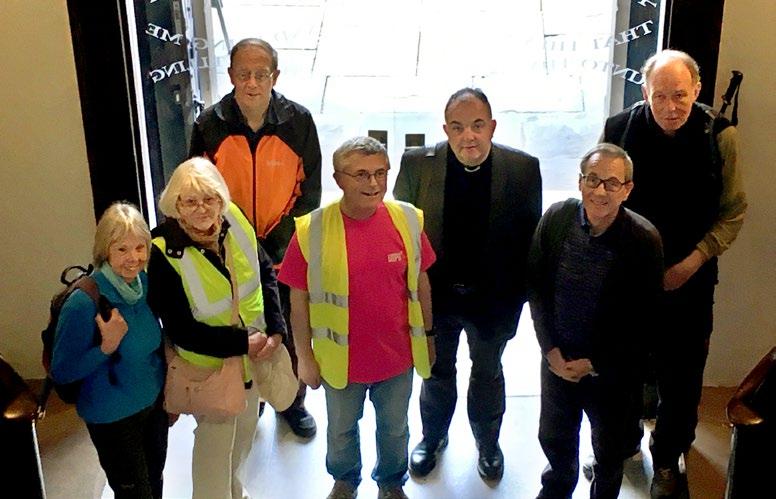
Earlier this year we celebrated with Richard Reade (pictured above), our USPG Diocesan Representative for Derby, as he completed his fifth annual sponsored walk for USPG.
We are so grateful when volunteers go the extra mile (or 20 in this case) and fundraise for USPG. Over five years Richard has walked 100 miles and raised a phenomenal £8,306.43.
Richard’s inspiration for this event came from observing a sponsored walk in Lichfield which started with a small group of walkers, then grew to a mass participation event. Richard thought: ‘I could do that in Derby!’
Richard said of his walks: ‘The fellowship and conversations along the journey make the miles fly by. Walking is a great way to get to know people on a deeper level. It’s a simple thing to do if you’re in good health. I’d encourage you to get out there and walk!’
He said he didn’t intend to establish an annual event, but it grew naturally and is now something the community looks forward to.
Why not join Richard and his team next year? The walk will take place on Monday 29 April 2019, from Derby Cathedral to All
Saints’, Matlock Bank.
Another way to raise money for USPG is by taking part in an organised walking event.
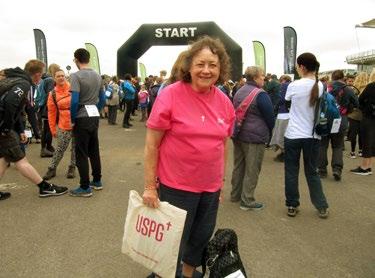
Una Barter (pictured below), who is the USPG Parish Contact for St Boniface & St Martin in the Wood, Chandlers Ford, has taken part in the local event Just Walk two years running.
She said it is a fantastic experience and would love for more USPG supporters to join her next time.
Una said: ‘You meet different people as you go around. It’s very sociable and offers the opportunity to share the reason you are walking.’ Una raised £200 for USPG.