

THE FUTURE OF THEOLOGICAL EDUCATION IN AFRICA
POST-BOTSWANA SUMMIT
DELIVERY ACTION PLAN (4 YEARS)
July 2023
Prepared by
USPG AND THE POST-BOTSWANA SUMMIT WORKING GROUP


Introduction
A “watershed”, “new birth” and “Kairos moment”: these were some of the assessments of a high-level summit on “The Future of Theological Education in Africa”, organised by USPG and hosted by the Diocese of Botswana, 8-10 November in Gaborone, Botswana.
With the very active participation from archbishops, bishops, principals, and deans of theological institutions from seven member churches of the Anglican Communion, the Summit explored ways of closer collaboration and reflected strategically on a number of significant and urgent challenges facing theological education in Africa. Wide-ranging in the challenges it sought to address - including how to fund and resource theological education, the review and decolonising of the curriculum, and appropriate delivery methods as well as models of governance, management, and sustainability - the Summit set a challenging agenda for future work.
In a concluding communiqué, participants reaffirmed their commitment to ensure that the aspirations of the Summit would be a reflection of God’s calling “to equip his people for works of service, so that the body of Christ may be built up.” (Ephesians 4:12). My prayer is that the following delivery action plan helps to achieve just that.
REV’D DR DUNCAN DORMOR GENERAL SECRETARY, USPG

Summary
This delivery plan seeks to lay out a plan of action to guide diverse perspectives and encourage provinces to establish robust and long-lasting theological education in Africa.
It comprises 4 priority thematic areas:
Governance and Management
Curriculum Design and Development
Digitization and Technology
Resource Mobilisation and Sustainability
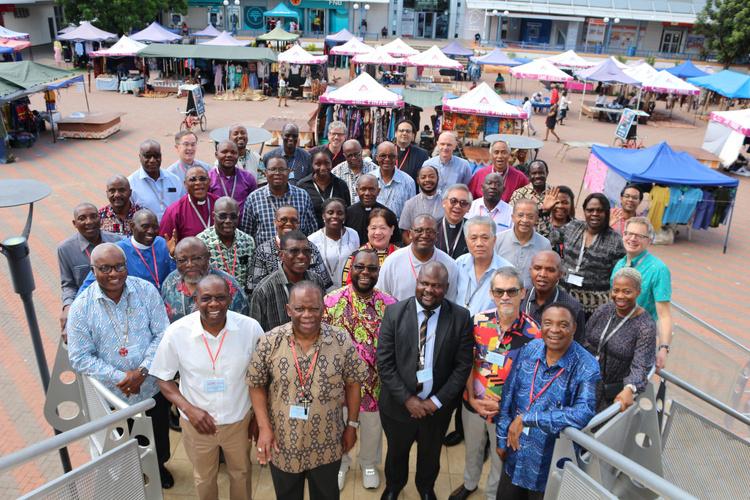
Delegates at the USPG Partners Summit on the Future of Theological Education in Africa
November 2022, Gaborone, Botswana

delivery Action plan
Governance and Management
Governance and Management
Train TEI principals and governors in the principles of governance, leadership, and management.
Leadership training that is values-led, visionary, strategic, innovative, and undertaken with integrity; and develops an understanding of management – including core financial and HR elements, capacity to understand and develop a supporting business model, budgets, team building, role clarification, recruitment and retention of staff, thoughtful delegation, and succession planning.
Provinces and TEIs: Develop a recruitment approach that guarantees the selection of young men/women of integrity and greater inclusion of women for training in TEIs.
Set up an African Theological Educators Forum/Network - a platform for the principals of Theological Colleges to share experiences and address issues of common concern, both strategic and operational, in the leadership and management of TEIs and sharing ideas on mobilising resources
delivery Action plan
Curriculum Design and Development
Curriculum Design and Development
Translate and provide theological materials in a range of languages including Portuguese, French, Arabic and Swahili for theological education. Engage TEIs in routine curriculum reviews to meet the evolving needs of students, dioceses, and the changing delivery environment
Develop a mentorship programme of young clergy by senior clergy and retired clergy in the teaching of theology TE’s balance between the focus on qualifications and vocational formation in the minimum entry requirements within the emerging university frameworks
USPG: organise a more extensive and detailed mapping exercise on key aspects related to curriculum design and development
Provinces, TEIs and partners: Facilitate exchange programs and/or visits across individual provinces to supplement the learning experience of ordinands.
Provinces and TEIs: Pursue accreditations for TEIs to enable the standardisation of their courses.
delivery Action plan
Digitization and Technology

Digitization and Technology
Provinces and TEIs to develop approaches that utilise e-learning and other ways of learning, to improve the quality of learning experiences of all students and access to theological education TEI’s and provincial theological education leadership identify ways to increase accessibility to e-libraries, elearning resources, and printed material for ordinands The use of mobile technology, pre-recorded material/ lectures, and the use of mobile phones. Facilitate remote learning by producing pre-recorded lectures which could be downloaded
delivery Action plan
Resource Mobilisation and Sustainability
Resource Mobilisation and Sustainability
Establish theological education support unit based within CAPA to coordinate Africa provinces. Develop the capacity of TEIs to be self-sustaining and take over-arching responsibility to set a realistic framework for TEIs and ministerial training across the church. Recruit lead staff of theologian education at the provincial /council office level to strengthen provinces & councils' capacity to rethink, stimulate and implement a theological education framework. TEIs: outline a clear business model for each TEI - including models for income generation and sustainable funding.
Provinces and dioceses: mobilise parishes to support and resource TEIs.
Provinces and partners enable scholarships, match-funding, or growing an endowment to support students and theological colleges. TEIs establish regular financial audits for accountability.
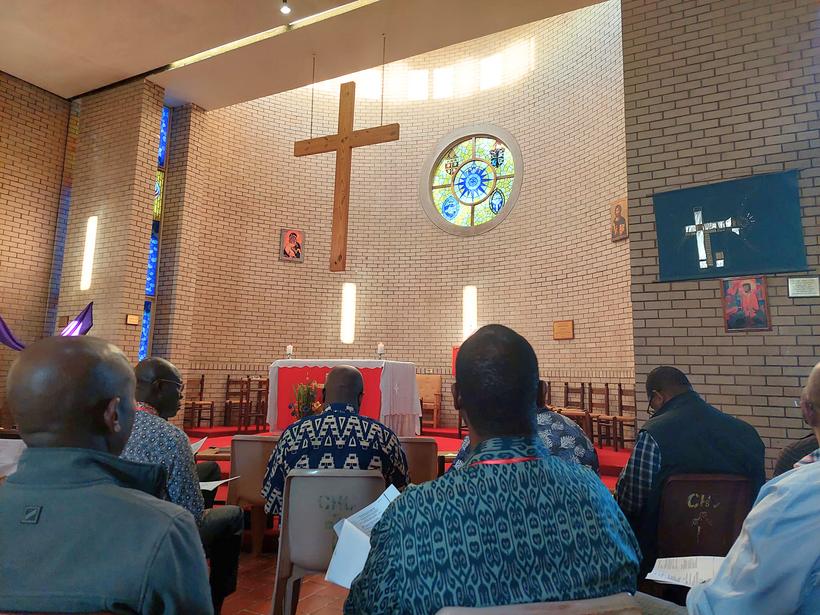
A moment of reflection at the Anglican Cathedral of the Holy Cross in Gaborone, Botswana
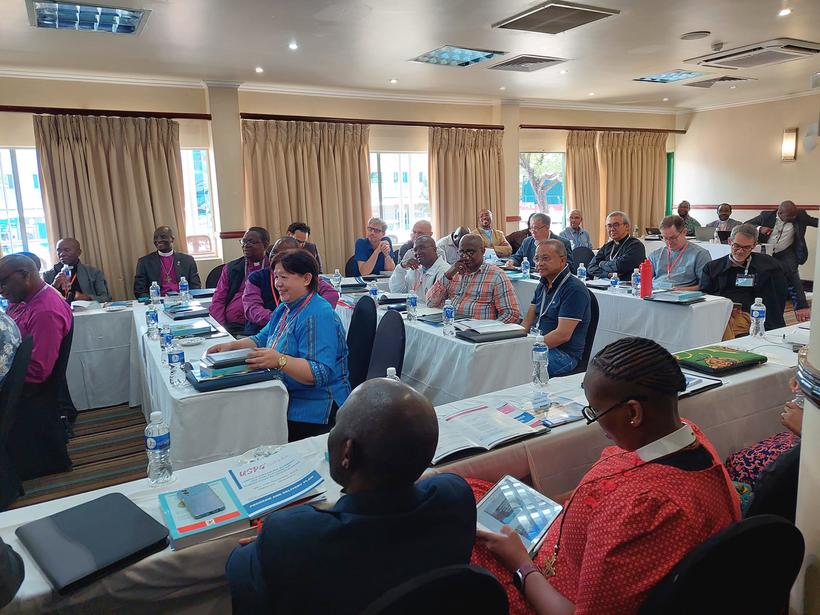
participants of the summit
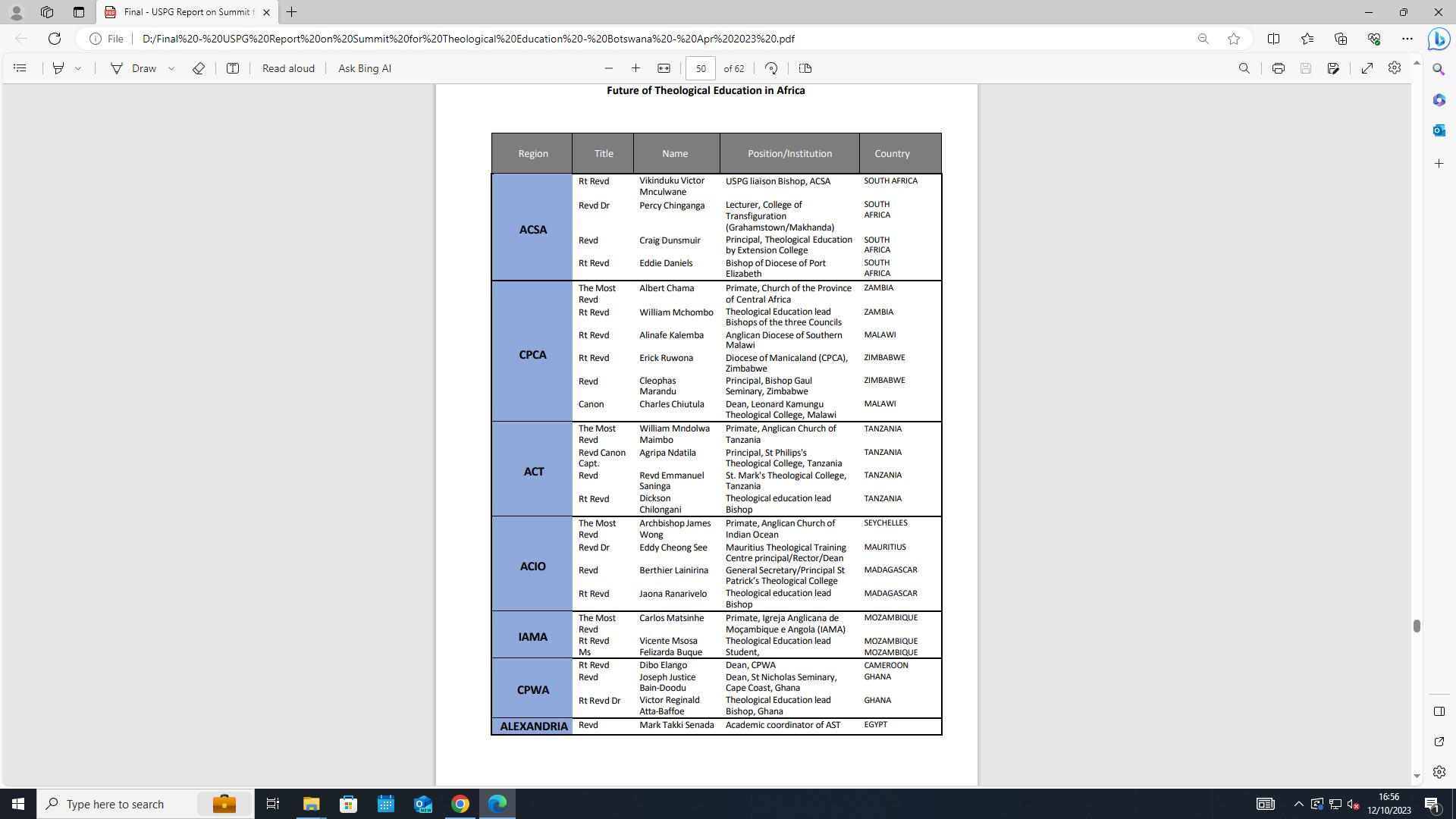
participants of the summit
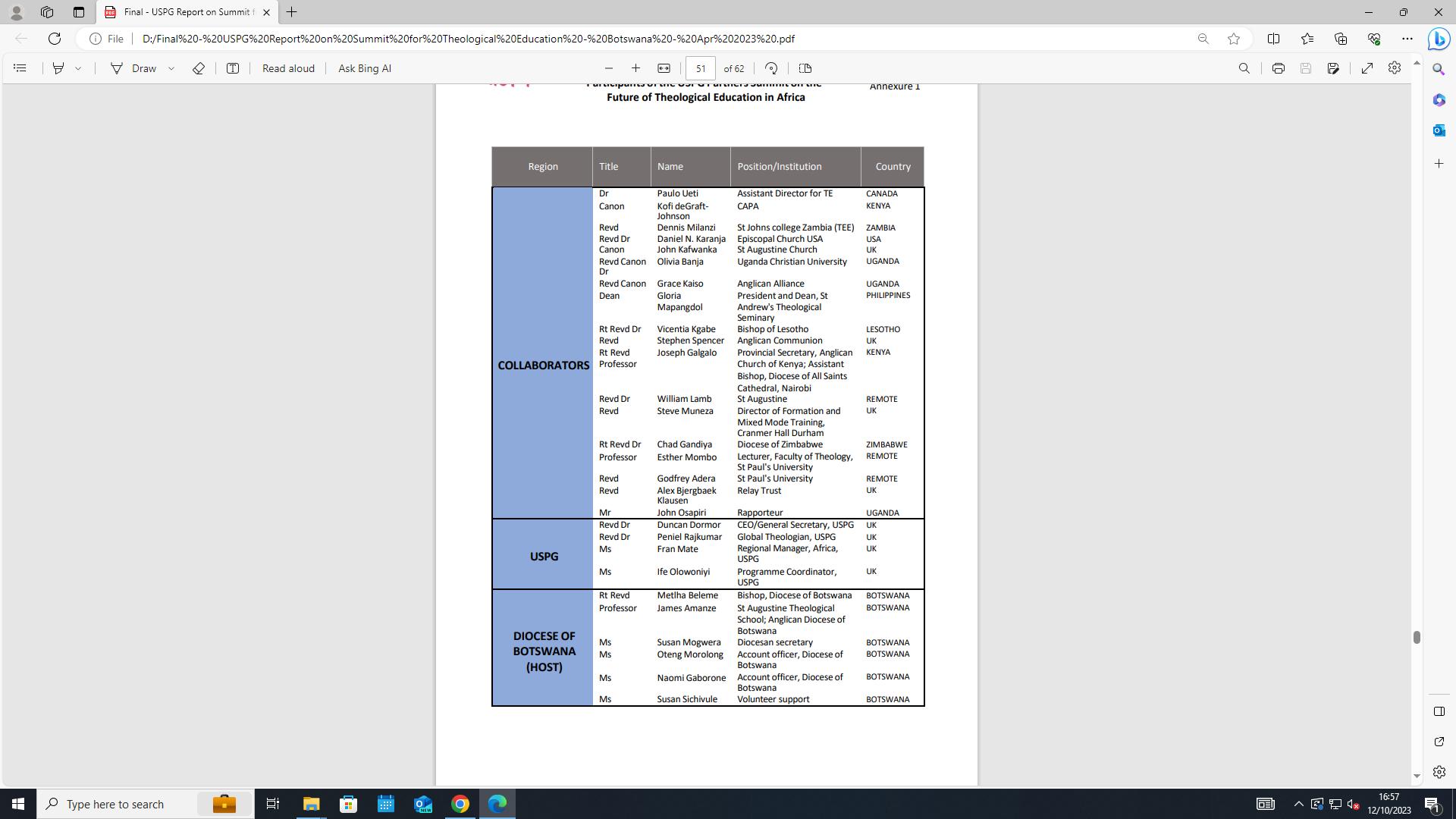
ledgements
wledge with thanks the support of the Diocese of Botswana in the hurch of the Province of Central Africa towards hosting the Gaborone, as well as the Theological Education Department of the ommunion Office and the Episcopal Church for extending some upport for organising this consultation. We are also grateful to the f the seven USPG partner Provinces in Africa for their unwavering this summit and the members of the various working groups who he ground so diligently to ensure its success.
debted to all the presenters, moderators, facilitators, and of the listening groups who gave generously of their precious time is conference a mutual time of learning. We are also indebted to provided logistical support in preparation for and during the he summit.
“So Christ himself gave the apostles, the prophets, the evangelists, the pastors and teachers, to equip his people for works of service, so that the body of Christ may be built up.”
Ephesians 4:11-12
(NIV)
Cover image:
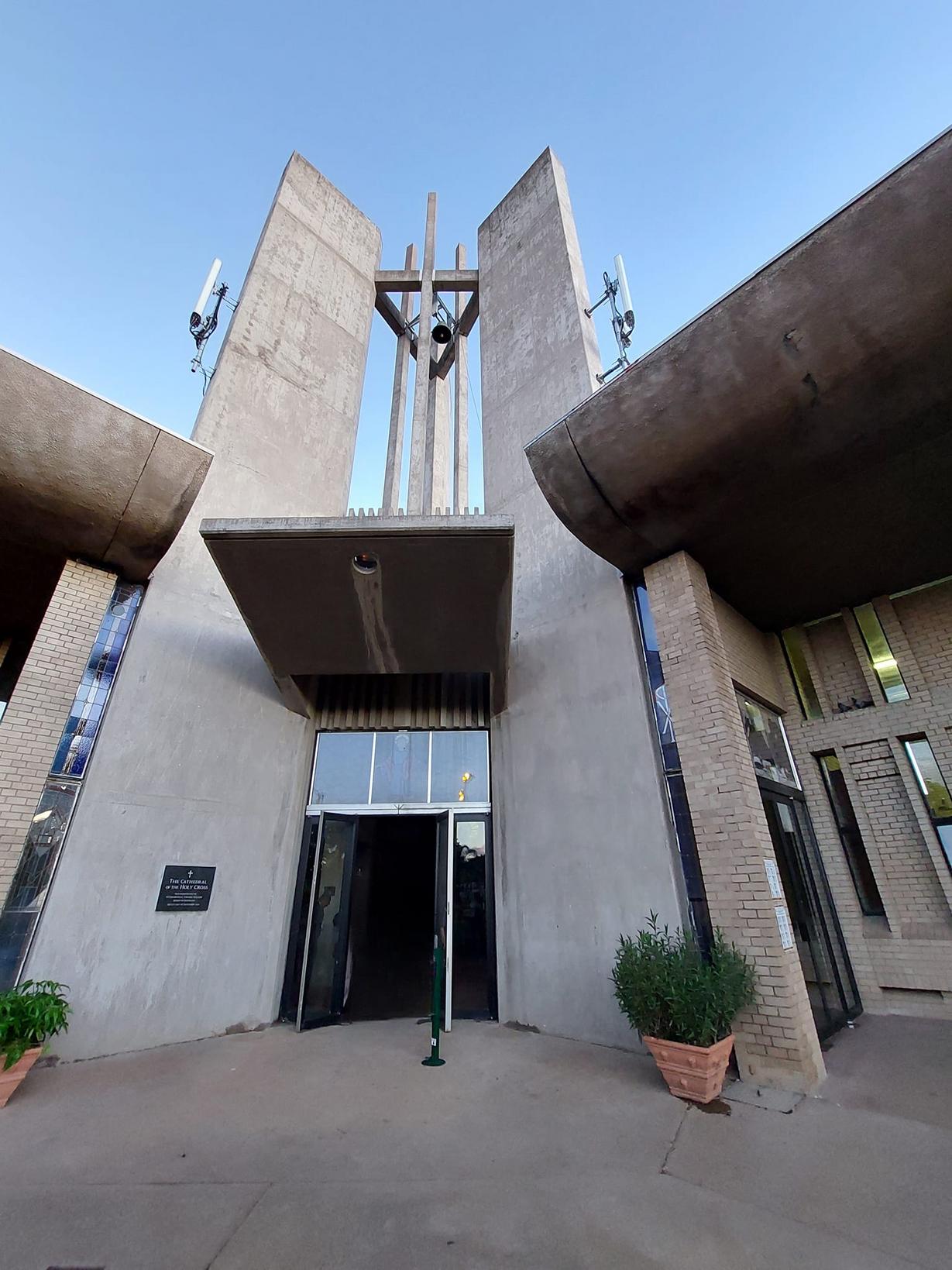
Anglican Cathedral of the Holy Cross, Gaborone, Botswana