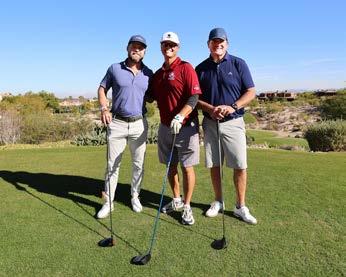
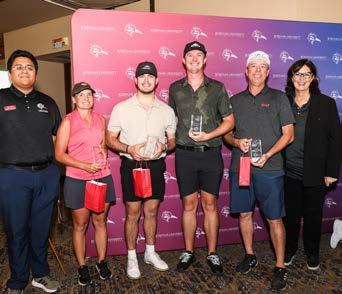
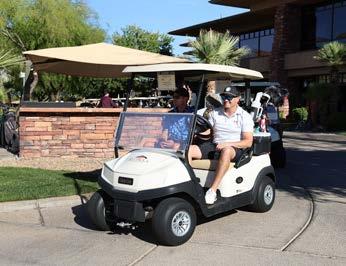
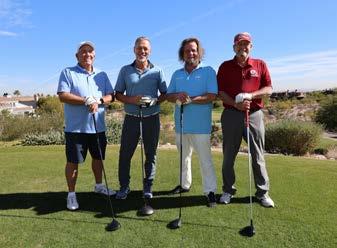
The Roseman University Hero Scholar Classic, presented by The PENTA Building Group, brings together healthcare professionals, business leaders, and community members who share a common goal: growing Nevada’s healthcare workforce and improving healthcare access across Nevada by supporting educational opportunities for students.
November 2, 2026 | 8am to 2pm | Red Rock Country Club
For golf and sponsorship opportunities, visit: https://www.roseman.edu/give/events/ 2026-roseman-university-hero-scholar-classic/ or scan QR code.
PUBLISHER
Jason Roth
EDITORS
Jason Roth
Carson Fry
PHOTOGRAPHERS
Ryan Arakawa
Loretta Campbell
Francia Garcia
Anny Ortega
CONTRIBUTORS
Alexis Hall
Vanessa Maniago
Rachael
Thomas
DESIGNER
Amy Glick
Letter from the PRESIDENT
There is something energizing about this moment in Roseman University's story. Everywhere I look, I see evidence of an institution growing not just in size, but in purpose. We continue to deepen our commitment to the communities we serve and expand what it means to be a health sciences university in the 21st century.
This issue of spectRUm captures several dimensions of that growth. You'll read about EMPOWERED Home (+), a new initiative made possible by a $50,000 grant from Molina Healthcare of Nevada that brings recovery support directly into the homes of families navigating substance use disorders, while also giving our medical students firsthand insight into the social realities that shape health outcomes. That is Roseman's model in its truest form: care and education advancing together.
You'll also meet the expanded team at Roseman Medical Group, which has reimagined its Spring Valley clinic to care for patients across the full lifespan, from newborns to older adults, with a provider team of exceptional depth and skill. And in our featured article, you'll explore how Roseman University College of Medicine is doing something rare and philosophically serious: building a medical curriculum around character, not just competence, grounding the education of our future physicians in a framework of virtue that asks students to flourish, and in doing so, help their patients flourish as well. This kind of innovation is not new for Roseman. From our Six-Point Mastery Learning Model® to our three-year Doctor of Dental Medicine program, we have always created ways to teach more efficiently, more deliberately, and more effectively. That translates into highly professional, highly competent, and highly compassionate graduates.
This spirit of innovation extends beyond our campuses and into the community. In March, we were proud to launch Roseman Bioventures at our Summerlin campus, a life sciences incubator that reflects our belief that a university committed to health must also be committed to the ecosystem that surrounds it. We are just beginning this chapter, and we look forward to sharing more as it grows and takes shape in the months ahead.
And later this month, we will gather to celebrate the Class of 2026 at commencement ceremonies in Nevada and Utah. This is a milestone I look forward to each year with genuine gratitude and joy. In this issue, we had the privilege of sitting down with Dr. Cindy Rask, a 2019 graduate of our College of Dental Medicine, who has built a career spanning public health, corporate dentistry, and now her own thriving private practice in Georgia. Her story is a reminder of what our graduates carry with them when they leave: not just clinical skill, but the values, relationships, and sense of purpose that Roseman cultivates. The Class of 2026 will carry those same gifts forward. To our graduating students: you chose Roseman, and in doing so, you became part of our legacy. We are honored to have been part of your formation, and we look forward to following your careers, your contributions, and your successes, much like Dr. Rask's, with tremendous pride for years to come.
There is much more ahead. Stay engaged. The best chapters are still being written.
With gratitude,
Dr. Renee Coffman President Roseman University of Health Sciences
Bringing Recovery Home:
EMPOWERED Expands Support for Families with
For medical students at Roseman University College of Medicine, learning to care for patients increasingly means stepping beyond traditional clinic walls. A new initiative from the college’s EMPOWERED program gives students the opportunity to do exactly that – bringing compassionate, interdisciplinary care directly into the homes of families navigating recovery.
Through a $50,000 grant from Molina Healthcare of Nevada, EMPOWERED has launched EMPOWERED Home (+), a new program that delivers in-home recovery support for pregnant and postpartum individuals affected by opioid and stimulant use disorders. The program expands critical wraparound services for families across Southern Nevada while also providing learning opportunities for Roseman medical students.
“This investment from Molina allows us to meet families where recovery truly happens,” said Andria Peterson, PharmD, co-founder and executive director of EMPOWERED and chair of the Department of Bioethics, Humanism and Policy at Roseman University College of Medicine. “By stepping into the home, we can better identify barriers to care, strengthen familycentered support systems and improve health outcomes for parents and children alike.”
Molina
Healthcare Grant
By: Jason Roth
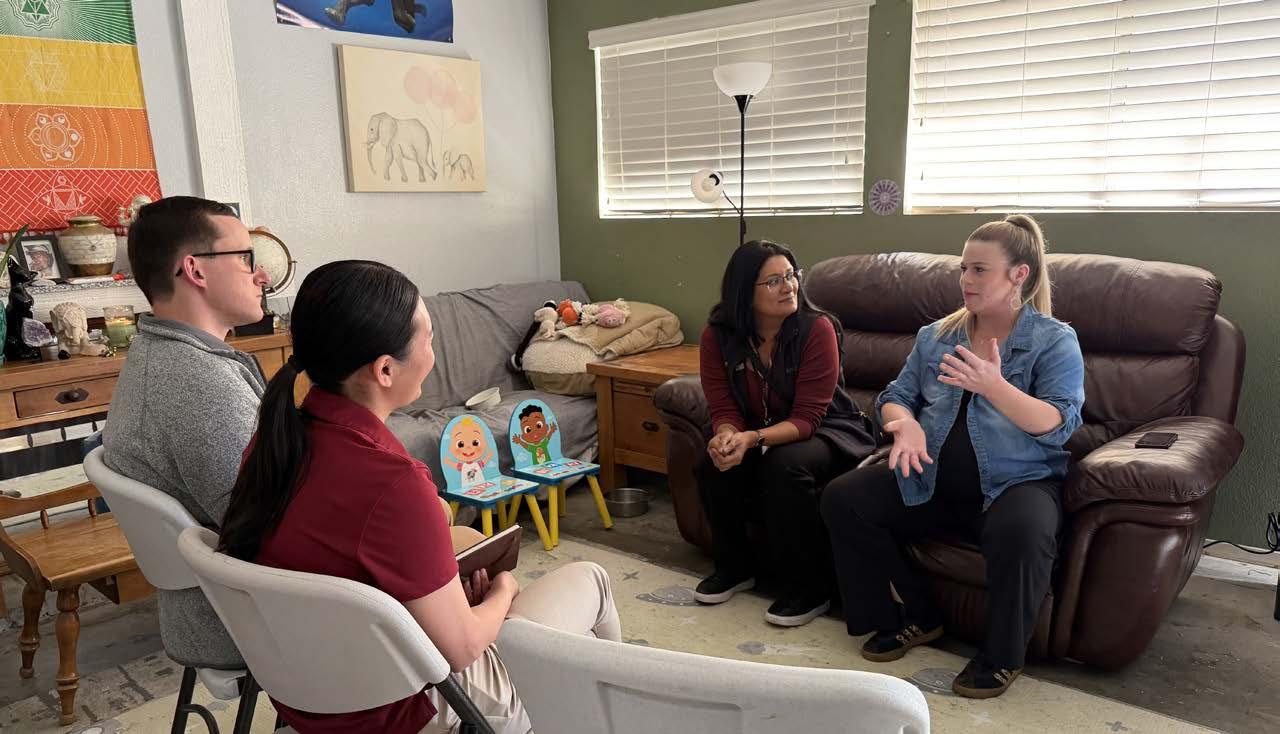
Through structured home visits, Roseman medical students work alongside College of Medicine faculty clinicians and EMPOWERED peer recovery specialists to support families in recovery. These teams conduct screenings, coordinate care, provide education, and help connect families with critical community resources, giving students valuable firsthand insight into substance use disorders and the social factors that shape recovery.
The program is modeled similarly to the College of Medicine’s GENESIS program, which sends teams of medical students, community workers, and clinicians into the community to provide direct support to households facing significant social and medical challenges. EMPOWERED Home (+) adapts that successful approach specifically for EMPOWERED clients, allowing care teams to meet families in the environments where daily life, parenting, and recovery intersect.
The approach reflects an important shift in medical education, with the goal of training future physicians to understand health in the context of everyday life.
By participating in home visits, students will see firsthand how factors such as housing stability, transportation, family dynamics,
and access to resources influence health outcomes. These experiences help prepare them to provide compassionate, patientcentered care for individuals facing substance use disorders and other complex health challenges.
The need for innovative care models is urgent. According to data by the Centers for Disease Control, drug overdose is the leading cause of death among women of childbearing age (15–44) both nationally and in Nevada. In the state, it is also the leading cause of maternal mortality, which is defined as death during pregnancy or within one year after giving birth.
The one-year pilot program is expected to serve approximately 30 households in the Las Vegas area, providing personalized support that goes beyond traditional clinical care.
Funding from Molina Healthcare supports clinical equipment for home visits, overdose prevention and first-aid kits, health promotion materials, professional training resources, and outreach and education efforts designed to strengthen engagement with families.
For Molina Healthcare of Nevada, the partnership reflects a shared commitment to improving maternal health and expanding recovery services throughout the state.
“Molina is deeply committed to Nevada and proud to partner with EMPOWERED to expand access to comprehensive, recovery-focused care,” said Dr. Nick Hollister, behavioral health medical director at Molina Healthcare of Nevada. “By connecting mothers with medical services, counseling, peer support, education, and community resources, this program strengthens families and helps moms thrive during and after pregnancy.”
Since its founding in 2018, the EMPOWERED program has connected hundreds of participants with medical treatment, individual and group therapy, peer support, housing resources, education, and basic living supplies. Today, EMPOWERED serves families across Southern Nevada; Reno, Carson City, and Lyon and Churchill counties in Northern Nevada; and Weber and Davis counties in Utah.
With EMPOWERED Home (+), Peterson hopes the pilot will demonstrate the impact of bringing recovery support directly into the community while also preparing the next generation of physicians to care for patients with empathy, insight, and a deep understanding of the challenges families face outside the EMPOWERED’s walls.
By combining community care, education, and collaboration, EMPOWERED Home (+) reflects Roseman University’s mission to improve health outcomes while training health professionals who are prepared to serve where they are needed most.
EMPOWERED FACTS
• Founded in 2018, EMPOWERED provides comprehensive support for pregnant and postpartum individuals recovering from substance use, focusing on opioids and stimulants.
• Services Offered: Connection to medical treatment, care coordination, individual/group therapy, peer recovery support, housing assistance, job placement, education, and baby care supplies.
• Serving Clark, Washoe, Churchill, and Lyon Counties, and Carson City in Nevada, and Weber and Davis Counties in Utah.
To learn more or obtain services: Scan QR code, Call (833) 481-7681 or visit https://empoweredmoms.org/ @empoweredmomsorg
FEATURED ARTICLE
Rooted in Character:
How Roseman University College of Medicine is redefining professionalism as flourishing – and cultivating character, not just competence, in tomorrow's physicians
By: Jason Roth
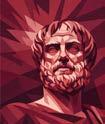
Over 2,300 years ago, Aristotle – Greek philosopher, father of biology, tutor to Alexander the Great – posed a question that still cuts to the heart of what it means to be human: what is the highest good, the best life, any of us can achieve? For him, the answer is not wealth, nor is it fame or pleasure. Aristotle's answer was eudaimonia – a word we loosely translate as "happiness," but which means something richer and more demanding than a feeling. Unlike happiness in the modern sense, which is a temporary emotional state, eudaimonia refers to a profound and lasting sense of well-being that comes from living in accordance with our true nature. Call it flourishing. And the path to it, Aristotle argued, ran directly through the cultivation of virtue.
Virtue, for Aristotle, was not a rulebook or a list of commandments. It was character – a stable, ingrained disposition to act well, feel rightly, and choose wisely. What we might call today living with integrity. Acting from conscience. Following your moral compass. Being, in the fullest sense, authentic – not performing goodness for an audience but embodying it so completely that it becomes second nature.
True flourishing, living the best possible life, is not the product of luck or wealth, but a state that must actively be built through the cultivation and habituation of virtue. According to Aristotle, this process involves consistently choosing the middle path, or the “golden mean,” between two extremes, one of deficiency, and one of excess, and training one’s emotions and desires to align with those choices. Courage sits between cowardice and recklessness. Generosity lies between greed and wastefulness. Honesty navigates the space between brutal frankness and hollow flattery. What allows us to find that mean in real situations, with real people, in real time, is practical wisdom – phronesis – the capacity to read a moment and respond well. It is a philosophy that has informed and influenced Western concepts of morality for millennia. And now, at Roseman University College of Medicine (RUCOM), it is shaping the next generation of physicians.
This is where Aristotle's framework speaks so directly to medicine. Ethics, in this view, is not a set of abstract principles applied through rational calculation. It is a skill that is developed through practice, reflection, and experience. It doesn’t live in textbooks but instead in the exam room, the hallway conversation, or the moment a physician chooses how to deliver difficult news. And crucially, it is learned by watching. Role models matter enormously in this framework: the attending who pauses to listen, the faculty member who admits uncertainty, and the clinician who treats the custodial staff with the same regard as the department chair. Character is “caught” as much as it is “taught.”
Which is why, at RUCOM, professionalism as flourishing is not a curriculum add-on – it is a culture, tended by every member of the community, from the first foundational science course to the final clinical rotation. RUCOM's approach to medical professionalism is built on a framework of virtues: character traits that the college has woven into every layer of its curriculum, from the first days of medical school through clinical training and beyond. The framework draws directly from Aristotle's golden mean, treating each virtue as a balance point between behavioral extremes. In its purest form, it is a characterbased education that challenges students, faculty, and staff to not simply behave professionally, but to become professionals.
From Rules to Roots
For much of medical education's history, discipline has been the foundation of professionalism, with sets of rules to follow and consequences to face when rules are broken. Students, for example, are expected to arrive on time, dress appropriately, and not lie or cheat. The disciplinarian model, as it is sometimes called, defines professionalism largely by its absence: you know unprofessional behavior when you see it, and you act accordingly.
At RUCOM, professionalism is understood as something far larger, drawing instead on two deeper frameworks: the social contract model, which frames physicians as a group that has made a public commitment to patient welfare, patient autonomy, and social justice in exchange for society's trust through licensure; and the professional identity formation model, which understands professionalism as something developmental that must be thought, felt, and lived, and not just performed. Together, the two models create a single, unifying idea: that the goal of medical professionalism is not compliance. It is flourishing.
“Medicine is fundamentally about human flourishing. The flourishing of patients, of communities, and of ourselves as physicians, faculty educators, and administrative support. We cannot help others flourish if we are not flourishing ourselves,” says Marin Gillis, PhD, LPh, RUCOM’s Senior Executive Dean for Faculty Affairs and Learning Innovation and Professor in the Department of Bioethics, Humanism, and Policy.
RUCOM’s Twelve Virtues
At the heart of RUCOM's character-based model are its twelve virtues, each mapped to the college's core medical educational program objectives: adaptability, beneficence, compassion, conscientiousness, critical thinking, curiosity, discernment, excellence, fairmindedness, humility, integrity, and respect. According to Shadi “Soph” Heidarifar, PhD, MA, Assistant Professor of Bioethics, a philosopher-bioethicist who wrote her doctoral dissertation on character-based education, these virtues are not abstract ideals. Rather, each is defined in concrete, behavioral terms and situated as a mean between two extremes.
"These twelve are not the only virtues,” said Dr. Heidarifar, “but they give us something concrete to build on. And once you begin thinking in terms of virtues, the excess/mean/deficiency model becomes a practical tool for calibration – a way to assess not just what a student knows, but who they are becoming."
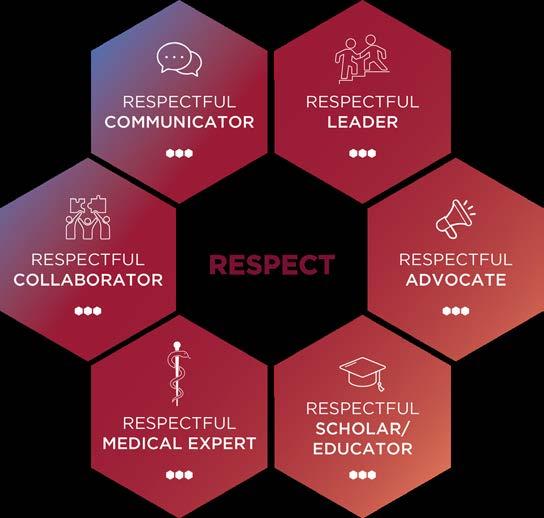
Take respect. RUCOM defines it as demonstrating regard for patients, families, peers, collaborators, faculty, staff, and self in all professional environments, and embracing shared decisionmaking that honors patient preferences and values. In terms of the golden mean, the deficiency of respect is disrespect or disdain, which can include speaking over others, dismissing viewpoints, and using condescending language. The excess is obsequiousness, such as avoiding difficult conversations, over-yielding to others' opinions, and neglecting to advocate for one's own perspective. The mean is the physician who listens attentively, engages in genuine dialogue, fosters collaboration, and still advocates clearly when the patient's well-being requires it.
This same framework applies across all six physician roles the RUCOM curriculum develops: Communicator, Collaborator, Leader, Advocate, Scholar/Educator, and Medical Expert. A respectful leader, for instance, neither disregards team input nor hesitates indefinitely out of excessive deference. A respectful medical expert neither cherry-picks evidence nor uncritically accepts every patient's self-diagnosis. The golden mean is not a fixed point but a target that skilled practitioners must learn to locate in each clinical encounter.
"The twelve virtues are not rules, but ways of being and becoming that enable flourishing," Dr. Gillis explains. "When we practice respect, curiosity, compassion, and all the other virtues, we create the conditions where students, faculty, administration, patients, and families can thrive."
A Curriculum Built Around Character
What makes RUCOM's approach unique is not just its philosophical coherence, but the purposeful way that character formation is embedded into every layer of students’ medical educational experience. Instead of treating professionalism as a single course or subject in the curriculum or a checkbox in a clerkship evaluation, RUCOM has adopted a strategy of integrating and "microdosing” virtue-focused moments into everyday learning.
Judy Hanrahan, JD, MA, Associate Dean of Faculty Affairs, offers an example of microdosing. In their clinical preparation coursework, students are guided to describe complex patients in personcentered, humanistic language, and to avoid terms like "difficult patient" or "non-compliant," which reduces a person into a behavioral category. “This simple shift in language,” notes Professor Hanrahan, “reflects a deep commitment to the virtue of respect, and it reinforces the habit of seeing a whole person before a diagnosis or a label.”
Faculty in the Department of Bioethics, Humanism, and Policy, including Becky Jayakumar, PharmD, BCIDP, BCPA, who holds a dual position in Roseman’s colleges of Medicine and Pharmacy, have created integrated Roadrunner Learning Community sessions and foundational phase lectures drawing virtues into clinical dilemmas, such as the complex ethics of antibiotic prescribing, where a physician must balance integrity, beneficence, critical thinking, and discernment, often under time pressure. A weekly professionalism curriculum, including coursework on physicians as advocates, gives students structured opportunities to explore the values of medicine alongside its science.
Fundamentally, professional identity formation at RUCOM goes beyond what a student knows or does. It encompasses what a student feels. Thinking like a physician, acting like a physician, feeling like a physician – these three dimensions of professional selfhood are understood as inseparable.
“A student who can recite the social contract of medicine but has not yet internalized its values is not yet fully formed as a professional,” explains Professor Hanrahan. “The curriculum is designed to close that gap by encouraging self-reflection, helping students learn the profession’s language and values, and engaging deeply with the ethical and human side of care, including self-care.”
Flourishing as a Faculty Value
One of the most compelling aspects of RUCOM's professionalism initiative is its insistence that character-based education cannot be limited to students. The same framework of virtues also applies to faculty, staff, and administration. The Professionalism Campaign, titled "Flourishing Together," which launches in July, is structured around the idea that a community dedicated to the flourishing of its students must also be committed to the flourishing of its educators, staff, and administration.
It is a college-wide campaign led by College of Medicine’s Office of Access, Opportunity, and Collaboration, Office of Student Affairs, and Office of Faculty Affairs and Learning Innovation (OFALI).
“You can’t give what you don’t have. If you’re burned out, disconnected, and depleted, you can’t help students flourish. This initiative is for all of us,” said Dr. Gillis.
Partnering with the prestigious Kern National Network for Flourishing in Health, OFALI leads faculty workshops that explore questions such as: What does human flourishing mean, and how does virtue ethics support it? What blocks my own thriving? What do my students and colleagues need from me to flourish? How do I recognize and name flourishing when it is happening around me?
"The student who can acknowledge struggle without shame learns more honestly," Dr. Gillis notes. "The clinician who can sit with their own imperfection without self-destruction remains present for others. The professor who can teach with humility and learn from a colleague in another discipline grows as an educator and a person."
For staff and administrative team members, the message is equally clear: their flourishing is not secondary to the mission – it is integral to it. When every member of the RUCOM community is supported in practicing the virtues, the effects radiate outward: to students, to patients, to families, and to the broader Southern Nevada community RUCOM serves.
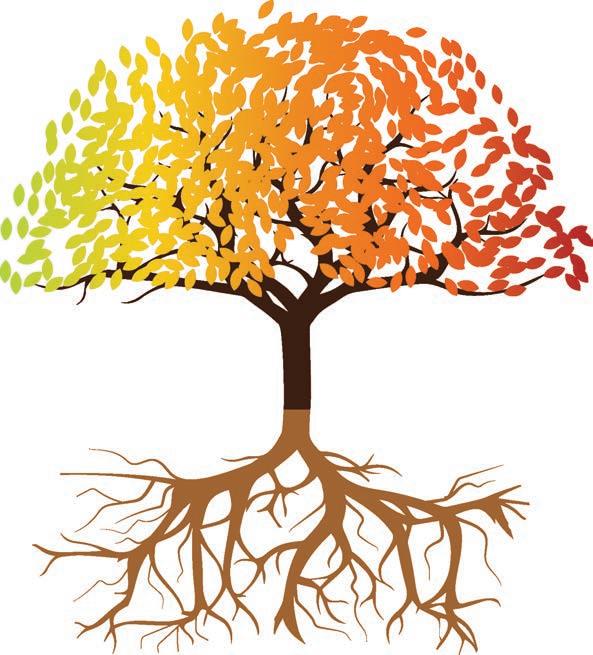
The Tree in the Garden Gretchen Keys, EdD, MLS, RRT, Assistant Dean of Faculty and Staff Advancement, has a flair for design. As the Professionalism as Flourishing Campaign took shape, a visual metaphor came to her: a tree. It was an image that felt true to everything RUCOM was trying to say: organic, relational, and alive with the possibility of growth.
The roots of the tree represent the college's foundational virtues: humility, excellence, and respect. From those roots rises the trunk –compassion – the quality strong enough to bear everything above it and honest enough to turn inward as well as outward. The canopy comprises the full range of virtues that become visible in professional practice: discernment, curiosity, critical thinking, adaptability, fairmindedness, conscientiousness, beneficence, and integrity.
The tree does not grow in ideal conditions. Like all trees, it weathers drought and storms. What matters, as Dr. Keys and the Campaign Committee frame it, is that the community tends the garden together. That means basic sciences faculty and clinical faculty working in concert – weaving professionalism not only into clinical practice but into foundational coursework from the very start – because when the whole faculty pulls in the same direction, students feel it. "Flourishing is contagious," the campaign's core messaging reads. "When you tend your own growth, it helps others thrive. When you support someone else's flourishing, yours deepens."
Discernment
HUMILITY RESPECT
EXCELLENCE
This vision has practical consequences for how professionalism is assessed and cultivated at RUCOM. Instead of relying primarily on a disciplinary model, the college embeds assessment into the curriculum itself, into its Medical Student Promotion and Review Committee (MedSPARC), Learning Environment and Professionalism (LEAP) committee, and into its admissions process. A culture of professionalism, the college believes, cannot be imposed from the outside. It must be grown from within.
“This is one of the main reasons I came to Roseman," said Dr. Gillis. "Dean Greer gave me both the authority and the responsibility to place moral competence at the core of a medical school curriculum and indeed in the College infrastructure itself, and that kind of bold, innovative mission to reimagine medical education as a whole drew me here."
Why It Matters for Medicine
The stakes of getting this right are high. Medicine's social contract – the implicit promise that physicians will act in service of patient welfare, respect persons and their autonomy, and promote social justice in exchange for society's trust – depends on a profession comprised of physicians of genuine character, not just technical
skill. The virtues RUCOM cultivates are precisely those that make that contract credible: integrity that ensures honesty even when it is difficult; humility that keeps a physician open to learning and to the patient's own knowledge of their body; compassion that sustains engagement even in the most demanding encounters.
There is also a practical, institutional argument. As Dr. Gillis shares, flourishing people provide better care, make fewer errors, stay longer in their roles, and recruit others who share their values. "A character-based culture is not just an aspirational goal; it is a strategic investment in the quality and sustainability of the institution itself," she says.
Aristotle understood that virtue is not a gift but a practice. It is something developed through habit, through community, and through the sustained effort to find the right response in each particular situation. RUCOM has taken that ancient insight and built a medical education around it. The golden mean is not a compromise. It is the mark of wisdom in a profession that lives in the space between knowledge and uncertainty, between protocol and compassion, and between the textbook and the human being in the exam room.
Interested in learning more or applying to Roseman University College of Medicine? Visit medicine.roseman.edu or scan QR code | @rosemanmedicine
From Lesson Plans TO TREATMENT PLANS
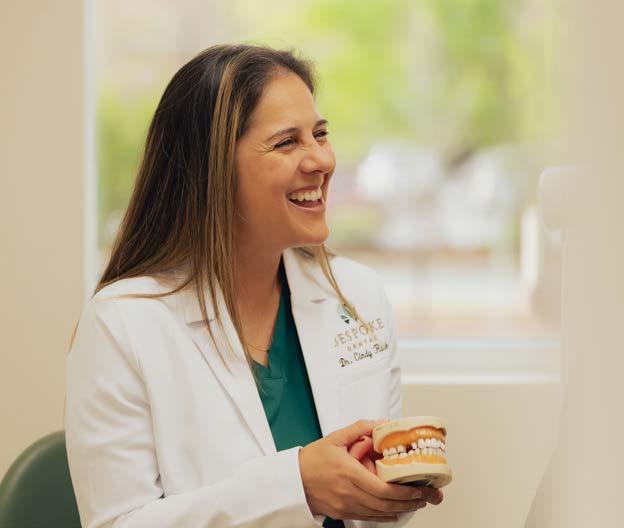
CINDY RASK, DMD | CLASS OF 2019
By: Carson Fry and Rachael Thomas
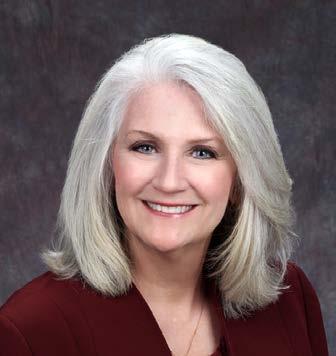
Some dental careers begin with a single, unforgettable moment in the chair. For Dr. Cindy Rask, it was the quiet confidence of a female dentist who made a filling completely painless and sparked a lifelong calling. Before applying to Roseman, Dr. Rask started her career as a middle school biology teacher. A 2019 graduate of the Roseman University College of Dental Medicine, Dr. Rask traded lesson plans for life-changing treatment plans, transforming smiles and making a lasting impact on her patients every day. Since graduating from Roseman, she has built a career that spans public health, corporate dentistry, franchising, and now her own private practice in Georgia. Along the way, she has remained deeply rooted in the values Roseman instilled in her: comprehensive care, compassion for patients, and the enduring power of lifelong colleagues. We sat down with Dr. Rask to reflect on her journey, the moments that shaped her, and the wisdom she’d pass on to the next generation of Roseman students.
Q: What inspired you to pursue a career in dentistry, and what led you to choose the DMD program at Roseman University?
Growing up, my parents always made dental visits a priority, and I genuinely loved being in that environment. I had a wonderful female dentist who performed a filling and I didn’t feel a thing; I was completely amazed by her. My orthodontist’s office was the same; every visit was a great experience. That feeling of being in a dental office just always felt right to me. As for Roseman specifically, I was drawn to how different the program was from most others. The concept of lifelong colleagues really resonated with me, and I genuinely hoped to become part of that community.
Q: Can you share a memorable experience from your time as a student that had a lasting impact on you?
There were so many, it’s hard to choose just one. When I was in my third year, I had a patient in his early 30s who needed all his teeth extracted. He had been in significant pain and just wanted it to be over. The day we finished, he broke down in tears. It was difficult to witness, but it was also a profound reminder of how much we can change someone’s life in a deeply meaningful way and how much our approach to that process matters. To this day, I think of him whenever a patient comes in embarrassed because they haven’t seen a dentist in years. The first thing I do is reassure them: showing up is the hardest step, and they should be proud of themselves for taking it.
Q: How did your education at Roseman prepare you for your career in dentistry?
The breadth of patient exposure was invaluable. Roseman prepared me to face the real-world complexity of dental practice and reinforced how transformative this work can be. Equally important, though, were the relationships I built with my classmates. Those lifelong colleagues are now some of my closest friends. Even though we’re spread across the country, we’re never more than a text away when one of us needs a second opinion or help navigating something difficult. Many have gone on to specialize, which means I have a trusted friend and consultant in virtually every field of dentistry, something I rely on regularly.
Q: Were there any faculty members or mentors who significantly influenced your professional path?
Dr. Paul Hoeft, my clinical director at the time, was always approachable and offered genuinely valuable guidance. I actually reached out to him a few years ago when I was working through a challenging situation in practice, and he helped me find my way through it; I’m so grateful he was part of my training. Dr. William Harman and Dr. William Carroll were also tremendous sources of encouragement throughout my time at Roseman. Truthfully, I was lucky across the board. There are too many faculty members to name individually, but I left feeling truly supported by the entire team.
Q: What have you been doing professionally since graduating, and what aspects of your work are most rewarding?
Since graduation, I’ve had the opportunity to work across several sectors; public health, corporate dentistry, and franchising, before opening my own practice, which is where I am today. Owning my own practice has been the most fulfilling chapter yet. I love the relationships I’m building with my patients over time; seeing familiar faces, watching families grow, and genuinely getting to know the people who trust me with their care. I’ve also found such joy in learning about my patients’ lives. One of my favorites is a children’s author who has been on the New York Times bestseller list. Conversations like that make every day interesting.
Q: How did your time at Roseman shape your approach to patient care and leadership in dentistry?
Roseman does a wonderful job of giving every student the opportunity to step into a leadership role. The natural progression from my third year of dental school to my fourth; where you shift from being mentored to mentoring others, was an early and meaningful introduction to what leadership looks like in practice. The program’s emphasis on comprehensive care also left a lasting mark on me. That philosophy is woven into how I approach every patient and every treatment plan today.
Q: What advice would you give to prospective students considering the DMD program at Roseman?
This is a truly exceptional program, and my biggest piece of advice is to make the most of every opportunity it offers. Seek out clinical experience at every turn and don’t let fear hold you back from trying something new. School is the ideal environment to stretch yourself, because you’re surrounded by faculty whose entire purpose is to support you when you get stuck. The years go by faster than you expect. What you invest in that time will absolutely define what you walk away with.
Q: Looking back, what does being part of the Roseman alumni community mean to you today?
It’s genuinely one of the most important parts of my life. My closest friends are my Roseman alumni. We stay in regular contact and make a point to get together when we can, and every time we do, it feels like coming home. We were a big family when we were in school, and that hasn’t changed. I’m deeply grateful for that community every day.
Q: Outside of the practice, who is Dr. Cindy Rask? What does life look like in your free time?
I’m married with two daughters, ages eight and five, and we live in Georgia. Life is full and wonderfully busy right now. My practice keeps me on my toes, and our girls are just as active, one runs track and the other is in ballet. Weekends usually mean trips to the park, walks outside, and time in the garden as a family. I’m also in a season of intentional professional growth, investing heavily in continuing education. I love Spear Courses and am always on the lookout for ways to sharpen my skills and expand what I can offer my patients.
Q: Last question – and perhaps the most important one: as a dentist and a mom, did the tooth fairy make an appearance in your household?
Q: If you could sit down with a current Roseman student, what’s the one thing you’d most want them to hear?
Use your time as efficiently and intentionally as possible. Volunteer for every opportunity you can, those real-world clinical hours are invaluable. The school provides an incredible range of learning opportunities, but you have a great deal of control over how deeply you engage with them. Don’t let the fear of failure keep you from trying. The mentors around you are there precisely for those moments.
Of course! My oldest has lost three teeth so far, and she is absolutely over the moon about the tooth fairy every single time. One of my dear pediatric dentist friends, a lifelong colleague, surprised her with a tooth fairy book and a little pillow to keep her teeth in. That’s exactly the kind of community we’re part of.
Dr. Cindy Rask’s story is a testament to what happens when passion meets preparation. From that early spark of inspiration in a dental chair to building her own thriving practice, she carries with her the lessons, relationships, and values that Roseman cultivated and pays them forward every day. Whether she’s reassuring an anxious patient, consulting a specialist colleague across the country, or cheering her daughters on at a track meet or ballet recital, Dr. Rask embodies the kind of dentist and person that Roseman University College of Dental Medicine is proud to call its own.
ROSEMAN MEDICAL GROUP ENTERS A NEW ERA
Expanding Scope and Care to Treat All
By: Vanessa Maniago
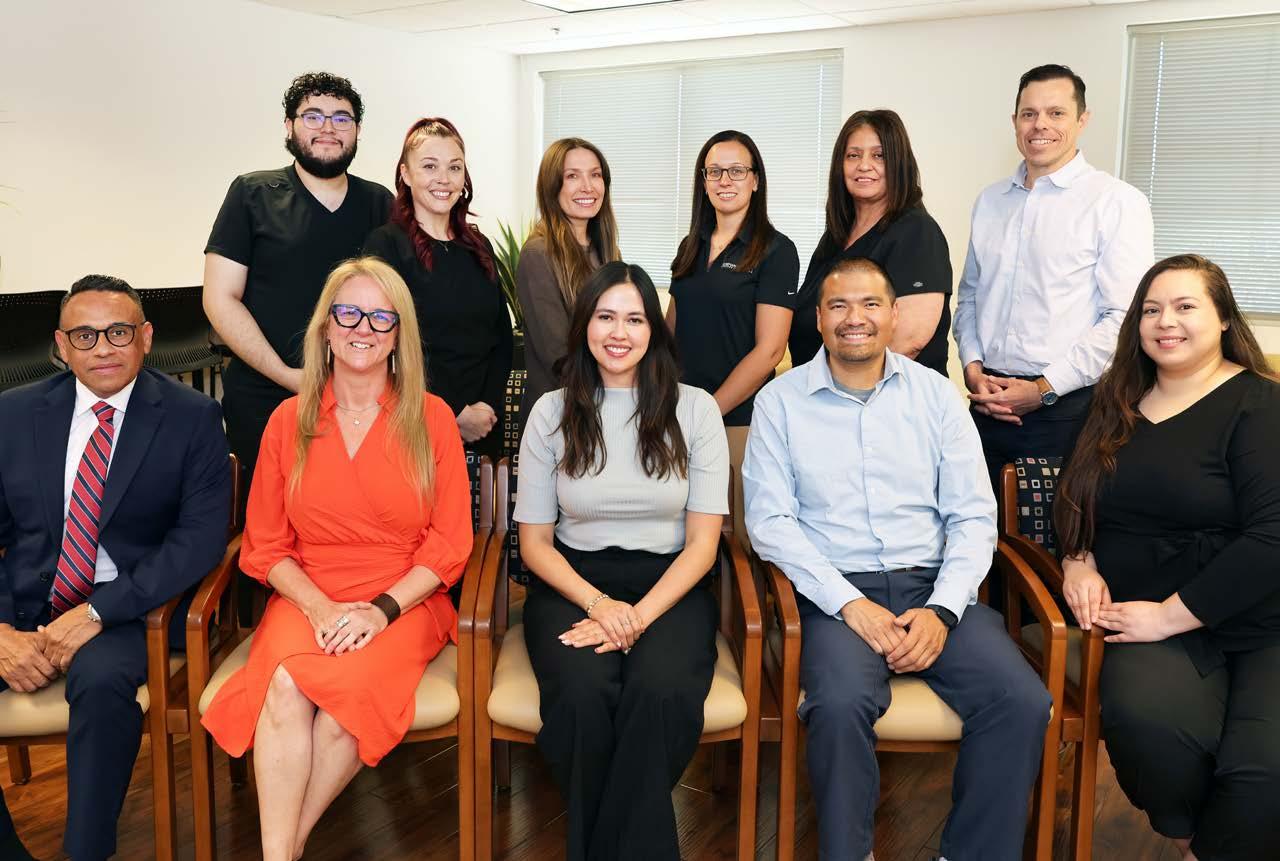
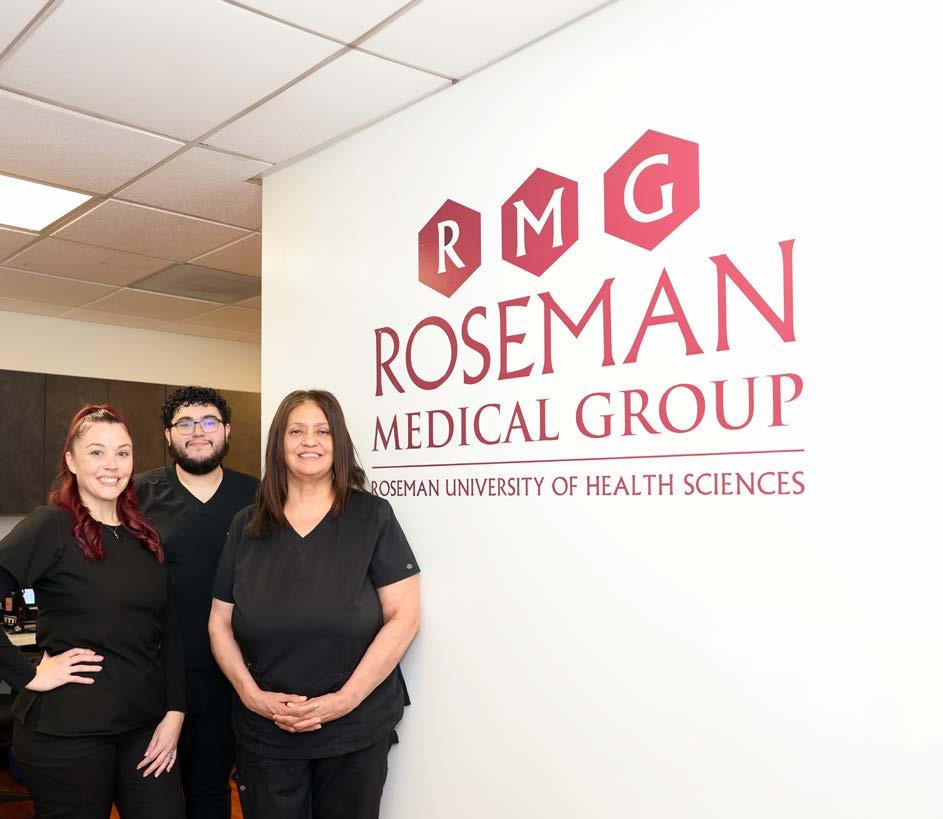
As Spring comes and promises renewal, Roseman Medical Group (RMG) celebrates a reimagining and expansion of its Spring Valley area clinic, extending its scope of practice and services offered and adding new providers, reflecting a broader commitment to caring for patients across the lifespan – infants, children, adults and older adults – while strengthening a model of care that centers not just on individuals, but on families as a whole.
Top Row (Left to Right): Frank Perez , Alexandra Cooper , Dr. Caitlin White, Dr. Amanda Koziel, Tamera Gilbert, Dr. Daniel Moses | B ottom Row (Left to Right): Dr. Daniel Navarro, Dr. Denise Davis, Dr. Sydney Phan, Dr. JP Vilai, Dr. Diana Peña
Family Medicine, the Nexus of All Healthcare Family Medicine is the nexus of care for patients, the center from which all other specialty care is managed and coordinated. Family Medicine physicians follow patients through complex disease management, coordinating care provided by other subspecialists that focus on a variety of conditions including heart disease, stroke and hypertension, diabetes, cancer, and asthma. Family medicine physicians also assimilate all health data, including lab work, imaging, and examination notes from other physicians, understanding the complex and inextricable healthcare variables, and creating needed linkages that impact the entire patient case. Providers anchor each patient’s care in coordination with multiple specialists in the provider ecosystem and form needed connections.
According to the Journal of the College of Family Physicians of Canada, CFP – MFC, family physicians have the greatest impact in managing health outcomes, in fact, more than any other physician group. Comprehensive and longitudinal primary care led by a family physician improves patient outcomes, lowers mortality rates, reduces health care use (i.e., decreased emergency department visits, hospitalizations, and readmissions), and health care costs. Family-centered care means better coordination across the healthcare system and better outcomes for patients.
In some states, and in more rural communities, family physicians act both as a patient’s primary care physicians and their OB/ GYN, delivering babies, engaging with families through critical milestones. According to the American Academy of Family Physicians (AAFP), family physicians provide the majority of care for America’s underserved rural and urban populations.
Caring for Patients Across the Lifespan
At the same time, individuals are part of families, with shared environments, experiences and challenges. At RMG, care is designed to reflect this reality – supporting patients at every stage of life while recognizing the connections between them, providing innumerable benefits to patients. Patients can be seen and have their children or elderly parents seen in coordinated visits, enabling less time away from work and school and reducing barriers to care.
This also offers providers a window through which to more holistically see the connections between each family member, and to more deeply understand the unique dynamics and social determinants of health that impact families. With age-appropriate, comprehensive care within a coordinated system, patients also do not have to seek new providers and practices as they age up, allowing them to stay within one care network, and over time, enabling enduring relationships and continuity of care rooted in trust, communication and familiarity.
Training Physicians to Care for Families and Communities
Both family medicine physicians and pediatricians undergo rigorous training to prepare for this work. They complete extensive training beyond medical school to be able to provide the best possible patient care, including a three-year residency that provides intensive, hands-on experience in patient care.
• Family medicine physicians are trained to care for patients across the entire lifespan – from newborns to older adults –across a wide range of clinical settings, including outpatient care, inpatient medicine, obstetrics, and community health. Their training emphasizes comprehensive, continuous care and coordination across specialties.
• Pediatricians focus specifically on the care of infants, children, and adolescents, with specialized expertise in growth, development, preventive care, and childhood disease.
Together, these disciplines complement one another, creating a collaborative model that supports both individual patients and the families to which they belong.
MEET OUR PROVIDERS
Clinic Director | JP VILAI, MD, FAAP | Specialty: Pediatrics
Dr. Vilai is a pediatrician, Medical Director of RMG, and Pediatrics Clerkship Director at Roseman College of Medicine. With warmth and humor attuned to the needs of children, he not only has led the transformation of RMG while training Roseman’s inaugural cohort of medical students, he is an advocate for LGBTQIA+, unhoused youth and other underserved populations, receiving Nevada Business Magazine’s 2025 Healthcare Heroes Humanitarian award. Board certified in Pediatrics, he focuses on providing care to children, helping families navigate through infectious diseases, and providing behavioral and mental health care. “Leading RMG through its evolution and into its next chapter has been a worthy and rewarding initiative. By providing the spectrum of care from birth to end of life, and integrating learners, we can significantly impact the health of individuals, families, neighborhoods, and the community at large, while providing an expanded scope of care that is accessible to all and prioritizes the social determinants of health.” Dr. Vilai, in his spare time, enjoys Legos, hikes, and spending time with his family. Dr. Vilai is supported by long-time staff and clinicians.
DANIEL MOSES, DO, MA
Specialty: Family Medicine
Dr. Moses provides compassionate, comprehensive, patient-centered care that promotes wellness, prevents disease, and supports long-term health for individuals and families, with work in family practice and musculoskeletal and sports medicine. Dr. Moses speaks Spanish and loves to travel, play soccer, and be outdoors.
CAITLIN WHITE, DO
Specialty: Family Medicine
Dr. White earned her BS in Nutritional Sciences from Michigan State University and continued on to earn a DO with her residency in Family Medicine at AdventHealth in Orlando, FL. Her focus on prevention and lifelong wellness is practiced in her own hobbies of yoga and hiking.
SYDNEY PHAN, DO, MS, MSMHS
Specialty: Family Medicine
Dr. Phan is new to RMG. Her philosophy of medical practice is grounded in a patient-centered approach that prioritizes meaningful partnerships, shared decisionmaking, and evidence-based medicine. Her goal is to empower patients through education and collaboration to improve health outcomes and overall well-being. Dr. Phan likes to bake, travel and spend time outdoors.
AMANDA KOZIEL, MD, AAHIVS, Specialty: Family Medicine, HIV Medicine
Dr. Koziel specializes in Family Medicine and HIV Medicine. She is bilingual, having earned her MD at the Universidad Autónoma de Guadalajara, Mexico. Following her residency at Lehigh Valley Health Network, she completed her fellowship in Community Medicine HIV and Viral Hepatitis at the Family Health Center of Worcester/UMass Chan Medical School. In addition to providing primary care, Dr. Koziel treats patients with HIV/AIDS, PrEP, Hep C, Hep B, latent tuberculosis, and focuses on sexual health, substance abuse, gender-affirming care, and inclusive care for patients from LGBTQIA+ communities. Her goal is to create a safe, supportive space where patients feel heard and empowered to thoughtfully prioritize both their physical and mental well-being through informed, shared decision-making. In her free time, she likes to play tennis and spend time with family and friends.
DENISE DAVIS, MD, HDMC, FAAFP
Specialty: Family Medicine
Dr. Davis has almost 30 years of experience, is board certified in Family Medicine, and specializes in Hospice and end-of-life care. Her care philosophy is rooted in whole-person, relationshipcentered care that prioritizes quality of life, clinical excellence, and alignment of medical care with each patient’s values, goals, and lived experience. Drawing on training in family medicine and hospice and palliative care, Dr. Davis views serious illness not as a departure from primary care, but as a moment when primary care becomes even more essential. In her free time, Dr. Davis likes to hike, read, make jewelry, and take photos.
DIANA PEÑA, MD, FAAP
Specialty: Pediatrics
Dr. Peña is also new to RMG, provides care to her patients in both English and Spanish, and is board certified in Pediatrics with a focus on Preventive Medicine, Infectious Diseases, and Behavioral and Mental Health. Her care philosophy is grounded in patient-centered care, shared decision-making, and the use of evidencebased medicine within the context of the social determinants of health. Dr. Peña is passionate about ensuring the well-being of children through the prevention of disease, addressing health disparities, and advocating for underserved populations. In her free time, Dr. Peña likes to travel, read and attend concerts.
DANIEL NAVARRO, DNP, APRN, FNP-C, PMHNP-BC
Specialty: Family Medicine
Speaking both English and Spanish, Dr. Navarro is a fixture in the Las Vegas community, and has over 15 years of experience. Board certified through the American Academy of Nurse Practitioners and credentialed as a Psychiatric Mental Health Nurse Practitioner, Dr. Navarro subscribes to providing patient-centered care with a focus on helping each client (e.g., individual, family, and groups) reach their optimum health level and goal. In his free time, Dr. Navarro likes to read and travel.
ROSEMAN MEDICAL GROUP’S INTEGRATION WITH ROSEMAN UNIVERSITY OF HEALTH SCIENCES
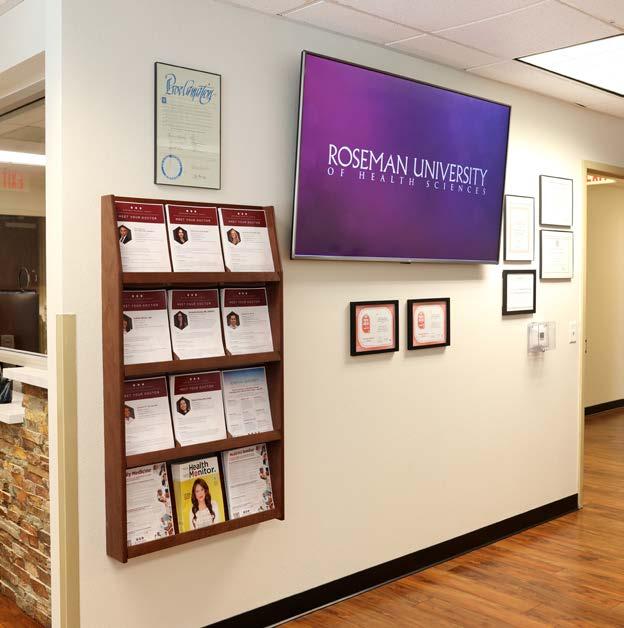
Patients of RMG reap the benefits of the clinic’s affiliation with Roseman University of Health Sciences. Access to top talent, clinical research activity, and improved patient care through evidencebased medicine provide patients with numerous benefits.
RMG FACTS
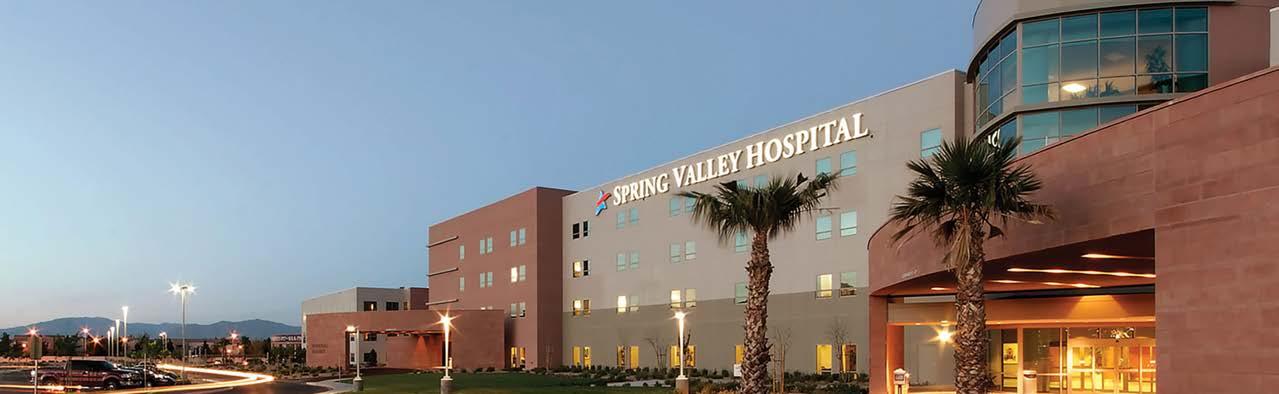
Roseman Medical Group is conveniently located adjacent to Spring Valley Hospital, with laboratory facilities on the hospital campus and accepts most insurances. Offering same-day and next-day appointments, RMG provides compassionate, empathic care, treating a range of diseases and providing preventive care and wellness services. Go to rosemanmedicalgroup.com or scan QR code to learn more.
Roseman Medical Group
5380 S. Rainbow Blvd, Suite 120
Las Vegas, NV 89118 Phone: (702) 463-4040
Roseman University Summerlin Campus
One Breakthrough Way, Las Vegas, NV 89135 | Free Event – Complimentary Light Food and Refreshments
Zoom link provided via email to those who wish to join virtually
JANUARY 22, 2026
Financial Fitness Throughout the Years–From Our 20s Through Retirement
Presented by: Creson Oakley, Clark County Credit Union
APRIL 23, 2026
Exploring Roseman’s Graduate Studies Programs: the People, the Pathways, the Professions
Presented by: Dr. Jeff Talbot, BS, PhD and Panel
FEBRUARY 19, 2026
The Language of Loss: Understanding Grief Before, During and After the Hospice Journey
Presented by: Amy Hachquet, Assoc. Dir., Community Outreach, Optum Palliative Care, Southwest Medical Hospice and Jeff Long, Bereavement Coordinator, Southwest Medical Hospice
MAY 14, 2026
Prescribing Solutions:
A 360-Degree View of the Pharmacist’s Career Options
Presented by: Dr. Alex Koo, PharmD, MS, BCPS and Panel
MARCH 26, 2026
One Health: The Inextricable Interconnectedness of Animal, Human, and Environmental Health
Presented by: Dr. Katherine Fogelberg, DVM, PhD
SEPTEMBER 17, 2026
Flip-Flop: The Resurgence in Vaccine-Conquered Diseases
Presented by: Dr. Manas Mandal, BSc, MSc, PhD
OCTOBER 15, 2026
The ABCs of Medicare – Navigate Open Enrollment with Confidence
The Myths of Hospice: What It Is, What It Isn’t, and Why It Matters
Presented by: Brian Greenlee, Executive Director, Optum and Amy Hachquet, Assoc. Dir., Community Outreach, Optum Palliative Care, Southwest Medical Hospice
Register now at speakers.roseman.edu or call 702.802.2872
DECEMBER 10, 2026
Vet Med: The Journey Towards the Dynamic Career Options of Today’s Veterinarian