Volume 13 Issue 5 April 2026





Elizabeth Schmidt
Aryana Dokter Camryn Kennedy
Andrew Frohwein
Reece Scott Toby Knutson
Emma Edwards
Abigael Olson
Samantha Hidalgo

Volume 13 Issue 5 April 2026
by Reece Scott
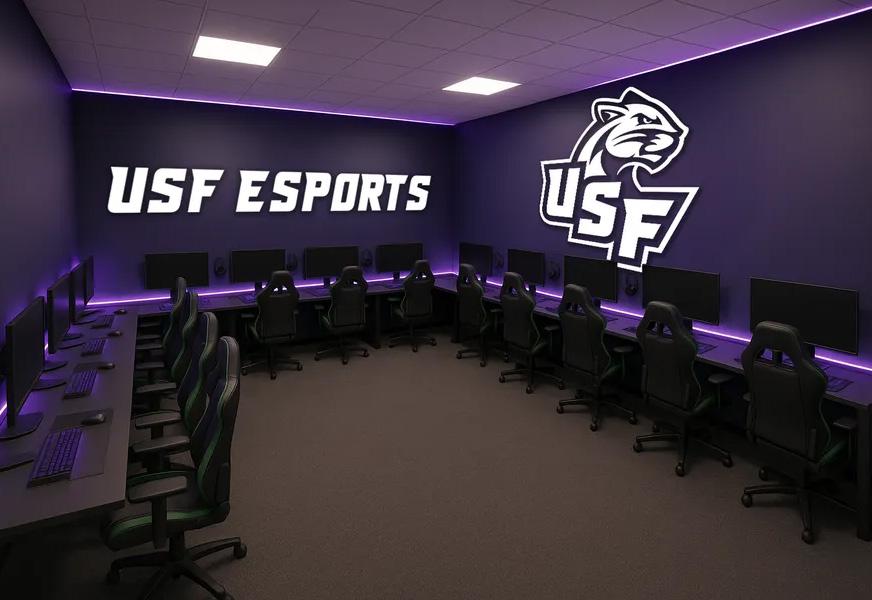
The University of Sioux Falls competition is no longer limited to fields and courts, it’s moving onto computer screens.
Competitive video gaming has grown into a global industry with millions of viewers and millions of dollars in prize money each year. Now, the University of Sioux Falls is joining the movement by launching its own esports program, led by new coach Elizabeth (Libby) Franken, a former four year captain at Buena Vista University and an accomplished collegiate competitor.
Franken brings competitive experience to the program after helping lead her team to victory in the NECC Esports Grand Finals in December 2023. During her time at Buena Vista University, she specialized in the tactical team-based shooter Valorant. At USF, Franken will lead students competing in several popular esports titles including League of Legends, Valorant, Marvel Rivals, Rocket League, and Overwatch 2.
Beyond competition, Franken emphasized that the program is intended to build a strong sense of community on campus. While there is a pathway for highly competitive players to pursue esports at a higher level, she noted that passion and dedication matter more than raw skill. Students who are interested in esports but may not want to compete at a varsity level may still have opportunities to get involved, as future plans include the possibility of developing recreational teams to make the program more inclusive.
Esports, short for electronic sports, involves organized competitive video gaming where players compete individually or on teams in structured leagues and tournaments. While some people may still view gaming as simply a hobby, the competitive scene surrounding esports now closely resembles traditional sports in both structure and opportunity.
Professional esports players often earn income in ways similar to traditional athletes. In football, for example, players earn salaries from their teams while top performers may also receive endorsement deals and performance bonuses. Esports follows a similar model. Many professional players receive salaries from esports organizations, compete in tournaments for prize money, and sign sponsorship deals with technology and gaming companies.
Prize pools for major esports tournaments can reach significant amounts. In 2025 alone, esports competitions awarded more than $40 million in total prize winnings to competitors around the world. In addition to prize money, sponsorships and streaming partnerships often provide additional income for professional players and teams.
Like traditional sports, esports competitors also compete as part of professional teams or organizations. These organizations recruit players, provide coaching and training, and compete in leagues and tournaments around the world. Teams often have coaching staff, analysts, and support personnel who help players improve strategy, communication, and performance during competitions.
One example of this professional structure can be seen in Lee Sang-hyeok, better known by his in-game name “Faker.” Widely regarded as one of the greatest players in competitive League of Legends history, Faker competes for the esports organization T1. According to data from Liquipedia, he has earned approximately $2,136,648 in tournament prize winnings alone, not including his salary or sponsorship deals. Like star athletes in traditional sports, top esports competitors often receive contracts from professional organizations and build large fan followings that attract sponsorship opportunities.
The popularity of esports has expanded rapidly in recent years. Industry estimates show that global esports viewership reached approximately 640 million viewers in 2025, with fans watching tournaments through live streaming platforms and online broadcasts. Major esports events can attract audiences comparable to traditional sporting events, demonstrating the industry’s rapid growth.
Colleges across the country have begun recognizing esports as an opportunity for students to compete while pursuing higher education. Many institutions now offer organized esports programs similar to traditional athletics, complete with structured practices, scheduled matches against other schools, and sometimes scholarship opportunities for talented players.

Supporters of collegiate esports say these programs allow students to represent their school in competition while gaining experience in a growing industry. Beyond playing competitively, esports programs can connect students with careers in technology, broadcasting, marketing, game design, and event production.
As the program is still in its early stages, students interested in joining are encouraged to connect directly with Franken. While the official website is still being developed, she currently provides informational packets to prospective players that outline program details, expectations, and opportunities.
“Esports is growing rapidly in South Dakota. There are 44 recognized high school esports teams just in this state, and we feel like this is a great opportunity to build this community on our campus and give students the chance to represent USF in competitions with other colleges and universities,” said Andrew Porteous, director of student life and housing.
With the addition of the new esports program and the leadership of coach Franken, the University of Sioux Falls hopes to provide students with an opportunity to compete in a rapidly growing competitive field while bringing a new form of athletics to campus.
As esports continues to grow worldwide, programs like this may represent the next evolution of collegiate competition, one where the arena is digital, but the teamwork, strategy, and dedication remain very real. For more information on the USF Esports program, check out their new Instagram page - @usiouxfalls_esports.
By: Aryana Dokter
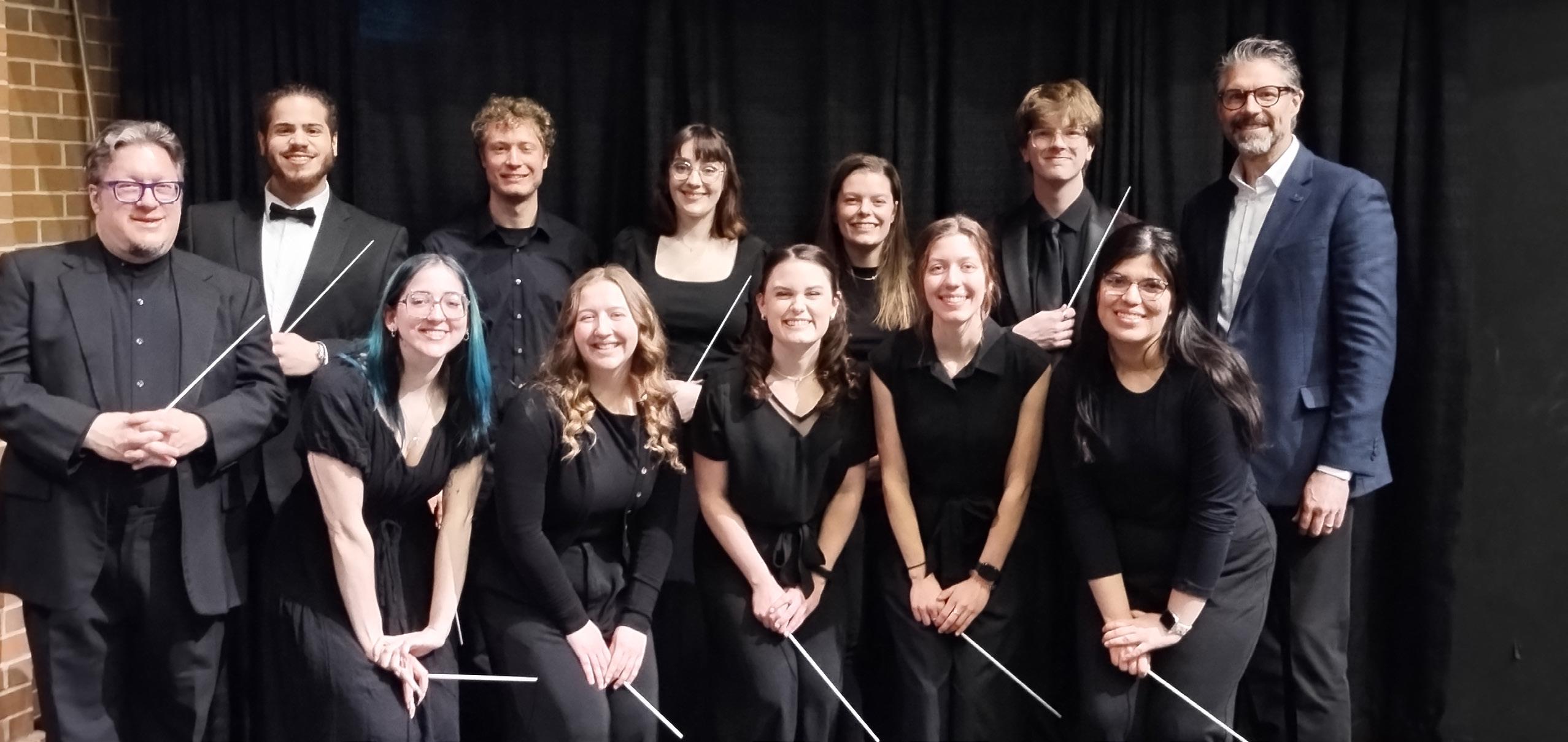
On Friday, April 10, the University of Sioux Falls Wind Ensemble and Chamber Orchestra had a concert full of lots of fun tunes. Additionally, students from the conducting class that happened in the Fall had an opportunity to conduct a piece for one of these two ensembles.
During the class, the student conductors learned from Dr. Dave DeHoogh-Kliewer how to conduct, including beat patterns, hearing South Dakota Symphony Orchestra Director Delta David Gier speak, and experimenting with different movements. During the Spring semester, Dr. Jonathan Neiderhiser took the reins to help the students prepare. There were nine new conductors that participated in this concert. The conductors include Mari Becerra, Joella Sproles, Cameron Gage, Ben Fletcher, Jordyn Maynard, Tanya Netesov, Bethany Dunkle, Aryana Dokter, and Sarah Mawdsley. Additionally, Mitchel Groote, who has conducted pieces before, had the opportunity to perform Vivaldi’s Spring with the Chamber Orchestra. Cameron Gage had a unique opportunity at this concert. He composed a piece for the orchestra entitled “He Who Goes Forth,” which is based on Psalm 126:6. He also got to conduct this song. He said, “My favorite part about conducting is just the opportunity to be able to kind of give a message to the audience.” He also noted that having something in his mind that he created to share with others was a cool opportunity.
Bethany Dunkle, who is not a part of an instrumental ensemble, had the opportunity to hear something different when she stepped up to the podium. Her favorite part about conducting is “getting to hear the amazing sounds that are made, mostly because the ensemble’s awesome, but also because I’m helping lead it and direct it.” She also mentioned that she struggled counting every now and then, which can make it tough.
Coo Cinema Club Produces short film in 54 hours






By: Abigael Olson
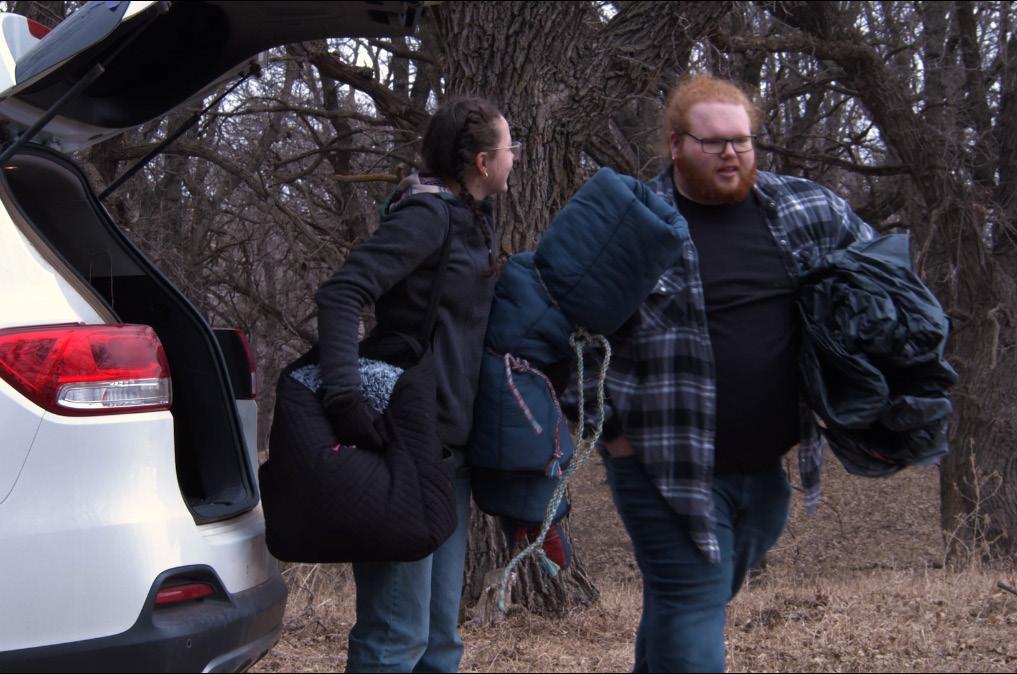
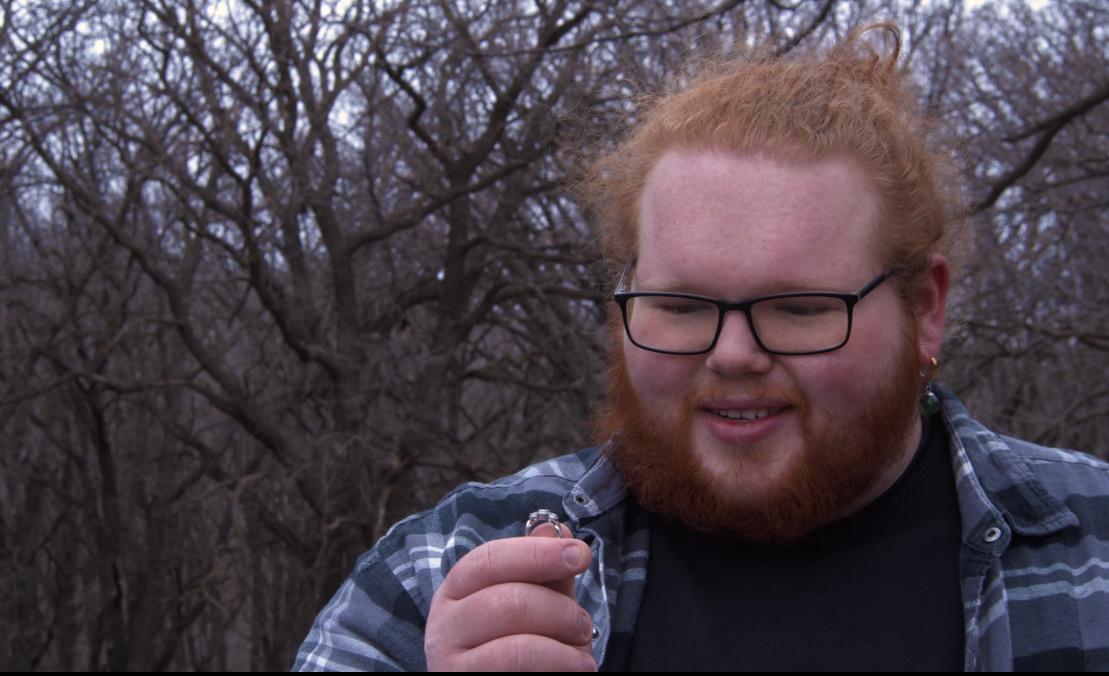
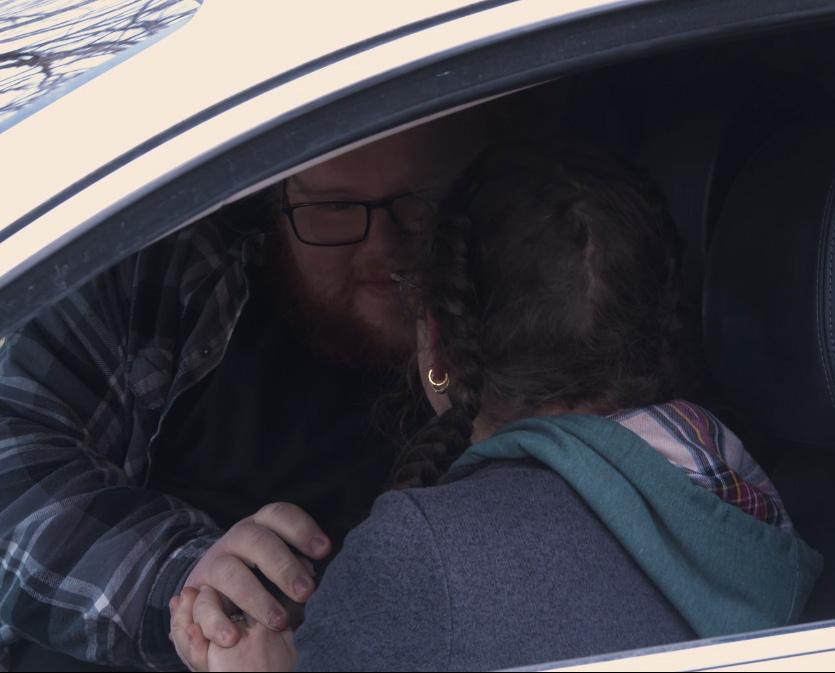
The University of Sioux Falls Coo Cinema Club’s latest project was participating in the 54 Film Fest, a festival based out of Tennessee in which competitors across America are only given fifty-four hours to create a film. The teams each get assigned a genre, an action, a line, a prop, and a surprise element that they have to incorporate into their five minute film. The Coo Cinema Club was assigned the genre options of vacation or holiday, the action of ducking below something, the line, “it’s not about ____, it’s about ____,” the prop of a ring, and the surprise element of an anniversary or birthday. The writing team chose to create a story about a couple taking a trip for their anniversary, on which they are both secretly making plans to propose to the other. The film is called “Thirty Years From Now” and stars Hunter Reimer and Tori Schroeder.
When asked about the film, Reimer said, “It’s a film about remembrance. The scary realization that in thirty years, life may be different. This film is about looking back and wishing to remember.”
One member of the writing team, Ryan Presler, reflected positively on his experience. “I had a wonderful time brainstorming with the team and bouncing ideas and tennis balls off the wall,” says Presler. “I had never been involved in a film writing process and I had an experience that made me want to explore that more. I thought the film was adorable.”
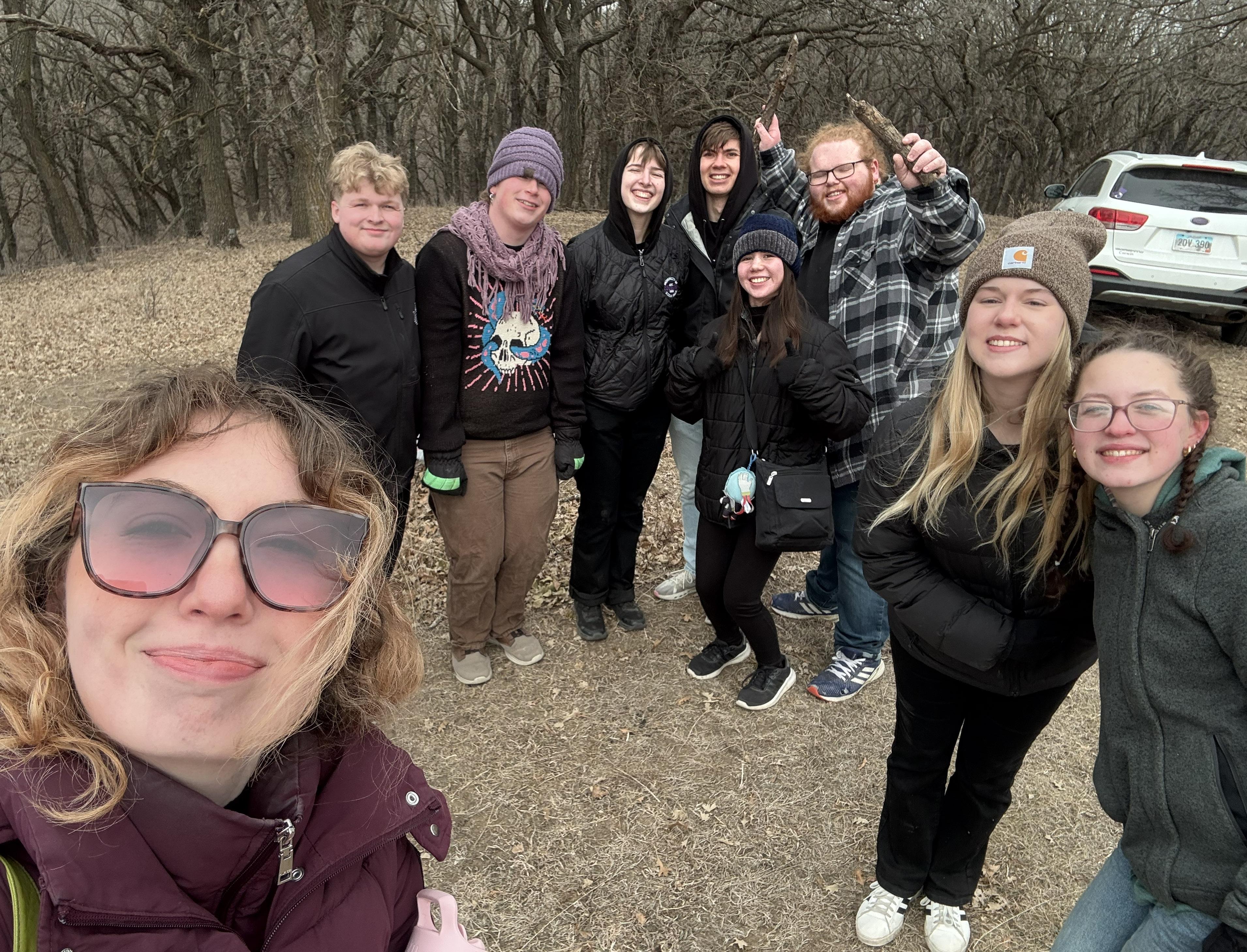
The film was very successful at the festival, taking home two student awards for Best Writing and Best Directing and placing as the Second Runner-Up for Best Student Film. One host of the event, Richard Chilton, repeatedly exclaimed throughout the Appreciation Ceremony, “I love this movie!” The Coo Cinema Club is excited to compete again next year. The Full Cast and Crew is as follows:
Hunter Reimer as Dan Tori Schroeder as Daniella
CREW
Director: Abigael Olson
Assistant Director: Charlie Wood
Writers: Faith Holmen, Abigael Olson, Ryan Presler, Charlie Wood
Pre-Production: Faith Holmen, Eric Johnson, Abigael Olson, Ryan Presler, Charlie Wood
Cinematography: Abigael Olson, Hunter Reimer, Tori Schroeder
Audio: Karl Sharkey
Lighting: Eric Johnson
Slate: Kadie Huls, Ryan Presler
Production Assistants: Faith Holmen, Kadie Huls, Eric Johnson, Karl Sharkey, Ryan Presler, Charlie Wood
Editor: Abigael Olson
Assistant Editors: Eric Johnson, Charlie Wood
Graphics: Faith Holmen
Score: Abigael Olson
Poster: Faith Holmen
Trailer: Eric Johnson
BTS: Abigael Olson
By: Toby Knutson
As seniors begin to close out their college careers, many look back in search of clarity of what mattered, what changed, and what comes next. Retrospect, the senior show written and directed by Communication Studies and Theater senior Faithanne Rukavina, leans fully into that uncertainty, offering a deeply personal exploration of identity, growth, and the pressure to “figure it all out.”
Originally developed as a ten-minute piece in a playwriting class, the production has grown into a full-length work that now serves as both Rukavina’s honors thesis and senior project. “It started as a 10-minute play,” Rukavina explains, “and then it branched into something new, which is very funny and exciting.” What began as a small assignment has evolved into something
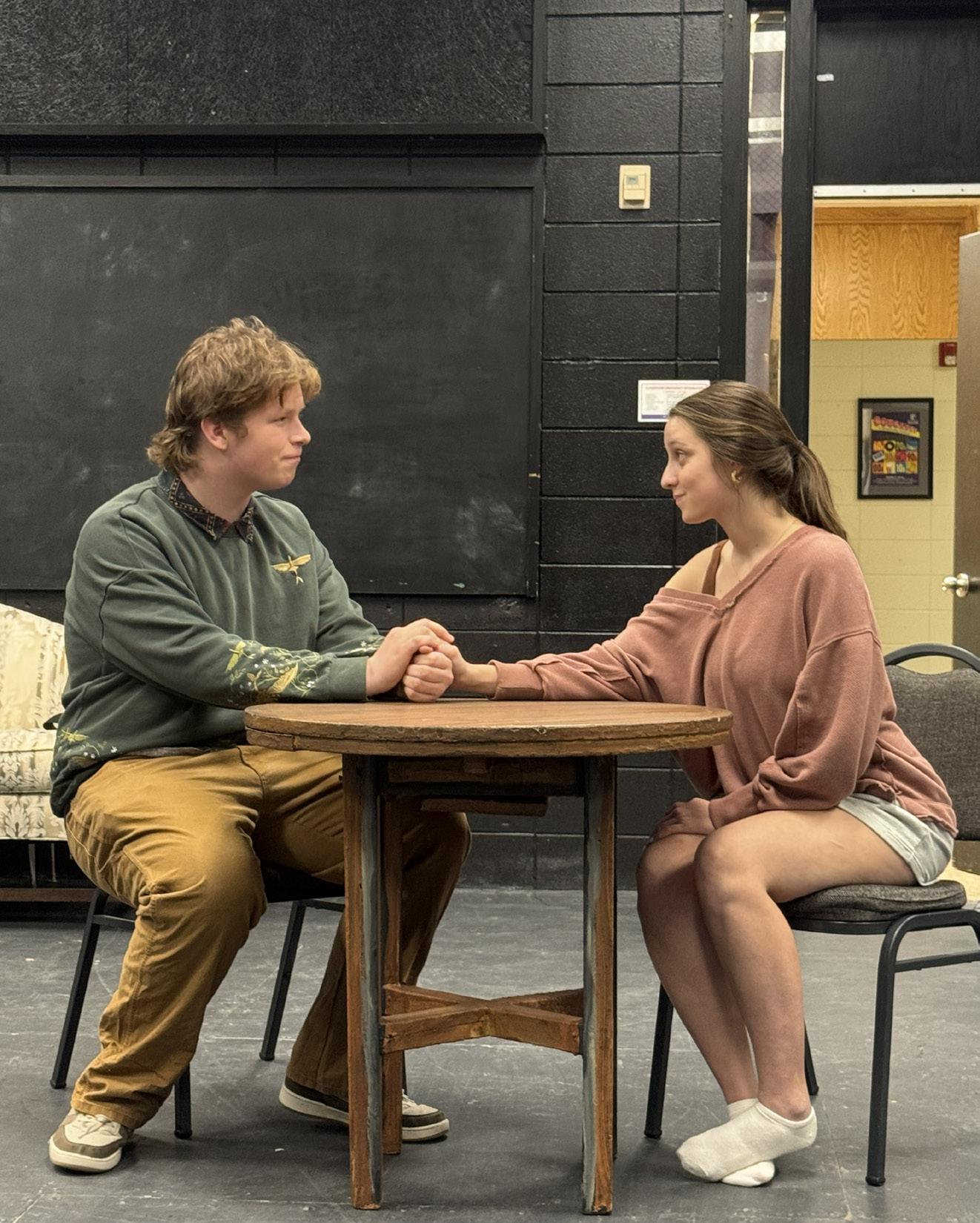
much more personal, a show that Rukavina wrote for her own thoughts, and her own reflections. Those reflections shape the heart of Retrospect. The play explores the idea that life does not have to follow a single, fixed path. “You don’t need to just choose one path in life,” Rukavina says. “And it’s never too late to start in those dreams.”
At the same time, the show acknowledges the difficulty of change, emphasizing that “sometimes you have to give up things that you’re scared of to get what you really want.”
Taking on the dual role of writer and director has given Rukavina a new perspective on her work.
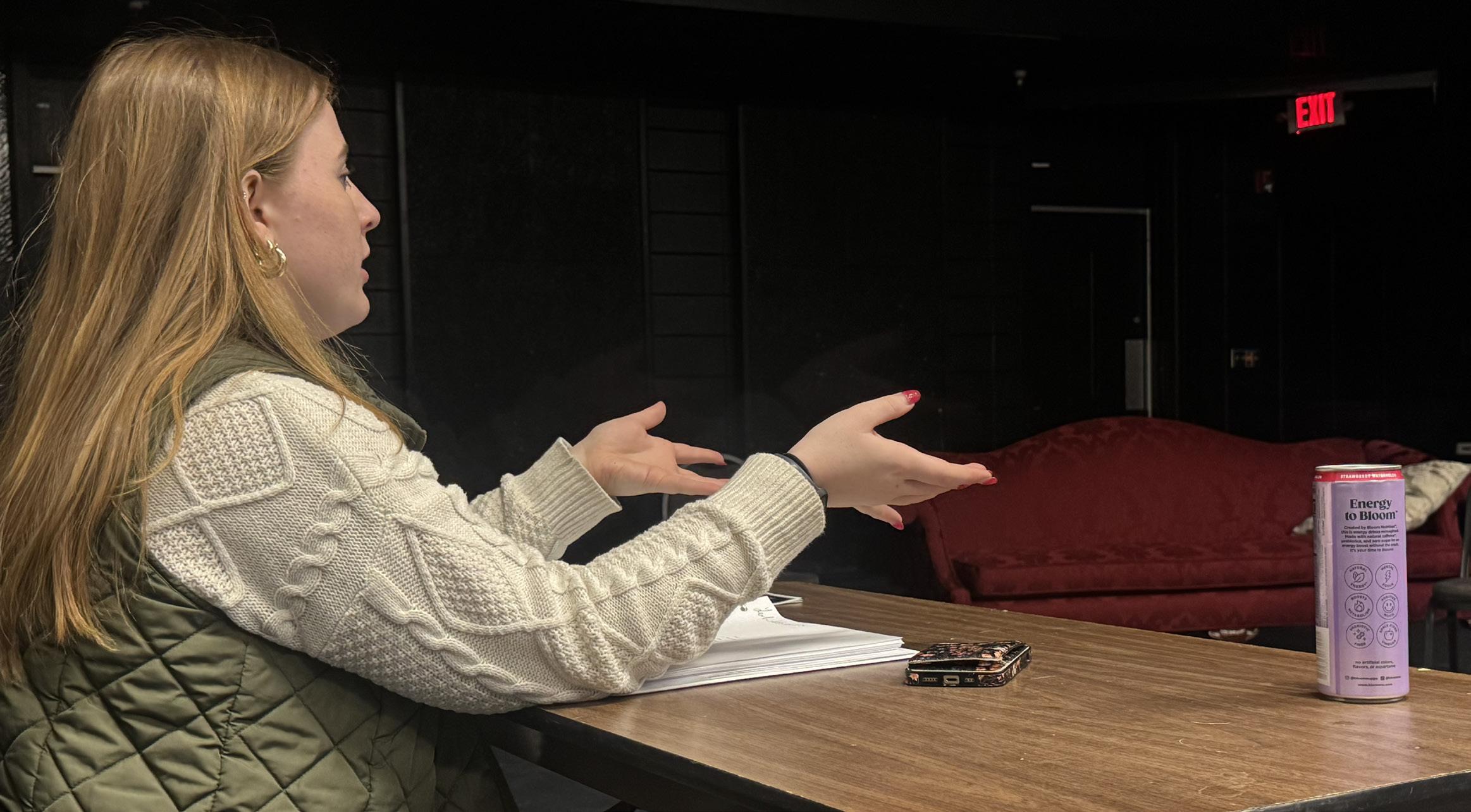
“It’s really different directing than acting,” Rukavina describes the experience as both challenging and rewarding. Watching the show come to life has been particularly impactful: “There’s a lot of moments that I wrote it and then I’m like, ‘whoa, it’s a lot different seeing it in person,’ or it’s like, ‘that’s exactly what I wanted.’”
At its core, Retrospect is about hope. Rukavina hopes audiences walk away with that feeling above all else. “There’s hope in every situation that’s gonna turn out,” Rukavina says. “You don’t need to just be one thing, you can be many things, because they’re still important to you.”
That message carries through the performances, particularly in the character of Tessa, played by freshman Leah Aderhold. Tessa is, in Aderhold’s words, “very fun” but also deeply complex, “she’s gone kind of through the ringer.” The role has challenged Aderhold to navigate emotional nuance, especially in moments of conflict. “There’s a scene where she gets really defensive,” she explains, “but it’s hard… to be defensive without sounding manipulative.”
Despite those challenges, the role has been equally rewarding. “I feel like I’ve grown a lot just in my acting,” Aderhold says, noting that the process pushed her to “really ramp it up.” More personally, she found herself connecting to the character in unexpected ways. “We’re so similar that it’s like scary.” That connection has made the experience especially meaningful, as “being able to see her growth and healing, as well as living in my healing, has kind of been really fulfilling.”
Together, these voices shape Retrospect into more than just a senior showcase. It becomes a shared reflection. One that embraces uncertainty, honors growth, and ultimately points toward hope. As the title suggests, the show looks back, but as Faithanne Rukavina’s senior project, it also quietly insists on the possibility of moving forward.
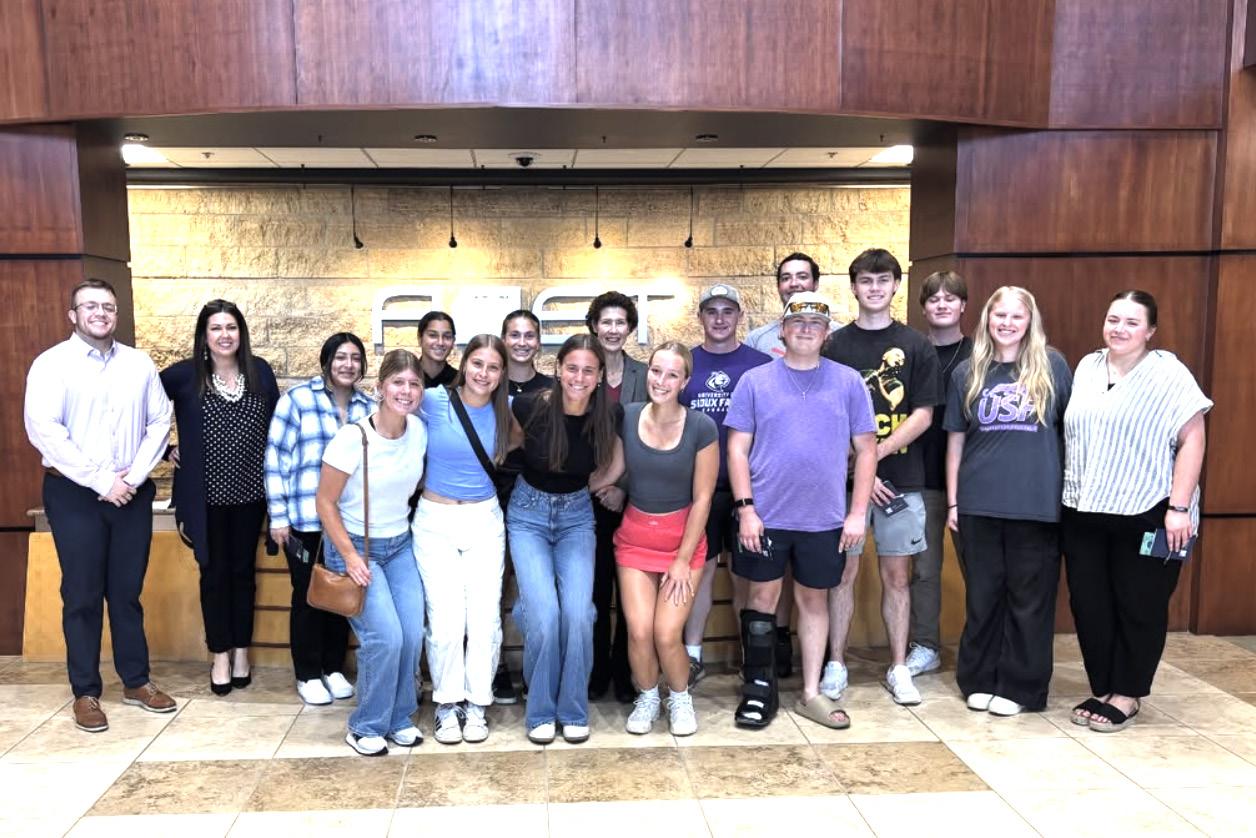
The club’s tour of POET where they learned all about the company.
The Coo Business Club at the University of Sioux Falls is a student focused club that aims to expand students’ knowledge of businesses in Sioux Falls, grow the network of peers within the business program at USF and engage in community service work. The Coo Business Club usually meets once or twice a month, hosting a variety of events such as guest speakers, workshops, business tours, service events, and social events. Dr. Joy Lind, Professor of Business Administration, is the Faculty Sponsor for the club, and she started the Coo Business Club a year and a half ago. Lind’s
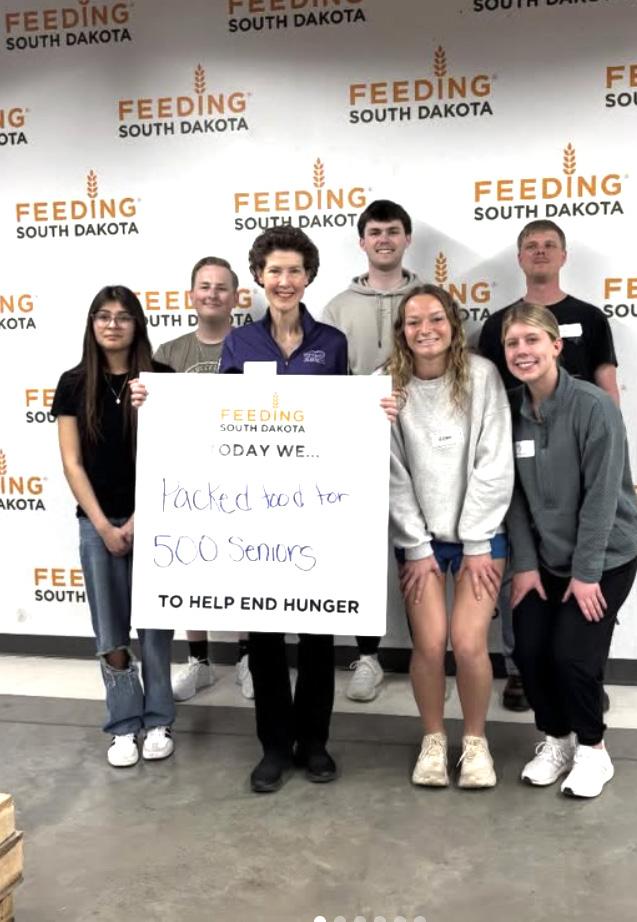
favorite part about the club is interacting with the participating students. Some previous events that the club has held are a Microsoft Excel Workshop, Feeding South Dakota service project, CaveGamers tour, First Bank & Trust workshop, a pizza/game night, and tour of POET. They have had multiple guest speakers from banks, local businesses, and sports teams as well. Lind’s favorite event was the CaveGamers tour that the club members went on last spring. CaveGamers is owned by Bobby Brockmueller, one
of Lind’s former students. “It was so cool to see a USF alumni, who happened to be a former student of mine.” This was truly a full circle moment for her, she said.
Lind had previously been the faculty sponsor for the math club and USF student dance team. She enjoyed these opportunities to connect with students outside of the traditional school setting. When she heard some students talk about an interest in a business club, she couldn’t pass up the opportunity. She has enjoyed meeting with the Coo Business Club officers and has benefited from the advice, wisdom, and discernment that the officers have provided. Lind’s biggest take away from helping start up the club is her involvement in facilitating events with the officers. “I have enjoyed working with the officers to establish the programming.” She enjoys hearing their perspectives and ideas on events and decisions within the club.
Interested students should join the Coo Business Club because of the professional development help they will receive. Lind facilitates networking with local Sioux Falls businesses by setting up tours, obtaining guest speakers, and finding unique opportunities for students to participate in. The club also helps students build their internal network. It enables students to get to know each other well in the USF environment; because when they graduate, they will all be part of each other’s professional network. The Coo Business Club embraces USF’s Culture for Service by participating in service activities. Students who are looking to join the Coo Business Club should email Joy Lind at Joy.Lind@USiouxFalls.edu and follow the club Instagram, @coobusinessclub.
By: Elizabeth Schmidt
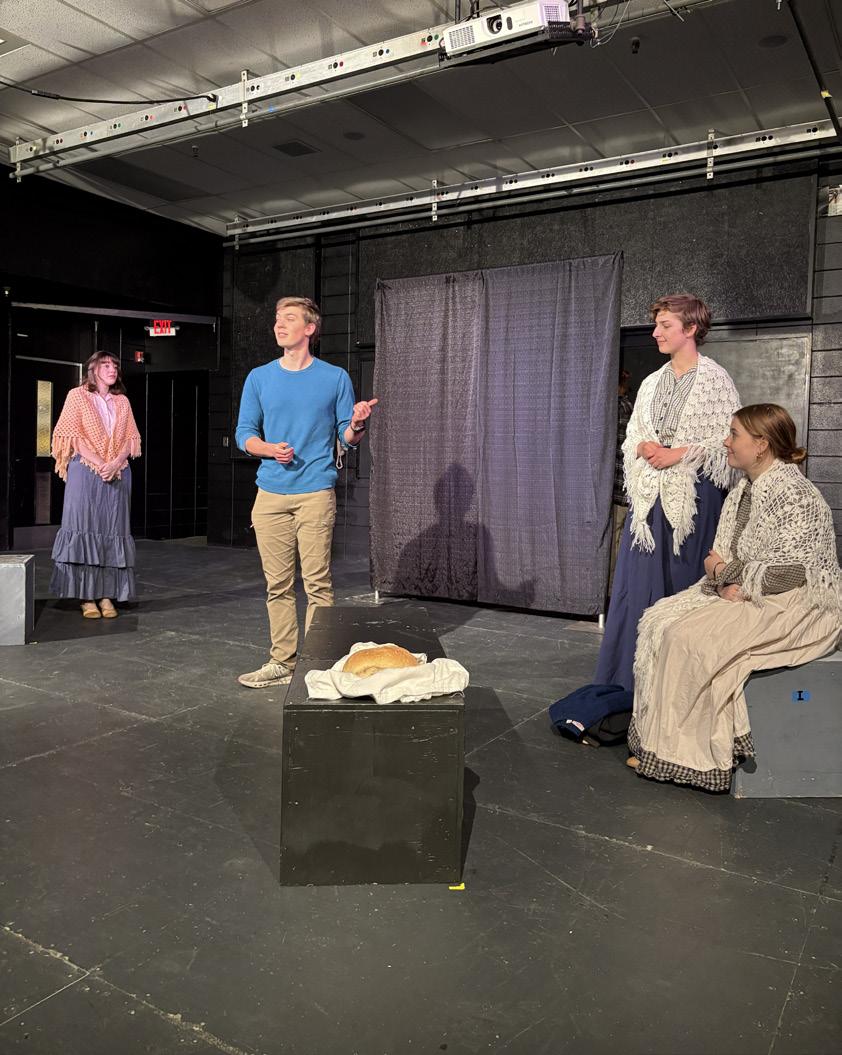
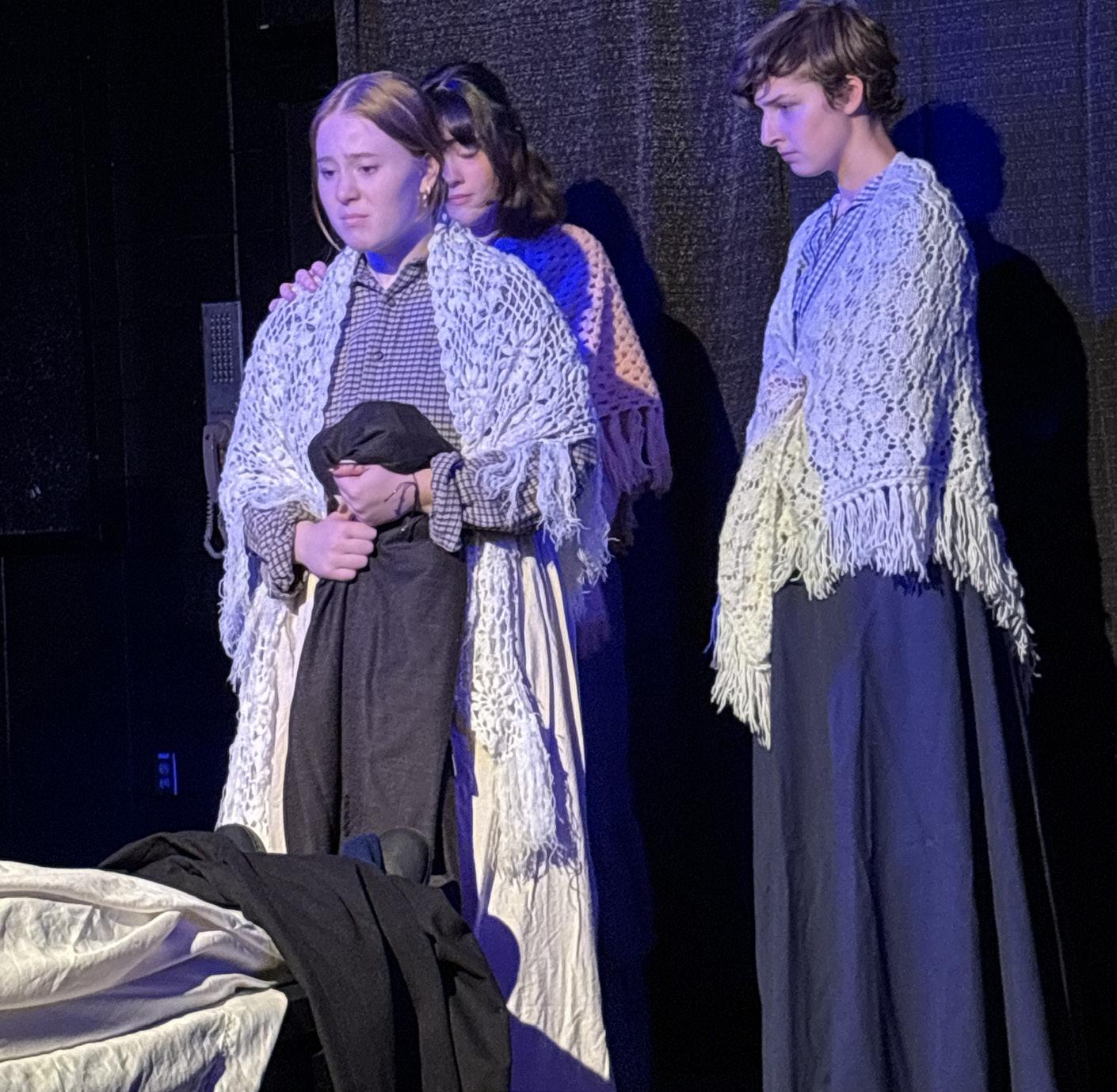
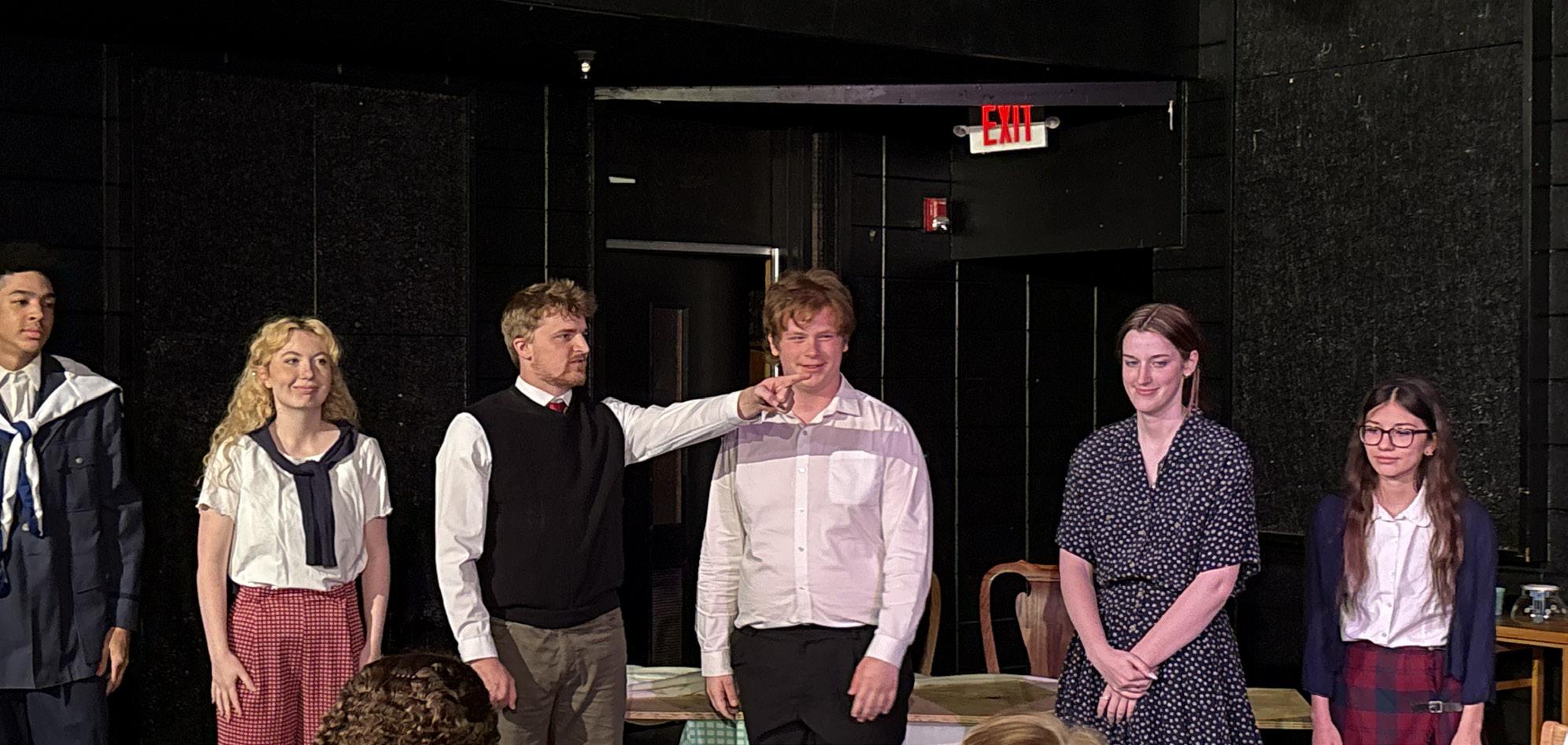
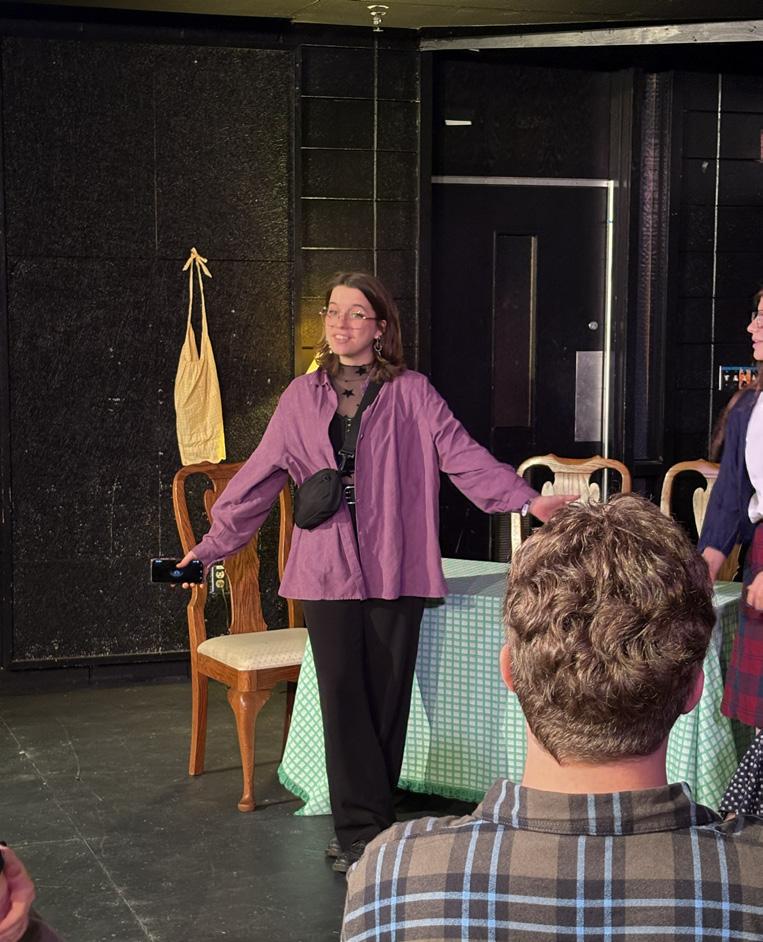
In the University of Sioux Falls’ CST310 Directing class, taught by Alecia Juelfs, fifteen different students were assigned to all create their own unique directorial concept for John Millington Synge’s Riders to the Sea. The challenge? Only two directors would be produced. Each student was given a maximum of three minutes to pitch their concept to the rest of the class, and the two most voted for directors would be given the chance to fully realize their concept, while the rest would assist as cast and crew.
“I chose Riders to the Sea as the script for the final project because it checks a lot of boxes,” writes Juelfs. “It’s in the public domain, so it’s easily accessible. It’s brief but has significant emotional depth. The text is in English, but the dialect requires research to fully grasp the action. It provides enough boundaries to give directors the artistic freedom to play while having to maintain the integrity of the story.” Senior Em Mercer and Junior Ryan Presler were chosen by the class to produce their concepts. The two and their teams would be given a weekand-a-half to cast, stage, and present two french scenes from the play for their finals.
Presler chose to set his concept in a similar
setting to the original, but gave a riveting description of his personification of death and symbolism of the doorway. “My concept is a more traditional approach, which I hope will highlight the picture of Ireland that JM Synge creates,” said Presler. “I hope that it contrasts well with Em’s more modernized portrayal.” Presler’s set was very minimal, being made of black boxes and curtains. However, he chose to still dress the characters and set with historically accurate costumes and props, allowing the characters and objects they directly interact with to take the focus. “There’s a very clear divide between the inside and outside of the house in the script. The outside is where the sea is and seems to be a place where death reigns. That idea of a passageway between life and death and death encroaching on the cottage was a concept I wanted to explore in my directorial concept.”
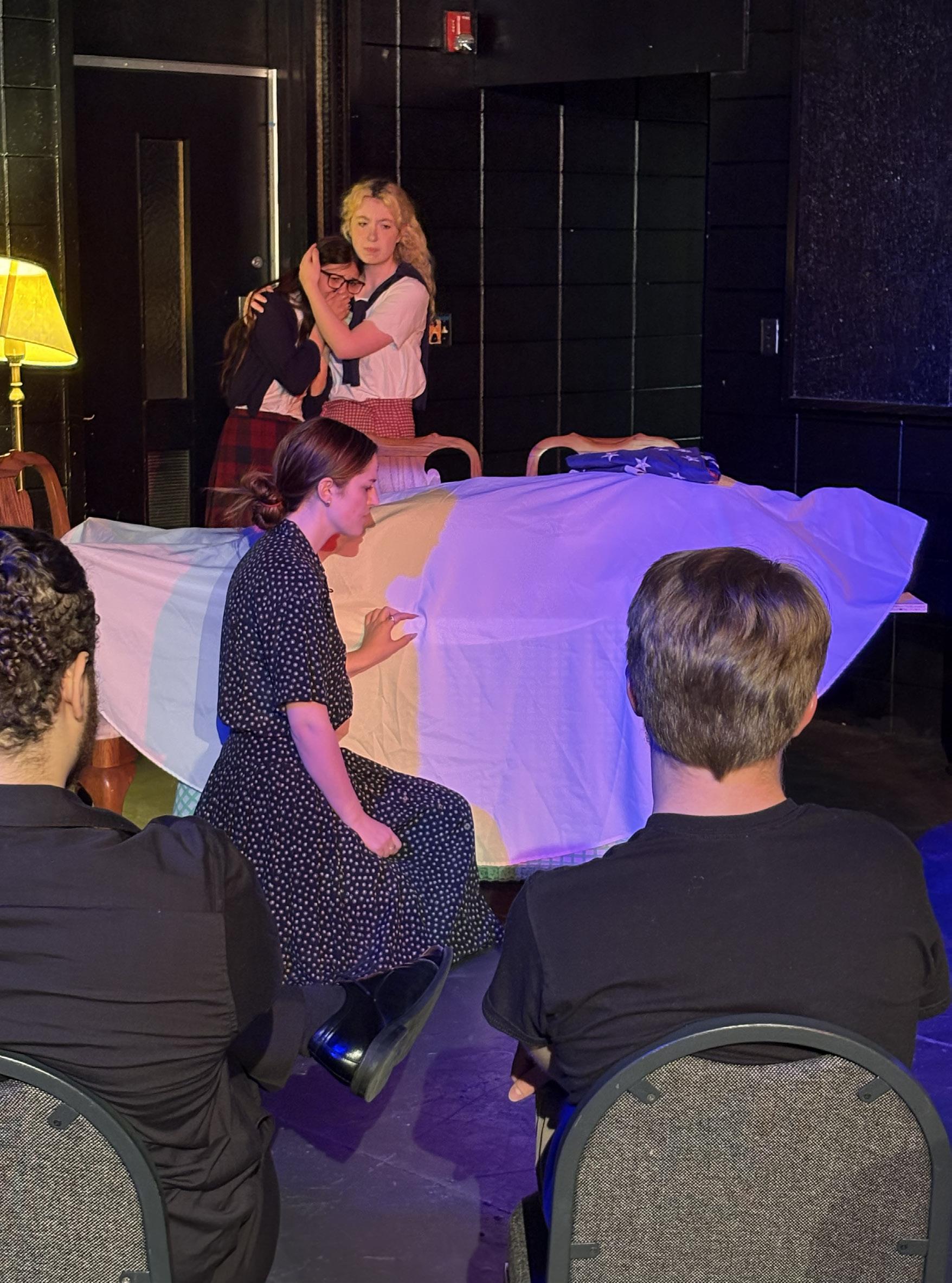
Mercer, on the other hand, relocated her version from a quiet oceanside village in 1800s Ireland to an American home in the 1940s, reeling from the effects of World War II. “I wanted my iteration of Riders to the Sea to close the distance between the tragedy of the play and the experience of the au-
dience,” says Mercer. “I Americanized and modernized the story not only to comment on the current state of America but also to emphasize the disproportionate effect that war always has on women.” Mercer’s set featured a cozy mid-century kitchen, complete with a vintage radio, a metal tea set, and the body of her son lying on a gingham table cloth, still in his naval uniform. She used the bright and comforting atmosphere of a stereotypical 1940s home to contrast the gloomy atmosphere of the original script, allowing the audience to feel the discrepancy between what is remembered about the era versus what life might have actually been like.
Each presentation was the culmination of many months of hard work from every student in the class, not just the two directors. When asked about why she chose this project to end the semester, Juelfs responded, “It challenges directors to make independent choices and creatively solve problems, which is what I want students to practice while in this course.” After a long semester of directing and being directed, the class has produced fifteen capable and knowledgeable directors ready to take on their own projects.
By: Abigael Olson