
DIVVYING UP THE DOLLARS
401(k)s, ESAs, 529s, HSAs, ABLE accounts, Trump accounts … in the expanding universe of targeted savings options, how do employers decide what to offer, and how can they help participants divvy up their dollars?
ALTERNATIVES IN 401( K) INVESTING COMMUNICATING EXECUTIVE BENEFITS ALSO
2026 SIGNATURE AWARD WINNERS






INSTITUTIONAL SERVICES










We listen. You benefit. Retirement plans customized to your company’s needs.
Getting the best retirement plan for you and your employees takes the objectivity of a fiduciary and an openminded look at the options. From selecting to managing and monitoring the plan, Regions Retirement Services is there. You’ll get a Relationship Consultant to help you choose the appropriate products and services and assist in providing the investment guidance you need. And you’ll have a 3(38) Investment Consultant dedicated to oversight and administration with regular reviews for optimal performance. Whatever plan you choose, count on a sense of assurance as part of your Regions Retirement Services experience.
Investment Fiduciary | Plan Design and Administration | ERISA Guidance Financial Wellness and Plan Participant Education


To learn more about Regions Retirement Services o erings, visit regions.com/ retirementservices.









Divvying Up the Dollars
A guide to the expanding universe of savings options—and how plan sponsors can build a system that works.
by Hattie Greenan
Coffee Chat with Will July 13, 2026 12

Innovation and Impact Recognized at PSCA’s National Conference
Winners of PSCA’s annual Signature Award competition were announced in May. by
Hattie Greenan
Virtual Investment Summit December 1, 2026
Upcoming Webcasts:
Document Management for Plan Fiduciaries: What to Keep, Where to Keep It, and Why It Matters June 12, 2026

Stay ahead in the game
Pitch a no-hitter with Inspira’s retirement rollover solutions:
Automatic rollovers IRAs
Plan termination services
Notification services
Stay in the game
Search services
Uncashed check resolution
Benefit distributions
Inspira Financial Trust, LLC and its affiliates perform the duties of a directed custodian and/or an administrator of consumer-directed benefits and, as such, do not provide due diligence to third parties on prospective investments, platforms, sponsors, or service providers and do not offer or sell investments or provide investment, tax, or legal advice.
Inspira and Inspira Financial are trademarks of Inspira Financial Trust, LLC. Inspira Financial Trust, LLC does business as Inspira Associates, LLC in Arizona, California, Michigan, Nevada, Virginia, and Washington.
Insights is Published by
PSCA MEMBER BENEFITS AND RESOURCES
Conferences and Training
National and regional conferences designed for defined contribution plan administrators and sponsors.
Our must-attend events provide education from industry leaders and peer networking.
Signature Awards
Peer and industry recognition for employee communication and education.
Recognizing outstanding defined contribution programs implemented by plan sponsors, administrators, and service providers.
Research and Benchmarking
PSCA surveys: Most comprehensive and unbiased source of plan benchmarking data in the industry.
Annual surveys of profit sharing, 401(k), 403(b), and NQDC plans, as well as HSAs, created by and for members. Current trend and other surveys available throughout the year. Free to members that participate. Surveys currently available include:
• 6 8 th Annual Survey of Profit Sharing and 401(k) Plans
• 2025 403(b) Plan Survey
• 2025 NQDC Plan Survey
• 2025 HSA Survey
Executive Report
A monthly electronic legislative newsletter. Providing concise, current information on Washington’s most recent events and developments.
Media Outreach
PSCA works to ensure fair coverage of the DC system in the media.
PSCA continually speaks to reporters to provide and promote accurate, concise, and balanced coverage DC plans and responds to negative press with editorials and letters to the editors. PSCA is also active on social media — follow us on twitter at @psca401k and on LinkedIn.
Washington Representation
Your direct connection to Washington DC events and developments affecting DC plans.
PSCA works in Washington to advocate in the best interests of our members and bring you the latest developments that will impact your plan. PSCA is a founding board member of the Save Our Savings Coalition that is currently working in Washington to preserve plan limits amongst tax reform.
Quarterly Magazine, Insights
An award-winning and essential 401(k) and profit sharing plan resource.
Featuring nationally-respected columnists, case studies, the latest research, and more. Providing practical and constructive solutions for sponsors.
Professional Growth — Join a Committee! For plan sponsors, administrators, and service providers.
Many opportunities for PSCA members to serve on committees, speak at regional and national conferences, and write articles for Defined Contribution Insights.
PSCA Mission Statement
The Plan Sponsor Council of America (PSCA) is a broadly based association of diverse businesses which believe that profit sharing, 401(k), and related savings and incentive programs strengthen the free-enterprise system, empower and motivate the workforce, improve domestic and international competitiveness, and provide a vital source of retirement income.
PSCA Competition Law Statement
The Plan Sponsor Council of America (PSCA) is committed to fostering a best practices environment for profit sharing, 401(k), and other employer-sponsored defined contribution retirement programs. PSCA adheres to all applicable laws which regulate its activities. These laws include the anti-trust/competition laws which the United States has adopted to preserve the free enterprise system, promote competition, and protect the public from monopolistic and other restrictive trade practices.
Editor, Director of Research & Communications Hattie Greenan hgreenan@usaretirement.org
Executive Director Will Hansen whansen@usaretirement.org
Advertising Sales
Thomas Connolly TConnolly@usaretirement.org
PSCA Leadership Council OFFICERS
President Brandon Diersch, Global Financial Benefits Manager, Microsoft
Immediate Past President Diane Garwood, Horizon Bank
Directors
Joyce Anderson, GE; Davis Blier, United Health Group; Ann Brisk, HSA Bank; Dena Brockhouse, Kent Corporation; Chris Dall, PNC; Yvette George, Henrico County Government; Scott Greenman, The Principia; Teresa Hassara, Principal Financial Group; Sheri Melvin, Union of Concerned Scientists; Michelle McGovern, American College of Surgeons; Tom Moore, Thryv; Rose Murtaugh, International Motors LLC; Cynthia Oberland, Precision Medicine Group; Maria Quintiguia, Public Employee Retirement System of Idaho; Alexandra Richardson, Mercer; Laura Stamps, Financial Finesse; Malika Terry, NCR Atleos; Tracy Tillery, GM
Insights is published by the Plan Sponsor Council of America , 4401 N. Fairfax Drive, Suite 600, Arlington, VA 22203. Subscriptions are part of PSCA membership. Opinions expressed are those of the authors. Nothing may be reprinted without the publisher’s permission. Information contained in Defined Contribution Insights is for general education purposes only and should not be relied upon as legal advice. Contact your legal advisor for advice specific to your plan. Copyright ©2026 by the Plan Sponsor Council of America


by Hattie Greenan
Meeting People Where They Are
The workplace savings conversation is getting bigger – employers are stepping up to help their participants navigate the changing landscape, and so is PSCA.
A THEME THAT RAN THROUGH PSCA’S RECENT NATIONAL CONFERENCE WAS THE EXPANDING UNIVERSE OF OPTIONS – from other savings accounts, either integrated with the retirement plan or stand-alone options, to expanding investment options, decumulation options, and more.
Over the last several years, the conversation has shifted from asking whether employees should save and encouraging them to save, to asking how they can best save. We are focusing not just on offering plans or getting employees to participate in them, but on how we can meet employees where they are and holistically help support them in their financial goals and long term financial security.
Retirement plans remain the foundation, the core savings vehicle for most Americans. These plans work, participation continues to grow, and employers remain committed to helping workers prepare for the future. But as employees face competing financial priorities – from student debt to emergency expenses to caregiving responsibilities – the conversation has expanded. And perhaps it is because they work so well, that the regulators, legislators, and industry experts are looking at building on the success of workplace retirement plans though retirement plan-adjacent programs or other workplace programs with retirement-plan like features.
Our cover story explores the growing universe of workplace savings programs and how employers are evaluating options beyond the traditional retirement plan. Emergency savings accounts, student loan matching contributions, ABLE accounts, and other emerging programs all reflect the same reality: employees don’t experience their finances in silos, and increasingly, benefits strategies don’t either. Benefits strategies increasingly need to work together to meet employees where they are, recognizing that every employee has a unique story and set of circumstances that requires customized support.
This theme of customized support was evident in many of the education campaigns recognized for excellence in our annual Signature Awards program and detailed in this issue’s feature article. From a focus on accessibility for employees with low vision or other sight impairments in the American Foundation for the Blind’s award winning campaign to Alexander and Baldwin’s customized 401(k) Snapshot mailed to every employee, to McLaren’s personalized campaign targeting generational groups with customized baseball cards, companies are increasingly recognizing that personalization in communications are more likely to move the needle. Meeting people where they are is much more likely to get them to take action that supports their individual goals than generic communications will.
The retirement system has become more sophisticated. Plan design options continue to expand. New savings vehicles are emerging. Participant expectations are evolving. The opportunity for plan sponsors is not just to keep pace with these changes, but to determine which innovations make sense for their workforce and how to implement them effectively.
One of PSCA’s core responsibilities is helping members navigate that changing landscape. Sometimes that means delivering benchmarking data. Sometimes it means providing practical implementation guidance. Sometimes it means creating opportunities for members to learn
directly from one another. The format changes, but the objective remains the same: delivering the information and resources sponsors need when they need them.
You’ll find examples throughout this issue—from investment alternatives and HSA decision-making strategies to retirement income considerations, and Washington developments. The tools may evolve. The savings landscape may continue to expand. New ideas will undoubtedly emerge. But one thing remains constant: successful plans start with understanding the needs of the people they serve. And increasingly, employers are finding new ways to meet those needs wherever they are.
Hattie Greenan is the Director of Research and Communications for PSCA.

WELCOME
NEW & RECENTLY CREDENTIALED MEMBERS
CERTIFIED PLAN SPONSOR PROFESSIONALS
Kimberly Allison
Alex Anderson
Christohpher Barnes
Margaret Benish
Josh Benoit
Shirleen Bollmann
Dawn Boomers
Sanya Brown
Laetitia Buchholz
Karen Burch
Sandra Calderon Zuniga
Andrew Calogerakis
Caylee Campbell
Christopher Cheetam
Sean Corrigan
Alexander Couch-Maddox
Emily Cripe
Susan Cummings
Jessica Cuthbertson
Elizabeth Daiker
Taylor Davenport
Jodi DeCesari
Rachel Dietrich
Alexander Doyle
Kevin Ducharme
Chauntelle Edwards
Jaime Erickson
Jackey Filipski
Heather Forner
Gabrielle Fullerton
Shannon Gilbert
Stacie Gilles
Milana Goldman-Strokosz
Verity Goodell
Gloria Gray
Kathy Gray
Aimee Green
Kendra Grob
Matt Harris
Melissa Harris
Robyn Harris
Kaylee Hicks
Abda Hinojosa
Yalanda Holtz
Semone James
Nagee Jenkins
Brandon Jones
Timothy Kauffman
Carrie Kilmartin
Abbie Klein
Catherine Klister
Jesse Kuhn
Tracy Lawyer
Ya-Fen Lin
Helise Long
Nicolas Lowthian
Clarissa Loyd
Angela Martin
Tina Matt
Stephanie Mattei
Laura McClinton
Kevin McIntyre
McKenzie Miles
Natasha Montoya
Valerie Moreno
Naomi Morgan
Tanner Neville
Sherine Nohara
Melissa Orrey
Daniel Ortiz Moreno
Kelly Osborne
Kathy Parsons
Purvi Patel
Mario Pena
Jennifer Perry
Brenda Poole
Brooklyn Pringle
Debra Prokopy
Elvia Ramirez
Monica Ramirez
Lynn Redd-Kipper
Beth Riddle
Daisa Rivera Arcelay
Jayme Saenz-Anderson
Kari Scanlon
Daneele Shipman
Robin Simcox
Brittany Smith
Lenna Southland
Sharen Staneklowe
Aaron Steele
Hannah Strok
Rachael Ticer
Lacey Trombly
Chinghao Tseng
Cristina Vdial
Isabel Wallis
Amber Wetzel
Michael Whalen
Lydia Willis
Christine Wong
Cassie Wright
Laura Wright
Shaneka Young
Eddy Yu
by Brandon Diersch
Passing the Torch
Gratitude, transition, and an optimistic road ahead for PSCA.
DEAR PSCA MEMBERS,
As my term as President of the Plan Sponsor Council of America comes to a close on June 30, I find myself reflecting with deep gratitude on what we have accomplished together. Serving this organization has been one of the greatest privileges of my career. Over the past year, PSCA has continued its nearly eight-decade mission of protecting America’s retirement system through advancing education, shaping advocacy, and championing the best practices that strengthen outcomes for millions of plan participants. As I prepare to pass the torch, I want to celebrate the people who made this year possible, recognize the leaders who will carry us forward, and share a few of the developments that will shape our community in the months ahead.
WITH GRATITUDE TO OUR LEADERSHIP COUNCIL
PSCA’s strength has always come from the dedication of its volunteers. The members of our Leadership Council give their time, expertise, and energy without expectation of reward, and our entire community is better for it. I want to extend a heartfelt thank you to several individuals whose service has been especially meaningful this year and who are transitioning out of their leadership roles:
• Diane Garwood, Immediate Past President: whose steady counsel and institutional wisdom guided me throughout my term.
• Scott Greenman, Investment Committee Chair: whose leadership kept us focused on the investment issues that matter most to plan sponsors.
• Joyce Anderson, Government Affairs Committee: whose advocacy helped ensure the plan sponsor voice was heard where it counts.
• Teresa Hassara and Malika Terry, At-Large Members: for their service and support of PSCA throughout the year.
To each of you, and to every member of the Leadership Council: THANK YOU. Your contributions are the foundation on which PSCA stands.
WELCOMING PSCA’S NEXT CHAPTER OF LEADERSHIP
It is with great excitement that I introduce the leaders who will guide PSCA forward. Michelle McGovern of the American College of Surgeons will become President, and I could not be more confident in her vision and ability to lead. Michelle has been a valued partner throughout my term, and the organization will be in exceptional hands under her stewardship. Joining her, Tracy Tillery of GM Finance will serve as President-Elect, bringing deep expertise and a fresh perspective that will serve our community well. Michelle and Tracy represent exactly the kind of engaged forward-thinking leadership our mission requires. I am genuinely excited to watch the new chapters they will write for PSCA, and I have every confidence that they will elevate our organization to even greater heights.
THE INVESTMENT SELECTION PROPOSAL: CLARITY FOR FIDUCIARIES
Among the most consequential developments this year is the Department of Labor’s Investment Selection Proposal, which brings welcome clarity to the fiduciary process. The proposal outlines six core

“non-exhaustive” factors that fiduciaries should analytically consider when selecting investments: risk-adjusted performance, fees, liquidity, valuation, meaningful benchmarks, and complexity. When a fiduciary engages in a deep, deliberate analysis of these factors, they would be entitled to significant deference in their decisions.
Importantly, while the proposal was prompted by interest in alternative assets, it is asset-neutral – it neither requires nor prohibits any asset class, and it applies equally to every fiduciary. In essence, it is a continuation of long-standing ERISA guidance, reinforcing a principle that should not be controversial: fiduciaries should be judged by the quality of their process at the time of a decision, not by hindsight.
As one of the American Retirement Association’s (ARA) member organizations, PSCA shares ARA’s strong support for this effort. In its comment letter, ARA praised the proposal for reinforcing that prudent process – not outcome – is the proper measure of fiduciary conduct, and for its potential to reduce the meritless litigation that has placed plan sponsors under mounting legal pressure.
THE PRIVATE RETIREMENT SYSTEM DEPENDS ON INFORMED, ENGAGED PLAN SPONSORS, AND PSCA REMAINS THE ESSENTIAL
VOICE IN THAT EFFORT.
A MEMORABLE NATIONAL CONFERENCE IN ST. LOUIS
This year’s National Conference at the historic St. Louis Union Station Hotel was a tremendous success! From the opening “Policy Playbook” session – where the reminder that “process matters more than outcome” set the tone – to deep dives on managed accounts, behavioral strategies, retirement income, HSAs, cybersecurity, and the evolving ERISA litigation landscape, the program delivered exactly the practical, plan-sponsor-focused insight our community values.
Attendees explored emerging topics ranging from Trump Accounts and emergency savings to the risks of AI-assisted hiring and the realities of managing missing participants and uncashed checks. We also celebrated innovation and excellence with the announcement of the winners of PSCA’s annual Signature Awards. My thanks to every speaker, sponsor, committee member, and attendee who made the event so meaningful.
For more in-depth coverage, see 2026 PSCA National Conference Coverage section of PSCA website.
A YEAR OF GROWTH AND ACCOMPLISHMENT
I am proud of how much our community has grown. Our Certified Plan Sponsor Professional (CPSP) credential continues its remarkable trajectory, now representing a community of 2,300 professionals dedicated to excellence in retirement plan administration. That growth reflects the real value our members find in PSCA – in education, in recognition, and in connection.
And the momentum does not stop in St. Louis. I am thrilled to share that next year’s PSCA National Conference will be held in Atlanta, May 3–5, 2027. If this year is any indication, it will be an event you will not want to miss. Mark your calendars now, and I encourage you to plan to join us as we continue moving from policy signals to practical execution.
A HEARTFELT FAREWELL
ARA also offered constructive recommendations, including clarifying that menu design is a fiduciary decision distinct from selecting an individual investment, confirming that sponsors are not required to use an outside adviser, and extending the framework to the ongoing duty to monitor. We will continue to track this proposal closely and keep our members informed as it moves toward finalization.
For more details, see the PSCA article: The Investment Selection Proposal Brings Clarity for Fiduciaries
As I close out my term, I am filled with gratitude for the opportunity to lead such an important organization. Thank you to our members, our volunteers, our staff, and our partners, for your trust, your engagement, and your shared commitment to retirement security.
Though my time as President is ending, my commitment to PSCA is not. I look forward to staying involved and to supporting Michelle, Tracy, and the entire community in the years ahead. Our work matters. The private retirement system depends on informed, engaged plan sponsors, and PSCA remains the essential voice in that effort. I am proud of our mission, proud of our influence, and most of all, proud of our community.
PSCA, the voice of the plan sponsor.
With gratitude,
Brandon M. Diersch President Plan Sponsor Council of America

Brandon Diersch is a Director of Global Financial Benefits at Microsoft and PSCA’s current President.
by Will Hanson
Voices from St. Louis: What Plan Sponsors Told Us
Attendees weighed in on hot topics and general plan administration philosophy at the recent PSCA National Conference.
THE 2026 PSCA NATIONAL CONFERENCE BROUGHT PLAN SPONSORS TOGETHER IN ST. LOUIS FOR THREE DAYS OF FOCUSED CONVERSATION ON THE ISSUES SHAPING WORKPLACE RETIREMENT PLANS. Across the general and workshop sessions, attendees weighed in on 41 live polling questions, generating 4,639 total responses that offer a rare, real-time window into what plan sponsors are thinking, doing, and worrying about right now.
The breadth of engagement across sessions was itself a signal: from cybersecurity to SECURE 2.0, from plan design philosophy to executive benefits, attendees arrived prepared to participate, and the data they generated is worth examining.
PLAN DESIGN CONVICTIONS RUN DEEP
The “Designing the Perfect Plan” general session drew some of the conference’s highest response counts, and the results reflected a thoughtful, opinionated audience. When asked how directive employers should be in plan design, a striking 92 percent said “somewhat” or “very” – a clear endorsement of paternalistic design approaches like auto-enrollment and autoescalation. And when it came to setting escalation caps, the largest single group (34 percent) said participants should be auto-escalated all the way to 15 percent, with another group favoring no cap at all.
The primary motivation behind offering a retirement plan? Sixty-two percent said it’s to help employees achieve genuine financial security, not just to attract talent or capture tax advantages. That’s an encouraging sign that the fiduciary spirit is alive and well in plan sponsor culture.
Administrative Burden Is the Biggest Obstacle
Ask plan sponsors what stands between them and the plan they’d ideally build, and the answer is clear: administrative burden. More than half (56 percent) cited administrative requirements and concerns as their biggest barrier, outpacing litigation concerns (10 percent) and technology limitations (nine percent by a wide margin. For PSCA, this finding reinforces the value of education, peer exchange, and practical tools that reduce the operational friction of running a best-in-class plan.
CYBERSECURITY GAPS ARE A KNOWN UNKNOWN
The cybersecurity workshop produced some of the conference’s more sobering data points. While most attendees expressed some level of confidence in evaluating vendor controls, nearly 56 percent said they were only “somewhat confident” and only 14 percent felt “very confident.” More telling: 45 percent reported having no documented response plan for a retirement plan-related cybersecurity incident, and nearly 56 percent said their cybersecurity responsibilities were either informal, evolving, or not clearly defined at all. Participant behavior (phishing, weak passwords)

was identified as the greatest risk factor by two-thirds of respondents. These numbers suggest that cybersecurity due diligence is an area where plan sponsors know they need to do more, even if they haven’t yet formalized the path forward.
SECURE 2.0 ADOPTION IS UNDERWAY, BUT COMMUNICATION IS LAGGING
More than half of attendees said their plans had already adopted one or more optional SECURE 2.0 provisions, a meaningful uptick in implementation activity. But 40% of respondents said they weren’t confident employees understood the new features or knew what actions to take. Strong adoption without strong communication is a missed opportunity, and it’s a gap that the broader plan sponsor community will need to close.
A FEW FINDINGS THAT MADE US THINK
Not every data point fits neatly into a trend; some just tell a good story. In the

Pre-Conference Workshop on participant behavior, 73 percent of attendees said employees wanting more education is reality, not myth. But 59 percent said employees wanting more investment options is actually a myth. More options, it seems, aren’t what participants are asking for. They want clarity, tools, and guidance.
And in the Roth/after-tax session, nearly 90 percent of attendees said they consider Roth contributions an important part of their overall plan design strategy.
73 PERCENT OF ATTENDEES SAID EMPLOYEES WANTING MORE EDUCATION IS REALITY, NOT MYTH. BUT 59 PERCENT SAID EMPLOYEES WANTING MORE INVESTMENT OPTIONS IS ACTUALLY A MYTH.
When it comes to HSAs, though, attendees believe most employees still think of them as a spending account, not the powerful retirement savings vehicle they can be.
THE CONVERSATION CONTINUES
The 2026 conference in St. Louis reinforced what PSCA has always known: plan sponsors are engaged, curious, and serious about their responsibilities to participants. The polling data from this year’s event gives us a clear picture of where the community stands and points to the conversations that still need to happen. We look forward to carrying this work forward in the months ahead.
Will Hansen is PSCA’s Executive Director and Chief Government Affairs Officer for the American Retirement Association.
Sean Pavone /
by Hattie Greenan
DIVVYING UP THE DOLLARS
A guide to the expanding universe of savings options—and how plan sponsors can build a system that works.
At PSCA’s recent National Conference, one of the general sessions looked at the expanding world of benefit options that employers can offer alongside retirement and health options to enhance the total rewards proposition, as well as further employees’ overall financial security.
From newer savings options such as side-car emergency savings accounts, matching contributions based on student loan payments, and Trump accounts, to more established additional savings accounts such as 529s, ABLE accounts, and HSAs, there is a growing landscape of saving options for employees to choose from to build a customized holistic savings approach to best meet their needs. How do employers decide what options to offer, and how can they help employees decide how to divvy up their dollars?
The conference session featured speakers from Commonwealth, J.P. Morgan, TIAA, and Vestwell, and opened with the fact that 27 percent of employees don’t know what benefits they have access to, while half say they want more communication and reminders from employers. Employees are asking for more help managing their financial lives—but many don’t understand the tools already available to them.
That disconnect points to a deeper shift underway. Over the past decade, employers have steadily expanded beyond the traditional 401(k), adding new savings vehicles aimed at different life goals and financial pressures. The result is not a single pathway to financial security, but a growing ecosystem with multiple paths forward towards financial security for employees.
Employees saddled with large student loans may appreciate loan assistance whether in conjunction with the retirement plan or outside of it. Parents with children may appreciate assistance with 529 plans, or information about ABLE accounts if they have children with disabilities. Offering options to employees can increase theperceived value of the benefit package and help with retention. But time and money are not unlimited resources, and some options are easier to offer than others. Following is a detailed overview of some of the options discussed at the conference.
EMERGENCY SAVINGS OPTIONS
The concept behind employer involvement in helping employees build emergency savings is a simple one – employees
who lack short-term savings often cannot sustain longterm ones. During the conference session it was noted that emergency savings are the Swiss army knife of benefits – they can be used in almost any situation –and that workers are roughly 70 percent more likely to contribute to a retirement plan if they have emergency savings in place. If employees have access to a short term emergency account when unexpected expenses arise, they will be less likely to tap retirement accounts through hardship withdrawals, in-service distributions, and plan loans.
Though the uptake of emergency savings accounts is still low, there is a growing conversation about products, and more vendors providing access to them, whether structured as standalone ESAs or as pension-linked emergency savings accounts (PLESA).
Emergency savings strategies are designed around modest but meaningful goals. Many employers are targeting
balances in the range of $1,000 to $2,000, enough to absorb common unexpected expenses. Contributions are typically made through payroll deduction, with aftertax dollars, and accounts are structured for immediate access.
The concept is simple but powerful: “build, use, rebuild.” Over time, even small savings habits can change behavior. More importantly, they protect retirement assets from being tapped prematurely.
EDUCATION, DISABILITY, AND FAMILY NEEDS
As employers think more holistically about financial well-being, two long-standing account types are gaining renewed attention: 529 education savings plans and ABLE accounts.
Education Saving Through 529 Plans
529 plans, which have been around for more than 30 years, are experiencing a resurgence as part of workplace benefits. Originally
529 FUNDS CAN NOW BE USED FOR K–12 EXPENSES ( WITHIN LIMITS), APPRENTICESHIP PROGRAMS, AND EVEN STUDENT LOAN REPAYMENT. RECENT LEGISLATIVE CHANGES HAVE ADDED ANOTHER LAYER OF APPEAL BY ALLOWING
CERTAIN UNUSED FUNDS TO BE ROLLED INTO A ROTH IRA UNDER DEFINED CONDITIONS.

designed for college savings, these state-sponsored plans allow after-tax contributions to grow tax-free when used for qualified education expenses.
Over time, their flexibility has expanded. In addition to college tuition, 529 funds can now be used for K–12 expenses (within limits), apprenticeship programs, and even student loan repayment. Recent legislative changes have added another layer of appeal by allowing certain unused funds to be rolled into a Roth IRA under defined conditions. TIAA, now one of the largest 529 program managers in the country, has seen significant
growth in this space over the past decade.
For employers, 529 plans offer a relatively simple way to address a major financial concern. Administration is minimal – often little more than enabling payroll deductions – and the benefit resonates strongly with employees, particularly those balancing family responsibilities. Employers can also elect to provide contributions to 529s, either as a match or a discretionary contribution, through these contributions are after-tax. There are some groups lobbying for the ability of employers to make taxfree contributions to these accounts.
ABLE Accounts and Financial Inclusion
ABLE accounts (Achieving a Better Life Experience accounts), by contrast, address a more specialized – but critically important – need. Designed for individuals with qualifying disabilities, these accounts allow participants to save far beyond traditional asset limits without jeopardizing access to public benefits.
Under standard rules, individuals receiving certain disability benefits may not hold more than $2,000 in assets. ABLE accounts raise that threshold dramatically – up to $100,000 for specific programs – while allowing funds to be used for a wide range of expenses. These include housing, transportation, employment support, assistive technology, and healthcare.
In many ways, ABLE accounts resemble 529 plans in administration, but with broader application. They can be funded by family members, integrated into payroll systems, and used to support long-term independence and stability. Employers can choose to make after-tax contributions to these accounts as well, as a match or discretionary contribution.
For employers, offering access to ABLE accounts can align with broader goals around inclusion and equity, yet awareness of these programs remains limited, suggesting a significant opportunity for education and adoption.
Trump Accounts
While 529 and ABLE accounts are well established, newer concepts are beginning to enter the conversation. Among them are so-called “Trump accounts,” a newly created long-term savings vehicles for children.
Trump accounts are created on behalf of a child and, starting in July 2026, contributions can be made into these accounts up to an annual limit of $5,000 (indexed). Employers can contribute up to $2,500 annually, which will count toward to total annual limit.
Contributions made by other adults, which can include virtually anyone, will also count. However, contributions made by tax exempt entities, such as governments and charities, do not count towards the $5,000 limit, which includes the $1,000 seed money the federal government will issue for children born from 2025 through 2028.
Although details are still subject to regulatory clarification, Trump account funds will be invested in low-cost index funds with
access restricted until the child reaches adulthood (except for qualified rollover contributions, qualified ABLE rollover contributions, distributions of excess contributions, or distributions upon death of the account beneficiary). At age 18 the accounts would essentially function as an IRA with the funds taxable upon withdrawal.
One notable feature is the potential for coordination with other account types. For example, in certain scenarios, assets may be rolled into an ABLE account before age 18,
preserving their intended purpose while adapting to changing circumstances.
We these accounts going into effect this summer, there are still a lot of details and logistics to be determined, and generally plan sponsors take a wait and see approach to adopting new benefits. As these accounts become established, plan sponsors should stay informed (and perhaps begin conversations with providers) as employees may start asking questions about them.

MOST OF THESE OPTIONS CAN AT A MINIMUM BE FACILITATED BY THE EMPLOYER THROUGH AUTOMATIC PAYROLL DEDUCTION, WHICH IS A RELATIVELY LOW COST WAY FOR EMPLOYERS TO INCREASE FLEXIBILITY AND CHOICE TO EMPLOYEES TO DESIGN SAVINGS OPTIONS THAT MEET THEIR UNIQUE CIRCUMSTANCES.
DESIGN MATTERS
Most of these options can at a minimum be facilitated by the employer through automatic payroll deduction, which is a relatively low cost way for employers to increase flexibility and choice to employees to design savings options that meet their unique circumstances. When saving is embedded into the paycheck, it becomes routine rather than discretionary, build good financial behavior over time.
It was noted during the conference session that incentives are “sticky.” Vestwell noted that they have seen strong engagement with ESAs by seeding accounts with initial contributions—often in the range of a few hundred dollars—and encouraging employees to build from there. These early deposits create momentum, and notably, participants tend to keep the accounts rather
than cash them out.
Employers can choose to provide one-time seed amounts or make matching or annual contributions to many of these various account types if they wish to go beyond facilitating payroll deductions.
There is some pending legislation that would allow employers to provide a specified annual contribution amount and allow employees to choose which accounts to allocate those funds to (based on a private letter ruling allowing such). This would provide further flexibility to participants who want to decide how to optimize divvying up their dollars while capping the employer financial commitment.
EDUCATION EFFECTS
The conference session highlighted a persistent awareness gap, suggesting that education must be ongoing and not just during
open enrollment. Some employers are addressing this through regular programming, such as short-form financial education sessions that introduce different tools over time. The goal is not to overwhelm employees with information, but to guide them toward the right actions at the right moments.
Taken together, these expanding options point to a potential shift in how plan sponsors approach financial benefits. The question is not just which additional savings vehicles an employer should offer, but also how to connect them into a system that makes sense for employees with diverse and evolving needs.
For many organizations, that system is beginning to take shape in layers. Emergency savings provides the foundation, helping employees manage immediate risks. Retirement plans deliver long-term growth and security. Around these core components, specialized accounts – 529 plans, ABLE accounts, and emerging vehicles such as Trump accounts and student loan matching – address targeted goals.
The exact mix will vary by workforce, which is why the conference speakers emphasized the importance of employee research. Understanding what workers need and value is essential to making effective allocation decisions.
Ultimately, the concept of “divvying up the dollars” reflects a broader redefinition of financial success that facilitates employees being able to withstand unexpected expenses, manage debt, support their families, and plan for unique life circumstances.
The system is more complex than it once was. But when designed well, it is also far more powerful.
Hattie Greenan is PSCA’s Director of Research and Communications.
by Hattie Greenan

INNOVATION AND IMPACT RECOGNIZED AT
Winners of PSCA’s annual Signature Award competition were announced in May.

PSCA ANNOUNCED THE WINNERS of its 2026 Signature Awards competition at its recent national conference in St. Louis. The annual Signature Award program is one of the longestrunning and most respected retirement plan education and communication recognition programs in the industry.
PSCA’s Signature Awards recognize plan education initiatives that embrace creativity and innovation, leading to measurable, positive outcomes for plan participants.
Helping employees understand their retirement benefits and take action toward financial security continues to be a critical challenge for employers. This year’s Signature Award winners demonstrate how thoughtful, innovative education strategies can drive stronger engagement and better outcomes for employees.
A panel of industry professionals evaluated submissions and selected winners across multiple categories reflecting innovation, impact, and excellence in retirement plan education and communications.
2026 Signature Award Winners
Emphasizing Diversity and Inclusion Within Retirement Plans
• 1st Place: Fidelity National Financial with Principal
• 2nd Place: American Foundation for the Blind with TIAA
Financial Wellness – Large
1st Place: Lennar with PartnerComm, Inc.
2nd Place: McLaren Health with Empower
3rd Place: Whole Foods Market with Fidelity Investments
Financial Wellness – Small
1st Place: Omaha Steaks with ADP Retirement Services
2nd Place: Aquent with Marsh McLennan Agency
3rd Place: (tie): – Baird with Principal
3rd Place: (tie): – Red Wing Shoe Company with Transamerica
Innovation in Promoting Participation – Large
1st Place: Kwik Trip, Inc. with Principal
2nd Place: MERS of Michigan
3rd Place: Savannah River Nuclear Solutions, LLC with Transamerica
Innovation in Promoting Participation – Small
1st Place: International Motors with Empower
2nd Place: Alexander & Baldwin, Inc. with Fidelity Investments
3rd Place: Danone with Transamerica
Provider Innovation
1st Place: Savannah River Nuclear Solutions, LLC with Transamerica
2nd Place: Sanford Health with Principal
3rd Place: Quad with Principal
Detailed campaign descriptions follow.

Emphasizing Diversity and Inclusion Within Retirement Plans
This category showcases retirement plan communications that have a diversity, equity, and inclusion focus by using more inclusive language, imagery, and other creative methods to reach minority groups. Entries in this category include print or digital communications relating to any diversity topic or non-majority employee group aimed at retirement and financial wellness such as increasing participation among minorities, women, or other populations.
1st Place: Fidelity National Financial with Principal
Fidelity National Financial (FNF) is the leading provider of title insurance and settlement services to the real estate and mortgage industries and has more than 18,000 employees nationwide.
FNFs campaign empowered female plan participants to take meaningful steps toward long-term financial security through simple, achievable actions. Because women make up nearly 70 percent of the organization’s retirement plan participants, they focused on closing key savings and engagement gaps by encouraging higher contribution rates and stronger digital habits.
The program’s goals were to:
Increase the percentage of women saving 10 percent of pay or more
Increase the median account balance for women
Increase account access/engagement
FNF has previously won signature awards in this category for customized campaigns targeting female employees. In 2025, they introduced a new campaign theme centered on “Sara,” a relatable persona created specifically for this initiative. Sara’s story transformed retirement planning into something approachable, showing how a small deferral rate increase—just two percent can create a meaningful, long-term impact.
This campaign targeted eligible female participants saving 1-9 percent of pay, encouraging them to take simple steps—like a 2 percent deferral increase—to strengthen long term retirement outcomes. The campaign consisted of four coordinated elements: two personalized emails, a direct mailer, and the Women Building Wealth webinar.
Sara’s narrative included specific savings projections, putting real numbers and context around a two percent increase, helping to illustrate and amplify its impact. By blending personalization, storytelling, and clear financial guidance, the campaign aimed to build confidence, drive engagement, and help more women feel empowered in managing their retirement futures.
The campaign delivered strong, measurable results and demonstrated the impact of targeted, personalized engagement
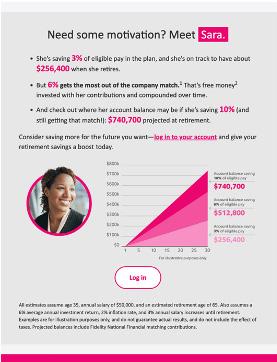
with 264 women increasing their deferral rate, driving an average increase of 3.01 percent and contributing to a dour percent overall plan action rate. Email engagement exceeded expectations, with 28 percent of women logging in to review their accounts—clear evidence that the messaging resonated and motivated action.
2nd Place: American Foundation for the Blind with TIAA
American Foundation for the Blind is a small national nonprofit dedicated to advocacy, accessibility, and opportunities for people who are blind or have low vision.
AFB made a significant enhancement to their retirement plan by transitioning the default investment option to a RetirePlus model portfolio, reflecting the organization’s ongoing commitment to the long-term financial wellbeing of their employees. The RetirePlus model portfolio offers a professionally managed, diversified investment strategy that adjusts over time. A unique feature of this portfolio is the inclusion of a lifetime income option, which provides employees with the ability to convert a portion of their accumulated retirement savings into a guaranteed, steady stream of income.
The retirement plan update campaign was designed to reach all 212 plan participants, across four retirement plans. To serve this audience equitably, retirement communications were delivered in both digital and printed formats, with each version built to meet ADA compliance standards from the ground up. Digital materials were fully compatible with screen reader technologies, featuring properly tagged document structures, descriptive alt text, and highcontrast design elements to support participants with low vision. Printed materials were held to the same rigorous accessibility standards. AFB placed participant preference at the center of its delivery strategy, giving all 212 participants the opportunity to indicate their preferred format. Inclusive imagery and language were also incorporated to ensure that individuals across different backgrounds, abilities, and life circumstances saw themselves reflected in the materials guiding their retirement journey.
AFB’s plan transition campaign delivered measurable improvements in participant outcomes and engagement:
88 percent of employees attended the webinar, demonstrating exceptional engagement with the retirement plan communication campaign.
Less than 0.02 percent opted out of the RetirePlus model option, a direct reflection of clear communications and participants recognizing the value of the service.
Retirement readiness measurements, leveraging Morningstar’s third-party advice engine that TIAA uses—revealed substantial improvements across key indicators:
Average contribution rate of 20 percent, well above the peer benchmark of 12 percent, reflects a strong culture of retirement preparedness among participants.
22 percent of assets are invested in guaranteed income, more than double the peer benchmark of 10 percent, demonstrating meaningful adoption of the lifetime income component.
Retirement Plan Enhancements Webinar

review of your plan’s features, investment options, American Foundation for the Blind Defined Contribution Plan
Date: Thursday, November 20th at 1 p.m. ET Click here to register
Courtney Campbell, Education Consultant from Pentegra Retirement Services, will be presenting and will be available to answer any questions you may have.

Average income replacement ratio of 118 percent means participants are on track to replace more than their full preretirement income, surpassing the TIAA average for peer institutions by 31 percent.
These results collectively demonstrate that AFB’s transition campaign not only met their immediate operational objectives but also delivered lasting value by ensuring no participant was left behind. The combination of inclusive ADA-compliant design, increased engagement, operational efficiency, substantial growth in guaranteed income adoption, and enhanced retirement readiness positions this initiative as a benchmark for excellence in participant-focused transition management.

Financial Wellness – Large Company
Financial wellness programs work to address employees’ total financial circumstances, rather than focusing solely on retirement. These programs can help employees with cash management, debt reduction strategies, saving for college, home buying and other financial life events that people face throughout their careers. Campaigns can include those that cover a single financial need, or multiple needs.
1st Place: LENNAR with PartnerComm, Inc.
Lennar is one of the nation’s largest homebuilders, delivering residential communities across 30 states with 12,5000 employees.
In recent years, Lennar has been laying the groundwork to compete more effectively for talent beyond the homebuilding industry, particularly against technology-forward organizations. As part of this strategy, the benefits team made significant enhancements to its financial benefits, including increasing the 401(k) match to dollar-for-dollar up to five percent of pay, with immediate vesting; adding a company contribution to health savings accounts; and introducing best-in-class education assistance and student loan repayment programs.
YOUR 401(K) ACCOUNT IS LIVE WITH FIDELITY!

As a lead-in to upcoming key initiatives Lennar decided to transition its 401(k) administrator to Fidelity to improve the Associate experience and introduce a new financial advising benefit. At the same time, the company sought to reinforce the value of its broader financial wellbeing offering. The transition required a mandatory 401(k) blackout period (a one-month period when associates couldn’t access account), creating both operational risk and heightened sensitivity among associates.
The communication objectives for this campaign were designed to support critical business priorities: mitigating disruption and confusion during the transition, driving timely associate action before and after the required 401(k) blackout
period, educating Associates about Lennar’s financial benefits and reinforcing confidence in Lennar’s financial wellbeing offerings — an important aspect of employee engagement and retention.
Lennar created a Money Matters Event page for a two-week virtual experience with Ten daily activities featured over the campaign window related to various financial benefits. They had a goal for the webpage to become the most visited page on their site and for ten percent of employees to engage with an activity. They met and exceeded these goals with 43,000 page views and nearly 2,000 employees engaging in at least one activity (5,000 total activities were complete).
The judges liked the theme, the use of QR codes, hyperlinks and registration buttons and noted that the campaign exceeded its goals.
Name: McLaren Gen Z 766260-SESFE-WF-4383206-0725
Subject: Be the MVP of your ifnancial future
Preheader: Let’s review your ifnancial stats

Be a Generational Player for Your Financial Future
You re just starting your all-star career While it may feel like you ll be in the game forever, Father Time is undefeated, make time to get your ifnancial strategy in the best shape possible Through the McLaren Employees 403(b) Retirement Plan, you can get help with a little coaching and access to your important ifnancial stats it s game on for ifnancial wellness
To help you reach your peak ifnancial performance at this stage of your career, you can meet with an Empower Retirement Plan Advisor (RPA) and/or use the valuable web resources on your personalized dashboard Either option can help you raise your ifnancial game
Let’s Go Inside the Numbers
Generally, the sooner you meet with an RPA to discuss your ifnancial plan, the better This is especially true for Gen Z, as that group plans to retire the soonest of all generations at age 54 1
A one-on-one session to review your strategy may help you reach that early retirement goal When you meet with an RPA at no cost to you you can also discuss:

How much to save now to potentially retire when and how you want
The many beneifts your Plan provides to help you reach your ifnancial goals
How to effectively pay down debt, such as student loan obligations
Get coached up on the things that are most important to your ifnancial game
Check Out Your Stats
2nd Place:
McLaren Health with Empower
McLaren Health is an Integrated healthcare system operating hospitals, clinics, and specialty services in Michigan with 28,000 full-, part-time and contracted employees and more than 113,000 network providers. McLaren provides comprehensive care supported by a large and diverse workforce.
McLaren launched a campaign in 2025 to promote overall financial wellness by targeting different generations or age groups to encourage them to save more and use the online financial wellness tools available to them.
McLaren’s generation-based campaign spotlighted the importance of scheduling a financial consultation with a dedicated retirement plan advisor—while also sparking interest in the suite of digital tools available on the Empower dashboard to help participants track and measure their progress toward long-term goals.
To make the messaging resonate with associates, McLaren wove in fresh insights from recent Empower research tailored to each generation: Gen Z, Millennial, and Gen X/Boomers. These data points not only added credibility but also made the call-toaction—meeting with an advisor and using digital tools—feel relevant and motivating.
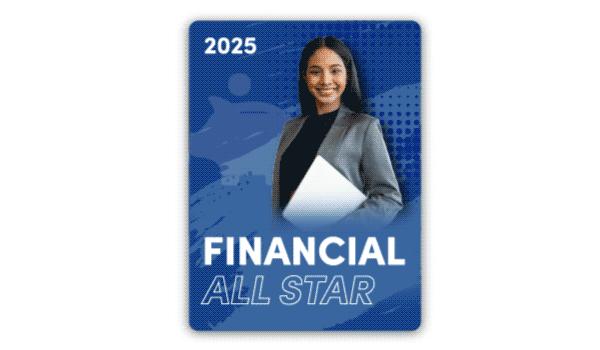
They also built the campaign around a Financial All-Star Trading Card theme (inspired by classic baseball cards), bringing each generation to life. Each trading card featured a unique role— such as administrator, doctor, or nurse—and showcased “stats” similar to a baseball trading card. Stats included career tenure, years to retirement, and savings rate (using the actual savings rate of McLaren participants within each generation). The animated trading cards flipped to reveal both the front and back, adding a dynamic, collectible feel. The trading cards were also a nod to McLaren’s sponsorship of the Detroit Tigers.
The campaign achieved an email open rate of 32.4 percent with 3.5 percent (629 employees) increasing contributions. The average contribution rate increased by 5.1 percent.
McLaren’s campaign saw a 30 percent overall increase in financial wellness engagement, specifically modeling percent of retirement goals, monthly income, before-tax contributions, Social Security, linking outside accounts, utilizing the Retirement Planning tool.
3rd Place: Whole Foods Market with Fidelity Investments
Whole Foods Market is a global grocery retailer specializing in natural and organic foods. It is a mission-driven company with a large, geographically dispersed workforce with more than 100,000 employees.
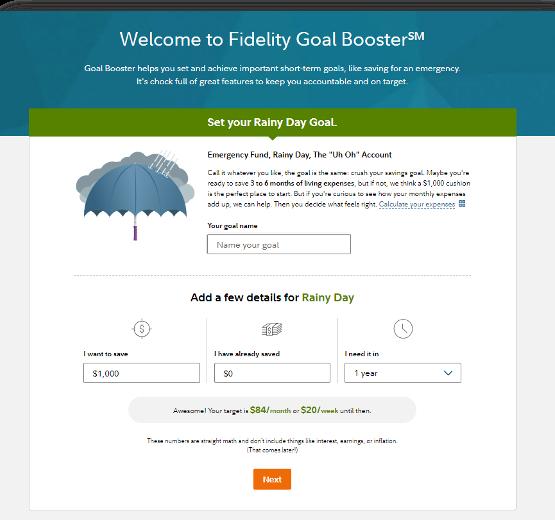
Whole Foods Market introduced Fidelity’s “Goal Booster” savings program to their employee base in 2024 with initial low take up rates. The goal of the program was to show employees how important (and easy) it was to put aside money from their paychecks into their accounts to save for emergencies, college, or other financial goals.
The campaign consisted of a dedicated internal microsite, a Team Member incentive for investing at least $50.00, as well as a video seen by more than 20,000 Team Members. They targeted low to middle income employees using appropriate language,
examples, and an easy to use sign up process. They used a series of focus groups, interactive webinars, a dedicated microsite and a Team Member video, featuring WFM leadership as well as Team Members.
Whole Foods Market exceeded their initial campaign goal with more than 4,500 new registrations and 3,600 “goals” by year end. By early 2025, employees saved approximately $3 million towards their goals. In 2025 the Team re-introduced the emergency savings program and employees saved another $2.253 mm, with an average savings of more than $86,000 every two weeks!
The judges liked the goal buster program and found the company-wide video with leadership impactful. The website was intuitive and easy to follow (internal microsite helped as well) and there were strong calls to action.

Financial Wellness - Small Company
1st Place: Omaha Steaks with ADP Retirement Services
Omaha steaks, founded in 1917, is an Omaha, Nebraska-based, fifthgeneration, family-owned company. It operates retail locations and national distribution channels and has 1,445
The goal of the financial wellness initiative was to create a comprehensive year-long wellness program that effectively engaged both Spanish and English-speaking Omaha Steaks employees. To meet the diverse needs of the workforce, the campaign delivered a wide range of financial wellness topics such as retirement savings, budgeting, debt management and saving for college. Wherever possible, bi-lingual communications were offered.
A secondary objective was to drive meaningful traffic to the custom retirement plan benefits page, which houses tools, videos and plan specific resources designed to support informed decisionmaking. There is an English and Spanish version of this page.
Brand identity is a core value at Omaha Steaks and maintaining that sense of brand familiarity was essential. For this reason, ADP Retirement Services partnered closely with the Omaha Steaks marketing team to fully customize every communication touchpoint - emails, posters, resource page. All material were developed using Omaha Steaks’ brand voice, colors, and visual identity to ensure a cohesive campaign.
As a result of this collaboration, employee engagement and participation exceeded expectations. Building trust by leveraging
the Omaha Steaks brand played a key role in the success of this campaign. Brand familiarity helped employees feel confident engaging with financial wellness content, which contributed to strong levels of participation. Overall, 25 percent of the entire employee population visited the custom retirement plan resource pages, spending an average of eight minutes on the site. Additionally, 37 percent of the targeted population engaged with the emails. Posters were displayed in every location and break room, and all print materials included a QR code to drive traffic directly to the resource page.
As a result of these efforts, retirement plan engagement improved throughout the year. On January 1, 2025, plan enrollment was 80 percent, and by December 31, 2025, participation had increased to 83 percent.
Omaha Steaks automatically enrolls employees at three percent of pay. However, to receive the full company match, participants must contribute at least five percent. The company match structure—100 percent on the first three percent and 50 percent on the next two percent made “maximize your match” an essential financial wellness touchpoint. This message resonated strongly: by the end of 2025, 89 percent of participants were contributing enough to receive the full company match. The average deferral rate reached 7.6 percent, notably higher than the match threshold. Along with increased participation and savings rates, this campaign also resulted in a the reduction in plan loans and a high level of overall investment diversification.
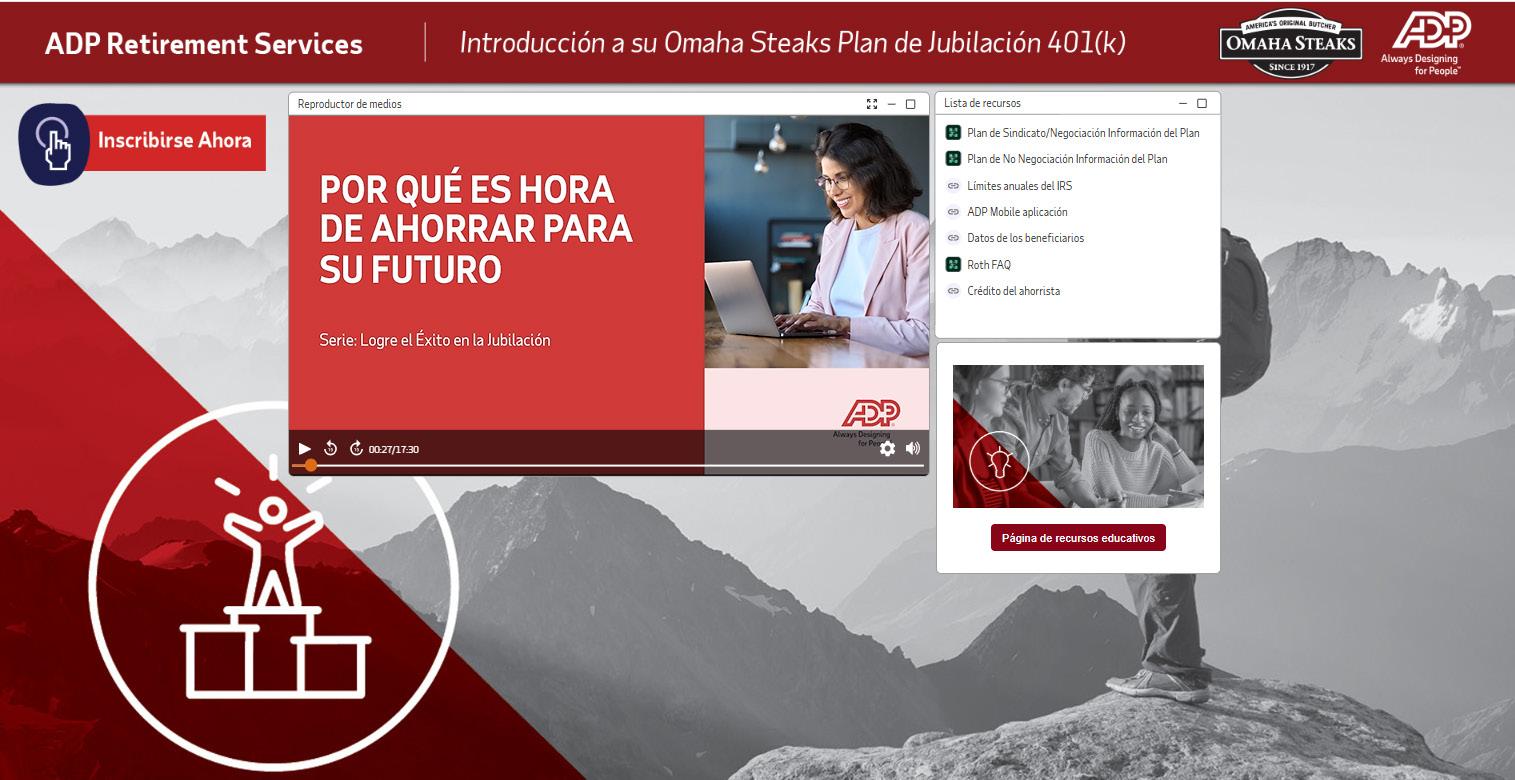
Overall, the combination of strong brand alignment, bilingual communication, targeted education, and consistent messaging resulted in a highly successful financial wellness program—one that not only strengthened retirement plan engagement, but also supported employees in building broader financial confidence.
2nd Place: Aquent with Marsh McLennan Agency
Aquent is a global staffing agency providing workforce solutions across industries and employees more than 3,000 workers.
Aquent’s financial wellness program is an ongoing initiative aimed at enhancing employees’ financial health by providing the knowledge, tools, and resources necessary to make informed financial decisions. The program seeks to reduce financial stress, improve financial security, and promote overall well-being. It offers a comprehensive, user-friendly platform delivering personalized financial solutions tailored to individual needs and goals.

Available to both employees and their families, the program includes a wide range of resources such as articles, beginner guides, videos, courses, tools, mindfulness activities, webinars, and opportunities to schedule virtual one-on-one coaching sessions with licensed financial coaches. Topics covered include debt management, emergency savings, major purchases like cars and homes, tax-advantaged savings options such as 529 plans, HSAs, and retirement plans. Additionally, it provides resources on investment education, diversification strategies, retirement planning, wealth management, estate planning, and more.

Aquent is dedicated to offering a multi-year financial wellness program designed to support and enhance employee wellness, with a particular focus on financial health. The program includes various initiatives that raise awareness and encourage proactive engagement.
One way Aquent does this is by providing access to courses, webinars, and financial information through their wellness platform: https://aquent.mmaprosperwise.com. Aquent further invests in its employees by offering a personalized company newsletter that engages staff and delivers a wealth of resources. These monthly newsletters cover topics such as money mindfulness, inflation, retirement, debt reduction, beneficiaries, reducing financial stress, back-to-school spending, summer vacations on a budget, and more. An example newsletter is included with this submission. Additionally, Aquent offers unlimited financial coaching sessions with licensed financial advisors to employees and their family members. The Aquent HR team collaborates with the Prosper Wise team to host educational sessions and convene for monthly engagement strategy meetings.

In 2025 alone, Aquent achieved strong results with their financial wellness program, recording 761 total website users, 992 web sessions, and 2,047 page views. Additionally, 106 financial coaching sessions were utilized. Engagement across three webinars was strong.
3rd Place: Baird with Principal
Baird is an employee-owned financial services firm, founded in 1919 and known for client-focused advice and a strong workplace culture. It operates globally more than 5,000 employees.
Baird’s wellness program aimed to equip Associates with the confidence and skills to manage their finances, reduce stress, and achieve their goals. To support this, Principal partnered with Baird to develop a customized financial wellness microapp—a centralized, easy-to-use digital hub for relevant education and tools. This user-friendly microapp digital hub delivered targeted financial education on HSAs, budgeting, debt management, emergency savings, Social Security, Medicare, and more. It also encouraged associates to meet with Baird’s advice team for personalized guidance.
A key feature is the age-specific financial well -being checklists, which offer progressive, relevant guidance at every stage. Each checklist includes actionable tasks and curated materials from Principal and Baird.
Checklist highlights:
Entering workforce to age 30: Build foundational habits— engage in the retirement plan, establish an emergency fund, improve credit, reduce high-interest debt, and meet with Baird’s advice team.
Age 30–40: Increase 401(k) contributions, manage debt, consider college savings and Supplemental Life, and use Principal budgeting and estate tools.
Age 40–50: Stay on track—align investments with risk tolerance, explore a Baird IRA, and revisit estate planning.
Age 50–retirement: Prepare for retirement—learn about long-term care insurance, Social Security strategies, caring for aging parents, and use catch - up contributions.
Retirement and beyond: Support budgeting on fixed income, healthcare choices, and ongoing estate planning.
The hub provides a one-stop destination for Principal and Baird resources.
The hub was promoted through a banner on participant accounts within the Principal website. Baird further amplified awareness through a rotating monthly communications campaign across internal channels, including CHRO video messages, HR and manager newsletters, digital signage, quarterly flyers, Associate Resource Group newsletters, the Associate Financial Advice newsletter, and an evergreen Workday article.
While Baird has consistently provided a comprehensive total rewards program for Associates and their families, they
recognized an opportunity to elevate support for Associates’ overall financial well-being.
The new digital hub filled a key gap by offering a one-stop destination for financial guidance—valuable for both early career associates and those with more experience. It helps answer the question: “What don’t I know that could help me?”
As of 12/31/25, 23 percent of Baird Associates have accessed the digital resource with an impressive 82 percent using the available checklists. The strong adoption rate and
In Baird’s last engagement survey, 85 percent of Associates felt that they are “confident that they will be prepared for their desired lifestyle in retirement.”
Campaign: Digital Resource Hub Category: Financial Wellness

Will Your Wings
Name or review your 401(k) Plan beneficiary
In the spirit of our “Will Your Wings” program, name or review the beneficiary for your Red Wing Shoe Company 401(k) Plan account.
It’s easy and can help ensure your money goes to the people you choose.
Scan to log in and name or review your beneficiary today!
Get professional guidance
To discuss your beneficiary or any other financial goals you’re working toward, meet with Chad Olson, your SageView Advisory Group Wealth Advisor. There’s no additional cost for this service.

to schedule a meeting with
SageView Advisory Services, LLC. Cetera is under separate ownership from any other named entity. Transamerica is not affiliated with Cetera Advisor Networks, LLC, SageView Advisory services, LLC, or your employer. Transamerica Retirement Solutions (TRS) is affiliated with Transamerica Trust Company (TTC) through which TRS provides certain nvestment education services to plan participants and other administrative services on behalf of the plan. TTC is an Iowa trust company with its principal office located at 6400 C Street SW, Cedar Rapids, IA 52499.
DP3 4320925 S © 2025 Transamerica Corporation. All Rights Reserved.
3rd
Place: Red Wing Shoe Company with Transamerica
Red Wing Shoe Company is a mid-size footwear manufacturer known for durable work boots and heritage craftsmanship. It has 2,700 workers across manufacturing, retail, and corporate roles that have a wide range of financial literacy, technology access, languages, and work schedules.
It launched a campaign last year to improve overall financial wellness by protecting employees’ financial legacy and reducing probate/beneficiary risk through simple and timely communications.
The goals of the campaign were to:
Increase beneficiary completion to help ensure assets go to the people employees choose
Educate employees that wills do not control retirement plan assets, and missing beneficiaries increase probate risk
Encourage proactive financial checkups via professional guidance
Build sustained engagement with retirement planning tools through repeated, accessible reminders
The ‘Will Your Wings’ beneficiary campaign encouraged employees to name or review a beneficiary for the RWSC 401(k) Plan by connecting the action to RWSC’s iconic boot tag
tradition—passing boots (‘wings’) to someone you care about. Using recognizable boot-tag visuals and legacy storytelling, the campaign reframed an overlooked administrative task as a personal, meaningful step to protect loved ones.
The campaign used a two-wave email strategy to maximize reach among the 1,200 eligible employees. The initial send generated a 27 percent unique open rate and a 2.8 percent unique click rate. A follow-up email sent exclusively to non-openers added an additional 10 percent open rate and 1.4 percent click rate within that remaining segment. Notably, click-to-open rates increased from 10.4 percent in the first send to 14.0 percent in the second, demonstrating stronger intent among late engagers and reinforcing the effectiveness of the multi-touch communication approach. Additionally, they saw an 11.5 percent increase in beneficiary designations from 2024 to 2025.
The campaign made a complex topic feel personal, approachable, and necessary to address and directly enhanced employees’ financial wellness by reducing legal/financial risk and strengthening household protection through a simple, yet essential action. By combining education, access, and professional guidance with authentic brand symbols, RWSC improved financial security in a way that is both human-centered and measurable.
If you’re married and designate someone other than your spouse as your primary beneficiary, spousal consent will be required. Securities and advisory services offered through Registered Representatives of Cetera Advisor Networks, LLC, member FINRA/SIPC, a broker/dealer and Registered Investment Advisor. Additional advisory services offered through
Innovation in Promoting Participation – Large Company
The Innovation in Promoting Retirement Plan Participation award celebrates creative and effective strategies implemented by plan sponsors or financial service providers to encourage and increase participation in retirement plans. Recipients of this award often showcase innovative methods, educational initiatives, or engagement programs that successfully boost the number of employees enrolling in and contributing to retirement plans.

Kwik Trip is a Midwest-based convenience store chain known for vertically integrated food production. It operates hundreds of locations with a large, diverse workforce of more than 36,000 employees.
Kwik Trip is a privately held company headquartered in La Crosse, Wisconsin, that manages convenience stores. Kwik Trip has automatic enrollment and automatic increase provisions— participants are automatically enrolled in the plan after six months of service, and each year their deferral amount is increased one percent until they reach 15 percent. Because of this, once participants are enrolled, it’s quite difficult to get them to engage with the plan and do things like add a beneficiary, view their investments, or increase their deferral amount on their own. With automatic enrollment, many participants are not aware that Kwik Trip provides them a profit-sharing contribution and a three percent QACA annual nonelective contribution. To spread awareness and drive engagement, first, Kwik Trip announced its 2025 employer contribution details in its Kwik Net newsletter (accessible to all
Portal, which is where coworkers can submit help tickets and find information on a wide variety of Kwik Trip-related topics.
After the contributions were made to participant accounts, Principal sent three personalized Kwik Trip-branded emails encouraging coworkers to visit the Retirement Wellness Planner and see the impact to their overall retirement readiness that these deposits made.
The campaign tagline “Go the extra mile for your retirement” tied into the Kwik Trip branding and culture and resonated with employees. They also used the call-to-action button wording “take me to my account,” rather than something more generic like “get started”. They found that specific first-person language can drive higher click-through rates and business action results.
The main goal with this campaign was to drive plan appreciation, inform participants of their employer contributions (a profit-sharing contribution and a three percent Qualified Automatic Contribution Arrangement (QACA) annual nonelective contribution) from Kwik Trip, and inspire them to log in to their Principal account and visit the Retirement Wellness Planner. It’s important for participants to engage with the Retirement Wellness Planner within their Principal accounts because it’s a powerful tool they can use to predict how much they could expect to have in their accounts when they are ready to retire. They can adjust inputs like deferral amounts and spousal savings to see how their numbers may change.
Overall, 6,584 (28 percent) of targeted eligible participants and 435 (6.6 percent) of those participants who accessed their account via principal.com or Principal® app during this campaign increased their deferral by an average rate of 3.61 percent. At the end of this campaign, the plan’s average deferral rate was 8.14 percent – this is a 2.6 percent increase compared to the same time last year (7.93 percent).
From Q2 2024 to Q2 2025 they saw a 102 percent increase in RWP users (1,016 to 2,049) Additionally, the average open and click rates for this campaign were higher than typical Kwik Trip campaigns.
2nd Place: MERS of Michigan
The Municipal Employees’ Retirement System (MERS) is an organization that administers retirement plans for Michigan’s local units of government on a not-for-profit basis and has more than 66,000 employees across the state. MERS serves more than 1,000 municipalities representing more than 150,000 participants, including firefighters, nurses, the people who plow roads, and keep communities safe.


Each year, the Michigan Employees’ Retirement System (MERS) hosts its Annual Conference, bringing together members from across the state. A key purpose of this event is to unite the membership in the election of the governing board. To maximize the value of their time together, the conference also features retirement planning and financial wellness education designed to support members’ long-term success.
In 2025, 423 attendees gathered in Traverse City, Michigan, on October 16 and 17. Participants were evenly split between employer representatives and employee members, all of whom returned to their local units of government equipped with valuable insights and information to share within their organizations. The goals of the education were to increase plan participation, improve savings rates, and enhance overall financial wellness.
This event theme, “Deep Roots, Secure Future,” reflected both MERS’ lasting strength and its forward-looking vision. To bring this theme to life, the conference experience was intentionally designed to be immersive, interactive, and memorable. Natureinspired visuals and hands-on activities transformed traditional retirement education into an engaging journey of discovery, connection, and reflection.
Upon arrival, each attendee received a custom-designed Field Notes Journal, which served as both a guide and an interactive workbook. Participants were encouraged to complete activities throughout the conference to reinforce key financial wellness concepts. Completed checklists could be submitted for entry into a prize drawing, driving participation while enhancing knowledge retention.



MERS ANNUAL CONFERENCE
THURSDAY-FRIDAY | OCTOBER 16–17



Activities included a Wisdom Tree, Nature Observations (animals linked to a financial wellness concepts), Retirement is Real (Featuring Bigfoot “whether you believe in Bigfoot or not, one thing is certain—RETIREMENT IS REAL”), a Crossword Challenge, Educational Breakout Sessions, and more.




More than 400 people attended the event, with more than half (342) completing the Field Notes checklist. Post-survey results showed that attendees rated their experience a 9.2 on a 10-point scale - the highest satisfaction rating they had ever received.
Based on these efforts and more, MERS added 8,065 new plan participants into the DC style retirement plans, and average account balances rose by more than $2,000
Grand Traverse Resort | Acme, MI

Innovation in Promoting Participation – Small Company
1st Place: International Motors with Empower
International Motors, LLC (formerly Navistar International Corporation) is an American manufacturer of commercial vehicles and engines, established in 1986 as a successor to the International Harvester company. International Motors produces trucks under its own brand and buses under the IC Bus name. Headquartered in Lisle, Illinois, International Motors employs approximately 15,000 people worldwide.
A key need identified for International Motors was a single, trusted resource employees could turn to for current, easy-to-understand information about their retirement plan and the tools available to help them take action. While employees could email questions to the company’s dedicated 401kQuestions mailbox and the plan’s SPD documented plan provisions, there was no centralized resource that combined plan-specific details and the practical guidance, digital tools, and education resources available through Empower.
To address this gap, they created an interactive “Owner’s Manual” digital flipbook designed to function as a one-stop reference guide—bringing together International Motors’ plan provisions and Empower’s tools, calculators, videos, and support resources in one cohesive experience.
The Owner’s Manual launched in mid-February 2025 to 5,714 active, plan-eligible employees and was supported with sustained promotion in the months that followed. Engagement data demonstrates strong adoption and continued growth over time: by six months post-launch, the digital flipbook generated 4,472 unique hits and 63,529 total hits. Twelve months after launch, usage increased to 7,998 unique hits and 125,642 total hits, indicating ongoing reliance on the manual as a primary reference tool.
Because the flipbook includes embedded links to videos, web tools, and education presentations, they continuously monitor the most visited pages and most clicked links to identify what participants find most valuable and to inform the topics and calls-toaction for future campaigns.
To reinforce the Owner’s Manual as the central hub, they implemented targeted campaigns throughout 2025 using the same branding and a direct reminder link back to relevant manual content. A supplemental internal messaging campaign encouraged participants to use their annual raise to increase their retirement plan savings rate – five percent of the targeted participants increased their contribution rate. The campaign also saw a 60
percent increase in enrollment in the plan’s managed accounts service.
About six months after campaign launch, they surveyed participants about its effectiveness. More than 70 percent rated the manual as “very useful” or “extremely useful” and open-ended responses most frequently requested more one-on-one help and additional education opportunities. In response, they offered virtual one-on-one appointments with an Empower representative, introduced in December 2025.
Overall, these results demonstrate that the campaign met its objectives by driving sustained engagement with a centralized resource, increasing utilization of key tools and services, and translating education into measurable participant actions..
INTRODUCING YOUR 2026 MODEL YEAR ENHANCEMENTS
Getting on the road
Just as new vehicles are redesigned and equipped with the latest and greatest features, the International 401(k) Plan has also been updated for 2026:
• Enjoy the convenience of submitting Roth conversion requests online.
• Schedule a one-on-one financial wellness review quickly and easily.
• Learn about a new, qualified distribution option from the Plan.
Look for the “New for 2026” label in the table of contents and call-out sections throughout the Owner’s Manual to find these updates.
Important Change: Roth Catch-Up Contributions
In addition to these enhancements, there’s a significant rule change driven by SECURE 2.0 legislation. SECURE 2.0 was initially passed in December 2022, and introduced new features to help make it easier for people to save for their future. Some parts of the legislation were effective immediately while other aspects were to be phased in over the course of several years.
One piece of the legislation that will take effect in 2026 is related to catch-up contributions. Starting January 1, 2026, if you are eligible to make catch-up contributions and earned more than $150,000 in FICA wages (Box 3 on Form W-2) in 2025, any catch-up contributions you elect must be made as Roth contributions.
Review your account and contribution elections to ensure you’re prepared for this change. Be sure to consult a tax advisor if you have questions about how this impacts you.
Beyond what’s new, your Owner’s Manual still includes valuable information you need to help you reach your financial wellness destination.
Point-in-time advice provided by an Empower representative may include savings, investment allocation, distribution, and rollover advice, including advice on consolidating outside retirement accounts.
2026
Keep driving toward the future you want to reach
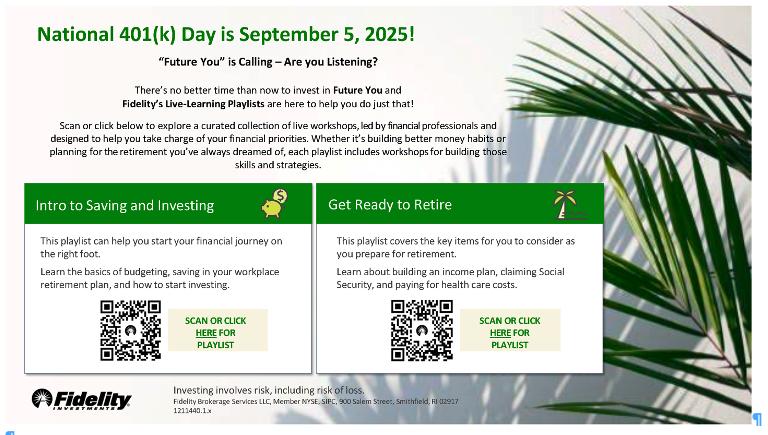
2nd Place: Alexander & Baldwin, Inc. with Fidelity Investments
Alexander & Baldwin (A&B) is a Hawai‘i-based real estate investment trust (REIT) and one of the state’s premier commercial real estate companies. Headquartered in Honolulu, A&B is the largest owner of grocery-anchored neighborhood centers in Hawai‘i and owns, operates, and manages approximately four million square feet of retail, industrial, and office properties across the islands. A&B’s 91 employees spans multiple islands as well as several out-of-state locations. Employees are long-tenured, highly engaged, and culturally diverse.
A&B launched a campaign in 2025 to strengthen retirement readiness by increasing enrollment, encouraging higher deferral rates, and supporting key account actions by delivering behaviorally informed, easy to act on information that employees could understand quickly.
A primary goal was to help employees understand the importance of enrolling, increasing contributions, maximizing the value of the company match, and completing actions such as beneficiary designations and use of planning tools. They also reduced pay-related concerns by shifting to a March-February plan year (from January-December) to align with annual salary adjustments (also effective in March). This much appreciated change in timing helped employees better manage the impact on take home pay. At the same time, they increased the company contribution towards health and dental premiums in the lower salary tiers, while encouraging employees to redirect savings from lower premiums into their retirement savings.
The campaign used a multi-touch, multi-channel approach through scalable personalization, segmented learning pathways, and “friction reduction.” The core innovation was providing a customized 401(k) Snapshot to every employee. Each Snapshot delivered individualized information (such as balance,
participation date, contribution types and rates, and engagement indicators) paired with clear calls to action, including increasing deferrals, maximizing the match, and completing important account readiness steps such as beneficiary designations and use of planning resources.
To reinforce learning and reach employees at different career stages, they leveraged National 401(k) Day with a targeted flyer that directed employees to Fidelity live-learning playlists, including content designed for foundational saving and investing as well as retirement readiness topics. In addition, they integrated 401(k) messaging into open enrollment communications, encouraging employees to consider enrolling or increasing contributions in connection with the new MarchFebruary plan year and lower health and dental premium contributions under the updated premium model and oral health incentive.
As a result of the campaign, participation increased from 95 percent at year-end 2024 to 98 percent at year-end 2025. This is much higher than industry benchmarks for size and industry (66 percent). The average deferral election rate of 10.1 percent also exceeds peer benchmarks (7 percent).
The campaign also resulted in an increase of beneficiary designations on – 81 percent, up from 70 percent before the campaign.
Achieving near 100 percent participation in a voluntary plan requires more than periodic reminders. The combination of scalable personalization (individualized Snapshots), segmented learning pathways (National 401(k) Day playlists), and a paycheckfriendly timing strategy (aligning benefits election timing with annual salary adjustments and premium savings messaging) strengthened both participation and engagement.
3rd Place: Danone with Transamerica


From headsets and phones to cars and homes, upgrades are a regular part of life. Now, you can add the Danone U.S. 401(k) Plan to the list.
During the past few months, several Danone U.S. 401(k) Plan enhancements have taken effect that are designed to help you live your best life — now and in retirement. These include:
Lower fees
Account security features
New financial planning resource provided at no additional cost to you. Take the Goldman Sachs Ayco Financial Wellness Assessment.
See how the Goldman Sachs Ayco Financial Wellness Assessment can help

Log in or create your online account. On the Financial Overview page, click LEARN MORE in the How's your financial fitness? banner. You'll then be directed to the Goldman Sachs Ayco website, where you can establish a financial fitness score and action plan.
We encourage you to explore these upgrades. Our goal is to help you prepare for the financial freedom you want to enjoy in retirement.
Danone U.S America is a food manufacturing and retail corporation with more than 5,000 employees and 15 production locations across the U.S. Danone serves a diverse workforce across corporate, plant, warehouse, and support roles.
To announce plan changes in a creative way that improves participant understanding. The campaign aimed to increase engagement by turning plan enhancements into a compelling, easy-to-understand analogy that encourages positive participant behaviors.
The “Your Plan Has Been Upgraded” campaign announced meaningful enhancements to the Danone U.S. 401(k) Plan and turned a complex plan update message into a motivating call to action. Using an innovative, nostalgic “upgrade” analogy (Walkman and wired headphones → iPhone and AirPods), the campaign made fee reductions and new tools instantly understandable.
Participants were encouraged to log in, explore new resources, review contribution rates, update beneficiaries, and try Manage Advice®, a personalized investment strategy, through a 90-day free trial.
The campaign leveraged email announcements highlighting plan upgrades, benefits, and links to resources, text message reminders, digital slides and LCD screens in common areas featuring QR codes, and flyers in breakrooms and at in-person events with direct action links.
The campaign reached 4,500 participants via email and delivered strong engagement through a two-wave strategy. The initial email generated a 40 percent open rate and a 1.7 percent click-through rate (both higher than the industry average). A follow-up email sent to non-openers added an additional nine percent open rate and 0.5 percent click-through-rate within that group. In total, the campaign achieved a 45.4 percent unique open rate and a 2.02 unique click-through-rate across the full population, with a 4.45 percent click-to-open rate — demonstrating high-quality engagement among employees who interacted with the message when it was convenient for them. Additionally, half of participants who received the text message engaged with it and overall website traffic increased 56 percent during rollout vs. the prior year.
Additional engagement improvements (Q1 2025 to Q2 2025): 21 percent of the engaged audience increased their contribution rate
Average balance increased nearly 11 percent
Participation rose to 95.9 percent
Overall average deferral rate: 8.4 percent
The Danone Your Plan Has Been Upgraded campaign translated complex plan changes into an engaging, relatable message that drove measurable participant action. Its creative and innovative approach use of an “upgrade” theme delivered compelling storytelling and set a high bar for participant communications.
Provider Innovation
This category highlights service providers that bring pioneering ideas, services, or solutions to the retirement planning industry. This award typically acknowledges innovation in technology, investment strategies, or administrative services within retirement plans that is effectively communicated to educate plan sponsors and/or participates to increase outcomes. Examples include complete education campaigns with a unique or innovative approach or targeted campaigns addressing a specific problem with a unique solution.

operations and missions of the Savannah River Site. The more than 10,000 employees at SRNS include engineers, scientists, technicians, project managers, administrative staff, and skilled tradespeople. In tandem with a rite of spring, they launched a “Swing for the Fences” campaign to coincide with the start of the baseball season. The campaign spread the word about an increased matching
Subject line: %%First Name%%, swing for the fences with the company match
Preheader: Your tenure is being rewarded with a SIP match increase

Great news! Savannah River Nuclear Solutions (SRNS) is rewarding your dedication to the team by increasing the company match for your SRNS Savings and Investment Plan (SIP) account.
Starting June 1, 2025, teammates with five or more years of service1 will be eligible to receive:
• 50 cents on every dollar you contribute to your SIP account, up to 12% (maximum 6% SRNS match — up from 4%)
• A 5% qualified non-elective company contribution (remains unchanged)
• A total maximum 23% contribution (12% employee2 + 11% company, up from 17% combined maximum)
Step up to the plate, save more3 in your SIP, and hit a home run for your financial future!
encourage participants with at least five years of service “to step up to the plate” and contribute enough to receive the full match. For those with at least three years of service, they were notified that they were “on deck” to receive a larger matching contribution.
Under the new match formula, SRNS contributed 50 cents for every dollar, up to 12 percent of pay, for a maximum six percent match (an increase from 50 cents per dollar, up to 8 percent). SRNS also continued to make a five percent qualified non-elective company contribution. Under the new formula, participants meeting the match would see at least 23 percent of their eligible pay go toward their retirement account (12 percent employee + 11 percent company). Saving more could be a “home run” for their financial future!
The SRNS workforce is diverse and includes on-site shift workers, corporate workers, and support staff with varying schedules and education levels. They wanted to ensure the campaign was engaging, with simple language and direct calls to action. They targeted eligible and active participants with at least three years of service with personalized emails, educational sessions, and webinars. Employees could “get financial coaching” with a financial professional to answer questions related to their retirement account; the increased match for those with at least five years of service; and discuss potential solutions for other financial wellness needs (student loan debt, HSA, FSA, buying a home, and more). They also created baseball sensory balls imprinted with the participant website that were distributed to employees at corporate locations and the various worksites.
The targeted personalized email was sent at the start of baseball season in April and had a 47.64 percent open rate. Nearly 10 percent of those with at least three years of service increased their contribution rate on average 2.87 percent, bringing their contribution rate to an average of 10.07 percent. For those with at least five years of service, 17 percent increased their contribution rate on average by 3.12 percent, bringing their contribution rate to an average of 10.93 percent. Nearly 100 one-on-one appointments were held with a “financial coach” and 448 employees registered to attend a webinar with a 58 percent attendance rate.
Swing for the fences with the company match


Sanford Health is the largest rural health system in the United States with 58 medical centers, 289 clinic locations, 145 Good Samaritan Society senior living centers, 4,500 Sanford physicians, advanced practice providers, 1,100 active clinical trials and studies, and five world clinic locations around the globe. With 53,000 employees serving 112,000 admissions in a year, Sanford Health is committed to being an employer of choice.
As Sanford Health continues to expand, the investment committee reviewed how employees engage with the retirement program to ensure it continues to meet their evolving needs. This review highlighted the importance of employee awareness, connection, and confidence in the retirement program for both Sanford Health and Good Samaritan Society employees. The result was a focused initiative to reinvigorate participation, elevate understanding, and highlight the value of the tools and resources available through Principal.
The Sanford employee base spans a wide spectrum of educational levels, from hourly paid nursing home attendants to highly paid surgeons. Due to the nature of health-care work, they needed an easy, digestible way to help everyone see if they’re on
To address this, they calculated custom target savings amounts based on age and income. E.g., a 50-year-old Sanford employee’s target savings-to-income ratio was 5.7 percent, meaning that by age 50, assuming a salary of $111,000, they should target having saved about $630,000 (5.7x111,000).
Using savings targets based on income allowed people to gauge their progress based on all assets with an easy mental calculation, while intriguing them to log in to see what their current balance is, driving engagement.


A custom campaign web experience was built too, for individuals to learn more about the savings targets based on age and serving up next steps based on their situation. Next steps could include:
Enrolling in the plan

3rd Place: Quad with Principal
Quad is a marketing solutions company known for innovation and delivering a reimagined marketing experience. Quad has a total of eight different brands under its umbrella and has 8,500 total employees.
Traditional retirement communications can feel complex and intimidating, especially for employees with limited computer access and lower comfort with financial terminology. The “Intimidation Buster” campaign sought to remove these barriers for Quad’s production workforce by making digital engagement

simple, humorous, and accessible for everyone, regardless of role, schedule, or language.
The campaign’s creative copy and design leveraged humor as a strategic tool, simplifying financial jargon and making digital tools feel approachable. The campaign used a cohesive multi-channel communication strategy, reaching employees wherever they were:
Playful emails provided clear, simple calls to action.
Direct mail brought the campaign into employees’ homes, reinforcing the humor while providing easy, achievable stepby-step instructions.
Digital signage and posters placed in high traffic areas to capture attention during shifts.
Spanish call outs and bilingual materials ensured employees felt included, supported, and able to act confidently in their preferred language.
The campaign used QR codes, mobile-friendly pathways, and short messages to align with employees’ real-world workflows and time constraints. Ultimately, the innovation of this campaign came from combining behavioral science principles (removing intimidation and lowering cognitive barriers), creative communication techniques, technology-enabled accessibility, and cultural inclusivity.

In response to the primary call to action to log in and engage, 3,037 participants logged in to principal.com or the Principal® app – a 40 percent action rate and substantial lift for a largely shift based, mobile first workforce. More than 300 participants visited the Retirement Wellness Planner. Of those, 62 percent increased their contribution rate. Mobile app usage overall increased from 21.9 percent (1,739 participants) to 25.8 percent (1,974 participants). Thirty percent of participants identifying as Hispanic or Latinx are now using the app, compared with 23 percent before the campaign. Participants using the app on smartphones set to Spanish increased by 68 percent, reflecting the power of bilingual callouts that explicitly mention the app’s availability in Spanish and culturally relevant messaging.
By using humor to break down intimidation, offering easy steps instead of overwhelming instructions, and delivering inclusive messaging, Quad successfully motivated thousands of employees to engage digitally, enhance security, and improve their savings behaviors. This shows that when financial tools feel approachable, employees lean in.
by Shannon Broadbent and Matt Maier
Communicating Executive Benefits in a Complex Compensation Era
Modern strategies for communicating NQDC plans, equity compensation, and benefit restoration plans.
EXECUTIVE BENEFIT PROGRAMS HAVE GROWN MORE SOPHISTICATED OVER THE LAST DECADE, YET COMMUNICATION STRATEGIES HAVE NOT ALWAYS EVOLVED AT THE SAME PACE. For many HR leaders, the challenge today is not plan design, but plan understanding. NonQualified Deferred Compensation Plans (NQDC), equity compensation, and benefit restoration plans all play a critical role in executive attraction and retention, but they are also prone to confusion, underutilization, and mistrust if not communicated thoughtfully.
Executives are financially savvy, but they are also timeconstrained, riskaware, and skeptical of unnecessary complexity. The most effective organizations now treat executive benefits communication as an ongoing strategic process, one that is personalized, digitally accessible, and tightly integrated with the broader executive value proposition.
This article outlines modern communication strategies HR leaders can use to improve understanding, engagement, and informed participation across core executive benefit programs.
THE COMMUNICATION LANDSCAPE IS CHANGINGAND SO ARE EXECUTIVE EXPECTATIONS
Three macro trends that are reshaping how executive benefits are communicated:
1. Personalization Over Broad Messaging
Executives increasingly expect communications to be tailored to their role, compensation mix, and stage of career. Generic plan summaries or onesizefitsall enrollment guides are no longer effective. Highearning executives want clarity on how a program specifically affects their income, taxes, and longterm planning outcomes.
2. Digital Delivery with Human Access
Digital tools, dashboards, modeling tools, and on demand videos are now standard expectations. However, executives do not want digital tools to replace human interaction. The winning formula is digital selfservice supplemented by direct access to experts when questions arise.
3. YearRound Engagement Instead of “Open Enrollment” Thinking
Executive benefit programs function poorly when framed as annual, transactional elections. NQDC, equity decisions, and restoration benefits all require context, forward planning, and periodic recalibration. Leading organizations communicate continuously, anchoring benefits within performance, liquidity, and career transitions rather than calendar cycles.
COMMUNICATING NQDC PLANS: FROM COMPLEXITY TO INFORMED ACTION
NQDC plans are among the most valuable and most misunderstood executive benefits. Communication missteps often lead to underutilization or default avoidance driven by perceived risk.
Where Communication Breaks Down
Common challenges include:
• Overemphasis on legal mechanics instead of financial outcomes
• Insufficient clarity around election timing, especially irrevocable deferral rules
• Lack of transparency around distribution flexibility
• Confusion about credit risk and ERISA status
What Effective Communication Looks Like
1. Anchor the Conversation to the “Why”
Executives engage when NQDC is framed as a solution to a real problem:
• “You are capped in the qualified plan.”
• “A large portion of your compensation is paid on an annual or performance basis.”
• “This plan allows you to manage timing of taxation and cash flow more precisely.”
Start with the income gap and tax impact, not the plan document.
2. Simplify Election and Distribution Concepts
Rather than explaining every option upfront, use layered communication:


• Highlevel overview of what decisions matter
• Examples of common election strategies
• Personalized projections showing income smoothing or tax deferral impact
Visual timelines showing deferral → accumulation → distribution dramatically increase comprehension.
3. Address Risk Transparently but Proportionately
Executives do not expect zero risk; they expect understood risk Be clear that:
• NQDC is an unsecured obligation of the employer
• Rabbi Trusts mitigate but do not eliminate risk
• The NQDC plan complements not replaces other assets
Honest framing builds credibility and trust.
EQUITY COMPENSATION: MAKING SOPHISTICATED PROGRAMS ACCESSIBLE
Equity compensation is often the executives’ largest source of longterm wealth, yet many HR teams assume leaders “already understand” how it works. In reality, busy executives often misunderstand vesting mechanics, tax timing, or diversification risks.
1. Focus on What Changes Over Time
Executives understand equity conceptually; confusion arises around:
• Vesting schedules
• Performance conditions
• Expiration dates
• Posttermination treatment
Clear visuals showing how awards evolve over time are far more effective than dense explanations.
2. Separate Compensation Value from Liquidity
One of the most common mistakes is failing to distinguish total grant value from usable income. HR communication should explicitly address:
• When equity turns into cash
• Tax obligations at each stage
• How equity can interact with other benefits
3. Respect Executive Time Constraints
Executives do not want a course in equity taxation. They want:
• Executive summaries
• Targeted scenario modeling
• Access to specialists when decisions are required
Short, focused briefings, especially around vesting and tax events, drive far better engagement.
Benefit Restoration Plans: Making the Value Clear
Benefit restoration plans (such as supplemental disability or life plans tied to group plan limits) are often poorly understood because they are framed ambiguously.
1. Be Explicit About What Is Being Restored
Executives should clearly understand:
• Which benefits are limited under the group plans
• How much compensation is excluded due to IRS or group plan caps
• How the restoration plan fills that gap
Avoid abstract language. Quantify the shortfall.
2. Position Restoration as Fairness, Not Favoritism
Restoration plans work best when framed as: “Ensuring your benefits reflect your full compensation, not just the portion subject to statutory or group plan limits.”
This framing reinforces alignment with equity and governance principles.
3. Integrate Restoration into the Total Rewards Narrative
Restoration benefits should not feel like an isolated perk. They should be discussed alongside:
• NQDC
• Core benefit plans
• Longterm incentive plans
Executives need to see how each component reinforces the overall compensation architecture.
PRACTICAL COMMUNICATION STRATEGIES HR LEADERS CAN IMPLEMENT
1. Personalized Total Compensation Statements
Annual or semiannual executiveonly statements that consolidate:
• Base, incentive, and equity compensation
• Deferred compensation values
• Benefit restoration adjustments
These statements act as anchors for broader conversations.
2. OneonOne Executive Briefings
Individual sessions, especially around election windows, vesting events, or role transitions significantly improve decision quality and satisfaction.
3. Digital SelfService Tools
Modeling tools and dashboards empower executives to explore “whatif” scenarios while reducing administrative burden on HR.
4. Partner with Experts Strategically
External administrators, actuarial advisors, and financial planners can:
• Reinforce credibility
• Handle technical complexity
• Allow HR to remain focused on strategy and governance
The key is ensuring messaging remains consistent and aligned.
CASE STUDY: HOW BEACON MUTUAL STRENGTHENS EXECUTIVE BENEFIT OUTCOMES THROUGH PERSONALIZED COMMUNICATION
When Beacon introduced its Nonqualified Deferred Compensation (NQDC) plan, the HR team implemented a highly personalized rollout strategy. Each eligible participant met oneonone with HR to review the plan design, understand how it aligned with their financial goals, and address individual questions. The team also provided handson assistance with enrollment to ensure a smooth experience.
This individualized approach significantly increased participants’ understanding of, and appreciation for, the new benefit. Beacon has continued this hightouch communication model each year during open enrollment and when annual employer contributions are made. Participants consistently express strong appreciation for the ongoing, personalized support, reinforcing the perceived value of the benefit.
Final Thought: Communication Is a Strategic Lever
Executive benefits are no longer simply offered, they are experienced. Poor communication erodes trust and participation; thoughtful communication enhances perceived value and supports retention.
For HR leaders, the opportunity is clear: by modernizing how executive benefit programs are communicated through personalization, transparency, and ongoing engagement you can unlock the full strategic value of plans that already exist on paper. In an era where executive talent is both mobile and discerning, communication may be one of the most underutilized tools in the executive compensation toolkit.
Shannon Broadbent is the VP of Human Resources for Beacon Mutual and a member of PSCA’s NQDC Committee.
Matt Maier is the Vice President for Lockton Companies, LLC, and a member of PSCA’s NQDC committee.
If you are not the intended recipient (or not authorized to act on behalf of the intended recipient) of this message, please do not disclose, forward, distribute, copy, or use this message or its contents. If you have received this communication in error, please notify us immediately by return e-mail and delete the original message from your e-mail system. Nothing in this message should be construed as legal advice. Lockton may not be considered your
230 Disclosure: To
we are required to provide to you the following disclosure: unless otherwise expressly reflected herein, any advice contained in this document (or any attachment to this document) that concerns federal tax issues is not written, offered or intended to be used, and cannot be used, by anyone for the purpose of avoiding federal tax penalties that may be imposed by the IRS or promoting, marketing or recommending to another party any matters addressed in this document or any attachment.
by Mike Sasso
Expanding the Boundaries of Retirement Investing
Recent regulatory guidance may provide a pathway for more inclusion of alternative Investments in 401(k) plans.
FOR DECADES, THE TYPICAL 401(K ) INVESTMENT MENU HAS BEEN DOMINATED BY FAMILIAR OPTIONS: STOCK MUTUAL FUNDS, BOND FUNDS, AND TARGET-DATE FUNDS. While these core holdings remain the foundation of most retirement portfolios, a growing number of plan sponsors are exploring alternative investments as a way to broaden diversification and potentially enhance long-term outcomes.
As defined contribution (DC) plans continue to evolve, plan sponsors are increasingly exploring whether private investments – such as private equity, private credit, real estate, and other alternatives – can play a role in improving participant outcomes. Historically, these asset classes were largely confined to defined benefit plans and institutional portfolios. Today, however, regulatory developments have begun to reshape that landscape.
Alternative investments can play a role in modern 401(k) plans—but they also introduce unique risks, complexities, and considerations. Understanding what they are, how they fit into a retirement plan, and when they may (or may not) make sense is essential for both plan sponsors and participants.
Alternatives are not a replacement for traditional equity and fixed income investments. Instead, when thoughtfully implemented, they can serve as diversification tools that complement core holdings. For plan sponsors, the decision to include alternatives requires careful evaluation of structure, governance, participant impact, and fiduciary obligations.
This article takes a consultative, fiduciary-first approach to evaluating private investments within a 401(k) plan, incorporating the latest Department of Labor (DOL) guidance and practical considerations for plan sponsors.
WHAT “ALTERNATIVES” MEAN IN A 401(K ) CONTEXT
Alternative investments generally refer to asset classes or strategies beyond publicly traded stocks and bonds. In institutional settings, these may include private equity, private credit, real assets, hedge funds, and real estate.
In defined contribution plans, however, alternatives are typically offered in regulated, liquid, and operationally compatible formats, such as:
• Collective Investment Trusts (CITs)
• Liquid alternative mutual funds
• Custom target-date funds incorporating alternative sleeves
• Professionally managed multi-asset funds
These structures are designed to support daily valuation and participant liquidity while providing exposure to non-traditional return drivers.
ALTERNATIVE INVESTMENT EXECUTIVE ORDER
In August of 2025 the Trump administration issued an Executive Order (EO) to the Department of Labor (DOL) to investigate developing some regulatory guidance for plan sponsors should they want to consider offering alternative investments within their 401(k) plan. They were given six months to issue their guidance which was made public on March 30th, 2026. As with all proposed guidance, a 60-day window was provided for public comments. The official comment window was closed on June 1, 2026, and nearly 45,000 public comments were submitted regarding the DOL’s proposed rule on designated investment alternatives in 401(k) plans.
The landmark proposal establishes a procedure-based safe harbor for plan fiduciaries to offer alternative investments (e.g., private equity, real estate, and cryptocurrency). The feedback heavily reflects both strong grassroots support and sharp industry critique. Key stakeholders weighing in included:
• Support: Backed by retirement associations like the ARA (American Retirement Association) and various conservative groups, which praised the rule for reducing litigation risk and democratizing wealth creation.
• Opposition: Criticized by a coalition of 24 Democratic state attorneys general and various financial advisory groups, who argued the “safe harbor” weakens established federal protections and exposes everyday workers to complicated, high-risk assets.
THE FIDUCIARY LENS: PROCESS OVER PRODUCT
A critical theme in the latest DOL guidance is that ERISA is a process-based statute. Fiduciary decisions are judged based on the rigor and prudence of the process, not investment outcomes.
The proposed 2026 rule outlines six core factors that fiduciaries should evaluate when selecting any investment option –particularly relevant for private or less liquid assets:

1. Performance (including risk-adjusted returns)
2. Fees and expenses
3. Liquidity needs at both plan and participant levels
4. Valuation reliability and transparency
5. Benchmarking relative to appropriate comparators
6. Complexity and participant understanding
This framework is especially important for private investments, which inherently introduce additional complexity and operational considerations.
THE INTEL CASE: A REAL-WORLD FIDUCIARY STRESS TEST
Although discussing alternative investments and 401(k)s in the same sentence is a fairly new concept, it has already been implemented in the Intel 401(k) plan since 2008. However, in October of 2015 the Intel Retirement Plans Investment Policy Committee was sued (Sulyma v. Intel) for allegedly breaching its fiduciary duty to plan participants. Another complaint was consolidated with the Sulyma case and filed in August of 2019 (Anderson v. Intel) and is one of the most instructive cases for plan sponsors considering private investments.
WHAT HAPPENED
Participants sued Intel, alleging that plan fiduciaries:
• Acted imprudently by including private equity and hedge funds in custom target date and diversified funds
• Caused higher fees and underperformance
• Violated loyalty obligations through alleged conflicts tied to Intel’s venture arm
After nearly six years of litigation:
• The Ninth Circuit dismissed the case in May 2025
• The court found that plaintiffs failed to plausibly allege a fiduciary breach
WHY INTEL WON – FOR NOW
The decision offers several critical fiduciary insights:
1. No Prohibition on Private Investments
The court confirmed that private equity and hedge funds are not
inherently imprudent and can be part of a diversified 401(k) lineup.
2. Process Matters More Than Results
The court emphasized that prudence must be judged based on the process and information available at the time—not hindsight performance.
3. “Meaningful Benchmark” Requirement
Plaintiffs failed because they did not provide valid comparisons between Intel’s investments and similar funds with comparable objectives and risk profiles.
4. Generalized Criticism Is Not Enough
Broad claims that private equity is “too expensive” or “too risky” were insufficient without plan-specific evidence.
Update: In January of 2026 the U.S. Supreme Court agreed to hear the Anderson v. Intel Corp. 401(k) lawsuit. The high-stakes case, which addresses fiduciary liability for including hedge funds and private equity in defined contribution plans, is scheduled for arguments in the fall of 2026 and is expected to make a ruling sometime in 2027.
CONCLUSION
The DOL’s recent guidance marks a pivotal shift in the evolution of 401(k) investing. By rescinding prior cautionary statements and introducing a structured safe harbor, regulators have moved toward a neutral, process-oriented fiduciary standard that accommodates both traditional and alternative assets.
For fiduciaries, this does not reduce responsibility, it sharpens it.
Private investments can now be evaluated on equal footing with public market options, but only within a framework defined by:
• rigorous due diligence
• careful cost-benefit analysis
• strong governance
• and unwavering commitment to participant outcomes
In this environment, fiduciary success will depend not on whether private investments are included, but how defensibly and prudently that decision is made.
Mike Sasso is a Principal at CAPTRUST and a member of PSCA’s Investment Committee.
by Laura Stamps

Health Savings Choices for Employees: HSA or FSA?
PSCA’s HSA committee provides a comparison chart and quiz that employees can use to help decide between an FSA or an HSA.
WHILE FSAS AND HSAS HAVE BEEN AROUND SINCE 1978 AND 2003 RESPECTIVELY, MANY EMPLOYEES STILL FIND THEMSELVES CONFUSED ABOUT HOW BEST TO DETERMINE WHICH ACCOUNT MAY BE BEST FOR THEIR PRESENT AND FUTURE SELVES. While a side-by-side comparison of the two accounts can be useful, it doesn’t always demystify the decision for employees.
A non-intimidating list of self-identifying questions may help employees with more clarity on the path to determining which account might be best for their unique needs.
THE QUIZ
Assuming that the employee is HSA-eligible, here is a short quiz that may help the employee determine which choice is best for their unique needs:

IT IS BEST TO ENCOURAGE EMPLOYEES TO LEAN ON YOUR INTERNAL DECISION-MAKING RESOURCES THAT MAY BE BETTER INFORMED OF THEIR INDIVIDUAL SAVINGS NEEDS FOR GUIDANCE WHENEVER POSSIBLE.
*This quiz does not take the place of individual financial guidance and should not be positioned as financial advice.
SCORING
If the employee selects:
• Four our more “yes” responses = an HSA may be the best solution
• Three “yes” responses = It could go either way!
• Less than three “yes” responses: an FSA may be the best solution Like in most choice-driven scenarios, one factor may be more heavily weighted for the employee in their unique scenario. It is best to
encourage employees to lean on your internal decisionmaking resources that may be better informed of their individual savings needs for guidance whenever possible.
As affordable healthcare continues to be a topic of conversation, we hope this may empower you to support
your employees in making more informed savings decisions that lead to a more secure financial future.
Laura Stamps is the Director, Program Development & Engagement Strategies for Financial Finesse and a member of PSCA’s HSA committee.
by Melissa Hudson
MidYear Momentum: Helping Employees Strengthen Their Retirement Readiness
Half-way through the plan year is a great time to encourgage employees to check in on their retirement plan and financial goals.
JUNE MARKS AN IDEAL MOMENT FOR RETIREMENT PLAN SPONSORS TO HELP EMPLOYEES PAUSE, REFLECT, AND RESET THEIR FINANCIAL GOALS. WITH HALF THE YEAR BEHIND US, EMPLOYEES ARE MORE OPEN TO REVISITING THEIR SAVINGS HABITS, UNDERSTANDING NEW RULES, AND MAKING ADJUSTMENTS THAT CAN MEANINGFULLY IMPROVE THEIR LONGTERM RETIREMENT OUTCOMES.
This midyear edition focuses on practical tools, timely regulatory updates, and readytoshare educational resources that support both sponsors and employees as they head into the second half of the year.
PERSONALIZED RETIREMENT CHECKINS
Employees engage more deeply when guidance feels tailored to their life stage. A midyear touchpoint is a perfect opportunity to deliver segmented messages that resonate.
• Earlycareer employees benefit from reminders about starting small and letting compounding work for them.
• Midcareer employees may need prompts to review their investment mix or increase contributions as earnings grow.
• Age50+ employees should receive clear information about catchup contributions and retirement income planning.
Providing sponsors with short, audience specific messages makes it easy to deliver meaningful nudges employees can act on immediately.
SECURE 2.0: WHAT EMPLOYEES SHOULD KNOW NOW
Regulatory changes continue to shape the retirement landscape, and employees often look to their employer for clarity. This is a great time to highlight key provisions of SECURE 2.0 that may influence employee decisions in the months ahead.
Topics to include in an employeefriendly summary:
• Roth catchup rules for high earners (effective 2026)
• Enhanced “super” catchup contributions for ages 60–63
• Expanded eligibility for longterm parttime workers
A simplified explainer helps employees understand how these changes may affect their savings strategy and payroll elections. Below is a sample employee education idea you can use and can enhance with the resources you offer today.
Sample Participant
Language #1: SECURE 2.0 — What You Should Know New retirement rules are rolling out over the next few years. Here are a few highlights that may affect your savings strategy: Key Updates
• Roth catchup contributions for high earners begin in 2026
• “Super” catchup contributions for ages 60–63 will allow higher limits
• Longterm parttime employees may gain expanded eligibility
If you’re unsure how these changes apply to you, consider reviewing your contribution
elections or speaking with a financial professional.
FINANCIAL WELLNESS SPOTLIGHT: TOOLS FOR EVERYDAY MONEY DECISIONS
Financial wellness remains a top priority for employees, and midyear is a natural time to revisit personal financial habits. Sponsors can support this by sharing accessible tools such as:
• A financial goals planner
• A budgeting or debtmanagement worksheet
• A quick guide to improving credit scores
These resources reinforce that retirement readiness is part of a broader financial picture and that small improvements today can create longterm stability. Below is a sample employee education idea you can use and can enhance with the resources you offer today.
Sample Participant Language #2: Financial Wellness MiniGuide
Retirement readiness starts with everyday financial habits. Try these quick steps:

3 Ways to Strengthen Your Finances This Month
• Build or revisit your emergency fund
• Review your monthly budget and identify one area to reduce spending
• Check your credit score and set a goal to improve it
These small habits support longterm financial confidence.
MIDYEAR SAVINGS BOOST CAMPAIGN
A midyear review is the perfect moment to encourage employees to revisit their contribution rate. Even a small increase can have a significant longterm impact.
Consider a communication kit that includes:
• A “Boost Your Savings by 1%” challenge
• Employer match reminders
• A beneficiary designation check
• A simple infographic explaining traditional vs. Roth contributions
These quick, actionable prompts help employees make meaningful adjustments before yearend. Below is a sample employee education idea you can customize.
Sample Participant Language #3: MidYear Retirement CheckIn
Take a few minutes this month to check in on your retirement progress. Small adjustments now can make a big difference later.
Your MidYear Checklist
• Review your current contribution rate
• Confirm you’re getting the full employer match
• Check whether your investment mix still fits your age and goals
• Update your beneficiary designation if life has changed
• Explore whether Roth vs. traditional contributions make sense for you
If you haven’t made changes in a while, this is a great moment to revisit your plan.
TECHNOLOGY TOOLS TO SUPPORT RETIREMENT READINESS
Digital tools continue to drive engagement, especially among younger employees. Highlighting available resources can help employees take ownership of their financial future.
Examples include:
• Mobile apps from recordkeepers
• Retirement income calculators
• Short educational videos or interactive modules
Encouraging employees to explore these tools increases confidence and participation. Below is a sample employee education idea you can use and can enhance.
Sample Participant Language #4: Tools & Tech to Help You Plan
Your retirement plan includes digital tools designed to make planning easier.
Try These Tools
• Your plan’s mobile app for quick balance checks
• A retirement income calculator to estimate future needs
• Short educational videos on investing basics
Exploring these tools can help you stay connected to your financial progress.
LOOKING AHEAD
As employees prepare for the second half of the year, timely communication and accessible tools can make a measurable difference in their retirement readiness. By offering clear guidance, practical resources, and targeted education, sponsors can help employees build momentum that carries through yearend and beyond.
Melissa Hudson is the Corporate Director of Benefits for Herschend Entertainment Company and a member of PSCA’s Education and Communication Committee.
by Nevin Adams

Retirement Income, Defaults, and Fiduciary Duty
Considering retirement income solutions in 401(k) plans through the lens of the new proposed investment selection rule raises more than a few questions.
I WILL CONFESS THAT I AM (STILL) OF A MIXED MIND ON IMBEDDING RETIREMENT INCOME SOLUTIONS IN 401(K ) PLANS AND A NEW WHITEPAPER ON THE IMPLICATIONS OF THE NEW INVESTMENT SELECTION RULE HAS DONE LITTLE TO ASSUAGE THOSE CONCERNS.
The Morningstar paper — aptly titled “Guaranteed Income in DC Plans: Evaluating Target-Date Funds with Built-In Annuities” — covers a lot of ground. That said, more than half the paper is background[i] — chronicling both the trend lines to date, as well as offering a readable description of the two primary types of retirement income options that have found
their way into the targetdate fund framework (and yes, they’re quite different!). Those trendlines have captured the attention (and doubtless recirculation) of the paper, particularly among proponents.
But the “meat” of the paper considers the implications of applying the Labor Department’s “new” Investment Selection Rule
(though its official label at present remains “Fiduciary Duties in Selecting Designated Investment Alternatives”), and its list of six factors fiduciaries are charged with applying in their consideration(s) of all participant-directed choices[ii] on their retirement plan menu — at least if they expect to benefit from the presumption of prudence the Labor Department proposes to invoke in what it at least calls a “safe” harbor.
FACTORS FOCUS
And while those six factors — fees, complexity,
performance, benchmarking, liquidity, and valuation — are to be broadly applied under the proposal, much (most? All?) of the coverage and discussion to date has been about the application of the Labor Department’s proposal to private markets, cryptocurrency, and the like. That said, this paper thoughtfully reminds us that retirement income option(s) require careful consideration as well.
Not to blend the first two, but fees on these retirement income offerings are definitely “complicated.” They’re higher
THE CHALLENGE IS THAT RETIREMENT-INCOME PRODUCTS ARE NOT MERELY INVESTMENTS WITH DIFFERENT RETURN CHARACTERISTICS; THEY ARE INSURANCE STRUCTURES LAYERED INTO INVESTMENT
VEHICLES. THAT DISTINCTION MAY ULTIMATELY REQUIRE A DIFFERENT FIDUCIARY LENS ALTOGETHER.
than the other components of the target-date fund — the question is, what is the commensurate value? Their addition to the target-date fund definitely also adds mechanical complexity, certainly at the participant level (presumably the default facilitates adoption, but at some point, the participant has to “deal” with the reality).
As for performance — well, as the paper acknowledges, “Evaluating these products’ performance requires accepting upfront that forecasting is hard.” Ditto benchmarking, for much the same consideration.
“Participants receiving guaranteed income through a GLWB or income annuity are benefiting from something traditional performance comparisons do not capture,” according to the authors.
“This is where the Department of Labor’s emphasis on meaningful benchmarks becomes especially challenging for these products.”
And then there’s liquidity and valuation — which are one thing at a plan level, and potentially something quite different at the participant level. Oh, and the authors add a seventh factor; financial strength and the insurer’s credit rating — which while the SECURE Act may well
provide helpful guidance there, those factors certainly bear additional, thoughtful consideration — and I would argue particularly so in a default fund scenario.
COMPLICATE ‘ED’
The paper itself is undeniably positive[iii] in its assessment of the need for, and the opportunities with, these solutions. It not only reviews the growing number of target-date structures incorporating guaranteed income components, it also outlines the potential behavioral and longevity-risk benefits of annuities.
But in my reading, the analysis is far more “nuanced.” Indeed, much of the paper reads like a litany of unresolved complications:
• Different annuity structures behave very differently.
• Fees and guarantees can be difficult to evaluate.
• Liquidity tradeoffs remain significant.
• Portability remains a significant concern — people change jobs, plan sponsors change recordkeepers, recordkeepers get acquired, insurers merge, and rollovers are complicated enough already.
• Participant understanding is limited — to say the least. Much less the understanding of the plan fiduciaries considering these options.
Little wonder that current adoption remains fairly muted despite years of industry attention and encouragement.
Proponents would, and have of course, argued that defaulting participants into these structures merely applies the same behavioralfinance principles that helped positively drive participation and savings rates higher.
If these structures were a straightforward solution, adoption likely would have moved beyond niche implementation by now. Instead, the industry continues searching for a retirementincome framework that participants will understand, fiduciaries will accept, and recordkeeping systems can realistically support — or at least one that can be slipped
Footnotes
into a target-date offering that has already passed those tests.
And while it remains just a proposal at this point, the Morningstar analysis suggests that applying the Labor Department’s proposed framework to retirementincome solutions may rightly prove to be more challenging than applying it to traditional investment options.
The challenge is that retirement-income products are not merely investments with different return characteristics; they are insurance structures layered into investment vehicles. That distinction may ultimately require a different fiduciary lens altogether.
And whether the required analysis produces better fiduciary decisions — or simply more complexity — remains to be seen.
[i] In fairness, a full quarter of the 13-page paper is devoted to disclosures/disclaimers.
[ii] Lifetime income options were one of the categories of investment alternatives named in President Trump’s August 2025 Executive Order (even if most wouldn’t be inclined to include them in that category).
[iii] In one executive summary bullet, it’s noted that assets in target-date strategies that include an annuity component for lifetime income grew to $44 billion at the end of March 2026, up from $25 billion a year earlier. However, in a separate bullet it’s acknowledged that “so far, growth has been driven by two series: BlackRock LifePath Paycheck (USD 26 billion in assets at the end of March) and custom target-date AB Lifetime Income (USD 14 billion).” So, $40 billion of the $44 billion in just those two.
Nevin E. Adams, JD is the former Chief Content Officer for the American Retirement Association.
by Hattie Greenan
Key Takeaways from PSCA National
From cybersecurity to AI to missing participants, conference attendees share what they learned and what they took back to their organizations to improve their plans.
PSCA’S 2026 NATIONAL CONFERENCE WAS HELD MAY 4-6 IN ST. LOUIS, MO WITH MORE THAN 500 RETIREMENT INDUSTRY PROFESSIONALS. FOR THIS ISSUE’S PLAN SPONSOR PERSPECTIVES ARTICLE, I ASKED PLAN SPONSORS WHAT THEY LEARNED AND WHAT THEY ARE TAKING BACK TO IMPLEMENT AT THEIR ORGANIZATIONS.
WASHINGTON UPDATE
As usual the Washington Update was popular with attendees – they appreciate hearing the latest and upcoming developments in Washington that will affect plan management and administration. One attendee noted, “The legal updates are so useful, specifically the increase in litigation regarding use of the forfeiture account monies. Also, the recommendations regarding fiduciary meeting notes and how they can be used in discovery.”
Another noted that “As always, the Washington Update sessions were highly valuable. They provided important insight into legislative and regulatory developments, helping us stay informed about what may be forthcoming and how it could impact our clients.”
AI
The conference included two sessions about use of Artificial Intelligence in HR and plan management and AI was raised
in a couple of the litigation/ compliance sessions. Because the use of AI varies dramatically across organizations and there are varying levels of comfort and concerns, all perspectives were shared during the conference with some attendees surprised at the low use of AI, some surprised at its high level of use, and others feeling a bit surprised at the seemingly conflicting advice about its use:
• “I was surprised at how many people were not using AI formally at their organizations and the opportunity it presents to assist us to be more effective in our roles while advancing personalization for our employees.”
• “Surprised by a speaker’s comment that DOL & IRS are using AI to review 5500’s, not sure why I was surprised but I was.”
• “The use of AI at plan committee meetings and the advice not to use AI to prepare fiduciary minutes.
The lawyers panel said don’t do while another panel talked about how wonderful it is?????”
CYBERSECURITY
Cybersecurity was covered in a highly attended breakout workshop, and it is clearly a top concern and priority for many.
• “Cybersecurity was of huge interest to me, as in April we had an employee’s account hacked with our recordkeeper for a six figure withdrawal request. I had a whole list of questions for my broker, TPA and recordkeeper when I got back to the office around the cybersecurity topic. Asking about incident response plans, SOC reports, and DOL best practices were at the top of my list. I really could not get enough of this topic!”
• “More participants need to register and take control of their retirement accounts. I think that would help with minimizing missing participants too. I personally have changed my contact email on my work 401(k) to be my personal email; default is our work email. Once
you leave you lose access to your work email, and you lose access to the communications and reminders that you have a prior 401(k). A speaker in this session made a comment that for the DOL Cyber is now one of the four major enforcement areas. We are likely going to add an IT voice to our committees for the plans. We also need to make sure that signed agreements with a recordkeeper flow to their subcontractors. Also, they recommended we get NDA’s and other guarantees from the subcontractors working for the recordkeepers.”
• “As a Client Service Manager supporting nearly 70 401(k) plans, one of my primary takeaways from this year’s conference was the growing importance of cybersecurity and AI-related risks for our clients. These topics stood out as critical areas where plan sponsors are seeking clarity, reassurance, and documented policies. Following the conference, I have taken a proactive approach by reaching

out to our platforms, recordkeepers, and TPAs to obtain their cybersecurity and AI policies in writing. My goal is to ensure that I am fully prepared to respond promptly and confidently when clients request this information. In addition, I have secured our firm’s internal AI and cybersecurity policies so that we can provide transparency into our own safeguards and procedures when needed. Having both our policies and those of our service partners readily available allows me to better support our clients and demonstrate a strong commitment to protecting participant data and plan integrity.”
RETIREMENT INCOME
The topic of retirement income solutions ran throughout the conference and culminated in an optional bootcamp. Though there continues to be growing interest in this topic, there seems to also be a consensus among plan sponsors that the industry needs to be a bit more cohesive before they consider adoption of these products.
• “The Retirement Income for Plan Sponsors bootcamp was well done and provided a good overview, plan considerations and implantation suggestions.”
• “Guaranteed income products are continuing to be a popular topic in trying to help participants plan better for retirement and
have a continued income stream during retirement.”
• “Someone made the comment, and I’m paraphrasing since I’m not 100% I wrote it down as a quote: you can elect to take a lump sum or an annuity if you win the lottery. The options in retirement should be that easy. She also noted a key point was that “we need to see more cohesive options across the guaranteed income providers, each one has their own flavor, until we get closer to that point it will be harder to adopt.”
OTHER COMMENTS
• I really enjoyed the session on leading AI transformation and
the Benchmark Bowl was entertaining and informative at the same time.
• The session regarding the diligence of some employers to find ‘lost participants’ provided great informative processes. Interacting with other professionals and understanding their HR- plan challenges and sharing my experiences on IRS examinations of plans.
• Attending the PSCA conference for the first time was truly a rewarding experience, and I would highly recommend it to others. I gained several valuable insights that I had not encountered at previous conferences.

ATTENDING THE PSCA CONFERENCE FOR THE FIRST TIME WAS TRULY A REWARDING EXPERIENCE, AND I WOULD HIGHLY RECOMMEND IT TO OTHERS. I GAINED SEVERAL VALUABLE INSIGHTS THAT I HAD NOT ENCOUNTERED AT PREVIOUS CONFERENCES.
One of the most eyeopening takeaways was learning about Health Savings Accounts (HSAs) are medical 401(k) accounts, with retirees facing inevitable medical expenses, it’s crucial to leverage tax-free savings through HSAs rather than relying solely on 401(k) funds. This perspective highlighted the importance of strategic planning for healthcare costs in retirement.
• Additionally, the conference emphasized the need for employer benefits to help employees prepare for working until retirement. It was fascinating to explore how the attitudes of older employees, as well as the associated costs, impact organizations. This topic was completely new to me and broadened my understanding of retirement planning from both the employee and employer standpoint.
• One specific topic that I took away as informative was about the Trump and Able accounts. I had not heard about the Able account until the
conference, and it was interesting to learn more about them. I am not sure there is a benefit to them to bring them into the workplace, but by simply knowing about them for employees with disabled children, it is at least a resource to be able to offer. I had heard of and known about Trump accounts, but to hear more details was also very helpful.
• One data point that really stayed with me was that nearly 54% of pre-retirees worry about outliving their savings. The session on behavioral strategies explored solutions like guaranteed lifetime income within a QDIA, which is something we are continuing to evaluate as a plan sponsor. Attending the conference helps us keep up with new ideas and innovations in retirement income.
• One item that surprised me was the few times in sessions where I understood that participants who are auto-enrolled, and even though they chose not to make an affirmative
action, could request those contributions be returned to them. I would be interested in hearing more on this topic.
• “No good deed goes unpunished . . . “ Autoenrollment for 401(k) plans is the right way to go to help deal with the inertia factor of employees having to actively enroll. HOWEVER, there can be unintended consequences on the employer having to then deal with missing participants and uncashed checks when employees leave and forget/don’t realize that they had an account balance. Currently my company does not use autoenrollment, and we do not have issues with missing participants and uncashed checks. But if we move to autoenrollment, we have to be cognizant that what is currently not an issue, may become an issue.
• Emergency savings accounts continue to grow in popularity and are becoming a targeted offering for companies to combat loans and hardship withdrawals in retirement plans.
• Navigating ERISA Litigation in 401(k) plans - Agree 100% with the comment that there is no “perfect” line up, just document your process to select your current plan options. Look into an ERISA rider for your E&O insurance policy. Happy to hear them say not only have plan documents, but also process documents, as a former auditor I can’t support this enough. But also, every issue you deal with should have policies and procedures to address, and then make sure you follow them. Draft your meeting minutes so you can remember what was done 3, 5, 10 years ago. The content at the recent conference covered a diverse range of plan design and administration topics and as the comments show, there was something for everyone, from newer professionals and first time attendees to regular attendees with 30 plus years of experience. If you missed the conference this year, we hope you will join us next year in Atlanta!
Hattie
Greenan is PSCA’s Director of Research and Communications.
by Josh Oppenheimer
When Retirement Becomes Presidential
What the executive order launching TrumpIRA.gov means for SECURE 3.0.
THE OVAL OFFICE. THE ROOM WHERE PRESIDENTS ADDRESS THE NATION DURING MOMENTS OF CRISIS, ANNOUNCE DEFINING DECISIONS, AND SHAPE THEIR LEGACY. It is where President Kennedy spoke during the Cuban Missile Crisis, where President Nixon announced his resignation, and where President George W. Bush addressed the nation in the aftermath of the September 11 attacks.
Which is why President Trump’s decision to announce TrumpIRA.gov from behind the Resolute Desk was so striking. Designed to promote retirement savings access for American workers, the April 30th executive order directs the Treasury Department to launch an online marketplace connecting vetted private-sector IRAs with workers who lack access to workplace retirement plans.
Whatever one thinks about the policy itself, one thing is undeniable: retirement policy has rarely, if ever, received this level of presidential attention.
For decades, retirement policy has largely lived outside the political spotlight. Even major bipartisan achievements like the SECURE Act of 2019 and SECURE 2.0 in 2022 were developed primarily through years of staff-level committee negotiations before ultimately becoming part of larger legislative packages.
This moment feels different. By elevating retirement coverage to an Oval Office priority—and directing Treasury to develop additional legislative recommendations— the Trump Administration is signaling that expanding retirement access is no longer simply a technical tax issue. It is becoming a major domestic policy objective.
That is a significant development for everyone

2026 403(b) Plan Survey
Open for Participation
IF RETIREMENT POLICY IS TRULY BECOMING A PRESIDENTIALLEVEL ISSUE, THEN THE STAKES SURROUNDING SECURE 3.0 HAVE INCREASED DRAMATICALLY. DECISIONS MADE OVER THE NEXT YEAR COULD SHAPE THE EMPLOYER-SPONSORED RETIREMENT SYSTEM FOR DECADES TO COME.
involved in the employersponsored retirement system.
So what does this mean for SECURE 3.0?
Ironically, in an era of extraordinary political division, retirement policy remains one of the few areas where bipartisan cooperation is still possible. The original SECURE Act passed during President Trump’s first term with broad bipartisan support. SECURE 2.0 followed during the Biden Administration through collaboration among Republicans and Democrats across multiple congressional committees.
At ARA, we have already been helping lay the groundwork for the next phase of retirement reform. We have worked with lawmakers on both sides of the aisle to develop proposals designed to improve the system, including the Retirement Rollover Flexibility Act, which would permit Roth IRA assets to roll into employer-sponsored plans, and the OPTIONS Act, which would give workers greater flexibility in how employer contributions are allocated. These are important reforms.
But targeted improvements alone are unlikely to become the central organizing force behind a broader SECURE 3.0 package.
Historically, comprehensive retirement legislation comes together when there is a larger policy objective capable of bringing both parties to the negotiating table. Retirement coverage expansion may now become that objective.
Democrats have long prioritized closing the retirement coverage gap, particularly among small businesses, part-time workers, and lower-income employees. Republicans, meanwhile, increasingly view retirement savings through a populist lens centered on ownership, financial independence, and economic mobility. Those political motivations may finally be converging, creating both opportunity and risk.
ARA strongly supports efforts to expand retirement plan access. But any proposal must build upon the success of the existing employer-sponsored system rather than replace or undermine it. The current system works because employers, advisors, recordkeepers, consultants, TPAs, and financial professionals collaborate to help millions of Americans save successfully for retirement.
As discussions evolve, there will undoubtedly be competing visions for how to address coverage gaps. Some proposals may complement the existing system. Others may move toward greater federalization or create unnecessary disruption. There are also increasingly well-funded outside interests entering the retirement policy arena, each advancing their own preferred vision for the future of retirement savings. That is why ARA’s advocacy—and the engagement of our members—will be more important than ever.
If retirement policy is truly becoming a presidential-level issue, then the stakes surrounding SECURE 3.0 have increased dramatically. Decisions made over the next year could shape the employer-sponsored retirement system for decades to come.
ARA will remain vigilant and engaged throughout this process. We will continue working with lawmakers and regulators from both parties to ensure that any future retirement legislation expands coverage while preserving the strengths of the existing system. But we cannot do it alone.
As SECURE 3.0 conversations accelerate, policymakers need to hear directly from the professionals who help Americans save for retirement every single day. The future of the employersponsored retirement system will not be shaped solely in committee rooms or Oval Office announcements, but by the continued expertise, advocacy, and engagement of ARA members across the country.
You have both an unprecedented opportunity and an important responsibility to help shape the next generation of retirement security and to ensure a secure and comfortable retirement for all working Americans.
Josh Oppenheimer is the American Retirement Association’s Senior Director of Federal Legislative Affairs.