Eye
THE DEAN’S OFFICE
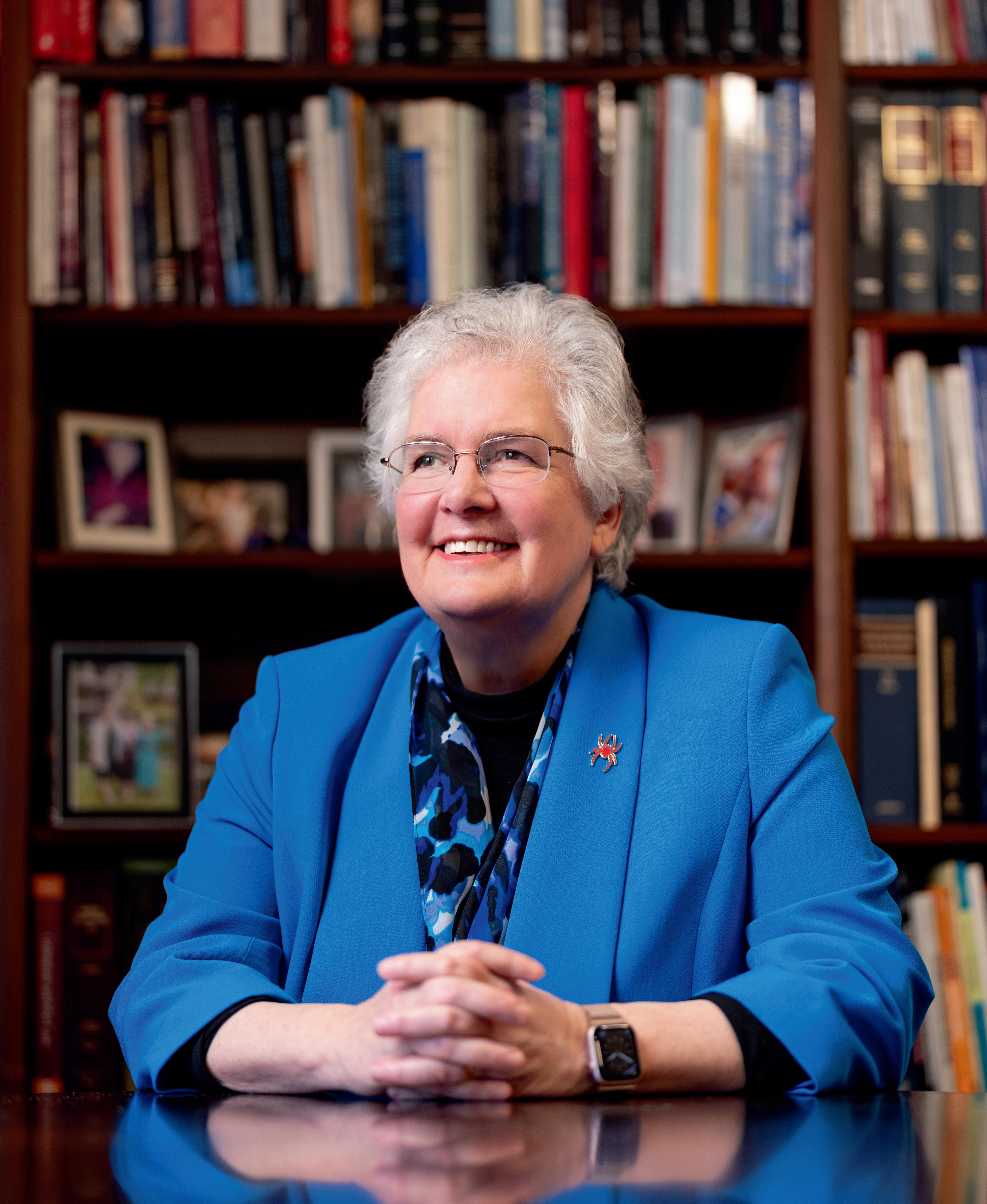
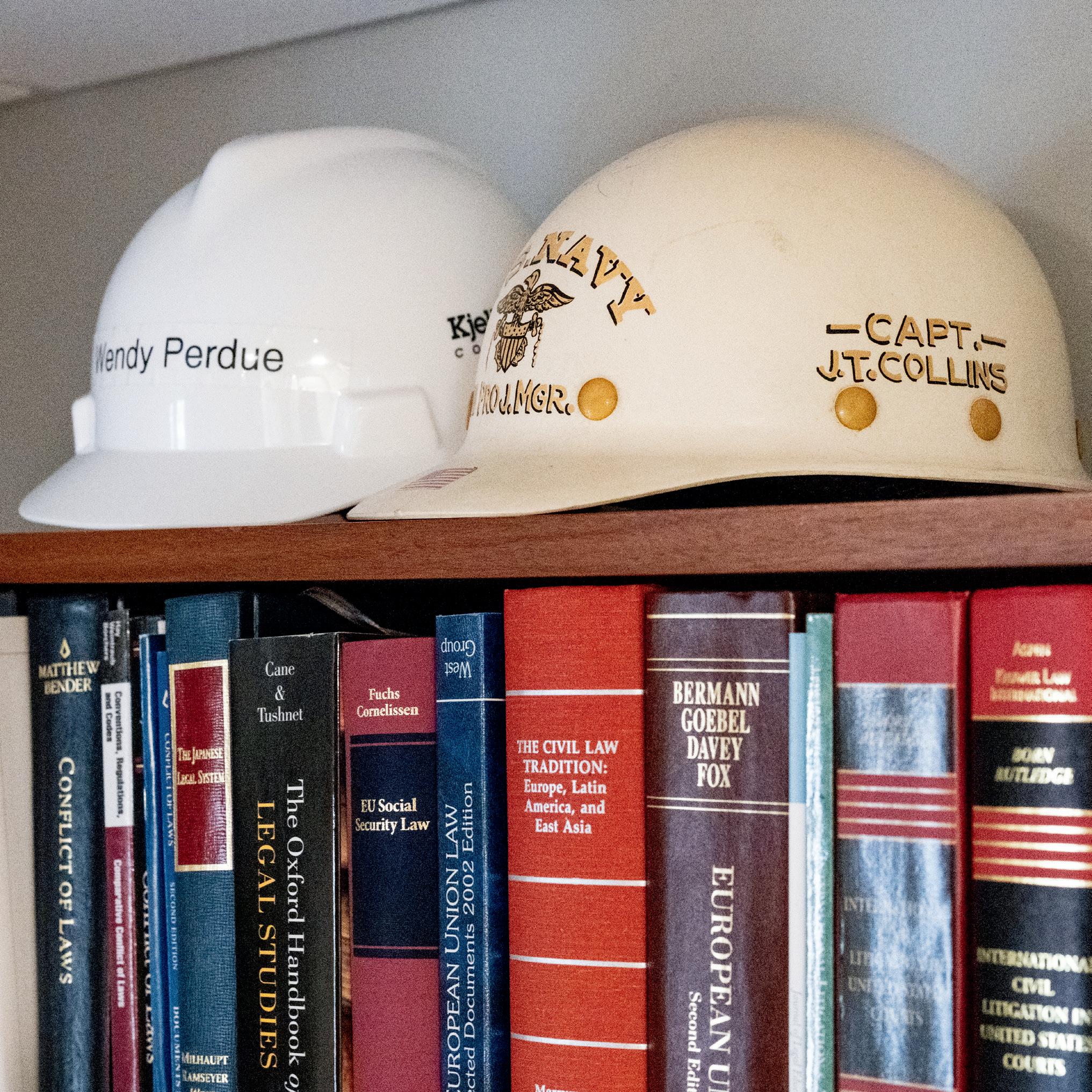
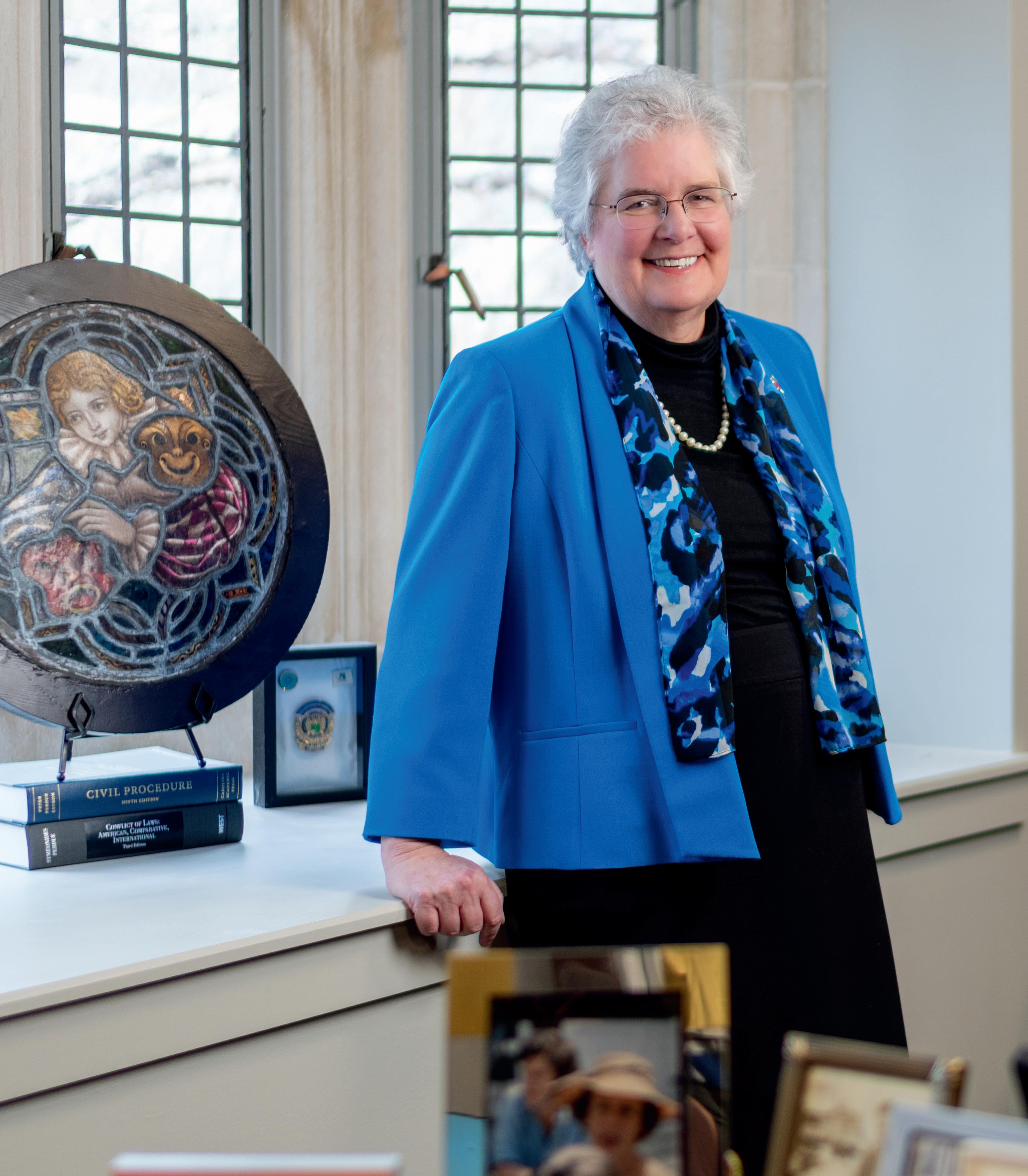
A look at Wendy Perdue’s office, which shows her dedication to the school, its students, and democracy. Not to mention a fondness for animals — real and imagined.
1 Stained glass from a theater in Washington, D.C. featuring the masks of comedy and tragedy
2 Pin in commemoration of Perdue’s lame duck era
3 Perdue’s badge from when she served as a commissioner of the Maryland-National Capital Park and Planning Commission
4 Perdue’s legendary sign
5 Artwork to mark the unicorn of a class that began in 2020
6 Prints of the letters “U” and “R” in American Sign Language
7 Perdue’s hard hat from the law school renovation next to her father’s from the U.S. Navy
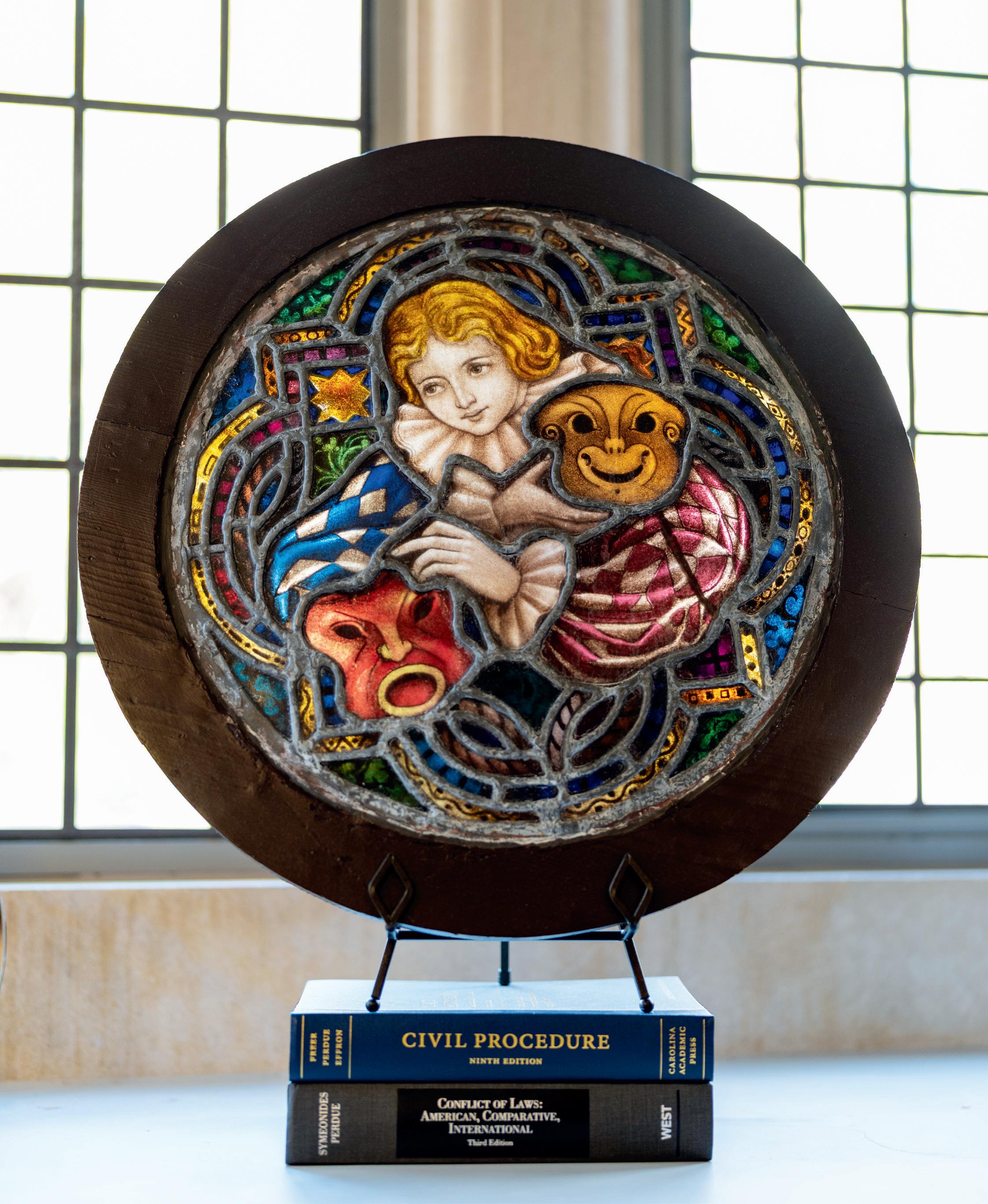


Photography by Jamie Betts



DEAN’S LETTER
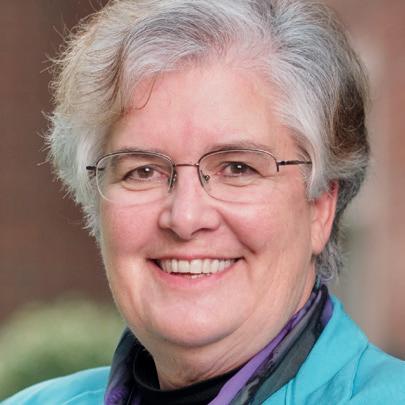
LOOKING BACK AND LOOKING AHEAD
Dear friends,
This is my final message to you as dean of Richmond Law and one that I write with a combination of pride in what we have accomplished together and excitement about where we are headed.
Over the last 15 years, I had a front-row seat to the extraordinary community that is Richmond Law. During this time, one truth has remained constant: Our strength rests in our people.
Our faculty continue to shape national conversations. Our students bring intelligence and heart to their studies and service. And our alumni demonstrate, year after year, what it means to lead with integrity and purpose.
Together, we have accomplished so much. In this issue, we’ll look back on some of the achievements we’ve celebrated, challenges we’ve navigated, initiatives we’ve launched, and people who have made a lasting impact on our community.
As I prepare to step down as dean, I do so with tremendous optimism. The law school is strong. Our programs continue to evolve to meet the needs of a changing profession. Our students are thriving. And our alumni network is more engaged than ever.
Though my role is changing, my belief in Richmond Law and its future is unwavering. I am excited for what comes next for the law school and grateful beyond words to have been part of its story.
Best,
Wendy C. Perdue Dean and Professor of Law
Richmond Law
DEAN
Wendy C. Perdue
DIRECTOR OF COMMUNICATIONS AND MARKETING
Renee Russell
ASSOCIATE DEAN FOR DEVELOPMENT AND ALUMNI RELATIONS
Courtney Curry
University Communications
SENIOR WRITER/ EDITOR
Rayne Miller
DIRECTOR OF EDITORIAL
Matthew Dewald
ASSOCIATE VICE PRESIDENT FOR CREATIVE AND DESIGN SERVICES
Samantha Tannich
DIRECTOR OF DESIGN SERVICES
Katie McBride
GRAPHIC DESIGNERS
Ashley Gladner
Gordon Schmidt
CONTACT
lawalumni@richmond.edu
804-289-8028 law.richmond.edu
CHANGE OF ADDRESS
800-480-4774, Ext. 7 lawmagazine @richmond.edu
© 2026 University of Richmond School of Law. This publication may not be reproduced in whole or in part without express permission from University Communications.
Richmond Law, of which this is Volume 38, Number 2, is produced by the Division of University Communications in partnership with Richmond Law. It is published biannually for alumni and friends of the University of Richmond School of Law, University of Richmond, VA 23173.
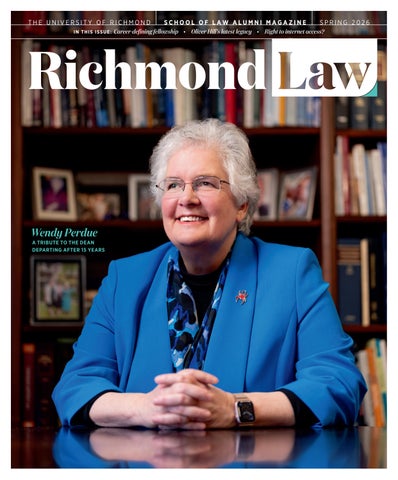
COVER Photograph by Jamie Betts
FEATURES
Wendy Perdue’s final call
After a noteworthy 15 years leading Richmond Law, Wendy Perdue is stepping down as dean, leaving a legacy of putting students first in every decision.
DEPARTMENTS
24 22
Carrying forward a legacy
An anonymous gift launches an endowed faculty position honoring Oliver Hill.
Across the bridge
Inaugural recipients of the Bridge to Practice Fellowship reflect on the lasting impact it’s had on their careers.
4
For the Record
Dean’s Opportunity Scholarship makes legal education more accessible.
Two-time Spider alum recognized as prosecutor of the year.
Can Big Media use copyright law to cut off internet access?
28
29 12
Faculty Notes
Tamika Moses joins the faculty following her federal prosecutor career.
Class Notes
Matthew Reinaker, ’02, L’05, and GB’06
Merle Damico, L’24

» SUPPORT THE FUND
To support the Dean’s Opportunity Scholarship Fund, contact Courtney Curry at ccurry@ richmond.edu.
J.D. made more accessible
When Wendy Perdue enrolled at Duke University School of Law, a scholarship changed the trajectory of her legal education — and she never forgot it.
“My scholarship allowed me to worry less about money and focus more on my education,” she said. “It’s a privilege that I wish were available to each of our students.”
Decades later, that conviction led Perdue and her husband, David, to establish the Dean’s Opportunity Scholarship Fund, seeding it with a $100,000 gift in 2019. The initiative reflects values both Perdues absorbed growing up. “Dave and I come from families who valued education and emphasized the importance of supporting educational institutions,”
she said. “Our mothers were very active in raising money for their alma maters, so we internalized an expectation that, as our resources allowed, we should provide support to the institutions that are important to us.”
The response has been extraordinary. Together, donors grew the fund to nearly $3 million, sponsoring 40 Richmond Law students to date.
Dean’s Opportunity Scholars are selected based on financial need, academic excellence, perseverance in the face of adversity, and potential for leadership in the profession. A gift of $10,000 per year for three years — $30,000 total — sponsors one scholar.
Jada Smith, L’28, is among those who have benefited. “As a student who is underrepresented in the legal
field, receiving this scholarship is both an investment in my future and recognition of the determination and grit required to enter a profession where few lawyers look like me,” she said. “Without this financial support, my goal of becoming an attorney would not be possible. This scholarship is a reminder that my voice and presence matter.”
Today, Perdue looks ahead at a landscape of increasing financial burden for those attending law school. “With recent changes in federal financial aid policies, I expect to see an even greater need for student support,” she said. “I would like to be able to assure every admitted student that they can afford a Richmond Law education.”
by Kim Schmidt
Photograph

Classroom, reimagined
One task among the many that faculty undertake in preparing for a new semester’s class is less than thrilling: creating the seating chart.
SpiderSeats is a web application built for Richmond Law by its systems administrator, Michael Dickerson. The app’s job is simple: Modernize classroom seating management. It replaces the manual processes — from custom spreadsheets
RECOGNITION
to handcrafted charts — that staff relied on after code degradation eliminated the previously used in-house legacy seating chart software. Dickerson reviewed open-source and commercial options, but they didn’t meet the school’s needs for flexibility, design control, or cost. In response, he built a custom solution with AIassisted development, giving faculty more time to focus on teaching.
Standout faculty
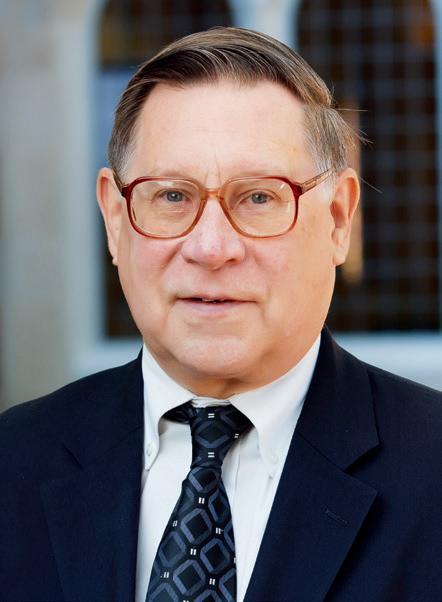
In a confidential nomination from his peers, Hamilton Bryson was named a Virginia Law Foundation Class of 2026 Fellow. Fellows are recognized for leadership in their practices, their communities, and the commonwealth.
Bryson, a distinguished legal historian, has been member of the Richmond Law faculty since 1973. He teaches and writes about English legal history, Virginia legal history,
and Virginia procedure and practice.
Among his accolades are his roles as a fellow of the Royal Historical Society, member of the Executive Committee of the John Marshall American Inn of Court, and member of the Virginia Correspondent of the Selden Society. In December, Bryson was named an honorary bencher of Lincoln’s Inn.
The Class of 2026 Fellows additionally included Richmond Law alumni Lori J. Bentley, L’96, Matthew W. Broughton, L’85, Stephen J. Cannella, L’80, Christie Marra, L’91, and Kimberlee Harris Ramsey, L’89.
IN MEMORIAM
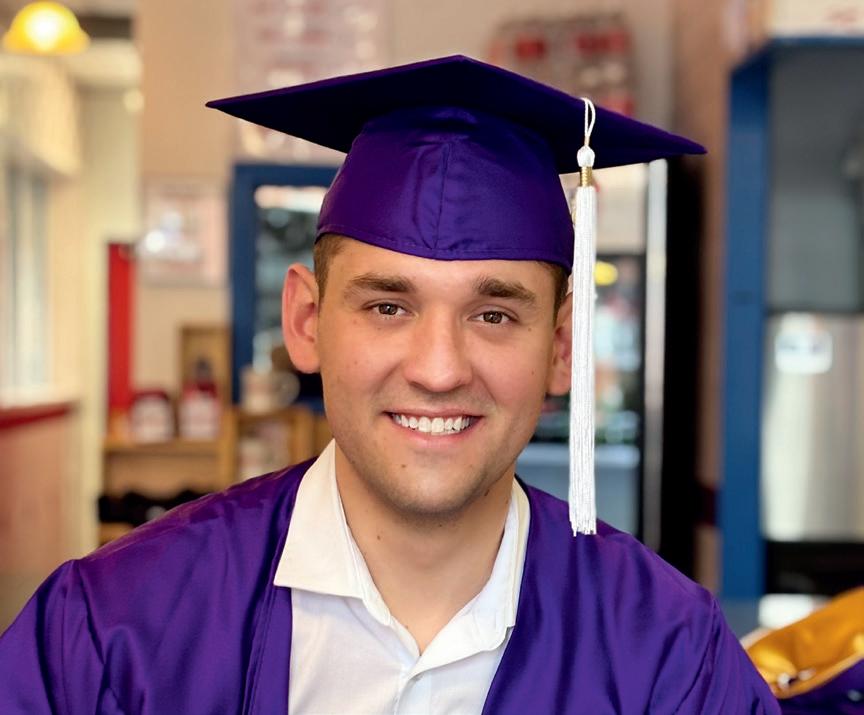
JACK SAUNDERS
The Richmond Law community continues to mourn the loss of first-year law student Jack Saunders, who died in a motorcycle accident on Nov. 7, 2025. He was 23.
Remembered for his bright spirit, kindness, and commitment to serving his community, Jack’s memory lives on through a new student organization. The Jack Saunders Rotaract Club fosters leadership, professional development, and community service among students through fellowship and partnership with Rotary International.
“Jack believed deeply in the power of service and in bringing people together to make a difference,” said club president Aelan Snyder, L’28. “Launching the Jack Saunders Rotaract Club is a testament to the leadership, generosity, and sense of purpose he brought to our community.
“While we continue to grieve his loss, we are proud to carry forward the work he was so passionate about.”
DANIEL T. MURPHY
Daniel T. Murphy, professor of law emeritus, passed away on Friday, Jan. 30.
Murphy served on the Richmond Law faculty for 36 years until his retirement in 2012. During his tenure, he twice acted as interim dean and was the law school’s first associate dean. Murphy directed the Cambridge Summer Program for 25 years.
A memorial service was held on Friday, March 20, at St. Paul’s Catholic Church in Richmond, followed by a reception at Westminster Canterbury.
IN THE NEWS
When media outlets cover news and events, they come to Richmond Law for expertise and perspective. Here’s a sample of recent stories that feature our experts.

CORINNA LAIN was interviewed in “Lethal Injection Is Based on the Illusion of Science.” She discusses her book Secrets of the Killing State, which draws on her death penalty research to explain the practice of lethal injection in the United States and its impacts.
JOEL EISEN

was quoted in “Trump Suffers Major Losses in His War on Offshore Wind.” Eisen, an expert on energy law, discusses federal court rulings in favor of offshore wind farms. Eisen notes that under administrative law, the government must provide a sufficient explanation for major actions such as blocking projects already under construction.

ALLISON TAIT, an expert on trusts and estate law, was quoted in “Divorce, Hedge-Fund Style: Inside the Breakup at Two Sigma,” discussing how trusts are impacting a high-profile divorce case within a hedge fund.

JACK PREIS was quoted throughout the article “Sue, Limit, Leverage: California’s Playbook to Combating ICE,” in which he explains how lawmakers in California may respond to Immigration and Customs Enforcement activity, including the Supremacy Clause, which bars states from enforcing legislation that conflicts with federal law.

CARL TOBIAS , an expert on federal judicial selection, was quoted in “U.S. Senate Confirms Aaron Peterson as Alaska’s Newest Federal Judge.” Tobias watched Peterson’s confirmation hearings from Virginia. “It seems like — especially in Alaska — he has expertise on natural resource issues from pretty long experience, and so it seems like that’s a good match,” Tobias said.
EXPERIENTIAL LEARNING
Museum field trip
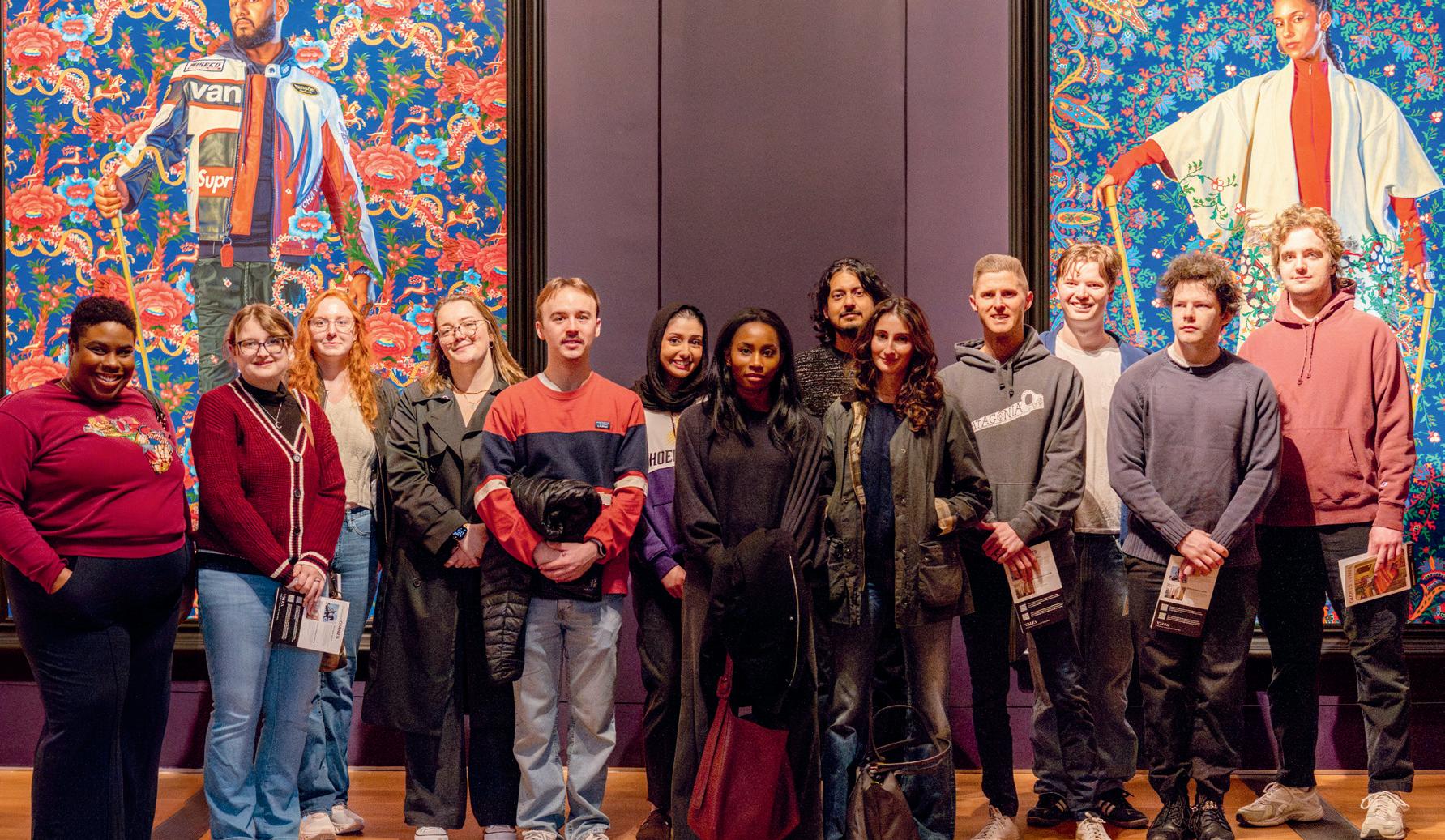
Law students — led by their professor, Marissa Jackson Sow — headed to a local museum in March.
At the Virginia Museum of Fine Arts, the class walked through the exhibit “Giants: Art from the Dean Collection of Swizz Beatz and Alicia Keys,” where they examined artwork from 36 Black artists and discussed how the selection related to their course material.
“This visit represents part of the fieldwork requirement I’ve instituted in my upper-level course offerings,” Sow said, referencing her Race and
PROFESSIONAL EXCELLENCE
the Constitution and State Power classes. “We consider[ed] how governments — and particularly courts — negotiate citizenship and other forms of legal personhood and the impact of these negotiations on the democratic project.
“The trip was a fantastic opportunity for the students to celebrate Black History Month, to allow art to make our heavy [course] readings and discussions on jurisprudence and philosophy come alive — and to engage the city of Richmond as a living laboratory.”
A great Virginian
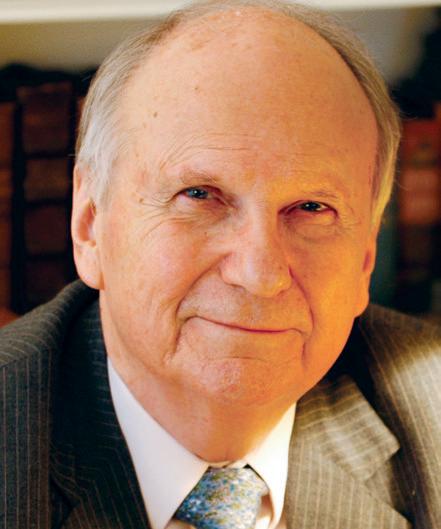
In March, Richmond Law presented the 2026 William Green Award for Professional Excellence to A.E. Dick Howard, R’54, a nationally renowned constitutional scholar. Washingtonian recognized Howard as one of the nation’s most respected educators, and the Richmond
Times-Dispatch and the Library of Virginia called him one of the greatest Virginians of recent times.
The William Green Award is presented to a distinguished lawyer whose career offers an inspirational model for Richmond Law students. Past recipients include Chief Justices William H. Rehnquist and John G. Roberts Jr., Justice Sandra Day O’Connor, Oliver White Hill Sr., Sen. Tim Kaine, and Virginia Secretary of Education Anne Holton.
Your bet is his business
WHAT DREW YOU TO YOUR AREA OF LEGAL PRACTICE?
I am not sure I was drawn to a particular area of the law. I am more drawn to helping businesses. In law school, my goal was to take classes that I found interesting while ensuring that my knowledge base was strong enough to pass the bar — which Richmond excelled at.
Regarding gaming law — which is a primary aspect of my practice — I think the knowledge base for that, and enjoyment, came from working in the attorney general’s office. One of my clients was the Virginia Racing Commission, which, at the time, was part of bringing in historical horse racing machines into the commonwealth. I got to learn about the various aspects of gaming and the law surrounding it. Flash forward, I’ve been able to continue representing businesses in the gaming industry and assisting them with legal needs.
HOW DO YOU GIVE BACK TO THE LEGAL COMMUNITY?
I try to be as open as possible with students or young lawyers I meet. If they ever want to grab a coffee, I want to help steer them in the best direction possible for their goals. In practice, I try to be as active as possible with the Richmond Bar Association.
I am currently the chairman of the judiciary committee, so I get to meet a lot of people I otherwise wouldn’t.
HOW DID LAW SCHOOL SHAPE YOUR APPROACH TO PRACTICING LAW?
Law school fostered a learning style that is foundational to the practice of law. I was forced to be deliberate in my approach to the material and my time, but also flexible enough to think on my feet, particularly with professors
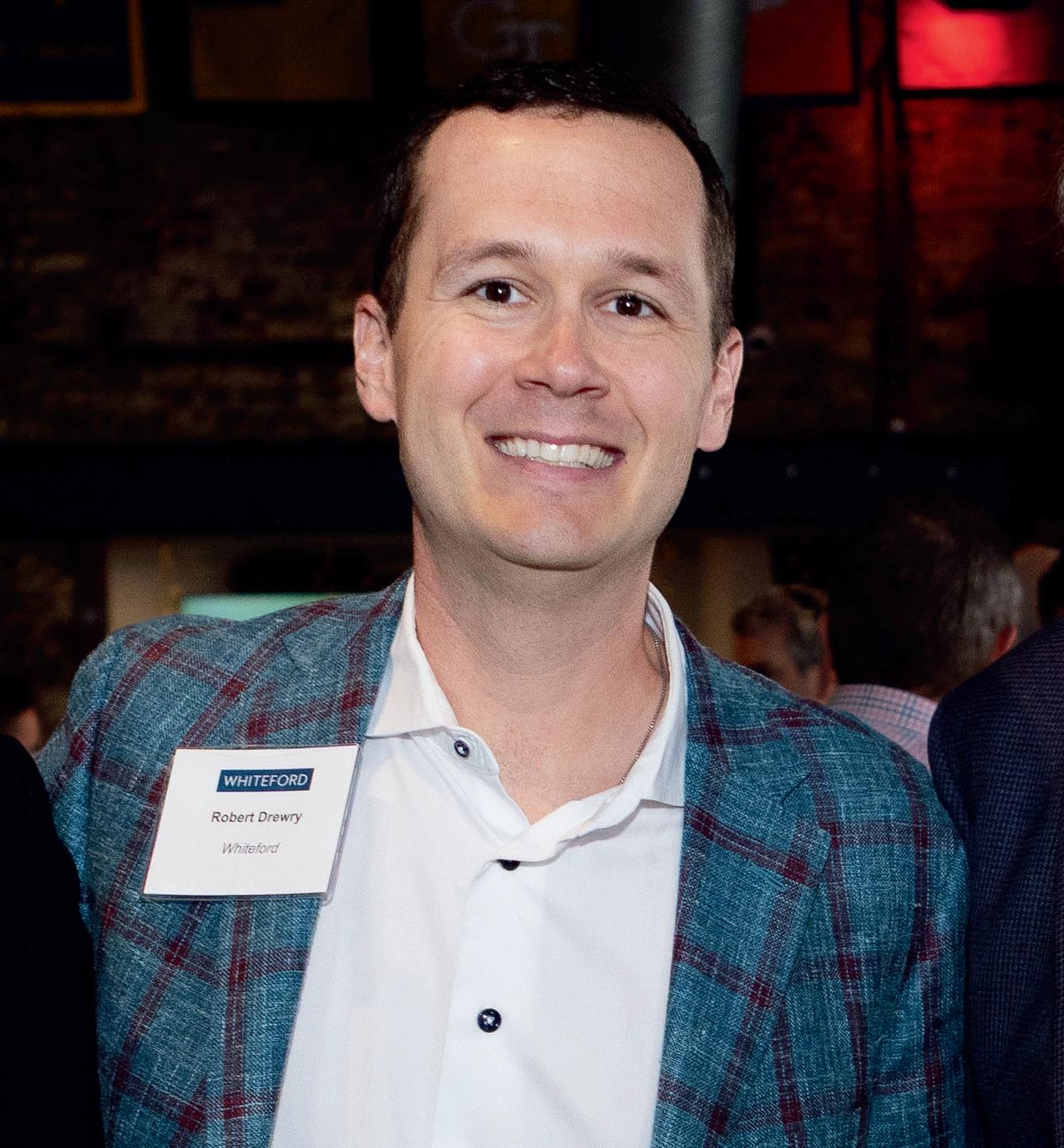
Q&A Robert Drewry, ’12 and L’16, is a partner at Whiteford, Taylor & Preston in Richmond, Virginia, where he supports the local legal community and gaming industry. «
“I try to be as open as possible with students or young lawyers I meet ... I want to help steer them in the best direction.”
who cold-call. Ultimately though, it was learning how to manage a heavy workload while maintaining time to participate in extracurricular activities and my personal life that shaped how I practice law.
HOW DO YOU MAINTAIN WORK-LIFE BALANCE?
Early in my career, while I had this vision of making sure I had this
“balance,” I also recognized that in order to be the best, you have to put in the work. You certainly have to take care of yourself and take time off, but you also want to learn. Each person is different, of course, and there is a place for everyone in the legal profession — but for me, the first few years of private practice were about learning as much as I could.

GAMING LAW 101
Gaming law covers the regulations governing legalized gambling, which includes casinos, lotteries, online gaming, and sports betting. The practice often combines regulatory law and contract law.
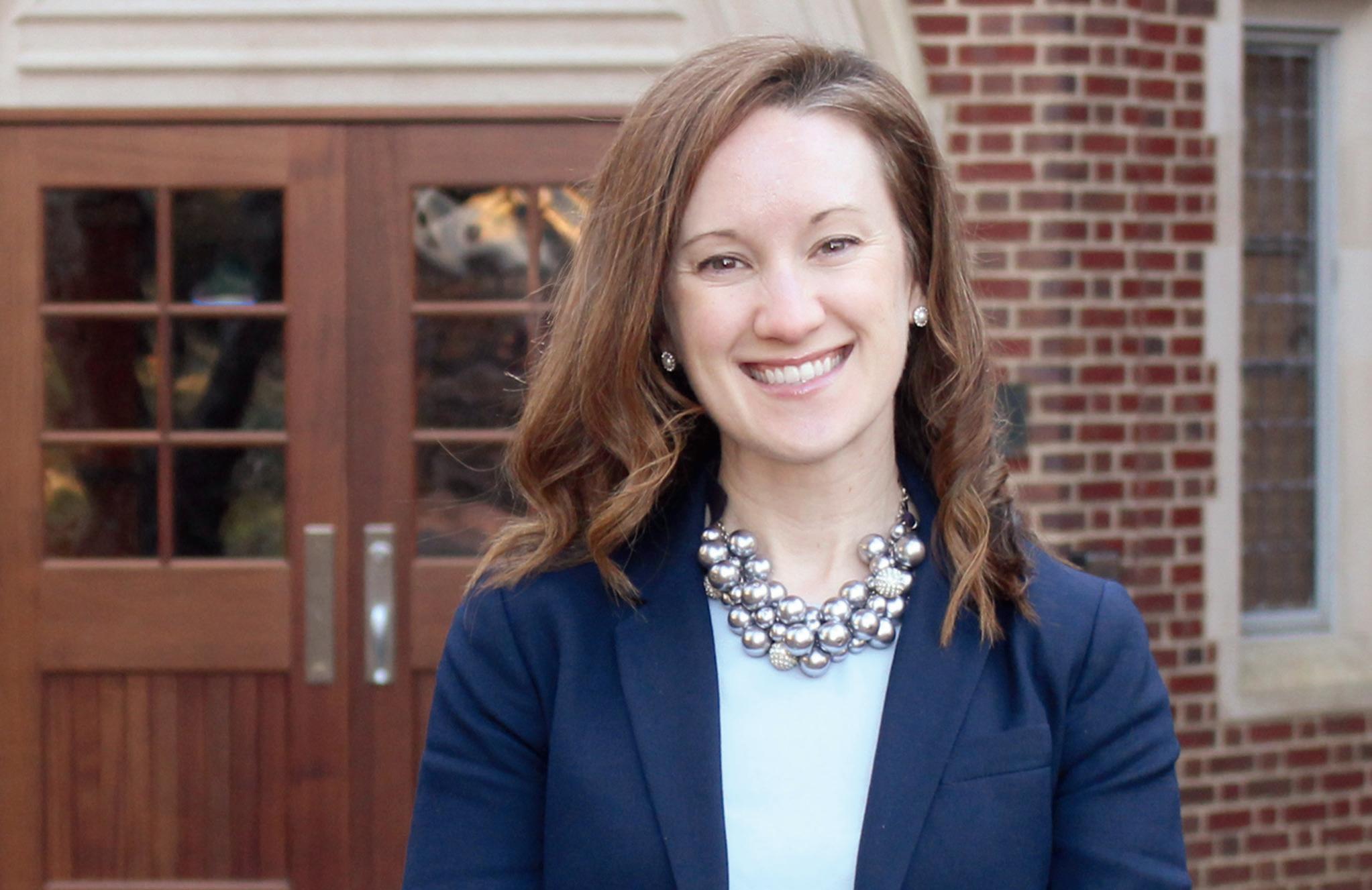
Prosecutor of the year
Gunfire erupted in Richmond’s Gilpin Court public housing community the evening of Sept. 12, 2022, claiming the life of 15-year-old Tynashia Humphrey — the innocent victim of a gang-related drive-by shooting.
“Tynashia and her two teenage nieces were walking [home] from the store when two cars carrying Henrico County gang members drove into Gilpin Court,” said Katherine Groover, ’10 and L’15, an assistant commonwealth’s attorney. “When the masked men spotted their intended victim’s car, they opened fire. Caught in the crossfire, the three young girls started running. A bullet struck Tynashia in her back and tore through her body.”
Groover prosecuted all five defendants in the case, resulting in sentences totaling over 200 years. The Virginia Gang Investigators Association recognized her efforts with its 2025 Gang Prosecutor of the Year Award.
At first, no one could identify the masked perpetrators who had fired through partially lowered car windows. Humphrey’s nieces could give only a general description of the two cars, but it was enough to identify them based on surveillance video taken in the area. This evidence ultimately led detectives to the five suspects — all members of 30 Boys, a local gang.
“In a 14-day period,” Groover said, “our team handled more than a dozen pretrial motions filed by the defense attorneys. The court ruled against us on several important motions, excluding some of our key evidence [that included] evidence placing the defendants’ cell phones in the area at the time of the shooting. I was on my way to court when I learned that the judge had also ruled to suppress our DNA evidence based on a technicality.”
After conferring with her colleagues, Groover decided to delay the trial by an interlocutory appeal, a rare midlitigation appeal aimed at resolving significant legal questions that could affect a case’s outcome. That then resulted in three additional interlocutory appeals.
“We won our appeals, enabling us to introduce evidence that otherwise would have been excluded,” she said. “Even so, the case was challenging because it was based entirely on circumstantial evidence. But we pressed forward at every turn and kept fighting.” Two defendants received life sentences after their trial in 2023. The other three pled guilty and received lengthy prison sentences. Groover said the case crippled the 30 Boys gang.
—Cassie Price
A path paved
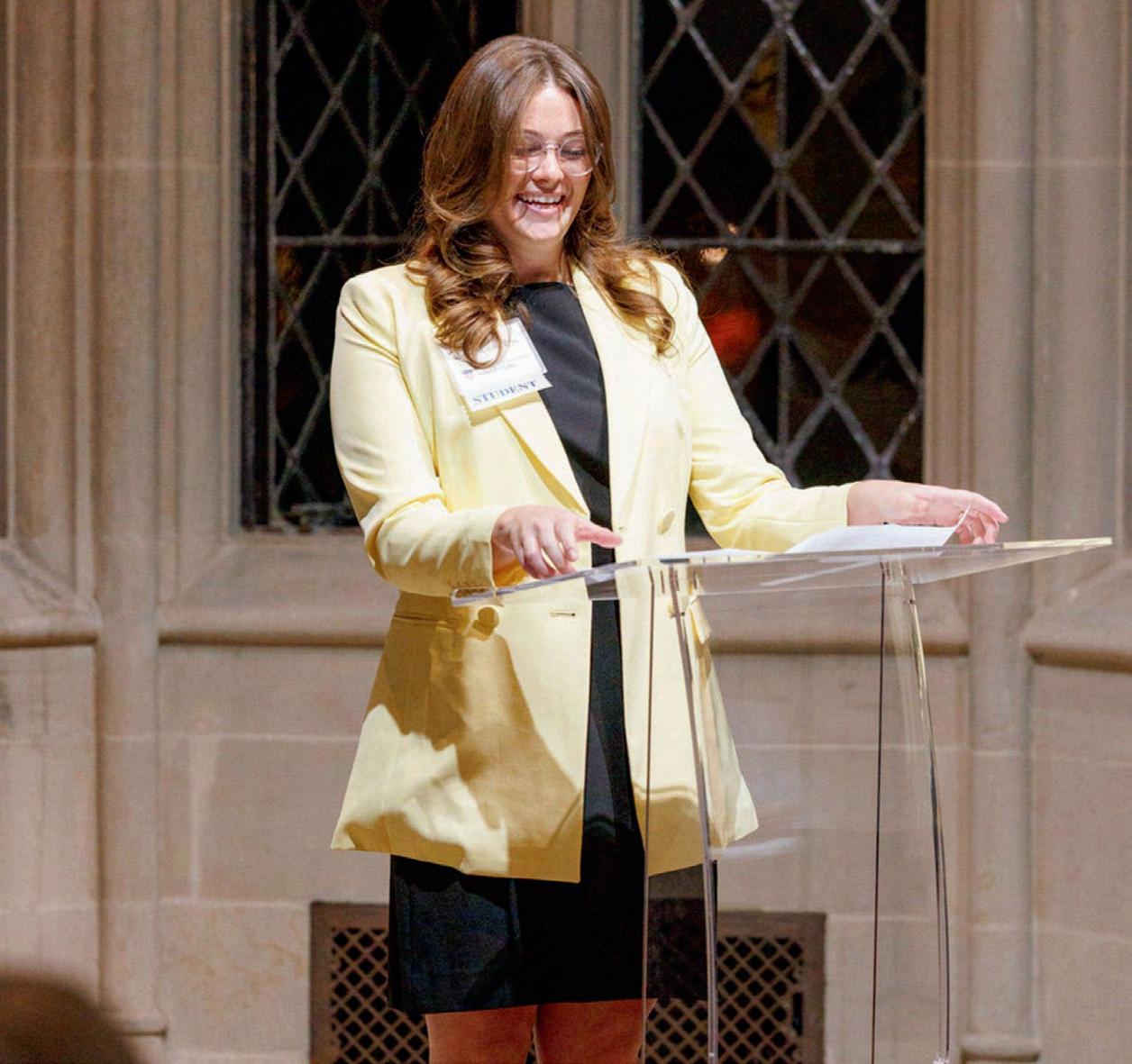
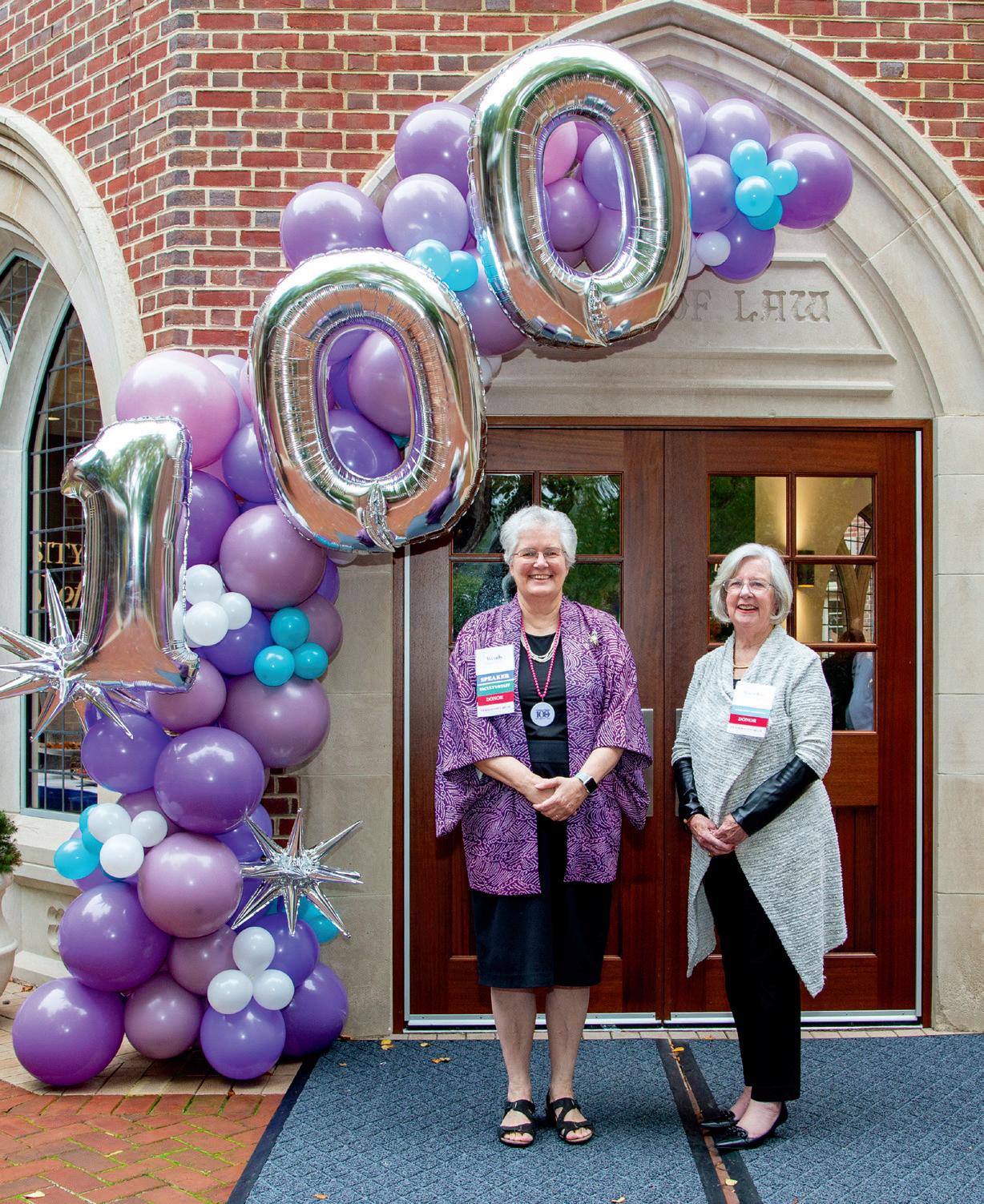
In December, members of Richmond Law’s philanthropy group, the 1870 Society, gathered for a reception at the Branch Museum of Design.
Dean Wendy Perdue and university
COPYRIGHT LAW
provost Joan Saab joined these dedicated supporters in recognizing the impacts of the society’s efforts.
Guests heard from Skylee Cox, L’26, who shared her path from rural Appalachia in West Virginia to Richmond Law and how support from 1870 Society members shaped her law school experience.
“I honestly didn’t think law school was financially possible,” Cox said. “When I received my full tuition scholarship offer ... it made attending law school a real, tangible opportunity. It changed the entire trajectory of my life.”
Right to internet access?
Can Big Media use copyright law to cut off internet access?
This is the question on faculty member Jim Gibson’s mind — and the decision recently lay in the hands of the Supreme Court.
The case was Cox Communications v. Sony Music Entertainment. “Over the last few years, some courts have imposed liability on internet service providers because … some of their customers committed copyright infringement,” Gibson said in an episode of Synopsis, Richmond Law’s YouTube series, where law professors explain complex legal issues. “The copyright owners have demanded that the ISP cancel the customer’s account.”
Gibson is one of the legal experts who filed an amicus brief urging SCOTUS to reverse this new trend.
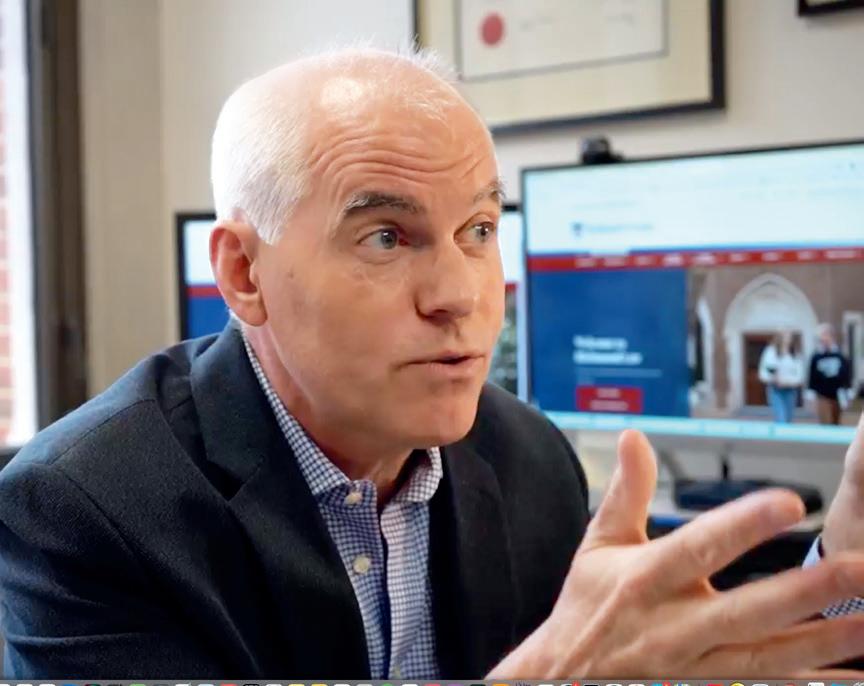
“It’s nonsense,” he said. “It’s one thing to make YouTube take down an infringing video. It’s another thing to make an ISP deny internet access to an entire account because of some past infringement.”
The Supreme Court voted in favor of Cox Communications — the outcome for which Gibson advocated.
AROUND CAMPUS
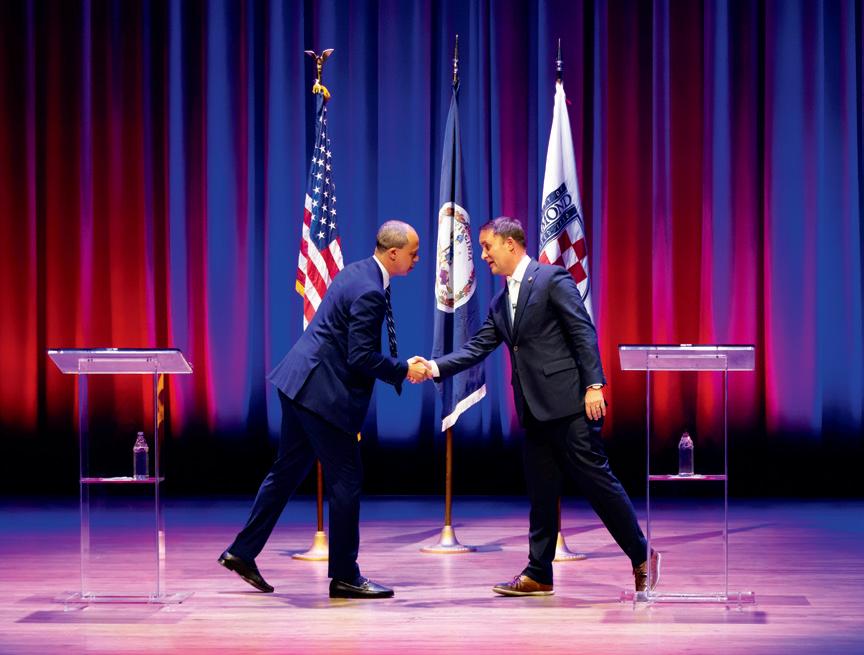
ATTORNEY GENERAL DEBATE
During the lead-up to Virginia’s general elections in November, the University of Richmond hosted the 2025 Virginia attorney general debate in collaboration with the Virginia State Bar.
Then-candidates Jay Jones and Jason Miyares shared their visions for the commonwealth, discussed key issues, and took questions from voters in the audience.
JOLT SYMPOSIUM
In February, the Richmond Journal of Law and Technology hosted its annual symposium, this year called “Platform Power: The Rise of Private Governance in Tech.” Sessions explored how major tech companies increasingly function as private governors by shaping online speech, enforcing internal rules with legal significance, and influencing global regulatory landscapes.
LEGAL MOVIE NIGHT
“What’s your favorite legal movie?”
Responses to this question, posed by 2L Lily Goodman on her LinkedIn profile, included The Pelican Brief, The Verdict, and Michael Clayton. But My Cousin Vinny won out for the law school’s movie night.
“It was a blast!” Goodman wrote. “There was something so special about watching it in a room full of law students, most of [whom] are currently learning or have recently learned much of the witty legal jargon from the film. I am looking forward to the next screening!”

ALUM’S ADVICE
While at Richmond Law, Rachel Yates, L’13, thought she would become a trial lawyer. Instead, she found a better fit.
“I truly never imagined I’d do appellate work,” Yates told The Richmond Lawyer “In retrospect, though, this was such a great fit. I now tell law students to take at least one class and do an internship in an area of law they think they would never want to do — just in case.”
BONNER CENTER AWARD
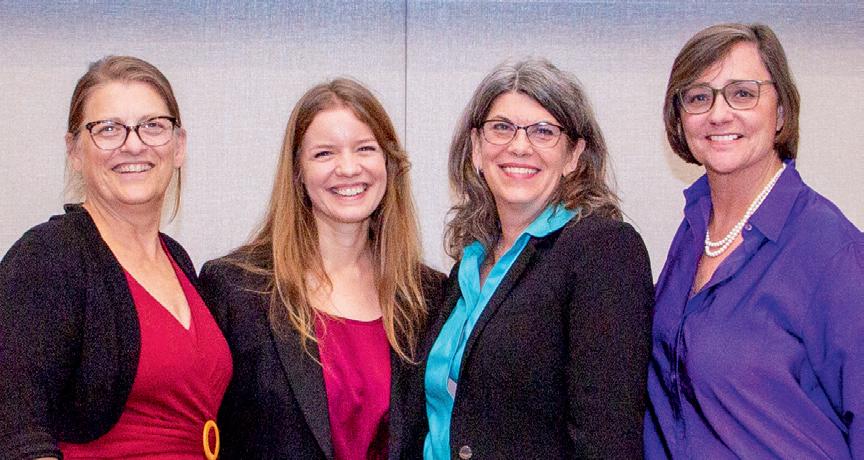
The law school’s four in-house clinics, led by Ashley Dobbs, Julie McConnell, Cassie Powell, and Mary Tate, received the university’s Contribution to the Institution Award at the Bonner Center for Civic Engagement’s annual Engage for Change Awards. The award recognizes [those] whose community-engaged teaching, scholarship, and/or service furthered opportunities for faculty engagement, community collaboration, and the learning and thriving of students.
VA GENERAL ASSEMBLY HONORS PERDUE
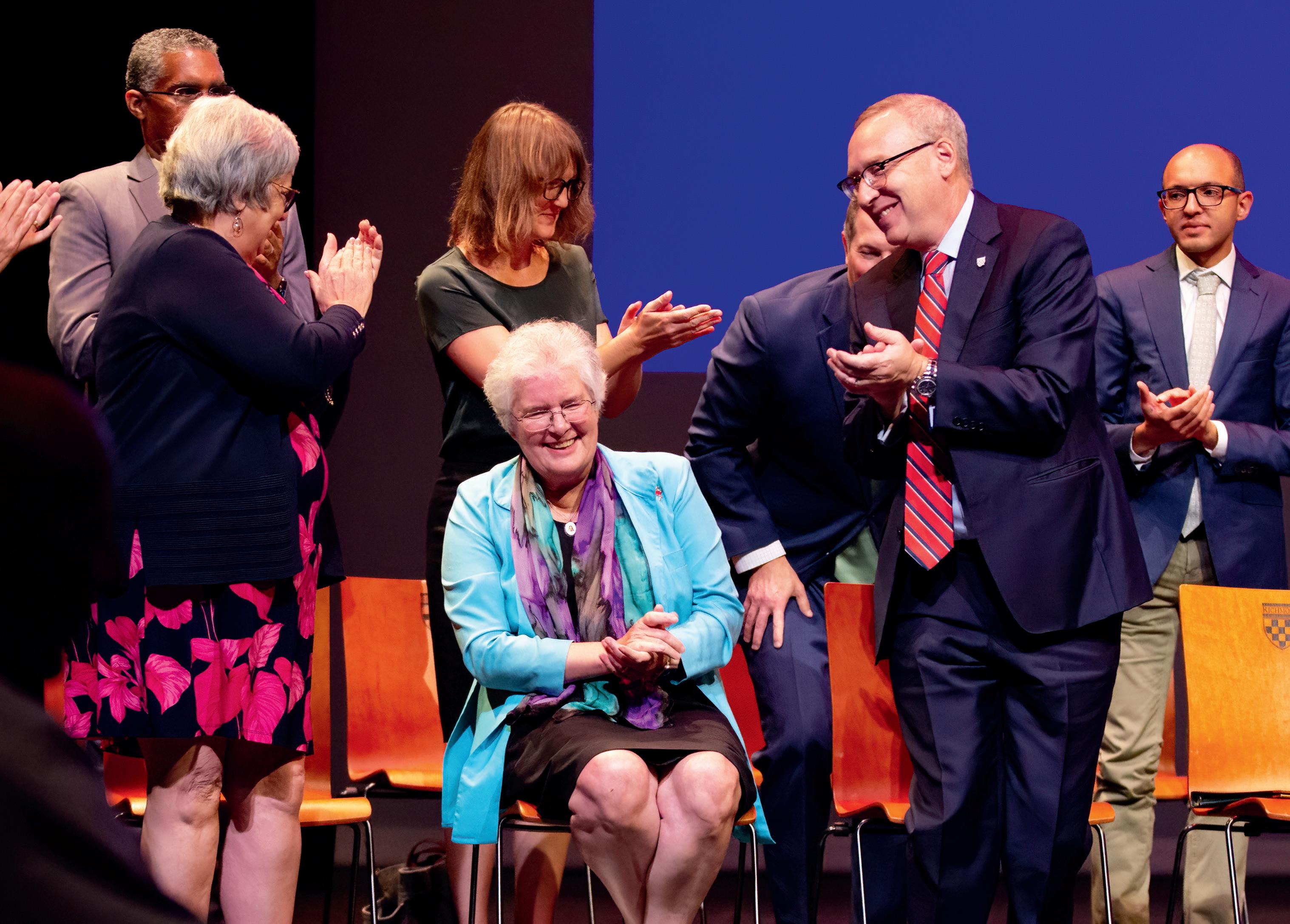
In March, Virginia Sen. Richard Stuart, L’92, introduced a joint resolution to the Virginia Senate commending Dean Wendy Perdue’s service to the law school, the university, and legal education. Perdue was in the gallery as Stuart shared remarks about her contributions. The resolution passed both the House and the Senate.
QUOTATION
“ The biggest thing about Richmond is the community.”
LARA BALLOUT, ’24 AND L’27 , about the culture of mentorship on campus
Meet the new dean
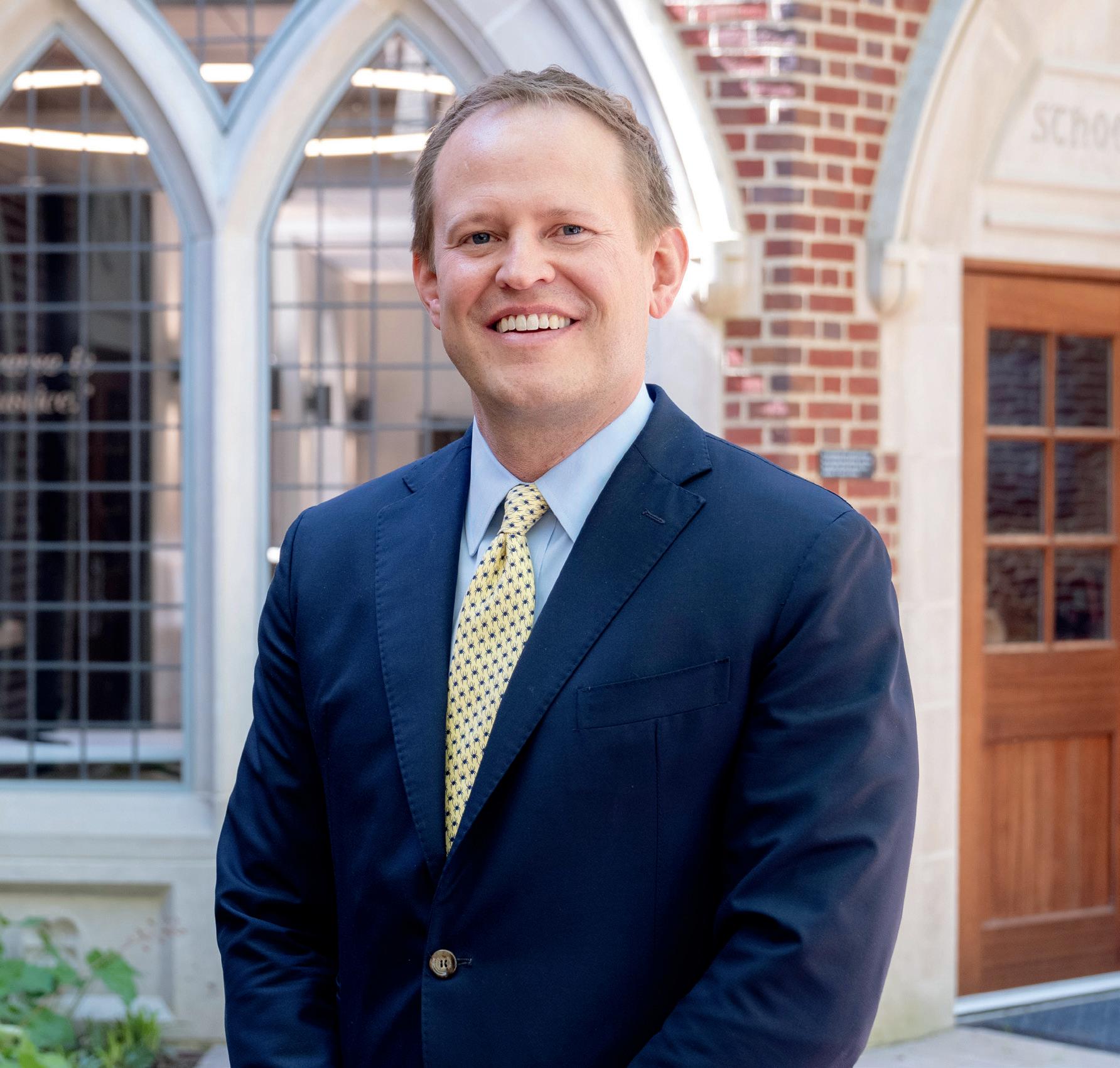
Jacob Rooksby, dean of Gonzaga University School of Law, will become Richmond Law’s dean on July 1.
“Rooksby brings a strong record of leadership and innovation,” said university provost Joan Saab. Rooksby is a professor of law and leadership studies, and an attorney specializing in intellectual property and higher education law. He worked at McGuireWoods in Richmond, where he lived from 2007 to 2011.
“I’ve long admired Richmond Law for its distinctive combination
of academic excellence, collegial culture, and strong sense of place, and I’m grateful for the opportunity to build on what is already a thriving school,” Rooksby said.
“Jacob clearly recognizes the strength of Richmond Law today,” Saab said, “including its outstanding faculty and the school’s excellent reputation. Those involved in the search were struck by how closely his values align with the mission of our university.”
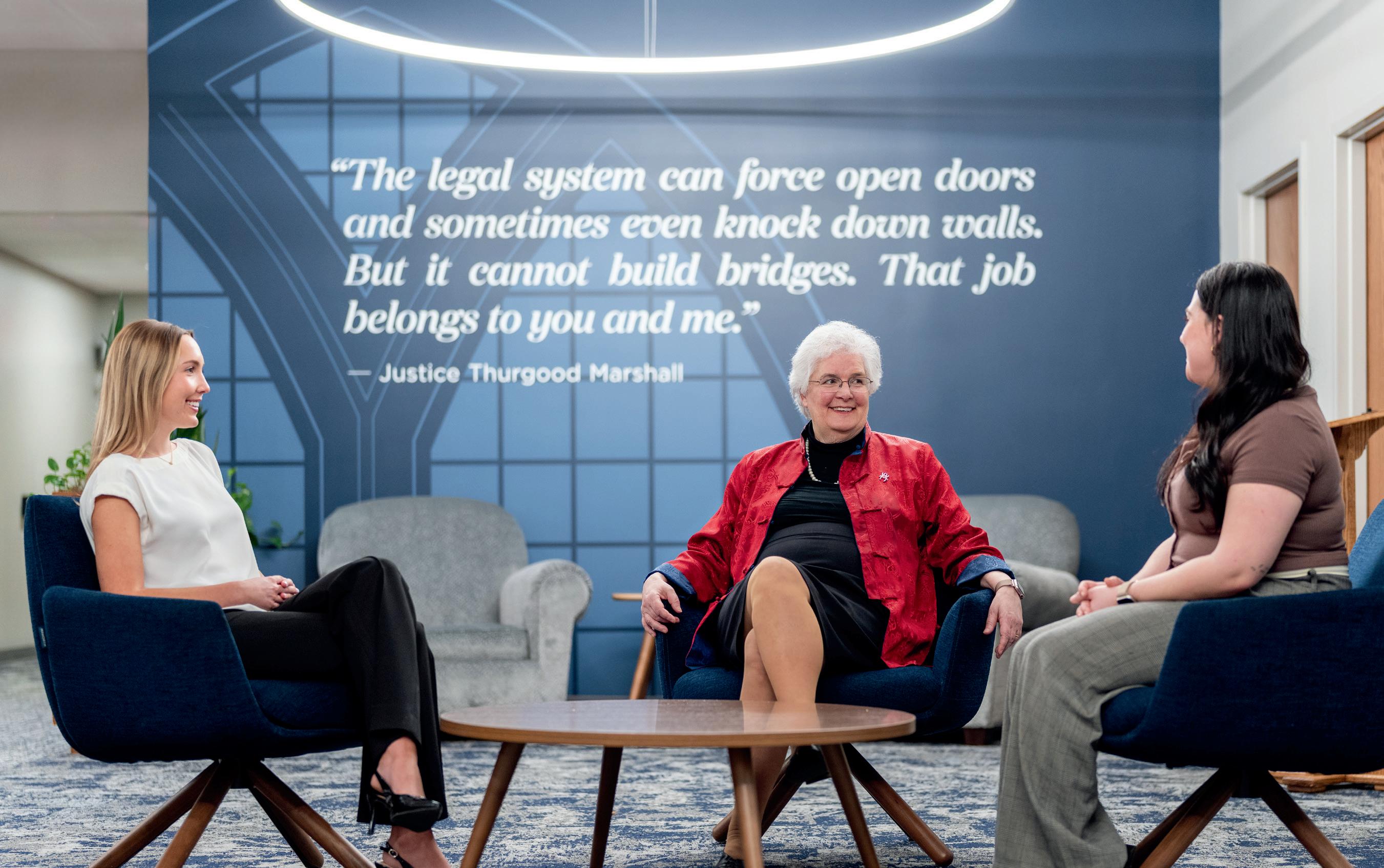
DEAN’S OFFICE
Photographs by: left, Jamie Betts; right, Maggie Graff
Features of capitalist law
IN BRIEF The following is an abbreviated and lightly edited excerpt from “The Law of Capitalism and How To Transform It,” the 2025 Emanuel Emroch Lecture by Columbia University’s Edwin B. Parker Professor of Comparative Law Katharina Pistor.
The puzzle is as follows: Why is capitalism — a system that is coded in law — so resistant to legal constraints? If it’s made of law, why can’t we capture it? Why can’t we contain it and direct it through law?
The simple equation is: Give me any object, any idea, any promise to future payment, and with the right legal institutions, I can code this as capital — capital being defined as an asset with the capacity to generate and protect wealth. So legal coding is about monetization. It’s extracting the monetary value from an asset.
After World War II, there was a general understanding that we have to contain the powers of capitalism to make sure that at least people can participate, and it doesn’t create the kind of crisis that can bring entire societies and their political system to the abyss. But what is interesting is that you see these major efforts, and then you see also that slowly but surely, they erode.
There are three features of capitalist law that help the system reconstitute itself time and again. First, the system legally empowers private actors — contract rights, private property rights. Second, access to
“Every person has the right to live the life they have reason to value.”
the means of coercion is available in a highly individualized fashion. We call this litigation. Third, legal arbitrage: If you really know how to play the game, you can pretty much pick and choose the law by which you wish to be governed. If you are a repeat player and a long-term player, you do not litigate just for one specific case — you litigate for the rules.
What we’ve missed for so long, and what we have to reinvigorate, is really the normative agenda — what do we want and where do we want to go? I’m invoking the ideas of individual capabilities that Amartya Sen and Martha Nussbaum have developed, the idea that every person has the right to live the life they have reason to value. If we screen our own legal system on that basis, we can begin a process of saying: These are really impediments to this, and this is how we would have to change certain outcomes to make sure that every person has the right to live that life they value.


« WATCH THE FULL LECTURE Scan the QR code above to watch Pistor’s full Emroch lecture on the University of Richmond School of Law YouTube page.
WENDY PERDUE’S FINAL CALL
After a noteworthy 15 years leading Richmond Law, Wendy Perdue is stepping down as dean. She leaves a legacy of putting students at the forefront of every decision.

By Rayne Miller |
Photography by Jamie Betts
Top, Perdue piloting a very different kind of boat as a small child. Bottom, Perdue, second from the right, with her college crew team.
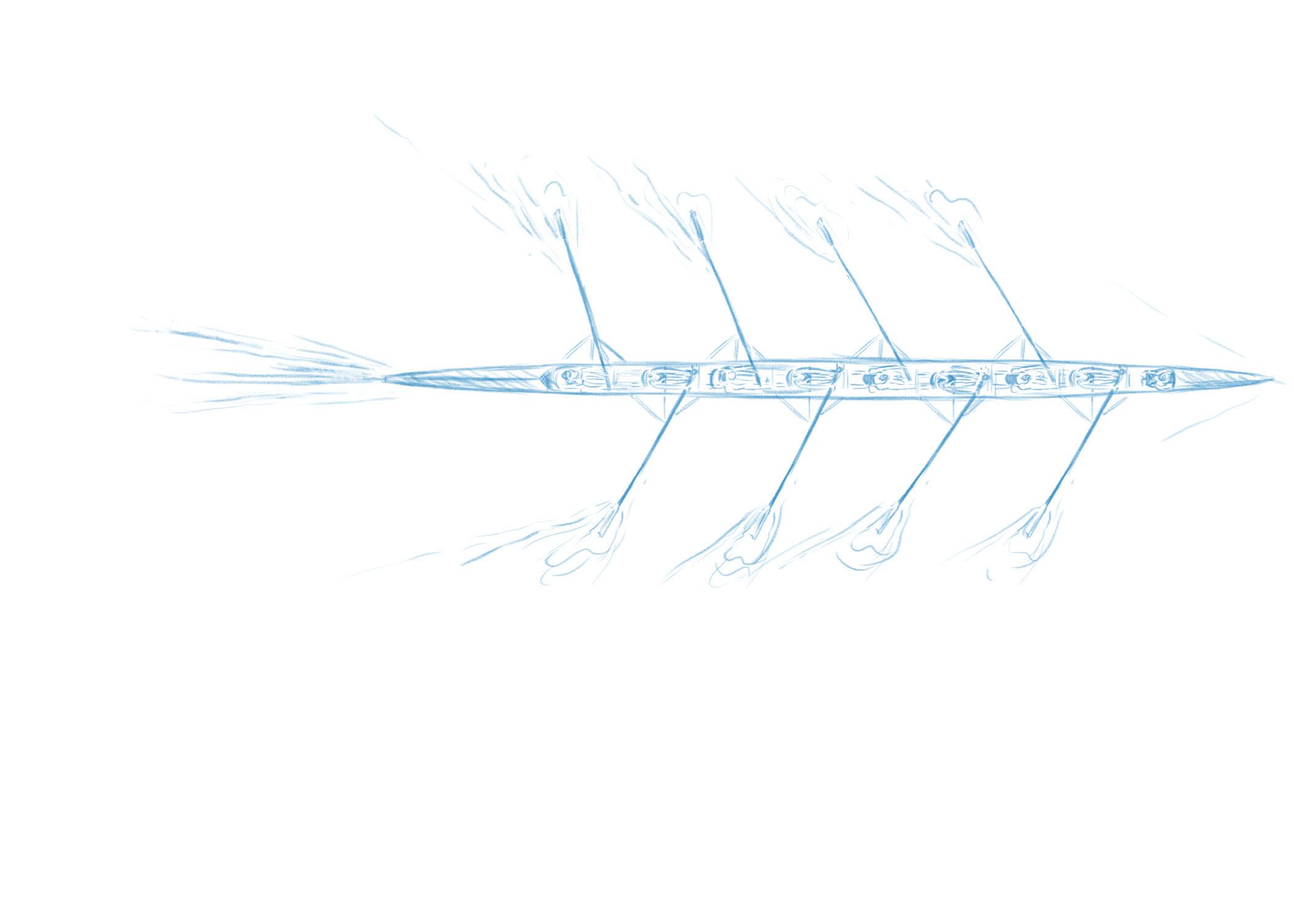
PICTURE THIS: A racing shell cuts through still water, eight rowers in perfect synchrony as their blades slice the surface in one clean, collective motion.
At the stern sits the coxswain. This person never touches an oar. Instead, they call the rhythm, read the water ahead, and steer the shell toward a finish line that the rowers — facing backward — cannot see. The cox does not row. But without the cox, the boat moves without aim.
When Wendy Perdue describes her 15 years as dean of the University of Richmond School of Law, she reaches for this image. She rowed as an undergraduate at Wellesley College, and the sport left its mark on how she approaches leadership.
“In a crew shell, the coxswain steers and encourages people to do what they’re doing,” Perdue says as she sits in her office, her voice measured and deliberate as always. “But all the work is done by the people rowing. It’s not done by the cox. The dean is like the cox — steering the boat, trying to set the pace — but the work is done by other people.”
It is characteristically humble framing from a dean who has, over the course of her tenure, assembled one of the most accomplished faculties in the law school’s 156-year history. She led them with the quiet authority of someone who already sees what’s coming — and has thought very carefully about what to do when it arrives.
When Perdue steps down at the end of June, she will be the fifthlongest-serving law school dean in the nation. She leaves behind an institution she has fundamentally transformed. Yet ask her colleagues what she’ll be most remembered for, and they reach, unanimously, for the same four words: good for the students.


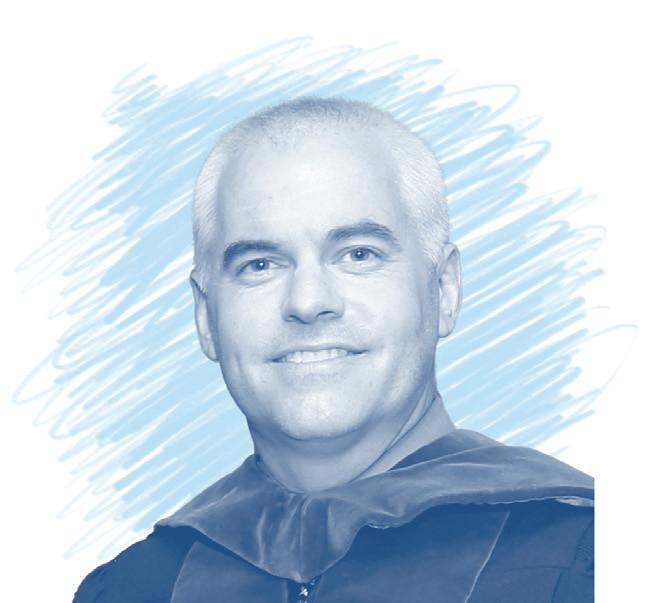
“ She’s ambitious for everyone but herself.”
—JIM GIBSON, FACULTY

A QUIET LEADER IN STORMY WATERS
Perdue arrived at Richmond Law in 2011, and the timing was more than a little tricky — but she saw it as opportune. Between 2011 and 2015, the number of students applying to law school nationally declined by roughly 40%. Many schools retrenched, froze hiring, and hunkered down. Perdue looked at the same storm and saw a different option.
“She’s very good at recognizing the opportunity in crises,” says Jim Gibson, Sesquicentennial Professor of Law, who has been on the Richmond Law faculty throughout Perdue’s tenure. “When not as many people are applying to law schools, maybe you have a smaller class — but that has other benefits. She was smart about saying, ‘Let’s recalibrate, not just with revenue impact in mind, but seeing if we can actually improve the institution by making investments at a time when everyone else is in full retreat.’”
What she did next became, in the estimation of her colleagues, the defining strategic move of her deanship. While peer institutions cut back on faculty recruitment, Perdue persuaded Richmond’s central administration to keep hiring. The result: By around 2018, Richmond Law had more junior faculty than almost any other school in the country. Today, the majority of the law school’s faculty — and over 90% of its employees — were hired during her tenure.
“At a time when other places are treading water, that’s a good time to try and move ahead,” says university president Kevin F. Hallock, paraphrasing the logic that guided the university’s support for Perdue’s approach. “And Wendy’s ability to attract and retain exceptional faculty is a huge mark on the school.”
Joan Saab, university provost, puts it even more directly. Perdue regularly prepared spreadsheets that mapped out the intricate chess game of endowed chairs, professorships, and faculty fellowships, moving resources with the precision of someone who had done the math six different ways before walking in the door. “She’ll say, ‘If I move this person to this professorship, then I can think of that person for this chair, and it frees up faculty salary here so that I can make a retention offer for this other person,’” Saab says. “She’s very strategic.”
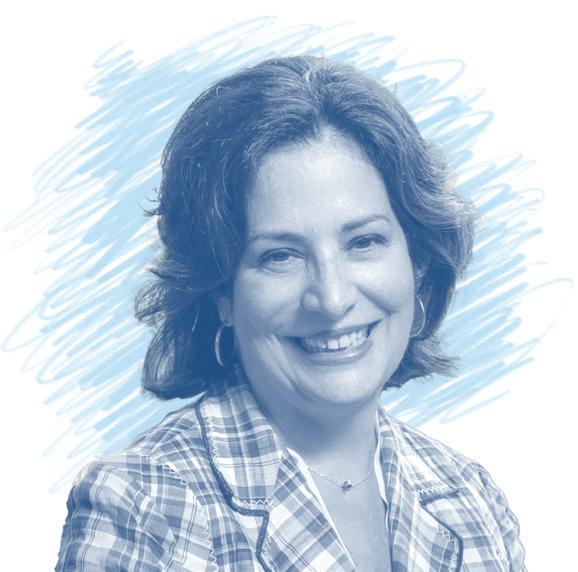
“This school is in great shape because of her.”
—JOAN SAAB, PROVOST
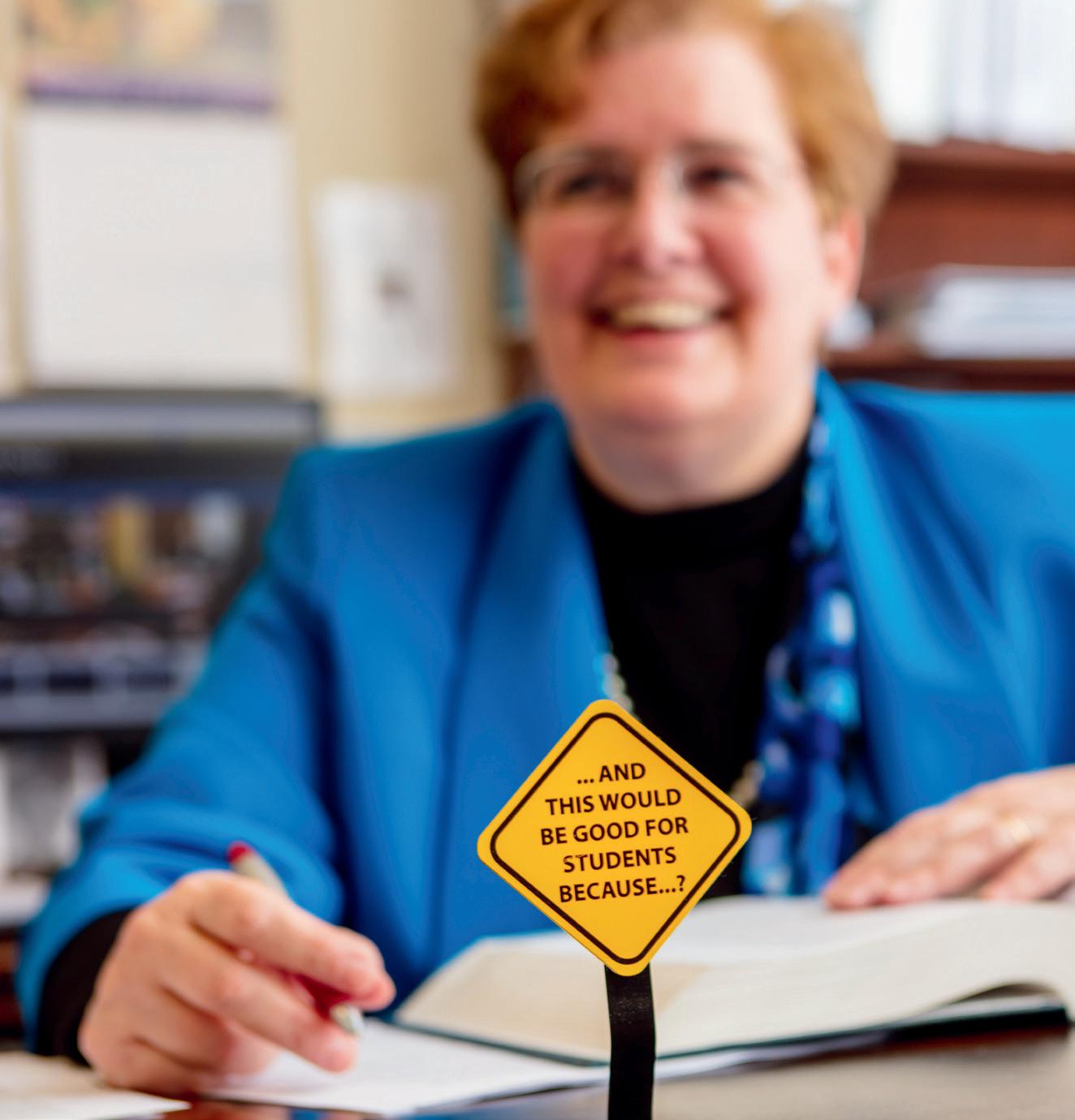
There is, prominently displayed on Wendy Perdue’s desk, a small sign. It reads: “...And this would be good for students because...?”
It is not a rhetorical flourish. It is, by every account from those who have worked with her, a genuine operating principle — a filter through which every decision passes before it is made. Hallock encountered a student who, at an open session, submitted a question asking how the university thinks about students in its decision-making. The question struck Hallock as revealing: The student didn’t know that all decisions were supposed to be about students. Perdue’s sign announces this as the foundation of law school decision-making to anyone who comes in her office.
Dean Sandra Peart of the Jepson School of Leadership Studies, who has worked alongside Perdue for years in academic cabinet and informal deans’ lunches, adopted the question herself after observing how Perdue wielded it. “It’s so simple and yet so important and powerful,” Peart says. “It shouldn’t be surprising because this is why we’re at a university. But the simplicity of it — the elegance of it — is refreshing.”
THE SIGN ON HER DESK
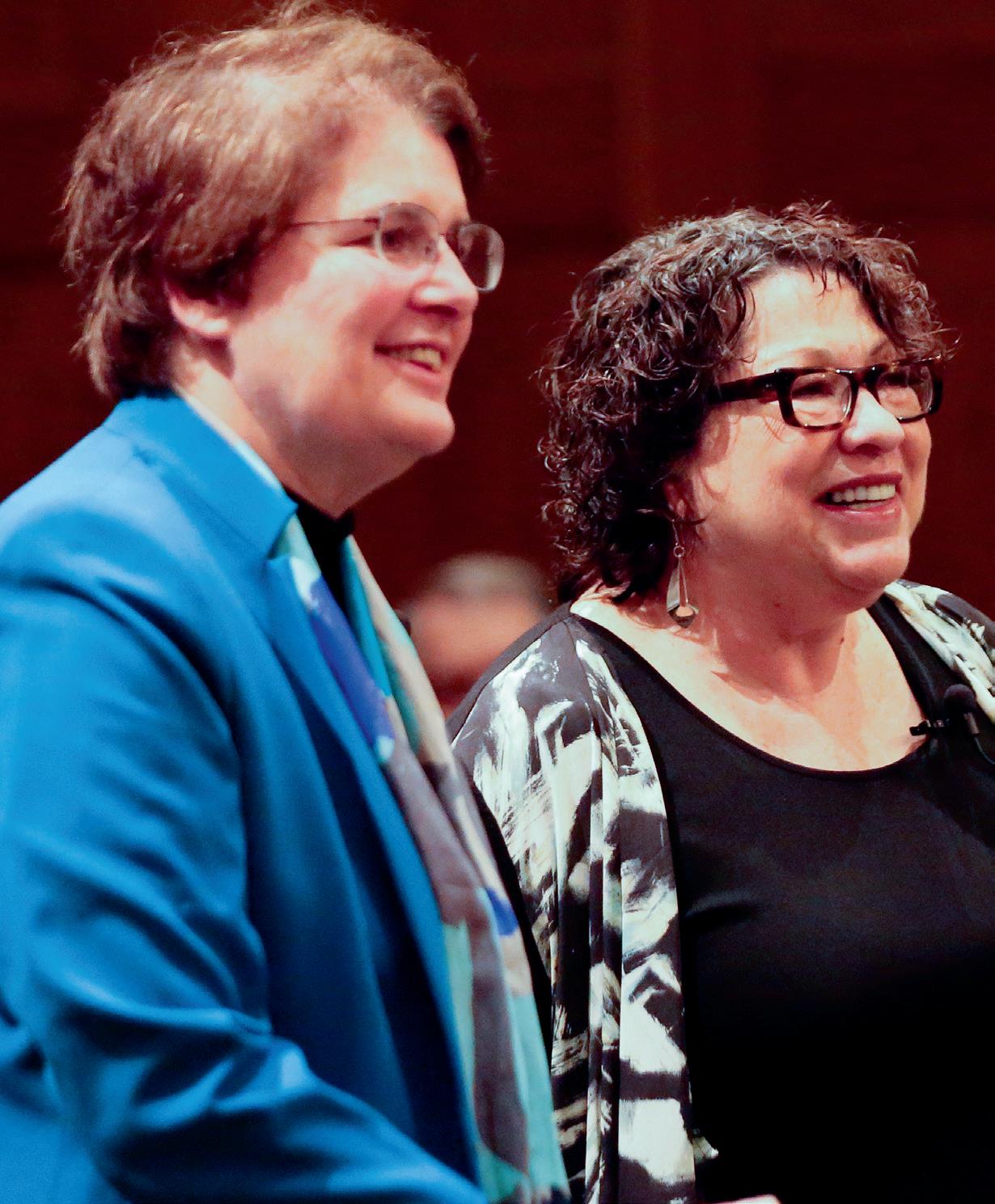
Facing page, clockwise from top left: Perdue with Supreme Court justice Sonia Sotomayor; at Commencement 2019; with WebstUR; with Mary Lou Kramer, L’75, lead donor to the Law Women’s Centennial Scholarship; with students in the renovated law school commons; introducing Erwin Chemerinsky at the Sharp Speaker Series in 2024
She adds, laughing, that if she’s wrestling with a problem at her own desk, Perdue is a colleague she doesn’t hesitate to call — not because Perdue tells her what to do, but because Perdue asks the right questions until Peart finds the answer herself.
“As a dean,” Peart says, “there aren’t many people you can call. You can’t always involve an associate dean, someone who’s your direct report. You can talk to them about a lot of things, but not about everything. You want to talk to a dean. And there are five of us here [at Richmond], five academic deans. This isn’t to say I don’t also call the other deans — Jennifer [Cavenaugh], Mickey [Quiñones], and Jamelle [Wilson] — but I will miss being able to get Wendy’s advice.”
Gibson confirms that this guiding principle was evident from Perdue’s very first act as dean. Conventional wisdom holds that new deans use their opening moment to ask for more tenure-track faculty lines. Perdue looked around the school, listened to alumni, and did something unexpected: She asked for money to transform the legal writing program.
Adjunct instructors — practicing lawyers working a few hours a week — had been running the program. Under Perdue’s leadership, the school hired five full-time faculty dedicated to rigorous instruction in legal analysis and writing. “That’s the last thing that’s going to get you any cred on the sort of national prestige scale,” Gibson says. “But it was absolutely necessary for the students. And to me, that’s the earliest example of when I thought, ‘Yeah, this is going to be a different sort of deanship from the typical. She’s ambitious for everyone but herself.’”

“ We have more nationwide recognition for all the really great things that are happening … definitely a testament to Dean Perdue.”
—LIBBY LARRO, L’26, SBA PRESIDENT
GET WITH THE PROGRAM
Of all the initiatives that recur across interviews with Perdue’s colleagues, students, and university leadership, one comes up with striking consistency: the Professional Identity Formation program. Launched in 2020, it became the signature student-facing achievement of her deanship — and a national model.
Every first-year student at Richmond Law now takes a course that has them reflect on their strengths, values, and motivations while engaging with the ideals and responsibilities of the legal profession. That reflection continues throughout their education, reinforced through clinics, externships, and upper-level courses on leadership and ethics. Crucially, Richmond implemented this program well before the American Bar Association made it mandatory.
“We were [excelling at] this type of student support before it was an ABA requirement,” Saab says. “Now all law schools have to do it, but we chose to do it. I think that difference is key.”
For Libby Larro, L’26, president of the Student Bar Association during Perdue’s final year as dean, the program was personally transformative. After obtaining an undergraduate degree in religion, she came to law school wondering, “When I’m in a 1L law class learning about contracts, how will this knowledge not only help me be a better lawyer, but also be a better person?” The professional identity curriculum answered that. Larro said it showed her, “Here are all these legal skills you’re learning right now and how you can apply them to serve clients and the people around you.” Larro went on to mentor incoming students through the program’s peer mentorship component, closing a circle of learning Perdue had deliberately designed.
The program also connects to one of Perdue’s deepest commitments: ensuring that students from all backgrounds have access to the full law school experience. When she arrived, students from first-generation or lower-income families were less likely to pursue unpaid legal internships in
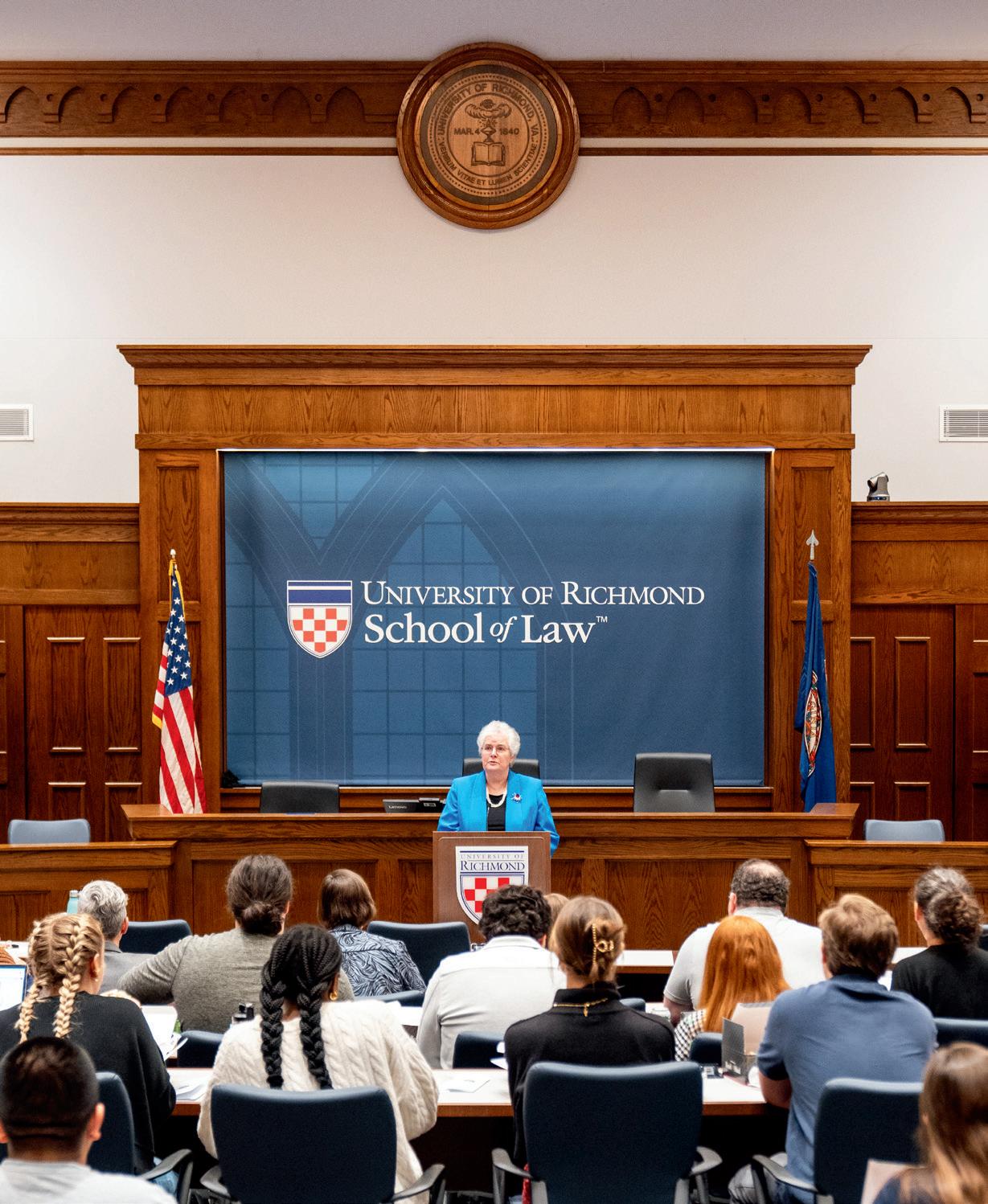
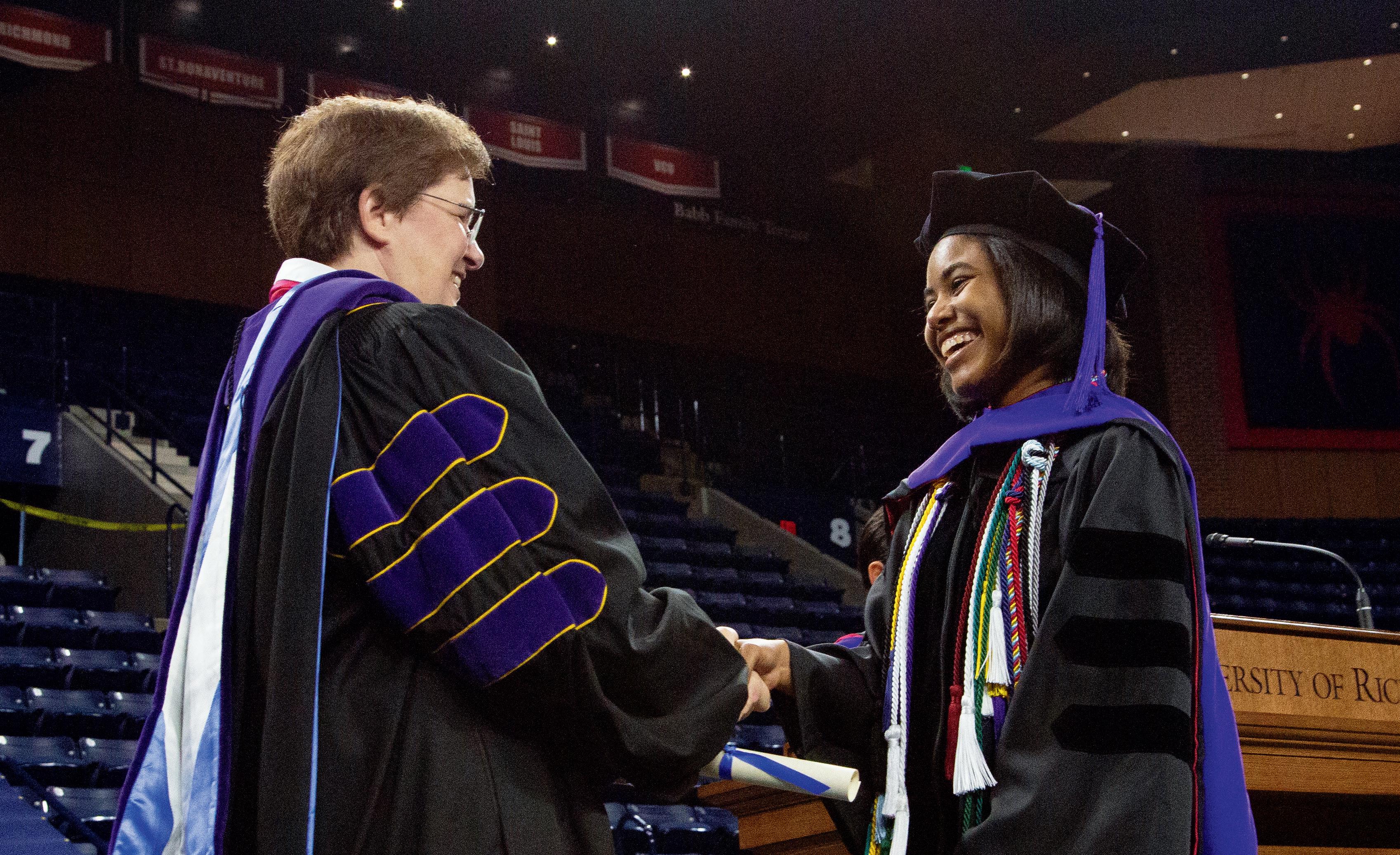
“ She’s the GOAT of law school deans.”
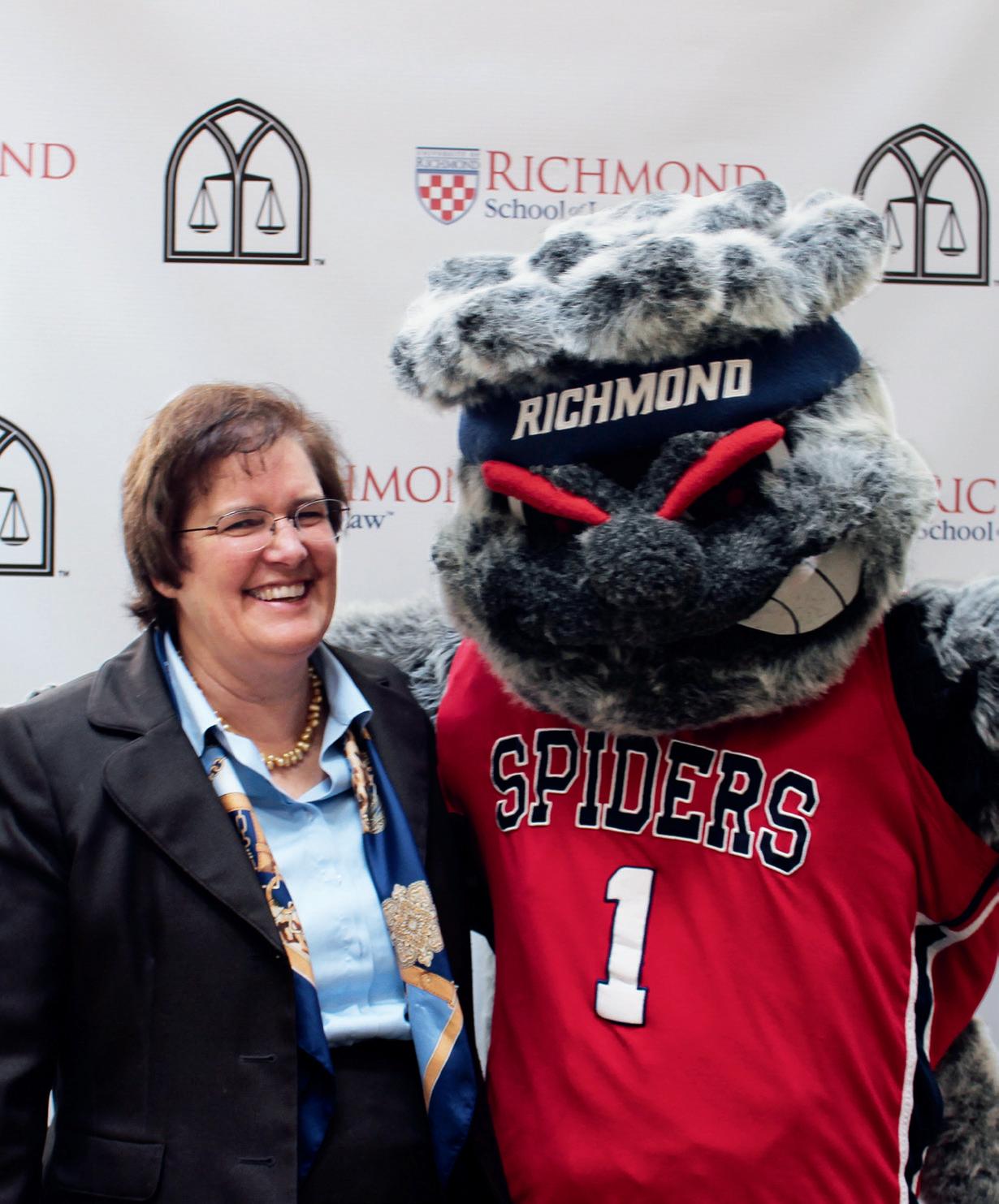
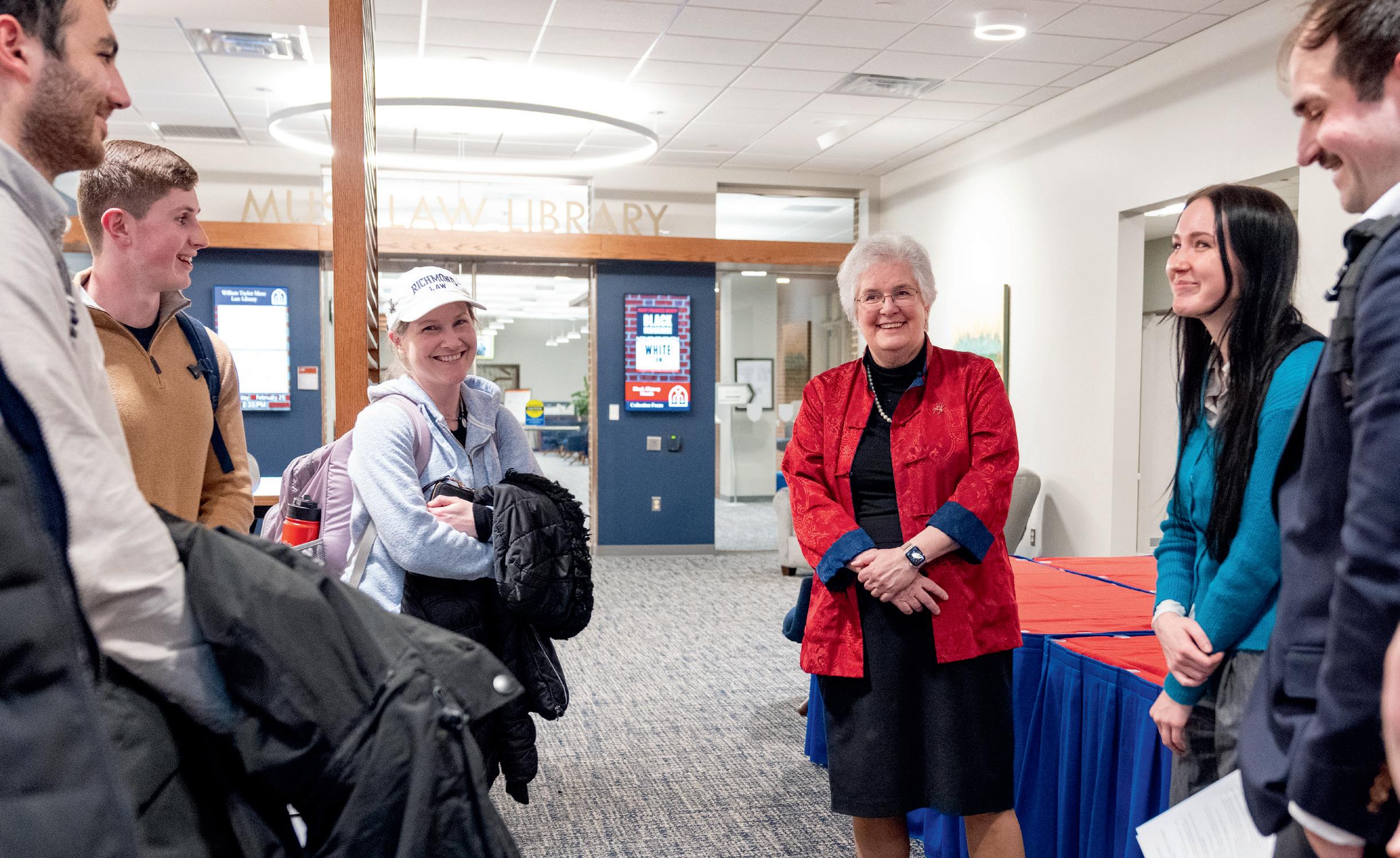
—JOAN SAAB, PROVOST
their first summer — not because they lacked ambition, but because they lacked financial support. Perdue made it a priority to guarantee every student a summer grant for public interest work.
That grant has grown from $2,000 to $5,000 during her tenure, and today more than 90% of students work in law-related positions in the summer after their first year. “I wanted every student who was interested in getting law experience that first summer to be able to do that,” she says. “And I didn’t want it to be limited to those who happened to have connections through their family or who could afford to work for free.”
Funding this sort of law school program is no easy feat. Kelley Hodge, L’96, takes special pride in supporting Perdue’s efforts through her leadership on the alumni board. “While there are many other things required of a dean,” she says, “there’s the need to generate commitment from those able to support the law school financially. Someone can only make that ask and get that commitment if the individual believes that person is moving the school in the right direction.”
THE PERDUE ERA: BY THE NUMBERS
A COMMUNITY BUILT TO LAST Perdue did not set out to become one of the longest-serving law school deans in the country. She simply arrived with a clear-eyed sense of what needed to be done and a methodical approach to doing so. The years accumulated as the result of a series of decisions to stay through one more challenge: through the admissions falloff in the early 2010s, through the COVID-19 pandemic, through the school’s major building renovation in the early 2020s that stretched longer than expected, and through the ABA reaccreditation visit that concluded in March of 2025.
That visit ended at 11:45 a.m. on a Wednesday. At noon, Perdue convened a previously scheduled
LONGEST-SERVING LAW SCHOOL DEAN IN THE COUNTRY
Perdue hired
5TH 34 — more than half of today’s faculty. NEW PROFESSORS
Nearly 90% of the school’s staff joined under her deanship. The law school raised $38.5 MILLION+ during Perdue’s deanship and now averages more than $3 million in alumni donations per year — that’s nearly three times what it was when she first began.
faculty meeting. She walked in and told them: “I told you I’d stay through the visit. They all left 15 minutes ago. I’m going to step down.”
Perdue gave a year’s notice — enough time, she reasoned, for the university to conduct a genuinely excellent search for her successor.
The longevity of her tenure, she reflects, made possible a style of leadership she describes with reference to the philosopher Xiao Ling, who spoke of a leader who guides change so that when the work is done people say, “We’ve always been like this.” That, Perdue says, is her model. Not dramatic, sweeping transformation, but slow, deliberate, nearly imperceptible change. “If folks come away not noticing changes and instead thinking we’ve always been like this, I view that as a success.”
Hodge frames the school’s evolution differently but arrives at the same conclusion. “Wendy has been a very deliberate, thoughtful, caring leader of the law school,” Hodge says. “She has been a driving force through incremental steps, and that has kept me involved and
engaged. I’ve remained committed to the law school since graduating in 1996 because I know that they are committed to the mission and to the students.”
What Perdue built, her colleagues agree, is not just a stronger institution, but a culture. Faculty stay. Staff stay. Associate deans who worked directly under her continue in distinguished careers, in no small part because of the support and autonomy she gave them. And the students — the ones for whom every decision was ultimately made — leave better prepared, better supported, and better connected to the profession.
“This school is in great shape because of her,” Saab says. “She’s the GOAT of law school deans.”
76%
Larro, a member of the final graduating class under Perdue’s tenure as dean, says Richmond Law is having a moment. “We have more nationwide recognition for all the really great things that are happening,” she says, “and the fact that we have gotten to that point over the past 15 years is definitely a testament to Dean Perdue.” The Dean’s Opportunity Scholarship was created by Perdue in 2019 with a $100,000 gift. It now has over $2.95 million So far, it has supported 40 STUDENTS AND COUNTING.
Perdue transformed the Summer Public Service Fellowship into a $5,000 FELLOWSHIP guaranteed for every student.
DECISIONS ARE MADE TO BENEFIT STUDENTS. Created the post-graduate Bridge to Practice Fellowship Program (see page 24), which has helped more than 150 GRADUATES launch their careers. of the newest class received financial support with an average award of $39,846, thanks to Perdue’s expanded financial aid efforts.
100% OF
“If folks come away not noticing changes and instead thinking we’ve always been like this, I view that as a success.”
—WENDY PERDUE, DEAN

WHAT THE COXSWAIN LEAVES BEHIND
There are things about Perdue that don’t quite fit the formal profile. She has a wit that colleagues describe as dry, quick, and genuinely surprising given how relentlessly serious she presents in professional settings.
“She’s so focused, then she’ll slip in something irreverent, and it’ll catch you off guard,” Saab says. Peart calls it “an acerbic wit that is absolutely hilarious.” Hallock mentions it, too. Her humor is part of the package — a signal that behind the spreadsheets and the strategic maneuvering and the careful, consequential thinking about unintended consequences is a person who genuinely enjoys the company of her colleagues.
Gibson, when asked what he’ll miss most, doesn’t hesitate. “Probably how hard she worked. She was going 24/7. I don’t think she was ever not thinking about how to make sure that the law school was in a good place.”
Then he pauses and adds something that, perhaps more than anything else, encapsulates Perdue’s 15 years:
“That completely solidified for me that I never want to be a law school dean. Because she would be my model, and I just couldn’t possibly put in the hours she puts in.”
Perdue will return to the faculty after a year’s sabbatical — with a well-earned lightening of her workload.
The University of Richmond has an annual tradition of celebrating faculty who have been promoted. “I look forward every year to hearing Wendy talk about the quality and impact of the faculty work in the law school,” Hallock says. “I’ve never met a dean at any university — and I’ve met a lot of deans at a lot of universities — who can so deeply express the research of their faculty, have an appreciation for what’s unique about that research and the impact it has on, yes, the research community, but also on their students. She’s spectacular at that.”
The boat is in good hands. The next coxswain — Jacob Rooksby, dean of Gonzaga University School of Law — will inherit a crew of extraordinary rowers, a renovated shell, and a course charted by someone who thought carefully about every stroke. Wendy Perdue did not do the rowing. But she made sure the rowers had everything they needed — the resources, the culture, the training, and the belief that all of it, every bit of it, was in service of a single, simple question: Is this good for students?
The answer, more so than ever after 15 years, is unmistakably yes. ■
Endowed positions strengthen Richmond Law faculty
Under the leadership of Dean Wendy Perdue, Richmond Law prioritized endowed faculty positions. These investments strengthen the school’s academic excellence and honor those who have left an indelible mark on the legal profession.
Thanks to the generosity of alumni and friends, 18 faculty members hold endowed chairs, professorships, and fellowships. These positions recognize outstanding scholarship, teaching, and service while also providing vital support for research and innovation.
ENDOWED CHAIRS:
GEORGE E. ALLEN CHAIR IN LAW
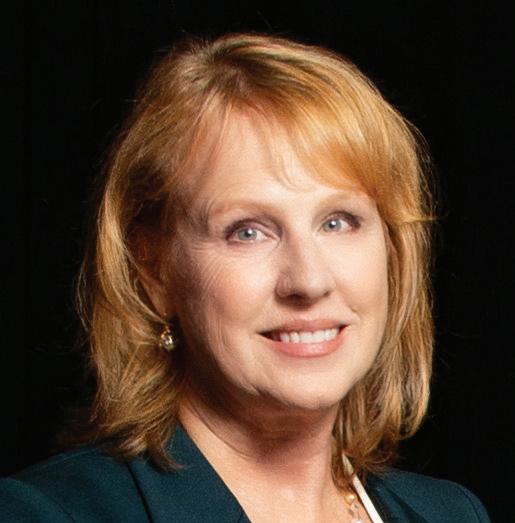
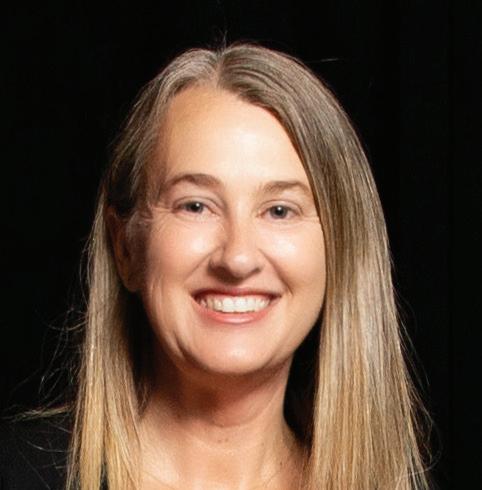
The George E. Allen Chair in Law honors the legacy of excellence of the founding partner of the Richmond-based law firm of Allen, Allen, Allen & Allen. The chair is jointly held by Jessica Erickson and Corinna Lain.
E. CLAIBORNE ROBINS DISTINGUISHED CHAIR IN LAW
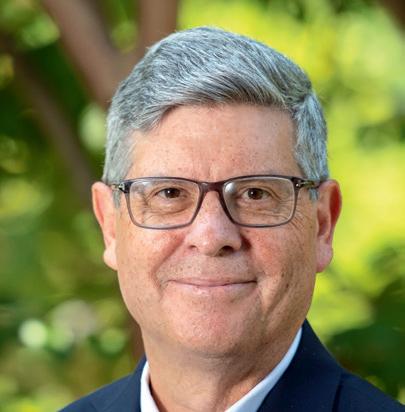
The E. Claiborne Robins Distinguished Chair in Law was established to honor the memory of this 1931 graduate of the University of Richmond. The chair is currently held by Kurt Lash.
WILLIAMS CHAIR IN LAW
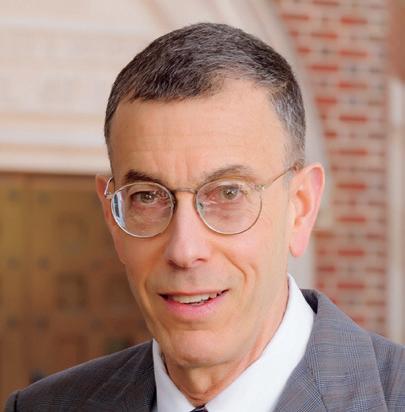
The Williams Chair in Law was established in 1999 by Russell C. Williams, L’84, to enable the school to build “an exceptionally strong faculty.” The chair is currently held by Carl Tobias.
PROFESSORSHIPS:
DENNIS I. BELCHER PROFESSORSHIP IN LAW
The Dennis I. Belcher Professorship was established to honor this 1976 Richmond Law graduate and expert in trusts & estates at McGuireWoods. The professorship is currently held by Allison Tait.
TYLER HAYNES PROFESSORSHIP IN LAW
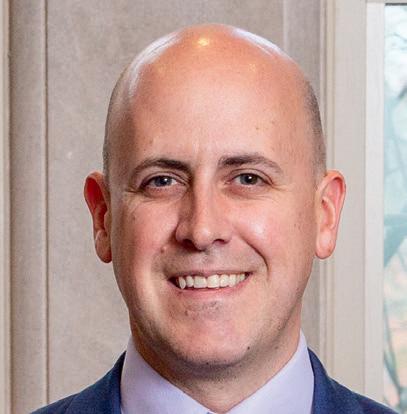
The Tyler Haynes Professorship was created to support outstanding scholarship in law. The professorship is currently held by Luke Norris.
NANCY LITCHFIELD HICKS PROFESSORSHIP IN LAW
The Nancy Litchfield Hicks Professorship was established by Hal Hicks to honor his wife, a 1985 graduate of Richmond Law. It is the first at the law school to solely bear a woman’s name. The professorship is currently held by Rebecca Crootof.
S.D. ROBERTS AND SANDRA MOORE PROFESSORSHIP IN LAW
The S.D. Roberts and Sandra Moore Professorship was established in 2017 by S.D. Roberts Moore, L’61, and his wife, Sandra. The professorship is currently held by Erin Collins.
SESQUICENTENNIAL PROFESSORSHIP IN LAW
The Sesquicentennial Professorship in Law was established in 2019 to commemorate Richmond Law’s 150th anniversary. The professorship is currently held by Jim Gibson.
FELLOWSHIPS:
OLIVER HILL FACULTY RESEARCH SCHOLAR
The Oliver Hill Faculty Research Scholar position was established to honor one of the nation’s most distinguished civil rights attorneys. The fellowship is jointly held by Henry L. Chambers Jr. and Jonathan Stubbs.
ROBERT MERHIGE FACULTY RESEARCH SCHOLAR
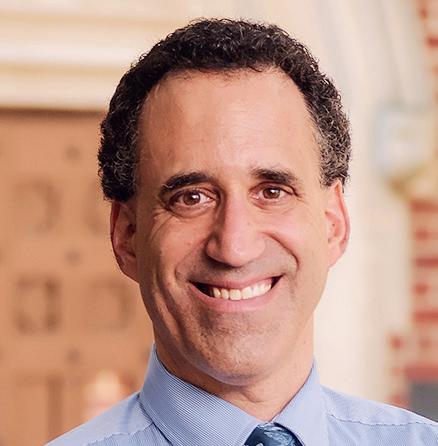
The Robert Merhige Faculty Research Scholar position was established to recognize the Honorable Robert R. Merhige, L’42, best known for his 1972 desegregation decision to merge Richmond City Schools with neighboring Henrico and Chesterfield county schools. The fellowship is currently held by Joel Eisen.
JULIE AND JOHN NOWAK FACULTY RESEARCH SCHOLAR
The Julie and John Nowak Faculty Research Scholar position was established in 2019 by John Nowak, L’00, and his wife, Julie. The fellowship is currently held by Kristen Osenga.
AUSTIN OWEN FACULTY RESEARCH SCHOLAR
The Austin Owen Faculty Research Scholar position recognizes the Honorable Austin Owen III, L’50, who served as a judge of the 2nd Judicial Circuit of Virginia. The fellowship is currently held by Hayes Holderness, Jack Preis, and Kevin Woodson.
WALTER W. AND MARIA THERESA REGIRER RESEARCH SCHOLAR IN INTERNATIONAL LAW
The Walter W. and Maria Theresa Regirer Research Scholar in International Law position was established to recognize outstanding scholarship in international law. The fellowship is currently held by Chiara Giorgetti.
JENNIFER AND SAMUEL TARRY RESEARCH SCHOLAR
This position was established by Jennifer, GB’16, and Samuel, L’94, Tarry to support outstanding law faculty. The fellowship is currently held by Andy Spalding.
These appointments exemplify Richmond Law’s commitment to attracting and retaining top scholars, advancing legal education, and honoring exceptional generosity.
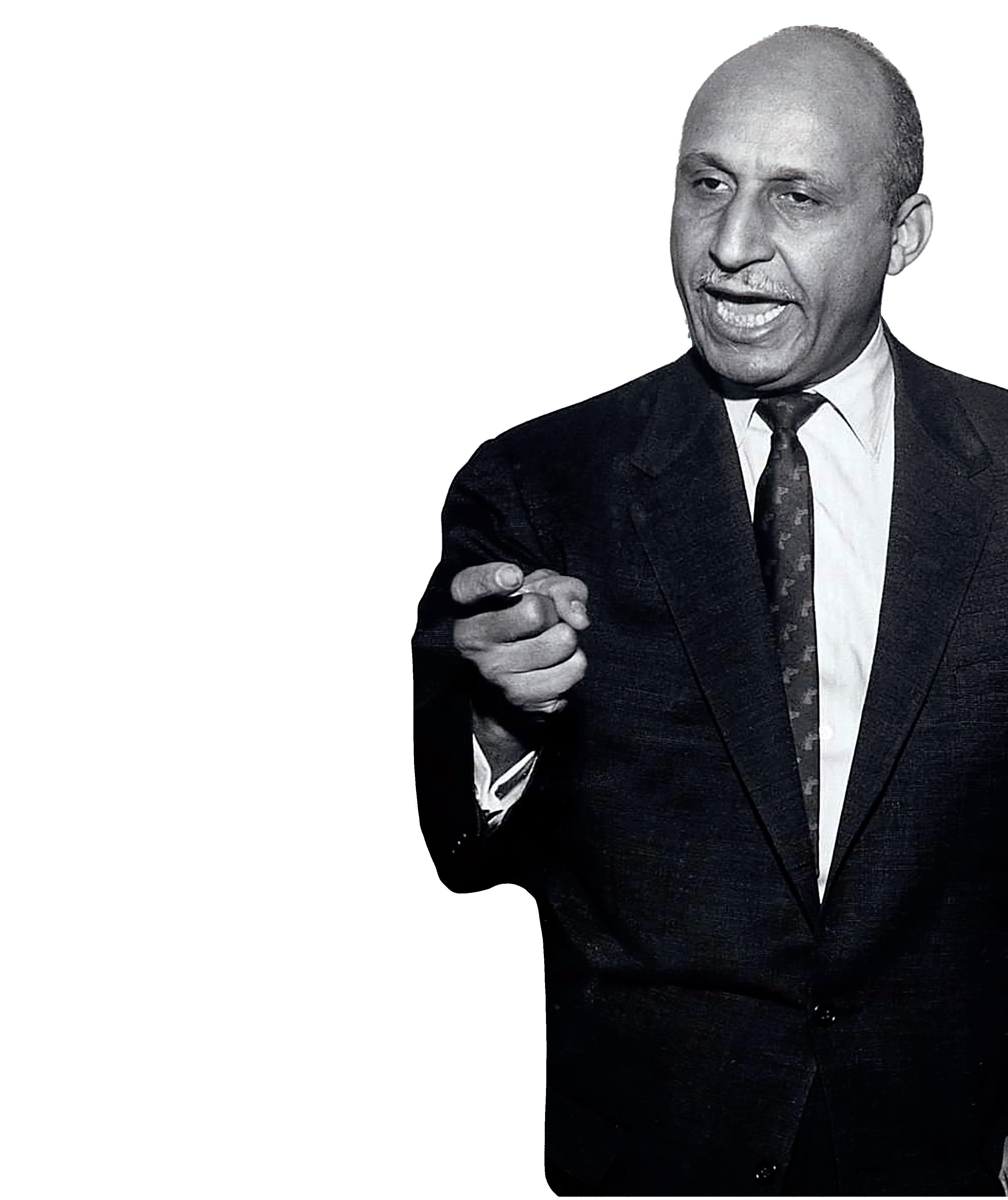
CARRYING FORWARD a legacy
BY RENEE RUSSELL
Anonymous gift launches endowed faculty position to honor Oliver Hill.
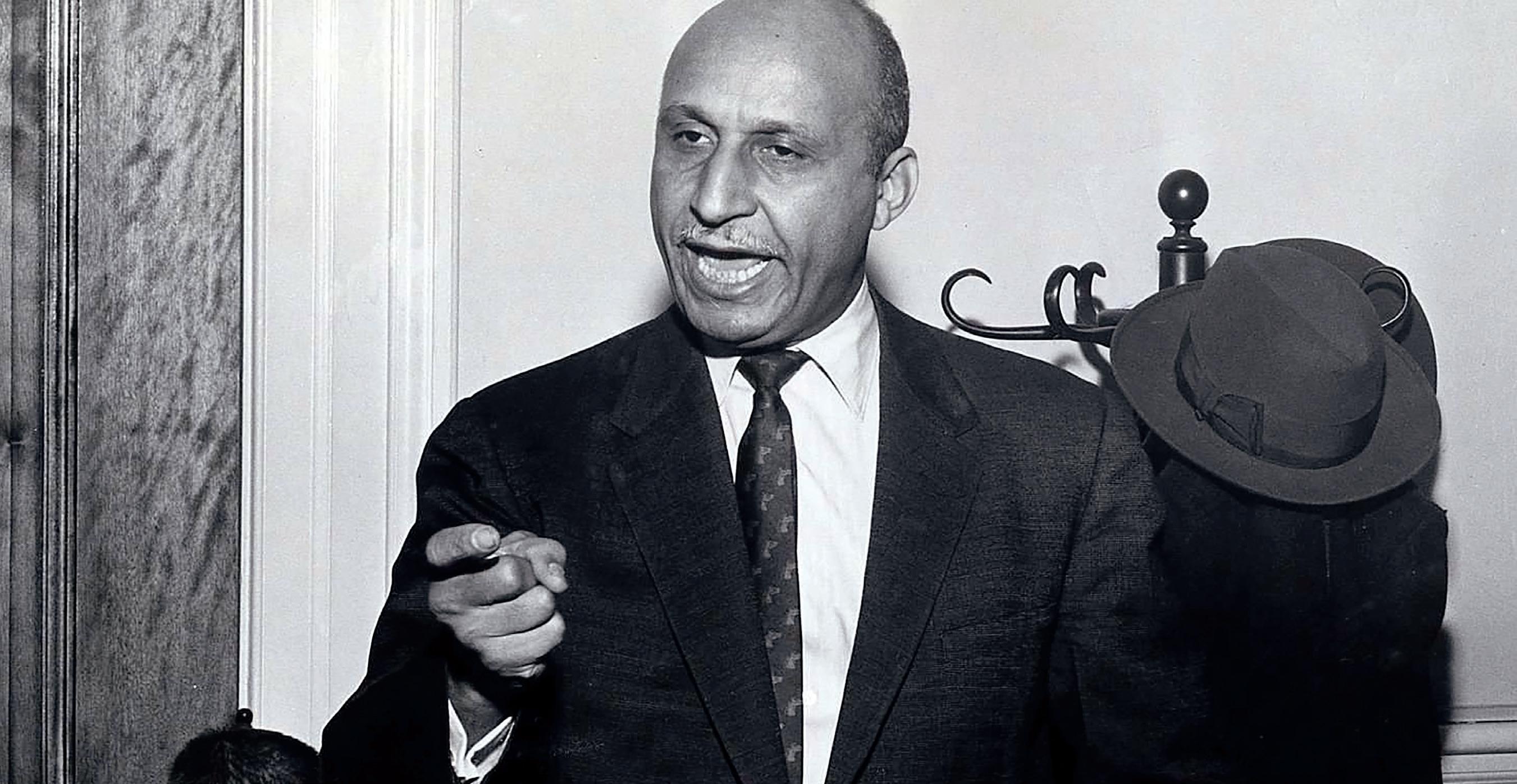
“No Virginian in the past 100 years has had such an impact on the life of our commonwealth as Oliver Hill,” former Virginia Gov. and U.S. Sen. Tim Kaine once said of the late attorney and civil rights leader. “He moved America from the darkness of the 19th century to the promise of the 21st.”
Despite enduring hostility, cross burnings, and death threats, Hill remained steadfast in his fight for justice. A member of the legal team that took Brown v. Board of Education to the U.S. Supreme Court, Hill also led dozens of other cases challenging unfair housing, discrimination, and segregation. Throughout his career spanning over 60 years, he received more than 90 awards for his commitment to social justice, including the Presidential Medal of Freedom, the nation’s highest civilian award.
Now, thanks to a six-figure lead gift from an anonymous donor, Richmond Law will honor Hill once more with the creation of an endowed faculty position named for him.
“Oliver Hill’s life and work embody the very best of what the legal profession can offer society,” said Dean Wendy Perdue. “By establishing this position, we recognize his extraordinary legacy and ensure that future generations of lawyers will be inspired by his example of courage, persistence, and service to justice.”
A native of Richmond, Hill came of age during a time when educational opportunities were limited for Black Americans, forcing his family to send him to Washington, D.C., to complete high school. After graduating from the Howard University School of Law in 1933, he returned to Virginia determined to dismantle the Jim Crow era through the courts. His first major Supreme Court victory, Alston v. School Board of Norfolk, secured pay equity for Black and white teachers. Hill went on to challenge segregated schools across Virginia and played a pivotal role in integrating higher education. In 1951, he filed the Prince Edward County suit that became part of Brown, the landmark 1954 decision striking down segregation in public schools.
“HE
MOVED AMERICA FROM THE DARKNESS OF THE 19TH CENTURY TO THE PROMISE OF THE 21ST.”
Professors Henry L. Chambers Jr. and Jonathan Stubbs were named Oliver Hill Faculty Research Scholars.
“Being associated in any way with Oliver Hill is an honor,” said Chambers. “He fought tirelessly to help our country move closer to living up to its ideals, and some of the good fortune in my life and the lives of all Americans can be traced directly to Mr. Hill’s work. I [aim] to channel some of his intelligence, passion, work ethic, and fearlessness into my work.”
This position is more than an honorific, Perdue said. “It is a promise that Mr. Hill’s fight for equality will continue here at Richmond Law through the teaching, research, and scholarship of our faculty. Through this effort, we are committing ourselves — and our students — to advancing the principles of justice and opportunity [he] championed.”
The anonymous donor who created the endowed position has committed to adding sufficient funds for it to become a professorship and invites others inspired by Hill to join in this effort. ■
Two faculty named Oliver Hill Faculty Research Scholars
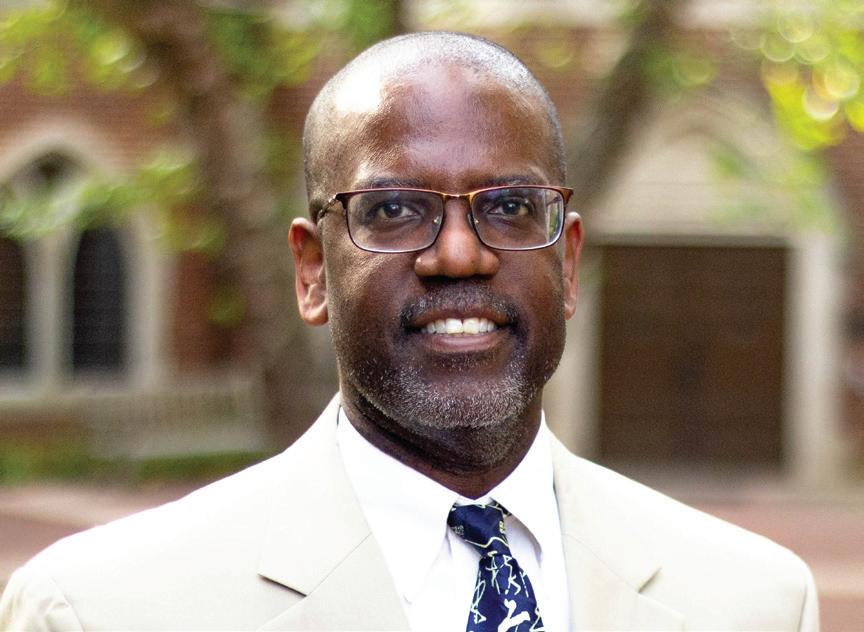
HENRY L. CHAMBERS JR. teaches and writes about constitutional law, criminal law, law and religion, and employment discrimination. Chambers served as special assistant attorney general for redistricting matters for the commonwealth of Virginia from 2011–2013. He frequently lectures on constitutional law through the Center for Civic Education’s We the People program, which provides civic education instruction to school teachers and the public.
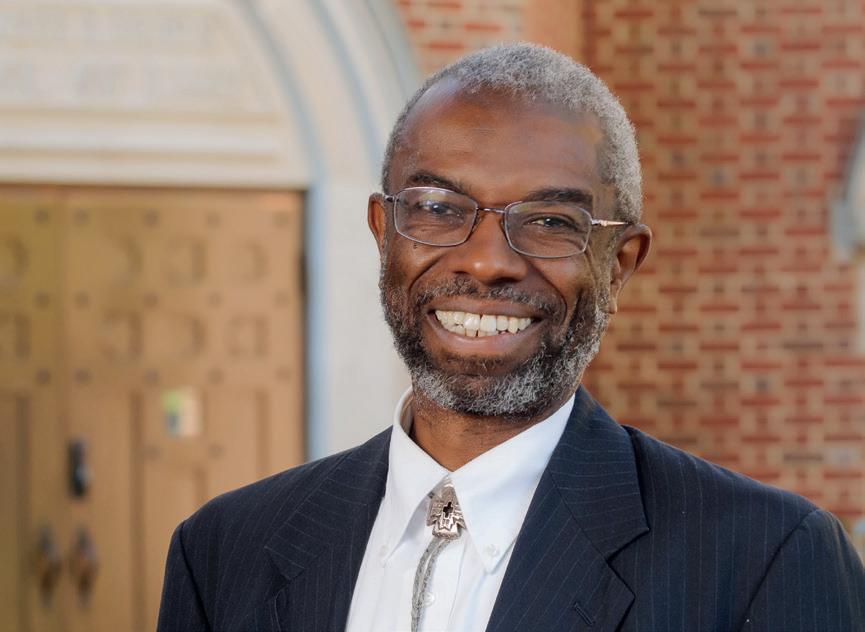
writes about race and human rights and teaches constitutional law, human rights law, race, religion, and the law, and professional responsibility. Stubbs has authored and edited several books, including The Big Bang: Brown v. Board of Education and Beyond; The Autobiography of Oliver W. Hill, Sr. and co-authored with Hill No Clue: White American Affirmative Action Exists and Demands a Moral Revival Now.
JONATHAN STUBBS


BRIDGE ACROSS THE
By Kim Catley
Illustration by Katie McBride
n 2012, University of Richmond School of Law announced it was joining a growing trend by creating a fellowship program for newly minted graduates interested in public service.
At the time, Dean Wendy Perdue said nearly a quarter of the graduating class was interested in criminal law careers — but getting a foot in the door often required young lawyers to take on unpaid internships while waiting for their bar results to arrive in October. Perdue proposed the fourmonth Bridge to Practice Fellowship as a launchpad for career success. It would provide a stipend for new graduates pursuing public service careers, increasing access to government and public interest law and giving them crucial experience that would enhance their competitiveness for permanent positions.
The initial fellowship was awarded to five recent graduates. Four landed positions with commonwealth’s attorney offices across Virginia and beyond, while the fifth worked with the California Innocence Project in San Diego. In the years since, recipients have pursued internships with the International Criminal Tribunal, the United States Congress, the Federal Public Defender, and more.
As Perdue steps down from her deanship, we look back at the inaugural class of fellows to see how the Bridge to Practice Fellowship laid the foundation for their careers.
INAUGURAL RECIPIENTS OF THE BRIDGE TO PRACTICE FELLOWSHIP REFLECT ON ITS LASTING IMPACT.
“IT DID EXACTLY WHAT IT WAS DESIGNED TO DO.”
After an internship with a Nashville prosecutor’s office during his 2L year, Davis Powell, L’12, knew he wanted to work as a prosecutor. The only question was where.
He was considering returning to his home state of Georgia when professor emeritus John Pagan introduced him to Tracy Thorne-Begland, L’98, then the chief deputy commonwealth’s attorney for the city of Richmond.
“It was a great UR connection,” Powell said. “He said if I wanted to do an internship and see if the office had a job when I passed the bar, they could be interested in that. I was able to get the internship through him.”
While Powell said it was encouraging to land the job, working as an unpaid intern for several months would be a challenge. He planned to spend his days working in the commonwealth’s attorney’s office and his nights doing document review to support himself — until law professor Tara Casey mentioned the newly launched Bridge to Practice Fellowship she was leading.
Powell applied — job offer in hand — but wasn’t initially accepted. He pleaded his case, however, and another Richmond Law graduate donated the funds for an additional fellowship.
“I remember thinking the fellowship was a great idea, and I was hopeful I could take advantage of it,” he said. “It allowed me to do the job without staying up all night doing doc review, and I got my foot in the door. It did exactly what it was designed to do.”

“Having that criminal law background gave me a unique skill set, and that’s directly attributable to my Bridge to Practice Fellowship.”
—DAVIS POWELL, L’12
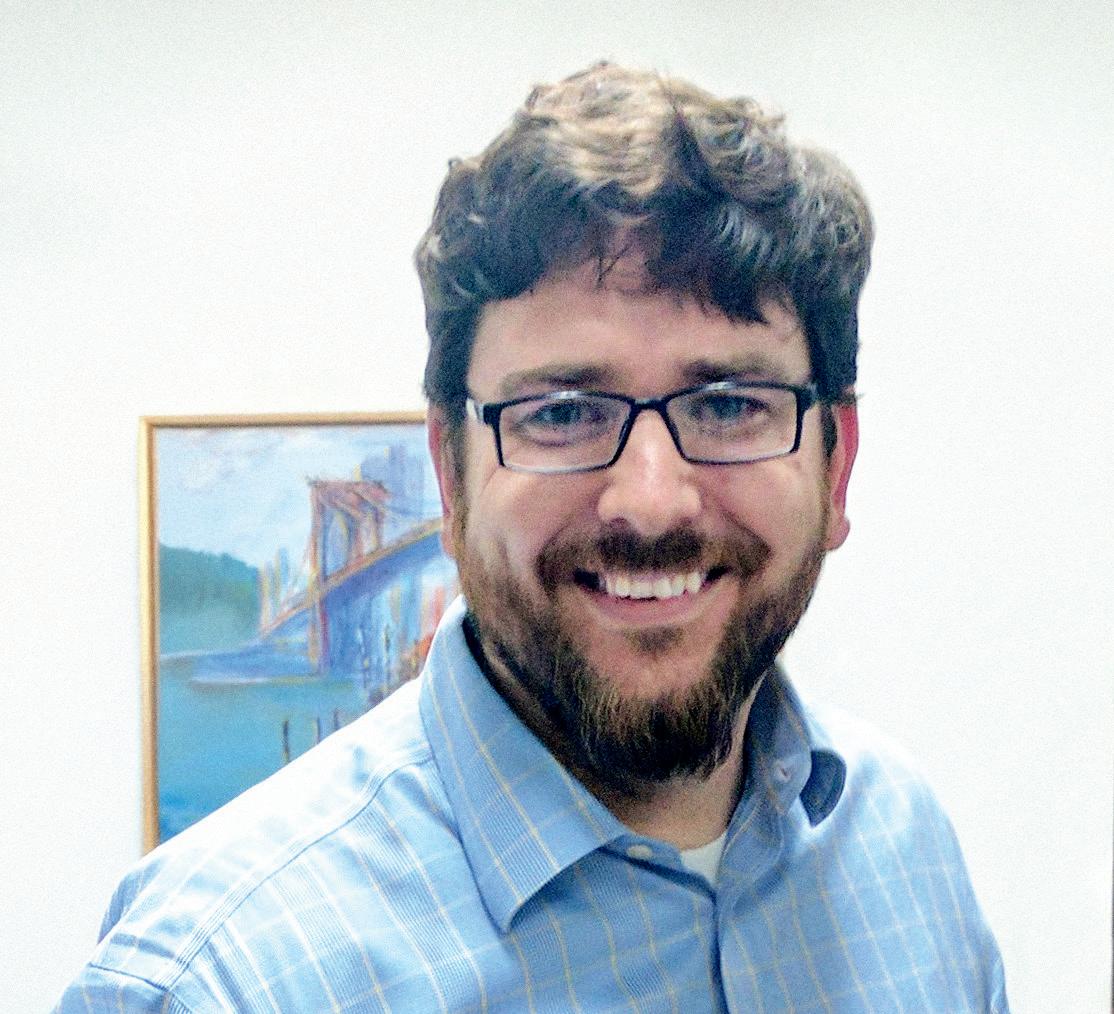
“The fellowship enabled me to dive in and not worry about how I was going to live, how I was going to make it from week to week.”
—JOEL HERMSDORFER,
L’12
Powell said his internship with the commonwealth’s attorney’s office was essentially a threemonth job interview. He was able to confirm he was on the right career path while showing his colleagues that he could do the work.
The day after he received his bar results, he was hired as a full-time assistant commonwealth’s attorney. He spent nearly five years prosecuting drug crimes, robberies, and several homicides.
Then-Commonwealth’s Attorney Michael Herring also supported Powell’s growth as a prosecutor and helped him think about his future career. “It was really interesting work, and I got a lot of great experience in the courtroom,” Powell said. “But I didn’t think I wanted to be a career prosecutor.”
When an opportunity came up to do both civil and white-collar criminal defense work at the Richmond law firm Hancock Daniel, Powell took the leap.
“One thing that was really helpful in getting that job was the fact that I had the criminal experience from the commonwealth’s attorney’s office,” he said.
In late 2019, Powell’s practice group left Hancock Daniel to start their own firm, Byrne Canaan Law. He now represents health care providers in medical malpractice cases, as well as in criminal and regulatory matters.
“Having that criminal law background gave me a unique skill set, and that’s directly attributable to my Bridge to Practice Fellowship,” he said. “I came out of the commonwealth’s attorney’s office with a lot of courtroom experience that let me feel confident going into private practice. I also met great people and formed a lot of good relationships. It was a huge formation period in my career.”
“IT GAVE ME A FOOTHOLD IN THE PRACTICE OF LAW I CARED ABOUT.”
When Joel Hermsdorfer, L’12, graduated, he was determined to work in criminal law — but was also in the process of moving across the country with his wife, who served in the Navy. He approached the public defender’s office in Monterey County, California, which he said was “more than happy to have somebody come in with their own financing.”
Almost immediately, Hermsdorfer was assigned to a misdemeanor courtroom and argued six jury trials in his first few months.
“The fellowship enabled me to dive in and not worry about how I was going to live, how I was going to make it from week to week,” he said. “I was practicing in a courtroom with supervision from other attorneys and getting good experience. It gave me a foothold in the practice of law I cared about.”
When his fellowship ended, the office couldn’t hire Hermsdorfer permanently, so he instead went into solo practice. He often took on cases involving prison inmates in rural California that the public defender’s office staff couldn’t easily access.
“The court-appointed cases kept me afloat,” he said, “and those were from all of the contacts I made through the fellowship.”
Today, Hermsdorfer, who previously served in the Army, is an adviser with the Department of Veterans Affairs’ Board of Veterans’ Appeals, where he reviews veterans’ disability claims. He and his wife, who recently retired, are traveling the country in search of where to settle next. His work today might seem a marked shift from his earlier work in criminal law, but he says a conversation with his fellowship mentor continues to shape his perspective. He had just been assigned a drunk-in-public case with a potential $200 fine. “I made an offhand comment that it wasn’t that important of a case,” he said. “They didn’t even want to put him in jail. My mentor stopped me and said, ‘This is important to him. You need to put everything you possibly can into this case because you’re representing another person’s interests.’
“It was a smack in the face. I realized my job is to handle everything that comes across my path as well as I can because it’s for the good of the public. Veterans’ law is a grind; I read and write most days. But there’s a purity in being able to say, ‘I’m going to do my absolute best on whatever case comes my way.’”
“THE CAREER I STARTED IS THE CAREER I’VE BEEN IN EVER SINCE.”
Tim Dustan, L’12, knew early on he wanted to be a prosecutor in a commonwealth’s attorney’s office. It’s the only career path he ever truly considered. As graduation approached, however, he wasn’t sure how to get his foot in the door.
“I came from the West Coast,” he said. “I didn’t know anybody here. There are no lawyers in my family. And [at the time], the main opportunities were to work for free or use your connections to find a way in.”
Casey introduced him to Bridge to Practice, which Dustan said was critical to proving that he could do the job. He reached out to several commonwealth’s attorney offices in the Richmond area and was soon hired by Henrico County.
His first week, he was handed a stack of files for a homicide case.
“There wasn’t a lot of orientation time,” he said. “I was thrown into the deep end, and I was in trial almost every day I was there.”
Dustan said the hands-on experience and opportunities to observe prosecutors and defense attorneys in action all affirmed he was in the right place. When he received his bar results that fall, he spent a few weeks doing document review while waiting for a position to open. When it did, he felt confident he would be chosen.
“I felt like the interview had already happened,” he said. “The people who were making those decisions knew that I’d been handling dockets for months. The interview was with folks I’d been working with.”
Among those who hired Dustan was his supervisor, Susan Fierro. Working with her, he said, helped him develop confidence as a young attorney learning the ropes.
“She talked about having the courage of your convictions, even when defense attorneys, judges, witnesses, and police officers are making you second-guess yourself,” he said. “The most important thing she did for me was to help me understand that if I’m trying to do the right thing above all else, things will work out.”
When Fierro was elected commonwealth’s attorney for Prince George County, Dustan followed her. Then, in 2022, he left for Powhatan County, where he now serves as the deputy commonwealth’s attorney.
“The career that I started in Bridge to Practice is the career that I’ve been in ever since,” he said.
“IT LAID THE GROUNDWORK FOR EVERYTHING I’VE BEEN ABLE TO ACHIEVE.”
As graduation approached, Ryan Foreman, L’12, and his fiancée were exploring career options in both Colorado and California. They settled on Colorado, but while en route, his fiancée was offered a job in San Diego. The couple took a left turn in Texas and headed for the West Coast.
That’s when Foreman found himself searching for a job in a state where he had no contacts and where the rigorous requirements made it challenging for out-of-state graduates to break into public interest law.
“One of the reasons I went to Richmond was for the clinical experience — and I was lucky enough to graduate with great experience,” he said. “But then I found out I didn’t qualify for any of the positions because I didn’t have California experience.
“Thankfully, I had already applied for the Bridge to Practice Fellowship, which connected me and allowed me to work with the California Innocence Project. The fellowship was instrumental to overcoming a barrier that I didn’t even know existed.”
Foreman initially worked for a post-conviction relief attorney at the California Innocence Project, which led to a clerkship position and then a role at a family law firm. Two years after arriving in San Diego, he had built up the requisite experience to secure a job as a prosecutor with the city attorney’s office.
“It was a dream job,” he said. “I loved every minute of my time there.”
Five years later, Foreman’s wife was recruited for a role in Boston, and the couple set out on another cross-country move. And again, Foreman was able to leverage his
background into a role with the crime strategies bureau of the Suffolk County, Massachusetts, district attorney’s office.
“My workload consisted of gang shootings, gang firearm suppression activity, gang infiltration through social media, gun and car and scooter theft ring investigations,” he said. “I was also on the homicide response team. In Massachusetts, when a homicide is suspected, the district attorney’s office leads the investigation, and I was one member of the team who responded to those scenes.”
Foreman was passionate about the work. He was particularly interested in evidence-based prosecution — a more holistic approach to preventing violence among young people — after meeting the commonwealth’s attorney in Richmond, Herring, as a law student.
“I saw that you can do a lot of good from inside a prosecutor’s office when you develop the experience and do the work necessary to be trusted with the authority and discretion,” he said.
Still, the job wasn’t without its challenges. The long hours were especially difficult to balance while raising two young children. When he got a call offering him a hearing officer role in a state agency that oversees child care licensing in Massachusetts, he took it.
The position might seem like a dramatic change in course. But Foreman said all the roles he’s held — from the California Innocence Project to the family law firm, from the DA’s office to hearing child care licensing appeals — all come back to a desire to help people.
“If I can use my ethics and judgment decisions to keep a child in a safe, secure, high-quality early education program, then that child will grow up with those social skills and understanding of their value,” he said. “People have a chance to be successful if you make the right decisions possible for them.
“The job I have now stems from my Bridge to Practice experience. It was a fundamental part of the start of my career and laid the groundwork for everything I’ve been able to achieve.” ■
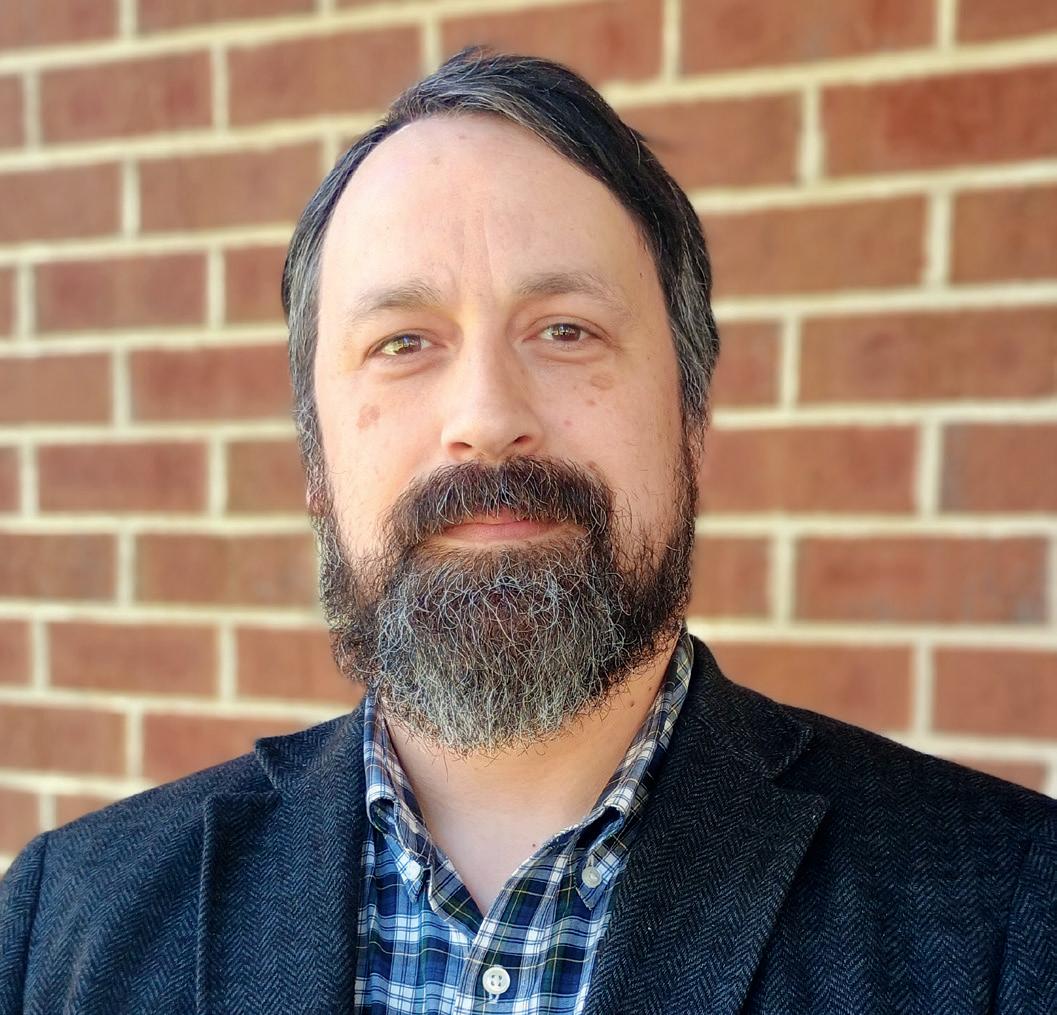
“I was thrown into the deep end, and I was in trial almost every day I was there.”
—TIM DUSTAN, L’12
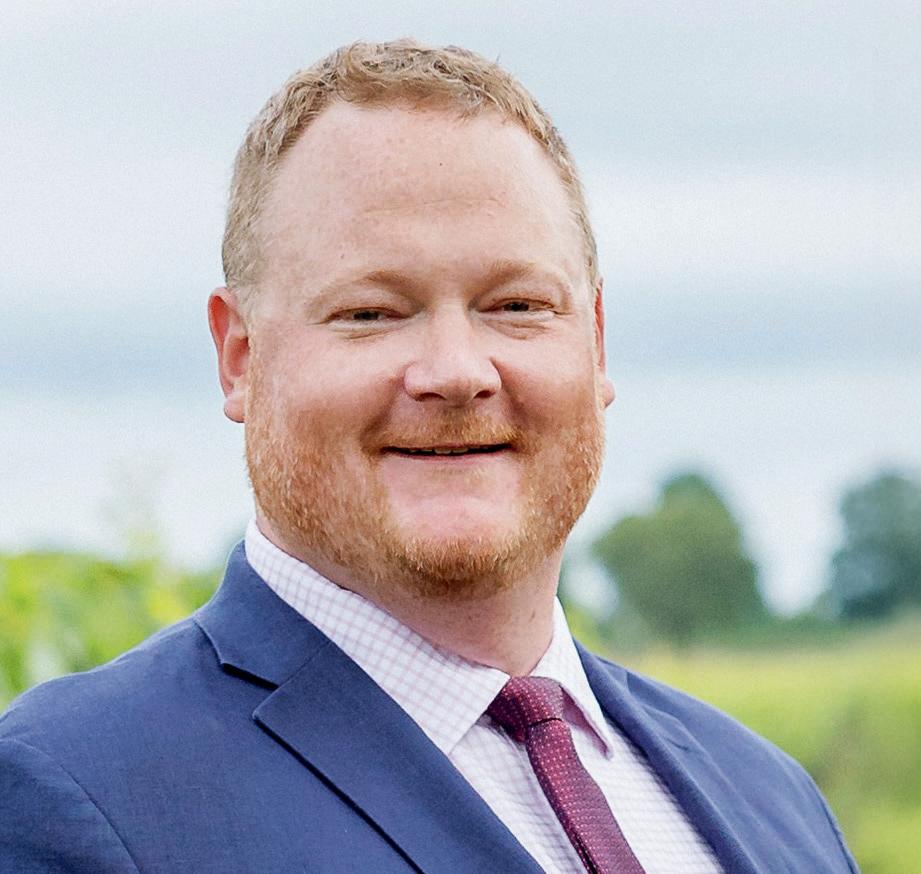
“The fellowship was instrumental to overcoming a barrier that I didn’t even know existed.”
—RYAN FOREMAN, L’12
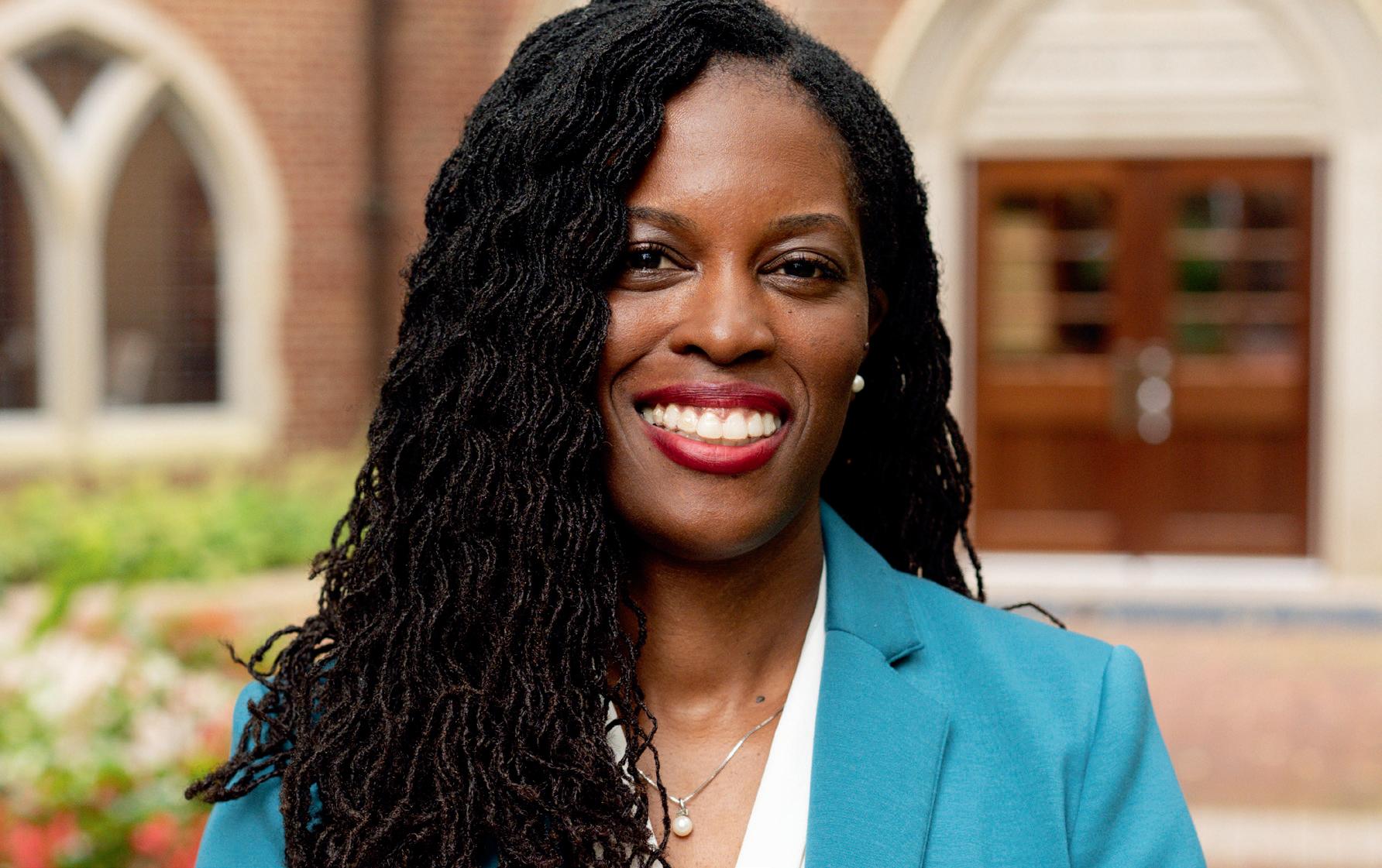
Prosecutor’s instincts, educator’s dedication
Before she ever stood at a teaching lectern, Tamika Moses stood before juries. As a federal prosecutor in the District of Columbia and the Eastern District of North Carolina, she spent years arguing the government’s case in high-stakes criminal proceedings. Today, as a new member of the Richmond Law faculty, she channels that legal experience into a different kind of advocacy: helping students find their footing in the law.
Moses’ path to academia was not a straight line as the COVID-19 pandemic prompted her to reassess her career transition.
“Teaching was often at the top of my list of potential careers as I reflected on the law professors and mentors that guided me along my career path,” Moses says. In 2020, she taught her first course at North Carolina Central University School of Law. “I fell in love with the classroom,” she says. She became a fulltime professor the following year.
Moses’ teaching philosophy stems from her conviction that no student is beyond reach. “I believe that every student can be successful in the classroom when they are given the
appropriate tools,” she says. To that end, she adapts her instruction to support multiple learning styles, drawing on polling questions, courtroom simulations, trial clips, and games like Hearsay Madness. “I like to keep things interesting!”
The shift from prosecutor to scholar also opened new avenues for her voice. As a federal prosecutor, she notes, “I often reserved my words for the courtroom.” Now, through legal scholarship, she can engage publicly with what she considers “some of the most pressing issues that impact criminal prosecutions today.”
To students learning to navigate today’s legal landscape, Moses’ counsel is direct: Think critically, know your ethical obligations, and care for yourself. “Lawyers uphold key pillars of democracy,” she says. She reminds them that “they are often given the power to impact various liberty interests,” and to be mindful of how they choose to wield that power.
Moses brings the same dedication to teaching that she once brought to the courtroom, saying, “I am excited to join this fantastic community of teacher-scholars, staff, and students.”
HANK CHAMBERS JR. published “Race, Memory, and Authority in Constitutional Interpretation” in Texas A&M Law Review and “Minor v. Happersett, Dobbs v. Jackson Women’s Health Organization, and the Supreme Court’s Refusal to Reconstruct America” in Washington University Law Review
THOMAS DONNELLY published “Popular Originalism” in Brigham Young University Law Review and “Popular Constitutionalism in a Populist Age” forthcoming later this year in the same publication.
JESSICA ERICKSON published “Beyond Wall Street: Inside the Legal Battles of Private Companies” in Journal of Corporation Law
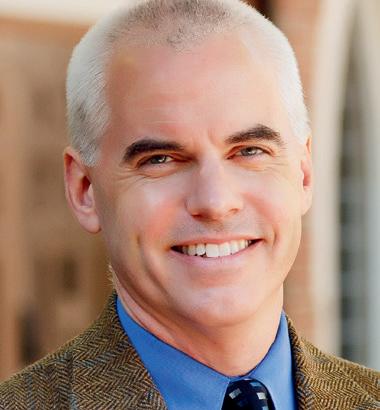
JIM GIBSON (et al.) filed an amicus brief in the U.S. Court of Appeals for the 4th Circuit in the case of Cox Communications v. Sony Music Entertainment. He explained the case in the school’s “Synopsis” video, where he describes Cox’s role as a “conduit,” noting that the court “collapsed the crucial legal distinction between conduits and hosts, extending contributory liability into an area where no court or legislature has ever placed it.”
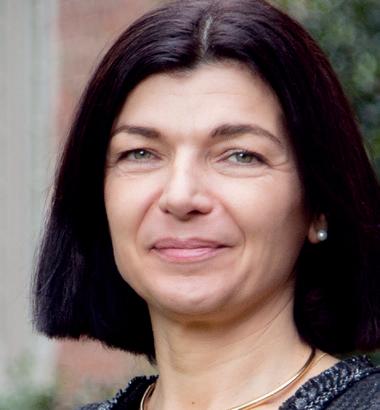
CHIARA GIORGETTI co-hosts the podcast International Law Chats, produced by the American Branch of the International Law Association.
Each month, the team speaks with experts on global topics ranging from the International Court of Justice’s Advisory Opinion on “Obligations of States in Respect of Climate Change” to international peace negotiations.
RILEY KEENAN’S article “Minimal Justiciability,” published in Minnesota Law Review, received honorable mention in the junior scholarship competition of the Civil Procedure Section of the Association of American Law Schools.
KURT LASH wrote, starred in, and narrated “Madison’s Toast,” a short film presented at the Federalist Society Annual Lawyer’s Conference. The film describes a famous 1820s banquet held in Jefferson’s rotunda at University of Virginia where James Madison, Thomas Jefferson, and Marquis DeLafayette toasted one another.
JULIE MCCONNELL received the 2025 George H. Hettrick Pro Bono Leadership Award from the Greater Richmond Bar Foundation. The award honors attorneys who expand access to justice, inspire others to serve, and strengthen the community through pro bono leadership.
LUKE NORRIS published “The Beleaguered Sovereign” in Texas Law Review and “Procedural Political Economy” in William & Mary Law Review.
CASSIE POWELL was named among Virginia Business Magazine’s Legal Elite in the category of Legal Services/Pro Bono.
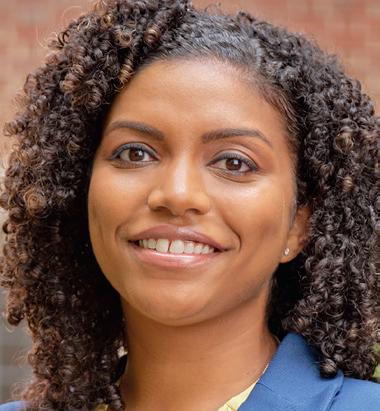
DANIELLE STOKES’ article “Renewable Energy Federalism 2.0,” originally published in Minnesota Law Review, was selected by the Environmental Law and Policy Annual Review as one of the top 10 environmental law articles of 2025.
ALLISON TAIT launched the Everyone Inherits Something blog, where she explores the connections between inheritance, identity, and inequality. Her new book, The House That Family Money Built (University of California Press), will publish in September. In it, she examines the disparate ways that populations on the two ends of the wealth spectrum are treated, the ways they strangely resemble each other, and the ways they are connected through patterns of wealth extraction.
DANIELLE WINGFIELD’S article “The Convergence Against Homeplace,” forthcoming in Boston University Law Review, received the Emerging Scholar Award from the Family and Juvenile Section of the Association of American Law Schools.
We want to hear from you.
Send your class note to classnotes@richmond.edu. To reach the alumni office, email lawalumni@richmond.edu or call
804-289-8028. Contact us by mail at Law Alumni, University of Richmond School of Law, University of Richmond, VA 23173.
1960s
BOB COUSINS, R’66 AND L’69 , Ralph Faulhaber, R’66, and John McMichael, R’65 and G’67, visited Naples, Florida, where they celebrated their annual alumni dinner for the 10th consecutive year.
1970s
BILL STRICKLAND, B’64 AND L’70 , and Mary Eleanor Hodges Coleman, W’64, announce that grandson Xander St. Jean is excited about being accepted to UR, his first choice.
JOE ANTHONY, R’68 AND L’75 , and BETTYJO CLARK ANTHONY, W’69 AND L’79 , celebrated their 50th wedding anniversary. They have a daughter, KATHRYN, L’03 , a son, and five grandchildren — two granddaughters and three grandsons — who span ages 4 to 19. In May 2025, BettyJo attended a luncheon celebrating the 60th reunion of her Vinton, Virginia, high school class. Westhampton classmate and world traveler Connie Booth Collins, W’69, was also in attendance. Although they are Facebook friends, the two hadn’t seen each other in person since their undergraduate days. BettyJo retired after 40 years as deputy commonwealth’s attorney in Roanoke, Virginia, but works part time in the same office and part time in Joe’s law firm. In her grandmother role, BettyJo spends time in Richmond and in Marietta, Georgia.
The Virginia State Bar honored MICHAEL A. MAYS, L’75 , in June for 50 years of continuous active membership in the VSB and providing legal services to his clients. Michael practices law part time in wills, trusts, and estates. He is enjoying semi-
retired life with wife Kerry in Warrenton, Virginia. He plays golf, tennis, and music in his spare time.
TED CHANDLER, L’77 , keeps active with wife Laura Lee Hankins Chandler, W’74, traveling, golfing, biking, and hiking. They spent three weeks in Sicily in September, which included 10 days of hiking over the mountainous terrain with 10 other hikers. The culmination of their hiking was summiting Mount Etna at 11,000 feet and peering into the volcanic crater, which was spewing sulfurous gases. They also biked a 52-mile paved biking and walking trail from Jamestown, Virginia, to Richmond and back with their two grandsons, 11 and 8. They biked the trail in several segments over a few months, ending the last segment with a 30-mile day.
1980s
In April 2025, NANCY CLEVINGER CARPENTER, W’72 AND L’80 , and Jeanie McFall Simar, along with their husbands, spent four days in Florence, Italy, “enjoying the sights, museums, and, of course, the food.” Nancy and Howie attended “an amazing cooking school in beautiful Tuscany.” They continued on to Trieste, Italy; Ljubljana, Slovenia; and Berchtesgaden, Germany. The end of the trip was spent in Normandy to help present a plaque to the National Guard monument on Omaha Beach in honor of the “Bedford Boys” from Bedford, Virginia, who lost their lives in the invasion on D-Day. The plaque was given by the Bedford Boys Tribute Center, a small museum in Bedford.
The Boys & Girls Club of Greenwich, Connecticut, named GEORGE FOX, L’84 , the 2025 Champion of Youth. George has
been a devoted champion of the club for more than 20 years, serving on the board and being a hands-on volunteer, serving meals, cheering participants in a 5K and a basketball tournament, and engaging with kids in an after-school program. The formal announcement stated, “Throughout his tenure on the board, he has remained deeply committed to the well-being and success of every young person who walks through the club’s doors.”
BEN EMERSON, R’73 AND L’84 , and Nancy Bendall Emerson, W’73, visited with Donna Strother Deekens, W’73, and Bill for a few days. Son Benjamin, who has a doctorate in aerospace engineering and works as a research engineer in the Ben Zinn Combustion Lab at Georgia Tech, is now on a tenure track for teaching in its aerospace department. In addition to teaching, he supervises graduate students and engineers on research projects such as combustion with low carbon emissions. He and wife Kelsey have a 9-year-old son and a 5-year-old daughter and live in Peachtree City, Georgia. Two years ago, within a span of a couple of weeks, son Taylor became the father of twin girls, completed an MBA, and was offered a promotion to run a new plant in Texas. He and wife Jennifer relocated from Charleston, South Carolina, to Waco, Texas, with the twins, now 2, and their son, now 5. The Emersons celebrated their 50th wedding anniversary Thanksgiving weekend. Ben retired at the end of 2023 but spent the next two years organizing a four-day national conference of the Society of Colonial Wars, attended by about 230 people in Richmond in September, complete with meetings, social events, and tours of historic sites.
STAN WELLMAN, L’87 , was inducted into the Virginia Lawyers Hall of Fame, which honors members of Virginia’s legal community who have been practicing for 30 years or more and have made lasting marks on the legal field across the commonwealth. The Virginia Association of Defense Attorneys presented its award for excellence in civil litigation to Stan. He is a founding partner with Harman, Claytor, Corrigan & Wellman. He is a past president of the VADA, the Henrico County Bar Association, and the Harmonie Group.
1990s
DAVID L. COLE JR., L’90 , joined McNees Wallace & Nurick in the firm’s Towson, Maryland, office. He joins the construction and procurement group. He came from the Baltimore office of Baker Donelson, where he represented domestic and international clients in construction litigation and advised general contractors on large-scale projects throughout Maryland, Pennsylvania, and Washington, D.C.
BLAIR JACOBS, L’90 , joined the law firm Boles Schiller Flexner as a partner and co-lead of the patent litigation practice in the Washington, D.C., office. Blair and two other attorneys also named partner have worked together for many years and served as lead counsel on some of the most significant U.S. patent disputes of the past two decades. They have represented both plaintiffs and defendants in a wide range of industries, including technology, media and telecommunications, life sciences and medical devices, and chemical processing. They worked in major patent jurisdictions, including the U.S. International Trade Commission and the U.S. Court of Appeals for the federal circuit.
The business education standards, credentialing, and training organization NASBITE International named GEORGE L. HILLER, L’91 , the International Educator of the Year in recognition of his 30-year career as an adjunct professor at University of Richmond, where he teaches using experiential and interdisciplinary team projects. In his Marketing Strategies in Latin America course, for example, student teams from the Robins School of Business, the School of Law, and the Latin American, Latino, and Iberian studies department collaborated with managers at Virginia companies to develop new export sales strategies. Professors and students from Tecnológico de Monterrey in Mexico also took part in the projects. George’s association with UR Law began when he and BILL BENOS, L’88 , offered a course in international business practice using the combined-teams approach. “To our knowledge, this was the first combined law-business course in the U.S. focused on international business transactions,” George says. He also designed
and taught an undergraduate business course, Strategic Market Planning in Latin America. George continues to mentor UR Latino/Hispanic students. He also has taught a course on Virginia trade and globalization for the Osher Lifelong Learning Institute at UR. He is a founding member of the Virginia Hispanic Chamber of Commerce.
Super Lawyers named STEPHANIE GRANA, W’90 AND L’93 , to its Top 10 list of Virginia Super Lawyers for 2025. She practices in personal injury at Cantor Grana Buckner Bucci in Richmond. Best Lawyers named Stephanie a Lawyer of the Year for personal injury litigation for plaintiffs and product liability litigation for plaintiffs.
BRIAN GOODMAN, L’93 , joined the Community Development District 1 Board of Supervisors in The Villages, Florida. Brian, who has lived in The Villages since 2022, filled a spot vacated by the resignation of another member. He previously served as a legal affairs and compliance coordinator for the Virginia Retirement System. From 1997 to 2006, he was an assistant attorney general in Virginia.
PETER WILLSEY, L’93 , is a partner in the consulting firm Kilpatrick’s internationally recognized trademark, copyright, and advertising team. He works from the firm’s Washington, D.C., office for clients in life sciences, pharmaceuticals, medical devices, health information systems, internet/ wireless communications, and medical technology. He has represented clients on trademark prosecution, litigation, protection, and enforcement and been recognized in rankings by Chambers USA and Legal 500. He also speaks at industry events and has taught law courses at Georgetown University and the University of Virginia.
STEVE EUBANK, L’94 , writes, “I joined Cathy Beane Jett, W’76, Kristen Dillard Gallahan, W’92, Erika Marcus Wright, W’92, Timothy Garnett, C’15, and WENDY MEYER, L’18 , for supper, fireworks, and a Fredericksburg Nationals vs. Kannapolis Cannon Ballers baseball game in Fredericksburg, Virginia. A UR junior’s father saw the Spider swag laid out on the name tag table and stopped by for a conversation.”
NANCY KIRKPATRICK, L’99 , is dean of libraries for Smith College. She says the Smith libraries are more than repositories; “they are dynamic spaces for discovery, connection, and transformation.” She was featured in Richmond Law’s Autumn 2025 article “Beyond the Page: How Three Alumni Are Shaping the Next Generation of Libraries in the Burgeoning World of AI.”
2000s
BRUCE H. RUSSELL, L’00 , won first prize in the 2025 Alpha Delta Phi Foundation Alumni Literary Competition for his original poetry cycle, The Fellowship of the Turning Road. The work explores themes of brotherhood, faith, justice, and the transition from boyhood to manhood, expressed through poetic styles that trace the evolving voice of Bob Dylan. “I wrote this piece to honor the road we all walk on and the fellow travelers who shape us along the way,” says Bruce. He lives in Abingdon with wife Shannon and their sons, Clark, 16, and Eamon, 13, plus assorted miniature dachshunds.
MATTHEW REINAKER, ’02, L’05, AND GB’06 , founded Asurest Estate Planning in Richmond. His approach combines legal expertise with a client-first philosophy, saying, “Estate planning doesn’t have to be overwhelming or inconvenient.” Learn more in his profile (see right).
First Bank appointed BRIDGET WELBORN, L’08 , chief risk officer and head of legal. She previously was senior counsel at WyrickRobbins, where she provided counsel to financial institutions and fintech companies on matters including regulatory compliance and data security.
NATE DENNY, L’09 , is a partner with EQV Strategic, a bipartisan state and federal government relations firm based in Raleigh, North Carolina. Prior to this appointment, Nate led the state of North Carolina’s broadband expansion efforts and advised former Gov. Roy Cooper on technology policy. Previously, he served in the administration of President Barack Obama. He lives in Raleigh with his wife and two children.
Maryland Gov. Wes Moore appointed MIRIAM SINCELL, L’09 , chair of the District 5 Trial Courts Judicial Nominating Commission. Miriam is the chief attorney for Maryland Legal Aid’s Allegany and Garrett County office. She previously was a supervising attorney at the Maryland Center for Legal Assistance, worked six years as a solo practitioner, and taught political science at Garrett College.
2010s
LATOSHA ELLIS, L’14 , provides comprehensive insurance coverage counsel at the Washington, D.C., office of Hunton Andrews Kurth. She focuses on all policy forms, especially those in cyber, employment practices liability, and professional liability. She guides clients from policy procurement and analysis through claims resolution and, if needed, alternative dispute resolution or litigation. She advises clients in higher education, retail, legal, and financial sectors.
Virginia Lawyers Weekly and Virginia Business recognized JESSICA BARILE, L’14 , with an inaugural Top In-House Counsel Award. As senior vice president and general counsel for the $7 billion Richmond-based Virginia Credit Union, she provides legal counsel across multiple areas, reviewing contracts and business agreements, managing litigation, addressing member services issues, and overseeing regulatory compliance.
ROBERT DREWRY, ’12 AND L’16 , ran the London Marathon in April. He raised money for blood cancers through Haymakers for Hope in memory of his dad, B. LEIGH DREWRY, L’83 . Robert says his first marathon “was a success.” Read more in the Spring 2026 issue of University of Richmond Magazine (magazine.richmond. edu). Robert is also featured in the Q&A on page 7 of this issue of Richmond Law.
Combs Waterkotte hired ANDREW RUSSEK, L’19 , as an associate attorney on its Missouri criminal defense team. Andrew was a prosecutor in the St. Louis Circuit Attorney’s Office and before that was a public defender, handling a wide range of serious cases in rural Missouri.
LAW ON WHEELS
People who need estate planning most are often the least likely to get it done — and this alarming trend spurred three-time graduate MATTHEW REINAKER, ’02, L’05, AND GB’06 , to work on changing that statistic.
“I thought that if there are so many people who want this service but aren’t getting it, it wasn’t a failure of clients,” Reinaker said. “It was really the legal system not meeting people where they are and not addressing this need.”
Part of the problem by Reinaker’s estimation was limited ability to access legal offices, prompting him to launch his own law firm — Asurest. Since 2016, Asurest has provided estate planning and probate services to clients from the comfort of their own homes.
“I started a mobile firm with the idea of being able to go to clients to make it more convenient for them and more accessible,” he said.
The mobile model has worked, and Reinaker credits much of his success to his time at UR. He served as a Richmond College senator as an undergraduate and later built practical business skills through the MBA program, noting, “Every facet of my daily professional practice — from complex problem-solving to ethical decision-making — finds its roots in the rigorous preparation I received at the University of Richmond.”
Asurest has served thousands of clients in the last 10 years, but only recently did Reinaker expand his team to include a paralegal and an operations manager. Despite enjoying the autonomy of running his firm as a staff of one, Reinaker understood that he would need to hire great talent in order to support increasing demand.
“The intellectual environment of UR didn’t just teach me how to practice law or manage a business,” Reinaker said. “It taught me how to lead with authority and empathy. I graduated not just as a lawyer, but as a strategic thinker ready to take on the complexities of running a successful firm.”
—Ava Jenks, ’27
ALUMNI PROFILE
PUBLIC DEFENSE RHYTHM
As an assistant public defender with the Virginia Indigent Defense Commission, MERLE DAMICO, L’24 , is a seasoned multitasker. They manage up to 150 open cases and split their time between the court and the office. Damico thrives under the pressure because of what they call the “rhythm in the chaos” — their role as the one who holds their client’s hand throughout the process.
Damico operates out of VIDC’s Fredericksburg office, handling misdemeanor and felony cases in Spotsylvania. They often begin their day in court then return to their office for client interviews and evidentiary review, a career experience they hadn’t considered until midway through law school.
With their undergraduate degree in geology, Damico pursued environmental law internships, which were on the administrative side. However, they desired a position where they could work directly with the people impacted. They credit their professors — many of whom had been public defenders — and their friend and now colleague, Rachel Ranieri, L’24, with introducing them to public defense.
“I need to be in a position where I feel like I’m moving the ball forward, even if it’s just incrementally every day,” Damico said. “For public defense, every single day I’m talking to people on the client side of things, doing interviews, or directly arguing to a judge about what we think should happen.”
Their work has redefined what they consider a good outcome. While they aim for a not guilty verdict, Damico celebrates the smaller victories too, such as suspended jail time. But at the end of the day, a good outcome is one where the client feels Damico was there to listen and help.
“In the day-by-day, [the most rewarding part] is the folks who say, ‘You were an ear, you were an adviser, or you were even an educator today, and that really helped me.’”
—Amy Ogle,
’26
M&A Advisors presented its Debt Financing Deal of the Year award to JONATHAN LAZAROW, L’19 , and his business partner at Ambrose Lazarow for the law firm’s representation of the marketing company Pay4Leads during its acquisition by LiftOut Capital.
TAYLOR NALL, L’19 , an associate with the law firm Munsch Hardt Kopf & Harr, was included in the 2026 edition of The Best Lawyers in America directory in the corporate law and tax law categories.
2020s
ERICKA KOPP, L’22 , a health care attorney and caregiver, announced her candidacy for the U.S. House of Representatives from Virginia’s 1st District. The district arcs from Midlothian through Henrico County to the Northern Neck and Middle Peninsula. “I’m not running for Congress to play nice with the ruling class,” she says. “I’m running to challenge it.”
In Memoriam
GRAHAM T. JENNINGS, L’60 , of Midlothian, Virginia, Oct. 27, 2025
CHARLES O. BOYLES, B’59 AND L’63 , of Richmond, Virginia, July 17, 2025
BOYD F. COLLIER SR., L’64 , of Richmond, Virginia, July 3, 2025
JAMES D. “JIM” DAVIS, L’64 , of Richmond, Virginia, Aug. 6, 2025
LARRY M. JONES SR., L’64 , of Gasburg, Virginia, July 22, 2025
PAUL C. KINCHELOE JR., L’67 , of Beaufort, South Carolina, July 12, 2025
R. CARTER SCOTT III, L’67 , of Richmond, Virginia, July 8, 2025
CRAIG C. HARRIS, L’71 , of Midlothian, Virginia, May 8, 2025
JOHN G. “JOHNNY” OVERSTREET, L’75 , of Bedford, Virginia, July 23, 2025
ROBERT S. “ROBBIE” RICKS, R’69 AND L’75 , of Chesapeake, Virginia, June 18, 2024
FRED S. HUNT III, L’76 , of Carson, Virginia, Sept. 10, 2025
R. MCILWAINE KEEVER JR., R’74 AND L’77 , of Suffolk, Virginia, April 4, 2025
ROBERT B. “ROB” LLOYD JR., L’81 , of Kailua, Hawaii, Aug. 13, 2025
ELIZABETH FLANNAGAN EDWARDS, L’83 , of Richmond, Virginia, June 10, 2025
R.G. “GLEN” MORGAN, L’83 , of North Chesterfield, Virginia, July 1, 2025
DOUGLAS M. COLEMAN, L’85 , of Champlain, Virginia, June 4, 2025
MALCOLM P. MCCONNELL III, R’84 AND L’87 , of Manakin-Sabot, Virginia, Aug. 23, 2025
RICHMOND A. WOLLSTEIN, L’90 , of Chesterfield, Virginia, Oct. 12, 2025
ERIC W. HURLOCKER, R’87 AND L’92 , of Richmond, Virginia, May 23, 2025
“I am extremely grateful to receive a scholarship that allows me to obtain a legal education. As the first college-educated person in my family, I wouldn’t have been able to do it without the generosity of our donors.”
— Rodney Berry, L’28 Dean’s Opportunity Scholar
A LEGACY OF OPPORTUNITY
The DEAN’S OPPORTUNITY SCHOLARSHIP FUND puts a Richmond Law education within reach for students with significant need — and significant potential.
Created in 2019 with a foundational gift of $100,000 from Dean Wendy Perdue and her husband, David, the fund has grown to more than $2.95 million — supporting over 40 students on their path to becoming lawyers and leaders.
Your gift will help expand this legacy and open the door of opportunity for the next generation of Richmond Law students.
Make a gift today at law.richmond.edu/giving.