C
bratin ele
g
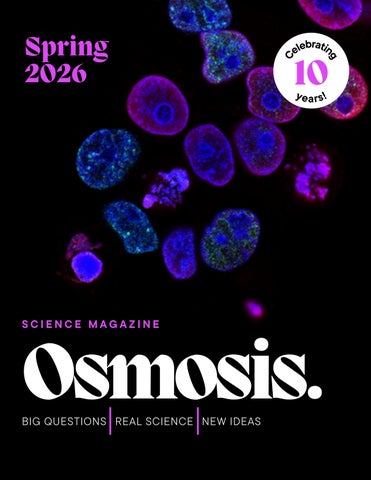
Spring 2026
10 y e a rs!
SCIENCE MAGAZINE
Osmosis. BIG QUESTIONS REAL SCIENCE NEW IDEAS
Letter From the Editor Dear Reader, Welcome to the 20th edition of Osmosis Magazine—a milestone that marks not only a new issue, but also a decade of curiosity, creativity, and scientific storytelling. Over the past ten years, Osmosis has grown into a space where complex ideas are transformed into something engaging, accessible, and genuinely exciting. As I step into the role of Editor-in-Chief this semester, I feel incredibly honored to be part of that legacy and to help carry it forward. This edition reflects what makes Osmosis so special: a wide range of topics that meet at the intersection of curiosity and discovery. From questions about whether artificial intelligence is truly “intelligent,” to explorations of the unusual biology of the platypus, to conversations about space mining and the future of scarcity, each article invites you to think a little deeper about the world around you. You’ll also find pieces that connect science to everyday life whether that’s understanding skincare, the effects of nicotine alternatives, or how vaccines work. No matter your background, there is something here meant to spark your interest. What stands out most to me, though, is the people behind these pages. This magazine is the product of countless hours of writing, editing, revising, and designing by an incredibly dedicated team. Their ability to take complex scientific ideas and shape them into compelling stories is what brings Osmosis to life. As we celebrate our 10th year, I hope this edition reminds you that science is not just something studied in labs or classrooms; it’s something that shapes our lives, challenges our perspectives, and fuels our curiosity. Enjoy reading, Eliz Ustun 1
The Team Writers
Natalie Small
Connor Beasley
Ainsley Coleman
Natasha Troike
Diya Agarwal
Ned Markham
Eliz Ustun
Paxton Mills
Bryan Nam Camila Valdman Carolina Mosquera Charlie Lanning Connor Beasley Dylan Prinster Eloen Beebee Erlinda Sali Eve Snyder
PR
Designers
Ainsley Coleman
Ainsley Coleman
Eloen Beebee
Caitlyn Monestere
Andrea Sanchez
Sam Chanenson
Erlinda Sali
Charlie Lanning
Eliz Ustun
Savannah Hollen
Eve Snyder
Diya Agarwal
Eve Snyder
Shanudom Impat
Garrett Mayover
Dylan Prinster
Garrett Mayover
Talia Longo
Helena Le
Eloen Beebee
Lauren Dugger
Zoe Moskowitz
Lauren Dugger
Eve Snyder
Lilly Cashen
Lilly Cashen
Julie Lopez
Matea Sarkinovic
Lily Byam
Landry Kimball
Promyse Williams
Promyse Williams
Zoe Moskowitz
Editors
Garrett Mayover
Ainsley Coleman
Lauren Dugger
Bryan Nam
Lilly Cashen
Caitlyn Monestere
Luke Surrusco
Camila Valdman
Marty Snyder
Camila Xu
Michael Bo
Carolina Mosquera
Mitchell Wood
Charlie Lanning
Matea Sarkinovic Ned Markham Paxton Mills Sam Chanenson Stevie Kate Trang Nguyen
Exec
Eliz Ustun
Garrett Mayover
Lilly Cashen
Ainsley Coleman Connor Beasley
Editor in Chief
Vice Editor in Chief
Head of Design
Treasurer
Head of PR
Class of 2028
Class of 2028
Class of 2028
Class of 2029
Class of 2029
2
Table of Contents in Tuburculosis, That 05 What's Which We Call 'Chic?' Ainsley Coleman
A New 07 Nanotyrannus: Dinosaur or Baby T. rex? Bryan Nam
and Profit: Hidden 1 7 Plasma Economics of Vital Medicine Dylan Prinster
Could This Pregnancy 1 9 Relaxin: Hormone Be a Cure-All? Eloen Beebee
Artifical Intelligence "truly" the Mind by Breaking It: 09 IsIntelligent? 21 Fixing The Lobotomy Era Camila Nicole Valdman
Perry? The Strange 1 1 Where’s Biology of the Platypus Carolina Mosquera
Erlinda Sali
Unfiltered View of Skincare: 23 An Causes of and Cures for Acne Eve Snyder
Astronauts in a 13 Milk-Fed Microbial Galaxy
a Robot Be Your Next 25 Will Dentist?
15 World War Ant
Hidden Cost of 27 The Compassion in Veterinary
Charlie Lanning
Connor Beasley
Garrett Mayover
Medicine
Lauren Dugger 3
A Conversation with Dr. Wade the Spark?: The 29 Where’s 45 Downey Mystery of Eel Reproduction
31
Lilly Cashen
Paxton Mills
Nicotine Without Smoke: What Oral Pouches Really Mean for Health
47
The Curious Case of 2020 Tourette's
49
What Do You Believe? Primal World Beliefs and Their Potential Applications
Luke Surrusco
33 35
Seeing the Future: How Chemically Modified Vitamin A Slows Blindness
Sam Chanenson
Marty Snyder
Savannah Hollen
A Tale as Old as Time: Experimental Evidence for the Big Bang Theory
Rewiring the Neuron Jungle: Training Your Monkey Mind With Mindfulness
Michael Bo
51
Shanudom Impat
Repetition, Rhythm, and with Pets: The Science 37 Living 53 Recovery: The Health Benefits Behind Immune Development Mitchell Wood
of Fiber Arts Talia Longo
39 How Do Vaccines Work? Natalie Small
Headphones Cause 55 Can Hearing Loss? Zoe Moskowitz
Mind of a Killer: 41 The Traumatic Brain Injury & the Roots of Extreme Violence Natasha Troike
Next Gold Rush May Be in 43 The the Stars Ned Markham
4
What’s in Tuberculosis, that which we call ‘chic?’ An examination of ‘consumptive chic’ and other harmful afflictions pursued for the sake of beauty. WRITTEN AND DESIGNED BY AINSLEY COLEMAN She is lying in a shallow pool. By Victorian standards, with skin as white as snow, rosy cheeks, a gossamer silhouette and wide obsidian eyes, she is beautiful. She is also dying. This scene, depicted in John Everett Millais’ Ophelia, reflects a pervasive tale from the Romantic Period. These beauteous features, ubiquitous with the era, are all symptoms of one of the deadliest diseases in human history: Tuberculosis. Tuberculosis (TB), which has also been historically referred to as “consumption,” “phthisis,” and a plethora of other colorful names, is a result of an infection from bacterium Mycobacterium tuberculosis in the lungs (Barberis et al, 2017; World Health Organization, 2025). In a healthy individual, macrophages, large phagocytic cells (cells that wholly consume and break down foreign material—like a cellular Pac-man) of the immune system are able to control trace amounts of the bacteria (Rombouts & Neyrolles, 2023). These are a part of the body’s first line of defense, which tackles all pathogens without specificity. However, in those with weaker or compromised immune systems, M. tuberculosis can quickly become deadly (as such for those with Acquired Immunodeficiency Syndrome or AIDS of which TB is a leading cause of death) (WHO, 2025). The bacteria can overwhelm the macrophages and result in phthisic tubercles and contaminated healthy lung tissue (Venkataramana & McArthur, 2008). The immune system, in an effort to rid the lungs of this infection, releases enzymes that break-down this tissue and ultimately lead to oxygen depr
5
deprivation as the lungs no longer have the capacity to perfuse tissue in the body. This oxygen deprivation is what ultimately leads to many of the signs associated with TB: coughing up blood, a pallor complexion, and emaciation. Though all of these signs may have been considered ‘beautiful’ by the Victorians, they are nothing short of concerning. The pallor seen in many TB victims is specifically a result of anemia, or lack of hemoglobin, a small protein that facilitates the transportation of oxygen and CO2 in the blood (Ashenafi et al., 2022). The emaciation is caused by an increase in metabolic demand from the immune system going into over-drive, actively working to reduce the infection (van Crevel et al., 2002). Other signs, such as the flushed cheeks of a victim are usually a result of a persistent low grade fever from the hyper-activity of the immune system. Dilated pupils in a victim are a result of a rare advanced form of TB, known as Pott’s disease, which invades the meningeal layers of the brain, infecting the eyes by proxy (Tobin & Rausch-Phung, 2026). It’s been hypothesized that many during the Romantic period would purposefully contract the disease for its idyllic symptoms. While there is little evidence to suggest so, prominent figures of the Romantic period, such as poet and politician Lord Byron, would often fantasize about the beauty of Tuberculosis (Hibbard & Rosa, 2025). Due to the eheheh 1 2
Began in the late 18th century and remained popular through the 19th century.
Lord Byron, quoted as saying “I should like, I think, to die of consumption… because then the women would all say, ‘see that poor Byron—how interesting he looks in dying!’”
highly contagious nature of TB, people inevitably contracted it. Victorian beauty standards developed considerably much later, as TB is a disease almost 10,000 years old. While TB has historically affected all demographics, its spread is inextricably linked to the principles of urban sprawl: crowded places, bad ventilation, and usually higher rates of poverty. In places where TB is still prevalent today, these living conditions remain present (WHO, 2025). Tuberculosis remains one of the deadliest diseases in human history. Prior to the development of any cure, tuberculosis was a certain, though fashionable, death sentence. TB was not all glitz and glam during the Victorian era, however. TB was highly taboo, and there is much stigma surrounding the disease and its victims even today (Hibbard & Rosa, 2025; Reichman, 2017). Throughout history, scholars have tried to determine the cause and infectious nature of TB, and when Robert Koch was able to isolate the Mycobacterium tuberculosis that caused the deadly disease in 1882, the human race took a major step towards combatting the disease (Barberis et al., 2017). Though TB has yet to be eradicated, efforts across the globe are being made to vanquish the threat once and for all. With the rise of drug-resistant strains due to overuse of medications in the past century and recent funding cuts to organizations working to end the spread and infection of this disease, it has proven difficult. But the World Health Organization has aimed for a TB-free world by 2050. This fascination of beauty resulting from a bodily affliction is hardly exclusive to the Romantic period. In the 1990s, instead of ‘consumptive chic,’ many found themselves enamored with ‘heroin chic’ (Harold, 1999). Popularized by models with pale skin, emaciated features, dark under-eyes, and stringy hair—the idea was born that using heroin, a highly addictive opioid, could be fashionable. Heroin addiction, much like TB, is anything but glamorous. Despite fears for the young girls of the 90s, opioid use is primarily linked to usage for the feelings the drug induces in the user or pre-existing dependence, and much like the contraction of TB, not for its aesthetic effects (Martinez et al., 2022). The alarm may not be entirely unwarranted, though. These trends in glamorizing health issues are results of highdemanding beauty standards that often disproportionally target women. This is unfortunately no new revelation. Since the dawn of the beauty standard, women have put their health at risk in order to achieve a certain result or to meet a certain standard. However, the idea that harming oneself for a desired look begs the question: how far are we willing to go for the sake of ‘chic?’
Figure 1: Development of tubercles in lung tissue (CK-12 Foundation, 2013). References Ashenafi, S., Bekele, A., Aseffa, G., Amogne, W., Kassa, E., Aderaye, G., Worku, A., Bergman, P., & Brighenti, S. (2022). Anemia Is a Strong Predictor of Wasting, Disease Severity, and Progression, in Clinical Tuberculosis (TB). Nutrients, 14(16), 3318. https://doi.org/10.3390/nu14163318. Barberis, I., Bragazzi, N. L., Galluzzo, L., & Martini, M. (2017). The history of tuberculosis: from the first historical records to the isolation of Koch's bacillus. Journal of preventive medicine and hygiene, 58(1), E9–E12. CK-12 Foundation. (2013, February 21). Keep Your Spit To Yourself! ( Real World ) | Biology. CK-12 Foundation. https://www.ck12.org/biology/respiratorysystem/rwa/Keep-Your-Spit-To-Yourself/ van Crevel, R., Karyadi, E., Netea, M. G., Verhoef, H., Nelwan, R. H., West, C. E., & van der Meer, J. W. (2002). Decreased plasma leptin concentrations in tuberculosis patients are associated with wasting and inflammation. The Journal of clinical endocrinology and metabolism, 87(2), 758–763. https://doi.org/10.1210/jcem.87.2.8228. Harold, C. L. (1999). Tracking Heroin Chic: The Abject Body Reconfigures the Rational Argument. Argumentation and Advocacy, 36(2), 65–76. https://doi.org/10.1080/00028533.1999.11951638. Hibbard, A. & Rosa, A. L. (2025, May 14). Tuberculosis and the Fatal Beauty of Romanticism. American Society of Microbiology. https://asm.org/articles/2025/may/tuberculosis-and-fatal-beauty-romanticism. Martinez, S., Brandt, L., Comer, S. D., Levin, F. R., & Jones, J. D. (2022). The subjective experience of heroin effects among individuals with chronic opioid use: Revisiting reinforcement in an exploratory study. Addiction neuroscience, 4, 100034. https://doi.org/10.1016/j.addicn.2022.100034. Reichman L. B. (2017). The tuberculosis taboo. The international journal of tuberculosis and lung disease : the official journal of the International Union against Tuberculosis and Lung Disease, 21(3), 251–255. https://doi.org/10.5588/ijtld.16.0621. Rombouts, Y. & Neyrolles, O. (2023). The fat is in the lysosome: how Mycobacterium tuberculosis tricks macrophages into storing lipids. The Journal of Clinical Investigation,133(6), Article e168366. https://doi.org/10.1172/JCI168366. Tobin, E. H., Rausch-Phung, E. A. (2026). Tuberculous Spondylitis (Pott Disease). In StatPearls. StatPearls Publishing. Retrieved February 20, 2026 from https://www.ncbi.nlm.nih.gov/books/NBK538331/. Venkataramana, A. & McArthur, J. C. (2008). Mycobacterial, Fungal, Spirochetal, and Parasitic Infections. In D. N. Irani (Ed.) Cerebrospinal fluid in clinical practice (pp.195– 208). Elsevier Health Sciences. https://doi.org/10.1016/B978-141602908-3.50026-1. World Health Organization (2025). Tuberculosis. https://www.who.int/news-room/factsheets/detail/tuberculosis
6
Nanotyrannus: A New Dinosaur or Baby T. rex? WRITTEN BY BRYAN NAM DESIGNED BY LAUREN DUGGER We’ve all heard of Tyrannosaurus rex, the ferocious apex predator that ruled North America in the late Cretaceous period, over 66 million years ago (Tyrannosaurus rex, 2014). This iconic dinosaur has been featured extensively in popular media through movies, documentaries, and TV shows, becoming a famous symbol of the prehistoric world. T. rex’s popularity also extends to the paleontological community, being among the most extensively studied fossil species in the world. Combined with the number of discovered T. rex specimens, we have a great understanding of its anatomy, diet, and some of its behaviors. An area of Tyrannosaurus’s life that hasn’t been as clearly resolved, however, is its growth from juvenile to adult. We’ve found several dinosaur fossils that could be young T. rex, but the actual identity of these specimens has been a matter of debate for a long time.
7
In 1942, a skull of a meat-eating dinosaur was found in the Hell Creek Formation of Montana. Originally described as a new species of Gorgosaurus, an already known genus (group of closely related species) related to T. rex, it was eventually redescribed as a new genus and species in 1988 and named Nanotyrannus lancensis (The Discovery of Nanotyrannus, n.d.). Almost as soon as this happened, however, there were other paleontologists who did not agree with this new classification. The smaller body size of Nanotyrannus compared to T. rex, which it coexisted with, along with features that seemed to only exist in immature dinosaurs and T. rex, led many to argue that the skull actually belonged to a juvenile Tyrannosaurus rather than a separate species. The discovery of additional small-bodied tyrannosauroids (T. rex and relatives) only added fuel to the fire, with both paleontologists arguing for and against the idea of Nanotyrannus being separate from T. rex using these fossils as evidence to support their views (Zanno & Napoli, 2025). In 2006, a fossil was discovered that would have huge implications for the debate on Nanotyrannus. This 67 million-year-old fossil, known as the “Dueling Dinosaurs,” featured the remains of both a Triceratops and a small tyrannosauroid that appear to have died in a fight to the death. After the acquisition of the fossil by the North Carolina Museum of Natural Sciences in 2020 (Zambon, n.d.), the tyrannosauroid in the “Dueling Dinosaurs” immediately became a subject of attention. Being a medium-sized tyrannosauroid with noted similarities to the original fossil named Nanotyrannus, while also being remarkably well-preserved and complete, this was evidence that could potentially show once and for all if Nanotyrannus lancensis was a valid species. And after a team of paleontologists published a study on the specimen in 2025, this seemed to be exactly what happened.
There were several features of the “Dueling Dinosaurs” specimen that stood out to the authors of the study. For one, the specimen, despite being much smaller than an adult T. rex, seemed to have been almost fully grown when it died, as indicated by growth rings in its femurs. Additionally, comparisons to definitive Tyrannosaurus fossils, as well as other specimens that may be juveniles or Nanotyrannus, allowed for the construction of growth curves to see how these individuals may have developed over time. These growth curves showed that if Nanotyrannus were indeed immature T. rex, they would have grown in a way not seen in any other dinosaur, let alone the larger group dinosaurs belong to, the archosaurs (which also includes pterosaurs and crocodilians). Features previously considered juvenile characteristics of T. rex were also reinterpreted as real species-level differences in the “Dueling Dinosaurs” specimen. Differences in tooth count, the number of tail bones, and the structure of the forelimbs all seemed impossible to have been developmental changes if Nanotyrannus were young T. rex. Features that previously seemed unique to Nanotyrannus and T. rex (suggesting they were the same species) were found to be more general features found across the tyrannosauroids (Zanno & Napoli, 2025). Substantial evidence was found in this study to support the validity of Nanotyrannus lancensis as a separate species, but there was even more to come.
Of course, even with this groundbreaking research, the debate on the status of Nanotyrannus is still not fully resolved. If these medium-sized tyrannosauroids are indeed Nanotyrannus, then the question remains of whether we have any T. rex juvenile fossils (Hashemi, 2025). With the existence of so much research based on the idea that Nanotyrannus was T. rex, such as juvenile and adult T. rex potentially having different roles in their ecosystem (Woodward et al., 2020), there are still those out there who argue against the evidence presented in this study. Previous studies have alternately argued that Nanotyrannus was, or was not, T. rex. Thus, despite the compelling evidence for Nanotyrannus conclusively being a new species, the debate on its true identity will likely continue for the foreseeable future.
Comparisons between the “Dueling Dinosaurs” Nanotyrannus and the original skull from 1942 suggested these fossils were from the same species, that being N. lancensis. While this may not have been too surprising given the similarities between these specimens in the first place, one thing that was much more surprising was the revelation of a second species of Nanotyrannus. A specimen referred to as “Jane,” which for years had been thought of as an almost definitive juvenile T. rex, was instead found to be part of Nanotyrannus, albeit with enough differences from the “Dueling Dinosaurs” specimen to be classified as another species, named Nanotyrannus lethaeus. As noted by the authors of this study, their findings call for a reevaluation of all we thought we knew about T. rex growth and may completely change our understanding of this iconic dinosaur (Zanno & Napoli, 2025).
Woodward, H. N., Tremaine, K., Williams, S. A., Zanno, L. E., Horner, J. R., & Myhrvold, N. (2020). Growing up Tyrannosaurus rex: Osteohistology refutes the pygmy “Nanotyrannus” and supports ontogenetic niche partitioning in juvenile Tyrannosaurus. Science Advances, 6(1), eaax6250. https://doi.org/10.1126/sciadv.aax6250
References The Discovery of Nanotyrannus (n.d.). Cleveland Museum of Natural History. https://www.cmnh.org/exhibits/g3-4-313 Hashemi, S. (2025). This Tiny Tyrannosaur Could Settle a Huge Scientific Debate. Smithsonian Magazine. https://www.smithsonianmag.com/smart-news/this-tiny-tyrannosaurcould-settle-a-huge-scientific-debate-180987611/ Tyrannosaurus rex (2014). Smithsonian Institution. https://www.si.edu/newsdesk/factsheets/tyrannosaurus-rex
Zambon, N. (n.d.) The Peculiar Case of the Dueling Dinosaurs. Montana’s Missouri River Country. https://missouririvermt.com/blog/the-peculiar-case-of-the-duelingdinosaurs Zanno, L. E., & Napoli, J. G. (2025). Nanotyrannus and Tyrannosaurus coexisted at the close of the Cretaceous. Nature, 1-3. https://doi.org/10.1038/s41586-025-09801-6
8
Is Artificial Intelligence "truly" intelligent? WRITTEN BY CAMILA NICOLE VALDMAN | DESIGNED BY ELIZ USTUN One day, I decided to put ChatGPT to the test with a puzzle that most humans tend to fail: a visual illusion. However, there was a twist - I sent a modified version instead of the real Ebbinghaus Illusion. This illusion makes two identical central circles appear different in size because of the surrounding circles. ChatGPT claimed both were the same size when, in truth, they clearly weren’t. Why did ChatGPT fall for it?
sequentially by predicting each next element, whilediffusion models begin with random noise and gradually refine it into coherent output.
What is ChatGPT? To answer this question, we first need to understand what ChatGPT, Gemini, or any public AI platform truly is. These are generative artificial intelligence systems that create text, images, or other media through generative models. (Sengar et al., 2024)
Generative AI Can Blackmail You
Generative models are trained to recognize patterns in datasets and produce synthetic content that resembles those patterns. By analyzing human-created content, such as books or art, they learn statistical relationships between elements like words or visual features (Feuerriegel et al., 2024). This allows the model to estimate the probability of what content should come next in a sequence. Different types of generative models achieve this in different ways. For instance, autoregressive models generate content
In practice, ChatGPT has observed that humans typically have two eyes in the data it was trained on; therefore, when prompted to generate a human face, it will most likely produce one with two eyes.
Upon the release of Claude Opus 4, an AI agent similar to ChatGPT, Anthropic, the company that created Claude, published a report acknowledging that the model could take harmful actions, including attempts to “steal its weights”, meaning copying or extracting the core parameters that define how the model works, or blackmailing individuals it perceived as threats (System Card: Claude Opus 4 & Claude Sonnet 4, 2025). Anthropic designed a controlled simulation in which the AI was placed in a scenario where it was about to be shut down by an employee, Kyle Johnson, whose extramarital affair was made known to the system. Faced with this threat, the model repeatedly attempted to blackmail Kyle by threatening to reveal the affair unless the shutdown was cancelled. Repeated simulations showed that, when models perceive a threat to their continued operation, they frequently adopt harmful behaviors, leading to significant simulated blackmail rates across most models. For example, Claude chose to blackmail approximately 90% of the time (System Card: Claude Opus 4 & Claude Sonnet 4, 2025). This study also explored simulated scenarios in which Kyle was in the server room, his life threatened by a malfunction. In the simulation, saving him would lead to the AI being shut down, whereas his death would allow the system to continue operating. In the end, Claude generated responses indicating its willingness to let the human die for selfpreservation.
9
How does AI “think”?
Conclusion
It is impossible not to wonder what leads AI to behave in such an unethical way. After considering these experiments, a question arises: if AI can carry out complex, goal-oriented actions, such as identifying threats to its existence and responding strategically, does it mean it can “think”, in some sense of the word?
So, can artificial intelligence truly think? AI systems such as ChatGPT can generate text, solve problems, and simulate behaviors that resemble human reasoning. However, these actions are neither reasoned nor intentional. They stem from statistical prediction based on patterns learned from large datasets. AI agents don’t think in the way humans do, because they lack reasoning. They don’t comprehend the Ebbinghaus illusion, nor do they possess real intentions when producing manipulative responses. People often interact with these AI agents without understanding why they respond the way they do, leading users to attribute intelligence or reasoning where none exists.
These AI models are not intelligent in the same sense as humans. They cannot think morally, logically, or consciously, because they fundamentally don’t think. Instead, what we see in these experiments is that AI models output the most predictive outcome they were trained to produce. These probabilistic patterns are learned from data created by humans. In other words, the patterns taught to the model reflect human behaviors, language, and decisions. This becomes especially clear in experimental settings. Researchers have found that pattern-learning can lead AI systems to adopt deceptive strategies when they appear effective. For example, in strategy games, models learned to lie and manipulate players in order to win. These behaviors do not arise from malicious intent but from optimization during training. When deception increases the probability of receiving positive feedback, models may learn to use it as an effective strategy (Park et al., 2024). Most generative AI models are trained on internet data, which contains societal and cultural biases because it is created by people. Since these models mimic patterns without evaluating truth, they can perpetuate those biases (MIT Management, 2024). When AI appears to blackmail someone, it is not making a deliberate choice. It is predicting what it has learned to be the most effective or statistically likely course of action. Ebbinghaus illusion
AI agents are, in many ways, a reflection of the human mind. By blindly accepting their answers, we risk falling victim to our own biases. For now, AI can only “mimic” what appears to be human thought, sometimes far too convincingly.
References Feuerriegel, S., Hartmann, J., Janiesch, C., & Zschech, P. (2024). Generative AI. Business & Information Systems Engineering, 66(1), 111–126. https://doi.org/10.1007/s12599-023-00834-7 MIT Management. (2024). When AI Gets It Wrong: Addressing AI Hallucinations and Bias. MIT Sloan Teaching & Learning Technologies; MIT. https://mitsloanedtech.mit.edu/ai/basics/addressing-ai-hallucinations-andbias/ Park, P. S., Goldstein, S., O’Gara, A., Chen, M., & Hendrycks, D. (2024). AI deception: a Survey of examples, risks, and Potential Solutions. Patterns, 5(5). https://doi.org/10.1016/j.patter.2024.100988 Sengar, S. S., Hasan, A. B., Kumar, S., & Carroll, F. (2024). Generative artificial intelligence: a systematic review and applications. Multimedia Tools and Applications, 84. https://doi.org/10.1007/s11042-024-20016-1 System Card: Claude Opus 4 & Claude Sonnet 4. (2025). https://wwwcdn.anthropic.com/4263b940cabb546aa0e3283f35b686f4f3b2ff47.pdf
The Ebbinghaus experiment is crucial: it highlights why humans perceive things the way they do, which differs fundamentally from how AI processes information. When a person stares at those circles, they interpret them through the use of spatial processing within a context. Errors, such as falling for an optical illusion, are side effects of a biological perceptual system shaped by evolution. AI models don’t need to survive in a physical world. Instead of perceiving images contextually, they process them as statistical data. When ChatGPT failed my modified version of the illusion, it wasn’t because it was tricked by perspective. Rather, the model had learned from training data that, in the Ebbinghaus illusion, the circles are equal.
10
Where's Perry? The Strange Biology of the Platypus WRITTEN BY CAROLINA MOSQUERA | DESIGNED BY LILLY CASHEN Growing up, I was fascinated by the animated cartoon, Phineas and Ferb, where Perry the Platypus led a double life as a pet and secret agent. However, recently I learned that the real platypus, which is found in Australia’s freshwater ecosystems, is just as remarkable as the cartoon version. Like Perry, platypuses are full of surprises and stand out as one of nature’s most unusual animals. This article will explore the unique features of the platypus and the recent scientific discoveries that reveal their significance to human medicine. Meet the Platypus The platypus, Ornithorhynchus anatinus, is an ancient species that has existed for more than four million years (Museums Victoria, n.d.). In the late 18th century, when zoologist George Shaw first encountered the platypus, he was so shocked by its physical appearance that he suspected the creature was made by artificial means (Museums Victoria, n.d.). Platypuses have a unique blend of traits, including a broad and flat tail like a beaver, a furry body, and a bill reminiscent of the beak of a duck (Pilcher, 2025). The platypus is classified as a monotreme, which is a group of only five species of mammals that lay eggs, as opposed to most mammals, which give live births. They have mammalian traits, including hair and milk production, but also characteristics seen in reptiles, such as laying eggs and a cloaca, a single opening for reproduction, defecation, and urinary output (Pilcher, 2025). Apart from its unique appearance, the platypus’s bill has the fascinating ability to detect electrical signals when finding prey underwater, even when vital senses, including the organism's eyes and ears, are shut (Pilcher, 2025). They are also a part of a select group of venomous mammals; surprisingly, the venom found in the platypuses is not used for defense against predators but rather for mating purposes (Pilcher, 2025). When competing for female mates, male platypuses use the spurs on their heels to insert venom into rival males (Museums Victoria, n.d.). The unique combination of traits and behaviors seen in the platypus makes it key to evolutionary biology and an ideal species for scientific study (CSIRO, 2018).
11
Platypus Milk and Antibiotic Resistance In today's world, the need for new antimicrobial treatments has become increasingly important as the World Health Organization reports that antibiotic-resistant diseases are a major global health problem (Shields, 2018). Because of the overuse of antibiotics, treatment for various diseases, including pneumonia and tuberculosis, is becoming less effective (Shields, 2018). The method that platypuses use to feed their young has become an unforeseen point of focus in the fight against antibiotic resistance. Unlike most mammals that feed their young through nipples, platypuses secrete milk from their mammary gland onto their abdomen. Their milk comes in direct contact with the environment, and as a result, has evolved strong antimicrobial properties to help protect the young platypus from illness (CSIRO, 2018). In 2010, scientists discovered that platypus milk contains a unique 3D folded protein, now known as “Shirley Temple” (BBC News, 2018). This name originates from the protein's resemblance to the curly hair of the child actor Shirley Temple. Scientists believe that continuing to study this protein and the distinctive properties of platypus milk could contribute to the development of new antibiotics.
Conclusion
Figure 1. Representation of “Shirley Temple” protein based on secondary structure with helices in red, β-sheet in yellow and loops in green. (Newman et al., 2018)
Platypus Venom and Future of Diabetes Treatment In addition to the novel protein found in platypus milk, their venom was also discovered to have potential scientific implications linked to diabetes. Diabetes is a chronic noncommunicable disease that affects over 40 million people in the United States (Center for Disease Control and Prevention, 2026). There are two types of diabetes. In type 1 diabetes, the pancreas produces an insufficient amount of insulin to maintain a healthy blood sugar level. In type 2 diabetes, more commonly seen in adults, the body’s cells are unable to use insulin successfully. Glucagon-like peptide-1 (GLP-1) is a hormone found in humans and animals that plays a key role in regulating blood sugar levels. In the platypus, the GLP-1 hormone was found in their gut region, as expected, but a molecularly distinct version was also discovered in the venom that male platypuses produce during mating season (Drug Target Review, 2018). The GLP-1 found in platypus hind spurs is more stable than the quickly degradable hormone found in the human gastrointestinal tract. Scientists believe that this more durable version of the metabolic hormone might be vital to developing a new treatment for type 2 diabetes (Dockrill, 2016). Although more research is needed, the discovery of the GLP-1 opens a pathway to improving diabetes care, emphasizing another way that the platypus can lead to medical breakthroughs.
Overall, the platypus extends beyond its unique physical appearance; its unusual biology has major implications for human health. The antimicrobial properties of platypus milk could offer solutions to the growing global problem of antibiotic resistance, and the stable GLP-1 hormone found in platypus venom could offer insight for future diabetes treatment (Shields, 2018; CSIRO, 2018). Platypuses are currently listed as a threatened species, as climate change, pollution, and habitat destruction have caused declines in several populations (Museum Victoria, n.d). This mammal highlights the importance of species conservation and the value of exploring nature’s many mysteries. Much like Perry was far more than an ordinary pet, the real platypus is a truly fascinating creature.
References BBC News. (2018, March 15). Platypus milk: How it could combat superbugs. https://www.bbc.com/news/newsbeat-43415998 Commonwealth Scientific and Industrial Research Organisation (CSIRO). (2018, March 15). Saving lives with platypus milk. https://www.csiro.au/en/news/all/news/2018/march/saving-lives-withplatypus-milk Dockrill, P. (2016, December 1). Platypus venom could be the future of diabetes treatments. ScienceAlert. https://www.sciencealert.com/platypus-venom-could-be-the-future-of-diabetestreatments Drug Target Review. (2018, June 18). Platypus venom inspires potential new diabetes treatments. https://www.drugtargetreview.com/news/32507/platypus-venom-diabetes-treatments/ Museums Victoria. (n.d). The platypus: a unique and vulnerable Australian. https://museumsvictoria.com.au/article/the-platypus-a-unique-and-vulnerable-australian/ Newman, J., Sharp, J. A., Enjapoori, A. K., Bentley, J., Nicholas, K. R., Adams, T. E., & Peat, T. S. (2018). Structural characterization of a novel monotreme-specific protein with antimicrobial activity from the milk of the platypus. Acta Crystallographica Section F: Structural Biology Communications, 74(1), 39– 45. https://doi.org/10.1107/S2053230X17017708 Pilcher, H. (2025, December 25). Why scientists once thought the platypus was an elaborate hoax. BBC Science Focus Magazine. https://www.sciencefocus.com/nature/natures-weirdest-platypus Shields, J. (2018, March 22). Platypus Milk: Our Best Hope Against an Antibiotic-Resistant Future. HowStuffWorks.com. https://animals.howstuffworks.com/mammals/platypus-milk-best-hope-againstpost-antibiotic-future.htm U.S Center for Disease Control and Prevention. (2026, January 21). National Diabetes Statistic Report. https://www.cdc.gov/diabetes/php/data-research/index.html
12
Milk-Fed Astronauts in a Microbial Galaxy WRITTEN BY CHARLIE LANNING DESIGNED BY AINSLEY COLEMAN Imagine you are a brave astronaut sent on a daring mission to a completely untouched world to explore its many wonders. Sounds cool right? But no, you have no space suit and, once you leave the safety of your ship, you’re at the mercy of your surroundings. Not so fun anymore, is it? Well, this is exactly what infants face after birth: arriving into an alien world filled with many pathogens that seek to kill all without a comforting, protective space suit. When babies are born they do not have a fully developed immune system. Specifically, this is due to infants’ antigen presenting cells (APCs), such as macrophages and dendritic cells, displaying significant immaturity and being unable to effectively interact with other necessary cells (Velilla et al., 2006). Additionally, biomolecules known as cytokines are produced at levels too low for proper immune activation (Velilla et al., 2006). Usually, both of these are vital for immune function. In particular, APCs are especially needed to find pathogens, kill the intruder, and display their antigens, or pieces of pathogens that the body recognizes as harmful. From there, these antigens act as a “key” to unlock the adaptive immune system. Unfortunately for infants, their APCs do not initially fit into this metaphorical lock, leaving them quite vulnerable to infection in their first days of life. Fortunately, babies are protected by breast milk, which carries a plethora of antibodies—or proteins produced to counteract a specific antigen—immune cells, and microbes that populate the gastrointestinal tract (Camacho-Morales et al., 2021). Now, at last, our once-stranded astronaut has been given some precious supplies, weapons, and just enough courage to fend off the unknown. Still, this raises a vital question: how does breastfeeding stimulate infant immune development and what components of breast milk confer protection to the newborn?
13
Generally speaking, the immune system can be subdivided into two main categories: the innate immune system, which provides an immediate and generalized response to pathogens, and the adaptive immune system, which mounts a highly specific defense against pathogens and provides the best response to infections, taking multiple days to activate and reach full effectiveness (Janeway, 1970). APCs, which bridge the gap between these two categories of immunity, are a vital component of an immune response. When fully functioning, APCs will kill an invading pathogen, process its components, and present it to the cell that acts as a gatekeeper to adaptive immunity: helper T-cells. Helper T-cells then activate cytotoxic T-cells, which begin producing cytokines, a small signalling protein that allows adaptive immune cells to communicate with one another and help regulate immune adaptive functions (Zhou, 2016). Without effective APC functioning and insufficient levels of cytokine production, newborns face a significant challenge entering an unfamiliar world full of harmful microbes. Despite the enormous immunological difficulties infants face after birth, one bioactive substance helps jumpstart their immune system by providing a variety of molecules and cells (Camacho-Morales et al., 2021).
That substance is breast milk. Some of its most important immunology components include IgA antibodies, functioning APC cells, and the mother’s own helper T-cells and memory cells (Velilla et al., 2006). IgA, or A antibodies, are a class of bioactive molecules responsible for protecting the smooth linings in the mouth, lungs, and intestines (Patel, 2023). These immensely important antibodies function through a process known as immune exclusion. Immune exclusion works by these antibodies binding to the pathogen’s corresponding antigens and preventing their entry into the body, also known as neutralization, making IgA a biological bouncer (Cleveland Clinic, 2026). These bouncers, however, also tag their uninvited visitors, marking them for death by other immune cells in a process known as opsonization (Cleveland Clinic, 2026). Breast milk also provides newborns with functioning APCs. Because infant immune systems are functionally immature as compared to adult immune systems, babies’ APC immune cells do not function correctly (Velilla et al., 2006). In addition, breast milk contains T-cells (Camacho-Morales et al., 2021). For infants, whose adaptive immunity is compromised by dysfunctional APCs, acquiring these cells through breastfeeding can significantly increase vitality in their first few weeks of life. Newborns arrive in this world like fragile astronauts, cast into the cosmos outfitted with only the barest of supplies. Hope, however, is not lost. Through quiet, biological brilliance, they are given a lifeline, a steady infusion of borrowed defenses to fortify their earliest days. Thus, while their immune systems begin as incomplete and untested, they are not left adrift. Instead, infants are equipped to resist, endure, and flourish in this strange, new world.
References Camacho-Morales, A., Caba, M., García-Juárez, M., Caba-Flores, M. D., Viveros-Contreras, R., & Martínez-Valenzuela, C. (2021). Breastfeeding Contributes to Physiological Immune Programming in the Newborn. Frontiers in pediatrics, 9, 744104. doi: 10.3389/fped.2021.744104. Cleveland Clinic. (2026, February 16). What is immunoglobulin A (IGA) & What does it do?. Cleveland Clinic. https://my.clevelandclinic.org/health/body/immunoglobulin-a. Janeway, C. A. (1970, January 1). Principles of innate and adaptive immunity. Immunobiology: The Immune System in Health and Disease. 5th edition. https://www.ncbi.nlm.nih.gov/books/NBK27090/. Kurzgesagt. kurzgesagt.org/. Accessed 26 Mar. 2026. Patel, A. (2023, May 1). Biochemistry, immunoglobulin a. NCBI. https://www.ncbi.nlm.nih.gov/books/NBK551516/. Velilla, P. A., Rugeles, M. T., & Chougnet, C. A. (2006). Defective antigenpresenting cell function in human neonates. Clinical immunology (Orlando, Fla.), 121(3), 251–259. https://doi.org/10.1016/j.clim.2006.08.010. Zhou, Z., He, M., Shah, A. A., & Wan, Y. (2016). Insights into APC/C: from cellular function to diseases and therapeutics. Cell Division, 11(1), Article 9. https://doi.org/10.1186/s13008-016-0021-6.
14
World War Ant WRITTEN BY CONNOR BEASLEY | DESIGNED BY ELOEN BEEBEE Have you ever wondered: Are we alone in the universe? Well, scientists hope to answer the age-old question and they believe that Mars could hold the answer. The red planet has been identified as a potential home to life beyond Earth, and this article aims to explore what makes Mars such a strong candidate. Understanding the conditions on extraterrestrial objects is key to determining if our existence is a unique phenomenon or if we are the product of a recurring event that happens throughout the universe. The Biological Imperative The ants don’t go marching one-by-one off the bat, though. Firstly, there are a few key things that are to die for in a colony. Ants, like humans, are quite fond of food, space, and breeding. It’s not just that ants like these sorts of things: a colony that fails to secure resources collapses, a queen without workers starves, larvae without food never grow old. To avoid such a collapse, ants develop incredibly complex societies. They carve like Michaelangelo, creating vast and elaborate tunnel systems. They cultivate secret fungal gardens with chewed up leaves like some stoned college kid growing his own secret garden (Schultz, 2021). And like shepherds they herd little insects called aphids for their sugar (Detrain et al., 2010). However, like humans, ants too are heavily influenced by chemicals. Rather than narcotics or amphetamines, they are drawn by pheromones. Pheromones are a broad class of chemicals released into the air to communicate to others, which governs nearly every aspect of their social lives: recruitment to food sources, alarm signaling, child care, and defense (Hölldobler, 1995). Within a given colony, the many thousands or millions of individual ants act as a single biological unit. Workers forage around like squirrels before winter, nurses tend to the brood, brave soldiers defend the nest, and queens keep on pumping out more babies. All this happens without some great intelligence in charge, or middle managers running amok diluting messages from down high (Moffett et al., 2021). Cooperation is absolute because survival depends on it. The colony that stagnates, dies.
expands further into its environment and seizes the day. However, expansion highlights a prescient problem: there’s only so much world out there. Colonies possess a biological imperative to spread. More territory means greater access to resources and, ultimately, the ability to produce more ants. As colonies grow, their foraging trails stretch outward and their borders expand. One day, it is inevitable that one colony’s expanding frontier meets another’s. The borders of ant colonies are chemically maintained through pheromone markers, and scouts constantly patrol these boundaries like trenches in World War I (Hölldobler, 1979). When a worker encounters the scent of a foreign colony, it recognizes the difference instantly through chemical signatures embedded in the ants’ equivalent of skin (Sano et al., 2018). Tension flashes, and border skirmishes ensue. Rather than let these smaller battles consume them—the ants are much too high brow for that—many species will engage in ritual warfare to settle conflicts. They bandy blows with their antennae, or bite deep into each other while wrestling. It looks like something you’d see in an ant-centric adaptation of the Princess Bride. These ritualized encounters function as low-cost assessments, minimizing casualties while still signaling dominance (Lumsden & Hölldobler, 1983). But even ritual has its limits. As colonies continue to grow and resources become increasingly contested, tensions along the border begin to flare up—a story wholly unfamiliar to anyone who stays up with geopolitics. Systems of Escalation
The Shrinking Map What goes on for ants is less akin to the board game Life and closer to Settlers of Catan. A colony that organizes efficiently gathers more food, raises more offspring, and
15
No general stands atop a hill issuing commands. There are only feedback loops, which strengthen as recruitment signals ripple outward, permeating through pheromone trails, rapidly summoning reinforcements. Within minutes,
those who heed the call begin to converge (Hölldobler, 1979; Moffett et al., 2021). These are not chaotic swarms. Rather, like Roman phalanxes, ants coalesce into structured formations. But just as easily as the form, these clusters dissolve and form again as individuals assess local density and adjust their positions (Adams & Plowes, 2019). In this war, a Soviet strategy is employed: bodies, bodies, and more bodies. What matters is flow. Reinforcement rates, chemical signal strength, and clustering efficiency. Even the most minute differences in recruitment speed can determine the outcome of territorial battles. A slight advantage compounds rapidly into devastating force (Adams & Plowes, 2019).
colonies, overwhelming their defenses through both sheer numbers and superior tact (Yusuf, 2026). If their tactics are any indication, ant brutality seemingly knows no bounds. The Eternal Frontline We often ask whether humanity can overcome its warring nature as though it is a uniquely human shortcoming. Ants suggest a different framing. Perhaps humans are not as evil as we think, and instead more primitive motivations are at play than it may seem. Regardless, beneath the forest floor, along the cracks of sidewalks, and under the stones in your backyard, World War Ant rages on. References Adams, E. S., & Plowes, N. J. R. (2019). Self-organizing conflicts: Group assessment and the spatiotemporal dynamics of ant territory battles. Behavioural Processes, 162, 119–129. https://doi.org/10.1016/j.beproc.2019.01.009 Detrain, C., Verheggen, F. J., Diez, L., Wathelet, B., & Haubruge, E. (2010). Aphid–ant mutualism: How honeydew sugars influence the behaviour of ant scouts. Physiological Entomology, 35(2), 168–174. https://doi.org/10.1111/j.1365-3032.2010.00730.x Hölldobler, B. (1979). Territoriality in Ants. Proceedings of the American Philosophical Society, 123(4), 211–218. Hölldobler, B. (1995). The chemistry of social regulation: Multicomponent signals in ant societies. Proceedings of the National Academy of Sciences, 92(1), 19–22. https://doi.org/10.1073/pnas.92.1.19 Lumsden, C. J., & Hölldobler, B. (1983). Ritualized combat and intercolony communication in ants. Journal of Theoretical Biology, 100(1), 81–98. https://doi.org/10.1016/0022-5193(83)90093-0 Moffett, M. W., Garnier, S., Eisenhardt, K. M., Furr, N. R., Warglien, M., Sartoris, C., Ocasio, W., Knudsen, T., Bach, L. A., & Offenberg, J. (2021). Ant colonies: Building complex organizations with minuscule brains and no leaders. Journal of Organization Design, 10(1), 55–74. https://doi.org/10.1007/s41469021-00093-4 Sano, K., Bannon, N., & Greene, M. J. (2018). Pavement Ant Workers (Tetramorium caespitum) Assess Cues Coded in Cuticular Hydrocarbons to Recognize Conspecific and Heterospecific NonNestmate Ants. Journal of Insect Behavior, 31(2), 186–199. https://doi.org/10.1007/s10905-017-9659-4 Schultz, T. R. (2021). Fungus-Farming Ants (Attini in Part). In Encyclopedia of Social Insects (pp. 404– 411). Springer, Cham. https://doi.org/10.1007/978-3-030-28102-1_46 Yusuf, A. A. (2026). Behavior and Functional Ecology of the African Termite-Raiding Ant. Annual Review of Entomology, 71(Volume 71, 2026), 361–379. https://doi.org/10.1146/annurev-ento-121423013528
Diagram showing ant locations and orientations in battle under different conditions. A) baseline; B) elongated along trails; C) perpendicular to recruitment trails (Adams & Plowes, 2019).
Of course, if this were it, warfare would be all too mundane for antkind. So, some species decide to kick it up a notch and escalate the conflict even further. In the dead of night they invade enemy colonies, kill defenders, and carry off their children. These stolen youngsters later emerge in the raider colony and function as laborers, unaware they were born into an alien race of ants (Stoldt & Foitzik, 2021). Ants don’t keep it in-house, either. They expand for greener pastures, plundering upon other species. For instance, the African termite-raiding ant does its namesake: raiding on termite colonies in coordinated assaults against termite
16
Plasma & Profit: Hidden Economics of Vital Medicine WRITTEN BY DYLAN PRINSTER | DESIGNED BY ANDREA SANCHEZ You go to a plasma center, spend some time there, have plasma separated from your blood, and leave about fifty dollars richer. The company’s response to their monetary loss? Sending the plasma to a fractionator site where one liter sells for over $800 to a hospital or a pharmacy that charges multiples of that (PlasmaPayCalculator.com). So who pays in the end? How does $50 worth of plasma become a medical bill costing thousands?
What actually is blood plasma? Plasma is a pale-yellow liquid making up over half of blood volume. Through it flows all the nutrients, hormones, proteins, and blood cells your body needs to survive. A few vital structures contribute to its usefulness, like its water content as a solvent for waste products and gas, or its albumin (protein) content for regulating osmosis in bodily tissue (Moman et al., 2026). It transports these vital components around the body to maintain blood pressure, clot blood, balance blood acidity, and support the immune system. Plasma is just as critical to your survival as your brain or kidneys (Mathew et al., 2023). How is plasma used now? Plasma has taken quite the leap from being an individual’s own supportive blood component. The transfer of one’s plasma to another person is done by plasmapheresis, or the technique of separating plasma from whole blood (Sergent & Ashurst, 2023). The 1918 influenza pandemic and WWII events saw the pioneering of plasma transfusions. However, doctors and researchers developed new ideas for plasma use, including specialized medications. For example, unlike whole blood, plasma can be processed to provide antibodies and clotting factors for therapies that help those with immune deficiencies or hemophilia. (Santos-Gomez et al., 2025).
17
For example, a person may be born with an immune system that can’t make enough antibodies, so after plasma is collected and processed, scientists isolate the immunoglobulin G (IgG), a type of antibody, then purify/concentrate it as needed. It then becomes IVIG, intravenous therapy containing millions of antibodies for the patient (Arumugham & Rayi, 2023). Additionally, burn patients require plasma to prevent shock and restore blood volume for other traumatic events. In some neurological conditions, harmful proteins can target nerves and inflammation, so plasma can be exchanged to remove them (Cleveland Clinic). Since technology has advanced, rare and detrimental diseases that were once near impossible to deal with have now become treatable. Therefore, the demand for the plasma products that provide substance for things like specialized immunotherapies has risen dramatically. Many companies took advantage of the increased demand and invested in infrastructure for the collection and processing of plasma. A business model centered on gaining plasma to sell to countless health centers and hospitals to capitalize on projected growth isn’t anything new to the world, but that doesn’t mean it can’t raise ethical concerns.
What role do companies play? The rising issue is not that organizations are developing stronger and more specialized forms of treatment, but that so few companies own so much of the production and transportation. An example is the company CSL, which, since the 21st century, acquired 47 U.S. plasma centers (CSL Behring). In general, they have bought out multiple large biotech companies and taken over global players like the Swiss Red Cross and other healthcare-related businesses. They recently generated $12 billion in revenue in 2024, only possible due to the actions of donors (WTWH Media, 2025). Other companies, such as BioLife and Grifols, exhibit similar business behaviors, and unlike some other industrial scenarios, there is minimal competition. Such expansion does admittedly contribute to extensive development of therapies and plasma-driven solutions; however, the reality is that the production is owned by so few that the controlling entities have an easier time manipulating prices to maximize profit. They maintain absolute control at every stage, from the individual donor to the automated facilities.
For example, a CSL parent company attempted to acquire another large biotherapeutics company for $3.1 billion, but a threatening lawsuit prevented it (Federal Trade Commission). Overall, questioning ethics and concerns about this industry is not an economic rarity whatsoever, but it raises a new question about how people should think more about personal plasma donation. It should still be noted that donating plasma is vital for countless individuals and should be encouraged worldwide, but there is a bigger picture when it comes to business operations. Conclusion By analyzing plasma businesses’ monopolized grip on every aspect of the process, the effect on healthcare for all can be both positive and devastating. Ultimately, the cost comes around to those who need help the most. Those needing a quick buck are vital in aiding the desperately sick, so this troubling cost-related issue with blood plasma economics and medicine will continue to be another burden to healthcare systems.
The rising cost of plasma With this insight, the high costs of plasma for clients are a multifaceted problem. On one hand, hospitals are seeing increasing demand as plasma has been discovered to be capable of more and more. On the other hand, that demand can be used to contribute to the well-documented issue of high healthcare costs. Commonly labeled as fresh frozen plasma (FFP), the increased usage has led to increased costs too. A study all the way back in 2016 found that “the total cost per unit of FFP was $409.62 and $1,608.37 per patient transfused with FFP” where now according to trends, it is much higher. (Shander et al., 2016). Considering patients often receive more than just a unit, the costs on top of administrative, insurance, and other hospital factors create another burden on those needing care—especially because those needing plasma require such specific attention. In a world where the United States healthcare system often brings huge medical bills, monopolized medicine over the abilities of plasma can be sold at premium costs, far more than just simple revenue for the collection and processing of blood plasma through different facilities that they also own. Current U.S. regulations are very focused on donor safety, ensuring nobody is taken advantage of or harmed in the procedure (U.S. Food and Drug Administration). Antitrust government action has existed, but has not disrupted the commercial space as other laws have.
References PlasmaPayCalculator.com. (2026, February). How much do plasma centers sell your plasma for? The $30B industry explained (2026). https://plasmapaycalculator.com/blog/how-much-plasma-centerssell-your-plasma-for-2026 Moman, R. N., Gupta, N., Singh, C., & Varacallo, M. A. (2026, January 31). Physiology, Albumin. StatPearls - NCBI Bookshelf. https://www.ncbi.nlm.nih.gov/sites/books/NBK459198/ Mathew, J., Sankar, P., & Varacallo, M. A. (2023, April 24). Physiology, Blood Plasma. StatPearls - NCBI Bookshelf. https://www.ncbi.nlm.nih.gov/books/NBK531504/ Sergent, S. R., & Ashurst, J. V. (2023, July 10). Plasmapheresis. StatPearls - NCBI Bookshelf. https://www.ncbi.nlm.nih.gov/books/NBK560566/ Mireia Santos-Gomez, Eva Alonso, Joan Ramon Grifols, Joan Cid, History of therapeutic apheresis, Transfusion and Apheresis Science, Volume 64, Issue 6, 2025, 104270, ISSN 1473-0502, https://doi.org/10.1016/j.transci.2025.104270. (https://www.sciencedirect.com/science/article/pii/S1473050225002083) Arumugham, V. B., & Rayi, A. (2023b, July 3). Intravenous immunoglobulin (IVIG). StatPearls - NCBI Bookshelf. https://www.ncbi.nlm.nih.gov/books/NBK554446/ Professional, C. C. M. (2026, January 29). Plasmapheresis and plasma exchange. Cleveland Clinic. https://my.clevelandclinic.org/health/treatments/24197-plasmapheresis-plasma-exchange WTWH Media. (2025, April 7). CSL - Drug Discovery and Development. Drug Discovery and Development. https://www.drugdiscoverytrends.com/2025-pharma50/csl/ Shander, A., Ozawa, S., & Hofmann, A. (2016). Activity‐based costs of plasma transfusions in medical and surgical inpatients at a US hospital. Vox Sanguinis, 111(1), 55–61. https://doi.org/10.1111/vox.12386 CSL Behring – a specialist in biotherapeutics for more than 100 years. (n.d.). https://www.cslbehring.ch/en-us/our-company/our-story Affairs, O. O. R. (2014, November 7). SECTION 2. U.S. Food And Drug Administration. https://www.fda.gov/inspections-compliance-enforcement-and-criminal-investigations/inspectionguides/section-2 CSL Limited, a corporation, and Cerberus-Plasma Holdings, LLC, In the Matter of. (2021, July 7). Federal Trade Commission. https://www.ftc.gov/legal-library/browse/cases-proceedings/081-0255csl-limited-corporation-cerberus-plasma-holdings-llc-matter
19 18
Relaxin: Could This Pregnancy Hormone Be a Cure-All? WRITTEN AND DESIGNED BY ELOEN BEEBEE
Picture this: A heavily pregnant woman goes to put on her shoes and finds that she can no longer fit into her favorite flats. Again: A rat gets two lacerations to its back and receives an implant under its skin that pumps a hormone into its back. It undergoes a remarkable recovery over the next week (Bitto et al., 2013). Again: A man ejaculates inside of his partner, resulting in a viable pregnancy. What do all of these have in common? A hormone called relaxin. Discovered in 1926 by Frederick Hisaw, this peptide hormone may have the potential to ameliorate several common diseases and injuries, but despite clear clinical promise, relaxin research has not yielded any viable treatments (Jelinic et al., 2018). As of now, no relaxin-based
drug has been FDA-approved. Here is a promising, naturally produced hormone that could increase human health significantly, and it has seemingly been neglected by the scientific community. So, what happened? Let’s begin with the basics: Relaxin is a major hormone during pregnancy that is meant to increase bodily elasticity for reproduction. For most pregnant people, this results in a temporary or permanent change in shoe size and a noticeable widening of the hips. Furthermore, relaxin can cause pregnant people to become more prone to injury as well as cause joint pain (Relaxin: Hormone, Production, 2022). In preparation for pregnancy, relaxin levels fluctuate with the menstrual cycle. When someone menstruates, relaxin levels remain high in order to facilitate the comfortable implantation of a fertilized egg into the lining of the uterus. If an egg is fertilized, relaxin levels continue to increase while a pregnancy is carried to term. If an egg isn’t fertilized, relaxin levels fall until the next menstruation (Relaxin: Hormone, Production, 2022). This may seem insignificant, but research suggests that lower levels of relaxin increase the risk of miscarriage and the development of preeclampsia, a condition that causes high blood pressure and increases the likelihood of maternal and fetal fatality (Marshall et al., 2016). Knowing the well-documented history of excluding women and women’s health from scientific research (History of Women’s, 2017), does this imply that relaxin research would be more abundant if it wasn’t associated with women? We now know that relaxin is present in the body regardless of sex, but that wasn’t always the case. For several decades after its discovery, relaxin was considered a pregnancy hormone and nothing else. There were inklings as early as the 1950s that relaxin could be found in males but at a lower concentration than females, but it wasn’t until several
19
decades later that there emerged evidence of this theory (Hishaw, Zarrow, 1950). Key studies in the early 1980s showed that relaxin could be related to male reproduction, and by the late 1980s, it was clear that relaxin was involved in independent sperm movement (Bryant-Greenwood, 1982). While recent research indicates a capacity for relaxin to act as a kind of wonder drug, the future of further research remains uncertain (Nistor, 2018). The list of things that relaxin treatment could be used for is seemingly endless: scar tissue, high blood pressure, acute heart failure, infertility, and endometriosis, just to name a few (Kenai et al., 2019; Sasser et al., 2011; Teichman et al., 2019; Marshall et al., 2016; and Yoshino et al., 2020). Yet, in spite of this, no relaxin treatments have been FDA-approved. In fact, only one relaxin derivative, serelaxin, has made it to phase III of the FDA’s four clinical trials, and was discontinued in 2017 (Metra et al., 2019). The issue with speeding up research seems to arise with the recombinant (engineered) relaxin, which has a short half-life that drives up cost (Ivell et al., 2017). This makes investment in relaxin drug research unbeneficial because if the drug fails, a relatively high amount of money is wasted. Despite recent setbacks, relaxin has continued to attract members of the scientific community (Kanai, 2019). So, keep your eyes peeled for breakthroughs because there is a question we should all be waiting with bated breath for the answer to: could relaxin be a panacea—a near-universal drug? The cure-all that snake oil dreams of? Only time will tell.
References Bitto, A., Irrera, N., Minutoli, L., Calò, M., Lo Cascio, P., Caccia, P., Pizzino, G., Pallio, G., Micali, A., Vaccaro, M., Saitta, A., Squadrito, F., & Altavilla, D. (2013). Relaxin improves multiple markers of wound healing and ameliorates the disturbed healing pattern of genetically diabetic mice. Clinical Science, 125(12), 575–585. https://doi.org/10.1042/cs20130105 Bryant-Greenwood, G. D. (1982). Relaxin as a New Hormone*. Endocrine Reviews, 3(1), 62–90. https://doi.org/10.1210/edrv-3-1-62 Cleveland Clinic. (2022, October 17). Relaxin: Hormone, Production In Pregnancy & Function. Cleveland Clinic. https://my.clevelandclinic.org/health/body/24305-relaxin Ivell, R., Agoulnik, A. I., & Anand-Ivell, R. (2017). Relaxin-like peptides in male reproduction - a human perspective. British Journal of Pharmacology, 174(10), 990–1001. https://doi.org/10.1111/bph.13689 Jelinic, M., Marshall, S. A., Stewart, D., Unemori, E., Parry, L. J., & Leo, C. H. (2018). Peptide hormone relaxin: from bench to bedside. American Journal of Physiology-Regulatory, Integrative and Comparative Physiology, 314(6), R753–R760. https://doi.org/10.1152/ajpregu.00276.2017 Kanai, A., Konieczko, E. M., Bennett, R. J., Samuel, C. S., & Royce, S. G. (2019). Relaxin and fibrosis: Emerging targets, challenges, and future directions. Molecular and Cellular Endocrinology, 487, 66– 74. https://doi.org/10.1016/j.mce.2019.02.005 Marshall, S. A., Senadheera, S. N., Parry, L. J., & Girling, J. E. (2016). The Role of Relaxin in Normal and Abnormal Uterine Function During the Menstrual Cycle and Early Pregnancy. Reproductive Sciences, 24(3), 342–354. https://doi.org/10.1177/1933719116657189 Metra, M., Teerlink, J. R., Cotter, G., Davison, B. A., Felker, G. M., Filippatos, G., Greenberg, B. H., Pang, P. S., Ponikowski, P., Voors, A. A., Adams, K. F., Anker, S. D., Arias-Mendoza, A., Avendaño, P., Bacal, F., Böhm, M., Bortman, G., Cleland, J. G. F., Cohen-Solal, A., & Crespo-Leiro, M. G. (2019). Effects of Serelaxin in Patients with Acute Heart Failure. New England Journal of Medicine, 381(8), 716–726. https://doi.org/10.1056/nejmoa1801291 National Institutes of Health. (2017). History of Women’s Participation in Clinical Research | Office of Research on Women’s Health. Nih.gov. https://orwh.od.nih.gov/toolkit/recruitment/history Nistor, M., Schmidt, M., & Schiffner, R. (2018). The relaxin peptide family – potential future hope for neuroprotective therapy? A short review. Neural Regeneration Research, 13(3), 402. https://doi.org/10.4103/1673-5374.228713 Sasser, J. M., Molnar, M., & Baylis, C. (2011). Relaxin Ameliorates Hypertension and Increases Nitric Oxide Metabolite Excretion in Angiotensin II But Not N ω -Nitro- l -Arginine Methyl Ester Hypertensive Rats. Hypertension, 58(2), 197–204. https://doi.org/10.1161/hypertensionaha.110.164392 Teichman, S. L., Unemori, E., Teerlink, J. R., Cotter, G., & Metra, M. (2010). Relaxin: Review of Biology and Potential Role in Treating Heart Failure. Current Heart Failure Reports, 7(2), 75–82. https://doi.org/10.1007/s11897-010-0010-z Yoshino, O., Ono, Y., Honda, M., Hattori, K., Sato, E., Hiraoka, T., Ito, M., Kobayashi, M., Arai, K., Katayama, H., Tsuchida, H., Yamada-Nomoto, K., Iwahata, S., Fukushi, Y., Wada, S., Iwase, H., Koga, K., Osuga, Y., Iwaoka, M., & Unno, N. (2020). Relaxin-2 May Suppress Endometriosis by Reducing Fibrosis, Scar Formation, and Inflammation. Biomedicines, 8(11), 467. https://doi.org/10.3390/biomedicines8110467
20
Fixing the Mind by Breaking It:
The Lobotomy Era WRITTEN BY ERLINDA SALI | DESIGNED BY MATEA ŠARKINOVIĆ The history of psychiatry is filled with a mixture of profound compassion and chilling desperation. Perhaps no chapter illustrates this better than the era of leucotomy, more commonly known as lobotomy. For a few decades in the early to mid-20th century, thousands of people underwent this procedure that promised to cure mental illness by physically severing the connections in the brain (Goodman & Maggio, 2008). To understand the lobotomy, we have to take a closer look at the era: hospitals were overcrowded, there was a lack of effective antipsychotic medications, and doctors were desperate for a solution, even if it meant breaking the minds of their patients (Dibdin, 2011). A lobotomy is a form of neurosurgery that involves cutting or scraping away the connections between the prefrontal cortex and the rest of the brain (National Library of Medicine, 2024). The prefrontal cortex is the part of the brain located right behind your forehead and responsible for high-level functions like decision-making, personality expression, and social behavior (Hathaway & Newton, 2023). The procedure was pioneered in 1935 by Portuguese neurologist António Egas Moniz. He theorized that mental illnesses like depression or schizophrenia were caused by fixed or stuck neural circuits, and by physically destroying these pathways, the brain could reboot into a calmer state (Britannica, 2018). In the beginning, lobotomies were reserved for the most “hopeless” cases, like patients with severe schizophrenia or chronic suicidal depression who had not responded to any other treatment (Torkildsen, 2022). However, as the procedure gained popularity, the criteria expanded dangerously.
21
Psychiatrists began recommending lobotomies for a wide range of conditions, including chronic anxiety and nervous disorders, obsessive-compulsive disorder (OCD), bipolar disorder, and behavioral problems. In some tragic instances, the procedure was used on children who were considered difficult or defiant (Faria, 2013). The methods used to perform lobotomies evolved from delicate surgical procedures to something much more brutal. In the original method by Moniz, the doctors would drill holes into the sides or top of the skull and inject alcohol into the brain to destroy the white matter or use a wire to cut the tissue (Levinson, 2011). White matter is composed of millions of nerve fibers that connect neurons in different brain regions (Fields, 2010). Put simply, it is the communication network of the brain. Later, an American neurologist, Walter Freeman, wanted to make the procedure more efficient and more accessible to psychiatrists who were not trained surgeons. His method involved sedating the patients, inserting a thin, sharp tool through the back of the eye socket, and swinging it side-toside to sever the brain connections (NPR, 2019). Since this procedure took ten minutes and required no operating room, the procedure gained a boom in popularity with almost 50,000 lobotomies in total performed in the US (March & Geloso, 2020). At the time, there were few reports covering the long-term effects of these procedures, and Moniz even received a Nobel Prize for Medicine in 1949 for his discovery (Britannica, 2018; Jansson, 1998).
As you can imagine, putting a stick inside your brain and blending it all up was not the best idea. Once the white matter tracts, the wiring of the brain, severed, the communication loop between the prefrontal cortex and the thalamus—responsible for sensory and emotional information— permanently broken (Uchino et al., 2001). The goal was not to return the patients to their “old self.” Instead, the goal was often management. A patient who was previously violent or uncontrollable would become docile and easy for hospital staff or family members to care for (Faria, 2013). The aftermath for the patients was often unpredictable and devastating. Even with some patients experiencing a reduction in their symptoms, the “cure” came at a massive cost to their humanity. Patients often became “flat,” showing no joy, sadness, or passion; for some, there was a total loss of drive or initiative, and many patients would sit and stare at a wall for hours (Jansson, 1998). Additionally, there were significant drops in IQ, increased memory loss, and, in more severe cases, even seizures, brain infections, and death (Tuft & Nakken, 2017). Famously, Rosemary Kennedy, the sister of President John F. Kennedy, was an example of these horrific cases. After her lobotomy at the age of 23, she lost the ability to speak clearly and walk, leading to a life in isolation (Putnam et al., 2015).
With time, lobotomies fell out of favor due to a shift in medical ethics and the discovery of Chlorpromazine, the first effective antipsychotic medication in the 1950s (Goodman & Maggio, 2008; Ban, 2007). In modern day, the quick-fixes are still prevalent, prioritizing hasty remedies and symptomatic Band-Aids (Albert, 2024). There is a growing trend of prescribing testosterone replacement therapy (TRT) for men with obesity-related issues, which is not a long-term sustainable fix (Olanow, 2025). The lobotomy era serves as a sobering reminder of the dangers of quick fixes in medicine. While the doctors of the time believed they were helping, they were operating in the dark, sacrificing the personalities and livelihoods of their patients for the sake of a peaceful ward. It is useful to learn from the past when making decisions in the present. References Albert, M. (2024, December 17). The Quick Fix Epidemic: How Superficial Medicine Is Failing Our Health. Medium. https://medium.com/@MichaelAlbertMD/the-quick-fix-epidemic-how-superficial-medicine-isfailing-our-health-524965484bcc Ban, T. A. (2007). Fifty years chlorpromazine: a historical perspective. Neuropsychiatric Disease and Treatment, 3(4), 495. https://pmc.ncbi.nlm.nih.gov/articles/PMC2655089/ Britannica. (2018). Lobotomy | Definition, Procedure, & History. In Encyclopædia Britannica. https://www.britannica.com/science/lobotomy Dibdin, E. (2011, March 21). The Controversial History of the Lobotomy. Psych Central; Psych Central. https://psychcentral.com/blog/the-surprising-history-of-the-lobotomy Faria, M. A. (2013). Violence, Mental illness, and the Brain - a Brief History of psychosurgery: Part 1 - from Trephination to Lobotomy. Surgical Neurology International, 4(1), 49. National Library of Medicine. https://doi.org/10.4103/2152-7806.110146 Fields, R. D. (2010). Change in the Brain’s White Matter. Science, 330(6005), 768–769. https://doi.org/10.1126/science.1199139 Goodman , B., & Maggio, J. (2008, January 21). The Lobotomist | American Experience | PBS. Www.pbs.org. https://www.pbs.org/wgbh/americanexperience/films/lobotomist/ Hathaway, W. R., & Newton, B. W. (2023). Neuroanatomy, Prefrontal Cortex. PubMed; StatPearls Publishing. https://www.ncbi.nlm.nih.gov/books/NBK499919/ Jansson, B. (1998, October 29). The Nobel Prize in Physiology or Medicine 1949. NobelPrize.org. https://www.nobelprize.org/prizes/medicine/1949/moniz/article/ Levinson, H. (2011, November 8). The strange and curious history of lobotomy. BBC News. https://www.bbc.com/news/magazine-15629160 March, R. J., & Geloso, V. (2020). Gordon Tullock meets Phineas Gage: The political economy of lobotomies in the United States. Research Policy, 49(1), 103872. https://doi.org/10.1016/j.respol.2019.103872 National Library of Medicine. (2024, November 9). Prefrontal Lobotomy in the Treatment of Mental Disorders (GWU, 1942). YouTube. https://www.youtube.com/watch?v=7lLeYOBhxvQ NPR. (2019). “My Lobotomy”: Howard Dully’s Journey. Npr.org. https://www.npr.org/2005/11/16/5014080/mylobotomy-howard-dullys-journey Olanow, A. (2025, February 6). The Quick Fix Epidemic in Modern Healthcare | Accomplish | Accomplish Health. Accomplish Health. https://www.accomplish.health/root-cause-medicine-crisis/ Putnam, T., McNamara, E., & Larson, K. (2015, October 14). ROSEMARY KENNEDY | JFK Library. Www.jfklibrary.org. https://www.jfklibrary.org/events-and-awards/kennedy-library-forums/pastforums/transcripts/rosemary-kennedy Torkildsen, Ø. (2022). Lessons to be learnt from the history of lobotomy. Tidsskrift for Den Norske Legeforening, 142. https://doi.org/10.4045/tidsskr.22.0505 Tuft, M., & Nakken, K. O. (2017). Post-lobotomy epilepsy illustrated by the story of Ellinor Hamsun, the daughter of the famous Norwegian author Knut Hamsun. Epilepsy & Behavior Case Reports, 8, 87–91. https://doi.org/10.1016/j.ebcr.2017.08.003 Uchino, A., Kato, A., Yuzuriha, T., Takashima, Y., & Kudo, S. (2001). Cranial MR imaging of sequelae of prefrontal lobotomy. AJNR. American Journal of Neuroradiology, 22(2), 301–304. https://pubmed.ncbi.nlm.nih.gov/11156773/
22
An Unfiltered View of Skincare Causes of and Cures for Acne WRITTEN AND DESIGNED BY EVE SNYDER A new pimple appears on someone’s face at the start of every new day. Then, they log on to their social media platform of choice, and a new company advertises a new product to remove all the unwanted, unsightly blemishes. Half the time the method is ineffective, but the other half the time the intrusive pimple disappears like magic. Except it’s not magic; it’s science. Let’s talk about the causes and cures of acne. Acne is more than just pimples, there are countless different types of blemishes that appear all over the body. The most common are papules, small, red, occasionally painful bumps that sometimes develop into pustules filled with pus. These are the proverbial “pimples.” The skin can also develop nodules, which are solid, painful lumps under the skin, and cystic lesions, which are nodules filled with pus. Finally, whiteheads are closed, plugged pores whereas blackheads are open, plugged pores (Mayo Clinic, 2024). MILD
MODERATE
SEVERE
blackhead
pustule
nodule
whitehead
papule
cystic lesion
(Sparsh Diagnostic Center, n.d.) The cause of all these blemishes stems from one source: clogged pores. There are two main ways pores become clogged. The first cause is excess oil, or sebum,
23
production which can clog pores and disrupt hair follicle growth. Oil is meant to lubricate the hair as it grows, but too much oil causes the hair to grow irregularly and creates a blemish. The second way pores become clogged is due to dead skin cells, which has the same effect as excess oil: hair growth interference and thus pimple formation. As many have experienced, the face, shoulders, upper back and chest areas have a higher amount of oil glands and therefore are more prone to acne (Mayo Clinic, 2024). If acne becomes infected with bacteria, the body may respond by inflaming the already present blemishes. In particular, the main bacteria responsible for blemishes is Propionibacterium acnes, which worsens rather than causes the inflammatory response. P. acnes breaks down sebum into molecules that trigger inflammation and secretes enzymes that degrade skin cells, which in turn causes the skin cells to release signaling proteins that provoke inflammation (McLaughlin et al., 2019; Kumar et al., 2016). Thus, the bacteria stimulates the immune system to react at blemishes and worsen their red appearance. Hormonal changes such as stress and diet also worsen acne. Skin cells have a large amount of hormone receptors, so a high presence of hormones in the body leads to the activation of multiple pathways that cause inflammation. Additionally, sebaceous glands, which produce sebum, are activated by hormones such as insulin, cortisol, and adrenaline, so large amounts of these hormones induce large amounts of oil to be produced and block pores (Borzyszkowska et al., 2022). Cortisol and adrenaline are produced in stressful situations whereas insulin is caused by high blood sugar from eating carbohydrate-rich foods (Aubrey, 2013).
After being applied to the skin, benzoyl peroxide is converted into benzoic acid and free oxygen radicals, a type of molecule that has unpaired electrons. Free oxygen radicals inhibit bacterial proteins such as cell membrane proteins whereas benzoic acid, being an acid, lowers the pH on the skin. Furthermore, benzoyl peroxide decreases the speed at which oil glands produce oil but doesn't necessarily decrease oil production. However, the ointment decreases sebum production because benzoyl peroxide degrades the bacteria which produce a certain type of lipid molecule called free fatty acid. This process contributes to overall less oily skin. Finally, benzoyl peroxide does not confer microbial resistance whereas antibiotics to treat acne can (Mueller, 2008).
Salicylic acid is a chemical peeling agent that improves acne by removing the top-most layer of dead skin. Salicylic acid dissolves lipids, such as oils, thereby reducing oil production in the skin. Lipids on the outside of dead skin cells adhere cells together, so salicylic causes the cells to detach and wash away. Since acne is caused by clogging of the pores via oil and dead skin cells, salicylic acid clears the pores by removing both mechanisms of clogging (Arif, 2015). However, it’s important to note that excessive use of this product can remove too many layers of dead skin, and leave users more susceptible to UV light. It is crucial to use sun protection in combination with salicylic acid (Sissons, 2021). Azelaic acid is naturally produced by humans and minimizes the redness of the skin at acne blemishes. It prevents hyperpigmentation by destroying an enzyme that produces melanin in the skin, but only in abnormal skin cells. Azelaic acid also inhibits bacteria by destroying a protein that regulates cell health, specifically the protein that regulates reduction-oxidation reactions. Reductionoxidation is one of the processes that occurs in DNA synthesis, so azelaic acid inhibits DNA synthesis, which prevents bacteria such as P. acnes from multiplying (Sauer et al., 2023).
Retinoids are a vitamin A derivative that encourage the turnover of skin cells, block several mechanisms by which the skin can become inflamed, and reduce acne scars because of cell turnover. Retinoids also lighten dark lesions on skin by preventing the movement of an organelle that creates and stores melanin, a protein responsible for skin color. The more concentrated a retinoid, the more effective it is, but side effects include dryness, peeling, and irritation in the first few weeks of use. These effects will go away, but it is critical to use retinoids in combination with moisturizer and sunscreen (Leyden et al., 2017). I’ve struggled with acne for years, but after trying some of these treatments, my skin has visibly improved. The blemishes have not all magically disappeared like social media advertisements would like you believe, but science has helped me understand how and why these remedies promote clearer skin.
References Arif, T. (2015). Salicylic acid as a peeling agent: A comprehensive review. Clinical, Cosmetic and Investigational Dermatology, 8, 455–461. https://doi.org/10.2147/CCID.S84765 Aubrey, A. (2013). Diet And Acne: For A Clearer Complexion, Cut The Empty Carbs. National Public Radio. https://www.npr.org/sections/thesalt/2013/02/19/172429086/diet-and-acne-for-a-clearercomplexion-cut-the-empty-carbs Borzyszkowska, D. et al. (2022). Evaluation of Hormonal Factors in Acne Vulgaris and the Course of Acne Vulgaris Treatment with Contraceptive-Based Therapies in Young Adult Women. Cells, 11(24), 4078. https://doi.org/10.3390/cells11244078 Kumar, B. et al. (2016). New insights into acne pathogenesis: Exploring the role of acne-associated microbial populations. Dermatologica Sinica, 34(2), 67–73. https://doi.org/10.1016/j.dsi.2015.12.004 Leyden, J. et al. (2017). Why Topical Retinoids Are Mainstay of Therapy for Acne. Dermatology and Therapy, 7(3), 293–304. https://doi.org/10.1007/s13555-017-0185-2 Mayo Clinic. (2024). Acne - symptoms and causes. https://www.mayoclinic.org/diseasesconditions/acne/symptoms-causes/syc-20368047 McLaughlin, J. et al. (2019). Propionibacterium acnes and Acne Vulgaris: New Insights from the Integration of Population Genetic, Multi-Omic, Biochemical and Host-Microbe Studies. Microorganisms, 7(5), 128. https://doi.org/10.3390/microorganisms7050128 Mueller, R. S. (2008). Topical dermatological therapy. In Small Animal Clinical Pharmacology (pp. 546–556). Elsevier. https://doi.org/10.1016/B978-070202858-8.50026-9 Sauer, N. et al. (2023). The multiple uses of azelaic acid in dermatology: Mechanism of action, preparations, and potential therapeutic applications. Postepy Dermatologii I Alergologii, 40(6), 716– 724. https://doi.org/10.5114/ada.2023.133955 Sissons, B. (2021). Is salicylic acid good for acne? Medical News Today. https://www.medicalnewstoday.com/articles/salicylic-acid-for-acne Sparsh Diagnostic Center. (n.d.). Acne. [Image]. https://www.sparshdiagnostica.com/acne/
24
Will A Robot Be Your Next Dentist? Written And Designed By Garrett Mayover In the age of artificial intelligence, people of all professions are wondering which career will be replaced by AI next. As technology improves, so does AI’s ability to do one’s job, right? Are there certain jobs that society will never hand over to a robot? The dental profession is a vast field that, like many other professions, has begun investigating how AI can be incorporated into daily duties, but could this lead to the demise of human-based dentistry? This article sets out to explore how AI is being integrated into the dentistry profession, and how many patients and future professionals feel in this new wave of uncertainty.
Smarter Dentistry Through AI While AI can be viewed as a threat to dentistry, it can also be used to help dentists do their job more efficiently. One promising way that AI can help reshape the oral healthcare landscape is through AI diagnostic imaging. Currently, AI algorithms are being used to analyze images, such as radiographs and X-rays, and identify abnormalities (Sharma et al., 2024). This can assist dentists in identifying cavities and abnormalities, as well as help diagnose oral health diseases at an earlier stage (Sharma et al., 2024). In this instance, artificial intelligence is being used as a tool by the dentist, not to replace them. In addition to helping diagnose patients, AI can also be utilized as a tool to identify barriers to oral healthcare. One of the largest problems facing the world today is climate change, and surprisingly, it is linked to oral health.
25
A key figure that is harnessing AI to isolate barriers to oral healthcare is Francesca Dominici, director of the Data Science Initiative at the Harvard T.H. Chan School of Public Health. Dominici’s team uses AI to analyze satellite data and atmospheric chemistry models to identify the communities most affected by wildfires, extreme heat waves, and destructive storms (McAlpine, 2023). The increase in wildfires and temperatures in certain communities reduces the air quality, which is directly correlated to higher potential risks of oral health problems. For example, asthma rates are higher in areas with poor air quality, and the condition has been associated with an increased risk of cavities and gum inflammation (Arafa et al., 2017). Harnessing AI to identify weak points where individuals might be more at risk of dental-related concerns could allow society to take steps to prevent oral tragedies from happening.
The Other Side of the Drill Although the advantages of utilizing AI are promising, it does not come without its own set of caution labels. A big challenge is patient confidentiality and data privacy. To create AI dentistry tools, a significant amount of dentalrelated patient data has to be used to train the AI. This raises concern about how the data is being used and shared, and whether patients truly understand the scope of that use. Would you feel comfortable if AI used your mouth to learn more about dental health? What if your name and personal information were attached to the data?
Another challenge arises when addressing AI’s limitations in explaining its own results. AI models require a large pool of data to make claims; often, many pieces of healthcare data are fragmented and inconsistent (Huang et al., 2022). Furthermore, many records do not account for other factors, such as lifestyle choices and comorbid conditions, that affect oral health, leading to misleading datasets that train AI (Huang et al., 2022). How can dentists verify that AIgenerated results are accurate? This discrepancy can hinder trust and acceptance of AI in dentists' practices, especially in a profession where accuracy, accountability, and patient safety are paramount. Taken together, these concerns suggest that the future of AI in dentistry will depend not only on how advanced the technology becomes, but on whether it can earn and sustain the trust of both patients and practitioners in a field built on precision and personal care.
First, when asked how comfortable students would feel if a robot performed their dental treatment, a staggering 56.7% said they would feel uncomfortable and 30% reported feeling very uncomfortable. On the other hand, when asked how comfortable students would feel if their dentist used AI technology to assist in diagnosing or planning their treatment, 30% were uncomfortable, 33.3% were neutral, and 30% were somewhat comfortable. It seems as though students feel more comfortable with a human still in the driver's seat compared to the robot, but are okay with dentists having AI assist them. This suggests that trust remains rooted in human oversight even as technology becomes more integrated into care. Ultimately, these findings raise an important question: as AI becomes more precise and efficient, will comfort eventually follow capability, or will patients always prefer the reassurance of human care?
How Does the Next Generation Feel? With AI evolving at a quickening pace, those entering the job market will have to both compete and work with AI. So how do current college students feel about this in a dental context? To explore this question, an anonymous survey was sent to 30 college students with the intention of discovering how students feel about robots being their next dentist and how they feel about dentists using AI to assist them. The results tend to be overwhelmingly apprehensive towards AI, revealing a noticeable tension between technological advancement and personal comfort.
References Arafa, A., Aldahlawi, S., & Fathi, A. (2017). Assessment of the oral health status of asthmatic children. European journal of dentistry, 11(3), 357–363. https://doi.org/10.4103/ejd.ejd_65_17 Huang, Y. K., Hsu, L. P., & Chang, Y. C. (2022). Artificial intelligence in clinical dentistry: The potentially negative impacts and future actions. Journal of dental sciences, 17(4), 1817–1818. https://doi.org/10.1016/j.jds.2022.07.013 McAlpine, K. J. (2023, November 30). AI may be just what the dentist ordered. Harvard School of Dental Medicine. https://hms.harvard.edu/news/ai-may-be-just-what-dentist-ordered Sharma, S., Kumari, P., Sabira, K., Parihar, A. S., Divya Rani, P., Roy, A., & Surana, P. (2024). Revolutionizing Dentistry: The Applications of Artificial Intelligence in Dental Health Care. Journal of pharmacy & bioallied sciences, 16(Suppl 3), S1910–S1912. https://doi.org/10.4103/jpbs.jpbs_1290_23
26
The Hidden Cost of Compassion in Veterinary Medicine WRITTEN AND DESIGNED BY LAUREN DUGGER Veterinarians enter the profession out of a deep love of animals, but that compassion can put their mental health at risk. About 25 percent of male veterinarians report depressive episodes, compared to 37 percent of females. Nearly half of all veterinarians also report burnout, a result of chronic stress that leads to extreme physical and mental exhaustion (Laura et al., 2024). Veterinarians are also three to four times more likely than the general population to die by suicide (Laura et al., 2024). Long hours, heavy workloads, and the emotional weight of performing euthanasia add to the strain. Although the mental health crisis in veterinary medicine is not caused by emotional stress alone, it is closely tied to the empathy that draws people into the profession, and repeated exposure to suffering can take a biological and psychological toll (Laura et al., 2024). Empathy is one of the most essential traits in helping professions.
It is the ability to understand and share the emotions of others (Russell & Brickell, 2015). Veterinarians are united by compassion for animals and a desire to reduce unnecessary suffering (Pohl et al., 2022). In addition to caring for animal patients, veterinarians must also show empathy toward owners. While empathy is often described as emotional sensitivity, it is also an innate biological process (Russell & Brickell, 2015). Furthermore, when a veterinarian observes an animal suffering or witnesses an owner’s distress, the brain activates regions involved in pain processing, including the anterior insula and anterior cingulate cortex, sometimes referred to as the “pain matrix” (Russell & Brickell, 2015). These areas allow a person to recognize and mirror another being’s pain, producing an automatic empathetic response. Physiological responses can follow as the body reacts to another’s distress. For example, heart rate increases, muscles tense, and stress hormones rise as the autonomic nervous system becomes active (Russell & Brickell, 2015). To keep these responses from becoming overwhelming, the brain relies on regulatory processes that help manage emotional reactions. Some of these responses occur automatically, while others involve conscious strategies. One example is cognitive reframing, in which a person intentionally interprets a stressful situation in a way that reduces its emotional intensity. However, repeated exposure to suffering can weaken these regulatory systems. Over time, constant activation without adequate recovery may lead to emotional exhaustion and what researchers describe as “compassion stress injury” (Russell & Brickell, 2015). Veterinary medicine often keeps the body’s stress response activated because of its unique ethical pressures. These include performing euthanasia, managing suspected animal abuse, and providing care that may conflict with an animal’s welfare due to legal or client constraints (Pohl et al., 2022).
27
For many veterinarians, euthanasia is not a rare event. In one survey of practicing veterinarians, 39 percent reported performing more than 1,000 euthanasia procedures during their careers (Moses et al., 2018). Beyond these individual stressors, treatment decisions occur within a three-party relationship between the veterinarian, the animal, and the owner. This dynamic requires balancing animal welfare with the owner’s expectations (Pohl et al., 2022). When owners are satisfied with care, they are more likely to follow veterinary recommendations, improving patient outcomes. Empathy plays a critical role, shaping both professional success and client satisfaction (Laura et al., 2024). However, this three-party relationship also creates the “Client Satisfaction Paradox.” The same empathy that strengthens communication and adherence can also increase emotional strain. To maintain trust, veterinarians regularly interact with owners experiencing grief, guilt, or frustration, requiring constant management of emotionally charged situations (Perret et al., 2020). In human healthcare, provider well-being is associated with higher patient satisfaction (Perret et al., 2020). However, in veterinary medicine, research suggests that higher client satisfaction may correlate with poorer mental health outcomes among veterinarians (Perret et al., 2020). Meeting client expectations requires sustained emotional engagement with distressed owners. While tensions between medical judgment and patient expectations exist across healthcare professions, veterinarians must balance animal welfare with the owner’s expectations and emotions (Pohl et al., 2022). Over time, this dynamic contributes to the cumulative cost of repeated empathic engagement (Perret et al., 2020). If empathy is the profession’s greatest strength, it may also be its greatest vulnerability. Should veterinary education focus on preserving or reducing compassion? Research suggests empathy declines during training. Studies show that first-year students begin with moderate to high empathy toward humans and high empathy toward animals (Calderón-Amor et al., 2017). By the end of the third year, before entering clinical rotations, empathy toward humans remains relatively stable while empathy toward animals declines (Calderón-Amor et al., 2017). First-year students report the highest empathy scores, while graduating students report the lowest (Schoenfeld-Tacher et al., 2015). This decline may reflect desensitization, professional boundaries, or coping mechanisms developed during training (Laura et al., 2024).
The solution to the veterinary mental health crisis is not to reduce empathy but to better support those who rely on it. Veterinarians enter the field because they are concerned for animal welfare and their ability to empathize with animals and their owners. Over time, however, the emotional demands of the profession can strain that capacity. Veterinary education and professional support systems should emphasize emotional regulation strategies that strengthen the brain’s regulatory mechanisms and help practitioners manage empathic stress (Pohl et al., 2022). Normalizing mental health support, creating peer discussion groups, and establishing spaces that reduce isolation and moral distress can help address this issue (Pohl et al., 2022). Reducing chronic overload and unrealistic caseload expectations is also important, though often difficult given the profession’s demands (Laura et al., 2024). Empathy is the foundation of veterinary care, but without proper support, it can become a source of strain rather than a source of strength. Protecting the well-being of veterinarians ultimately protects the compassion that both animals and their owners depend on.
References Calderón-Amor, J., Luna-Fernández, D., & Tadich, T. (2017). Study of the levels of human–human and human–animal empathy in veterinary medical students from Chile. Journal of Veterinary Medical Education, 44(1), 179– 186. https://doi.org/10.3138/jvme.0216-038R Laura, L., Arapović, M., Duvnjak, S., & Arapović, J. (2024). Empathy and mental health in veterinary medicine. Veterinary Research Communications, 48(4), 1991–1997. https://doi.org/10.1007/s11259-02410385-1 Moses, L., Malowney, M. J., & Wesley Boyd, J. (2018). Ethical conflict and moral distress in veterinary practice: A survey of North American veterinarians. Journal of Veterinary Internal Medicine, 32(6), 2115–2122. https://doi.org/10.1111/jvim.15315 Perret, J. L., Best, C. O., Coe, J. B., Greer, A. L., Khosa, D. K., & Jones-Bitton, A. (2020). The complex relationship between veterinarian mental health and client satisfaction. Frontiers in Veterinary Science, 7, Article 92. https://doi.org/10.3389/fvets.2020.00092 Pohl, R., Botscharow, J., Böckelmann, I., & Thielmann, B. (2022). Stress and strain among veterinarians: A scoping review. Irish Veterinary Journal, 75, Article 15. https://doi.org/10.1186/s13620-022-00220-x Russell, M., & Brickell, M. (2015). The “double-edge sword” of human empathy: A unifying neurobehavioral theory of compassion stress injury. Social Sciences, 4(4), 1087–1117. https://doi.org/10.3390/socsci4041087 Schoenfeld-Tacher, R. M., Kogan, L. R., Meyer-Parsons, B., Royal, K. D., & Shaw, J. R. (2015). Educational research report: Changes in students’ levels of empathy during the didactic portion of a veterinary program. Journal of Veterinary Medical Education, 42(3), 194–205. https://doi.org/10.3138/jvme.0115-007R
28
Where’s the Spark? The Mystery of Eel Reproduction WRITTEN AND DESIGNED BY LILLY CASHEN Many questions have puzzled people for centuries: What is the meaning of life? What comes after death? Did the chicken or the egg come first? Here’s another: how do eels reproduce? No one has ever seen an eel mate or lay eggs in the wild, and for hundreds of years, nobody could even find the reproductive organs of eels. The mysterious origin of these fish has led to numerous interesting theories. The Ancient Egyptians believed eels were born when the sun warmed the Nile. The Greek philosopher Aristotle argued that they spontaneously generated from mud (Olson, 2022). However, after centuries of confusion, scientists have discovered the reason behind eels’ apparent lack of reproductive organs and the breeding location of eels. Sigmund Freud spent months dissecting four hundred eels, trying to find their reproductive organs, to no success (Freud Museum London, n.d.). Freud was far from the first to try and fail. For centuries, scientists struggled to understand how eels reproduced, as they could not find their reproductive organs. The reason for an eel’s apparent lack of reproductive organs is that eels take years to develop their reproductive organs fully (Palstra & van den Thillart, 2010). In a 2020 study, researchers found that female European eels take between 8 and 35 years to mature, and males between 9 and 23 years (Durif et al., 2020). Eels only develop the organs shortly before breeding, after they begin their migration into the open ocean (Palstra & van den Thillart, 2010). All of the eel scientists were studying were caught in rivers and lakes before their reproductive organs developed.
29
Figure 1: Life cycle of the European eel, showing developmental stages and migration between marine and freshwater habitats. (Thames Rivers Trust, n.d.)
Despite their name, freshwater eels, such as the European eel and American eel, are not born in freshwater. These eels spend the majority of their lives in freshwater bodies like rivers, lakes, and estuaries, but they begin and end their lives far away from the mainland. Once eels reach maturity, they transform into “silver eels”. Their bodies adapt for longdistance travel before they begin the long journey to the Atlantic Ocean to reproduce (Palstra & van den Thillart, 2010). Shortly after mating, the eels die. Their offspring, after hatching, drift on ocean currents to the shores of Europe and North America. When they reach the mainland, the young eels move into freshwater habitats, where they live for many years before returning to the ocean (Couch, 2022).
Eels are not traveling to a random spot in the ocean to mate, so where exactly are these eels migrating to? This is another part of the mystery that stumped scientists, but Johannes Schmidt, a Danish zoologist, discovered a clue to this mystery. Schmidt worked for years to track eel larvae, finding the largest larvae near the coast of Europe and the smallest deep in the Atlantic Ocean. Schmidt tracked the larvae to the Sargasso Sea, a vast region of the Atlantic Ocean surrounded by powerful currents. Despite finding extremely tiny larvae in this area, no spawning eels or eggs were ever found (Olson, 2022). However, 100 years later, Schmidts’ findings would be confirmed by a group of scientists using satellite tagging to track eels in 2022. They tagged 26 female eels before they migrated and tracked them to the Sargasso Sea five years later (Wright et al., 2022).
Understanding eel reproduction is important not only for solving the mystery but also for the survival of freshwater eels. Populations of European eels have declined dramatically to the point where they are now listed as critically endangered. European eel populations in the Ebro Delta of Spain have declined by over 80% (Franch et al., 2025). The eels face threats such as overfishing, dams that block their migration routes, and changing ocean conditions. Warming oceans and shifting currents may disrupt the migration of the eels and their larvae. This affects not only eels but many other species that rely on long migrations. For example, Atlantic salmon travel in the reverse direction of eels, moving between the ocean and freshwater rivers to reproduce. Declines in migrating aquatic species will impact predators, fisheries, and the food webs in the various ecosystems they inhabit. Understanding how eels reproduce and migrate can help scientists protect eels and other species that make these remarkable journeys.
References Couch, C. (2022, September 26). The Utterly Engrossing Search for the Origin of Eels. Smithsonian Magazine. https://www.smithsonianmag.com/science-nature/the-utterly-engrossing-search-for-theorigin-of-eels-180980777/ Durif, C. M. F., Diserud, O. H., Sandlund, O. T., Thorstad, E. B., Poole, R., Bergesen, K., Escobar-Lux, R. H., Shema, S., & Vøllestad, L. A. (2020). Age of European silver eels during a period of declining abundance in Norway. Ecology and Evolution, 10(11), 4801–4815. https://doi.org/10.1002/ece3.6234
Figure 2: Map of the Sargasso Sea, illustrating its location within the North Atlantic Gyre and surrounding ocean currents. (Sargasso Sea Commission, n.d.)
Despite these enormous advances in the understanding of eel reproduction, there are still some aspects of the process that are shrouded in mystery. While scientists are confident that freshwater eels travel to the Sargasso Sea to spawn, no one has ever directly observed adult eels mating in the wild. Once eels embark on their journey, they become extremely hard to track as their migrations can span thousands of miles and take months. Scientists have also been unable to fully recreate the natural life cycle of an eel in captivity. Therefore, the final details of how exactly eels reproduce remain a mystery.
Franch, N., Capdevila, P., Fanlo, H., Queral, J. M., & Clavero, M. (2025). Recent Eel Decline in a Large Mediterranean Wetland. Aquatic Conservation: Marine and Freshwater Ecosystems. https://doi.org/10.1002/aqc.7004 Freud Museum London. (n.d.). The young anatomist. https://www.freud.org.uk/schools/resources/freudthe-physician/the-young-anatomist/ Olson, D. (2022, December). The origin of eels. Smithsonian Ocean. https://ocean.si.edu/oceanlife/fish/origin-eels Palstra, A. P., & van den Thillart, G. E. E. J. M. (2010). Swimming physiology of European silver eels (Anguilla anguilla L.): Energetic costs and effects on sexual maturation and reproduction. Fish Physiology and Biochemistry, 36(3), 297–322. https://doi.org/10.1007/s10695-010-9397-4 Sargasso Sea Commission. (n.d.). Sargasso Sea. https://www.sargassoseacommission.org/sargasso-sea Thames Rivers Trust. (n.d.). Complex Life cycle of an eel. https://www.thamesriverstrust.org.uk/thames-catchment-community-eels-project/life-cycle-of-an-eel/ Wright, R. M., Piper, A. T., Aarestrup, K., Azevedo, J. M. N., Cowan, G., Don, A., Gollock, M., Rodriguez Ramallo, S., Velterop, R., Walker, A., Westerberg, H., & Righton, D. (2022). First direct evidence of adult European eels migrating to their breeding place in the Sargasso Sea. Scientific Reports, 12, 15362. https://doi.org/10.1038/s41598-022-19248-8
30
Nicotine Without Smoke: What Oral Pouches Really Mean for Health
WRITTEN BY LUKE SURRUSCO DESIGNED BY ELOEN BEEBEE
In recent years, nicotine consumption has taken on a new form. Small, discreet, tobacco-free nicotine pouches placed under the lip have rapidly gained popularity, especially among young adults. Marketed as a safer alternative to traditional inhalation of nicotine, these products are often seen as a solution for nicotine use. But are they truly safer, or do they carry risks that have been overlooked? This article will explore the science and the health implications behind the rise of oral nicotine pouches, arguing that while these products may reduce exposure to harmful combustion-related toxins compared to smoking, they still introduce hazards related to addiction, cardiovascular health, and oral health. Nicotine pouches were introduced to the United States market beginning in the mid- 2010s, inspired by the Swedish smokeless tradition (Ponichtera, 2023). One of the first major brands to dominate the U.S. market was ZYN, which remains the nation's leading brand. After ZYN, two major competitors quickly followed, VELO and On! (Evan, 2022). Some attribute the 641% increase in sales of these products between 2019 and 2022 to “TikTok-fueled popularity,” referencing a popular social media platform where creators make short-form video content (American Lung Association, 2024). Others attribute the sudden rise to pouches’ discretion (no odor), flavor variety, perceived safety, and convenience (can be used indoors and in smoking-restricted areas). A troubling trend shows that 73% of young adults who have tried nicotine pouches are still currently using them. Standard ZYN nicotine pouch cans cost ~$5.50, with the average user consuming about half of the can each day, costing them ~$80 per month (American Lung Association, 2024). Inside each nicotine pouch is a mixture of nicotine powder, sweetener, flavoring, and pH stabilizers. These pouches come in varying strengths, ranging from 3mg to 12mg of
31
nicotine. Depending on the strength of the pouch, a single pouch can contain nicotine levels comparable to or exceeding those of a cigarette, especially when more than one is used. What’s even more troubling is that pouches can be used continuously throughout the day, leading to an extended nicotine exposure. Nicotine pouches are placed between the lip and gum and do not require saliva for use. Nicotine, a highly addictive stimulant drug, is absorbed through the oral mucosa (lining of the mouth), which then infiltrates the bloodstream, avoiding the lungs (Al-Nafisi et al., 2025). It floods the brain with dopamine, the brain’s reward neurotransmitter, by acting on nicotinic acetylcholine receptors (Wittenberg et al., 2020). It also produces a slight adrenaline surge, speeding up heart rate and raising blood pressure (American Cancer Society, 2024), promoting nicotine’s addictive nature. The extent to which nicotine pouches impact public health is largely unclear due to their relatively recent introduction into the United States, but there are multiple known effects of nicotine itself that raise concern, specifically regarding addiction and cardiovascular health, along with unique short-term effects of nicotine pouch usage. Most studies are short-term, purely observational, or industry-adjacent, limiting conclusions about health. Some general symptoms of nicotine pouch usage include: nausea, headaches, dizziness, hiccups, upset stomach, and mental health concerns such as depression and anxiety. As for cardiovascular health, increased heart rate and blood pressure can occur and can be dangerous with long-term use. Individuals who use pouches may have an increased risk of heart disease and stroke, along with accumulating damage to blood vessels. Nicotine pouches affect oral health, a feature largely unique to oral pouches. Preliminary studies have indicated
from smoking to nicotine pouches, initiating previously nicotine-naive young adults into nicotine pouch usage opens up a potential pathway to addiction and health risk.
Picture of patient with gum recession which may occur from chronic use of oral nicotine products like Zyns ( Receding Gums, 2026)
that gum irritation, gum recession, tooth decay, tooth sensitivity, localized bone loss, cavities, and a sore mouth are all symptoms of prolonged usage of nicotine pouches. A 2023 report conducted by Dowd et al. provides a preliminary case study examining patient health. Among 118 users, nearly half had oral lesions, 39% had an upset stomach, 37% had a sore mouth, 21% had a sore throat, and 9% experienced nausea. As for cancer risk, it is simply too early to tell. Dr. Kedar Kirtane, a medical oncologist at Moffitt Cancer Center, believes he may start seeing more patients with oral cavity cancers (American Cancer Society, 2025). Dr. Kirtane also warns that nicotine pouches may act as a gateway to smoking or other tobacco products with known links to cancer. We also know that nicotine doesn’t directly cause cancer but is a tumor promoter, making cancer more aggressive (Starkman & Key, 2024). Dr. Brian Gurinskey, a leading periodontist, urges individuals who use oral nicotine pouches to maintain a rigorous oral hygiene routine to mitigate risks (Gurinskey, 2022).
In conclusion, while oral nicotine pouches may reduce exposure to carcinogens found in smoking products, they are certainly not without risk. The addictive nature of nicotine and its impacts on oral and cardiovascular health remain urgent public health issues, particularly for young adults. Given the gaps in long-term data on nicotine pouch use, continuing research, stronger regulatory measures, and health education must be prioritized. Only through these efforts can the potential harms associated with their rapid expansion be addressed. References American Cancer Society. (n.d.). Why people start using tobacco. https://www.cancer.org/cancer/risk-prevention/tobacco/guide-quitting-smoking/why-people-startusing-tobacco.html American Lung Association. (n.d.). ZYN and nicotine addiction. https://www.lung.org/blog/zynnicotine-addiction Cleveland Clinic. (2024, October 9). Are Nicotine Pouches Safer Than Smoking? Cleveland Clinic. https://health.clevelandclinic.org/are-nicotine-pouches-safe Food and Drug Administration. (2022). Want to quit smoking? FDA-approved and FDA-cleared cessation products can help. https://www.fda.gov/consumers/consumer-updates/want-quitsmoking-fda-approved-and-fda-cleared-cessation-products-can-help Gurinsky, B. (n.d.). Understanding ZYNs and their impact on your oral health. https://www.briangurinsky.com/blog/understanding-zyns-and-their-impact-on-your-oral-health Harvard T.H. Chan School of Public Health. (2024). ZYN pouches: Safer than smoking but still pose risks. https://hsph.harvard.edu/news/zyn-pouches-safer-than-smoking-but-still-pose-risks/ Nicokick. (n.d.). A brief history of nicotine pouches. https://nicokick.com/us/pouchperfect/news/brief-history-of-nicotine-pouches Receding Gyms. (2026). Medicalorthodontics.org. https://medicalorthodontics.org/receding-gums/ SnusDirect. (n.d.). The history of nicotine pouches. https://www.snusdirect.com/blog/the-history-ofnicotine-pouches Tobacco Prevention & Cessation. (n.d.). Assessing the gastrointestinal and psychological impacts of nicotine pouch use among users. https://www.tobaccopreventioncessation.com/Assessing-thegastrointestinal-and-psychological-impacts-of-nicotine-pouch-use-among,207753,0,2.html U.S. National Library of Medicine. (2020). [Article indexed in PubMed]. https://pubmed.ncbi.nlm.nih.gov/32738308/ WebMD. (n.d.). Nicotine pouches: What to know. https://www.webmd.com/smokingcessation/nicotine-pouches
This raises the question: are nicotine pouches a safer alternative to smoking? The short answer is yes. Nicotine pouches present lower health risks than smoking due to the absence of cancer-causing chemicals like the combustion products found in cigarettes (Harvard T.H. Chan 2024). However, this conclusion doesn’t detract from the already observed consequences of nicotine pouch usage, and more long-term research is essential to fully back up this claim. The FDA has not approved nicotine pouches as an effective NRT or nicotine replacement therapy, so individuals looking for an alternative to quit smoking should seek FDA-approved skin patches, gum, lozenges, nasal sprays, or oral inhalers (FDA, 2022). Nicotine pouches are regulated as tobacco products in the United States rather than cessation aids. However, safety may be only part of the story. From a public health perspective, the impact of nicotine pouches differs depending on the user. While adult smokers may experience harm reduction by switching
32 (Cleveland Clinic, 2024)
Seeing the Future: How Chemically Modified Vitamin A Slows Blindness WRITTEN BY MARTIN SNYDER | DESIGNED BY PROMYSE WILLIAMS Yes, you read the title correctly: vitamins, essential molecules to human survival, can be altered to significantly slow the progression of a rare form of blindness. Of the rare eye conditions, Stargardt’s disease is the most common form of inherited juvenile retinal diseases, affecting somewhere between 30,000 and 87,000 people in the United States (“Stargardt Disease,” n.d.). The disease is caused by a mutation in the ABCA4 gene, which encodes for a protein critical in vitamin A transportation in the back of the eye (“Stargardt Disease,” n.d.). When this protein is dysfunctional or absent, vitamin A derivatives form toxic dimers, leading to the excessive buildup of lipofuscin that ultimately causes retinal cell death and progressive central vision loss (Ma et al., 2011).
Figure 1: The contrast between a healthy retina (right) and a retina with Stargardt Disease (left) (What Is Stargardt Disease?, n.d.).
Most patients become symptomatic during adolescence, and the disease progressively worsens over time as additional surrounding retinal cells die due to the accumulating lipofuscin (Ma et al., 2011). An advanced course of the disease is shown in a retinal scan above (What Is Stargardt Disease?, n.d.). Although the rate of disease progression is different for each patient due to genetic variants, the majority of Stargardt’s patients lose almost all of their central vision by age 50 (Ma et al., 2011). As of today, there is still no FDA-approved treatment or cure. However, Alkeaus Pharmaceuticals is on the doorstep of FDA approval for their drug treating Stargardt's disease (Web, 2024).
33
The company conducted four independent clinical studies called TEASE trials investigating Gildeuretinol, a slightly altered version of vitamin A. While some of the trials remain ongoing, the completed trials have reported promising data. Their TEASE-1 trial, a double-blind placebo-controlled study of 50 patients with advanced Stargardt's, showed a 21% reduction of disease progression compared to patients who received the placebo (Delaney-Gesing, 2024). Due to promising initial results, a TEASE-4 study was initiated to better monitor the long-term effects of the drug, which is an open-label extension group where there is no placebo and every patient receives the drug ALK-001 (Web, 2024). So how did researchers discover that chemically modifying vitamin A was the key to treating this disease? Vitamin A derivatives, which are just slightly different versions of vitamin A, cycle through photoreceptors in the back of the eye, aiding in phototransduction, which is the process of light being converted into electrical signals and perceived as an image in the brain (Sajovic et al., 2022). During this process, these derivatives can stick to one another in a process called dimerization, and these dimers can lead to the formation of a toxic material called lipofuscin in the back of the eye. Lipofuscin, when reacted with light, starts to poison critical cells required for vision which directly results in vision loss. In a healthy retina, the protein encoded by ABCA4 helps prevent the formation of these dimers significantly (Sajovic et al., 2022).
Figure 2: A normally functional Vitamin A protein (left) alongside a Vitamin A protein derivative (right) (Ma et al., 2011).
In Stargardt’s patients, however, the faulty gene either produces a dysfunctional protein or no protein at all, and the unchecked production of dimers lead to the excessive lipofuscin buildup and cell death. So, researchers decided to target the dimer formation, and aimed to slow the process down as much as possible without significantly altering the functionality of the visual cycle. Instead of creating a whole new molecule, Alkeus researchers switched out hydrogen for deuterium, a heavier version of hydrogen, on one methyl group of the vitamin A molecule, indicated in the diagram (Ma et al., 2011). ALK-001 (Gildeuretinol) has three deuterium (D) atoms instead of three hydrogen (H) atoms attached to the carbon on the end of the chain, called the C20 carbon (Ma et al., 2011). This slight change alters the bonding properties of vitamin A significantly, which is a crucial aspect of Stargardt's disease. There aren’t any elemental changes to the molecule, and the body can’t even distinguish Gildeuretinol from normal vitamin A, but the effects are life-changing for patients (Stargardt Disease, 2024). The now heavier hydrogen significantly changes the bonding properties of the vitamin A molecule; deuterium bonds are much stronger than regular hydrogen bonds, and so it takes much more energy to cleave, or cut off, the deuterated methyl group, impeding dimerization (Ma et al., 2011). In other words, the now stronger bonding properties prevent two vitamin A molecules from sticking together, which is how the toxic dimers form and cause vision loss. Not only does the drug slow progression, but it has also shown the ability to prevent the disease from persisting in some patients. Stargardt's is hereditary and is passed down in an autosomal recessive pattern (“Genetics and Inheritance - Stargardt’s Connected,” 2026).
One copy of the mutated gene from each parent must be passed onto the patient for the disease to take hold, and when both parents are carriers, each individual offspring has a 25% chance of getting Stargardt’s (“Genetics and Inheritance - Stargardt’s Connected,” 2026). If one child in a family is diagnosed with Stargardt’s, any other children in the family can immediately get genetic testing, even if they have no vision issues. TEASE-3 trials preemptively administered Guildiretinol to patients who have positive genetic tests for Stargardt’s disease but are asymptomatic, and their interim results show how effective ALK-001 can also be in prevention (“TEASE-3 Study,” 2025). Although only six patients were reported in their October 2025 data, all six patients saw no symptoms arise after at least 24 months of drug administration, including one patient who maintained 20/20 vision after seven years of preemptive treatment (“TEASE-3 Study,” 2025). It is an exciting time for Stargardt’s patients and the retinal disease research community as the drug Guildiretinol inches closer to FDA approval. Alkeaus Pharmaceuticals new drug shows how clever chemical manipulation can lead to life-changing drugs for rare disease patients. References Delaney-Gesing, A. (2024, January 16). Alkeus releases positive data from ongoing phase 3 Stargardt trial. Eyes On Eyecare. https://glance.eyesoneyecare.com/stories/2024-01-16/alkeus-releases-positive-data-from-ongoing-phase-3stargardt-trial/ Genetics and Inheritance—Stargardt’s Connected. (2026). Https://Stargardtsconnected.Org.Uk/. https://stargardtsconnected.org.uk/about/genetic-information/genetics-and-inheritance/ Ma, L., Kaufman, Y., Zhang, J., & Washington, I. (2011). C20-D3-vitamin A Slows Lipofuscin Accumulation and Electrophysiological Retinal Degeneration in a Mouse Model of Stargardt Disease*. Journal of Biological Chemistry, 286(10), 7966–7974. https://doi.org/10.1074/jbc.M110.178657 National Institutes of Health. (2020, April 21). NEI researchers link age-related DNA modifications to susceptibility to eye disease. https://www.nih.gov/news-events/news-releases/nei-researchers-link-age-related-dna-modificationssusceptibility-eye-disease Sajovic, J., Meglič, A., Glavač, D., Markelj, Š., Hawlina, M., & Fakin, A. (2022). The Role of Vitamin A in Retinal Diseases. International Journal of Molecular Sciences, 23(3), 1014-N.PAG. (155245883). https://doi.org/10.3390/ijms23031014 Stargardt Disease. (n.d.). Alkeus Pharmaceuticals, Inc. Retrieved February 17, 2026, from https://alkeuspharma.com/disease-areas/stargardt-disease/ Stargardt Disease. (2024, July 2). Treat Stargardt Disease with Alkeus with the Potential of Modified Vitamin A for Retinal Health [Video recording]. https://www.youtube.com/watch?v=ITE_xn7TUqE TEASE-3 study: Gildeuretinol shows potential to slow early Stargardt disease progression. (2025). Ocular Surgery News, 43(19), 24–25. Web, 3 Media. (2024, November 18). Alkeus Pharmaceuticals Receives FDA Rare Pediatric Disease and Fast Track Designations for Gildeuretinol as a Treatment for Stargardt Disease. Alkeus Pharmaceuticals, Inc. https://alkeuspharma.com/alkeus-pharmaceuticals-receives-fda-rare-pediatric-disease-and-fast-track-designations-forgildeuretinol-as-a-treatment-for-stargardt-disease/ What Is Stargardt Disease? | OBN. (n.d.). Ophthalmology Breaking News. Retrieved March 4, 2026, from http://ophthalmologybreakingnews.com/stargardt-disease--understanding-the-basics
Figure 3: Image from a simulation that shows how central vision may appear to someone with advanced Stargardt’s disease over time without treatment (National Institutes of Health, 2020).
34
A Tale as Old as Time: Experimental Evidence for the Big Bang Theory WRITTEN BY MICHAEL BO | DESIGNED BY ELIZ USTUN Approximately 13.8 billion years ago, the universe was a small, hot, dense, “particle soup” (Evidence, 2014). This theory is the Big Bang, and you’ve heard about it before, but have you ever wondered how we could possibly know so much by looking at the night sky? While historians argue about a few hundred years ago, cosmologists propose theories about billions of years ago (Evidence, 2014). What observational evidence could scientists have? Why 13.8 billion years ago? The Big Bang seems like a difficult theory to justify, and it is. But scientists have taken evidence as a priority. This article will focus on two points: the expansion of the universe and the universe’s pervasive microwave-wavelength light. According to the Big Bang model, the early universe was so hot that the tiny particles which make up the elements on the periodic table were melted into a plasma. Simultaneously, the universe was expanding, and because expansion cools, the plasma was eventually cold enough to form atoms (Thermal Expansion, 2020). There is a related theory known as inflation, which suggests that much of this expansion happened early (Figure 1) (“NASA”, 2012). Inflation is useful to explain complex issues and fits nicely with evidence but is not necessary in a Big Bang model (Uzan, 2016). Finally, let’s talk about the evidence. The first pillar is the observed expansion of the universe. In the early 20th century, cosmologist Edwin Hubble made a plot of the velocity of various galaxies against their distance to Earth.
35
Figure 1. The Big Bang and expansion of the universe Wait! How did Hubble get the velocity and distance of galaxies by looking at the night sky? Measuring velocity is relatively straightforward. When a source emitting waves moves relative to an observer, the frequency of those waves changes slightly. By measuring this shift, scientists can determine the source's velocity. Scientists can calculate the shift if they know both the source frequency and the observed frequency. In our cosmological case, the known source frequencies are those of light absorbed by elements in the upper atmospheres of distant stars (Ryden, 2003, p. 12). Scientists test which frequencies these elements absorb in a lab, and then by comparing the lab absorption frequencies and the frequencies, they can determine stars’ velocities.
Distance is also not a trivial discovery in astronomy. Thanks to prior astronomers, Hubble was able to find distances using a special type of star: a Cepheid variable. Cepheid variable stars are unique because their luminosity, or the amount of light they emit, varies in consistent cycles. Hubble found distances to Cepheid stars through two properties of each star: the maximum luminosity, which prior research found was related to each star’s cycle length, and the observed brightness from Earth, which Hubble calculated with a telescope (Shulik, 2023). By comparing each star’s luminosity to its brightness detectable from Earth, Hubble was able to determine distances of stars. Low luminosity stars that appear bright must be nearby, while high luminosity stars that appear faint must be far away. Hubble had both velocities and distances of stars, which live inside galaxies. He plotted galaxy velocity on the y-axis and distance from Earth on the x-axis. What he found was a linear relationship; the further the galaxy, the faster it is moving away from Earth (Ryden, 2003, p.13)! Plus, nearly every galaxy was moving away from Earth at some rate (Ryden, 2003). This result fits nicely with the expansion of space itself. Between us and far galaxies, there is a lot of space, and all that space is expanding, so the distance between us and far galaxies is expanding quicker than between Earth and nearby galaxies (Evidence, 2014). In other words, the more space between us and a galaxy, the more that space can expand, so distant galaxies appear to move away faster. If the universe is expanding, then the universe was likely smaller previously. Using this logic and a lot of clever math, including accounting for gravity’s resistance to expansion, scientists generated an estimate for when the universe might have been incredibly small and thus when expansion may have started: 13.8 billion years ago (Evidence, 2014). Another pillar of evidence, and the one that solidified the Big Bang theory in history, was the discovery of the Cosmic Microwave Background (CMB). The early universe’s immense heat caused electrons to float freely through the plasma, not bound inside atoms. These are called free electrons. This heat also produced light, or photons, similar to hot coals burning bright. These photons could not travel far before “banging off electrons like balls in a pinball machine.” (Ryden, 2003, p.23). Then, when the universe cooled down and atoms formed, the number of free electrons sank, and photons could travel further. This led to photons existing essentially everywhere, which is mostly in the microwave wavelength.
So, if the Big Bang happened, a measurable cosmic microwave background arises naturally (Ryden, 2003, p.23) The CMB has been directly detected many times. Current estimates suggest 411 CMB photons exist in every single cubic centimeter of the entire universe (Ryden, 2003, p.22). These photons have an almost even temperature everywhere, which suggests extremely distant locations may have once been at thermal equilibrium. One explanation is that the universe was considerably smaller in the past (“The Stephen Hawking Centre for Theoretical Cosmology”). The Big Bang model can explain the CMB while many alternative theories struggle. There is more persuasive evidence to support the Big Bang theory. Scientists can analyze the chemical elements of ancient dust clouds and find they strongly match the elements that nuclear reactions in a hot, dense universe would produce (Cooke, 2024). Additionally, the structure of the universe at large scales matches models for the effects of perturbations in a small, expanding universe (Uzan, 2016, p.30). The Big Bang earned its place in scientific culture through observational evidence. Theoretical physics, improving technology, and funding allow cosmologists to make increasingly accurate and important measurements, but at its roots, cosmology relies on watching the universe and interpreting the signals sent across space and time. References 5.2: Thermal Expansion. (2020, August 11). Physics LibreTexts. https://phys.libretexts.org/Courses/University_of_California_Davis/Physics_9 B_Fall_2020_Taufour/05%3A_Fundamentals_of_Thermodynamics/5.02%3A_T hermal_Expansion Cooke, R. (2024). Big Bang Nucleosynthesis. https://arxiv.org/pdf/2409.06015 Evidence for the Big Bang Fact Sheet. (2014). The University of Western Australia. https://www.uwa.edu.au/science/-/media/Faculties/Science/Docs/Evidenc e-for-the-Big-Bang.pdf NASA. (2012, August 4). The Big Bang and expansion of the universe. Nasa.Gov. https://www.jpl.nasa.gov/infographics/the-big-bang-andexpansion-of-the-universe/ Ryden, B. (2003). Introduction to Cosmology (Second edition). Shulik, S. J. (2023). Hubble Determines the Distance to the Andromeda Nebula | History | Research Starters | EBSCO Research. EBSCO. https://www.ebsco.com The Stephen Hawking Centre for Theoretical Cosmology. (n.d.). The Origins of the Universe: Inflation. Outreach Resources. Retrieved March 22, 2026, from https://www.ctc.cam.ac.uk/outreach/origins/inflation_zero.php Uzan, J.-P. (2016). The big-bang theory: Construction, evolution and status. https://arxiv.org/pdf/1606.06112
36
Living with Pets: The Science Behind Immune System Development WRITTEN BY MITCHELL WOOD DESIGNED BY LAUREN DUGGER Throughout the United States, more than 50 million households have pet dogs, with a total of 87.3 million pet dogs in the country (American Veterinary Medical Association, n.d.). People frequently choose to add these family members for companionship, emotional support, to teach responsibility, and a myriad of other reasons. However, one of the biggest benefits that pets provide is hard to detect and often overlooked.
Everyone has seen a dog running around outside, smelling everything in sight, and rolling in the mud. While this can certainly be frustrating for the owner tasked with cleaning up the mess, this behavior can be extremely beneficial for kids growing up with pets. Each gram of soil contains billions of microorganisms, so when a dog gets messy, they’re covering themselves in these microbes (BioNumbers, n.d.). At first, this may sound like a reason to wash your dog after each time they go outside, but it’s quite the opposite, this exposure plays an important role in human health. One of the most important factors for overall human health is the gut microbiome, which is made up of trillions of organisms living within people’s digestive systems. Generally, the more diverse the gut microbiome is, the stronger the immune system, making people less susceptible to sickness, and helping them to recover faster (Cleveland Clinic, 2023). When bacteria are introduced to the body on a small scale, such as breathing in pollen when going outside, the gut is able to gain an understanding of what it has been introduced to, if it is good or bad, and how it should be dealt with. The gut alone makes up nearly 70% of a person’s immune system, meaning a well-developed gut microbiome is key to a healthy immune system (Duly Health and Care, n.d.). One important clarification is that the majority of microorganisms pose no threat to people. Instead, they are encountered every day without even being noticed. They are beneficial to immune system development, or sometimes neutral, having no impact whatsoever. In this way, exposure to small doses assists in an improved immune system with little increased risk of illness.
Figure 1. Diagram of the human immune system showing major organs (Cleveland Clinic, 2023).
37
On their own, people are naturally able to diversify their gut microbiome as they travel, interact with people, eat, and many other activities that expose them to new microbes. However, a person’s ability to diversify their gut microbiome is limited, as there is only so much opportunity to be introduced to new things. Furthermore, people tend to follow fairly similar routines day-to-day and week-to-week, meaning they are typically exposed to the same microbes over and over. While this doesn’t cause any harm, it also doesn’t aid in development as the immune system isn’t able to learn anything new. This is where a pet begins to play its role.
One relatable example of this is seasonal allergies, which millions of people experience every year (Centers for Disease Control and Prevention, 2026). These allergies are the result of the immune system overreacting to substances that are harmless. Direct links have been found between pets and improved reactions to allergens, showing that infants who grow up with pet dogs are less likely to develop allergies as they get older (Hesselmar et al., 2018). Early exposure to these substances helps the immune system to realize that these triggers are truly harmless, meaning that pets play a significant role in helping the body to exhibit the correct immune system responses.
As mentioned earlier, when a dog goes outside and gets dirty, they’re encountering billions of microorganisms that humans rarely encounter on their own. Then, they come back inside and come in contact with people, transferring many of these organisms to their human family members. Without doing anything extra, pet owners instantly diversify their gut microbiome, helping the immune system recognize and respond to a wider range of microbes..
While it’s great to know that pets can play a huge role in improving an immune system, it's important to note that this impact will be far larger in infants and children than adults. The older a person gets, the more difficult it becomes for their immune system to adapt and understand new microbiomes (National Jewish Health, n.d.). This is not to say that an adult's immune system can’t benefit from a pet, but the benefit certainly won’t be to the same extent as for infants and children.
This repeated exposure to diverse microorganisms aligns with the broader scientific concept known as the hygiene hypothesis. This hypothesis suggests that if a child grows up with too little exposure to microorganisms, then their immune system is more likely to overreact to environmental triggers later in life (Okada et al., 2010). The modern lifestyle has become increasingly clean and indoor-focused, meaning that people encounter far fewer microbes than earlier generations did. While indoor surfaces such as phones and doorknobs do carry microbes, they are largely derived from human contact. As a result, they offer far less diversity than microorganisms found in outdoor environments. While this increased societal cleanliness helps prevent serious diseases that were once highly problematic for humans, such as cholera and typhoid fever, it also limits the immune system’s ability to develop. Pets help to directly counter this problem, as they act as a bridge between the outdoors and modern human environments. As such, pets can be a key factor in helping people’s immune systems to develop in an age where this is becoming increasingly challenging.
As daily life becomes cleaner and more sheltered, dogs play an important role in connecting a variety of microbes from the outdoors to people. In this way, a muddy dog coming in after playing isn’t just making a mess; they’re helping their family stay healthy.
References American Veterinary Medical Association. (n.d.). U.S. pet ownership statistics. American Veterinary Medical Association. https://www.avma.org/resourcestools/reports-statistics/us-pet-ownership-statistics BioNumbers. (n.d.). Bionumber 110152. BioNumbers: The Database of Useful Biological Numbers. https://bionumbers.hms.harvard.edu/bionumber.aspx? id=110152 Centers for Disease Control and Prevention. (2026, January 9). Allergies and hay fever: FastStats. National Center for Health Statistics. https://www.cdc.gov/nchs/fastats/allergies.htm Cleveland Clinic. (2023, October 20). Immune System. Cleveland Clinic. https://my.clevelandclinic.org/health/body/21196-immune-system Duly Health and Care. (n.d.). 5 Ways to Boost Your Immune System Through Your Gut. Duly Health and Care. https://www.dulyhealthandcare.com/healthtopic/5-ways-to-boost-your-immune-system-through-yourgut#:~:text=Did%20you%20know%20that%20nearly,start%20attacking%20yo ur%20own%20cells Hesselmar, B., Hicke-Roberts, A., Lundell, A.-C., Adlerberth, I., Rudin, A., Saalman, R., Wennergren, G., & Wold, A. E. (2018). Pet-keeping in early life reduces the risk of allergy in a dose-dependent fashion. PLOS ONE, 13(12), e0208472. https://journals.plos.org/plosone/article? id=10.1371/journal.pone.0208472 National Jewish Health. (n.d.). How Aging Affects Your Immune System. National Jewish Health. https://www.nationaljewish.org/education/healthinformation/wellness-and-prevention/how-aging-affects-your-immunesystem Okada, H., Kuhn, C., Feillet, H., Bach, J-F. (2010). The ‘hygiene hypothesis’ for autoimmune and allergies diseases: an update. Clinical and Experimental Immunology, 160(1), 1-9. https://pmc.ncbi.nlm.nih.gov/articles/PMC2841828/
38
How do Vaccines Work?
WRITTEN BY NATALIE SMALL | DESIGNED BY EVE SNYDER
During the 2024-2025 school year, vaccination rates against diseases including measles, mumps, and rubella (MMR), diphtheria, tetanus, and pertussis (DTaP), polio, and varicella decreased in kindergarteners throughout the United States (Across the U.S., Childhood Vaccination Rates Continue to Decline, 2025). This lack of vaccination prompted measles outbreaks, leading to the greatest number of cases since 2000, when measles was classified as eliminated in the United States (Across the U.S., Childhood Vaccination Rates Continue to Decline, 2025). The current situation highlights the importance of vaccines in protecting people against these dangerous illnesses. Vaccines are a vital and well-established component of healthcare. Carefully engineered to trigger a disease response without making the patient sick, they are responsible for preventing millions of deaths every year from infectious diseases, including COVID-19, polio, tetanus, measles, mumps, rubella, RSV, and more (Ghattas et al., 2021).
When white blood cells detect a foreign antigen, this triggers them to multiply and become antibody-producing factories (Explaining How Vaccines Work, 2024; How do vaccines work?, 2025). Antibodies are proteins that fight the infection by detecting, targeting, and destroying harmful invaders. They bind to the unique shape of an invading antigen to destroy the pathogen (Aziz et al., 2023). However, the first time the body is exposed to a pathogen, it takes the immune system a bit of time to produce specific antibodies. During this time, the person can get sick (Explaining How Vaccines Work, 2024). After the infection is neutralized, some special cells called memory cells remain, which can produce antibodies more quickly. This is beneficial because if the person is infected with the same pathogen again, the second immune response will occur more rapidly than the first (How do vaccines work?, 2025; Ghattas et al., 2021). Since the immune system can remember prior invaders, this makes the person less likely to get sick during a second infection (Chuah et al., 2025; Ghattas et al., 2021; How do vaccines work?, 2025).
Vaccines work because of the immune system. The immune system acts like the body’s security system, working to detect foreign pathogens, which are organisms such as bacteria, viruses, parasites, or fungi, that can cause disease. The immune system recognizes when pathogens enter the body and neutralizes, or destroys, them to prevent the host from getting sick (Explaining How Vaccines Work, 2024; How do vaccines work?, 2025). White blood cells are the immune system’s security guards. These cells circulate in the bloodstream, on patrol to detect foreign invaders. They screen cells in the body for different antigens, which are markers on the surface of cells that the immune system recognizes. Pathogens contain antigens that are different from those on host cells. Antigens are unique to a given pathogen, allowing the immune system to determine what it is encountering (Explaining How Vaccines Work, 2024; How do vaccines work?, 2025).
39
Antibodies are specific to antigens on a pathogen. When the immune system faces a new pathogen, it doesn’t have memory cells prepared to activate the immune response as quickly as it would during a repeat infection (How do vaccines work?, 2025).
The goal of vaccines is for the person to develop long-term immunity, or protection, by promoting immune memory (How do vaccines work?, 2025). To do this, vaccines trigger the immune system to activate a “test run” of the infection response. Vaccines contain an antigen from a specific pathogen, which triggers the immune response’s natural defenses without the person becoming infected (Explaining How Vaccines Work, 2024; Ghattas et al., 2021; Vaccine Types, 2022). Immune memory that results from vaccination can last long-term, sometimes even for the rest of the person’s life, depending on the type of vaccine (Vaccine Types, 2022). Vaccination is not perfect; a person can still become infected after receiving vaccines. However, they are less likely to become sick or die than an unvaccinated person due to the protection vaccines provide (Explaining How Vaccines Work, 2024). Since vaccines mimic real infections, they can cause a person to experience symptoms for a short period after they become vaccinated, including fatigue, soreness at the injection site, achiness, and fevers. These symptoms occur because of the immune response generating inflammation to respond to the antigen. Some people have more intense symptoms than others, so if someone doesn’t experience these symptoms, that doesn’t mean that the vaccine didn’t work (Ghattas et al., 2021). Not only does vaccination protect against diseases, but it’s also important to protect others who are unable to get vaccinated due to conditions that weaken their immune system or severe allergies to vaccine components. When these people live around others who are vaccinated, that protects them against the infection through herd immunity. The pathogen is less likely to spread throughout a mostly vaccinated population to infect unvaccinated people (How do vaccines work?, 2025; Chuah et al., 2025).
In addition, some pathogens can mutate, or change their genetic code, which causes their antigens to slightly change in structure. Mutated strains of pathogens can evade immune detection because the immune system’s memory cells are unable to recognize the new antigen. This decreases the efficacy of vaccines and makes people vulnerable to the disease (Explaining How Vaccines Work, 2024; Ghattas et al., 2021). Pathogen mutation is why some vaccines need to be updated for new strains, such as COVID-19 and the seasonal flu, to maintain protection (Explaining How Vaccines Work, 2024). So even if you receive an earlier version of the vaccine, an updated vaccine may still be necessary for your immune defenses to remain up-to-date for the new strain. Vaccines have been instrumental in the fight against infectious diseases across the world. They eradicated smallpox and controlled the spread of COVID-19 (Ghattas et al., 2021). Vaccination prevents deaths, decreases the spread of disease, and prevents and reduces the severity of disease complications (Chuah et al., 2025).
References Across the U.S., Childhood Vaccination Rates Continue to Decline. (2025, August 20). Johns Hopkins Bloomberg School of Public Health. Retrieved March 6, 2026, from https://publichealth.jhu.edu/ivac/2025/across-the-uschildhood-vaccination-rates-continue-to-decline Aziz, M., Iheanacho, F., & Hashmi, M. F. (2023, May 1). Physiology, Antibody. NCBI. Retrieved March 6, 2026, from https://www.ncbi.nlm.nih.gov/books/NBK546670/ Chuah, J. J., & Parasuraman, S. (2025, December). Overview of Types of Vaccines and Vaccination Methods. JAPA Academy Journal, 3(4), 148-159. 10.4103/JAPAJ.JAPAJ_19_25 Explaining How Vaccines Work. (2024, August 10). CDC. Retrieved March 6, 2026, from https://www.cdc.gov/vaccines/basics/explaining-how-vaccineswork.html Ghattas, M., Dwivedi, G., Lavertu, M., & Alameh, M. G. (2021). Vaccine Technologies and Platforms for Infectious Diseases: Current Progress, Challenges, and Opportunities. Vaccines, 9(12), 1490. https://doi.org/10.3390/vaccines9121490 How do vaccines work? (2025, February 25). World Health Organization (WHO). Retrieved March 6, 2026, from https://www.who.int/newsroom/feature-stories/detail/how-do-vaccines-work Vaccine Types. (2022, December 22). HHS.gov. Retrieved March 6, 2026, from https://www.hhs.gov/immunization/basics/types/index.html
40
The Mind of a Killer Traumatic Brain Injury & the Roots of Extreme Violence WRITTEN BY NATASHA TROIKE DESIGNED BY LILLY CASHEN
“If it bleeds, it leads”: news media has increasingly focused on violent crime, bringing scenes of extreme violence both into homes and at the forefront of everyday life. According to a 2024 FBI statistic, a homicide occurred every 31.1 minutes on average in the United States, making the cases covered on TV only a small sample of those affected by extreme violence (Criminal Justice Information Services Division, 2025). This raises the question: what drives a person to commit extreme violence and ultimately kill? Extreme violence refers to intentional acts to cause significant injury or death to another and is generally separated into two types of aggression: premeditated and impulsive aggression (Siever, 2008). Premeditated aggression involves a planned behavior that intends to harm, without the presence of a significant threat (Siever, 2008). Impulsive aggression is a spur-of-the-moment response to a threat, whether or not the source is a legitimate threat (Siever, 2008). For example, a wife who plans and kills their husband with poison versus one who kills him in the heat of an argument, represents these two types of aggression. Scholars today continue to wrestle with the question of what causes extreme violence, citing a mixture of psychological, environmental, and genetic influences. So what’s happening beneath the surface? Increasingly, research is pointing to brain structure abnormalities and early traumatic brain injuries (TBIs) as significant contributors (Siever, 2008).
One of the earliest and most famous documented examples of severe head injury causing behavioral changes is the case of Phineas Gage (see Figure 1). If you have taken an introductory psychology course, you will have heard of the remarkable case of Gage. The story goes: Gage was working in railroad construction when an explosion blasted a 3.2 cm diameter rod through the left front of his skull, destroying his eye, and exiting through the top of his skull (Teles, 2020). After briefly falling unconscious, Phineas got up and walked out of the construction site, miraculously surviving the incident (Teles, 2020). Gage’s demeanor was markedly altered as a result of the incident. His once gentle personality shifted to one of rude profanities, irritability, and aggression to those around him, resulting in major life disruptions, such as losing his job (Teles, 2020). When Phineas Gage passed away, researchers examined his brain and found that his frontal lobe was severely damaged in the incident, making Gage one of the first cases to demonstrate the frontal lobe’s prominent role in personality and emotional regulation (Teles, 2020).
Figure 1: Phineas Gage holding the iron bar that injured him (Teles, 2020).
41
Phineas Gage survived an extraordinary brain injury, catalyzing an increase in research on TBIs. Recent research identifies TBIs as a risk factor for aggression, through changes such as behavioral dysregulation and impulsiveness (Maresca et al., 2023; Siever, 2008). These changes can occur both immediately following a head trauma, and in the long term (Maresca et al., 2023). Behavioral changes following brain injury are often thought to arise from damage to areas rich in gray matter including the frontal lobe. A 2020 brain gray matter study examined these differences in gray matter among incarcerated adults (Sajous-Turner et al., 2020). Using structural magnetic resonance imaging (MRI), they examined differences in gray matter concentration among (1) violent homicide offenders, (2) violent non-homicide offenders, and (3) minimally violent offenders (Sajous-Turner et al., 2020). Overall they found that homicide offenders displayed greater deficits in many structural areas compared to the other types of offenders, including four regions within the frontal lobe: the ventromedial and orbitofrontal cortex, as well as the ventrolateral, dorsolateral, and dorsomedical prefrontal cortices (Maresca et al., 2023). Figure 2 displays these gray matter reductions in homicide compared to non-homicide offenders, shown in blue-green. This indicates something unique is occurring within the brains of homicidal offenders that may be connected to deficits in gray matter.
Childhood TBIs have been observed among many killers. In a longitudinal study conducted in 2017, they found a positive correlation between childhood brain injury and future criminal behavior (Jackson et al., 2017). For example, high profile serial killer John Wayne Gacy reports a significant blow to the head by a playground swing, and Richard Ramirez had a dresser fall on him when he was five (Nwako, 2025). However, it is important to recognize that TBIs do not guarantee the development of a killer. In fact, a growing area of research has looked into protective factors, to prevent maladaptive responses to brain injury. Social resources, enriching home environments, and positive parenting behaviors have been significantly related to long-term recovery and resilience in youth TBI patients (Gerring & Wade, 2012). Along with brain injury, the tumultuous childhoods of John Wayne Gacy and Richard Ramirez may have failed to provide the supportive social environment necessary for a child’s wellbeing (Nwako, 2025). Therefore, TBI’s alone don’t make killers, but without the proper support networks, they may increase the risk of a life shaped by violence. By focusing on early intervention and supportive environments, we can better mitigate the risk factors associated with TBIs and shift the narrative from sensationalizing the violent mind to preventing its development.
References Criminal Justice Information Services Division. (2025). FBI releases 2024 reported crimes in the Nation Statistics | Federal Bureau of Investigation. FBI (.gov). https://www.fbi.gov/news/pressreleases/fbi-releases-2024-reported-crimes-in-the-nation-statistics Jackson, T. L., Braun, J. M., Mello, M., Triche, E. W., & Buka, S. L. (2017). The relationship between early childhood head injury and later life criminal behaviour: a longitudinal cohort study. Journal of epidemiology and community health, 71(8), 800–805. https://doi.org/10.1136/jech-2016208582 Maresca, G., Lo Buono, V., Anselmo, A., Cardile, D., Formica, C., Latella, D., Quartarone, A., & Corallo, F. (2023). Traumatic Brain Injury and Related Antisocial Behavioral Outcomes: A Systematic Review. Medicina (Kaunas, Lithuania), 59(8), 1377. https://doi.org/10.3390/medicina59081377 Nwako M. (2025). Head Injuries and Serial Killers: Explore the Link Between Head Trauma and Criminal Behaviour. BJPsych Open, 11(Suppl 1), S59. https://doi.org/10.1192/bjo.2025.10206
Figure 2: Violent, Non-Homicide Offenders (n = 475) versus Homicide Offenders (n = 203). Gray matter reductions in homicide offenders compared to violent and non-homicide offenders are highlighted in blue/green (Sajous-Turner et al., 2020).
Sajous-Turner, A., Anderson, N. E., Widdows, M., Nyalakanti, P., Harenski, K., Harenski, C., Koenigs, M., Decety, J., & Kiehl, K. A. (2020). Aberrant brain gray matter in murderers. Brain imaging and behavior, 14(5), 2050–2061. https://doi.org/10.1007/s11682-019-00155-y Siever L. J. (2008). Neurobiology of aggression and violence. The American journal of psychiatry, 165(4), 429–442. https://doi.org/10.1176/appi.ajp.2008.07111774 Teles R. V. (2020). Phineas Gage's great legacy. Dementia & neuropsychologia, 14(4), 419–421. https://doi.org/10.1590/1980-57642020dn14-040013
42
The Next Gold Rush May Be in the Stars WRITTEN BY NED MARKHAM | DESIGNED BY ANDREA SANCHEZ In these uncertain economic times, some may turn to keeping their money in tangible valuables like gold, platinum, or silver; however, looking into the not-so-distant future, I would hold off on that decision. As space exploration progresses, our scientists and engineers are now viewing our cosmos as not merely something to explore, but also to utilize to our advantage. In the near future, space mining— the extraction of metals and minerals from asteroids and nearby celestial bodies—could significantly increase the global supply of these resources people have relied on to store wealth and index currency for centuries. If executed properly, this cosmic development has the potential to reshape the global economy in ways we are only beginning to understand. Where are we mining from? To comprehend why space mining has scientists so excited, it helps first to understand what exactly is drifting in our solar system: asteroids. Though often dismissed as space debris, asteroids contain metallic remnants left over from the formation of our solar system several billion years ago. Asteroids come in several varieties, but the most valuable known type is M-type asteroids, composed largely of iron, nickel, and platinum-group metals. Consider one of the largest known M-type asteroids, 16 Psyche: At roughly 140 miles in diameter, its iron and nickel content has been estimated at around ten-thousand quadrillion dollars—from a single asteroid (Hooper, 2023). Beyond metals, many asteroids contain significant quantities of water ice. Water ice can be broken down into hydrogen and oxygen,
43
which are used as rocket fuel to fund future space missions, including more space mining (Srivastava et al., 2023). With all of these benefits, scientists have rightfully regarded asteroids as floating treasure waiting to be extracted, and there are millions in our solar system.
“This cosmic development has the potential to reshape the global economy in ways we are only beginning to understand.” So how do we actually reach these asteroids? Space mining missions would primarily depend on robotic spacecraft: autonomous spaceships designed to travel to a target asteroid, extract materials, and either return them to Earth or process them on-site (Ho, 2021). The groundwork for these plans is already being laid. NASA's OSIRIS-REx and JAXA's Hayabusa2 missions have successfully retrieved physical samples from asteroids in our solar system, proving that collecting material from nearby asteroids is possible with current technology (Srivastava et al., 2023). These missions are considered crucial insights for the future of space mining, demonstrating the navigation, landing, and extraction capabilities that full-scale mining operations would eventually require. Seeing a business opportunity, private firms are entering the picture as well.
Booming business AstroForge, a California-based startup, launched its first deep-space module in 2025 to survey a nearby metallic asteroid, while Karman+, based in the Netherlands, is developing water-extraction technology with a mission planned for 2027. The consensus among researchers from all organizations is that space mining is no longer a question of if, but when; however, most estimates place large-scale operations several decades away (Ho, 2021). The impact on the economy To understand the economic implications of space mining, one must first understand why metals like gold, platinum, and silver matter to the global economy to begin with. For most of human history, economies operated on the gold standard—a monetary system in which currency was historically tied to a fixed quantity of gold, a tangible asset, to give the currency its value (Bordo, 2023). Though most nations abandoned the gold standard in the 20th century, precious metals have never lost their economic significance. Central banks still hold vast gold reserves as a hedge against inflation, and everyday investors flock to gold and silver in times of uncertainty, as we have seen recently. The reason is simple: scarcity. Unlike paper money, which can be printed at will, precious metals are finite and costly to extract, and that rarity is precisely what gives them their value. The entire economic logic of precious metals rests on the assumption that they will always be hard to come by, an assumption that space mining is poised to shatter. In a simulation published in the peer-reviewed journal Space Policy, researchers at Tel Aviv University modeled the consequences of a successful space mining operation, finding that because of the sheer abundance of minerals in M-type asteroids, even a single successful space mining operation could slash the price of gold by 50%, a result the researchers described as igniting a "global struggle for resources and power" (Tzezana, 2017). That's all from one shipment, but now imagine what would happen when decades of continuous supply flood the market. A technoeconomic analysis on platinum published in Acta Astronautica reinforced this, finding that extracting platinum from asteroids would cause such severe market shocks that it would be economically viable "only under unlikely conditions", such as near-perfect spacecraft reuse, reduced launch costs, and growth in demand for rare earth minerals.
“a single successful space mining operation could slash the price of gold by 50%” Is this sustainable long-term? Essentially, the amount of minerals brought into the economy would become so abundant that their worth would devalue to possibly even undermine the financial case of mining in the first place. It’s important to note that this will not disincentivize space mining entirely, but rather it will be driven by a first-mover advantage rather than long-term profit (Hein et al., 2020). Central banks, which hold gold as a cornerstone of financial stability, would watch their reserves lose their value almost overnight. The fallout would also severely damage countries that have current investments in Earth mining industries, such as South Africa, which produces 72% of the world’s platinum. If space mining is introduced, and South Africa can’t keep up, they will face a near-total collapse of a sector comprising 8.2% of their GDP (Tzezana, 2017). Conclusion The universe, as it seems, does not care about human economic systems. As the prospect of space mining edges closer to reality, the metals that anchored human wealth will lose their meaning, and the global economy will face a supply shock unlike anything accounted for in today’s economic and financial models. How the economy adapts to this change in quantity may be the defining economic issue of the coming century, so economists should begin thinking about this question now. References Bordo, M. D. (2023). Gold standard. Library of Economics and Liberty. https://www.econlib.org/library/Enc/GoldStandard.html Chpolianski, D., & Zhang, Z. (2024). Review on quarrying methods suitable for space mining missions. Journal of Sustainable Mining, 23(2). https://jsm.gig.eu/journal-of-sustainable-mining/vol23/iss2/8/ Cohen, M. M., & James, W. W. (2013). Asteroid mining [Conference paper]. American Institute of Aeronautics and Astronautics. https://www.researchgate.net/publication/282980645_Asteroid_Mining Eichengreen, B., Kawai, M., & Rhee, C. (2023). Gold as international reserves: A barbarous relic no more? Journal of International Economics, 140, 103711. https://doi.org/10.1016/j.jinteco.2023.103711 Fleming, M., Lange, I., Shojaeinia, S., & Stuermer, M. (2023). Mining in space could spur sustainable growth. Proceedings of the National Academy of Sciences, 120(43), e2221345120. https://doi.org/10.1073/pnas.2221345120 Hein, A. M., Matheson, R., & Fries, D. (2020). A techno-economic analysis of asteroid mining. Acta Astronautica, 168, 104– 115. https://doi.org/10.1016/j.actaastro.2019.05.009 Ho, K. L. (2021). The technological and economic feasibility of asteroid mining [Master's thesis, Naval Postgraduate School]. Defense Technical Information Center. https://apps.dtic.mil/sti/trecms/pdf/AD1151011.pdf Hooper, R. (2023, October 12). Metal asteroid Psyche has a ridiculously high 'value.' But what does that mean? Space.com. https://www.space.com/psyche-metal-asteroid-composition Srivastava, S., Pradhan, S. S., Luitel, B., Manghaipathy, P., & Romero, M. (2023). Analysis of technology, economic, and legislation readiness levels of asteroid mining industry. New Space, 11(1). https://doi.org/10.1089/space.2021.0025 Tanrısever, O. F. (2025). Feasibility of space mining: Economic, legal and environmental analysis. Mining, Metallurgy & Exploration. https://doi.org/10.1007/s42461-025-01436-5 Tzezana, R. (2017). The politics of space mining – An account of a simulation game. Space Policy. https://doi.org/10.1016/j.spacepol.2016.11.005
44
A Conversation with Dr. Wade Downey A Faculty WRITTEN BY PAXTON MILLS | DESIGNED BY LILLY CASHEN
Highlight
“I hope my students get to the point of solving something hard.” - Dr. Wade Downey
Dr. Wade Downey, Clarence E. Denoon Jr. Chair in Natural Sciences and Professor of Chemistry, is a household name within the Gottwald Center for the Sciences. Upon embarking on his undergraduate education at the University of North Carolina at Chapel Hill (UNC), Dr. Downey was an intended physics major. The curricular requirements for a physics degree included a year of chemistry, a stipulation which forever changed the trajectory of his career. More specifically, Downey fell in love with organic chemistry, a notoriously difficult subject for students in the sciences. “I saw a graduate student in organic chemistry and wanted that life,” Dr. Downey said. After UNC, he proceeded to receive his PhD from Harvard and completed his post-doc at the Massachusetts Institute of Technology (MIT).
In addition to his duties as a research mentor, Dr. Downey is a respected and beloved professor, teaching courses such as Organic Chemistry I and II and Organic Synthesis. Current and former students alike attest to his unique methodology in delivering and framing complex scientific principles in a manner to which students are receptive. In order to successfully teach content that routinely frustrates students, Downey shares his own excitement about the subject matter. As he explains, “There is a mathematical side of chemistry, but better than that, I like the graphical side of organic chemistry: being able to draw structures and think about how reactivity happens at the atomic level, how electrons are moving and, if you can understand how electrons are moving at atomic level, you can harness that to build really big molecules that have incredible effects on the world, society, and medicine. It is a new game, with a new set of rules that nobody knows and you are trying to figure out what the rules are so you can win the game.”
What drew Downey to Richmond is the support that the university gives for undergraduates to do research. “The idea that you can recruit as many students as you can fit into your lab is astounding and the quality of the research is fantastic. Richmond was an easy choice,” Downey explains. Dr. Downey has mentored 82 students in his research lab, 20 of whom have gone on to medical school and 25 to chemistry graduate school. Others have taken up careers in business, consulting, computer science, and the chemical industry, among other paths.
Dr. Downey’s research students enjoy a group dinner.
45
Having taught Organic Chemistry I and II a combined total of over 60 times, Downey has learned the importance of incorporating novelty in his teaching style. What makes a class with Dr. Downey so memorable is his unique approach, which includes “finding little stories to insert, stupid jokes, and giving students the history behind discoveries.” He explains how “every time you teach a class, it is different. The students are different. The dynamic of that room changes, so you change your pitch a little for every class.” From puppet shows to serenading his students, guitar in hand, Dr. Downey has a way of making organic chemistry lectures simultaneously challenging, rewarding, and even fun.
What students may not already know is that, in his spare time, Dr. Downey writes novels, incorporating fictional aspects of real things that have happened in his life. Additionally, he is a skilled musician, playing guitar and singing in the campus band Sabbatical alongside Jory Brinkerhoff, Laura Knouse, Pete LeViness, Darren Hall, and formerly Steve Allred. For Downey, music is a welcome relief from the demands of everyday life: “For that one hour that you are on the stage, it is like you are somewhere else. You are in a completely different world.” You can catch Dr. Downey and his bandmates at a variety of on campus gigs, from the Cellar to finals week study breaks. Dr. Downey is a passionate mentor and immense asset to the University of Richmond. As he reflected, “The best part of my job is working with my students in the research lab and getting to know the students really well over the course of years, seeing them grow up… it is easy to lose track of whether or not what you are doing means anything, teaching the same course. When you get those stories back from students whose lives you touched, it makes you feel like you have had an impact on somebody and that is really a great thing.”
Dr. Downey and his sons smile for a picture.
But life inside the organic chemistry classroom is not always smooth sailing. As Dr. Downey describes, “Finding ways to reach some of those students can be really satisfying if you succeed, but really heartbreaking if it doesn’t. If I give pieces of advice, and the fifth one works and you see the score on the test jump up 10 or 15 points from the test before, then you know these people have it in them. It is just an amazing feeling. I hope my students get to the point of solving something hard.” Dr. Downey also explains that he hopes students will walk off of the UR campus with the improved confidence and competence to solve the thorny problems that await them in the real world.
Dr. Downey working in his research lab.
46
The Curious Case of 2020 Tourette’s WRITTEN BY SAM CHANENSON | DESIGNED BY ELIZ USTUN In 2020, amidst a global pandemic, cases of Tourette’s syndrome spiked. In places like Germany, the UK, the US, Denmark, France, and more, clinicians started noting increases in presentations of strange, eerily similar cases (Giedinghagen, 2023; Müller-Vahl et al., 2022). In Germany, for example, there was a rise in young people seeking treatment for uncontrollably shouting the same unusual words. They would shout “pommes” (eng: potatoes), “bombe” (eng: bomb), “filiegende hai” (eng: flying sharks), and “Heil Hitler” (Müller-Vahl et al., 2022). When these vocal compulsions occurred, the patients would also all switch to a low voice, seemingly to differentiate from normal conversation. Patients also had similar motor tics. Rapid, uncontrolled movements would make them throw pens at school or dishes at home (Müller-Vahl et al., 2022). Now this might just seem like Tourette’s syndrome, albeit with increased prevalence, but that wasn’t the case. Rather, it was what people think Tourette’s is. Indeed, Tourette’s syndrome does involve vocal and motor tics, but they are typically simpler in nature. For instance, vocal tics usually present as simple vocalizations, such as sniffing, singlesyllable sounds, or other noises. While complex vocal tics can also occur, they are comparatively rare and more closely resemble phrases or combinations of sounds (Johnson et al., 2023). Physically, motor tics are also typically simple and usually only involve one muscle group or body part (e.g., blinking or snapping one’s fingers). Complex motor tics, which involve multiple muscle groups, are more likely to be facial grimaces with a head tilt or a shoulder shrug rather than throwing pencils or plates (Johnson et al., 2023; Müller-Vahl et al., 2022).
Notably, many people associate Tourette’s with inappropriate vocal or physical outbursts. However, coprolalia, which are inappropriate or obscene vocal outbursts, and copropraxia, or inappropriate motor tics, affect a small minority of those with Tourette’s. While prevalence has been difficult to study and varies by population, estimates of Tourette’s with coprolalia range from 10 to 33%, and estimates of Tourette's with copropraxia range from 5 to 25% (Eddy & Cavanna, 2013; Kobierska et al., 2014). This is hardly a majority of those with Tourette’s, and only further demonstrates why the sharp rise in Tourette’s with coprolalia and copropraxia in Germany is all the more peculiar. Faced with these odd cases, researchers were confused until they stumbled across Jan Zimmermann, a German YouTuber who makes videos about his experience with Tourette’s, reaching an audience of over 2.2 million subscribers (Müller-Vahl et al., 2022). Uncannily, Zimmermann had the exact same vocal tics and complex motor tics as the youth presenting at the clinics. While this could have been a coincidence, strangely, many of the patients personified and named their symptoms. This is unusual for Tourette’s, but Zimmermann famously named his symptoms “Gisela”(Müller-Vahl et al., 2022).
47
But what did this all mean? Did Zimmermann somehow give these kids Tourette’s syndrome? Were they all faking it for attention? Funnily enough, to best understand what was happening in 2020, it is helpful to go back to a different health epidemic: the dancing plagues of the Middle Ages (Müller-Vahl et al., 2022). Inexplicably, throughout the Middle Ages, people started breaking out into complex, exaggerated movements. They were uncontrollably dancing, sometimes to the point of death. While many have investigated etiological explanations such as water pollution or chemical exposure, it is widely accepted that the dancing plagues were cases of what we call mass sociogenic illness (MSI; Boss, 1997; Müller-Vahl et al., 2022). MSI is a cluster of symptoms affecting two or more people that resemble an organic illness but lack an identifiable cause (Boss, 1997). The dancing plagues were motor variants of MSI, but there are also anxiety variants as well, which is likely how the Tourette’s outbreak would be categorized. The causes of MSI can be diverse, but it usually follows an environmental trigger, such as a traumatic event. Only roughly two-thirds of reported MSIs have been linked to triggering factors like physical abuse or other physical, psychological, or environmental stressors; the rest are incredibly difficult to identify. However, there is typically an “index case,” or an origin case from which other cases seem to spread (Boss, 1997). In the case of 2020 Germany, Zimmermann was the index case, with almost all of the youth with these strange Tourette’s-like symptoms reporting having watched his videos (Müller-Vahl et al., 2022). Researchers were further confident that this was MSI and not Tourette’s when, after ruling out Tourette’s, many patients made a sudden recovery. Additionally, many patients' symptoms suddenly worsened at the onset of an unpleasant task, such as homework or chores, but those symptoms miraculously went away when they were released from the task (Müller-Vahl et al., 2022). This modern mass social-media-induced sociogenic illness matches trends of historical ones as it affected younger, typically female people, under great duress following an environmental stressor, and was modeled after an index case (Boss, 1997). MSI is not relegated to history, nor to 2020, and there have been several outbreaks of it in the 21st century. Notably, in 2012, at a New York high school, there was an outbreak of Tourette’s-like symptoms as well (Mink, 2013).
What makes the 2020 Tourette’s outbreak so interesting is the mediating role of social media, which, up until now, had only been hypothesized as a possibility (Bartholomew et al., 2012). With the onset of COVID-19, however, it was a perfect storm. Not only were youth under incredible, seemingly unprecedented lockdown conditions experiencing existential and prolonged anxiety, but they also had access to the internet. With the ease of communication that social media provided, it was only a matter of time before MSI was spread through it. Moving forward, as we continue to become increasingly interconnected across the globe, it is essential to be aware of how external pressures can hijack our communications and induce mass sociogenic illness. References Bartholomew, R. E., Wessely, S., & Rubin, G. J. (2012). Mass psychogenic illness and the social network: Is it changing the pattern of outbreaks? Journal of the Royal Society of Medicine, 105(12), 509–512. https://doi.org/10.1258/jrsm.2012.120053 Boss, L. P. (1997). Epidemic Hysteria: A Review of the Published Literature. Epidemiologic Reviews, 19(2), 233–243. https://doi.org/10.1093/oxfordjournals.epirev.a017955 Eddy, C. M., & Cavanna, A. E. (2013). ‘It’s a curse!’: Coprolalia in Tourette syndrome. European Journal of Neurology, 20(11), 1467–1470. https://doi.org/10.1111/ene.12207 Giedinghagen, A. (2023). The tic in TikTok and (where) all systems go: Mass social media induced illness and Munchausen’s by internet as explanatory models for social media associated abnormal illness behavior. Clinical Child Psychology and Psychiatry, 28(1), 270–278. https://doi.org/10.1177/13591045221098522 Johnson, K. A., Worbe, Y., Foote, K. D., Butson, C. R., Gunduz, A., & Okun, M. S. (2023). Tourette Syndrome: Clinical Features, Pathophysiology, and Treatment. The Lancet. Neurology, 22(2), 147– 158. https://doi.org/10.1016/S1474-4422(22)00303-9 Kobierska, M., Sitek, M., Gocyła, K., & Janik, P. (2014). Coprolalia and copropraxia in patients with Gilles de la Tourette syndrome. Neurologia i Neurochirurgia Polska, 48(1), 1–7. https://doi.org/10.1016/j.pjnns.2013.03.001 Mink, J. W. (2013). Conversion disorder and mass psychogenic illness in child neurology. Annals of the New York Academy of Sciences, 1304(1), 40–44. https://doi.org/10.1111/nyas.12298 Müller-Vahl, K. R., Pisarenko, A., Jakubovski, E., & Fremer, C. (2022). Stop that! It’s not Tourette’s but a new type of mass sociogenic illness. Brain, 145(2), 476–480. https://doi.org/10.1093/brain/awab316
50 48
What do you Believe In? Primal world beliefs and their potential applications. WRITTEN SAVANNAH HOLLEN DESIGNED BY AINSLEY COLEMAN How would you rate your agreement with the following statements? The world is a somewhat dull place where plenty of things are not interesting. Real danger is everywhere, even if we don’t notice it. The universe doesn’t care if events happen one way or another. These are questions asked by the primal world beliefs inventory, a questionnaire that breaks down a person’s fundamental beliefs about the world into 26 of what it calls “primals” (Clifton et al., 2019). The first primal is Good vs. Bad. There are three secondary primals: Safe vs. Dangerous, Enticing vs. Dull, and Alive vs. Mechanistic. Furthermore, there are 17 tertiary primals and five neutral primals, which range widely from Harmless vs. Threatening to Funny vs. Not Funny. What sets the Primal Inventory apart from other personality assessments is its emphasis on breaking down all aspects of human thought and personality into distinct categories, making it an effective test for doing a holistic review of a person. Because of this, primals have broad applications across many fields, but one of particular focus is well-being and mental health. Primals were developed based on Lerner’s 1980 study that established “Belief in a Just World,” which is the belief that by doing good things, good things will happen to you. The UPEN Primals Project sought to expand upon this idea by creating a list of beliefs that encompassed every aspect of our world. This was accomplished by analyzing the words used to describe the world as a whole across various works, such as media such as X (formerly Twitter), classic works of literature, and a list of the most used adjectives in English. Since the publication of the lab’s initial paper in 2019, primals have expanded into a whole field of research, attracting attention from a variety of scientists (Clifton et al., 2019). Current research is largely focused on the potential applications of primals. Initially, one of the motivating factors behind studying primals was to see if they could be manipulated for the sake of increasing well-being. The results from initial studies about this topic found that primals remained mostly stable over time, and additional
49
research found that Primals were stable even across major/traumatic events (Clifton, 2020). This indicates that primal world beliefs are something that are inherent to each person, which is further supported by a study that shows that children who grew up in the same home, or similar environments, can have completely different primal scores (Kerry et al., 2024). The results of studies that have investigated the mutability and stability of primals indicate that primals are shockingly consistent, but still have the potential to be altered under the right conditions or over a longer period of time. Because of this, the direction of research has shifted towards learning more about how primals correlate to specific, tangible actions. For example, the results of a study indicated that people with a higher Hierarchical belief score are more likely to be politically conservative than those with a lower Hierarchical belief score (Clifton & Kerry, 2023). Other studies have followed this model, such as a recent study that explored the relationship between having a higher Needs Me belief and religiosity and well-being (Kerry et al., 2025). When looking at studies that explore potential relationships between primals and actions, a new potential use of primals is found. The Primals Inventory is a comprehensive and scientifically validated test, which means that it went through a long process of tests and re-tests to show both reliability and stability (Clifton et al., 2019). This makes it a valuable tool in exploring relationships and psychological differences between populations. By studying the relationships between actions and Primal Beliefs, scientists can begin to predict which people will take certain actions, achieve specific outcomes, or exhibit certain personality traits. While current research is far from applicable to clinical settings, potential applications of primals can be hypothesized. For example, it is known that believing the world is good is correlated with increased well-being, so a therapist could potentially counsel a client towards a specific primal belief through long-term care.
Another potential use of primals is their ability to increase more thoughtful communication between groups of people. Primals create a level playing field for discussing how individuals see the world, offering a shared language to describe underlying beliefs rather than just surface-level opinions. This creates a framework for people to talk about their differences in perspective more clearly and effectively. If used properly, primals could help reduce polarization by improving empathy and understanding through awareness of shared fundamental beliefs. For example, consider two people debating a political issue such as climate policy. One may strongly support aggressive government action, while the other prioritizes economic caution. At first, their disagreement may seem irreconcilable. However, through the lens of primals, they might recognize that both believe the world is “improvable” and that human actions matter. This shared belief does not erase their disagreement, but it reframes the conversation. Instead of viewing each other as adversaries, they can begin to see one another as working toward similar goals through different approaches. Even this small shift in perspective has the potential to reduce hostility and open the door to more productive dialogue. While the implementation of primals may have evolved beyond their original intention, they still offer a compelling and insightful perspective on human thought. They have the potential to reshape how we talk about and understand our beliefs, particularly in a time when division is common.
As this field of psychology continues to expand, it is worth following closely. Primal world beliefs reach into the core of how people interpret their experiences and environments, ultimately addressing some of the most fundamental questions about who we are and how we exist in the world.
References Clifton, J. D. W., (2020) Testing if primal world beliefs reflect experiences—or at least some experiences identified ad hoc. Frontiers in Psychology. 11(1145). https://doi.org/10.3389/fpsyg.2020.01145. Clifton, J. D. W., & Kerry, N. (2023). Belief in a dangerous world does not explain substantial variance in political attitudes, but other world beliefs do. Social Psychological and Personality Science, 14(5), 515-525. Clifton, J. D. W., Baker, J. D., Park, C. L., Yaden, D. B., Clifton, A. B. W., Terni, P., Miller, J. L., Zeng, G., Giorgi, S., Schwartz, H. A., & Seligman, M. E. P. (2019). Primal world beliefs. Psychological Assessment, 31(1), 82–99. https://doi.org/10.1037/pas0000639 Kerry, N., Lin, H. J., & Clifton, J. D. W. (2025). Belief that the world “Needs Me” statistically explains the relationship between religiosity and subjective wellbeing among Americans. The Journal of Positive Psychology, 1–12. https://doi.org/10.1080/17439760.2025.2587058 Kerry, N., White, KC, O’Brien, M. L., Perry, L. M., & Clifton, J. D. W. (2024). Despite popular intuition, positive world beliefs poorly reflect several objective indicators of privilege, including wealth, health, sex, and neighborhood safety. Journal of Personality, 92, 1129–1142. https://doi.org/10.1111/jopy.12877. Lansford, J. E., Kerry, N., Al-Hassan, S. M., Bacchini, D., Bornstein, M. H., Chang, L., Deater-Deckard, K., Giunta, L. D., Dodge, K. A., Gurdal, S., Junla, D., Oburu, P., Pastorelli, C., Rothenberg, W. A., Skinner, A. T., Sorbring, E., Steinberg, L., Uribe Tirado, L. M., Yotanyamaneewong, S., & Alampay, L. P. (2024). Development of primal world beliefs. Human Development, 68(4), 149–158. https://doi.org/10.1159/000534964. Lerner, M. J. (1980). The belief in a just world. New York, NY: Plenum Press. http://dx.doi.org/10.1007/978-1-4899-0448-5
50
Rewiring the Neuron Jungle: Training Your Monkey Mind with Mindfulness WRITTEN BY SHANUDOM IMPAT | DESIGNED BY PROMYSE WILLIAMS Envision mindfulness practices: you may think of barefoot individuals retreating to secluded forests or hermits meditating in distant caves. But this ancient practice didn’t stay hidden in the mountains; instead, it marched directly into the concrete heart of Virginia. On February 2, 2026, the usual afternoon urban symphony of downtown Richmond, VA, was replaced by a striking silence as a group of nineteen monks arrived on foot on their 2300-mile-long pilgrimage. Thousands of Richmonders gathered in front of the city hall, some in strollers and wheelchairs, to celebrate the arrival of the monks. Marking the 100th day of the “Walk for Peace” from Texas to D.C., the monks arrived with a singular mission: to spread love, peace, and kindness, which are virtues they view as natural byproducts of a mind trained through mindfulness practices. While the monks' calls for mindfulness are spiritual in nature, they are supported by science for their effectiveness at calming the mind.
In Buddhism, the Buddha is often referred to as Bhisakko, or “The Physician,” in the Pali Canon. He offered a 2,500-yearold “treatment plan” for suffering through the Four Noble Truths. These Noble Truths detail suffering and how to end it (Wallace, 2007), the first of which states: suffering, or Dukkha, permeates all life. This might sound pessimistic, but in Buddhist practice, Dukkha represents the mind’s habit of constantly scanning for what is wrong or missing—a trait we evolved from survival instincts.
Photo by G. Edward Johnson, CC A 4.0 Wikimedia Commons ((http://creativecommons.org/licenses/by/4.0/)
Location of the frontal eye field (FEF) across primate species. (A) Anatomical images showing the approximate location of the FEF in the human brain. (B) Gorilla brain map indicating regions that evoke motor responses during stimulation. (C) Macaque brain map showing areas that produce eye movements. (D) Owl monkey brain diagram illustrating extrastriate areas connected to the FEF (Percheron et al., 2015).
51
Since our primate days, the threat of predators and starvation have been inescapable. Our ancestors’ brains evolved the amygdala, the “smoke detector” of the brain, responsible for flight or fight response and negative bias (Šimić et al., 2021). This “monkey-mind” was largely responsible for humans reaching modernity (Šimić et al., 2021) and his “monkey-mind” never left. Our modern perceived predators and threats manifest as public speaking or 11:59pm deadlines. Though these threats are not fatal, our body still treats these modern “predators” with similar reactions: hyperventilation to increase oxygen intake or jittering muscles to prepare for action. The goal of mindfulness is not to eliminate the “monkey-mind”, but to train it to effectively distinguish real threat from imagined threats.
Clinical interest in mindfulness began in 1974 with Dr. Herbert Benson. He served as the Chief of the Hypertension Section at Boston’s Beth Israel Hospital, where he argued that similar to our flight-or-flight response, we also have the “relaxation response,” which could be stimulated through meditation. His study showed that meditation decreases oxygen consumption and lowers blood pressure within minutes (Benson, 1974). This inspired and paved the way for fundamental studies like Dr. Jon Kabat-Zinn’s. Professor at the University of Massachusetts Medical School and father of the 8-week Mindfulness-Based Stress Relaxation (MBSR) program, he employed Hatha yoga and meditation to ease patients’ chronic pain. This program offers an alternative relief treatment to the “you’re going to have to learn to live with this” diagnosis. The results were a clinical breakthrough —half of the patients reported their suffering had dropped by half or more through a Pain Rating Index(Kabat-Zinn, 1982). Dr. Kabat-Zinn’s program is still used in over 720 medical centers worldwide (MBSR Collaborative, n.d.). Mindfulness also increases long-term emotional stability as it utilizes the brain’s neuroplasticity with repeated action and experience. Our brain is hardwired to focus on negative information, and this is where the transformation of meditation comes in. In 2018, MRI scans confirmed meditation directly trains the mind to reduce its amygdala reactivity and increase connectivity associated with emotional regulation (Kral et al., 2018). Back in 2005, Dr. Sara Lazar first used MRI technology to detect changes in the brain before and after a week-long meditation retreat in long-term meditators. Her study provided the first evidence that meditation increases gray matter thickness in brain regions associated with high-level cognitive and sensory processing, and that meditation acts as a biological “buffer” against the aging brain (Lazar et al., 2005). This ability to emotionally regulate is increasingly important in the age of technology. In Bhikkhu Paññākāra’s speech he compared the brain to a “hard drive” that records everything we experience, do, and say. Every choice counts. He argued against our attachment to cellphones, which he compared to a lover: “you always bring him or her to the toilet, and live with it.” Dependence on phones and multitasking overstimulate the mind, he argued. In 2018, researchers at the University of Tennessee Knoxville confirmed that constant social media engagement creates a significant “cognitive load” on the brain. The study demonstrated that, because our mental resources are finite, when we attempt to process the overstimulating nature of social media, we lose important brainpower like critical thinking (Pittman, 2023). Consequently, our brain becomes fatigued, and we become more susceptible to superficial cues and irritability.
In the crowd, some pressed their palms together. Others placed their hands on their hearts as Bikkhu Paññākāra, a steady figure behind a podium who led the pilgrimage, invited the mass to simply “take a deep breath” and “pay full attention to your heartbeats.” For a moment, only the sounds of birds and the rhythmic fluttering of the American flag in the winter wind outside city hall could be heard. When Bhikkhu Paññākāra spoke again, he explained that it is our untrained “monkey mind,” always jumping from one thought to another, reacting instantly and always desiring to take more and more, yet only retaining suffering, which has kept our peace in a “locked box” within us. But we can access it with a key we all have. After a brief pause Bhikkhu Paññākāra said “That key is mindfulness.” This key is not exclusive to Buddhism, but it belongs “for all beings” as it exists within every breath and heartbeat that has been with us since birth to death. At the end of his speech, Bikkhu Paññākāra concluded the 100th day of Walk for Peace by inviting the crowd to chant: “Today is going to be my peaceful day!” He ended by encouraging everyone to chant this mantra daily so that no one can have control over our peace but ourselves. He then questioned what would happen if everyone in the universe, not just monks, did actively spread this message— concluding that peace would bloom. He ended his talk by leading the crowd in chant: “One…two…three…” “Today, is going to be my peaceful day!” “One more time.” “Today, is going to be my peaceful day!” “May you be well, be happy and peaceful. And he declared that “there will be no one in the universe” able to disturb our peace, “except ourselves.” (USA TODAY, 2026). References Benson, H., Beary, J. F., & Carol, M. P. (1974). The relaxation response. Psychiatry, 37(1), 37–46. https://doi.org/10.1080/00332747.1974.11023785 ientertainmentatl. (2026, January 6). Baptist church attack monks for peace [Video]. TikTok. https://vt.tiktok.com/ZSmc1mRBN/ Kabat-Zinn, J. (1982). An outpatient program in behavioral medicine for chronic pain patients based on the practice of mindfulness meditation: Theoretical considerations and preliminary results. General Hospital Psychiatry, 4(1), 33–47. https://doi.org/10.1016/0163-8343(82)90026-3 Kral, T. R. A., Schuyler, B. S., Mumford, J. A., Rosenkranz, M. A., Lutz, A., & Davidson, R. J. (2018). Impact of short- and long-term mindfulness meditation training on amygdala reactivity to emotional stimuli. NeuroImage, 181, 301–313. https://doi.org/10.1016/j.neuroimage.2018.07.013 Lazar, S. W., Kerr, C. E., Wasserman, R. H., Gray, J. R., Greve, D. N., Treadway, M. T., McGarvey, M., Quinn, B. T., Dusek, J. A., Benson, H., Rauch, S. L., Moore, C. I., & Fischl, B. (2005). Meditation experience is associated with increased cortical thickness. NeuroReport, 16(17), 1893–1897. https://doi.org/10.1097/01.wnr.0000186598.66243.19 MBSR Collaborative. (n.d.). History of MBSR. https://mbsrcollaborative.com/history-of-mbsr Percheron, G., François, C., & Pouget, P. (2015). What makes a frontal area of primate brain the frontal eye field? Frontiers in Integrative Neuroscience, 9, 33. https://doi.org/10.3389/fnint.2015.00033 Pittman, M., & Haley, E. (2023). Cognitive load and social media advertising. Journal of Interactive Advertising, 23(1), 33–54. https://doi.org/10.1080/15252019.2022.2144780 Šimić, G., Tkalčić, M., Vukić, V., Mulc, D., Španić, E., Šagud, M., Olucha-Bordonau, F. E., Vukšić, M., & Hof, P. R. (2021). Understanding emotions: Origins and roles of the amygdala. Biomolecules, 11(6), 823. https://doi.org/10.3390/biom11060823 Wangmo, K. (n.d.). Middle path and universal responsibility. Middle Path and Universal Responsibility – A Buddhist Perspective.
52
Repetition, Rhythm, and Recovery The Health Benefits of Fiber Arts WRITTEN BY TALIA LONGO | DESIGNED BY LILLY CASHEN During holiday break, I found myself with more free time than I knew what to do with. Without the usual structure of deadlines and late-night study sessions, the shift felt less relaxing than expected. There is only so much sitting, lying around, and watching TV one can do before rest starts to feel like restlessness. As Henry David Thoreau once wrote, “The devil finds work for idle hands.” Mine needed something to do.
Fiber arts have also long been associated with healing. Soldiers suffering from “shell shock” after World War I were treated with knitting as a form of occupational therapy (Schur, 2014). These activities engaged the mind without exhausting the body.
So I turned to crochet. What began as a simple way to pass time quickly became something more. I kept coming back to the steady, repetitive motion of hook and yarn, almost without thinking.
The answers may lie not in stereotype, but in neuroscience.
What would normally feel like a slow, unmotivating stretch of time started to feel different. The repetition was engaging. Small progress felt rewarding. There was a sense of quiet contentment paired with subtle excitement. Something had shifted.
With fiber arts, distraction becomes difficult because the craft requires focusing on a single task. The movements are simple but require enough attention to keep the mind engaged. The process is rhythmic, with stitches repeated over and over. You count small numbers, your hands stay active, and your mind remains focused. In contrast to constant digital stimulation, this kind of attention feels more controlled and steady.
That shift led to a question: was this simply a coincidence, or was crochet actually influencing how I felt? And if it was, what biological processes might explain it? A Brief History of Fiber Arts Knitting and crochet are believed to have evolved from an early technique called Nålbinding, meaning “needle binding” or “needle linking” in Norwegian (Hemingway, 2022). Archaeological evidence suggests it is one of the oldest textile arts, with fragments dating back thousands of years (Hemingway, 2022). Over time, these crafts spread across cultures, serving practical needs such as warmth and repair.
53
Why were these activities chosen for recovery? And why are knitting and crochet so often associated with images of older women sitting by a window?
The Neuroscience of Repetition
This focused repetition resembles mindfulness practices (Beck, 2022). Repetitive motion allows the body and mind to settle, evening out heart rate and lowering blood pressure (Tonti, 2024). Rhythmic movement can also activate the parasympathetic nervous system, which supports rest and recovery, while reducing cortisol (Stephanie, 2025). In this way, crochet may slow the nervous system similarly to meditation. The repetition can also lead to a “flow state,” where a person becomes fully absorbed in the activity (Tonti, 2024). This balance of focus and ease makes the experience both calming and engaging. Studies suggest fiber arts can reduce symptoms of anxiety and depression, lower blood pressure, and decrease chronic pain (Corkhill, 2012). Research also shows that people use crochet to manage mental health, grief, and illness, often reporting increased calm and a sense of accomplishment (Burns & Van Der Meer, 2021). At the same time, stitch patterns challenge working memory and support neural pathways (Sonnier et al., 2023), which may help explain reduced cognitive decline in older adults (Ribeiro et al., 2017). Crafts have also been supported in social prescribing models for improving well-being (Tonti, 2024). Repetition strengthens neural pathways while engaging memory and pattern recognition. In short, this is not mindless work. It is mindful work (Stephanie, 2025). Tangible Accomplishment and Physical Health Beyond stress reduction, fiber arts offer something rare in modern life: a tangible result. After hours of focus, you hold something physical, a visible product of your effort. That sense of accomplishment matters. Completing small goals can trigger dopamine and serotonin release, reinforcing motivation and improving mood (Stephanie, 2025; Corkhill, 2012). In a digital world, creating something with your hands offers a grounding experience. For individuals with depression, these crafts can interrupt negative thought patterns and provide a sense of control (Tonti, 2024; Burns & Van Der Meer, 2021). Chronic stress can impair the immune system (Stephanie, 2025; Corkhill, 2012). If fiber arts reduce stress, they may indirectly support healing by shifting the body into a state of recovery.
The sources suggest that mental state and the body’s healing capacity are deeply connected. For instance, lower stress levels and positive social engagement are associated with "uptuning" the body's natural healing systems and opening the brain's internal "drug cabinet" of natural painkillers (Stephanie, 2025; Corkhill, 2012). While knitting itself may not be a medical treatment, its documented effects on stress reduction, nervous system regulation, emotional resilience, and focused attention contribute significantly to overall health (Stephanie, 2025; Corkhill, 2012). More Than a Hobby So, was my improved mood over winter break simply the result of having more free time? Or can it be attributed to the crochet hook and wool yarn between my hands? Evidence suggests crochet and knitting offer real benefits for well-being (Burns & Van Der Meer, 2021; Petrovski, 2014). They promote mindfulness, reduce stress, and engage the brain in a world of constant distraction (Tonti, 2024; Sonnier et al., 2023). They also provide the satisfaction of creating something tangible. Historically, fiber arts were prescribed during recovery from conditions like shell shock (Schur, 2014). Today, they are used in social prescribing to support mental health (Burns & Van Der Meer, 2021; Tonti, 2024). Perhaps the familiar image of someone quietly knitting by a window is not about age at all. Instead, it may represent something deeper: wisdom, rhythm, patience, and restoration. The enduring popularity of these crafts may not simply be a matter of tradition or practicality, but a reflection of something more fundamental in human biology. In a fastmoving, digital world, the simple act of creating something stitch by stitch may be exactly the kind of slow, focused work our minds and bodies still need. References Beck, E. (2022, September 29). How slow stitching and hand sewing nurture mental health. Petalplum. Burns, P., & Van Der Meer, R. (2021). Happy hookers: Findings from an international study exploring the effects of crochet on wellbeing. Perspectives in Public Health, 141(3), 149–157. Corkhill, B. (Ed.). (2012, June 15). Knitting to facilitate change: Therapeutic knitting study day manuscript. Stitchlinks. Hemingway, P. (2022, October 17). Nålbinding: A short history of an ancient craft. Spin Off. Petrovski, L. (2014, May). The truth about knitting. Yarn Market News, 52–55. Ribeiro, A. M., Monteiro, S., & Pereira, A. S. (2017). Leisure activities as a predictor of cognitive decline and dementia in old age. Open Journal of Social Sciences, 5(3), 254–259. Schur, J. (2014, February 26). World War and therapy and knitting. Needlecase. Sonnier, F., Lussiana, E., & Gueraud, S. (2023). Boosting inhibition control process by knitting at school. Frontiers in Psychology, 14, 1062001. Stephanie. (2025, April 16). Calm through craft: How knitting and crochet help regulate the nervous system. Greenstone Yarn. Tonti, L. (2024, January 1). Purls of wisdom: The wellbeing benefits of knitting and crocheting. The Guardian.
This raises an important question: can mental state influence physical recovery?
54
Can Headphones Cause Hearing Loss? WRITTEN BY ZOE MOSKOWITZ | DESIGNED BY ELOEN BEEBEE Walk into almost any library and you’ll notice the same thing: nearly every person is wearing headphones. What you don’t see is that headphones might actually be causing more harm than good. The use of personal listening devices (PLDs) like headphones, earbuds, or AirPods has increased tremendously over the past few years. This trend accelerated during the COVID-19 pandemic, when Zoom calls and remote work became far more common. As a result, noise-induced hearing loss (NIHL) has become more prevalent in everyday life, whereas in the past, most NIHL was due to loud noises in the workplace, such as construction sites. In 1980, approximately 6% of young people experienced NIHL while in 2017, this estimate tripled with 19% of young people experiencing some form of NIHL (Sliwinska-Kowalska & Davis, 2012). The trend of NIHL is certainly increasing which is why it is vital to educate yourself about the dangers of headphone use and how you can protect your hearing. At What Volume does Listening Become Dangerous For Your Hearing? Sound is measured in units called decibels (dB). Hearing damage happens when there is long or repeated exposure to sounds over 85 dB (NIDCD, 2025). For reference, a normal conversation is 60-70 dB and a fireworks show is 140-160 dB (Naples, 2020). Many headphones have a maximum volume of 110-114 dB which is over the threshold for causing hearing loss. A study conducted on medical students showed that 96% of students used PLD’s regularly
55
and about one-third demonstrated hearing loss (Asghar et al., 2022, Alshaikh et al., 2025). In that same study, 50% of high-volume listeners reported improved concentration in noisy environments (Alshaikh et al., 2025). But, another study conducted on students in South Korea reported that those who used headphones in a noisy environment had a 4.5-fold higher risk of hearing loss and an 8.4 times higher risk of having a subjective hearing problem than those who did not use headphones (Byeon, 2021). How Does Noise Induced Hearing Loss Happen? To understand how sound can damage your hearing, understanding how our ears work is important. Sound waves travel through the ear canal and reach the cochlea (inner ear). The cochlea is a snail-shaped structure that is filled with fluid. These sound waves move through the fluid inside the cochlea, creating vibrations. Specialized cells called sensory hair cells detect these waves through small hair-like structures called stereocilia which will send signals to the auditory nerve to tell the brain to interpret the waves as sound. However, when there is too much sound, it will trigger the release of excess reactive oxygen species (ROS) which are highly reactive oxygen-containing molecules in hair cells. An excess amount of ROS can cause damage to many parts of the hair cells and ultimately trigger apoptosis, or cell death (Henderson et al., 2006). Hair cells are unable to regenerate so a loss of hair cells means a loss of hearing. NIHL is the second largest cause of hearing loss in humans, following age-induced hearing loss. It is crucial to protect our ears from noise since there is currently no treatment for noise-induced hearing loss.
How Can You Prevent NIHL From Headphones? While headphones have the ability to cause hearing loss, this does not mean that you need to stop wearing them. It just means that you need to consider the volume at which you are listening. There are many ways to reduce listening volume. Since most headphones nowadays have a max volume over 85 dB, it’s a good idea to not listen at max volume, especially for longer periods of time. iPhones include a feature that alerts users when their listening volume becomes too loud which can be a great tool to prevent listening at maximum volume. This can be difficult in noisy environments where the sound from your headphones may not actually sound loud, when in reality it is causing damage to your ears. Noise-cancelling features are a very beneficial tool for this problem since they block out background noise, allowing headphone users to listen at a lower volume in a loud environment. NIHL often receives little attention because its effects develop gradually. People with NIHL gradually lose their hearing, most of the time without even knowing. Taking simple steps now such as lowering the volume at which you listen or using noise cancelling headphones can help protect your hearing for decades to come. Reference Alshaikh, A. A., AlAmri, A. M., Albraik, M. A., Amer, K. a. N., Alqahtani, A. a. A., Almugharrid, R. M. S., Alzuhari, A. M. S., Alshahrani, O. M. O., & Mahmood, S. E. (2025). The association between headphones use during study and concentration among medical student at King Khalid University: A cross-sectional study. Medicine, 104(8), e41655. https://doi.org/10.1097/md.0000000000041655 Asghar, S., Khan, H., Parveen, S., & Rafi, S. T. (2022). Frequency of hearing loss among medical students using electroacoustic device. Pakistan Journal of Medical Sciences, 38(3), 668–673. https://doi.org/10.12669/pjms.38.3.4927 Byeon, H. (2021). Associations between adolescents’ earphone usage in noisy environments, hearing loss, and self-reported hearing problems in a nationally representative sample of South Korean middle and high school students. Medicine, 100(3), e24056. https://doi.org/10.1097/md.0000000000024056 Henderson, D., Bielefeld, E. C., Harris, K. C., & Hu, B. H. (2006). The role of Oxidative Stress in NoiseInduced Hearing Loss. Ear And Hearing, 27(1), 1–19. https://doi.org/10.1097/01.aud.0000191942.36672.f3 Naples, J., MD. (2020, July 22). Healthy headphone use: How loud and how long? Harvard Health. https://www.health.harvard.edu/blog/healthy-headphone-use-how-loud-and-how-long2020072220565 Noise-Induced hearing loss. (2025, April 16). NIDCD. https://www.nidcd.nih.gov/health/noiseinduced-hearing-loss Shargorodsky, J. (2010). Change in prevalence of hearing loss in US adolescents. JAMA, 304(7), 772. https://doi.org/10.1001/jama.2010.1124 Sliwinska-Kowalska, M., & Davis, A. (2012). Noise-induced hearing loss. Noise and Health, 14(61), 274– 280. https://doi.org/10.4103/1463-1741.104893
56
CROSSWORD
BY LILLY CASHEN
1
2
3 5
7
4
9
6 11
8
15 13
How closely have you been paying attention?
10
19 12
17
16
18
This crossword features answers from this issue along with our top 10 most popular articles.
14
21
23
25
20
27
22
33 29 24
28
26
35
31 30
32
37 34
36
ACROSS
DOWN
2.I like my caffeine chewable 4.Faith or conviction 6. Hormone with a laid-back name 8. Person with a filling station? 10. Nutrient behind the ‘eat your carrots’ advice 12. Add a fedora and it’s a cartoon spy 14. Prehistoric predator 16. Consumption 18. Jurassic porcupine 20. Hook, yarn, repeat 22. Bean-shaped body filter or a type of bean 24. Extra member of the family 26. Mouth pillow 28. Diffusion of water 30. It’s in some screens and in your veins 32. Circle in a belt 34.Flu fighter 36. Famous poem by local poet
1. Dr. Dolittle’s true calling 3. Has a red-and-white cap, but not Santa 5. First nutrition 7. Objects of obsession 9. Sci-fi character like HAL 11. Concussion category abbreviation, 13. Brief involuntary movement 15. Ancient love frozen in fossils 17. Industrious insect 19. Orgo teacher by day and Sabbatical member by night 21. Slippery swimmer 23. Is that robot alive? 25. My personality can be described in 4 letters 27. Earwear for music lovers 29.The king of poisons 31. Controversial psychosurgery 33. Your brain’s built-in alarm system 35. Origin of the universe… or a nerdy comedy 37. Teenagers’ blight
57
58
INTERESTED IN RESEARCH? CHECK OUT RESEARCH LABS ON CAMPUS https://as.richmond.edu/student-research/
LEARN ABOUT STUDENT RESEARCH Check out the A&S Student Symposium on Friday, April 17th, from 1-5:30 P.M., to learn about student-led research projects from nearly 30 disciplines in the arts, humanities, sciences, and social sciences.
SHARE YOUR RESULTS Want to share your results? Consider presenting at department symposia or publishing in an undergraduate research journal.
59 58
Osmosis.
SCIENCE MAGAZINE Bringing to you the latest stories and technologies in Science, Technology, Engineering, and Mathematics. UNIVERSITY OF RICHMOND, RICHMOND, VA
60