2026 | VOLUME 2
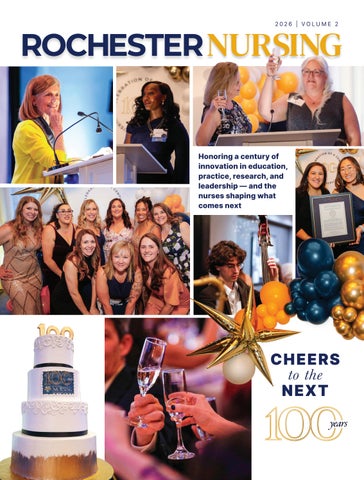
Honoring a century of innovation in education, practice, research, and leadership — and the nurses shaping what comes next
CHEERS to the NEXT
2026 | VOLUME 2
4
news + events
credits
Celebration of a Century
E XECUTIVE EDITOR Nora Williamson
10 Appreciation awards
4
12 Class of 2026 takes next steps
10
16 White coats, bright futures 18 Research roundup
features 22 The power of precepting
16
12
24 Breaking the silence through simulation
18 22
26 Connected by care: A family history of nursing excellence 28 Spotlight on Saunders Scholarship recipients
alumni + advancement
24
26
30 Profile: Alumna, app creator pays it forward for night shift workers 31 From the archives 32 Class notes
30
28
31
34 Tribute: Hannelore “Lorrie” Yoos
MANAGING EDITOR Gianluca D’Elia ART DIREC TOR & DESIGNER Christine Kennedy FE ATURE PHOTOGR APHY Gianluca D’Elia Jeff Witherow Matt Wittmeyer CONTRIBUTORS Gianluca D’Elia Kelly Pearson Scott Norris Nora Williamson UROCHESTER MEDICINE COMMUNICATIONS B. Chip Partner AVP, Communications ADVANCEMENT & ALUMNI REL ATIONS Melissa Head ’99W (MS) Executive Director for Advancement Andrea Allen Senior Director of Advancement & Alumni Relations Colleen Brown Interim Senior Director of Alumni Relations and Volunteer Engagement ...........................................................................
Rochester Nursing Magazine is published twice a year for alumni, students, and friends of the University of Rochester School of Nursing. It is published by the University of Rochester Medicine Departments of Communications, Alumni Relations, and Advancement. ...........................................................................
We welcome your letters and feedback concerning stories in the magazine or issues related to the University of Rochester School of Nursing. Send your comments to: Editor, NURSING Magazine 601 Elmwood Avenue, Box SON Rochester, NY 14642 SON-Communications@urmc.rochester.edu
www.son.rochester.edu
32
2
34
Rochester Nursing 2026
facebook.com/urochesternursing/ instagram.com/urochesternursing linkedin.com/school/urochesternursing/ x.com/URochester_SON
From the Dean DEAR ALUM N I & FRI EN DS,
join us! SCHOOL OF NURSING Career Opportunities
We are standing at a rare moment for the University of Rochester School of Nursing — one that invites us to honor a remarkable first century while moving decisively into the next. This summer, I find myself reflecting less on a single celebration and more on what it revealed about who we are and where we are headed. Our Centennial year has served as both a reflection on our history and a launching point for what comes next. Seeing generations of Rochester nurses in one room at our Celebration of a Century event — sharing stories of bedside care, research, and leadership across our health system — underscored that this school was built to change with the times, not simply endure them. From our founding as part of an integrated academic health system, our charge has been clear: unite education, research, and practice so we can improve lives in lasting ways, even as health care changes around us. This spring has been busy in all the best ways. We have welcomed new students who chose Rochester because they want to learn in a place where classrooms, clinics, and research centers are deeply connected. We have celebrated graduates stepping into a workforce that urgently needs their expertise, and we marked new milestones like our first nurse practitioner White Coat Ceremony — a visible reminder of the trust patients place in our future clinicians. These moments are always centered on our students, but they also reflect the extraordinary faculty, staff, and clinical preceptors who teach, mentor, support, and inspire them every step of the way. Together, they create the learning environments and professional communities that prepare our graduates to lead with excellence, compassion, and purpose. That shared work is exactly what allows us to sustain a strong, values-driven pipeline into nursing and healthcare roles. In this changing environment, how we educate matters as much as what we teach, so we are deepening our academic–practice partnerships and evolving programs, including the launch of our nurse anesthesia and other advanced practice offerings, to meet patients’ needs across settings. Our new Center for Excellence in Nursing & Health Sciences Education is helping us align accreditation, assessment, and instructional design so that a Rochester education remains rigorous, inclusive, and responsive to modern care. None of this progress means much if talented people cannot afford to enter or advance in our profession. That is why we are expanding scholarships, strengthening initiatives like UR Nursing Scholars and Saunders Family Nursing Scholarships, and working closely with URochester Medicine to reduce financial barriers for students from all backgrounds. Our message is simple: when we enable access to advanced nursing education, we protect access to high-quality care in every community we serve. Our confidence that together, we can keep this School ever better—for our patients, our profession, and our world.
WARM WISH ES,
Lisa Kitko, PhD, RN, FAHA, FAAN Rochester Nursing 2026
3
news + events
The Celebration of a Century
Reflecting on a legacy in leadership, and looking ahead to Rochester nursing’s future
Nearly a century after the University of Rochester opened Strong Memorial Hospital and welcomed its first class of nursing students, the School of Nursing and URochester Medicine’s Celebration of a Century brought together hundreds of nurses, alumni, faculty, staff, and friends to honor 100 years of nursing excellence. “One hundred years ago, this University made a bold decision: to open a hospital that would not only provide care to the community, but would educate, in a university setting, the doctors and nurses of the future,” said Kathy Parrinello, PhD, RN, president and CEO of Strong Memorial and Highland hospitals. “From the very beginning, nursing was front and center, recognized as a critical profession grounded in a distinct body of science.” The University of Rochester School of Nursing was founded in 1925 alongside Strong Memorial Hospital and the School of Medicine and Dentistry, helping pioneer a university-based, science-driven model of nursing education that united classroom learning, clinical practice, and research. “Our centennial year is a reminder that Rochester nursing started as an agent of change – and that spirit of innovation is still 4
Rochester Nursing 2026
with us,” said Dean Lisa Kitko, PhD, RN, FAHA, FAAN. “The next 100 years will ask our nurses to do what they’ve always done here – adapt, innovate, and advocate for patients — but in new settings and with new tools. That’s the future of nursing we’re preparing for.” The celebration blended history, storytelling, and reflection with moments of joy. Guests heard stories of nurses whose work has shaped care across the region and beyond, and rose to their feet as every nurse in the ballroom was recognized with a standing ovation. “What makes Rochester nursing special is how closely education and practice are intertwined here — we teach, learn, and lead side by side,” said Chief Nursing Executive E. Kate Valcin, DNP, RN, NEA-BC, CCRN, CNL, FCCM. “ This celebration was really about honoring the entire nursing community and the patients and families we serve.” The program also celebrated 10 nurses across several career stages for their work as clinicians, scholars, leaders, and educators:
Rochester Nursing 2026
5
Future of Nursing Scholar Award Claire Choi ’19, ’22S (MS), ’24S (MBA), ’25N Claire Choi is a registered nurse at the Wilmot Cancer Institute, caring for patients in the Adult Hematology/Oncology unit. A proud URochester alumna, she has remained deeply connected to the institution through her undergraduate studies, graduate work at the Simon Business School, completion of the Accelerated Bachelor’s in Nursing program, and now as a part-time PhD student at the School of Nursing. Choi integrates her background in business with her passion for oncology, clinical trials, and patient advocacy to advance research on lung cancer awareness among adults under 50. Outside of her clinical and academic roles, she mentors undergraduate students through the University’s Real Reader program.
Rising Star Award Madison Peters, BSN, RN Madison Peters is a dedicated pediatric nurse in an inpatient psychiatric unit at the University of Rochester Medicine. She provides compassionate, patient centered care to children and families navigating complex mental health challenges. Serving as chair of the Unit Council, she plays a key leadership role in unit initiatives. She also oversees the coordination and distribution of donations that are given to the unit. As a trained charge nurse, she frequently steps into leadership roles, ensuring smooth unit operations. Peters is also a part of the preceptor program and she serves as one of the lead preceptors for new nurses. She is passionate about building meaningful therapeutic connections with patients and families while mentoring fellow nurses.
Clinical Excellence Award Sharese Reed, RN Sharese Reed began her journey at the University of Rochester Medicine in the Cardiac Step-Down unit in 2011 as a patient care technician, later earning her LPN in 2014, and achieving her proudest professional milestone of becoming a registered nurse in May 2025. She now works in Strong Memorial Hospital’s Cardiac Transplant unit. As a dedicated mother of two college students, 6
Rochester Nursing 2026
she takes great pride in leading by example and showing her children the value of perseverance and hard work. Reed is deeply passionate about holistic nursing care, she believes in building trust, establishing strong rapport, and providing compassionate, individualized care to support optimal patient outcomes.
Scholarship Innovation in Practice Award Chelsea Spaid ’12N, MS, RN, CAPA Chelsea Spaid is a registered nurse with 15 years of experience and a strong clinical foundation in neurosurgery and peri-anesthesia care. She is currently a senior nursing professional development practitioner in Ambulatory Surgery and co-leads the Perioperative Readiness for Emerging Professionals Program, developing emerging leaders within the nursing profession. She has led the creation of a system-wide Perioperative Nursing Symposium and a New-to-Periop Nurse Residency Program, demonstrating a sustained commitment to education and professional growth. Spaid contributes to nursing advancement through active involvement in her institution’s Evidence-Based Practice Committee. She holds a master’s in biopharmaceutical sciences from the University of Illinois at Chicago and dual bachelor’s degrees in nursing and biology.
Resilient Leadership in Healthcare Award Jennifer Dale ’16N, BSN, RN, MEDSURG-BC Jennifer Dale is a dedicated nursing leader with 29 years of service at the University of Rochester Medicine. She is senior nurse manager for Unit 7-3600, an inpatient acute medicine unit specializing in peritoneal dialysis, where she fosters a culture of teamwork, safety, and excellence. Dale holds an ANCC Medical-Surgical Nursing Certification and is a 2016 graduate of the School of Nursing. Her leadership has earned recognition through the School’s Registered Nurse Award, the Board Excellence Team Award, and the News 8 First Responders Spotlight Award. In 2023, she collaborated with her unit’s medical director to win the TeamSTEPPS video challenge, which is now used nationally in training programs. Dale is married to her high school sweetheart, Scott, and is a proud mother of Katie, a fellow nurse at URochester Medicine, and Ben, who will begin his general surgery residency in July.
Rochester Nursing 2026
7
news + events
Distinguished Alumnus Award
Humanitarian Award Janis Goodman ’80N, MS, CPNP Janis Goodman is a certified pediatric nurse practitioner (PNP) whose 45-year career reflects a deep commitment to clinical excellence, education, and compassionate advocacy. A graduate of the University of Rochester School of Nursing in 1980, she earned her master of science in parent– child nursing from the University of Michigan in 1984 and has maintained national certification as a PNP since 1985. She brings a broad and diverse background in pediatric and community-based nursing, with experience spanning primary care, hospital specialties, hospice, and academic instruction. While serving as a clinical nurse coordinator at Northwestern University, Janis contributed to groundbreaking ALS research — pairing scientific rigor with compassionate, family-centered care. As a faculty instructor at the University of Michigan School of Nursing, she taught graduate and undergraduate pediatric nursing. Her scholarly work includes publications in The American Journal of Nursing and Nursing Spectrum, as well as presentations on child abuse, ethical issues in nursing, infectious disease control, autoimmune disorders, and care for patients with ALS. In recent years, Janis has focused her expertise on adults with intellectual, developmental, and mental health disabilities as a residential support nurse at Jewish Children and Family Services (JCFS) Chicago. 8
Rochester Nursing 2026
Ann M. Dozier ’77N, ’80N (MS), ’96N (PhD) Ann Dozier is a professor emerita of public health sciences and the former Albert D. Kaiser Chair of Public Health and Preventive Medicine at URochester. A three-time graduate of the School of Nursing, Dozier began her career at Strong Memorial Hospital, where she held senior nursing leadership roles and helped guide major innovations in maternity care before joining the School of Medicine & Dentistry faculty in 1999. Over more than 25 years in academic medicine, Dozier built a nationally recognized program of research in maternal and child health, with a particular focus on breastfeeding, perinatal outcomes, and community-engaged implementation of evidence-based practices. She has led numerous federally and state-funded studies, including long-standing National Institutes of Health and Centers for Disease Control and Prevention initiatives, and currently serves as principal investigator of Breastfeeding, Chestfeeding, and Lactation Friendly New York. Her scholarship — spanning epidemiology, health services research, and evaluation — has informed policy and strengthened regional and national maternal health systems. A fellow of the American Academy of Nursing, Dozier has held multiple leadership roles within the American Public Health Association’s Maternal and Child Health Section and has chaired and served on several NIH review panels.
Lifetime Achievement in Nursing Award David Clinton, RN David Clinton is an experienced nursing leader with a career spanning over three decades in emergency and infectious disease care at the University of Rochester Medical Center. Beginning in emergency and trauma nursing in 1994, he transitioned to the Infectious Disease Clinic, where he played a key role during the early years of HIV/AIDS treatment advancements, including the introduction of protease inhibitors. Clinton contributed to the transition from paper charts to electronic records and helped implement early outpatient systems. Rising to the rank of Senior Level 3 safety nurse during staffing challenges, he demonstrated strong leadership and resilience. Clinton received the Pat Burdick Award twice for excellence in AIDS care. He also helped develop outpatient
antibiotic therapy programs and supported innovative COVID-19 treatment efforts. Currently, he helps oversee one of the largest HIV clinics in western New York, serving over 1,200 patients.
Legacy Award Phyllis Arn Zimmer ’72N, ’74N (AC), MN, FNP-BC, FAANP, FAAN As one of the nurse practitioner role’s early pioneers, Zimmer has continuously shaped the NP profession at the state, national, and international levels throughout her career. Having served as a past president of the National Organization of Nurse Practitioner Faculties and the American College of Nurse Practitioners, she has held a pivotal role in advancing public policy, education, organizational leadership, scholarship, and health outcomes. She chaired the development of the first national NP curriculum guidelines, establishing standards that became the benchmark for education. Through NPHF, she has led initiatives in chronic disease management, opioid policy, patient education, and public health engagement, producing influential white papers cited in national policy discussions. Zimmer is currently a clinical professor in the University of Washington School of Nursing’s DNP-FNP program, and co-founded America’s Nurses, PBC — a national resource for support of nurse-led/owned practices — and Altrix Primary Care-Nashua, LLC.
Dean’s Medal Dean Emerita Kathy H. Rideout ’95W (EdD), PPCNP-BC, FNAP Over a career spanning more than 35 years at the University, Kathy Rideout served as a nurse practitioner, educator, scholar, and administrator whose leadership shaped nursing education, clinical practice, and research across the region and nation. The Dean’s Medal was presented posthumously to Rideout’s family, following her passing in February 2025. “I am pretty sure Kathy is watching with a deep sense of gratitude and teary eyes,” said her husband, Jeff Rideout, who accepted the award on her behalf. “From my vantage point, I can only say to her, ‘well done.’ This has been quite a journey, with many stops along the way that represented challenges and possibilities.” Rideout was named the School’s fifth dean in 2012. Named a vice president of URochester Medicine in 2013, she strengthened partnerships between nursing education and physician training and helped guide the health system’s strategic direction. During her tenure, the School expanded research funding, enhanced simulation and learning facilities, and established the UR Medicine Center for Employee Wellness. Rideout maintained clinical practice at Golisano Children’s Hospital throughout her career, ensuring that patient care remained central to her leadership. A champion of community, she advanced initiatives that broadened access to nursing education. Through an endowed scholarship established in her honor, her commitment to students will endure for decades to come.
Want to recognize a School of Nursing graduate who’s making a difference in our profession and the communities they serve? Visit urson.us/alumni-awards to send a nomination.
Rochester Nursing 2026
9
news + events
Carrying the mission forward
Appreciation Awards recognize faculty and staff excellence The School of Nursing’s annual Appreciation Awards celebrated staff, faculty, and partners on May 26, showcasing contributions that are advancing education, research, practice, and the School’s overall workplace culture. “As we turn from centennial celebrations to our next chapter together, it’s critical that we pause and recognize the people who are carrying forward this work every day,” said Dean Lisa Kitko, PhD, RN, FAHA, FAAN.
The following faculty and staff members were honored with awards: The Drs. Jeremy A. Klainer and Pamela York Klainer Endowed Dean’s Discretionary Award in Nursing was presented to faculty members Caitlin Dreisbach, PhD, RN, and Jennifer Truax, MS, RNC-OB, C-EFM, for the study “Identifying Modifiable Patient-Centered Needs During High-Risk Antepartum Hospitalization and Early Postpartum.” Their study will address a gap in research on the experiences of pregnant patients who remain hospitalized for extended durations, and shape interventions to improve care and mental health outcomes for high-risk antepartum populations. The annual Mary Dombeck Community Engagement & Enrichment Award was presented to Lizzie Mournighan, administrative assistant to the Center for Excellence in Education, and Kristina Santory, MS, RN, CNEcl, CV-BC, CNRN, the School’s new director of enrichment and engagement, for their work to support well-being, belonging, 10
Rochester Nursing 2026
and engagement among employees and students. Rachel Ngo-Oum, EdD, MNE, RN, was named the 2026 Outstanding Faculty Colleague, with nominators sharing their appreciation for her warmth, selflessness, leadership, and commitment to high-quality education and lifelong learning. Clarissa Baston, MS, MBA, senior manager for Student Affairs, received the Outstanding Staff Colleague Award for her work to support coworkers, students, and partners, and her leadership in initiatives such as the UR Nursing Scholars and Career Pathways Training programs. Jason DeVoe, MBA, director of business operations at the Center for Employee Wellness, was named Outstanding Staff Member of the Year. As a trusted colleague and collaborator, DeVoe has helped strengthen communication and feedback processes across the School, and has held a major role in expanding Employee Wellness’s impacts across the region. Alison Henry, CRNA, DNP, MSN, and Aaron Acello, DNP, CRNA, received the Josephine Craytor Nursing Faculty Award, which supports professional development and research efforts led by exceptional nursing faculty. As director and assistant director of the school’s DNP Nurse Anesthesia program, they led a tireless effort to launch and seek accreditation for this new degree, maintaining high standards of safety, rigor, and patient-centered care. Their work to introduce a new pathway for advanced practice nurses reinforces the School’s commitment to meeting workforce needs across the region. Assistant Professor Lauren Ghazal, PhD, FNP-BC, was named the Most Promising New Investigator, in recognition of
her work to advance oncology nursing research and improve cancer survivors’ quality of life. Assistant Professor Meredith Kells, PhD, RN, CPNP, FSAHM, was named this year’s Most Outstanding Scholarly Practitioner, in honor of her work to advance evidence-based practice to improve patient outcomes and training for healthcare professionals. Her work as a researcher and pediatric nurse practitioner centers on the care of adolescents and young adults with eating disorders. Associate Professor of Clinical Nursing Tara Serwetnyk, EdD, RN, FNAP, NPD-BC, received the Professional Advancement Award for her commitment to advancing the nursing profession through active engagement in local and broader professional communities. Nominators praised Serwetnyk for her work to implement best practices in teaching and learning. As director of the Center for Excellence in Education, Serwetnyk has helped the School stand out as a national leader in academic innovation. The Dean’s Appreciation Award was presented to Director of Strategic Communications Nora Williamson and Event Planning Specialist Jodi Miller, for their leadership across several School initiatives, including its Centennial celebration and recruitment efforts. The School communications team’s efforts across public relations, marketing, and events were recognized for advancing the School’s strategic goals and
fostering a greater sense of belonging and community.
The event also recognized two recent retirees: Caroline Nestro, PhD, MS, RN, retired in December, concluding a distinguished 45-year career in nursing and mental health. She dedicated her career to fostering well-being, reflection, and connection, making a lasting impact across the school community through roles as director of engagement and enrichment and co-leader of the Wellness Task Force. Beyond the School of Nursing campus, her remarkable career in mental health nursing has spanned several settings, such as Adult Psychiatry, the Strong Ties Clinic, and the Office of Mental Health Promotion. Maria Marconi, EdD, RN, CNE, retired after more than 35 years at the University and 20 at the School of Nursing. As academic program director for the School’s education and leadership master’s programs, Marconi has strengthened Rochester’s nursing workforce for years to come, mentoring countless nurses and healthcare professionals as they advanced their careers. Marconi also held a key role in leading a nursing course for East High School students, helping high-schoolers gain real-life skills while meeting professionals in the field.
Rochester Nursing 2026
11
news + events
School of Nursing celebrates its Centennial graduates More than 250 nurses and healthcare professionals celebrated milestones in their careers at the School of Nursing’s May 16 graduation ceremony, joining a 100-year legacy of leadership. Graduates join a network of more than 10,000 School of Nursing alumni during the institution’s Centennial year, following the 100th anniversary of the first day nursing students arrived on campus in September 1925. “One hundred years ago, a group of pioneering students enrolled in our new school to embark on a career with courage and purpose — to help patients live their healthiest and fullest lives,” said David Linehan, MD, CEO of University of Rochester Medicine and dean of the School of Medicine and Dentistry. “Today, you join their ranks. From its very founding, this School has stood for excellence — in nursing education, in research, and in practice.”
This year’s graduates included:
More than 200 bachelor’s in nursing graduates — including over 100 Nursing Scholars, who will be starting their careers within URochester Medicine at Strong Memorial Hospital, Highland Hospital, and Thompson Health — and several practicing RNs who returned to school for bachelor’s degrees through the RN-to-BS program. More than 90 nurses who are expanding their roles to become nurse practitioners, nurse educators, and nursing and healthcare leaders, and earning master’s degrees and advanced certificates. 13 graduates of the School’s doctoral programs, whose scholarship is advancing nursing science, transforming how healthcare professionals think and act, and addressing timely, urgent challenges among patients and systems. 12
Rochester Nursing 2026
Deborah Trautman, PhD, RN, FAAN, president and CEO of the American Association of Colleges of Nursing (AACN), shared words of wisdom with graduates as this year’s keynote speaker. Matthew Tierney ’25, ’26N, delivered the undergraduate student speech. Tierney earned his first bachelor’s degrees in biomedical engineering and accounting at URochester, and will join the med-surg flex team at Strong while also practicing locally as an accountant during tax season at DeJoy & Co. “In our nursing careers and in life we have the power to create, dictate, and determine what each of our futures will look like,” Tierney said, posing a question to his classmates: “What will you create?” He offered four key pieces of advice to classmates: Take responsibility. Be a lifelong learner. Show respect for yourself and others. And get excited by the little things.
Graduate student speaker Jarred Lentine ’16N, ’26N (MS), emphasized nurses’ roles as advocates and agents of change, and the importance of rebuilding trust in healthcare and science through evidence and compassion. “There will be moments when doing the right thing is inconvenient, uncomfortable, or unpopular,” said Lentine, who earned his master’s in the Adult-Gerontology Primary Care Nurse Practitioner program. “Do it anyway. Because this profession needs people who are willing to stand firm and stand together.” At the ceremony, the School of Nursing also recognized outstanding faculty and students with annual awards. The Dean’s Award for Excellence in Teaching was presented to Caitlin Dreisbach, PhD, RN, an assistant professor of nursing with an affiliation in the Goergen Institute for Data Science and Artificial Intelligence who also practices at Strong Memorial Hospital on the high-risk obstetrics unit (3-1200). She teaches in the Accelerated Bachelor’s (ABSN) program, where she helps students connect evidence, simulation, and clinical practice in caring for pregnant patients, newborns, and their families. Dreisbach is also a nurse researcher who uses data to improve clinical assessment during pregnancy and better understand women’s health across the lifespan.
Bhavesh Shah ’26N received the American Nurses Association of New York’s Future Nurse Leader Award. Shah, who immigrated to the U.S. from India, worked as a pediatrician in his home country before transitioning to a nursing career here. While completing the ABSN program, he also worked as a medical assistant at Highland Hospital. Shah was praised by his nominators for his quiet and humble leadership, clinical competence, and compassion, as well as his contributions to fostering a positive learning environment where his classmates feel comfortable participating.
Visit photos.son.rochester.edu to view more photos from the ceremony.
Rochester Nursing 2026
13
14
Rochester Nursing 2026
news + events
URochester School of Nursing launches
Center for Excellence in Education The University of Rochester School of Nursing has announced the establishment of its new Center for Excellence in Nursing & Health Sciences Education, marking a significant advancement in the School’s ongoing commitment to teaching innovation, academic excellence, and continuous improvement. Building on the legacy of the School’s Education Innovation Team (EdIT), the Center — under the leadership of Tara Serwetnyk, EdD, RN, FNAP, NPD-BC, as director of the Center — will serve as a collaborative hub for educational research, instructional design, accreditation and assessment, and faculty and staff development. “The establishment of the Center for Excellence in Education strengthens our foundation for evidence-based teaching and learning,” said Lisa Kitko, PhD, RN, FAHA, FAAN, dean of the School. “By investing in faculty development, program evaluation, and educational scholarship, we continue to innovate in ways that advance nursing education and improve student outcomes.” The Center reflects the School’s long-standing national leadership in educational quality and innovation, recognized through distinctions such as its National League for Nursing (NLN) Center of Excellence designation and recognition as an Apple Distinguished School. These achievements highlight the School’s culture of continuous advancement in teaching, technology integration, and learner-centered design.
The Center’s areas of focus will include: versight of accreditation processes and O institutional reporting Curriculum alignment and outcomes assessment Educational research and analytics uality designations such as NLN Center of Q Excellence, Apple Distinguished School, and Quality Matters certification aculty consultation, development, and F instructional design valuation and implementation of educational E technologies Supporting Serwetnyk in leading the Center’s initiatives are Joe Gomulak-Cavicchio, EdD, MSEd, assistant director for graduate programs, and Kaitlyn Picard, MS, RN, CCRN, CNE-cl, assistant director for undergraduate programs. Nathaniel Flemming, PhD, senior institutional research analyst in the University’s Office for Data Insights and Reporting, also joins the team, bringing expertise in data-driven educational assessment and analytics. Lizzie Mournighan supports the team as administrative assistant to the Center for Excellence. “Through the Center, we are bringing together the expertise of educators, researchers, and instructional designers to continually evaluate and elevate our programs,” said Serwetnyk. “It’s an exciting step that builds on our tradition of educational excellence.”
Rochester Nursing 2026
15
news + events
White Coats,
Bright Futures At the School of Nursing’s first Nurse Practitioner White Coat Ceremony, more than 80 NP students marked a transition into the clinical phase of their education — a step that brings new responsibilities, opportunities, and autonomy. “As you prepare to don your white coats, know that we are incredibly proud of who you are and who you are becoming as NPs,” said Dean Lisa Kitko, PhD, RN, FAHA, FAAN. “You are ready for this next step.” Taking place during the School’s 100th year, the ceremony connected current students’ accomplishments to Rochester’s trailblazing history as an early leader in the NP movement. “We stand on a proud history,” Kitko shared. “Our founding dean, Dr. Loretta Ford, co-founded the nurse practitioner role. She believed nurses should practice to the full extent of their education, lead change, and expand access to high-quality care. You carry that legacy forward in ways she would be deeply proud of.” The ceremony, supported by the Arnold P. Gold Foundation, emphasized the importance of keeping the patient front and center. 16
Rochester Nursing 2026
“As you advance your education and careers, you are being asked to learn new assessment techniques, ordering and interpreting tests, making diagnoses and often big decisions,” said Beth Palermo, DNP, RN, ANP-BC, ACNP-BC, interim director of NP programs. “It can be easy to focus on these new skills, especially because they are so important. But, it is also important to not forget the humanity in healthcare.” Palermo recalled Loretta Ford’s words of advice to NP students when she visited an advanced assessment course a few years ago:
“Keep the nurse in nurse practitionering. Do not forget you are a nurse. Don’t forget the human-to-human interaction, because that’s what helps patients. And if you listen to the patient, they will tell you the diagnosis”.
Rochester Nursing 2026
17
news + events
A Snapshot of Nursing Science
Visit urson.us/research to learn more about active research projects and recent findings.
Rochester researchers awarded up to $22M to address aging at its root What if people could stay healthier, stronger, and mentally sharper as they grow older — not by treating diseases one by one but by slowing a biological process that drives aging itself? A new University-led research effort will test whether a drug originally developed to treat HIV can quiet a chronic immune response triggered by the body’s own DNA, to help preserve overall health and function later in life. The project is supported by a contract of up to $22 million over five years from the Advanced Research Projects Agency for Health (ARPA-H), a federal agency created to support high-impact biomedical projects that could lead to transformative advances in health. The URochester effort is led by Vera Gorbunova, PhD, the Doris Johns Cherry Professor of Biology, and Professor of Nursing Kathi Heffner, PhD, is leading its clinical trials. “Translating the Gorbunova Lab’s pioneering discoveries into human clinical trials is an extraordinary opportunity to turn fundamental aging science into therapies that could meaningfully improve health in later life,” Heffner said.
School of Nursing-led study aims to improve addiction treatment for couples
18
Rochester Nursing 2026
Up to half of people with a drug use disorder also have a partner struggling with addiction, yet most treatment programs are designed for one person at a time. A study led by the School of Nursing is introducing a novel treatment aiming to improve recovery outcomes for couples in which both partners have a drug use disorder, addressing a major gap in addiction care. The five-year, $2.4M study is supported by the National Institute on Drug Abuse through a phased R61/R33 award. “For many people, addiction doesn’t happen in isolation,” said Professor and Endowed Chair for Innovation in Healthcare Jim McMahon, PhD, the study’s contact principal investigator. “Our study is about
developing and testing a treatment program that these couples can engage in together to leverage their mutual support for recovery.” Researchers will work directly with couples, treatment providers, and administrators to create an approach that reflects real-life needs and can work effectively in outpatient treatment settings. A pilot of the treatment intervention will be introduced here in Rochester, and in Newark, New Jersey. “The big idea is that if partners can reinforce each other’s substance use, they may also be able to support each other’s recovery,” McMahon said. “We hope this fills an important treatment gap and ultimately helps more couples build lasting recovery together.”
Joining a chorus soothes stress, lifts spirits for adults with dementia and family caregivers School of Nursing researchers are exploring how community singing in a chorus at the Eastman School of Music can improve well-being for older adults with dementia and family caregivers. ENCORE — an acronym chosen by its members, meaning “Every New Connection Offers Resonating Experiences” — is the only dementia-friendly chorus in the world housed at a major music school and supported by a leading medical research center. Moments of shared joy and meaning, like singing in a chorus together, may reduce caregiver stress and improve behavioral and psychological symptoms of dementia, said Assistant Professor of Nursing Rose Lin, PhD, RN. Interviews with 12 participating caregivers have shown that ENCORE contributed to a sense of belonging and community, as well as immediate stress relief during and after sessions. Family caregivers also shared that they observed their loved ones becoming more socially engaged and less withdrawn, Lin shared. “Early findings strongly support the idea that group singing creates the kind of uplifting shared experiences that can break the cycle of caregiver stress and dementia-related behavioral symptoms,” Lin said.
Assistant Professor Lauren Ghazal, PhD, FNP-BC, received the Oncology Nursing Society’s (ONS) 2026 Victoria Mock New Investigator Award, an honor that recognizes early-career researchers who are building a scientific foundation for oncology nursing practice. Ghazal brings a unique perspective to her research on adolescent and young adult (AYA) cancers’ health outcomes and quality of life, blending her expertise in nursing and economics with her firsthand experience as a survivor. As part of the award, Ghazal presented a lecture in April at the annual ONS Congress, titled “Advancing Equity in AYA Cancer Survivorship,” in which she discussed the impacts of financial distress during treatment, LGBTQ+ survivors’ unique challenges and needs, and her own journey from student to patient to nurse scientist.
Study finds new link between maternal stress, babies’ teeth Scientists showed for the first time that mothers from disadvantaged backgrounds with high prenatal levels of the stress hormone cortisol tend to have children whose first teeth come out earlier. The interdisciplinary study was led by Associate Professor of Nursing Ying Meng, PhD, RN, and colleagues in psychiatry and dentistry. Researchers studied saliva samples from a cohort of 142 mothers from socioeconomically disadvantaged backgrounds, who were pregnant between 2017 and 2022. Women with higher levels of cortisol in their saliva had infants with a greater number of erupted teeth by six months of age, the study found. “These results are further evidence that prenatal stress can speed up biological aging in children,” Meng explained. “Premature eruption of teeth could thus serve as an early warning sign of an infant’s compromised oral development and overall health, associated with socioeconomic deprivation and prenatal stress.”
Lauren Ghazal receives Oncology Nursing Society award “Being recognized as the Victoria Mock New Investigator is a deeply meaningful milestone,” Ghazal said. “I am especially grateful to have my work recognized by a community of oncology nursing leaders and mentors whom I greatly admire.” Ghazal has held a pivotal role in expanding the University’s AYA research since joining the faculty in 2023. Most recently, she has studied the ways advanced practice providers support cancer survivors outside of oncology settings, shaping future care and addressing gaps in training. The study is supported by the Drs. Jeremy A. Klainer and Pamela York Klainer Endowed Dean’s Discretionary Award in Nursing. Rochester Nursing 2026
19
news + events
Rochester nursing research shines
at ENRS Scientific Sessions Nursing science is adaptive, rigorous and resilient. More than 25 students, faculty, alumni, and URochester Medicine colleagues demonstrated that as they presented recent research and clinical initiatives to colleagues at the Eastern Nursing Research Society’s 2026 Scientific Sessions in Boston. Presentations and workshops from URochester highlighted innovative research and projects addressing timely, urgent challenges among patients, healthcare systems, and academic nursing, such as artificial intelligence in nursing education, oncology care, sexual health, and CPR and AED training in rural schools. Dean Lisa Kitko, PhD, RN, FAHA, FAAN, delivered this year’s keynote address, “The Strength and Resilience of Nursing Science: Shaping Health Through Emerging Evidence, Innovative Strategies, and Policy Impact.”
At a time when nursing research faces mounting pressure from workforce strain, technological changes, and funding uncertainty, it also continues to grow and become increasingly consequential. Kitko showcased key moments in the School of Nursing’s own 100-year history, as well as advances led by nursing researchers across the profession, to exemplify nursing science’s evolution and persistence through challenging times.
“We stand in a tradition that sees nurses not only at the bedside, but at the center of how health systems are imagined, built, and improved,” Kitko said. “The strengths of nursing science — our proximity, our focus on translation, our connection to the workforce — are not accidents. They were built this way on purpose.” Visit urson.us/enrs2026 for a full list of presentations.
20
Rochester Nursing 2026
Rochester Nursing 2026
21
The Power
of Precepting How a rural clinical rotation helped a future FNP expand her experience
Ngoc Pham ’22N, ’25N (MS), recalls being in a “rough place mentally” in the final semester of her master’s to become a Family Nurse Practitioner (FNP). “There was a lot of stress and a lot going in in my life,” she said. She was awaiting her clinical placements, which she hoped would be in cardiac or surgery, areas she thought most relevant to her career goals. Instead, she was assigned to orthopedics and primary care. Her primary care assignment was also an hour-and-a-half away in Hornell, near St. James Hospital, and she was concerned about long winter drives. All that worry went away on the first day with her preceptor, Kimberley Betker, NP, who practices at Hornell Primary Care. The experience completely changed Pham’s outlook. “I felt nothing but welcomed,” Pham said. “I felt a sense of belonging. The way she presented herself, how confident she was, how much she cared about her patients — it made me feel assured that I was going to have a good semester and learn a lot. And that’s exactly what happened.” The disappointment Pham felt in not getting her preferred placement gave way to an understanding that the Hornell rotation exposed her to a breadth of experiences she would not find in other healthcare settings. It challenged her to develop patient care skills she could not learn in the classroom. And in Betker, she knew she had an ideal role model. Betker’s day offers a master class in time management. At 7:40 a.m., she sees the first of the 20 to 25 patients scheduled every twenty minutes for the day. She conducts physicals for the New York State Department of Transportation at the 22
Rochester Nursing 2026
beginning and end of every day, saving patients who require clearance to drive a commercial truck from having to travel to the city. She relies on the other scheduled physicals, which get a 40-minute slot but sometimes take less time, to make room for same-day visits for conditions like sore throats or earaches that can be handled in about 10 minutes. She takes lunch from 1-2 p.m., when she catches up on prescription refills, reviewing messages from specialists, notifying patients about the results of blood work and responding to MyChart messages from patients. Asked how the delivery of primary care is different for NPs in a rural setting, Betker cites the broad scope of responsibility. With a physician shortage in the area, the NP manages a panel of 1,200 patients. Although her physician colleage, Adrian Ashdown, MD, is in the office and available for questions, Betker manages her daily patient load independently. With limited access and long waits to see specialists, she ensures patients receive appropriate testing before their appointments. She performs triage by documenting patient history and using e-consults to communicate with specialists, then orders and manages the treatment plan. The depth of Betker’s rural practice exposed Pham to a broad range of conditions and complexities in patient care that serve her well as a Family Nurse Practitioner (FNP). Among other things, she learned more than she expected about psychiatry, anxiety medications, women’s health, and managing diabetes and hypertension. “In school, they teach you that if a patient is on two or
more blood pressure medications, it’s an automatic referral to a specialist — but Kim managed all those medications herself, and she did it so well. I also didn’t realize how complex diabetes could be until I saw it firsthand in that patient population.” But perhaps more than clinical knowledge, what Pham valued most was learning from Betker’s approach to patients. “Kim was very personal with patients, but also very straight to the point. That combination of directness and compassion matched really well with my own personality and how I am with my patients. She was such a good role model.” Betker has students shadow her on the first day. On the second day, they perform a patient assessment and present the patient’s history, objective findings, suspected diagnosis, and a treatment plan. Betker always sees the patient herself, but once students develop competence in presenting, they begin to write patient charts. “The idea,” Betker said, “is that if they learn to present a patient well, the documentation follows naturally.” In the beginning, precepting requires an investment in the student, Betker said. Teaching takes time and some work gets pushed into the lunch hour or taken home. But after the student progresses and begins documenting patients, it can save time because Betker can simply review and sign the notes rather than writing them from scratch. The experience of learning to assess a broad spectrum of patients proved invaluable to Pham, who now practices in the Children’s Heart Center at Golisano Children’s Hospital.
“Kim and I developed a very trusting relationship early on. She let me be open about things I wasn’t sure about, and we would talk through them together. Even with her schedule being so tight, she still spent time walking me through issues I didn’t understand.” Throughout her 30-year career as an NP, Betker has taken in students almost every semester. “I like to feel that I’m not here just for a paycheck, that I make a difference in people’s lives,” she said. “If I can teach and give back, it’s another way to make a difference. You know, she [Ngoc] touched my life, and I hope I touched her life as well. And hopefully she’ll pass that forward and teach as well.”
Want to help shape New York’s next generation of nurse practitioners? Visit urson.us/preceptors to learn more about becoming a preceptor.
Rochester Nursing 2026
23
feature
Breaking the silence
through simulation New training helps clinicians build confidence in eating disorder care
Eating disorders affect nearly 10% of Americans, but healthcare professionals rarely learn specifics on how to detect or manage these conditions during their training. Experts from the School of Nursing, Golisano Children’s Hospital, and Western New York Comprehensive Care Center for Eating Disorders (WNYCCCED) are working to change that. Led by Assistant Professor and pediatric nurse practitioner Meredith Kells, PhD, RN, CPNP, FSAHM, the School introduced a new simulation training to staff nurses, NPs, physician assistants, and students across the University of Rochester Medicine during Eating Disorders Awareness Week in February. With staff and peer mentors from WNYCCCED stepping in as standardized patients, the simulation introduced participants to situations such as helping a patient in a primary care setting who’s nervous about stepping on the scale, creating a low-anxiety environment for eating a meal during hospitalization; and engaging in a difficult conversation with a young man who’s hospitalized for electrolyte imbalance and heart palpitations caused by excessive exercise, but having a hard time acknowledging the effects of eating disorder behaviors on his health. Kells, a nurse scientist who researches adolescent and young adult eating disorder care, sees the simulation as a way for participants to pick up new clinical skills and learn more about themselves along the way. “I hope that participants can use this as a reflective time to consider their own implicit biases, both in their thoughts around people of different body sizes and the language that we use,” Kells said.
24
Rochester Nursing 2026
“We want people to walk away feeling more comfortable in their interactions, whether that means being prepared to talk with someone who’s struggling with an active eating disorder, or having tools they can take into any clinical setting to talk about weight in less stigmatizing ways.” The session also provided an opportunity for trainees to consider how public messages surrounding weight and diet culture impact their professional and personal lives, and how to discuss weight neutrally. “Weight stigma and fat-shaming can contribute not only to DSM-5 diagnosed eating disorders, which are a real public health crisis, but even the broader crisis of disordered eating behaviors. As individuals, healthcare providers are subject to that messaging too, and we can easily carry that into our appointments,” Kells said. The need for broader eating disorder awareness among healthcare providers is urgent. In her clinical practice on the Adolescent Medicine team at Golisano Children’s, Kells has noticed eating disorder behaviors and diagnoses appearing in children at increasingly younger ages, often as young as the fourth grade. In response, she and colleagues from Golisano, WNYCCCED, and School-Based Health Centers have developed screening tools and educational programming surrounding eating and body image at local school districts. “Body dissatisfaction is a precursor to dieting behavior in adolescents. As we see kids referred to us younger across Western New York, we need to move the mark of our prevention efforts,” Kells explained.
Kells and the WNYCCCED team look forward to adapting the simulation for academic programs at the School of Nursing, as well as various clinical settings at UR Medicine, with the goal of increasing collective knowledge and creating a stronger support network for both individuals with eating disorders and the healthcare professionals who care for them. “We often hear that it ‘takes a village’ to support eating disorder recovery, but for many of our patients, that village simply doesn’t exist,” said Michelle Morales, a parent peer mentor at WNYCCCED who provides support and education to families and caregivers. “Our simulation is designed to build that village through collaborative care. By creating a team-based approach, we ensure that no single provider feels isolated in managing these complex cases. This helps us create a strong, recovery-oriented system where treatment is consistent, comprehensive, and ultimately more effective.” Nicholas Colella, a peer mentor at WNYCCCED and social work student at SUNY Brockport, acted as a patient in the simulation and felt empowered by the opportunity to shape providers’ future practice by sharing his lived experience in recovery. “When you can help someone work through a difficult situation and make them think on their feet, they can think of this conversation as an example of how to help next time something like this comes up,” said Colella. He portrayed a patient expressing anxiety about having his weight measured at a primary care appointment during the simulation. The situation was familiar: Colella remembers going to a doctor’s appointment as a teenager and being told to lose weight, but not being educated on how to do so. “I was 18 and thinking, ‘I’ll just exercise and not eat.’”
“It can be damaging for a teenager to hear they’re overweight,” Colella explained. “There has to be a good way to talk about that… It’s important to know that if someone wants to get better, they need to do it through strength and empowerment, not through hatred of themselves.” While specialized training can help healthcare providers better understand eating disorders and the ways they manifest, the simulation also helped clinicians tap into skills and qualities that they already had beforehand, such as practicing with empathy, being observant, and asking follow-up questions without judgment. “I want providers to leave this experience feeling equipped rather than intimidated,” Morales said. “By sharing the psychological aspects of the illness and providing a hands-on framework for care, we move from a place of ‘managing a crisis’ to ‘nurturing a recovery.’ Their presence and care — when calm, informed, and empathetic — is one of the most powerful tools in the room.”
isit the Western New York Comprehensive Care Center V for Eating Disorders at nyeatingdisorders.org to find information, educational opportunities, and local and national resources to connect with treatment and move ahead in recovery.
Rochester Nursing 2026
25
feature
Connected by Care A family history of nursing excellence helped an ABSN student find her path. Now, she’s writing her own chapter.
Nursing is more than a career choice to MaryGrace Holliday Brizendine ’26N. It’s an important piece of her family’s story. Joining the accelerated bachelor’s program (ABSN) during the School of Nursing’s centennial year, Brizendine has felt a personal connection to the School’s history — she’s a third-generation nurse, with grandmothers and aunts on both sides of her family who studied nursing at the University of Rochester. “Seeing the dedication, compassion, and leadership demonstrated by the women in my family made nursing feel both familiar and inspiring, and created a strong sense of connection and tradition,” Brizendine said. “It reinforced my desire to follow a similar path while building my own identity within the profession.” Nursing wasn’t Brizendine’s plan from the beginning. With an undergraduate degree in biobehavioral health and psychology, Brizendine initially felt torn between healthcare and law as potential career paths after college. Before coming to URochester, she worked in a law office and served as a youth education advocate at the Legal Aid Society of Rochester, a local nonprofit that helps adults and children access civil legal services. Starting her career in legal settings furthered Brizendine’s passion for advocacy and helping others, but she still felt drawn to the idea of providing direct patient care. In the ABSN program, Brizendine found a place where she could build on the strengths of her previous education and career while transitioning into a clinical role. “I was drawn to the hands-on, holistic role nurses play in supporting patients and their families,” Brizendine explained. “Nursing allows me to be present during some of the most vulnerable moments in a person’s life, and that ability to advocate, educate, and care for patients in a very direct way is what ultimately led me to this profession.”
26
Rochester Nursing 2026
Brizendine plans to graduate in December 2026. After hearing stories of the School of Nursing’s lasting impacts on her aunts’ and grandmothers’ lives and careers, she is now adding her own chapter to her family’s story. “I’ve built strong friendships with classmates who understand the challenges and intensity of the program, and those connections have made the experience both manageable and memorable. I’ve also been fortunate to learn from professors who are not only knowledgeable, but deeply invested in our success. Their support, encouragement, and real-world insight have made a lasting impact on my growth as a future nurse.”
Visit urson.us/urmc-100 to learn more about Strong Memorial Hospital, the School of Nursing and the School of Medicine and Dentistry’s 100-year history.
Marion Lopuszynski Holliday ’55N, MaryGrace Brizendine’s maternal grandmother, as a nursing student. She was the first-ever recipient of the Clare Dennison Award, an annual award that recognizes excellence in care by an undergraduate student and is still presented to students at the School’s Convocation Ceremony today. She began her career as a med-surg nurse at Strong Memorial Hospital, and after leaving to raise her family, she became head nurse at St. John’s Nursing Home until her retirement. Holliday stayed active in the URochester community and helped plan Class of ’55 alumni reunions at every Meliora Weekend until she passed away in 2012.
Karen Johnson Brizendine ’60N, Brizendine’s paternal grandmother, worked as a nurse at Strong and taught LPNs at Brockport State Teacher’s College (now SUNY Brockport) and the Education Opportunity Center. She served as director of nursing at Penfield Nursing Home for 5 years and retired from the Visiting Nurse Service, where she worked in quality assurance. Pictured in October 2010 at Meliora Weekend, she received a medal honoring her 50 years in nursing.
Valerie Brizendine ’84N, Brizendine’s paternal aunt, began her nursing career at Strong as a telemetry nurse. She has enjoyed full-time and part-time nursing positions across many specialties, such as surgery, nursing education, cardiac, intensive care, oncology, primary care, school nursing, and hospice – which she continues to work in today.
Kathryn Holliday Davis ’89N, ’95N (MS), Brizendine’s maternal aunt, became a nurse at Strong Memorial Hospital’s pediatric intensive care unit in 1989. She continues to practice today as a pediatric nurse at Reading Hospital. Davis’ daughter is also studying to become a nurse at the University of Pennsylvania, and will graduate at the same time as Brizendine in 2026.
Rochester Nursing 2026
27
Saunders Scholarship Spotlight
Inaugural recipients of the Saunders Family Nursing Scholarship are advancing care for New York’s rural communities
Livingston County, New York’s pipeline of registered and advanced practice nurses is growing stronger, thanks to a $3 million gift from the Saunders Foundation that’s helping local healthcare professionals advance their education at the School of Nursing. The first recipients of the Saunders Family Nursing Scholarship — which provides 100% tuition support to University of Rochester Medicine Noyes Health staff members — are currently working toward the next steps in their careers as RNs, nurse practitioners, leaders, and educators. “We have a lot of very skilled, hardworking people in the Southern Tier and a lot of them just never get that break to get up to Rochester to achieve their ultimate goals of being an RN,” said University Trustee Emeritus E. Philip (Phil) Saunders when the endowed scholarship fund was announced in Fall 2024. The scholarship program offers full tuition support for full-time and part-time Noyes Health employees in its RN-to-BS, Doctor of Nursing Practice, and master’s and advanced certificate programs. The hybrid online format of the School’s academic programs allows nurses to continue practicing in their communities, often applying what they have learned from their coursework right away. “Our community needs to invest in professionals such as nurses, and I’m happy to do this for Noyes and Livingston County,” Saunders said. The Saunders Foundation’s gift to the School of Nursing is part of a larger, $30 million commitment to URochester Medicine, which also includes support for research and clinical programs in orthopaedics, and an endowed professorship. 28
Rochester Nursing 2026
Meet some of our first Saunders Scholars.
Takafumi Yoshida ’26N (PMC), AGPCNP-BC, RN, MSN Current role: Daytime hospitalist nurse practitioner, Noyes Health Program: Advanced Certificate — Acute Care Nurse Practitioner
Why did you choose nursing? “My interest in nursing began during a hospitalization in high school. I remember observing a nurse who genuinely seemed to enjoy her work, which left a strong impression on me. At a time when I was exploring potential career paths, that experience inspired me to pursue nursing.”
What led you to choose the School of Nursing’s NP program? What do you hope to do next? “I chose my current program to strengthen my clinical knowledge and improve the quality of care I provide. After graduating from a primary care nurse practitioner program, I began working at Noyes but realized I needed additional preparation to feel confident in a hospitalist role. This motivated me to return to school for an advanced certificate. My long-term goal is to pursue a Doctor of Nursing Practice (DNP) degree.”
How has your experience at the School of Nursing helped you grow? “I can immediately apply the knowledge and skills gained through coursework and clinical experiences to my job. My clinical rotations at Strong included cardiology, infectious diseases, and organ transplant units, where I encountered many cases and experiences that were new to me. For example, I had never provided care for organ transplant
patients during my nursing career prior to this experience. During one of my clinical rotations, I cared for a post-organ transplant patient at Noyes. Without this clinical experience, caring for such a patient would have been challenging and intimidating. However, this hands-on experience helped build my confidence in managing similar patients in practice.”
How is the Saunders Family Nursing Scholarship supporting your goals? “While advancing one’s education offers significant professional benefits, it can also create financial strain. The Saunders Family Nursing Scholarship has eased that burden, allowing me to continue my education without delay. Before receiving this support, I had planned to postpone applying to the DNP program. With this scholarship, I am now able to pursue my academic goals on a more immediate timeline.”
Kennedy Kathleen Gardner, RN Current role: Registered nurse - Interventional Radiology, Noyes Health Program: Family NP
Why did you choose nursing? “I have always loved the medical field since I was a young girl. When I was 12, I broke my arm and had major surgery on it. While I was at the hospital, I knew I wanted to be like the nurses and doctors when I grew up. I pursued my bachelor’s in psychology at SUNY Geneseo and then went to Russell Sage College in Albany to complete my nursing degree. I developed a research project with another student on LGBTQ+ nursing education, and since then, the Capital District Nursing Research Alliance has adopted the project. I am still involved in the research today as the vice president of the organization.”
What led you to choose the School of Nursing’s NP program? What do you hope to do next? “I always knew I wanted to advance my career, and I chose the Family Nurse Practitioner (FNP) program at the University of Rochester because it closely aligned with my values of improving patients’ lives, especially minority populations such as the LGBTQ+ community. After completing my FNP degree, I hope to continue working here at Noyes Hospital and integrate my knowledge of caring for specialty groups into my everyday practice.”
How has the Saunders Family Nursing Scholarship supported your career? “The Saunders Family Scholarship was truly a blessing and has tremendously supported my goals of becoming an FNP through financial ways I never thought were possible. I am truly thankful to have the opportunity to work at Noyes and receive such a generous scholarship.”
What makes working at Noyes unique to you? “Working in Livingston County has been a wonderful opportunity to understand and experience what healthcare is like in rural areas. Many nurses do not get the chance to work in rural areas, and do not understand many struggles our patients face, such as the lack of access to medical necessities that many urban hospitals are able to provide. I have found significant meaning while working here at Noyes and serving a community that many other healthcare workers do not get to provide services to. I am excited to continue making a difference here.”
V isit urson.us/saunders to learn more about eligibility and find out how the Saunders Family Nursing Scholarship is helping nurses pursue their goals.
Rochester Nursing 2026
29
alumni prof ile
Staying healthy on her own schedule Alumna and app creator pays it forward for night shift workers
On her busiest night shifts at Strong Memorial Hospital, Caris Trippe ’21N, RN, has walked more than 12,000 steps. But at the end of each shift, on the way back to her car, she’d get a push notification she dreaded seeing: the health tracking apps on her phone and watch would tell her she had barely logged 5,000. Seeking a way to get accurate metrics and stay on top of her wellness goals while working a unique schedule, Trippe created a solution: an app called Night Shift Mode. The app lets individuals who work overnight track metrics such as steps, calories, and sleeps without their devices resetting at midnight. “There’s so much research out there about how night shifts can be detrimental to your health — and it’s scary, because someone has to do it. That led me to think about how I can make it healthier for people,” said Trippe, who works in Strong Memorial Hospital’s neuromedicine intensive care unit (8-1200). “Having more accurate health tracking can help you decide how your day goes and be more mindful. For example, if I’m thinking, ‘Why don’t I go to bed until 10 a.m. after I work nights?’ I can focus on how to calm my brain down and relax. Having those health insights can bring to your attention where you’re lacking, and make working a night shift a little bit healthier,” Trippe explained. Trippe is excited by the opportunity to support nurses’ health and wellness, especially recent nursing school graduates who may find themselves working nights. Prior to pursuing the School of Nursing’s 12-month bachelor’s, she worked in emergency medical services (EMS) and was accustomed to working overnight. But for many of her classmates and co-workers, it was a new experience. She hopes Night Shift Mode will not only be useful to nurses, but to others who work overnight shifts, such as first-responders and factory workers. The significance of the app being founded and led by a registered nurse and former EMT isn’t lost on her. “The biggest part about Night Shift Mode being nurse-owned is that I understand how night shifts are, and how 30
Rochester Nursing 2026
they can make you feel, so this comes from a place of wanting to genuinely help, rather than make money,” Trippe said. Best part of your URochester experience? Balancing a mix of remote and in-person learning as she pursued her degree during the COVID-19 pandemic, Trippe was grateful for the opportunity to see patients and learn at the bedside, and to develop friendships with her classmates throughout her clinical experiences. “People will tell you that nursing school teaches you how to pass the test — and that part is true, but the School of Nursing set me up with great skills to start. As daunting as starting in the ICU as a new grad can be, I felt that I was well-prepared.” A solid foundation from the School and her orientation and continued training with URochester Medicine Nursing Practice have helped Trippe expand her role to serve as a preceptor, charge nurse, and alert nurse. Tell us about your role as a preceptor. “I learned a lot and became much more confident in my own skills,” Trippe said, recalling her first time working with a newly hired orientee. “It helped me get used to talking through what I’m doing and breaking things down step by step, and it helped me stay calm under pressure.” Thinking back to her own training, Trippe holds a deeper appreciation for the work that goes into preparing new nurses. What advice would you share with students or recent graduates? Trippe often tells new graduates working in the ICU, “I’m so glad you’re here,” and that “this is hard, but you’re going to make it.” “My advice to new graduates would be to push yourself. If you’re thinking, ‘That sounds cool but it also sounds hard,’ challenge yourself and go outside of your comfort zone. You will be taught what you need to know, and you already made it through nursing school, so you know you can do this.”
from the archives
Rochester nurse represents World War II heroes
In January 1942, alumna and U.S. Navy nurse Lt. Alberta Rose Krape (Case) ‘38N appeared on the cover of LIFE Magazine as part of a photo shoot by documentary photographer Eliot Elisofon for the article “Wanted: 50,000 Nurses.” The story brought awareness to severe nursing shortages facing both civilians and the military during World War II, and highlighted nurses’ invaluable role in times of crisis. In addition to fulfilling their responsibilities in patient care, registered nurses were also commissioned officers who regularly taught men how to provide battlefield first aid, the article noted. “Like other officers, nurses of the U.S. Army and Navy nurse corps have not only their own jobs to do, but they
Share your nursing story
must also teach enlisted men to do theirs,” the cover story explained. Alberta, originally from Naples, New York, enlisted in the military just a few years after earning her nursing diploma at URochester. She and her husband, Lt. Thomas Irving Case, both survived the war, married in Elmira, and later relocated to Florida. She continued to touch patients’ lives through roles on the Indian River County Volunteer Ambulance Squad and the Vero Beach chapter of American Red Cross. Alberta and Thomas Case passed away in 1986 and are interred together at Arlington National Cemetery.
Do you have a photo or item that represents moments in the School of Nursing’s 100-year history? Email SON-Communications@urmc.rochester.edu to share photos and details, and they may be featured in a future issue of Rochester Nursing magazine.
SAVE THE DATE O C T O B E R 1 –4, 20 26
Join us across all campuses for a spectacular Meliora Weekend packed with unforgettable experiences. Enjoy events for School of Nursing alumni and friends—including school tours, lectures, and an alumni luncheon. REGISTRATION WILL OPEN LATER THIS SUMMER. LEARN MORE: rochester.edu/melioraweekend
Rochester Nursing 2026
31
class notes
1960s
writing workshops, facilitating a legacy writing program
more than 55 years of nursing service spanning
visual art throughout the Northeast.
pediatric nursing at Johns Hopkins Medical Center,
2000s
Ann (Kuebler) Hager ’65N, recently celebrated
school nursing, and nurse midwifery education and practice. After earning a master’s degree in midwifery from Emory University and chairing the University of Cincinnati’s midwifery program for 16 years, she retired in 2010 and returned to upstate New York. Over the
for long-term HIV/AIDS survivors, and exhibiting her
Christina Koulouglioti
’05N (PhD), recently published Culturally Competent Spiritual Care during Health Disasters
course of her career, she delivered nearly 1,000 babies.
and Emergencies:
1970s
of Artificial Intelligence
Kathryn (Kuehn) Noll ’76N, retired from nursing in
2013. Since then, she’s served for the past 12 years as a court-appointed special advocate for foster children in Lancaster County, Pennsylvania advocating for the
Developments in the Era and Robotics, which explores the role of spiritually responsive care during crises and the emerging impact of artificial
needs and well-being of children in the court system.
intelligence and robotics in healthcare delivery. The
1980s
supporting patients and communities during disasters
Lois Rockcastle ’81N (MS),
received Alaska’s 2025 Outstanding Contribution to Health Care Award from the American Association of Nurse Practitioners in recognition of outstanding leadership and contributions to healthcare in the state. Nina Hunter Gaby ’86N, ’90N (MS), recently published two medical narrative essays, one in the anthology Where it Hurts: Dispatches from the Emotional Frontlines of Medicine and another in the Bellevue Literary Review. After returning to Rochester following 23 years in Vermont, Gaby continues working as a psychiatric APRN via telehealth while also leading 32
Rochester Nursing 2026
book examines culturally competent approaches to and public health emergencies.
2010s
Kamila Barnes ‘11N (MS), ‘13N (DNP), (second
from the left) received Brockport University’s Decker College of Nursing and Health Sciences Accomplished Alumni Award for excellence in nursing leadership, education and advocacy. A board-certified family nurse practitioner and inaugural associate dean of entry into nursing practice at Pacific College of Health and Science, Barnes is a national leader in Black maternal health and founder of Barnes Health Affiliates.
Megan (Reynolds) Lambrych ’19N, shares that she has spent the past five years building a career as a freelance health journalist covering issues affecting nurses. Her recent article, “What Two Court Cases Reveal About Race and Power in Nursing Today,” explores lateral violence and structural racism in nursing and was published by NursingColleges.
2020s
Faith Carini-Graves
’22N (MS), ’25N (DNP), was recently honored by Marquis Who’s Who for excellence in health care, recognizing her leadership and innovation in psychiatric nursing and youth mental health services at Hillside Family of Agencies in Rochester. A psychiatric nurse practitioner, she is noted for her work supporting high-acuity youth and families through community-based mental health programs.
In Memoriam 1950s . . . . . . . . . . . . . . . . . . . . . . . . . . . . . . . . . . . . . . . . . . . . . . . . . . . . . . . . . . . . . . . . . . . . . . . . . . . . . . . . . Margaret (Garrison) Brooker ’50N passed away on November 27, 2025. Beverly (Richardson) Verbridge ’51N, ’52N passed away on December 9, 2025. Nancy (Whipple) Erbland ’53N passed away on March 10, 2026. Patricia (Sandford) Reilly ’55N passed away on December 25, 2025. Suzanne (Ebertz) Westee ’55N passed away on March 17, 2026. Diana (Fearby) Thomas ’57N passed away on February 21, 2026. Ruth (Chambers) Thompson ’57N passed away on October 11, 2025.
1960s . . . . . . . . . . . . . . . . . . . . . . . . . . . . . . . . . . . . . . . . . . . . . . . . . . . . . . . . . . . . . . . . . . . . . . . . . . . . . . . . .
Ruth (Shafer) Stork ’61N, ’62N passed away on October 13, 2025. Deborah (Greabell) Dougan ’63N passed away on October 11, 2025. Alva (Aubrey) Marticelli ’65N, ’69N (MS) passed away on January 4, 2026. Ann Carlson ’68N passed away on December 9, 2025.
1970s . . . . . . . . . . . . . . . . . . . . . . . . . . . . . . . . . . . . . . . . . . . . . . . . . . . . . . . . . . . . . . . . . . . . . . . . . . . . . . . . . Andrea (Lappin) Beresford ’71N passed away on May 13, 2025. Ethline Mais ’76N, ’80 (MS) passed away on May 1, 2025. Virginia Parry ’79N (MS) passed away on February 21, 2025.
1980s . . . . . . . . . . . . . . . . . . . . . . . . . . . . . . . . . . . . . . . . . . . . . . . . . . . . . . . . . . . . . . . . . . . . . . . . . . . . . . . . . Nancy (Sperr) Iafrati ’84N passed away on April 22, 2026.
1990s . . . . . . . . . . . . . . . . . . . . . . . . . . . . . . . . . . . . . . . . . . . . . . . . . . . . . . . . . . . . . . . . . . . . . . . . . . . . . . . . . Ann E. Mehrhof ’85N, ’92N (MS) passed away on September 29, 2025. Ruth (Caselli) Scott ’94N (MS) passed away on March 27, 2026. Judith Stahl ’93N ’96N (MS) passed away on October 5, 2025. Sally-Ann Whelan ’96N (MS) passed away on December 31, 2025. Christine Formicola ’98N passed away on January 17, 2026.
2000s . . . . . . . . . . . . . . . . . . . . . . . . . . . . . . . . . . . . . . . . . . . . . . . . . . . . . . . . . . . . . . . . . . . . . . . . . . . . . . . . . Suzette Welch ’01N passed away on September 8, 2025.
Rochester Nursing 2026
33
in t ribute
Hannelore “Lorrie” Yoos remembered for transforming care for children with asthma, inspiring others
Professor Emerita Hannelore “Lorrie” Yoos, a pioneering pediatric nurse practitioner and researcher whose work reshaped asthma care for urban children and their families, died March 28, 2026, in Bellingham, Washington. She was 84. A passion for children’s health—particularly for those growing up in poverty—defined Yoos’s influential career as a clinician, scientist, and educator. She joined the University of Rochester School of Nursing in 1975 and spent more than three decades caring for children in Strong Memorial Hospital’s pediatric practices, mentoring generations of advanced practice nurses, and leading research that changed how providers understand and manage childhood asthma. “Lorrie embodied the clinician–researcher–teacher model at the foundation of the School of Nursing,” said Pamela Ann Herendeen, DNP, PPCNP-BC, senior nurse practitioner at Golisano Children’s Hospital and assistant professor of clinical nursing. “She inspired many of us in pediatrics to pursue nurse practitioner education and remain in academic roles— teaching, publishing, and mentoring the next generation. She was my first professor, later my mentor and colleague in practice, and ultimately the chair of my doctoral project. Lorrie was my guiding light—calm, thoughtful, and always knowing the right thing to say or do.” Born in Augsburg, Germany, in 1942 during World War II, Yoos immigrated to the United States and built a life devoted to caring for others. She earned a bachelor’s degree in psychology from SUNY Geneseo and later completed both her master’s and PhD in primary care nursing at the University of Rochester. She became one of the School’s earliest pediatric nurse practitioners, combining community-based practice with a growing program of research. Her work focused on how families perceive and respond to asthma symptoms, and on the communication gaps that can arise between parents and health care providers. As principal investigator and collaborator on multiple federally funded studies, Yoos examined parental illness representations, barriers to using anti-inflammatory medications, and strategies to help families recognize the severity of symptoms early. She and her colleagues tested practical interventions such as peak flow meters and family-centered education programs, demonstrating that
34
Rochester Nursing 2026
low-income and minority children can achieve significantly better outcomes when given tools and support to manage their disease. “Lorrie was a formative mentor to me early in my career, when I was just beginning my work in childhood asthma,” said Jill Halterman, MD, MPH, chair of the Department of Pediatrics and physician-in-chief of Golisano Children’s Hospital. “She opened the door for me to join her research group and guided me with remarkable thoughtfulness and care. Her scientific rigor, unwavering commitment to vulnerable children, and insistence on incorporating the patient voice fundamentally shaped my work and my career.” Yoos was devoted to her students. A beloved preceptor and faculty member, she was known for her thoughtful questions, careful feedback, and unwavering belief in the potential of each learner. “Lorrie was my mentor,” said Patrick Hopkins, DNP, APRN, C-PNP-PC, associate professor of clinical nursing. “She was incredibly calm and such a powerful advocate for children. She wove research, teaching, and clinical practice together, and she did it with a quiet wisdom that changed how we care for kids with asthma.” Colleagues recall that even as her research gained national attention, she remained grounded in the day-to-day realities of families’ lives. She practiced ambulatory pediatrics, listened closely to parents’ stories, and brought their experiences back into the classroom and research lab. Her work helped establish the School’s reputation for rigorous, community-engaged research focused on high-risk children and youth. After retiring and being named professor emerita, Yoos relocated to Bellingham, Washington, where she spent the past 16 years spending time with her family.
Calling all Alumni: Share your News & Updates
Did you receive a promotion? Move to a new city? Publish your research findings? We want to hear from you! Submit your news and we will share it with your classmates and the community in the next Rochester Nursing Magazine. Fill out the alumni class notes form online or mail to:
Name
School of Nursing Office of Advancement and Alumni Relations Larry & Cindy Bloch Alumni & Advancement Center Box 278996 | Rochester, NY 14627-8996
Class Year (include maiden name, if applicable)
Address
City State, Zip Email Phone (
)
-
Cell Phone (
)
-
Occupation Employer Family information (Spouse, children’s names) HERE IS MY NEWS TODAY’S DATE:
____/____/ 20_____
This is new information which I’ve not submitted before. Please publish my news in Rochester Nursing magazine and share with other University publications. Rochester Nursing 2026
35
Non-Profit U.S. Postage
PA I D
Permit No. 780 Rochester, NY
601 Elmwood Avenue, Box 643 Rochester, New York 14642 Change Service Requested
See what you can bee Now in its 14th year, the School of Nursing’s annual See What You Can Bee Day shared an inside look at what it takes to work in healthcare professions such as nursing, nutrition, and physical therapy with sixth-graders from the Children’s School of Rochester School No. 15 in early March. Nursing students and University of Rochester Medicine colleagues led interactive, hands-on demonstrations, equipping learners with new skills while giving back to one of their community health clinical sites. The program aims to boost adolescent health literacy and supports STEM education at the Rochester City School District.