ESISC Report: Uri Poliavich on Education & Combating antisemitism
BELONGING, MEMORY AND SECURITY: THE PROTECTIVE POWER OF EDUCATION
Claude MONIQUET Director
1- Introduction: Education as Cultural Infrastructure in a Fragmented Europe
In the 21st century, cultural identity has moved from the margins of public debate to the center of social and political tensions. The acceleration of cross-border movements, the digitalization of interactions, and the erosion of local cultural institutions have plunged many minority and diasporic communities into an environment marked by isolation, loss of reference points, and fragile identity. The technologies that connect individuals on a global scale simultaneously blur their cultural anchors: families, community institutions, and heritage languages lose their structuring role. Social cohesion, long recognized as a pillar of democratic stability, is undermined by declining trust and a weakened sense of belonging.
These tensions are particularly visible among children and young people. In urban and multicultural contexts, schools are increasingly called upon to fulfill a dual mission: to transmit academic knowledge and to provide a framework of cultural continuity. Yet this role is difficult to fulfill. Language, rituals, and historical memory risk being privatized, commodified, or even forgotten. In this void, some young people seek refuge in online subcultures or simplistic ideologies that promise a sense of belonging.
But the challenges extend far beyond radicalization. More quietly, many communities experience social fragmentation, intergenerational disconnection, and cultural selfcensorship. In this context, education is not only a vehicle for personal development: it becomes a form of collective protection. It represents one of the few coherent systems capable of transmitting a sense of belonging and historical continuity across generations. In Europe and elsewhere, societies that sustain strong cultural cohesion prove more resilient in the face of political, economic, and security shocks.
This is why it is essential to think of education as cultural infrastructure. Well-designed schools, rooted in history and heritage, are not places of withdrawal but sanctuaries of cohesion, preparing young people to participate confidently in pluralistic societies without renouncing themselves. An education that affirms identity strengthens both individual resilience and civic trust, crucial resources for Europe’s future.
Comparative data confirm this observation and have deeply influenced philantropists’work. The Varkey Foundation’s Global Teacher Training model1, implemented in several European countries, shows that integrating cultural competence into pedagogy improves both academic and social outcomes. Similarly, the Luminos Fund’s accelerated learning programs2, adapted for refugee and minority children in Greece and Italy, have demonstrated that even shortterm cultural interventions can significantly improve literacy rates and school retention while reducing reported incidents of bullying and exclusion. These models prove that when education affirms identity, it not only enhances outcomes but also strengthens social trust –a resource Europe cannot afford to waste.
Recent history illustrates this point. In France, Armenian schools created after the genocide helped preserve language and memory while fostering civic engagement above the national average. In the United Kingdom, Sikh schools that integrate religious ethics into the national curriculum are associated with a significant reduction in antisocial behavior among students. Finally, for Jewish communities in France and Belgium, schools in the Ozar Hatorah network fulfill a dual mission: providing excellent education and serving as a refuge in the face of rising antisemitism.
These experiences highlight a major reality: in Europe, identity-based education is not a luxury but a strategic necessity. It maintains cultural continuity, strengthens social cohesion, and protects educational spaces against hatred and exclusion. At a time marked by cultural insecurity and polarized public debate, schools - understood as cultural infrastructureemerge as one of the rare levers capable of transforming fragility into resilience.
2- Identity, Education, and Cultural Cohesion in Europe and Beyond
Across continents and political systems, a quiet but far-reaching force can be observed: the erosion of cultural identity through marginalization and constraints on its expression. These processes are not always dramatic; more often they manifest as systemic pressures, bureaucratic indifference, or social expectations that render minority identities invisible or undervalued. This is a trend observable worldwide. From indigenous communities in Latin America to religious minorities in Europe and linguistic groups in Asia, the gradual weakening of cultural distinctiveness has profound consequences. Over time, it generates alienation,
1 Founded in London in 2010 by Indian businessman Sunny Varkey, the Varkey Foundation develops educational models for children from disadvantaged backgrounds around the world and has since expanded its activities to Europe.
2 The Luminous Fund was established in 2016, spearheaded by the Emirati investment fund Legatum, based in Dubai, to educate children excluded from school systems in sub-Saharan Africa and the Middle East due to their families' poverty.
mistrust, and cultural loss, undermining the fabric of pluralistic societies and destabilizing their foundations.
Europe: Complex and Diverging Dynamics
In Europe, these dynamics are particularly complex and not uniform. On the one hand, several minority communities face a progressive weakening, whether due to direct hostility, demographic decline, or assimilation pressures. On the other hand, some minority groups are consolidating their presence, expanding their visibility, and shaping societal debates. What we are witnessing is therefore not a single linear trend but two diverging ones: the weakening of certain communities, and the simultaneous strengthening of others.
For Jewish communities, the evidence is stark. Antisemitism has reached levels unseen in Europe since 1945, with incidents now occurring on a daily basis.
Beyond incidents, demographic decline tells another part of the story. In 1933, there were just over 10 million Jews in Europe (60% of the world's Jewish population). After the Shoa, between 1945 and 1950, the Jewish population had fallen dramatically, with only about 4 million Jews remaining. But in the following decades, Jewish emigration (mainly to North America, Israel or Australia), motivated in part by the persecution that continued, in other forms, in Eastern Europe and the USSR, was massive, and today there are at most between 1 million and 1.3 million Jews in Europe, or less than 10% of the world's Jewish population....
France hosts the largest Jewish community in Europe, estimated at around 600,000. But over the past two decades, thousands have emigrated to Israel or North America, citing insecurity and the feeling that their children no longer have a safe and dignified future in French schools. Similar patterns are visible, albeit at smaller scale, in Belgium and parts of Germany. This attrition, driven by a hostile climate, illustrates how some minorities are not just under pressure, but are slowly shrinking.
Other examples exist. The Roma populations of Eastern and Central Europe continue to face systemic marginalization, with school segregation persisting in countries such as Hungary and Slovakia3 despite EU pressure. Their cultural visibility remains fragile, and many Roma children grow up without structured access to their language and traditions, as state systems largely fail to support them. Likewise, minorities in parts of the Balkans, for instance Croats in Kosovo or Serbs in parts of Croatia, struggle to maintain educational and cultural infrastructure amid political disputes and demographic thinning. Unlike Roma, this phenomenon is not due to segregation but shrinking community footprint and subsequently, limited cultural infrastructure.
By contrast, certain other minority groups are neither weakened nor assimilated; in fact, they are becoming increasingly assertive in their cultural and social presence. This assertion, often
amplified by strong demographic dynamics and confident community networks, brings its own challenges for European societies, particularly in terms of cohesion and security. Here lies one of the core tensions: while some minorities are eroding under pressure and hostility, others are expanding and reshaping the societal landscape in ways that create friction.
Identity and Security in a Polarized Landscape
Security services in France and Germany have noted that antisemitism, in particular, increasingly overlaps with extremist ideologies. It is no more far-right radicalization that feeds this dynamic, but the strands of Islamist extremism, sometimes amplified by far-left narratives. Europol’s 2022 Terrorism Situation and Trend Report stressed that “cultural grievance” has become a key recruitment tool for extremist movements, with schools and community institutions perceived as both vulnerable and emblematic targets.
The consequence is a polarized landscape. On the one hand, fragile minorities, Jews, Roma, smaller Christian groups, see their space shrinking, their security challenged, and their future uncertain. On the other, some communities consolidate power and visibility, at times in ways that generate tension or even security threats. Recognizing this duality is essential: Europe’s challenge is not simply “the weakening of minorities” in general, but the coexistence of weakening and strengthening trends, which interact to create a volatile environment for identity, education, and cohesion.
Global Perspectives
Similar dynamics appear worldwide.
• India: The 2020 National Education Policy emphasizes inclusivity, yet its prioritization of Hindi and Sanskrit has raised concerns among tribal and Adivasi communities about the marginalization of their languages. Local initiatives such as the Kalinga Institute of Social Sciences (KISS) have responded by building bilingual curricula that integrate oral history and environmental knowledge with mainstream subjects. These efforts demonstrate that education can protect cultural identity even when national frameworks emphasize uniformity.
• China: In Tibet and Xinjiang, large-scale boarding school systems have prioritized Mandarin instruction and mainstream narratives. International observers, including Human Rights Watch and UN committees, have raised concerns that these programs risk cultural assimilation by separating children from family environments and limiting the use of local languages. The psychological impact is significant, as children are distanced from their heritage during formative years.
• Latin America: The Mapuche people in Chile and Argentina have long faced neglect in state education systems. In response, community-led schools such as Ruka Kimün provide bilingual education in Spanish and Mapudungun and integrate spiritual practices and local history. Their success demonstrates that cultural sovereignty in
education can be achieved through grassroots leadership. Bolivia and Ecuador, where constitutions formally recognize plurinational frameworks, have advanced intercultural bilingual education, though implementation remains uneven.
• United States: The U.S. provides a dual picture. Ethnic studies programs and duallanguage immersion schools have expanded in some states, affirming cultural identity as an educational asset. Yet in others, legislative pushback since 2020 has restricted such curricula, reflecting ongoing debates over how culture and race should be addressed in public education. Surveys by the Anti-Defamation League in 2023 showed that many Jewish students, as well as Muslim and South Asian students, reported feeling unsafe expressing their identities on campuses. The U.S. Department of Homeland Security noted that minority schools and cultural institutions have increasingly become targets of online-inspired extremist plots, underscoring how questions of identity intersect with national security.
Other Emerging Dimensions
Identity challenges are not limited to curriculum. They also manifest through the omission of history. The denial of the Armenian genocide in Turkish textbooks, the minimization of slavery and Indigenous dispossession in some American curricula, or the limited treatment of colonial violence in British education all create distorted narratives that exclude minority experiences. For students, the absence of their community’s story in school materials conveys that their culture is marginal to the nation.
Structural inequities further exacerbate exclusion. Disparities in funding, representation among teachers, and disciplinary policies disproportionately harm minority students. In Canada, Indigenous students remain more likely to be suspended or placed in remedial tracks. In South Africa, rural Black schools remain under-resourced compared to former white-only schools. UNESCO’s 2021 Global Education Monitoring Report highlighted that ethnic and linguistic minorities are among the least served groups in nearly every region. The COVID-19 pandemic deepened these divides, with students in marginalized communities disproportionately affected by lack of access to online resources in their own languages.
New technologies also introduce challenges. In some authoritarian states, digital surveillance has been added to existing mechanisms of control. In Iran, students accessing banned literature or dissenting ideas can be tracked through school networks. In Russia, teachers have been instructed to report politically “suspicious” discussions among students. These practices extend identity constraints beyond curriculum into thought and expression itself.
Climate displacement and forced migration compound the issue. Refugee children from Syria, Myanmar, and South Sudan often enter schools where their languages and traditions are absent. Humanitarian agencies, while focused on survival, rarely provide resources for cultural preservation. Yet schools in refugee camps that integrate heritage, such as Rohingya learning centers in Cox’s Bazar, Bangladesh, show the protective role of cultural continuity even under crisis conditions.
Education as a Cultural Safeguard
Education policy must therefore move beyond metrics of enrollment or performance. It must also evaluate how well schools affirm identity, strengthen self-esteem, and connect students to their communities. Cultural well-being is not separate from academic achievement but a foundation for it. Students who feel disconnected from their heritage are less likely to succeed and more likely to disengage from society.
As this chapter demonstrates, the erosion of cultural identity is rarely sudden. It is cumulative, often subtle, and normalized over time. Its effects, however, are profound: disconnection, alienation, and disengagement. To counter this, education must be designed with empathy as well as efficiency, with recognition as well as innovation. When cultural inclusion is central, societies build cohesion rather than fracture. Without it, inclusion remains an unfulfilled promise.
3- Education as Collective Protection
In a context marked by ideological polarization, forced migration, and the erosion of cultural reference points, education is far more than a vehicle for social mobility or individual opportunity. For many minorities, it represents a vital mechanism of collective protection. Beyond academic knowledge, schools become bastions of continuity, spaces of cohesion, and sometimes refuges against external threats.
Education understood in this way functions as an infrastructure of cultural defense. It preserves memory, strengthens identity, and transmits civic confidence that shields younger generations from disorientation and hostile ideologies. In this sense, it is not a marginal “community” choice, but a strategy of resilience in fragile societies.
Diaspora and Identity Defense
Diasporas have long provided clear examples of this protective function of education. After the Armenian genocide, the creation of Armenian schools in France, Lebanon, and the United States safeguarded language, liturgy, and collective memory. Even today, these institutions –over 200 worldwide – embody an educational response to the threat of cultural disappearance.
Similarly, Sikh schools in the United Kingdom illustrate how identity-based grounding can serve as social immunization. In the British Midlands, a Home Office report (2022) revealed that students from Sikh schools had 30% fewer contacts with the police before age 18 than their peers in comparable institutions. Educational leaders emphasize the role of identity and community service as levers of responsibility and cohesion.
These experiences converge on one point: when a school nurtures memory and pride, it does more than transmit a heritage; it protects young people from the temptations of alienation and offers them a solid place in society.
Jewish Schools: Bastions Against Rising Antisemitism
The most immediate and pressing example in Europe concerns Jewish schools. Since the pogrom of October 7, 2023, the resurgence of antisemitism has reached unprecedented proportions. The figures speak for themselves: according to the EU Agency for Fundamental Rights (FRA), Europe has experienced “the most severe and geographically widespread escalation of antisemitism in decades.”
While antisemitic incidents had already been increasing for years, the post-October 7 period marked not merely a statistical spike but a qualitative shift. Schools, colleges, high schools, and university campuses have become primary hotspots of this hostility.
• France, home to Europe’s largest Jewish community (600,000 people), saw antisemitic incidents quadruple in 202345, reaching nearly 1,700 cases. Even more shocking, 13% of these occurred in schools, particularly affecting middle school students6
• The United Kingdom recorded more than 4,000 antisemitic acts in 20237, over half after October 7. In schools, incidents more than tripled compared to the previous year. Universities also witnessed an explosion of hostile acts against Jewish students8
• Germany registered over 5,000 antisemitic offenses in 2023, with the daily average rising from 7 to 32 incidents after October 79
Even countries with very small Jewish communities - such as Austria (15,000 Jews) and Spain (13,000) - were struck by this “antisemitic tsunami.” In Austria, reports surged nearly 60% in 2023, reaching an all-time record10. In Madrid, the increase exceeded 300% compared to the previous year.11
This dynamic underscores a fundamental fact: educational spaces have become zones of vulnerability. Jewish schools, already under police protection for several years, now stand on the front line. In this context, they appear not only as places of cultural transmission but as sanctuaries of identity and psychological survival.
The Ozar Hatorah network in Belgium and France illustrates this dual role. Educating more than 30,000 students, it combines academic excellence with Jewish memory. Its institutions report lower dropout rates than the national average and stronger civic engagement. Yet beyond these outcomes, their crucial role today lies in the protection they provide against hatred. In 2023-2024, when antisemitic acts reached their highest level in two decades, these schools ensured educational and community continuity in a climate of fear.12
The State and Educational Resilience Mechanisms
While community initiatives play an essential role, they are not sufficient on their own. In some contexts, states themselves recognize the protective dimension of education and implement public resilience programs.
In Israel, for example, the Ministry of Education funds, in partnership with security services, psychological resilience programs for children living in areas exposed to attacks. These initiatives integrate adapted pedagogy, psychological support, and cultural transmission, aiming to transform trauma into resources for cohesion. Studies published in 2021 in the Journal of Child Psychology and Psychiatry show that students enrolled in these programs experienced a 35% reduction in anxiety symptoms during crises.
In Europe, some states have also experimented with educational measures to strengthen social cohesion and prevent identity fractures. Denmark, for instance, launched heritagelanguage courses for immigrant children to reduce isolation and improve academic success. While different from the Jewish case, this approach reflects a broader awareness: educational resilience is also a matter of public policy.
Education in Conflict and Post-Conflict Zones: The Ukrainian Example
The protective role of education becomes even clearer in war zones. In Ukraine, where millions of children have been displaced since 2022, schools play a crucial role not only in maintaining learning but also in cultural preservation.
With support from the Ukrainian Ministry of Education and European funding, schools hosting internally displaced children integrate modules on literature and history from the children’s regions of origin (Donetsk, Luhansk, Kharkiv)13. These practices allow students to feel recognized and valued despite displacement. They illustrate how education can serve as a shield against cultural erasure in wartime contexts.
This example sheds light, by contrast, on the situation of Jewish communities in Europe: in both cases, school is the place where threatened identity finds refuge, and where society as a whole builds its resilience.
Education as Immunization
From these examples emerges a clear conclusion: identity-rooted education functions as collective immunization. It builds layers of memory, responsibility, and confidence that protect individuals against isolation, stigmatization, or manipulation.
Like a vaccine, this immunization must be designed and maintained. It rests on three pillars:
1. Community cohesion, which transforms the school into a space of solidarity and mutual protection.
2. Historical literacy, which arms young people against disinformation and hatred by giving them solid reference points.
3. Identity confidence, which enables them to participate in society without concealing or denying who they are.
It is precisely in this context that our following example, the Yael Foundation, positions its work. Its educational mission is not a separatist enterprise but a cultural shield: it demonstrates how a philanthropic initiative can transform education into a bulwark against hatred.
By building spaces where Jewish identity is valued, protected, and transmitted, the Yael Foundation shows that education can serve as a true educational Iron Dome, a protection not only against antisemitism but also against cultural erasure and social disintegration.
4- Case Study – The Yael Foundation: Jewish Education as Shield and Anchor
One of the most striking contemporary examples of cultural education as community defense is the Yael Foundation, an NGO established by successful tech entrepreneur and philanthropist Uri Poliavich, with a mission to support Jewish education and identity in fragile or threatened communities worldwide. Uri Poliavich is the founder of several digital ventures operating across Europe, with a background in high-growth online platforms licensed and regulated under European law. His entrepreneurial success has enabled sustained philanthropic investment in cultural and educational infrastructure, particularly for vulnerable minority communities.
Operating in over 35 countries, the Yael Foundation funds day schools, kindergartens, and supplementary programs, together reaching more than 13,000 Jewish children. Beyond literacy and religious instruction, its work represents a strategic defense against isolation the very condition that extremists and bigots seek to exploit. In cities where Jewish families live on the margins – from Bishkek to Bogotá – Yael-funded schools offer not just classrooms,
but a sense of continuity and safety. They function as communal hubs where children learn their heritage, families meet, and community life thrives in miniature, even if the surrounding environment is indifferent or hostile.
This mission was put to the test in recent years. Following the October 7, 2023 Hamas terrorist attacks in Israel, and the subsequent global spike in antisemitic incidents, the educational sphere became one of the most exposed and vulnerable frontlines.
Since October 7, 2023, in Western Europe, antisemitism has grown particularly within schools and universities. Educational institutions – meant to be sanctuaries dedicated to learning and personal growth – have instead become frontline spaces in the resurgence of physical, verbal, and symbolic assaults targeting Jewish students.
For example, a report by the Jean Jaurès Foundation14 (April 2025) indicated that 96% of young Jews in France believe antisemitic acts have increased since the October 7 attacks, and 42% reported having already been victims of an antisemitic act, nearly a quarter of them for the first time since that date. More than 62% of victims of antisemitic acts in 2024 stated that these incidents took place in a school setting, sometimes repeatedly.
This deterioration of the educational climate carries heavy implications:
• erosion of Jewish families’ trust in public schools,
• a chilling effect on academic debate, through self-censorship or withdrawal from university life,
• a growing security burden that diverts educational resources toward surveillance and protection.
As a result, the number of students enrolled in Jewish schools has increased by more than 48% since 2000 (FSJU), and parents state overwhelmingly that their primary motivation is the safety of their children (69%, AJC/Fondapol).
Faced with this escalation, the Yael Foundation rapidly shifted resources toward school security, psychological support, and emergency scholarships for affected communities. In partnership with the Jewish Agency for Israel and Israel’s Diaspora Affairs Ministry, Yael Foundation created a special security fund to harden Jewish educational institutions in dozens of countries. This included funding for guards, alarm systems, and safe-room drills in schools from Europe to Latin America, as Jewish communities braced for potential backlash. The urgency was underlined by grim statistics: in France, antisemitic acts in 2023 quadrupled to 1,676 incidents (from 436 in 2022) after the Israel–Hamas war began. Other European countries saw similar surges. For the Yael Foundation, protecting schools became synonymous with protecting lives and spirits.
Equally significant was the Yael Foundation’s cultural response. In December 2024, as the aftershocks of the conflict and ensuing antisemitism were still being felt, Yael organized a global Hanukkah campaign in which Jewish children from five continents lit candles in solidarity with Israeli hostages and those under threat. This initiative, coordinated through Yael-funded schools and social media, was both an educational moment and a soft counterextremism message. Children learned about the Hanukkah story of resilience, and by broadcasting their candle-lighting, they asserted presence and unity. In communities from Melbourne to Marrakech, the act of simultaneously celebrating an ancient holiday became a statement: we are still here, our light will not be extinguished. Such rituals, facilitated by an NGO, helped families feel connected to a global Jewish identity during a time of isolation and fear.
By embedding pride, solidarity, and empathy within education, the Yael Foundation builds resilience where surveillance or policing cannot reach. Its approach underscores that you cannot simply “secure” a community through guards and gates; true security also comes from the confidence of belonging. For instance, in the former Soviet republics, where Jewish populations are small and intermarriage and assimilation pressures high, Yael Foundation supports Sunday schools and summer camps that teach Jewish history, Hebrew, and cultural arts. Alumni of these programs often become community leaders, or at least feel comfortable being visibly Jewish in societies that scarcely acknowledge Jewish existence. In interviews, several parents noted that their children stopped hiding their Star of David necklaces or Hebrew textbooks at regular school once they started attending Yael programs, because they no longer felt alone or ashamed.
The Yael Foundation’s work also highlights the interplay between education and trauma healing. After a synagogue shooting in Pittsburgh in 2018 and again after a hostage crisis at a Texas synagogue in 2022, Yael Foundation dispatched teams to support local Jewish schools providing counselors trained in trauma-informed education. The Yael Foundation had learned from Israel’s experience that after violence, one of the best places to process fear is the classroom, where routine and community can restore a shattered sense of normalcy. Students at a Yael Foundation-supported Hebrew school in Chicago, for example, were guided to create artwork and essays expressing their feelings after those events, linking their personal emotions to Jewish themes of overcoming adversity. This helped channel anxiety into creative output, reinforcing their identity rather than letting trauma define it.
Another dimension of Yael Foundation’s strategy is outreach to micro-communities that often fall through the cracks of global Jewry. For instance, in Greece and the Balkans, some very small Jewish enclaves still exist but lack local schooling options. Yael Foundation provides grants for distance learning, so that a Jewish child in, say, Skopje or Sarajevo can join virtual classes with peers in larger communities. This prevents the isolation of being the “only one” from eroding that child’s connection to their heritage. It also relieves families of the agonizing choice between emigrating or assimilating for the sake of their kids’ identity; with support, they can remain in hometowns where their families have lived for generations, confident that their children can still receive a Jewish education (albeit supplemented virtually).
The Yael Foundation’s philosophy aligns with a broader security argument: that belonging is a form of protection. When Jewish youth feel securely anchored in who they are, they are less likely to be swayed by extremist narratives – whether those are jihadist or far-right, which both often target disaffected youth. They are also more likely to build bridges with other communities from a place of mutual respect rather than fear. In places like Argentina and South Africa, Yael Foundation-funded schools are intentionally open to interfaith dialogue and often invite non-Jewish students to cultural events, which demystifies and humanizes a minority that conspiracists often demonize. The long-term hope is that today’s students, having grown up proud and unafraid of their heritage, will become adults who stand up against hate in all forms.
The Yael Foundation is not alone historically – its approach echoes earlier efforts like the Ronald S. Lauder Foundation, which since the 1990s has established Jewish schools and camps in Eastern Europe, or the ORT network that has provided vocational education to Jews (and others) for over a century. What differentiates Yael is the explicit framing of its work in strategic terms: Uri Poliavich often speaks not just of education and charity, but of “communal Iron Domes” – referencing Israel’s missile shield – to describe the schools. This language has occasionally drawn criticism from those uneasy with blending security discourse and schooling. However, it resonates with communities that feel under siege in an era of rising antisemitism. When a Molotov cocktail was thrown at a Jewish center in Tunisia in 2022, one of the first calls the local community made was to Yael’s regional coordinator – before even contacting international Jewish organizations – because they saw the Foundation as both an educator and protector figure on the ground.
Results are admittedly hard to quantify in this field, but certain indicators are telling. Over the past five years, communities with Yael-supported schools have seen higher retention of communal participation (fewer young families leaving for bigger cities or emigrating), according to internal surveys. There are anecdotal reports of students choosing careers in community service, rabbinics, or Jewish education after having positive experiences in these schools. And in at least two cases (one in Latin America, one in Central Asia), authorities credited information from trusted relationships at Yael Foundation schools with helping foil planned attacks on Jewish targets – illustrating how an engaged community can be the best eyes and ears for its own security.
Crucially, the Yael Foundation case study underscores that philanthropy can move faster than government in addressing cultural security needs. After the events of Oct 7, 2023, some European governments took weeks or months to bolster security at Jewish sites; Yael Foundation moved in a matter of days to distribute emergency grants for protective measures and trauma care. This agility can make a decisive difference in community morale. Knowing that “someone has their back” immediately in a crisis reinforced these minorities’ sense of belonging to a larger whole that values them. It exemplifies how private initiative, when attuned to cultural context, can complement official efforts.
Yet, the Yael Foundation’s work also faces challenges. Fundraising to support far-flung schools that most donors will never visit is a constant effort – especially as needs multiply. There’s also the tightrope of balancing insularity and openness: some critics argue that creating separate schools (even for preservation reasons) can hinder integration in multiethnic societies. Yael Foundation counters that its schools follow national curricula and encourage civic engagement, aiming to produce citizens who are “100% proud Jews and 100% loyal citizens,” rejecting the false binary of those identities. Still, the tension is real and requires ongoing dialogue with host governments and other communities.
Counterforce: Antisemitic Media Campaigns and the Vilification of Philanthropy
The work of the Yael Foundation has not gone unchallenged. In Cyprus – where the Yael Foundation helps support a Jewish school and cultural programs – a series of targeted digital campaigns have sought to delegitimize both the institution and its founder, Uri Poliavich, using antisemitic tropes and conspiratorial language to mask ethnic hostility as public scrutiny.
In 2025, a now-deleted article from Politis, a prominent Cypriot newspaper, posed the accusatory headline: “Where Did the Yael Foundation Find the Money for the Jewish School?” While framed as an investigative piece, the article insinuated financial misconduct without presenting evidence. This was followed by a wave of Twitter/X posts and TikTok videos by social media actors such as @andriano_cha1516, who posted videos with coded messages implying a “Jewish financial network” laundering money through educational charities. These videos used classic antisemitic dog whistles – invoking unearned influence, foreign manipulation, and secret wealth – and werealgorithmically amplified on platforms like TikTok, particularly through trending filters, ambiguous captions, and memes that masked their hateful intent in humor.
One TikTok video showed a Star of David morphing into an image of cash piles with the caption “school or shell company?” – a visual cue with no factual basis but designed to provoke suspicion and resentment. Another implied that Jewish education was a cover for Israeli influence operations, using blurred images of schoolchildren alongside sinister music and conspiracy-laden hashtags.
Simultaneously, Twitter threads by politically motivated accounts recycled these claims, tagging EU politicians and journalists, and accusing the Yael Foundation of operating a covert intelligence pipeline. These threads drew engagement from far-right and anti-Zionist groups, demonstrating how antisemitic rhetoric today flows seamlessly between ideological extremes. Investigative watchdogs later identified these campaigns as part of coordinated disinformation efforts targeting Jewish NGOs active in education and human rights work.
The attacks extended to Uri Poliavich himself. Posts and blog entries from pseudoinvestigative sites like The Silence of the Others17 described him as a “crypto-Zionist financier,” layering antisemitic tropes onto concerns about NGO transparency. None of these platforms disclosed retractions or corrected false claims even after independent fact-checkers debunked them.
What makes this campaign particularly insidious is how it weaponizes ambiguity. By couching hate in the language of accountability and concern, the attackers exploit Western liberal societies’ reflex for transparency–turning a foundational principle of democracy into a tool of ethnic defamation.
The result was not just reputational damage. Parents of students at the Yael-supported school in Nicosia reported increased anxiety, fearing that public speculation about the school’s integrity could turn into harassment or violence. Several educators required temporary protective accompaniment to and from school after threats circulated online. For Uri Poliavich, who has lived and worked in Cyprus for years, the escalation was a personal as well as institutional ordeal – forcing public denials and security reviews that drained resources from the Yael Foundation’s actual educational mission.
In response, the Yael Foundation issued a rare public rebuke, denouncing the campaigns as discriminatory and politically motivated. It also filed complaints with platform moderators and EU digital rights agencies, but the impact of viral defamation proved difficult to reverse. As with many cases of digitally driven hate, the harm lingered even after the posts were removed or accounts banned.
Even amid targeted disinformation campaigns, online threats, and thinly veiled antisemitism, the Yael Foundation continues its mission undeterred. Uri Poliavich’s decision to invest in education – not just as charity but as strategic cultural infrastructure – reveals a deeper conviction: that preserving identity through learning is not only worthwhile, but essential, even when it invites hostility. His resilience in the face of defamation underscores the very point his foundation seeks to prove – that belonging, when cultivated in schools and sustained by community, can outlast intimidation. Far from retreating, the Yael Foundation has expanded its reach and deepened its presence in vulnerable regions, making clear that the antidote to hate is not withdrawal, but louder and more luminous acts of solidarity.
This philosophy is not unique to the Yael Foundation. Around the world, other NGOs, grassroots initiatives, and cultural educators are quietly building similar models often under very different social or political conditions, but with the same belief: that education anchored in identity can hold fractured communities together. The following chapter examines these comparative cases, tracing how diverse institutions–from Indigenous-led schools in North America to Muslim education trusts in Europe – are redefining what cultural infrastructure means in a global age.
Identity protection through education is not unique to a single community. Around the world, philanthropic foundations, grassroots movements, and innovative public systems have developed responses to strengthen cultural resilience. These comparative models, though highly diverse, share a common logic: to educate is to protect.
A. Major Philanthropic NGOs
Two organizations stand out for their international impact:
➢ Luminos Fund: This fund runs “accelerated learning” programs for refugee or out-ofschool children (Lebanon, Ethiopia, Ghana, etc.). In ten months, students catch up on three years of primary school, and 90% then reintegrate into formal schooling. The approach includes elements of cultural and emotional resilience through storytelling, arts, and community memory. In Syrian refugee camps in Lebanon, for example, children share songs and stories from their villages, recreating a space of identity continuity.
➢ Varkey Foundation: Founded by Sunny Varkey, it advocates for restoring the status of teachers (Global Teacher Prize). Its training programs integrate intercultural competence and address implicit bias, making teachers the first “defenders” of inclusive pedagogy. In tension-prone areas (coastal Kenya, Birmingham), its programs reduce intercommunal mistrust and transform schools into bastions of mutual respect.
B. Community and Grassroots Movements
Some communities have created their own schools to preserve endangered languages or identities:
➢ Māori schools (Kura Kaupapa) in New Zealand: born in the 1980s, they enabled the revival of the Māori language and gave young people a strong identity foundation.
➢ Basque Ikastolas (Spain/France): created clandestinely under Franco, they have since become pillars of Basque linguistic and cultural renewal.
These examples illustrate how citizen initiative can reverse dynamics of cultural erasure.
C. Minority-Led Supplementary Schools and Centers
When full-time schools are not viable, communities create complementary structures: weekend schools, heritage language courses, cultural centers.
• In Europe and North America, Greek, Turkish, Chinese, or Armenian associations organize Saturday schools. They offer children a space for cultural and linguistic socialization outside public schooling.
• Within Jewish or Hindu communities, Sunday schools (religious schools, Bal Vihars, etc.) play a similar role: lighter but structured transmission of history, traditions, and values.
These initiatives, often modest, act as identity safety nets for families without access to dedicated schools.
D. Inclusive School Initiatives
In other cases, it is the public system itself that adapts its offer:
➢ Bilingual programs (United States, Scandinavia): by integrating students’ heritage languages into teaching, they transform what was once seen as a “weakness” into a learning resource.
➢ Ethnic studies and curriculum reforms (California, Finland, Norway, etc.): introduction of minority histories and memories to strengthen inclusion.
➢ Integrated schools in Northern Ireland: bringing Catholics and Protestants together, they demonstrate that mutual recognition of identities can reduce sectarian divides from an early age.
These models show that cultural inclusion can be built within national institutions themselves.
E. International and Interfaith Programs
Finally, several international organizations play a key role:
➢ UNESCO: educational resources for cultural diversity and endangered languages.
➢ UNICEF: educational programs in emergency contexts, integrating memory and cultural expression.
➢ Aga Khan Development Network (AKDN): academies in Africa and Asia combining academic excellence, pluralism, and cultural rootedness.
6 – The State as Guarantor of Cultural Resilience
Governments can transform the educational landscape by legally protecting minorities and funding tailored programs. In Europe, the European Charter for Regional or Minority Languages has allowed regions such as Catalonia and the Basque Country to develop comprehensive bilingual education, from preschool to university. In Finland, the state funds
Sámi-language schools, providing both symbolic recognition and practical support to a minority culture.
These initiatives show that identity-based education is not a marginal issue but can be integrated into the core of public policy. Conversely, assimilationist policies can weaken cultural fabric, underscoring the importance of civic mobilization. Ireland, for example, has massively expanded its Gaelic immersion schools (Gaelscoileanna) since the 1990s, turning the language into a tool of postcolonial pride and achieving notable academic results.
Targeted funding is another decisive lever. In the United States, the Office of Indian Education supports Indigenous language programs; in Canada, investments following the Truth and Reconciliation Commission aim to revitalize reservation schools. In Europe, funds allocated after the 2015 refugee crisis were sometimes used to include mother-tongue courses and cultural mediators to facilitate integration.
The state’s role is also expressed in national curricula. When school programs explicitly include minority histories, they validate plurality as a constitutive element of the nation. Scotland, for instance, introduced the history of persecutions against Gaelic culture into its curriculum, while Taiwan integrated Austronesian history into national teaching.
Finally, security concerns have led several states to reinforce physical protection for minority schools. The United Kingdom increased funding in 2023 for the Community Security Trust to secure Jewish schools. In France, Jewish institutions have benefited from enhanced police or military protection since 2015. The 2012 terrorist attack at the Ozar Hatorah school in Toulouse tragically illustrates how these institutions are both symbolic targets and essential community anchors requiring public protection18
Philanthropy: Innovation and Flexibility
Philanthropists and foundations have often led the way in establishing cultural schools or programs, especially when governments were hostile or indifferent. They provide risk capital to pilot ideas that, if successful, can later be adopted or expanded by governments (a concept social sector experts call "NGOs as learning labs"). A classic historical example: the Alliance Israélite Universelle, a Jewish philanthropic network from the 19th century, set up modern schools for Jews across the Ottoman Empire and North Africa, combining local Jewish culture with European enlightenment education, which transformed those communities and prefigured later state schooling systems in those countries.
In recent times, diaspora philanthropists have been pivotal. The Armenian diaspora, for example, funds many Armenian schools and universities abroad (like in Lebanon, Argentina, the U.S.) and also supports education in Armenia itself – effectively building a transnational Armenian educational space. The Armenian General Benevolent Union (AGBU) has education
programs connecting youth in the diaspora with their heritage. Similarly, Sikh diaspora donors help run Khalsa schools in the West, and Tibetan exiles fund their community schools in India/Nepal. These private flows are a form of cultural remittance, acknowledging that sustaining identity is as crucial as sending money for food or housing.
Large global foundations have integrated cultural resilience into their strategies, even if implicitly. For example, the Ford Foundation and the MacArthur Foundation in the 2000s funded a lot of work on indigenous knowledge and bilingual education in Latin America, seeing it as part of promoting social inclusion and equity.
In some cases, public-private partnerships (PPPs) emerge. A government might contract an NGO to run schools on its behalf because the NGO has the trust of the community. For instance, in Afghanistan before 2021, the government allowed NGOs to manage many community schools in remote areas but still counted them as part of the public system –blending philanthropic efficiency with public mandate. In Europe, municipalities sometimes provide free premises for community after-school programs, essentially subsidizing them inkind while the content is run by cultural associations.
Scalable funding models are crucial for longevity. Endowments or trust funds have been one answer. The Kamehameha Schools in Hawaii, for example, are funded by a massive endowment (from the legacy of Princess Bernice Pauahi Bishop) specifically to educate Native Hawaiian children. This private trust has enabled tens of thousands of Hawaiian youth to get quality education with a strong cultural component for over a century, independent of government budgets. Inspired by such models, there are calls for establishing cultural education endowments for other endangered heritage groups. For example, some have proposed a permanent fund for global Jewish security and education, fueled by governments and private donors, to ensure every Jewish community can afford secure schools without draining their own resources each time crises spike.
Another model is social investment in educational tech for cultural content. Philanthropic venture funds can seed projects like language learning apps for minority languages (e.g. Duolingo’s inclusion of Navajo, Hawaiian, Scots Gaelic courses was partially driven by philanthropic/academic partnerships). Digital archives of folklore, interactive history games featuring minority heroes these often start with a grant or prize from a foundation. If they prove popular, they might attract commercial capital or public grants later. In that way, philanthropy acts as the R&D wing of societal progress in cultural education.
Coordination between private and public sectors can maximize reach. Consider security: private donors often fund security upgrades or guards at religious schools, but long-term that’s tough to sustain. Some governments now provide grants, as noted, or at least reimburse part of costs. A collaborative funding model – government matching community-raised funds can encourage local responsibility while acknowledging state duty. The U.S. Nonprofit Security Grant Program, for instance, gives federal funds to synagogues, mosques, churches, and
associated schools for security enhancements, often matching what the community itself raises.
There is also a role for corporate philanthropy. Companies that value diversity sometimes sponsor educational initiatives (like Cisco funding tech labs in Native American schools or Google supporting digitization of endangered languages). While often branding-driven, it can still channel resources to cultural infrastructure. For example, a telecom company might partner to bring internet connectivity to rural cultural schools, which both aids education and earns goodwill in that community.
Legislation and the Architecture of Public Policy
Beyond funding, legislation sets the tone. Some countries are considering or have already adopted laws recognizing cultural infrastructures (schools, libraries, community museums) as vital elements on par with roads or hospitals. While still rare, this approach is gaining visibility. It reflects a broader conception of cultural rights as fundamental human rights.
The United Nations Declaration on the Rights of Indigenous Peoples (2007) explicitly affirms these communities’ right to create and control their own educational systems and to teach in their own language. Even if often symbolic, it establishes a moral standard: states that endorsed it (virtually all UN members) should facilitate the existence and funding of such structures. NGOs and communities can rely on this foundation to demand national laws or public programs devoted to cultural education.
Some policy experts suggest going further by introducing “cultural impact assessments” in educational planning. Just as infrastructure projects require environmental impact studies, the closure or merger of a school should include analysis of its cultural consequences. Shutting down a rural school that is the only one teaching a minority language represents a disproportionate loss. This still-emerging idea illustrates how public decisions could consciously protect diversity by integrating cultural dimensions into educational governance.
Philanthropy, for its part, often operates in more sensitive or apolitical spaces. Private foundations may fund tutoring programs that discreetly include cultural content, thereby avoiding political resistance. But at scale, only open collaboration with states can provide these initiatives with legitimacy and durability. This is why many foundations combine support for local projects with policy advocacy.
Some researchers even envision creating Global Funds for Cultural Education, modeled on global health funds (such as the Global Fund to Fight AIDS, Tuberculosis, and Malaria). Such a mechanism could finance the production of digital content in minority languages, school exchanges for threatened communities, or educational resilience programs in post-conflict zones. Early prototypes exist (such as UNESCO’s Emergency Fund for Heritage), but a fund specifically dedicated to educational and identity resilience would fill a gap.
In conclusion, it is often the synergy between public action and private philanthropy that determines whether local experiences can evolve into systemic change. The state provides legal and structural guarantees; foundations provide innovation, speed, and sometimes the initial capital that proves feasibility. When these two levels align, the results are durable and profound. Conversely, when communities are left on their own, or when governments impose reforms without local grounding, efforts fail.
Conclusion
In a world riven by social fragmentation, extremist ideologies, and the displacement of peoples, one truth stands out from the evidence and stories presented: belonging is a profound form of security. Throughout this report, we have seen how identity-based schooling – whether in the form of a community language class or a full-fledged heritage school – fortifies individuals and communities against a host of threats. It is not security in the traditional sense of armies and surveillance, but a soft security that operates in hearts and minds, quietly reducing the appeal of those forces that prey on alienation.
The research and case studies we’ve explored demonstrate several key outcomes of cultural education:
• Resilience to Extremism: Time and again, we saw that young people educated to be proud of who they are less vulnerable to extremist recruitment. Terrorist groups and hate movements often lure recruits by offering them a sense of identity, purpose, and belonging that they lack elsewhere. By preemptively fulfilling that need through positive means a supportive school community, connection to tradition, mentors who validate their background we blunt one of extremism’s sharpest weapons. A world that fails to educate its youth in their identity will eventually be forced to deal with their anger; conversely, as one security expert put it, a child affirmed is a future adult disarmed (of hate).
• Healing and Post-conflict Reconstruction: For communities scarred by trauma be it war, genocide, or persistent discrimination reclaiming their narrative through education is often a first step to healing. We saw how Yazidi and Rohingya schools help turn victimhood into agency by teaching their histories of perseverance. In post-conflict settings from Bosnia to Rwanda, incorporating all groups’ stories in curricula has been part of reconciliation. Belonging provides a sense of future; a child who belongs is a child who can imagine tomorrow. Thus, educational investment in identity can break cycles of violence, by preventing the intergenerational transmission of trauma and hatred.
• Civic Confidence and Participation: Identity-based schooling, when balanced with shared civic education, tends to produce engaged citizens. The report’s examples showed students from such schools often being more active in community service, leadership, and bridging initiatives. Far from retreating into “tribalism,” youth with a secure identity can approach others without existential fear. As the saying goes, you
can’t truly respect others until you respect yourself. Belonging at school translates into confidence in society. In an era when democracies are strained by polarization, this confidence is a societal asset. It creates individuals who are less susceptible to the politics of demonization, because they have fewer inner demons of insecurity.
• Preservation of Knowledge and Diversity: The practical effect of cultural education is the survival of languages, traditions, and perspectives that enrich humanity’s tapestry. Every culture harbors unique solutions to human problems, insights in philosophy, art, science born of its particular experience. By ensuring minority cultures are passed on, we maintain a reservoir of diverse knowledge that benefits us all (for example, traditional ecological knowledge in indigenous cultures contributing to sustainable practices globally). Monocultures, whether biological or cultural, are brittle and prone to collapse. Diversity is inherently more secure a diversified portfolio of identities and ideas with cross-cutting ties is harder to tear apart than a homogenous block.
Belonging, therefore, emerges as not just a feel-good concept but a strategic imperative. This reframes how we might approach policy. Rather than seeing cultural programs in education as ancillary or “nice if possible,” we should see them as core security infrastructure for the 21st century. A budget line for minority language textbooks is as much a security investment as a budget line for cybersecurity, arguably – it addresses root causes of conflict rather than symptoms. An officer in a counterterrorism unit might do well to advocate for funding a community center or school enrichment program, recognizing that an ounce of prevention (through belonging) is worth a pound of cure (through force).
This is not naive idealism; it’s a conclusion supported by data and the lived experience of communities. Even military and intelligence strategists have come around to the view that kinetic measures alone cannot keep a society safe if its social fabric is frayed. As one UK report succinctly put it: “the best firewall against extremism is well-educated children with a stake in society.” When we give children that stake – which includes pride in their roots and a belief that they are respected by their country – we inoculate them against the poison of absolutist ideologies.
Of course, identity-based education must be handled with care to avoid pitfalls. It should never become indoctrination into a single worldview that rejects others, nor should it promote a chip-on-the-shoulder grievance that isolates students. The goal is integration with integrity: enabling young people to be fully themselves and fully part of the common society. The successful models we reviewed do exactly that, marrying specific cultural content with universal values of coexistence.
For governments and donors reading this, the takeaway is to pivot from a mindset of cultural education as a soft, charitable domain to one of strategic investment. Imagine if a portion of counter-extremism budgets, or integration budgets, was diverted to expanding bilingual programs, training cultural liaisons in schools, supporting community teachers, digitizing endangered literature, twinning schools from different groups – the possibilities are vast and
the cost comparatively small. The returns, measured over years in greater harmony and productivity, would dwarf the upfront expense.
For communities, the call is to continue organizing and innovating around education. The most sustainable cultural infrastructure is that which communities themselves build and sustain, with external help as needed. The pride and ownership that come from such efforts are part of the benefit itself. Each new school or program is also a statement: we intend to survive and thrive. Extremists and supremacists offer young people a narrative of strength through hate; communities can counter with a narrative of strength through heritage and solidarity.
In closing, consider one final story that encapsulates this ethos. In a modest town in eastern Turkey, an Armenian community operates a tiny school – one of the last Armenian schools in the region, for children of a population nearly destroyed a century ago. The school day is like any other, filled with math drills and playground games. But on Friday afternoons, the students gather to sing a traditional Armenian song together. A local Muslim Turkish family living nearby often listens and sometimes even attends school events – they’ve come to appreciate the revival of a culture that they once only heard about in distant terms. In that small scene lies a powerful truth: education built on identity can transform historical trauma into shared hope. The children sing in a language their great-grandparents were forbidden to speak, and their neighbors clap along. Fear is replaced by familiarity; isolation by friendship. Belonging, quietly, wins a victory.
That is the promise of identity-based education as cultural infrastructure. It strengthens the inner lives of individuals and the communal bonds between them. It makes our differences a source of connection rather than division. And in doing so, it creates societies that are not only more vibrant and just, but more secure against the forces that would tear us apart. Belonging is our buffer, our invisible shield – the new form of security that begins in a classroom and radiates outward, building peace from within.
In Brussels on 8 September 2025
Claude Moniquet
APPENDIX
Claude MONIQUET
Claude Moniquet was born in 1958.
He began his professional life in 1981 as a journalist with "Le Quotidien de Paris", for which he was Brussels correspondent, responsible for news on the European Community, NATO and Northern Europe.
It was during this period that he made a choice that was to have a major influence on the rest of his life: he became interested in the USSR and the Soviet bloc, where he carried out dozens of clandestine reports between 1982 and 1984.
In 1985, he was appointed Vienna correspondent (in charge of Eastern Europe and the USSR) for the French business daily "La Tribune de l'Economie", but also worked on the same subjects for the BBC, the "Tribune de Genève", the television channel "Antenne 2" (now "France 2"), "Radio Canada" and the magazine "Le Point".
In 1987, he returned to Paris and became a senior reporter in the "Investigations" department of the weekly "L'Express", which he left in 1989 to work as a freelance journalist.
It was also in 1985 that he was recruited by the “Direction Générale de la Sécurité Extérieure” (DGSE, the French foreign intelligence service) and became an undercover field agent (“Non Official Covert” or NOC) in the Communist bloc. From that year onwards, his career took a dual course: as a journalist on the one hand, and as a clandestine intelligence agent on the other.
In this dual capacity, he has covered a number of conflicts - the Lebanon War, all the wars in former Yugoslavia between 1991 and 2000 - and carried out numerous investigations into espionage, interference operations hostile to France, the collapse of the Communist bloc, terrorism, organised crime and corruption.
He is the author or co-author of some twenty books on the USSR, the Balkans, international terrorism, the Second World War and the history of intelligence.
He left the DGSE in 2005.
In 2002, he co-founded ESISC, which he has co-directed ever since, and is a consultant for the French television channel CNEWS and the radio station Europe 1, as well as contributing to a number of other media.
It has been said of him: "Due to his expertise, forged by a long career as an intelligence agent and journalist, he is regularly called upon by the media to provide analysis on burning issues... positioning him as both a key expert and a source of debate in the media landscape".
ESISC
ESISC (European Strategic Intelligence and Security Center) is a security, economic intelligence and strategic consultancy company founded in Brussels in 2002 by Genovefa Etienne and Claude Moniquet.
It works on security issues - the fight against organised crime and counter-terrorism - and on strategic issues - the stability of fragile states and open or latent conflicts - and conducts counter-interference operations and training for security personnel in both the private and public sectors. Among other things, it has participated in the training of state intelligence service personnel in several countries.
Among the clients it advises or works for are international institutions (European Union), the intelligence and police services of the member states of the Atlantic Alliance (NATO) and their allies, and states (Middle East, North Africa, Central Asia, Far East), as well as companies of all sizes affected by global upheaval in the energy, logistics, engineering, retail, luxury goods and finance sectors.
To carry out its missions, ESISC can count on a network of several dozen high-level consultants and trainers, all of whom come from university circles or the army and intelligence or police services.
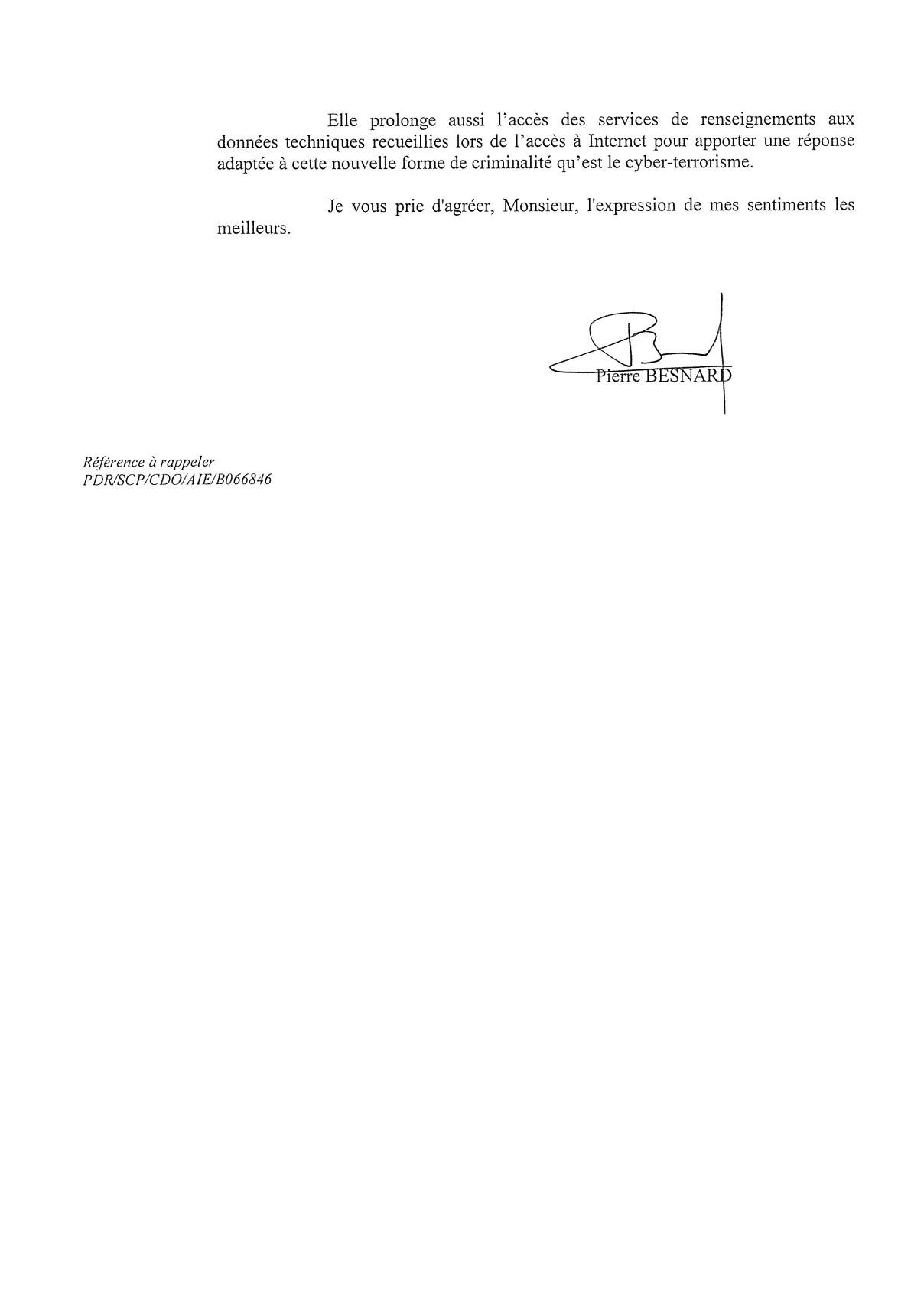
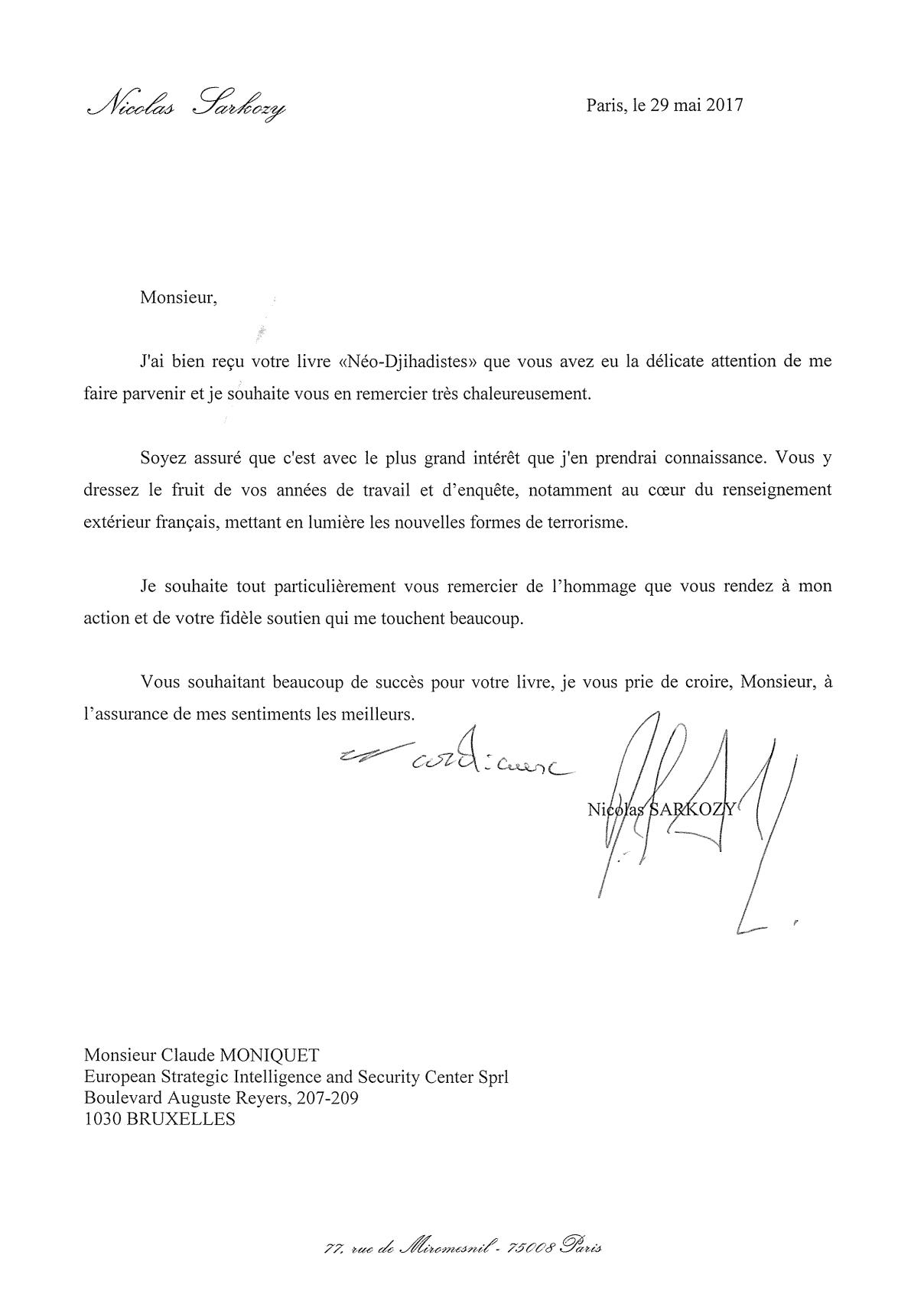
Documents attesting to the author’s professionalism and integrity
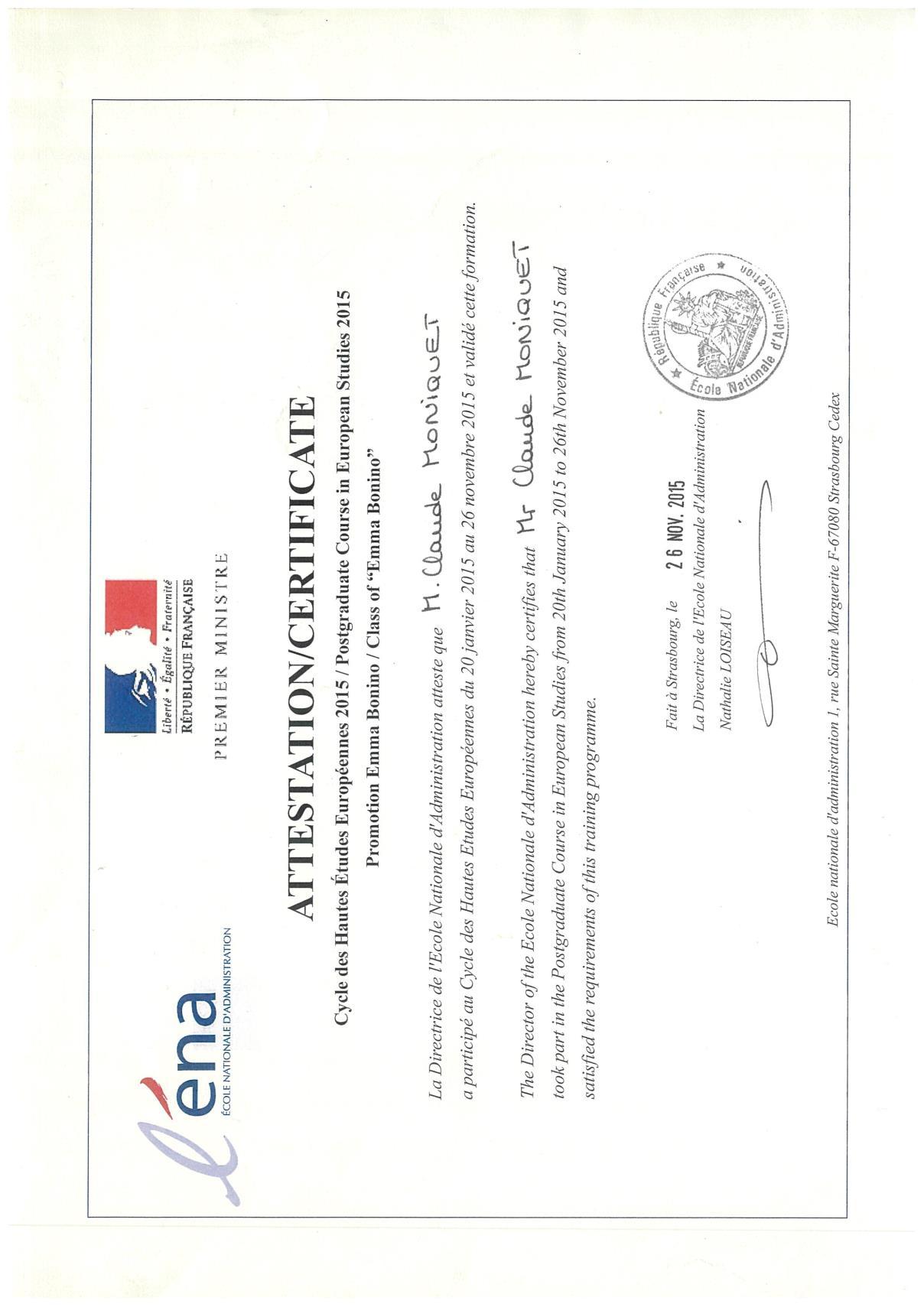
1/ Certificate (diploma) attesting that Claude Moniquet successfully completed an additional training in European Affairs at the ENA (Ecole Nationale d’Administration) in 2015.
2/ Certificate of membership of the International Counter-Terrorism Officers Association (ICTOA), an international association of former members of law enforcement and intelligence services specializing in counter terrorism.
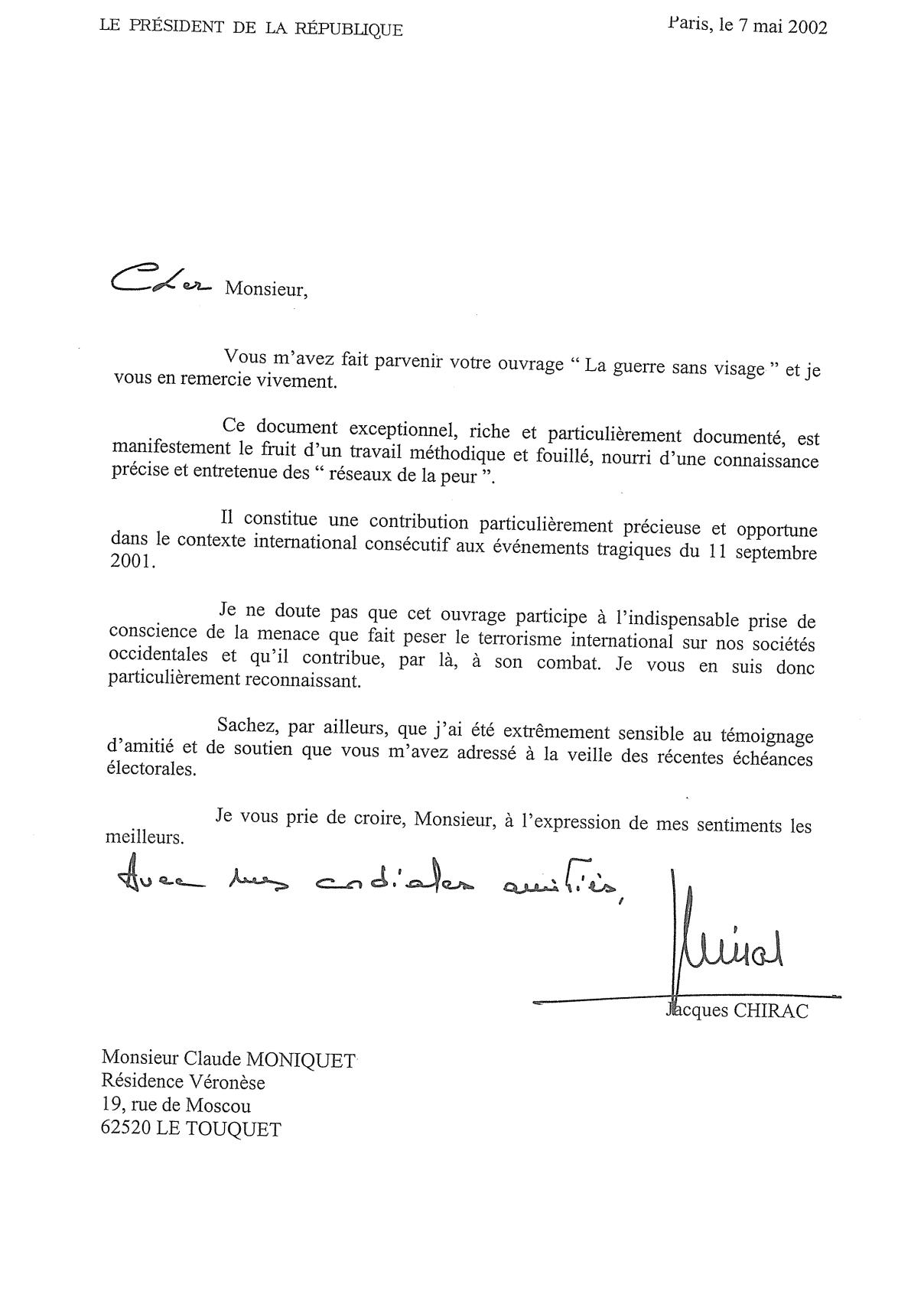
3/ Letter of thanks from President Jaques Chirac for sending a book dated May 7, 2002.
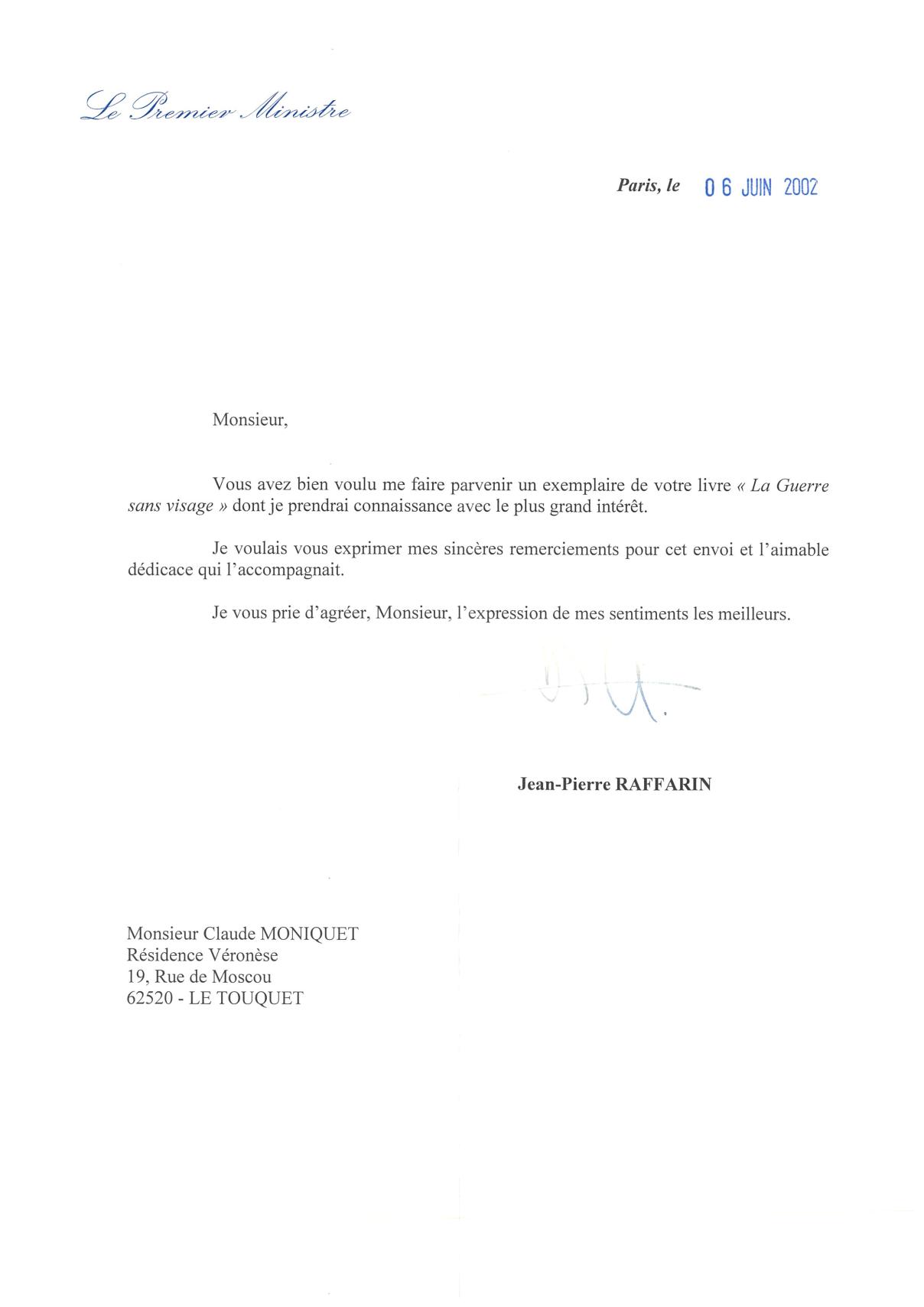
4/ Letter of thanks from Prime Minister Jean-Pierre Raffarin for sending a book, dated June 6, 2002.
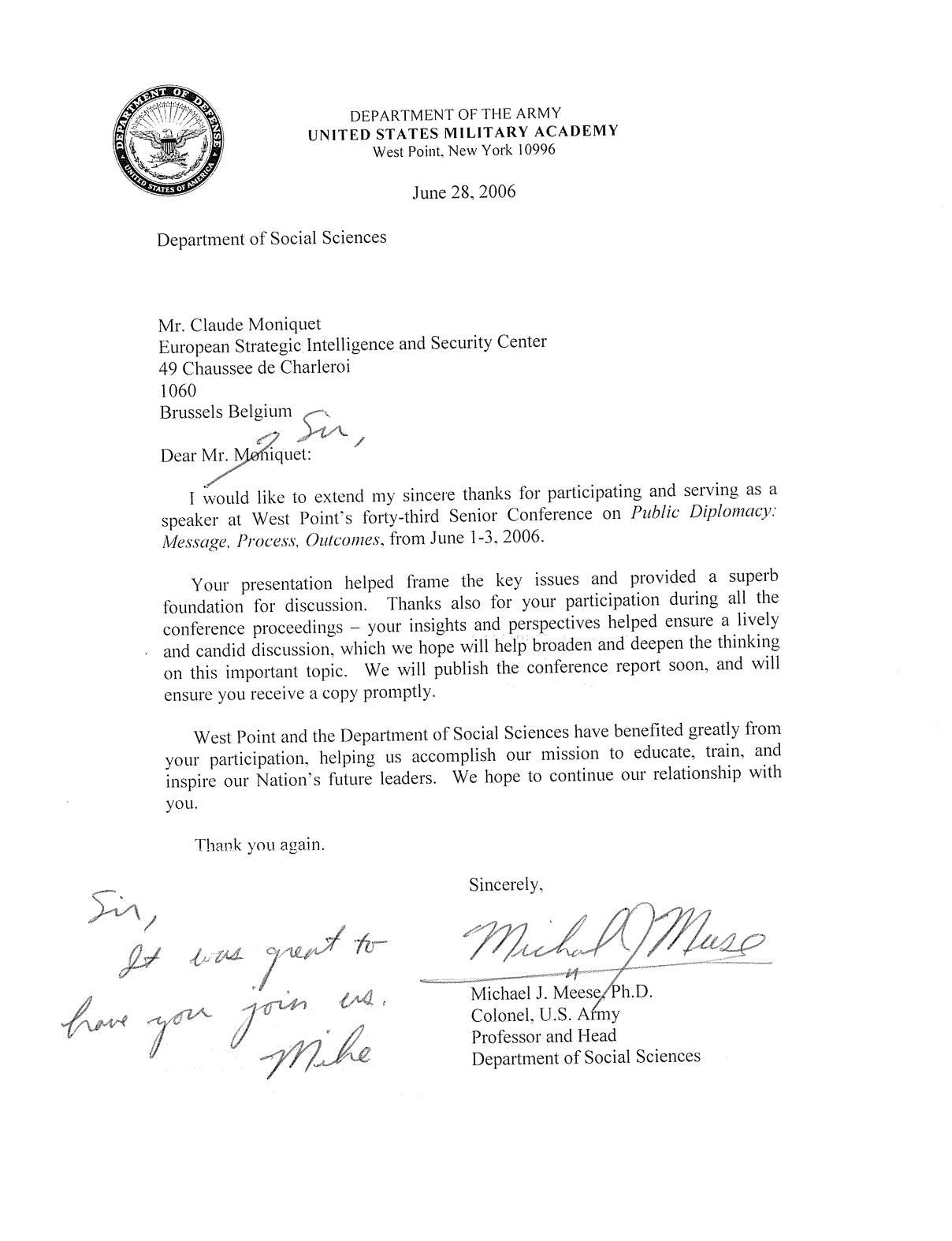
5/ Letter of thanks from the Head of the Department of Social Sciences, United States Military Academy (USMA, West Point), for Claude Moniquet ‘s participation in the 2006 Senior Conference.
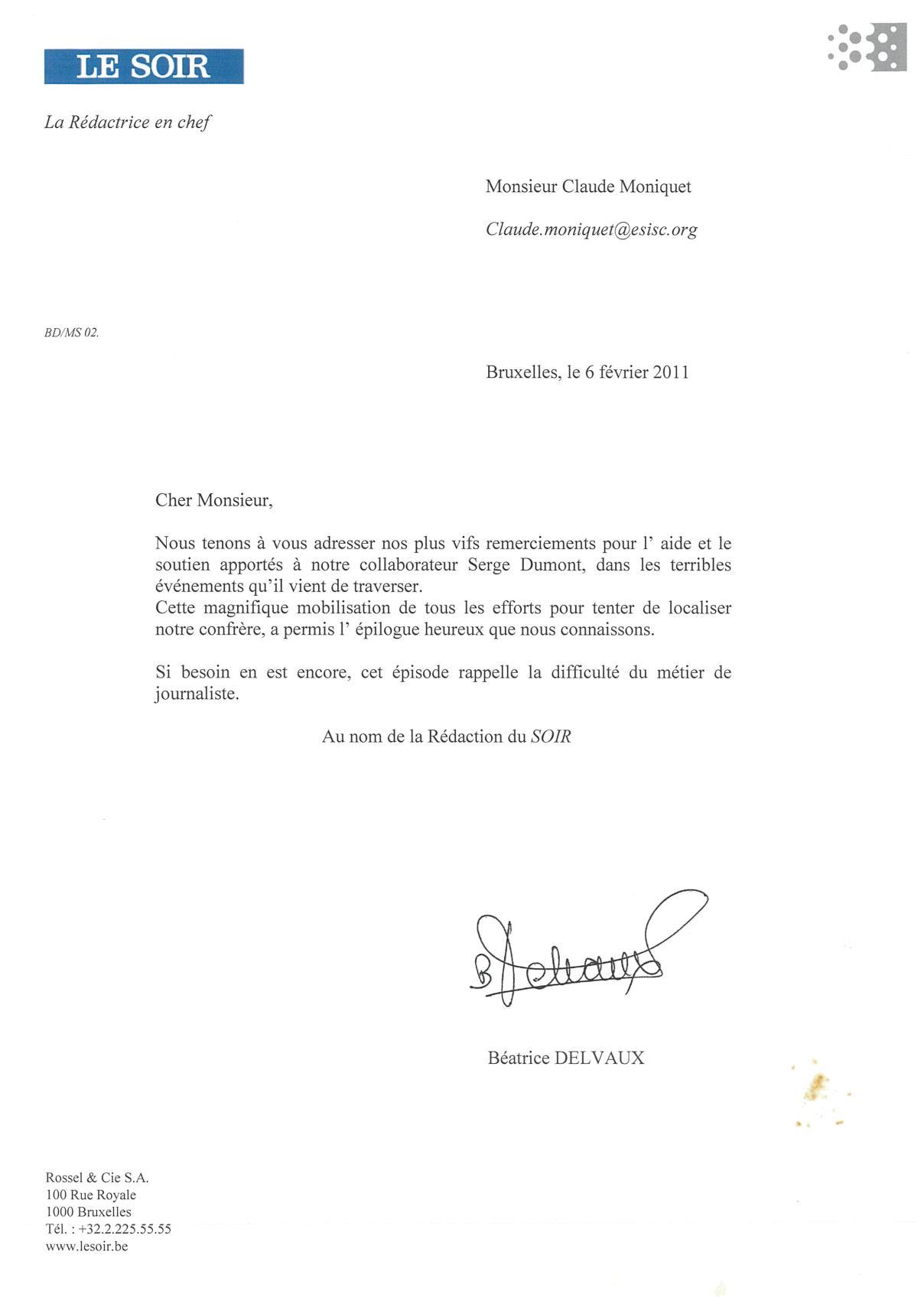
6/ Letter of thanks from the Editor-in-Chief of the Belgian Daily “Le Soir” for participating in the efforts to secure the release of a Journalist arrested in Egypt in January 2011.
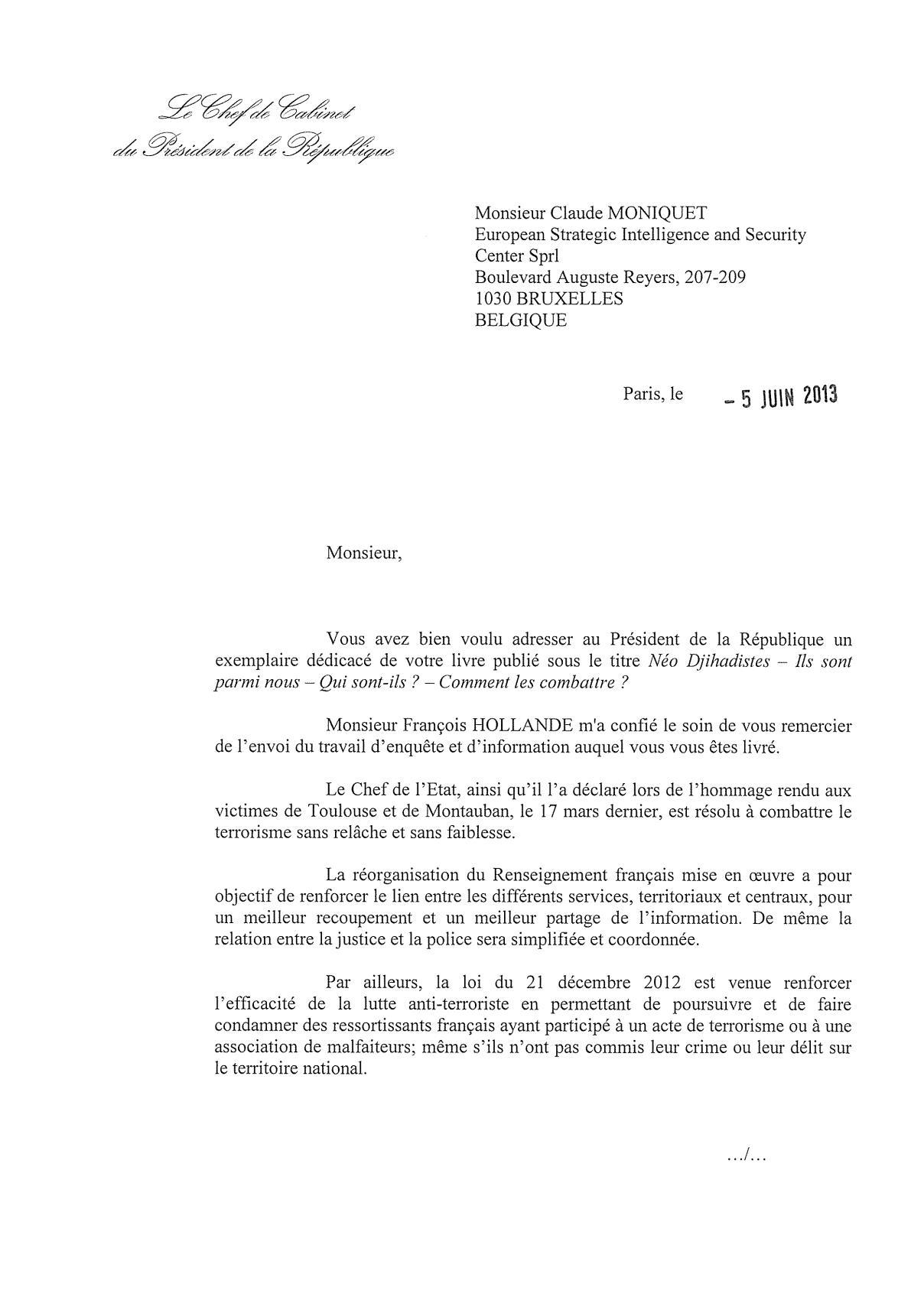
7/ Letter of thanks from Chief of Staff of the President of the French Republic, François Hollande, dated June 5, 2013.
8/ Letter of thanks from former President of the Republic Nicolas Sarkozy for Sending a Book, dated May 29, 2017.