A BEACON OF DESIGN INSPIRATION
PRODUCED ANNUALLY BY THE URBAN ELECTRIC CO., LIGHTING DESIGNERS AND MANUFACTURERS IN CHARLESTON, SOUTH CAROLINA, THE CURRENT EXPANDS ITS ARTISTRY BEYOND THE WALLS OF ITS WORKSHOP TO CELEBRATE THE WIDER WORLD OF DESIGN AND THE BOUNDLESS CREATIVITY OF ITS BRIGHTEST LUMINARIES.
THE CURRENT
Andy Warhol famously called his creative studio ‘The Factory.’ Conversely, we refer to our factory as a creative studio—a laboratory where ideas and innovations are conceived and fabricated. No matter the name, ingenuity can surface in the most unlikely of places—in outbuildings and attics, on estates and out in the streets. Location is ultimately less important than perspective. Like the best design, great art has an unmistakably original point of view. It provokes thought. It shakes the senses. A kind of secret language that can’t be easily defined by those who create or curate it, it is an essential mechanism for engaging with the world, cutting through the chaos to make it a more interesting place than it was before.
46 KEVIN PAULSEN
The Making of a Muralist
96 SICILIAN SCENES
The Mediterranean’s Creative Confluence
252 LOUISE FENNE
The Natural Curiosity of a Classical Portraitist
166 DREAM STATES
Pierre Bergian’s Whimsical World
210 CULTURE CLASH
The Social Studies of Jack Penny
292 STREET THEATER
Robert Rufino Returns to the Stage
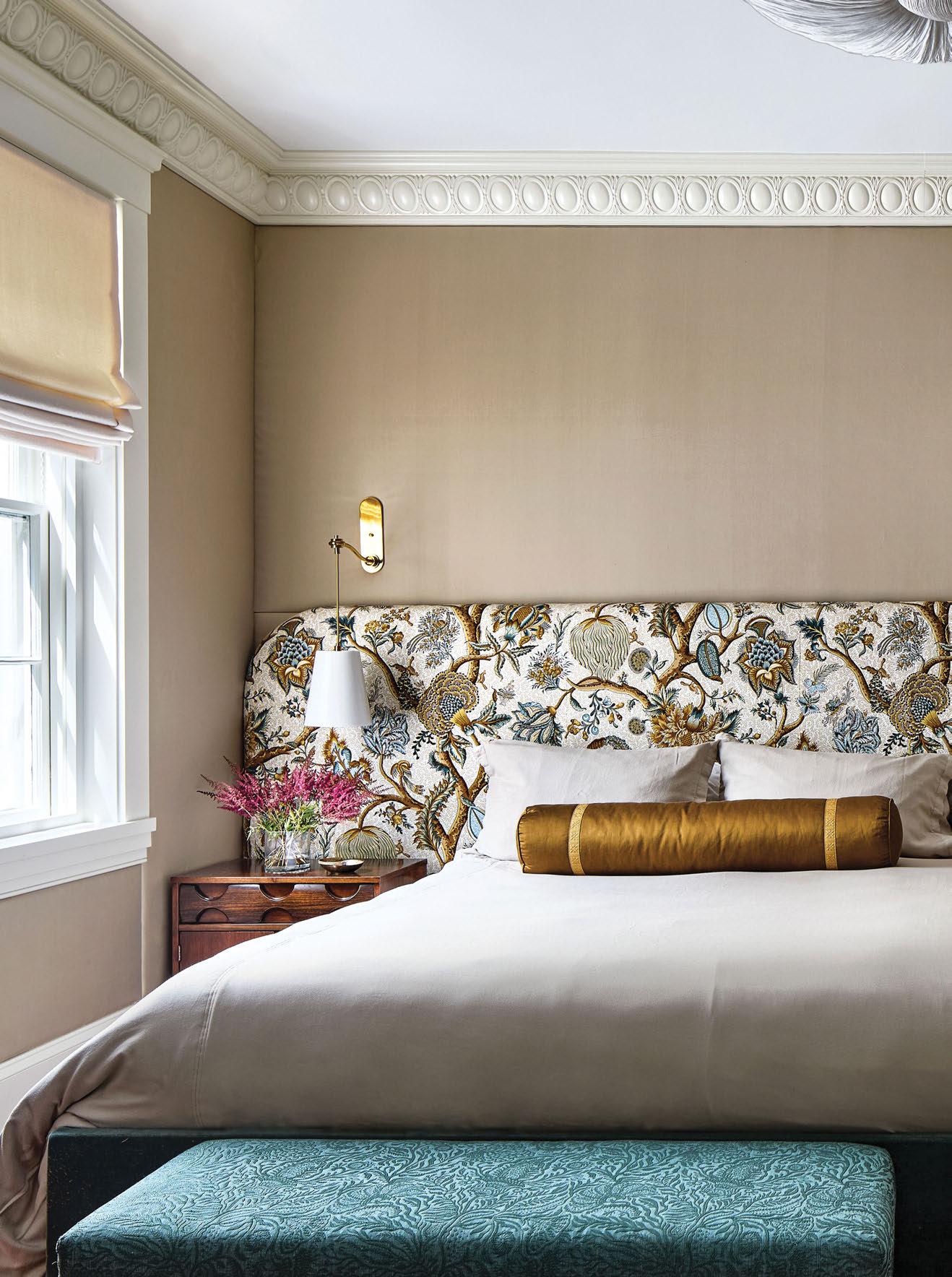
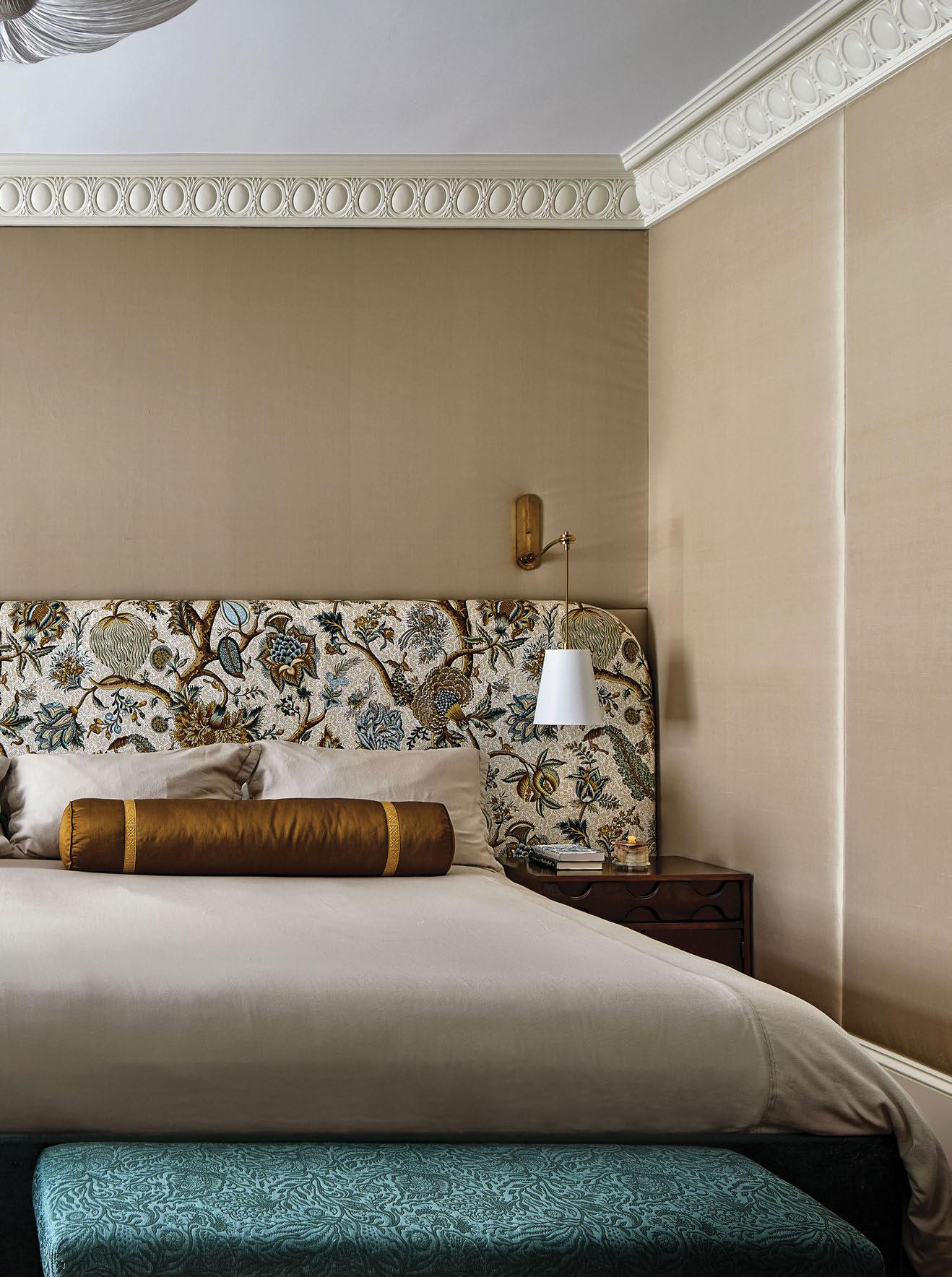
VIENNA DUOMO WALL
INTERIORS
PHOTOGRAPHY
ARTS & CRAFT
One of my greatest pleasures in life is to hunt and discover a small painting in an obscure corner of a flea market or antique store. I rarely concern myself with its importance, its provenance, its monetary value. What I treasure is how it makes me feel.
Undeniably it brings me joy. Of course, what resonates with me may not speak to others. What even constitutes a worthy creative act is often a matter of perspective. One that can shapeshift depending on the eye of the beholder. Perhaps Oscar Wilde said it best: “Art is the most intense mode of individualism that the world has ever known.”
That singular form of self-expression is at the heart of this edition which explores the process, motivations and inspirations of artists across multiple mediums and disciplines. Each with their own individual voice and passion and spirit.
Volume 7 comes at a time when our relationship to the handmade is being feverishly redefined. In many instances, humanity is being stripped from artistic endeavors altogether through artificial intelligence (an apt name if there ever was one) and the raft of soulless, attention bait that is omnipresent on our devices.
Not so for the artists featured in this edition. From the rich cultural crossroads of Sicily to a father-and-son
duo crafting expansive murals in the Hudson Valley; from an avian-obsessed Danish oil painter to a satirist from West Sussex bringing his social commentary to one of the UK’s grandest estates; from a window dresser returning to his roots to a draftsman who travels into the studios of the greats using only his imagination—vulnerability is on display, offered up to be shared and absorbed.
Though we’ve always instinctively appreciated—and related to—those who see the world from a unique perspective, our conviction to champion these artists’ work and share their stories has never been stronger.
The in-depth features in this book are made richer by this collaboration, where we commissioned dozens of original illustrations, enlisted a battery of portraitists, and even staged a series of window installations in New York City, all in the spirit of bringing more beauty into the world. It’s our small way of tilting away from the ephemeral and towards something more meaningful.
Henri Matisse famously said that creativity takes courage. We feel that acutely in our everyday work at Urban Electric, and it gives us profound respect not only for the artists featured in this volume but even for those unknown artists whose recognition comes randomly from the depths of the dusty back walls of an old gallery space. The ultimate reward for those who have the persistence to look hard enough.
Dave Dawson May 2026
Artists on Artisans

IF YOU WANT TO UNDERSTAND OUR CULTURE, TAKE A CLOSE LOOK AT OUR PEOPLE.
Our workshop is filled with many muses—a dynamic cast of characters that are as passionate about what they do as they are about how they do it. In this volume, it’s our privilege to highlight these unique individuals who inspire us every day, each rendered by a different artist of equal acclaim. Taken together, it’s a celebration of the craftsman as much as the craft, and as far as we’re concerned, it’s the ultimate group show.

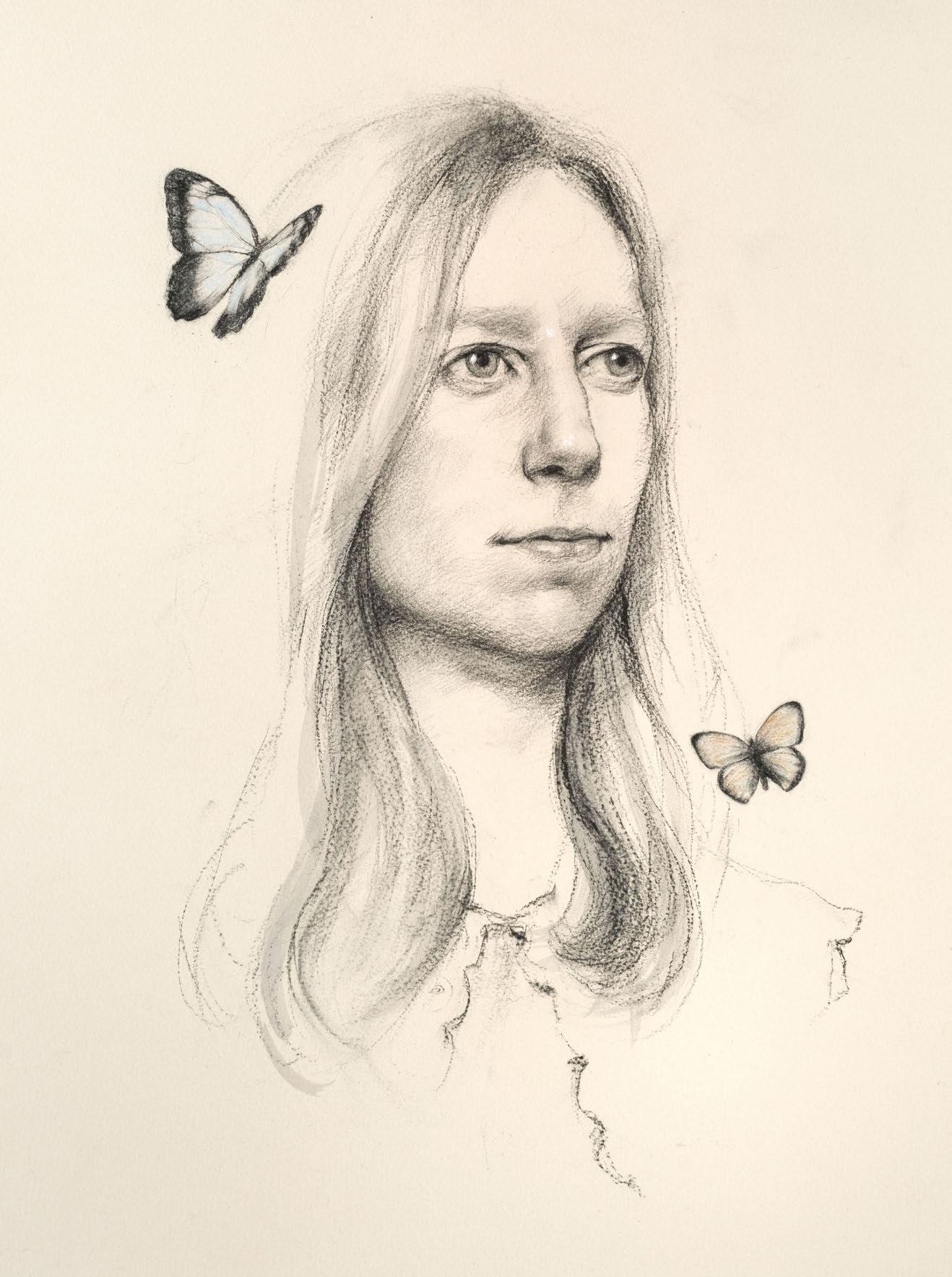
Charlotte Charcoal, ink and chalk on paper by Jill Hooper
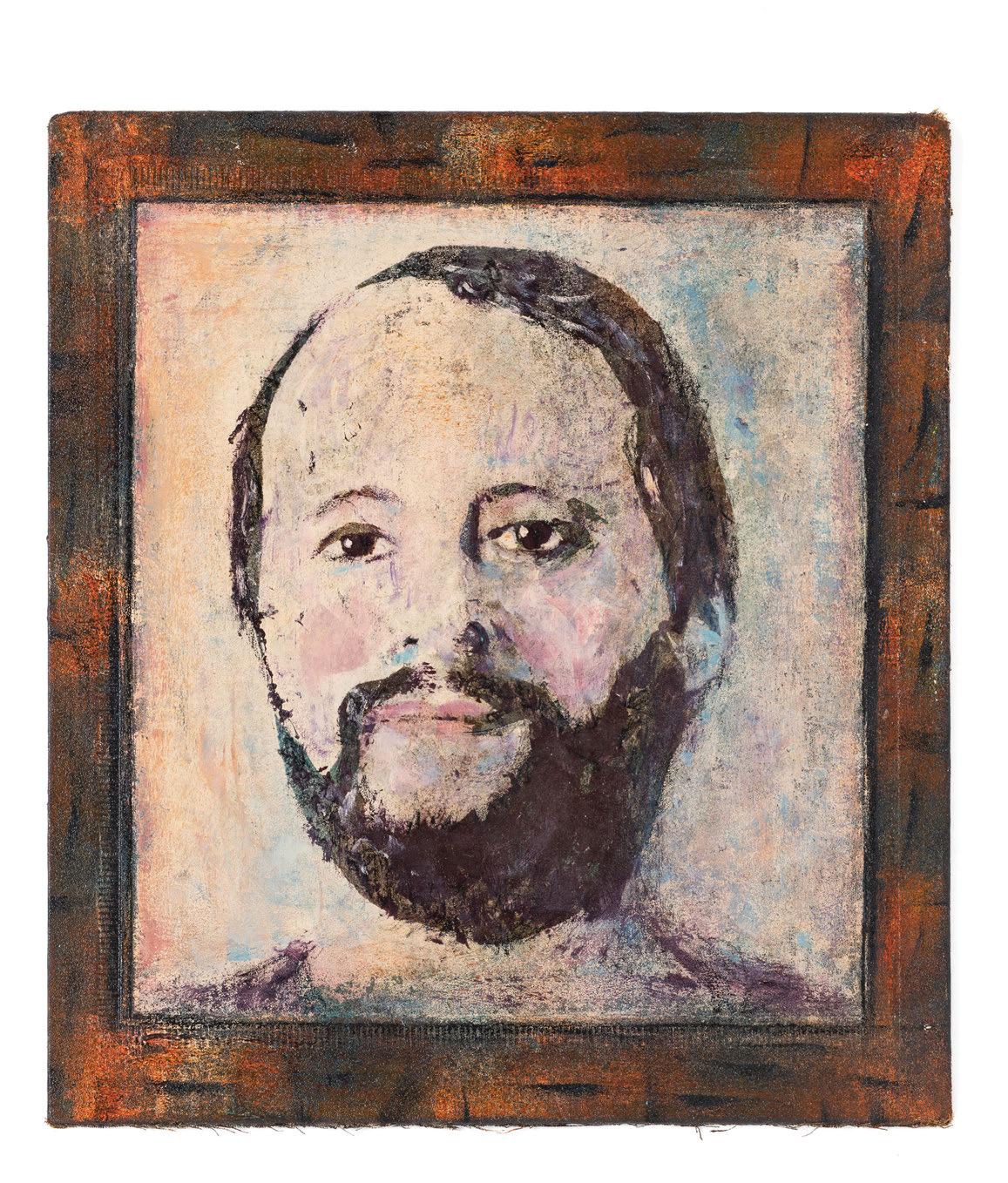
Andrew
Mixed media on vintage album cover by Kevin Paulsen
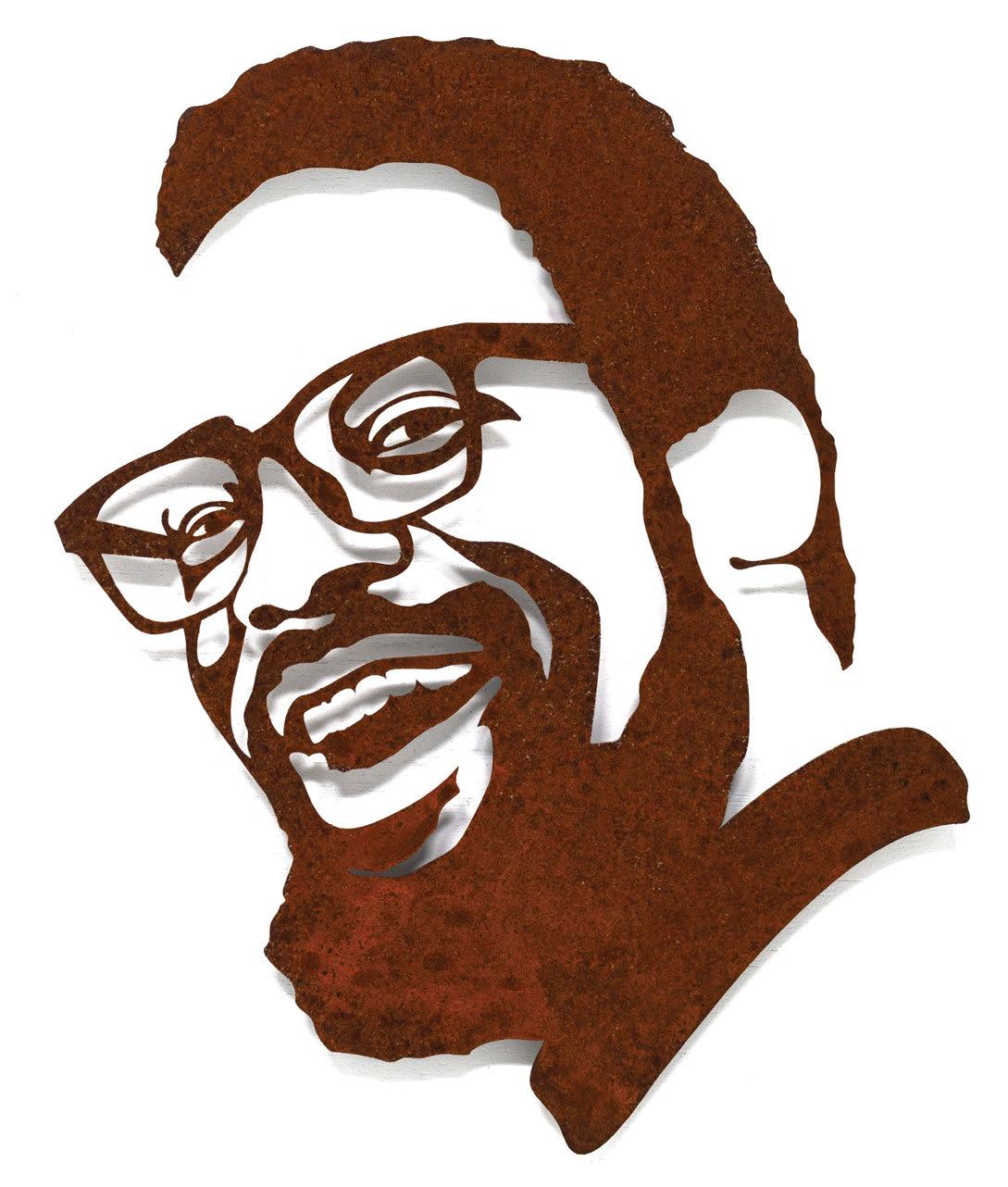
Andrae
Cut patinated steel
by Fletcher Williams
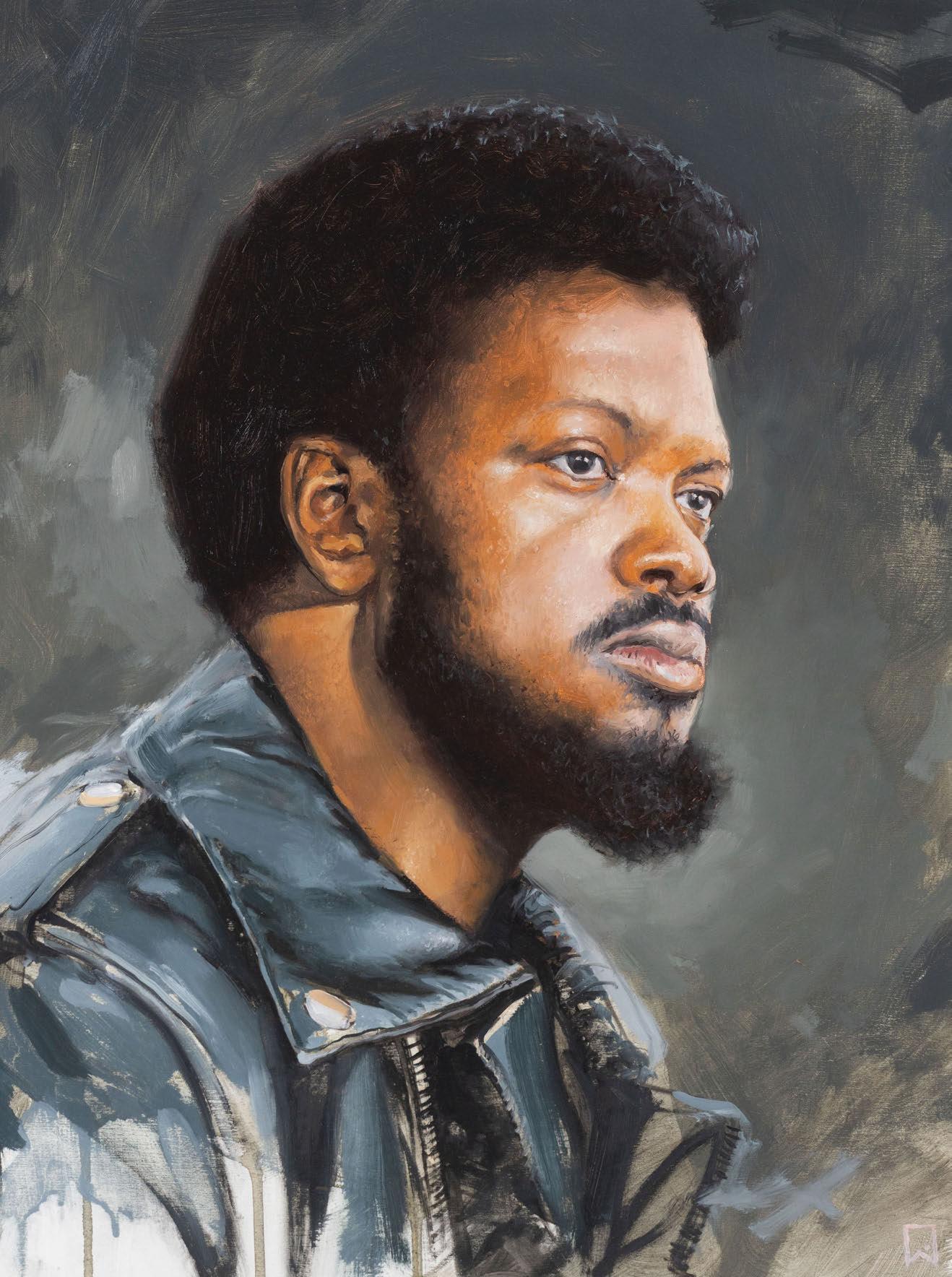
DJ Oil on canvas by Cory Bradley
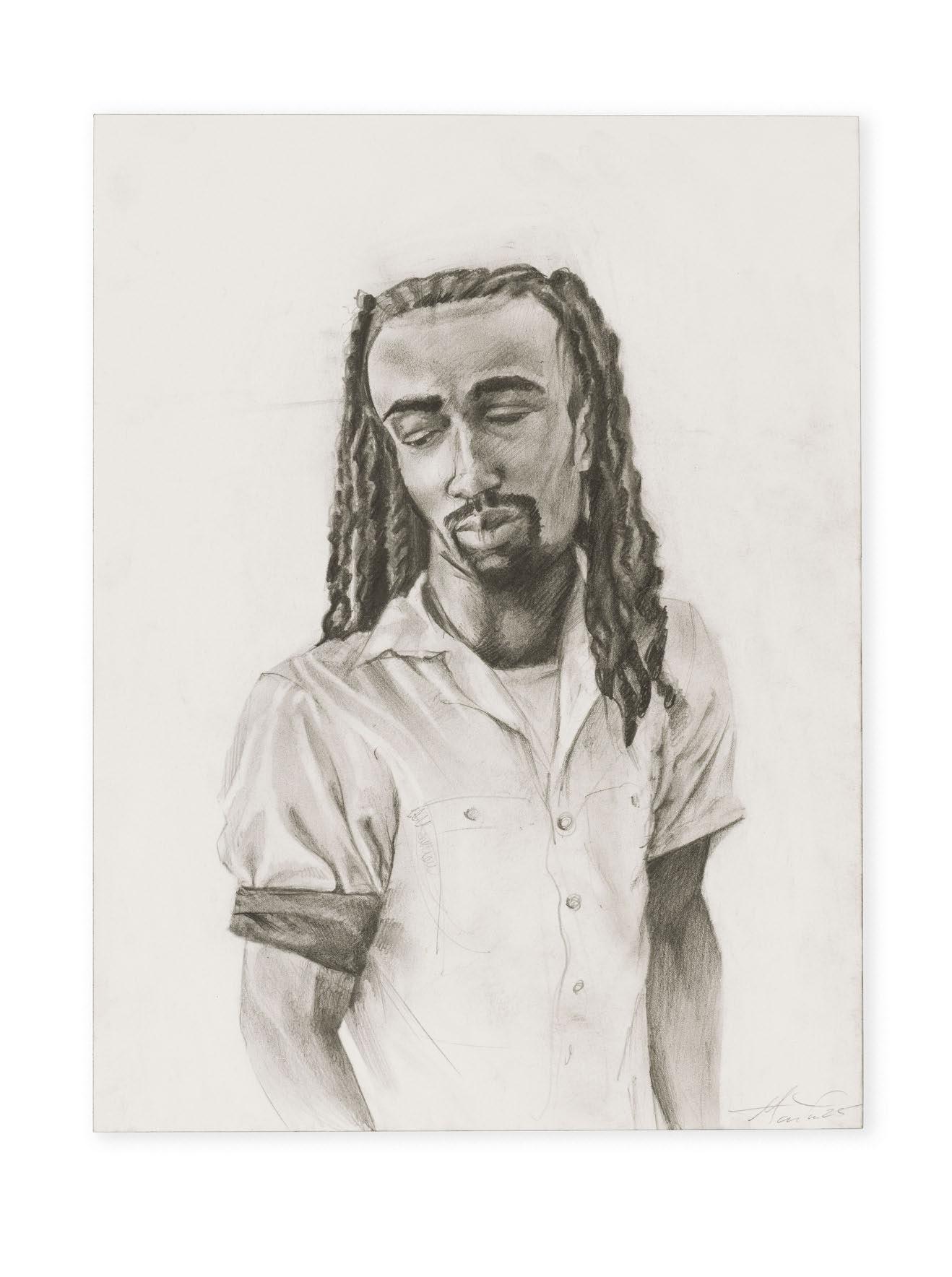
Lamar
Graphite on Bristol by Geddes Jones Paulsen
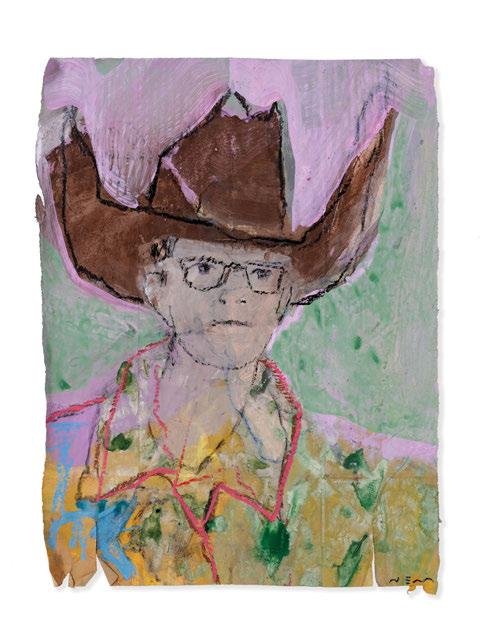
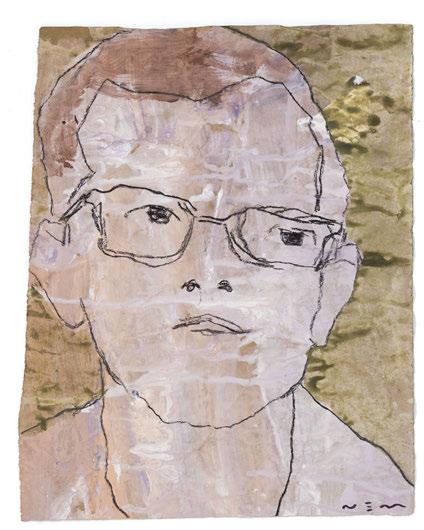
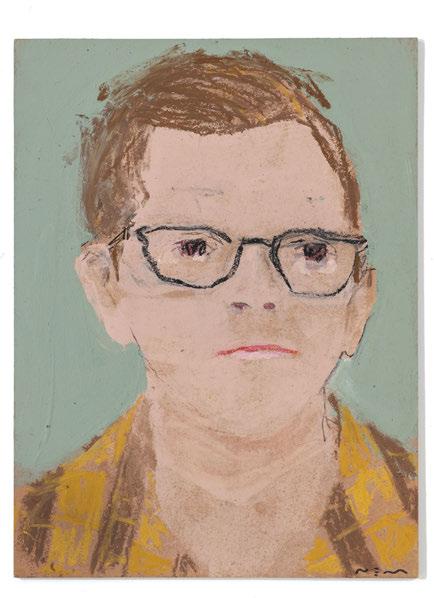
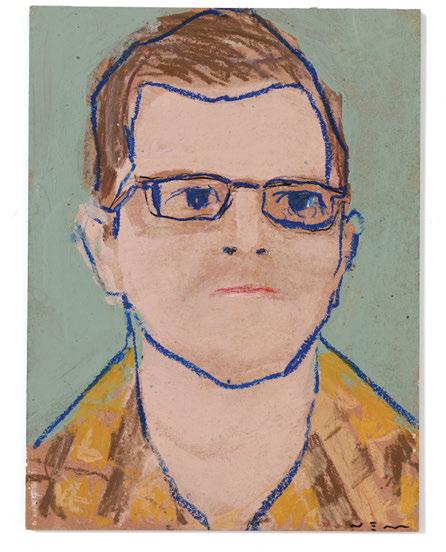
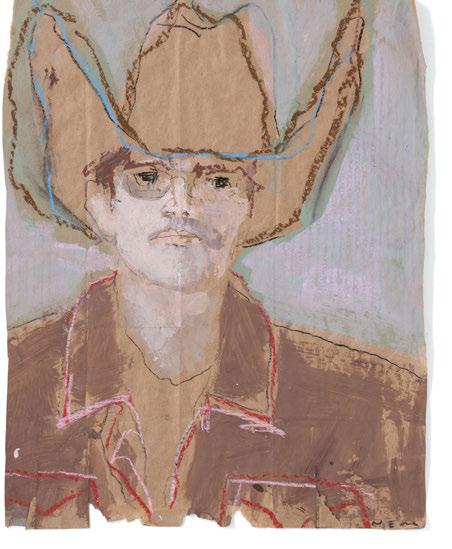
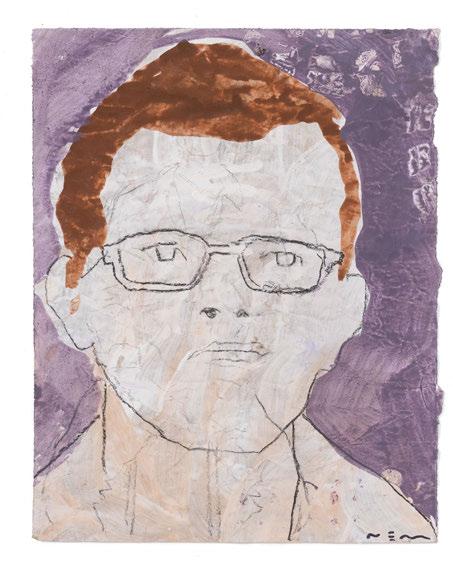
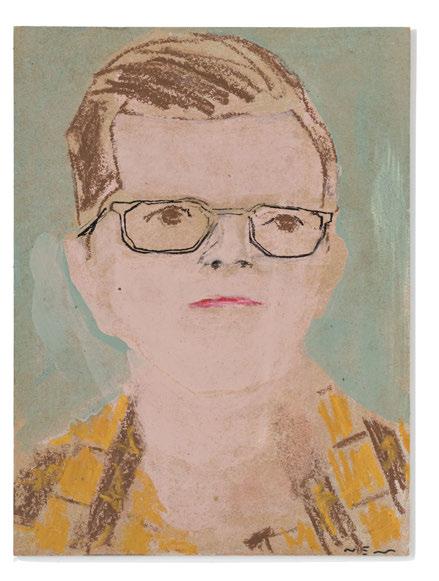
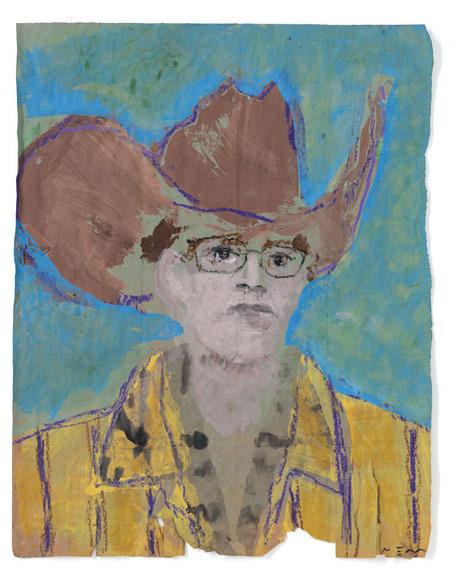
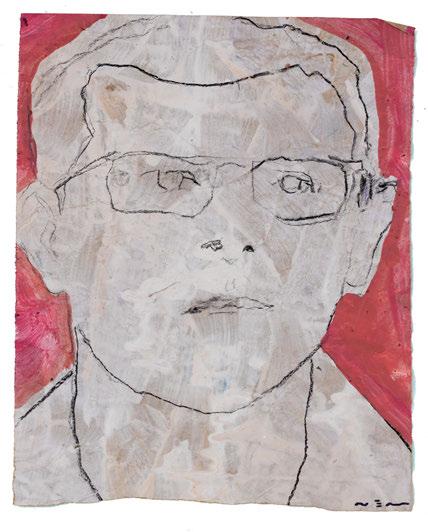
Elliott
Acrylic, woody, oil pastel & marker on recycled paper & hardboard
by Nathan Edwin McClements
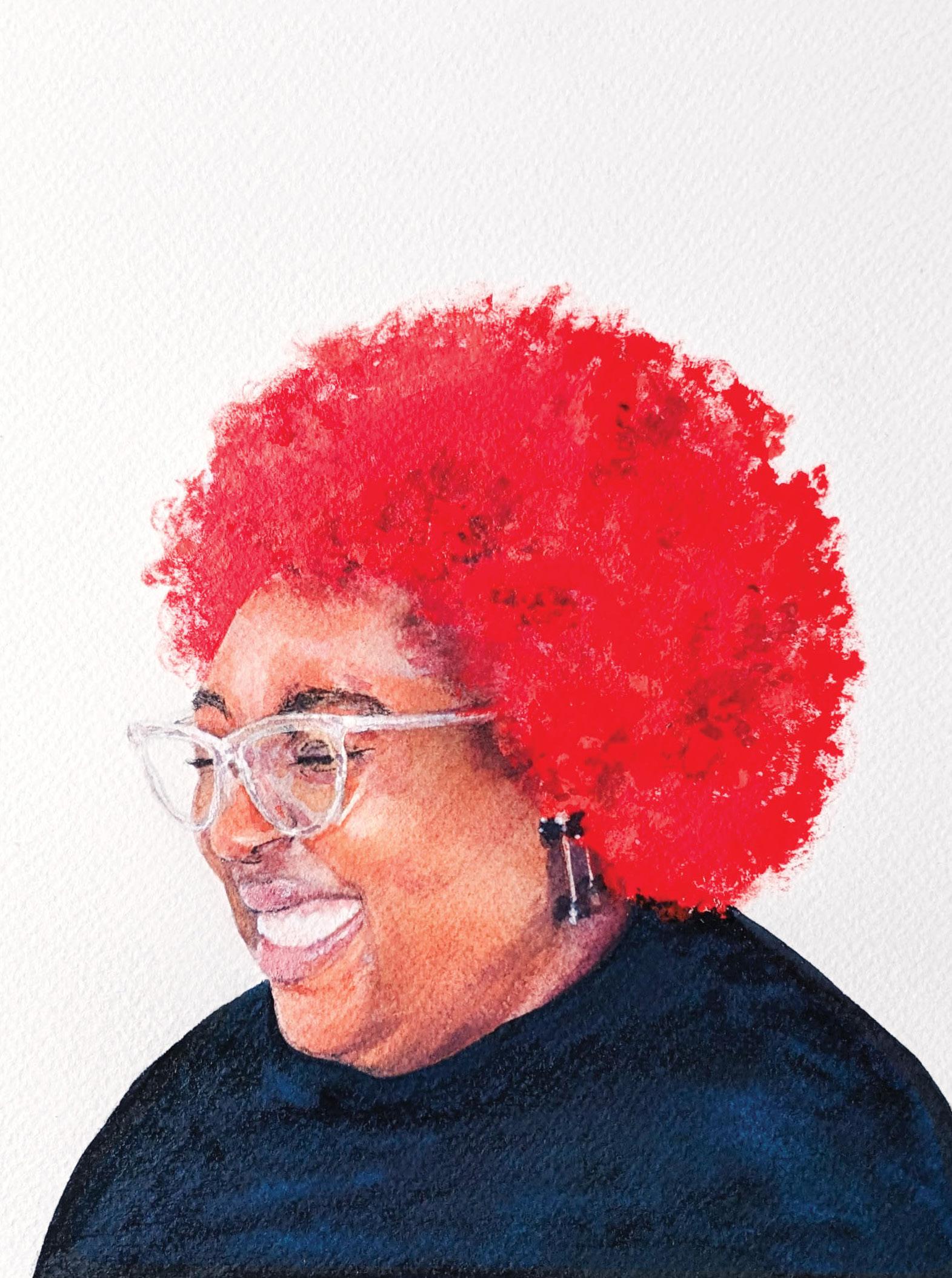
Carol
Watercolor and pen on paper by Riki Matsuda
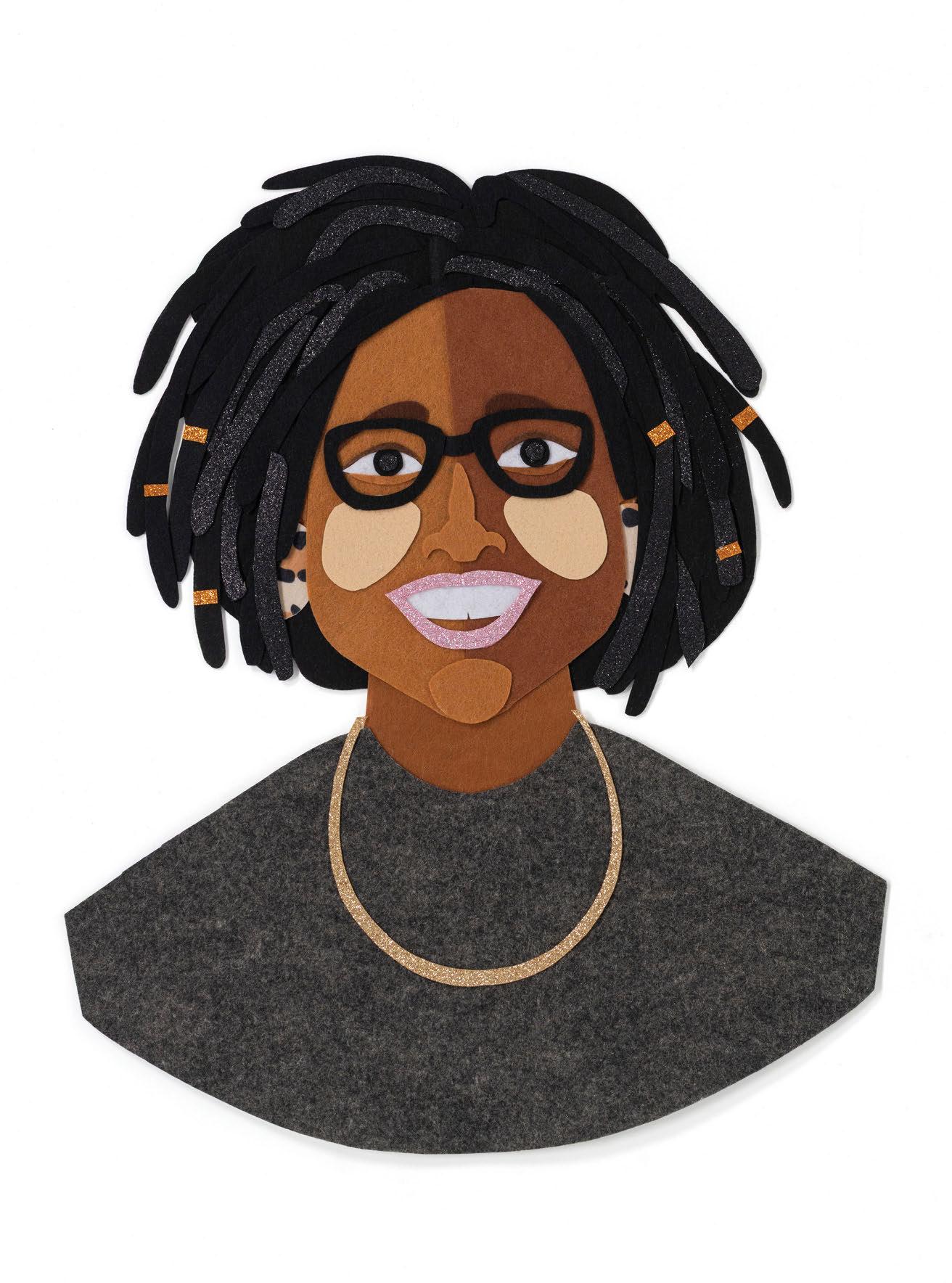
Angie
Assembled felt
by Sam Sidney
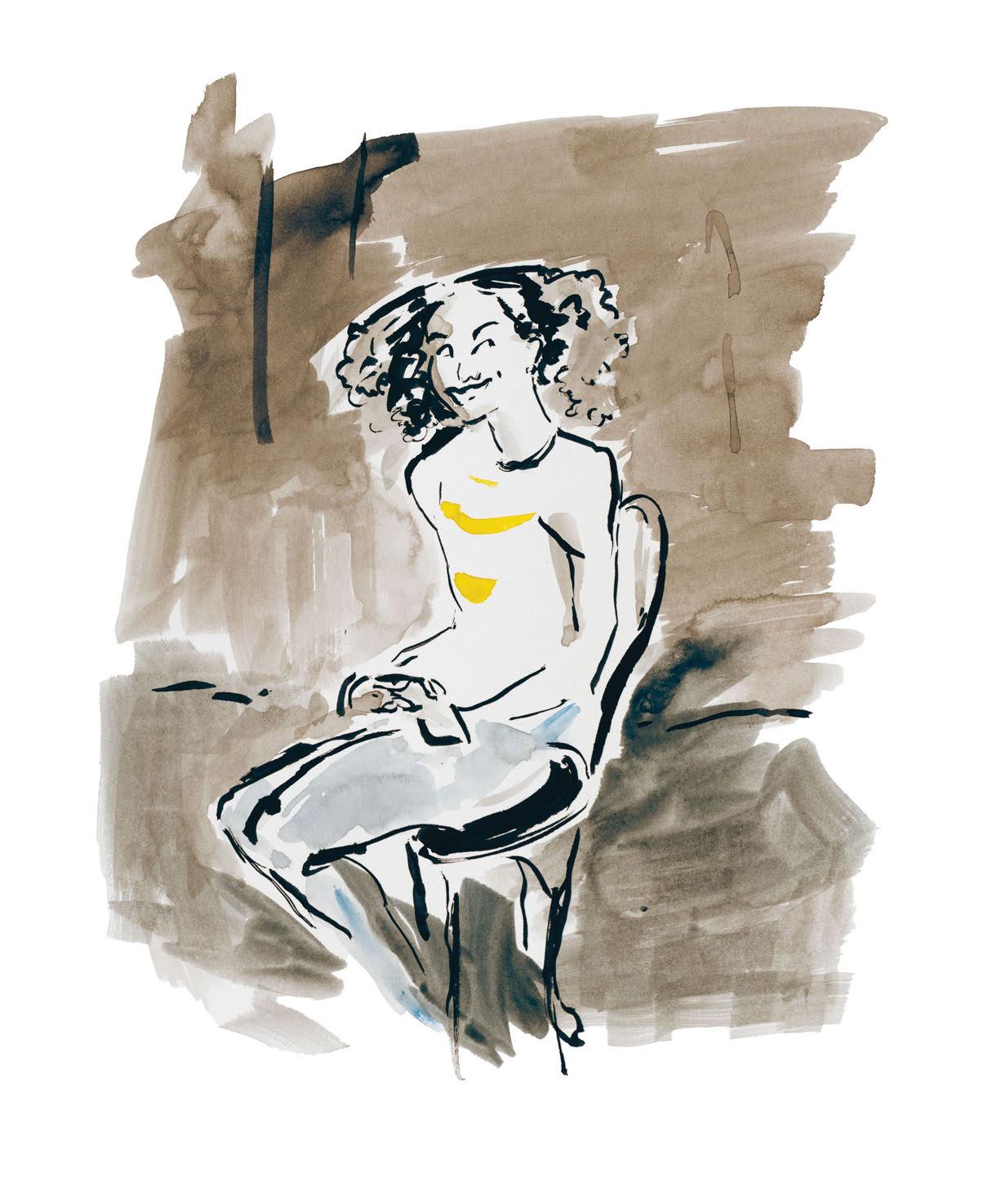
Zayla Watercolor and ink on cotton paper by Carlisle Burch
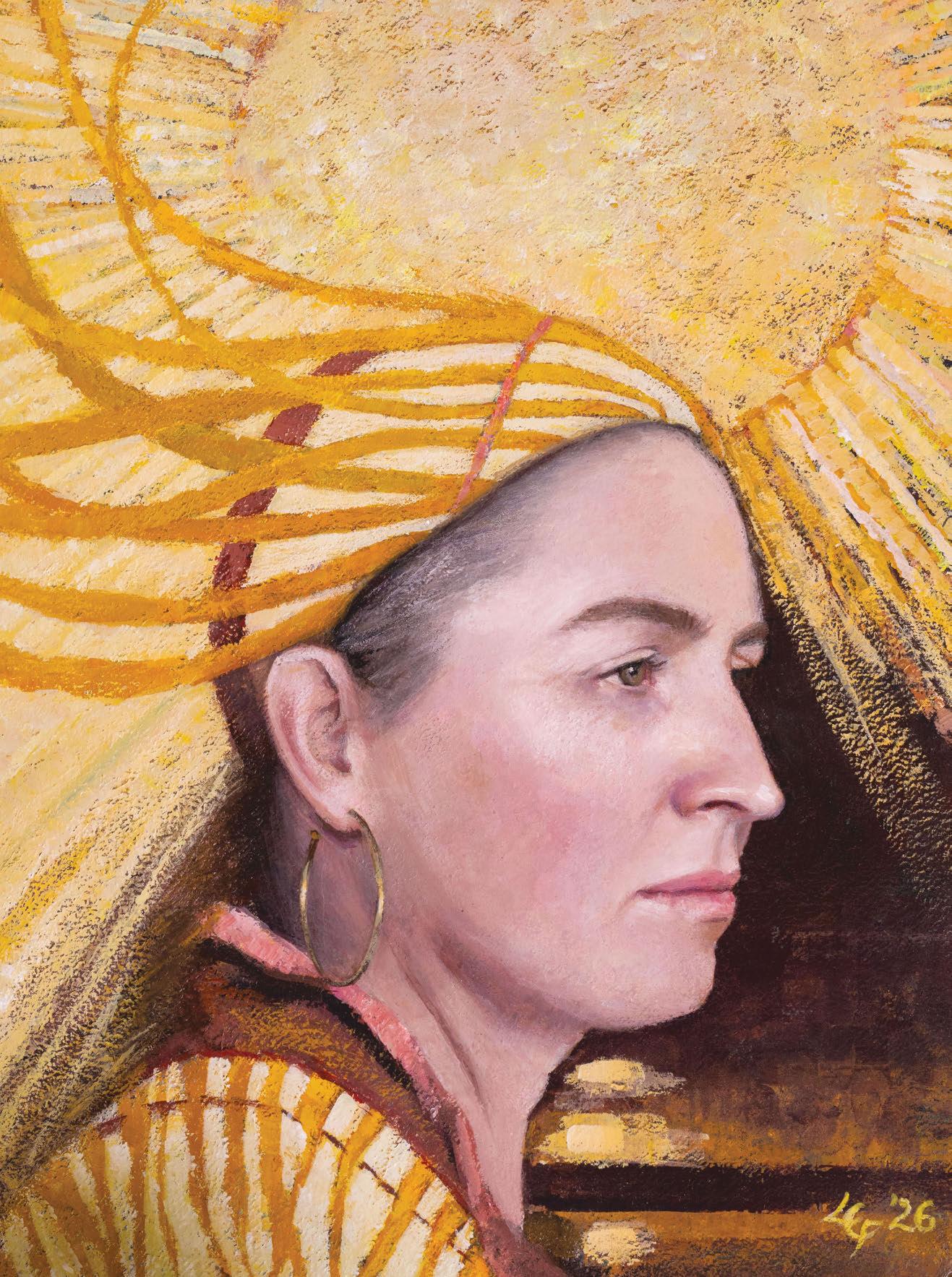
Halle
Conté and crayon on paper by Louise Camille Fenne

Kenneth
Pen and watercolor on paper by Lukas Palumbo
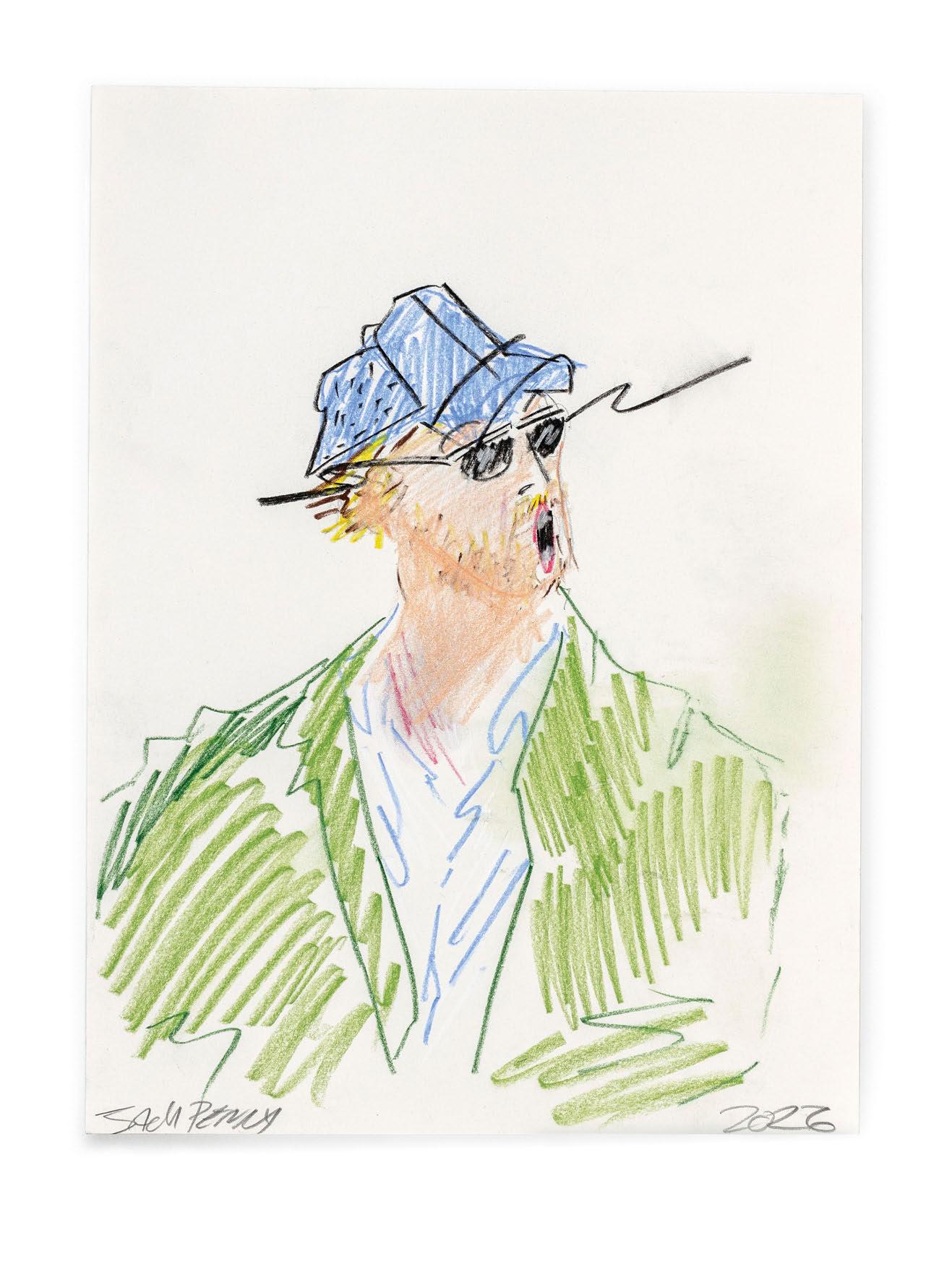
Will
Colored pencil on paper
by Jack Penny
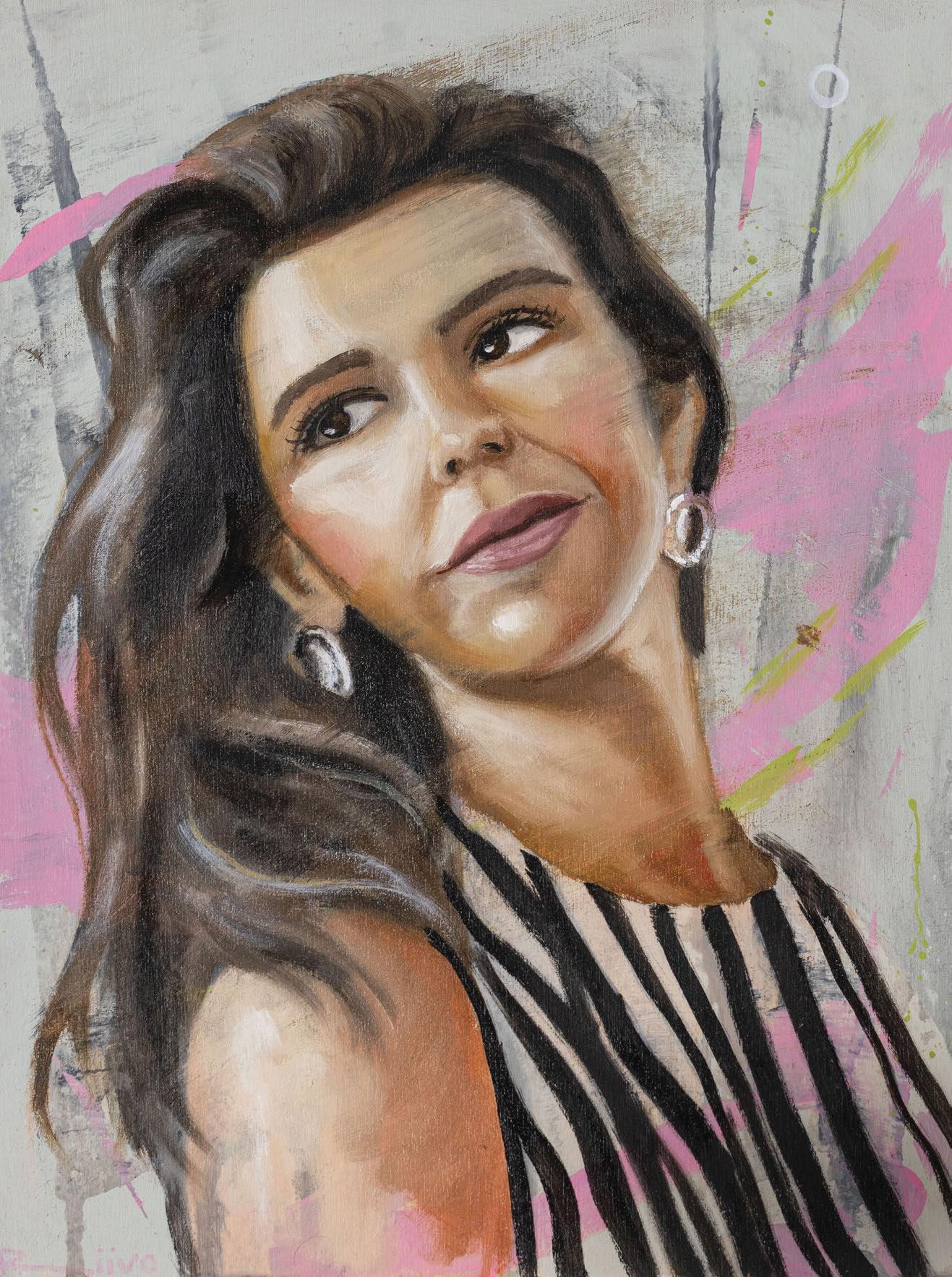
Candace Oil on wood
by Riivo Kruuk










Featured on previous pages and depicted by artists on right.
In order of appearance:

JILL HOOPER
CHARLESTON, SC
LONDON, UK
Jill Hooper is a classical realist painter focused on the figurative form, splitting her time between Charleston and London, where she teaches and exhibits on both sides of the pond. Permanently collected by multiple institutions, Jill is the youngest living artist to ever be collected by the Gibbes Museum of Art.
KEVIN PAULSEN
KINGSTON, NY
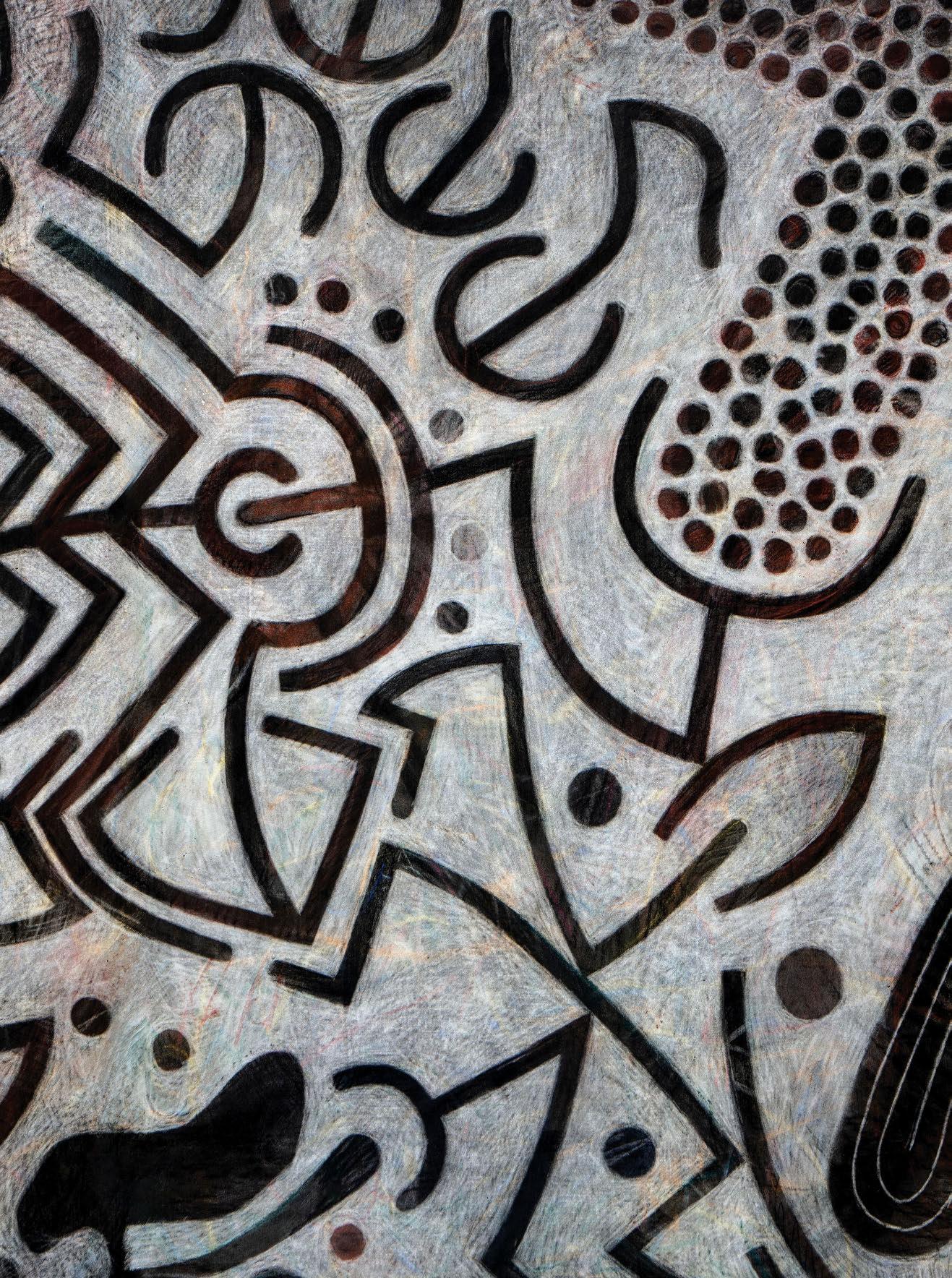
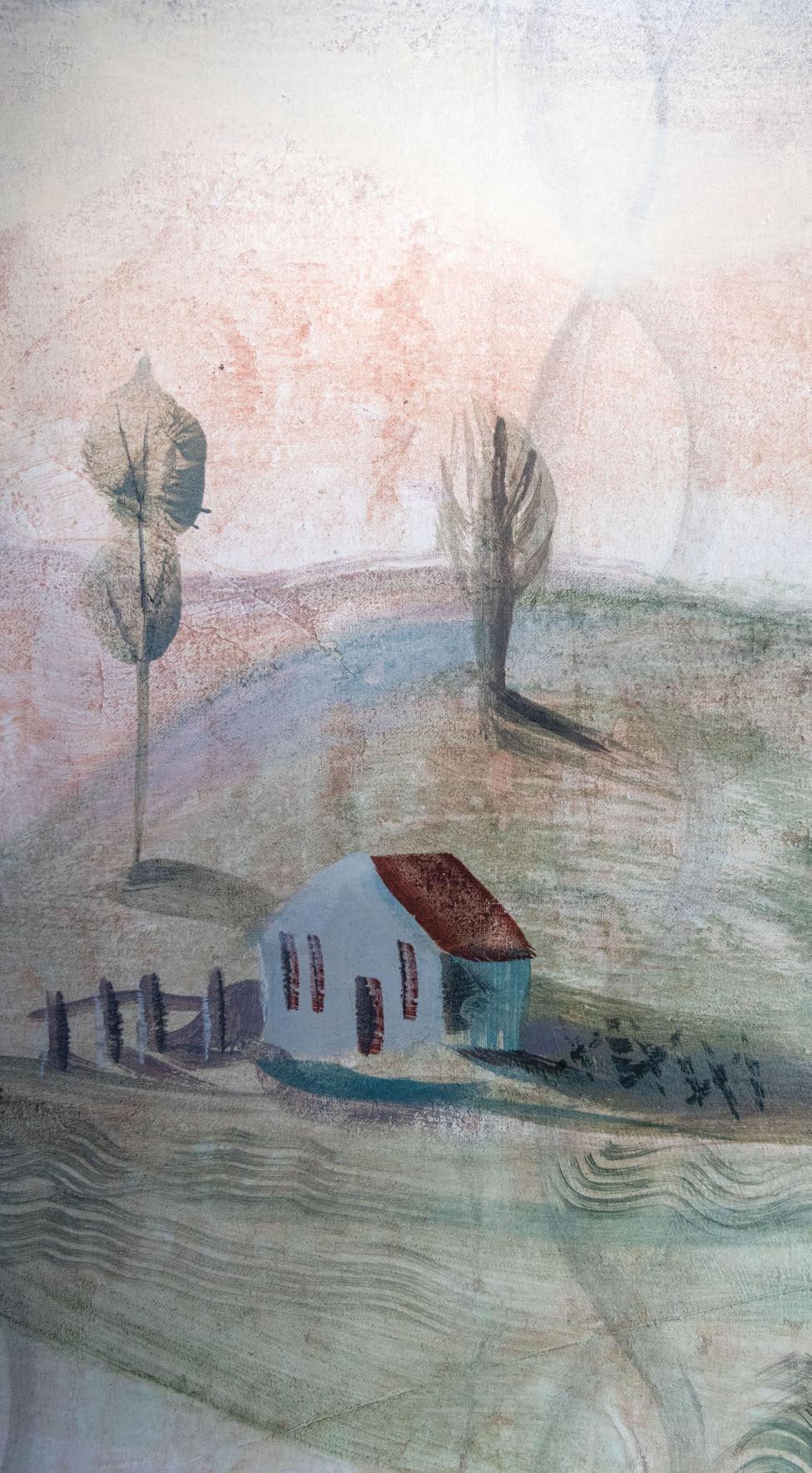
Known for his character-filled, scenic landscapes that combine elements of fine and folk art, Kevin Paulsen produces largescale murals and paintings out of his studio in Kingston.
FLETCHER WILLIAMS III
CHARLESTON, SC
Fletcher Williams is an interdisciplinary artist living and working in Charleston. Fletcher is known for his large-scale sculpture and installation works, informed by the vernacular and material culture of the American South.
CORY BRADLEY
CHARLESTON, SC
A voracious multi-hyphenate with boundless curiosity, Cory Bradley’s artistry has many modes of expression, spanning from painting and photography to engineering.
GEDDES JONES PAULSEN
KINGSTON, NY
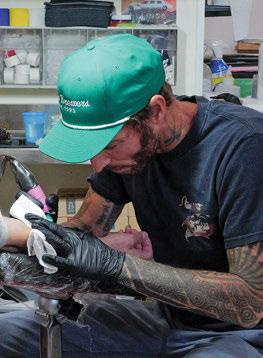
Raised on Nantucket as the child of artists and designers, Geddes Paulsen has been drawing as long as he can remember. Today, his upbringing finds expression in his work as both a painter and a tattoo artist, with influences from surrealism and outsider art.
NATHAN EDWIN M c CLEMENTS
CHARLESTON, SC
A former singer/songwriter turned visual artist, Nathan McClements uses bold colors and found materials to depict portraits of rogues and renegades from musicians to cowboys.
RIKI MATSUDA
CORK, IRELAND
Riki Matsuda is a Japanese-Irish artist whose drawings and installations center around communication and how language both serves us and deserts us
SAM SIDNEY
CHARLESTON, SC
A former illustrator, Sam Sidney shifted her focus to felt during the pandemic as a way to engage her children with a daily art activity. Her hand-cut collages quickly found a larger following.
CARLISLE BURCH
PHOENIX, AZ
Carlisle Burch is a visual artist based in Phoenix. Working primarily in drawing and painting, her imagery is rooted in memories from a childhood spent in the Mojave Desert and draws from 20th-century cartoons and American mythologies.

LOUISE CAMILLE FENNE
SVENDBORG, FUNEN, DENMARK
Born in Denmark and trained in Florence, Louise Fenne’s body of work includes life-like portraits mixed with elements of the natural world.
LUKAS PALUMBO
PORTLAND, ME
Lukas Palumbo is an illustrator, designer and world-builder inspired by the hand-hewn past. He looks most often to the 17th and 18th centuries for inspiration, but enjoys art and objects from all eras of antiquity.
JACK PENNY
WEST SUSSEX, UK
From his rural studio in Bosham, Jack Penny paints energetic figurative scenes of city life with the wit of a satirist and the eye of a cultural anthropologist.
RIIVO KRUUK
CHARLESTON, SC
Riivo Kruuk is an Estonian-American multidisciplinary artist based in Charleston. Riivo’s work intricately weaves folklore and traditional motifs from different cultures with contemporary and pop culture elements.
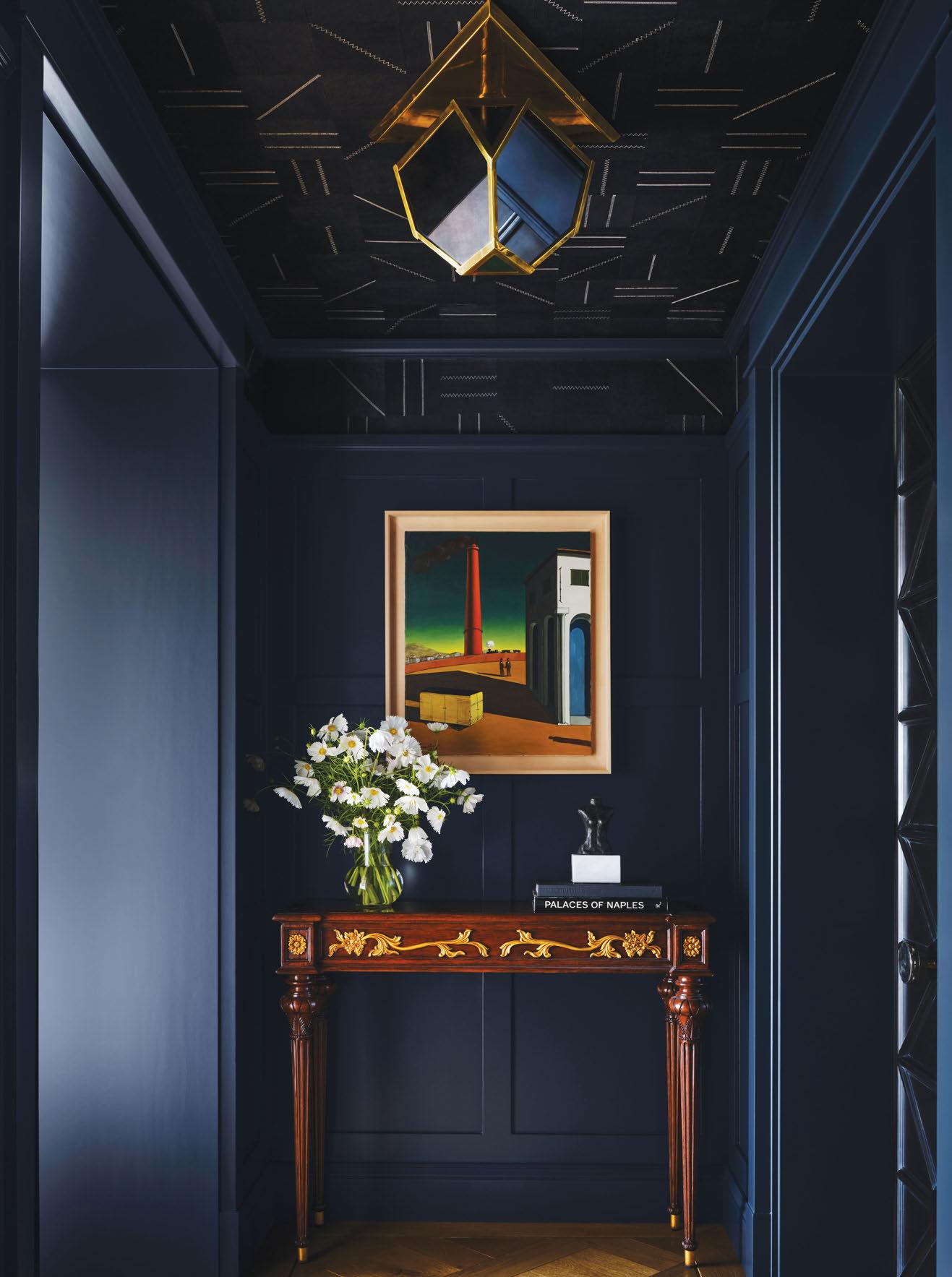
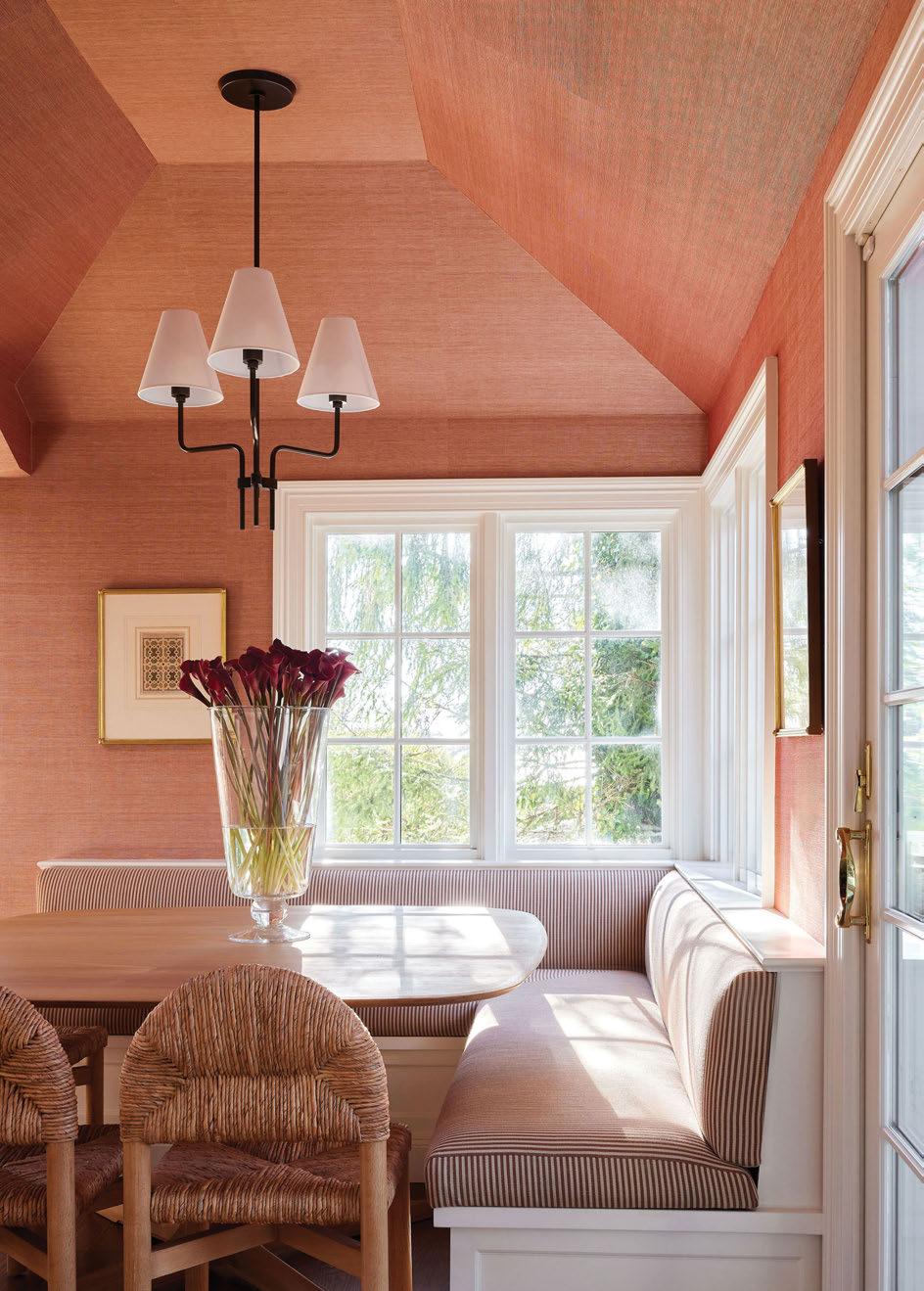
TRIPP
JDP INTERIOR DESIGN / PHOTOGRAPHY BY JULIA D’AGOSTINO PIERCE
JACKSON
INTERIORS BY WITMER DESIGN / PHOTOGRAPHY BY MARTIN VECCHIO
BIRSLEY
INTERIORS BY ANGIE HRANOWSKY
PHOTOGRAPHY BY JULIA LYNN
MARLBOROUGH
INTERIORS BY AMIE CORLEY
PHOTOGRAPHY BY ASHLEY GIESEKING
HARRIS
KATIE LINDQUIST INTERIORS
PHOTOGRAPHY BY JULIA D’AGOSTINO PIERCE
EDINA
LINDLEY ARTHUR INTERIORS
PHOTOGRAPHY BY NATHAN SCHRODER STYLING BY MELANIE MCKINLEY
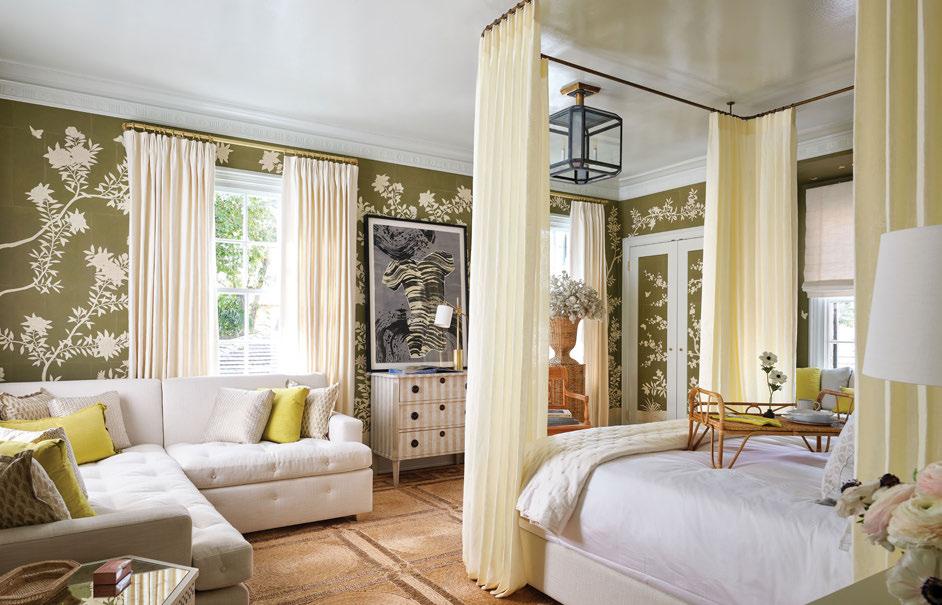
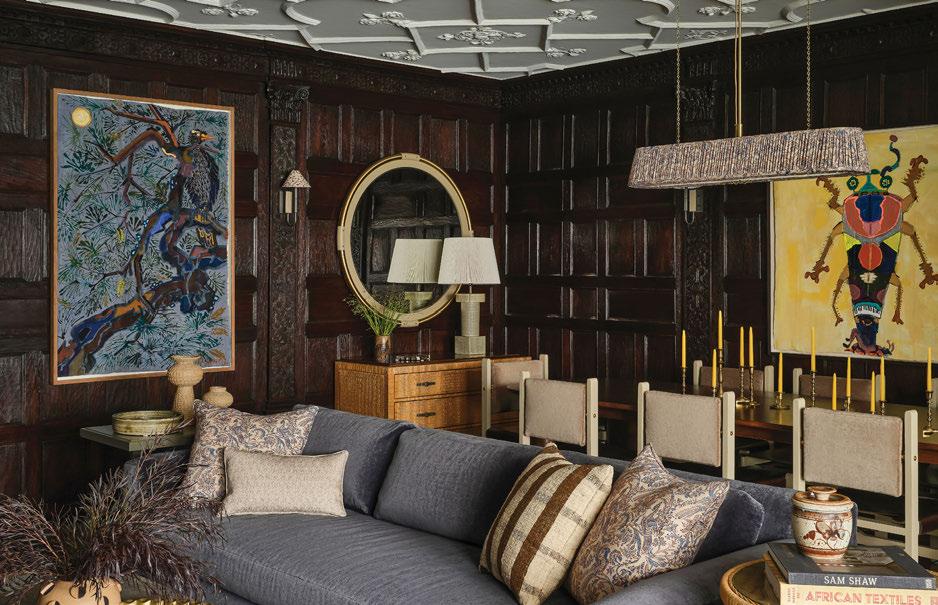
KIBBLE
B. BERRY INTERIORS / PHOTOGRAPHY BY NICKOLAS SARGENT
BRAMSHILL / EDINA
INTERIORS BY RAYCHEL WADE / PHOTOGRAPHY BY MICHAEL CLIFFORD / TRUNK ARCHIVE / STYLING BY ALEXIS ANTHONY
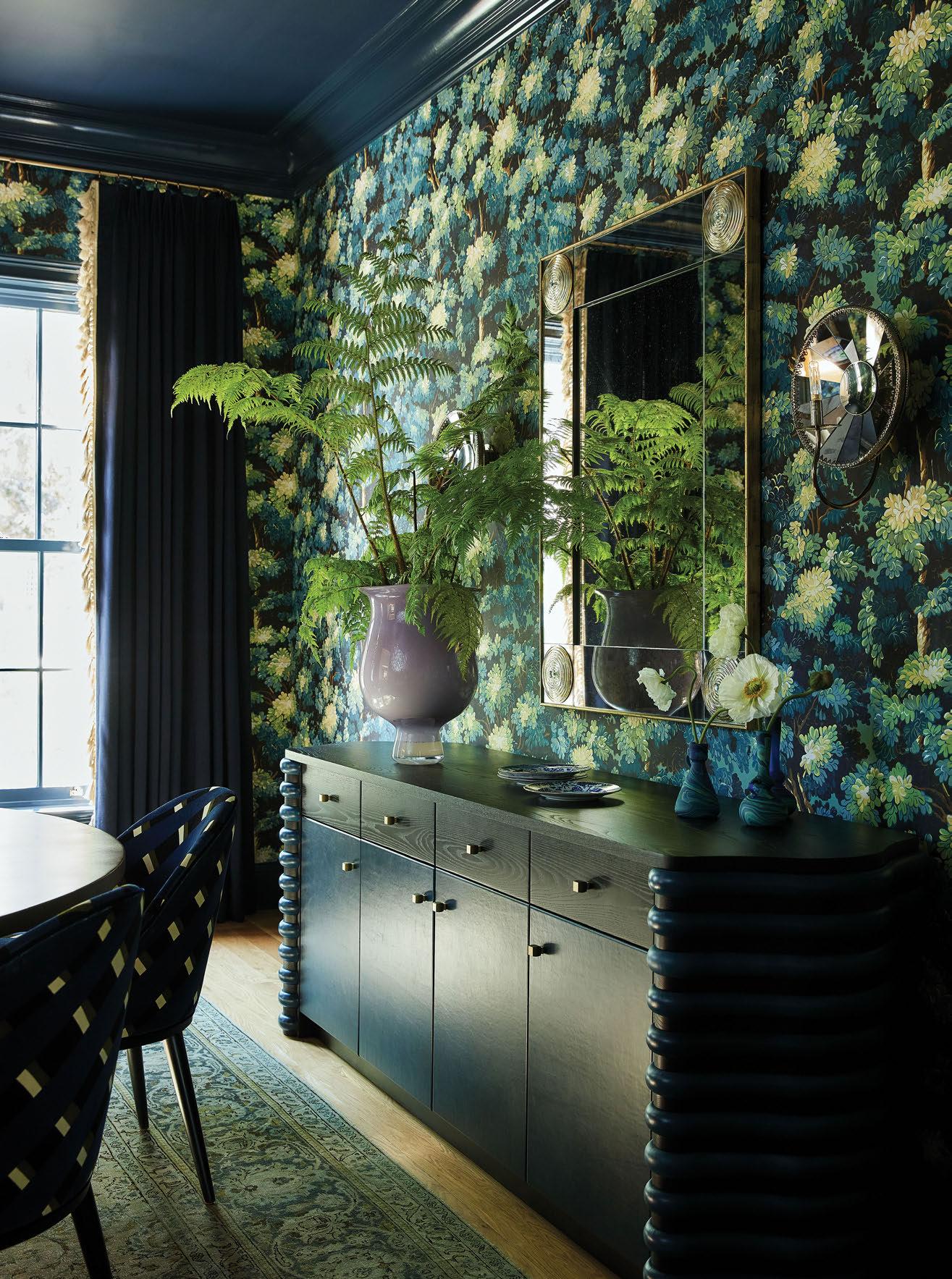
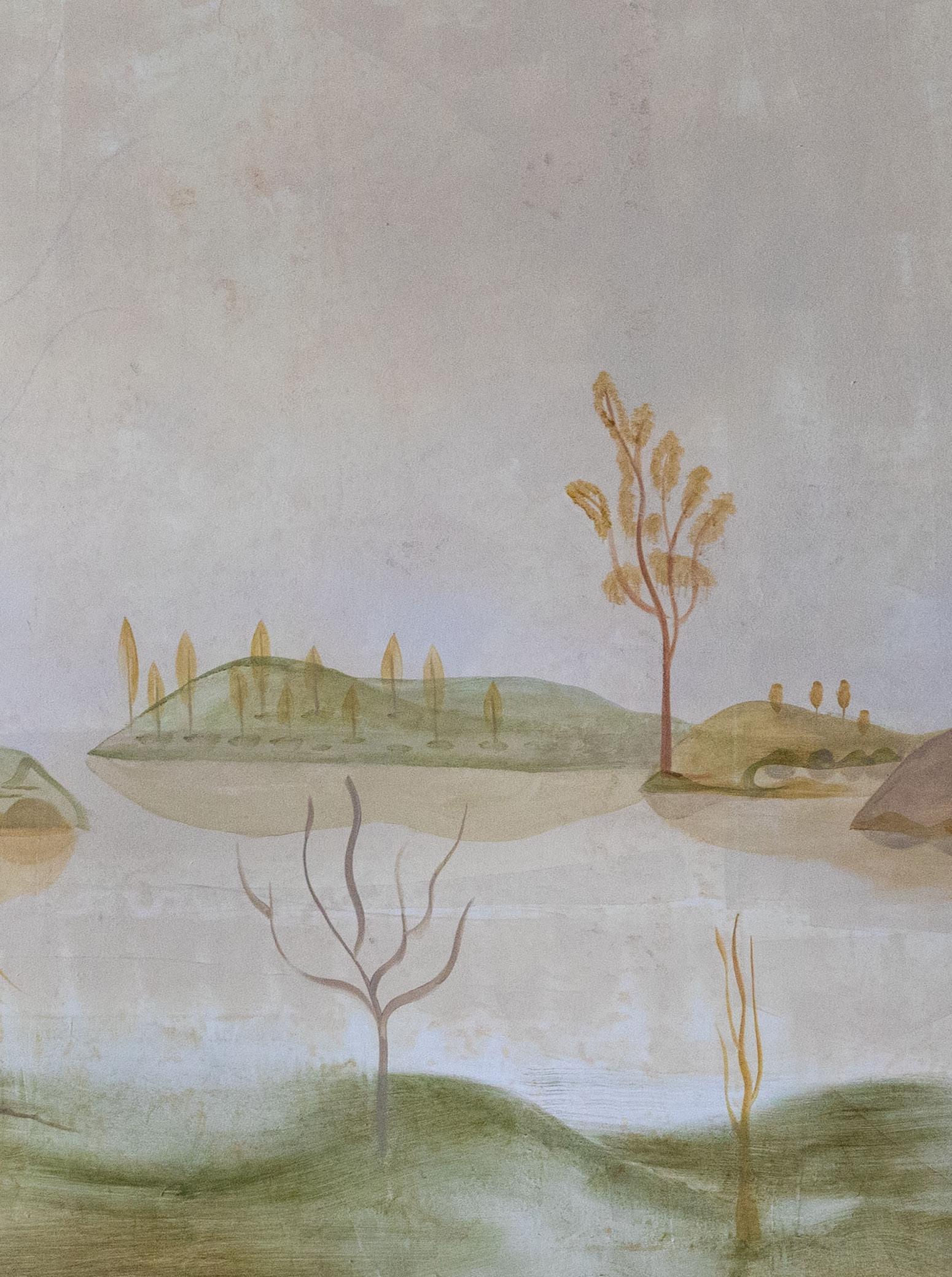
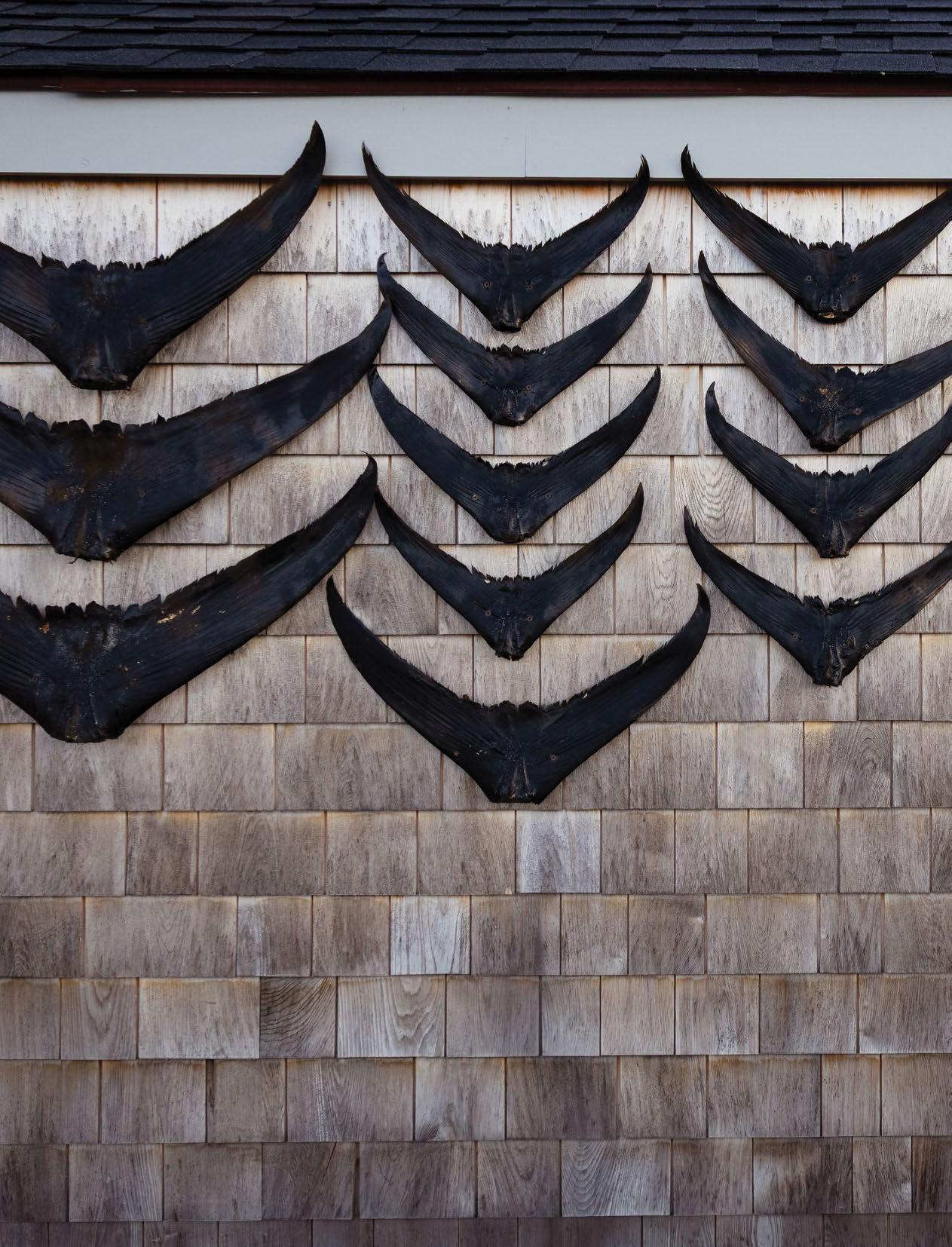
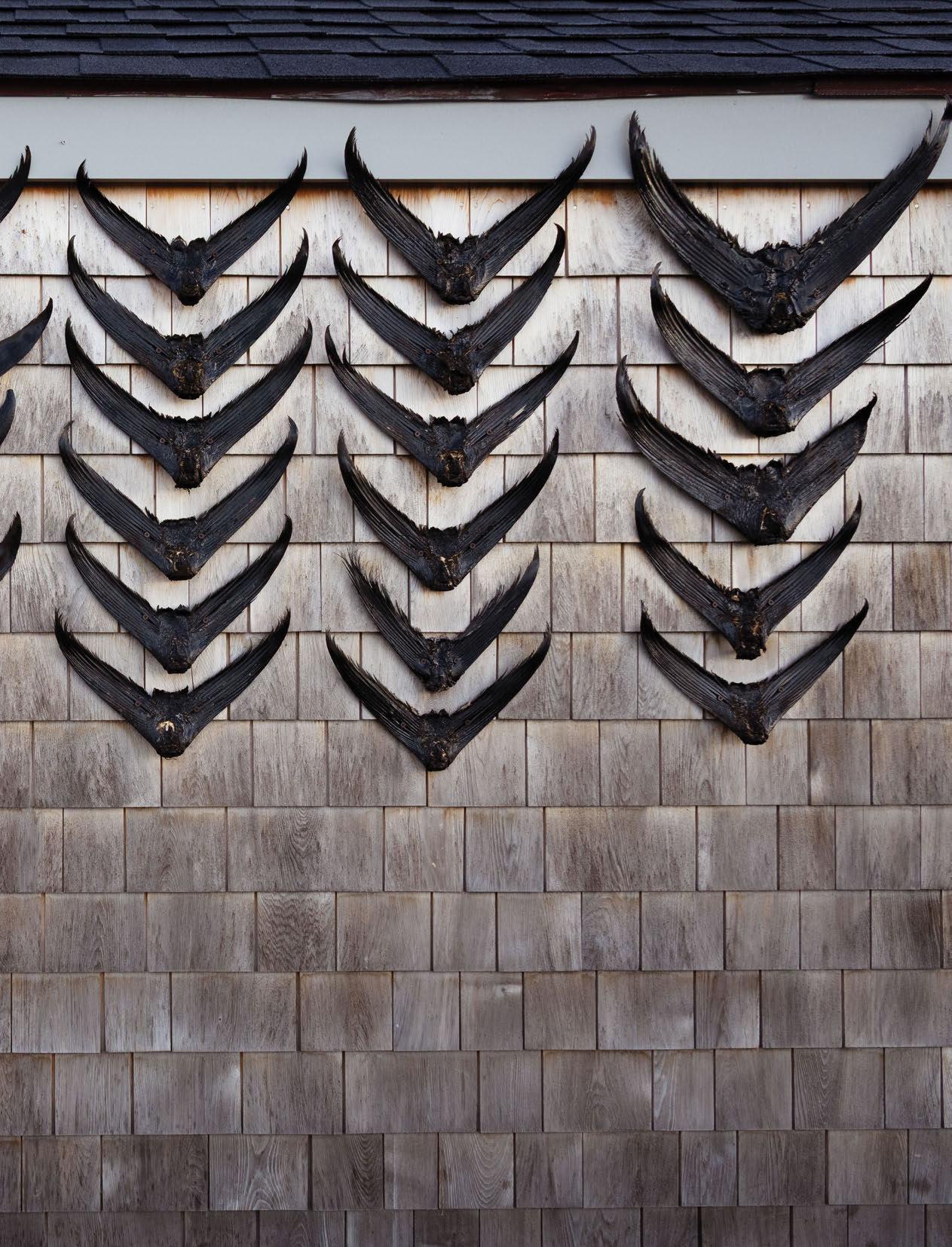
FINS AT DAWN SEPTEMBER 4, 2025 NANTUCKET, MASSACHUSETTS
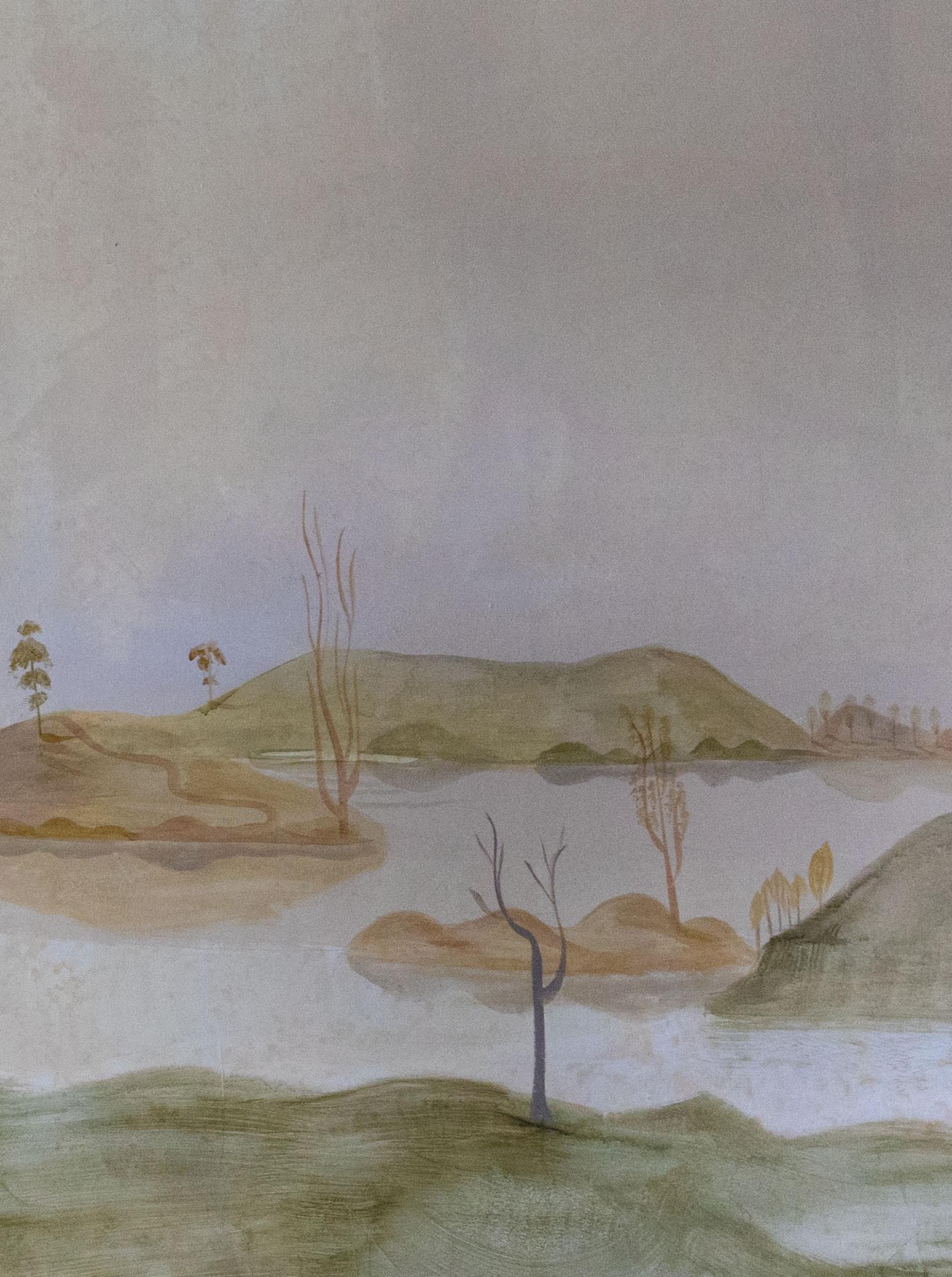
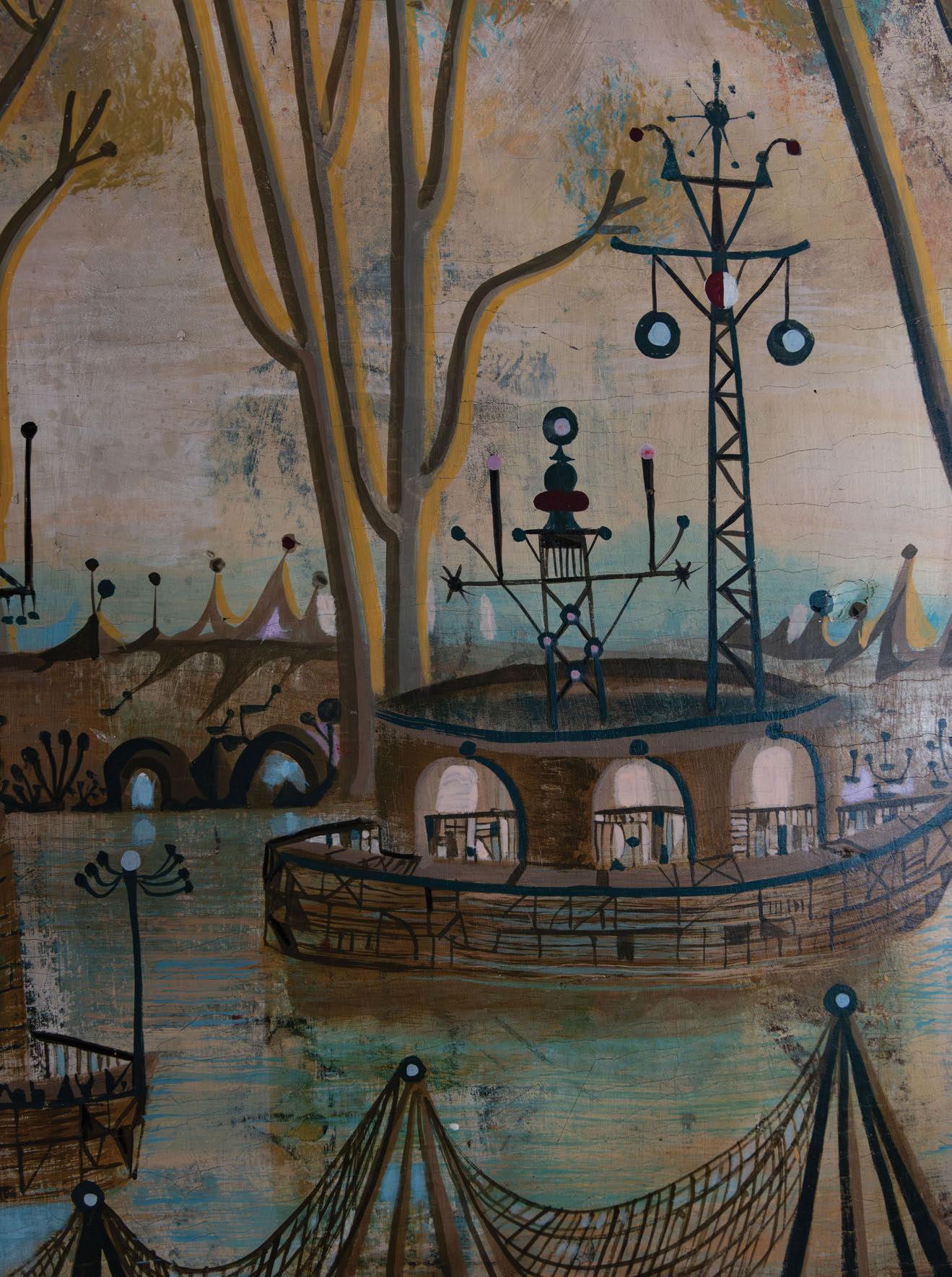

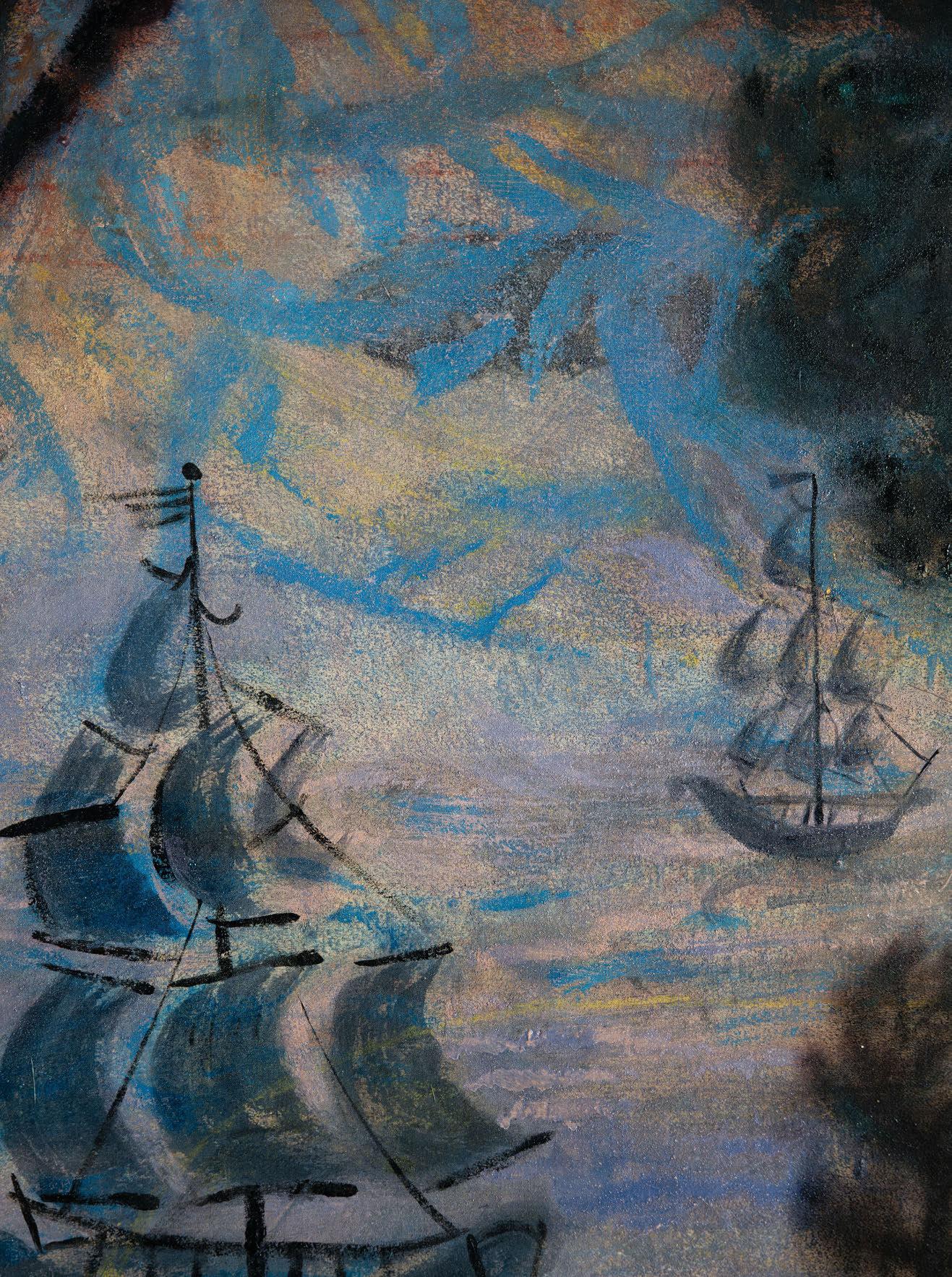




“PAINTING A MURAL IS LIKE WRITING LETTERS AND WORDS UNTIL EVENTUALLY IT BECOMES A SENTENCE AND IF YOU’RE LUCKY, A PARAGRAPH AFTER. BUT IT IS NOT JUST STORYTELLING. IT’S A MYSTICAL, FANTASTICAL ATMOSPHERE...
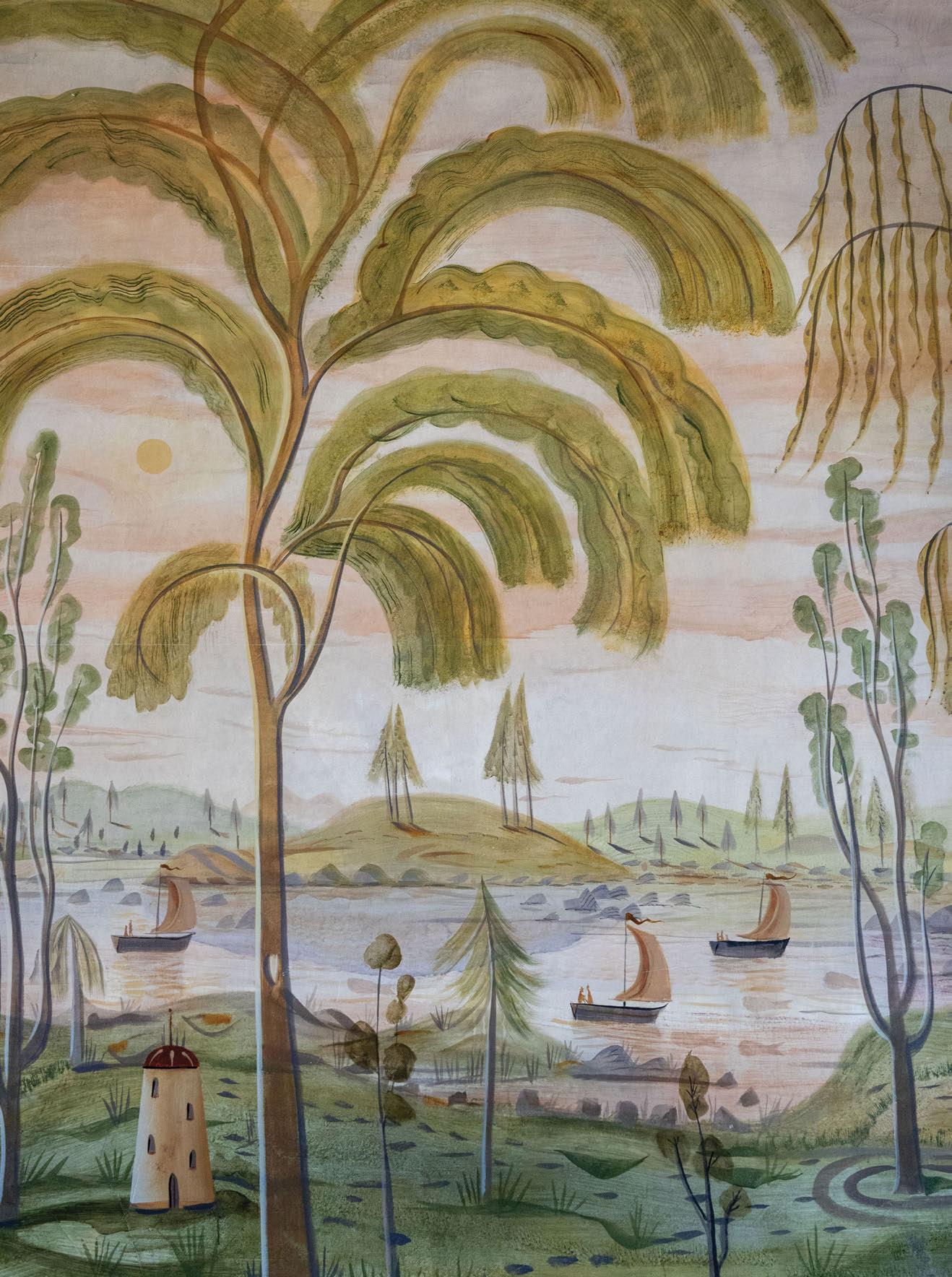
...IT’S A FEELING IN THE AIR MORE THAN WHAT’S IN FRONT OF YOU.”
—KEVIN
PAULSEN
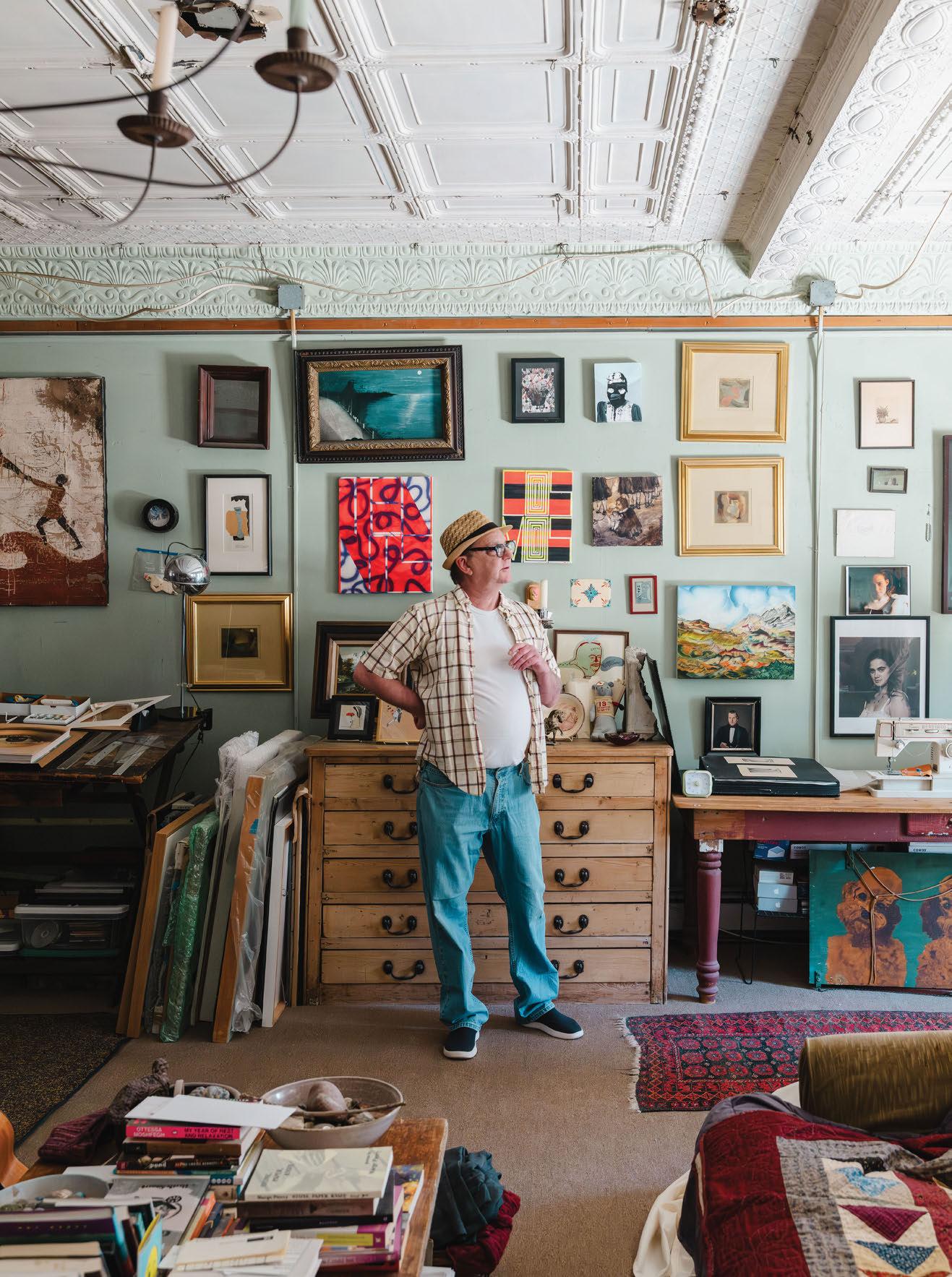
KEVIN PAULSEN
THE MIND OF A MURALIST
INSIDE KEVIN PAULSEN’S ARTISTIC ODYSSEY
OVER THE COURSE OF 40 YEARS, KEVIN PAULSEN HAS GONE FROM PAINTING HOUSES TO HAVING HIS OWN WORK GRACE THEIR WALLS. A SELF-PROCLAIMED CLOUD WATCHER, HE IS IN CONSTANT PURSUIT OF ATMOSPHERE, A JOURNEY HE’S BEEN ON FROM NANTUCKET TO THE HUDSON
VALLEY AND BACK AGAIN.
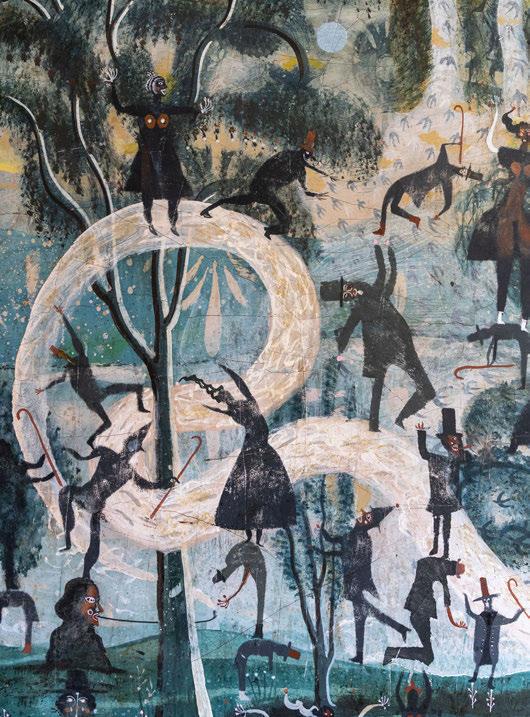
In the late 18th and early 19th centuries, New England muralists were simply artists of an itinerant variety, traveling from town to town creating landscapes and decoration on the walls of homes and businesses in exchange for room and board before they moved on. They were journeymen leaving breadcrumbs of their pastoral artistic gifts behind them. And today there is Kingston, NY-based artist Kevin Paulsen. He is a master of the fluid formula of manufacturing scenes, letting the image emerge as he works, just like watching clouds drift across a sky searching for shapes. But first there was happenstance. Right time. Right place. And that was on a small island, 30 miles out to sea.
Born in Missouri and trained as a fine artist, Kevin was working for his father’s metal company in Kansas City in the early eighties, and was itching for a new adventure. His then-wife, artist Joanna Kane, suggested they move to Nantucket. “I packed our beat-up Chevy with everything we owned and headed east,” says Kevin. “We lived in Flossie’s Flophouse on India Street and took odd jobs. In 1986, I was out in Siasconset painting a house designed by Sandi Holland, who had opened Nantucket House Antiques with her husband.”
The Hollands were transplants to the island too, having arrived from Grosse Pointe, MI, a decade earlier. They spearheaded what we now know was a codification of an authentic Nantucket aesthetic which, as it turned out, suited Kevin’s sensibility. “Sandi casually mentioned that she was looking for a decorative painter to splatterpaint some floors and paint an oxblood red floor in the kitchen. Did I know anyone? I said, ‘me.’ She was game and so was I.”
In that moment, a chance opportunity transformed the course of Kevin’s creative life. “Every time I’ve had a job, it influences my artwork,” he says. “Once I started working with Sandi, I added decorative floors and walls, glazes and eventually murals to my offering.”
On Nantucket, Kevin discovered his style and expanded his range, but in 2000, his troubadour spirit told him it was time for another move, so he hit the road, this time to upstate New York to the artist enclave of Kingston. He had a newfound desire to create large-scale images full-time, and a fresh backdrop from which to stretch his creative ambitions and contribute to the canon of folk art traditions. Kevin explains, “I wanted to expand my repertoire and murals offered me a way to do that.” ››
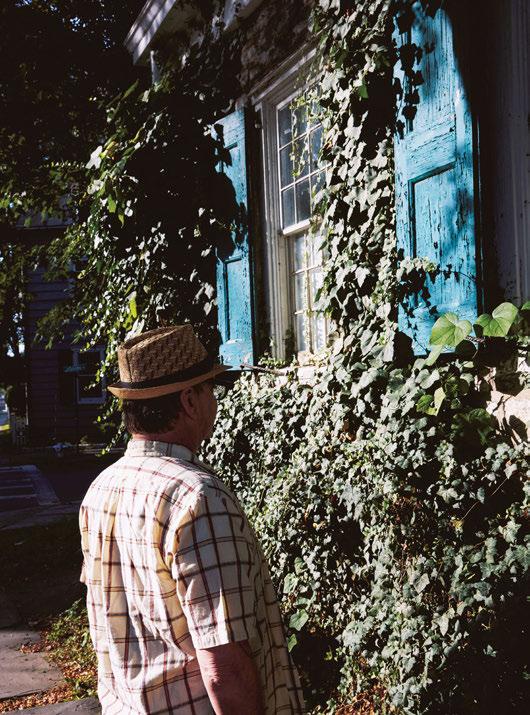
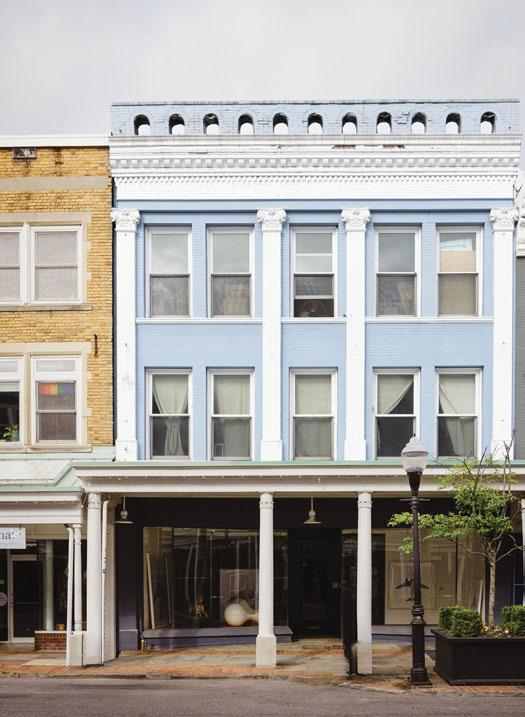
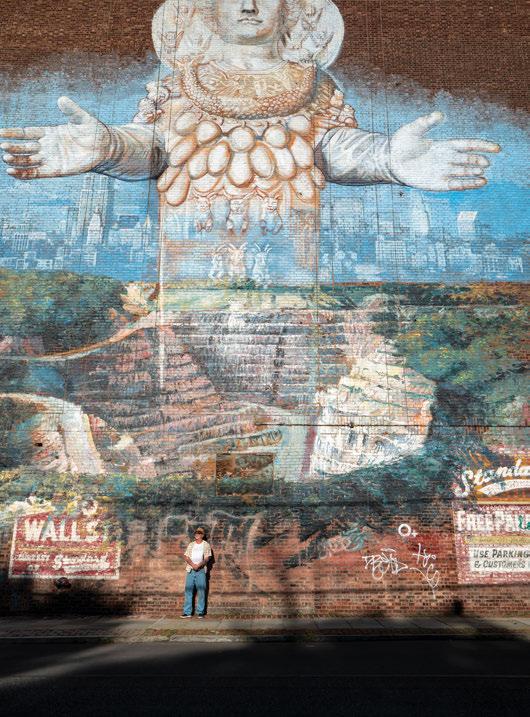
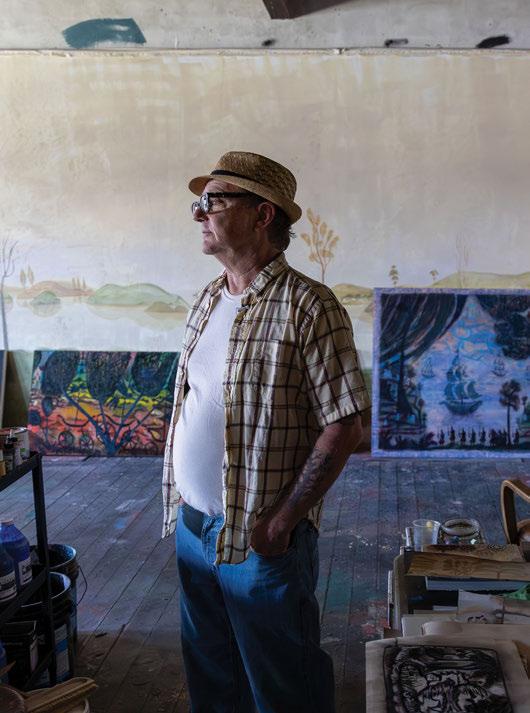
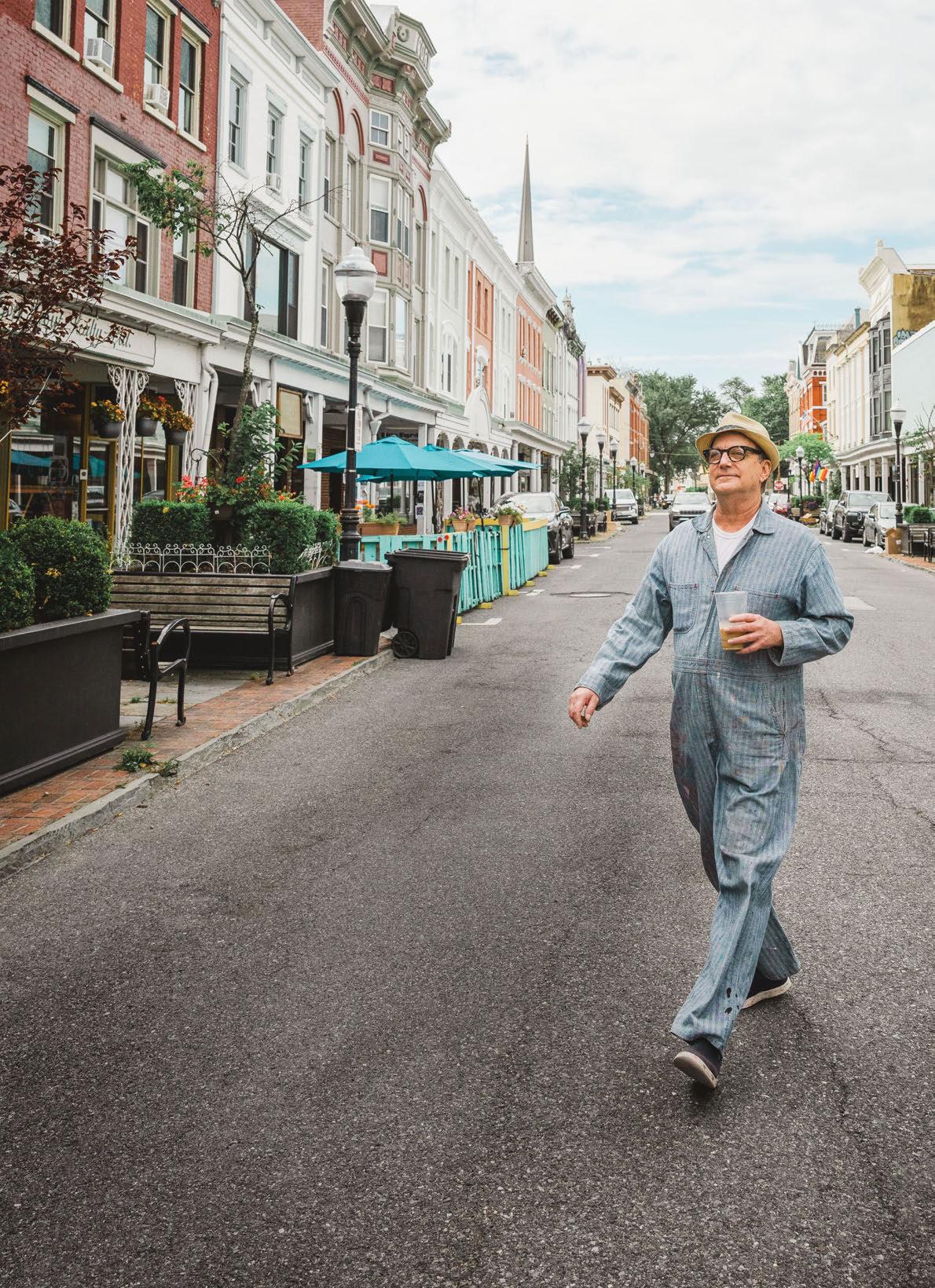
“IN 2000, I LEFT NANTUCKET FOR GOOD AND MOVED TO KINGSTON, NY. NANTUCKET WAS CHANGING AND I THINK I WAS CRAVING A DIFFERENT ENVIRONMENT. KINGSTON WAS AN ARTIST’S REFUGE AND A THRIVING PLACE THAT WAS DOWN ON ITS HEELS. AND I LIKED THAT. IT WAS GRITTY, AND I WANTED THAT TENSION. BUT IT STILL HAD A KIND OF HISTORICAL ATMOSPHERE TOO.” –KP
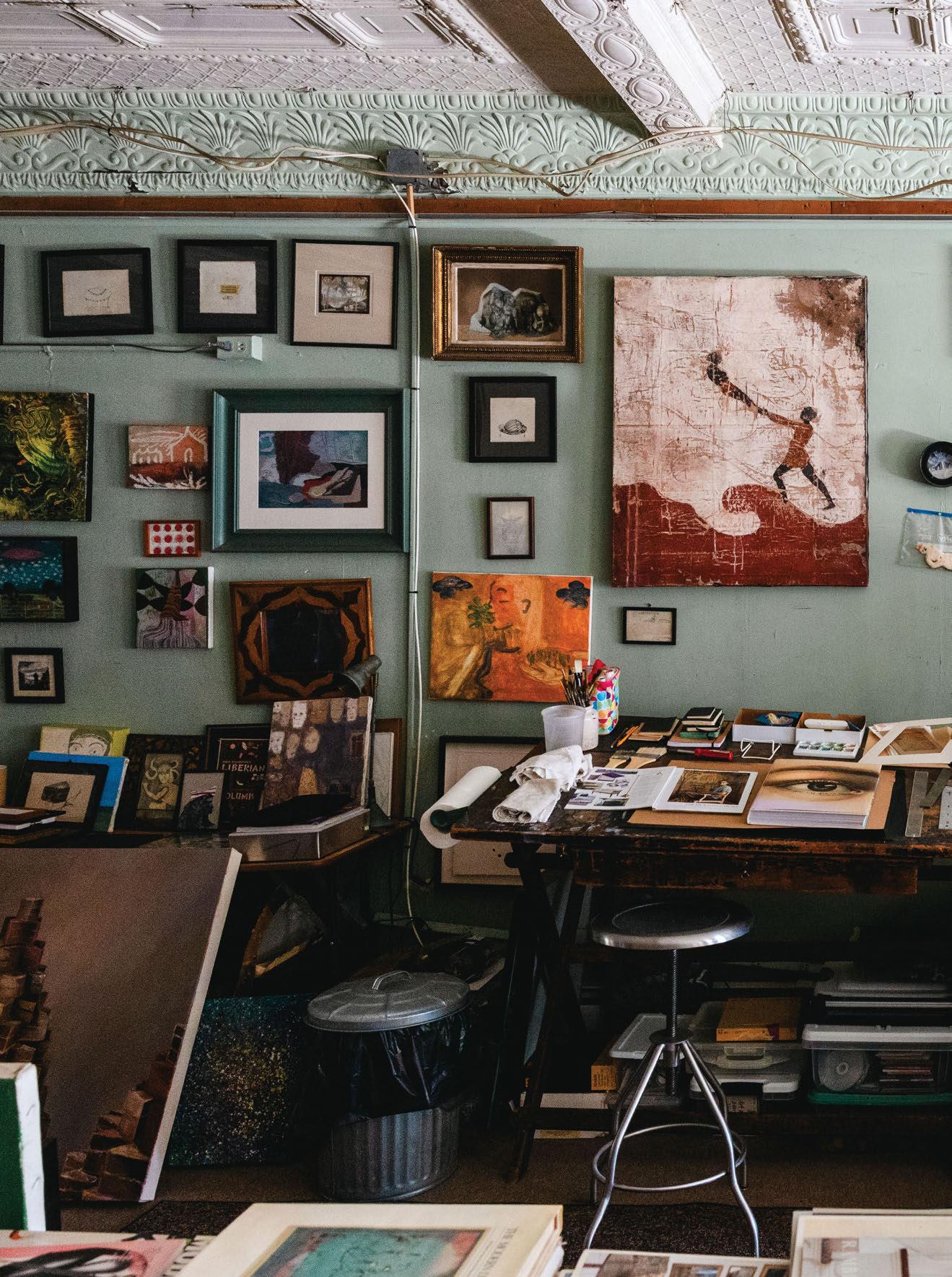
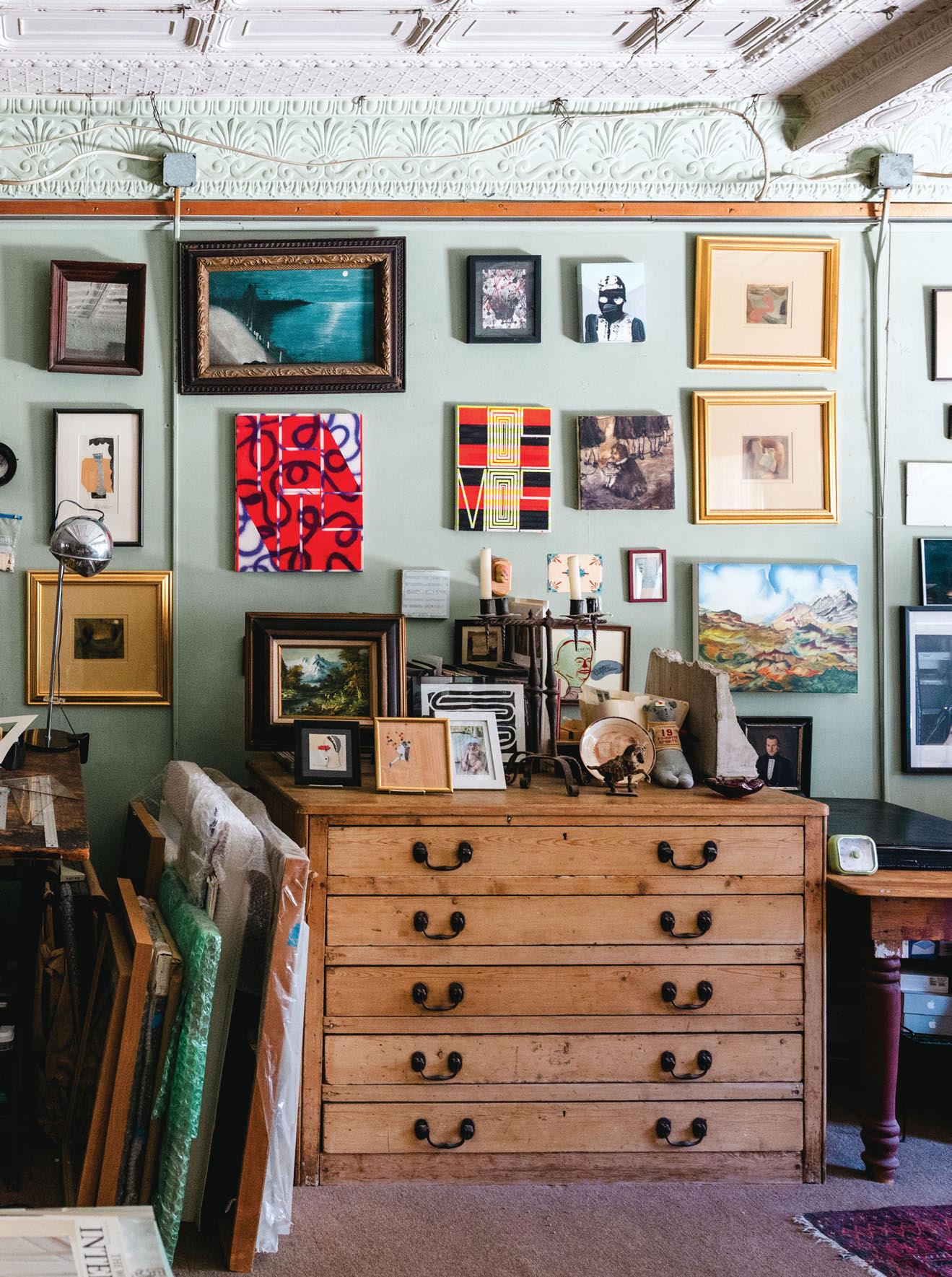
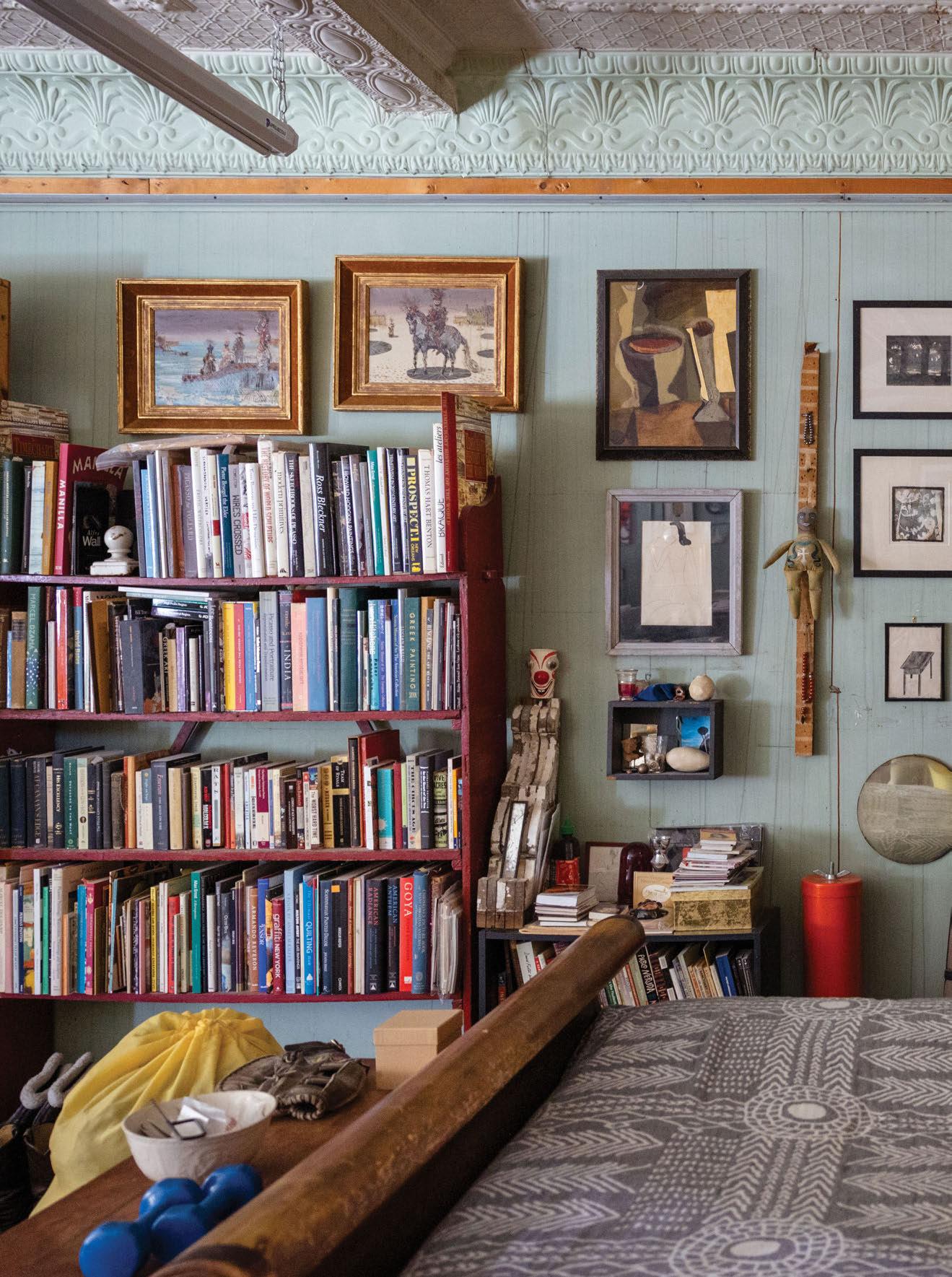
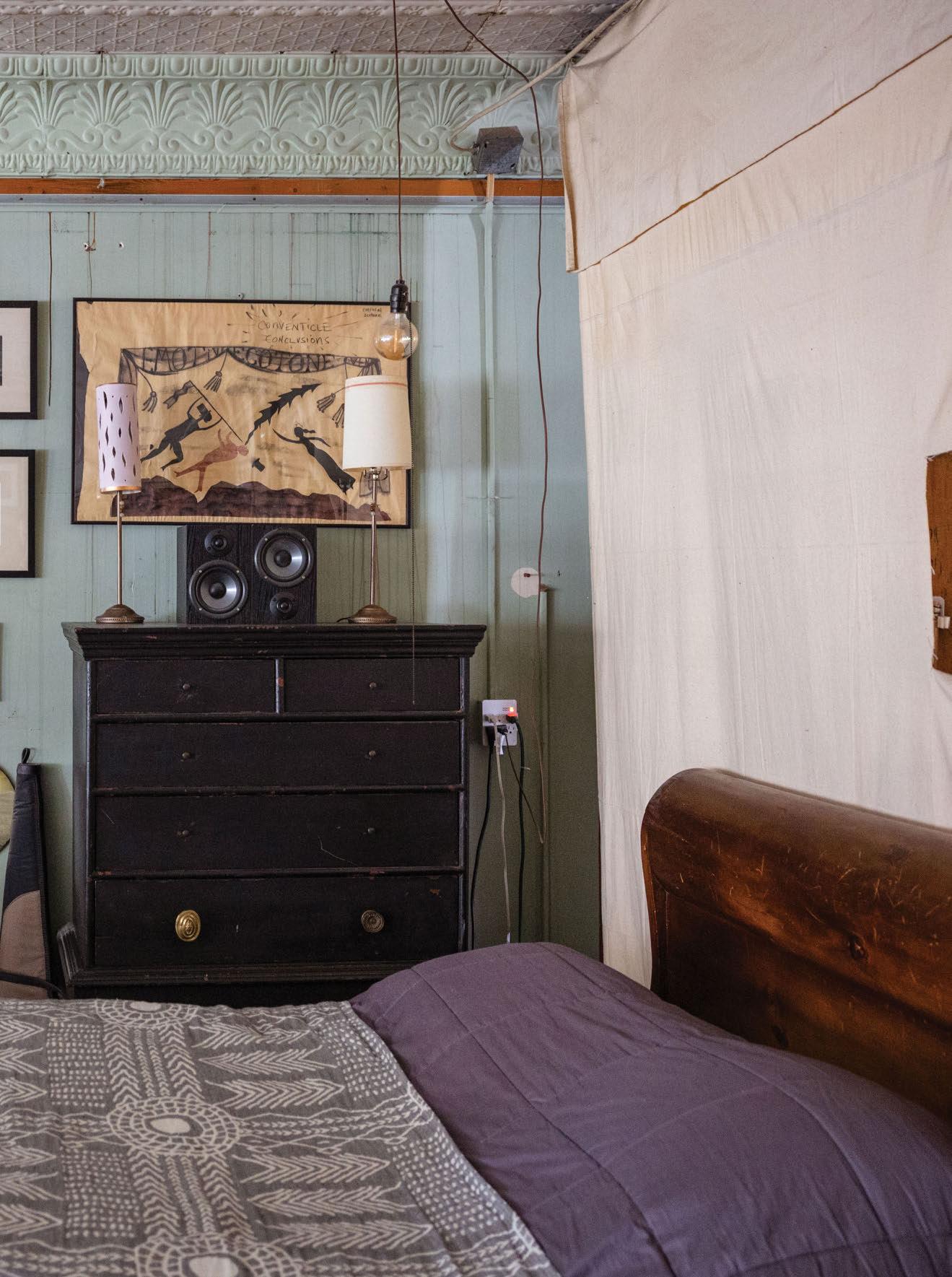
Kevin’s studio in Kingston occupies the top two floors of what was once a department store on the main street. He lives on one floor in a massive open plan livework space that also houses his archive. Drawers upon drawers of works on paper and shelves of books and materials create a kind of study on the sideline. Walls are covered by his own work and that of his artist friends. A freestanding screened food safe in the kitchen is the pantry; a round table under a light, a bed tucked behind a seating area are the nods to a residential life. The studio is up one more flight, the treads originally worn by countless department store employees running up and down the stairs to grab selections from the attic storerooms for their waiting customers below, and additionally by Kevin when an idea strikes.
There’s still no AC in the old building, and it can get warm on the upper floors in the summer months, adding to the frozen-in-time feeling of the space. A jib-doored headboard cupboard, once the fur storage for the department store, houses Kevin’s materials. He simply uses the space as it was, swapping the old use of the building for his. ››
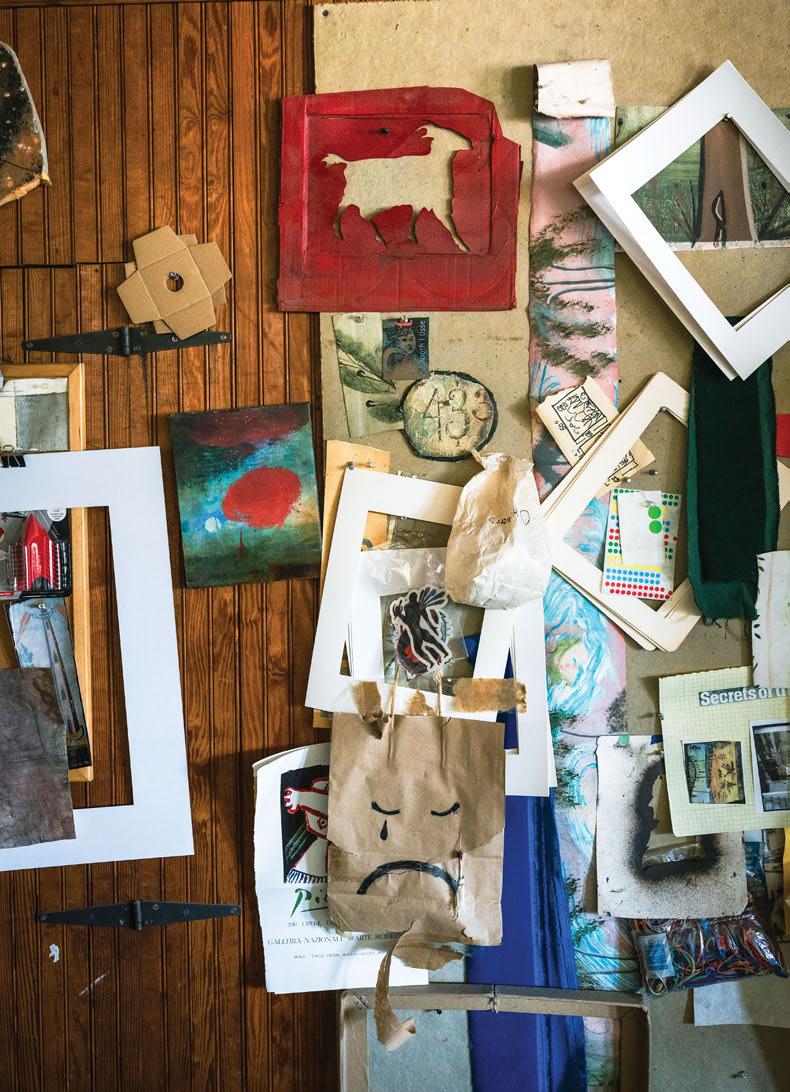
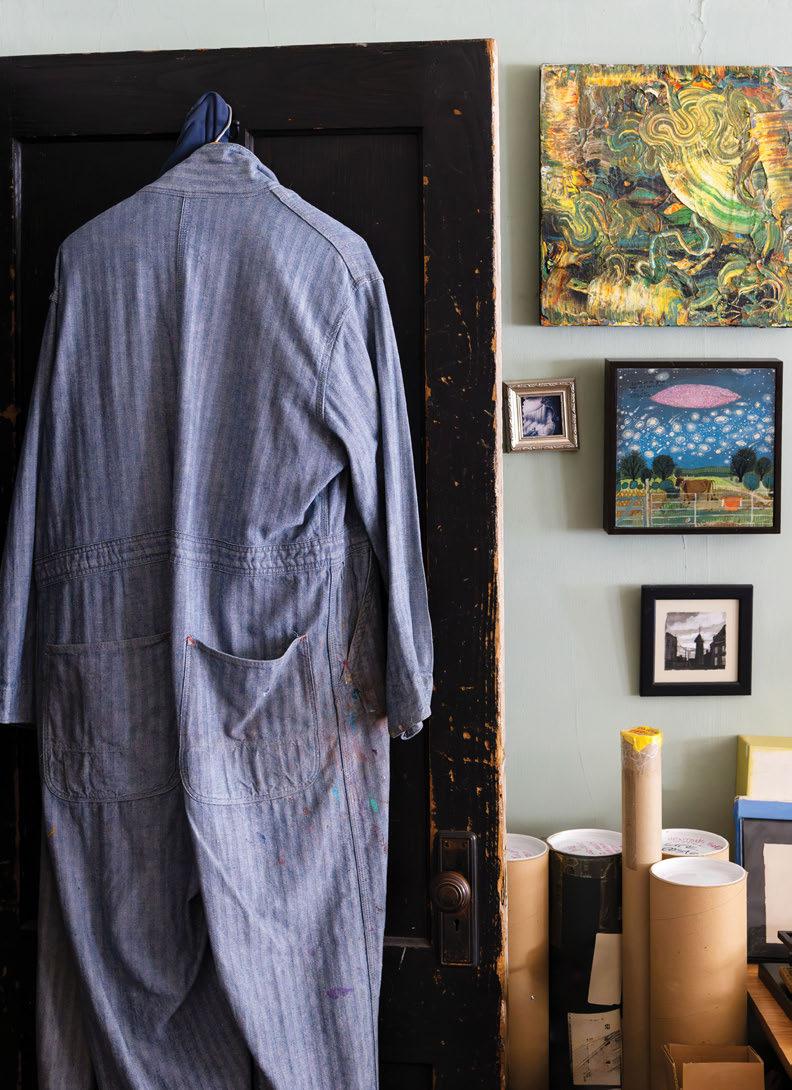
While Kevin’s studio may be in Kingston, he evokes the itinerant spirit of the early muralists through commissions that take him far and wide, from storefront windows for Bergdorf Goodman, to murals in homes all over the country. Wherever his talent and artistry is sought.
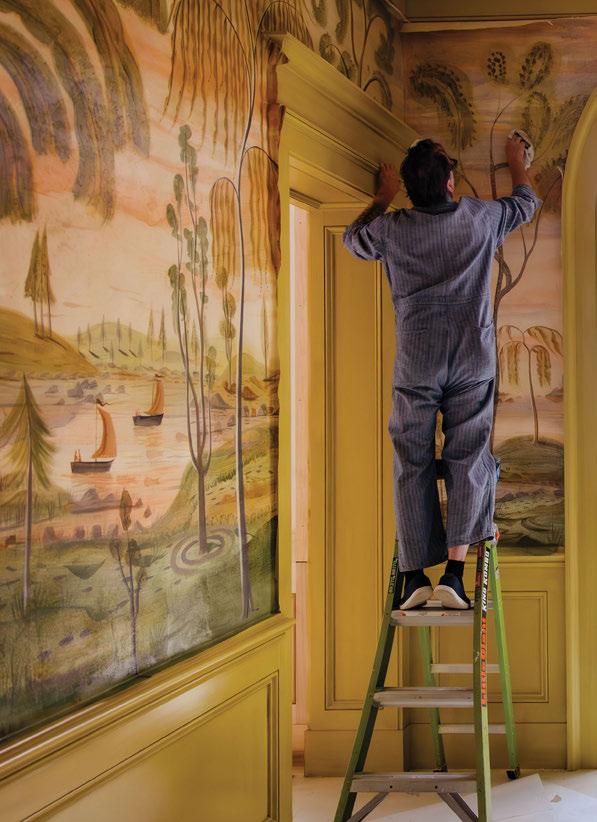
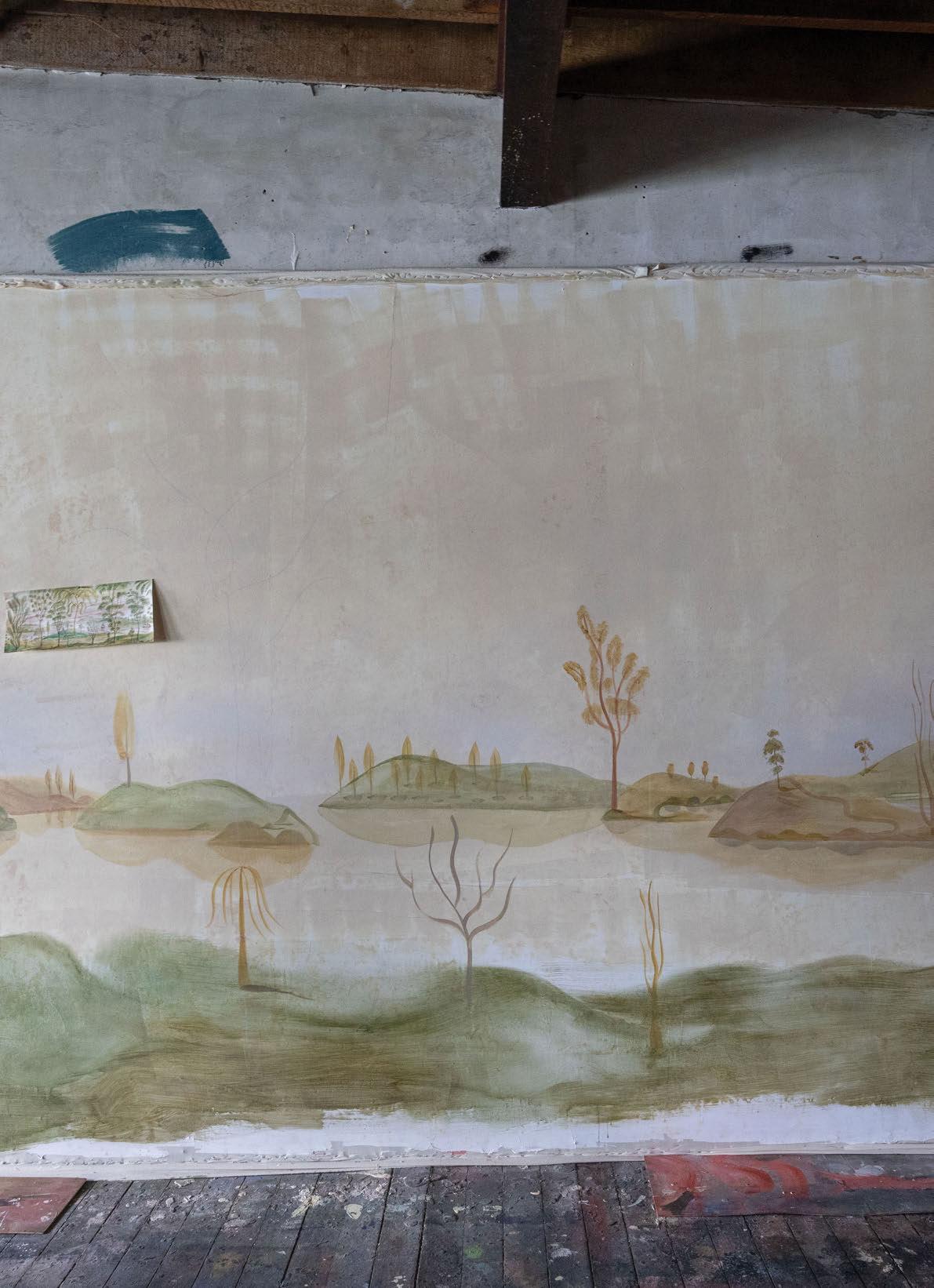
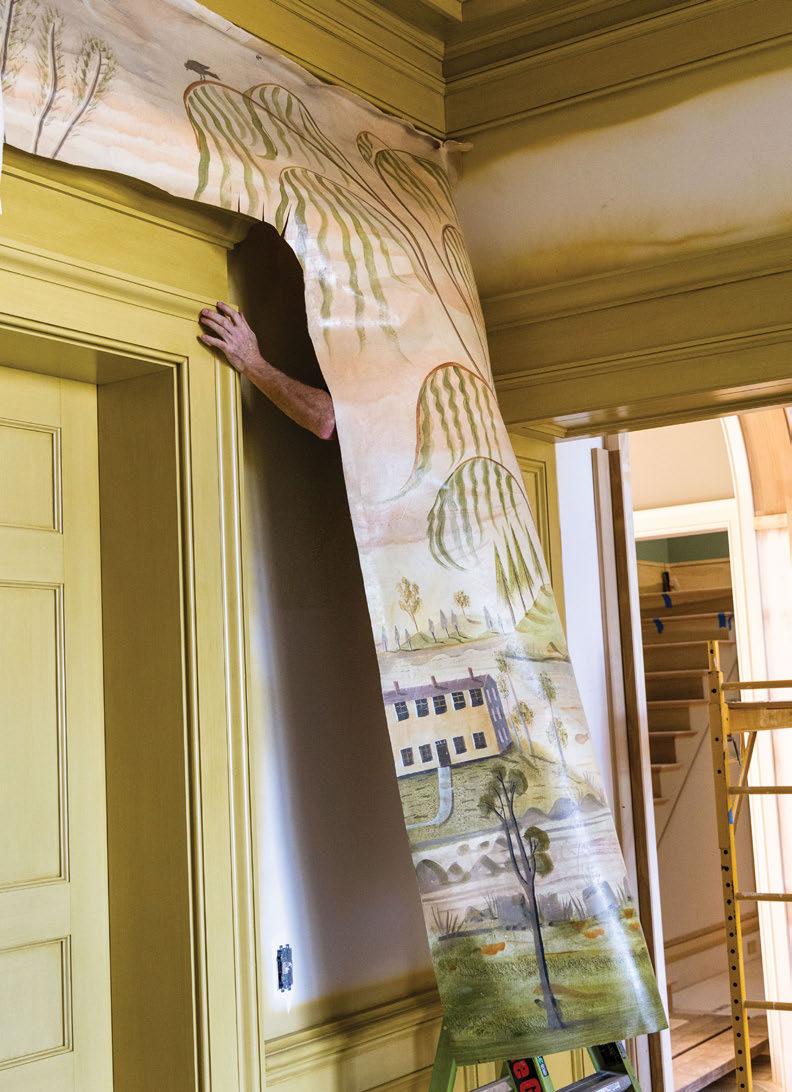
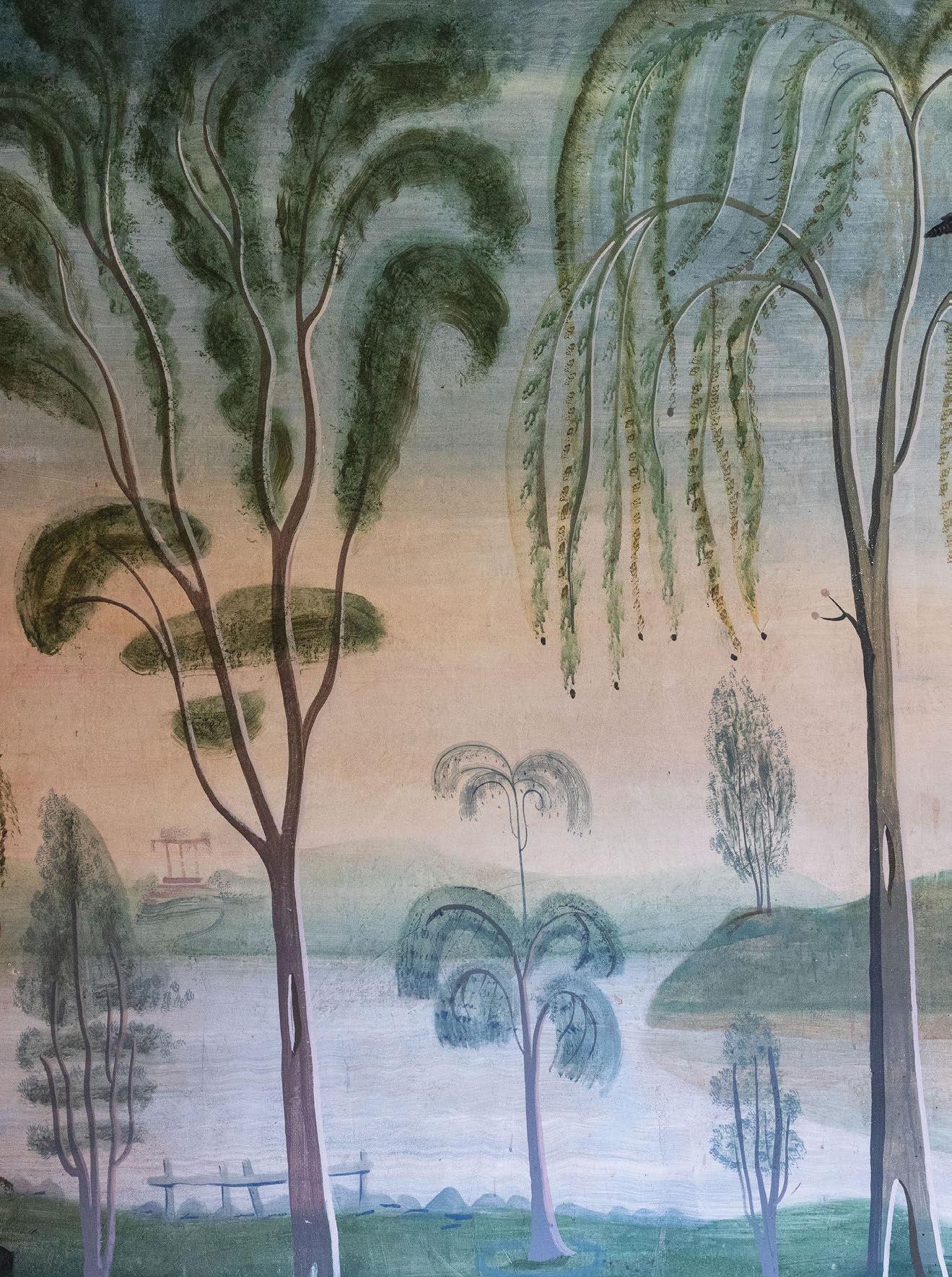
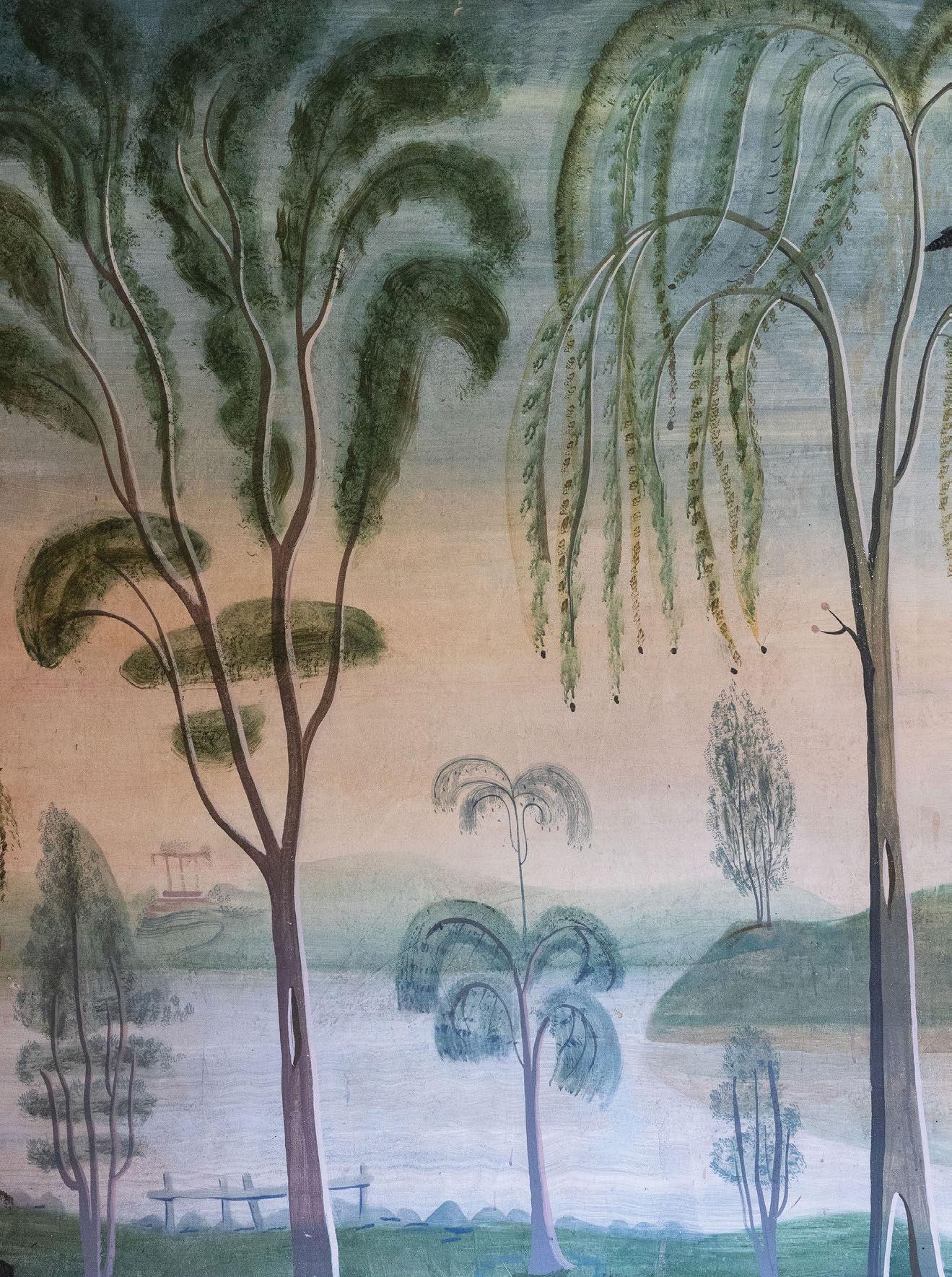
At the top of his studio stairs, Kevin has begun a mural that will one day surround a Maine dining room designed by Charleston’s Chelsea Handegan. What appears to be a canvas, 50-feet long, is stretched on a wall. Kevin explains, “It’s actually theatrical muslin. Very thin and lightweight. I get it in New Jersey. I put it up, stretch it, wet it, and it shrinks before we prime it to create the surface for painting. When it’s done, we use a small knife to pull one side off, put a tube in the middle and roll it across the wall so it comes off in one piece, weighing 70 or 80 pounds.” ››
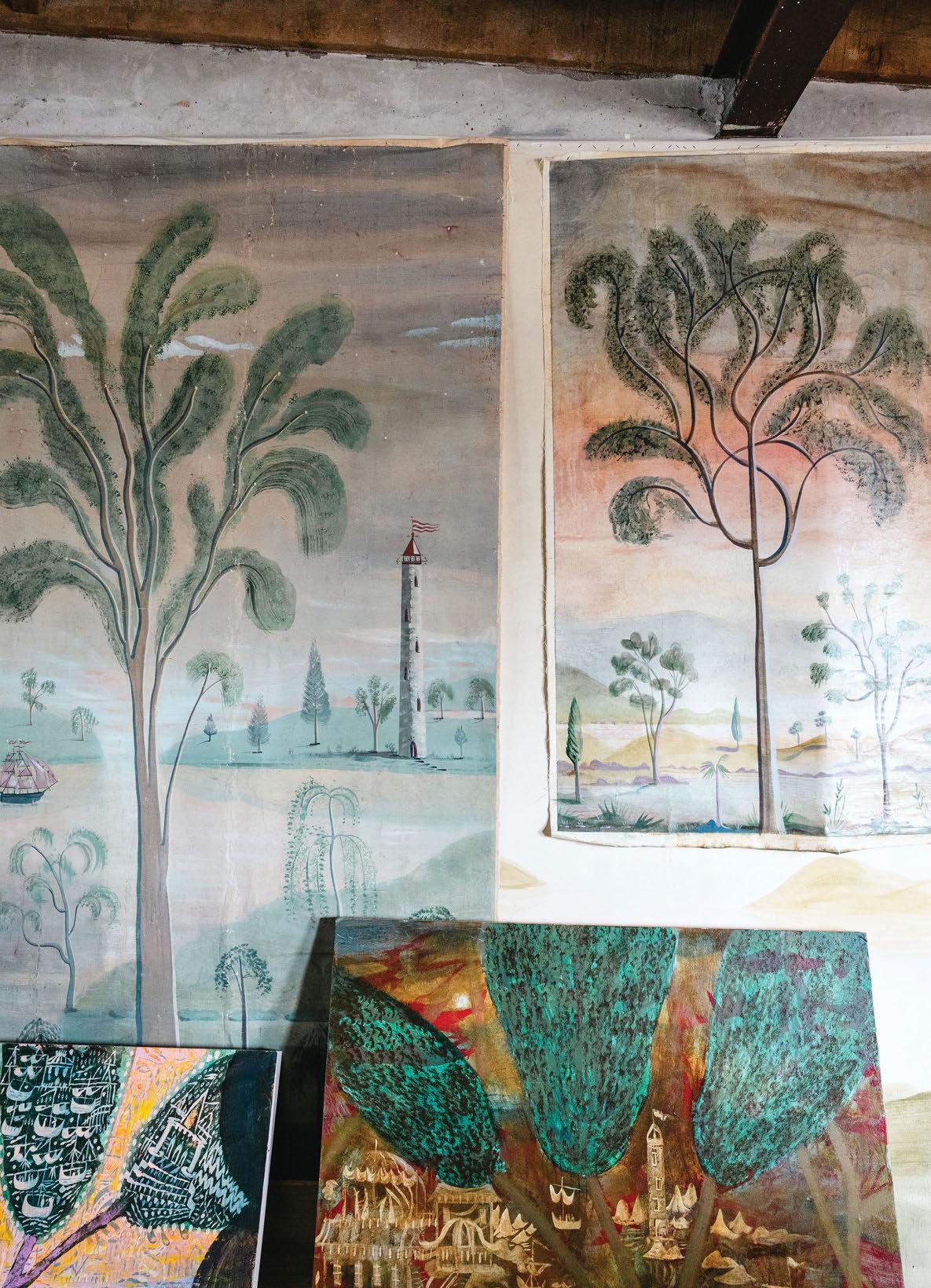
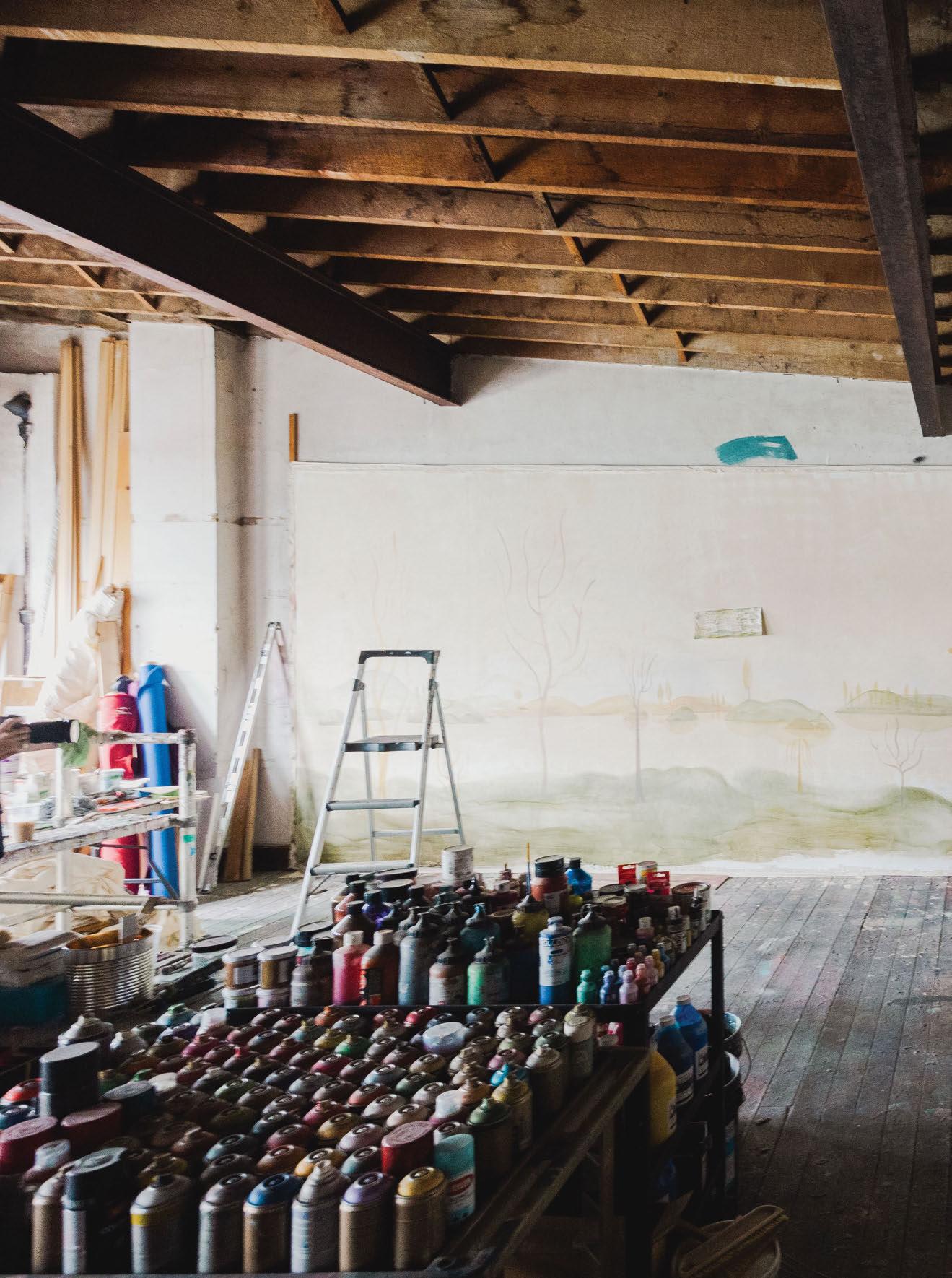
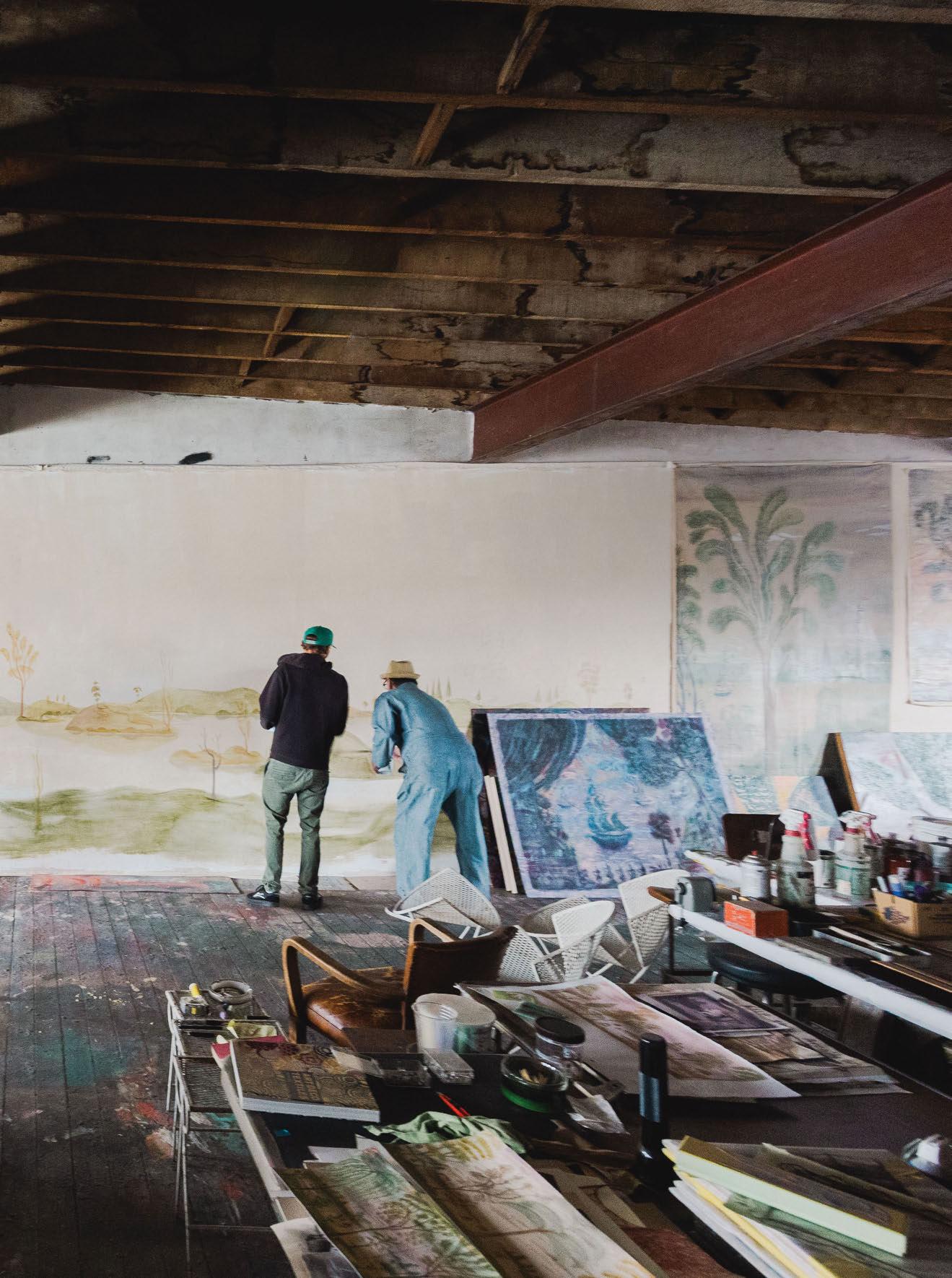
“THE FIRST LAYER OF A MURAL IS VERY LOOSE, AND I DO IT BY FEEL. I WANT THE SURFACE TO FEEL ALIVE AND SORT OF BALANCE EVERYTHING OUT IN TONE. THEN I DO THE BACKGROUNDS, THE FOREGROUND, THE OBJECTS...YOU HAVE TO GET THE BASE RIGHT.
MY SON GEDDES, WHO IS A TATTOO ARTIST AND A FINE ARTIST IN HIS OWN RIGHT, WORKS WITH ME. THE LAST THING WE’LL DO IS THE LARGER TREES BECAUSE YOU WANT TO LAY IN SOME SKY COLOR FIRST, SO YOU HAVE SOME CONTRAST. AND THEN THERE’S UNDERPAINTING OF ALL THE FOLIAGE...AND THAT’S MORE ABSTRACTED. RATHER YOU SOMETIMES FOLLOW THE BRANCHES OR I MIGHT GO ACROSS IT IN A RANDOM MANNER, AND THEN IT JUST DEVELOPS ON ITS OWN. THERE’S THIS RHYTHM TO IT ALL...” –KP
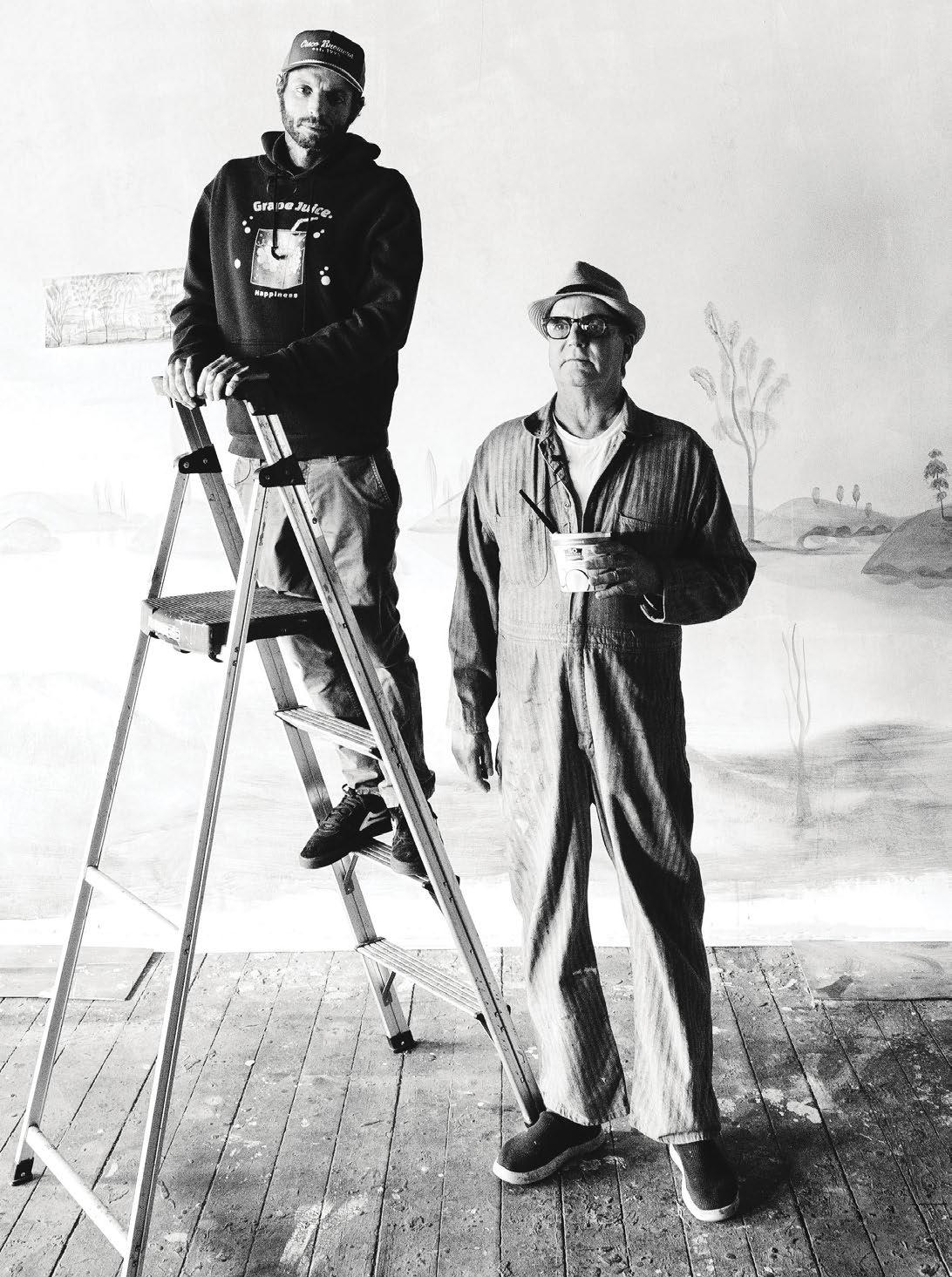
Geddes and Kevin
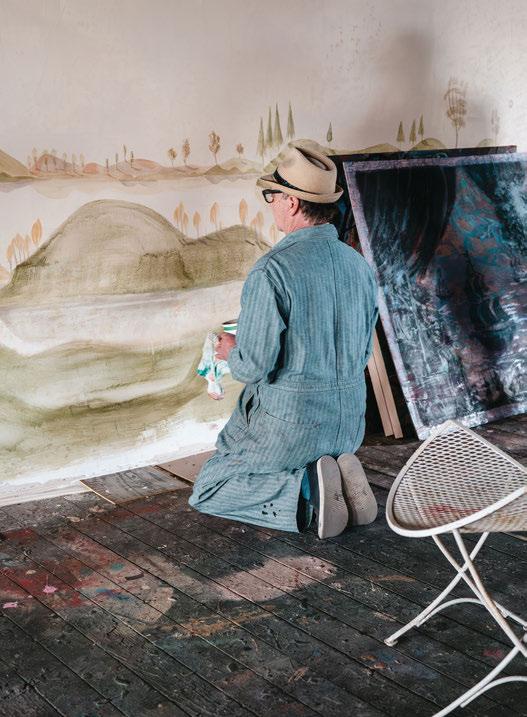
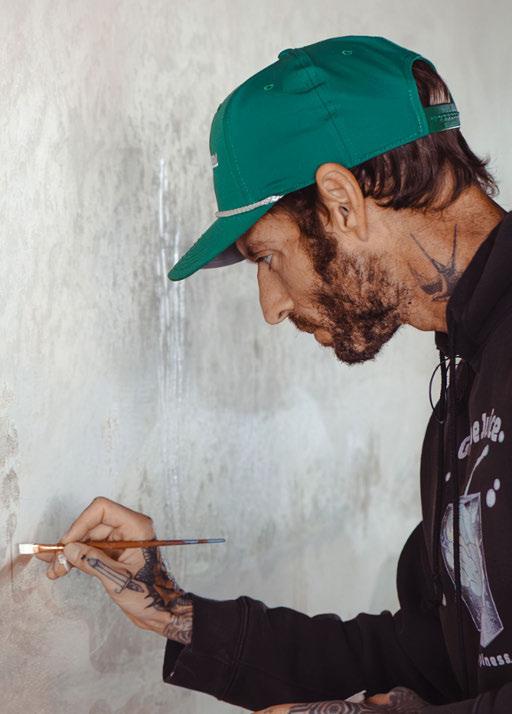
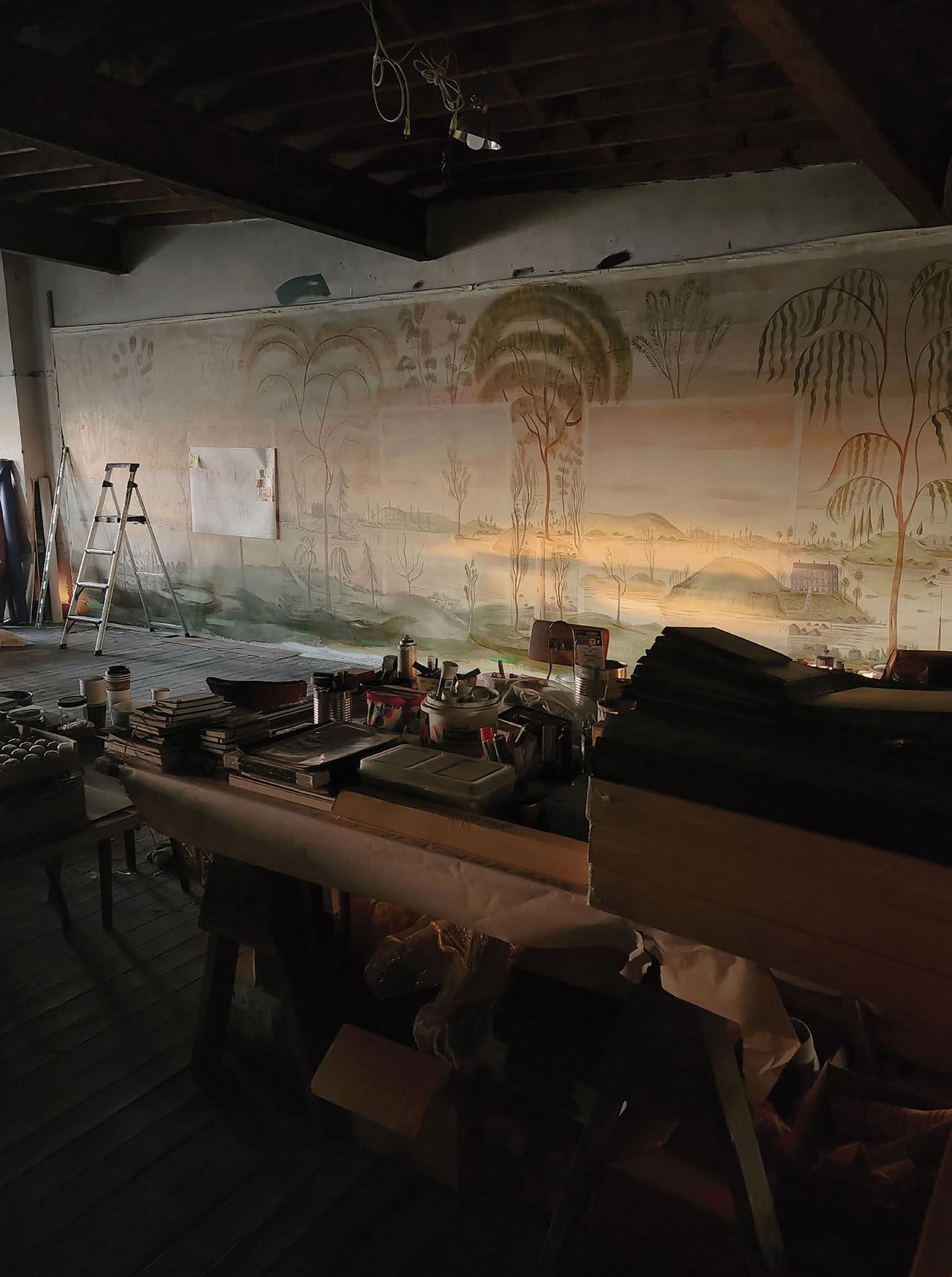
“AS WE’RE BUILDING THE MURAL, WE JUST KEEP GOING ACROSS... THEN WE LET EVERYTHING SETTLE DOWN, SAND IT LIGHTLY TO GIVE IT SOME ANTIQUING BECAUSE YOU BUILD IT AS YOU GO. WE MIGHT START WITH BIG BRUSHES... AND IT’S ALL VERY LOOSE... ESTABLISHING THE FOREGROUND. AND THEN YOU GO IN WITH DETAILS, THE SMALLER BRUSHWORK, DARK AND LIGHT SHADOW LINES, AND THEN THE HOUSES, THEN THE BOATS, THEN PEOPLE, MAYBE A DEER HERE WOULD LOOK GREAT...? PUTTING IN ALL THE LITTLE VISUAL INTERESTS. MAYBE A MAN IN A TOP HAT...? I CAN’T TOTALLY PREDICT, BUT I CAN IMMEDIATELY SEE IT. A LOT OF MY MURALS HAVE LITTLE SPECKS THAT HAVE FALLEN OFF THE BRUSH AND THEY’RE JUST FLOATING. AND IT’S INTERESTING BECAUSE THEY’RE MORE IN FOCUS THAN THE MURAL. I REALLY LIKE IT IF THERE’S A BLACK DRIP HERE OR A SMUDGE THERE... -KP
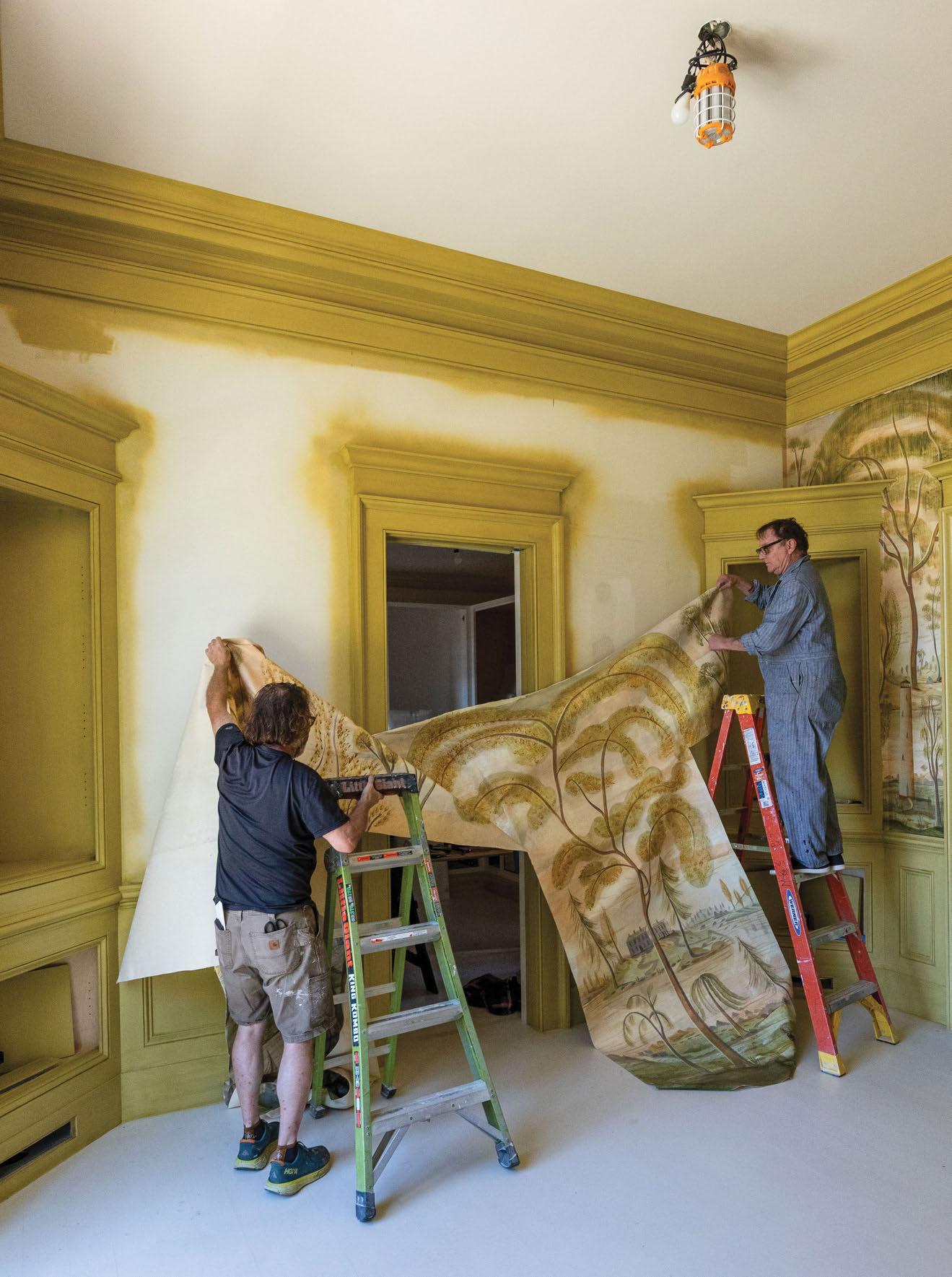
After months of development, the mural is carefully taken down from Kevin’s studio wall in Kingston, NY, rolled, transported and carefully rehung in the client’s dining room in Maine. Final touch-ups and additions are made on site.
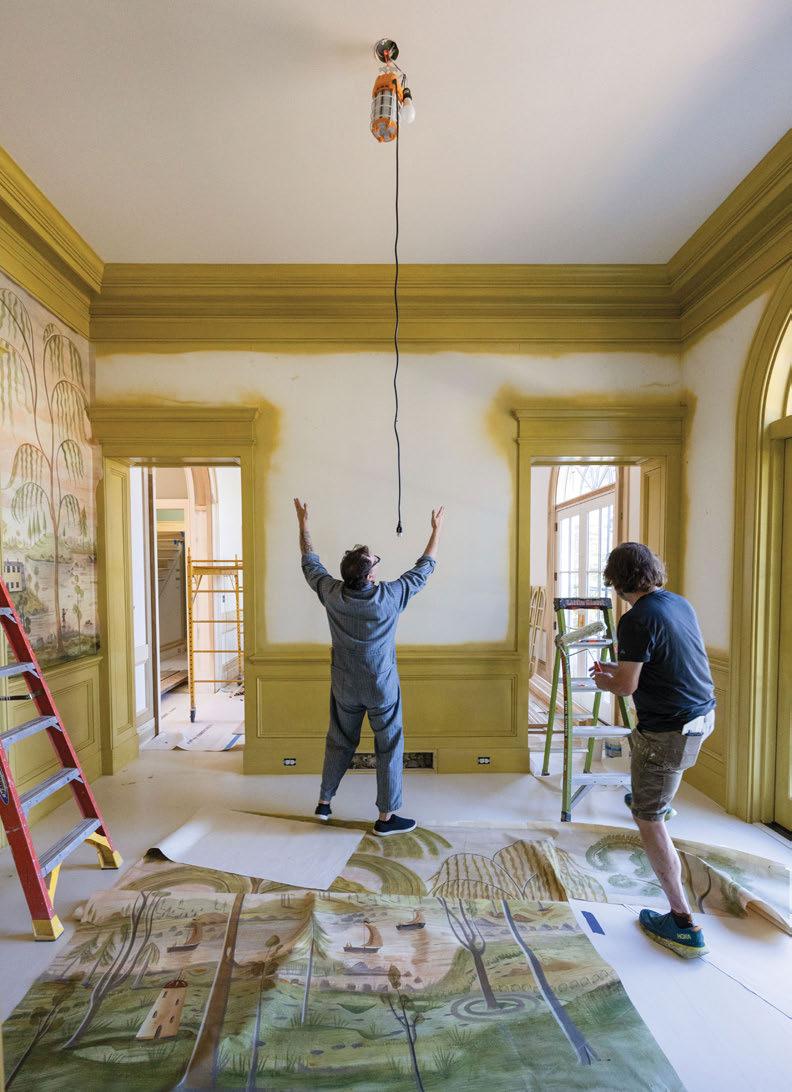
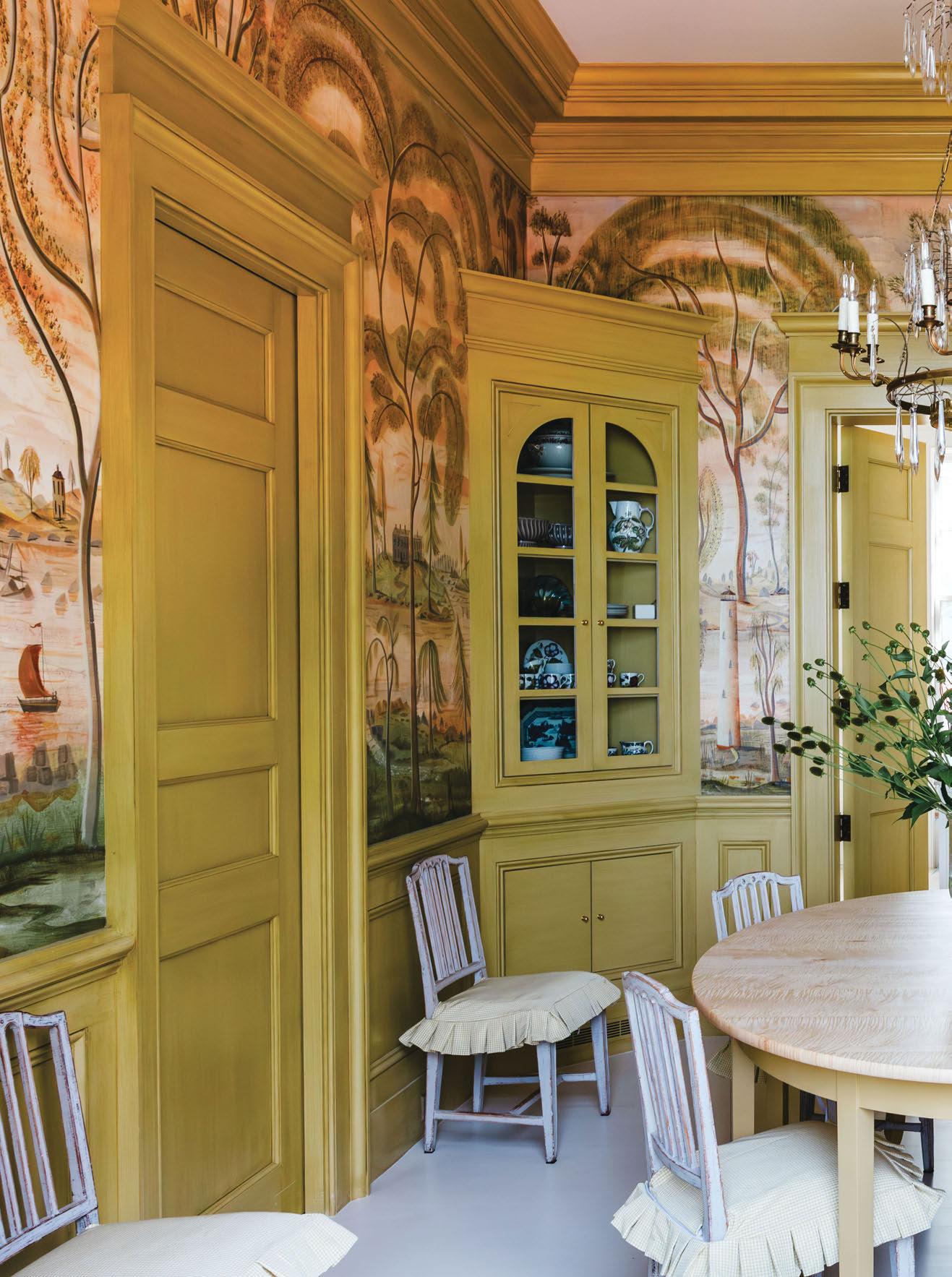
“ONCE A MURAL FIRST LEAVES, I MISS IT. BUT I KNOW WHEN IT’S READY... AND I HAVE TO STOP MYSELF BECAUSE YOU CAN OVERWORK A MURAL OR ANY PIECE OF ART. I WANT TO DELIVER IT WITH INTENTION. AND WITH RELIEF. I ANTICIPATE HOW IT WILL APPEAR AND FIND ITS PLACE IN THE WORLD. I WANT IT TO BE TIMELESS, LIKE IT’S ALWAYS BEEN THERE AND DESERVES TO BE. MURALS ARE ENVIRONMENTAL. YOU SIT NEXT TO THEM...ALMOST IN THEM.
IN THIS ROOM, YOU CAN SEE THE OCEAN OUTSIDE OF THESE TALL WINDOWS. AND REAL TREES LIKE THE ONES ON THE MURAL. ALL THE TRIM AND CABINETRY IN THE REST OF THE ROOM WERE PAINTED TO RECEIVE THE MURAL AS PART OF THE GREATER WHOLE. IT FEELS SO GREAT WHEN EVERYONE IS HAPPY BUT IT’S TENDER WHEN I RETURN TO KINGSTON AND SEE THAT BIG BLANK WALL FACING ME. IT CAN FEEL EMPTY, SO I NEED TO HAVE SOMETHING TO THINK ABOUT, TO LET MY IMAGINATION RUN.”
–KP
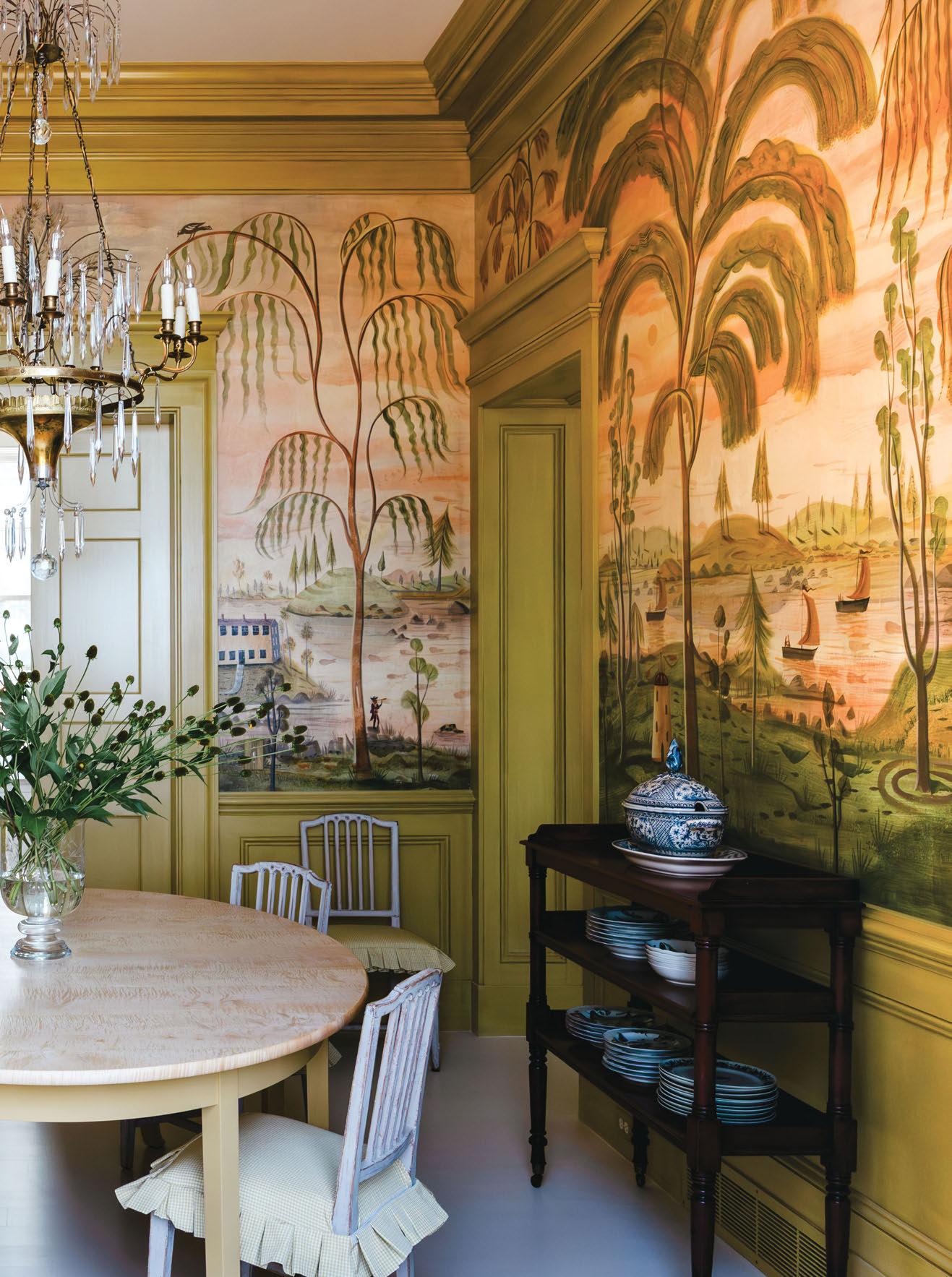
Interiors by Chelsea Handegan Architecture by Sebastian von Marschall
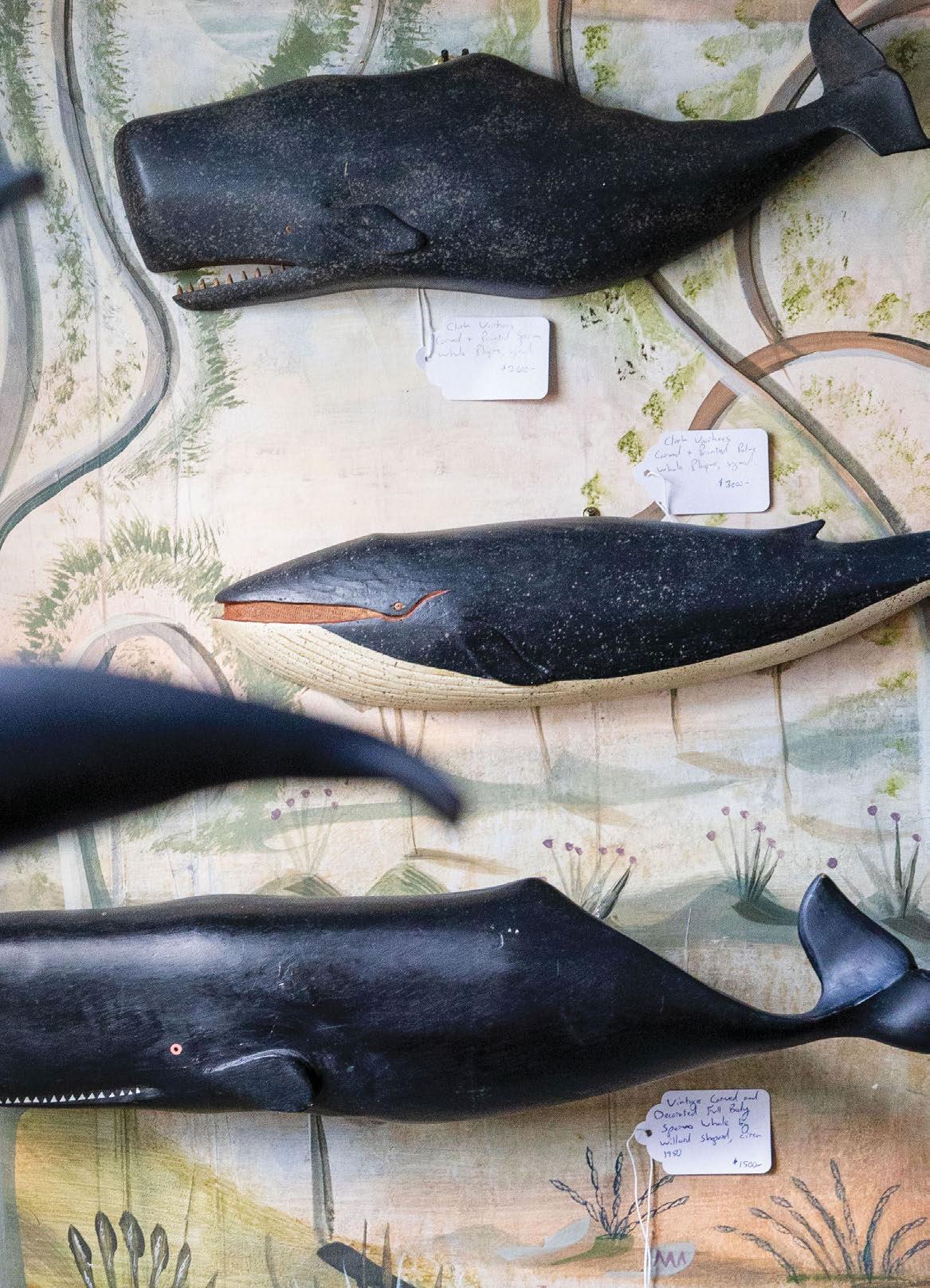
Thanks to his widespread installations, many in easily accessible homes, shops and cafes, Kevin can visit his past work from time to time, as if checking in on an old friend. Unlike other decorative arts, murals, once they’re complete, become permanent, fused to the installation’s architecture. Houses turn over, businesses change hands, but Kevin’s pieces become part of the firmament, entangling themselves with a location’s living history and gathering richness, character and patina over time—just like the artist himself. ››
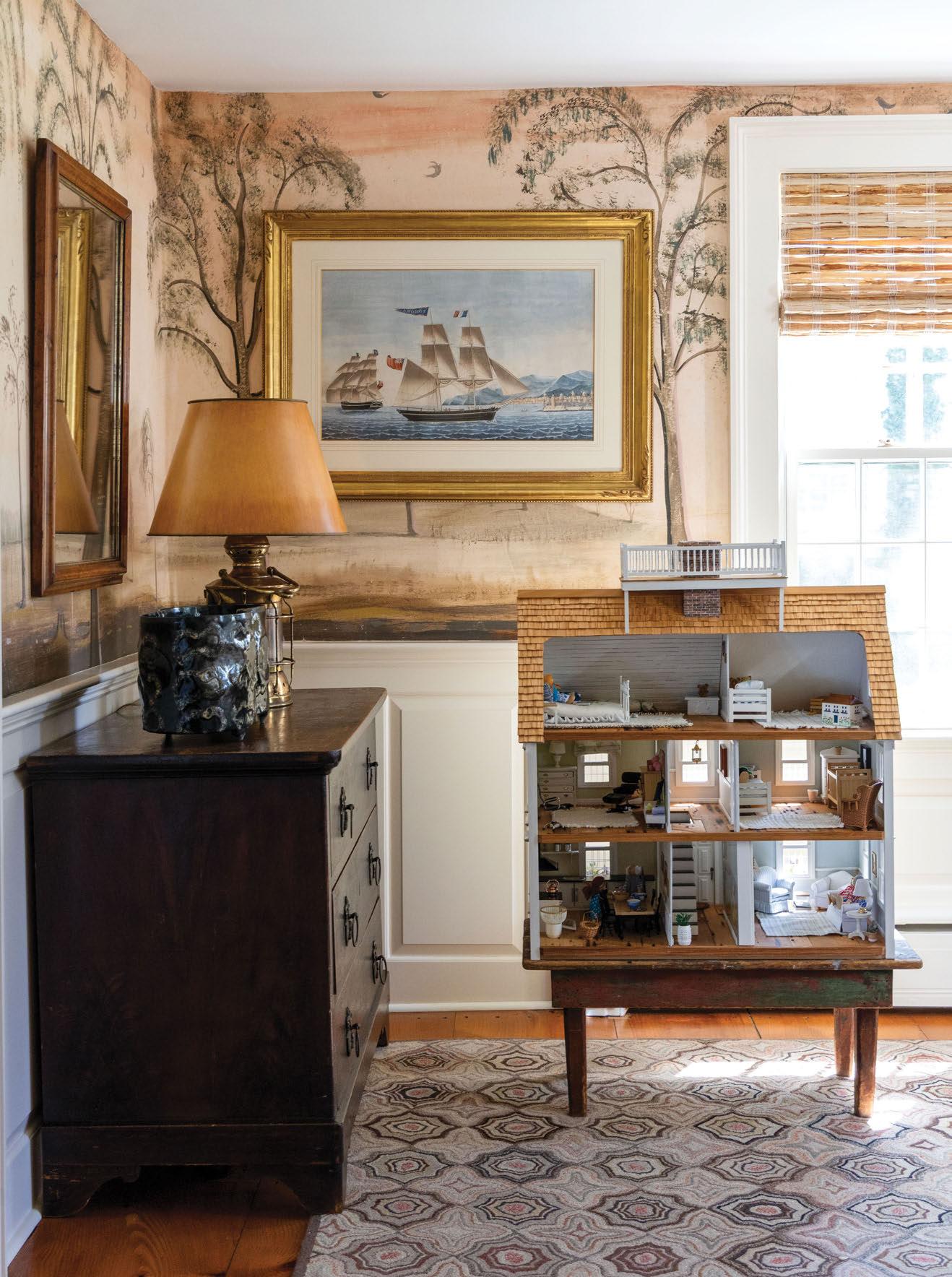
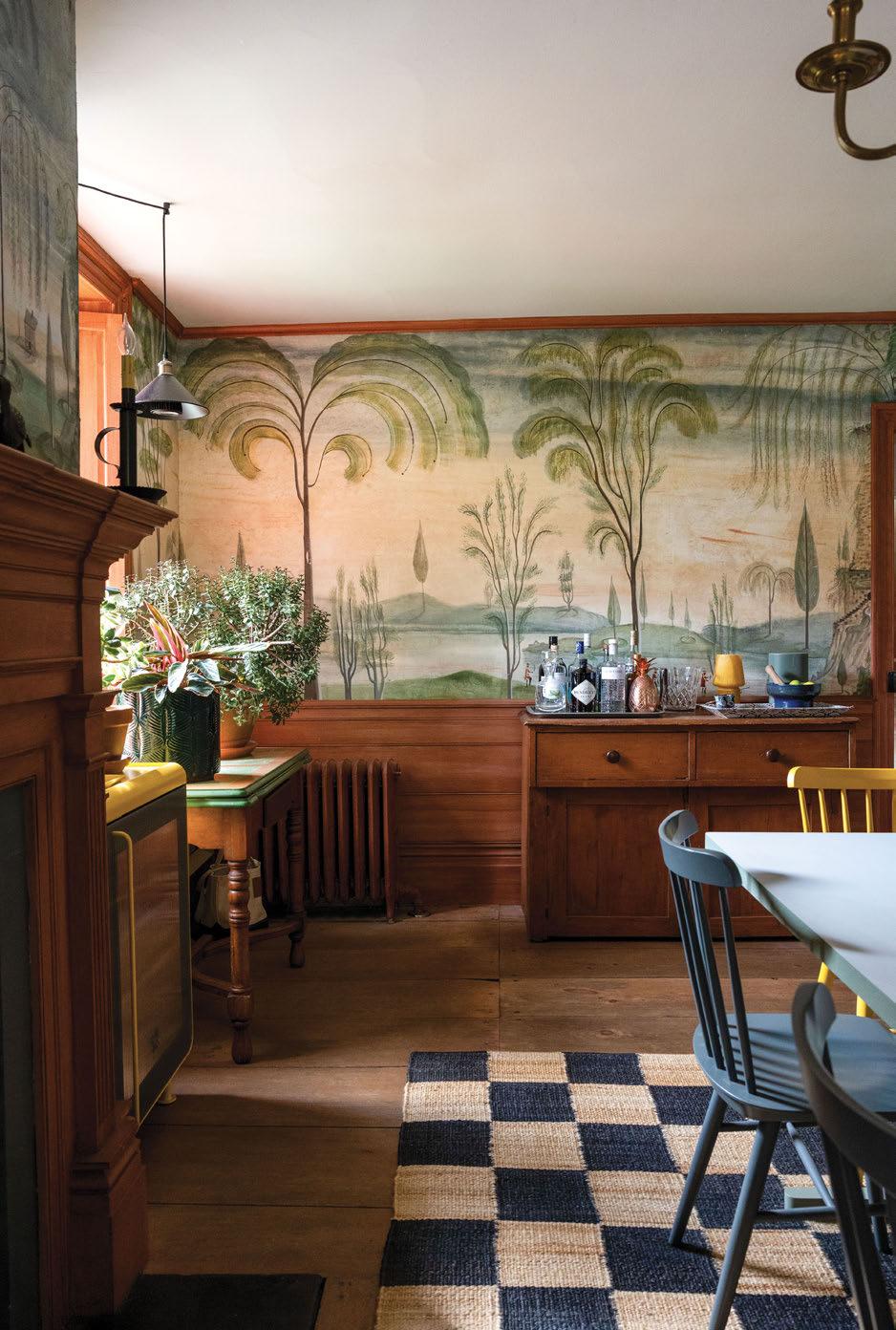
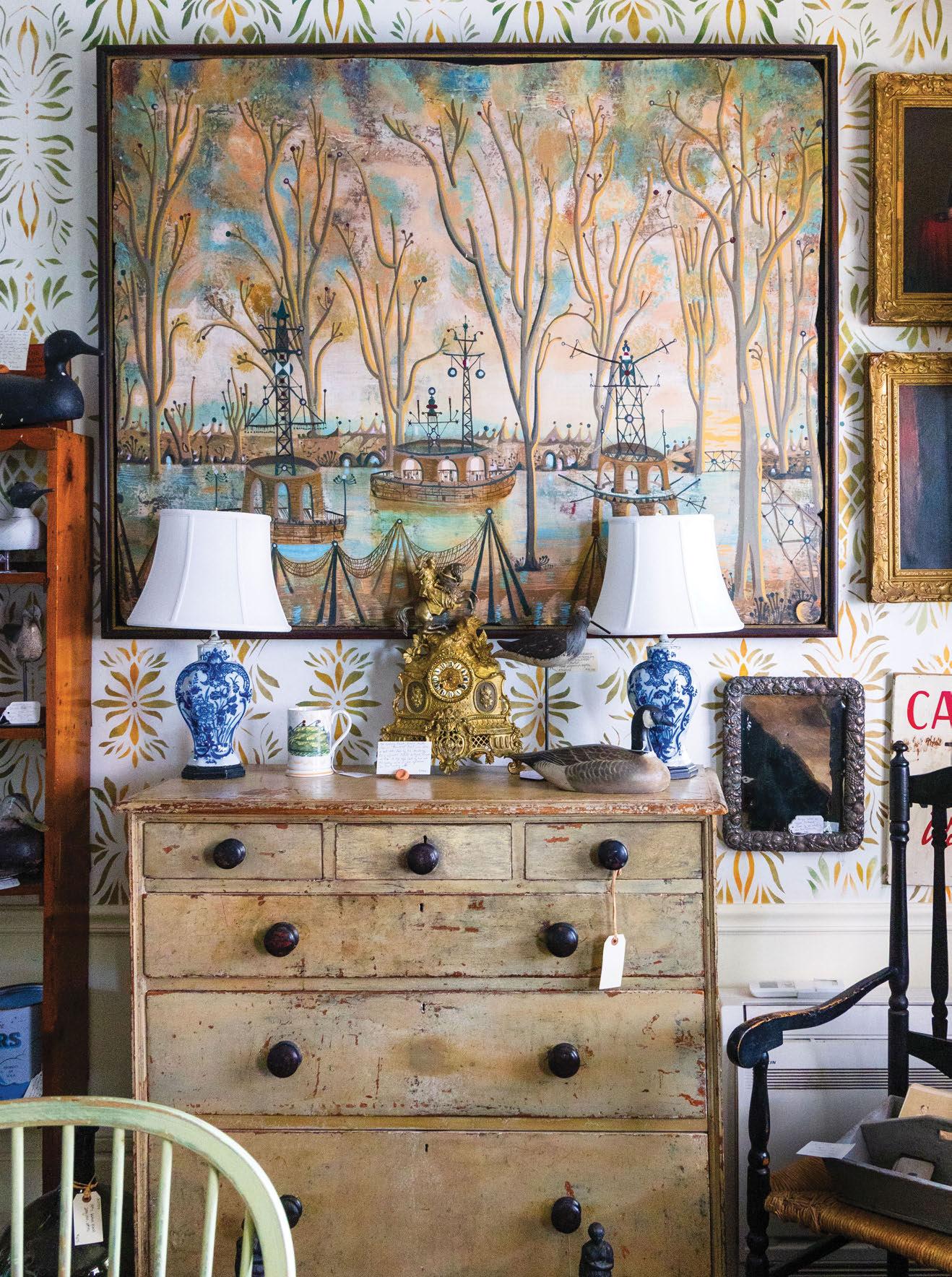
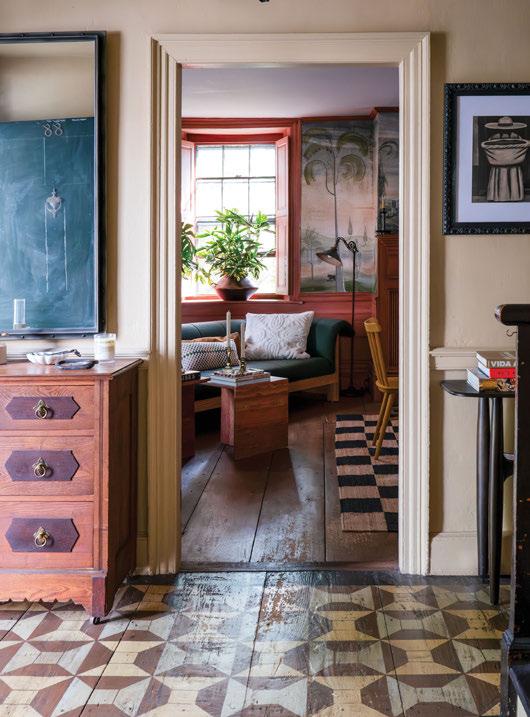
Nantucket House Antiques is filled with Kevin’s handiwork from the floors to the walls, in a prominent display curated by Michelle Holland.
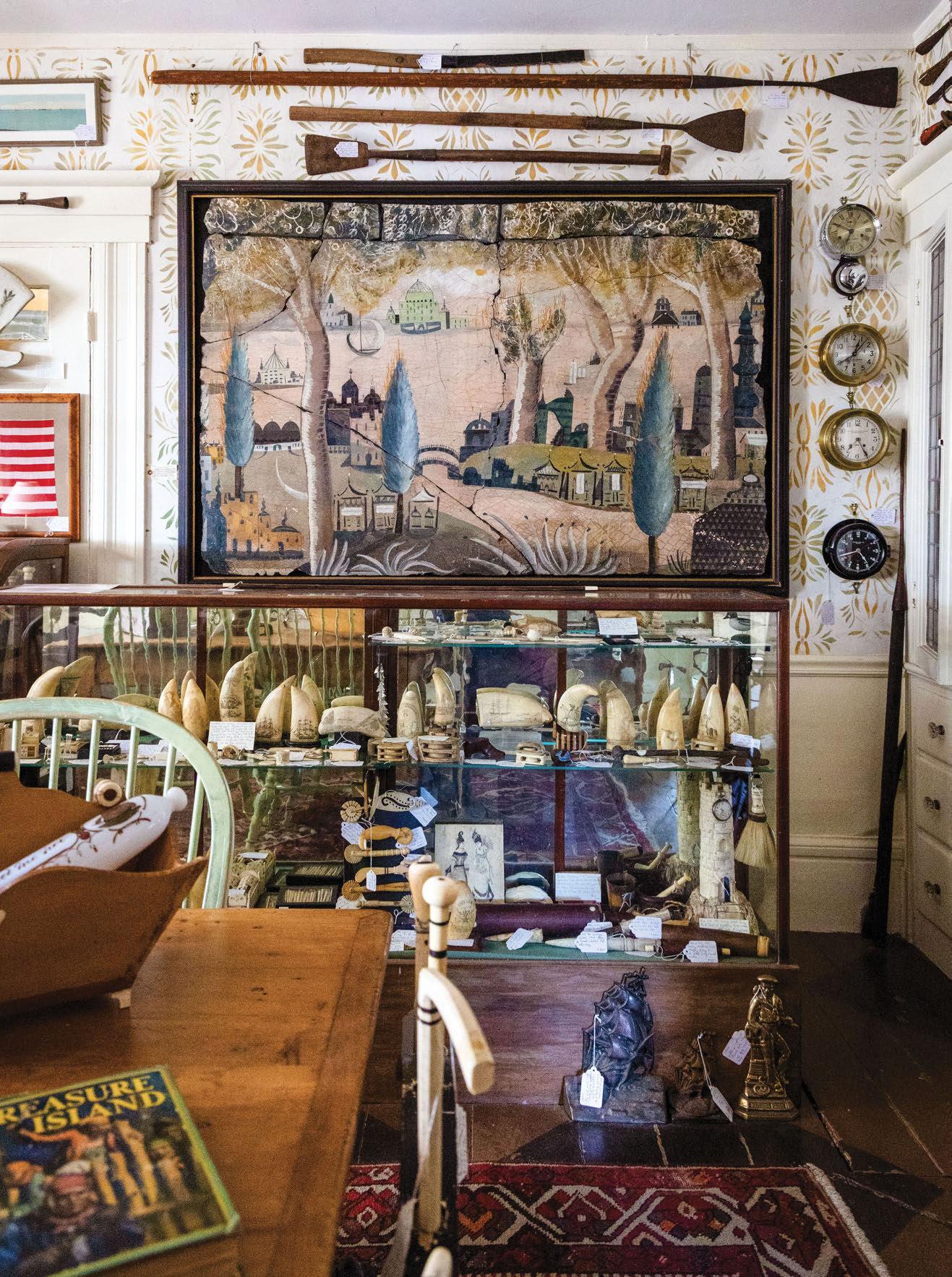
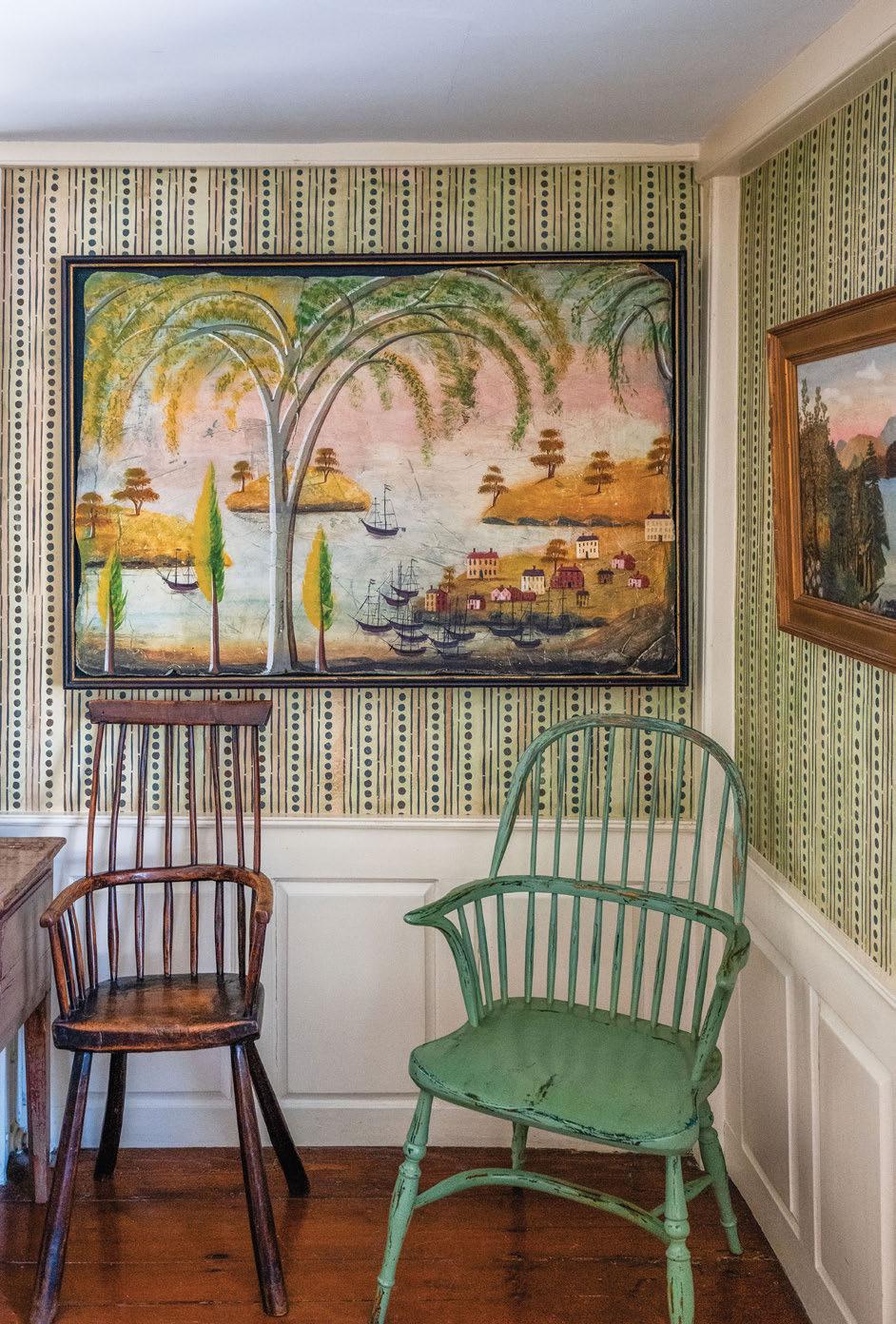
Paintings by Kevin on the left and Grandma Moses on the right against his earlier hand-stenciling in a dining room on Nantucket.
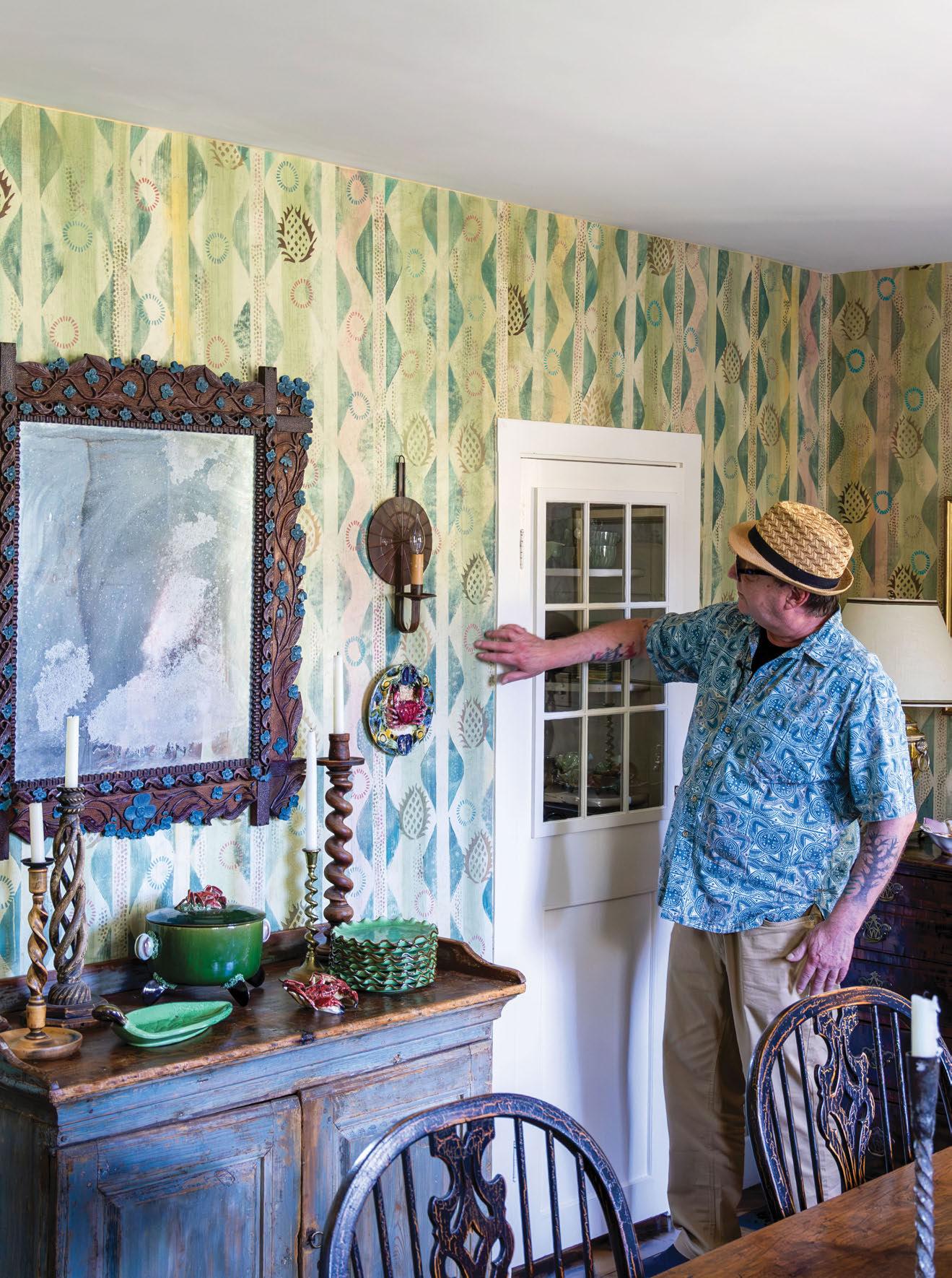
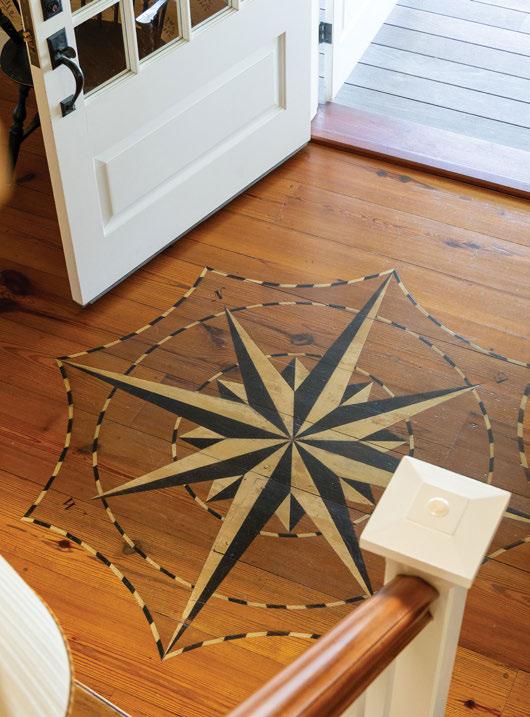
But it’s always special for Kevin to return to where he got his start. The pull of Nantucket keeps bringing him back. In so many ways, it’s a different place than the one he first encountered—with some parts nearly unrecognizable—the rougher edges that made it a haven for artists and wayfarers now smoothed over. But his work has become its own calling card and connection point, first with Sandi and now her daughter-in-law, designer Michelle Holland, long-standing gallerists representing his work alongside various creative design projects at Nantucket House Antiques. Their support for Kevin’s work is echoed in an an ever-widening circle that appreciates his authentic style and contributions to the local vernacular as much as wooden whales and cedar shingles. Not bad for a guy from Missouri who was first discovered painting houses.
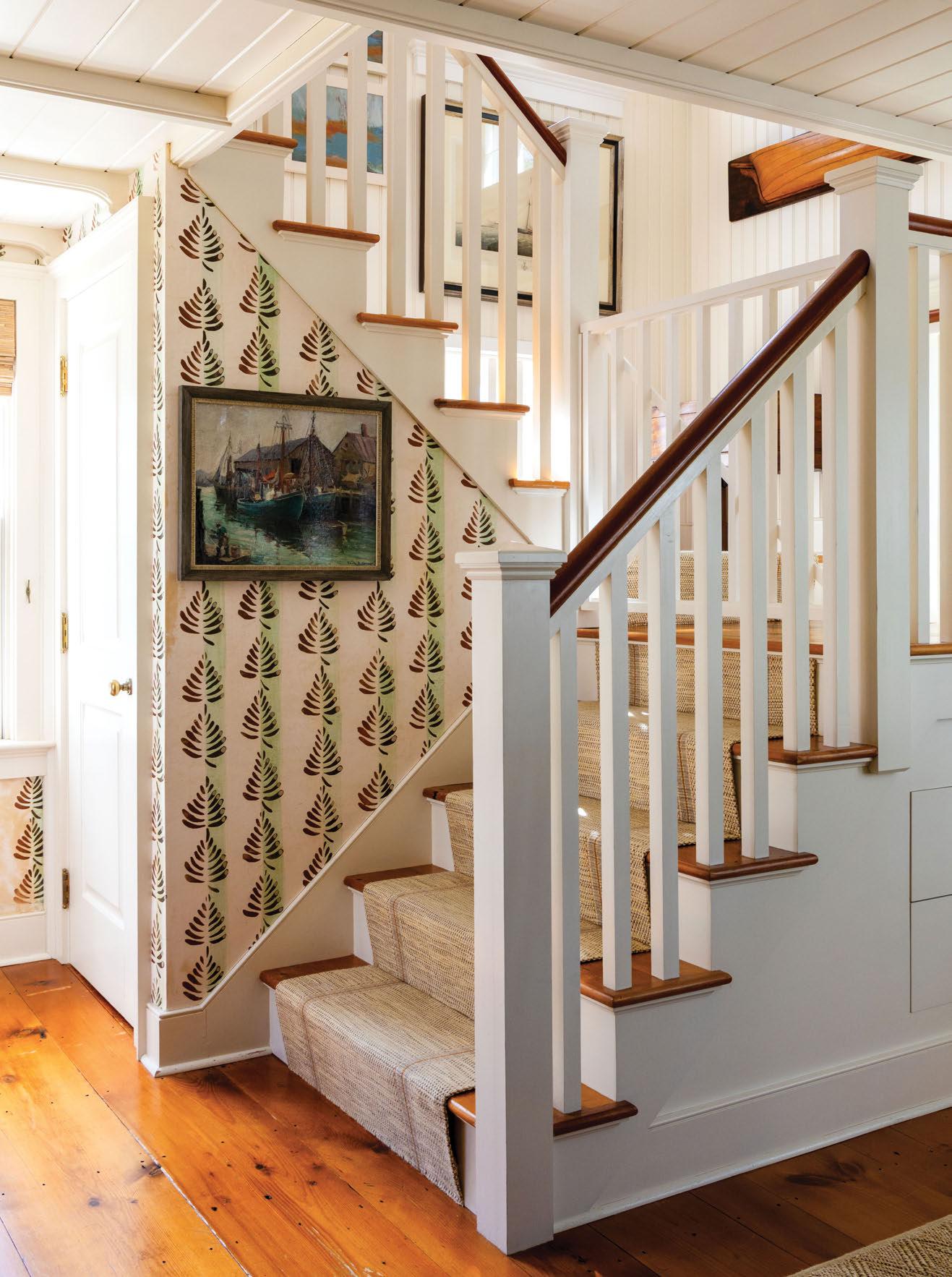
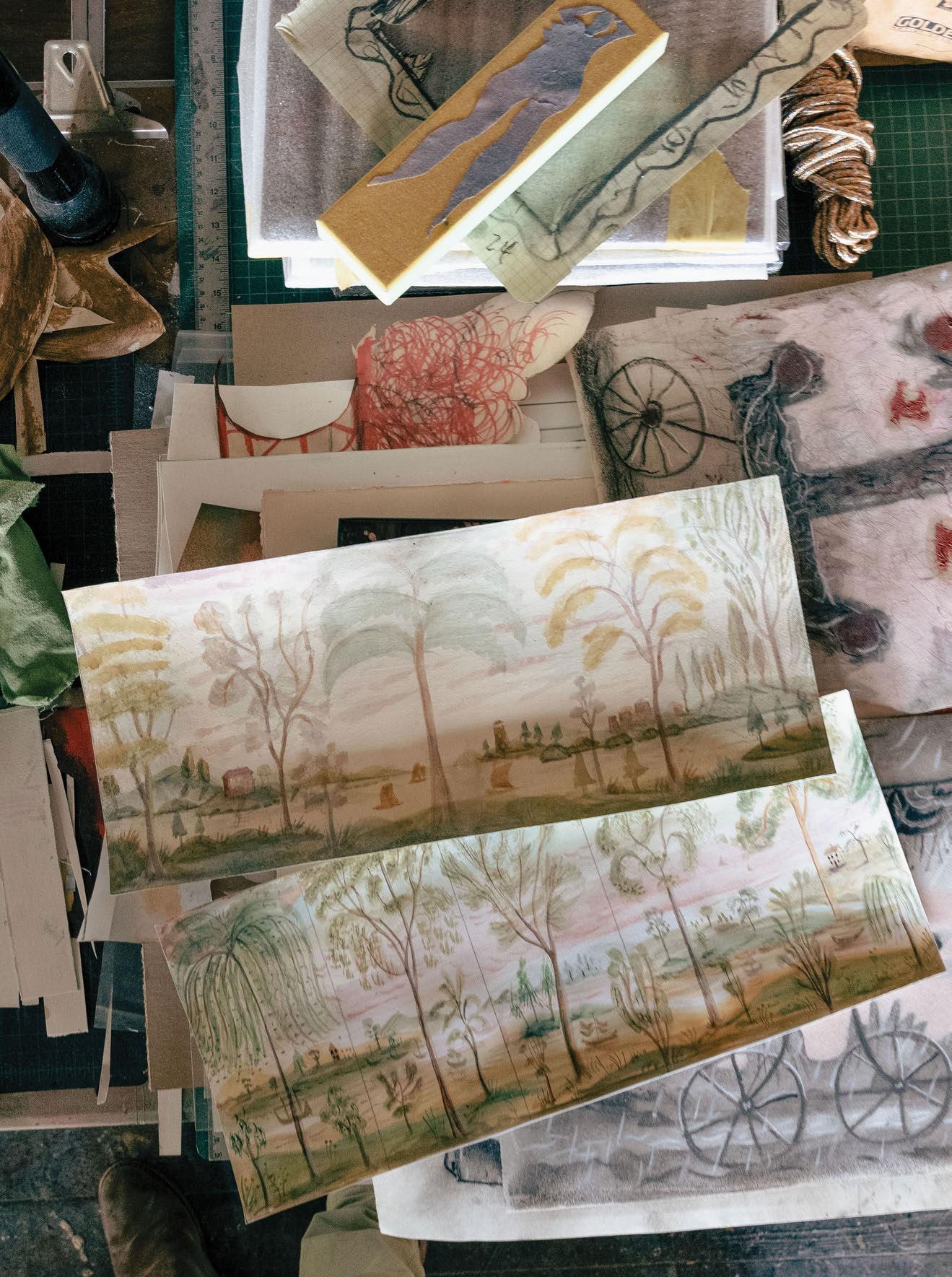
Wall decoration at a project by Michelle Holland. Kevin’s process includes creating original stencils and painting in multiple layers.
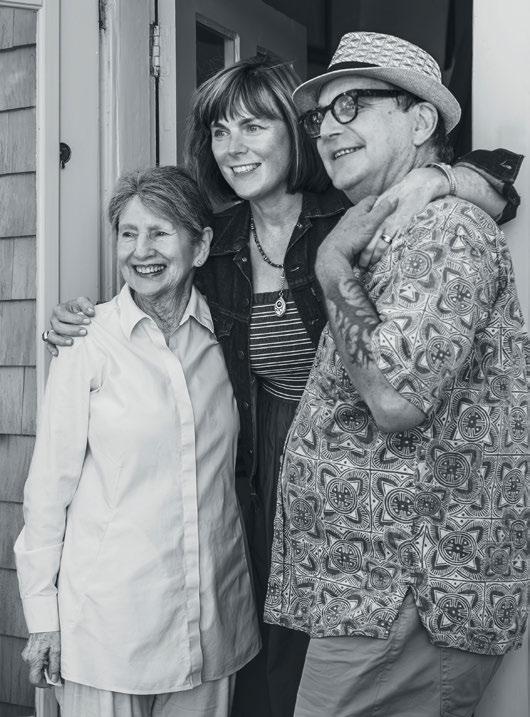
Sandi and Michelle Holland with Kevin on Nantucket.
CAMPION
INTERIORS BY JEAN STOFFER DESIGN / ARCHITECTURE BY JAMES LAREW / STOFFER PHOTOGRAPHY
LOU LOU WALL
INTERIORS BY CW DESIGN / PHOTOGRAPHY BY LARA KIMMERER
BANGLE
INTERIORS BY SCOTT MADDUX
PHOTOGRAPHY BY MICHAEL SINCLAIR
MAYFIELD
INTERIORS BY KATE HAYNES OF NOBLE STUDIO / BUILD BY LOYD BUILDERS / PHOTOGRAPHY BY ABIGAIL JACKSON
ABNEY HANG
INTERIORS BY LAV + CO. / PHOTOGRAPHY BY JOHN GRUEN / STYLING BY ANNA MOLVIK
DISC / PIERS
& ASSOCIATES ARCHITECTS /
INTERIORS BY
NEEDLES
INTERIORS BY ZO Ë FELDMAN DESIGN / ARCHITECTURE BY THOMSON & COOKE
/
BY
ARCHITECTS
PHOTOGRAPHY
STACY ZARIN GOLDBERG
BETSY WENTZ / KIRCHHOFF
PHOTOGRAPHY BY FRANCESCO LAGNESE / STYLING BY TORI MELLOTT
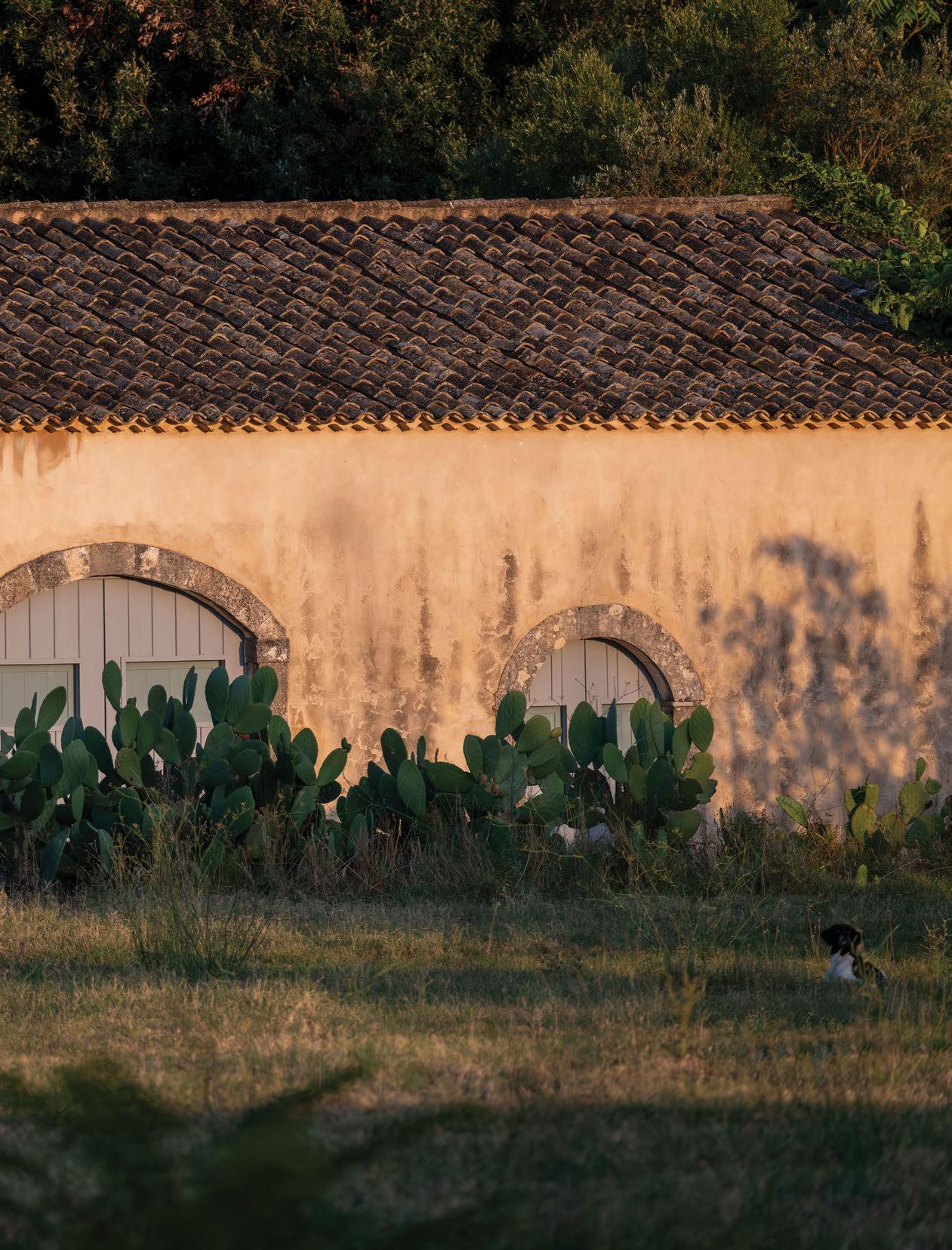
AUGUST 24, 2025
GOLDEN HOUR
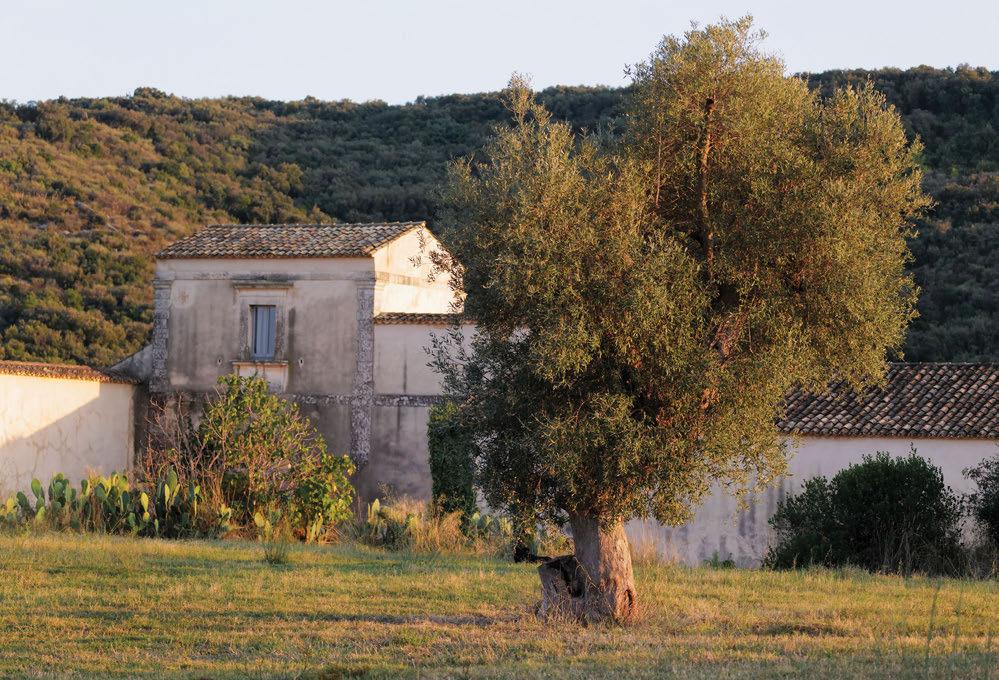
NOTO, SICILY
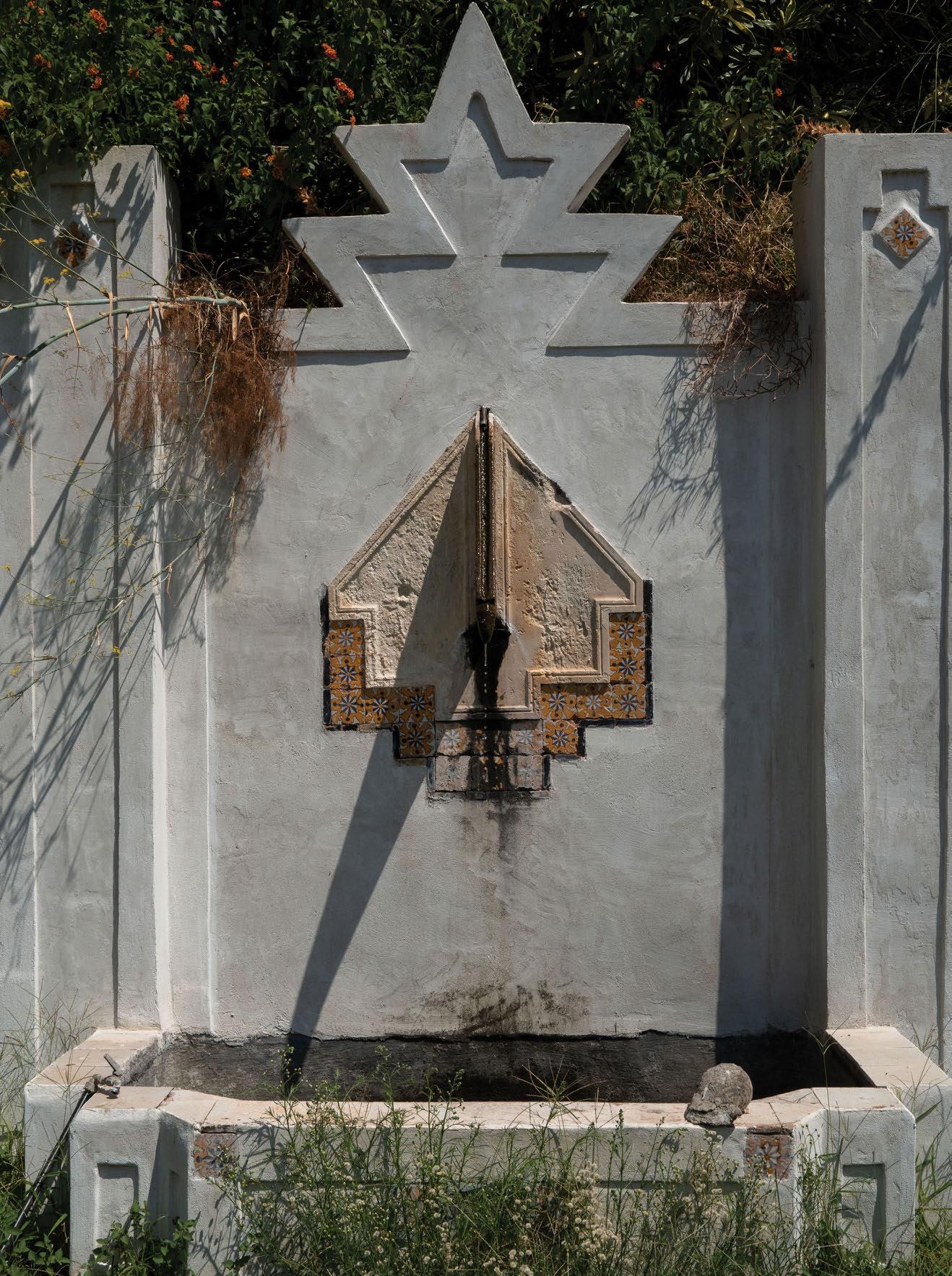
KEEPERS OF THE FLAME
Among the palazzos and an active volcano, an art refuge flourishes.
SICILY
A crossroads—a central location, posizione centrale in the Mediterranean, Sicily was formally annexed to the Kingdom of Italy in 1861. It’s an arid hilly land of strategic position where trade was often a catalyst to change. Since 733 BC, it has been pursued by empires, with Greek, Roman, French, Spanish and Arab cultures leaving their mark on the island. In particular, there is an overarching and deep connection to the classical ideals, aesthetics and narratives of ancient Greece and Rome. There is a focus on reason, order and human potential and a deep sense of how one thing connects to the other; an island that nurtured and provided for the artists and cultural aesthetes that have passed through or settled for centuries.
Geologically, Sicily’s land is the result of layers and layers of activity on a fault line between the African and Eurasian tectonic plates, thus its famed volcanoes. But there is another stratification too; a formation of cultural layers. Each conquest of the island would bring a new culture that would leave an imprint to coexist and mingle with the ones before and after. Recontextualization and an acceptance of the island’s melting pot history emerged as a deepseated ideology, a sacred responsibility carried on through generations of Sicilians. And as we realized through the people we met, each has a part to play. »
Palazzo Butera
THE PHILANTHROPISTS
Massimo Valsecchi and Francesca Frua De Angeli
PALERMO
ITALIANS BY BIRTH, FIFTY YEAR RESIDENTS OF LONDON, AN ART COLLECTOR AND A DEALER, WHO MAKE A MAIDEN TRIP TO SICILY, BUY
A DECAYING PALAZZO IN 2015, INSTALL THEIR ART THROUGHOUT THE RESTORED BUILDING, OPEN IT AS A PUBLIC MUSEUM AND PURPOSE THEIR COLLECTION TOWARDS CONVERSATIONS AND UNDERSTANDINGS ON THE FUTURE OF HUMANITY.
Massimo Valsecchi and Francesca Frua De Angeli spent the better part of their adult lives building and living with a collection of art, furniture and objects. At one point, it was described as perhaps the least well-known private collection of great art in London.
The couple lived in Knightsbridge on Cadogan Square, and in 2016, they sent their collection on a journey: first to the Fitzwilliam at Cambridge and then to the Ashmolean at Oxford before the collection came back together at a location of their own undertaking, a 300-year-old palazzo they had stumbled upon during their first trip to Sicily. Built in the early 18th century and once the home of the princes of Butera, it had sat abandoned for 50 years and was in dire need of restoration.
For years, Massimo sought a museum or university willing to fully embrace his vision: a program utilizing the entirety of their collection, designed to foster open dialogue, intellectual freedom and the exchange of ideas within a truly free-thinking environment. He believed that museums are often more “for the conservation of the past and not the possibility of people learning and deducing about the future,” and he wanted to shift that. He was able to find institutions keen on displaying, but not in developing the programs to facilitate the higher level conversations he was seeking.
So the couple has gone it alone. Palazzo Butera is their home now and home for their art and collections too. Situated between the sea and the city of Palermo, Palazzo Butera is a near-perfect metaphor for the island’s capital—at once grand and working, luminous and rough-edged.
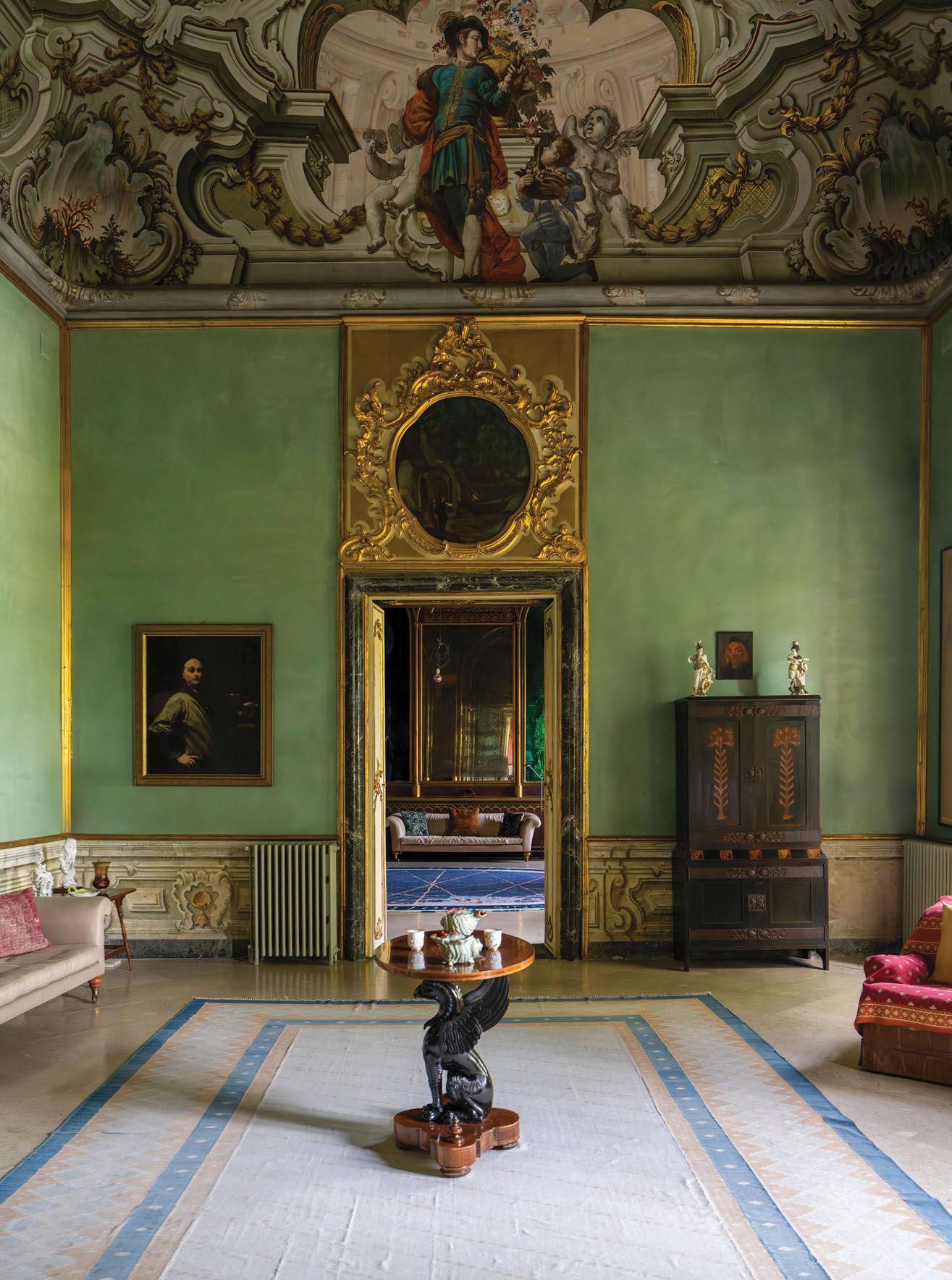
Renovated and repurposed, the palazzo has taken its rightful place as a cultural center. Galleries are tucked into old stables and kitchens as well as the more formal areas of the original residence. All fully restored and open to the public with the collections on view—a kind of family museum— along with grander rooms, where Massimo and Francesca live with other pieces of the collection. The art is meant to exist in a space that would provoke thought and foster the exchange of ideas across disciplines, creating a true liberal arts forum.
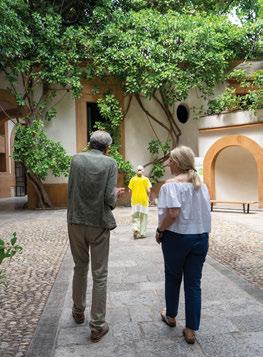
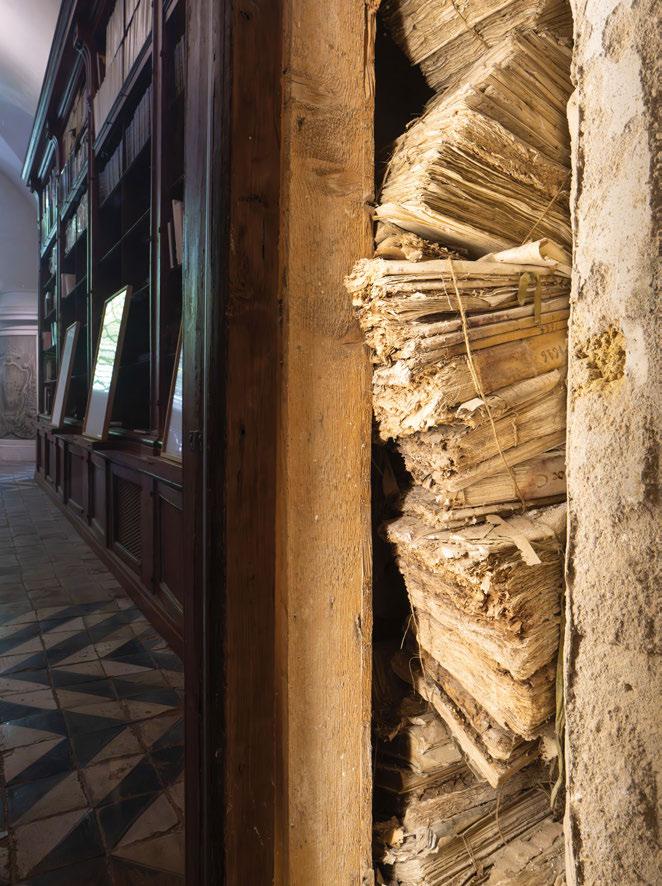
We enter the palazzo through a bookstore, the old “library,” where all the records would have been kept. Claudio Gulli, the museum director who has been involved in every step of the renovation and art curation, greets us. Out in the courtyard, a man is sweeping dried leaves that have fallen off the jacaranda tree, which twists its way in and out of the building; its roots seeking water in the gunnels below the tiled kitchen floor. We later learn the sweeper is Massimo, who, in addition to being the patron and resident of Palazzo Butera, also helps
maintain it. Perhaps his tending allows him to hide in plain sight, as visitors experience the collection alongside the slow sweep of his broom.
Broadly, Massimo and Francesca’s collection did not follow fashion. Alongside a lifetime of collecting as a couple, we find pieces that Francesca inherited from her family who were renowned art collectors; her grandfather collected the modern art masters of his time and was friends with and an early patron of Picasso. She comes at living with art naturally.
In their private quarters, a table holds an impressive collection of 18th-century European porcelain, a piece from most of the major houses. A Stanley Spencer hangs above a painted Milanese daybed, c.1780. But everything is set against a backdrop of “idea seeking and sharing,” as they say, “not ego.” Contextualization is key as we walk through the art-filled, restored rooms. Upstairs, we learn that Aby Warburg’s Mnemosyne Atlas, a contemporary project that studied how images and symbols from antiquity reappeared particularly during the Renaissance, influenced Anne and Patrick Poirier’s art installation in the Gothic Room. Massimo explains, “the room is called Gothic. Even in 1811 they used the term Gothic. But this Gothic is, of course, Arab which is of course, Norman Byzantine. These people already understood that the greatness of Sicily was the codification of culture.”
Their omnivorous taste is everpresent and runs the gamut from Baroque oil paintings in ornate gilded frames to austere contemporary black and white photographs displayed in massive scale.
Throughout the day, Massimo and Francesca quietly pass through a discreet door beyond the enfilade of formal rooms. Here the furnishings are
spare, a dining table with a few objects on it where they sit down to lunch and embrace a quiet meal together, taking in the sounds of the city below and pausing to reflect. They enjoy moving freely between their apartment and the museum galleries that envelop them, living in continuous dialogue with the collection itself.
A terrace off the second floor runs the length of the palazzo, giving visitors a view of the sea. Dried leaves fall here too, so Massimo tours us with a broom in hand. But it’s loud, the palazzo next door has been bought by them, too, and a renovation is well underway. This second building, the Palazzo Piraino, will provide the centerpoint for the kinds of study and conversations that Massimo and Francesca seek. David Tremlett’s pastels will cover ceilings where artists in residence will explore their work and exchange ideas. Supporting their mission to allow deeper thinking and curiosity, deepening their philanthropic pursuit, as Massimo explains, “will open up a platform, allowing for human exchange, away from technology and data and artificial intelligence and everything in small boxes.” While Massimo and Francesca are assemblers and collectors at Palazzo Butera, their efforts represent an intense act of generosity that allow for richer educational experiences to unfold.
Late in the afternoon, Massimo and Francesca are walking through the courtyard as the day is cooling. Massimo is arranging a mandala from his broom’s catch. Leaves, twigs, a bloom, bud or berry that has fallen and he has carefully collected. When they were renovating, the permitting authorities wouldn’t let them remove the recessed stone catches that would have stopped the stable doors from swinging open, so Massimo has repurposed them as frames to display his natural assemblages. Just one more example of Massimo’s belief that art is meant to be shared. »
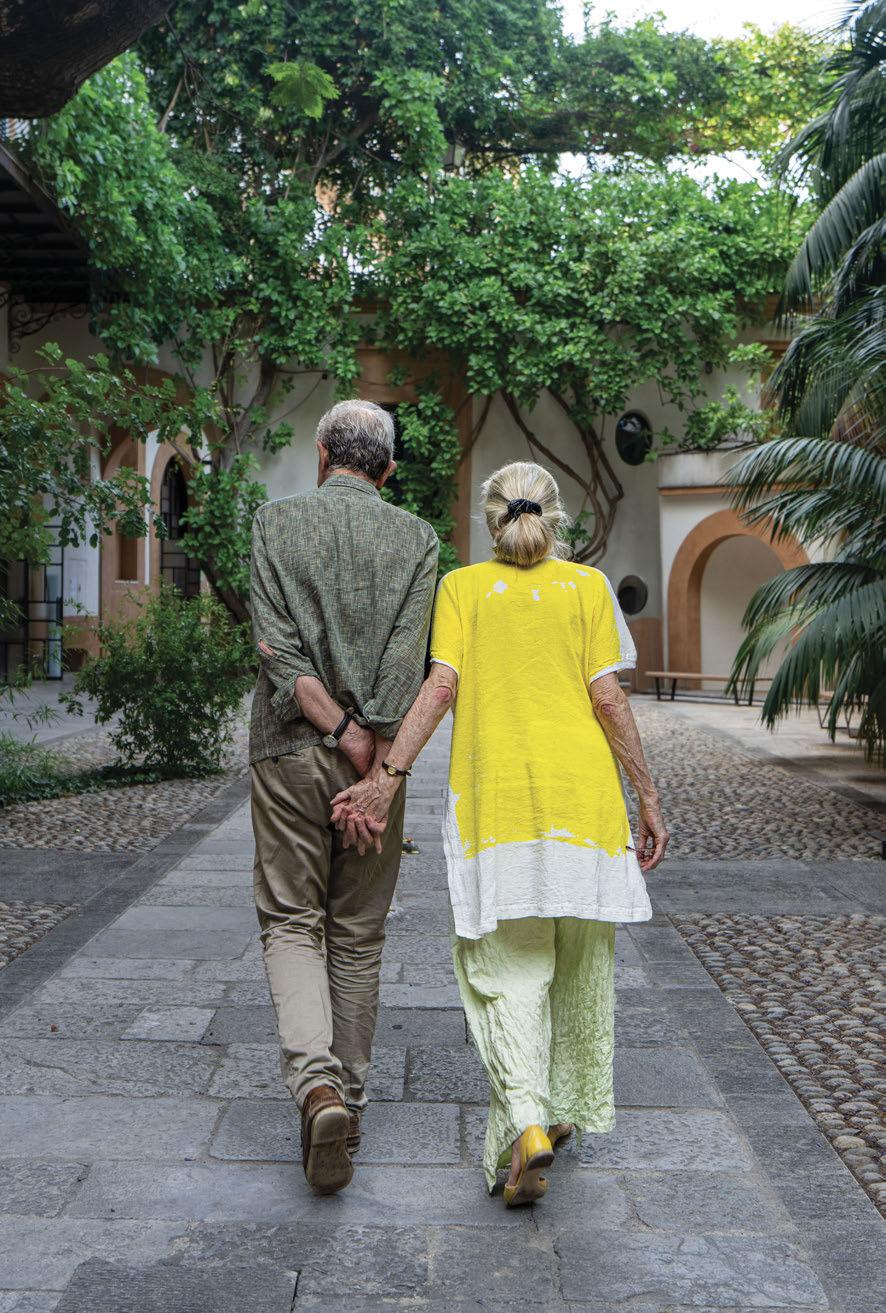
MASSIMO VALSECCHI AND FRANCESCA FRUA DE ANGELI
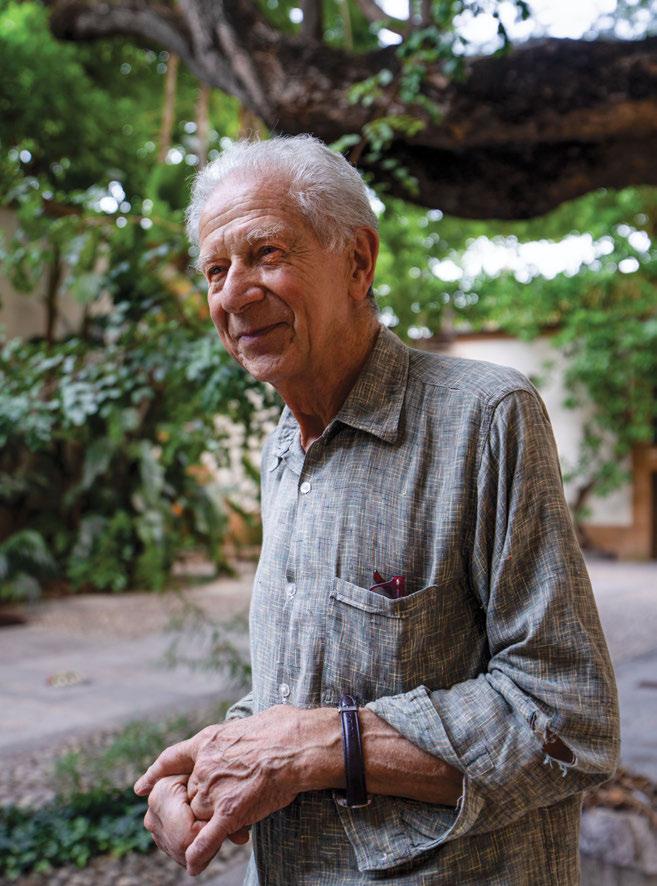
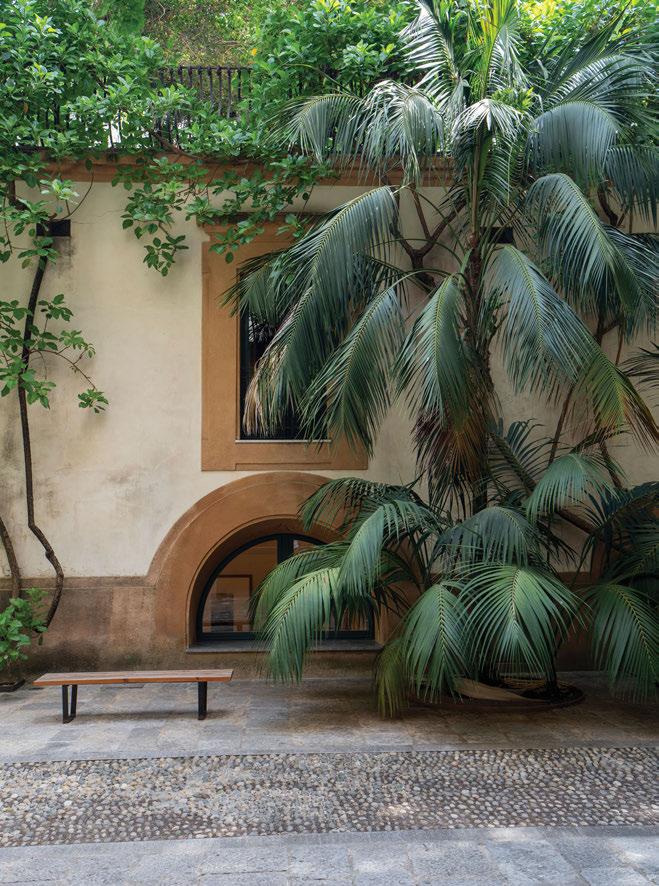
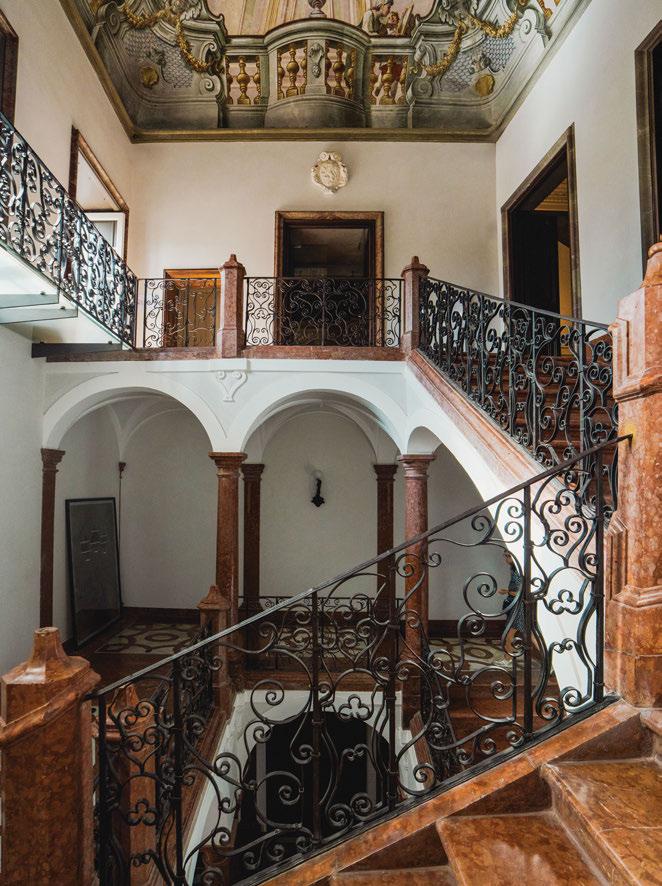
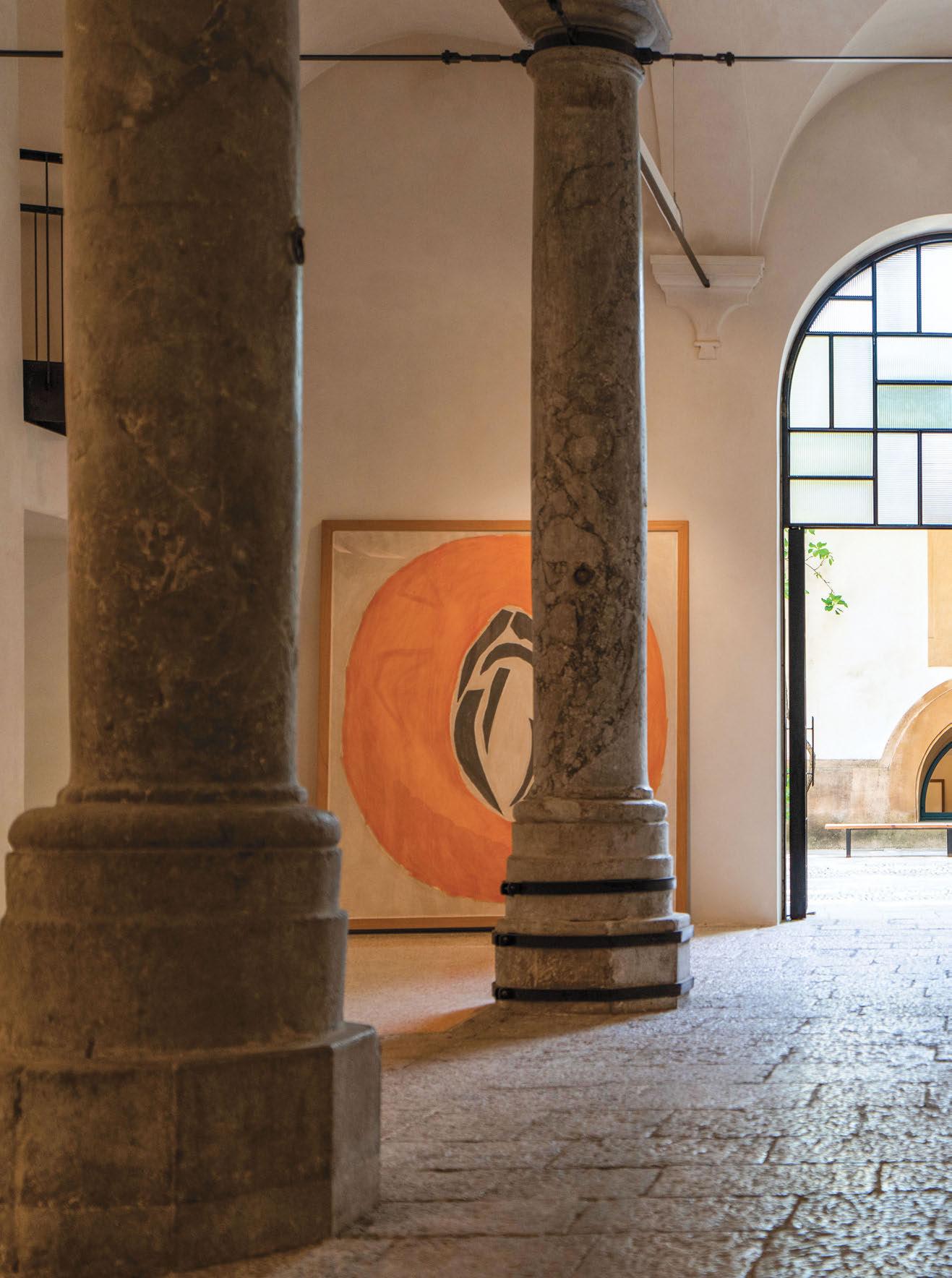
For years, Massimo sought a museum or university willing to fully embrace his vision: a program utilizing the entirety of their collection, designed to foster open dialogue, intellectual freedom and the exchange of ideas within a truly freethinking environment.
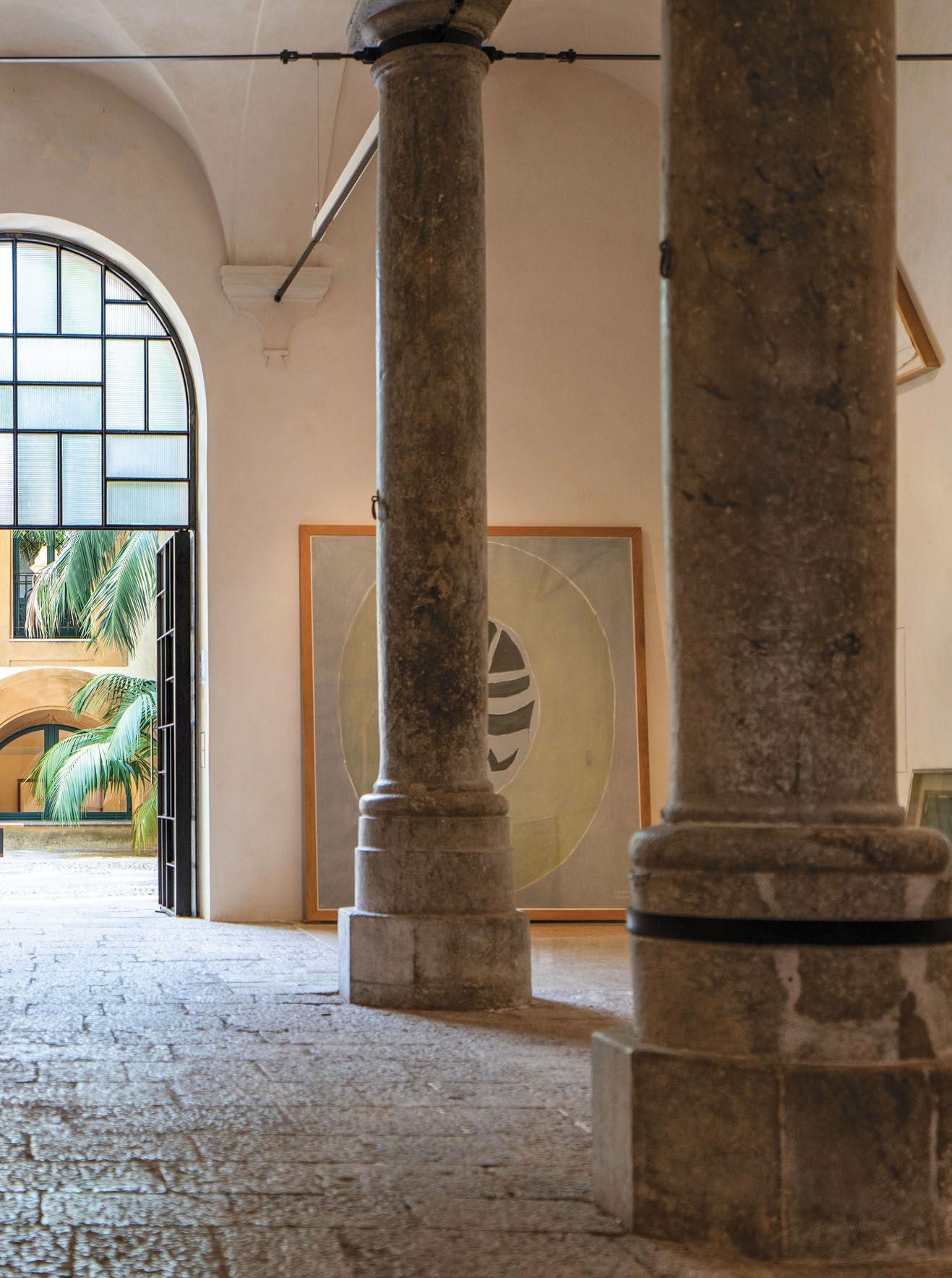
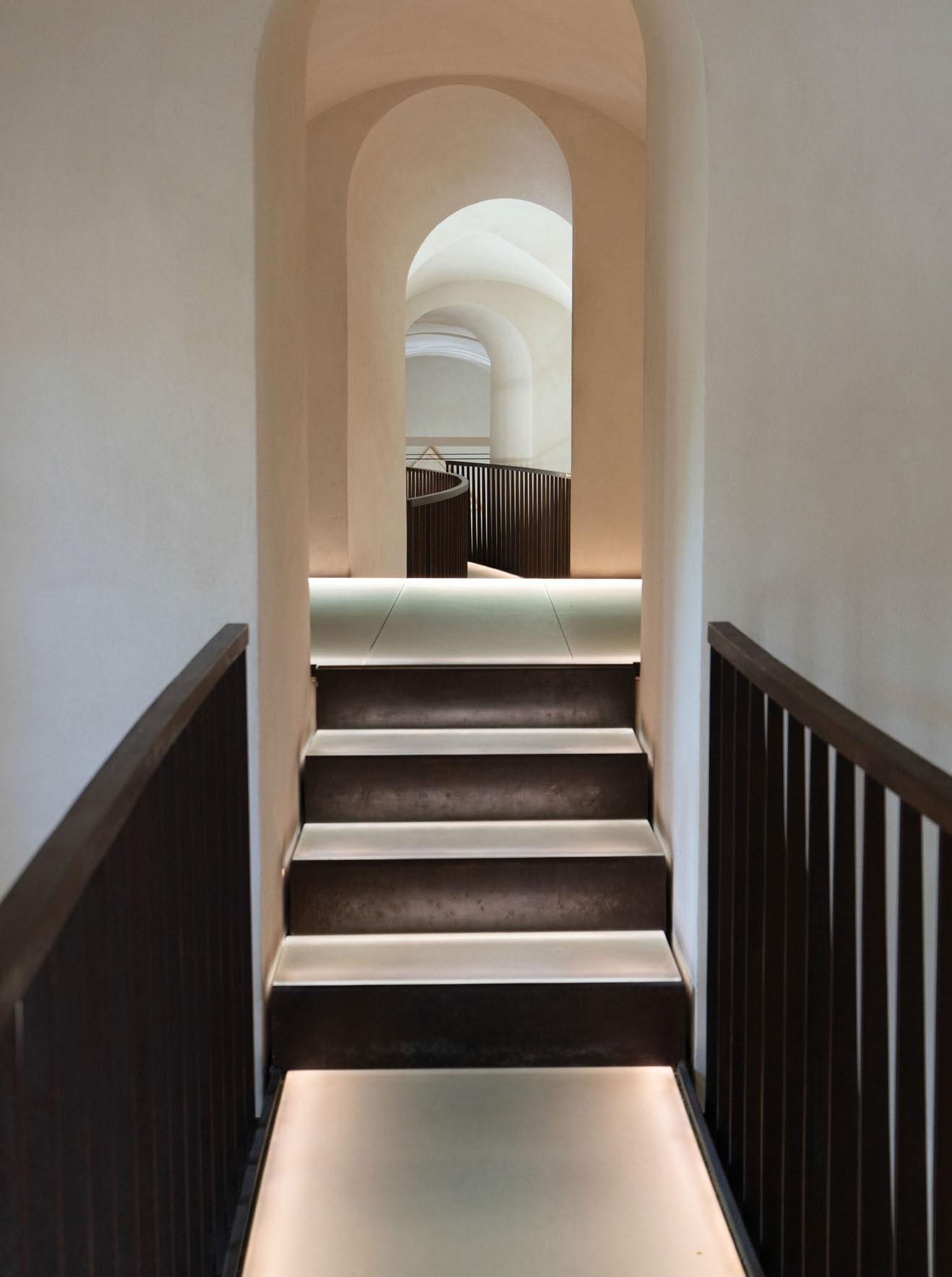
Architect Giovanni Cappelletti, a longtime collaborator with the couple, was central to the project, embedding museography into residential spaces and marrying many disparate buildings into a whole.
CLAUDIO GULLI
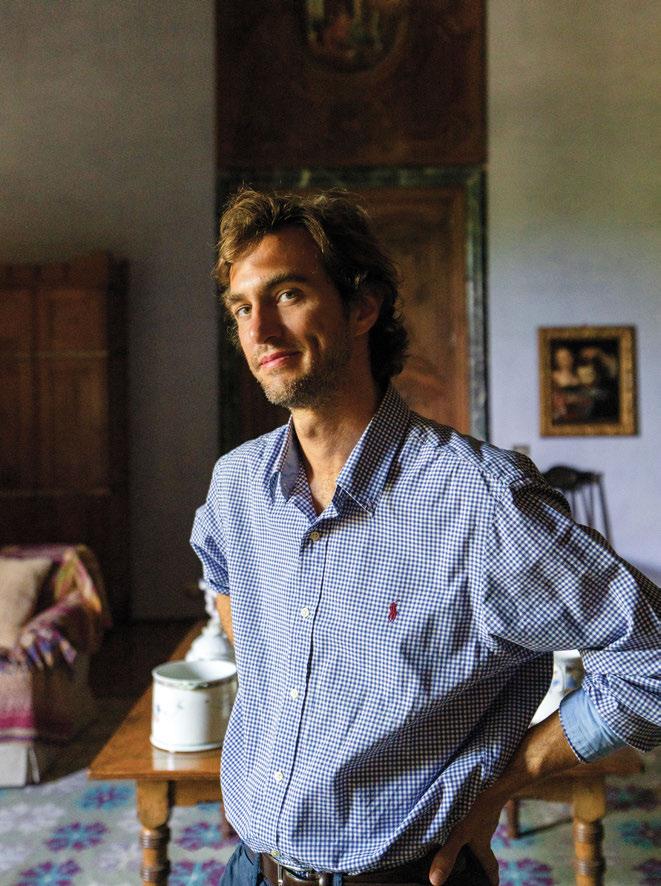
Director, Palazzo Butera
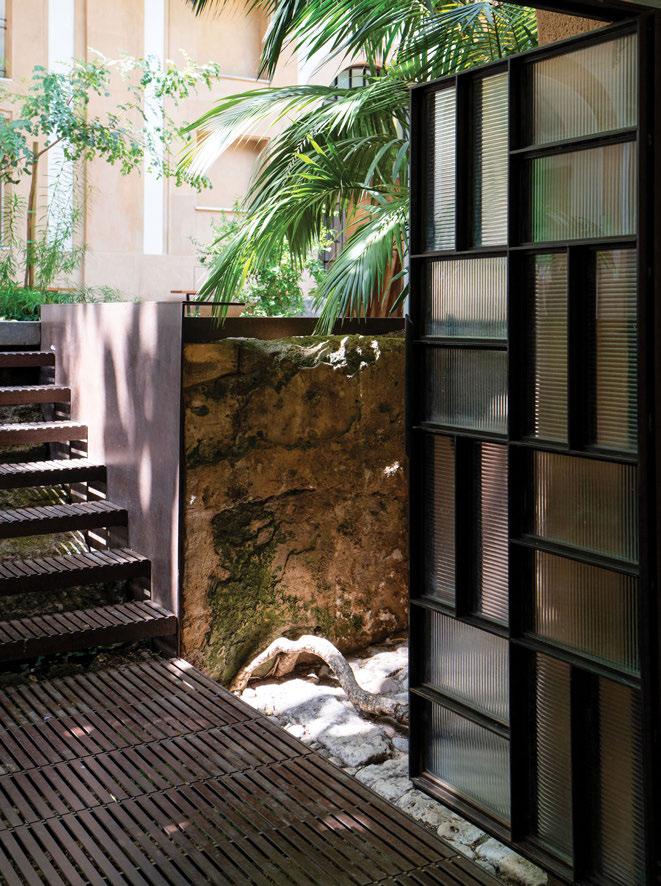
During the restoration, the roots of a jacaranda tree were found to have worked their way into the building, seeking water in a drainage pipe. The architecture and engineering teams encased them in glass, highlighting nature’s art for visitors.
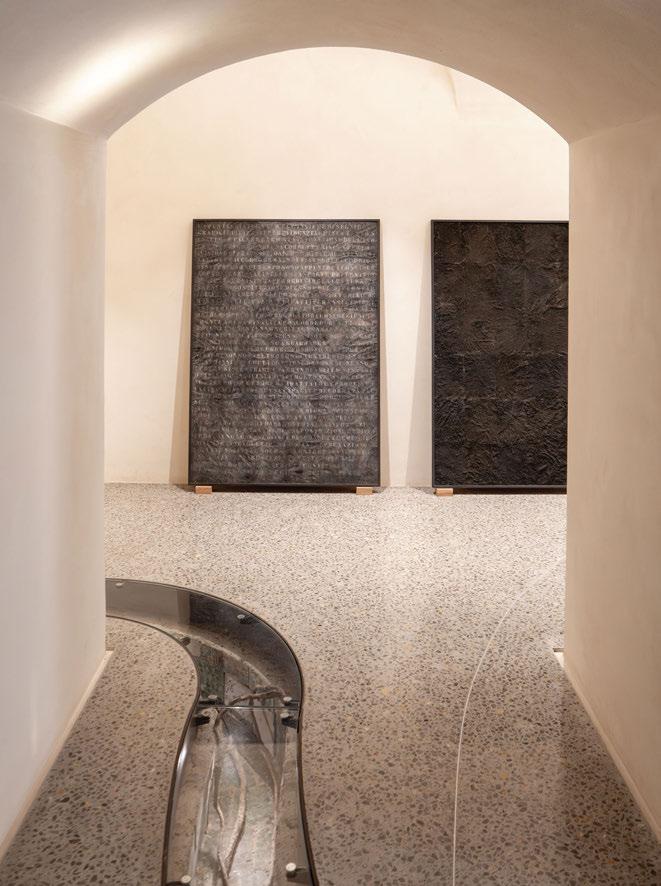
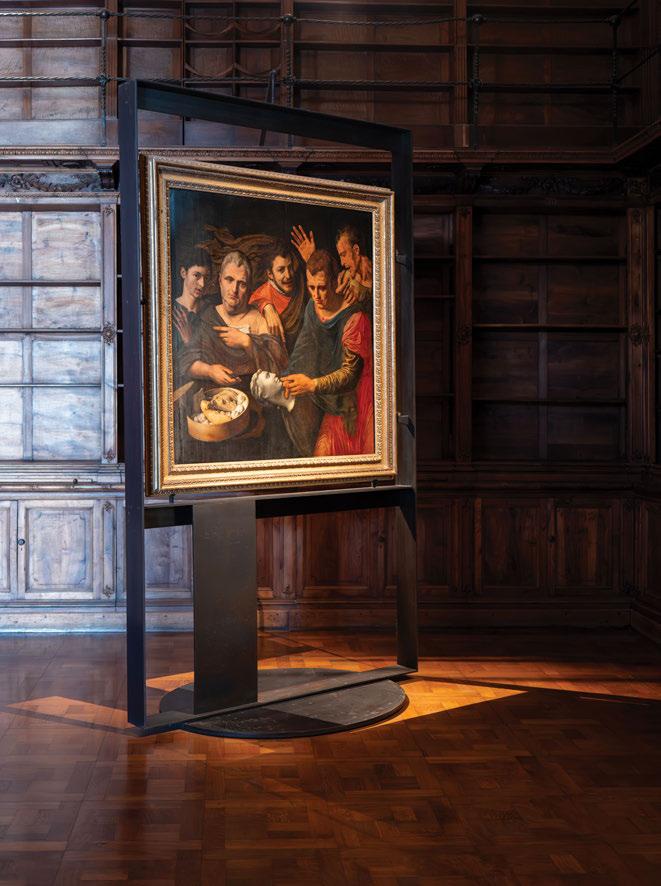
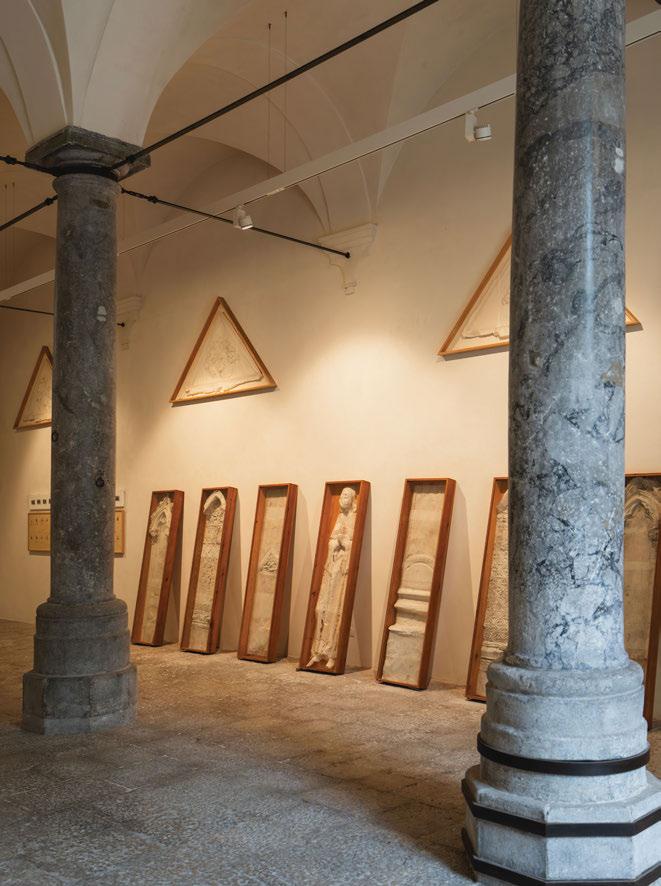
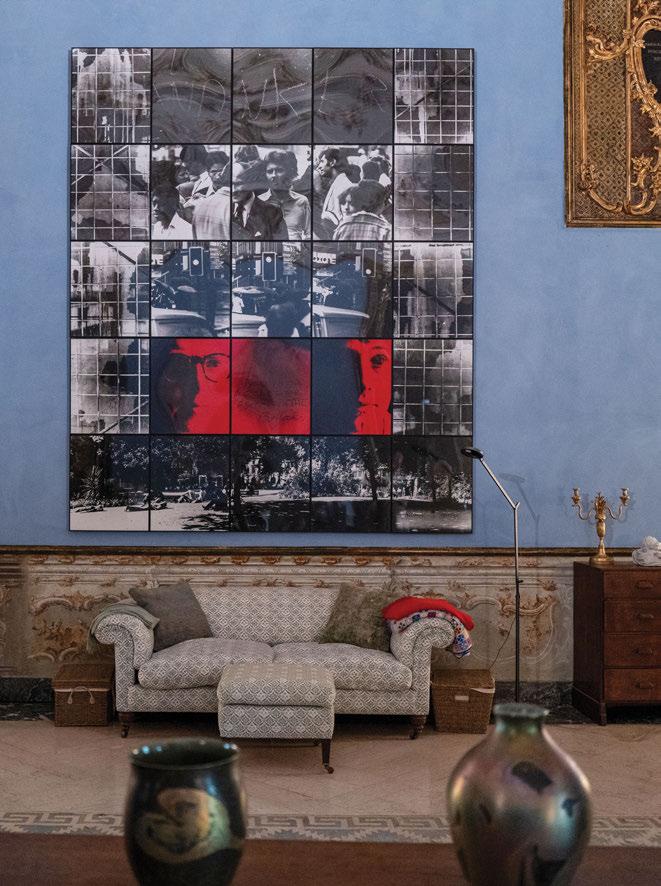
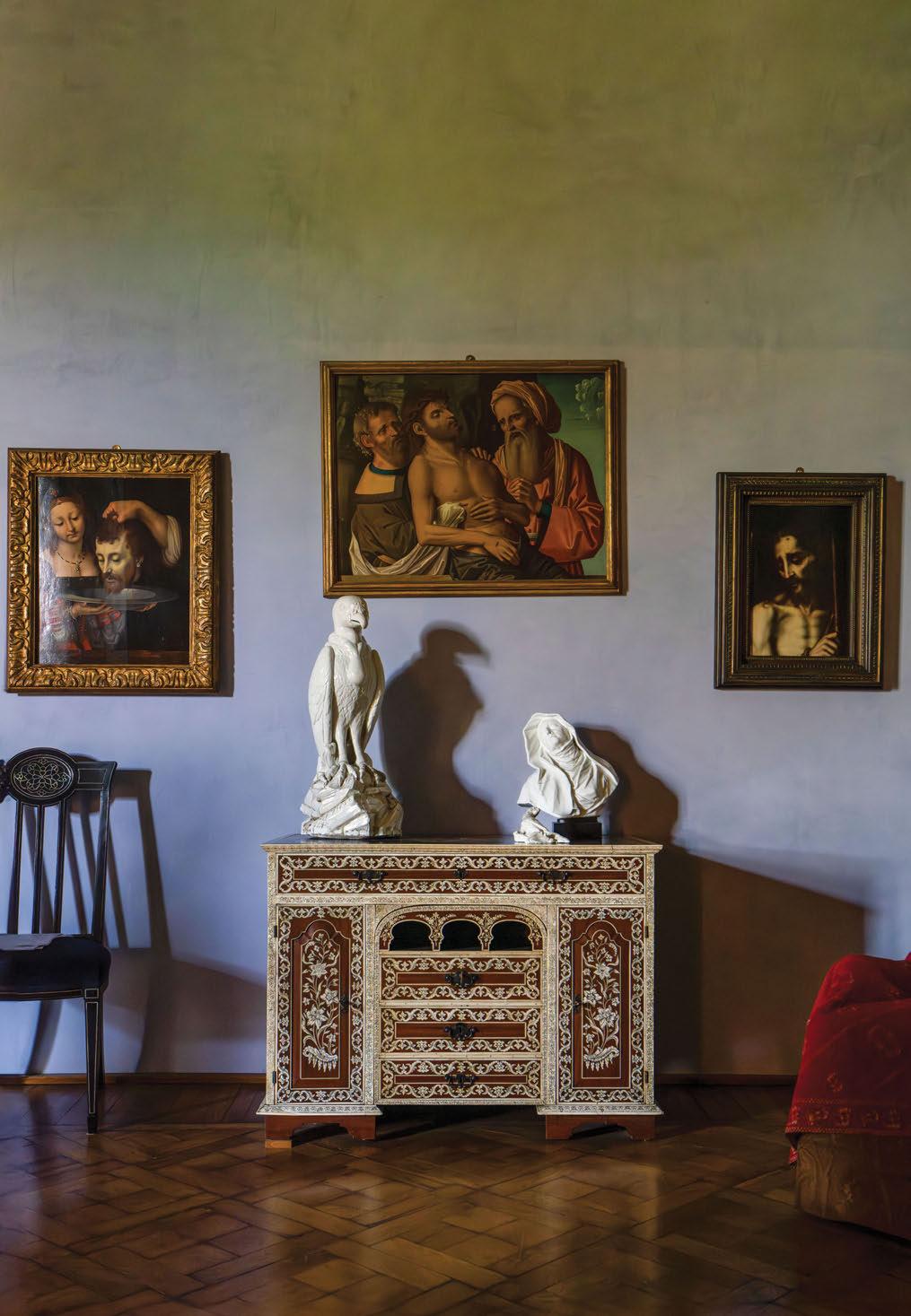
Nothing is labeled at Palazzo Butera, allowing visitors to experience the deep breadth of the collection by creating their own associations and dialogues.
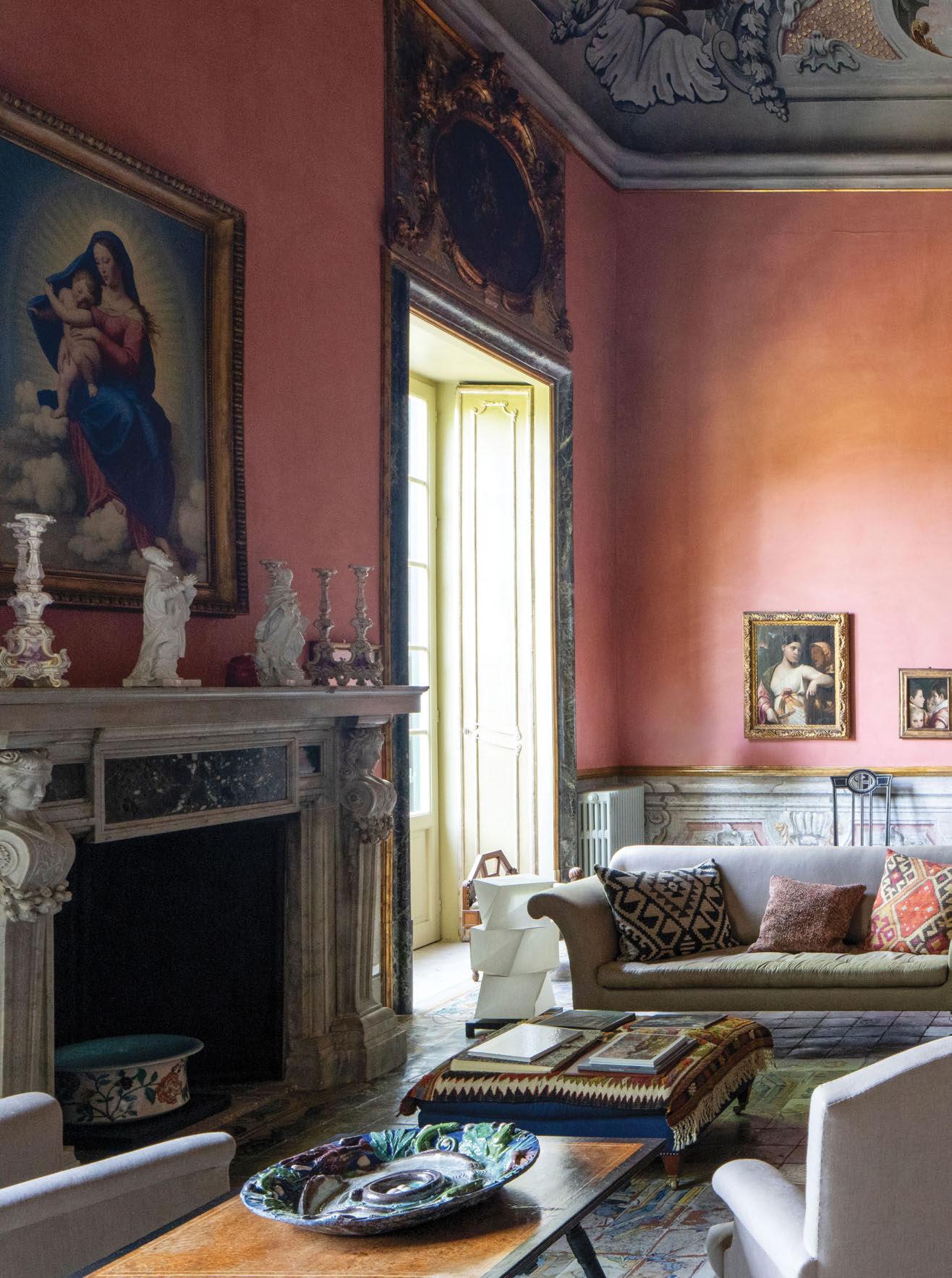
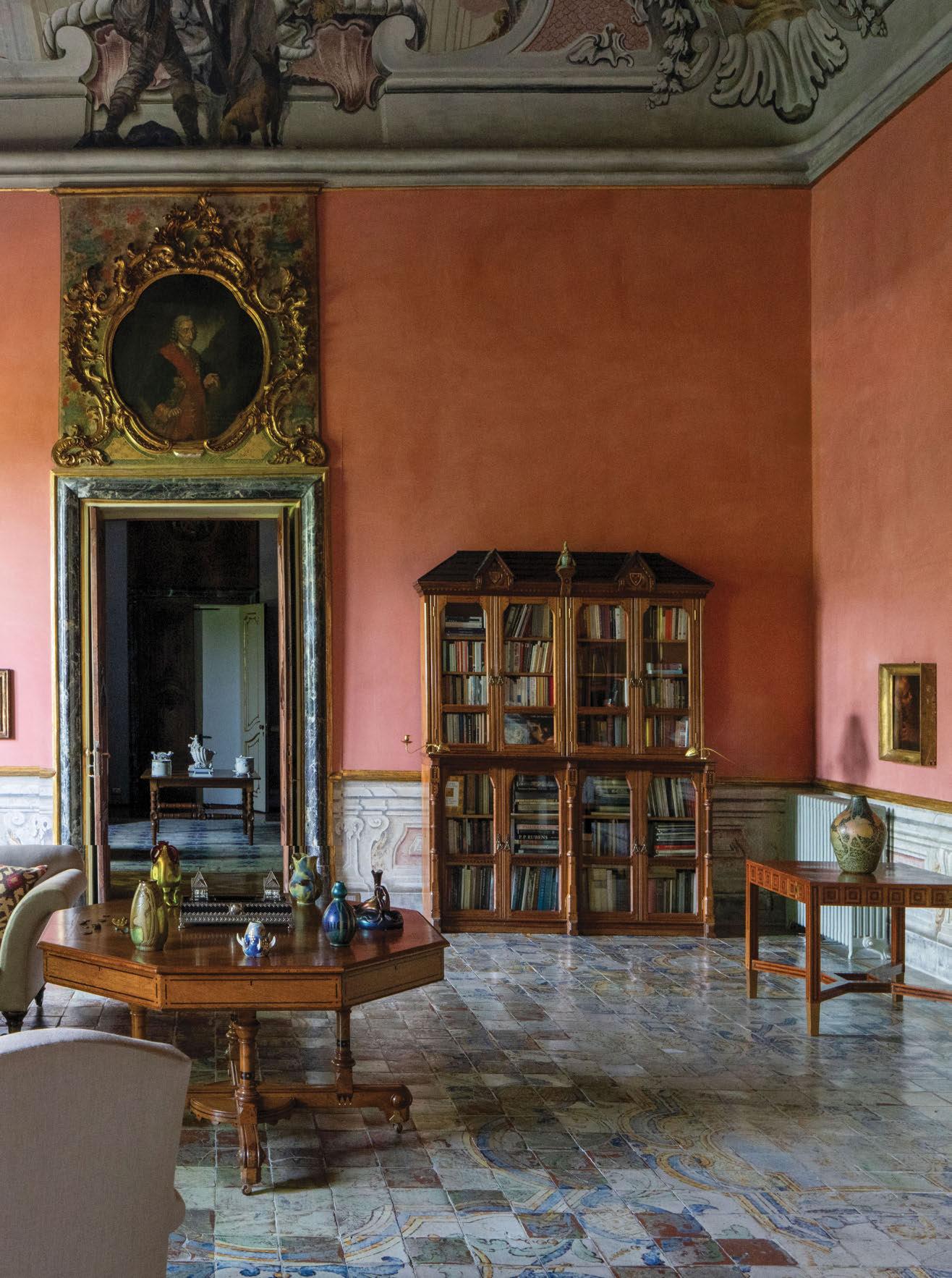
Galleries are tucked into the old stables and kitchens as well as the more formal areas of the original palazzo, all fully restored, open to the public with the collections on view, along with the grander rooms where the Valsecchis live with other pieces of the collection, open only on occasion.
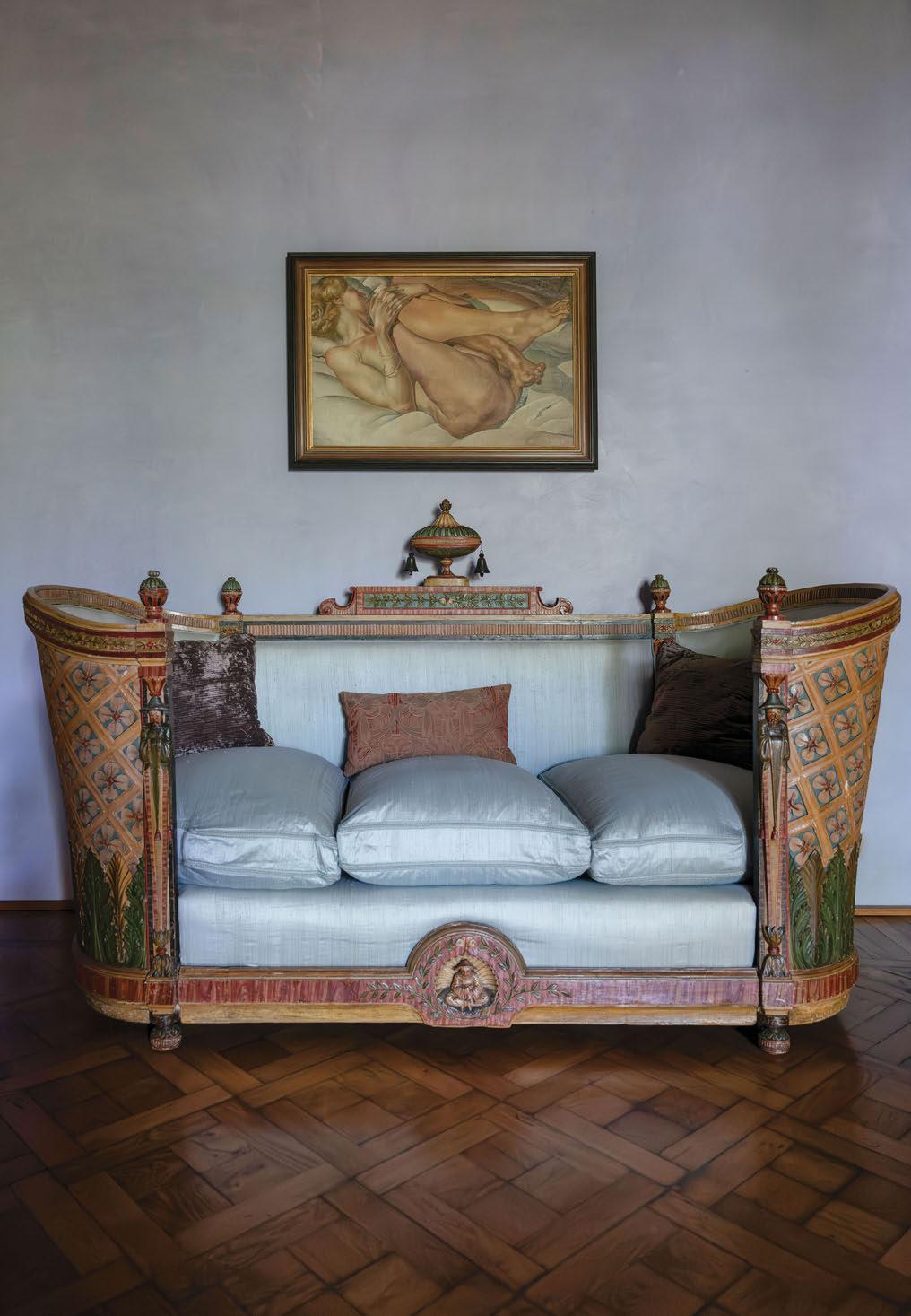
One day, Massimo, suspecting there could be a third Stanley Spencer horizontal nude of his muse, Patricia Preece, beyond the two already documented, phoned Agnews Gallery in London to inquire about its existence. Not only was his hunch confirmed, but a negotiation immediately ensued, eventually leading the piece to Palazzo Butera, where it currently resides.
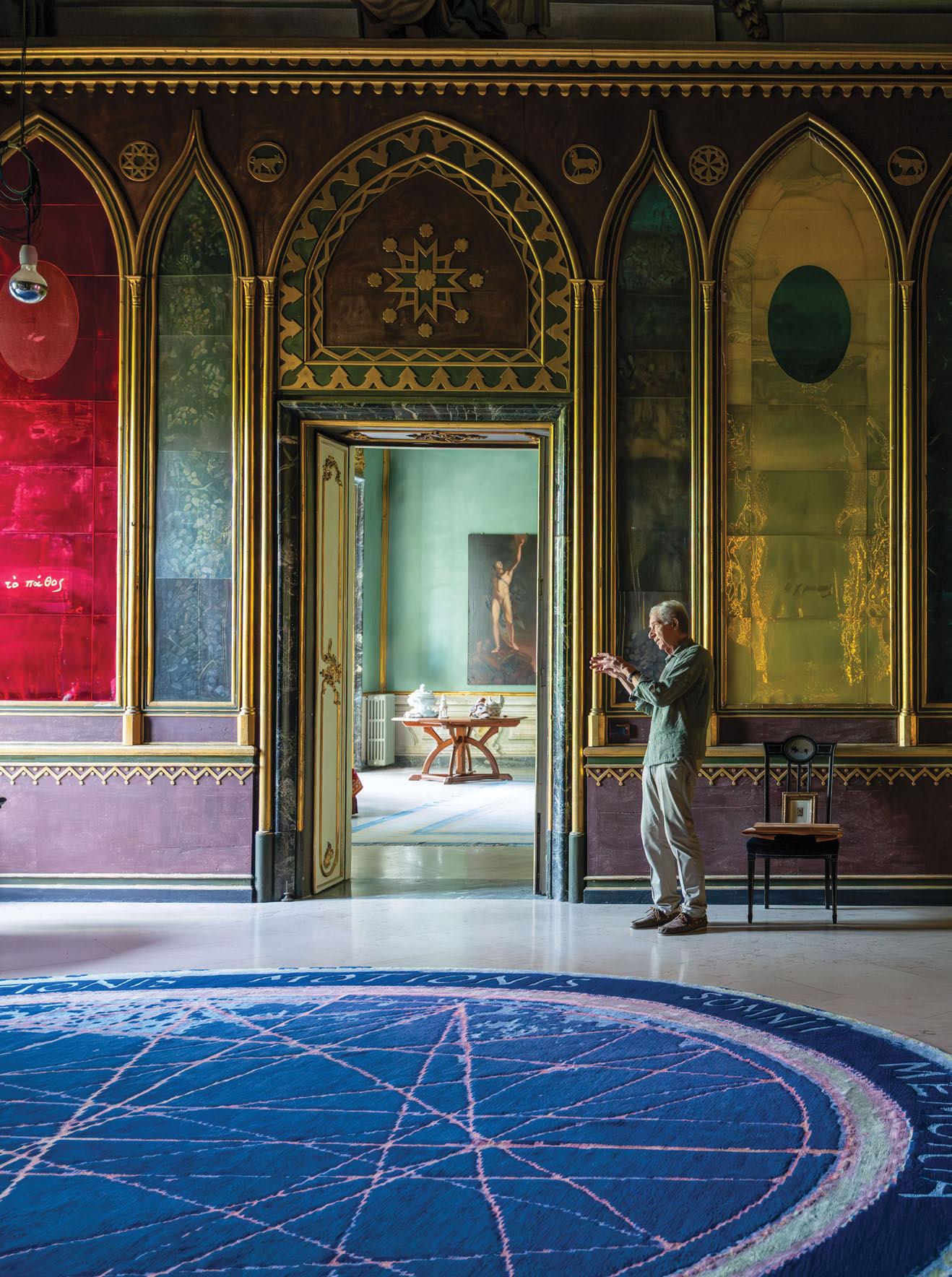
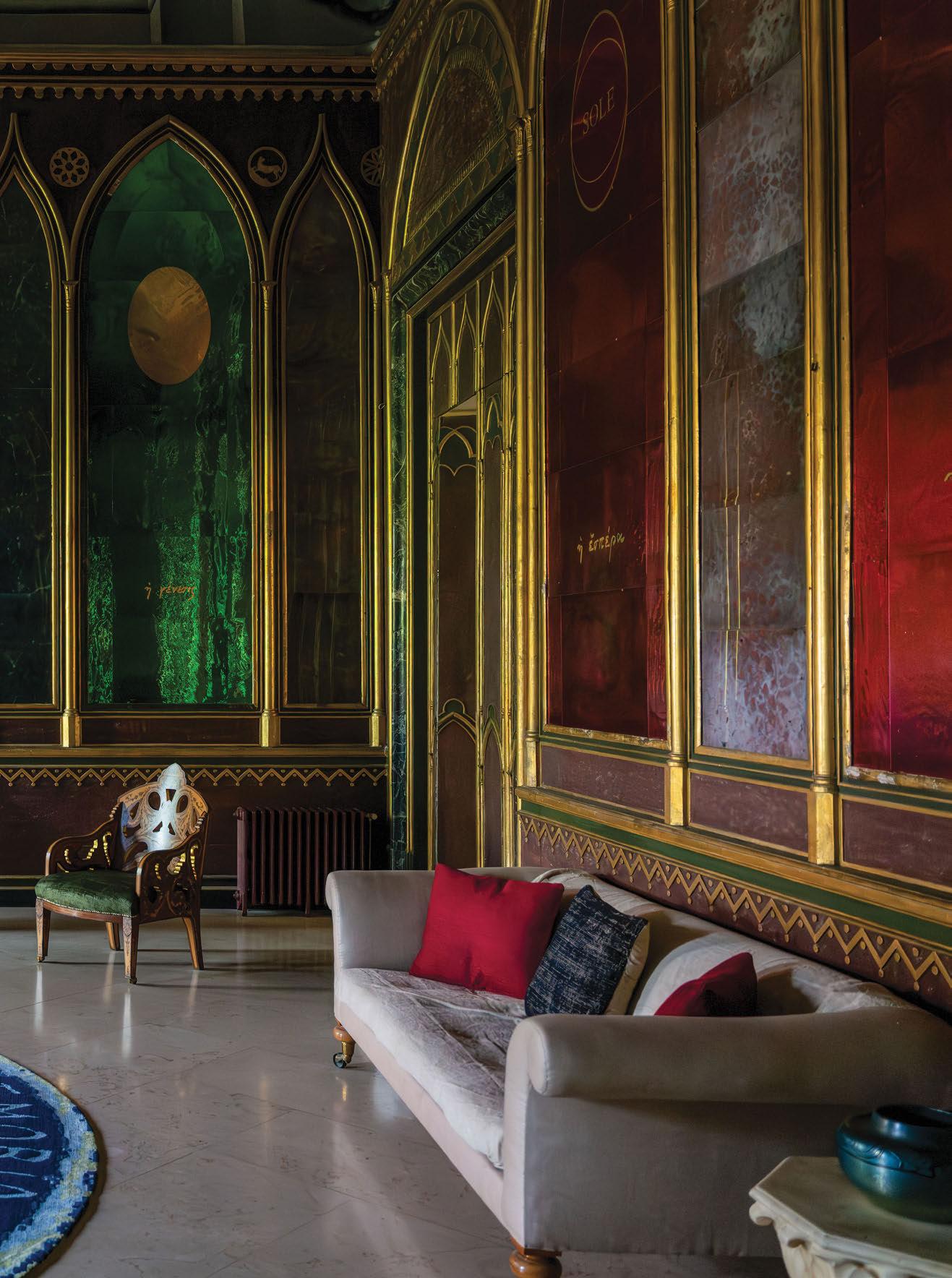
“The room is called Gothic. Even in 1811 they used the term Gothic. But this Gothic is, of course, Arab which is of course, Norman Byzantine. These people already understood that the greatness of Sicily was the codification of culture.”
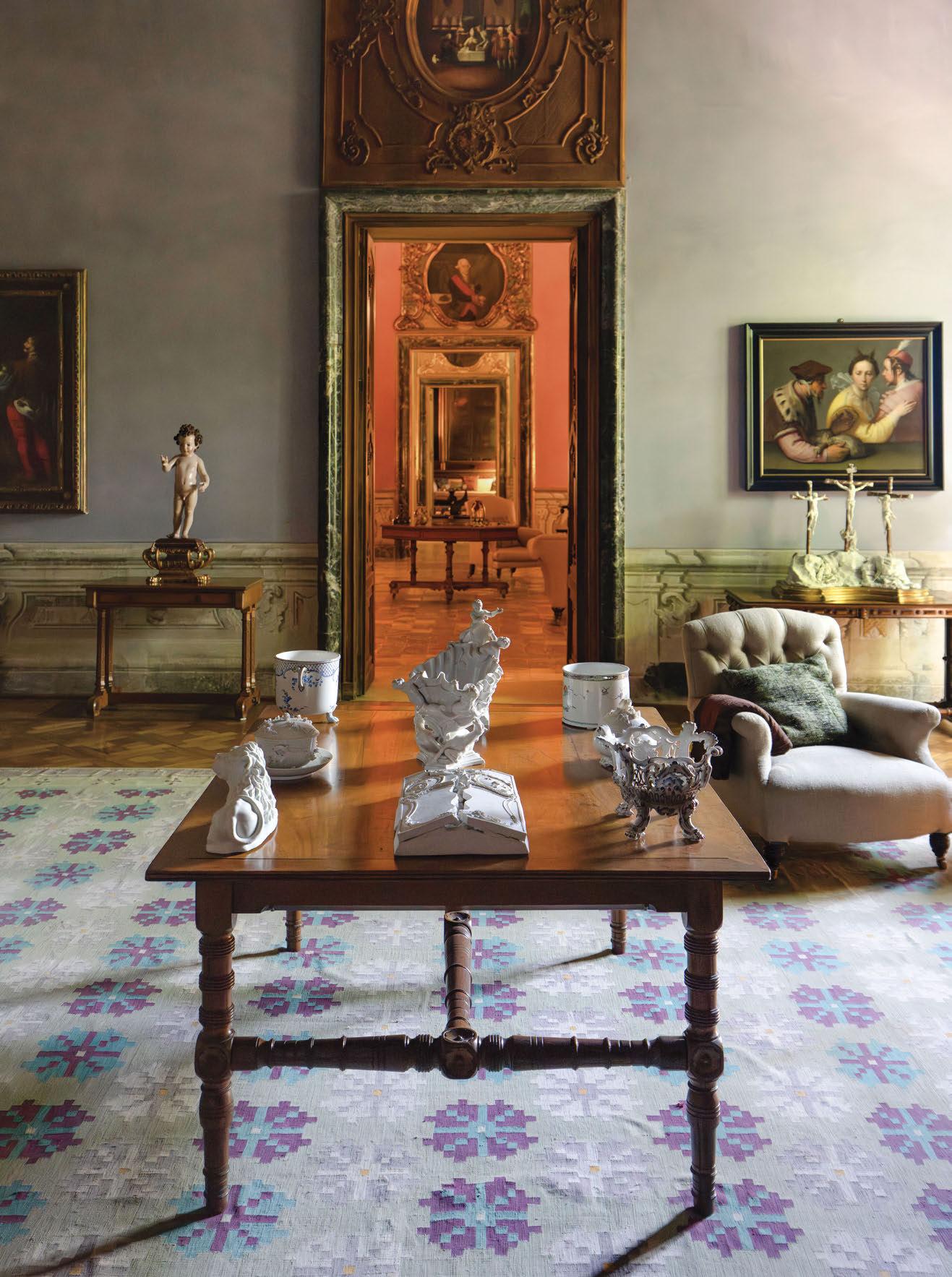
A table holds 18th-century European porcelain, pieces from many of the major houses, in front of the apartment’s enfilade.
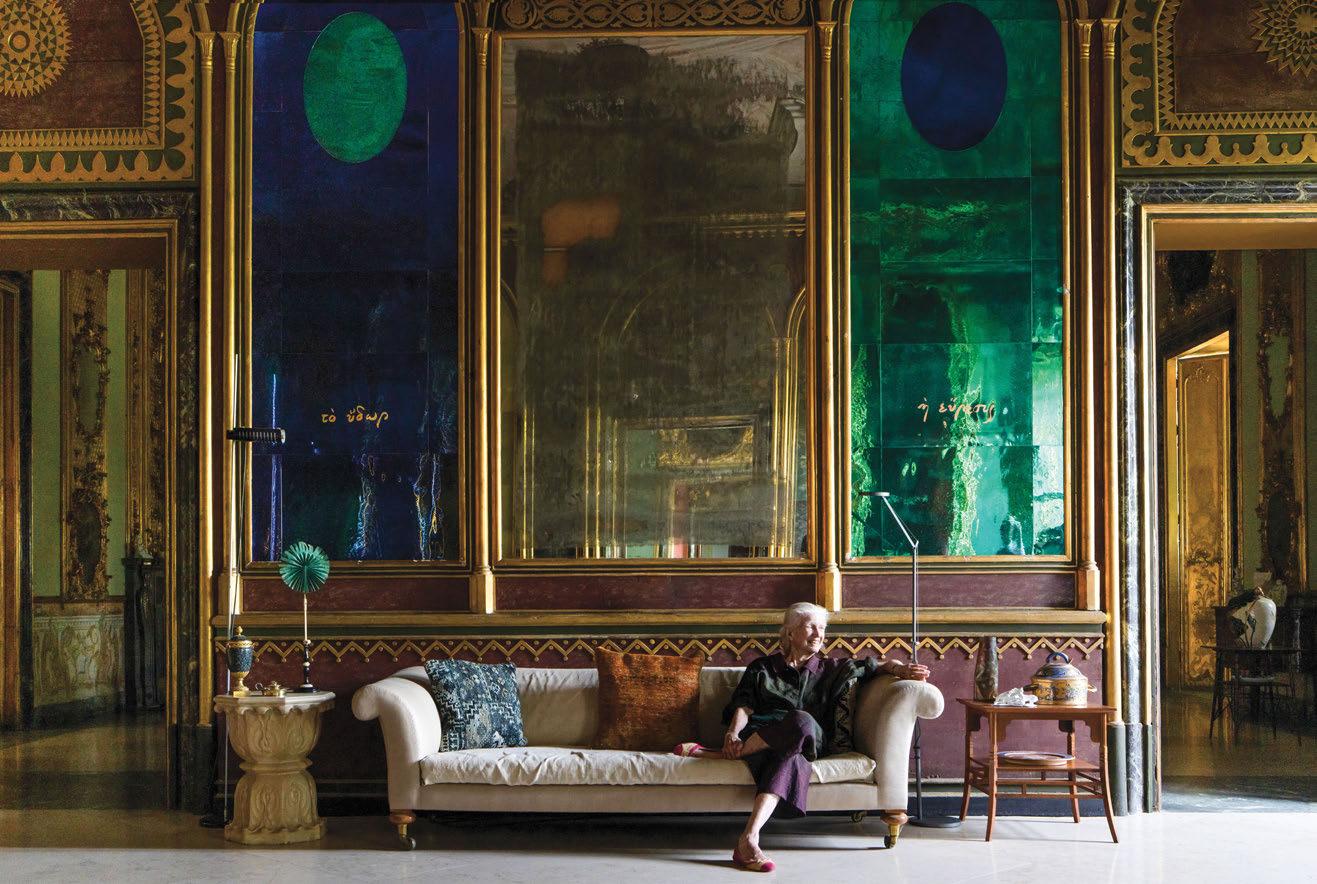
FRANCESCA FRUA DE ANGELI
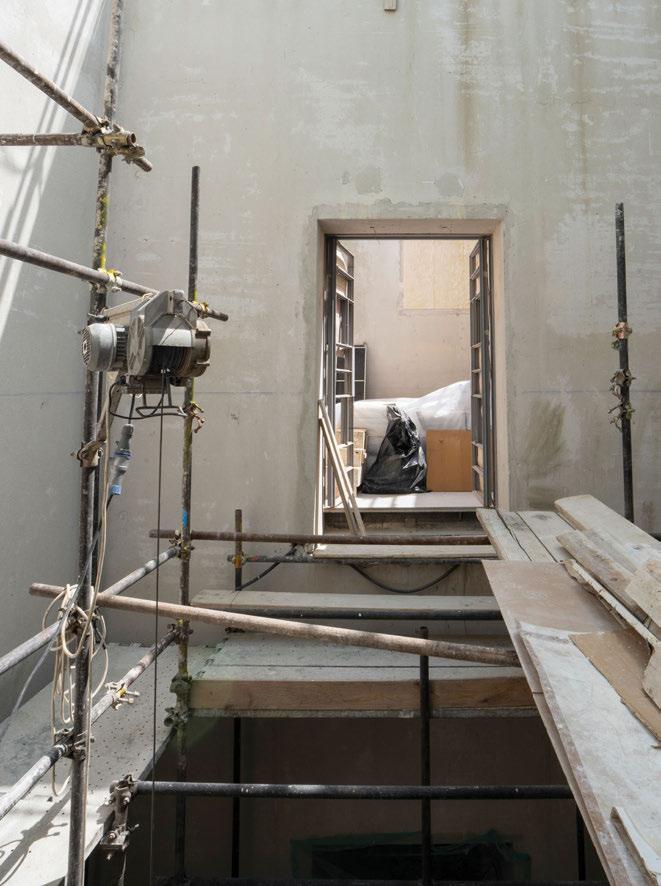
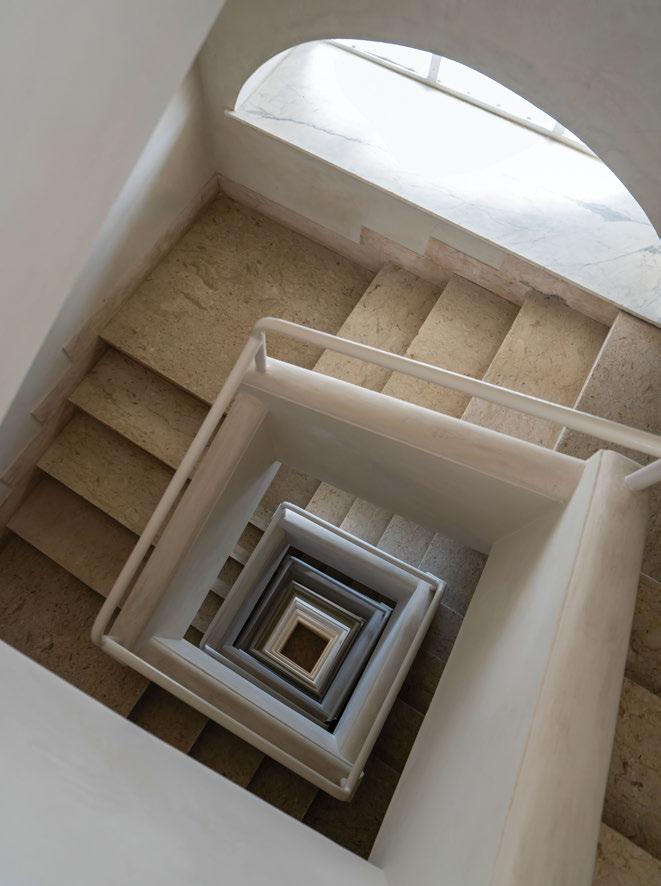
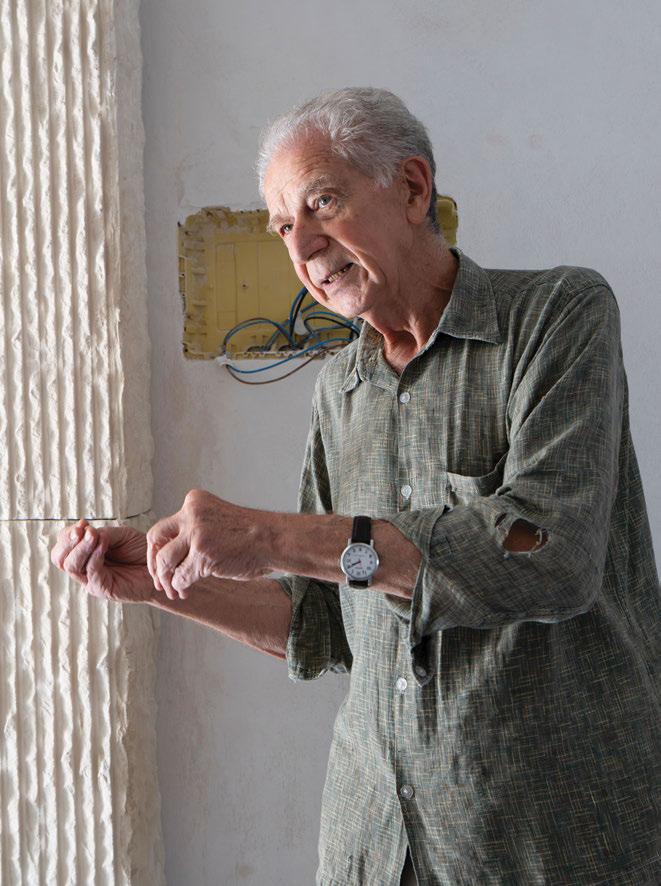
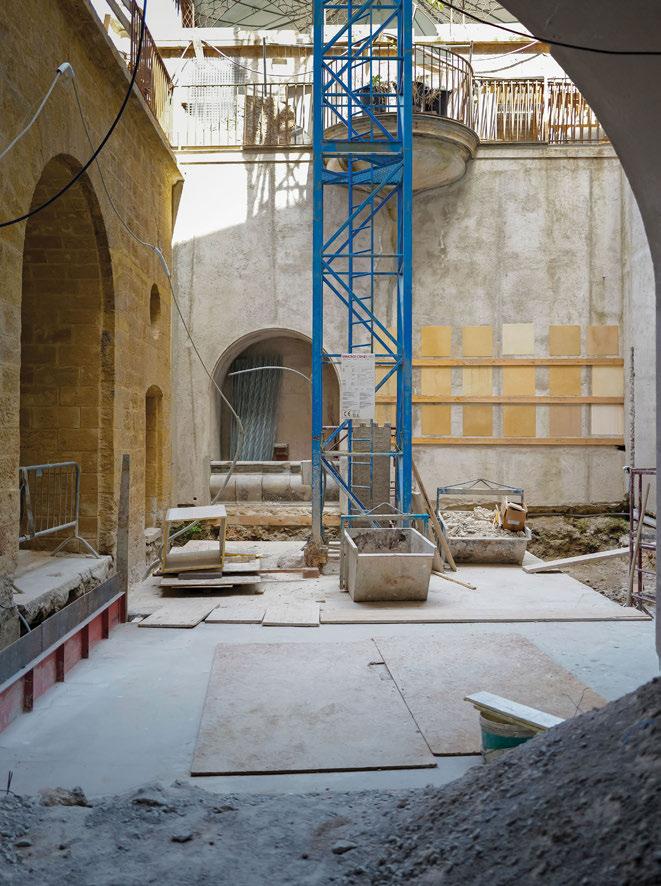
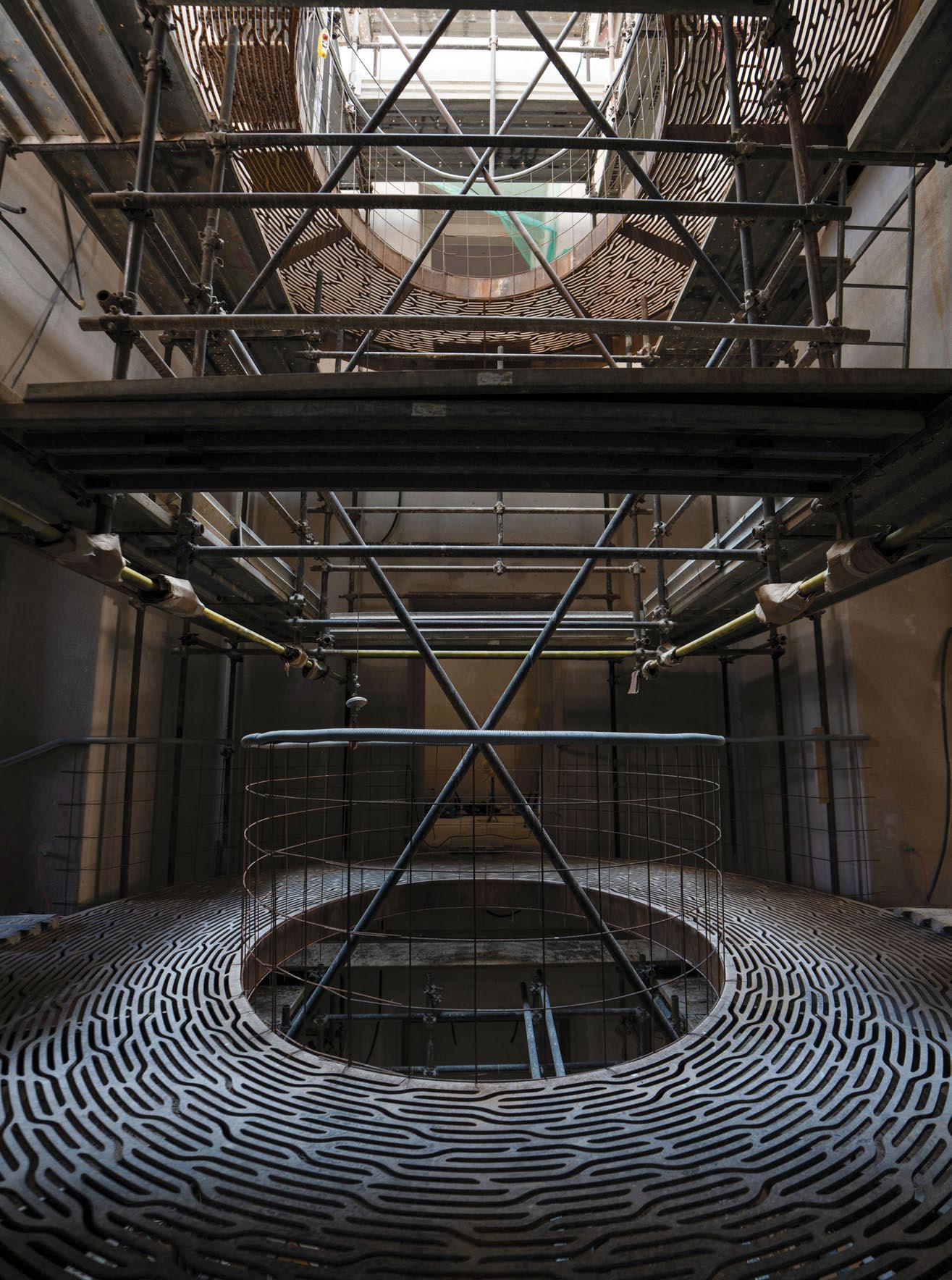
Next door to Butera, Palazzo Piraino’s extensive renovation will provide for an artist-in-residence program alongside spaces to gather and talk, all part of the couple’s overarching mission.
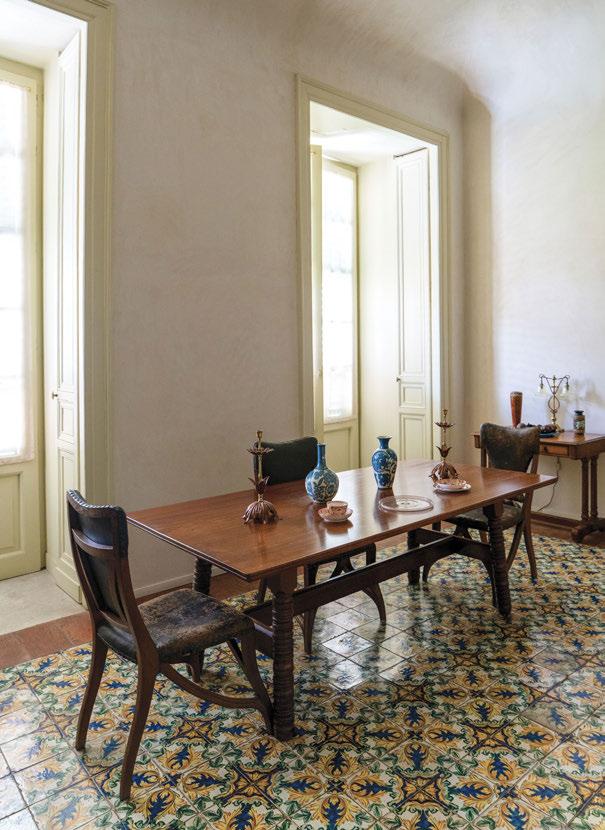
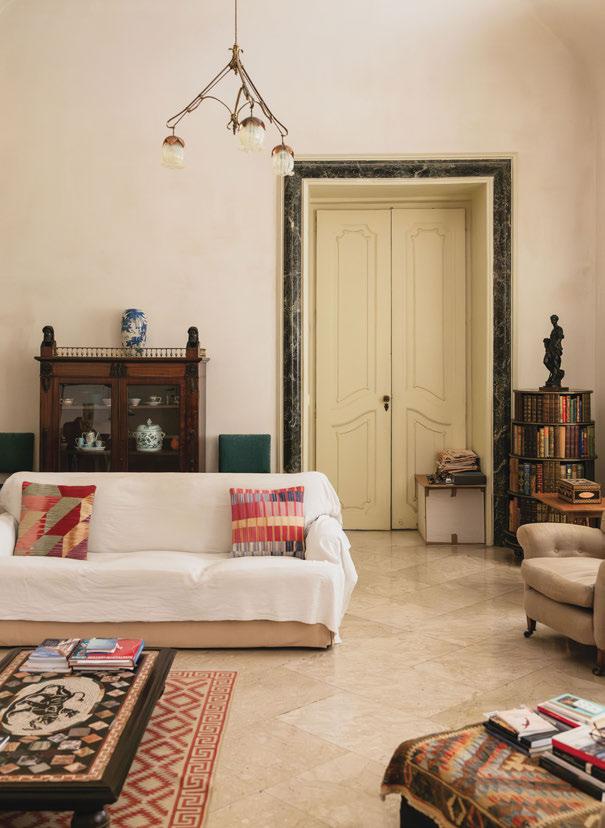
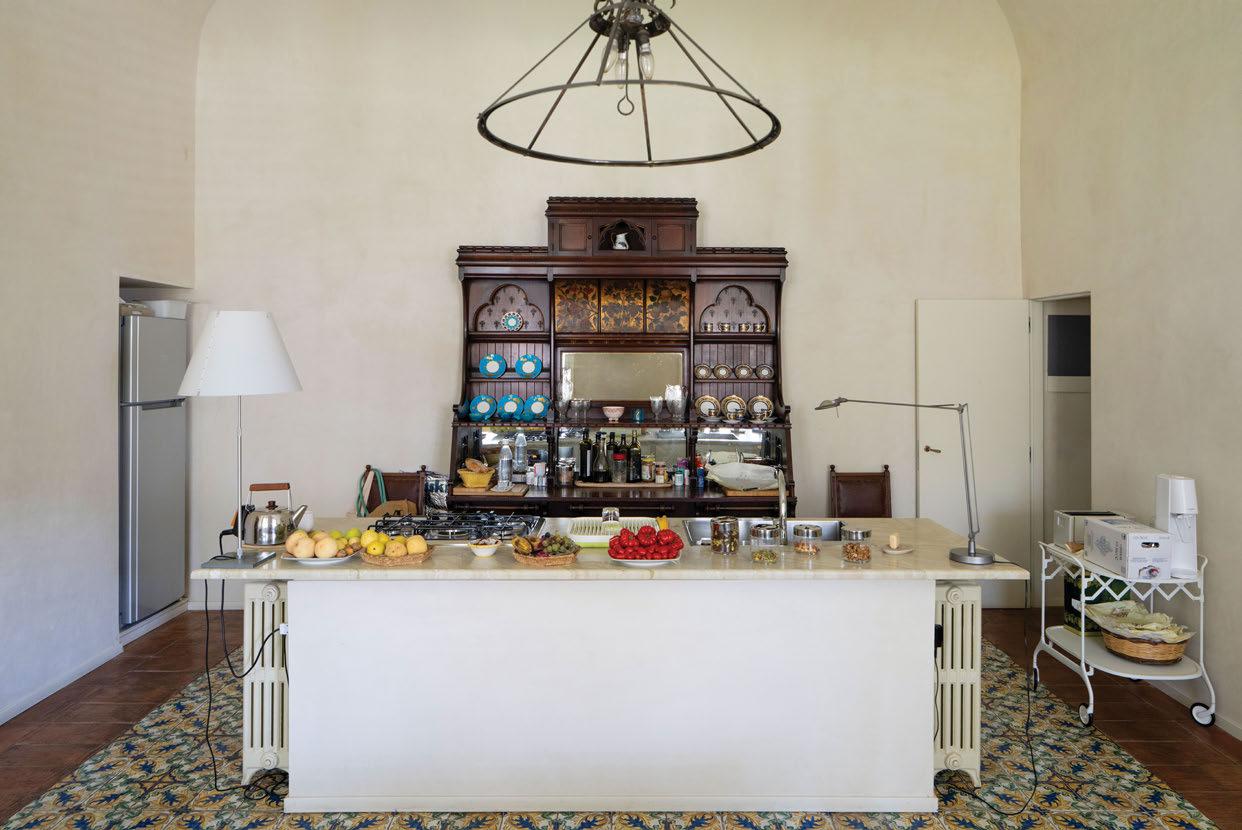
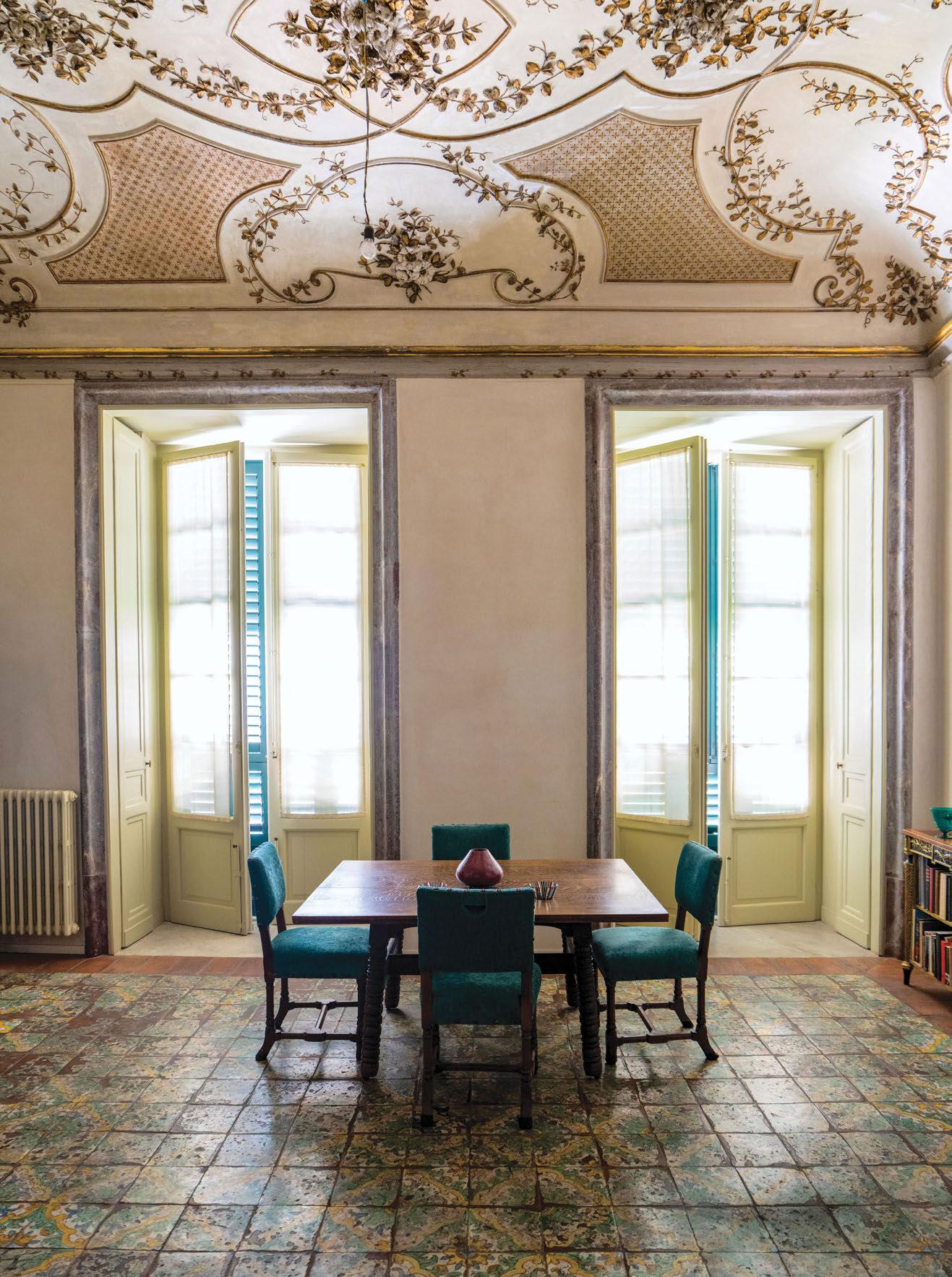
The breakfast table in Massimo and Francesca’s private apartment.
Masseria Cardinale
THE INTERPRETERS
John Hooks and Riccardo Priolisi
NOTO, NEAR THE IBLEI HIGHLANDS, CONTRADA CARDINALE
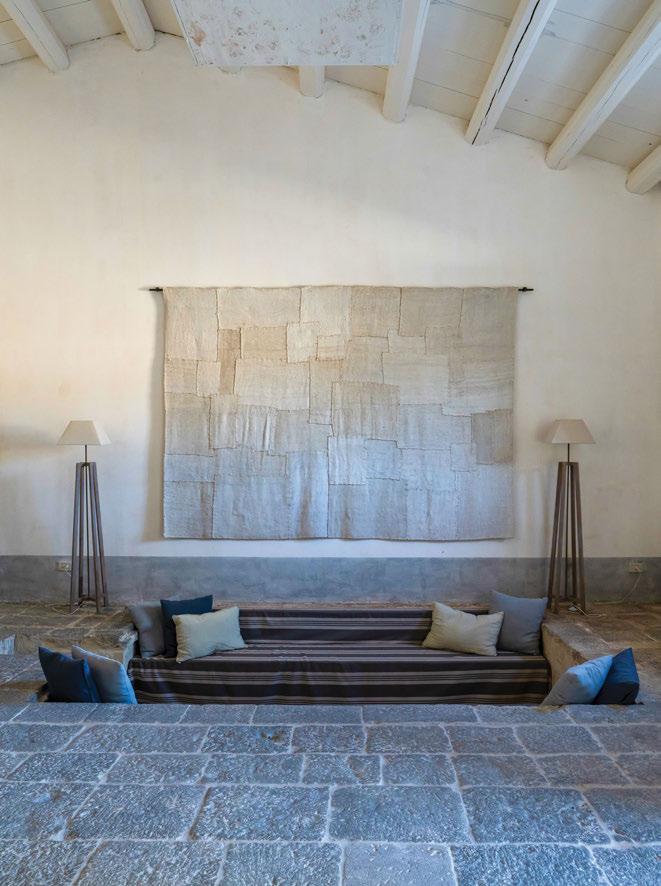
AN ITALIAN-ANGLO COUPLE RESTORE A CRUMBLING FORTIFIED FARMHOUSE ON THE SITE OF AN ANCIENT SETTLEMENT IN THE HILLS OUTSIDE OF NOTO. RICCARDO’S STYLE IS AKIN TO THE SOCIETY OF DILETTANTI, A BRITISH GROUP FOUNDED IN 1730 FOCUSED ON THE STUDY OF ANCIENT GREEK AND ROMAN ART. JOHN PLACES WHAT IS SEEN IN HISTORICAL CONTEXT THROUGH THE LENS OF THE GRAND TOUR.
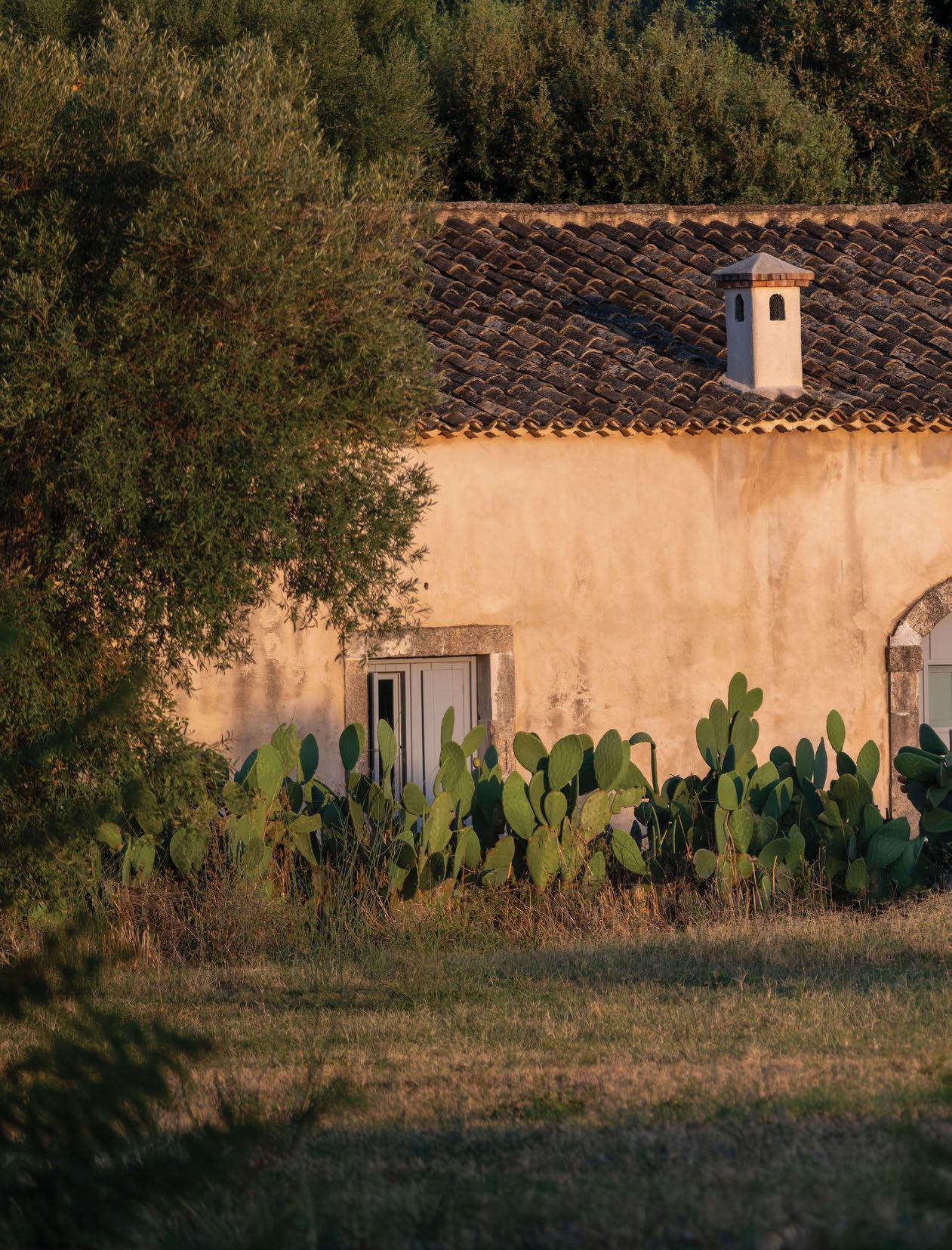
The fortified farmhouse that John Hooks and Riccardo Priolisi share near Sicily’s Iblei Highlands wasn’t meant to be their house. They’d been looking for quite some time for a small house by the sea, a place of refuge from their busy lives in fashion and design in both England and Italy. The estate agent showing them around suggested they take a day off, and go together to see a friend of his with an abandoned old farm, which he thought they might enjoy because they like “old places.”
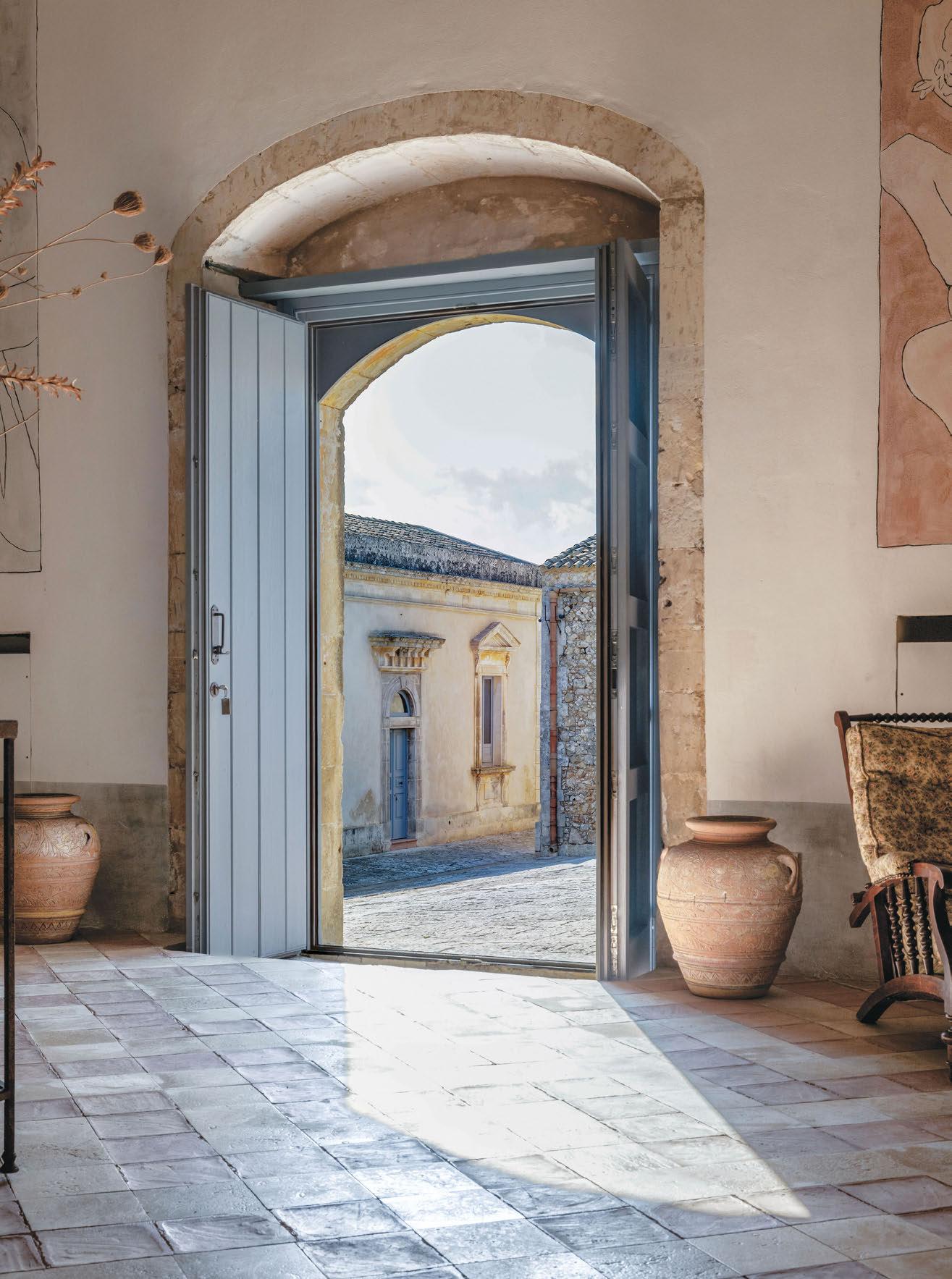
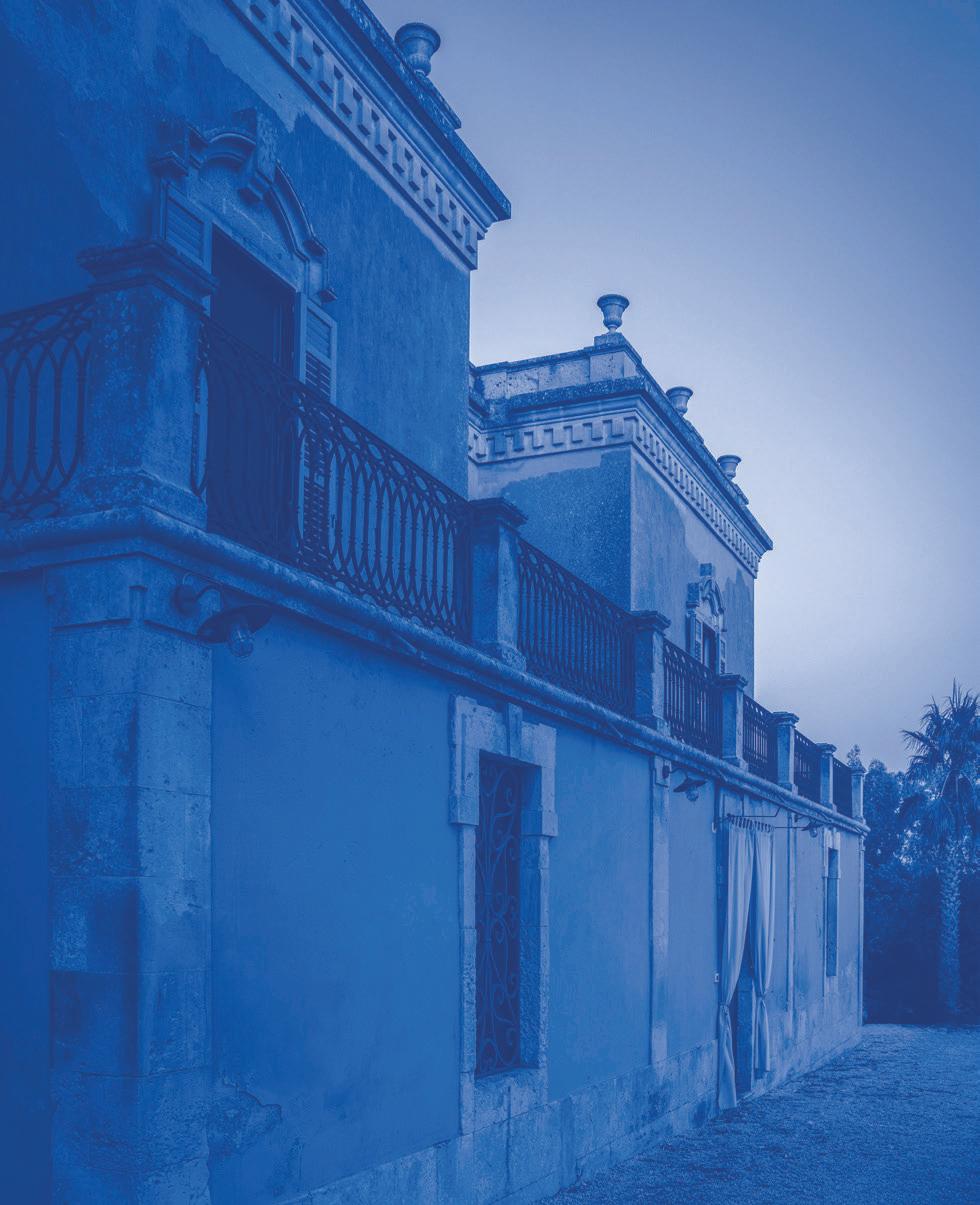
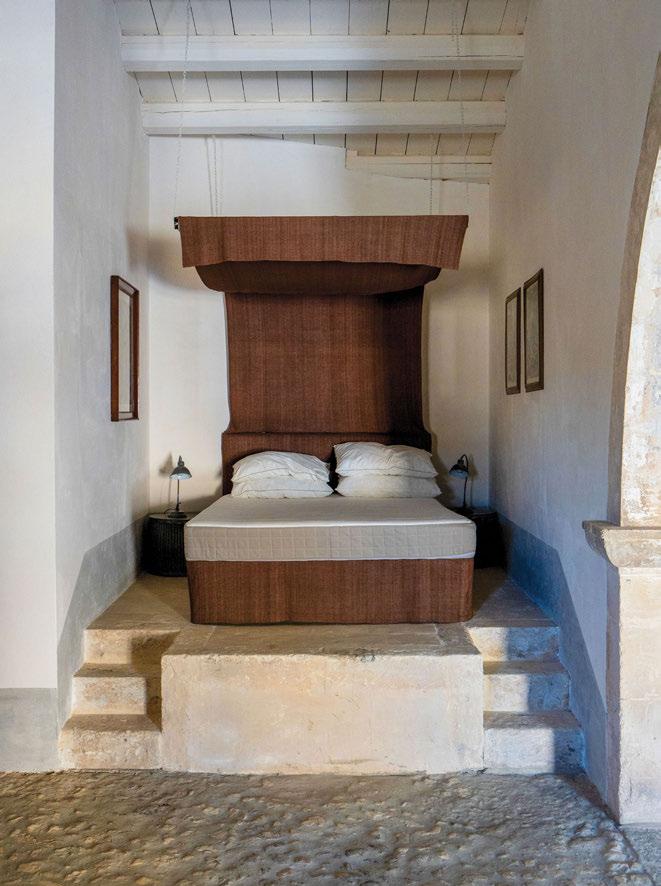
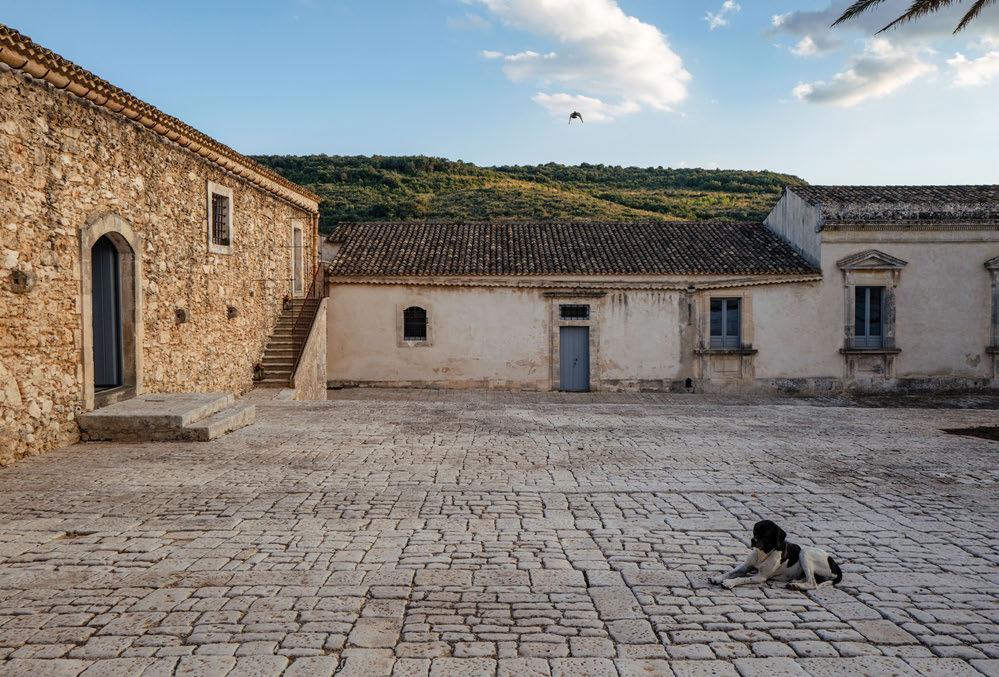
Turns out, John and Riccardo did like it, enough to buy it and then restore it. Built in 1860, the farm was fortified to resist attack from bandits who roamed the area. Known as a masseria, as historic, fortified farmhouse estates typical of the Puglia region in Southern Italy, are called, its thick high walls double as control for the environment, keeping the rooms cool in the hot summer. They returned after that initial visit to find that the property, open to the elements, had been disturbed. John explains, “I got very angry with the owner saying, ‘you know people smash this place to steal the metal? People could spend a weekend here and take away anything they could carry, the carved stone for example, and nobody would ever know.’ And so we bought it.”
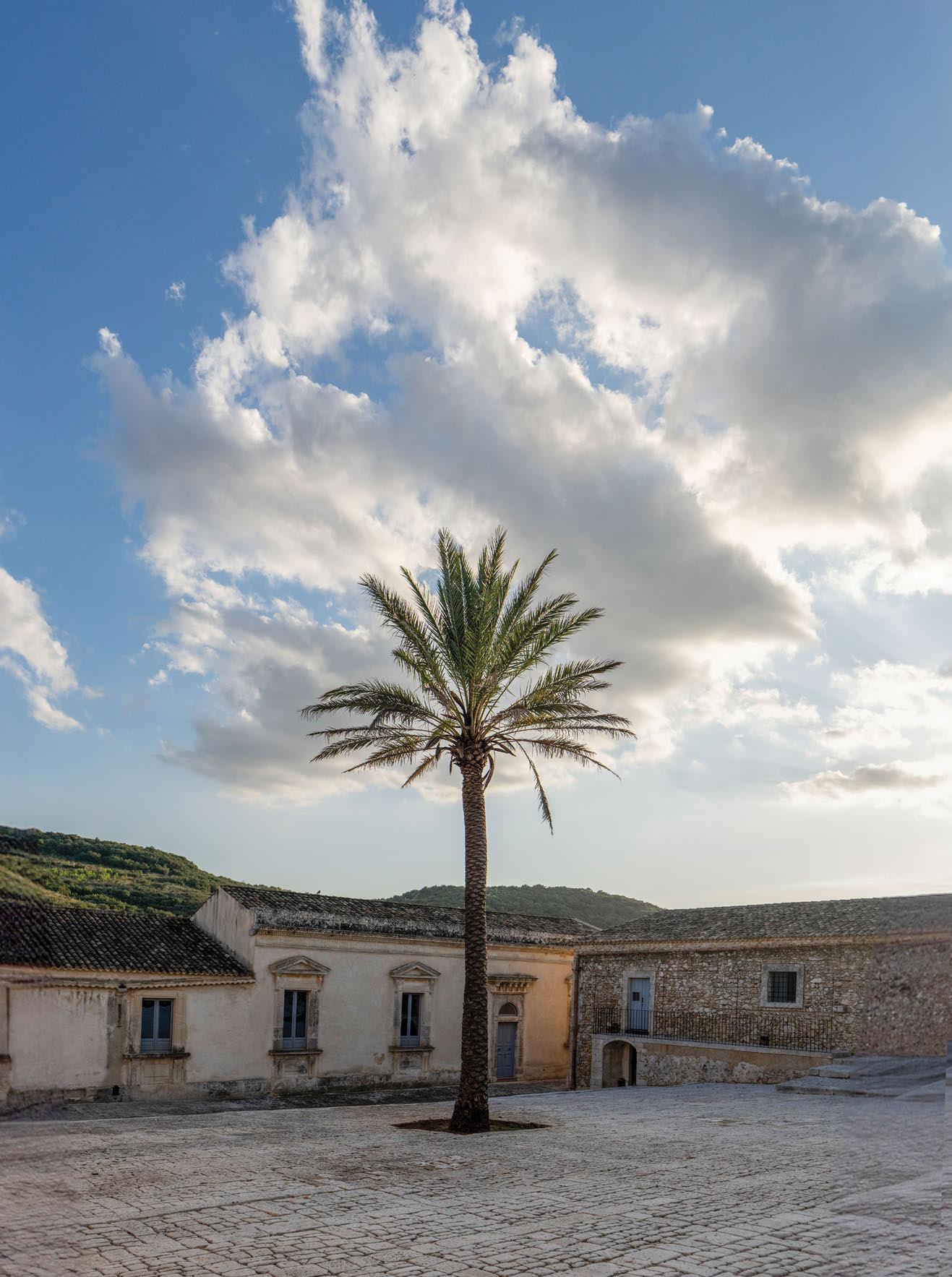
A large open square at the center of the buildings
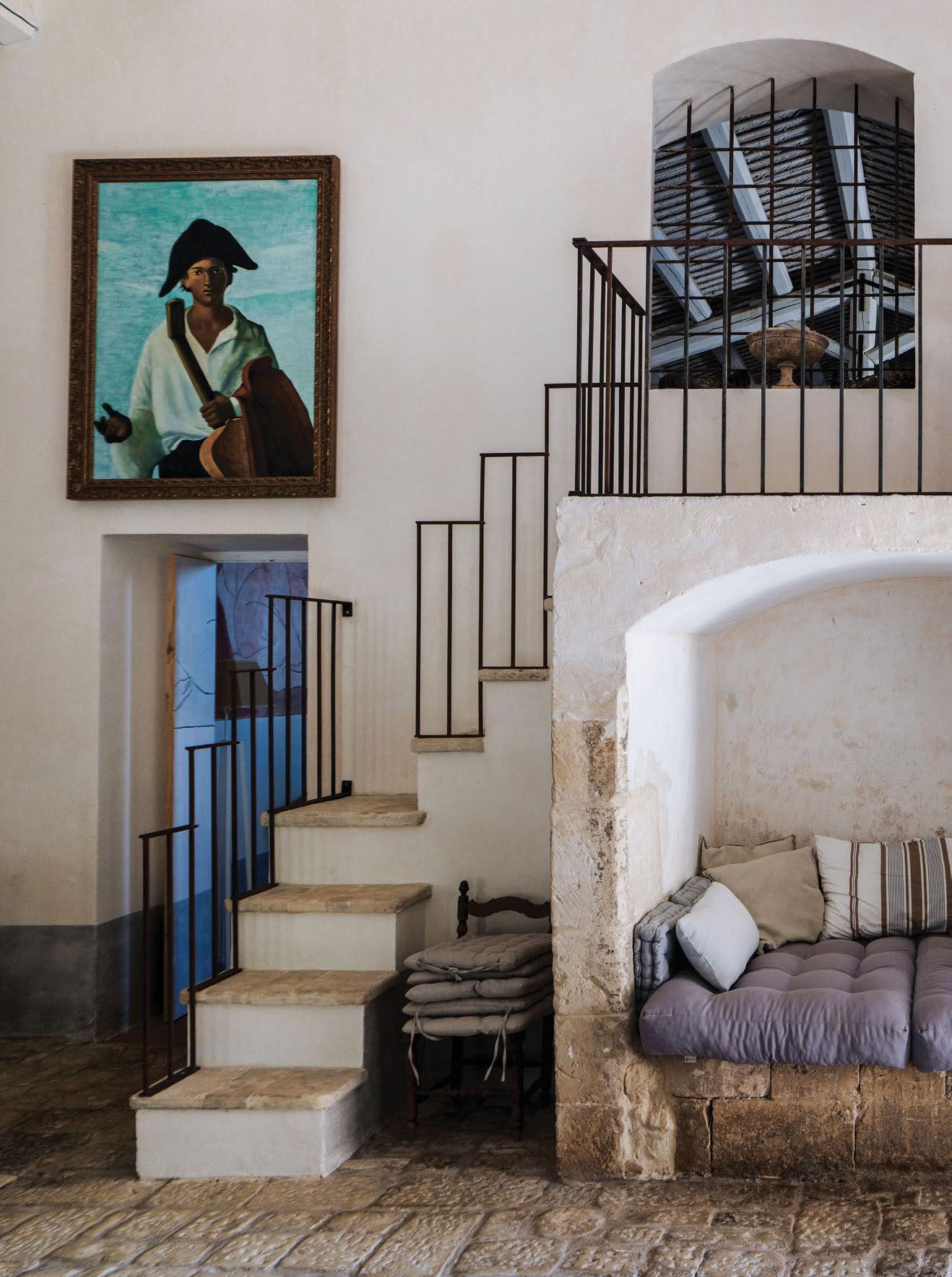
holds a single palm tree, planted by the couple as they moved in as a symbol of prosperity and regeneration. The tour begins in the courtyard, the façade more decorated than the other parts for the landowner who might have occasionally visited. And while John and Riccardo and their growing number of dogs are the only residents now, at one time this complex could have housed up to 60 people, various families all living together for safety in order to farm the land. Inside, the sprawling house reveals itself slowly. In the sitting rooms, you find the expected accoutrement of pictures, interesting books, comfortable chairs and sofas for reading and conversation, but then through a cased opening, a light-washed, pale green room adorned with 18th-century engravings by Georg Christoph Kilian that detail the antiquities found during the excavation of Herculaneum, stops you in your tracks. Riccardo explains, “when they built the house, they gave this part a neoclassical twist. And we jumped on that because if there is one movement that John and I are very fond of, it is the Grand Tour.”
Just as the Grand Tour gave travelers an entree to the classical world, John and Riccardo do the same with their home through artifacts, art and mementos. There were clues approaching this
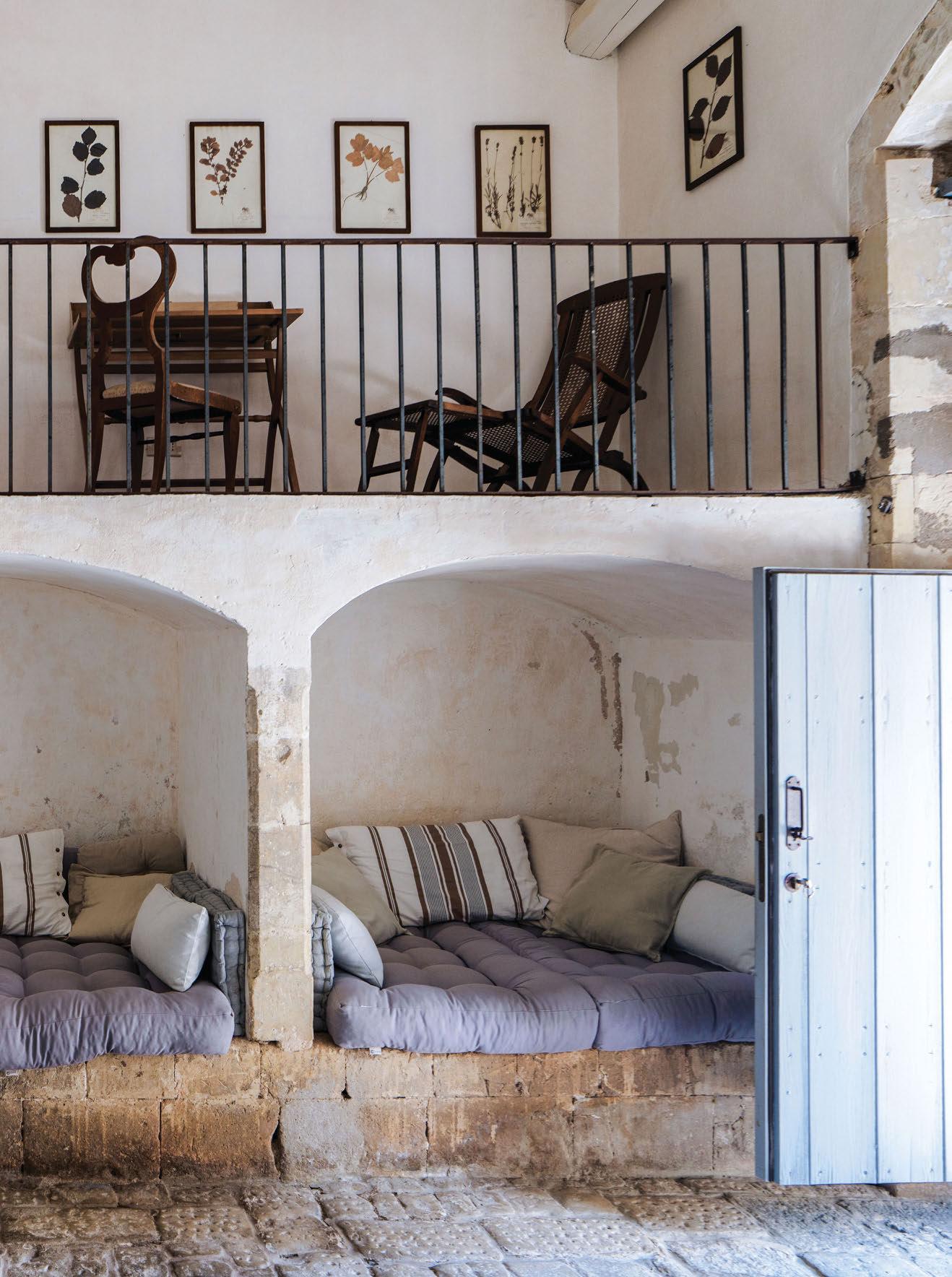
room hinting at the multitude of lives and cultures that have passed through its walls. A small writing desk in a hall surrounded by framed intaglios looking out to the masseria and Bronze Age tombs, reminders of the long passage of time this land holds.
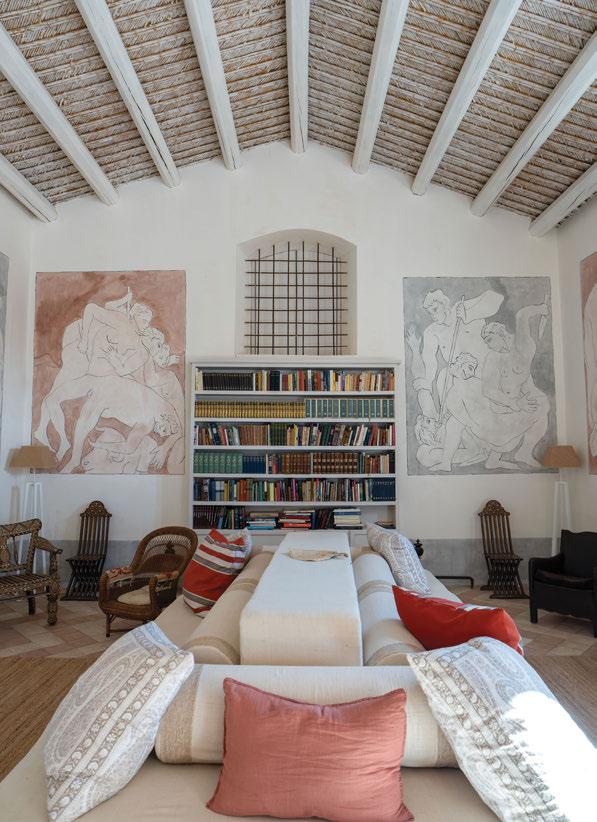
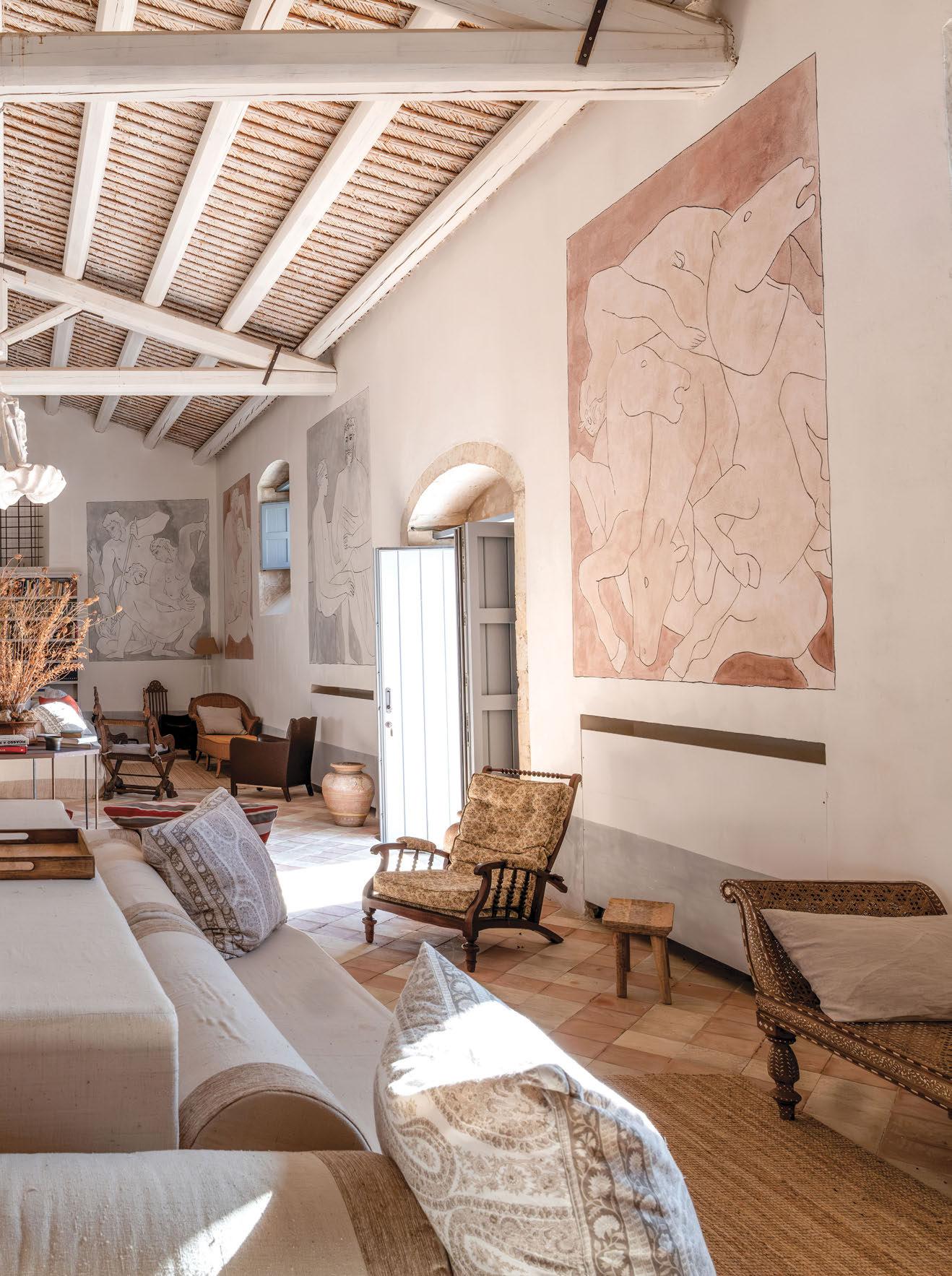
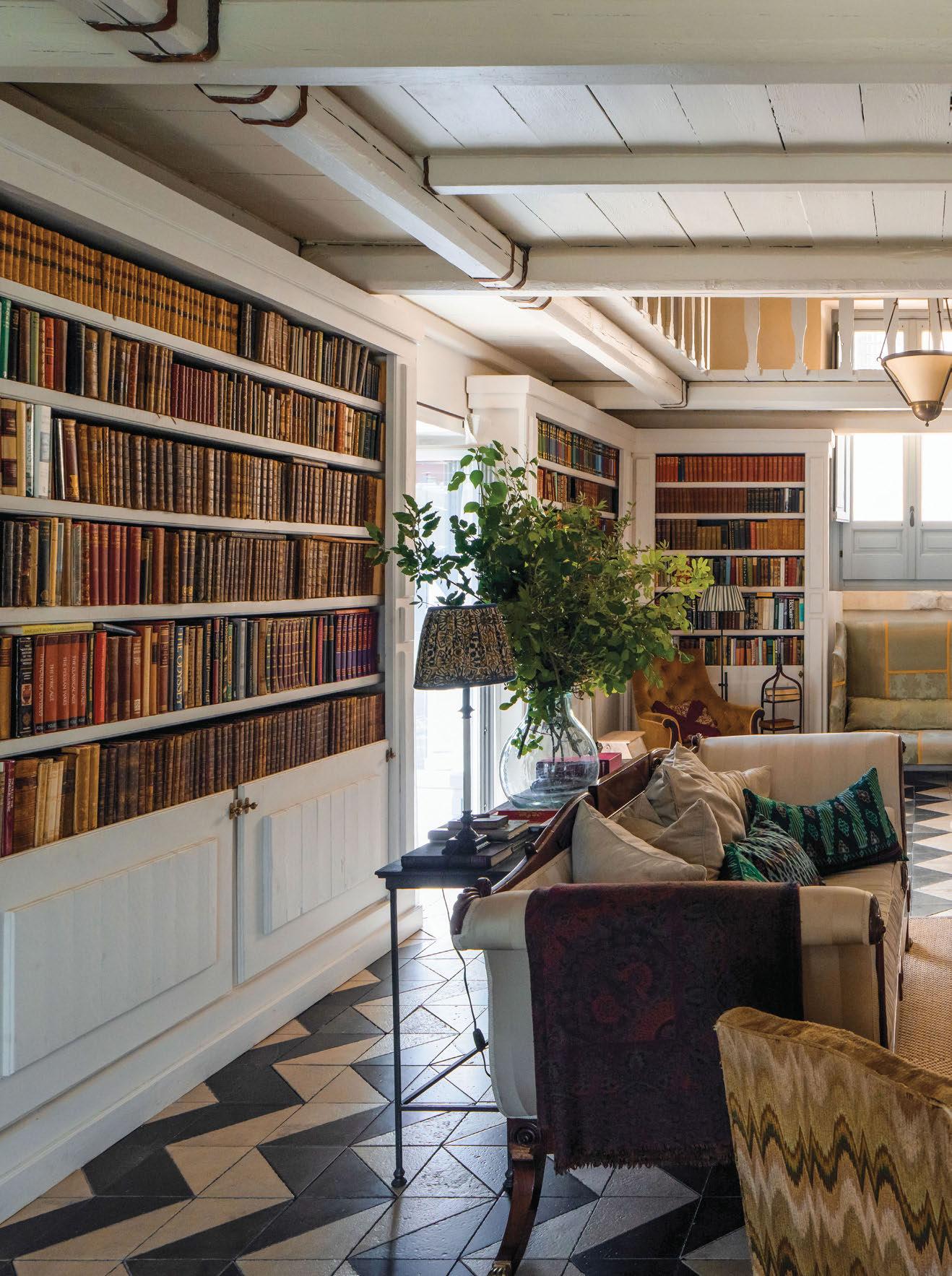
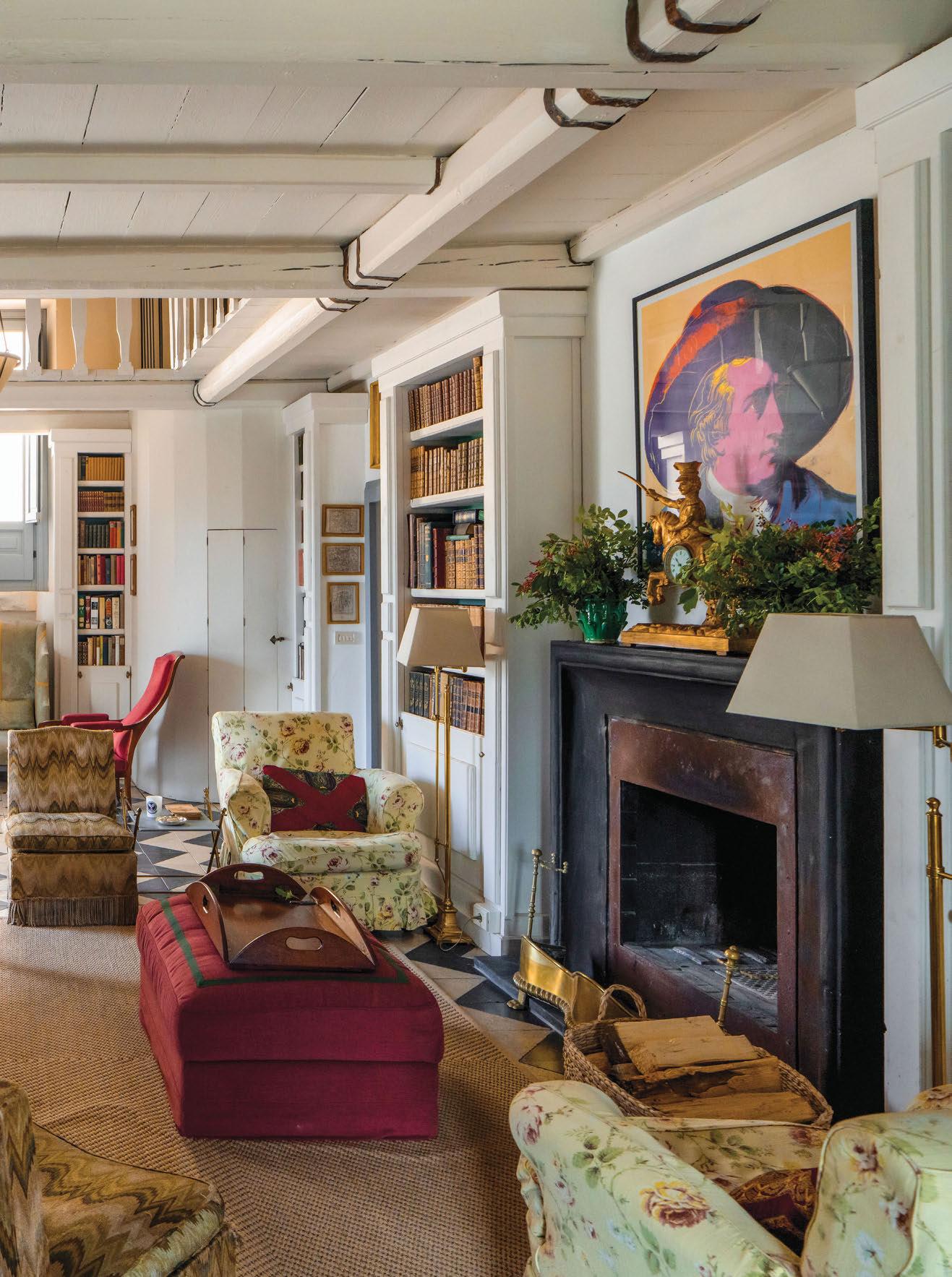
As Riccardo tells the story of the rooms and the greater house, John provides the historical significance and sense of place in the background. Looking out over the ravines, John shares that Theocritus, the Sicilian father of Greek pastoral poetry, wrote of the ideal of Arcadia based on this countryside. An Andy Warhol silkscreen of Goethe sits colorfully over the fireplace in the library, a nod to the German writer’s belief that “Sicily is the clue to everything.” A Picasso earthenware piece suggests the artist’s adept blending of classical with modernist style. In the oldest part of the building, Riccardo’s bedroom is all soaring vaulted ceilings and freehand drawings he did on the walls, a la Jean Cocteau’s Villa Santo Sospir, meaning sacred sigh. “I changed the proportion with a bit of copy and paste, maybe that head was not there, the big lad there was not there,” he says, “but it’s my take on him. I see it as an homage.” So too are the largest scale drawings by Riccardo in the living room based on Picasso’s 1931 interpretation of Ovid’s Metamorphoses , change is the only constant. The hardscape itself is also an interpretation as everything had to be reproduced. “There were trees growing out of the rubble in almost all of the rooms,” John says. A former escape route from the kitchen to the caves below was kept as ironmongers, masons and carpenters lived on the property for three years during the restoration. In the garden, a sympathetic tempo connects a series of buildings, a more formal garden’s fountain offers quietude
and is in sight of obelisks decorated Rococo style by the pair during Covid.
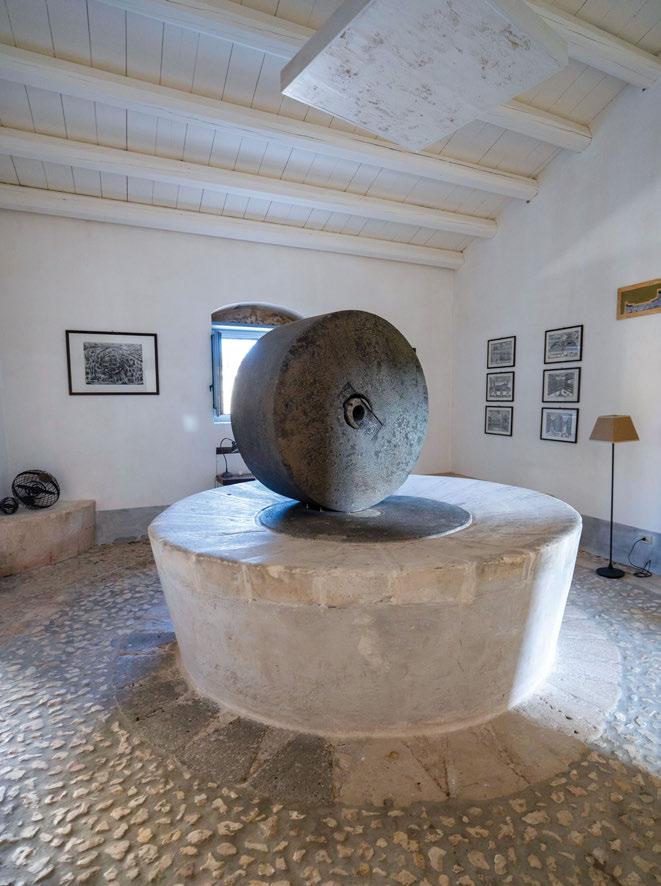
Each corner of Masseria Cardinale contains an imprint from its past and the couple, in their own artistic way, takes what the house offers and recontextualizes it. An old millstone, formerly used to grind olives, animates a guest room. A nearby rinsing bath is now comfortable seating. The effect of the room is a residential agrarian sculpture gallery while in another area of the property, a small stage and theater house artful Sicilian puppets, the opera dei pupi. These puppets would have acted out tales of medieval chivalry, featuring both saints and bandits against the backdrop of Sicily. Riccardo puts it simply, “We have a passion for the past, because if one studies the past, the interesting thing is to find connection with the present. You understand this is the good thing about history and archaeology and a new mix. To interpret. But also for a dilettante like me, the whole idea of having a connection with the past is very comforting...we are not alone.”
Walking from room to room, and building to building there are views out over the tapestry of land that rolls right up to the walls of the house. But these walls do not keep John and Riccardo in. Quite the opposite, Riccardo points out a spot above the fireplace in a sitting room, where a simple mirror is currently a placeholder. “We’ve commissioned a local artist, Guus van Eck, to paint us something for here. Our Dutch friend who lives down the road. Would you like to meet him and see his work?”
Indeed. »
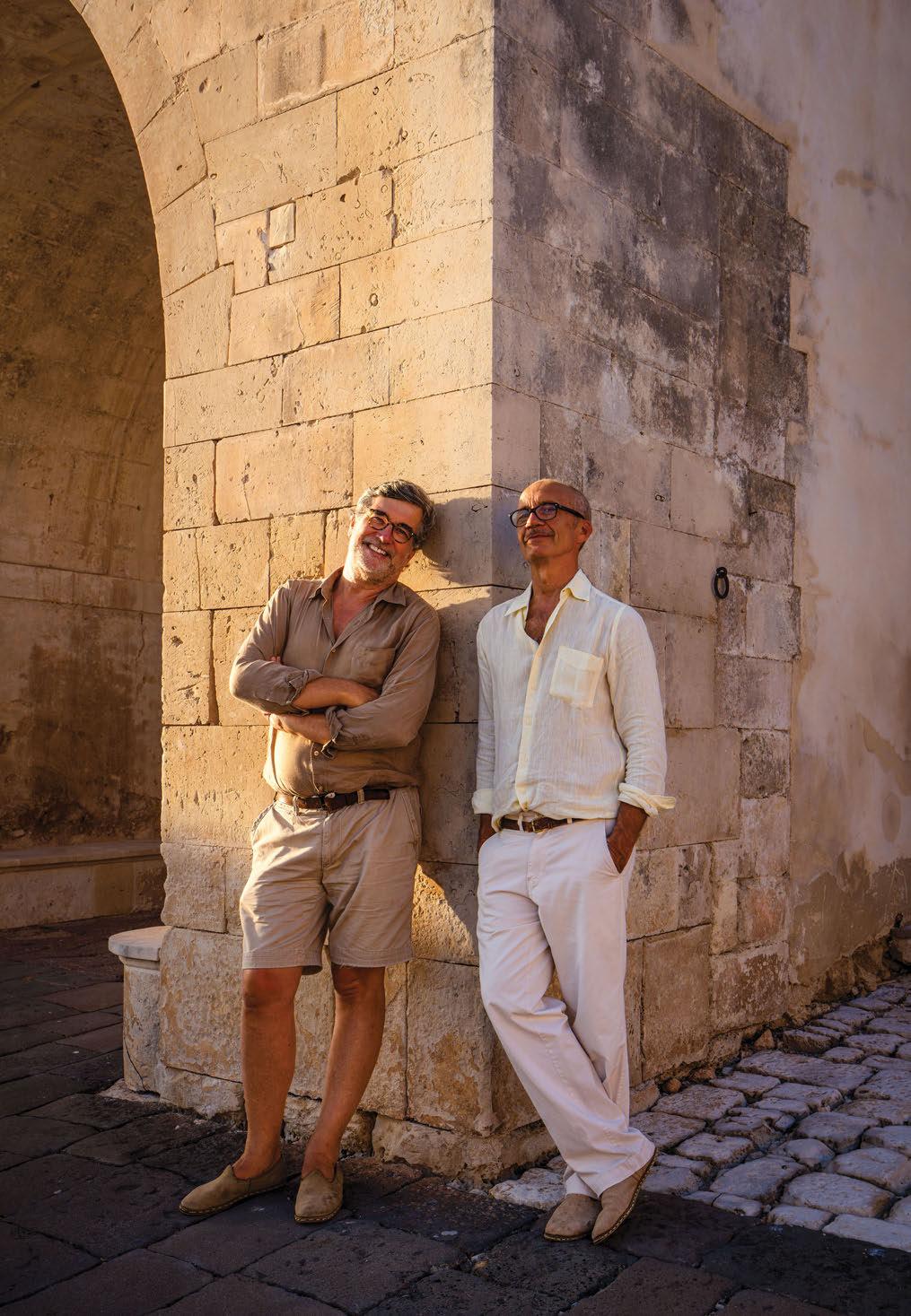
JOHN HOOKS AND RICCARDO PRIOLISI
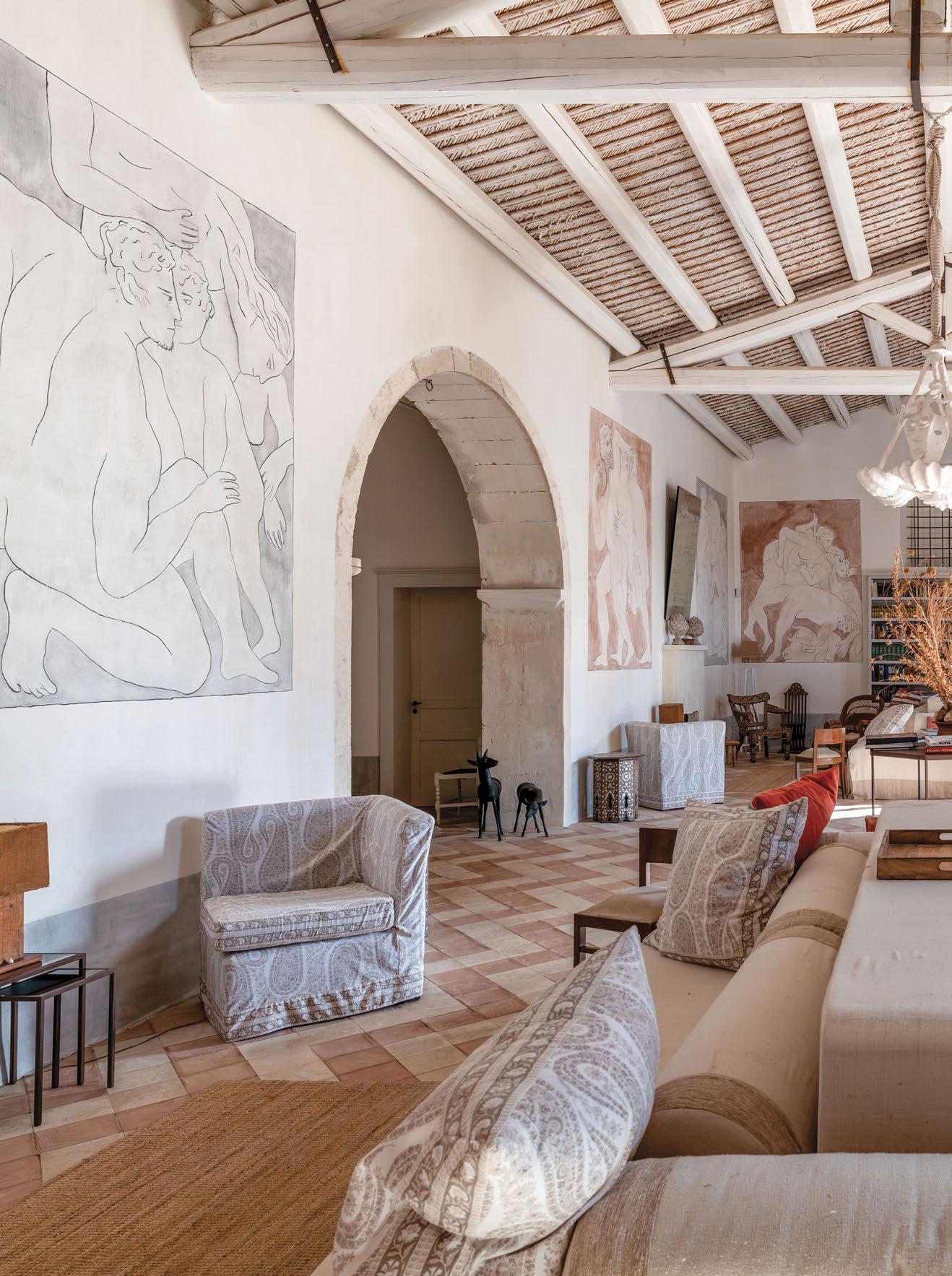
Riccardo’s murals in the main living room pay homage to Picasso’s own illustrations of Ovid’s Metamorphoses exploring the themes of transformation, love, violence and the interplay between humanity and the divine.
An Unexpected Detour
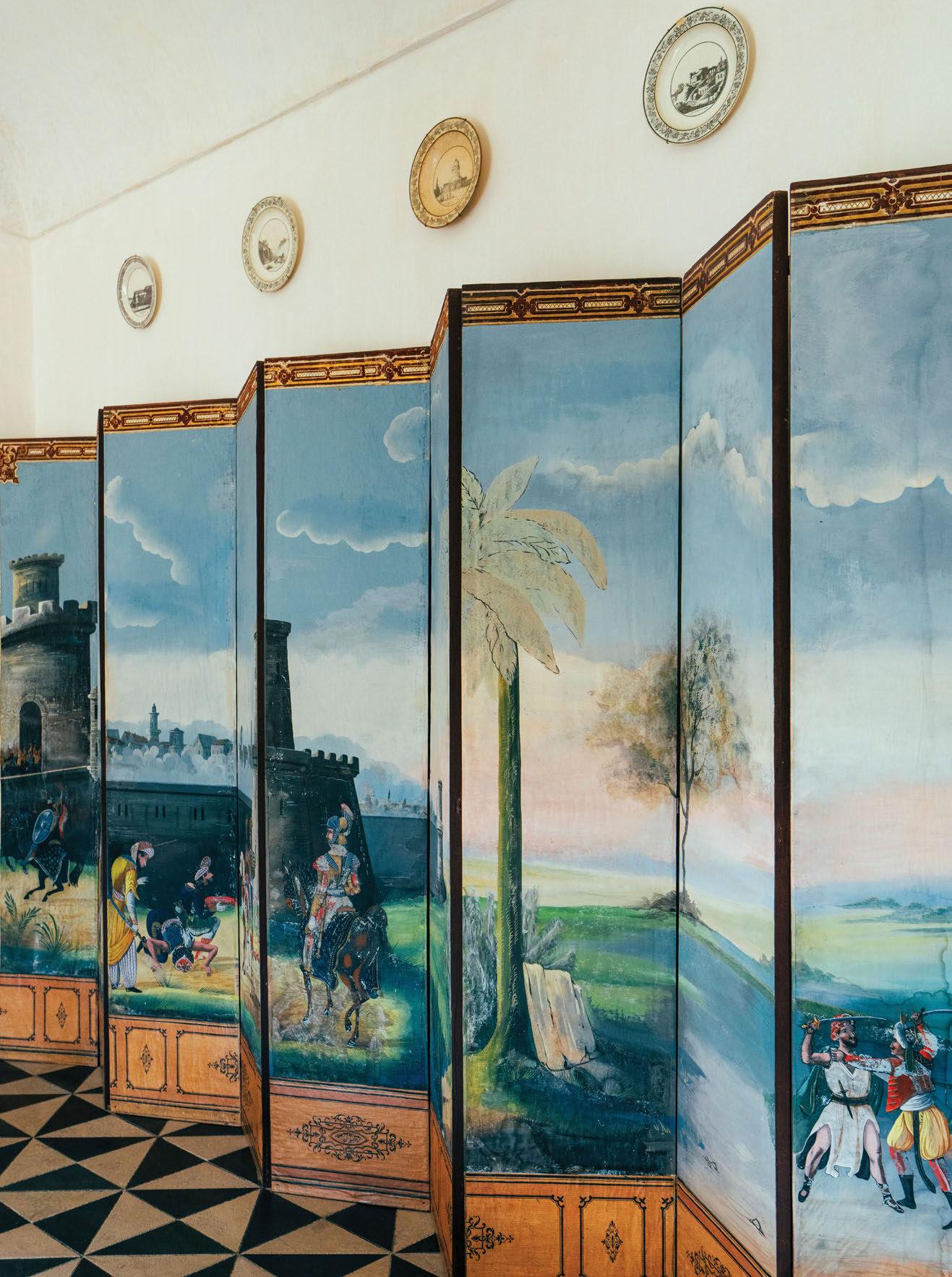
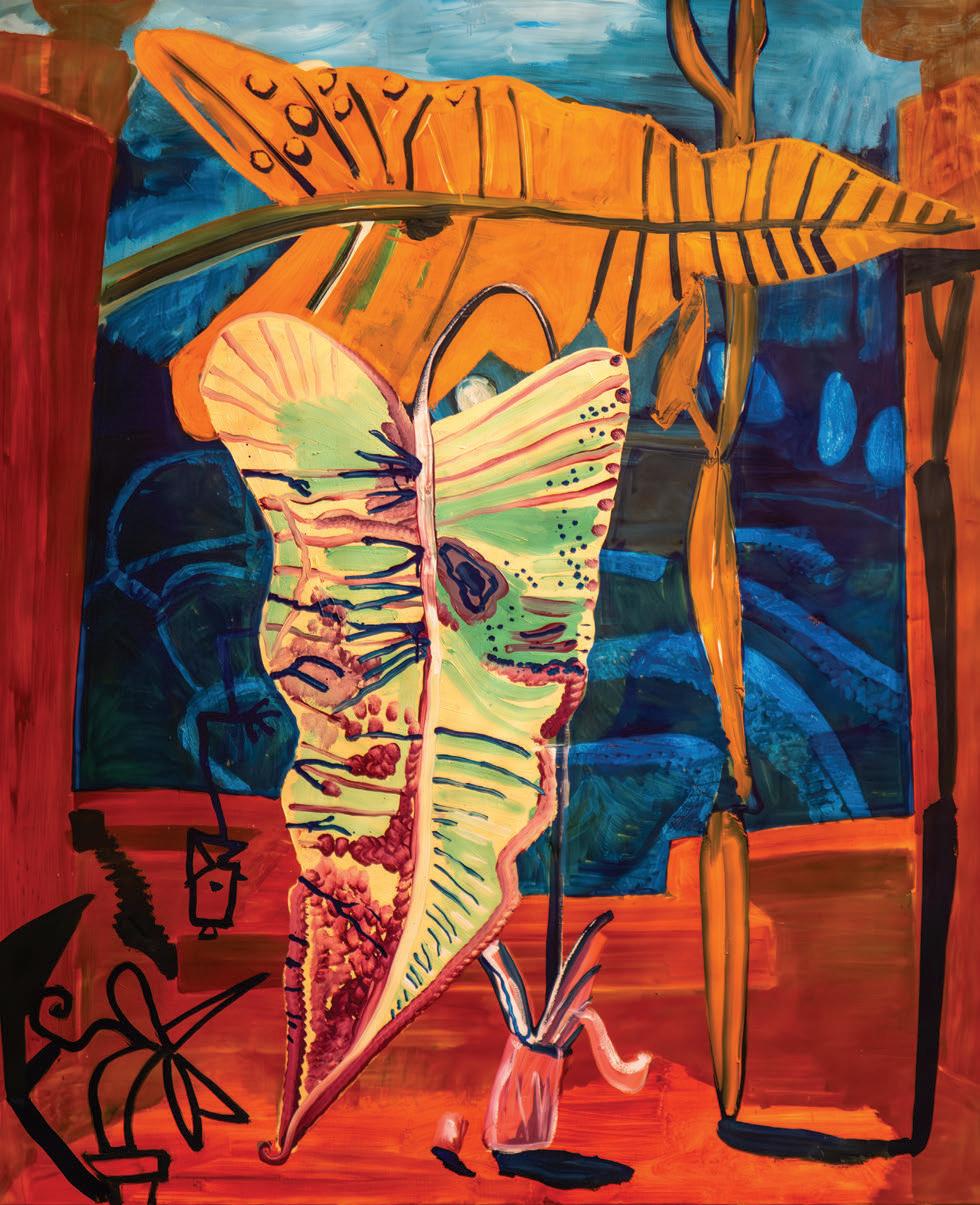
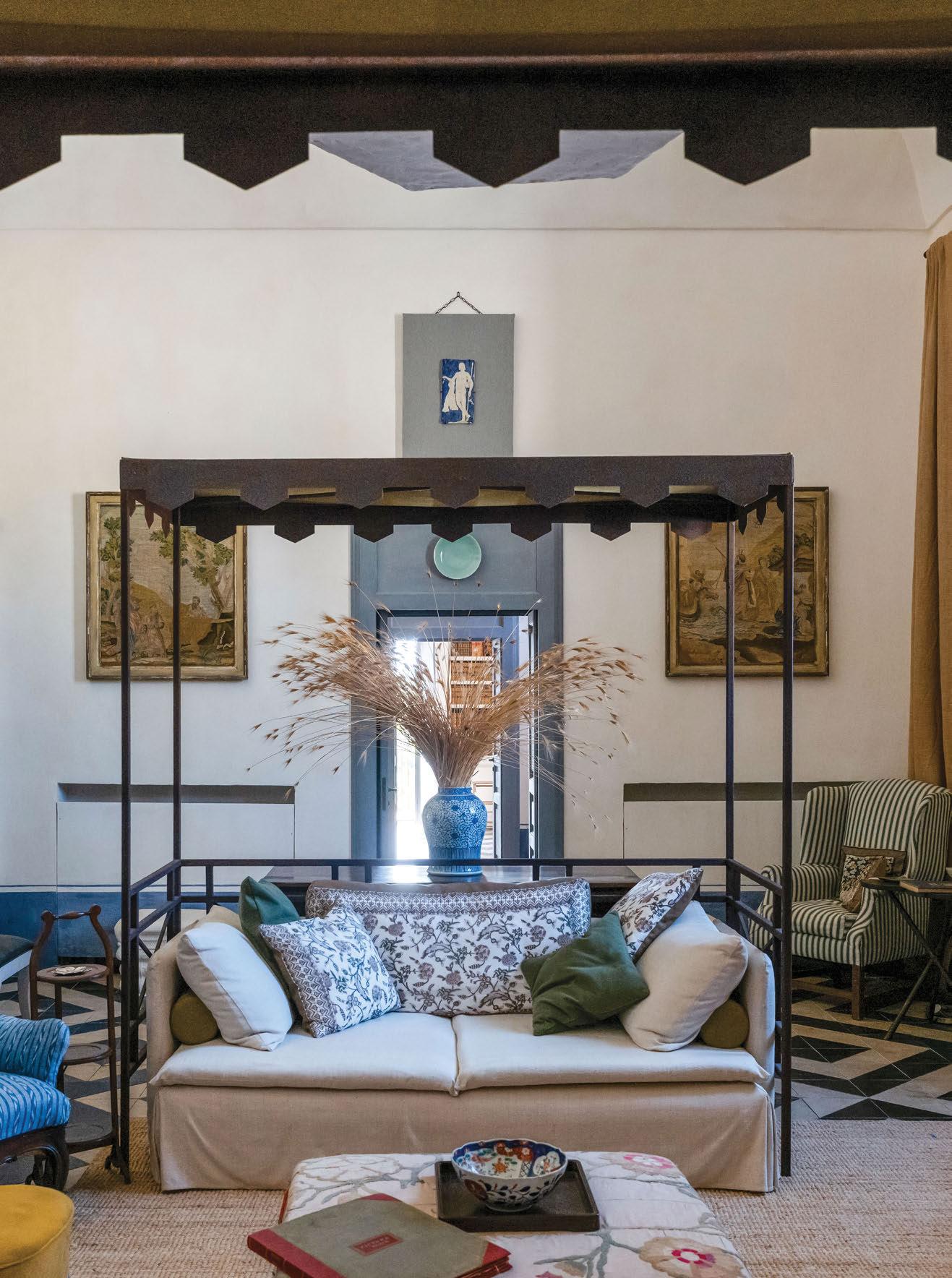
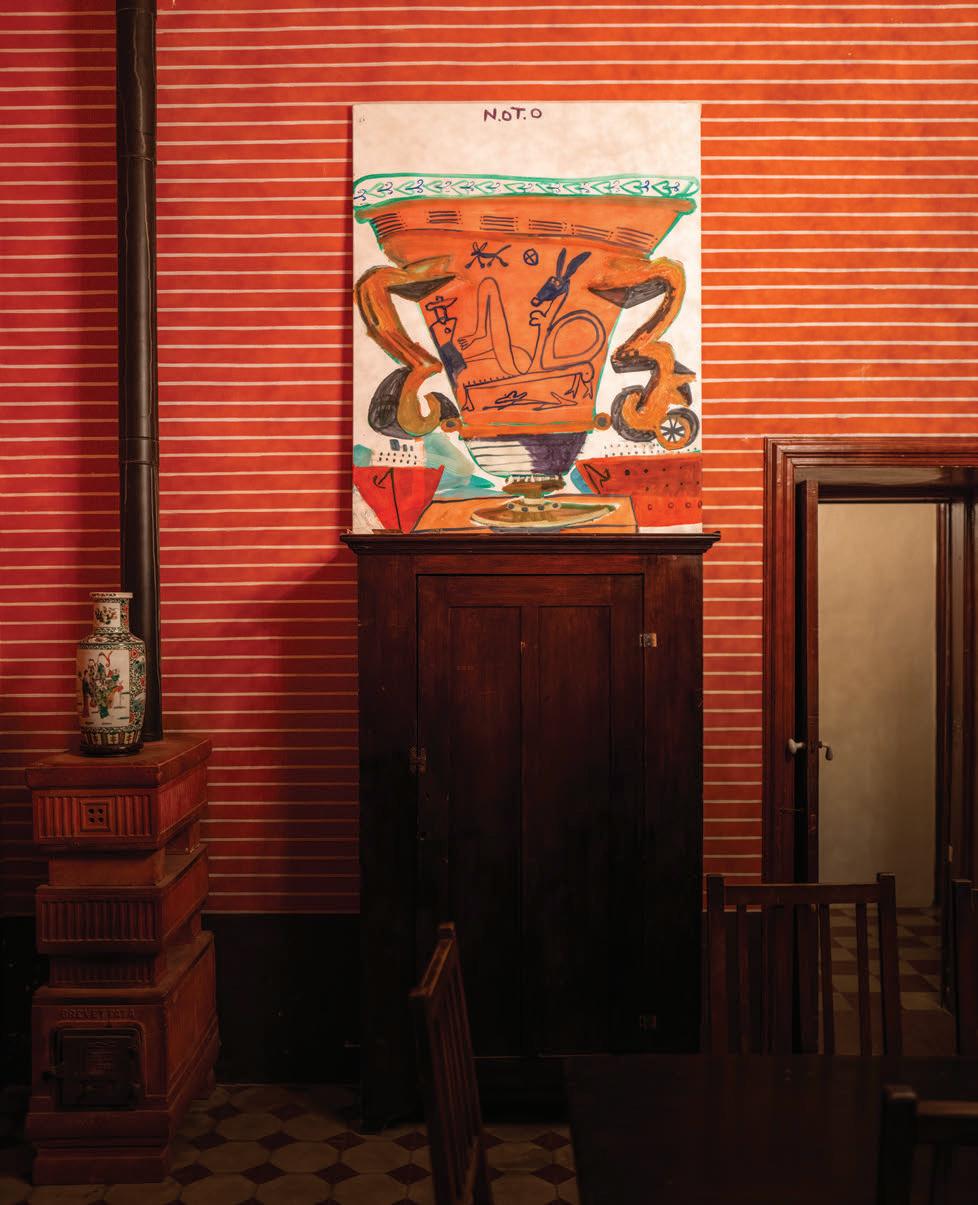
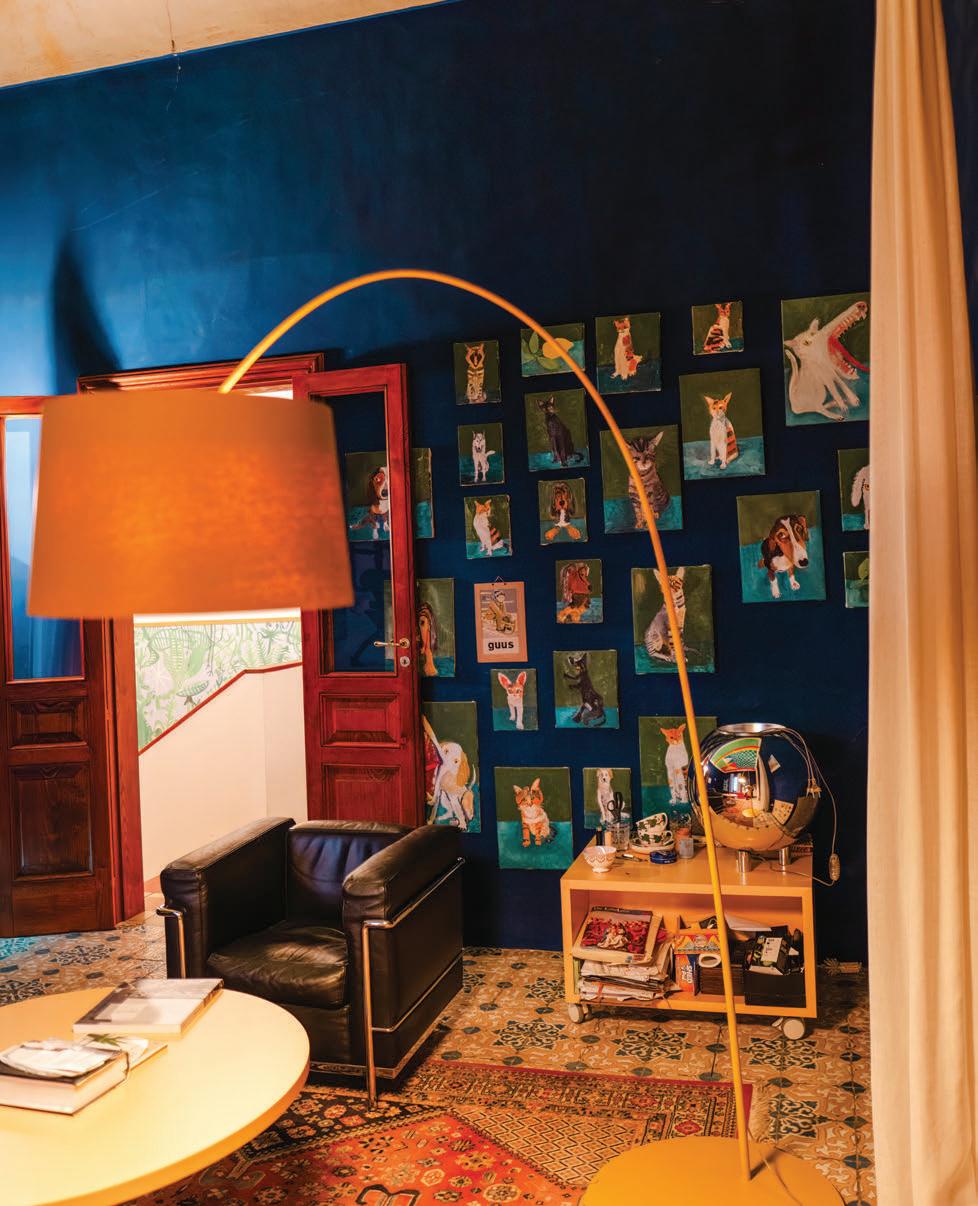
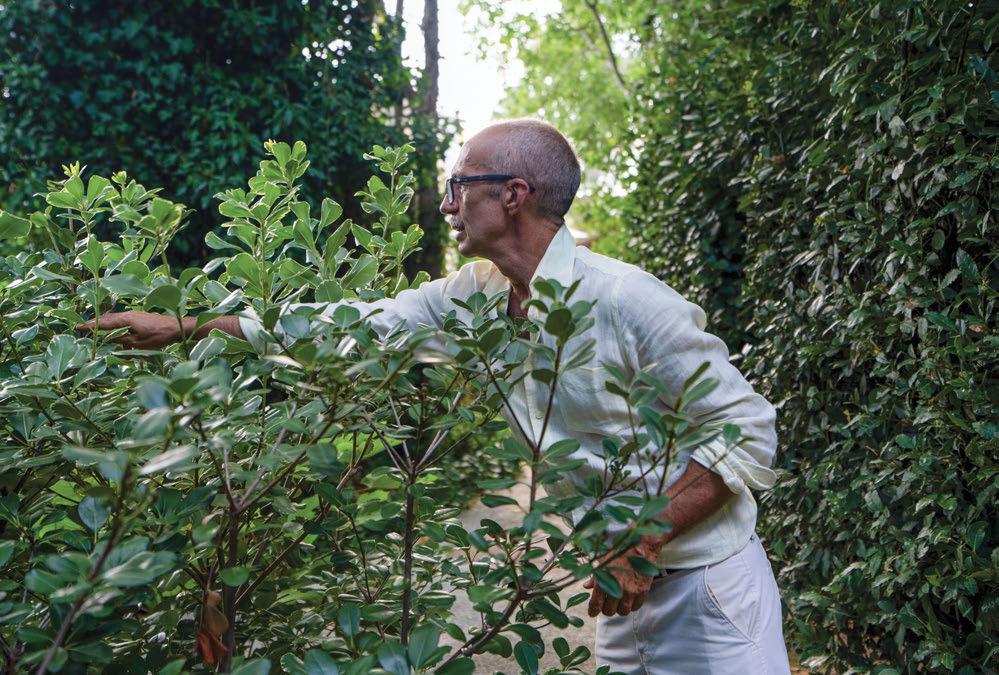
High in the hills above the baroque city of Noto, in San Corrado di Fuori, the home and studio of Guus van Eck, a Dutch painter settled in Sicily for several years now, is a vivid dreamworld where life imitates art. Like stepping into one of his own technicolor canvases, the eclectic interiors are hand-painted from the walls to the ceiling, each room bolder and brighter than the next. A refreshing burst of Sicilian sprezzatura at every turn.
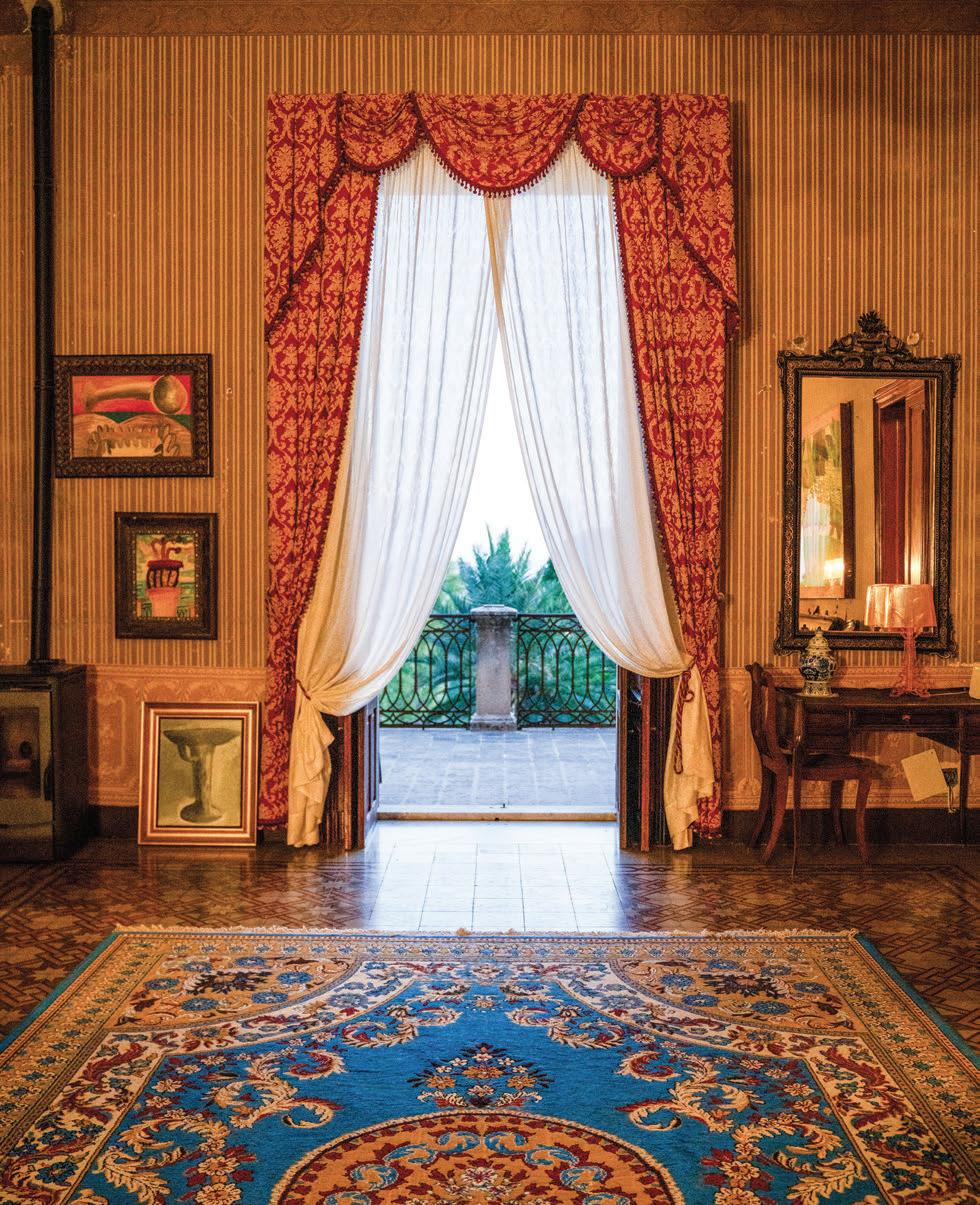
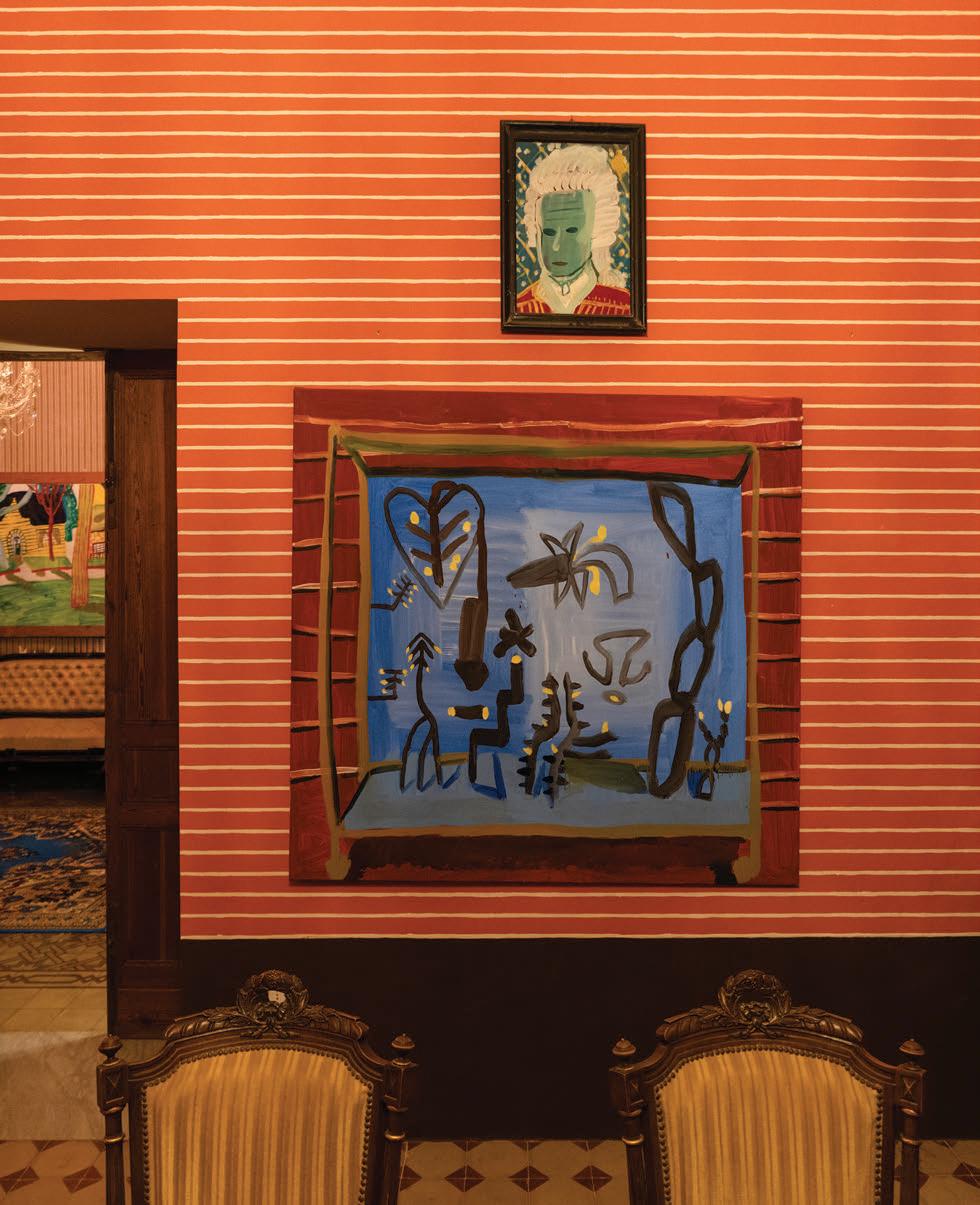
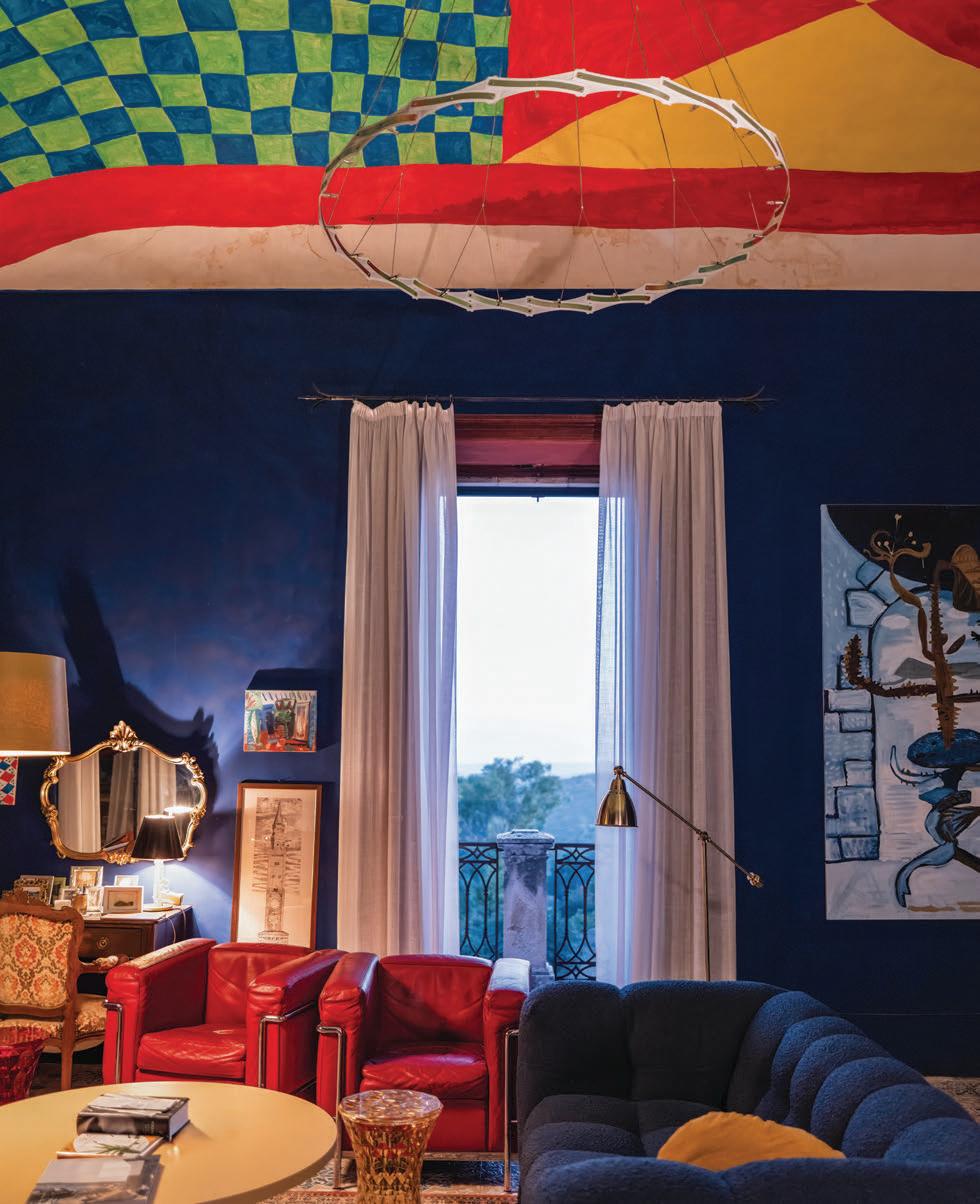
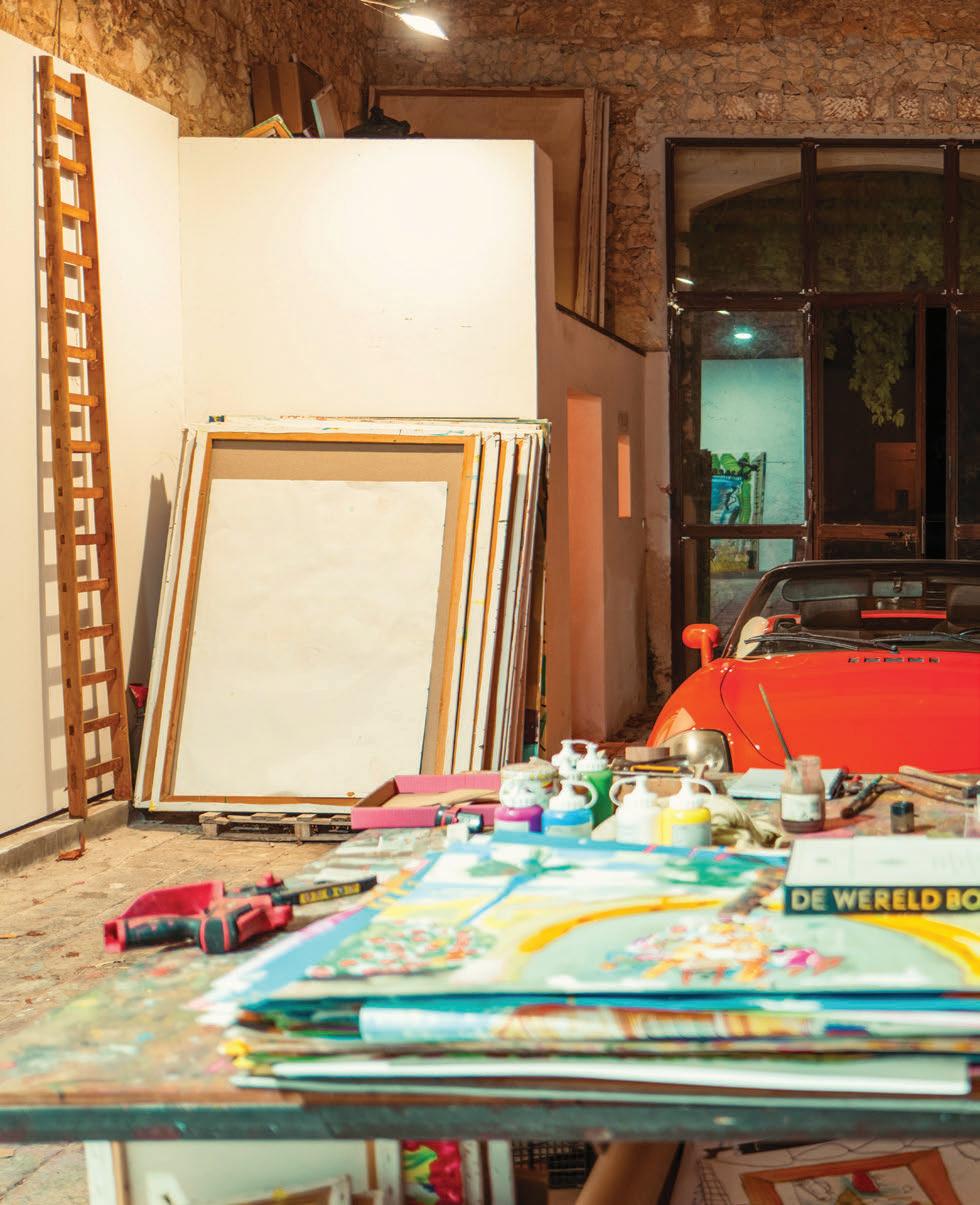
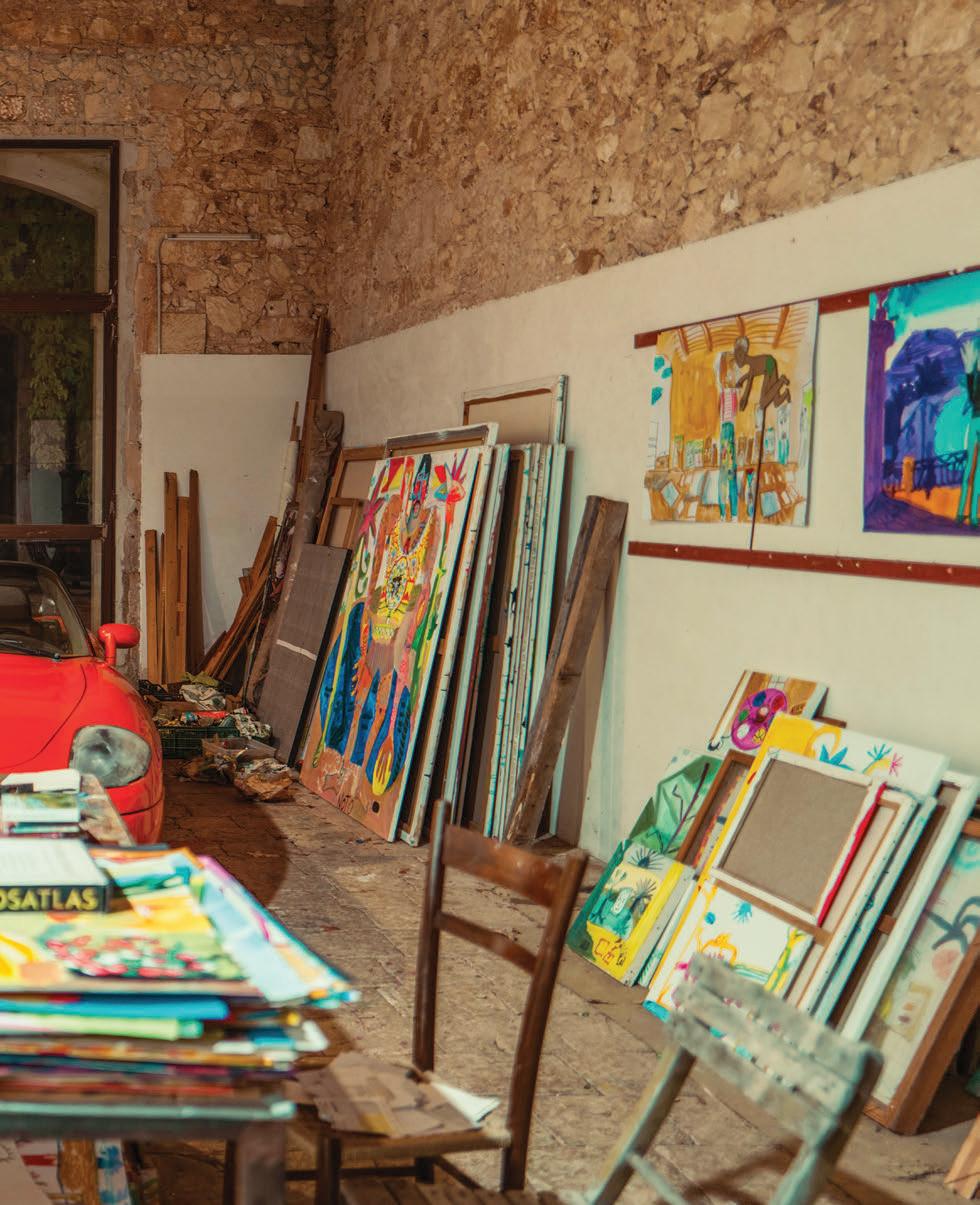
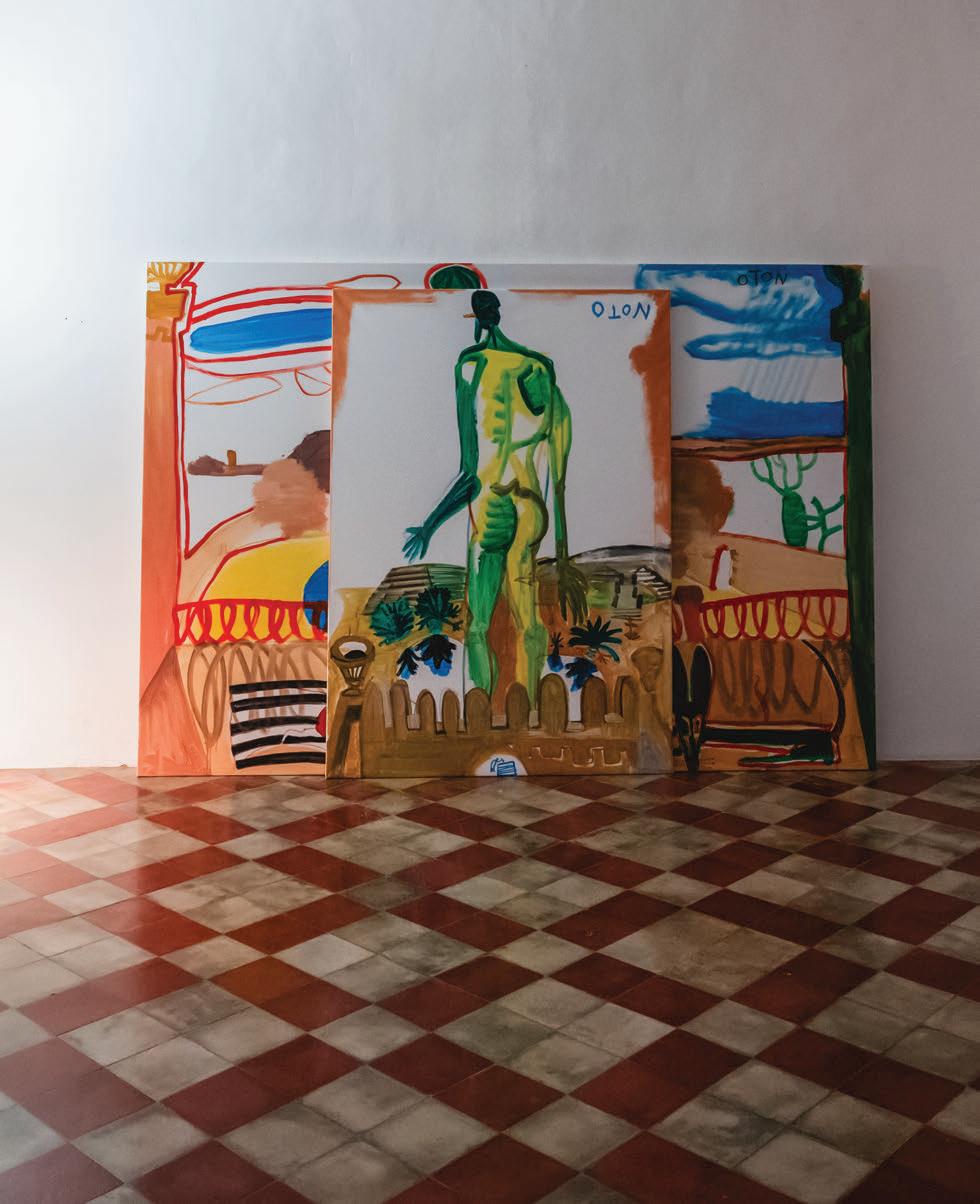
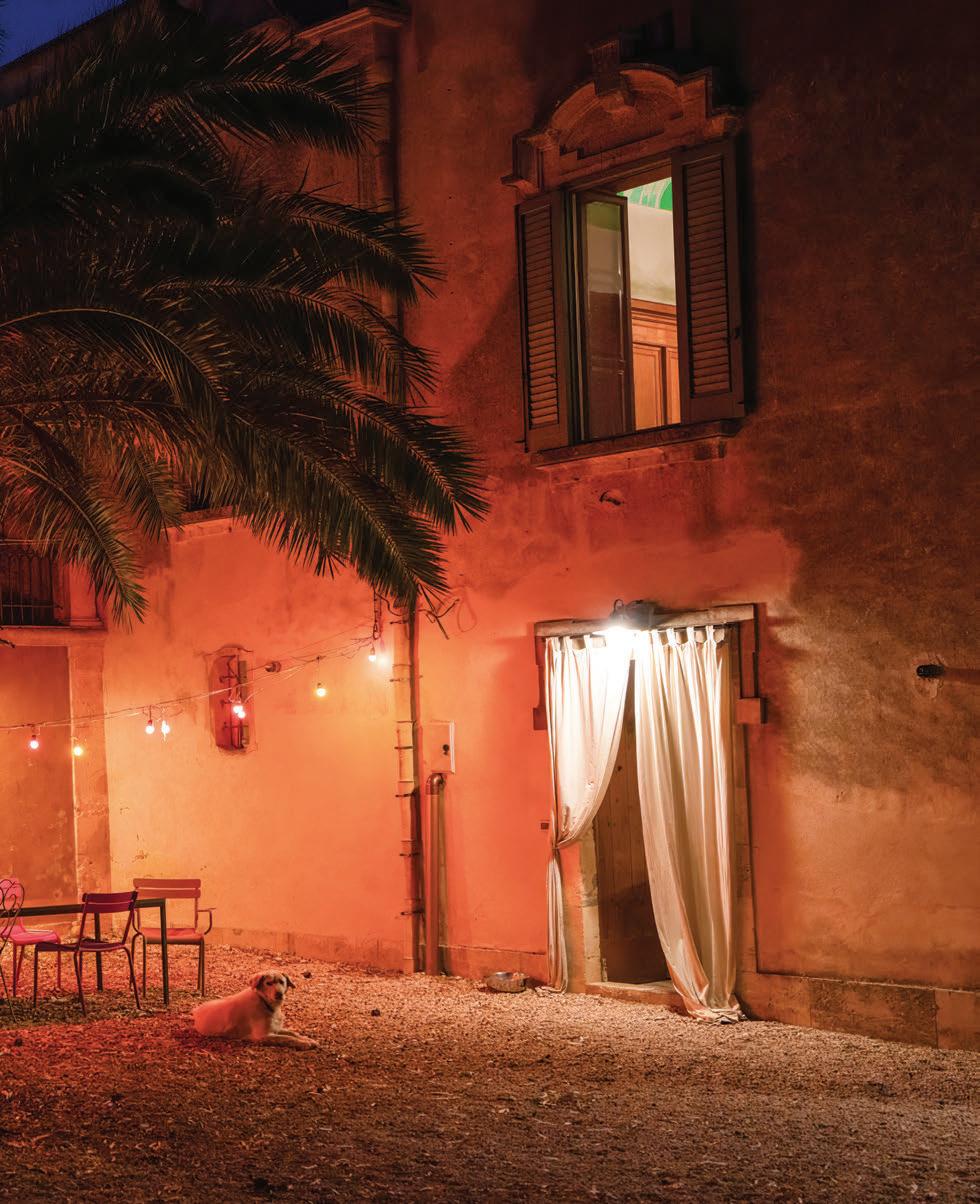

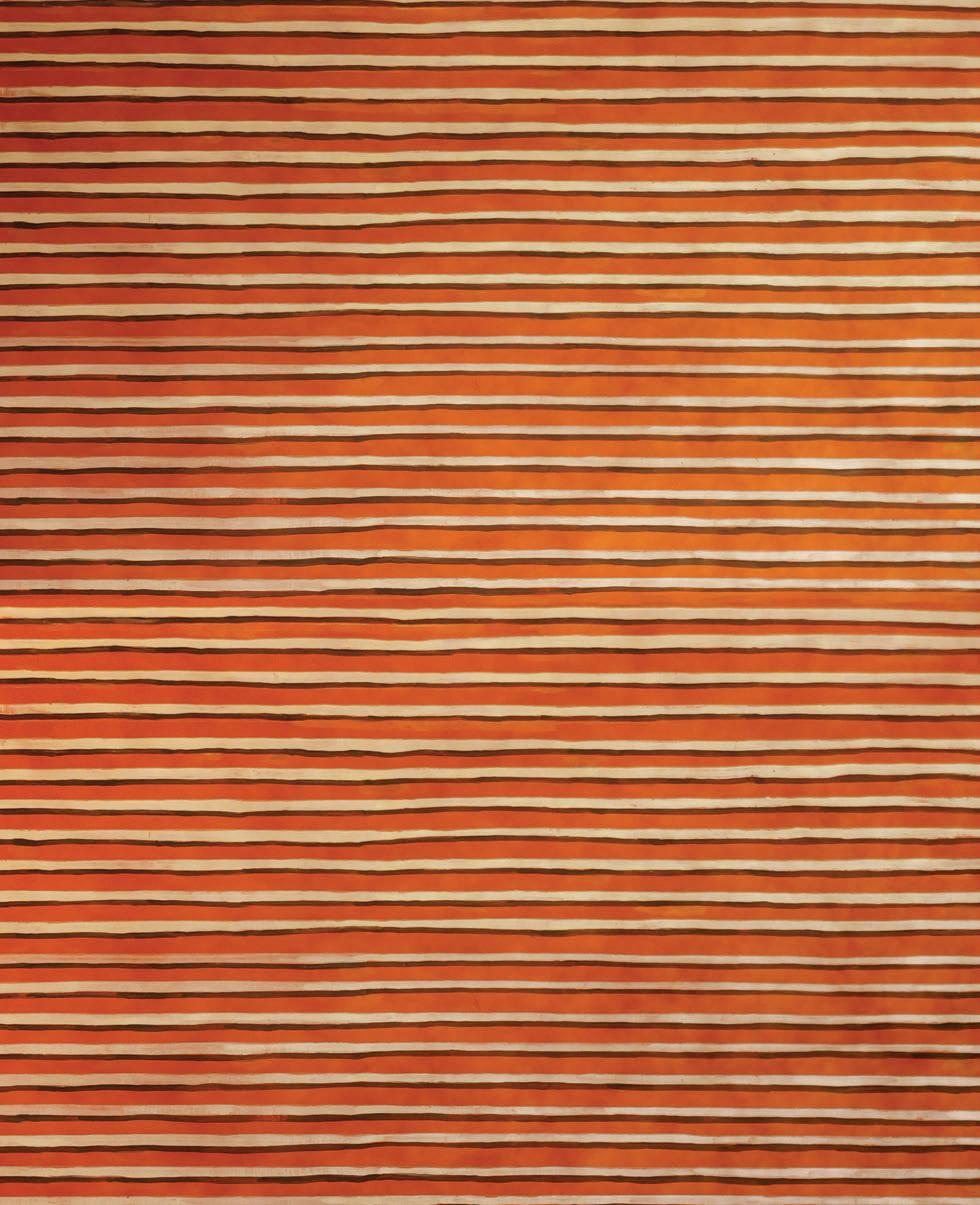
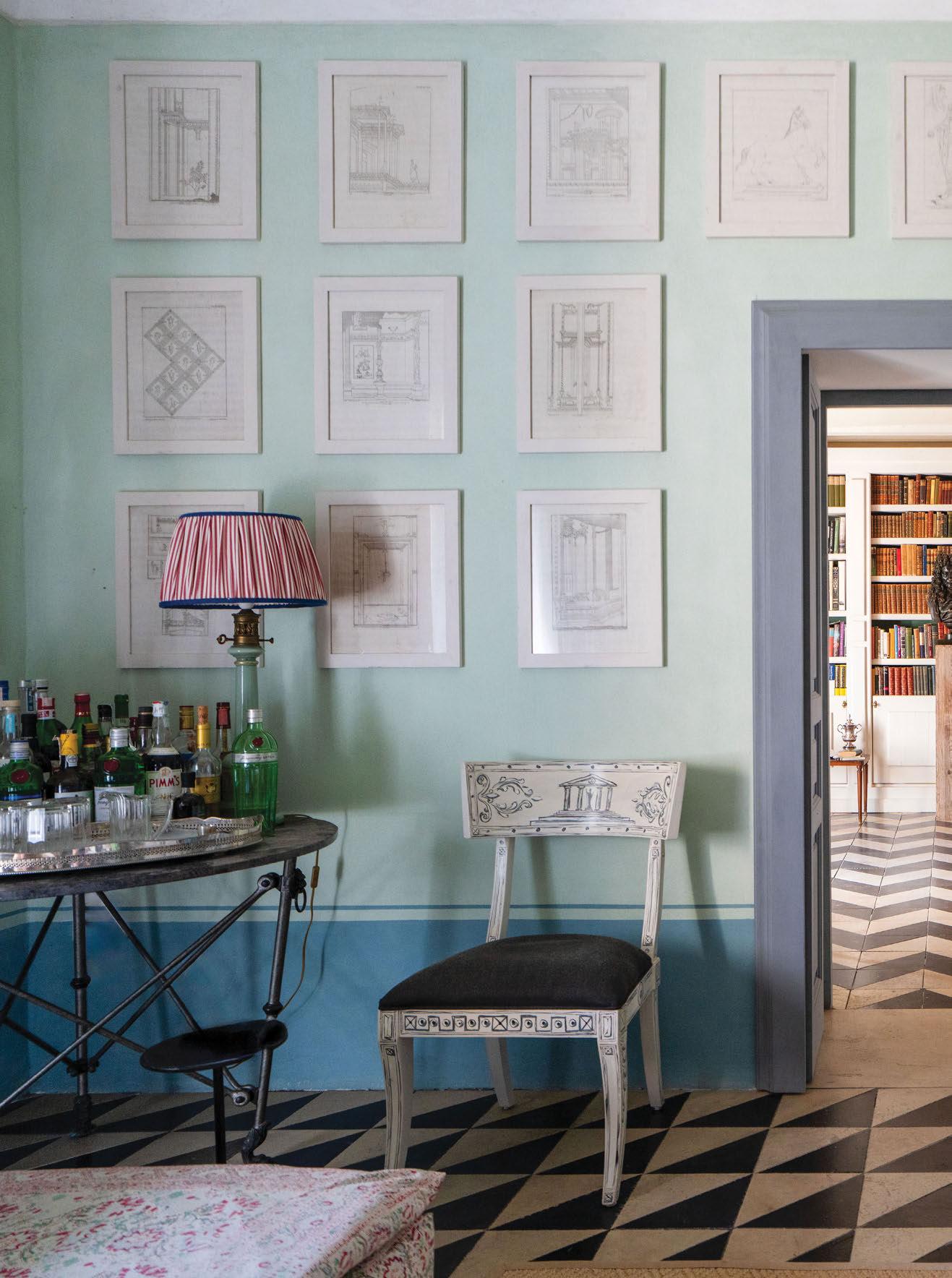
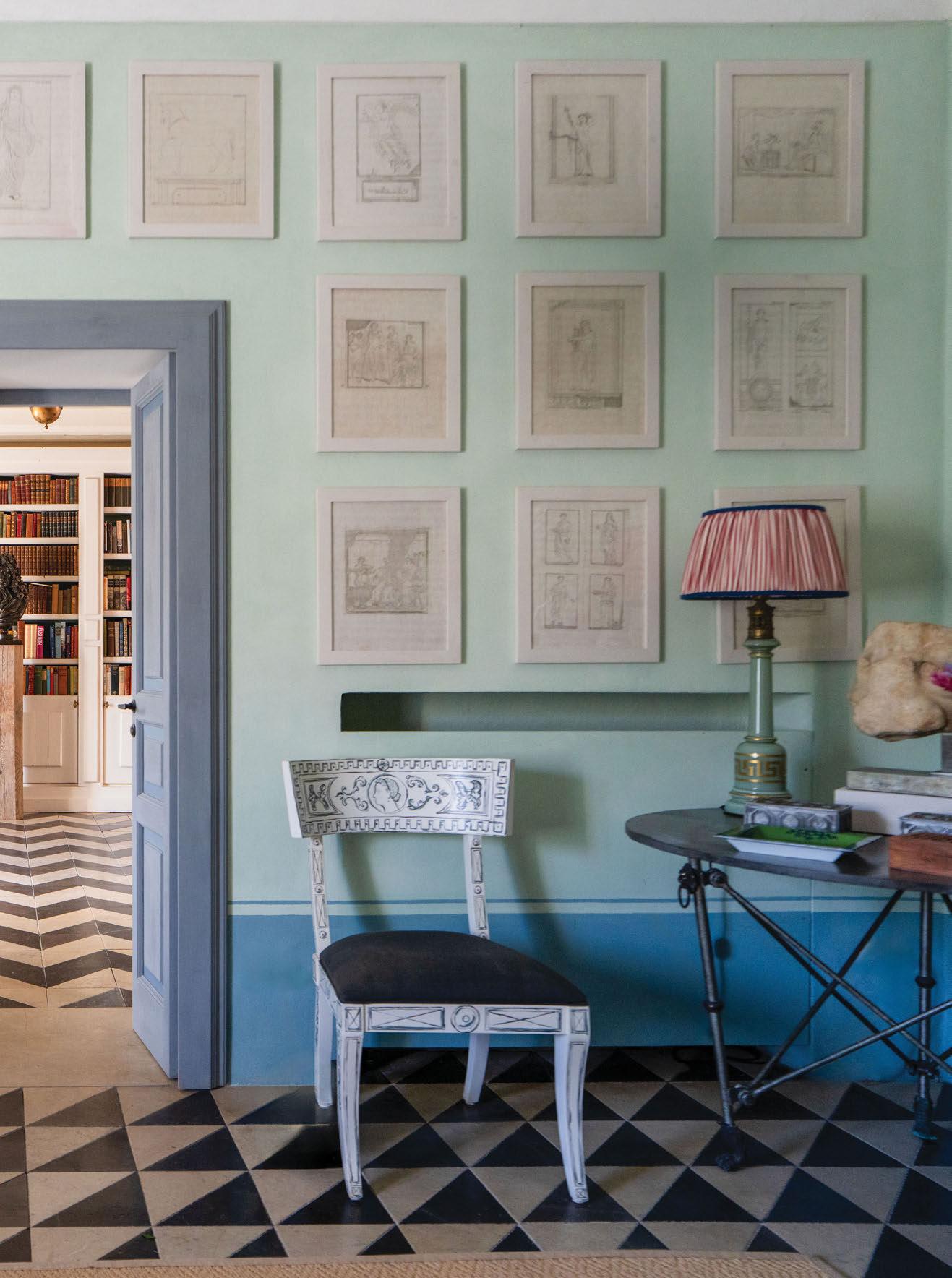
Through a cased opening, a light-washed, pale green room adorned with 18th-century engravings by Georg Christoph Kilian that detail the antiquities found during the excavation of Herculaneum, stops you in your tracks. Riccardo explains, “when they built the house, they gave this part a neoclassical twist. And we jumped on that because if there is one movement that John and I are very fond of, it is the Grand Tour.”
An Andy Warhol silkscreen of Goethe sits colorfully over the fireplace in the library, a nod to the German writer’s belief that “Sicily is the clue to everything.”
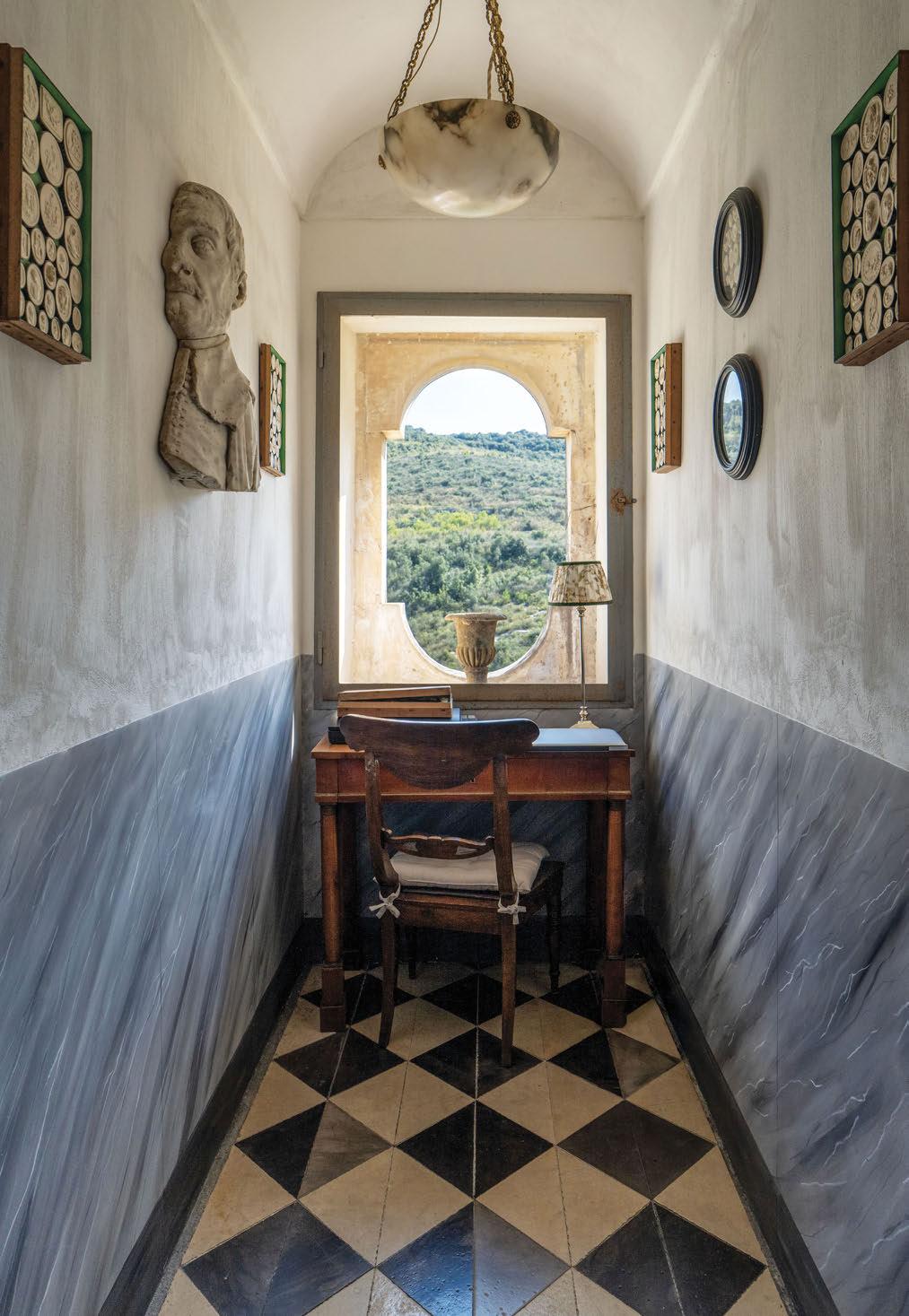
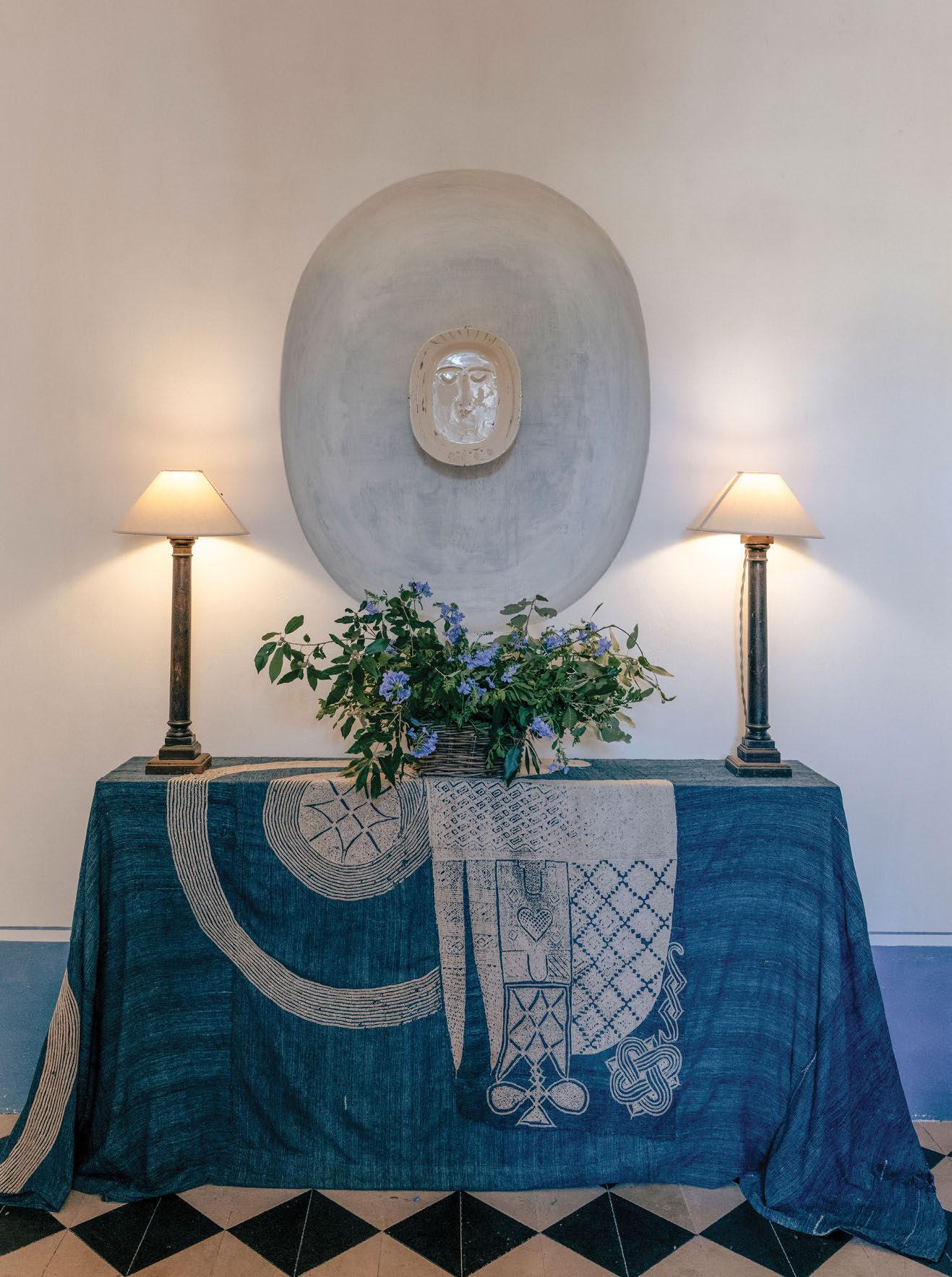
Picasso’s Visage de femme earthenware plate from Atelier Madoura hangs above a table covered in a Nigerian Hausa man’s prestige robe. The textile’s markings feel reminiscent of the Cubist-style face in the plate above.
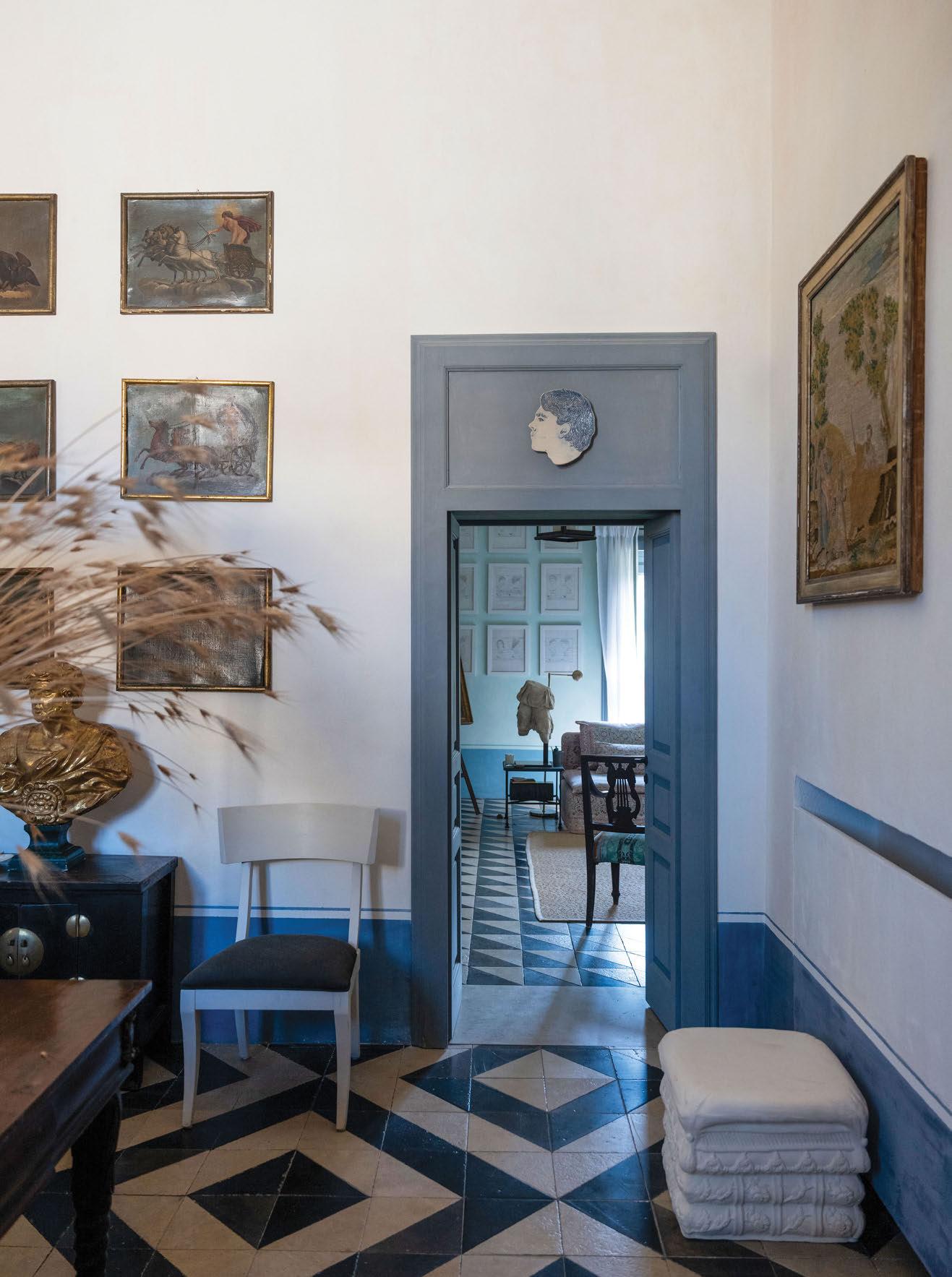
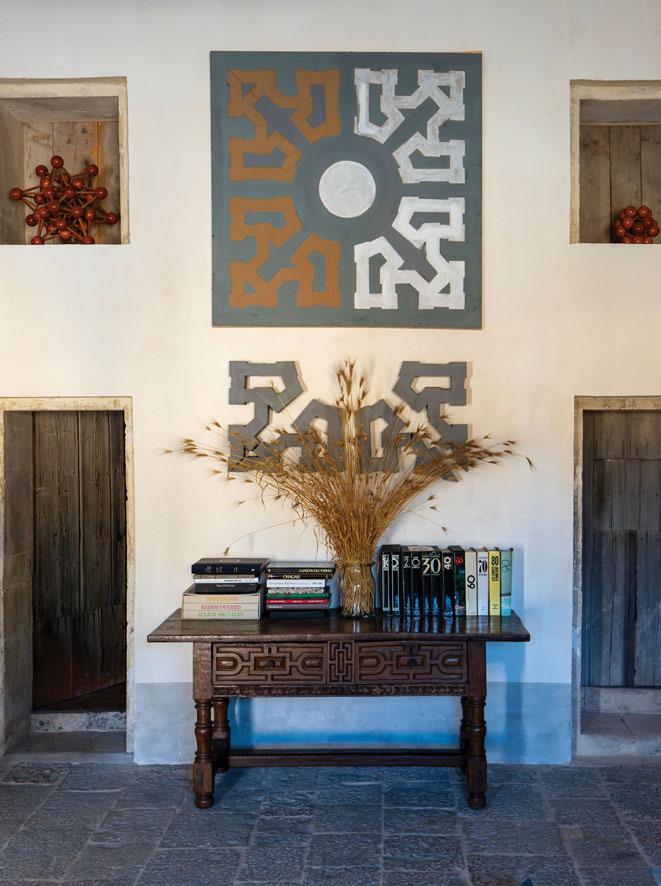
The stone floors in the house were designed based on traditional Sicilian tile patterns.
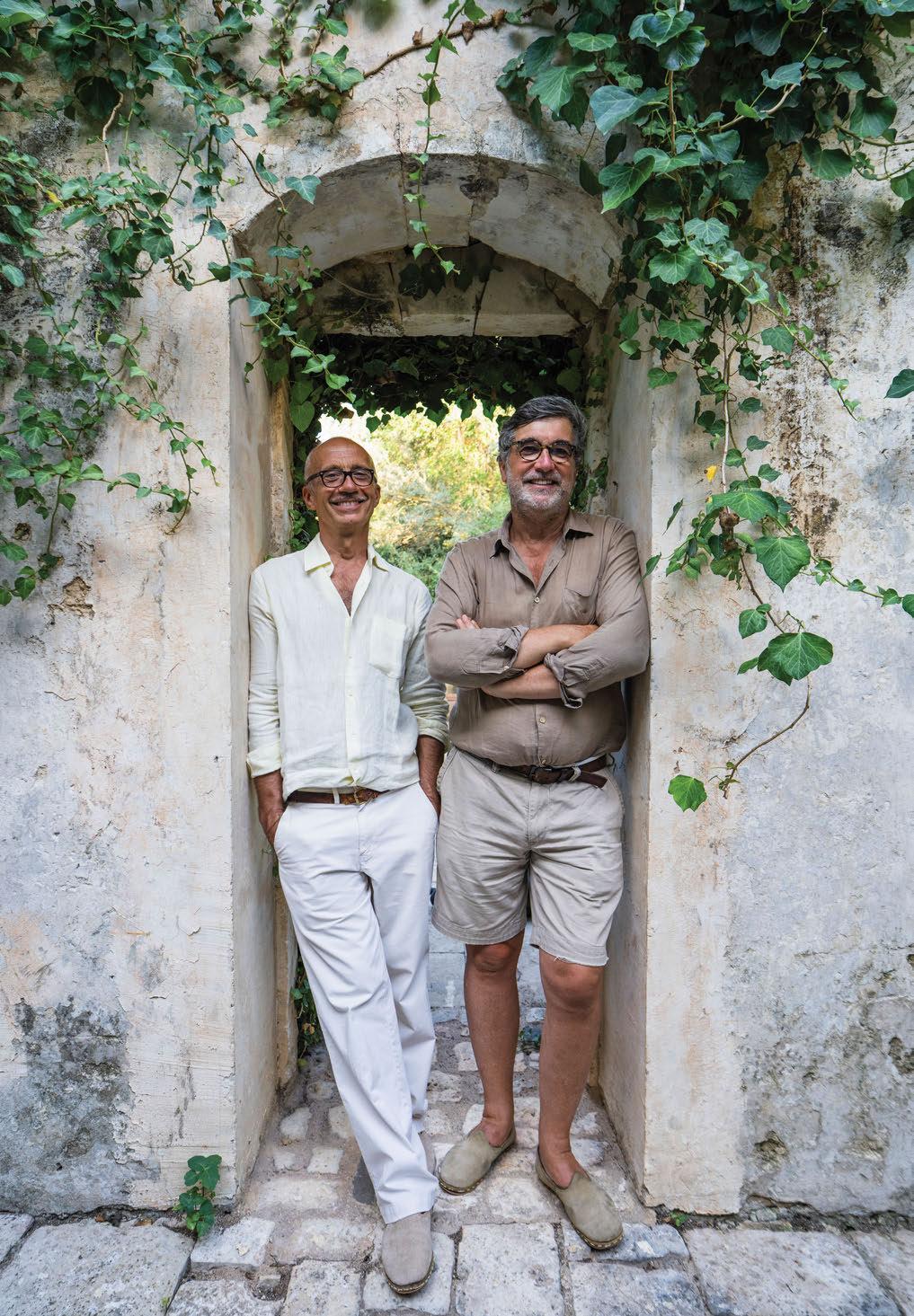
THE PROTECTORATE Casa Cuseni
HIGH ABOVE TAORMINA LOOKING OUT TO MOUNT ETNA
PRESERVATION AND PROTECTION. A HOUSE THAT WAS ONCE A DYNAMIC CULTURAL HUB; PAINTING A STORY OF ACCEPTANCE ON ITS VERY WALLS.
The approach to Casa Cuseni is a several hundred meter climb to the terrace that is the ground floor of the house, looking out across the Bay of Naxos over the rooftops of Taormina. And while there is a flavor of impenetrability given the awareness the owners would have of anyone approaching, and the climb those visitors would face to arrive, it doesn’t feel closed off. Instead, it is a generous place, open to visitors now and historically a place of acceptance and tolerance. Casa Cuseni is the house that British artist Robert Kitson built in the early years of the 20th century. Today, it is run by Mimma Cundari and her husband Francesco Spadaro. Her mother, Conchetta Cundari had worked for Kitson and later his niece Daphne Phelps as a housekeeper and cook, inheriting the house when Daphne died.
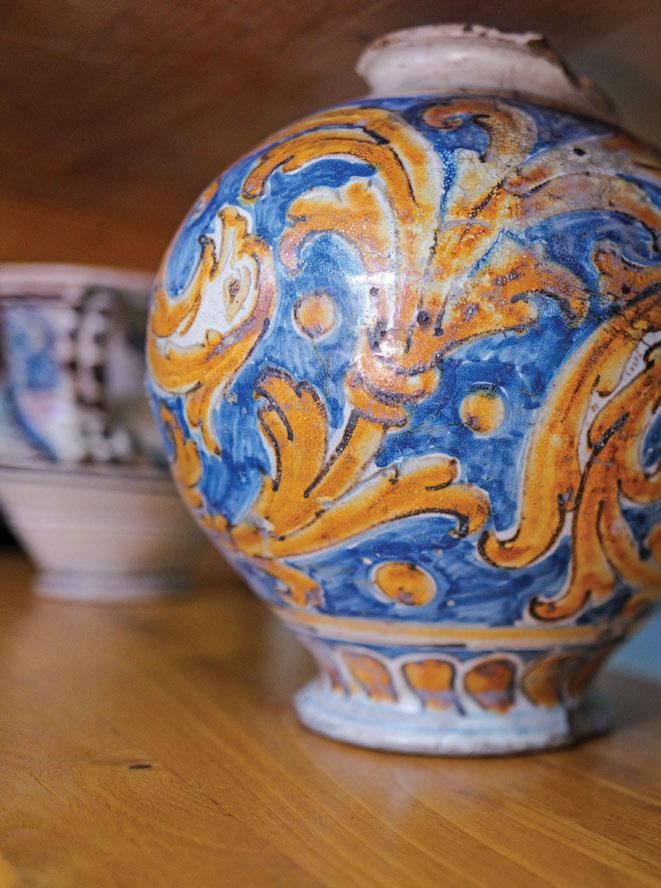
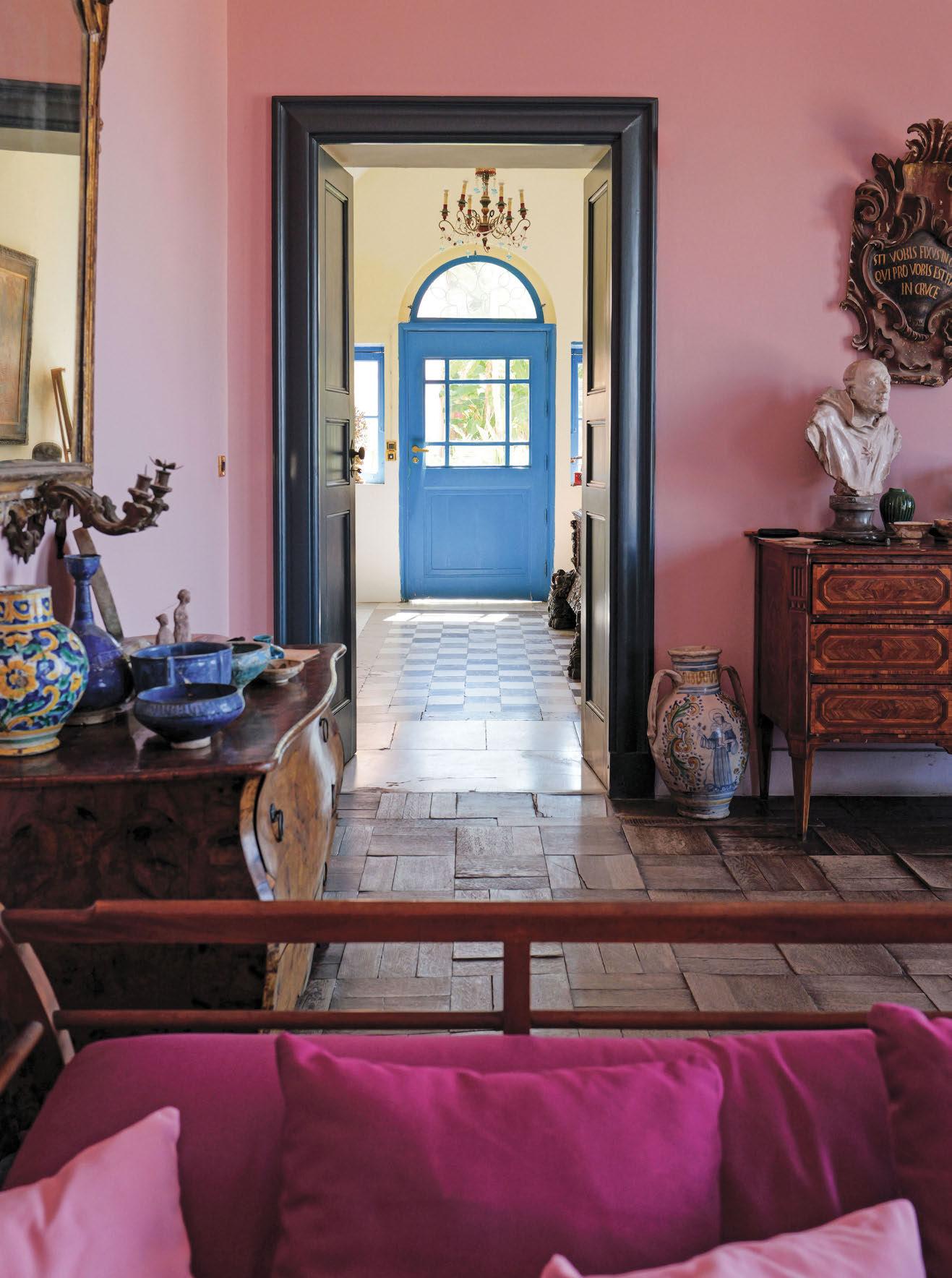
House museums have a particular rhythm, by their nature they can have a static quality that limits how it feels to interact with them. Not so at Casa Cuseni, one is guided through the rooms hearing of Kitson’s friendships with the artists, writers and philosophers that would come to visit, to stay and work: Pablo Picasso, Salvador Dali, Tennessee Williams, William Faulkner, Ernest Hemingway and Greta Garbo before Kitson’s sudden, middle of the night departure during WWII as the Axis powers were descending on the island to install German officers in the house. He left behind all of his gathered treasures which were later returned to him piece by piece after the war, by the townspeople and farmers who had raced in to hide everything in their wells and attics before the generals arrived. The range of Kitson’s collection is broad: Sumerian, Greek, early Medieval and Renaissance pieces comingle along with a museum quality collection of Italian majolica, a 13thcentury Florentine marquetry box and the heavy bust of a monk. When Daphne Phelps inherited
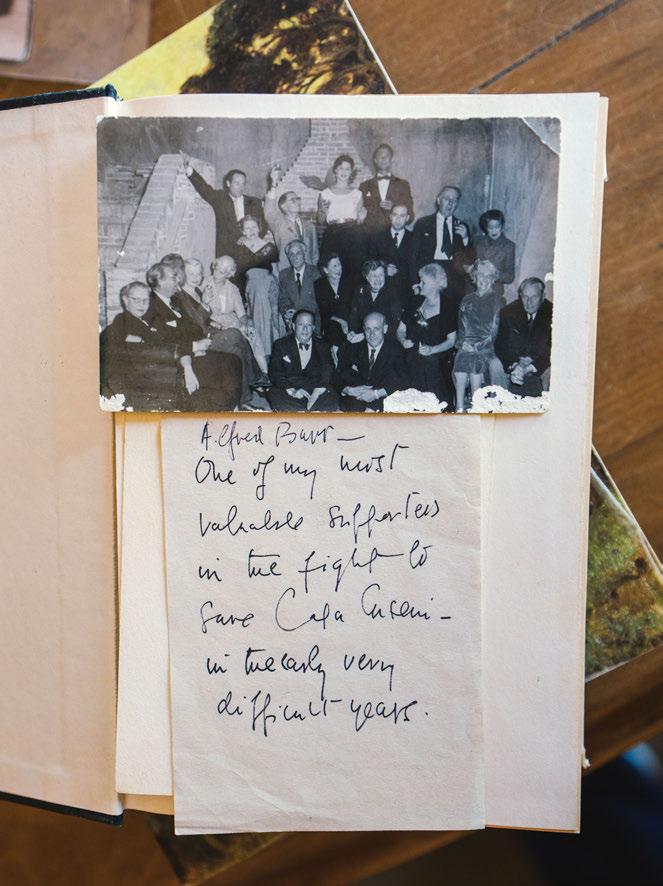
the house from Kitson she kept it going by taking paying guests often in the same spirit of creativity. Roald Dahl made frequent visits, leaving sketches behind for a young Mimma. Alfred H. Barr, Jr., the founding director of MoMA also visited as he documented modern avant-garde European art collections in the post-war period.
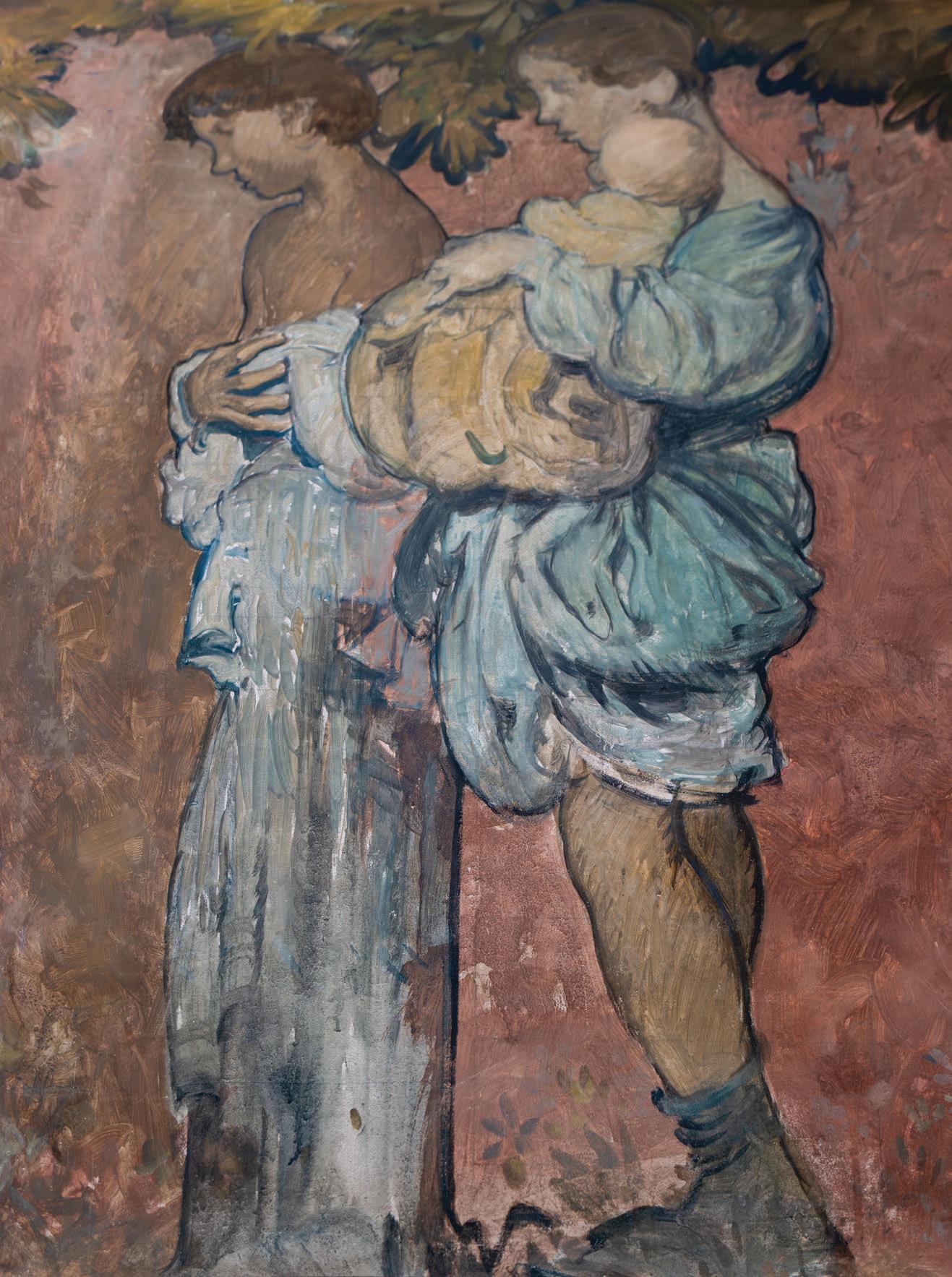
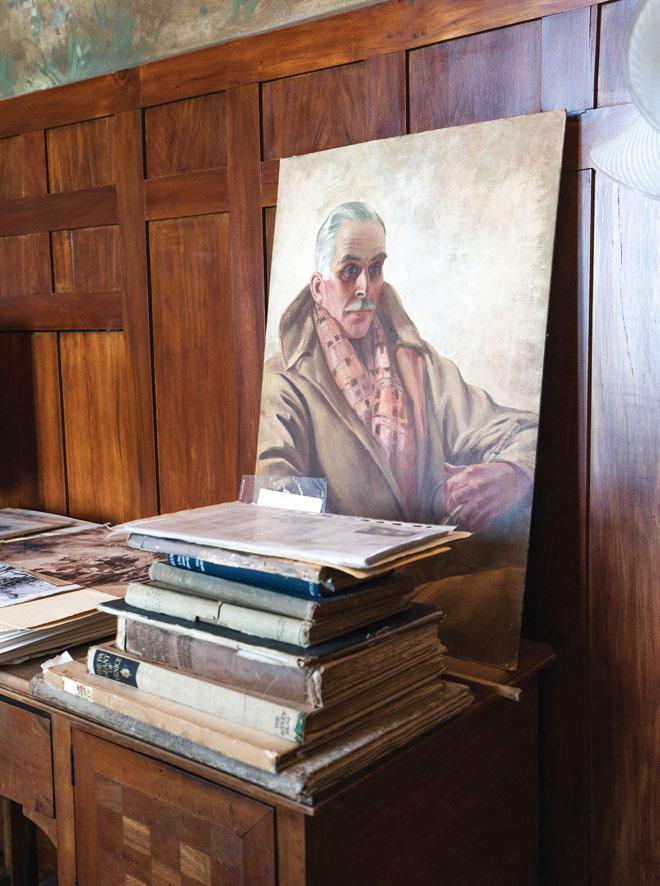
But it is the story of the family dining room that focuses the attention on the philosophy of Kitson, Phelps and their heirs to this day. Kitson came to Taormina as a young man seeking refuge from a socially oppressive England. As a gay man, the Labouchere Amendment had made life in West Yorkshire difficult for him. He contracted his teacher, the celebrated Scottish artist and architect Sir Frank Brangwyn to design a house for him in Sicily including a dining room that would celebrate the Arts & Crafts masters and teachers that Kitson so admired; Philip Webb, Charles Rennie Mackintosh, Joseph Hoffman are all represented. Brangwyn’s designs for the furniture were interpreted by local Sicilian craftspeople under close supervision and his watchful eye. But the room’s murals—painted by Brangwyn in a pre-Raphaelite style above the high pecan wood paneling—are an allegory for the story of Kitson’s life showing a same-sex couple with an infant, a then rare depiction of a civil partnership, representing Kitson, his companion Carlo Siligato and the orphaned baby they adopted following the Messina earthquake in 1908. The room was long protected, kept under lock and key by Kitson’s family intent on preserving and protecting the artwork from those that would seek to blank out the nature of the images and the lifestyle they represent. The very paintings that take us from the darkness of Kitson’s youth in England to the light of Sicily and the artistic and personal fulfillment he found at Casa Cuseni.
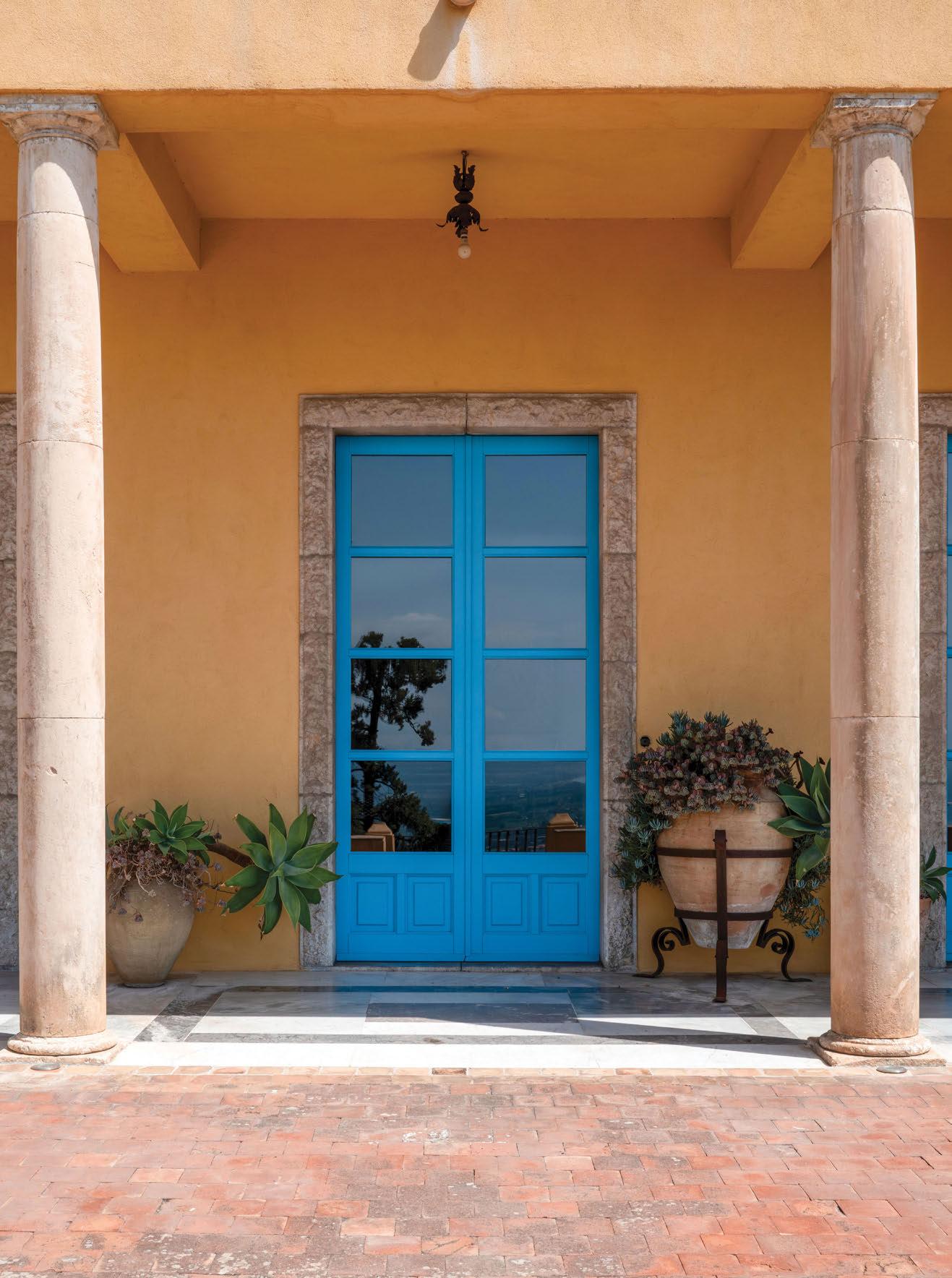
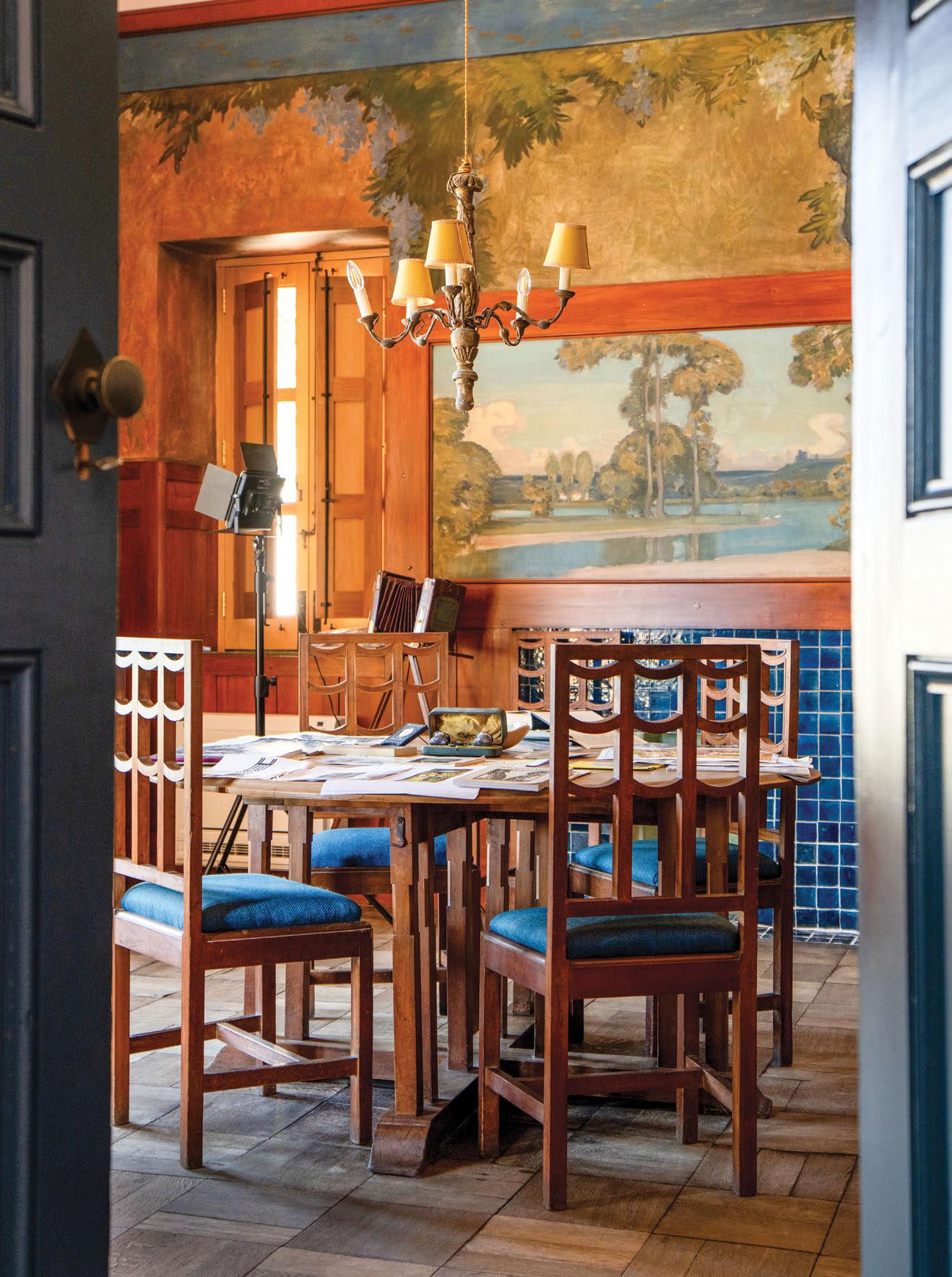
The dining room at Casa Cuseni was locked for over 100 years, given the nature of the frescoes, depicting a same-sex couple and their child, which at the time of their painting was illegal in Italy.
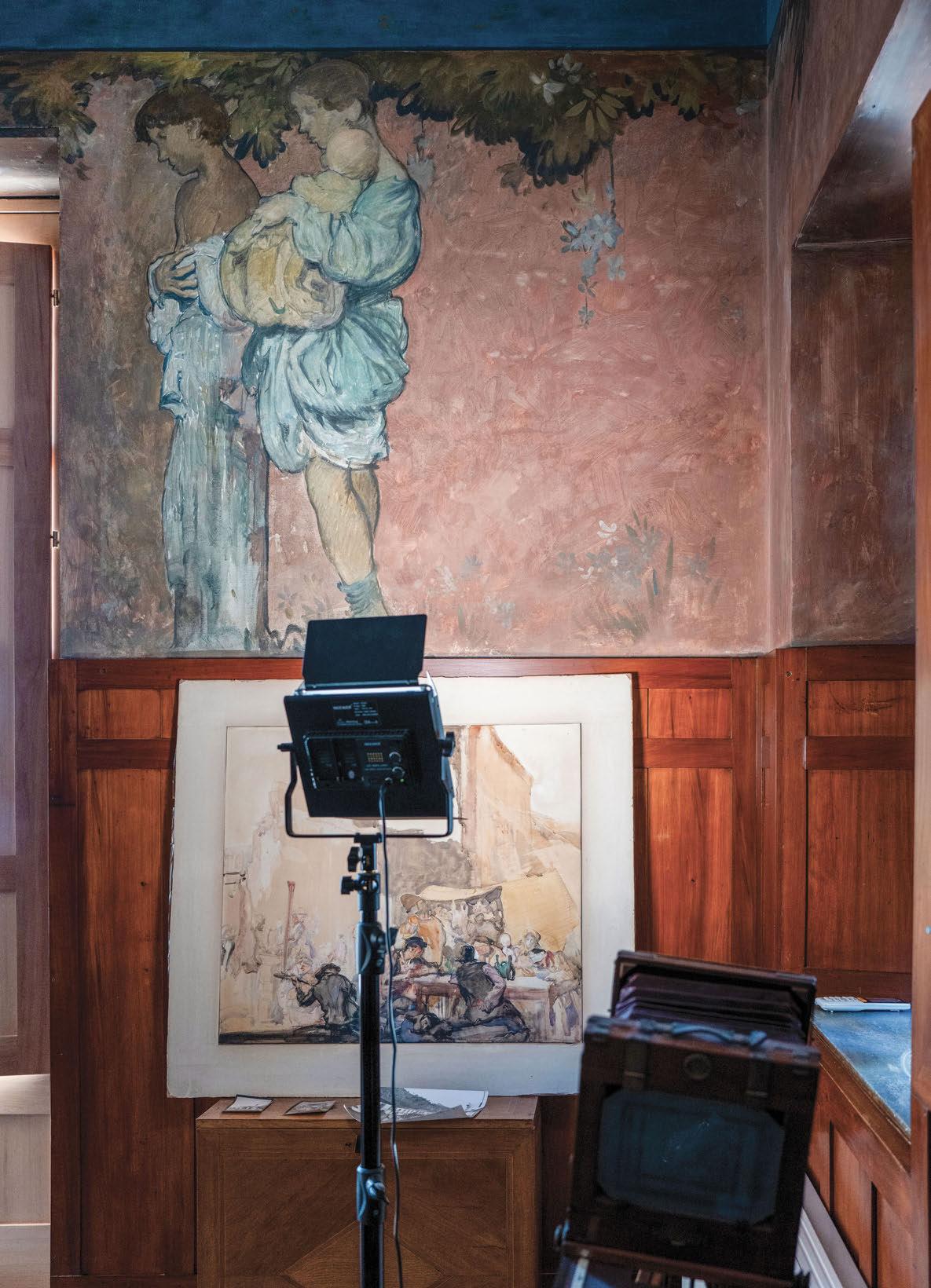
...the room’s murals—painted by Brangwyn in a pre-Raphaelite style above the high pecan wood paneling— are an allegory for the story of Kitson’s life showing a same-sex couple with an infant, a then rare depiction of a civil partnership, representing Kitson, his companion Carlo Siligato and the orphaned baby they adopted following the Messina earthquake in 1908.
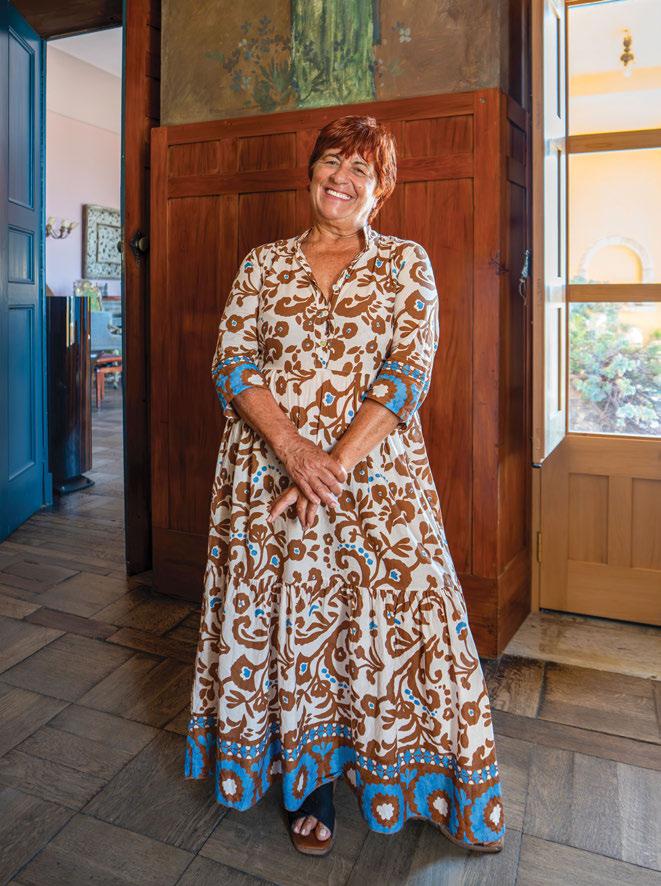
MIMMA CUNDARI
ROBERT KITSON
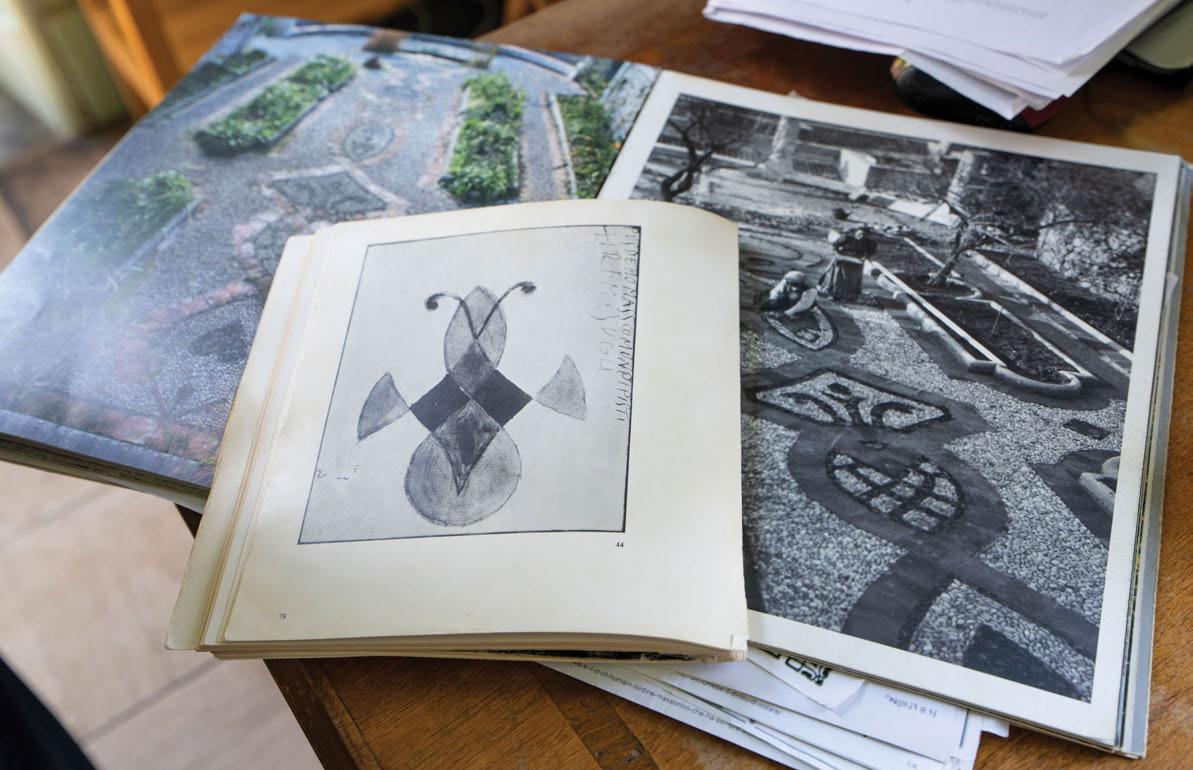
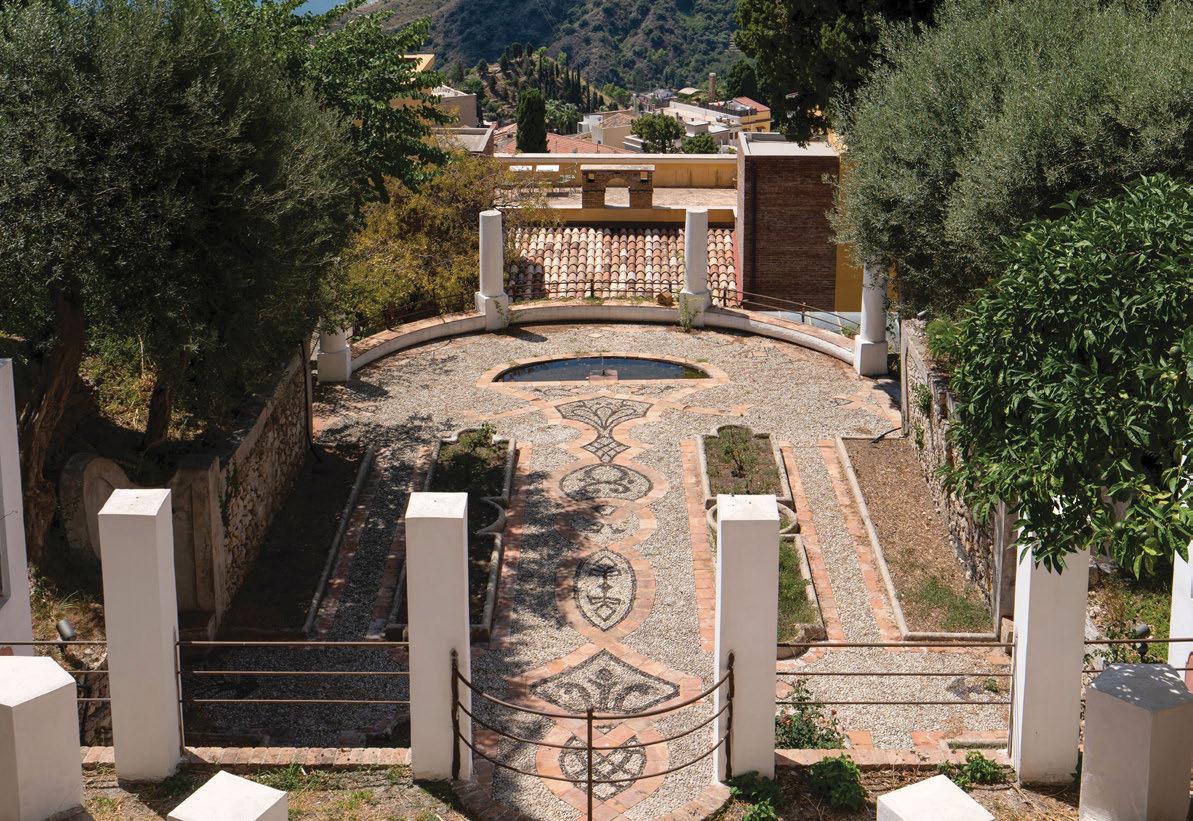
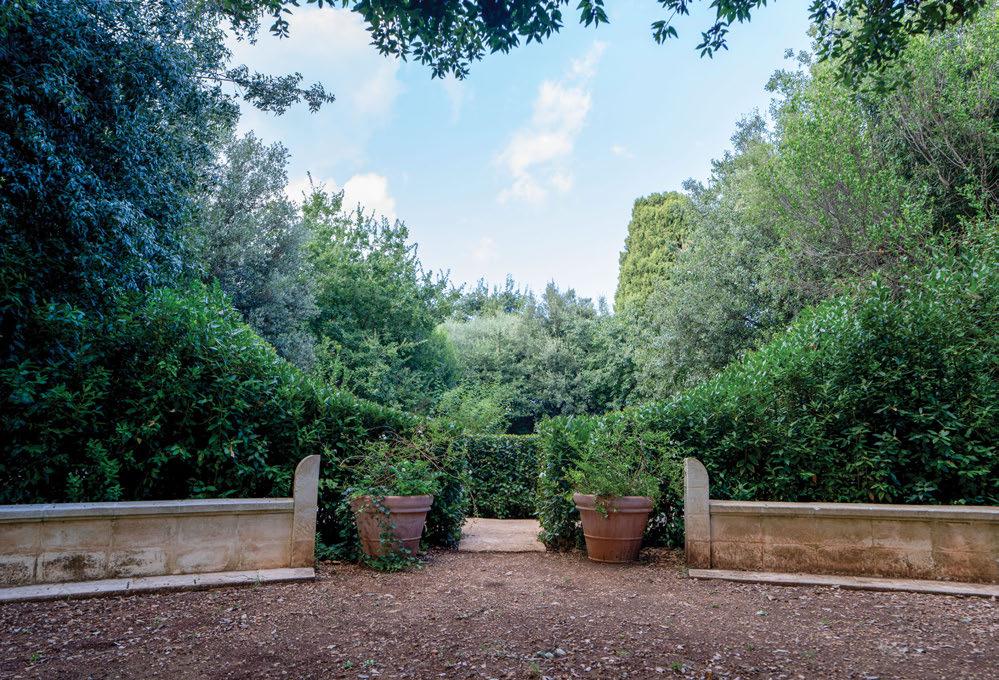
Terraced gardens in sight of Mt. Etna surround the house, laid out in great detail by Kitson himself. They embody Cuseni’s inherent social resistance alongside an opportunity to walk the garden as an “esoteric pathway to reach the knowledge of the Self rather than of the Ego.”
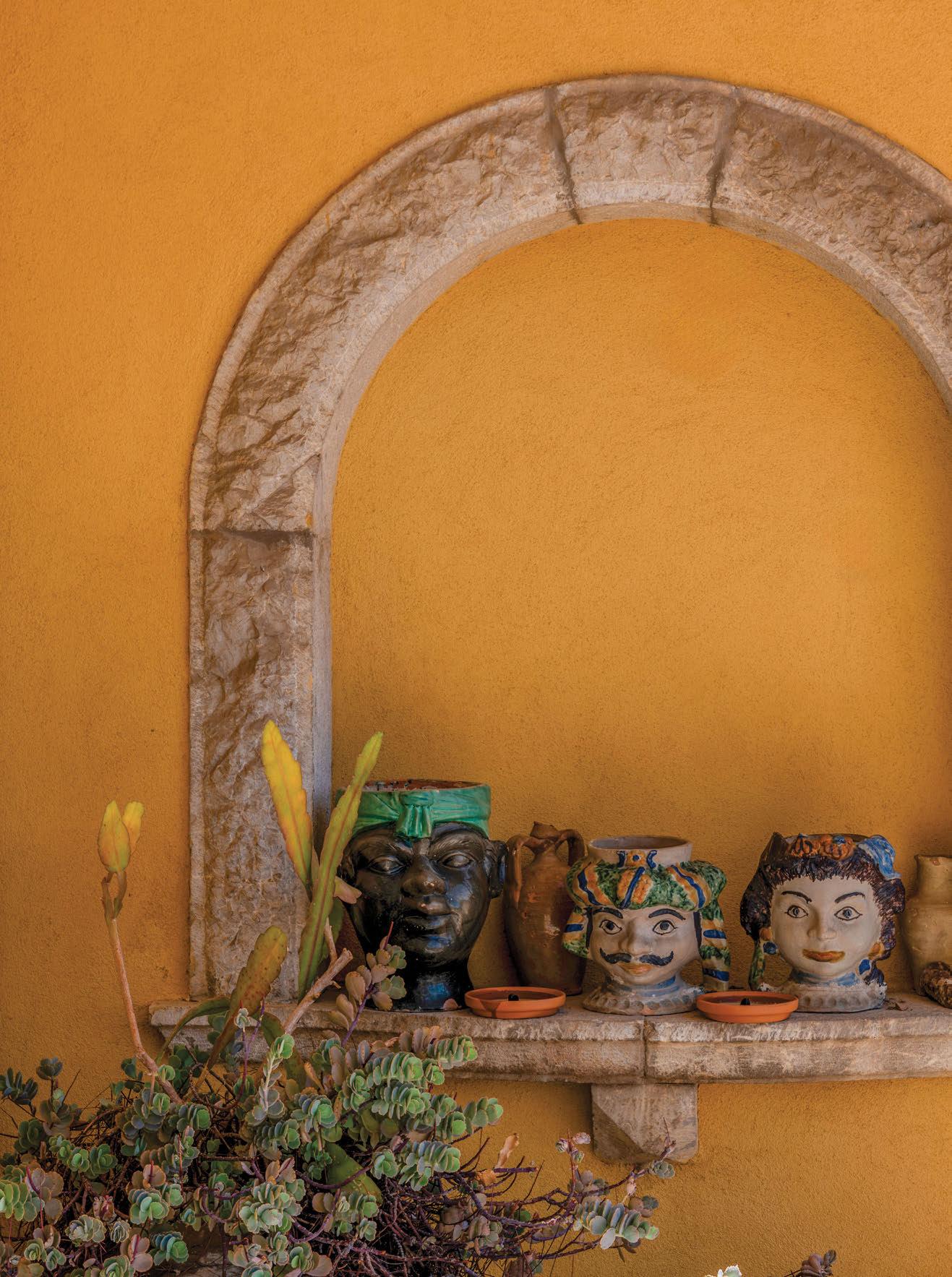
Hand-painted Teste di Moro
Reverse:
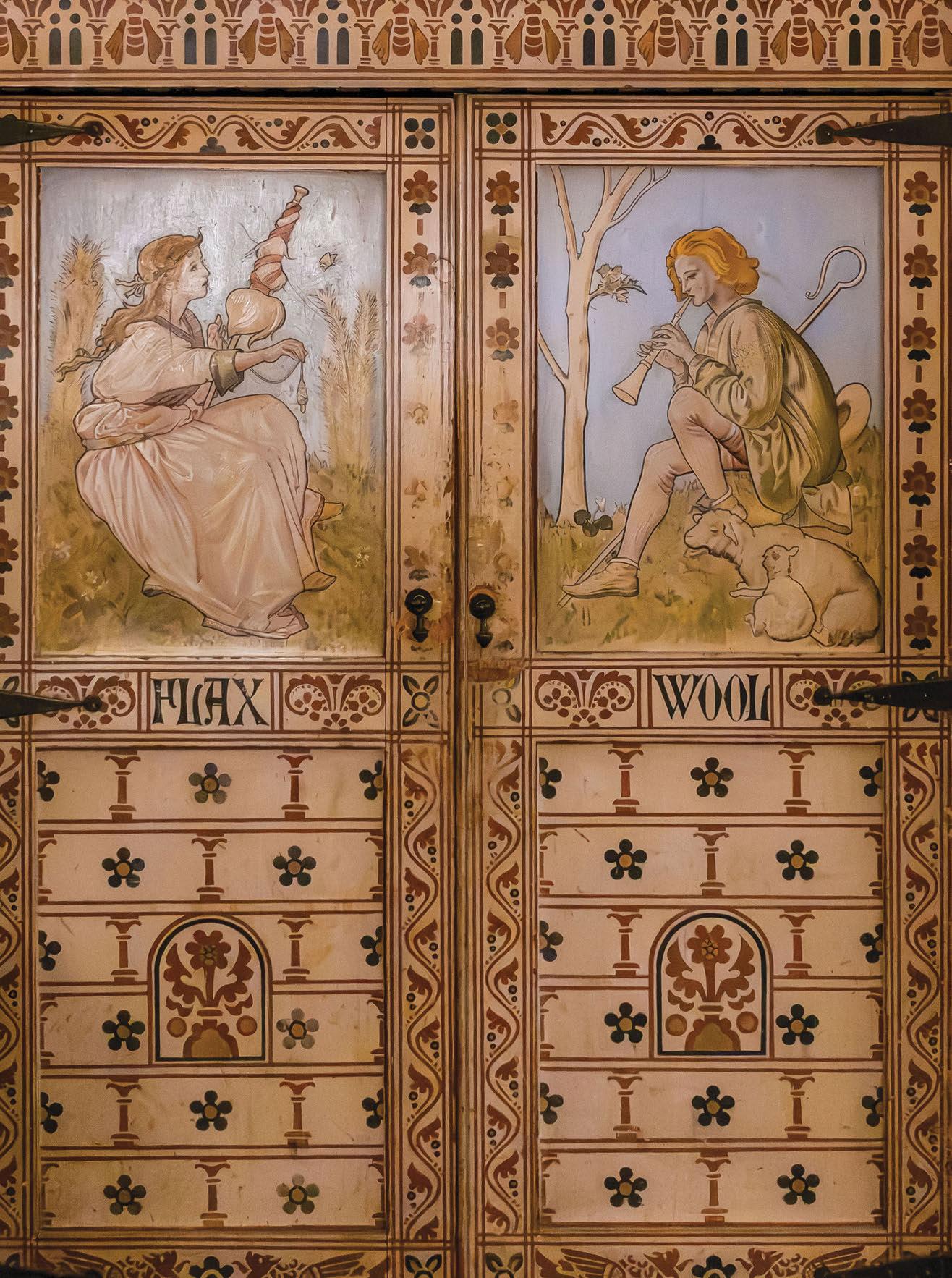
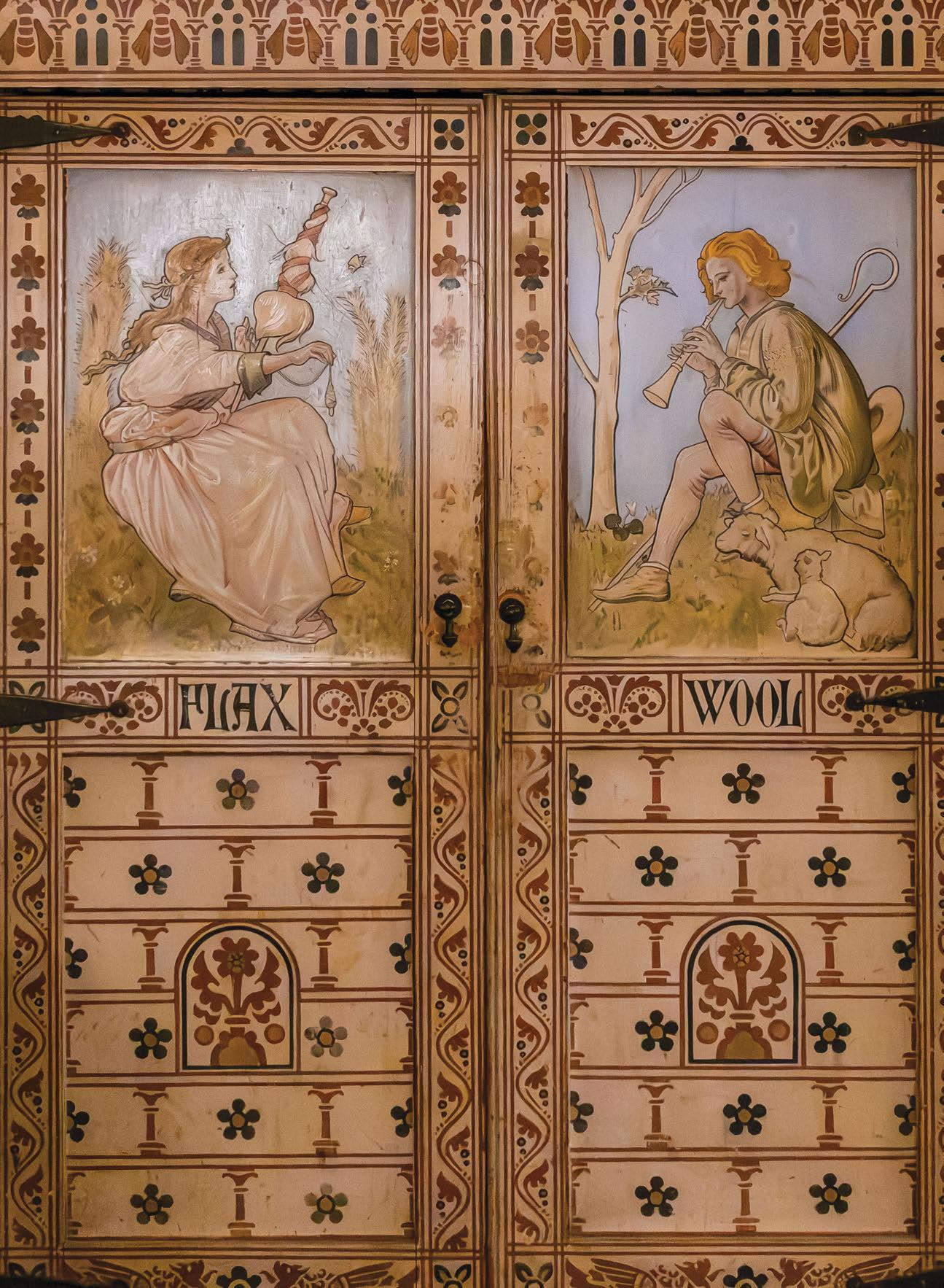
Flax and Wool Cabinet William Burges, c. 1859
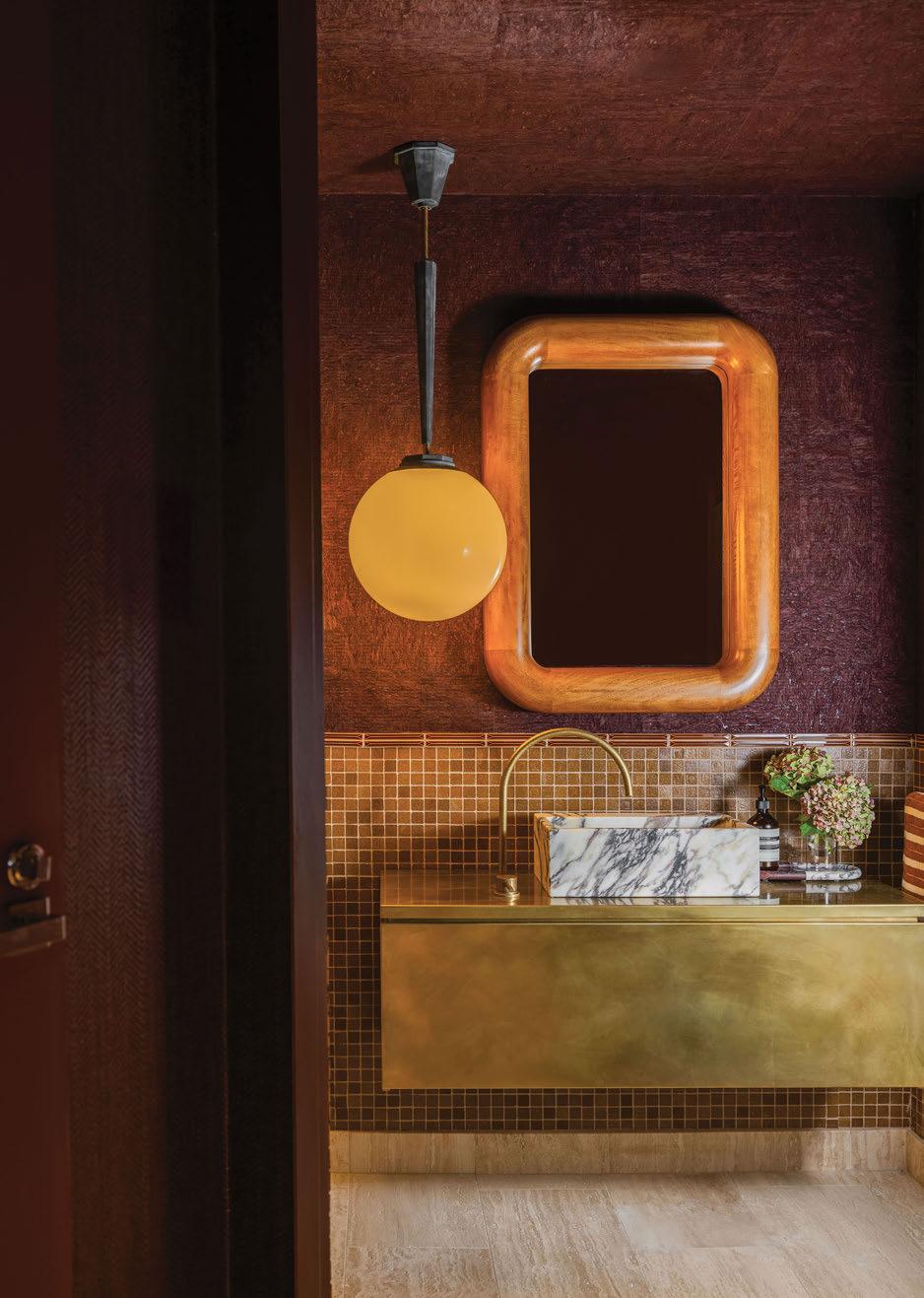
BIRSLEY
DESIGN SCOUT INTERIORS / PHOTOGRAPHY BY TANIKA BLAIR
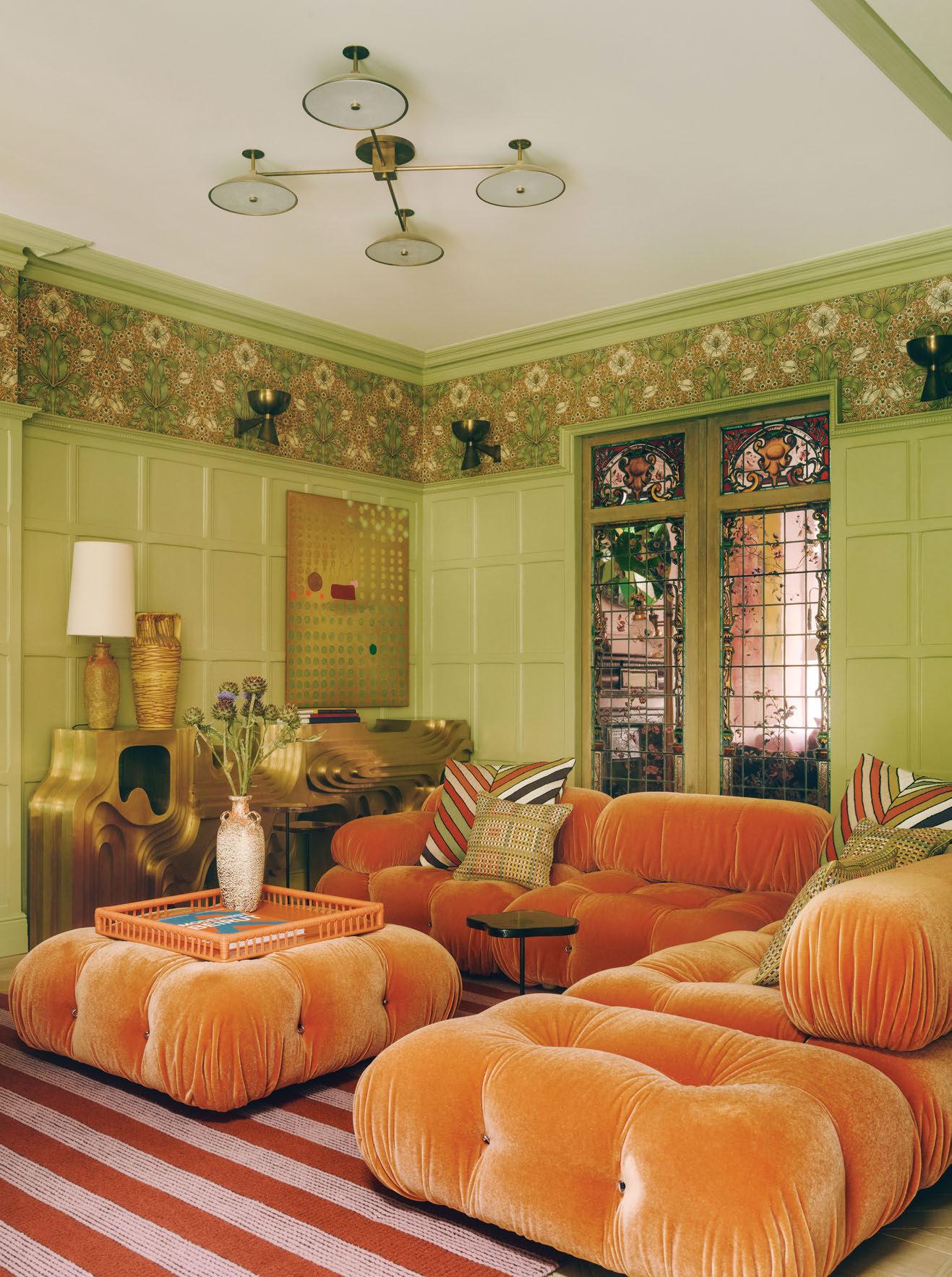
COBE
INTERIORS BY SCOTT MADDUX
PHOTOGRAPHY BY MICHAEL SINCLAIR
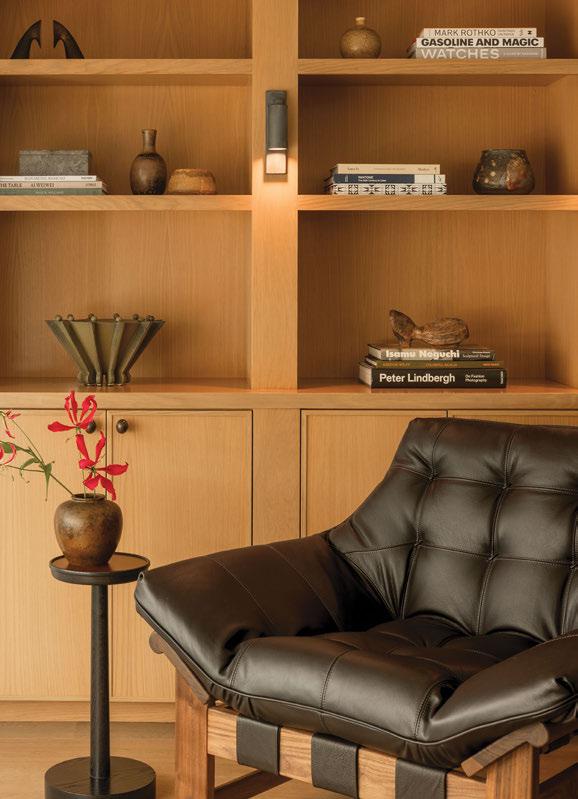
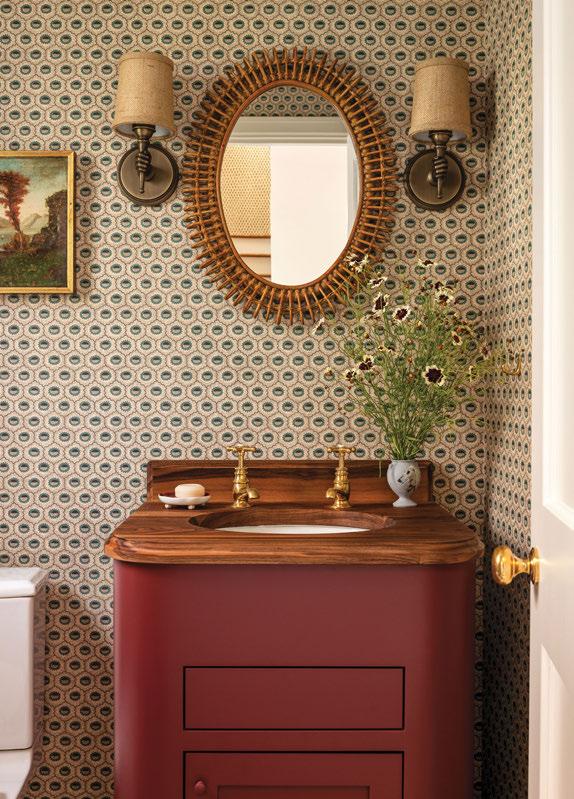
AMES
INTERIORS BY JESSICA ALPERT DESIGN
ARCHITECTURE BY P2 DESIGNS
PHOTOGRAPHY BY SHADE DEGGES
STYLING BY LISA ROWE & LAUREN GASTELUM
THE HAND SCONCE
INTERIORS BY HEIDI CAILLIER DESIGN
ARCHITECTURE BY LAUREN CROCCO
PHOTOGRAPHY BY HARIS KENJAR
BY
BY
INTERIORS
JOHN BAMBICK
PHOTOGRAPHY
ETHAN HERRINGTON
BELLE MEADE
INTERIORS BY STEFANI STEIN
STAMP TRIPLE
INTERIORS BY COMMUNE
DESIGN / BUILD BY ECHO
PROJECTS / PHOTOGRAPHY BY LAURE JOLIET
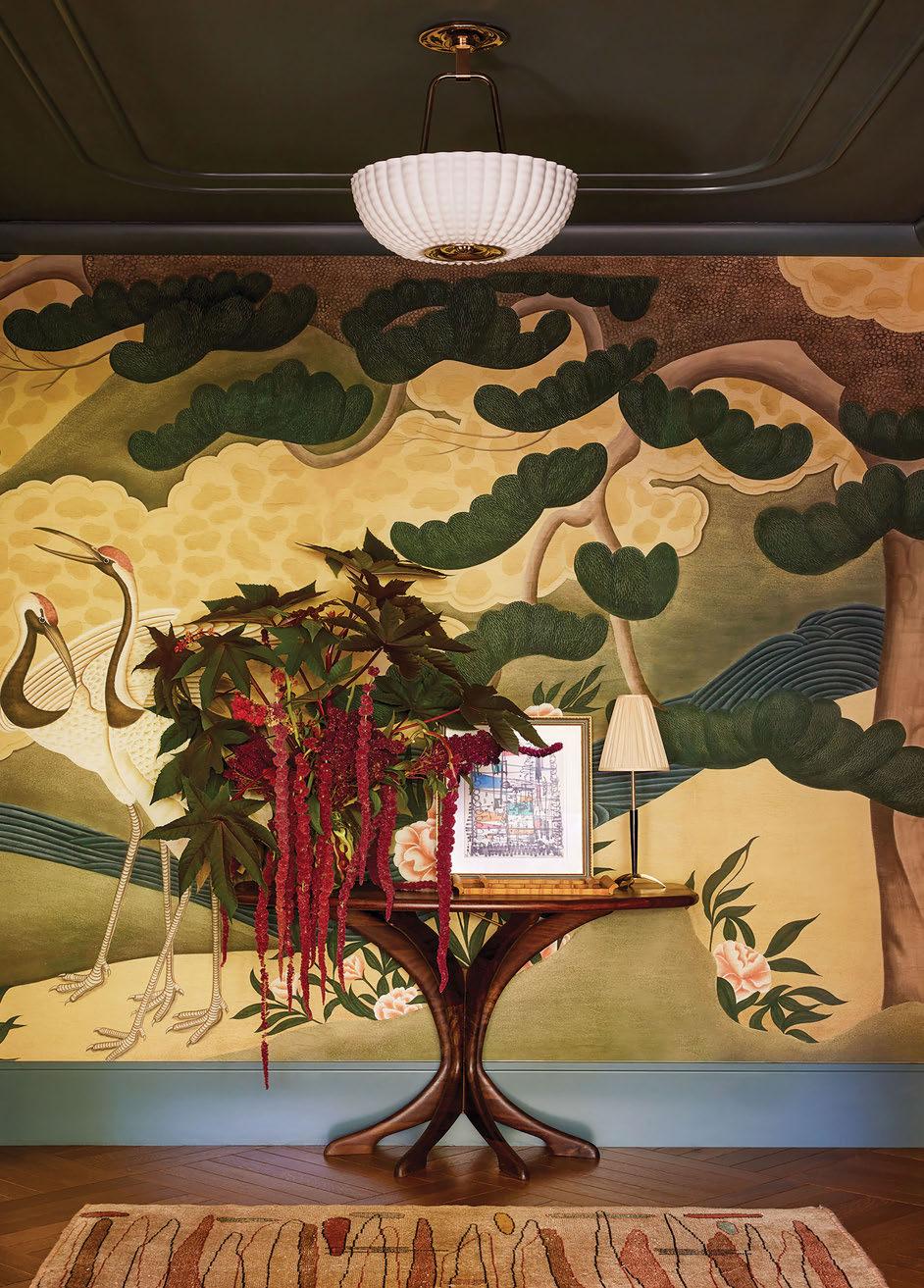
LEASOWE
ALLISON ABNEY INTERIORS / DANIEL BECK ARCHITECTURE / GROSSMAN BUILDING GROUP / PHOTOGRAPHY BY TIM WILLIAMS
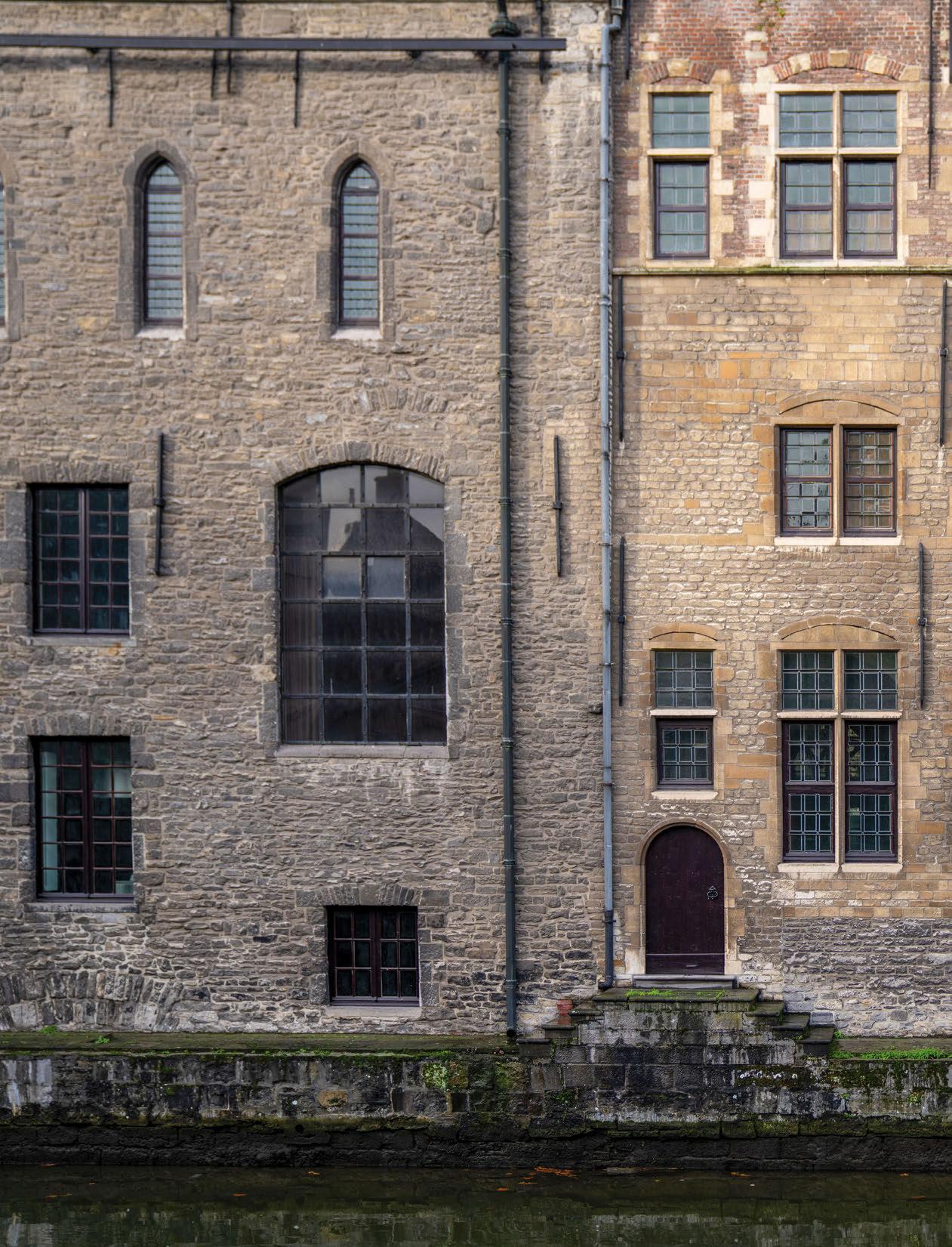
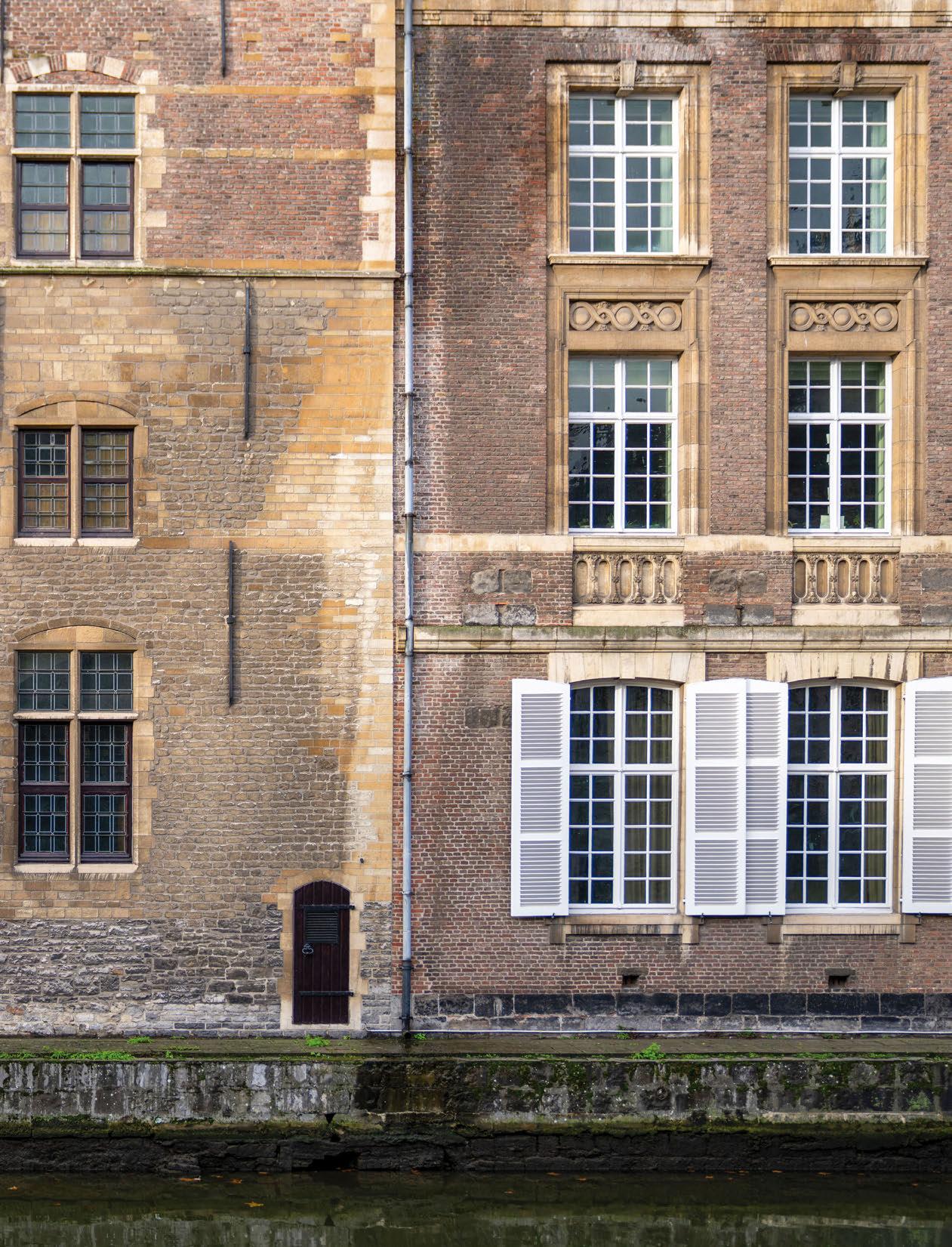
A QUIET CANAL NOVEMBER 20, 2025 GHENT,
BELGIUM
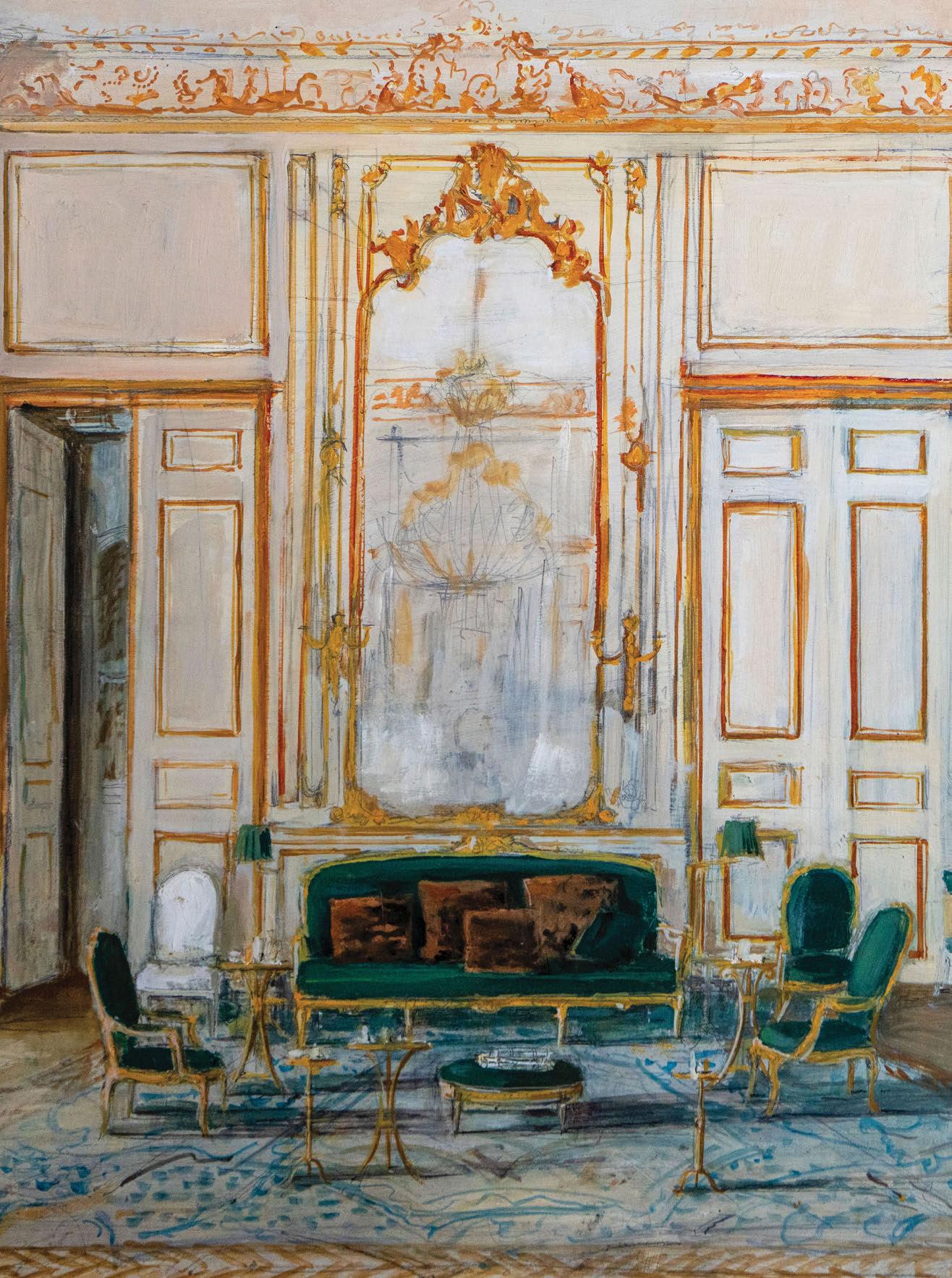
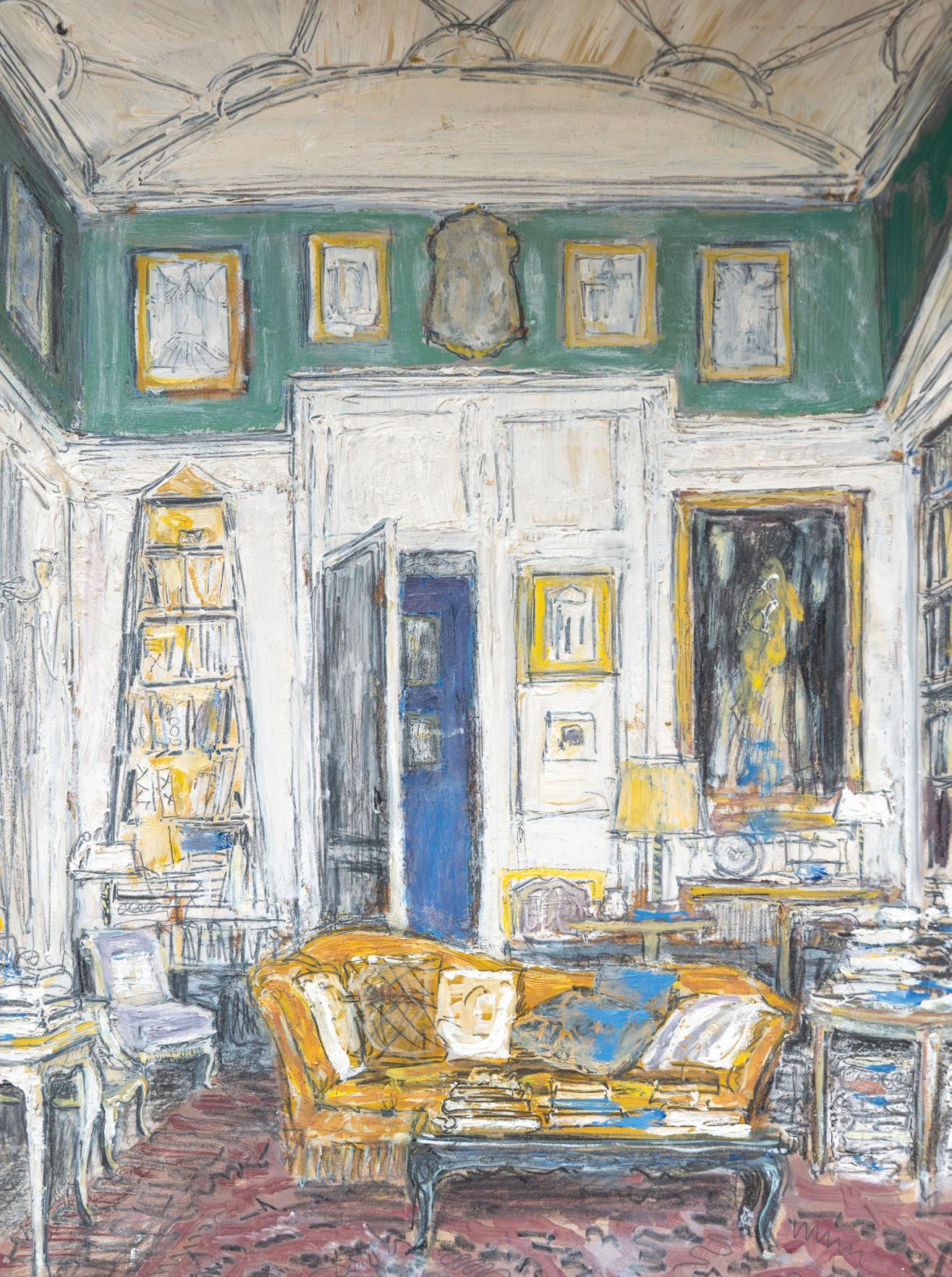
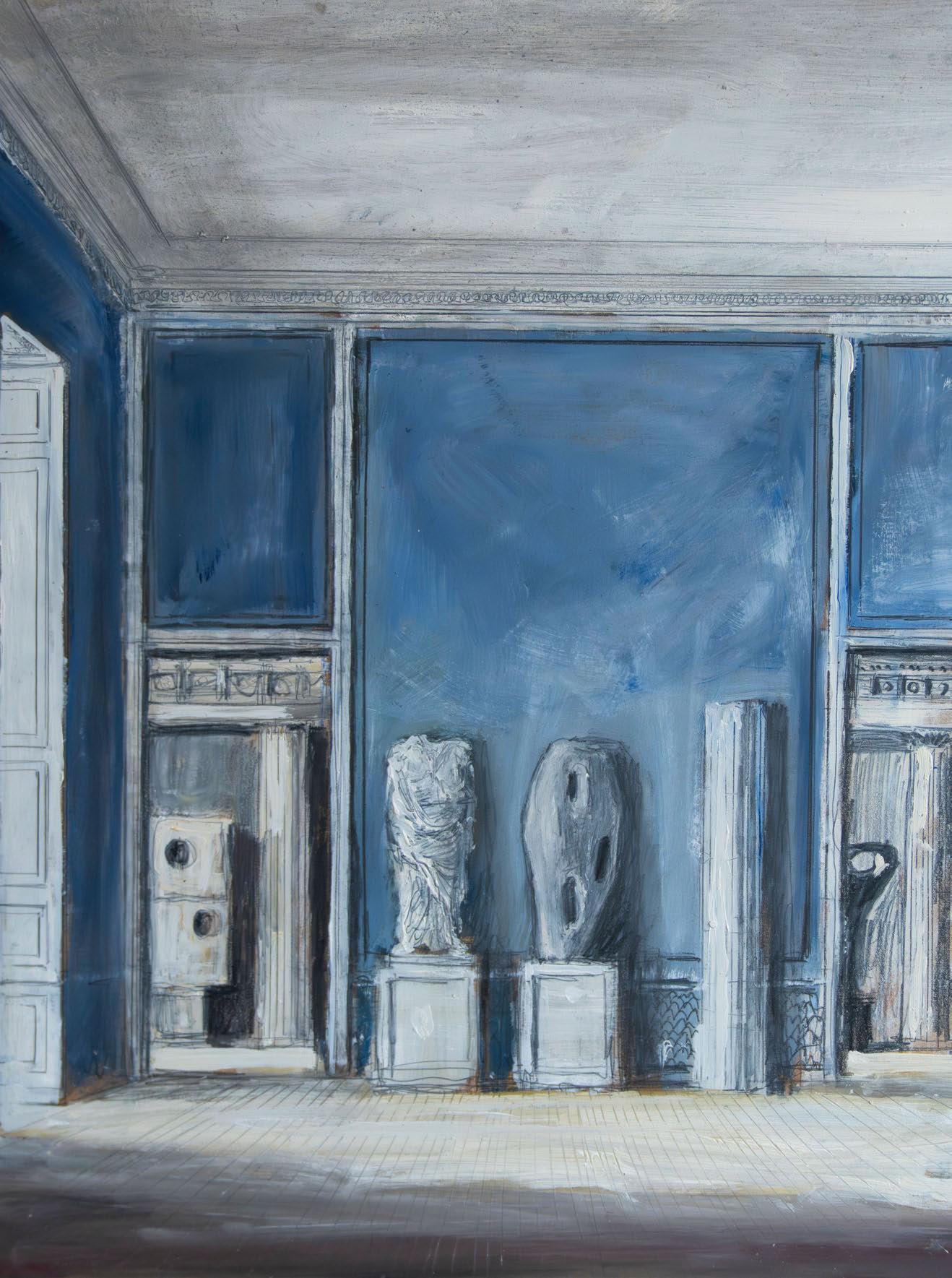
A room portrait of Hubert de Givenchy’s White Salon, Hotel d’Orrouer, Paris.

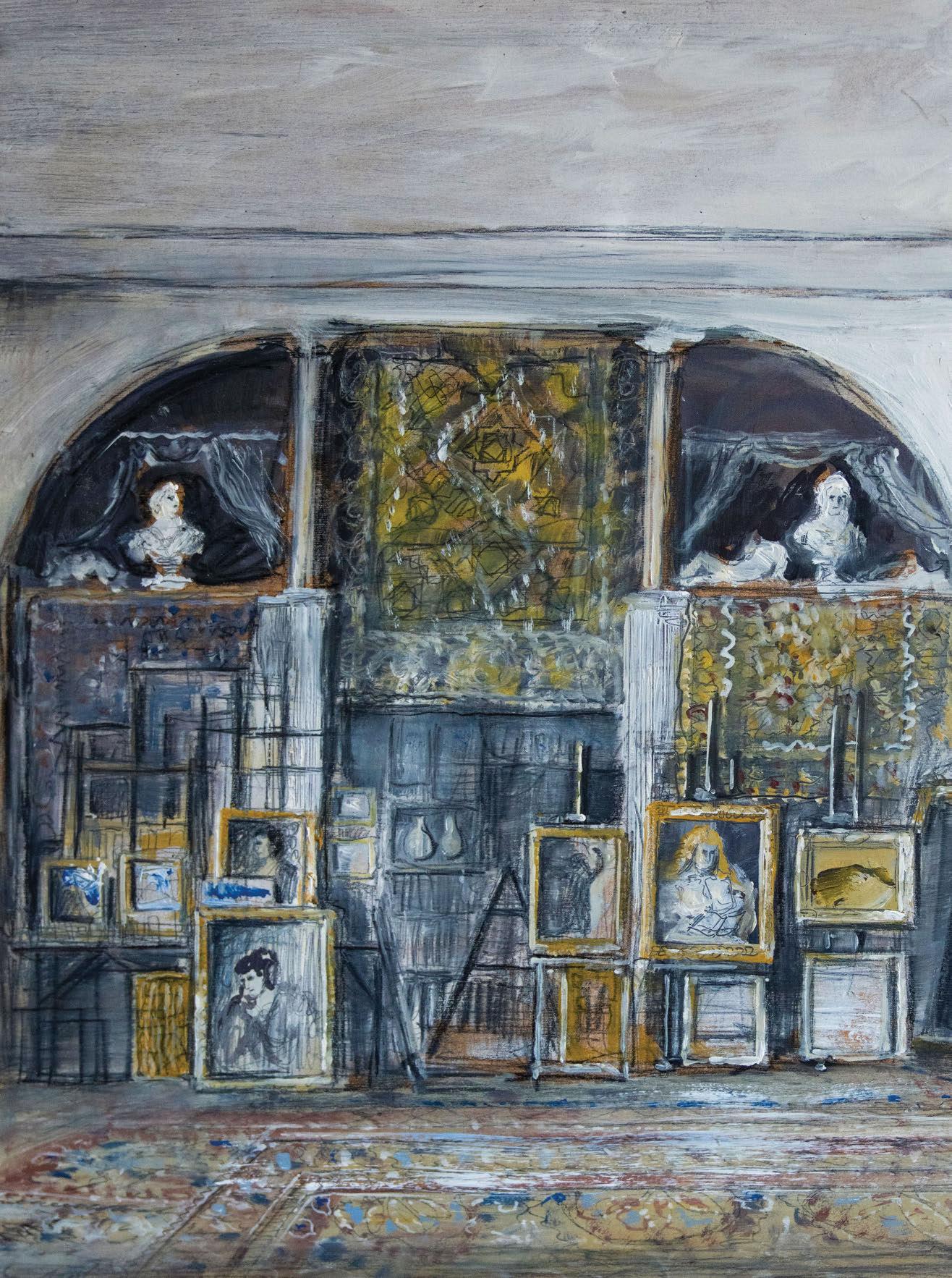
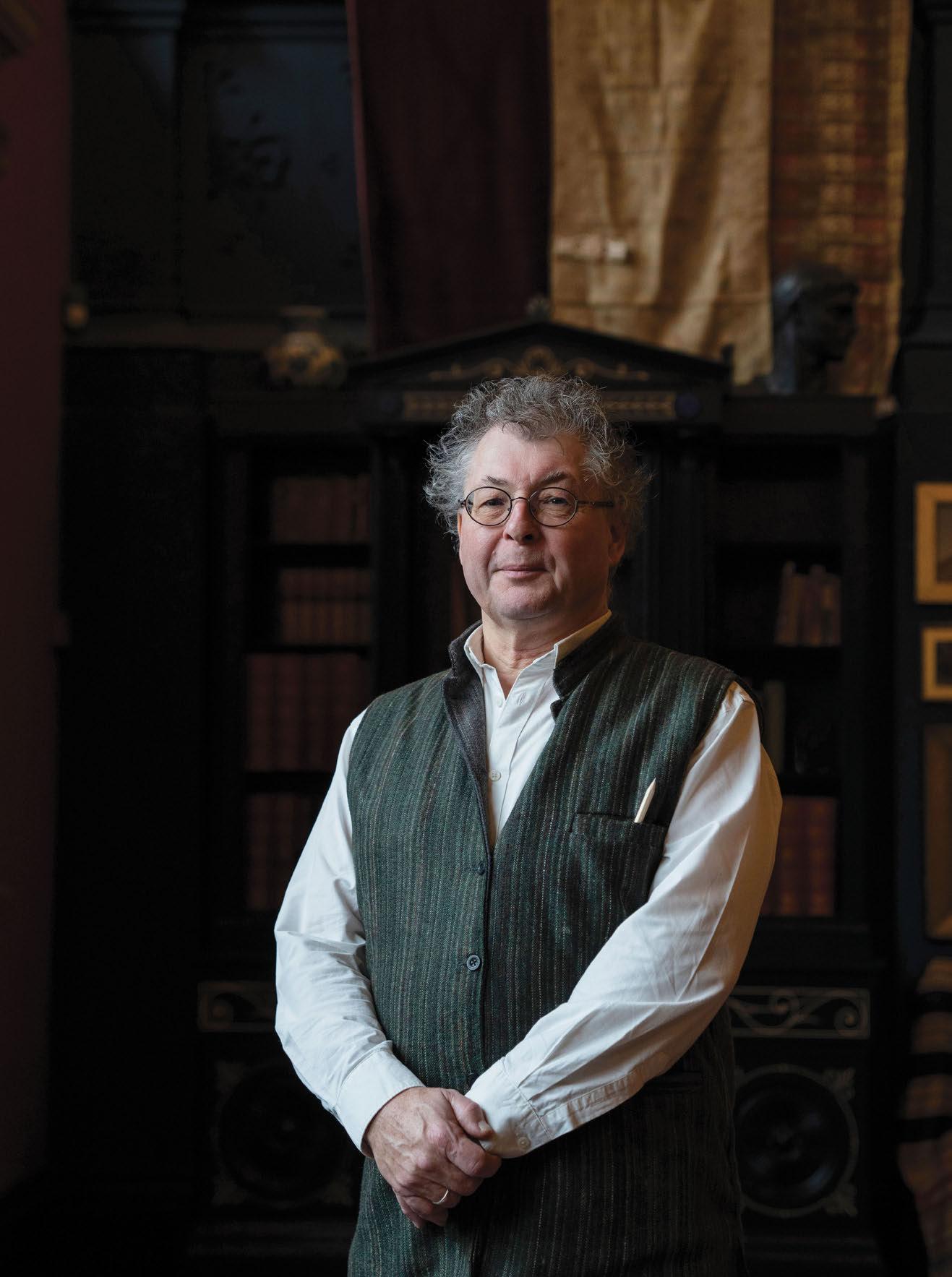
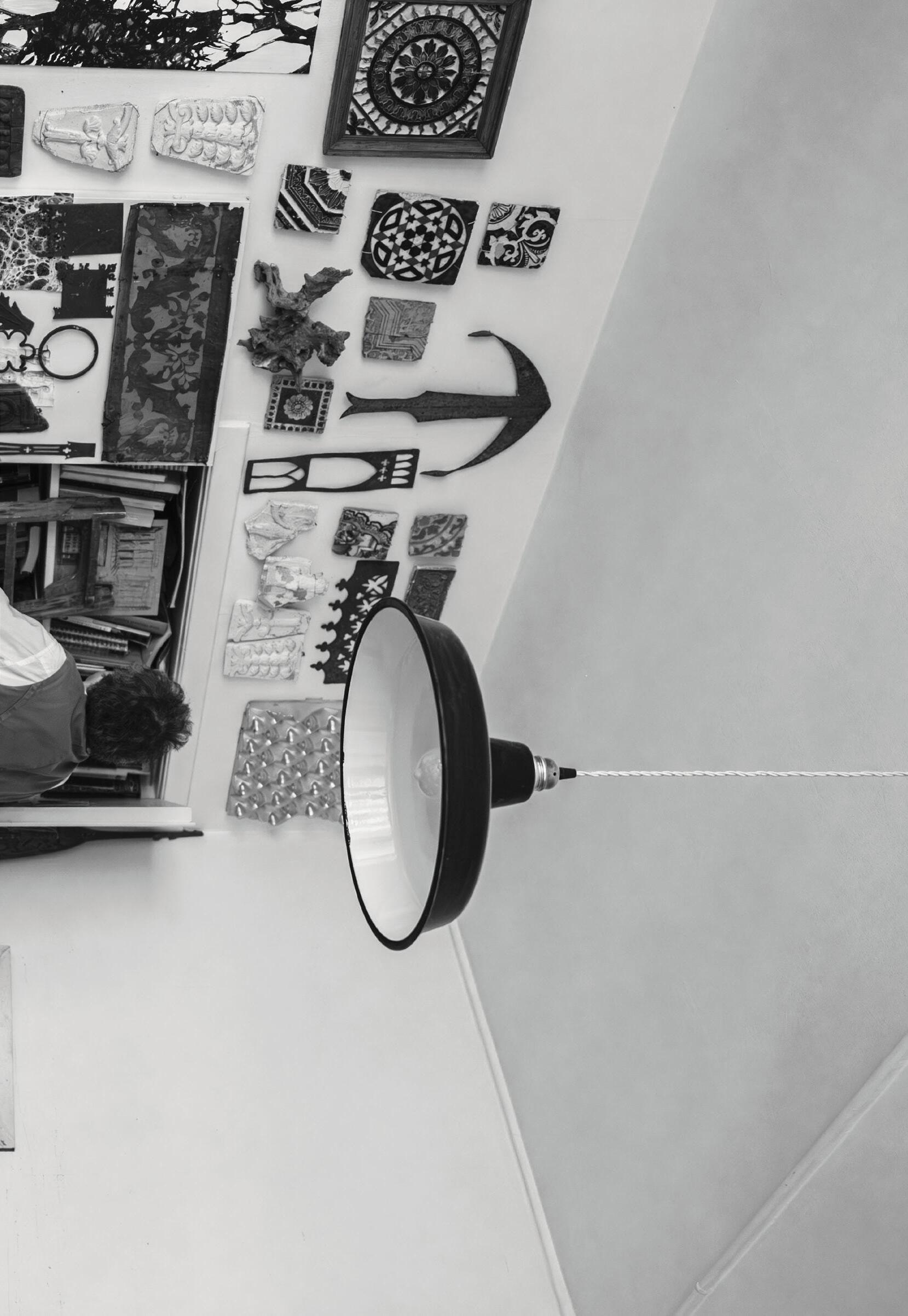
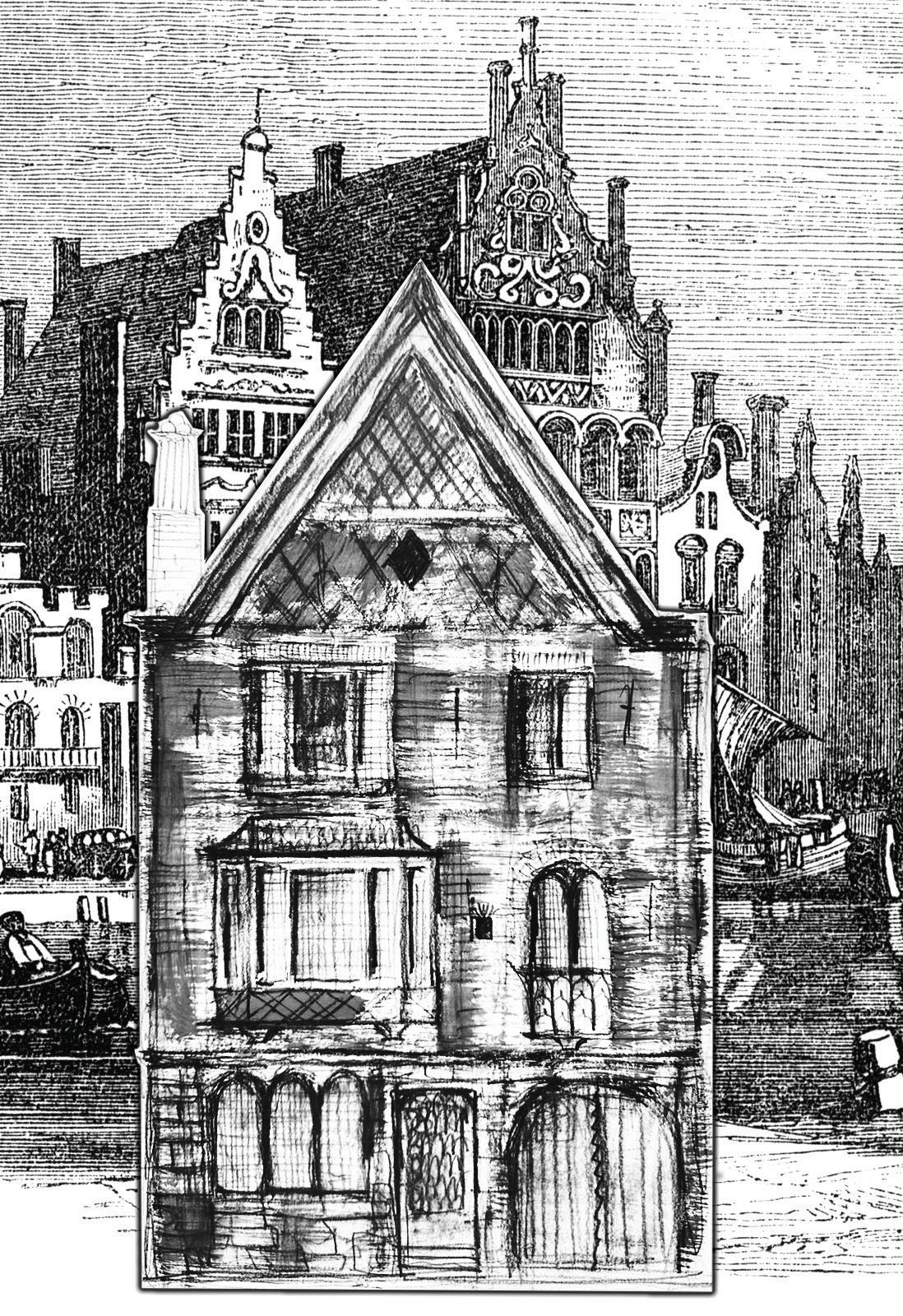
There is a quiet dialogue between artist Pierre Bergian and the pictures he creates. Born in Bruges, Belgium, the son of an artist, Pierre was introduced early to a creative life, spending his childhood visiting artist studios and other creative spaces alongside his father. These experiences instilled both familiarity and imagination to his eye but his fascination with architectural structure was shaped by youthful encounters with old, empty houses in Bruges, Lille and Ghent. He’d climb into these spaces and explore, collecting architectural fragments, often tiles or pieces of tiles acting as small storybooks of the geography, giving space, light and memory to his work now.
The memories of the houses he visited as a boy remain central to his practice. His paintings often depict near-empty interiors, punctuated by carefully placed objects or familiar design details, exploring how light and atmosphere give room to history and imagination. And importantly, art with some “ hasard ,” or chance, letting the work embrace coincidence.
Pierre Bergian
Leighton House
holland park, london
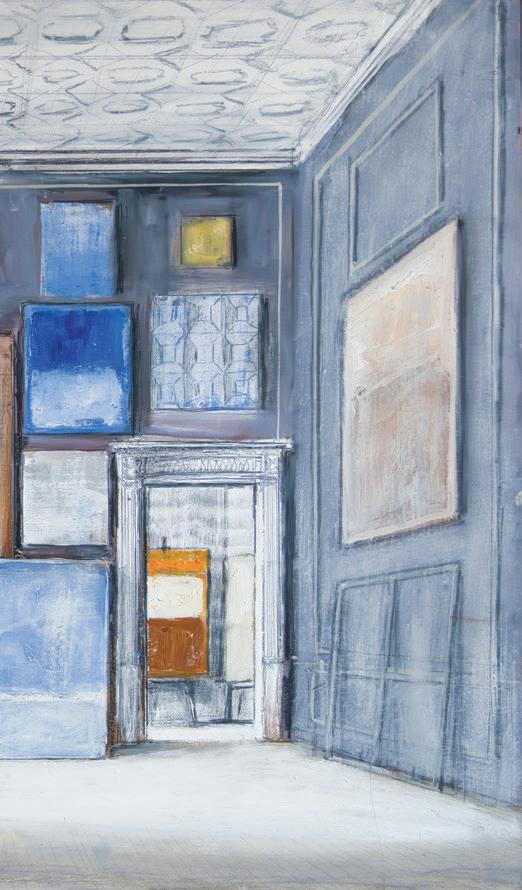
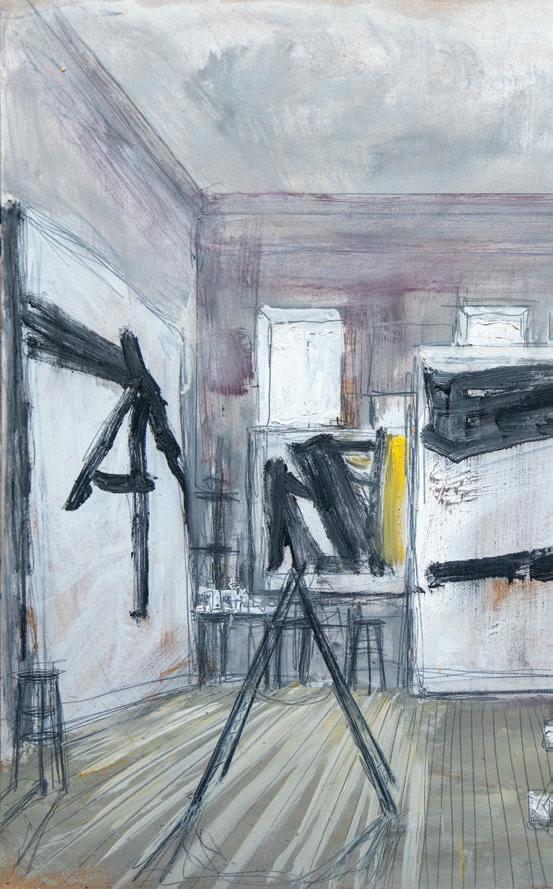
Drawing for Inspiration
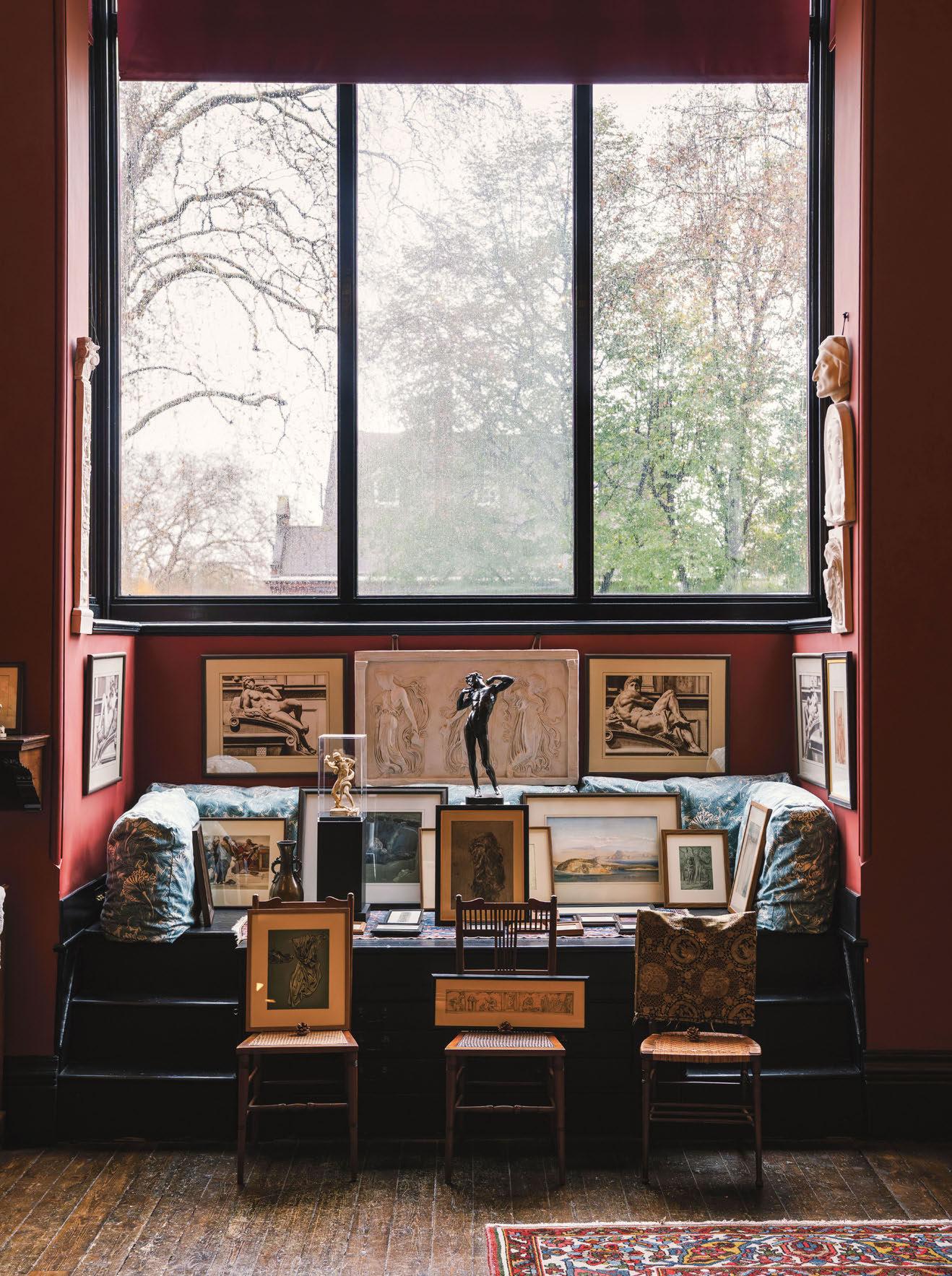
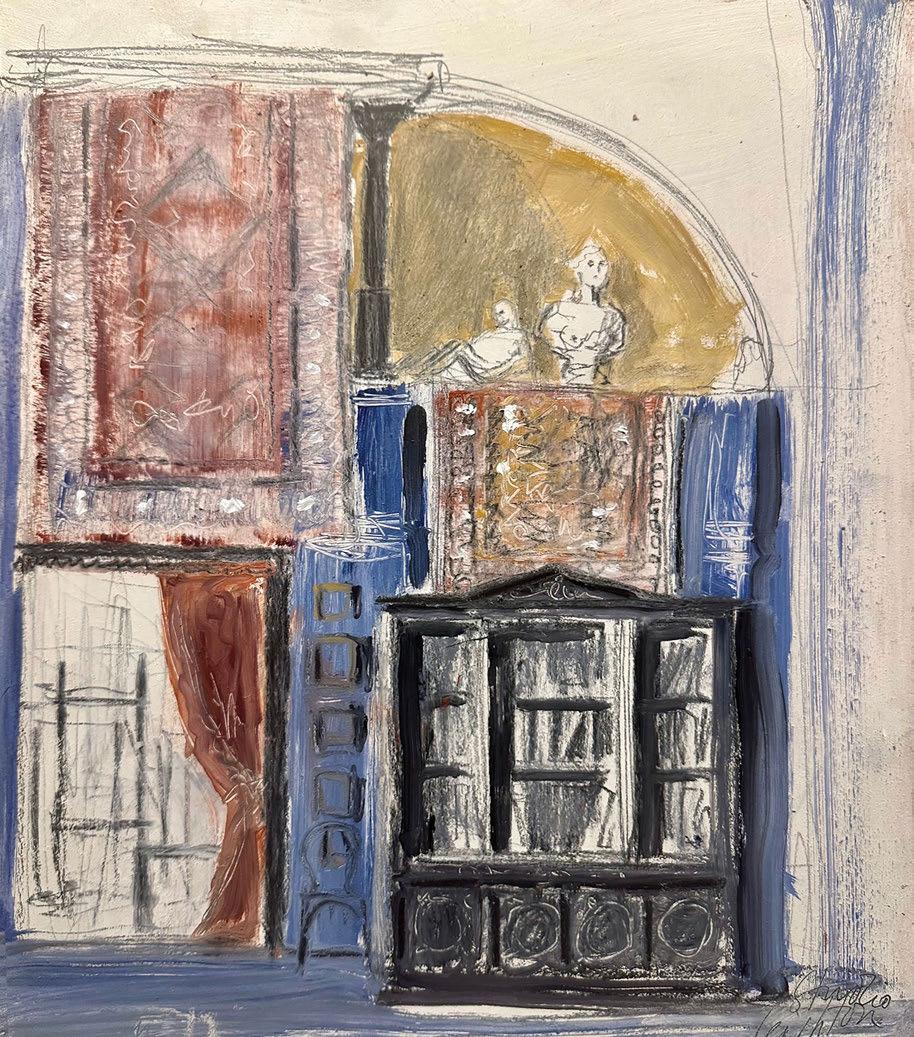
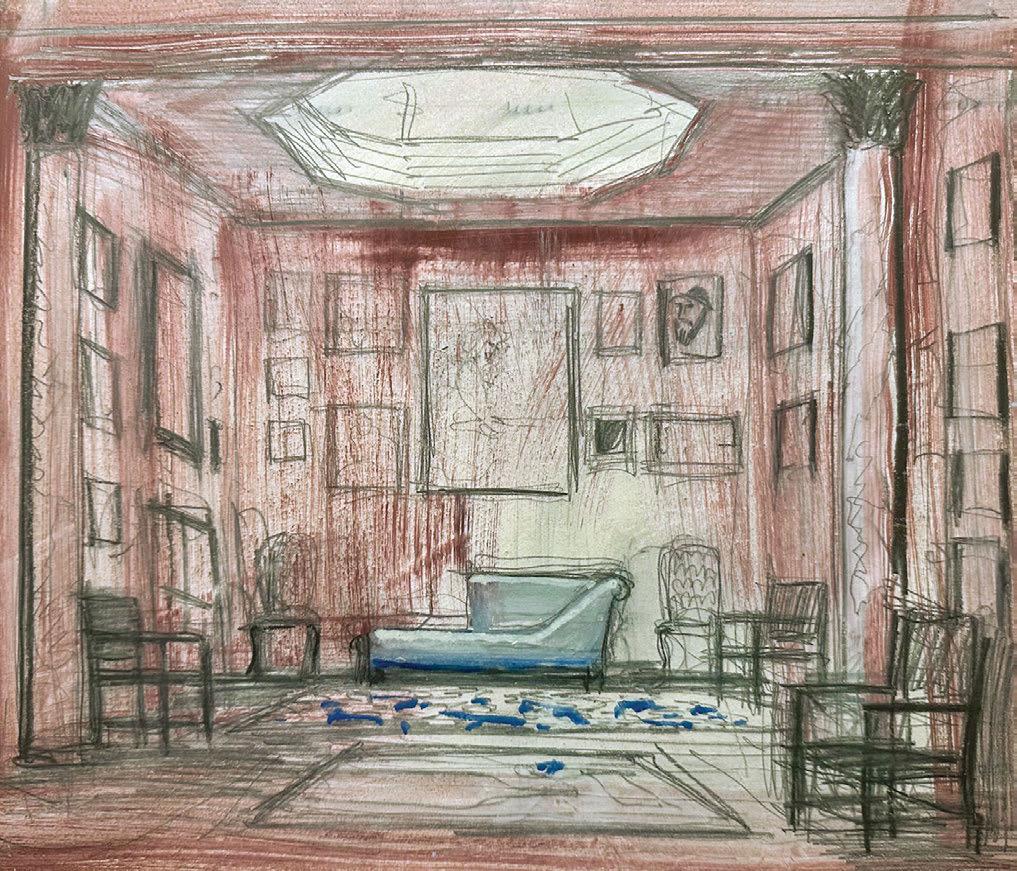
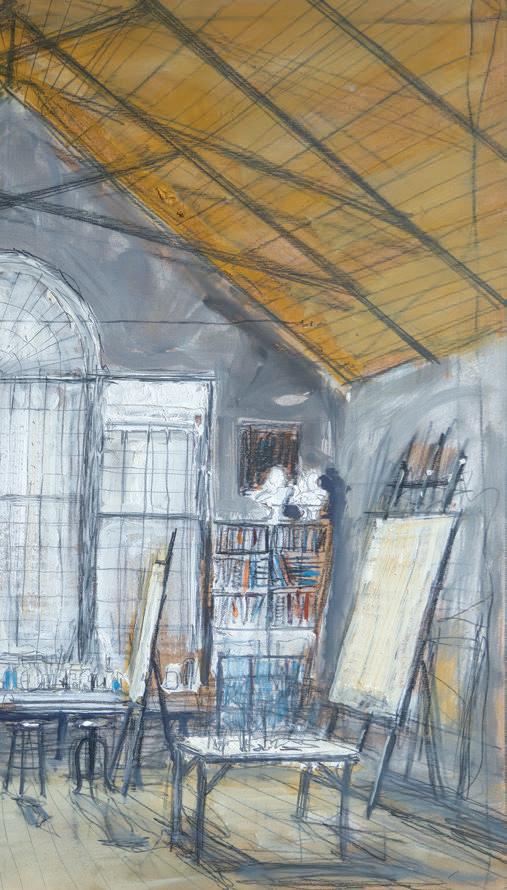
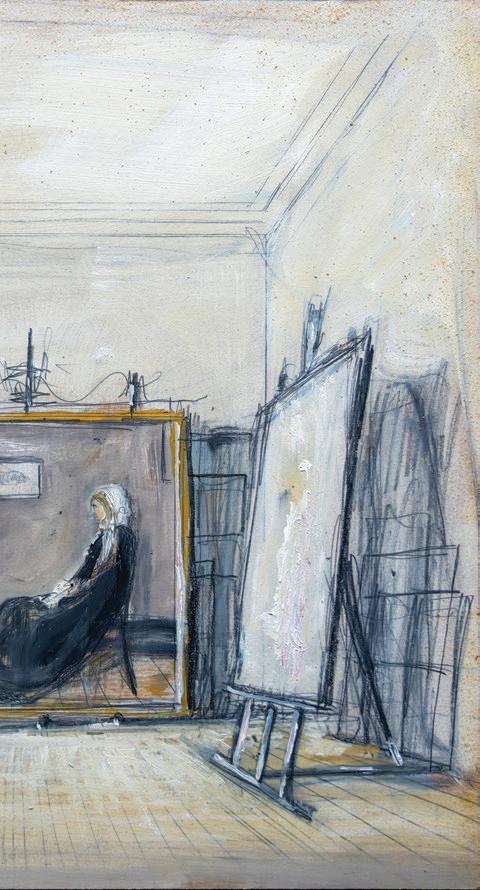
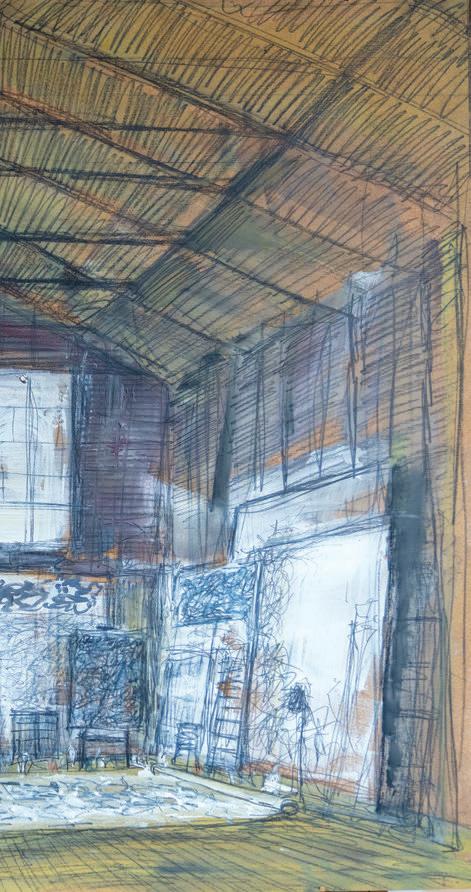
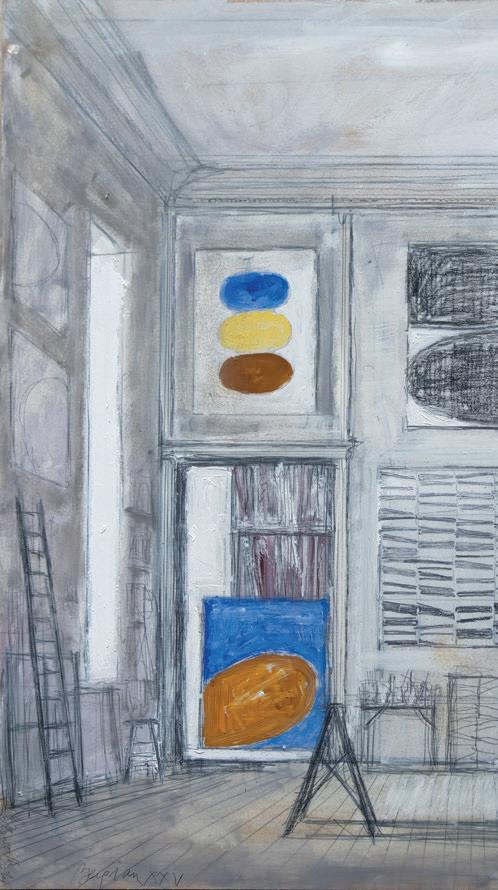
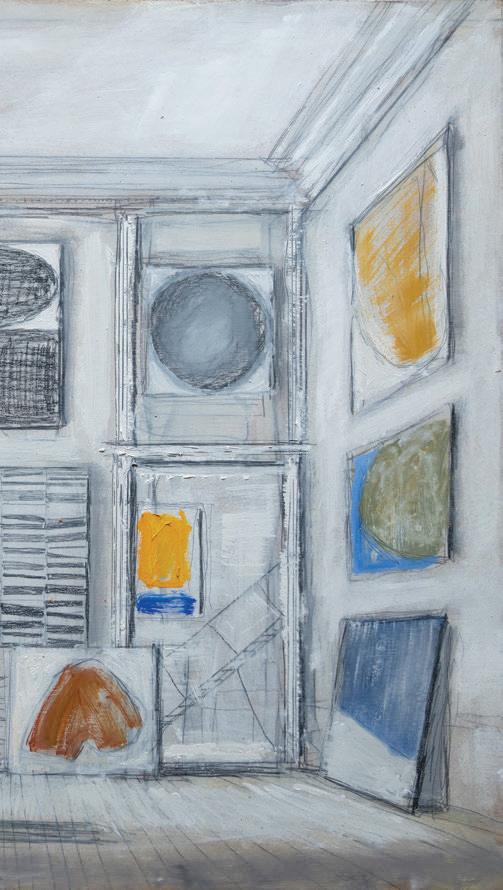
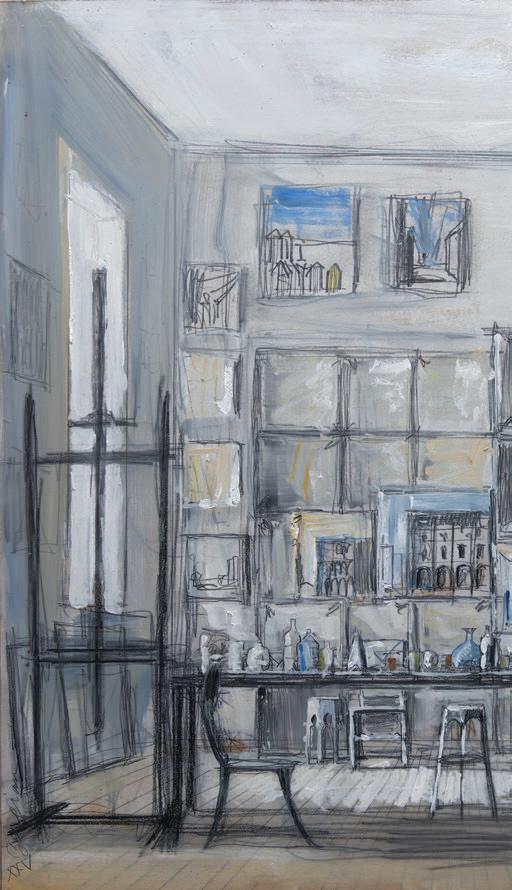
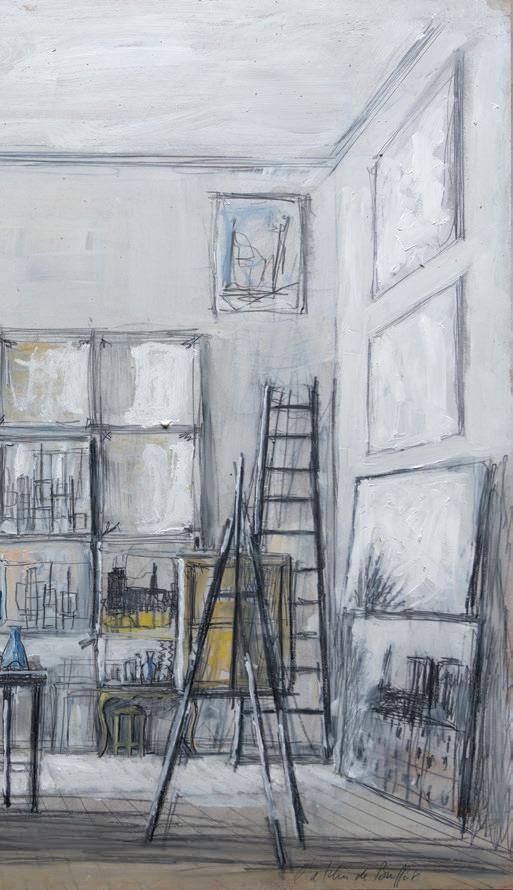
A scouting trip to Leighton House, the 19th-century home and studio of Sir Frederic Leighton, set in motion a series of sketches from Pierre’s recollections of admired artists’ spaces.
The Main Studio
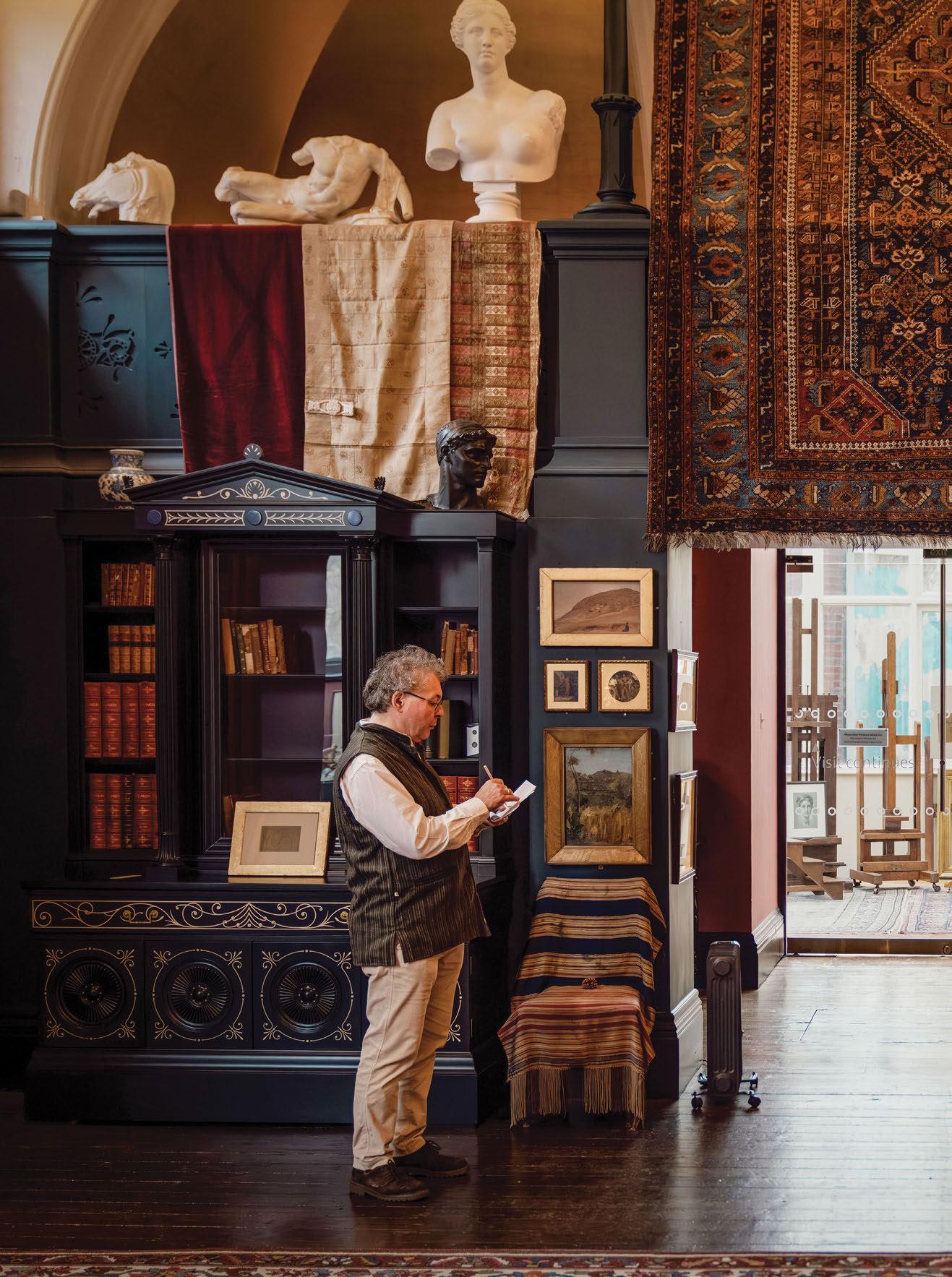
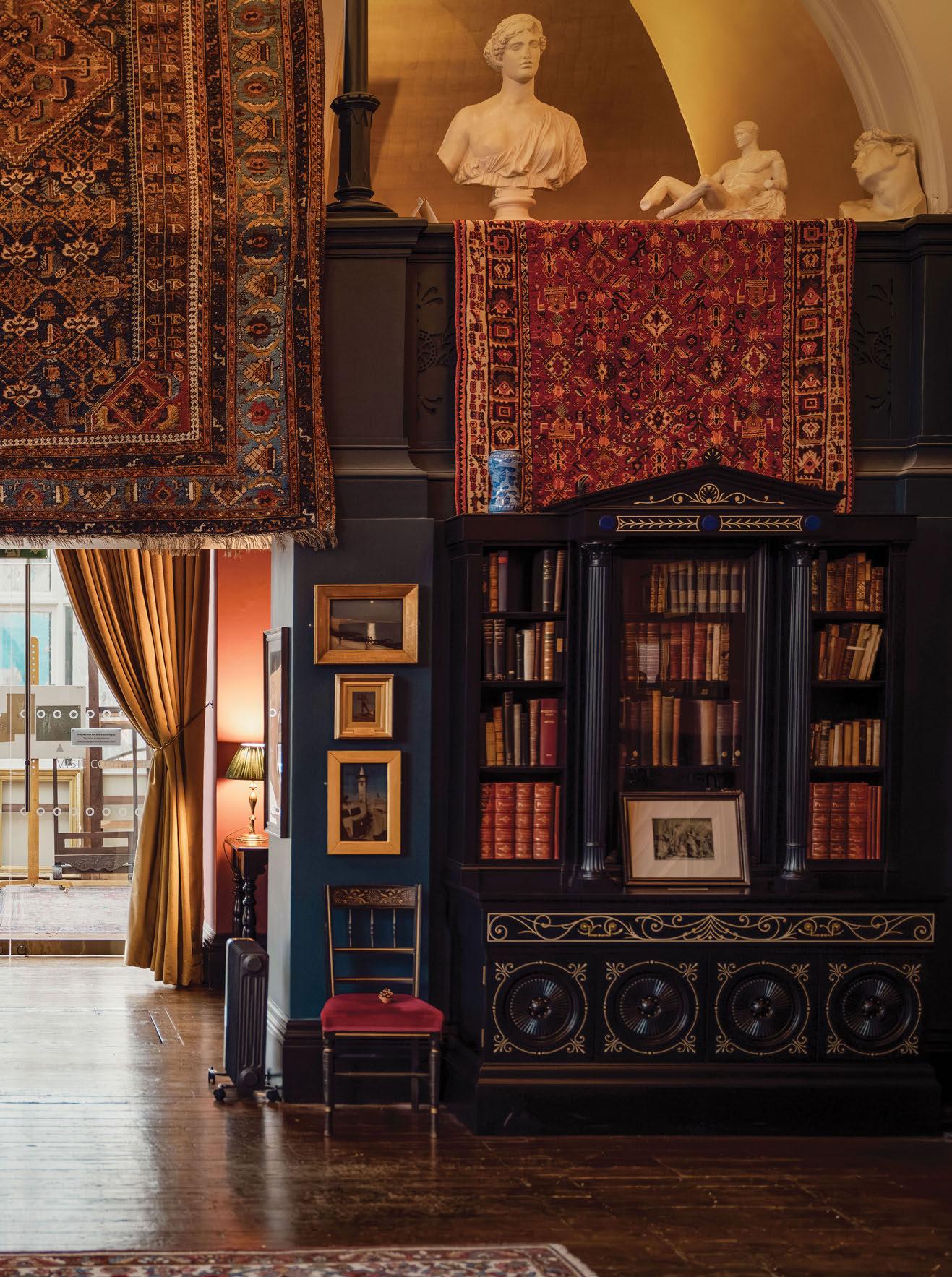
Inside Victorian artist Sir Frederic Leighton’s (1830-1896) home and studio, Leighton House, Pierre’s discovery-seeking obsession finds a natural echo. Art, ornament and tile coexist seamlessly in a space he deeply admires for its synthesis of craft and imagination.
Leighton used his home as both a private residence and a working artistic laboratory. It was designed around his north-lit studio, where he painted and received models for sittings, while the surrounding rooms functioned as spaces for study, display and hosting fellow artists, patrons and intellectuals.
This page: The Silk Room Opposite: The Stair Hall
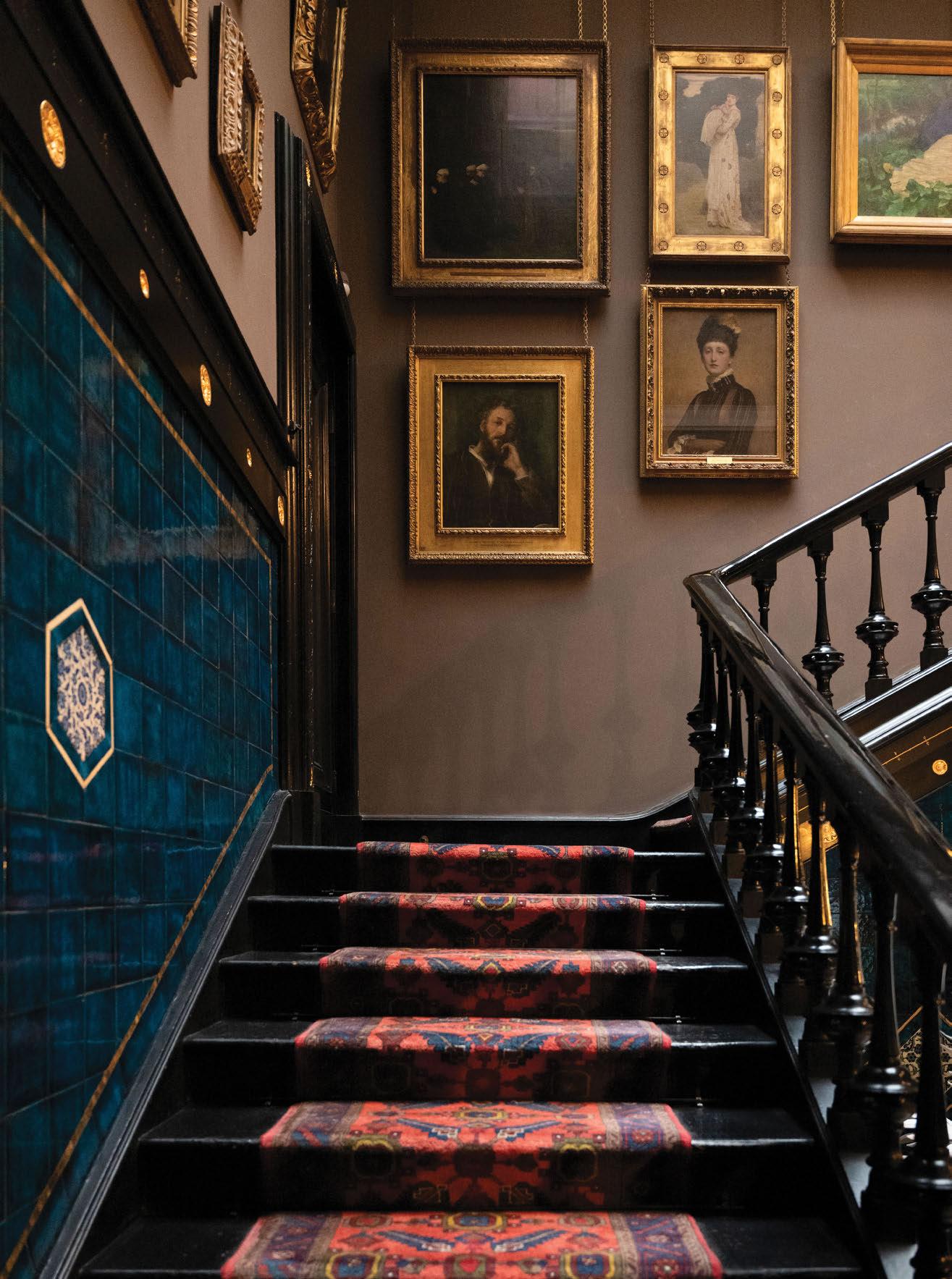
Atribute to the Aesthetic Movement, Leighton treated the house as a total work of art—collecting tiles, textiles, sculpture and objects from across Europe and the Middle East—so that daily life, creative practice and architectural ornament existed in constant conversation alongside his art and that of his contemporaries in Victorian London.
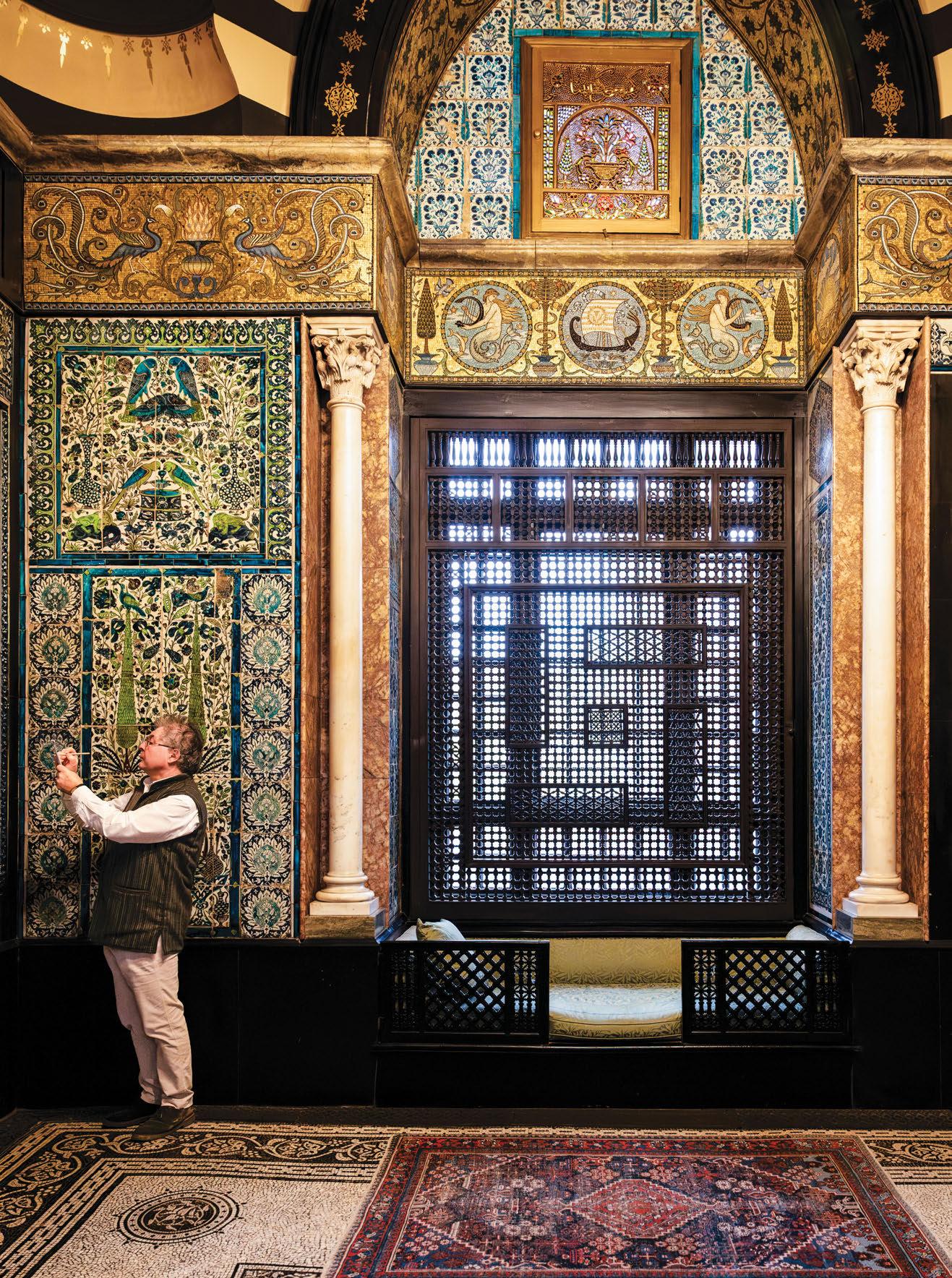
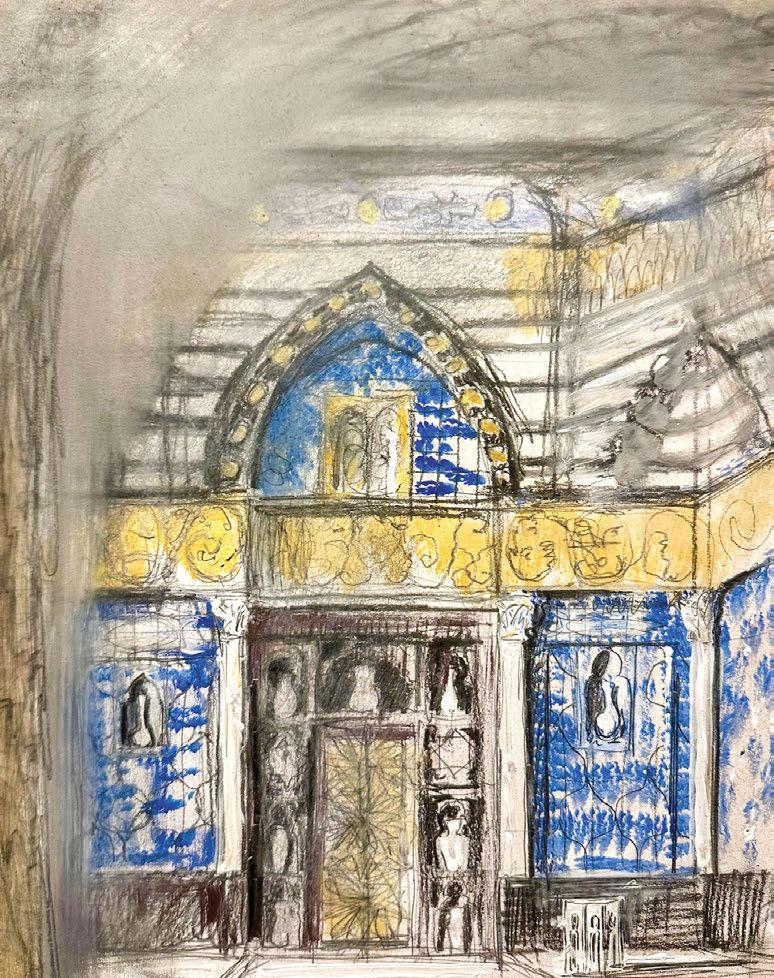
Opposite: The Arab Hall, inspired by Leighton’s travels to the Middle East.
Above: Pierre’s interpretation of the space.
Today, Pierre is an artist. But this wasn’t always the case. He studied art history and archaeology at university instead of architecture, as he had always planned to do. But his wife, Angèle Boddaert-Devletian, is an artist and one Sunday afternoon in Ghent, in his late thirties, with a day job appraising and advising on antiquities and decorative restorations, Pierre picked up a paintbrush in her studio and began. What did he paint? Architecture, the often empty interiors that surrounded them, along with the detailed rooms from his memories. A number of years on, he is still painting rooms—what he calls “meditations.” Perhaps part fantasy and part reality, neoclassical, but not always. He cites a common dream, that he discovers rooms in his own house he didn’t know he had and this then becomes a further consciousness; a Hôtel de Maître with no end.
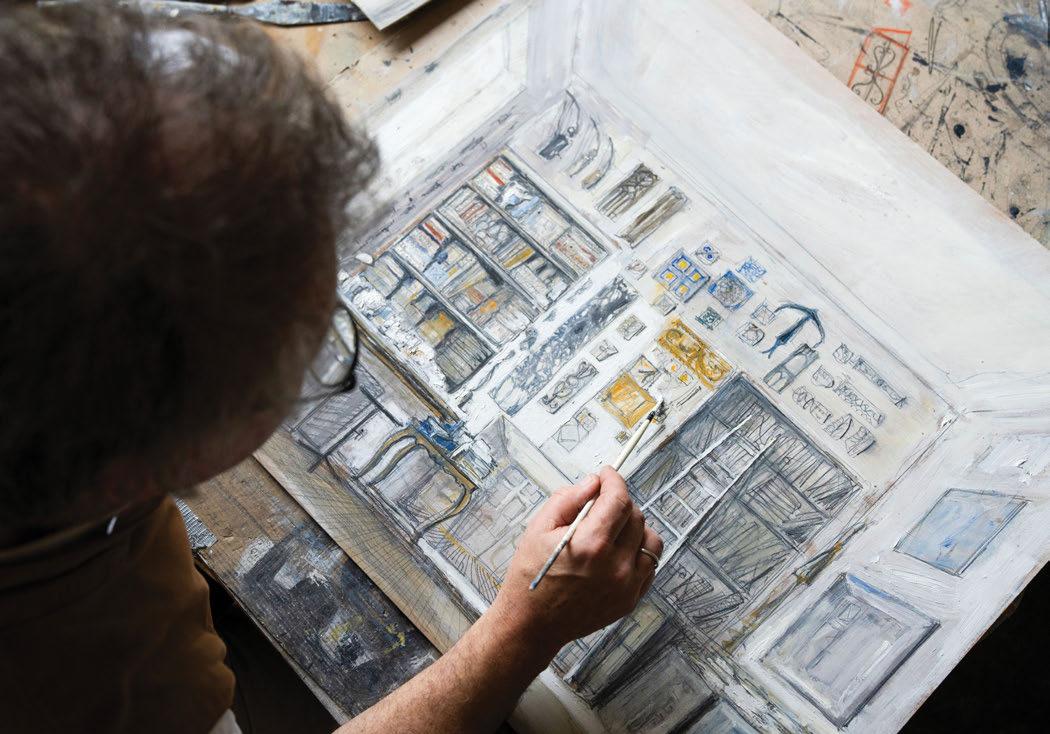
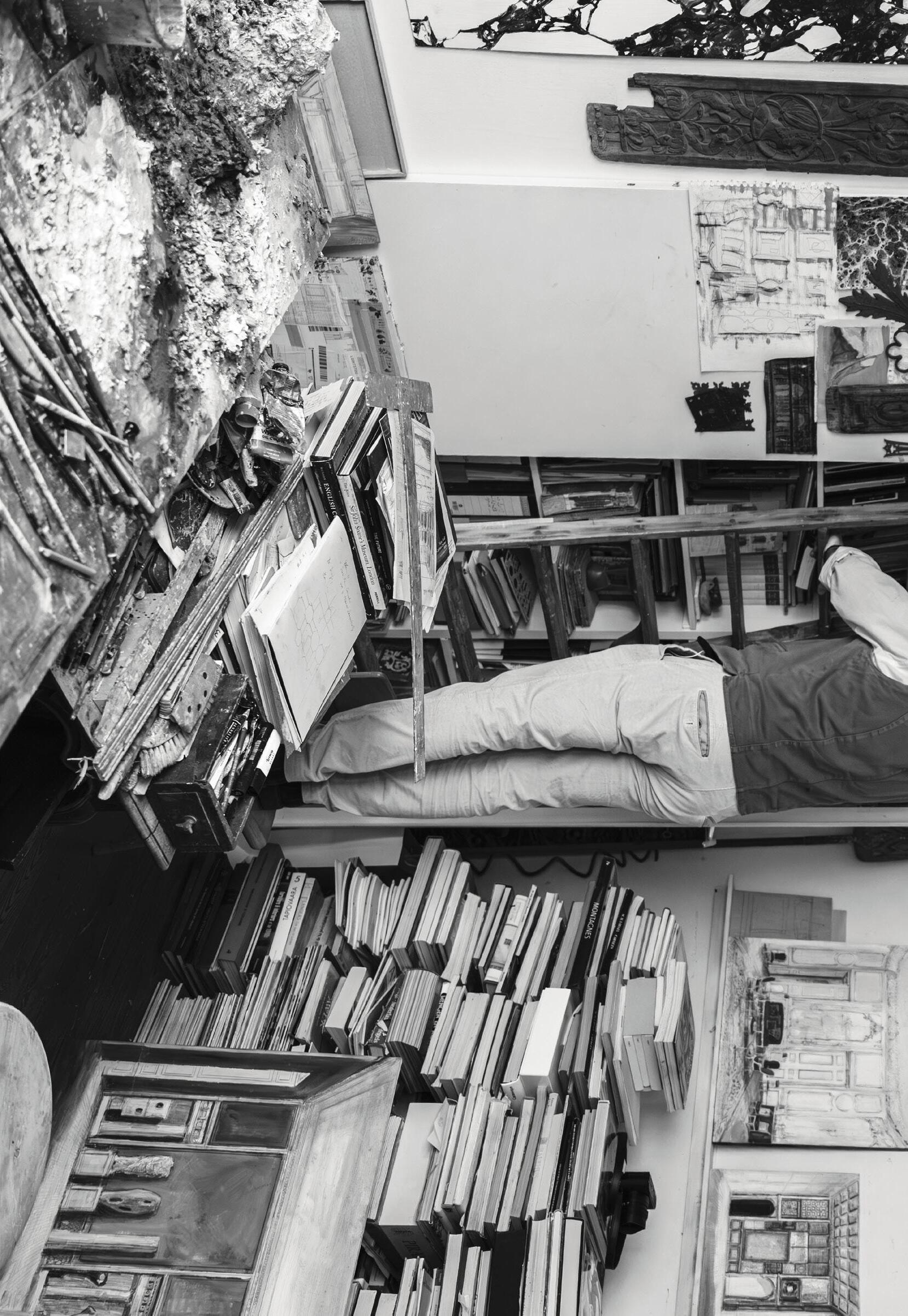
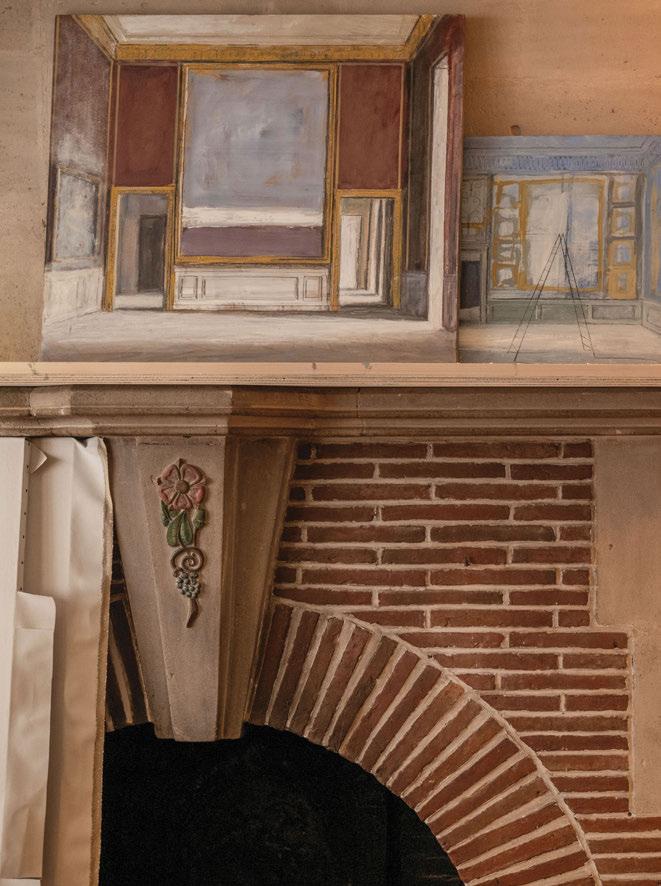
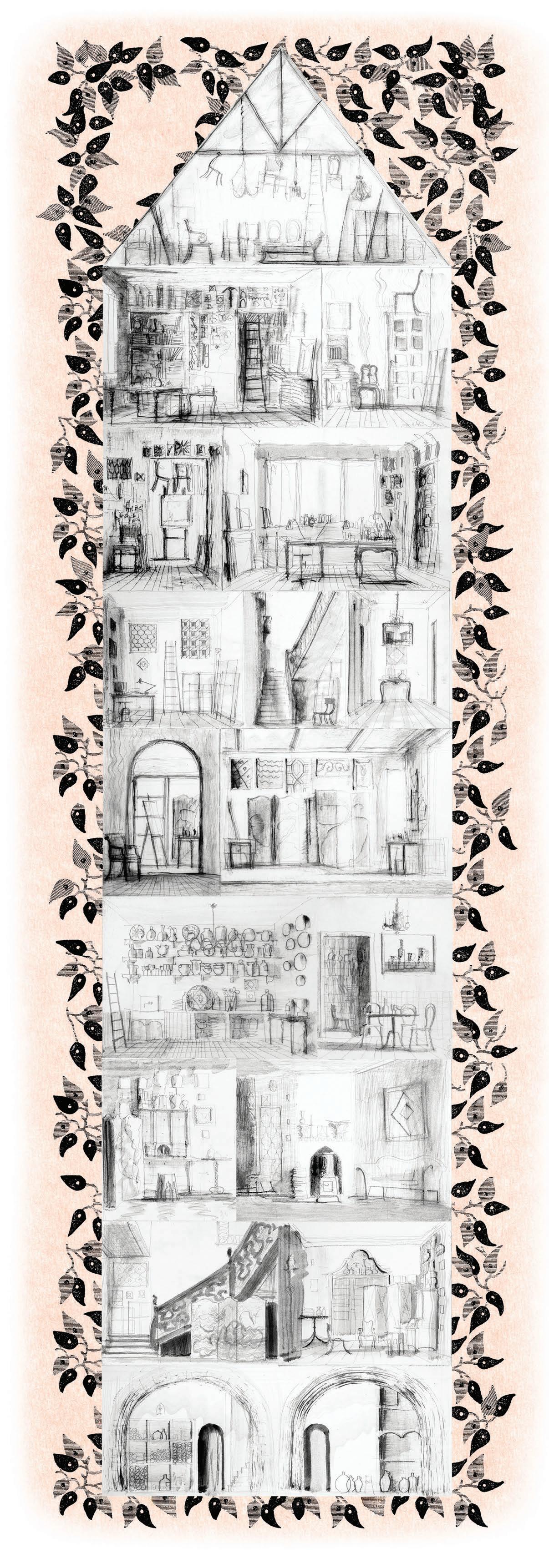
Pierre draws interiors partly from reality and partly from his imagination. Here, he is drawing his own studio as part of a series of artists’ studios that he drew for The Current.
What was your childhood in Belgium like?
“My father was a well-known Belgian painter, so I grew up in an artist’s house and he would take me to visit other artist studios. I remember once in the South of France going to Victor Vasarely’s studio. He was an early founder of the Op art movement and his work was like nothing I had ever seen. It was constructivism, but he mixed the idea of functional art with architecture. As a child in Belgium, we had a lot of freedom. My friends and I would play in these abandoned houses. There was little threat of vandals then, and the houses were easy to get into. We’d walk around, and I’d make a memory. I might even pick up a fragment or a small shard of pottery or tile in or around the house. This would get me thinking.”
So, in school, what did you study?
“I thought I would become an architect, but my math was not so good at school. When I was 12, I started collecting fragments. I found shards and I became interested in old walls, old buildings, old houses, ceramics and archaeology. When I was 18, I had to decide whether to study architecture or art history, so I chose art history, and added archaeology. If I had studied architecture, I don’t think I would ever be a painter. But now, as a painter, I’m also kind of an architect. I invent spaces, add lights, windows, doors. It’s also architecture mostly seen from the inside to the outside. I also paint exteriors. I do have some paintings with buildings and streets and so on, but mostly they are interiors, and it’s very architectural, and it’s a mix with collecting objects. But it is architecture and what I call, ‘mysteriosity’.”
That’s a new word to us. What is “mysteriosity”?
“Well, I almost became an architect, but now I paint architecture. But empty rooms. It’s about density. When I paint a room, you need empty walls, rooms, spaces. If you put objects everywhere, you lose the strength of it. I want to leave some mystery, or ‘mysteriosity.’ Part real, part imagined. Always
with light. The light is critical, how it comes in, what it touches.”
You’re a painter now though. How does archaeology fit in?
“Well, for many years, archaeology was part of my work in appraisal. We often forget that many artists draw inspiration from it—and naturally, it’s very important for me, as well. I love walls with different layers; they immediately make you think of the passage of time. You can feel the density. One layer belongs to the 16th century, another to the 17th,18th and so on. When you paint them, these combinations become your own versions of history. So for me, it becomes a little game.”
What is your process, how do you begin a painting?
“I love using my pencils to draw. And then mix that with paints. That is the process. Some of the works are made in a very quick way, and I like the spontaneous way of painting and drawing and that makes it very natural. It’s nice not to think too much. And that’s probably for all art. It has a lot to do with emotion and impressions. So if you have something in your mind, you work on it, and you go on and on.”
How important is emotion?

You’ve painted artist studios for this issue of The Current . Why?
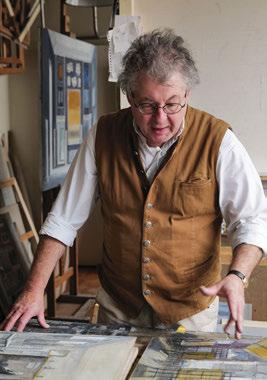
“About art? It’s really all emotion. Don’t think too much.”
What inspires you?
“Going to a museum is good; it is good to get a little bit of distance from your own work. It can make you look in a different way at what you are doing and give you a new perspective. And you should not always see what is contemporary. I’ve always been inspired by 17th-century Dutch paintings, but they’re painted in a completely, entirely different way than I work. But the light and the mystery. It’s incredible, but I also love the 20th century.”
“I’m always working on interiors. I love collectors, interiors with paintings and so on. But there’s something in the studios of artists, of painters, they’re always fascinating. You see something in between. There is architecture, light, seen and unseen unusual objects. You might have ladders, chairs, tables, paint pots, all kinds of things, but there is something very special, magical in the place where paintings are made. And every painter has a place where they work. It’s more or less the mirror of their work, because you have painters that are working in a very neat way, and you have some working in a mess in a studio that is really entirely chaotic, but it’s fascinating to see how they behave in that room, where they make their things, where their fantasy, their imagination goes and how they use the light. For me, the light is very important. You always think they’re working in the light, but I’ve seen that Jackson Pollock, for example, worked with his back to the window, so he concentrated on the floor. It’s fascinating to get in that universe, because the studio of an artist is really a universe into which you arrive.”
Why Sir Frederic Leighton and his studio in particular?
“The studio at Leighton House in London is incredible. And it is his house and his work at the end of the 19th century, rediscovering eclecticism, just as the period of neoclassicism was ending even in England. All influenced by the Great Exhibition of 1851 which people saw in England before it appeared elsewhere, igniting a revival of eclectic styles. In the house of Leighton, we discover Orientalism and we rediscov
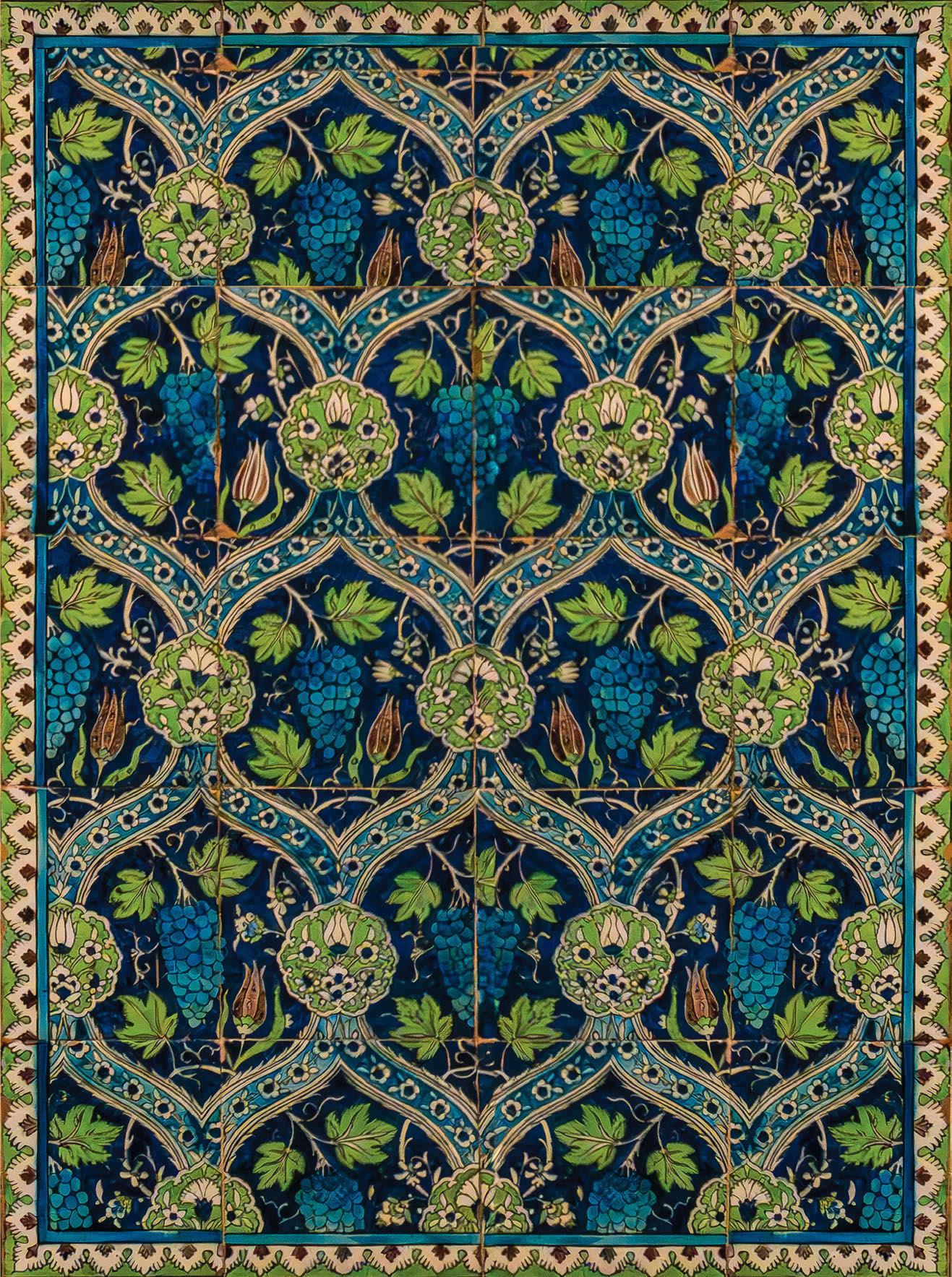
er the magic of this style in his house. It has the right proportions, very high ceilings, mysterious corners. And you also feel transported to somewhere in Aleppo, because you have the beautiful Iznik tiles. When we see images from 19th-century studios, you see a gentleman or lady, dressed up sitting in a pose, but Leighton recreated a universe for himself, and you can also see it in his work. That makes him very, very special in my opinion.”
How long did it take you to paint Leighton’s studio?
“I worked on it for several days and then I continued, you can say, some details. And so it was really a discovery of the light, the darkness and so on. At a certain moment I stopped because I thought it should not become a perfect postcard photograph, and on the right side, I left it open. A screen with no decoration.”
And you painted these studios from your own studio in Ghent, Belgium?
“Yes, it is an inspiring city. There’s a lot of architecture, but I must say that I work on my own. I don’t even have exhibitions in Belgium. I love to be a little bit invisible. It makes my work more secret. More strongly focused.”
So this house in Ghent, should we call it The House of Bergian? Your studio is on the top floor. Downstairs, Angèle and your daughter Saskia Devletian work in their studio, and you all live on the ground floor. What’s it like?
“Well. We come and visit each other’s studios. And there’s always something to talk about. ‘I like it. I don’t like it. You should do it like this.’ So there’s communication. It’s also very nice to work in a house where you have more studios and people working in a creative way, because it gives you a lot of energy. We have plenty of books all over the house that we all use, and the books are traveling from one floor to another, from
one room to another. So we talk when we find something interesting. We might make a coffee and talk.”
Do you critique each other’s work?
“Yes, we do, and you can trust each other with something difficult. If we’re saying or giving an opinion, it’s very good.”
What drives you, as an artist?
“It is not about money. We have enough to live. But it’s nice to sell something to someone who loves what you do. That’s the difference totally. We are lucky to work a lot and to use our imagination to develop things and so on. When I walk, I meditate. The brain is working, and you think about things that you would not think of. When you drive a car, you see the landscape. You don’t want to always be plugged in. And it’s very important in the process of making drawings, paintings and so on, to stop. It’s not only that you have to work, but you have to stop too. And make space. And maybe leave the feeling of more to come.”

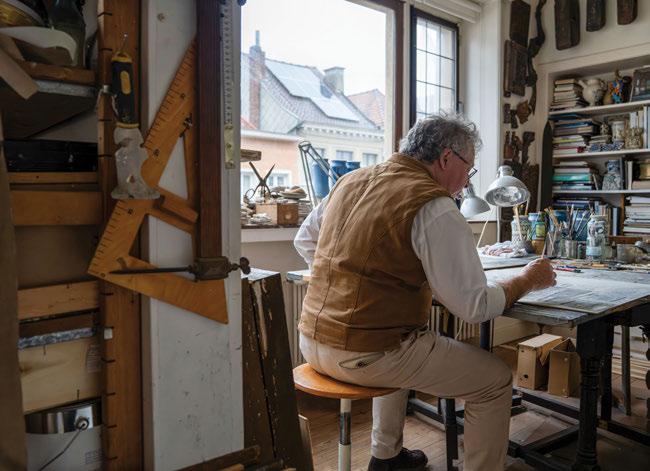
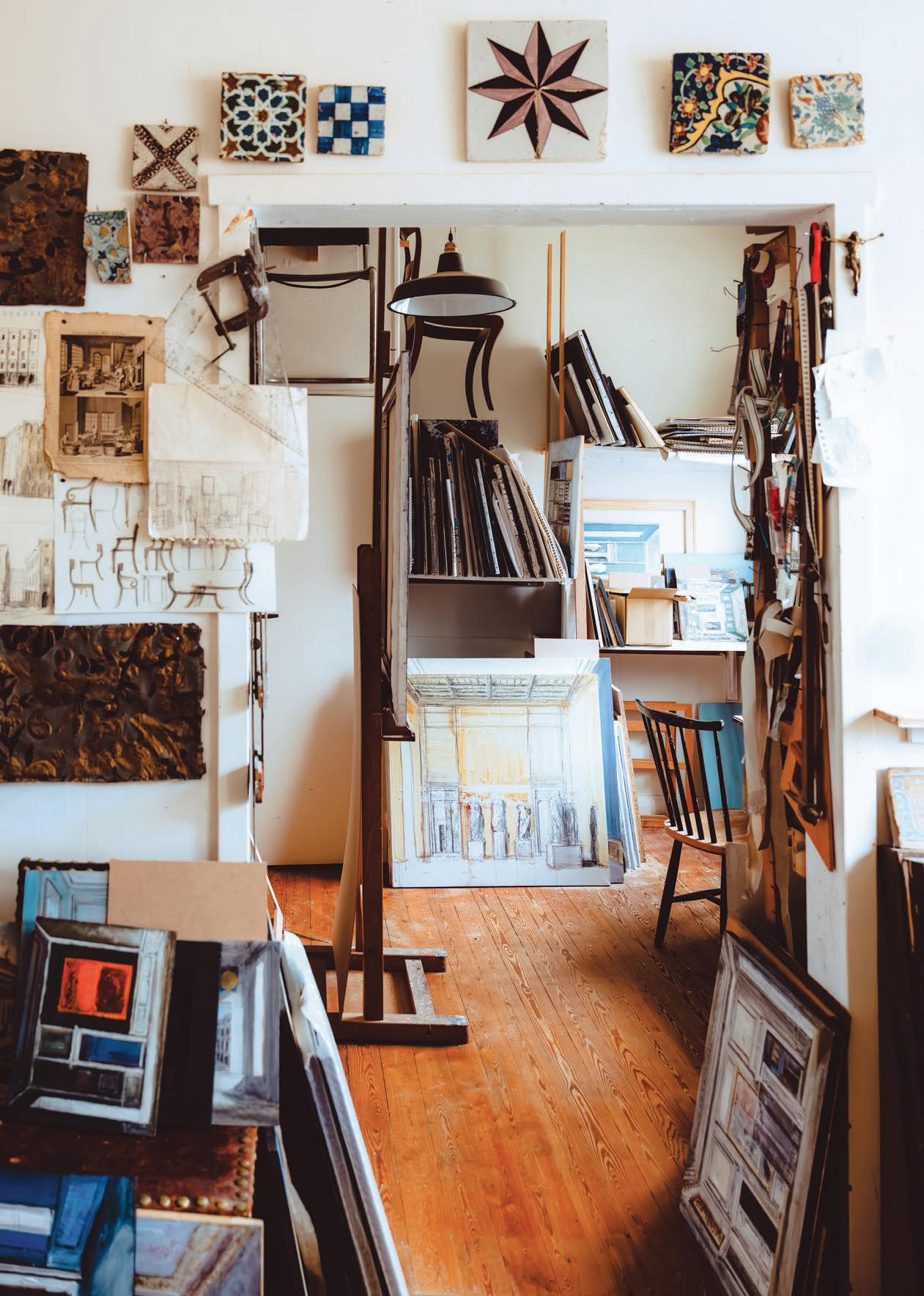
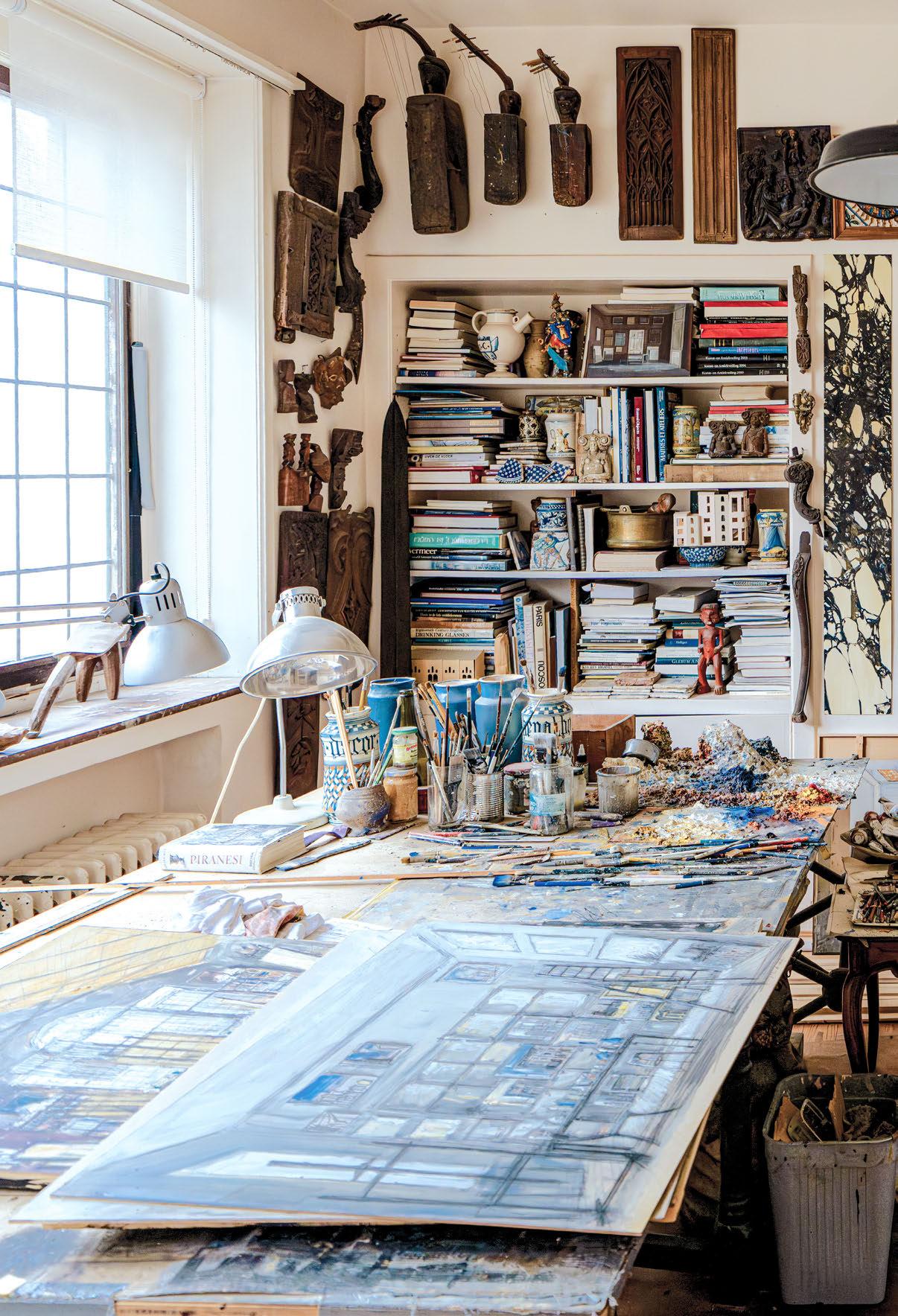
INSIDE
PIERRE’S STUDIO

GHENT, BELGIUM
How long did it take you to paint Leighton’s studio?
And you painted these studios from your own studio in Ghent, Belgium?
So this house in Ghent, should we call it The House of Bergian? Your studio is on the top floor. Downstairs, Angèle and your daughter Saskia Devletian work in their studio, and you all live on the ground floor. What’s it like?
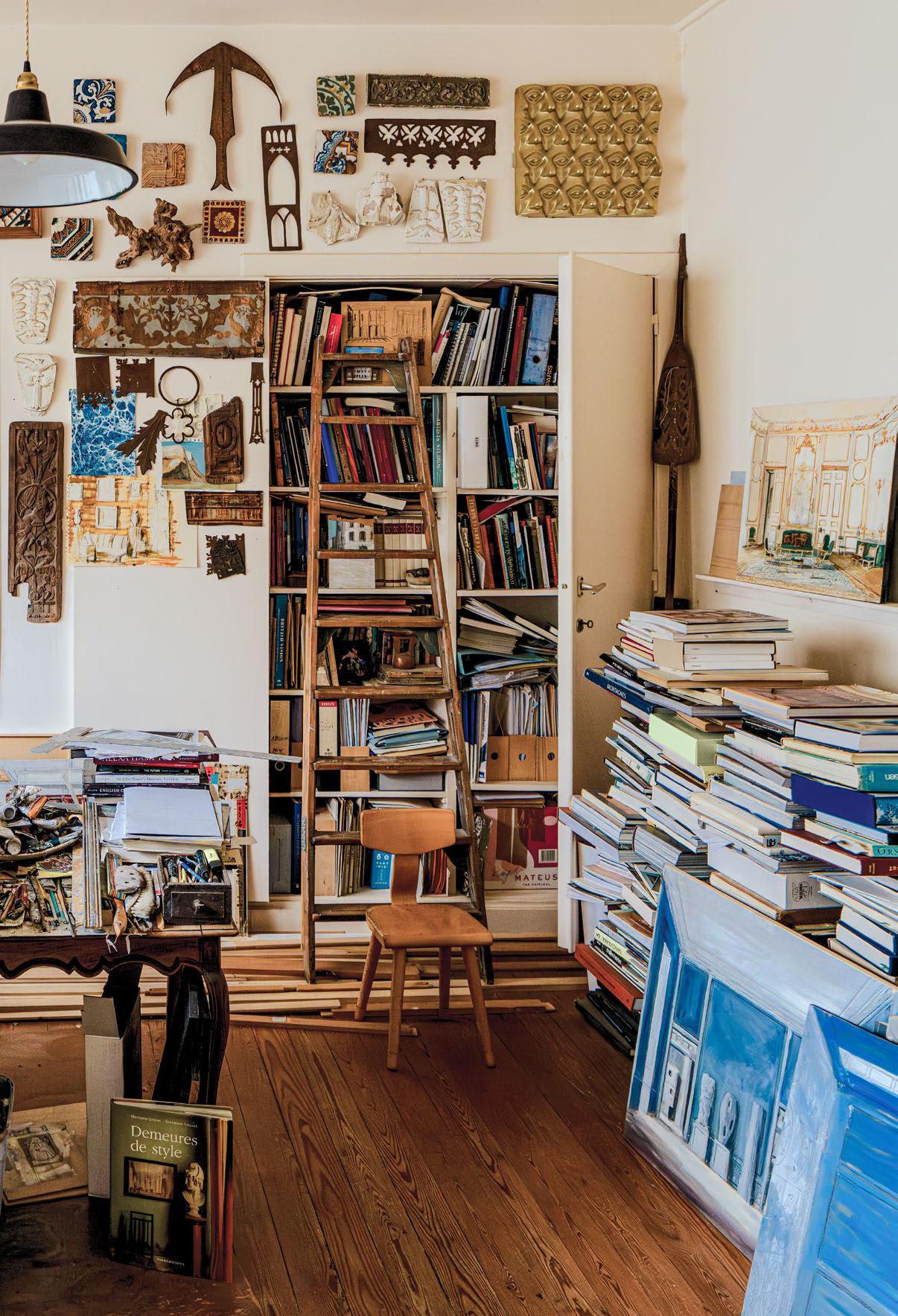
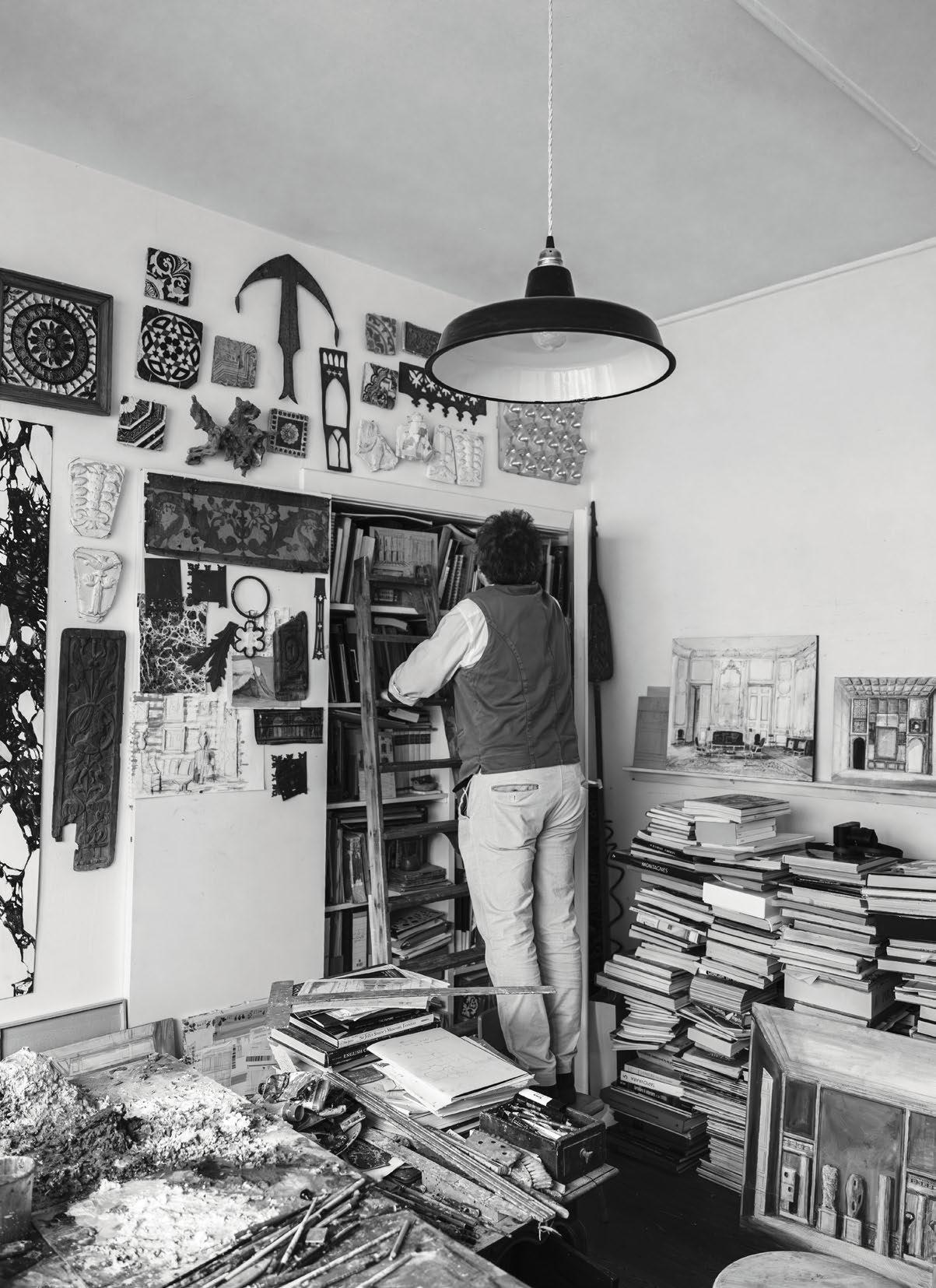
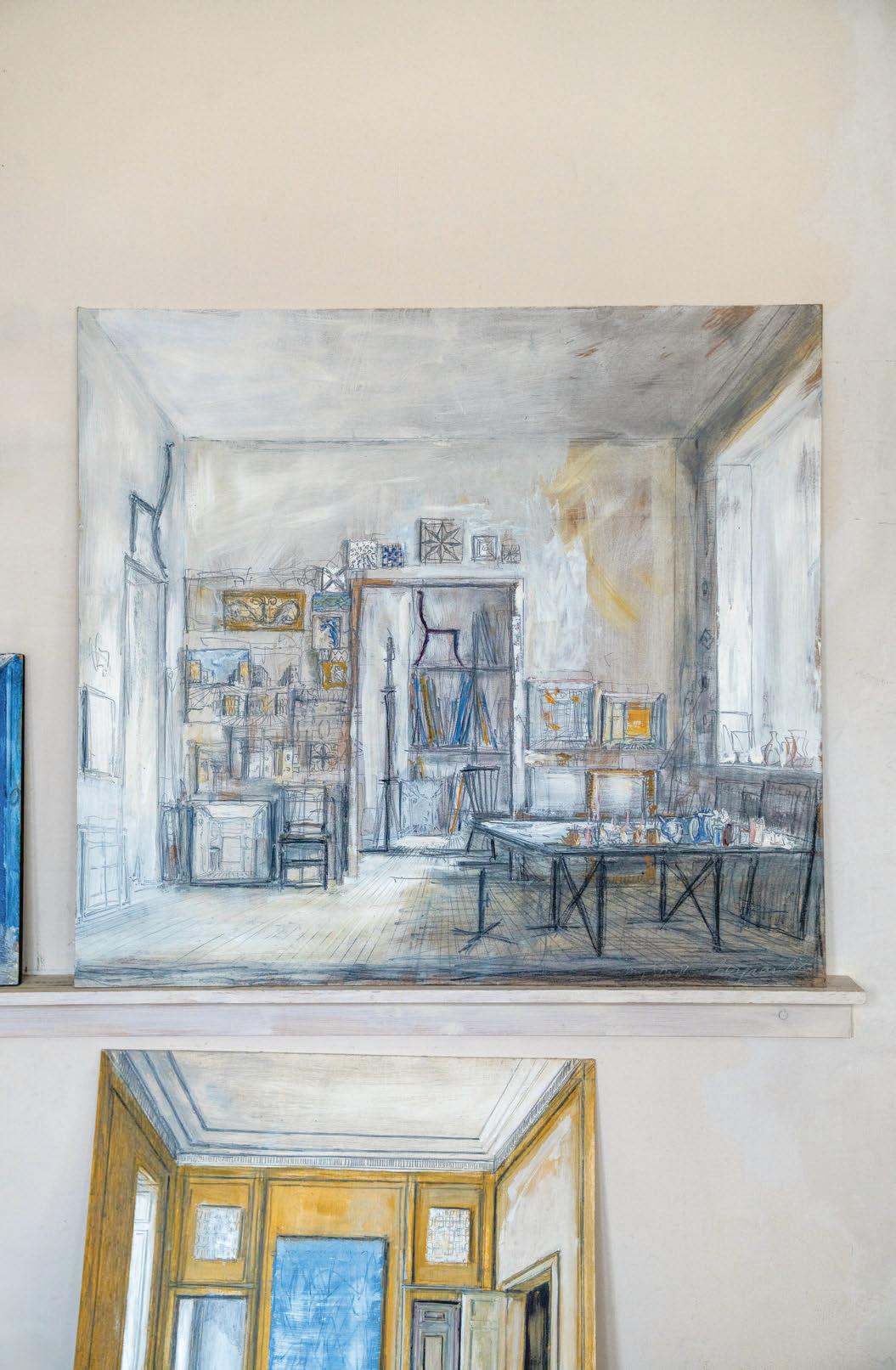
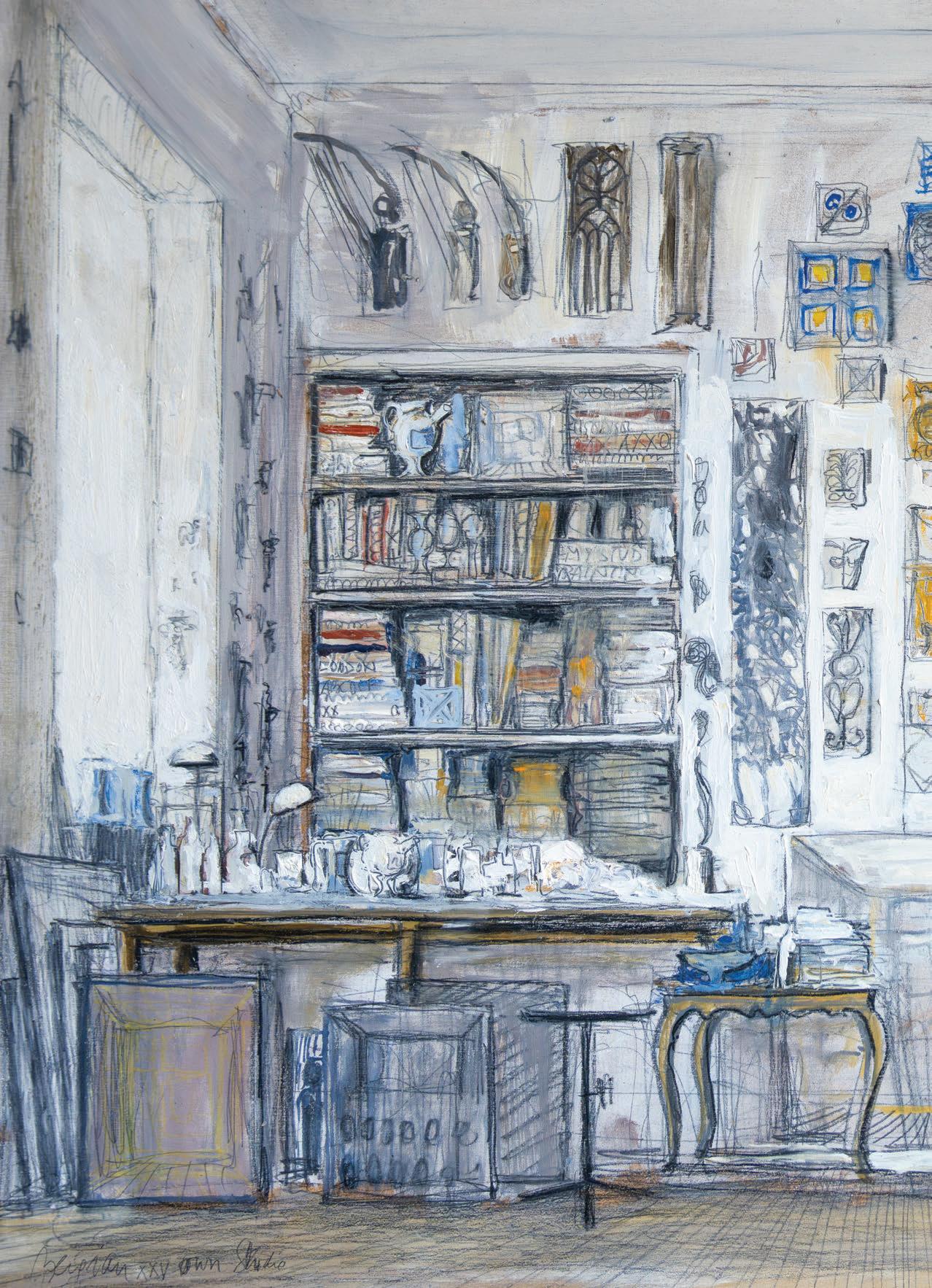

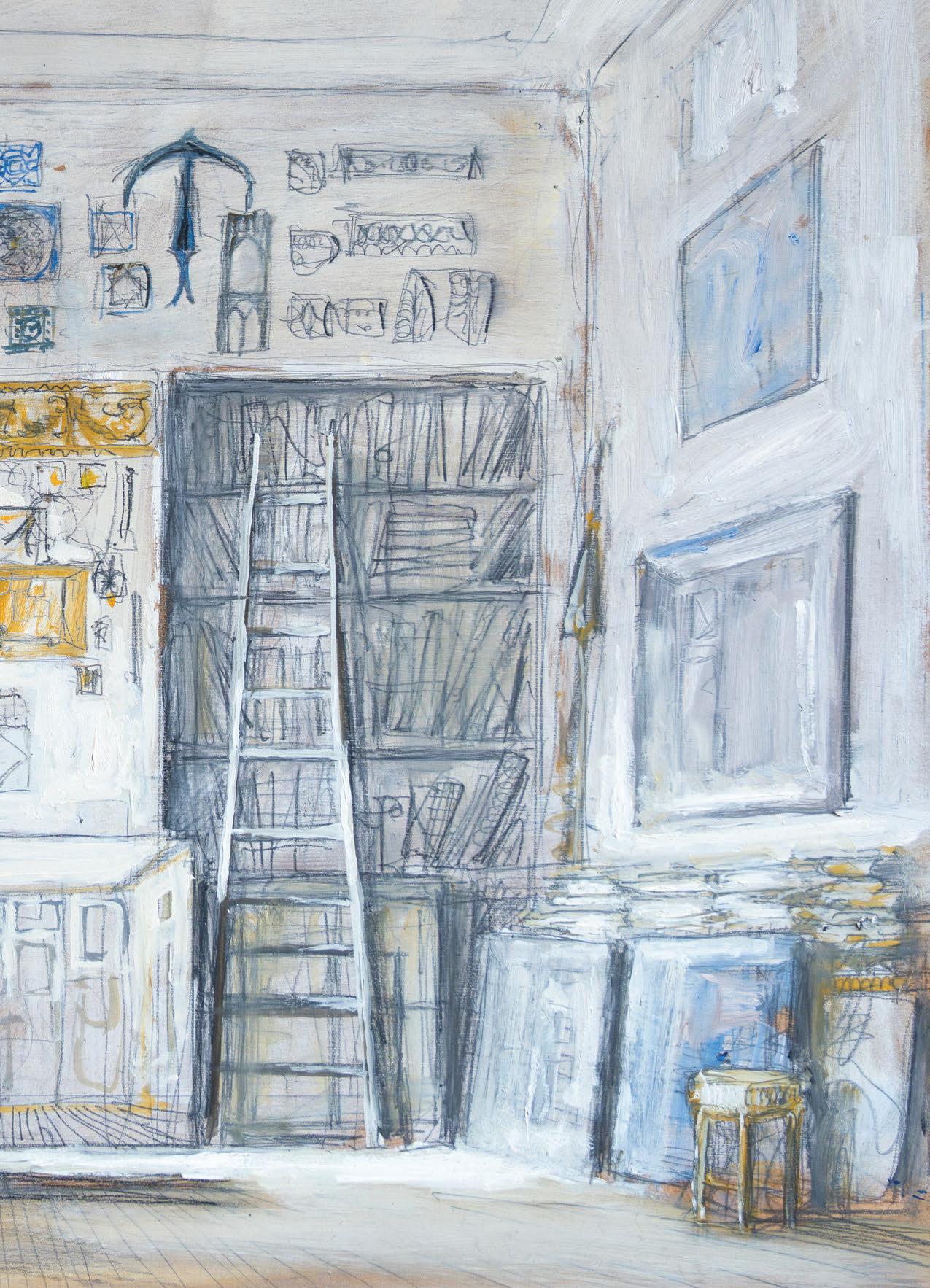
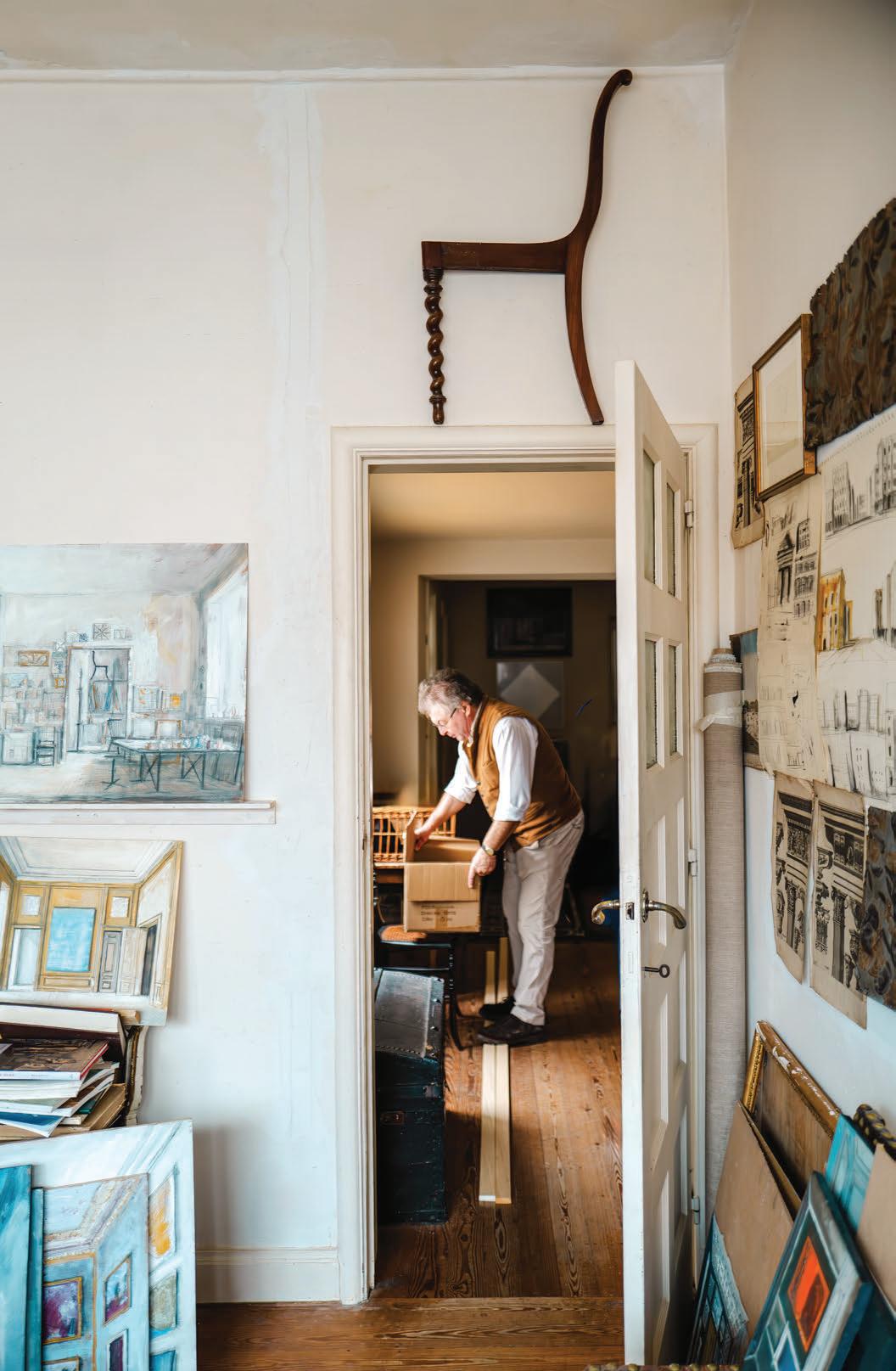
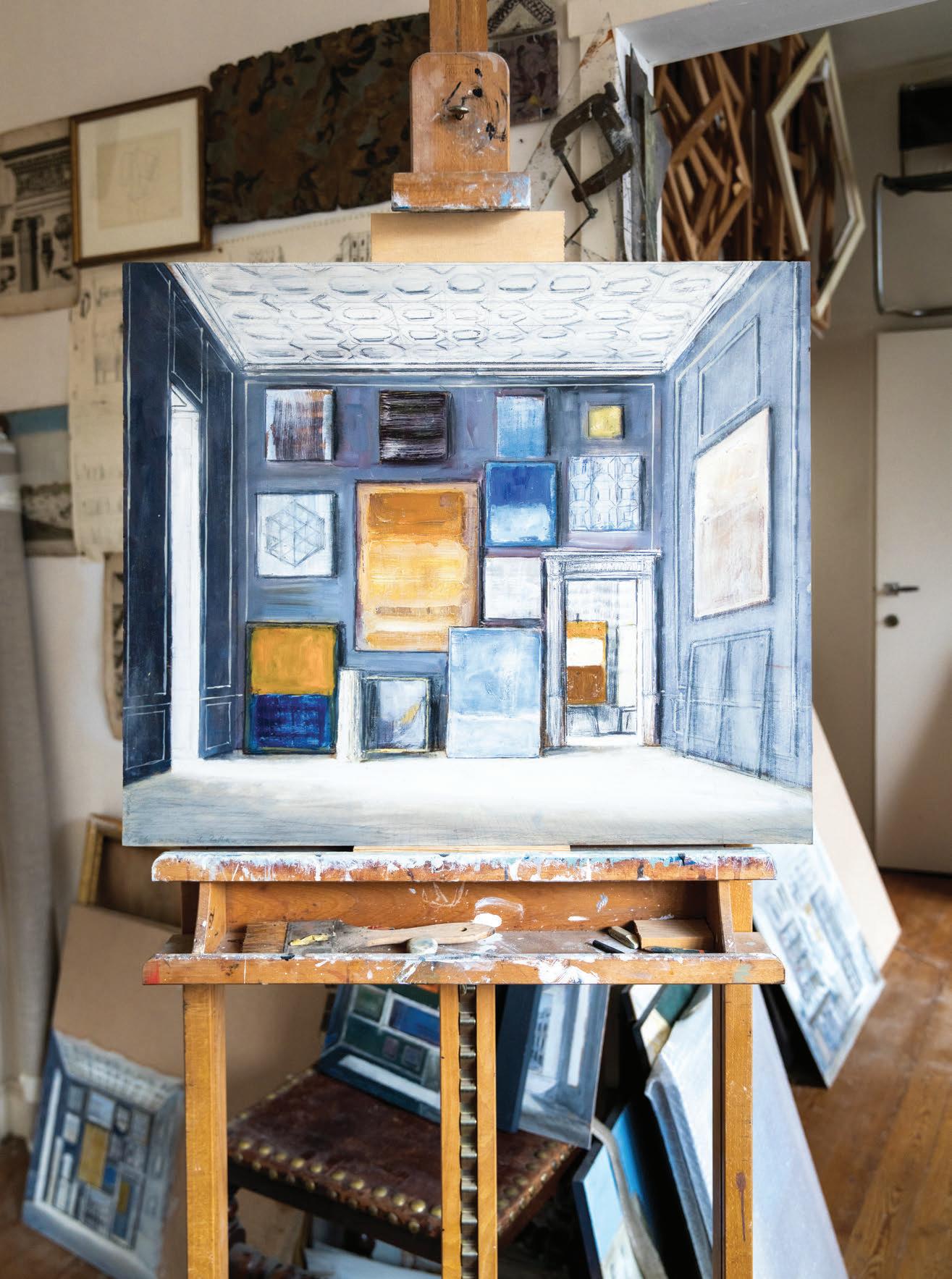


In art, capriccios are driven by imagination rather than obligation—where invention, play and freedom outweigh realism or strict structure. Working in this tradition, Pierre paints imagined versions of artist studios for The Current , re-creating the spaces that shaped their work through his own creative vision.

In art, capriccios are driven rather than obligation—where play and freedom outweigh strict structure. Working Pierre paints imagined studios for The Current spaces that shaped their own creative

driven by imagination obligation—where invention, outweigh realism or Working in this tradition, imagined versions of artist Current, re-creating the their work through his creative vision.
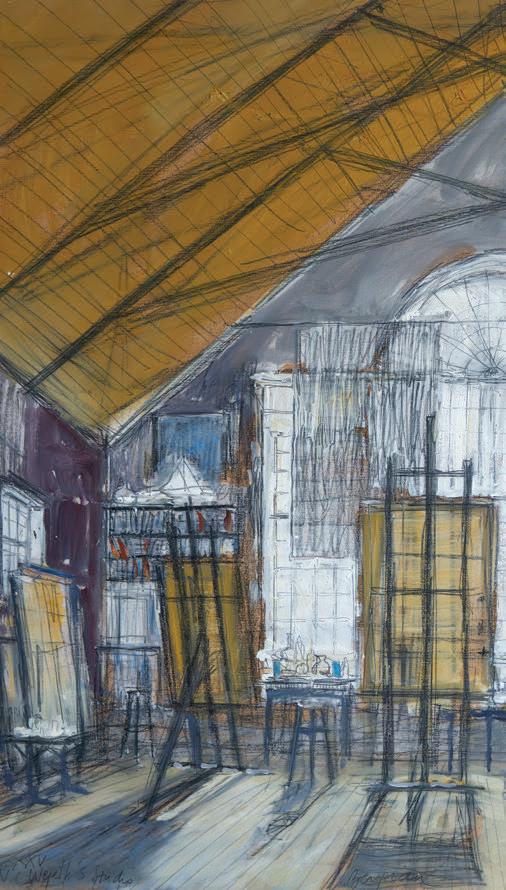
LEIGHTON HOUSE THE WINTER STUDIO
Fictional Studio
HOLLAND PARK LONDON
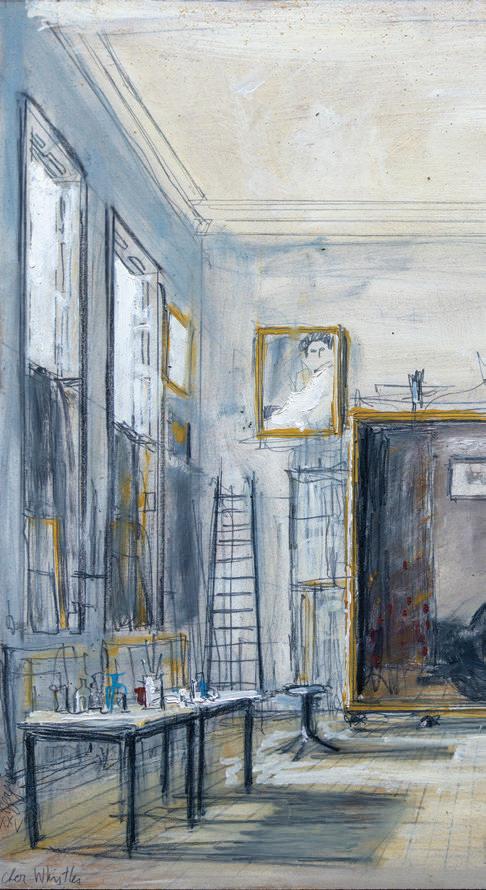
JAMES MCNEILL
THE WHITE HOUSE
CHELSEA LONDON
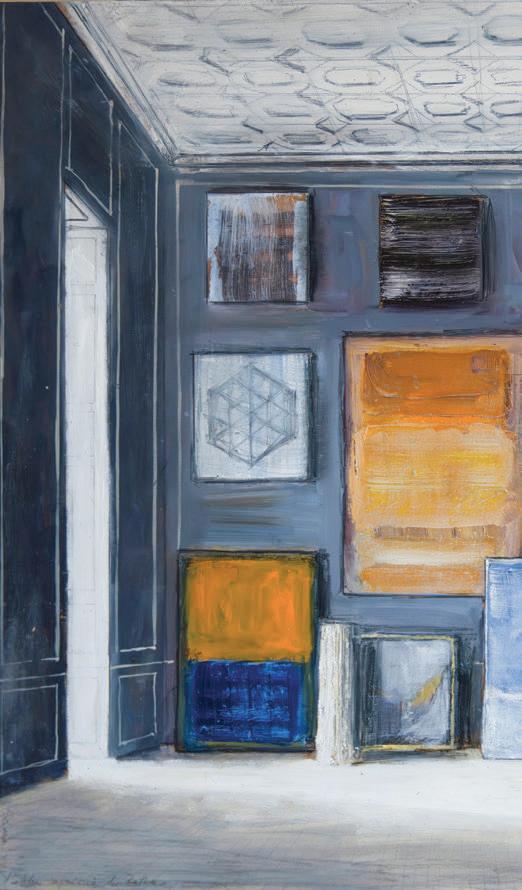
THE BOWERY STUDIO
Fictional Studio
14TH STREET STUDIO
Fictional
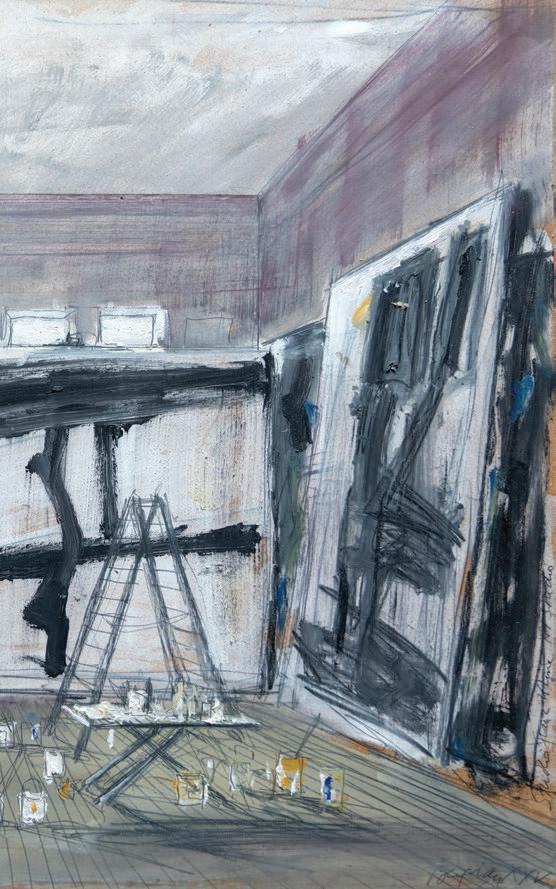
GREENWICH VILLAGE NEW YORK
A Historically
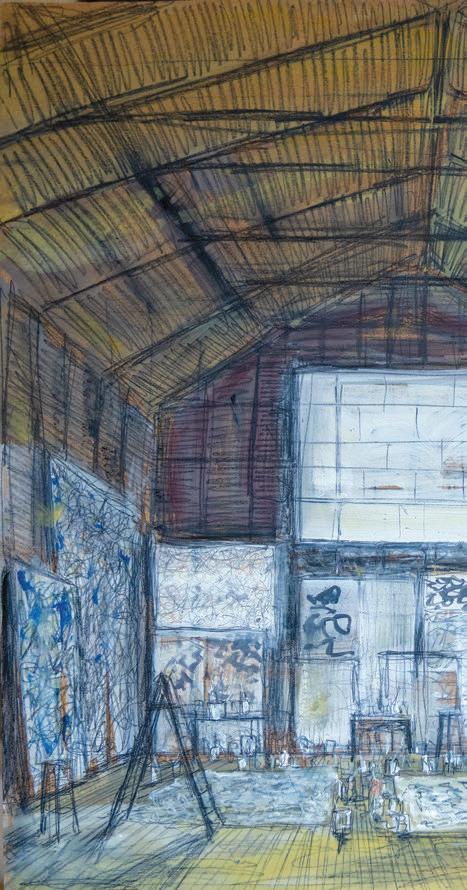
JACKSON
THE BARN STUDIO
SPRINGS
CHÂTEAU DE L’ARC
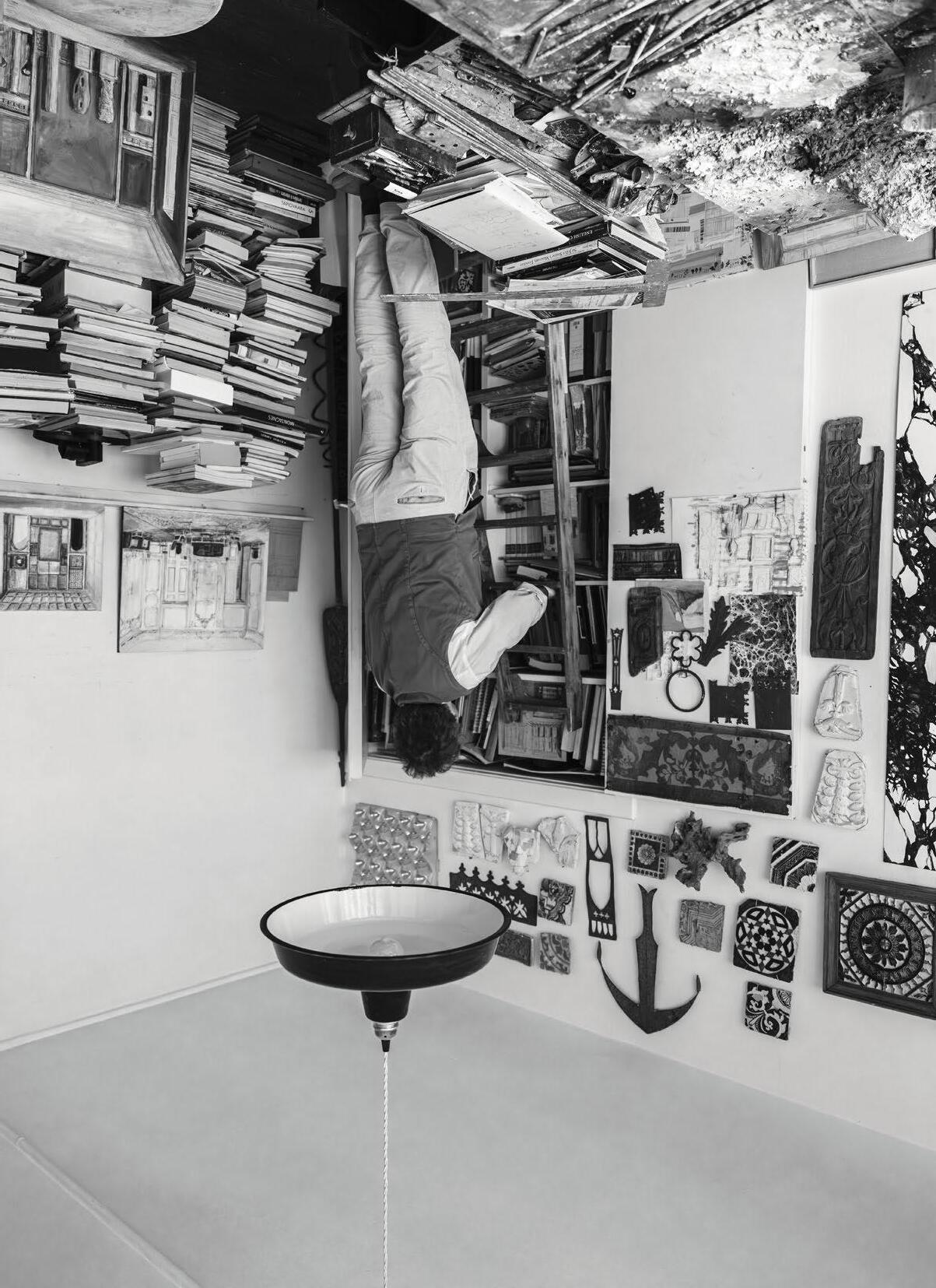


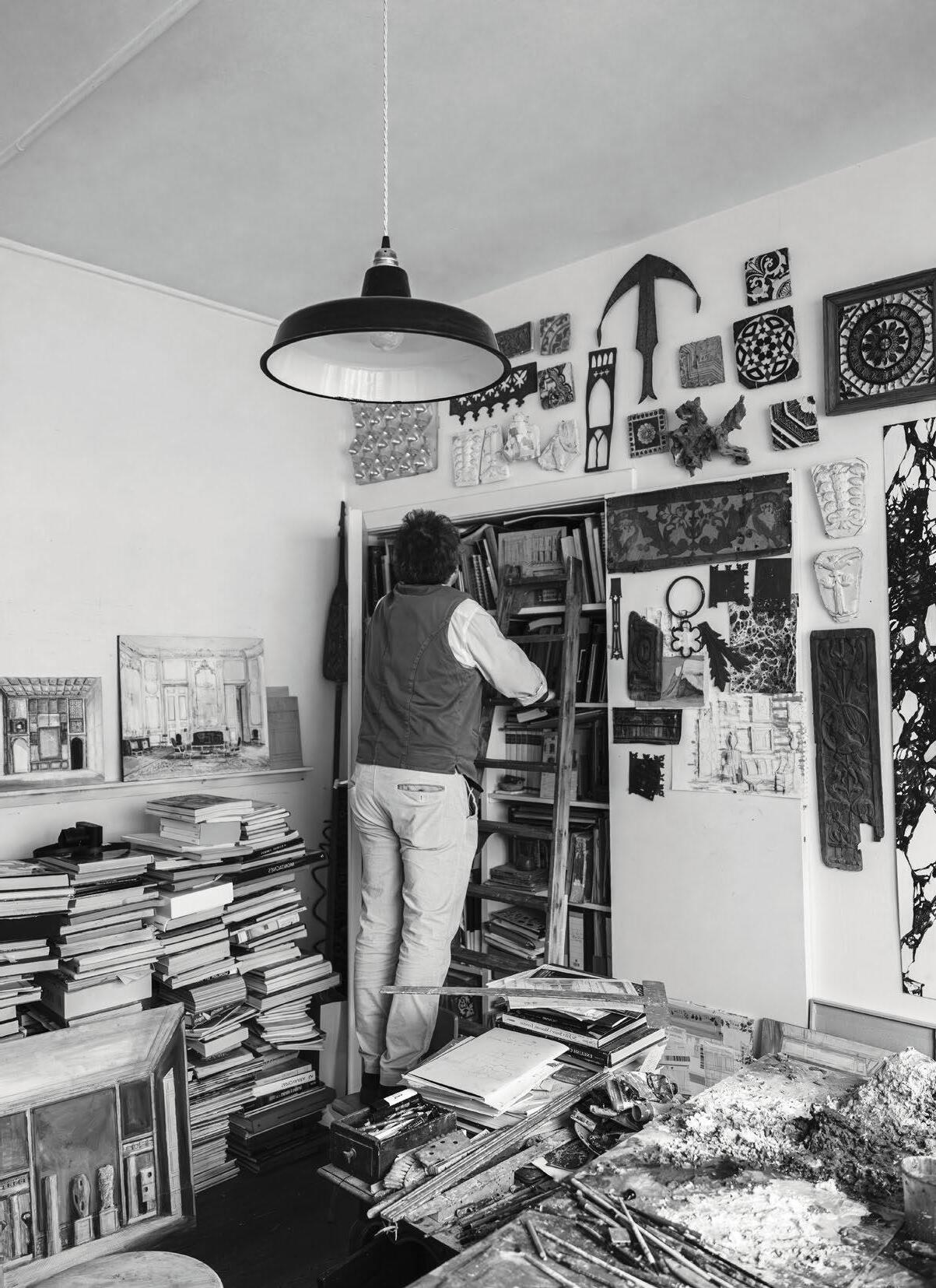
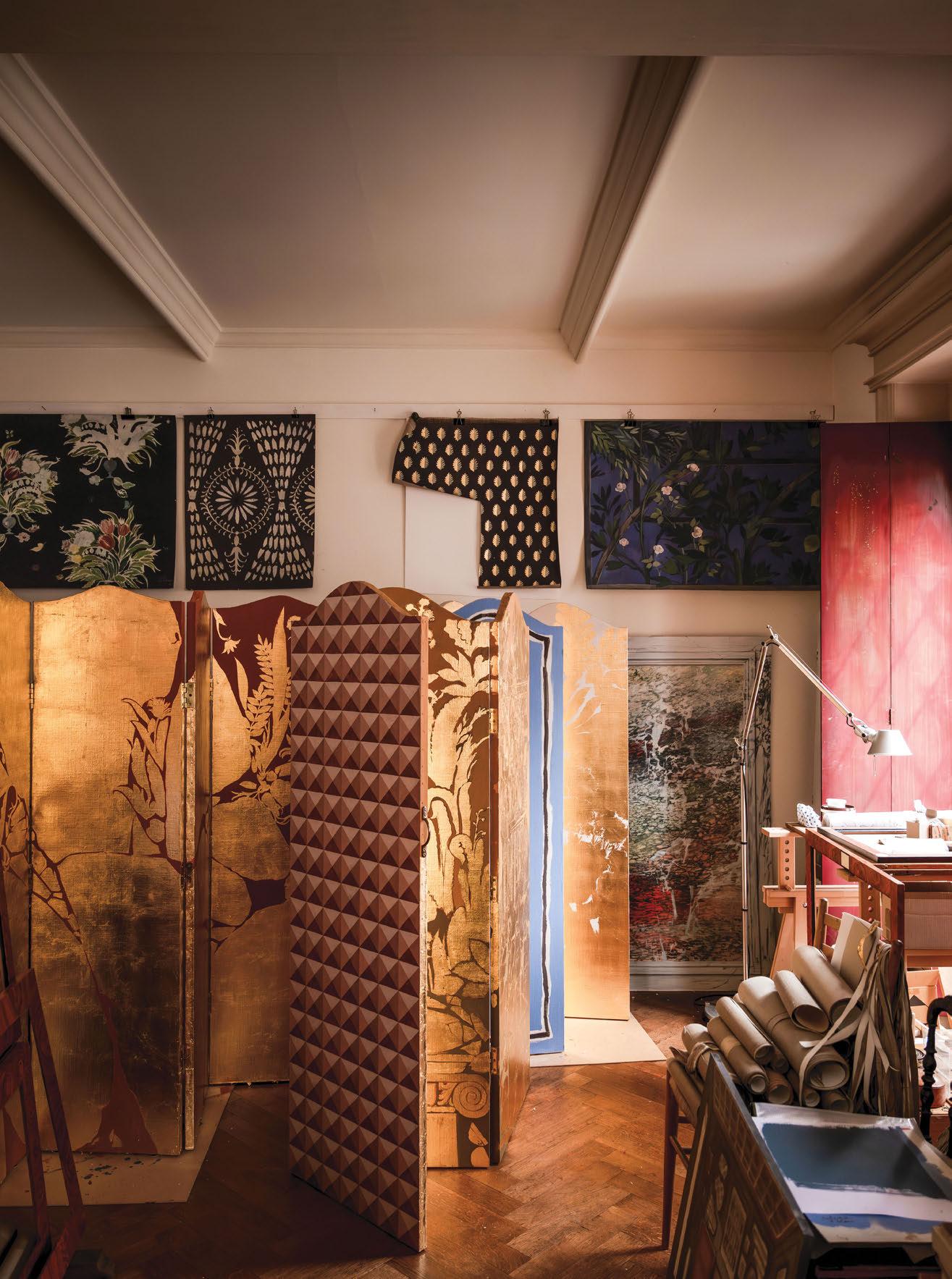
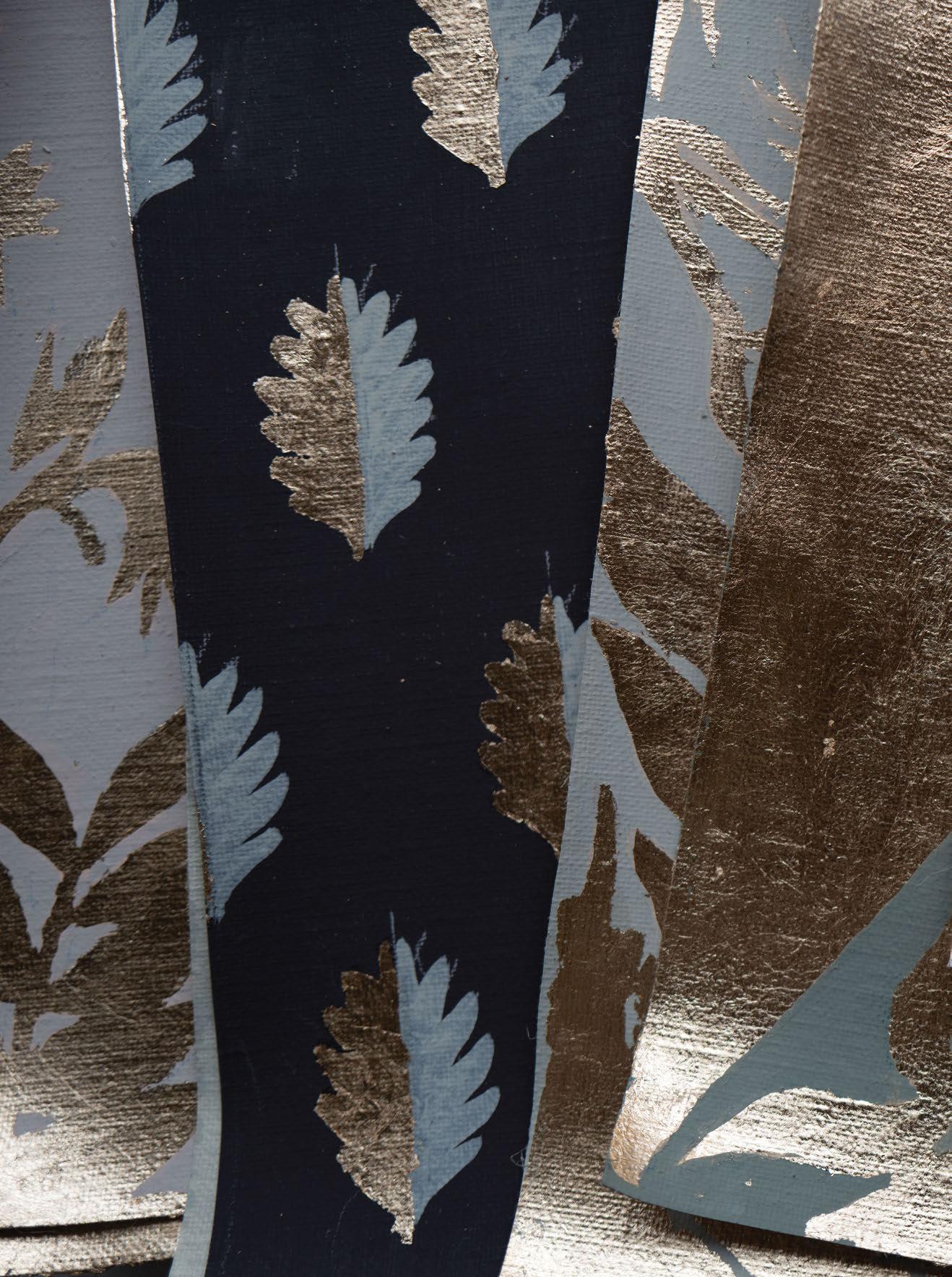
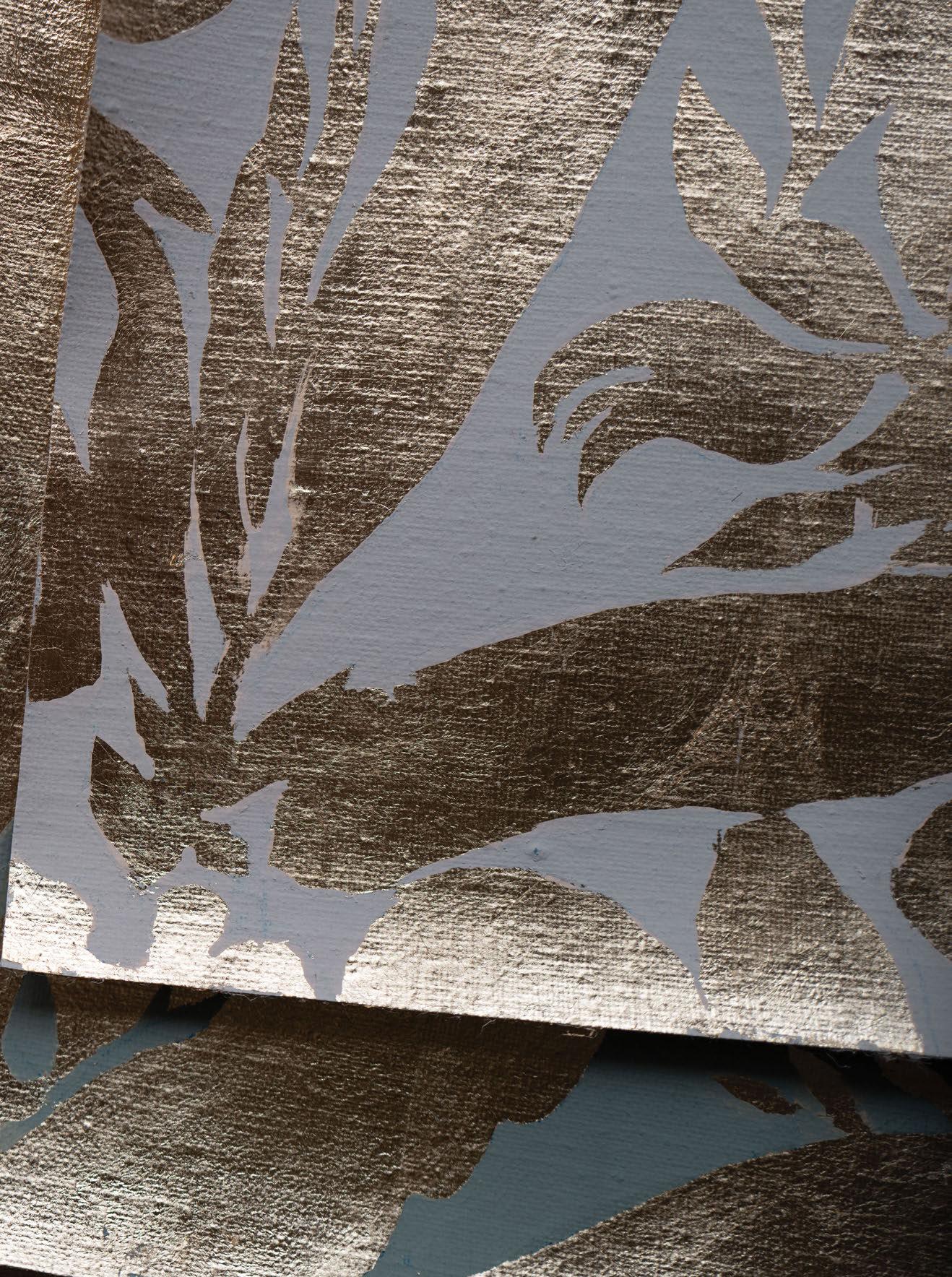
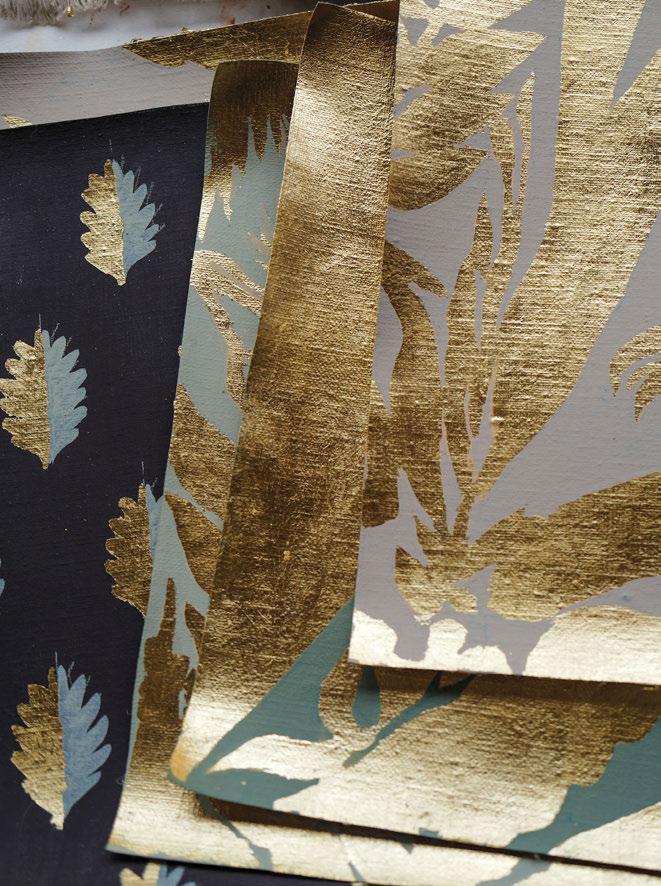
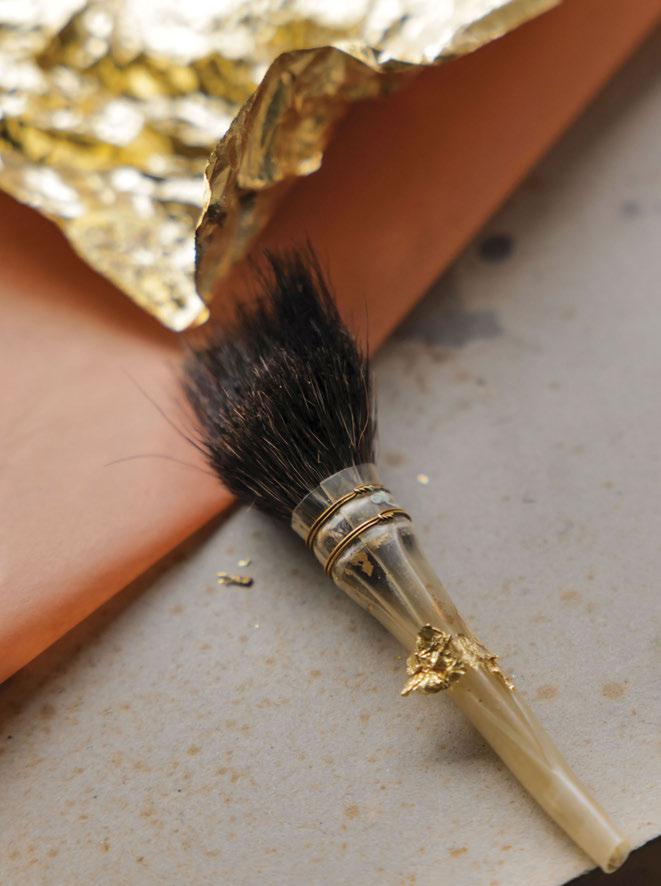
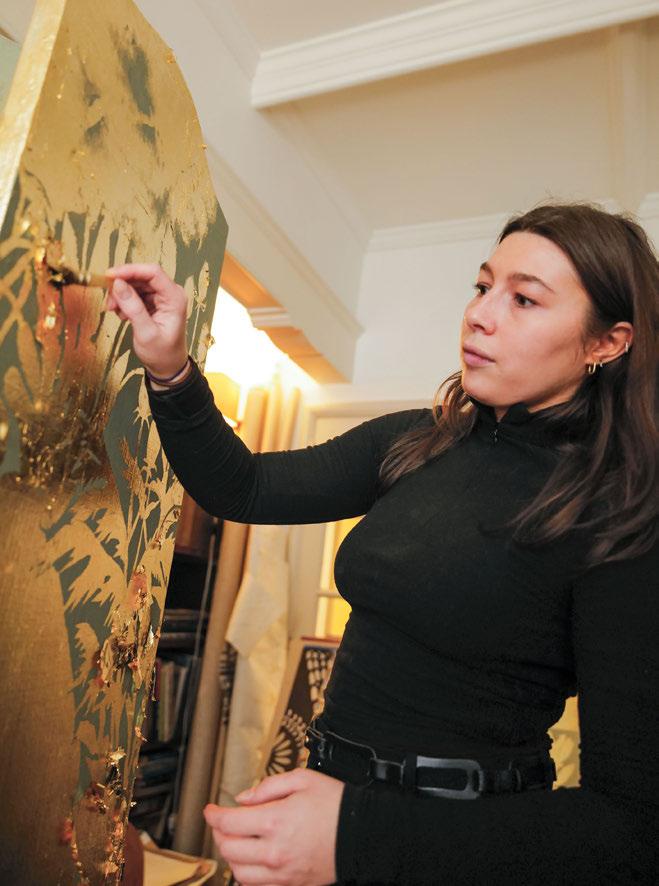
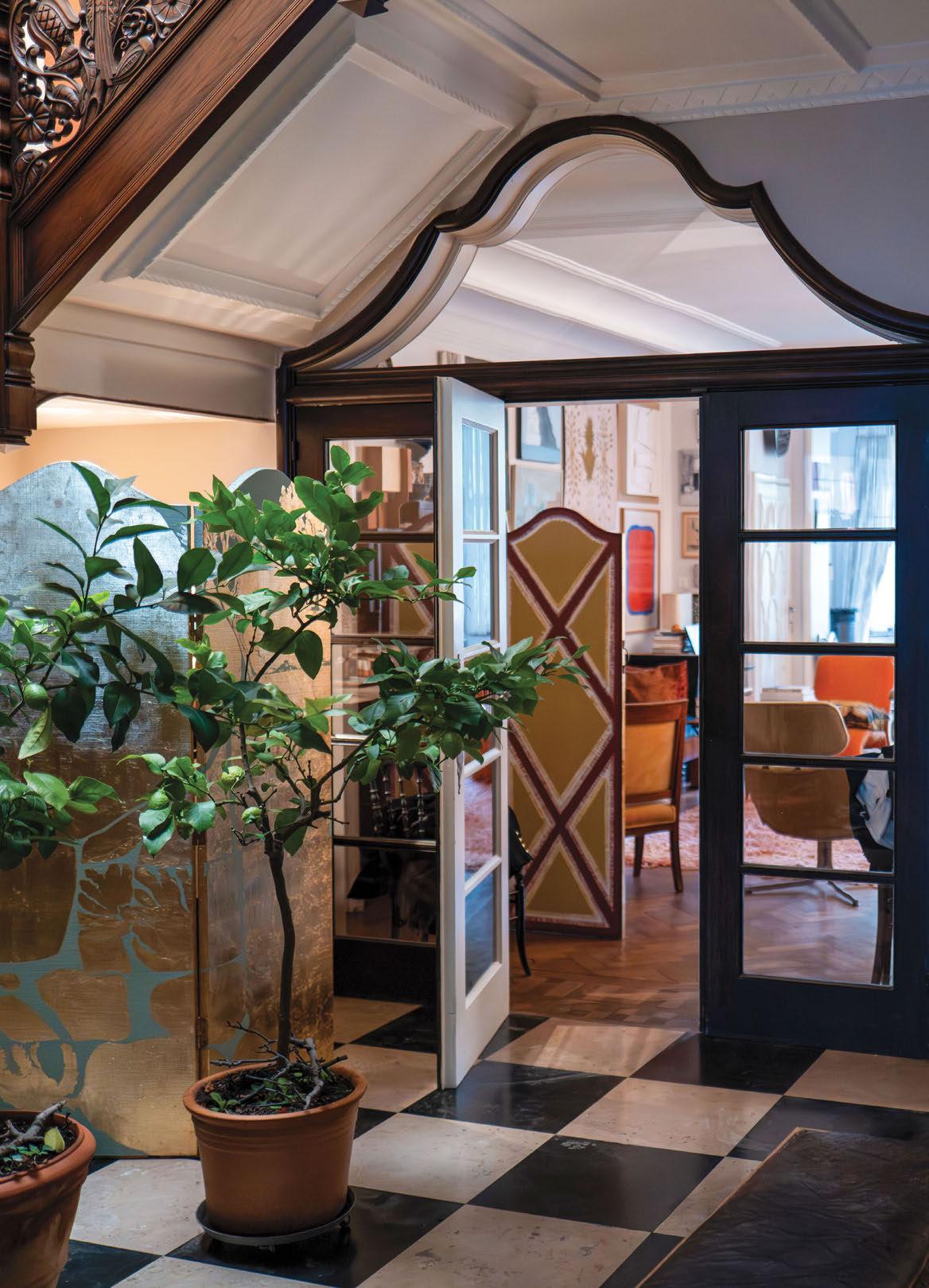
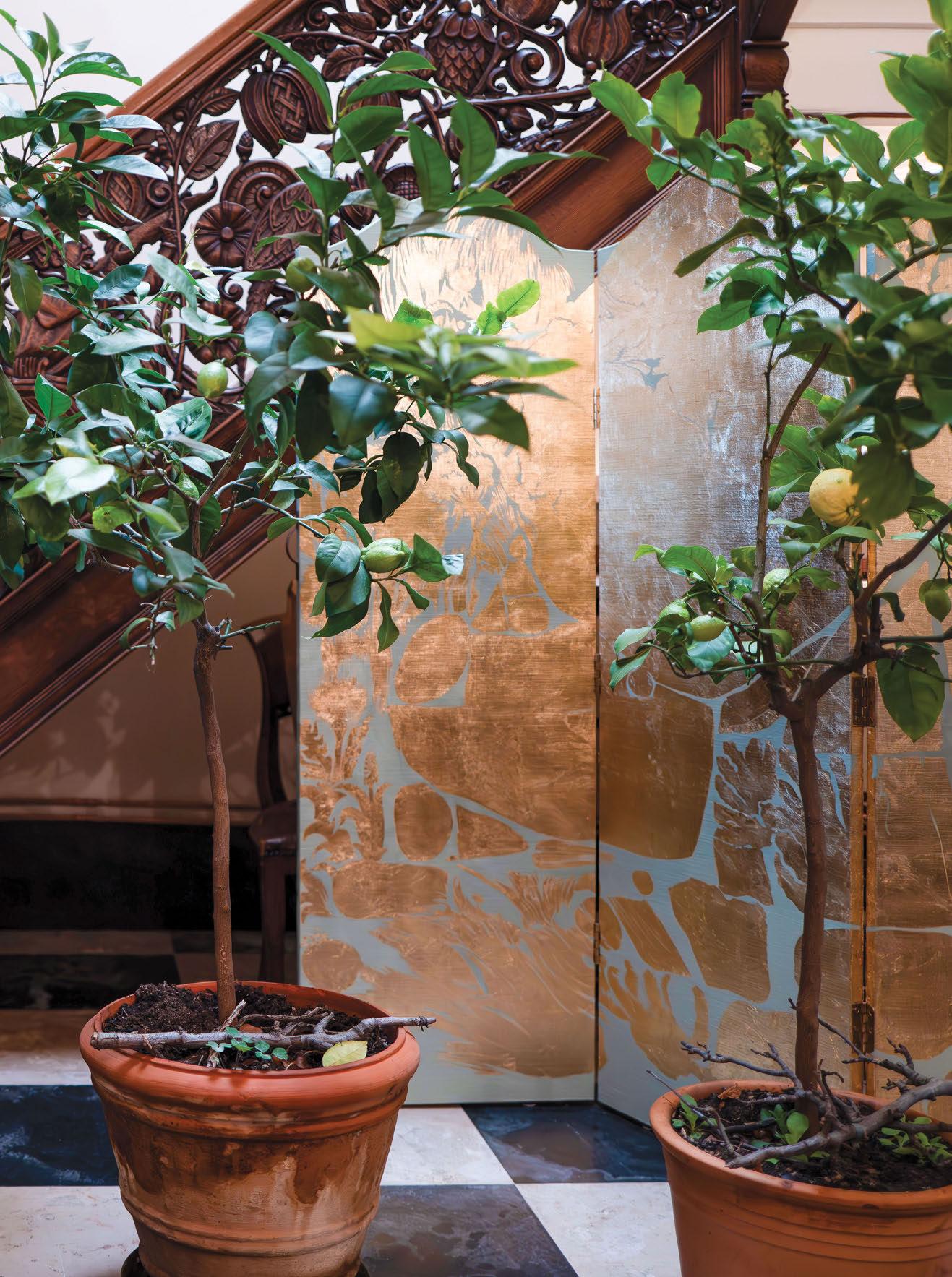
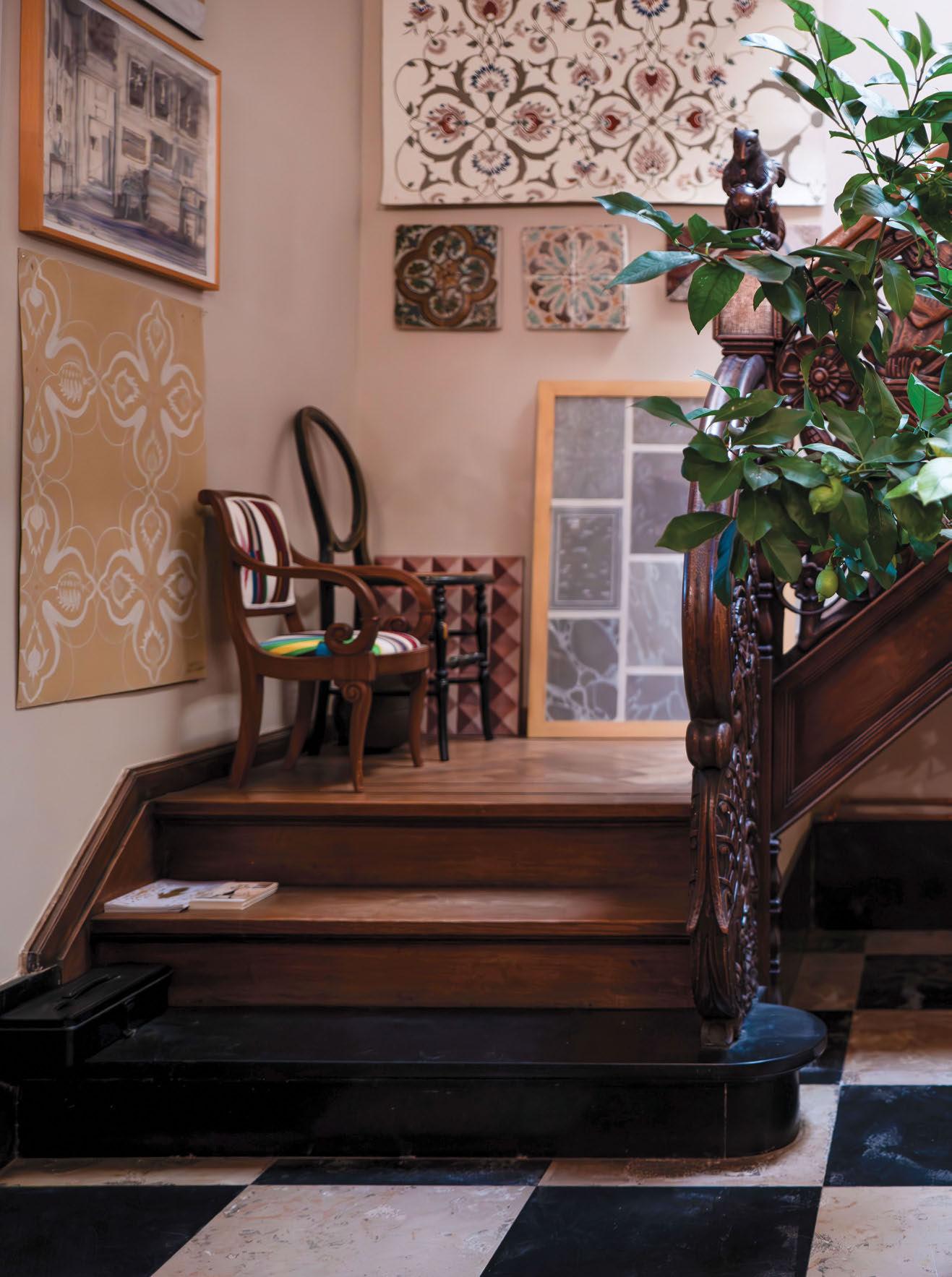
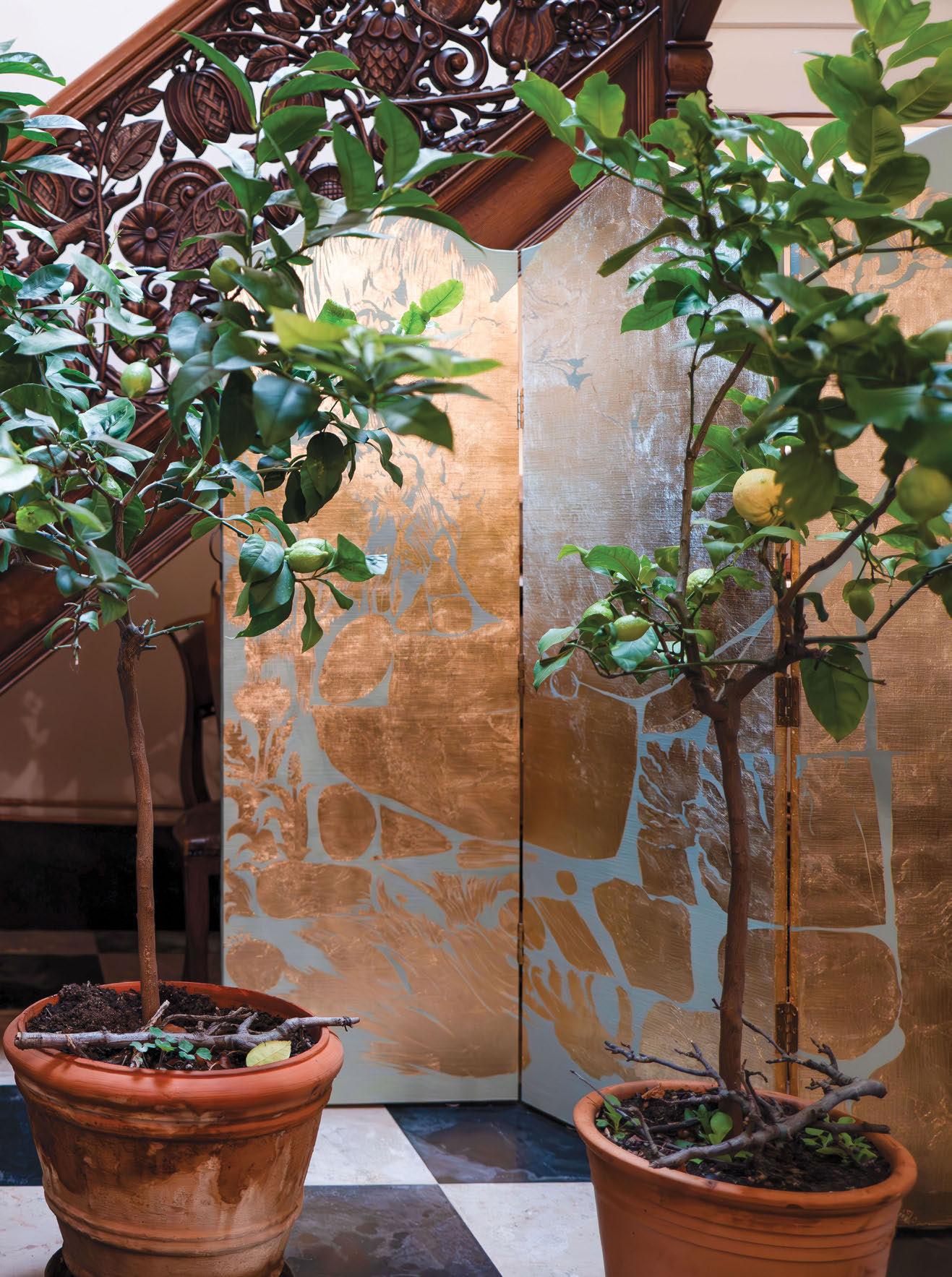
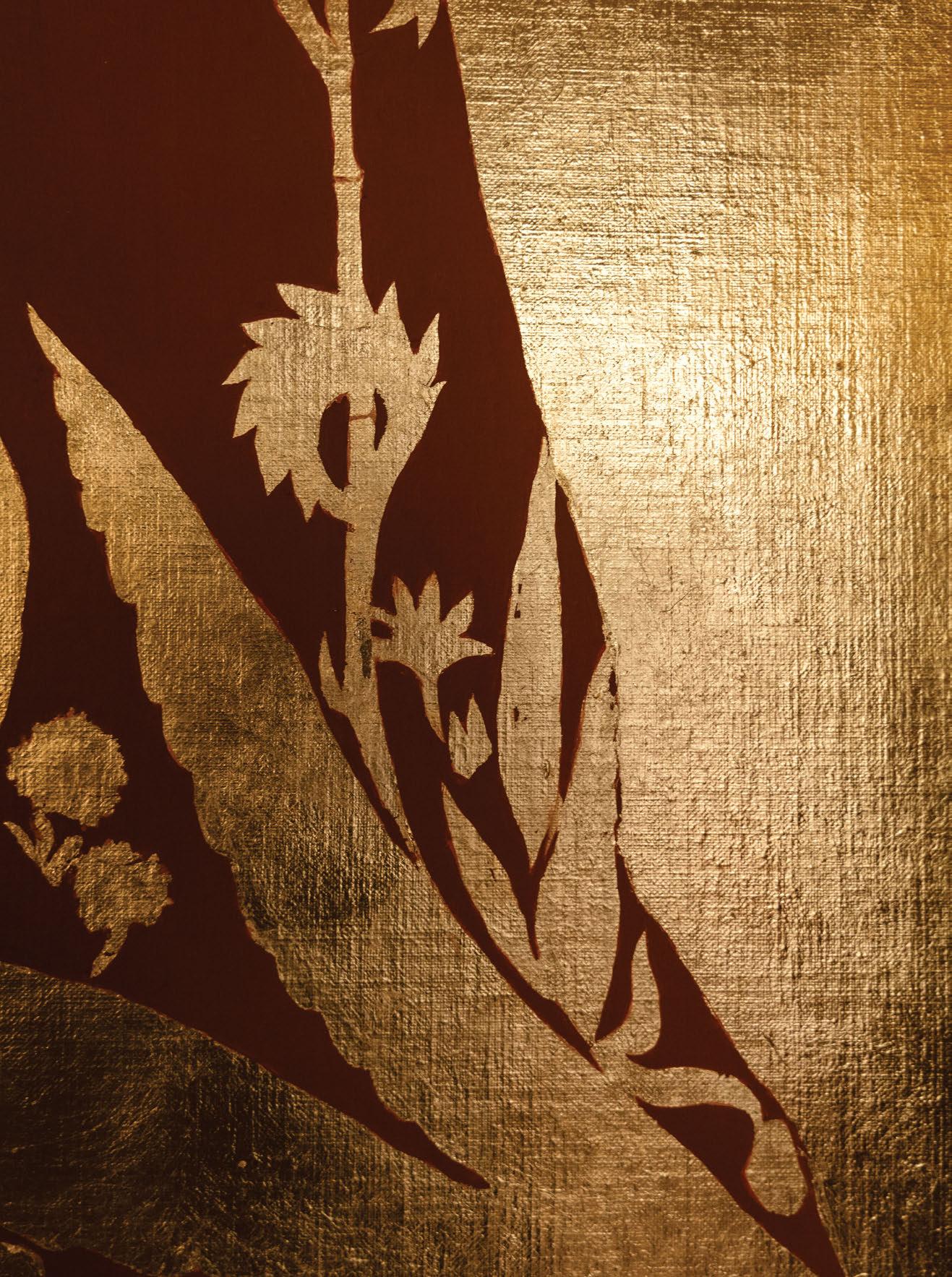
Their home in Ghent, Belgium, is better thought of as The House of Bergian—a domestic world where creativity stacks gently upon itself. Beneath Pierre’s third-floor studio, his wife, artist and art historian Angèle Boddaert-Devletian, and daughter, Saskia Devletian, an architectural engineer, work side-by-side crafting magnificently decorated screens finished in gold leaf. A reverse kind of “illustrating,” the screen’s pattern revealing itself only by the removal of the leaf. A hum of activity, the family drifts in and out of one another’s studios, up and down the stairs, offering quiet observations and small course corrections on works in progress. Over time, the presence of this shared making settles into the walls, the energy of it accumulating day after day—until it feels ready to leave the house and be carried outward into the world.
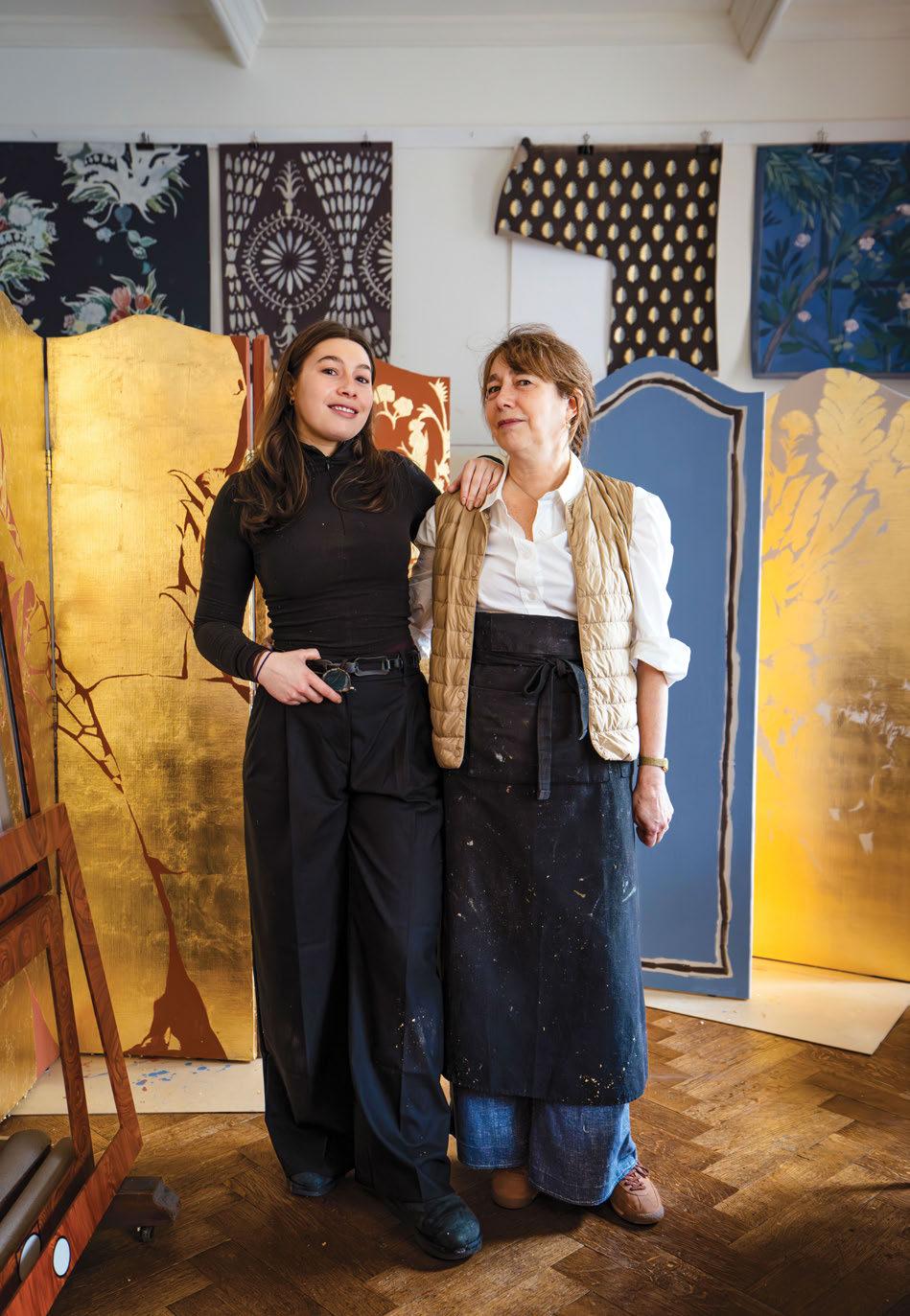
SASKIA DEVLETIAN AND ANGÈLE BODDAERT-DEVLETIAN
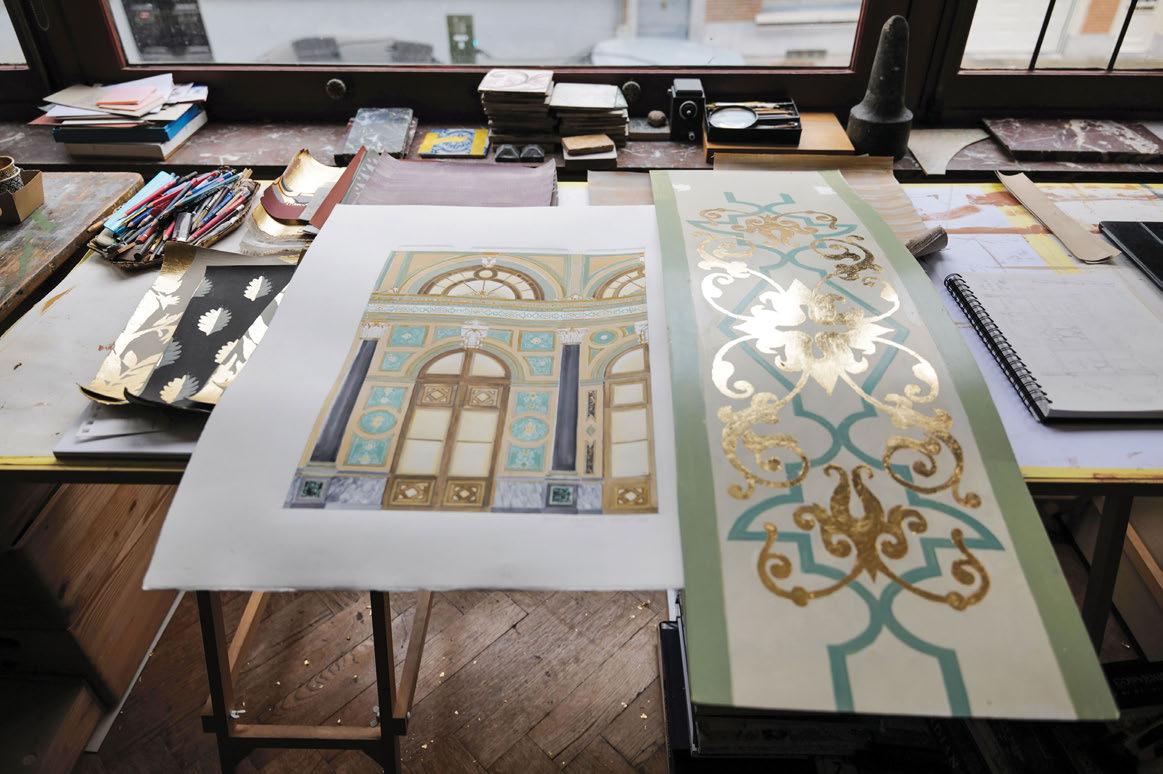
A detail from an historic wall restoration project.


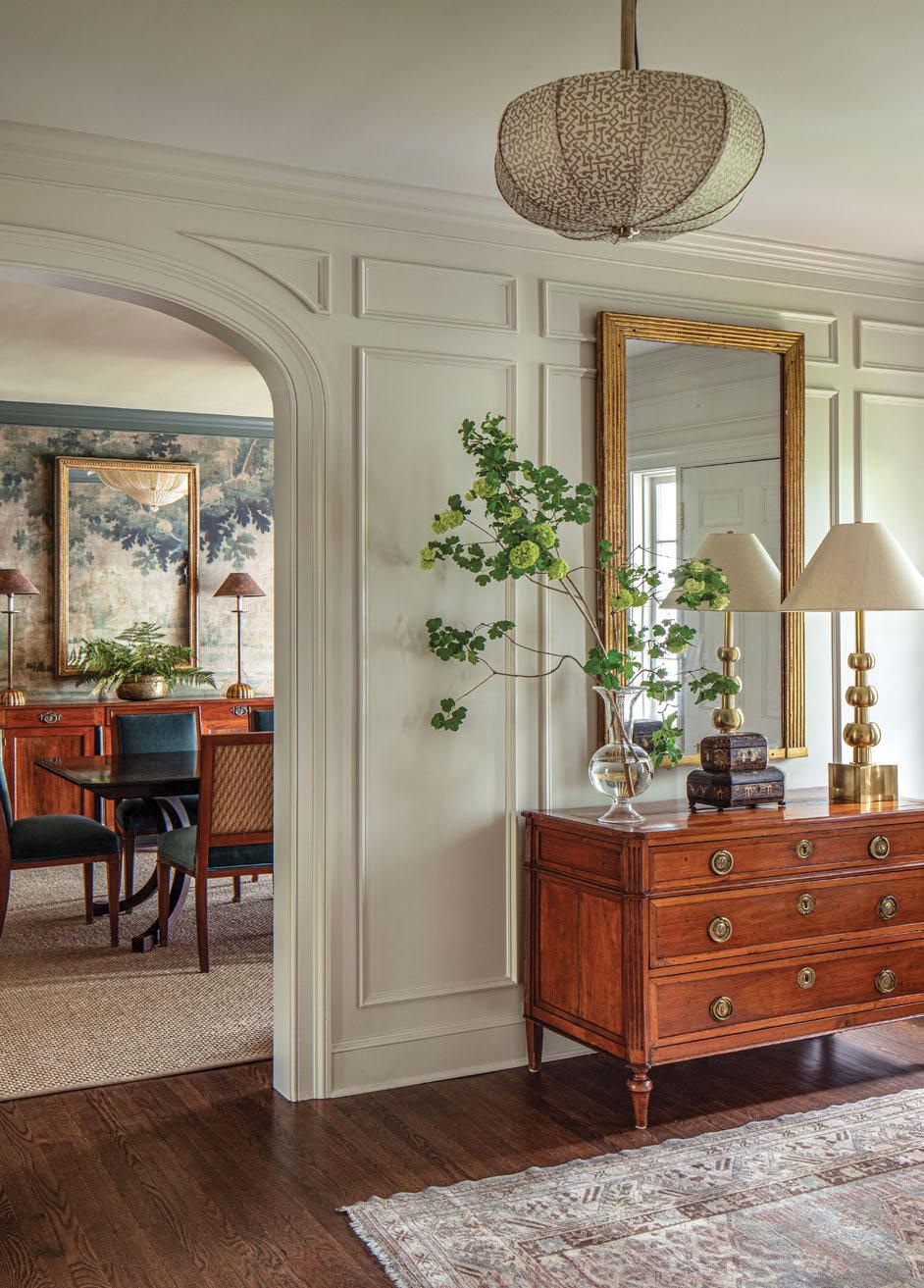
DOUBLE BUBBLE
INTERIORS BY SHEILA BRIDGES / PHOTOGRAPHY BY FRANK FRANCES / OTTO / STYLING BY ELVIS MAYNARD
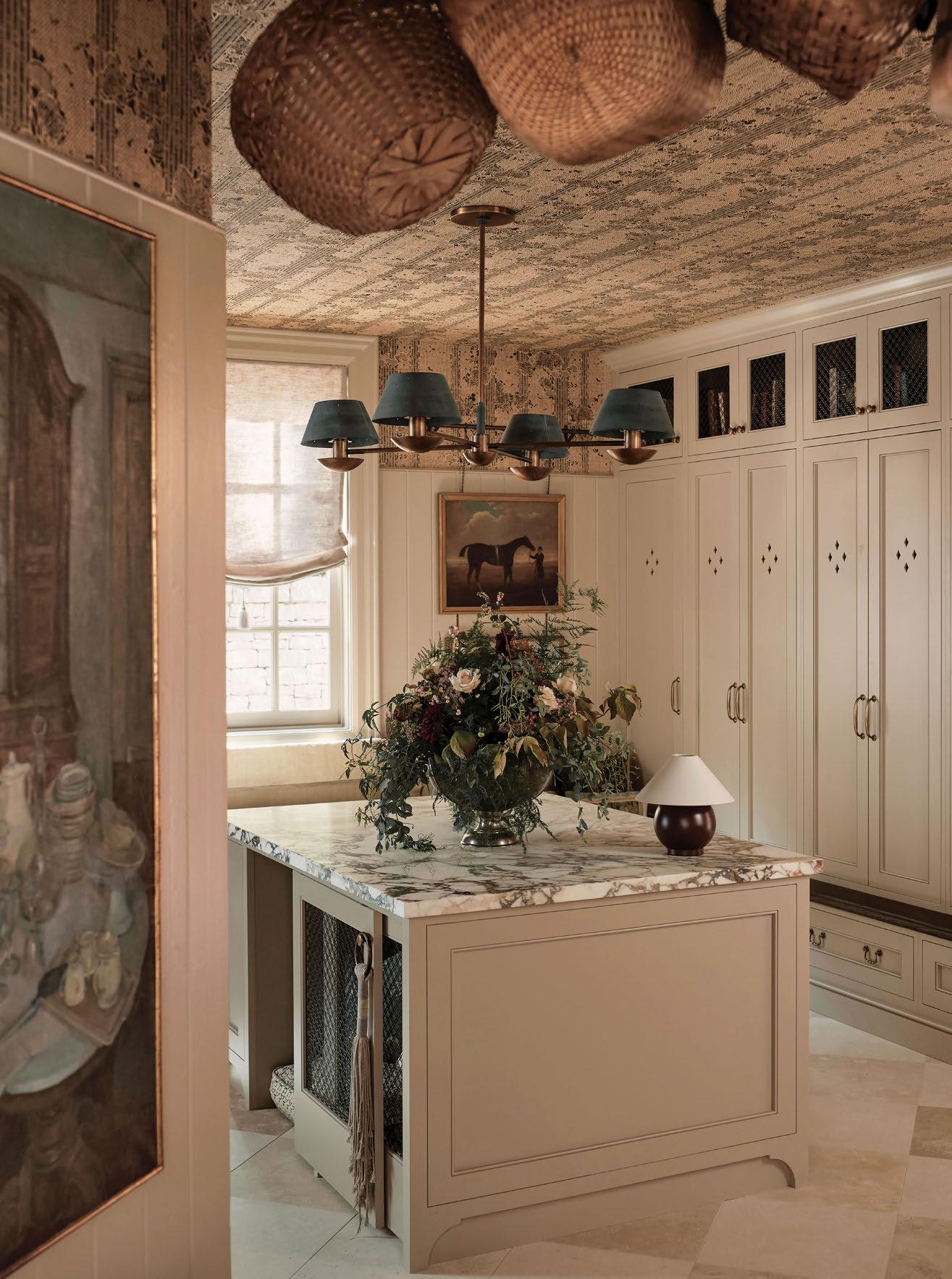
DESIGN AND INTERIORS BY LIZZIE COX AND LAUREN KNOWLSON / MENLO
ARCHITECTURE / PHOTOGRAPHY BY GORDON GREGORY
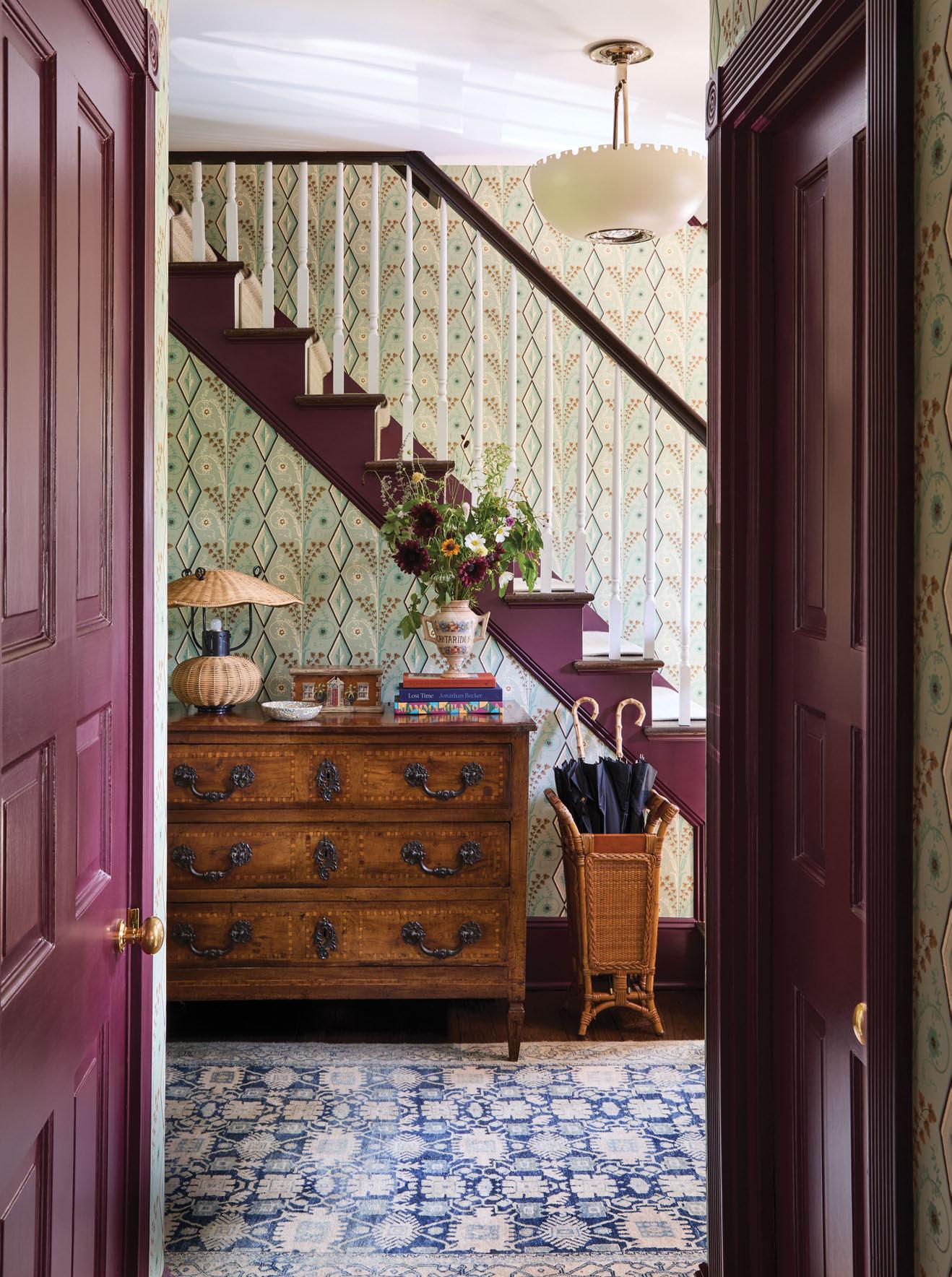
LEASOWE
INTERIORS BY HENRY & CO.
PHOTOGRAPHY BY ANNIE SCHLECHTER
STYLING BY FRANCES BAILEY
COBE / CAMDEN
INTERIORS BY KOBEL & CO. / PHOTOGRAPHY BY NATE SHEETS
BOWLINE / BOUCLIER / MAZARINE
ALLISON ELEBASH INTERIORS / CUMULUS ARCHITECTURE / BUILD BY BYRD BUILDERS / PHOTOGRAPHY BY JULIA LYNN
DISC
INTERIORS BY STUDIO CABIDA / JEFFERY GRAHAM ARCHITECTURE / PHOTOGRAPHY BY ORI HARPAZ
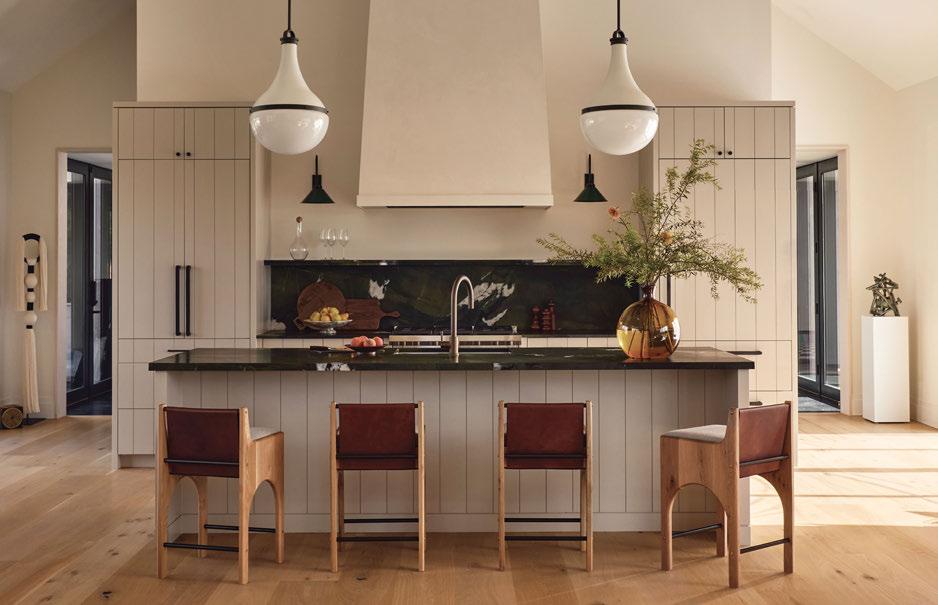
WALSKA
INTERIORS BY HEIDI CAILLIER DESIGN / PHOTOGRAPHY BY HARIS KENJAR / STYLING BY MIEKE TEN HAVE
HARFORD
INTERIORS AND ARCHITECTURE BY JAM / PHOTOGRAPHY BY GIEVES ANDERSON / TRUNK ARCHIVE
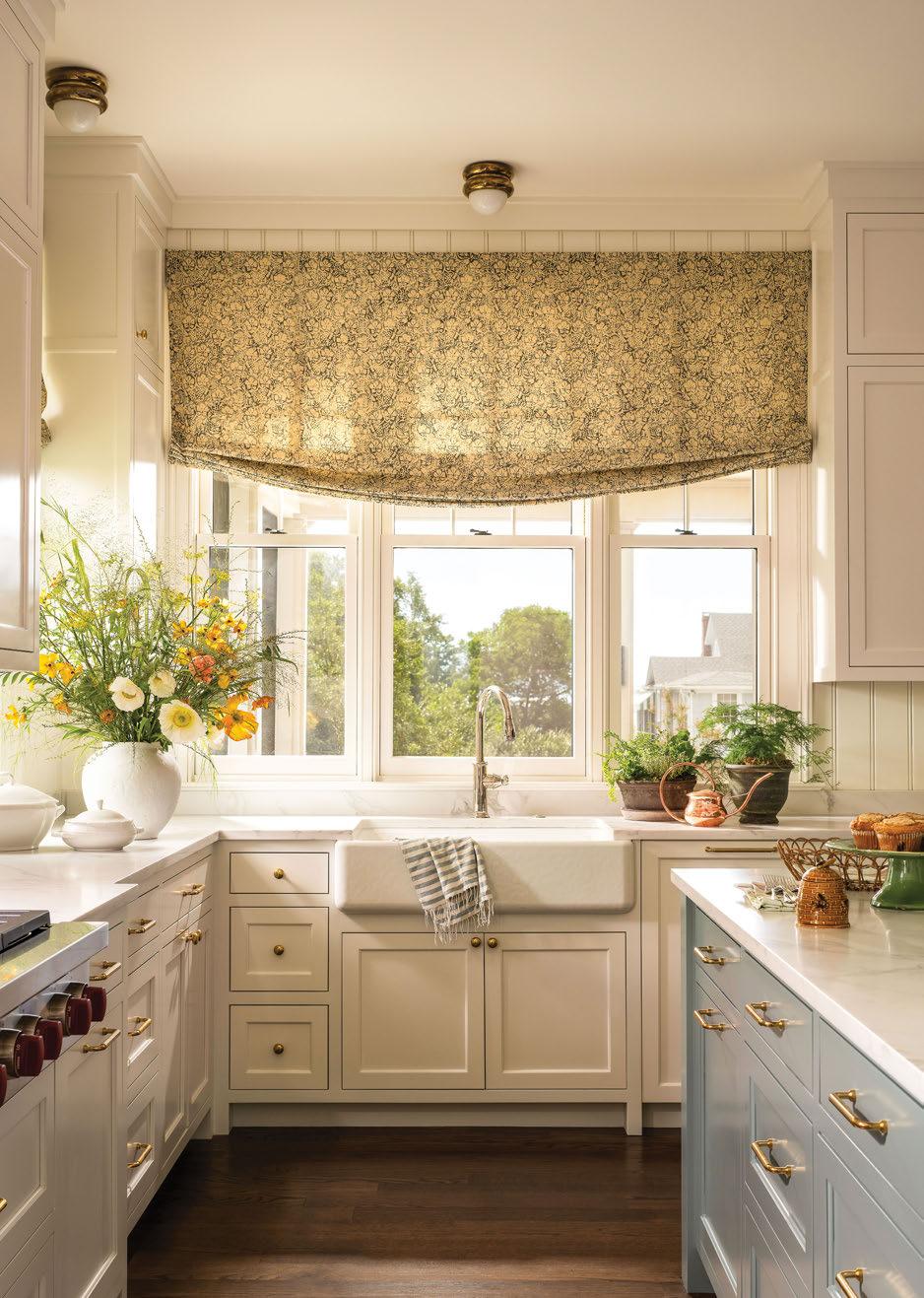
BANGLE
TAYLOR HILL INTERIOR DESIGN / ARCHITECTURE BY B.W. FLEMMING / PHOTOGRAPHY BY KATIE CHARLOTTE
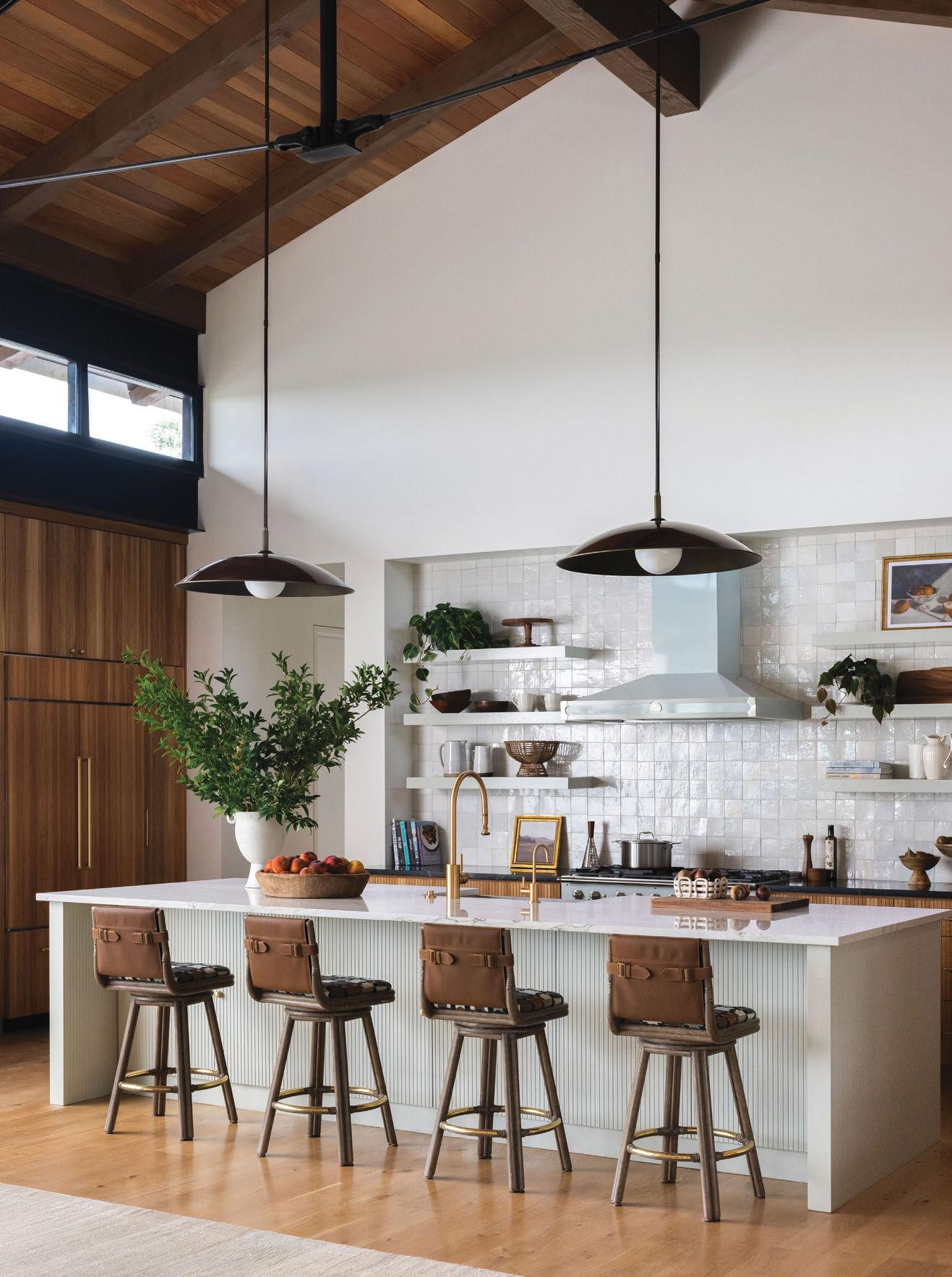
AUGUST 29, 2025
THETFORD, UK
MAHARAJA’S EYE
OFJACKPENNY THE SOCIAL STUDIES
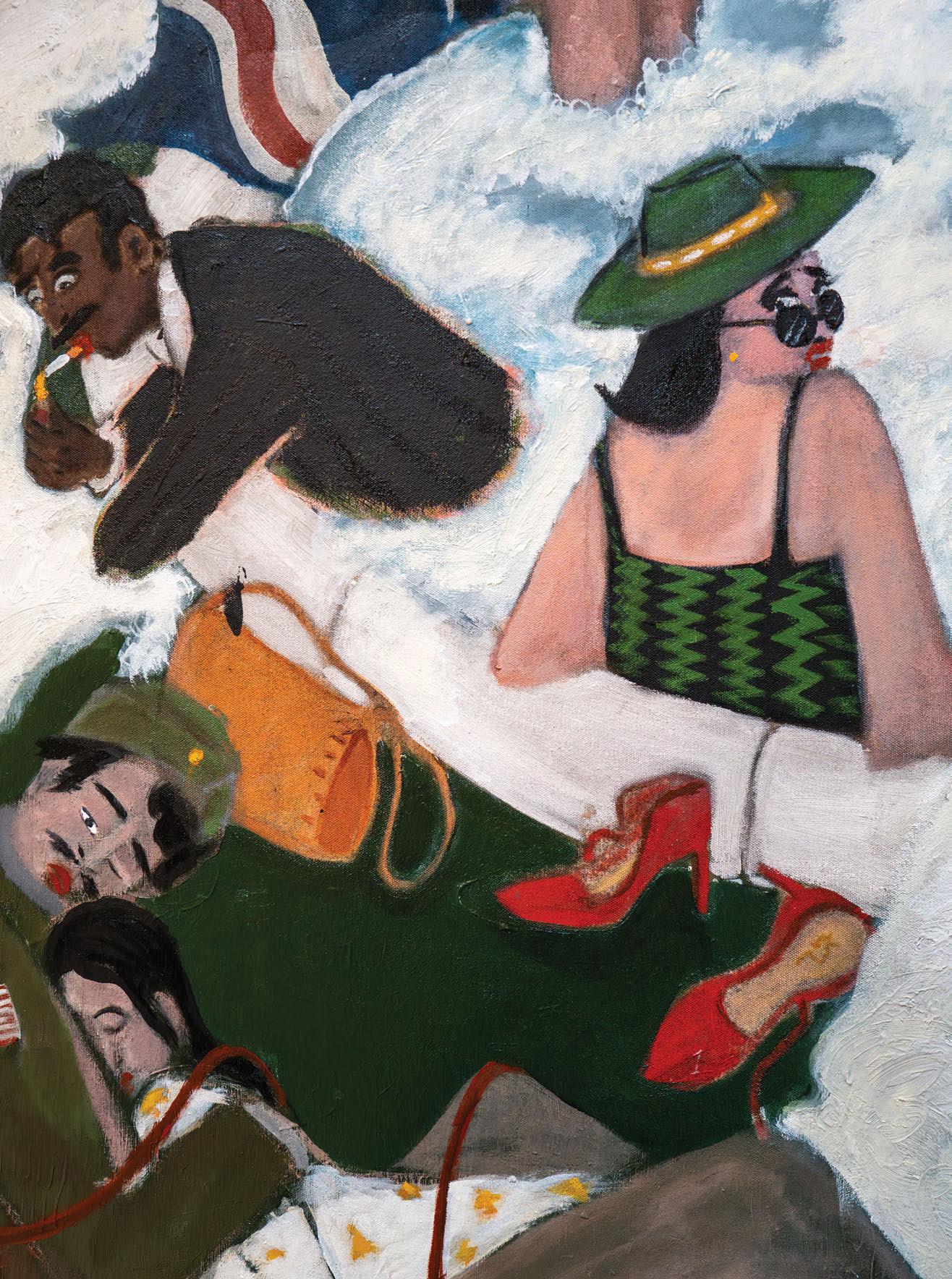
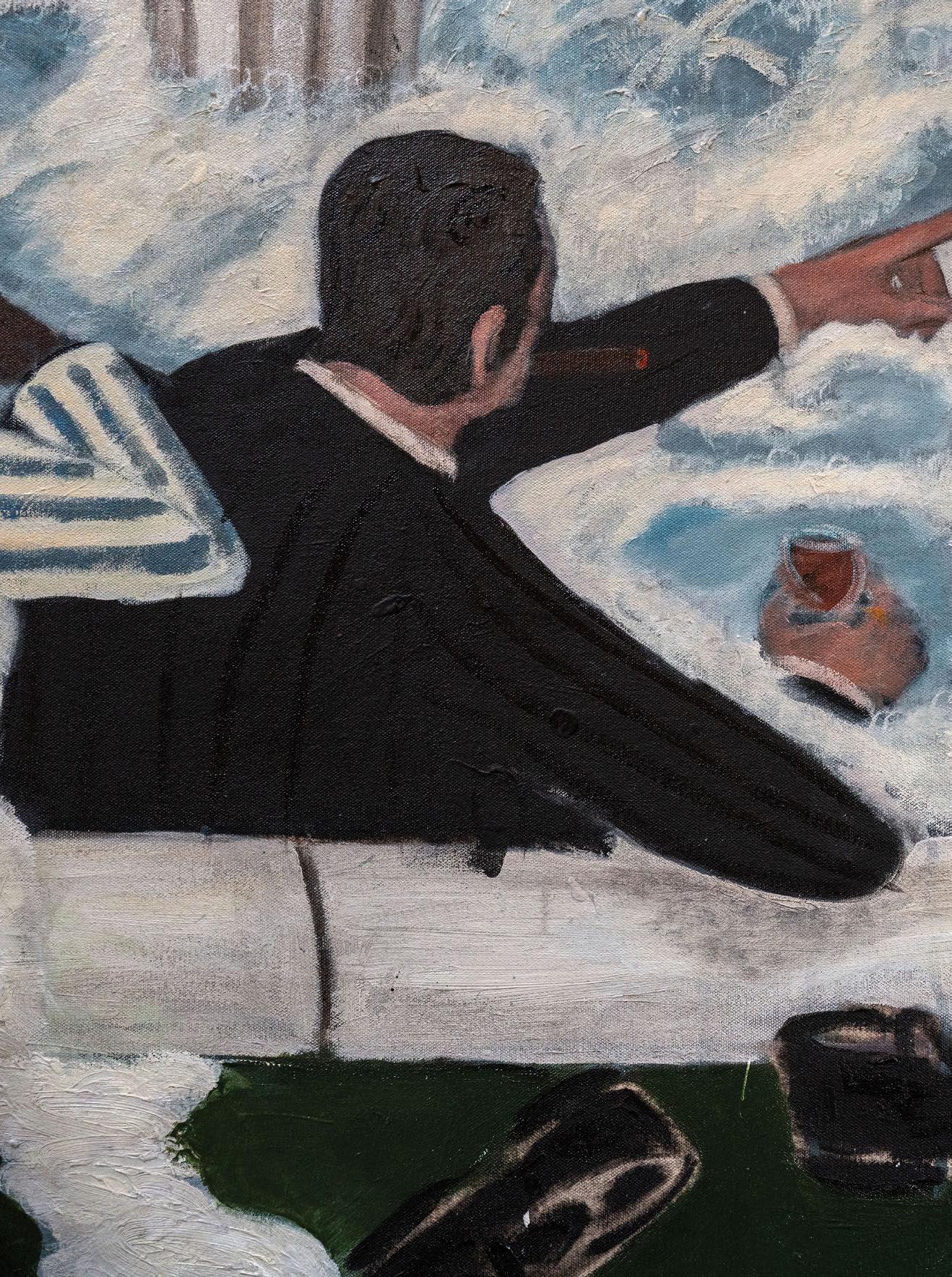
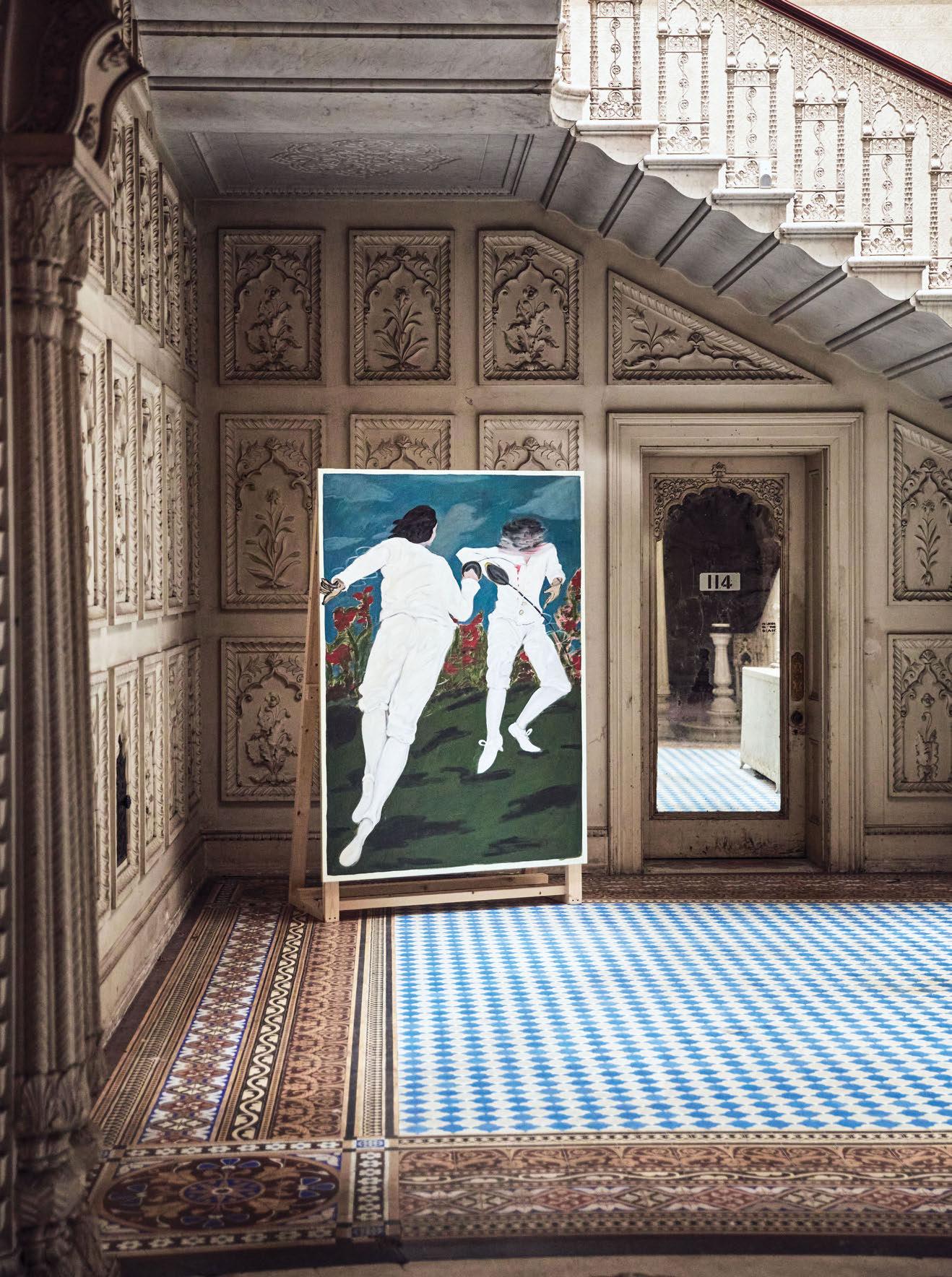
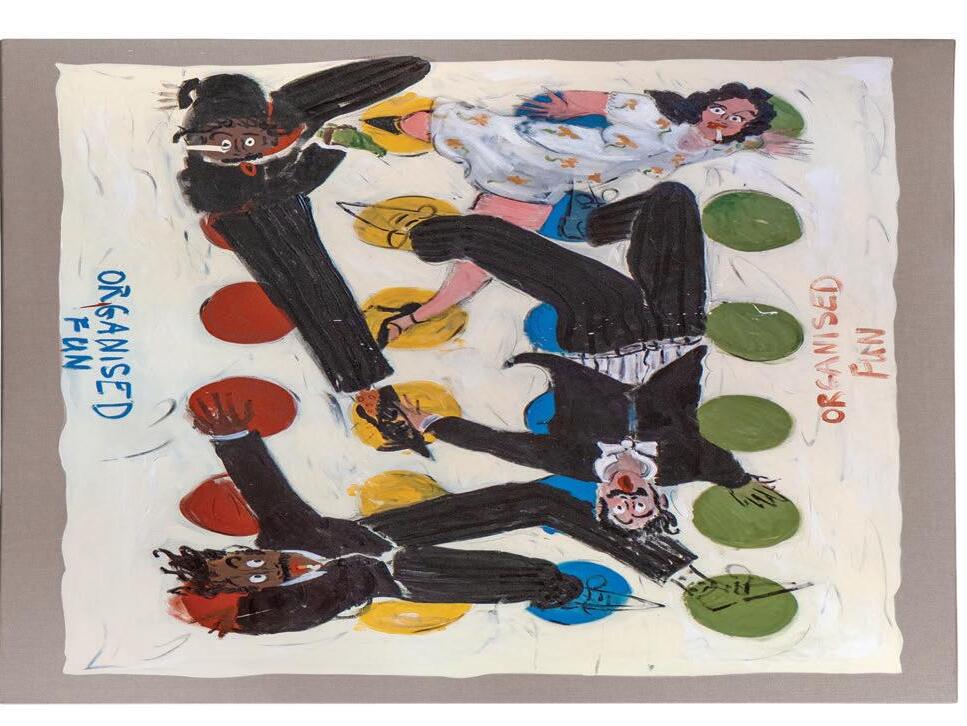
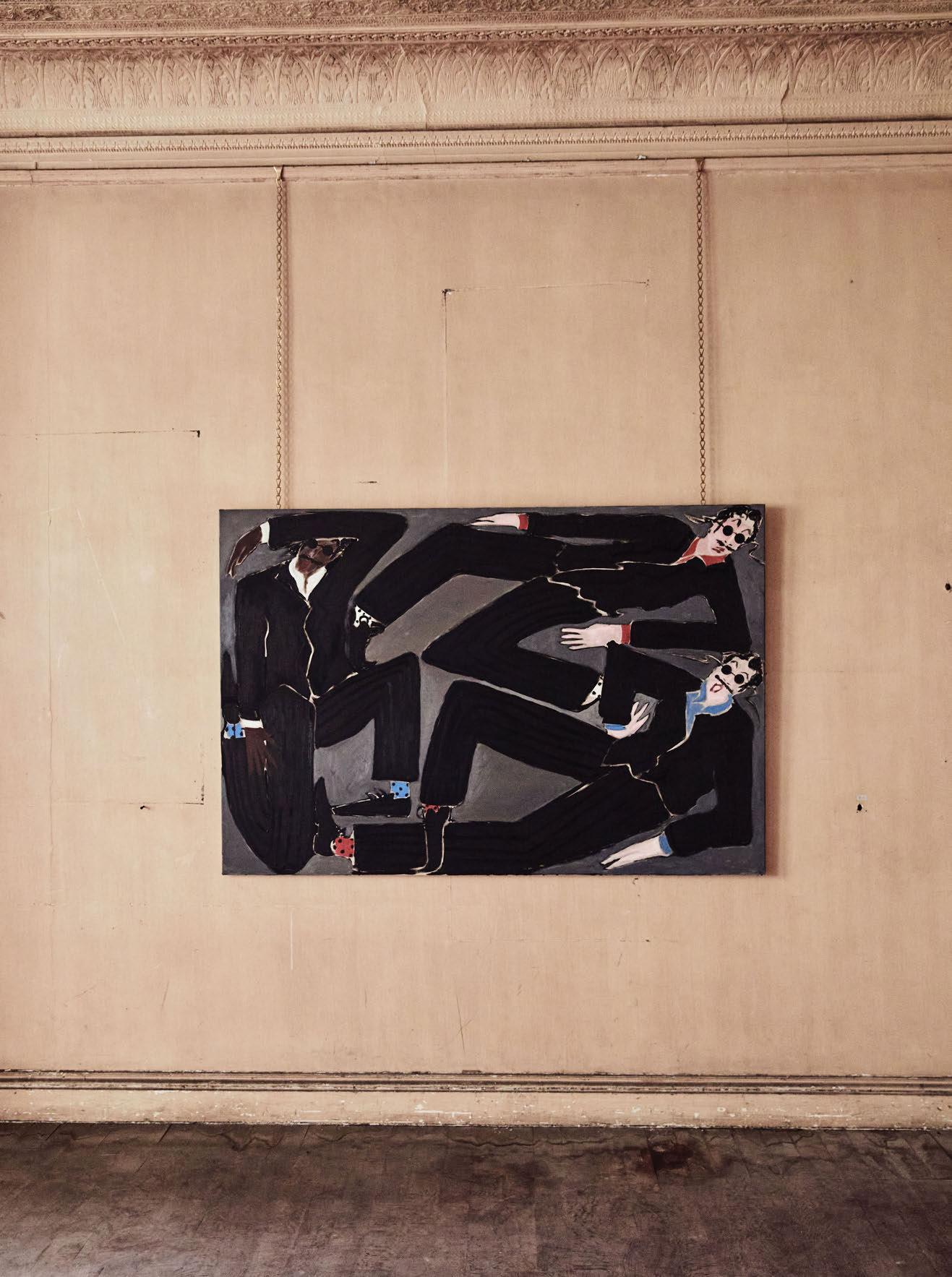
Artist Jack Penny’s oeuvre seems made of motion and flow. His paintings and the intellectual energy behind them imbued with a material sense of position, while the characters and the settings provide the hearty action. He describes his own work “as a wolf in sheep’s clothing,” purposefully pleasing but deeper down making a comment on the human condition and how we try to fill ourselves through the outside world. A keen viewer catches this rhythm, and for an exhibit at Elveden Hall, Jack added his own astute messaging.
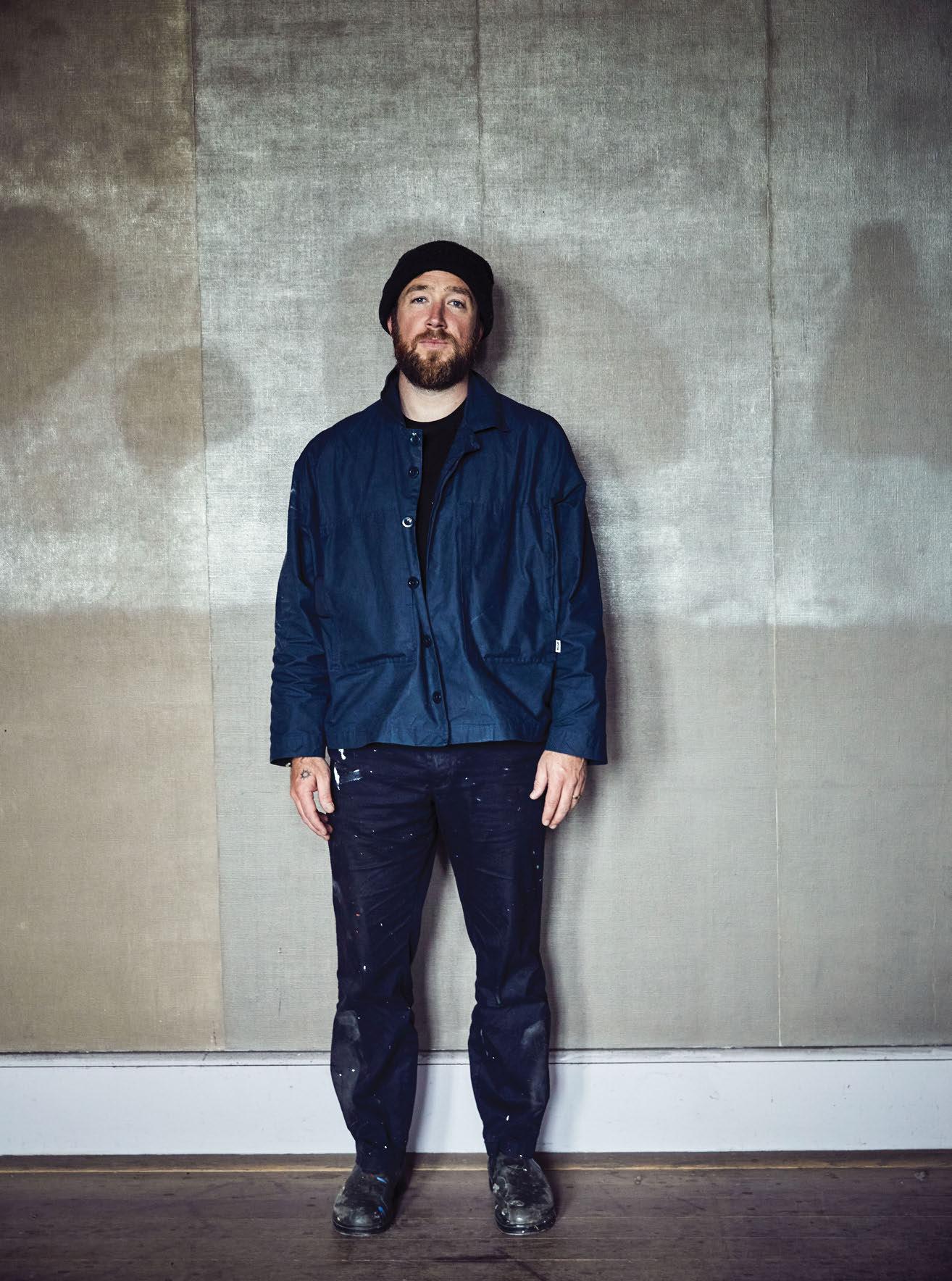
JACK PENNY
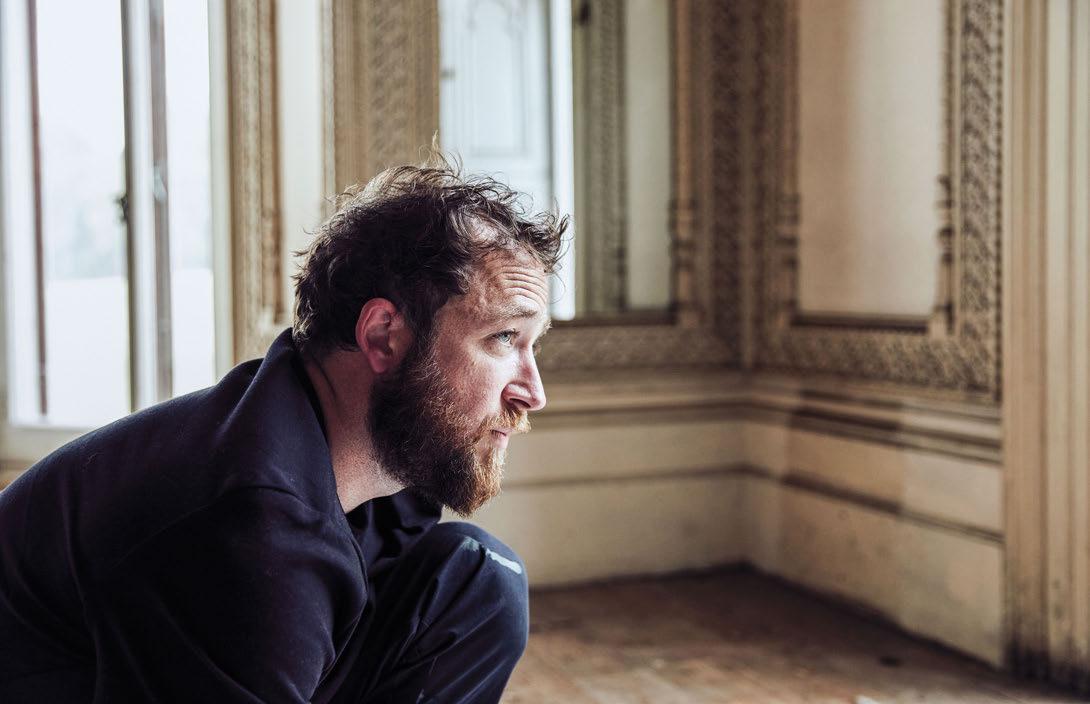
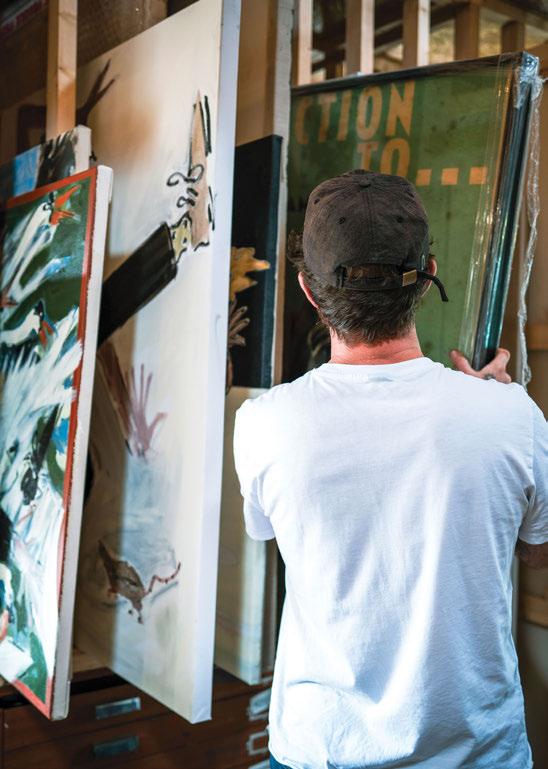
Before Jack Penny was an artist, he was a skater. From the age of 12 until he was about 25, this was his thing. Every holiday and trip was skateboarding, and the other skateboarders were creative too. It went hand-in-hand, this culture. At 38, when you watch Jack Penny move, you can imagine this backstory. In his studio near Chichester, England, he darts in and out of the storage racks with balance and grace pulling out large-scale canvases. His is a kinesthetic awareness, an ability to sense his body’s position, movement and actions in space. Unconsciously, he moves with efficiency and precision, but this muscle memory extends to his work as an artist, too. His paintings create a flow state, affording the viewer an opportunity to investigate what is going on. In all the motion, there is also the emotion that creates a deep experience for both artist and viewer.
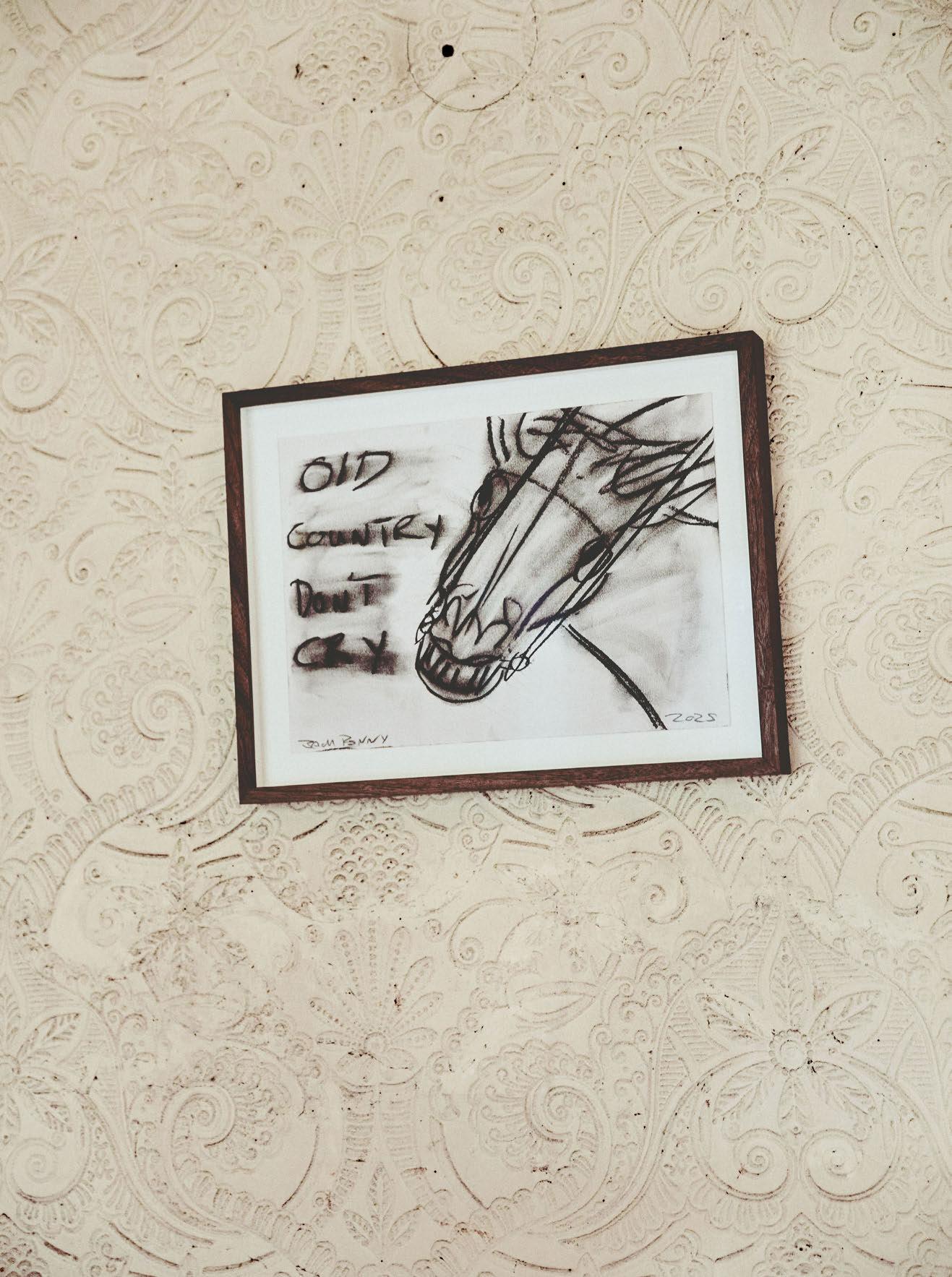
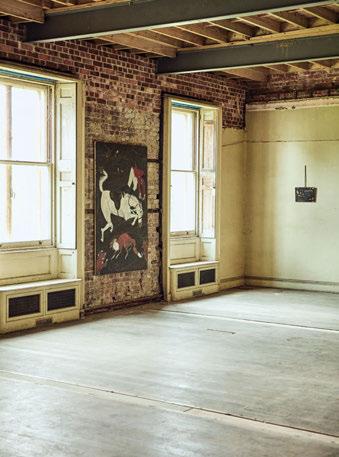
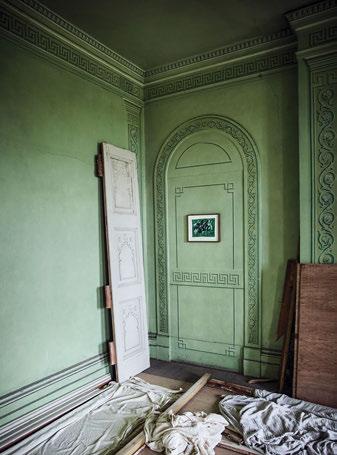
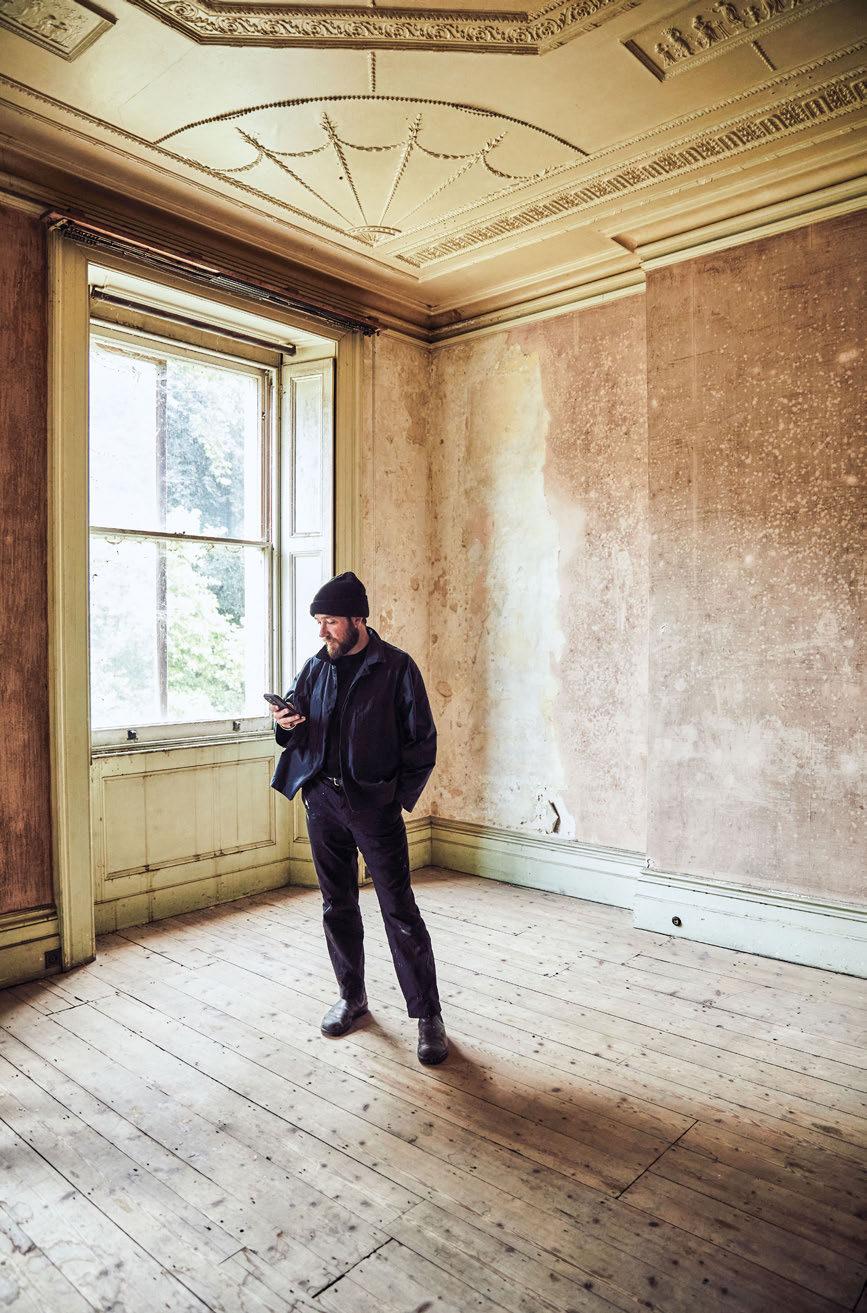
The day prior we had met up with Jack at Elveden Hall in Suffolk, the setting for a month-long exhibition of his work last October entitled, Old Country , for a collaboration organized by gallerist
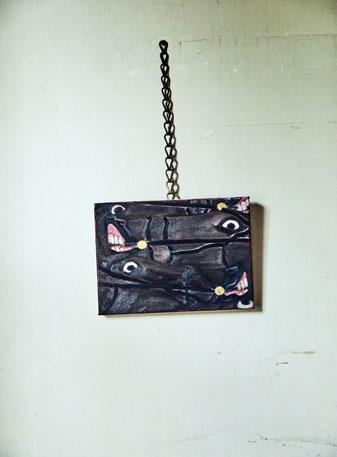
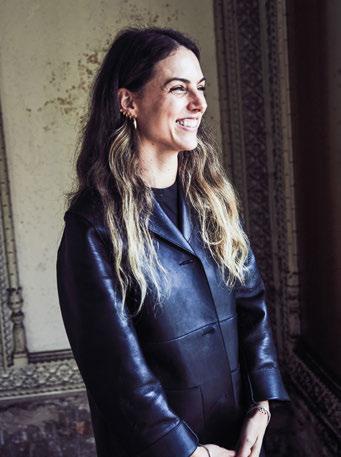
India Montgomery of The Dot Project and Violet Manners of HeritageXplore. The idea for the exhibition, conceived by Montgomery, was novel; bring an artist-in-residence program to historic houses in the UK, so that the artists might create new works inspired by and in conversation with these landmark properties. Perhaps these houses might only act as a vague background to the artworks, or perhaps their energies, history and positions in the stories of the country might encourage a deeper dialogue between the art created during the residency and the houses themselves. It was left to each artist to interpret and be moved to create. Uniquely, HeritageXplore works with historic houses that are outside the more well-known systems of The National Trust and English Heritage to bring interest and understanding to these independently owned and operated historic properties of significance across Britain, houses that are not typically open to the public through any organized scheme. Montgomery brought the contemporary artists and Manners gathered the houses, and together they made the matches. This is how we came to meet Jack Penny at Elveden. ››
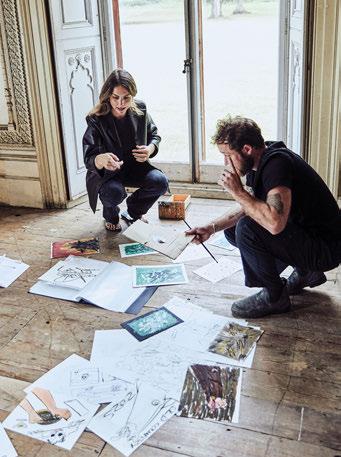
India Montgomery
ELVEDEN HALL
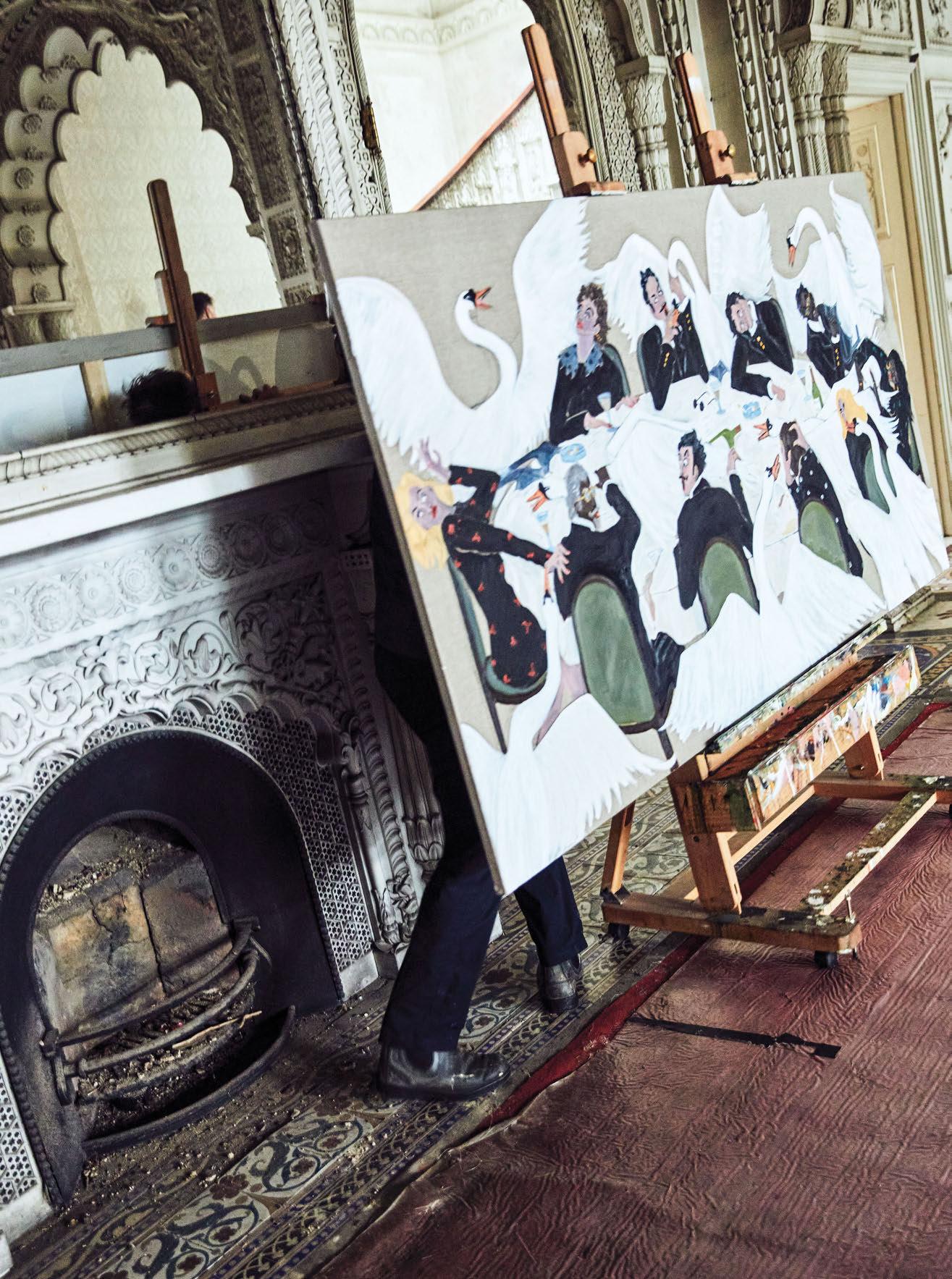
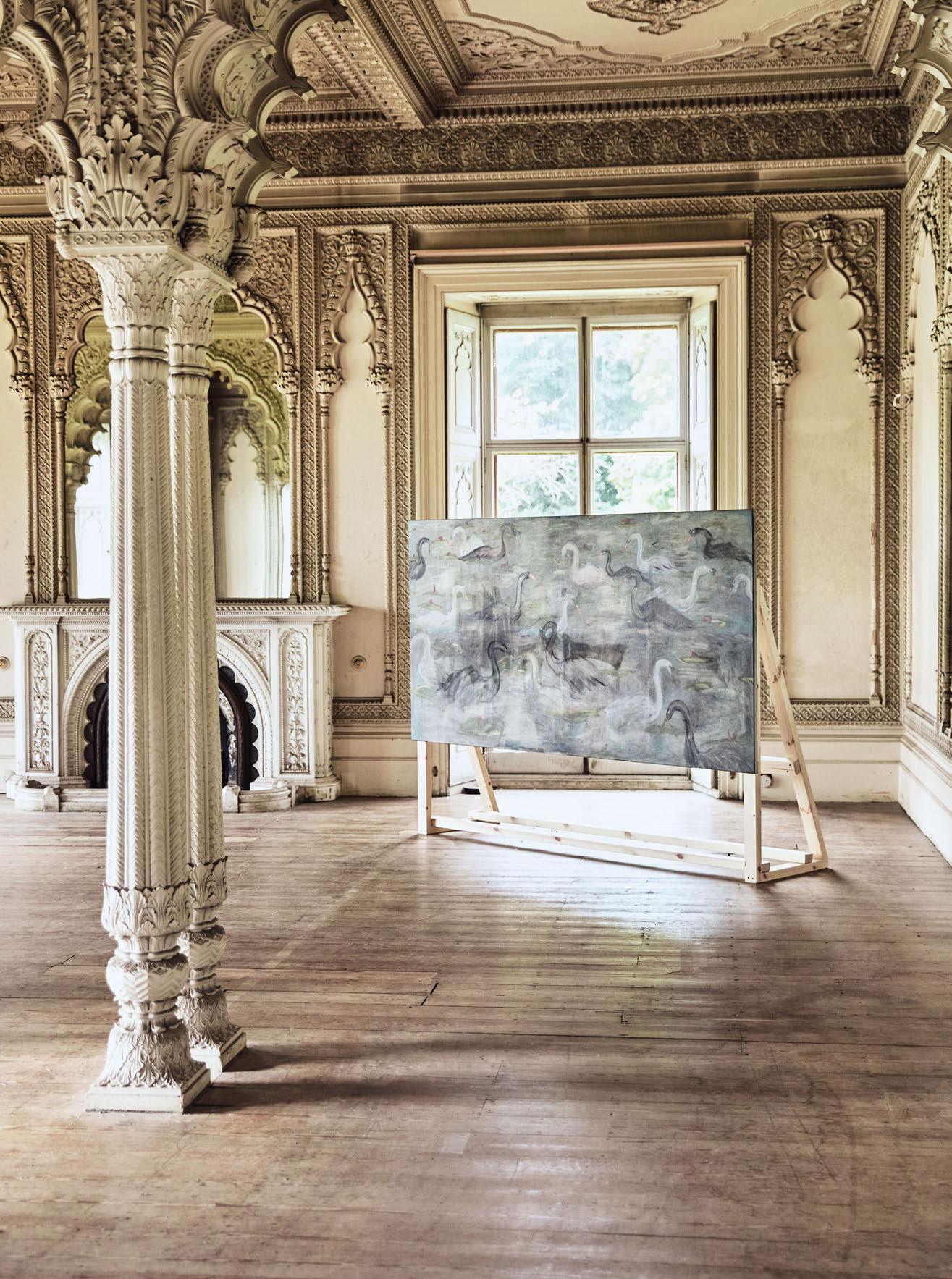
Jack’s assignment to Elveden Hall felt absolutely correct. Elveden’s tale is rare in the stories of British houses, and it’s condition today only adds to an incredible “sense of pause,” a cultural fascination and interest. The Georgian manor house was built in 1760 for Commander Augustus Keppel who had served as First Lord of the Admiralty during the American Revolutionary War. But that house bears little to no resemblance to the current building’s dramatic incarnation. In the 1860s, Maharaja Duleep Singh, the last ruler of the Sikh empire, bought it. Though born in Lahore, Singh spent his teenage years exiled in Britain, where he was befriended by Queen Victoria and developed an eye for British aesthetic influence alongside that of his native land.
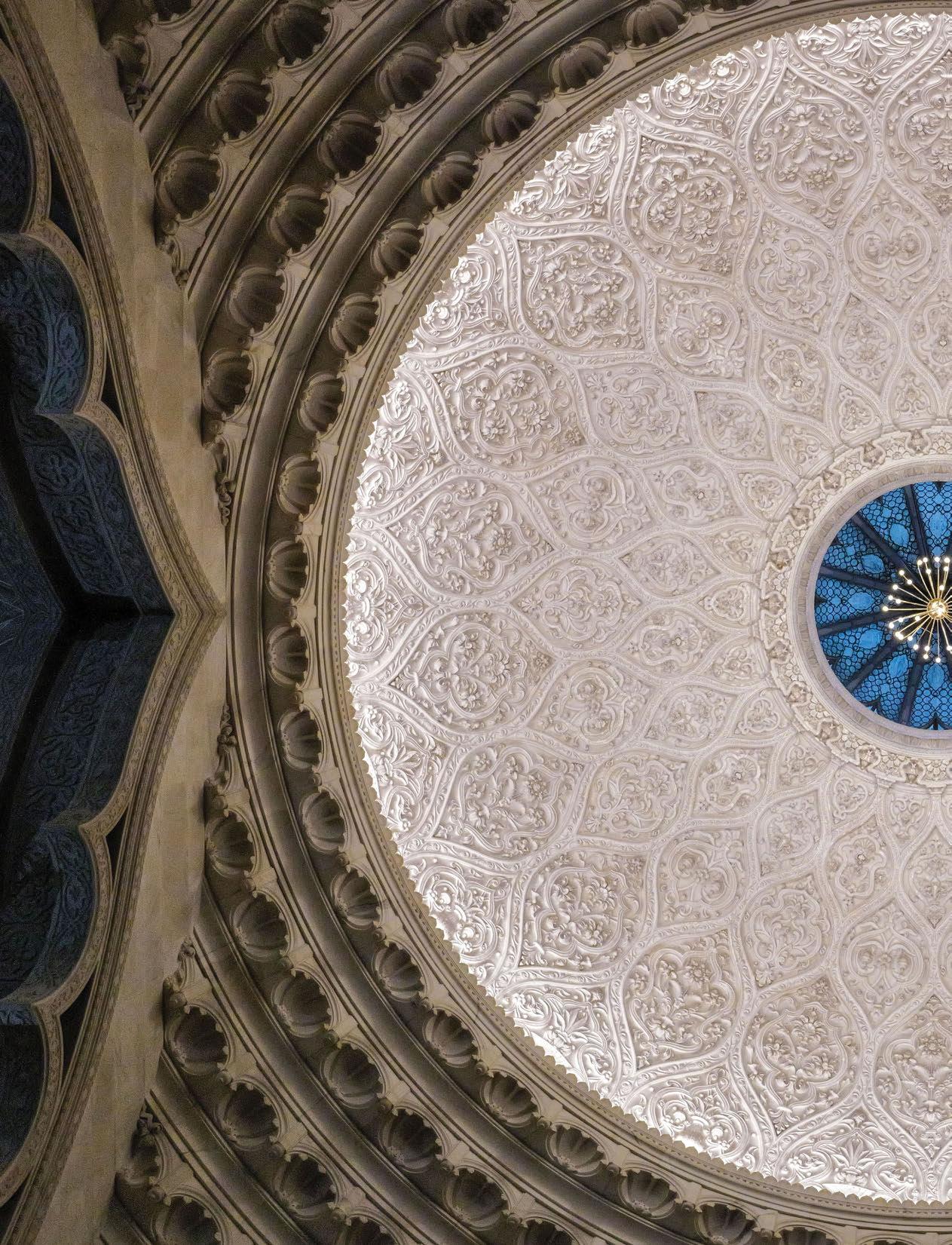
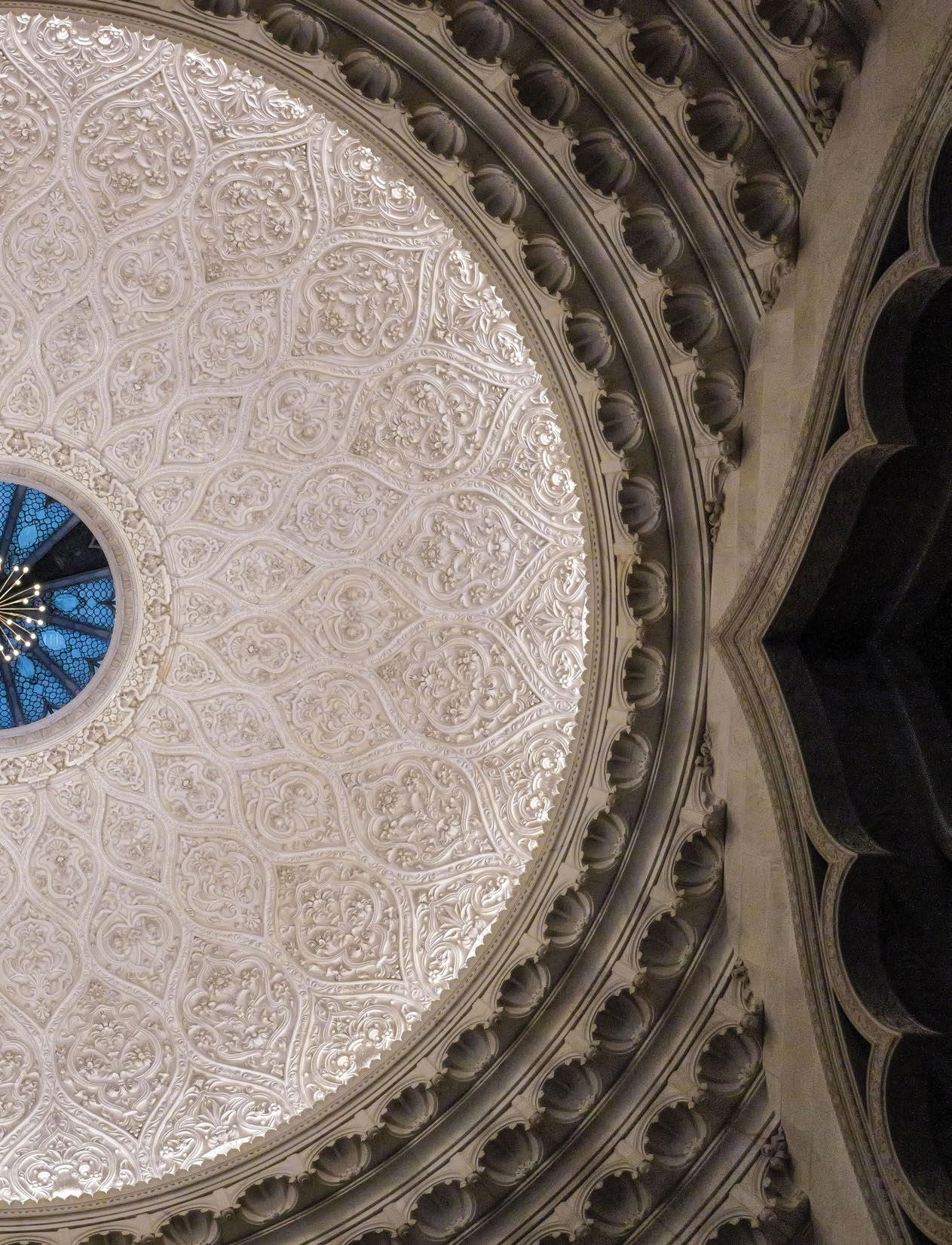
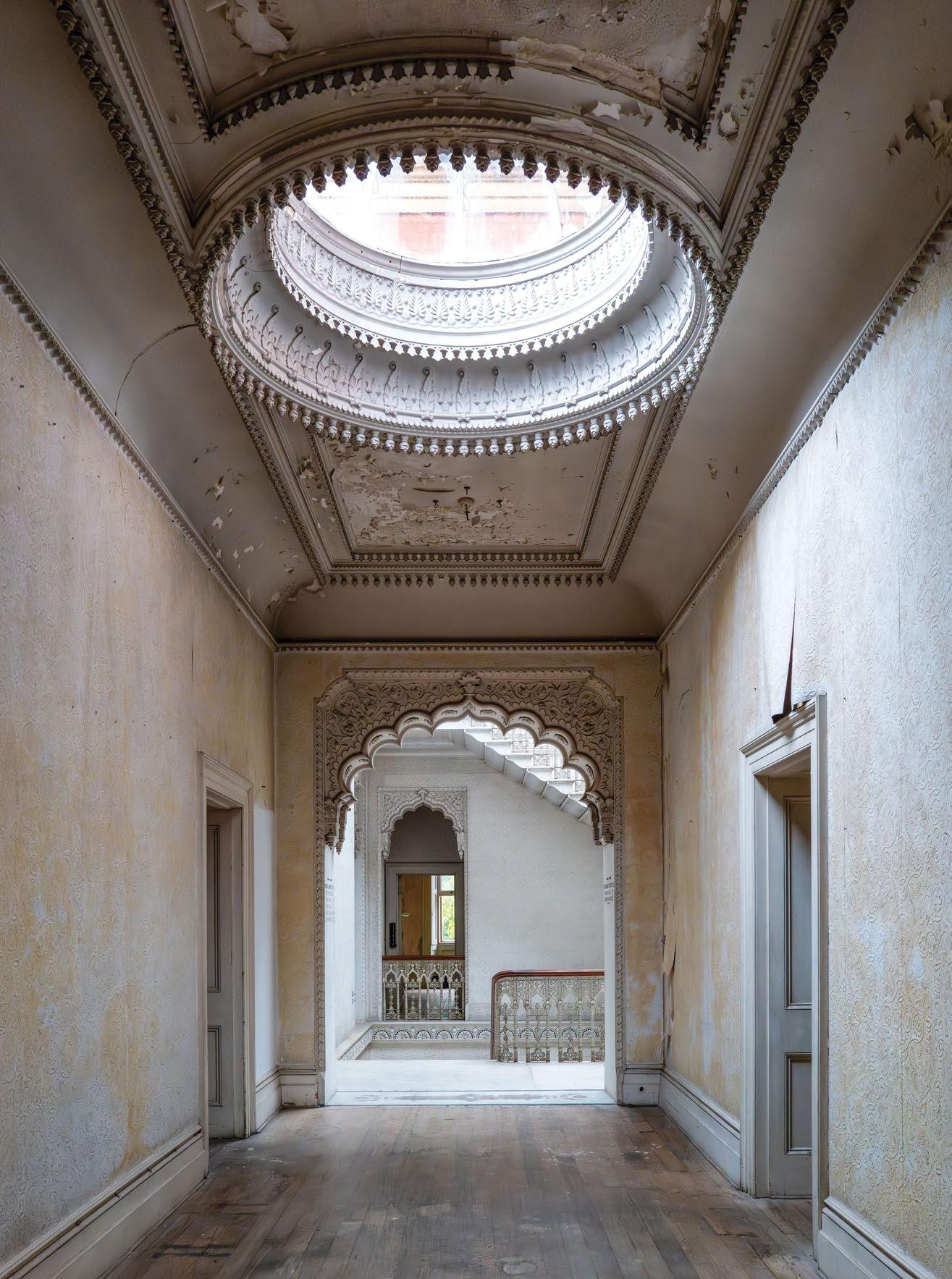
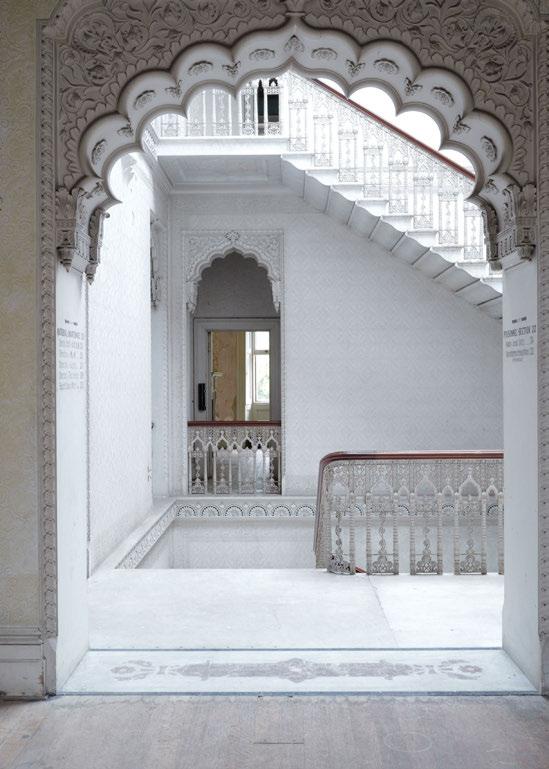
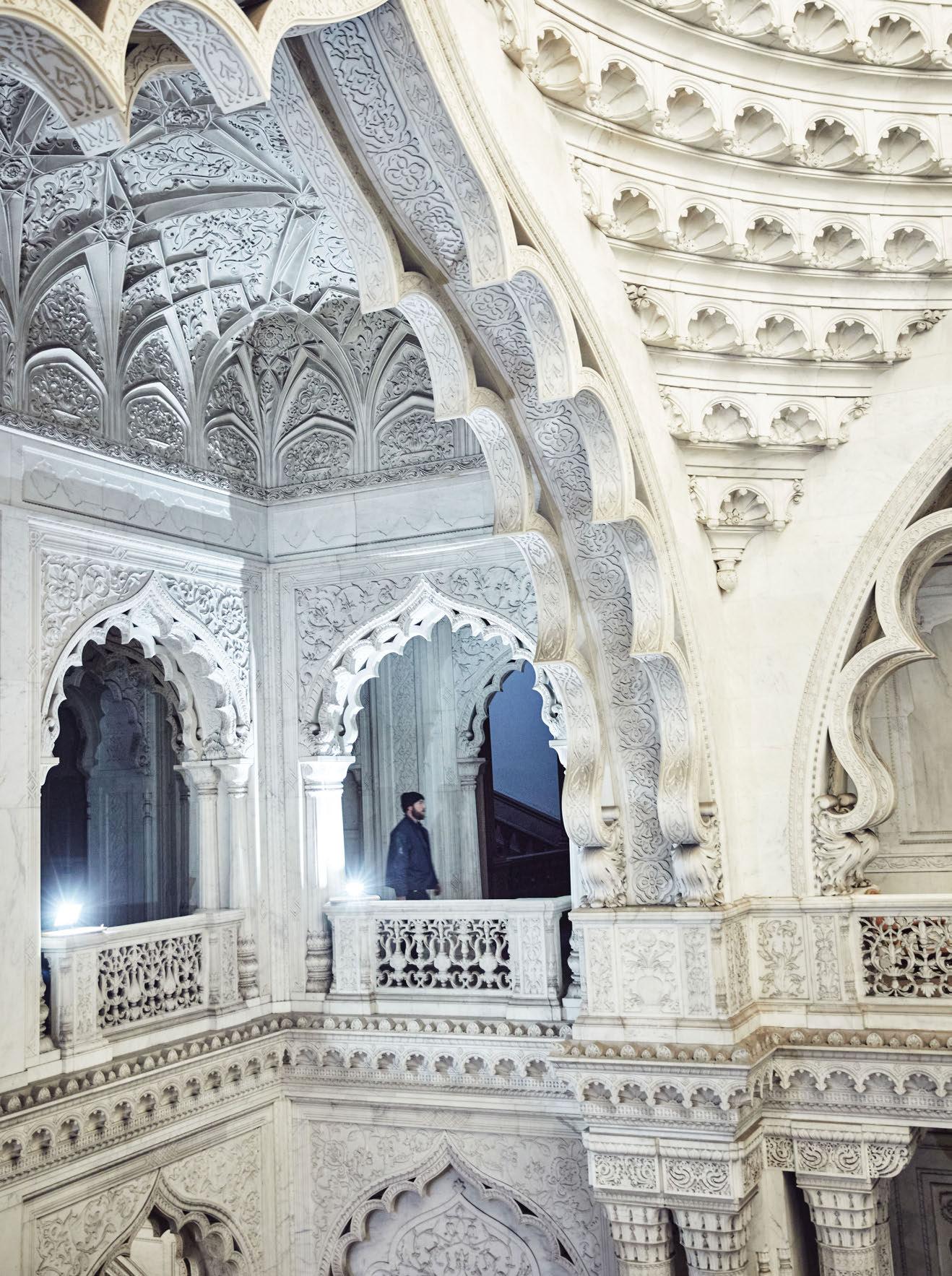
After purchasing Elveden Hall, the Maharaja hired John Norton, a Gothic Revival specialist who quickly set about enrobing the original house in an Italianate style and redesigning the interiors to resemble the Mughal palaces Singh had known as a child before moving to England. Extremely detailed plasterwork and ceilings, Indian in style and scale, were added, creating some of the most extraordinary rooms still in existence in Britain today.
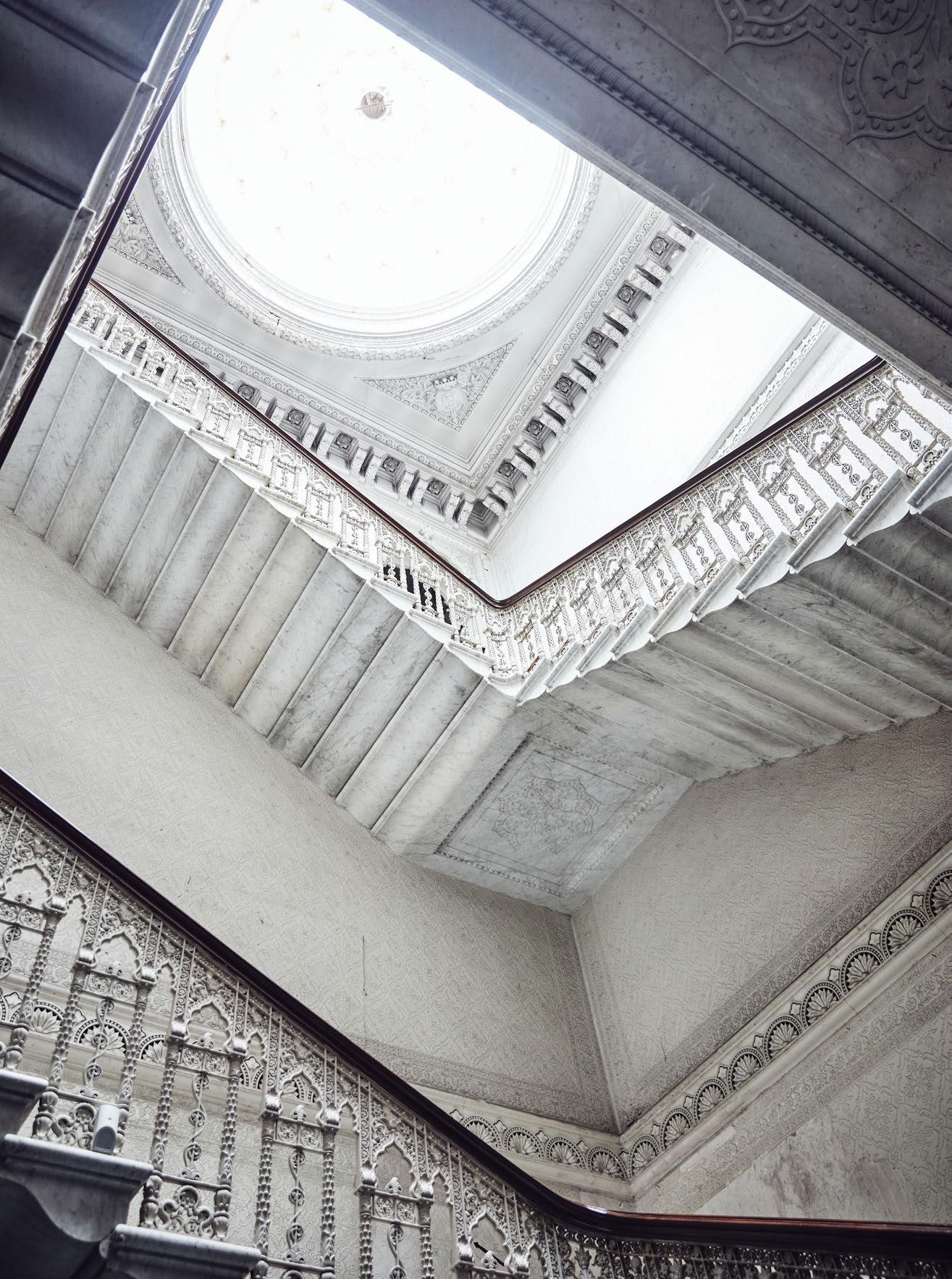
In 1894 the 1st Earl of Iveagh, Edward Cecil Guinness of the brewing family, bought the Elveden Estate from the Maharaja’s executors. The story goes that Lord Iveagh was, like the Maharaja, a keen sportsman and the shooting on the estate was reportedly unrivaled. He added an east wing between 1899 and 1903, much more Edwardian than the Mughal style of the rest of the house and he refitted the soaring hall, which connects the two wings, with Carrara marble. In a nod to Elveden’s unique architectural history, the Guinnesses chose to enhance the Indo-Saracenic, Mughal theme rather than erase it in the hall but did so in a more permanent and opulent way using marble. Lord and Lady Iveagh had a taste for the neoclassic style, and the grand domed space which blends “cathedral meets mosque,” satisfied this desire on a monumental scale.
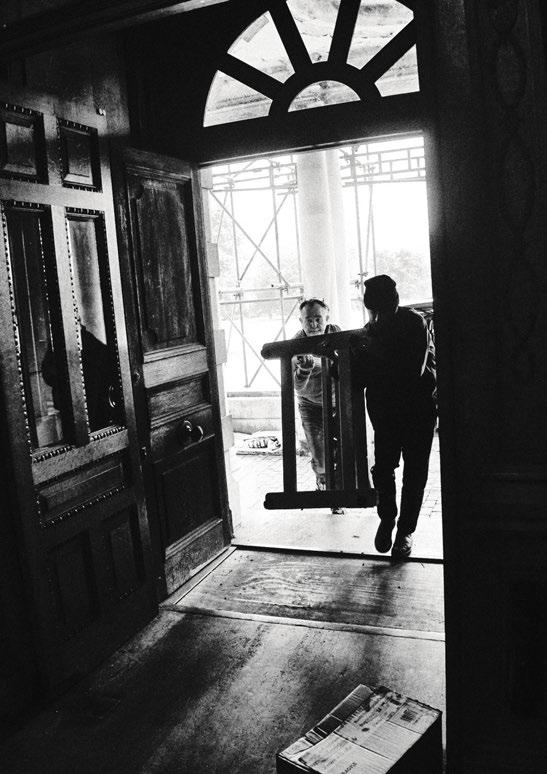
It is a rainy morning in Suffolk, and Jack and his father have backed up a van to the imposing front door of Elveden and are unloading the large canvases and painting supplies, easels and materials that they’ve driven the 160 miles from Jack’s studio. Unlike the other HeritageXplore houses assigned to artists for the project, there is no way that Jack could live and work in full
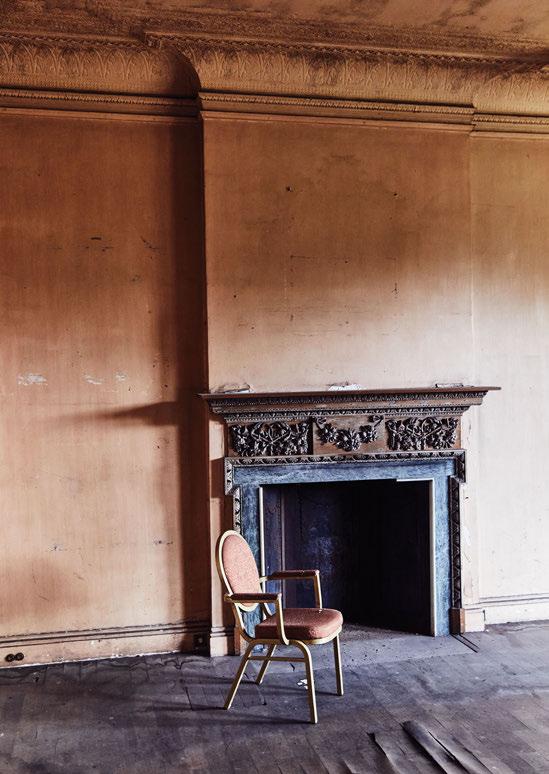
residence at Elveden. While the architecture is positively eyewatering, the house is, for all intents and purposes, shut down. It was used as the base for the USAAF during WWII, otherwise, the Guinesses have not lived there for decades. There is no running water or heat to speak of, but what it lacks in services it makes up for in sheer attitude given its awe-inspiring backdrops, smell of abandonment and thrilling story. Learning that the empty house was also the setting for Stanley Kubrick’s Eyes Wide Shut and Simon West’s Lara Croft: Tomb Raider only adds to the dramatic atmosphere.
Because Jack’s particular residency didn’t allow for a true live-in component, he had to visit on multiple occasions and do research and plenty of reflection in order to understand how the house might influence his work. “I came to Elveden mostly to just soak up the vibe and try and come to grips with what the show’s going to be, what art I would create and then I painted at my studio. I think India chose this place for me because my work always has a hum of old money in it anyway, within the characters, that sort of dynastic, impenetrable circle style. I decided to call the show Old Country.” ››
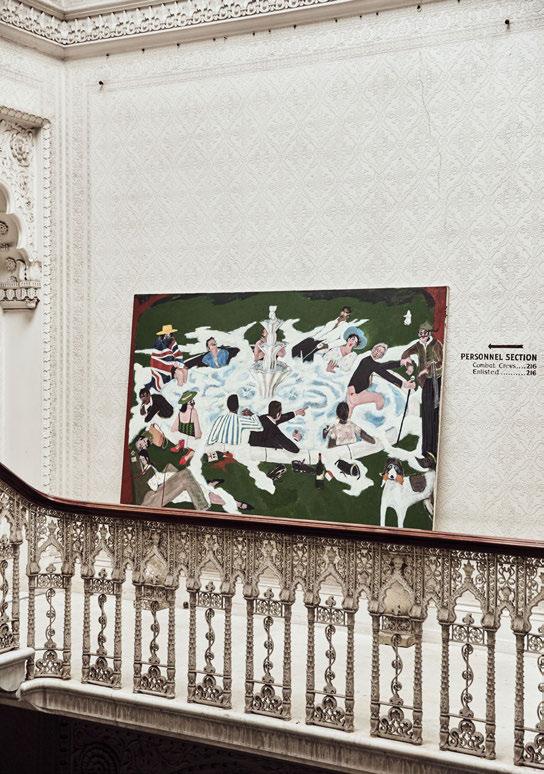
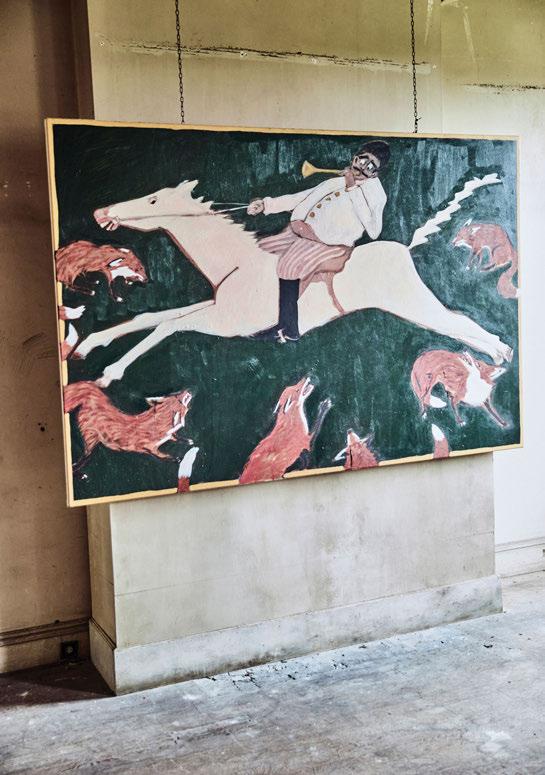
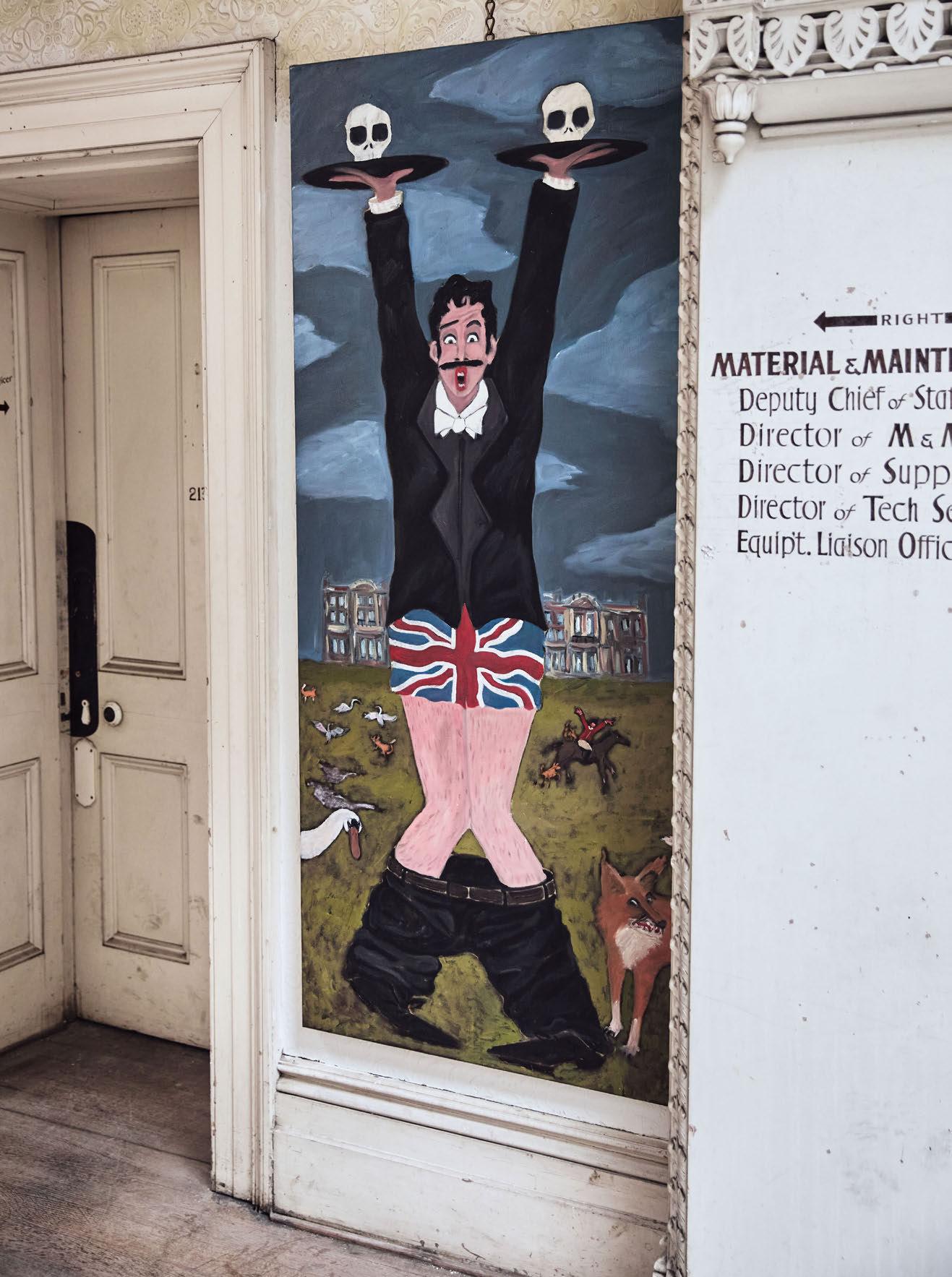
There is a duality in how Jack talks about the show’s name. It feels both tender and uneasy, and it certainly is a meditation on England’s nostalgia, but he adds his own spin too. “England is such an apologetic society. We’re sorry for everything. We are so sorry constantly. We’re so sorry that we’re forgetting anything that’s good about us ever existed.” And suddenly it’s clear, at its core, what Old Country might mean; it’s a picture of self-consciousness and perhaps even some guilt. Jack mines the creative tension between pride and remorse, and how we might idealize the past even as we live in the present.
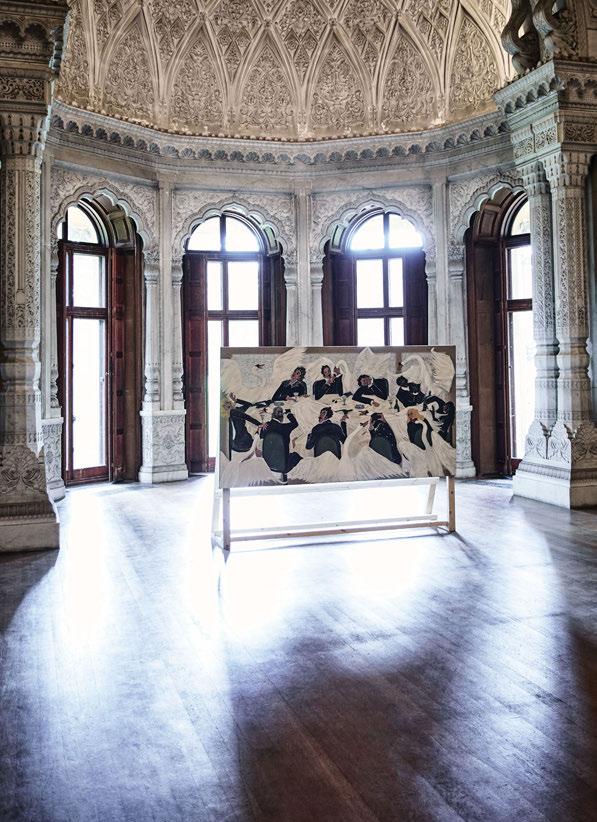
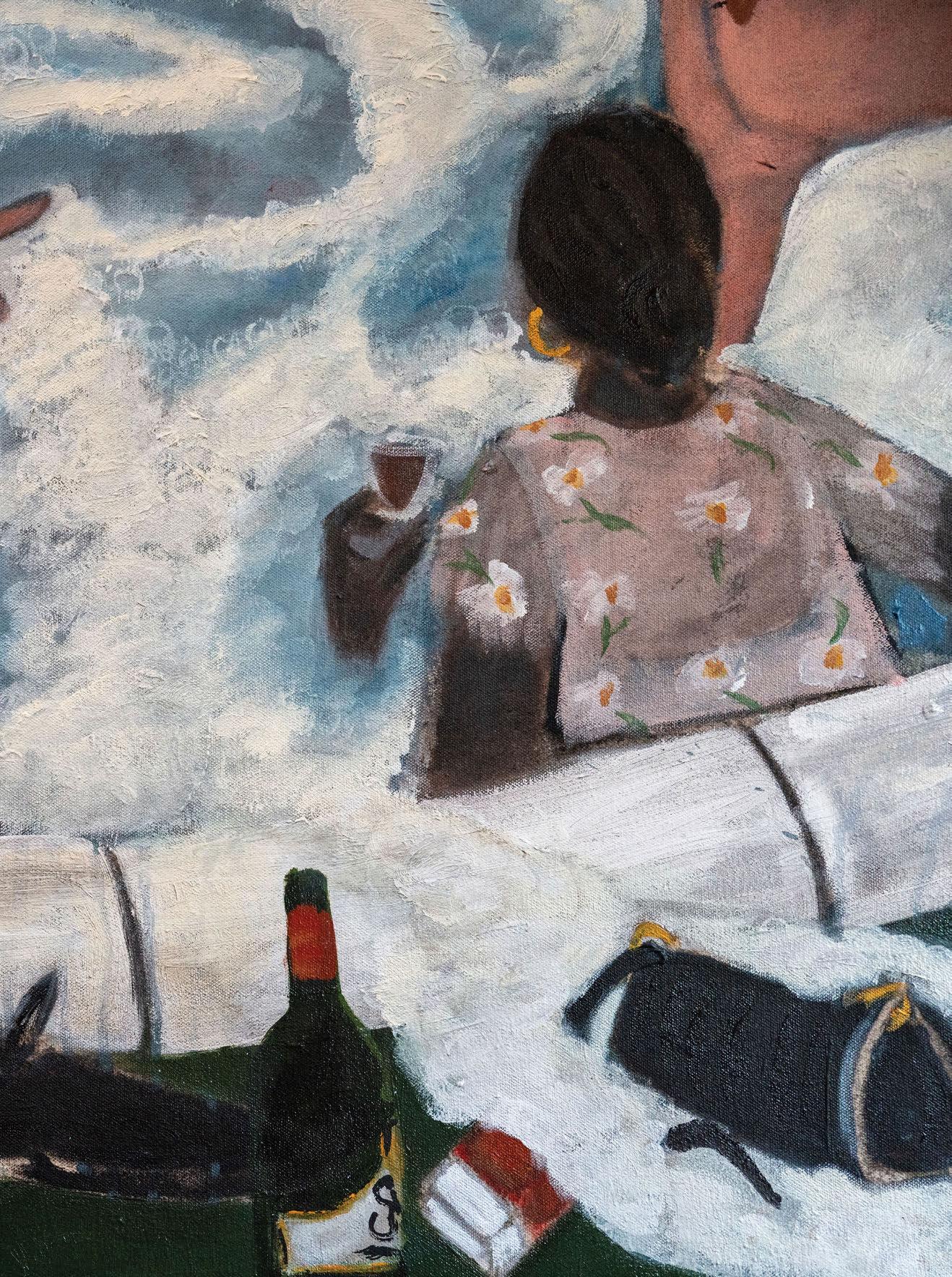
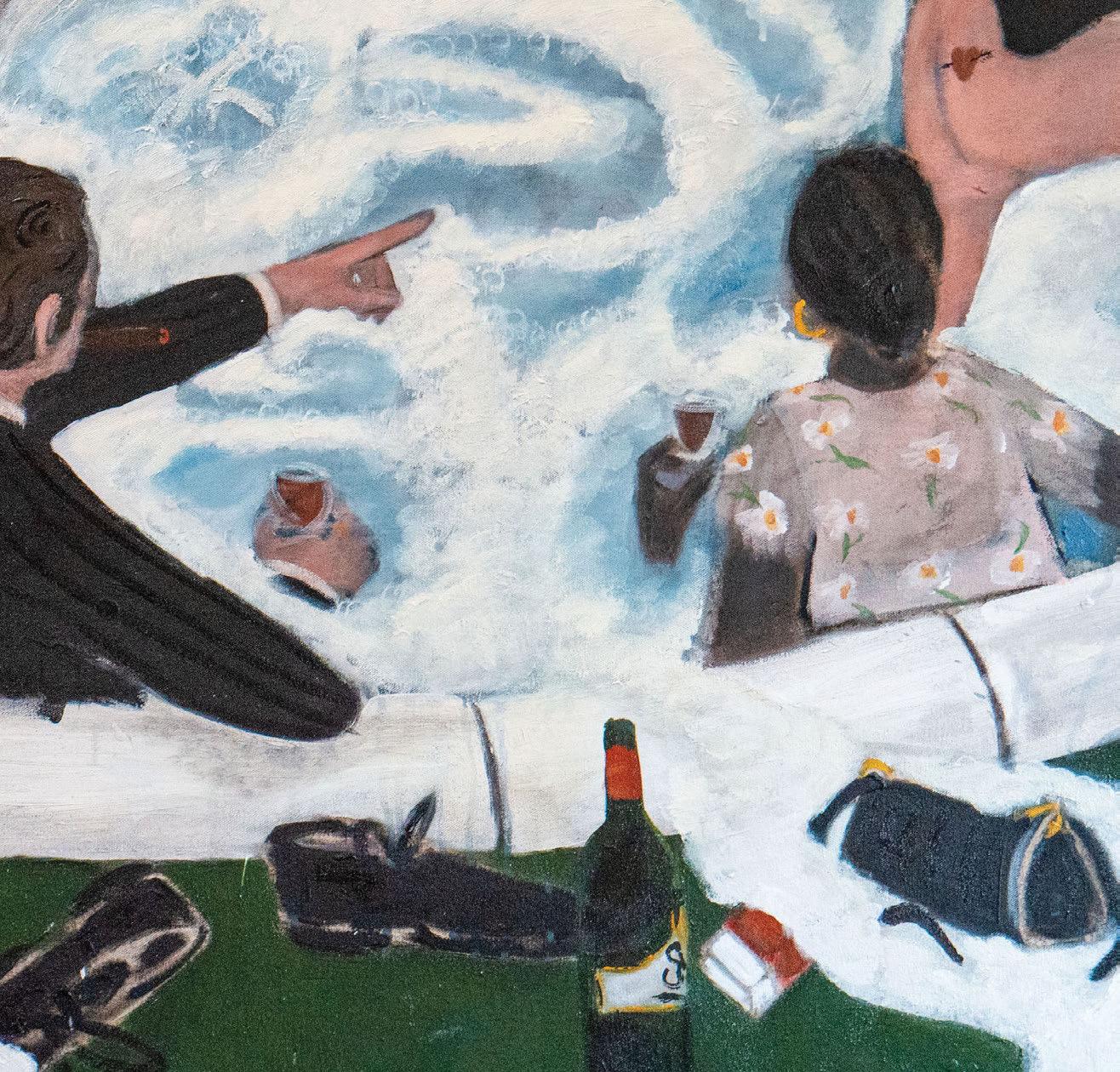
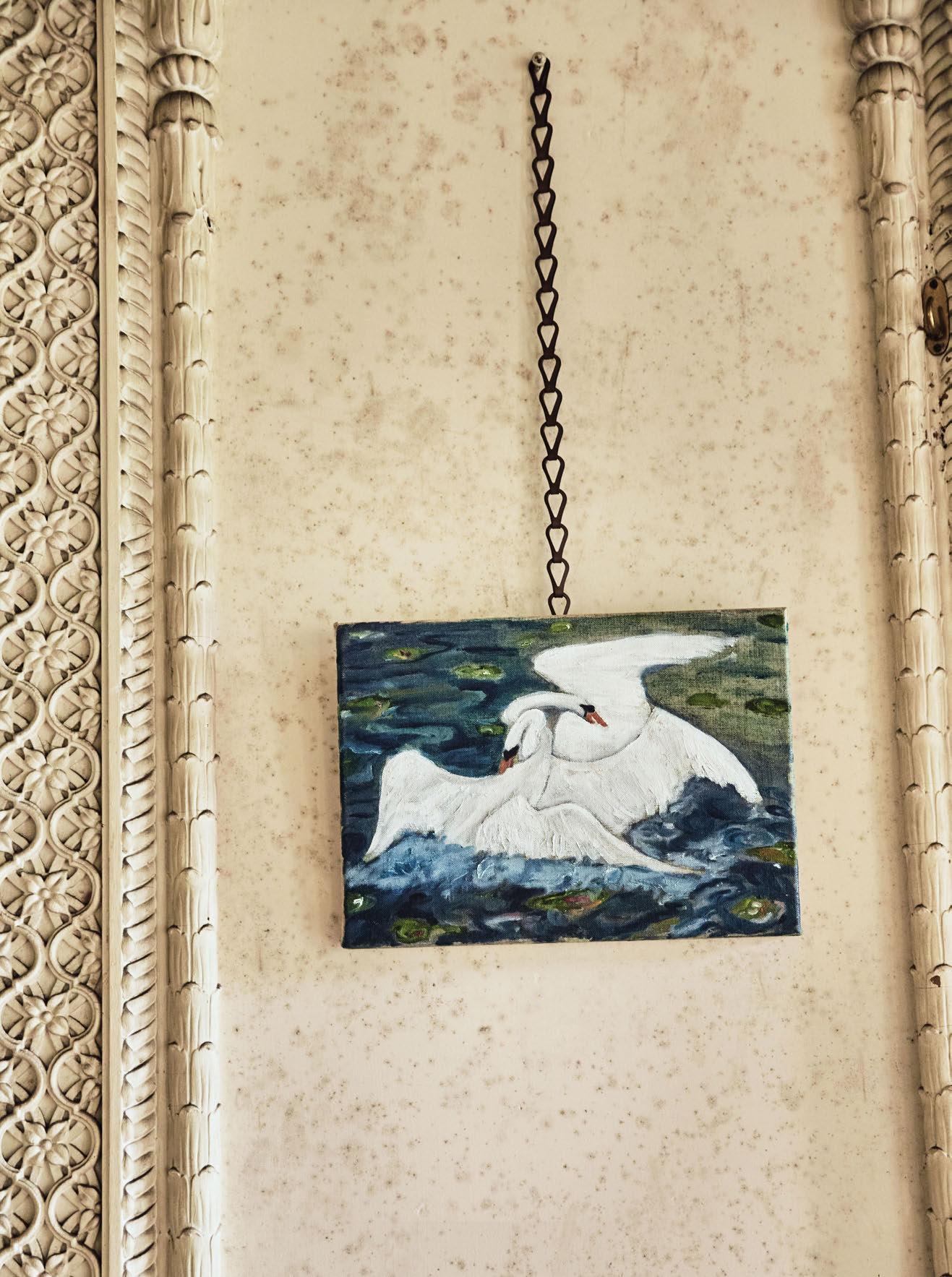
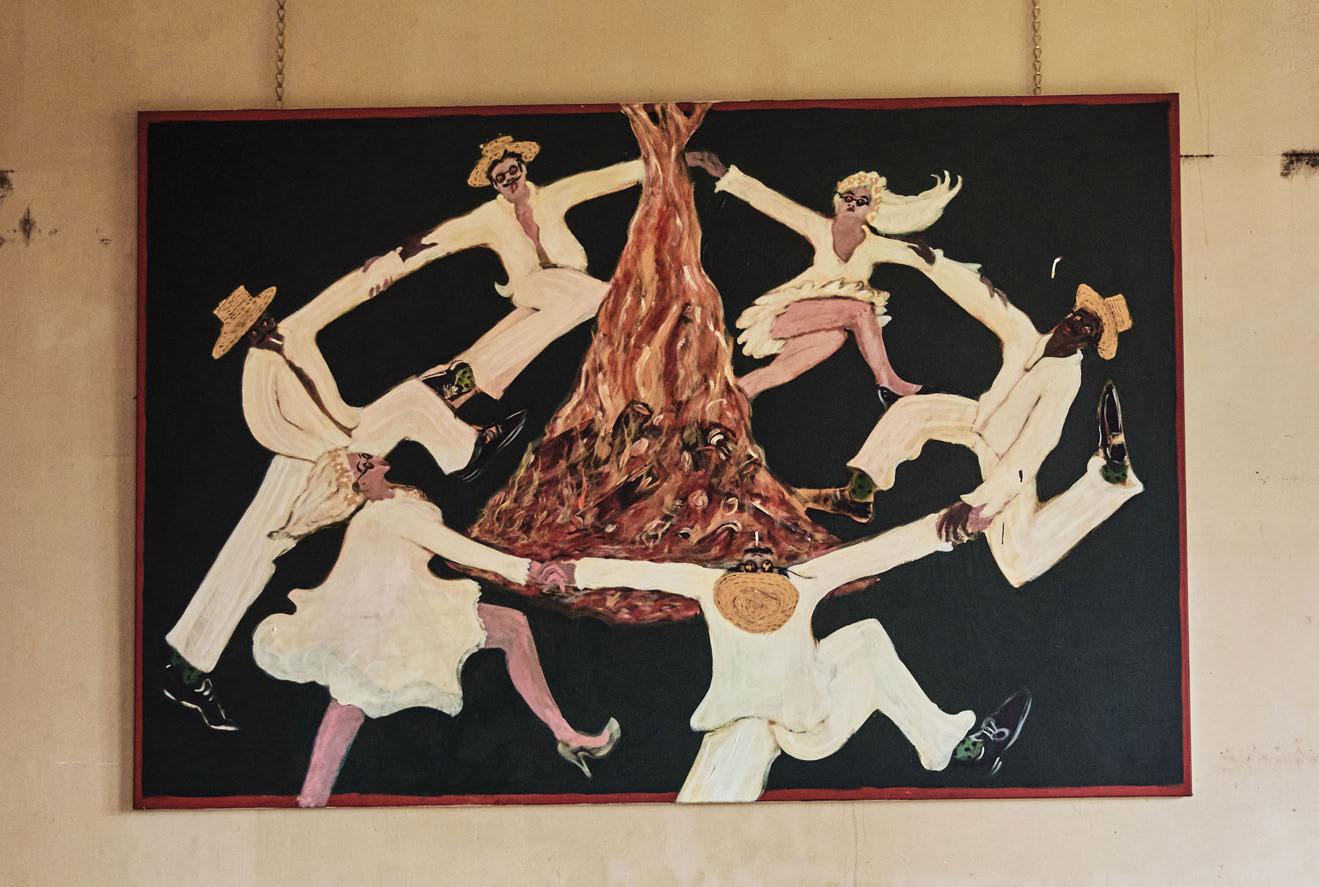
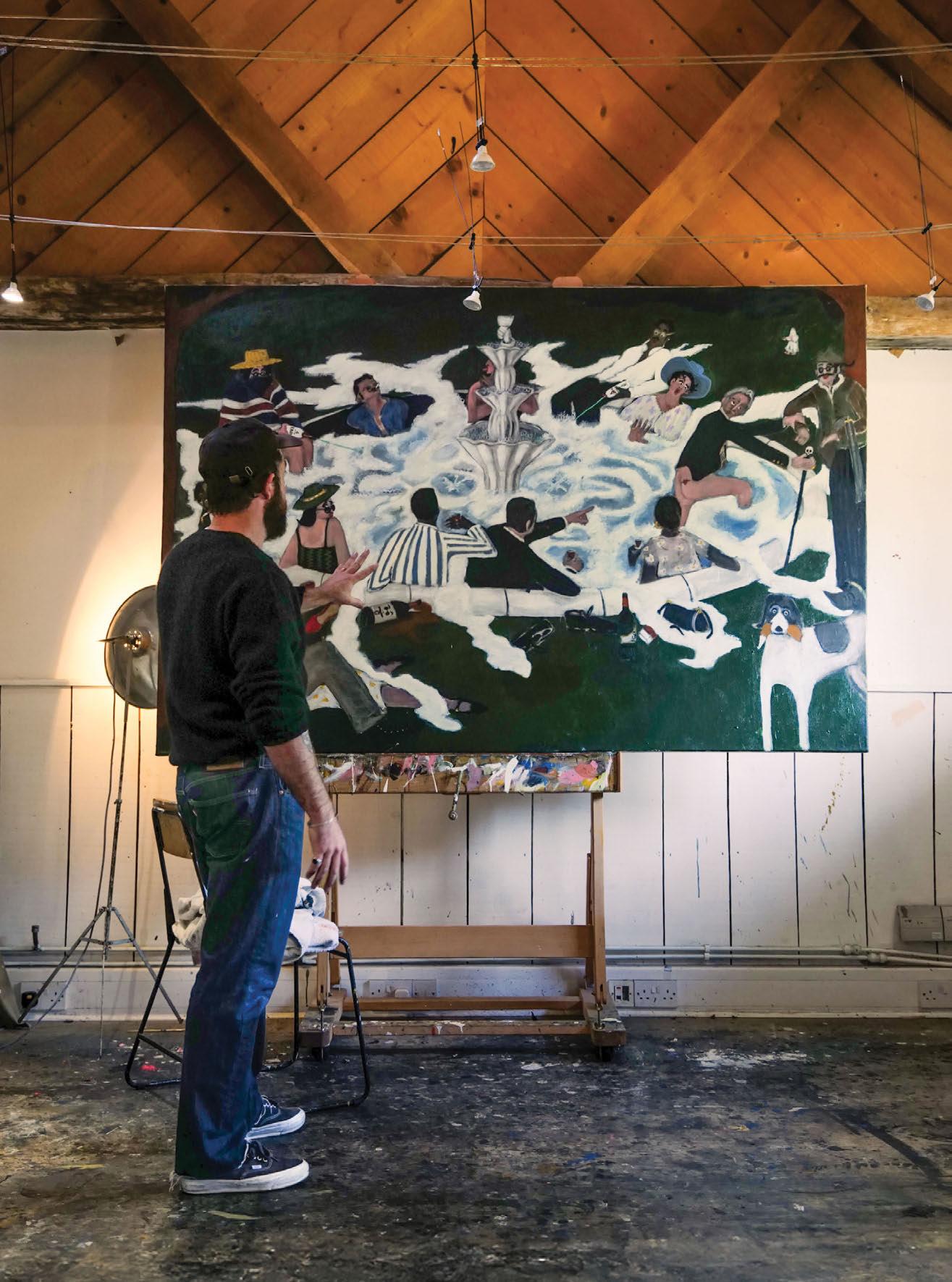
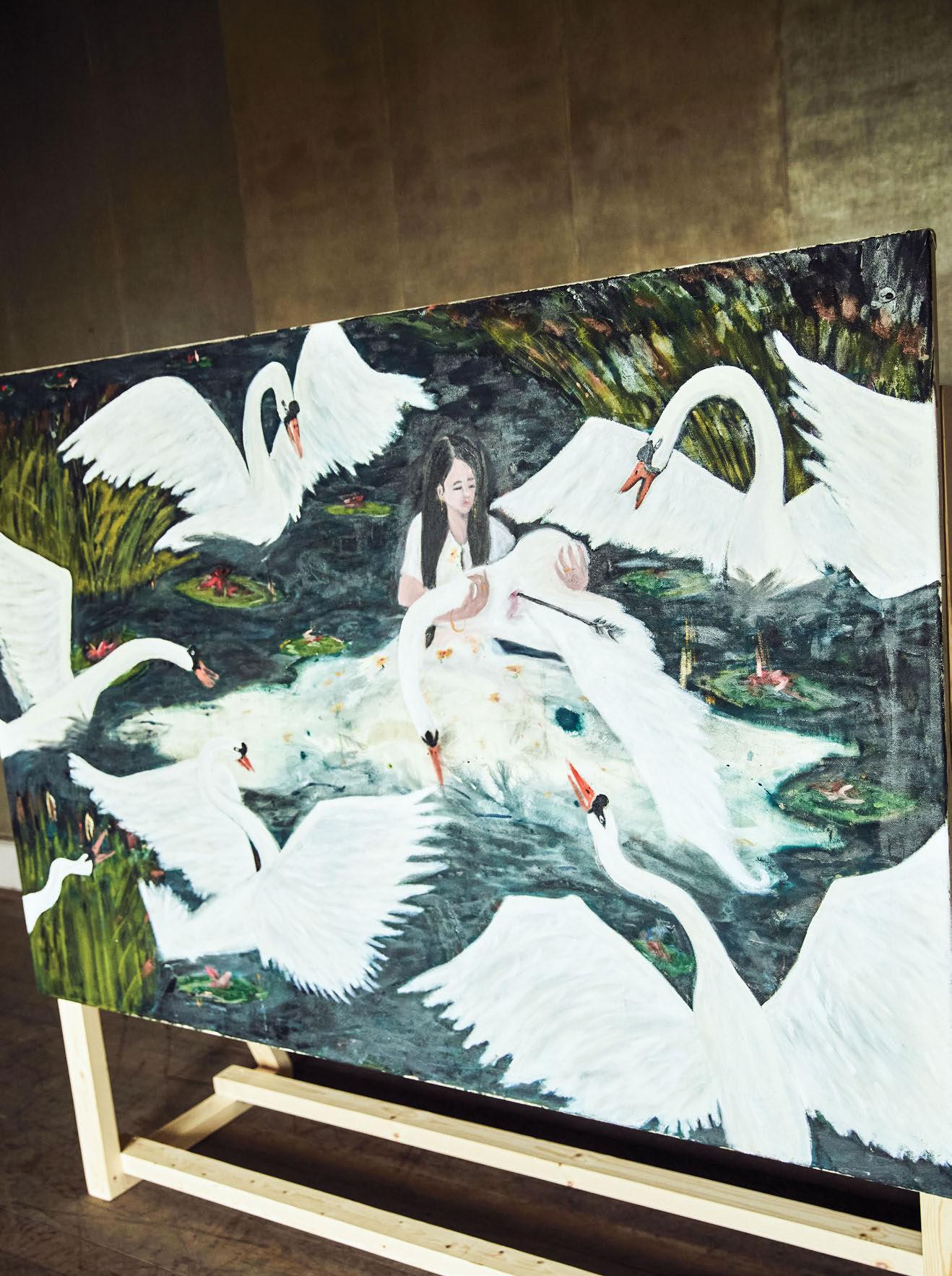
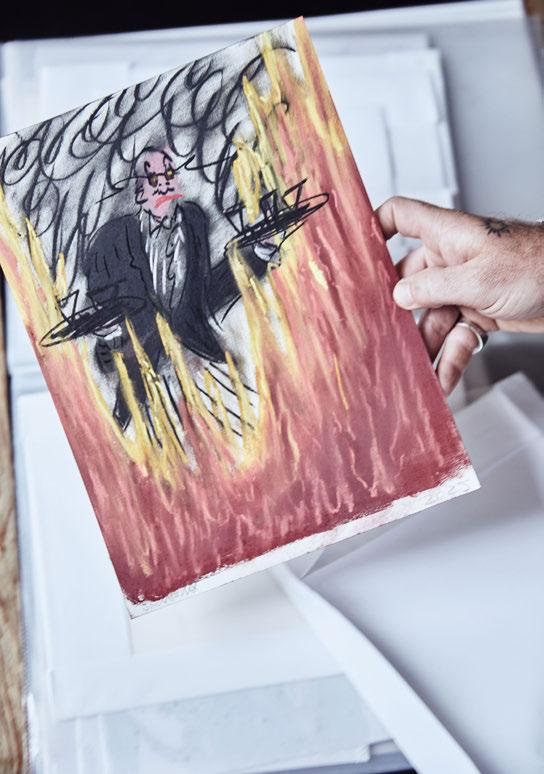
Jacks work, however, delivers these messages with humor. There are dinner tables, chefs, guests who have been overserved and are perhaps underdressed. You can’t help but think, ‘what is really going on?’ A large canvas for the show details a summer dinner party where swans, who enjoy a long association with British royalty and heraldry, appear to be taking over the scene. The sprawling depictions are an invitation that can grab the attention of anyone who isn’t attuned to the art world while still being rewarding for those who are more well-versed. Jack explains, “My paintings are are meant to tickle the non-educated art lover because they’re approachable but intrigue others with some of my references.”
Social satire in its purest form, reflects our flaws back at us, and
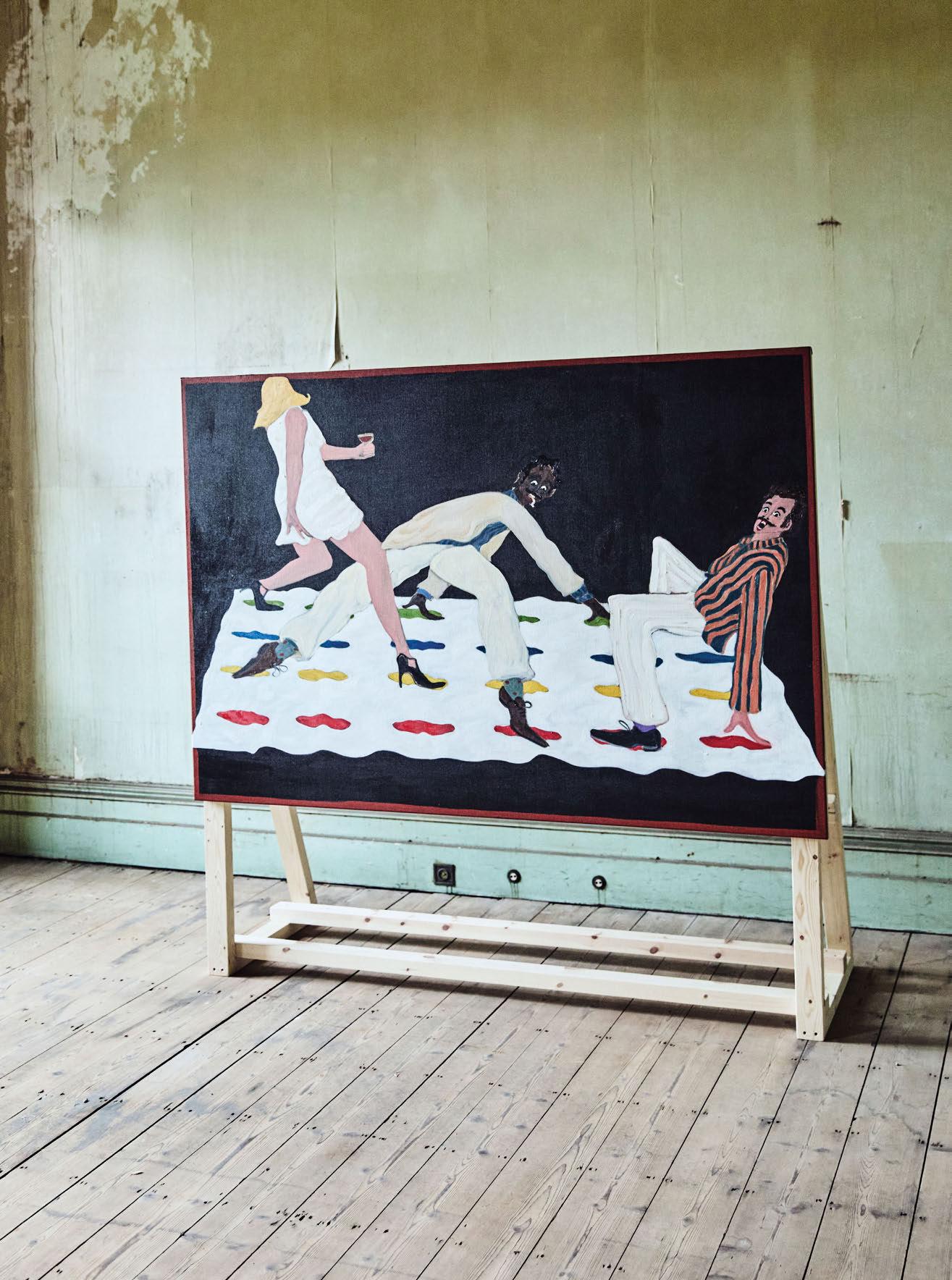
suddenly, they are easy to recognize. Jack’s messaging is clever in this work; it is both absurdist and quietly offering opulence vs. decay and of course apologies instead of pride. He suggests that gathering people around tables, a frequent motif, is an excellent way of suggesting everyday occurrences where we might note how we feel ourselves, “You know when you’re at a dinner party and a board game comes out—for some, it is their worst nightmare, and for others, it’s their favorite thing. It’s got all of that in-between; it’s a good way to illustrate people and awkwardness. But you know, I prefer not to over-explain the narrative of a painting because it limits your response. Some people think my work is dark, others think it’s really fun. There’s nothing wrong with either. For people who don’t know anything about art, seeing my paintings and going, ‘I like that’—that’s a win for me.”
For all the ambiguity present in Jack’s work, there is an unmistakable decisiveness to his approach to its creation. “I’m an obsessive person. I’m either ‘I love it, or I hate it,’ Jack explains. “Everything else just blurs out, which is good for productivity within that particular thing, but not good for you know, general life.” His other great interests are more fluid in comparison. Sailing, where winds are in the driver’s seat, is both a passion and a past time. So is studying war history, where he finds the uncontrollable clashes between cultures and movements that often serve as catalysts for creating great art an endless source of fascination. ››
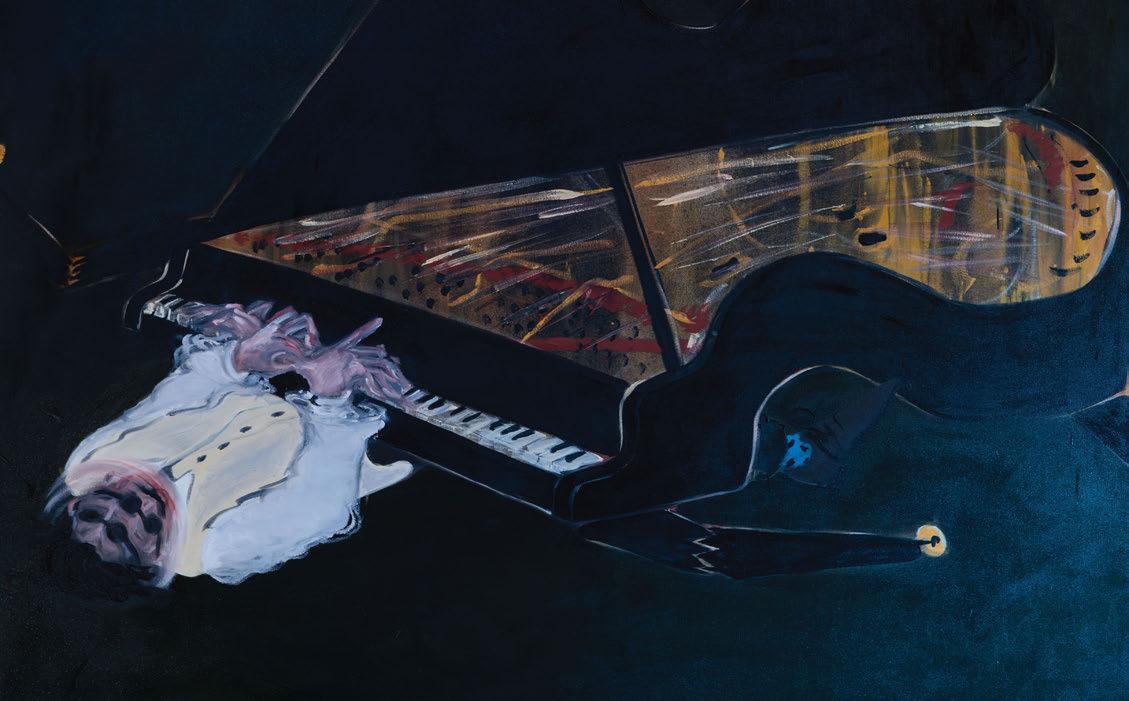
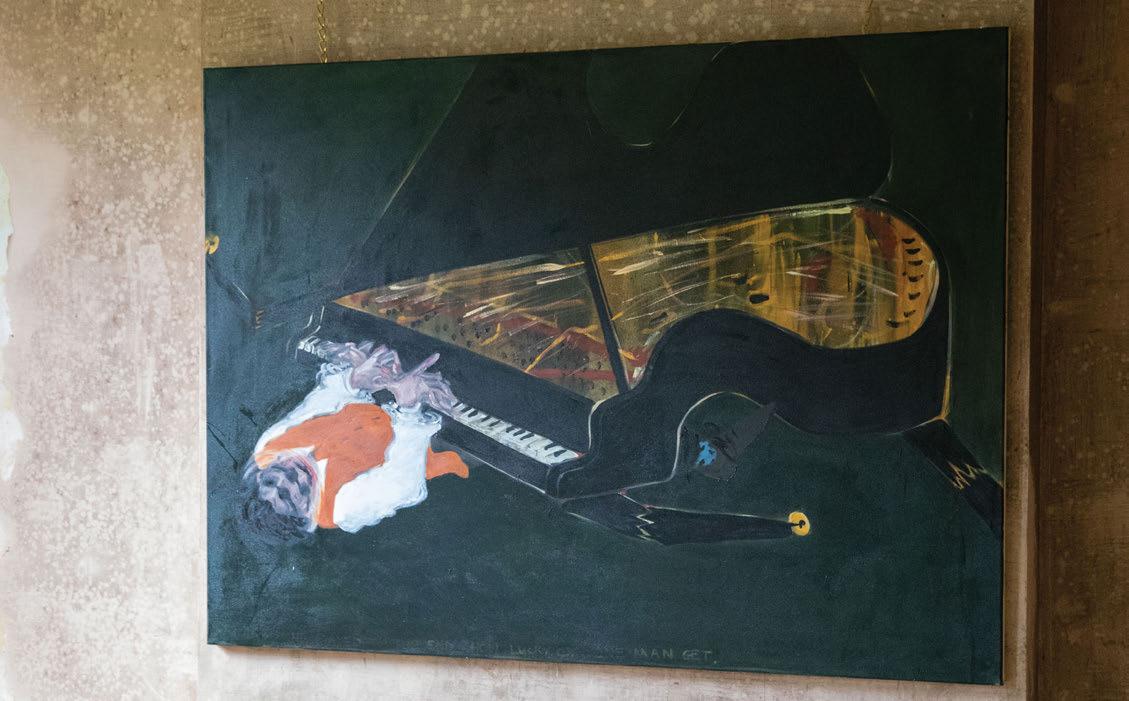
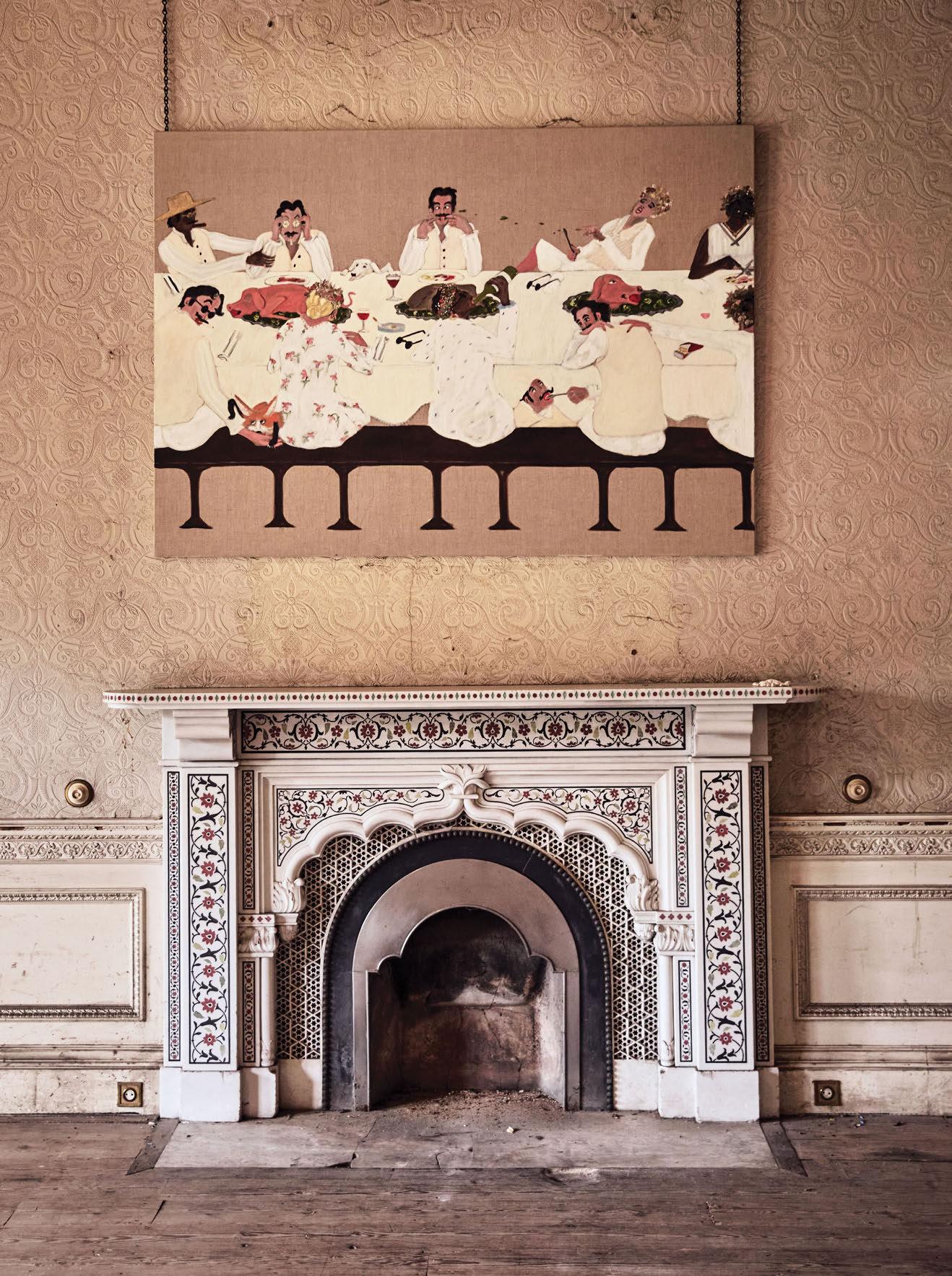
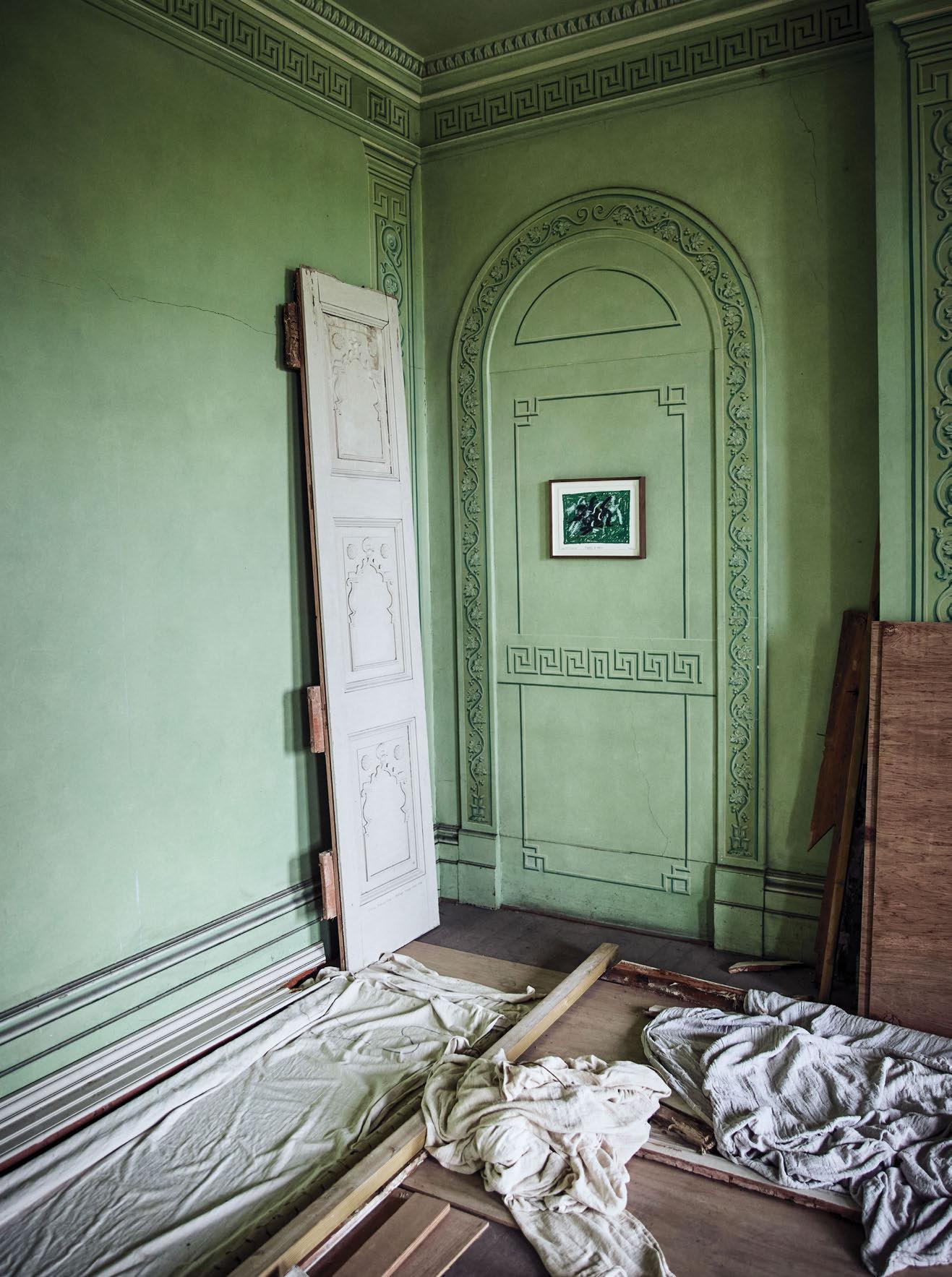
JACK
THE STUDIO
Jack’s studio on England’s South Coast is an old horse stable presided over by a large wooden beam at the far end, under which he paints. The beam is from the Spanish Armada which sailed from Lisbon in 1588. When one of the boats was shipwrecked nearby, a beam was washed ashore, hauled inland and today holds the roof up on this studio. And while the Spanish Armada failed to invade England, it did show that the British Isles overall were vulnerable to attack. “I’m a romantic, just generally,” Jack says. “I could be in a really crappy situation and think ‘this is a bit like a book that I read— am I the character?’ So when I’m painting under the beam I often imagine the guys who built the ship, who may have been the last person to touch it, what battles did it see?”
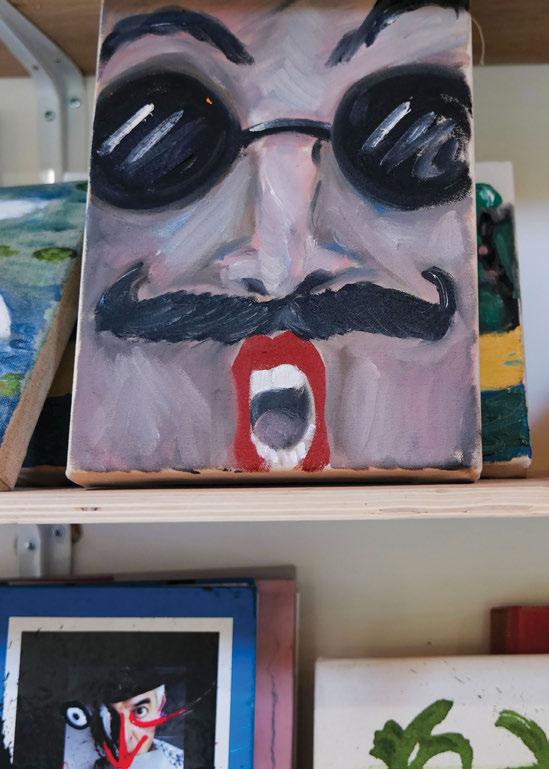
Jack says he is an instinctive painter who doesn’t “faf around too much but I’ve always liked working on stuff you’re not meant to work on…it’s freeing when there’s no pressure for success. I used to paint on cardboard, it felt free because it didn’t cost anything. There were no inhibitions. It didn’t have to be successful. Kids are like that. As you grow up you lose your innocence. And when you’re less innocent, you feel the pressure of the world you’re in. Kids just go for it.” ››
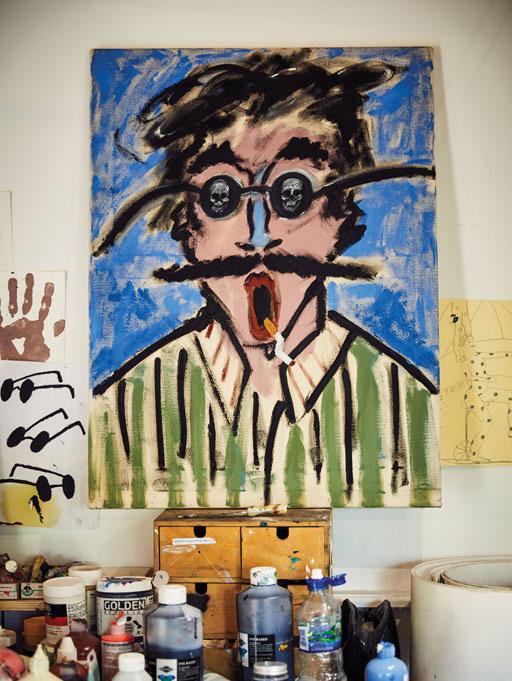
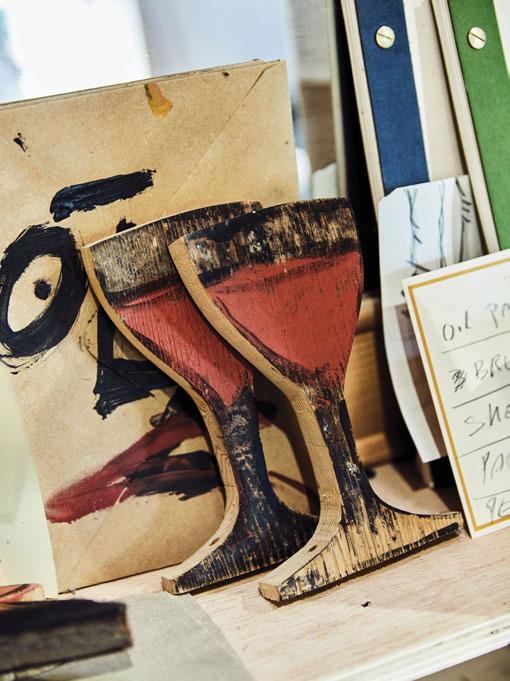
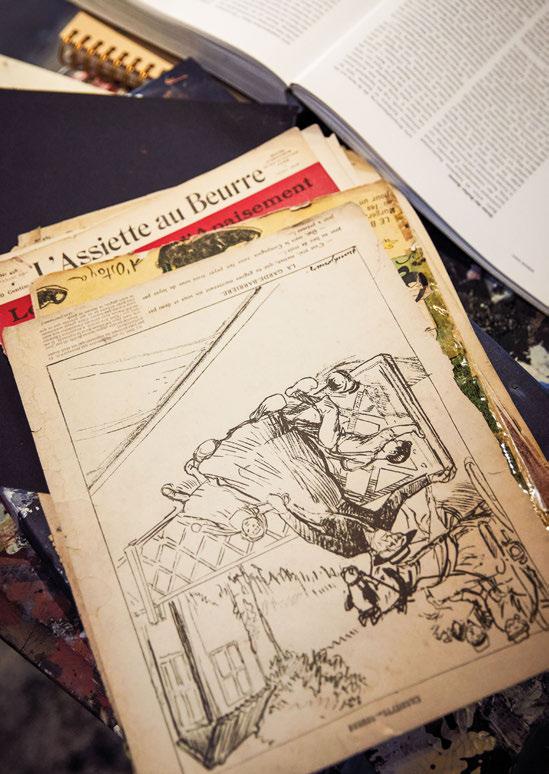
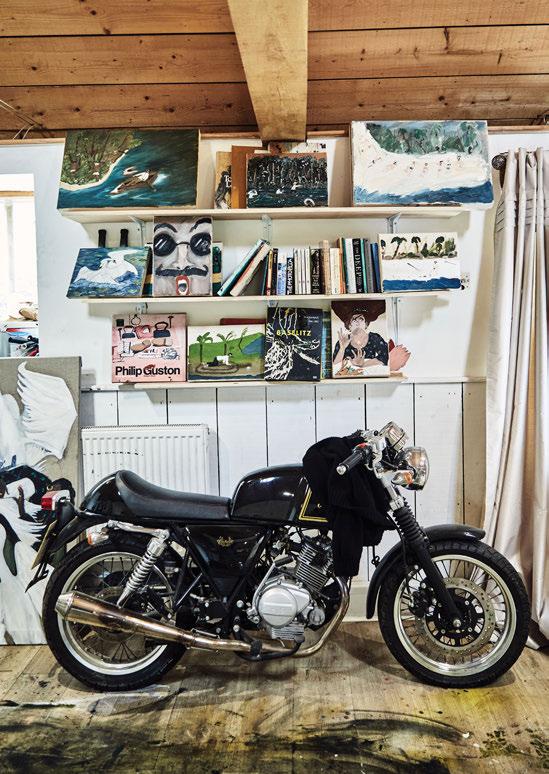
His studio isn’t terribly big, but it is economical in scale, and the ephemera packs a punch; there is even space for a small library above parking for his motorcycle. Jack pulls a dog-eared book down about artist Richard Diebenkorn, “When I first saw his paintings in real life it changed me. I went to the Royal Academy’s retrospective exhibition in 2015, and I’ve never before or since
had the experience of being in complete awe of an artist; the way he thinks about painting, his process…brilliant. He jumped from abstraction to figurative painting effortlessly. When you experience his paintings in real life, they just suck you in. They’re not big for ego’s sake; they actually work. He had ten rules for painting, and if I’m lost or confused, I’ll go back and refer to them.”
RICHARD DIEBENKORN’S 10 RULES FOR PAINTING
Attempt what is not certain. Certainty may or may not come later. It may then be a valuable delusion.
Use and respond to the initial fresh qualities but consider them absolutely expendable.
The pretty, initial position which falls short of completeness is not to be valued— except as a stimulus for further moves.
Mistakes can’t be erased but they move you from your present position.
01 07 04 02 03 08 05 09 10 06
Be careful only in a perverse way.
Do Search. But in order to find other than what is searched for.
Don’t “discover” a subject—of any kind. Tolerate chaos.
Keep thinking about Pollyanna.
Somehow don’t be bored but if you must, use it in action. Use its destructive potential.
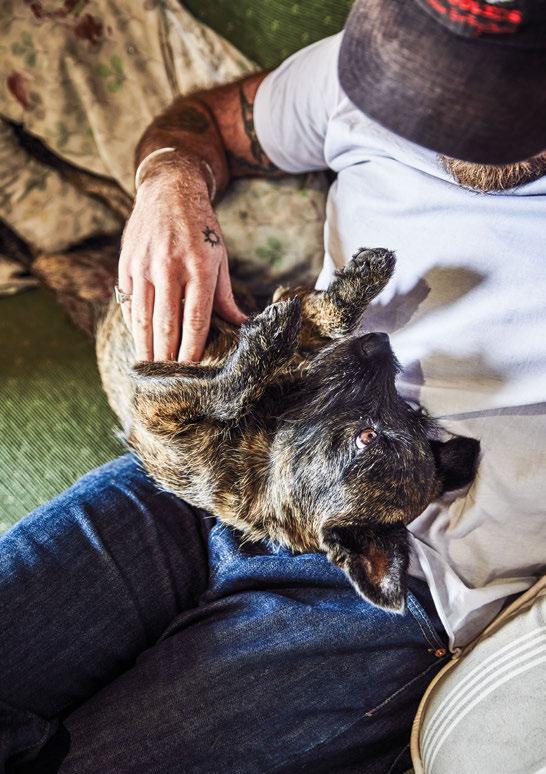
Jack’s dog, Willow.
Above the workbench across the studio, more guidance—a hand-lettered sign on cardboard, perhaps a little aide-mémoire stuck to a mirror—“ego trips like sunken ships,” which we learn is a line from a Kassi Valazza folk song. Is the singer suggesting missed opportunities, or is it simply that an excessive ego can lead to a downfall? Jack admits that once he started allowing himself to not take his work too seriously, “that was when the penny dropped, pun intended. It relieved me from trying to be some intellectual because being an artist is an emotional playground…you can go through all the human emotions in one day. It can make a sane man insane,” and yet, his studio seems to provide a kind of rhythm to the day for him. “ I like to wake up really early and go to work because I don’t want to have to have a conversation with anyone. Because if you do that, it takes you out of this space,” gesturing at the studio wall. “If you have to do too much real life stuff before you come here, it’s hard. So I try to get in here before any of that can touch me. And if I arrive and I’m not in a creative mood, not everything has to be painted. You can get ready for the next day, maybe I am in a prepping mood and so I crack on with that. And that’s been a really useful way to think about making my work.”
When Jack was young, his father tells of coming home and finding that Jack had painted the walls of his bedroom black and was using it as a canvas. It’s family folklore now, “the moment we knew Jack would be an artist,” his father says. But it’s something else too, an affectionate portrait of a witness to a child’s early creativity and perhaps rebellious streak. “My parents worked hard,” Jack says. “They were cultured and gave me the space to make creative decisions.”
Jack works alone, but his art demands that the viewer ask, “Who are we? Who am I?” It starts to rain, so we walk back from the Bosham Deeps, the shoreline we’ve ambled over to with Jack’s constant companion, a wire-haired Terrier mix, Willow. Jack tells us they will soon leave this English coastline for France. He and his wife and their three girls will move to his wife’s native country.
We laugh, “Your move to France is going to make England kind of your old country.”
“Yeah…yeah, maybe it will,” Jack says. “It’s funny. Old Country At first it was about Elveden, but I realized it’s all really about England. It’s a love letter, in a way, to what’s disappearing or what we’ve forgotten we actually liked about ourselves. I suppose I’m trying to grab hold of the good bits before they get lost. But I don’t want to be waving a flag; it’s not that. It’s more like trying to say, look, there’s still something gentle here. In France I’ll be on the coast too. I’ll have a bit of space to see it all properly again.”
We await that vision.
CRANE
INTERIORS BY STUDIO VERO / PHOTOGRAPHY BY MARK ANTHONY FOX
EDINA
INTERIORS BY CLAIRE THOMPSON DESIGN
PHOTOGRAPHY BY ANDREW WELCH
CHP
ALLISON ELEBASH INTERIORS
CUMULUS ARCHITECTURE
BYRD BUILDERS
PHOTOGRAPHY BY JULIA LYNN
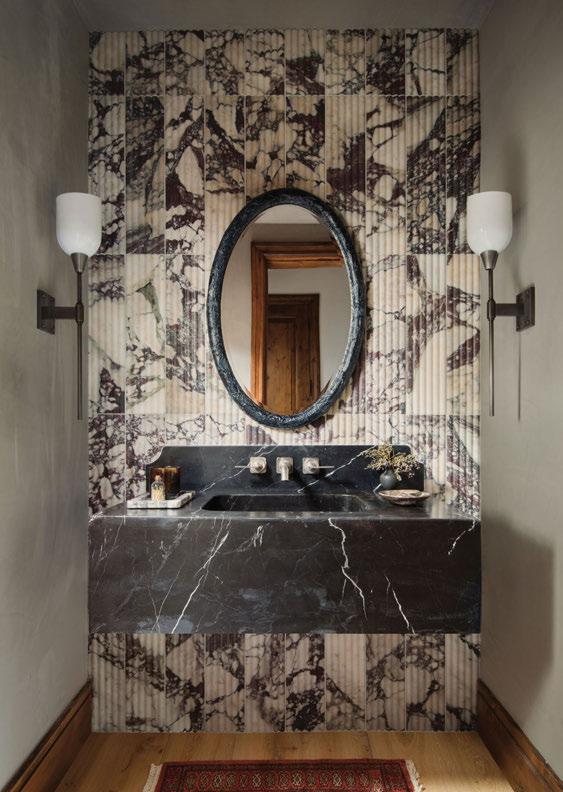
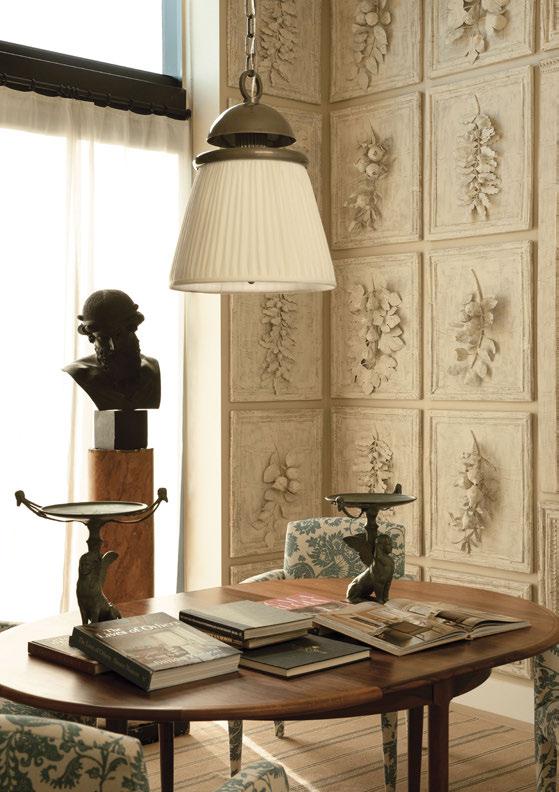
CARLYLE
KOVICHCO INTERIORS
PHOTOGRAPHY BY NELSON OLIVO
TULLE
INTERIORS BY CASA GUSTO
PHOTOGRAPHY BY CHARLES PEED
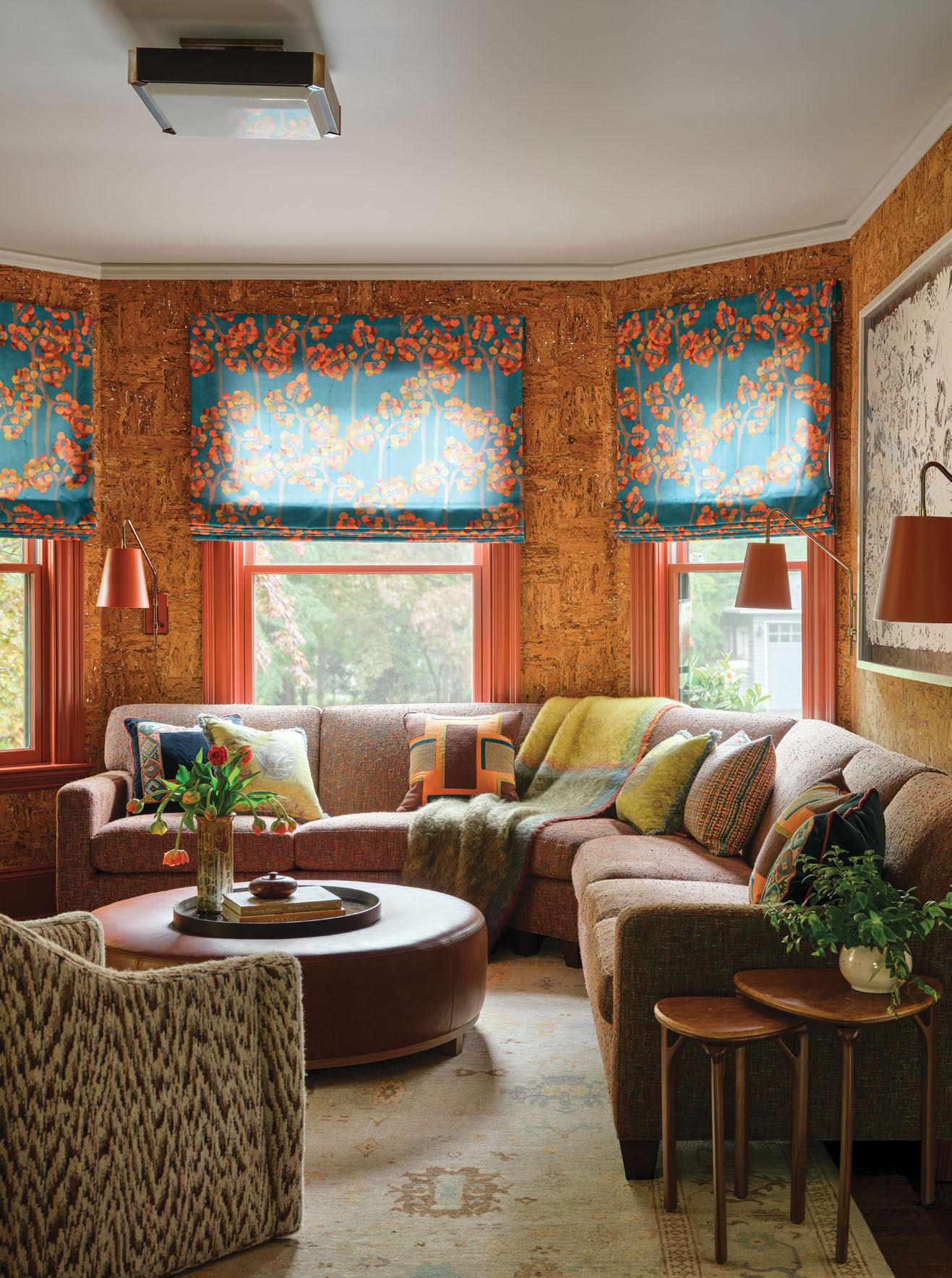
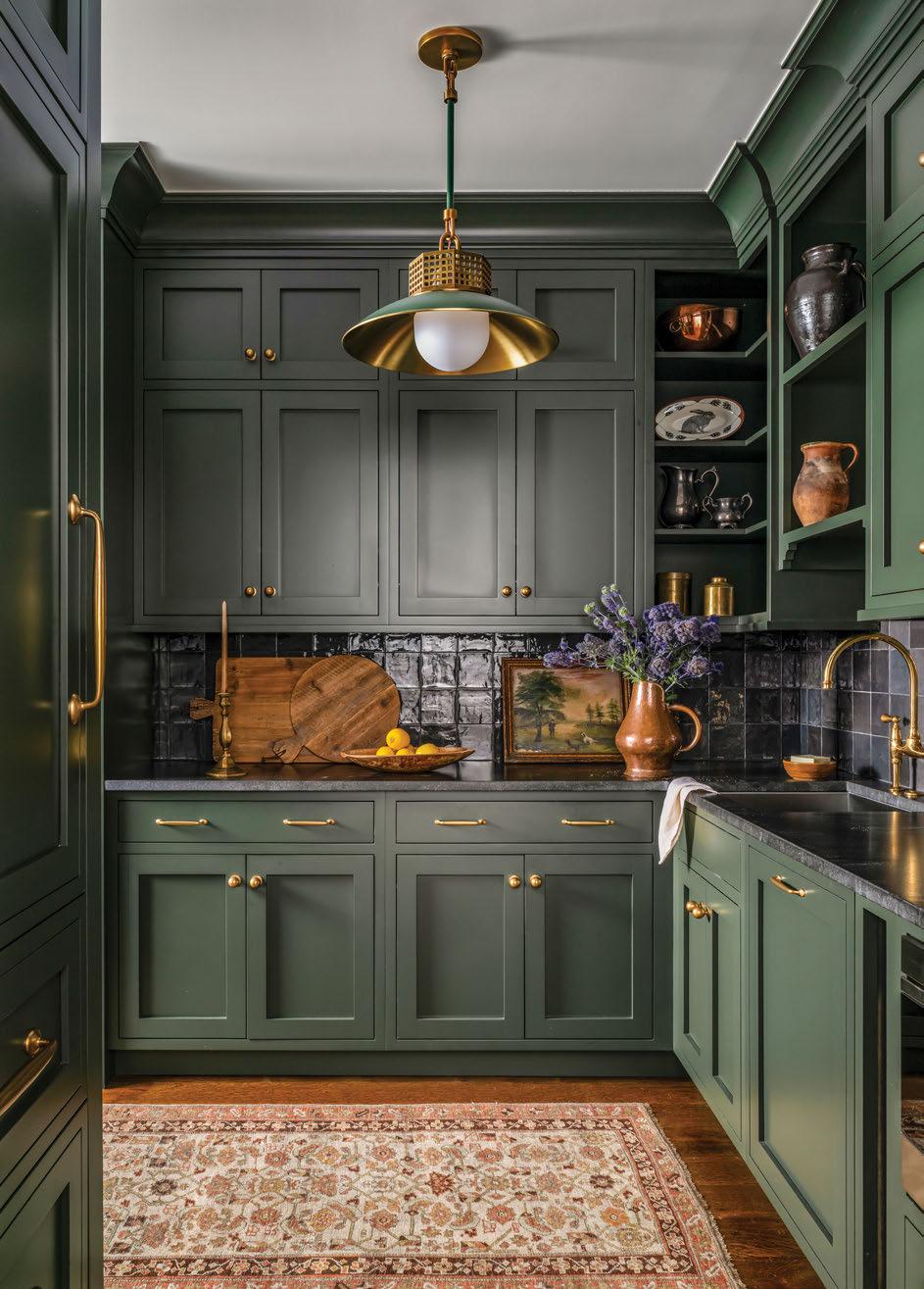
HOOPER
BY TOWN & COUNTRY
PHOTOGRAPHY BY TORI SIKKEMA / STYLING BY MARIAH RICH
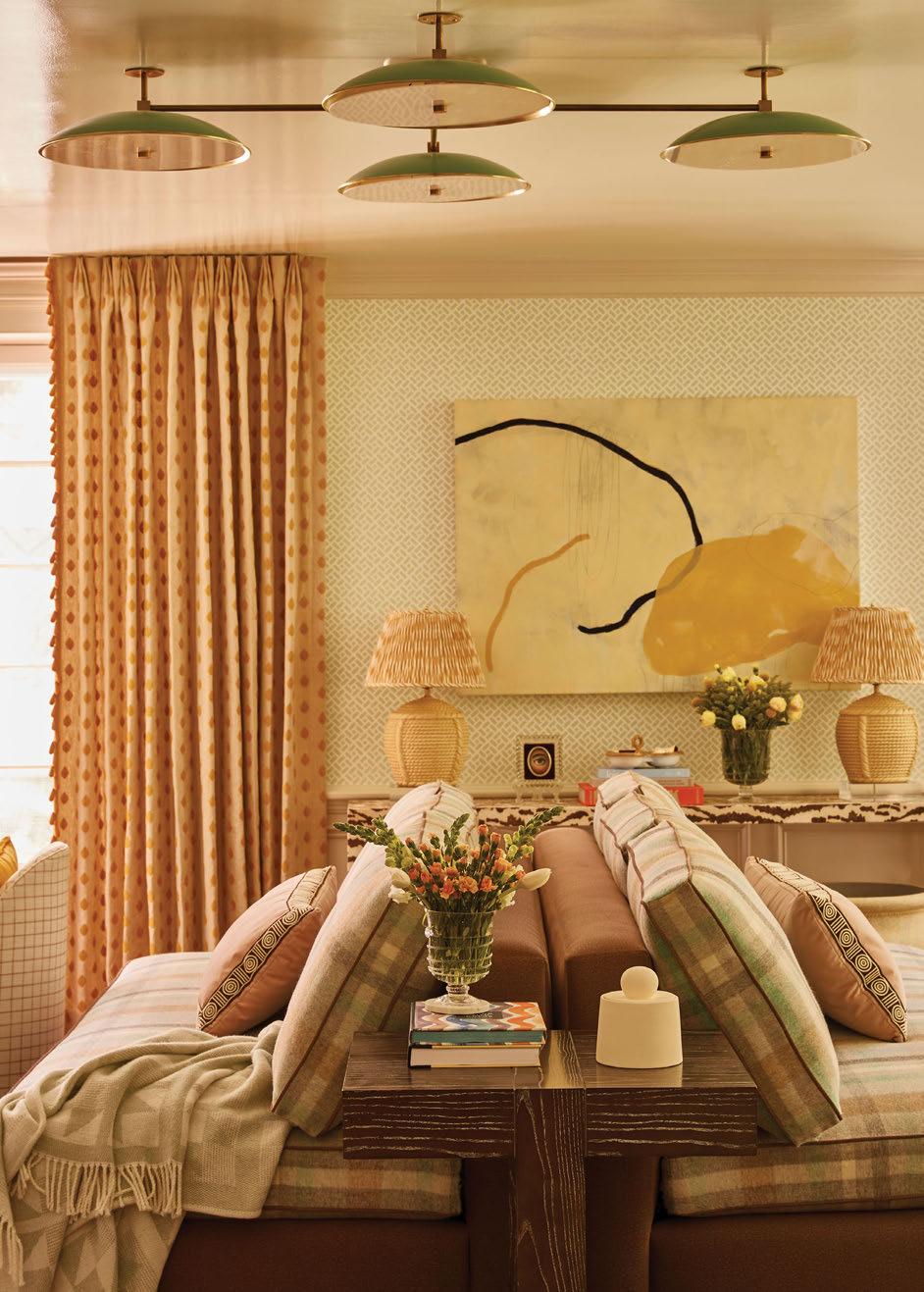
COBE
INTERIORS BY TOLEDO GELLER / PHOTOGRAPHY BY JACOB SNAVELY
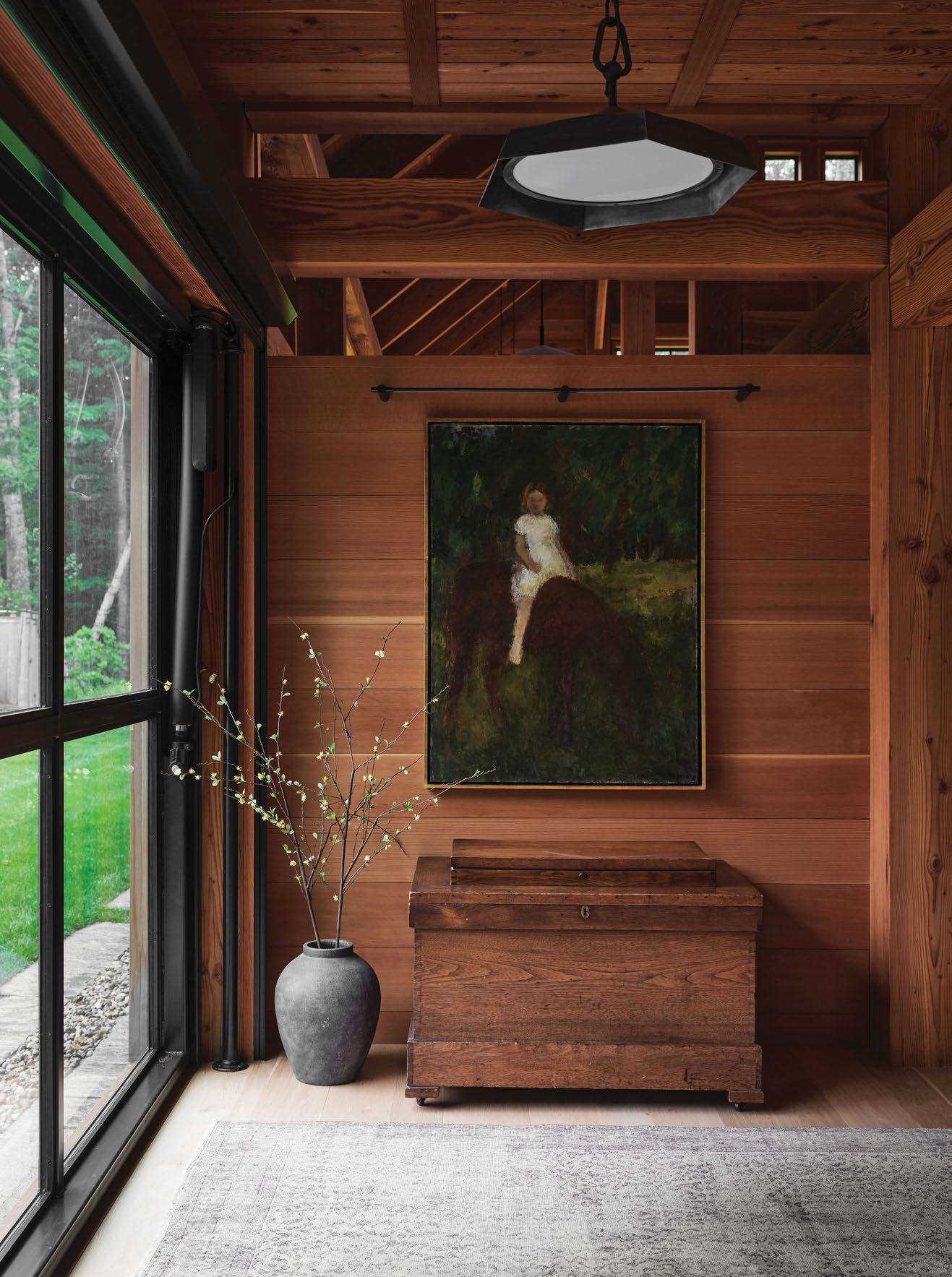
FULHAM
BACKYARD BY THE SEA
JULY 18, 2025
FUNEN, DENMARK
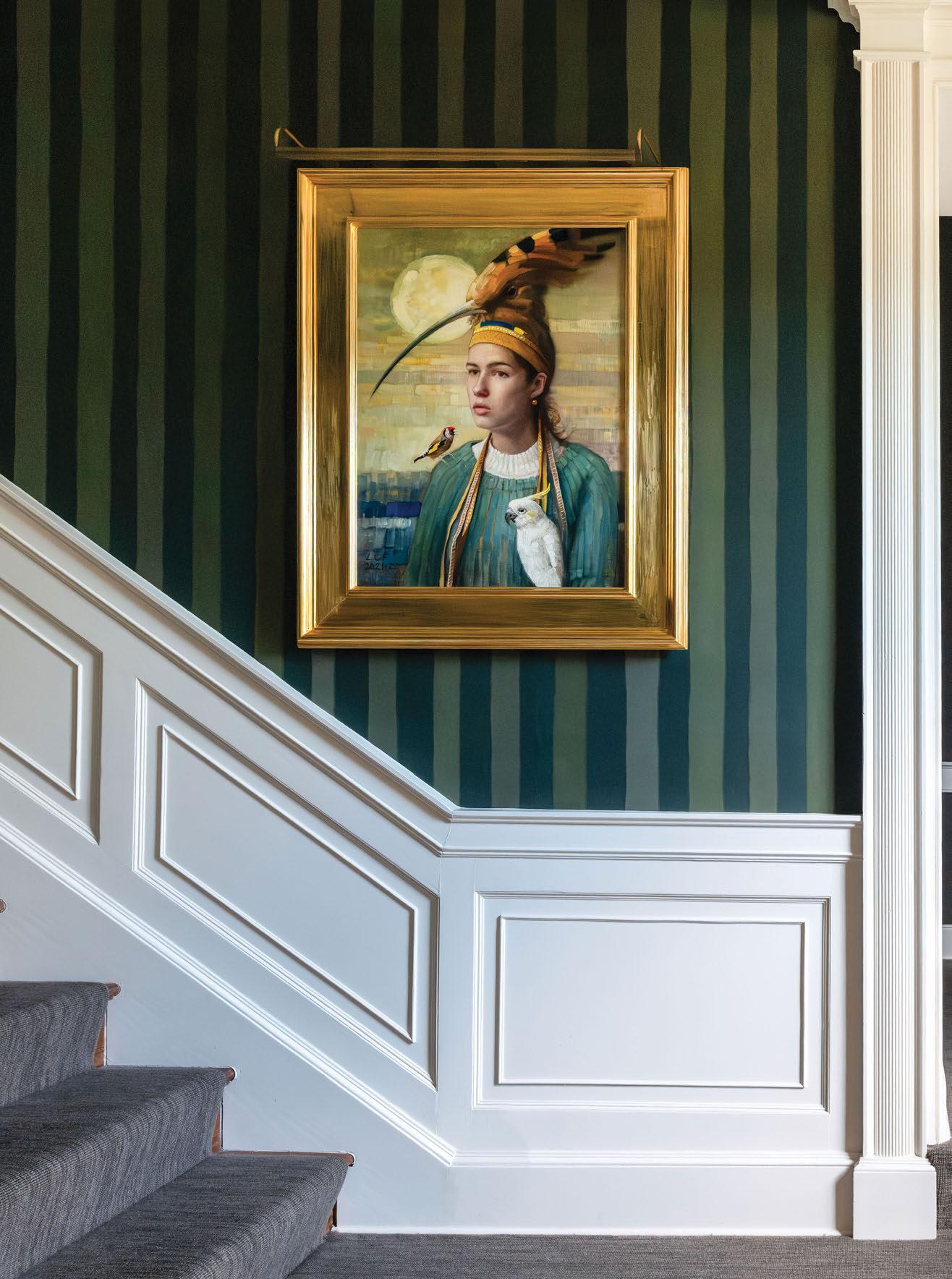

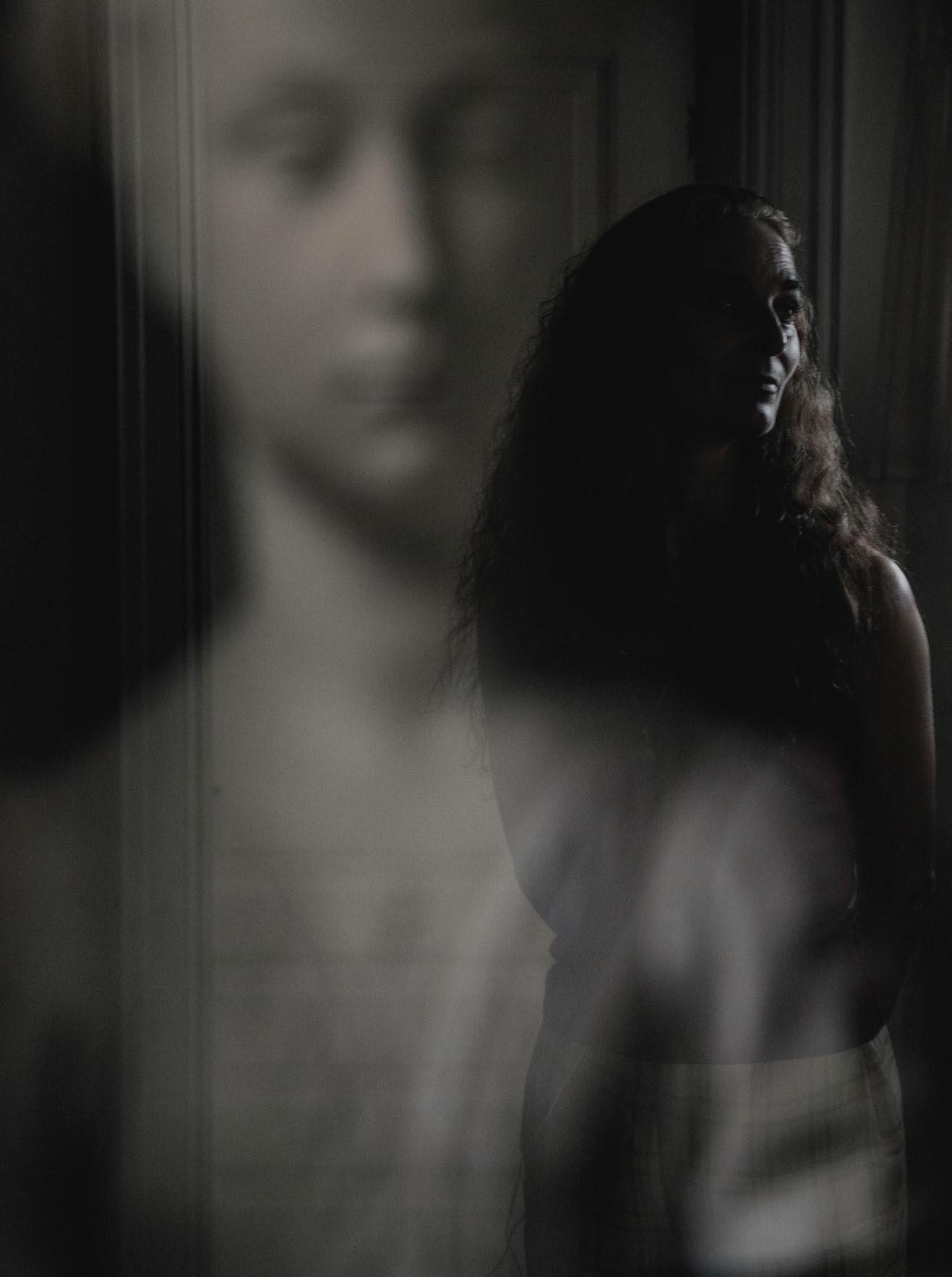
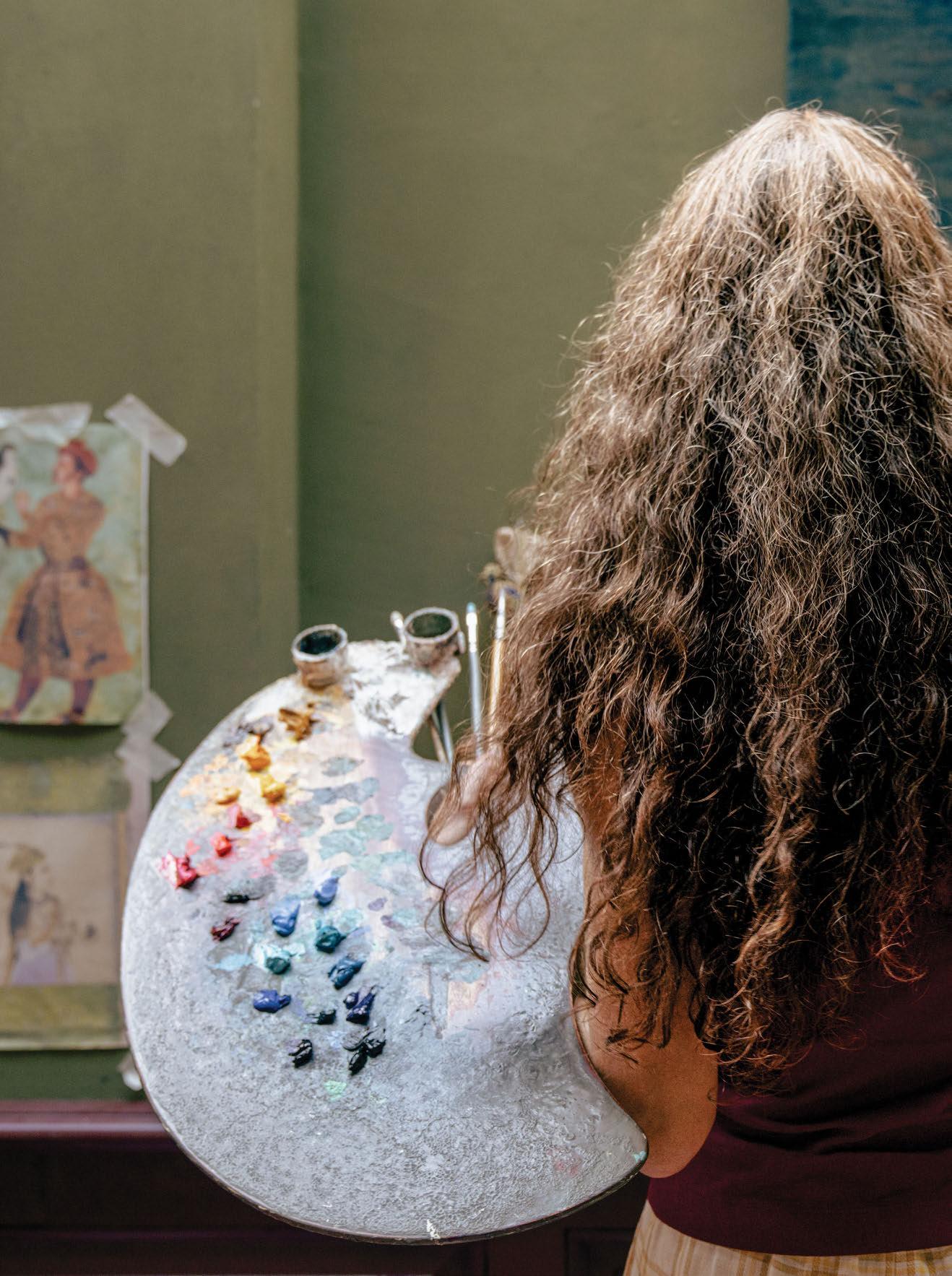
LOUISE CAMILLE
Fenne
SVENDBORG, FUNEN, DENMARK: 100 MILES FROM COPENHAGEN ON THE SOUTHERN COAST
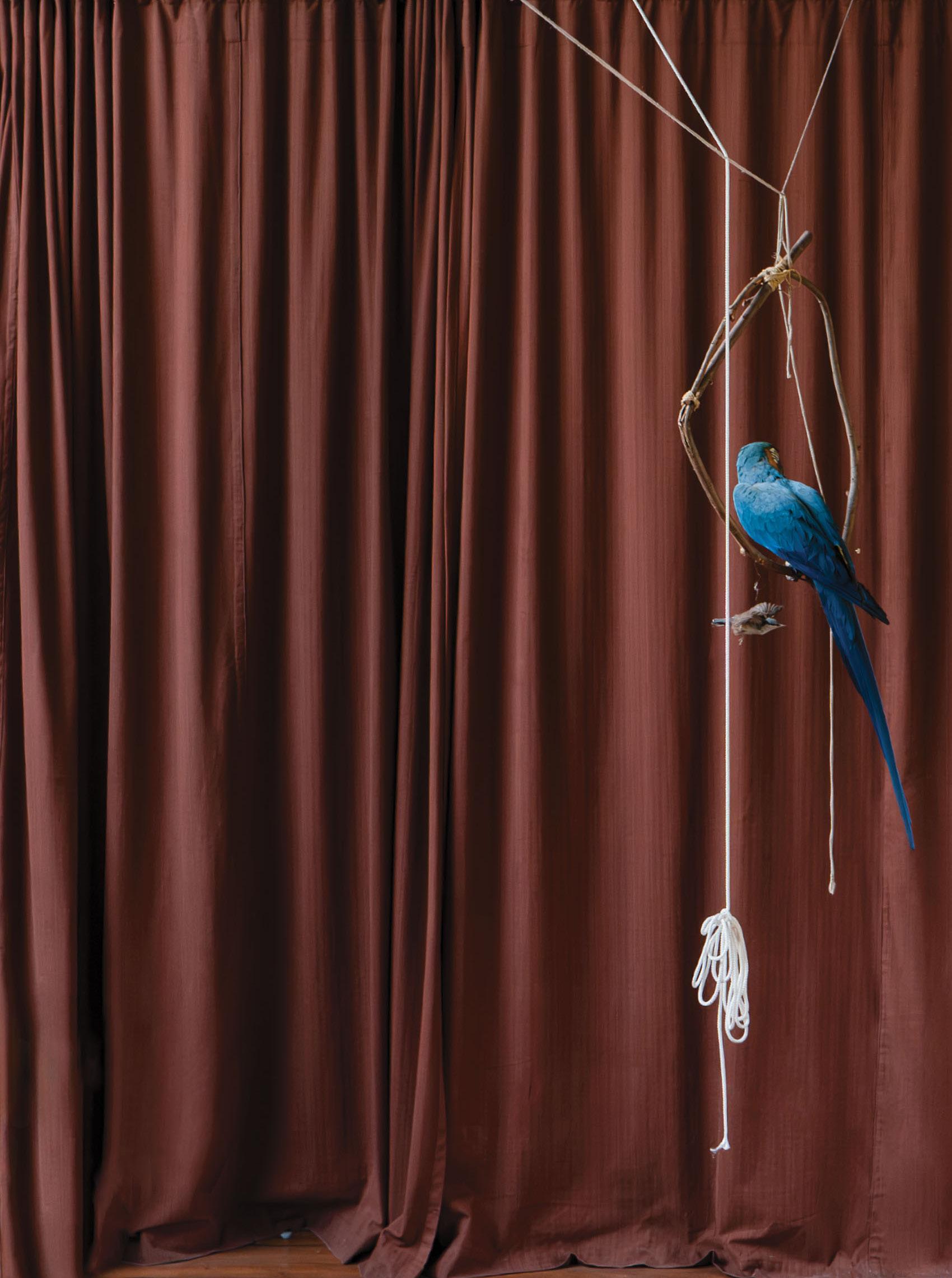
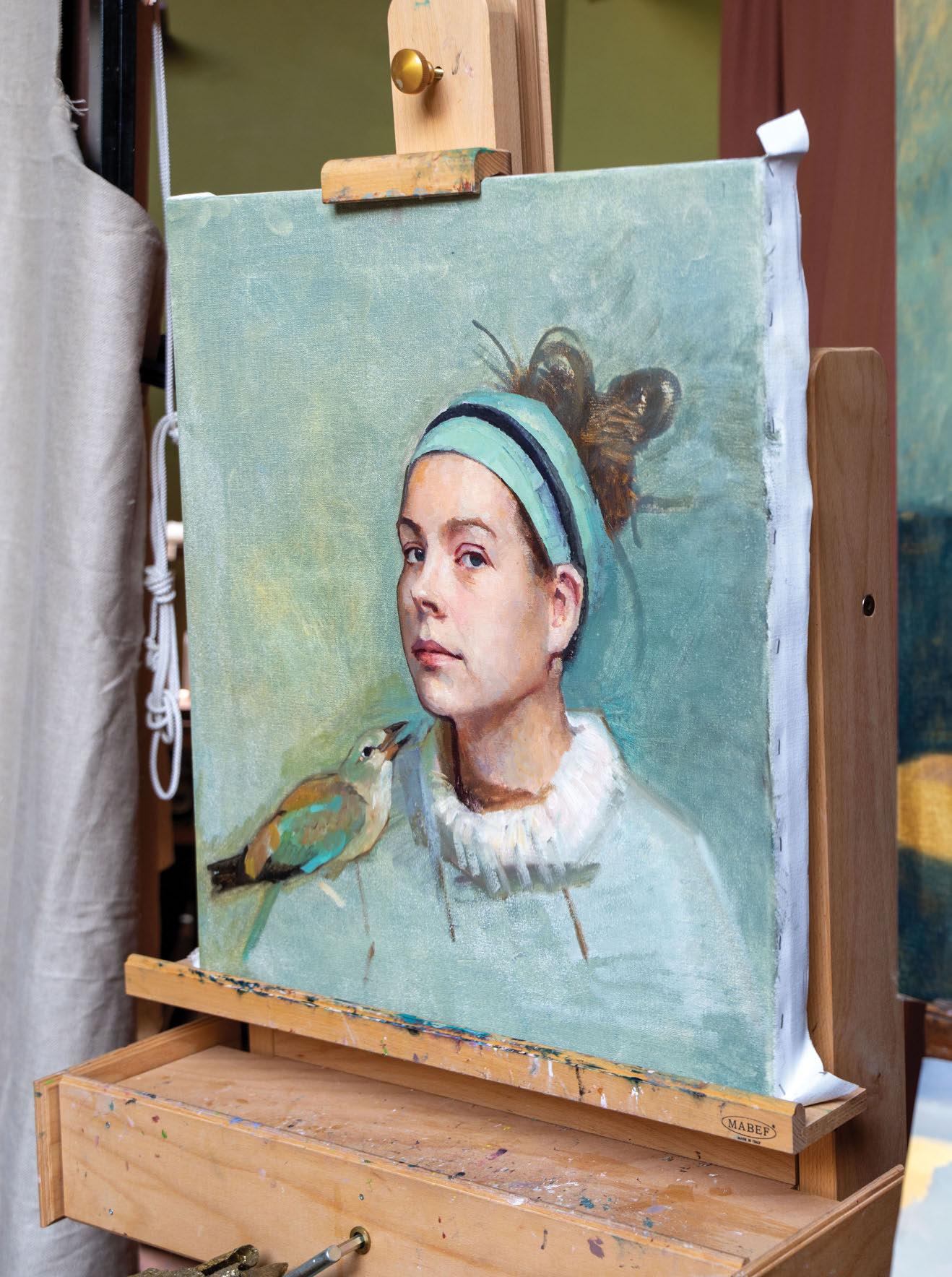
LITTLE KNOWN IN HER HOME COUNTRY OF DENMARK, LOUISE CAMILLE FENNE WORKS QUIETLY FROM HER STUDIO ON THE ISLAND OF FUNEN, NEARLY 5,000 MILES FROM HER NEAREST GALLERIST. YET ACROSS AMERICA, DISCERNING DESIGNERS AND IN-THE-KNOW COLLECTORS ARE FLOCKING TO HER WORK, CAPTIVATED BY THE BLEND OF BEAUTY AND MYSTERY EVER PRESENT IN HER PORTRAITS, WHERE HUMAN AND AVIAN FORMS GRACEFULLY INTERTWINE. A SECRET THAT MAY NOT REMAIN ONE FOR LONG.
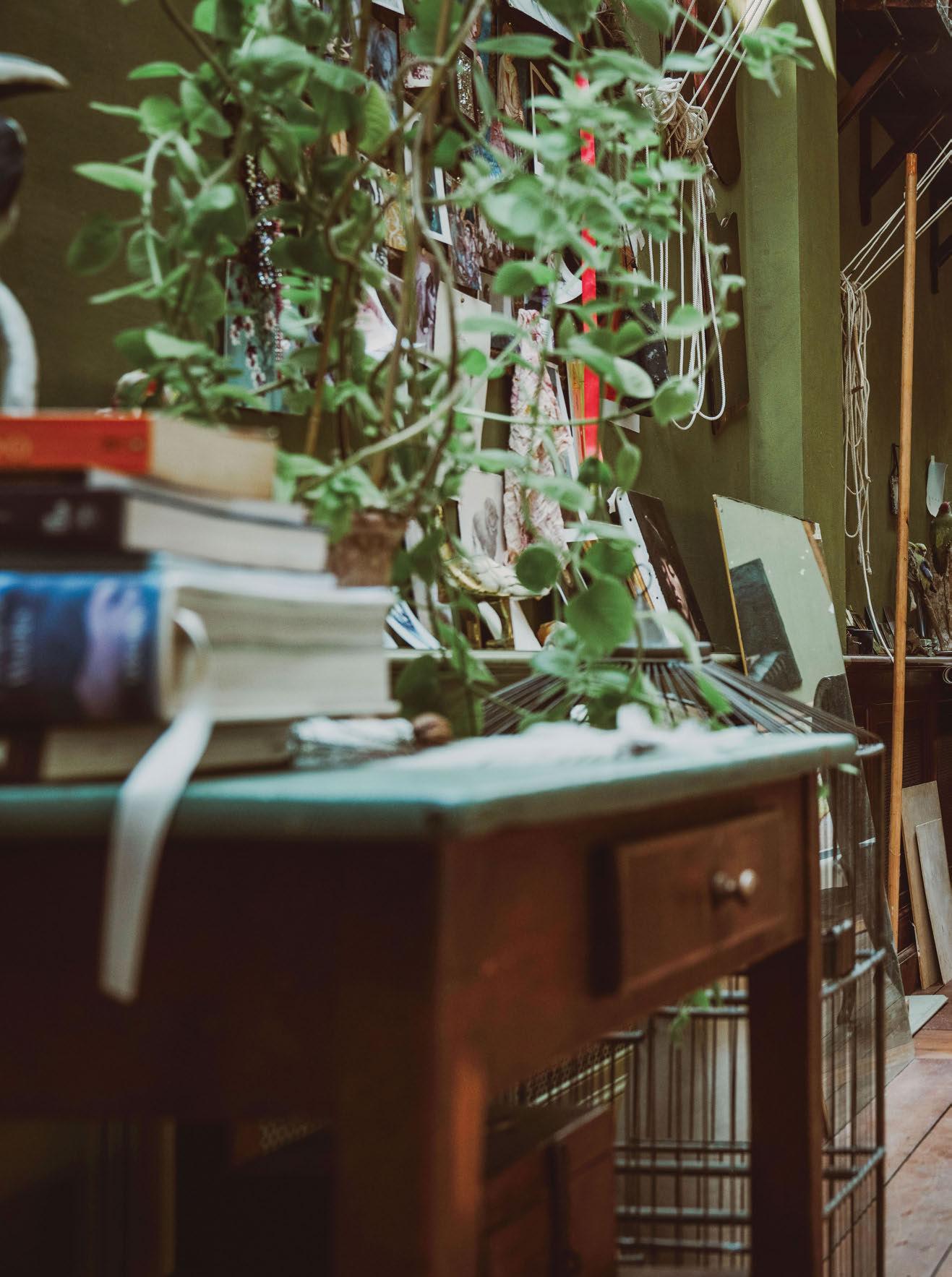
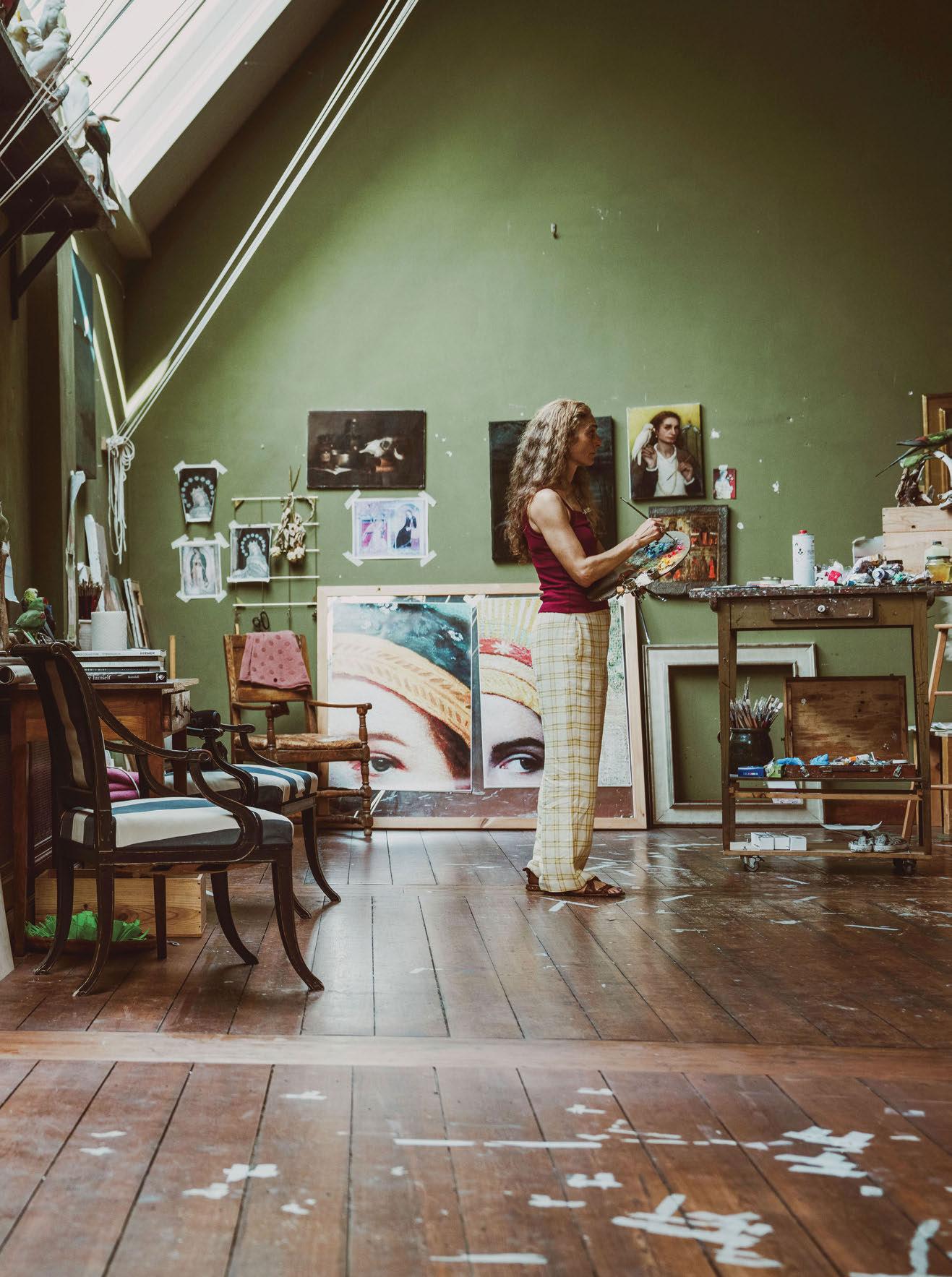
Louise’s studio.
Between Earth and Sky
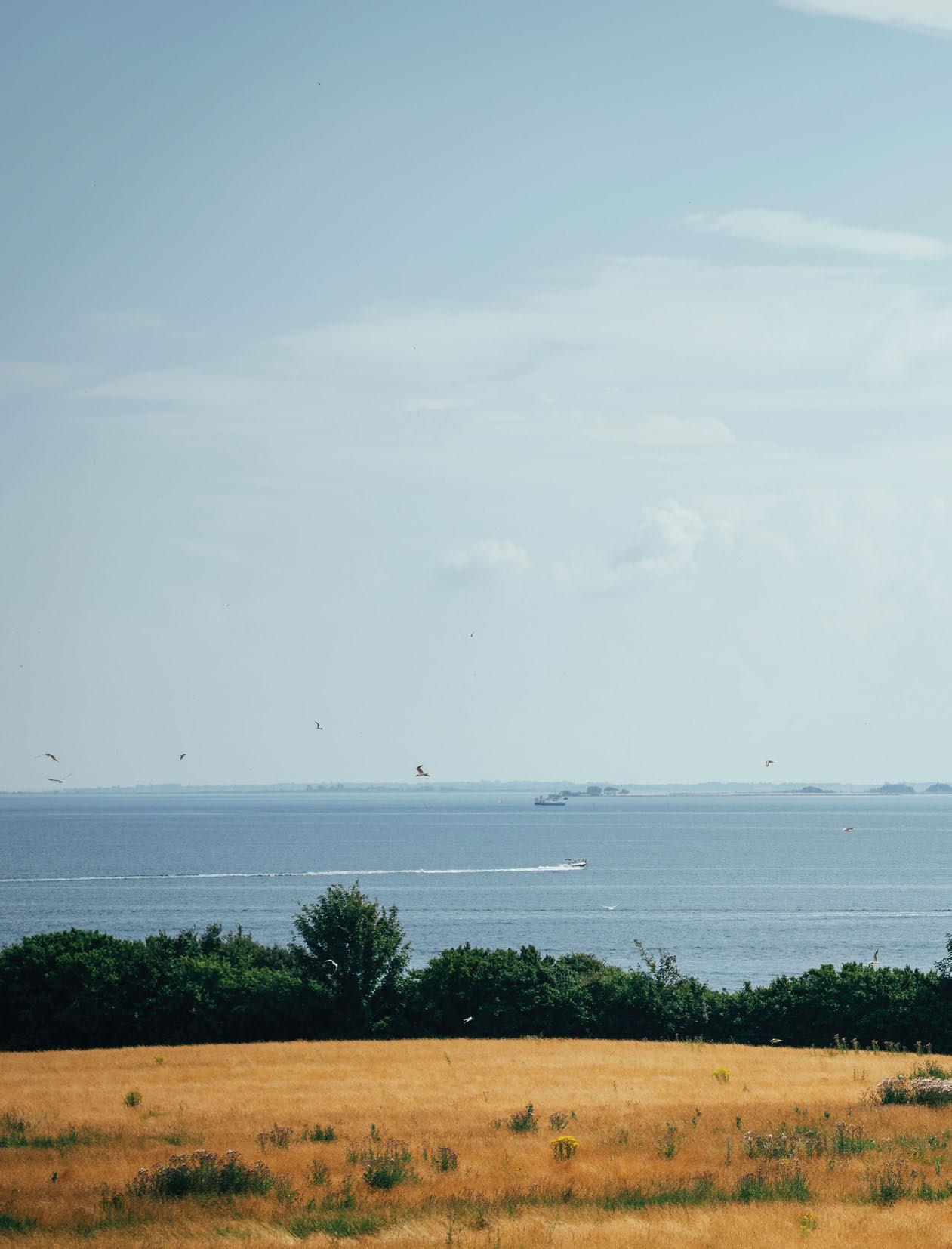
Just beyond the gravel drive leading from Louise Fenne’s thatch-roofed cottage, it is difficult to tell where the bluest of blue skies end and the placid salt water beneath it begins. Louise is drawn to this middle distance, exploring the ways in which its human and natural inhabitants intersect in her arresting compositions.
What pours onto her canvas is a metaphysical mix—part Scandinavian, part otherworldly—shaped by her seaside home in all its beauty and surreality, her artistic upbringing and the rigorous training that followed. Above all, this makeup reflects her insatiable curiosity and restless seeking.
Louise has explored other subjects, mediums and methods. Perhaps this year, she will paint flowers or the seed pods she has collected. She has been experimenting with watercolor, with magnification. Yet it is the juxtaposition of birds intermingling with their human counterparts that most consistently captures her fascination—a muse she pursues with the precision of a Renaissance master. »
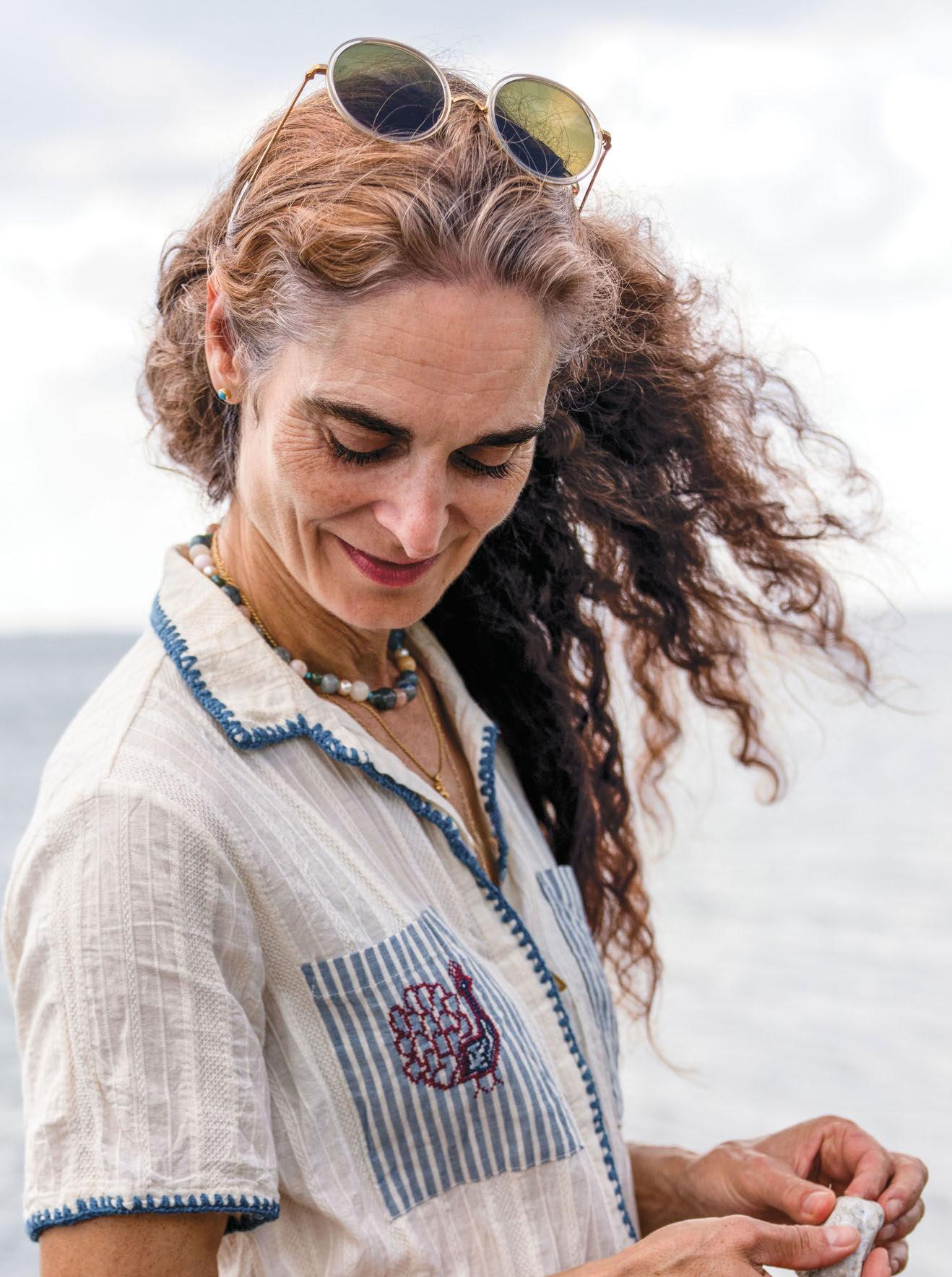
Between Earth and Sky
OF THE ARCHIPELAGO
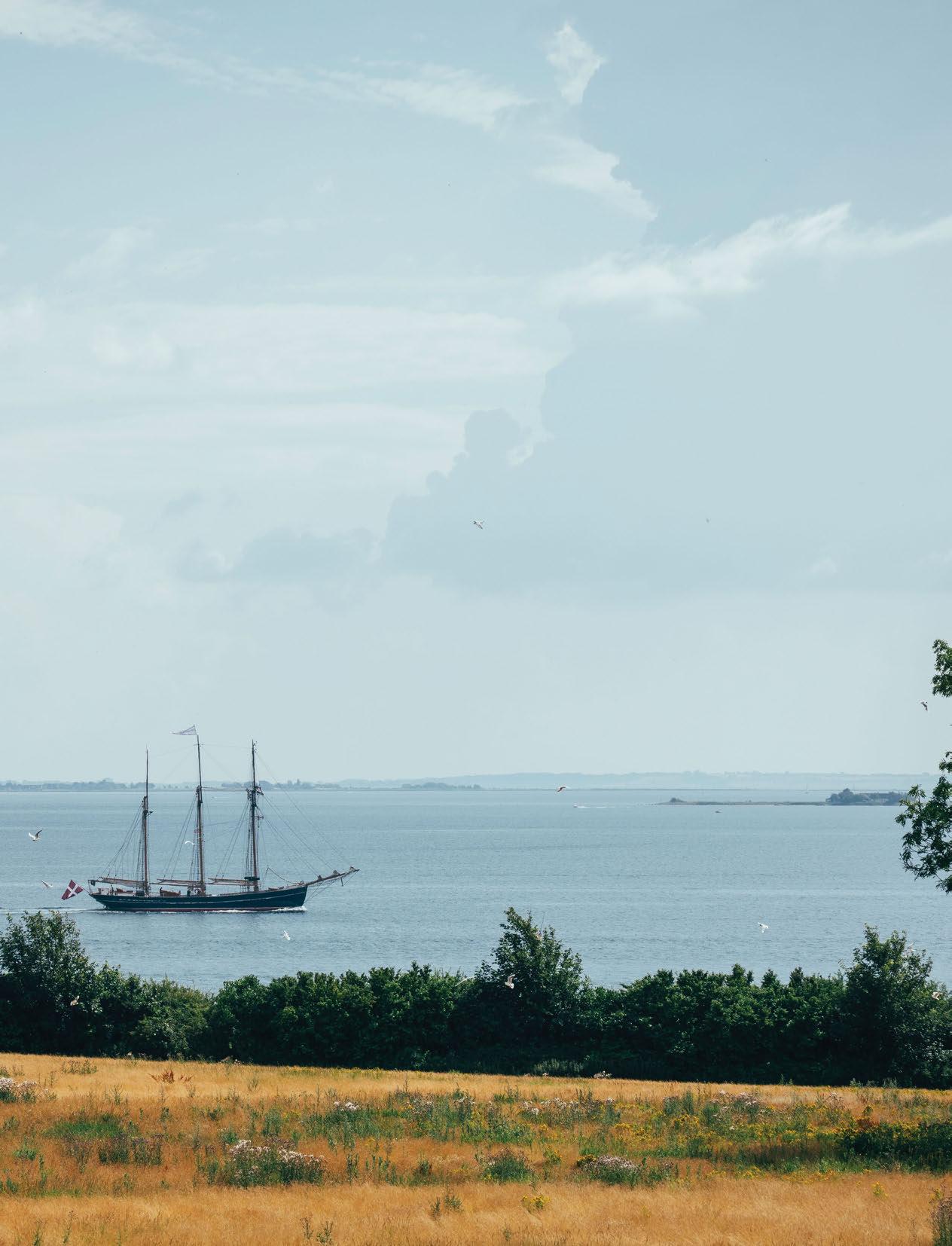
About two hours from Copenhagen, the rural landscape is a collection of islands, towns and farms, ancient castles and sailing harbors. Much was reachable only by boat until bridges were completed in recent decades. While driving along roads marked for both cars and bicyclists, there are sudden saltwater views beyond expanses of golden meadow—a tall-masted schooner passing with sails up—or stretches of boulder-strewn shoreline with boats lashed to marina docks and moorings.
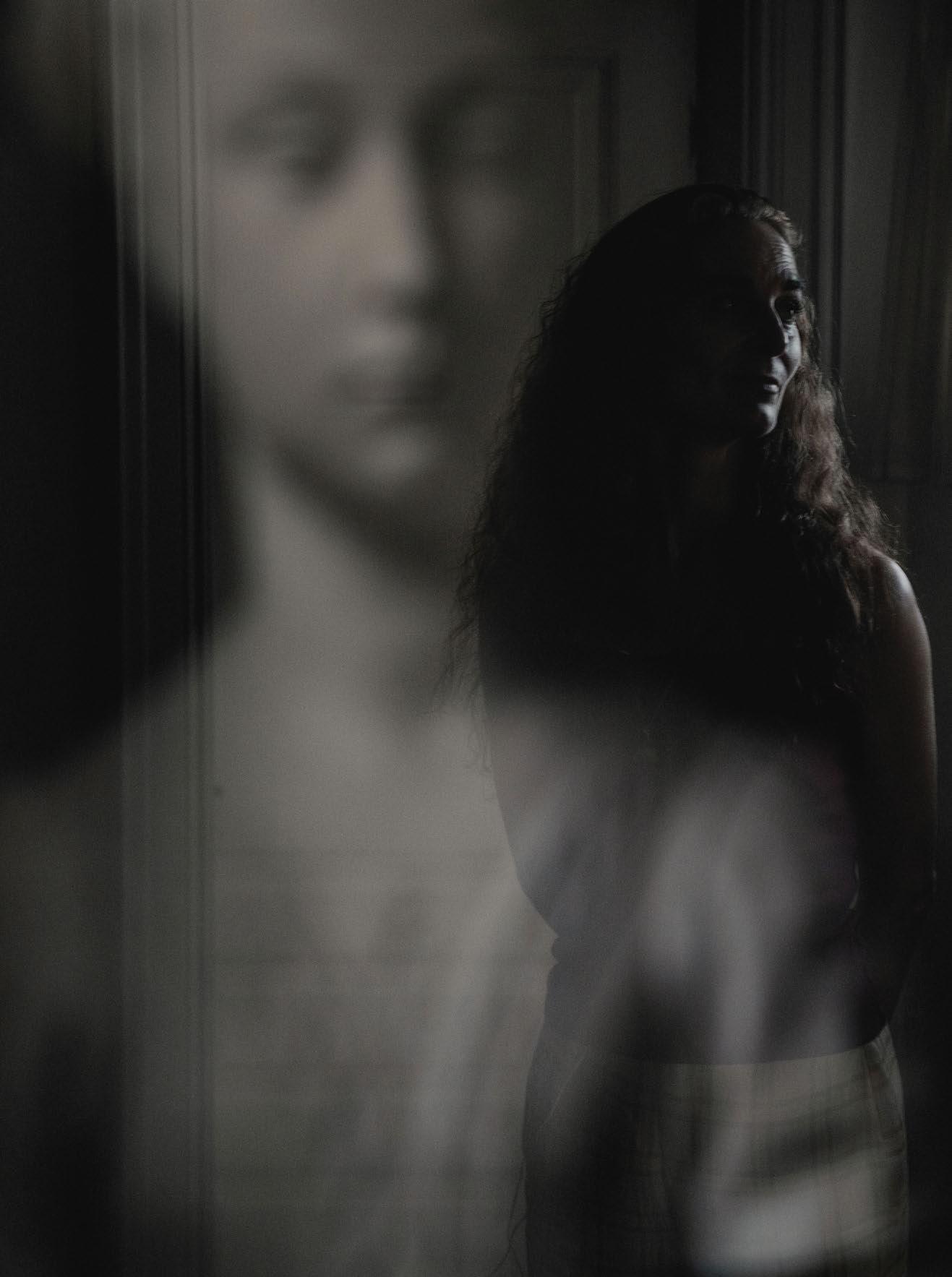
Tall and lean, with a twisting mane of brown curls, Louise looks sprung from this archipelago, perhaps from the sea itself. The artist studied at the Florence Academy of Art and The Glyptotek in Copenhagen, and she lives and paints near the town of Svendborg on the island of Funen, historically a center of schooner building, where she regularly walks to a public swimming pier on summer mornings and jumps in. The water is chilly, an awakening jolt. Late-July water temperatures hover just above 19 degrees Celsius (mid-60s F). »
Between Earth and Sky
In the afternoons, Louise paints. “Listen,” she says suddenly, holding still by her palette, brush in hand. The rapid call of a bird repeats outside the open windows of her studio. “That’s a green woodpecker.” Louise has been on her feet for more than an hour in a rhythm of walking three or four steps forward and then backward between her easel and the painting at hand. Today, it’s an in-progress portrait of a woman (her 20-year-old daughter, Olivia), and she has plans to add a blue-feathered bird later. Her dance-like walk back and forth is to look at the painting from a natural viewing distance, and then to paint any needed adjustments.
Louise typically paints with one or more live models who may return for sessions over a span of weeks, even months. On this day there’s no model, but the airy space is alive with the faces of birds and people in paintings that are completed or underway—and there is taxidermy at every turn.
Her studio is just a few minutes’ drive from her charming thatch-roofed cottage, and it’s situated
across the garden from the red brick, sea-facing manse and compound of outbuildings that her parents constructed near Svendborg in the early 2000s. The studio’s brick exterior is painted marigold, and inside are smaller entry rooms with walls painted brick red and spring green. There’s checkerboard tile in the kitchen and a deep ocean blue on inset cabinetry leading to her painting space. Here, a large room with deeper green walls has skylight windows overhead, along with sail-like fabric coverings that may be raised or lowered to adjust the amount of natural light. The walls are hung with paintings, shadow boxes displaying found butterflies and insects, and bulletin boards of postcards, sketches and photos. On small tables are collections of feathers and shells, and a basket of ribbons “from a jumble sale outside of Florence,” Louise says. Parrots, goldfinches and other perfectly preserved birds line cabinets and shelves. A lofted mezzanine gives an aerial view into the workspace below where a constellation of torn pieces of masking tape mark the positioning of models, easels and backdrops from past paintings. »
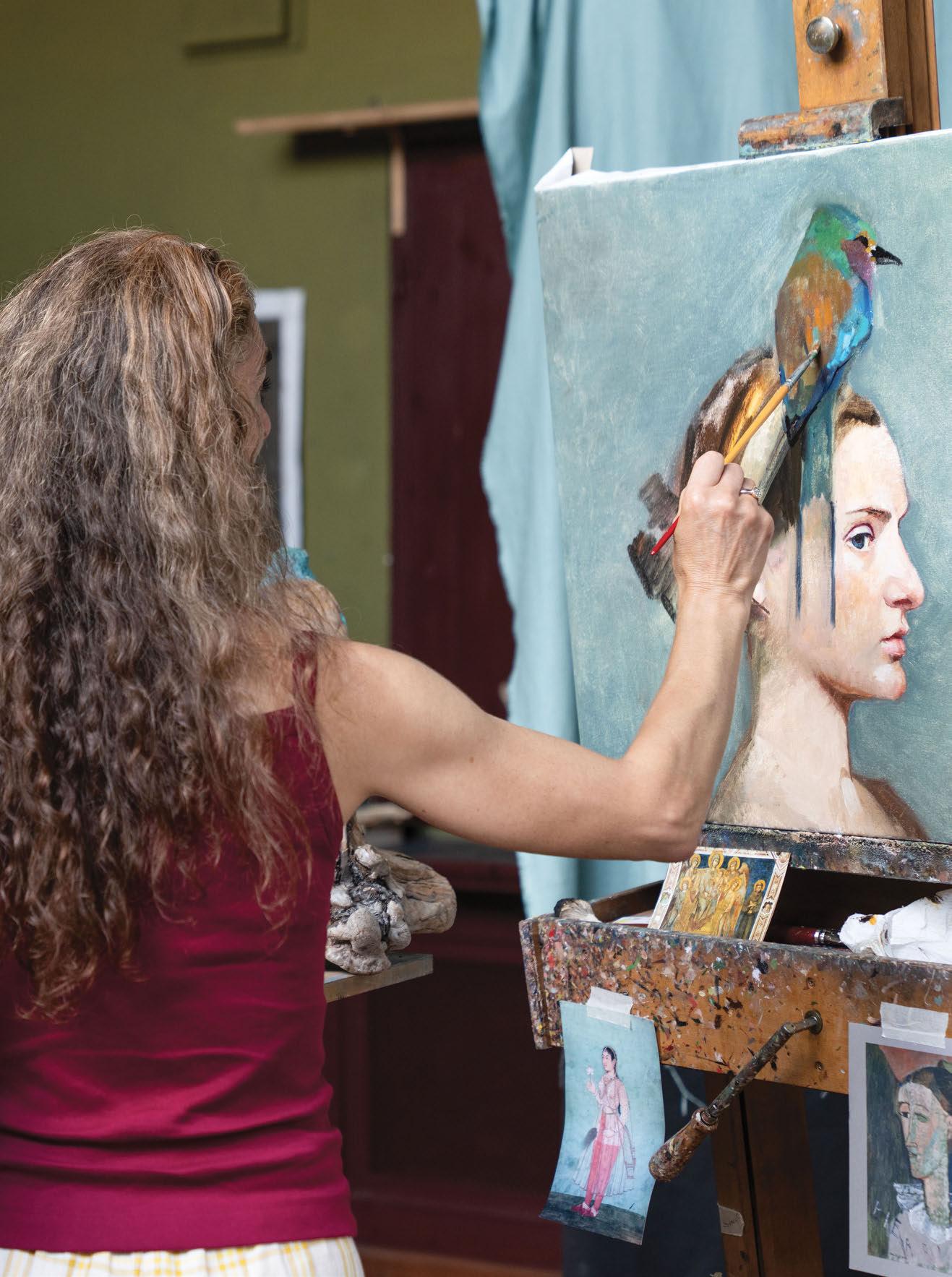
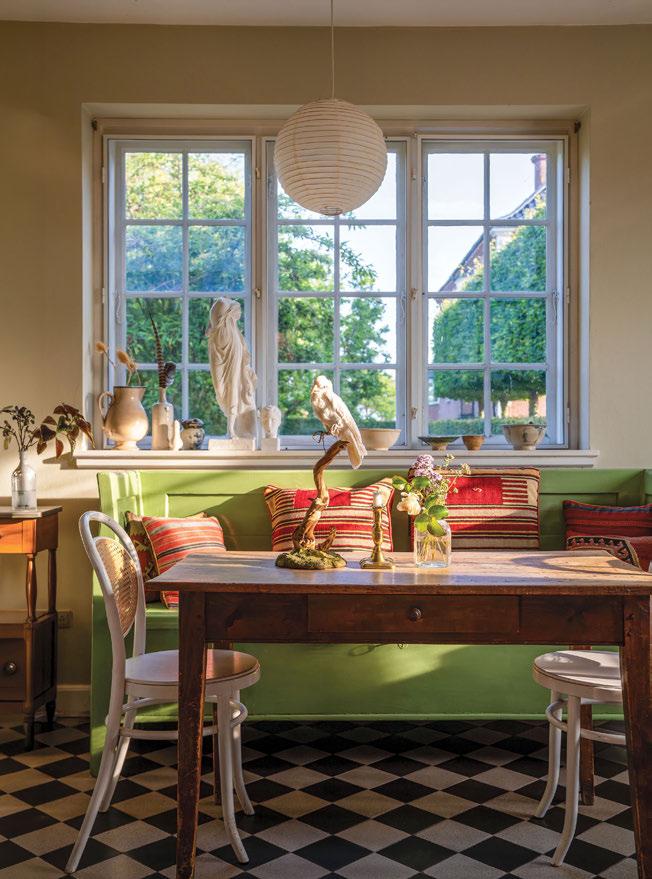
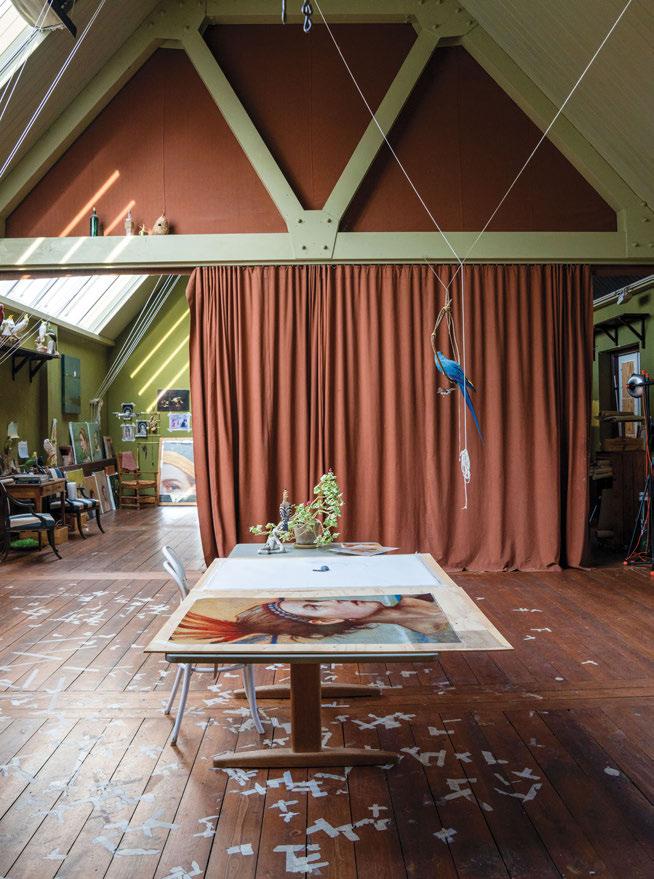
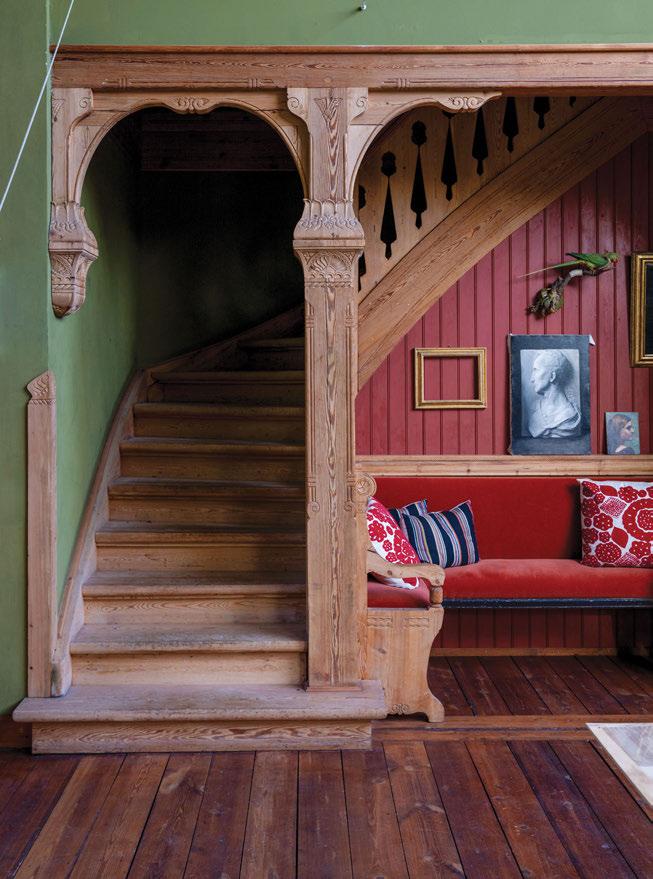
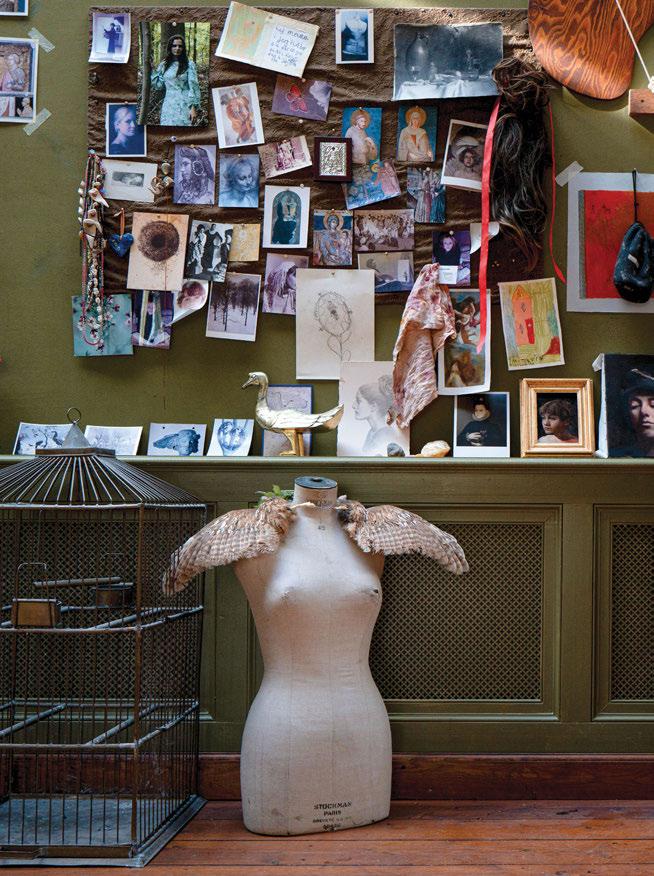
Between Earth and Sky
Louise recognizes the impact of her upbringing, and how her parents, her father a self-made entrepreneur and her mother a decorator, fostered her early passion for art. On a family trip when she was nine or ten, Louise visited an exhibition of drawings at a museum in Skagen in the northern tip of Denmark, where Scandinavian artists had created a colony in the late 1800s. “I remember being completely blown away,” Louise says. “Until then, I hadn’t really seen what you could do with a pencil—not just drawing like a child, but with shading, doing naturalistic drawings and portraits. It opened my mind, and I started looking at things in a different way.”
When her parents moved their family to England so Louise and her sister Sofie could attend dayschool and sharpen their English skills, Louise’s art teacher told her she had true artistic talent
ART HISTORY
and encouraged her to continue. She did. At the Glyptotek museum in Copenhagen, she enrolled in a drawing class where students would arrive before visitor hours to make pastel and charcoal sketches of the classic sculptures. She also studied in Aix-en-Provence, but Louise says it was her decision to spend time at the Florence Academy of Art that was a truly life changing experience.
She ended up staying on for two years, drawing daily in a studio near Piazza Santa Croce. “There, I realized there was so much I didn’t know, and that I had this incredible drive to do this,” Louise says. “It was also important for meeting kindred spirits from all over the world.” In Florence, she also met American artist Charles Weed, who she would later move with to Amsterdam and Lucca, Italy, and the two shared the studio in Denmark for more than a decade. »
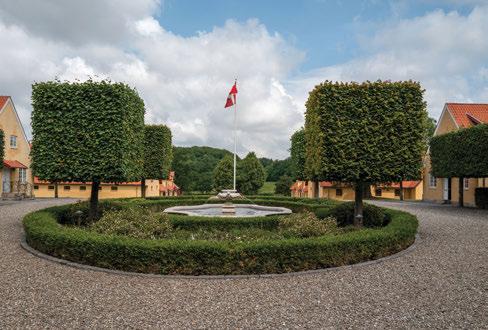
The entrance to Louise’s studio and the Fenne family residence.
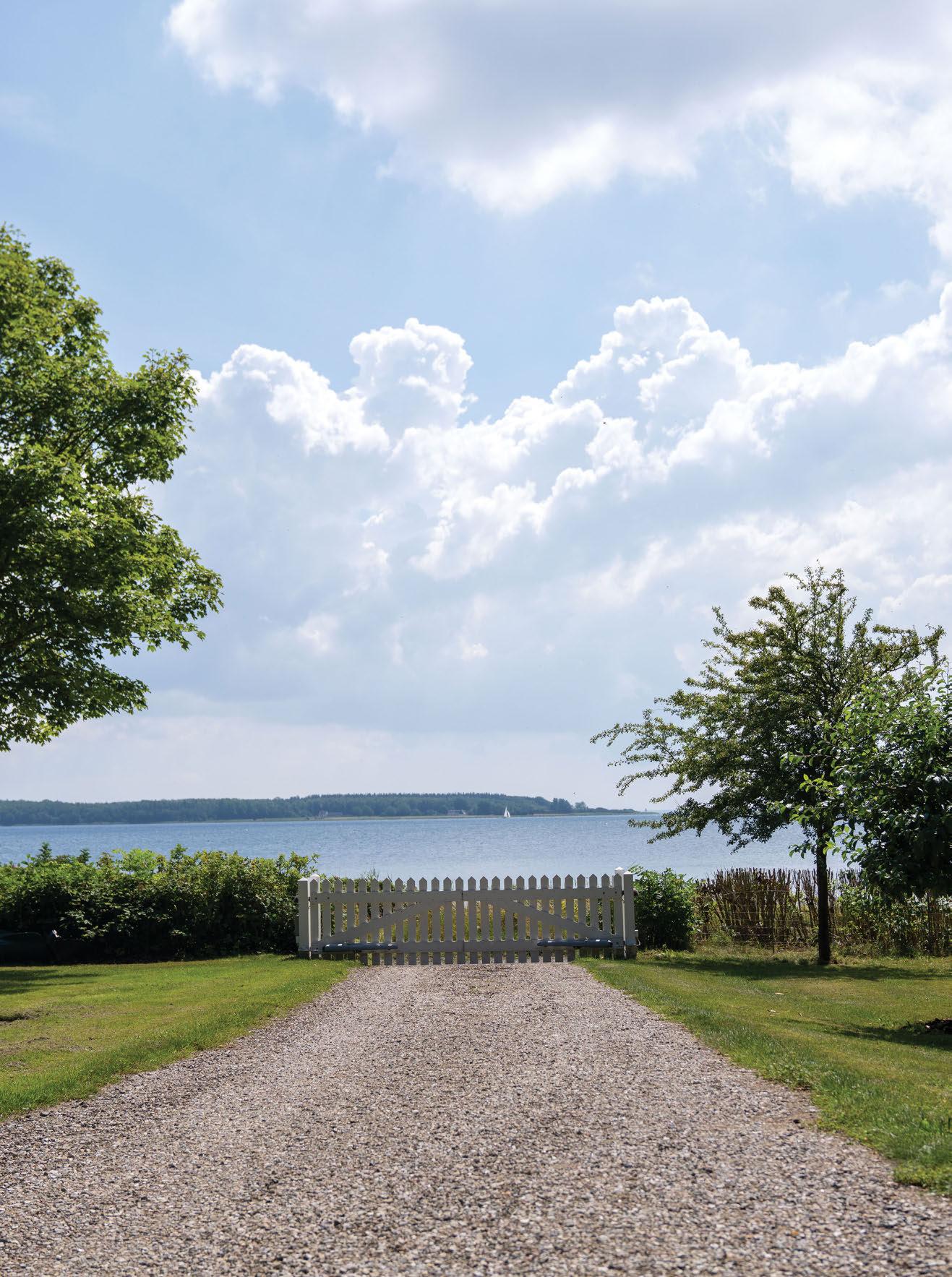
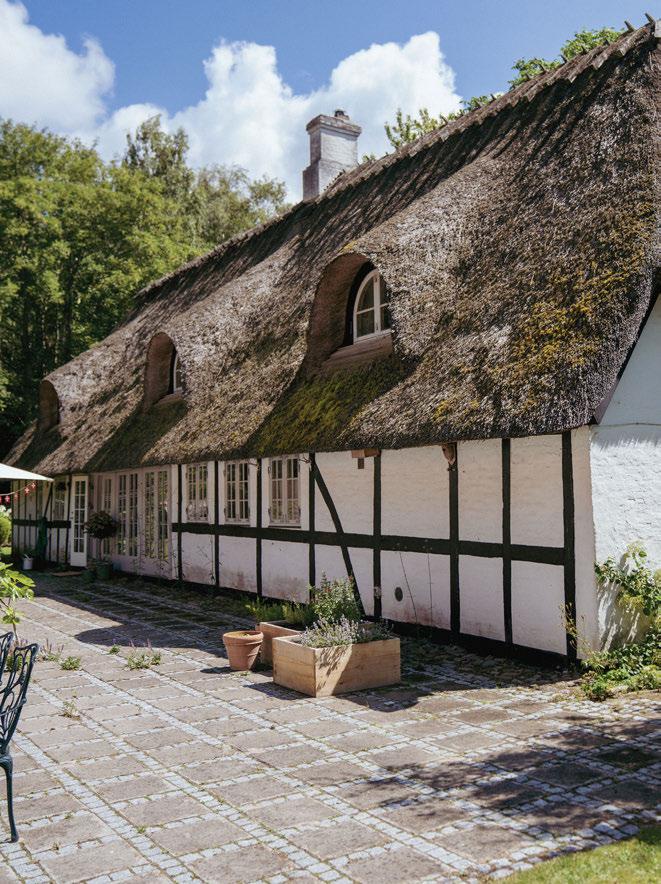
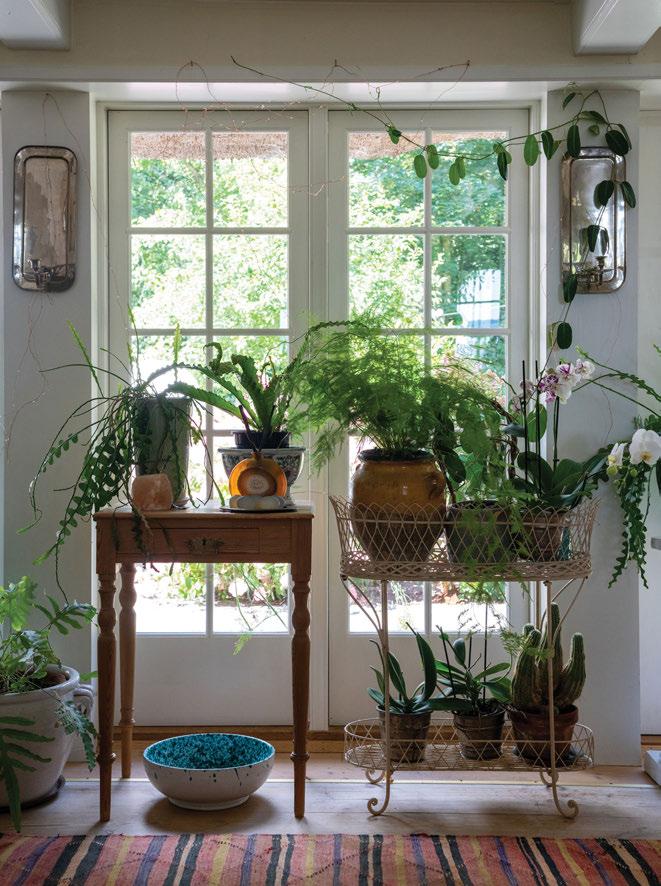
Set along a sound of the Baltic Sea, the beach along Lehnskov Strand is layered with sand and stones that are continually tumbled smooth in lapping waves. Like the surrounding islands, Louise’s days and life are encircled in nature. At 53, she lives in a 19th-century cottage planted with butterfly bush and raised garden beds of herbs and vegetables. A dense forest extends beyond the backyard patio, and a favorite wooded trail begins just around a shoreline curve, where she frequently walks or runs barefoot on the beach, returning with gathered beach stones.
In summertime, the evening light lingers past 10 PM. It’s good to have this much daylight, she says, because her paintings evolve slowly. She’s been completing 12 to 15 oil paintings each year. She’d like to be faster—maybe try a different medium than oils that can always be painted over, changed. “When is a painting finished? That’s the most difficult part,” Louise says. She’s been on a passionate and continual journey to learn more about herself and her path and purpose, how she fits into the world. The questions feel simultaneously universal and highly personal—a human quest, full of spirited emotion. It all pours into her work. »
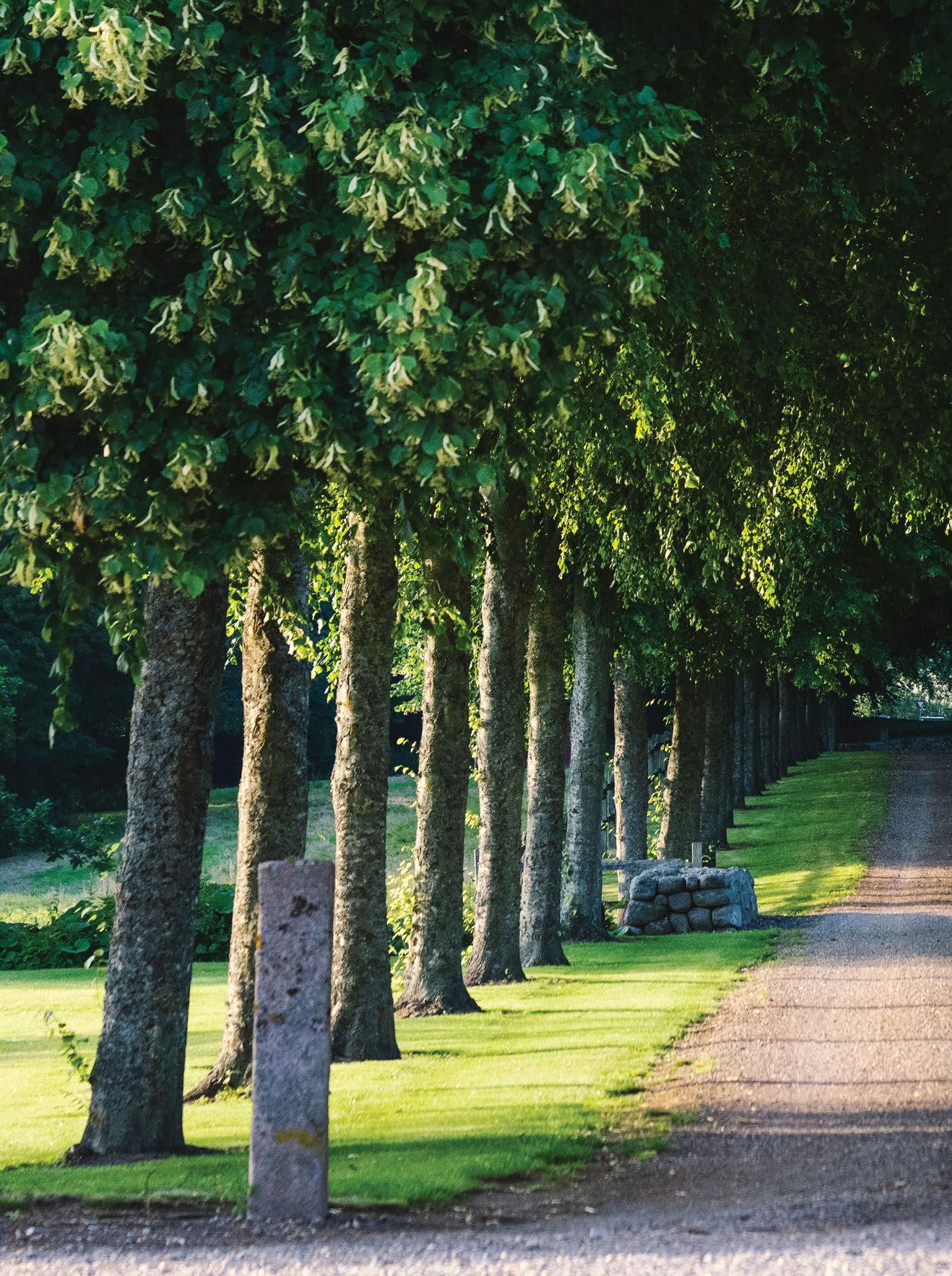
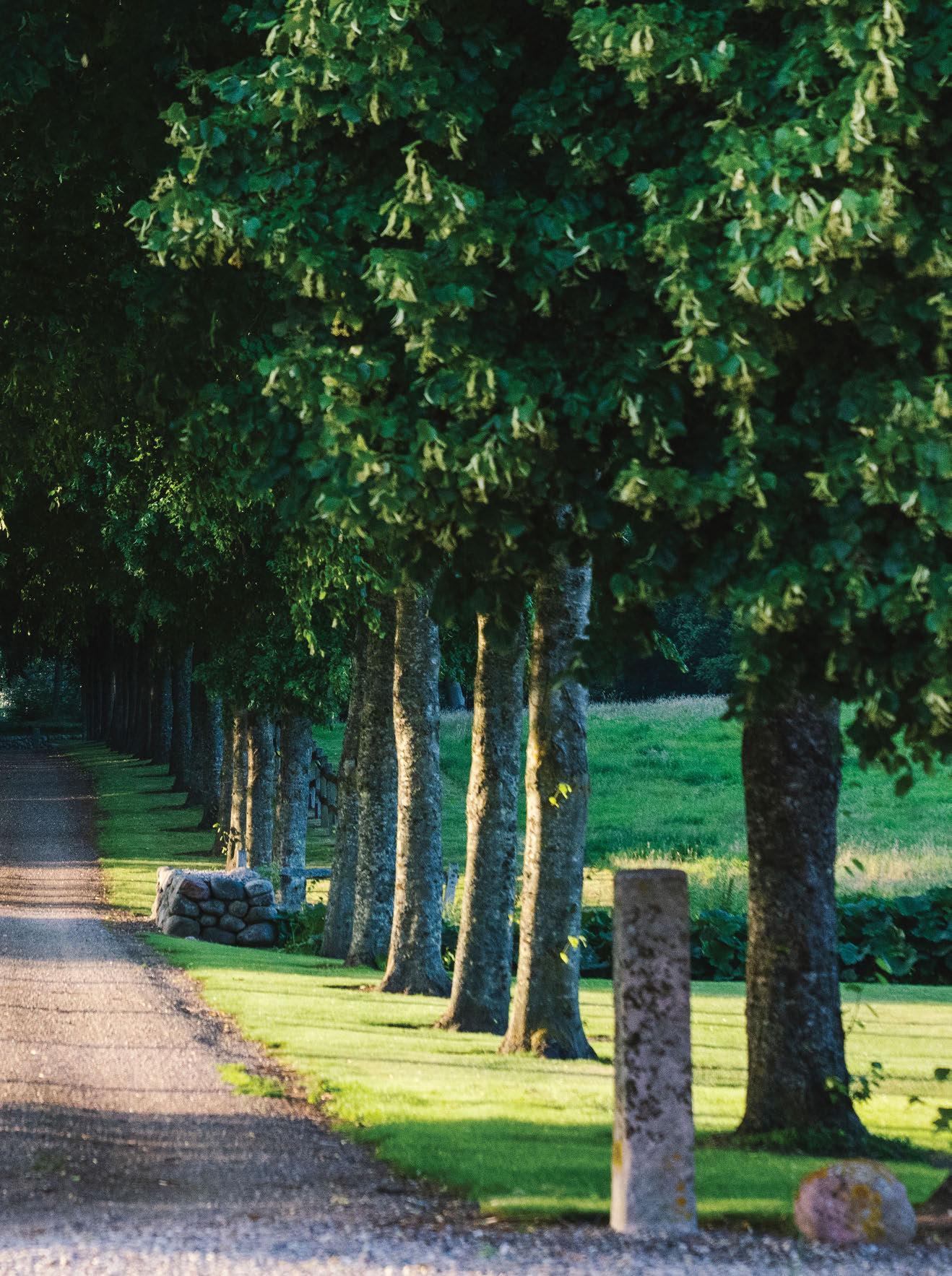
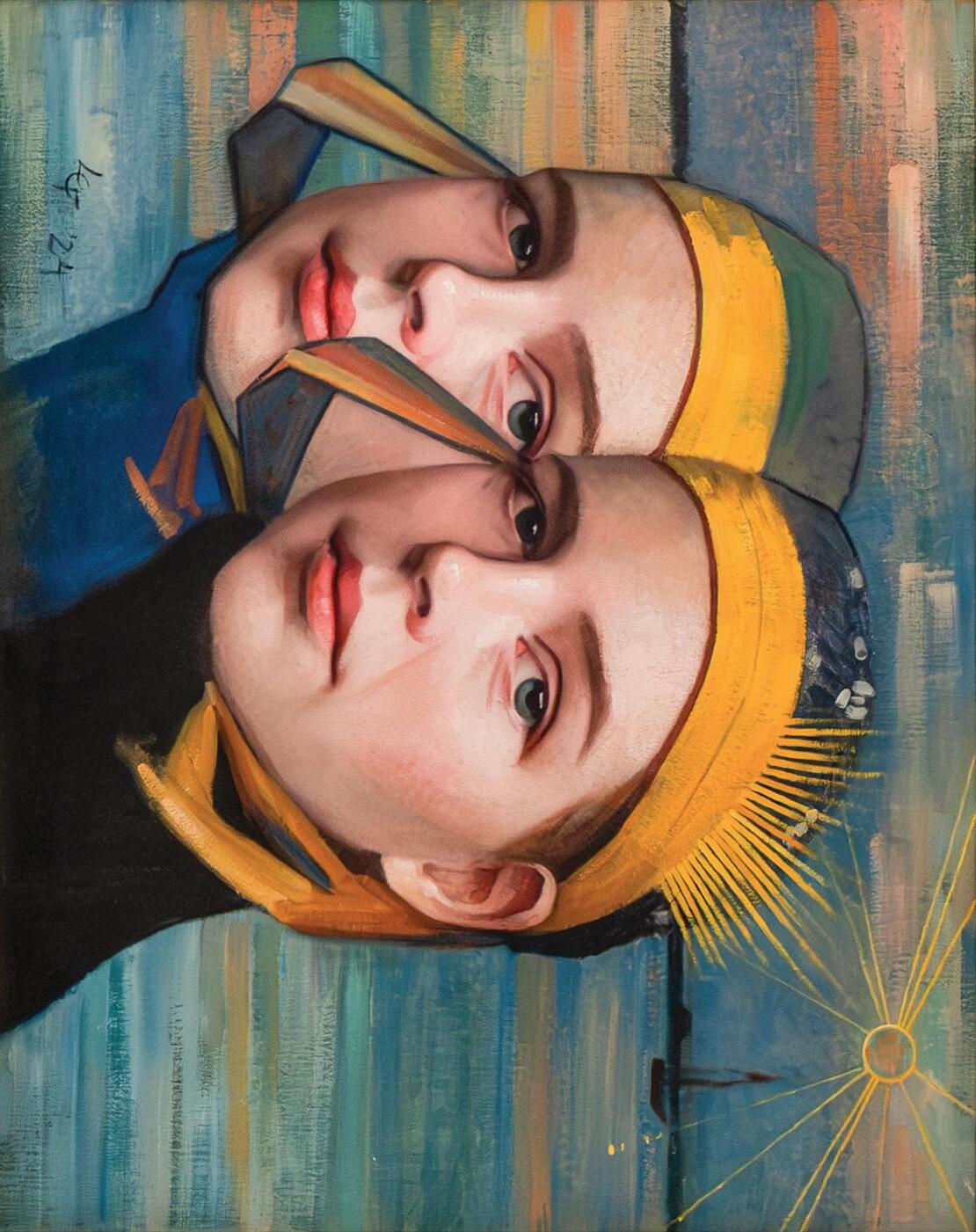
JACK
Between Earth and Sky
A WAY OF SEEING
Louise was certain, and at an early age, that she would need art as a constant in her life. She still does. Painting helps Louise “regulate” her world, she says. And since childhood, she’s sought nonverbal forms of expression—pressing flowers, knitting, amassing collections of beach stones, butterflies and cacti. Looking again at a tray of collected stones on a summer’s day, Louise lifts one stone and carries it to the sink, turning it under the faucet’s drip to see the stone wet and glistening again, as it was when it first caught her eye on the beach. She explains that before she has an intellectual understanding of something, she first perceives it through senses and emotions. “It makes so much sense to me in the way that I paint,” Louise says. The artist doesn’t prescribe the meaning of her paintings. Often simply titled in a series, “Unraveller No. 1, Unraveller No. 2” and so on, the paintings are both personal expression and explorations of color, shapes, light and beauty. “Color combinations can move me very deeply. It can be just two colors, and the whole painting can develop from that,” she explains. And then there are the birds. Louise is fascinated at their prehistoric origins that winged creatures preceded humanity. She has difficulty explaining in words what she’s saying with the paintings. “But maybe it’s not supposed to be articulated verbally,”
Louise says. This is something that she’s been exploring, trying to understand how a person’s brain works and what gifts a person has, and how to use them. Specifically, she’s hoping to understand why she does what she does every day. “I go to the studio and I work with this paint and I never get tired of it,” Louise says. “Some days, I come home exhausted and what I painted looks like crap. Other days, I think I’ve had a really good day. It’s fascinating. And it never ends. There’s no end to it—to what it should be, or what it could be.”
When pressed, she tries to explain the significance of the birds and their influence on her work. She talks of how people may think of a bird as a messenger or a symbol of the psyche. That is part of it, but there’s more. The birds, once alive and now preserved through taxidermy and paint, seem to have an innate power. Louise says that some people, including a few of the models that sit for her, are unnerved by the feathered figures in her studio. She can empathize, yet, “it all fits together for me,” she says of the emotional attachment to the birds, the symbolism, the contrasts and connections between bird life and human life. And it doesn’t feel like repetition to so often paint human subjects with birds. Unique expressions and meanings are revealed with each new painting. »
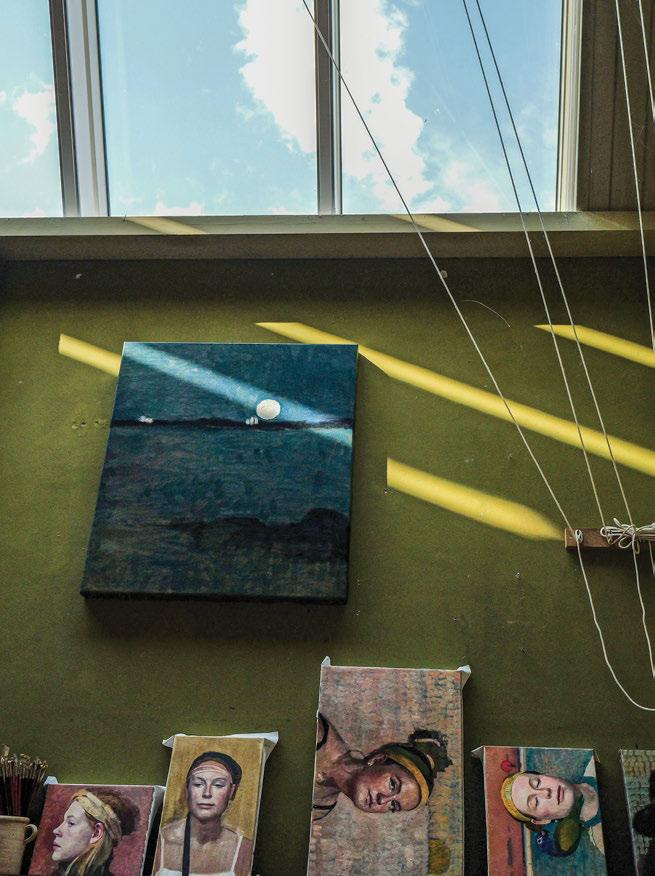
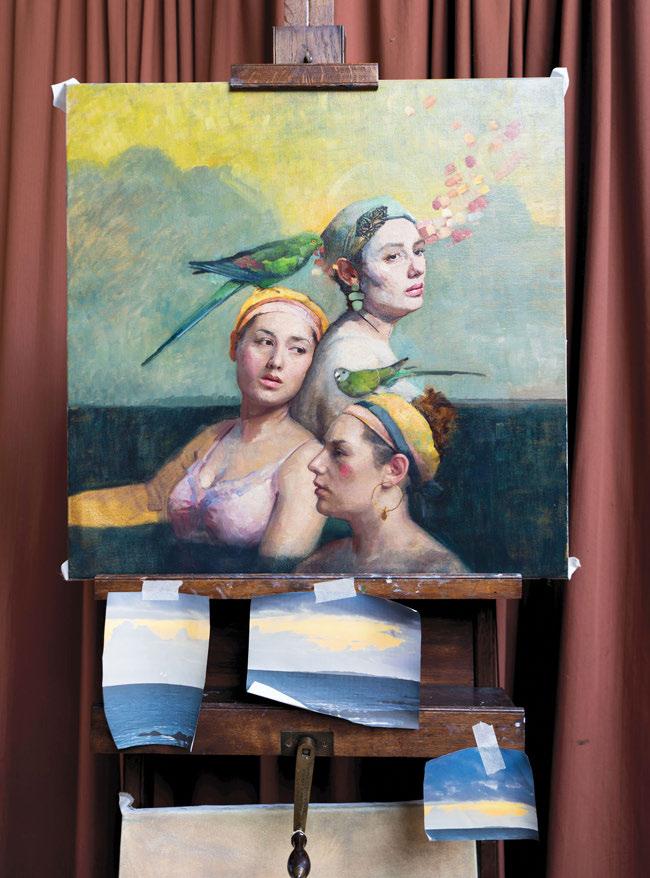
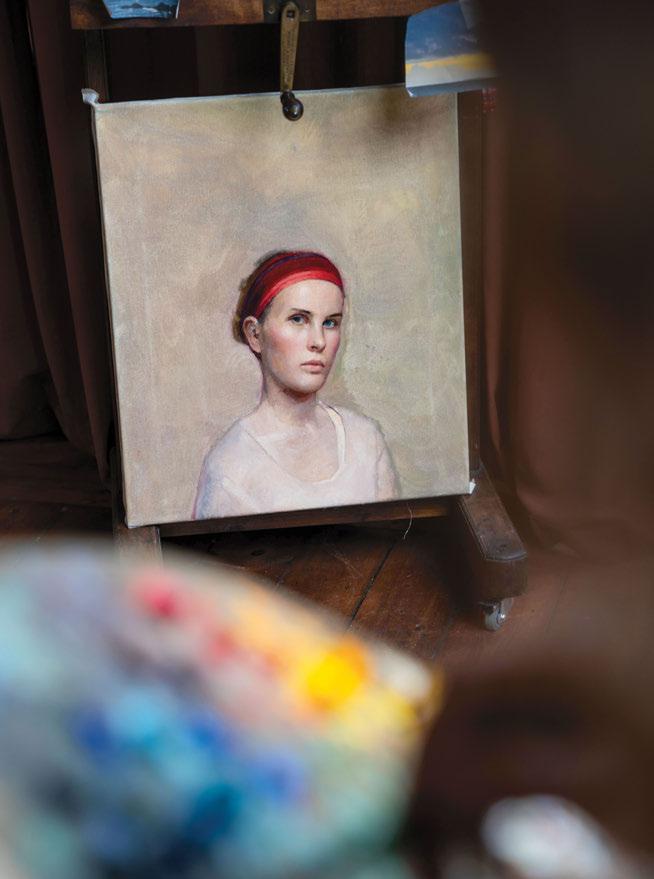
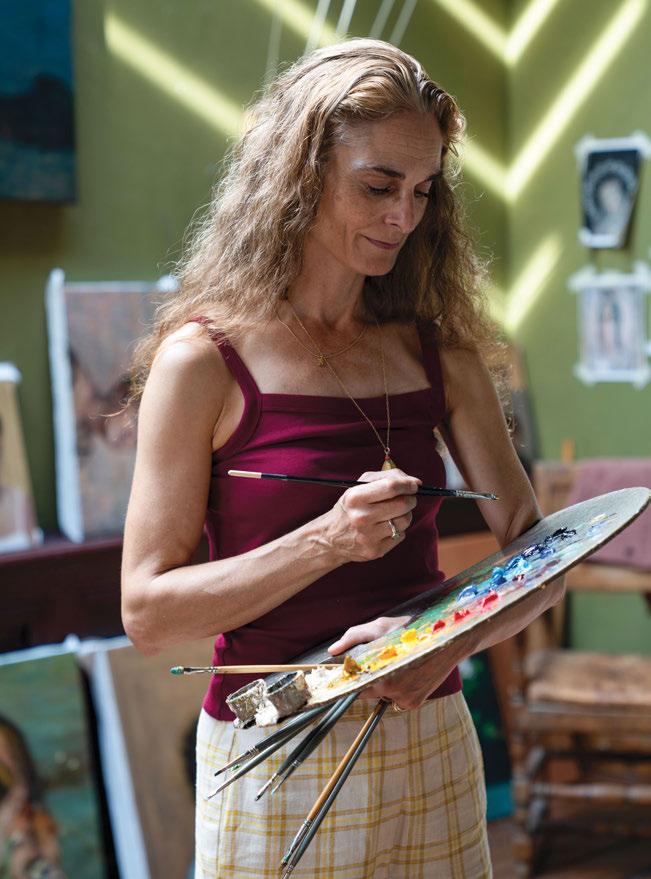
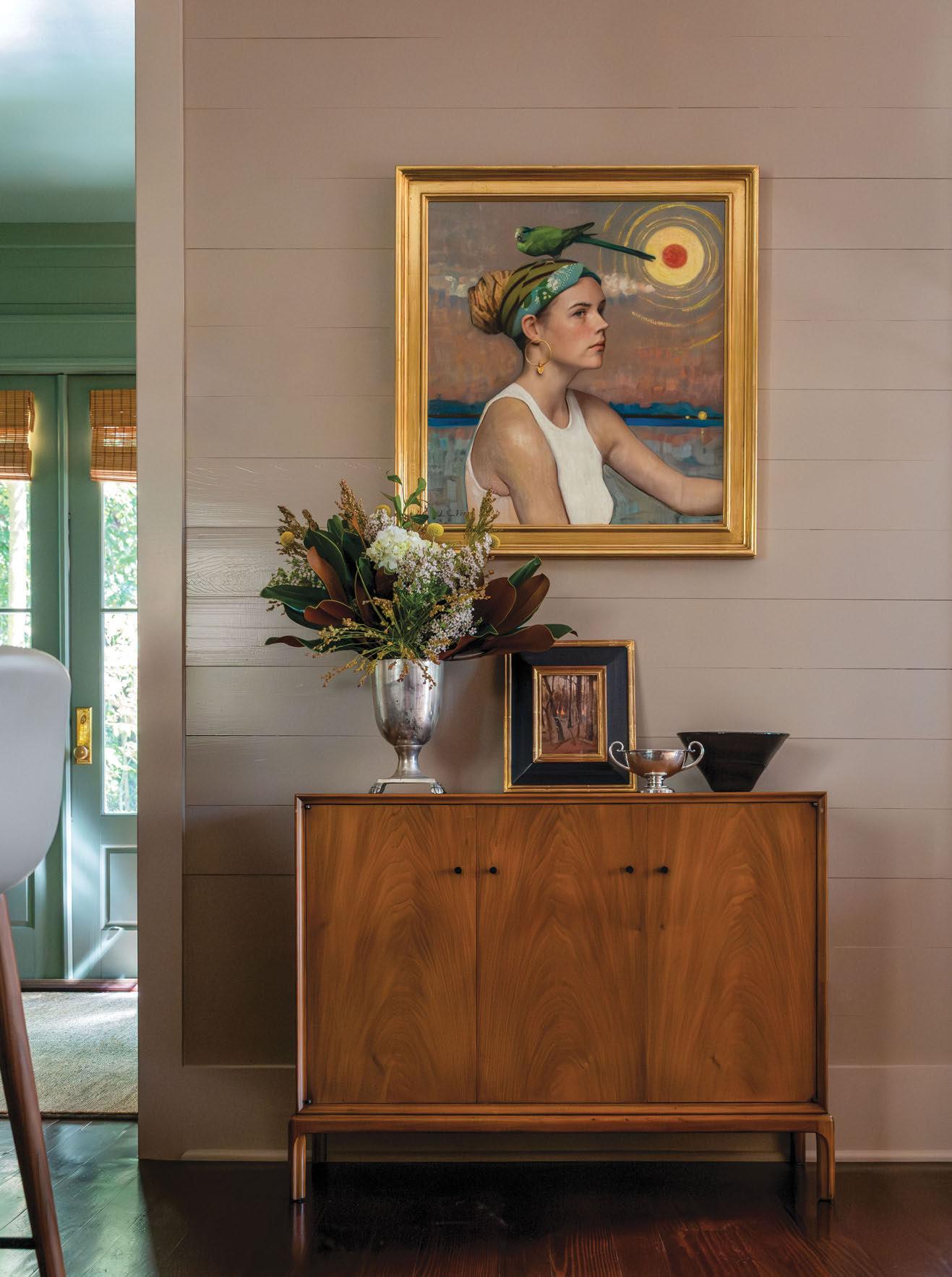
Interiors by Allison Elebash
Between Earth and Sky
HIDDEN IN PLAIN SIGHT
Louise’s low profile in the Danish art world suits her just fine. “No one knows me here,” she laughs. In the United States and well beyond, it’s a different story. In the early 2000s, Ann Long Fine Art of Charleston began representing Louise’s works just as the gallery was establishing itself as a source for classical realist paintings of living artists. Gallery founder Ann Long Merck had held pop-ups in 18th and 19th-century downtown Charleston homes even before she opened the gallery—featuring classically-trained artists. After opening the original location of her full-time gallery on Charleston’s State Street in the French Quarter, the gallerist added Louise and Charles Weed to her early roster of artists.
Merck says she’s continually captivated by the Danish artist’s “supreme talent for figure painting, along with mystery. As a colorist, she is divine as well.” Louise’s paintings sell quickly, Merck notes. Interior designer Charlotte Moss bought one of the first Unravellers at the gallery, and Merck says, she bought a stunning portrait for her personal collection that she adores. “I was so lucky it came to us in the middle of the summer. Everyone was away, and I kept it!” »
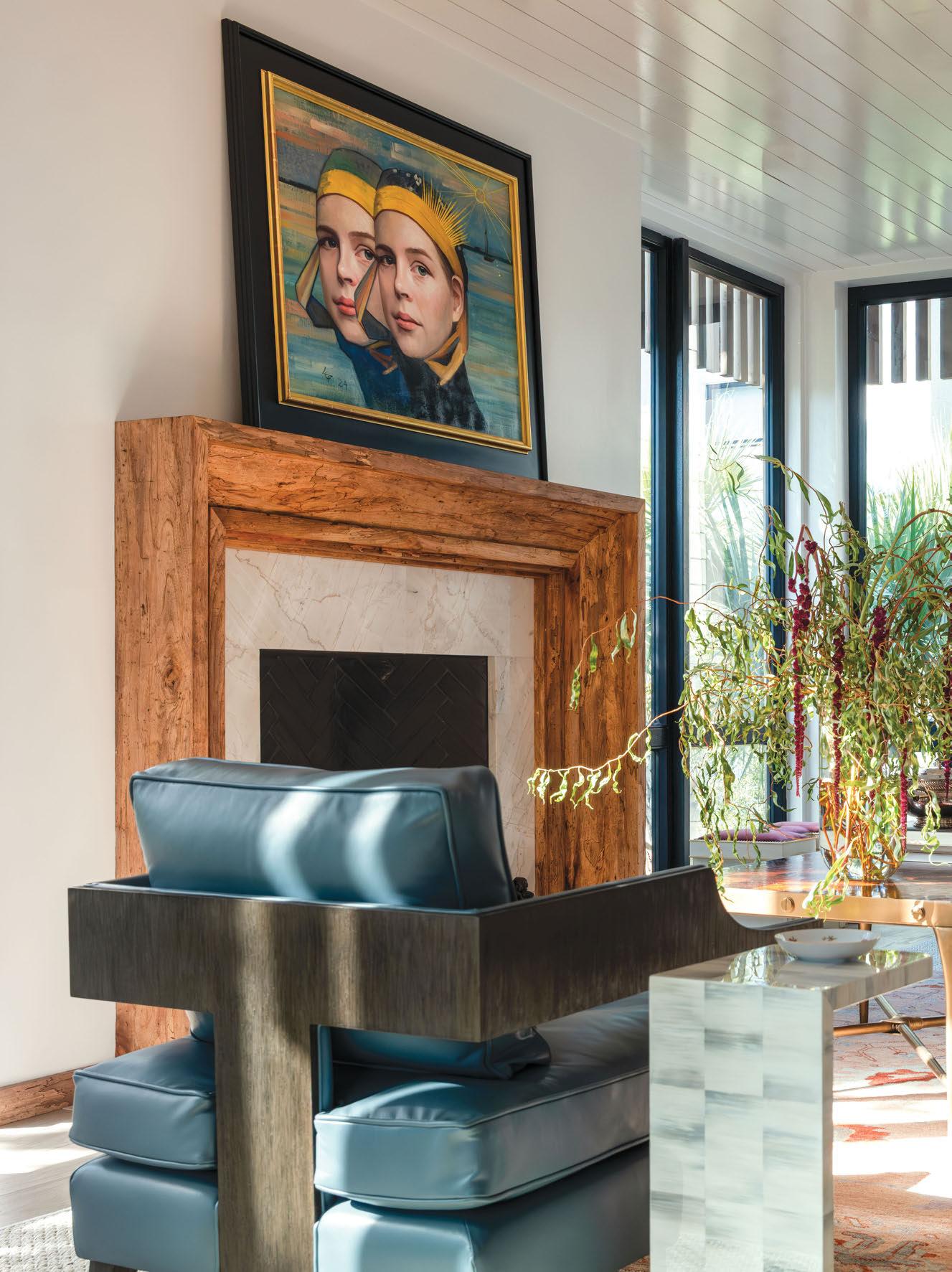
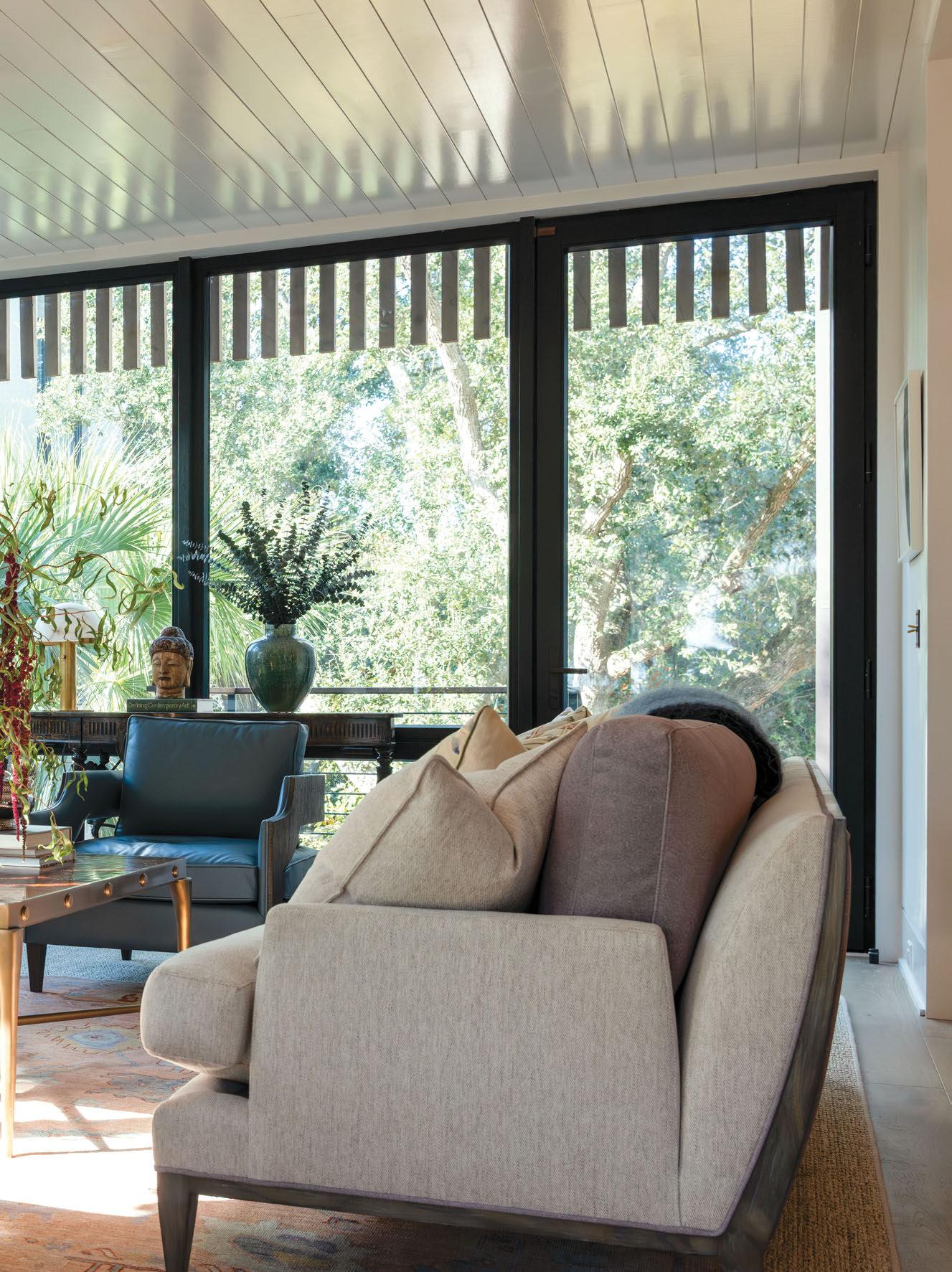
Between Earth and Sky
ENDLESSLY SEARCHING
Back in Charleston, preparations are underway for an upcoming show that will feature Louise’s latest body of work, evoking a sense of responsibility that accompanies her immense dedication to depictions filled with emotion—for herself and everyone who will encounter it. Otherwise, her artistic existence is at once in dialogue with the realities of producing work for others’ consumption, while consciously remaining at a distance from that pressure.”
Louise is able to spend the vast majority of her days focused on refining the evocative features that distinguish her portraits. “The models are alive, and they are thinking of lots of things while you’re painting, so the expression changes,” Louise says. “Suddenly I realize how much time has gone by as I’m painting. But I keep wanting to get everything that is there.”
That intention is felt in the strength of her subjects’ faces and the lightness of their gaze, despite the layers of paint (and life) beneath them. Perhaps, it is an endless search for connection and meaning, revealed one brushstroke at a time, carried out from such a remote corner of the world, that makes the work feel so deeply and universally resonant.
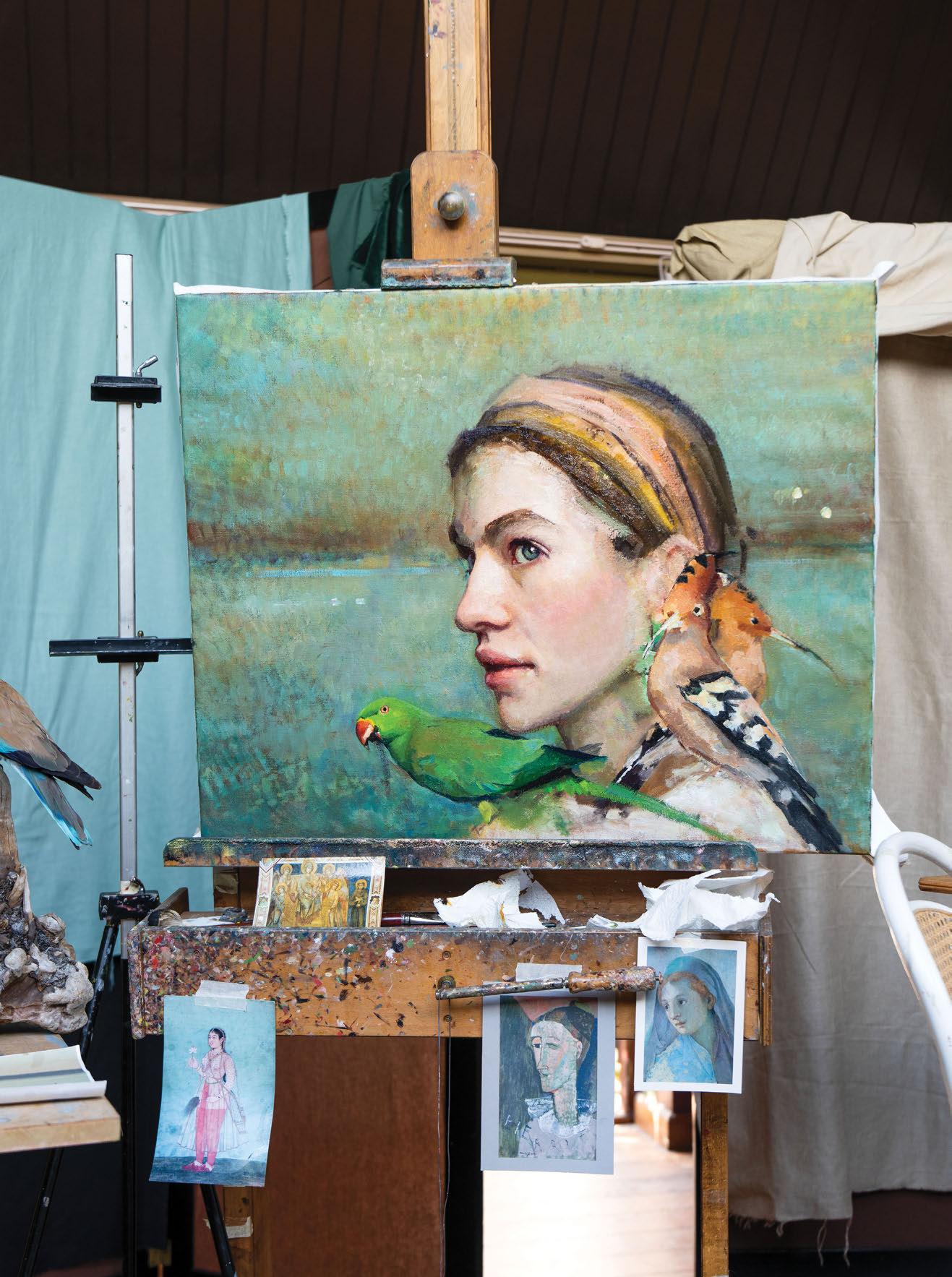
Anna, one of Louise’s models, a young woman from Ukraine who is living in Denmark to escape the war.
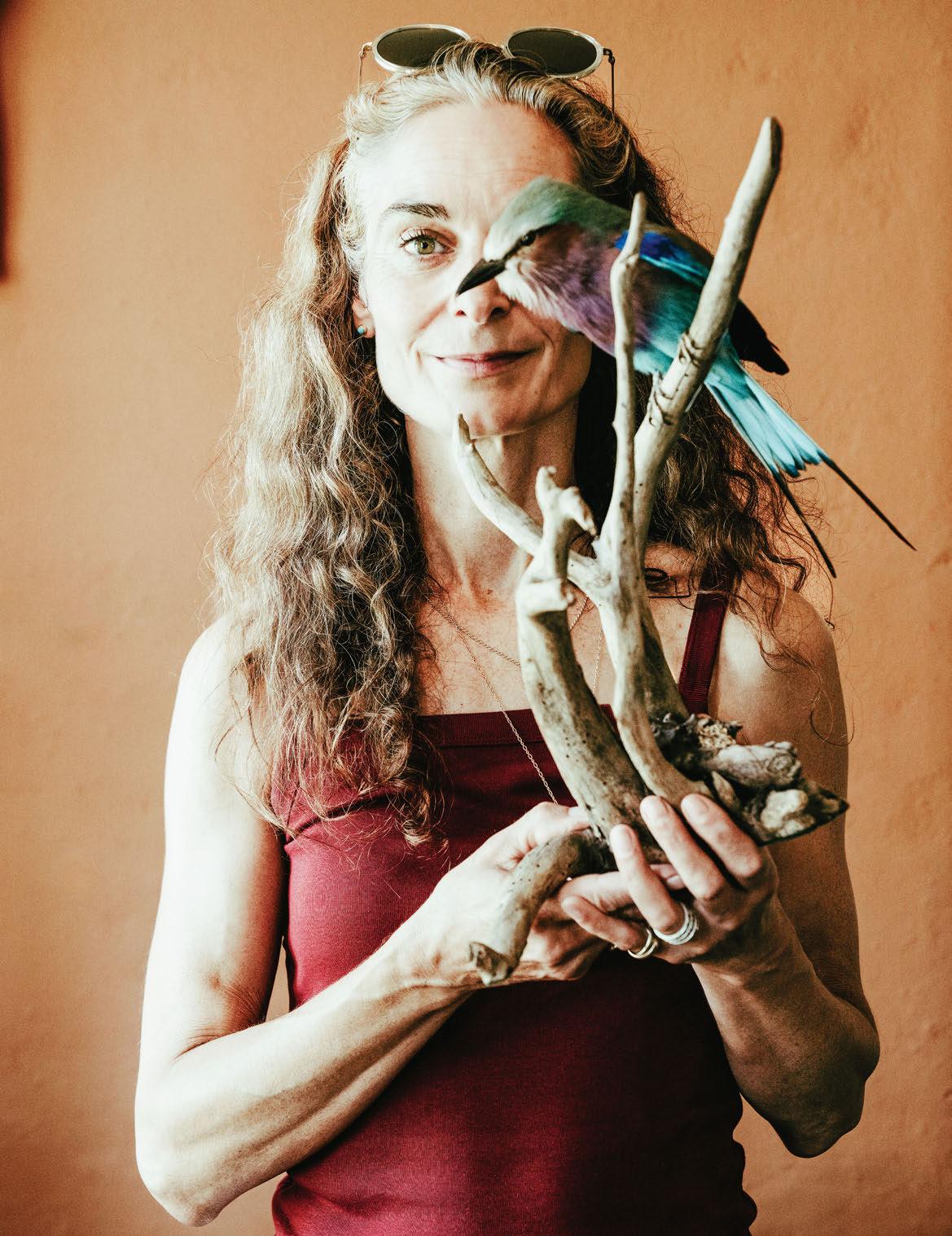

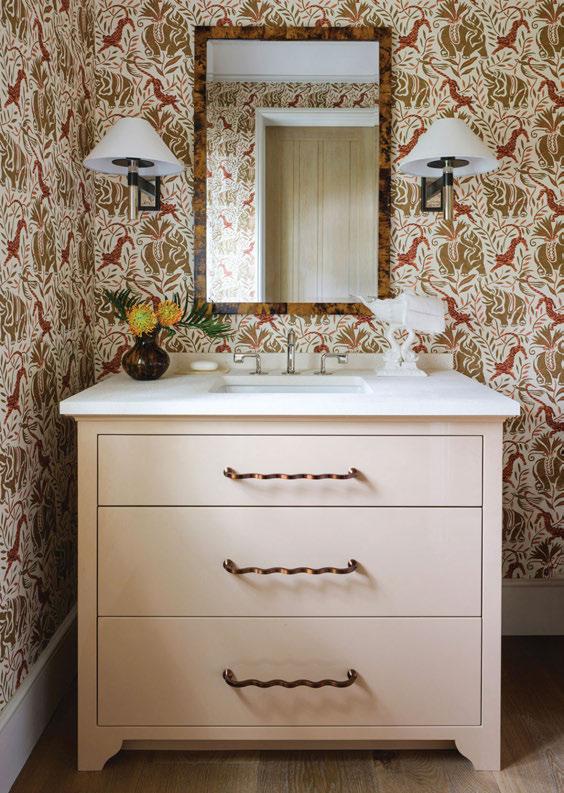
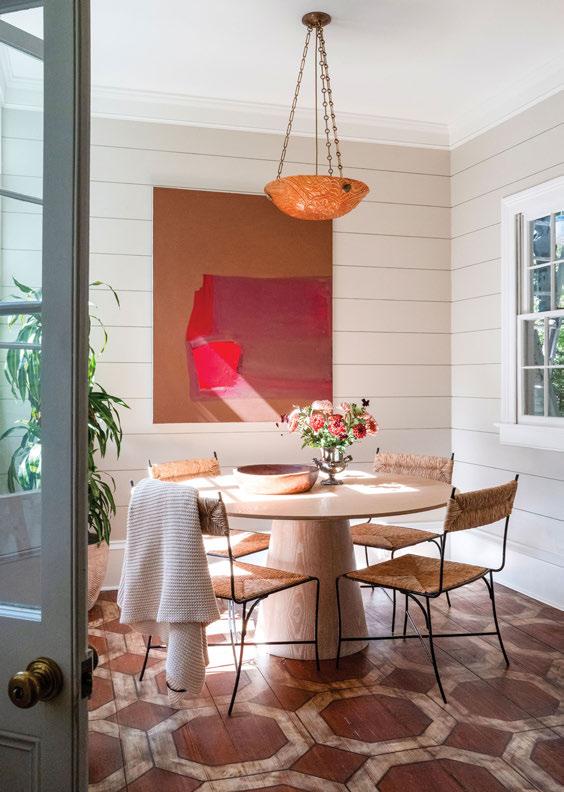
ROSAMUND
B. BERRY INTERIORS
AGNES
INTERIORS BY ELLEN KAVANAUGH
PHOTOGRAPHY BY CARMEL BRANTLEY
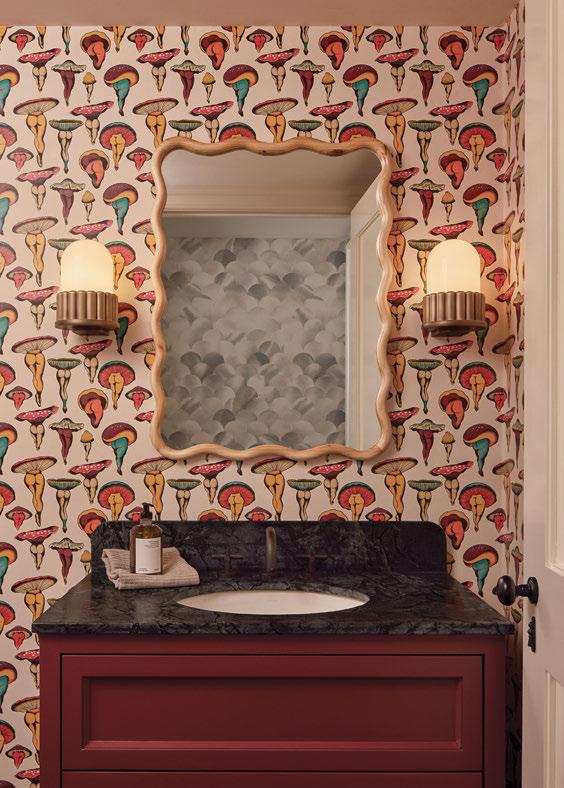
CAPSE WALL
INTERIORS BY JAM
PHOTOGRAPHY BY GIEVES ANDERSON / TRUNK ARCHIVE
STYLING BY MIEKE TEN HAVE
TUCK
INTERIORS BY J. ALLEN PHOTOGRAPHY BY CASSANAS
BURLINGTON
INTERIORS BY STORIE COLLECTIVE / PHOTOGRAPHY BY STACY ZARIN GOLDBERG
GARDENER / REX TABLE / HOUE / NEEDLES
INTERIORS BY ANDREW HOWARD / PHOTOGRAPHY BY ERIC PIASECKI / OTTO / STYLING BY HELEN CROWTHER
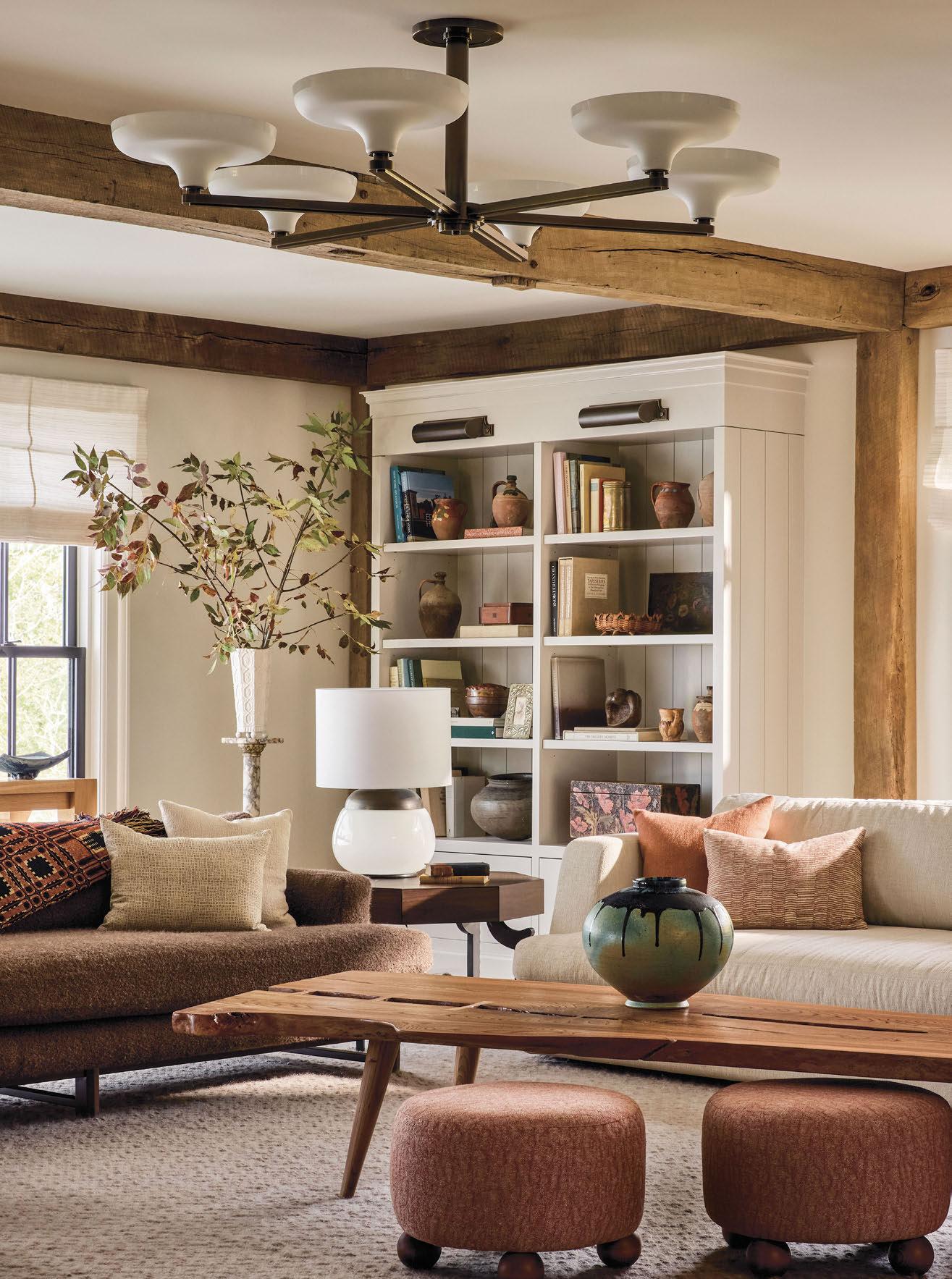
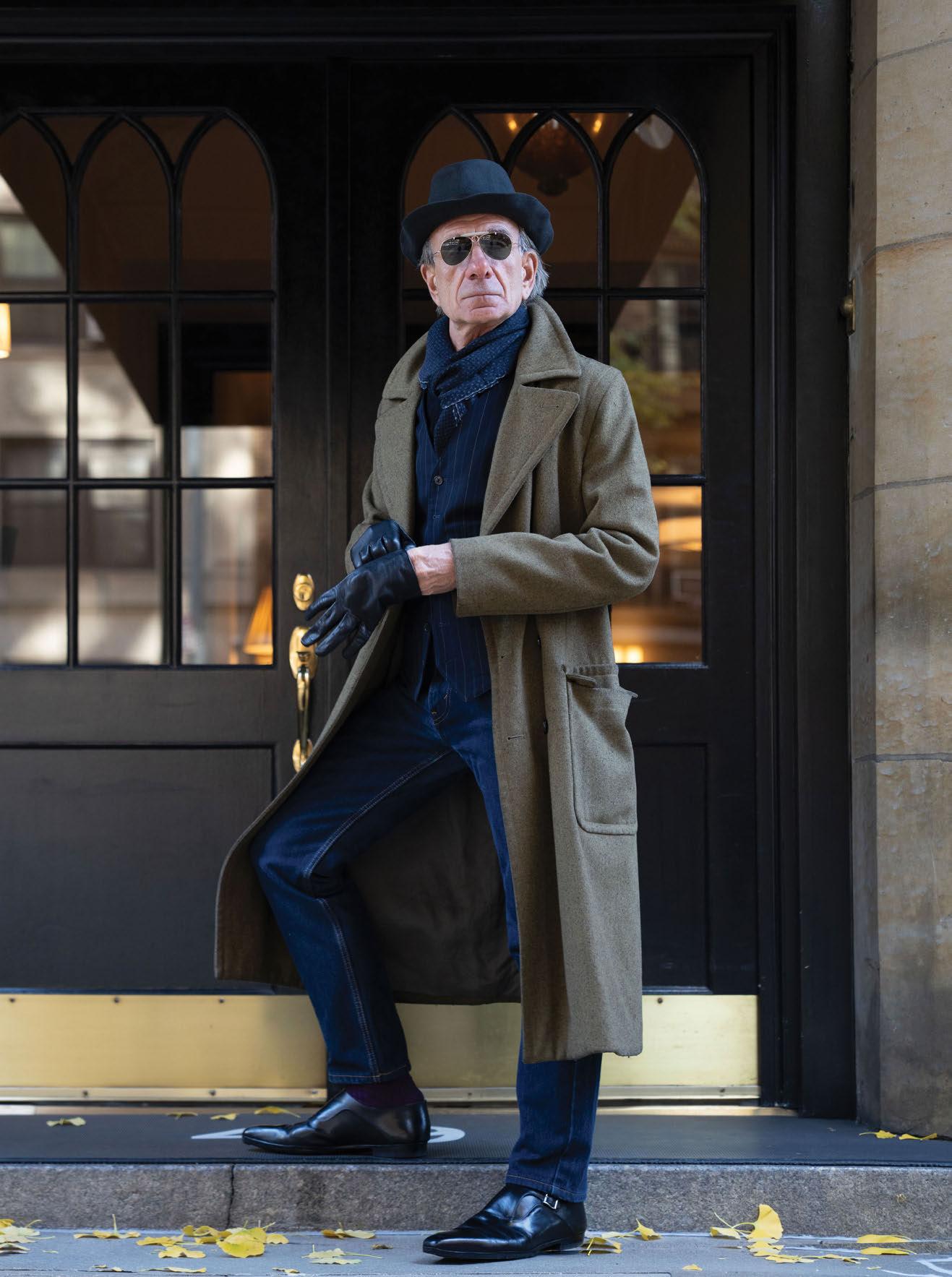
ROBERT RUFINO
In a full-circle moment, legendary visual artist Robert Rufino revisits his earliest days of window dressing in New York at a scale unlike anything he’s done before.
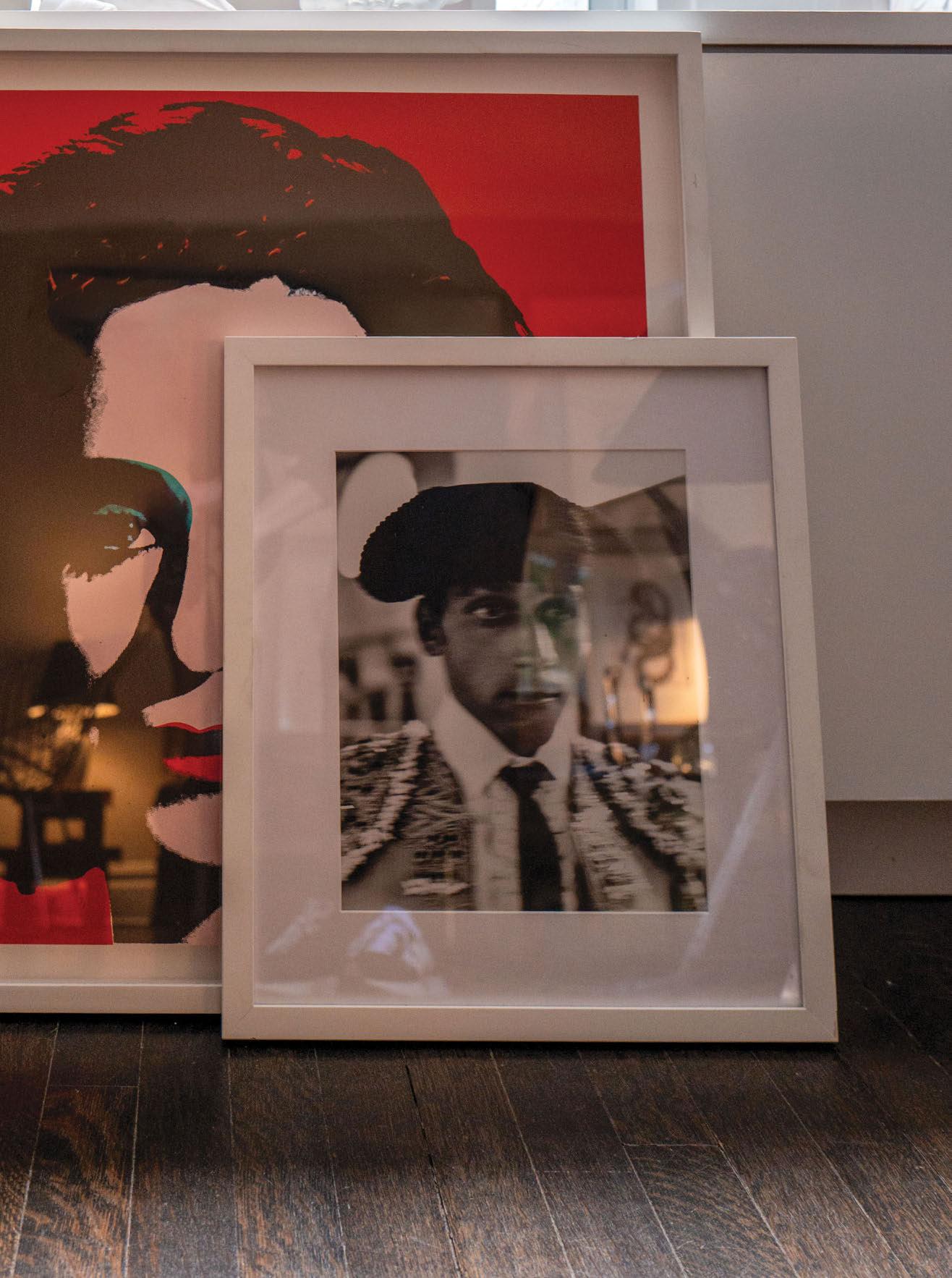
STREET THEATER
A PIONEER RETURNS TO HIS STAGE
THE BEGINNING
“You see, my father drove a New York City taxi,” Robert says. “He parked it outside of our apartment on Baxter Street. In the late fifties, when we were kids, he would take us uptown to see the Christmas windows. We’d leave after dinner and pile into the car, and he would drive us around. I come from a happy, humble family; my mother was a cashier in a card shop. But those Christmas trips, they were like a fairy tale to me. It was another world. We’d go see the tree at Rockefeller Center, and we’d go to Saks, Bonwit Teller, Lord & Taylor, B. Altman, Macy’s. So many of these places only live in my mind now, but I’ll never forget how it felt. Looking in at these worlds along the street. What they were telling me. I was transported.”
The Chinatown that Robert describes as a kid was different back then. He calls it spotless. Shop owners washed their sidewalks every day. “I’d walk to school, I still remember the soapy smell,” Robert says. “I loved to look in the windows. When I was in high school, I asked if I could decorate the one at the card shop where my mom worked. I thought I could say something there. I’m dyslexic, I’m very open about that, and my mother asked the owner if I could, and I did and I guess I did a good job. Maybe they sold more cards or he liked how it looked. I was studying fashion design at the High School of Fashion Industries (later FIT) and pretty quickly saw it wasn’t for me with all the sewing and the pattern making. They said why didn’t I try window display merchandising. I guess I just fell into it, and that’s where it all began. I’d be a window dresser.”
TIME AND PLACE
In the early seventies though, Robert put a very large pin in his life’s map at 10 W 57th Street when he was hired by the dynamic retailer Geraldine Stutz and display impresario Robert Currie to work on the windows of the department store Henri Bendel. Bendel’s was hip and cool. Very different from the many NYC department stores of the era. It was about what was
new but in an inviting, intimate atmosphere and Stutz and Currie were the architects of this retail style. Robert credits them both with establishing a vision and sensibility to both his life’s approach and all of his work that has followed, in and out of windows. “I was very lucky. I worked very hard, from the bottom up and eventually I was put in charge of the windows at Bendel’s and store presentation. Merchandising, designing shops, traveling to Europe with the buyers. All of it. But I’ll never forget the windows. Robert Currie called it ‘street theater,’ and there was an appetite for that back then. It is all so different now, but Bendel’s was a townhouse–fashion, beauty, home, a little boutique for men. You entered the first floor, and it was like walking down the streets of Milan, every shop had a different façade, and everything was painted white. You walked in and there was potpourri, stationery, the hat department, jewelry. A cosmetics counter called The Gilded Cage. Peter Barton’s Closet, Lee Bailey, Frank Macintosh,”Robert reels off a list of names so iconic in that NYC seventies and eighties retail-fashion-lifestyle zeitgeist that it seems hard to imagine that for people today these are not household names. “I applied real make-up on the mannequins and we used wigs that Diana Ross wanted to buy. Jackie O, Cher and Barbra Streisand all shopped with us. It was a clubhouse.” This was the time of Studio 54. If a store was a disco, Bendel’s was it.
AN INVITATION IN
To Robert, a shop window says: come in, come see more, to the people passing by. But street theater means creating action too. Robert suggests simply that Bendel’s was styling fashion mannequins in an implied moment, marrying the clothes to the situation. “Each time we installed a window, we were creating a scene. A mannequin dressed in Mary McFadden lying in the snow because she just sniffed a bottle of poison and all the other mannequins, dressed beautifully, were looking at her like, ‘Oh my God, what happened?’ Geraldine had wanted to be an actress and she encouraged theatricality. In the first window I did on my own, I borrowed
a huge papier-mâché elephant from Andy Warhol. We painted it white and put it in the window for a January white sale.” The obvious question ensues: what were you trying to say? Don’t forget to stock up on sheets and towels? A laugh. “I can’t really recall, but this was a time when you could borrow a huge fake elephant from Andy Warhol for a shop window.”
THE DETOUR
“After a while, I left Bendel’s and I went to work for fashion magazines Elle, GQ, Taxi, Harper’s Bazaar and The New York Times with Carrie Donovan. After a while, I went back to retail. I took a job at Tiffany. I think I missed windows. Gene Moore had retired, and I took his place,” Robert says. Robert was back in a store setting but working with much smaller items, primarily jewelry. A huge admirer of the legendary window designer but keen to make his own mark, he respectfully packed up Moore’s journals, which captured each of his famous Tiffany windows on his first day “in order to keep space for my own ideas to course through. It was very different, but I got to keep indulging in fantasy. I met Elsa Peretti, she’d come to New York with Halston, but her own designs were an immediate success at Tiffany. She was another strong woman in my life, and we became very close. She called me Ruffy and gave me one of her open hearts, all diamond encrusted, and she said, ‘you wear that underneath your shirt and in your heart is my heart.’ Wow, she didn’t think I could do anything wrong! That necklace is precious to me. Like so many of the keepsakes I’ve held on to, they take me right back to that moment in time.”
“After 13 years, Tiffany was starting to feel a bit corporate for me,” Robert says. “My friend Stephen Drucker was at House Beautiful, and we would have dinner and talk about my coming back to magazines. One day he said, ‘I can’t afford you, but I can hire you as editor at large. I’ll give you a desk, a business card, a credit card’ and I wound up working for him almost full time for three years.” Longstanding stints shaping the interiors coverage at Architectural Digest, Elle Decor and House Beautiful followed. »
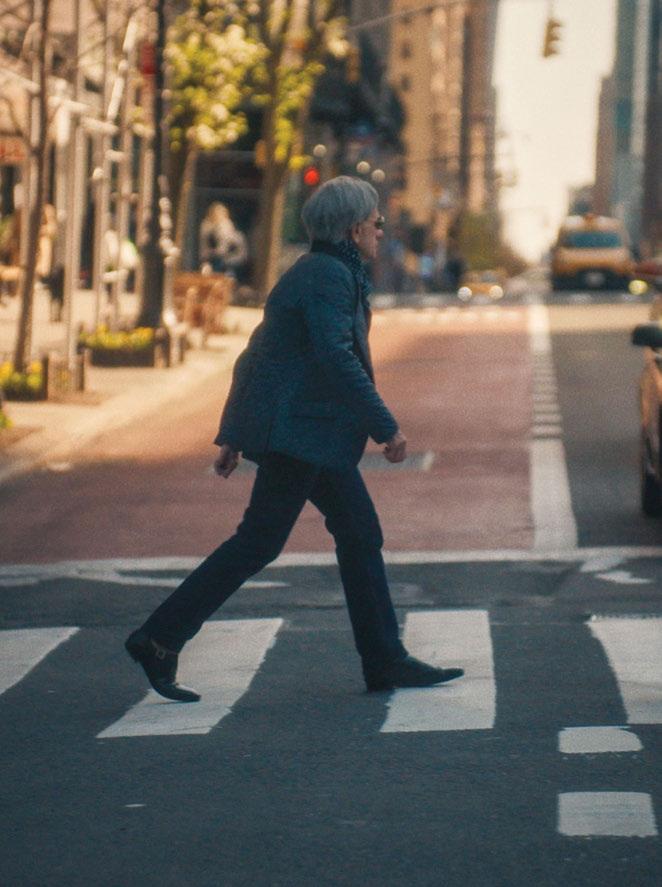
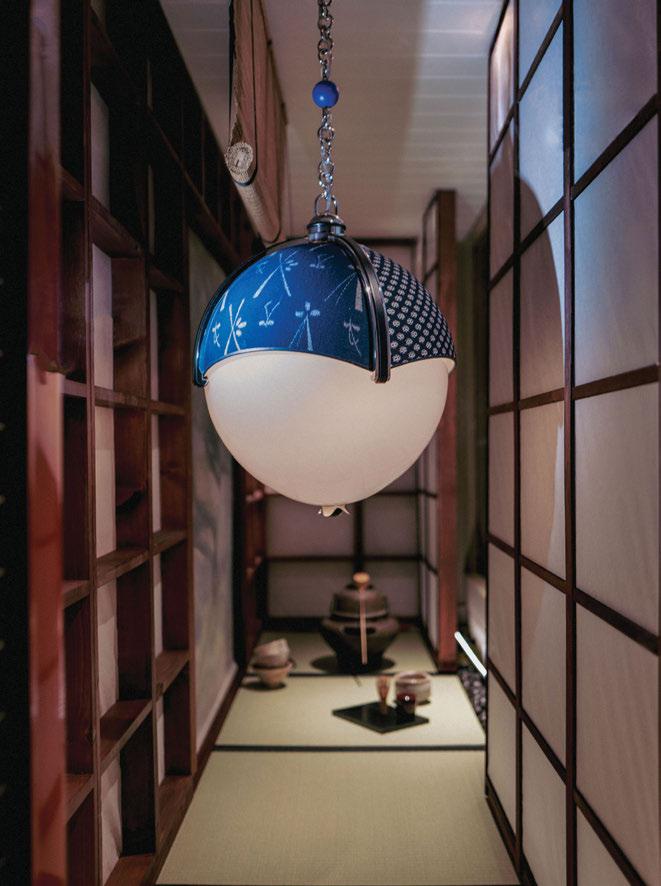
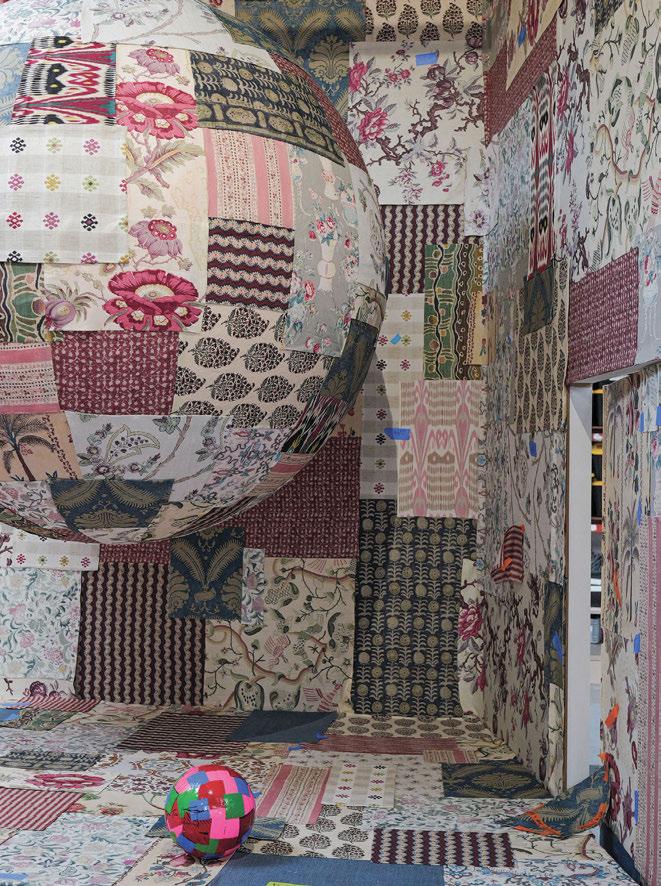
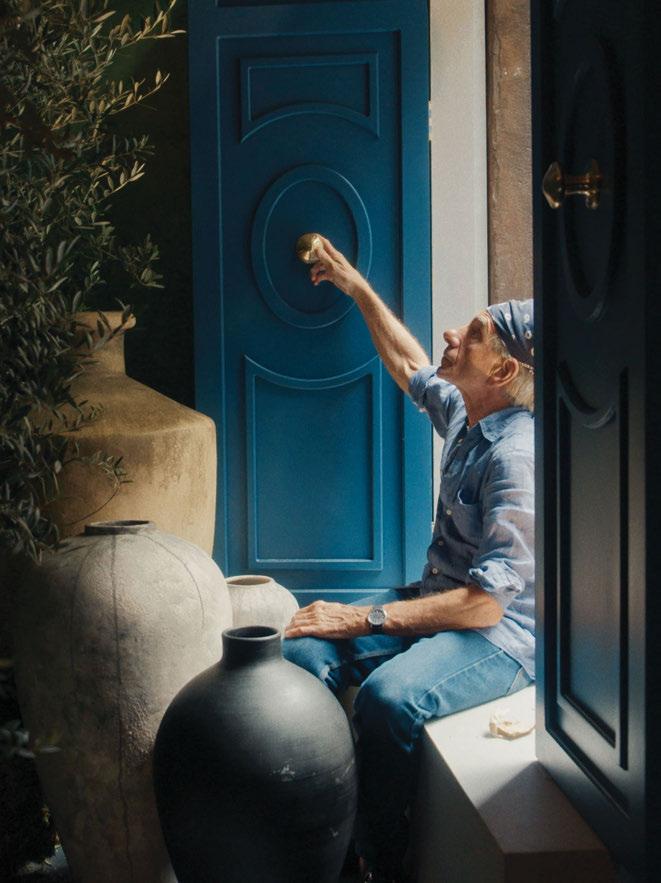
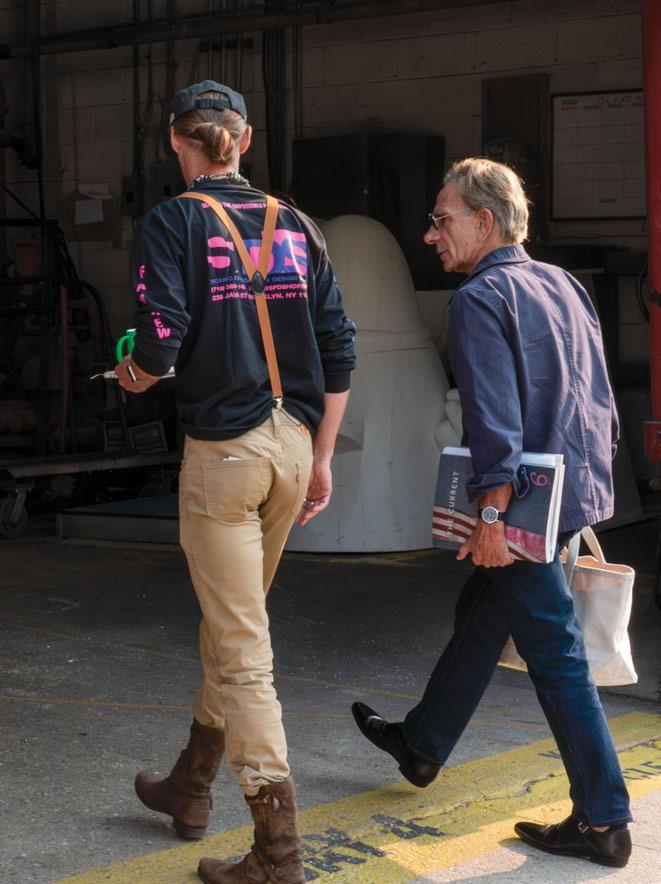
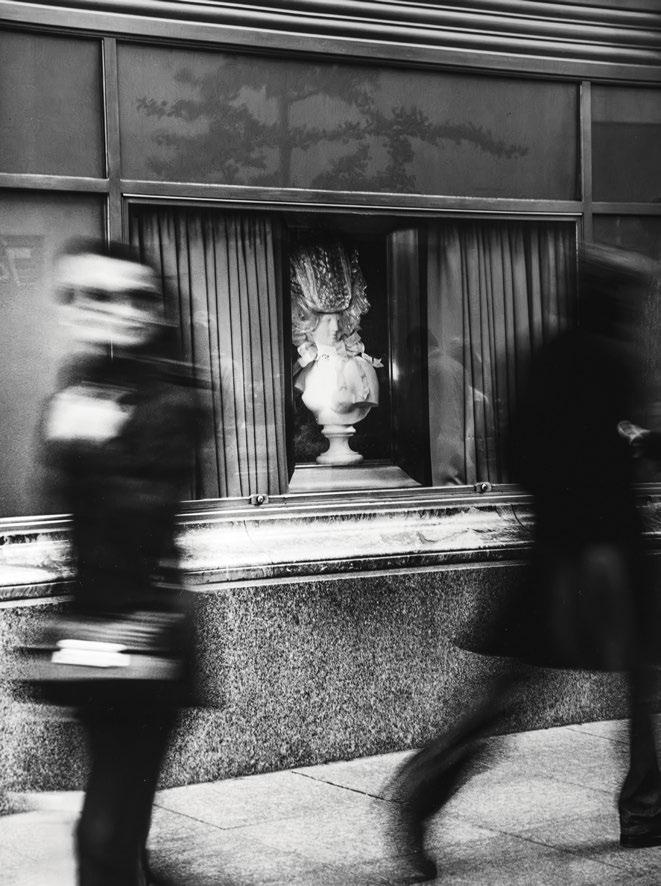
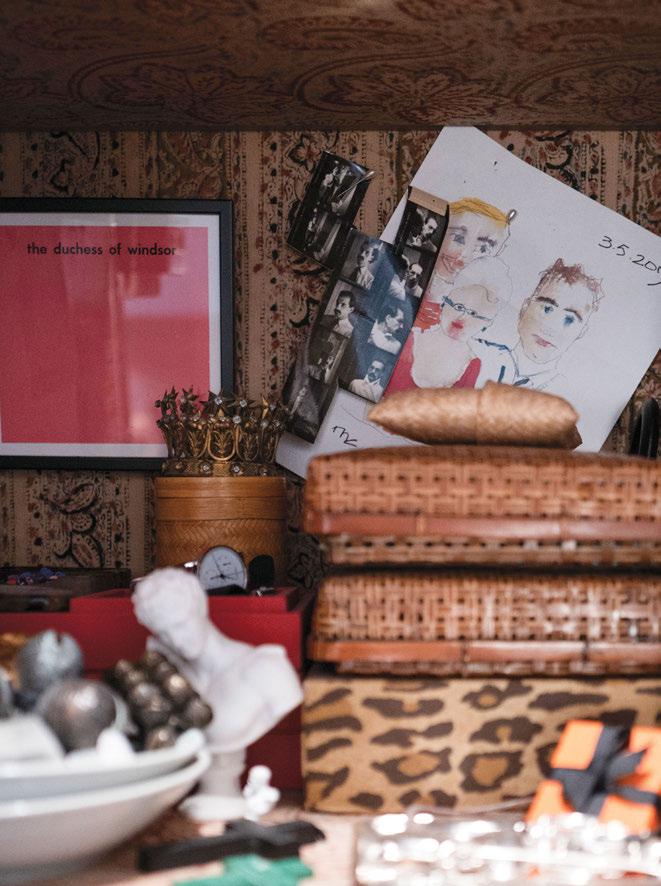
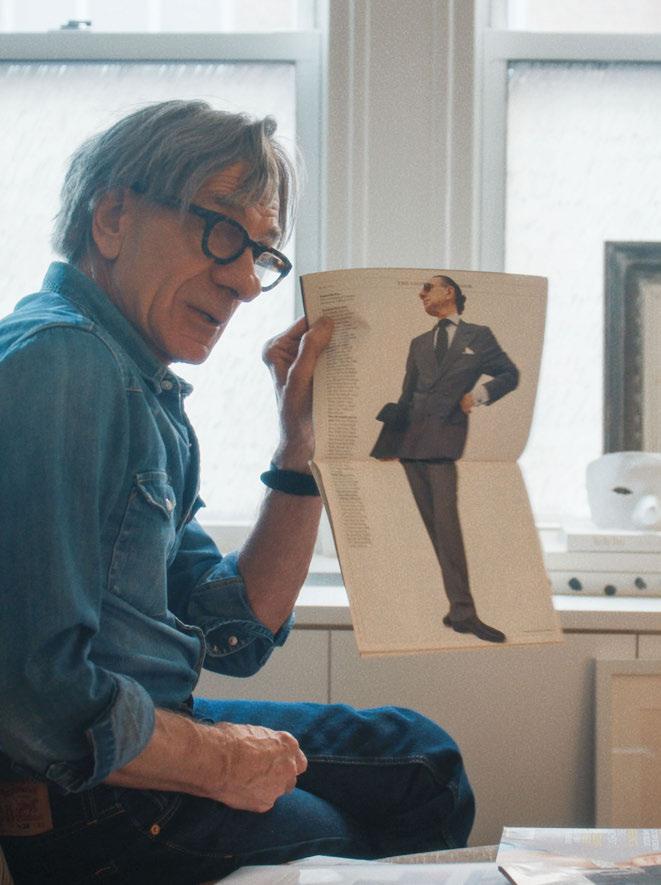
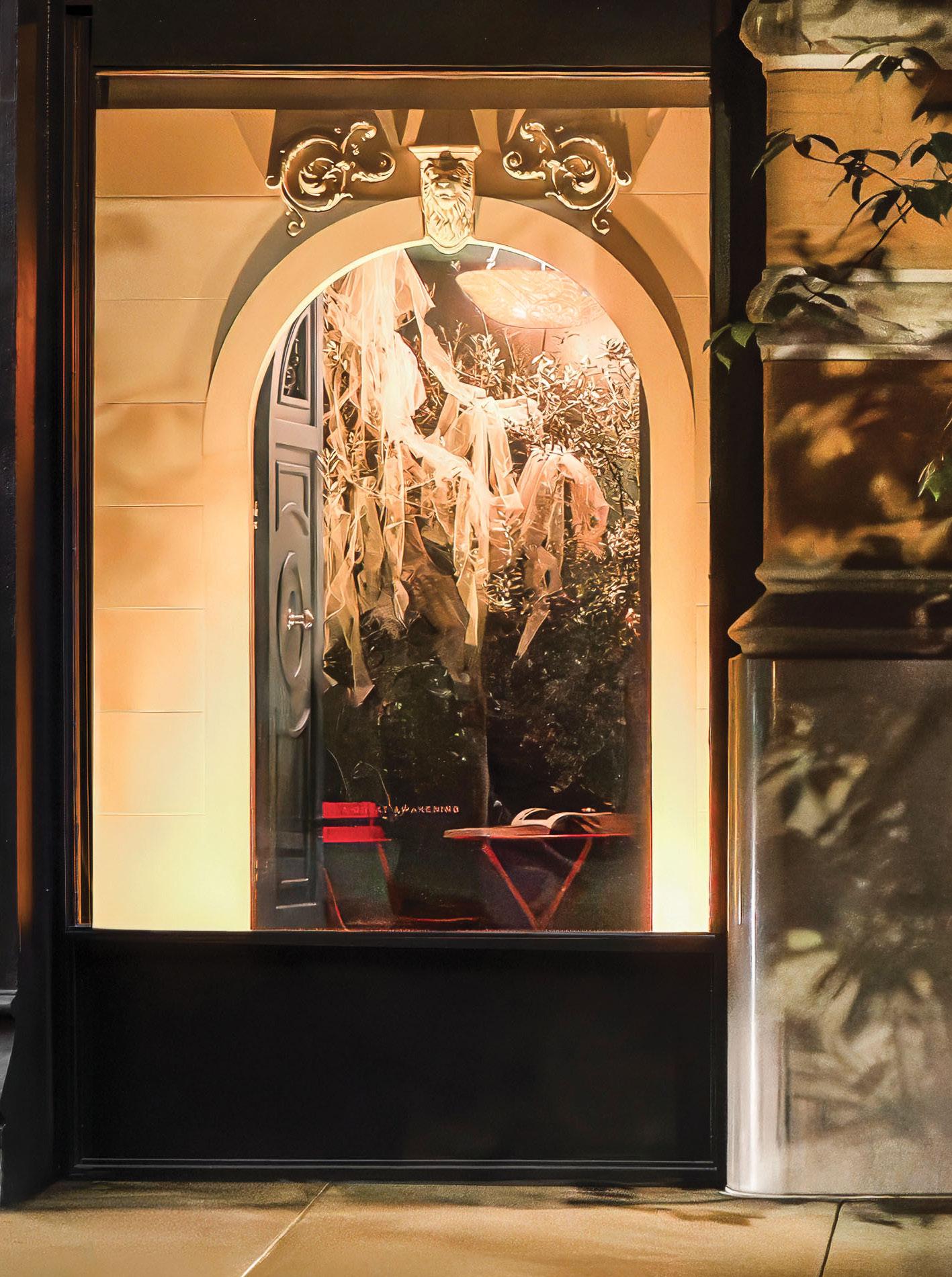
ROUND AGAIN
“A couple of years ago I left magazines and went out on my own, producing shoots, and I met Dave Dawson one night at Gerald Bland’s, and we got to know each other. He suggested this window project for Urban Electric. To create a window for each of the four stories in The Current Vol. 6 on 10th Street in NYC. It’s funny, Geraldine Stutz taught me—it’s a team, we always say ‘we’. But I had this chance to go back to something I used to do and do it again, this time with the team at Urban. I consulted my books, I looked for things. I was walking through an airport when I got the idea for the Robert Kime globe. I don’t know how to draw so an illustrator I work with sketched my ideas once I had gone through The Current , met with their team and understood what we might want to say in a window about each of these stories. What action we might create. Each story was unique in the book and so each window needed to be too. I had said from the start that I wanted to bring the wow factor, and we delivered that and more. Every detail came together—from the benchmade fixtures to the building of the sets—to create something monumental. And the energy on opening night was just incredible with hundreds of people celebrating on the sidewalk and admiring from the stoops. It was a New York moment, a New York state of mind for sure. I was so honored to be asked. It felt like going back in time. It was like a rebirth.”
Is there an analogy; if a good window is street theater, is all the world a stage?
Not a beat is missed.
“Oh yes. And I am ready for it. Curtain up.”
A GREAT AWAKENING
The detailed life of Luis Laplace and Christophe Comoy.
THE CURRENT ON 10TH, NYC
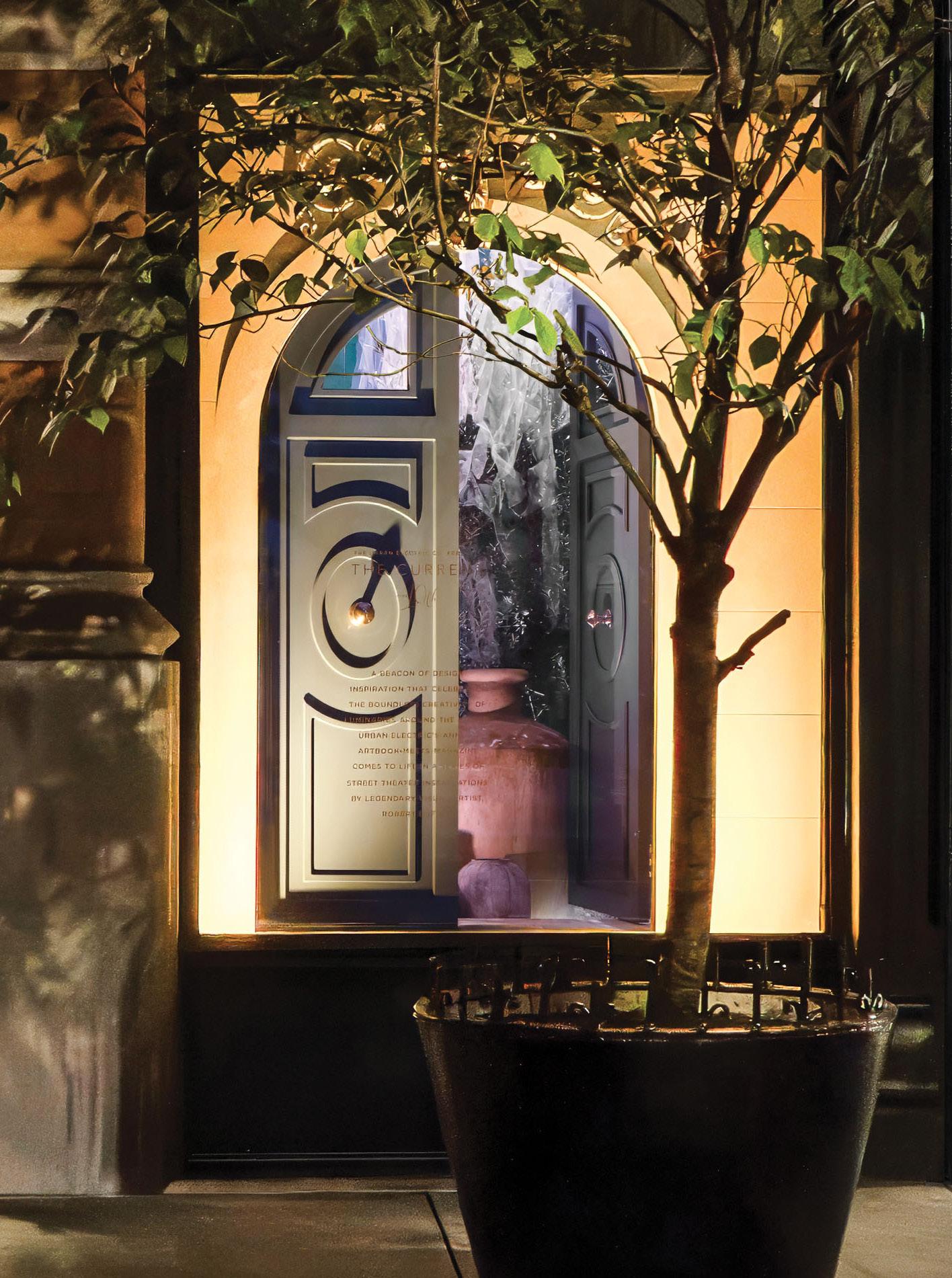
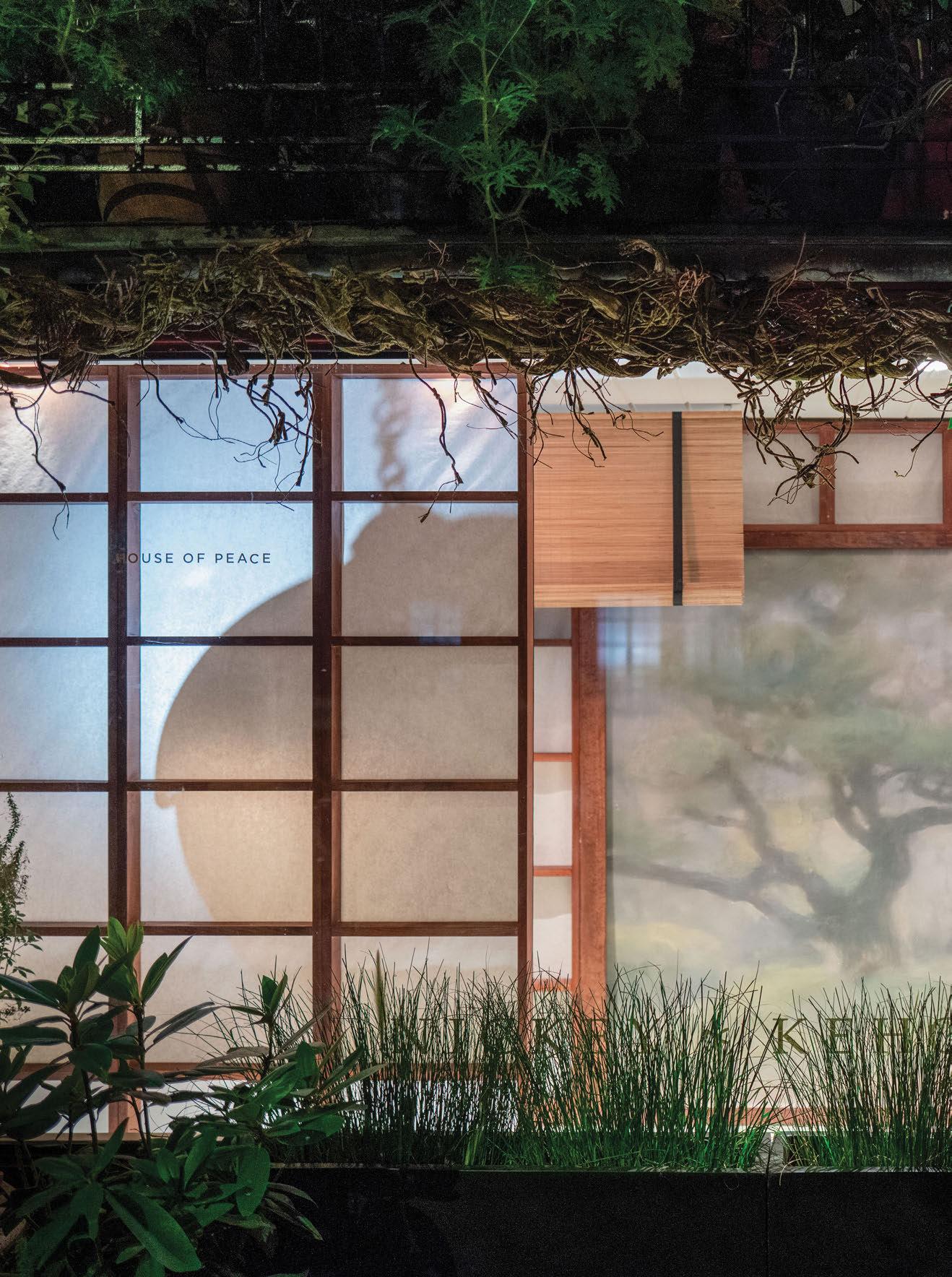
HOUSE OF PEACE
A Meditation on Japanese Tea Ceremony
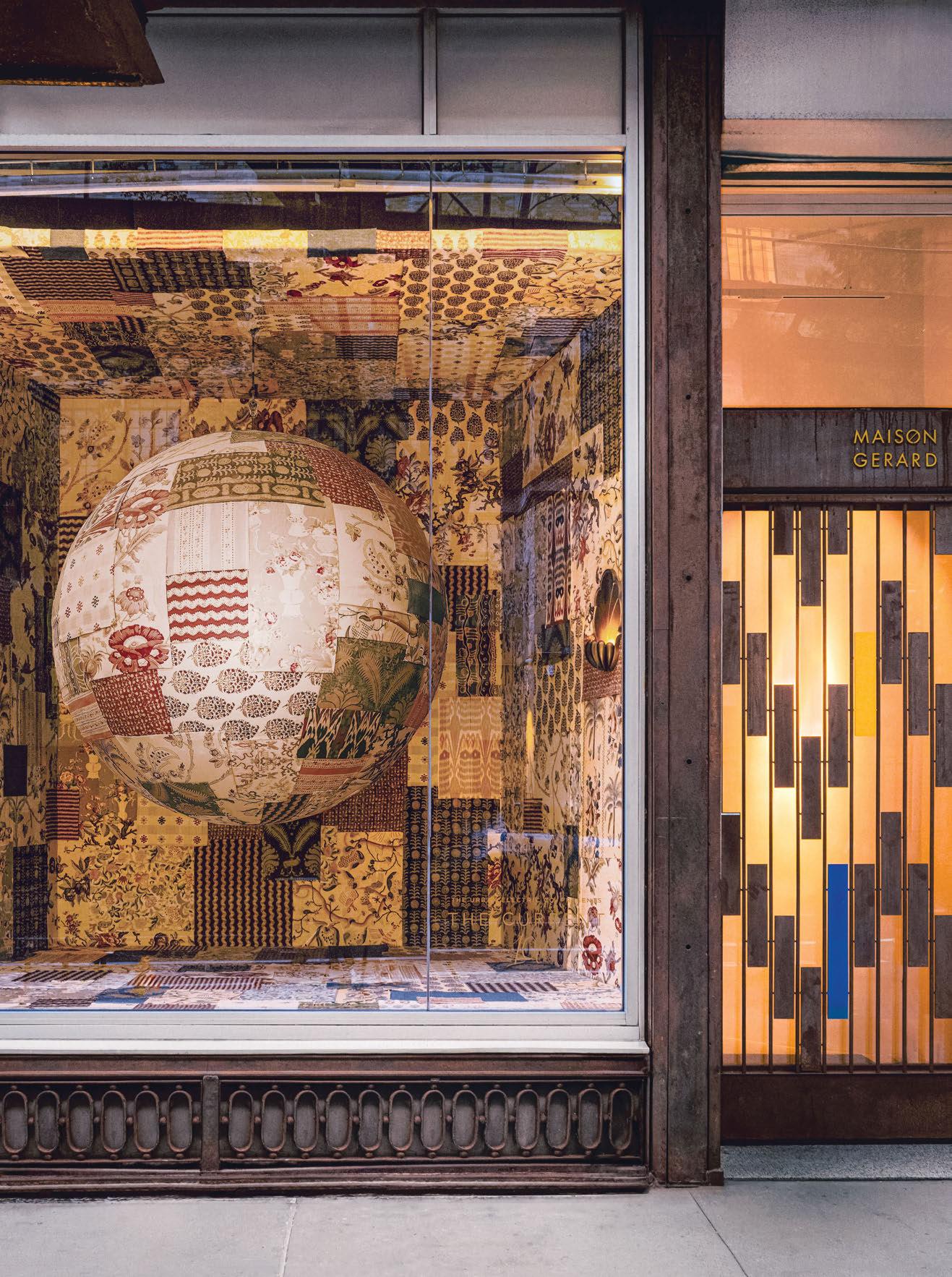
WORLD OF KIME
The Essence of Legendary English Design Firm, Robert Kime
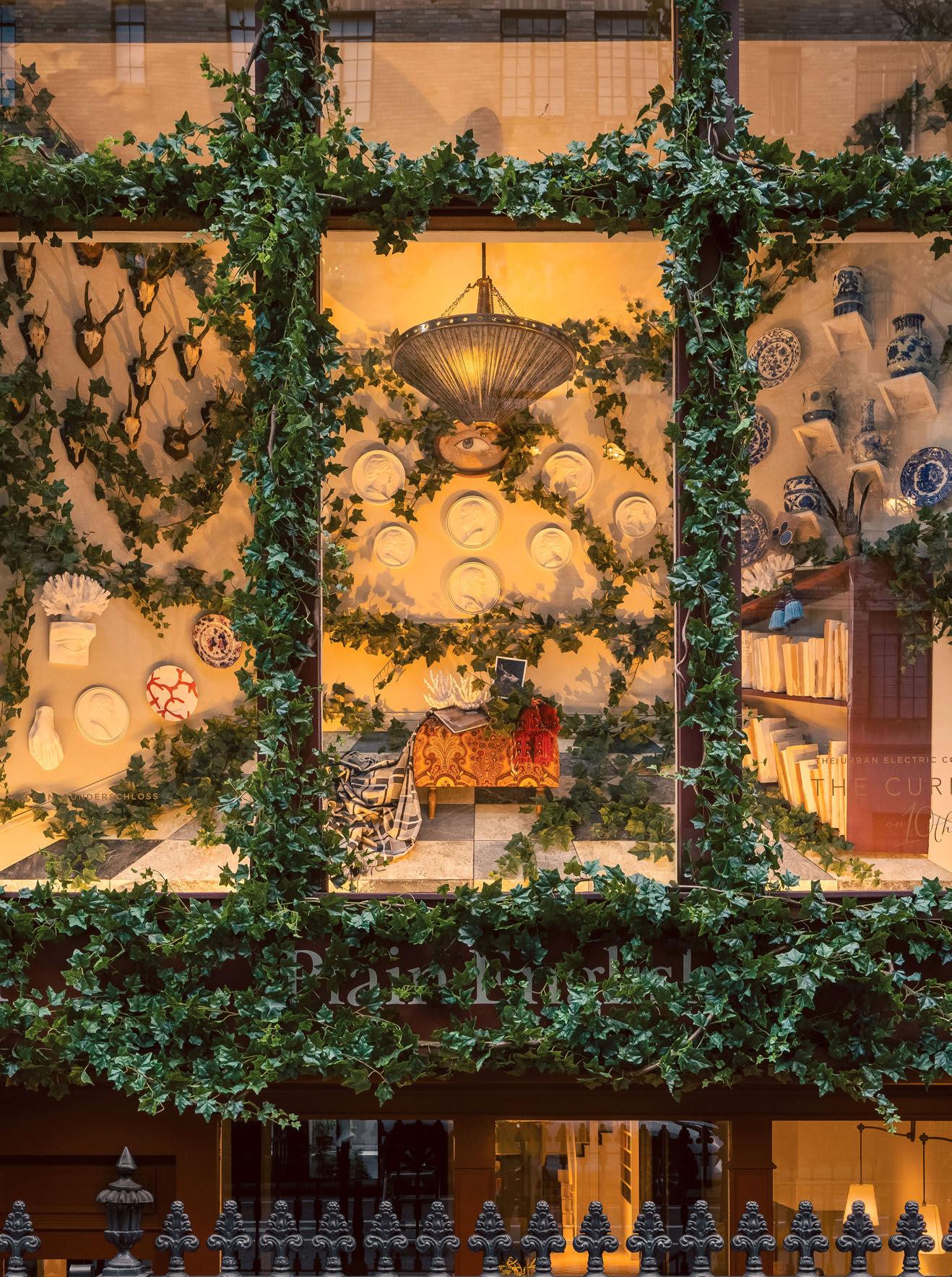
The Craft of an Austrian Castle
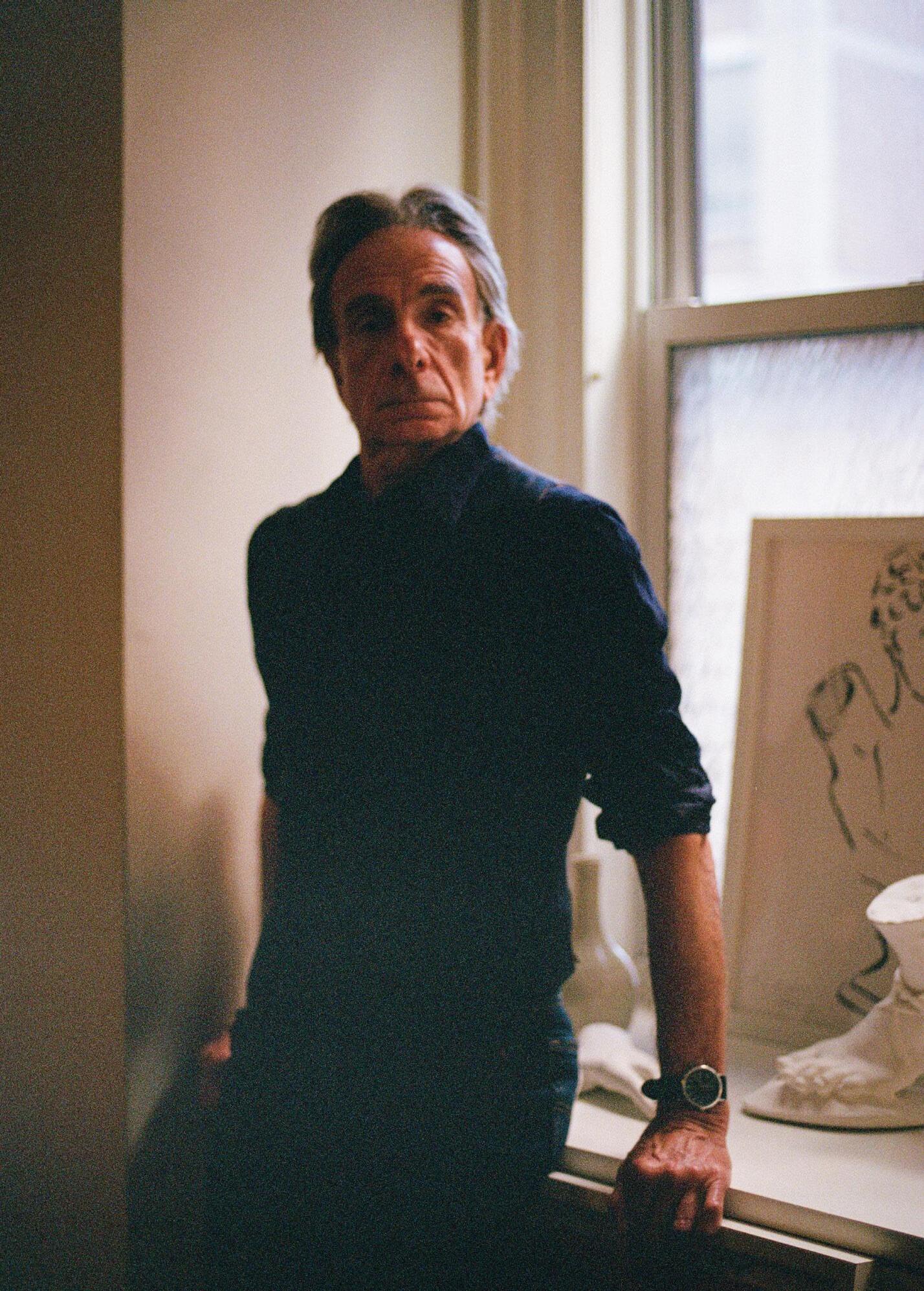
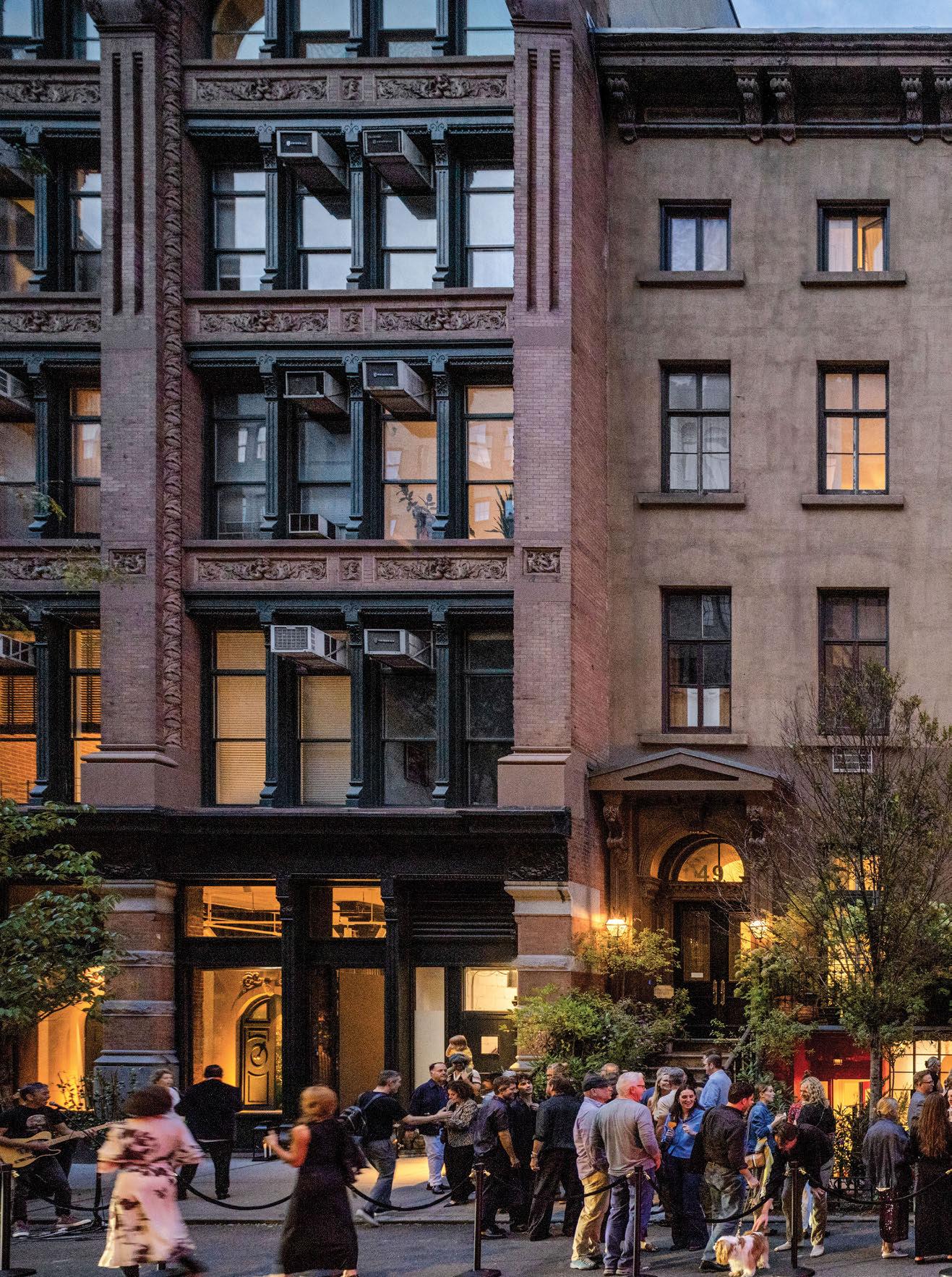
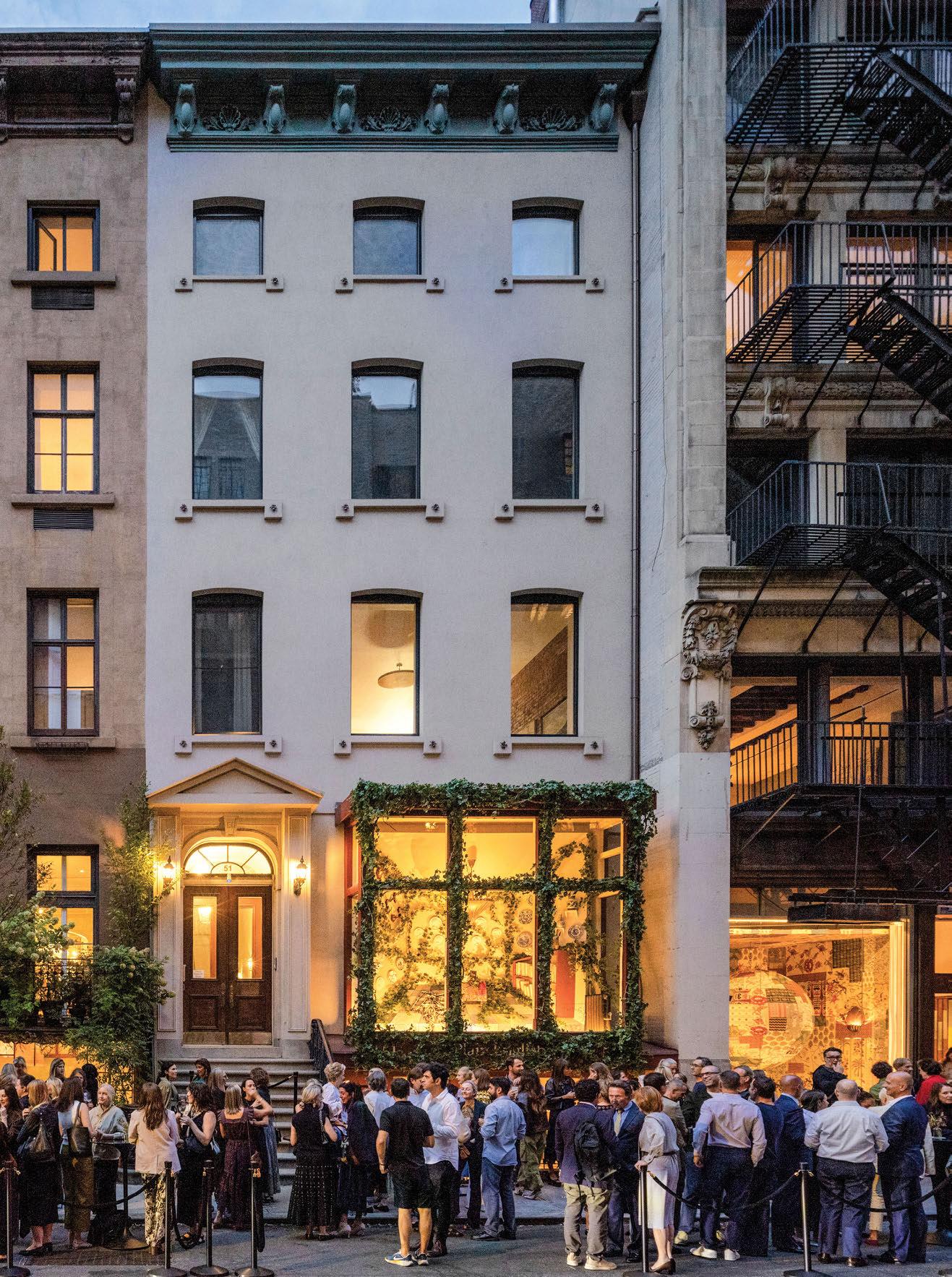
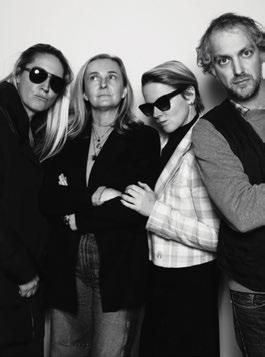
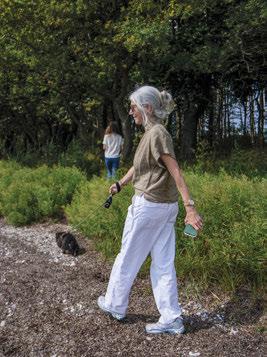
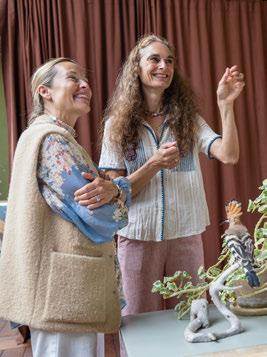

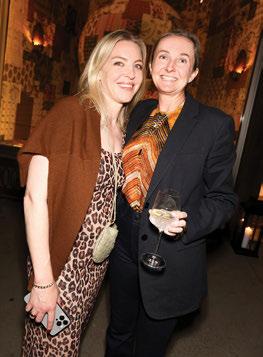
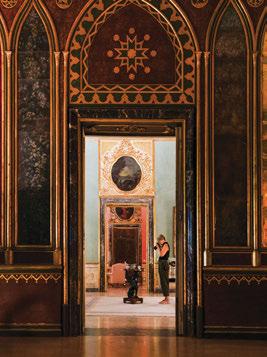
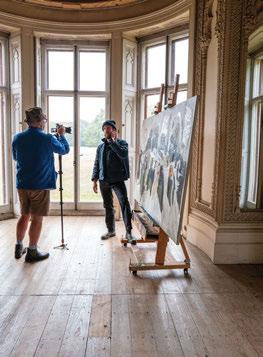
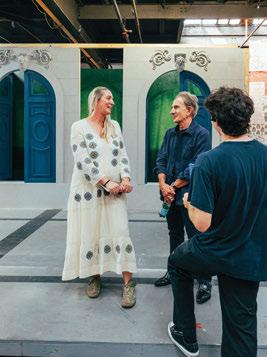
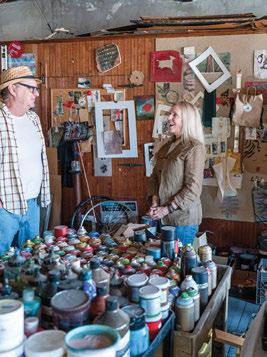
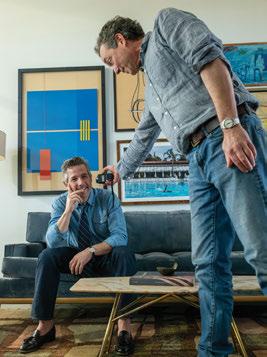
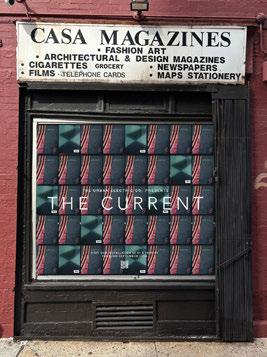
BEHIND THE SCENES