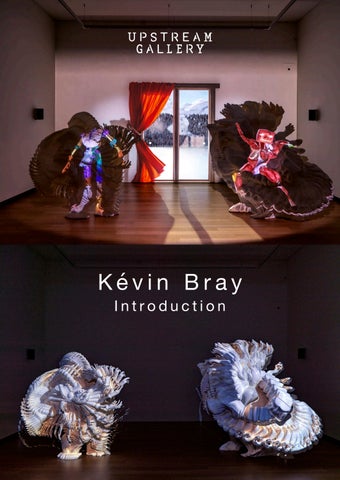
Kévin Bray (Corbie, FR 1989) is a French interdisciplinary artist currently based in Amsterdam. Initially trained as a graphic designer with two MA degrees obtained in both France and the Netherlands, Bray soon after became an artist in residence at the Rijksakademie van Beeldende Kunsten in Amsterdam (2018-2019).
There he cultivated his practice as an independent visual artist within the contemporary art arena. Moving with ease across the boundaries of various disciplines, through his work he tries to understand how the form and language of particular software and various mediums are visualized and how they can be potentially manipulated into other ways of functioning.
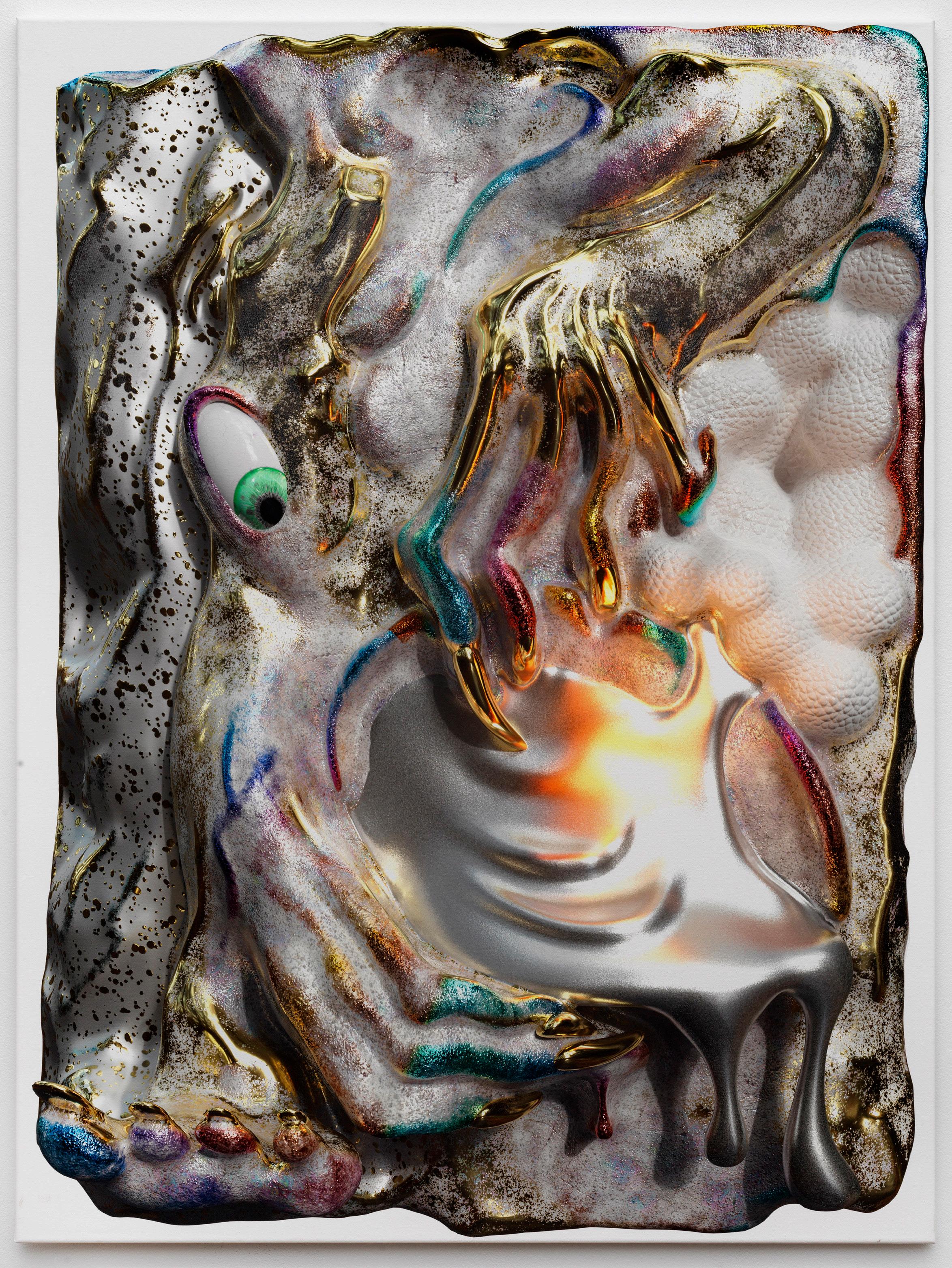
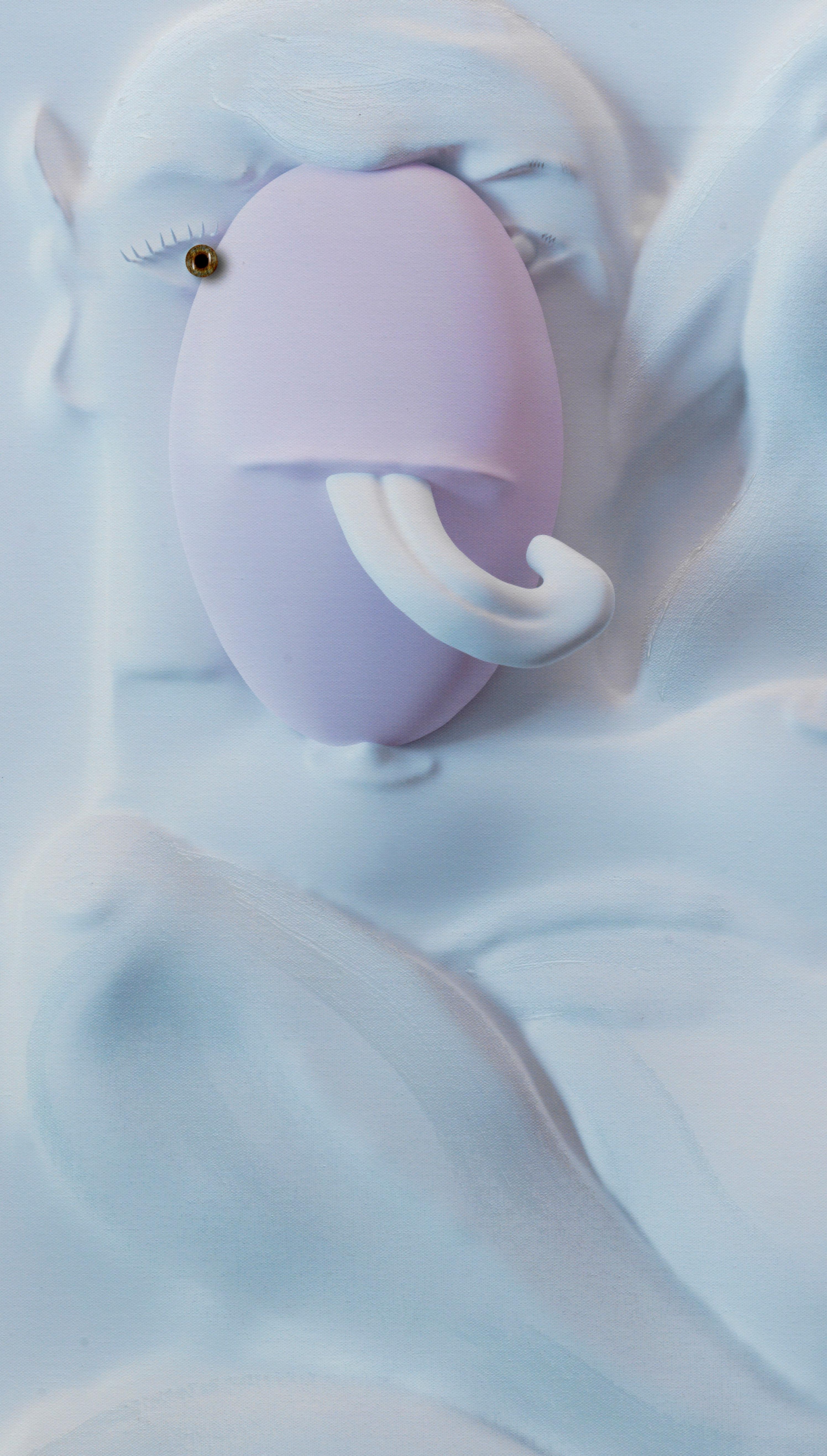
His vivid images are the product of a methodology defined by a hybridity of techniques, motifs and visual codes in which he plays, stretches and confronts various new technologies and tools to shape a stimulating artistic language. Influenced by his graphic design background and fascinated by the history of painting, ideas of composition and communication are ever present in the construction of his work. By engaging with a diversity of communication strategies ranging from video, painting, animation, to sculpture, music and writing, Bray observes and learns their many functions. His desire to blend these ways of creation allow him to bridge techniques across the physical and digital realms in unexpected ways, creating new captivating realities and perspectives that reflect the evolution that our stories are taking.
“ In my work I try to be a generalist of technologies, tools, and media. I believe that they are a language or at least an extension of it. I try to observe and learn from as many tools deriving from a diversity of systems, ranging from paintings, sculpting, writing, 3D modeling, filming, animating, composing, drawing methodologies and design to storytelling music making and sound design. Of course, I don’t master any of them but I try to understand and bridge all of those forms of language in unexpected ways, in order to encompass new realities and new perspectives on the shapes our narratives (social and political beliefs) are taking. What is important is the story to tell as much as the way to tell it. Surface and content, the surface is content. Medium and formats, information and mediation ”.
We shape our tools and thereafter our tools shape us –Marshall McLuhan
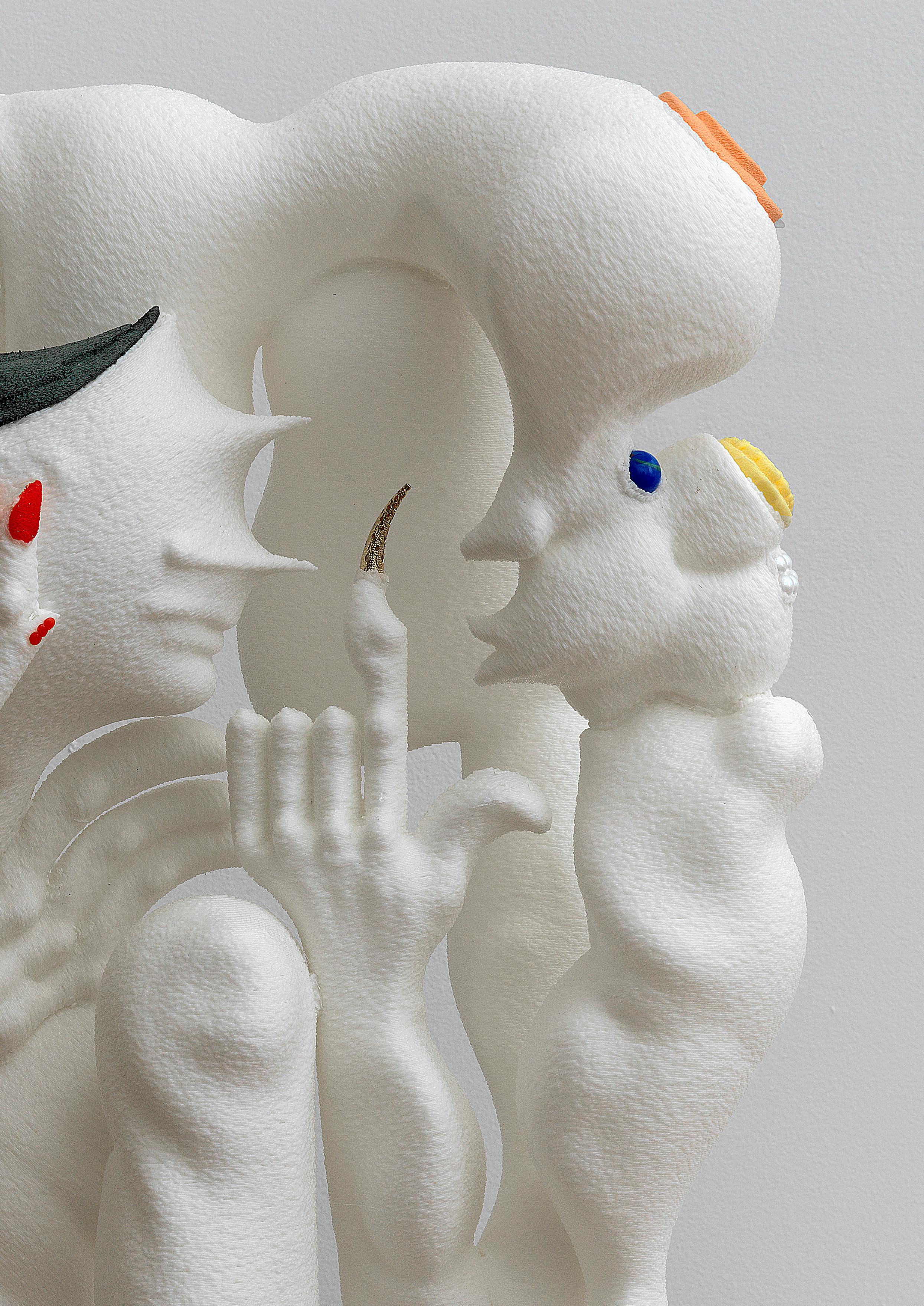
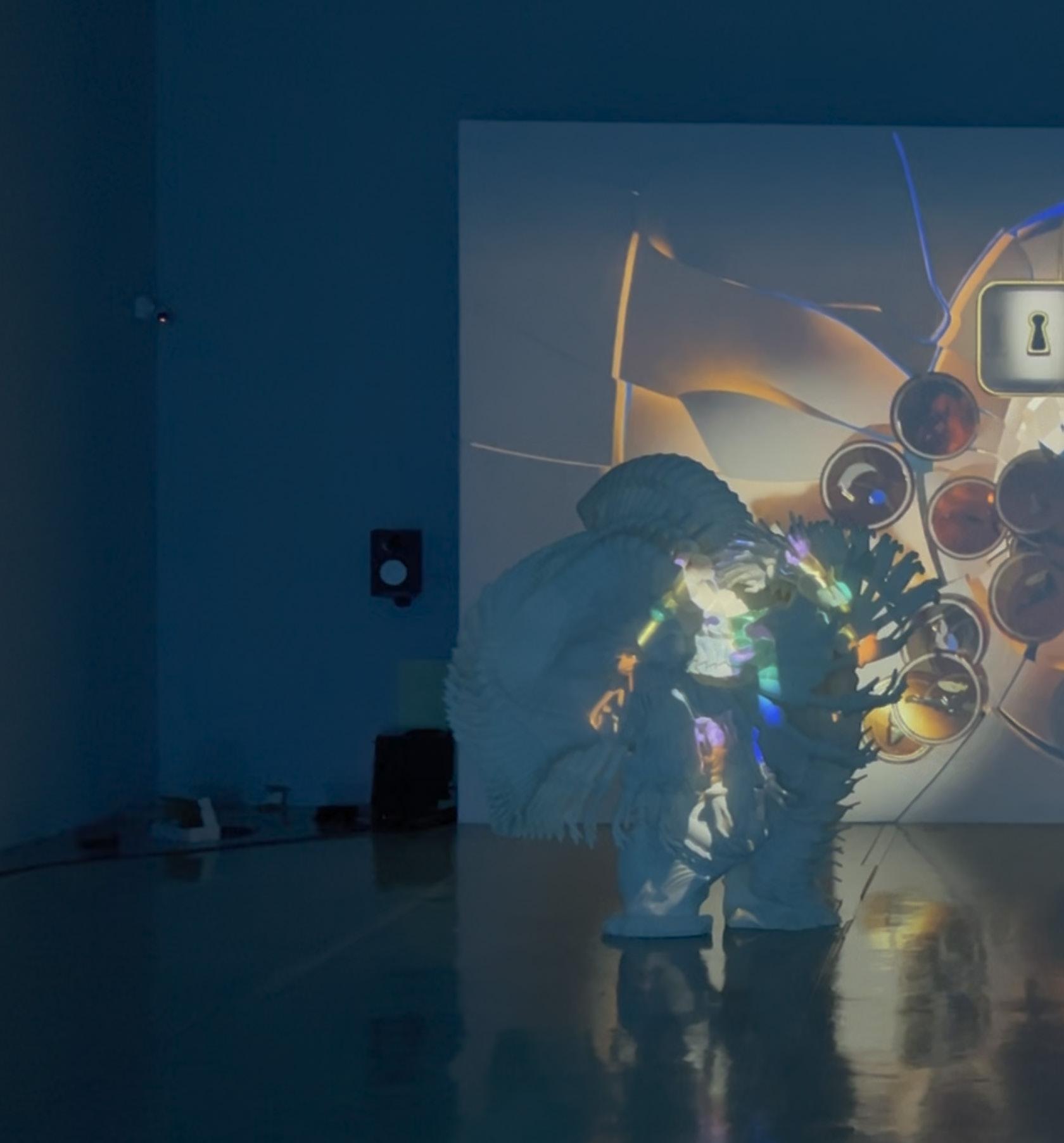
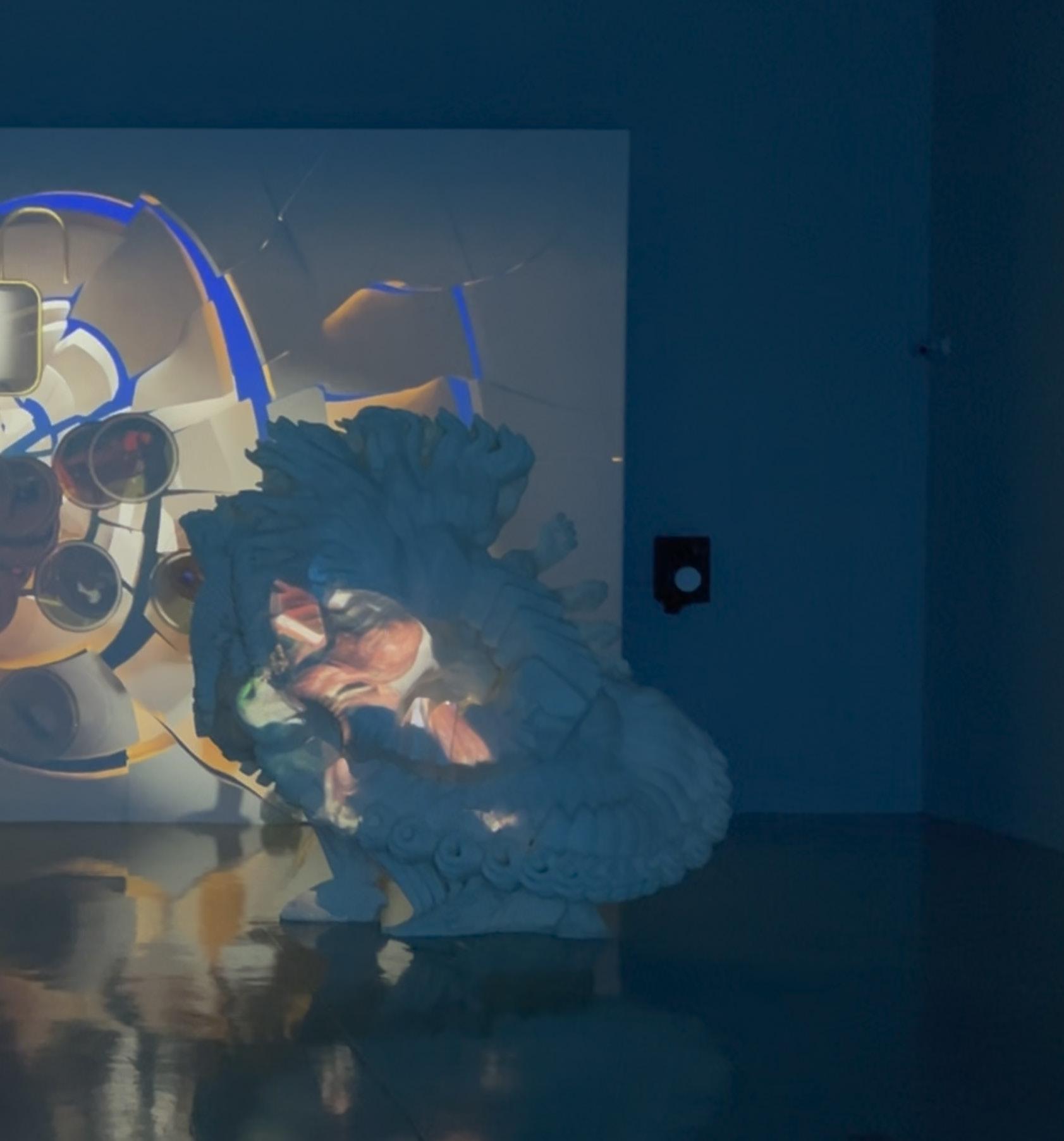
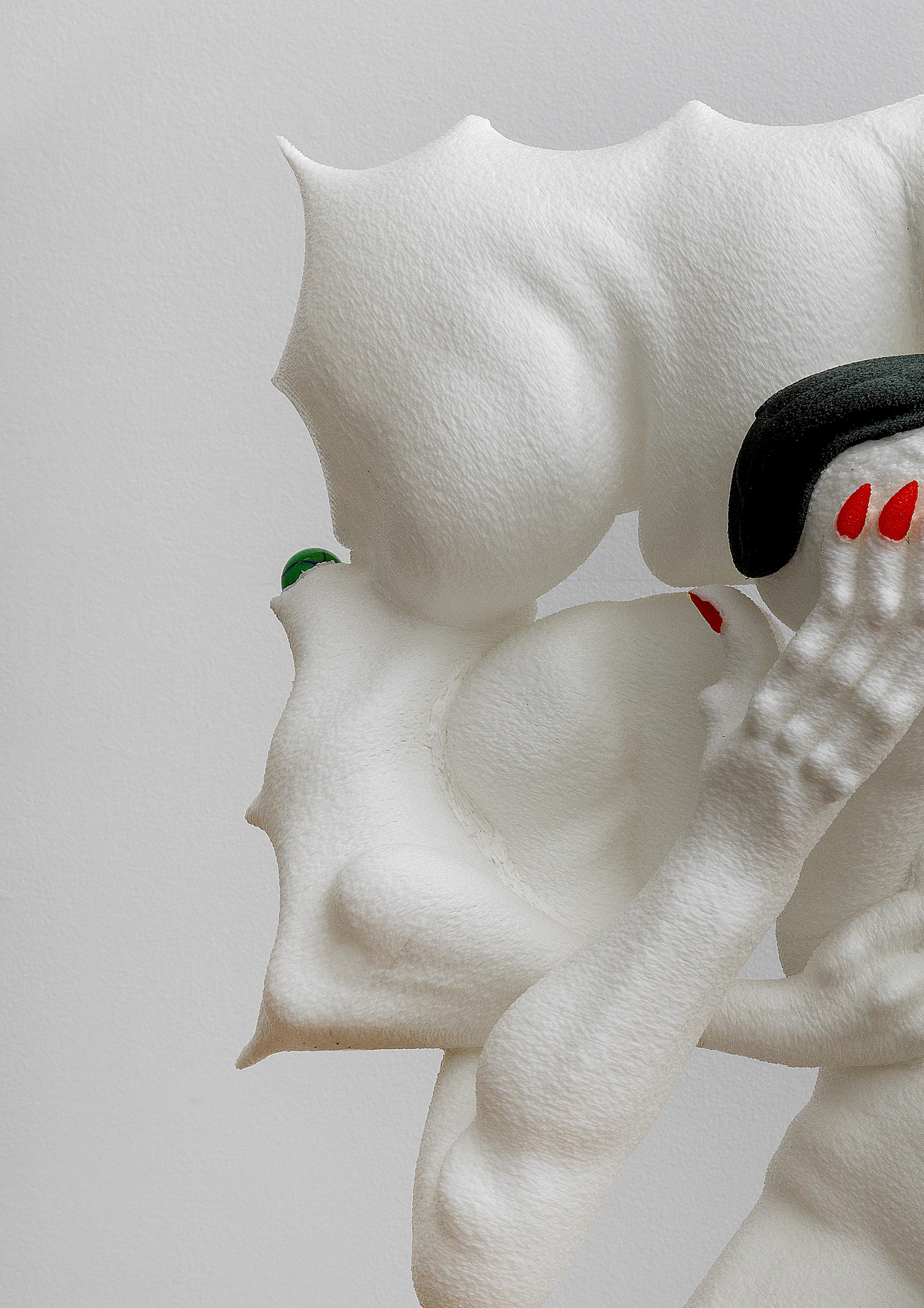
Bray has a fascination for the ways in which objects influence our ability to create and understand. He is interested in the embodied cognition theory of philosopher Andy Clark, who proposes that objects and tools can be integrated into our cognitive processes, enabling us to transform, reinforce or bias our thinking, perceiving, and acting capacities.
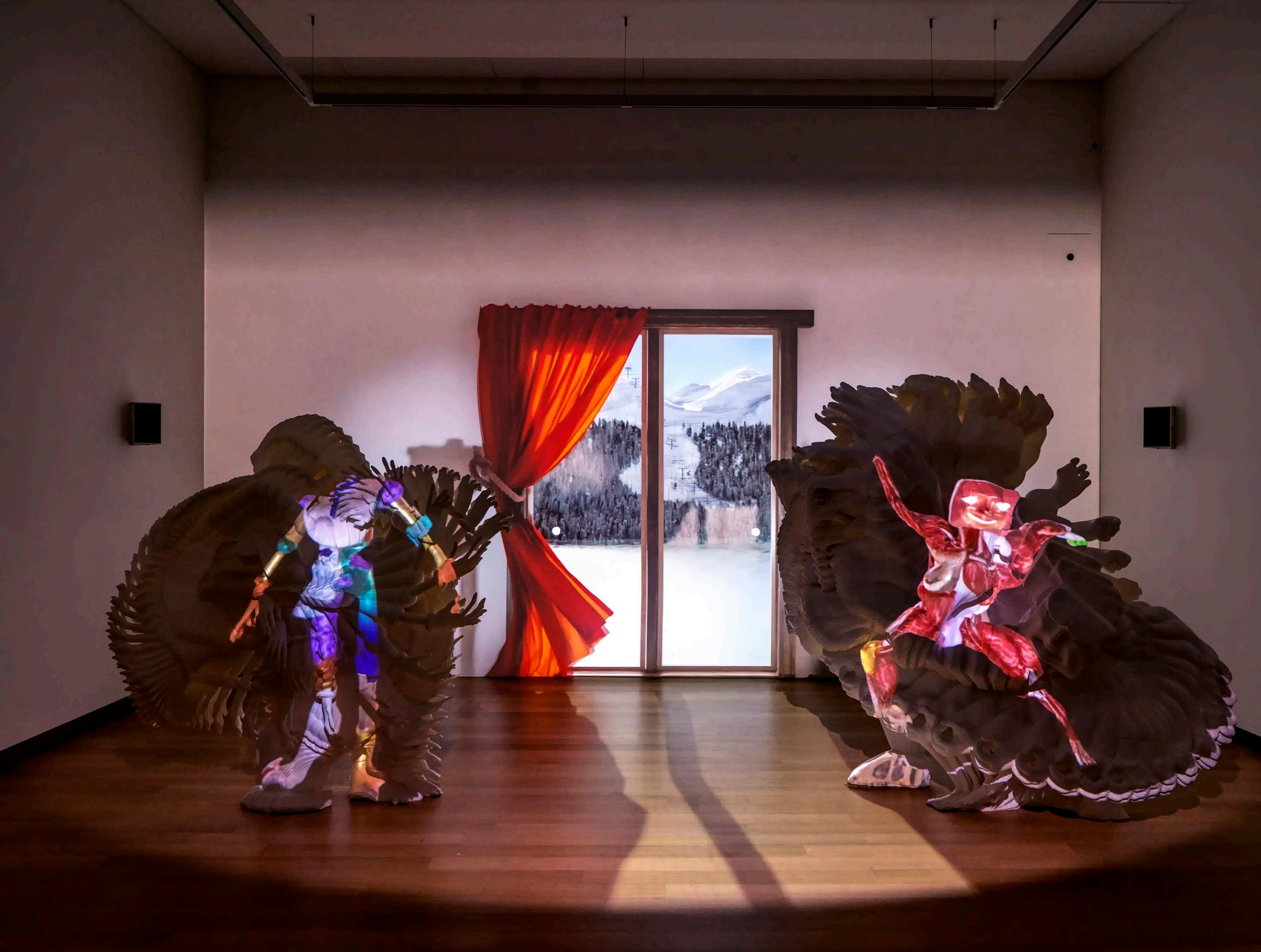
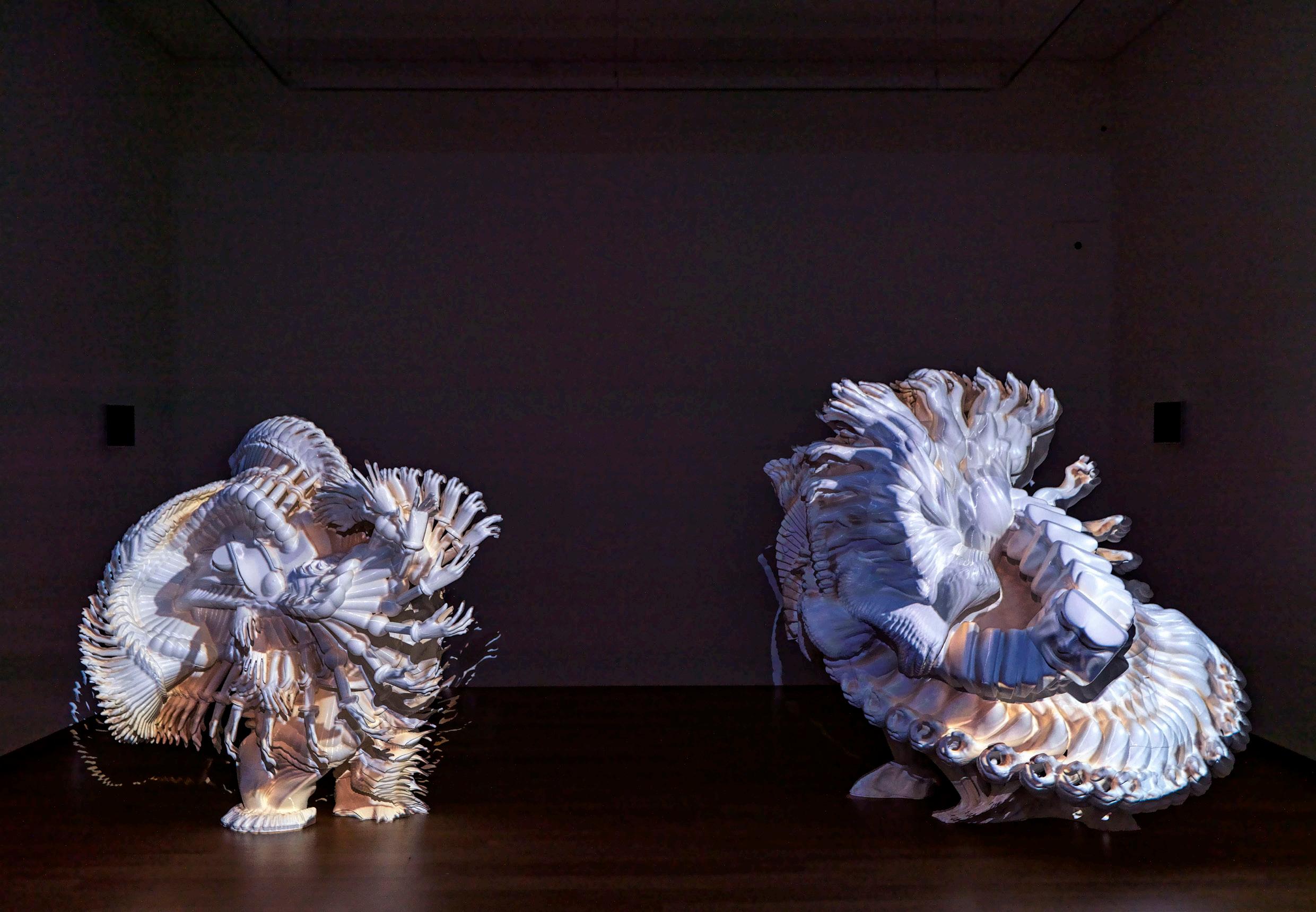
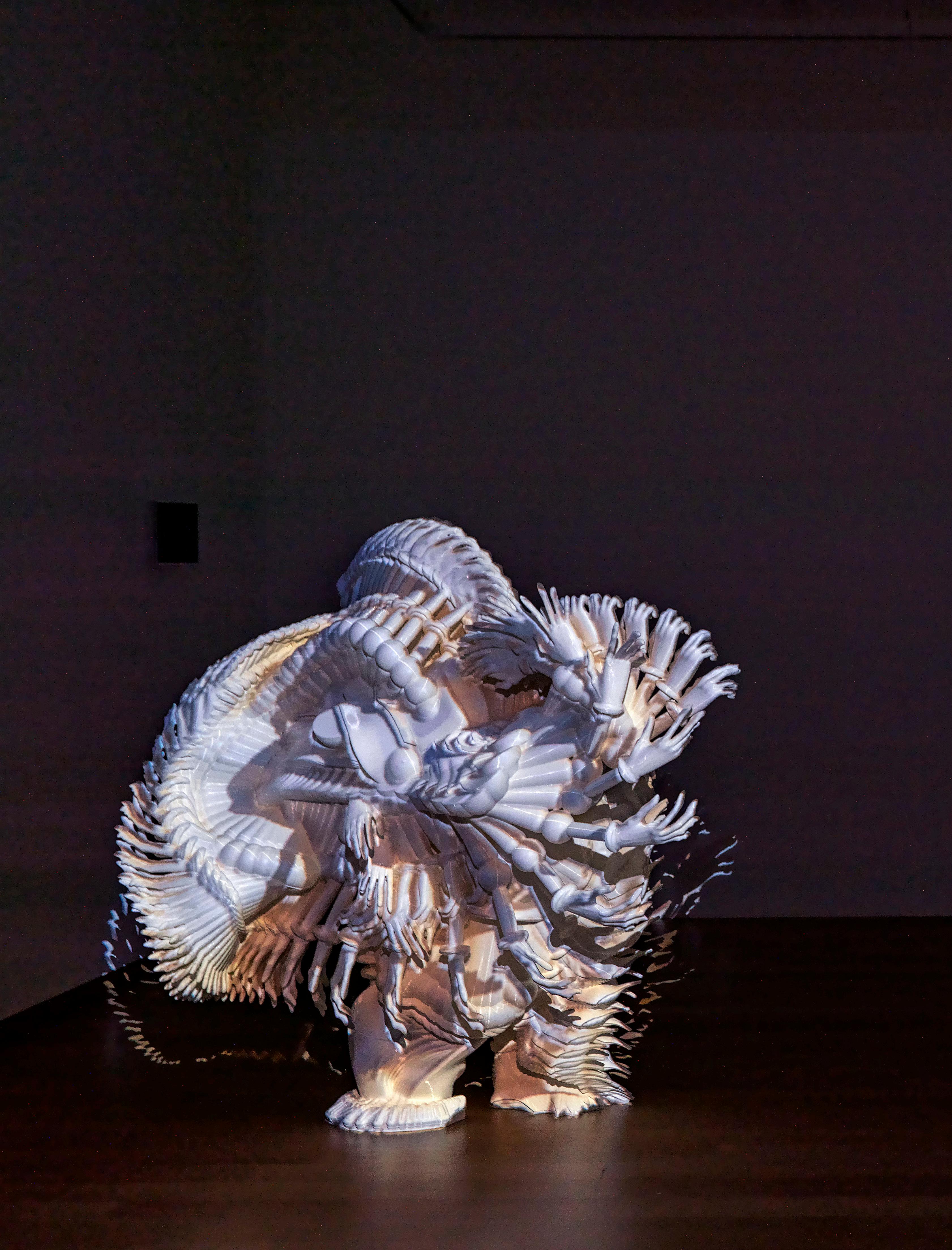
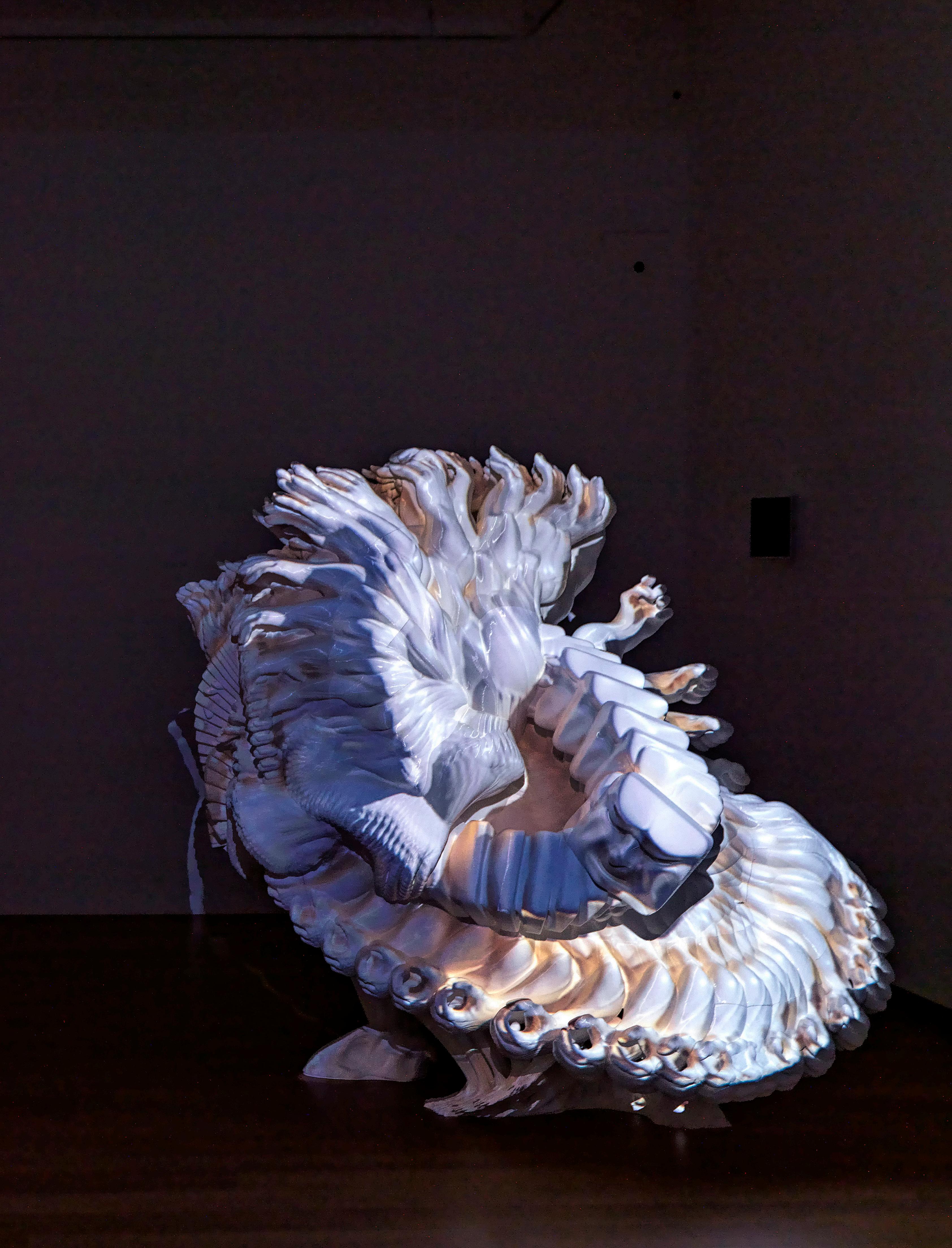
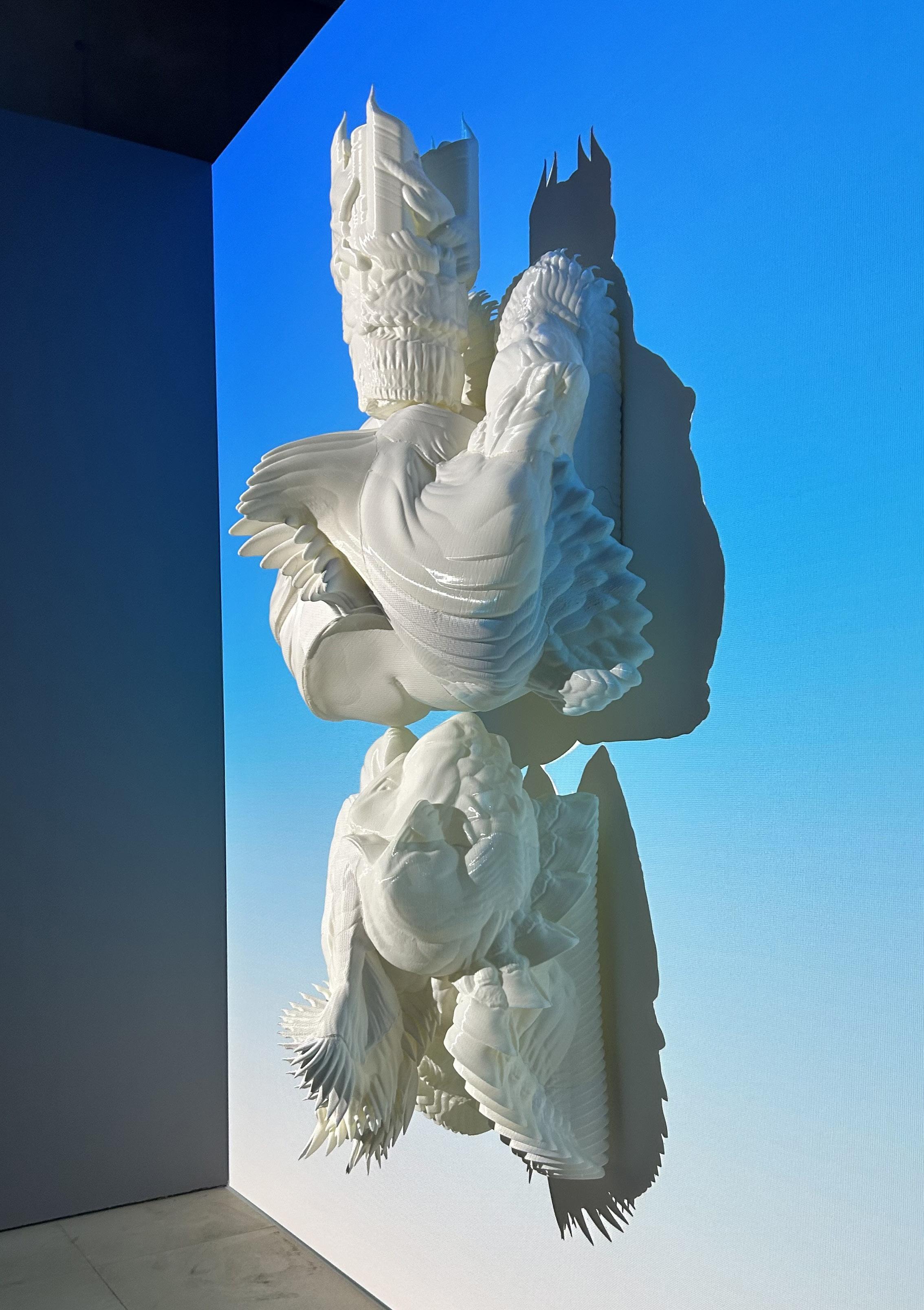
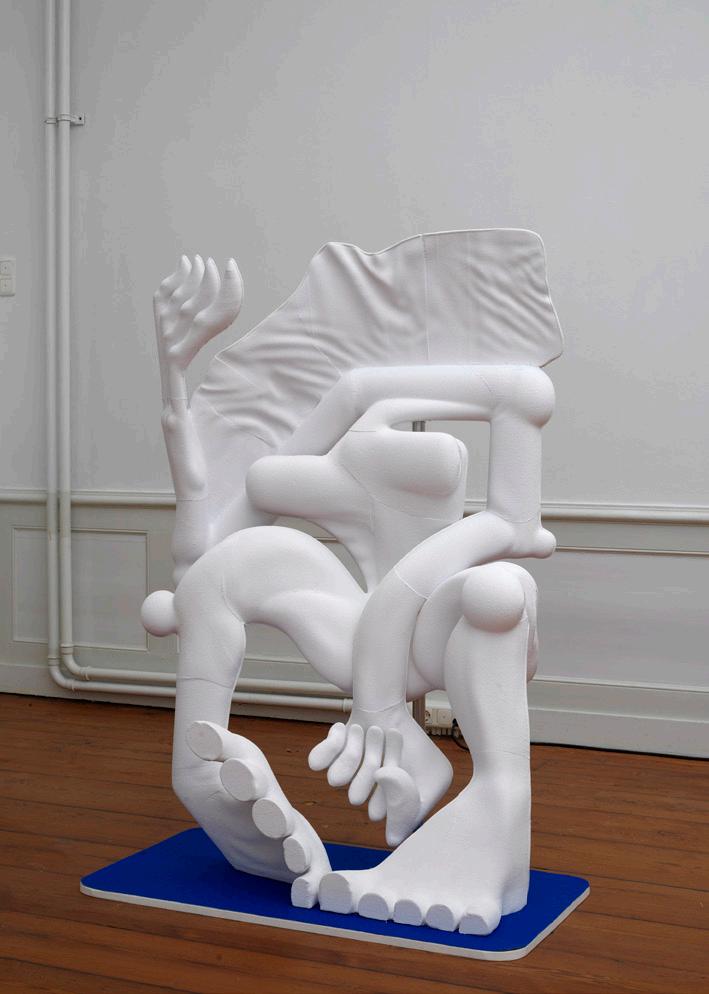
These ideas can be seen in his installation ProtoVise: Shaping IDs, Swapping Worlds. The work consists of an animation in which two figures play catch, while each time the object they are playing with disappears and reappears in a different form, emerging from the body of one of the figures. The animated figures are projected onto two 3D-printed sculptures, tracing the different steps of the animation of the two figures.
ProtoVise: Shaping IDs, Swapping Worlds, 2024
Video, color, sound, 3 min.,3D printed sculptures in PLA filament - Installed at Stedelijk Museum, Amsterdam during exhibition Circulate
Sculpture 1: 225 x 168 x 227 cm
Sculpture 2: 202 x 132 x 199 cm
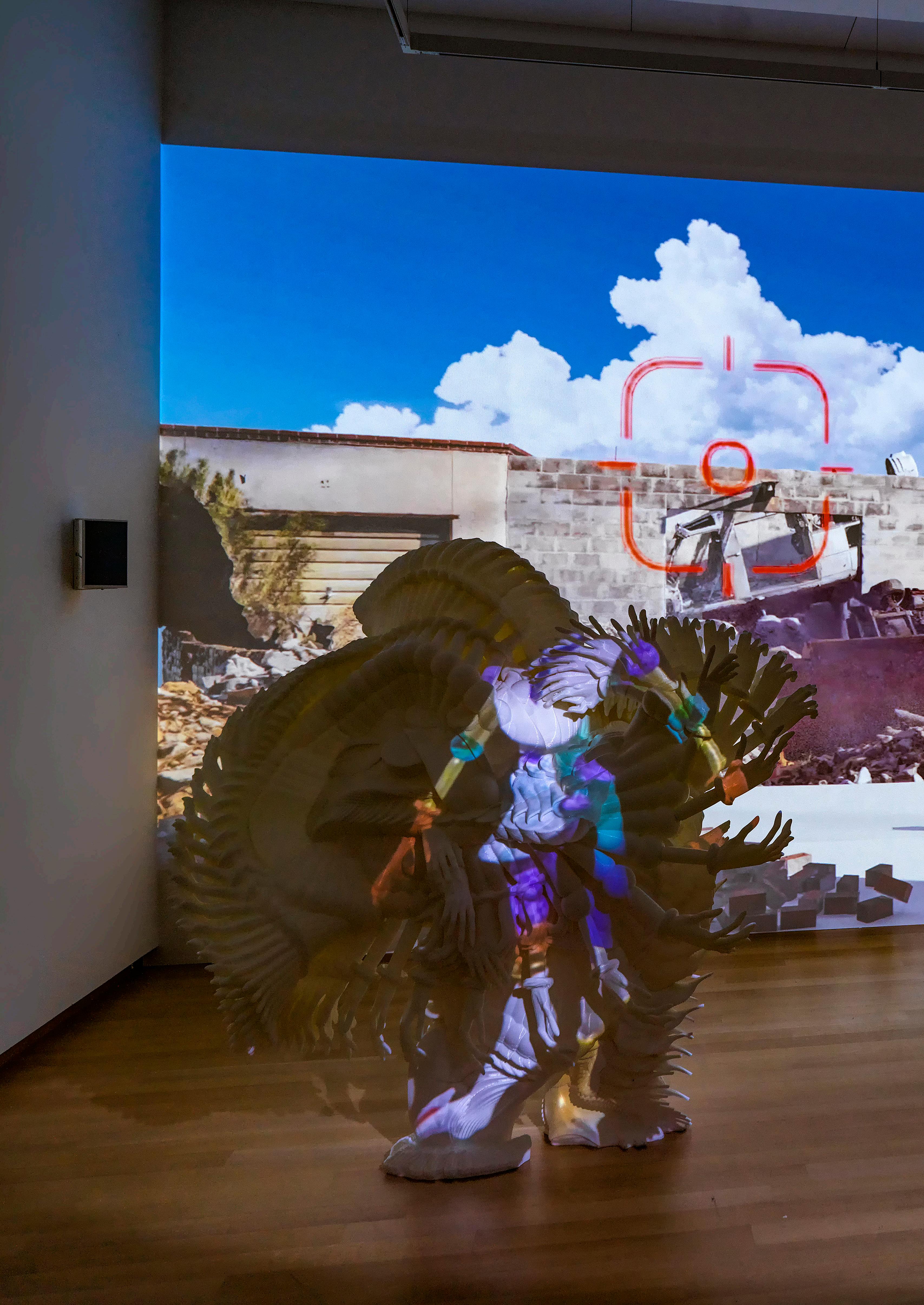
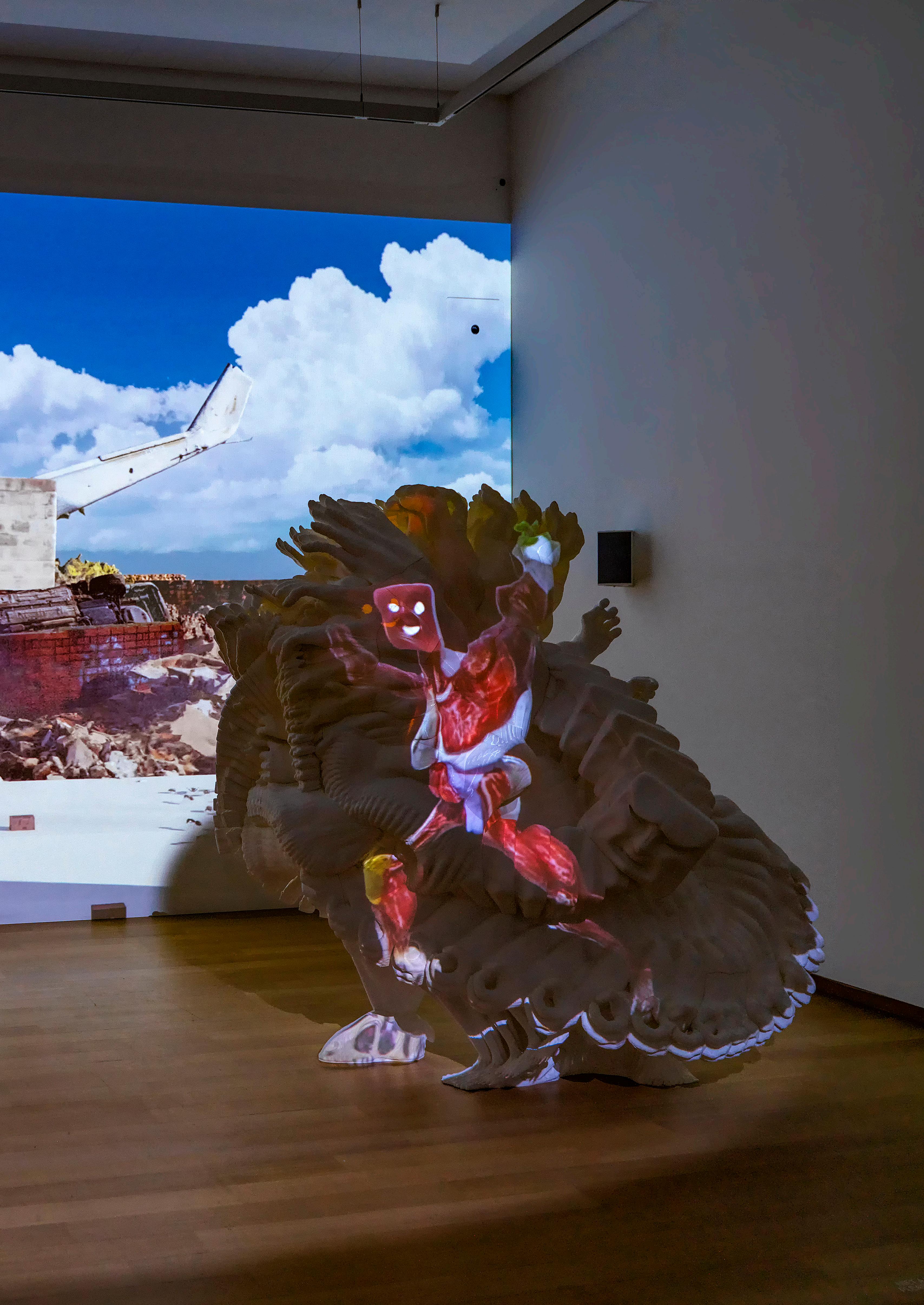
ProtoVise: Shaping IDs, Swapping Worlds, 2024
Video, color, sound, 3 min.,3D printed sculptures in PLA filament - Installed at Stedelijk Museum, Amsterdam during exhibition Circulate
Sculpture 1: 225 x 168 x 227 cm
Sculpture 2: 202 x 132 x 199 cm
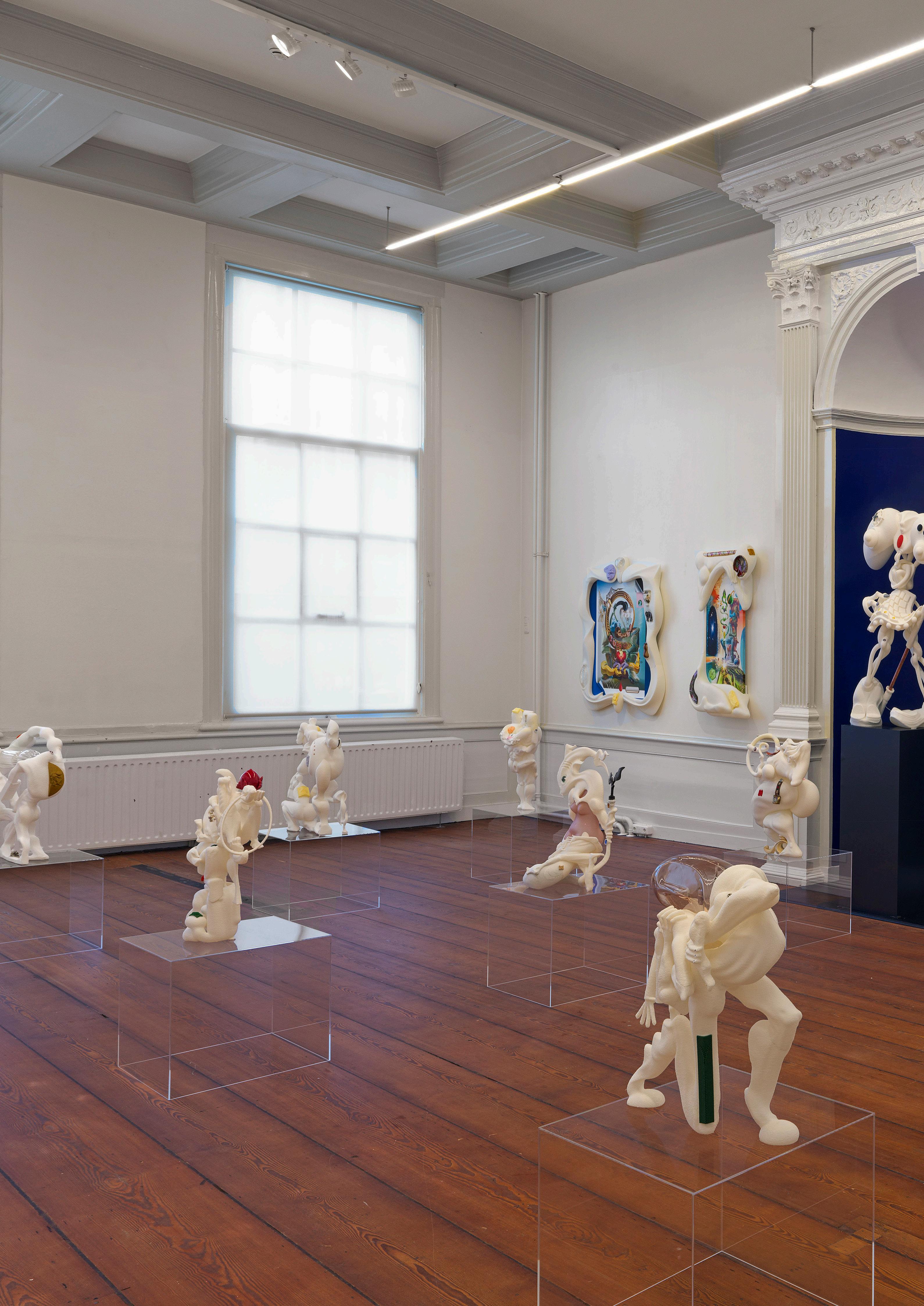
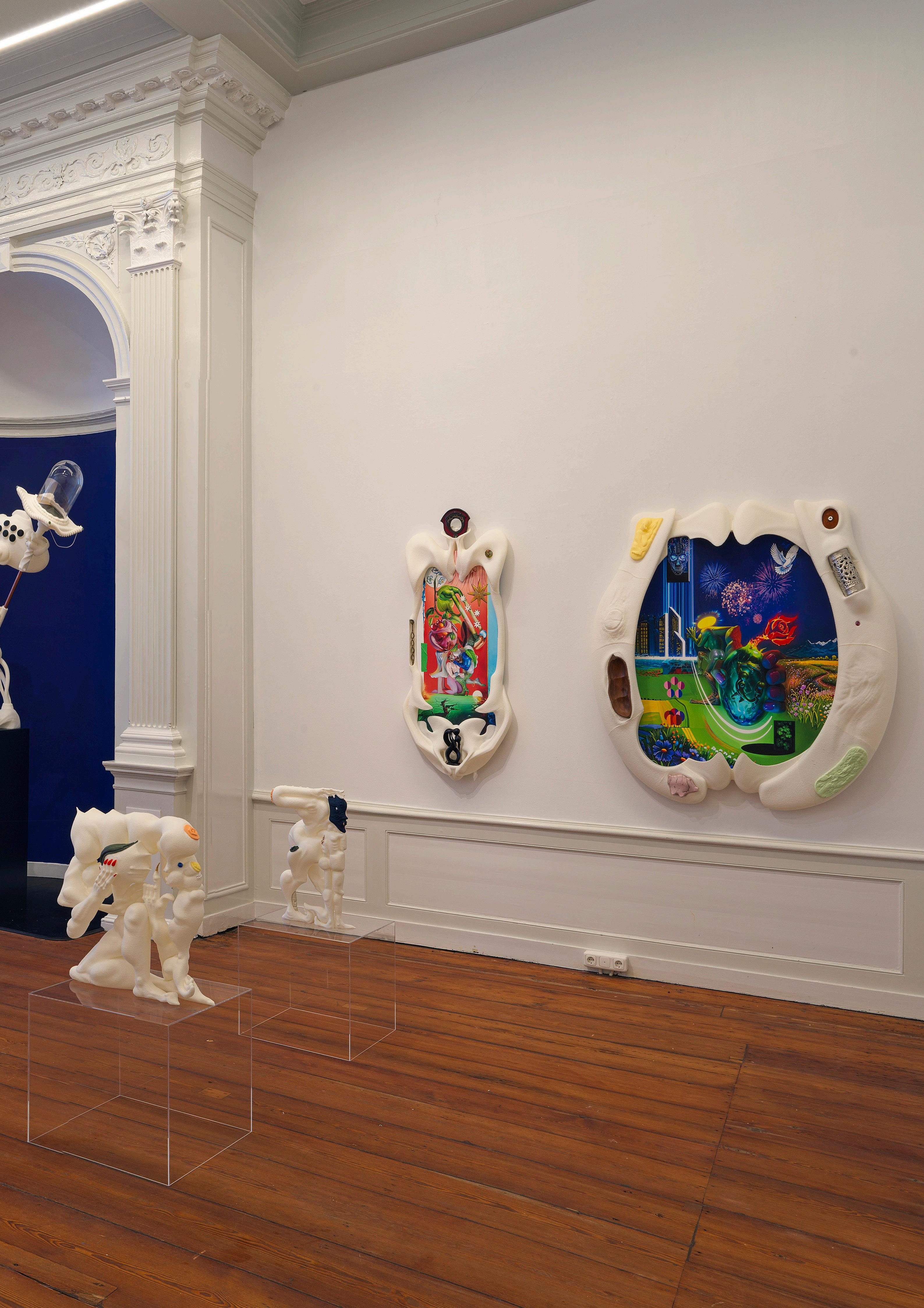
Structured as a fictional game inventory, the exhibition The interfaced and the compass assembles a visual archive of objects, symbols, and images across two rooms: one staging the digital versions, the other their physical counterparts. Together they expose four co-existing layers: the digital and the physical, the pre-idea and the post-idea. Each layer remains partial without the others while participating in the same reality. A floor grid operates as interface, serving as map and memory, where assets sit side by side as remnants of a game that resembles many games at once: no fixed goal, only encounters.
At the center is Oan, a protagonist who crosses thresholds rather than worlds. Moving between layers, they return with relations, tools, signs, companions that reframe both rooms, suggesting that fiction and matter co-produce reality. The exhibition proposes that our digital life, as much as fiction, is not the opposite of the real but one of its engines. Games, feeds, and stories do not merely represent the world, they organize attention, institute rules, and script action. In this sense they may not be “true,” but they are real. Real in their effects on bodies, habits, and infrastructures. Each artefact functions as a “prop” that activates practices across rooms. Inventory becomes a way to read how imagination sediments into things, and how things, in turn, reactivate imagination.
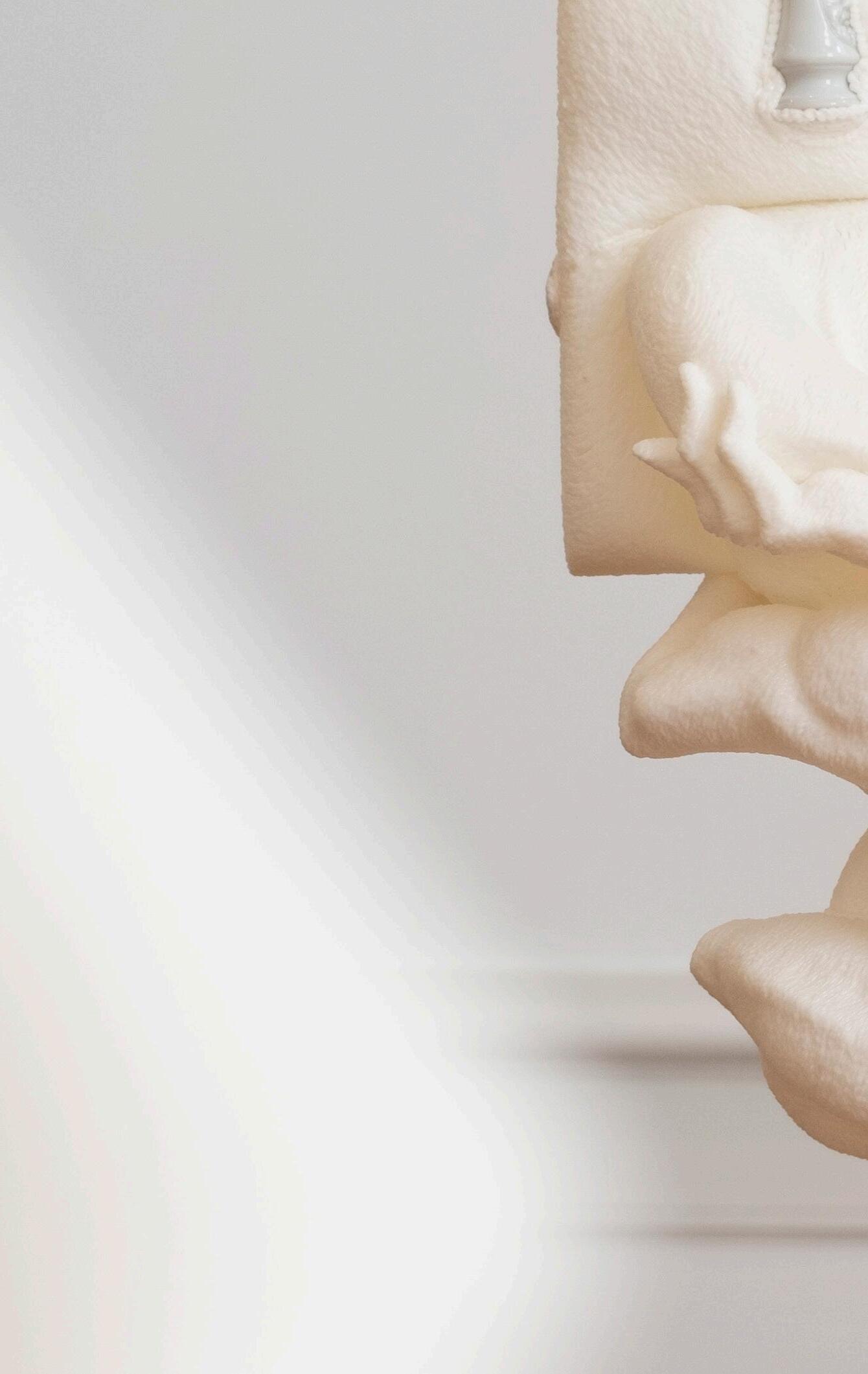
After the Production Revolution, the village was only a human village in a human country, ruled by human language. Plants and nonhuman animals were mostly for eating or looking at. Still, life felt lively, filled with ordinary joys, small conflicts, doors that closed at night.
One evening, a sorcerer visited Oan. Setting a freestanding door in the middle of their room he announced, “This door lets you be anyone. Step through and leave your worries behind.”Hovering above its entrance, an eyeball watched.
“If I can be anyone,” Oan asked, “can I be myself?”
“I don’t know more than you,” the sorcerer replied and swiftly vanished.
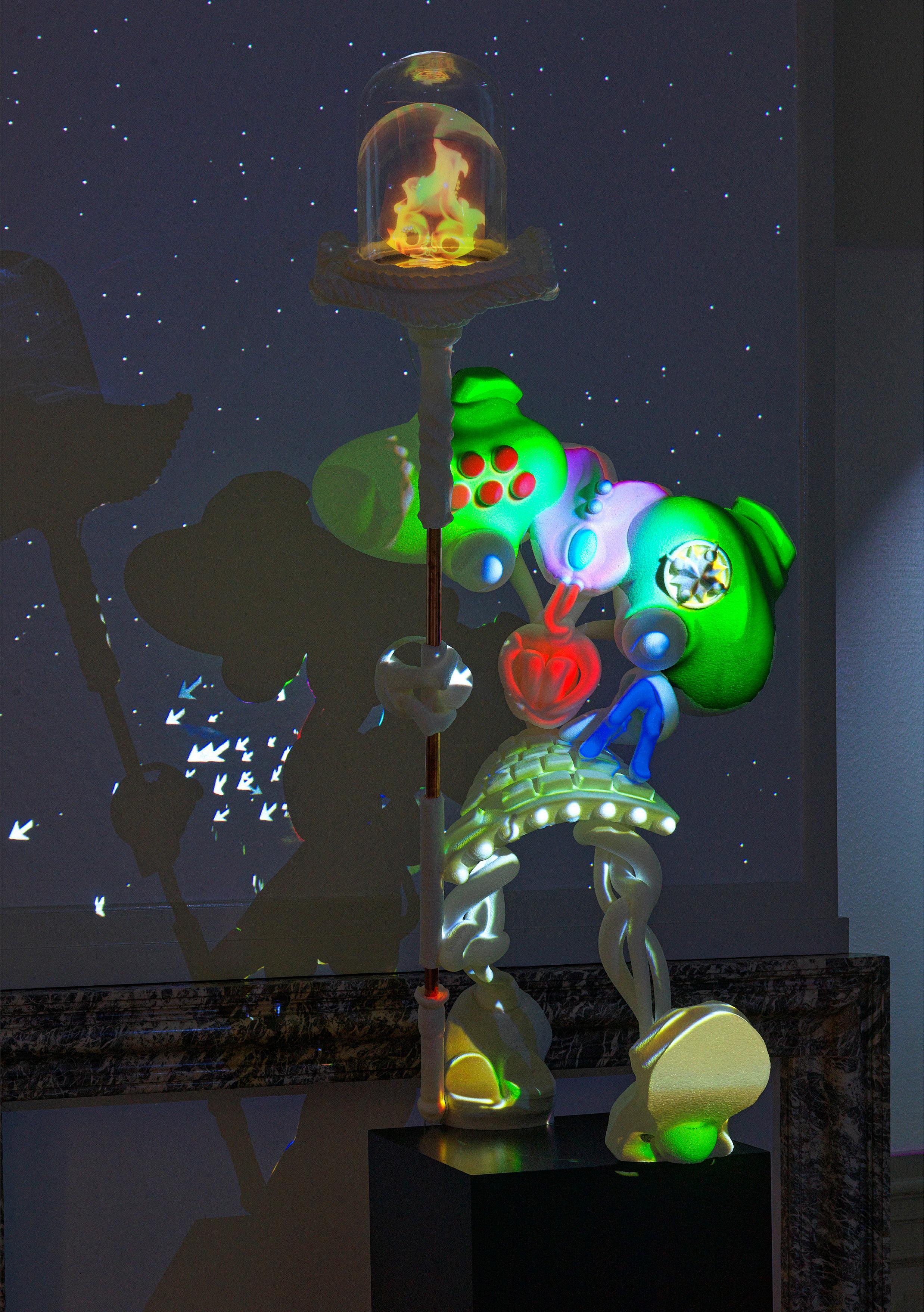
Curiosity won. Oan stepped through. As their body stayed behind, across the door another assembled itself: mouse-feet, a keyboard skirt, a game-controller torso, cable legs, and two three-fingered hands. Grasped in one hand, they carried a stick tipped with a small flame that could wear any face.
Inside, freedom was easy. Oan tried on identities, made quick friends, did things they’d never risk at home. The flame-face spoke for them where silence would have been kinder. They borrowed, bluffed, bragged, and lied, until the sting of guilt became duller. Companionship and entertainment were everywhere. They went often.
Outside, life thinned. Friends drifted. Oan’s back bent and their eyes dulled. The door seemed to call relentlessly. Sometimes the eyeball felt present even when they stayed away.
Unexpectedly, an evening with an old friend changed the course of things. Over a game of cards, the friend admitted they had a door too. Oan’s smile pinched as heat climbed their throat. This meant if the friend ventured through and met the sharp-joking, taking, flame-faced version of Oan, then Oan would be seen. Not just inside, but here.
Despite the hesitation, they agreed to meet across the doors. Once inside, they stood side by side, yet, they still didn’t see the same world. They pointed at “the same” thing and somehow described different ones. The mismatch allowed Oan to hide a little. It also made something painfully clear: even if the friend couldn’t see every choice Oan made, the choices still belonged to them.
Weeks later the friend arrived breathless with a message: many villagers had doors. Someone from their very own street had used their real name inside.
The room began to tilt. The taste of metal flooded Oan’s mouth, “Isn’t it a game?”he managed to ask a bit too loudly, “Isn’t it unreal?”
After the friend left, Oan sat very still. If people could be themselves there, then what Oan did inside was part of who they ‘really’ were and how they could be perceived. Not erased but added.
Oan took a step back from his regular visits. Slowly his strength began to return, his eyes brightened. They tried repairing what had frayed without letting the flame speak for them.
But the village had shifted: fewer faces, too silent, less activities, as if some pieces of life had moved elsewhere.
Oan found themselves facing the door again. The eyeball watched. Now it was clear: no one escapes reality by stepping through; new worlds don’t cancel life, they change it. The danger was never going in, but pretending it would leave nothing behind.
Eventually Oan devised a plan: visit, but do not vanish. Keep a hand on each world. Before stepping through, they named what mattered and who might need them. After returning, they proposed to notice what had changed and tend to it like a garden. And when shame pricked, treat it as a signal to repair, not as a reason to disappear.
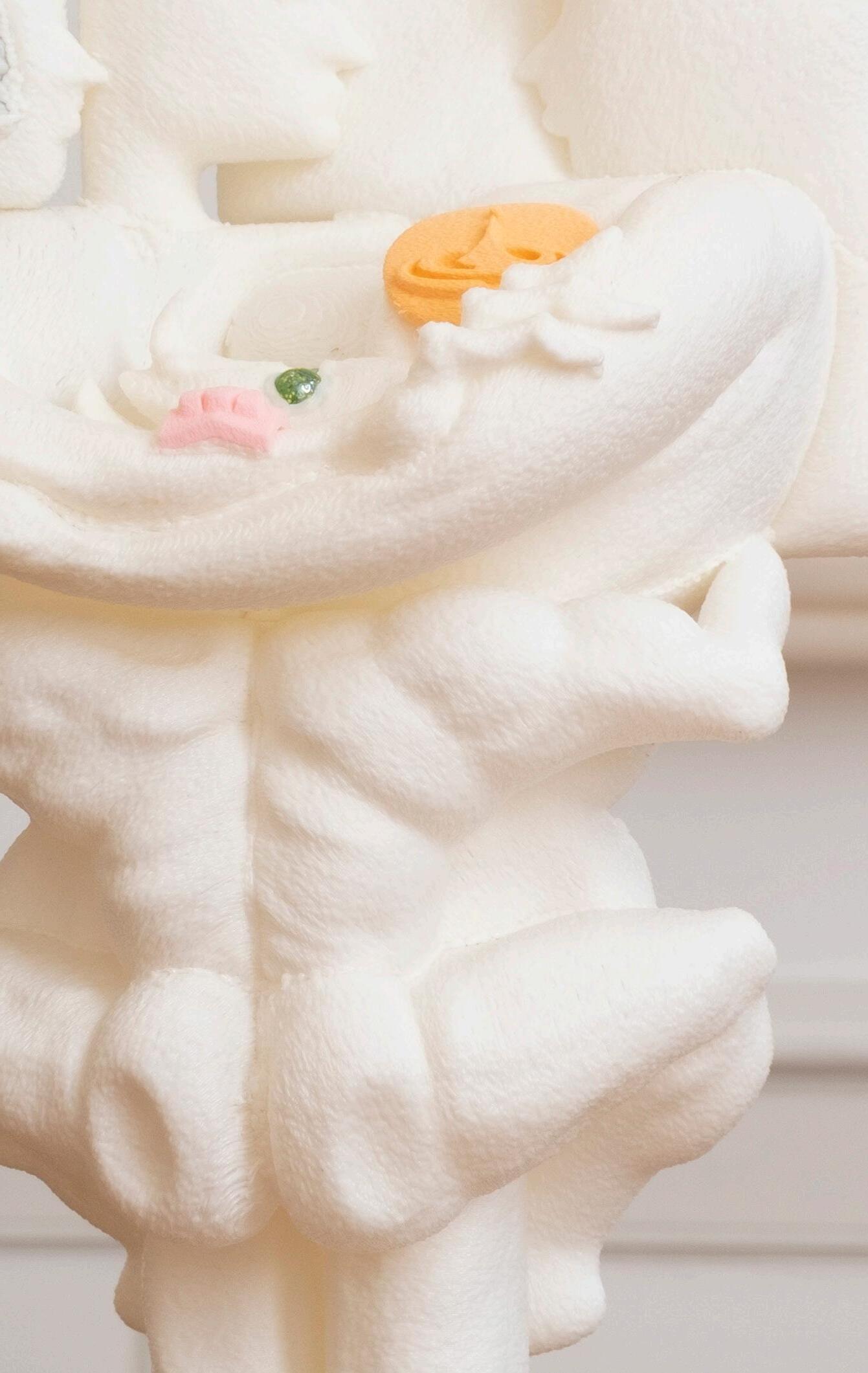
The story is a parable about the porousness between fiction and life, about digital realms mistaken for unreality. Today, online play, social media, and augmented reality shape not just leisure but economies, ideologies, and political systems. Games appear to offer agency, but often reproduce capitalist frameworks: accumulation, domination, extraction.
Consider Pokémon Go: a game that gamifies urban movement, encouraging users to explore while simultaneously mapping physical locations for corporate interests. Players become both explorers and data points, unknowingly participating in large-scale geographic data collection. Uber, on the other hand, uses game mechanics like reward tiers, point systems, and timed challenges to push drivers to work longer hours, disguising labor exploitation behind the aesthetics of play.
Meanwhile, social media platforms like Facebook have demonstrably influenced democratic processes — from algorithmic amplification of propaganda during the 2016 U.S. election to misinformation campaigns during Brazil’s 2018 presidential race — revealing how digital fictions directly shape reality. TikTok and YouTube have created micro-celebrities who profit from viral content, while the platforms harvest attention and train AI models on the data. Amazon’s Mechanical Turk breaks labor into gamified microtasks with minimal compensation. Duolingo, FitBit, and other wellness apps apply reward systems not to play but to behavior modification. Even dating apps like Tinder gamify intimacy, turning relationships into swipes, queues, and stats.
These examples illustrate how digital systems can manipulate behavior and perception while maintaining the illusion of detachment. Platforms gamify labor, identity becomes interface, and “play” becomes a mechanism of control.
In response, this exhibition reimagines the inventory not as a list of conquests, but as a carrier bag — a space for nourishment, memory, and relational depth. Inspired by Ursula K. Le Guin’s “Carrier Bag Theory of Fiction” and Kōbō Abe’s image of the rope and the stick, it asks: what if our avatars are not warriors but bearers? Not agents of extraction, but bridges of reciprocity?
The inventory grid becomes a soft archive — not loot, but lived experience.
Wall images depict not achievements but
symbols of presence, attunement, and mutuality.
The sculpture is not a hero, but a transforming being — a vessel for others, for witnessing, for response.
Here, the weapons are exchanged for containers.
The rewards are not assets, but traces of meaning. The goal is not victory, but connection.
This is not a game of power. It is a practice of being with. A game of becoming rope.
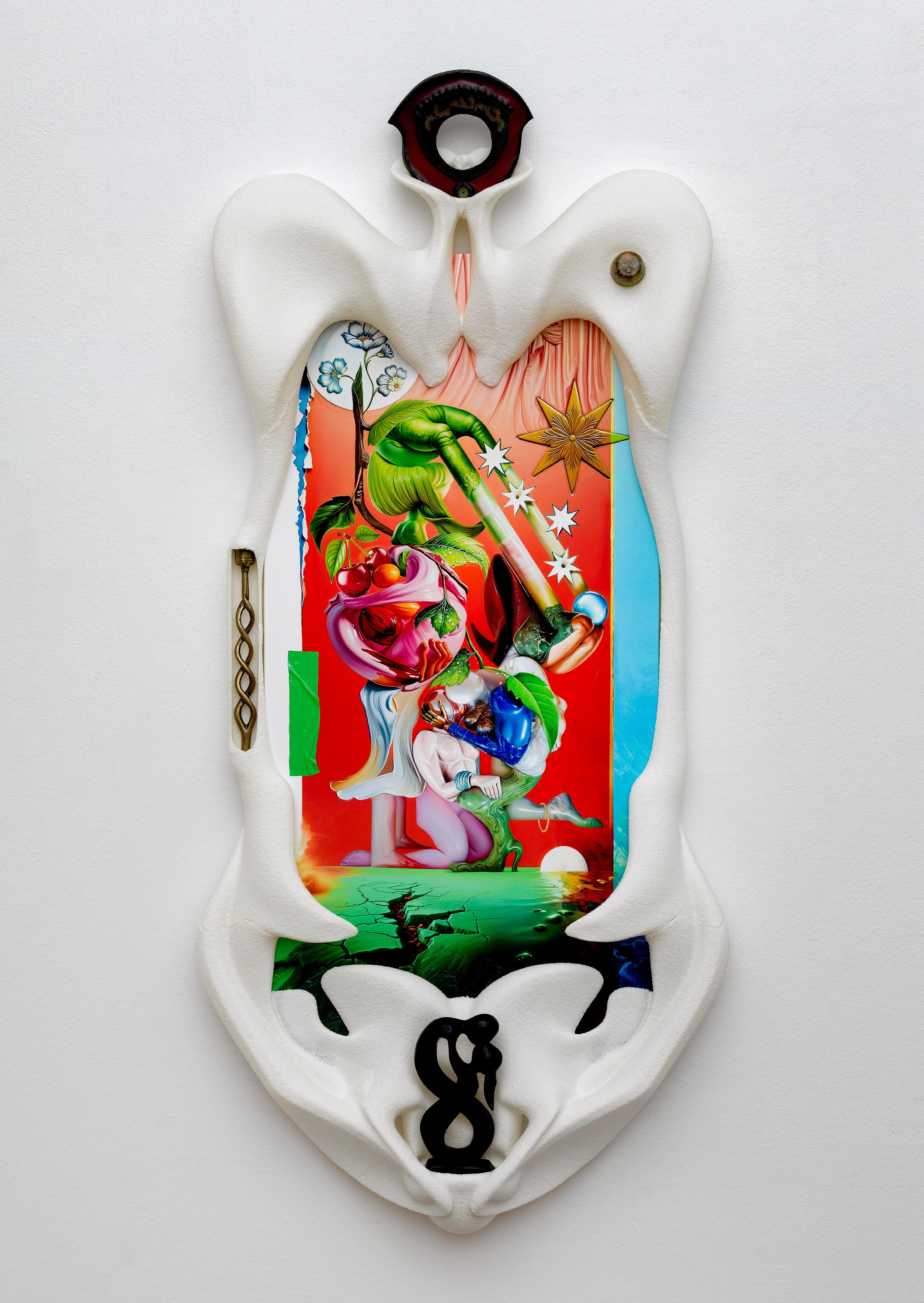
They Are Together, but Also Together , 2025 Print on canvas, acrylic, 3D printed PLA, second life objects 127 x 60 x 12 cm
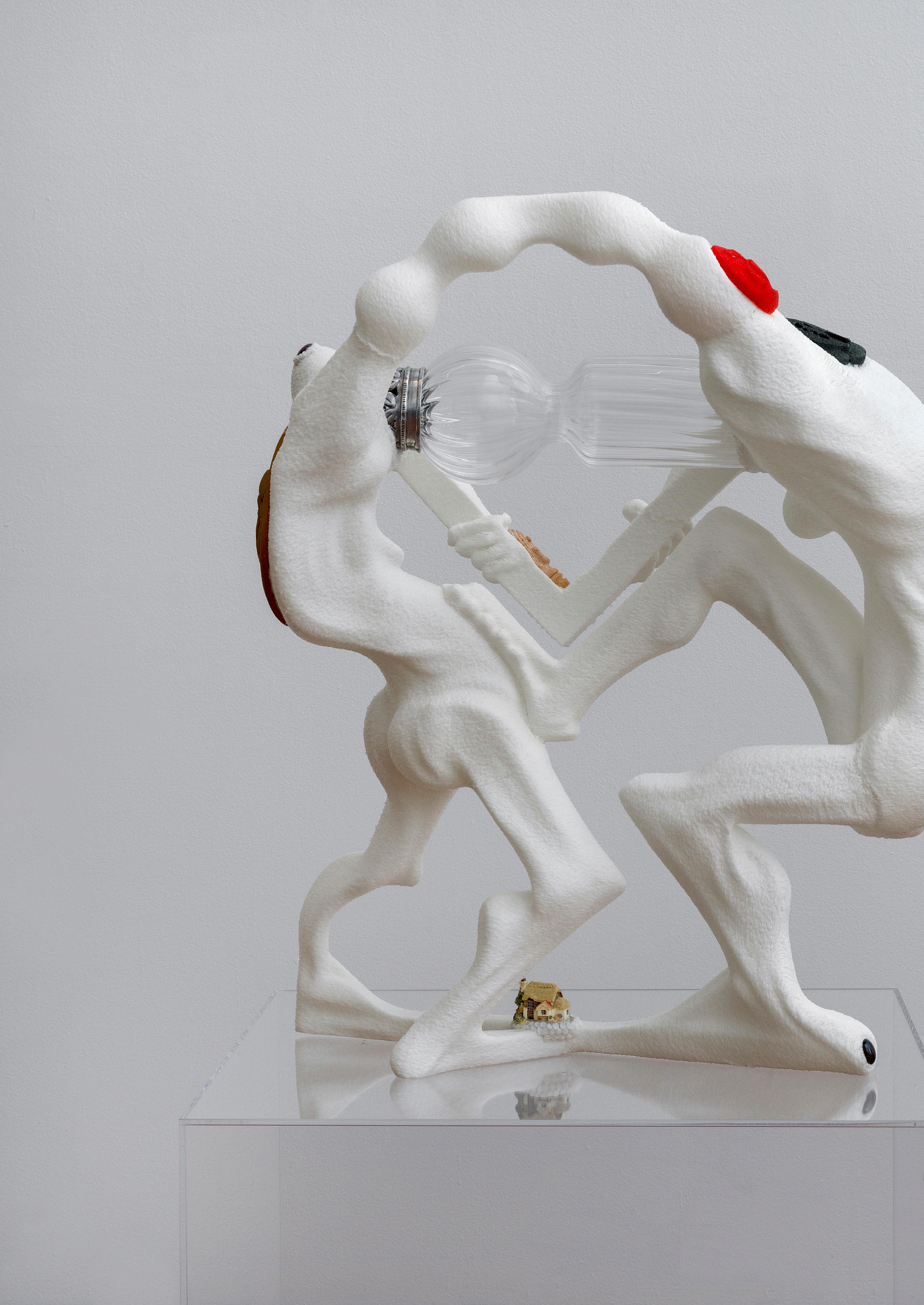

Despite One Mind, 2025
3D printed PLA, glass, ceramics, second life objects
61 x 42 x 20 cm
Sirens Want Peace, 2025
3D printed PLA, glass, metal, second life objects
61 x 45 x 34 cm
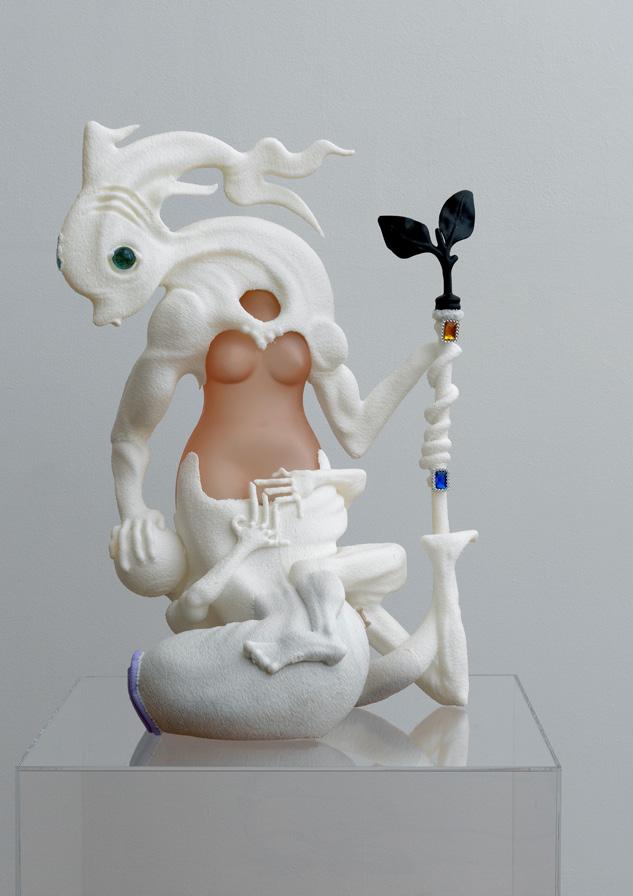
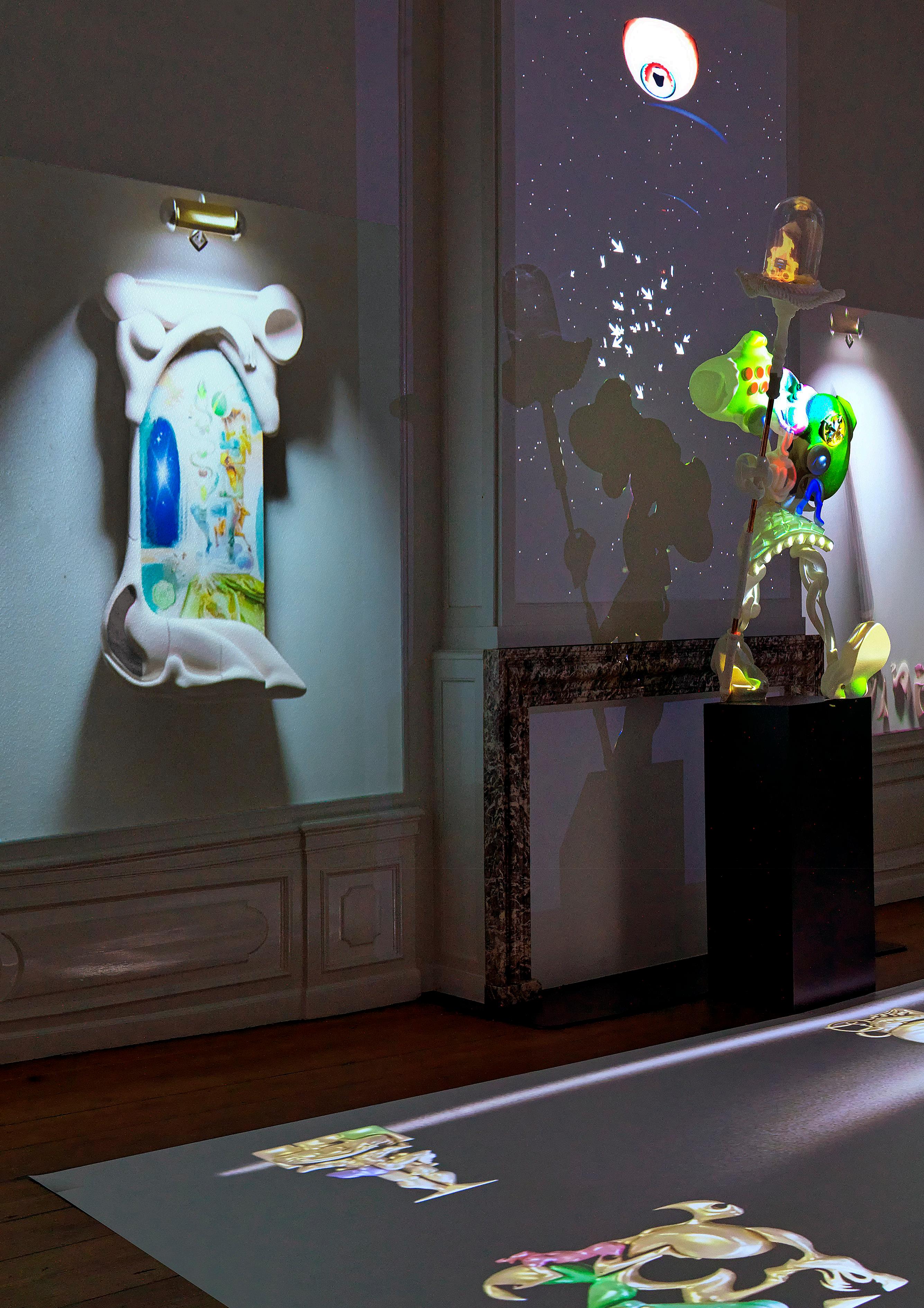
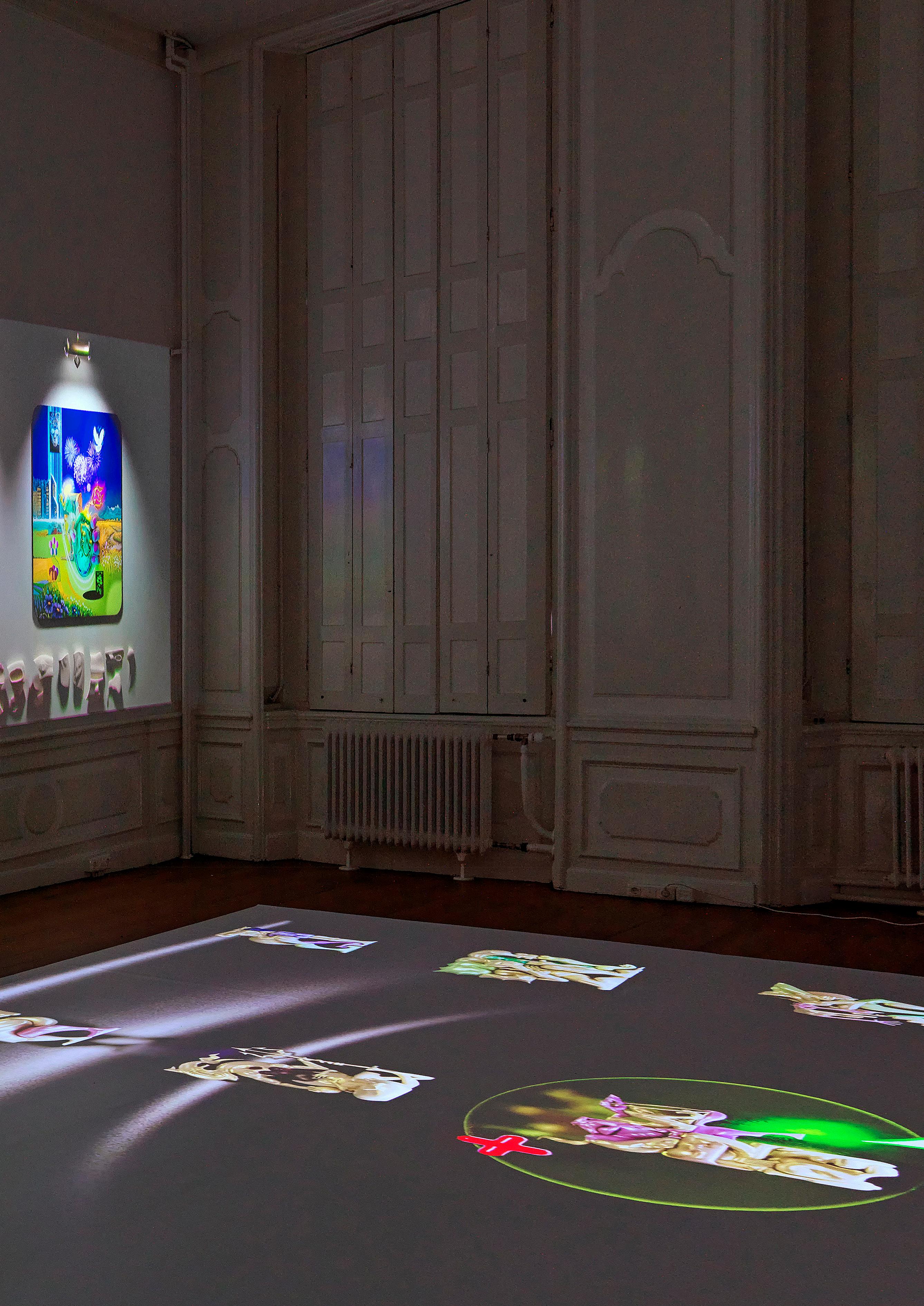
Post-Exobody, 2025
3D printed PLA, buttons, sand, glass, usbc cable, copper, projection mapping, plexiglass, iPad appr. 130 x 90 x 90 cm
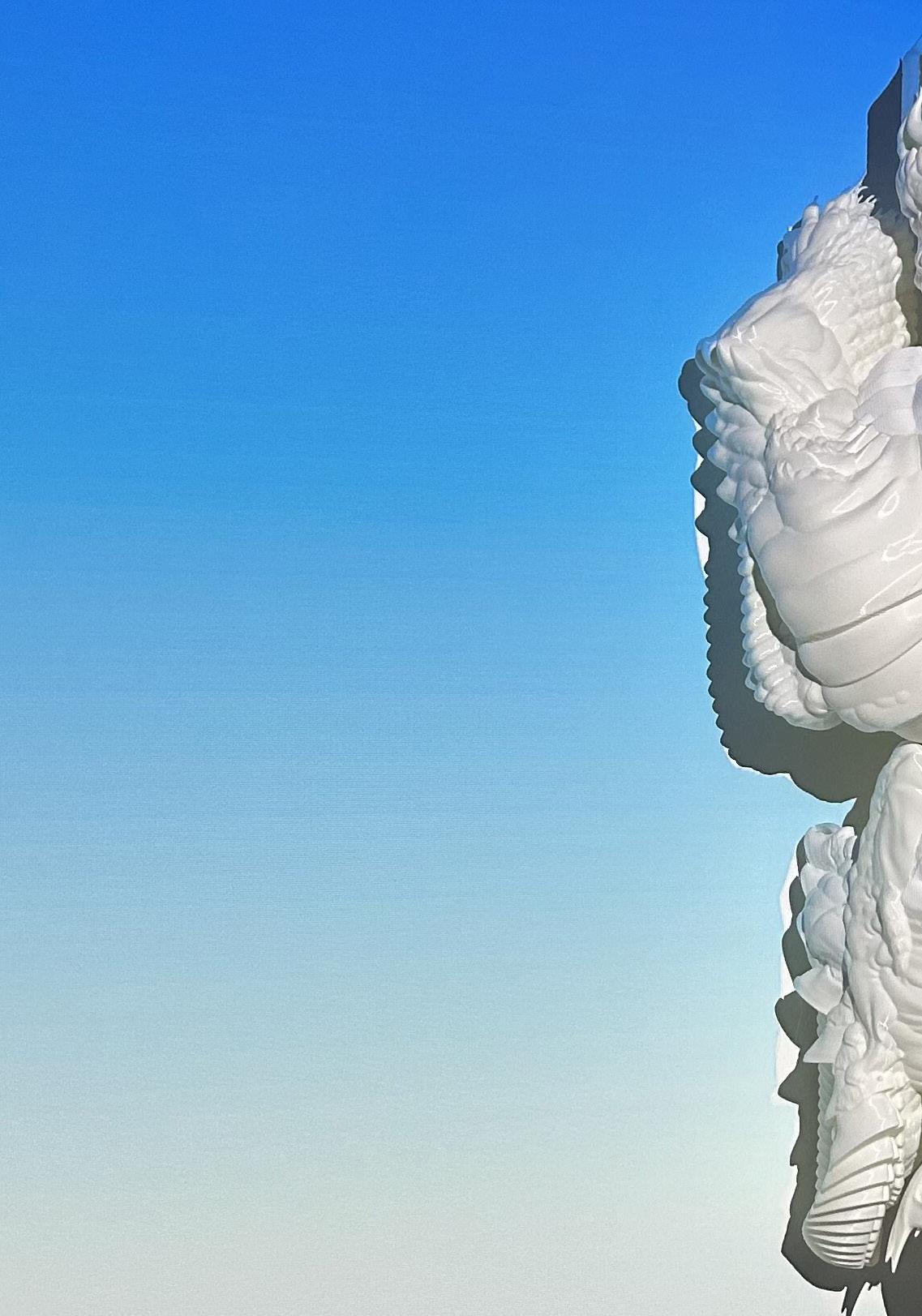
The installation BullBear Dynamics explores the tension between being and becoming, questioning the dominant narrative of infinite growth in a finite world. At its center is a character inspired by Janus, the Roman god of transitions and duality, depicted with two faces—one looking to the future and the other to the past. In this version, Janus looks in one direction with the face of a bull, symbolizing ambition and growth, and in another direction with the face of a bear, embodying caution and decline. These dual faces reflect the opposing forces of bull and bear markets, as well as the broader tension between progress and restraint.
The character climbs a ladder that transforms into a DNA structure and then into an ever-evolving line graph, resembling both stock market charts and the shapes of stories as described by Kurt Vonnegut. The DNA structure highlights the biological traits that drive human hunger for survival and expansion. Yet, it also serves as a prison, weaponized in narratives that justify human extraction and exploitation as biological determinism. BullBear Dynamics critiques the pervasive focus on growth-oriented narratives, asking why stories of success are almost always framed as ascents and rarely as successful degrowth. The work advocates for a more nuanced view of human nature and questions whether endless growth and expansion are inevitable and if they truly serve us in a finite world.
WATCH IMPRESSION HERE
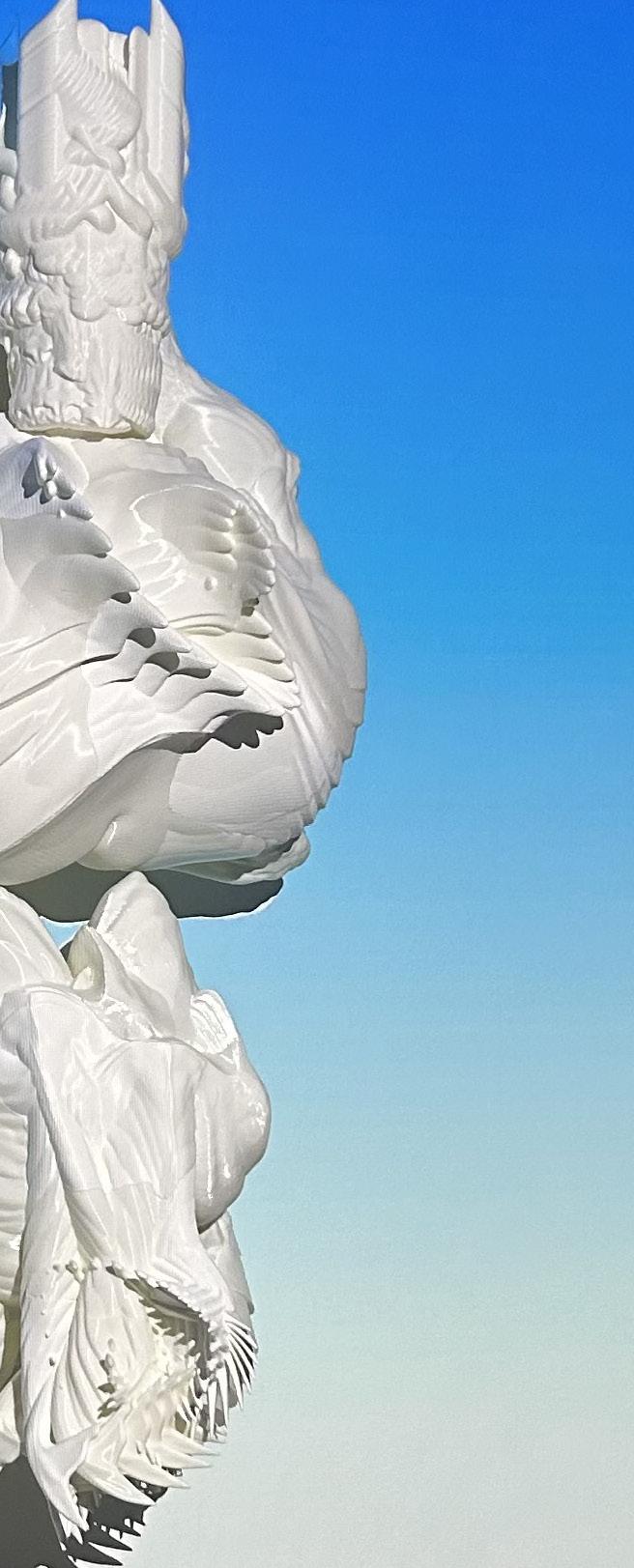
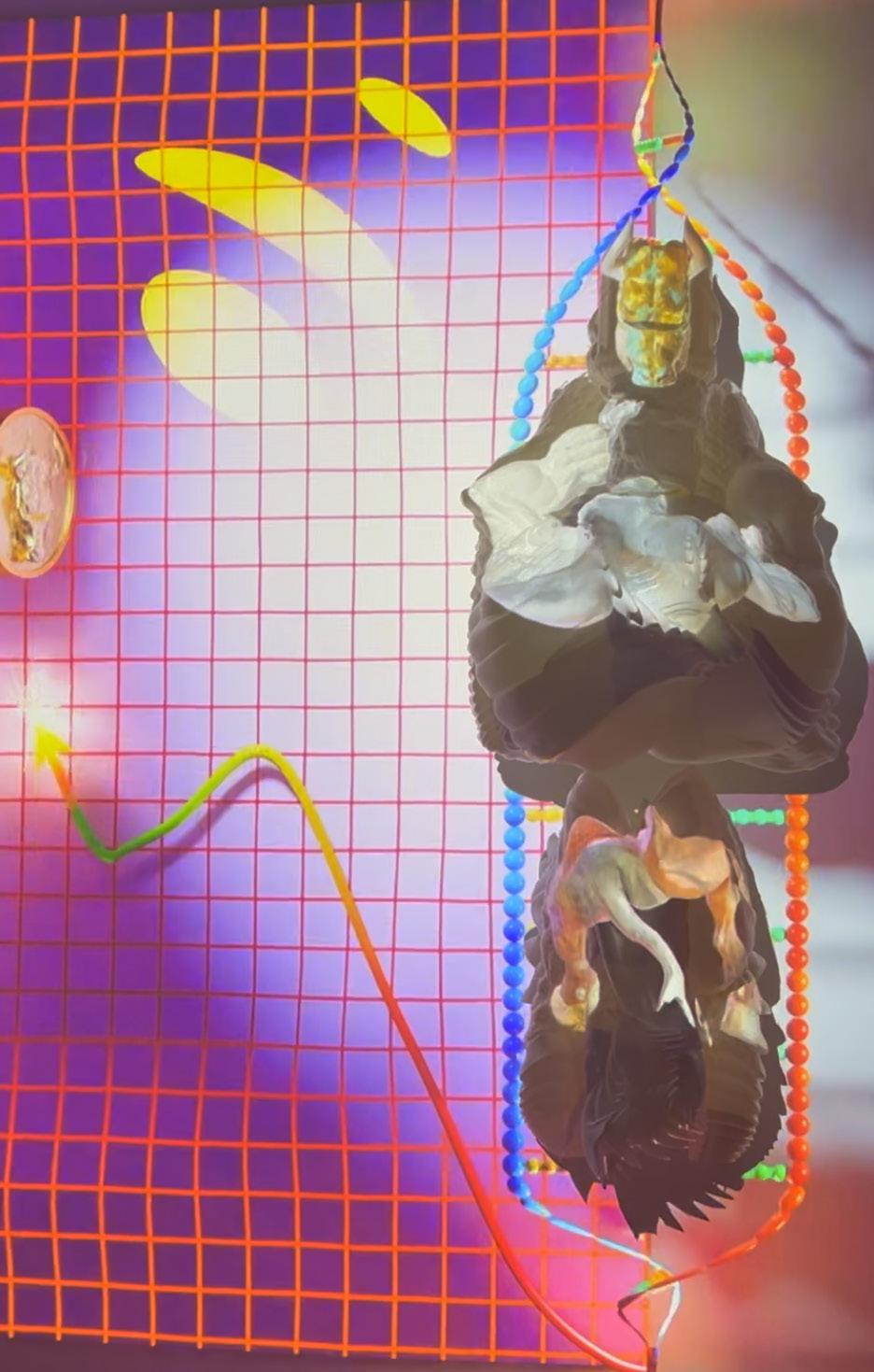
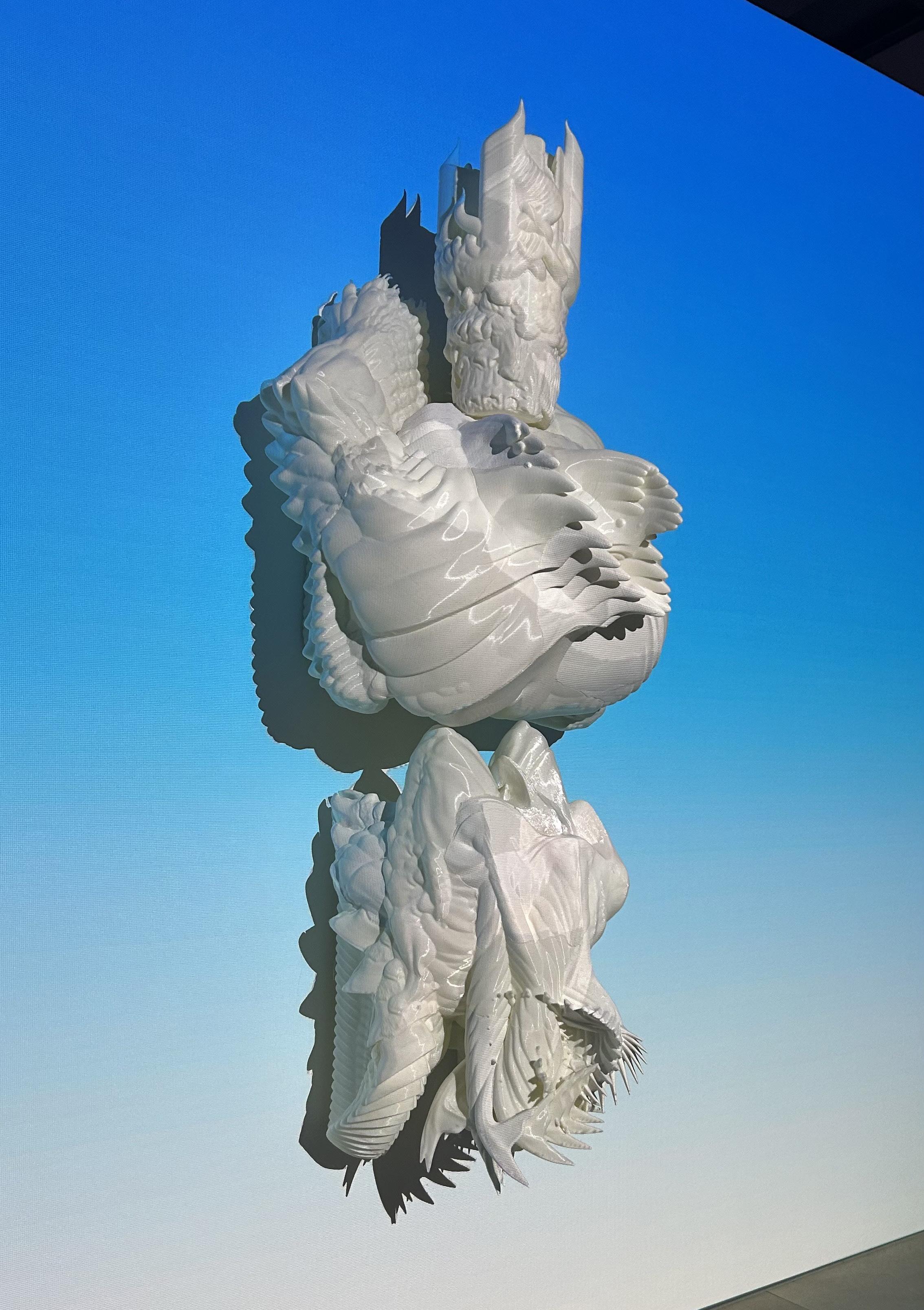
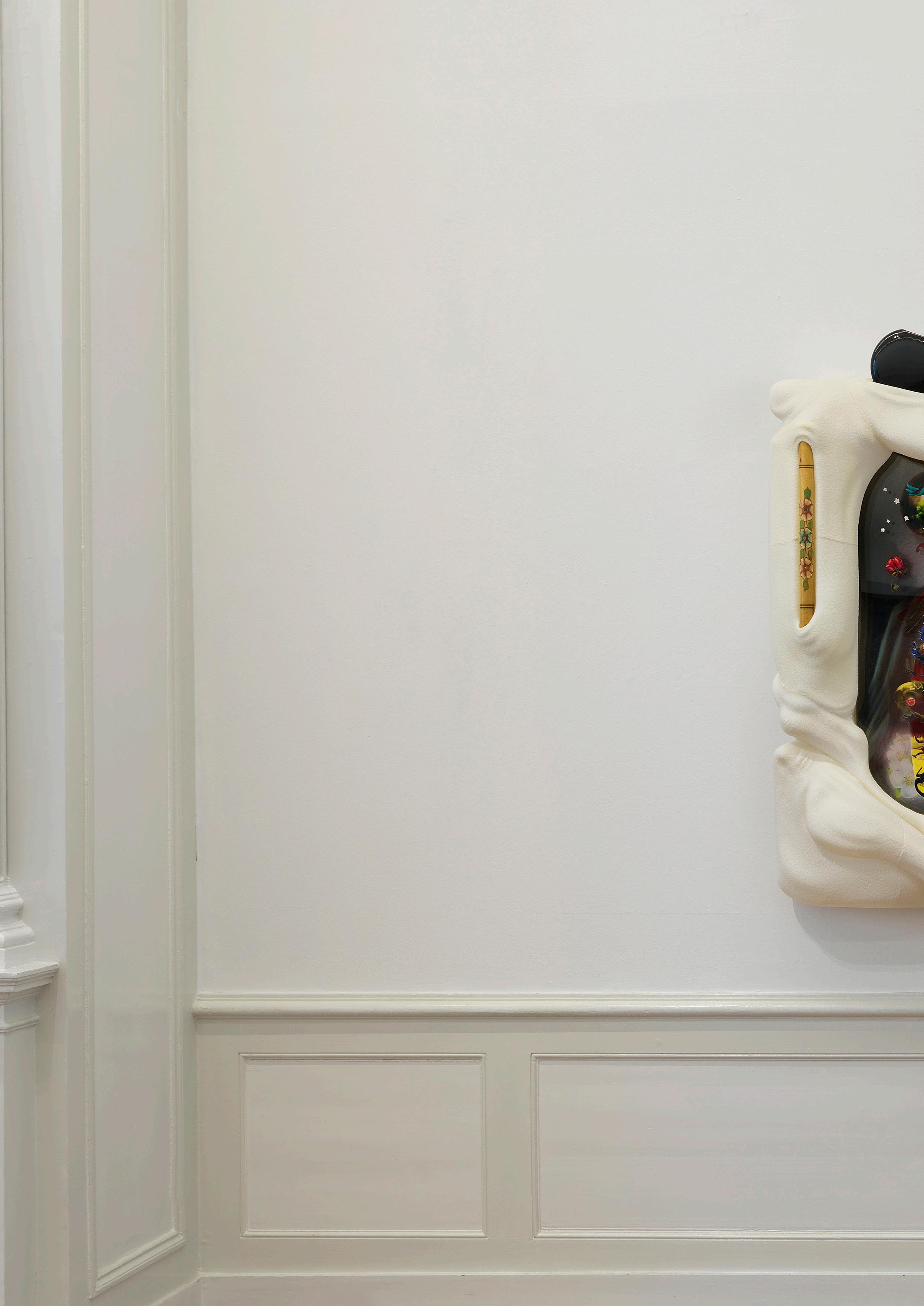
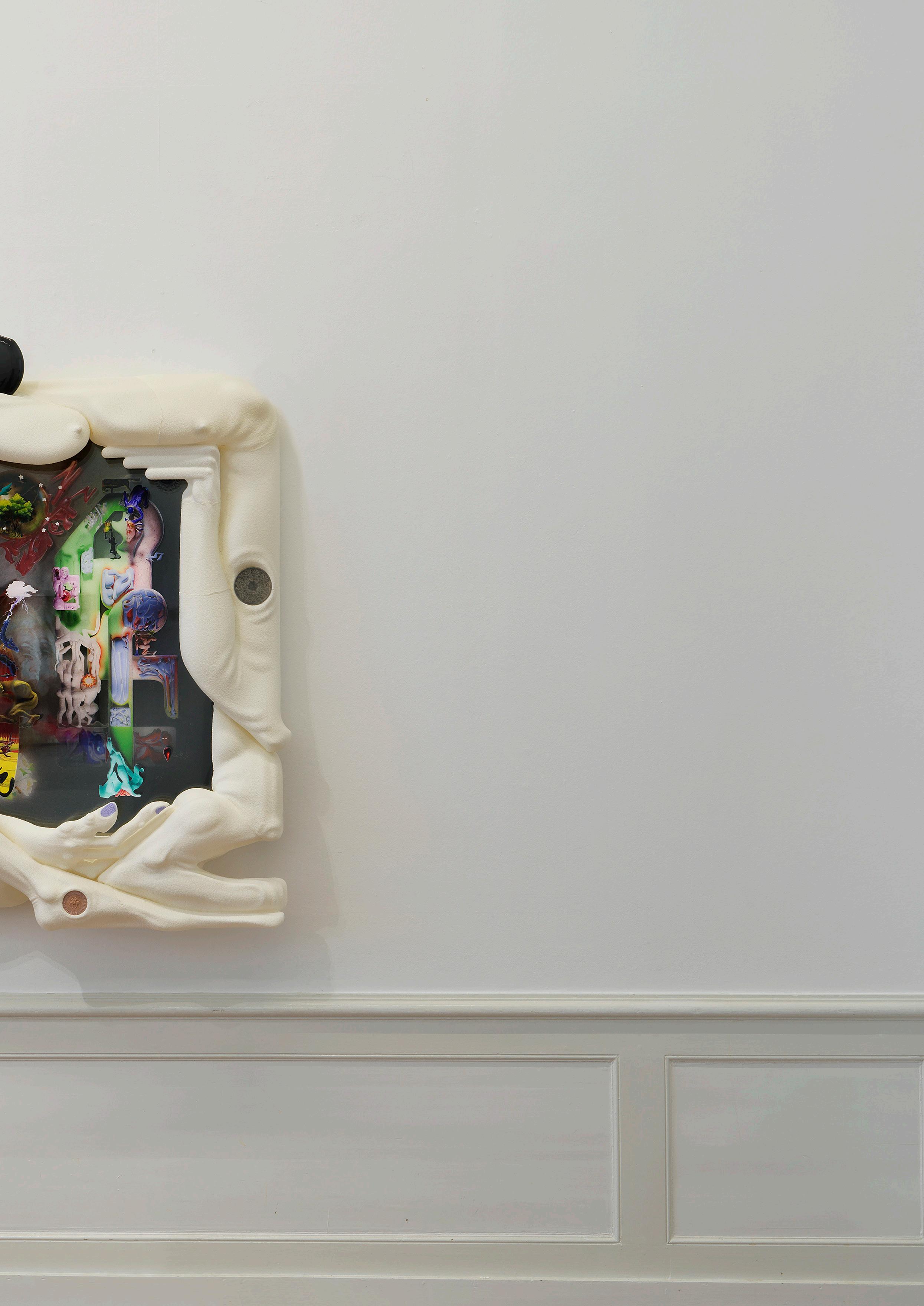
This art piece, which was shown during exhibition Ghosts at Upstream Gallery (2025), is the inaugural entry in a series of research that explores and employs various visual strategies designed to resist the interpretive capabilities of Large Language Models (LLMs), by challenging the AI’s ability to comprehend and categorize images, seeking to redefine what it means to create outside the framework imposed by AI. This resistance is not only an act of defiance but a pedagogical exercise that might question the boundaries of AI interpretation and, by extension, our own expressive limitations. Some methods used in this piece are: merging figures that challenge AI’s ability to segment and categorize distinct entities, incremental symbolism that requires contextual and sequential understanding, challenging materiality that defies straightforward material categorization and unconventional perspectives that create a visual language that is deliberately complex and ambiguous.
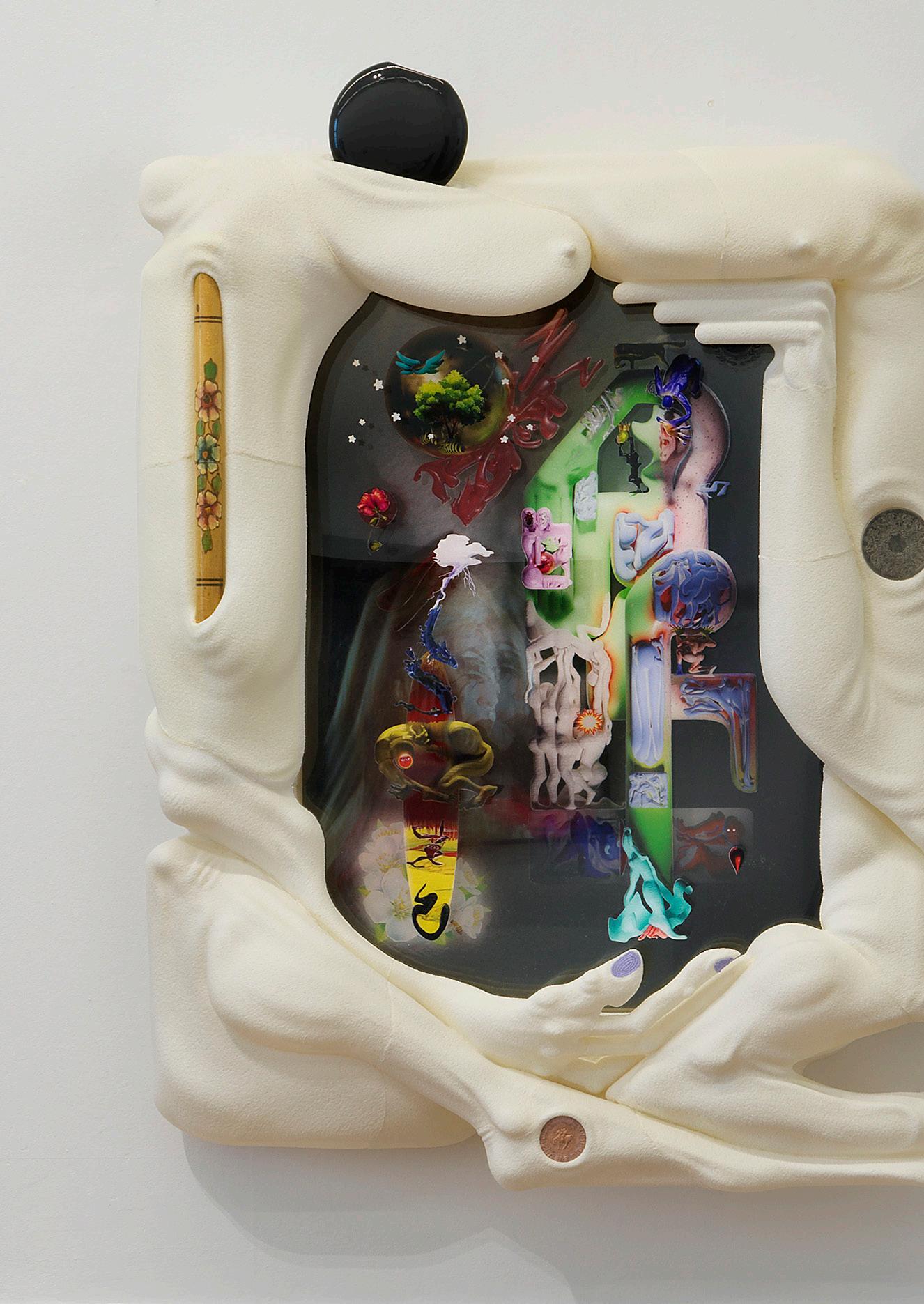

They are echoes of expression, 2025 Print on plexiglass, PLA, wood, metal and ceramic 145 x 100 x 25 cm
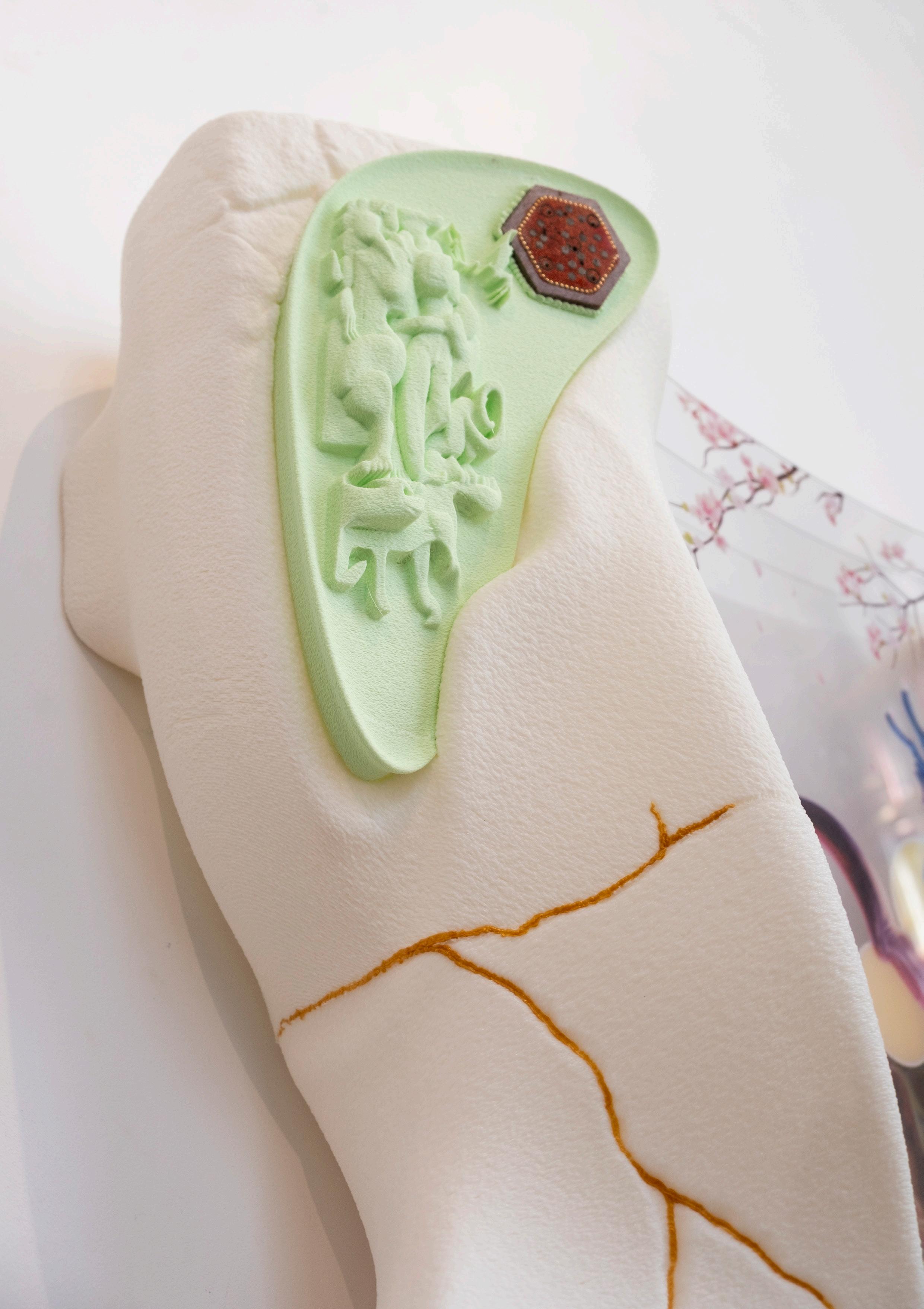
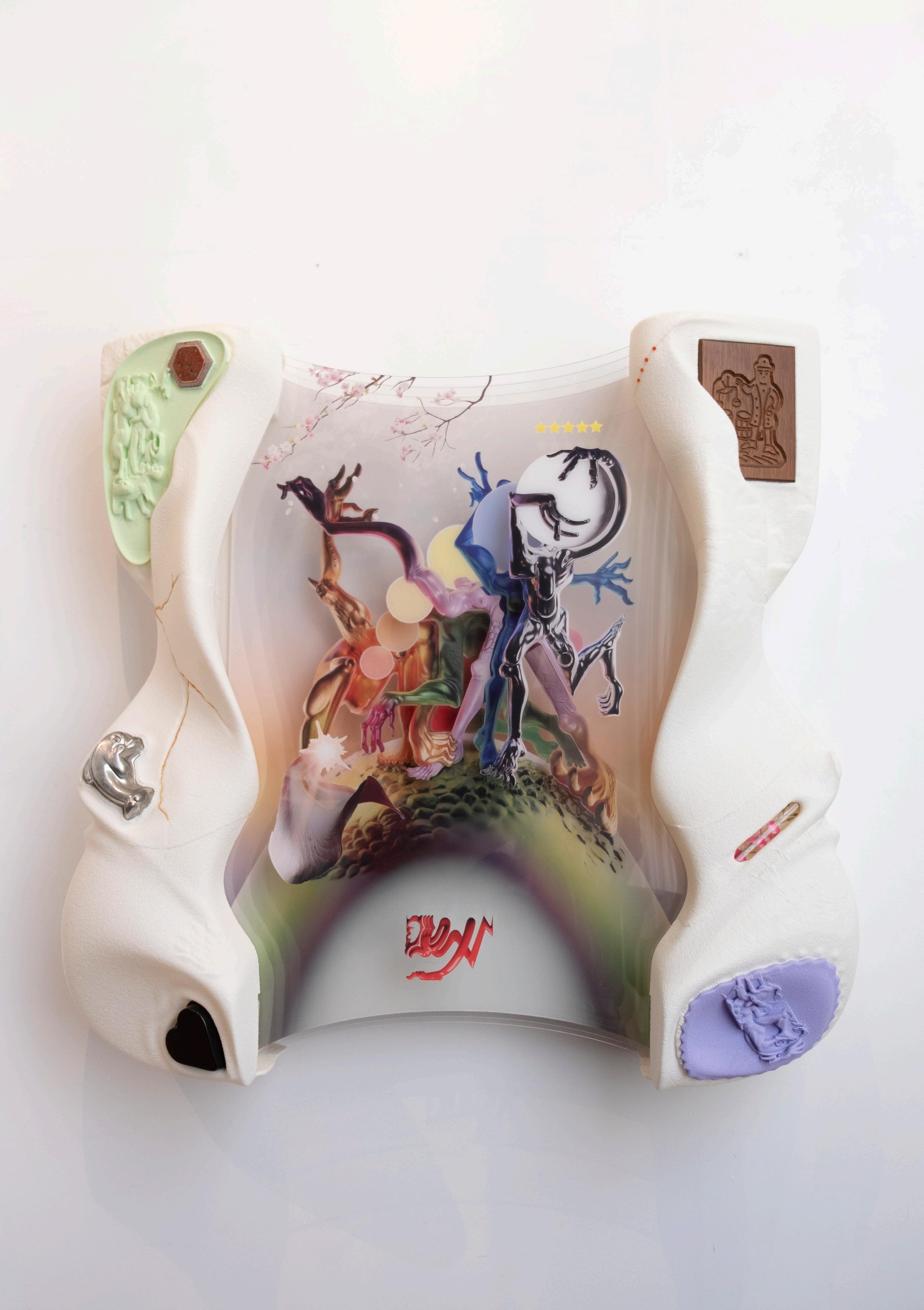
They are seasons of being, 2 025 Print on plexiglass, PLA, metal, wood, terrazzo, glass and arti ficial flowers
Kévin Bray
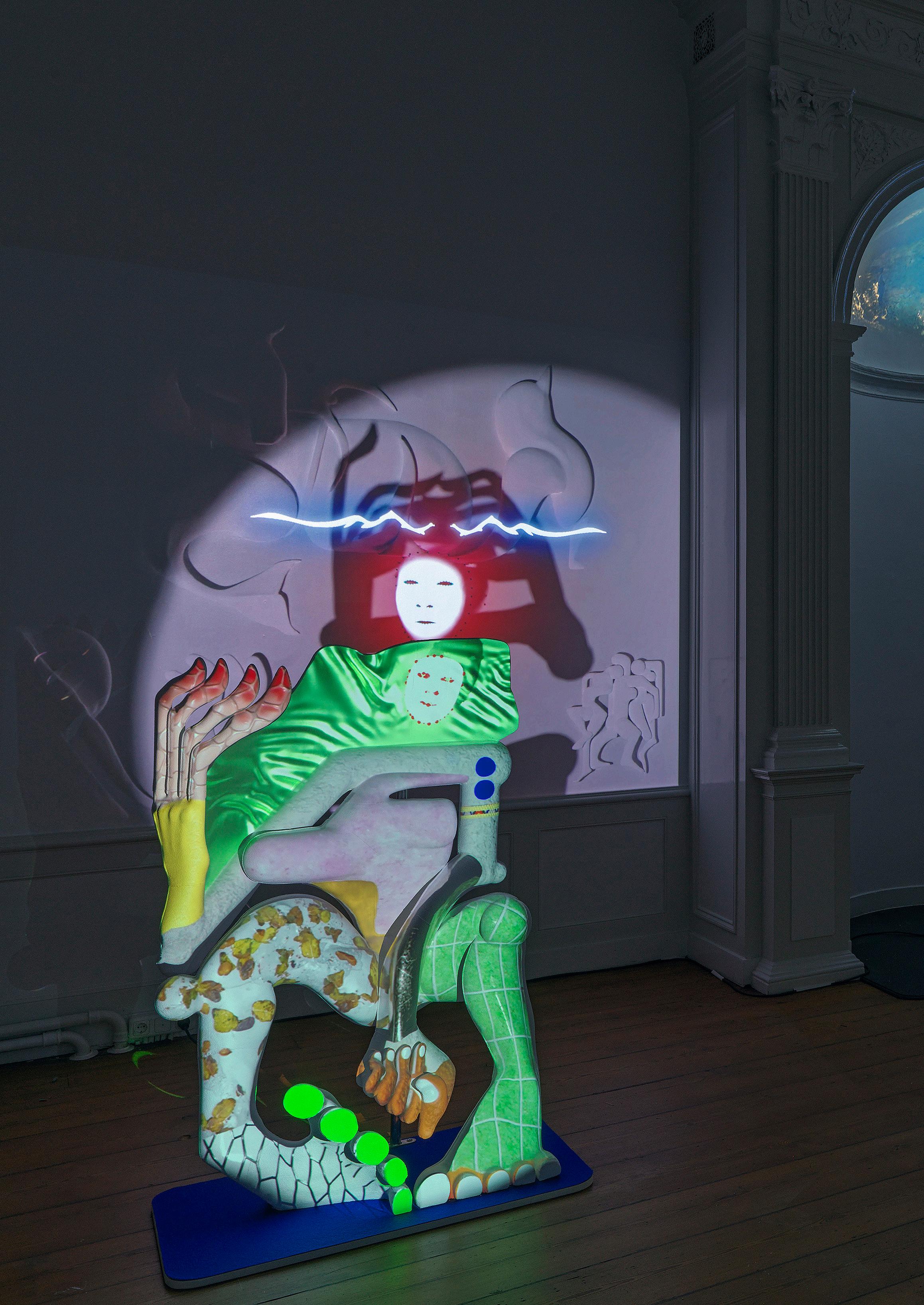
it is left (2023) + it was right (2023)
steel pole, wooden board, carpet, 3D printed PLA, acrylic paint
Individual sculpture: 108 x 160 cm
Installation price (including projections): €24,000
Installation price (projections excluded): €19,000
Singular sculpture (including projections): €12,000
Singular sculpture (projections excluded): €9,500
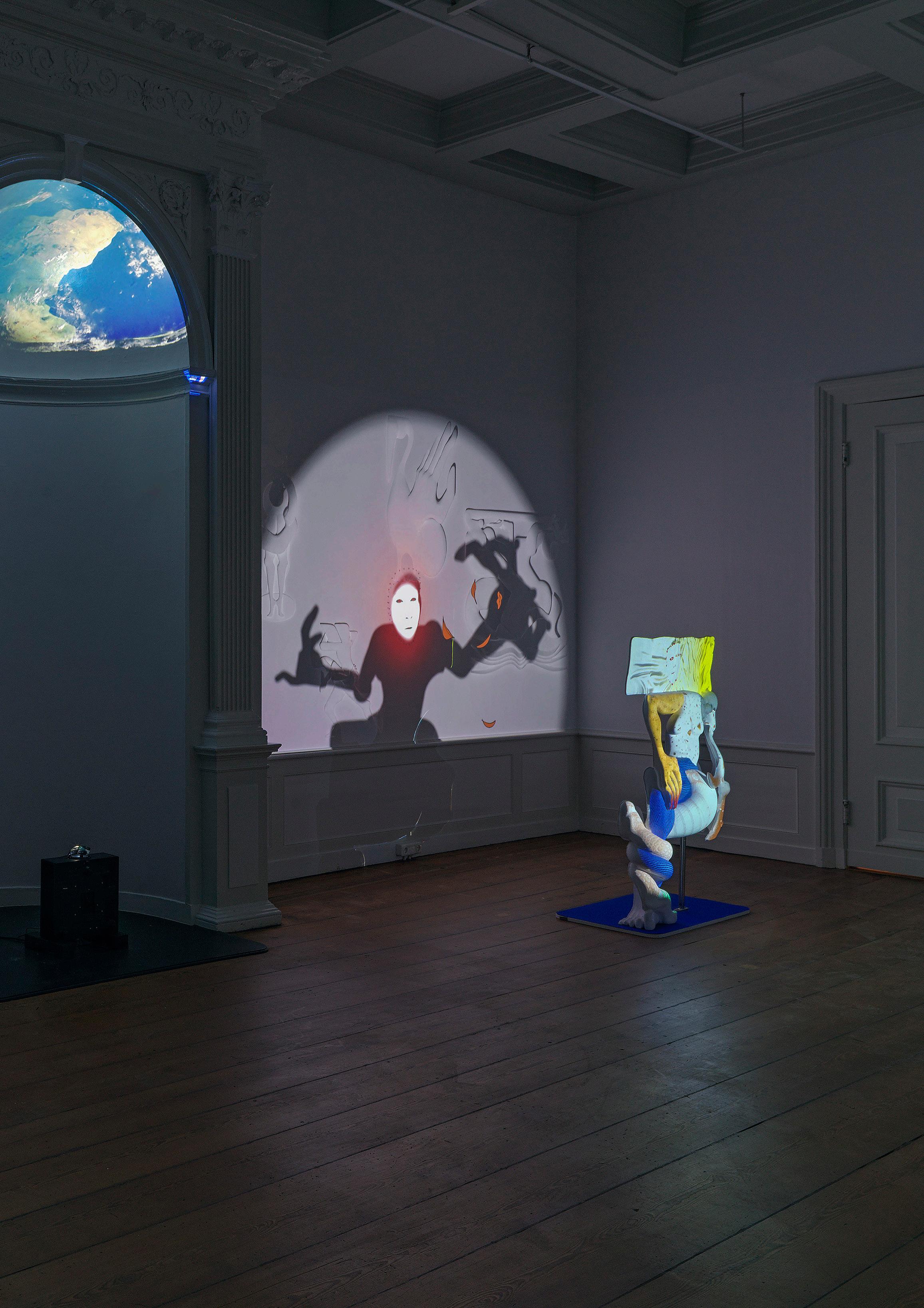
The solo exhibition The Collective Shadow showcased sculptures, paintings and video projections, all of which were composed to interact mutually and which formed the intricate fabric of a multi-media installation. This interrelation of mediums, narrative techniques and tools is important in depicting and directing the experience of the works themselves and reflects essential strategies of Bray’s artistic practice.
In The Collective Shadow , Bray’s works and installations guide us through an exploration of a universal entity and a historic figure: the Monster. The concept of the Monster has been introduced to all of us, one way or another. Yet, only by looking at the etymology of the word monstrosity do we begin to understand the potentially complex roles that monsters play within society. Monster derives from the Latin, monstrare, meaning “to demonstrate”, and monere, “to warn.” Thus, in essence, monsters are demonstrative. They reveal, show and make evident —often uncomfortably— the cultural or psychological characteristics that we as a society find difficult to acknowledge.
Bray’s work is distinguished through multimedia approaches, particularly the technique of projection/video mapping. In which a projector is used to cast light on arbitrarily structured surfaces in a tailored way, seamlessly layering the projection like a new skin to interact mutually on top of our physical reality. Reverberating this methodology and play between obscurity and projection, with The Collective Shadow Bray expands on this interrelation of light and darkness as a metaphor to consider our larger collective challenges.
Throughout the past decade we have had a resurgence of monsters. They seem to act as an important social tool, able to embody abstract contemporary and often collective fears, dangers and anxieties. These monsters in some cases exemplify Carl Jung’s collective shadow. In Jung’s analytical psychology, the
collective shadow is defined as what has been hidden inside of ourselves collectively because it is repressed, denied or unintegrated. Within his practice, Bray adopts the climate crisis and fossil fuel energy consumption as examples of this expanding shadow. The complexity of relations and our dependency to production processes with high polluting emissions explain our in-action towards climate changes. Such a massive problem eludes us in our shortsightedness and doesn’t seem to fit our political and social agenda, which is drastically shaped by a global neoliberal way of seeing the world.
In the first room of The Collective Shadow , blinded by the symbolic spotlights of our spectacledriven society, two characters converse unintelligibly. In the background, their shadows hectically grow and experiment within the limits of their elemental powers and tools. The evergrowing complexity of this world’s dynamics provokes unbounded natural reactions that are ever more primitive and elemental. And through these catastrophic acts, we come to see that our contemporary monsters are the ones we have already been introduced to during childhood— Water, Fire, Wind and Earth— the elements that create life, are today’s increasing dangers.
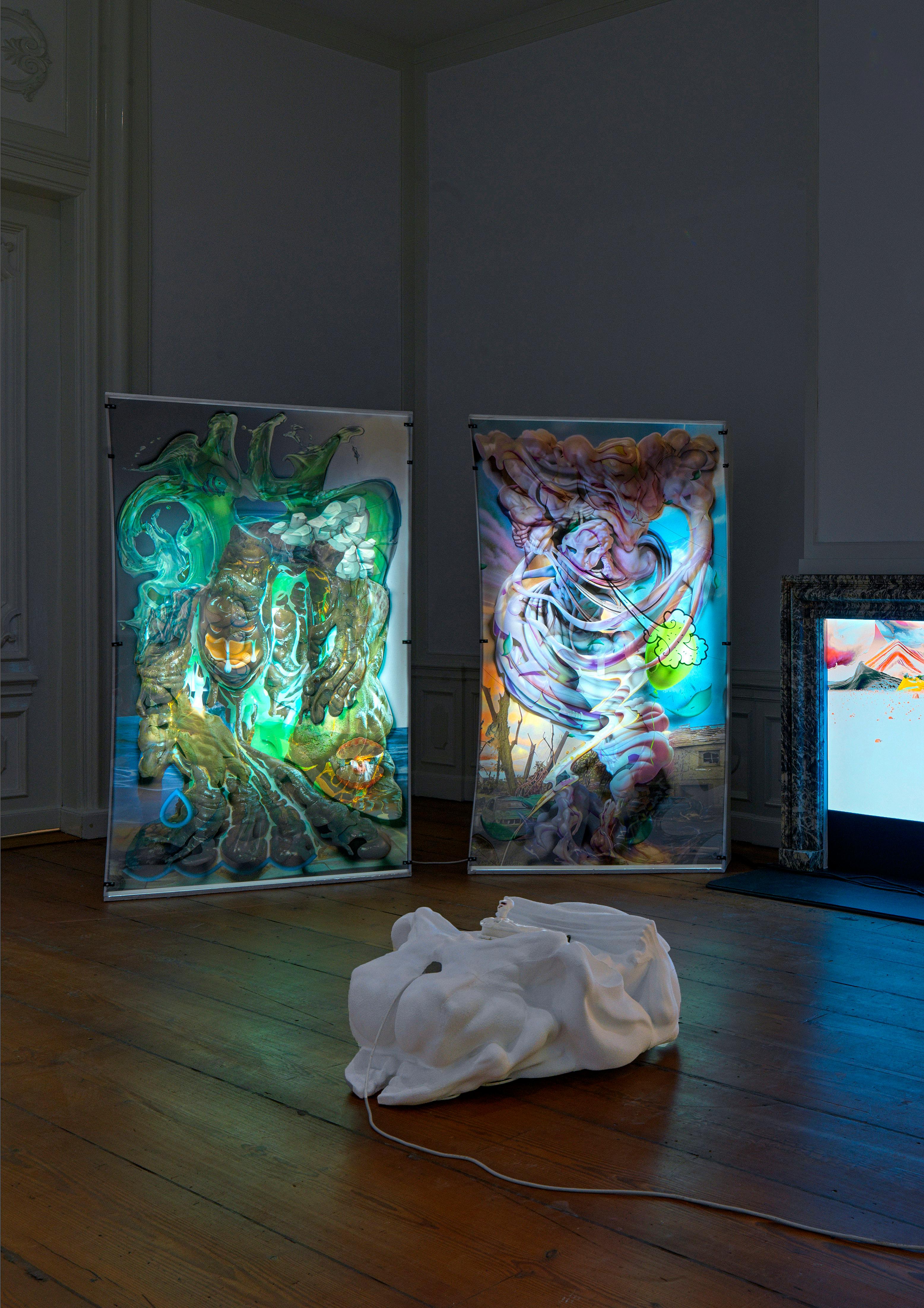
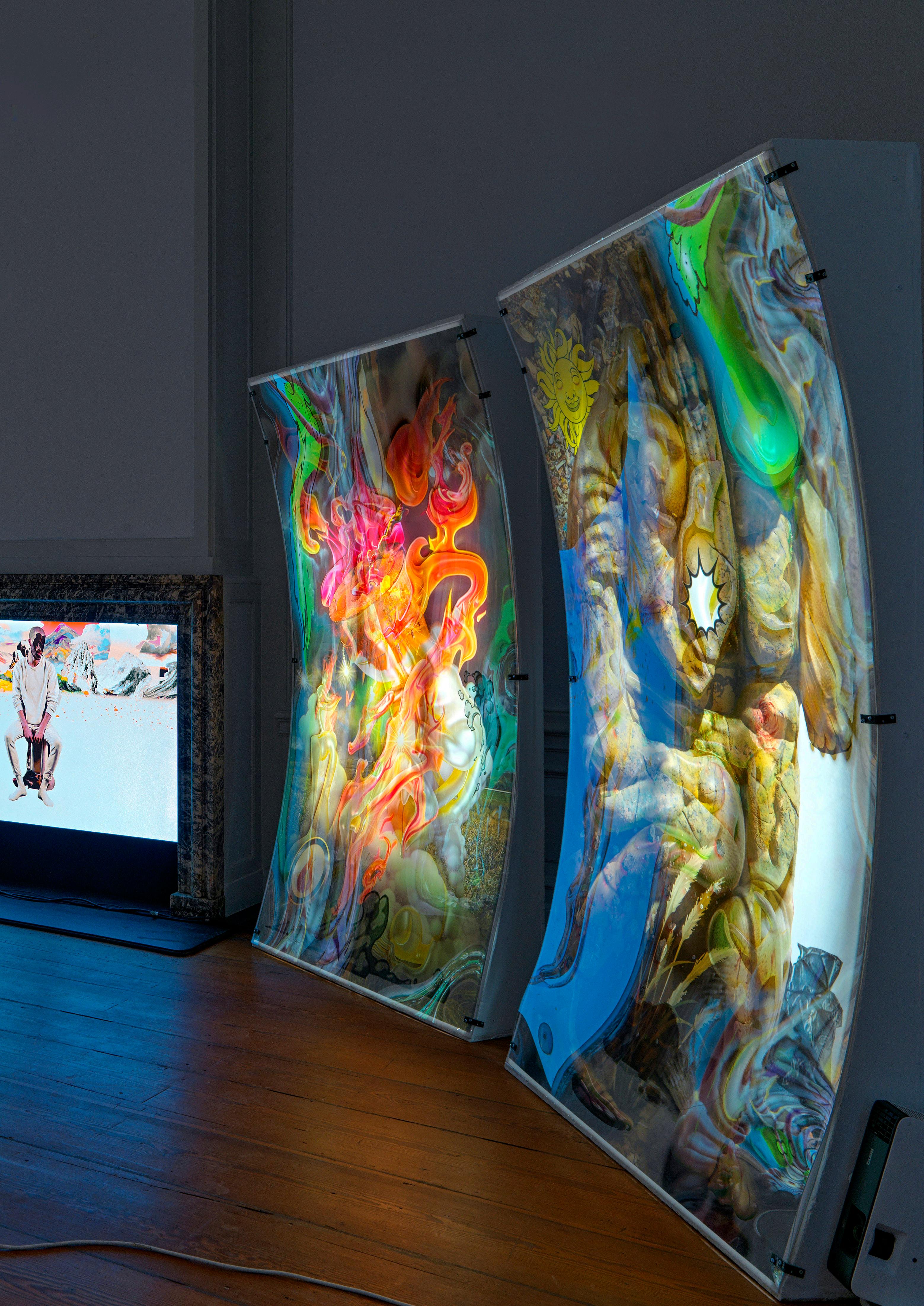
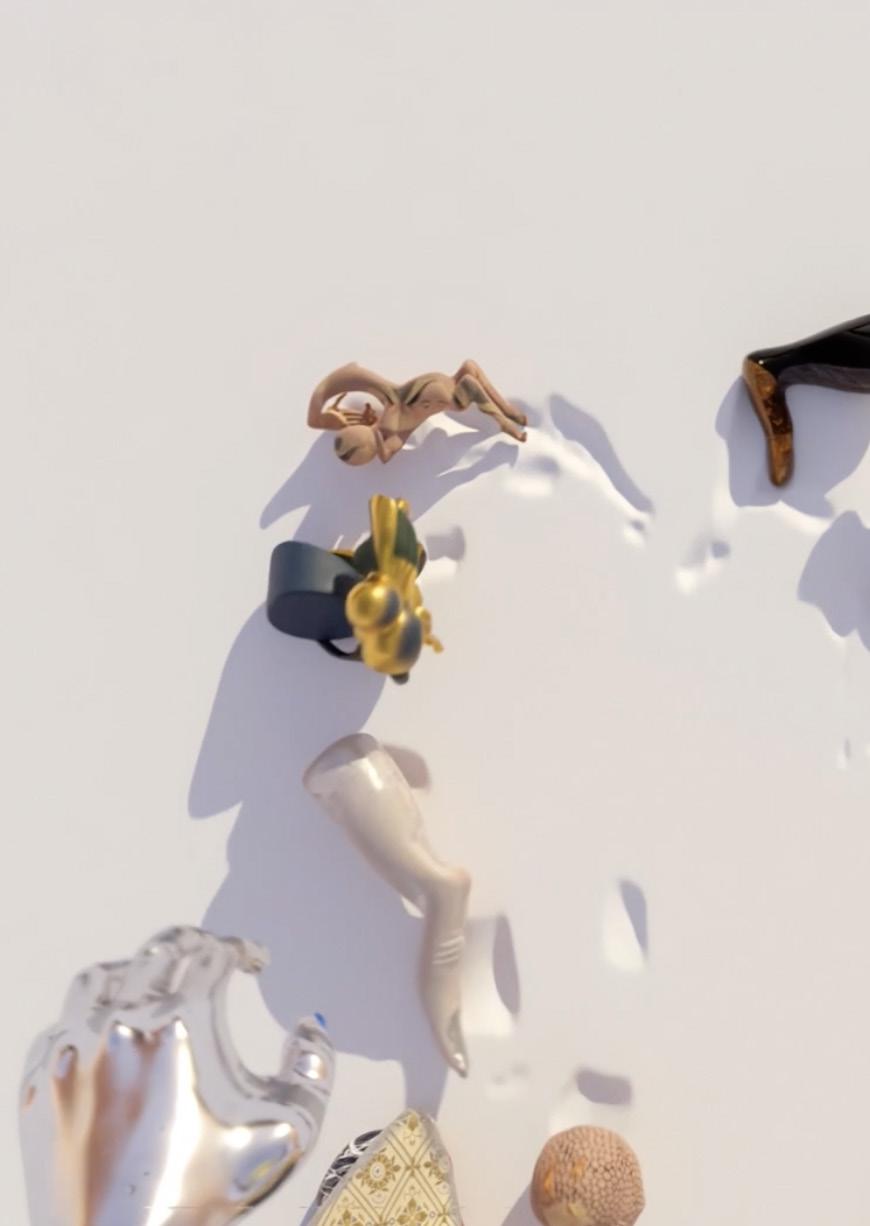
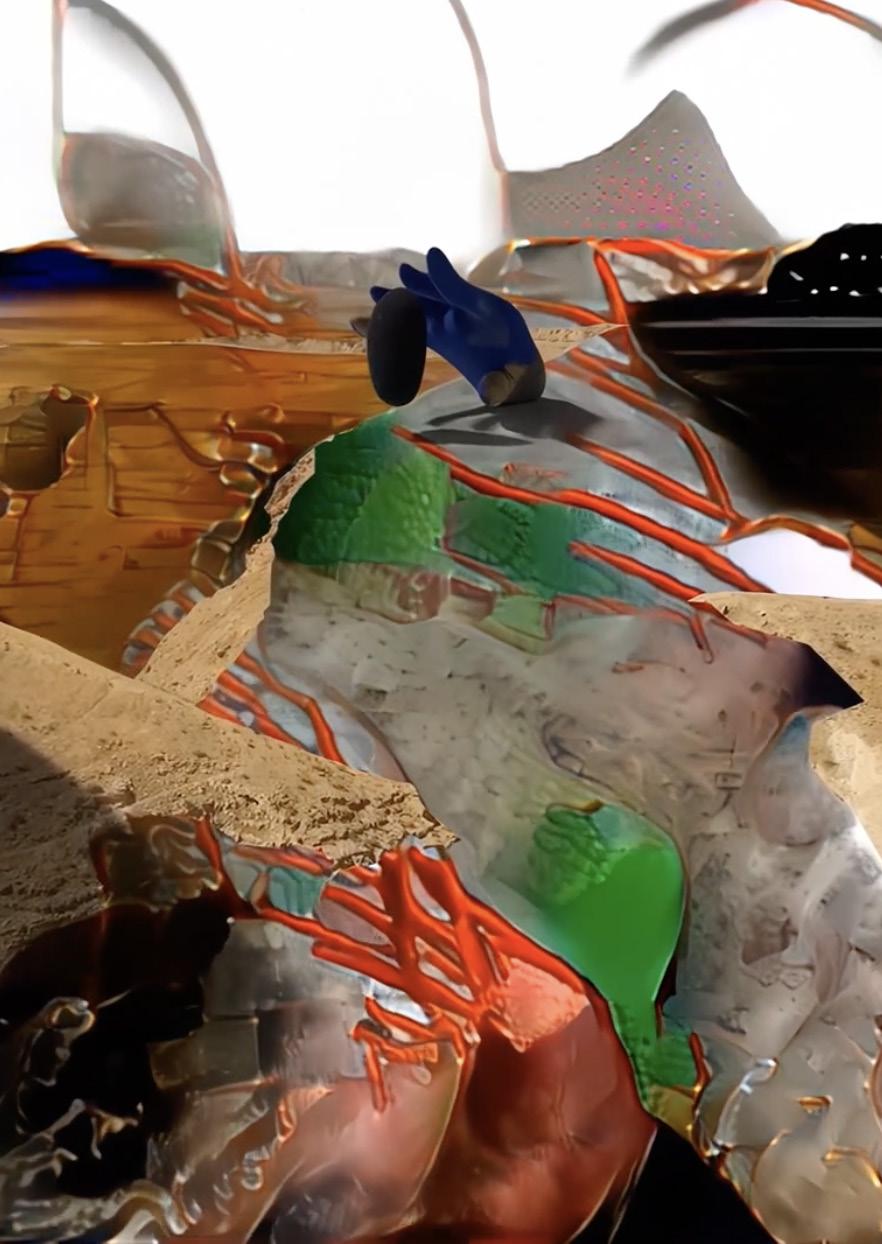
A large part of Bray’s practice revolves around the creation of paintings and the continual evolution of his video Morpher (2018 – ongoing). Navigating through bright shape shifting landscapes, this video work acts as the spineand living archive of Bray’s artistic practice. Like a living organism, Morpher it is continuously evolving, and the many characters seen across his paintings become props in an extending reality where they can be activated differently. Interacting with the backdrop and stage, his otherworldly images are always at the edge of transparency and concealment. He is renowned for showing the viewer precisely how the work is constructed, and what is essential to him is the story to tell as much as the way to tell it. By doing so, he invites us to reflect on the transformation of production processes and the alteration of their narratives, revealing their ability to force us to question our relation to materiality and reality.
Like a living organism, Morpher is continuously evolving, and the many characters seen across his paintings become props in an extending reality where they can be activated differently. The paintings on the aforementioned opposite wall, are autonomous pieces as much as symbolic storyboards for the video Morpher . The paintings recurrently make an appearance within the video series, existing within the pre-production space as announcers of what may come, as much as props later within the video as reminders of these interconnected complementary processes.
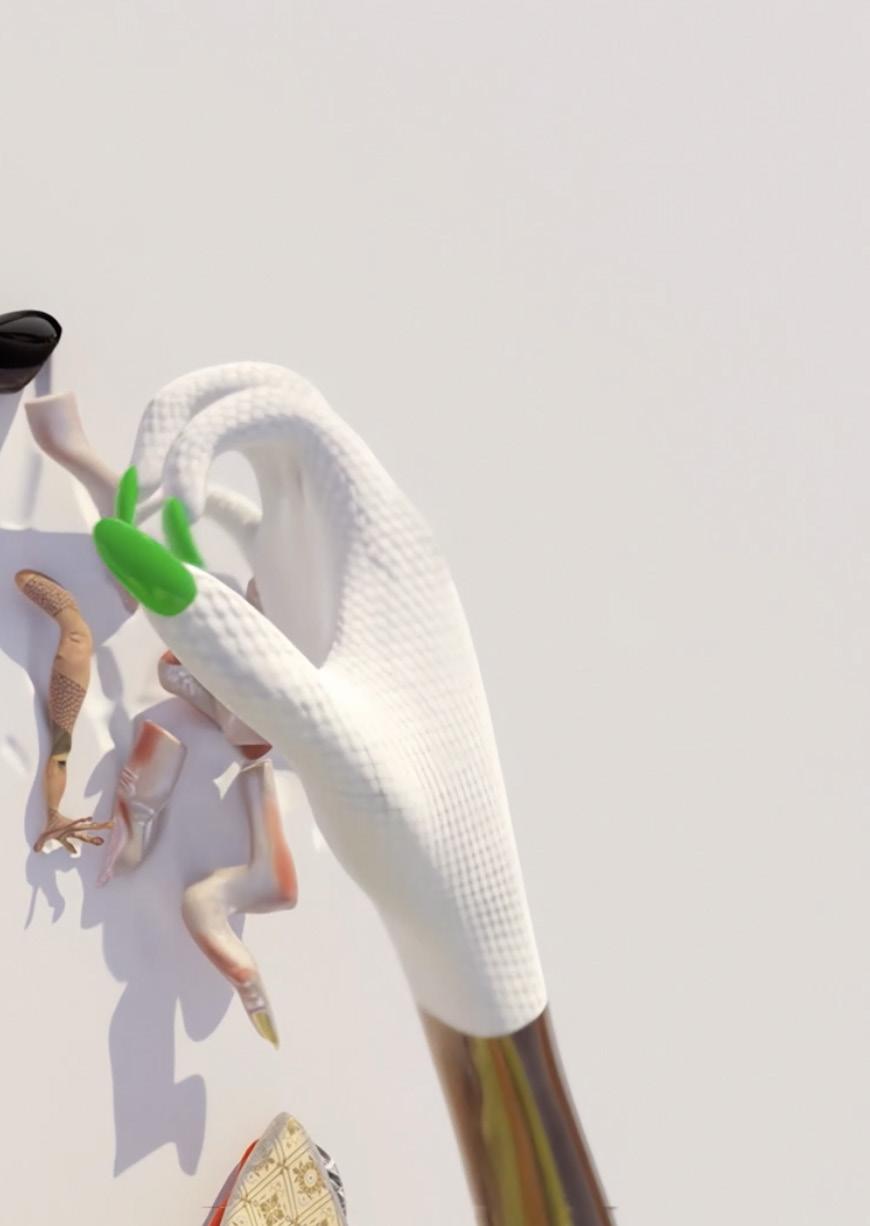
Morpher (2018-ongoing)
Video: 11m04scds
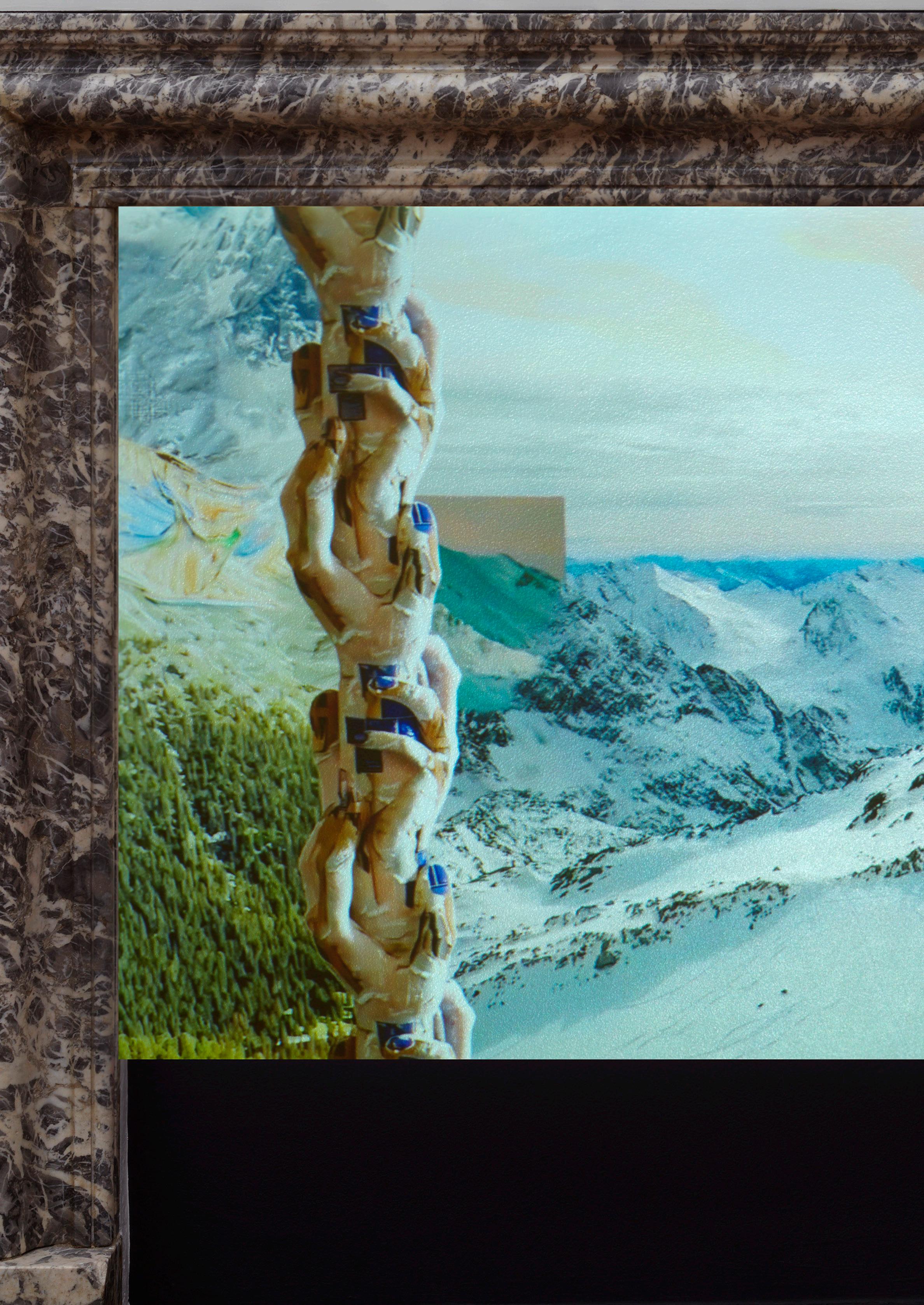
Still from Morpher (2018-ongoing)
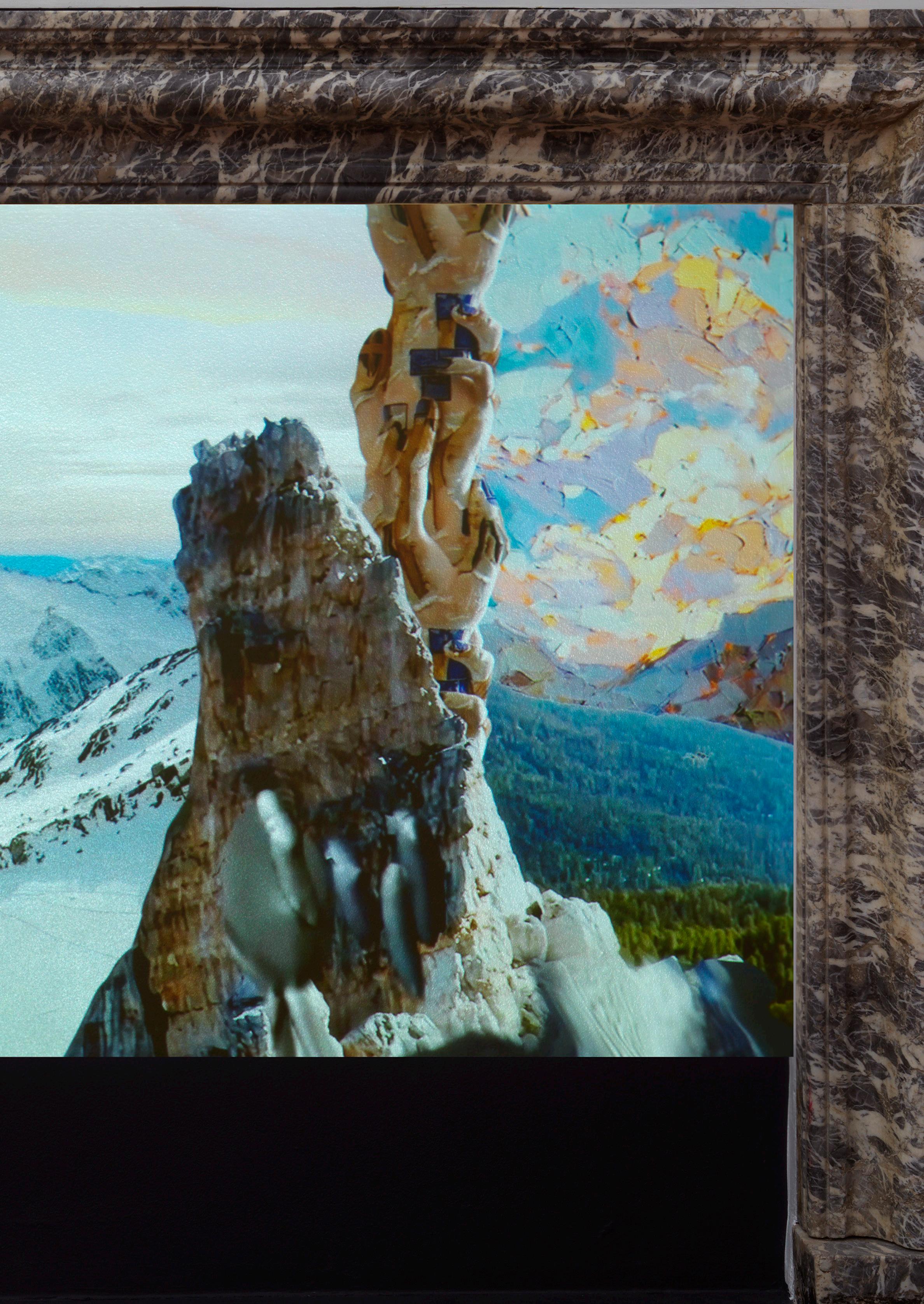
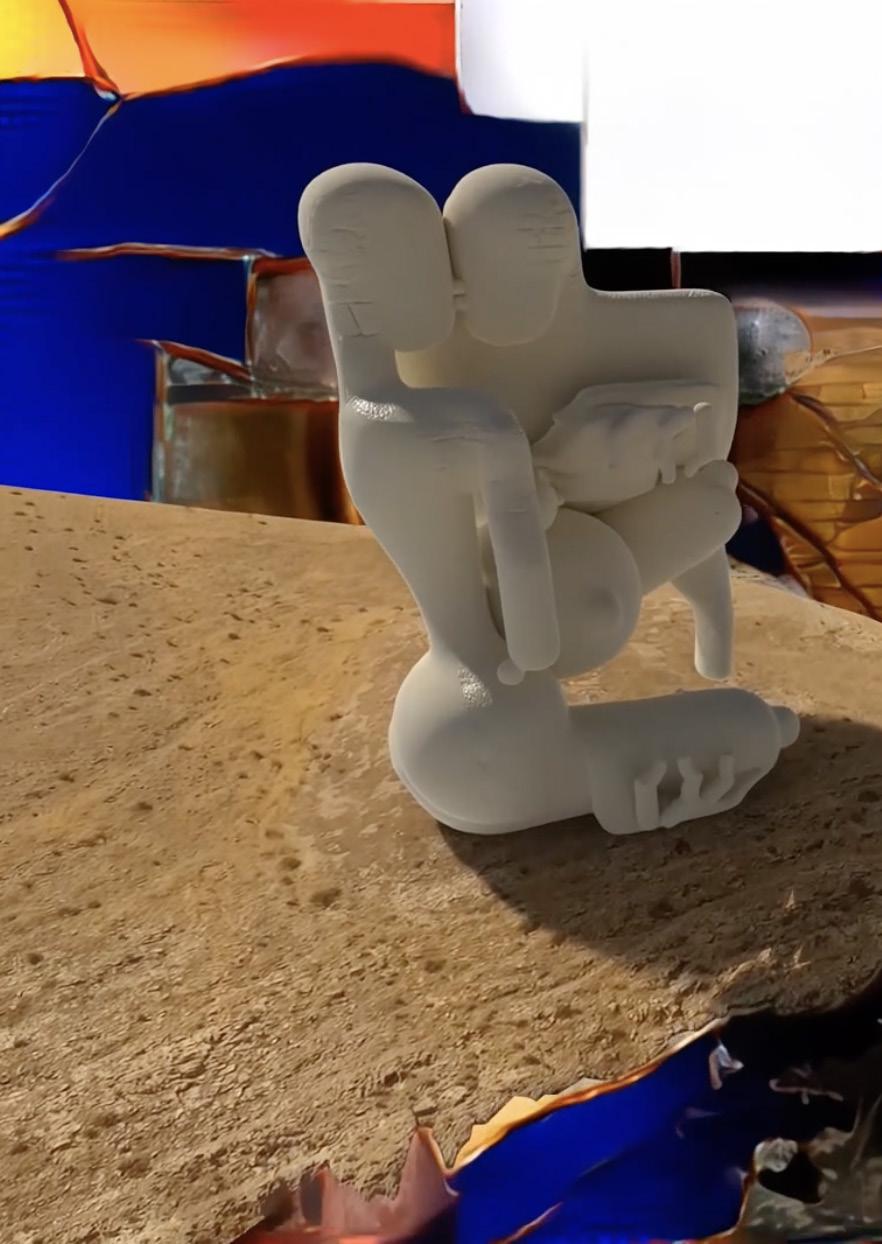
Still from Morpher (2018-ongoing)
eCar-us (2023)
Full Installation

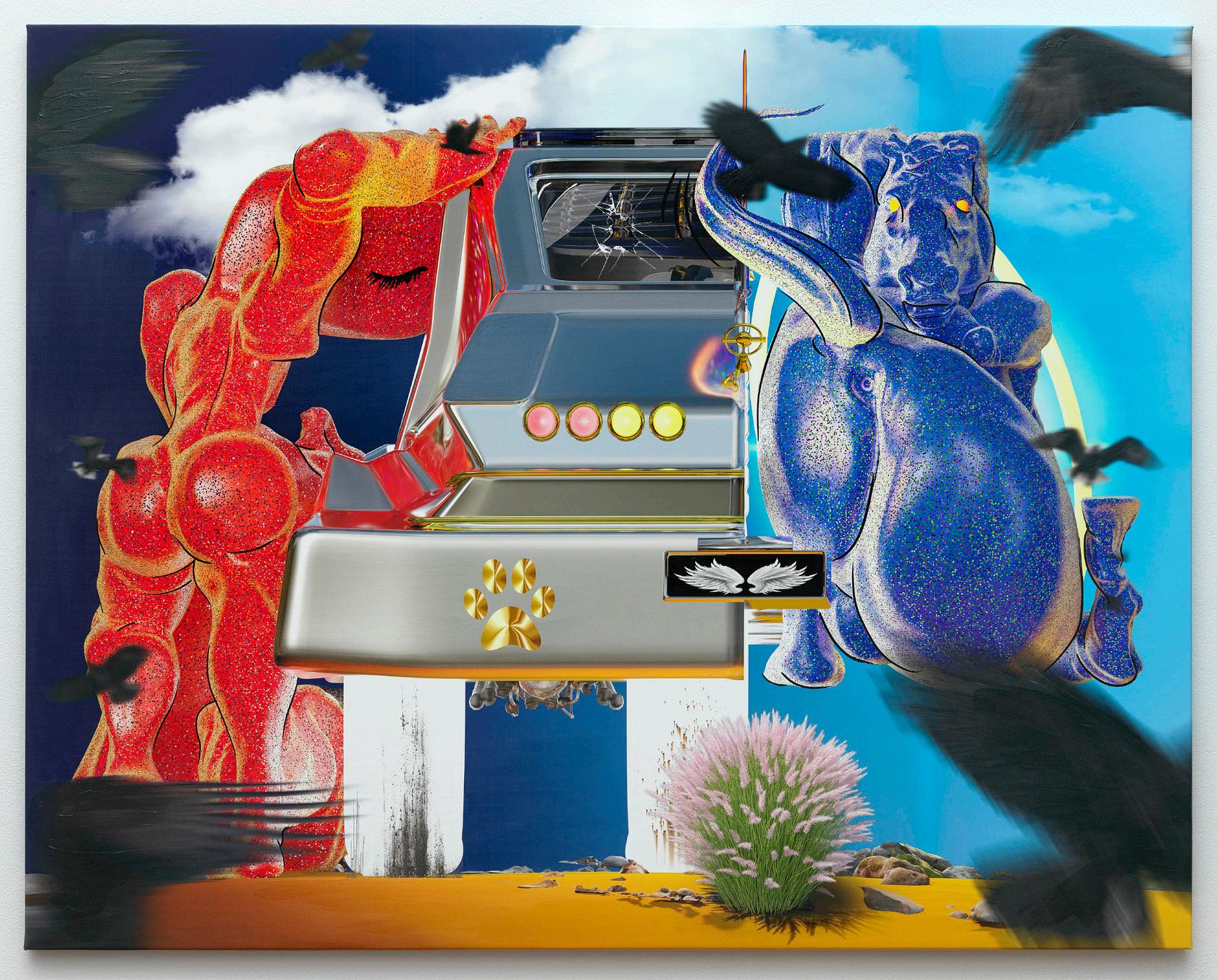
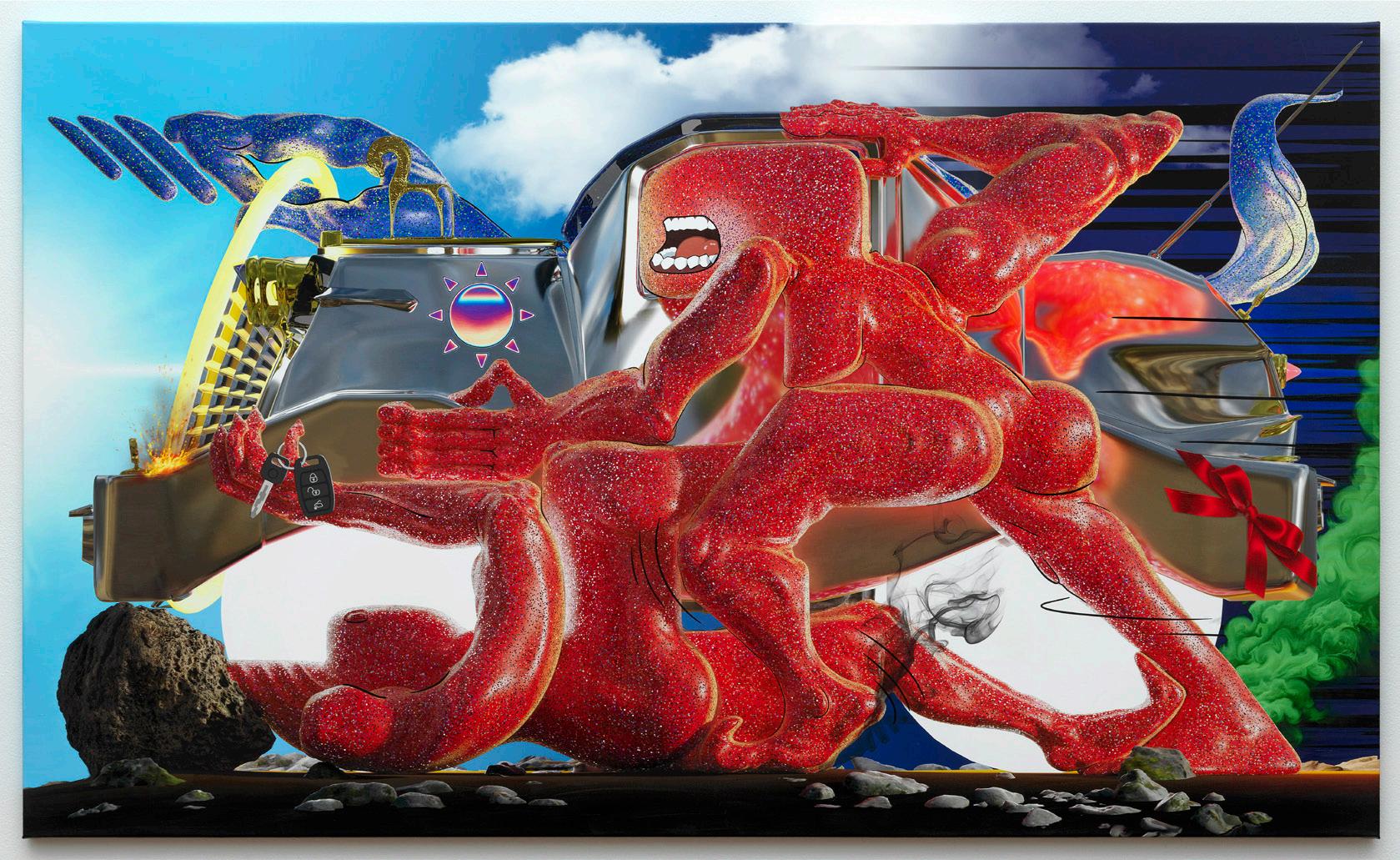
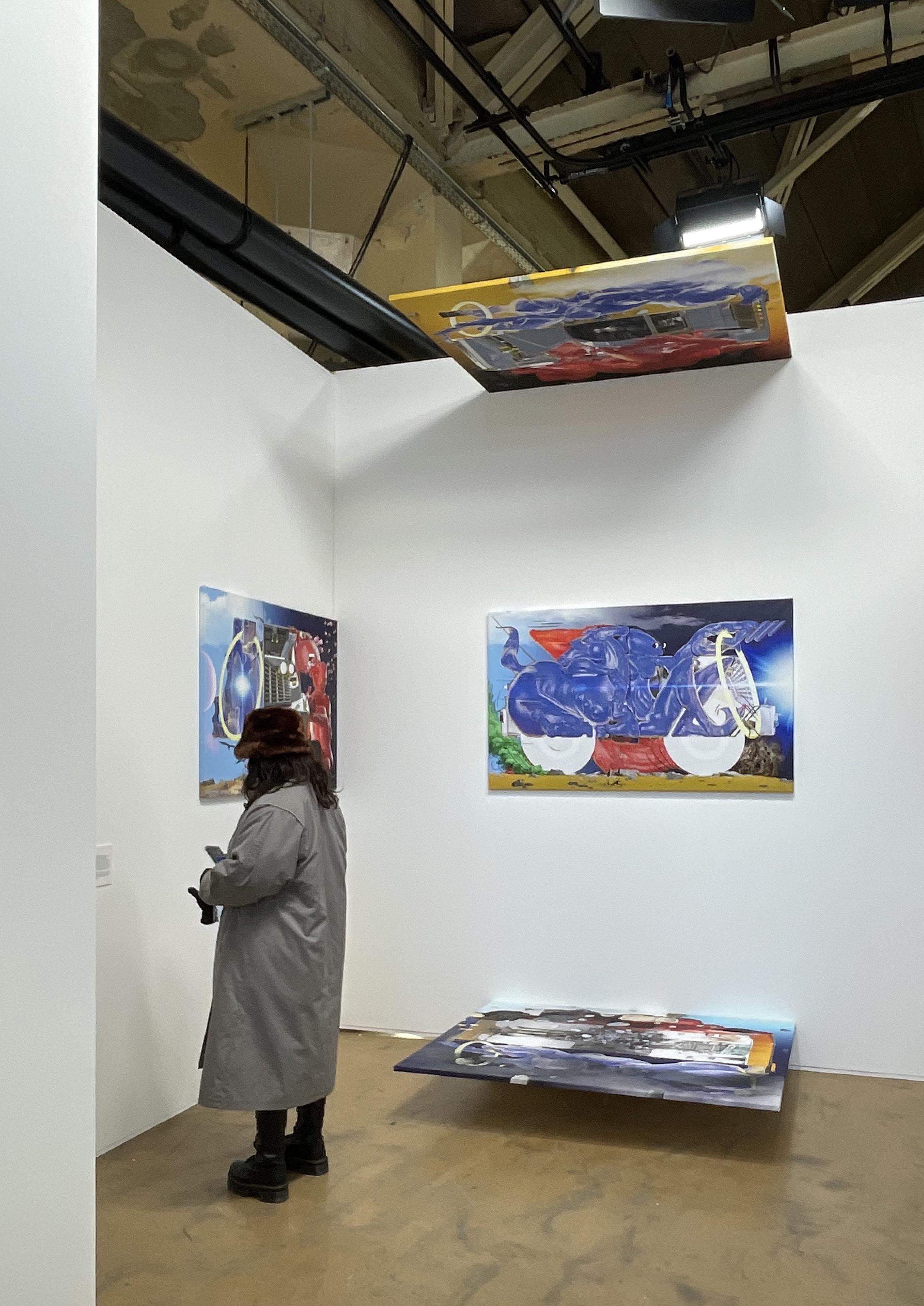
3D modeling image references are a set of images that help artists to have a deeper understanding of the object they are modeling in a 3D software. These images are often the front back, right, left, up and down representation of the object they are digitalizing. For this NN award installation, a painting has been captured in these 6 different angles as a way to display, comment and bring together the making of the object and the object itself. It is a simple gesture of distanciation towards a still image built primarily in volume, but also a strategy to hide and reveal parts of the narrative which is usually left in the shadows.
Group show Mixed Feelings at
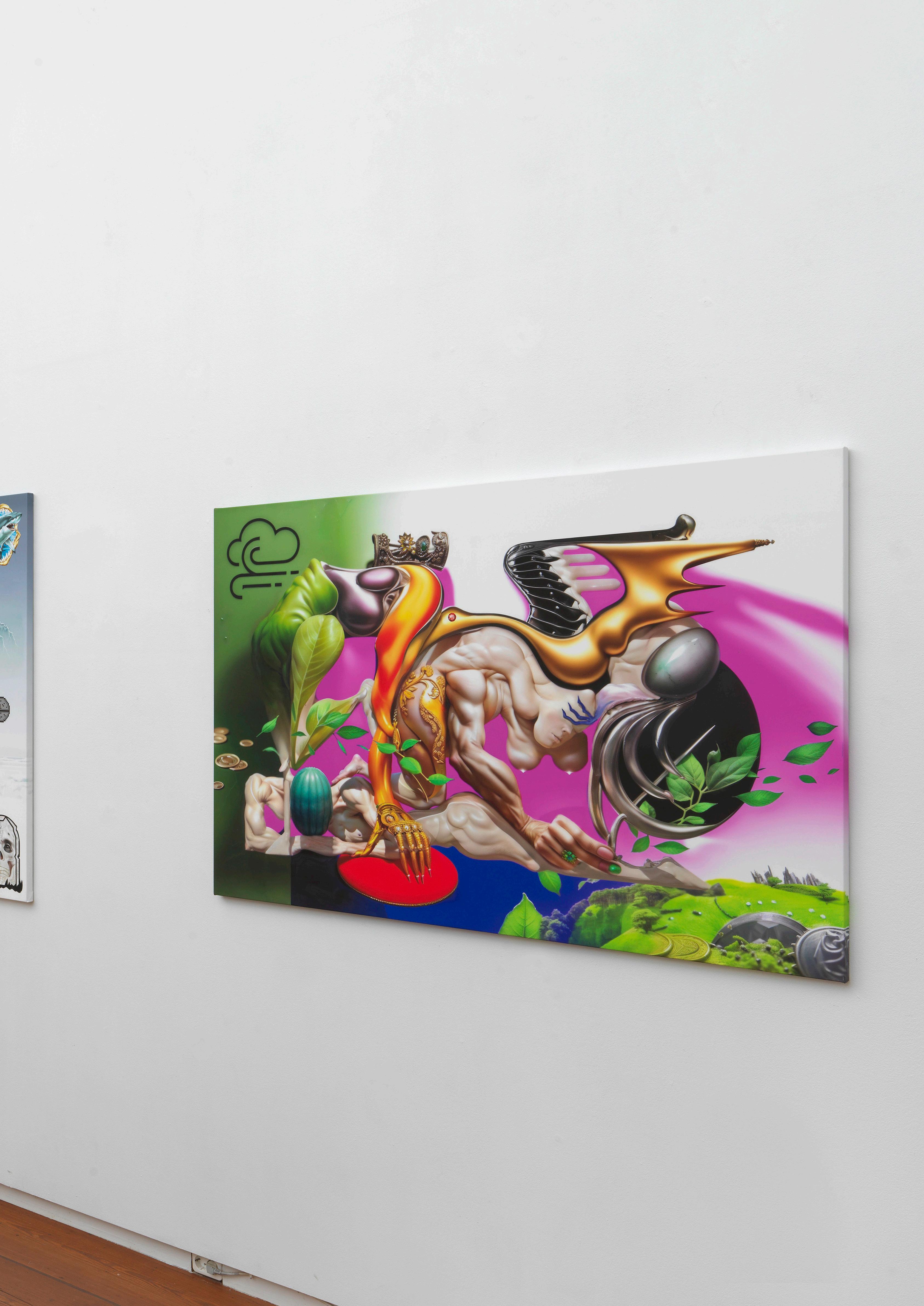
from July–August 2023.
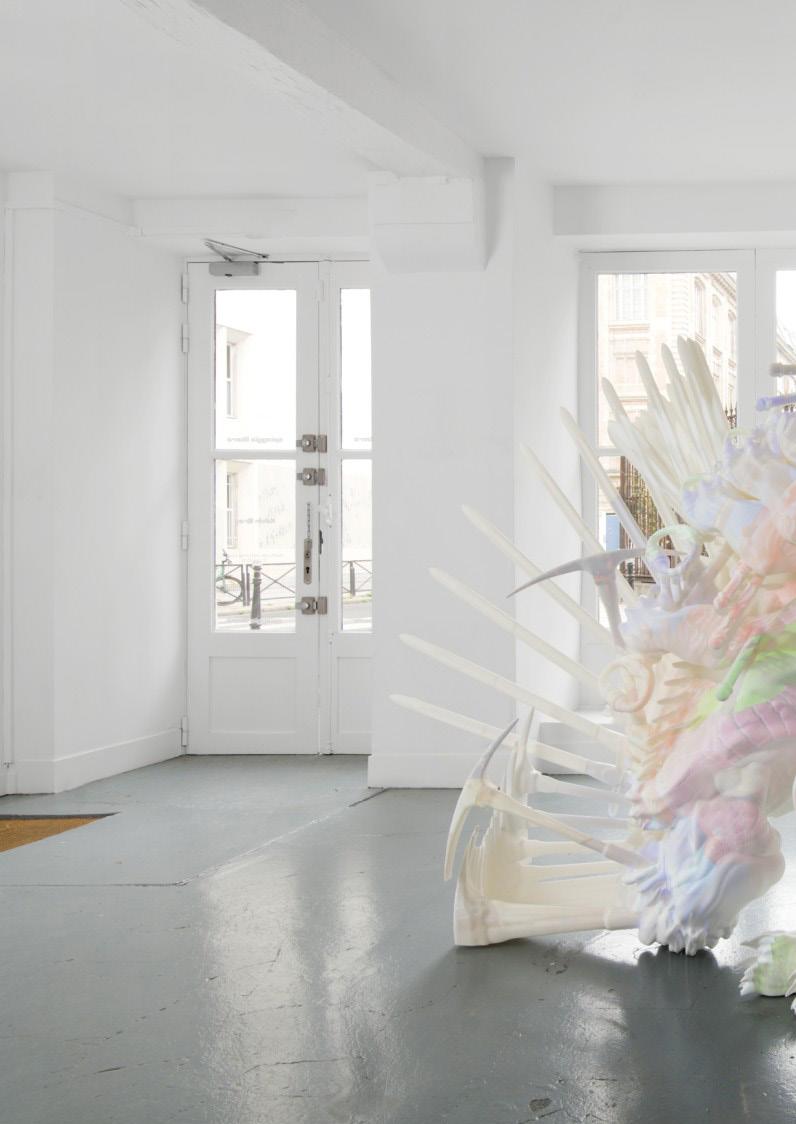
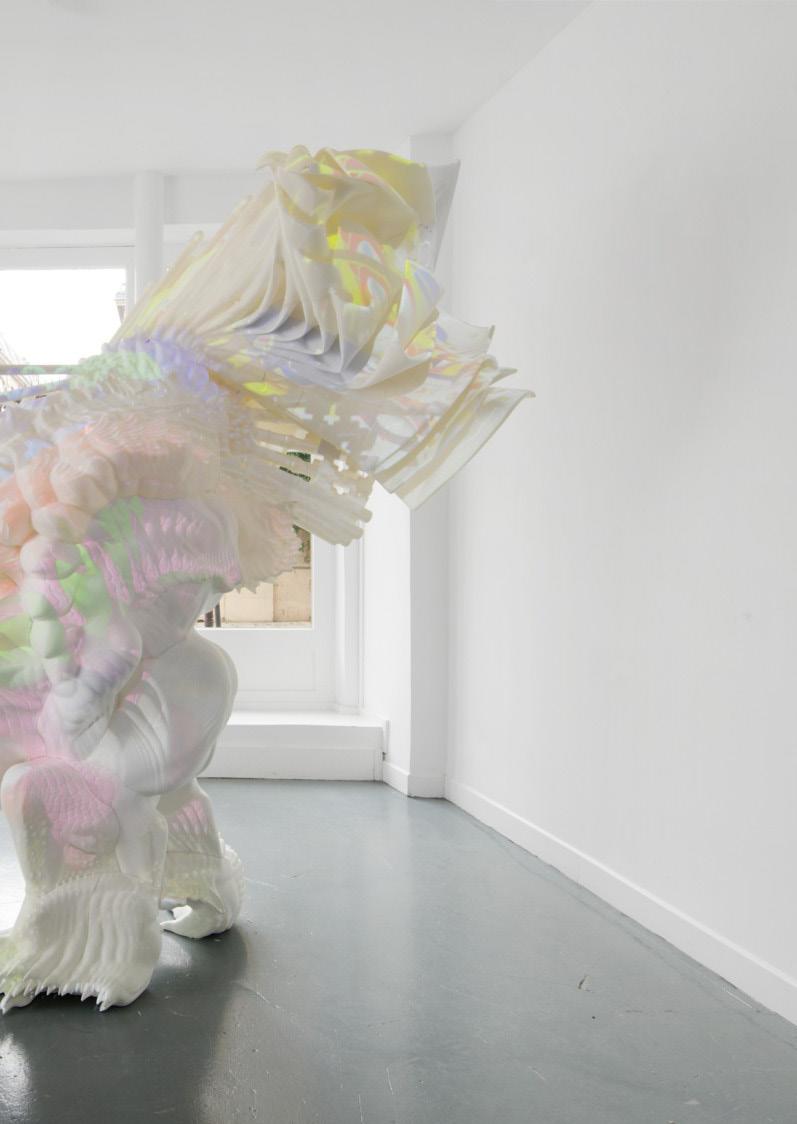
Death Jam and Living Juice is the title of Kevin Bray’s recent solo exhibition at Spiaggia Libera, a contemporary art gallery in Paris, that was only established since 2024. As the combination of death, yet living juice, signifies, is Bray’s interest in the notion of zombification for this exhibition. Specifically how this seems to permeate a multiplicity of strategies shaping authority, a power that tends to reject our will.
Crude oil, a once-living dark liquid, is extracted from its natural graveyard only to be enslaved. The digitization of our professions and algorithms scrutinize our behaviours to reshape them, and by feeding on our internal vulnerabilities they create addictions and polarizations.
Through his artworks, Bray immerses us in the corrosive and eroding nature of triumphant thought patterns that govern our worlds and societies, exploring the various forms of exploitation, whether they occur on living or dead bodies, and transmutes the gallery space while doing so.
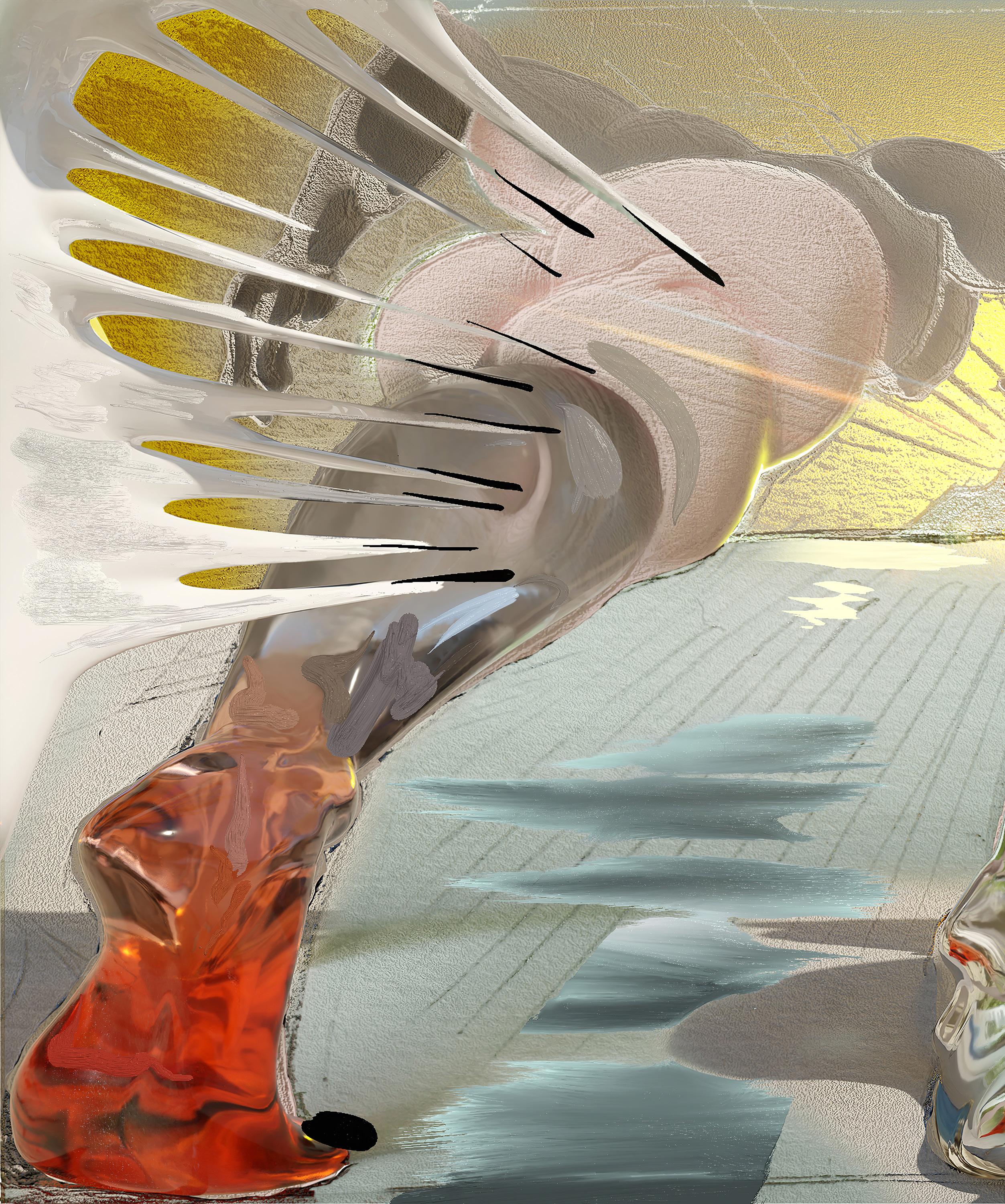
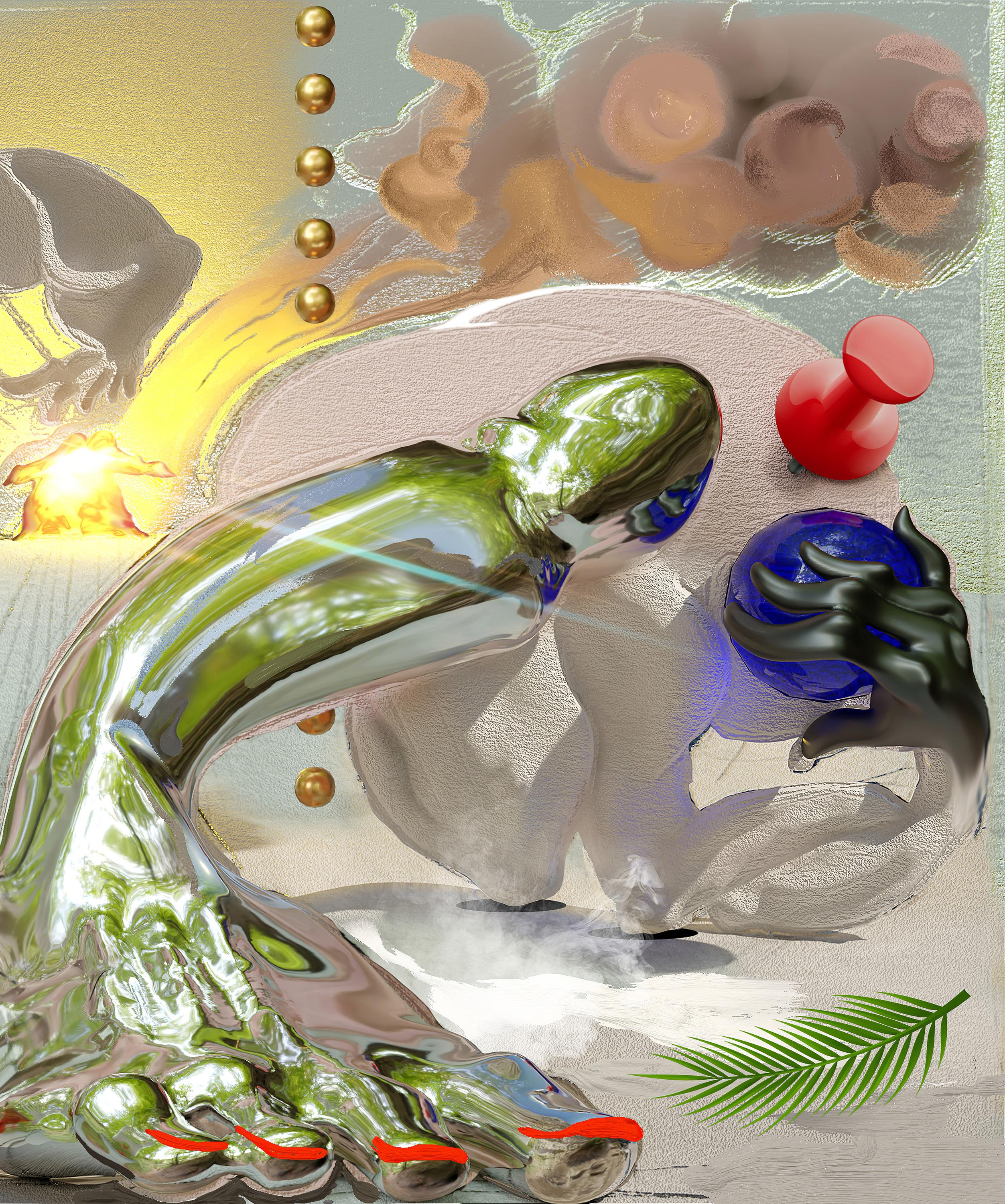
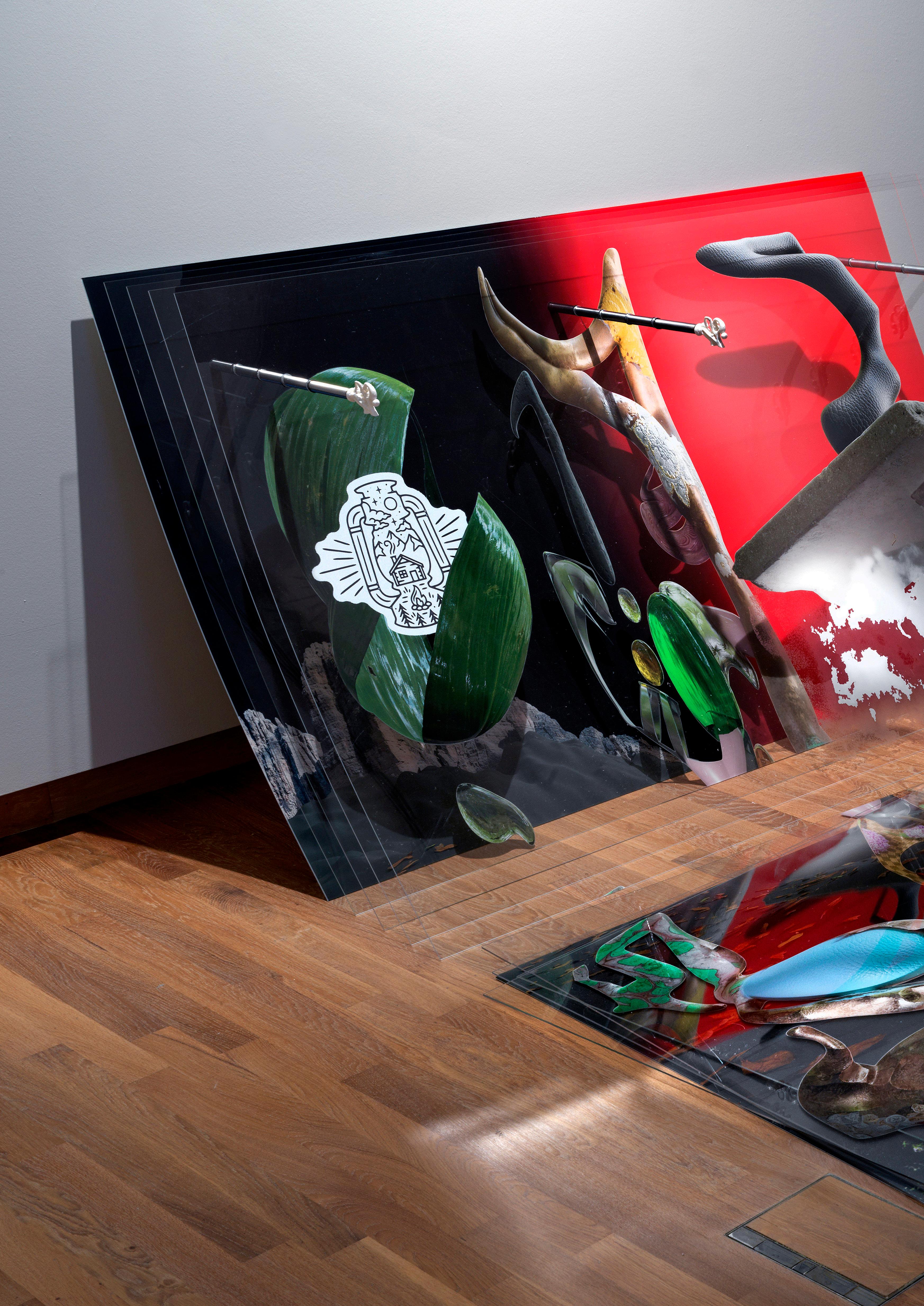
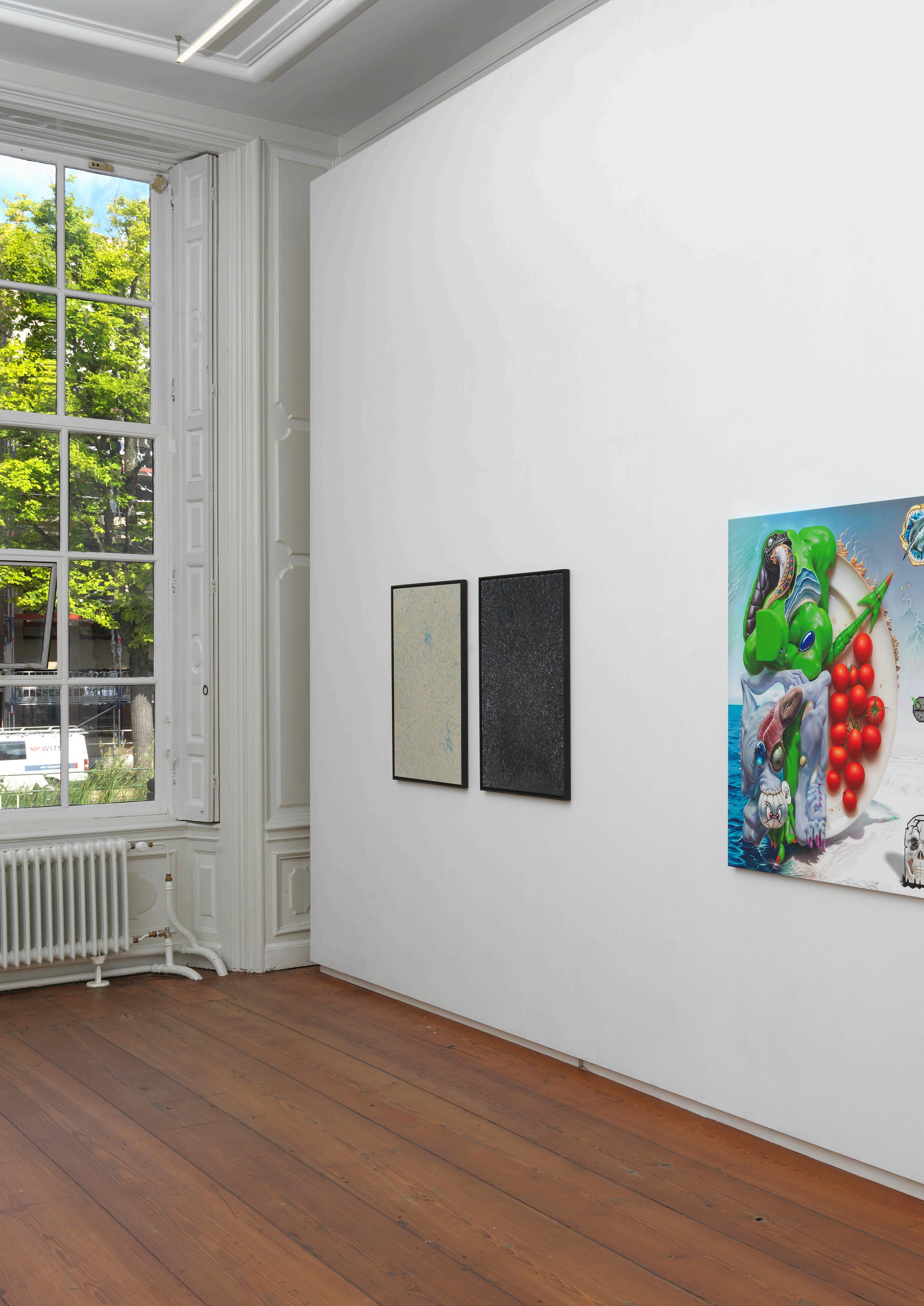
Details of show Breakdown After Before at Dordrecht Museum in Dordrecht, The Netherlands (2021).
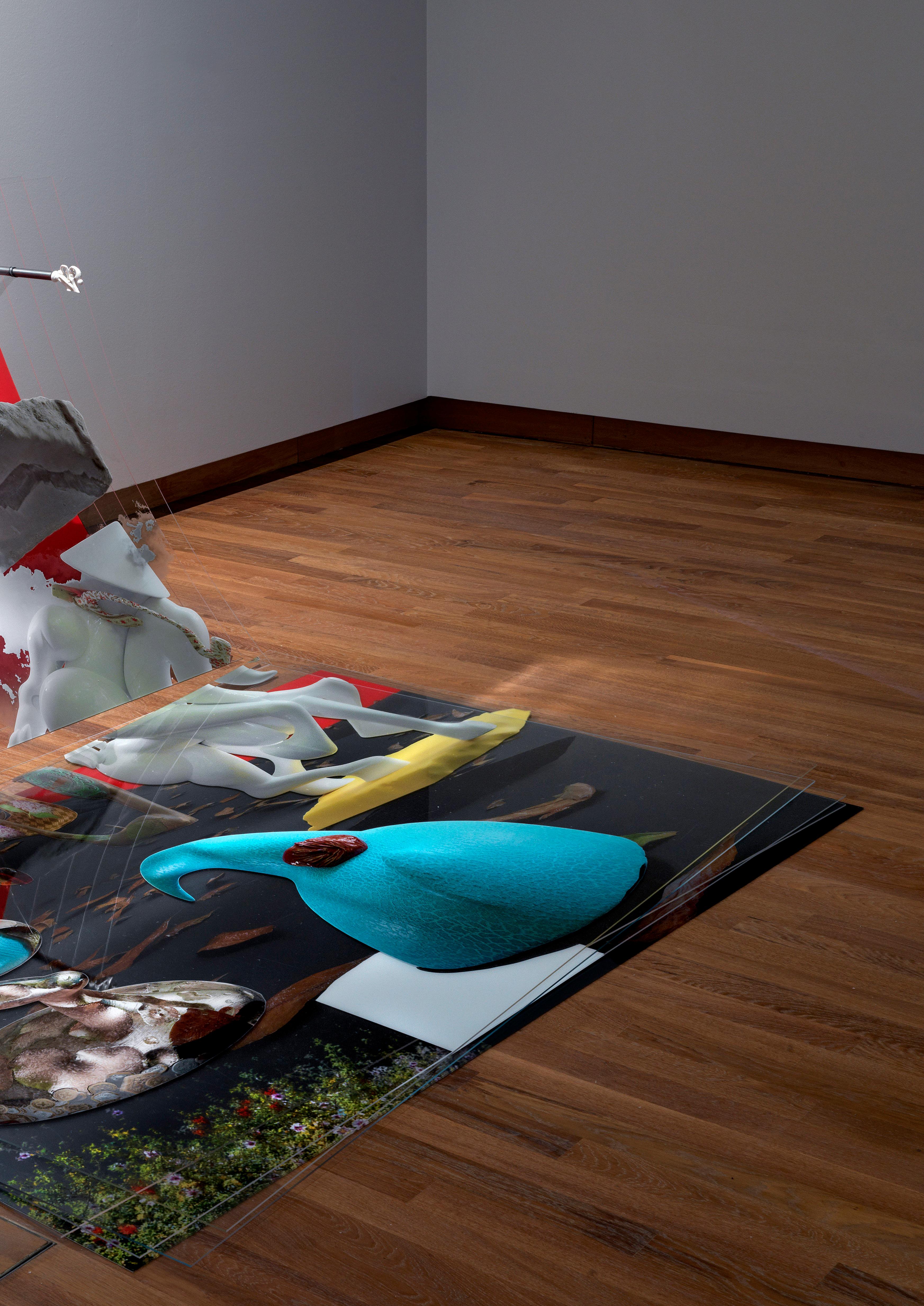
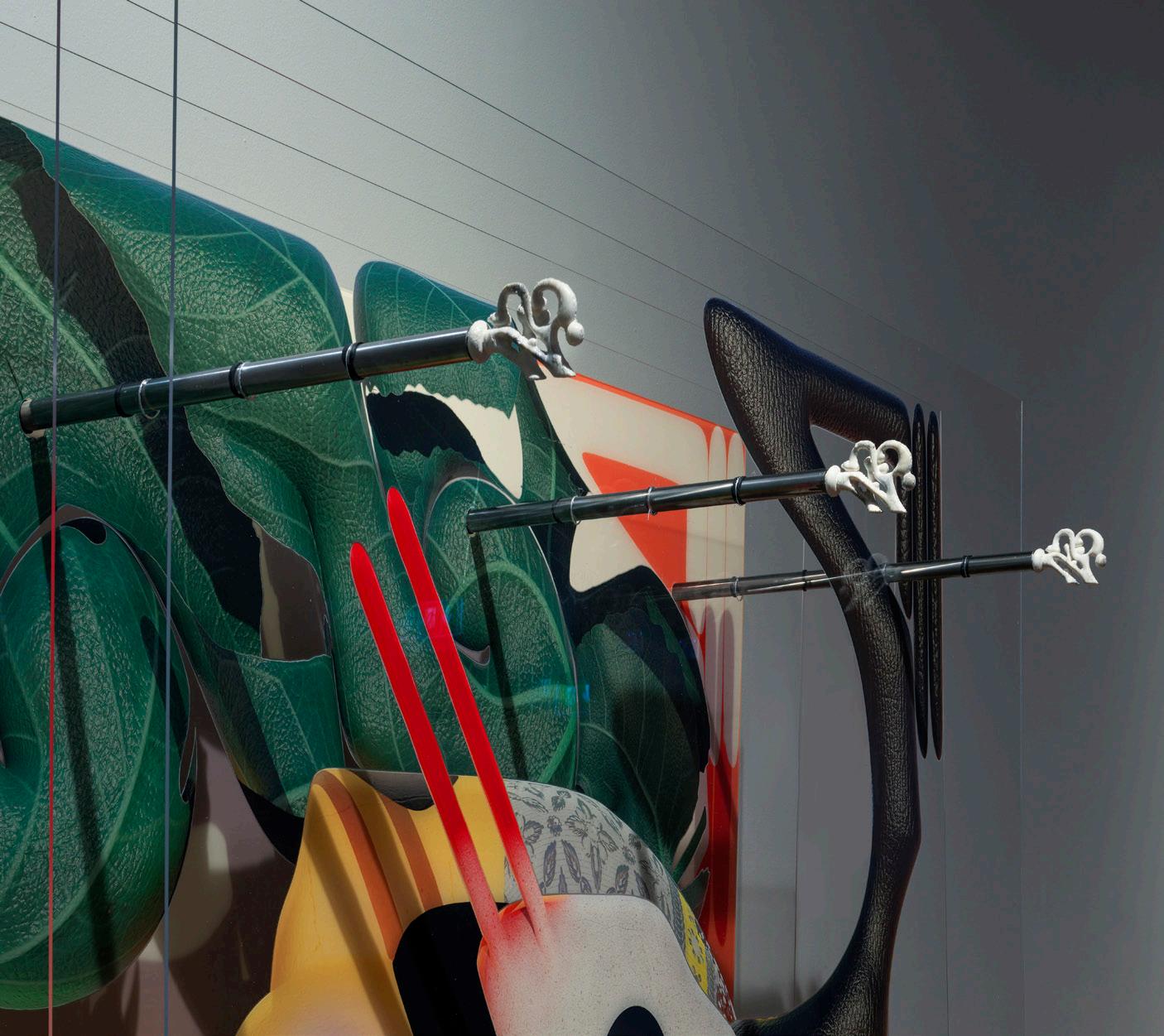
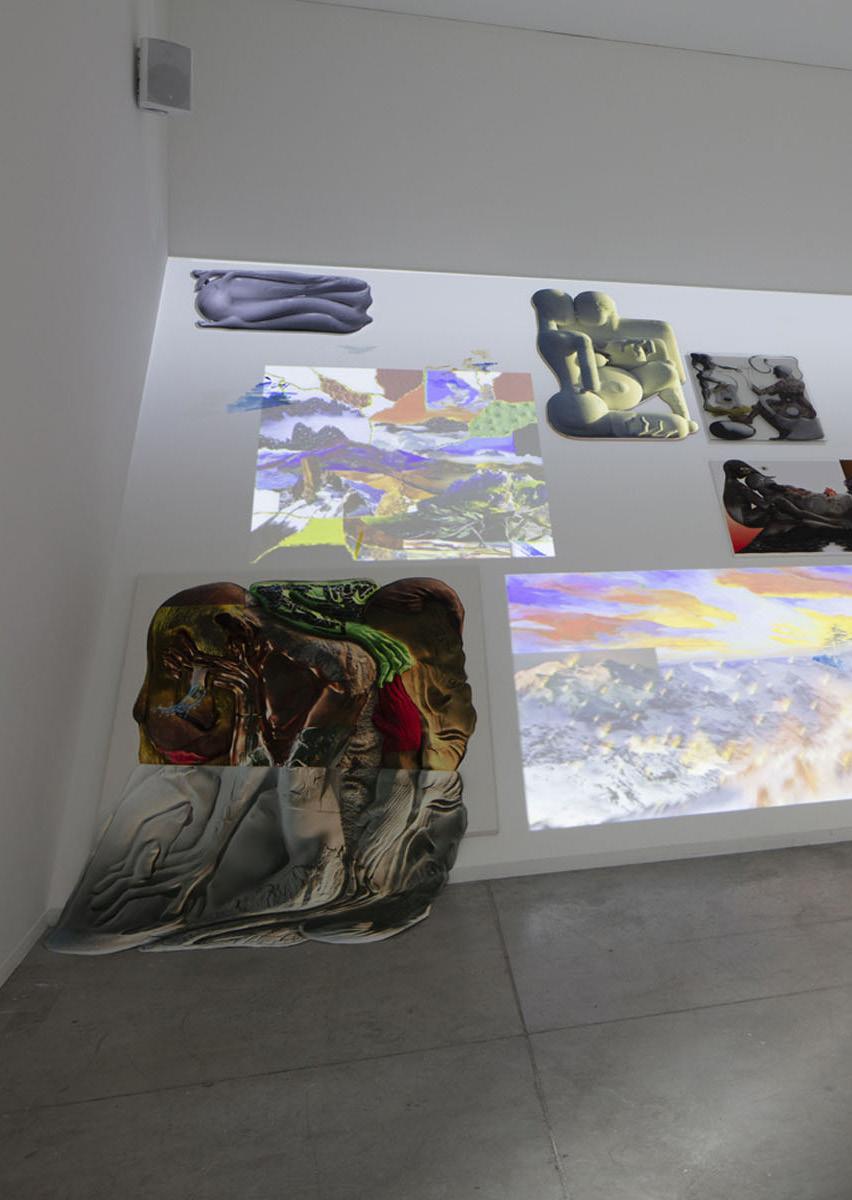
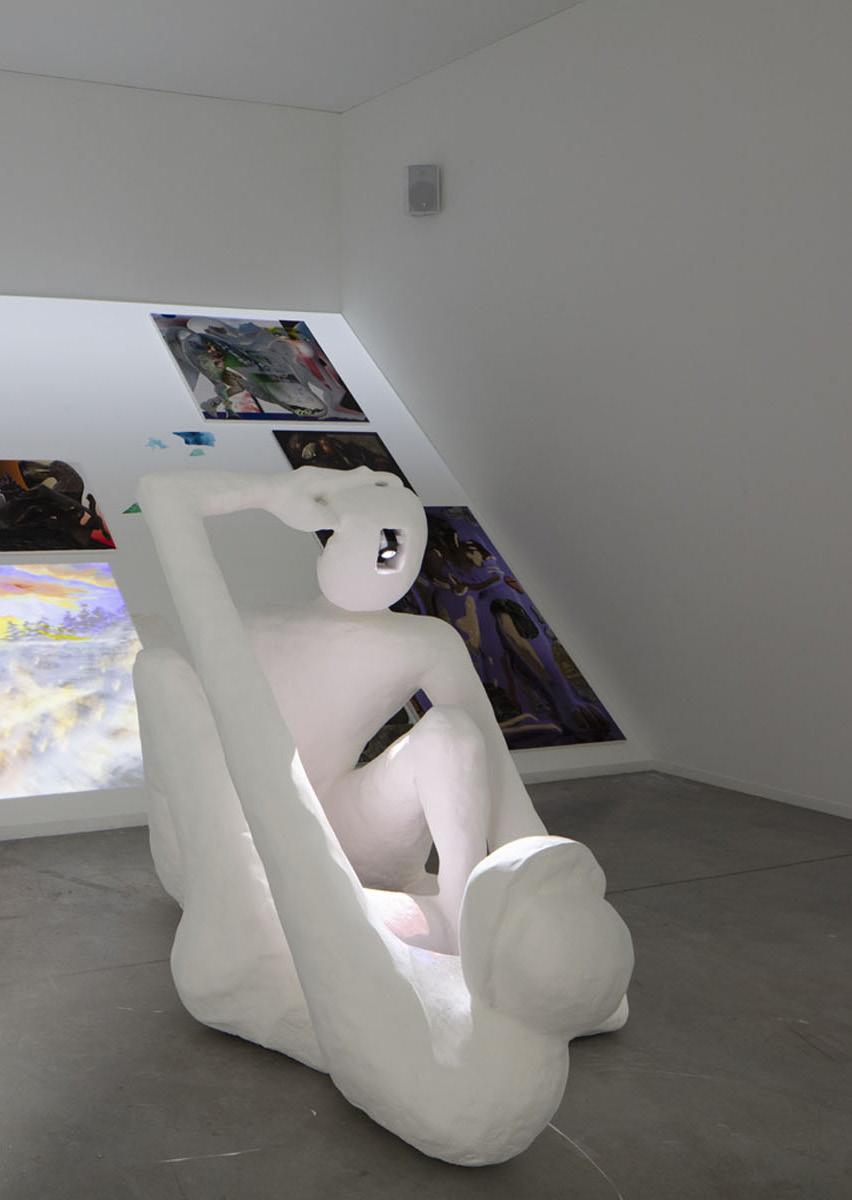
It is leaking (2020) Digital print and acrylic on canvas