“Love the Lord your God with all your heart and with all your soul and with all your mind… love your neighbor as yourself.” Matthew 22:36-40
Dear partners in ministry,
Grace and peace from Jesus Christ, our Savior and Friend, be with you.
On May 28–30, 2026, United Methodists of Upper New York will gather for the 2026 Annual Conference at the Oncenter in Syracuse.
As envisioned in our Book of Discipline, the Annual Conference session is a sacred time of Christian conferencing in which we:
• Worship the Risen Christ and grow as disciples.
• Celebrate the lives and ministries of those who have served faithfully.
• Welcome a new class of spiritual leaders.
• Reflect on the realities, challenges, and opportunities of our shared ministry.
• Discern and act on important resolutions.
• Organize our mission and ministry for 2026–27.
This year’s session marks the beginning of a three year journey into active, embodied discipleship. Rooted in Love Boldly—the first movement of our newly adopted denominational Vision Statement—our theme, “Rise Up,” calls us to live our faith with passion, intentionality, and courage.
In preparation for our time together, I invite you to:
• Pray for God’s guidance and blessing over our gathering and our work.
• Prepare by reading the PreConference Workbook, participating in information sessions, and sharing these resources with your congregation.
• Participate by arriving ready to be fully present and to offer the best of Christ’s grace, wisdom, and love to one another.
I look forward to gathering with you in Syracuse for a meaningful time of Christian conferencing.
Together in Christ’s mission,
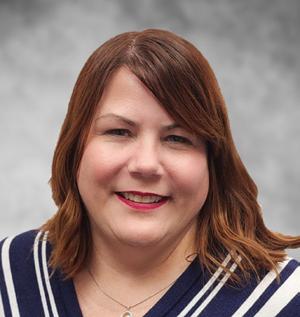
Bishop Héctor A. Burgos-Núñez Resident Bishop
Letter from Upper New York Conference Lay Leader
Hello to all my siblings in Christ and fellow United Methodists of Upper New York,
Rise Up! Love Boldly. What words to live by—especially after all we have experienced this past year. We are called to live into our new vision statement: Love Boldly. Serve Joyfully. Lead Courageously.
Matthew 22:36–40 is one of the most important scriptures in my life, because it is all about love.
When Jesus is asked to name the greatest commandment, He doesn’t offer something new. Instead, He brings people back to the very heart of faith.
To love God with all our heart, soul, and mind means that faith is not just what we believe, but how we live, think, and choose. Love of God involves our emotions, our devotion, and our understanding. It is whole-life faith.
Then Jesus adds something radical: love your neighbor as yourself. He does not separate love of God from love of people. In fact, He tells us they are inseparable. We cannot claim one without practicing the other.
When Jesus says, “on these two commandments hang all the law and the prophets,” He is reminding us that every rule, teaching, and tradition finds its meaning here. If our faith does not lead us toward deeper love—of God and of neighbor—then we have missed the point.
This passage reminds us that discipleship is not about getting everything right. It is about living love out loud, in ways that reflect God’s grace to the world.
I am excited for Annual Conference this year as we come together to Love Boldly We, as the claity of this great conference, are called for such a time as this. Imagine a world where all people are loving boldly in Christ’s name. That is the hope and dream I hold for us as a conference.
I look forward to seeing you all May 28-30, 2026.
In Christ,
Jessica White Conference Lay Leader
Upper New York Annual Conference
The United Methodist Church
Creation Care at Annual Conference from the UNY Creation Justice Team
As we prayerfully prepare to gather for holy conferencing, we need be aware of the effects of our travel and gathering have on God’s creation—the only home we will ever know. The annual conference expects all participants to consider the following steps:
1. Transportation choices: Travel by the cleanest means your schedule will allow. Harvard University estimated that, globally, one in five human deaths are due to fossil fuel air pollution. Carpool if possible. Average greenhouse gas emissions per passenger-mile traveled are roughly 419g for bus, 323 for gasoline vehicle, 165 for electric vehicle, 154 for rail, and 46 for bicycle. Thinking of traveling by EV? Plugshare.com lists four chargers at the Oncenter of type J-1772.
While attending annual conference, utilize the free shuttles from the hotels to minimize the number of cars traveling each day to the Oncenter.
2. Hotel selection: If a hotel is in your plans, prioritize one practicing sustainability. Check their website or call the front desk and ask how the hotel is minimizing waste and pollution. Once you choose an environmentally responsible hotel, be sure to turn off the lights and adjust the heating/cooling while you’re away for the day. Bonus feel-good gesture: Share your experience with others, helping them plan for AC2027.
3. Reducing plastic waste: Bring a reusable coffee cup, water bottle, and utensils to the conference…and a set for a friend! Health fact: If someone drinks ten-fluid ounces of coffee in a cup made of polyethylene daily, they could ingest 363,000 microplastic particles annually. Little-known fact: Disposable “paper” cups are usually lined with wax, so they cannot be recycled or composted.
4. Minimizing printing: If printing is necessary, try to do so using both sides of each sheet, and print only the pages needed. Print 100% recycled paper and be sure to recycle it after you’re done!
5. Proper recycling: When you arrive, take a moment to look at the recycling bins, and learn what can be recycled.
6. Remember your connection: Be intentional about getting outside during breaks. Exposure to fresh air and sunlight helps our bodies regulate, lowering heart rate, blood pressure, and helping us have better sleep. Take time to soak up the gifts of creation, remember your connection to every other living thing we share the planet with, and give thanks to God for providing all we need in nature. Bonus action: Take your shoes off and walk on grass or concrete. Skin-to-skin contact with the Earth promotes overall health!
7. Recycling your badge sleeve/leash: After the conference, return the leash and plastic cover (if provided) for your badge, so they can be used again.
Together, we will help Upper New York and all creation flourish and remain healthy. Thank you for your care!
References:
Takeaway coffee cups release thousands of microplastic particles
Fossil Fuel Air Pollution Linked To 1 In 5 Deaths Worldwide, New Harvard Study Finds | HuffPost Impact Why aren’t paper cups recyclable or compostable if they are made from paper? | The Environmental Center Fuel shifts reduce most of the greenhouse gas emissions from transportation in the United States | Communications Earth & Environment
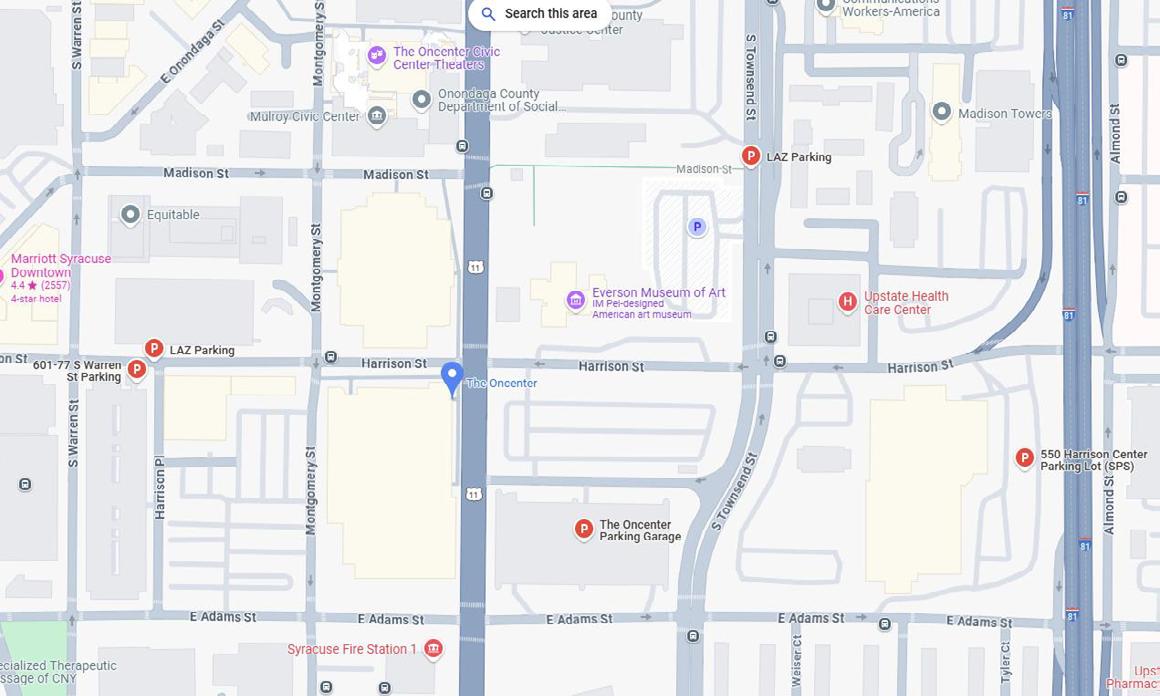
Oncenter Parking Map
Equitable Towers Garage
$25 for 10 hours
Reserve Online at LAZ Parking or pay upon arrival
Onondaga County Lot
No online reservation Pay per hour
550 Harrison Center Parking Lot No online reservation Pay per hour
Oncenter Open Lot & Garage
Discounted to $5 per entry (no in and out privileges) First come first serve
Holy Conferencing: What God Expects of Us
As God’s chosen people, holy and beloved, clothe yourselves with compassion, kindness, humility, meekness, and patience. Bear with one another, and if anyone has a complaint against someone else, forgive each other—just as the Lord has forgiven you, so must you forgive. Above all, clothe yourselves with love, which binds everything together in perfect harmony. Let the peace of Christ rule in your hearts, for you were called to this in one body. Be thankful. Let the word of Christ dwell in you richly. Whatever you do, whether in word or deed, do everything in the name of the Lord Jesus, giving thanks to God the Father through Him (Colossians 3:12–16a, 17).
Guidelines for Respectful and Thoughtful Dialogue
• Acknowledge everyone as a child of God: Always speak respectfully to everyone. Disagreement does not require hostility.
• Be open to God’s transformative power: Patiently observe the behavior of others and trust that God can work in the hearts of all involved.
• Listen before responding: Listen to learn. Take time to understand others’ perspectives before formulating your reply.
• Seek to understand experiences: Try to grasp the journey that shaped others’ views.
• Exercise caution when expressing offense: Avoid reacting in ways that might hinder dialogue or understanding.
• Reflect others’ views accurately: Especially when disagreeing, ensure you convey their position truthfully and fairly.
• Steer clear of inflammatory language: Refrain from using derogatory names, angry tones, or generalizations. Support your points with specific evidence and examples.
• Utilize mediators if necessary: Facilitators can help keep conversations constructive.
• See beyond flaws: Remember that everyone’s worth comes from their relationship with God—not the imperfections we perceive in their actions or opinions.
Christians can approach important issues without succumbing to divisive, combative debates often seen in secular settings. Guided by the Holy Spirit, we aim for decision-making that avoids creating winners and losers. Through respectful and honest conversation, we can address matters that are passionate to us—ultimately working together to change the world.
Yellow 602.4
602.6
Red 602.1
Blue 602.1c
Name Badges and Voting Rights
Elected Lay Member, Equalization member, At Large Member Youth-Young Adult elected Equalization Member, Diaconal Minister, Deaconess, Home Missioner under UNY appointment, UNY Lay Leader District Lay Leader, UNY Director of Lay servant Ministries, UNY UWF President, UNY UMM President
Full Connection (Elder and Deacons), Retired Elder, and Retired Deacons
Associate Members (Associate Members that are elected members of the Board of Ordained Ministry and the Committee on Investigations can vote on all matters of ordination, character, and conference relations of clergy),
Retired Associate Members
Blue 602.1b
Blue 602.1d
Green 602.1b
602.1c 346.2
Provisional Members (under appointment to a pastoral charge who have completed educational requirements towards ordination)
Full Time/Part Time Local Pastors/ Local Pastors Serving on Loan (under appointment to a pastoral charge who have completed Course of Study or an M.Div. degree and have served a minimum of two consecutive years under appointment before election)
Provisional Members (under appointment to a pastoral charge who have NOT completed educational requirements towards ordination) and Affiliated Members
Elders or Ordained Clergy from Other Denominations (OF) (ROF).
All lay members of the Annual Conference and lay equalization members have voting privileges on all matters, except on the granting or validation of license, ordination, reception into full conference membership, or any question concerning the character and official conduct of ordained ministers.
Lay members who are elected members of the Board of Ordained Ministry and the Committee on Investigations can vote on all matters of ordination, character, and conference relations of clergy.
May vote on all matters in the Annual Conference except in the election of lay delegates to the General or Jurisdictional Conferences.
May vote on all matters except constitutional amendments and matters of ordination, character, and conference relations of clergy.
May vote on all matters except constitutional amendments and matters of ordination, character, and conference relations of clergy.
May vote on all matters except constitutional amendments and matters of ordination, character, and conference relations of clergy. (Licensed Local Pastors that are elected members of the Board of Ordained Ministry and the Committee on Investigations can vote on all matters of ordination, character and conference relations of clergy).
May vote on all matters except constitutional amendments, election of clergy delegates to the General/Jurisdictional/Central Conferences and matters of ordination, character, and conference relations of clergy.
Green 602.1d
White 320.5 346.1
Orange 602.9
Full Time/Part Time Local Pastors/Local Pastors Serving on Loan (under appointment to a pastoral charge who have NOT completed Course of Study or an M.Div. degree).
Retired Local Pastors not under appt. OE, OR (Full Elders or Retied Elders of other UMC Annual Conference)
Visitors, Student Pastors (from other conferences), Lay missionaries, Interim Supply Pastors, UNY Staff Members (that are not EQ by virtue of office), Official Guests, Episcopal Staff, Vendors/ Display table.
May vote on all matters except constitutional amendments, election of clergy delegates to the General/Jurisdictional/Central Conferences and matters of ordination, character, and conference relations of clergy.
May attend with voice, but not vote.
No vote and no voice unless granted on the floor.
How to Understand Parliamentary Procedures
To Do This... You Say This...
SECONDARY MOTIONS IN ORDER OF PRECEDENCE
Adjourn
“I move to adjourn” No
Recess “I move we recess until...”
Suspend debate without calling for a vote “I move that we table”
Debate “I move the previous question”
move debate be limited to...”
Postpone to specific time “I move to postpone this matter until...”
Have matter studied further
Amend a motion or substitute
“I move we refer this matter to...”
“I move to amend by...” or “I move to substitute...” No
Postpone Indefinitely “I move to postpone indefinitely”
INCIDENTAL MOTIONS GROW OUT OF THE BUSINESS THE CONFERENCE IS CONSIDERING
Correct error in parliamentary procedure “Point of Order”
Obtain advice on parliamentary procedure “I raise a parliamentary inquiry”
Request information “Point of information”
MAIN MOTIONS AS TOOLS TO INTRODUCE NEW BUSINESS
Introduce Business “ I move that...”
Take up matter previously tabled “I move we take from the table...”
Reconsider matter previously voted “I move we reconsider”
Monitoring Statement
The General Commission on the Status and Role of Women advocates for full participation of women in the total life of The United Methodist Church (UMC). The Conference Commission on Religion and Race (CCORR) seeks to build justice, equity, and inclusion in the church and the world by dismantling social structures and behaviors that perpetuate racism. Together, we’re helping the Church recognize every person–clergy and lay, women and men, adults and children–as full, equal, and beloved parts of God’s human family. We believe that a fully engaged and empowered membership is vital to The United Methodist Church’s mission to introduce people to a relationship with Jesus, so that the Holy Spirit’s presence can make itself known and touch the hearts of all who seek. With the many sudden changes in policy in our society via government, there is great concern over equity and justice for all persons as participants in creating the kin-dom of God right now, within and outside of the walls of the Church. We will continue to strive for God’s grace and love through prayer, community, institutions, and actions that reflect the grace of the full participation of women in the total life of the UMC.
It is an irrefutable fact that throughout history, including within the Church, certain groups have been systematically excluded from full participation, including being silenced or ignored, while others have been prioritized–especially based on race and gender. As disciples of Jesus, we trust that you have heard the call of Jesus to pray and labor for Earth to look a little more like heaven. The Conference Commission on Religion and Race and the Commission on the Status and Role of Women (COSROW) seek to help our annual conference session move meaningfully toward the vision of Christ by capturing what groups are speaking from the platform and floor. By recording race, gender, and other demographics of those who have spoken during our sessions, we can accurately determine whether we are doing a good job of including the diversity of voices in our gathering.
The Commissions ask everyone who comes to the microphone to share certain information. First, please tell us your name and your gender. We do have non-binary as an option. Then, tell us your race. Racial identity is not the same as national origin (German, Mexican, or Irish, for example) or ethnicity. Everyone should be proud of their heritage, but naming these during these times detracts from our purpose of tracking whether we are overcoming inherited systemic inequities. Finally, tell us whether you’re clergy or laity, and the district and the local church you represent.
Naming these realities may sometimes feel tedious, and some of us believe that we perpetuate our problems by doing so. However, the opposite is true. Recognizing our racial and gender diversity is not the same as creating hierarchies of power based upon those differences. Observing whether the legacies of those power inequities cause some among us to believe their voices or concerns are not welcome is critical to creating the environment and being the disciples of Christ we aspire to be. Let us strive together to build and model the Kingdom Jesus taught as we engage in holy conferencing.
Organizational Motion
1. This is the seventeenth session of the Upper New York Annual Conference held on May 28-30, 2026 at the Oncenter in Syracuse, NY.
2. Holy Conferencing affirms our covenant with God and one another. At any time during the proceedings, the bishop may call for a moment of discernment and prayer before a vote.
MEMBERSHIP
3. The roll call of voting members shall be taken during on-site registration. Upon registration, voting members shall receive a name badge which states their name and shows voting rights.
4. Lay members are those specified by the 2020/2024 Book of Discipline, ¶33, Article I, and ¶602.4. The election of lay equalization members, as required in ¶33, Article I, and ¶602.4 (i.e., “the annual conference shall, by its own formula, provide for the election of additional lay members to equalize lay and clergy membership of the annual conference”) was determined according to the Rules for Determining and Selecting Lay Members to the Annual Conference, approved by the Annual Conference on May 31, 2012. The list of potential nominees to serve as Equalization Lay Members as published and distributed with other pre-conference materials, shall be duly nominated, and elected as a first order of business of the Annual Conference.
BUSINESS PROCEDURES
5. This organizational motion takes precedence in all matters it addresses. Where silent, the rules of the General Conference (2020/2024) and the Upper New York Annual Conference (2024) apply. Robert’s Rules of Order (12th ed.) governs any remaining procedural questions.
6. Clergy entitled to vote are those specified by the 2020/2024 Book of Discipline, ¶602, subject to the limitations contained in the same paragraph.
7. The voting area of the Conference (“bar of the Conference”) is limited to the numbered tables and the stage. Guests and non-members may be seated in the designated visitor seating area. People standing or sitting outside the bar of the Conference shall have no voice or vote on legislative matters. To be included in hand-count or standing votes, members must be seated at a table inside the bar at the time the vote is called.
8. Securing the Floor: Clergy and Lay members wishing to speak to the Conference shall raise their colored placard at their seat and wait to be recognized by the bishop. When recognized, they shall move to the nearest microphone, state their name, race, gender, clergy or laity status, church (laity) or appointment (clergy), and district before addressing the body.
9. To ensure accuracy of the minutes and faithfulness to the intention of the mover, motions and amendments from the floor must be submitted in writing to the Secretary of the Conference, on the form provided for this purpose or to unysecretary@unyumc.org. Forms are available through Tellers and the Assistant Secretary. The author will retain one copy and provide the remaining copies of the written motion or amendment to the Secretary upon or before moving any amendment, through Conference staff or volunteers. If submitted through email, a form indicating so will be submitted to the Secretary. No motion or amendment will be voted on unless provided in writing.
10. No person shall speak more than once on the same question and each speaker shall be limited to not more than two minutes, except the maker of the resolution or the chairperson of the agency submitting the resolution, who shall have up to four minutes to open and two minutes to close debate.
11. Voting shall be by voice vote, show of hands, standing count (in such a count those who cannot stand may vote by
raising hands), ballot, or by electronic device at the discretion of the bishop as Presiding Officer, unless otherwise ordered by the Conference. It shall be in order for any member to call for a vote by count on any question before the Conference, and if the call is sustained by one-third (1/3) of the members present and voting, a vote shall be taken as called for.
CONFERENCE DOCUMENTATION & COMMUNICATION
12. The agenda published on the conference website shall be the official agenda for the Annual Conference. Questions about the agenda may be directed to the Assistant to the Bishop.
13. All reports without recommendations shall be placed on the Consent Calendar. The Bishop’s address to the conference and the Report of the Conference Lay Leader are exempt from this rule by the Book of Discipline. Upon proper motion from the floor, any report may be lifted from the consent calendar and placed on the agenda by a one-third (1/3) vote of the conference body. Such reports shall be read into the record without discussion or debate, if time permits.
14. The Director of Communications shall report to the general periodicals of The United Methodist Church and secular news media. All references for printing by the conference’s official publication shall be subject to editing and condensing by the editor.
15. No material may be distributed within the bar of the annual conference sessions without prior review of the Agenda Committee. All materials for the consideration of the Agenda Committee shall be submitted to the Assistant to the Bishop.
16. The journal editor shall have sole authority to edit, condense, organize, and print the Upper New York Conference Journal/Yearbook All material from this session must be submitted in writing no later than July 1, 2026.
17. The Daily Proceedings from this 17th Session of Annual Conference will appear in the Upper New York Conference Journal/Yearbook
2026 Equalization Member List to Annual Conference
2026 Consent Calendar
Reports from Conference Teams
Camp & Retreat Ministries
CRM: Sherry Group Summary
CRM: Action Steps from Report
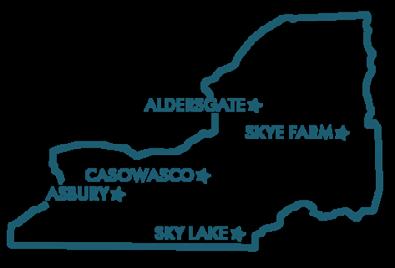
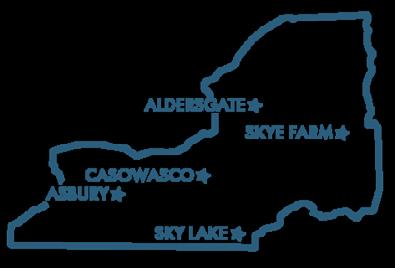
Aldersgate Camp & Retreat Center
Asbury Retreat Center
Sky Lake Camp & Retreat Center
Skye Farm Camp & Retreat Cemnter
Communications
Creation Justice Team (CJT)
Episcopacy, Committee on the Equitable Compensation, Commission on (CEC) Finance and Administration, Conference Council on (CFA)
Global Ministries
Lay Servant Ministries, Conference Committee on Leadership Team, Conference (CLT)
Native American Ministries, Committee on (CONAM)
New Faith Communities & Missional Innovation Team
Nominations & Leadership Development
Ordained Ministry, Board of (BOM)
Peace with Justice
Pension & Health Benefits, Conference Board of (CBPHB) Preachers. Rest. Work. Play
Religion and Race, Conference Committee on (CCORR)
Reparations Task Force
Status and Role of Women, Committee on the (COSROW) Trustees, Board of United Women in Faith
Youth Ministry, Conference Council on (CCYM)
Reports from Connected Organizations
Candor School of Theology
Garrett-Evangelical Theological Seminary
Saint Paul School of Theology
United Methodist Communications
2026 Upper New York Agenda
THEME: RISE UP! Love Boldly | Transform the World | Matthew 22:36-40
Thursday, May 28, 2026
8:30 AM Check-in/Registration Opens
10:00 AM Opening Worship
11:00 AM Organizing Plenary
11:30 AM Lunch
11:30 AM Extension Ministry luncheon (Invitation Only)
11:30 AM Registration closes
12:30 PM Registration re-opens
1:00 PM Clergy & Laity Sessions
2:00 PM Break
2:30 PM Business/Plenary
Recommendations and Resolutions from Conferences Teams
4:30 PM Apology to Victims and Survivors of Sexual Misconduct in the Church
in class of 2027; Two in class of 2029; Two in class of 2030
YAC Liaison
Liaison
CCOAM Liaison
TBD ex-officio w/out vote, Rules Liaison
Bruce France L ex-officio, AD Lay Leader
Ellen Mall-John L ex-officio, AL Lay Leader
Tara Davis-Barnes L ex-officio, BI Lay Leader
Susan Hardy L ex-officio, CS Lay Leader
Robert Mueller L ex-officio, CR Co-Lay Leader
Darlene Dennis L ex-officio, CR Co-Lay Leader
Jami Breedlove L ex-officio, FL Co-Lay Leader
TBD ex-officio, GV Lay Leader
Mark Adsit L ex-officio, MO Lay-Leader
Ann Welch-Wood L ex-officio, MV Lay-Leader
Jennifer Gleason L ex-officio, NI Lay Leader TBD ex-officio, NF Lay-Leader
Rick Fisher L ex-officio, ON Lay-leader
Aaron Bouwens C ex-officio w/out vote, Director of Missional Excellence Jordan Osborne L ex-officio w/out vote, Office Coordinator for Missional Excellence Council on Finance and Administration
Voted at Annual Conference; Fouryear Terms, beginning at end of General Conference; Recommended one more lay person than clergy
Ranous
w/out vote, CRM Rep Hector BurgosNuñez
ex-officio w/out vote, Resident Bishop
Sherri Rood C ex-officio w/out vote, Cabinet Rep
William GottschalkFielding
ex-officio w/out vote, Assistant to the Bishop Robert Flask
w/out vote, Conference Treasurer Board of Laity
Voted at Annual Conference (by virtue of office)
France
2027 AD Lay Leader Ellen Mall-John L 2027 AL Lay Leader
Tara Barnes L 2027 BI Lay Leader Susan Hardy L 2027 CS Lay Leader Robert Mueller L 2027 CR Co-Lay Leader
Darlene Dennis L 2027 CR Co-Lay Leader
Jami Breedlove L 2027 FL Co-Lay Leader
at Annual Conference; Fouryear terms; 6 laypersons, 6 clergy; Four Classes, 2 lay, 2 clergy
Mark Adsit
Ann
Gleason
Linda Barczykowski
2027 Conf. Dir. Of Lay Servant Ministries
Pam Klotzbach C 2027 At Large-President Board of Trustees
Jessica White L 2027 ex-officio, Conference Lay Leader
Robert Flask L 2027 ex-officio, Conference Treasurer
Shelby Winchell L 2027 ex-officio, Director of Communications
Scott Johnson C 2027 ex-officio, CCORR member
Sherri Rood C 2027 ex-officio, Cabinet Rep
Hector BurgosNuñez C ex-officio, Resident Bishop
William GottschalkFielding C ex-officio, Assistant to Bishop
Aaron Bouwens C ex-officio, Director of Missional Excellence
Team appointed by Bishop, by virtue of office
Hector Burgos-Nuñez C 2027 Resident Bishop
Bill GottschalkFielding C 2027 Assistant to Bishop/Rules/Chair
Shelby Winchell L 2027 Dir. Of Communications
Robert Flask L 2027 Treasurer
Jessica White L 2027 Conference Lay Leader
Carolyn Stow C 2027 Conference Secretary
Sherri Rood C 2027 Dean of Cabinet
TBD BOOM Ordination Service
JD Park C 2027 Worship Team member
Sharon Schmit L 2027 CONAM member
Tom Schmidt L 2027 Resolutions & Petitions member
TBD Co-CCYM chair
TBD Co-CCYM chair
TBD UMM President
Lori Lorraine L 2027 UMW President
Lida Merrill C 2027 Accessibiity Concerns Committee
Betsy O’Flynn L 2027 Logistics Assistant - Youth Housing
Mary Bradley C 2027 Episcopal Office Manager
Julie Valeski L 2027 Registration/Meals Coordinator
Marthalyn Sweet L 2027 Young Adults Chair
Appointed by the Bishop; Up to five at-large members may be nominated by Nominations Committee; Serve four-year terms Tim Barnes L 1 2029 At-Large Member Paul Sweet C 1 2029 At-Large Member Emma Scavo L 1 2029 At-Large Member
Vacancies: Two in class of 2029
Bill GottschalkFielding C ex-officio, Assistant to the Bishop
Carolyn Stow C ex-officio, Conference Secretary
Jessica White L ex-officio, Conference Lay Leader
and Petitions Committee
Voted at Annual Conference; Term is four years; up to five members can be nominated by Nominations Committee; Chair appointed by Bishop
Vacancies: Three in class of 2028
Serve four years on quadrennial basis; Ministry Action team for Global Ministries (related to ¶ 633)
Vianese
General Conference Delegation Bill Mudge
General Conference Delegation
Conference Lay Leader
Assistant to the Bishop
Fielding
Conference Secretary
Associate Director of Missional Excellence
Chair to be elected Annually
Hill
Solomon
Beth LongVelasquez
Sylvester Doyer
District Rep.
Albany District Rep.
TBD Binghamton District Rep. Linda Cooper
Tom Cooper
Cornerstone District Rep.
Cornerstone District Rep. Molly Golando
Cornerstone District Rep.
Cornerstone District Rep. Robert Mueller
Crossroads District Rep.
TBD Finger Lakes District Rep.
TBD Genesee Valley District Rep.
Abigail Browka C ex-officio, Associate Director of Missional Excellence
Aaron Bouwens C ex-officio, Director of Missional Excellence Conference Council on Youth Ministries 
Elected at Annual CCYM Meeting
Stierheim
Kristina Clark L
Cabinet Rep
Associate Director of Missional Excellence Aaron Bouwens C ex-officio, Director of Missional Excellence
Holiness Team ¶ 629
Voted at Annual Conference; fouryear terms on a quadrennial basis
Voted at Annual Conference; Four-year terms
Linda Bergh
Peace with Justice
Peace with Justice in Palestine Karen Peterson
Peace with Justice in Palestine
ex-officio, Creation Care liaison Blenda Smith
Woodring
Klock
ex-officio, CONAM liaison
CORR liaison
ex-officio, UWF President and COSROW Rep
Director of Missional Excellence
Chair
Peace with Justice Coordinator
Raymond
Kenneth
ADIRONDACK DISTRICT
District Lay Leader ¶ 660 Bruce France
Committee on Superintendency ¶ 669
Committee on Ordained Ministry ¶ 666
Allison Arnold
Linda Campbell
Roger Ellis
Bruce France
Joel Holcomb
Jeff Landon
Ellen Mall-John
Jeannette Mann
Tim Rock
Phyllis Shook
Meredith Vanderminden
Member
Member
Member
District Lay Leader
Member
Member
Member
Member
Member
Member
Committee on Church Location and Buildings ¶ 2519
Chrysalis Beck
Brooke Conklin
Nancy Dibelius
Derek Hansen
Bea Parks
Debra Peacock
Philip Richards
Ilah Walser
Richard Weihing
David Smith
Joyce Royal
Sara Baron
Bruce France
Ellen Mall-John
Jim Knapp
BOM Representative
Member
Registrar
Chair
Member
Member
2028 Chair
2028 Member
2027 Member
2027 Member
2027 District Lay Leader
2026 Member
ALBANY
District Lay Leader 660 Ellen Mall-John L
Committee on Superintendency ¶ 669
Committee on Ordained Ministry ¶ 666
Allison Arnold L Member
Linda Campbell L Member
Roger Ellis L Member
Bruce France L District Lay Leader
Joel Holcomb C Member Jeff Landon C Member
Ellen Mall-John L Member
Jeannette Mann C Member
Tim Rock L Member
Phyllis Shook L Member
Meredith Vanderminden C Member
Committee on Church Location and Buildings ¶ 2519
Nicholas Bufano
Caroline Simmons
Nancy Dibelius
Amy Gregory
Kim Krause
Youngjae Jee
BOM Representative
Member
Jeff Matthews C Member
Donna Rischbieter L Member
Deborah Earthrowl C District Superintendent
David Smith C 2028 Chair
Joyce Royal L 2028 Member
Sara Baron C 2027 Member
Bruce France L 2027 Member
Ellen Mall-John
2027 District Lay Leader
Jim Knapp C 2026 Member
Harold Vance L 2026 Member
Kay Washbourne
2026 Member
BINGHAMTON DISTRICT
District Lay Leader 660 Tara Barnes
Committee on Superintendency ¶ 669
Committee on Ordained Ministry ¶ 666
Jeff Hale
Blenda Smith
Sharon Kriner
William Judd
Member
Member
Member
Member
Deb Arnold C Member
Robert Clark C Member
Tara Barnes L Lay Leader
Committee on Church Location and Buildings ¶ 2519
Casey Bradley C Temporary Chair
Michele Clark C Member
Blenda Smith
Member Stu Reynolds
Joyce Allen
Nancy Adams
Janet Clark
Robert Clark
Member
Member
BOM Representative
Lea Harding C Member
Teressa Sivers
Matt Williams
Registrar
Member
Robert Kolvik-Campbell C District Superintendent
Carolyn Stowe C 2029 Clergy
Dave Alexander L 2029 Member
Leon Jicha C 2029 Clergy
District Lay Leader 660
Committee on Superintendency ¶ 669
CORNERSTONE DISTRICT
Susan Hardy L 2026
Gabriella Wilson L 2030
Committee on Ordained Ministry ¶ 666
Mary Kelly C District Superintendent
Tom Schmidt L 2027 Member
Gabriella Wilson L 2027 Member
Susan Hardy L 2026 District Lay Leader
Committee on Church Location and Buildings ¶ 2519
Mary Kelly C District Superintendent
Rachel Stuart C 2027 Committee Registrar
Thomas Lebeau C 2026 Committee Secretary
Susan Hardy L 2026 BOM Rep
Andrew Giles L 2027 Member
Margaret Mills L 2027 Member
Evangeline Castillo C 2030 Member
Connie Pilato L 2030 Member
Mary Kelly C 2028 District Superintendent
Dawn Quesenberry C 2026 Member
Andrea Mansfield L 2026 Member
Kathy Piper L 2026 Member
Stephen Crowell L 2026 Member
Neal Green L 2026 Member
CROSSROADS DISTRICT
¶ FIRST
District Lay Leader 660 Darlene Dennis L 2026
Robert Mueller L 2028
Committee on Superintendency ¶ 669
Committee on Ordained Ministry ¶ 666
Sherri Rood District Superintendent
Deborah O’Connor C 2026 Member
Robin Folk L 2026 Member
Stephen Ranous L 2027 Member
Darlene Dennis L 2027 Co-Lay Leader
Susan Ranous C 2028 Member
John Fulton C 2028 Member
Blessed Unami Sikhosana-Bird L 2028 Member
Committee on Church Location and Buildings ¶ 2519
Sherri Rood District Superintendent
Mary Johnson C 2026 Member
Darlene Dennis L 2026 Member
William Mudge C 2026 Member
Robert Mueller L 2028 Member
Susan Ranous C 2028 Member
Sherri Rood District Superintendent
Pat Toukatly L 2026 Member
Jeff Hodge C 2026 Member
James Sokolowski L 2027 Member
Diane DiLuzio C 2027 Member
Andy Anderson C 2028 Member
Michael Jordan L 2028 Member
FINGER LAKES DISTRICT
District Lay Leader 660 Jami Breedlove L
Committee on Superintendency ¶ 669
Committee on Ordained Ministry ¶ 666
Sherri Rood C District Superintendent
Jami Breedlove L District Lay Leader
Alison Schmied C 2026 Member
Diana Snyder L 2027 Member
Laura Calos C 2027 Member TBD 2026 Member
TBD 2026 Member
TBD 2027 Member
Committee on Church Location and Buildings ¶ 2519
Sherri Rood C District Superintendent
Steph Brown C 2026 BOM Rep
David Herrmann C 2026 Member
Katherine Benton C 2027 Member
Diane Walker C 2028 Member
Sherri Rood
District Superintendent Judy Selover
2026 Chair
Judy Lieber-Butler C 2026 Member Joe Berson L 2026 Member Dan Martin
2026 Member
Grace Pugh L 2027 Member
Jeannine Biehls C 2027 Member
Robert Dean C 2028 Member
Lucy Schram L 2028 Member
District Lay Leader 660 TBD
Committee on Superintendency ¶ 669
GENESEE VALLEY DISTRICT
Committee on Ordained Ministry ¶ 666
Richelle Goff C District Superintendent
Robin Blair C 2026 Member
Lyle Tague L 2026 Member
Phillippa Phaneuf C 2027 Member
Mira Washington L 2027 Member
David Lane L 2028 Member
Robert Williams L 2028 Member
Committee on Church Location and Buildings ¶ 2519
Richelle Goff C District Superintendent
Kim Ferrel C 2026 Member
Catherine Towsley L 2026 Member
Deb Clyde L 2026 Member
Gary Kubitz C 2027 Member
Hoyt Brown C 2027 Member
Lynn Shipe L 2027 Member
Tony Hipes C 2028 Member
Hector Rivera C 2028 Member
Val Clark L 2028 Member
Richelle Goff C District Superintendent
Rachel Patchen L 2026 Chair
Harold Milward L 2026 Member
Anne Justus L 2026 Member
Gary Prok L 2027 Member
David Underwood C 2027 Member
Jacque Ruth C 2028 Member
Haines Lockhart L 2028 Member
District Lay Leader 660 Mark Adsit
Committee on Superintendency ¶ 669
Mark Adsit L 2026 District Lay Leader
Leslie Ann Zulch 2027 TBD 2026
Barry Damsky 2028 TBD 2027
Wendy Morrison 2027
Committee on Ordained Ministry ¶ 666
Sonia Marris L 2027
Cindy Muder L 2026
Yohang Chun
Marilyn Baissa C 2026 Abel Roy
Joelle Faulks
David McKinney
Becky Gutherie
Committee on Church Location and Buildings ¶ 2519 Yohang Chun
2028
2027
2027
2028
2028 Member Joyce Royal
2027 Member
2027 Member Robert Dietrich
2028 Vice-Chair Lorna Wilson
Wilson
Member
2028 Member
2026 Member
2026 Member
2026 Member
MOUNTAIN VIEW DISTRICT
District Lay Leader 660 Ann Welch-Wood L 2026
Committee on Superintendency ¶ 669
Committee on Ordained Ministry ¶ 666
Richelle Goff C District Superintendent
Ann Welch-Wood L 2026 District Lay Leader
Bob Briggs L 2026 Member
Janet White L 2027 Member
Gregory White C 2027 Member
Holly Strickland C 2028 Member
Melanie Beardsley C 2028 Member
Committee on Church Location and Buildings ¶ 2519
Richelle Goff C District Superintendent
Ann Welch-Wood L 2026 District Lay Leader
Gregory White C 2026 Member
Anne Canfield C 2027 Member
Leanne Zeck C 2027 Chair
Bob Briggs L 2028 Member
Melanie Clark L 2028 Member
Sheila Price C 2028 Member
Richelle Goff C District Superintendent
Jeff McDowell C 2026 Member
Rhonda Kouterick C 2027 Member
Mike Kelly C 2027 Member
Randy Rockwell L 2027 Member
Eric Coon L 2028 Member
NIAGARA FRONTIER DISTRICT
2016 BOD ¶ FIRST
District Lay Leader 660 Jennifer Gleason
Committee on Superintendency ¶ 669
Committee on Ordained Ministry ¶ 666
Mary Kelly C District Superintendent
Angela Stewart C 2025 At-Large Member/ Chair
Paul Madsen L 2026 Member
Gail Lewis C 2030 Member
Hap Skellen C 2030 Member
Committee on Church Location and Buildings ¶ 2519
Mary Kelly C District Superintendent
Raquel Alston C 2027 Committee Co-Chair
Tim Gleason C 2027 Committee Co-Chair
Nick Perry C 2027 Committee Registrar
Doug Young L 2027 Member
Heather Stierheim C 2028 BOM Representative
Angela Stewart C 2028 Member
Judy Johnson-Paonessa L 2028 Member
Lisa Taylor C 2029 Member
Louis Bobsein L 2030 Member
Cheryl Brown C 2030 Member
Michael Whitcomb-Tavey C 2030 Member
Mary Kelly C District Superintendent
John Loeser C 2028 Committee Chair
Frank White L 2025 Member
Vergie Oettinger L 2026 Member
Matt Brooks L 2026 Member
Rebecca Allis C 2026 Member
NORTHERN FLOW DISTRICT
2016 BOD ¶ FIRST LAST
District Lay Leader 660 TBD
Committee on Superintendency ¶ 669
Committee on Ordained Ministry ¶ 666
TBD District Lay Leader
Barbara Greene L 2026 Member
Glenda Schuessler L 2028 Member
Lorraine Lautenbacher L 2027 Member
TBD L At-large member
TBD L 2026 At-large member
TBD C 2027
TBD C 2026
Yohang Chun C Ex-Officio Member
Committee on Church Location and Buildings ¶ 2519
Barbara Greene L 2027 Member
Glenda Schuessler L 2026 Member
Missy McCarthy C 2026 Member
Brenda Shelmadine C 2027 Member
Donna Fitchette C 2027 Member
Carl Chamberlain C 2026 Member
Mark Pierce C 2028 Member
Michael Terrell C 2028 Member
Yohang Chun C District Superintendent
Fran Hemstreet C 2028 Member Earl Lalone C 2027 Member
TBD L Member
Brett Johnson C 2026 Member
Naaman Lowry L 2026 Member
Yohang Chun C Ex-Officio/District Superintendent
ONEONTA DISTRICT
District Lay Leader 660 Rick Fisher
Committee on Superintendency ¶ 669
Committee on Ordained Ministry ¶ 666
Rick Fisher
District Lay Leader Judy Wingate-Wade
Member Brandilynne Craver
Harrington
Rathbone
Buddle
Member
Member
Member
Chair
Buddle
Member/Registrar Casey Bradley
Chair/BOM Rep Peggi Eller
George Gallandorm
Committee on Church Location and Buildings ¶ 2519 Joyce Miller
Underwood
Deokryeol Bak
Wiggins
Carrington
Associate Member
2026 Member
2026 Member
2026 Member Brandilynne Craver
2027 Member
2027 Member Dave Wade
2027 CONFERENCE ADVANCE SPECIALS RECOMMENDATION
Book of Discipline ¶: 656
Book of Resolution ¶: N/A
Conference Committee/Agency that would be affected by/responsible for implementation if passed: Global Ministries Team
Financial Implications: None
Brief Rationale:
Advance Specials need to be approved by the annual conference annually.
Whereas the 2020/2024 Book of Discipline of The United Methodist Church in paragraph 656 authorizes annual conferences to approve certain programs/ministries for the purpose of fundraising from the churches of the conference by the status of Conference Advance Specials,
Therefore be it resolved that the following ministries be approved as Conference Advance Specials for 2027.
Africa University Endowed Scholarships
Brown Memorial UMC: Syracuse Buffalo 10 Scholarship
Campership Fund
Chautauqua County Rural Ministry, Inc.
The Children’s Center for the Common Good Creation Care
Gary Bergh Scholarship (Task Force on Peace with Justice in Palestine and Israel)
Haiti Partnership
Migrant/Refugee
The
Seneca
Southern Sudan Health Project
UMCOR Kits Shipment Dollars
Volunteers In Mission Scholarship Fund
SUBMITTED BY:
Rev. Jeff Childs
EMAIL: revchilds@hotmail.com
PHONE: (315) 729-4464
Penn
RECOMMENDATION FROM COMMISSION ON EQUITABLE COMPENSATION
Recommendations:
1. We recommend a change in the minimum base compensation for 2027 increase by 3.0% from what was approved by the 2025 Annual Conference and went into effect January 1, 2026. As measured by the Social Security Cost of Living Allowance (SS COLA), inflation was 3.11% for 2026. INCREASED AMOUNT (see Chart 1)
Chart 1 Clergy Credential
Base
2. We recommend a change in the annual increment for 2027 from what was approved by the Annual Conference in 2025. The annual increment will be a flat rate of $750.00 per full-time equivalent year of service, regardless of accreditation level. This goes into effect January 1, 2027. These increments are based on full-time equivalent years of service up to 25 years of service. CHANGE (see Chart 2)
Chart 2
-
3. We recommend that all pastors currently paid above minimum compensation are to receive a salary increase of no less than 3% to their salary in 2027. As measured by the Social Security Cost of Living Allowance (SS COLA), inflation was 3.11% for 2026. CHANGED
RECOMMENDATION FROM CONFERENCE BOARD OF PENSION AND HEALTH BENEFITS
Action Item #1
The Upper New York Board of Pensions and Health Benefits recommends the adoption of the Housing/Rental Exclusion Resolution.
The Upper New York Conference adopted the Housing/Rental Exclusion Resolution which designates 100% of United Methodist pension, severance or disability income as housing exclusion in accordance with IRS Code section 107 is approved for the year January 1, 2026 through December 31, 2026 as follows:
WHEREAS the religious denomination known as The United Methodist Church (THE “Church”), of which this Conference is a part, has in the past functioned and continues to function through Ministers of the Gospel (within the meaning of Internal Revenue Code section 107) who were or are duly ordained, commissioned, or licensed ministers of the Church (“Clergypersons”); and,
WHEREAS the practice of the Church and of this Conference was and is to provide active Clergypersons with a parsonage or a rental/housing allowance as part of their gross compensation; and,
WHEREAS pensions or other amounts paid to active, retired, terminated, and disabled Clergypersons are considered to be deferred compensation and are paid to active, retired, terminated, and disabled Clergypersons in consideration of previous active service; and,
WHEREAS the Internal Revenue Service has recognized that the Conference (or its predecessors) as an appropriate organization to designate a rental/housing allowance for Clergypersons who are or were members of this Conference and are eligible to receive such deferred compensation;
NOW THEREFORE BE IT RESOLVED:
That an amount equal to 100% of the retirement payments, severance, or disability payments received from plans authorized under The Book of Discipline of The United Methodist Church (the “Discipline”), which includes all such payments from the General Board of Pension and Health Benefits (Wespath), during the period January 1, 2026 through December 31, 2026, by each active, retired, terminated, or disabled Clergyperson who is or was a member of the Conference, or its predecessors, be and is hereby designated as a rental/housing allowance for each such Clergyperson; and that the retirement payments, severance, or disability payments to which this rental/ housing allowance designation applies shall be any retirement payments, severance, or disability payments from plans, annuities, or funds authorized under the Discipline, including such payments from Wespath and from a commercial annuity company contracted by Wespath to provide an annuity arising from benefits accrued under a Wespath plan, annuity, or fund authorized under the Discipline, that result from any service a Clergyperson rendered to this Conference or that an active, a retired, a terminated, or a disabled Clergyperson of this Conference rendered to any local church, annual conference of the Church, general agency of the Church, other institution of the Church, former denomination that is now a part of the Church, or any other employer that employed the Clergyperson to perform services related to the ministry of the Church, or its predecessors, and that elected to make contributions to, or accrue a benefit under, such a plan, annuity, or fund for such an active, a retired, a terminated, or a disabled Clergyperson’s pension, severance, or disability plan benefit as part of his or her gross compensation.
NOTE: The rental/housing allowance that may be excluded from a Clergyperson’s gross income in any year for federal (and, in most cases, state) income tax purposes is limited under Internal Revenue Code section 107(2), and regulations thereunder, to the lesser of: 1) the amount of the rental/housing allowance designated by the Clergyperson’s employer or other appropriate body of the Church (such as this Conference in the foregoing resolutions) for such year; 2) the amount actually expended by the Clergyperson to rent or provide a home in such year; or, 3) the fair rental value of the home, including furnishings and appurtenances (such as a garage), plus the cost of utilities in such year. Each Clergyperson or former Clergyperson is urged to consult with his or her own tax
advisor to determine what deferred compensation is eligible to be claimed as a housing allowance exclusion.
Action Item #2
The Board recommends the following increase to the Past Service Rate.
Pre-82 Past Service Rate (PSR)
The Upper New York Board of Pensions and Health Benefits has worked very diligently to ensure that our Pre82 remains in a fully funded status. We are pleased to recommend an increase in the Past Service Rate (PSR) this year. It is the Board’s recommendation that the PSR in the Pre-1982 Plan be increase by 2.5% for 2027 from $726 to $744. Only retirees with years of service prior to 1982, whose Pre-82 monthly benefit amount is less than $744, are impacted by the change.
The History of our Past Service Rate (PSR):
2015: $600
2016: $612 (2% increase from 2015)
2017: $625 (2% increase from 2016)
2018: $638 (2% increase from 2017)
2019: $645 (1% increase from 2018)
2020: $645 (0% increase from 2019)
2021: $645 (0% increase from 2020)
2022: $651 (1% increase from 2021)
2023: $658 (1% increase from 2022)
2024: $691 (5% increase from 2023)
2025: $712 (3% increase from 2024)
2026: $726 (2% increase from 2025)
Submitted by Karyn Langguth McCloskey Chairperson, UNY Conference Board of Pensions and
102 2 * The Council on Finance and Administration (CF&A) is presenting the 2027 budget for approval. This budget represents 103 an overall reduction of $100,000 from the 2026 approved budget. The budget reflects savings from reduced General Apportionments,
104 the elimination of the CRM Director position, and the movement of retiree move costs to the Board of Pension and Health. In addition
105 to these reductions, the Conference is also accounting for an additional $50,000 in interest earnings toward coverage of expenses.
106 Some of these savings were offset by a three percent salary increase for staff along with a 13-17% increase to health insurance costs.
107 CF&A continues to work to create budgets that do not significantly increase costs to our local churches.
109 17 * The reduction in overall General apportionments reflects the allocation amount provided by GCFA. This amount is based on the
original factor rate and not adjusted up based on GCFA not collecting at 90%. In 2025 GCFA only collected 84.5% of apportionments.
22 * The increase cost in Connectional ministry is a direct result of a change in staff that now elects health insurance
35 * The reduction in cost related to Archive is a direct result of the Conference Board of Trustees covering the full salary cost
of the archivist position.
49 * The increase in Social Holiness is related to the request to cover costs related to costs associated with gathering in Albany
for the NYS Council of Churches advocacy day.
120 57 * The reduction in Camp and Retreat is based on the reduction of the CRM Director position. This also allowed for some additional support to
the different site locations.
123 60 * The decrease cost to the Board of Ordained Ministry is related to clarification of Net Assets and appropriate draws on fund balances.
125 61 * The Board of Pension and Health has been reduced to zero as the Board approved moving retirement move costs directly under
The funds held by the Board of Pension and Health as this is a Board sponsored benefit.
128 64 * The episcopal office increase is directly related to salary increment along with the 13-17% increase to healthcare costs.
71 * The increase in the district operations is mainly related to two new District Superintendents (DS) electing health insurance
131 and the DSs they replaced had insurance through their spouses. In addition, general insurance costs have also gone up as noted.
133 76 * The increase in Conference Office and Administrative Services relates to an increase allowance for building utilities and maintenance.
78 * Operations of Treasurer increase is a result of salary increases along with increased cost in health care coverage.
137 79 * The decrease in Computer services is a result in reduced costs of equipment purchases needed for the year.
139 80 * The increase in Communications is related to salary adjustments and increased cost of health care coverage.
141 82 * The decrease to the Board of Trustees is a direct result of adjusting their amount to the average costs of prior years usage.
UNY STRATEGIC MISSIONAL PATH FORWARD
Whereas the 2025 session of the Upper New York Annual Conference empowered the UNY Conference Leadership Team (CLT) to initiate and oversee a strategic visioning process that builds upon the missional clarity developed over the past two and a half years, in order to articulate a clear and forward looking roadmap for the Upper New York Conference, including to:
1. Secure input from clergy, laity, elected conference leaders, staff, ministry partners, and community members;
2. Assess the current strengths, opportunities, aspirations, and desired results for the Upper New York Conference;
3. Explore and identify opportunities for collaboration that enable amplified impact and faithful stewardship with our missional partner: the Susquehanna Conference; and
4. Recommend to the 2026 Annual Conference session a Ministry Action Plan aligned with the mission, vision, doctrine, and polity of The United Methodist Church;
Whereas the UNY Conference Leadership Team created and empowered a Visioning Task Force to lead this work on behalf of the Annual Conference, and this team has diligently fulfilled its mandate through a comprehensive, open, and collaborative process supported by AE Sloan Leadership and ministry consultant Mike Bonem;
Whereas the Full Visioning Report and the Strategic Missional Path Forward document have been reviewed and affirmed by the UNY Conference Leadership Team;
Therefore be it resolved that the Upper New York Conference Leadership Team and the Upper New York Annual Conference express their deep gratitude to the Strategic Visioning Team for their faithful, prayerful, and dedicated work over the past nine months.
Be it further resolved that this session of the Upper New York Annual Conference hereby affirms the Strategic Missional Path Forward document and covenants to actively support and live into this shared direction—for the glory of God and for the sake of our mission to make disciples of Jesus Christ for the transformation of the world.
Respectfully submitted by Dr. Scott Johnson and Jessica White, on behalf of the UNY Conference Leadership Team.
THE MISSION OF THE UNITED METHODIST CHURCH
To make disciples of Jesus Christ for the transformation of the world.
THE VISION OF THE UNITED METHODIST CHURCH
To form disciples of Jesus Christ, who empowered by the Holy Spirit: love boldly, serve joyfully, and lead courageously in local communities and global networks.
THE PURPOSE OF THE ANNUAL CONFERENCE
Equip and resource leaders and congregations for impactful ministry and provide a connection for mission beyond the local church.
Provide Spiritual Leadership: Cultivate deepening knowledge, experiences, and expressions of Christ’s love among disciples, clergy, and lay leaders.
Develop and Deploy Leaders: Identify, equip, and support clergy and laity for effective and faithful ministry.
Resource Congregations for Impactful Ministry: Offer learning experiences, tools, coaching, and best practices that strengthen local church vitality and mission.
Foster New Faith Communities and Collaborative Ministries: Nurture a culture of innovation that plants sustainable ministries and encourages partnerships.
Align and Steward Resources for Mission: Maximize financial, human, and structural resources to advance the mission of UNY and the UMC.
Promote Unity in Diversity: Encourage a spirit of connection that honors the richness of our God-given diversity while liftings our distinctive Wesleyan heritage.
Communicate Our Shared Mission and Impact: Tell the story of how United Methodists in Upper New York are living out their mission and transforming communities.
UPPER NEW YORK STRATEGIC MISSIONAL PATH FORWARD
Discerned during the 2025-26 Listening and Visioning Process
OUR CORE VALUES
United Methodists of Upper New York are at our best when we live by these values:
Missional Heart
Connectional Unity
Grace-filled Justice
Authentic Relationships
Faithful Resilience
a strong commitment to serving communities through mission, disaster response, and justice ministries.
a belief that the conference is stronger when leaders and congregations remain connected despite differences and work collaboratively.
a desire to embody Christ’s love through inclusion, humility, and advocacy with vulnerable people.
a culture that seeks to welcome and learn from diverse people and perspectives.
an ability to persevere, captured in the phrase: “We do hard and good things because we love Jesus, each other, and the people in our communities.” The organizational charism (spiritual gift) of the Upper New York Conference emerges naturally from these values.
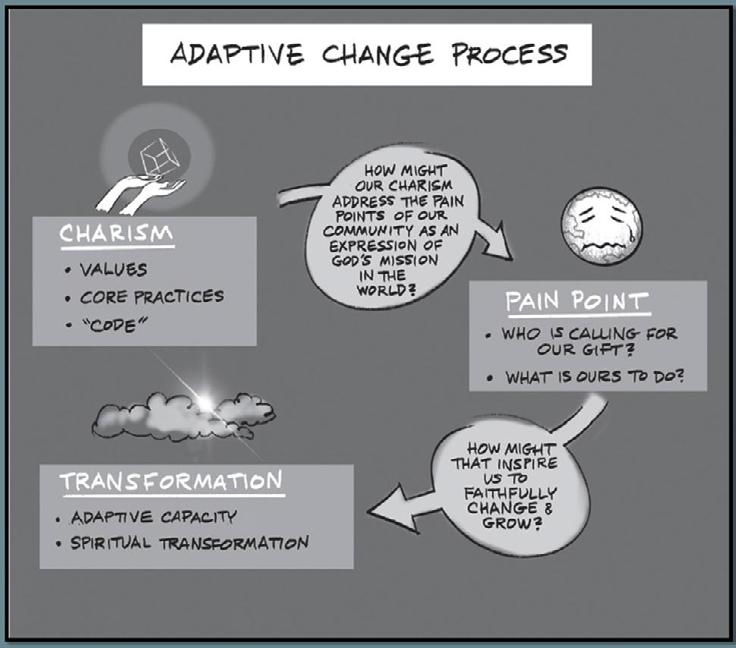
Note: Charism refers to an organization’s unique spiritual gift or missional identity—the distinctive way its values, calling, and culture combine to serve the world.
Courageous Missional Connection: The Upper New York Conference possesses a Spirit-given capacity to (be) remain connected in Christ while courageously mobilizing leaders and congregations for mission among vulnerable people in our communities.
This charism reflects the lived expression of the conference’s values. Our commitment to connection and unity enables leaders and congregations to remain in relationship across differences. Our missional heart and commitment to justice propel the conference outward toward communities and people in need. And our culture of resilient faithfulness allows leaders and congregations to engage difficult challenges while continuing to pursue Christ-centered mission.
The primary work of the conference is to encourage and equip local congregations to live into this charism.
THE PAINT POINTS IN THE WORLD
The Upper New York Conference is positioned to make a meaningful difference in our communities as we faithfully engage the following concerns in our region through our Christ-centered witness and ministries:
· Supporting vulnerable populations.
· Rebuilding community connection and belonging. These concerns are not simply social challenges; they also represent spiritual realities. The intersection between the conference’s charism and the community pain points identified reveals a compelling mis-
sional opportunity. Communities across New York are increasingly fragmented and vulnerable. At the same time, the Upper New York Conference possesses a strong tradition of connectional mission that mobilizes congregations together to respond to community needs.
OUR REALITIES, CHALLENGES, AND OPPORTUNITIES
These realities, if not approached with faithfulness, become obstacles to our shared mission.
1. Continued church attendance/engagement decline.
2. Growing generational gap in our congregations and leadership.
3. Growing number of older, oversized church buildings that are costly to maintain.
4. Amount and speed of change inside and outside the church.
5. Lack of trust in the conference and among clergy and laity.
REQUIRED ADAPTIVE SHIFTS
We will continue prioritizing relationships over everything else, and we will lead the way in the shifts:
From Institutional Preservation → Missional Experimentation
Congregations often feel pressure to preserve existing structures and programs. Yet the changing cultural landscape requires a willingness to experiment with new forms of ministry. This shift involves encouraging innovation and learning, creating permission for experimentation, and supporting Fresh Expressions and new faith communities.
From Congregational Independence → Connectional Collaboration
Although Connectionalism is a theological value within the United Methodist tradition, congregations often operate independently in practice. Moving forward, the conference will increasingly rely on cooperative parish models, regional ministry partnerships, and shared mission initiatives among congregations.
From Clergy-Centered Leadership → Shared Leadership Ecosystems
Clergy shortages and increasing ministry complexity require stronger partnerships between clergy and laity. This shift includes intentional lay leadership development, team-based ministry structures, and new pathways for emerging leaders.
From Bureaucratic Complexity → Mission-Focused Systems
Administrative burdens and communication challenges were repeatedly named in the listening reports. Simplifying conference structures will allow leaders to focus more fully on mission rather than administration.
From Program-Centered Ministry → Community-Embedded Presence
Congregations will increasingly need to move beyond internal programming toward deeper engagement with their communities. This includes developing relationships with community partners, creating gathering spaces that foster belonging, and addressing local social challenges collaboratively.
STRATEGIC ADAPTIVE INITIATIVES
Strategic-Adaptive Initiatives address the adaptive shifts named above while advancing the conference’s mission. These initiatives combine strategic direction with experimentation and learning.
Collaborative Parish Development
Objectives
Form supporting networks of congregations that share leadership, ministry programs, resources, mission strategies, and even facilities. These partnerships could improve stewardship and put smaller congregations on more sustainable footing while expanding their collective ministry capacity.
· Develop resources to help congregations facilitate conversations, including definition.
· Learn from & communicate success stories from inside and beyond the conference.
· Map the conference to identify opportunities and create low-key ways for churches to explore.
· Conduct initial experiments with interested congregations.
New and Innovative Faith Communities
Objectives
Encourage leaders to experiment with innovative forms of church (Fresh Expressions and others) that connect with people who may not participate in traditional congregations.
· Expand and recast the vision for new faith communities and innovation with an emphasis on understanding and responding to community needs.
· Revamp resources for new faith opportunities, including ways to understand community needs and a readiness assessment for leaders/congregations.
· Identify and address systemic barriers to innovation.
· Share stories about where innovation is happening and develop reporting metrics.
Shared Leadership Models
Objectives
Develop models for congregational leadership that reflect current reality and better utilize the gifts of laity and clergy to expand mission impact.
· Define “shared leadership” and “clergy effectiveness” with examples based on typical contexts in the conference and with roots in Wesleyan heritage.
· Create new ways to prepare leaders for an ecosystem of shared leadership. Look beyond existing church-based leadership training for best practices.
· Establish prototypes for shared leadership ecosystems and provide the necessary support and training.
· Deepen support for clergy resilience/wellness by evaluating current impact and designing next steps.
Note: other conference leadership development for clergy and laity will continue as this initiative is being implemented.
Community Mission Catalysts
Establish catalysts, including grants and other resources, that will encourage congregations to turn outward and partner with local organizations to address needs in their communities.
Objectives
· Define “mission catalyst,” including examples of what to look for and existing models that are working well.
· Establish parameters and resources to support implementation (e..g., finding the right partner, alignment with the congregation’s gifts).
· Identify sustainable funding sources to enable catalytic grants.
· Create “missional catalyst grow groups” that will meet to share ideas and lessons learned.
· Identify communities for initial experiments.
COLLABORATION WITH THE SUSQUEHANNA CONFERENCE
The Upper New York Conference and Susquehanna Conference are distinct, but they also share many similarities. These similarities and shared episcopal leadership create real opportunities for collective collaboration and learning across the two conferences.
Missional Learning Lab
Vulnerable Communities Partnership Initiative
Leadership Development Initiative
Sharing Financial, Staff, and Other Resources
A shared learning network supporting experimentation with Fresh Expressions, cooperative parishes, and community-based ministries.
A joint initiative equipping congregations to address poverty, social isolation, and community fragmentation through shared training, grant programs, and collaborative ministry experiments.
Create shared leadership development pathways with unified delivery methods that provide both foundational training and adaptive leadership development for emerging and current leaders.
Explore collaborative opportunities across ministry teams and conferences for aligning financial and human resources, adjusting staffing structures and responsibilities, and creating equitable systems that serve the entire episcopal area—amplifying impact and ensuring faithful stewardship.
TECHNICAL PROBLEMS (High-Impact, Near-Term)
We will address these discrete, correctable issues with intentionality and visibly to rebuild trust, reduce institutional fatigue, and demonstrate our commitment to transparency, consistency, and support. We will continue addressing these concerns, adopting the following steps within our capacity and resources while ensuring steady, visible progress.
Rebuild Trust
We will rebuild trust by practicing consistent leadership—clear communication, transparent decisions, and reliable follow through. These behaviors lay the groundwork for deeper adaptive work, and we will demonstrate authentic leadership, accountability, and steady progress on the six technical challenges that follow.
Streamline Communication Systems
We will simplify and clarify UNY communications so leaders can easily understand what is changing, when it is changing, and how it affects their ministries. By making information accessible, timely, and conversational—not dense or unidirectional—we will strengthen trust and demonstrate our commitment to transparency and follow through.
Actions:
· Establish a clear, simplified communication rhythm, such as one short weekly update with standard headings and links.
· Adopt a consistent format: Here’s the decision, why, next steps
· Create one-page explainers for major conference initiatives, appointment-related processes, and district changes.
· Implement a follow-through protocol so that announcements are tracked and revisited publicly.
We will streamline and clarify administrative processes so leaders spend less time on forms and compliance and more time on mission, pastoral care, and leadership. By reducing administrative friction—especially for clergy serving multiple churches or high stress settings—we will provide immediate, practical support.
Reduce the Administrative Burden
Actions:
· Reduce or consolidate charge conference and reporting forms.
· Create a centralized administrative portal with all forms, instructions, and deadlines in one place.
· Publish a simple yearly administrative calendar.
· Pilot a low-paperwork district or parish model to test deeper simplification.
We will clarify district leadership and strengthen DS accessibility, so clergy and congregations know exactly where to turn for care, conflict support, and administrative guidance. By reducing confusion around district identity and DS capacity, we will lower anxiety and increase confidence in our support systems.
Actions:
· Publish a concise What Your DS Does / Does Not Do guide.
· Redefine the role of other district staff so their support functions are clear and visible.
· Establish office hours or guaranteed response windows.
· Ensure every clergy person knows their primary point of contact for clergy care, conflict resolution, and administrative questions.
Clarify District Leadership Roles
Strengthen Connection and Support for Clergy and Congregational Leaders
We will strengthen relational support by increasing direct contact and care for clergy and leaders—especially those serving multiple churches, trauma-affected communities, or cross-cultural appointments—to reduce isolation and foster connection.
Actions:
· Prioritize pastoral care for clergy and congregational leaders, with a clear contact goal for DS’s or other conference staff.
· Re-institute district or sub-district gatherings, in person or virtual, for prayer, support, and information-sharing.
· Establish regular check-ins for clergy serving in high-stress, cross-cultural, or trauma-heavy contexts.
We will follow through on initiatives with consistency and visibility, ensuring that what we announce is implemented. By matching communication with action, we will counter cynicism and strengthen trust across UNY
Actions:
Implement Conference Initiatives Consistently
Simplify Access to Resources
· Establish a public accountability dashboard showing progress on conference initiatives.
· Commit to bi-annually updates: What we promised / What we completed / What is delayed / Why.
· Assign visible ownership for each major initiative so leaders know who is responsible.
We will make conference resources easier to locate, understand, and access—especially for smaller and volunteer-led churches—so that leaders can quickly find what they need and experience our support as visible, usable, and truly helpful.
Immediate actions:
· Create a single Resource Hub on the conference website with effective search functionality.
· Organize resources by topic, role, and ministry context.
· Issue an annual What Your Shared Ministries Fund Makes Possible report with stories and data.
FUTURE MISSIONAL IMPACT
We will engage fully in the adaptive shifts and initiatives before us so that United Methodists of Upper New York become known not for institutional structure but for a visible, healing presence in the places of pain across our region. As we collaborate more deeply, share leadership between clergy and laity, and cultivate new forms of church alongside traditional congregations, UNY will increasingly be recognized as a connection of churches that:
· Proclaim and embody Christ’s love, mercy, compassion, and justice.
· Rebuild belonging in fragmented communities.
· Support vulnerable neighbors.
· Cultivate new forms of Christian community. In this future, the conference becomes a movement of vibrant and connected congregations participating in Christ’s mission across New York
NEXT STEPS
1. Finalize and Approve the Missional Playbook (May 2026)
1.1. Translate recommendations into a clear, actionable playbook.
1.2. Submit for approval at the 2026 Annual Conference
1.2.1. Commit to a Multiyear Journey
1.2.2. Begin visible steps in late 2026.
1.2.3. Recognize that meaningful fruit will emerge over three to five years.
2. Form Four Initiative Teams (Fall 2026)
2.1. Create one team for each Strategic Adaptive Initiative.
2.2. Include clergy and laity from across the conference, supported by staff.
2.3. Ensure accountability to the Conference Leadership Team.
3. Establish Key Results
3.1. Define measurable, timebound indicators of progress (“we will do what by when”).
3.2. Use Key Results to guide priorities and decision-making.
4. Develop Action Plans
4.1. Build plans aligned with the Key Results.
4.2. Emphasize prototypes, not conferencewide programs.
4.3. Include feedback loops for learning and adaptation.
5. Address Technical Challenges
5.1. Form ad hoc teams as needed to resolve the technical issues identified in the report.
5.2. Remove obstacles that could hinder adaptive work.
6.2. Use communication to build momentum and reinforce trust.
Strategic Adaptive Recommendations: From Charism to Pain Point to Missional Impact
Upper New York Annual Conference
March 26, 2026
Mike Bonem
Daniel White
Tod Bolsinger
1. Introduction
The Upper New York Conference finds itself at a significant moment of discernment and opportunity. In recent years the conference has experienced profound disruption and transition. Leaders and congregations have navigated the COVID -19 pandemic, denominati onal conflict, the disaffiliation process, clergy shortages, financial pressures, and lingering mistrust from previous seasons of leadership.
These realities have understandably created fatigue and anxiety across the conference. Yet the listening process revealed something equally powerful: a persistent commitment to mission and a belief that the United Methodist Church still has an important ro le to play in communities across New York. Participants consistently expressed appreciation for several strengths within the conference. These included the connectional nature of the church, the conference’s commitment to justice and inclusion, and its lon g history of responding to community needs through service and disaster response ministries.
Key themes that emerged from the listening process include:
● A strong missional heart, particularly through disaster response, community service, and justice ministries.
● A deep appreciation for diversity across theological, cultural, and generational differences.
● A desire for clearer communication, greater transparency, and renewed trust in leadership.
The Transformation Team observed that the conference demonstrates a remarkable ability to remain connected even while navigating difficult realities. Stories shared during the discernment process consistently highlighted moments when leaders chose to face challenges directly rather than avoid them. Participants summarized this characteristic by saying that the conference “does hard and good things because we love Jesus, each other, and our communities.”
These observations suggest that the conference possesses a distinctive organizational charism that can guide its future. When this charism intersects with the pain points identified in surrounding communities, a clear missional opportunity emerges.
2. Organizational Charism
Courageous Missional Connection
Throughout the discernment process, the Transformation Team repeatedly returned to two defining characteristics of the Upper New York Conference: a strong missional orientation toward community engagement and a demonstrated ability to remain connected even during difficult seasons.
During the listening process and Transformation Team conversations, participants identified a set of core values that shape the identity and ministry of the Upper New York Conference:
● Missional Heart – a strong commitment to serving communities through mission, disaster response, and justice ministries.
● Connectional Unity – a belief that the conference is stronger when leaders and congregations remain connected despite differences.
● Grace-filled Justice – a desire to embody Christ’s love through inclusion, humility, and advocacy with vulnerable people.
● Authentic Relationships – a culture that seeks to welcome and learn from diverse people and perspectives.
● Faithful Resilience – an ability to persevere, captured in the phrase: “We do hard and good things because we love Jesus, each other, and the people in our communities.”
These values together describe a conference that is both relationally connected and outwardly focused on mission. They reveal a body that seeks to remain united in Christ while engaging difficult realities in the world around it.
The organizational charism of the conference emerges naturally from these values:
The Upper New York Conference possesses a Spirit -given capacity to remain connected in Christ while courageously mobilizing congregations for mission among vulnerable people in our communities.
This charism reflects the lived expression of the conference’s values. Its commitment to connection and unity enables congregations to remain in relationship across differences. Its missional heart and commitment to justice propel the conference outward to ward communities and people in need. And its culture of resilient faithfulness allows leaders to engage difficult challenges while continuing to pursue Christ -centered mission. The primary work of the conference is to encourage and equip local congregation s to live into this charism.
The charism of Upper New York is also aligned with the denomination’s new vision statement: The United Methodist Church forms disciples of Jesus Christ who, empowered by the Holy Spirit, love boldly, serve joyfully, and lead courageously in local communiti es and worldwide connections.
In a society where many people are isolated and where many groups are pushed to the margins, this missional impulse is particularly valuable. The conference’s commitment to value all people and to address their needs in Christ -centered love positions it to respond to this pain. And the connectional system allows the conference to have an impact that is greater than the sum of its parts.
In this way, the charism of Courageous Missional Connection represents the living embodiment of the values discerned throughout the listening process.
3. The Pain Point in the World
The pain point interviews conducted by the Transformation Team provided an important perspective on the communities served by the Upper New York Conference. Team members intentionally spoke with individuals outside their congregations in order to better un derstand the concerns shaping local contexts.
Several consistent themes emerged from these conversations. Interviewees described communities experiencing increasing social isolation, economic insecurity, and declining trust across social and political divides. Many participants expressed particular co ncern for vulnerable populations.
The most frequently identified community concerns included:
● Economic insecurity and rising housing costs.
● Social isolation and loss of community connection.
● Mental health challenges and addiction.
● Lack of support systems for vulnerable populations.
When the Transformation Team reviewed these interviews collectively, two themes clearly rose to the surface as areas where the conference could make a meaningful difference:
● Supporting vulnerable populations.
● Rebuilding community connection and belonging.
These concerns are not simply social challenges; they also represent spiritual realities. Many people today experience deep loneliness and disconnection. Churches therefore have an opportunity to serve as places where belonging, compassion, and hope are re stored. And the conference has an opportunity to equip local congregations for this valuable work.
4. The Convergence: Where Charism Meets Pain
The intersection between the conference’s charism and the community pain points identified in the interviews reveals a compelling missional opportunity. Communities across New York increasingly experience fragmentation and vulnerability . At the same time, the Upper New York Conference possesses a strong tradition of connectional mission that mobilizes congregations together to respond to community needs.
Participants in the listening process pointed to examples of this missional capacity already present within the conference, including:
● Disaster response ministries that serve communities in crisis.
● Community partnerships that connect congregations with local organizations
These ministries demonstrate that the Upper New York Conference, through its congregations, already possesses the capacity to address the pain points identified in the interviews. The challenge is to align the conference’s leadership practices, structures, and collaborative relationships so that these ministries can flourish more fully.
The central missional question emerging from the Transformation Team’s discernment is therefore:
How might the Upper New York Conference mobilize its courageous missional connection to support vulnerable people and rebuild community belonging across New York?
This question invites the conference to view its missional connection not simply as an internal strength but as a Christ -centered gift that can serve the wider community.
5. Strategic–Adaptive Shifts Required
The Transformation Team recognizes that responding to these challenges will require adaptive leadership rather than simply technical adjustments. The issues facing the conference involve deeply embedded cultural patterns and leadership assumptions that mus t evolve. Five adaptive shifts are essential for the conference’s future. Making these shifts will take several years as the conference works to practice the new behaviors that are necessary.
Adaptive Shift 1
From Institutional Preservation → Missional Experimentation
Congregations often feel pressure to preserve existing structures and programs. Yet the changing cultural landscape requires a willingness to experiment with new forms of ministry.
This shift involves encouraging innovation and learning, creating permission for experimentation, and supporting Fresh Expressions and new faith communities.
Adaptive Shift 2
From Congregational Independence → Connectional Collaboration
Although connectionalism is a theological value within the United Methodist tradition, congregations often operate independently in practice. Moving forward, the conference will increasingly rely on cooperative parish models, regional ministry partnerships , and shared mission initiatives among congregations.
Adaptive Shift 3
From Clergy-Centered Leadership → Shared Leadership Ecosystems
Clergy shortages and increasing ministry complexity require stronger partnerships between clergy and laity. This shift includes intentional lay leadership development, team -based ministry structures, and new pathways for emerging leaders.
Adaptive Shift 4
From Bureaucratic Complexity → Mission-Focused Systems
Administrative burdens and communication challenges were repeatedly named in the listening reports. Simplifying conference structures will allow leaders to focus more fully on mission rather than administration.
Adaptive Shift 5
From Program-Centered Ministry → Community -Embedded Presence
Finally, congregations will increasingly need to move beyond internal programming toward deeper engagement with their communities. This includes, developing relationships with community partners, creating gathering spaces that foster belonging, and address ing local social challenges collaboratively.
6. Strategic–Adaptive
Initiatives
Strategic-Adaptive Initiatives address the adaptive shifts named above while advancing the conference’s mission. These initiatives combine strategic direction with experimentation and learning. Four strategic-adaptive initiatives are vital for the Upper Ne w York Conference. A small number of objectives are also identified to provide direction for each strategic -adaptive initiative.
Strategic-Adaptive Initiative 1 - Collaborative Parish Development
Form supporting networks of congregations that share leadership, ministry programs, resources, mission strategies, and even facilities. These partnerships could improve stewardship and put smaller congregations on more sustainable footing while expanding their collective ministry capacity.
Objectives:
• Develop resources to help congregations facilitate conversations, including definition .
• Learn from & communicate success stories from inside and beyond the conference .
• Map the conference to identify opportunities and create low -key ways for churches to explore
• Conduct initial experiments with interested congregations .
Strategic-Adaptive Initiative 2 - New and Innovative Faith Communities
Encourage leaders to experiment with innovative forms of church (Fresh Expressions and other) that connect with people who may not participate in traditional congregations.
Objectives:
• Expand and recast the vision for new faith communities and innovation with an emphasis on understanding and responding to community needs .
• Revamp resources for new faith opportunities, including way s to understand community needs and a readiness assessment for leaders/congregations .
• Identify and address systemic barriers to innovation
• Share stories where innovation is happening and develop reporting metrics
Develop models for congregational leadership that reflect current reality and better utilize the gifts of laity and clergy to expand mission impact.
Objectives:
• Define “shared leadership” and “clergy effectiveness” with examples based on typical contexts in the conference and with roots in Wesleyan heritage.
• Create new ways to prepare leaders for an ecosystem of shared leadership. Look beyond existing church-based leadership training for best practices.
• Establish prototypes for shared leadership ecosystems and provide the necessary support and training.
• Deepen support for clergy resilience/wellness by evaluating current impact and designing next step s.
Note: other conference leadership development for clergy and laity will continue as this initiative is being implemented.
Strategic-Adaptive Initiative 4 - Community Mission Catalysts
Establish catalysts, including grants and other resources, that will encourage congregations to turn outward and partner with local organizations to address needs in their communities.
Objectives:
• Define “mission catalyst,” including examples of what to look for and existing models that are working well .
• Establish parameters and resources to support implementation (e..g., finding the right partner, alignment with the congregation’s gifts) .
• Identify sustainable funding sources to enable catalytic grants
• Create “missional catalyst grow groups” that will meet to share ideas and lessons learned.
• Identify communities for initial experiments .
7. Potential Collaboration with the Susquehanna Conference
The Upper New York Conference and Susquehanna Conference are distinct, but they also share many similarities. These similarities and shared episcopal leadership create opportunities for collective learning and better resource utilization across the two conferences. The conferences are already collaborating in a variety of ways. Four additional collaboration opportunities are identified in this section.
Missional Learning Lab
A shared learning network supporting experimentation with Fresh Expressions, cooperative parishes, and community-based ministries.
Vulnerable Communities Partnership Initiative
A joint initiative equipping congregations to address poverty, social isolation, and community fragmentation through shared training, grant programs, and collaborative ministry experiments.
Leadership Development Initiative
Create shared leadership development pathways with unified delivery methods that provide both foundational training and adaptive leadership development for emerging and current leaders.
Sharing Financial, Staff, and Other Resources
Explore collaborative opportunities across ministry teams and conferences for aligning financial and human resources, adjusting staffing structures and responsibilities, and creating equitable systems that serve the entire episcopal area amplifying impact and ensuring faithful stewardship.
8. Next Steps
The findings and recommendations in this report are the beginning of the transformational journey for the Upper New York Conference. The recommendations will be translated into a “missional playbook,” which will be submitted for approval at the 2026 Annual Conference.
Once approved, the work of implementation begins. In the fall of 2026, four teams should be formed, one to spearhead each Strategic -Adaptive Initiative. These teams should be composed of clergy and laity from throughout the conference, with support from co nference staff. Teams will be accountable to the Conference Leadership Team .
One of the first steps for these teams should be to determine Key Results, which are measurable indicators that show whether meaningful progress is being made toward an objective. Key results should be verifiable and should have a defined time frame (e.g., we will do what by when). Once Key Results are defined, the teams can develop action plans to achieve these results.
Learning and experimentation are central concepts in adaptive change. Action plans should not be conference-wide programs but instead should emphasize prototypes. The prototypes should include feedback loops that will enable the team to learn and make adju stments in future prototypes.
In addition to teams for designing and implementing the four initiatives, conference leadership should address the technical problems identified in this report. This may involve the creation of other ad hoc teams for specific issues. Conference leadership should also be diligent to address obstacles that may impede the adaptive change work.
Communication is an essential element of the work that lies ahead. The Key Results and action plans should be shared in conference -wide communication as they are developed. Similarly, results and lessons learned from prototypes should be communicated. This will address the desire for more information that was expressed during th e visioning process and will also build momentum for the work to be done.
The work of adaptive change is a long -term process. While it is realistic to expect to see initial steps being taken in the second half of 2026, the real fruit from this work will be three to five years in the making.
Future Missional Impact
If the Upper New York Conference lives fully into its charism in the places of pain in its region, it will increasingly be known for its visible presence in communities across the state, not its institutional structure. Congregations will collaborate more deeply with one another. Leadership will become more distributed between clergy and laity. New forms of church will emerge alongside traditional congregations.
Over time the conference may become recognized as a connection of churches that:
● Rebuild belonging in fragmented communities.
● Support vulnerable neighbors.
● Cultivate new forms of Christian community.
● Embody Christ’s grace and justice in public life
In this future the conference becomes a movement of connected congregations participating in God’s mission across New York.
Appendices
Strategic Visioning Process Description
The “strategic visioning process” was approved by the Upper New York Conference at Annual Conference in 2025. The recommendations presented in this report are the result of hours of work and widespread input as described below.
A “Transformation Team” (also referred to as a strategic visioning team) was formed by selecting a cross-section of leaders from throughout the conference. The members of the Transformation Team are:
● Teressa Sivers
● Tara Barnes
● Scott Johnson
● Matthew French
● Casey Bradley
● Jessica White
● Jongdeok (JD) Park
● Drew Sperry
● Richelle Goff
● Robyn Vernon
● Valerie Clark
● Aaron Bouwens
The conference contracted with Mike Bonem of Mike Bonem Consulting and Tod Bolsinger and Daniel White of AE Sloan Consulting to guide the process. The three consultants worked closely together to design the process, facilitate meetings, gather input, synth esize results, and prepare the final report.
An essential part of the process was listening to the hopes and concerns of the conference. This was done through a survey that was open to anyone in the conference, focus groups that covered a broad cross-section of the conference, and the feedback receiv ed in the Bishop’s listening tour in the fall of 2025. “Pain point interviews” were conducted with individuals in the region who are not associated with the conference.
The Transformation Team invested a substantial amount of time in the process. They met three times for in-person, all-day sessions and five times for virtual sessions. They also supported the focus groups by taking notes and conducted the pain point interv iews.
One of the objectives of the strategic visioning process was to identify opportunities for collaboration with the Susquehanna Conference, which was engaged in a parallel process and was guided by the same consultants. The three in -person sessions were join tly, with part of the time in separate teams for each conference and part of the time in combined discussions.
The “adaptive change process” is the framework that guided the strategic visioning work. This framework, shown in the diagram below, is from Invest in Transformation by Tod Bolsinger.
Technical Problems (High-Impact, Near-Term)
These are discrete issues that can be corrected, clarified, simplified, or strengthened without requiring deep cultural change. Addressing them visibly would generate significant goodwill and help rebuild trust in a conference where many participants still carry institutional fatigue and memory of past harm. In UNY especially, prompt attention to these areas would signal that leadership is serious about transparency, consistency, and support.
This section names seven technical problems with recommended steps to consider for each. In some cases, the conference is already taking steps to address the concern. Some of the recommended steps may need to be modified to better fit the conference’s reso urces and capacity.
1. Rebuild Trust
Across listening sessions, focus groups, and surveys, participants emphasized the need to rebuild trust between local churches and conference leadership. While trust ultimately involves deeper cultural change, many said it can begin with consistent leaders hip behaviors clear communication, transparency in decisions, and reliable follow -through.
Strengthening trust in these practical ways creates the conditions needed for deeper adaptive work. When leaders experience the conference as responsive, present, and accountable, they are more willing to engage harder conversations about sustainability, l eadership models, collaboration, and the future shape of the church. Rebuilding trust begins with authentic leadership that demonstrates care and owns mistakes combined with meaningful progress on the six technical challenges that follow.
2. Streamline Communication
UNY participants repeatedly described conference communication as dense, hard to track, and difficult to act on. Important information often gets buried in long emails or broad announcements. Many leaders said they struggle to understand what is changing, when it is changing, and what it means for their local church or ministry setting. Some also described feeling talked at rather than included in a shared conversation. Communication problems in UNY are not only about efficiency; they also affect trust, esp ecially in a conference where follow-through and transparency have already been sensitive issues.
Immediate actions:
● Establish a clear, simplified communication rhythm, such as one short weekly update with standard headings and links.
● Adopt a consistent format: Here’s the decision / Here’s why / Here’s what happens next.
● Create one-page explainers for major conference initiatives, appointment -related processes, and district changes.
● Implement a follow-through protocol so that announcements are tracked and revisited publicly.
3. Reduce the Administrative Burden
UNY participants described administrative processes as time -consuming, repetitive, and often unclear. Forms, compliance tasks, and online systems take energy away from mission, leadership, and pastoral care. Several leaders expressed frustration that expec tations can feel difficult to locate or subject to change, especially in already stretched ministry settings. In a conference where many clergy are serving multiple churches or high -stress contexts, reducing administrative friction would have immediate practical value.
Immediate actions:
● Reduce or consolidate charge conference and reporting forms.
● Create a centralized administrative portal with all forms, instructions, and deadlines in one place.
● Publish a simple yearly administrative calendar.
● Pilot a low-paperwork district or parish model to test deeper simplification.
4. Clarify District Leadership Roles
This was one of the clearest technical concerns in UNY. Participants expressed confusion about district identity, District Superintendent capacity, and who to contact when support is needed. With DS’s stretched across large geographies and multiple respons ibilities, many clergy and congregational leaders are unsure where to turn for pastoral care, conflict support, or administrative guidance. Clarifying district leadership would reduce anxiety and improve confidence in conference support systems.
Immediate actions:
● Publish a concise What Your DS Does / Does Not Do guide.
● Redefine the role of other district staff so their support functions are clear and visible.
● Establish office hours or guaranteed response windows.
● Ensure every clergy person knows their primary point of contact for clergy care, conflict resolution, and administrative questions.
5. Strengthen Connection and Support for Clergy and Congregational Leaders
Many UNY responses described isolation, especially among clergy serving multiple churches, leaders in trauma-affected communities, and those in cross -cultural appointments. Participants named a desire for more direct contact, stronger care systems, and mor e consistent relational support from conference leadership.
Immediate actions:
● Prioritize pastoral care for clergy and congregational leaders, with a clear contact goal for DS’s or other conference staff.
● Re-institute district or sub -district gatherings, in person or virtual, for prayer, support, and information-sharing.
● Establish regular check-ins for clergy serving in high -stress, cross-cultural, or traumaheavy contexts.
6. Implement Conference Initiatives Consistently
UNY participants repeatedly voiced frustration that initiatives are announced with energy but then seem to fade from view. This pattern contributes to cynicism and reinforces the belief that communication is stronger than implementation. In a conference al ready working to rebuild trust, consistency matters as much as vision.
Immediate actions:
● Establish a public accountability dashboard showing progress on conference initiatives.
● Commit to quarterly updates: What we promised / What we completed / What is delayed / Why.
● Assign visible ownership for each major initiative so leaders know who is responsible.
7. Simplify Access to Resources
Many clergy and laity in UNY said they do not know what resources exist or how to access them. Even when strong resources are available, they are not always easy to find or clearly organized. This weakens the practical value of conference support and leave s local churches feeling more alone than they need to be.
Immediate actions:
● Create a single Resource Hub on the conference website with effective search functionality.
● Organize resources by topic, role, and ministry context.
Listening Report
Introduction
The strategic visioning project invited widespread input from the Upper New York Conference. The summary that follows draws on the input received from:
Taken together, these inputs form a converging picture: deep affection for the connection, serious concern about sustainability, frustration with administrative and communication systems, longing for care and healing, and a desire for more visible, relational leadership presence. These conversations and respon ses were emotional, honest, and deeply grounded in people’s love for Christ and for the Church. Participants brought gratitude and worry, hope and fatigue, admiration and grief.
Not all of the ideas and concerns that are named in this “listening report” can be addressed by the conference. The strategic adaptive recommendations found in the body of this document reflect the Transformation Team’s discernment of the best ways for the conference to follow the Holy Spirit into the future.
The Emotional Landscape
The emotional landscape in UNY includes gratitude, fatigue, mistrust, hope, and desire for transformation. There is strong admiration for diversity, mission, resilience, and new episcopal leadership, alongside candid acknowledgment of past wounds and present struggles.
What People Love and Admire
Across UNY, people expressed gratitude for:
● A can-do attitude – clergy and laity who serve in multiple ways and show resilience.
● Gathered connection – Annual Conference and other events that create a sense of community when people are together.
● Training and resources when they reach the local church clearly.
● Mission energy – disaster response, community service, and justice work that blesses the wider community. Special appreciation for UMCOR and disaster response ministries.
● Diversity as a real gift – cultural, theological, generational diversity and crosscultural appointments. Pride in public witness for justice (e.g., racial justice, inclusion of LGBTQ+ people).
● Renewed hope and collaboration under current episcopal leadership – a sense that the tone has shifted toward openness and grace.
What People Wonder or Worry About
The most dominant UNY concerns include:
● Trust, Transparency, and Past Harm
○ Deep mistrust stemming from previous episcopal leadership.
○ Perception of “backroom deals” and lack of transparency around decisions.
○ Stories of mistreatment of clergy especially female, LGBTQ+, and BIPOC clergy continue to shape people’s experience of the institution.
● Clergy Shortage, Exhaustion, and Systemic Overload
○ Overextended DSs resulting in lower care for clergy and congregations.
○ Multi-church appointments and trauma -burdened congregations resulting in clergy feeling overwhelmed.
○ Additional stresses for immigrant clergy and those in cross -cultural appointments.
○ A system based on a 20th -century clergy model that no longer exists.
● Declining Churches, Building Burdens, and Financial Strain
○ Lack of viability for many small congregations.
○ Aging buildings with overwhelming maintenance costs.
○ Fear that the system is unsustainable and may collapse under its own weight.
● Communication Breakdown
○ Conference communications described as dense, overwhelming, or ineffective - “too many words, not enough clarity.”
○ Important information does not reliably reach congregations.
What Needs Attention Right Now
UNY participants described several urgent needs:
● Rebuilding trust in the system
○ Clear, effective communication.
○ Greater transparency around conference decisions.
○ Simplifying administrative systems.
○ A connection that feels like shared power, not just hierarchy.
● Strengthening care for clergy
○ Increased presence by DSs and conference staff.
○ Support for DSs who are stretched across two districts.
○ Clearer district identity.
○ Trauma-informed care and training for clergy and congregations.
● Offering practical, contextual support for congregations
○ Assistance in closing, merging, or repurposing buildings in faithful ways.
○ Creating pathways for discipleship.
○ Strengthening youth and young adult engagement.
○ Fresh Expressions and innovative ministries for people who will not come to traditional worship.
If God Answered All Our Prayers: 10 -Year Vision
UNY participants described a future where the conference is:
● A body that tells the truth about past harm.
● Simple, honest, and consistent in its communication (without “spin”).
● Known across New York as a leader in service and justice
● Structurally leaner, more agile, and less bureaucratic
● Rich in Fresh Expressions, house churches, mobile ministries, and communitybased worship.
● Collaborative across regions, with fewer buildings and more shared ministries . Potentially reimagining districts into clusters of 10 -20 congregations that are more relational, more agile, and less hierarchical.
● Filled with young people, new leaders, and diverse voices
● Inclusive of all people – explicitly welcoming LGBTQ+ persons, people with mental health challenges, people in recovery, immigrants, and more. A culture where BIPOC and LGBTQ+ leaders are safe and celebrated
What Would Most Hinder That Future
Participants fear:
● Deep discouragement if promises of transparency are not matched by behavior.
● Bureaucracy and slow -moving processes that choke innovation.
● Sacred cows and nostalgia that protect old forms over new faithfulness, resulting in too many churches and too few leaders.
● Lack of financial sustainability for buildings and systems.
● Internal competition or siloed ministry rather than shared mission.
● Burnout of clergy and lay leaders
● Continued over-extension of DSs with no relief.
● That anti-racism and inclusion work will become performative rather than real.
Additional Messages to Leadership
UNY participants asked leaders to:
● Acknowledge past harm honestly and publicly.
● Resource Fresh Expressions and other non -traditional forms of church.
● Celebrate ministries of all sizes , not only large churches.
● Ensure transparency and consistent follow -through on initiatives and promises.
● Strengthen clergy care and practical training, including trauma -informed support.
● Ensure that marginalized voices are heard.
● Avoid purely structural “performance changes” and pursue real spiritual transformation.
Glossary of Key Terms
Actual Values
Actual values are the values an organization is already living in practice, as revealed through stories, decisions, and repeated patterns of behavior. Identifying actual values helps leaders understand the real culture of the organization rather than relyi ng only on aspirational statements.
Adaptive Challenges
Adaptive challenges are challenges that cannot be solved by better procedures or technical expertise alone because they require shifts in values, behaviors, relationships, or culture. Addressing adaptive challenges requires learning, experimentation, and s hared discernment across the organization.
Adaptive Shifts
Adaptive shifts are the key changes in attitudes, priorities, or behaviors that an organization must make in order to address adaptive challenges and move toward its mission. These shifts are often expressed in a “From ___ to ___” format to clarify the tra nsformation required.
Charism
Charism refers to an organization’s unique spiritual gift or missional identity the distinctive way its values, calling, and culture combine to serve the world. It describes not only what an organization does, but the particular way it is called to embody its mission.
Key Results
Key Results are measurable indicators that show whether meaningful progress is being made toward an objective. In adaptive work, they help leaders track real movement while encouraging ongoing learning, reflection, and adjustment of strategies.
Objectives
Objectives describe the major outcomes an organization seeks to accomplish in a season of work. In adaptive change efforts, objectives provide direction and shared focus while allowing flexibility for experimentation and learning.
Pain Points
Pain points are the deepest challenges, burdens, or unmet needs experienced by people
outside the organization. Through intentional listening and discernment, organizations identify these pain points in order to understand where their mission and charism may respond most faithfully and effectively.
RACI
RACI is a role-clarity framework used to define how work and decisions are shared within a team or organization. It identifies who is Responsible, Accountable, Consulted, and Informed, helping adaptive change efforts move forward with clear ownership and collaborative coordination.
Strategic-Adaptive Initiatives
Strategic-Adaptive Initiatives are focused efforts designed to address key adaptive challenges while advancing the organization’s mission. These initiatives combine strategic direction with experimentation and learning, enabling organizations to test new a pproaches and make the adaptive shifts required for long -term transformation.
Technical Problems
Technical problems are issues with relatively clear solutions that can be addressed through improved systems, clearer communication, better tools, or stronger execution. Resolving technical problems often builds the trust and credibility necessary to addre ss deeper adaptive challenges.
Transformation Team
A Transformation Team is a trusted group of leaders who help guide and hold the process of organizational change. Rather than functioning only as a task force, the team serves as a relational and reflective container for listening, discernment, experimenta tion, and shared leadership during seasons of transformation.
Reduce The Number Of Upper New York Conference Districts
Book of Discipline ¶: 415.4
Book of Resolutions ¶: N/A
Conference Committee/Agency that would be affected by/responsible for implementation if passed: None
Financial Implications: None
Brief Rationale:
Align the number of districts with the current number of district superintendents, reducing unnecessary administrative duplication and strengthening the effectiveness of district leadership. By consolidating structures, the Upper New York Conference can redirect time, energy, and resources toward local church vitality and mission, while maintaining continuity in superintendent relationships and ensuring a thoughtful, well-planned transition.
Whereas ¶415.4 of the 2020–2024 Book of Discipline assigns to the Annual Conference the authority to set the number of districts, after which the bishop, in consultation with the district superintendents, forms the district boundaries;
Whereas the Upper New York Conference currently maintains twelve (12) districts with full district ministry teams, while funding only six (6) district superintendents;
Whereas maintaining twelve sets of district-level committees including committees of ministry, superintendency, church location and building, and related bodies creates administrative duplication that outweighs missional benefit and places significant demands on superintendents and volunteer leaders;
Whereas consolidating district structures will reduce duplicative teams, free clergy and laity to focus more fully on local church and missional priorities, and allow district superintendents to offer more focused and effective oversight;
Whereas each superintendent already serves two of the twelve districts, making the proposed reduction to six (6) districts primarily a redrawing of boundaries rather than a substantive change in superintendent–church relationships, with most congregations experiencing no change in their assigned superintendent;
Whereas reducing from twelve (12) to six (6) districts will streamline administration while maintaining geographic accessibility and pastoral accountability;
Whereas an effective date of March 1, 2027, provides adequate time for a deliberative, consultative transition of district boundaries, structures, personnel, and programs;
Therefore be it resolved that the Upper New York Annual Conference, in accordance with ¶ 415.4 of the 2020–2024 Book of Discipline, hereby determines that the number of districts of the Upper New York Conference shall be reduced from twelve (12) to six (6), effective March 1, 2027;
Be it further resolved that the Conference Council on Finance and Administration is hereby authorized to make such administrative adjustments to the adopted conference budget as are necessary to implement the reduction to six (6) districts, including adjustments to the district superintendent funds and district program and administrative allocations, without the need for further action by the Annual Conference.
Young People Representation On Conference Meetings
Book of Discipline ¶: 610.8
Book of Resolution ¶: N/A
Conference Committee/Agency that would be affected by/responsible for implementation if passed: N/A
Financial Implications: None
Brief Rationale:
Young people’s participation plays a vital role in the Church. Young people serve on many conference teams and committees. These groups of individuals help the Church thrive through their services in the Church. Their attendance at conference team and committee meetings helps build the Church as a whole.
Whereas the Book of Discipline states that, “Whenever possible, meetings scheduled by the annual conference and its districts, boards, or committees shall be held at a time and place that accommodates young people’s schooling and schedules.” (¶ 610.8), and
Whereas from 1 Timothy 4:12, “Let no one despise your youth, but set an example for the believers in speech, in conduct, in love, in faith, in purity.” Young people are often the minority on conference teams and committees, in which their representation and voices are essential in effective teamwork. Effective team building includes a variety of age groups, demographics, and thought processors.
Therefore, be it resolved that conference and district teams shall use a collaborative process for determining meeting times in order to maximize participation.
Be it further resolved that conference and district teams with young people in membership who attend school shall make every effort to schedule weekday meetings no earlier than 3:30 p.m.
Be it further resolved that all regular conference and district team meetings for the year (July–June) shall be established within 30 days of the organizational meeting and distributed to all team members.
Be it further resolved that all conference and district team meeting dates shall be published on the conference calendar. Any additional meetings scheduled after the organizational meeting must be submitted to the appropriate conference office staff person for inclusion on the conference calendar.
SUBMITTED BY:
Grace Stierheim, Youth Chair, Conference Council on Youth Ministries (CCYM)
EMAIL: gracestierheim@gmail.com
PHONE: (315) 643-2061
A Call To Repentance: Palestine and Israel
Book of Discipline ¶: N/A
Book of Resolution ¶: N/A
Conference Committee/Agency that would be affected by/responsible for implementation if passed: UNY Conference Task Force on Peace with Justice in Palestine and Israel
Financial Implications: None
Brief Rationale:
We are calling on God to help us search our hearts and the scriptures and then repent of our sin of failing to be a neighbor to our sisters and brothers in Palestine and Israel. We are calling on us to listen to our Christian sisters and brothers in Palestine and Israel.
Whereas the scriptures of both Jews and Christians teach that life in covenant with God is expressed through obedience to God’s commandments—summed up by Jesus as loving God with all our heart, soul, and mind, and loving our neighbors as ourselves—and our failure to live these commandments separates us from the fullness of God’s covenantal love and from one another;
Whereas Jesus teaches us that a neighbor is one who acts with mercy, compassion, and solidarity, especially toward those who are harmed, vulnerable, or oppressed; and that indifference to suffering contradicts the love God commands;
Whereas our Christian siblings in Palestine and Israel, through Kairos Palestine: A Moment of Truth—Faith in a Time of Genocide, call the global Church to repentance for silence, indifference, and the ways our divisions and institutional concerns have weakened our witness to justice, mercy, and peace;
Whereas The United Methodist Church, through its Council of Bishops, general agencies, boards, and connectional ministries, has long supported efforts toward a just peace in Palestine and Israel—including humanitarian relief, advocacy for human rights, accompaniment of Christian communities, and engagement with global partners working for reconciliation—and we give thanks for this ongoing witness;
Whereas the prolonged and deeply painful nature of this conflict, unfolding alongside the rapid pace and heavy weight of crises affecting our communities, our nation, and the world, can make it feel convenient, or even emotionally necessary, for many to look away; and yet, as people of faith, we acknowledge that our calling is not to turn from suffering but to remain attentive, prayerful, and committed to the work of justice and peace;
Whereas the United Nations Convention on the Prevention and Punishment of the Crime of Genocide defines genocide as acts committed with intent to destroy, in whole or in part, a national, ethnic, racial, or religious group— including killing, causing serious bodily or mental harm, creating conditions of life intended to bring about physical destruction, preventing births, or forcibly transferring children—and both the United States and the State of Israel, as original signatories, are therefore accountable to its standards;
Whereas the scale of death, injury, displacement, destruction of civilian infrastructure, and humanitarian deprivation experienced by Palestinians in Gaza and the West Bank—further evidenced by reports from the United Nations, humanitarian organizations, and human rights monitors documenting patterns of violence, forced displacement, administrative detention without due process, and the expansion of settlements deemed illegal under international law—has caused profound suffering among men, women, and children, stripping many of homes, livelihoods, medical care, education, and places of worship; Therefore be it
that we, the Upper New York Conference of The United Methodist Church, con-
fess that we have not fully heard or responded to the cries of those who suffer in Gaza, the West Bank, and Israel—those who have been killed, displaced, imprisoned without trial, deprived of childhood, stripped of dignity, or denied access to worship, education, and livelihood.
Be it further resolved that we confess that we have not done all we could to advocate for policies that uphold human rights, protect civilians, and promote a just peace—including urging our own government to use its influence to prevent further harm—and that we have not consistently communicated our care, solidarity, and Christian love to our siblings in Christ in Palestine and Israel during their time of deep need;
Be it further resolved that the Upper New York Conference reaffirms its long-standing commitment to seeking a just and lasting peace in Palestine and Israel, and recommits itself to ongoing prayer, education, advocacy, and partnership with those working for justice, reconciliation, and the protection of all human life. We pledge to continue this work not only in moments of crisis but as a sustained expression of our discipleship and our connectional identity.
Be it further resolved that in response to this recommitment, this session of the Upper New York Conference strongly encourages every clergy and lay member of our Annual Conference to engage actively in this work of faithful witness and peacemaking by;
• Studying Kairos Palestine: A Moment of Truth—Faith in a Time of Genocide;
• Discerning in collaboration with their local church leaders, how their congregation can embody neighbor-love in response, including but not limited to:
o Writing to Congressional representatives, the President, or the Secretary of State.
o Engaging in educational opportunities such as books, podcasts, or conversations with Palestinian Christians.
o Participating in or supporting delegations that listen to and learn from Palestinian communities.
o Supporting humanitarian ministries and peace-building efforts in the region.
FOR INFORMATION ONLY – Resources
• Kairos Response: Kairos Palestine: A Moment of Truth—Faith in a Time of Genocide https://www.kairosresponse.org/kairos_palestine_2.html
• General Board of Church and Society of the United Methodist Church Faith and Facts on Palestine Occupation: https://www.umcjustice.org/documents/28
• GBCS Call to Action 22026: Contact Congress to Block the Transfer of Lethal Weapons to Israel: https://bit. ly/48gB1kT
SUBMITTED BY:
Upper New York Task Force on Peace with Justice in Palestine-Israel
Linda Bergh (Chair), Saratoga Springs UMC; Rev. Merle Showers, University Methodist Church: Buffalo; Rev. Ruthellen Hoyle, Asbury First UMC Rochester; Rev. Dr. Robin Blair, Ionia UMC; Christine Root, Saratoga Springs UMC; Arlene Lundquest, Big Flats UMC; Dianne Roe, First UMC Corning; Rev. Gary Doupe, First UMC Bainbridge; Rev. Alan Kinney, Faith Journey UMC; Rev. Robert Long, Schenectady First UMC; Carmen FS Vianese, Nunda UMC; Kay Phillips, Liverpool First UMC
Closed Churches
Buffalo: Community Church Jehovah Jireh Busti Federated Church
Churchville United Methodist Church
Cooperstown Junction United Methodist Church
Emmons United Methodist Church
Herkimer United Methodist Church
Newark: Emmanuel United Methodist Church
Onativia United Methodist Church
Pleasant Valley United Methodist Church
Roseboom United Methodist Church
Smyrna United Methodist Church
WHEREAS, Community Church Jehovah Jireh United Methodist Church was organized in 1982, and faithfully served its community in ministry for over 43 years;
WHEREAS, Rev. Mary Kelly Cornerstone & Niagara Frontier District Superintendent, comprehensively assessed Community Church Jehovah Jireh United Methodist Church’s past, present and potential ministry, after prayerfully and extensively meeting with, listening to and guiding the congregation;
WHEREAS, the members of the Community Church Jehovah Jireh United Methodist Church convened at a duly noticed Church Conference held on September 17, 2025, and voted in favor of closing the church pursuant to the provisions of The Book of Discipline of The United Methodist Church;
WHEREAS, the District Superintendent determined that Community Church Jehovah Jireh United Methodist Church no longer serves the purpose for which it was organized and recommended that it be closed pursuant to the provisions of The Book of Discipline;
WHEREAS, in relation to the proposed closure, the District Superintendent recommended that control and possession of all real and personal property of the Community Church Jehovah Jireh United Methodist Church vest in the Annual Conference Trustees;
WHEREAS, the District Superintendent recommended that the membership of Community Church Jehovah Jireh United Methodist Church be transferred to the Buffalo: Ontario Street United Methodist Church or other United Methodist churches as the individual members select;
WHEREAS, Bishop Héctor Burgos Núñez, a majority of the District Superintendents, and the Niagara Frontier District Board of Church Location and Building received and consented to the District Superintendent’s closure recommendations; and
IT IS THEREFORE
RESOLVED, that Community Church Jehovah Jireh United Methodist Church is closed; and it is further
RESOLVED, all real and personal property of the Community Church Jehovah Jireh United Methodist Church be administered and/or transferred by the Upper New York Conference Board of Trustees in accordance with the standing resolutions and polices of the Upper New York Conference Board of Trustees with respect to closed churches; and it is further
RESOLVED, that the membership of the Community Church Jehovah Jireh United Methodist Church be transferred to Buffalo: Ontario Street United Methodist Church or other United Methodist churches as the individual members select.
WHEREAS, Busti Federated Church was organized in 1923, and faithfully served its community in ministry for over 102 years;
WHEREAS, Rev. Mary Kelly the Cornerstone & Niagara Frontier District Superintendent, comprehensively assessed Busti Federated Church’s past, present and potential ministry, after prayerfully and extensively meeting with, listening to and guiding the congregation;
WHEREAS, the members of the Busti Federated Church convened at a duly noticed Church Conference held on September 28, 2025, and voted in favor of closing the United Methodist Church portion of the federated church pursuant to the provisions of The Book of Discipline of The United Methodist Church;
WHEREAS, the District Superintendent determined that the United Methodist Church portion of the Busti Federated Church no longer serves the purpose for which it was organized and recommended that it be closed pursuant to the provisions of The Book of Discipline;
WHEREAS, in relation to the proposed closure, the District Superintendent recommended that control and possession of any real and personal property related to the United Methodist Church portion of the Busti Federated Church vest in the Annual Conference Trustees;
WHEREAS, the District Superintendent recommended that the membership of the United Methodist Church portion of the Busti Federated Church be transferred to other United Methodist churches as the individual members select;
WHEREAS, Bishop Héctor Burgos Núñez, a majority of the District Superintendents, and the Cornerstone District Board of Church Location and Building received and consented to the District Superintendent’s closure recommendations; and IT IS THEREFORE
RESOLVED, that the United Methodist Church portion of the Busti Federated Church is closed; and it is further
RESOLVED, any real and personal property of the United Methodist Church portion of the Busti Federated Church be administered and/or transferred by the Upper New York Conference Board of Trustees, in accordance with the standing resolutions and polices of the Upper New York Conference Board of Trustees with respect to closed churches; and it is further
RESOLVED, that the membership of the United Methodist Church portion of the Busti Federated Church be transferred to other United Methodist churches as the individual members select.
WHEREAS, Churchville United Methodist Church was organized in 1831, and faithfully served its community in ministry for over 194 years;
WHEREAS, Rev. Richelle Goff the Genesee Valley & Mountain View District Superintendent, comprehensively assessed Churchville United Methodist Church’s past, present and potential ministry, after prayerfully and extensively meeting with, listening to and guiding the congregation;
WHEREAS, the members of the Churchville United Methodist Church convened at a duly noticed Church Conference held on August 4, 2025, and voted in favor of closing the church pursuant to the provisions of The Book of Discipline of The United Methodist Church;
WHEREAS, the District Superintendent determined that Churchville United Methodist Church no longer serves the purpose for which it was organized and recommended that it be closed pursuant to the provisions of The Book of Discipline;
WHEREAS, in relation to the proposed closure, the District Superintendent recommended that control and possession of all real and personal property of the Churchville United Methodist Church vest in the Annual Conference Trustees;
WHEREAS, the District Superintendent recommended that the membership of Churchville United Methodist Church be transferred to the North Chili United Methodist Church or other United Methodist churches as the individual members select;
WHEREAS, Bishop Héctor Burgos Nunez, a majority of the District Superintendents, and the Genesee Valley District Board of Church Location and Building received and consented to the District Superintendent’s closure recommendations; and
IS THEREFORE
RESOLVED, that Churchville United Methodist Church is closed; and it is further
RESOLVED, all real and personal property of the Churchville United Methodist Church be administered and/or transferred by the Upper New York Conference Board of Trustees, in accordance with the standing resolutions and polices of the Upper New York Conference Board of Trustees with respect to closed churches; and it is further
RESOLVED, that the membership of the Churchville United Methodist Church be transferred to North Chili United Methodist Church or other United Methodist churches as the individual members select.
WHEREAS, Cooperstown Junction United Methodist Church was organized in 1876, and faithfully served its community in ministry for over 149 years;
WHEREAS, Rev. Robert Kolvik-Campbell, Binghamton & Oneonta District Superintendent, comprehensively assessed Cooperstown Junction United Methodist Church’s past, present and potential ministry, after prayerfully and extensively meeting with, listening to and guiding the congregation;
WHEREAS, the members of the Cooperstown Junction United Methodist Church convened at a duly noticed Church Conference held on January 12, 2026, and voted in favor of closing the church pursuant to the provisions of The Book of Discipline of The United Methodist Church;
WHEREAS, the District Superintendent determined that Cooperstown Junction United Methodist Church no longer serves the purpose for which it was organized and recommended that it be closed pursuant to the provisions of The Book of Discipline;
WHEREAS, in relation to the proposed closure, the District Superintendent recommended that control and possession of all real and personal property of the Cooperstown Junction United Methodist Church vest in the Annual Conference Trustees;
WHEREAS, the District Superintendent recommended that the membership of Cooperstown Junction United Methodist Church be transferred to the Milford United Methodist Church or other United Methodist churches as the individual members select;
WHEREAS, Bishop Héctor Burgos Núñez, a majority of the District Superintendents, and the Oneonta District Board of Church Location and Building received and consented to the District Superintendent’s closure recommendations; and IT IS THEREFORE
RESOLVED, that Cooperstown Junction United Methodist Church is closed; and it is further
RESOLVED, all real and personal property of the Cooperstown Junction United Methodist Church be administered and/or transferred by the Upper New York Conference Board of Trustees, in accordance with the standing resolutions and polices of the Upper New York Conference Board of Trustees with respect to closed churches; and it is further
RESOLVED, that the membership of the Cooperstown Junction United Methodist Church be transferred to Milford United Methodist Church or other United Methodist churches as the individual members select.
WHEREAS, Emmons United Methodist Church was organized in 1911, and faithfully served its community in ministry for over 115 years;
WHEREAS, Rev. Robert Kolvik-Campbell, Binghamton & Oneonta District Superintendent, comprehensively assessed Emmons United Methodist Church’s past, present and potential ministry, after prayerfully and extensively meeting with, listening to and guiding the congregation;
WHEREAS, the members of the Emmons United Methodist Church convened at a duly noticed Church Conference held on January 12, 2026, and voted in favor of closing the church pursuant to the provisions of The Book of Discipline of The United Methodist Church;
WHEREAS, the District Superintendent determined that Emmons United Methodist Church no longer serves the purpose for which it was organized and recommended that it be closed pursuant to the provisions of The Book of Discipline;
WHEREAS, in relation to the proposed closure, the District Superintendent recommended that control and possession of all real and personal property of the Emmons United Methodist Church vest in the Annual Conference Trustees;
WHEREAS, the District Superintendent recommended that the membership of Emmons United Methodist Church be transferred to the Milford United Methodist Church or other United Methodist churches as the individual members select;
WHEREAS, Bishop Héctor Burgos Núñez, a majority of the District Superintendents, and the Oneonta District Board of Church Location and Building received and consented to the District Superintendent’s closure recommendations; and
IS THEREFORE
RESOLVED, that Emmons United Methodist Church is closed; and it is further
RESOLVED, all real and personal property of the Emmons United Methodist Church be administered and/or transferred by the Upper New York Conference Board of Trustees, in accordance with the standing resolutions and polices of the Upper New York Conference Board of Trustees with respect to closed churches; and it is further
RESOLVED, that the membership of the Emmons United Methodist Church be transferred to Milford United Methodist Church or other United Methodist churches as the individual members select.
WHEREAS, Herkimer United Methodist Church was organized in 1873, and faithfully served its community in ministry for over 152 years;
WHEREAS, Rev. Yohang Chun the Mohawk & Northern Flow District Superintendent, comprehensively assessed Herkimer United Methodist Church’s past, present and potential ministry, after prayerfully and extensively meeting with, listening to and guiding the congregation;
WHEREAS, the members of the Herkimer United Methodist Church convened at a duly noticed Church Conference held on June 4, 2025, and voted in favor of closing the church pursuant to the provisions of The Book of Discipline of The United Methodist Church;
WHEREAS, the District Superintendent determined that Herkimer United Methodist Church no longer serves the purpose for which it was organized and recommended that it be closed pursuant to the provisions of The Book of Discipline;
WHEREAS, in relation to the proposed closure, the District Superintendent recommended that control and possession of all real and personal property of the Herkimer United Methodist Church vest in the Annual Conference Trustees;
WHEREAS, the District Superintendent recommended that the membership of Herkimer United Methodist Church be transferred to the Frankfort: Ilion: Morning Star United Methodist Church or other United Methodist churches as the individual members select;
WHEREAS, Bishop Héctor Burgos Núñez, a majority of the District Superintendents, and the Mohawk District Board of Church Location and Building received and consented to the District Superintendent’s closure recommendations; and
IS THEREFORE
RESOLVED, that Herkimer United Methodist Church is closed; and it is further
RESOLVED, all real and personal property of the Herkimer United Methodist Church be administered and/or transferred by the Upper New York Conference Board of Trustees, in accordance with the standing resolutions and polices of the Upper New York Conference Board of Trustees with respect to closed churches; and it is further
RESOLVED, that the membership of the Herkimer United Methodist Church be transferred to Frankfort: Ilion: Morning Star United Methodist Church or other United Methodist churches as the individual members select.
WHEREAS, Newark: Emmanuel United Methodist Church was organized in 1968, and faithfully served its community in ministry for over 57 years;
WHEREAS, Rev. Dr. Sherri Rood, Crossroads & Finger Lakes District Superintendent, comprehensively assessed Newark: Emmanuel United Methodist Church’s past, present and potential ministry, after prayerfully and extensively meeting with, listening to and guiding the congregation;
WHEREAS, the members of the Newark: Emmanuel United Methodist Church convened at a duly noticed Church Conference held on October 22, 2025, and voted in favor of closing the church pursuant to the provisions of The Book of Discipline of The United Methodist Church;
WHEREAS, the District Superintendent determined that Newark: Emmanuel United Methodist Church no longer serves the purpose for which it was organized and recommended that it be closed pursuant to the provisions of The Book of Discipline;
WHEREAS, in relation to the proposed closure, the District Superintendent recommended that control and possession of all real and personal property of the Newark: Emmanuel United Methodist Church vest in the Annual Conference Trustees;
WHEREAS, the District Superintendent recommended that the membership of Newark: Emmanuel United Methodist Church be transferred to the Newark: First United Methodist Church or other United Methodist churches as the individual members select;
WHEREAS, Bishop Héctor Burgos Núñez, a majority of the District Superintendents, and the Finger Lakes District Board of Church Location and Building received and consented to the District Superintendent’s closure recommendations; and
RESOLVED, that Newark: Emmanuel United Methodist Church is closed; and it is further
RESOLVED, all real and personal property of the Newark: Emmanuel United Methodist Church be administered and/ or transferred by the Upper New York Conference Board of Trustees, in accordance with the standing resolutions and polices of the Upper New York Conference Board of Trustees with respect to closed churches; and it is further
RESOLVED, that the membership of the Newark: Emmanuel United Methodist Church be transferred to Newark: First United Methodist Church or other United Methodist churches as the individual members select.
WHEREAS, Onativia United Methodist Church was organized in 1854, and faithfully served its community in ministry for over 172 years;
WHEREAS, Rev. Dr. Sherri Rood, Crossroads & Finger Lakes District Superintendent, comprehensively assessed Onativia United Methodist Church’s past, present and potential ministry, after prayerfully and extensively meeting with, listening to and guiding the congregation;
WHEREAS, the members of the Onativia United Methodist Church convened at a duly noticed Church Conference held on January 10, 2026, and voted in favor of closing the church pursuant to the provisions of The Book of Discipline of The United Methodist Church;
WHEREAS, the District Superintendent determined that Onativia United Methodist Church no longer serves the purpose for which it was organized and recommended that it be closed pursuant to the provisions of The Book of Discipline;
WHEREAS, in relation to the proposed closure, the District Superintendent recommended that control and possession of all real and personal property of the Onativia United Methodist Church vest in the Annual Conference Trustees;
WHEREAS, the District Superintendent recommended that the membership of Onativia United Methodist Church be transferred to the Apulia United Methodist Church or other United Methodist churches as the individual members select;
WHEREAS, Bishop Héctor Burgos Núñez, a majority of the District Superintendents, and the Crossroads District Board of Church Location and Building received and consented to the District Superintendent’s closure recommendations; and IT IS THEREFORE
RESOLVED, that Onativia United Methodist Church is closed; and it is further
RESOLVED, all real and personal property of the Onativia United Methodist Church be administered and/or transferred by the Upper New York Conference Board of Trustees, in accordance with the standing resolutions and polices of the Upper New York Conference Board of Trustees with respect to closed churches; and it is further
RESOLVED, that the membership of the Onativia United Methodist Church be transferred to Apulia United Methodist Church or other United Methodist churches as the individual members select.
WHEREAS, Pleasant Valley United Methodist Church was organized in 1868, and faithfully served its community in ministry for over 157 years;
WHEREAS, Rev. Mary Kelly Cornerstone & Niagara Frontier District Superintendent, comprehensively assessed Pleasant Valley United Methodist Church’s past, present and potential ministry, after prayerfully and extensively meeting with, listening to and guiding the congregation;
WHEREAS, the members of the Pleasant Valley United Methodist Church convened at a duly noticed Church Conference held on September 16, 2025, and voted in favor of closing the church pursuant to the provisions of The Book of Discipline of The United Methodist Church;
WHEREAS, the District Superintendent determined that Pleasant Valley United Methodist Church no longer serves the purpose for which it was organized and recommended that it be closed pursuant to the provisions of The Book of Discipline;
WHEREAS, in relation to the proposed closure, the District Superintendent recommended that control and possession of all real and personal property of the Pleasant Valley United Methodist Church vest in the Annual Conference Trustees;
WHEREAS, the District Superintendent recommended that the membership of Pleasant Valley United Methodist Church be transferred to the Brocton: Tri Church Parish United Methodist Church or other United Methodist churches as the individual members select;
WHEREAS, Bishop Héctor Burgos Núñez, a majority of the District Superintendents, and the Cornerstone District Board of Church Location and Building received and consented to the District Superintendent’s closure recommendations; and
IS THEREFORE
RESOLVED, that Pleasant Valley United Methodist Church is closed; and it is further
RESOLVED, all real and personal property of the Pleasant Valley United Methodist Church be administered and/or transferred by the Upper New York Conference Board of Trustees, in accordance with the standing resolutions and polices of the Upper New York Conference Board of Trustees with respect to closed churches; and it is further
RESOLVED, that the membership of the Pleasant Valley United Methodist Church be transferred to Brocton: Tri Church Parish United Methodist Church or other United Methodist churches as the individual members select.
WHEREAS, Roseboom United Methodist Church was organized in 1860, and faithfully served its community in ministry for over 165 years;
WHEREAS, Rev. Robert Kolvik-Campbell, Binghamton & Oneonta District Superintendent, comprehensively assessed Roseboom United Methodist Church’s past, present and potential ministry, after prayerfully and extensively meeting with, listening to and guiding the congregation;
WHEREAS, the members of the Roseboom United Methodist Church convened at a duly noticed Church Conference held on October 27, 2025, and voted in favor of closing the church pursuant to the provisions of The Book of Discipline of The United Methodist Church;
WHEREAS, the District Superintendent determined that Roseboom United Methodist Church no longer serves the purpose for which it was organized and recommended that it be closed pursuant to the provisions of The Book of Discipline;
WHEREAS, in relation to the proposed closure, the District Superintendent recommended that control and possession of all real and personal property of the Roseboom United Methodist Church vest in the Annual Conference Trustees;
WHEREAS, the District Superintendent recommended that the membership of Roseboom United Methodist Church be transferred to the Cherry Valley United Methodist Church or other United Methodist churches as the individual members select;
WHEREAS, Bishop Héctor Burgos Núñez, a majority of the District Superintendents, and the Oneonta District Board of Church Location and Building received and consented to the District Superintendent’s closure recommendations; and
RESOLVED, that Roseboom United Methodist Church is closed; and it is further
RESOLVED, all real and personal property of the Roseboom United Methodist Church be administered and/or transferred by the Upper New York Conference Board of Trustees, in accordance with the standing resolutions and polices of the Upper New York Conference Board of Trustees with respect to closed churches; and it is further
RESOLVED, that the membership of the Roseboom United Methodist Church be transferred to Cherry Valley United Methodist Church or other United Methodist churches as the individual members select.
WHEREAS, Smyrna United Methodist Church was organized in 1816, and faithfully served its community in ministry for over 209 years;
WHEREAS, Rev. Robert Kolvik-Campbell, Binghamton & Oneonta District Superintendent, comprehensively assessed Smyrna United Methodist Church’s past, present and potential ministry, after prayerfully and extensively meeting with, listening to and guiding the congregation;
WHEREAS, the members of the Smyrna United Methodist Church convened at a duly noticed Church Conference held on October 26, 2025, and voted in favor of closing the church pursuant to the provisions of The Book of Discipline of The United Methodist Church;
WHEREAS, the District Superintendent determined that Smyrna United Methodist Church no longer serves the purpose for which it was organized and recommended that it be closed pursuant to the provisions of The Book of Discipline;
WHEREAS, in relation to the proposed closure, the District Superintendent recommended that control and possession of all real and personal property of the Smyrna United Methodist Church vest in the Annual Conference Trustees;
WHEREAS, the District Superintendent recommended that the membership of Smyrna United Methodist Church be transferred to the Sherburne United Methodist Church or other United Methodist churches as the individual members select;
WHEREAS, Bishop Héctor Burgos Núñez, a majority of the District Superintendents, and the Oneonta District Board of Church Location and Building received and consented to the District Superintendent’s closure recommendations; and
IS THEREFORE
RESOLVED, that Smyrna United Methodist Church is closed; and it is further
RESOLVED, all real and personal property of the Smyrna United Methodist Church be administered and/or transferred by the Upper New York Conference Board of Trustees, in accordance with the standing resolutions and polices of the Upper New York Conference Board of Trustees with respect to closed churches; and it is further
RESOLVED, that the membership of the Smyrna United Methodist Church be transferred to Sherburne United Methodist Church or other United Methodist churches as the individual members select.
Conference Committee/Agency that would be affected by/responsible for implementation if passed: conference Sessions Committee
Financial Implications: None
Brief Rationale:
For years, worship at Annual Conference sessions has consisted primarily of contemporary music from nonMethodist sources, the content of which at times conflicts with our doctrine and theology as United Methodists.
Whereas the Book of Discipline of The United Methodist Church tells us that it is our responsibility “to foster the use of the best resources for worship at conference meetings and in all the churches of the conference, promote the use of The United Methodist Hymnal (1989)” (¶629.4b), and
Whereas the Book of Discipline tells us that “The Wesley brothers also composed hymns that were rich in doctrinal and experiential content. The hymns, especially those of Charles Wesley, not only are among the best-loved within Methodism but also are major resources for doctrinal instruction” (¶103), and
Whereas the Book of Discipline tells us that “Lists of recommended doctrinal resources vary from generation to generation but generally acknowledge the importance of the hymnbook, the ecumenical creeds, and the General Rules” (¶103), and
Whereas the Book of Discipline tells us that “The Wesleyan hymnody served in practice as the most important single means of communicating and preserving the doctrinal substance of the gospel” (¶103), and
Whereas the Book of Discipline tells us that “With other Christians, we declare the essential oneness of the church in Christ Jesus. This rich heritage of shared Christian belief finds expression in our hymnody and liturgies” (¶102), and
Whereas the United Methodist Publishing House has published three hymnals and four supplemental hymn books for use by United Methodists, containing in total over two thousand hymns and spirituals,
Therefore be it resolved that those who plan for Annual Conference music, prioritize hymns and songs found in United Methodist published material, such as The United Methodist Hymnal, Mil Voces para Celebrar, Songs of Zion, Zion Still Sings, The Faith We Sing, Worship & Song, and Come, Let Us Worship, and non-United Methodist hymns/songs vetted by the General Board of Discipleship of The United Methodist Church.
SUBMITTED BY: Dorothy Jayne Smith
EMAIL: jsmith20@drew.edu PHONE: (518) 334-0142 Delmar: First United Methodist Church
UNYAC2026.2 AFRICA UNIVERSITY DORMITORY
Book of Discipline ¶: N/A
Book of Resolution ¶: N/A
Conference Committee/Agency that would be affected by/responsible for implementation if passed: Team established by this resolution.
Financial Implications: No budgetary implications.
Brief Rationale:
This petition will implement the means to secure a new dormitory at Africa University with the faithful support of the people of the Upper New York annual conference.
Whereas in 2011, Bishop Marcus Matthews cast a bold and unifying vision for the newly formed Upper New York Conference: to raise $1 million to establish eight permanently endowed scholarships at Africa University; and whereas, through the faithful generosity of United Methodists across Upper New York, that dream became reality, the funds were raised, the scholarships were named in honor of dedicated supporters, and the first students began their studies under these endowments;
Whereas in February 2025, Bishop Héctor Burgos-Núñez and a team of 30 leaders from across the Conference traveled to Africa University and met the students whose lives and futures are being transformed because of Upper New York’s generosity;
Whereas during this visit, Africa University’s Vice Chancellor and Development team shared a critical and urgent need for a new on-campus dormitory—92 beds (double occupancy)—to provide safe, stable housing for female students, at an estimated cost of $1.5 million; and
• Africa University is located approximately seven miles from the nearest city, leaving students without transportation facing a 2.5-hour walk to reach basic resources and off-campus housing.
• This reality poses significant added safety risks for female students and, in many cases, prevents them from attending school at all. Currently, 57% of AU’s enrollment is female.
• Nearly 1,300 students are currently unhoused on campus.
• The university is now receiving refugee students from nearby camps, further increasing the need for secure housing.
• Access to higher education is essential for women across Africa to live into their God-given potential in societies where gender inequity remains a significant barrier.
• A new dormitory will provide safe housing for thousands of students in the years and generations to come.
Whereas Africa University has demonstrated a remarkable record of academic excellence, faith formation, inclusion, empowerment of women, and faithful stewardship of every gift entrusted to its mission;
Whereas now joined with the Susquehanna Conference as one episcopal area, Upper New York desires to invite our siblings in central Pennsylvania to join us in making this new dream for Africa University a reality;
Therefore be it resolved that the Upper New York Annual Conference approves raising $1.5 million to build a new on-campus dormitory for female students at Africa University;
Be it further resolved that an invitation be extended to the Susquehanna Conference to partner with us in this mission; and, should their annual conference session affirm this partnership, a joint SUS-UNY team may be formed by Bishop Burgos to shepherd this initiative on behalf of the episcopal area. If the Susquehanna Conference chooses not to join, a team from Upper New York will be convened by the Bishop to lead this effort on behalf of our
SUBMITTED BY:
Rev. Jeff Childs
EMAIL: revchilds@hotmail.com
PHONE: (315) 729-4464
Penn Yan United Methodist Church
PROVISIONAL AND ORDAINED (INCLUDING THOSE APPOINTED TO EXTENSION MINISTRIES) DEACONS AND ELDERS , WHO CURRENTLY HAVE NO EMPLOYER-SPONSORED HEALTH BENEFITS
Book of Discipline ¶: 331.6; 1913
Book of Resolution ¶: 524-543
Conference Committee/Agency that would be affected by/responsible for implementation if passed: Conference Board of Pensions & Health Benefits along with additional personnel as described
Financial Implications: No financial implications at present; requesting a task force to look for solutions meeting needs of part-time licensed local pastors (LLPs), deacons, and elders including those appointed to extension ministries.
Brief Rationale:
Current clergy health care benefits only meet needs of full-time clergy employed by church. Upper New York (UNY) clergy appointments have and are shifting to bi-vocational and multi-appointments inside and outside the local church. Social justice issue of UNY Conference having a health care system that only addresses needs of full-time clergy employed by church when all clergy, part-time and those in extension ministries are also equally called by God. Requesting equitable options to be explored by a task force.
Whereas The United Methodist Church recognizes that within the church community, there are persons whose gifts, evidence of God’s grace, and promise of future usefulness are affirmed by the community, and who respond to God’s call by offering themselves in leadership as set-apart ministers, ordained and licensed (¶ 302).
Whereas The United Methodist Church recognizes and advocates for the right to health care in its Social Principles: “We affirm health care as a basic human right and vow to work toward expanded access to all forms of medical treatment, including preventative, therapeutic, and palliative care… We urge United Methodists to join efforts aimed at creating systems that provide comprehensive health protections for all.” (Book of Discipline 2020/2024, ¶140a); and
Whereas “The United Methodist Church is committed to health care for all in the United States, and therefore advocates for a comprehensive health-care delivery system that includes access for all, quality care, and effective management of costs” (2020/2024 Book of Resolutions, pg. 529), and “call upon all agencies, commissions, and annual conferences of The United Methodist Church in the United States to adopt principles and support policies that are consistent with this resolution [4201. Health Care for All in the United States]” (Book of Resolutions 2020/2024, p. 533); and
Whereas The United Methodist Church “call[s] upon United Methodists around the world to accept responsibility for modeling health in all its dimensions” and to do so “we call upon specific entities within our United Methodist connection to take steps toward health and wholeness” and “encourage annual conferences to: . . . undertake specific actions to promote clergy health, physical, mental, emotional and spiritual” (Book of Resolutions 2020/2024, pp. 538–41); and
Whereas licensed local pastors, deacons, and elders appointed less than full-time in Upper New York are not eligible for health benefits; and
Whereas licensed local pastors (LLPs), deacons, elders are often appointed by the bishop to extension ministry settings, which may or may not provide health care benefits; and
Whereas the Book of Discipline 2020/2024 ¶ 331.6c – Support for Deacons and Provisional Deacons Appointed by a Bishop states that “Deacons and provisional deacons shall participate in the denominational pension and benefit plans and programs …of the annual conference subject to the provisions and standards of those programs as established by the annual conference when health benefit coverage is not provided from another source”; and
Whereas the Upper New York Annual Conference currently offers health care benefits to full time clergy appointed to local churches, the changing reality of its workforce is increasingly bi-vocational and/or across multiple extension ministry appointments. Examples of these appointments would be those who serve in chaplaincy across multi-site clinical settings as contractors, not employees; those who combine two part-time extension ministry settings into one full time appointment, and those who serve part-time in a professional practice such as attorneys and CPAs along with a part-time appointment to a local church or another extension ministry. Clergy serving in such part-time and extension ministry settings are often left without coverage or with very expensive, high deductible, self-paid coverage.
Whereas God calls for righteousness and just systems, and calls persons to different contexts and locales for the work of set-apart leadership, the calls of part-time clergy and those in extensions ministries are to be considered of equal worth and value in service to that of full time clergy, for they are called of God. The Upper New York Annual Conference’s health care benefits should be equitable in its offering to all called and appointed to set apart ministry beyond the local church.
Therefore be it resolved that the Upper New York Annual Conference establish a task force to explore the feasibility of expanding Upper New York Annual Conference health care benefits to all clergy (and their families) who serve under appointment by the bishop, regardless of their status as an employee of the annual conference or a local church, when health benefit coverage is not provided from another source;
Be it further resolved that this task force be convened by the UNY Conference Board of Pensions and Health Benefits and include at least the following additional personnel:
• at least one LLP
• at least one deacon
• at least one elder appointed to extension ministry
• a member of the cabinet
• the Upper New York Annual Conference Benefits Manager
• a member of the Commission on Equitable Compensation
And that this task force consults with the UNY Conference Chief Financial Officer, Committee on Finance and Administration, Wespath, and others whose expertise may inform the work of this task force;
Be it further resolved that this task force conduct appropriate research to address the following questions over the course of one calendar year with a report back to Annual Conference in 2027:
• How can the Upper NY Annual Conference address these barriers to access?
• What constraints related to participation by the health insurance carrier (Healthflex/OptumRX administered by Wespath) are present?
• Who would pay the employer portion of the health benefit and how would it be funded?
• What would be the cost to the Upper New York Annual Conference to provide access?
SUBMITTED BY:
Rev. Becky Naber
EMAIL: rev.rnaber@gmail.com
PHONE: (716) 714-5397
Kenmore United Methodist Church
OTHER SIGNEES: Pastor Beth Malone, Chair of Fellowship of LLPs and Associate Members; Rev. Anna Blinn Cole, Chair of Order of Elders
UNYAC2026.4: SUPPORT OUR IMMIGRANT NEIGHBORS
Book of Discipline (¶): 163, “Basic Rights and Freedoms” G
Book of Discipline ¶: N/A
Conference Committee/Agency that would be affected by/responsible for implementation if passed: Conference Secretary
Financial Implications: None
Brief Rationale:
In New York State, many of our neighbors are immigrants. We are called on by Jesus to love our neighbors, and we seek to do so by supporting legislation in New York that will provide for our neighbors in the current climate.
Whereas in the Parable of the Good Samaritan, Jesus asked “‘Which of these three, do you think, was a neighbour to the man who fell into the hands of the robbers?’ He said, ‘The one who showed him mercy.’ Jesus said to him, ‘Go and do likewise.’” (Luke 10:36-27); and
Whereas given that 22.8% of the New York State population is foreign born, 650,000 individuals are undocumented immigrants, and 276,000 children in New York State have at least one undocumented family member, many of our neighbors are immigrants1; and
Whereas local collusion with ICE denies immigrants due process; and
Whereas immigrants with legal representation are up to 10.5 times more likely to win their cases compared to those without legal help2; and
Whereas our well-being is communal and immigrants make up over a quarter of the state’s workforce. Immigrants include 190,800 entrepreneurs and immigrants in New York contributed $31.3 billion in state and local taxes in 2023. Further, providing state-wide access to counsel for all people facing deportation would generate an estimated $8.4 billion net benefit for federal, state, and local governments.3; and
Whereas throughout the Bible, God demands care of those who are foreign born i.e. Lev. 19:33-341, “When an alien resides with you in your land, you shall not oppress the alien. The alien who resides with you shall be to you as the citizen among you; you shall love the alien as yourself, for you were aliens in the land of Egypt: I am the Lord your God.” and Matthew 25, where Jesus says in verse 40 “Truly I tell you, just as you did it to one of the least of these who are members of my family, you did it to me,” and
Whereas our Social Principles state, ““We oppose all laws and policies that attempt to criminalize, dehumanize, or punish displaced individuals and families based on their status as migrants, immigrants, or refugees.” (163, “Basic Rights and Freedoms” G)
Therefore be it resolved that United Methodists of Upper New York support the following legislation in New York State:
• New York for All (NY4All) Act ends collusion between local and state agencies and federal immigration agencies by prohibiting the sharing of information and ensuring that our Attorney General has a vehicle of response to incidents of inclusion.
• The Access for Families Act that relates to allowing unaccompanied children in custody to petition the fami-
New York Immigration Coalition Report “Empire State Resisting” https://share.google/OnikMlKavtU4Ls3yx
ly court.
• The Access to Representation Act (ARA) would establish a right to counsel in immigration court under a universal representation model, ensuring that anyone facing deportation who cannot afford a lawyer will be provided one.
• The Building Up Immigrant Legal Defense (BUILD) Act that enacts building up immigrant legal defense funds.
Be it further resolved that United Methodists of Upper New York are strongly encouraged to reach out to their assembly members, senators, and governor to express their support for these pieces of legislation; and
Be it further resolved that the Secretary of the Upper New York Annual Conference shall be directed to send letter to Governor Hochul:
Dear Governor Hochul,
In accordance with the attached resolution, adopted at our 2026 Annual Conference, the Upper New York Annual Conference of The United Methodist Church thanks you for your work to take care of our immigrant neighbors. We celebrate the work being done to pass the NY4All, Access for Families, Access to Representation, and BUILD acts and strongly encourage you to support them. Thank you for all you are doing for our neighbors, and for considering taking these further steps.
This letter shall be sent, no later than August 1, 2026, to:
The Honorable Kathy Hochul
Governor of New York State NYS Capitol Building Albany, NY 12224
SUBMITTED BY:
Rev. Teressa M. Sivers
EMAIL: PastorT@centralumcendicott.org
PHONE: (607) 434-9888
Endicott: Central UMC
OTHER SIGNEES:
Pastor Rebekah Solar, University United Methodist Church; Home Missioner Kevin Nelson, esq., Schenectady: First UMC; Carmen FS Vianese, Nunda UMC; Rev. Sara Baron, Schenectady: First UMC; Rev. Douglas Mackey, Scotia UMC and Schenectady: Faith UMC; Rev. Dr. Elizabeth Quick, Drew Theological School; Mike Mullin, Rochester: Asbury First UMC; Rev. Robert F. Long, Schenectady: First UMC; Karyn Langguth McCloskey, Schenectady: First UMC; Rev. Dr. Michelle Bogue-Trost, Rochester: Asbury First UMC; Pastor Joel Holcomb, Center Brunswick UMC/Nassau: Grace UMC; Janet Huston, Schenectady: First UMC; Rev. Carmen L. Perry, Bowmansville UMC; Rev. Brett Johnson, Canton and Massena: Grace UMC; Michele Cole, Schenectady: First UMC; Pastor Ian Carlos Urriola-Schonewolf, Burnt Hills UMC; Rev. Vivian Ruth Waltz, Buffalo: Lincoln Memorial UMC; Rev. Heidi Chamberlain, Potsdam UMC; Rev. Alicia M Wood, Ithaca: St. Paul’s UMC; Deaconess Tara Barnes, Binghamton: Tabernacle UMC; Pastor Samuel Smith, Fairport UMC; Rev. Kim Krause, Ravena: Grace UMC; Pastor Rebecca Richards, Whiteface Community UMC; Rev. Rebekah Sweet, Greene: First UMC
UNYAC2026.5 CHILDREN OF IMMIGRANTS DESERVE EDUCATION
Book of Discipline ¶: 162, Section Title: “The Nurturing Community” Subsection A: “The Family”
Book of Resolution ¶: N/A
Conference Committee/Agency that would be affected by/responsible for implementation if passed: Social Holiness
Financial Implications: None
Brief Rationale:
The current disruptions in the lives of immigrants in the United States has harmed the ability of the children of immigrants to access schooling and resources. We speak and act in solidarity with the children of God whose parents are immigrants.
Whereas The United Methodist Church affirms that children are sacred gifts of God and that access to education, healthcare, and stability are 1matters of Christian concern; and
Whereas Scripture repeatedly calls God’s people to protect the stranger, the vulnerable, and the child; and
Whereas access to stable and uninterrupted education is one of the most significant predictors of long-term wellbeing, economic opportunity, and social participation for children; and
Whereas children in immigrant families including U.S. citizen children may experience educational disruption due to immigration enforcement, family detention or deportation, lack of transportation, or lack of childcare access; and
Whereas in many rural communities of Upper New York, schools function as the primary point of connection between families and public institutions, making trust, safety, and continuity particularly important; and
Whereas disruptions in schooling caused by family separation, relocation, or fear of immigration enforcement can result in trauma, learning loss, and long-term harm; and
Whereas ensuring continuity of education, access to mental health support, childcare access, and transportation equity aligns with the United Methodist Church’s commitment
Therefore be it resolved that United Methodists of Upper New York affirm that all children regardless of their or their parents’ immigration status deserve stable, uninterrupted access to education, and
Be it further resolved that we encourage local churches, districts, and affiliated ministries to partner with schools and community organizations to support children in immigrant families, including:
• providing tutoring, mentoring, or after-school support supporting access to childcare programs
• assisting families in navigating school enrollment and services offering food support/provision for families in need
• offering transportation assistance where feasible; and
Be it further resolved that United Methodists in Upper New York advocate for policies in New York State that protect educational continuity for children affected by immigration enforcement by contacting their representatives. These policies include:
• protections that prevent unnecessary school disruption
• trauma-informed counseling and mental health services
• clear credit transfer and re-entry policies for displaced students safeguards
• allowing U.S. citizen children to maintain academic standing if temporarily abroad; and
Be it further resolved that United Methodists of Upper New York support measures that improve access to education in rural communities, including:
• transportation access for students in immigrant families
• access to childcare and early childhood education programs
• community liaison roles that help families understand educational policies and services
Be it further resolved that the Upper New York Social Holiness Committee monitor relevant state legislation and communicate opportunities for advocacy to congregations; and that they forward this resolution to the United Methodist General Board of Church and Society and to ecumenical and interfaith partners in New York State as an expression of our shared commitment to children’s wellbeing.
SUBMITTED BY:
Pastor Rebecca Richards
EMAIL: rebeccarichards@gmail.com
PHONE: (518) 223-2917
Whiteface Community United Methodist Church
OTHER SIGNEES: Pastor Rebekah Solar, University United Methodist Church; Home Missioner Kevin Nelson, esq., Schenectady: First UMC; Carmen FS Vianese, Nunda UMC; Rev. Sara Baron, Schenectady: First UMC; Rev. Douglas Mackey, Scotia UMC/Schenectady: Faith UMC; Rev. Dr. Elizabeth Quick, Drew Theological School; Rev. Teressa M. Sivers, Endicott: Central UMC; Mike Mullin, Rochester: Asbury First UMC; Rev. Robert F. Long, Schenectady: First UMC; Karyn L. McCloskey, Schenectady: First UMC; Rev. Dr. Michelle Bogue-Trost, Rochester: Asbury First UMC; Pastor Joel Holcomb, Center Brunswick UMC/ Nassau: Grace UMC; Janet Huston, Schenectady: First UMC; Rev. Carmen L. Perry, Bowmansville UMC; Rev. Brett Johnson, Canton and Massena: Grace UMC; Michele Cole, Schenectady: First UMC; Pastor Ian Carlos Urriola-Schonewolf, Burnt Hills UMC; Rev. Vivian Ruth Waltz, Buffalo: Lincoln Memorial UMC; Rev. Heidi Chamberlain, Potsdam UMC; Rev. Alicia M Wood, Ithaca: St. Paul’s UMC; Deaconess Tara Barnes, Binghamton: Tabernacle UMC; Pastor Samuel Smith, Fairport UMC; Rev. Kim Krause, Ravena: Grace UMC
UNYAC2026.6: DIGITAL JUSTICE FOR NEW YORKERS
Book of Discipline ¶: N/A
Book of Resolution ¶: 4240 and 4260
Conference Committee/Agency that would be affected by/responsible for implementation if passed: Conference Secretary Financial Implications: None
Brief Rationale:
The digital divide exacerbates inequality and other existing divides. Commercial surveillance is being misused to do harm. We stand for digital access and against misuse of surveillance, together.
Whereas as United Methodists, we believe that being created in the image of God provides inherent dignity to every person (Genesis 1:27). Humans are created to be relational and capable of collaboration and communication. We are called to take responsibility and care for God’s creation;1 and
Whereas in Jesus Christ, God became vulnerable and shared human life. Therefore, creation and human beings remain at the center of our reflections and our concerns. This shared vulnerability motivates us to protect individual and community rights and use digital technologies for the wellbeing of human beings. The biblical preferential option for the poor and vulnerable directs our attention to information poverty and the digital divides in the global face of digitalization (Matthew 5);2 and
Whereas in the U.S. context, these digital divides disproportionately and inequitably impact already vulnerable and marginalized people, like communities of color3 and people living in rural poverty;4 and Whereas UMC resolutions 4240 and 4260 have explicitly called for bridging digital divides to elevate the status of women and girls5 and Native American peoples;6
Whereas the exponential growth of artificial intelligence (AI) and related technologies may hold great promise and/or great peril depending on how, and for whom, these tools are utilized. Developing research and reports have drawn attention to AI’s capacity to exacerbate existing inequalities,7 lead to high levels of unemployment,8 cause certain psychological harms,9 and damage the natural environment.10 At the same time, AI has been shown to have powerful benefits, for example, in cancer research.11
Whereas the use of law enforcement surveillance technologies has been escalating for several years at local, state and federal levels.12 Moreover, the Surveillance Technology Oversight Project (S.T.O.P.) has identified those most at risk of harm from the biased surveillance inherent in these technologies to be “communities of color, LGBTQ+ individuals, abortion-seekers, those seeking gender-affirming health care, immigrants, protesters, and religious communities;”13 and
Whereas the uses of these surveillance technologies in wide-ranging and unregulated ways by federal Immigration and Customs Enforcement (ICE) and Customs and Border Protection (CBP) personnel are of grave concern in light of those agencies’ flouting of legal orders14and their inhumane treatment of our migrant siblings; and
Whereas commercial surveillance technology – whereby “humans are being tracked, identified, classified, and commodified” in digital markets by for-profit entities15 – has also grown exponentially in recent years. These technologies, typically used in conjunction with machine learning and AI, often lead to privacy harms,16 and super-charge the targeted marketing of harmful products and services (like tobacco, alcohol, gambling, and ultra-processed foods and sugary beverages)17 to vulnerable populations and individuals. These technologies are largely unregulated, and poorly understood by most Americans; and
Whereas the problems of law enforcement surveillance and commercial surveillance overlap when commercial entities share personal, identifying data with authorities, including geolocation data.18
Therefore be it resolved that local churches in the Upper New York Annual Conference are strongly encouraged to:
1) educate congregants and community members about digital justice issues, using the WCC’s Digital Justice: A Study and Action Guide and other materials;19
2) educate congregants and community members about the issue of commercial surveillance, including how to better protect themselves, their families, congregations, and communities;
3) support efforts to bridge the digital divide in New York’s rural communities through expanding broadband access, including,
3a) providing targeted assistance for rural families with school-aged children who lack adequate internet access;
3b) providing connectivity support for remote learning, telehealth, and school communications; and 3c) coordinating with schools, libraries, and community hubs to expand safe access points;
4) support current pieces of NYS Legislation which promote digital justice. These include,
4a) A1558B [Rosenthal], requiring retailers to post warning signs of the tracking and collecting of customers biometric data through electronic devices; and,
4b) The New York For All Act, which prohibits and regulates the discovery and disclosure of immigration status.
Be it further resolved that the Secretary of the Upper New York Annual Conference shall be directed to send a letter to the NYS Office of the Attorney General, as follows:
Dear Attorney General James,
In accordance with the attached resolution, adopted at our 2026 Annual Conference, the Upper New York Annual Conference of the United Methodist Church respectfully requests that the Office of the Attorney General investigate the scope and impacts of commercial surveillance on residents of New York State, under the definition outlined by the Federal Trade Commission in its Fact Sheet on the FTC’s Commercial Surveillance and Data Security Rulemaking (attached). This report would include gauging whether and how commercial entities are sharing New Yorkers’ sensitive personal information with federal immigration authorities.
We thank you for your ongoing commitment to justice for all residents of New York State.
This letter shall be sent, no later than August 1, 2026 to:
The Honorable Letitia James Office of the New York State Attorney General The Capitol Albany NY 12224-0341
Copies of this letter shall be sent to:
The Honorable Nily Rozic Chair, Committee on Consumer Affairs and Protection New York State Assembly LOB 941 Albany, NY 12248
The Honorable Rachel May Chair, Committee on Consumer Protection
New York State Senate
198 State Street, Legislative Office Building Suite 803
Albany, NY 12247
SUBMITTED BY:
Zach Stahlsmith
EMAIL: Zachstahlsmith1@gmail.com
PHONE: (716) 581-3280
Hurlbut United Methodist Church
OTHER SIGNEES:
Pastor Rebekah Solar, University United Methodist Church; Carmen FS Vianese, Nunda UMC; Rev. Sara Baron, Schenectady: First UMC; Rev. Douglas Mackey, Scotia UMC/Schenectady: Faith UMC; Rev. Dr. Elizabeth Quick, Drew Theological School; Rev. Teressa M. Sivers, Endicott: Central UMC; Mike Mullin, Rochester: Asbury First UMC; Rev. Robert F. Long, Schenectady: First UMC; Karyn Langguth McCloskey, Schenectady: First UMC; Rev. Dr. Michelle Bogue-Trost, Rochester: Asbury First UMC; Pastor Joel Holcomb, Center Brunswick UMC/ Nassau: Grace UMC; Janet Huston, Schenectady: First UMC; Rev. Carmen L. Perry, Bowmansville UMC; Rev. Brett Johnson, Canton and Massena: Grace UMC; Michele Cole, Schenectady: First UMC; Pastor Ian Carlos Urriola-Schonewolf, Burnt Hills UMC; Rev. Heidi Chamberlain, Potsdam UMC; Rev. Alicia M Wood, Ithaca: St. Paul’s UMC; Deaconess Tara Barnes, Binghamton: Tabernacle UMC; Pastor Samuel Smith, Fairport UMC; Rev. Kim Krause, Ravena: Grace UMC; Pastor Rebecca Richards, Whiteface Community UMC; Rev. Rebekah Sweet, Greene: First UMC
UNYAC2026.7 NEW YORK STATE PRISON REFORM
Book of Discipline ¶: 163.Government Responsibilities, E “Criminal Justice”
Book of Resolution ¶: N/A
Conference Committee/Agency that would be affected by/responsible for implementation if passed: Conference Secretary
Financial Implications: None
Brief Rationale:
Violence against those incarcerated in the New York State Prison system is endemic, and United Methodists of Upper New York support New York State legislation to bring human dignity to the system.
Whereas a recently released report1 has found that violence is endemic in New York’s jails and prisons and is embedded in the very structure and function of carceral systems, as confirmed by a majority of witnesses. Robert Brooks and Messiah Nantwi both were murdered by correctional staff, Mr. Brooks in December 2024 and Mr. Nantwi in March 2025, but they are far from the only people to suffer such lethal abuse. There are clear practical and policy steps that can and must be taken to reduce the level of violence by staff towards incarcerated people; and
Whereas racism and discrimination are endemic to the functioning of our criminal legal system. This is evident from sentencing rates to unequal disciplinary sanctions while incarcerated to the disproportionate levels of abuse endured by Black and brown incarcerated individuals; and
Whereas medical and mental healthcare is largely inaccessible, and when it is available, it is often inadequate or inappropriate, with little to no follow up care, preventative care, or urgency; and
Whereas quality of life issues, like lack of programming, poor facility conditions such as heating/cooling and clean water sanitation, and, inaccessibility of personal and legal mail and packages are extremely common; and
Whereas the Humane Alternatives to Long-Term Solitary Confinement Law (HALT) has never been fully implemented. Currently, in the aftermath of the correction officer’s unlawful job action, the majority of people incarcerated in New York’s prisons are living under conditions that meet the definition of segregated confinement, routinely left in their cells for 23 hours per day; and
Whereas the New York State Department of Corrections and Community Supervision’s (DOCCS) internal grievance process does not properly investigate or resolve complaints of misconduct. Incarcerated people fear retaliation from filing complaints, and grievances can take years to be resolved, if ever2; and
Whereas our United Methodist Social Principles state, ‘John Wesley campaigned tirelessly for improved conditions for prisoners. Once, in a period of nine months, he preached at least 67 times in various jails. He bemoaned the deplorable conditions under which most prisoners in his day lived. Claiming this heritage, we affirm the rule of law, the guarantee of civil liberties and rights, and equal access to justice for all people. We condemn discriminatory enforcement or any abuse of power for reasons of tribe, ethnicity, native language, country of origin, economic disadvantage, gender, sexual orientation, disability or citizenship status. We encourage systemic monitoring for prejudice and bias in all criminal justice systems.” (2020/2024 Book of Discipline, ¶163.E “Criminal Justice”).
Therefore be it resolved that the Upper New York Annual Conference supports legislation that will create and expand pathways to release for those who are incarcerated.
Be it further resolved that the Upper New York Annual Conference supports legislation that establishes and upholds the rights and dignity of incarcerated individuals, such as the Rights Behind Bars bill, the CARE Act, the Protect
In-Person Visits bill, the Anti-Shackling bill, the Breast Pump Access bill, the Correctional Health Services bill, the Disciplinary Hearing Standards bill, the Dyslexia Screening bill, the Medication Dispensing bill, and the Strip Search bill.
Be it further resolved that the Upper New York Annual Conference supports legislation that significantly increases accountability for DOCCS employees who engage in misconduct, and that increases oversight of DOCCS facilities, such as the DOCCS Discipline bill, the Office of Correctional Ombudsperson bill, the Sexual Assault Reporting bill, the Healthcare Anti-Torture bill, the End Qualified Immunity bill, the Access to Jails bill, and the Office of the Chief Medical Examiner bill.
Be it further resolved that the Upper New York Annual Conference supports the full implementation of the HALT Solitary Confinement Law.
Be it further resolved that the Upper New York Annual Conference supports steps that prevent and reduce the use of New York’s harmful carceral system through funding for evidence-based programs and services that empower and invest in communities, including, but not limited to, mental health services, universal healthcare, universal childcare, decent, safe, and permanently affordable housing, violence intervention programs, and economic reform.
Be it further resolved that the Upper New York Annual Conference supports repealing archaic provisions of New York’s sentencing and penal laws that result in unnecessary incarceration, and supports provide funding for the significant expansion of restorative justice programs, treatment courts, and alternatives to incarceration.
Be it further resolved that the Upper New York Annual Conference supports closing the jails on Rikers Island and closing more State correctional facilities.
Be it further resolved that the Secretary of the Upper New York Annual Conference shall be directed to send a letter to the state and legislative leaders listed below as follows:
“Dear [insert name and title],
In accordance with the attached resolution, adopted at our 2026 Annual Conference, the Upper New York Annual Conference of The United Methodist Church thanks you for your work to increase human dignity and accountability in our NYS Corrections system. We affirm the implementation of the recommendations of the “Built on Brutality” report, and we write to express that United Methodists care deeply about how people are treated in our Correctional Systems, and we support the further reform steps detailed in the enclosed resolution.”
This letter shall be sent, no later than August 1, 2026, to:
The Honorable Kathy Hochul Governor of New York State NYS Capitol Building Albany, NY 12224
Senator Andrea Stewart-Cousins 188 State Street
Legislative Office Building, Room 907 Albany NY 12247 scousins@nysenate.gov
Assemblymember Carl E. Heastie
Legislative Office Building, Room 932 Albany, NY 12248 speaker@nyassembly.gov
Senator Julia Salazar
172 State Street, State Capitol Building, Room 514
Albany, NY 12247
salazar@nysenate.gov
The Honorable Erik Martin Dilan Chair, Correction Committee
New York State Assembly
Legislative Office Building, Room 526
Albany, NY 12248
DilanE@nyassembly.gov
SUBMITTED BY:
Home Missioner Kevin Nelson, esq.
EMAIL: kmichael07@gmail.com
PHONE: (212) 729-4059
Schenectady: First United Methodist Church
OTHER SIGNEES:
Pastor Rebekah Solar, University United Methodist Church; Carmen FS Vianese, Nunda UMC; Rev. Sara Baron, Schenectady: First UMC; Rev. Dr. Elizabeth Quick, Drew Theological School; Rev. Teressa M. Sivers, Endicott: Central UMC; Mike Mullin, Rochester: Asbury First UMC; Rev. Robert F. Long, Schenectady: First UMC; Karyn Langguth McCloskey, Schenectady: First UMC; Rev. Dr. Michelle Bogue-Trost, Rochester: Asbury First UMC; Pastor Joel Holcomb, Center Brunswick UMC/ Nassau: Grace UMC; Janet Huston, Schenectady: First UMC; Rev. Carmen L. Perry, Bowmansville UMC; Rev. Brett Johnson, Canton and Massena: Grace UMC; Michele Cole, Schenectady: First UMC; Pastor Ian Carlos Urriola-Schonewolf, Burnt Hills UMC; Rev. Vivian Ruth Waltz, Buffalo: Lincoln Memorial UMC; Rev. Heidi Chamberlain, Potsdam UMC; Rev. Alicia M Wood, Ithaca: St. Paul’s UMC; Deaconess Tara Barnes, Binghamton: Tabernacle UMC; Pastor Samuel Smith, Fairport UMC; Rev. Kim Krause , Ravena: Grace UMC; Pastor Rebecca Richards, Whiteface Community UMC; Rev. Rebekah Sweet, Greene: First UMC
UNYAC2026.8: EQUIP AND RESOURCE LOCAL CHURCH TRUSTEES FOR CARBON NEUTRAL EVALUATION AND PLANNING
Book of Discipline (¶): N/A
Book of Resolutions (¶): N/A
Conference Committee/Agency that would be affected by/responsible for implementation if passed: Creation Care Justice Team, Conference Communications Team, and Conference personnel responsible for creation and distribution of Charge Conference Platforms
Financial Implications: None
Brief Rationale:
This resolution strengthens the implementation of existing creation care commitments by equipping local church trustees with clear resources, meaningful evaluation tools, and improved reporting structures, enabling faithful, informed, and transparent progress toward carbon neutrality within the Upper New York Annual Conference.
Whereas the General Conference of the United Methodist Church adopted R. 1216 in 2024, Recognizing United Methodist Support for Global Green New Deal Initiatives and Legislative Efforts; and
Whereas this same resolution names the human and economic costs that will be incurred if global warming patterns are not contained, and that these costs will be borne most heavily by “global populations already disadvantaged and vulnerable, including but not limited to indigenous populations, the global poor, and local communities dependent on agricultural or coastal livelihoods;” and
Whereas this same resolution affirms that the people of the people of The United Methodist Church call on every level of its denominational polity to lead the way in the work of reducing global greenhouse gas emissions, in part, by “striving continuously to reduce the carbon footprint and greenhouse gas emissions of local churches, districts, annual conferences, jurisdictions, central conferences, and general boards and agencies and their respective ministries up to and beyond carbon neutral and net zero, respectively;” and
Whereas our Discipline tasks the board of trustees of a local church with the care, supervision, and oversight of all property owned and acquired by the local church (¶ 2533.1); and
Whereas our Discipline further states that, “the board of trustees is urged to conduct or cause to be conducted an annual carbon footprint audit and/or greenhouse gas emissions audit of their buildings, grounds, and facilities to discover and identify what physical, architectural, and communication barriers exist that impede the church from being at least carbon neutral and/or having at least net zero greenhouse gas emissions and make plans and determine priorities for the elimination of such barriers” (¶ 2533.8); and
Whereas our Discipline further tasks the board of trustees of a local church to prepare an annual written report to the charge conference, “in which shall be included…An evaluation of all church buildings, grounds, and facilities in relation to their impact on the church’s ability to be carbon neutral and/or have net zero greenhouse gas emissions; and, when applicable, a plan and timeline for the renovation and development of church buildings, grounds, and facilities to bring the church closer to being at least carbon neutral and/or having at least net zero greenhouse gas emission” (¶2550.11); and
Whereas in the Upper New York Annual Conference, this portion of the annual report of the trustees to the charge conference takes the form of a yes/no question asking whether such an evaluation has been conducted and whether a timeline has been developed rather than the substance of the evaluation and the timeline itself; and
Whereas every local church’s board of trustees may not be equipped with the knowledge of resources that exist across our region to help reduce the carbon footprints of our churches’ structures and operations; and
Whereas in 2023, the Upper New York Annual Conference formed a Creation Care Justice Team, which is tasked with promoting Christian environmentalism across our region; and
Whereas the Creation Care Justice Team is also tasked with encouraging environmental stewardship through personal lifestyle choices, responsible financial investments, church-building efficiency, church operations, partnerships with local communities, and government action.
Therefore be it resolved that the Upper New York Annual Conference direct the Creation Care Justice Team to identify, research, and annually update a list of conference-recognized resources, including companies, agencies, utilities, nonprofit organizations, and governmental programs operating within or serving the bounds of the Annual Conference, that are able to assist local churches in conducting carbon footprint and greenhouse gas emissions assessments of church buildings, grounds, and facilities; and
Be it further resolved that the Creation Care Justice Team also be directed to identify, research, and annually update a similar list of resources able to assist local churches in planning for and implementing emissions-reducing capital improvements and operational changes, including but not limited to energy efficiency upgrades, electrification, renewable energy installations, and other measures that support movement toward carbon neutrality and net zero greenhouse gas emissions; and
Be it further resolved that these identified resources be published and made accessible to local churches across the conference in a manner appropriate to conference communications platforms, with the clear understanding that such resources are offered as guidance and support and do not constitute exclusive or mandatory vendors; and
Be it further resolved that the Creation Care Justice Team be charged with developing a standardized, substantive evaluation tool that local church boards of trustees may use annually to document their church’s current carbon footprint and/or greenhouse gas emissions, identify barriers to achieving carbon neutrality or net zero emissions, and articulate steps already taken and planned toward addressing those barriers; and
Be it further resolved that the Creation Care Justice Team be directed to collaborate with appropriate conference leadership, staff, and committees, including those responsible for charge conference reporting and data collection, to integrate this evaluation tool into the existing annual report of the Board of Trustees submitted to charge conference, replacing or meaningfully supplementing the current yes/no reporting format; and
Be it further resolved that the purpose of these actions is to strengthen local churches’ capacity to fulfill the responsibilities assigned to Boards of Trustees by the Book of Discipline, to enhance transparency and accountability in carbon neutrality planning, and to support faithful and contextual implementation of The United Methodist Church’s creation care commitments within the Upper New York Annual Conference; and
Be it further resolved that the Creation Care Justice Team be directed to report to the plenary session of the 2027 Upper New York Annual Conference on its work undertaken in response to this resolution, including the development of identified resources and evaluation tools, and to bring forward any further recommendations for conference action that may be warranted to support local churches in moving toward carbon neutrality and net zero greenhouse gas emissions.
SUBMITTED BY:
Pastor Ian Carlos Urriola-Schonewolf
OTHER SIGNEES: Pastor Rebekah Solar, University United Methodist Church; Home Missioner Kevin Nelson, esq., Schenectady: First UMC; Carmen FS Vianese, Nunda UMC; Rev. Sara Baron, Schenectady: First UMC; Rev. Dr. Elizabeth Quick, Drew Theological School; Rev. Teressa M. Sivers, Endicott: Central UMC; Mike Mullin, Rochester: Asbury First UMC; Rev. Robert F. Long, Schenectady: First UMC; Karyn Langguth McCloskey, Schenectady: First UMC; Rev. Dr. Michelle Bogue-Trost, Rochester: Asbury First UMC; Pastor Joel Holcomb, Center Brunswick UMC/ Nassau: Grace UMC; Janet Huston, Schenectady: First UMC; Rev. Carmen L. Perry, Bowmansville UMC; Rev. Brett Johnson, Canton and Massena: Grace UMC; Rev. Vivian Ruth Waltz, Buffalo: Lincoln Memorial UMC; Rev. Alicia M Wood, Ithaca: St. Paul’s UMC; Deaconess Tara Barnes, Binghamton: Tabernacle UMC; Pastor Samuel Smith, Fairport UMC; Rev. Kim Krause, Ravena: Grace UMC; Pastor Rebecca Richards, Whiteface Community UMC; Rev. Rebekah Sweet, Greene: First UMC
UNYAC2026.9 PRIORITIZING HUMAN RESOURCES OVER GENERATIVE AI
Book of Discipline ¶: N/A
Book of Resolution ¶: N/A
Conference Committee/Agency that would be affected by/responsible for implementation if passed: Conference Staff
Financial Implications: May require adjustments to budget over time to reduce reliance on AI and fund human employees and contractors.
Brief Rationale:
The rapid growth of generative AI has resulted in its ever-present inclusion in our apps, news feeds, and workflows. Its growth has not been slowed by concerns over its ethics, its heavy resource use, or its effects on the human mind. Companies developing AI are pushing their products faster than regulations can keep up or guardrails can be introduced. As Christians, it is our call to pay attention to those who are raising serious concerns about how AI is increasing inequality, threatening the climate, and coercing content out of artists and consumers.
Whereas we are offered by the Holy Spirit the gifts which are needed for ministry (1 Corinthians 12:1–11).
Whereas we are a connexional church capable of sharing resources, gifts, and skills across our connection to make disciples of Jesus Christ together.
Whereas our Social Principles (Discipline ¶ 162.Other Social Issues.G) state that “We are concerned about media monopolies and the tendency of media control to rest in the hands of a few large corporations, and we encourage individuals, communities, and governments to be vigilant in the enforcement of antitrust policies.”
Whereas the current development of generative AI is concentrated primarily in the hands of a few large corporations and has the potential to affect dramatically our understanding and perceptions of reality, expertise, facts, and evidence, especially when its content is presented as real.
Whereas the Book of Resolutions ¶ 1110 charges The United Methodist Church at every level with the care of creation, including making personal lifestyle changes to reduce emissions, offering support to communities disproportionately impacted by climate change, incorporating climate stewardship and the reduction of fossil fuel use into our work, and advocating for national and international policies aimed at reducing climate change and its impacts on human communities.
Whereas the data centers upon which generative AI relies are expected to surpass the aviation industry in carbon emissions within four years, and their extremely high water use is already damaging local wells, exacerbating water shortages, and raising costs.
Whereas the Book of Resolutions ¶ 3270 affirms that “The Christian faith stresses the dignity of and respect for human personality and the need to protect its privacy,” particularly in the context of our current “age of electronic communication and information data bases.” This resolution specifically calls out our need for privacy “from the intrusion of government bodies,” including those associated with national security, from the collection of data based on an unproven assumption of guilt by law enforcement, from “the use of medical information” in “commercial enterprises,” in the context of sex and sexuality, and more.
Whereas the current use and development of generative AI has been closely connected to government bodies, including those associated with national security; with law enforcement; and with medicine.
Whereas the right of people to consent or decline to have their information or likeness used by generative AI for utility or training contexts has been inconsistently applied at best, and laws regarding these matters are not yet in place.
Whereas generative AI is able to create sexualized images of human beings without their consent or even participation.
Whereas inflation is high and people are increasingly struggling to pay their bills.
Whereas AI data centers can use as much electricity as a small city, and their demand for power is driving up electricity costs for all Americans.
Whereas numerous groups of artists and creatives have been outspoken in their objections to the use of creative work in the training of AI models without the consent of the artists.
Whereas psychiatrists and psychologists are increasingly concerned about cases in which AI chatbots have induced psychosis, even in users with no pre-existing risk factors.
Whereas AI summaries and chatbots are notoriously inaccurate and sycophantic (or, more willing to agree with a user than to offer fact correction or pushback on dangerous ideas).
Whereas AI summaries and chatbots are notoriously easy to trick into providing dangerous information, and willing to suggest dangerous courses of action, such as consistently suggesting nuclear strikes in hypothetical war scenarios.
Whereas the limited contexts in which generative AI may be genuinely useful are not currently able to be separated from the companies which are developing and training the large models that inspire these concerns.
Therefore be it resolved that the United Methodists of Upper New York and their associated congregations, committees, and institutions are encouraged to avoid the use of generative AI in their ministry contexts, preferring in all possible cases to use human-created resources, art, and research instead.
Therefore be it resolved that, where there is an accessibility or equity need that cannot be otherwise met—such as with live translation for Annual Conference meetings—the same persons and bodies are encouraged to take care to avoid using generative AI for anything except the minimum necessary to ensure full participation.
Therefore be it resolved that, in the aforementioned cases, it is encouraged that priority be given to providing for human resources that can replace the AI uses in question—such as live human translators and relevant audio technology—when budgetary increases are considered.
Therefore be it resolved that the same persons and bodies be encouraged to advocate in local and national governments for reasonable legal oversight of generative AI tools and for the requirement of consent before one’s data is processed by or used to train a generative AI model.
SUBMITTED BY:
Rev. Rachel Stuart
EMAIL: rev.rachel@protonmail.com
PHONE: (585) 202-6718
Chautauqua: Hurlbut United Methodist Church
Reports - Conference Teams
Camp & Retreat Ministries (CRM)
The Camp & Retreat Ministries Committee exists to support all the Camp & Retreat Centers in the Upper New York Conference of The United Methodist Church.
During this past year, we have worked on moving Camp & Retreat Ministries forward in our mission to make disciple of Jesus Christ for the transformation of the world. Our diverse settings provide a safe sanctuary for people of all ages to engage and grow in their relationship with Jesus and to develop and improve their leadership skills.
We have collaborated with the Conference Leadership Team to conduct a study of the governance models to establish the healthiest relationship of our Camp & Retreat Centers and the life of the annual conference. A task force contracted with The Sherry Group to assess the current governance, do a national comparison, and offer recommendations for moving forward. An executive summary of the report is included.
Significant time was spent on the needs of Casowasco Camp & Retreat Center. After a season of Sabbath, a discernment process facilitated by Ministry Incubators was engaged.
An update from each of the sites can be found on the following pages. Please continue to pray for all of our sites as we carry the legacy forward into this new day.
In the coming months, we will endeavor to implement the actions steps resulting from the work with The Sherry Group.
We will work to provide our Camp & Retreat Ministry staff–seasonal and year-round staff–all that they need to make disciples of Jesus Christ for the transformation of the world.
We will prayerfully steward these “thin spaces in the Spirit of God” that have been entrusted to us in this season.
DATE OF SUBMISSION: February 28, 2026
SUBMITTED BY: Rev. Bill Mudge
EMAIL: pastorbillmudge@gmail.com
PHONE: (315) 292-0850
Camp & Retreat Ministries - Summary of Findings
Prepared by The Sherry Group (TSG)
– January 2026
This summary provides a concise, high-level overview of findings and recommendations resulting from The Sherry Group’s Governance and Transition Planning assessment of Upper New York Annual Conference (UNYAC) Camp & Retreat Ministries. It is intended to support shared understanding across the Annual Conference and communicate key themes.
This document speaks about camps and retreat ministries in general terms, rather than evaluating individual sites or programs. More detailed analysis, site-specific observations, and governance models are included in the full report and are available for further reference.
Throughout this assessment, stakeholders consistently expressed deep appreciation for the spiritual, relational, and formative impact of UNYAC Camp & Retreat Ministries. These ministries are widely recognized as important spaces for faith formation, leadership development, hospitality, and connection to the wider Church.
The challenges identified are not rooted in a lack of commitment, ministry relevance, or passion. Rather, they reflect growing strain within the current structures that support these ministries, particularly around governance clarity, leadership alignment, fiduciary oversight, and long-term sustainability.
This work invites the conference into a moment of faithful discernment: not whether Camp & Retreat Ministries should continue, but how they can be stewarded clearly, responsibly, and sustainably for the future.
Assessment Approach (Brief Overview)
The assessment was supported by more than forty confidential interviews with conference leaders, site leaders, clergy, laity, donors, volunteers, and partners, along with a review of relevant documents and comparison with peer United Methodist camp and retreat systems.
The focus of the assessment was system-level alignment rather than individual performance.
Key Themes and Observations
1. Shared Purpose and Expectations Need Greater Clarity
Across the conference, there is not a clearly articulated, shared understanding of the scope and purpose of Camp & Retreat Ministries. In practice, this has led to:
• Different expectations between conference leadership, site leadership, and boards
• Uncertainty around authority and accountability
• Slower and more reactive decision-making
At the same time, the diversity of ministry expressions across camps and retreat centers is a strength. Any future framework should honor this diversity while providing greater clarity about how each ministry serves the broader mission of the conference.
2. Governance and Fiduciary Oversight Require Alignment
A consistent theme throughout the assessment was confusion about governance roles and decision-making authority, particularly regarding finances, staffing, property, and long-term planning.
While fiduciary responsibility ultimately rests with the Annual Conference, this responsibility is not always clearly reflected in governance structures or day-to-day practice. Clarifying lines of authority and accountability would reduce frustration, improve trust, and support more effective stewardship.
3. Leadership Alignment Is
Leadership capacity currently varies across the system, and succession planning is limited at both conference and site levels. The assessment indicates the need for clearer leadership alignment and a consistent point of accountability to support site leaders and ensure shared direction.
4. Conference Connection Is Both a Strength and a Tension
Conference connection provides important benefits, including financial controls, human resources support, compliance, insurance, and shared accountability. These protections are widely valued.
At the same time, unclear delegation of authority and inconsistent processes have created frustration. The findings suggest that the core challenge is not connection itself, but how authority is defined, delegated, and exercised in practice.
5. Shared Services and Financial Stewardship Need Intentional Attention
Many operational challenges stem from uneven capacity to manage business functions such as bookkeeping, human resources, and compliance. Shared services, when clearly structured and supported, can strengthen both efficiency and trust.
Financial capacity varies across camps & retreat ministries, and the conference does not have unlimited resources to sustain all sites equally over time. Faithful stewardship will require clear expectations, careful prioritization, and thoughtful long-term planning.
Directional Recommendations
Based on these findings, The Sherry Group offers the following high-level, directional recommendations for Conference consideration:
1. Clarify Governance and Decision-Making Authority
Align governance structures with fiduciary responsibility while empowering appropriate leadership.
2. Strengthen Leadership Alignment
Establish clear system-wide leadership accountability to support site leaders and shared direction.
3. Define a Shared Scope of Services
Articulate conference-wide expectations that honor diverse ministry expressions.
4. Formalize and Strengthen Shared Services
Improve consistency, clarity, and compliance in core operational functions.
5. Engage in Disciplined, Faithful Stewardship
Align financial and property decisions with long-term mission impact and sustainability.
6. Proceed with Site-Specific Discernment
Use individualized assessments to guide future investment and ministry focus.
Conclusion
This work is not about correction or blame. It is about care, clarity, and faithfulness.
UNYAC Camp & Retreat Ministries have long served as meaningful entry points into faith, community, and discipleship. With clear governance, aligned leadership, and intentional stewardship, these ministries can continue to flourish as a welcoming and formative expression of the Church’s mission.
The conference now has an opportunity to move forward together - grounded in shared values, guided by clarity, and committed to stewarding these ministries well for generations to come.
Camp & Retreat Ministries Team Action Steps
February 7, 2026
Present at meeting: Nick Bufano, Robin Searles, Eric Yetter, Bill Mudge, Susan Ranous, Sue Russell, Robyn Vernon, Colin Kerr-Carpenter, Karyn McCloskey, Aaron Bouwens
After review of the report from The Sherry Group, and a presentation from Robyn Vernon and Sue Russell, the team determined the following actions:
• Conference Leadership Team (CLT) would lead the work of gaining clarity around the question, “Is Camp and Retreat Ministry a core, non-negotiable expression of United Methodist identity with the Upper New York Annual Conference?”
• Camp & Retreat Ministries Team (CRM) will work toward greater clarity around the question, “Are Sites serving the mission of the Church, or is the Church being leveraged to sustain the sites?”
• CRM, in collaboration with the site directors and CLT, will reimagine and redesign the role and work of the CRM Team. This would include but not be limited to:
o Clarify the alignment with the mission of UNY
o Identify the vision of Camp & Retreat Ministries in UNY
o Be the holders and champions of the mission and vision of CRM
o Identify the non-negotiable aspects of CRM as part of the conference ministry
o Establish and maintain a reporting system for information from the sites
o Move from advisory to a governance model
• Determine the staffing needs for the central office that will support the work and ongoing growth of the site directors and be responsible stewards of financial resources. This will be done in collaboration with the Director of Missional Excellence, Site Directors, Conference Treasurer, and CRM Team.
• Engage in a missional assessment for Skye Farm, Sky Lake, Asbury, and Aldersgate. To be completed by an outside consultant, and final report delivered by November 1, 2026.
• Hold a full-day meeting of the Site Directors, Conference Treasurer, HR staff, and other administrative staff to create clarity about experienced challenges, identify systemic hinderances, and collaborate on generative solutions.
Camp & Retreat MinistriesAldersgate Camp & Retreat Center
What an exciting year 2025 was at Aldersgate! We welcomed 150 summer campers, including 75 first-time campers. Each week, we were grateful to have clergy present, with six different pastors spending time with campers throughout the summer. More than 25 dedicated volunteers also supported our campers and staff.
Our retreat weekends hosted 175 guests and introduced three brand-new retreat options. This summer also marked the beginning of a new partnership with the Cornell Cooperative Extension of Lewis County. Through their 4-H program, we offered a week of day camp that brought 35 children to Aldersgate—many with no prior connection to our site.
In the fall, we were pleased to host two quilting and crafting groups, welcoming 35 participants, as well as a Men’s Retreat weekend that brought 20 men to the site.
As we look ahead to 2026, we’re excited to build on this momentum. Along with returning programs from 2025, we have plans for two new Men’s Weekends and an additional crafting retreat. We thank all our supporters, volunteers, staff, families, and donors for their continued love and support of this ministry.
For more information on summer camp, retreats, or how you can support Aldersgate, please visit our website at https://www.aldersgateny.org or contact us at office@aldersgateny.org.
DATE OF SUBMISSION: March 1, 2026
inspired to live a life of faith, purpose, and service.
Aldersgate
Greig, NY
With 5 weeks of summer programming including horseback riding, fishing, swimming, archery, and much more for campers 717 years old, plus day camp options, there’s something for everyone at Aldersgate in 2026!
R E T R E A T S
Offering retreat options for men, women, famillies and even your pup! Visit our Events page for more information.
Family Life Weekend
July 17 - 19
Adirondogs
September 5
Men’s Fall Retreat
September 18 - 19
Women’s Baking Retreat
November 6 - 7
Open House
June 6, 1 - 4pm
Work Days
June 13 & October 31 9am - 4pm
Festival of Trees
December12 1 - 4pm
@AldersgateNY
Camp & Retreat MinistriesAsbury Retreat Center
“(That house)….did not fall, because it had its foundation on the rock.” Matthew 7:25
The year 2025 was challenging in so many ways, but because Asbury has dedicated hard-working staff that go the extra mile, volunteers who are ready to lend a hand, a supportive Silver Lake community, loyal donors who join the Asbury Retreat Center Foundation and United Methodists of Upper New York who provide needed funds, Asbury stands firm. The Asbury Retreat Center Foundation contributed $40,000 in addition to the $47,500 provided through Shared Ministry Funds to Asbury’s operating budget. Storms happen, but together with God and each other, we can move forward. Asbury is grateful for the guest group and program participants who bless us all year long. Many individuals tell us that retreating at Asbury is like going home. They feel welcomed, included, and their needs are met. Over 4000 people experienced God through Asbury this past year.
One group that offers a retreat for women who are in recovery has been growing and this year they brought 53 participants. Next year this group wants to bring 70 women to Asbury for this life-transforming retreat.
Asbury Express only has room for 48 participants aged 7 to 17. We had 45 attend! Seventy-five percent return each year. Some are aging out this year and will come back as volunteers or staff. Our Craft and Quilt retreats fill up months ahead of time. Along with guest groups and retreat participants, community churches use our labyrinth and outdoor worship center.
With our new maintenance fund from a bequest in 2024, we were able to replace a 100 gallon hot water heater that failed in Willmott Lodge. New pavement in our main parking lot has been completed, and all has been sealed. We are working on updating lighting in Willmott Lodge to LED bulbs and replacing carpet in the lower level of Koinonia Dining Hall. Please pray we will be able to replace our tired kitchen convection oven and ice machine in 2026.
Asbury Retreat Center moves into 2026 with hope and optimism. Over 90% of the groups have rebooked with space to squeeze in more, offering our year-round cabins and weekday groups. Check our website out at https:// asburyuny.org to see what Asbury offers for participants of all ages.
DATE OF SUBMISSION: March 1, 2026
SUBMITTED BY: Rev. Sue Russell
EMAIL: sue@campsandretreats.org
PHONE: (585)237-5262
Camp & Retreat MinistriesSky Lake Camp & Retreat Center
Every year since 2020, your team at Sky Lake Camp & Retreat Center finds themselves commenting that “this year really feels like we’ve returned to our pre-Covid normal.” The difference between the last few years and 2025, is that our camper and guest records truly supported that sentiment.
Sky Lake experienced a 25% increase in summer camp registrations over 2024, being a few campers shy of 2019’s total. A fair number of those campers came from our strengthening relationship with the Susquehanna Annual Conference. The number of guest days (the metric we use to track retreat usage) increased by 10% over 2024 and by 22% since 2019.
We are grateful for the individuals, families, organizations, volunteers, staff, cheerleaders, and donors who chose to support Upper New York Camp & Retreat Ministries—and Sky Lake in particular—last year. What a blessing it has been to welcome new and returning campers and guests to on of this conference’s sacred places. Learn more about Sky Lake online at https://skylakecenter.org
DATE OF SUBMISSION: March 1, 2026
SUBMITTED BY: Matthew Williams
EMAIL: Matt@skylakecenter.org
PHONE: (607) 467-2750
Connecting God, people, and nature since 1947
A W A R M W E L C O M E
As legend has it, in December of 1946, the Rev. Ruth Underwood climbed over the locked gates and experienced what thousands of people continue to experience today: a recognition that she was standing on Holy Ground.
SKY LAKE
Camp & Retreat Center
Seasons at The Lake
S U M M E R S E A S O N
Sky Lake offers a classic camp experience for children and youth completing grades K-12, and persons with special needs ages 18-70
While the majority of these sessions are overnight experiences lasting five nights, there are shorter programs available Regardless of duration, campers get to sing, hike, swim, boat, explore their creative side, take part in Bible study, make a s ’ more, help churn ice cream, plan devotions, and more!
WINDSOR, NY skylakecenter skylakecenter
Sky Lake may look a little different than it did when it was officially established in 1947, but baked into its DNA is a commitment to providing an intentional time and space for all to experience the warm welcome of the Holy Spirit
While it was true decades ago, Sky Lake doesn’t have an “off season. ” When summer camp isn’t in full swing, Sky Lake welcomes retreat groups from churches, nonprofit organizations, schools, families, and crafting guilds. Sky Lake also runs retreat programs throughout the year for families, women, pastors, youth, persons with special needs, and more
Delicious meals, warm lodges, and mesmerizing fireplaces await you!
Camp & Retreat MinistriesSkye Farm Camp & Retreat Center
Skye Farm Camp & Retreat Center had a busy year in 2025; it was filled with moments of people creating community and connecting with creation. In 2025, Skye Farm welcomed 258 summer campers, 43 participants in retreat programs, and over 650 visited the site through a retreat.
Over the past couple of summer, there has been intentional relationship building with local clergy people to serve as chaplains during our summer camp program. In 2025, we welcomed over six new and returning chaplains to support the faith formation of campers and staff. An exciting opportunity that 2025 brought was the rebuilding of our offsite programs where campers get to experience the adventure and wonder of the Adirondack mountains through paddling, hiking, taking on a ropes course, checking out the local fish hatchery, or white water rafting down the Hudson River. This summer also marked 20 years of partnership with Warren County Cornell Cooperative Extension who works with local school districts to scholarship camp attendance for children who would benefit from a week of camp or who may not otherwise be able to attend camp due financial circumstance. Summer camp 2025 was a great opportunity for us to continue to work on strengthening relationships with local churches and communities.
Little Ones, our parent child program, doubled in size in 2025 with over 30 participants! And our Creating in Creation Adult Crafting retreat welcomes 13 participants who enjoyed the opportunity to draw closer to God through creation and community.
In recent years, we have been working to encourage groups to experience Skye Farm during the winter months. We welcomed groups throughout the winter in 2025, including a Young Adult Winter Retreat! An exciting donation from the Burnt Hills United Methodist Church of over 18 pairs of snowshoes allowed us to provide our guests while the experience of our trails covered in snow. Our fall was busy with welcoming groups of all sizes to experience the season and year-round facilities our site offers.
Through it all, our volunteers keep the good work of Skye Farm going. This year, volunteers have made improvements to staff and camper cabins, made major updates to Central Washhouse, helped feed hundreds of happy retreat guests, and countless other tasks that keep things running smoothly. We give thanks for the dedication of our Thursday Crew and site volunteers.
As we reflect on 2025, we are grateful for all the people that we were able to welcome and the hospitality we were able to offer. 2025 was truly a year of growth and blessings. Learn more about Skye Farm by visiting our website at https://skyefarmcamp.org.
DATE OF SUBMISSION: March 1, 2026
SUBMITTED BY: Robyn Vernon, MPA
EMAIL: Robynvernon@unyumc.org
PHONE: (518) 494-7170
Sharing the love of God for neighbor, stranger, and Creation.
SKYE FARM
Warrensburg, NY
H I S T O R Y
In 1942, our founders sat on the shore of Sherman Lake and were moved to dedicate the farmland they sat on to become a Methodist adventure camp for children.
While the buildings and forests have changed in the years since, the life-changing ministry that happens here remains the same, nurtured by an intergenerational community of staff, volunteers, and supporters.
S U M M E R C A M P
Each summer, Skye Farm offers week-long sleepaway camp programs for kids ages 7-18, with additional shorter programs for younger campers
Our classic camp experience includes swimming, canoeing, games & crafts, nature activities, Bible study & outdoor worship, and more! Specialized programs offer more chances for kids to do what they love and try new things, including off-site adventure trips!
Y E A R - R O U N D
R E T R E A T S
Skye Farm hosts a variety of retreat groups throughout the year, including:
youth & confirmation retreats
women ’s/men’s groups other church retreats
family retreats
school & sports team trips crafting retreats
We have several seasonal and winterized retreat lodges ready for making memories all year round!
Skye Farm NY @skyefarm
Our Purpose
Communications
The purpose of the Upper New York Conference Communications Ministry is to share the good news of Jesus Christ and amplify the ministry of United Methodists across Upper New York. Through storytelling, digital media, and strategic collaboration, the Communications Ministry Team equips churches, pastors, and ministry leaders with resources that support faithful and effective ministry.
Key Accomplishments in 2025
Throughout 2025, the Communications Ministry continued to strengthen how the Upper New York Conference shares its story and connects with local churches.
A major focus of the year was preparing for the launch of the redesigned conference website, developed in collaboration with the General Conference on Finance and Administration (GCFA). The new platform offers improved navigation, a modern design, and expanded functionality, including electronic forms to streamline processes that previously relied on PDF submissions.
The Communications team also supported several key conference events and initiatives:
• Continued development and promotion of the UNY UMC mobile app, which provides real-time updates, event information, and resources for conference members.
• Produced numerous videos highlighting ministries, camps, youth programs, and local church outreach, along with messages from Bishop Héctor A. Burgos-Núñez.
• Launched and expanded Church Chat, a video resource series designed to equip clergy and congregational leaders with practical guidance on topics such as finance, benefits, human resources, and ministry leadership.
• Collaborated with multiple ministry teams to produce training videos and learning resources, including video series on Sabbath practices, spiritual formation, and lay leadership.
Communications also supported connection and collaboration across the episcopal area, including virtual clergy gatherings with the Susquehanna Conference and joint ministry communications.
The team continued publishing articles and videos that highlight the faithful work of churches and ministries across Upper New York—sharing stories of service, mission, discipleship, and innovation in local congregations.
In addition, the Communications Ministry was honored with nine awards from the United Methodist Association of Communicators, including:
• First Place – Mobile App: UNY UMC App
• First Place – Video News Story: Fresh Start’s Keeping the Community Warm
• First Place – Video Production: Rebuilding Hope in Rome
• Best in Class (denomination-wide): Fresh Start’s Keeping the Community Warm
• Second Place – Video Promotion: Download the UNY UMC App Today!
• Third Place – Video Promotion: Living the Glory of God Across the Upper New York Conference
These recognitions highlight the team’s commitment to excellence in telling the story of God’s work throughout Upper New York.
Goals for the Year Ahead
In the coming year, the Communications Ministry will focus on:
• Offering communication-related training opportunities for pastoral leaders across the episcopal area, including but not limited to crisis communication, storytelling, licensing and copyrights, and website development.
• Continuing to expand video storytelling and digital media to highlight ministries, new faith communities, and innovative outreach across the conference.
• Growing the Church Chat resource library to further support clergy and congregational leaders with practical ministry guidance.
• Enhancing communication tools and platforms, including continued development of the UNY UMC mobile app.
• Strengthening collaboration with conference ministry teams and local churches to ensure resources and stories are shared effectively across the connection.
The Communications Ministry remains committed to telling the story of how God is at work across Upper New York and equipping churches with the tools they need to share that story in their communities.
Submitted by Shelby Winchell, Director of Communications
Creation Justice Team (CJT)
“The mission of the Upper New York Creation Justice Team (CJT) is to participate with the Spirit of God in connecting and supporting United Methodists of the Upper New York for the work of creation care, justice, and regeneration.”
We aim to assist United Methodist Church clergy and laity in the Upper New York Conference, in learning about responsible Earth stewardship, and forming and enhancing creation care ministries in their local contexts.
At the 2025 Annual Conference, we used funds from a Peace with Justice grant (PWJ) to create and distribute Green Kits, while collecting names of interested individuals and offering CJT resources as these individuals promote creation care and, ideally, develop their own Green Teams. For this upcoming Annual Conference we will use the remainder of the PWJ funds to provide information on how local leaders can create their own “Green Kits” with items for their local communities and congregations.
We also continue to advocate for good stewardship at Annual Conference, encouraging recycling, composting, and carpooling (or other environmentally responsible travel), as well as having an information booth and participating in the table talks.
Since the General Conference calls for each annual conference to name a Caretaker of God’s Creation Coordinator, we are encouraging the Upper New York Conference to appoint someone to that position. We also plan to present several resolutions in support of environmental responsibility.
The team is a regular contributor of articles for the Weekly Digest; the articles generally cover tips on sustainability in local church contexts, opportunities for environmental service, and environmentally-related legislation coming before New York’s elected officials. We partner as appropriate with the UMC EarthKeepers program.
The team seeks to fulfill its mission in 2026 by increasing the capacity of Christ-following leaders in local congregations in the following areas:
1. Education: Informing clergy and laity about the theology and responsibility regarding United Methodist buildings and properties.
2. Conservation and Care: Promoting sustainability and environmental projects with and for the benefit of the communities surrounding United Methodist buildings.
3. Service and Care: Conceive of, lead, and participate in environmental projects with and for the benefit of the communities in United Methodist Church neighborhoods.
4. Advocacy and Eco-Justice: Lobbying governments and businesses to adopt environmentally sound policies and operations.
In order to achieve these goals, we are hopeful that the Upper New York Conference will appoint a Caretaker of God’s Creation Coordinator, similar to the position held at other Conferences in the United States. We would then work with the coordinator to identify and support individuals as they become green team leaders, who will develop programs to help the Conference care better for God’s creation and address environmental injustices.
We also plan to publicize learning opportunities dealing with issues which impact the environment, including presentations by other organizations such as the United Women in Faith and the New York State Council of Churches Environmental Working Group, to educate the Conference on relevant topics.
DATE OF SUBMISSION: February 25, 2026
SUBMITTED BY: Ellen Klock
EMAIL: olmstedlms@gmail.com
PHONE: (716) 208-6802
Episcopacy, Committee on the
Our team’s purpose is to support our Bishop and family; as well as to over-see (along with the UNY Board of Trustees) a well maintained, safe and appropriate residence/home for the Bishop and family.
We are called to support ( in covenant and with confidentiality) the Bishop in oversight of the spiritual and temporal affairs of the Church, be available to the Bishop for counsel, assist in the determination of the Episcopal needs of the area, make recommendations, to keep the Bishop advised of concerning conditions within the UNY Episcopal area as they affect relationships between the Bishop and conference/agencies and so on; as well as, to engage in consultation and report needs for Episcopal leadership to the NE Jurisdictional Committee on Episcopacy (COE) via two representatives from the UNY COE that serve on that committee/team.
We have and will continue to meet the guidelines set forth by the 2020/2024 Book of Discipline as a Committee on Episcopacy with our currently serving Bishop in the UNY Episcopal area.
The UNY Committee on Episcopacy has meet with the Bishop during the past year, which included following up with the NEJ COE Survey work and results, and we have been in contact with the Episcopal Residency committee to ensure that they have also met with the Bishop/Bishop’s spouse for needed home/property repairs/modifications and updates as needed/appropriate.
The UNY Committee on Episcopacy will continue to support and meet the needs of our currently serving Bishop and family as outlined by our UMC discipline AND we will continue to relate to/work with the Northeastern Jurisdictional COE team as appropriate.
DATE OF SUBMISSION: February 24, 2026
SUBMITTED BY: Carmen FS Vianese
Equitable Compensation, Commission on (CEC)
The purpose of the Commission on Equitable Compensation (CEC) is to support full-time clergy serving as pastors in the charges of the annual conference. (P624.2)
The Commission on Equitable Compensation does this by setting minimum compensation standards for clergy and administering Equitable Compensation grants, which ensure all clergy receive minimum compensation.
Updates to our work in 2025/2026:
1. The Equitable Compensation grant application on the conference website was simplified, with the addition of part-time pastors’ ability to apply for grant funding. These grants support clergy and churches to ensure that all pastors receive a minimum level of compensation. The grant runs in six-month cycles each year. Churches seeking assistance need to apply each year for each grant cycle.
2. In the first half of 2025, Equitable Compensation grants for nine churches totaling $38,018 were provided. In the second half of 2025, Equitable Compensation grants to ten churches totaling $36,781 were provided. This was an annual total of $74,799 for Equitable Compensation grants in 2025.
3. The Commission on Equitable Compensation also administers the funds for Missional, Sustentation, and Appointment Grants, which are considered cabinet-level grants. In 2025, one Missional Grant was awarded, totaling $ 12,500. One Sustentation Grant was awarded to churches totaling $1,500. Six Appointment Grants totaling $16,550 were awarded to churches.
4. The Upper New York Annual Conference Council on Finance and Administration (CFA) was petitioned to maintain the total budget for Equitable Compensation funding for 2027 at $185,000 to accommodate the anticipated increase in need for Equitable Compensation grants due to the minimum base compensation increase from the last few years.
5. The CEC has discussed the new retirement plan (COMPASS) and its ramifications for clergy and churches in 2026. Additionally, we have discussed base minimum compensation, inflation, and church finances and have developed recommendations for the annual conference.
6. The Accountable Reimbursement Plan (ARP) for full-time clergy will remain at $5,000 for a pastor with one church, and that an additional $1,000 continue to be added to the ARP for pastors with more than one church. In addition, clergy with multiple church appointments will continue to receive an additional $500 for each additional church. As a reminder, no pastor’s salary can be reduced because of this policy, provided they retain their current appointment. These are unchanged from the 2025 Annual Conference report.
CEC has set the following goals for the upcoming year:
1.Update the minimum base compensation scale for 2028.
2.Review data to be sure all clergy are meeting minimum compensation levels.
3.Set our budget for 2028 with CFA to assure that all clergy will be supported and receive minimum compensation.
4.Review and recommend updates for housing allowances and parsonage policies for clergy.
Respectfully submitted by the Commission on Equitable Compensation: Teddi Urriola, Chairperson; Pastor Joel Holcomb; Rev. Rich Weihing Jr.; Jayne Smith; Cory Tylenda; Rev. Joyce Allen; Rachel Giso; Rev. Jefferson Niles; Cathie Werley; Eileen Sperry; Rev. Nola Anderson; Stephanie Threatte
FINANCE AND ADMINISTRATION, CONFERENCE COUNCIL ON (CFA)
The proposed 2027 budget is available on pages 50-54 of the 2026 Upper New York Pre-Conference Workbook The Conference Council on Finance and Administration (CFA) continues to implement cost-cutting measures along with finding alternative funding options to help cover the conference budget. We continue to address the impact of church closures, the conclusion of the disaffiliation process, and the associated costs related to the ongoing Child Victims Act cases. The ministry share collection rate for 2025 was budgeted at 80.67% and we finished slightly behind budget at 79.76%. We express our sincere gratitude to all 436 churches that have remitted their ministry shares in full for the year 2025 and urge churches that have not fully remitted their Ministry Shares to fully participate in shared ministry responsibilities. The conference is continually monitoring staff salaries and wages in relation to prevailing market rates and has an increment of 3% proposed in the 2027 budget.
The 2024 conference audit was completed at the end of September 2025. We anticipate continued up-to-date audited financial information into the future and continue to collaborate with our current auditor to complete the audit on an earlier timetable each year. The conference concluded the year with an operating surplus due to careful management and strong investment returns in 2025. The 2026 budget anticipates interest of $40,000 to be used for operations. We are continually exploring alternative funding sources to support the missions and ministries of the Upper New York Conference. Legacy funds will be repurposed judiciously and as legally allowed. The resulting fund groups will be operated as endowment funds supporting current ministries.
The council commenced the budget formulation process by sending budget requests to all ministry area chairs. Those budget requests were returned and reviewed by the Conference Treasurer and CFA. Adjustments for anticipated salary and benefit increases, and any changes with financial implications in ministry area have been accounted for. Additionally, we considered alternative funding options available for each ministry area. The amount allocated for general church apportionments is based on the current budget developed by the General Council on Finance and Administration (GCFA) related to the 2025-2028 quadrennium budget.
Budget lines with an asterisk indicate ministry areas that have experienced a change of more than $5,000 from the 2026 budget and the rationale for each line is listed below the 2027 budget. The overall 2027 budget presents a reduction of $100,000 compared to the 2026 approved budget and a total reduction of $1,800,000 compared to the 2023 approved budget. CFA anticipates that these budgetary adjustments will offset the ministry share losses incurred by closed churches as of the end of 2025.
CFA acknowledges that the full impact of closed churches related to the ability to review local church stats information for 2025 was not yet completed at the time of this report submission. We are currently in the process of closing out the stats reporting process. Currently, the ministry share factor rate for 2026 is 14.35%. Once we compile ACStats data for 2025, we will work on the formula to calculate the 2027 ministry share factor rate and hope to share that rate during annual conference session.
We owe thanks to the members of CFA for their service and ministry: the Rev. Naomi Annandale, Garrett Cole, Jennifer Henton Grimes, Emma Hood, Pastor Noel John, Kathy Perry, Pastor Judy Selover, Lyle Tague, Bob Flask, the Rev. Susan Ranous, the Rev. Dr. Aaron Bouwens, and the Rev. Bill Gottschalk-Fielding. In addition, CFA would like to thank the entire finance staff along with the Board of Trustees, Board of Pensions and Health Benefits, the Conference Leadership Team, Executive Staff, and Bishop Héctor A. Burgos-Núñez for their continued support.
Global Ministries
The role of Global Ministries is to support missionaries and mission work throughout the conference and beyond. This past year the Global Ministries Team was reactivated and began working on three priorities: completing the naming of the final Africa University Endowed Scholarships and celebrate the reaching of the one-million-dollar goal, updating the information for all of the Conference Advance Specials, and updating the list of missionaries for our conference members and churches to support.
Africa University
Since its founding in1988, the Upper New York (UNY) and predecessor conference have supported Africa University through the general church apportionments, gifts, donations, and scholarships. In February, four members of the Global Ministries team, the Bishop, and 26 others from across the UNY Conference took a pilgrimage there to experience life at the university and to meet with students supported by our scholarships. This February another endowed scholarship was established – Auburn United Methodist Gene and Florence Starbuck Endowed Scholarship. This brings our total number of endowed scholarships from Upper New York Conference to 12.
With the funding coming in annually to the fund there is an anticipation of another scholarship being named in 2027. (Donations received in 2026 totaled $7,572.)
Conference Advance Specials
The list of Conference Advance Specials on the conference website has been updated to include some pictures and the ability to donate online. To keep the list current this coming year, we will be asking each one to update their information and pictures in order to retain their active status each year. Each advance special has a contact person for more information or if you are looking for someone to come to your church to make a presentation. A petition to approve these Advance Specials for 2027 has been submitted. (Donations received in 2026 totaled $34,959.)
Missionaries
We have also updated the list of current UMC missionaries on the conference website for individuals and congregations to support, including two new ones who will be with us this spring and summer to speak at local churches – the Rev. Richard Navarro and Joy Eva Bohol. We will be losing one missionary as the Rev. John Calhoun is retiring in August. A new Covenant Partner Relationship Form has been developed this year to help churches, groups, and individuals to enter into a partnership with one or more of our missionaries. (Donations received in 2026 totaled $10,308.)
This year we will be intentional on helping with the call for people to become missionaries (paid and volunteer, long-term and short-term). To learn more go to the GBGM website at umcmission.org and visit the Global Ministries table during annual conference.
Special Sundays
There are six Special Sundays, not including the UNY Camp & Retreat Ministries Sunday, with special offerings each year in The United Methodist Church: Human Relations Day, UMCOR Sunday, Native American Sunday, Peace with Justice Sunday, World Communion Sunday, and United Methodist Student Day. (Donations received in 2026 totaled $119,703.)
Disaster Response
In 2025, Upper New York Disaster Response trained 22 new Early Response Team (ERT) members and dedicated more than 2,000 volunteer hours supporting disaster response efforts in seven communities. Teams responded to disasters across the conference, including the St. Regis Mohawk Reservation, Newark Valley, Canastota, Rome, and Rochester, and deployed ERTs to Georgia and Wisconsin to assist other annual conferences.
Global Ministries also named Robin Searles co-Conference Disaster Response Coordinator.
They are located at Massena UMC, Central UMC in Endicott, Kenmore UMC, and Upper New York Conference Center. The goal is to name two new hubs in 2026. The Neighborhood Hub network has been essential to increasing the speed at which UNY Disaster Response is able to respond to disasters across such a large geographic area.
Volunteers in Mission (VIM)
Volunteers in Missions (VIM) now offers Team Leader Training by Zoom and in collaboration with conferences across the country. Those who complete the training are eligible for a $250 Scholarship for an upcoming mission journey. Please contact Kristina Clark at kristinaclark@unyumc.org for a schedule of upcoming courses and more information.
Thank you for your support with your time and your special offerings to support the mission work in your local communities, across the conference, and around the world.
Our top goals for the coming year include the following:
1. Find a new team chairperson.
2. Increase support for the Conference Advance Specials.
3. Increase the number of congregations in covenant relationships with missionaries.
4. Support the team planning to fund a new girls’ dormitory at Africa University.
5. Secure the additional funding to provide another endowed scholarship at Africa University.
DATE OF SUBMISSION: February 27, 2026
SUBMITTED BY: Rev. Jeff Childs
EMAIL: revchilds@hotmail.com
PHONE: (315) 729-4464
OTHER CONTRIBUTORS: Kristina Clark, Associate Director of Missional Excellence
Lay Leader, Conference
The Board of Laity supports, equips, and resources laypeople for Christian discipleship and ministry at the local, district, and conference levels. The Board works to foster awareness of the role of laity within the church, promote stewardship, provide training for lay leaders, and coordinate Laity Sunday across the conference. Through these efforts, we seek to ensure that laypeople remain active and engaged in the leadership and mission of the church.
During the Laity Session at the 2025 Annual Conference, our teaching moment focused on intercultural competency. We received a very positive response to this training and have already begun to see laypeople becoming more inclusive and more intentionally engaged with all of God’s people.
As a Board, we have also been working collaboratively to promote district training days and encourage greater participation in Lay Servant Ministries. These gatherings have been powerful opportunities for fellowship, learning, and connection. They provide space for laypeople to gather in person, worship together, and celebrate the importance of lay ministry in the life of the church. Participants also gained a deeper understanding of the various roles laypeople serve within their local congregations.
As a board, we have also met with our siblings in the Susquehanna Conference to explore meaningful ways to work together and strengthen our shared ministry. Through several joint meetings, we have shared how we sense God leading within our respective conferences and discussed ways we can collaborate to better equip and support laypeople across both conferences. These conversations have been a reminder of the strength of our connectionalism and the opportunities that exist when we learn from one another and work together in ministry.
Your Board of Laity has been faithful in meeting, and we have worked together to establish goals for 2026–2027. My personal goal is that our teaching moments move beyond Annual Conference so that we can continue sharing our story as we prepare for the 2028 General Conference. To me, this is an exciting time to be a United Methodist in the Upper New York Annual Conference, as we continue shaping who we are as United Methodists in this new season of ministry. I see great hope and many faithful acts of service being carried out in God’s name.
The top goals for the Board of Laity for this upcoming year include the following:
• Ensure every district or region hosts a district training day focused on the role of laity in the life and mission of the church.
• Partner with Lay Servant Ministries to standardize training opportunities across the conference, ensuring consistency, quality, and accessibility.
• Prepare and educate laity on the importance of serving as delegates to the 2028 General Conference, encouraging discernment and participation in the connectional church.
• Equip laity to share their faith stories and reach new people, fostering evangelism that is authentic, relational, and grounded in lived experience.
• Focus on leader wellness for laity, including self-care and ways to better support leaders in the local church.
On a personal note, I had the opportunity to participate in three district training days. During these visits, I was able to listen to the hopes, dreams, and concerns of my lay siblings across the conference. Many conversations centered around the desire for church growth, intentional discipleship, and stronger connectional relationships within our conference and beyond. Another theme that emerged was leadership wellness—how we, as lay leaders, can support and encourage one another in ministry so that we may faithfully continue the work God has placed before us.
I have also been blessed to serve on other conference committees, helping to be a voice for the laity and ensuring that the concerns, hopes, and dreams of laypeople are heard. As laypeople, we share in ministry alongside our clergy siblings, living out the calling that God has placed upon all believers. In the spirit of our connectional church, it is vital that the voices, experiences, and witness of the laity are heard as we discern together how God is leading us forward in mission and ministry.
My personal hope is that our teaching moments move beyond annual conference and continue throughout the year as we work to better share our story and prepare for the 2028 General Conference. This is an important opportunity for laypeople to understand our role in the life of the church and to faithfully engage in the connectional work before us.
To me, this is an exciting time to be a United Methodist in the Upper New York Annual Conference. We are actively shaping who we are as United Methodists in this new season of ministry. In the midst of change, I see great hope and many faithful acts of service being carried out in God’s name.
Thank you to all the laity for the ways you continue to love boldly, serve joyfully, lead courageously, and witness across the Upper New York Annual Conference as we faithfully live into God’s call together.
Together, through God’s sustaining grace, may we continue to live out our calling as laity—serving Christ, strengthening the church, and working for the transformation of the world.
In Christ, Jessica White
OTHER CONTRIBUTORS: Ann Welch Wood, Brenda Shelmidine, Bruce France, Darlene Dennis, Deb Clyde, Eva Stamm, Grace Stierheim, Jami Breedlove, Jennie Gleason, Linda Barczykowski, Lori Lorraine, Rick Fisher, Robert Mueller, Susan Hardy, Tara Barnes
Lay Servant Ministries, Conference Committee on
Lay Servant Ministries is the premier lay leadership development program with the United Methodist Connection. Lay Servants grow as disciples of Jesus Christ. Lay Servant Ministries equips, encourages, and empowers the laity in our churches to go out and make more disciples of Jesus Christ through their leadership and witness. Certified Lay Servant, Certified Lay Speaker, and Certified Lay Ministers feel called to serve within their churches and inspire others to deepen their commitment to Christ.
Over the past year our districts have offered 38 courses for our laity and those involved in Lay Servant Ministries. Some of the courses offered have been: Introduction to Lay Ministries: The Basic Course, Leading Public Prayer, Discovering Your Spiritual Gifts, Leading Worship, Afire with God, Preaching, Living our United Methodist Beliefs, and so many more. We had 51 people that the Basic Course! The is 51 people seeking for further their commitment and service to our Lord!
The Lay Servant Ministry Team met with the Conference Board of Laity and the Rev. Dr. Aaron Bouwens to share ideas on how to further equip and encourage laity to step out and step up. From that meeting a smaller team was formed to develop ideas and strategies across the conference.
The team also met with our Susquehanna counterparts to share ideas, concerns, and hopes for our two conferences in the episcopal area.
Our goals for 2026 are to continue to equip, encourage, and empower our laity. The smaller team with continue to meet with Rev. Dr. Bouwens to discuss further how the conference can help in this effort.
We continue to offer courses both in-person, via Zoom, and hybrid for further education for laity. These courses are open to anyone in our conference and beyond.
We also plan to meet with our Susquehanna counterparts in hopes of offering courses across both conferences. This will take some planning, but we are confident we will be able to make it happen.
One thing we struggle with is helping clergy understand lay ministries and communicating what is happening in Lay Servant Ministries. This has been an ongoing challenge which we hope to concur!
DATE OF SUBMISSION: February 26, 2026
SUBMITTED BY: Linda Barczykowski
EMAIL: lindab125@outlook.com
PHONE: (716) 946-0124
OTHER CONTRIBUTORS: Darlene Suto, Sandy Kosty, Cora Martin, Craig Buelow, Darlene Dennis, Bob Mueller, Jami Breedlove, Deb Clyde, Ken Guilfoyle, Jeff Pratt, and Vicki Stoodley
2026 Conference Lay Servant Ministries Team
Revised 3/19/2026
District
Superintendents:
District Admins:
District Directors:
Adirondack & Albany - Debbie Earthrowl; Binghantom & Oneonta - Bob Klovik Campbell; Cornerstone & Niagara Frontier - Mary Kelly; Crossroads & Finger Lakes - Sherri Rood; Genesee Valley & Mountain View - Richelle Goff; Mohawk & Northern FlowYohang Chun
The Conference Leadership Team (CLT) stewards the mission and vision of United Methodists of Upper New York. Convened by the Resident Bishop and the Director of Missional Excellence, the CLT ensures that our conference stays focused, aligned, and accountable to our primary task.
We:
• Provide clear missional direction and alignment across Upper New York, its regions, and districts.
• Engage the critical missional questions that shape strategy and strengthen both faithfulness and fruitfulness.
• Cultivate a culture of healthy accountability.
• Serve as the executive body of the conference between sessions, in accordance with The Book of Discipline ¶610.
• Act, in consultation with the Extended Cabinet, on behalf of the Upper New York Conference when needed. We do not simply maintain structures. We guide the mission forward.
What We Accomplished This Year:
We launched Strategic Visioning.
The CLT initiated the Strategic Visioning process that the 2025 Annual Conference Session affirmed. This work will shape how we live our mission in the years ahead.
We evaluated our Missional Playbook.
In anticipation of insights emerging from Strategic Visioning, we began reviewing our current Missional Playbook to ensure it remains responsive, aligned, and effective.
We gathered leaders for a Leadership Summit.
In September 2025, we hosted a Leadership Summit, inviting the chair and one representative from every Conference Team, Committee, and Commission. This day-long gathering amplified the voices connected to the Visioning Task Force and strengthened collaboration across the conference.
We worked on strengthening Camp & Retreat Ministries governance. Camp & Retreat Ministries remained a significant focus. This year, consultants from The Sherry Group conducted a comprehensive study of governance and transition planning across all camp and retreat sites. This work positions our sites for long-term sustainability and missional vitality.
We faithfully carried executive responsibilities.
Between conference sessions, we fulfilled essential executive functions—approving nomination changes, supporting conference teams and committees, and ensuring continuity of leadership and mission.
The Year Ahead
In the coming year, the majority of the CLT’s time will focus on implementing the action steps emerging from the Strategic Visioning process. We will:
• Partner with existing teams to align strategy and execution.
• Form focused working groups where needed.
• Strengthen our structures so that United Methodists of Upper New York can maximize missional impact in every community we serve.
We will also continue working closely with Camp & Retreat Ministries to steward environments where disciples of Jesus Christ are nurtured, called, and sent. The Conference Leadership Team remains committed to moving from conversation to action—so that our mission is not simply stated, but lived.
Native American Ministries, Committee on (CONAM)
The Committee on Native American Ministries (CONAM) continues to work closely with the three Native American Churches within our conference: Four Corners UMC, Onondaga Nation UMC, and Hogansburg UMC. Each church is presented with a monetary gift in December 2025 to help with heating costs throughout the winter.
Community Grants were awarded to the following:
• The Andersen-Lee Library in Silver Creek NY to bring in speakers and children’s activities to celebrate Native American Heritage Month.
• A concert held at Ganondagan State Historic Site by the E-Yah-Pah-Hah Wind Quintet to celebrate Indigenous Peoples Month by performing pieces by Native American composers.
• Mother Earth Connections to Healing, 2025 conference of North American Indian Women’s Association; Turtle Island Women NorthEast Chapter.
• An Everlasting Brave Journey: Grief Support; Seneca Nation; ongoing grief support activities
We are excited to announce that Bishop Héctor will be visiting each of the three conference Native churches this spring.
CONAM continues to celebrate the presence of Native people throughout the conference and encourages support of each of the three churches to reach out in community support and ministry to people both in their communities and throughout the conference.
DATE OF SUBMISSION: March 1, 2026
SUBMITTED BY: Kae Woodruff Wilbert
EMAIL: kw917@rochester.rr.com
New Faith Communities & Missional Innovation
New Faith Communities & Innovation exists to help our Conference reach new people in life-giving, contextual, and Spirit-led ways. This work cultivates a culture of innovation and experimentation across the Conference—supporting fresh expressions of church, launching new faith communities, and strengthening ministries that are adapting to reach people not currently engaged with the church. The New Faith Communities & Innovation Initiative supports both new and existing congregations in reaching new people.
The purpose of NFCs is to “Intentionally reach new people in contextual ways to make disciples of Jesus Christ for the transformation of the world.”
New Faith Communities are
1. A newly established ministry initiative
2. Explicitly built to reach new people outside of the existing church
3. Relational
4. Help new people explore, embrace, and grow in their faith in the Wesleyan way
New Faith Communities & Innovation Initiative
• New Mahima United Methodist Church Chartered in Syracuse
a. From Pastor Jiwan of Mahima UMC, “Throughout this year, our church has felt genuinely supported, encouraged, and accompanied. The guidance, resources, and consistent presence offered by the Conference, Rev. Abigail and Dr. Jacob personally has given us confidence as we discerned our identity and mission. Knowing that we were not walking this path alone made a significant difference, especially during moments of uncertainty and growth.”
• Year 2 of Church ReStart Open Doors in Franklin, NY
a. From Rev. Betsy Ott of Open Doors NFC, “Our first steps into becoming a New Faith Community immediately revealed the strength of the United Methodist connection. Through New Faith Communities training, coaching, and grant support, we gained the confidence to think outside the box, assess community needs, and take faithful risks. Our church budget is stable. Our ministries for children, Messy Church, and youth group are in place. We have a regular adult Bible Study and are opening our building for community use. Open Doors is following God’s leading to make a space for our community a reality.”
• Through New Faith Communities Church ReStart coaching, Middleburg UMC developed a clear, shareable identity—growing in confidence, partnership, and generosity while re-centering its ministry around community nourishment and spiritual formation through a mission store that supports local and regional organizations.
• Through UNY’s Greenhouse Days and Innovation Cohort, SPARK, a Fresh Expression of Kenmore UMC, received affirmation, coaching, and connection within a wider movement—strengthening leaders’ confidence and helping a relational, inclusive community flourish beyond traditional models of church.
a. “UNY Greenhouse Days and the Innovation Cohort helped me see faith community with new eyes. Together, they offered imagination, relationship, and ongoing support—creating space to experiment, ‘fail forward,’ and grow alongside other leaders. This work is not meant to be done alone, and these spaces equipped us to build relational, Spirit-led ministries rooted in our local contexts.” - Lay Planter, Shannon Ebert
• In 2025, 4 new New Faith Communities began: Neurobeautiful, Rio Nuevo, Niagara-Frontier Fresh Expressions Cultivator and SPARK
• Engage New People grants were received by 8 local United Methodist Churches
a. Towards new Children’s Ministries: Marcellus UMC Messy Church, Massena UMC, Owego UMC
b. Pendleton Center UMC’s Holy Grounds Cafe
c. Kenmore UMC’s Northtowns Connexion
d. Eastern Parkway UMC’s Recovery Ministry
e. University UMC’s African Worship Service
f. St. Paul’s Castleton-on-Hudson’s Moms Small Group Ministry
Engage New People Grant application found at: https://www.unyumc.org/ministries/engage-new-people-grant
UNY New Faith Communities in their first 5 years of ministry from 2025
o Church in the Wild | Planter: Corey Turnpenny | Windsor
o Crossings @ South Dayton | Planter: Craig Buelow | South Dayton
o Encounter @ Falconer UMC | Planter: Mike Childs | Falconer
o Manoah | Planter: Yohan Moon | Clarence Center
o Mizo | Planter: Lal Fak Mawia | Buffalo
o Neurobeautiful | Planter: Natalie Bowerman | Honeoye Falls
o Niagara Frontier District Fresh Expressions (FX) Cultivator | Planter: Shannon Ebert | Niagara-Frontier
o Nourished @ Middleburgh UMC | Planter: Mary Ellen Moore | Middleburgh
o Open Doors | Planter: Betsy Ott | Franklin
o Rio Nuevo | Planter: Gina Nunez | Ilion
o SPARK | Planter: Becky Naber | Kenmore
In 2026, we will continue resourcing ministries to encourage innovation and outreach through:
• Encouraging space for experiments, innovation, and pioneering ministry in both our existing and established churches and in those NFCs yet to come
• Hosting co-learning experiences to encourage experiments, innovation, and pioneering ministry
• Distributing resources to newly established ministry initiatives explicitly built to reach new people outside of the existing church that help new people explore, embrace, and grow in their faith in the Wesleyan way
• Engage New People Grants (up to $2,500), available year-round, and New Beginnings Fund Grants, reviewed bi-annually on October 15 and April 1.
• Ongoing coaching and support for Planters and Innovators, focusing on cultivating sustainable and contextual ministry practices.
• Curate and Share New Faith Community & Innovation Opportunities Innovation flourishes when leaders are inspired by what is possible. In 2026, we will intentionally circulate stories, ideas, and opportunities that spark imagination and encourage faithful experimentation across the Conference. Through quarterly “Opportunity Scans,” we will highlight emerging ministry ideas, fresh expressions, and innovative practices—offering clergy and lay leaders concrete examples of how others are responding creatively to their context. These brief, accessible communications are designed to lower the barrier to innovation.
DATE OF SUBMISSION: February 11, 2026
SUBMITTED BY: Rev. Abigail Browka
EMAIL: abigailbrowka@unyumc.org
PHONE: (315) 898-2000
Nominations and Leadership Development
Grace and peace to you from the Upper New York Annual Conference’s Nominations & Leadership Development Team. It is a blessing and a joy to serve alongside you as together we make disciples of Jesus Christ.
This year, our work has focused on three key priorities:
1. Inviting clergy and laity into deeper discipleship through service by identifying individuals with gifts to support the ministries of the UNYAC.
2. Exploring new and meaningful ways to share the joy of service by helping people see volunteering not as an obligation but as a life-giving expression of faith.
3. Listening carefully to the needs of our committees and our wider conference so that we can support effective and Spirit-led leadership development.
As with many of our churches and committees, our greatest challenge continues to be a shortage of volunteers for the essential work before us. (As Jesus told us in Matthew 9:37-38 and Luke 10:2, “The harvest is plentiful, but the laborers are few…”) In response, our team has prayed and we also expanded our outreach—engaging people personally at in-person gatherings, inviting disciples through our weekly UNYAC newsletter, and publishing videos on our social media platform, among other methods.
We are encouraging our clergy and laity to embrace service as an act of discipleship, rooted in joy rather than duty. As part of this effort, our Vice Chair, Tara Barnes, has connected with several conference leaders to share their testimonies about the joy they find in serving God’s people. Their reflections can be found on our website: https://www. unyumc.org/news/article/the-joy-of-serving-put-love-into-action
Looking ahead, we recognize the need to invest even more deeply in equipping clergy and laity for leadership. Although we have many gifted disciples among us, we frequently hear hesitations such as, “I don’t know how to help,” “I don’t feel ready,” or “I don’t think I have anything to offer.” Yet Jesus reminds us through the parable of the widow’s mite (Mark 12:41–44, Luke 21:1–4) that God honors every offering given from the heart. No act of service is too small when it is grounded in faith.
In the coming year, we remain committed to supporting and encouraging disciples across Upper New York so that many more may discover the joy and purpose found in serving.
Ordained Ministry, Board of (BOM)
The Upper New York Board of Ordained Ministry (BOM) is responsible for supporting persons who respond to God’s call to professional ministry as an elder, deacon, licensed local pastor, or other ministry options. Together with the District Committees on Ordained Ministry (DCOM), BOM reviews the educational and personal qualifications of candidates, including personal interviews, through each step of the candidacy process, from certified candidacy to ordination or licensing as a local pastor. BOM then makes a recommendation on the person’s status at Clergy Session. BOM also reviews and recommends changes in Conference Relationship, whether voluntary or involuntary.
BOM shepherds ministerial students enrolled in theological schools and local pastors who participate in Course of Study making grants available as eligible. BOM consists of seven divisions: Standards & Qualifications, DCOM, Provisional, Recruitment & Enlistment, Status, Effectiveness, and Vocational Discernment. Each Division is responsible for certain areas to make sure BOM fulfills its missional and disciplinary responsibilities.
Accomplishments over the past year include: finalized a standard for all DCOMs to make the candidacy process the same in each District; finalized a detailed Mentor Handbook with several training events held across the conference; and met with members of the Susquehanna BOM to share how each operates in order to learn from each other. In 2026, BOM interviewed nine candidates for ministry.
Priorities for 2026-2027 are to host a Ministry Retreat in October to help in the discernment process for people who sense a call to ministry. The event will be held at Sky Lake Camp & Retreat Center. The Vocational Discernment Division and Recruitment & Enlistment Division are working together on this event. In addition, the Standards & Qualifications Division continues to fine-tune the Interview Retreat in a way that benefits the candidates, is consistent with the high standards of Readiness and Effectiveness, and allows for appropriate feedback to all candidates.
DATE OF SUBMISSION: February 26, 2026
SUBMITTED BY: Rev. Dr. Ann Kemper
EMAIL: ann@covenantroc.org
PHONE: (585) 233-6149
Peace with Justice
2025 was a year of rebuilding the Peace with Justice Sunday grant fund as our balance has gotten a little low. We are currently in the process of revising our application to help us ensure that applicants have a fully thought-out plan when they come seeking grant money. We are planning to debut the new application in the coming weeks and announce recipients at Annual Conference this year.
As the Peace with Justice Coordinator, my goal for the next 12 months is to participate in the Northeastern Jurisdiction (NEJ) Justice and Advocacy training coming up in July and to coordinate a bus to Albany from our conference office or farther west so folks can participate in the New York State Council of Churches Annual Ecumenical and Interfaith Advocacy Days next February or March.
I once again encourage each congregation to present the opportunity to give to all six of the special Sunday offerings. Together we can help make a difference in people’s lives – and remember, 50% of the Peace with Justice Sunday and Native American Ministries Sunday collections stay right here in our conference!
• Human Relations Day – January 18, 2026 – supports community outreach and social justice
• UMCOR Sunday – March 15, 2026 – supports the United Methodist Committee on Relief overhead so disaster collections go directly to the cause
• Native American Ministries Sunday – April 19, 2026 – empowers local, national, and seminary programs
• Peace with Justice Sunday – May 31, 2026 – supports peace and justice initiatives
• World Communion Sunday – October 4, 2026 – supports scholarships for minority/international students
• United Methodist Student Sunday – November 29, 2026 – supports scholarships for students
If you missed a few of these this year – don’t worry, you can always reschedule! Just remember to remit your collection to the conference treasurer’s office to be counted as a participating church!
Please contact me if you have questions or would like me to speak with your congregation.
DATE OF SUBMISSION: March 1, 2026
SUBMITTED BY: Heather Smith (she/her), UNY Peace with Justice Coordinator EMAIL:
Purpose of the Board
Pension and Health Benefits, Conference Board of (CBPHB)
The Conference Board of Pensions and Health Benefits (CBPHB) works to care for those who serve and for those who have served, while also considering to the needs of the churches they have served and are serving. We attend to multiple retirement plans, healthcare for active and retired clergy and lay employees. We spend time with financial reports, actuarial reports, funding projections, requests for special grants, requests for exceptions, and concerns about the capacities of churches to fund ministry.
What we did in the last year
While we continue to engage in the long term, sustaining kind of work that looks fairly similar from year to year, the work of improving what we have is always happening as well. This year marked a big change in how clergy prepare for retirement, moving from a defined benefit (pension) retirement program to Compass, an account-based defined contribution retirement plan. In preparation for this change that occurred on January 1, 2026, the board worked with conference staff to develop related policies and procedures. After this change, the most recent pension plan, Clergy Retirement Security Program (CRSP), joined the other two legacy plans, Ministerial Pension Plan (MPP) and the Pre-82 Plan, as funds the board will oversee for as long as vested participants and their survivors live.
As has been true for many years now, we continued to be in conversation about Retiree Healthcare Reimbursement Arrangements (HRAs) and how to make them as fair and just as possible. The board is finishing the work of developing a revised policy to present at this year’s Annual Conference sessions. Additionally, the board ensured that every principal member enrolled in Via Benefits as of January 1, 2026 received a one-time supplement of $300. Principal members are typically either a clergy person or their surviving spouse. Additionally, we anticipate another increase to our active clergy health insurance premiums (Health Flex) in 2027 In the coming months, the board will be reviewing the blended rate and anticipates sharing cost impact to churches and to participants by the time of the annual conference session.
The board has begun to draft a formal policy for the use of our reserve funds, including moving towards establishing a budget-based plan for using available investment income. This, coupled with other ongoing responsible budgeting and remittance of direct billed costs by congregations, will increase our capacity to help stabilize and fund the increasing costs of our retirement and health benefit plans as well as other clergy wellness initiatives. Our ability to utilize these funds in a responsible manner, including working to supplement costs typically put on to our local churches, reflects the board’s commitment to the connectional polity of our denomination. This work contributes to the conference’s mission of equipping our congregations and clergy to engage in ministry within our local churches and in the world.
Goals for next year
The board’s goals for the 2026-27 ministry year include following the Spirit’s lead and:
Fostering clergy wellness, in terms of health, wealth, and economic security through such things as:
• Finalizing and implementing a revised HRA policy.
• Exploring additional ways to support clergy wellness initiatives, including ones which focus on both active and retired clergy.
• Responding to requests from retirees for emergency grants.
Actively engaging in stewardship of the resources entrusted to the Board’s care by focusing on such things as:
• Oversight of the three legacy pension plans, including understanding of recent changes in Westpath investment strategies.
• Evaluating current reserves and establishing policies regarding minimums to be maintained to ensure stability of these plans.
• Continuing to evaluate and adjust policies related to the new Compass plan, as well as the UMPIP church
Supporting our local churches and equipping them and their pastors for ministry through such work as:
• Establishing a budget-based plan to utilize income from investments to offset increasing costs related to healthcare plans, thereby reducing the need to increase local church direct billings.
• Exploring options to fund additional expenses related to clergy wellness, thereby supplementing funds collected through ministry shares.
Submitted by Karyn Langguth McCloskey Chairperson, UNY Conference Board of Pensions and Health Benefits
Preachers: Rest. Work. Play.
The Compelling Preaching Initiative of United Methodists of Upper New York exists to strengthen preaching by caring for the people who preach. We believe that when preachers practice a healthy rhythm of rest, work, and play, their preaching becomes more grounded, authentic, and life-giving for congregations.
Preachers: Rest. Work. Play. began in 2024 through a generous $1.25 million grant from Lilly Endowment Inc. Preachers: Rest. Work. Play. helps preachers embody a rhythm of rest, work, and play through immersive experiences, curated workshops, and intentional spaces for reflection. Our aim is simple: to renew, restore, and inspire pastors, equipping them to continue their ministry of preaching.
2025 Highlights
Preachers: Rest. Work. Play. kicked off its inaugural cohort with a renewal trip to Belize in January 2025 and Closing Storytelling Immersion Trip in Lancaster, PA in November 2025. Over ten months, participants engaged in monthly gatherings, took part in a renewal trip, a storytelling immersion trip, and had access to curated congregational resources—all designed to renew, restore, and inspire preachers in UNY.
One participant reflected on the strength of the cohort experience: “The bond of friendship with other clergy was a strength I didn’t realize I needed.” Another shared, “Connection with and support from other clergy reminded me that I’m not alone in this work.”
Hosted Cohort Two’s Opening Renewal Trip in Savannah, GA (April 2025) and Closing Storytelling Immersion Trip in New York City (January 2026), continuing our commitment to small, relational cohorts that prioritize rest, reflection, and creativity.
In addition to cohort experiences, the Compelling Preaching Initiative developed and shared resources for use across Upper New York:
• Season of Rest – a free four-week sermon series inviting congregations into God’s gift of rest https:// breakthroughseries.org/series/season-of-rest
• Season of Play – New for Summer 2026, a free four-week sermon series exploring joy, creativity, and faith https://www.unyumc.org/resources/season-of-play-worship-toolkit
• Play is a Pathway to Renewal Across cohorts, preachers consistently named experiences of Play as unexpectedly valuable. One preacher shared, “Doing something just because it was enjoyable—not useful— was surprisingly healing. It reminded me that creativity is part of who I am, not just something I produce.”
Another Preacher shared, “People need to laugh. I’m weaving more humor and authenticity into my preaching.”
These shifts point to a deeper truth: when preachers are supported as whole people, their preaching becomes more present, human, and responsive to real life.
Looking Ahead: 2026 and Beyond
In 2026 and beyond, the Compelling Preaching Initiative will continue expanding its impact:
• Cohort Three’s Opening Renewal Trip: Puerto Rico (January 2026)
• Planning underway for Cohorts 4 and 5, including Opening Renewal Trips in May 2026 and Closing Storytelling Immersion Trips in April 2027
These cohorts will continue to support preachers while also strengthening the wider church through shared preaching resources and renewed leadership.
To learn more or apply to join a Preachers: Rest. Work. Play. cohort, visit: https://www.preachersrestworkplay.com/ cohorts
Why This Matters for Congregations
Healthy preaching is shaped long before Sunday morning. When preachers are supported in practicing rest, creativity, and sustainable leadership, congregations benefit through preaching that is more grounded, life-giving, and responsive to the needs of God’s people.
Participants in Preachers: Rest. Work. Play.
Cohort One 2025: Ian Urriola, Casey Bradley, Teressa Sivers, Jennifer Green, Jeannine Biehls, Joel Holcomb, Gary Kubitz, Nate Lange, Leanne Zeck
Cohort Two 2025-2026: Jack Keating, BB Watson, Carolyn Stow, Dawn Quesenberry, Meredith Vanderminden, Wendy Morrison, Heather Stierheim, Gregg Stierheim, Youngjae Jee, Scott Tyler
Cohort Three 2026-2027: Joseph Kim, Paul Sweet, Melissa McCarthy, Pat Hubman, Holly Strickland, Carmen Perry, Alicia Wood
Cohort Four 2026-2027: Michele Clark, Bob Clark, Drew Sperry, JD Park, Corey Turnpenny, Kate Bradwell, Kim Krause, Tish Barnes-Garback, Melanie Simmons, Nina Dickinson
Cohort Five 2026-2027: Brett Johnson, Ray Bartholomew, Victoria Abbott-Swatloski, Christine Mitchell, Phil Richards, CJ Rolle, Heidi Chamberlain, Holley De Lapo, John Buddle
Cohort Six 2026-2027: to apply for Cohort Six’s regional, no-fly cohort go to https://www.preachersrestworkplay.com/ cohorts Opening Renewal Trip October 21-26, 2026
DATE OF SUBMISSION: February 11, 2026
SUBMITTED BY: Rev. Abigail Browka
EMAIL: abigailbrowka@unyumc.org
PHONE: (315) 898-2000
OTHER CONTRIBUTORS: Pastor Rebekah Solar, Preachers Cohort Manager
Religion and Race, Conference Committee on (CCORR)
The purpose of this committee is to educate, increase awareness, and offer opportunities for active involvement in the mission and ministry of Dismantling Racism. It is not only about imagining no racism in the future, but rather, doing the anti-racism work that is needed to dismantle the racial social systems that have been put in place that cause inequity, injustice, and unrighteousness.
Updates on the work that this committee has done this past year include the following:
1. Changing the original name of the anti-racism program from Imagine No Racism to the new name of DISMANTLING RACISM: FROM IMAGINATION TO ACTION (DRIA) to create a clearer picture of the actions and commitment involved from church communities and leaders who are dedicated to eliminating racism.
2. Writing additional information for Session 6 of the DRIA (Dismantling Racism: From Imagination to Action) curriculum that enables anti-racist people to prayerfully identify the problems and look for ways to be an effective part of the anti- racist solutions in their communities that encourage next steps.
3. A brand new and different program titled “Doers of the Word” was created by the CCORR writing team that provides a one day curriculum for congregations and leaders who are serious about dismantling racism and are willing to commit to putting community action in place with a focus based upon following and modeling Jesus’ ministry as described in scripture. The focus of this ministry is on being “Doers of the Word.”
4. Seek ways to be inclusive of people impacted by social injustice for the immigrants, oppressed poor, indigenous, and other vulnerable groups of people who are victims of systemic racism on diverse levels.
5. Local congregations have been equipped for ministry with access to DRIA training and additional support for challenges pertaining to problems they encounter in their churches due to racism. Church leaders who are appointed to Cross-Cultural /Cross-Racial (CC/CR) church settings are supported in their assignments.
6. Immigration Justice is another example of work done by the committee that is equipping local congregations for ministry work. Training and information about immigration justice has been shared with local congregations in an effort to raise awareness.
Top CCORR Goals:
1. To increase the number of local congregations using the “Dismantling Racism: From Imagination to Action (DRIA)” curriculum to equip people with anti-racism information and understanding.
2. To reveal the new curriculum at Annual Conference 2026 and continue to provide supportive resources with effective programs that inform local congregations to actively be “Doers of the Word.”
3. To be more intentional about raising awareness and participation numbers for the weekly Tuesday Noon Prayer sessions to give peer support to anyone through scripture, devotion, and prayer.
4. To initiate, plan, and offer a social event as a fundraiser that will enable the Conference Commission on Religion and Race to raise awareness of the anti-racist work the committee is providing to local congregations, laity, and church leadership.
DATE OF SUBMISSION: February 27, 2026
SUBMITTED BY: Dr. Holly Strickland
EMAIL: pastorhollyumc@gmail.com
PHONE: (607) 794-4355
Districts’ response rates for Charge Conference Reports were as follows:
Of those responses, 295 churches, or 45%, report doing some form of specific anti-racism work. Compared to last year, only 27% of churches were doing specific anti-racism work. The district responses break down as follows:
In the past year, has your church engaged in specific ministry/work to combat racism?
The most mentioned were sermons with specific anti-racism themes (approximately 50%), Bible studies, and books. Each report received a personal email response and, if useful, included a short list of anti-racism resources for the church’s use.
Reparations Task Force
Given the lingering legacy of slavery on the racial wealth gap, the monetary value we know that was placed on enslaved Blacks, and the fact that Blacks were originally awarded reparations only to have them rescinded provide overwhelming evidence that it is time to begin the work of reparations to the descendants of enslaved Blacks. The Reparations Task Force of the Upper New York Conference met several times during the past year and accomplished some of its objectives.
Task Force Composition
The task force is composed of the Rev. Raquel Alston, the Rev. Bill Gottschalk-Fielding, District Superintendent the Rev. Mary Kelly, the Rev. C. J. Rolle, Pastor Angela Stewart, Rev. Tanya Spencer, Dr. Scott Johnson, the Rev. Vivian Waltz, and Georgia Whitney. In addition, two youth members from Buffalo: Lincoln Memorial UMC will join the task force shortly.
Guiding Framework
A few task force members read Reparations: A Plan for Churches, which outlines a six-stage process offering both spiritual resources and practical tools for congregations seeking to address historic injustices. The book centers the counsel, voices, and teachings of Black activists, emphasizing honest fact-finding and truth-telling as essential steps toward meaningful reparative action.
Foundational Questions
The group organized its early discussions around three key questions:
1. Have previous conferences inflicted harms that would warrant reparations? If so, what are they?
2. Have historically Black congregations experienced actions or neglect that would warrant reparations?
3. Based on our responses to (1) and (2), what are our next action steps?
Key Issues and Discussions
In subsequent meetings, the task force addressed the following themes:
• Systemic Neglect and Resource Disparities: Recognition that Black congregations have suffered harm through inequitable distribution of conference resources.
• Ministry Shares and Financial Clarity: Following recent disaffiliations, fewer churches now contribute to ministry shares, increasing the financial burden on remaining congregations. The task force requested additional transparency regarding the allocation of these funds, and Rev. Waltz asked for and received explanatory materials from the Conference Office. She was also told that the materials needed to be updated.
Theological and Missional Rationale
Much of the task force’s conversation has centered on the conviction that reparations can equip African American churches to make disciples of Jesus Christ by addressing systemic disadvantages, rebuilding communities, and expanding their capacity for ministry.
This work is deeply rooted in Christian principles of repentance, justice, and restoration. Scripture provides clear models for restitution: Zacchaeus’ pledge to repay those he defrauded fourfold (Luke 19:1–10) and the Mosaic law’s commands of restitution for wrongdoing (Exodus 12:34–36; Numbers 5:6–7).
These teachings apply not only to individuals but also to institutions that have benefited from unjust systems. Engaging in reparations allows the church to embody repentance through action healing both individual and
We discussed reparations as a spiritual practice, and believe that they can:
• Empower Youth and Young Adults: Addressing wealth and opportunity gaps to sustain generational discipleship through programs and mentorship.
• Strengthen Community Development: Supporting ministries such as affordable housing, mental health programs, and job training are tangible expressions of the gospel’s power.
• Expand Global Mission by encouraging reconnection with the African diaspora and supporting mission work in Africa.
• Restore Trust and Witness: Demonstrating repentance through concrete acts of justice, rebuilding credibility with African American communities, and offering a renewed Christian witness.
• Enable the Practice of Sacrificial Love: Framing reparations not as a transaction but as a spiritual discipline of humility, generosity, and truth-telling.
• Inspire Broader Action: Encouraging local initiatives such as debt forgiveness is a step toward racial and economic justice.
Action Items and Next Steps
The task force explored the possibility of forgiving conference-held debt owed by Black churches, recognizing that such decisions would require approval by the Annual Conference.
We also revisited the 2024 resolution, which outlined three core mandates:
1. Forming the Task Force completed.
2. Tracking federal and state reparations-related legislation ongoing, monitored by Rev. Waltz. Currently, the New York State Community Commission on Reparations Remedies is tasked with examining the legacy of slavery, subsequent discrimination against people of African descent, and the impact these forces continue to have in the present day. Governor Hochul signed bill S.1163-A/A.7691 establishing the Commission on December 19, 2023. The Commission has a set timeline to complete its work and submit a final report. Key activities, including public outreach, will continue throughout January 2027. Federal legislation is addressed in HR 40, a bill aimed at establishing a commission to study and develop proposals for reparations for African Americans, addressing the historical injustices of slavery and systemic discrimination. HR 40 was first introduced by Rep. John Conyers in 1989 and has been reintroduced in subsequent Congresses. The most recent sponsor is Rep. Ayanna Pressley, who introduced it in January 2025. It was referred to the House Committee on the Judiciary on January 3, 2025, and no action has been taken.
3. Collaborating with the Conference Board of Trustees to allocate proceeds from closed church properties to support Black church ministries in progress.
4. The task force explored the possibility of forgiving conference-held debt owed by Black churches and exempting Black churches from assessment of conference ministry shares in the future, recognizing that such decisions would require approval by the Annual Conference.
Identifying Black Churches in Upper New York
With assistance from conference staff, the task force identified congregations meeting the working definition of “Black churches” those with at least 51% Black membership.
• Genesee Valley District: Agape Fellowship UMC, Rochester New Light UMC, and Rochester: New Horizon UMC
• Niagara Frontier District: Buffalo: Lincoln Memorial UMC, Buffalo Metropolitan UMC
Further assessment and relationship-building with these congregations will guide future recommendations.
In summary, the Reparations Task Force continues to discern faithful, practical pathways for repentance, restoration, and renewed mission. We affirm that reparations are not only about equity but also about discipleship— an act of love, truth, and faithfulness to Christ’s call to build the Beloved Community on earth as it is in heaven.
1. To continue tracking federal and state reparations-related legislation.
2. To collaborate with the Conference Board of Trustees to allocate proceeds from closed church properties to support Black church ministries— in progress.
3. To continue exploring the possibility of forgiving conference-held debt owed by Black churches and exempting Black churches from assessment of conference ministry shares in the future, recognizing that such decisions would require approval by the annual conference.
DATE OF SUBMISSION: March 1, 2026
SUBMITTED BY: Georgia Whitney
EMAIL: georgiawhitney11@gmail.com
PHONE: (585) 410-4370
OTHER CONTRIBUTORS: Rev. Vivian Waltz, Rev. Tanya Spencer, and Rev. Angela Stewart
Status and Role of Women, Committee on the (COSROW)
The Upper New York Annual Conference Commission on the Status and Role of Women (COSROW) remains committed to the full participation and inclusion of women in the total life of the Church. Our work supports the recognition of every person as a full and equal member of God’s human family.
“There is no longer Jew or Greek, there is no longer slave or free, there is no longer male and female; for all of you are one in Christ Jesus.” Galatians 3:28
Recapping 2025:
o COSROW was pleased to partner with Bishop Peggy Johnson in January 2025, and study her book, The Transformative Grace of God, with a long look at the systems of justice and theological reflection from the bishop’s personal experience in her own family. There was hardship, harm, and hurt absorbed because the UMC had been in such great conflict over scriptural interpretations over human sexuality. The author spent hours with our Zoom call guests in plenary style lecture and small group conversations. Her Godly witness as a woman, wife, mother, and bishop in the UMC was powerful and inspirational as we were strengthened by her gentle presence, faith, and intellect. All who were present we able to return to their congregations with a new sense of grace from a woman who has not only experienced her journey as an ordained clergywoman to presiding bishop but lived the struggle of God’s grace against the system that did not want to offer the grace God gives. She and her spouse prevailed in love, and her gracious presence was an inspiration for all.
o Our team partnered with UNY United Women in Faith (UWF) in November 2025 to lift a powerful documentary film, PUSHED OUT This film was granted by special license through UWF in New York City and provided to us for our showing free. We offered it via Zoom to all who wished to learn how public and private schools are hardships for adolescent Black girls. To witness what girls and families have endured and continue to experience in the racism, assumptions, and bias that marginalize, limit and literally, push girls out of school - was eye-opening. Participants who were quite unaware that Black girls absorb such disdain and harm in the various systems, like educational systems, in our culture today, were newly informed about yet another level of racism in our culture that has yet to be loved into extinction. The people of our local churches can be that love in all places. The small-group discussions heard real-life stories from women in the public school system dealing with these exact concerns were the discussions after the film. There was encouragement to not only increase awareness of the racism that affects adolescent girls in our congregations and communities, but also to be reminded that the church is a place of grace and love, for all God’s children, and to look around to see that we are indeed effective to that purpose.
o COSROW team monitored the number of women, men, and non-binary people who spoke, presented or appeared during Annual Conference, 2025. The question of people represented in video and slide presentations was discussed as these images are also important as speaks of authority and presence; we have raised this question of GCOSROW and believe they should be counted.
Thank you to all who have participated in the offerings COSROW presented to educate, inform, uplift, and seek justice for the equity and equality of women in the Church and our communities. Look for more opportunities in the future.
Our goals for the coming year include: Advocacy
COSROW continues to advocate for clergywomen across the Upper New York Annual Conference, including:
•
• Equitable access to leadership opportunities
• Transparency in appointment processes
• Greater clarity in compensation practices to strengthen communication and support:
o COSROW proposes the designation of a District Superintendent (woman)
o This role would serve as Cabinet liaison and primary COSROW contact
Connection
COSROW seeks to foster meaningful connection among women in ministry through:
• In-person gatherings
• Virtual CEU opportunities supporting women in ministry
• Publication of six articles annually in the UNYAC Weekly Digest These efforts aim to:
o Support shared learning and reflection
o Reduce clergy isolation
o Strengthen collegial relationships
Resourcing
COSROW remains committed to resourcing clergy and local churches with tools to:
o General Commission on the Status and Role of Women (GCSRW) toolkit https://www.resourceumc.org/-/media/cosrow-media/2021/08/10/15/12/gcsrw-metoo-toolkit-online-9_june-2018.pdf
Language & Theological Reflection
COSROW advocates for continued theological reflection regarding:
• The consistent use of masculine language for God recognized concerns include:
o Exclusively masculine imagery may function as a barrier for some clergywomen and laywomen
• Biblical language offers diverse metaphors for God’s nature and activity COSROW encourages:
o Ongoing awareness of language used in conference settings
o Thoughtful engagement with feminine and inclusive imagery for God
o Recognition of God’s compassion, authority, and love through varied scriptural language
Educational offerings and CEU credits
We will offer courses for CEU credits either free or at a reduced rate, to clergy who wish to be informed about concerns and celebrations regarding women in professional ministry.
The COSROW team requested salary status numbers for appointed clergy from the UNYUMC financial office in 2024. We were given information in 4th Q 2025 that we analyzed as follows (we were not told if these were mean/median).
Denominational Background
Research from the General Commission on the Status and Role of Women (GCSRW) documents persistent compensation disparities:
• 2011: Clergywomen earned approximately 13% less than clergymen
• 2015: Pay gaps widened across salary and housing categories
• 2020: Gaps narrowed but remained present
Full report: https://www.resourceumc.org/en/partners/gcsrw/home/content/how-far-weve-come-and-the-distance-still-to-go-umc-clergywomen-are-still-significantly
Upper New York Conference Data
Data provided by the conference financial ministry team reflects encouraging patterns as of 2025:
Elders / Deacons
Observation:
Observation:
• Modest gap corresponds with years of service
Years of Service:
• Men: 9.05 FTE years
• Women: 6.95 years
Observation:
• Pension differences align with tenure patterns
Strengths Identified
COSROW observes:
• No evidence of systemic underpayment of women in base salary
• Salary parity appears strong among Elders / Deacons
• Compensation equity exists despite fewer average FTE years for women
This represents meaningful progress when compared with broader national trends.
Broader Clergy Compensation Concerns
National research continues to note:
1. Gender pay gaps
2. Racial compensation disparities
3. Regional compensation variation
4. Inflation-adjusted purchasing power decline
Emerging Questions for Reflection
While compensation equity is encouraging, COSROW identifies broader systemic questions:
1. Why do women clergy average fewer FTE years of service?
2. How do appointment types influence long-term financial outcomes?
3. How do church size and resources affect career trajectory?
Additional areas for conference reflection include: Are women and men equally sharing the multiple-charge appointments and the single charge appointments?
District Superintendent Capacity
1. Large oversight portfolios may limit proactive support
2. Clergy in complex appointments may require greater advocacy access
Mentoring & Informal Networks
1. Informal sponsorship often shapes leadership pathways
2. Women may experience reduced access to these networks
Clergy Isolation
1. Solo and rural appointments increase isolation risk
2. Isolation may affect resilience and sustainability
1. Administrative and relational burdens multiply
2. Impacts may differ across ministry contexts
Church Size & Career Development
1. Smaller appointments may limit compensation ceilings and visibility
2. Disaggregate results by gender, appointment type, church size, FT/PT status, and years of service
Survey Purpose & Spirit
This
1.
2.
3. As
4. COSROW has several survey drafts we are working on for
Action Requested
COSROW recommends:
1. A conference-wide clergy survey
2. Analyze findings alongside compensation and appointment data
3. Engage relevant conference bodies in review and response
March 1, 2026
PHONE: (315) 729-4485
OTHER CONTRIBUTORS: COSROW Team: Rev. Dr. Robin Blair, Chair; Rev. Natalie Bowerman, Vice-Chair; Rev. Sue Russell, Secretary; Rev. Della Ludwig, Secretary; Rev. Tanya Spencer; Pastor Angela Stewart; Pastor Trish Johnson
W O M E N ' S H I S T O R Y I N T H E U N I T E D M E T H O D I S T C H U R C H
G U E S T S P E A K E R : D R . A S H L E Y B O G G A N
G e n e r a l S e c r e t a r y
G e n e r a l C o m m i s s i o n o n A r c h i v e s & H i s t o r y
a u t h o r o f N e v e r t h e l e s s :
A m e r i c a n M e t h o d i s t s a n d W o m e n ' s R i g h t s
C o u r s e T e x t
J A N U A R Y 3 1 , 2 0 2 6 2 : 0 0 - 5 : 0 0 P M
Z O O M C O N F E R E N C E Sponsored by UNYUMC Commission on the Status and Role of Women
C E U c r e d i t a v a i l a b l e
TRUSTEES, BOARD OF
The 2025-2026 Board of Trustees has continued to be active in the sale and maintenance of Upper New York (UNY) Conference properties. This group also manages the master insurance program for UNY. We have continued to rely on the 2016/2020 Book of Discipline as our resource for action. The entire board met monthly (mostly through Zoom) and committees with a task met as needed to accomplish their work.
Properties
The Upper New York Conference Board of Trustees is charged with maintaining conference-owned properties, including closed churches and other locations. Aside from closed churches and cemeteries, we are charged with oversite of the Conference Office, District Superintendent parsonages, the Bishop’s parsonage, five camp & retreat properties, and New Faith Community physical sites owned by the conference.
At times, we have found it necessary to work with district boards of Church Location and Buildings, to collaborate closely with Chancellor Peter Abdella and his staff at Harter, Secrest & Emery LLC. Every transaction involving a church sale requires approval from the Supreme Court. We could not do it all without the assistance of Bob Flask and Autumn Wells in the conference office.
Insurance
Our annual conference insurance program continues to be underwritten by Brotherhood Mutual Insurance Company located in Fort Wayne, Indiana. Local representation is provided by our agents, Lightwell Insurance Advisors, in Mechanicsburg, PA. Our insurance program has been underwritten by Brotherhood Mutual since 2020, and we have made competitive market inquiries to make certain that the annual conference is getting the best available insurance coverages at the best available premium costs.
Even though the commercial insurance market has been very volatile over the last six years, we have been able to maintain steady premium pricing with the absolute best available coverage. All local churches are invited to be in contact with Lightwell representatives for needed service and can find Lightwell’s contact information on the Trustees’ page of our conference website.
Financial Report
Below is the Trustees income statement and balance sheet for 2025. Please note that the 2024 numbers represent audited amounts while 2025 numbers are unaudited.
The main increase in 2025 surplus is a positive investment return of over $630,000, gain on the sale of the Niagara Frontier parsonage of over $350,000 and closed church surplus of about $1,000,000. Balance Sheet
You will notice that the increase in net assets is equal to the net surplus of $2,055,461.
Child Victims’ Act
Since 2020, we have been reporting to you on the civil litigation cases that have been filed against the Upper New York Conference and our local churches under the Child Victims’ Act. The Child Victims’ Act was signed into law in August 2019, and it opened a window for the retroactive filing of civil cases by victims of childhood sexual abuse against entities and organizations like schools, churches, and annual conferences. This law expired in August 2021. The grand total of cases filed against the Upper New York Conference and its local churches totaled sixty-three (63), forty-six (46) of which named the conference and/or one of its local churches as a defendant due to its association with a church-chartered Boy Scouts of America (BSA) troop. Since the Annual Conference in May 2025, we have resolved one (1) more case, which was resolved by a voluntary dismissal from the plaintiff. As we have consistently stated, we are pleased that we were able to resolve these cases fairly and compassionately. In total, we have resolved fourteen (14) of our Child Victims’ Act cases, leaving two (2) more cases pending.
We have described previously to you that the forty-six (46) cases that are BSA related have been stayed as a result of the BSA bankruptcy plan. Upper New York paid its share of the settlement that was negotiated by The United Methodist Church in the amount of $1.25 million which will effectively resolve all of our outstanding forty-six (46) BSA-related cases. Upper New York made its settlement payment in late 2023.
In the BSA bankruptcy plan, there are a number of releases that were included for settling parties, including The
United Methodist Church, annual conferences, and local churches. In January 2026, the United States Supreme Court refused to hear a final appeal of the confirmation of the BSA bankruptcy plan. Therefore, the BSA bankruptcy plan is safe, and our settlement of the BSA-related lawsuits is confirmed.
Through March 1, 2026, the conference has expended $8,500,876 on legal fees and settlement payments for Child Victims’ Act and BSA-related cases. This amount includes the $1.25 million that was paid by the conference for the BSA settlement last year. Our outside legal counsel has provided us with a range of the total costs that might be incurred by the conference based on the two pending cases. This estimate has been made for planning purposes only. We have not created a public budget because doing so could significantly disadvantage our interest in preserving funds sufficient to reconcile with all victims of credible claims, not just those who presented their claims first.
Disaffiliations
Under Paragraph 2553 of the Book of Discipline, the disaffiliation legislation had a sunset date of December 31, 2023. All churches were to have submitted all of their necessary paperwork and required documents and payments to the conference by that date. In total, one hundred and eighteen (118) churches requested and were approved to proceed with disaffiliation by our conference.
In November 2025, we completed the last of the 118 disaffiliations when the New York State Supreme Court approved the disaffiliation of Salisbury UMC and we were able to transfer the church property to the newly created church.
With respect,
Rev. Pam Klotzbach, Trustee President Eric Coons, Trustee Vice President Beth Jordan, Trustee Treasurer Pastor Jack Keating III, Trustee Secretary
Other Members: Sharen Holcomb, Joyce Miller, Rev. Andy Anderson, Ben Hill, Audrey Gavin, Rev. Dr. John Loeser
United Women in Faith
United Women in Faith and its predecessor organizations have been focused on mission for the past 155 years. Our mission is to connect and nurture women through Christian spiritual formation. Our vision is to turn faith, and love into action on behalf of women, children, and youth around the world.
Faith: We are a faith-driven organization. Our beliefs bring us together. And our spirituality pushes us to do more. In the past year, our women have shared their faith through communion breakfasts and brunches across our conference. In Oneonta, 60 women gathered for a Soul Care Retreat. In December, women gathered at churches for Christmas Communion Services. We boldly live our faith in our communities.
Action: Our actions have always spoken as loudly as our words. Acts of love. Acts of Faith. Acts of change. Our members have been showing up and getting things done across our conference. In the fall, we presented the video “Pushout” through a Zoom platform. We had men and women join in to watch this and then breakout sessions to talk about action. The video shows how girls of color are treated differently in our schools. One of the actions taken after viewing the video was presenting schools in the Port Byron area with a copy of the book which the video was based on. We stand up as United Women in Faith against bullies in all forms.
We in the Upper New York Conference exceeded our pledge to mission in 2025 and voted to raise our level of mission giving in 2026. This pledge is distributed locally and globally. Together we are making the world a better place! Sisterhood: We are a welcoming sisterhood in each of our churches in the Upper New York Conference. We connect in our communities with other leaders and are brave change-makers. We are on a mission to boldly act and transform communities. We hope you will join us as we work on behalf of women, children, and youth.
DATE OF SUBMISSION: March 1, 2026
SUBMITTED BY: Lori Lorraine, Conference President of United Women in Faith EMAIL: llorrain@rochester.rr.com
(585) 313-3840
Youth Ministry, Conference Council on (CCYM)
The role and purpose of the Conference Council on Youth Ministry (CCYM) is to grow youths’ relationships with God by following Jesus. Youth build relationships on a local, conference, and global level, connecting with all types of communities. By equipping, engaging, and empowering CCYM members, youth develop leadership experience built on the foundations of Christ.
CCYM has developed an extensive community within the last year. With many items to attend to, the youth worked diligently to create discipleship within the group and beyond.
CCYM made a larger appearance at Annual Conference 2025. With a few new members, the group had over ten youth represented across Upper New York. Youth Service Fund (YSF) sold new blankets, vintage merch, and other accessories. Youth also spoke at laity session, participated in worship, and ushered. CCYM was excited to be involved in Annual Conference 2025.
CCYM also collaborated with Bishop Héctor and conference staff to offer an one day event for those recently or about to be confirmed.
Additionally, CCYM’s summer mission activity, “Salt of the Earth Missions: Walk on Water” visited Watertown, NY, and had over 40 attendees. Youth and adults engaged in powerful worship, mission work, and connection with others. Worksites included a mural at Watertown First UMC, farm work in Sackets Harbor (gardening work), painting at the Watertown Zoo, and visits to a local nursing home. The group thoroughly enjoyed worship, conversation, and bingo with the residents at the local nursing home. Participants also spent time bonding outside, participating in late night games, and roasting s’mores.
To view Salt of the Earth Missions: Walk on Water see below: https://vimeo.com/1112008670
The group met multiple times over zoom and in person to plan the year’s activities. With a membership increase, new officers were elected for the new year. Meet the new officers of CCYM!
Grace Stierheim, Chair
Eva Stamm, Vice Chair
Austan Flewelling, Secretary
Valeria Burgos-Adorno, Social Media Coordinator
The Conference Council on Youth Ministry has many goals for this upcoming year!
CCYM wants youth representatives from all districts! The group has grown in numbers since last year; however, we are missing youth from many districts. We encourage youth to investigate CCYM and join the fun! Applications are ongoing. Speak to a youth representative, CCYM adult, or visit the conference page to learn more about all we do. 1. To have 60 youth and adult chaperones attend the summer mission experience. Our third annual Salt of the Earth Missions: Neighborly Love Never Falls Short mission trip is set to take place July 30th-August 2nd, 2026. We would love to see participation across the conference, more groups register, and an increase in attendance. Youth are challenged to love their neighbor unconditionally, break uncomfortable boundaries, and trust in the power of Christ. To learn more, view here: https://secure.qgiv.com/for/CCYM/event/saltoftheearthmissions26/
2. We will collaborate through our connection to advocate for more inclusion of young people in ministry.
DATE OF SUBMISSION: January 26, 2026
SUBMITTED BY: Grace Stierheim
EMAIL: gracestierheim@gmail.com
(315) 643-2061
Candler School of Theology
As Candler School of Theology at Emory University continues in its second century of educating faithful and creative leaders for the church’s ministries throughout the world, we are heartened by the work and witness of The United Methodist Church and look forward to our enduring partnership as the denomination moves into its next chapter with a vision to love boldly, serve joyfully, and lead courageously
An official seminary of The United Methodist Church, Candler has a strong Methodist presence among our students, faculty, and staff, while holding true to the Wesleyan value of ecumenical openness. Our student body reflects the diversity and breadth of the Christian faithful, with an enrollment of 507 from 11 countries, 42 states, 45 denominations, 34 UM annual conferences, and 50% persons of color. We see this diversity as a blessing, enriching our life together and providing the perfect context for training for relevant ministry in the 21st century—ministry that cultivates community across difference, welcomes all to contribute and belong, and embodies Christ’s love in and among us.
Last fall, Candler welcomed its largest incoming class in over a decade. This strong enrollment reflects years of intentional work to reimagine programs, continue to invest in faculty excellence, and offer robust scholarship support through the generosity of alumni and friends. And even more importantly, it reflects that God is still calling people to join the holy work of transforming the world in Jesus’ name.
Candler offers six degrees, most of which are available in hybrid or online formats. Nearly a quarter of MDiv students participate in Candler’s Teaching Parish program, earning course credit by serving as student pastors in local churches. And our proven DMin program—with a remarkably high 94% completion rate—is 90% online. These flexible options along with Candler’s recognized academic excellence and hands-on learning opportunities are opening possibilities for more people to follow God’s call to ministry.
Reducing financial barriers to high-quality theological education remains a top priority at Candler. This year, we are on track to award nearly $8.5 million in scholarship support across degree programs. All MDiv students receive scholarships, with those who are certified candidates for ordained ministry in the UMC receiving full tuition.
Several programs beyond our formal degrees make Candler a true hub of Christian learning. The Candler Foundry, our public theological education initiative, offers in-person and online courses, events, and certificate programs. The United Methodist Course of Study School at Candler worked with 19 annual conferences to educate licensed local pastors in 2025. The Candler Center for Christian Leadership, which trains United Methodist leaders in best business practices, now has certified facilitators in 33 annual conferences. And a recent $10 million grant from Lilly Endowment will further develop Candler’s La Mesa Academy, a multicultural, multilingual program dedicated to the theological education of lay ministers.
We are preparing for a leadership transition in summer of 2026, as Jonathan Strom completes his tenure as dean of Candler in July. We invite your prayers as we search for the school’s next dean.
When we talk to Candler alumni and students about their call, one thing becomes clear: The specifics may be different, shaped by their unique gifts, contexts, and life experiences, but their drive to join God’s work of transforming lives and the world is a constant. We recently launched a series called “Candler Changemakers” highlighting the range of fascinating ways our alumni are leading change as they fulfill their call. Follow along on our website (candler.emory.edu) and social media to see how God is working through them. You’ll be inspired! http://www.candler.emory.edu/
—Office of Communications
Candler School of Theology, Emory University
Garrett-Evangelical Theological Seminary
Garrett Seminary continues to embody a trajectory of growth, innovation, and deepening partnership across the connection. Rooted in its Wesleyan heritage and animated by its mission to form courageous leaders in the way of Jesus, the seminary looks toward the future with confidence and hope.
For the fifth consecutive year, Garrett welcomed an entering class that reflects sustained enrollment growth. This steady expansion signals renewed confidence in our approach to theological education and in Garrett’s distinctive role within The United Methodist Church and the global Christian community. The newest students represent geographic and cultural breadth, coming from across the United States and more than twenty countries throughout the worldwide connection. They prepare for ministry in congregations, chaplaincy settings, nonprofit leadership, academia, and mission contexts, reflecting the increasingly diverse and global nature of the Church’s leadership needs.
In response to the evolving realities of ministry and lifelong learning, Garrett launched The Garrett Collective, a comprehensive digital platform offering theological resources, courses, learning experiences, and stackable microcredentials. Designed to serve laity and clergy alike, The Garrett Collective expands access to high-quality theological education in multiple languages and modalities. Content is curated and developed in partnership with annual conferences, congregations, and mission-driven organizations to address expressed needs across the connection. This initiative strengthens ongoing professional development for clergy, equips lay leaders for faithful witness, and extends Garrett’s reach to communities that may not otherwise have access to formal theological study. The Garrett Collective represents a significant step toward greater accessibility, affordability, and contextual responsiveness in theological education.
The seminary also announced a historic agreement with its long-standing campus partner, Northwestern University. Through this agreement, Garrett will relocate to newly designed, state-of-the-art facilities on the southern end of campus. These buildings will support the seminary’s increasingly multi-modal student body—those studying on campus, in hybrid formats, and in fully immersive online programs from across the nation and around the world. The new facilities will allow Garrett to invest more fully in vibrant residential theological formation while simultaneously expanding global access through digital and hybrid degree offerings. This agreement reflects a deep and mutual commitment between the seminary and the university, positioning both institutions for a strong and collaborative future. Most importantly, it enables Garrett to remain focused on mission-driven initiatives for generations to come.
Garrett has also experienced significant success in foundation and grant support for innovative learning and leadership initiatives. Strategic investments have strengthened The Garrett Collective, the Center for Ecological Regeneration, the Job Institute for Spiritual Formation, the National Initiative to Strengthen Hispanic Pastoral Leaders and Congregations, the Mageto Fellows Program in partnership with Africa University, and the Faith and Leadership Collaborative. Each of these initiatives extends the seminary’s relationship with congregations and their leaders, resourcing the Church in areas of ecological justice, spiritual formation, intercultural ministry, global partnership, social impact, and leadership development. Together, they represent a widening circle of accessibility and impact, ensuring that theological education is responsive to the needs of diverse communities throughout the connection and beyond.
Garrett Seminary remains deeply committed to the vitality of The United Methodist Church. Through enrollment growth, digital innovation, historic institutional partnerships, and expanding grant-supported initiatives, the seminary is strengthening its capacity to serve the Church in a season of significant transition and opportunity. Guided by the conviction that God continues to call and equip leaders for this moment, Garrett looks forward to continued partnership with annual conferences, congregations, and ministries across the connection.
Submitted by:
Javier A. Viera, President
Saint Paul School of Theology
What does God require of us? To act justly, love mercifully, and walk humbly with God. At Saint Paul School of Theology, this call from Micah 6:8 shapes everything we do—from preparing pastors to serve rural communities to fostering a beloved community where all belong. Centered in Christ and rooted in the Wesleyan tradition, we are committed to forming innovative leaders who make disciples of Jesus Christ for the transformation of the world.
A Year of Growth and Vitality
2025 has been marked by remarkable momentum. Our Course of Study School educated 248 students—a 6% increase— with 628 course registrations, representing a 14% growth. These servant leaders are making a tangible difference: 42% serve rural communities with populations under 2,500, and 22 students serve as pastors of three or more churches. We celebrated 21 students completing the 20-course program, equipping them for licensed ministry. Seminary enrollment grew by 9%, with a 33% increase in new students for Fall 2025. Our commitment to diversity is bearing fruit, with 29% racial diversity among students and almost even gender distribution. Students from 31 states and 220 cities connect with us through flexible online and hybrid learning options, while 16 graduates of the Course of Study School have transitioned into our degree programs.
Living Our Strategic Vision
Our Board of Trustees has recently endorsed a strategic plan that reflects our values and responds to the changing contexts of the church and the world. We are striving to become a beloved community that embodies belonging, justice, equity, and inclusion. Our new Doctor of Ministry track in Spirituality, Innovation, and Adaptive Leadership exemplifies this vision, developing change agents grounded in contemplative spirituality and equipped with emotional intelligence and intercultural competence. These same principles permeate our Master of Divinity and Master of Arts in Christian Ministry programs. Saint Paul remains financially healthy, operating with a balanced budget, no debt, and an endowment ten times our annual expenses. This sustainability, rooted in community donations, enables us to invest in scholarships, technology, and evolving academic programs that serve our students and the church.
Looking Ahead
In 2026, we are strengthening our foundation and expanding our horizons by cultivating a vibrant alum network—a lifelong professional and spiritual home. Through mentorship, resource sharing, and collaborative ministry, we are building a dynamic ecosystem that empowers graduates from their first day of classes through retirement and beyond. Saint Paul School of Theology invites you to join us in this journey of formation, innovation, and transformation. Together, we are preparing leaders who embody justice, mercy, and humility as they serve Christ and His church. spst.edu
United Methodist Communications (UMCom)
United Methodist Communications (UMCom) embraces our mission of engaging The United Methodist Church through Christ-centered communications.
UMCom remains focused on denominational communications needs as we support the current and emerging communications needs of The United Methodist Church. We do so, following our strategic goals:
• Engage people with the story of God’s work in the world through The UMC
• Foster partnerships throughout the denomination to create a stronger voice for The UMC
• Drive technology innovation to reach people where they are
• Nurture our people and demonstrate good stewardship
The agency’s work is structured into three overarching ministry areas:
• Communications & Marketing
o Denominational Content
o Public Relations
o Marketing
o Promotion of Giving
o Creative Strategy
• Partnerships, News & Production
o UM News
o Agency Partnerships
o Regional Conference Partnerships
o Denominational Partnerships
o Production
• Operations, Infrastructure & Innovation
o Denominational communications infrastructure
o Contextual communications technology for regional ministry
o Innovating processes, culture, learning, and technologies
United Methodist Communications strives to support, inform and equip annual conferences. Efforts surrounding this partnership include monthly communicator meetings, disaster and crisis communications support, supplying resources for annual conference use or adaptation (such as The UMC vision, #BeUMC campaign, United in Impact, regionalization information and legislation explainers), media pitching and consultation, and sharing stories from within conferences to broader United Methodist audiences. Serving annual conferences is an integral part of our commitment to ensuring that The United Methodist Church remains present and engaged in existing and emerging communication platforms and strategies. UMCom is here to team up with our annual conference ministry partners to meet each of their unique communications needs and deliver relevant, personalized experiences for our members and communities.
Highlights of resources provided to keep all Annual Conferences and their members informed, equipped, and inspired include:
• Resources for church leaders
o Discover the latest ministry resources from across our global connection at ResourceUMC.org
o The Source e-newsletter highlights new ideas and updates for church leaders.
o In the MyCom e-newsletter and podcast, offers practical tips about communications, marketing, technology, video production, social media and outreach to help your ministry be more effective.
• Resources for church members
o At UMC.org, find inspirational and informational content to share with your congregation.
o The United Methodist Now e-newsletter brings United Methodists inspiration for daily living.
o The Get Your Spirit in Shape podcast will keep your soul as healthy as your body.
o The Recap video news segments sharing insights into the lives of United Methodists around the world.
o UMNews.org keeps you plugged into the latest news from around the denomination with fair, faithful and trusted reporting.
o The UM News Digest is a free newsletter, emailed Monday-Wednesday and Friday, that includes news from annual conferences, United Methodist agencies and other sources.
UMCom is dedicated to creating and sharing stories and messaging that highlight God’s mission and ministry through The United Methodist Church. Though the topics and needs may shift over time, our commitment to worldwide denominational communications remains.
SUBMITTED BY: Brenda Smotherman, Lead of Public Relations United Methodist Communications, Office of Public Relations
PHONE: (615) 742-5488
EMAIL: presscenter@umcom.org
Materials for Laity Session
Public Narrative Worksheet
Organizing and Mobilizing Through Public Narrative
An example of the story of self, us, and now You’ll be hearing an example of someone’s story of self, us, and now. While you listen, think about the elements of self, us, now that you hear in the story.
Self Us
What experiences and values call this person to leadership?
Who is the “us” that the speaker identifies?
What are the common values the speaker appeals to?
Now
What urgent challenge does this speaker identify?
What gives us real hope that we can do something?
What is the first step that each person can take to be part of the solution?
1. What was the speaker’s purpose in telling these stories? What was the speaker moving people to do?
2. What values did this story convey?
3. What details or images in particular reflected those values?
Public narrative combines story of self, story of us, and story of now.
Developing your story of self, us, and now. (Begin drafting backward: now us self)
Story of now communicates the urgent challenge we are called to face now. What is the urgent challenge that your community faces? You want your audience to care about your issue and commit to taking action with you today.
What stories communicate the urgent challenges that your community faces?
What specific “ask” are you making to others to join you in meaningful action?
What stories can offer your community a sense of hope?
Story of us—shared values and shared experiences—why our community in particular is called to act, and why we in particular have the capacity to lead.
What values do we share?
What stories highlight the shared values and experiences of your audience? Think of specific collective challenges you faced as a community, the collective choices you made acting on those values, and the outcomes of those experiences.
Story of self: Why you have been called to serve. What stories can you tell about the experiences and values that call you to take leadership? Think of challenges you faced, choices you made, and the outcomes in those experiences. Think about these questions:
· What am I calling on others to do?
· What values move me to take action and might inspire others to similar action?
· What stories can I tell from my own life that would show (rather than tell) how I learned or acted on those values?
· What are the experiences in my life that have shaped the values that call me to leadership?
Think about the challenge, choice, and outcome in your story. The outcome might be what you learned in addition to what happened. A story doesn’t have to be dramatic to be effective. Try drawing pictures here instead of words. Powerful stories leave your listeners with detailed images in their minds that shape their understanding of you and your calling.
Based on the previous worksheets, create your public narrative, writing three sentences for each story.
Story of self:
Story of us:
Story of now (be sure end by asking for a clear commitment):
Acknowledgments
This worksheet was adapted by Elizabeth Chun Hye (Liz) Lee of United Women in Faith and Tara Barnes for the Upper New York Conference 2026 Laity Session from the original works of Marshall Ganz of Harvard University and modifications of Ganz’s work developed by The New Organizing Institute and the Open Society Foundation Youth Exchange.
This guide is provided to you pursuant to the following terms and conditions. Your acceptance of the work constitutes your acceptance of these terms:
· You may reproduce and distribute the work to others for free, but you may not sell the work to others.
· You may not remove the legends from the work that provide attribution as to source (i.e., “originally adapted from the works of Marshall Ganz of Harvard University”).
· You may modify the work, provided that the attribution legends remain on the work, and provided further that you send any significant modifications or updates to marshall_ganz@harvard.edu or Marshall Ganz, Hauser Center, Harvard Kennedy School, 79 JFK Street, Cambridge, MA 02138.
· You hereby grant an irrevocable, royalty-free license to Marshall Ganz and New Organizing Institute, and their successors, heirs, licensees, and assigns, to reproduce, distribute and modify the work as modified by you.
· You shall include a copy of these restrictions with all copies of the work that you distribute and you shall inform everyone to whom you distribute the work that they are subject to the restrictions and obligations set forth herein.
If you have any questions about these terms, please contact marshall_ganz@harvard.edu or Marshall Ganz, Hauser Center, Harvard Kennedy School, 79 JFK Street, Cambridge, MA 02138.
For updates and addendums to the 2026 Upper New York Pre-Conference Workbook, scan the QR code below from your phone or tablet to view them online.