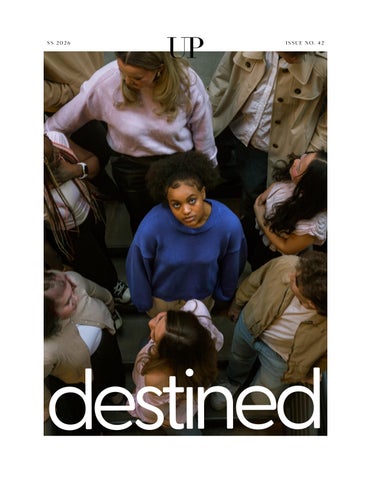
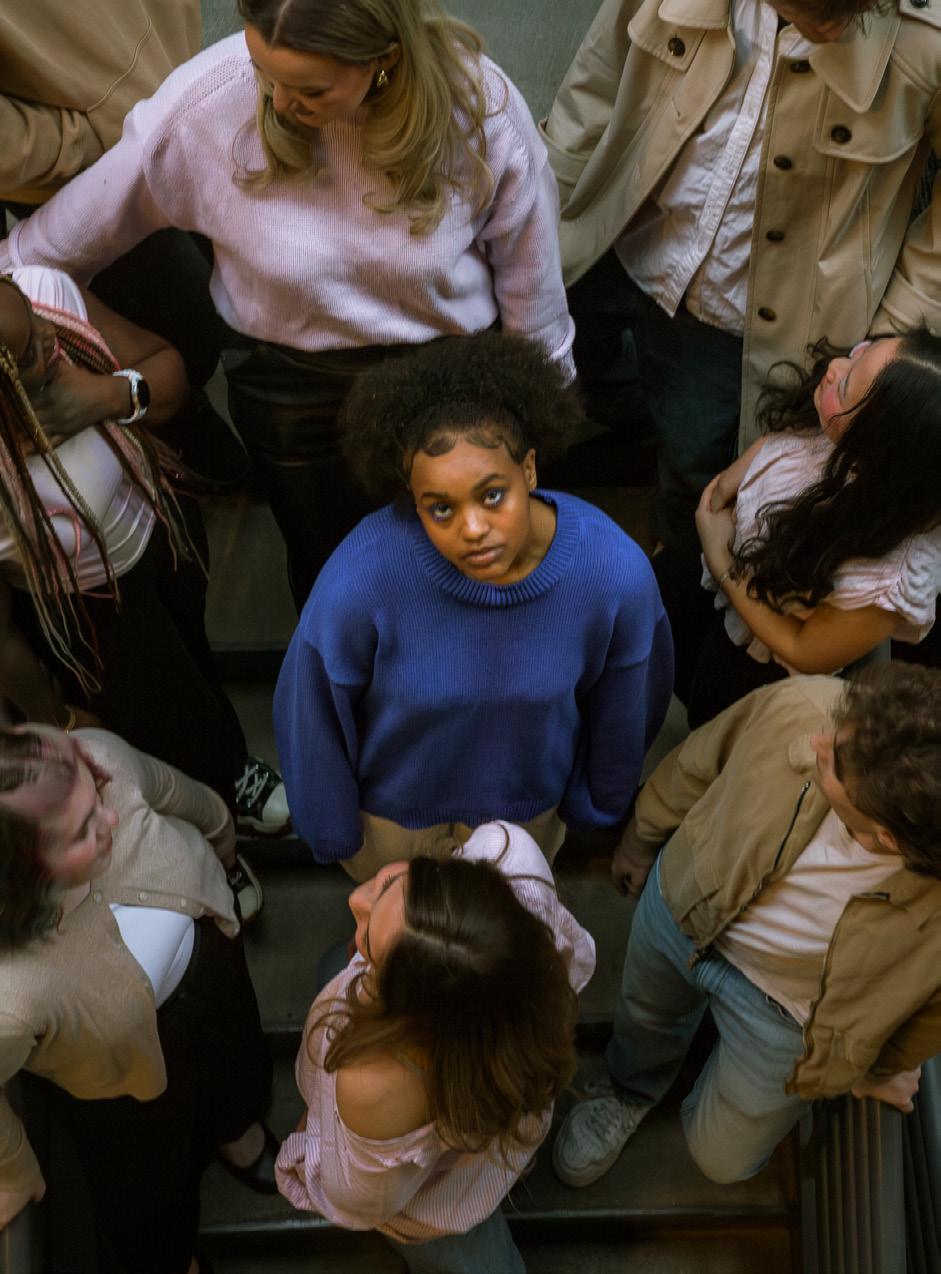
If you are reading this, you are right where you need to be.
The idea for Destined came to Madeline, Elizabeth, and I in a way that seemed like pure fate. As second-semester seniors closing the final chapter of what we have built the past four years, we wanted to leave you with something you wouldn’t come across by accident, something meant to be found.
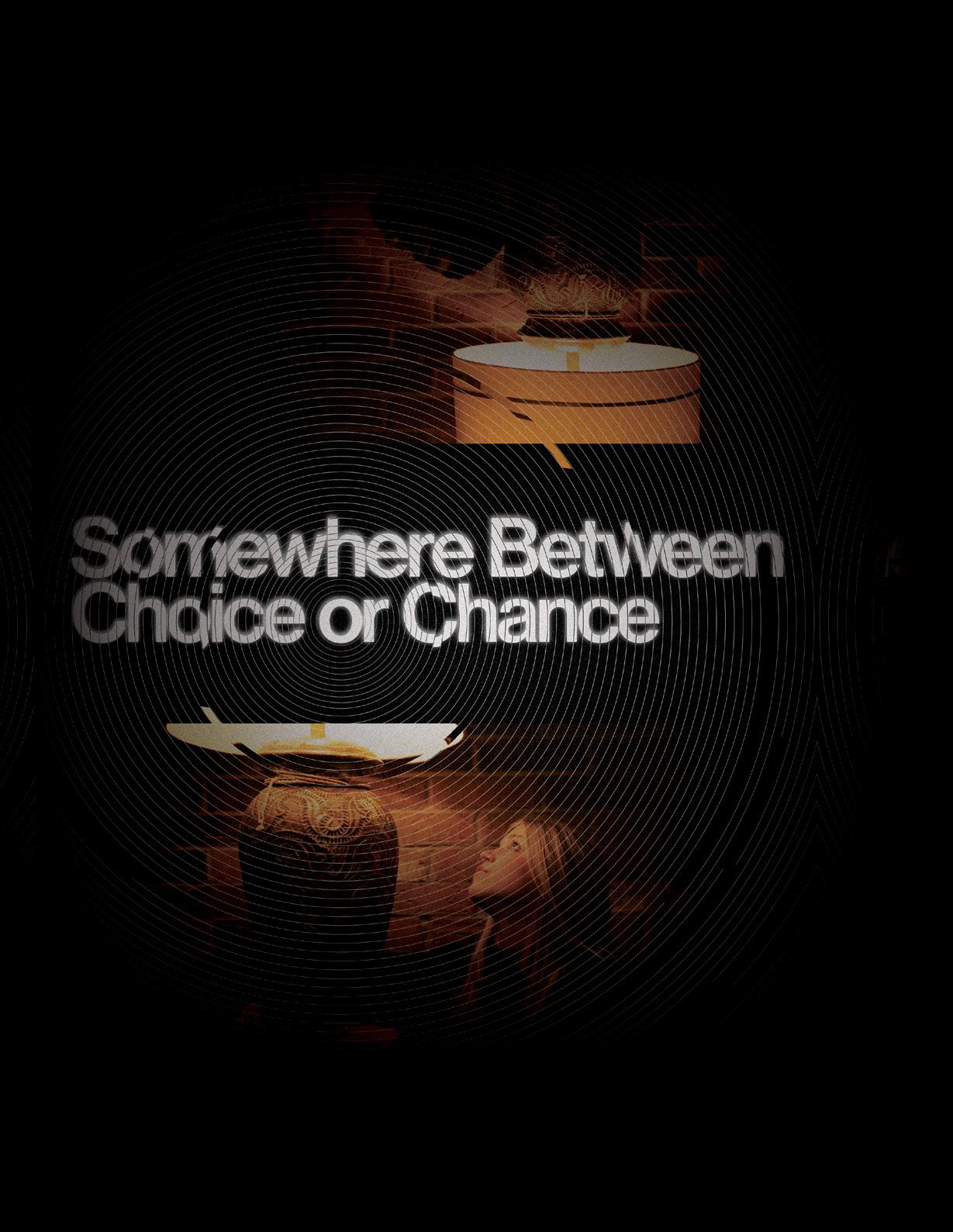
Maybe you were meant to read “Somewhere Between Chance and Choice,” by Tayler Nowak, an exploration of if it’s the choices we make that lead us to where we are now or something else, like a serendipitous force pulling us to our fate. Or maybe “Served on a Silver Platter,” by Kaitlin McDowell, was destined to find its way to your own plate, examining the evolution of food as not just a meal, but a lifestyle and aesthetic fit for our social media feeds. In “Destination Somewhere Else” by Nisso Sacha, international students challenge the intersection of location and circumstance, yet sometimes, destiny comes in the form of the people we surround ourselves with in our lives, like in Elliana Denton’s “Chosen, Given, Found.”
In Cahill Masys’ “What We Choose to Make Ourselves,” human-made art challenges the growing presence of artificial intelligence, and in Allison Lee’s “Holding it Together,” overconsumption takes hold of society, waiting for a solution to bring us back to basics. And on the other hand, juggling the regrowth of a fan base, Boyd Ensley’s “More Than the Score” focuses on our destined-for-greatness university athletes.
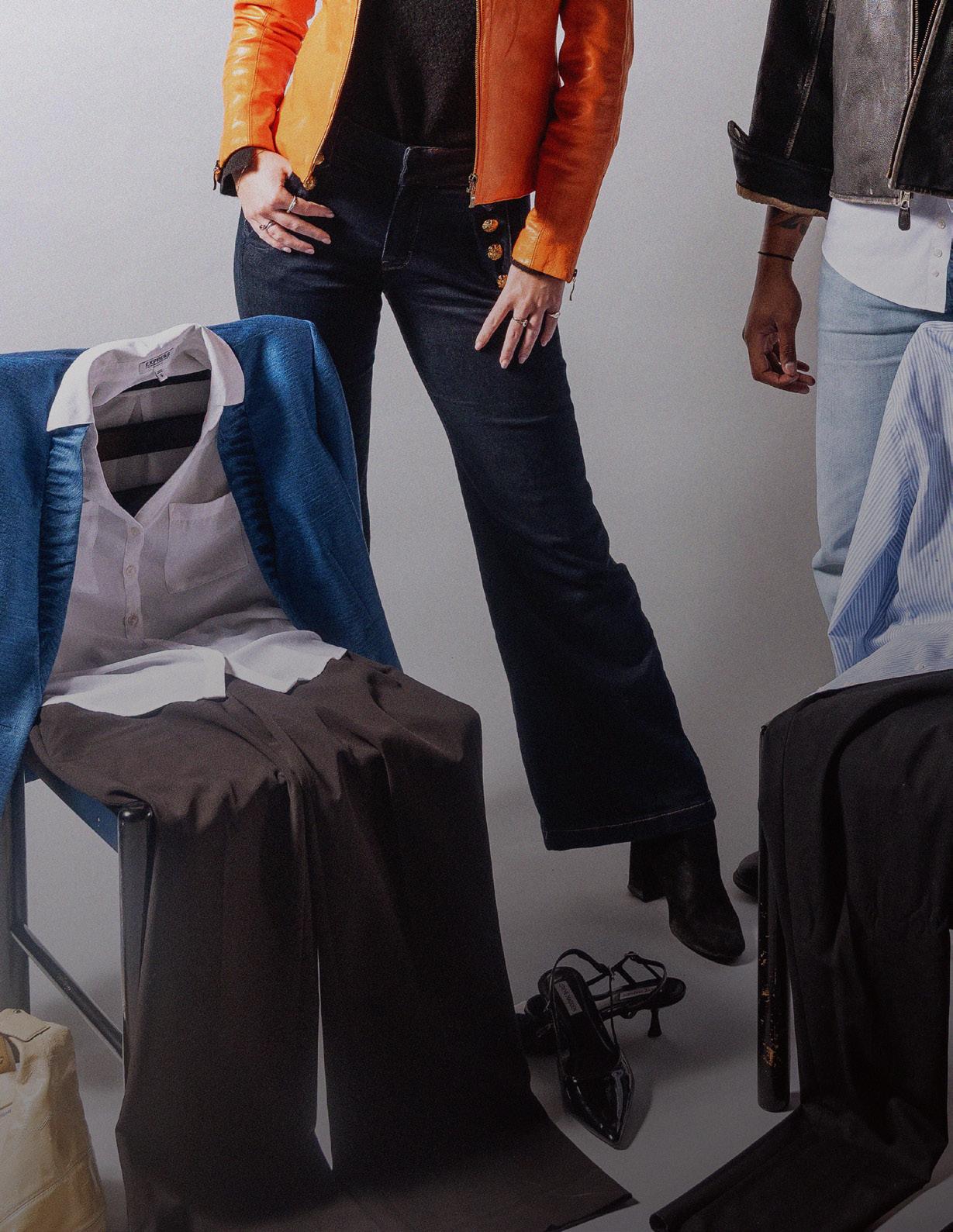
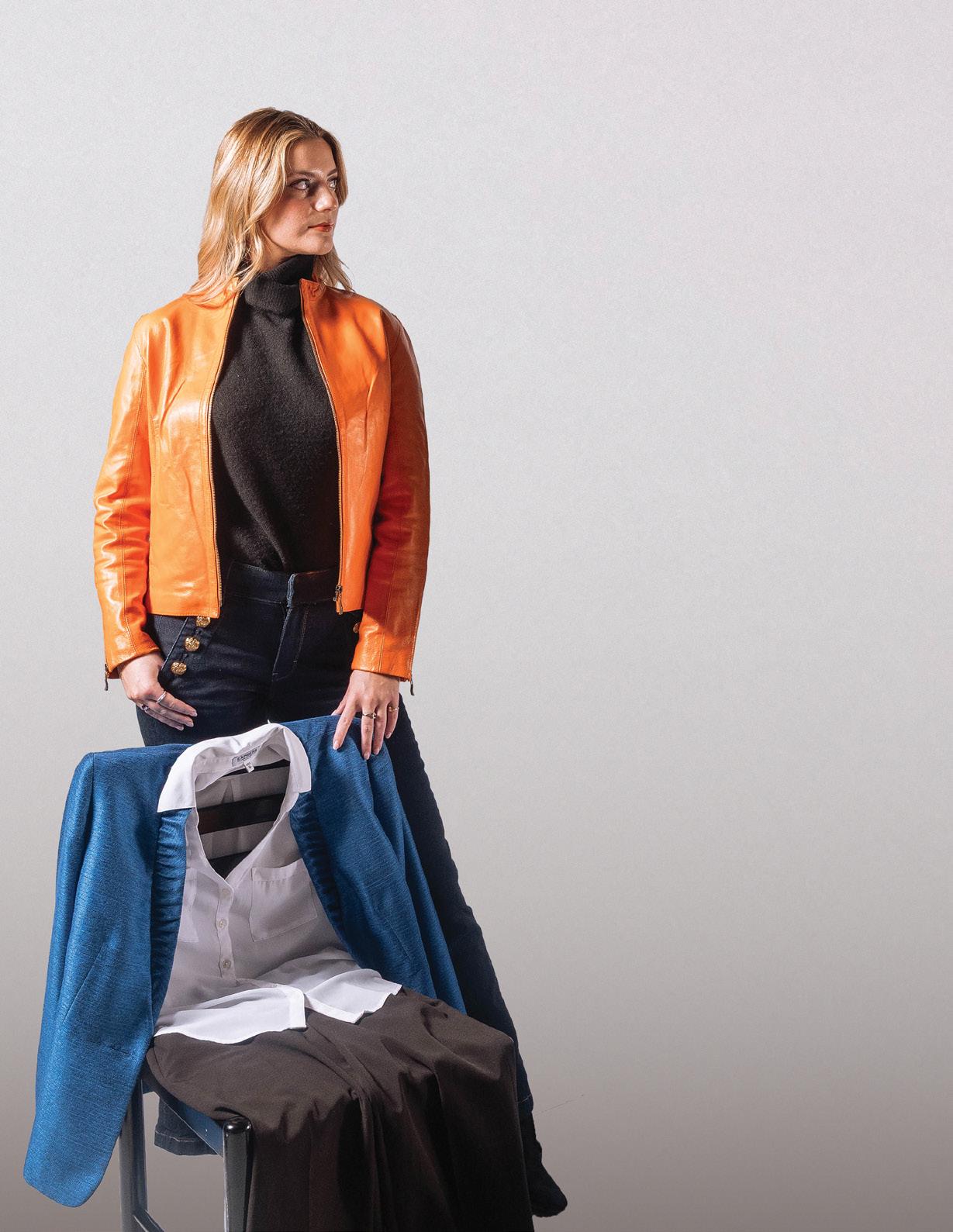
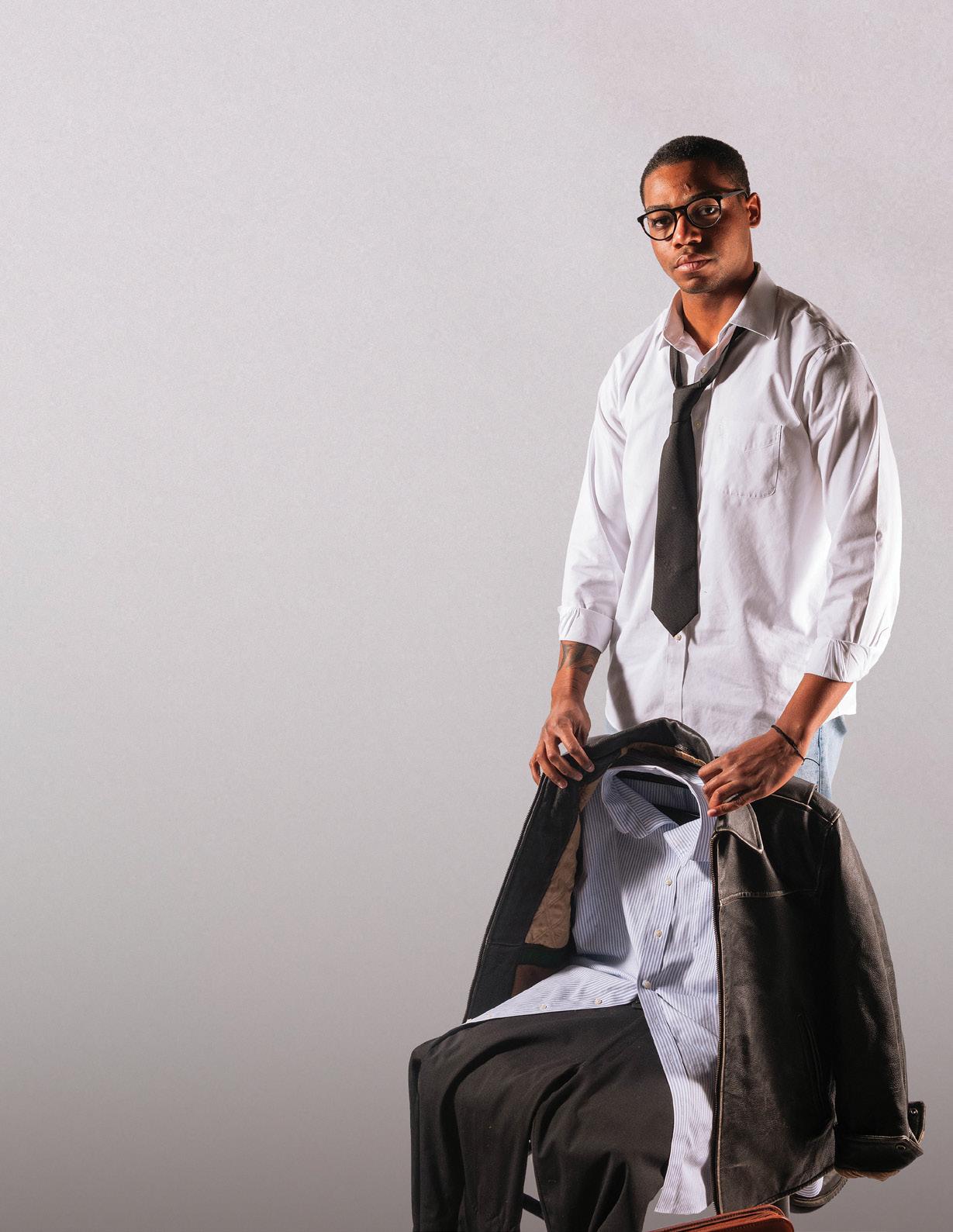
“Running in Place” by Emerson Driscoll examines post-graduation career concerns, while “Outside the Lines” by Becca Miller calls for a return to physical media in a dominating digital age. Caroline Albert’s “Changing Rooms” brings life to clothing in different contexts, both cultural and social, and in “Borrowed Footsteps” by Georgia Lokey, paths we take in life are inspired by those before us.
Sometimes, you can be “Known Without Knowing,” from Sylvia Eastman, harnessing the small yet meaningful connections that blossom into ones we can't live without.
As the year comes to an end, and as my time as Editor in Chief does as well, I’d like to thank everyone that has been a part of my journey within UP Magazine. It truly does feel like it was written in the stars that I found my way into this organization, and I would not be the person I am today without the immense support and guidance I received not just from those I work with today, but past leadership who inspired me to constantly set new standards and not just follow, but challenge destiny.
To Madeline, Elizabeth, directors, staffers, and readers, Destined is for all of us. Life throws us in imaginable directions, whether we feel we can control it or not. No matter how you chose to live your life or where you think you will end up, if it’s meant to be, it will be.
It’s your fate. You are destined to know it.
Much
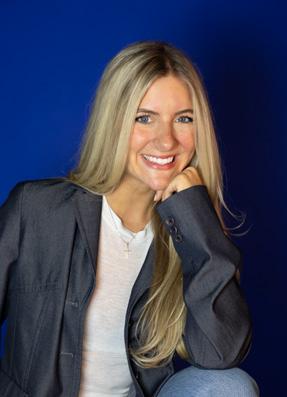
UP Love, Charlotte Hudson
EDITOR IN CHIEF
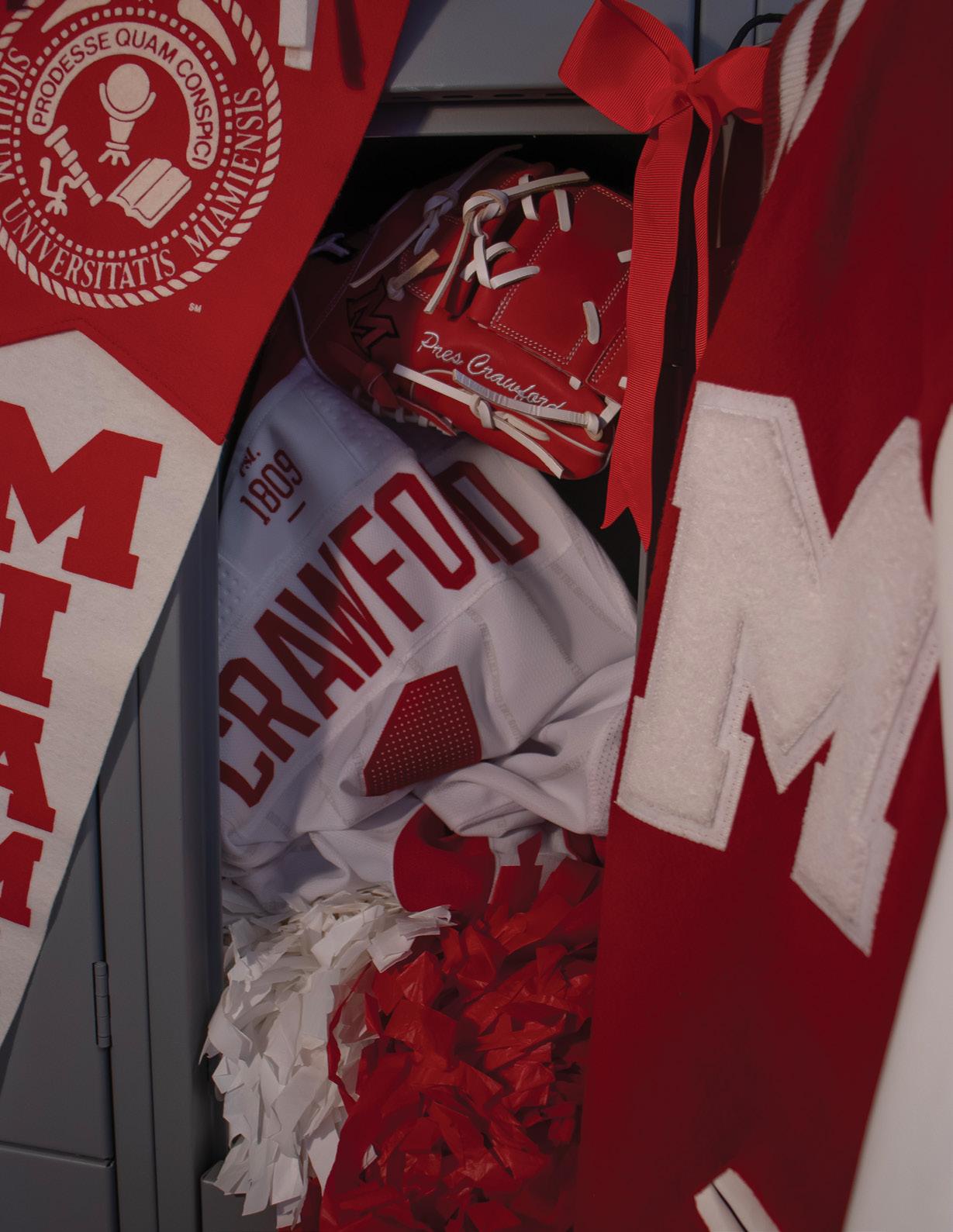
written by Boyd Ensley
photographed by Sophie Masi
written
by
Emerson Driscoll
written
by
Becca Miller
written by Caroline Albert
destined
(adj.) A quiet harmony of chance and choice.
A union of merging paths, sneaking up when one least expects.
Destined embodies the feeling of closure, the gentle weight of everything falling into place, but also ponders the extraordinary serendipitous moments almost too good to be true.
To be destined is to face the intersection of coincidence and intention, to marvel at the moments we’ve created, and leave space for what lies yet in our paths.
photographed by Sarah Frosch
styled by Kiser Young
hair & makeup by Meara Green + Maddalyn Walters
modeled
Pennyman
Jeff Amapps + Grace Milton
Wong
Written by Tayler Nowak
Do you believe in choice or chance, in destiny or perhaps something that lies in between our own choices and what the universe has in store for us all?
Some say fate defines who we are as individuals, our love stories, friendships, what career paths we follow and where we live, but others argue that these paths are decided by an individuals’ own free will. Some may turn to the zodiac signs for their future fates. For
others, destiny may be ruled by the universe, religion or a series of choices that have led us to where we are today instead of a draw of the tarot cards.
Whether it is the choices one makes that leads one to where they are now, or fate steps in and handles the journey, decisions happen for different reasons. The paths that lead to lasting friendships, location or for education may not seem right at the time, but one may find their paths fall into place eventually.
videography by Jayden
by
layout by Caitlin
For senior Emilano Reimon, a path needed to be paved was the path to college. Reimon felt he was drawn to Oxford by his boyfriend while Reimon was studying architecture in his second year at a college near Mexico City. He applied to Miami University to be closer to his boyfriend, however his relationship did not work.
Despite no longer having the comfort of a familiar face on campus, Reimon found his own place within the architecture department and made a new group of friends that gave him a life with new possibilities he didn’t even know existed before coming to Miami University. Reimon decided to travel thousands of miles away from his hometown all the way to Oxford, Ohio and found a place and life he fell in love withcould this be the chance that defined his destiny?
“I think there’s things meant to be like meeting some people and doing things you like. My own destiny is something that was always meant for me or supposed to happen, like studying architecture and coming abroad, or meeting the people that I know I feel are too perfect for it to be just coincidence,” Reimon said. “I do also think part of accomplishing my goals is a reward for the hard work I have put through my life and the way my parents have helped me.”
Reimon lives by the phrase, ‘If you’re going to do it, then why not do it right?’ He takes pride in the choices he makes for himself, studying abroad, leaving behind everything that’s familiar to him and carving out the life he wants for himself while also recognizing that destiny has its hand on the wheel at times as well.
Marketing major Makayla Carpenter has had her own destiny-defining experiences throughout the past four years involving dating and friendships.
Carpenter explains her own experience with spending time and energy on her previous major before realizing it wasn’t the path for her. These trials, however, led her to discover her interest in the skincare and makeup marketing industry. While challenging, she realized she had to go through that experience to realize it wasn’t what she wanted to do with her life.
“There are things in life that are meant for you and things that are not. There’s a lot of serendipity in life that determines where you end up. There’s been lots of times where things have almost fallen in my lap, opportunities, but I also know if I didn’t put in the hard work I wouldn’t have gotten those opportunities,” Carpenter said. “I believe in the universe and God, and
“That’s how I knew destiny was calling me for something else. Because then I would meet a person, or join a job that feels right and lays the foundation for what I care about in life.”
signs, but still putting in the work so that you’re ready for those opportunities that the universe gives you.”
According to Carpenter, there is a great deal of chance that goes into who someone is, however in order to be prepared to take on these unforeseen chances in life, one has to make their own choices that prepare us for unexpected paths. Carpenter’s experiences of trial and error with friendships have also allowed her to make more careful and defined choices moving forward when it comes to the people in her life.
Senior Dylan McConnell expresses how connections made have greatly influenced his decisions to go to graduate school.
“When I first started college I wanted to just get my degree and get out. I didn't care much for the college experience. I saw college as an obstacle to getting a job,” McConnell said. “While my career plans never changed, my outlook has, I plan on prioritizing being where my friends are after graduation.”
McConnell found one of his closest friends on his birthday last year when most of his friends were busy. McConnell decided to celebrate despite his friends’ absences and wound up meeting a person that’s now a major part of his life.
McConnell believes in choice over chance, his decision to come to Miami University has led him to make connections all over Oxford. Whether it’s the place, the people, or the career, one makes choices everyday that change our lives, beliefs and our goals.
It may be the belief that one’s own choices shape identity and experiences, and the places that help one grow and become the version of themselves are meant to be. It could also be that everyday is a game of chance to see where destiny will lead one next. Whether it’s choice or chance that guides life, destiny is the moments somewhere in between and often the best parts.
SERVED ON A
Written by Kaitlin McDowell
Food used to be merely something to be consumed. Three meals a day, simple breads, cheeses and meats. Meals were times to be spent with loved ones around a table.
Now, the act of consuming food has left tables and entered social media feeds. Since the rise of the Instagram food culture and the collectively coined phrase, “phone eats first,” what one eats has become more about aesthetics than the taste of the food itself. Restaurants are no longer preparing specialty plates; instead they are cooking moments designed for social media, like cheese wheels or flaming desserts.
This begs the question: when did capturing content for followers to consume become more important than the experience of consuming new foods and making connections?
Senior Mary Rowe Dill interned with Chicago-based restaurant group, Lettuce Entertain You, last summer. As a social media intern, her responsibility was to optimize
aesthetics to ensure the shared content makes the food look more appealing.
“Every time we [interns] went to a restaurant, we’d ask what their most, not appetizing, but appealing kind of food on the menu,” Dill said.
Lettuce Entertain You’s restaurants all have different offerings tailored for Instagram opportunities like an oversized espresso martini or bloody marys with obscene toppings. These experiences can cost upward of $400 and according to Dill, the large amounts of food and drink rarely get finished.
“Something we used for a TikTok is called the Portofino Purse, which is a spritz in a big purse. People get it and it may not even be their favorite drink but they’re ordering the experience of having a glass purse full of alcohol that everyone takes pictures with,” Dill said. “It can take them up to ten minutes to set everything up for the picture, like moving hands in a specific way or using ring lights for the best lighting.”
While the trend of lavish dining experiences may appear to be newer as social media has turned into a
hair & makeup by Audrey Hughes + Scout Tincher videography by Sophie Masi modeled by Charlotte Doyle layout by Leah Angelo
restaurant recommendation hub, decadent food items have been on menus longer than one may realize.
Junior Claire Bolinger recalls her first interaction with a specialized dining experience to be The Sugar Factory in Indianapolis.
“They had giant milkshakes and giant meals, and the food was fine, but it was a massive milkshake, which I couldn’t get at other places,” Bolinger said. “I could probably make it at home, but the dancing and decorated rooms just made the experience."
The Sugar Factory rose to fame for their milkshakes topped with entire pieces of cake or stacks of pancakes, tailored for a photo shoot served along with a lively atmosphere of dancing and celebrations amongst guests.
The culture of experiential dining asks many to sacrifice taste preference for an aesthetic photo, but not everyone is willing to make this exchange.
Senior Anna Grace Harris is more interested in using
food and unique ingredients to explore the cultures of different travel destinations. Harris created a food-focused Instagram account, @Livewellag, in high school, and documents restaurants she tries as well as her own culinary creations.
“With having a food account, I’m always thinking of new places to try and dishes to make,“ Harris said. “I think plating meals aesthetically makes it a little more fun and exciting to me, especially things like my breakfast that I have had every day for the past two months.”
Harris explains that experimenting with new foods and sharing them on her account, whether perfectly plated or not, serves as a way to build meaningful connections with others and persuade followers to try her creations on their own.
“I like to show how easy it is to cook and how easy it is to make good food whether it's the flavor or how it looks,” Harris said.
Luxury grocery stores, for example, adopt this presentation strategy by enhancing the visual appeal of their offerings, using brightly colored ingredients to make healthy eating more enticing. Erewhon, based out of Los Angeles, has a Hailey Bieber-collaborated smoothie that went viral across social media not only for its health benefits, but for its aesthetics. The layered pink and red hues create a beverage that encourages consumers to flaunt online as more than an expensive smoothie, but a one of a kind experience.
Aesthetics have seemingly become the main dish and genuine taste and enjoyment is a mere side dish. However, we may forget the way food was destined to be enjoyed.
By looking away from the screen, one just might discover that the key ingredient to a meaningful dining experience is not the presentation on the table, but those seated around it.
photographed by Jordan James styled by Liv Romo
Written by Nisso Sacha
For many students, the journey to Miami University is anything but simple. It’s made up of a chain of events, and arrival is rarely accidental. Students arrive with their own unique identities, their own reasons and their own risks in choosing Miami. Belonging is built over time through roommates, student organizations, study sessions and shared meals.
Attending Miami could be a strategic choice, or a door that opened where another closed. For international students, the journey carries added weight: visa processes, time zones and the emotional challenge of leaving home.
But what actually brings people to Oxford? And does the path feel like a plan, or something closer to luck? When junior Samuel Valdez was applying to colleges in the United States from Bolivia, he had never seen Miami’s campus in person. All he had were photos of red brick buildings and the recommendation of a friend who had come before him, someone he trusted from home who told him the business school was strong, the campus was beautiful and that there was nothing to lose by trying.
“It was kind of random,” Valdez said. “I honestly applied to a bunch of random ones…and Miami gave me a pretty good scholarship.”
Arriving in Oxford was its own adjustment, and Valdez says the small-town setting was a culture shock. Living four flights away from home forced independence and a new sense of maturity.
“I was the one who had to adapt to a new society,” Valdez said. “It wasn’t the other way.”
Looking back, Valdez calls his path random, a series of choices made without guarantees. Yet those decisions led him to Oxford, a place that has reshaped him. He’s more open-minded now, he says, and more willing to figure things out on his own.
For senior Nora Zubillaga, the path to Oxford started with a single unexpected conversation.
The summer after her junior year of high school, she ran a strong 800 meters at a track meet. In the crowd was a recruiter from a company that helps Spanish athletes navigate the process of competing at the collegiate level in the United States. He approached her after the meet and said she had what it took.
“That’s when I thought it would actually be a great opportunity to grow both as an athlete and as a person,” Zubillga said.
The US wasn’t something Zubillaga had planned for but the opportunity was there and she said yes. She spoke with several schools before choosing Miami, drawn by the coaching staff, the training methods, the team and the campus. There were already a couple of Spanish athletes on the team too, which made the decision feel a little less like a leap into the unknown. The unknown was something she ran toward.
“I was really excited to get out of my comfort zone and start a new adventure on the other side of the world," Zubillaga said.
OXFORD, OH
Jorge Santander, a Spanish professor finishing his PhD at Indiana University, came to Miami by a different kind of accident. Born in Venezuela, he grew up across Argentina, Singapore, Egypt, Morocco and Spain before landing in the American Midwest. Home, for him, has never been a simple answer.
“When I’m in Argentina, compared to my Argentinian friends, I am a little foreign,” Santander said. “And sometimes in Spain, I’m a little foreign as well. So I’ve always felt that thing, being a little bit foreign everywhere, even though I feel home in Argentina and in Spain.”
His journey to Oxford happened in a matter of days. He saw a job posting from Miami late in the summer, reached out, got an interview and connected with the faculty he met. Santander found that the forces that bring one somewhere are rarely the ones that can be seen. Deep emotions, he says, ones that aren’t always recognized in the moment, have a way of bending our choices toward where we truly want to be.
“I have a feeling that those deep emotions that you have inside will end up bending your way towards where you feel your home is,” Santander said. “It takes a lot of different routes to get there.”
Yeliz Çavuş, a historian of the Modern Middle East and professor of International Studies, came to the U.S. from Istanbul with a clear goal and a specific program in mind. Ohio State University had internationally recognized Ottoman history scholars, her advisor had encouraged her to apply and American universities offered more scholarship opportunities than many
European institutions. The plan made sense, but even for someone who had mapped her path carefully, arrival held surprises. Prior to applying to Miami, Çavuş had visited campus on a whim while exploring other university campuses around Cincinnati on weekends, a hobby of hers. She remembered being struck by its beauty.
Her sense of home shifted gradually, not in a single moment but through slow accumulation. During visits back to Turkey she realized that she had started to miss things about her life in Ohio.
“That is when it really began to feel like this palace was becoming home,” Çavuş said.
With a career spent studying how meaning gets layered onto the past, Çavuş knows better than most about how stories get rewritten in hindsight.
“I tend to believe that people often end up where they’re meant to be,” she said. “But at the same time, I could never have imagined this."
There’s comfort in believing journeys carry meaning beyond chance. Maybe Miami wasn’t destiny, but a combination of resilience, opportunity and the courage to choose uncertainty. Or maybe, as Santander put it, destiny is simply the name we give a story once it has fallen into place.
Layout by Caitlin Wong
Chosen, Given, Found
Written by Elliana Denton
The idea of soulmates has been around much longer than the word soulmate itself.
In one of the earliest records, Plato’s “Symposium” tells the ancient myth that humans were once round, whole beings. In this myth, humans walked Earth as two people connected. With two heads, four arms and four legs, they were complete. When they began to misbehave, Zeus took this gift from them, knowing of its significance. Since then, humans have lived as merely half of themselves, longing and searching for the other halves destined to complete them.
To this day, centuries later, people spend late nights and gossip sessions dreaming about their soulmates, about the person who will so perfectly fit them that their presence will seem like a gift from the universe. Yet, despite how much time is dedicated to the idea of soulmates, people often limit their perceptions of soulmates to romantic partners. While these partners are a wonder to experience, restricting soulmates in this way can undervalue other relationships that are just as profound.
Buecker
How can one define the complex idea that is a soulmate?
Senior Talairja Brittman, a psychology student and a member of the Association of Black Psychologists, said a soulmate is a type of unconditional love.
“A soulmate is someone who truly gets you. They accept you for who you are, and they love you, regardless of flaws. It's just really someone who's willing to experience life with you,” Brittman said.
By this definition, soulmates are not the grand, overexaggerated, perfect people they are often thought of as. Instead, they are just the people who get their partner most. This opens the idea of a soulmate into a much broader pool of people, allowing more possibility for love.
Freshman Natalie Badnell said a soulmate is someone that understands one on a deeper level.
“You don't even have to talk to them and they'll already know what you're going to say. They'll just know everything about you,” Badnell said. “When I was in Spanish class we did a unit on love, and it talked about how in Spain they say soulmates are the other half of your orange. One half of an orange is perfectly fine alone, but the other half just completes it.”
With this expansion of the definition of a soulmate in mind, there are many ways to classify soulmates. One way is to think of them as chosen, given or found.
Chosen relationships are the ones that are actively committed to and maintained over time, the ones where people choose to remain and grow with their person again and again. This could be a long-term partner, a best friend or a life companion.
When speaking about a soulmate of his, freshman Robert Bradford mentioned his best friend. With this in mind, he described soulmates in regards to his friendship. His friendship was one he considered chosen, as the pair grew their relationship over time, deciding to maintain it through the years.
“We know each other the most,” he said. “He can understand me without me explaining myself, [and] we share the same values and he reminds me of myself.”
Given soulmates, on the other hand, could be described as relationships one is born into or receives early in life, such as a sibling or a childhood pet.
photographed by Madeline
styled by Alexa Van Cucha videography by Sylvia Eastman modeled by Aidan Jones & Sydney Cochran layout by Olivia Michelsen
Brittman described her given soulmate as her best friend from her hometown, who she has known for about a decade.
“Every time I come home we spend time together, and it feels like nothing has changed, regardless of distance,” Brittman said. “We met in second grade, so we were given [soulmates]. We got through middle school together and high school, survived multiple friend groups and we got closer because of it.”
Alternatively, found soulmates are people discovered through timing and circumstance, such as a friend or a lover.
Badnell described her relationships as a combination of all three, mentioning her boyfriend and her best friend. Although they knew each other when they were young, they did not become close until later in life.
“They kept popping up and up, and then one time we finally clicked together, finally took a moment to really connect and know each other,” Badnell said. “They just know what I'm going to say. They know what I love. They just understand everything.”
These varied ideas about what a soulmate is and the multiple types of soulmates that can be met in different ways bring to light how soulmates are not inherently romantic. Rather, they are as complex and remarkable as love is.
This complexity is compounded by the belief that a person can have more than one soulmate.
“[A person can have] as many as they're willing to maintain,” Bradford said.
Brittman, too, understands the broad view on soulmates.
“A lot of people come and go, but I think you could consider someone a soul mate if they really made a positive impact in your life, even though they're not in it anymore,” Brittman said.
Rather than waiting to find the specific person who will make them whole, people should remember that soulmates and love are not as rare or limited as they may seem. While looking for a perfect, destined match, look up every once in a while and search for potential soulmates everywhere and in everyone, maybe even in those who are already in one’s life.
Alternatively,found soulmates are peoplediscovered throughtimingand circumstance,suchasa friend or alover.
CARRIED WITHOUT NOTICE
photographed by Greg Engler styled by Ruby Darmanin hair & makeup by Nora Rolke, Audrey Hughes + Akua Osei-Bobie modeled by Kyler Phillips + Zarina Cabrera layout by Brynn Siler
WHAT WE CHOOSE TO MAKE OURSELVES
Written by Cahill Masys
An average day for a student at Miami University may involve moving quickly from class to a student organization meeting, studying at King Library, preparing for post-graduate job interviews, exercising at the Rec Center, grocery shopping and spending time with friends. This all happens while managing multiple academic deadlines. In this fast-paced environment, digital tools have become increasingly integrated into students’ workflows. To manage these busy schedules, many students have turned to generative artificial intelligence platforms such as ChatGPT or Google Gemini to brainstorm, organize ideas, or review assignments under time constraints.
Although these tools were virtually nonexistent five years ago, they will become a crucial part of higher education by 2026. Rather than assuming universal
adoption, it is more accurate to recognize that students engage with artificial intelligence (AI) in varied and individualized ways. This same phenomenon applies to the world of art. Many in this department grapple with whether these technologies function primarily as supportive creative tools or whether they complicate traditional understandings of authorship, originality, and critical thinking in artistic practice.
Although AI’s use and surrounding discourse have exploded within the decade, AI’s role in art found its foundation in the early 1970s with the program AARON, created by Harold Cohen. AARON was an autonomous, rule-based software that created drawings. Cohen’s program utilized basic objects, images, rules of physics and drawing techniques to create an image from scratch. This software was far different from the AI of 2026, which utilizes preexisting images from the internet to create new images.
OR EFFORT? PRODUCT OR PROCESS? AUTOMATION OR AUTHENTICITY? EFFICIENCY OR EFFORT? PRODUCT OR PROCESS?
OR AUTHENTICITY? EFFICIENCY OR EFFORT? PRODUCT OR PROCESS? AUTOMATION OR AUTHENTICITY? EFFICIENCY OR EFFORT? PRODUCT OR PROCESS? AUTOMATION OR AUTHENTICITY? EFFICIENCY OR EFFORT?
With today’s models, the use of AI in creating art can take the form in a humanoid robot, putting a pen to paper or an artist asking an algorithm to replicate their image with alternating colors. AI’s role in art can take many different forms, and the art world remains divided on whether these practices should be viewed as a threat to traditional creativity or as a tool to enhance and support artistic expression.
Senior Sarah Thurnauer, an art therapy and art studio student, believes that human touch, ideas, emotion and creativity are what make art, art.
“There’s a reason why original paintings sell for so much more money than prints, and why people spend so much more on handmade furniture, pottery, or jewelry than they would for the ‘same’ items on Amazon,” Thurnauer said. “We value things more when people make them than when machines do an objectively ‘better’ job at producing them…I like to
think that handmade art is more inspiring because some part of us feels like we could have made it too.”
Thurnauer believes that AI can exploit human artists. It is her observation that there is no shortage of creative people, so the idea of outsourcing creative tasks feels strange to her. She takes the stance that an AI-filled art future would replace artists' means of work, rather than acting as a tool for them.
“In 2026, I can’t imagine there’s any way to make a career as a professional artist without some kind of online presence and, if you’re online, your content is subject to exploitation,” Thurnauer said.
Senior Davie Avis, a fashion and organizational leadership student who designs clothing for the Miami University Fashion and Design (MUFD) fashion show, offers another hesitant position to the discussion.
“I do believe art needs human intention and emotion behind it. Even if the artist doesn't know it when they are making something, their past experiences and emotions are 100% impacting their execution of a
piece,” Avis said. Avis argues that AI lacks the depth and complexity of human experience, and it does not have the capacity to truly replace human artists. She notes that using AI can help to streamline processes and routines in art, but it shouldn’t be the sole creator of what humans see as art. However, she also believes that AI can be utilized to limit waste and help artists visualize ideas before making a final version.
Dennis Cheatham, an Associate Professor of Design in the Department of Art, and an Affiliate Faculty member in Emerging Technology in Business and Design, holds the opinion that AI is a natural extension of the progression of technology within art.
“AI-generated art is a way for people who want images but can't create them to achieve those goals. I see it as a functional way to get image products, but also a creative way for someone who really wants to make something visually compelling to do it without having to develop all those skills that require thousands and thousands of hours,” Cheatham said.
Cheatham believes AI adds a level of efficiency to creation, and it acts as an instrument that produces high-quality visuals to help designers work through ideas and quickly present concepts to clients.
“These tools are challenging the value and importance of developing deep skills and the experience a person has through the highs and lows of developing something that's special to them, and that is finely crafted,” Cheatham said.
Junior Elise Malles, a media, communications and marketing student, sees this discourse from the perspective of advertising and how art should make people feel.
“AI is something I use to generate ideas for marketing classes as a jumping off point to foster creativity,” Malles said. “I can see how it can be very helpful for artists to generate ideas, but I don’t think it should be used as an entire artistic expression, which can only come from human creativity. However, I see it as a utility rather than something we should ignore.”
Malles believes that artificial intelligence is very helpful, but it shouldn’t be something to rely on heavily. Ultimately, the conversation surrounding AI in art at Miami University reflects a broader cultural tension: a balancing act between innovation and intention. While students like Thurnauer and Avis emphasize the irreplaceable value of human emotion, lived experience, and craftsmanship, Cheatham and Malles place AI and its growing role in education within a longer history of technological evolution in creative practice. Their perspectives do not cancel one another out; rather highlight the complex challenge of defining creativity in 2026.
As artificial intelligence becomes more embedded in both academic and artistic spaces, the question may not be whether AI belongs in art, but how it should be used and by whom. Whether viewed as a threat, a supplement, or a practical resource, AI ultimately forces artists and institutions alike to reconsider what they value most: Efficiency or effort? Product or process? Automation or authenticity? In confronting these questions, artists must also grapple with a deeper issue about creative destiny: whether the trajectory of artistic development will continue to be shaped primarily by human intention, experimentation, and growth, or whether algorithmic tools will increasingly guide the direction and outcomes of creative work. How students and educators choose to engage with AI today may therefore influence not only current artistic practices, but also the future path and destiny of art education itself.
photographed by Yoann Kenguemba styled by Abby Thompson hair & makeup by Scout Tincher videography by Sophie Masi modeled by Estella Grasso layout by Caitlin Dominski
Written by Allison Lee
Just one more shirt won’t hurt…
That’s what’s said as “add to cart” is clicked at 1:20 p.m., blue light reflecting off of a half-finished assignment and an emptier than desired bank account. It’s on sale. It’s basically free. And anyway, there’s an event this weekend that the top would be perfect for.
Why is society buying into fast fashion and wasting money on cheaply made goods that have been mass produced overnight? When did a shopping cart become a coping mechanism? And at what point did ‘in’ labels become personality traits?
Junior Paulina Gallagher is taking control of her own self expression by participating in the growing Project
bottom of a makeup bag, it must be put to use.
“Makeup wasn’t the problem with my friends and I, but food was,” Gallagher said. “We’d get two different ketchups or two different types of chicken breasts, so my roommate proposed doing a project pan with our grocery lists.”
Even if it isn’t makeup, everyone in some way or another has their own kryptonite when it comes to shopping. A sweatshirt collection that could always grow, a frosted lipstick they have seen online or even a reusable water bottle – items, for example, that more recently have been duplicates in closets and drawers instead of something used until it gives.
“I think that [Project Pan] is something that can be applicable to almost everybody’s life,” Gallagher said. “I’ve been trying not to buy something new until everything I’ve bought has been worn, and my little brother has a bunch of Legos he hasn’t touched yet, so he could Project Pan his Legos. It doesn’t just have to be makeup, it could literally be anything.”
Project Pan aside, the importance of self discovery rings true. Personal style is a direct reflection of oneself.
traveled and and every hobby partaken in makes up who a person is. That is why so many subcultures remain prevalent to this day; the hippies and the punks, for example. Their clothes and attitudes are their politics, so to speak. One glimpse at them and they are easily identifiable.
Now, with everybody seemingly in uniform, personality risks being lost. That being said, following trends is not a bad thing. The problem is that being trendy has now become synonymous with updating entire wardrobes at rates quicker than it takes for garments and products to be used sufficiently. The second something is deemed out of fashion, the chances are that those garments get brought into thrift stores, or worse, compacted onto trash islands. In part, this is because social media algorithms seem like they know personal taste better than one actually does.do. Limited stock. Selling fast. Only three left in a size. These companies know that feeling left out can feel like the end of the world. Fast fashion feeds on urgency, but personal style thrives on patience; the difference lies in intention.
When studying abroad, junior Farah Millman has seen this phenomenon less.
“Everyone in Europe is dressed completely differently than one another, as if overconsumption does not exist here,” Millman said. “Studying abroad has shown me that here, a trend is simply an idea, not a repetition of apparel.”
But, the mold can be broken. Taking the time to learn about personal preferences can unlock new potential within wardrobes.
Outfit repeating, clothing swaps amongst friends and thrifting have become quiet acts of resistance against disposability culture. Wearing the same garments has become less about scarcity and more about imagination and appreciation.
Junior Maddie Regensburger has felt this before.
“I try to be intentional with what I buy, choosing pieces I know I will wear instead of impulse shopping,” Regensburger said. “Sustainability is really about shopping smarter and making the most of what you already have in your closet.”
Project Pan, intentional shopping and sustainable habits all coexist within the same idea – that ownership should mean relationship. The jeans softened by years of wear, the hoodie borrowed and never returned and the lipstick worn down to its final swipe. These objects carry stories because they were lived in, not replaced. Sometimes, one more shirt won’t hurt.
But sometimes, it destines a moment of desire to become a lesson in choosing meaning over excess.
photographed by Emily Levine styled by Ashley Carpenter hair & makeup by Nora Rolke, Scout Tincher, + Maddalyn Walters modeled by Kavya Karthik layout by Jack Dinh
Written by Boyd Ensley
On Feb. 8, fans in a sold-out Steve Cady Arena sat on the edge of their seats as Miami University men’s hockey took the No. 1 Western Michigan Broncos into an overtime nailbiter. After being tied up 2-2 since the third period, freshman forward David Deputy found the back of the net, and fans erupted in cheers.
Sold-out arenas have become a steady pattern at Miami, and it has had a significant impact on the performance of Redhawk athletes. Senior forward Blake Mesenburg understands how much the hockey team benefited from a rowdy crowd.
“When the building is already filling up, and the students are packing up the building, warmups and gameplay become so much more energizing,” Mesenburg said.
Until recently, Miami has been trapped in the confinement of being a “mid-major” where sports culture is not always a priority. Yet this season, Miami has been the opposite of “mid”, consistently dominating conference play and even gaining national attention.
Football is a prime example, with three straight conference championship appearances. A unique experience of Miami football is “MAC-tion” football, occurring on weeknights, contrary to the standard Saturday slot. Often, these games occur in late November in less-than-ideal weather conditions, resulting in empty stands.
Regardless, the team continues to show up and deliver. Junior defensive end Sam Williams has experienced these challenges occurring during the football season. However, Yager Stadium looks quite different with the sun shining on a fall Saturday.
“I get it is hard for fans on a Tuesday or Wednesday night when you need to go to a football game when it's 40 degrees and windy outside,” Williams said. “It's a totally different feeling when you're driving down to the facility and look out the window seeing signs, banners and a packed tailgate.”
Despite the school motto of “Love and Honor,” which is consistently demonstrated by the athletes, student fans struggle to show support for the students showcasing their skills on the field.
Miami can be known for a large drinking culture, and Barstool Sports ranked bar, Brick Street. Drinking culture in the past, has taken precedence to home games. Some Miami fans choose to watch games at the bar with friends on Friday nights or during the Saturday “Beat the Clock” tradition.
The 2025-26 athletic year has seen a massive shift in student buy-in. Basketball and hockey have
experienced multiple sold-out crowds and have winning records for the first time in years. Notably, men’s basketball became just the 24th team in the modern era to complete an undefeated regular season, and the women's team won the MAC title. But does this make Miami’s students “fairweather” fans? Senior Cooper Grill, a loyal basketball fan who has seen the teams at their best and worst, does not believe this was the case.
“You can take it in a negative way if you want, but it enables us to do what we’re known for,” Grill said. “Maybe it's another excuse to drink, but we’re transitioning our party school energy into supporting our athletic programs.”
Junior Calla Oelkrug, a varsity cheerleader, who has cheered in front of both half-empty stands and, more recently, packed arenas, views the fan resurgence as more than just about winning.
“Not only has it made my job as a cheerleader more effective and impactful, but it’s also allowed me to engage with so many more Miamians and promote the university that I have so much love for,” Oelkrug said.
School spirit is something that can be found in each student-athlete. While all of these athletes come from different homes and backgrounds, they all found themselves committed to playing as a Redhawk for their four years of college.
Sophomore Avery Voss, an athlete on the women’s tennis team, heard about Miami originally through a family friend. When describing her series of visits and introductory practices, Voss reminisced about it fondly.
“I fell in love with the whole place, the tennis community here, and everything around it.” Voss said.
This infatuation with Miami’s campus is not unique to Voss; other athletes on Miami’s campus recalled the same feeling upon their first visits. Additionally, each individual team had its own culture that
brought out the best in its athletes.
Senior Riley Mazzalupi, an athlete on women’s field hockey, has been a part of one of the most dominantly successful team cultures on campus.
The women’s field hockey team is made up of 17 players who were named to the NFHCA National Academic Squad and holds eight straight MAC championship titles. Miami is also the first MAC school to qualify for a bye in the national tournament, reaching the quarterfinals.
“Our mindset from this past spring going into the fall was to get 1% better everyday” Mazzalupi said. “We’re watching film outside of practice. We’re doing our schoolwork. We're getting in shape over the summer. Everyone’s all on the same page once we're back on campus.”
The experience of a student athlete is one of hard work, dedication, and perseverance. The lessons learned from games and practices, failures and successes, could rival just about any resume.
In a sport like swimming, which is incredibly physically demanding, but doesn’t always receive the same attention compared to other Miami sports, athletes are being prepared for success on and off the field.
The men’s swim team maintains a streak of five conference titles. Similarly, the women's swim team is no stranger to success, finishing 4th in the Missouri Valley Conference this year and having four Academic All-District Award recipients on the team.
Junior on the men’s swim team, Clark Pabst, found growth in change and credited the success to team values.
“There’s been a lot of turnover in our program, but swim has taught me how to accept everything and everyone around me,” Pabst said. “We always find a way to succeed and bring it all together to form a special group.”
Junior Casey Stephens, an Academic All-District Award recipient, discovered individual capabilities through a tough schedule and a driven team.
“My experience as a swimmer has built a resume for me. I’ve established a special sense of self-confidence in myself, knowing I can do hard things,” Stephens said.
Miami is a school built on a tradition of success, whether it's in the classroom, in post graduation careers, or competing at the next level of sports. This resurgence of school spirit has created a new culture for Miami’s student body and athletes and one thing is for sure: Miami athletics are destined for greatness.
photographed by Gabrielle Wehrman styled by Paulina Adams layout by Madi Patton
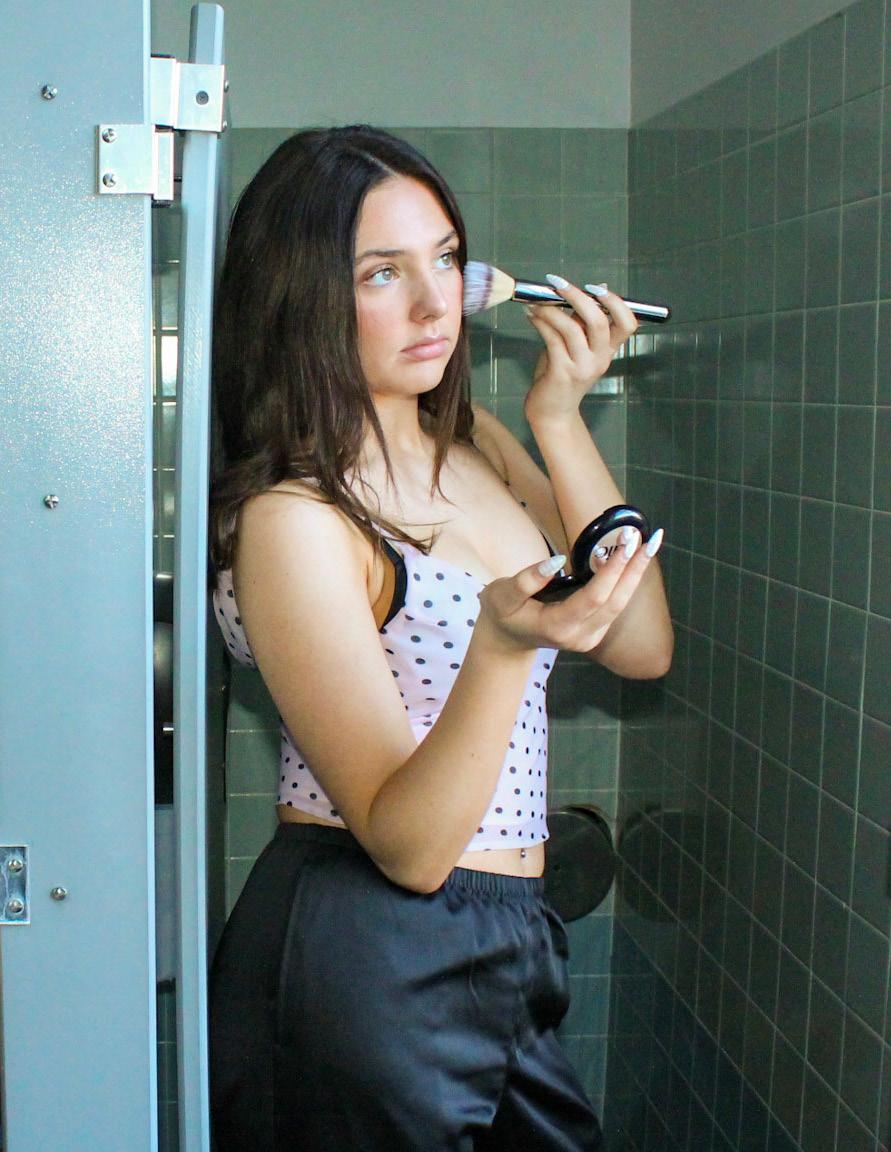
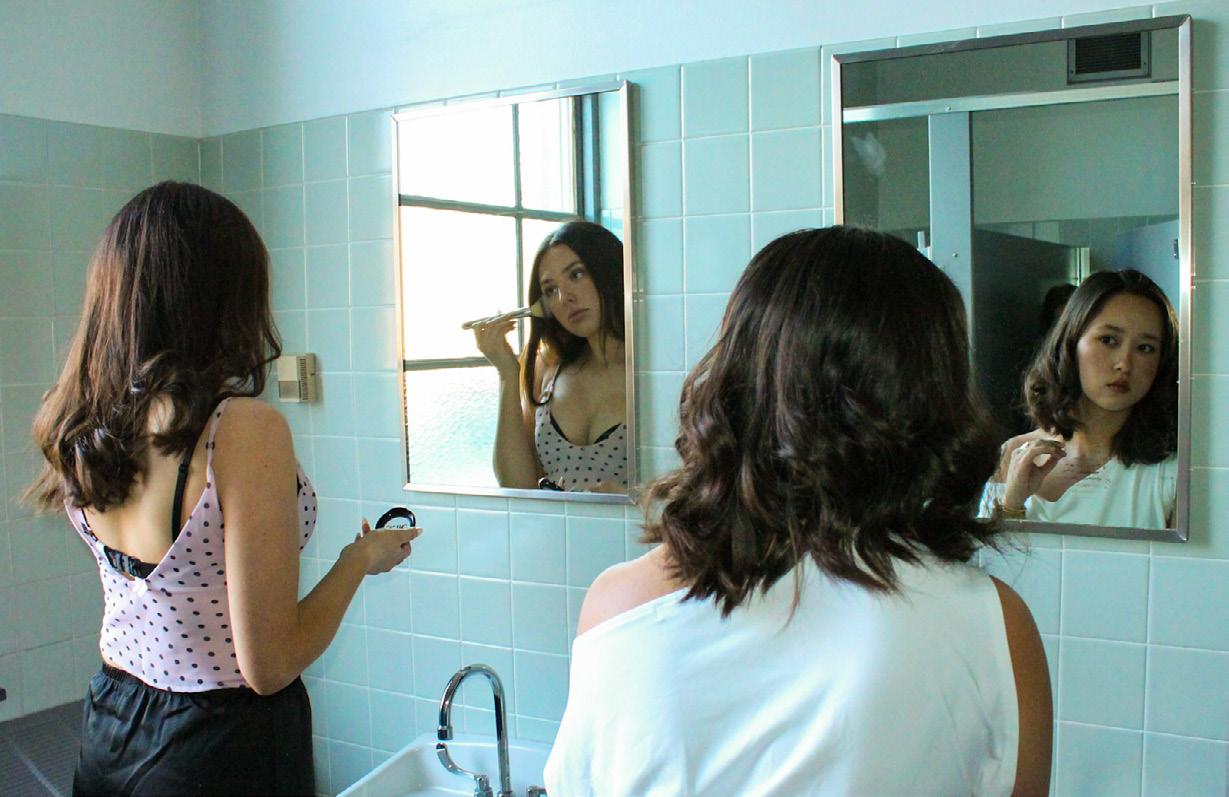
The Art Of Getting Ready
photographed by Sophie Masi styled by Maya Carey hair & makeup by Nora Rolke, Meara Green, + Maddalyn Walters videography by Rachel Whary modeled by Marykate Richmond + Gracie Masi layout by Emma Silshtut
Written by Emerson Driscoll
The transition from college to the workforce hangs over every college student's head long before graduation. Questions about choosing the “right” major, if a job application was sent in on time, maintaining LinkedIn profiles and professional resumes often interrupt student’s daily lives, slowly shaping how they think about their future.
For many creative majors, such as strategic communication, art, or fashion, the job search can be a complex process. Miami University has a large business program which results in many students either taking classes at Farmer School of Business or studying a specific business major. This business dominance throughout campus can make those not following a finance or marketing path feel as though they are behind or doing something wrong.
However, as explored through students, this is not the case. If one is an art major, putting together a portfolio comes long before talk about resumes; for journalism majors, bylines in student publications make all of the difference; and if one studies fashion, extensive experiential coursework classes is expected, even if their interests do not align with the making of clothing as a career.
Unlike other fields with a structured career pipeline, creative industries often offer many different career paths. While these career paths can lead to very fulfilling, unique jobs, the process of refining skills, experience, and finding careers that truly align with their interests after graduation can be discouraging.
As a college student entering the arts field, the ability to adapt and truly understand that this journey won’t
be a straight line, but rather a series of trial and error, is crucial. Looking into the process helps to understand these students’ experiences that led them to the place they are now: pathways that they should undeniably be proud of.
Senior Victoria Eachus, an educational studies and political science major, says she has known what she wanted to do after graduation, but the ways she’ll be able to reach her goals have shifted.
“I knew for a long time I wanted to work in education, but also had a passion for policy development, growing up close to D.C., so I chose this path to pursue educational policy,” Eachus said. “I imagined myself going straight into policy work after graduation, but the educational policy space has changed drastically so I am looking for other opportunities to expand my educational experiences.”
Eachus admits she is very uncertain about what is to come in the coming years and she tries to take advantage of any opportunity she discovers. With such an individualized education path, she has found that finding job opportunities becomes even more difficult. She has applied to many different positions, but Eachus continues to face rejection and learn that many positions required experience she was not aware of.
“Many positions in policy work require past research. I don’t fault Miami for not preparing me because this space is changing in a way that’s out of our control.”
Eachus said.
Although the job search process has proved to be an obstacle, Eachus says that asking for help from others has brought her success and mentorship.
photographed by Delaney Juenger styled by Kennedy Stackowicz
hair & makeup by Nora Rolke + Akua Osei-Bobie
videography by Jayden Pennyman modeled by Josephine Timperman+ Amelia Bonano layout by Hannah Sheets
“I have realized since beginning my search the essential aspect of having and utilizing a network,” Eachus said. “I used to be embarrassed to ask for help or recommendations from people, but have found that it is the only way to stand out from other candidates.”
Offering a different perspective on these challenges, alumna Halle Maskery offers a different perspective on these challenges based on her own experience in the workforce and her background that led her to where she is today.
Maskery was a Marketing and Fashion co-major student and she says she always had an idea of what she wanted to study.
“I always knew I wanted to study fashion, but the Miami program was perfect because it allowed flexibility between design, business or entrepreneurship,” Maskery said. “Adding marketing gave me a strong backbone to really understand the business side of the industry and how creative ideas turn into successful products.”
For Maskery, it was not just about her education in the classroom, but additionally, she attributes her post college success to her involvement on campus,specifically with Miami University Fashion and Design (MUF&D) and UP Magazine, two student-run fashion organizations at Miami University.
When reflecting on her experience in these organizations, Maskery said they provided so much real-world experience.
“While you can learn a lot in the classroom, what really matters is how you work in the field,” Maskery said. “These organizations taught me how to work on a team, manage deadlines, communicate ideas and adapt in fast-paced, creative environments.”
Maskery said the shift from a college schedule to a professional role was a big adjustment for her. She felt confident going into her job applications, especially with so many hands-on experiences she gained in college, but there were still things she had to learn.
“College gave me the foundation, and my early roles helped me build confidence and refine my skills,” Maskery said. “Once you get your foot in the door there then is the opportunity to apply yourself and understand how to work with your team.”
Michelle Vaske, Associate Director of Professional Development at the Career Center, says many students are concerned about the experience needed in entry-level job positions and what that means for their future.
According to Vaske, many students have already begun building that experience during college through coursework, internships and organizations, which can help shape their professional portfolios.
For many creative students, portfolios hold as much weight as a traditional resume.
“A creative’s portfolio is just as valuable, if not more, than their resume,” Vaske said. “A portfolio is proof of your technical and creative skills, as well as your ability to tell your story.”
Networking also plays a major role in finding opportunities. Vaske notes that 86% of jobs are filled through networking with others. She also adds that students should approach networking with a different mindset.
“Change the outlook of networking from ‘what’s in it for me’ to ‘how can I help others,’” Vaske said. “When you can help someone, they will want to help you.”
Vaske believes that as creative industries continue to evolve due to the growing presence of technology, it is very important for students to develop a broad range of abilities, while cultivating a speciality specific to themselves to stand out. As students begin navigating careers that do not always follow a straight path, Vaske suggests that early opportunities can be viewed as stepping stones, rather than final destinations.
“Not every job has to be the perfect fit; it needs to be a learning experience,” she said. “To learn what you like and don’t like and what areas one needs to improve for the next position.”
While the path into creative industries may be longer or more complicated compared to other career pipelines, uncertainty can also create opportunities. Students who are pursuing creative careers build their own paths that reflect their individuality and perseverance, they gain experience that sets them up for success wherever they may end up. The journey to find a dream job does not have to follow one destined path, but can rather be found along the way.
Outside the Lines
Daylight slowly slipping away as darkness flows in, the same song playing on a loop and an untouched phone. A moment so rare that many take for granted. This is what focus looks like when passion leads.
For many college students, it can be hard to escape constant digital pressure, whether that be social media or online schoolwork. Creative, hands-on crafts like crochet, painting and nail art offer a slower and more intentional pace. With each stitch or stroke comes a deeper level of focus, where time slows down, and the room goes quiet. Notifications slowly slip away as attention shifts to where the next stitch will go.
Senior Baylee Schmidt admits crocheting can become extremely time-consuming and is a huge commitment. However, crochet allows her to disconnect by creating a space where long periods of focus are crucial.
“As human beings, we need to contribute to our own environments,” Schmidt said. “We're physical beings that perceive, and therefore understand, our experiences through a physical sense. When these senses are removed, or when the digital doesn't serve them, we can't quite form the same attachments to our work, spaces, each other, and ourselves.”
Likewise, senior Lyla Brasher has found that crochet allows her to express herself through colors and careful intention in ways that social media doesn’t. Creating
something that is uniquely hers brings meaning to each project, and she describes crochet as a slow but rewarding process.
“I see it as a form of self-expression and creativity because crocheting is something not everyone can pick up or have the patience for,” Brasher said.“I also noticed that since I started crocheting, I have picked up more hobbies, like knitting, scrapbooking, coloring and watercolor, which has led me to use Pinterest more than my other social media apps.”
The same intention and repetitiveness applies beyond crochet. Freshman Gianna Herrera runs a successful nail business from her dorm, offering expressive designs with affordable prices to students. Unlike the repetitive process of a scroll through social media, Herrera is able to create something tangible for her clients to showcase in real life, as opposed to through a screen. She explains that nail art is one of the rare times her phone isn’t in her hand.
“Nails are such a fun way to show personality because they can change depending on your mood, style, or even what’s going on in your life,” Herrera said.
“Whether it’s something bright like a neon pink or something more simple and edgy like black, every design says something different and feels personal.”
Despite juggling being a part of a sorority, balancing her social life and school, Herrera has found that nail art allows her to be more intentional with her time. She explained that success isn’t defined by constant work, but by passion and consistency.
screens,” Herrera said. Alongside the tangible art worn on one’s hands, some students are taking their art to a new level by creating pieces that uplift the spaces around them. This allows their creativity to be seen, felt and photographed.
For senior Lucy White, banner painting consists of painting designs on large sheets of paper to be used as a backdrop for campus events and social gatherings, allowing her creativity to be experienced collectively by others. Forms of hands-on art like painting require precision, and sometimes mistakes are inevitable. White said this is all part of the process and pushes her to be more imaginative.
“Mistakes often lead to new ideas and added details like designs or patterns, for example, sometimes the paint will drip, and to cover it, I will add a new element that looks good, like doing stars or polka dots,” White said. “They push me to be more creative rather than taking away from the process.”
White’s banners have been featured in many campus events and small student gatherings, including Alpha Xi Delta’s Bid Day and a 21st birthday party. Though the banner may only be used for one evening, the photos taken with her backdrops will last these girls for years to come. More than just a painting, these banners are a way to enhance a social gathering and frame lasting memories.
An unknown number of hours have passed and thirty new notifications sit untouched. The daylit room is now flooded with darkness, and what now remains is a small light illuminating slow and steady progress. Hand over hand, stitch by stitch, stroke after stroke. Something incredible is destined to come to life.
Something incredible is destined to come to life.
photographed by Olivia Smallcombe styled by Paulina Adams hair & makeup by Maddalyn Walters + Akua Osei-Bobie videography by Gianna Colarich modeled by Davie Avis layout by Sydney Mulford
Written by Caroline Albert
Fashion is more than cohesive clothing; it is a dynamic language that is driven by the psychological and social factors that uniquely create a human being's style. A form of art that, when used intentionally, can send a message to the rest of the world.
Whether that message is about one's mood that day or a form of resistance against discourse, clothing communicates unspoken traits and beliefs that society holds. From looks alone, people are able to make quick assumptions about others just based on their appearance.
The student that always shows up to class with a bed head and pajamas could be labeled as lazy or unmotivated. On the other hand, a student that never goes anywhere without feeling and looking their best could be deemed as put-together and confident.
Professor Elain Yuen, who teaches ART 189, History of Western Dress, says the opinions of others also can heavily influence someone's personal style. Dressing a certain way depending on the reaction you want from others is a large part of fashion.
"Function for fashion is quite powerful," Yuen said. "In society fashion is a powerful tool to show a first impression which is important because it impacts others' opinions of you."
However, there is a balance between dressing for a certain look and dressing for approval from others. It is easy to get caught up in what everyone else is wearing or likes. Taking what could be considered a fashion risk, such as wearing a nicer look in a casual setting, may feel like a bright spotlight highlighting nonconformity to others. When someone struggles to sit in this discomfort, that is when it is easy to fall into dressing for others’ approval instead of one’s own self.
Fashion professor Gylaine Gilmore studies fashion’s role in different settings. Gilmore did not always have a job in the fashion industry but she always has had a love for it. As she reached her late twenties and gained experience in the corporate world, she finally found her set style.
photographed by Michael Paradise styled by Eden Brush hair & makeup by Scout Tincher
+ Audrey Hughes
videography by Jayden Pennyman modeled by Emily Whitworth
+ Khai Brock
layout by Claire Latham
As a blonde in her younger years, she feared not being taken seriously due to the stereotype “dumb blonde.” She outfitted herself in blazers, pencil skirts and stilettos to make herself come across sophisticated and serious about her job.
"It depends on what kind of confidence you have," Gilmore said. "If you're lacking confidence it's always about what other people think."
However, the colors of her outfits reflected her personal taste. When she looked in the mirror, she found she loved and felt confident in what she wore. Although her daily fashion choices continued to be influenced by the people and expectations around her.
"At a young age you're influenced a ton by the people around you and the people who you aspire to be," Gilmore said. "In your mid 20's it's a lot about what people around you think or at least in my case it was. It's only as I've gotten older that … I dress more for myself."
There is meaning behind every outfit whether there is intention or not. The colors, patterns and silhouettes that are chosen have the ability to paint an image of character to others. This clothing-given identity can create connections between strangers relating to the meaning behind certain pieces.
According to Yuen's research, there are multiple times where other countries have conformed to Western dress. One of those countries is Japan.
In the late 19th century, a Japanese empress pioneered in wearing Western-style clothing. At the time, it was customary to wear a kimono in Japan. However, slowly her people started to follow in her footsteps, wearing more modern Western style clothing in everyday life.
The empress introduced this style of dress with the intention of connecting Japan with other parts of the world. While their kimonos were and are a beautiful representation of Japanese culture, they also separated Japan from the rest of the world. While traditional dress has the ability to bring people in a particular group together, it also makes them stand out against societal norms.
Sophomore Sarah Maouad wears traditional Lebanese clothing for special occasions, like weddings or big family celebrations. Maouad and her family generally avoid wearing traditional dress as an everyday outfit. For them, this preservation of
There is meaning behind every outfit
traditional clothing makes wearing the clothing even more special because it is not an everyday occurrence. During these occasions they get a chance to take a moment to fully appreciate their background and the clothes that showcase their pride.
"Since I don’t wear it every day, wearing traditional clothing during special occasions makes it feel more meaningful," Maouad said. "It reminds me of my Lebanese background and makes me feel more connected to my culture and family."
While their culture is not something the Maouad family typically represents with their clothing, their culture is something they cherish with great pride.
"I think if I wore it [traditional Lebanese dress] on campus it might make me stand out a little, but I also think it could be a cool way to share my culture with people," Maouad said. "I really like wearing traditional Lebanese dresses. I think they’re beautiful and they represent a lot of culture and history."
Appreciating how clothing is a form of art, history and expression is crucial to understanding fashion and style. Style is a balance between social and personal necessity connecting a person's individual identity to the many communities they inhabit.
Fashion is an expression of many things, like emotion, history or political stances, but ultimately is an expression of human life. As a mirror of humanity, fashion is destined to be the language that connects us all.
layout by Madeline Buecker
Written by Georgia Lokey
It is a common conception for many high school seniors to believe they are supposed to find themselves and pave their own path in college, but what does that actually mean?
To some, it means to leave the comfort of their home town and attend college in an abyss of unknown faces and places. To others, it means enrolling in the college their parents met and fell in love at, and to few, paving your own path means pursuing the same major as your mom or dad and continuing the family business.
Many people find themselves at a fork in the road when it is time to decide where to attend college. For sophomore Emma Becker, it seemed to be a nobrainer.
Becker’s uncle, Doug Ray, attended Miami as a marketing major in the Farmer School of Business, joined a business fraternity and participated in Greek life. Mirroring her uncle's path, Becker is a marketing major in a business fraternity and a member of a social sorority on campus, Kappa Kappa Gamma.
The idea of attending Miami had been in the back of Becker's mind all her life because of her uncle, but she
never thought she would actually attend. She knew she wanted a prestigious school without a big city while being near home. Miami checked those boxes for her so she decided to ignore her lingering hesitations and attend.
"I came and I toured and it wasn't like 'oh my gosh, I love it here,' I really didn't," Becker said. "I don't love change, but because I was comfortable with [Miami] I do think it's far enough from home that I can live my own life."
Becker always admired her uncle as he treated her like a kid of his own. He would spend time with her and was always present when she needed advice. Becker knew she wanted to be successful like him.
After college, Ray moved to New York City where he worked at marketing firms and eventually became a CEO and a CPO of large media planning and buying agencies. Becker plans to take after her uncle and work with consumer data behind marketing agencies. She loves learning the insights and psychology behind the factors impacting how items are sold to consumers.
"I look up to [my uncle] because he is very successful, but also very genuine," Becker said. "I want to be like
that … I want to be comfortable in life, but I don't want to lose my authenticity."
The opportunity to follow in a member of a family's footsteps is exciting and can also be a chance to turn what they do into something more individualized.
Sophomore psychology major, Kaely Hawkins, wants to be a play therapist, someone who works with children and uses techniques of distraction to get them to open up. She wants to possibly expand her mom, Carrie Conlon's, adult therapist counseling business.
Hawkins and her mom's paths differ in a few ways, but ultimately follow the same direction. Her mom majored in social work and got her master's in counseling. Hawkins is minoring in child studies to ultimately achieve her goal of working with children.
At first, Hawkins didn't want to follow in her mom's footsteps because she didn't want to be a carbon copy, but now she's inspired to help as many people as possible alongside her mom.
"I realized that I love [my mom] and I love what she does," Hawkins said. "She is so inspiring to me, that I want to be like her and I think that I can expand on [her business] to help other people."
Working with kids is Hawkins' passion. She wants to help kids to express their emotions, deal with trauma and resolve behavioral or emotional challenges in an inviting way. Her mom has inspired her to open her eyes to other paths in psychology that she wasn't originally considering.
"My sister always jokes that [we're] the two therapists in the family … because we talk about it so much and share the same passion," Hawkins said.
Hawkins and her mom share a desire to to take care of those around them. Now that Hawkins is in college, they connect about the classes Hawkins is currently taking and her mom gives her tips coinciding with the coursework.
Inspiration for one’s career path does not always originate from family members; it can come from anyone in our communities. The business industry was what freshman Gavin McConnell always thought he'd end up in, but after a deep conversation with his best friend's father, Dr. Matt Heckler, everything changed.
In high school, McConnell asked Heckler why he would
want to endure four years of undergrad, four years of medical school, two years of residency and another year of fellowship, to ultimately start working in the medical field. Heckler responded with something along the lines of 'sure, it's a lot, but at the end of the day I get to help people in need,' and this response instantly piqued McConnell's interest.
"Growing up, I was more of a numbers guy and my family's in the business industry, [but after talking to him, it] really hit for me," McConnell said.
After this defining conversation, McConnell went to a medical camp the summer going into his senior year where he had the chance to watch a reverse shoulder replacement.
"[After that camp], I was like yeah, I need to be in this field," McConnell said. "I just thought it was sweet."
It is only because McConnell crossed life paths with Heckler's son that he found out about the ins and outs of orthopedic surgery, ultimately inspiring his own passion. Was McConnell’s friendship with Heckler's son part of a larger destiny leading to Heckler’s destiny to join the medical field?
McConnell is only a freshman, so his medical career is far away, but he is adamant that with this goal of working as an orthopedic surgeon, he wants to help people in need. His zest for learning oozes out of him.
"There's still a lot of things to be discovered in the medical field, and I'm a curious guy," McConnell said. "The body just interests me, like how it works, and things we can do to fix certain injuries."
Whichever direction one's path is destined to take, it’s hard not to admire both where one has been and what their future holds.
There's something beautiful about watching those one loves pour themselves into their work and the inspiration this ignites to follow a similar passion. As the saying goes, imitation is the sincerest form of flattery and there are few things better than working alongside loved ones.
photographed by Lily Hoffman styled by Mercedes Thompson hair & makeup by Akua Osei-Bobie + Audrey Hughes videography by Sylvia Eastman modeled by Eloise Hayden + Denis Andrei Alexa layout by Kennedy Stackowicz
KNOWN KNOWING WITHOUT
Written by Sylvia Eastman
“He was my childhood best friend,” junior Olivia Smith said. “Then he moved away when we were super young, and I would always wonder how he was doing.”
Smith and her boyfriend were best friends as kids. Growing up in Cincinnati, they’d sit together on the bus and have playdates after school. Their families were also close. Eventually Smith’s boyfriend, now a current student at Dayton University, moved away with his family to Columbus and lost touch with Olivia and her family. Only recently, have they rekindled their connection and started dating.
Everyone is a stranger at some point. People come and go, but the one thing all relationships have in common is that people have to enter each other’ lives as strangers before they can know each other. People randomly meet not knowing what they will mean to each other in the future, and these encounters are not always coincidence, but the universe twirling its magic wand.
The invisible string theory touches on the spiritual idea that there is an unbreakable theoretical string connecting certain people guiding their lives until it’s the perfect time for their paths to cross. It serves as a reminder that there can be an unbreakable and unseen bond between people before they even meet.
Junior Sydney Stusek claims that she and her now best friend are an example of the invisible string theory and divine timing.
“My aunt is her mom’s best friend from college. We’ve lived a few towns over from each other our whole lives and never even knew until we met at college.” Stusek said. “Who knows why we didn’t meet sooner, but I knew it was the right time when we did.”
Timing can play an unseen role in human connection. Divine timing represents the idea that whatever is meant to happen will happen at the right time and oftentimes meeting people for only a limited period of time can be what’s kismet. Junior Kayla McNab believes that certain people are only on the same path until they’ve served their purpose in each other’s lives.
“Sometimes people form a connection based on what phase of life they’re in. As each person evolves, they might lose touch but that connection lasts forever. Knowing that you had a special bond with someone makes you appreciate that point of time in your life more.”
photographed by Evan Schlick styled by Kates Freska hair & makeup by Meara Green videography by Rachel Whary modeled by Jackson Cool, Gabe Ryjewski, Talia Lamm, + Kiely Kemph layout by Abby Griffin
A connection might not last forever but rather be right for only a certain period of time. People may form stable lifelong connections with some while others flow in and out like a revolving door. If a connection starts to feel complacent, it could just mean that there are new connections on the horizon. Senior Nell Silverman suggests that there may be multiple predestined paths to explore and that it’s up to the individual to make the puzzle pieces fit.
“There are always situations you can thrive in. Once you are in a situation, you have to actively try to make the best of it,” Silverman said. “Thinking about it in regards to postgraduate life, I’ll graduate and move somewhere but could be happy in many different places. No matter where I go, I’ll have to make the effort to create a good life for myself.”
She also explores the idea of having multiple fates in terms of human connection. Silverman describes that sometimes two people are meant to meet and connect on a deep level but must experience other connections before realizing which ones are meant to be in their life. She implies some doors must close to be reopened again.
The universe always has a way of unlocking doors when the timing is right, even if that door seems closed forever. Smith recounts meeting up again with her boyfriend after a long time apart. They met for ice cream when she was in town visiting her extended family who coincidentally lives in the same area as he does. She recalls feeling like nothing had changed between the two of them and that it was easier than she’d thought seeing him again face to face.
way back to each other at the right time.”
The invisible string tugs individuals in various directions. Someone's chapter in one’s life might be closing, but that doesn’t necessarily mean they won't return in another. Smith’s reconnection with her boyfriend is a reflection of the idea that a connection is not always lost forever.
There are thousands of passersby on the street everyday walking on different paths of life. One could be walking to an exciting birthday celebration, while another could be experiencing the worst heartbreak of their life but accepting people at different points of life requires the courage to peer through a lens
People change people. Individuals connect differently with every person they encounter, unlocking different versions of themselves. Various forms of love, newfound interests and unique feelings of connection form because people are a mosaic of everyone who has ever truly known them.
“What’s meant for you will come in due time and what’s not meant to stay won’t,” McNab
Regardless of what has happened in the past or what’s going to happen in the future, connections will form. Some people will come back, some won’t. Accepting the past while also moving on from it is one of the biggest lessons to be learned. People form the connections they do for some serendipitous reason and while that reason is not always visible, it’s what shapes individuals and leads them to their destiny.
“All those years he was always in the back of my mind. I never knew what would happen after he moved, but I’m glad we met up again when we did. We found our
And that is the best part – to be known without knowing what is yet to come.
to be known without knowing what is yet to come.
photographed by Ellen Long styled by Paulina Adams + Abby Thompson hair & makeup by Scout Tincher + Meara Green
modeled by Caleb Krainman, Hannah Jones-Beyene, + Lily Sawyer
LAST WORDS
CHARLOTTE HUDSON
Editorin Chief
It’s hard to convey in just a few short words how meaningful being a part of UP Magazine has been throughout my college experience, and it’s even harder to believe it’s come to an end. I cannot thank this organization enough for giving me the opportunity to express myself in bold, creative, and unique ways; it is truly destiny I found my way into this organization. When I think back to my journey throughout UP Magazine, I am immensely proud of how our organization have evolved and blossomed into something we are constantly proud of with each new issue. To me, DESTINED is a culmination of our college experience, examining all of the things life throws our way, whether planned or unplanned, and realizing where we are is where we are meant to be. To Madeline and Elizabeth, thank you from the bottom of my heart for the endless amounts of encouragement, collaboration, and dedication we have collectively poured into this magazine throughout the past year. To our incredible team of directors and staffers, this year was like no other, and that is all because of you and your passion for this organization. DESTINED is something I will remember for a very long time, and hold with me wherever life may take me.
Much UP love, Charlotte
MADELINE BUECKER
Creative Director
Wrapping up my final issue of UP Magazine and putting together these last words is one of the hardest parts of graduating for me. UP has given me a space to be my most authentic, creative self, a place to experiment, have fun, and connect with so many people who love the same things I do. Being Creative Director has truly been the cherry on top of my Miami experience. Freshman-year me would have never imagined I’d get to help create something as meaningful as TRANSCEND and DESTINED. I’m so grateful to every single member who has touched DESTINED in any way, and to the friends, old and new, who have left their mark on these pages. A million thank yous to Elizabeth and Charlotte for standing by me through it all, believing in my ideas even when they were just beginnings, and making this experience what it was. I’m going to miss collaborating with you both more than I can put into words. Cheers to everything ahead, and to the reminder that you are the one shaping what your future becomes. Chase your dreams, hold tight to the people you love, and when you’re feeling stuck, come back to this 42nd issue of UP Magazine. Reflect on what matters and the work we poured into it. I know I will!
Much UP love, Madeline
MAHER
Publisher
To know a place like UP is to truly love it. Eight issues, 24 newsletters, three teams, one director role—and four years later, it’s hard to believe my time here is coming to a close. Nearly a year ago, I applied for the Publisher position (with a little encouragement from my parents), not realizing it would become one of the most creatively, personally, and professionally fulfilling experiences of my college career. UP has a unique kind of beauty, it gives each member the space to express themselves creatively in ways the classroom simply can’t. The lessons I’ve gained here go far beyond what can be put into words. To Charlotte and Madeline, I truly couldn’t have asked for better partners to lead this organization alongside. Your determination, creativity, and genuine love for UP have been incredibly inspiring to witness, and form an amazing team. And to my UP community: I’d like to think, we were DESTINED to be here. It’s not just the big, defining moments that shape our paths, but the small, everyday steps that bring us closer to where we’re meant to be. We were DESTINED to create, to grow, and to learn. Keep steeping along your DESTINED path.