

JOIN US FOR OUR ANNUAL

SEPTEMBER 17 4-6 PM 80 Declaration Drive



RAFFLE prizes FOOD MUSIC good vibes

EDUCATION from our experts & drinks
+ DISCOUNTED PRICING








JOIN US FOR OUR ANNUAL
SEPTEMBER 17 4-6 PM 80 Declaration Drive
RAFFLE prizes FOOD MUSIC good vibes
EDUCATION from our experts & drinks
+ DISCOUNTED PRICING
Earlier this year, I realized I wasn’t spending as much time with my friends as I once had. Life had become busier. Between careers, relationships, responsibilities, and everything else that accumulates over time, our chances to gather as a group had disappeared. Instead, I found time with each friend wherever life allowed.
I valued every one of those friendships, but I missed the experience of a group gathering around a table—or, in this case, a fire pit. So, I invited the friends I spent the most time with individually to join for dinner and drinks at my house. Most had never met. They came from different backgrounds, worked in different fields, and held political, religious, and personal beliefs that differed from one another—and from my own. The one thing they shared was that each was a close friend of mine. I hoped that would be enough.
My pitch was simple: I valued time with each of them, and I believed they might value time with one another too. We agreed that no topic would be off limits, but respect would be required. We would listen, ask questions, and try to understand before responding. That is exactly what happened.
There were disagreements, and a few conversations became passionate. But no one resorted to ridicule. No one tried to embarrass or dismiss anyone else. When the temperature rose, the group found its way back to common ground. By the end of the evening, everyone was talking about getting together again.
In the following days, several of them reached out. They said the differing viewpoints had made them question their assumptions and better understand perspectives they might otherwise have ignored. More importantly, they appreciated being able to disagree without feeling attacked—and to leave with new friendships or stronger existing ones.
We have continued gathering every two weeks for the past three months, and the circle has grown. Friends have invited friends, and some have asked to bring their sons so they can see that men can disagree thoughtfully and remain friends with people who think differently. Those evenings became the inspiration for this issue.
The topics in these pages are complicated, and reasonable people can reach different conclusions. Our goal is not to tell anyone what to believe, but to create the space we found around that fire pit—a place where people can listen, question, disagree, and still search for common ground. We may not leave every conversation in agreement. Perhaps agreement does not always have to be the goal. Sometimes, understanding is enough to move us forward.
I hope this issue encourages each of us to listen a little longer, ask one more question, and make room around the fire for everyone.
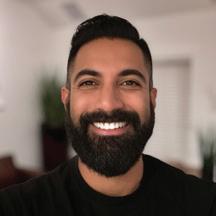
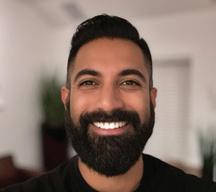
Aveed Khaki Owner/Publisher
AVEED KHAKI Owner/Publisher
JASON CORONA Sales Director
MICHAELA GULBRANSEN Writer and Account Executive
SHELLY BRANDON Writer
DOUG LOVE Real Estate
MUIR HUGHES Downtown Revitalization
ADDISON WINSLOW Downtown Revitalization
DUSTIN VAUGHT Downtown Revitalization
MOLLY KOPTA Entertainment Zones
BRYCE GOLDSTEIN Housing
AUSTIN BARRON Housing
TOM SIMPSON Housing
DAN HAYS Sewer Increases
TINA CHRISTOFF Sewer Increases
CARLY QUINTO Warren Settlement
BILL VOGEL Warren Settlement
GINA BROWN Warren Settlement
TRACY VINCENT Energy Changes
MELISSA SCHUSTER Paradise Sewer System
EMILY ACEVEDO Animal Welfare
The views and claims expressed in the articles in this issue belong to the community members who contributed them and do not necessarily reflect the opinions of Upgraded Living, its staff, or its publisher. Several contributors requested anonymity, and we have honored those requests. These perspectives are presented in the interest of encouraging discussion, understanding, and respectful dialogue across differing viewpoints within our community, rather than as endorsements of any particular position.




Three perspectives examine Downtown Chico’s revitalization, exploring its challenges, possibilities, and future through the voices of Muir Hughes, Addison Winslow, and Dustin Vaught as the city reimagines its core.
Molly Kopta explains Entertainment Zones, how they work, and their potential to enliven downtown through flexible events, responsible beverage service, and connections between businesses and visitors.
Bryce Goldstein, Austin Barron, and Tom Simpson examine Chico’s housing future, weighing infill, outward growth, affordability, infrastructure, and the difficult choices shaping how and where the community develops next.
Chico PD Sergeant Todd Lefkowitz and neurosurgeon Dr. Jeff Lobosky examine two-wheeled motorized vehicle safety, addressing laws, rider responsibility, injury risks, helmets, enforcement, and the need for greater community awareness.
Dan Hays and Tina Christoff examine Chico’s sewer rate increases, aging infrastructure, funding challenges, and the difficult balance between essential repairs and local affordability.
Carly Quinto, Bill Vogel, and Gina Brown examine the Warren Settlement, its expiration, Chico’s response, public-space concerns, and paths toward a lasting balance.
Tracy Vincent compares PG&E and Pioneer Community Energy, explaining rates, service, control, and what the choices mean for customers.
Melissa Schuster advocates a STEP collection system, local MBR treatment, and recycled-water reuse as a more flexible path for Paradise.
Emily Acevedo highlights the importance of pet foster homes, offering vulnerable animals safety, socialization, and second chances.
A heartfelt remembrance honors Dave Simcox’s life as an artist, educator, environmentalist, community leader, husband, father, and friend.
Foodie Cafe expands into dinner with bold entrées, signature cocktails, live music, and the same inventive spirit customers love.
Caroline discovers independence, friendship, wellness, and peace of mind at Westmont of Chico—with her beloved rescue terrier, Sherlock.
Doug Love explores how barbecue, beverages, and respectful conversation can bridge differences, strengthen friendships, and inspire greater understanding.
Cool Kid Cadience Hewett embraces leadership, hard work, and new challenges through 4-H, FFA, cheer, and everyday life.
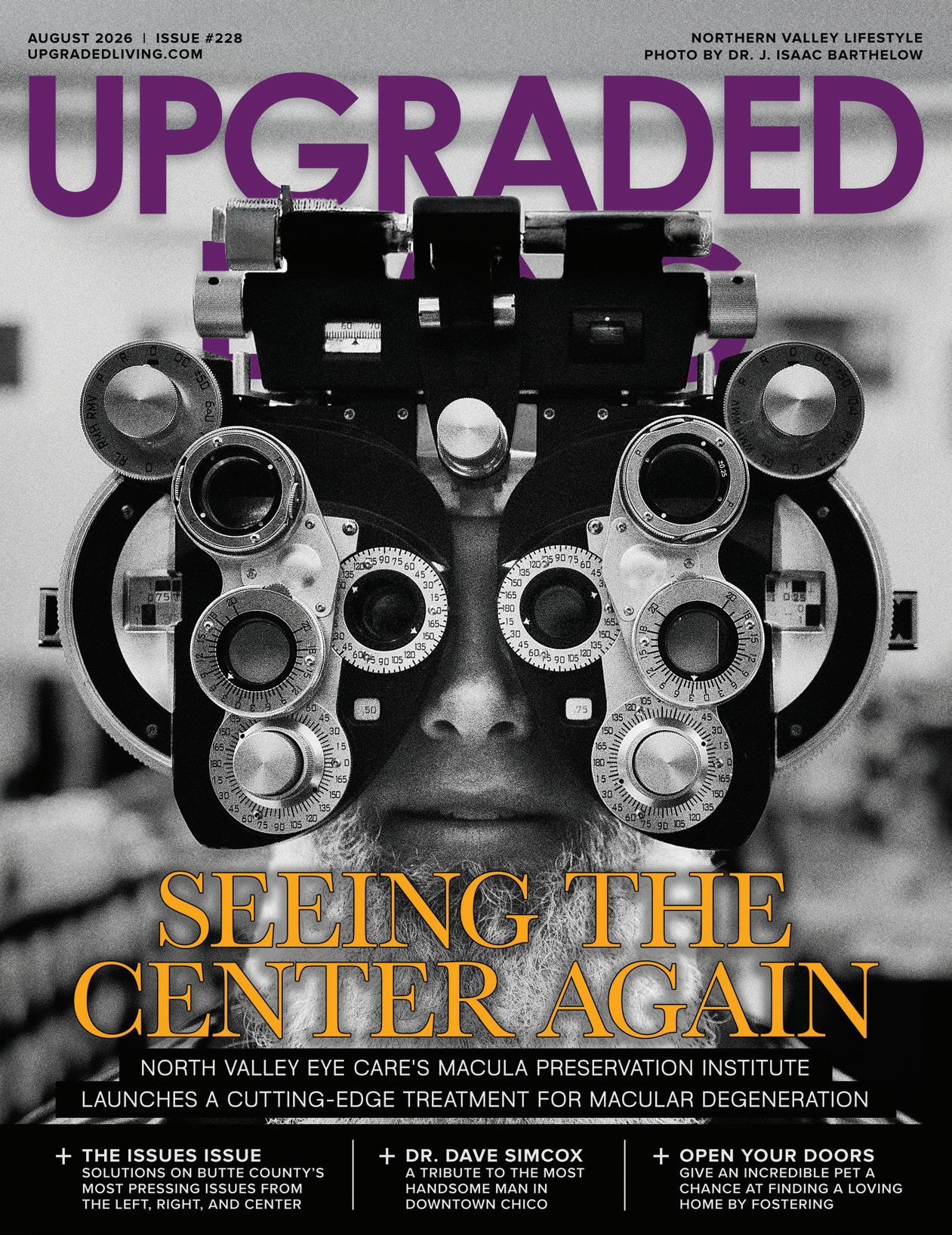
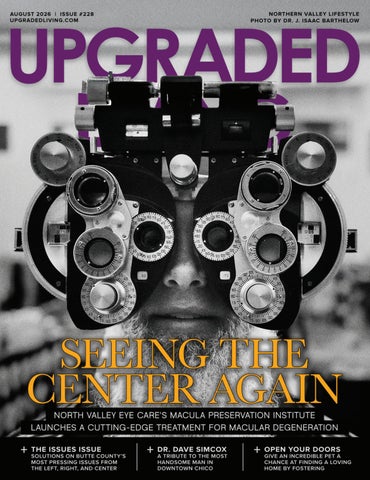
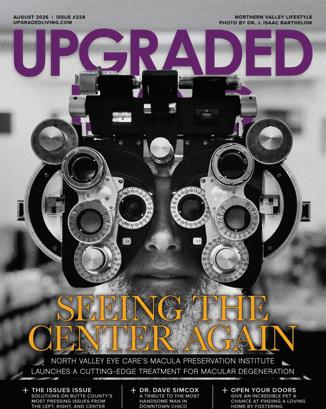
Dr. Barthelow and North Valley Eye Care's new Macula Preservation Institute are changing how patients confront dry age-related macular degeneration. Through photobiomodulation therapy, compassionate care, and a mission centered on preserving sight, the institute offers hope to those facing vision loss.

For the past 19 years, Upgraded Living has avoided politics by design. It was never because we believed politics or public policy were unimportant—quite the opposite. These decisions shape our neighborhoods, businesses, schools, public spaces, and quality of life. We avoided taking political positions because every member of our team brings their own beliefs, experiences, priorities, and opinions to the table. We respect those differences. More importantly, we respect each person’s right to have them.
As a result, we have rarely taken a stance on any particular issue unless everyone at the magazine fully agreed. There is, however, one thing we have agreed on since the very beginning: We want what is best for our communities, both here at home and beyond. We want Butte County to be a place where people can build meaningful lives, raise families, operate businesses, feel safe, care for one another, and look toward the future with hope. Determining exactly how to achieve those goals is where things become more complicated.
Butte County is currently facing a number of important and difficult issues. Each carries its own history, competing priorities, financial realities, and potential consequences. None of us at Upgraded Living claims to be an expert on every one of them—or really even any one of them. We cannot predict the future, and we do not pretend to have all the answers. We also recognize that good people can examine the same set of circumstances and arrive at very different conclusions.
What concerns us most is not that people disagree. Disagreement is natural, and in many cases, necessary. Different perspectives can reveal blind spots, challenge assumptions, and lead to better solutions. The greater concern is how increasingly difficult it has become to disagree thoughtfully.
Online discourse has grown more immediate, reactive, and toxic. Conversations often become arguments before anyone has taken the time to understand what the other person is actually saying. We seem to have lost some of our willingness to listen carefully, ask sincere questions for clarity, and consider why another person sees the world differently before offering our own response.
Too often, an opinion is dismissed, mocked, or attacked simply because it does not align with our own. People are reduced to labels, and complex issues are compressed into slogans. The result is an atmosphere of frustration and animosity where very little listening occurs and even less common ground is discovered.
I know I have been guilty of this in my own personal conversations as well. It is easy to become defensive when an issue feels deeply personal. It is easy to assume the worst of someone whose conclusions differ from our own. It is much harder to pause and ask what experiences, concerns, or values led them there.
With so many hot-button topics before our community during this election and voting season, we felt there would be value in creating a different kind of space—one where members of the community could share their perspectives without interruption, judgment, or the immediate pull of negative discourse.
That is one of the things we love most about printed media. Reading a magazine is a quiet, one-on-one experience between the reader and the written word. There is no momentby-moment rebuttal, no comment section filling with insults, and no pressure to respond before fully considering what has been said. By its nature, print asks us to slow down. It requires us to set aside time, sit with an idea, and be present with our own thoughts and the words on the page.
Throughout this issue, we explore a range of viewpoints from the left, the right, and the center. We examine downtown revitalization, entertainment districts, housing, issues facing children, the Warren Settlement, homelessness, energy, animal welfare, sewer maintenance and costs, and much more. In many cases, readers will find opposing perspectives presented side by side, along with an attempt to identify a practical middle ground.
Our hope is that you will read not only the opinions that most closely reflect your own, but also those that do not. We hope you will consider why those viewpoints exist, why they matter to the people who hold them, and what truths they may contain. Understanding someone’s position does not require agreeing with it. It simply asks us to recognize that most people arrive at their beliefs for reasons that feel valid and meaningful to them.
Lasting solutions are rarely found by humiliating or defeating one side. More often, they emerge when people acknowledge the legitimate concerns of others and search honestly for a path that serves the broader community. Compromise does not have to mean abandoning our principles. It means recognizing that no one perspective has a monopoly on wisdom.
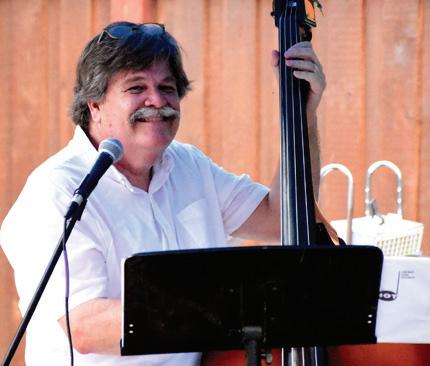
We begin this issue by remembering someone I always saw as a light in our community. Among his many gifts was an uncommon ability to listen without judgment, consider viewpoints beyond his own, and discuss difficult matters without prejudice. He made people feel heard, even when he did not necessarily agree with them.
His loss left a tremendous hole in Butte County. My hope is that his legacy will encourage all of us to approach one another with the same patience, curiosity, thoughtfulness, and grace. We may not leave these pages agreeing on every issue, but perhaps we can leave with a deeper understanding of one another—and a renewed commitment to finding our way forward together.
With hope for a more considerate future, Aveed Khaki
Owner/Founder, Upgraded Living

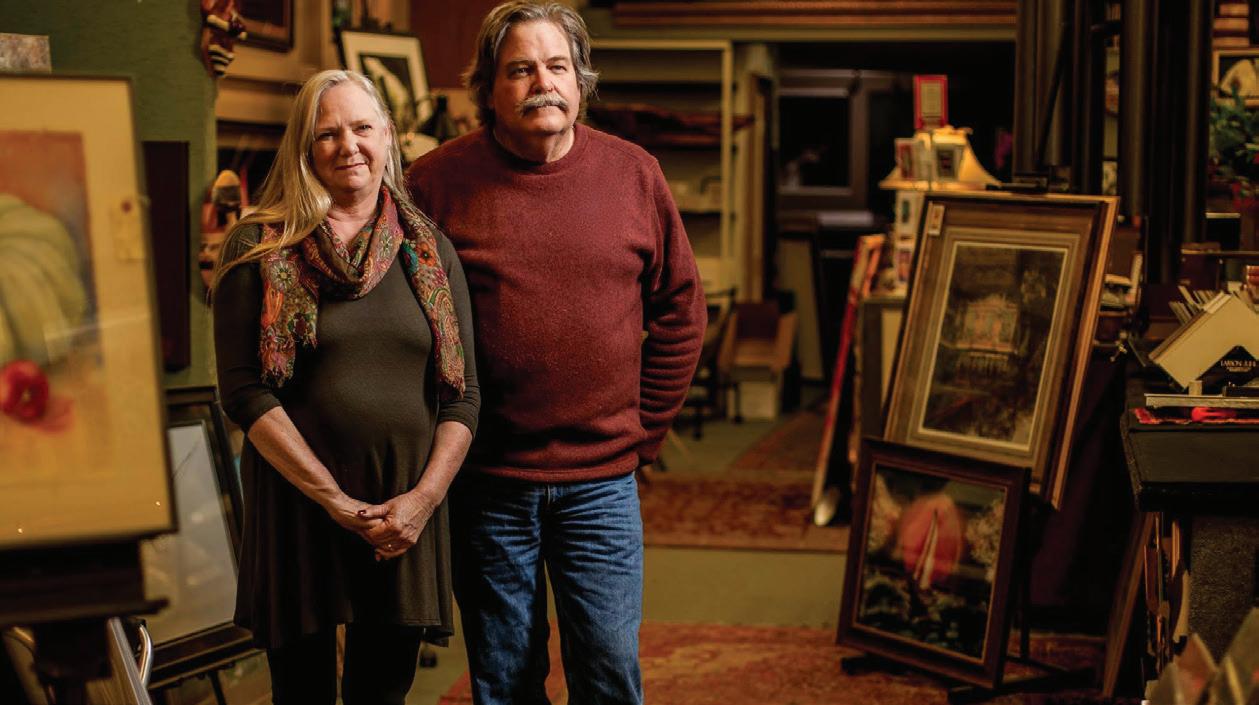
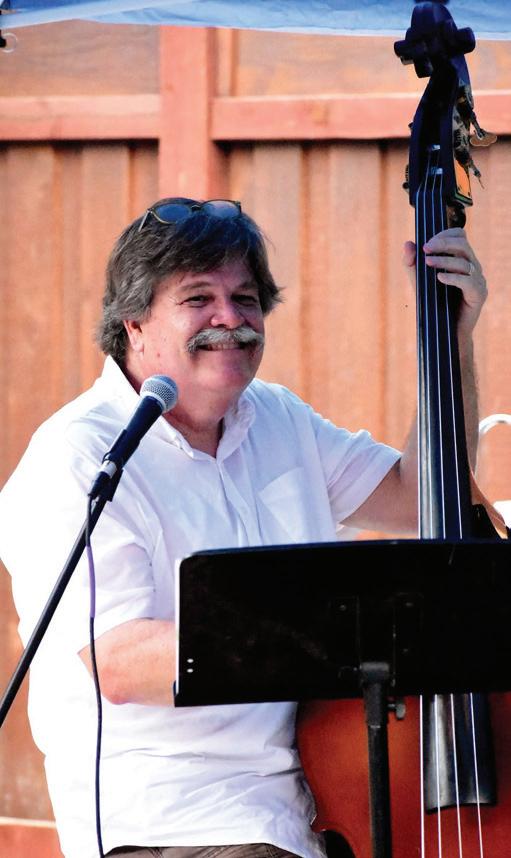
The Art of Meeting in the Middle Remembering (Dr.) Dave Simcox and the rare, necessary gift of truly listening
One of my favorite places in Chico was not technically a place at all. It was a patch of sidewalk outside Art, Etc. on Third Street in Downtown Chico, where conversations with my friend Dave Simcox had a way of stretching well beyond whatever time either of us intended to give them.
We talked about art, business, downtown, the environment, and the difficult work of building a healthier community. Sometimes we agreed. Other times, we did not. What I remember most was the way Dave approached the person standing in front of him.
He listened.
It wasn’t the distracted kind of listening that waits for an opening to respond. Dave asked questions. He considered answers. He worked to understand how someone had arrived at a conclusion, even when
it differed from his own. He never made disagreement feel like a reason to dismiss someone. He treated conversation as an opportunity to learn.
In a time when so much public discourse seems designed to divide us, Dave modeled something better. He showed me that finding the middle does not require abandoning conviction. It requires enough confidence in what we believe to examine it honestly—and enough respect for another person to believe they may have something worth teaching us.
That lesson changed me. His influence made me a better listener and, I hope, a better member of this community.
Dave’s curiosity extended to nearly everything.
Originally from Long Beach, he entered college believing he might become a dentist. He studied biology before discovering a deeper interest in recreation, parks, landscapes, and the relationship between people and the natural world.
His life changed at Chico State, and so did Anna’s.
Anna met Dave in 1973 while visiting her cousin, one of his friends. She remembers calling her mother after their first date, saying, “I’ve met the man I’m going to marry.” She was right.
Anna enrolled at Chico State the following year, graduated early, stayed for summer school to remain near him, and married Dave one week after he graduated. Their 48-year marriage became the center of a life filled with family, friendship, creativity, and service.
After college, Dave worked in Mendocino before the couple moved to Walnut Creek. Anna’s legal secretarial work helped support them while Dave studied at the University of Arizona in Tucson, where he earned his doctorate in renewable natural resource management.
Dave returned to Chico State as a lecturer in 1987 and eventually became department chair, although titles never seemed to be the point.
Anna remembers a professor deeply invested in his students— someone who wrote letters to parents, advocated for young people, and looked beyond academic performance to understand what each student needed. He wanted to help people become capable, thoughtful, and prepared to make a difference.
After thyroid cancer changed the direction of his university career, Dave moved toward another chapter. In 2003, he and Anna purchased Art, Etc., the downtown art and framing shop they would own until 2018.
For many people, buying a business after age 50 might have felt like a risky reinvention. For Dave, it was another opportunity to become.
He frequently redesigned the store, always looking for ways to make it more beautiful and inviting. He immersed himself in the arts and crafts tradition and taught himself to make art through the method he applied to nearly everything: study it, question it, practice it, and keep going.
He created tiles, linocuts, drawings, paintings, and series inspired by Northern California. Almond blossoms gave way to growing fruit and late-summer harvest. Rice fields moved through their seasons. Crows, pomegranates, sunflowers, walnuts, and hops found their way into his work.
Dave once titled a piece “Stuff We Grow Around Here.” Cooler heads apparently prevailed, and it became “Abundance,” but the original name still makes me smile. It was wonderfully Dave: intelligent without being pretentious, serious about the

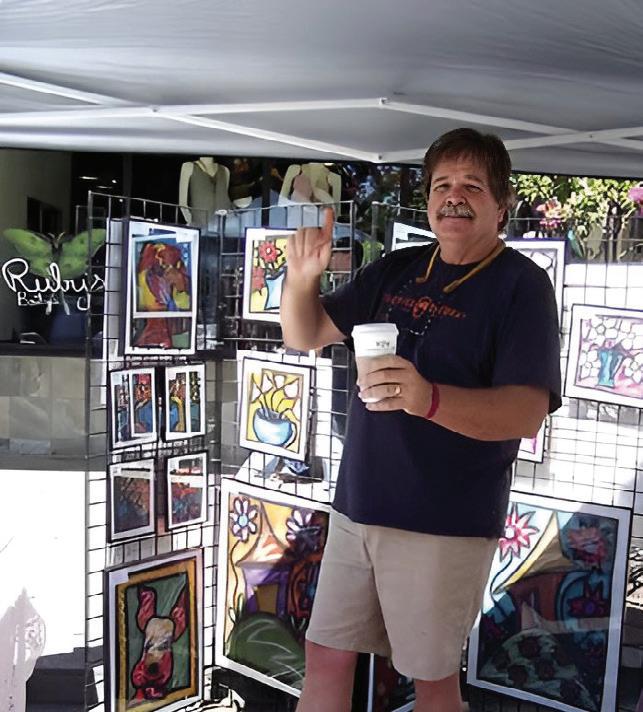
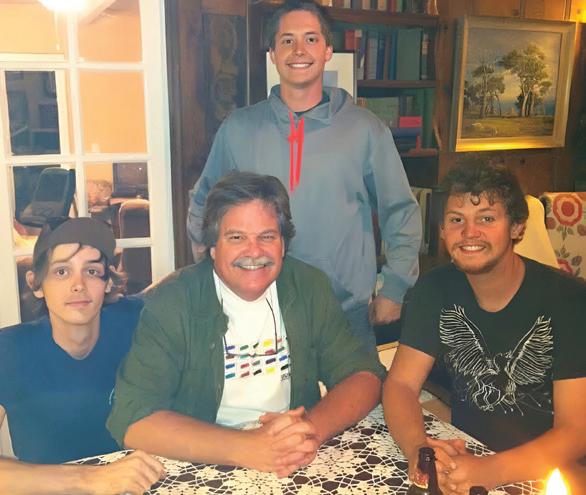


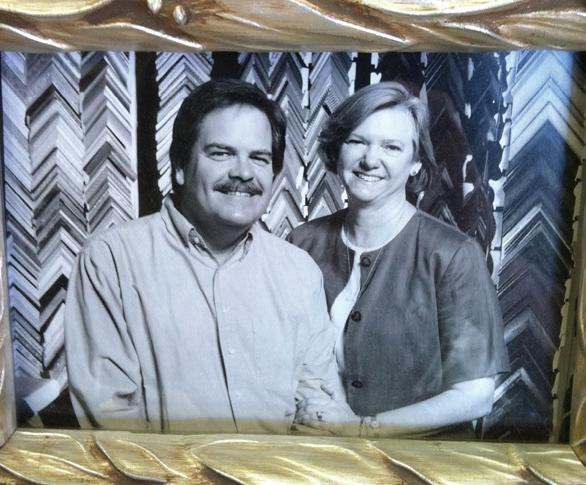
work but never too serious about himself.
That art now surrounds Anna. “It’s so hard to think he’s gone because it’s all surrounding me here,” she told me.
When his health declined again, Anna, their sons, and those closest to them were able to speak to Dave and tell him how deeply he was loved until he passed.
His presence now surrounds far more than one home.
It lives in the students he encouraged, the artists he supported, the friends he challenged, and the family he adored. It lives in his sons, John, Dean, and Evan. It lives in the people who knew they could bring him a question and receive not a quick opinion, but his full attention.
It also lives in acts of compassion that were never theoretical. When Dave and Anna learned that a man experiencing homelessness needed somewhere to live, they welcomed him into their home for three years. It was not an argument about what someone else should do. It was a human need met by people willing to open their door.
Dave read constantly. While Anna watched the “Today” show, he might be beside her reading a book about the Constitution. When a subject captured his interest, he pursued it completely. He became a California certified nurseryman and studied politics, nature, art, history, and people. He never stopped learning because he never believed he was finished.
“I’m becoming! I’m becoming!” he would say. “Every day, I’m becoming!”
That may be the lesson I will carry most closely.
Dave did not demand perfection from people before engaging with them. He understood that all of us are in the process of becoming— shaped by what we have experienced, what we have learned, and what we are still willing to reconsider.
This issue is about seeing the middle: finding common ground, making room for compromise, and choosing progress over the satisfaction of being angry. I can think of no better person to open it than Dave.
He showed us that listening is not surrender. Curiosity is not weakness. Kindness does not dilute conviction. The middle is not an empty space between opposing sides; it is where people meet, where understanding begins, and where meaningful change becomes possible.
I will miss our conversations outside the shop. I will miss his questions, his humor, his restless mind, and the way he made disagreement feel like an invitation rather than a threat.
Most of all, I will miss my friend.
But I am still becoming because I knew him. I suspect many of us are.



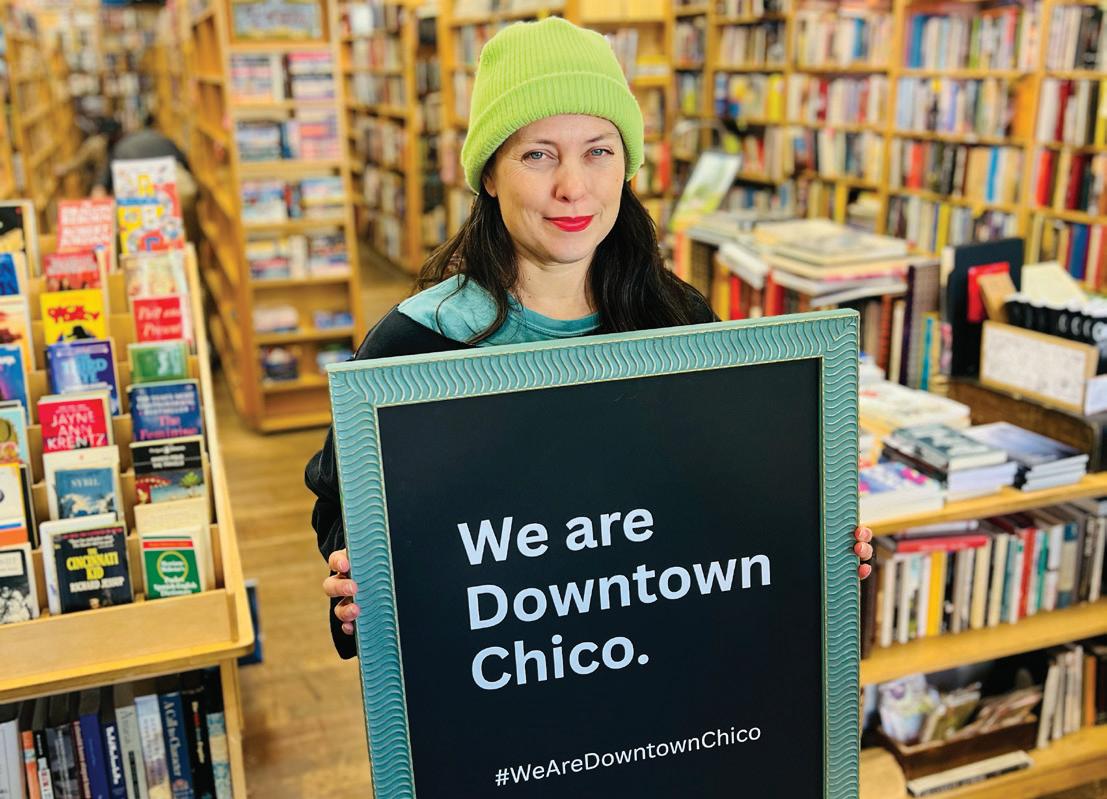
Imagine waking up one day to find yourself in Downtown Chico, and your favorite small businesses have vanished. In addition, most of the trees providing shade have been cut down. You wander around a bit and notice that the available storefronts are more expensive. Local businesses with long-time Chico owners and employees have been pushed out while a handful of hobby businesses operated by out-of-town wealth have replaced them. Would it matter?
These are some of the questions before our community as we look towards the future. We need to have complicated conversations about who we are, what we want, and how to make shared spaces vibrant and inclusive.
When municipalities, both large and small, receive grants labeled as “revitalization,” the funding represents more than a simple infrastructure investment. It is a
gentrification project. This is how it works. Government engineering projects are lengthy, taking years to complete. During that construction phase, most small businesses close due to the scarcity of patrons willing to navigate the upheaval. A business must survive years of financial losses to remain. After the initial phase is complete and the streets are reopened, property values for downtown buildings increase, resulting in higher rents. The displacement causes long-term cultural and economic instability. There is less business diversity, and the remaining businesses largely cater to the wealthy.
Chico is a special place. For long-time residents, the slower pace, the incredible outdoor opportunities, including access to Bidwell Park, performing and visual arts, the benefits of CSUC, and mom-andpop shops all provide a sense of place that is enriching. Visitors love to wander, especially from places without vibrant
downtowns. Do we want to turn Chico into Anytown USA?
Even with our unique identity, Chico struggles with many of the same factors pressuring communities throughout the country. Inflation, income inequality, housing insecurity, online shopping, and the disappearance of third spaces—all these things are present in our town. These challenges demand our attention and investment.
Where we live is more than a collection of streets and buildings. At its best, the place we reside gives meaning to our lives. We share conversations at a local watering hole. We build habits through regular visits. We help each other. We recognize a common identity even when we have disagreements. In this sense, the way that we all belong to Chico creates immeasurable value in our lives. We shouldn't squander it.
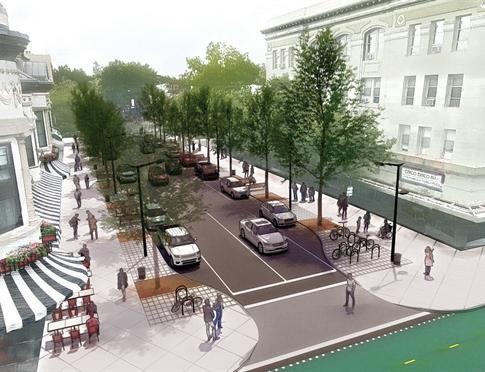
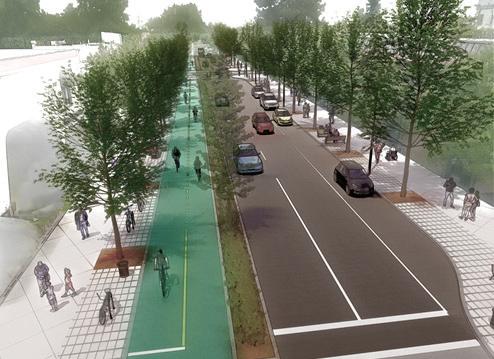
Chico has so many great qualities, but none of them are that cars drive fast through downtown.
There is a lot of valid concern about redesigning a streetscape. Deliveries can’t hold up traffic. Construction can’t be allowed to cause businesses to collapse.
But these are solvable problems, and the current situation for downtown is untenable. Not only are utilities, sidewalks, and pavement in disrepair,
but businesses are failing in the current environment.
The project dubbed the “Downtown Revitalization Project” was intended to calm traffic and make downtown safer and nicer for walking, biking, sitting, standing, or even driving if you don’t like cars weaving in and out of lanes. Sidewalks would have accommodated outdoor dining, shaded by a larger, better tree canopy. “Alternative 1,” most favored by the public, included one-way protected
bike lanes.
It was a key part of a longstanding vision for improving downtown.
In the late 1960s, soon after Downtown Chico had been rapidly and radically redesigned to support cars, city leaders looked at drive-thru fast food across from the plaza and recognized they had taken it too far.
In the decades since, the ideal for downtown has become increasingly focused. The Chico General Plan visualizes a higher-intensity, mixeduse downtown that is especially accommodating to pedestrians (who, even when arriving by car, park and walk).
The specific idea began in 2023 when Kasey Reynolds, Tom van Overbeek, and I all approved an early design in committee. After pushback that we were moving too quickly, the City received a planning and outreach grant.
The rejection of any Downtown streets plan communicates to everyone invested in downtown that influential people in Chico would rather let Downtown Chico gradually deteriorate than take a risk with improvements.
The debate over the project focused almost entirely on bicycles in the few core blocks of Main and Broadway. Unfortunately lost in the debate were South Downtown, which has hardly any trees and considerable potential to extend the walkable bustle of North Downtown, and the east-west connections between Chico State University and Bidwell Park, bringing together the best pieces of Chico for residents and visitors.
A broader “revitalization” means we build housing downtown and draw more people from the campus and surrounding neighborhoods where over half of students do not regularly drive cars. Successful downtowns are built with countless small but mutually reinforcing projects that create a variety of downtown experiences to fit the variety of people in Chico. Otherwise, people will just shop online.

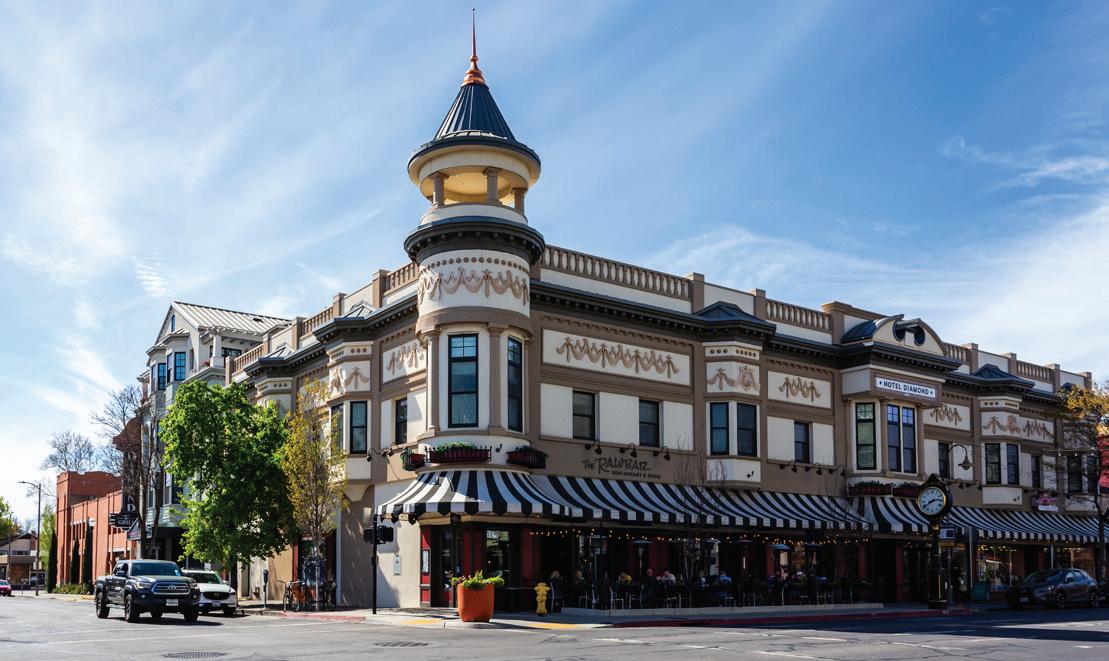
Picture downtown Chico seven years from now. The sun hangs red over the ruins of City Plaza. The trees are gone. Storefronts are boarded up. A shopping cart rolls slowly down Broadway. A group of survivors controls the last twelve parking spaces downtown. Another controls the remaining bike lane. A lone figure wanders Broadway carrying a dented Klean Kanteen in one hand and a two-hour parking pass in the other, now the most valuable currency in Chico.
How did this happen? Well, that depends on which version of the movie you watched. In one, Chico revitalized downtown. Construction killed small businesses, rents skyrocketed, and wealthy investors bought what remained. In the other, Chico did nothing. Infrastructure deteriorated, businesses closed, and the survivors divided into rival tribes over whether parking or bike lanes caused the downfall of civilization. Different villains, different directors’ cuts, same ending: a desolate downtown.
As a filmmaker, I appreciate a good postapocalyptic story. As someone who lives downtown and cares about its future, I would prefer not to make this one. The strange thing about the fight over Chico’s Downtown Revitalization Project is that
both sides are afraid of essentially the same thing: losing Downtown Chico. I supported Alternative 1, and on balance, I still believe it was worth pursuing.
But I don’t believe everyone who opposed it wanted to watch downtown deteriorate. I also don’t believe everyone who supported it was indifferent to small businesses, displacement, or the character of downtown. Both arguments become easier when we turn the other side into a caricature. Our infrastructure is aging. Sewer work needs to happen. Businesses are struggling. South Downtown needs investment. We should make it easier and more enjoyable to spend time downtown.
The City did not come up with Alternative 1 behind closed doors. There were workshops, surveys, stakeholder meetings, and public meetings. People gave feedback, plans changed, and Alternative 1 emerged as the preferred design. But holding meetings and successfully communicating with the public are not the same thing.
I have talked to community members who had no idea the outreach was happening. Some downtown business owners thought construction was starting
this year when the project itself was still years away. On the flip side, many of us supporting the project thought the planned sewer work created an opportunity to implement Alternative 1 while the streets were already torn up.
It turns out that was not the case either. It was not made clear until the final night of the City Council vote that the sewer work and Revitalization Project would happen on separate timelines, with at least a year between them. That is a pretty important detail.
City staff spent years gathering feedback, working with engineers and public agencies, and developing a plan. That work deserves respect. But if people walked into the final vote with completely different understandings of what was happening and when, something clearly went wrong with the communication. That helped turn an infrastructure issue into a political fight. Supporters of the project, myself included, also need to admit that “take the risk” is easier to say when you are not the one whose business may have to survive years of disruption.
Most people still come downtown by car. Parking, deliveries, and access are part of how downtown currently works. We
cannot simply assume businesses will survive long enough to benefit from the finished project. Public investment can also increase property values and rents. Improving downtown should not mean pushing out the businesses that make it worth visiting. But there is a strange contradiction in how we talk about investment downtown.
Some property owners have bought neglected buildings, restored them, supported local nonprofits, and put serious time and money back into Chico. Others have allowed buildings to deteriorate and contributed to the vacancies and displacement we all say we are concerned about. Yet a lot of the anger seems directed toward people actively restoring buildings and participating in the community. That does not mean new investment is above criticism. Downtown needs properties activated. Empty buildings, regardless of who owns them, do not create foot traffic or support the businesses around them.
Some newer investment downtown has brought ambitious plans and high expectations. I am excited to see more of those projects come online, and I hope we see that happen sooner rather than later.
Some of the businesses pushed out
have been owned by members of Chico’s BIPOC communities. If we are serious about displacement, we should be willing to talk about the people already contributing to it. Investment is not automatically good. But neither is it automatically exploitation.
Through my work with Save the El Rey, I spend a lot of time thinking about what makes Downtown Chico worth preserving. The answer cannot be freezing downtown in time. But it also cannot be spending tens of millions of dollars to make Chico look like every other redeveloped commercial district in California.
Our historic buildings, mature trees, independent businesses, bars, restaurants, arts organizations, and occasionally strange places that could probably only survive in Chico are not obstacles to revitalization. They are the reason downtown is worth investing in. And one of the biggest things missing from the project was a serious plan for helping downtown businesses survive construction. We should create one before this project comes back. The City, PBID, Downtown Chico Business Association, 3CORE, property owners, local financial institutions, and others should start working together now.
Maybe that means small-business grants or low-interest loans. Maybe it means coordinated marketing, events to keep people coming downtown, and clear access and delivery plans during construction. I don’t know exactly what the answer is. But we have time to figure it out. The City cannot pursue the grant again for another two years. Even if Chico is successful next time, we could realistically be looking at seven years before a project like this happens.
We should use that time because infrastructure alone will not revitalize downtown. A new street does not open a business. A bike lane does not fill a theater. A wider sidewalk does not give someone a reason to spend Saturday afternoon downtown. Government cannot create community. But government can make it easier or harder for community to happen. Infrastructure is not community. It is the platform community has to operate on.
The concerns about displacement, rising rents, and who benefits from public investment are real. So are the risks of doing nothing and allowing deterioration to masquerade as preservation. Where I disagree with both sides is in their certainty. Alternative 1 was neither the destruction of Downtown Chico nor its salvation.
Alternative 1 was an imperfect proposal, developed through years of real public work, with real benefits and real risks. Our city council voted it down. Now we have several years to do something increasingly rare in politics: learn from the whole argument instead of just the half we already agreed with. Both sides have already written their version of how Downtown Chico ends.
Fortunately, we are still somewhere in the middle of the movie.

Spend an evening in Downtown Chico during Thursday Night Market or stroll through Meriam Park on a warm summer evening, and you'll quickly understand that Chico's greatest economic asset isn't any single business—it's the experience of being here.
People don't come downtown for only one destination. They come to wander, to meet friends, to discover a new shop, to enjoy live music, and to linger a little longer.
That simple idea—creating places where people want to spend time—is at the heart of the conversation surrounding Chico's proposed entertainment zones.
Like many new ideas, the proposal has generated both excitement and concern. Some see entertainment zones as an opportunity to create more vibrant commercial districts and support locally owned businesses. Others have understandable questions about safety, enforcement, and what the ordinance would actually allow.
Those conversations are healthy. They are exactly what should happen before a community adopts any new public policy.
What is equally important, however, is that those conversations are based on facts.
An Entertainment Zone is not a citywide suspension of Chico's open-container laws. It is a carefully defined district, authorized under California Senate Bill 969, where adults 21 and older may purchase alcoholic beverages from participating businesses and enjoy them in designated public areas, subject to strict operating requirements.
The emphasis should be on participating.
Businesses are not required to participate. Those with qualifying ABC licenses may choose whether to opt in. Businesses without alcohol licenses are not expected to change their operations and may prohibit customers from entering with alcoholic beverages if they wish.
Likewise, the rules governing alcohol service do not disappear. Participating businesses remain responsible for checking identification, refusing service to intoxicated individuals, preventing overservice, and complying with every California Department of Alcoholic Beverage Control requirement they follow today.
Alcohol cannot be brought into the Entertainment Zone from outside its boundaries. Drinks must remain inside the designated district and must be served in approved containers rather than glass.
These details matter because they illustrate an important point: this proposal is not about removing regulations. It is about creating a framework that enables communities to use public spaces in different ways while maintaining accountability.
From the Chamber's perspective, the conversation extends well
beyond alcohol. It is about economic development.
Successful downtowns are rarely defined by a single destination. They are places where people linger. They browse a bookstore after dinner. They stop for dessert after a concert. They discover a boutique they hadn't planned to visit.
Economists call this "dwell time"—the amount of time someone spends in a commercial district. The longer people remain, the more businesses they visit and the more economic activity they generate.
Entertainment zones are designed to encourage exactly that.
Imagine friends spending an evening at Thursday Night Market. They gather for dinner, enjoy live music in City Plaza, wander through downtown shops, and finish the evening with ice cream or coffee before heading home. Rather than businesses competing for the same customer, the entire district benefits from increased activity.
That collective success is why communities throughout California— including San Francisco, San Jose, and Redding—have begun implementing entertainment zones as one component of broader downtown revitalization strategies.
Of course, no policy is without legitimate concerns.
Residents rightly expect public spaces to remain clean, welcoming, and safe. Business owners deserve confidence that enforcement will be consistent. Visitors should clearly understand where the rules begin and end.
The proposed ordinance establishes defined operating hours, requires visible age-verification markers, limits beverages to approved containers, assigns enforcement authority to the Chico Police Department, and includes periodic review by the City to evaluate whether the program is achieving its intended outcomes.
Those safeguards acknowledge that entertainment zones should not simply be created and forgotten. Like any economic development initiative, they should be measured, evaluated, and adjusted if necessary.
As president and CEO of the Chico Chamber of Commerce, I often describe our mission using three words: champion, connect, and convene.
Supporting entertainment zones reflects all three. We champion local businesses by advocating for policies that help them succeed. We connect residents and visitors with the places that make Chico special. And we convene conversations about the future of our community— even when those conversations involve differing perspectives.
The Chamber's role is not to tell businesses how to operate or residents what to think. Our responsibility is to advocate for policies that create the conditions in which local businesses— and, by extension, our entire community— can thrive.
Reasonable people may ultimately reach different conclusions about whether entertainment zones are the right fit for Chico. But I hope we evaluate the proposal based on what it is designed to accomplish rather than what we fear it might become.
Chico has long distinguished itself through locally owned businesses, walkable neighborhoods, public events, and a vibrant downtown that serves as the heart of our community. Entertainment zones are not intended to change that identity. They are intended to build upon it.
If implemented responsibly, they represent another opportunity to invest in the experience of being in Chico—to create places where people stay a little longer, discover one more business, attend one more event, and continue supporting the local economy that benefits us all.

Chicoans love nature. Our creeks, our oak woodlands, our mountains, and our agricultural lands are what make this community stand out from any other small city or large town in California. We stand out not only for our sharp edges between built and open lands, but also for the high quality of life and fiscal stability our thoughtfully planned growth allows.
My neighborhood in Chico was an early infill development in the 1920s, repurposing a former lumber mill site near downtown. Kids walk and bike to school, and families walk to Bidwell Park down my street. By contrast, sprawl development makes families who live in those sprawl houses totally cardependent and disconnected. Sprawl also brings more vehicle traffic into the rest of our community. One major reason Chicoans rejected the proposed Valley’s Edge development was the significant increase in traffic it would have brought to the East 20th Street corridor and
surrounding neighborhoods.
Sprawl requires building and expanding roads and sewers to the edges of our city, placing a greater burden on ongoing maintenance costs. Developers pay impact fees, but developments at the edge of town aren’t paying for the increased traffic on our community's core roads.
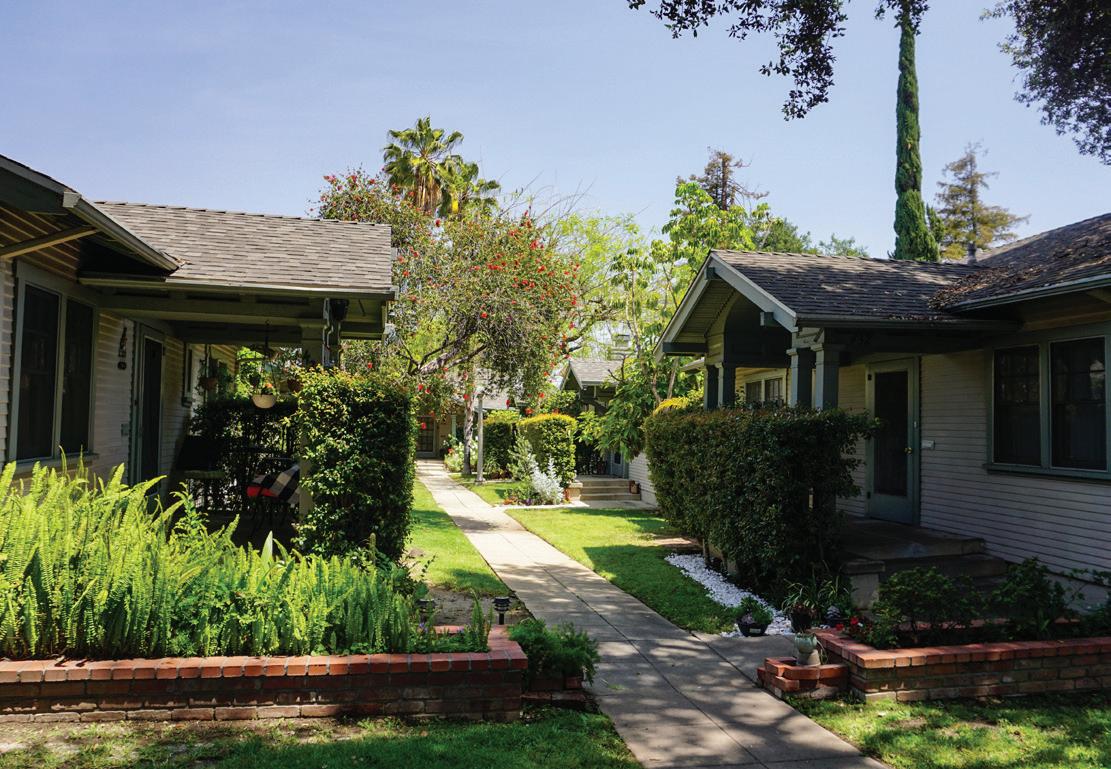
Infill costs less to the developer and the taxpayers because it directly invests in and improves existing infrastructure. Infill housing types are also, by nature, more affordable due to smaller lot sizes and multifamily configurations. The Chico City Council approved updating our code to allow cottage courts, clusters of small houses with a common courtyard, to be built in existing neighborhoods. If we allow more small multi-unit developments, like cottage courts and fourplexes, on regular lots, as we did 100 years ago, more individuals can build new housing
with a much lower barrier to entry than that of a greenfield development.
Developers who solely build single-family detached houses at the edge of town may argue that their buyers want houses with yards, not a stuffy apartment block. I argue that it’s a shame we’re using valuable land to build homogeneous homes with more garage space than garden space.
For almost a century, the status quo has been to build large swaths of nearly identical detached houses further and further out from the community core, while preventing new housing from being built in existing neighborhoods. It hasn’t always been this way. It’s time to get creative and to allow all types of homes in our neighborhoods.

Chico cannot preserve affordability by refusing to grow. That may be a comforting idea, but it has never been how housing markets work. When a community adds jobs, students, retirees, families, and workers, but does not add enough homes, the result is not preservation. The result is higher prices, higher rents, longer commutes, and fewer young people able to build lives in the towns they grew up in.
That is the real issue with Chico’s future. We can either plan for growth or pretend growth will stop because we voted against it. It will not. People will still want to live here. Employers will still need workers. Chico State will still bring students. Enloe, local businesses, restaurants, schools, and service companies will still need employees. The only question is whether those people will be able to live in Chico or whether we will continue to push them to Oroville, Paradise, Orland, Corning, and Red Bluff.
Valley’s Edge was an example of the kind of long-term planning Chico needs more of, not less. It was not a random subdivision dropped onto a map. It was a specific plan with housing, parks, trails, open space, commercial uses, and a range of residential densities. It attempted to answer a basic question: where should Chico grow, and how can that growth be managed rather than left scattered?
That matters because the alternative to planned growth is not no growth. The alternative is unplanned growth somewhere else, like we are seeing now on East Avenue and Nord Avenue. When Chico says no to housing, the demand does not disappear. It moves outward. That means more commuting, more road miles, more pressure on surrounding communities, and more working families priced out of the city where they spend their days.
Infill also matters, and projects like Barber Yard should be built. But infill alone will not solve Chico’s housing shortage. It is slow, politically difficult, and often limited by parcel size, neighborhood opposition, existing infrastructure constraints, and historic preservation concerns. Chico needs infill, redevelopment, accessory units, apartments, townhomes, starter homes, and master-planned neighborhoods. It is not one or the other.
The common-sense answer is supply. More homes of different shapes, sizes, and price points. More options for renters. More opportunities for first-time buyers. More room for workers to live near their jobs.
I was born and raised here, and Chico is a great place to live. That is exactly why growth is necessary. A city that refuses to make room for its workforce and the next generation is not protecting its character; instead, it is slowly building a waiting list.

The debate over housing in Chico is often reduced to a choice between two competing visions: build within the city we already have or expand outward to accommodate future growth. Both sides identify real risks. The mistake would be assuming that either approach, pursued alone, can meet Chico’s needs.
Advocates for infill are right to defend the qualities that make Chico distinctive. Our creeks, oak woodlands, agricultural lands, walkable neighborhoods, and clear transitions between town and countryside are not obstacles to progress. They are part of the community’s value. Development that continually pushes farther outward can increase traffic, create long-term infrastructure obligations, and leave residents dependent on cars for nearly every daily need.
Supporters of new development are equally right about the consequences of failing to build enough housing. Demand does not disappear when a project is rejected. When the supply of homes does not keep pace with the number of people who want or need to live here, prices rise, vacancies shrink, and workers are pushed farther from their jobs. The result can be more regional commuting and greater development pressure on surrounding communities.
Chico’s best path forward, therefore, is not
infill or expansion. It is an infill-first, but not infill-only, housing strategy.
Infill should be the community’s first priority because it makes use of land and infrastructure that already exist. The city should make it easier to build accessory dwelling units, cottage courts, duplexes, fourplexes, townhomes, apartments, and mixed-use developments in appropriate locations. Vacant and underused commercial properties should be evaluated for housing, and projects near downtown, Chico State, major employers, transit routes, and existing shopping areas should receive a clearer and faster approval process.
That approach can produce more homes while strengthening established neighborhoods and reducing the number of daily trips residents must make by car. It also offers options between a detached suburban house and a large apartment complex—exactly the “missing middle” housing needed by students, young professionals, retirees, working families, and first-time buyers.
But infill has practical limits. Parcels are often small, ownership is fragmented, and redevelopment can be expensive. Neighborhood resistance, aging utilities, environmental cleanup, and historic considerations can slow even welldesigned projects. Pretending infill alone
can accommodate every future household would be no more realistic than pretending Chico can expand indefinitely without consequences.
Outward growth will also be necessary. The question should not simply be whether development occurs, but whether it earns community support by meeting clear standards.
New neighborhoods at Chico’s edges should be contiguous with existing development, built in phases, and include a genuine mixture of homes and price points rather than repeating miles of nearly identical houses. They should incorporate parks, trails, neighborhood services, safe bicycle and pedestrian connections, and meaningful open-space protections. Developers should also contribute enough to cover not only the immediate construction of roads, sewers, and public facilities, but a fair share of the long-term costs their projects create.
The city can make this balance more predictable by establishing measurable housing goals and regularly reviewing the extent of infill development actually occurring. When those goals cannot be met within the existing footprint, carefully planned expansion should be considered—provided it satisfies transparent standards for infrastructure, transportation, environmental protection, and housing diversity.
This approach will not give either side everything it wants. That is precisely why it may be the most responsible one.
Chico should protect the natural setting and neighborhood character that residents cherish. It must also make room for the people who teach in our schools, care for patients, serve food, operate businesses, attend the university, raise families, and hope to remain in the community they call home.
The goal should not be growth for its own sake, nor preservation that quietly excludes the next generation. It should be a city that grows deliberately—building inward wherever possible, outward where necessary, and always with a clear understanding of who benefits, who pays, and what kind of Chico we are creating.
"Effie was with me every step of the way, and I mean every step. She was always just a call away, answering my endless questions with patience and clarity, no matter how small they seemed. Her knowledge of our area? Unmatched. She’s not just an expert—she’s the expert, knowing every nook and cranny of the market like the back of her hand. Thanks to her savvy negotiating, she saved me a fortune. Her integrity, work ethic, and sheer skill put her in the top 0.1% of anyone I’ve ever worked with. She didn’t just help me buy a house—she made me feel like I was her only client, pouring her heart into every detail. I can’t recommend her highly enough, and I wouldn’t dream of working with anyone else."

- Dr. Isaac Barthelow, owner of North Valley Eye Care, Chico
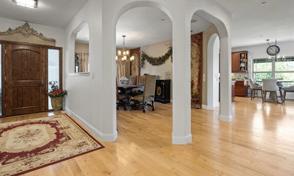


Welcome to this exceptional Tuscan-style residence nestled within the prestigious, gated Canyon Oaks golf course community. Situated on nearly half an acre, this 4-bedroom, 4-bathroom estate offers breathtaking views, timeless elegance, and thoughtfully designed living spaces. Step inside to soaring ceilings and an abundance of natural light streaming through numerous picture windows, creating a bright and airy ambiance throughout. Beautiful laminate wood flooring flows seamlessly across the main living areas. Designed for both luxury and functionality, the home features two spacious primary suites, including a main-floor retreat complete with a jetted tub, separate walk-in shower, and generous walk-in closet. A second primary suite is located on the lower level, offering privacy and flexibility for guests or multi-generational living. The heart of the home is the well-appointed kitchen, showcasing custom self-closing cabinetry and drawers, potsand-pans drawers, granite countertops, a large island, top-of-the-line appliances, gas cooktop, trash compactor, and a walk-in pantry. Adjacent to the kitchen, enjoy a charming breakfast nook with picturesque views. Entertain in style in the expansive formal dining room, or relax in the luxurious living room featuring a fireplace and panoramic views that open seamlessly to a massive veranda—perfect for indoor-outdoor living. The veranda overlooks the golf course and includes its own outdoor dining area. Step outside to your personal backyard oasis, complete with a sparkling in-ground heated Pebble Tec pool with a cascading waterfall, a second outdoor dining area, and a covered patio wired for TV and spa—perfect for year-round enjoyment. Bed: 4 Bath: 4 SqFt: 4,361 Price: $1,445,000




Ideally located near vibrant Meriam Park, with its popular restaurants, shopping, and community charm, this beautifully maintained home reflects true pride of ownership. From the moment you step inside, you’ll appreciate the thoughtful architectural details, attractive appointments, and inviting open floor plan enhanced by soaring ceilings and abundant natural light. The spacious living room offers engineered wood flooring and a cozy gas fireplace, creating the perfect setting for both relaxing and entertaining. The dining area flows seamlessly from the living room, while the well-appointed kitchen is designed to impress with a center island, 5-burner gas cooktop, electric oven, microwave, refrigerator, and an abundance of cabinetry. Just off the kitchen, a darling breakfast nook provides the ideal spot for casual dining or morning coffee. The generously sized primary suite is a private retreat featuring an en suite bathroom with dual vanities, a large walk-in closet, soaking tub, privacy door, and separate shower. Down the hall, a charming lighted stained-glass niche leads to two guest bedrooms and a full guest bathroom. Indoor laundry includes washer and dryer for added convenience. Much more to see. Call today! Bed: 3 Bath: 2 SqFt: 1,610 Price: $465,000




Nested in a desirable cul-de-sac location near Bidwell Park, this light-filled home offers the perfect blend of comfort, style, and modern convenience. The open floorplan welcomes you with high ceilings, engineered wood flooring, and a spacious living room highlighted by large windows that invite in abundant natural light. Designed for both everyday living and entertaining, the kitchen opens seamlessly to the dining area and features Corian counters, a breakfast bar, pantry, pots-and-pans drawers, gas appliances and a refrigerator. The adjoining family room with a cozy fireplace creates a warm gathering space for relaxing evenings. The generously sized primary suite offers a spacious bedroom retreat and a well-appointed bathroom with tile counters, a separate soaking tub, walk-in shower, and dual vanities. This home is a dream come true. Call today for more information! Bed: 3
$490,000
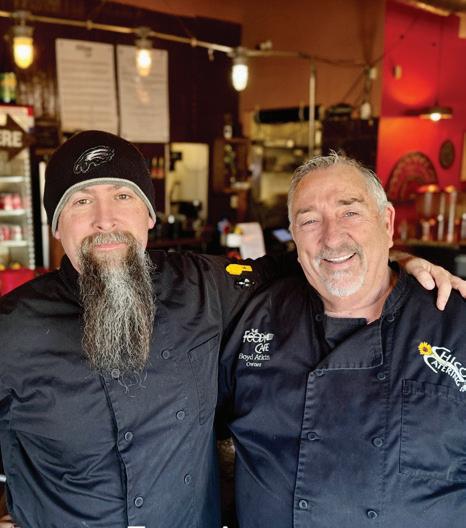






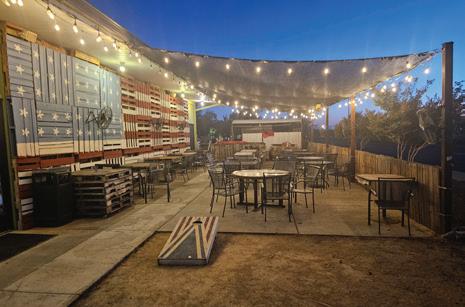
For years, Foodie Cafe has earned a devoted following by proving that familiar favorites don't have to be ordinary. From scratch-made pastrami and hand-formed burgers to unforgettable sandwiches served on Truckee Sourdough, the Marauder Street restaurant has become a destination for bold flavors and comforting food done exceptionally well. Now, Owner Boyd Atkin and Executive Chef Jason York are taking that same philosophy into the evening with the launch of dinner service Tuesday through Friday.
For Boyd and Jason, the decision wasn't driven by trends—it was driven by their customers.
"Our guests have been asking us for dinner for a long time," Boyd says. "People would come in for lunch and tell us they wanted to bring their spouses after work. It finally felt like the right time."
Rather than simply extending the lunch menu into the evening, Foodie Cafe is introducing an entirely new dining experience built around elevated, over-the-top comfort food and chefdriven specialties. Guests can expect beautifully prepared steaks, fresh seafood, slow-cooked ribs, signature cocktails, zero-proof mocktails, and an atmosphere that invites them to settle in and enjoy the evening.
The menu features dishes like a New York steak topped with crispy garlic and crab compound butter, a ribeye finished with an onion, scallion, ginger, and mushroom crust, salmon paired with crab compound butter and chili crisp shrimp, blackberry barbecue baby back ribs, and hot honey fried chicken served alongside black garlic mashed potatoes and rich, scratch-made chicken gravy. A handful of Foodie Cafe's popular sandwiches and burgers will remain available, along with fresh salads, including an Asian fried chicken salad that we couldn’t get enough of.
Behind the menu is Chef Jason York,
whose culinary experience spans some of Northern California's most respected kitchens. Over the past seven years at Foodie Cafe, Jason has continued refining a style influenced by his time at Basque Norte, Sierra Nevada Brewing Co., and other notable restaurants, learning from accomplished chefs along the way.
"The great thing about working with Boyd is that we're both about big, bold flavors," Jason says. "I like using a handful of quality ingredients and preparing them so well that you can taste every one of them individually. We also love experimenting with fusion and finding ways to pair great food with beer and great beer in our recipes."
That philosophy extends to the drink menu as well. Guests will find a bar both indoors and on the patio featuring over-the-top handcrafted cocktails, elevated Old Fashioneds, Negronis, zero-proof mocktails thoughtfully crafted with the help of All The Bitters’ co-owner Ian Blessing, and a carefully curated beverage program designed to complement the menu.
The evenings promise more than just exceptional food. Friday nights will feature prime rib specials accompanied by live classic rock from local musicians, while Saturday brunches continue the tradition of live guitar entertainment that has become a customer favorite.
With indoor and outdoor seating, an expanding culinary program, and a commitment to continually learning— including an upcoming trip to the National Restaurant Association Show to discover new ideas and innovations— Foodie Cafe continues to evolve without losing sight of what made it successful in the first place: memorable food, genuine hospitality, and flavors worth coming back for.
If you've only experienced Foodie Cafe for breakfast or lunch, dinner may be the perfect reason to rediscover one of Chico's most flavorful hidden gems. Visit them at 999 Marauder Street in Chico!
"Effie did a wonderful job selling and marketing our property. She went above and beyond with all the work she put into selling our house. We would highly recommend her to anyone who is looking to sell their home. She made us feel like more than just a business transaction, but someone who turned into a friend that cares about us. We truly appreciate all her professionalism and hard work. You're in good hands when working with Effie. She's one-of-a-kind!" - Bruce & Debbie Suoja
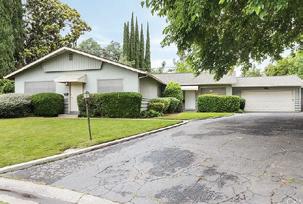



Discover the perfect blend of versatility, comfort, and investment potential with this beautifully maintained ranch-style duplex—an exceptional opportunity for both savvy investors and owner-occupants seeking supplemental income. Ideally situated in a convenient, commuter-friendly location near shopping, dining, and public transit, this property offers approximately 2,130 square feet of thoughtfully designed living space on a raised foundation, enhanced by fresh interior paint and stylish new flooring. Each unit lives like its own private retreat.




Nestled in the heart of beautiful Bidwell Park and tucked away on a peaceful cul-de-sac, this charming home offers a rare blend of comfort, character, and natural beauty. With approximately 1,510 square feet of thoughtfully designed living space, the open floor plan creates an inviting atmosphere that is both spacious and welcoming. The large living room showcases gorgeous wood flooring that seamlessly continues into the attached
area, creating a setting that is perfect for everyday living and entertaining. This home has so much to see. Call today!




Welcome to this beautifully maintained, nearly new home built in July 2025, located in Paradise, just minutes from Bille Park. Step inside to an inviting open floorplan where the living room seamlessly flows into the dining area and kitchen. The kitchen features granite countertops, an eating bar, pantry, refrigerator, electric stove/oven, and dishwasher—perfect for both everyday living and entertaining. Both bathrooms also showcase matching granite countertops for a cohesive, upscale feel. This home is truly move-in ready, equipped with all-electric appliances, indoor laundry with washer and dryer included, and efficient minisplit systems for heating and cooling. Additional upgrades include fully owned solar, a fire sprinkler system, and a beautifully landscaped yard complete with an automatic sprinkler system on a timer. The property is on Paradise Irrigation District water and is on septic. The property also offers a 2-car garage with automatic opener and convenient RV parking. As a delightful bonus, the owners are occasionally visited by adorable fawns and their parents, adding to the peaceful, natural setting. A wonderful opportunity to own a lightly lived-in, modern home in a serene location—don’t miss it!
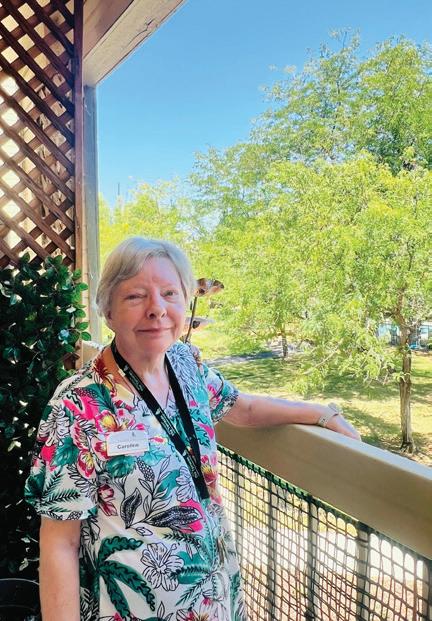

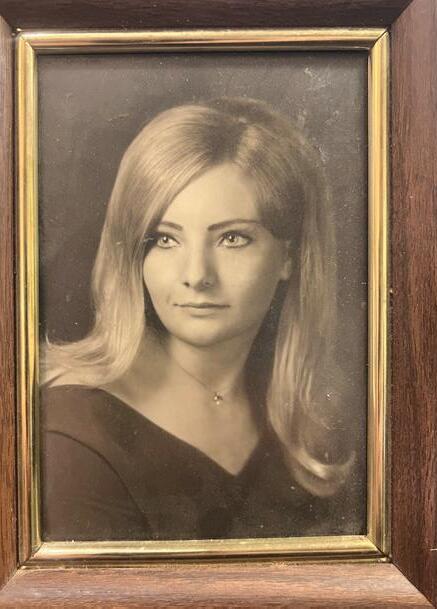
For many, choosing a senior living community isn’t about giving something up; it’s about gaining more of what matters most. At Westmont of Chico, residents discover a lifestyle designed around friendship, wellness, and convenience, all while maintaining the independence they’ve worked a lifetime to build. Just ask Caroline.
Originally from Willows, Caroline spent much of her adult life in the Bay Area, living in San Francisco and Milpitas while practicing law for over 25 years. She met her husband while attending college and nostalgically remembers climbing the stairs of a three-story building with no elevator. Married nearly 50 years, they built a life filled with adventure and travel—frequenting Cancun and Hawaii, where they shared a beloved timeshare.
After many years away, Caroline returned to Colusa to be closer to family. Sadly, Caroline experienced a serious fall that prompted her devoted sister-in-law to begin searching for a community where she could enjoy both peace of mind and the independence she treasured. Knowing Caroline had already overcome a stroke nearly 20 years earlier through incredible determination and a commitment to strengthening her mobility, she wanted to find a place that would support—not limit—her active lifestyle.
After carefully researching senior living communities, she found Westmont of Chico. More than two years later—despite some initial reluctance—Caroline says it was exactly the right fit. Here, she has the satisfaction of knowing support, friendship, and exceptional care are always close by.
Today, Caroline continues to live life on her own terms alongside Sherlock, her six-year-old white rescue terrier. The petfriendly community welcomed them both, and Sherlock has become something of a celebrity. “Sometimes people say hello to him before they say hello to me,” Caroline laughs.
One of her favorite activities is the weekly walking group, where residents spend an hour together enjoying exercise, conversation, and fresh air. It’s one of many wellness opportunities available through Westmont’s Live Your Way® program, which also includes fitness classes and technology-based learning opportunities designed to keep residents active and engaged. The community also features a heated pool, fitness center, scheduled transportation, restaurantstyle dining, beautiful walking paths, and a full calendar of social activities that encourage connection and healthy living.
For Caroline, the simple conveniences make a tremendous difference. “I love not having to grocery shop, and the food is always wonderful.”
She also values that every staff member seems genuinely invested in making residents feel at home.
One employee, in particular, stands out.
“Shawna at the front desk knows absolutely everything,” Caroline says with a smile. “She’s always willing to help anyone, and everyone knows her. She’s the perfect first impression of Westmont.”
Perhaps what Caroline appreciates most is that moving to Westmont didn’t mean leaving her old life behind. She still takes the train to San Jose to visit her former boss and his wife, spending cherished time and delicious meals with lifelong friends whenever she chooses.
Westmont of Chico is more than a place to live. With the perfect balance of independence, support, and community, Caroline has found that life’s next chapter can be just as active, fulfilling, and rewarding as the last. To learn more about enjoying life at Westmont of Chico, visit www.westmontliving.com and schedule your tour.
Working with Sherry Calbert was a great experience from start to finish. She was professional, responsive, and genuinely cared about helping us find the right home. Throughout the process, she was always available to answer our questions, explain each step clearly, and guide us with honest advice. Her knowledge of the market and attention to detail made everything much smoother and less stressful. We always felt that she had our best interests in mind, and she went above and beyond to make sure everything was handled properly. We're very happy with our new home and truly appreciate all the effort she put into helping us get here. I highly recommend Sherry to anyone looking to buy or sell a home.
-Ghias Naser, Chico




Just minutes from Chico, this secluded Mediterranean estate is centered around a breathtaking two-acre manmade lake. Beyond custom gates and a private bridge, the home offers water views from nearly every room, along with a sparkling pool and expansive patios. The grand living room features soaring lake-facing windows and a custom fireplace. The chef’s kitchen includes a dining nook, fireside sitting area, and wine cellar, while the formal dining room opens to a courtyard. Additional features include a pool-view office or den, nearby full bath, and private downstairs bedroom with a half bath. The primary suite offers dual vanities, dual closets, a spa-inspired shower, and a private patio with hot tub. A dock, resort-style pool, tranquil lake, and expansive grounds complete the retreat. You have to see this home to believe it!






Experience luxury, serenity, and seclusion at this extraordinary Mediterranean estate, just minutes from Chico and centered around a breathtaking twoacre manmade lake. Beyond custom security gates and a private bridge, the home offers water views from nearly every room, along with a sparkling pool and expansive patios. The grand living room features soaring lake-facing windows and a custom fireplace. The chef’s kitchen includes a dining nook, fireside sitting area, and wine cellar, while the formal dining room opens to a private courtyard. Additional features include a pool-view office or den, secluded downstairs guest suite, and a luxurious primary retreat with dual vanities, dual closets, spa-inspired shower, and private hot tub patio. A private dock, resort-style pool, and expansive grounds complete this unforgettable property.

: 3.0 Bath: 4.0 SqFt: 4,354 Price: $1,575,000

This rare private ranch spans 5.53 acres, with a year-round creek, cross-fenced livestock-ready acreage, and a wraparound porch accented by artistic wagon-wheel supports. An approximately 20-by-22-foot attached bonus room offers flexibility as a bedroom, art studio, or private retreat, complete with a wet bar, abundant windows, and generous storage. Two barns provide exceptional versatility: a classic timber barn with loft, power, water, cement floor, two bays, tack room, and large overhangs, plus a six-stall metal horse barn with a full breezeway. Three varieties of pomegranate trees, numerous olives, and abundant natural shade complete the property. Bed: 2.0 Bath: 2.0




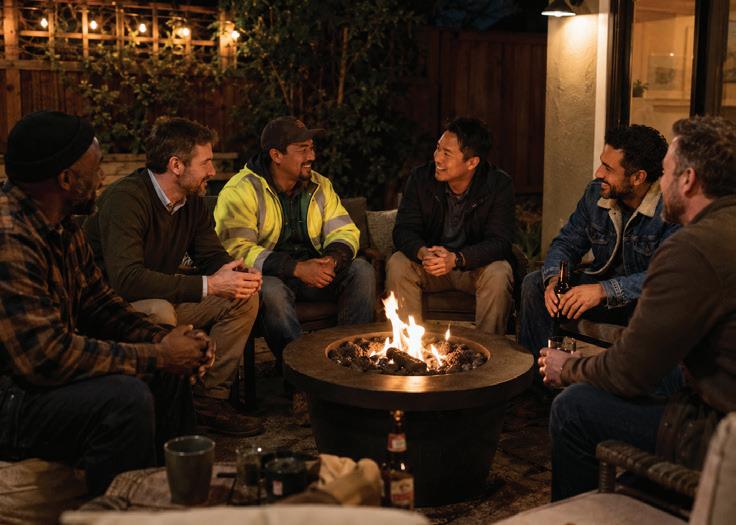
When I heard that this month’s publication was to be the “Issues” issue, the idea of somehow striking a balance between the extremist viewpoints we all encounter in the media and among the people in our daily lives came to mind. I immediately thought of someone I wanted to interview on the matter.
I consider this person a master of getting along with multitudes of people from all walks of life with various viewpoints, opinions, and attitudes, whether reasonable or not from his perspective. He is a crazybusy businessperson whose vocation takes him all over the North Valley, constantly connecting him with hundreds of businesses and people.
I asked this person if I could interview him about his ways of getting along with all kinds of people while maintaining a positive attitude, which I have witnessed through his own highs and lows in his life and business.
He readily agreed to the interview. We met at what we both considered the ideal spot, a local drinking (and eating) establishment.
We had barely begun Beer One, in idle conversation, when my friend told me he had recently ended a relationship with his girlfriend and had decided he needed to spend more quality time with friends. He told me how he arranged that quality time, and I instantly realized I had struck gold for the point of my interview.
“I asked a few friends over to my house for an evening of barbecue, beverages, and conversation, with the understanding that we may come from different viewpoints on lots of issues, but we are going to have reasonable discourse with no arguments.”
His get-togethers are now held every two weeks and have grown into a well-attended, fun forum, known to stretch well past barbecue time into the late hours of the night.
“It’s incredible!” said my friend. “We have people from the medical field, the legal field, construction workers, business owners, service workers, all kinds of people!”
“So, what do you talk about?” I asked.
“We hit the big issues! Politics, religion, vax or no vax, relationships, marriage…”
Dangerous territory.
“We all agree that every viewpoint has an opposite viewpoint. We start from there. We remain friends no matter what.”
Beer One was long gone, and they were sweeping up the place when I told my friend his party method could save the world.
“We all need to do our part,” he said.
Doug Love is sales manager at Century 21 in Chico. Email dougwlove@gmail.com. Call or text 530-680-0817.


Chico Native with 18 Years in Real Estate.
LA and Meriam Park experienced! (530) 966-1296
nicolecarterhanna@gmail com
NICOLE HANNA
DRE #02150386

Your Real Estate Expert for the Chico and Orland areas! Search for all homes at GarrettFrenchHomes com
GARRETT FRENCH DRE #01402010


Where there’s a Willman there’s a way! Lwillmanchico@gmail com
LAURA WILLMAN
DRE #01931088


Commitment!
(530) 755-7033
Cindy Cosby@c21SelectGroup com www Cindy-Cosby c21SelectGroup com
COSBY
#01925817
Experienced in Estates, Probates, Trust, Residential, Income Properties, Relocation, Horse Properties, Vacant Land
(530) 514-5555
SandyStonerc21@gmail com
SANDY STONER
DRE #01131795












A century of hope, and one remarkable breakthrough, is helping patients reclaim the vision that matters most.
What if the center of your world simply disappeared? Imagine waking up tomorrow morning and pouring yourself a cup of coffee. You look at your phone, only to find that the words in the center of the screen seem to vanish. You blink, rub your eyes, and try again. Perhaps your glasses are dirty. Maybe you're simply tired.
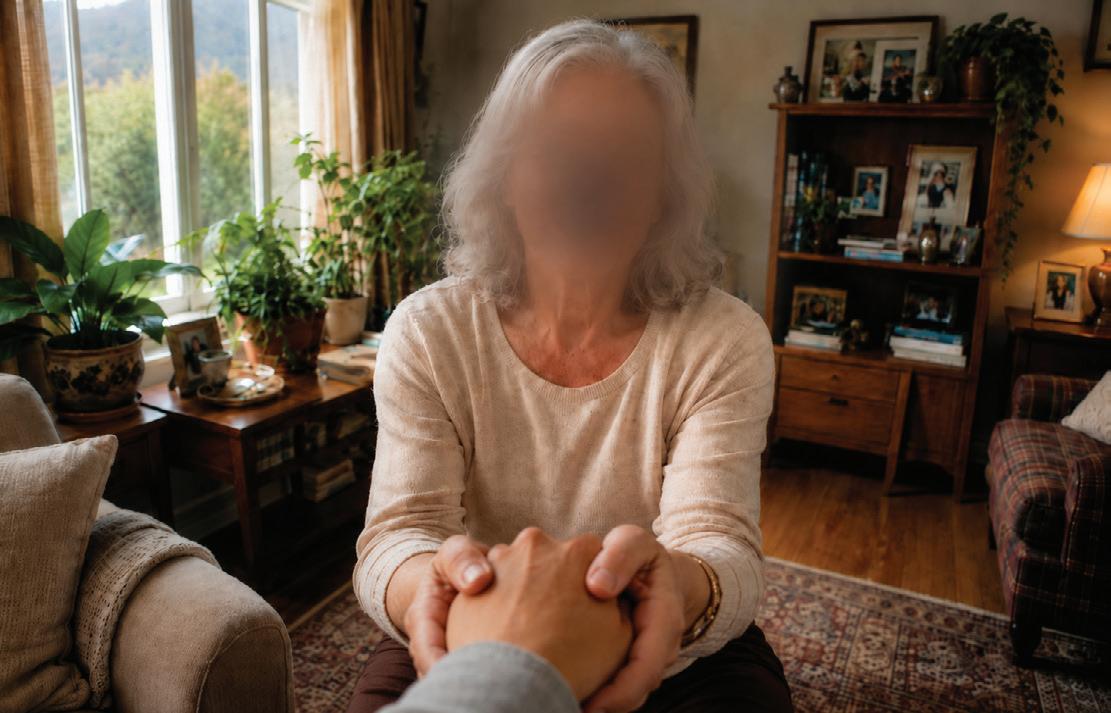
Susan first noticed it while reading a birthday card from her granddaughter. She blamed the lighting. A week later, she realized the middle of people's faces seemed strangely blurry. She could see the bright colors around the edges, but when she looked directly at a smiling face, its features dissolved into a blur. That afternoon, while driving home, the road stretched clearly into the distance—until she looked directly at the car in front of her. The center of her vision seemed to disappear into a hazy gray patch. She told herself it
must be her age, decided to keep an eye on it, and assured herself tomorrow would probably be better.
For millions of Americans, tomorrow looks exactly the same.
This is how dry age-related macular degeneration—commonly called dry AMD— often begins. Unlike sudden vision loss that demands immediate attention, dry AMD quietly steals the sharp, detailed central vision we depend on every day. Reading becomes more difficult. Faces become harder to recognize. Straight lines appear wavy. Colors lose some of their brilliance. Activities that once brought joy—painting, quilting, golfing, fishing, cooking, sewing, even scrolling through family photos on a phone—gradually become frustrating or impossible.
Perhaps the cruelest part is that peripheral vision usually remains intact. Patients can still see around the edges, but the center slowly fades away. Imagine looking at the people you love and seeing everything except their expressions. Imagine watching a sunset while the most beautiful part disappears into a blur.
That is the reality for people living with dry AMD—it is the leading cause of irreversible vision loss among adults over 60, affecting nearly 20 million Americans. As our population continues to age, that number is expected to grow dramatically in the coming decades. Chances are, someone you know is living with dry AMD today. There's also a chance they don't realize it yet.
Have you found yourself needing brighter light to read? Do words occasionally disappear in the middle of a sentence? Have
road signs become harder to make out until you're almost upon them? Do faces seem just a little more difficult to recognize from across a room? These subtle changes are easy to dismiss. Unfortunately, they can also be easy to ignore.
For generations, ophthalmologists have understood exactly what was happening inside the eye. They could explain why vision was changing, monitor the disease, and recommend healthy habits to help slow its progression. What they couldn't do was offer patients much hope that the disease itself could be meaningfully treated. That frustrating reality defined dry AMD for decades, but that era is over, and a meaningful treatment has finally arrived.
Long before physicians understood the retina or discovered the tiny structure in the eye known as the macula, people searched desperately for ways to preserve failing eyesight. The ancient Egyptians mixed honey with herbs and minerals, believing the concoction could restore vision. Greek physicians prescribed saffron, olive oil, and wine. Roman scholars experimented with everything from crushed fennel to animal bile, convinced nature held the answer somewhere within its remedies.
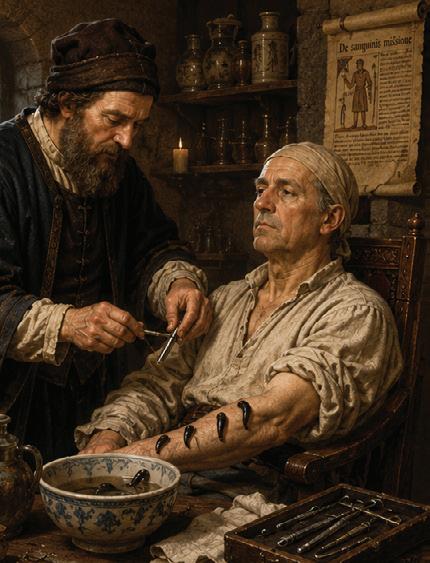
As medicine entered the Middle Ages, treatments became even more extraordinary. Bloodletting and leeches were thought to rebalance the body's

"humors" and improve failing vision. Patients endured uncomfortable poultices, herbal compresses, and bizarre tonics that promised miraculous cures while accomplishing little more than giving physicians something to try.
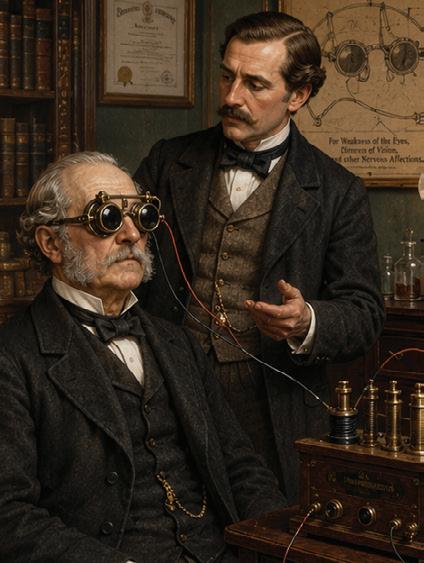
By the nineteenth century, innovation had become electrified. Advertisements touted "electric spectacles" that claimed weak electrical currents could restore eyesight. Others promoted magnetic eye masks, miracle elixirs, or secret formulas available only through traveling salesmen eager to profit from people's fear of blindness.
Today, these remedies seem almost unbelievable. Yet each one reflected the same universal truth: throughout history, humanity has feared losing its sight perhaps more than any other sense.
Modern ophthalmology eventually replaced folklore with science. Researchers discovered that dry AMD develops when delicate cells within the macula—the small area responsible for sharp central vision— gradually become damaged with age. Tiny deposits called drusen accumulate beneath the retina, while the cells responsible for converting light into the images we see begin to lose their efficiency.
Scientists identified important risk factors, including aging, genetics, smoking, cardiovascular disease, and prolonged exposure to ultraviolet light. They developed sophisticated imaging technology capable of detecting changes years before significant
vision loss occurred. Understanding the disease represented an enormous leap forward. Treating it, however, remained another matter entirely.
For much of the last several decades, physicians had remarkably few tools available to them. Patients were encouraged to eat diets rich in leafy greens, colorful vegetables, and omega-3 fatty acids. They were advised to exercise regularly, stop smoking, control blood pressure, wear quality sunglasses outdoors, and take specially formulated AREDS2 vitamin supplements if appropriate.
Every one of those recommendations remains important today. Healthy nutrition, exercise, and protecting the eyes from unnecessary damage continue to play an essential role in preserving vision. But there was an uncomfortable truth physicians couldn't escape: those measures were designed primarily to help slow progression. They couldn't restore damaged retinal cells, improve their function, or offer patients the kind of breakthrough that ophthalmologists had spent generations hoping to see. Then researchers began asking an entirely different question.
What if, instead of trying to replace damaged cells or simply slow the disease, they could help those cells work better? The answer came from something surprisingly ordinary: light, but not the bright beam of a surgical microscope or the focused pulse of a laser used to remove tissue. This was something altogether different. Scientists

discovered that very specific wavelengths of visible and near-infrared light could stimulate mitochondria—the tiny structures inside every cell responsible for producing energy.
Think of them as rechargeable batteries. Like every battery, mitochondria gradually become less efficient over time. In the retina, where cells work harder than almost anywhere else in the human body, that loss of energy can have profound consequences. As retinal cells struggle to produce the energy they need, their ability to maintain healthy function declines. Photobiomodulation, commonly known as PBM, was developed to address that problem.
Using carefully controlled wavelengths of light, PBM stimulates those microscopic energy centers, helping retinal cells function more efficiently while reducing some of the inflammatory and oxidative stress associated with dry AMD. Instead of masking symptoms, the therapy works at the cellular level, supporting the very cells responsible for central vision.
For patients, however, the science feels almost secondary. What they notice is that one of ophthalmology's most exciting breakthroughs is also one of its simplest. There are no injections, no scalpels, no anesthesia, and no lengthy recovery. Patients simply relax while the treatment is delivered over several minutes. Afterward, they return to work, head home, run errands, meet friends for lunch, or continue their day as usual. For a disease that once offered little more than uncertainty, the experience is refreshingly uncomplicated.
Clinical studies evaluating the FDAauthorized Valeda® Light Delivery System, which performs the photobiomodulation treatment, have demonstrated meaningful improvements in visual function in patients with dry age-related macular degeneration. For the first time, ophthalmologists can do more than simply watch the disease progress. For ophthalmologists like Dr. Barthelow of North Valley Eye Care, it represents the breakthrough they spent their careers hoping to see.

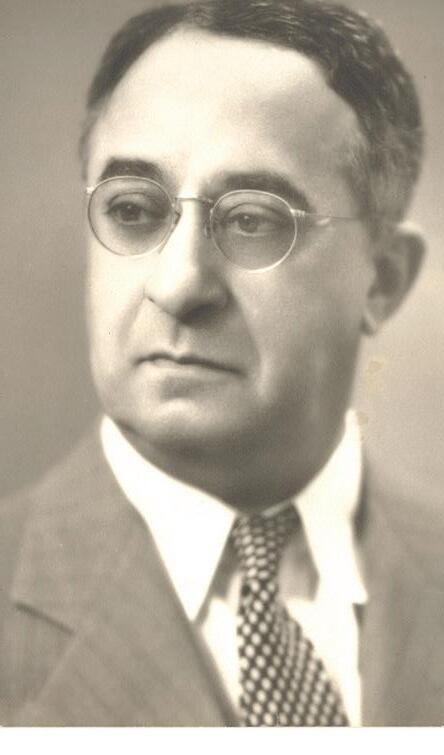
Long before photobiomodulation became a reality, one physician laid the foundation for modern eye care in Northern California. In 1914, Dr. I.O. Chiapella established what would become Chico's oldest ophthalmology practice. His commitment was simple yet profound: preserve the gift of sight for the people of the North Valley.
Over the next century, generations of ophthalmologists carried that mission forward. They restored vision through cataract surgery, treated glaucoma, repaired injuries, and embraced every advancement modern medicine had to offer. Yet one disease remained stubbornly beyond their reach: dry age-related macular degeneration. Every ophthalmologist inherited the same heartbreaking conversation: "We know what's happening, we can help slow it, but we can’t truly treat it." It was a conversation they dreaded having, not because they lacked compassion or expertise, but because medicine simply hadn't caught up to the disease.
Today, more than 110 years after Dr. Chiapella first opened his doors, that conversation has finally begun to change.
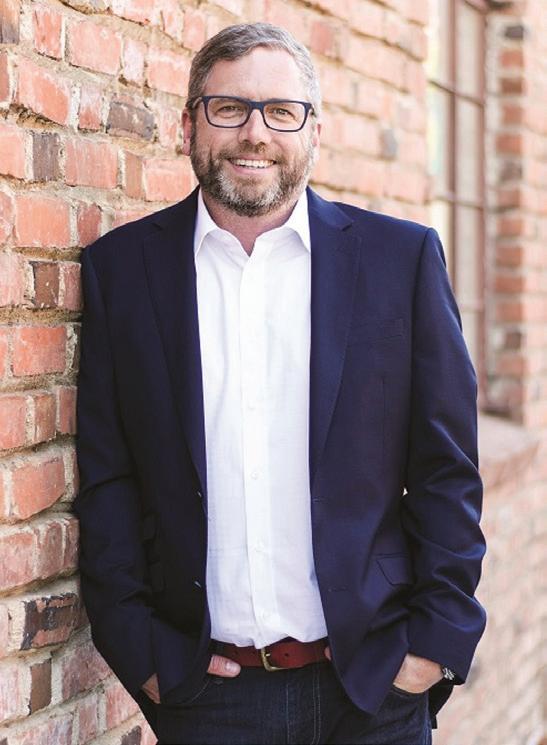
For Dr. Barthelow, one question had followed him through nearly every stage of his career: "Isn't there anything else you can do?" For years, the answer wasn't the one he wanted to give.
A board-certified ophthalmologist and one of Northern California's leading cataract surgeons, Dr. Barthelow has dedicated his career to restoring vision through innovation, surgical excellence, and compassionate patient care. After earning his medical degree from the University of California, Davis, he completed residency training in ophthalmology before pursuing advanced fellowship training in surgery at the renowned Moran Eye Center in Utah. Throughout his career, he has remained committed not only to bringing the latest advances in eye care to Chico, but also to restoring sight through humanitarian surgical missions serving patients around the world.
Yet, among all of ophthalmology's remarkable achievements, dry AMD remained one of the profession's greatest unmet challenges.
“Twenty years ago, almost to the day, I started practicing ophthalmology,” Dr. Barthelow says. “I saw a patient for a dilated eye exam, sent over from a local optometrist to check for macular degeneration. I found it was more than that; it was a retinal dystrophy. I had a frank conversation with that patient, and over the past 20 years, I’ve watched them lose their vision completely. They were such an intelligent, vibrant, and successful individual with so many plans in their career and life that were completely hijacked by the disease. I’ve seen that same story play out thousands of times now. As an ophthalmologist, I have to diagnose diseases like macular degeneration, glaucoma, diabetic retinopathy, and more that make such a massive negative impact on patients’ lives and decrease their quality of life. Just like with cancer, giving a patient a diagnosis like this adds a real metaphysical weight to their lives. I’ve always been so frustrated having those conversations and knowing there was nothing I could do about macular degeneration. I’m not here to watch things go bad; I’m here to make things get better. It makes you feel like a failure that there are conditions you can’t fix.”
When the opportunity arose to bring photobiomodulation therapy to Chico, Dr. Barthelow saw more than a new technology.
He saw the fulfillment of a promise generations of physicians had hoped one day to keep. That vision led to the creation of North Valley Eye Care’s Macula Preservation Institute.
“When this technology, which has been researched for some time, started becoming available for macular degeneration, we were on top of it right away,” Dr. Barthelow explains. “We were the first to bring those machines in at scale in Northern California. We’ve devoted entire divisions of North Valley Eye Care’s resources to make this happen at a scale large enough that we could offer it to everyone. We’ve done it in the hope it saves their vision and increases their ability to live their lives the way they want to. Being able to tell someone who has been living with macular degeneration that we finally have a treatment is incredible. It’s such a privilege to watch that weight be lifted from their psyche. It’s a wholebody response after carrying that burden for so long. To know we have a treatment and to be able to deliver that news in a conversation has been so special and impactful. The most impactful conversations I’ve had in my career have happened over the past six months, and they have only fueled me to devote more effort and resources to our Macula Preservation Institute.”
More than simply a treatment program, the Institute was established as a center dedicated to education, early detection, research, and hope. Whether someone has already been diagnosed with dry AMD, believes they may be experiencing symptoms, or simply wants to learn how to protect their eyesight as they age, MPI
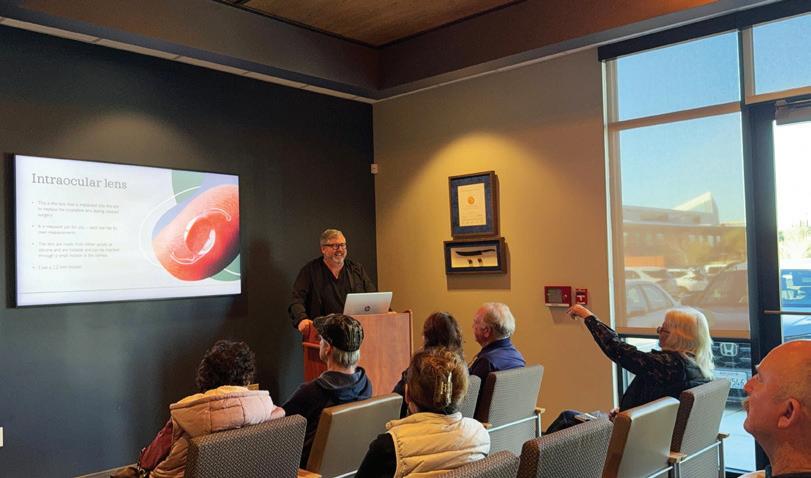
exists to provide trusted information, compassionate guidance, and access to the latest evidence-based care.
Its mission extends well beyond the walls of the clinic. Through patient education, community outreach, and ongoing commitment to advancing retinal care, the Macula Preservation Institute seeks to ensure that fewer people experience the devastating effects of preventable vision loss.
“When you look at diseases like macular degeneration, they exist on a continuum,” Dr. Barthelow says. “You go from undetectable disease to functional impairment. Macular degeneration is a progressive disease that gets worse. Full stop. It doesn’t quit until vision is lost completely. When you’re 30, it’s unlikely that you have any eye disease at all. You might have risk factors, such as certain genetic factors or preexisting conditions. If we can catch folks for many of these diseases early and slow their progression, we can change things. We can offer many more years of functional vision without impairment.”
As with so many things that negatively impact our lives, prevention is far better— and often far easier—than treatment.
“Anything that is good for you physically, psychologically, and emotionally, in general, is good for your eye health,” Dr. Barthelow explains. “The toughest pill to take is diet and exercise, and those are the most effective pills we have. I’ve put so much effort and resources into the Macula Preservation Institute and photobiomodulation because I want people to know they can make a huge difference in their lives and vision by giving up smoking, learning to eat a healthy diet, and getting a decent amount of exercise. Wearing a hat and sunglasses, being an active part of the community, and reducing stress have been shown to play important roles in eye health. Offering this guidance through the Macula Preservation Institute provides people with a resource to get background on how they can prevent disease and protect their vision, rather than just treat problems after they arise. We’re working on a whole system of informative, entertaining, and science-based content to help people do that.”
When most of us think of eye doctors, we
don’t consider the broad medical knowledge they had to master before specializing. Dr. Barthelow wants to change that.
“Most people’s perception of what an eye doctor does is more about the eye and less about general medicine,” he says. “I think it’s important for eye doctors to get back into general medicine, because the eyes tell you so much more about someone’s general health than most realize. I want us to reach people before they get to functional impairment or systemic disease. It’ll help us fix things before there’s loss of vision.”
For patients, the photobiomodulation treatment experience is remarkably straightforward. After a comprehensive examination determines that they are appropriate candidates, patients complete a series of brief light therapy sessions over several weeks. The therapy is completely non-invasive, painless, and requires no downtime. Many patients schedule appointments during a lunch break before returning to the rest of their day.
The Macula Preservation Institute team works closely with patients to explain insurance coverage, answer questions, and guide them through every step of the process, making what once seemed intimidating feel surprisingly simple. Most importantly, patients are no longer hearing that nothing can be done. Instead, they are hearing something they may never have expected: there is reason for hope.
For Dr. Barthelow, that hope represents far

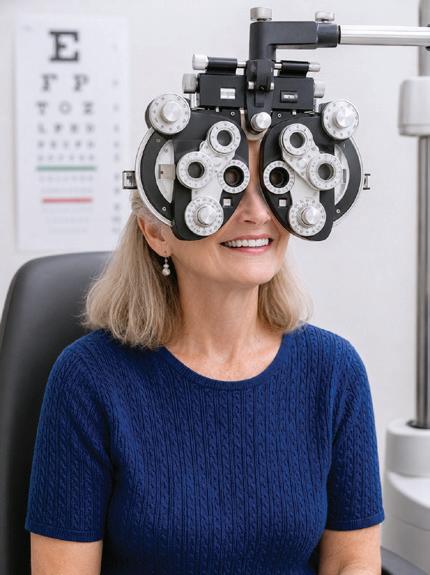
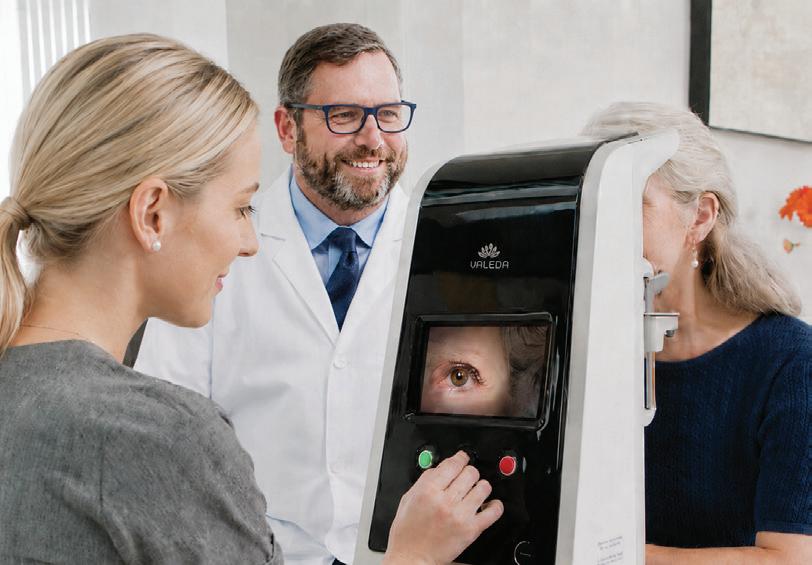
more than the arrival of a new technology. It is the continuation of a mission that began in Chico more than a century ago—a mission rooted in protecting one of life's greatest gifts. When Dr. I.O. Chiapella opened his practice in Chico in 1914, he could scarcely have imagined that, one day, physicians would use carefully calibrated light to help preserve the cells responsible for sight, but he would have recognized the mission: to protect the vision of his community.
“We’re living in a really exciting time for the treatment of disease,” Dr. Barthelow says. “Photobiomodulation is the culmination of tens of thousands of people’s efforts. I feel so honored to be a part of this chapter in modern medicine, and I want nothing more than to take a disease that has been so frustrating for so many people and frustrate that disease for once.”
Dr. Barthelow’s significant efforts and investment are the result of a personal ethos that guides him to give back to those who have supported him throughout his journey into medicine.
“Society invested in me as a young person,” Dr. Barthelow says. “I went to public schools that were paid for by people’s taxes. I went to a public university and had much of it paid for by scholarships and grants. My medical school training was subsidized. Even my teachers and mentors were people
who made pacts with society. As a result, I feel a responsibility to give back to the society that invested in my young self. I’ve always felt that way. In our community alone, we have hundreds of individuals across all fields who have dedicated their lives to improving the lives of its residents and being there when the community needs us. I hope no one ever needs me, but it’s important to know I’m here when they do. To be part of a world-class eye care campus and to have been a part of the building of that is so meaningful to me. Being part of this community and caring for one part of the body that is so important means the world to me as well. My knowledge base isn’t mine, and my experience and skills don’t belong to me; they belong to the community. I earned them, but I don’t believe they are my own. It’s my responsibility to care for the community with them and make people’s lives better.”
Dr. Barthelow continues, “When things like photobiomodulation come along, I want to understand all the barriers that would prevent someone from getting it and address them. I want to make the treatment as available, inclusive, and approachable as possible. It energizes me to create systems to make that happen. Being part of a historical community of eye doctors and knowing that I’m part of that legacy is so important to me, and I want to make them proud. I want their spirits to be happy that I
took up that legacy and was a good steward of their community like they were. This area has had world-class eye care for a long time, and many people don’t realize it. I want to maintain that legacy into the future.”
If you have noticed blurred or distorted central vision, difficulty recognizing faces, faded colors, or trouble reading despite updated glasses—or if someone you love has—don't dismiss it as simply getting older. Preserving vision isn't simply about helping people see; it's about helping them continue to read bedtime stories, recognize a familiar smile, watch a grandchild score the winning run, or admire another sunset over Bidwell Park—it's about protecting the center of everything.
Call North Valley Eye Care and MPI at (530) 891-1900 or scan the QR code below to schedule a comprehensive evaluation at the Macula Preservation Institute in Chico. You can also visit them online at www.SaveMyMacula.com for more information or to RSVP to one of their upcoming free seminars on macular degeneration and photobiomodulation.

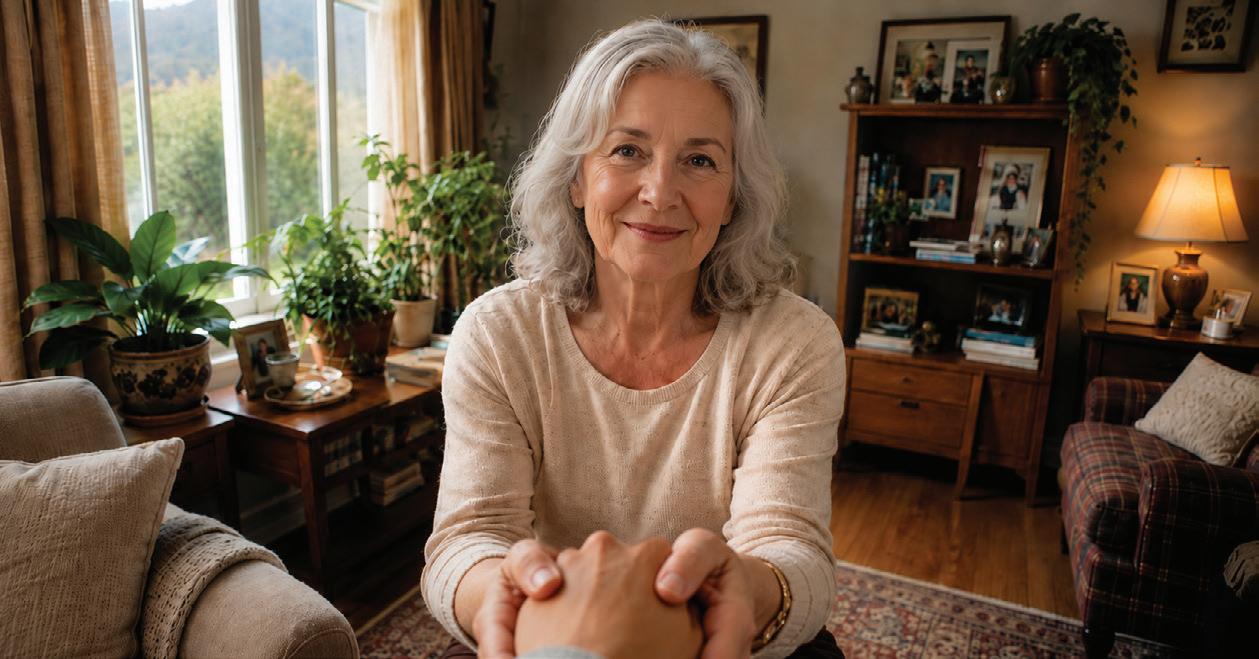





They appear almost silently: children riding to school, teenagers gathering in parking lots, college students crossing town, and adults replacing short car trips with something smaller, cheaper, and easier to park. E-bikes, e-scooters, and increasingly powerful e-motos have transformed transportation throughout California, and Butte County is no exception.
Their appeal is understandable. Legal e-bikes can give young people greater independence, help commuters avoid traffic, and offer an affordable alternative to driving. Electric scooters are portable and convenient, while off-highway e-motos provide the speed and excitement of recreational motorcycles without gasoline or engine noise.
The problem is that these vehicles often look more alike than they legally—or physically—are. A machine resembling a bicycle may carry the weight, power, and speed of a motorcycle. A child may receive one as a gift without the family realizing it cannot legally be ridden to school, through a neighborhood, or along a city bike path.
For Chico Police Department Traffic Sergeant Todd Lefkowitz, that confusion has become an increasingly important publicsafety issue.
California defines a legal electric bicycle
as having operable pedals and an electric motor of less than 750 watts. Class 1 e-bikes provide assistance only while the rider pedals and stop assisting at 20 miles per hour. Class 2 models can use pedals or a throttle, but must also stop providing power at 20 miles per hour. Class 3 e-bikes provide pedal assistance only up to 28 miles per hour; riders must be at least 16, and everyone riding a Class 3 e-bike must wear an approved helmet. Riders under 18 must wear helmets on all bicycle classes.
Motorized scooters fall under different rules. California limits their operation to 15 miles per hour, requires the rider to possess a driver’s license or permit, and requires a helmet. They are designed for one rider, may not carry passengers, may not be ridden on sidewalks, and may not be operated under the influence.
Then there are e-motos: powerful bicycles or motorcycle-style machines that resemble e-bikes, are frequently marketed alongside e-bikes, and produce over 750 watts of power. These motorized vehicles may or may not have operable pedals, often produce 4,000 or 5,000 watts of power, and can reach speeds between 40 and 65 miles per hour. Beginning January 1, 2026, California law formally defined qualifying e-motos as off-highway electric motorcycles. They are subject to off-highway vehicle requirements, including helmet use and,
when operated on public off-highway lands, DMV identification commonly known as a green sticker. They are not legal for ordinary operation on city streets, sidewalks, bicycle paths, or school routes.
“Parents have to ask themselves whether they are comfortable with their child going 40 to 65 miles per hour,” Lefkowitz said. “Would you let your child ride a quad or motorcycle down East Avenue?”
That comparison matters because the word “bike” can create a false sense of security. Neurosurgeon Dr. Jeffrey Lobosky has spent decades seeing what happens when an unprotected head meets pavement, a vehicle, or another fixed object. A longtime advocate for bicycle helmets, Lobosky helped establish local helmet programs that have distributed approximately 29,000 free helmets to children throughout the tri-county area.
He remembers when e-bikes first began appearing 10 to 15 years ago, largely as a novelty. Today, he said, millions have entered circulation through retailers and direct-to-consumer sales. Some weigh between 60 and 120 pounds—far heavier than traditional bicycles—and the fastest electric machines move at roadway speeds.
“This is not a bicycle,” Lobosky said of high-powered models capable of reaching motorcycle-level speeds.
National injury data reflect that changing reality. The U.S. Consumer Product Safety Commission found that micromobility injuries increased by an estimated average of 23 percent annually from 2017 through 2022. Nearly half of all estimated e-bike injuries during that six-year period occurred in 2022 alone. Children aged 14 and younger accounted for approximately 36 percent of micromobility injuries, despite representing a much smaller share of the population. Head and neck injuries were among the most frequently reported.
The American College of Surgeons reported in 2025 that more than 20,000 people are injured on e-bikes annually, with roughly 3,000 requiring hospitalization. The organization also warned that the true number is likely underreported.
Lobosky is careful not to argue that every

risk must be eliminated. Transportation, recreation, and sports all carry potential danger. His concern is whether families understand the level of risk they are accepting and take reasonable steps to reduce it.
“Everything we do in life carries a risk,” he said. “If we’re going to take the risk, we should do what we can to mitigate that risk and protect ourselves.”
For him, that begins with universal helmet use, regardless of age or electric-bike class. He also believes California should have a more systematic discussion about minimum ages, vehicle speeds, rider certification, and whether young operators should be required to demonstrate basic competency before taking a motorized device onto public roads.
He envisions a statewide—and eventually county-level—task force involving law enforcement, neurological trauma specialists, elected officials, retailers, parents, and young riders. The goal would not necessarily be prohibition, but compromise supported by reliable injury data.
Enforcement is already becoming stronger. A California law that took effect in 2026 allows officers to impound e-bikes and e-motos when they exceed the legal e-bike definition. These would be e-bikes and e-motos that are moving faster than 28 miles per hour. It also permits removal of a Class 3 e-bike operated by someone under 16. Vehicles may be held for at
least 48 hours, with owners responsible for authorized towing, storage, and administrative costs.
Lefkowitz said the Chico Police Department is attempting to focus on the most egregious situations rather than treating every electric rider as a target. The department’s role, he said, is to educate families, enforce the law, and intervene before a warning becomes an emergency-room visit—or something worse.
The potential consequences for parents are no longer theoretical.
In Lake Forest, Orange County, prosecutors charged a mother with involuntary manslaughter after her 14-year-old son allegedly struck 81-year-old Ed Ashman while performing wheelies on a highpowered Surron e-motorcycle. Ashman, a retired Marine captain and substitute teacher, later died. Prosecutors allege that the mother knew her son rode recklessly and continued allowing him to use the machine after deputies warned her that his operation was illegal. The mother has also faced child-endangerment and related charges; the allegations had not been resolved at the time of reporting.
The case represents an unusually serious attempt to hold a parent criminally responsible for providing a minor with access to an illegal e-motorcycle. It also illustrates Lefkowitz’s warning that parents may ultimately bear the financial, civil, and even criminal consequences of decisions made long before a crash.
None of this means children must stay inside or abandon independent transportation. Lefkowitz recommends traditional bicycles, kick scooters, and legal Class 1 or Class 2 e-bikes as more appropriate options for younger riders. Families should understand the machine’s wattage, maximum assisted speed, throttle capability, age requirements, and legal classification before buying—not after a citation or collision.
Young riders should also understand basic roadway behavior: traveling with traffic, stopping at signals, yielding appropriately, avoiding passengers on single-rider devices, and wearing properly fitted protective gear. The California Highway Patrol offers bicycle and e-bike safety education that families can complete together.
“We know these machines are fun and popular,” Lefkowitz said. “We’re not trying to force kids to stay indoors, but we do want to ensure that when they’re outdoors, they’re operating safely for themselves and the public.”
The goal is to preserve what makes electric mobility valuable while acknowledging what makes it dangerous. These machines can provide freedom, recreation, and practical transportation. That freedom, however, comes with speed, weight, legal responsibilities, and consequences.
The technology has evolved quickly. Public understanding, parental oversight, and safety habits must now catch up. For an easy flowchart showing whether you or your child is riding an e-bike or, in fact, an illegal e-moto, visit https://bit.ly/ChicoPD_Ebike or scan the QR code below for more information.

Support group for males caring for a loved one









Adjustments in Chico’s sewer rates have been poo-pooed since 2014, with the first increase in 2023—too late and too little.
During those years, the city’s sewer system was minimally maintained, getting only the care and repair it needed to function. That’s like giving your car gas and oil, but paying no attention to the engine, transmission, rear end, and brakes, until you’re off the road in the ditch. And that’s where Chico’s sewer system is today—in the ditch.
I am keenly aware of problems with the sewer revenues and how the city determines billing for its customers—you and me. From 2015 to 2022, the city undercharged my wife’s business, Wendy Massage, by up to 49.8% per month. In 2023, it overcharged her 249% every month; in 2024, over 94%; and in 2025, over 38%.
Many of Chico’s residents and businesses are currently being overcharged because the city’s billing method, formula, and decisions about whom to bill do not conform to the Chico Municipal Code, and the City is currently being sued for it.
For nine years, City Manager Mark Orme failed to act on the ever-rising sewer costs and then handed the reins to Mark Sorensen, who tackled the problem in 2023, setting new rates, but those rates were not enough to resolve the lingering problems.
I believe the costly study the Council is grappling with is a bloated exaggeration of what is actually needed. It’s a common problem in government-funded studies, as every dollar they collect and don’t spend can be spent for something else—a practice shared at every level of our government.
Simply put, Chico’s sewer revenues are running on fumes, and more than 21,000 sewer customers whose heads are buried in the sand will later cry—I coulda, woulda, shoulda—but they’ll be too late!
If you’re blaming the city councilmembers—stop! They do not run the city; they merely act and respond to the leadership of the city manager, who, with few exceptions, sets the city’s meeting agenda items and decides what information and data is provided to the Council for its review, discussion, and decision-making processes.
The Council has chosen Gillian Haen as its new city manager. Will she be able to steer the city in the direction of prosperity or mire it further into debt?

For years, Chico enjoyed sewer rates that looked like a bargain. Unfortunately, part of that bargain was purchased by postponing the bill.
The city says sewer rates went more than a decade without an increase. A 2022 adjustment funded only about half of the system’s identified needs, leaving Chico with aging pipes and treatment facilities, regulatory work due by 2031, and reserves projected at roughly $4.4 million—less than half of one year’s operating costs. The city estimates approximately $57 million in statemandated upgrades alone, while much of the system is 50 to 70 years old.
Those facts make a substantial increase difficult to avoid. They do not, however, make a sudden increase easy to absorb— or necessarily wise.
Under the schedule now advancing through the Proposition 218 process, the sewer enterprise would seek 55% more revenue in each of the first two years, followed by three annual increases of 3%.
For the city’s representative household, the monthly bill would rise from $37.83 to $54.40, then to $84.32. Businesses with heavy water use or stronger wastewater could experience even more dramatic increases.
Chico’s present rates are undeniably low. A comparable Davis household using 7.2 hundred cubic feet of winter water would pay roughly $52 per month under its May 2026 schedule. Roseville lists a typical residential wastewater bill of $57.34 beginning in July 2026, while Santa Clara proposed $64.46. SacSewer lists combined collection and treatment charges totaling $74.35 for single-family customers in areas where it provides both services. Comparisons are imperfect because every system has different infrastructure, debt, and treatment requirements, but Chico’s $37.83 example sits well below these communities.
That suggests rates should rise. It does not mean they must leap to the finish line in two years.
A more balanced answer would combine a reasonable initial increase with longterm borrowing for long-lived capital improvements. Debt is often treated as an admission of failure, but there is a meaningful difference between borrowing to cover routine payroll and borrowing to rebuild infrastructure that will serve residents for 30, 40, or 50 years.
Thoughtful infrastructure debt creates generational fairness. Rather than requiring today’s families and businesses to cash-fund assets that future customers
will use for decades, repayment is spread across the people who receive the benefit. Chico’s own debt policy describes prudent debt as an equitable and cost-effective means of financing major infrastructure and allows longterm financing for replacement and reconstruction. Public-finance guidance similarly recognizes intergenerational equity as a legitimate reason to finance capital projects.
The city already evaluated a $30 million, 20-year loan at an assumed 4% interest rate. It would carry approximately $2.4 million in annual debt service and about $15.4 million in total interest. That interest is a real cost, but so is forcing residents to absorb a decade of deferred investment almost overnight. Affordability has value, especially when an abrupt increase could be passed through in rents, restaurant prices and reduced local hiring.
Chico should go further than the option studied. It should separate the capital plan into legally mandated, immediately necessary, and deferrable projects; independently validate the largest estimates; and finance eligible longlived improvements over 25 to 35 years. California’s Clean Water State Revolving Fund offers low-cost wastewater financing for terms up to 30 years or the useful life of a project. Federal financing can offer repayment periods of up to 35 years after completion and schedules designed to help communities phase in rates.
A better plan could include a meaningful but manageable first increase, predictable annual adjustments thereafter, aggressive pursuit of state and federal financing, development fees for growth-related capacity, an independent billing audit, and a non-rate-funded assistance program for qualifying households. Every future increase should be tied to published project milestones, updated cost estimates, and annual public reporting.
Chico cannot responsibly return to denial. Its sewer system needs investment, and today’s rates are not sustainable. But responsible government is not measured by how quickly it collects the money. It is measured by whether it solves the problem while respecting the people required to pay for it.



The Warren Settlement is a court-approved agreement that has governed the City of Chico's response to homelessness and public encampments since 2022. It began with a federal lawsuit filed in 2021 by eight unhoused residents, including lead plaintiff Bobby Warren. The plaintiffs argued that Chico had unlawfully removed homeless encampments and enforced anti-camping laws when adequate, accessible shelter was not available.
Rather than continue the lawsuit, the city and plaintiffs reached a settlement that established specific requirements Chico must follow before clearing encampments or citing people for sleeping in public. The agreement required the city to evaluate whether appropriate shelter was available, conduct outreach, provide notice, and complete individualized assessments before enforcement could occur.
One of the settlement’s most significant effects was the creation of the Genesis Emergency Housing Site near the Chico Municipal Airport. Genesis was designed as a low-barrier shelter with small individual units, sanitation facilities, around-theclock access, and fewer entry restrictions than traditional shelters. The settlement also led to the creation of an Alternative Camping Site for people who could not be accommodated at Genesis or the Torres Community Shelter.
Supporters have argued that the settlement created greater protections for vulnerable residents and required the city to offer shelter before displacing people. Critics have said it made encampment enforcement slower, more expensive, and more difficult, particularly in parks, commercial areas, and neighborhoods.
The settlement is scheduled to expire January 14, 2027. At that point, Chico will no longer be bound by its special procedures, although the city must still comply with federal and state law, constitutional protections, and rules concerning notice and personal property.

I have watched homelessness in Chico become increasingly visible, but I do not believe that means unhoused people themselves are the problem. To me, the tents, shopping carts, and makeshift shelters throughout our community are evidence of a much deeper failure—a housing system that has become unaffordable, a healthcare system that leaves people behind, and a social safety net filled with holes large enough for human beings to disappear through.
I have driven past someone curled beneath a soaked blanket on a freezing night and wondered how we reached a point where that suffering could become part of the scenery. I have seen people carry everything they own from one place to another after being displaced, only to settle elsewhere because there was nowhere safe for them to go. I cannot look at that cycle and call it a solution.
The Warren Settlement established a basic moral boundary: Chico should not punish people for sleeping outdoors when they have no realistic alternative. Its requirements for outreach, notice, individualized assessments, and appropriate shelter recognized that unhoused people are citizens with rights—not obstacles to be removed or inconveniences to be hidden.
I am deeply concerned about what may happen after the settlement expires on January 14, 2027. Without its protections, the city could rely more heavily on encampment sweeps, citations, arrests, and restrictive shelter policies. These
measures may make homelessness less visible in particular neighborhoods, but they do not house anyone. Sweeps can destroy tents, medications, identification, family photographs, mobility devices, and the fragile connections people have made with outreach workers. What looks like cleanup from a distance can feel like devastation to the person losing everything.
I believe housing should be treated as a human right. Chico should invest in permanent supportive housing, publicly funded affordable housing, rental assistance, tenant protections, mental health care, addiction treatment, and wellpaid outreach teams. Services should be accessible without requiring people to first prove they are sober, compliant, employable, or deserving. Stability must come before recovery can reasonably be expected.
Until permanent housing is available, we should provide safe camping areas, safe parking, restrooms, showers, storage, healthcare, and protection from extreme weather. We should also demand greater participation from Butte County and state and federal agencies rather than leaving the city to manage a national crisis alone.
I want public spaces that everyone can safely enjoy. Unhoused people are part of that “everyone.” Our response should not be built around making poverty invisible. It should be built around ending the conditions that force people to live outside in the first place.
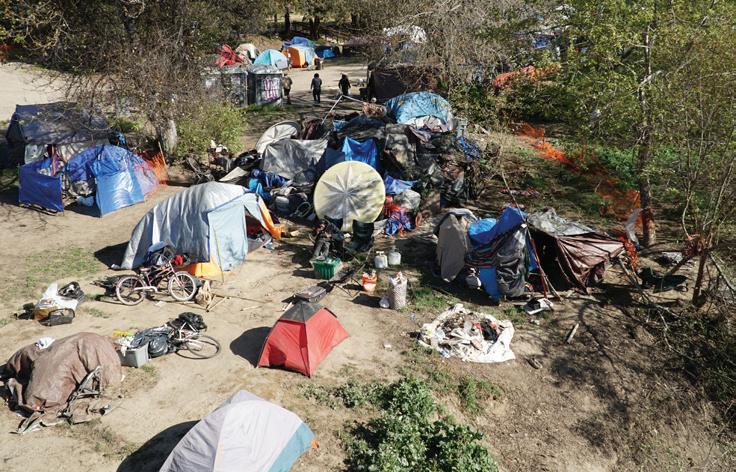
Chico’s homelessness crisis has been allowed to grow into a broader crisis of public order. What began as an effort to protect vulnerable people has too often resulted in parks, sidewalks, waterways, and commercial areas being treated as though they belong to no one—and therefore may be occupied, damaged, or rendered unusable without meaningful consequence. That is not compassion. It is a failure of government.
Downtown businesses are expected to absorb the cost of theft, vandalism, blocked entrances, lost customers, and repeated cleanup. Families are expected to avoid parks they helped pay for. City crews and first responders are repeatedly sent back to the same locations to remove trash, human waste, discarded needles, abandoned property, and the remains of illegal fires—or to put out active ones that endanger everyone. Taxpayers fund the cleanup, only to watch the same conditions return. No community can sustain that cycle indefinitely.
Homelessness may explain certain behavior, but it cannot excuse every behavior. Addiction, mental illness, and personal hardship are serious problems, yet they do not erase the rights of everyone else. A person’s difficult circumstances should not grant permission to threaten others, destroy property, use drugs openly, steal, obstruct sidewalks, or establish a permanent camp on public land.
a position where enforcement became slow, complicated, and uncertain. Its protections may have been created with humane intentions, but the practical result was a system in which encampments could expand while the city worked through lengthy procedural requirements. Residents saw obvious violations and deteriorating conditions, yet local government often appeared unable—or unwilling—to act.
When the settlement expires, Chico should restore a straightforward standard: public spaces are for public use, and laws apply equally to everyone. Shelter should remain available, but it should not operate without expectations. Shelter residents should follow rules, respect staff and neighbors, participate in case management, and work toward a defined next step. Emergency shelter should be a bridge to stability, not an indefinite substitute for it. Treatment should be offered and, in some cases, required through lawful court-supervised programs when severe addiction or mental illness makes voluntary cooperation unrealistic.
Those who accept help should receive real support. Those who reject reasonable shelter and services should not be permitted to remain in parks, creek beds, doorways, or sidewalks. A humane city does not abandon people. It also does not abandon standards. Chico must protect the vulnerable, defend taxpayers, support local businesses, and restore the basic expectation that shared spaces will remain safe, clean, and open to all.

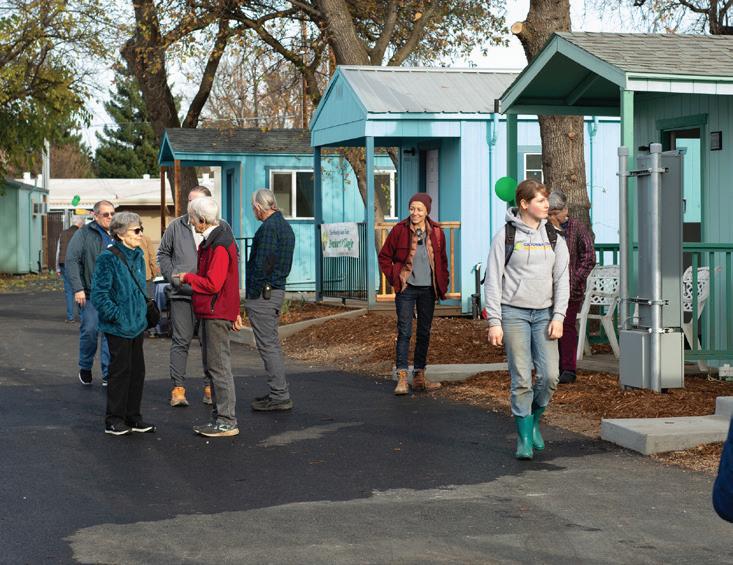
For years, Chico’s debate over homelessness has been framed as a choice between compassion and order. One side warns that clearing encampments without realistic alternatives criminalizes poverty and pushes vulnerable people from one unsafe place to another. The other argues that allowing camps to remain in parks, downtown doorways, creek corridors, and other shared spaces has imposed unacceptable costs on businesses, neighborhoods, taxpayers, and families. Both concerns are legitimate. Any durable policy must begin by admitting that.
The Warren Settlement emerged from a 2021 federal lawsuit filed by unhoused residents who challenged Chico’s enforcement of anti-camping and publicproperty laws when adequate shelter was unavailable. The agreement remains in effect until January 14, 2027.
Its most significant physical legacy is Genesis, Chico’s emergency noncongregate shelter. The city-owned site includes 177 climate-controlled microshelters for up to 354 people, along with food, showers, laundry, sanitation, pet accommodations, case management, benefits navigation, and behavioral-health support. The settlement also required an Alternative Camping Site for people considered ineligible for Genesis or the
Supporters are right to emphasize what those protections mean at ground level. A tent may contain medication, identification, clothing, a phone, and every possession a person has left. Displacement can interrupt treatment, sever contact with outreach workers, and make an unstable life even more chaotic. Requiring the city to identify an appropriate destination before removing someone imposed a humane principle: people should not simply be swept away because their poverty is visible.
Critics are equally justified in arguing that compassion cannot mean the permanent surrender of public space. Parks, sidewalks, business entrances, bike paths, and waterways must remain safe and usable. Unregulated camping brings risks including fire, waste, environmental damage, blocked access, and repeated demands on emergency and cleanup services. Chico staff has concluded that the Alternative Site lacks the infrastructure necessary for safe and sanitary habitation and creates risks for occupants and surrounding properties.
The encouraging truth is that Chico’s response is more developed than it was when the lawsuit began. Genesis created substantial emergency capacity,
but the community has also built more specialized pathways toward stability.
Chico Housing Action Team’s Everhart Village opened in late 2023 through a partnership with Butte County Behavioral Health. Its 20 sleeping cabins serve people living with serious mentalhealth challenges who may struggle in conventional shelters. Behavioralhealth, substance-use, physical-health, education, employment, and housingnavigation services are nearby, creating a setting intended not merely to contain homelessness but to help residents recover and move into permanent housing.
CHAT is also developing Builders’ Village, an affordable housing community designed primarily for people with disabilities and fixed incomes. Emergency shelter can protect someone tonight, but permanent housing is what prevents a return to the street months later. CHAT’s broader approach combines housing with practical support such as replacing identification, coordinating medical care, arranging transportation, and working with landlords.
True North Housing Alliance added another essential piece with the opening of the Howard Slater Navigation Center in November 2025. It provides a central point for homelessness prevention, rapid rehousing, case management, housing assistance, healthcare connections, counseling, and referrals. It brings much of the system together under one roof. True North reported serving more than 1,280 people and helping nearly 170 obtain housing in 2025.
Chico’s next step should be a coordinated system with clear stages and expectations.
First, the community needs a single, recognizable entry point. Anyone facing eviction or already living outside should be able to begin at the Navigation Center and receive an assessment that leads to the right intervention: prevention assistance, rapid rehousing, emergency shelter, behavioral health care, addiction treatment, or permanent supportive housing. Every person entering publicly supported shelter should receive an
individualized stability plan, concrete goals, and a named case manager responsible for follow-through.
Second, Chico must invest more heavily in prevention. A modest payment for overdue rent, utilities, vehicle repair, identification, or a security deposit can be far less expensive than months of shelter, emergency-room visits, policing, and cleanup. The city and county should create a flexible prevention fund, a landlord risk pool covering limited damages or unpaid rent, and a master-leasing program allowing trusted nonprofits to place tenants who would otherwise fail conventional screening.
This prevention strategy should also include mediation between tenants and landlords, short-term rental subsidies for people experiencing a temporary income loss, and faster assistance for seniors or disabled residents at immediate risk of eviction. The earlier the community intervenes, the less likely a manageable financial setback becomes chronic homelessness.
Third, shelter should remain accessible while becoming more purposeful. Reasonable curfews, safety standards, visitor rules, attendance expectations, and case-management meetings are compatible with dignity when applied fairly and with accommodations for disability, employment, family obligations, and medical needs. Residents should understand the expectations, available help, and steps toward permanent housing.
Shelter residents who are able to work should also have access to job training, transportation, document recovery, and employment opportunities. Partnerships with local employers, trade organizations, Chico State, Butte College, and nonprofit social enterprises could provide pathways into landscaping, construction, hospitality, maintenance, food service, and other fields. Opportunity must involve more than a bed; it should offer a meaningful route back into community life.
Fourth, Chico and Butte County need a multidisciplinary team for the smaller group of people who repeatedly cycle through camps, emergency rooms,
jail, crisis calls, and shelters. A team combining behavioral-health clinicians, case managers, medical providers, and specially trained officers could create individualized interventions. Police alone cannot resolve severe mental illness or addiction, but outreach alone cannot address violence, fire-setting, theft, or persistent refusal of every reasonable option.
Fifth, encampment enforcement should be consistent, lawful, and paired with a real destination. Chico should prioritize downtown, parks, waterways, school routes, high-fire-risk areas, and locations that block access or threaten public health. People should receive clear notice, outreach, transportation, secure property storage, and an offer of appropriate shelter. Once those steps are completed and reasonable accommodations are made, camping should not continue indefinitely. Laws against violence, theft, vandalism, illegal fires, obstruction, and public drug use should apply regardless of housing status.
The public deserves evidence that the system is working. Chico, Butte County, and participating nonprofits should publish a shared quarterly dashboard showing shelter entries, exits to permanent housing, one-year housing retention, returns to homelessness,
emergency-service use, encampment recurrence, cleanup costs, and publicspace conditions. Funding should follow measurable outcomes rather than activity alone.
Chico’s proposed post-settlement direction already contains elements of this middle course: continuing Genesis with revised rules, closing the Alternative Site, strengthening case management, pursuing grant funding, developing a high-utilizer team, and using phased enforcement beginning downtown while retaining outreach.
The standard should be straightforward. No one should be abandoned outdoors when a workable path inside can be provided. No resident, business owner, or family should be expected to accept the indefinite loss of public or private space. Help must be real, expectations clear, and enforcement consistent.
Chico does not have to choose between dignity for the unhoused and dignity for the community. It can offer housing, treatment, employment, stability, and second chances while restoring the clean, safe, walkable, and welcoming city residents remember. That balance may not satisfy every ideological demand, but it offers the strongest chance of producing lasting results.
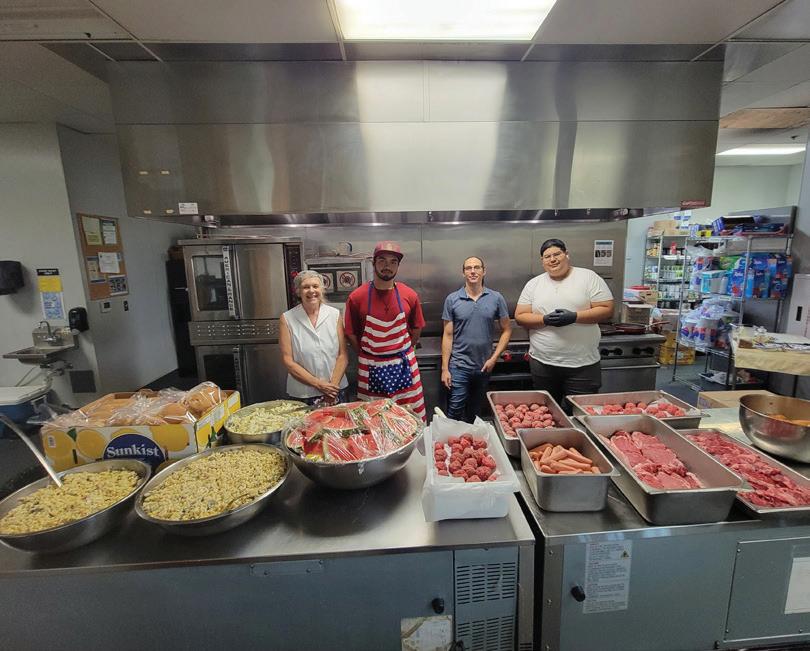

As Butte County prepares for the transition to Pioneer Community Energy, here's what will change, what won't, and what residents should know before deciding whether to remain with PG&E or participate in Pioneer Community Energy.
If you've heard Butte County is transitioning to Pioneer Community Energy and wondered, "What does this actually mean for me?" you're not alone.
The biggest misconception is that PG&E is going away. It isn't.
Beginning in October 2027, eligible PG&E electric customers in Chico, Oroville, Paradise, and unincorporated Butte County will begin transitioning to Pioneer Community Energy as their default electricity generation provider. Customers will transition as their normal PG&E billing cycle begins after the October launch date, so not everyone will switch on the same day.
Under California's Community Choice Aggregation (CCA) program, eligible customers are automatically enrolled unless they choose to opt out. Before your account transitions, Pioneer Community Energy will mail several notices explaining the change, your electricity options, how your bill may be affected, and how to remain with PG&E if
that is your preference. The best advice?
Read those notices before making your decision.
It starts with understanding your bill
Although you receive one bill from PG&E, it is made up of three basic parts:
Generation: the electricity you purchase. Transmission and Distribution: the cost of delivering that electricity through PG&E's electrical system.
State-required charges: non-bypassable charges and the Power Charge Indifference Adjustment (PCIA).
Only the generation portion changes if you switch to Pioneer. You'll still pay PG&E to deliver electricity to your home, maintain the electrical grid, restore outages, and send your monthly bill. State-required charges also remain.
If your current bill includes the cost of the electricity you buy, the cost to deliver it, and state-required charges, switching to Pioneer changes only the cost of the electricity itself.
Pioneer Community Energy
Pioneer purchases electricity on behalf of participating customers while PG&E continues delivering it through the same electrical system. Pioneer has historically offered generation rates that
are competitive with—and often lower than—PG&E's generation rates. However, because generation is only one part of your electric bill, a lower generation rate does not mean your total electric bill will decrease by the same percentage.
Pioneer also offers a standard service with a higher renewable content than PG&E's standard service, along with an optional 100% renewable electricity plan for customers willing to pay more for that option.
Customers who prefer to keep all of their electric service with PG&E may opt out of Pioneer and remain bundled PG&E customers. PG&E will continue purchasing your electricity, delivering it, maintaining the electrical system, restoring outages, and providing customer service.
If your solar system generates nearly all of the electricity your household uses over a year, the financial difference between Pioneer and PG&E may be relatively small because you're purchasing very little electricity from the grid. If you still purchase significant electricity from the grid, comparing generation rates becomes more important.
Customers who consistently generate more electricity than they use should also compare each provider's Net Surplus Compensation (NSC) rate. Pioneer currently offers a slightly higher NSC rate than PG&E, although for many homeowners, the annual dollar difference is modest.
PG&E isn't going away. No matter which option you choose, PG&E will continue maintaining the electrical grid, repairing outages, reading your meter, delivering electricity to your home, and sending your monthly bill.
The decision comes down to who supplies your electricity, your household's energy use, whether you have solar, and how important renewable energy options are to you. Review the information Pioneer sends before making your decision so you understand how the transition applies to your household.

In a previous article, I discussed the gaps left open when we equate the annual physical exam with comprehensive prevention, yielding confident reassurance that “all is good.” The problem was never that the yearly visit is wrong; rather, there is more to the story. A physical can tell you your blood pressure was 138/86 on a Tuesday in March. It can’t tell you it was 118/74 for a decade and has been climbing for three years. The number matters less than the direction.
That’s the real argument for concierge medicine. Mind you, paying for access doesn’t buy better medicine. It simply buys compounded time, that is, enough visits to see a trend instead of a snapshot, and enough history to know whether “normal” is normal for you. Research suggests that seeing the same physician over the years is linked to better outcomes. What isn’t clear is whether the concierge model actually beats insurance-based primary care. If insurance companies were willing to pay for more time with patients, would patients be healthier? It's likely that time, not the delivery model, is the active ingredient.
Blood pressure and cholesterol are the familiar version of this. Cardiovascular risk builds quietly for decades, and the direction of those numbers tells you more than any one reading. The same thinking applies
well beyond the heart. Hormones drift down slowly over decades, and a single lab value at 50 means little without knowing where you started. A number can sit comfortably inside the “normal range” and still be far below your personal baseline. Tracking hormones over years doesn’t stop aging, and hormone therapy has not been shown to make anyone live longer, whatever slick marketing efforts may imply. However, it can tell you whether what you’re feeling has a real explanation worth treating.
Skin works the same way. Most visible facial aging comes from sun exposure adding up over years. Daily sunscreen and prescription retinoids, used consistently over decades, do more than any procedure performed once the damage has set in. Procedures correct; habits prevent. Both have a place, and patients should be educated about making personal choices accordingly.
Whether you do this through a concierge arrangement, a good primary care relationship, or your own discipline matters less than whether someone is watching the trend line. Health isn’t a series of events. It’s a trajectory.
Nerissa Prieto, MD, MS, is board certified in anesthesiology and fellowship-trained in critical care medicine.



The words of OneRepublic’s “I Lived” could easily be the soundtrack to Cadience Hewett’s story. At just 15 years old, she has discovered what many people spend a lifetime learning: success happens when you are willing to work hard and step outside your comfort zone.
Heading into her junior year at Core Butte, Cadience is a born mentor who embraces every opportunity. Her friends describe her as confident, determined, and thoughtful; someone who lives with a growth mindset and always chooses to live boldly.
Cadience has been cheering since she was six, enjoys wake surfing, slalom skiing, snowmobiling at her family’s cabin, traveling, and spending time with loved ones. She also loves babysitting, especially younger children.
Cadience’s journey with 4-H began when she was just a kindergartner. After watching friends show pigs at the Silver Dollar Fair, she counted down the years until she was old enough to participate herself. By first grade, she joined Shasta 4-H, starting as a Cloverbud before taking on leadership roles and eventually raising her first show pig at age nine.
Cadience currently serves as president of Nord Cana 4-H, a role she treasures because it allows her to encourage younger members and share the knowledge she has gained along the way. Recently elected vice president of Core Butte FFA, she has also excelled in public speaking, advancing to state-level 4-H presentations and FFA impromptu speaking. But to Cadience, leadership is not about a title. “A leader is not represented by a position you hold,” she said. “It’s about doing what you can to help someone else.”
She believes every child can benefit from the confidence, friendships, and life skills 4-H provides, whether they’re raising animals or exploring other projects. “Take on a project that teaches responsibility, a strong work ethic, and determination,” she says. While showing pigs remains her favorite, she’s also enjoyed archery, arts and crafts, cooking club, and public speaking.
She also understands the importance of balance. After realizing she had taken on too much while juggling school, cheer, 4-H, college classes, and a job at Kiddos Play Place, Cadience made the difficult decision to step back and reprioritize.
“I learned that being reliable means being able to give 100% to the things you commit to,” she said.
Her future dreams are just as big as her heart. Cadience hopes to one day become a mother, open a homeschool pod, and create a clothing boutique for teens. One accomplishment she is especially proud of is purchasing her first car and livestock trailer this year— something she worked toward and saved for over several years. She also dreams of buying an RV after graduation and traveling across the United States.
Her advice for kids nervous about trying something new is simple: “Do the hard thing. Do the scary thing. You may love it, or you may not, but you’ll never regret trying.”





Golf Week magazine named The Links at Rolling Hills Casino and Resort as “Best Casino Golf Course” for many reasons. Our unique and scenic linksland course provides a fun challenge for every level of golfer. Don’t have time for a full round of golf? Sharpen your game at our all-natural turf driving range and short game practice facility. Drop by the Golf Shop and meet our friendly pros. Then unwind with a cold drink from our full bar or stay for a delicious lunch overlooking the course. Ready for some “me time?” Then you’re ready for The Links. Call The Links now to book your tee time: 530-528-4600
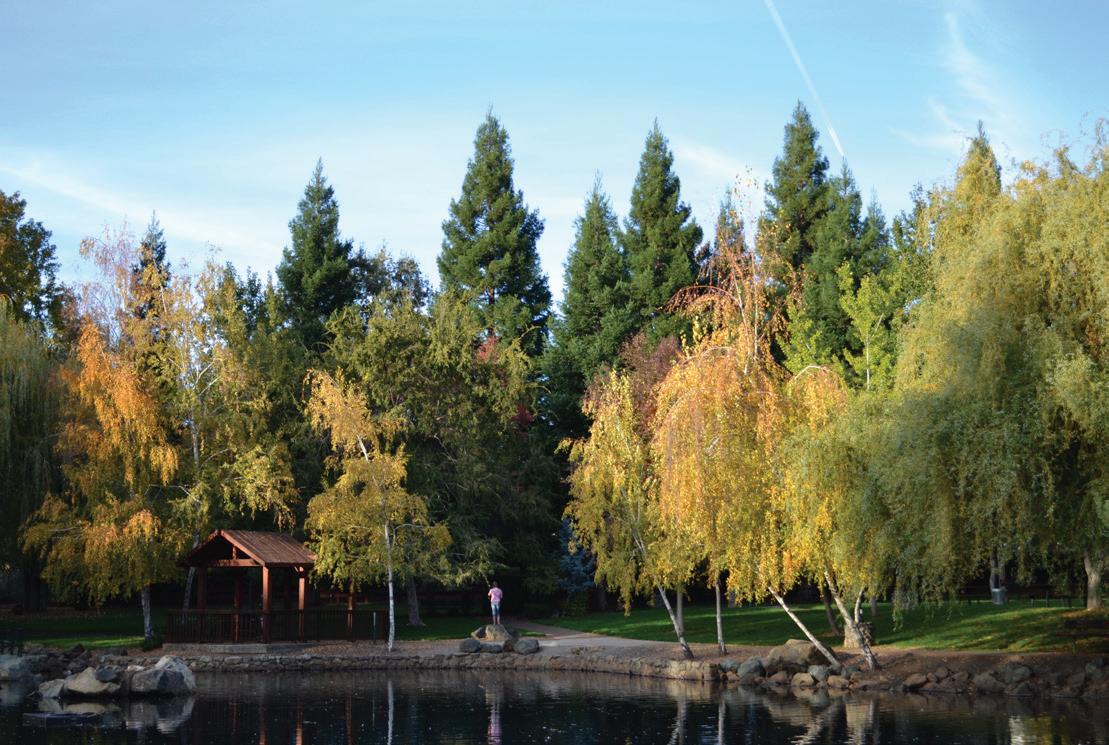
Paradise stands at an important crossroads. As we continue rebuilding our community, we have a once-ina-generation opportunity to invest in infrastructure that not only solves today's challenges but also creates a stronger, more resilient future. Rather than constructing a conventional gravity sewer system, Paradise should modify its plans to incorporate a Septic Tank Effluent Pump (STEP) collection system, a local Membrane Bioreactor (MBR) treatment facility, and a purple pipe network to reuse recycled water where it provides the greatest benefit.
Our community is unlike most others. Paradise is built across steep terrain with varying elevations, making traditional gravity sewers more expensive and disruptive to construct. A STEP system is uniquely suited to these conditions. By keeping solids in individual septic tanks and conveying only liquid effluent, it requires smaller pipes, shallower trenches, fewer lift stations, and greater
flexibility during construction. The result is lower costs, less disruption to residents and businesses, and infrastructure that can expand as our community grows.
Pairing a STEP system with a local MBR treatment plant creates even greater value. MBR technology produces exceptionally high-quality recycled water that can be distributed through a purple pipe system to irrigate parks, streetscapes, public landscaping, and future commercial developments. Instead of treating wastewater as something to dispose of, Paradise can transform it into a valuable local resource that conserves drinking water, improves drought resilience, and supports attractive public spaces.
Downtown Paradise is the logical place to begin. It represents the highest concentration of potential commercial activity, including restaurants, lodging, retail, public facilities, and future mixeduse development. Reliable wastewater
service would remove one of the greatest barriers to investment while creating the infrastructure needed to support new businesses and expand existing ones. The proximity of parks, civic spaces, and landscaped corridors also provides immediate opportunities to put recycled water to beneficial use.
Paradise is no longer a community that settles for simply doing what has always been done. We rebuild with purpose. We innovate when it makes sense. And we invest with future generations in mind. A phased STEP system with local MBR treatment and purple pipe reuse gives us the opportunity to do exactly that— building infrastructure that serves today's residents while creating the foundation for tomorrow's prosperity. The decisions we make today will shape Paradise for generations. Let's ensure they reflect the vision, stewardship, and innovation our community deserves.

I started my day by taking a walk through our kennels at Butte Humane Society. I stopped along the pathways to say hello to each dog, calling them by their shelter name and wondering what name their forever home will gift them. I popped into one of our cat rooms on the way back to my desk for a few nuzzles from our current resident big boy, a longhaired white-and-brown tabby named Mystery. As I rounded the corner to my office, a flash of black—our office cat, Clementine—caught my eye as she hopped up onto our reception desk demanding a head pat, collecting her toll for my walking across the lobby.
These walks are a ritual that grounds me, but lately they also bring a familiar weight. As a limited-admission shelter, our mission is built on a promise: every animal that enters our care receives the time, medical attention, and love they need to find a forever home. But that promise is bound by an alarmingly common and unchanging reality—we can only save the lives we have the physical space to hold. When our kennels are full, our ability to
rescue the next dog or cat in need hits a hard stop.
This isn’t a problem specific to Butte Humane Society, Chico, Butte County, or even California—these realities ripple through shelters and rescues across the United States every day. This issue has become our new normal because, after six years, we know it isn’t going to change. It’s why I spend much of my time looking for opportunities for our shelter to change, because these puzzles, once solved, open the door for animals in need. The missing piece I keep coming back to is the lifesaving impact of fostering.
Kennel space is finite, and expanding an animal shelter's reach isn’t as simple as adding more kennel space. Extra kennels require additional staff to meet the needs of all the animals who will occupy them: cleaning, feeding, exercise, socialization, and medical care. For a nonprofit shelter like ours, those things also mean finding additional funding to make it all happen while keeping the organization afloat on an already tight budget. In the simplest
terms, it's a battle we aren’t going to win in the current economy.
Fostering flips the script here because it solves the two largest cost hurdles facing animal shelters that want to expand: space and time. Foster homes become the housing space; foster caregivers' time replaces the need for an animal shelter to hire additional staff; and now the shelter just has to provide supplies and necessary medical care, creating a scenario that is more affordable and viable than any other expansion option.
Beyond the budgetary relief this “outsourcing” provides to shelters like ours that are absolutely tapped out financially, arguably the most important aspect of fostering is the reprieve it provides for these gentle souls who find themselves in a kennel at an animal shelter. Fosters provide a calm sanctuary that is nearly impossible to replicate at the shelter, not because we lack modern accommodations or stringent cleaning protocols or because the love and dedication of our staff and volunteers

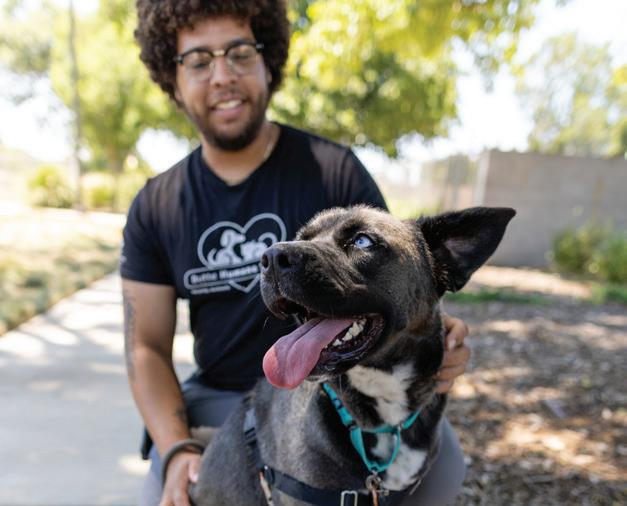

are less abundant, but because shelter environments are busy, often crowded, filled with new noises and a variety of different people day to day. When a dog or cat moves from the hustle and bustle of the shelter into a loving foster home, we often see their personality bloom. Fosters allow these cherished shelter pets an opportunity to experience the world outside the shelter and explore life in a home. They facilitate activities that expand our knowledge of the pet’s curiosity, activity levels, familiarity, and demeanor.
The one thing I often hear regarding fostering is, “I couldn’t foster—I’d get too attached!” To that, I’d say: What if this one selfless act that breaks your heart actually saves lives? The pluralization there isn’t an error. In a breakdown of foster scenarios we see every day, the act of fostering impacts more than just one animal.
Let’s use our current shelter dog, Carlie, as an example. Carlie is an adorable young blue pit bull mix with a white chest and paws that look like they were barely dipped in white. She came to us as a transfer from another local shelter that needed to create space in their kennels for incoming strays. She is friendly to dogs and people alike and was fortunate enough to be welcomed in by a foster family. This foster family has now become Carlie’s personal PR firm, posting updates and photos of her on local forums and expanding Butte Humane Society’s efforts to find her a home.
Because Carlie had the opportunity to leave her kennel, we welcomed Sandy, a three-legged lovebug from another local shelter, which also needed to make space for incoming strays. Because BHS had a foster willing to take in an animal, we helped two local shelters open at least one kennel each. Carlie’s move into a foster home made room for Sandy and helped save her life. If foster families keep creating kennel availability, this ripple effect can continue as long as our doors are open, saving the lives of thousands of dogs and cats who had no choice about ending up in a shelter in the first place.
Fostering is flexible. It can be a night, a weekend, a season, or a consistent act of welcoming one animal after another into your home. Any of these scenarios makes an incredible impact on the animals, the shelter, and you.
Will you join us? Your home, heart, and time make the difference between a life of uncertainty for a shelter cat or dog and the fresh start they so desperately deserve. Learn more about our foster program and sign up today at buttehumane.org/foster
Butte County has an inordinately high number of animals in need of adoption due to a number of factors including wildfires, floods, and irresponsible breeding. Please consider adoption as an option for increasing the love in your own household. These cuties can be adopted by calling the Chico Animal Shelter at (530) 894-5630. You can also visit their website at www.chicoanimalshelter.org



1-year-old spayed female