GETTING TO ‘Y’ Personal Power Community Connections &
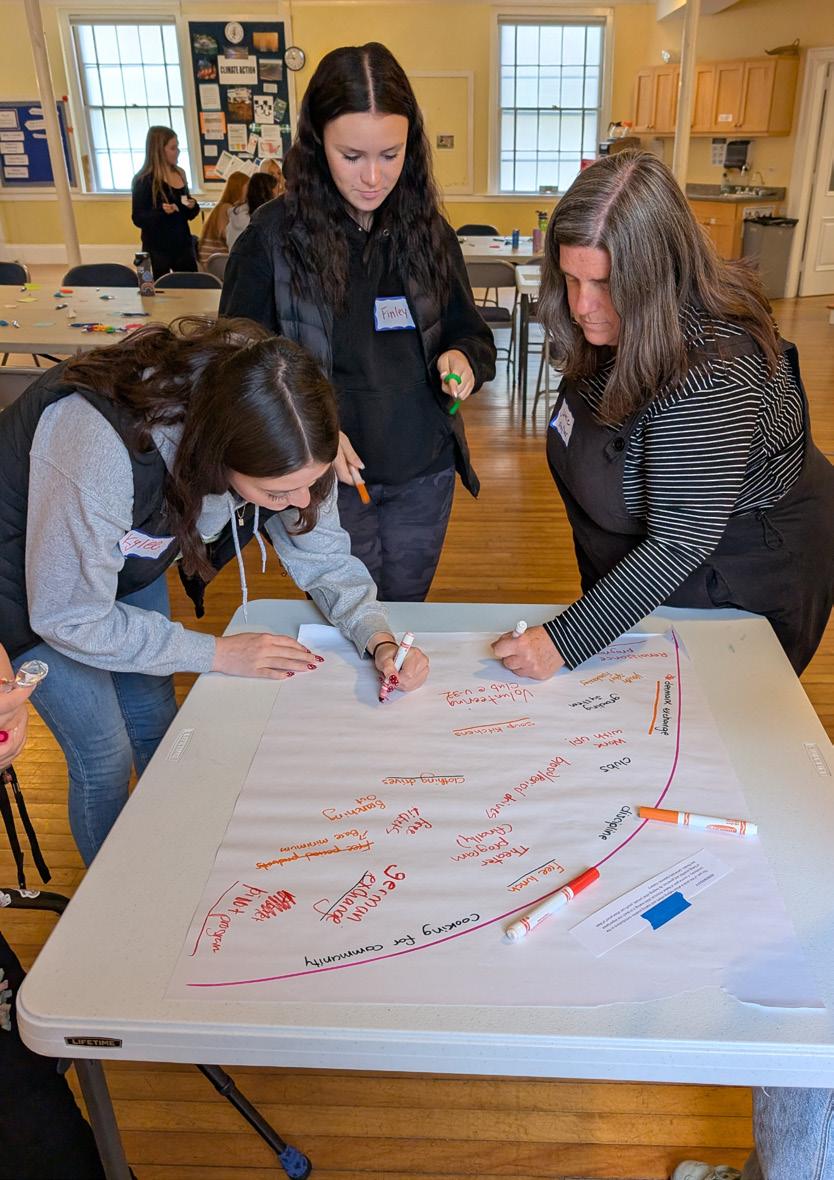
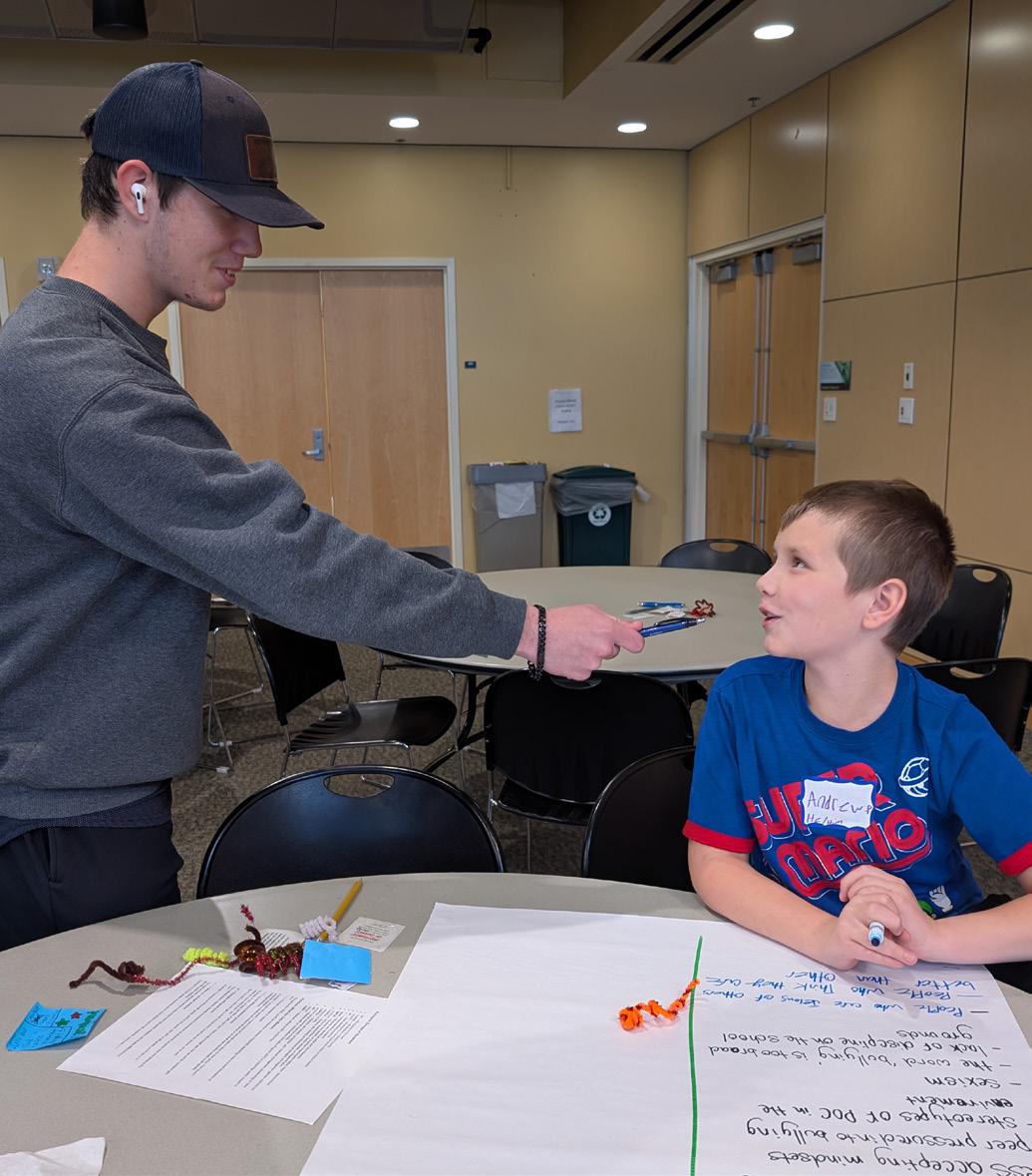
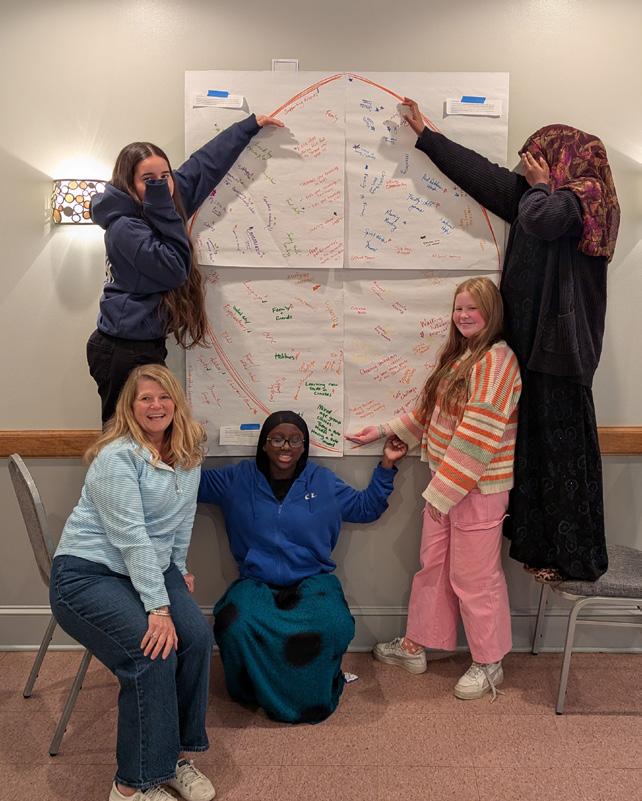
Getting to ‘Y’ (GTY), a program of UP for Learning, began in Vermont schools in 2008 as a collaboration between UP, the Vermont Agency of Education (AOE), and the Vermont Department of Health (VDH). Through GTY, teams of middle and high school students— working alongside adult partners—are trained by UP to lead a cycle of Youth Participatory Action Research (YPAR). They use data from the Centers for Disease Control and Prevention’s Youth Risk Behavior Survey (YRBS), putting that data back into the hands of the young people who provided it and empowering them to make meaning of the results.
Back at their schools, GTY teams convene diverse groups of students to analyze their most recent, local YRBS data. Together, they identify top strengths and concerns, explore potential root causes, and consider possible solutions. They then host Community Dialogue Events, inviting the broader community to engage with their findings and contribute to shaping action plans. From there, teams take meaningful steps to address a key concern, celebrate their progress, and continue the work—watching the ripple effects of their efforts grow.
At UP, we are proud that GTY has been recognized as an evidence-based practice by the Vermont Department of Health and a best practice by the Association of Maternal and Child Health Programs (AMCHP). These designations are a testament not only to GTY’s purpose and design, but also to the dedication of the youth and adult partners who bring it to life—and to the community members who value youth voice.
This year, GTY had the unique opportunity to expand its reach across Vermont. Thanks to funding from four Lead Prevention Organizations— Rutland Regional Medical Center, The Collaborative, United Way Northwest Vermont, and Northeastern Vermont Regional Hospital—UP for Learning was able to bring the GTY program to communities where it had not been active in years. These new youth-adult teams are now engaging deeply with their Youth Risk Behavior Survey (YRBS) data, transforming information into meaningful dialogue and action to strengthen the well-being of their schools and communities.
We are so grateful for the passion, co-learning, and partnership that we enjoyed everywhere we worked on GTY this year. The youth, educators, and prevention partners who bring this program to life are truly inspiring.
The following project summaries were provided by each of the GTY teams.
Richmond, VT
The CHMS Student Leadership Team is made up of approximately seven students, the principal and the librarian. The aim is to build leadership skills, develop a deeper understanding of their individual strengths, and begin identifying goals to positively impact the school community. This year, they decided to adopt parts of the Getting to ‘Y’ process to do that. The Student Leadership Team designed and administered a school climate survey with faculty support. Using the survey findings and insights gathered through leading several full-staff discussions, students identified key opportunities to improve school culture and climate and began charting a path forward. The team’s next steps include advocating for the importance of play throughout the school day—such as recess, welcoming lunch spaces, and increased opportunities for physical activity—as well as expanding student choice in learning and school experiences.
of students agree that “my culture, identities, and ways of being are valued here”
53% of students agree that ”my classmate’s behavior makes me feel safe and respected”
40% of students agree that “teachers adjust their teaching to match my learning style”
18% of students agree that “I have a choice in what I learn”
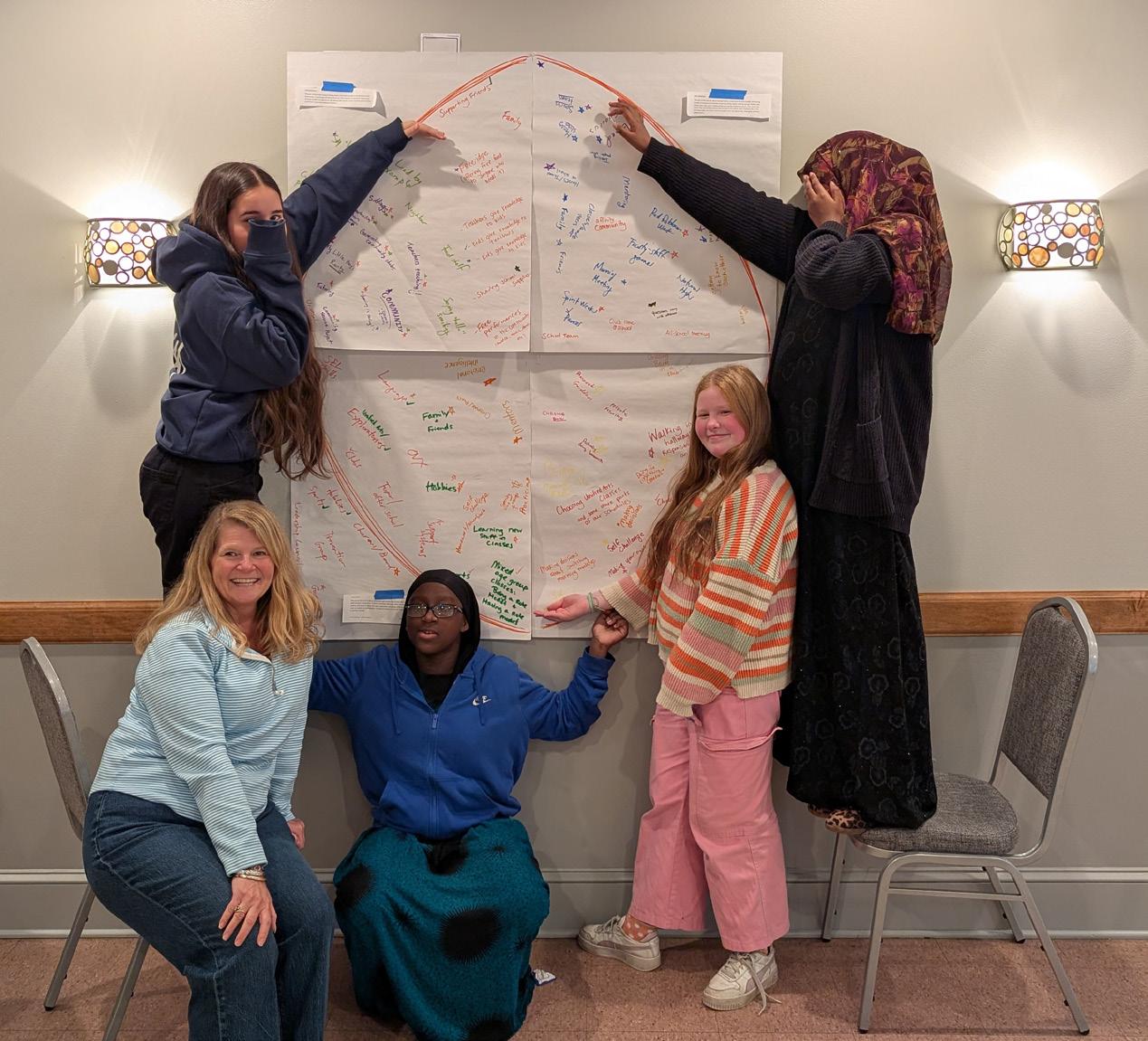
The BeAbove team at Edmunds Middle School continued their Getting to ‘Y’ work into a second year. At their Community Dialogue Event, they hosted a world cafe style dialogue where people could hop from table to table to discuss different topics related to health and wellness, assets, and concerns regarding substance misuse. The students led most of the activities in partnership with the Burlington Partnership for a Healthy Community. Out of the event, the team walked away with multiple project ideas.
Throughout the year, the BeAbove team has pursued a handful of other projects such as “Tie One On” for safety, where they tied red ribbons to all of the staff cars to remind them of the love and care that surrounds them. They also presented during Prevention Day in Montpelier and were recognized by the legislature for their efforts. Other projects included putting together goody bags and delivering them to advisories for self-care week, running self-care activities throughout that same week, hosting their 2nd Annual Natural Highs Showcase, speaking at the Statehouse about vaping and more!
Sponsored by Burlington Partnership for a Healthy Community:
BPHC is Burlington’s substance misuse prevention coalition. We collaborate with a network of partners and public
80% of Burlington middle school students are not concerned/worried about their mental health
20% of Burlington’s middle school students reported that their mental health “was not good,” “always,” or “most of the time”
health experts on initiatives that address the root causes of substance misuse. We take action to help embed wellness into the community culture and create protections to help youth thrive.
93% of Burlington middle school students don’t misuse electronic vapor products
88% of Burlington High School students don’t misuse electronic vapor products
7% of middle school students have tried an electronic vapor product
12% of Burlington High school Students “currently use an electronic vapor product”
Chester, VT
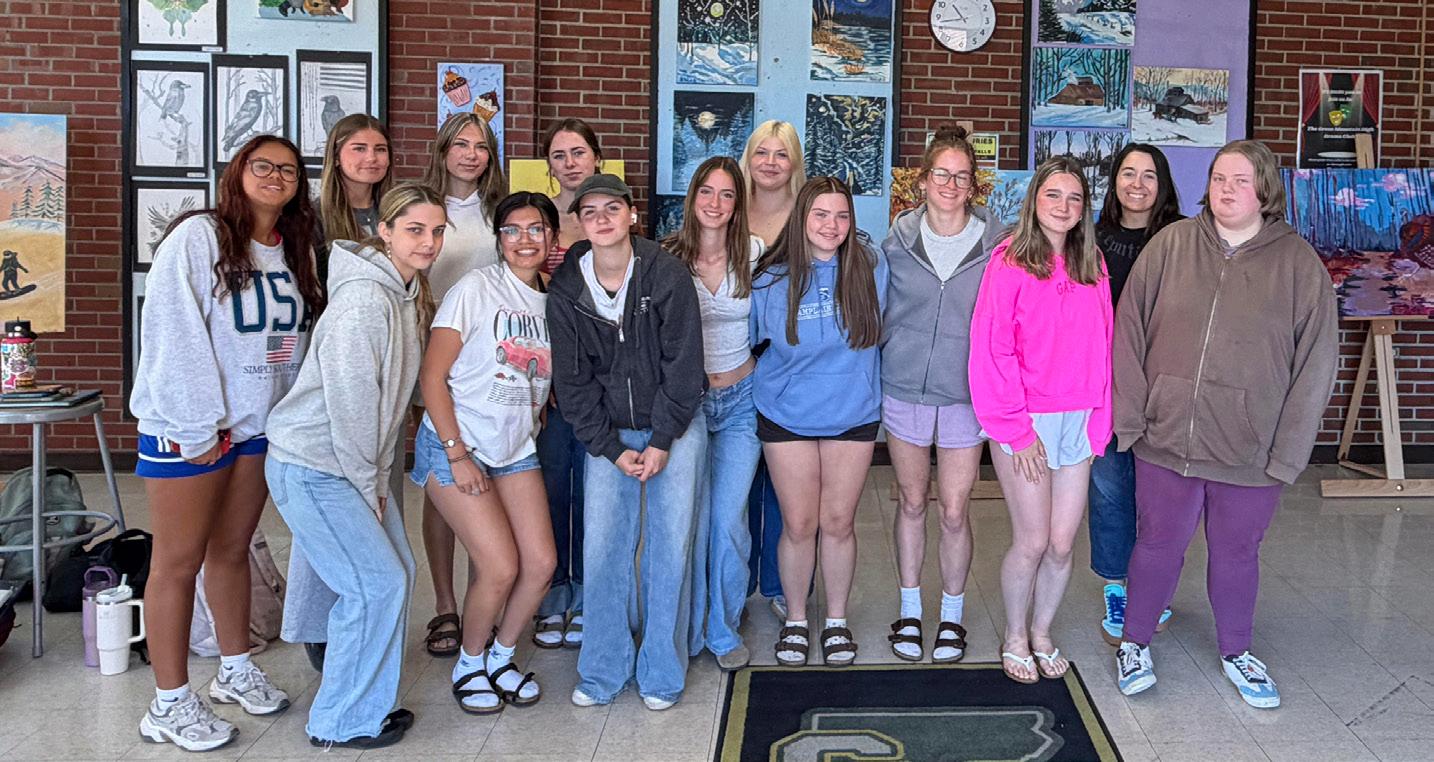
The team at Green Mountain Union High School boldly took on Getting to ‘Y’ for the first time this year! After analyzing the data, the team identified a need for and created a personal care closet that all students can access. It has items like shampoo, conditioner, body wash, deodorant, tampons, toothbrushes, toothpaste, condoms, and more. They also established a student advisory committee that has been collaborating with the principal and a teacher leader to adjust the school schedule to increase student SET time (their advisory period) and optimize opportunities for community building. They are optimistic that this will be piloted in the fall!
46% of the students who attend Green Mountain were physically active for at least 60 minutes per day or more days in the past week
11% of students at Green Mountain had attempted suicide in the past year
45% of the students at Green Mountain who felt sad, angry, hopeless, or anxious said they get the kind of help they need most of the time or always
67% of students at Green Mountain think it is wrong or very wrong for someone their age to use electronic vapor products
10% of students at Green Mountain have experienced unstable housing in the last 30 days
Overwhelming stress
Lack of coping skills
Economic pressure
Lack of community
30% of students at Green Mountain were bullied in the last 30 days, and 21% of students had bullied someone else in the last 30 days — both of which are significantly higher than the state average
Hartford, VT
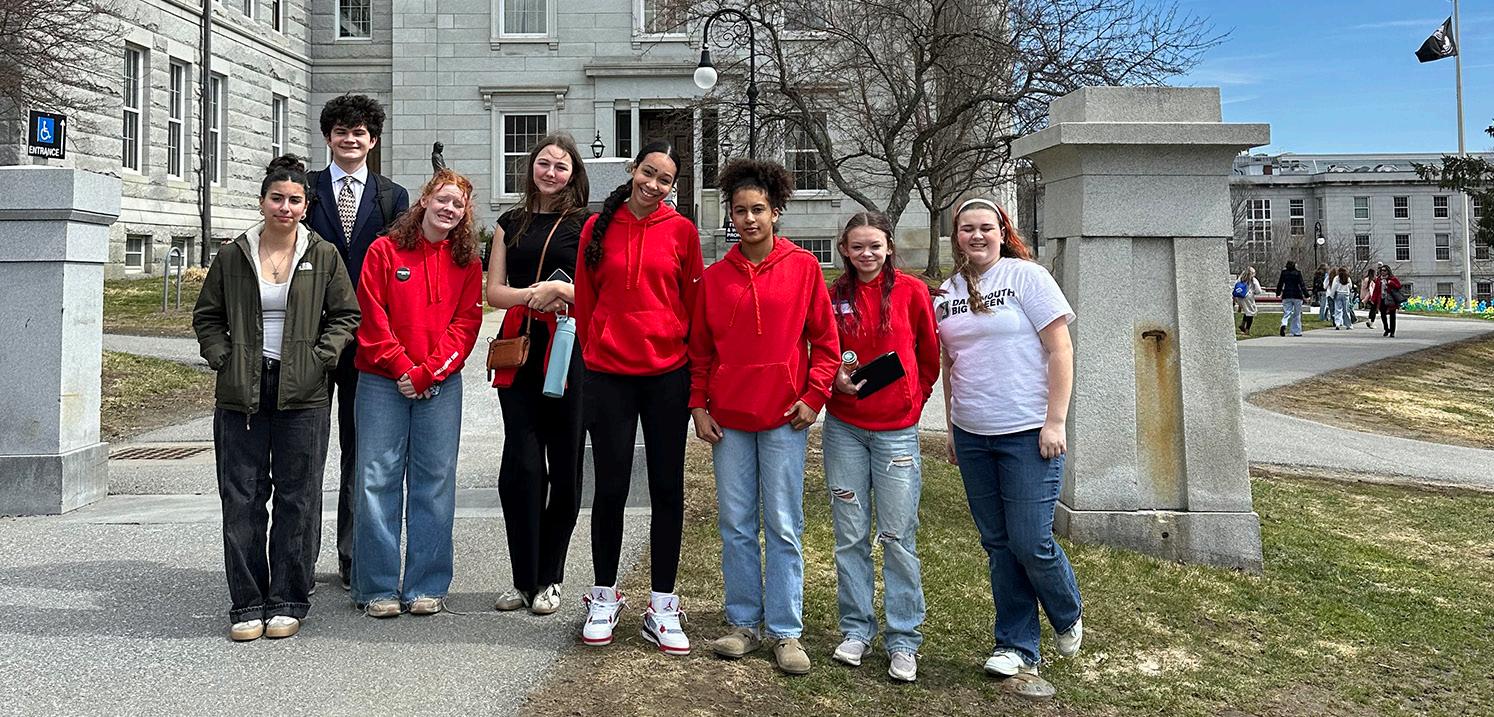
The Hartford High School (HHS) Getting to ‘Y’ team consists of eight highly engaged and motivated 9th graders. The students have diverse interests, backgrounds, and viewpoints which brings a richness to the group. They presented to the Hartford Community Coalition board at their Community Dialogue Night and decided to focus on the concern around vapes, alcohol and marijuana as it most broadly covered substances and students.
The group presented at Hartford Memorial Middle School on prevention and why using substances, especially at an early age, is not healthy and can impact all aspects of their lives. Many team members also traveled to the CADCA conference in February to grow their prevention and leadership skills. Finally, HHS coordinated a Sticker Shock campaign during Alcohol Awareness Month in April, placing warning stickers near alcoholic products at three local retailers ahead of prom and graduation season. The campaign aimed to raise awareness about the risks and legal consequences of providing alcohol to underage youth.
The amount of Hartford students trying alcohol before age 13 is lower than the state average
More than half of HHS students feel it is easy or very easy to get vapes (59%), alcohol (66%), and marijuana (60%)
Sponsored by the Hartford Community Coalition: A collaborative group of community members designed to support and promote the wellness of individuals and families. Their vision is for Hartford to be a supportive community where people embrace and achieve their personal, professional, emotional, and physical well-being. The coalition acts to reduce the stigma and impact of alcohol and drug use, food insecurity and mental health in support of the development of a healthy, safe, and resilient Hartford.
Fewer than one third of students said their mental health wasn’t good in the last 30 days
65% of HHS seniors have ever tried alcohol
ROOT CAUSES Scared to get help
Packaging & environment
Need more youth voices
Friends, peers and family pressure and/or indifference
The amount of LGBTQ+ students who feel like they matter in their community is higher than the state average
Only 44% of girls feel there are clear rules and strong consequences at HHS. 68% of boys feel this way, and only 37% of LGBTQ+ students
Societal norms
Mental health
Bullying
Fear of not being listened to
Hardwick, VT
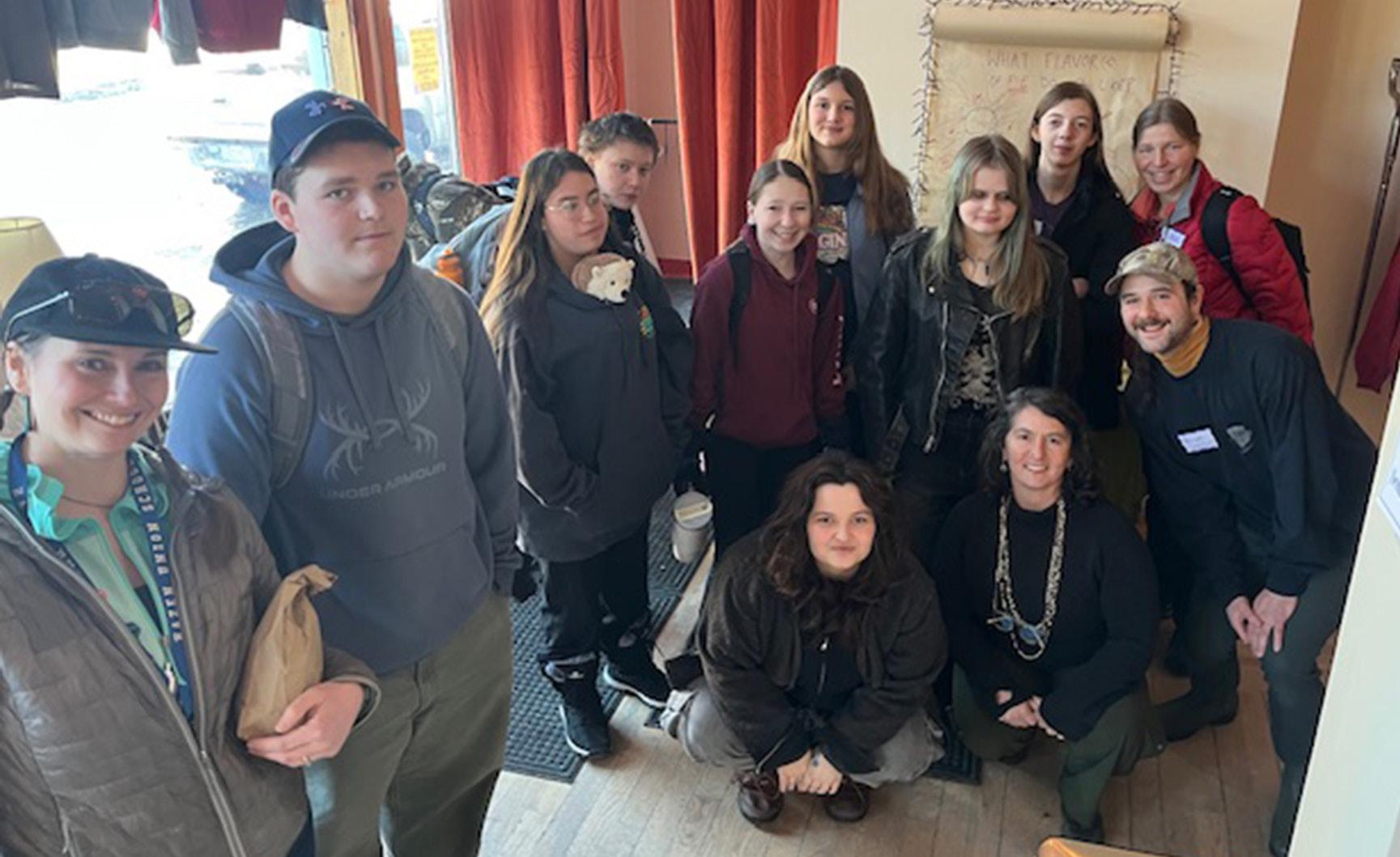
The Hazen Circle Keepers at Hazen Union High School and Middle School participated in a blend of Getting to ‘Y’ and Restorative Practices work. Over the course of 4 retreats, they analyzed both YRBS and their own schoolspecific EduClimber data to determine where they wanted to focus their reformation efforts. They presented their data findings to the school faculty and facilitated an Empathy Mapping Activity about a recent school situation. This year, they laid the groundwork for meaningful change. Next year, they plan to explore implementing justice panels and a peer mediation team to address harm and strengthen relationships within their school community.
Disconnect exists between the administrators and teachers/students Relationships between teachers and students vary in effectiveness and depth There is a need to build a culture where youth feel like they can speak up and have a voice There is not a clear and transparent process for addressing harm or re-entry
The CHOICE group (Choose How Our Influence Changes Everything) at Mt. Anthony Union Middle School (MAUMS), along with their high school counterparts, pursued a plethora of projects for their school this year, including: inviting speakers from UVM and Flavors Hook Kids VT to talk about cannabis education, hosting a community conversation on youth cannabis use, and working with ACT and the Town of Bennington to co-design and launch the Bennington Youth Council. They also delivered a fantastic presentation at Family Night about Healthy Home & School Relationships where they shared student data concerning home life, safety, bullying, substance use, and mental health, and provided suggestions for caregivers to support their child. They already have quite a few ideas in mind for next year’s action projects, like sharing coping skills with peers and distributing “stress boxes!”
Sponsored by ACT Bennington: Alliance for Community Transformations (ACT) is a prevention coalition focused on empowering youth to make healthy choices through substance
>75% of youth report that their parents/ guardians think it is very wrong for youth to use substances such as vapes, cannabis, alcohol, and other drugs
42%
female-identifying students felt sad or hopeless, past year (compared to 20% male)
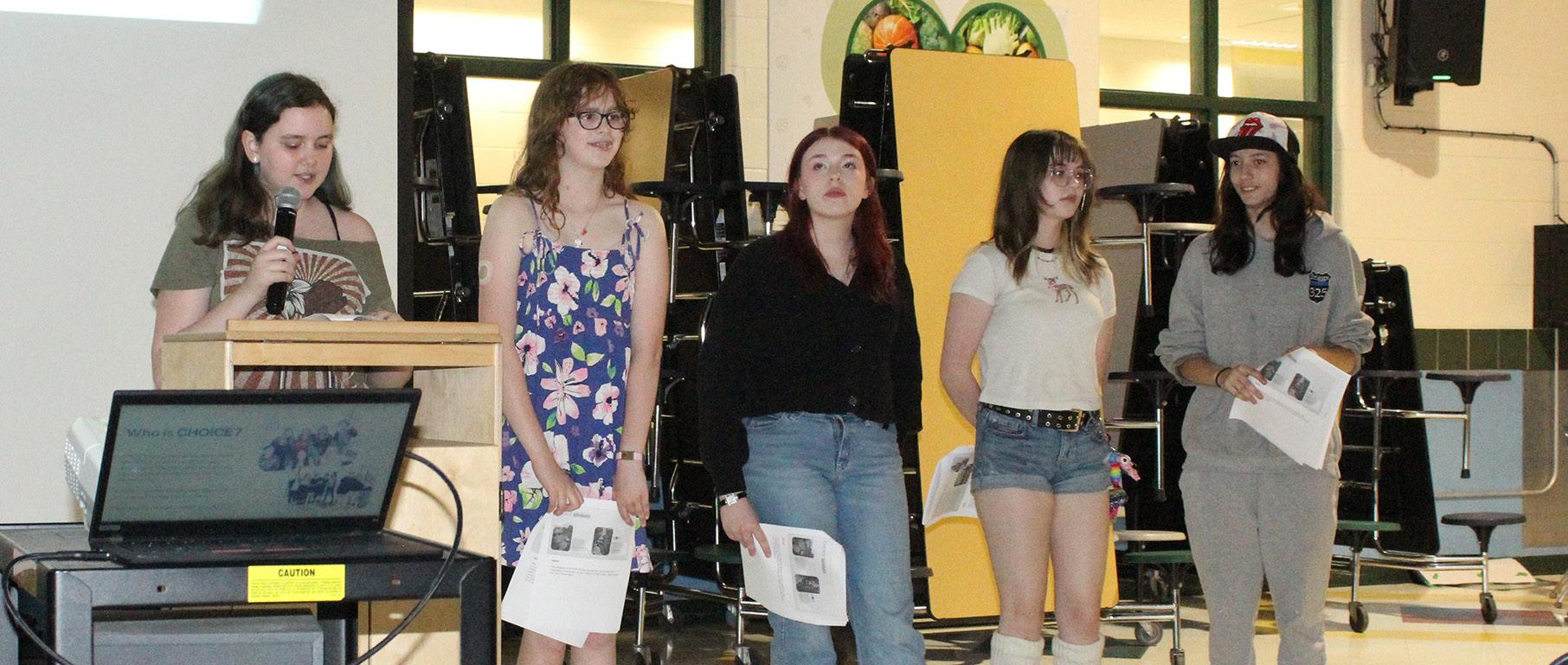
Mount Anthony team members presenting at Family Night
use prevention education, leadership development, and health equity initiatives in collaboration with communities to prevent youth substance use and promote greater wellness long-term health in the greater Bennington area.
Sponsored by Vermont Project AWARE: The Vermont Department of Mental Health was awarded a 5-year grant from the Substance Abuse and Mental Health Services Administration (SAMHSA) for Project AWARE.
92% of students feel there are adults at home they can go to for help
91% of students always have enough food at home to eat
36%
female-identifying students and 47% LGBTQ+ have ever done something to purposely hurt themselves without wanting to die (compared to 15% male, 17% Hetersexual/Cisgender)
ROOT CAUSES Poor mental health/stress and trauma (particularly family issues)
Peer pressure
13% of MAUMS students currently vape, and 22% female students currently use a vape (comp. 6% male)
Normalization of substance use/ease of access to substances
Systemic challenges
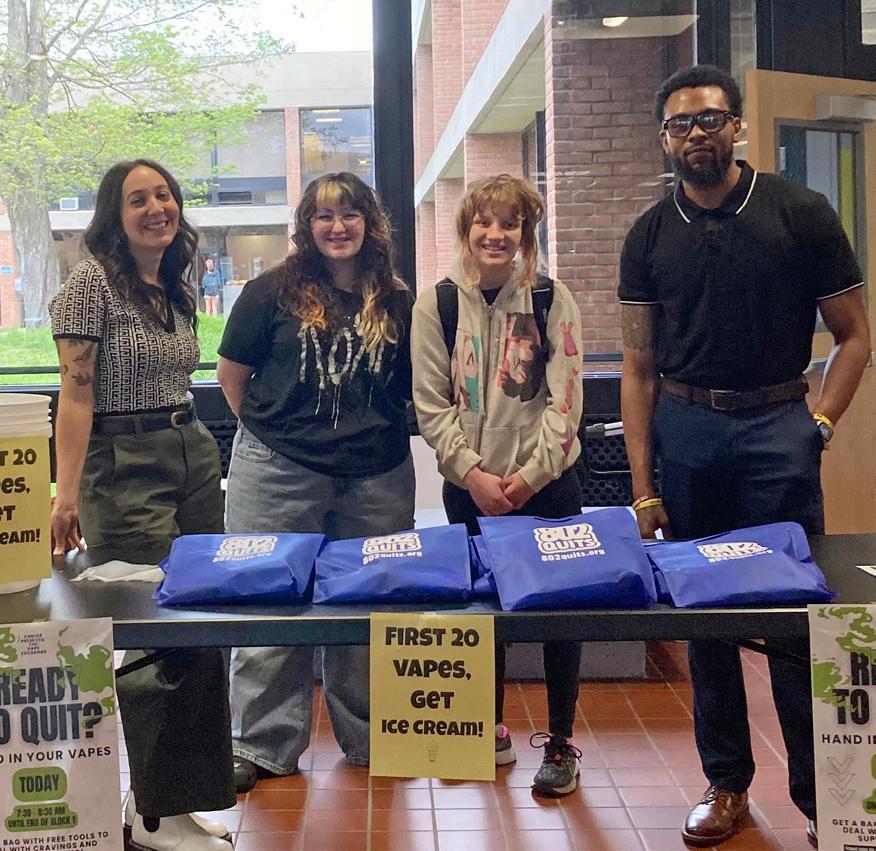
In addition to their collaboration with the middle school on hosting cannabis prevention events and launching the Bennington Youth Council, the Mt. Anthony Union High School (MAUHS) CHOICE group has been working on goals of their own. In April, the MAUHS CHOICE group hosted a successful “Vape Exchange” event! This prevention event was for students who want to quit their nicotine addiction; in exchange for handing in a vape, they received judgment-free support, resources, tools to deal with cravings, and some sweet motivation. The vapes were safely collected by staff and will go to public health researchers studying vaping trends in Vermont schools. Students who did not have a vape with them, but indicated they are currently trying to quit, also received resources and tools.
Up next, the MAUHS CHOICE members are planning a peer-driven Skill-Share Event for the fall that is designed to strengthen connections to community resources while empowering students through an “each one, teach one” approach. This college-fair-style event will feature tables hosted by local community organization volunteers alongside tables led by other students and school staff volunteers where unique skills are taught at each one. This event will foster a stigma-free, welcoming environment where students can learn practical skills while deepening relationships between the school and the broader community care network.
Sponsored by ACT Bennington and Vermont Project AWARE: See page 8 for descriptions.
93% of HS students have hobbies they enjoy
66% of HS students say it would be sort of easy or very easy for them to get cannabis (marijuana/weed)
62% of HS students reported there is at least one teacher or adult they can talk to if they have a problem
21% of HS students report that they don’t always have access to basic needs (soap, period products, clean clothes)
ROOT CAUSES Poor mental health/stress and trauma (particularly family issues)
Peer pressure
41% of students strongly agree or agree that in their community they feel they matter to people
66% of female-identifying students ever used alcohol and 29% report current use of alcohol (compared to 42% and 20% for male-identifying students)
Normalization of substance use/ease of access to substances
Systemic challenges
Bradford, VT
The Oxbow High School youth-adult team participated in their first year of Getting to ‘Y’! The team hosted a successful Data Analysis Event where they ran the Circle of Courage activity, and learned about a lot of current resources to aid their work including multiple school clubs and activities, VSAC services and supports, a teen center known as the HUB, and more. They also had time to analyze the data and come up with a few different action ideas, including an acceptance campaign, stricter and more consistent consequences for substance use at school, education at school, hosting support groups and after-school activities. The team brought their findings to a Community Dialogue Event in April where they got more input on how to hone in and execute their next steps.
74% of students think it’s wrong to vape
40% of students describe themselves as overweight
ROOT CAUSES
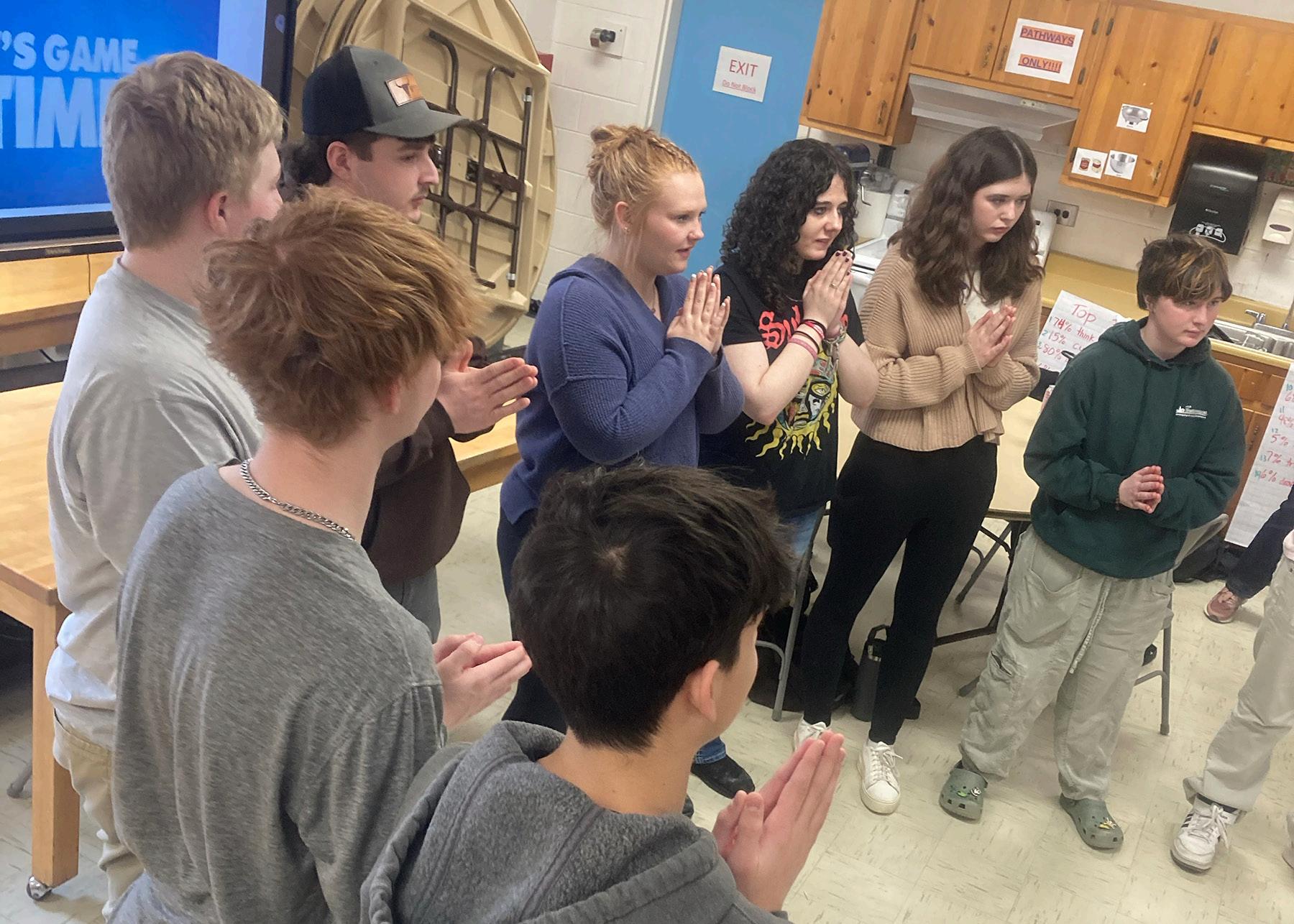
80% of students believe their parents would think it was wrong for them to vape, drink alcohol, or use marijuana (combined data)
59% of students report that it is easy to get vapes and alcohol (combined data)
Body image/social media
Peer pressure
Older people are providing vapes and alcohol
68% of students report using birth control before sex
23% of students report hurting themselves without wanting to die
Stores not checking ID
Bullying
Lack of coping skills
Insufficient support
Shelburne, VT
This year, Shelburne Community School went into Year 2 of Getting to ‘Y’ with the goal of deeper engagement with the data and increasing connection with their community to make more impact from the data. During their Data Analysis Retreat, they identified strengths in school and community culture and well-being. The statistics, however, also reported that individuals who identified as female, BIPOC, and LGBTQ+ did not enjoy the same community benefits.
Based on their findings, Shelburne plans to improve self-respect and self-acceptance through their Skill for Life classes, improve education and awareness of diverse identities, foster meaningful friendships across genders and other differences through different seating arrangements, and take steps towards making the school a safer place for everyone.
92% of CVSD middle schoolers have not bullied anyone in the past 30 days
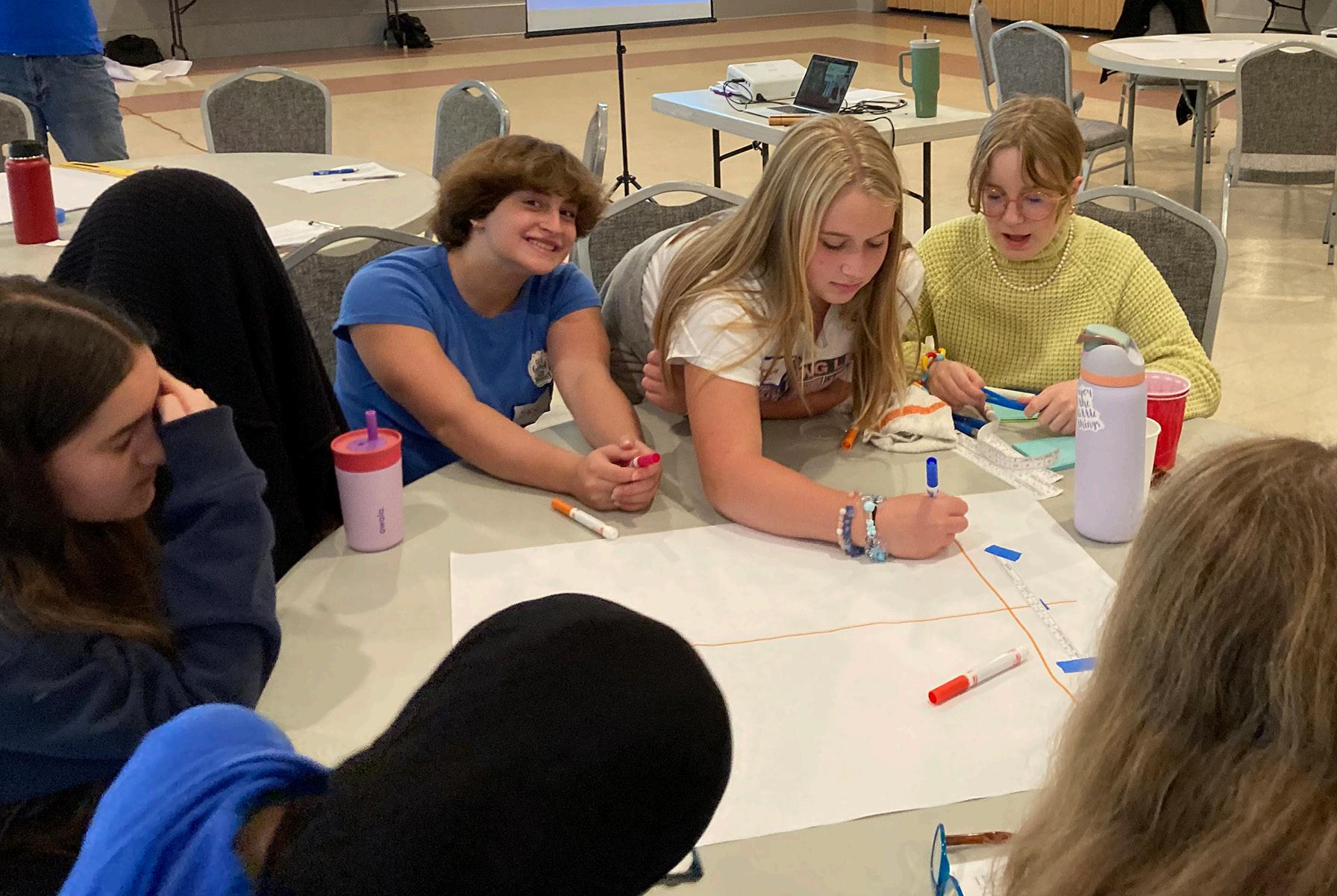
CVSD middle schoolers report generally having more safety and wellbeing than the Vermont average
BIPOC, LGBTQ, female, and neurodivergent students are more negatively impacted by risk factors than their white, non-Hispanic, cisgendered, hetersexual, male peers, and neurotypical peers
Compared to students across Vermont, 14% more CVSD middle schoolers report strongly agree or agree that in their community they feel as if they matter to people.
Female, BIPOC, and LGBTQ CVSD 6th, 7th, and 8th graders find it harder to gain a sense of belonging than their peers
Students not understanding the full impact of bullying
Deep rooted hate, discrimination, and fear
Cycles of harm - “hurt people hurt people”
Societal norms and expectations
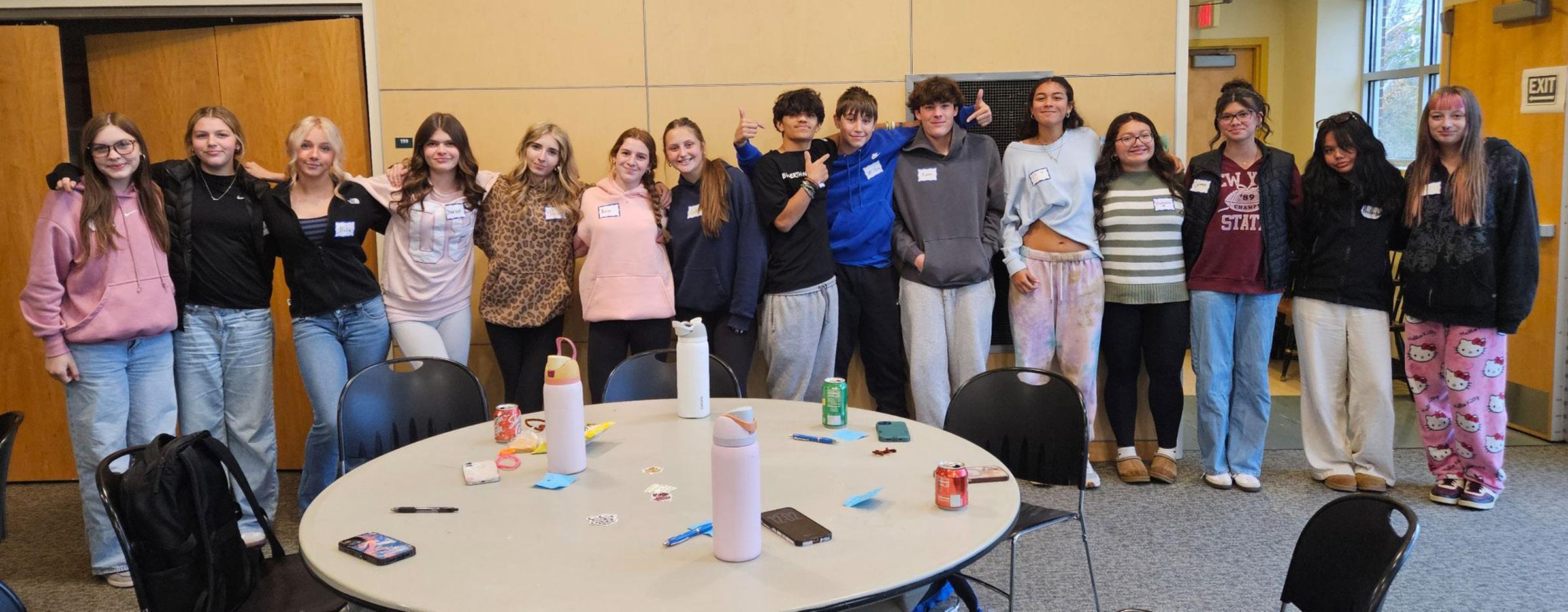
Springfield High School has been pursuing a variety of community projects and partnerships to achieve their goals. They teamed up with Choices Matter for a schoolwide presentation, hosted conversations with local domestic violence organizations, and with others already working on addressing substance use among teens. They are also working within their district with the Wellness team, and members of the GTY team serve on that committee. This
40% of students strongly agree or agree that in their community they feel like they matter to people
year, they focused on identifying strategies and building community partnerships to strengthen school culture and climate. This will set the team up for their eventual goals to spearhead assemblies, initiatives, and discussions to improve student belonging at SHS, school spirit, and overall wellness in the coming years. Next year, the team is looking to involve more students on the team and reach out to their local middle school to increase reach and impact.
16% of students currently smoked cigarettes or cigars or used smokeless tobacco or electronic vapor products
32% of students reported that their mental health was most of the time or always not good, past 30 days
19% of students did not eat breakfast in past week before the survey
14% of students spent 10 or more hours participating afterschool activities during an average school week
Thetford Academy continued their work from last year with extensive action. Many of these events built on momentum from previous years and continued to grow and evolve. One of these projects included multiple events for Suicide Prevention Awareness in September including tabling, a powerful spoken word performance put on by the team for their entire school, and a post-it event, where students are encouraged to answer questions with post-its and their messages are displayed around the school for others to see. Some other projects throughout the year included supportive messaging and events for the holidays, multiple mental health and wellness-focused assemblies, tabling, and some fun items like a self-care bingo competition. Throughout the year, the Thetford team has been deepening their relationship to their community and paving the path for all the change they want to come.
73% of students likely going to a 4-year college (increases by age)
32% of female students reported unwanted sexual behaviors, compared to 13% male students
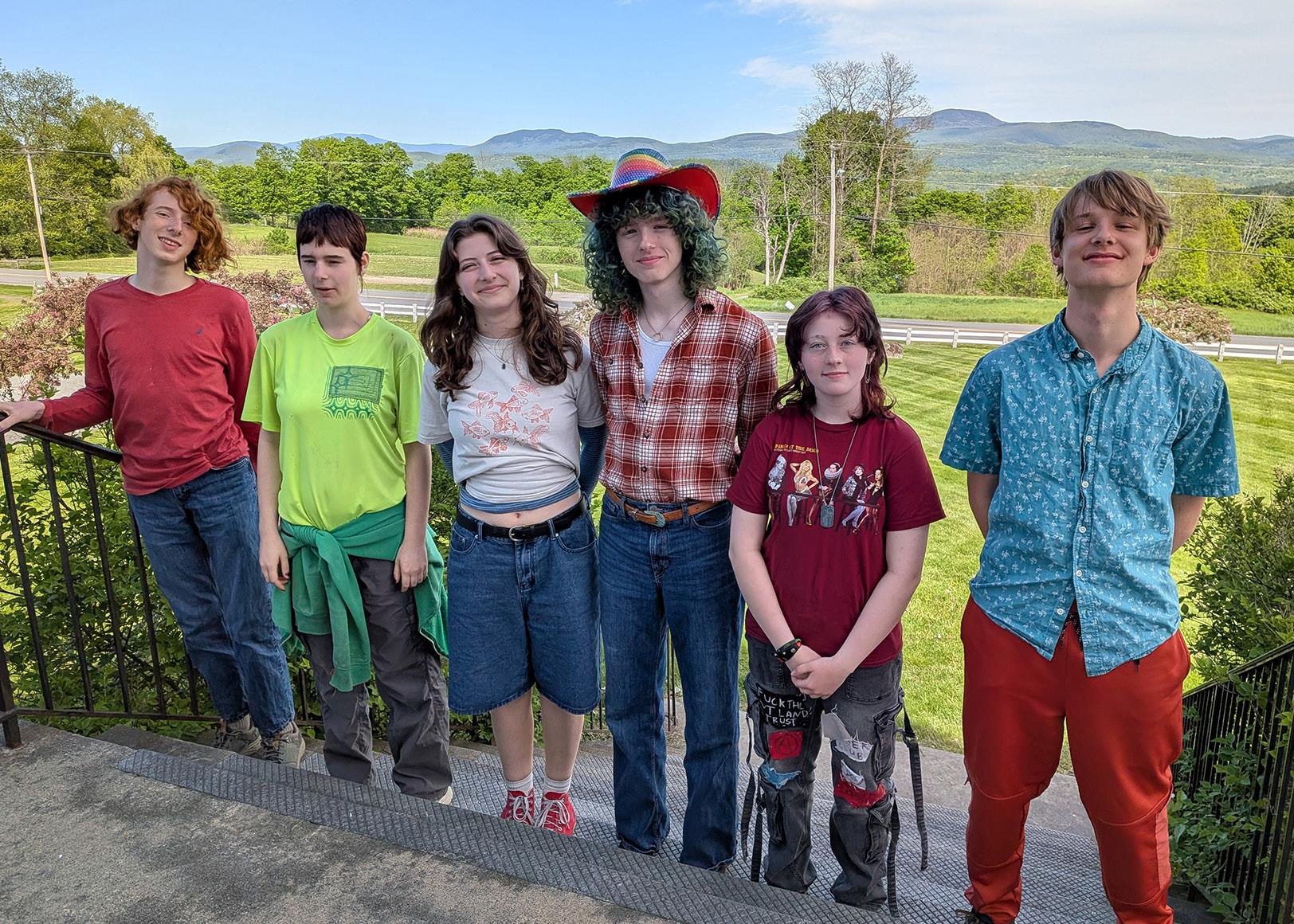
Thetford team members
95% of youth report that their parents/ guardians think it is wrong to vape
Less than 1% of students have ever used heroin/ methamphetamine
38% of female students attempted to lose weight in unhealthy ways compared to 5% male students
Trauma
Social media pressure
Bad coping mechanisms
Mental health issues
2x more female students have ever drank/binge drank than male students
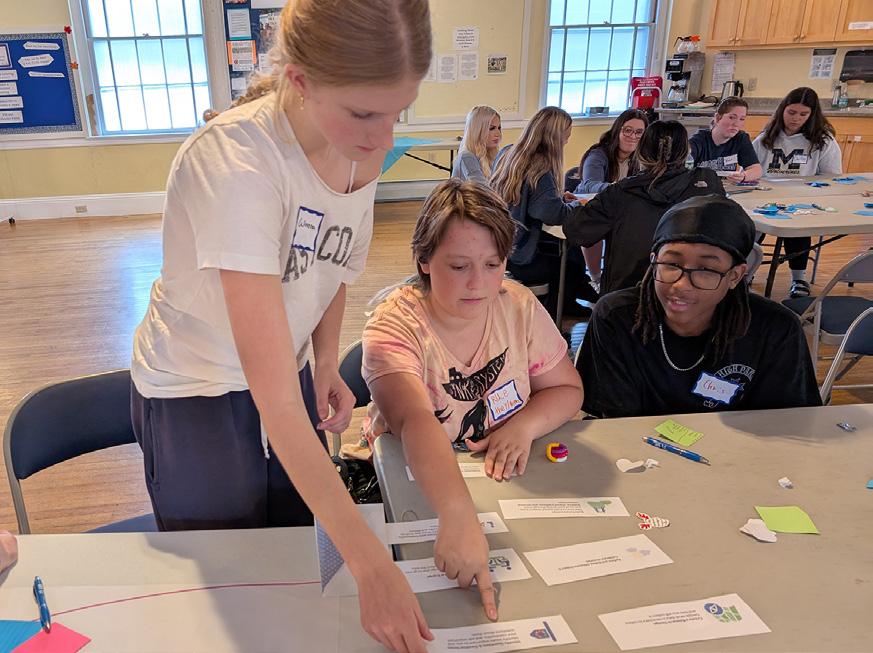
This year, U-32 has integrated the Getting to ‘Y’ program directly into their health class curriculum. With the class split into fall and spring semesters, the fall group laid the foundation by hosting a Data Analysis Retreat and identifying preliminary root causes. The spring group then picked up where they left off, organizing a Community Dialogue
70% reported there is at least one teacher or other adult in their school that they can talk to if they have a problem
61% ate breakfast 5 or more days a week
16% reported someone has ever done sexual things to them that they did not want
Event and developing potential solutions. Due to scheduling and timing constraints, students have not yet been able to begin developing action plans or implementing solutions. However, they plan to form a small action group next year to carry this work forward and see it through.
Right, U-32 team members
77% think it’s wrong or very wrong for someone their age to use electronic vapor products
79%
57% strongly agree or agree that in their community they feel like they matter to people
ate dinner at home with at least one parent or other adult family member on four or more days during the previous week
5% attempted suicide in the past year
Peer pressure
Mental health
Bullying
Stigma about getting help
Social media
15% tried to lose weight or keep from gaining weight by going without eating for 24 or more hours, taking any diet pills, powders, or liquids, vomiting or taking laxatives, smoking cigarettes, or skipping meals
Substance use
Stereotypes
Eating disorders
Lack of knowledge
Vergennes, Vermont
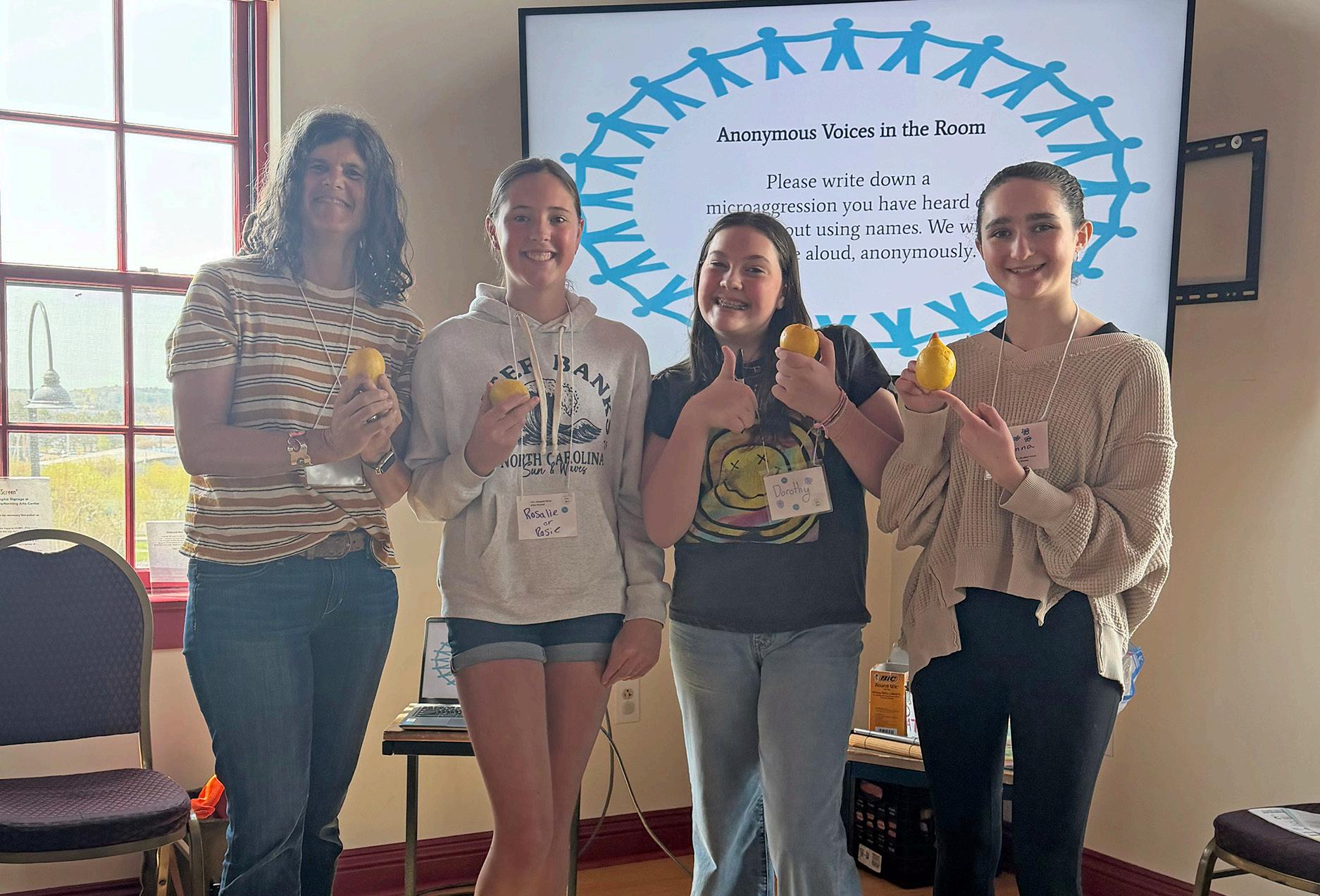
The Vergennes Union Middle School (VUMS) GTY team continued their work from last year by hosting a Community Dialogue Event in the fall. They invited parents/caregivers, administration and teachers to look into the Youth Risk Behavior Survey data they analyzed and challenged the attendee’s beliefs about everything going on at their school, from vaping to racism and sexism. Since then, the VUMS GTY team has looked back at those discussions and their data to create activities for morning meetings at their school. These meetings explore racism, sexism and microaggressions that happen in their community and are led by those same students dedicated to making a difference around them. Their team presented about these activities at UP for Learning’s Power² Summit in a very highly-rated workshop!
Sponsored by United Way
Addison County: United Way of Addison County is committed to mobilizing the compassion and generosity of individuals and organizations to improve lives and strengthen Addison County.
94% of students think it is wrong or very wrong for someone their age to use vape products
3% of students have ever tried to kill themselves
means investing in programs and services that fall within three foundations: health, education and financial stability.
98% of students believe that their parents or guardians feel it would be wrong or very wrong for them to use marijuana
9% of students report someone has ever done sexual things to them that they did not want
74% of students have at least one teacher or other adult in their school that they can talk to if they have a problem
6% of students ever saw someone get physically attacked, beaten, stabbed, or shot in their neighborhood
Students not feeling connected or belonging to the middle school
Struggles with feeling comfortable to communicate boundaries
Challenges with peers thinking that joking about racism, sexism, homophobia, etc. is actually funny, when it’s not
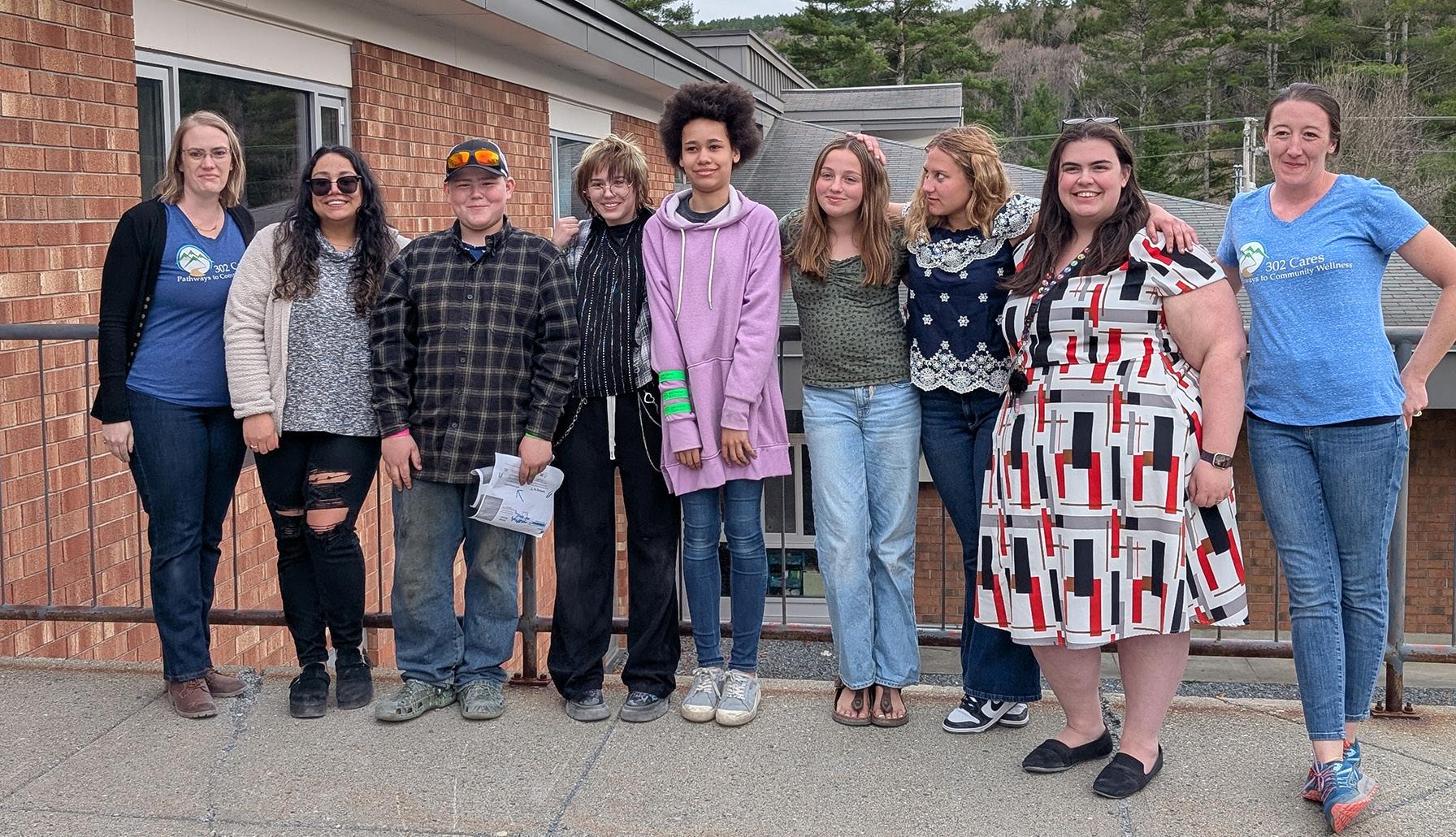
The Waits River Valley School team brought together a group of 22 students from all middle school grade levels to participate in their first year of Getting to ‘Y’! In partnership with 302 Cares, the group hosted a successful Community Dialogue Event where members of the community were invited to enjoy delicious hot dogs and hamburgers while offering their perspectives on root causes and solutions the students pre-identified. The team will be putting together coping kits and distributing them through the counseling and nurse’s offices.
Students get help when needed most of the time
22% of students report hurting themselves without wanting to die
Students strongly agree that they matter
Students think it is wrong for someone their age to use vapor products
8% of students attempted suicide in the past year
11% of students report someone has ever done sexual things to them that they did not want
This year, a diverse team of 12–18 students from across grade levels and school clubs came together to lead Windsor High School’s participation in the Getting to ‘Y’ program. In January, they sent their own survey out to all students asking questions similar to the YRBS. Once the data was collected, they hosted a data walk to identify major themes that they could improve on. The team also presented the data from the survey to faculty members from across the SU spanning all grade levels, who gave very positive feedback and took interest in the data points they shared. From there, they have been focusing work on one area of concern: an overall lack of respect for the teachers and the physical building itself. They look forward to making change in this area soon!
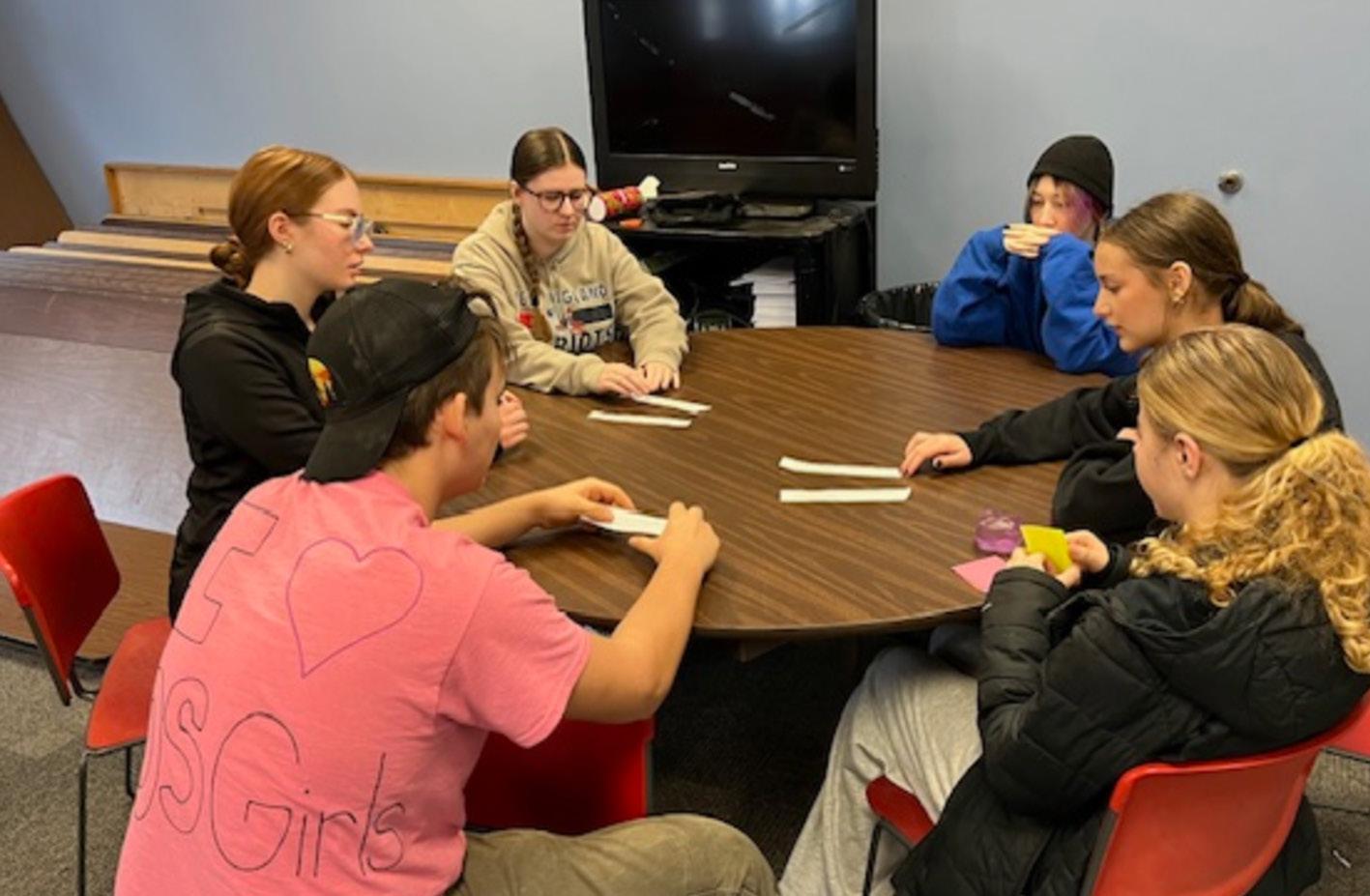
Supportive staff
College & career readiness
Empathy towards each other and the school
Lack of respect for faculty and physical space
All of our teams are deeply committed to youth voice and equity. While not every team was able to share a summary of their progress, we want to recognize and honor their dedication to building healthier, more connected communities. We are grateful for their participation and the meaningful work they have done throughout the year.
This year, UP for Learning partnered with the Vermont Department of Health, Rutland Regional Medical Center and Stafford Technical Center’s Public Safety Class to meet the evolving needs of schools at this moment. Time and capacity are in high demand, making access to Getting to ‘Y’ challenging for some schools and communities. YRBS Data Seminars are single-touchpoint events that act as “mini” Getting to ‘Y’ trainings brought directly to groups who can use it to further their work. Groups pick out sections of the YRBS dataset that is most relevant to their goals for action, and UP leads them in the data-sorting, root cause analysis, and solutions brainstorming around those sections to build the skills and inspiration necessary to move forward.
The pilot Data Seminar began with the Stafford Technical Center Public Safety class and was co-facilitated by three UP interns. From there, those interns went on to co-facilitate this abbreviated Getting to ‘Y’ in four health classes at Middlebury Union High School, the EPIC program at Rutland Middle School, and the student council at St. Albans Town Education Center. The last Data Seminar of the year will take place at the Vermont Police Academy. To continue to meet the needs of our partners, Data Seminars will return as an option in the upcoming school year.
38% texted while driving, statewide
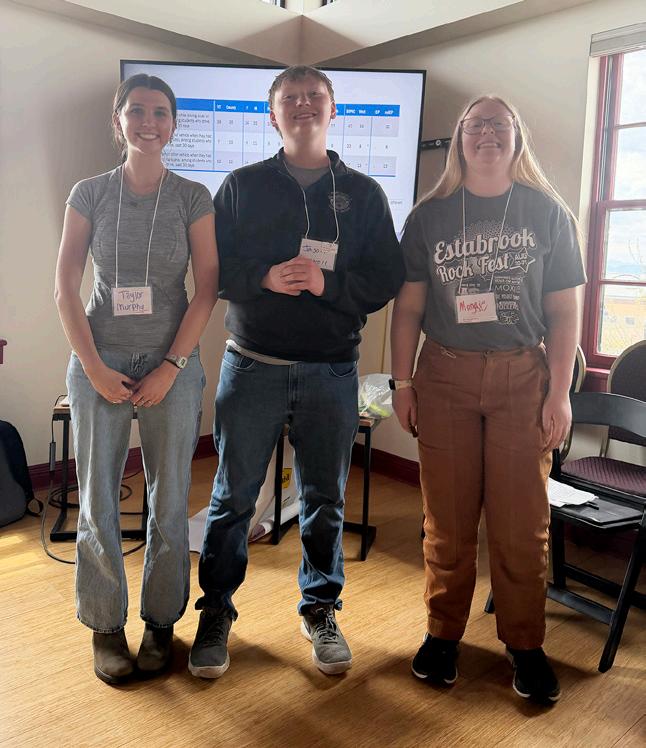
12% drove under the influence of marijuana and 7% drove under the influence of alcohol, statewide
66% in local county say if they wanted to get alcohol, it would be easy
TOP ROOT CAUSES
Low perception of harm around substances
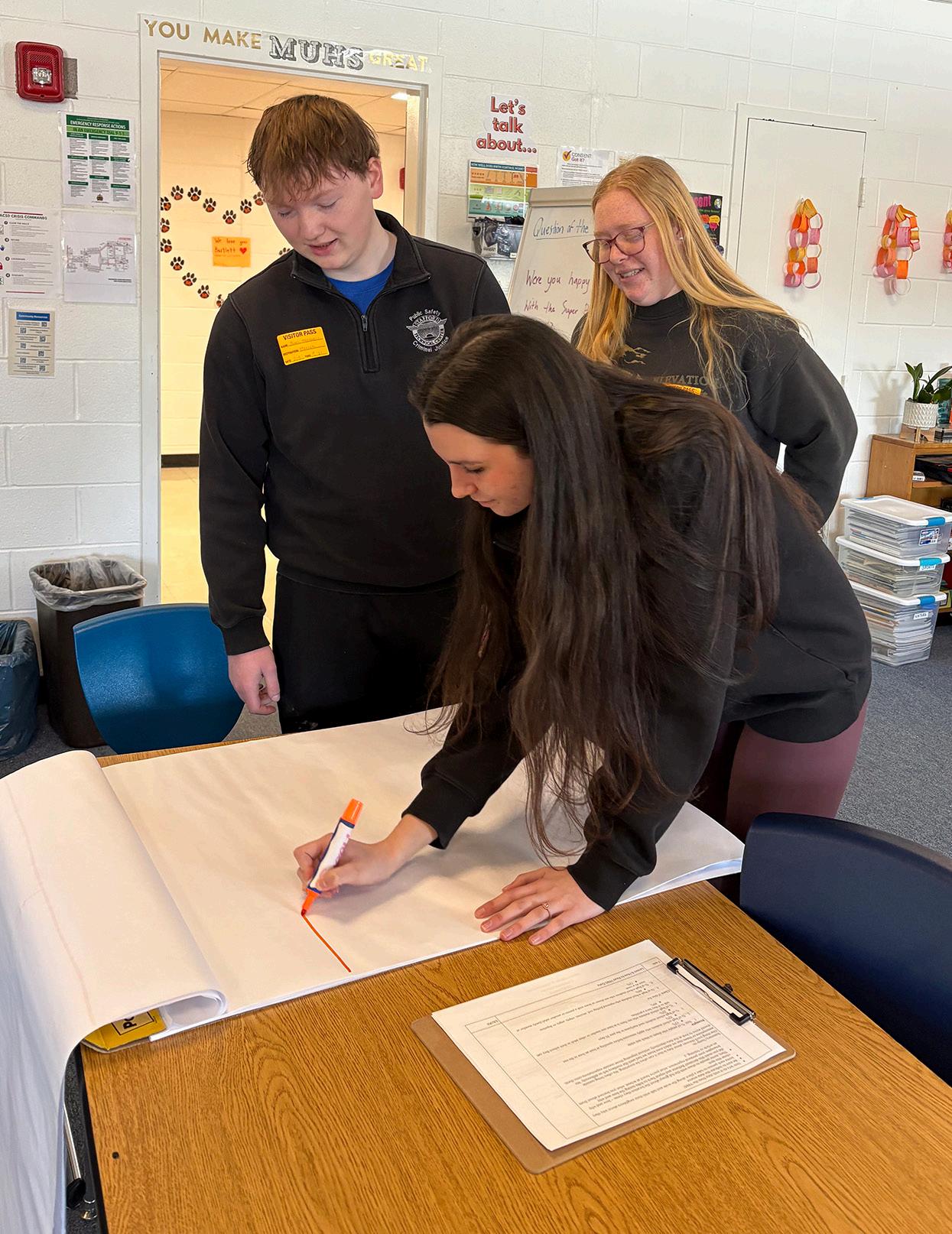
Stafford Technical Center Youth Interns preparing for a Data Seminar
26% ever lived with a parent or guardian who was having a problems with alcohol or drug use, in local county
37% in local county currently drank alcohol, and 53% ever drank alcohol
Mental health issues (depression, anxiety, etc.)
Cell phone addiction
Afraid to call someone while under the influence
Peer pressure
Role models (parents, older friends & siblings)
Stress
Exposure to substances
Getting to ‘Y’ New Hampshire entered its second year of implementing the program statewide. This year, 49 schools participated in the program, beginning with a statewide kickoff in October. Returning and new students gathered to train, attend workshops, and hear a powerful presentation on the impacts of substance use from the nationally recognized speaker duo Noble Sheep. After the kickoff, NH GTY’s coordinating organization, Communities for Alcohol- and DrugFree Youth (CADY) organized and led 7 trainings across the state, many in partnership with UP for Learning.
Throughout the year, teams pursued a variety of projects, and here are some highlights:
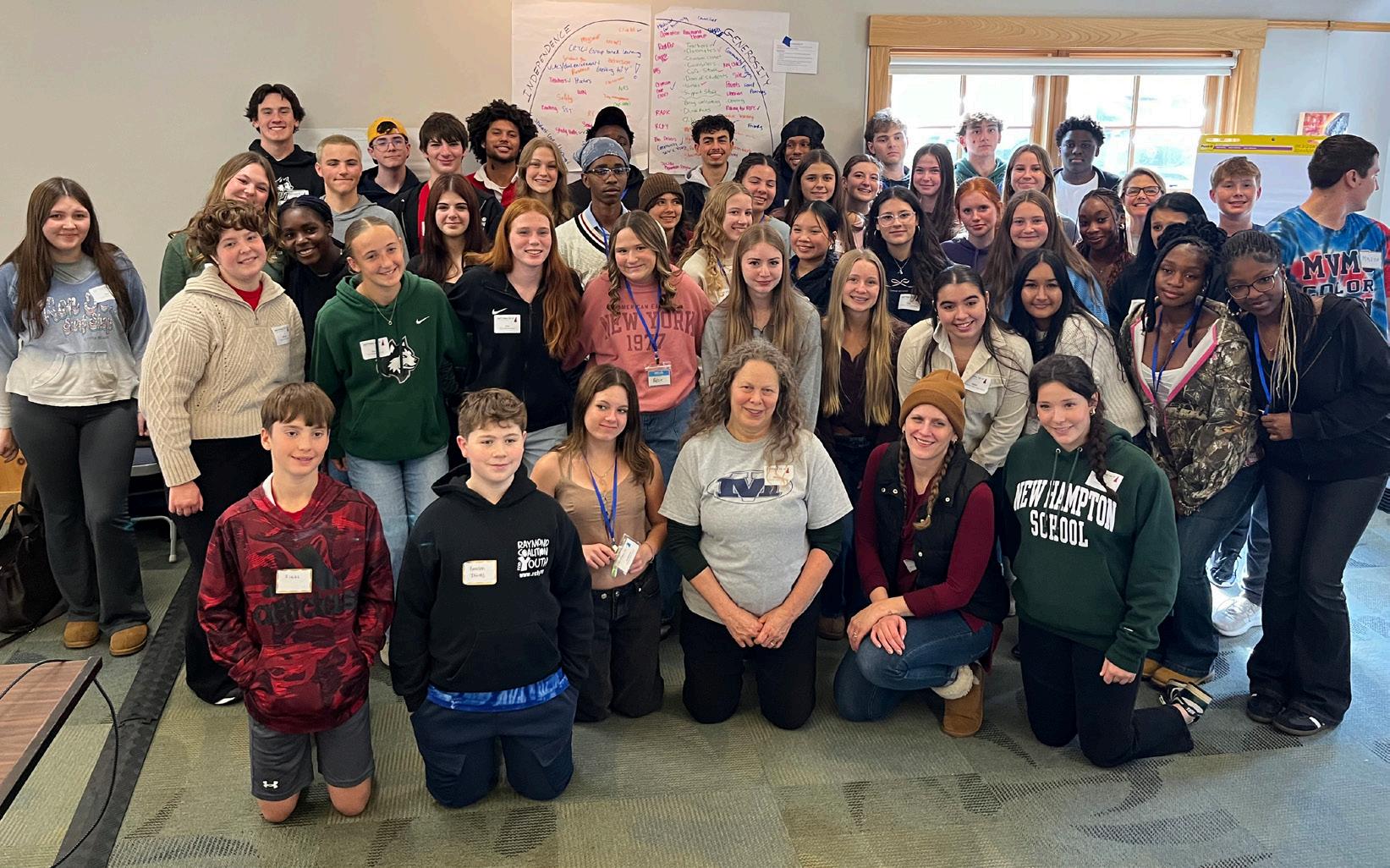
Concord School District (3 GTY NH trained schools) organized a Mental Health Awareness event with a student written performance, “Cabin Thoughts.” This dynamic student leadership presentation was centered on connection and peer support. The assembly was followed by focused breakout sessions involving the GTY club, and other school club leadership members including Mental Health Awareness Club, Student Government, National Honor Society, and Student Athletic Leadership Club.
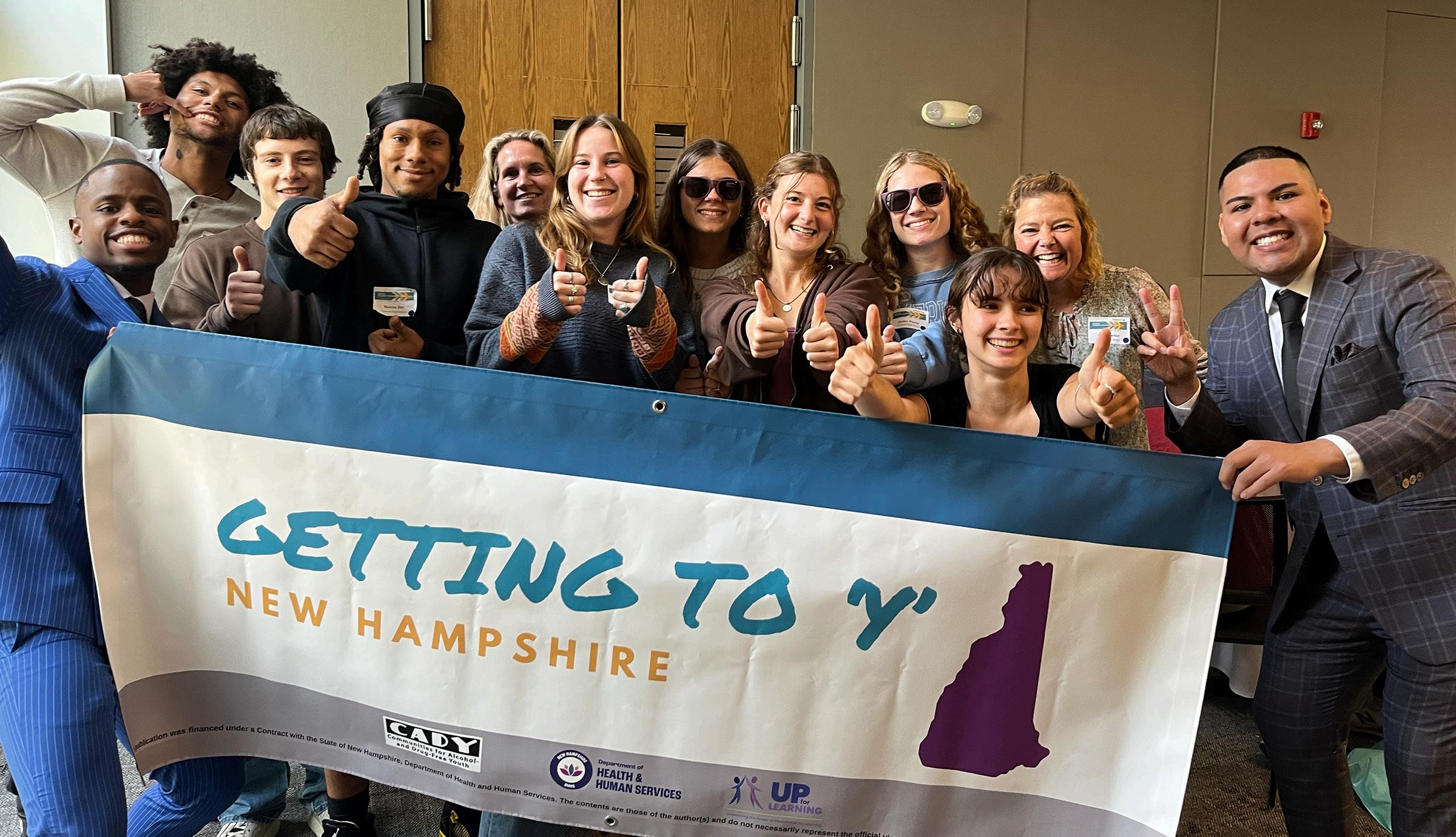
At Rivendell Academy (RA), GTY NH students presented to their school board on Tuesday, January 13, 2026, showcasing the power of student voice in action. Rivendell students spoke confidently about their roles in the program, celebrated school-wide successes, and clearly outlined their priorities for continued growth. Using a thoughtful approach grounded in identifying root causes and proposing practical solutions, the RA GTY students presented a strong, action-oriented plan and highlighted solution focused ideas including partnership with The Connor’s Climb Foundation and the #Stickittostigma suicide prevention initiative, reinforcing the student’s commitment to mental health awareness.
On Tuesday, February 17, 2026, ten Franklin High School students accompanied Behavior Interventionist Stephanie Wolff, Principal David Levesque, and Superintendent Dan Legallo, to a panel discussion with local leaders and Congresswoman Maggie Goodlander. The students observed a discussion focused on the challenges and opportunities facing
continued next page
the City of Franklin and how state and federal partnerships may help support the community.
GTY NH students are also learning how to communicate with policymakers, share their data stories, and advocate for systemic change. Students had the opportunity to share their voices on New Hampshire House Bill 1191, which relates to the Youth Risk Behavior Survey (YRBS). Concord High School
GTY student leader Ayanna wrote: “If there is another opportunity to speak or testify at a future hearing, I would love to be a part of it and I feel I have lots to say about my positive experience with Mrs. Tucker, the CHS chapter, and GTY as a whole.”
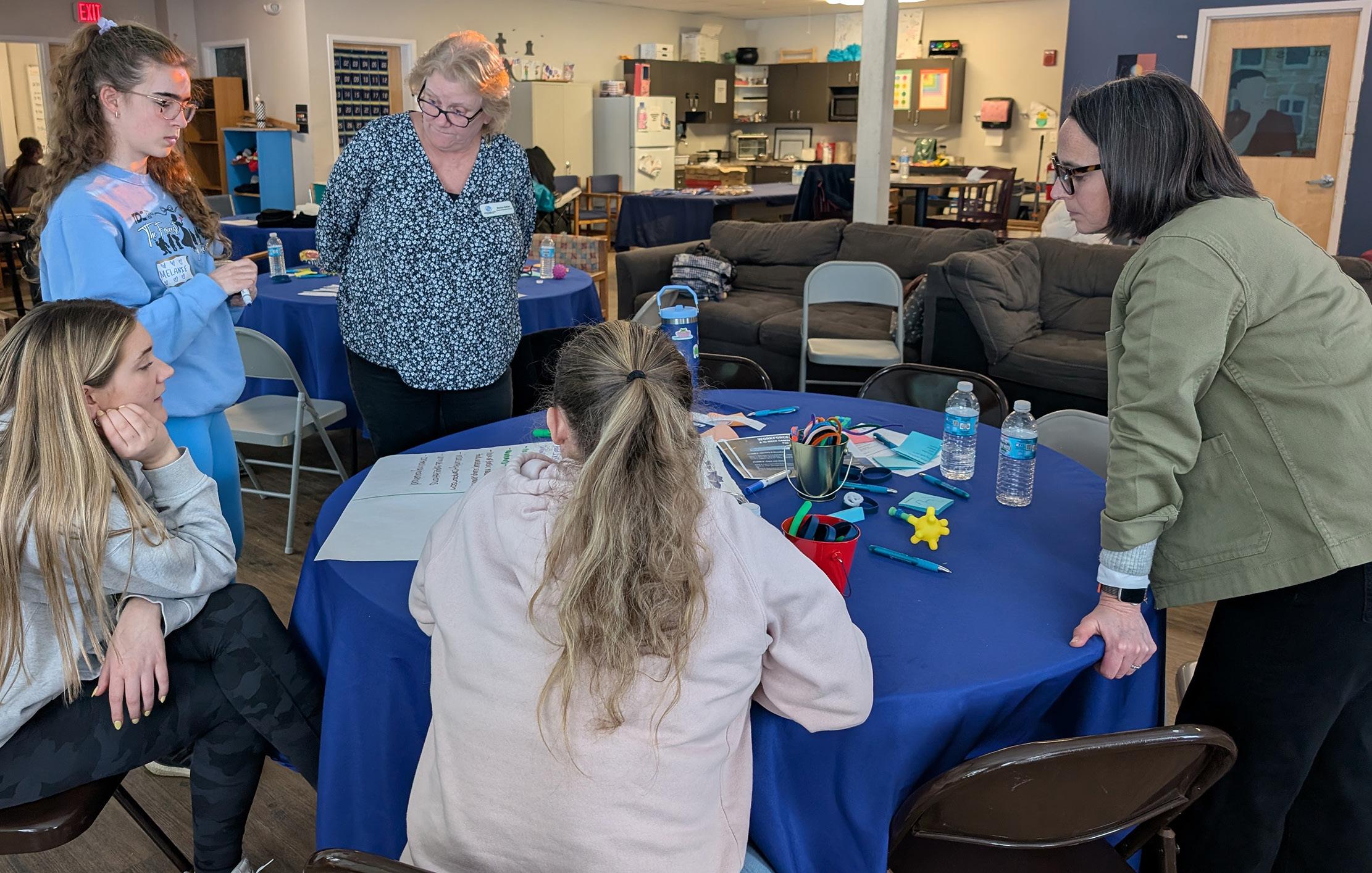
The growth of GTY NH is energizing— more schools are joining, more administrators are leaning in, and more communities are recognizing the power of youth-driven data and dialogue. GTY teams and partners
have been instrumental in propelling the program forward, and there is strong momentum to welcome even more schools and students in the coming months.
Belmont High School
Bow High School
Campbell High School
Colebrook Academy
Concord High School
Dover Youth 2 Youth
Ellis School
Farmington High School
Franklin High School
Goffstown High School
Gorham High School
Groveton High School
Hollis Brookline High School
Inter-Lakes High School
John Stark Regional High School
Kearsarge High School
Keene High School
Laconia High School
Lisbon High School
Littleton High School
Lin-Wood Public School
Merrimack Valley High School
Milford High School
Moultonborough Academy
New Hampton School
Newport High School
Rivendell Academy
Pinkerton Academy - C-Change
Plymouth Regional High SchoolOSSIPEE
Portsmouth High School
Raymond High School - Raymond
Coalition for Youth
Salem High School
Sanborn Regional High School
Somersworth Middle School
Souhegan High School
Spark Academy for Advanced Technologies
Stevens High School
Timberlane Regional High School
Timberlane Regional Middle School
Warren Village School
White Mountains Regional High School
3 38 192 9 12
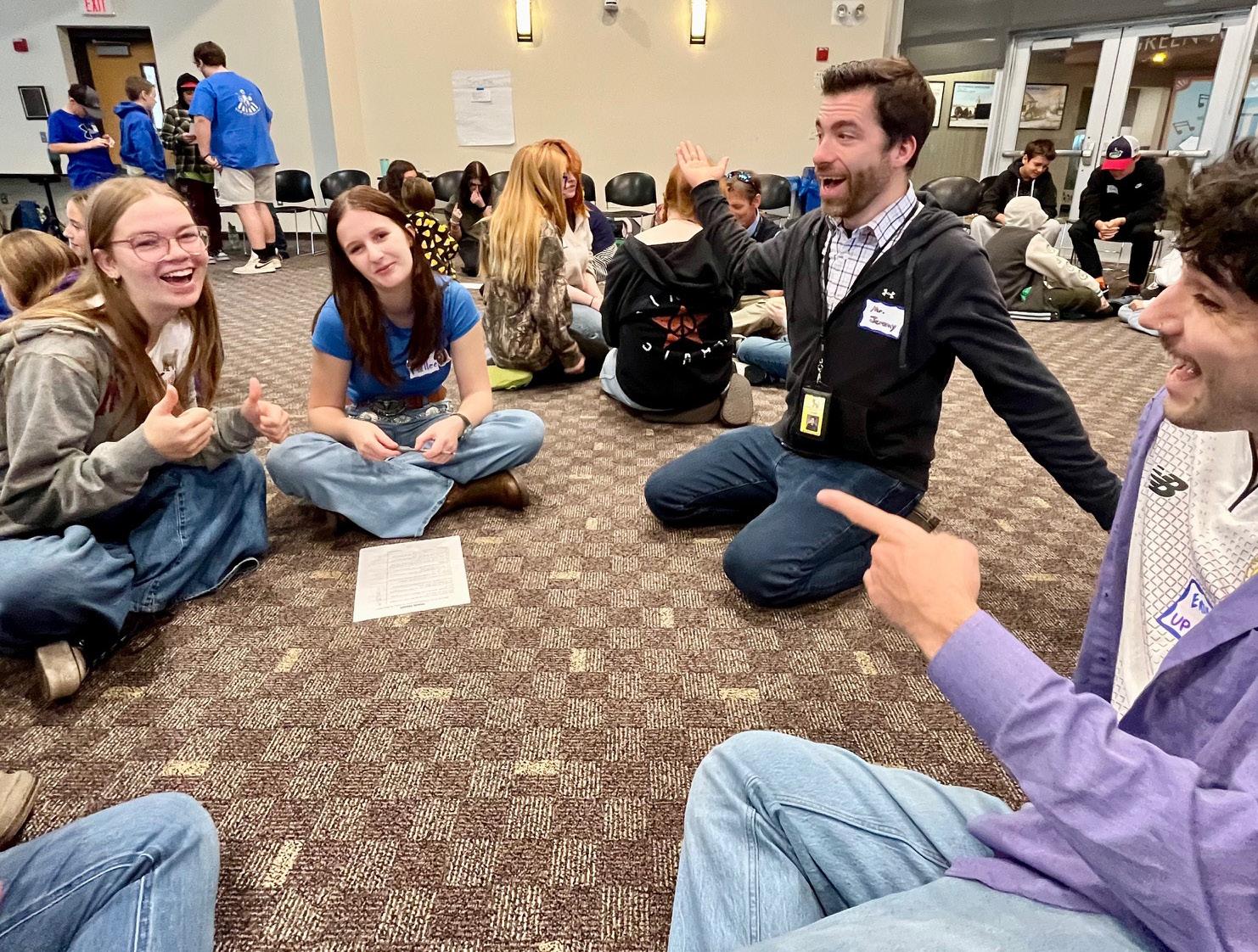
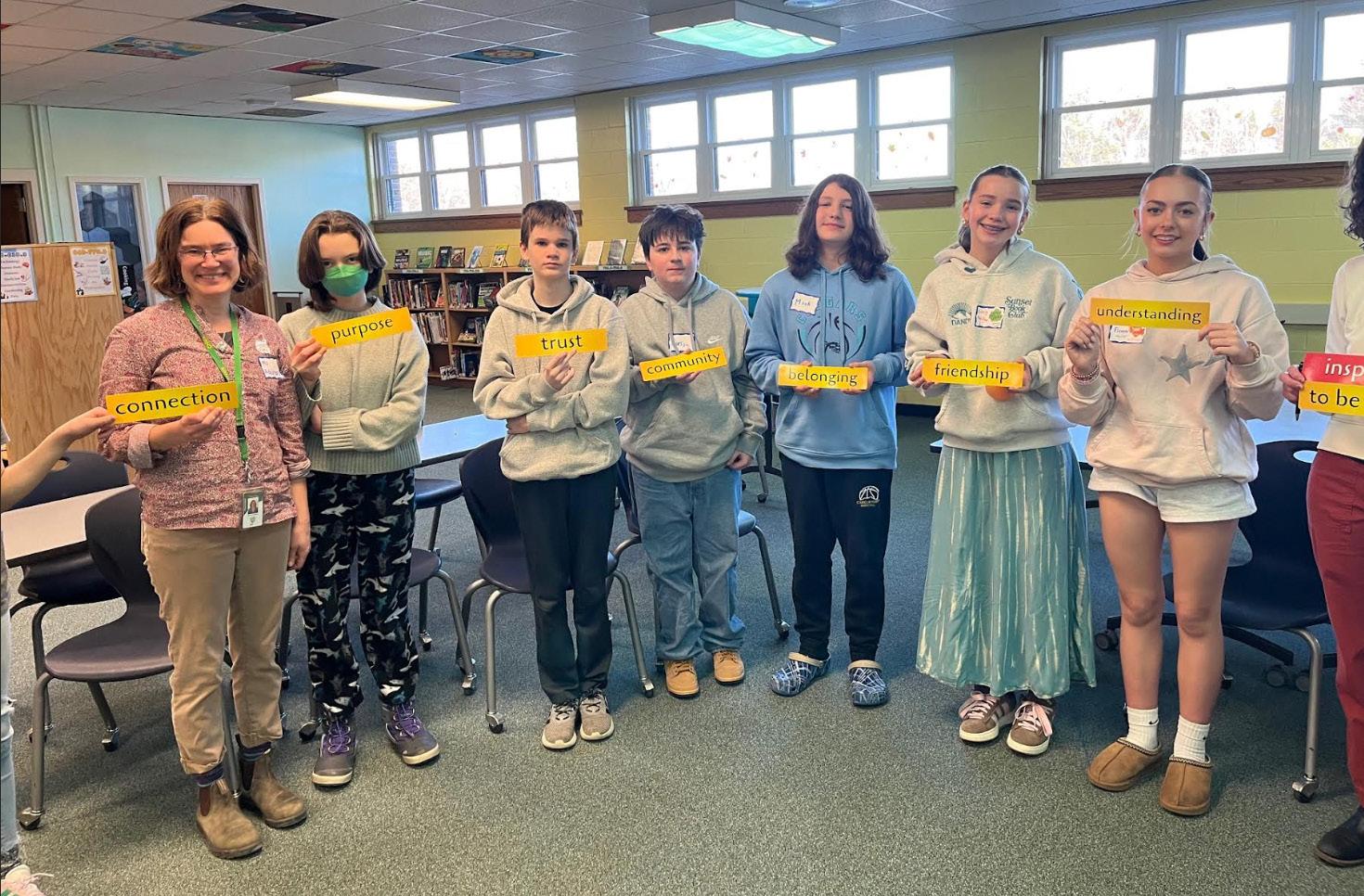
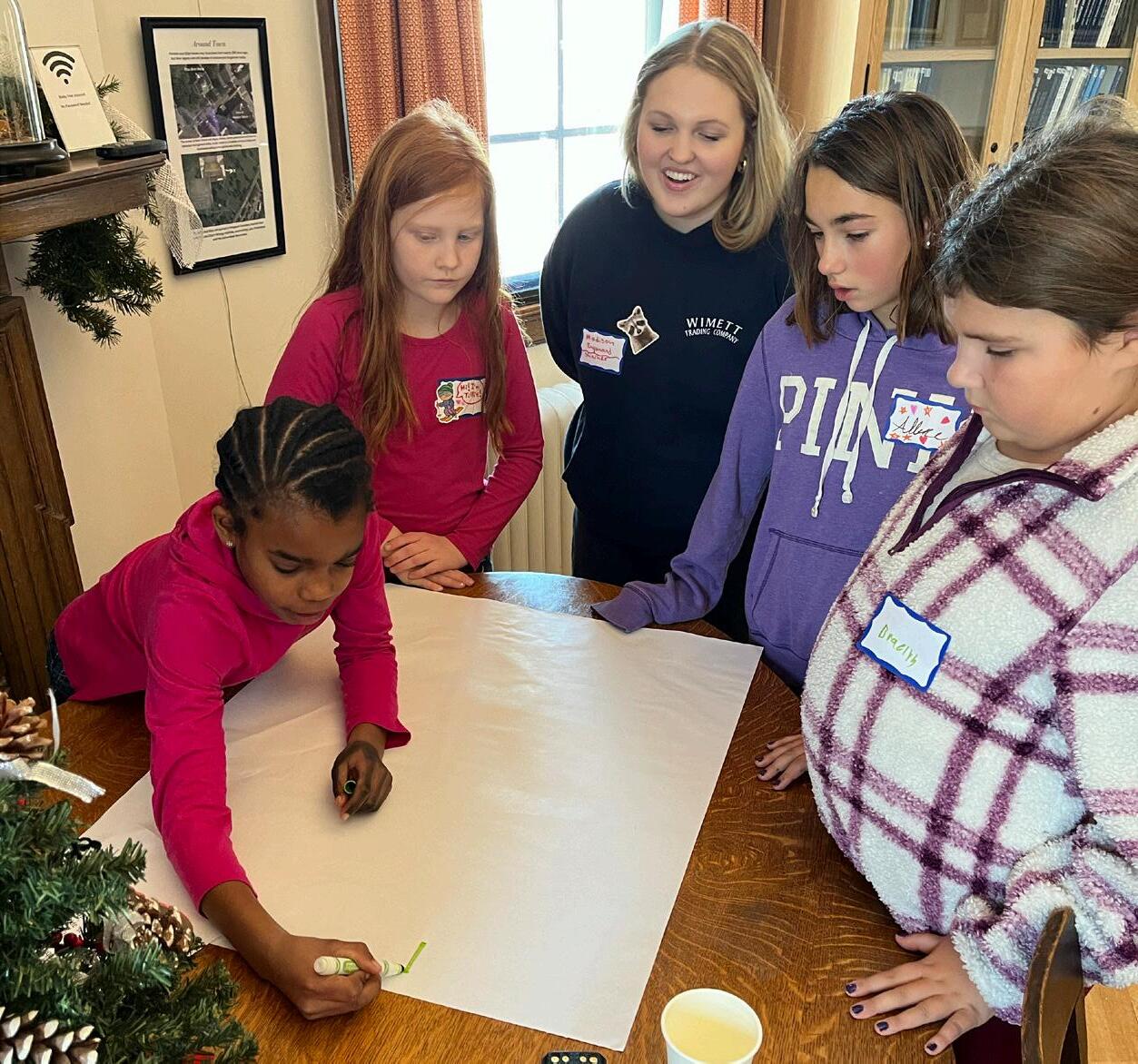
In Personal Power and Community Connections (P2C2), elementary and middle school teams build leadership skills, explore their school communities, and connect as a team through joyful, hands-on activities. Like Getting to ‘Y,’ P2C2 teams are youth-adult partnerships that use an asset-based approach to identify strengths and opportunities within their schools and communities. Through ongoing retreats, UP for Learning supports younger students—typically grades 4–6—in discovering their personal power and building community connections to drive positive change.
During these retreats, teams engage in activities that explore themes such as community, belonging, identity, values, and empathy. They also analyze data and advocate for change using their own school climate surveys, applying a Youth Participatory Action Research (YPAR) process tailored for younger students.
The teams’ efforts lead to meaningful outcomes, including addressing unkind behaviors in school, presenting their findings and ideas at faculty meetings, supporting peers in leadership development, running inservice workshops, building relationships with older student leaders, involving parents and caregivers in conversations about school practices, and planning for smooth transitions to the next school year. Perhaps the most lasting impact of P2C2 is the joy and sense of connection students gain from working together to improve their school and community for everyone involved. P2C2 2025–26 By the Numbers youth trained returning teams total teams adult leaders new teams retreats
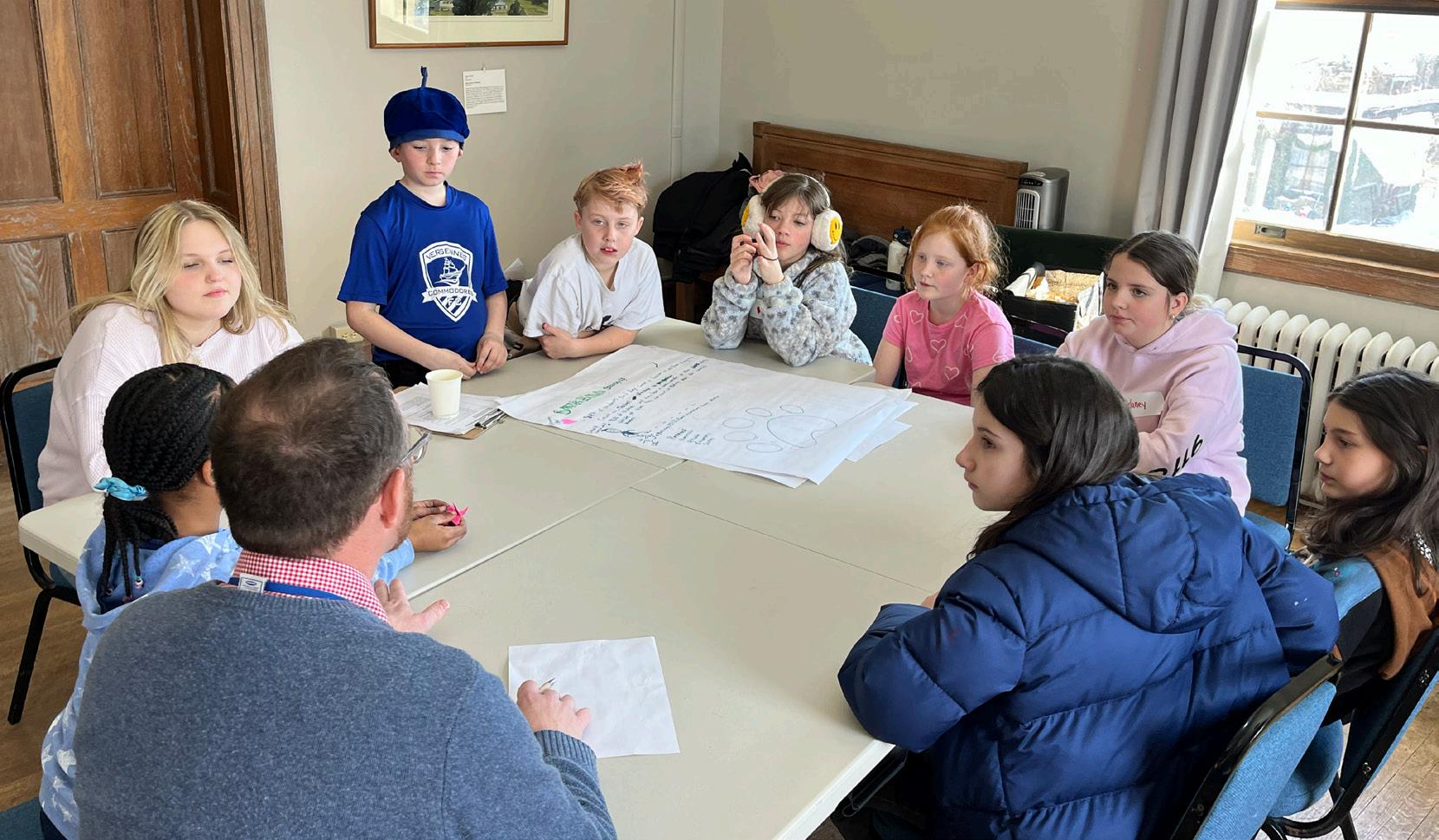
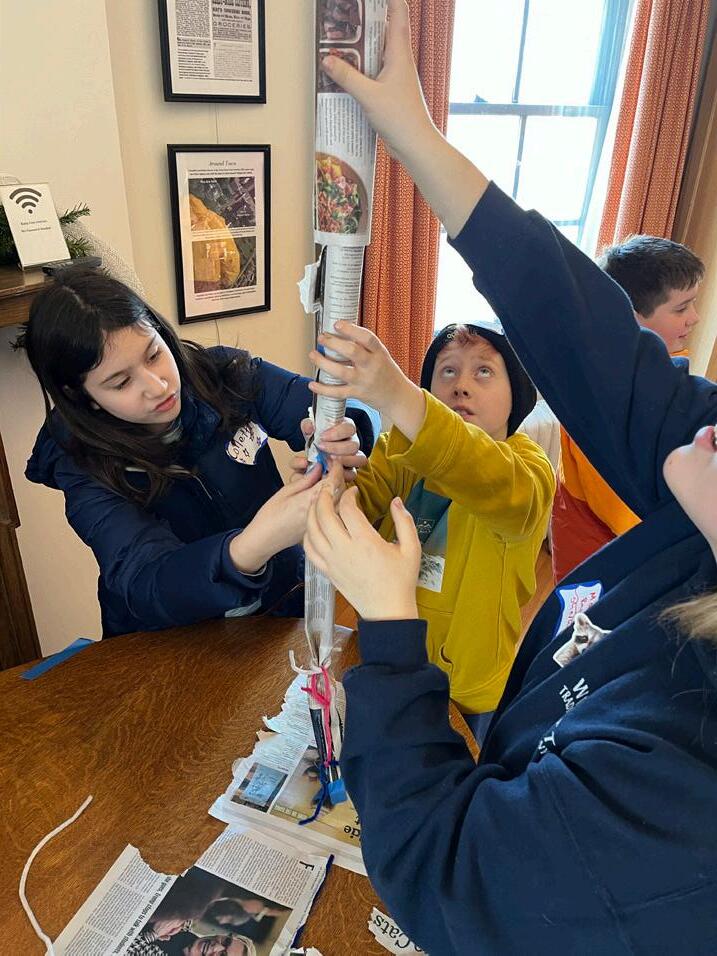
Students at Ferrisburgh Central School (FCS) and Vergennes Union Elementary School (VUES) joined together this year for four P2C2 retreats throughout the winter and spring. This marked the third year of P2C2 at VUES and the second year at FCS. Students met at the Bixby Library in Vergennes to build connections across schools, develop leadership skills, and examine Panorama survey data to better understand what was working well and could be improved. They then conducted additional data collection within their own schools to further explore the concerns they identified.
The project concluded with a final retreat at Vergennes Union Middle School, where students developed action plans based on their findings. At VUES, students continued their efforts to address unkind behavior and strengthen positive school norms. At FCS, students focused on expanding leadership opportunities and revitalizing a buddy program connecting older and younger students.
Vermont
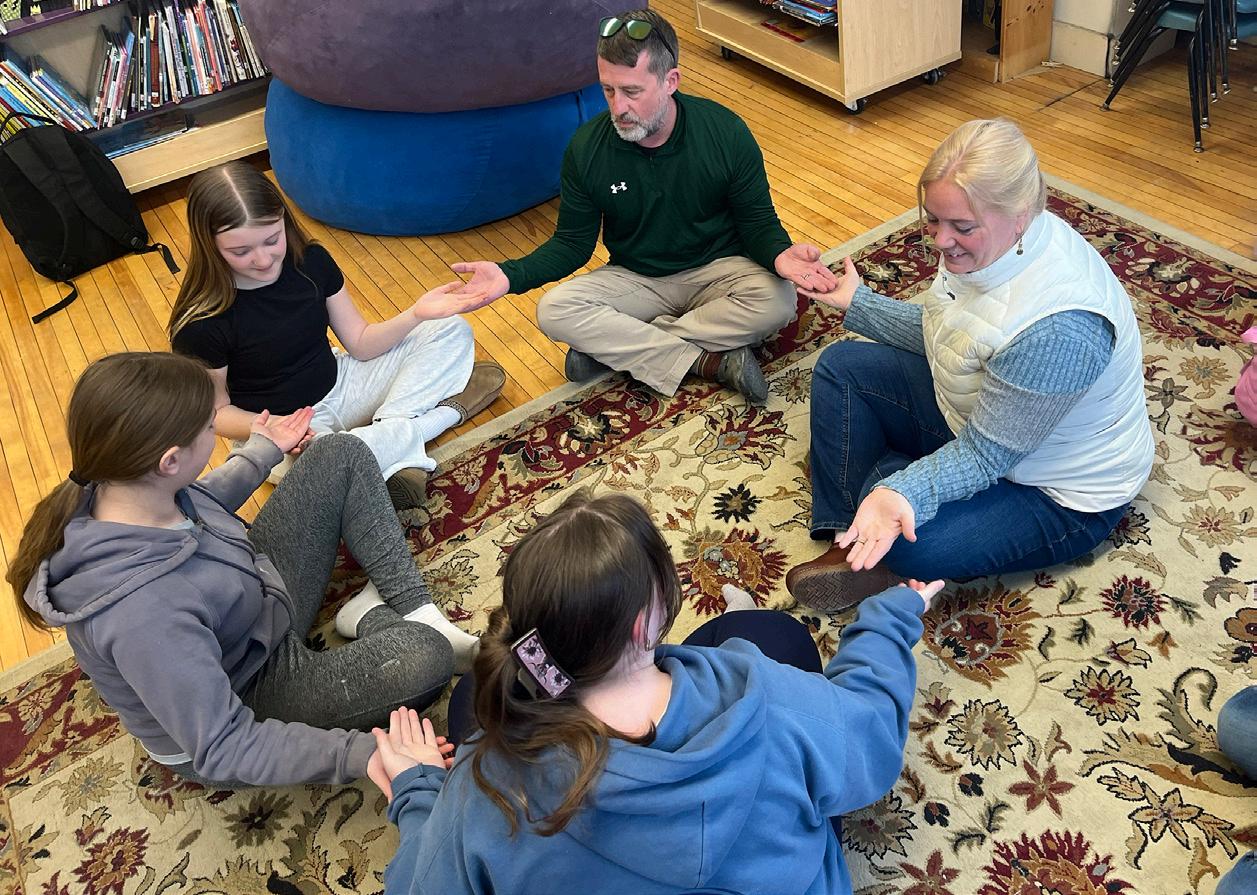
Barnet Student Council met with UP four times throughout the school year. This energetic group of seventh graders built community as a team, learned about themselves as leaders, and analyzed climate survey data before landing on action projects that contributed to improving their school community. They led community-building activities across nearly every grade level in the school and ultimately launched a kindness notes project. While working through difficult problems when they arose, they also led fundraising activities that allowed them to make schoolwide events more special and inclusive. As 8th graders next year, they plan to recruit even more incoming 7th graders and share some of the leadership activities they have done this year as co-facilitators.
Hardwick, Vermont
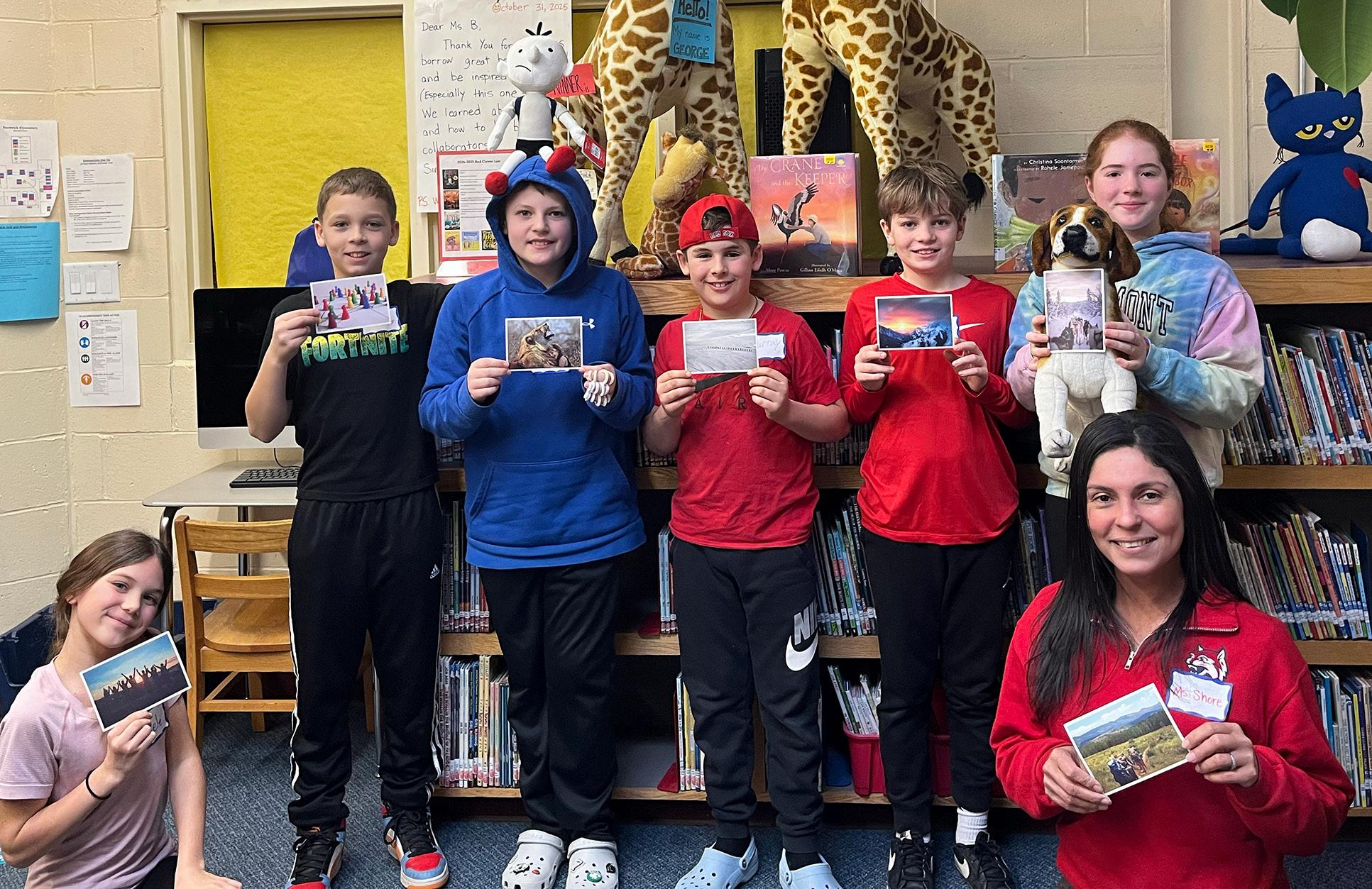
Hardwick P2C2 team began their journey thinking about leadership and types of leaders. Over three retreats, they decided to draft a climate survey in partnership with the adult PBIS working group to gather information from students on what they think and feel about their school experience. They went into classes and talked about why they were giving the survey, and got an incredible response rate. The group coded and analyzed over 116 paper surveys as a group and identified strengths and concerns. Next year, the group will share their findings at a full staff meeting.
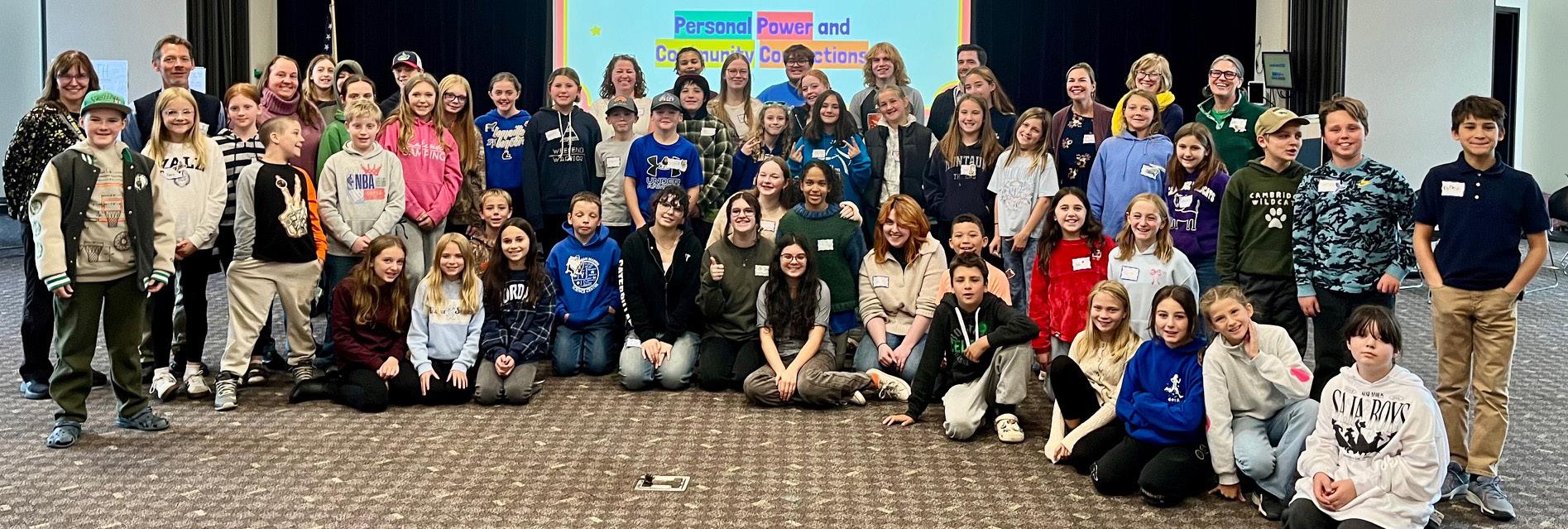
This was the second year of a district-wide P2C2 program in Lamoille North Supervisory Union (LNSU). All five elementary schools in the LNSU district had a team of 8-10 students who participated in three district-wide retreats to look at school climate data, deepen their understanding of leadership, and learn how to implement Youth Participatory Action Research (YPAR) within their school communities. The teams from Hyde Park Elementary, Eden Central School, Cambridge Elementary, Waterville Elementary, and Johnson Elementary did incredible work building their teams, collecting data, and beginning to drive positive change.
Youth facilitators from Lamoille Union Middle and High School’s Equity Design Team partnered with UP for Learning to co-plan and lead the district retreats, as well as provide ongoing support to the teams at their schools. The older students appreciated the chance to reconnect with their former teachers and schools, while the P2C2 team members valued having older, experienced peers guide them through their work.
One focus of the CES P2C2 group this year was a “positive post.” Students created this as a way to send positive messages to each other and build community in the 5th and 6th grade hallway. Another focus was the cafeteria climate. Students identified this as an area of growth for their school and have recently met with their principal to discuss potential changes.
EES focused their action efforts on building a shared and deeper understanding of respect in their school
community. They built an incredible team this year, meeting several times per month for lunch meetings and developing a strong practice of check-ins and connection activities. The team worked hard to analyze their survey data.
The P2C2 students reviewed survey data from last year. From this review they determined that they wanted to work on community building. They also noticed that the data was only collected from Grades 5 & 6 and they wanted input from the whole school. So, they developed a presentation with two parts - a survey for every student grades 1-6 to fill out and a community building game. They visited each of the houses - 4 different dates - to do their presentation so that they were able to see every student and staff member in the whole school and collect surveys from all of the students.
At JES, students partnered with the student council and school leadership team. Their work focused on empowering students and conducting awareness campaigns around bullying, roasting and body shaming.
This group of students wanted to bring activity and levity to ALL of the classes at WES. They organized and pretty much self-led themselves towards their goal of a “field day” for the school. They decided to have two stations for the rest of the school where they showed leadership and organization skills by leading games (sharks and minnows and relay races).
This year, UP for Learning partnered with two schools in the Southern Vermont Supervisory Union (SVSU): Pownal Elementary School and Monument Elementary School. This was the second year of P2C2 at Pownal and the first year at Monument. In both schools, all of the school’s 5th grade students participated in the program, creating opportunities for students to grow in leadership and communication skills and strengthen their classroom communities together. Through a series of retreats at each school, students engaged in leadership activities, community-building challenges, and action research focused on understanding their experiences as learners and leaders.
At Pownal, students examined data from UP for Learning surveys about voice, belonging, leadership, relationships, and agency, then used their findings to design and administer a survey exploring leadership beliefs among their peers. Both groups were very into the joyful (but challenging) team communication and leadership activities. They got competitive, but gained lessons about how to share responsibility and make space for different styles of leaders through their experiences.
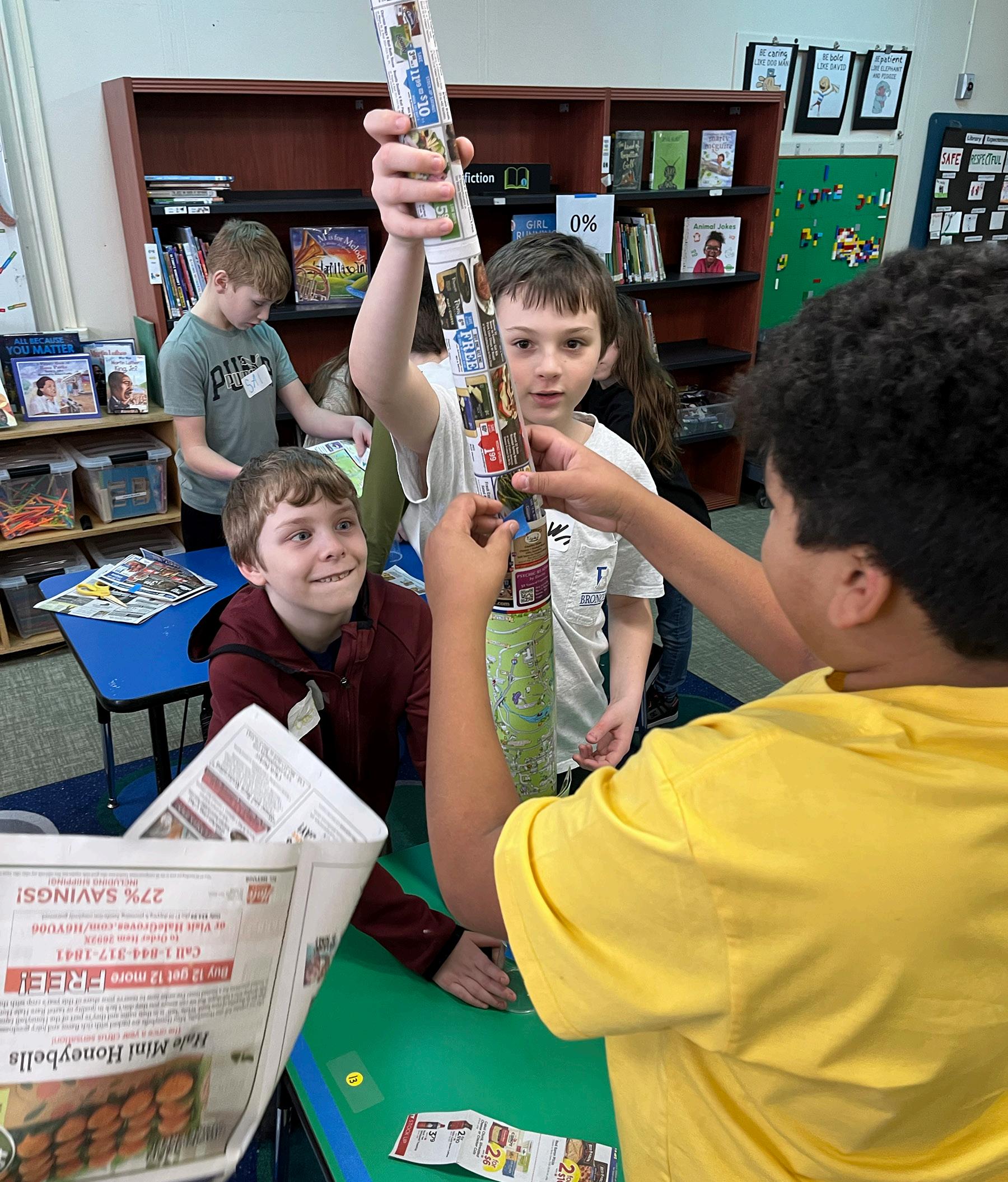
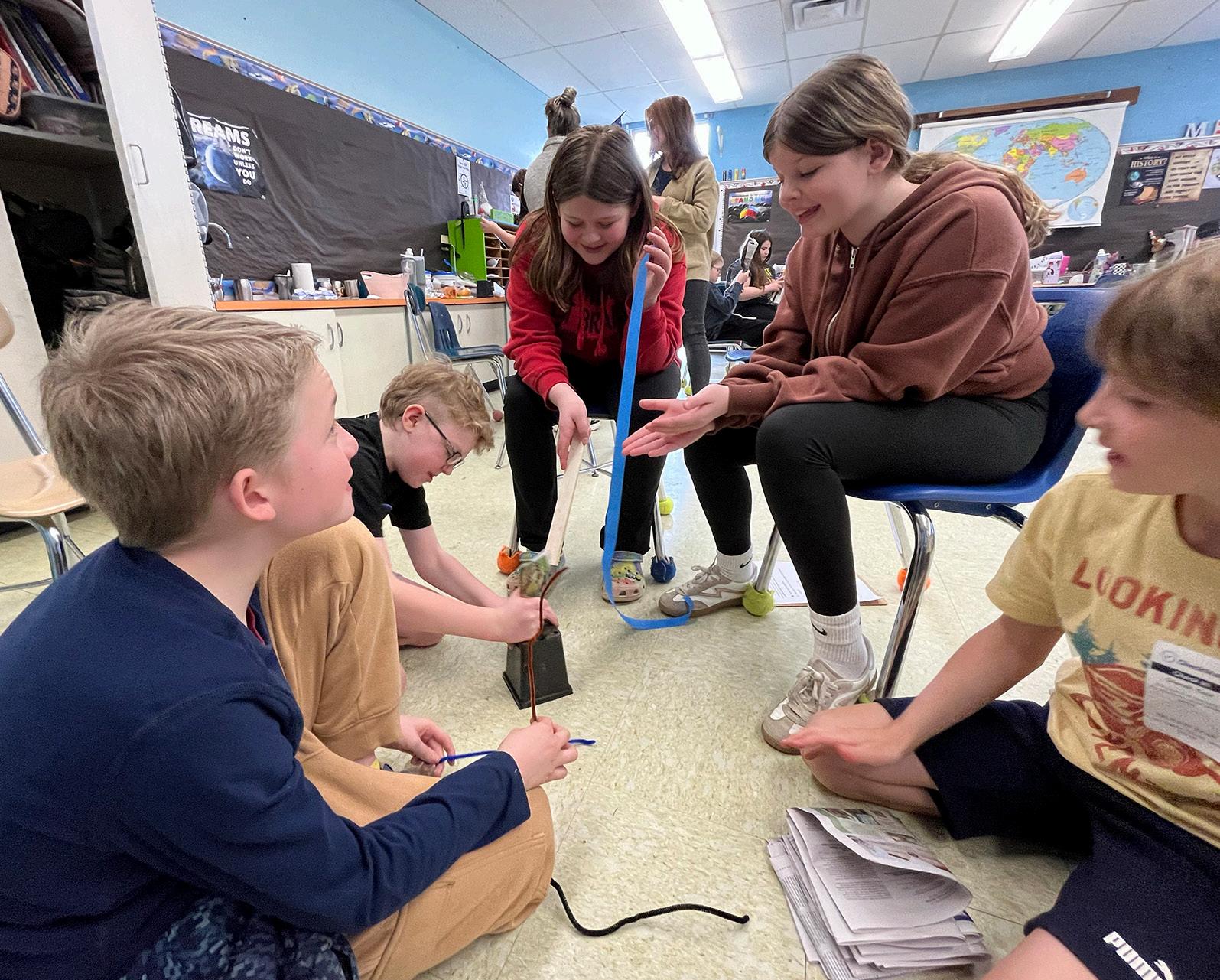
At Monument Elementary School two classes of 5th graders and 4 staff from Monument Elementary School participated in two days of P2C2 training. On the first day, the students worked together as a class to explore what it means to be a leader, build collaboration skills, and put that learning to the test with some community building challenges. On the second day, the group explored their own pre-survey data to identify strengths and areas to grow as a class, around areas related to leadership, belonging, and voice. Engaging with these teams on consecutive days was a powerful way to build skills and relationships.
Sponsored by the Vermont’s Project AWARE: The Vermont Department of Mental Health was awarded a 5-year grant from the Substance Abuse and Mental Health Services Administration (SAMHSA) for Project AWARE. Vermont Project AWARE is a joint effort between the Agency of Education (AOE) and the Agency of Human Services, Department of Mental Health (AHS/DMH) and three communities to promote on-going collaboration at the state and local level regarding best practices to increase awareness of mental health issues, enhance wellness and resiliency skills for school age youth, and support system improvements for school based mental health services.
This year, Twinfield Union’s 5th-grade class continued to focus on supporting students’ transition from elementary school into middle school. UP for Learning worked with the 5th graders through a series of retreats held at the Goddard College campus. Students connected the P2C2 themes of leadership and community with questions about who they want to be as a class next year, how they hope to build relationships with their 6th grade teachers, and what they want those teachers and their parents/caregivers to understand about them as learners, classmates, and leaders.
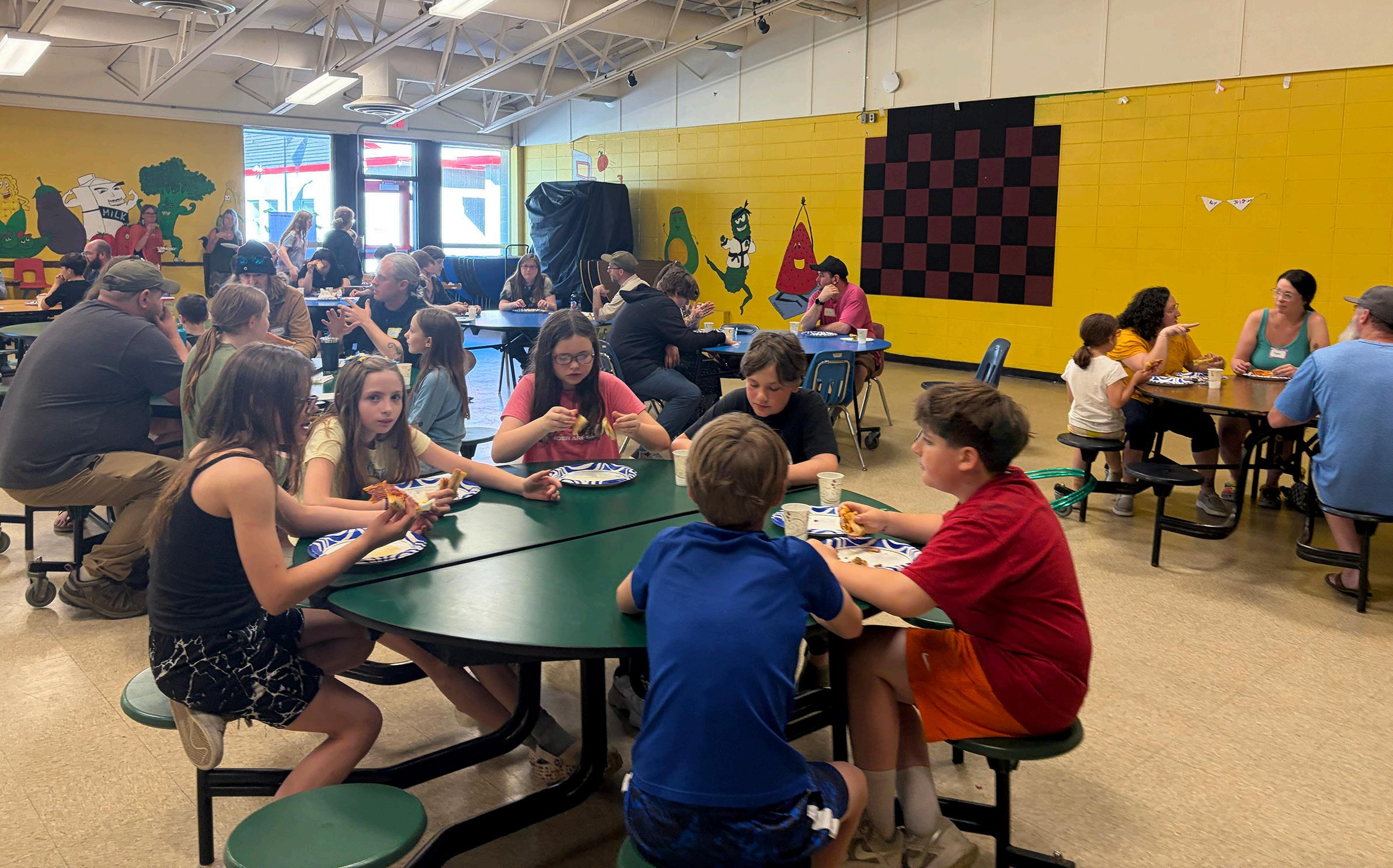
The team’s culminating project was an evening 5th grade pizza party for students, families, teachers, and school leaders. Nearly all students attended with parents, caregivers, siblings, or other family members, along with the principal and next year’s 6th-grade teachers. Students led three leadership and community-building activities from their P2C2 retreats and facilitated circle conversations with their families about the transition to 6th grade. It was a positive and fun student-designed and student-led party!
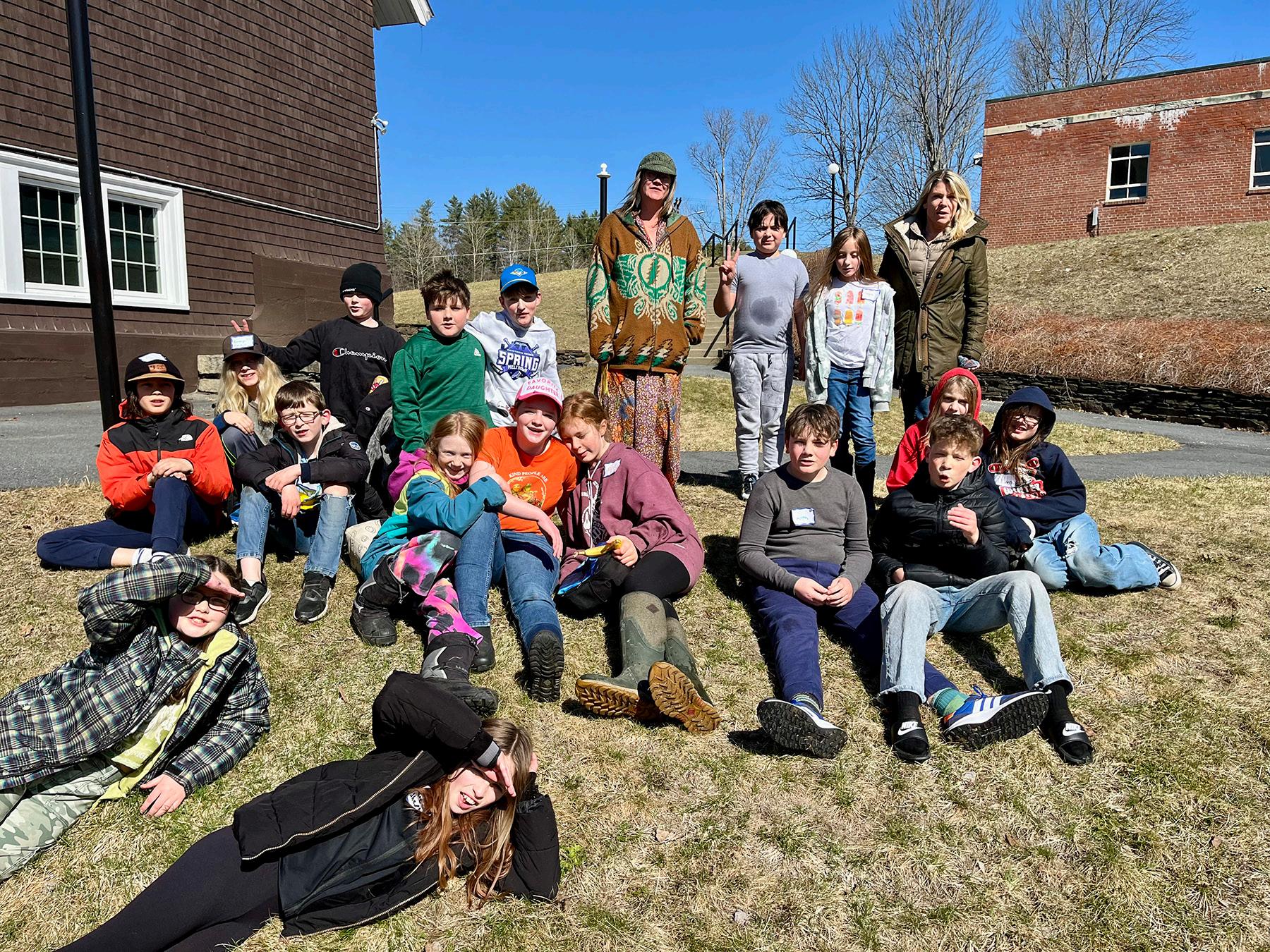
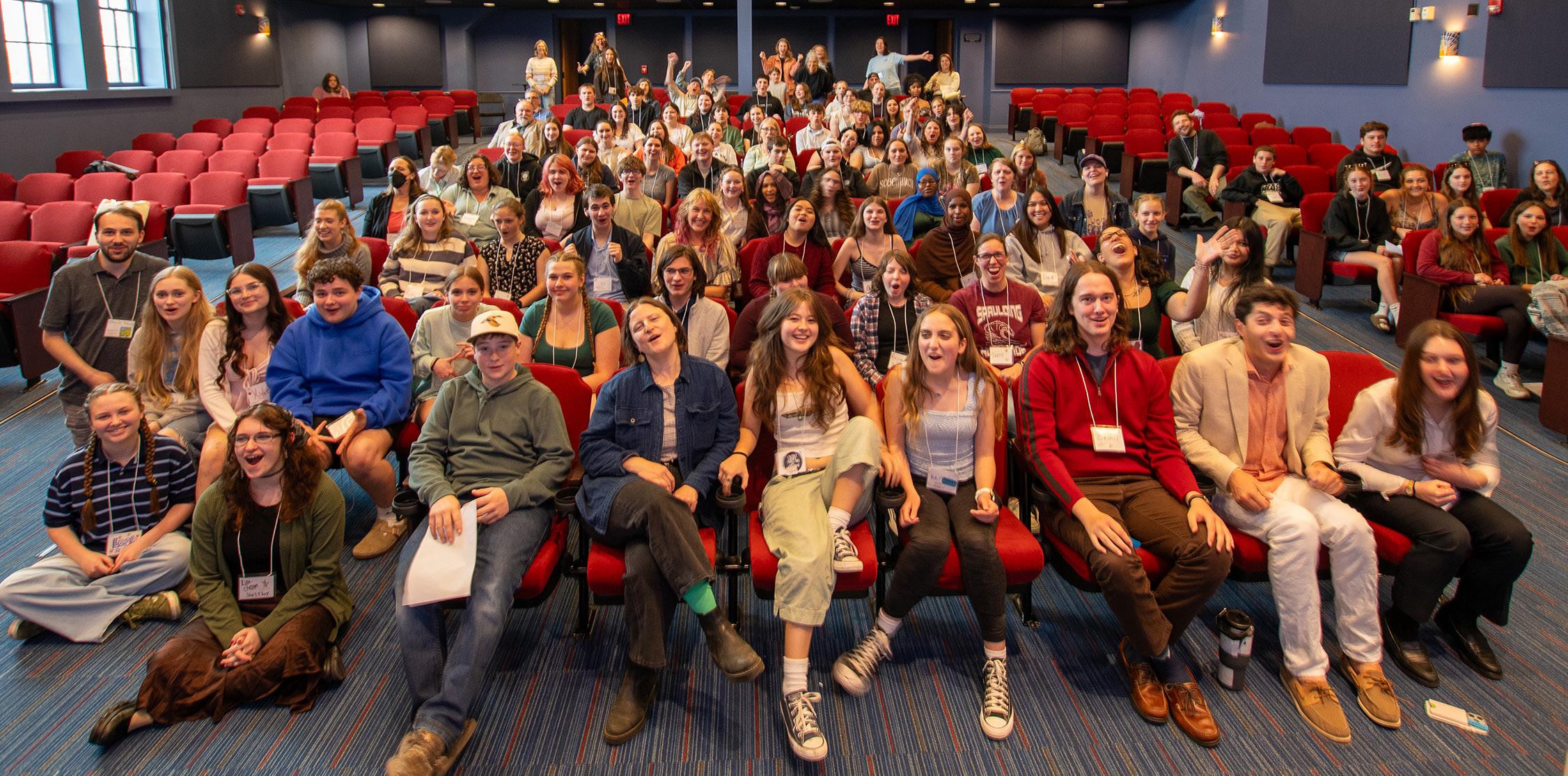
All Getting to ‘Y’ and P2C2 teams were invited to attend UP for Learning’s Power2 Summit on May 5, 2026, in Burlington. This was the first in-person Summit since 2020, built on a legacy of elevating student voice, amplifying the power of youth-adult partnership, and imagining the next steps in reimagining and transforming education together. The event brought together 175 youth and adult participants from UP teams across Vermont. Two GTY groups— Vergennes Union Middle School and Stafford Technical Center—also presented workshops.With the day’s theme of Collective Action, Collective Impact, Collective Joy, Repeat, we explored what we can do, together, when our power is exponentially multiplied.
UP appreciates the Regional Prevention Lead Organizations for supporting teams in attending this Summit. Coming together and weaving a web of connections and shared experiences helps build the sense of community, belonging, and protective factors central to prevention of risk-taking behaviors. The following presenting teams, each engaged in important prevention work, also had the opportunity to share their perspectives with the many UP teams in attendance.
The Vergennes Union Middle School Getting to ‘Y’ group presented “Understanding and Responding to Microaggressions through Advisory Activities.” The session focused on advisory activities intended to build understanding of what microaggressions are and simple ways we can address them in our school communities.
These collaborative activities are designed for small group discussion on the ways that bias and stereotyping can impact individuals and communities, and how to address them together. The presentation was a fan-favorite and involved the use of lemons to demonstrate how stereotyping works. By the end of the day, even a few outside of the workshop received a lemon gift to remind them of the message.
Three UP Youth Interns from Stafford Technical Center, presented “Decentering Doubt in Data: How to Engage Skeptics in Community Data Analysis.” Over the spring, this team facilitated data seminars about the Youth Risk Behavior Survey (YRBS) for classes and youth clubs that are not familiar with UP’s work to amplify youth voice and explore equity on a deep level. In this workshop, they walked participants through the facilitation of two Data Seminar activities: the YRBS Scale Activity and Root Cause Analysis, within the framing of a quick, single touchpoint event and share the skills they have had to acquire to start real, authentic conversations about important issues in a small and specific timeframe. The goal was to teach participants how to inspire their groups into considering the relationships between experience and data, bias and objectivity, so that they can have open and authentic conversations about unsafe habits and why they exist.
Our next Power2 Summit will be on April 14, 2027. All UPaffiliated partners, teams and collaborators are invited to attend!
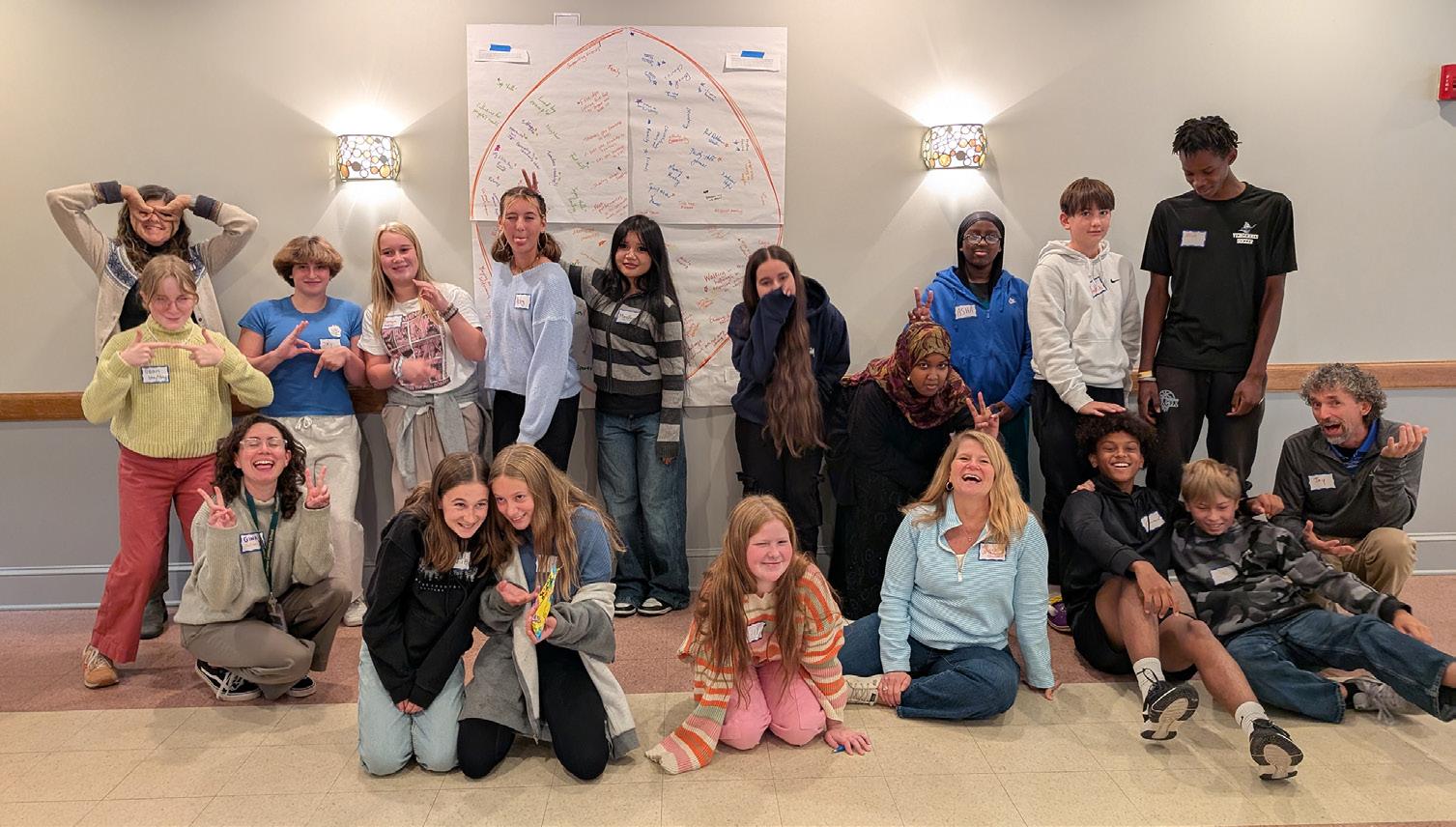
to all of our schools and the organizations and coalitions who sponsored their work.
Thank you to the Vermont Department of Health: Division of Substance Use Programs (DSU) and Division of Family and Child Health (FCH) for their continued support of GTY and P2C2 in Vermont.
A big thank you to each of the Lead Prevention Organizations in VermontRutland Regional Medical Center, The Collaborative, United Way Northwest, and Northeastern Vermont Regional Hospital - whose grants and creativity made the Getting to ‘Y’ program and data seminars more possible and accessible for many schools and organizations.
Thank you to Our Voices Xposed (OVX), Vermont’s youth-led, adult-supported nicotine prevention movement grounded in the Positive Youth Development framework. Our teams integrate programs like OVX to enhance their work with connections and resources.
Thank you as well to the The New Hampshire Department of Health & Human Services, who sponsored the work in New Hampshire, as well as Communities for Alcohol- and Drug-Free Youth (CADY) for their diligence and passion in coordinating the program statewide.
GTY and P2C2 are UP for Learning programs. For more information, visit upforlearning.org or contact us:
Liberty Belote, GTY Program Coordinator liberty@upforlearning.org
Lindsey Halman, Executive Director lindsey@upforlearning.org
