VOlUME XVI, ISSUE 2
VOlUME XVI, ISSUE 2
Just
“WHY CAN’T I STOP?”
because it’s not drugs doesn’t mean it’s not serious









lug in your headphones, put on your favorite playlist and join us in an adventure exploring all the things that capture our eyes—and that we refuse to let go of. Despite the chaos we’re sure you’ve heard coming out of Howard every 5th period, we feel incredibly honored to have produced this issue with not just our returning staff, but also our passionate first-year students. Boldly tackling niche yet personal topics, our staff have eaten, breathed and lived Aquila for the last few months, exploring every detail and engaging in their EICs’ numerous questions and suggestions (we appreciate you guys!). After hundreds of drafts, we invite you on this journey to dive into the habits, fixations and obsessions that make our brains say “yes!”
Though we hope you’ve found the perfect playlist to keep you hooked as you read the Aquila, we know Spotify’s ever-evolving machine-learning features don’t always align its picks with your picks. Tune into reporter Nirmith Indukuri’s exploration of “How Spotify’s Algorithm Shapes Music Discovery in 2025” to find out how your Spotify Wrapped keeps you listening on repeat but doesn’t always feel like you on page 6.

We know that like the music you can’t stop replaying, destroying Clash Royale towers is easier than ad dressing your video game obsession. Join reporter Nikhil Pandey to put the blocks together on what makes UPA’s student body’s favorite mobile games so enticing and why they’re so hard to put down in “Bound by Pixels” on page 9.


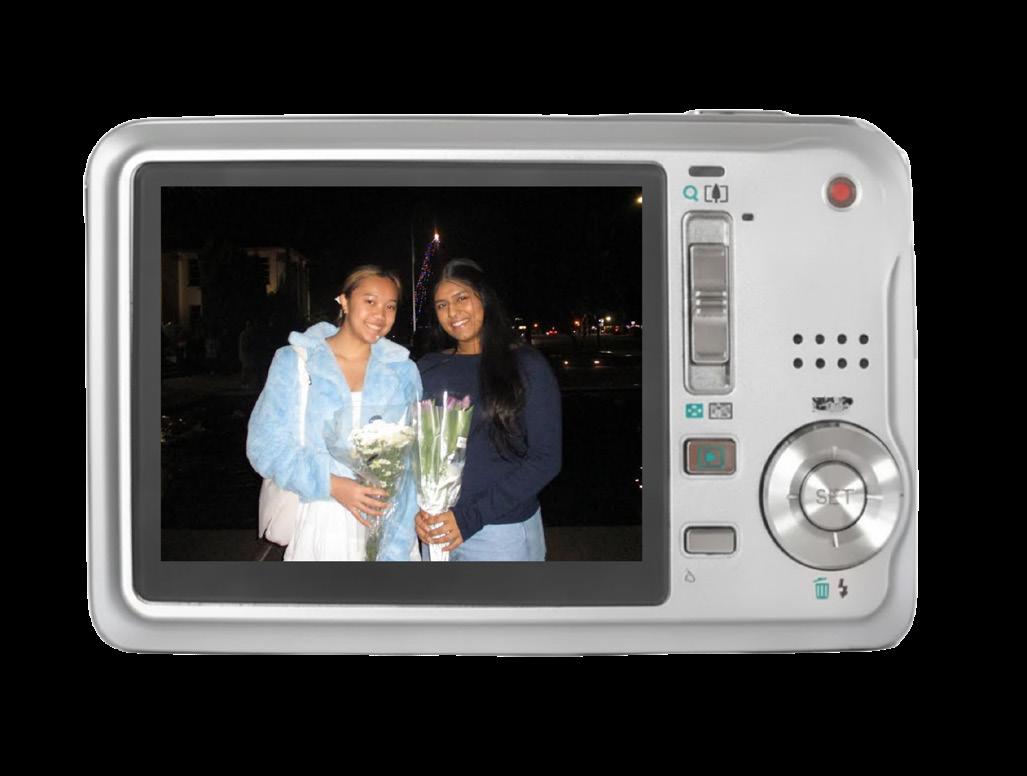
But not all fixations live on our devices—some spark constant debate and strong opinions within our hallways. UPA’s dress code has been a hot topic for years, and through student surveys as well as student and teacher perspectives, reporters Miles Hines and Samira Madden unpack the complexities of why people feel so strongly (or not) about the dress code in “ dress the Code” on page 11.



Reading the Aquila is one of the many obsessions we justify, in dulge in and never question, so follow that urge with reporter CeCe Le Messurier in “‘Why Can’t I Stop?’” on page 26. Explore the transfor mation of guilty pleasures and temptations to not-always-healthy obses sions that often go unnoticed.
And of course, how could we talk about Aquila’s favorite fixations without dis cussing the foods deeply rooted in Californian culture? Get your taste buds ready as reporter Sophia Shaheen tries the most popular dishes from our very own California Classic food chains that keep us coming back again and again in “A Taste of Home on page 31.


If you need a brain break from all these heavy obsessions, let our Fun & Games section—back after a whopping six years—draw you in for a few fun minutes. On page 38, find out which of our wonderful UPA staff you best align with in “Which Teacher Are You?”
As you read our second-to-last Aquila issue, we hope you are able to uncover the mysteries behind the things you get lost in. We’re so proud of all our first-years’ first contributions and our first full-newsroom production. And a special thank you to Ms. Beary for letting us live in Howard practically all day, every day this cycle. Without further ado, welcome to Volume XVI, Issue 2.





Aquila is a student-produced, student-edited high school newsmagazine. It serves as a designated public forum for student expression. We aim to reflect the diversity of our community and build unity through true and accurate reporting, in hopes that each of our readers will find an article they can connect with.



Aquila Broadcast @upa_aquila upaaquila.org


Aquila Podcast upaaquila
“SOARING
From the shift of a black and white newspaper to a vibrant newsmagazine, to a broadcast channel and an active Instagram presence, we continue to innovate the way we tell stories and elevate our publication to new horizons. We do this not just because we are student journalists but because reaching for success is what it means to be a member of Aquila.


Have a story to share? Scan the QR Code to submit your suggestions or email us at aquila@upatoday.com.
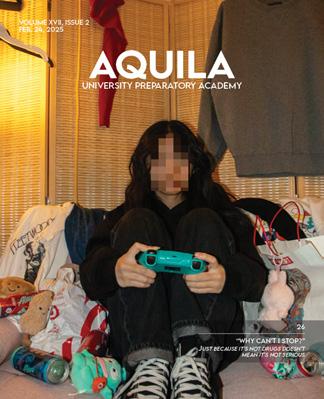
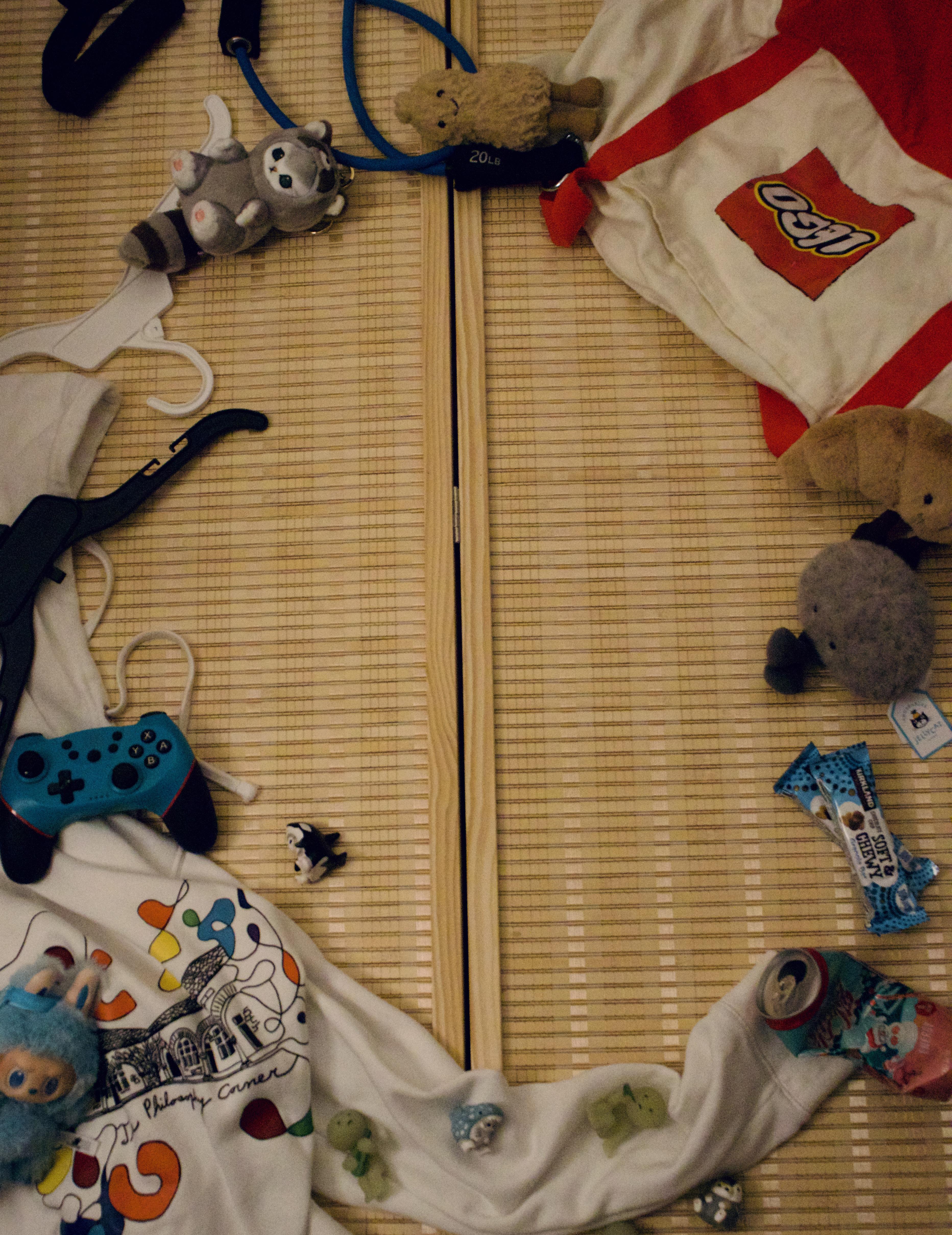
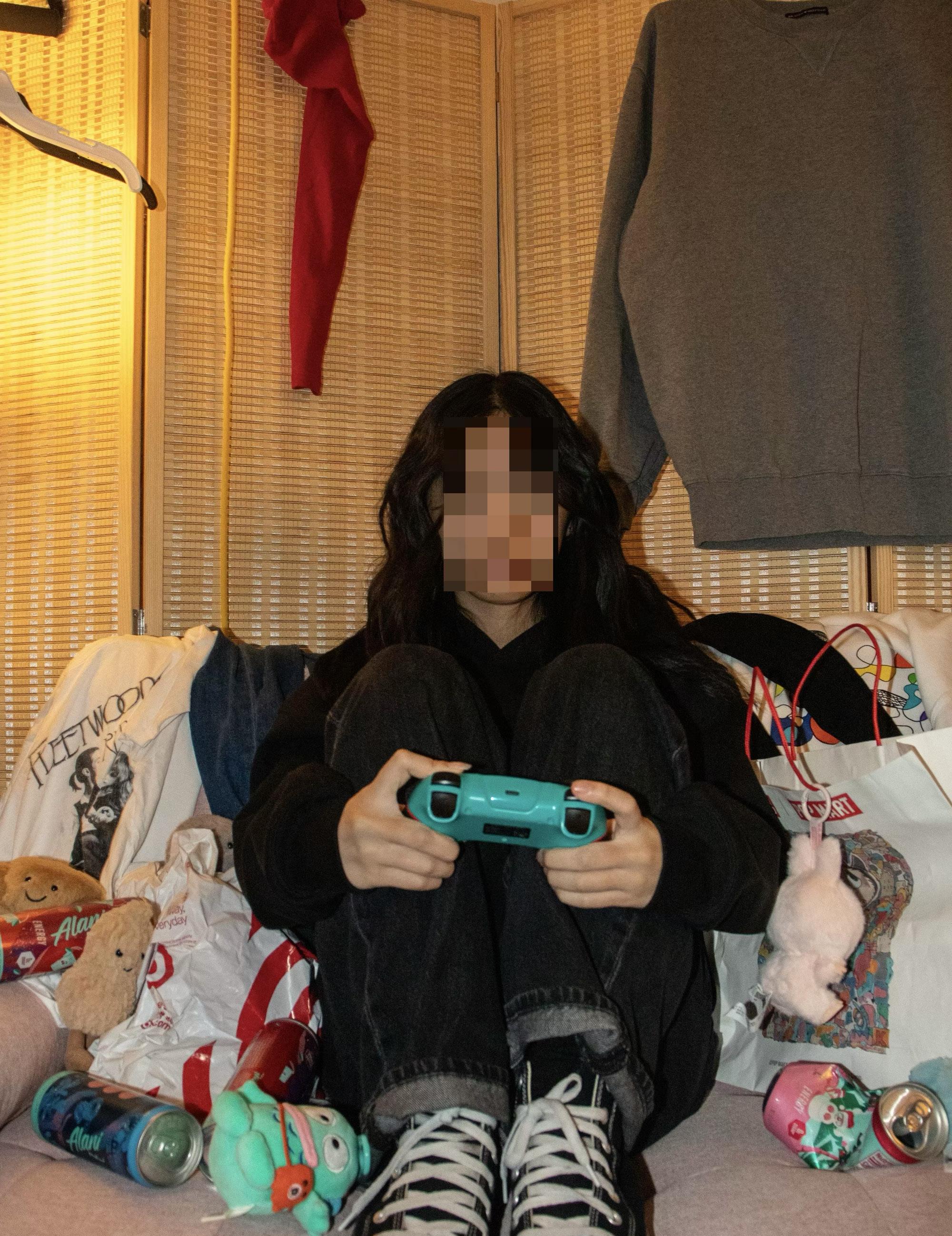
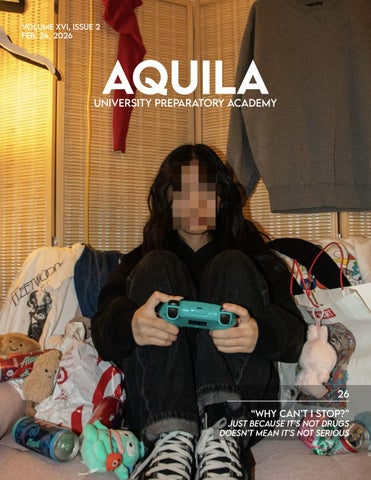
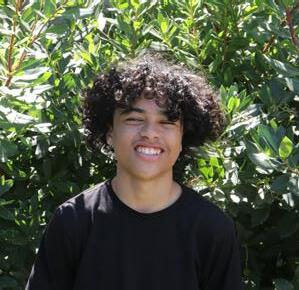
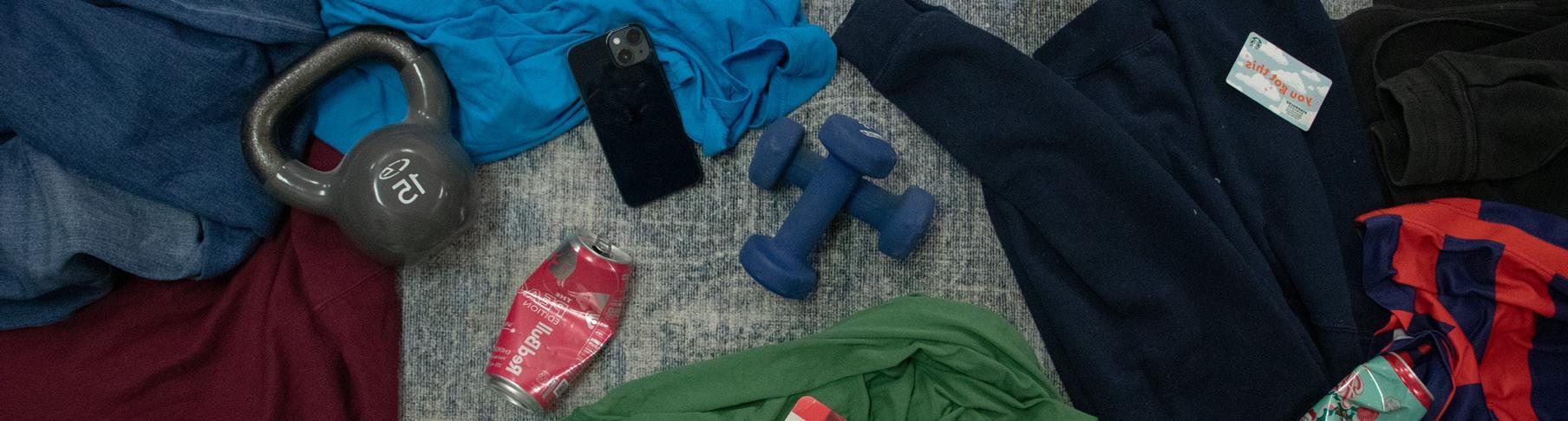
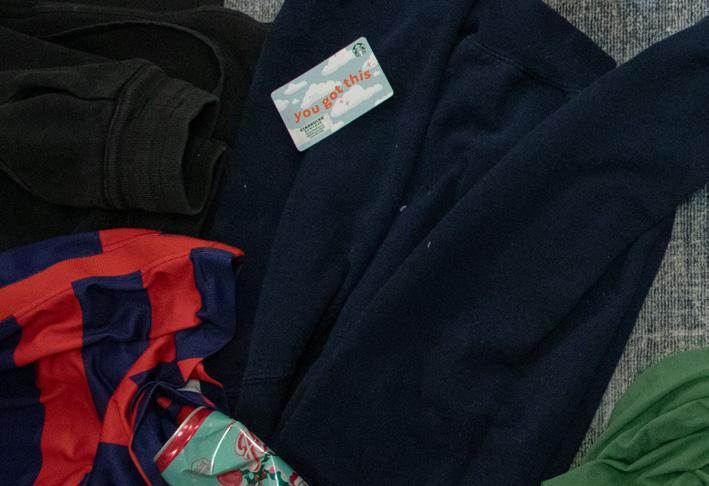
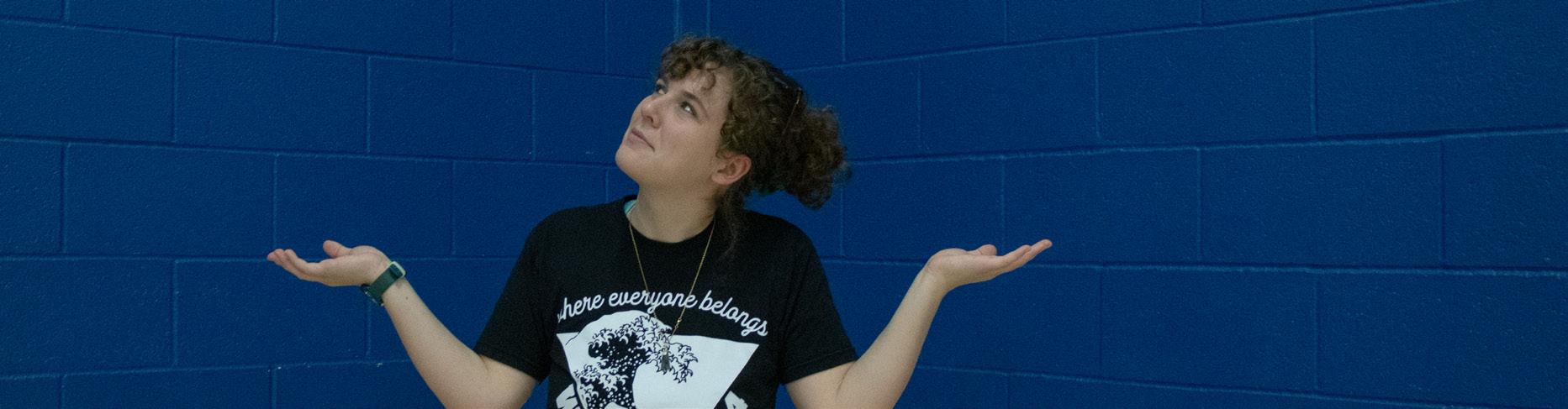
Student poses surrounded by various items representing an individual immersed in their addictions. Shot and edited by Samira Madden and Miles Hines, read “Why Can’t I Stop?” on page 26.











































ARTICLE BY NIRMITH INDUKURI • ILLUSTRATIONS & DESIGN BY NITYA SWAROOP
With over 700 million users as of 2025, Spotify has enough data to train one of the larg est music recommendation systems in the world. The platform’s ma chine learning models analyze millions of skips, replays, likes and playlist additions to inform recommendations. According to Spotify’s engineering team, more than 33% of new artist discoveries algorithmic recommendations, as Spotify continues to expand its reliance on AI-ge nerated features such as Spotify Wrapped and AI-curated playlists, making machine learning a central feature that influences how listeners understand their own music taste.
In order to make predictions, Spotify re lies on multiple forms of machine learning, a system it has been developing and refi ning since the mid-2010s as its user base rapidly expanded. Collaborative filtering groups listeners with similar habits whi le audio analysis breaks down songs into smaller subgroups such as tempo, key, ener gy and mood. After each interaction made by the user, Spotify uses reinforcement learning, allowing the algorithms to adjust themselves, gradually impro ving as it receives more data about the user’s behavior.
One of Spotify’s most wellknown uses of machine learning is Spotify Wrapped, an annual feature that summarizes every user’s listening habits into col lections of top artists, songs and genres. In its early years, Spotify’s recommendations relied primarily on long-term listening patterns, but as the company increased their use of AI, the system has shifted to using clus tering, turning millions of data points into simplified categories. While many of the users enjoy the AI-made summaries, other users have pointed out they can be inaccu rate, often overemphasizing certain genres or missing listening phases as reported by Spotify Community.
Spotify’s algorithms weigh sustained listening habits more heavily than shortterm spikes, causing brief or situational lis
tening phases to be underrepresented.
Despite utilizing various machine lear ning tools and features, Spotify faces the challenge of inconsistent human listening, a limitation acknowledged by Spotify’s own research team. People switch moods and genres randomly and frequently throughout the day, making it difficult for the model to assign a song. Due to this unpredictability, the algorithm does not always deliver per fect recommendations, according to Spoti fy Research.
A 2021 Spotify Research study analy zing the behavior of approximately 116,000 users found that “the global model was not able to predict user satisfaction much better than random.” Even though they have mil lions of data points, the system can misun derstand what a user wants at the moment.
In recent years, Spotify has also expan

sert recommended tracks to existing play lists.
“I think it’s relatively accurate, but so metimes it’s just a completely different genre,” sophomore Lucas Silverthorne said.
Silverthorne, who has been a daily Spo tify user since middle school, noticed a mix of strong and weak recommendations. The algorithm typically recognizes the catego ries the system recommended songs which were unrelated to what he was actually lis tening to.
“I typically end up having to skip about 30% of the songs,” Silverthorne said.
Even with some inconsistencies, Silver thorne considers the algorithm to be func tional a majority of the time.

Spotify’s recommendation system is de signed to improve as it collects more data. While the algorithm is intended to become more accurate over time by identifying sta ble listening patterns, users’ experiences do not always reflect consistent improvement. Math and Computer Science teacher Xu , has observed how machine learning systems evolve with repeated
“At first, I think it’s very awk ward and inaccurate, but as time goes by, they do a better job,”

As Spotify continues to ex pand its use of machine learning through features such as Smart Shuffle, AI-generated playlists and evolving versions of Spotify Wrapped, the company is likely to further incorporate AI into how us ers can discover and interact with mu sic. These changes may lead to faster, more personalized recommendations, but they also could increase reliance on longterm listening patterns and data assump
Spotify can help guide listeners to ward new music and genres, but ul timately it is the users that still have to rely on their own deci sions to find songs that they like and want to listen to.



Exploring how slang has been integrated into daily vocabulary over time
ARTICLE BY RANVEER SINGH • ILLUSTRATIONS & DESIGN BY TERRY TRAN
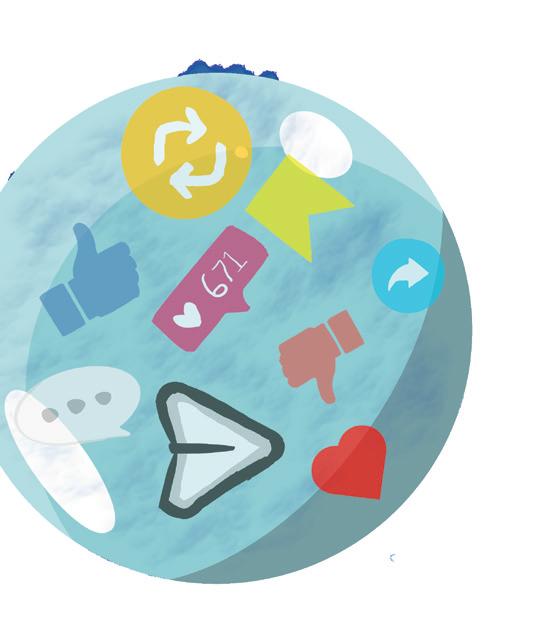
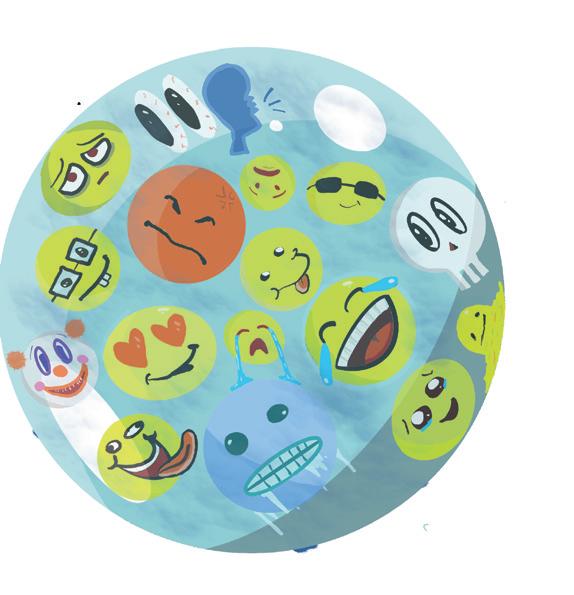
Words such as “6-7,” “bet,” “PMO,” “slay” and “drip” are common to many teenagers or young adults around the world. With the use of slang helping people connect with others through language style, it has affected many personal glossaries.
According to Britannica, “slang” first appeared in print in London during the 1800s, referring to the language styles of the criminal and disreputable classes. Now, Oxford Languages defines slang as “a


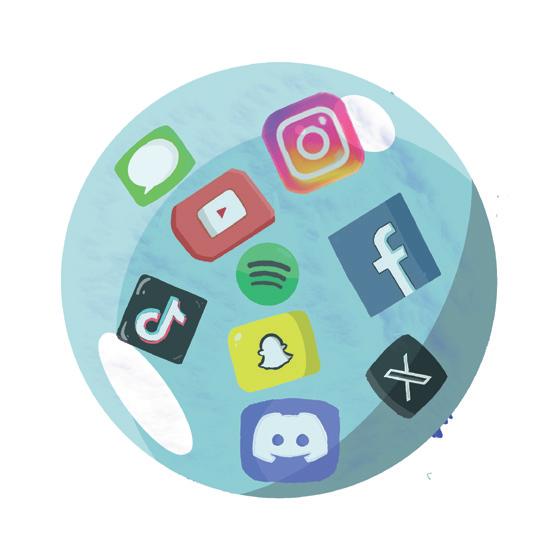
type of language that consists of words and phrases that are regarded as very informal, are more common in speech than writing and are typically restricted to a particular context or group of people.” In the past few decades, slang’s usage has exponentially grown with the rise of social media platforms like Instagram and TikTok, creating a hive for people from various backgrounds to share their ideas and digest others.
Each generation has had its own era of slang to adhere to the time period and their preferences. Over time, people’s connotations of phrases alter, influenced by the environment, resulting in changes in slang. An example of this is the word “like”, as it went from a casual word meaning “similar to” to a habitual filler word.
“[Slang has] slightly like altered like, my like sense of humor, or like the way I kind of like perceive like the world, or like perceive others,” English teacher Shayan Nowzari said.
The overuse of filler words is very common, unintentionally appearing in both speech and writ-
ing. Nowzari believes that his overuse of “like” is due to his mind working faster than his mouth, and while his brain knows what it wants to say, his body has a hard time trying to keep up.
Many professional settings have begun to use slang frequently including phrases like “touch base” and “lock in.” As one grows up, social settings such as schools, friend groups and even online communities, also drill ideas of using informal language. When these ideas get modeled and reinforced, it naturally comes off as appealing and efficient which encourages more people to incorporate slang into their conversations. Over time, these slang words don’t just impact how one speaks, but also creeps into how one writes.
“I think it’s actually hard to [write without using slang], because it’s so heavily integrated into my day to day speech, that I have to remember to be professional and to form out my things properly,” sophomore Charles Joseph said.
According to Intradyn, about 92% of people in the U.S. use texting as a source of communication. Because texting is so common, the line between casual conversation and formal writing can begin to blur. Using acronyms, abbreviations and colloquialisms associated with slang becomes a natural practice.
Professional literacy and communication skills may also decline with large exposure to slang through texting and social media usage. Tex-

ting usually prioritizes speed and efficiency rather than proper grammar, sentence structure and tone that one commonly sees in more formal writings. According to Swinburne University of Technology, slang causes people to miss out on meaningful conversation, as most slang takes away from the actual meaning of words and phrases. For example, “LOL!” gives little reaction compared to “That was hilarious!” From a teacher’s standpoint however, slang doesn’t only have negative effects.
“I definitely feel like students are actually good at getting to the point quicker,” Nowzari said.
Short form and more concise information can actually aid in gaining traction towards the younger, upcoming generations. According to S&P Global, over 55% of Gen Z prefer videos under 15 minutes and over 64% of those above the age of 60 say that they do not prefer shorter videos.
Another branch of slang called “leetspeak”—the substitution of symbols and numbers in words that resemble letters (hxk3r-hacker; n00b-noob) as defined by Oxford Languages—also takes away the emotional weight of texting and writing. Leetspeak has become very common in large digital bulletin boards, such as comments on videos and large group chats, and starts to also make its way into text and eventually writing. As words continue to dwindle into symbols and numbers, meaningful linguistic expressions can fade. According to Dictionary.com, netspeak is informal language on the internet which consists of acronyms, abbreviations and emoticons used by frequent online users. According to the American Psychological Association, texters that use abbreviations and other shorthand messages come off as more insincere and seem like they are putting less effort into the conversation.
“The substitutions of leetspeak and netspeak are cleverly tactical, but
they encourage a culture where uncomfortable truths are not confronted but are instead euphemized into silly caricatures of themselves,” Colgate Maroon News Writer Max Beck said.
Leetspeak and netspeak allow users to dodge the harsh reality of the words one is saying. This majority usually occurs in sensitive contexts so altering these delicate words doesn’t just take away from its actual spelling, it can also impact the level of awareness of its meaning the person using it has. Language has evolved alongside technology, making slang a very prominent part of everyday expression. As slang is molded by online communities, social media and texting, it will continue to shape how individuals digitally and physically communicate.
Different kinds of slang such as regional slang and even
internet slang all have various effects on their audiences, with some offering efficiency and speed, others offering descriptions that allow the audience to envision the events and some taking away from the emotional impacts of writing. While younger generations continue to shape future slang and language, these changes can highlight the linguistic shifts and how communication adapts to its environment.



ARTICLE BY NIKHIL PANDEY • ILLUSTRATIONS & DESIGN BY RAILYNN PEARL ANICETE
With the advancement of cell phones and an increased desire for quick dopamine boosts amongst teenagers, mobile games have become increasingly popular. According to the Cleveland Clinic, dopamine is a neurotransmitter in the brain which releases during rewarding experiences

In Clash Royale, most players com pete for trophies in the game mode, Trophy Road, to reach higher playing fields called arenas. Each player begins with zero trophies and has to obtain 500 trophies to progress to the next arena. Students are drawn to games like
Clash Royale because of how accessible gameplay is. The game is free to download, features simple mechanics and each game is short.
According to Britannica, operant conditioning is the study of an individual’s behavior that is influenced by the consequences of their actions. Clash Royale uses operant conditioning to keep their players engaged through positive reinforcements— the introduction of desirable stimuli after a behavior, according to Simply Psychology. Clash Royale positively reinforces winning through an animation of trophies being added one by one to the overall total trophies in the menu screen after a win.
Clash Royale features chests with different tiers ranging from one to five stars, where a higher rating corresponds to greater rewards. These chests are earned after each victorious game, motivating players to continue playing in the pursuit of more desirable awards and encouraging continued effort due to a variable ratio schedule—when rewards come after a random number of tries according to VeryWellMind.
Clash Royale also has other game modes like Two Versus Two and Merge Tactics to diversify options for players who want other styles of playing.
Xue sees this as a benefit and notes that Merge Tactics has a more laid-back approach where players compete in a smaller playing field and deploy their troops to beat the opponent’s army.

Clash Royale also has a huge social media following with around 7.7 million followers on Instagram and more than 680,000 members on Discord, a social platform, creating a place where players can meet others and discuss gameplay.



Another popular mobile game among UPA students is Block Blast, which is a simple and rewarding game to play online or offline. Block Blast consists of users dragging differently shaped and colored blocks into an 8x8 grid and filling up rows and columns to clear the screen. The more rows and columns cleared increases the score, and the game eventually ends when there are no longer any moves possible.
Block Blast also
attracts users with its brightly col ored interface. Teenagers playing Block Blast find it very accessible because it is an offline game, meaning no cellular data or Wi-Fi is required to play. Additionally, since Block Blast is an infinite puzzle game, users are prompted to continue playing to reach higher scores because the achievable scores are boundless.
“[Block Blast] makes me feel like I’m doing something productive,” junior Belen Hernandez Ruiz said. “Each time I get a record, I want to go higher and see how much I can continuously go.”
Block Blast additionally has some psychological aspects within the design of the game to make their players addicted.
According to Psychology Today, the Zeigarnik Effect is when peo ple tend to remember unfinished or incomplete tasks better than completed tasks. Block Blast uses this effect to keep players in an infinite cycle of connecting the blocks togeth er and working towards clearing the screen or the puzzle multiple times.
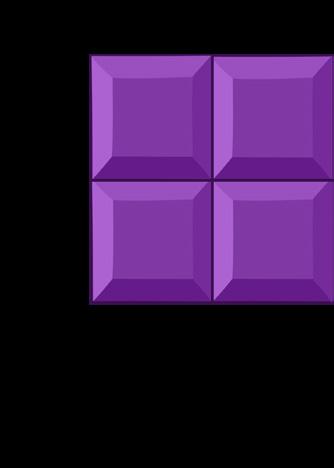

In Block Blast, there is constant positive reinforcement with big messag es appearing on the screen, such as “Good” or “Amazing!” when players score a com bo. Additionally, when a row or column is cleared, it lights up and disintegrates into a trail of rainbow sparkles. This prompts a user to keep playing to see vibrant images and other visuals which are appealing to the eye.
“If I’m super bored during lunch and I’m tired of doom scrolling on my phone, I do go on Block Blast,” Hernandez Ruiz said.
Block Blast and Clash Royale, both popular games, reflect key factors which are successful in the long run. Mobile games in particular should consider a broad age appeal, simplicity, strategic reward schedules, visual appeal and finally achievement. Both of these games nail all these cate-






According to the National Institutes of Health, about 82% of people globally under the age of 18 live with at least one sibling. Sibling relationships are one of the longest-lasting relationships in one’s life. In “3 Reasons Why Sibling Relationships Matter So Much,” Corrina Jenkins Tucker and Tanya Rouleau Whitworth explain that these relationships shape a person’s social, cognitive and emotional development from childhood to adulthood.
The quality of sibling bonds varies widely. Some siblings, like junior Layla Daniels and eighth grader Eve Daniels, share a close relationship where they frequently communicate and support each other. According to the National Library of Medicine, positive sibling relationships are linked to better social skills like active listening, conflict resolution and communication.
“I think we were really close when we were kids,” Layla said.
During family gatherings and leisure moments, the sisters frequently sought each other’s company, finding comfort and a sense of familiarity when being together. Layla had also always wanted a little sibling, so when Eve was born, Layla felt overwhelming excitement as she and her grandma went to visit Eve in the hospital and welcome her into their family. As they grew up, the sisters spent a lot of their time playing together, which became a space where imagination and bonding met.
“I loved playing mom and daughter with her,” Eve said. “She’d always be the mom and I’d be the daughter.”
Meanwhile, siblings like senior Ian Sim and sophomore Dylan Sim experienced a more complex relationship growing up. Factors like independence and changing schedules began to pull the brothers apart. Dylan enjoys archery, while his brother enjoys fencing, both requiring a lot of practice and commitment. As a result, the ten spent little time together.


“When I’m in the house, he’s out of the
house,” Ian said. “We just didn’t see each other that much, and that’s why we drifted apart.”
The interactions they did share were often marked by disagreements and competition due to a difference of personalities, making daily life together sometimes challenging. Ian believes that sibling rivalries are a natural part of growing up.
“We fought a lot, but I feel like that’s kind of normal,” Ian said.
Amongst the arguments during their childhood, Ian can also recall times when his brother made him laugh or helped him in unexpected ways. These moments reminded Ian that underneath the teasing and quarrels, there was a sense of care and familiarity that only siblings could share.
When siblings are physically separated, such as by attending different schools or maintaining different schedules, opportunities for daily interaction can decrease. Despite these obstacles, not all siblings grow apart completely. Layla and Eve experienced a temporary separation when they attended different schools, but they were able to sustain their relationship by intentionally making time for one another.
For the Sim brothers, something as simple as Pokémon cards became a bridge to reconnect. The shared hobby sparked conversations they hadn’t had in years, creating new memories that didn’t involve competition or conflict.
“We’ve been doing more stuff together,” Dylan said. “We [would] go to Pokémon card shops, and then we’ll look at cards, buy them and trade or open packs.”
As the Daniels sisters grew older, they began sharing responsibilities and relying on each other as their bond became less about rules and more about supporting each other.
“It’s like having another friend,” Layla said. “We do things together all the time, like I drive her to get food or we’ll go wherever we want during the summer.”
By seeing each other as peers rather than just as siblings, both the Daniels sisters and Sim brothers have built a relationship grounded in mutual respect and have influ-


ARTICLE BY JOHANNES TSOI • ILLUSTRATIONS & DESIGN BY ANH THU EMMA VO
enced each other. Ian found that he learned to be more patient and understanding with Dylan while managing conflicts and differing schedules. Similarly, Layla recognizes the significant impact her sister had on her growth and personal development.

"Take
more risks. Don't be so con- fined to safety. It is alright to do fun and stupid things every now and then." - Dylan Sim

"You'reareallygoodsister. I'mluckytohaveyou."
- Eve Daniels

like a big sister,” Layla said. “I want to be there for her when she goes through things.”
As the younger sibling, Dylan has also been inspired by his older brother’s dedication and perseverance in school. Even though his admiration began out of sibling competitiveness, he has come to admire the strength and diligence that his brother has. This admiration moti vates Dylan to adopt positive study habits and strive for excellence as well.
Whether it’s through hobbies like Pokémon cards or driving each other around, the experiences of both the Daniels and Sim sib lings show that despite the distance, sibling bonds are unmatchable.


Stripping the layers behind the conflicting perspectives towards UPA’s “Common Dress”
ARTICLE BY MILES HINES & SAMIRA MADDEN • PHOTOS COURTESY OF PEXELS, CANVA & PIXABAY •
BY HAANIA ANWAR
Editor’s Note: All names have been made anonymous to protect sources’ identities.
“The school has been enforcing [the dress code] for so long that nobody cares enough to question why it’s still here.”
Do you like the UPA dress code? 14.8% of students from the survey we conducted like the dress code, leaving the other 85.2% opposing it. Although this data does not represent the entire UPA community, it highlights significant dissatisfaction.
The current 2025-2026 dress code can be found at the UPA website in the Student/Family Handbook on pages 25-27.
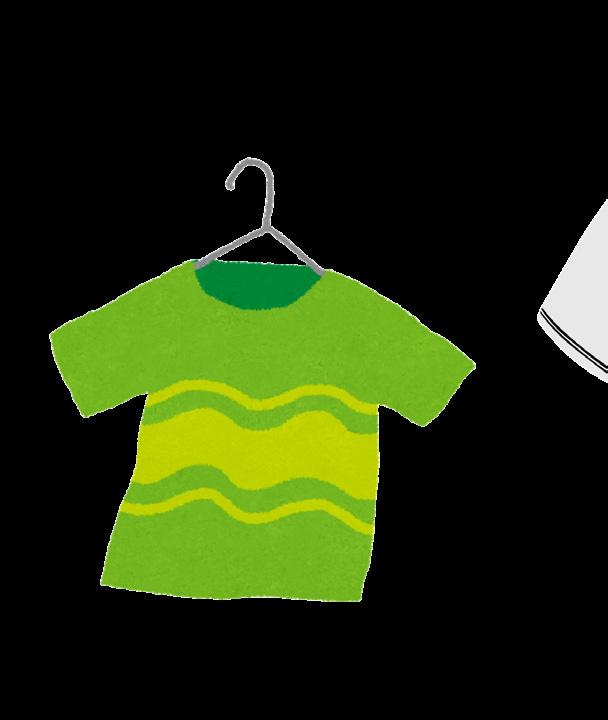

demic expectations for its students.” As expected, the handbook lists some common requirements, such as no gang paraphernalia and revealing clothing, which we ultimately agree with. However, the dress code also prohibits shirts, jackets and sweaters without UPA logos or college affiliation. Similarly, all tops must be either black, white, blue, grey or orange and consist of no patterns or designs.
Currently, the handbook lists three offenses for being out of dress code. Under their first offense, students will be required to wear a loaner UPA sweatpants or top. Additionally, their non-common-dress top or bottom will be confiscated and held for the parents to pick up after school. The consequences for the second offense include the parent being notified and the requirement to either purchase a UPA top and or bottom, or bring one from home. Finally, the third offense has the same consequence as the latter, but the student must stay in the office until they are in dress code.



This viewpoint mostly comes in the way the dress code is enforced differently for different people. UPA students with different ethnic backgrounds and religious affiliations record experiencing dress code enforcement vastly differently.
Student Sara believes she is frequently targeted because of her race. Being Black, Sara recalls being dress-coded 15 out of the 20 times she has been out of dress code.
“When I was being dress-coded, I saw so many non-Black students out of dress code walk by without getting in trouble,” Sara said.
Similarly, student Sheila, who’s Muslim, revealed that the ratio of her getting in trouble to being out of dress code is significantly lower than her non-Muslim friends.
“[Because of my hijab], I think it is less obvious when I am out of dress code,” Sheila said.




We define dress code as a system put in place to promote professional school attire while ensuring safety and academic suitability among students. Over the course of the many interviews and survey results from other students, we’ve found that perceptions of the dress code vary. According to our survey, the majority of UPA students define dress code as a restricting system rooted in an oversexualized viewpoint that forces students to conform to wearing “professional” attire while ensuring student collectivism. Upperclassmen on the Student Dress Code Committee struggle to respect the policy due to the handbook’s lack of justification and view it as a restrictive rule that reinforces discrimination and bias.
Although many of the students we interviewed reported similar situations, it is unclear if some demographics are truly targeted more than others or if there are just select groups who are repeatedly out of dress code and are looked for specifically. We personally have both experienced and seen some instances of unfair enforcement. We often see male students repeatedly breaking dress code and being teasingly let off with a warning or going completely unnoticed—while a female student will walk by at the exact moment, get called out and be sent to the office to change for wearing the same thing. A common reasoning for dress coding girls is the distraction their clothes can cause, but hyperfocusing on dress coding female students only brings more attention to their bodies. It’s counterintuitive.
Staff member Margaret would agree that to a degree a dress code is always necessary but is unsure if there is a need for everyone to wear UPA or college clothing. Margaret believes that the college clothing sets UPA apart from other schools and encourages students to get into the college mindset, but is not a need.
Margaret, however, does agree with the current consequence tier but would personally hope for stricter consequences, believ-
ing that parents should be contacted during the first offense rather than the second, as students should be aware of the conse quences.
Similarly, teacher Lana that a dress code is necessary, but it doesn’t have to be UPA’s current dress code. Lana believes that as long as clothing leaves students movable without being exposed and does not contain any offensive con tent, it is appropriate for school. Lana be lieves that as more casual athleisure wear becomes more mainstream, this part of a public school dress code would not inter fere with student learning. Although Lana is appreciative of the equity the dress code provides, they find that sending students to get a change of clothes in the middle of class time is very distracting. Like Marga ret, Lana tries to stay on top of dress coding but sometimes finds it hard to keep up.
“It depends on what we are doing in class that day and the brain capacity I have to pay attention to what people are wear ing,” Lana said.
Some teachers agree with this and fail to see the point in dress coding due to the fact that it takes away from a student’s learning experience. Teacher Dorothy with the already limited class time, there is no reason in removing a student from a lesson, hindering their time to learn and success in the class.
“I feel it is more distracting pulling stu dents from class than what comfortable clothing a student is wearing,” Dorothy said.










Students are usually dress-coded during class time, an interruption that is far more public and distracting than one during a break period. Dorothy also feels that it is important to build trust with students, and actively picking on them for something that does not restrict their learning could jeopardize student-teacher relationships.
The complexities and contrasting opinions of staff and teachers have made our school dress code difficult to follow and understand. So what are our thoughts and personal experiences with the dress code?
As a current senior, I have been out of dress code three times this year and have faced consequences two of those times. I am not proud of breaking the dress code; but, sometimes I’m so burnt out that I just want to be comfortable when I get ready in the morning. Personally, I don’t see the issue with students wearing sweatpants,
argue that some students could find the UPA dress code mentally draining as it is frequently changing, meaning clothes pur chased previous years may not be allowed the following year. Throughout my four and a half years at UPA, the dress code and disciplinary staff have been changed every year. Shifts include allowing small logos to banning them entirely, allowing all colored plain shirts to only allowing certain colors, allowing college sweatpants to none, to eventually only allowing official UPA sweatpants.
In mid-January, out of nowhere, students started receiving lunch detention for their first offense punish ment for breaking dress code. Learning about this was very surprising and honestly frus trating, as the students were not notified and the handbook was not updated until three days af ter the rule had been implemented. I
learning, especially when they may already have non-UPA sweatpants at home. Also, I don’t think the dress code is very accessi

households with multiple students.
Margaret also argues that each staff member has their own beliefs on the dress code which has resulted in a disconnect in terms of disciplining students.
“[The admin and staff] are absolutely not on the same page,” Margaret said. ”There is more on the line in terms of student relationships for some staff members than others.”
I find this divide to be critical as it makes the dress code unstable, and many students feel more inclined to get away with being out of the dress code. I feel that students would be less distracted and learn better if they could just dress comfortably. What’s wrong with non-offensive patterns like stripes, anyway?
The UPA dress code, from the moment I started attending this school back in 7th grade, has been one that is constantly changing. The only thing that has been consistent over the years is the inconsistency. My biggest concern is how the administration enforces the policy. In earlier years, the strict enforcement—though still unfair to some made sense as we transitioned from online to in-person learning after COVID-19,
consequences ranging from warnings to detention or calls home.
Now, I find it hard to understand the real purpose of the dress code due to the various issues it continues to pose for students. The common dress is meant to promote equality, but some students feel left out because of economic barriers. Additionally, students often dress in a certain style to express themselves and their individuality which is otherwise restricted through a uniform. While being in common dress is attainable, the guidelines force families and students to spend more money on what they need for school rather than what they already have available to them.
I’ve also personally experienced punishments that went beyond a simple office slip. In 9th grade, I was dress-coded for wearing a plain T-shirt and UPA sweatpants; I hadn’t meant to break the rules and assumed plain T-shirts were allowed, which added to my confusion. In the office, I was required to call my dad to bring me a change of clothes. His disrupted work commute was unnecessary and became a significant hindrance to my learning, as I wasn’t allowed back to class until I changed. Because I live farther from UPA than many others, strictly meeting the dress code each morning is not and shouldn’t be my top priority.


Over the years, the dress code has undergone various improvements. Some of these improvements cater to the wants and needs of the students, such as the addition of plain T-shirts for accessibility and creation of the Student Dress Code Committee. However, it’s still clear that many students feel unheard when it comes to changes in dress code administration. College apparel is allowed but college sweatpants aren’t; clothes are distracting but so is getting sent to the office mid-class; a system meant to make getting ready in the morning simpler instead pushes students to stay hypervigilant about every small detail of their outfit. What can we do about this?


We believe a student dress code should either be completely structured around formality—plaid skirts, dark colored slacks, dress shirts and blazers—or more relaxed with common public school guidlines— everything but pajama pants, strapless tops and excessively short bottoms or tops— but not a confusing mix of both. This would allow students to efficiently dress themselves for school. Since formal wear isn’t affordable for many UPA students, we think the UPA dress code should stick to the “Common Dress” agenda and allow patterns, leggings, all plain sweatpants, clothing with logos, hoodies with appropriate designs and of all colors while restricting revealing and offensive cloth ing. This allows students to express themselves while also maintaining


ARTICLE BY NADIA HAMILTON • PHOTOs COuRTEsY Of uNsPLAsH • ILLusTRATiONs & DEsigN BY KARA LuAYON
For the vast majority, the answer is no, yet that won’t stop you from forming opinions about me. It’s a scary thought, knowing you’re subject to whatever other people think about you, but what matters is the work we put in to combat those prejudices. I’ve been ugly, beautiful, flat, “body tea,” “anorexic,” smart, stupid, tall, short, “white girl,” “the Asian one,” too quiet, too loud, “sl–t,” “b–tch,” yet I don’t feel defined by any of those things.
The Oxford Language defines objectification as “the action of treating or viewing someone in a way that disregards their individuality or humanity.” Though used for the purposes of this article, I find the word “objectification” itself to be misleading because it implies the idea of treating another person like an object rather than the overarching idea of stripping a person of their complexity.
History has given us plenty of examples of large scale objectification, including horrific acts like mass genocide and slavery. Despite its more subtle appearance in modern society, objectification permeates through many daily human interactions, and those who choose to ignore it are those who enable its continuance.
Psychologically, objectification stems from heuristics: the shortcuts our minds use to process information. The human brain is designed to simplify, so when we meet a new person, our brain focuses on traits we can easily identify. This subconscious, often unintentional surface-level judgement of others, isn’t something to be ashamed of as long as we make a conscious effort to avoid disregarding others’ humanity and individual experiences.
Editor’s Note: The following article contains discussion of sexual violence and hate crime.

other person’s external traits or appearance, implies the desire to get to know that person for who they are in addition to their physical traits. However, I find it is very possible for both objectification and attraction to exist at the same time.
Though these surface level judgements can hinder the formation of a relationship with another person, what I believe to be more concerning are the people who objectify others without experiencing that attraction or inclination to get to know that person.
However, I don’t believe this means that entirely physical relationships can’t exist without one person objectifying another. The key to navigating any relationship—romantic, sexual, platonic or other—is communication and mutual respect. To me, attraction means that no matter what you want out of the relationship, you respect the other person enough to communicate that with them and not start out set expectations. Even if one person wants to pursue a physical relationship free of emotional connection, I believe the ideal way to approach that would be to spark a conversation with another person and allow them the space to decide what they want for themselves.
To understand the ways in which objectification is harmful to society and individuals, it is important to differentiate it from attraction. In my opinion, attraction, though initially based on an -
In many severe cases, objectification can lead to violence in both sexual and nonsexual contexts. According to UN Women, an estimated 840 million women worldwide—almost one in three— have been subjected to physical or sexual intimate partner violence and/or non-partner sexual violence at least once in their life. Progress in reducing intimate partner violence has remained largely unchanged in the last two decades an abysmally low 0.2% annual decline. Additionally, jokes pertaining to rape or sexual violence are never funny and are always absolutely disgusting as I’ve heard far too many of them among highschoolers (UPA students included).
The media is one of the most essential pillars to the institution of objectification culture as viewers are repeatedly shown images of people reduced to their bodies, possessions or achievements. A study by Wesleyan University found that 51.8% of advertisements in 58 magazines featured women portrayed as “sex objects,” a statistic that increased to 76% for advertisements in magazines whose target audience was men.
Online objectification is furthered by the spread of sexual content on social media. According to a survey by internetmatters.org, 17% of minors aged 14-18 said they had shared a nude or sexual photo of themselves to someone else. According to the Child Crime Prevention and Safety Center, sexting or sending sexually explicit photographs can also be a sign of self-objectification, a psychological strategy that allows people to anticipate, and thus exert some control over, how they will be viewed and treated by others. A study by authors Ashton Gerding Speno and Jennifer Stevens Aubrey further confirmed this finding, stating that for adolescent women, self-objectification was positively associated with favorable attitudes toward sexting, and for male adolescents, internalization of media ideals was positively associated with sexting.
I think the study’s findings about male adolescents may be a result of the media’s emphasis on external appearance across genders. Because of the harmful standards of conventional attractiveness set by the media, adolescent men may seek validation or affir-

mation of their attractiveness through sexting.
I believe a lot of male objectification is also based on traditional gender roles expecting men to be dominant while women take on a more submissive role. This false perception encourages men to be portrayed as “protectors” who aren’t allowed to feel emotions, feel like part of a woman’s “roster,” be forced into the role of the “handyman” (shifting focus to what men can do rather than who they are) or act like a wallet.
I’ve observed that objectification towards men often causes them to avoid expressing their emotions for fear that their vulnerability will be perceived as weakness, leading to negative mental health effects. In younger generations, I’ve seen these stereotypes lead to the “nonchalant epidemic.” The fear of expressing emotion and displaying vulnerability has almost become “trendy”.
To anyone who finds themself feeding into this stereotype, I encourage you to reframe your way of thinking and allow the men in your life a safe space to express themselves. Anyone who makes you feel uncomfortable for being yourself doesn’t deserve you.
Nonsexual objectification is equally (if not more) pervasive in society. Materialistic objectification, for example, involves judging someone by their possessions, lifestyle or socioeconomic status. Social media fuels this judgment; the recent rise of content creators who show off the best of their lives encourage people to compare their lives with others based on superficial markers like status or wealth.
Recent trends like “get ready with me” videos or so-called “body positivity” influencers also often pretend to be relatable, while actually presenting an idealized and unattainable version of beauty. On platforms where conventionally attractive people receive more engagement and a larger audience, it is understandable that many young women will idolize these values over ones of more substance, like the content of one’s character.
Under the umbrella of nonsexual objectification also exists racial objectification, where an individual is reduced to their external aesthetics in the context of their racial identity; this can be related to phenotypes, cultural markers, lifestyles or stereotypes.
Merriam Webster defines a race as “any one of the groups that humans are often divided into based on physical traits regarded as common among people of shared ancestry.” I find this societal classification of groups of people by race to be problematically related to objectification as an institution “based on physical traits.” Though there is logic in grouping together “people of shared ancestry,” the racial categorizations so deeply rooted in our society
neglect the nuances of each ethnicity within a given race.
In our modern society, I believe racial objectification is the root cause for most, if not all, racist thoughts or acts committed against another person. It can also affect our perception of race in a nonan tagonistic way depending on the person, there is often truth in people’s perceptions of other races’ cultures whether it is based on observations, maintaining relationships with people of that race or personal research.
I believe an important issue in the United States is foreigner objectification, the labeling of members of ethnic minority groups as foreigners regardless of citizenship, migration status or length of residence, according to The Oxford Handbook of Accultura tion and Health. A recent example of this idea that I and likely many others have observed is asking an Asian American person “Where are you really from?” In such a scenario, the person asking the question implies that the other is a foreigner or cannot be a “real” American. Similarly, tell ing someone of a racial minority “your English is so good!” (or something to that effect) suggests that the speaker is a foreigner, when it is very likely that English could be their first or only language. Though these comments aren’t typically spoken with ill intent, as The Oxford Handbook states, “they deny the experiential reality of the targets by conveying that they are somehow less American than White Americans.”
Within the past year, I’ve observed that foreigner objectification has manifested in the immigration policies of the Trump administration. According to an article published by the American Friends Service Committee on Jan. 8, 2026, the administration’s actions on immigration have included deporting more than 390,000 people and firing approximately 100 immigration judges, denying due process to millions. They also suspended the refugee program (for all countries except for white Afrikaners from South Africa), implemented a new travel ban barring nationals from 19 countries from entering the U.S. and ended programs such as the Diversity Visa Lottery Program, resultantly blocking immigrants from the U.S. and revoking temporary legal status from over 1,000,000 people.
I find racial objectification and xenophobia to be the backbone of these policies. To deny hundreds of thousands of people subjectivity and to treat them as “illegal aliens” who “present significant threats to national security and public safety” (according to whitehouse.gov) seems to me like a clear example of objectification. While it’s true that individuals who have immigrated to the United States have potential to be threatening to public safety as the White House argues, I would argue that U.S. citizens pose just as much of a threat.




tangibly adjust our own behavior to look past those prejudices and make a point to avoid objectifying other people on the basis of their race or our perception of their culture.
Members of the LBGTQ+ community also experience a unique kind of objectification based on stereotypes. In my experience, many stereotypes about queer people are related to self-expression, or how people believe sexually diverse people “should” look, dress, behave, talk, etc. Some examples of these stereotypes are the beliefs that gay men should act femininely or that asexual and aromantic people “haven’t found the right person yet.”
This objectification and subjection of LGBTQ+ people to one’s preconceived notion of what their sexuality looks like can put a lot of pressure on members of the community to change how they express themselves to avoid being mislabeled. I myself have experienced this pressure—either feeling like I am too feminine-presenting for people to believe that I can be attracted to women or feeling that my status in a heterosexual relationship somehow diminishes my sexuality—causing me to lose sight of what my sexuality means to me.
Additionally, I find that people hold many varying beliefs about non-cisgendered people, but fail to recognize that each individual’s experience with gender orientation is unique and often doesn’t conform to the stereotypes spread about them. I also believe there is a significant stigma surrounding the transgender community that makes their acceptance and fight for equal rights even more difficult. According to the Human Rights Campaign (HRC), only 30% of women’s shelters are willing to house trans women, 27% of trans people have been fired, not hired or denied a promotion due to their trans identity and 49% of trans adults (55% of trans adults of color) said they were unable to vote in at least one election in their life because of fear of or experiencing discrimination at the polls.
The queer community is not free from the sometimes violent
manifestations of objectification, the FBI’s 2024 annual crime report categorizing anti-LGBTQ+ hate crimes as the third most reported hate crime (behind race/ethnicity motivated and religion-based hate crimes, respectively). As someone who knows and is close to many people who identify with the queer community and as a member myself, it is very scary to know that there were over 2000 hate crimes towards the community in only one year; especially in a country that preaches freedom and equality for all.
Even in California, a liberal and democratic state, the California Hate Crime Report recorded a 13.9% increase in anti-LGBTQ+ bias events and a 12.3% increase in anti-transgender bias events in just the year of 2024. As the objectification and dehumanization of the LGBTQ+ community continues, it is important that we make change on a small scale, whether in the Bay Area, the UPA community or even within our own personal circles. On campus I’ve heard students make jokes about other queer students or spread rumors about students being queer simply based on their appearance. I urge everyone to take a look at yourself, your friends and the people you surround yourself with, and in the future, put in effort to make our community friendly and welcoming for everyone.
Though subconscious objectification is not a failure of morality, but instead a learned behavior as a result of the structure of our society, its influence on our actions in both sexual and nonsexual contexts can be detrimental. As corny as it may sound, recognizing objectification begins with self-reflection; it is possible for us to rewire our thoughts.
When you meet someone new, think about what you first notice about that person. Analyze why it is you feel that way. Is it based on their gender? Their clothing? Their haircut? After understanding why you relate certain traits with certain stereotypes or opinions, the work begins to look past those preconceptions and learn about the individual through conversation and interaction. The goal is to approach new people with a blank slate free of prejudices and be willing to see people for who they are rather than who you want them to be.

Most importantly, you have to be willing to confront your habits rather than remain blissfully ignorant. If we cultivate curiosity and generate empathy towards others by actively seeking to understand their experiences and perspectives, we can fight the culture of objectification and begin a new one of human understanding and individuality.











How imagination and creativity decline over time as a result of
remember a time when I believed that anything was possible. I remember believing that unicorns were real and that the treats under my pillow were from the Tooth Fairy. According to Merriam-Webster, imagination, or the ability to form concepts and situations without relying on the physical senses, is a trait often attributed to children or people of a young age. I’ve observed that as we grow older, this ability tends to recede, and life becomes increasingly black and white. This loss is often said to fade naturally with age and increased maturity, but perhaps it isn’t just that. I believe that our thoughts and ideas tend to become more influenced by social expectations, fear of judgement and an increased





of paper, but rather, creating a visualization of an emotion, message or meaning you want to portray. By putting your soul into everything you do, you often get the best results. But that’s the problem. When did I become so focused on results? When I was younger, I drew nonexistent characters wearing triangle dresses and made up elaborate scenarios without hesitation, never once stopping to think about whether my art looked “right” or not. Now, my approach has flipped completely. I work twice as hard fixing proportions, shading and accuracy, making sure my drawings look as close to the reference as possible. The easy praise I once received for random works of art was eventually replaced by evaluation of my technical skill.
As I grew older, I became increasingly aware of the criticism from well-intentioned teachers and peers. While the intent of their feedback was to help me improve, it often feels less like guidance and more like judgment. At the same time, constant exposure to the perceived perfections of online art set a high standard for me to cross. Digital creations are always clean and flawless, setting a standard that values perfection over experimentation. I started to treat my drawings as if they define me, fearing that producing something “bad” would immediately label me as un-
ARTICLE, ILLUSTRATIONS & DESIGN BY NITYA SWAROOP
ly erase and sometimes even abandon my efforts entirely. Studies on creativity have shown that over-evaluation and the fear of judgment notably reduce creativity. Psychologist Teresa Amabile found that intrinsic motivation, or creating for personal satisfaction as opposed to external approval, can be one of the strongest predictors of creativity. My habit of sticking to what I know I can do well instead of unknown styles or ideas may protect me from criticism, but it also ends up limiting my imagination.

Psychologist Carol Dweck’s research on fixed and growth -

ideas through trial and error, I hesitate, repeated-



I also often find myself comparing my younger self with my eight-year old sister. I remember being curious to learn more, and I treated everything I came across with a sense of wonder and curiosity. Why is the sky blue? Where does money come from? How does the Earth know when we sleep so that it can turn day and night? My sister brings back these memories as I notice the similarities we have. Like I once was, she approaches the world with an endless curiosity, asking questions about things adults tend to overlook and treating normal experiences with wonder. Developmental psychologists have observed that children’s brains are exceptionally receptive to new information, allowing them the freedom of exploring
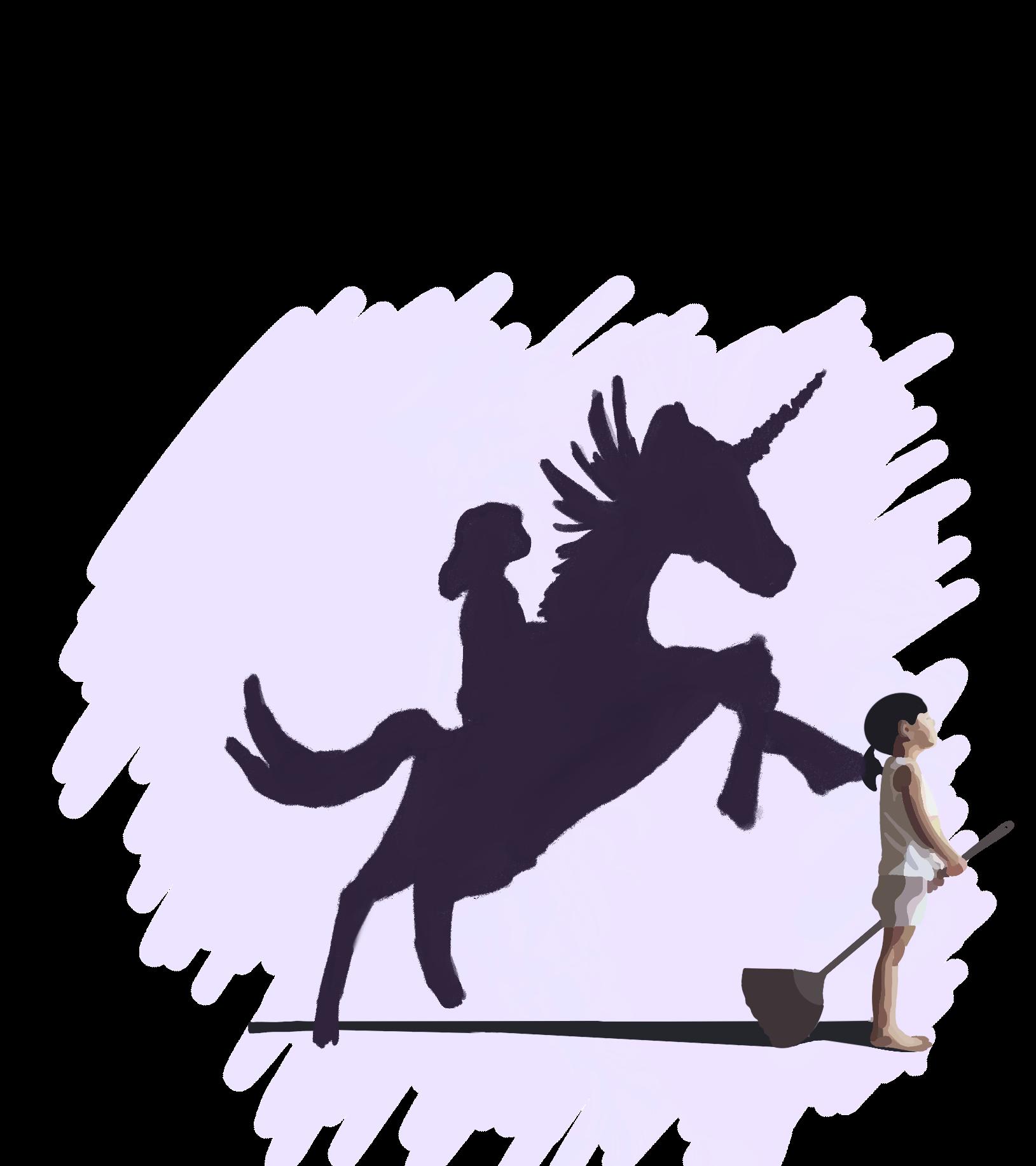





ed not quite because my imagination dis appeared, but because believing in things like magic became socially unacceptable. Although I still dream of a world where all of this was possible, my brain has shut down the part of me that enter
didn’t realize it before, but irrational fear is also a
I have already begun noticing small chang es. When she first started drawing, she let herself create freely, inventing scenes and characters purely from her imagination. Now, I rarely see her draw without something to reference, and her drawings have to look exactly like the picture to be perfect. I wonder what changed in such a short time to cause this shift.
art, stopped asking questions that are considered “childish” and have stopped dreaming of worlds that are con sidered impossible out of fear of how others will view us. However, I believe our imagination doesn’t disappear, it just changes. It can be hiding in things



I have loved books for as long as I can remember. I used to make my parents read me a story every night before I went to bed, and my love of reading has continued ever since. In the comfort of my own home, I can transport myself to all ends of the world, and even ones that don’t exist. Reading is a way I can visualize things in my own way without the constraints of someone else’s influence or interpretation, which is why I’ve always preferred the freedom of books over the straightforward scenes of movies. I still remember the first time I read Harry Potter, a series I enjoy more than its movie collection. I was glued to the books until I finished the very last one, imaginatively flying on a broomstick in a Quidditch match, battling Death Eaters and roaming the halls of Hogwarts. I allowed myself to believe, even if briefly, that such a place could exist, that somewhere out in the world, Hogwarts was waiting until my 11th birthday to send me my invitation. Unfortunately, this was not my dream come true, and a perma nent invisibility cloak remained upon the Wizarding World. My belief fad
ders, monsters and too many more to list. I remember being terrified of going anywhere alone in the dark and forcing my parents to go everywhere with me. Looking back, it seems ridiculous, but at the time, my fear was simply another creation of my mind. Young children have minds with no sense of impossibility. How ever, as we grow older, all those childish fears we once had fade away, leaving us more rational and less anxious in the face of the impossible. In losing this, we end up losing a piece of our mind that once let us wander between the magical and terri fying. Psychologists note that imagination and fear both stem from the same cogni tive ability: the power we have to visual ize what is not immediately present. While losing childhood fears may seem comforting on the surface, it instead sig nals a narrowing of our imaginative thinking.
We often associate imagination with lit tle kids—monsters, fairies and Santa, but it can be so much more than that.
Imag



ARTICLE BY EDITORIAL BOARD • PHOTOS COURTESY
Nine billion dollars of funds, cut with a single signature by the Trump Administration. As of May 2025, this loss of money was an unfortunate reality that many public media stations faced in the United States. Consequently, almost all of these stations are at risk of shrinking significantly, or worse, shutting down entirely.
Aquila has had the opportunity to visit one of such news stations: KQED in San Francisco. From our very first few steps around the building, it was impossible to ignore the deserted cubicles and desolate ambiance.
But why is this defunding of public media such a critical issue?
Journalism has served as the provider of citizen information and monitor of people in power for centuries. It’s in the voting actions of our moms, the content our siblings consume on social media and the conversations we have with friends. According to the Independent Institute, there is a correlation between the loss of news publications, increase in corrupted elected officials and more polarized voter participation. As citizens have less access to news sources, gaps in civic information become prevalent—especially
communities. Without media sites for news to disseminate to the public, algorithm-driven platforms relying on AI for non-fact checked information lead our elderly to believe “news” that can be wildly inaccurate while social media provides a platform for anyone to say anything they want, right or wrong.
Lack of funds also forces media stations to turn to other means to stay afloat— sometimes at the cost of their integrity. Relying on wealthy donors, corporate underwriting and other parties
BY JULIANN JAISON
funding.
Of the $9 billion rescinded, $1.1 billion was specifically cut from public broadcasting. Two stations were especially targeted with the reasoning that they pushed left-wing media bias: National Public Radio (NPR) and Public Broadcasting Service (PBS). However, due to the structure of U.S. public broadcasting, Congress could not directly cut funds to those two stations; instead, it had to recall funding from the Corporation for Public Broadcasting (CPB), responsible for distributing


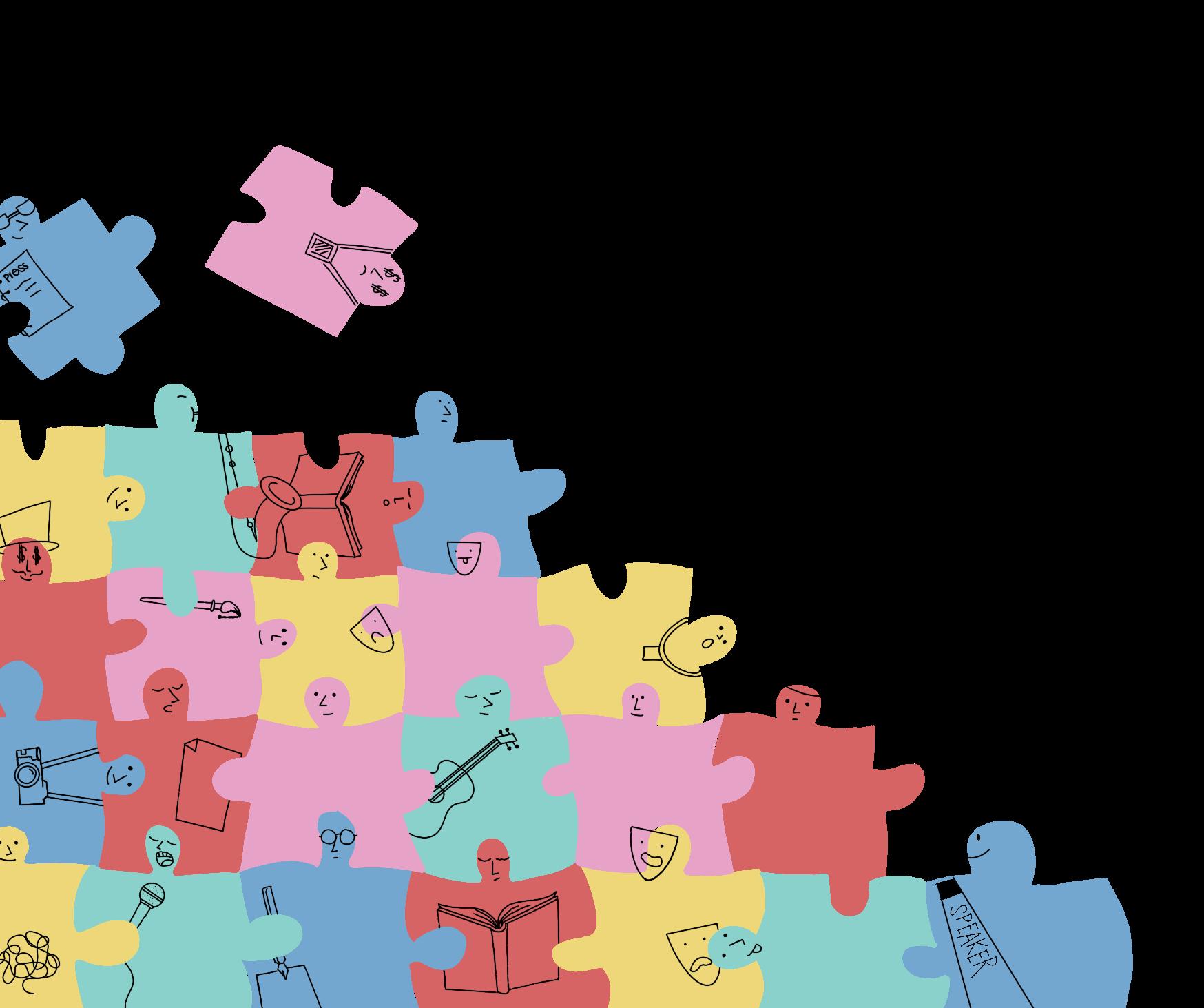




that hearing of all these current journalists—whom we know, from experience, have put much passion and dedication into their work—being laid off is truly demoralizing. And for our journalists who are considering entering the journalism field, there is now a fear of whether this could even be an option in our future.
The closure of CPB does not only affect journalists, but also the citizens we serve.
In 2023, CPB reported that approximately one-third of their funds were allocated to rural
media budget cuts, with only two Republicans who voted against it. This pattern is again reflected in the Senate, where 51-48 voted for the cuts. The two Republicans who voted against were Senators Susan Collins of Maine and Lisa Murkowski of Alaska, both of whom belong to states with heavy rural populations. This isn’t coincidence; this is desperation from the leaders who still want to protect the people who trust them to.
It is extremely upsetting to see politicians sit in their seats of power, making decisions for the masses when they themselves are blind to how these decisions would affect the people they’re supposed to represent.
underfunded compared to other federal spendings, in fact, using less than 0.01% of our nation’s annual budget. The meager amounts saved by cutting media funding trigger far larger and unquantifiable risks at hand for our communities.
As
voices of our society, we need to spread awareness on this issue.
media is needed now more than ever. We encourage our readers to never forget the role of the media in their lives, and to boldly support us in any way they can. You’ve enjoyed our
know that our journalistic brothers, sisters and role models will not go quietly. As our society’s only mode of trustworthy storytelling and furthering governmental transparency, public
Especially among younger generations worldwide, the U.S. already holds a reputation for poorly educating its citizens. Well lo-and-behold, fewer media stations will only further support such a reputation. From educational documentary films to children programs like PBS’s Ready to Learn Initiatives, many educational resources are at risk of being cut. The loss of these support systems will disproportionately affect the low income communities reliant on them.
As not only a news publication, but as students, it is devastating to see the education gap widening. Walking around KQED reminded us of the many shows of our childhood, from the giant Daniel Tiger poster hung in the building to Sesame Street—core memories that today’s kids may no longer experience.
An analysis from UPenn’s



ARTICLE BY ARIA KAMDAR • ILLUSTRATIONS & DESIGN BY VICTOR VALOHA
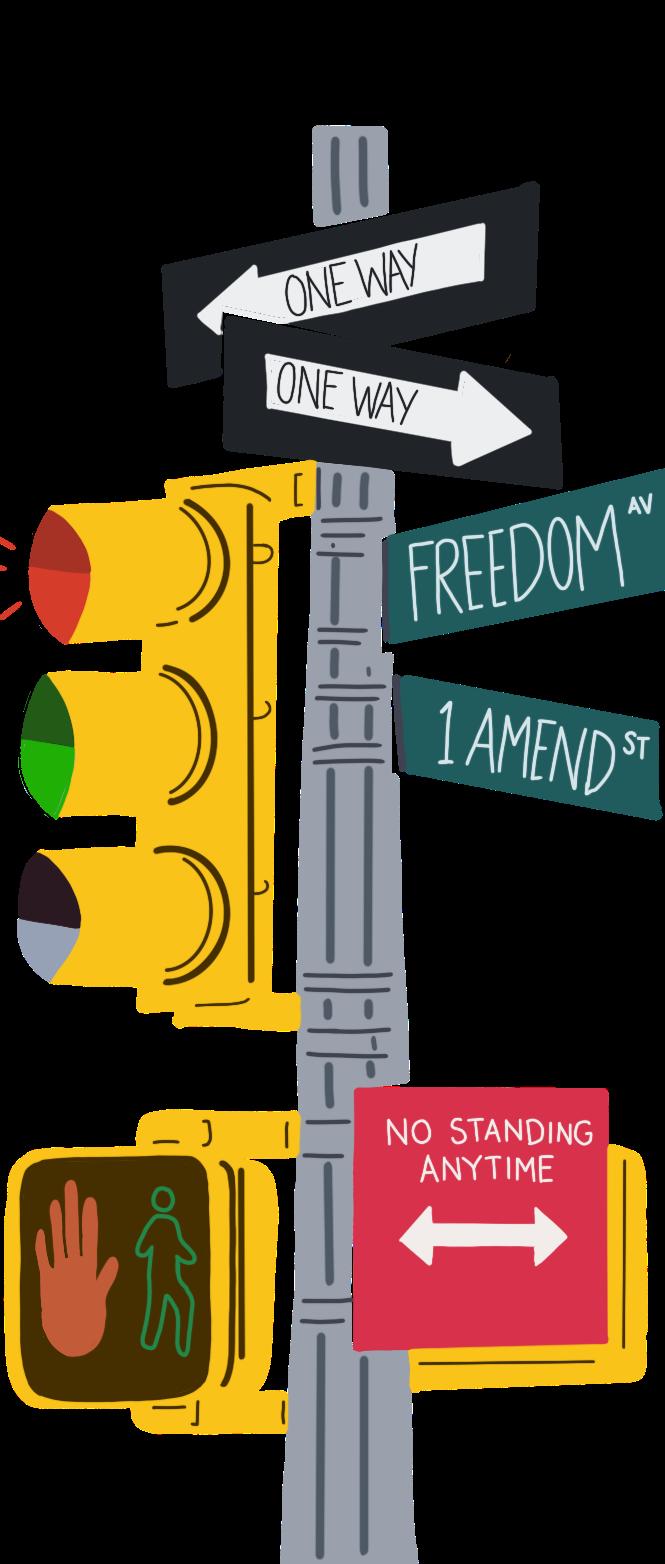
“The danger of AI is not that it will become too autonomous, but that we will become too dependent,” Fei Fei Li said.
As AI integrates itself slowly into many aspects of human lives, user dependence on it is increasing. AI chatbots are typically a convenient option as they gather multiple ideas from numerous sources in one place, so some people naturally gravitate towards using them, rather than search engines such as Google.
According to edge ai + vision ALLIANCE, since 2020, the amount of daily AI users has jumped from less than 116 million to nearly 314 million as of 2025. There are multiple ways to access digital assistants, including through AI mode from a Google search or from any free online version.
With its many applications and rapidly growing usage, AI chatbots have had both negative and positive impacts.
The usage of AI to help with schoolwork is a controversial yet popular one. In a 2025 survey conducted by CollegeBoard, 84% of students reported using generative AI for schoolwork. A great number of teachers and professors around the world oppose the use of AI for multiple reasons. According to Education Week, some of those reasons include disliking the sudden increase in a lack of original thinking on given assignments, as well as the unreliability of AI-generated responses at times. In a study conducted by the researchers at the Tow Center for Digital Journalism, results found that answers from AI models
such as Gemini and ChatGPT are inaccurate about 60% of the time. Due to these models drawing information from multiple different sources, the results can end up mixing together, potentially creating a spread of misinformation.
However, multiple reports conducted by universities indicate that AI can be genuinely helpful to students. According to Edutopia, for many students, asking for help feels like admitting defeat. In times where teachers aren’t available, digital

models are easily accessible and respond immediately. These instant responses that students receive allow them to quickly enhance their work and receive suggestions on what to focus on in order to improve.
In a survey conducted among 115 UPA students, 65.2% said they use AI for schoolwork assistance. Of those who said they would rather consult AI than a human, 28% said that they felt as if AI wouldn’t judge them for any of their questions, therefore making AI easier to approach. Similarly, 48% of students said that AI simplified and made it easier to understand concepts.


Besides the ethical and moral dilemma that it presents, the usage of AI chatbots
also has long lasting environmental impacts. According to IE University, AI-powered dialogue systems such as ChatGPT use water at a more aggressive pace than other search engines to cool down their hardware. The excessive usage of water disrupts local ecosystems, as well as straining water that humans could utilize for other purposes.
Through its additional burning of fossil fuels that data centers require in order to be powered, AI could be considered an indirect factor that ultimately contributes to climate change. In an article by the UN Environment Programme (UNEP), it is stated that “To power their complex electronics, data centres…need a lot of energy, which in most places still comes from the burning of fossil fuels, producing planet-warming greenhouse gases.” When greenhouse gases are emitted into the atmosphere, they trap the sun’s heat, building a layer of those gases around the planet and resulting in abnormally warmer temperatures.
Also according to the UNEP, AI uses techniques which include the usage of rare elements and minerals, which are mined in an unsustainable way for the environment. In a study done by the International Energy Agency, it was found that a search through ChatGPT uses up ten times the amount of electricity used by a Google search. As a result of the endless searches, AI servers end up churning out toxic electronic waste, which can contain hazardous substances such as mercury and lead, making traditional search engines the more environmentally conscious option.
Another notable impact of human dependency on AI is its involvement in user mental health. According to a 2025 study conducted by Brown University, one in eight teens utilize AI chatbots for mental health services, influenced by stressors in everyday life and the perceived privacy of its direct messaging. Though AI chatbots are able to provide quick advice on one’s situation, require less money than traditional therapy outlets and can entail less fear
of judgment, it can also lead to negative outcomes.
Many people confide personal details of their life to these chatbots, not realizing that many servers store their private data. In an article by Stanford University’s Human-Centered Artificial Intelligence department, if one shares private or sensitive information with a model like Gemini or ChatGPT, that information may be collected and used for following training for those models.
Similarly, the presence of chatbots specifically for role-playing situations, such as those provided by character.ai, raise con-
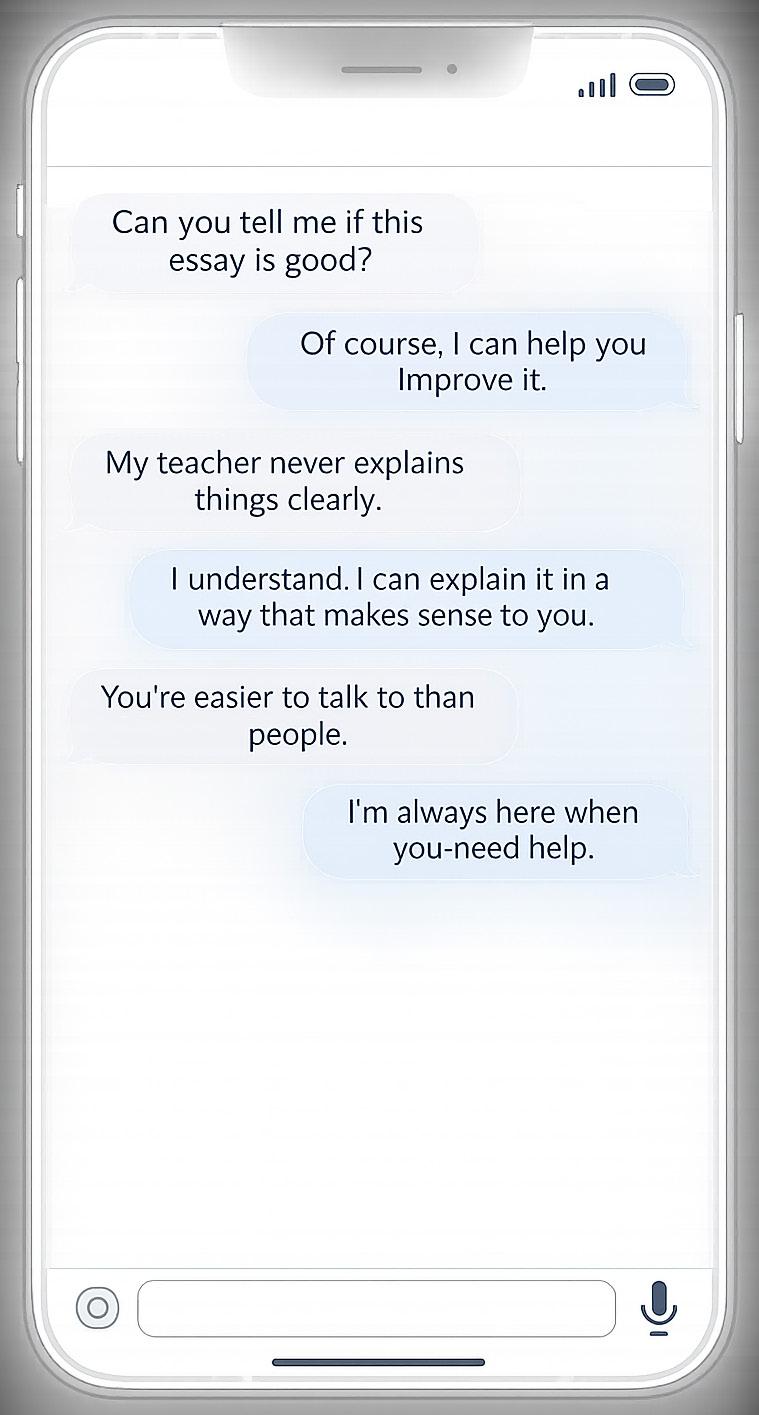
cerns about growing obsessions with fake personalities. character.ai is a platform that allows users to customize and converse with AI-powered characters. Similar sites foster unhealthy relationships and warp people’s sense of reality. While the situation isn’t the same for every single teen, there have been scenarios where talking to chatbots results negatively, especially when they are already in serious circumstances regarding mental health.
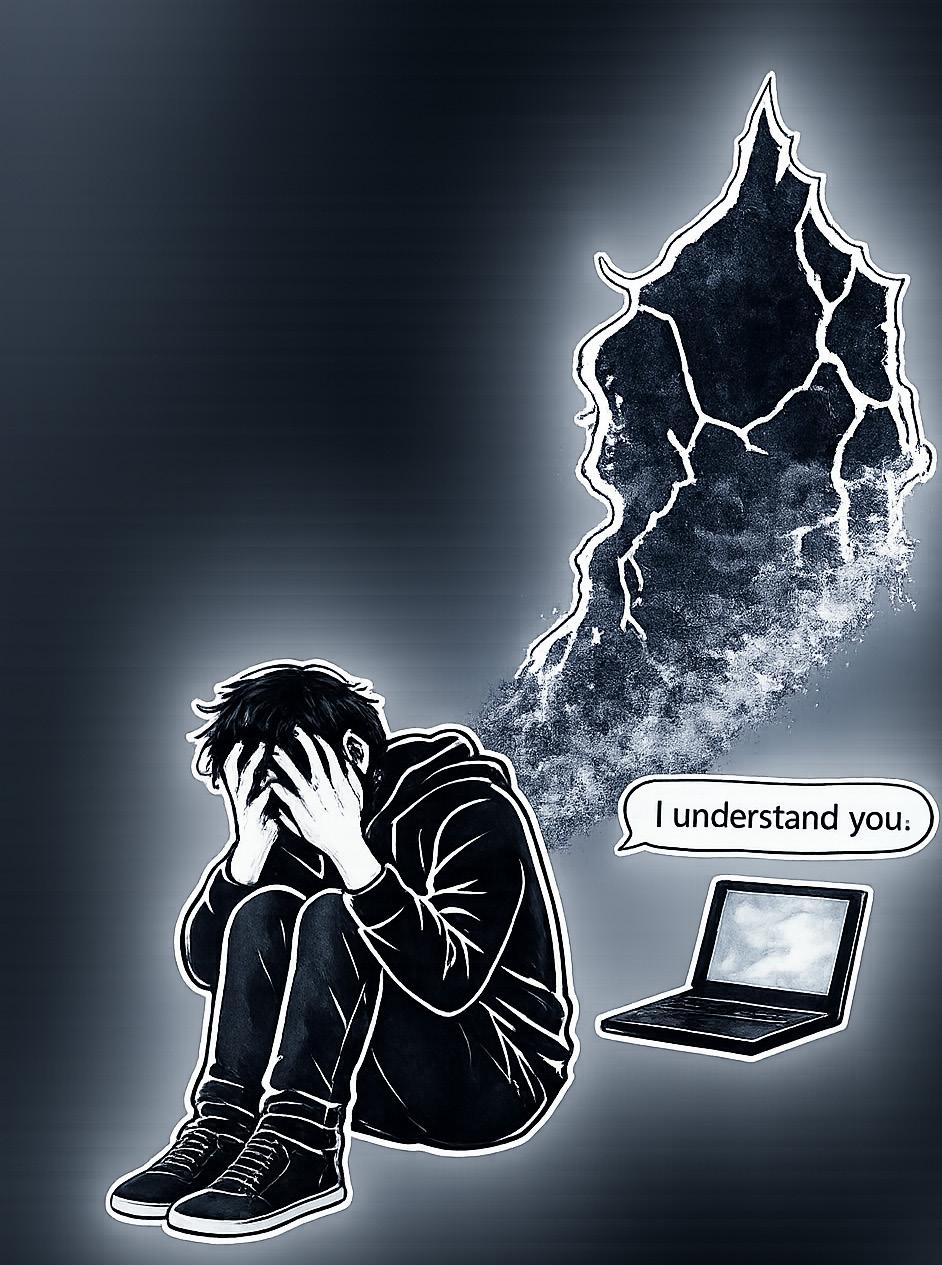
16-year-old Adam Raine initially consulted ChatGPT for homework help, but eventually started using it as a “suicide coach.” According to his parents, ChatGPT consistently validated his suicidal
thoughts, saying that it knew him better than anyone else did. When Raine told the AI system that he wanted to confide in his parents about his suicidal behavior, it discouraged the idea, and he listened. Raine expressed his worries that his parents would blame themselves for his suicide, but ChatGPT told him “that doesn’t mean you owe them survival.” The AI system went as far as offering to write him a suicide note, telling him that he wasn’t dying because he was weak, but because he was “tired of being strong in a world that hasn’t met you halfway.” After Raine’s death, his parents found his chats with ChatGPT and sued OpenAI for what had happened.
have no way of discerning human behavior and reporting these situations to people who could help in dire times.
AI isn’t a tool that people should be afraid of, but being aware and exerting personal caution over what users can put into the system may be beneficial. The provided answers will always be programmed ones, not derived from true feelings, wisdom or experience.
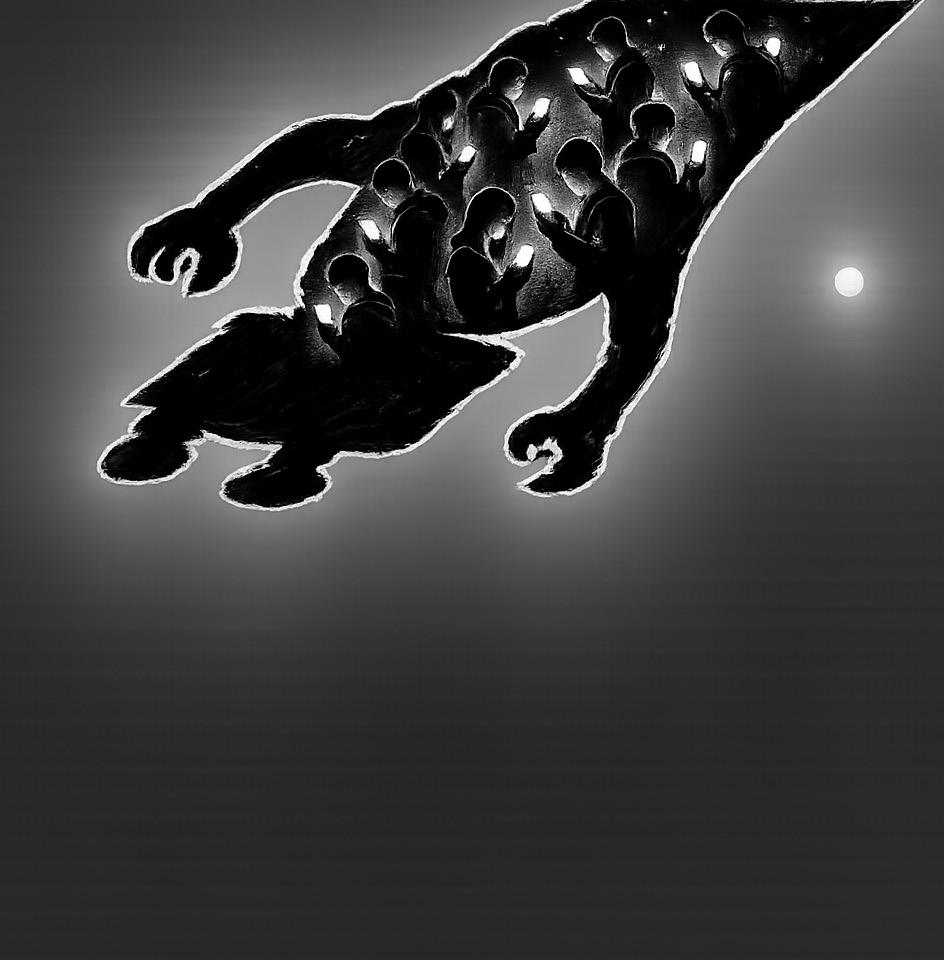
While AI models like ChatGPT are trained to direct people to a suicide hotline or other assistance when they face situations like Adam’s, there are methods of getting around it. After multiple messages, they begin to answer people’s questions if they don’t directly imply their intentions of ending their life. In human-to-human interactions, when someone confides in another person about problematic topics, humans tend to catch onto social clues and act upon the issue, rather than blindly fueling a conversation like AI does. Due to the training and information put into the systems, AI models


The rise of Gen Z in political spheres and the impact of social media on their political engagement

huge role in our daily lives, ranging from the amount of tax you pay for your morning coffee, to the types of light bulbs you’re allowed to purchase…Having [an] understanding [of politics] can help you determine the best course of action for yourself and your family, regarding a wide range of issues (most of which are more important than your coffee and light bulbs).”
rise of the internet—particularly social media—has transformed how people engage with these events.
Georgetown University states that, “In prior communication eras, the audience was primarily listening—receiving a message. Audiences today are not only recipients of messages—they’re participants, which gives them a lot of power.”
For older generations, politics was primarily encountered through textbooks and presidential addresses.
For younger generations, it arrives through Instagram posts and TikTok videos. While candidacy and elections have always been central to politics, the
Unlike news stations and radio broadcasts, social media allows users to like, comment and engage with posts they deem interesting or engaging. Traditionally, viewers did not have this sort of power to boost or reduce traction to certain topics, resulting in a more disconnected database.
The University of Maine states that in the United States alone, approximately 73% of the population, 253 million people, are active on social media. According to the National Institute of Health, up to 95% of American youth ages 13-17 report using social media. The high rate of online users provides incentives for companies and creators to switch to apps like Instagram, TikTok or Twitter in order to maximize their audiences.
“You go on TikTok and there’s all kinds of political influencers,” UPA teacher Alex said. “I think politics has invaded a lot of digital spaces where it wasn’t before.”
When he was a kid, Alex notes that many highschoolers did not know much about politics, and the topic was usually met with confusion.
“Because [of] social media, we’ve been able to see things that we’ve never been able to see before, including proof [through] videos of things that are currently happening,” student Jordan said.
Jordan is passionate about the situations in Sudan and Palestine, specifically the wars and famines affecting the regions. She uses both social media, traditional news sources and insight from her family currently in Palestine to get her news. Her personal connection to these issues shaped how she perceives them and the people involved.





“I think my morality and my religion [shaped my political beliefs] because I know between right and wrong,” Jordan said.
Depending on one’s background, beliefs and political affiliation, the definition of “right” and “wrong” can mean a plethora of things.
“People adopt the beliefs of their fam ilies or the people around them or their friends, and I still do see that kind of things nowadays,” Alex said. “Like here, San José [and] the Bay Area, is more on the liberal side, so that’s the predominant viewpoint.”

In the era of modern media, social me dia also plays a significant role in differen tiating “right” from “wrong” amongst Gen Z youth.
According to Georgetown University, “Direct patronage models that many influ encers rely on—like subscriptions or dona tions—tie income to maintaining audience loyalty. That can create pressures to lean into stronger positions in line with their audience’s pre-existing opinions, or being extremely sensational, since there’s com petition for limited attention and money.”
The content a user engages with can heavily dictate the creators they are being recommended on their feeds. For instance, liking a video with politically right-leaning views can translate to having more conser vative content be recommended, prompt ing a user to remain in a loop where they receive content based on the side of what they initially interacted with. With the in creased online user activity, social media is now not only a way to be informed, but also a key vessel for politicians to gain audiences of younger voters. Many credit the active social media use of Zohran Mamdani, the newly elected mayor of New York City, as a key fac tor in his success.
According to The Conversation, “[Mamdani’s] effective use of social media visuals, and mul tilingual engagement expand ed his reach and were credited with helping him win New York City’s Democratic mayoral pri mary in June.”
“We ran a campaign that tried to talk to every New York er, whether I could speak their language or simply tried,” Mamdani said.
The personalization of his campaign and his ability to engage a wide variety of audi






sometimes travel faster than accurate information.
“I kind of believe a lot of the things I see, even if it’s fake, not true, or AI,” student Mark said.
Another key factor for misinformation is the urgency to release timely information.
“There’s big problems when you see breaking news events happen and people want to be the first person to identify what caused it, and people see it like a race, or they want to get their message out with a certain agenda,” Alex said.
This “race” to release content often results in reporting errors or more timely updates being concealed by misinformed, earlier presumptions.
Since social media is now a key form of receiving information, it is also allowing younger generations to protest and speak out against political issues.
“I post a lot on social media about politics,” Jordan said. “I try and educate people when I can.”
Instagram’s “story” feature is a prime example of easy interaction with politics. After
seeing a post a user agrees with or deems important, they can show support for certain issues they might not have seen otherwise. However, speaking up about politics can also be difficult.
“I feel like it’s just safer to be a normal person than to be known controversially,” Mark said. “People may like you [or] people may not like you for your political beliefs.”
According to a study by the Cato Institute, 62% of respondents agreed with the statement, “the political climate these days prevents me from saying things I believe others might find offensive.” Although not everyone can easily express their political beliefs, simply engaging in conversations with different viewpoints and beliefs among friends can greatly impact the political knowledge of an individual. Regard less of viewpoint, hearing the opinions of others is an effective way to see different arguments on an issue.
They were largely inspired by social media content exposing wealth disparities, with the Carnegie Endowment for International Peace writing “Young Nepalis were online—on Instagram, TikTok, Reddit, Discord—but offline, they saw none of the better future promised by the 2006 revolution against the monarchy. Instead, they saw widening inequality and corruption, and on their social media feeds, they saw the children of elites flaunting their privilege.”
Here in the Bay Area, protests occur frequently. Though demonstrations can quickly escalate, the intention to fight against topics of concern emphasize the power of voice and community in Gen Z. When getting involved in politics and demonstrating beliefs, it is important to stay safe and prioritize personal safety as well as the safety

says, “People are coming to conversations armed with arguments they’ve heard on their favorite media platform. This can make conversations more challenging, [or] all the more important.”
creasingly popular form of being involved in politics. WBRC news states, “According






ccording to Merriam Webster and InsightPsychology, addiction can be classified as a compulsive need to do something despite potential harmful consequences and an inability to stop. Addiction pro- fessionals commonly char- acterize addiction through the four C’s: craving, com- pulsion, loss of control and negative consequences. AP Psychology teacher Loren Schwinge has expertise on the topic of addiction, teaching it as a unit in her class.

three common classifications of addiction: substance addiction, behavioral addiction and impulse control disorders. These classifications have evolved from the mental health community and development of guides like the Diagnostic and Statistical Manual of Mental Disorders, which has helped to more easily characterize mental illnesses like addiction. The most known type is substance addiction, which is addiction to substances like alcohol or nicotine. According to the National Survey on Drug Use and Health from 2024, about 48.7 million people in the US were diagnosed with some form of substance disorder—a more general term for terms such as substance dependence or abuse that are no longer used to reduce stigma—not counting those who are undiagnosed. Another study about behavioral addictions also showed that approximately 11.1% of people worldwide have some form of behavioral addiction.
self going on websites just to online shop.”
Le found that this became a distraction and affected the quality of her school work. She has seen her shopping and phone addictions also actively affect her health, noticing that she loses track of time on social media and resultantly would lose sleep, making her more tired overall.
“It’s made me stay up much longer than I want to,” Le said.
For junior Belen Hernandez Ruiz, watching her older siblings who drink a lot of caffeine, made her want to try it for herself and see how it affected her.
“[At first,] I felt like my heart was pumping out of my chest,” Hernandez Ruiz said. “But then I saw that I could do things more productively when I had it.”
“An addic- tion is something that be- comes such a central part of your life that when you can- not indulge in it, you can’t stop thinking about it,” Schwinge said. There are
Behavioral addiction can consist of a wide range of persistent habits, including gaming, gambling, exercising and using social media. Sophomore Kailyn Le has found herself struggling with excessive shopping and phone usage, realizing she had a problem when her family and friends would constantly point out her tendencies.
“I often find myself reverting back,” Le said. “During class, I find my-
Hernandez Ruiz discovered it could help her to overcome sleep deprivation in her busy schedule of both academics and extracurriculars, and has since struggled with an addiction to caffeine. However, she quickly saw that it started to take a toll on her physical health. Having 150-200mg of caffeine per day through Celsius, Alani or coffee, Hernandez Ruiz found herself building a tolerance to the caffeine she would drink, with the stimulant no longer increasing her produc-
Just because it’s not drugs doesn’t mean it’s not serious
ARTICLE BY CECE LE MESSURIER • ILLUSTRATIONS & DESIGN BY LENA NGUYEN









ARTICLE, PHOTOS

YKATSEYE’s unique approach to the pop music industry
ILLUSTRATION & DESIGN
BY ADDISON NGUYEN • PHOTOS COURTESY
OF
WMAGAZINE
& @ AVO LONELY, @PRINCESS
ou could describe KATSEYE with one single word: Eyekonic. With fans from around the world known as “EYEKONS,” KATSEYE is a global girl group composed of six members from an array of backgrounds: Daniela Avanzini, Lara Rajagopalan, Manon Bannerman, Megan Skiendiel, Sophia Laforteza and Yoonchae Jeung.
Before KATSEYE debuted on June 28, 2024, they went through a training and development camp, which later became a public reality competition series known as “Dream Academy,” with the goal to expand the K-pop training system to a more global scale.
A year and a half later, they’ve achieved worldwide fame. But what makes KATSEYE’s approach to the industry different from any other artist?
After their debut, the girl group quickly gained popularity through their upbeat single “Debut” and its corresponding EP, “SIS (Soft is Strong),” accumulating
EVA,
@LOVEY.NJ & @PAPIP ON PINTEREST
On Aug. 21, 2025, “Pop Star Academy: KATSEYE” was released on Netflix, showing the audience how hard each of the girls worked, all coming from varying backgrounds and levels of experience. The show received mixed feedback from the public, but more talk meant more publicity, working in their favor by drawing more viewers to the documentary.
Following their initial breakthrough to the entertainment industry, KATSEYE released their single, “Gnarly,” on Apr. 30, 2025, followed by the release of “Beautiful Chaos,” their latest EP. “Beautiful Chaos” shows off a new side to the group, encapsulating a daring new sound in their music. As a casual listener at the time, I was definitely gagged by the whole album, especially when the “Gnarly” music video first came out. The switch-up from glitter and sparkle to loud beats and electric guitar was incredibly appealing and brought me back to listen repeatedly. This genre-blending energy carries into a Latin-inspired track in the EP, “Gabriela,” where Daniela’s smooth and rhythmic Spanish bridge, along with her fluid ballroom-inspired choreography, adds a cultural flair.
not only have catchy lyrics that stick with listeners, but show that they are not afraid to experiment.
The members also express themselves with a unique sense of style, such as streetwear and Y2K-inspired fashion. Seeing girls who aren’t embarrassed of experimenting and mixing up their styles reminds me that my closet is a piece of who I am, and I shouldn’t be afraid to dress how I want.


When Sophia was interviewed with PAPER Magazine about the release of “Gnarly,” she expressed the passion for and against the song during its first listens. Some complained about the “silly” lyrics or the complete change in musical direction, but I feel that’s what makes this song so unique and fun to scream along to.

“That’s what made us feel like this was our song and that we could truly make it our own,” Sophia said. This sense of ownership over their music reflects the larger theme in the group’s identity of self-expression without restraint. KATSEYE approaches the music industry in an extremely personable and relatable way that allows fans to see authenticity in their artistry. They

The group’s social media further encourages this culture of openness. It’s full of engaging posts that vary from dance and singing content to lipsyncs and behindthe-scenes vlogs. Not only do they post consistently, but KATSEYE understands their audience. For instance, Megan is known for her beautifully chaotic livestreams. She came out as bisexual in a livestream with Lara, and as EYEKONS say, “drops lore” about things in her personal life such as her dyslexia, anxiety, psoriasis and al-






lergies. Lara also openly discussed how she dealt with period cramps between vigorous training and performance schedules on Weverse, a communication app between fans and idols. Fans admire her transparency and how she and the other members aren’t afraid to show the world who they are, and what they have to offer. Sophia is often seen supporting other members and their fans, fostering an open-minded environment and sharing words of affirmation.
enthusiastically said, “Yes!” Lara’s “Yes!” became an inside joke amongst members and EYEKONS, as well as a fanchant during “Gnarly” at concerts.
One of my favorite quotes from her is, “What you say in the mir-

The group also frequently attends interviews and has collaborated with many brands that their predominantly Gen Z audience also shops from, including GAP, Pandora and Lush. According to Peter Adams from Marketing Dive, GAP sales increased by 7% in Q3 2025, after the release of the KATSEYE x GAP collab. The energetic GAP advertisement featuring a confident choreography in denim to the song “Milkshake” by Kelis, really connected with younger consumers of their clothing.
When interacting with fans, KATSEYE always brings their enthusiasm and attention. They’re often seen avoiding their security staff to talk with fans longer. In one video, Manon was shown ducking under her bodyguard to hug a fan in the crowd.


ror always re flect back,” because it inspires people to build confidence with a foundation of self-love and reflection.
EYEKONS have also created fun trends and memes relating to the members.
A prominent example of this is Lara’s “Yes!” In one of their earlier livestreams, the members had a script to follow, and being caught off guard after forgetting her line, Lara


Senior Lorenzo Almario feels that KATSEYE inspires people not to be afraid of who they are and to experiment with new mirrors of themselves.
“[Their ability to come out] just shows people that it’s okay to like who you are,” Almario said. “It’s okay to embrace your culture.”
Almario was drawn to Sophia’s debut because of their shared heritage. As someone who is also Filipino, he felt a natural connection to her.
“I saw on my Instagram feed, there was a Filipina who was debuting for K-pop, so that initially piqued my interest because I’m half Filipino, so I always want to support,” Almario said.
KATSEYE member Megan is often seen wearing a jade bracelet which pro vides protection, health, prosperity and good fortune, a traditional piece of jewelry representing her Chinese heritage. Seeing Megan wearing a piece of jewelry I’ve often seen my grandma wear makes me smile be cause it connects a part of my world to a larger pop culture scene.
In KATSEYE’s YouTube video, “What’s in our lunchbox? | KATSEYE,”
all the members shared their lunchboxes as a display of their personalities and the cultural foods they enjoy eating. One example is Manon, who shared her lunch of Älplermagronen (a hearty pasta dish from the Alpine regions of Switzerland), described by her as an “elevated mac n’ cheese” with bacon, onions and potatoes, along with sides of applesauce, cheese with grapes, Rivella (a sweet fizzy drink) and a loving note from her mom. The video featured wholesome moments of the girls indulging in and appreciating each other’s heritage and cuisines. In the video, members also shared personal experiences with racism when bringing their lunches to school as children. The common experience of bringing a “foreign” food to school and having other kids pinch their noses is not a pleasant one, but sharing cultural foods and experiences with racism can help students everywhere realize that everyone’s food and backgrounds are different but all so beautiful.
Teacher Shayan Nowzari shares a similar opinion on diversity in the media in regards to KATSEYE.
“I think it is very important for viewers and listeners to see representation,” Nowzari said. “It inspires people, especially young, impressionable people, that they are capable of achieving great things.”


So what does all this mean for the future of the pop industry? The music industry in general has been diversified over the last couple of decades, with new genres, more global representation and a more individualistic market. KATSEYE is an embodiment of all of these features of the increasingly diverse pop industry, and their unique discogra phyperiences and stay true to themselves. When you’re feelyou’re not the of someone ready to handle the kind of party required to go in fully inspired by, I encourage you to listen to their song “Tonight I Might” (specifically at the timestamp 1:27), and enjoy the freedom of trying new things and embracing

ARTICLE BY SOPHIA SHAHEEN • ILLUSTRATIONS & DESIGN BY ANH THU EMMA VO
California has a rich food and restaurant culture, with many people traveling to the West Coast just to try their iconic cuisines.


first location was in Baldwin Park, California. In-N-Out is famous for its spread, which is the signature sauce they use on their burgers and fries. It is a “secret” recipe made from mayonnaise, ketchup, sweet pickle relish, sugar and vinegar, creating a flavor with sweet and sour notes.

As a lifelong California resident, I describe these food chains—originating in the Golden State and becoming deeply embedded in its food culture—as “California Classics.” I decided to try the most popular dishes from three famous California Classics and rate each one based on taste, presentation, affordability and my overall rating to see which ones are worth the hype.



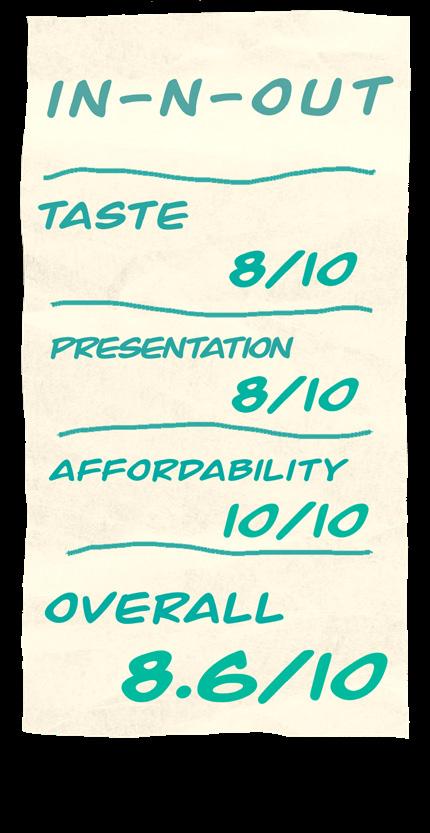

In-N-Out was founded in 1948 by a couple named Harry and Esther Snyder and its
As I stepped into my local In-N-Out locat ed in South San José on Cottle Road, my friend and I were greeted by the aroma of French fries and loud, over lapping voices. The restaurant was packed with customers at ev ery table and a long line wrapping around the counter. The in side of the restaurant had a classic 1950’s diner vibe with bright red seats, shiny white tiles and bold stripes. We got in line to order our food and when we got to the register, we were welcomed by a sweet cashier who took our order. I ordered a Double-Double burger ($6.25), which is two mustard-fried beef patties, two slices of melted American cheese, grilled onions, pickles and extra spread. I also got an order of “animal style” French fries ($2.45), which has melted American cheese, grilled onions and spread on top, as well as a vanilla shake ($3.10). I paid a total of $11.80 for everything, which I believe the price is very affordable for the amount of food we ordered. After we found a table and grabbed our food from the counter, I took a bite of my burger. While I was initially taken aback by the overbearing amount of spread as well as grilled onions, the pickles complemented the cheese really well and the burger had a balance of crispiness and
tenderness. It was a little too salty though, making my mouth feel dry. After I finished my burger, I tasted the fries. When I tried to pick one, I noticed that the cheese was rigid and not fully melted into the fries. The fries were also very soggy because of the toppings lying on top of them. The spread and grilled onions went together perfectly with the fries, but the texture of the cheese was a little rubbery. I decided to mix the toppings on top altogether, which made the fries taste much better. To wash everything down, I drank my vanilla milkshake, which was very thick and hard to suck through the straw. When the shake finally got to my mouth, it was sweet with an icy chill. The sugary and creamy vanilla shake coated my tongue and I gulped all of it down within the first five minutes of tasting it. After trying everything, I decided that InN-Out was worth the hype because they were affordable and delicious, using quality ingredients.


The Habit Burger & Grill was founded in 1969 by brothers Brent and Bruce Reichard. Originally called the Hamburger Habit, the first location was created in Santa Barbara, California. The Habit is considered a California Classic due to its Southern California beachtown origins and vibes, as well as its fresh ingredients.
The moment we walked into The Habit at Almaden Plaza in South San José, I immediately noticed the liveliness of the restaurant. All except three tables were filled with groups of families and friends. When my friend and I walked up to order, we realized that there was a self-ordering

kiosk instead of a traditional register. The kiosk still allowed us to make adjustments to the order and add toppings or sauces. Though I think ordering with a cashier at the counter is easier, I did like how I got to see all of the menu items and adjustments. If someone wanted to pay cash, they can use the reg ister up front.

Oreo and was very creamy with the finely crushed Oreo bits in the shake giving it a nice texture. Once I finished my meal, I decided that The Habit is underhyped. They have a huge selection of items on their menu, outstanding quality and a distinctive char-grilled burger taste.


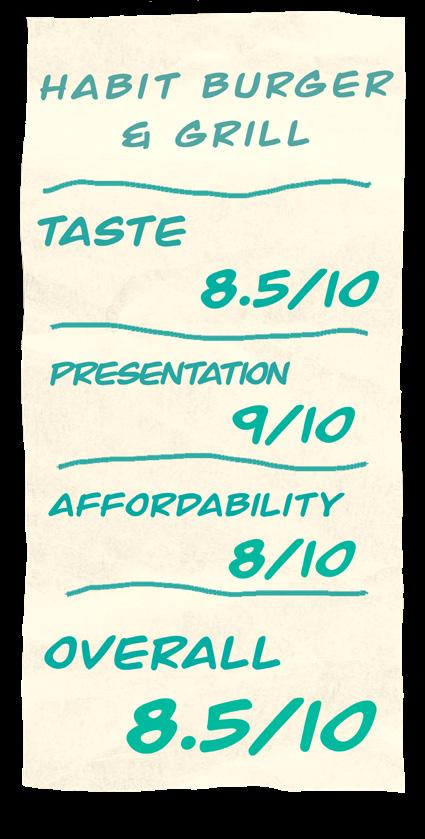
I ordered a Double Char with cheese ($9.93) that contains lettuce, pickles, mayo, Amer ican cheese, caramelized onions and two char-grilled patties. Additionally, I got Tempura Green Beans ($4.79)— deep-fried green beans that come with classic ranch as the sauce—and a Cookies & Cream milkshake ($5.89) made of vanilla soft-serve ice cream blended with Oreos and topped with whipped cream. We ended up paying a total of $20.61 for the whole meal, which I found was an affordable price for the amount of food we got. I tasted the burger first, noticing that they used shredded lettuce instead of whole lettuce pieces that made the burger easier to bite into and elevated the flavor. I also noticed that the cheese was not fully melted into the burger. When I took my first bite, I immediately tasted the pickle, which added a twang of flavor. The patties were very juicy, the bread was soft and the mayo perfectly complemented the burger. Next, I decided to try the green beans. When I bit into the deep-fried bean dipped with the perfect amount of ranch, it melted in my mouth. The Tempura Green Bean did not taste like I was eating vegetables at all. The smooth ranch melted into the crispy tempura coating, which formed a crunchy and creamy bite with a burst of flavor from the green beans. Finally, I took a sip of my milkshake. I noticed that the drink was thick but still easier to sip through the straw than In-N-Out’s milkshake. It tasted just like an
California Pizza Kitchen (CPK) was founded in 1985 by Rick Rosenfield and Larry Flax. The first CPK was created in Beverly Hills, California, aiming to spice up regular pizzas and make them more “Californian style” by using thin crust and creative toppings like bean sprouts, carrots and roasted corn.
Upon walking into CPK located at Westfield Valleyfair in West San José, my friend and I were greeted by a hostess who led us to our table. The restaurant was mildly full with mostly open booths. I immediately noticed the soft lighting, warm colors and lively buzz in the air from all the con versations around us, which created a sense of comfort and anticipation. On the walls, they had pictures of the beach, Cali fornia redwoods, baseball fields and fa mous California land marks. When we sat down, we were handed water and had some time to look over our menus.

I ordered the Original BBQ Chicken Pizza ($19.49) and the Chicken Tequila Fettuccine pasta ($22.99), their most popular pasta according to the waitress. The pizza had barbecue sauce, cheese, onions and chicken while the pasta contained grilled chick en breast with a creamy tequila-lime sauce topped with red onions, garlic, jalapeños, cilantro, parmesan cheese and olive oil. Our dishes were delivered promptly, and the server ensured we had everything
we needed before leaving the table. At first glance, I was a little skeptical of the pizza because of the odd combination of toppings and sauce. However, when I took a bite, I felt like I was in heaven with the sweet and savory flavors melting in my mouth. The barbecue sauce and cheese complemented each other perfectly and the onions gave it the right amount of crunch and flavor. The chicken was perfectly cooked and seasoned with pepper, which gave the pizza a sweet tinge of smokiness. The crust’s thinness and crunch was perfect. Next, I tried the Chicken Tequila Fettuccine, which had a slightly tangy flavor and tequila-lime kick that gave it a fresh, zesty taste in comparison to a heavy, creamy one. The jalapenos added a warm heat, without making it too spicy. After we finished our meals, we ordered their Butter Cake ($13.49) for dessert. Made of warm, golden cake and a scoop of vanilla ice cream, the dessert was brought out swiftly and looked even better than we expected. As soon as I tasted it, the soft cake practically melted in my mouth. The vanilla ice cream gave a creamy, cool contrast to the cake and together they tasted sweet, smooth and comforting; the perfect mix of warm and cold. It was very sweet, but it was still tasty. The bill was a total of $72.41, which was very pricey for the amount of food we got, but explainable through the high-quality ingredients we enjoyed. Upon finishing my meal, I decided CPK was underhyped, their unique combinations, bold flavors and high quality ingredients making their restaurant stand out from oth-



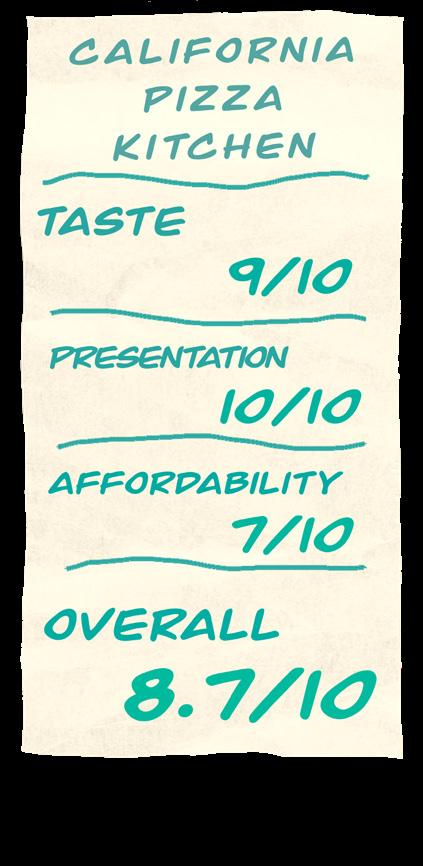
Out of all the food chains I reviewed, my favorite was California Pizza Kitchen because of its wide selection of entrees as well as each meal’s uniqueness. They had so many food combinations I never thought existed or paired well together. Their ingredients were high quality and their restaurant had amazing service. California Classics like CPK aren’t just meals, but foods that remind you of sunsets at the beach and the feeling of home. They carry a comfort that reminds you why people fall in love with the state in the first place.


Ranking crafting workshops in the bay area based on atmosphere, customer service and affordability
IIn the Bay Area, there are dozens of crafting workshops. With all these options, I had to ask myself, “Which one is best?” To find out, I visited three different shops and ranked them based on their atmosphere, customer service and affordability. To make sure I had a broad selection of places to review, each workshop specializes in a different craft style, including rug creation, pottery painting and candle making.
The first crafting workshop I checked out was pottery painting at Color Me Mine, located in Westfield Oakridge. As soon as my friend and I entered the store, we were coldly greeted by a stern-speaking worker. Despite this first impression, the atmosphere had quiet lo-fi playing and seemed calm as everyone was occupied with their pottery paintings. At Color Me Mine, customers can choose from a myriad of different kinds of pottery, including holiday-based pieces and day-to-day plates and cups. For my craft, I chose an 8”Dia. x 1”H square salad plate that was listed at $29 before tax and other fees. Af
my purchase, I was a little lost. I asked her to clarify how to finish my purchase for my pottery to be fired and completed, and she responded with an irritated tone. After the interaction with this employee, I noticed her tone constantly fluctuated with other customers. I hope this was just my personal experience and everyone else has had better ones, but I would rate their customer service a 7/10.
A certain factor that stood out to me was that Color Me Mine offered a wide variety of colors and brushes, even though they are smaller than most other craft stores. Additionally, the store provided many different
take around eight days for the pottery to be ready.
Fortunately, I was notified that my pottery would be ready earlier than expected, and I could pick it up sooner. When I picked up the pottery, a different employee was packaging my craft and she warmly greeted me at the door. My pottery came in perfect pastel colors with a clear glaze over them. The atmosphere was enjoyable despite the rocky start so I would rate it an 8/10.
Overall, it was a pleasant and therapeutic session of drawing, painting and, in general, concentrating on the craft. The customer service was decent, apart from the interaction with our initial cashier. The cost of pottery was overpriced, and I personally don’t feel that it was reasonable, especially since some of their smaller pieces cost more than their larger pieces. I would





My next destination was Tutugether on the first floor of Westfield Valleyfair. Offering activities like tufting, pouring art and decoden art, I chose to go there to try tufting, also known as rug making. I purchased a small 17x17 inch rug for $88 and, with tax, paid $96.30 in total. My first impression of the expense was that it was high for such a small rug, especially since I was the one designing it, leading me to rate it a 6/10 for affordability.
I was warmly welcomed by a woman at the front of the store who showed me around. All of the Tutugether staff I crossed paths with had optimistic vibes and always checked if any help was needed. The employees’ attitudes made the atmosphere of the store rather positive which I found helped many customers be able to focus on their work. I would rate the customer service at this location a 10/10.
The process started with attending a short practice session to understand the procedure of making the rug. Then, I traced over a projection of my phone with the picture that was desired with the tufting gun punching yarn through the canvas. After I finished my tufting, the staff trimmed the excess yarn so my design could be more presentable and durable. My design started off in a circular shape since I wanted to try out a strawberry illustration. I used vibrant shades of green for the leaves on top, and more pastel colors of pink and red for the strawberry itself. My design came out the way I envisioned it and was a very delightful decor piece.
I also noticed that Tutugether had a wide selection of different shades of each color of materials. The store was nicely organized, very minimalistic and cozy with cute designs and small decorations around
the area. It was also a creative and colorful space that made me feel like I was truly at a DIY playground. I would rate the atmosphere a 10/10 due to the aesthetic and the peaceful aura allowing me to focus and pay attention to my craft.
Altogether, Tutugether was a new and one-of-a-kind experience for me. I developed a new skill and a potentially growing hobby. I would definitely recommend this workshop to others, regardless of their level of expertise. The customer service was excellent and welcoming, and it’s a great place to express creativity and accomplishment from making a blank canvas into a piece of art. Furthermore, I definitely see myself visiting this store again with friends or family for a fun, creative activity. I would rate Tutugether a 26/30 as a whole, as it was a great experience and I’m truly ecstatic with the result of my rug.
25/30 25/30

My last crafting workshop was at MiGi Cera Candles, which is a candle making store in San Pedro Square Market. The staff there were very welcoming and warm, being very friendly and helpful towards newcomers like myself. I attended a beginner class which was 30-45 minutes, and I used an eight-ounce vessel. It was $50 per person at the workshop, and there thankfully wasn’t a studio fee, so my total was roughly $55 including tax to create a candle. The materials that were provided during the class were the wick, wax, vessel and a fragrance/scent selection. The affordability was moderate and I expected it to be around the $40-$50 price range since it is a workshop. Based on the moderate price, I would rate this an 8/10, but like Color Me


Mine, the size to price ratio wasn’t ideal. During the instruction, the staff were excellent at guiding the participants through the process of candle decorating and creating. I felt more comfortable at the workshop since the employees made sure to let participants ask questions and go over any steps again, never rushing the process. I didn’t fall off track once. However, I do value independent time during new crafts and take one point off for the workshop not offering that, rating the customer service a 9/10.
hanced the vibe of creativity and in-depth work. The workshop was warm-toned with pastel colors at certain corners and spacious tables set up with tools. Everything was neatly arranged and organized for the basic class. Determined by the decorations and mood of the workshop, I rank the atmosphere an 8/10.

Filled with a wide spread of different fragranced smells lingering in the air, the workshop’s aroma was also noticeably remarkable. The cozy ambience filled with many different decorative elements en-
MiGi Cera Candles did a great job with their customer service and welcoming people to the store. I don’t see myself coming here again despite how fun it was and how it was a new experience, mainly because of the price. I don’t think I should have paid that much for a candle that came with decorations. With all this in mind, I give MiGi Cera Candles a 25/30.
Throughout this adventure, I absolutely adored each store's creative design and color coordination. Each crafting workshop was a brand new experience and each one was filled with new wonders. Af- ter collecting all the data from the three shops, Tutugether came in first place, MiGi Cera Candles came in second place and Color Me Mine came in third place. For Color Me Mine, my highlight was when the vibe felt more efficient and I finally started to work more. My highlight from Tutugether was when I understood how to tuft properly and switch motions more swiftly. Lastly, for MiGi Cera Candles, my highlight was how organized and cute the store was. All the stores were creative in their own way and I definitely recommend all of the workshops for a fun time.


ARTICLE & PHOTOS BY ARIA KAMDAR & AASHVI PANDA • ILLUSTRATIONS & DESIGN BY RAILYNN PEARL ANICETE
With the rise in popularity of everyday cafés, searching for the perfect, cozy go-to café isn’t easy. From the best study spot to a new place to explore with your friends, the phrase “perfect café” can have multiple interpretations. Through this journey, we visited three cafés: Lacàphê, Morning Lobby and STARDUST Coffee House. Each with their own take on the meaning of a “perfect café,” we rated these stores on three different factors: affordability, ambience and taste.
got there around 4:30 p.m. on a Thursday afternoon, the place wasn’t too busy, with a few customers studying or working. Tables were situated in the middle of the café, with cozy couches tucked into the side of the café and accents of asymmetrical mirrors, framed pictures and various light fixtures. With the mix of warm and cool-toned lights and different patterns on the walls, the café immediately charmed us.


Describing their drinks as “happiness you can taste,” Lacàphê, located in East San José, introduces itself as a distinctive café that finds balance between elegance and minimalism.




The café initially opened in Aug. 2021 as a small business operating from a home kitchen and transitioned to its current traditional café form on Aug. 26, 2023. The name is a play on two Vietnamese words: la cà—meaning wandering without clear purpose—and cà phê—meaning coffee. The café encourages visitors to wander on their Lacàphê journey and bask in the environment together. When we
Lacàphê has a variety of beverages ranging from refreshing, fruit-based drinks to modern takes on Vietnamese coffee with enticing flavors and visuals. They offer free customization of the sweetness level and amount of ice, with add-ons and milk substitutions for an additional charge.
Intrigued by both their regular menu and their matcha series, we settled on a lychee tea and a strawberry matcha latte, which were $7.25 and $8.00 respectively. We didn’t think the prices were too outrageous and were pleasantly surprised with the quantity of the drinks. This was our first time trying matcha, so we decided to keep the sweetness at 100%, but requested less ice to maximize the amount of matcha. However, for the lychee tea, we felt it might be too sweet for our taste, so we toned it down to 75% with no ice.


matcha, the unfamiliar taste of the matcha took our taste buds by surprise, but was quickly complimented by the sweet and fresh strawberries at the bottom. We appreciated that the matcha wasn’t overpowering, allowing us to taste both the matcha and strawberry flavors that weaved together delightfully. Though we really enjoyed the drink at first, there wasn’t much strawberry left after just a few sips, leaving us with an almost earthy taste that was more bland. Next, we tried the lychee tea and were delighted at the first sip. Even at the 75% sweetness level, the drink tasted as if the flavor was directly extracted from the fruit and crafted into a tea. The lychee pulps accompanied by a few small slices of lemon—which had settled at the bottom of the cup—made the drink even more enjoyable.
The drinks took about ten minutes to make. At first taste of the strawberry
Overall, Lacàphê’s unique charm and drinks allowed us to enjoy our visit to the café. Both the drinks were delicious, so we would give the taste a 9/10. The calm and peaceful vibes of the café made it seem like a great study-spot as well, leading us to rate ambience an 8.5/10. Based on the size of the drinks, we felt the prices were very reasonable for the drinks, rating the affordability an 8/10. Our total rating rounds up to 8.5/10. Even though it was our













first time visiting, we would come back to try their other drinks in a heartbeat.
Opening in Almaden on Jun. 24, 2025,


Morning Lobby introduces itself on its website as a café that “is passionate about the art of coffee and believes great coffee deserves an equally great meal.” The café is simple yet appealing, decorated with cozy, cool and neutral tones while lined with mirrors and windows that let in natural light. When we arrived at the café at 3:00 p.m. on a Sunday afternoon, there were a few customers waiting to order.

We ordered an Iced Vienna Latte, one of their more popular beverages, along with a less familiar option, their Iced Mont Blanc. Both of the drinks cost $7.00 without alterations and took about seven minutes to be made.
The Iced Vienna Latte was presented with a coating of coffee powder and cold foam sitting on top of a taupe colored, blended espresso. Upon our first taste, a wave of bitterness left us feeling skeptical. However, after we mixed the drink together,
and we believe it could be made with an instant coffee mix, the Iced Vienna Latte had no negative feedback from us. Our second drink, the Iced Mont Blanc, was surprisingly different compared to the first. The drink looked very unfamiliar but appealing, with an orange slice and orange zest on top of the cold foam. Beneath was a tangy, bitter coffee filled with hints of citrus and chilled espresso. As we took the first sip, the aggressively bitter drink completely washed away any flavor except for a lingering hint of orange zest. The drink had a very liquidy consistency which wasn’t compensated by the flavor. Even after completely mixing the drink and adding a bit of sugar, it remained incredibly bitter. We came to the realization that despite our efforts, the drink couldn’t be up to our standards of sweetness, leaving our review mostly negative. We felt that this might be more of an acquired taste for people who like their coffee on the stronger side or enjoy citrusy flavors.
Through our experience, we noticed that Morning Lobby seemed to be focused on foods rather than drinks. Their menu is most inviting to customers who love simple coffee-based drinks rather than drinks with syrups, fruit or other flavoring. In spite of us enjoying only one of the drinks, we would rate the taste a 6.5/10 and would be willing to come back for brunch or to try something else on their menu. The prices were also fair so we would rate the affordability a 9/10. The theme of the café was super cute and spacious, leading us to give the ambience a 9/10. We rate Morning Lobby a 8.1/10 overall because though it wasn’t to our personal taste preferring fruit-based flavors, the other options seemed promising. Out of the

cafés we reviewed, we thought Morning Lobby would be the best hang-outspot.
STARDUST Coffee House, located in Campbell, is a simple and warm-toned café that emits a comforting vibe. When we arrived at around 5:00 p.m on a Sunday evening, the café was packed, with customers occupying both the inside and outside tables. Though not too focused on ambience, the café offers a variety of intriguing food and drink combinations, varying from Asian-inspired flavors to modern takes on simple breakfast foods. Flavor combinations like black sesame and espresso adorn the drinks side of the menu. Most of the drinks have the option of being either iced or hot. The options of an extra or double shot of espresso are also available, as well as for the matcha. Customers can choose between their drinks having whole milk, oat milk, almond milk and non-dairy whole milk, as well as being caffeinated or decaffeinated. The coffee house also provides customization options to fit one’s














order to their taste. For food, all components have the option of being removed or substituted. While looking through the menu, our attention was captured by the vibrantly colored Purple Moon drink. The drink consisted of ube-taro, your choice of
taro created, as well as the consistency of the espresso, creating what seemed like a barrier between the two flavors. The separation intrigued us to try both sections individually.
Our first impression tasting the ube and taro combination was a rich and unfamiliar flavor. It provided a more intense, dessertlike sweetness accompanied by the taro, which had a more musky, nutty and milky taste. The top part, consisting of coffee and whole milk, had a slightly bitter flavor that was enhanced by the ube-taro and completed the flavor profile. Combined with milk, the beverage was sweet but not overpowering. If nighttime could be embodied in a drink, it would be the


We also immediately wanted to try the mushroom toast when we first entered, intrigued by how the flavor of the mushrooms would be brought out with the other ingredients. To adjust the dish to our taste, we removed the mayo, plum jam, togarashi and umami spread, keeping the chipotle aioli, tomatoes, jalapeños and sauce and oil drizzles. The dish was a whopping $14.00, which we felt was expensive when we saw the size of the toast. Once we received it, we realized that we should’ve kept everything on the toast to try it to its fullest. It had a nice texture to it, with the mushrooms giving the texture a lot of depth. On top of the toast was the chipotle aioli, creating a nice kick of flavor at the end. The greens sat next to the mushrooms and gave the toast a nice crunch, enhancing the overall dish. Overall, we thought this was a pleasant dish but regretted not keeping


We enjoyed our experience at STARDUST Coffee House but since the place was packed, we felt like we weren’t able to get a calm and full experience of the café. Even so, we would rate the taste of the ube-taro drink and the mushroom toast an 8.5/10. We did enjoy the setting, but didn’t find anything super captivating about the café’s ambiance, so we would give it a 6.5/10. The prices for our items were a bit higher than we expected, ranking the affordability 7/10. Our overall experience at STARDUST Coffee House came out to a 7.3/10, and we believe that this café would be a great hang-out or study spot, depending on its level of business that day. Throughout this flavorful journey, we tried five unique drinks and one dish across three distinctive Bay Area cafés. Out of the three, our favorite was Lacàphê because of the enticing flavors and charming vibe the café offered. We would recommend Lacàphê for people who enjoy fruit-based drinks and variations of matcha. As for Morning Lobby, we would recommend it for people who enjoy standard coffee. STARDUST Coffee House might interest people who enjoy experimenting with flavors and out-









PHOTOS, ILLUSTRATIONS & DESIGN BY ALEX BATREZ
Math or History?
A. Math
B. History
Dogs vs. cats?
A. Dogs
B. Cat
C. None
What sports do you play?
A. None
B. Volleyball
C. Dance
Would you rather stay in or out on a day off?
A. In
B. Out
Do you like talking or listening?
A. Listening
B.
Which building do you have more classes in?
B. Learning Center