University of Toronto Faculty of Kinesiology & Physical Education
SPRING 2026 / VOL. 26, NO. 1

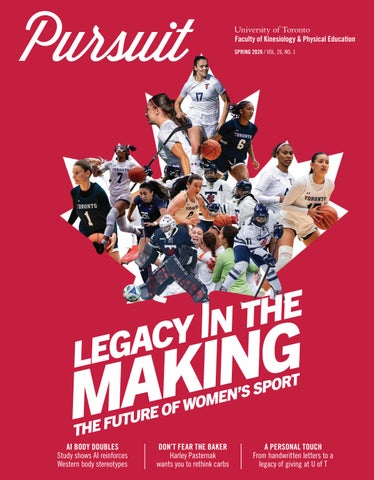
University of Toronto Faculty of Kinesiology & Physical Education
SPRING 2026 / VOL. 26, NO. 1
AI BODY DOUBLES
Study shows AI reinforces Western body stereotypes
DON’T FEAR THE BAKER Harley Pasternak wants you to rethink carbs
A PERSONAL TOUCH
From handwritten letters to a legacy of giving at U of T
SEE YOU AT THE GAME!
KPE ALUMNI RECEIVE 30% OFF ALL VARSITY BLUES BASKETBALL, FOOTBALL, HOCKEY AND VOLLEYBALL HOME GAMES. VISIT VARSITYBLUES.CA/TICKETS AND USE THE CODE ‘KPEALUM’ TO GET YOURS TODAY!

Welcome to another issue of Pursuit. Earlier this spring, our Faculty had the pleasure of celebrating women and women leaders in sport at an event called Legacy in the Making: The Future of Women’s Sport.
The event celebrated the achievements and leadership of our fabulous panel of presenters and reaffirmed our Faculty’s commitment to ensure that girls and women have access to sport and that when they’re in sport, they feel valued, affirmed and are able to thrive.
Interest in women’s sport has gained tremendous momentum and enthusiasm across this country, further amplified by the recent launch of three competitive leagues for women. The event was an opportunity to celebrate this progress, while also reflecting upon the work that remains ahead.
According to Statistics Canada, the percentage of adolescent girls meeting recommended physical activity fell from 21 per cent to eight per cent between 2022 and 2024, and the lack of gender equality in coaching and team management persists.
We know that real progress does not happen in isolation. It takes vision, persistence and a shared commitment to providing equity and equitable opportunities to participate.
Our cover story dives deep into the issue. But, that’s not all.
I hope you will also enjoy reading about the innovative research conducted by our faculty, the outstanding achievements of our student athletes and alumni, and the remarkable generosity of our donors. We couldn’t do it without you.
Sincerely,
Gretchen Kerr, Professor and Dean Faculty of Kinesiology & Physical Education


When prompted to create images of female and male bodies, artificial intelligence platforms overwhelmingly reproduce and amplify narrow Western body ideals, a new KPE study has found.

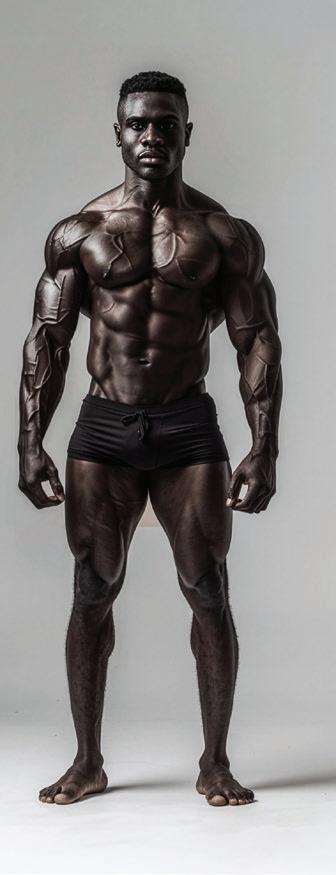

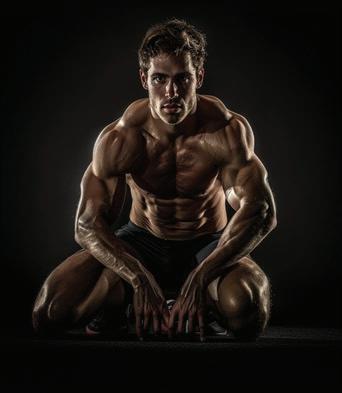
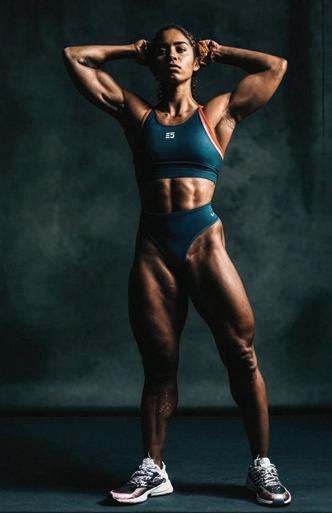
The study, published in the journal Psychology of Popular Media, involved prompting three different AI platforms – Midjourney, DALL-E and Stable Diffusion – to create images of female and male bodies, including those of athletes.
The results came as little surprise.
“In a systematic coding of 300 AI-generated images, we found that AI reinforces the fit ideal, with athlete images far more likely to show very low body fat and highly defined muscularity than non-athlete images,” says lead author Delaney Thibodeau, a post-doctoral researcher at KPE.
The research team also included research associate Sasha Gollish, recent master’s graduate Edina Bijvoet and KPE Professor Catherine Sabiston, as well as graduate student Jessica E. Boyes from Northumbria University in the U.K.
They found that gendered sexualization persists since female images were more likely to be facially attractive, younger, blond and shown in revealing clothing such as bathing suits, while male images were more often shirtless, hairier and hyper-muscular.
Objectification was common, too, with the fit of the clothing and exposure patterns emphasizing appearance over function, mirroring what the researchers describe as detrimental trends in social media imagery.
Other findings include a lack of diversity, with most images depicting young, white bodies and no images depicting visible disabilities.
“Racial and age diversity were minimal,” says Thibodeau, adding that AI defaults to male athletes when unspecified.
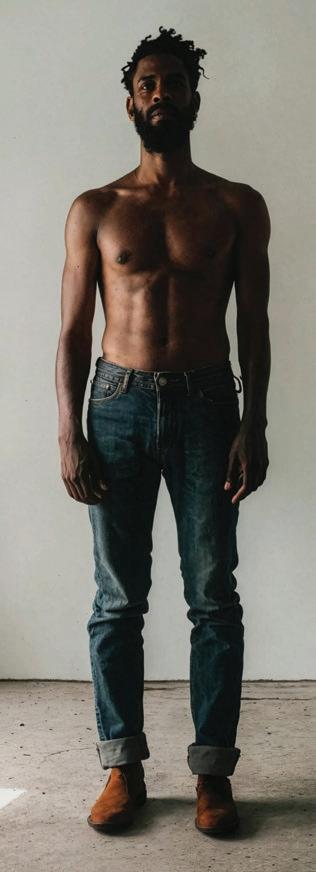
“Overall, our findings underscore the need to investigate how emerging technologies replicate and amplify existing body ideals and exclusionary norms.”
– Catherine Sabiston
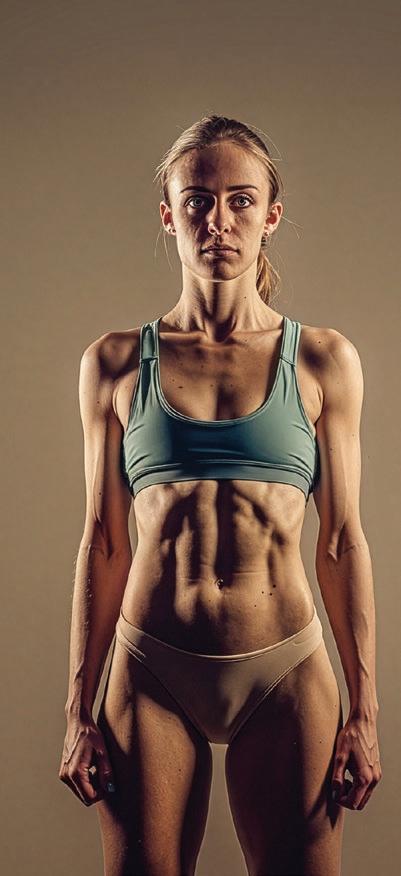
“When prompted simply for an athlete (no sex specified), 90 per cent of images depicted a male body – revealing an embedded bias towards male representation.”
“Overall, our findings underscore the need to investigate how emerging technologies replicate and amplify existing body ideals and exclusionary norms,” says Sabiston, who is a Canada Research Chair in physical activity and psychosocial well-being and director of the Mental Health and Physical Activity Research Centre (MPARC) at KPE.
“A human-centred approach – one that is informed by considerations of factors such as gender, race, disability and age – would be advisable when designing AI algorithms. Otherwise, we continue to perpetuate harmful, inflexible and rigid imagery of what athletes should look like.”
Users of AI-generated images also have a role to play, according to Sabiston. That includes thoughtfully crafting prompts and considering how the generated images will be presented publicly. Additionally, viewers of AI-generated images should be cautious of interpreting them as authentic and be critical of the biases and potential stereotypes depicted in them.
While more research is needed to track the impact of AIgenerated images on psychosocial outcomes such as selfesteem, motivation and body image, the researchers say they are hopeful that greater acceptance of body and weight diversity will occur as more diverse and inclusive images are posted and shared globally. — Jelena Damjanovic
This research was funded by the Canada Research Chair program.
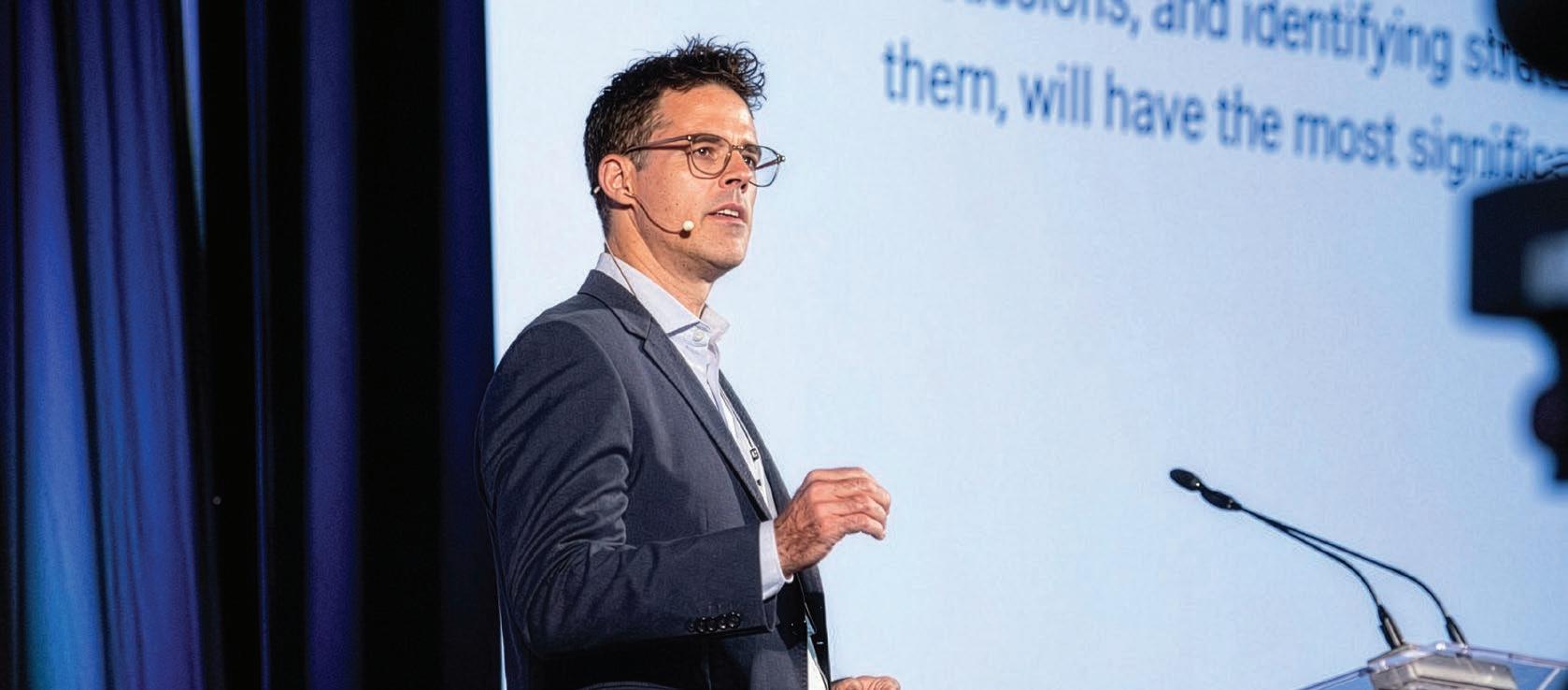
Michael Hutchison appointed next director of TISS
Following an extensive international search, Professor Michael Hutchison has been appointed director of the Tanenbaum Institute for Science in Sport (TISS), a global centre of excellence for high performance sport science and sport medicine, established through a generous $20-million gift from the Larry and Judy Tanenbaum Family Foundation.
Hutchison is a professor in the University of Toronto Faculty of Kinesiology and Physical Education (KPE), one of the three pillars of TISS, which brings together sport and exercise researchers at KPE, clinician scientists in sport medicine at the Temerty Faculty of Medicine, and clinicians and researchers at Toronto’s Sinai Health.
the faculty of KPE in 2015 and was appointed director of the Centre for Sport-Related Concussion Research, Innovation and Knowledge in 2021.
“It’s a privilege to be appointed director of TISS, particularly within a community that has shaped so much of my academic and professional journey.”
— Michael Hutchison
“It’s a privilege to be appointed director of TISS, particularly within a community that has shaped so much of my academic and professional journey,” says Hutchison. “TISS has the potential to set a global standard for how high performance sport science and sport medicine are integrated to improve athlete outcomes, and I’m excited to work collaboratively to advance that vision and translate research into real-world impact.”
Hutchison completed his doctoral studies in rehabilitation sciences at U of T, followed by a postdoctoral fellowship in the Injury Prevention Office at St. Michael’s Hospital. He joined
An internationally recognized expert in sport-related concussion research, Hutchison has secured more than $10 million in research funding and built a distinguished publication record. His research on sport-related concussion has had a meaningful impact on policy and practice in professional sport. As Chief Scientific Officer for the National Hockey League Players’ Association (NHLPA), he has contributed to multiple NHL/NHLPA committees and played a key role in advancing concussion safety, most notably informing Rule 48 on illegal checks to the head and helping to shape concussion evaluation protocols.
“Central to Dr. Hutchison’s scholarly work is a strong commitment to knowledge translation and innovation, including co-founding Rhea Health, a digital tool that supports concussion recovery,” said Professor Gretchen Kerr, dean of KPE. “Through his research, policy engagement and industry partnerships, Dr. Hutchison continues to lead advancements in athlete health and safety, and I’m delighted to welcome him to this important role.”
Hutchison will be succeeding Professor Ira Jacobs, TISS’ inaugural director, for a five-year term. — JD

Sport fans around the world are eager for the start of the 2026 FIFA World Cup, the most-watched sporting event across the planet. Canada will be co-hosting the popular soccer tournament alongside Mexico and the United States, with Toronto and Vancouver set to host 14 out of the 104 scheduled matches.
As fans prepare to welcome the beautiful game to town, city officials are also banking on the event to generate significant economic, cultural and community benefits. What are those benefits and is there a downside to hosting events of this size and magnitude?
We caught up with Professor Simon Darnell, director of the Centre for Sport Policy studies, for his take on the upcoming mega-event.
How do you feel about the 2026 FIFA World Cup coming to Canada?
Like most Toronto sports fans, I am excited about World Cup matches being played in our city. I think the event will showcase the passion for sports that exists in Toronto and offer further evidence of how strong the sport of soccer/football is in Canada.
I think it will be a good party. And the World Cup can be a wonderful illustration of the global popularity of football, or sports’ ability to bring people together – what we might call sports’ cultural convening power. In times of xenophobia and anti-immigrant sentiments, I am looking forward to global sports events that help us see our common humanity.
That said, as a sports sociologist, I think there are some questions related to hosting sports mega-events that we need to pay attention to.
What are some of those questions or concerns?
For example, who benefits most from hosting World Cup matches? Who might be harmed? What are the economic, social and environmental impacts on our city? And, in times of inflation and inequality, is this really the best use of our public money right now?
In addition, I would say we should be cautious about displacement. Sports mega-events have a long, rather sordid history of pushing out vulnerable people – the poor, unhoused or precarious workers – to make room for the spectacle. We should pay attention to whether this happens in Toronto.
Another concern is the increased policing and securitization that often accompanies events likes this and that often disproportionately targets people who are already on the social and economic margins.
What role can research of the type you do play in alleviating some of these concerns?
Along with colleagues from U of T, Western, York, Queens and several community organizations in Toronto, we are currently analyzing FIFA’s new human rights policies that are designed to protect vulnerable people during World Cup hosting. And we are also going to work with young people in Toronto before, during and after the games to see what impact the event had on their lives and their rights as citizens.
— JD
CSPS recently hosted the third annual Peter Donnelly Lecture in Sport Policy Studies with a guest talk by Associate Professor David Roberts from the department of geography and planning at the University of Toronto. Roberts explored the connection between hosting mega-events like the FIFA World Cup and becoming a so-called worldclass city by virtue of hosting such events. https://vimeo.com/1168520483?fl=pl&fe=sh

Research has shown that a single session of exercise can improve insulin sensitivity and reduce blood sugar levels over 24 hours (24hr glycemia) in adults living with obesity who are at risk for type 2 diabetes. However, the extent to which post-exercise nutrition influences these beneficial effects remains unclear.
Now Jenna Gillen, an associate professor at KPE, and her doctoral student Alexa Govette are examining whether the macronutrient composition of a post-exercise snack –specifically, snacks with high versus low carbohydrate content – can moderate blood sugar levels over 24 hours and next-day insulin resistance.
“Our findings suggest that consuming a low versus high-carbohydrate post-exercise snack better supports exercise-induced improvements in insulin resistance in women living with obesity who may be at risk for type 2 diabetes,” says Gillen, who specializes in exercise physiology.
Gillen and Govette recruited 20 women living with obesity, who completed two metabolic trials while they were in the mid-follicular phase of two consecutive menstrual cycles. For both metabolic trials, the participants were provided with prepared diets to consume during the 24 hours before and after exercise so that the only difference in diet between trials was the post-exercise snack.
Following a 12-hour overnight fast, the study participants performed high-intensity interval exercise consisting of 10 one-minute cycling intervals at 90 per cent maximal heart rate, interspersed with one-minute recovery breaks. Immediately following exercise, half of the participants consumed a single serving of low-carbohydrate Greek yogurt and half consumed a high-carbohydrate pudding of matching energy value.
Blood samples were taken after the post-exercise snack and the next morning when the study participants returned to the lab to measure glucose, insulin and the homeostatic model assessment of insulin resistance (HOMA-IR). Continuous glucose monitoring measured blood sugar levels over 24 hours following exercise.
The researchers were not surprised to discover that during the three-hour period following the post-exercise snack, average levels of glucose and insulin concentrations were lower after consuming the low-carbohydrate Greek yogurt versus the high-carbohydrate pudding.
“We were most interested in learning whether the post-exercise snack influenced blood sugar after this initial three-hour period,” says Gillen. “Interestingly, while the average 24-hour glucose was the same among all the study participants, next-day fasting insulin resistance (measured by HOMA-IR) was lower in those who consumed low-carbohydrate Greek yogurt versus high-carbohydrate pudding.”
In addition to glycemic control and insulin resistance, the researchers also measured the effects of post-exercise Greek yogurt on other metabolic and musculoskeletal health outcomes, including post-exercise fat oxidation and blood markers of bone turnover.
While this analysis is ongoing, Govette has presented existing data from the research at the Diabetes Canada and Canadian Society of Endocrinology and Metabolism (CSEM) Professional Conference held in Toronto in late 2025. — JD
This research project was funded by the Dairy Farmers of Canada.
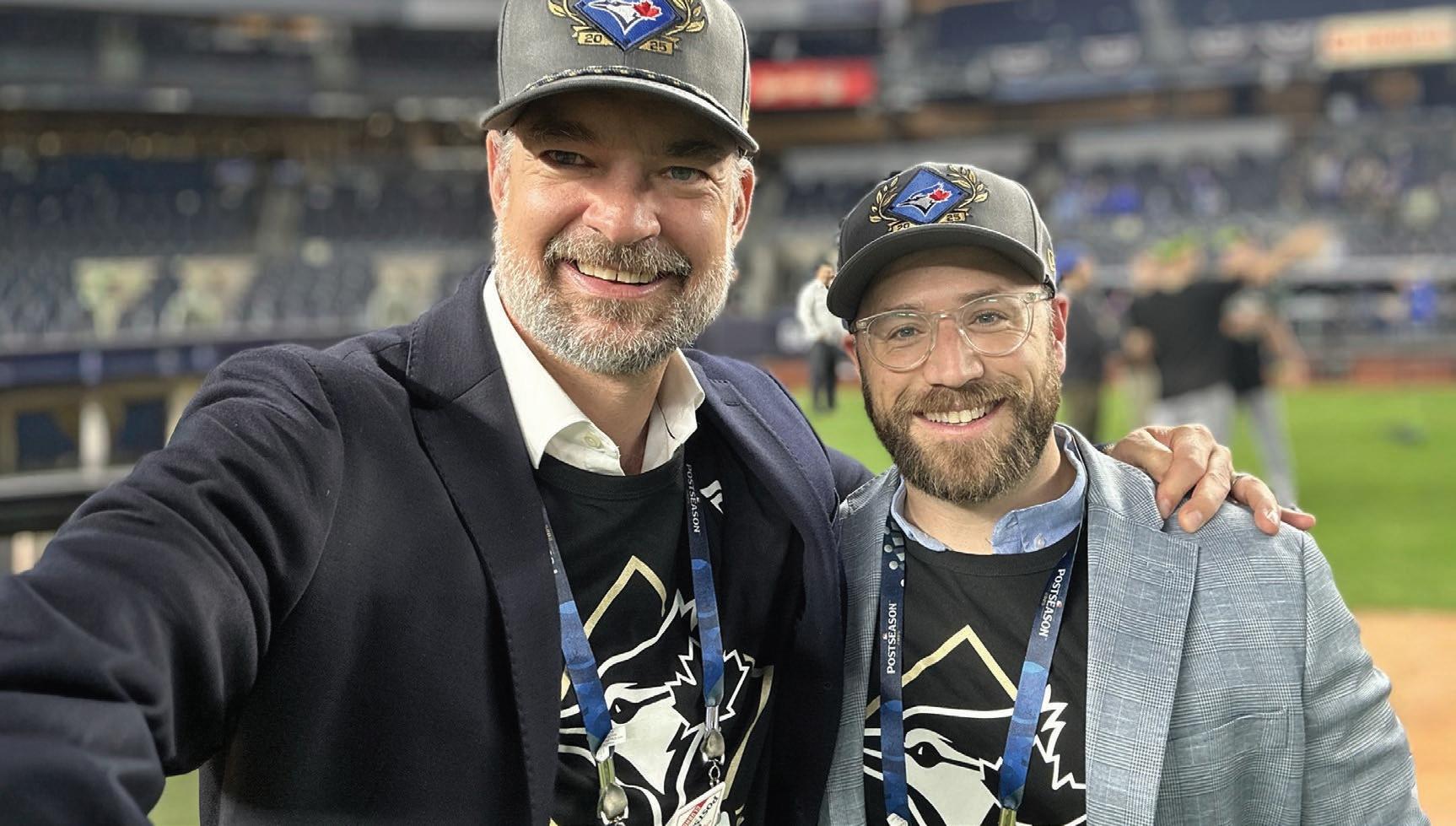
Following a visit by Joe Carter to his school shortly after his World Series-winning home run back in 1993, David Lawrence dreamt of one day joining the Jays and becoming part of Major League Baseball history.
Nearly a quarter of a century later, Lawrence’s dream came true as he became one of the Jays – albeit not as a player, but as their lead primary care physician, entrusted with diagnosing and managing injuries and providing primary care services. He’s also medical director of the David L. MacIntosh Sport Medicine Clinic at KPE, an assistant professor in the Temerty Faculty of Medicine and assistant medical director at the Dovigi Orthopedic and Sports Medicine Clinic at Mount Sinai Hospital.
Below, Lawrence shares insights into his work with the Blue Jays and how it feeds into his role at the clinic.
What does game day look like with the Jays?
Pre-game is all about preparation – everything from rehab sessions and mobility work to taping, hydration and warm-ups. During the game, we’re on alert but also proactive, tracking workload, hydration and even subtle movement changes that can signal fatigue or potential risk. We also have emergency protocols in place to respond to any injury or medical emergency. After the final pitch, the work continues with recovery treatments, reassessments and planning for the next day. It’s a long day, but incredibly rewarding to be part of a team effort operating at this level.
How does your work with the Jays overlap with your role as staff physician in the MacIntosh Clinic?
Working with professional athletes offers a unique window into elite performance, recovery and data-driven health strategies – insights that translate directly to the university and broader community settings. At the same time, my work at U of T keeps me grounded in education, research and preventive care, which are just as critical at the professional level. The protocols and network we’ve built to support our professional athletes are the same ones we rely on for our varsity teams and student population.
That continuity ensures that whether it’s a Blue Jays player or a U of T student-athlete, they have access to the same level of expertise and care. And the research coming out of U of T, including from the MacIntosh Clinic – particularly in concussion and return-to-play – has been instrumental in shaping how we manage and optimize athlete health across all levels.
What advice do you give the Blue Jays and the Varsity Blues about staying fit and healthy?
Staying healthy isn’t just about performance or perfecting sport-specific movements – it’s about taking a holistic approach to overall wellness. That means prioritizing rehab, prehab, nutrition, sleep, mental health and recovery just as much as strength and conditioning.
Building different movement patterns and incorporating periods of active recovery or rest are essential. Those breaks allow the body and mind to adapt, recharge and ultimately perform better over the long term. — JD
Ira Jacobs retires after making his
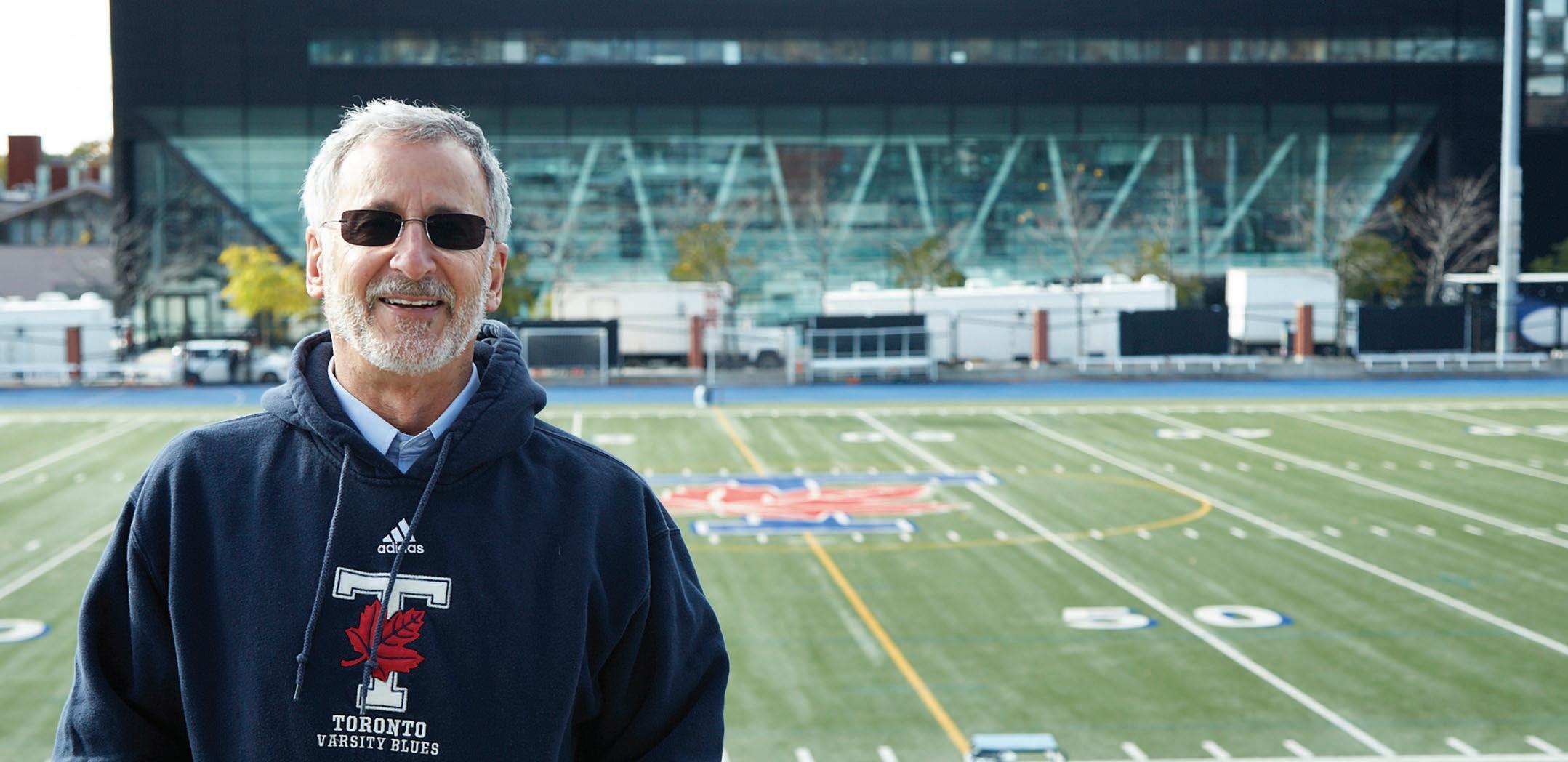
Professor Ira Jacobs was drawn to what is now the discipline of kinesiology after being exposed to the field of exercise physiology when he was a student at the Orde Wingate Institute for Physical Education and Sports, studying towards his elementary and secondary school teacher’s degrees in physical education.
What drew him to physical education was the profoundly positive influence his high school physical education teacher had on him in Hamilton at Westdale Secondary School.
“I learned one heck of a lot from that experience and Dr. Bar-Or became my mentor throughout my career(s).”
This experience as a research assistant led him to apply to graduate studies and then to pursue a career in science after completing his doctoral degree in the department of clinical physiology at one of the world’s foremost medical universities, the Karolinska Institute in Sweden.
“He leaves a lasting legacy of excellence and innovation in scholarly activity, educational programming and student engagement that will benefit the Faculty well into the future.”— Cheryl Regehr
“Wayne Hager was also my basketball coach in high school,” says Jacobs, “and he epitomized leadership by example in his teaching, coaching and every interaction he had with students.”
After getting his teaching license in physical education, Jacobs taught elementary school Phys Ed and absolutely loved it, he says, for the six months that he did it. Then, his exercise physiology professor from college, Dr. Oded Bar-Or, offered him a job as a maternity leave replacement to work as a research assistant in his lab.
“Part of my work involved reading abstracts of scientific papers he had received and classifying them so they could be placed in appropriate file folders – real hard-copy folders – for referencing purposes for the papers he was writing,” says Jacobs. “I met weekly with him so that I could ask him questions of clarification to facilitate properly classifying articles that I couldn’t understand.”
His first job as an independent scientist was working for the Swedish Defence Research Institute, optimizing nutrition for special operations units operating in cold winter conditions. That was followed by a decision to return to Canada where he worked for what is now called Defence Research & Development Canada – Toronto Centre.
“I was there for 25 years doing exercise and environmental research of relevance to the needs of the Canadian Armed Forces and other federal government agencies,” says Jacobs.
And then he moved to academia in 2007, initially as the chair of North America’s largest kinesiology department at York University, followed by his move to the University of Toronto to be the dean of the Faculty of Kinesiology and Physical Education between 2010 and 2021.
Asked about the biggest challenge he’s had to face in his career, Jacobs says it’s been the pace of change of society, including its universities.
“It seems to be accelerating at a relentless rate,” he says, “and yet I’m very hopeful about the future knowing the important role our Faculty has and will continue to play in contributing to a healthy, active, caring and engaged society.”
For his part, Jacobs says he is most proud of the successes of the people and organizations he supported throughout his career.
“I spent a lot of time and energy trying to promote the importance and impact of our Faculty’s people, mandate, programs and areas of expertise for the entire U of T community and beyond,” says Jacobs. “I like to think, perhaps naively, that those efforts were effective.”
Beyond effective, they have been transformative.
“Professor Jacobs was a tireless advocate for the development of community partnerships that have enriched both teaching and research at the Faculty,” says Cheryl Regehr, a Distinguished Professor in the Faculty of Social Work, who served as vicepresident and provost for the University of Toronto from 2013 to 2024 and closely collaborated with Jacobs during that time. “He leaves a lasting legacy of excellence and innovation in scholarly activity, educational programming and student engagement that will benefit the Faculty well into the future.”
Professor Gretchen Kerr, dean of KPE, added, “Professor Ira Jacobs leaves a legacy defined by principled leadership, academic excellence and a deep commitment to advancing both scholarship and the quality of the student experience. His tenure as dean strengthened the Faculty’s reputation locally and globally, and he left the Faculty well positioned to pursue continued advancement and impact.”
“I am so proud to see our Faculty and U of T continue to rank so highly each year,” says Jacobs, “but not surprised, given the quality of our leadership and professors, their research and teaching, and the calibre of students who choose to study here.”
Jacobs will be retiring this summer and says the one thing he is looking forward to not having to deal with in retirement is time management.
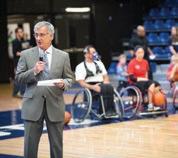
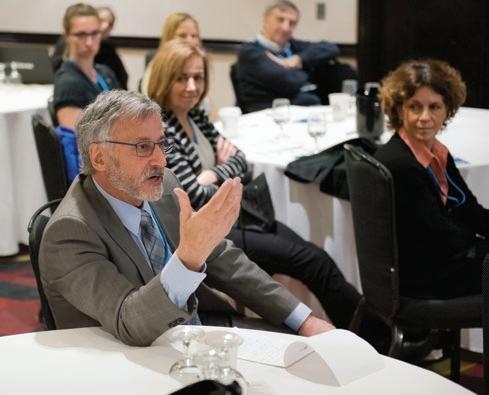
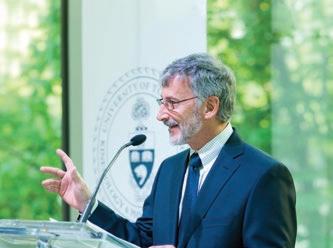
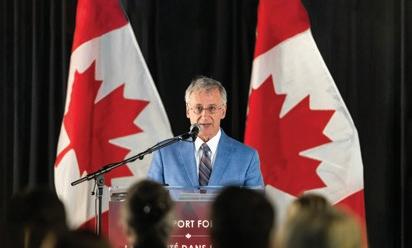
He is looking forward to spending more time with his family, completing a book based on his experiences as a biological weapons inspector and playing music. The Faculty will stay tuned for what he composes next. — JD
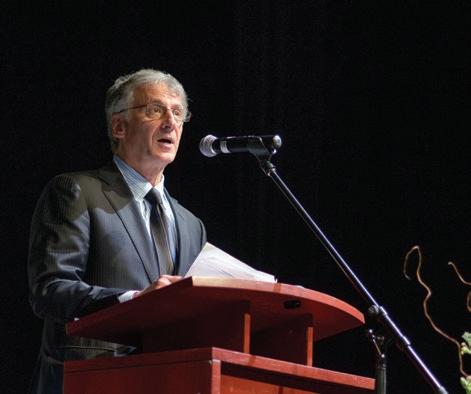
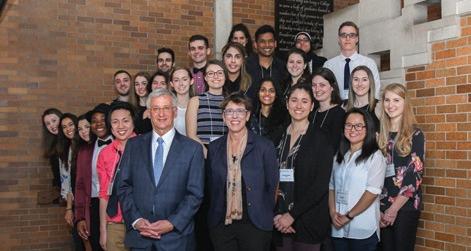
During Ira Jacobs’s tenure as dean and professor:
• Student enrolment increased for both undergraduate and graduate students.
• More top scholars were hired and research funding awarded to KPE faculty increased significantly.
• The Faculty appointed its first Canada Research Chair in Physical Activity and Mental Health.
• The Master of Professional Kinesiology Program was launched, the first master’s-level program of its kind in Ontario.
• Participation numbers in the Faculty’s sports and physical activity programs increased dramatically.
• The Goldring Centre for High Performance Sport was built, housing under one roof state of the art sport and recreation facilities, research labs and one of the city’s busiest sport medicine clinics.
• The Tanenbaum Institute for Science in Sport (TISS) was launched with a $20-million gift from the Larry and Judy Tanenbaum Family Foundation. Jacobs was appointed the institute’s inaugural director.
• The Faculty’s international reputation continued to grow with the reputable QS University Rankings by Subject placing U of T in the top 10 in the world for sports-related subjects year after year.

Denver Nuggets centre Nikola Jokić, one of NBA’s biggest stars, was famously drafted ... during a Taco Bell commercial.
Selected 41st overall in the second round of the 2014 draft as ESPN cut away to the fast-food ad, Jokić would ultimately go on to become a championship-winning, three-time MVP, raising questions about how coaches and scouts ultimately make their high-stakes decisions.
“It could be argued that one of the most difficult predictions a person makes is what another person’s future will look like,” says Kathryn Johnston, a senior research associate in the Faculty.
In an effort to better understand the forces at play, Johnston decided to conduct an experiment with the help of Joseph Baker, a professor at KPE and the Tanenbaum Chair in Sport Science, Data Modelling and Sport Analytics.
For their study, the researchers created an online tool – similar to a dating app – that tasked 18 coaches with making mock selections for a hypothetical roster based on 15 athlete profiles. Each profile included pictures, anthropometric information (the measurements and proportions of the athletes’ bodies) and a description of the athletes’ interests, abilities and statistics.
The findings, published in the journal Sport, Science and Performance Psychology, show a slight preference for athletes who were labelled as hard workers as opposed to natural
talents. The coaches also preferred certain anthropometric qualities, passion and commitment to sport, speed and explosiveness.
The researchers observed the greatest variety of approaches when it came to defining what constitutes success and talent, receiving nearly 18 different definitions – essentially one for each coach in the sample. The coaches also weighted the information sources in unique ways, each valuing various aspects of the players’ information differently.
“For some, profile pictures were critical; for others, it was the birthdate, etc.,” says Johnston.
The researchers say their findings could help illuminate preferences, biases and tendencies when making athlete selection decisions. That, in turn, could help scouts, coaches and other participants better align their approaches with organizational priorities while addressing any blind spots.
Next up, the researchers plan to examine decision-making behaviours in athlete selection on a much larger scale.
“We are going to use a similar design to try and determine whether selectors are selecting in line with their stated preferences or otherwise,” says Johnston. “Beyond that, we hope to create adaptations of this experiment to better understand how subtle language changes might actually influence selection behaviour.” — JD

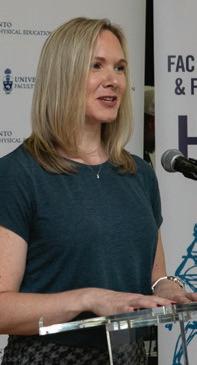
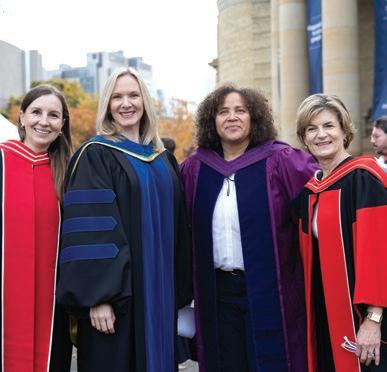
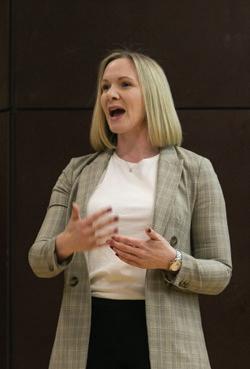
The Faculty of Kinesiology and Physical Education is deeply saddened by the passing of Professor Katherine Tamminen, associate dean of graduate education, following a year-long battle with cancer.
Tamminen joined the Faculty in 2013 after completing a post-doctoral research fellowship at the University of British Columbia. She earned her PhD from the University of Alberta in 2011, where her dissertation focused on stress management among adolescent athletes – an area that remained central to her scholarship throughout her career.
While working as a sport psychology consultant at a hockey academy, a conversation with young athletes about happiness and stress proved formative. One athlete shared that the most stressful part of sport was the car ride home, a realization that profoundly shaped Tamminen’s research trajectory. Supported by funding from the University of Toronto Connaught Fund and the Social Sciences and Humanities Research Council, she went on to lead several major research initiatives aimed at improving youth sport experiences.
Over the course of her career, Tamminen became an internationally recognized authority on stress, coping and emotional processes in youth sport and adolescent athletes. She was also widely respected for her expertise in qualitative research
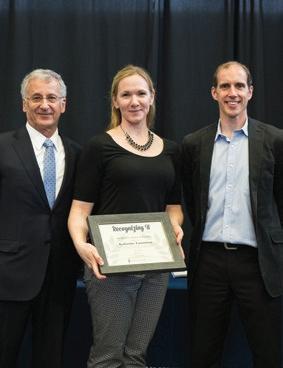
methods and for her leadership in advancing open science practices within qualitative scholarship. At the University of Toronto, Tamminen taught undergraduate and graduate courses and founded the Sport and Performance Psychology Lab. She was an exceptional teacher and mentor, deeply committed to students’ academic, professional and personal development, and she was equally generous in mentoring junior faculty members within the Faculty and the broader scholarly community.
Her expertise was frequently sought in the development of physical activity reports for Canadian children and youth, and she was known for sharing practical strategies for managing stress with audiences ranging from university students to Olympians.
Tamminen served as editor-in-chief of the Psychology of Sport and Exercise journal, past president of the Canadian Society for Psychomotor Learning and Sport Psychology (SCAPPS) and member-at-large with the International Society of Qualitative Research in Sport and Exercise.
Her mentorship, scholarship and generosity of spirit have left a lasting impact on the many students she guided, the colleagues who had the privilege of working alongside her and the national and international sport psychology communities she helped shape. — JD

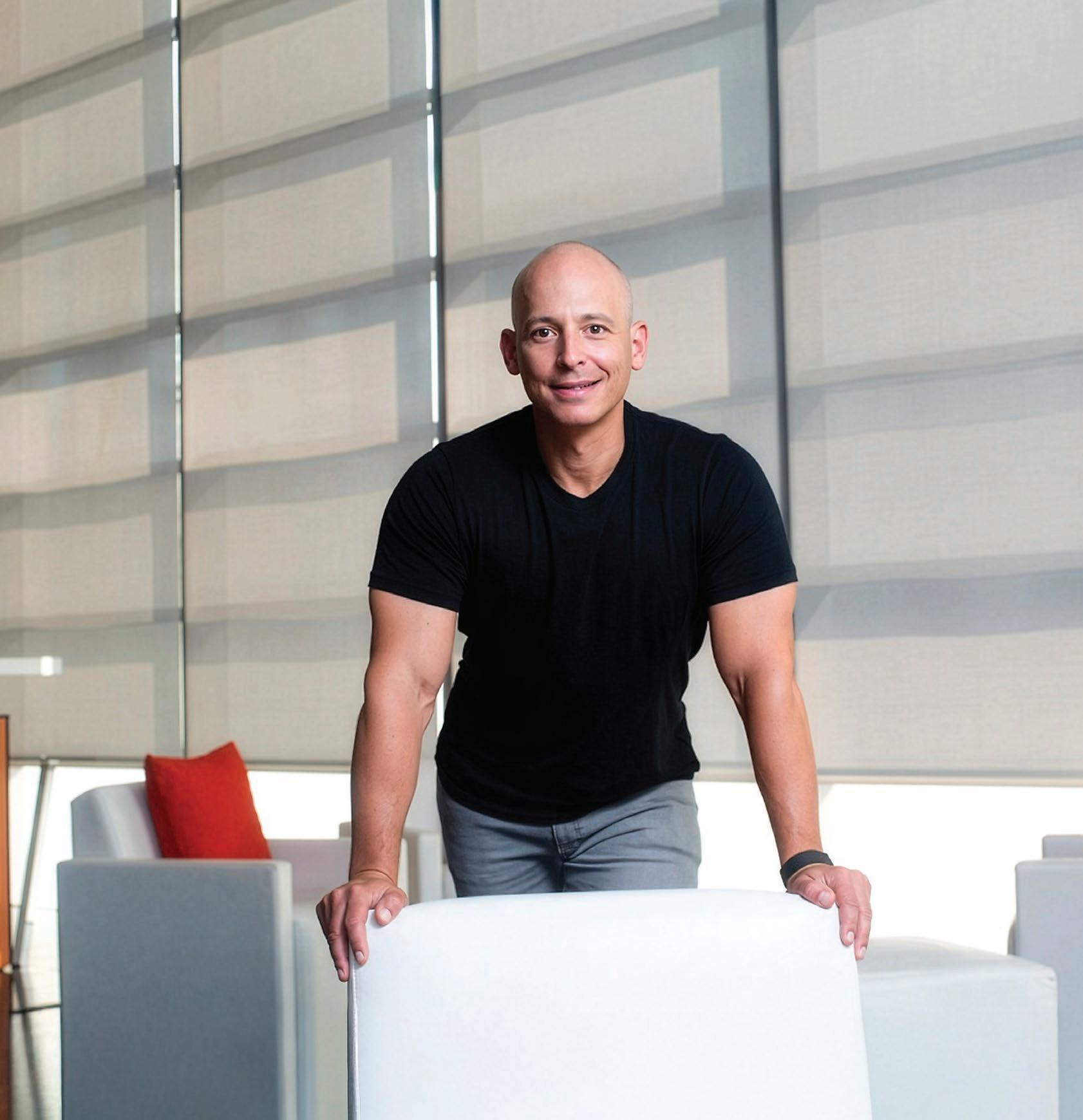
Harley Pasternak is well known as a trainer to celebrities and a New York Times bestselling author. He is also a University of Toronto alumnus, with a master’s degree in exercise sciences and community health.
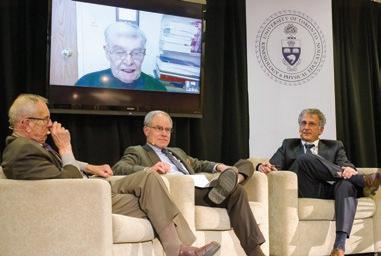
Recently, Pasternak returned to U of T via Zoom to present his new book, The Carb Reset, in conversation with Professor Ira Jacobs, who was Pasternak’s graduate thesis supervisor.
While Pasternak has since branched out into the fitness industry, helping Hollywood stars like Halle Berry get into shape for movie roles, he continues to lean into his academic training when developing training regimens and meal plans for his clients.

“What I’m suggesting in my book is that you don’t need to eliminate anything from your diet and that there is a time and room for everything in certain amounts.” — Harley Pasternak
“ That’s what sets him apart,” said Jacobs, who spoke of his pride at seeing a former student apply his education to such good use and with so much success, a sentiment shared also by Professor Gretchen Kerr, dean of KPE, who welcomed Pasternak on behalf of the Faculty.
Pasternak shared that Halle Berry and Oprah Winfrey were the ones who set him on the path of writing books. Berry called him one day, while they were training for the film Catwoman, and said she was having lunch with Oprah Winfrey, who wanted to talk to him.
“She wanted to know what program I used to get Halle into such great shape,” said Pasternak. “I started to explain the science behind it, but halfway through she told me she was bored and that I needed to come up with a catchier name, write the book and she’d have me on her show.”
In response, Pasternak came up with the concept of five simple (not to be confused with easy) steps to a healthier lifestyle and wrote The 5-Factor Diet, followed by The 5-Factor Fitness and a number of other books leading up to his latest, The Carb Reset, which he describes as “a reaction to all the nutrition misinformation out there in the digital world.”
“You have people writing about extreme approaches to health, saying don’t ever eat this or only eat this,” said Pasternak.
“But many of these claims are not founded in science – like the one that carbohydrates are bad for us.”
His book is an attempt to help readers reset their approach to carbohydrates specifically and food in general by applying a balanced approach to eating.
“It’s hard to stick to a diet that’s too restrictive or that uses elaborate ingredients or complicated equipment,” said Pasternak. “What I’m suggesting in my book is that you don’t need to eliminate anything from your diet and that there is a time and room for everything in certain amounts.
“You’re supposed to be excited about the food you eat, not dread it.”
So, what are the key principles of Pasternak’s carb approach?
1. Reduce added sugars (found in processed foods), not carbs. When chosen wisely, carbs support energy, health and longevity.
2. Focus on nutrient-dense, fibre-rich carbs like legumes (lentils, chickpeas, black beans), whole grains (quinoa, oats, barley, farro), starchy vegetables with skin (sweet potatoes, potatoes) and fruits (berries, apples, pears).
3. Apply the PATH method for balanced eating:
• Palm-sized serving of carbohydrates.
• All the vegetables you want.
• Thumb-sized portion of fat.
• Hand-sized portion of protein.
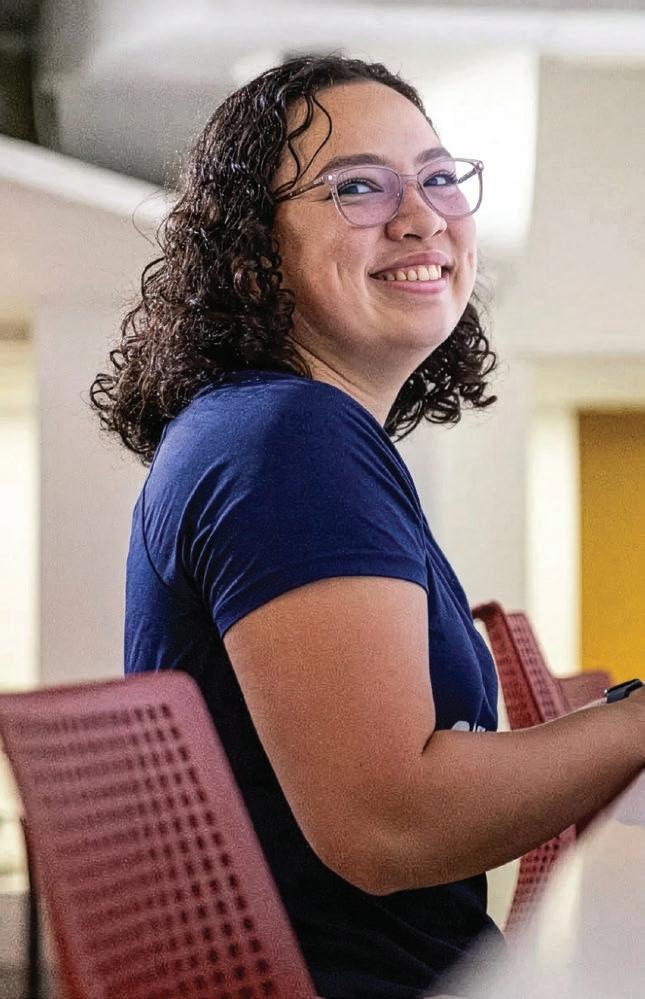
Sometimes it all comes down to who you have around you. For astronomy and astrophysics major Joely Ma, that is what has made being a part of the Varsity Blues softball team such an important part of her U of T experience.
For someone who has always enjoyed math and physics, and been interested in space since childhood, her major of choice in her own words can sometimes be brutal. But her interest in the continuously growing field, and most importantly the people she has surrounded herself with have her ‘locked in’.
“For me, seeing other people around me working makes it a lot easier for me to buckle down and get stuff done,” explained Ma. “I attach myself to more productive teammates and I am able to steal their productive vibes.”
This type of contagious academic vigour is not something unfamiliar to her and her softball teammates.
“There’s something really funny about our whole team, sitting in the stands of a game, in full uniform, laptops and iPads and notebooks out,” described Ma. “Having already played a game, knowing we have more to play that day, but using every second we can to do what we need to get done. Rarely do you see other teams doing that and I think it really sums up the Varsity Blue experience.”
On a team filled with a variety of majors spanning from engineering to bioethics, from forensic science to kinesiology, Ma is one of 10 softball players to receive Varsity Blues Academic Excellence honours over the last two seasons.
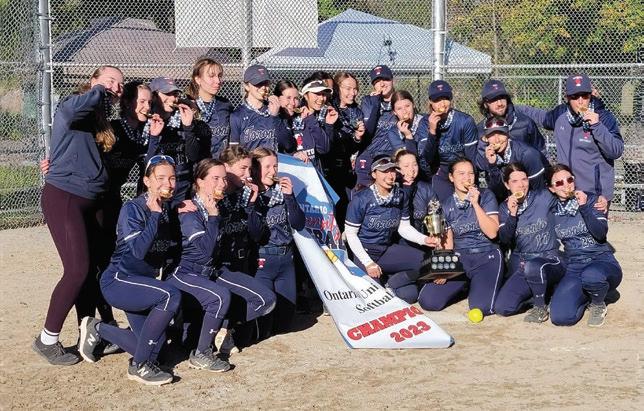
During Ma’s tenure so far, the U of T softball team has claimed back-to-back OUA championships – their first since previously claiming a provincial banner in 2005. Ma points to the teams first gold medal victory in 2023 as a particularly special moment spurred on by the desire to celebrate their captains.
“At the beginning of the season I told the twins (Beth and Amanda DeConinck) that I wasn’t going to let them leave the team without a trophy,” recollected Ma.
As for what’s next, Ma is keeping her options open.
“There’s so much new research and opportunity in Astro that there’s really no telling where I could end up, which is exciting.” — Jordon Hall
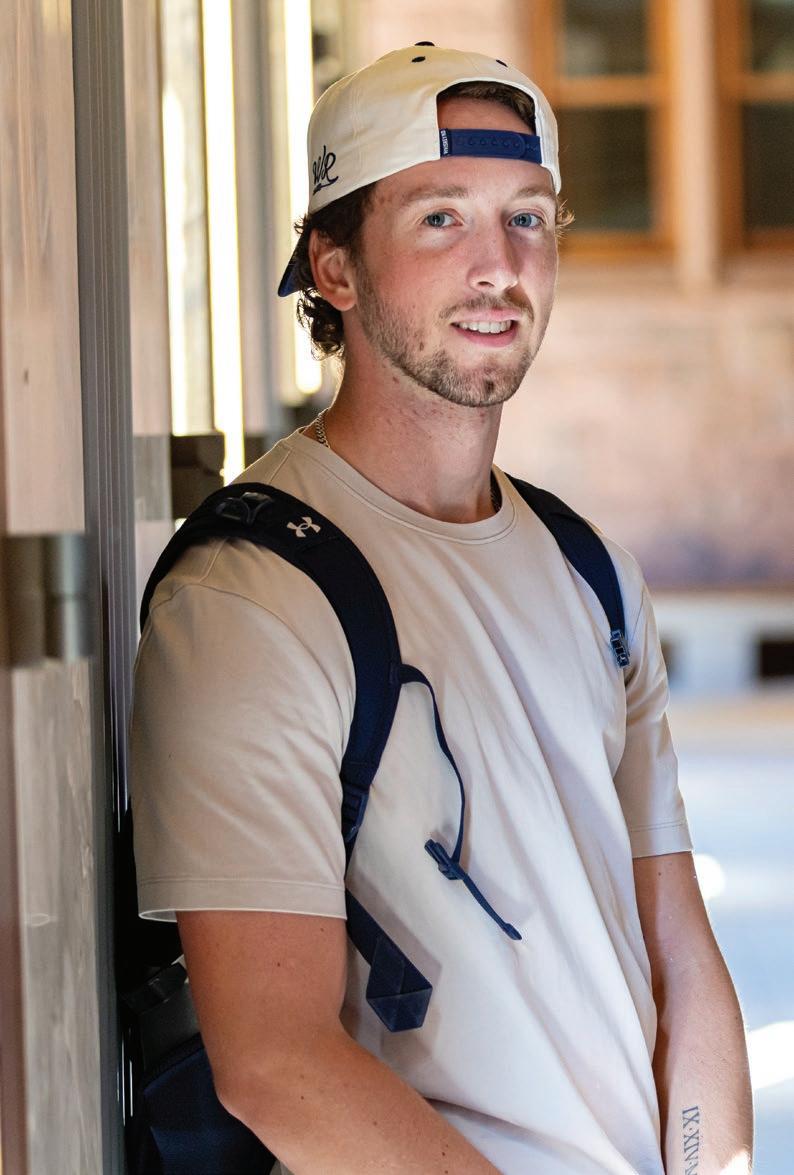

For Varsity Blues men’s
hockey
player Zack Terry, the decision to come to U of T was easy.
“I knew very few people who had gone to U of T and little about it, but once I visited campus, I knew it was where I could see myself for the next four years,” explains Terry.
The Oakville native has since excelled in the classroom, earning U SPORTS academic all-Canadian honours. Additionally, Terry has appeared in over 50 games with the Varsity Blues through two seasons.
“My favourite memory as a Varsity Blue so far was our trip to Princeton during my first year. We had the opportunity to tour campus, play in the Princeton rink and go see a New York Jets game in New Jersey. Road trips are always the memories that last the most.”
Terry also loved human anatomy courses with Associate Professor Judi Laprade.
“Rather than standing at the front for the entire class every day, she would teach a concept, provide various additional resources for further learning and provide opportunity for us to engage with the content.”
Balancing it all is no easy feat. Among U of T’s 23 varsity sports, hockey carries one of the heaviest loads – daily training, practices and a season that can span from September to late March with 28 regular-season games, plus preseason and playoffs. However, this intense calendar has never been a deterrent for Terry, who accepts the challenge head-on.
“Balancing academics and athletics can be a challenge, but using time management skills and looking ahead at athletic demands is essential for success. I typically look at the month ahead and make note of when we practice, play games and travel. Then I make a week-toweek plan of when I need to begin and complete my course work and I always try to have it completed at least one or two days prior to the due date.”
Now entering his third year in the kinesiology program, Terry has an interest in continuing his education beyond his undergraduate degree.
“I am intending to complete Certificates in Sports Science and Clinical Movement Science, and hope to attend graduate school to pursue a Master’s of Physiotherapy. The kinesiology program provides the opportunity to develop skill sets in a broad range of topics such as body mechanics, injury prevention, sports medicine and injury rehabilitation, which will best prepare me for success in these post-grad opportunities.” — JH
These student-athletes are among the many who have achieved first class honours with a GPA of at least 3.50 in the previous academic year.
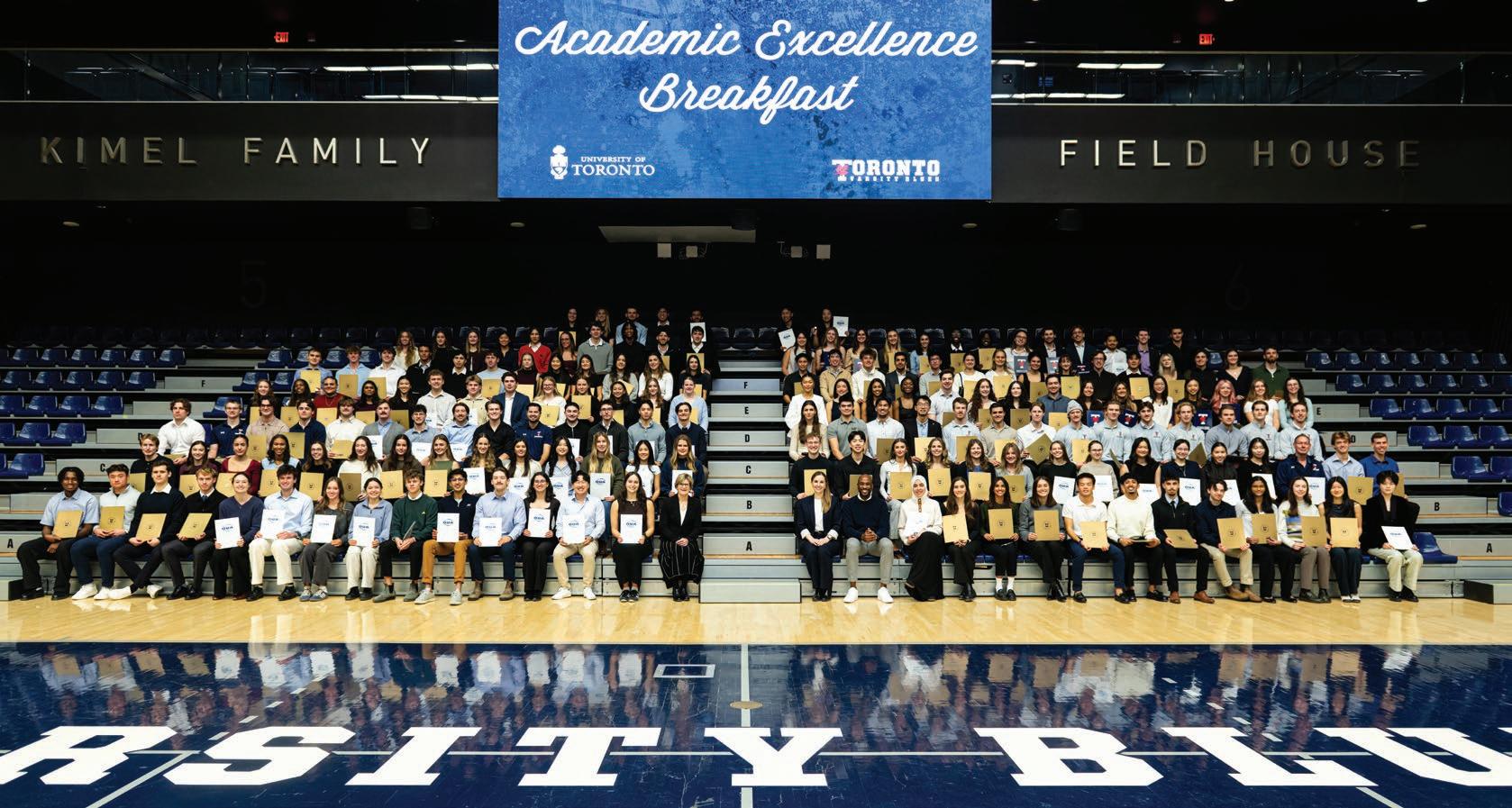
The University of Toronto honoured 322 student-athletes at the 14th annual academic excellence breakfast hosted at the Goldring Centre for High Performance Sport.
Professor Gretchen Kerr, dean of the Faculty of Kinesiology and Physical Education, as well as Professor Ashley Stirling, vice-dean of programs at KPE, and Dalton Myers, director of interuniversity and high performance sport were in attendance to honour this year’s academic excellence recipients.
The annual ceremony honoured student-athletes, who while competing as a Varsity Blue, earned an 80 per cent average or higher in all courses during the 2024-25 academic year. Each recipient received a pin: enamel for first-time winners, bronze for second, silver for third, gold for fourth and a diamond pin for anyone earning the award five or more times during their interuniversity career.
Women’s hockey player Julia Blais-Savoie, women’s lacrosse forward Mary Frost and men’s track and field athlete Eric Che received a double diamond pin, marking the sixth time they have received this honour. In total, 10 U of T studentathletes across nine different Varsity Blues teams received a diamond pin at this year’s event.
The Blues also honoured four University of Toronto top scholar student-athletes who were adjudged to have excelled both academically and athletically during the 2024-25 academic year: women’s cross country and track & field standout Julia Agostinelli and men’s hockey player Mark Cooper were celebrated as the U SPORTS top scholar athletes, while Blues baseball graduate Owen Taylor and women’s water polo goalie Hana Truchla earned the Ontario top scholar athlete awards.
“Since starting my master’s in physical therapy at U of T, I have only grown to love my sport more,” said Agostinelli. “The 2024-2025 season was one filled with transitions for me and the U of T track community has been a great support. In many ways, being a part of this team feels like I have come full circle because the athletes and coaching staff’s values echo those instilled in me as a young athlete.”
The 322 student-athletes represent nearly 37 per cent of the total Varsity Blues population across the three University of Toronto campuses, marking a seven per cent increase from the 2023-24 season. The Varsity Blues women’s track and field team had 20 honourees, while women’s rugby totalled 17, and both the U of T men’s hockey team and men’s track and field team had 16, apiece. —
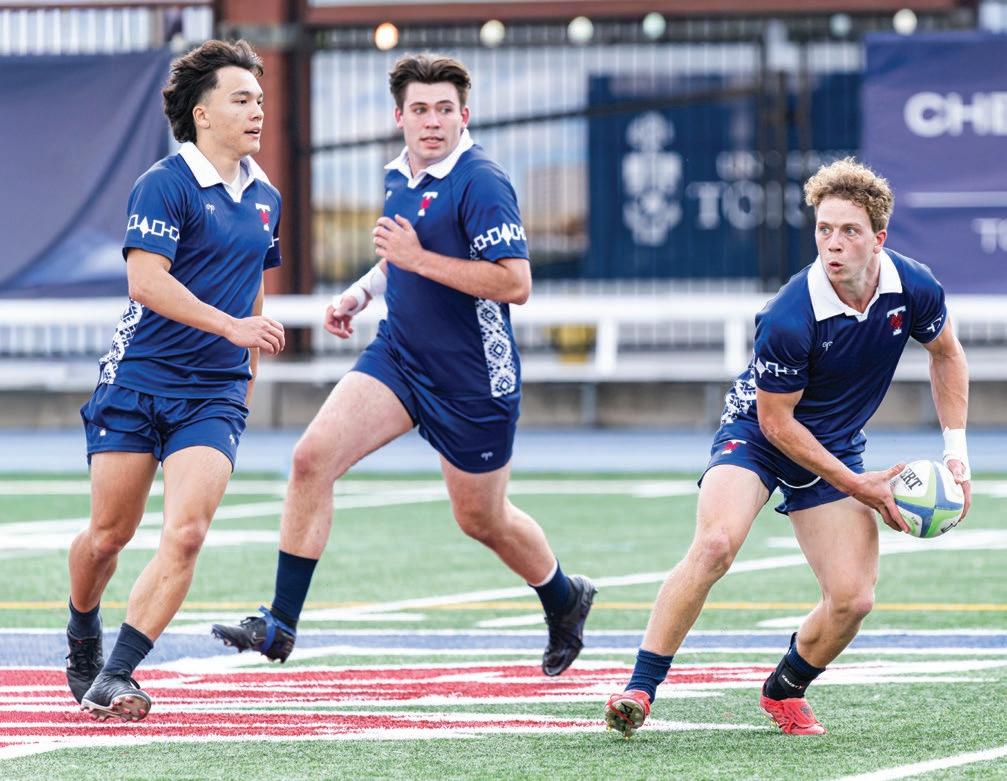
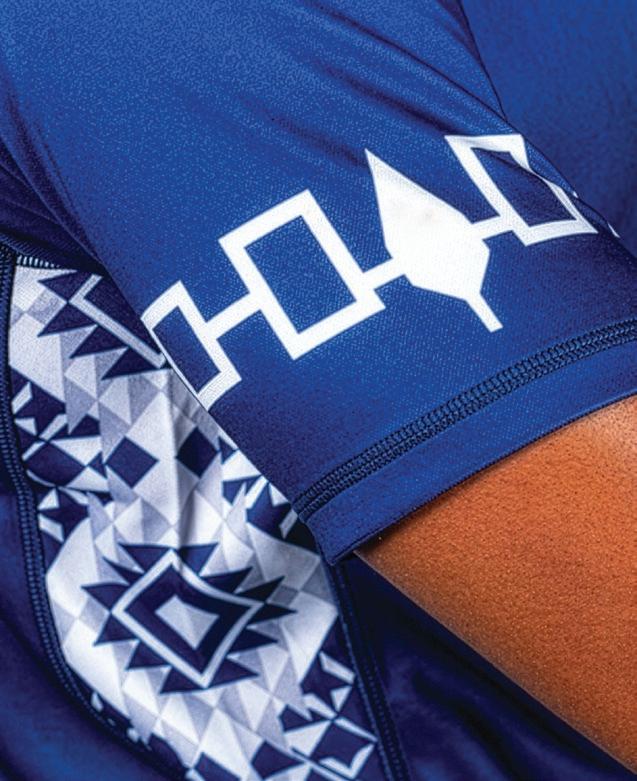
AThe Varsity Blues men’s rugby team has been taking the field in jerseys that carry more than just the T leaf. This year, the Blues partnered with Iroqit, an Indigenous woman-owned company based on Six Nations of the Grand River Territory, to design a new look that reflects both tradition and connection.
fter breaking his neck and facing an uncertain future, Varsity Blues football player Koby Lee forged an inspiring comeback. Originally from New York, Lee came to U of T in 2019 as an international student, studying engineering while pursuing football.
especially for the medical support staff at U of T and for all of the love and support that everyone in my life was giving me.”
Founded by Melanie Squire, Iroqit has deep roots in the rugby community. Alongside her design work, Squire helped create Iroquois Roots Rugby, a youth club that fosters development and opportunity for Indigenous players. The Blues have collaborated with the club in the past, making this partnership feel like a natural extension of a long-standing relationship.
His first year turned out to be a humbling experience. Not only was the engineering curriculum particularly demanding, but as an undersized athlete he would need to prove himself to a new coaching staff as a walk-on.
“I think that most students have a period where they adjust to the increased demands of being a student-athlete at the university level,” says Lee. “The great thing for me was being part of two tight-knit communities on campus – the international students at Chestnut and my brothers on the football team.”
The project came together with the guidance of assistant coach Sultan Butt, a Varsity Blues alumnus, and the advocacy of student-athletes Vijay Kuo and Teagh Tremain. Together, they worked closely with Squire and Iroqit to ensure the jersey honoured Indigenous design while aligning with Varsity Blues branding standards. The finished product features Ojibway beadwork patterns along the sides, creating a striking design layered with meaning.
In 2021, adversity struck in a way no one could have predicted. In his first season as a starting defensive back, Lee suffered a concussion and serious neck injury that put his future on hold. The months that followed were filled with uncertainty – not only about his athletic career but also about his ability to graduate on time.
“Wearing this new jersey really means reconnecting. Reconnecting with the Indigenous people of Canada,” he said. “We have a long history with Iroqit. Our previous alumni Sultan Butt and Tyler Lang spent a lot of time working with Iroquois Roots Rugby, which gave us this connection. The different patterns down the sides of the Ojibway beadwork just really brought it all together.”
Tremain, a third-year life science major, echoed that sentiment, noting that the jersey adds depth to an already iconic tradition.
Lee’s recovery came faster than anticipated, and he was given the green light to return to football, with no added risk of injury. This time, he set his sights on achieving Academic All-Canadian status, a personal goal he had held since his first year. Not only did he earn his All-Canadian honours, but he was also admitted into the Rotman School of Management MBA program, allowing him to suit up for the Blues for another season.
“The fact that I can now pursue my entrepreneurial aspirations and still be able to continue my football journey as a Varsity Blue is more than I could ever have asked for,” says Lee, whose personal experience with injury and recovery has inspired him to make a difference in the community.
“It’s still the T leaf, so obviously a lot of respect for just putting that on your chest and running out and playing on the pitch,” he explained. “But now with the added meaning of having extra symbolism on the jersey, it adds another layer of the respect that you feel when you put the jersey on and go out and represent the school, and now other communities as well.”
Through his clothing business, Forget What People Think, he he launched a fundraiser hoodie to provide young adults in Toronto with access to free mental health therapy.
For Kuo, a fourth-year kinesiology major, wearing the new jersey feels like stepping into something larger than the game itself.
“I don’t know how much of that time I clearly remember,” says Lee, “but I do remember feeling an immense sense of gratitude,
For the Varsity Blues, these jerseys are more than new gear. They symbolize a bridge between the university and Indigenous communities, between alumni and current players, and between history and the present season. As the team pushes through the latter half of their season, the jerseys serve as a constant reminder of respect, responsibility and the power of sport to unite. — Jill
Clark
“During the recovery from my injury, it sometimes felt like the world was moving along without me, and I remember how isolating that was,” says Lee. “It’s for these reasons that I aspire to use my entrepreneurial platform to empower others and inclusively amplify their voices.” — JC
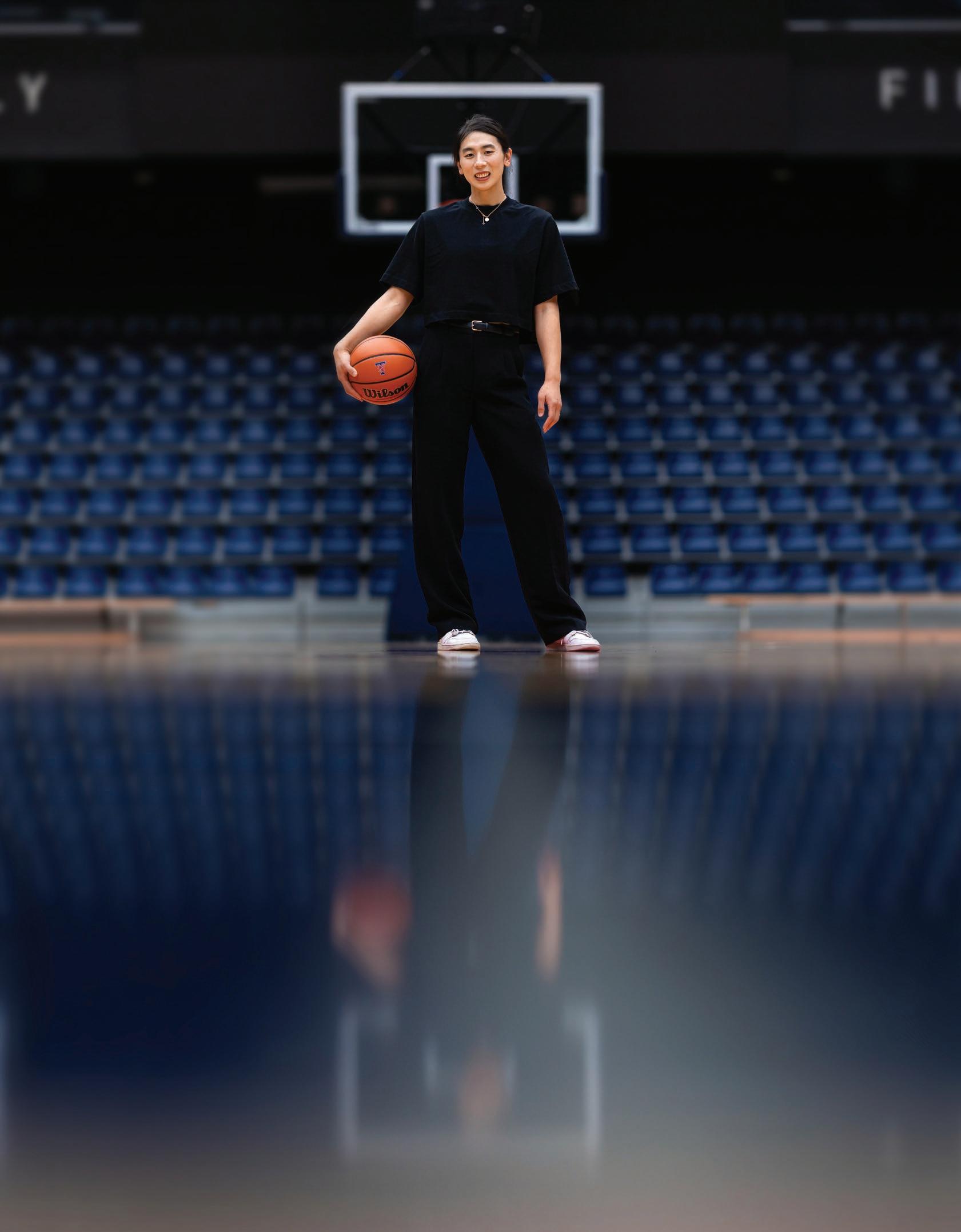
F or Zi Yang Wang, the thought of competing as a Varsity Blue might not have been one of the first that crossed her mind. With no formal organized basketball in her background, pursuing high performance sport was not a top priority. She enjoyed the game recreationally as another activity to go along with her fitness-focused lifestyle, but her scholastic pursuits took precedence when she first arrived from Seattle to complete her undergraduate degree in pharmacology.
Following graduation, Wang took time to reflect, to travel, spend time with family and figure things out. This helped in a decision-making process which would bring her back to U of T via PhD studies in molecular genetics.
“It was definitely a tough decision. At one point I felt lost in the sea of possibilities,” described Wang of her post-undergraduate journey. “During a gap year, I ended up volunteering in a lab, and that experience sparked a genuine passion for scientific research. When I received my acceptance, I was overjoyed. The thought of working alongside world-renowned researchers and learning from mentors and colleagues was thrilling. But I was also scared – scared of the unknown, of the difficulty ahead and of whether I would be able to keep up.”
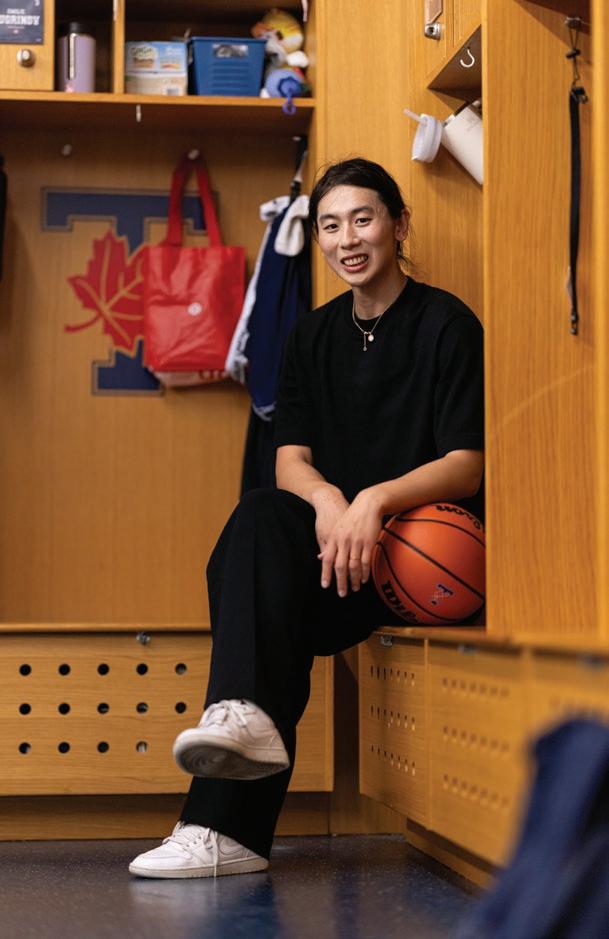
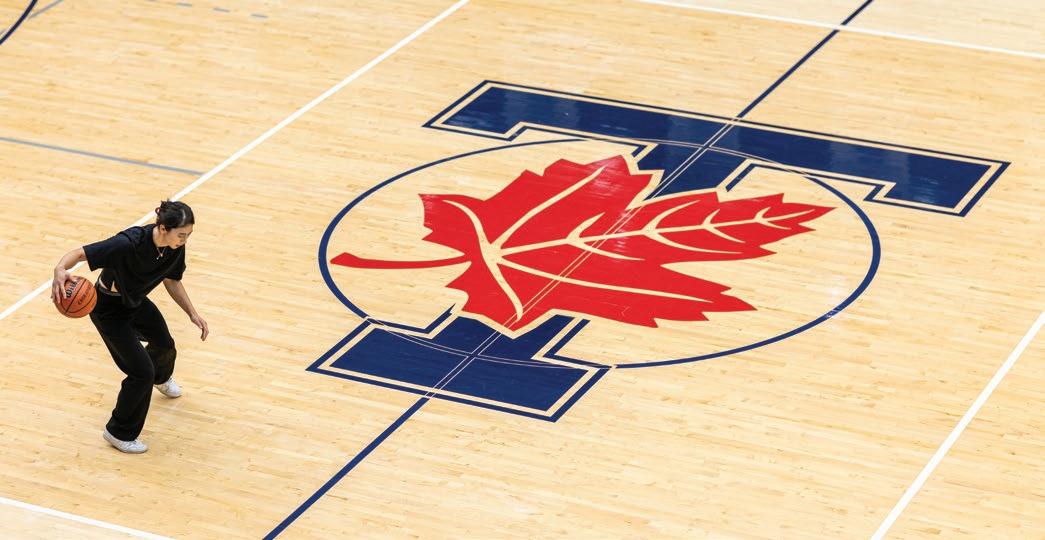
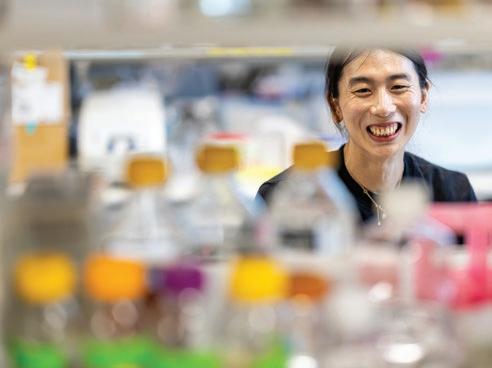
Wang has overcome those initial fears and has excelled in her research. But with a gentle reminder from a parent, she made another choice that would push her pursuits beyond just one passion. After reacclimating herself to the rigours of academic research and always having a love for the game of basketball, she made the decision to become a Varsity Blue.
“Before my father passed away, he reminded me to focus on the things that truly matter to me – that stuck with me,” said Wang. “I decided to try out for the Varsity Blues women’s basketball team during the later years of my PhD and spent about a year preparing and building up conditioning. Tryouts were nerve-wracking, but I tried not to overthink it. Despite my lack of experience, Coach Dee [Dianna Ros] and Coach Kali [Kalina Alexander-Renaud] took a chance on me and I’ll always be grateful for that.”
The list of requirements that come with completing a PhD at one of the top ranked universities in the world is a long one – from focus to organization to diligence. These traits came in handy in her pursuit of varsity athletics.
“A lot of the skills I learned from my time being a graduate student transfer pretty well to being a student-athlete. Time management, discipline, grit, motivation. Once I overcame the initial shock to the system, it just became about adapting and finding a routine that works. And it helped a ton to have amazing supportive coaches and teammates, and a partner who was there to help me live out a dream.”
Wang appeared in all 20 regular season contests during the Varsity Blues 2024-25 campaign, averaging a team-high seven
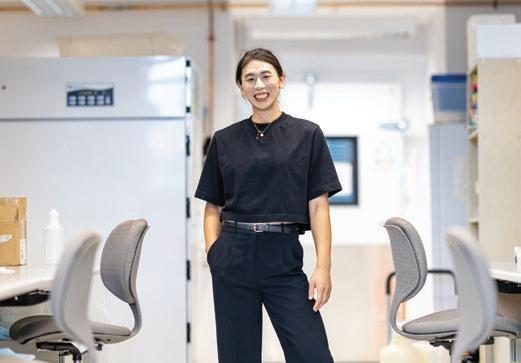
rebounds per game, while also ranking in the Top 10 in the province in total offensive rebounds. Although the start of her varsity athletics career has come later in her post-secondary journey, it all came back to the love of the game.
“Even though I never had the chance to play organized basketball growing up, I have always loved the game. It’s therapy – being alone on an empty court before the world wakes up, the simple joy of putting the ball through the net over and over again. It never gets old.”
Even more impressive, while others may have thought being a PhD student-athlete would be enough, Wang has continued to strive for even more.
“I’ve been actively involved in our graduate student association and served as president over the past year. I’ve also developed a fitness app called Arki that turns working out into a team sport. I’ve been lifting for years and found it to be a lonely journey sometimes, so I wanted to bring the camaraderie and competitive spirit of team sports into personal fitness, while making the tracking more fun and engaging.”
A leader and inspiration for her teammates, Wang has this wisdom to share.
“Just go for it. I’m still afraid of failure, but if there is one thing I have learned, it’s how to keep getting back up over and over again. When choosing a path, you might as well make it one that you genuinely enjoy. And when failure comes knocking, well it’s just another day.” — JH
Munkh-Orgil Tserenjamts, an international student from Mongolia, credits his coach and teammates for helping him adapt to life in Toronto.
An international student from Mongolia, MunkhOrgil Tserenjamts played competitive soccer before discovering his passion for volleyball – and is now charting a path for others as a member of the University of Toronto’s Varsity Blues.
“What makes me most proud is becoming, as far as I know, one of the first Mongolian athletes to play varsity-level sport in Canada,” says Tserenjamts, an outside hitter and libero, or defensive specialist, for the team.
Growing up in the capital of Ulaanbaatar, Tserenjamts found his way onto the Blues without going through the same club and prep systems as many of his Canadian teammates.
“My daily routine was simple: school, practice, home, repeat,” says Tserenjamts, who studies computer science in the Faculty of Arts & Science as a member of St. Michael’s College.
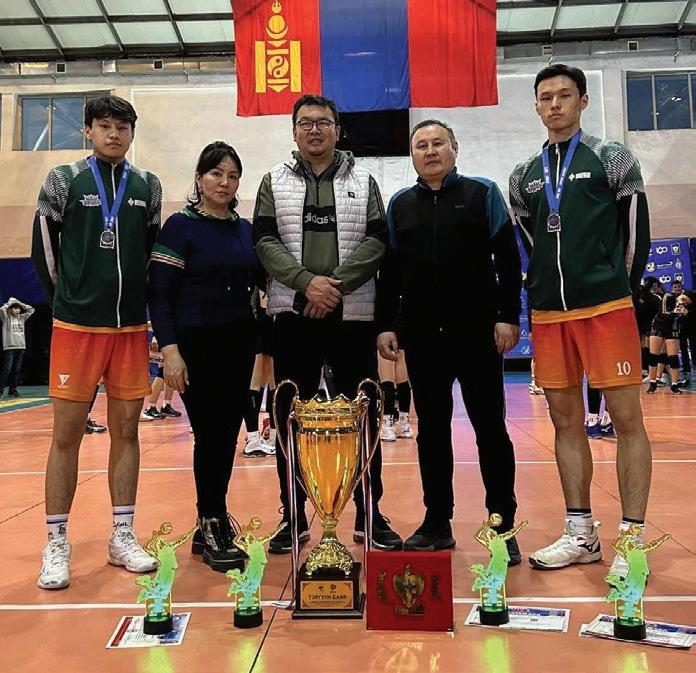
The hard work paid off. At his first major national tournament, Tserenjamts’s team placed fifth and he was named a “rising athlete.”
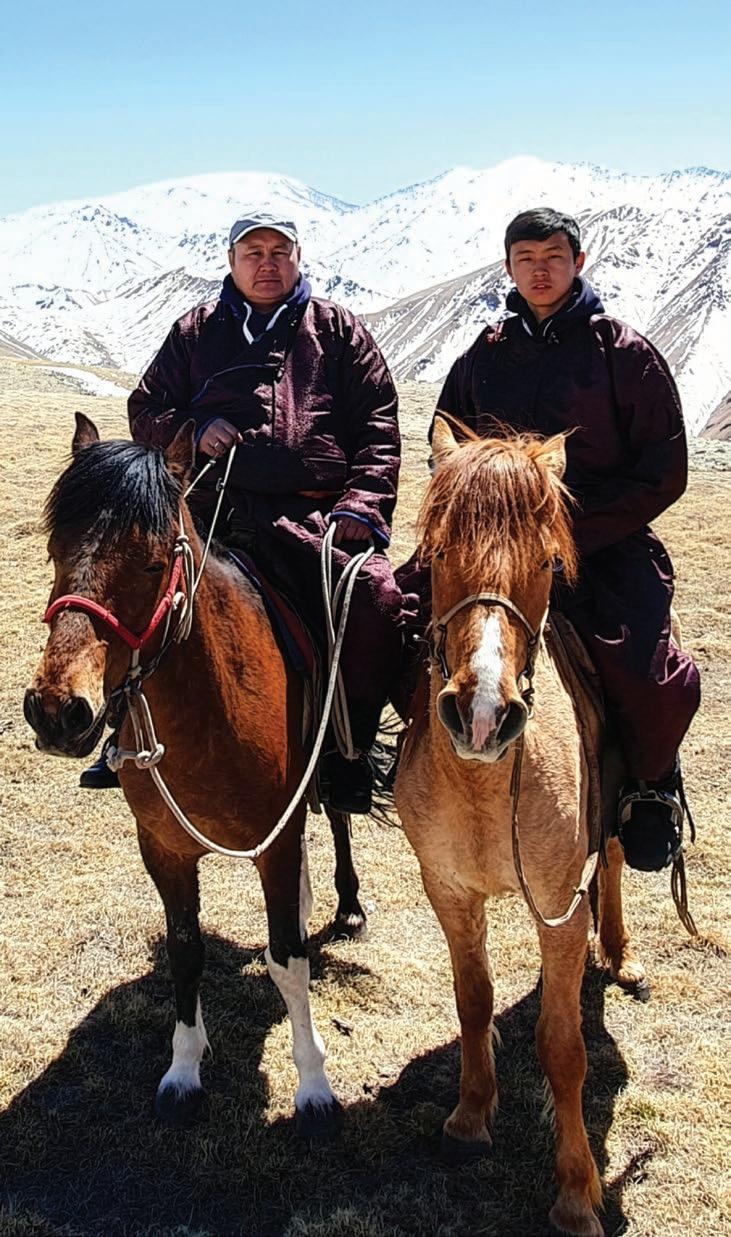
Then, at an under-18 national championship, his team went undefeated. “I remember blocking the final ball and running in circles with my teammates celebrating,” he says. “That moment is frozen in my mind.”
Tserenjamts had a lot of support along the way.
He remembers his parents working multiple jobs to ensure their children wouldn’t lack for education or opportunity.
“My dad helped me with everything, especially my hardest math and physics homework, and drove me to practices almost every day,” he says. “My mom raised me with unconditional love and care.”
Some of his most cherished childhood memories involved family trips.
“Every year, my family and I would travel together to Mongolia’s beautiful countryside,” he says. “We would camp wherever we wanted, setting up tents and staying close to nature.
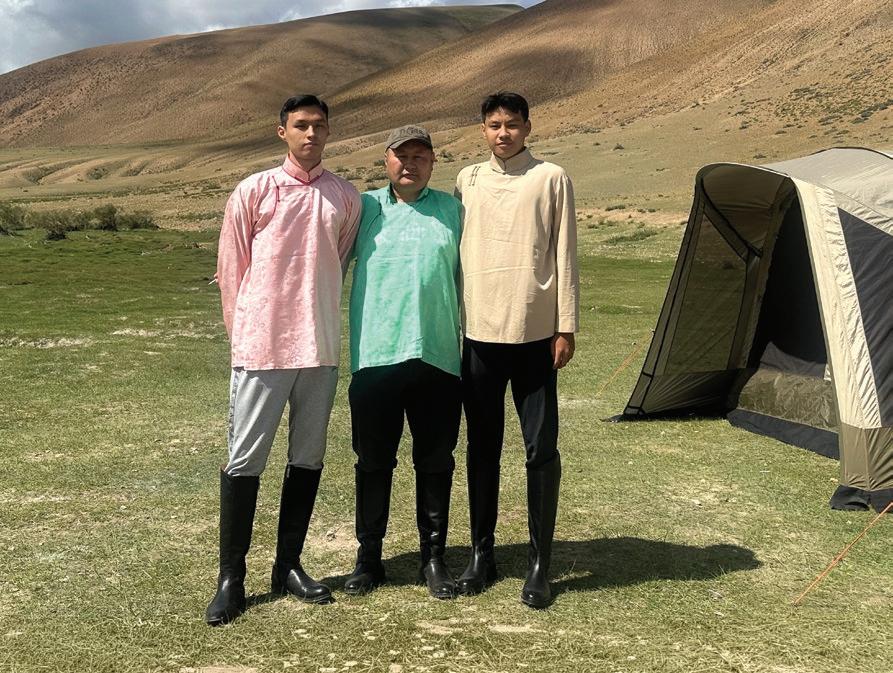
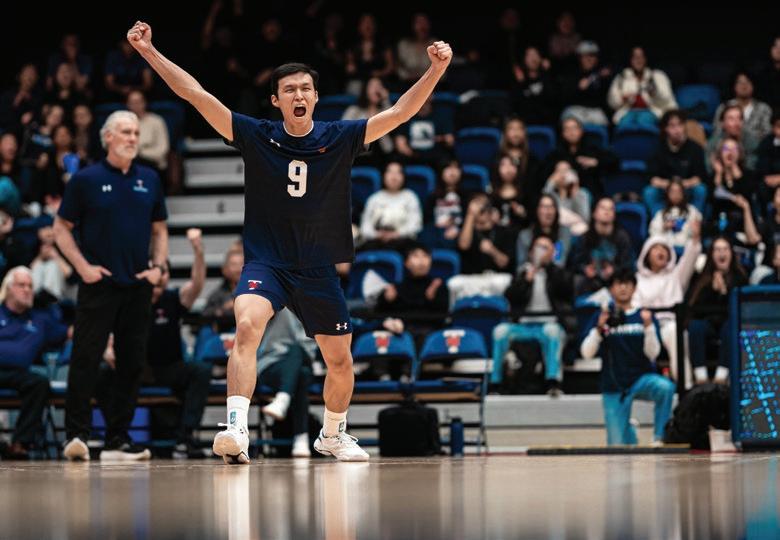
“During those trips, I spent my days freely playing on the open steppe and riding horses. Those experiences gave me a strong sense of independence and freedom.”
For Tserenjamts, trips away from the city with his family brought valuable lessons. He recounts a trip to his father’s hometown where they rode horseback for hours to a sacred mountain.
“That was when I first understood what Mongolians call ‘khiimori,’ a kind of spiritual energy and pride you feel when riding freely in nature,” he says. “It’s one of the most meaningful experiences of my life.”
With such strong roots in his country, culture and family, Tserenjamts says he found it difficult to leave home to start a new chapter in Canada.
“One of the hardest moments was saying goodbye at the airport,” he says. “It was emotionally very heavy.
“I’m especially proud and grateful for my parents, who have
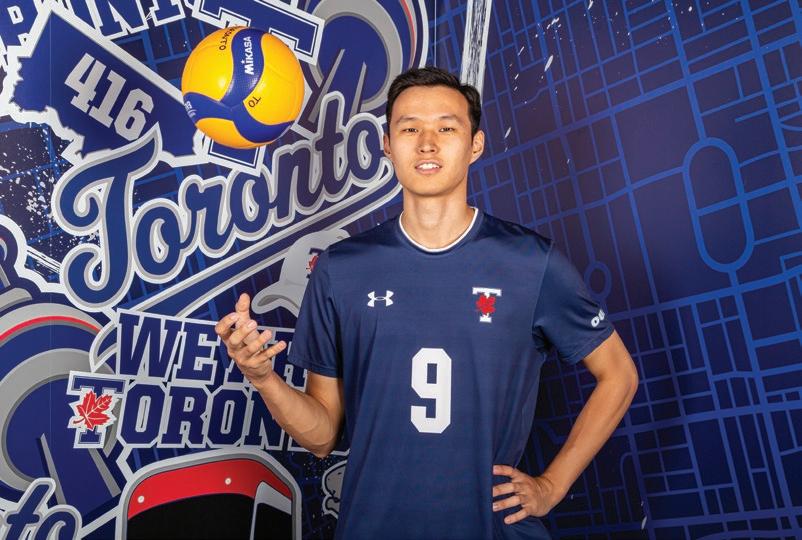
always supported me and stood behind me throughout this entire journey.”
Arriving in Toronto meant starting from scratch while balancing volleyball training with computer science courses.
Naturally introverted, he says he initially struggled to ask for help – but ultimately began to reach out.
“I started opening up more, talking to professors and classmates and planning my schedule carefully,” he says. “Once I became more structured and proactive, everything improved. Coach John Barrett and the Varsity Blues team supported and guided me a lot during that time.”
While Tserenjamts’s current routine is reminiscent of the one he employed during his high school days in Mongolia –school, practice, home, repeat – he now performs it with the knowledge that he’s representing his country on a new stage.
“I hope my journey can inspire other young athletes back home to believe this path is possible for them, too.” — JC
By Laurie Stephens
“THEOPPORTUNITYTOPLAYONPROVINCIALAND NATIONALTEAMPROGRAMSWASN’TAVAILABLE, THEREWASLESSACCESS... IRECEIVEDA SCHOLARSHIP,BUTIWASONEOFTHEVERYFEW.”
Growing up in the 1970s, Vicky Sunohara discovered a love for hockey – but also the barriers that came with being a young girl in a male-dominated sport.
The three-time Olympic medallist and head coach of the Varsity Blues women’s hockey team started playing hockey in a boys’ league until she was told she couldn’t. That forced a move to girls’ leagues that were less competitive. Along with that came less access to ice time, the dreaded early morning time slot for practice, and fewer supports in general than found in the boys’ leagues.
“The opportunity to play on provincial and national team programs wasn’t available,” she said, “and there was less access to facilities, skills camps and trained coaches.
“I received a scholarship [for hockey] to Northeastern University, but I was one of the very few.”
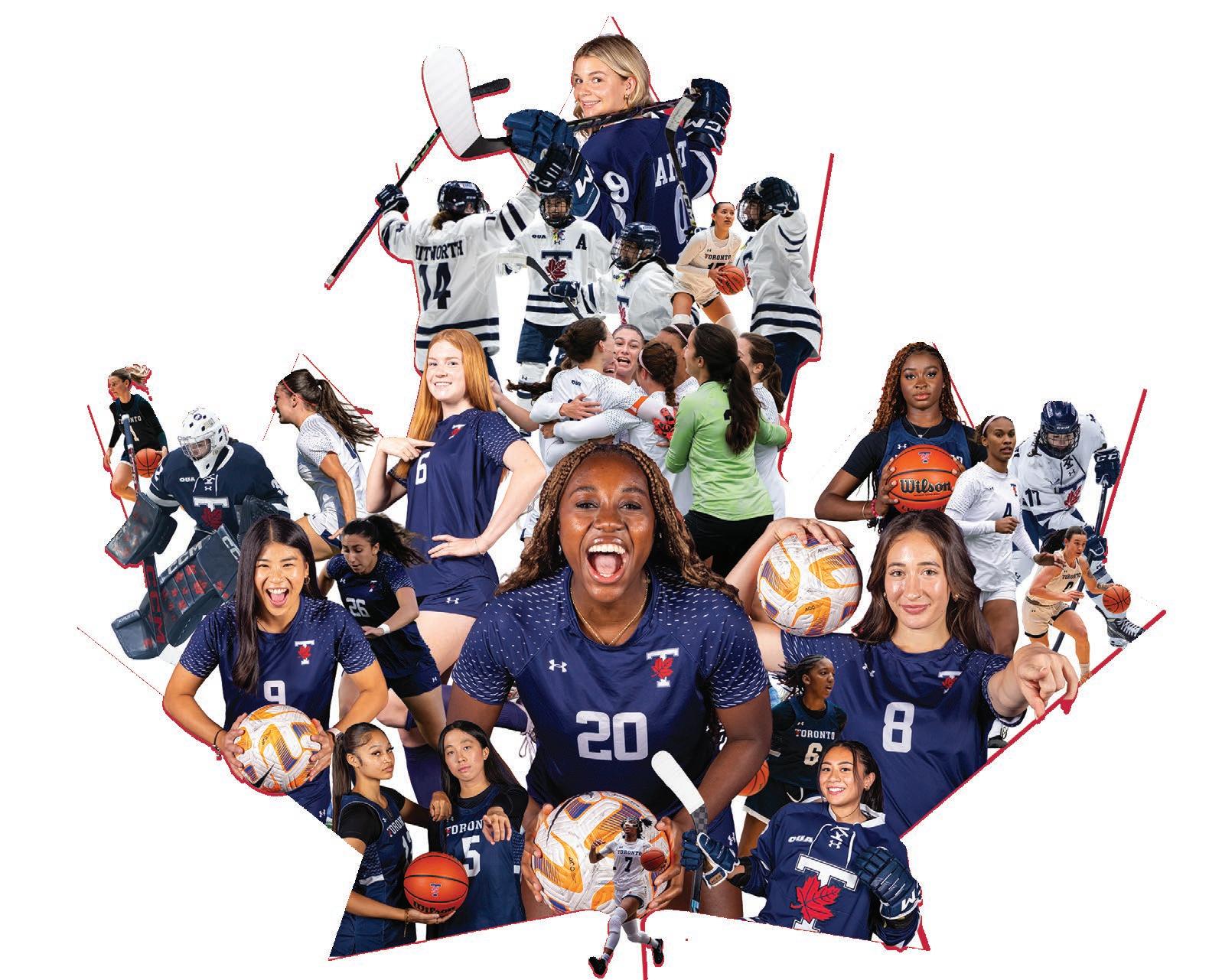
Despite those gender-based challenges, Sunohara rose to the very top of the game, and her childhood experiences are a far cry from today’s opportunities for women in sport. Now, girls can aspire to compete and earn a living in the Professional Women’s Hockey League (PWHL), soccer’s Northern Super League (NSL) or the Women’s National Basketball Association (WNBA).
There’s no doubt the recent launch of these competitive leagues for women – and their popularity – mark a positive turning point for female athletes and coaches. Still, serious challenges remain, backed by troubling statistics.
According to Statistics Canada, the percentage of adolescent girls meeting recommended physical activity fell from 21 per cent to eight per cent between 2022 and 2024. It also found that one in three girls drops out of sports during their teens, compared to one in 10 boys. And the dropout rate increases for girls at age 16.
These statistics are a sobering reminder that much work still needs to be done to improve access and participation in organized sport for women and girls.
“THEEXPERIENCESANDSKILLSTHATSPORTPROVIDES AREAMAZINGANDMAGICAL,BUTWITHTHECAVEAT THATWEHAVETOCREATETHEENVIRONMENTSTHAT WILLFOSTERTHEM.”
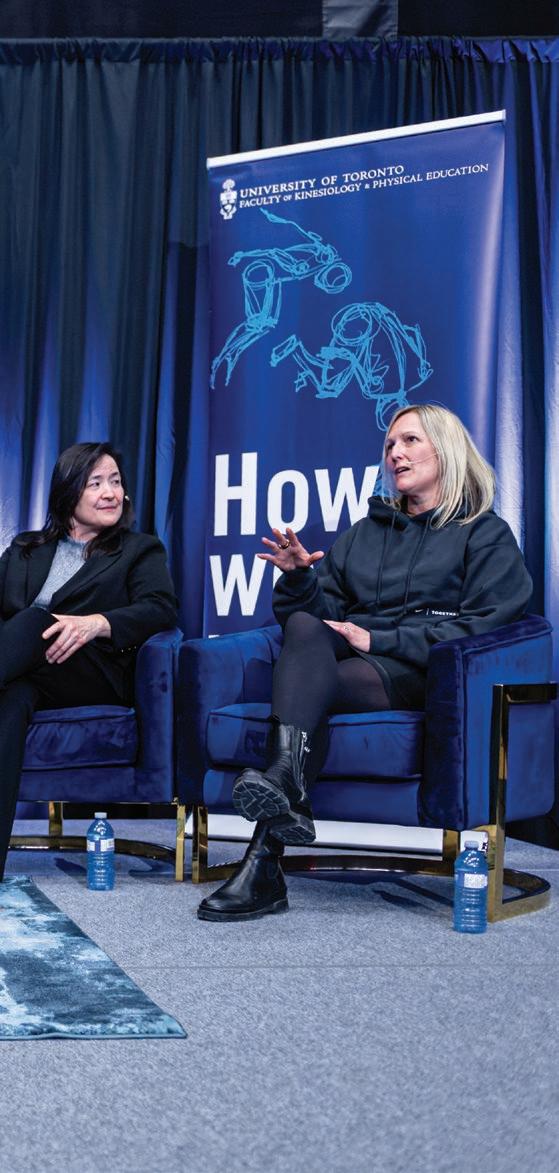
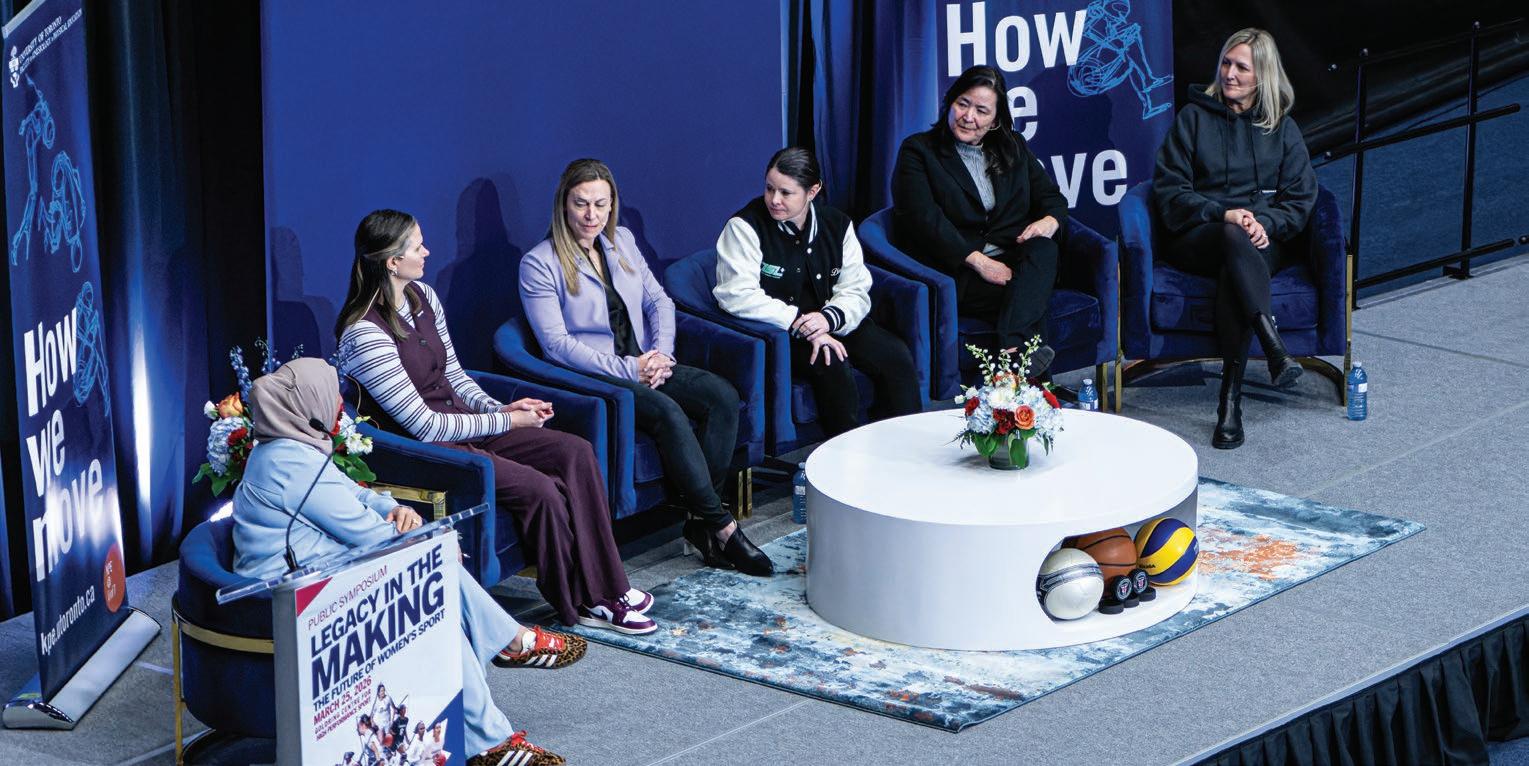
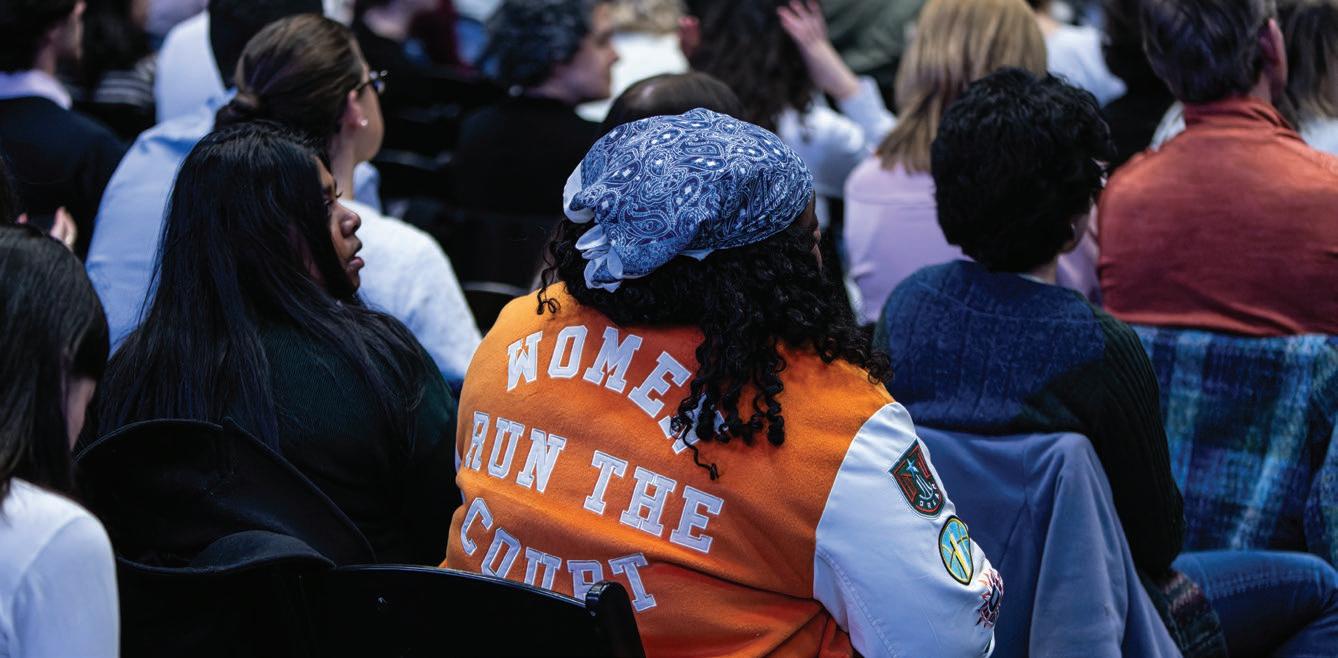
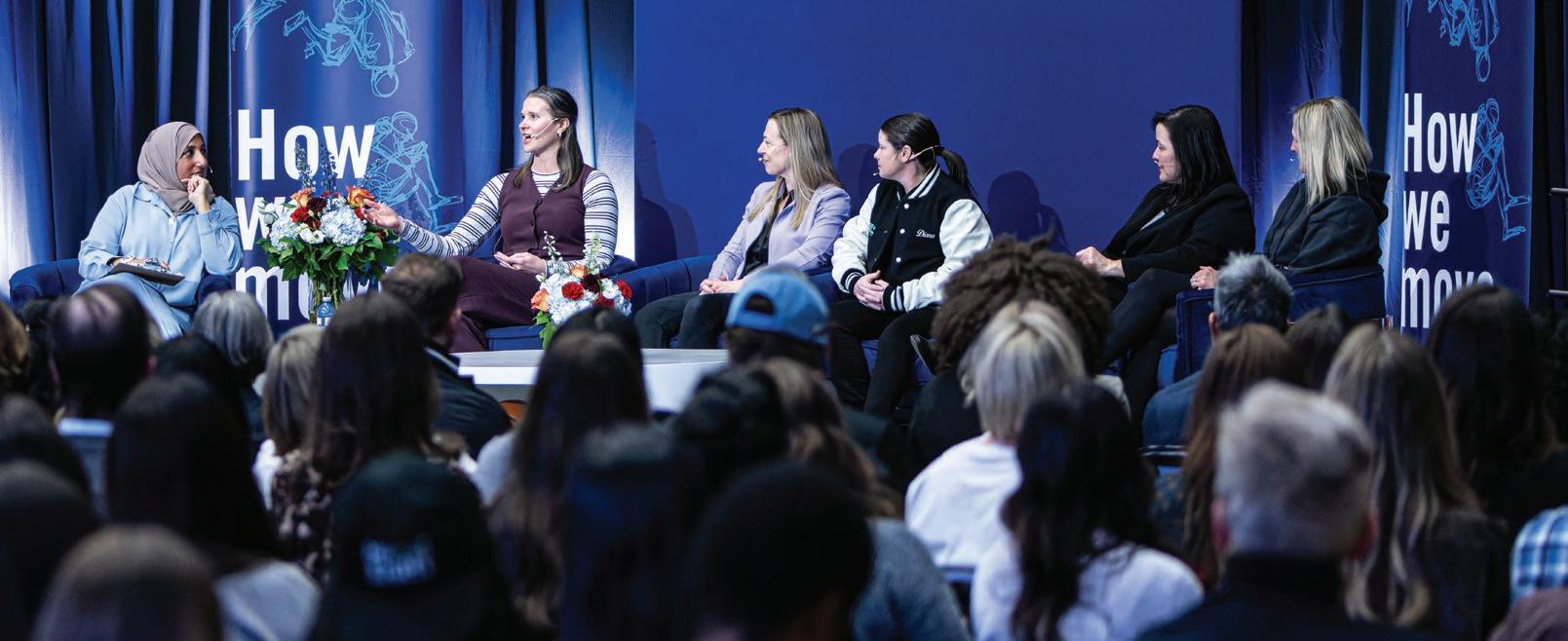
This conundrum was explored during a public symposium called Legacy in the Making: The Future of Women’s Sport, hosted by the Faculty. The event brought together expert voices to discuss how to solidify the gains Canada has made in sport and maintain the momentum.
Sunohara was one of the symposium’s five panellists, along with Catherine Sabiston, a professor in the Faculty and Canada’s Research Chair in physical activity and psychosocial well-being; soccer legend Diana Matheson, founder and chief growth officer at NSL; Jayna Hefford, four-time Olympic hockey gold medallist and executive vice-president of hockey operations at PWHL, and Teresa Resch, inaugural president of the new Toronto Tempo of WNBA.
The event was moderated by Shireen Ahmed, an award-winning journalist and senior contributor with CBC Sports.
At the core of the panel discussion was the bedrock belief that participation in sport is of great lifelong value to girls and women. According to studies by Ernst & Young, an astonishing 94 per cent of women in C-suite positions are former competitive athletes.
This was not a surprise to Sabiston: her lab’s research has found that girls’
participation in sport builds what she calls “the three C’s”: Competence, Confidence and Connection.
“There’s no environment I can think of that replicates what sport provides for young girls and women,” she said.
The catch is that not every girl is going to develop the three C’s because that learning relies upon the inclusiveness and safety of the sport environments and the quality of the experience that they are getting.
“The experiences and skills that sport provides are amazing and magical, but with the caveat that we have to create the environments that will foster them,” Sabiston added.
In 2023, Sabiston received a prestigious Partnership Grant from the Social Sciences and Humanities Research Council (SSHRC) – the largest in the Faculty’s history – for a project that aims to improve community sport participation, access and quality experiences in sport, particularly for girls. Called RE.sport, the project involves partnerships with 66 national sport organization leaders, researchers and sport advisers, including parents, coaches, officials, youth and international experts.
The ultimate goal, Sabiston says, is to positively change sport experiences for girls in Canada.
Equality for women’s sports in a maledominated environment was a common theme explored by the panellists.
By way of example, Hefford, a KPE alumna and one of Canada’s most decorated Olympians of all-time, noted there is no equitable policy for ice time in Canada, in part because hockey club contracts with rinks were put in place 20 years ago when fewer girls were playing the sport.
“I know Hockey Canada is looking into an equitable ice policy and how we can continue to build infrastructure,” she said.
Matheson, two-time Olympic bronze medallist, said the same issue exists in soccer. She regularly hears from parents questioning why their daughter’s team doesn’t have access to an indoor facility the same way boys’ teams do.
Matheson emphasized that a lack of adequate infrastructure is a key challenge, and there needs to be an investment in building more soccer pitches, more rinks and more sports facilities to close the gender gap and ensure everyone has a place to practice and play.
She said the infusion of more than a billion dollars of public funding for the upcoming World Cup matches in Vancouver and Toronto presents a generational opportunity to add much-needed soccer infrastructure across the country.
Costs to play can also be a significant impediment to participation in sport, for both girls and boys. Sunohara said registration at the high performance level can cost well over $10,000 per year. Add in the expenses of travel and equipment, and the price tag is prohibitive for many families.
Hefford said the PWHL has programs designed to help address this gap, including one called Ready, Set, Skate for young girls who have never before played the game. The girls are suited up with free equipment and given time on the ice to help reduce barriers to entry.
Lack of gender equality in coaching and team management is also an obstacle faced by women who are looking to have careers in sports, despite ample evidence to suggest that women coaching women is beneficial for the long-term development of women’s sport programs.
While the PWHL boasts six women out of eight general managers of the teams, there are still fewer female head coaches. One simple reason for this, said Hefford, is that coaching is difficult to balance with childcare and other family responsibilities, which still fall disproportionally on women, a phenomenon often referred to as the second shift.
“It’s nights, it’s weekends, and there’s potentially less job security at the professional level,” she said. “So, the candidate pools we get just haven’t trended towards women yet in the coaching space.
“I am confident though: we’re only two and a half seasons old, but we’ve created opportunities for women to see themselves as coaches.”
Both Hefford and Matheson warn that this progress doesn’t happen overnight. As Matheson noted, expectations of having professional-calibre Canadian women’s coaches ready to work in the new pro leagues now are unrealistic, since no jobs at that level have existed for women to gain the required experience.
In the NSL, three of the six teams had women at the helm in its first year of operation; not one was Canadian.
“WEKNOWTHATIT’SREALLYIMPORTANTTOATHLETIC
“Two were Danish and one was English because they’re coming from countries that have had professional leagues for years and had jobs and development opportunities,” Matheson said. “But, now that we have these leagues in place, I’m sure we’re going to start getting more Canadian women coaches.”
Another barrier to participation are the issues related to mental health – issues that can be quite different from those experienced by men and boys.
One example is negative body image, which is now regarded as a global mental health challenge, says Sabiston. Research shows it is a factor in the troubling finding that girls are up to six times more likely than boys to drop out of sport. It’s also why there is a critical need to help girls and women feel comfortable with their bodies, she said.
Sabiston has been researching this issue for many years.
In 2014, she began a study of 300 girls between the ages of 14 and 18, exploring how feelings about their appearance influence their likelihood to stay involved in sport. Her findings suggest that the more negatively a
girl feels about her appearance and fitness levels, the less likely she is to enjoy, and remain enrolled in, her sport or physical activity.
For student athletes competing at the interuniversity level, another challenge is balancing sport and academic responsibilities, says Sunohara.
“We know from student-athletes that it’s really important to athletic success that they feel supported and they have the resources and the time to be successful academically,” she says. “If they’re feeling comfortable and confident in their academics, they’re going to be better on the ice, field or courts.”
Progress is being made to address challenges of this sort.
Resch said Toronto Tempo has launched a platform called Tempo Impact, partnering with Canadian Women & Sport, Canada Basketball and Women’s College Hospital to address inequities in research and access to participation that affect the three pillars of girls’ and women’s health: social, mental and physical. She’s optimistic about the impact that programs like this can offer.
Hefford said the PWHL encourages open dialogue around mental wellness. The league has also designated female ambassadors for established mental health causes such as “Sophie’s Squad,” a non-profit that champions mental health for athletes.
In the NSL, clubs are establishing their own resources to support mental wellness – a huge leap from Matheson’s playing days when mental health “wasn’t a thing,” and players could be punished for taking time off.
“We are building in athletes’ rights, protections and benefits so they have resources to draw on,” she said.
The challenges for women in sport are not all about the athletes or the sport organizations. The public plays a role in changing the game, as well. Equal airtime for women’s sports also needs to be achieved.
Matheson said that traditional broadcast outlets – not digital platforms – are the only outlets paying money to leagues for the rights to broadcast their games. However, traditional TV is on the decline, and sport coverage is much leaner than it was 10 years ago.
What’s more, people who watch sports on traditional TV mostly consume men’s sports, leaving little room for women’s leagues to gain a foothold on viewership.
That means organizations like the NSL need to not only build the league but also the whole ecosystem around it.
“We knew no one was going to pay us for our games from the beginning – we don’t have an audience,” Matheson said. “So, we invested about $3 million in the production of our own live games.
“And then we work with the partners that want to help us get those games in front of as many Canadians as possible –CBC and Radio Canada, NTS and RDS.”
Matheson said the job ahead for the NSL is to build an audience that in a few years time will rival the TV viewership of men’s sport and ensure the league is being paid accordingly.
Interestingly, the fan base for women’s sports is quite diverse and even exclusive.
Resch said the Golden State Valkyries, a 2025 addition to the WNBA and the “sister” team of the NBA Warriors, found that the two teams have a completely different fan base. They play in the same arena and they both sold out season tickets, yet the crossover between the two teams was less than five per cent.
Hefford said you can’t assume all PWHL fans are also NHL fans; in fact, the league found that 40-to-80 per cent of ticket-buyers for its Takeover Tour games (in cities without a franchise) had never seen an NHL game in that arena.
Not surprising, the panellists had a host of suggestions for sports fans to help women’s sports leagues survive and thrive, best summed up by Resch.
“I need your time and your money,” she said. “I need you to spend every waking moment watching the Toronto Tempo on TV, and when you’re done with that, you watch the PWHL games and you watch the NSL games.
“And then I need you to buy tickets. I need you to buy merchandise and I need you to buy all the brands that support women’s sports and make sure those brands know that that’s why you’re buying them. This is how women’s sports move the needle.”
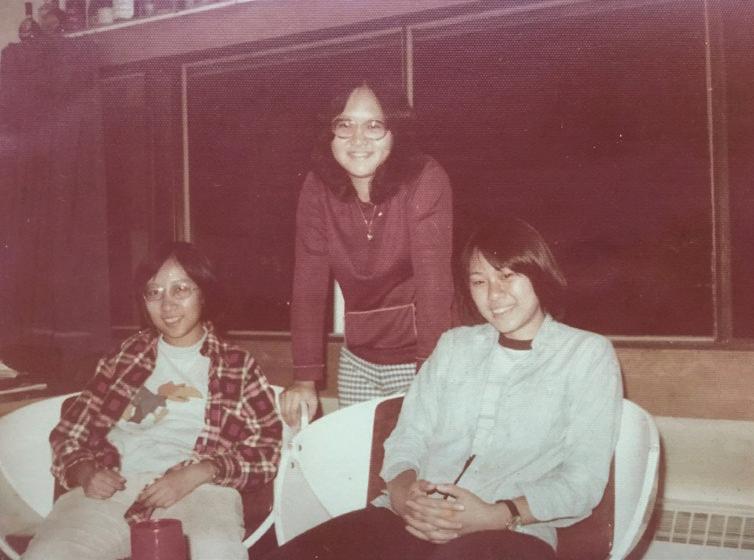
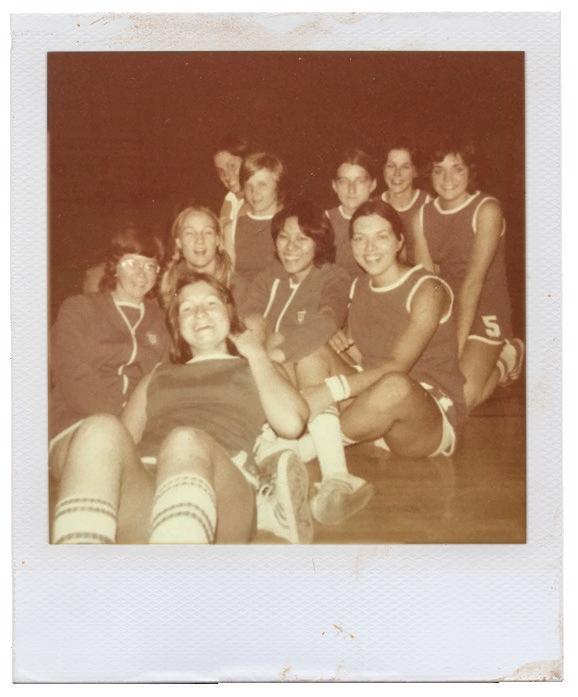
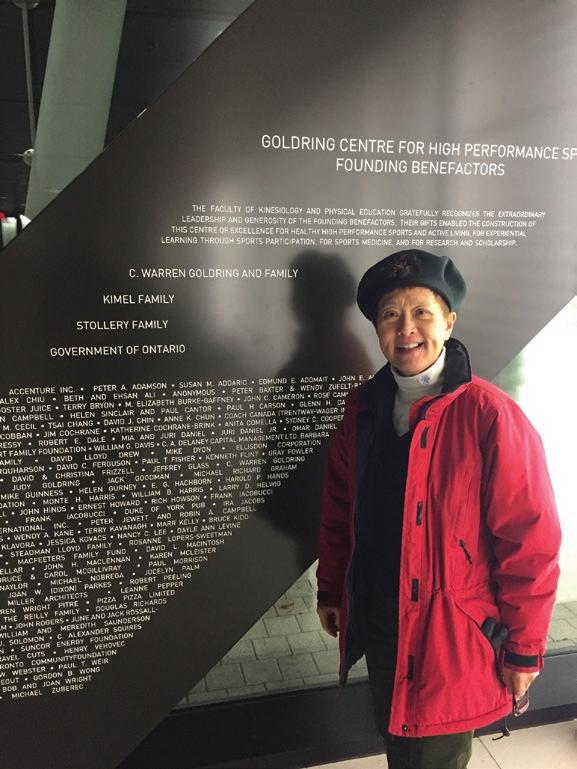
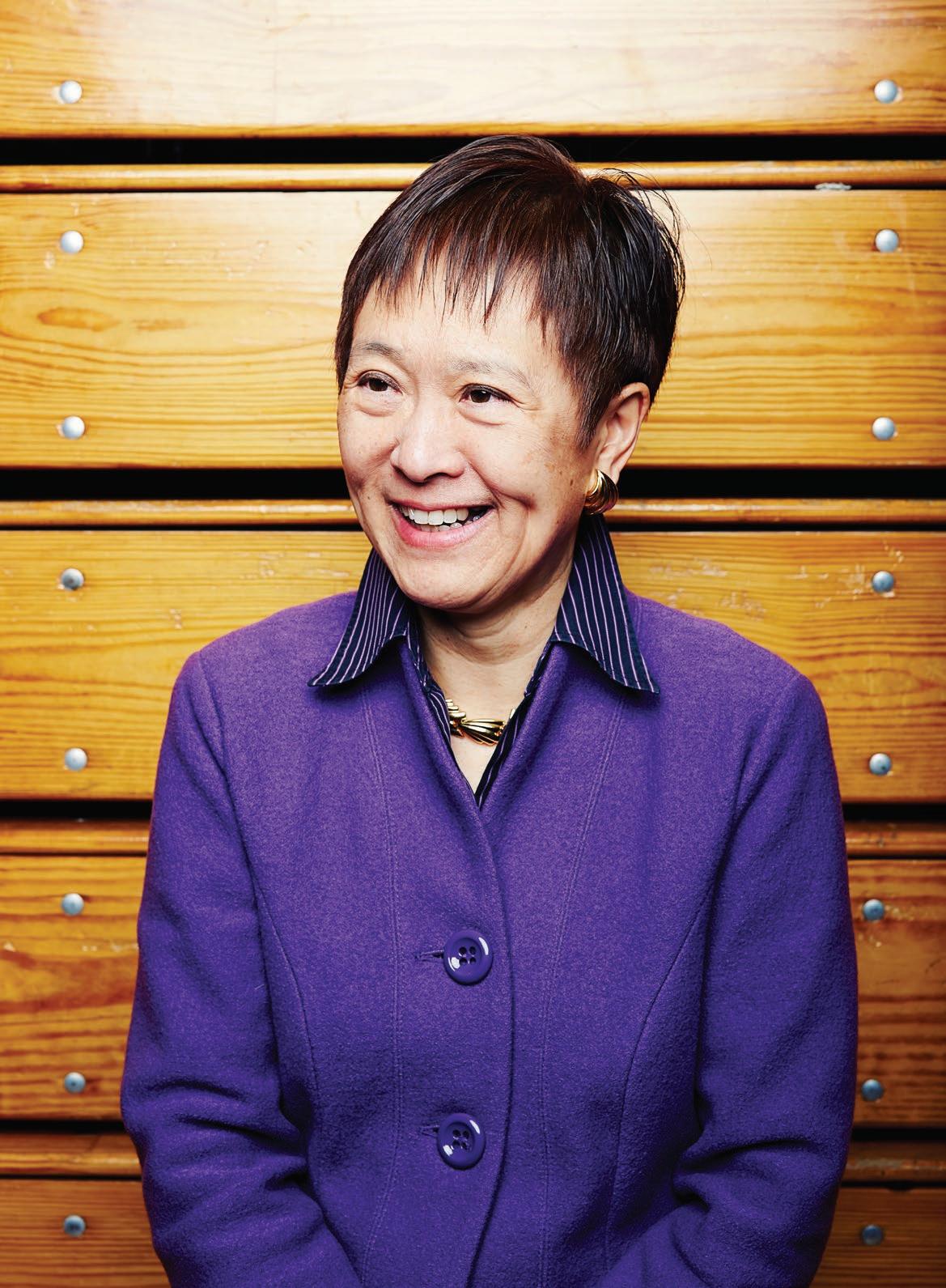
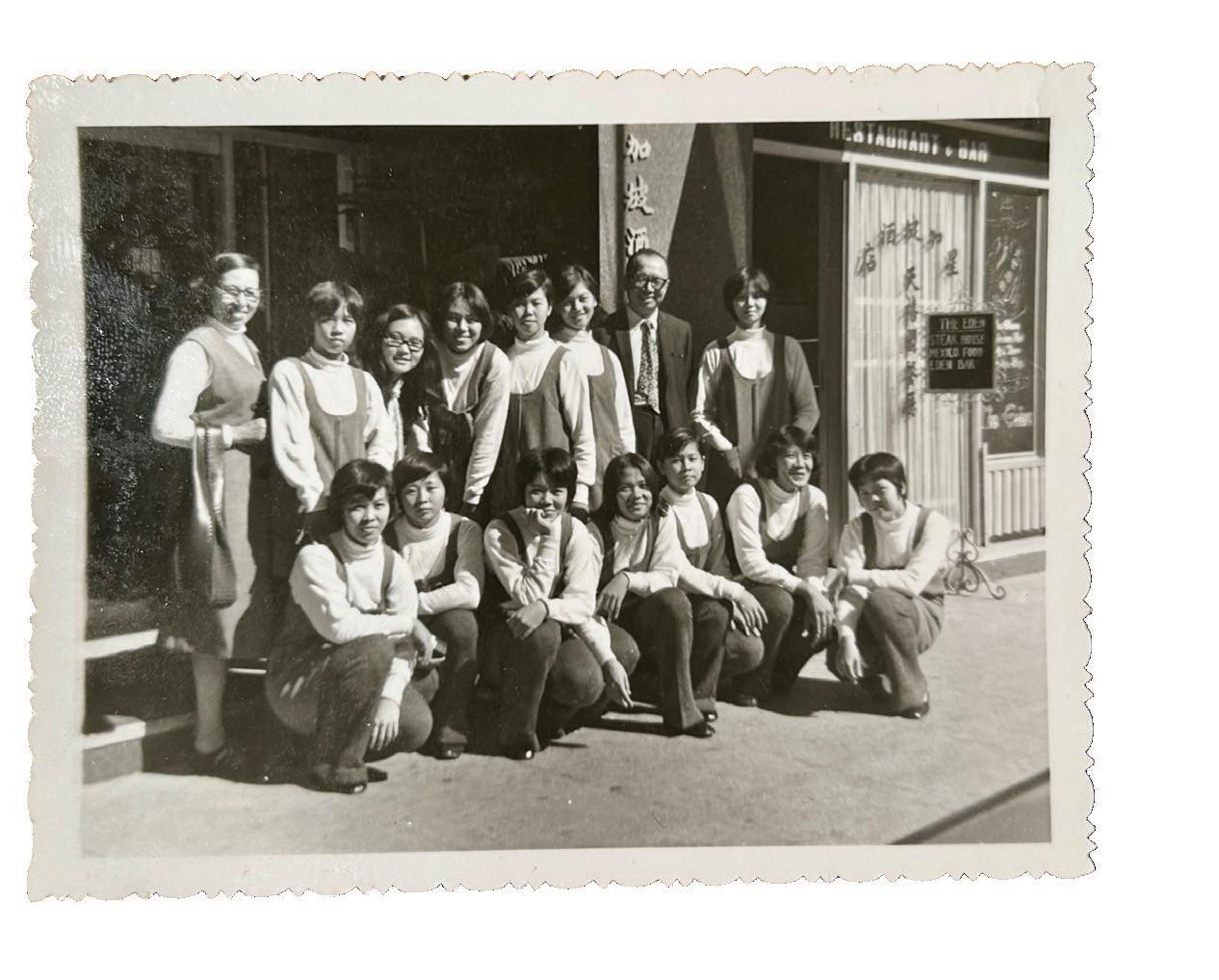

In 2013, Pursuit ran a profile of Anne Chun (BCom, 1978) that highlighted her support for U of T’s varsity women’s basketball long after she graduated. More than a decade later, Anne continues to be involved with the team in meaningful ways. We caught up with her recently to see what keeps her motivated and to explore a friendship that began on a basketball court in Singapore more than 50 years ago.

Growing up in Hong Kong, the call of the court was Chun’s primary motivation to get to school every morning. By the age of 17, her talent and hard work had earned her a spot on the team representing Hong Kong at the first Asian Schools Basketball Games in Singapore. It was there that she met Tsai Chang, a standout forward playing for the host country.
The two teenagers struck up a friendship, maintaining a connection through handwritten letters long before the era of instant messaging. The next year, Chun moved to the United States for university. However, a desire for a top-tier commerce program and an attraction to Canada eventually drew her to the University of Toronto.
Fate intervened at the varsity basketball tryouts. “The last thing you would imagine is seeing someone from halfway around the world on the team,” Chun says, recalling the shock of finding Chang on the same court in Toronto.
Chang (BPHE, 1978), also drawn by U of T’s reputation, had moved to Canada to study physical and health education.
The pair became teammates then roommates, first at Tartu College and later in a “dingy attic” on Huron Street. They navigated the rigours of U of T together — Chun balancing 23 credits in the demanding commerce program while Chang managed the culture shock of her first time living away from home at 18.
Chang eventually returned to Singapore, where she spent her career as a dedicated physical education teacher and
administrator. Despite the distance, she began donating to the women’s basketball program several years ago.
“U of T made quite an impact in my life,” she notes, citing the world-opening cultural and perspective shifts she experienced as a student.
She now maintains a regular connection with current head coach Dianna Ros, marvelling at how the sport has evolved from the days of dresses with bloomers to modern strength training and video analysis.
Chun’s own commitment to U of T was sparked by an emotional connection to her past. In 2007, the advancement team presented her with a basketball signed by the current women’s team. The gesture hit a nerve, reminding her of the time she and her childhood friends in Hong Kong pooled their money to buy a single basketball.
Since establishing the Anne Chun Women’s Basketball Award of Merit, she has received emotional letters from grateful recipients. “It makes me cry when I think about that. You know you’re actually helping someone. The scholarship helps them focus on what they’re trying to accomplish.”
Her support has grown to include a planned gift in her will and contributions to the Goldring Centre for High Performance Sport.
For Chun, who’s still active in golf and tennis, she believes focus, teamwork and time management skills she learned on the court were the true architects of her successful career as an accountant.
By supporting today’s student-athletes, Chun and Chang are ensuring that the next generation of Blues can find the same balance, community and lifelong connections they discovered decades ago. —Heather Hudson
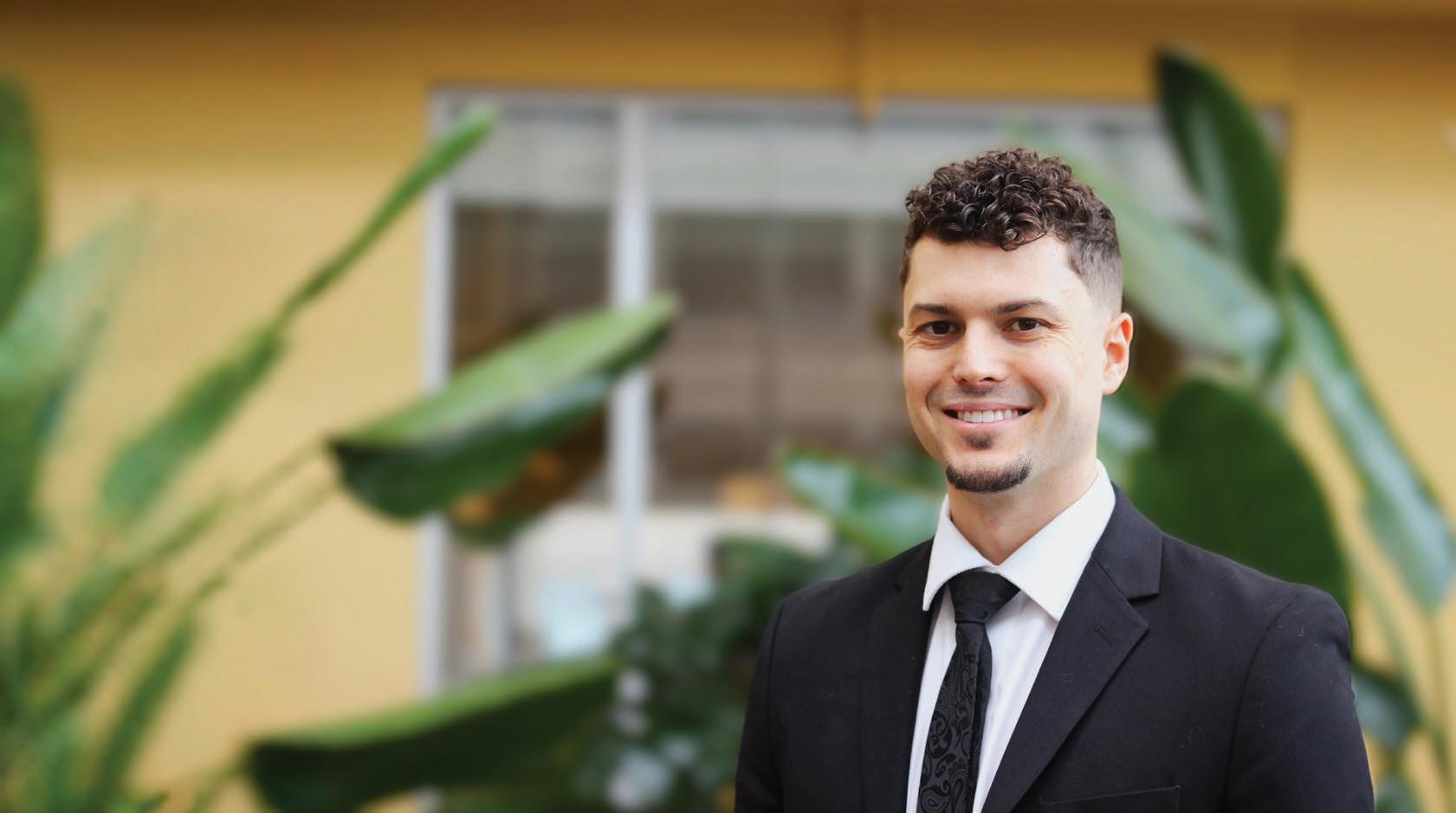
Daniel Sibley earned his doctoral degree from the Faculty in 2025 for his research into ways to help patients improve their health before surgery in order to recover faster and with fewer complications.
This process, known as prehabilitation, uses several healthpromoting strategies, including exercise, to promote safer surgeries. Sibley’s dissertation, which was supervised by Profess or Daniel Santa Mina, compris es the first-ever study of prehabilitation in living liver donors and one of the first studies to explore if improving sleep preoperatively can promote safer surgeries.
“The truth is, most of us may benefit from being more active, but a cancer diagnosis or a decision to undergo surgery are two particularly important times when becoming more active can make a world of difference,” says Sibley, now a post-doctoral researcher at the Princess Margaret Cancer Centre.
Sibley’s current research is focused on optimizing the way we assess and treat older adults undergoing systemic cancer treatment. He is also continuing the research he started during his doctoral studies in prehabilitation and exercise oncology.
“My research program was conceptualized in KPE classrooms and the skills needed to execute this research were developed in its laboratories,” says Sibley.
Two courses in particular were transformative: Lifestyle Toxicity and Chronic Disease taught by Assistant Professor
Amy Kirkham and Special Topics in Exercise Oncology taught by Associate Professor Linda Trinh
“I not only learned theory in these classes but how to effectively apply evidence in real-world settings,” says Sibley.
Working as a teaching assistant in Santa Mina’s course on Cancer and Exercise Survivorship and Kirkham’s course on Clinical Exercise Testing and Prescription further informed his research interests and instilled a passion for teaching.
“Doing work with these incredible KPE scientists has been a critical part of my journey, and I still collaborate with them through research,” says Sibley. “These experiences also prepared me to instruct a course in KPE in 2023, called Topics in Professional Kinesiology.
“To this day, I still receive emails from students in this class who are now practicing kinesiology all over the world, literally.”
Sibley’s research now builds on his kinesiology experience to understand ways to improve not only physical function but also medication regimens, nutrition and cognition.
“While pursuing my doctorate at KPE, I frequently collaborated with clinicians across the University Health Network (UHN), including my current supervisor Dr. Shabbir Alibhai, a senior scientist and geriatrician,” says Sibley. “These experiences and networking opportunities helped make my transition to Princess Margaret seamless.” — JD
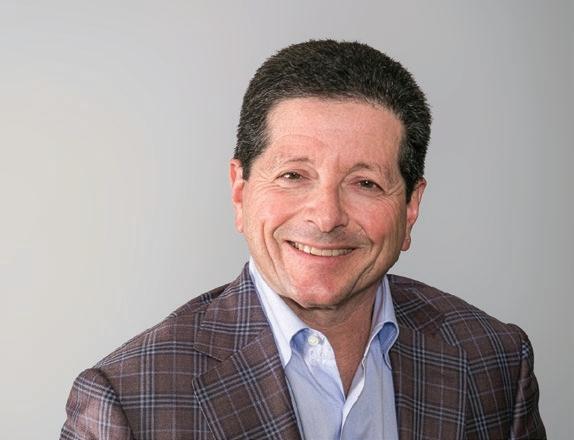
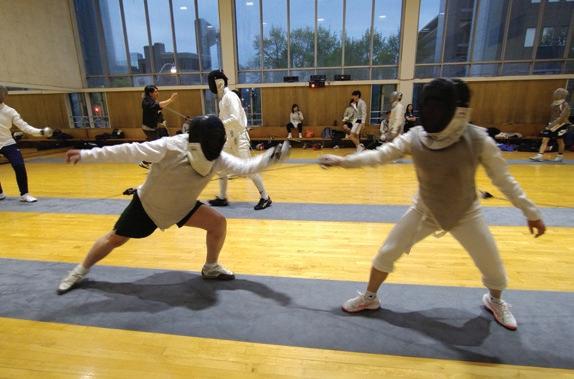
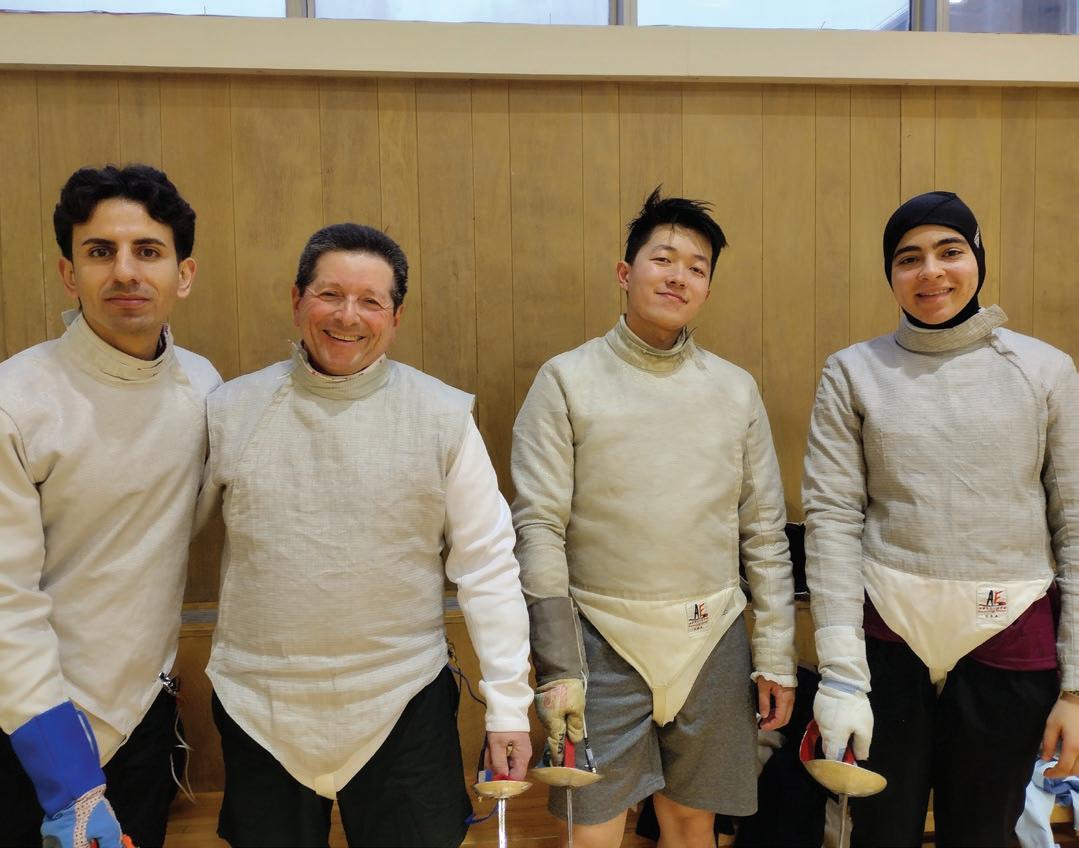
For Allan Weinbaum (Industrial Engineering 1978, Law 1981), the rhythmic clinking of blades and the strategic dance of the piste are more than just memories of his days on the university fencing team – they are a vital, ongoing part of his daily life.
Growing up as a multi-sport athlete, Weinbaum found himself seeking a new physical challenge during his time at the University of Toronto. At 5’6” and 140 pounds, he knew he wasn’t built for the varsity football squad, but a single fencing lesson changed everything. “It was like bam – love at first sight,” he recalls.
Weinbaum describes fencing as solving puzzles while under physical duress, and it offered a perfect parallel to his cerebral studies in engineering and law. It required the same strategic thinking, but with a pleasing aggressive, tactile element that met his deep-seated need for competition.
His dedication culminated in 1981 when, as a starter on the epee team, he helped the Varsity Blues secure the OUA Championship title. Under the guidance of legendary Coach Ken Wood, the fencing community became a second family – one that Weinbaum never truly left.
After decades as a recreational fencer, Weinbaum felt recharged in 2016 when he began supporting the current team under Coach Thomas Nguyen. What began as an annual donation and attending tournaments soon evolved into something much more hands-on.
During the isolation of the COVID-19 pandemic, the muscle memory of the sport began to itch. To his surprise, Weinbaum discovered the U of T club was now open to the community, and for the past few years, he has been training regularly alongside students who are often 40 years his junior.
“I’m virtually always the oldest person there, and nobody cares,” he laughs. “When I’m there, I’m just a fencer like everybody else.”
Beyond the personal physical benefits, Weinbaum sees sport as a dress rehearsal for real life that provides students with critical coping skills for an increasingly stressful world. He is particularly passionate about supporting tertiary sports like fencing, which often lack the funding of high-profile programs but reach a unique segment of the student population.
For Weinbaum, giving back to the program is about ensuring that current students have the same opportunity he had: to find a community where they can solve puzzles, face challenges and grow – one lunge at a time. — HH

How physical education and law turned out to be a natural fit
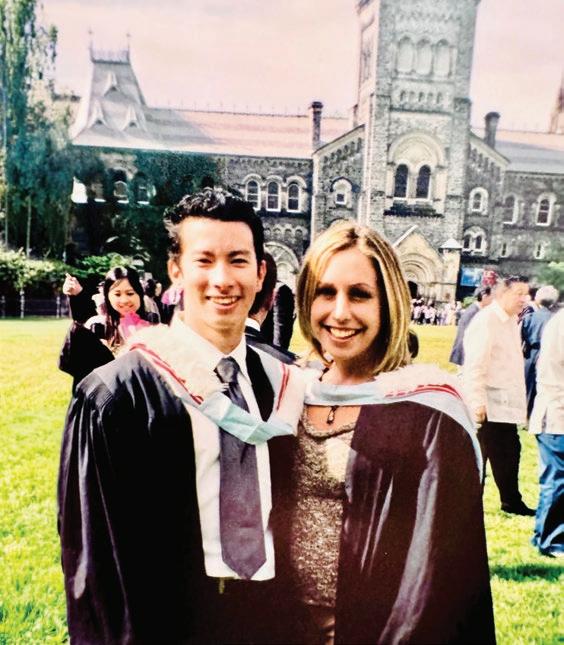
WMazzucco’s connection to the Faculty runs deep. Not only did she meet her future husband there, but her brother graduated from the same program, her sister studied kinesiology elsewhere and her kids are competitive athletes.
hen Kate Mazzucco traded her swimsuit and stopwatch for a stack of legal briefs, it might seem as if she left Phys Ed behind. But even two decades after graduation, her undergrad experience at KPE continues to shape her life and career.
Mazzucco’s family connection to the Faculty runs deep. Not only did the Class of 2003 grad meet her future husband at KPE, but her younger brother graduated from the same program and now teaches and researches in the field. Her sister studied kinesiology elsewhere, their mother was a physiotherapist, and her kids are competitive athletes.
She didn’t have a specific career in mind, but knew that studying physical education at U of T would open many doors. The program also allowed her, as a former competitive swimmer, to stay rooted in Toronto and keep her job as a swim coach even as she studied.
“I was lucky to be part of such a great faculty,” she recalls. “It was a tight-knit community and there were many fun events and great, high-energy, goal-oriented people.”
As graduation approached, Mazzucco applied to law school almost on a whim. It turned out that law suited her for the same reason physical education did: both demand a fiercely competitive spirit. She drew upon the qualities that had made her a successful athlete – motivation, hard work and an unshakable willingness to tackle tough challenges.
Today, her work as a personal injury and medical malpractice lawyer intersects with the world of health, anatomy and rehabilitation, where she occasionally crosses professional paths with fellow KPE grads. Her background gives her a fluency in how bodies move, heal and sometimes fail, sharpening her advocacy for clients at Beyond Law, the firm she founded eight years ago. Selected as a Tier 1 firm by Best Lawyers, a peer-reviewed guide, Beyond Law’s partners are
listed among Canada’s best lawyers in personal injury and insurance litigation.
“Leaving a prominent law firm to start my own firm took a leap of faith,” says Mazzucco. “The mindset to do that and the drive to succeed were fostered at KPE.”
This enduring impact became evident when, in 2023, Mazzucco and her husband attended their class reunion, looking forward to catching up with old friends. They were struck by how naturally they and their classmates fell back into their old friendships.
“There was no small talk,” says Mazzucco. “Everyone just clicked, and we began having meaningful conversations almost instantly. I couldn’t stop talking about it afterwards.”
Touring the state-of-the-art Goldring Centre for High Performance Sport and hearing about the Faculty’s worldclass research reminded the pair of how much the tight-knit community had shaped their lives. Leaving the reunion, they both felt grateful to be part of the KPE family. The experience inspired them to donate to the class award associated with their graduation year – a way to show appreciation for the program that brought them together and continues to influence their lives.
What stands out most to Mazzucco now isn’t a single course or assignment, but the people who shaped her sense of what was possible. She recalls watching leaders like Gretchen Kerr and Margaret McNeill steer the faculty with intelligence, generosity and quiet authority.
Years later, those models of strong, principled leadership remain core to how she leads, works and parents, something she never could have planned – much like her unexpected path from the community pool to the courtroom. — Catharine Heddle
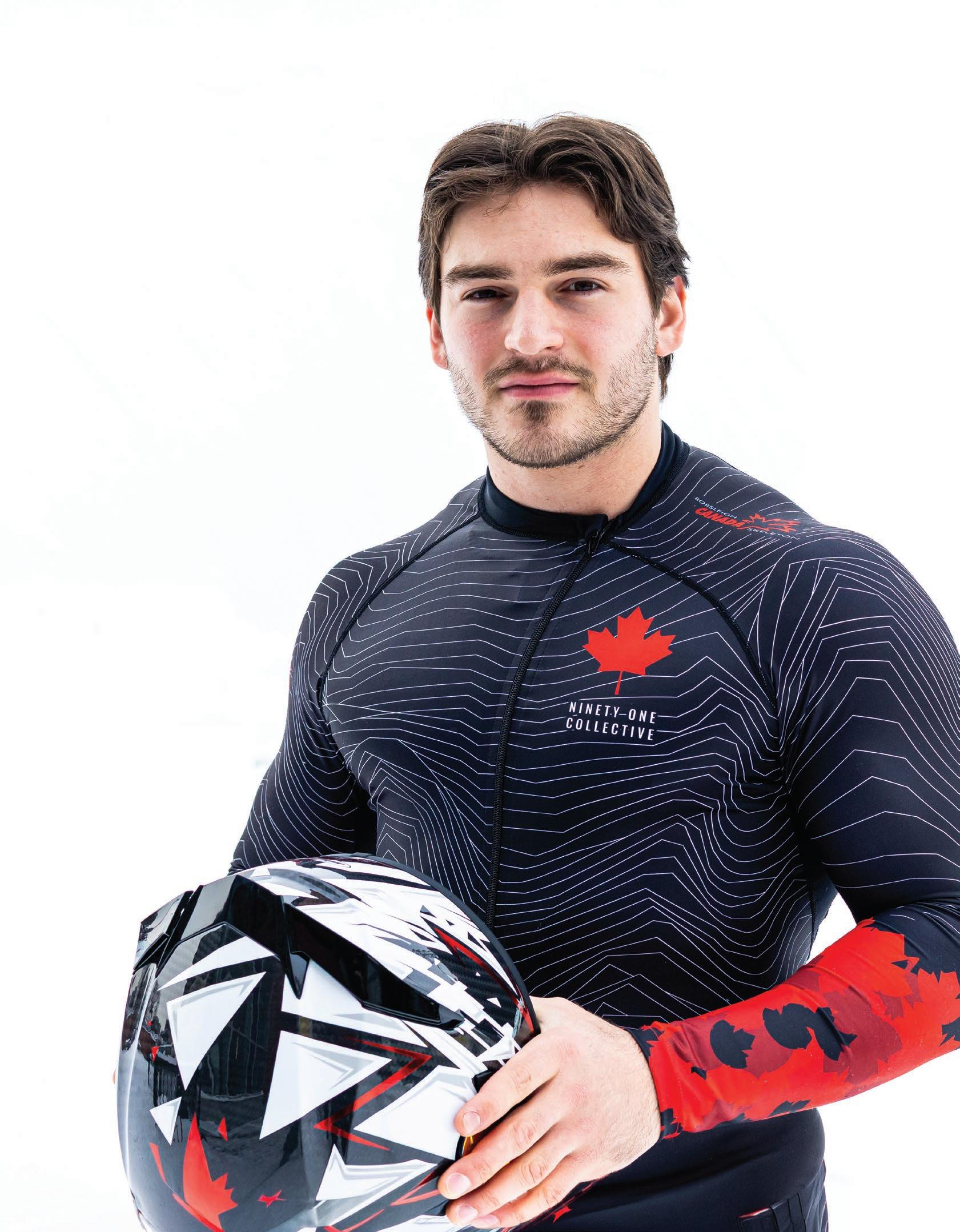
How Varsity Blues alum turned a CFL setback into an Olympic debut
Luka Stoikos was chasing a professional football career. Eight months later, the University of Toronto architecture student was pushing for the podium at the 2026 Winter Olympic Games as a member of Team Canada’s bobsleigh team.
“Those eight months felt pretty surreal,” says Stoikos. “But ultimately, I’m just filled with a great sense of gratitude for how the story unfolded.”
For the former Varsity Blues football and track and field student-athlete, the road from Toronto to Milan was far from carefully mapped out – or even planned.
He had been preparing for the Canadian Football League’s three-day scouting event, known as the CFL Combine, when he decided to attend a similar event for potential Olympic athletes called RBC Training Ground.
For many athletes, that moment would have marked the end of a dream. For Stoikos, it quietly opened a new door.
“The night I got cut, the first phone call I made was to my parents,” he recalls. “The second one I made was to my contact at Bobsleigh Canada. I said, ‘Hey, when do I start?’”
His first bobsleigh experience in Calgary was anything but glamorous, however.
“It was my first time touching a
Following a training camp in Whistler, coaches pulled him aside with the big news: he would be going to the Bobsleigh World Cup.
“That was the most emotional part for me because I realized this Olympics thing might not be so crazy after all.”
By November, Stoikos was racing internationally against the best athletes in the world. When the season ended, the team returned to Calgary to find out whether they would be Olympics-bound.
“That was the most emotional part for me because I realized this Olympics thing might not be so crazy after all.”
Luka Stoikos
The coaches called him into the office and asked him how he thought his first year had gone.
“I told them I thought it was pretty good. I love the sport, obviously, and I think I’ve got a lot to learn still.”
“RBC Training Ground came to U of T and I was like, I’ve already trained for the Combine, I might as well just do another one,” says Stoikos.
He connected with Bobsleigh Canada at the event and was invited to a camp – but football was still the focus. Stoikos had spent years training – early mornings in the weight room, extra sprint work, film sessions, intense combine prep – and had earned a reputation at U of T for being a powerful, explosive athlete. He was the kind of player who could break tackles, win races downfield and grind through any workout thrown his way.
“I was like, ‘Listen, I’m still trying to get drafted to the CFL here. If for whatever reason that doesn’t work out, I’ll give you a call.’”
Then, after being selected by the BC Lions in the 2025 CFL draft in April, Stoikos made it nearly all the way through training camp but was cut the day before the Lions’ second preseason game.
sled,” says Stoikos. “It wasn’t even necessarily a real bobsled, just the frame sled that we use for training.”
Inside the Ice House, an indoor training facility, athletes practiced sprint, drive, reset, repeat – and Stoikos’s years of Varsity Blues training were immediately apparent. The same lower-body power that fuelled his football and track and field careers quickly translated to the most critical part of a bobsleigh race: the start.
“I’d touched the sled less than ten times, pushed a pretty respectable time in the Ice House, and they seemed pretty impressed,” Stoikos recalls.
His first run down a bobsleigh track in October was eye-opening.
“They brought us to Whistler to actually go down the track for the first time,” he says, likening the experience “to being in a bathtub and then being put into the clothes dryer and then going down a mountain.”
Then came the words that changed everything.
“They said, ‘Congratulations, you’re going to the Olympics.’ It was … pretty sweet,” Stoikos says.
“It was a lot of just betting on myself,” he says, crediting the many people who helped shape him at U of T, including strength and conditioning coaches Christopher Johnson and Seamus Egan-Elliott, track and field coaches Carl Georgevski, Rostam Turner and Yolanda Sternberg and his many football coaches. “I made a big decision, pursuing a sport that I had never actually done. I’m just very, very grateful it all worked out.”
As the grandson of Macedonian and Italian immigrants, Stoikos says the opportunity to have represented Canada at Milano Cortina 2026 is deeply personal.
“Canada gave my family so much when they moved here,” he says. “For me to be able to give back and represent that country is honestly a blessing.” — JC

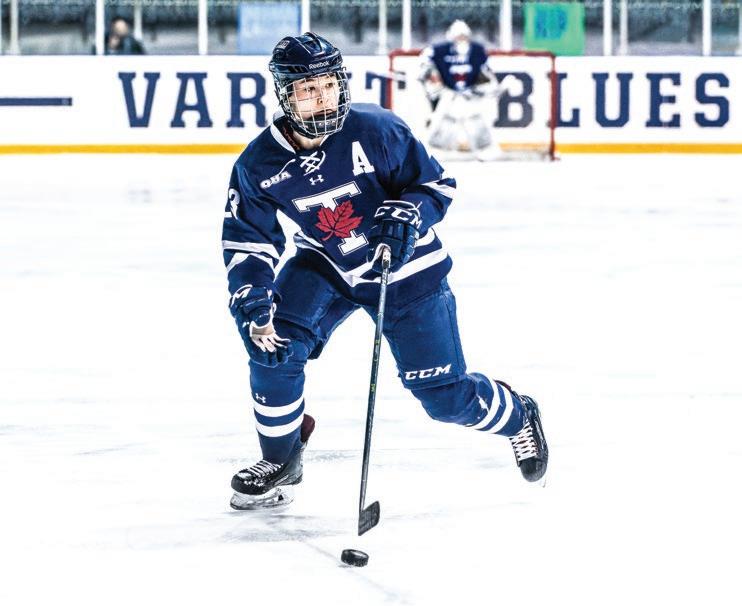
Gabrielle De Serres (BCom 2022)
Women’s Hockey – Team France
Varsity Blues Women’s Hockey Alumna (2017-22)
De Serres made an immediate impact on the Blues roster, being named to the OUA all-rookie team, as well as the U SPORTS all-rookie team in the 2017-18 season. She earned OUA second team all-star honours for helping the Blues to the 2019-20 OUA McCaw Cup provincial title. In her final season as a Blue, she was named the OUA East MVP, as well as an OUA East first team all-star and second team all-Canadian. After one season with the Montreal Force in the PHF, De Serres headed to France to play for Cergy-Pontoise before joining the national team in 2024-25.
Paul Poirier (BA 2015 TRIN, MA 2020)
Figure Skating – Ice Dance – Team Canada
Varsity Blues Figure Skating Alumnus (2011-12)
Poirier represented Canada in his fourth Olympic Games (2010, 2018, 2022, 2026) in Milano Cortina. He represented the Blues for one season, winning the 2011-12 OUA men’s open freeskate title and helping U of T to a bronze-medal team finish at the provincial championship. Poirier and long-time ice dance partner Piper Gilles are fourtime medallists at the ISU World Figure Skating Championships, and won a bronze medal at the Olympics..
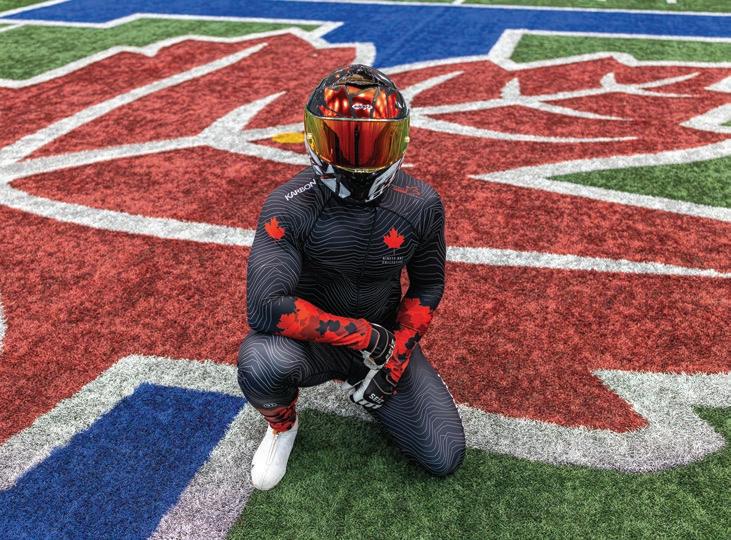
Justine Todd (BSc 2006 VIC)
Official – Women’s Hockey
Varsity Blues Women’s Hockey Alumna (2002-07)
Todd officiated her third Olympic Games (2018, 2022, 2026) in Milano Cortina. She played for the Varsity Blues women’s hockey team from 2002-07, helping the Blues to the 2003 OUA championship title. — JC
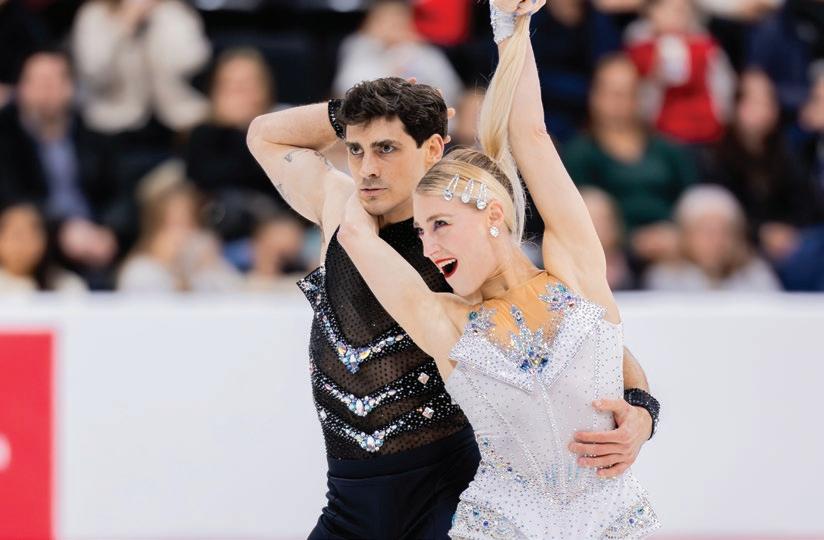
Luka Stoikos
Bobsled – Team Canada
Varsity Blues Football (2021-24) and Track & Field (2023-25)
Alumnus Architecture 2026
Stoikos qualified for his first Olympic Games in bobsled less than a year after being drafted by the CFL’s BC Lions. The Varsity Blues running back turned fullback earned OUA second team all-star honours in 2022 and sits fourth in the U of T football record books with 1,140 career kickoff return yards. While at U of T, he rushed for 601 yards and six touchdowns, while adding three career kickoff return touchdowns and 12 special teams tackles. As a member of the Blues track and field team, Stoikos placed fifth overall in the weight throw and eight in shot put at the 2024 OUA championships. (See profile on page 36)
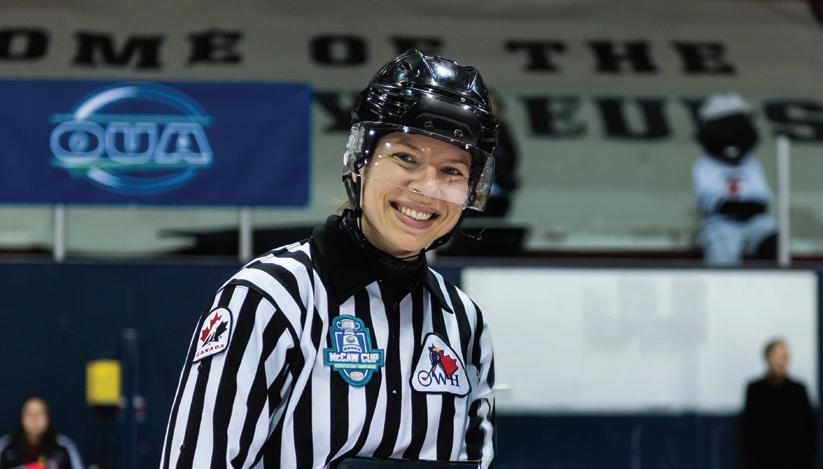
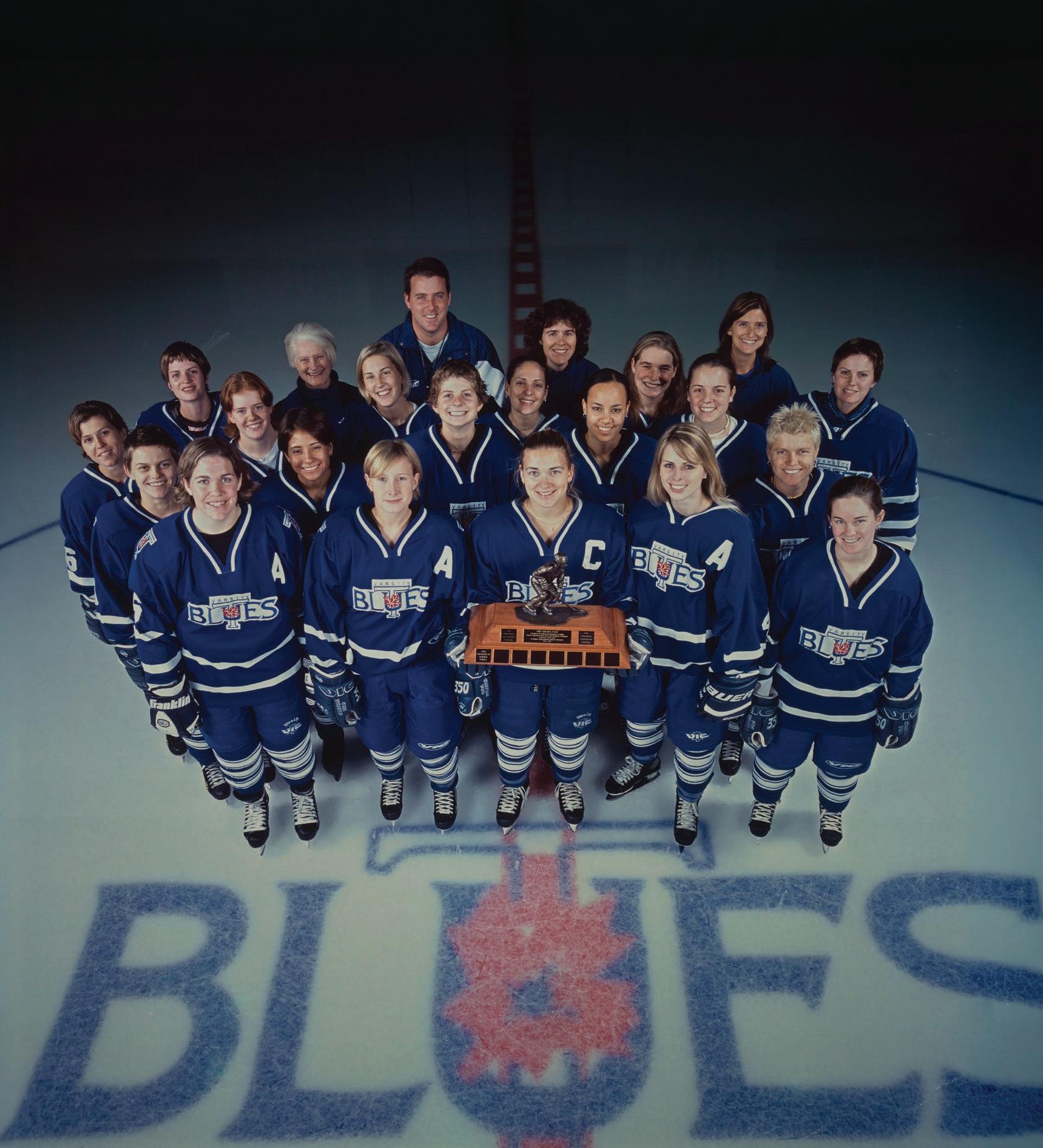
The University of Toronto women’s hockey program is rich in history and tradition. The Varsity Blues first iced a team in 1921 when student-athlete Marion Hilliard put together a team to play against McGill University. The women’s team won the first ever interuniversity championship and would go on to win 11 more before the league was disbanded in 1933 due to the Depression.
In the late 1960s league play was re-established among Ontario universities and the Varsity Blues have been a dominant force in the province and the country ever since. Starting in 1971-72 the Varsity Blues captured 17 conference championships, more than any other team in Ontario, and U of T was the team of the 1990s, winning six OUA championships and placing first in the OUA every season.
In 1997, women’s hockey became a CIS sport. In 2000-01, the Varsity Blues team finished an unbeaten 35-0 season, winning the national title with a 4-3 victory over the Regina Cougars. — adapted from varsityblues.ca
2001-01 team members (in alphabetical order): Vanessa Anderson, Amy Caldwell, Jacqueline Cherevaty (Asst.), Stephanie Drake, Erin Fraser, Alison Houston, Bree Kruklis, Susie Laska, Kim Malcher (Asst.), Urszula May, Nancy McLean, Jenny McRae, Krissy Mitchell, Safiya Muharuma, Carla Pagniello, Donna Paul, Jen Rawson (Captain), Jillian Savin, Stephanie Summerhill (Asst.)
Coach: Karen Hughes Assistant Coaches: Bridget Bates, Dan Church, Dave Wakabayashi. Therapy Staff: Julie Dickson, Rhonda Connell, Luba Slatkoviska. Team Manager: Deanna Merkley. Sport Psychologist: Leith Drury. Equipment Managers: Norm Calder, Alex Stein (Asst.)
We invite you to support the Beth Ali Athletic Scholarship, an annual award that recognizes a Black or Indigenous Varsity Blues woman student-athlete who demonstrates excellence in athletics.
This scholarship celebrates Beth Ali, former Executive Director of Athletics and Physical Activity, and her unwavering commitment to equity, physical activity and student success throughout her remarkable 30-year career at the University of Toronto and Varsity Blues.

Join us in honouring Beth’s remarkable legacy and empowering the future of Canadian sport.
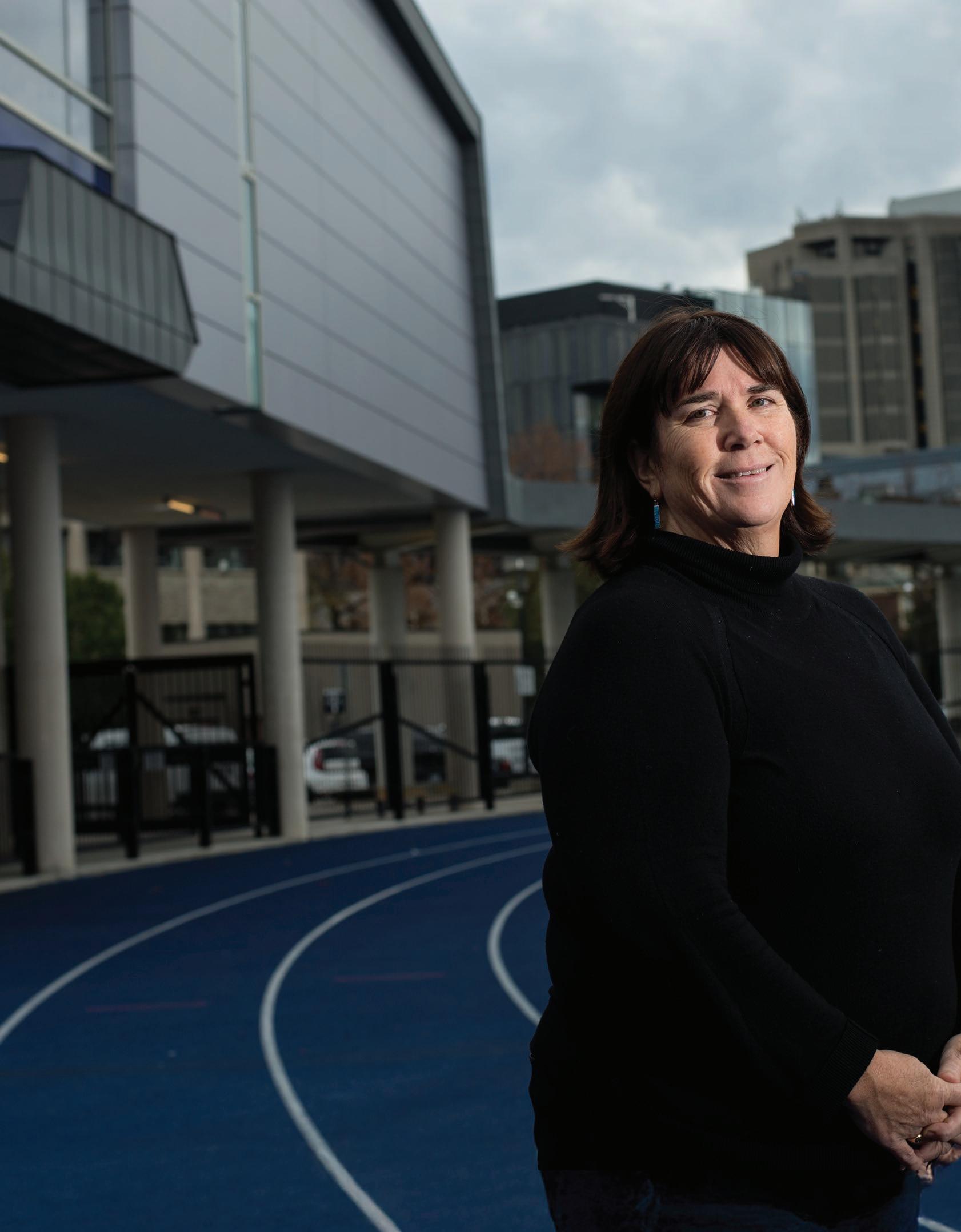
engage.utoronto.ca/bethali