Vice President of Advertising Director of Partnerships
Gear Testing
Ara G
Natalie Gargiulo
Fia Wilkins
Matt Blankenship
Angela Mitchell
Stephanie Brower
Dan George Hill
Robert Lundberg
Michael Marcinko
Heather Wilkins
Natalie Gargiulo
Darren Warner
The Rugged Outdoorsmen
1007 Orlando Street, Suite 101 Carmel, IN 46032 +812-994-0921 | info@unplugmag.com
UNPLUG Magazine is published by JSL Publishing Group.
UNPLUG Magazine is a triannual publication curated for modern travelers and explorers alike.
SUBSCRIPTIONS
info@unplugmag com Carmel, IN 46032
UNPLUG Magazine is published by JSL Publishing Group, LLC For Advertising Opportunities Contact us at (812) 994-0921
www.unplugmag.com
story | Route 66 & America’s Parks
www.unplugmag.com
DISTRIBUTION & CIRCULATION
Comag Marketing Group www i-cmg com
Publication Printers Corp
2001 S Platte River Dr, Denver, CO 80223 (303) 936-0303
www.publicationprinters.com
Welcome
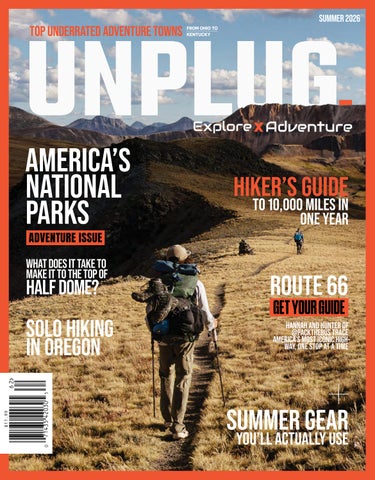
ome stories start with a pl an Others start somewhere out on the trail when two strangers happen to cross paths at the right time This issue follows several of those stories Summer has a way of pulling people outside Maybe it’s longer days, open roads or the simple need to get away for a while. We follow two strangers who meet somewhere along the Pacific Crest Trail during a border-to-border journey that changes both of them We head into America’s parks, climb toward Half Dome and shoulder packs through Colorado’s backcountry We also spend time onboard the Atl antic Viking, where life is measured more by weather and water than schedules and noise. None of these stories are about perfection They’re about long miles, rough weather, unexpected connections and the moments that stay with you long after the trip is over. We hope this issue reminds you to get outside, slow down and find your own stretch of trail this summer
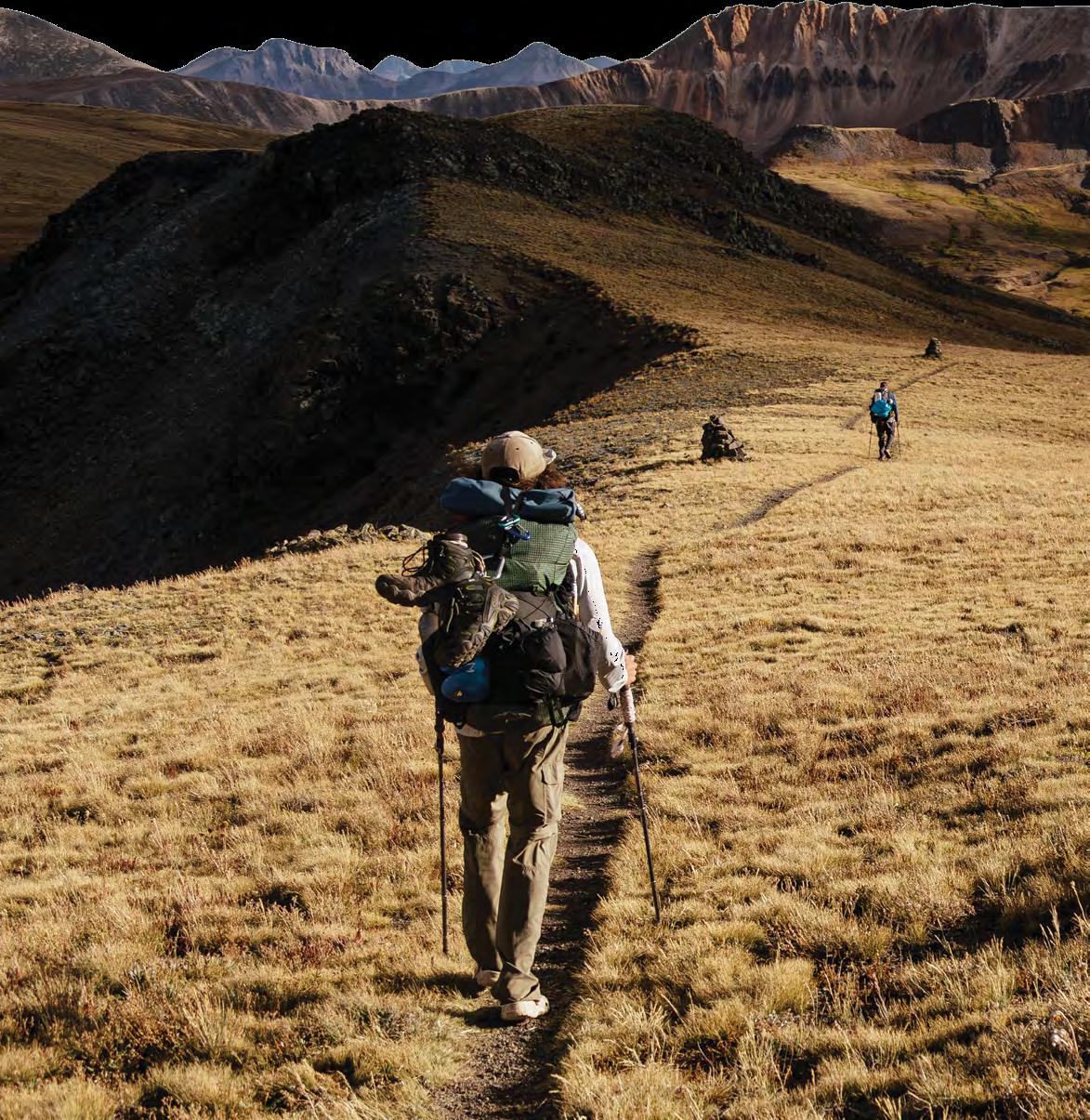
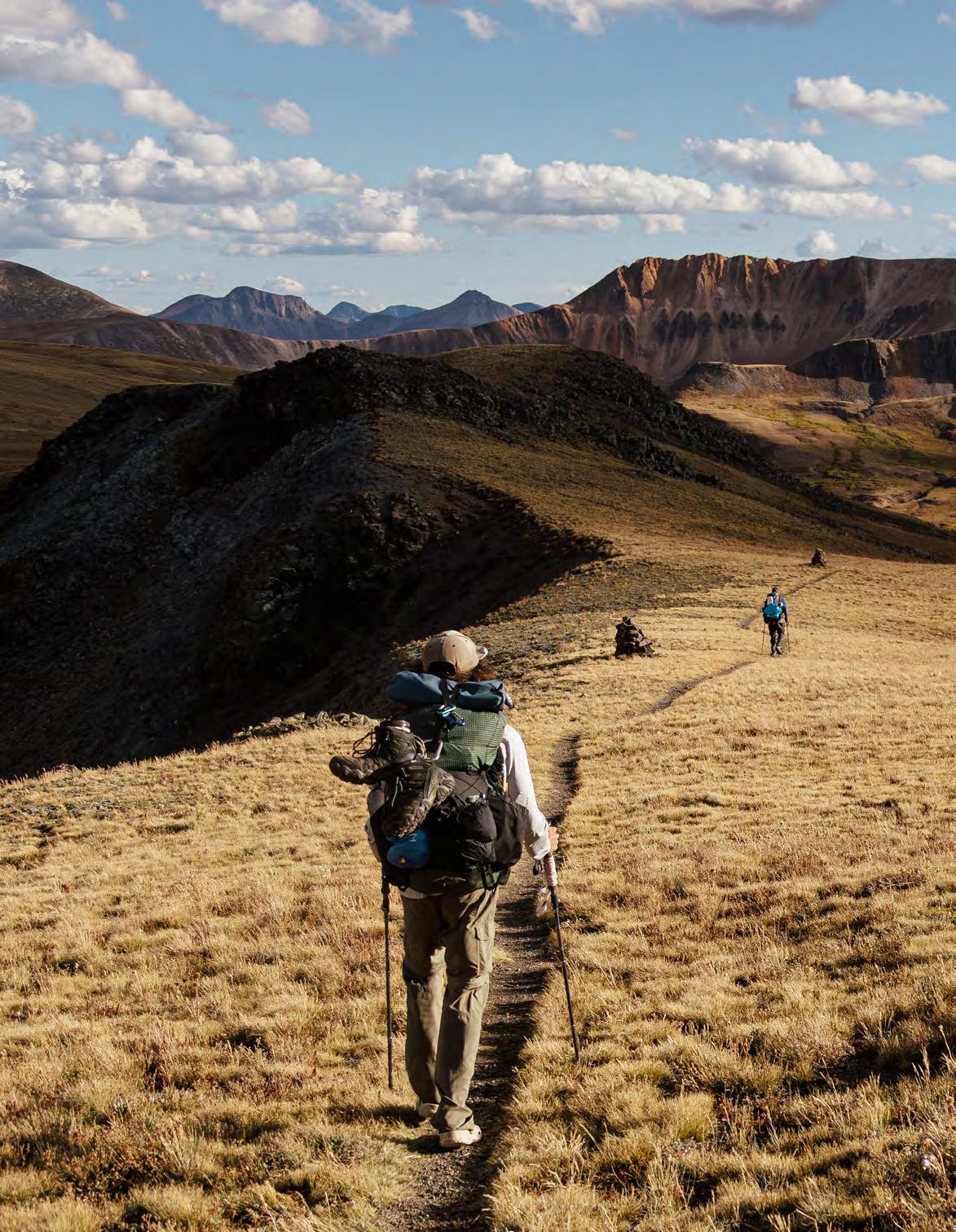
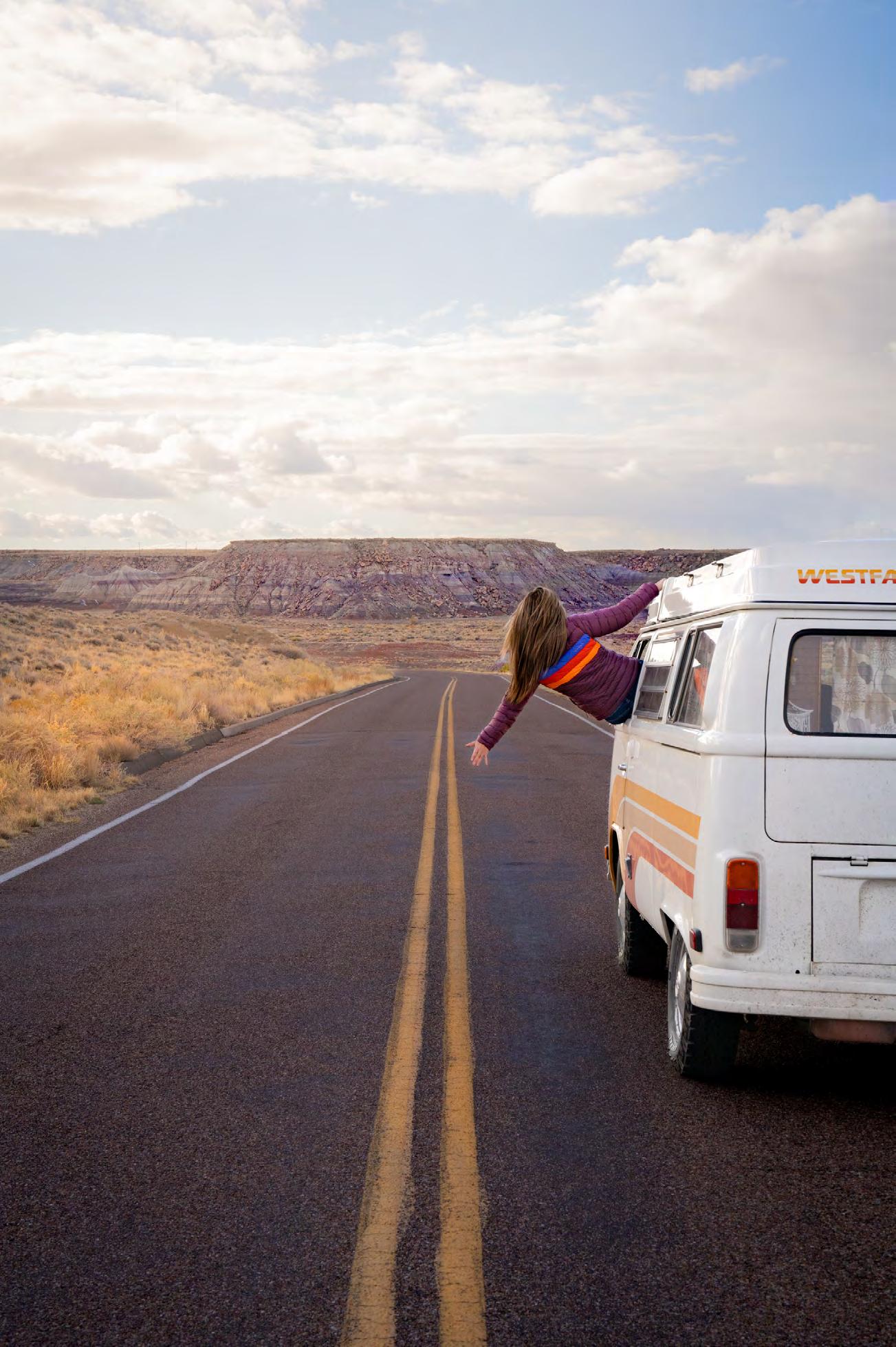
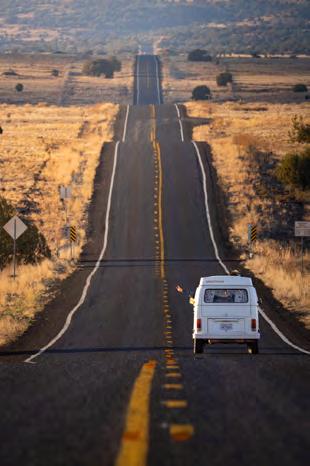
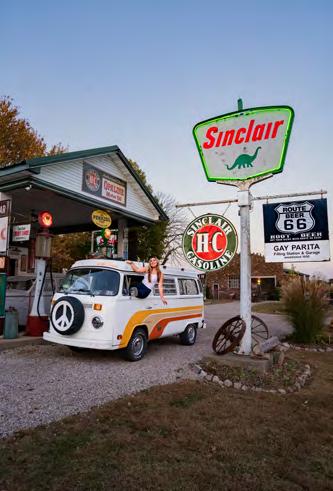
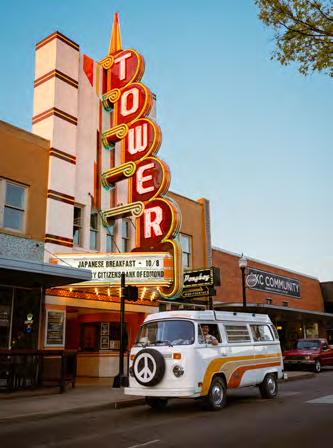
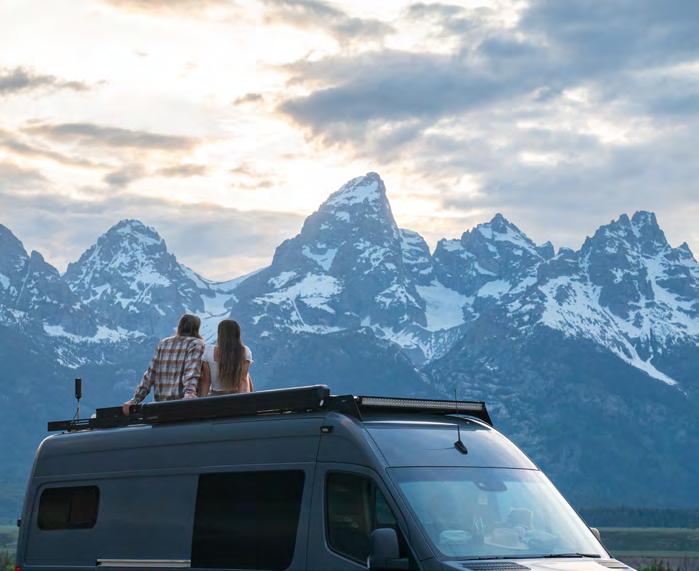
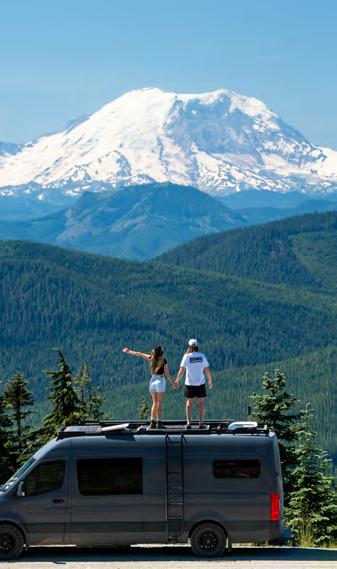
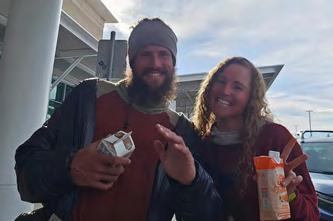
Photo Credit @packthebus I Read their story on Page 20
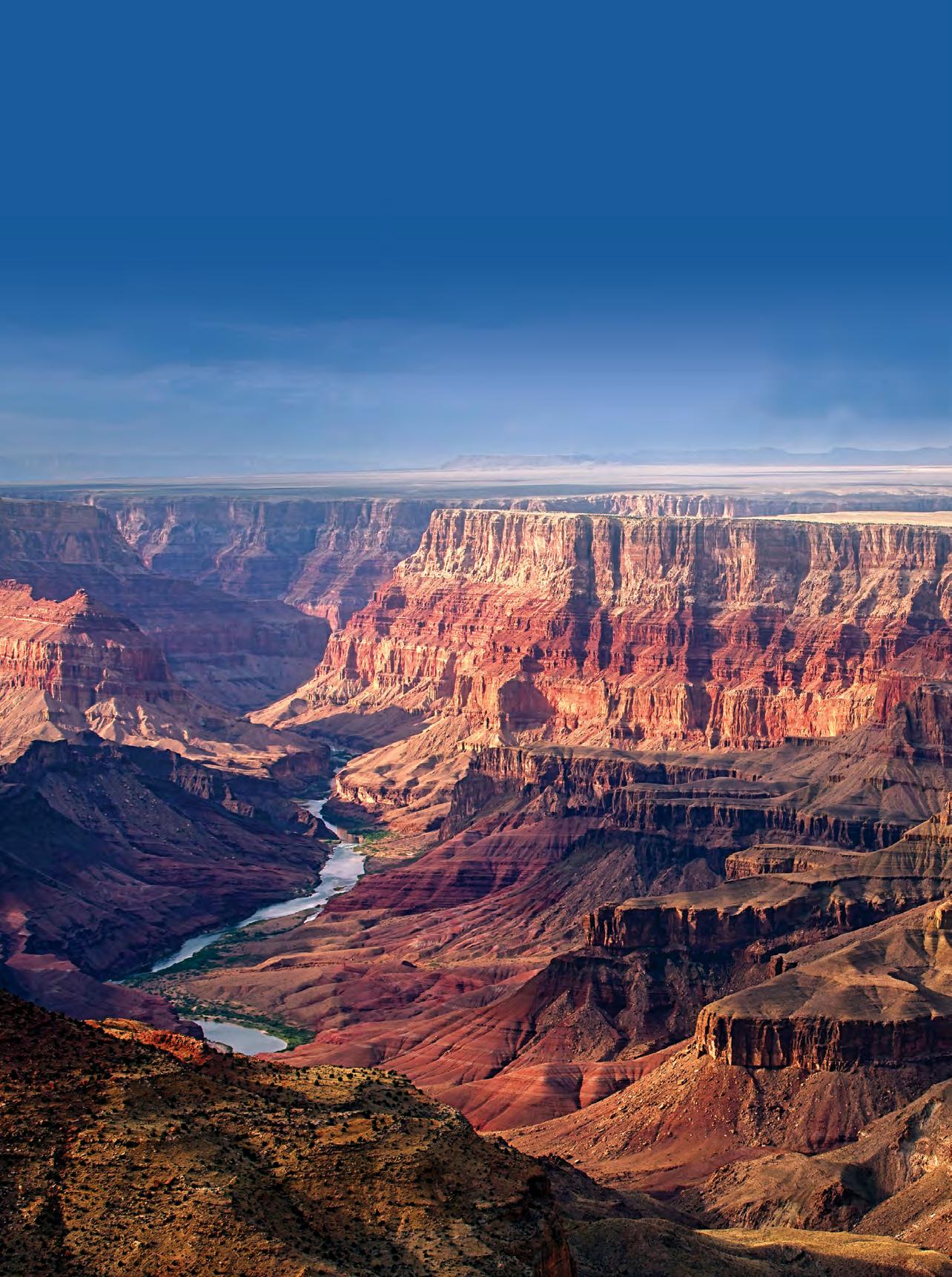
Finding Yourself in America’s Parks
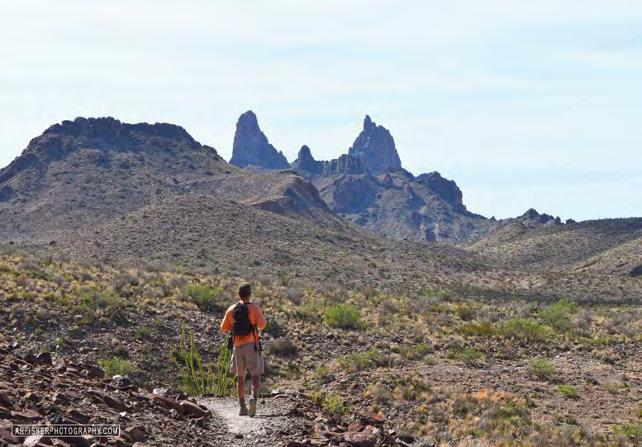
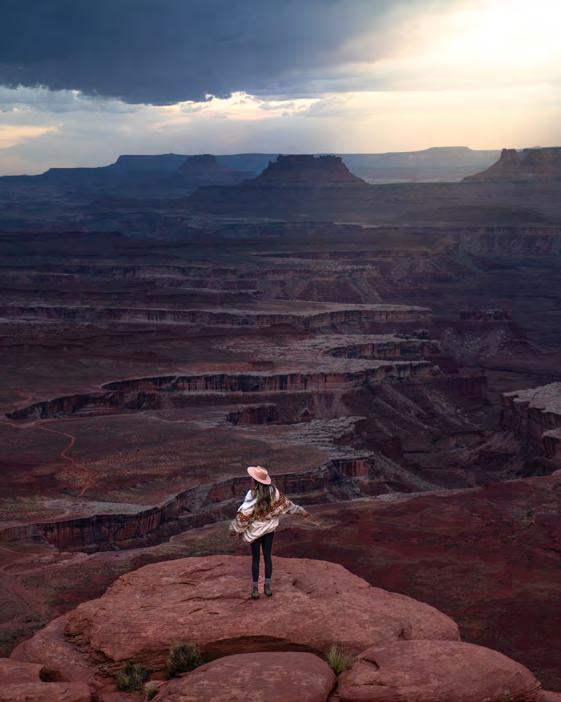
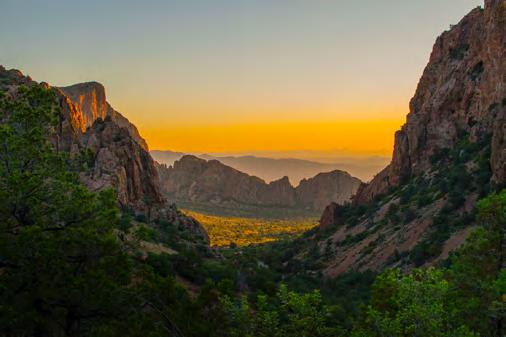
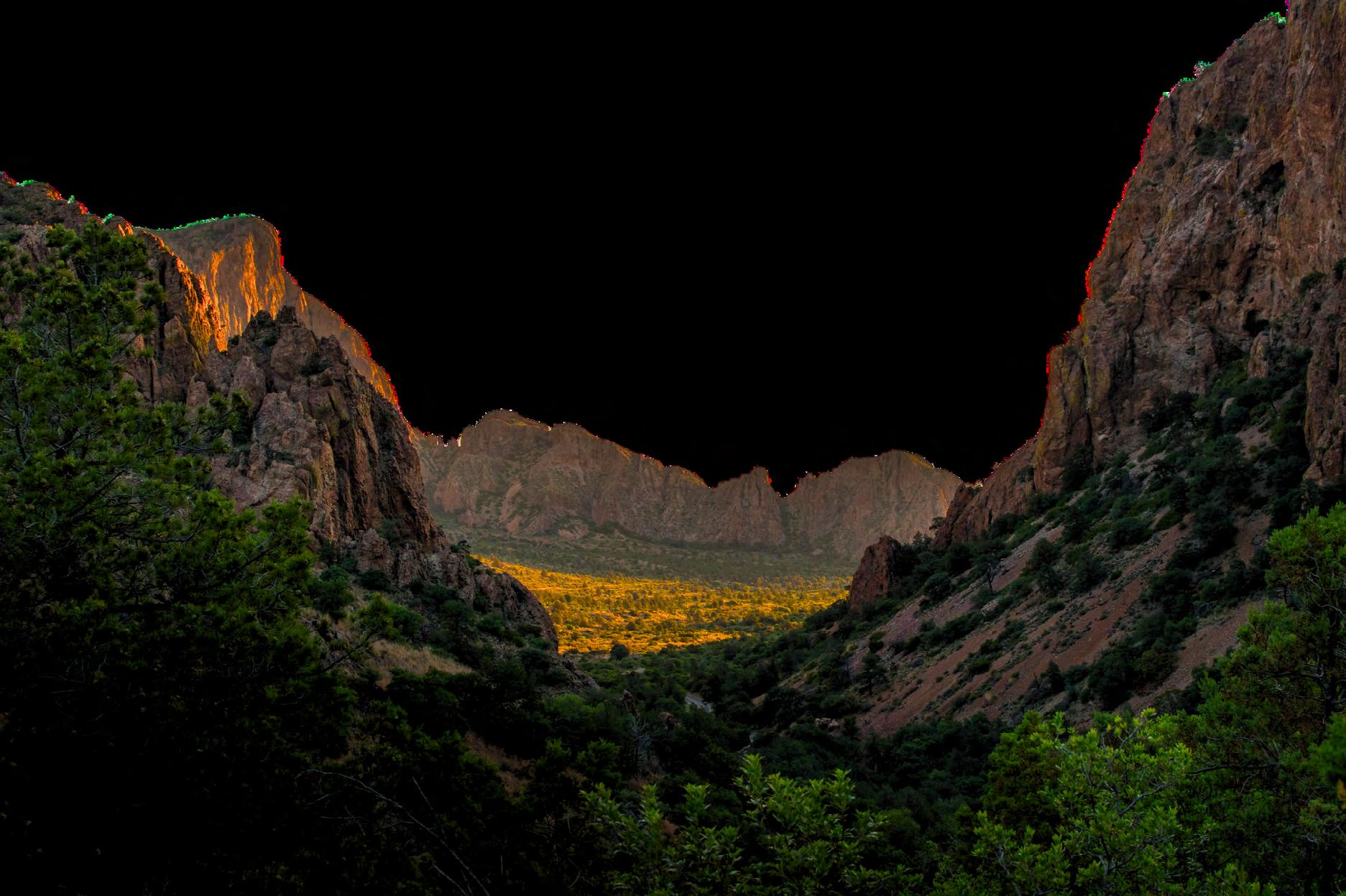
From Yosemite to Big Bend and the Grand Canyon
S P E C I A L S U M M E R F E A T U R E
3 6
From awesome caves to
America’s coolest
downtowns to explore this summer.
F i n d i n g Y o u r s e l f i n
THE BEATEN
A m e r i c a ’ s P a r k s
F r o m Y o s e m i t e N a t i o n a l
P a r k t o B i g B e n d N a t i o n a l
P a r k a n d G r a n d C a n y o n
N a t i o n a l P a r k , A m e r i c a ’ s
Climbing Half Dome
One climb Thousands of feet above the valley floor 20
ROUTES AND MAPS
Your Guide to Route 66
Hannah and Hunter trace
America’s
Anerica’s most iconic highway
The Trails of New Mexico
Gila Wilderness in Silver City, New Mexico
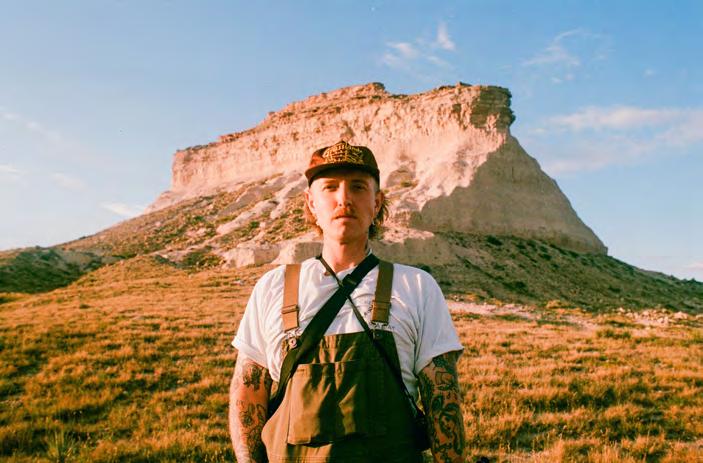
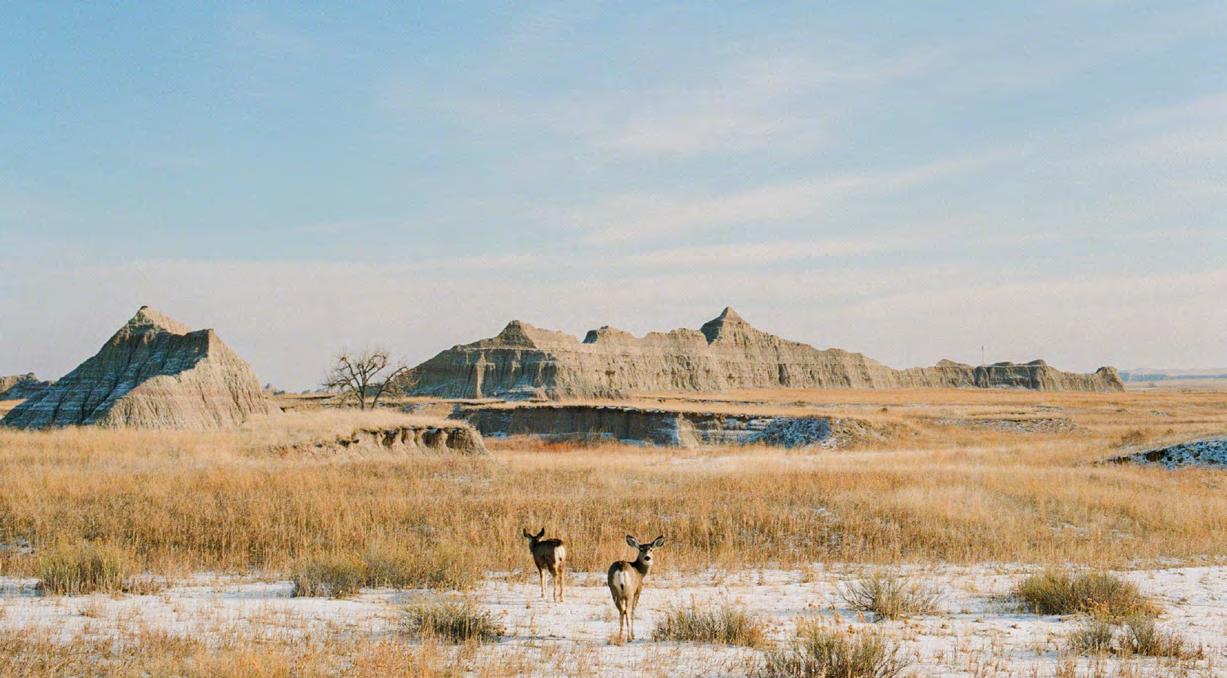
Documenting the Forgotten Grasslands
Photographer and conservationist documents overlooked grasslands across the American West
w i l d p l a c e s s t i l l h a v e a w a y
Hiking 10,000 Miles
o f p u t t i n g t h i n g s b a c k i n t o p e r s p e c t i v e .
6 6
Two strangers meet somewhere along the
C l i m b i n g H a l f D o m e
Pacific Crest Trail and find more than miles ahead of them
O n e c l i m b T h o u s a n d s o f
f e e t a b o v e t h e v a l l e y f l o o r
A l o o k a t t h e t r a i l , t h e
p e o p l e a n d t h e p u l l o f o n e
o f t h e m o s t r e c o g n i z e d
The Forest Way Solo camper and forager shares how time in the woods changed the way she moves through the outdoors
g r a n i t e f a c e s i n t h e c o u n t r y .
WHERE THE MOTHER ROAD
Meetsthe River Road
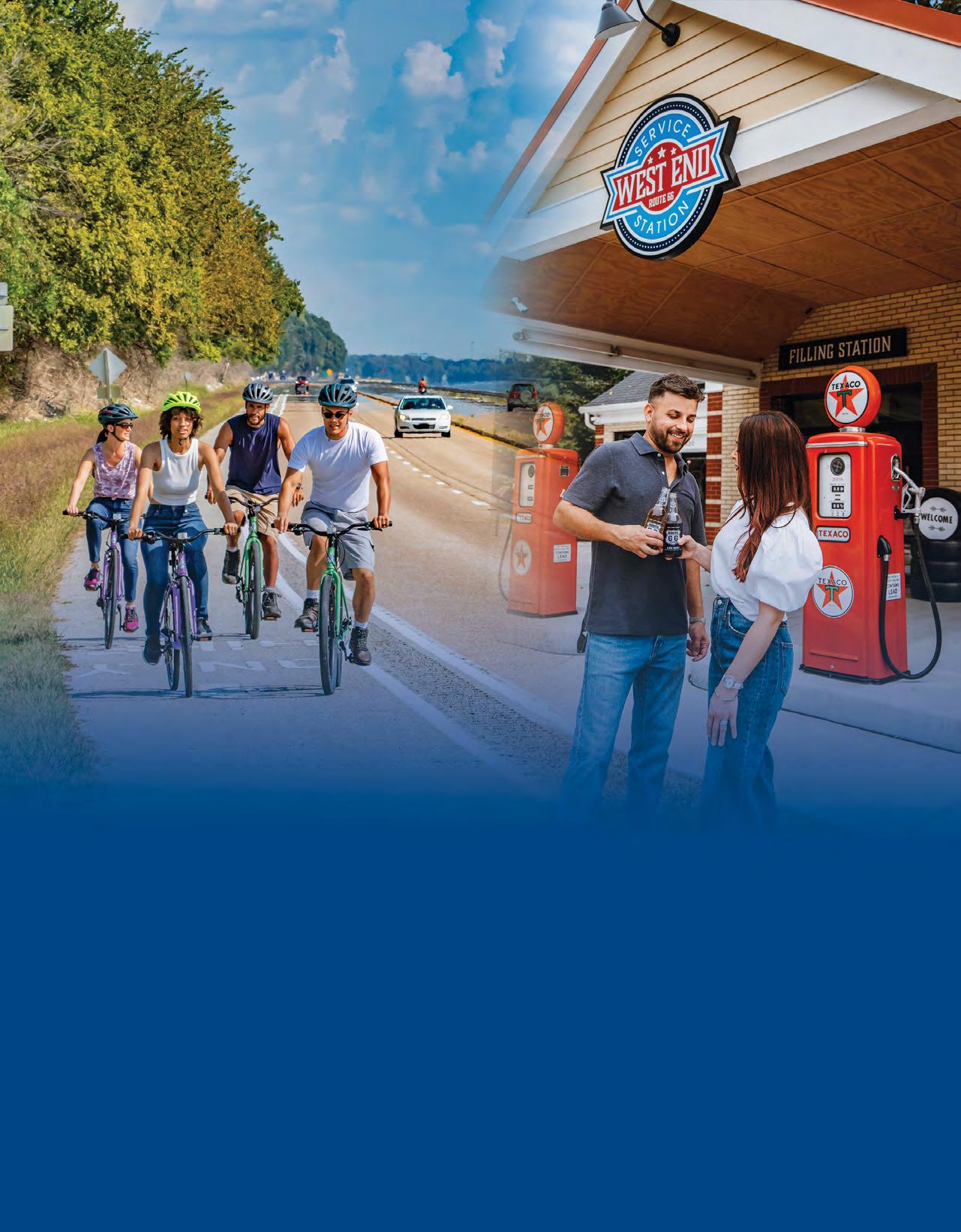
Celebrate 100 years of road tripping in the only place in America where the Mother Road of Route 66 meets the scenic beauty of the Great River Road. Follow the neon signs to the It’s Electric Neon Sign Park, dine at historic Route 66 roadside cafes, take a walk through the river bluffs and prairies and relax with a glass of locally crafted wine beside the Mighty Mississippi River.
Your one-of-a-kind adventure begins at www.RiversandRoutes.com.
What ’s wor th packing for camping this summer ?
Interrupted, Not Defeated
Rober t returns to Colorado
Onboard the Atlantic Viking
Behind the scenes of Atlantic Viking lobster fishermen life
EDITOR’S PICK
Patience on the Water
Angler and storyteller
Sofia, shares a quiet approach to fishing shaped by camping, wandering in remote places
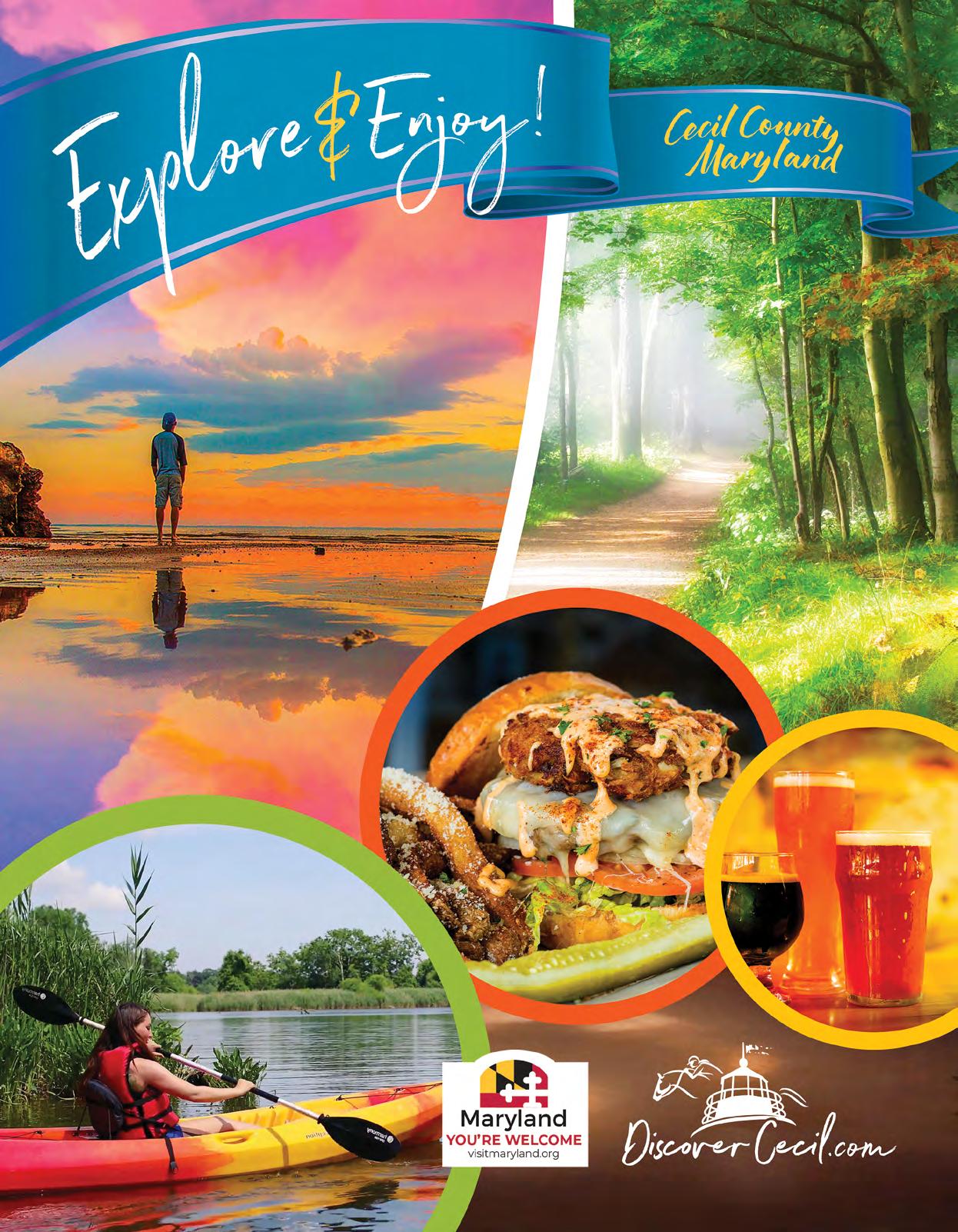
Cecil, Maryland
Hiking, paddling and trails along the Chesapeake Bay 48
UNPLUG FEATURES
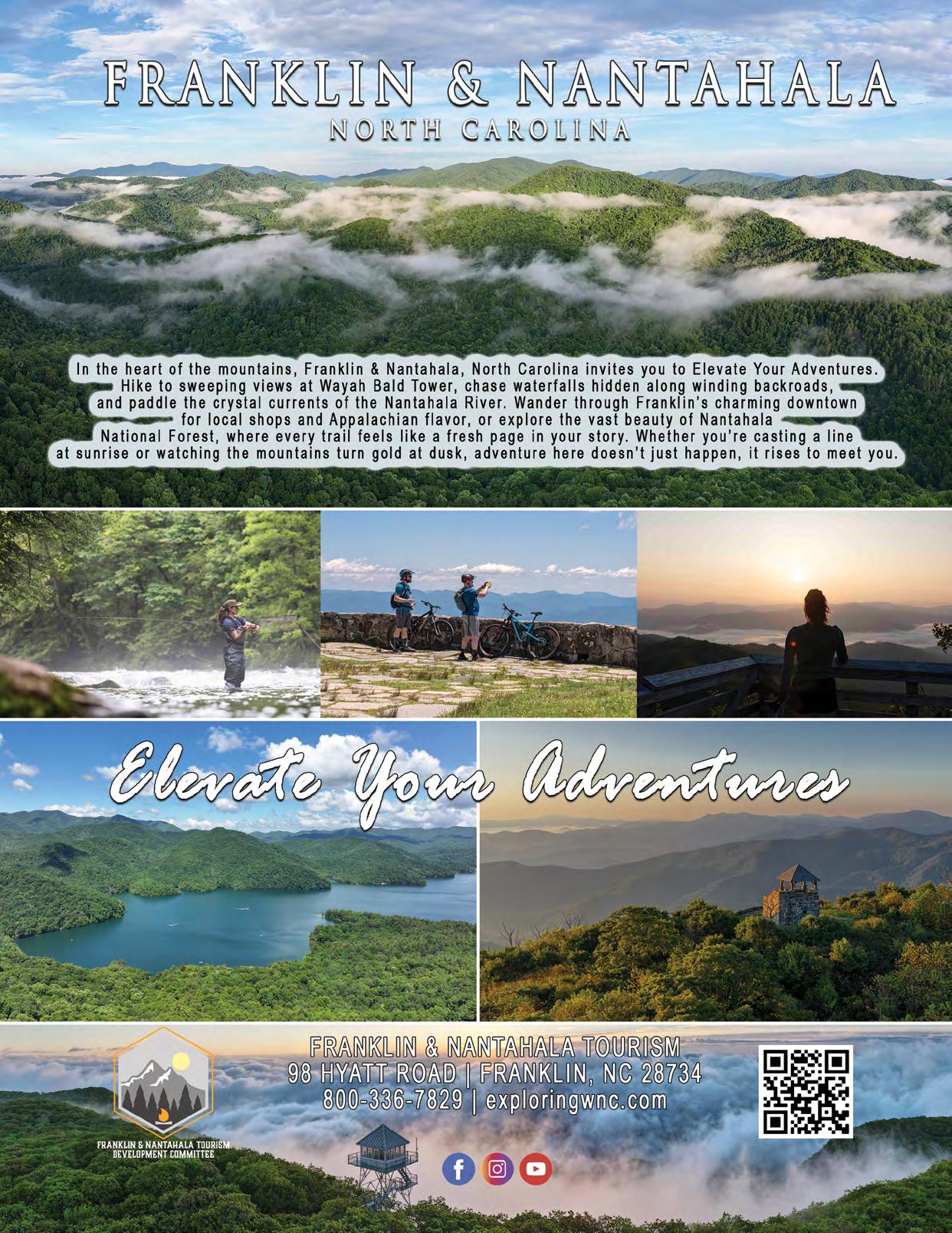
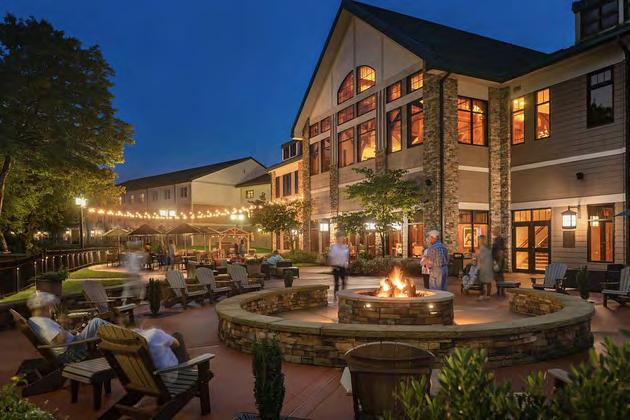
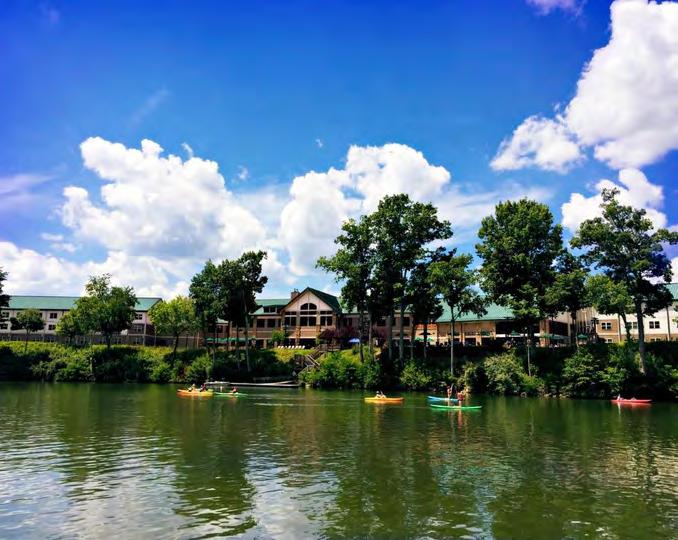
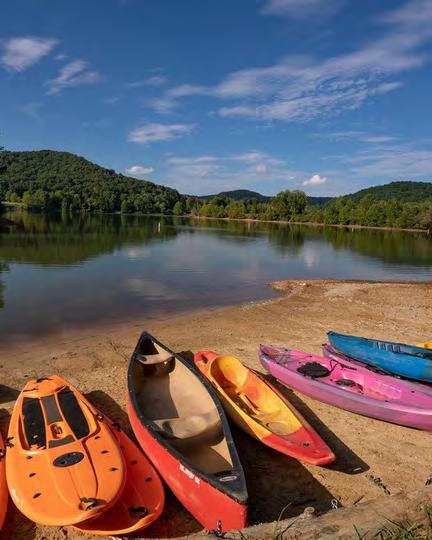
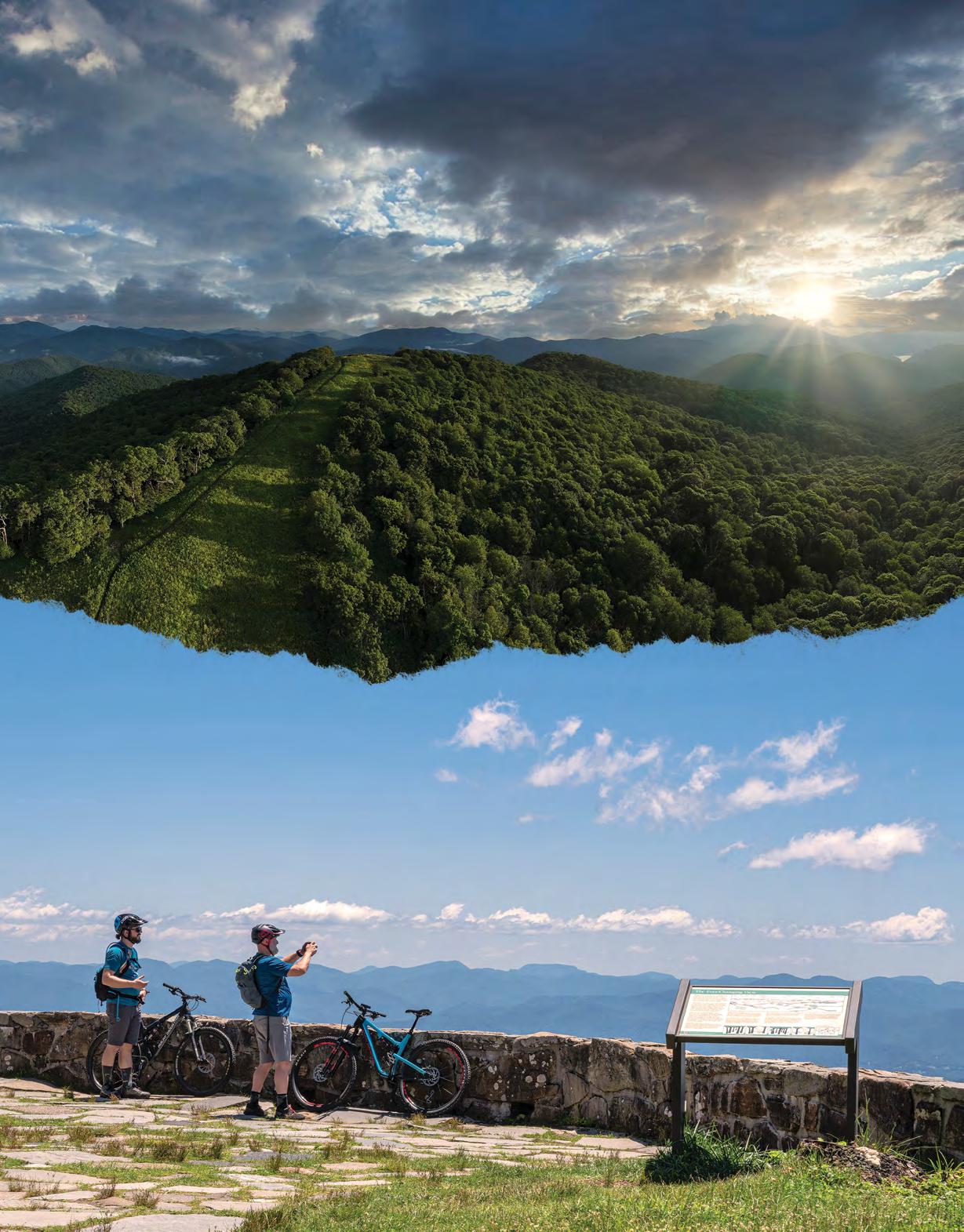
Franklin & Nantahala, NC
Mountain life in the The Nantahala National Forest
Cornfields, Clip-Ins and 50 Miles of Vibes
The Hancock Flat 50 marks 10 years of bringing cyclists through the backroads of central
Indiana 14
Ghosting the Past
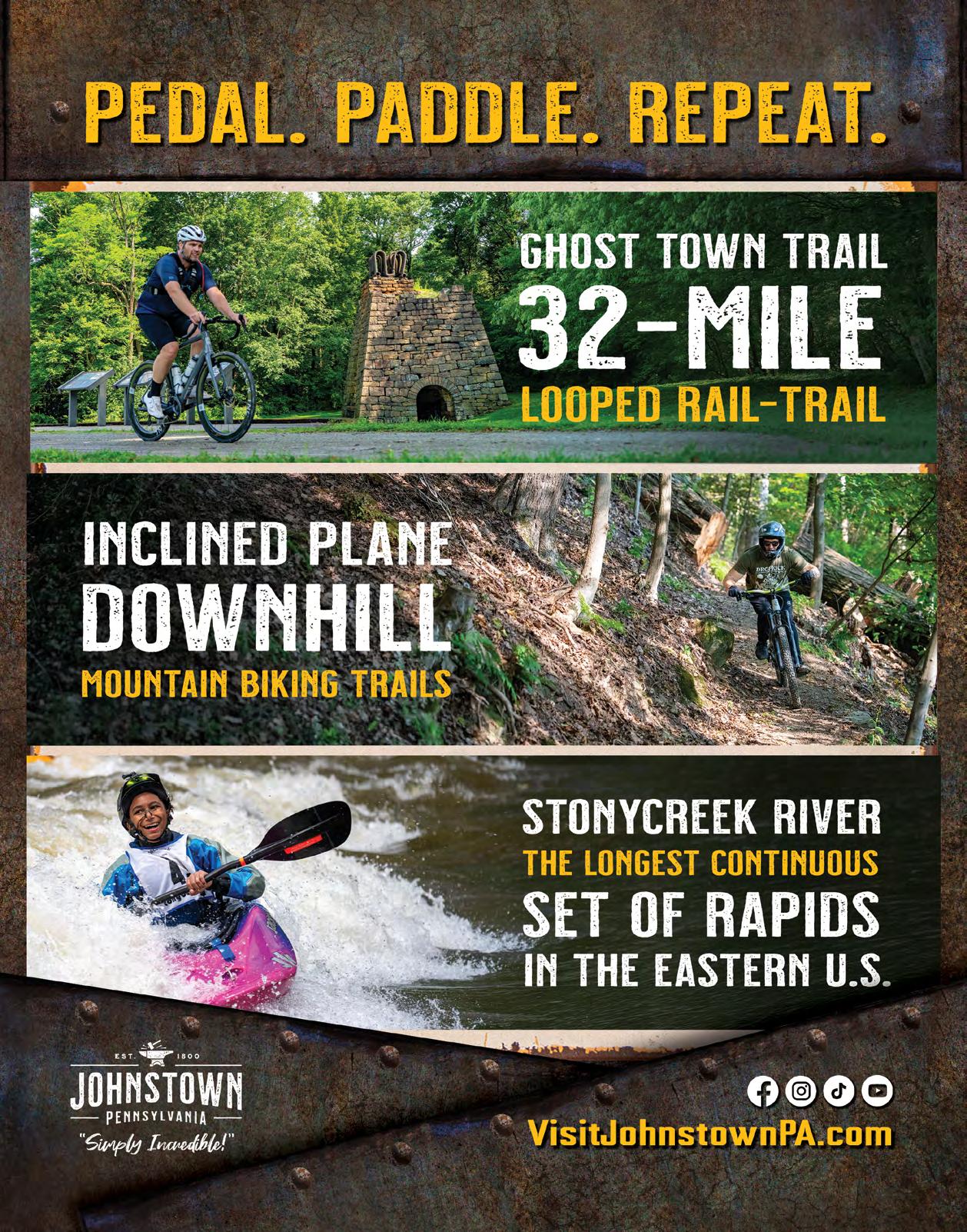
The Ghost Town Trail in Johnstown stretches through former coal towns and reclaimed forest, turning into one of the East ’s most unique rail-trail rides
GRAVITY’S GREATEST HITS
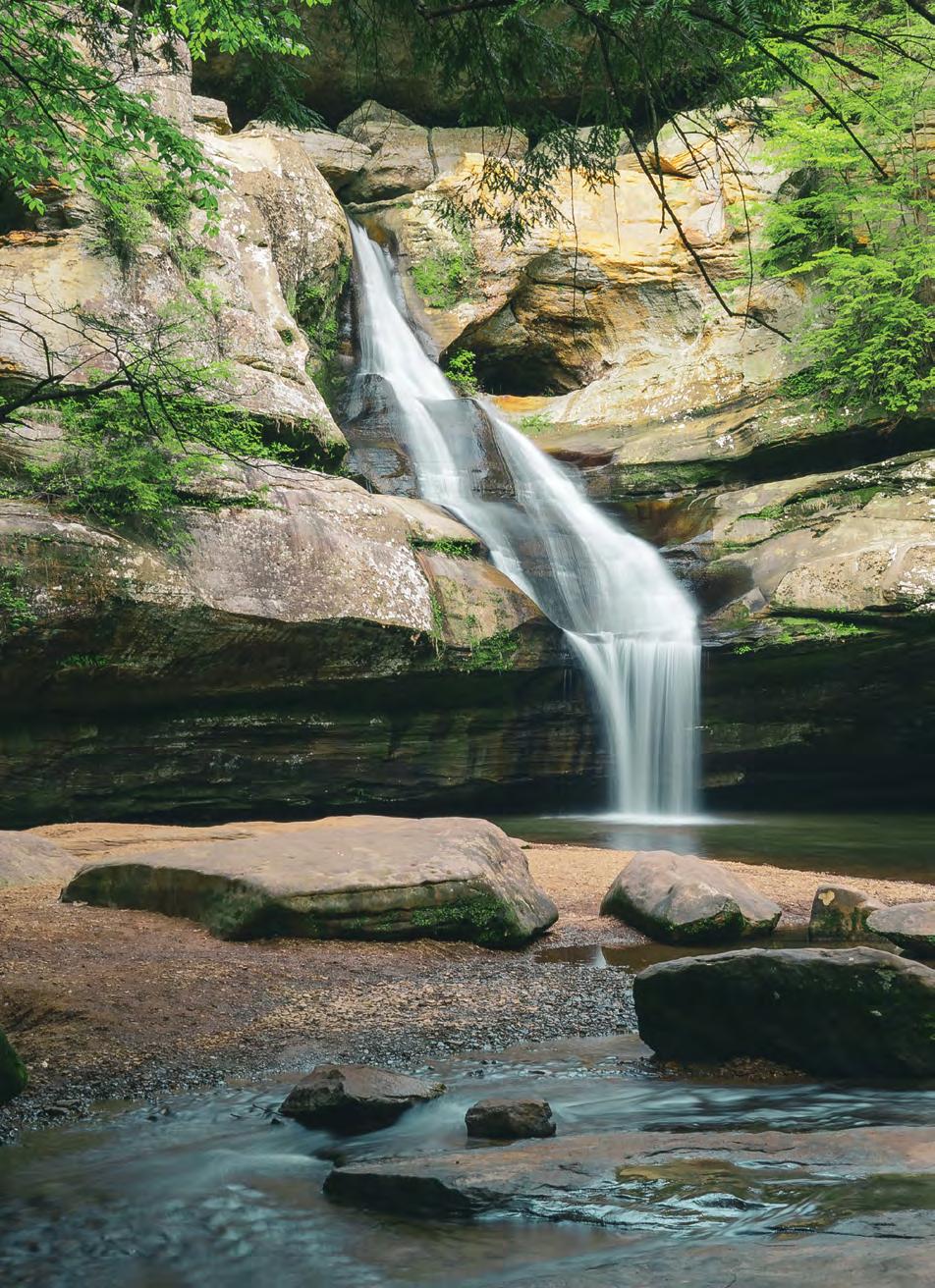
What starts as a whisper at the top of the cliff ends in a roar below. In between? Pure spectacle — carved through time to its inevitable crescendo. Welcome to wonder.
WHY THE GHOST TOWN TRAIL IS PENNSYLVANIA’S COOLEST COMEBACK STORY GHOSTING THE PAST
By the time you hear “Johnstown,” your brain might pull up something from a history textbook, floods, steel, grit. And yeah, that story is real. But if that’s all you know about Johnstown, you’re missing the plot twist.
Because right now? Johnstown is having a quiet glow-up and it smells like fresh air, trail dust and maybe a post-ride burger.
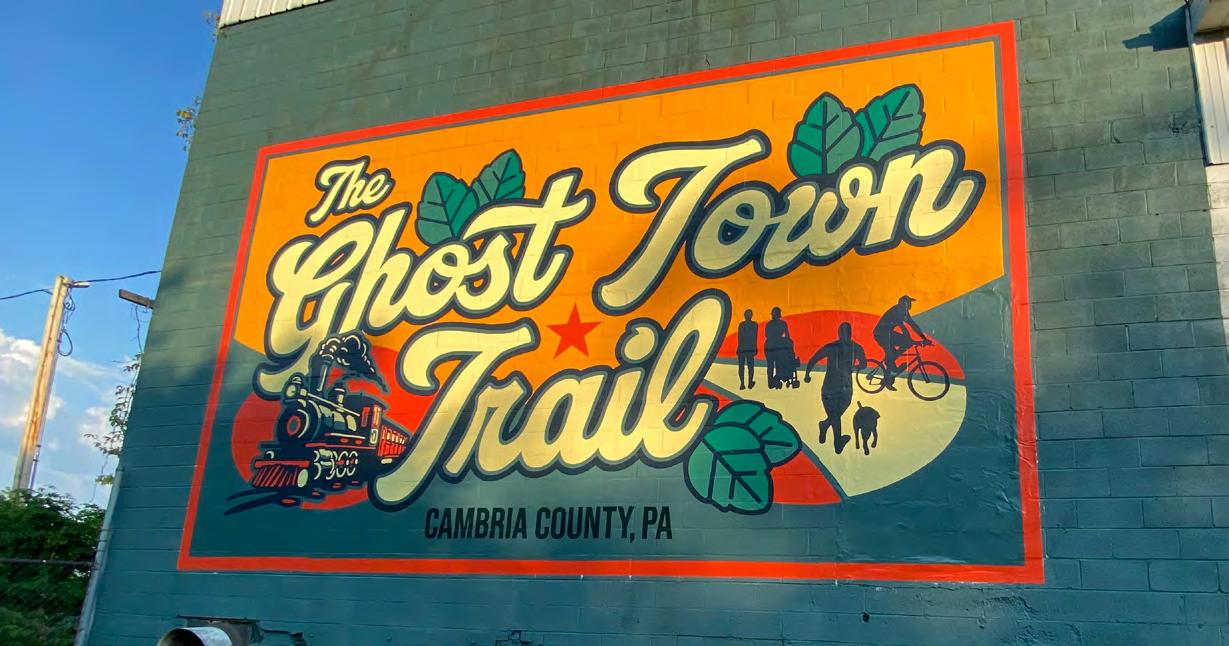
At the center of it all is the newly expanded Ghost Town Trail, a 50+ mile rail trail that just leveled up with a 32-mile loop, making it one of the longest of its kind in the eastern U.S. Translation: this isn’t just a casual bike path anymore. It’s a full-on destination.
And honestly? It just feels different.
The Vibe
The Ghost Town Trail gets its name from the literal ghost towns it passes through, former coal mining communities that once powered America’s industrial boom. Today, nature is slowly reclaiming them. Picture quiet stretches of trail through the woods, with subtle remnants of old mining towns and signs that share pieces of the past. It’s peaceful, just you riding, taking it all in and the steady sound of your tires on the path. It has that standout, storybook kind of energy, just with a more reflective vibe.
Lisa Rager, executive director of Visit Johnstown, puts it simply: this trail is part of a bigger shift. “We’re telling a new story,” she says. One that swaps smokestacks for scenic overlooks and adventure.
THE RIDE
The new loop is the headline feature, 32 miles of continuous riding that lets you choose your own adventure. Go all in for a full-day ride, or break it up into sections depending on your vibe (and your snack supply).
What makes it special isn’t just the distance, it’s the variety . One minute you’re cruising through dense forest, the next you’re passing remnants of old iron furnaces like the one in Vintondale or rolling past open fields that feel straight out of a movie.
And because it’s a rail trail, the incline stays smooth. No brutal climbs, no “why did I do this to myself” moments. Just steady, scenic movement. Here’s where it gets deeper.
Not far from the Ghost Town Trail, you can connect to the 14-mile Path of the Flood Trail, which follows the route of
the devastating Johnstown Flood of 1889. A key highlight along the route is the Staple Bend Tunnel Trail segment, which is part of the trail experience and passes through the first railroad tunnel ever built in the United States. It’s a powerful stretch where history and nature overlap—quiet rivers, wooded paths and a landscape that carries a lot of weight without feeling heavy.
And if you want to go full history-core, the Johnstown Flood National Memorial lets you stand where the disaster began, at the site of the dam that changed everything. It’s not just a ride. It’s a timeline. What makes the Ghost Town Trail hit harder is how close everything else is.
While Johnstown acts as a hub for exploring the region, the Ghost Town Trail itself sits about a 15–20 minute drive from downtown access points, rather than running directly into the city. That separation is part of what makes it feel like a true escape.
The trail stretches through multiple small towns across Cambria and Indiana counties, including places like Ebensburg and Nanty-Glo, where visitors can find local lodging and services. In Dilltown, the trail even passes through a central hub area with a bed & breakfast and trailside shop, making it a natural stopping point for longer rides. A short connector trail also links to Duman Lake County Park for camping access.
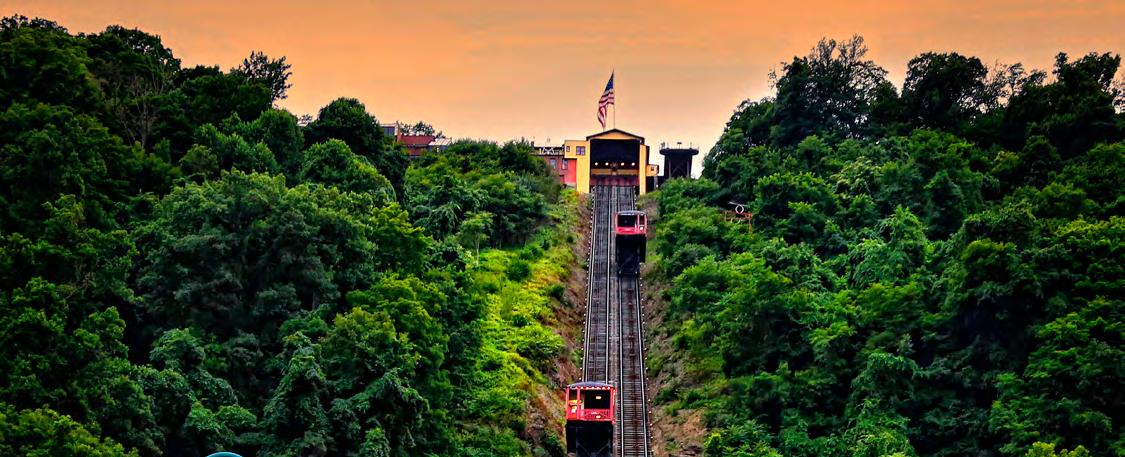
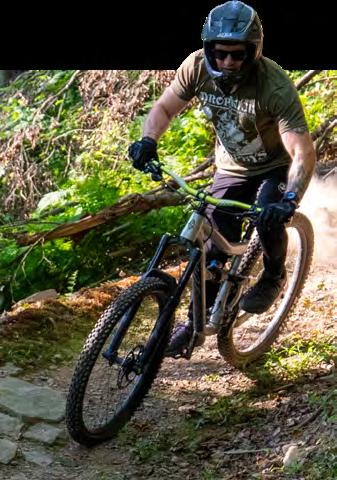
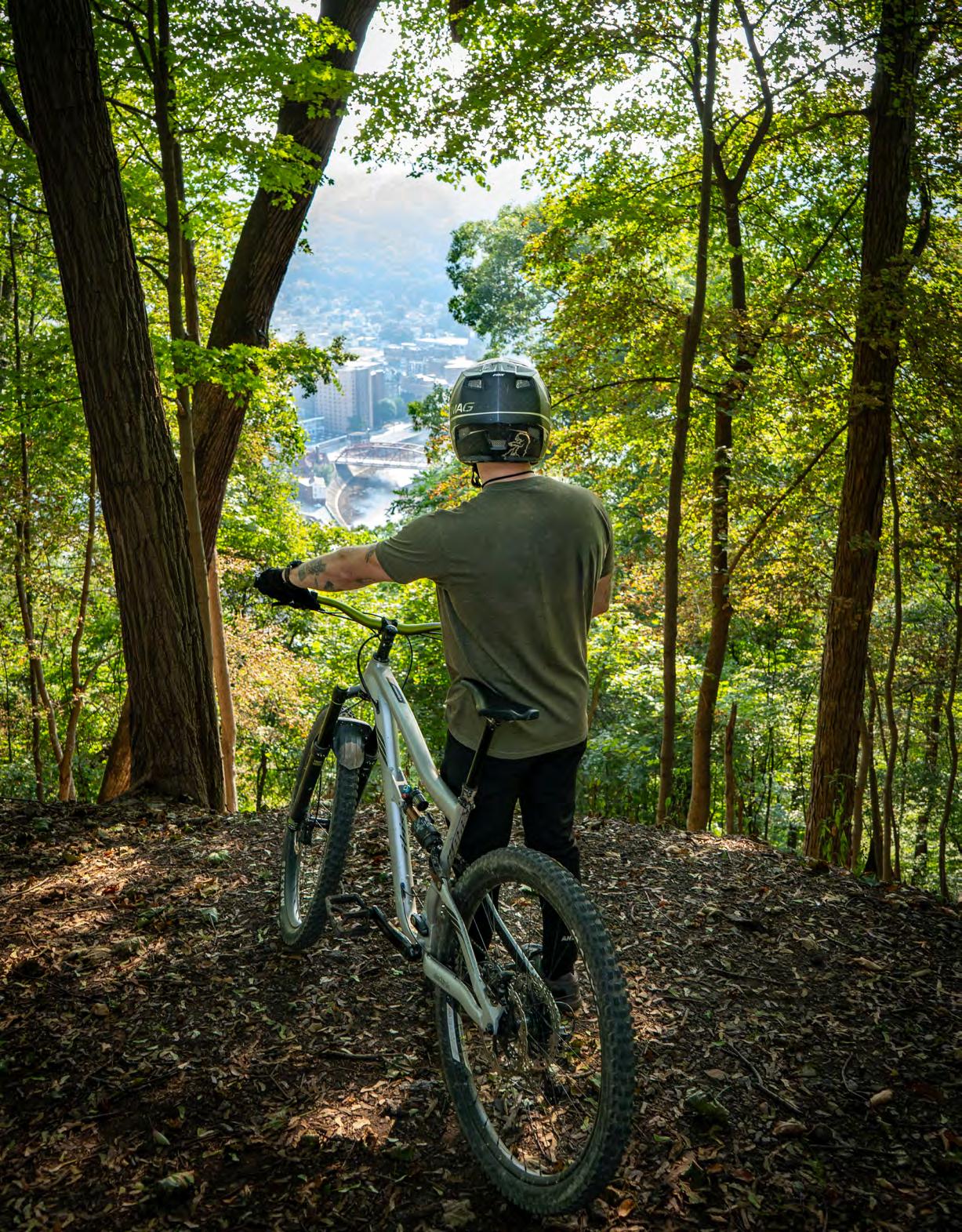
Downtown Johnstown acts like a hub, you can bike, hike or even paddle your way into different experiences without needing to constantly hop in a car. The Johnstown Inclined Plane (reopening in 2026) literally carries you and your bike up a mountainside for panoramic views and downhill rides that are not for beginners. Visitors should check its official status when planning their trip.
Water more your thing? The Stonycreek River flows right into town, with sections ranging from chill floats to legit whitewater. Yes, you can kayak into downtown. Yes, it’s as cool as it sounds. And then there’s the culture: murals, indie shops, old-school record stores and neighborhoods like Cambria City that are quietly becoming creative hubs.
THE ENERGY
Here’s the thing: places like this don’t stay under the radar forever. The Ghost Town Trail was already named Pennsylvania’s Trail of the Year, and with this new expansion, it’s only going to pull more attention. But right now? It still feels like a hidden gem. No massive crowds, no overdone tourist traps, just a community that’s proud of where it’s been and excited about where it’s going. Rager says it best: “It’s not just what we were—it’s what we are today.” And what Johnstown is today? A place where you can ride through history, breathe a little deeper and maybe rethink what a comeback story looks like.
IF YOU GO
* Rent or bring a hybrid or gravel bike for max comfort
* Plan for a full-day ride if you’re tackling the loop
* Pack snacks, water and a camera—you’ll want it
* Pair your ride with downtown exploring for the full experience
DAY 1 - For a perfect day in Johnstown check out the itinerary straight from its locals:
* Morning: Visit the Johnstown Flood Museum (1.5–2 hrs)
* Late Morning: Walk downtown (Point Park, Stone Bridge, murals, local shops)
* Lunch: Grab something casual + try a local “gob” dessert
* Afternoon: Ride the Johnstown Inclined Plane (reopening 2026)
* Mid-Afternoon: Explore Cambria City
* Heritage Discovery Center
* Bottle Works Ethnic Arts Center
* Evening: Dinner in Cambria City or downtown
DAY 2
Morning: Johnstown Flood National Memorial (1.5–2 hrs)
Late Morning: Allegheny Portage Railroad National Historic Site (1–1.5 hrs)
Midday: Stop at Gallitzin Tunnels + nearby small towns
Afternoon: Ride or explore the Ghost Town Trail
Optional Add-Ons
* Bike the Path of the Flood Trail
* Walk the Cambria Iron Trail
* Float or paddle the Stonycreek River
Stay
* Downtown hotels or short drive
* accommodations nearby
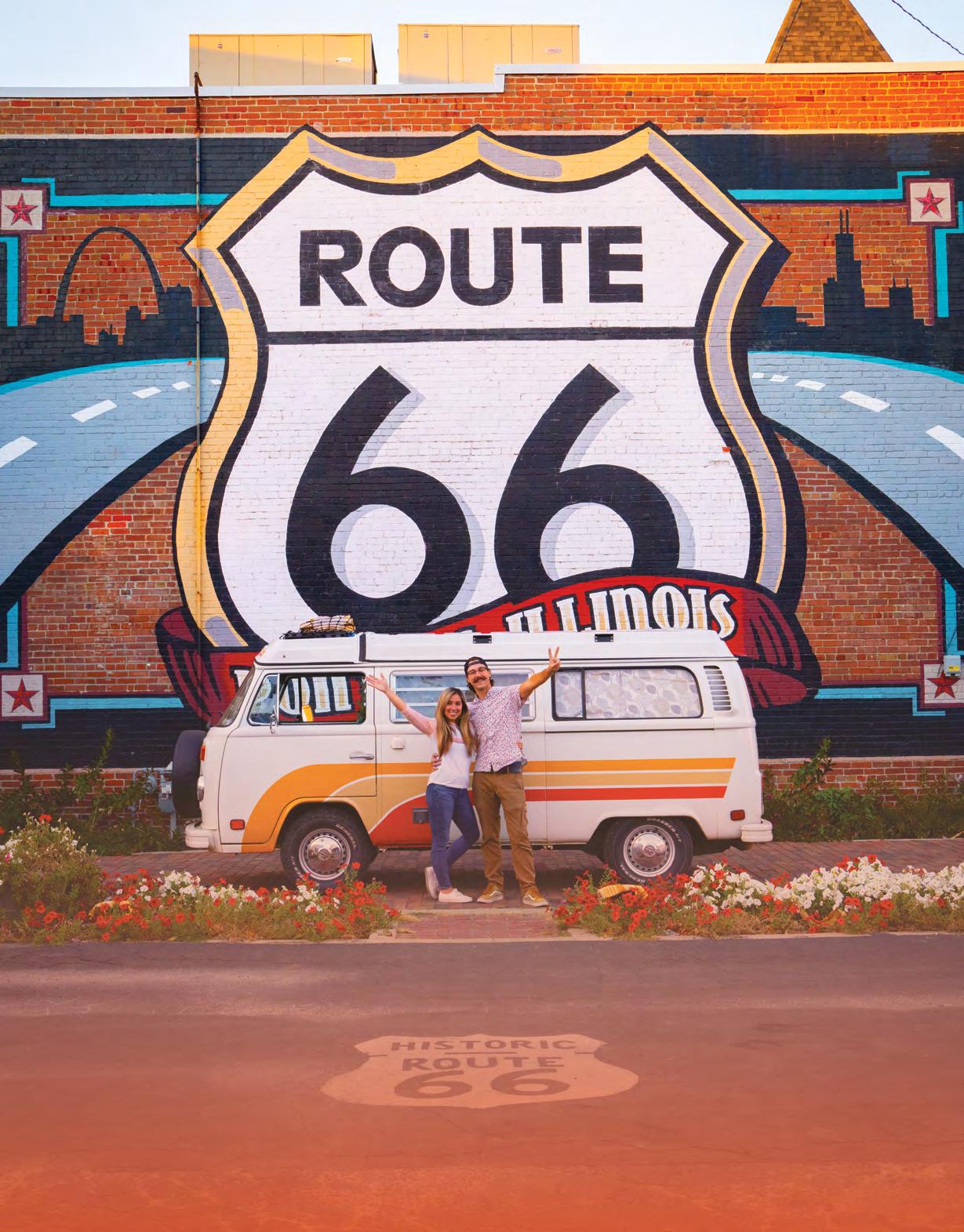
ROUTE 66, UNFILTERED
HANNAH AND HUNTER OF @PACKTHEBUS TRACE AMERICA’S MOST ICONIC HIGHWAY, ONE STOP AT A TIME
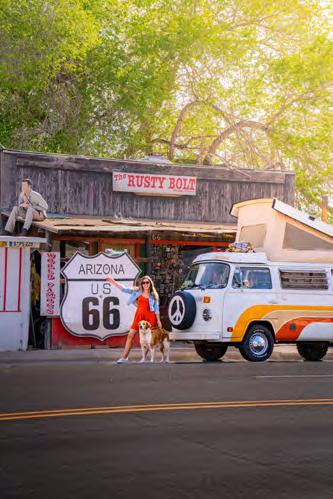
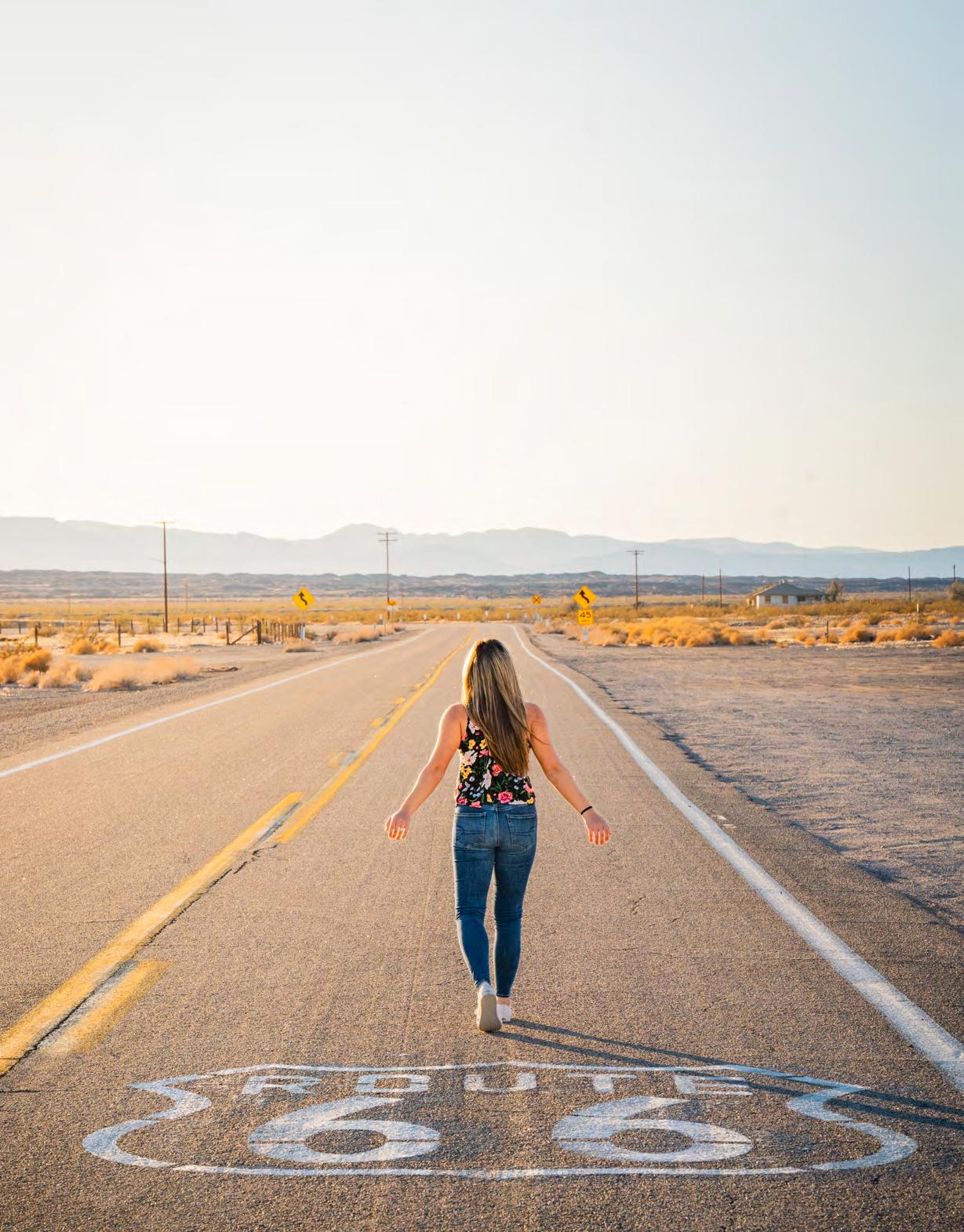
There is a stretch of road in America where time does not really move forward so much as it lingers, frozen in place, where you can still feel the history in everything along it. Neon signs flicker. Diners feel unchanged on purpose. Vintage gas stations sit like they have been there forever. And the iconic U.S. Route 66, first established in 1926, still carries every traveler who has ever passed through it.
For Hannah and Hunter of @packthebus, that road became something more than a drive. It became a month-long journey connecting Illinois to California, stitched together by roadside stops, unexpected people and the kind of moments you cannot plan for. The two have known each other almost their entire lives, though not in the way people assume.
“We went to the same middle school and high school, so we grew up in the same neighborhood,” Hannah says. “We didn’t actually meet until college. It is kind of funny, we were orbiting each other for years and did not even know it.” They even show up in each other’s old photos without realizing it. Background faces at school events. Parallel lives that did not fully connect until later. The timing of their meeting would end up shaping a lot of what came next. Pack the Bus started in a downtown San Diego apartment. Life had become routine in ways they did not expect. Rent, work and days spent indoors more than anything else. “We were living in a downtown apartment with no real sunlight,” Hunter says. “At first it felt fine because we thought we would always be out doing things in the city, but once everything slowed down, we realized how much time we were actually spending inside.”
park in the country. Twenty-two parks in their first year. Route 66 came later, almost by accident. “We had just finished an East Coast loop and realized we would be passing through Chicago on the way back to California,” Hunter says. “It felt like the perfect chance to take Route 66 instead of just driving straight home.” They spent about a month traveling the full stretch of Route 66, moving slowly enough to notice how much the country shifts along the way. “I think it was less about getting from one end to the other and more about everything in between,” Hunter says. “The landscape changes so much. You start in the Midwest, and by the time you hit the West, it feels like a completely different country.” For Hannah, the pace mattered more than the distance.
The contrast between what life looked like and how it felt became harder to ignore.
“I had this car I loved, but I wasn’t using it anymore because we didn’t have anywhere to go,” Hunter says. “That’s when we started thinking maybe we should be doing something that actually gets us outside again.”
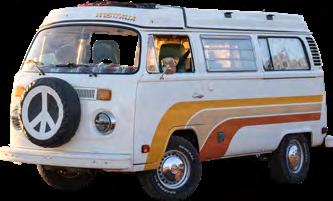
A camping trip changed everything. “We had never really camped together as adults, so we asked a friend to take us out and show us the ropes. That first trip honestly changed everything for us. We came back completely hooked.” Not long after, they found a Volkswagen bus. It was not supposed to be a full lifestyle shift.
“At the time it was just supposed to be something fun, a project, a weekend thing,” they say.
“We didn’t buy it thinking this would become our life.” But it did.
Short trips turned into longer ones. Big Bear. Mammoth. Then the returns home started feeling heavier than the trips themselves. “Every time we came back, we had the same feeling. We didn’t want to go back to normal life. It kept happening over and over until we finally asked, ‘Why are we going back at all?’” In 2022, they stopped. They gave up their lease, transitioned fully into remote work and left with a loose plan to visit every national
“I love stopping. I love museums, stamps, roadside attractions, all of it,” she says. “There were days where we barely drove 60 miles because we kept stopping for something random. A sign, a diner, a museum we had never heard of. That is kind of the point of Route 66. It pulls you off the main path constantly.”
And some of the most memorable moments came from those detours.
“We stopped at this neon sign display in Illinois, and the next day we randomly met someone whose family had been making those signs for generations,” Hannah says. “He ended up inviting us into his shop and walking us through everything. That would
not have happened if we had not stopped in the first place.”
Another came in Springfield, Illinois.
“That same local told us about Abraham Lincoln’s tomb,” Hunter says. “It wasn’t on our list at all, but we ended up going, and it was one of the most powerful stops of the whole trip.”
In Tucumcari, New Mexico, the Blue Swallow Motel stood out as one of the most memorable stops along Route 66, the kind of place that feels carefully held in another era. “It still has the original neon sign and even rotary phones in the rooms. It feels like stepping into a different time completely. You can tell it has been preserved with care.”
Not everything on the road came easily, though, especially when it came to weather and timing. “The biggest challenge was definitely the weather,” they say. “We do not have air conditioning in the van, so we had to be
really intentional about when we traveled through certain areas. In New Mexico, we actually missed a blizzard by one day. If we had been any later, we would have been stuck for days.” Still, nothing about Route 66 felt like something to survive. It felt like something to move with. Their advice is simple.
“Do not overplan it. Learn a little history before you go, but leave space for the random stuff. That is where the best parts happen.”
And if you are doing the full route, give it time. “At least two weeks. But honestly, if you only have a few days, just pick a section and really sit in it. The western part is great for landscapes, but Illinois has a lot of the deeper history.”
They point to the Route 66 Hall of Fame Museum in Pontiac, Illinois, as a good starting point. “That is where I got my first stamp,” Hannah says. “After that, I just started collecting them everywhere we went. Gas sta-
tions, diners, small museums. Anywhere that had something worth stopping for.”
From there, the road became less about direction and more about attention. Route 66 does not really ask to be completed. It asks to be noticed. For Pack the Bus, that ended up being the whole point.
For a full guide to Hannah and Hunter’s Route 66 journey and to start planning your own, check out their new Route 66 map. Celebrate Route 66’s 100th birthday by exploring the route for yourself. Comment “guide” on a @packthebus post and you will receive a link to the map.
Photography by Hannah and Hunter of @packthebus. Follow along on Instagram at @packthebus.
CORNFIELDS, CLIP-INS AND 50 MILES OF VIBES
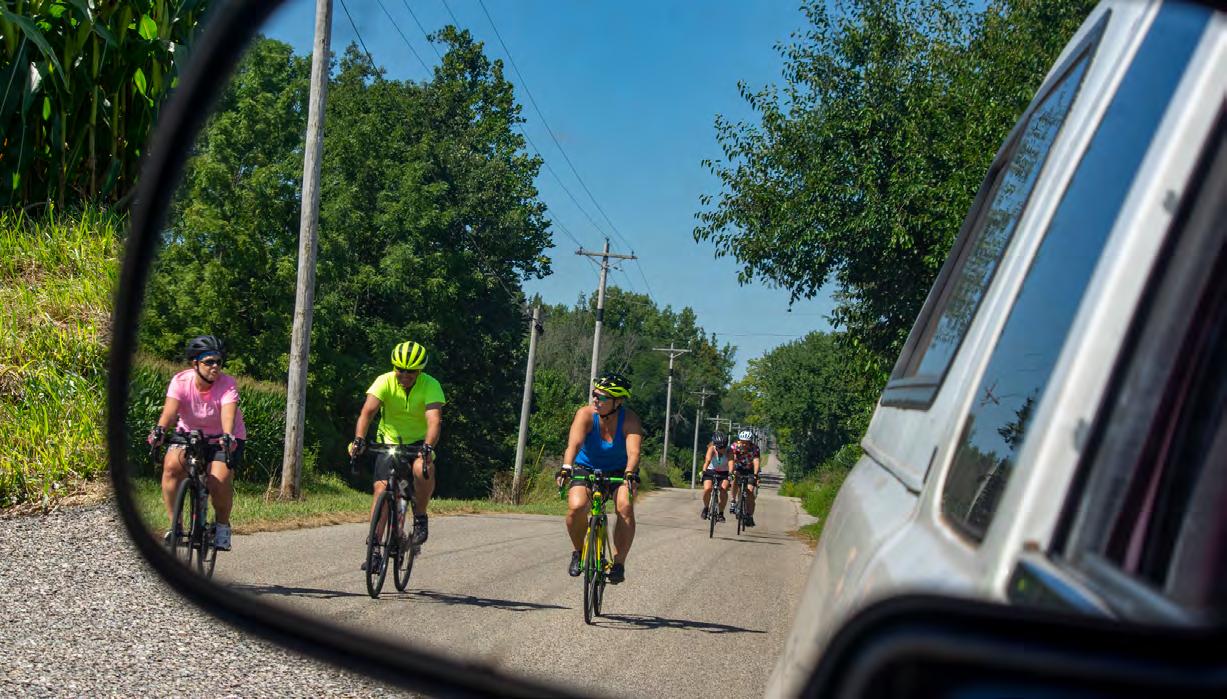
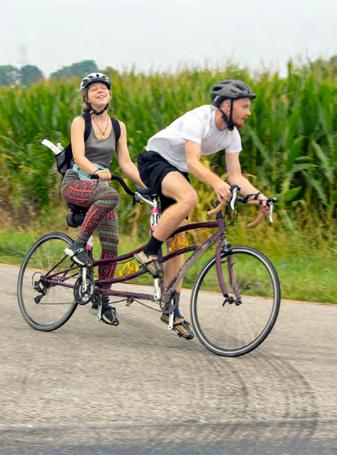
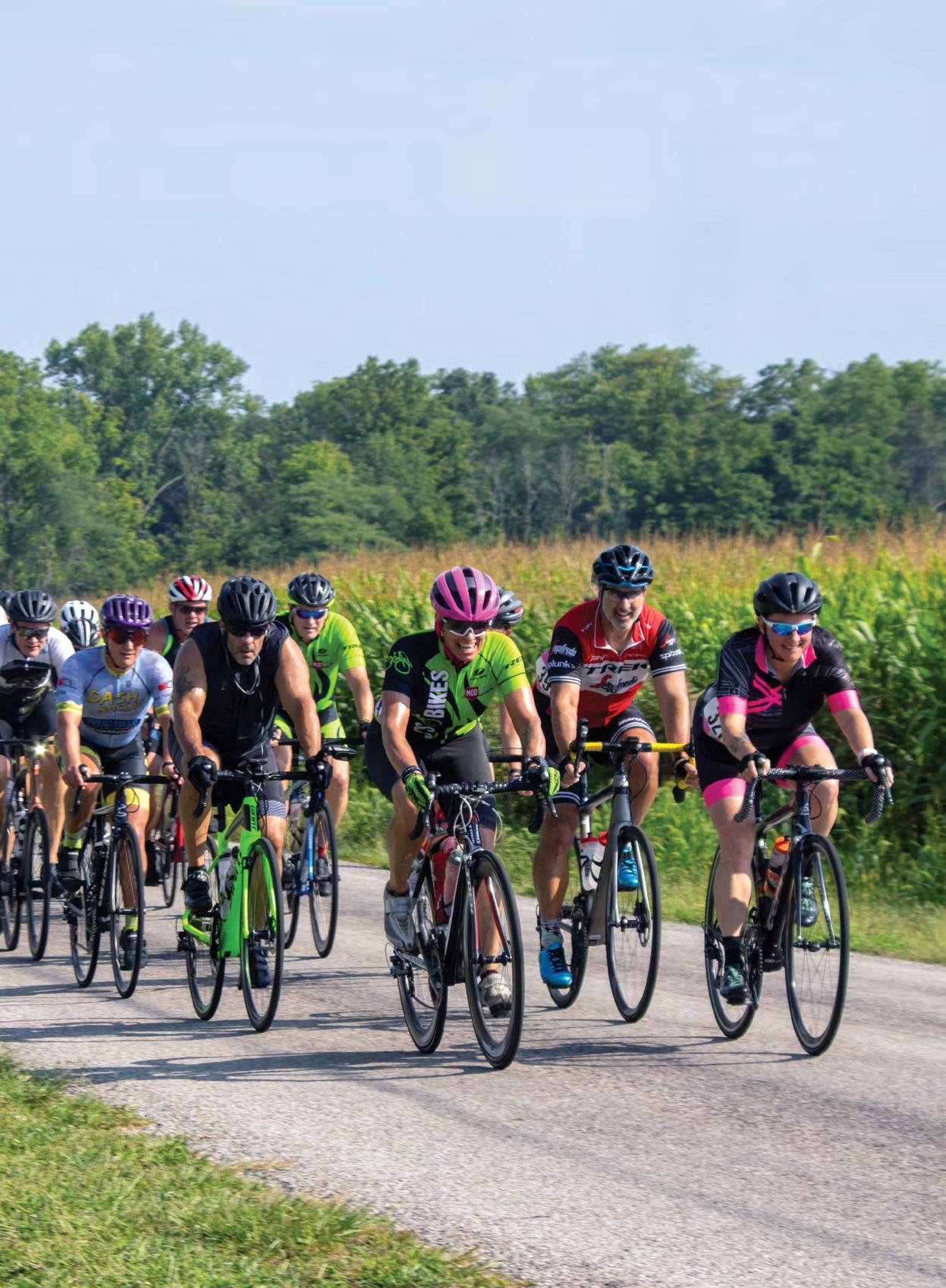
Late August in Hancock County feels like a held breath before fall—cornfields standing tall, heat still clinging to the pavement and long county roads running straight enough to disappear. Then, for a few hours on a Saturday morning, the quiet breaks. Tires hum. Chains click. A loose ribbon of cyclists stretches across the landscape, moving together and apart at the same time.
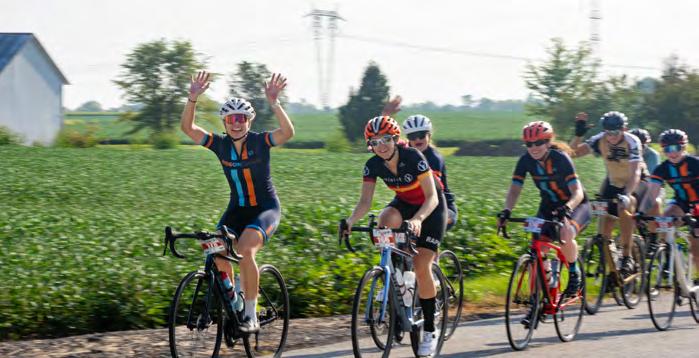
That’s the rhythm of the Hancock Flat 50, which marks its 10th anniversary this year in Greenfield. What started as a modest community ride has grown into one of central Indiana’s most magnetic cycling events. It isn’t a race in the traditional sense. It’s something looser, where 1,200 riders clip in for their own reasons and end up, for a while, moving as one.
Back in 2016, the ride launched with just over 100 cyclists. It was part of a push by Hancock Health to get people outside and moving. There were two routes then, just like now, 25 miles or 50 miles, and a simple idea
behind it. Keep it open to everyone. Ten years later, not much about that idea has changed other than the number of attendees.
“We’ve grown to about 1,200 riders,” says Mitch Doran, owner of Family Bike Chain and one of the original supporters. “But it’s always stayed a fun, family-friendly event for all skill levels.”
That’s the thing people keep coming back to. It doesn’t matter if you show up in full kit or on a bike that’s been sitting in your garage since 2012. You line up, you ride and you figure it out as you go.
John Rihm has been doing exactly that for years.
“I enjoyed riding, and it gave me a chance to get out on roads I normally don’t ride,” he says. “And to get to know other bikers.”
Rihm is 73 heading into this year’s ride. He still pedals regularly, still shows up, still treats the event less like a competition and more like a checkpoint in a much bigger routine.
“The camaraderie is what keeps me com-
THE HANCOCK FLAT 50 HITS 10 YEARS
ing back,” he says. “And the challenge to keep riding as I get older.”
That tone runs through the entire event. Yes, there’s chip timing. No, there are no awards. You can check your stats later if you want. Most riders don’t seem too pressed about it.
“It’s not a race,” says Teri Gottschalk, community outreach coordinator and one of the people behind the scenes. “We call it a ride for a reason.”
The weekend starts before the pedals even turn. “Flat 50 Friday” has become its own thing, with packet pickup, live music, a cornhole tournament and a steady flow of riders drifting through downtown Greenfield.
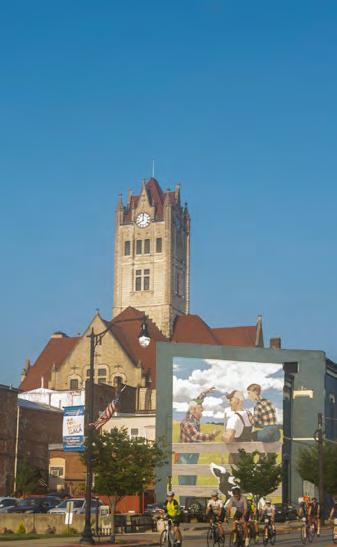
By Saturday morning, it’s all business. Or at least as close to business as this ride gets. The start line sits in the middle of downtown. Riders roll out at 8 a.m., both distances together, before splitting off into their routes through the county. This year’s course is new, adjusted around construction and rerouted
enough that even the regulars won’t be able to run it on memory. Gottschalk calls it the “not so flat” Flat 50 this time around. There’s a little more elevation tucked into the southern section, just enough to keep people honest. Still, Hancock County delivers what it promises. Long stretches of open road, farmland on both sides, the occasional surprise like a buffalo farm or a cluster of spec tators set up in lawn chairs. Ron Pritzke remembers when the ride was just an idea tied to a big ger goal. He still rides the 25-mile route, adjusting his mileage a bit in the weeks leading up. Nothing extreme. The group energy does most of the work. “The pack carries you along for a while,” he says. “You don’t have to overthink it.” That energy is real. Twelve hundred riders rolling out together creates its own momentum. You settle into a pace, find a wheel to follow, drift into conversation, then back into your own head. Repeat for a few hours.
says. “If you’re new, try the 25-mile first. See what you can do.” Or just show up and ride until you can’t. There’s no real wrong way to do it. At the finish line, things slow down. Riders roll back into town, legs shot, jerseys damp and head straight for food trucks, drinks and whatever shade they can find. A local beer from Wooden Bear Brewing Co. hits a little different after 50 miles. Same goes for a slice of pizza or other food options from local restaurants set up in the “Living Alley”. “It’s my favorite part,” Pritzke says. “Finishing and just relaxing.” Ten years in, the Flat 50 hasn’t tried to become something bigger than it is. It’s just gotten better at being exactly what it started as. A ride. A community. And a reason to keep pedaling.
And it’s not just about one day. Over the past decade, proceeds from the event have been funneled back into the county. Trail systems, safety signage, park projects, even cycling programs in local schools have all seen support. It’s part ride, part reinvestment. For first-timers, the advice is simple. “Just sign up and try it,” Doran says. “You don’t need a high-end bike. Just bring what you’ve got and a helmet.”Rihm agrees, with one caveat. “Understand the event,” he
Where the Art
of Unplugging Comes Naturally
Escape to a place where the sky feels bigger, the air feels lighter, and every path leads to discovery.
Tucked against the rugged edge of the Gila Wilderness, Silver City is a hidden gem—and that’s what keeps it magical. Summer brings cool mountain breezes, golden evenings, and a town that moves at its own unhurried rhythm.
Explore trails that wind through ancient canyons. Feel the creative pulse of more than 30 galleries. Wander a historic downtown filled with cafés, bookstores, and murals. Silver City invites you to slow down, breathe deeply, and reconnect with what matters.
Just minutes away, the Gila National Forest stretches for millions of acres—perfect for hiking, soaking in natural hot springs, and watching dramatic monsoon skies. At night, look up at some of the darkest, clearest stars in the Southwest. Here, unplugging comes easily.
Artists are drawn to Silver City’s light, solitude, and high-desert beauty, filling the town with color and creativity. Its frontier history still grounds it too—from preserved 1800s architecture to ancient Mimbres pottery that tells stories etched in clay.
At 6,000 feet, summer stays cool. Spend days on shaded trails, at outdoor festivals, or dining farm-totable as the sun sets behind the Gila.
It’s summer—only better. Reconnect with what matters.
THE FOREST WAY: SOLO CAMPING AND FORAGING
FEATURE ARTICLE FOR UNPLUG MAGAZINE, SUMMER 2026
Gabbi (Instagram: @gabtheforestelf) is a solo camper and forager whose practices are based on self directed study, field experience and risk aware decision making. Her approach integrates outdoor exploration with plant identification, subsistence foraging and environmental ethics.
Her entry point into foraging began in 2020 following a diagnosis of a chronic skin condition. After standard medical treatments proved ineffective, Gabbi began researching plant based remedies and testing them on herself. This process led to sustained engagement with botanical study and increased time spent outdoors. What began as personal experimentation expanded as she started assisting others with plant based approaches.
“I had nowhere else to turn but to the plants… I formed a deep bond with them and started spending all of my free time outside.”
In Hawaii, a three month apprenticeship on an off grid farm resulted in a change in her environmental awareness. Living in a minimally controlled setting required adaptation to constant exposure to insects, reptiles and variable conditions. Over time, Gabbi adjusted her expectations of control and adopted a coexistence based framework. This experience has carried over and now informs her approach to camping and site selection.
“I couldn’t separate myself from nature. I couldn’t regulate the lizards, spiders and bugs coming in and out as they pleased. After a couple weeks, I started coexisting with these little creatures and realized I had no more of a right to be there than they did.”
After relocating to Oregon in the Pacific Northwest, Gabbi began hiking alone because she had not yet found a community. Her progression moved from day hikes to overnight camping and eventually to solo backpacking.
For campsite selection, choice is based on specific environmental criteria. She prioritizes proximity to a reliable water source, evaluates signs of animal activity such as droppings and avoids areas with potential hazards. Gabbi also selects locations that balance moderate human presence with isolation, reducing risk while maintaining the feel of solo seclusion.
Her standard backpacking kit includes essential survival and navigation equipment. Core items are a backpack, tent, sleeping bag, sleeping pad, stove, water filter, ferro rod, lighter, storm matches, bear spray, knife, base layers and a rain jacket. Gabbi emphasizes the importance of insulation and water resistance, particularly in the Pacific Northwest, where nighttime temperatures and moisture levels can create hypothermia risk if not properly managed.
referencing with regional field guides, specifically Plants of the Pacific Northwest by Pojar. She does not rely primarily on mobile identification applications, as she considers them insufficient for skill development.
“All you need is a knife! Watch out for any rot and never cut off more than you need! I like to coat them in flour and fry them up in a skillet with some hot oil. I know it’s hard to believe, but it really does taste like chicken.
“The Pacific Northwest is notorious for rain, people really underestimate how cold and wet it can get at night. I have made this mistake myself several times during my first camping trips.”
“Working in solo conditions, Gabbi incorporates redundancy in critical systems. Navigation is supported by a physical map, preloaded GPS routes on a watch, and mobile applications such as AllTrails or Gaia GPS. Fire starting capability includes multiple ignition sources and prepared tinder, her preferred method is a ferro rod and cotton pad. She also includes shelter repair kits to address minor equipment failures.
Foraging practices are guided by risk minimization and species verification. She follows a near certainty threshold for plant identification and does not consume any specimen unless she is highly confident in its classification. Gabbi’s identification methods include visual characteristics, odor, and cross
“I have a 99% rule, if there’s one percent of doubt, then I can rely on my other senses to confirm my suspicion. Smell is a really important one, so many of the aromatics and oils the plants give off can be very distinct and help confirm an ID.” One example is chicken of the woods. A commonly prepared foraged meal is a sandwich using Laetiporus species. This fungus is selected for its distinctive morphology, which reduces misidentification risk. Harvesting is limited to fresh, non degraded specimens. Gabbi excitedly highlights that preparation requires minimal equipment, typically a knife, cooking oil, and a heat source. Seasonal variation directly affects her foraging and food preparation strategies. In spring, she collects fresh plant materials such as cleavers, lemon balm, and nettles, which are consumed shortly after harvest. In colder seasons, she shifts to preservation methods such as drying, particularly for berries like hawthorn and rose hips. Waking up in the forest alone isn’t without problems, navigation errors or equipment failure is commonplace, meaning Gabbi follows a strict response protocol. The first step is to regulate physiological stress through controlled breathing. She then uses structured self talk to maintain focus before making decisions. Solo travel also increases reliance on sensory input. Gabbi reports improved ability to distinguish between different environmental sounds, including variations in animal movement and behavior.
“I have spent many nights studying the difference between the sound of a tree branch snapping from a squirrel and a human. I had a night not too long ago in Joshua Tree, where the wind was blowing relentlessly and it sounded like someone was trying to open my tent. That might sound
like a horrible experience to some, but there’s this indescribable feeling of resilience and strength that I feel.”
Additional considerations for foraging influence Gabbi’s environmental practices, which align with Leave No Trace principles. She evaluates plant populations before harvesting, avoids taking from isolated specimens, and considers ecological roles, including whether a species is native or invasive. She also accounts for potential impacts on wildlife, and if local and indigenous populations rely on the plant.
“For foraging I take my impact very seriously because once you cut that plant, you can’t take it back, their life is lost. I always try to give something back to the forest. I offer up things like some water from my bottle or song, it’s even scientifically proven that plants love to hear us sing! We have evolved alongside the Earth as stewards.”
During her time solo, Gabbi doesn’t listen to music or podcasts while actively navigating or camping, as uninterrupted auditory awareness is important for safety. She does, however, carry books for stationary periods and sings to the forest around her. In addition to essential gear, she brings non essential items such as herbal tinctures, which she uses for personal comfort and routine.
“When I’m alone in the forest, every experience is different from the last and that really stops my autopilot brain, forcing me to be incredibly present.”
Gabbi’s practices reflect a systematic approach to solo outdoor activity that integrates environmental awareness, risk management, and applied botanical knowledge. Her methodology prioritizes preparation, verification, and minimal impact, with an emphasis on self reliance and continuous learning. She greets the forest, and in turn, it greets her back.
Gabbi’s Solo Camping Book Recommendation: The Healing Wisdom of Africa: Finding Life Purpose Through Nature, Ritual, and Community (1999) by Malidoma Patrice Somé
You are invited to follow Gabbi’s continued journey and wisdom on Instagram: @gabtheforestelf
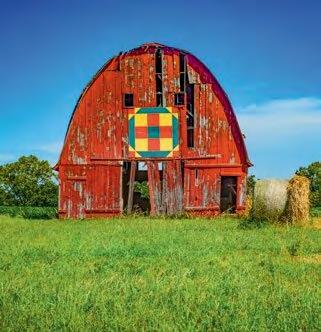
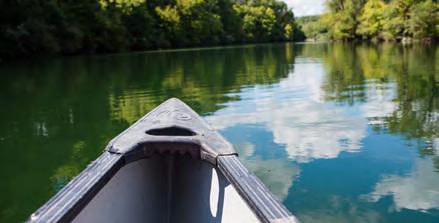
Come explore this quaint river
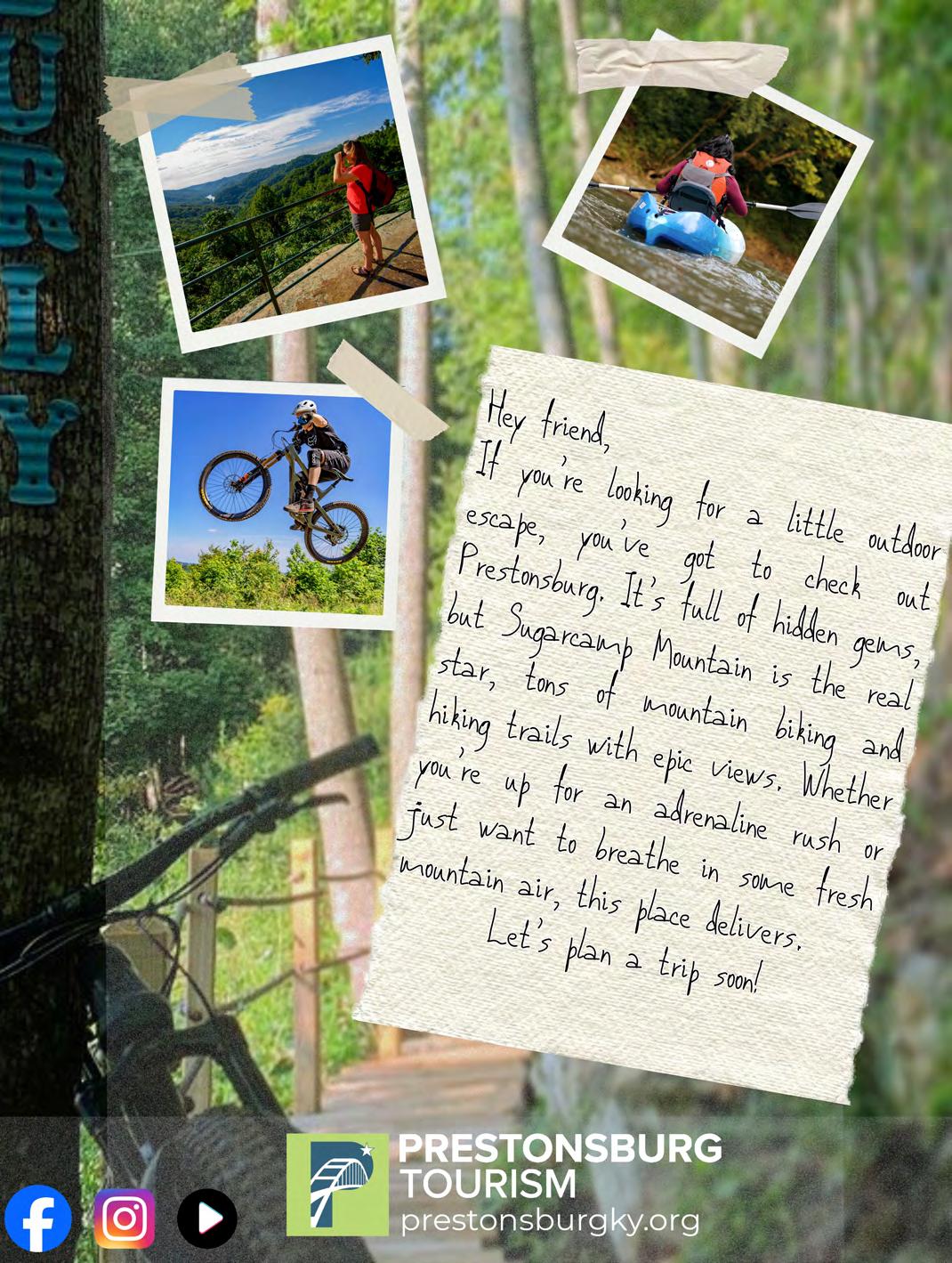
Come explore this quaint river town in the heart of Missouri town in the heart of Missouri
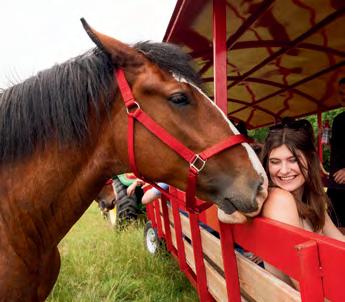
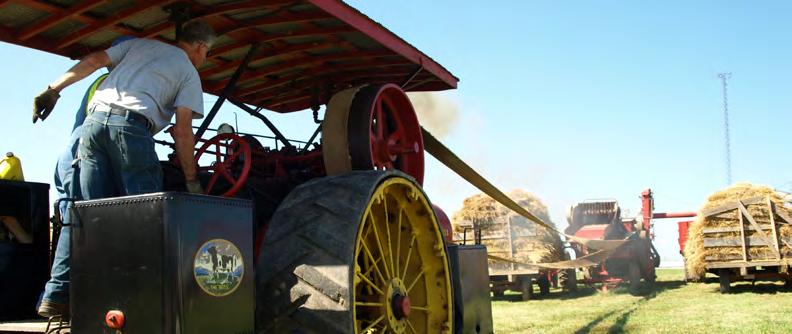
Home to the Budweiser Clydesdale's Home to the Budweiser Clydesdale's breeding facility- Warm Springs Ranch breeding facility- Warm Springs Ranch
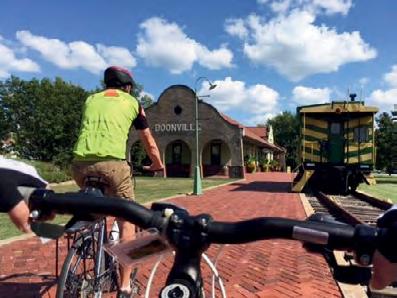
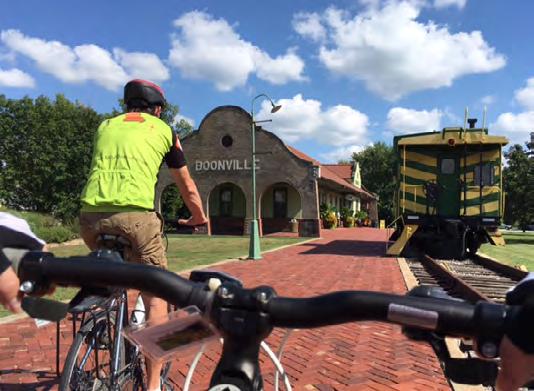
Take a ride on famous Katy Trail
Take a ride on famous Katy Trail
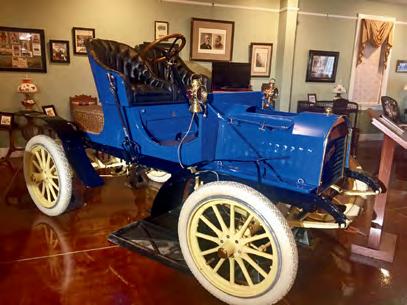
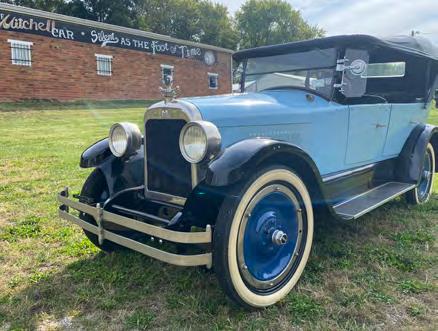
See the rare collection of antique
See the rare collection of antique cars at the Mitchell Motorcar Museum cars at the Mitchell Motorcar Museum
FINDING YOURSELF IN
AMERICA’S PARKS IN THE MIDDLE OF
You don’t really understand a national park until you’re standing in one. Photos can flatten it. Videos miss the total scale. Then you’re there, and it feels bigger than anything you’ve stepped into in a long time. Everything stretches out farther than you expected, and for a second you’re just there with it, no overthinking, no trying to keep up. It doesn’t try to impress you, which is probably why it does.
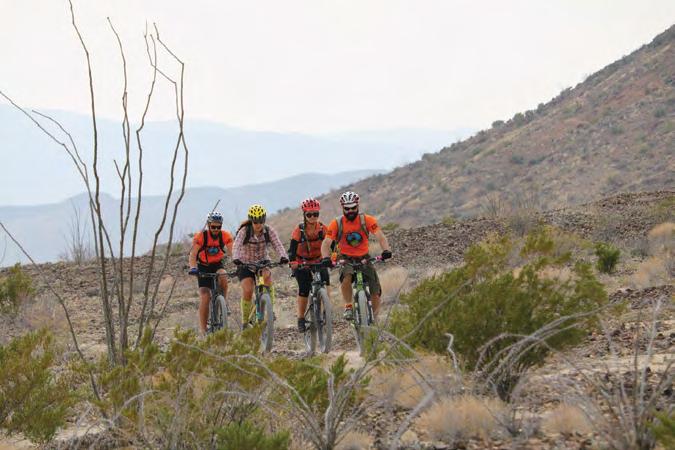
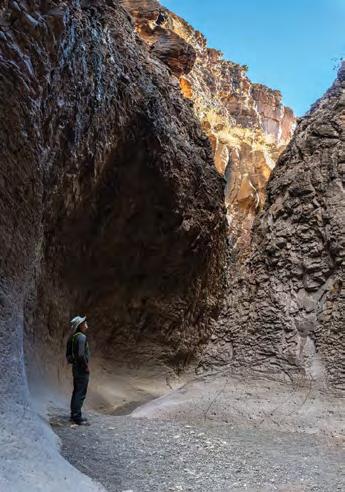
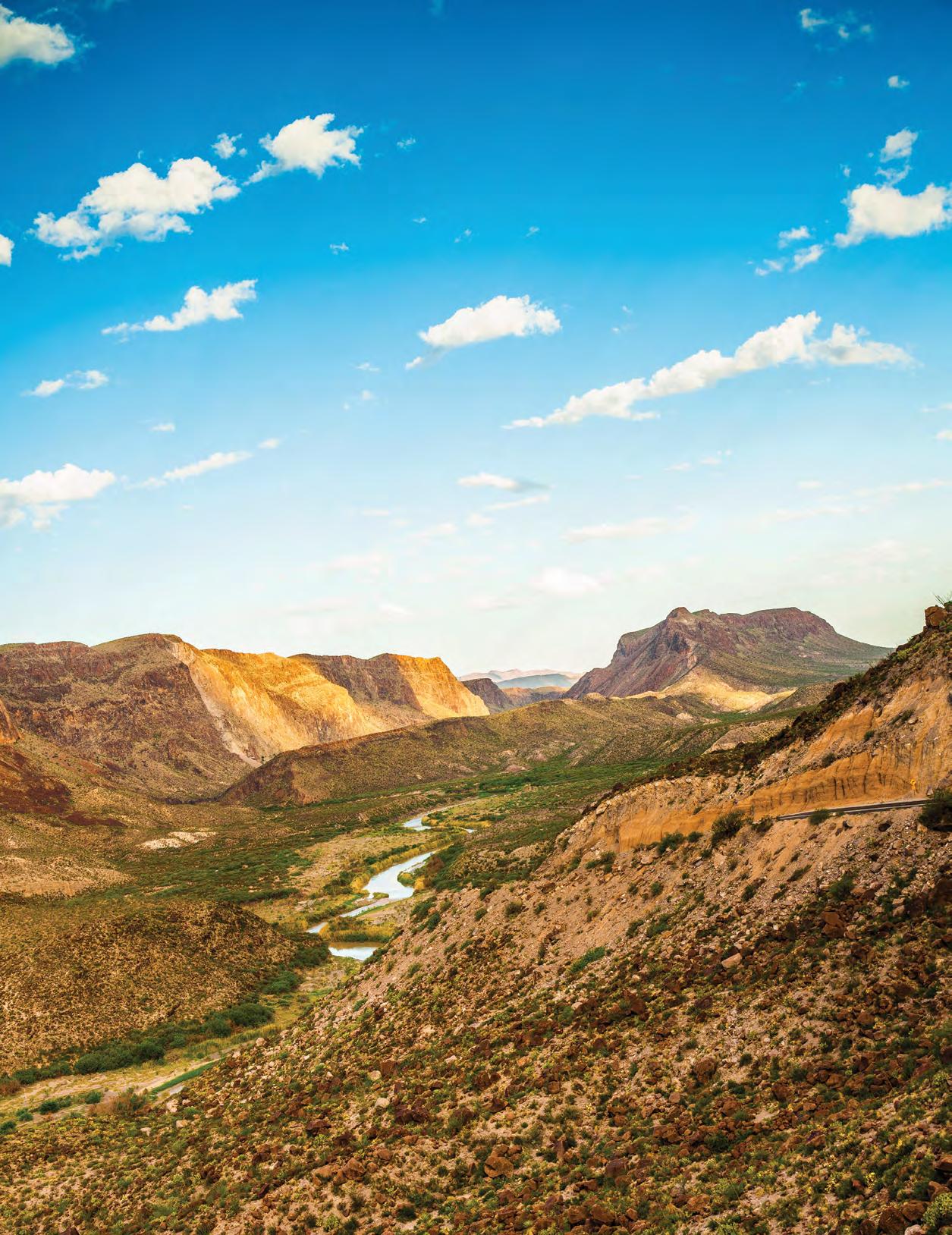
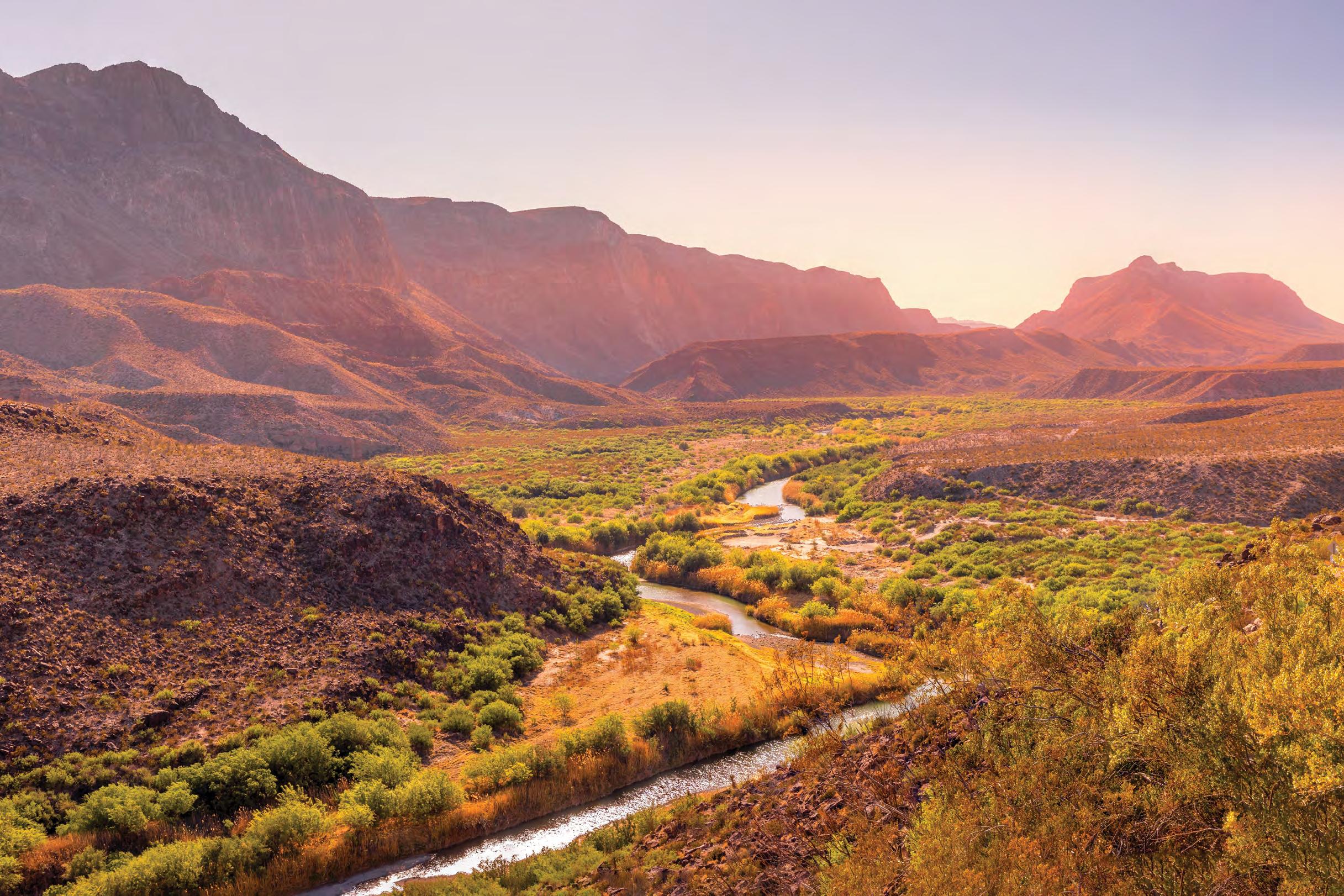
That’s kind of the whole thing with America’s national parks. Places like Yosemite National Park, Big Bend National Park and Grand Canyon National Park aren’t just “pretty views.” They’re reality checks. More like a reset you didn’t realize you needed.
For Ruby Tawess, that reset didn’t come all at once. It built slowly, step by step, mile by mile, usually when things weren’t going how she planned.
“I think being outside, at its core, doesn’t often go to plan, whether that’s trail closures, wildlife encounters or weather,”
THE UNEXPECTED
she says. “The learning happens when you adapt to the conditions you’re given.”
She remembers one night at the Grand Canyon. The goal was simple: hike down the South Kaibab Trail, catch sunset, get the shot. Easy. Except it wasn’t. Storm clouds rolled in, snow started falling and the light flattened everything into this dull gray blur. Not exactly the dreamy canyon moment you see all over your feed.
“It seemed like our plan to photograph the canyon at sunset was going to be a total bust,” Ruby says. A lot of people turned around. Fair enough. It was cold, visibility was gone and nothing about it screamed “worth it.” But Ruby kept going.
Then the switch happened. About an hour in, Ruby says the clouds started to lift. They hovered over the canyon rim like they were placed there on purpose, catching the last light. Gold, orange, pink, yellow. Colors that didn’t feel real.
“To this day, I don’t think I’ve seen a
more unique and stunning sunset. Mother Nature taught me it’s always worth going, because some of the most amazing things in the world only happen when you’re not planning or expecting them.”
That sunset was never part of Ruby’s plan, and that’s exactly why it mattered.
National parks rarely stick to your itinerary, and that’s part of the magic. The most memorable moments tend to show up right when you’re open to whatever comes next.
Ruby learned that in Grand Teton National Park on a hike to Delta Lake. At the time, she was brand new to all of this, fresh from a tiny town in New Jersey, no real hiking experience and taking on a nearly nine-mile hike with over 2,000 feet of elevation gain in brand new boots.
Blisters hit early. Every step started to feel like a bad decision stacking on top of the last one. But she kept going. Slowly, painfully, stubbornly. When she finally reached the lake, it
wasn’t just about the view. It felt earned in a way that’s hard to explain unless you’ve been there. Not earned like a reward. More like proof. Proof that Ruby can still figure it out.
“That’s a big reason this hike will always be so special to me. It’s where I started out, so it’s wild to hike it now and look back on how much time I’ve spent in these parks, and how much they’ve shaped me.”
That feeling shows up in quieter ways too. Not every moment is a big climb or a dramatic sunset. Sometimes it’s just standing still.
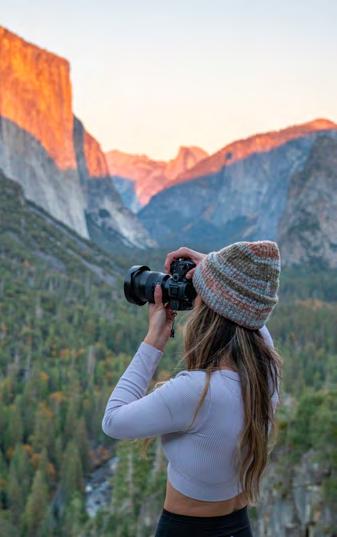
At Tunnel View in Yosemite, Ruby spent nearly two hours just taking it in. Not hiking, not shooting, not moving, just sitting with it.
“When I first visited the park, we spent time staring out across the majesty of the valley, picking out tiny details, hikes we wanted to explore, and waterfalls we wanted to sit under,” she says. “The longer you look at a place of that scale while being still, the more you realize how much you can miss if you move too quickly or don’t pay
close attention. It’s now become the first place I go anytime I return to Yosemite.”
And then there are moments that make you feel small in the best way. Glacier Point did that for Ruby.
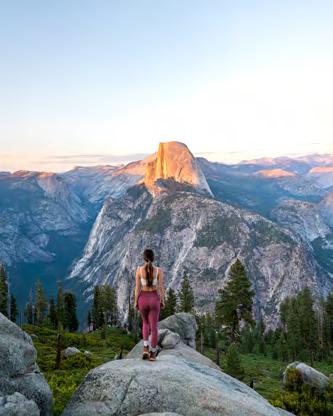
“I have spent a total of 40 days and nights in Yosemite National Park, and I am confident that I will never be able to fully wrap my head around the scale of the valley view from Glacier Point,” she says. “Being able to see the awe-inspiring panorama of the valley, the many, many hikes I’ve done in the mountains, and the sheer number of mountain layers that lie beyond the iconic peaks of Half Dome and El Capitan is an experience that I cannot recommend enough.”
Not every lesson out there is peaceful, though. Some of them are uncomfortable.
Early on, Ruby dealt with self-doubt. Wondering if she belonged there, if she could handle long hikes, if she was capable.
“During my earliest experiences hiking in Grand Teton National Park and Rocky Mountain National Park, the biggest hurdle was not physical, it was self-doubt,” Ruby says. “Long hikes in the wilderness felt so foreign at the time. It is easy to compare yourself to more experienced people when you are starting out, so that is something I hope to help others move past.”
And sometimes, the smartest move is turning around.
There was a hike in the Tetons, deep into Cascade Canyon, one Ruby had wanted to complete for years. Everything was lining up until it was not. Halfway in, a moose stepped onto the trail and stayed there, with no interest in moving.
“I think it is so important to remember that these rugged landscapes can be out of your control,” Ruby says. “I spent years dreaming of hiking all the way up Cascade Canyon in Grand Teton National Park. We took the shuttle across Jenny Lake, reached the trailhead, and started into the heart of
the Tetons. The views are incredible and offer a perspective you do not get from road overlooks. About halfway in, a young moose took over the trail. It just shows that nature does not always follow your plan. I will always remember that beautiful moose.”
Some of the national park moments that stay with Ruby the longest are not the dramatic ones. Like the first time she brought her mom to Yosemite. No big hike, no extreme conditions, just watching her experience it for the first time and sharing that moment. That kind of moment does not need a caption.
“I didn’t grow up in a scenic area,” she says. “As a little girl who fell in love with outdoor spaces through books, movies, and computer screens, I genuinely never
thought I would be able to explore our national parks myself. So being able to realize that dream, then share it with my mom, watch her eyes light up and cry happy tears, is something that will stay with me long after my days of summiting mountains.”
Over time, the parks became more than places to visit for Ruby. They became a place to reset when life gets messy.
“Being alone in the wilderness gives me the perfect opportunity to reflect,” she says. “Reflection is such a powerful tool. It has not only helped me fall further in love with our natural spaces, but also accept and love parts of myself I did not before. I cannot recommend getting outside enough if you want to truly get to know yourself better.”
For her, that is what resetting looks like.
Not the longest hike. Not the perfect photo. Not the most extreme version of the experience. Some days it is waking up at 2 a.m. to catch the first light at a viewpoint you have been chasing. Other days it is sitting by a river doing nothing and being fine with that. The parks don’t try to define it for you.
You show up, however you are, and that counts. Everything else is extra.
Instagram: @rubytawess | follow Ruby’s adventures across America’s national parks and beyond.
All photography by Ruby T. (@rubytawess).
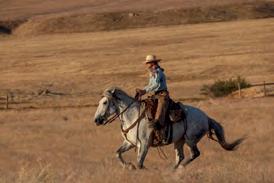
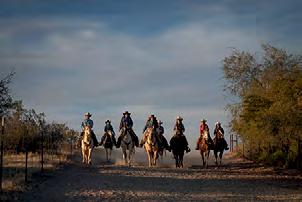
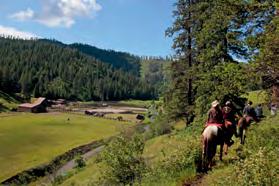
Cherokee Park Ranch
Livermore, CO
Cherokee Park Ranch blends rugged adventure with refined comfort. Ride top-tier horses, cast pristine waters, and savor slow, meaningful days. It's where modern life fades and real connection take the reins.
CherokeeParkRanch.com (970) 493-6522
Elkhorn Ranch - AZ
Tucson, AZ
Horseback riding and outdoor adventure for all ages and levels of experience! Individually tailored riding for solo travelers, families, and couples in sunny Arizona! Open from November to April.
ElkhornRanch.com (520) 822-1040
Rocking Z Guest Ranch
Wolf Creek, MT
A family ranch that prides themselves in history, hospitality, and horsemanship. Enjoy sharing our love of Natural Horsemanship, great rides, and learning together in a beautiful peaceful setting.
RockingZ.com (406) 465-5534
White Stallion Ranch
Tucson, AZ
Experience the soul of the West at White Stallion Ranch. Enjoy worldclass horseback riding, authentic hospitality, and breathtaking desert scenery. UNPLUG, recharge, while creating unforgettable family memories in Tucson, Arizona. WhiteStallion.com (520) 297-0252
A Century of Adventure
Stagecoach Trails Guest Ranch
Yucca, Arizona
Experience the Wild West, only two hours from Las Vegas and the Grand Canyon. All- inclusive packages, including outstanding horseback riding, meals, rooms, and unsurpassed Western Hospitality.
StagecoachTrailsRanch.com (928) 727-8270
The Hideout Lodge & Guest Ranch
Shell, Wyoming
Luxury Wyoming riding and horsemanship ranch East of Cody and Yellowstone Park. Focused on riding, surrounded by a caring, professional hospitality boutique experience. Limited to 25 guests. Access to 650,000 acres, elevations ranging from 4200 to 10,000 ft in rarely seen variety of terrain. This is all about horses and riding in a rarely seen diversity of terrain, elevations and scenery.
TheHideout.com (307) 765-2080
Rancho de los Caballeros
Wickenburg, AZ
Picture yourself on a romantic horseback ride with wine and cheese or getting a relaxing massage at the Spa. Celebrating over 75 years of exceptional genuine western ranch experiences with a bit of luxury mixed in! RanchoDeLosCaballeros.com (800) 684-5030
Red Horse Mountain Ranch
Harrison, Idaho
Red Horse Mountain Ranch in Idaho offers an all-inclusive experience with adventure and comfort. Guests can enjoy guided trail rides, hiking, archery, and chef-prepared meals. The ranch caters to families, solo travelers, and couples, hosting themed weeks like Adults Only and Outdoor Adventure. Visitors experience cozy lodging and attentive service, fostering a sense of community.
RedHorseMountainRanch.com (208) 689-9680
10,000 MILES, ONE YEAR, TWO STRANGERS
THE BORDER-TO-BORDER
CALENDAR YEAR THAT ENDED
SIDE BY SIDE
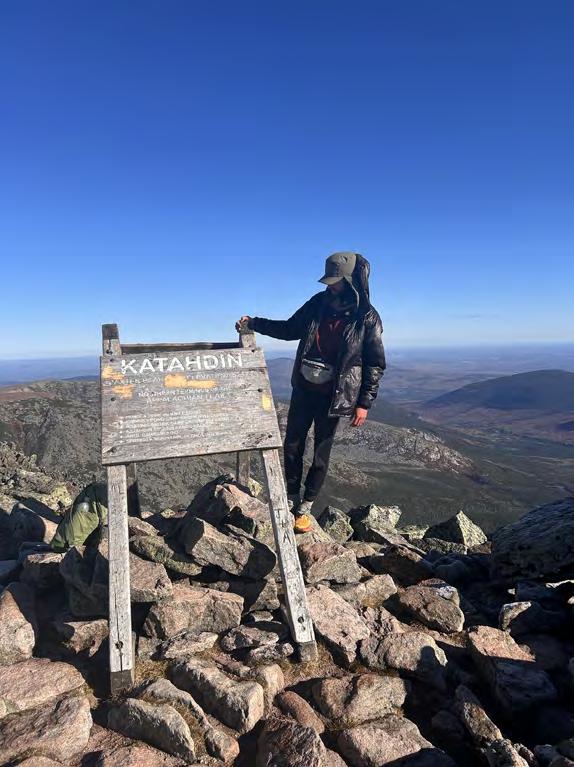
Madison “Peg Leg” and Philip “Slide” didn’t plan to meet. They didn’t share a starting point, a schedule or even a conversation at the beginning of their hikes. For most of last year, they didn’t know each other at all. What they shared, without realizing it, was a goal big enough to swallow a calendar year. Both set out to complete the border-to-border calendar-year Triple Crown, linking the Continental Divide Trail, Appalachian Trail and Pacific Crest Trail
with their own routes and timing. Each moved independently, chasing miles across seasons, terrain shifts and long stretches of solitude. By midyear, somewhere in the churn of trail towns and secondhand updates, they learned of each other.
“We realized our mileage lined up almost perfectly, so it made sense to finish it together,” Philip says. “It turned into this shared push to 10,000. Having someone there made the hard days a lot more manageable.”
They followed each other loosely from
afar, trading progress through word of mouth and occasional online check-ins. It wasn’t until August, on the Pacific Crest Trail, that they finally crossed paths. Northbound met southbound. Two hikers deep into a year most people wouldn’t attempt once, let alone twice. They shared a meal. Compared notes. Then they kept moving.
Madison had completed her border-to-border calendar year in November, becoming the first woman to do it. Philip still had miles to finish. Their routes diverged again, but the overlap stuck.
By the time the year began to close out, both found themselves staring at the same unexpected number.
Ten thousand miles.
“It wasn’t even the original goal,” Philip said. “It was way down the list. But once you’re close enough to see it, it’s hard not to go for it. My first goal was just to do a calendar year, around 8,000 miles. There was so much unknown for me. As I got closer, I was looking at my mileage and knew I could get to 10,000 miles. It’s a way to blow my own mind.”
Madison had already finished her primary objective. She could have stepped off trail. Instead, she doubled back to Florida, where Philip was wrapping his route. She had already hiked that section once. This time, she returned for one reason.
“To see how far we could push it,” she said. “We had already gone so far. Would there really be another time in my life when I could do this? I wanted to see what I could do if I used every minute of the year.”
They met again in Florida with their mile counts nearly identical. Madison was ahead by about 60 miles. Close enough that, if they matched pace, they could hit 10,000 together.
So they did.
What followed was 44 days of high-mileage hiking across the Florida Trail and beyond, adding loops, side trails and repeated sections to stretch their total. The math required it. The trail alone wasn’t long enough.
They averaged 37.5 miles a day. No zero days. No room for error.
“You wake up at 5 or 5:30, start hiking right away, and you just go,” Philip said. “Eat while you’re walking. Maybe stop at a gas station for 15 minutes. Then keep moving.”
Days ran 15 hours or more. Nights were short and functional. The rhythm stayed the same whether it rained, cleared or pressed heat back up from the ground.
Florida offered a different kind of challenge. Flat terrain meant no variation. No climbs to shift muscle use.
No descents to break the pattern. Just the same stride, over and over, across pavement, sand and long, exposed stretches.
“You’re using the exact same motion all day,” Philip said. “It beats you up in a different way. Your feet feel it more than anything.”
They moved through the Everglades, across road walks and into sections most hikers skip. With mileage as the goal, detours became part of the plan. A side trail to a lake. A loop to extend the day. Miles were miles.
“You end up seeing places people don’t normally take the time to see,” Madison said.
They also saw very few people. December is off-season for the Florida Trail. The usual wave of hikers arrives later.
“We met two other hikers the whole time,” Philip said.
The isolation didn’t bother them. By then, both had spent most of the year hiking alone. What changed in Florida was not the solitude, but the presence of someone who understood exactly what the day demanded.
“There were times we didn’t have to say anything,” Philip said. “You just know what the other person is dealing with.”
That shared understanding made the pace manageable. Maybe even enjoyable.
“I wouldn’t have had any fun doing it alone,” he said. “With someone else, it actually was fun.” Their days were simple. Wake. Pack. Walk. Eat. Walk. Repeat. Conversation came and went. Sometimes they talked for hours. Sometimes they moved in silence, each locked into their own rhythm.
Gear was not a focus. Both came into the year with systems already dialed in from previous long-distance hikes. Packs stayed mostly consistent. Adjustments were seasonal. Snow gear came and went. Pack sizes shifted. Shoes did not last.
“A dozen pairs, at least,” Philip said. “Maybe more.”
At that mileage, shoes break down fast. Cushion fades. Structure collapses. Wet conditions speed it up. A pair might last 300 miles, maybe 800 on a good run. Either way, replacement becomes routine. The physical toll was constant but predictable. Soreness. Fatigue. Occasional illness. Madison pushed through a stretch of feeling sick. Neither had the option to take a full day off. The timeline wouldn’t allow it.
“You just keep going,” Madison said. That mindset carried through the entire year. Motivation shifted over time. Early goals gave way to something less defined, more internal. “The more you put into it, the more attached you get,” Philip said.
“It kind of grows on its own.” Stopping became harder, not easier. Not because it wasn’t tempting, but because the cost of stopping increased. Every mile not walked today had to be made up later. “The less you do, the more you have to do,” he said.
By the final stretch, the goal wasn’t just the number. It was finishing what they had already built.
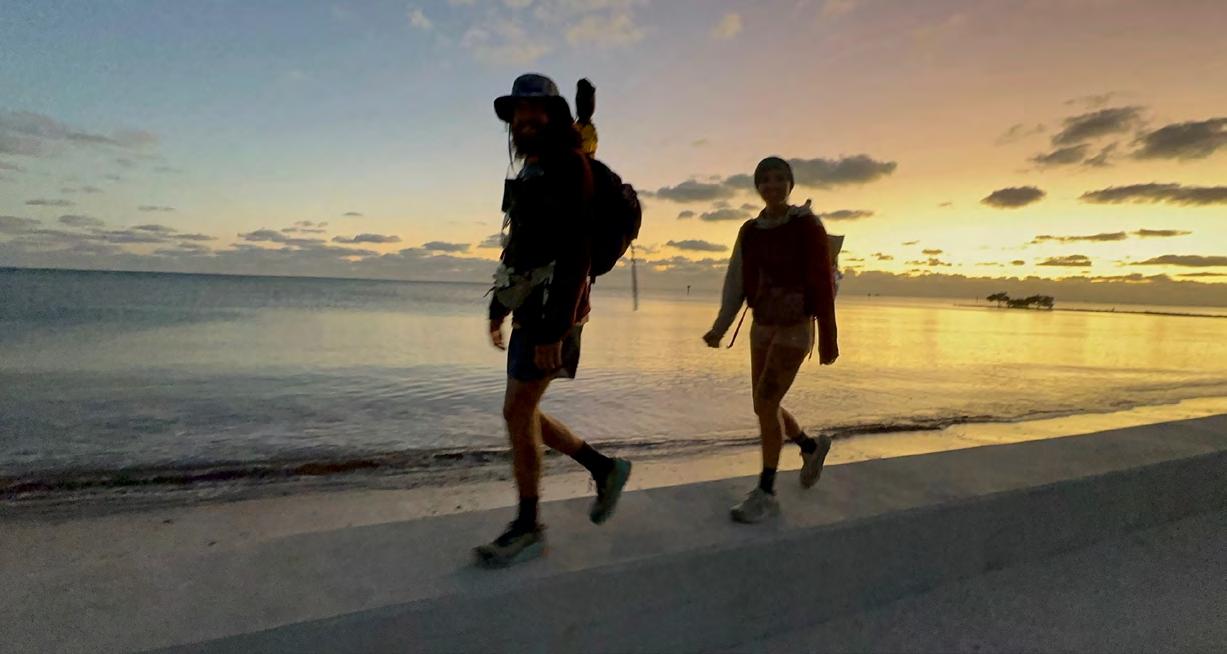
They reached Key West on Dec. 31. Ten thousand miles, more or less in step. There was no dramatic finish. No sudden shift.
“It was like any other day,” Philip said. “We hiked, ate and went to bed.”
Both described the ending as anticlimactic. Not disappointing, just difficult to compress into a single moment. A year like that doesn’t resolve neatly. “You’ve been living it the whole time,” Madison said. What stood out more was who met them there.
Two hikers, just starting their own calendar-year attempt, arrived the night before. The next morning, Madison and Philip watched them step onto the trail, beginning the same process they had just finished. “That was probably the coolest part,” Philip said.
The contrast was sharp. One pair exhausted, ready to stop. The other just beginning, facing a full year of unknowns.
Madison and Philip didn’t linger long. Rest came quickly, but not dramatically. No days of sleeping. Just the absence of an alarm and the absence of 38 miles waiting.
Looking back, both struggle to fully explain what the year felt like. Even among other thru-hikers, the scale is hard to grasp. “It’s just so many miles,” Philip said. What remains clearer is the stretch they shared. Forty-four days. Fifteen-hour pushes. A pace that would have felt brutal alone, but became something else together. Not easier, exactly. Just better.
“It’s the most I’ve ever pushed day to day with someone else,” Madison said. That part stays.
Not the number. Not even the routes. But the memory of moving in sync, covering ground most people never will, and knowing, with out explanation, that the person next to you understands exactly what it took to get there.
To follow Madison’s journey, visit Instagram @madisonblagden
Photography Credit: Madison and Philip
“This rising destination in West Virginia is quietly winning summer.”
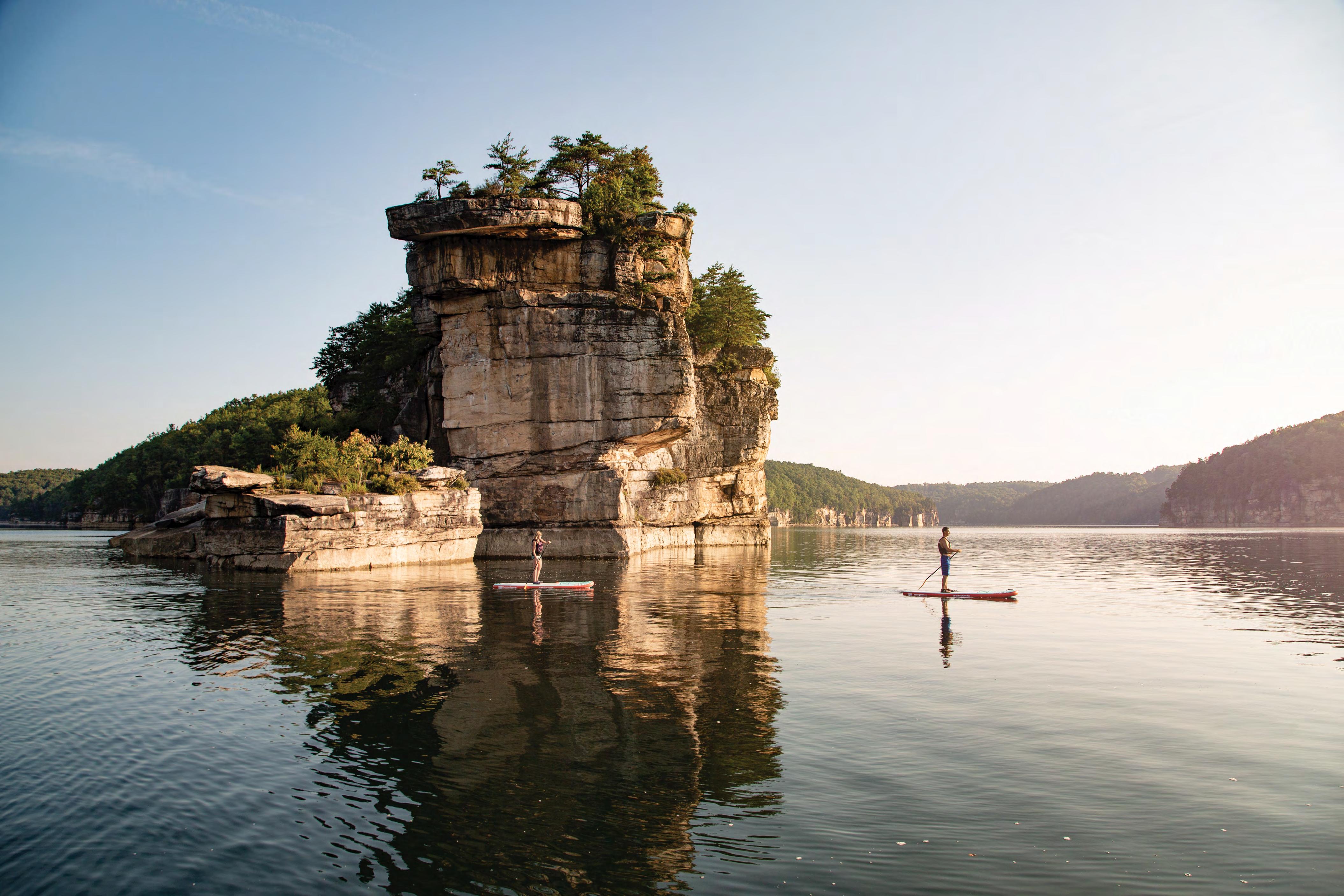
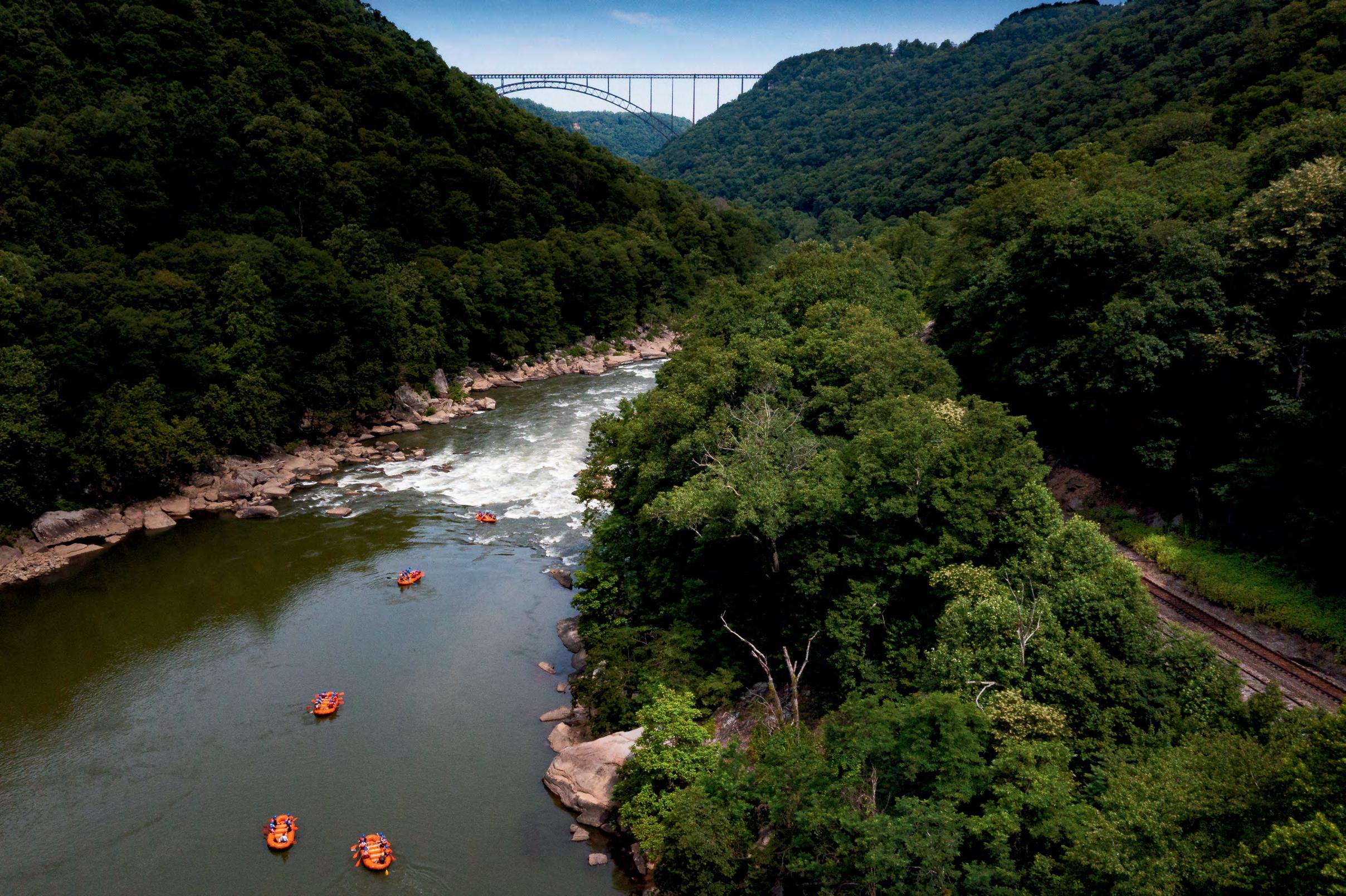
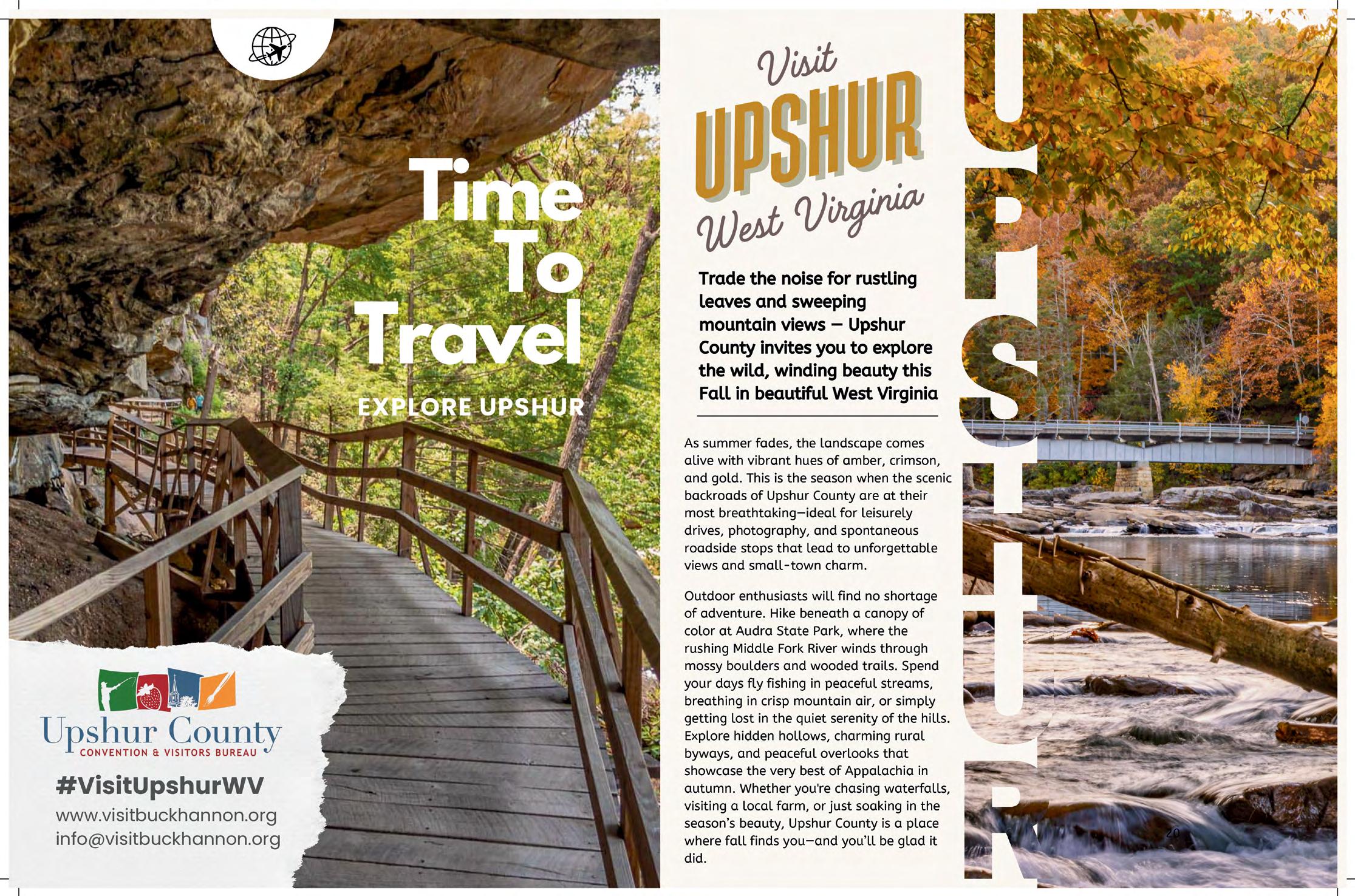
New River Gorge and Summersville are emerging as on e of the most well-rounded outdoor regions in the eastern United States. Think whitewater rafting, hidden waterfalls, mountain views and crystal-clear lakes.
In southern West Virginia, the New River Gorge and Summersville region offers a landscape shaped by whitewater, sandstone cliffs and dense Appalachian forest. The area has quietly become a destination f or travelers seeking both high-adrenaline adventure an d slower experiences tied to the water and mountains.
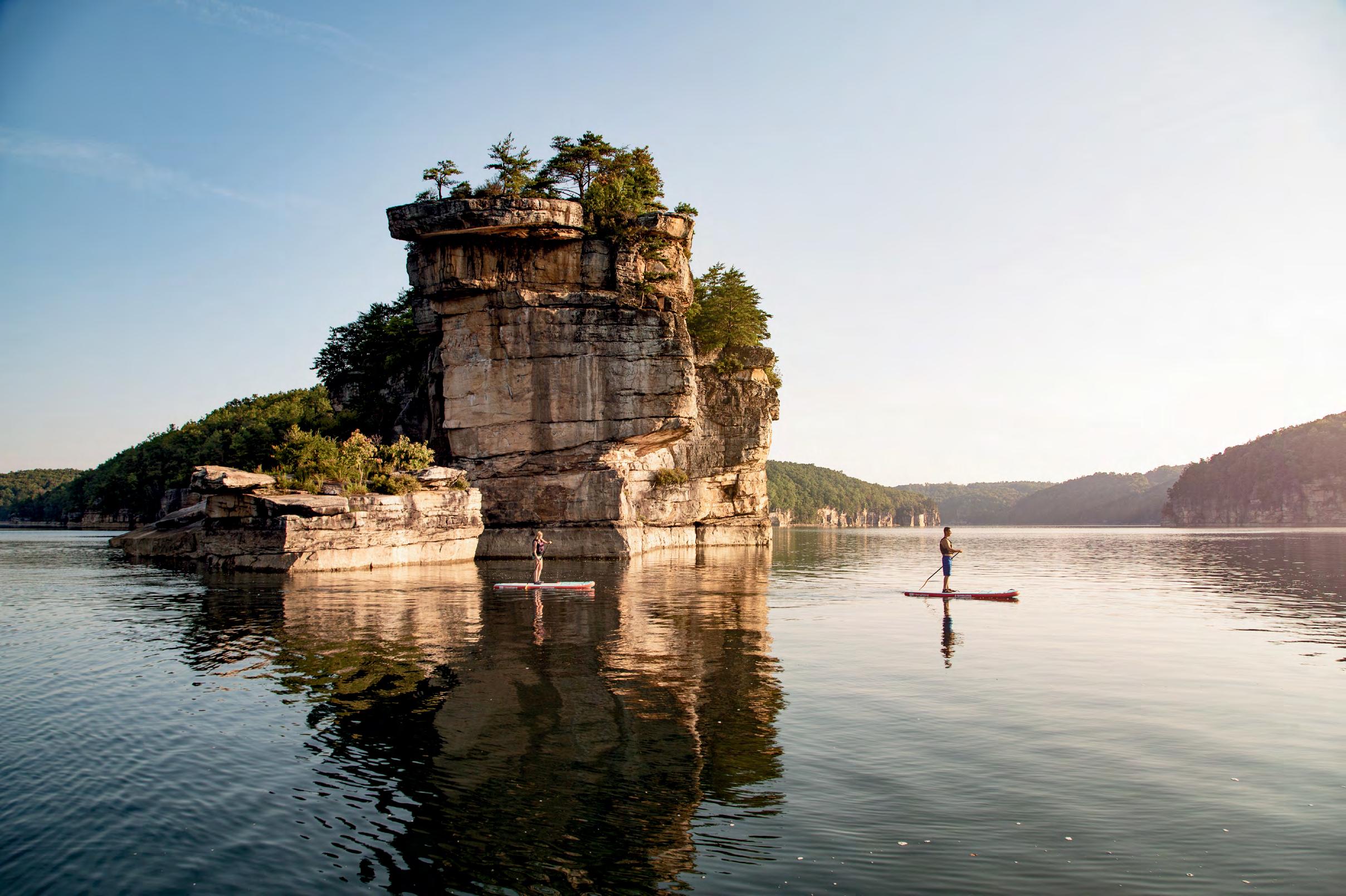
Summersville Lake is the largest lake in West Virginia, with a surface area of 2,700 acres and over 60 mile s of shoreline. Lake sports such as boating, skiing, swi mming, kayaking, rock climbing, and more surrounded by sce nic overlooks. Thrill seekers and leisure lovers alike come to enjoy the mountainous area and pristine lake water.
To learn more, visit www.unplugmag.com for entire digital feature.
THE PERFECT ESCAPE.
Tucked along the banks of the Rio Grande, Truth or Consequences
(yes, that’s really the name and locals call it TorC) is a sanctuary to disconnect from the chaos and reconnect with yourself.
Soak. Slow down. Breathe.
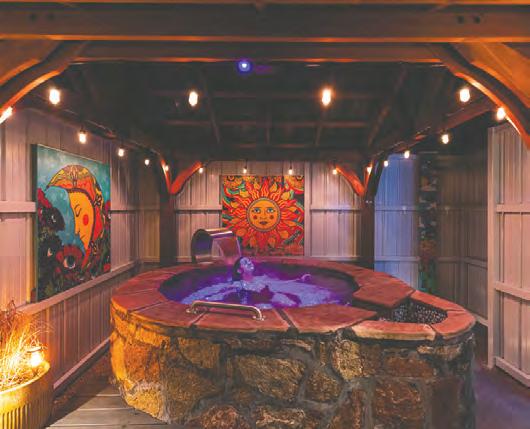
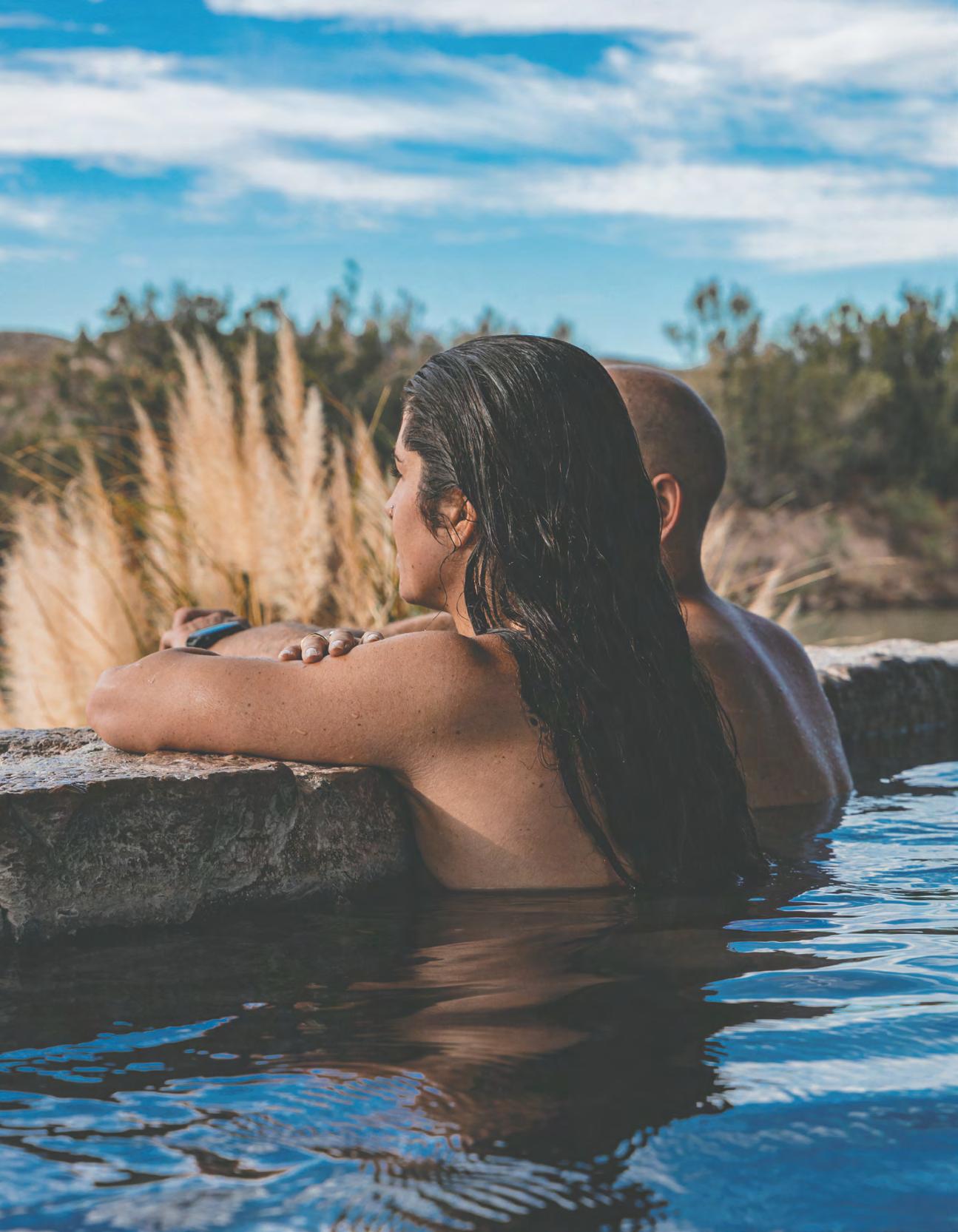
TorC is known for its natural hot springs, bubbling up from the earth in serene, riverside spas. Step into the healing mineral waters and feel the stress melt away.
Where Desert Meets Soul.
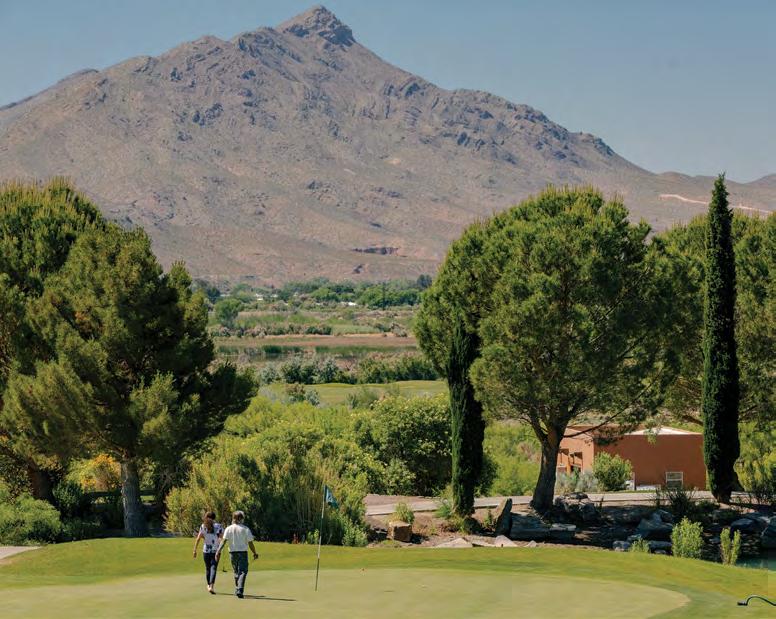
Surrounded by breathtaking desert landscapes, nearby mountains, and shimmering Elephant Butte Lake, this town is a haven for stargazers, hikers, and daydreamers alike.
No Rush, No Buzz.
With its laid-back vibe, retro charm, and creative spirit, TorC invites you to power down your devices, explore local art galleries, sip coffee in a vintage café, and just…be.
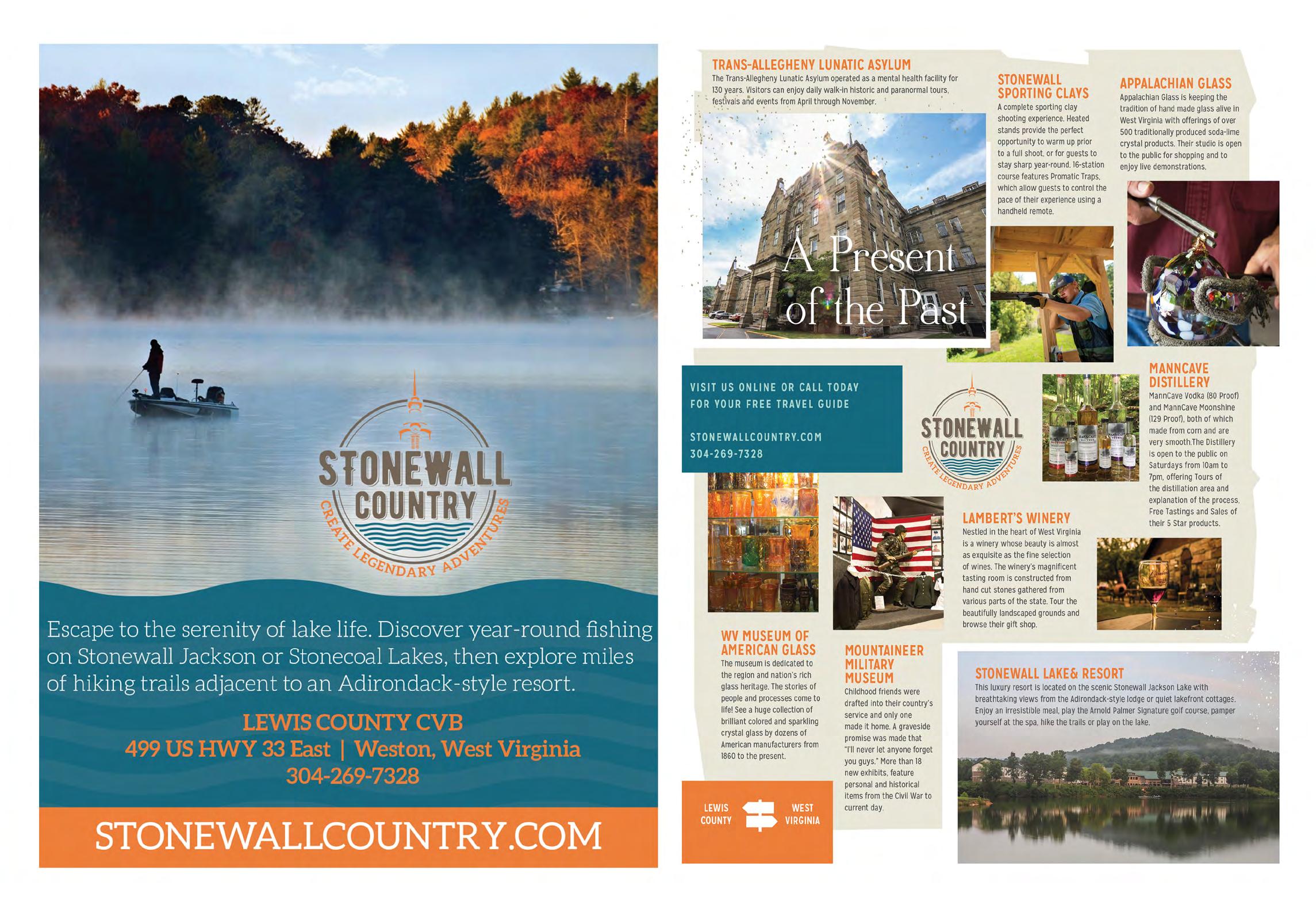
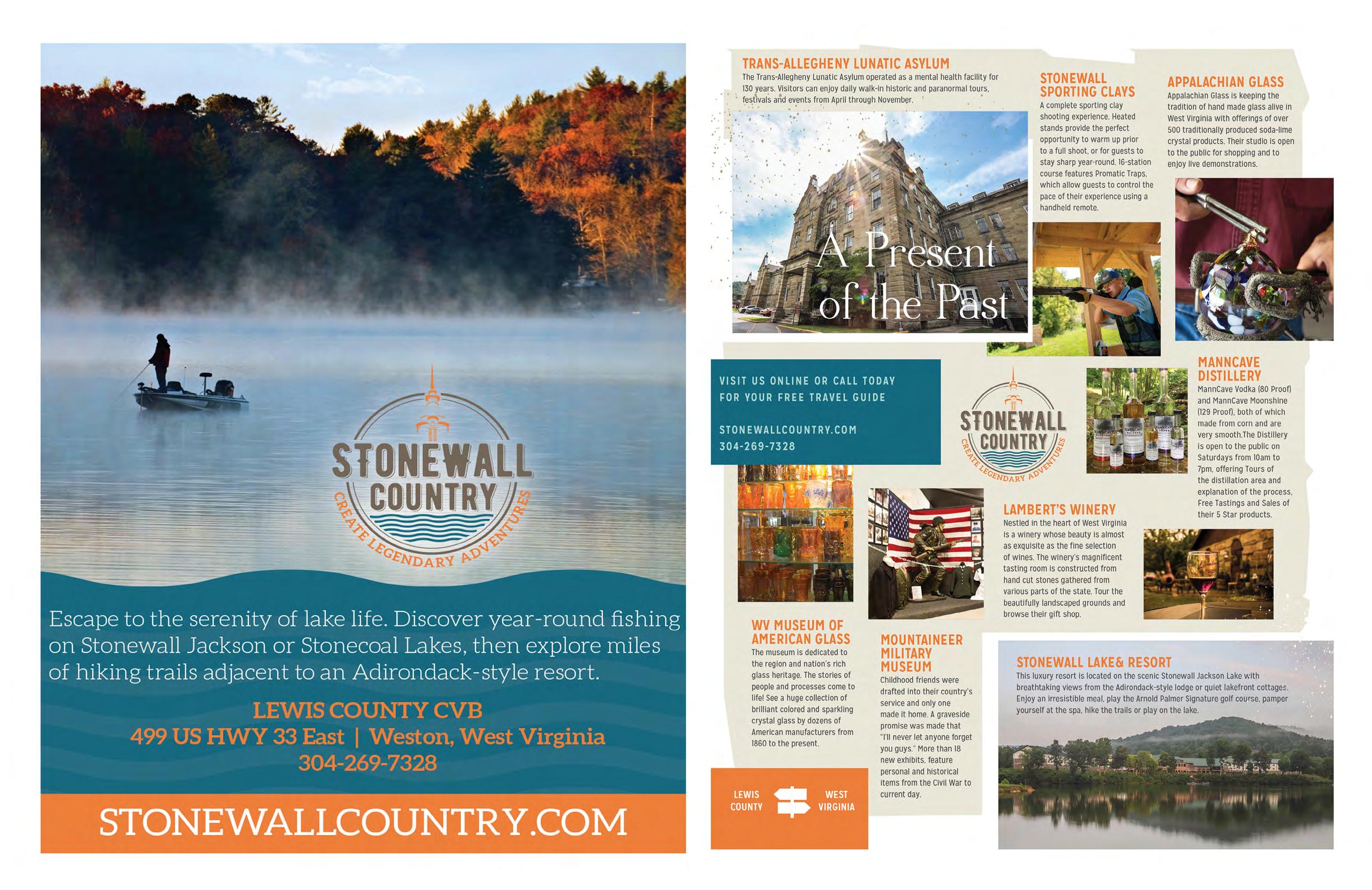
Lewis County
WEST VIRGINIA
ADVENTURE AWAITS
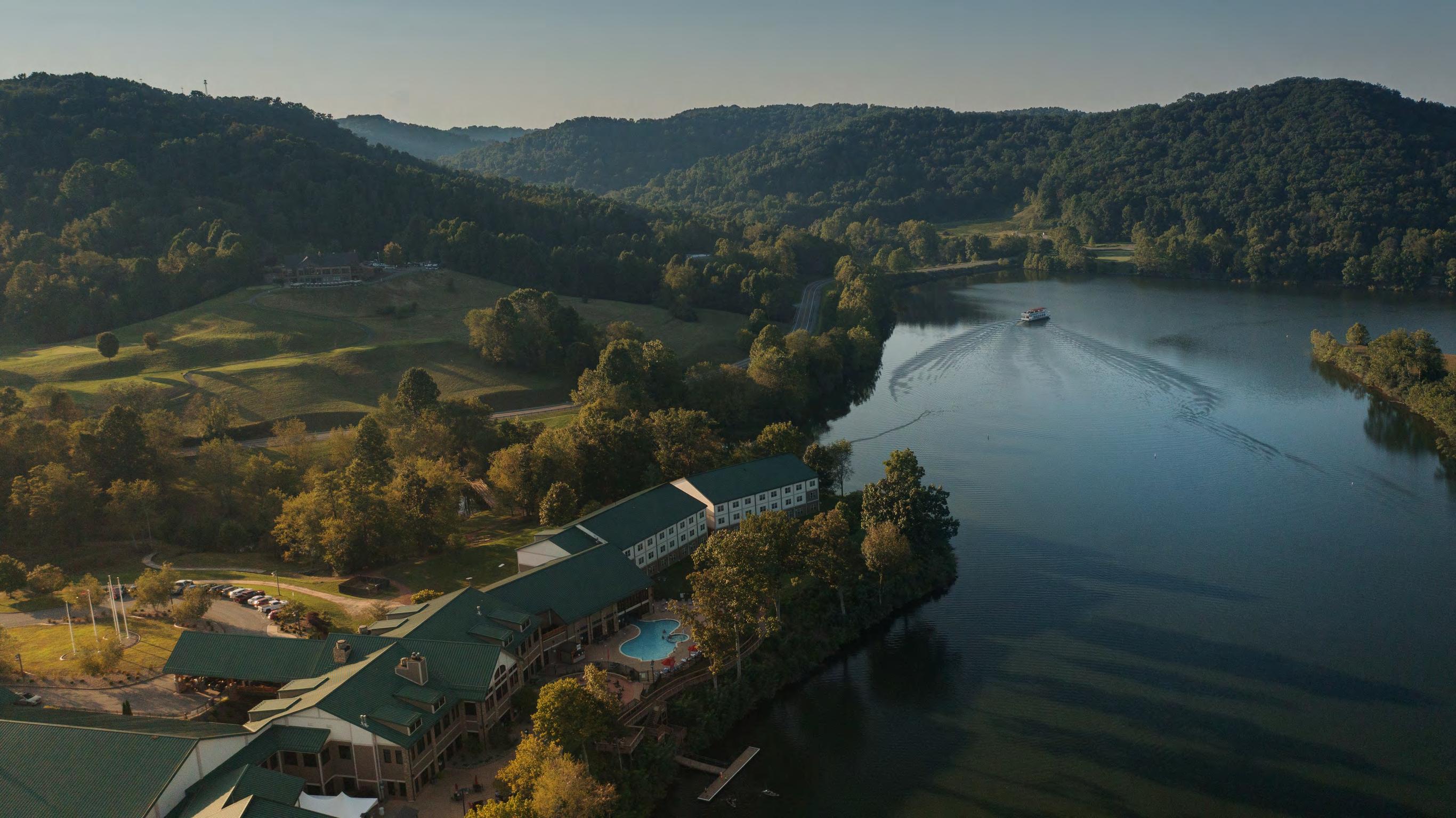
For the outdoor enthusiast, adventure awaits by visiting Stonewall Jackson Dam State Park or Stonecoal Lake for boating, fishing, hiking, kayaking, biking, hunting or enjoy a round of golf on our Arnold Palmer Signature course while spending a relaxing weekend at the four-diamond awarded, Stonewall Resort on the shore of Stonewall Jackson Lake or shoot a round of skeet at Stonewall Sporting Clays
Adventure, Legends and Lakes
The Trans-Allegheny Lunatic Asylum, not only historical but also declared haunted the facility currently offers civil war, historical, paranormal, photography and farm tours as well as many other events including ghost hunts of all types and a month-long haunted house in October
Continue your adventure with The Mountaineer Military Museum in Lewis County which is in the Historic Colored School of Weston You will experience some of the United States Military’s unique moments at the museum while seeing the military history of our county come alive through a soldier’s eyes Once the hand-blown glass capital of the world the glass blowers at Appalachian Glass will show you how the blowers have made glass in our area for years or learn more about the deep heritage and history of America’s glass when stopping by The West Virginia Museum of American Glass
Relax at Lambert’s Winery, situated on a beautiful hillside where you can take a tour of and enjoy a tasting or maybe a pizza while there or visit our local distillery Manncave for a tasting and tour of their spirits if wine is not your cup of tea
Come visit the home of legendary adventure and create yours today!! For more information, contact: 304-2697329 or www.lewiscountycvb.com.
CECIL COUNTY Discover MD!
Escaping a hectic daily routine isn’t easy… making a change of pace all the more essential. Hit “re-set” and experience Cecil County, Maryland. Three exits on I-95 offer easy access from the highway to harbors, history, and horses.
Outdoor Adventure
Whether favoring outdoor recreation or simply soaking in the natural surroundings, Cecil County has engaging options for itinerary planning. Hike or bike on 100 miles of trails. Paddle waterways, cast a fishing line, camp under the stars, or take a horseback trail ride. For a more tranquil pace, plan a boat tour on the C&D Canal. Sip local wine, plan a picnic, or relax with a great book. And be sure to watch the sunset burst across the waterfront horizon at the end of the day.
Family Fun for Everyone
History in Cecil County is right around the corner. Friendly and walkable 19th Century towns such as Chesapeake City and North East offer specialty shops, parks, and interesting small museums. Visitors can hear their echo in covered bridges. Mt. Harmon Plantation, a historic gem, is located at the end of an entry lane surrounded by a canopy of trees, at a place that old maps refer to as “Worlds End”; a visit can transport guests back in time. A trail at Elk Neck State Park leads to a clearing at Turkey Point Lighthouse, on a bluff overlooking the beautiful Chesapeake Bay.
Deliciously Local
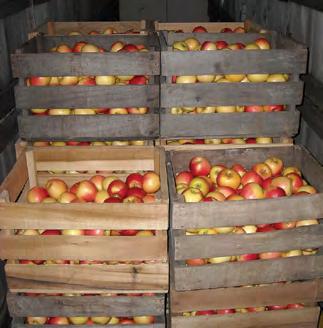
Food alert! Abundant Chesapeake inspired cuisine can be savored at fabulous local restaurants in towns, on the water, or off the beaten path. Sprinkle in coffee shops with baked goods, and creameries with ice cream. Add in a stop at the pick-your-own farm or seasonal farm markets. Include a dash of award-winning apple cider doughnuts. Mix in local beer and wine, and confections from the candy shops, and its the perfect recipe for a delicious getaway adventure.
Families can make furry friends at Plumpton Park Zoo, enjoy seasonal fun at the orchard, splash along a river beach, and book an exciting stay at Great Wolf Lodge’s 128,000 square foot indoor water park. Kids will have a blast on slides and tunnels, 360 loops, drop & dives, the Adventure Park, Magi Quest, and not-to-miss kid’s dance parties.
Cecil County Maryland, where I-95 meets less-traveled roads, and journeys begin!
www.DiscoverCecil.com
ONBOARD THE ATLANTIC VIKING
It’s 4:00 am. In a bit of a haze, I’m slowly waking. The jarring of the alarm makes my nerves shake. I had to meet Fred by the dock around 5:15 am or so. I rush to brew a pot of coffee, pack a few snacks for sustenance, ensure my camera gear is ready to go, most importantly I make sure my Grudens and boots are in the truck. My first time out on a lobster boat, and the expectations? Unclear.
Fred warned me “it’ll be a long day”. Stepping out from the warmth of my quaint bnb, the 4:30 a.m. Downeast air stings my lungs. I look up into the clear morning sky, a black canvas dotted with the dim glow of stars.
I find myself in a fishing village with a population of 461. Winter Harbor, Maine.
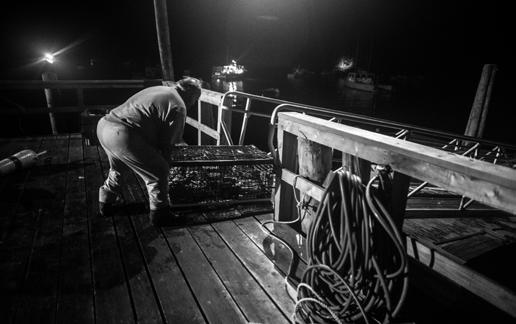
At the wharf, flood lights create cinematic profiles against the pitch black.
Fred and his sternman were ready to go by the time my boots hit the deck.
A strong pride radiates from Fred’s stance, his light grip upon the throttle, a blue eyed glare overlooks the horizon, a groomed beard keeps the chill at bay, while bright orange Grudens keep him dry.
It’s around 5:15 am, without looking at his navigational instruments we head off, the sun slowly creeps over Schoodic point creating a purplish gradient, the coast a silhouetted form.
We attempt conversation, but the roar of the diesel mutes anything significant, leaving Fred, Freeman, and I looking outward for the first buoy to appear.
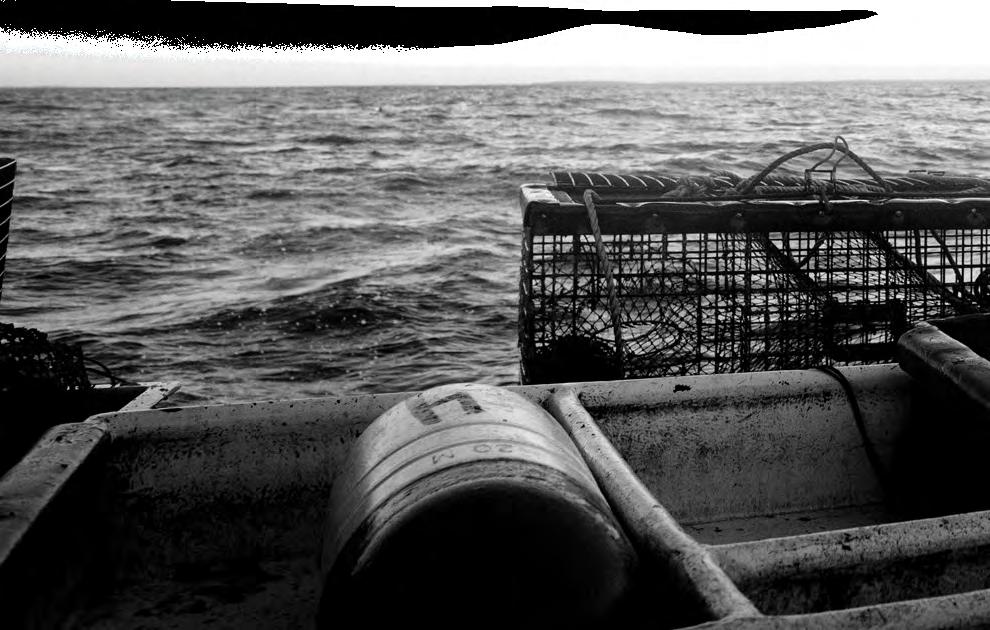
The 38 ft long and 16 ft wide Canadian built Atlantic Viking rides with 510 horses.
A DAY WITH A WINTER HARBOR LOBSTERMEN.
Writer and Photographer Robert Lundberg
Propelling us through the dark waters with a D11 Volvo engine leaving a foamy wake behind.
We were heading out into Frenchman’s Bay, to start hauling the first of Fred’s 800 traps.
I ask in a half scream “how do you know where to place your traps?”
Fred “it’s a bit of an art form, all in all we have our spots”
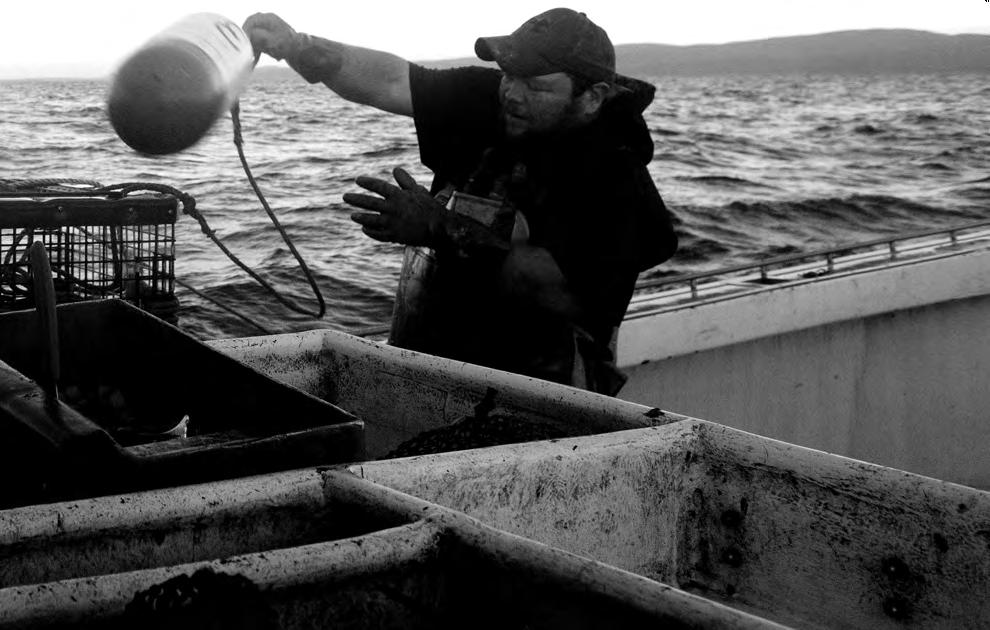
He then went back to searching for his custom painted buoys.
Freeman wears a black ball cap, the bill encrusted with the grime of incalculable hours on the sea. A fresh Crowns cigarette hangs from his mouth, a calm moment before the work begins.
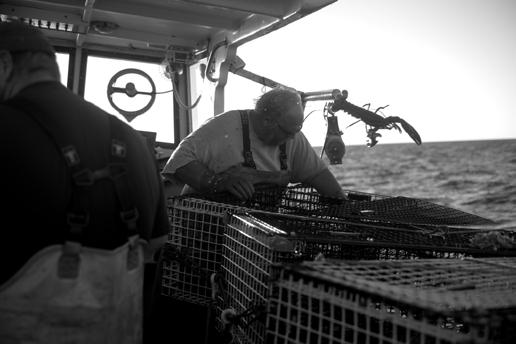
The pulley starts wheeling, working hard to grasp the first string of traps that morning. Fred at the helm catches trap one, using his broad upper body he slides the 125lb lobster pot down the rail to Freeman.
It’s a sternman’s job to decide a lobster’s fate: his gloved hands pulling out lobster after lobster measuring for size, checking if it’s female v notched berried, or oversized. As required, the non keepers go back.
The keepers are tossed in sectioned bins, claws bound with rubber bands then dropped into a tank for storage until the end of day count.
Invasive species in the likes of the cunner are swiftly dispatched as bait.
Fred shows an example: a small female lobster with patchy spots of “berries” upon its tail, it’s clear something has been eating em.
The crabs eat the bait, the cunner eats the eggs; they both must go.
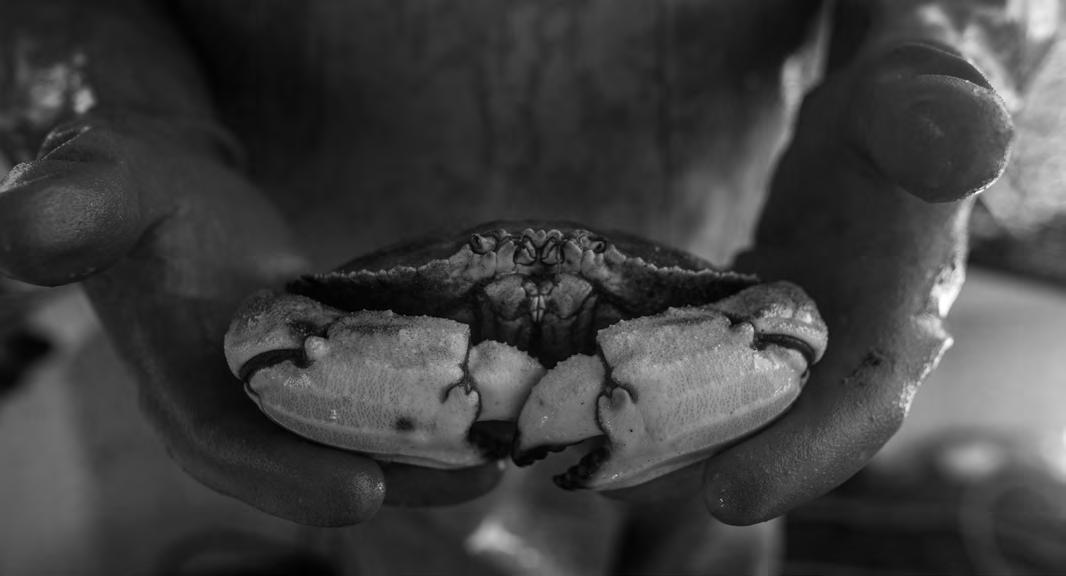
A single Jonah Crab is smashed, its carcass tossed back into the trap, while its fellow crabs fly into Frenchman’s Bay.
Once the trap has been cleared, Freeman grasps a bait bag and ties it swiftly into the pot. With the trap baited he slides it down the rail. It’s the same for the next trap, then the next, until the string is complete.
A buoy hangs high in the air as the line of traps speed back into the depths… As the last one splashes in, Fred navigates to the next location. The diesel engine drones onward, the gulls hover above seeking to feed their hungry bellies with scraps. The smell of baitfish saunters, my nostrils unaccustomed to such a stench, a slight sense of nausea arises in tandem with the swaying of the Atlantic Viking.
I find a sense of calm at the stern, somewhere out there: was Nova Scotia. Fred and Freeman continue the work. From the corner of my eye, I see Freeman reaching into a grey bin. Looking in I see a muddied soup of maroon broth with small grey fish bound and stacked in cohesion: menhaden. Blue rubber gloves come snatching and jamming the fish into netted bait bags then go back into the pot to feed “the bugs”.
Fred came over and said: “Some folks use pig skin mixed in with the fish, not me though, I don’t believe land animals should go into the sea, it’s not natural”.
“Plus, the hide makes the lobsters taste weird like pork”. Adding “We catch our own” In the center of the deck, the separated lobsters stack upon each other attempting to find a corner to hide.
A loose plastic shopping bag finds itself in one of the bins and immediately a lobster backs its tail into the bag claiming a temporary home, others follow.
Freeman chuckles. We were heading back towards Winter Harbor. Both Fred and Freeman’s Grudens were off. Fred stared gently towards land, while Freeman lit another Crowns cigarette. The hum of the engine casting the only sound. All of the traps for the day had been collected, rebaited, and dropped back down into the waters of the Gulf of Maine. The only item left was to count and sell the day’s catch.
Pulling up to the dock, my boot hitting solid ground for the first time since the early morning, my legs wobbled as I walked back up to my truck, smelling of baitfish and open water. I smiled, as Fred was right, it had been a long day and I had six more of them to go.
TOP ADVENTURE TOWNS
Summer’s Ultimate Adventure Escapes
Welcome to Wonder HockingOhioHills,
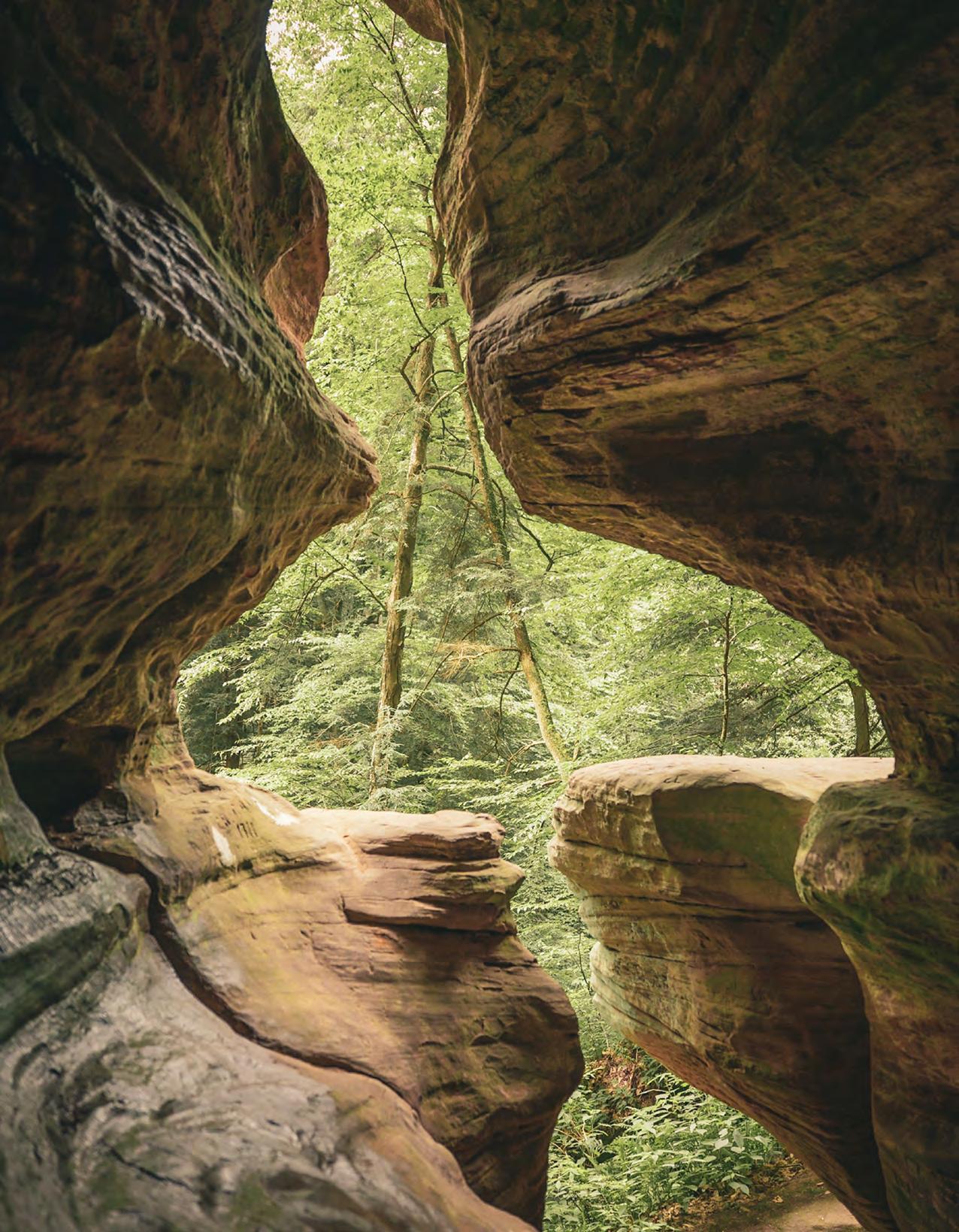
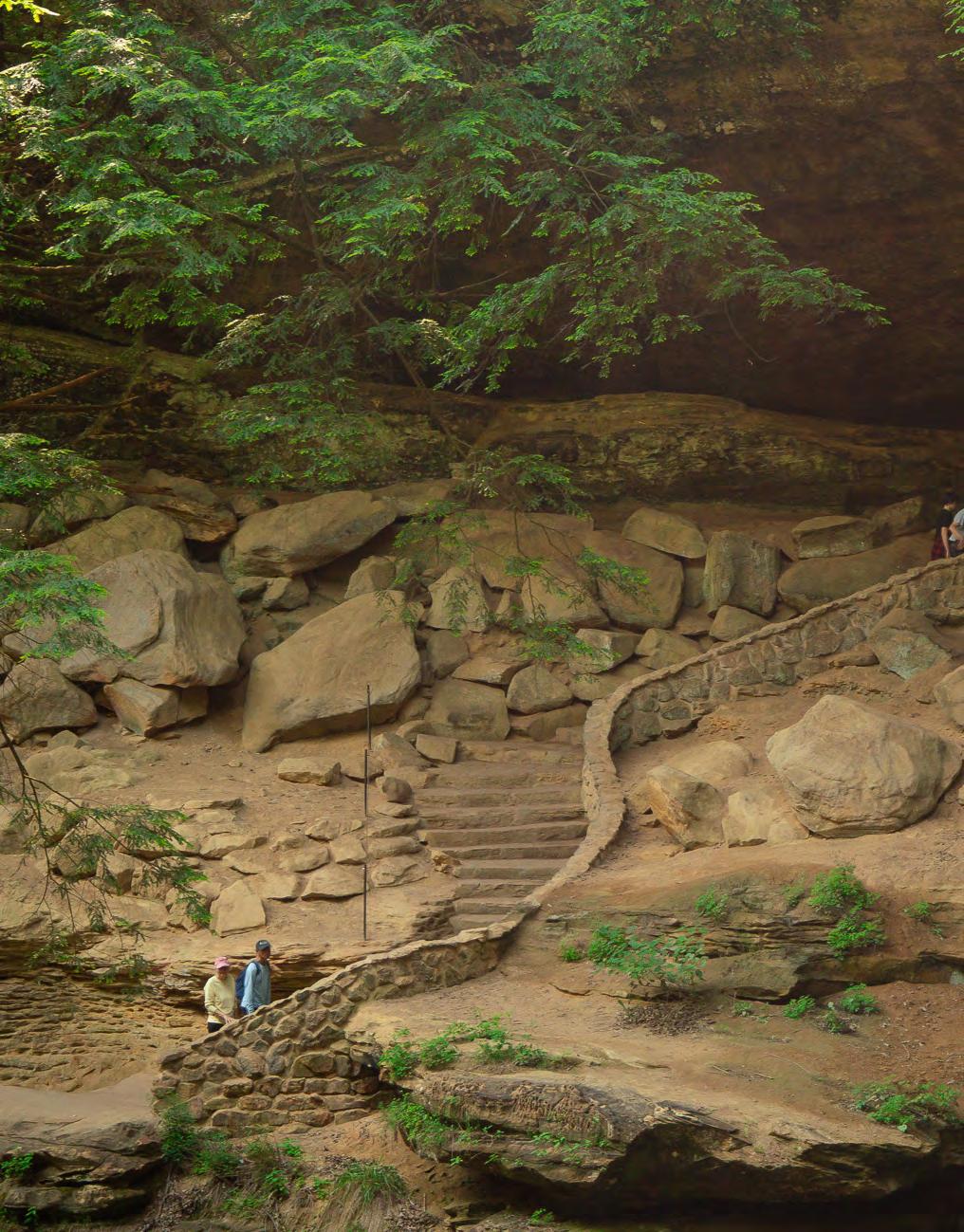
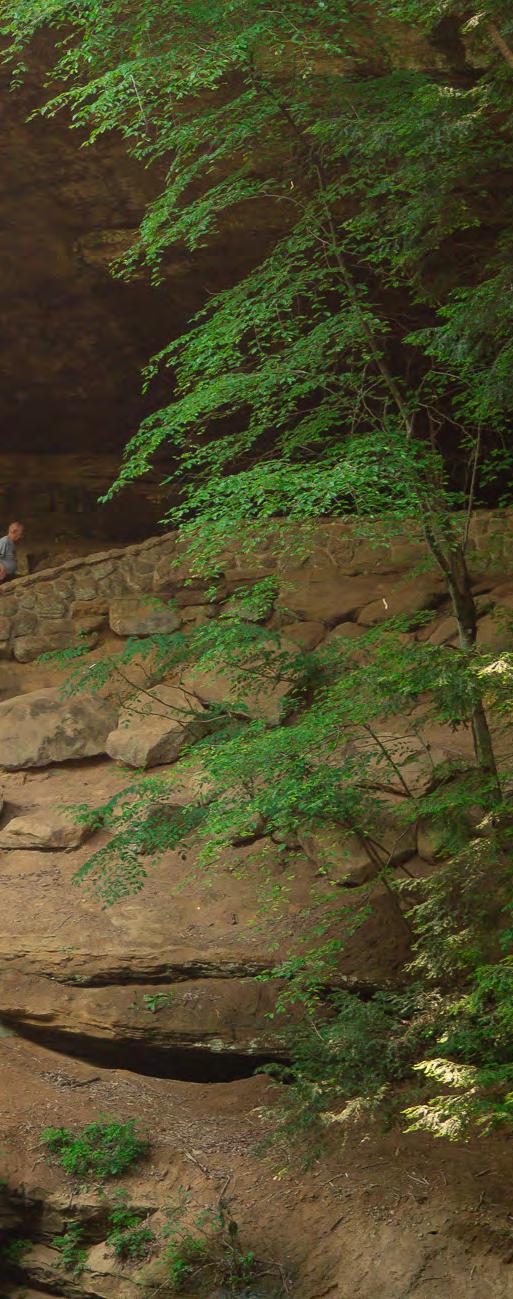
There’s something about Hocking Hills that doesn’t quite feel like the Midwest. Maybe it’s the waterfalls tucked into sandstone cliffs, or the caves that seem pulled straight out of a fantasy novel. “Hocking Hills has been growing in popularity, but it’s always been a great respite into nature,” said Executive Director Heather Eddy. “The natural resources of the area have always drawn people.” She’s not exaggerating. Trails wind through iconic spots like Old Man’s Cave and Conkles Hollow, where towering rock walls and seasonal waterfalls make every hike feel cinematic.
The region is part of the unglaciated Allegheny Plateau, which gives it its distinct rugged terrain compared to much of Ohio’s flatter landscape. In addition to hiking, visitors often explore rock formations, natural bridges and hemlock lined gorges that stay cool even during peak summer heat, making it a reliable destination for outdoor recreation throughout the season. Eddy puts it simply: “We all have this wonderful connection back to the earth that recharges us.”
As the journey comes to an end, Hocking Hills leaves travelers with one last reminder of why the outdoors matter, towering cliffs, hidden waterfalls, winding forest trails and quiet cabins that make it easy to slow down and reconnect with nature before heading home. Plan your adventure today by visiting www.explorehockinghills.com.
Where riverfront views, local festivals and a strong sense of community come together, every summer visit feels meaningful and unforgettable.
Owensboro, Kentucky
Bluegrass Music Capital of the World
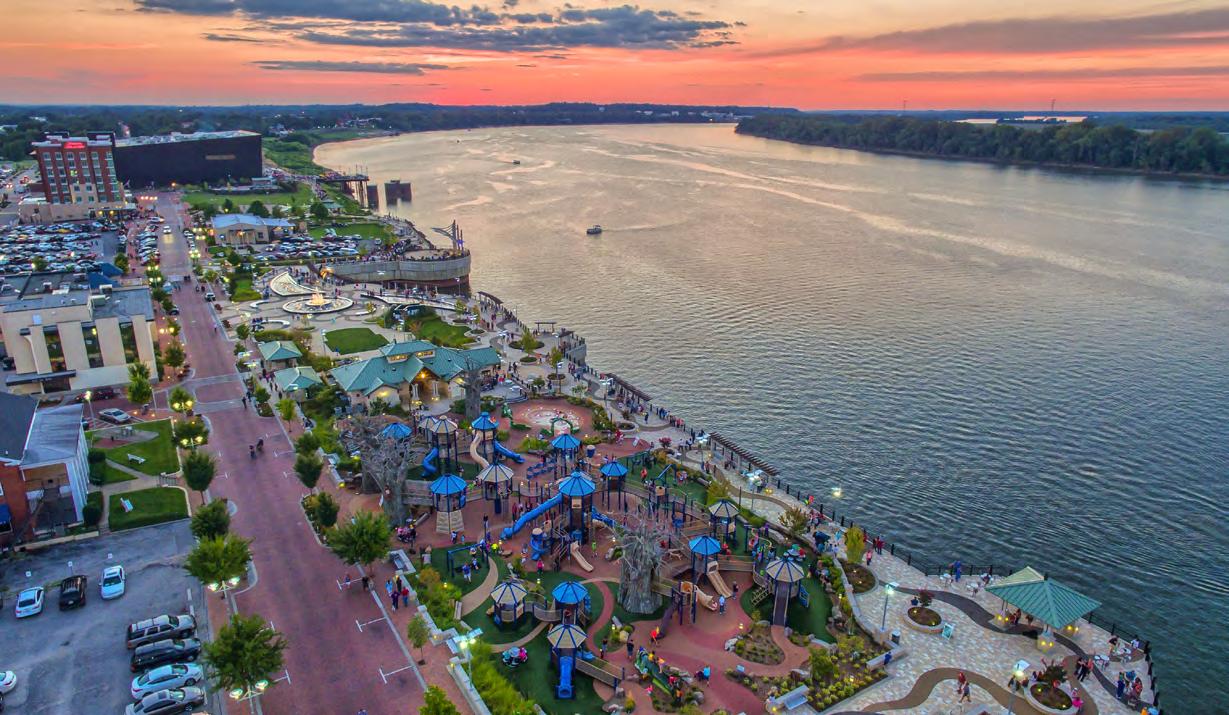
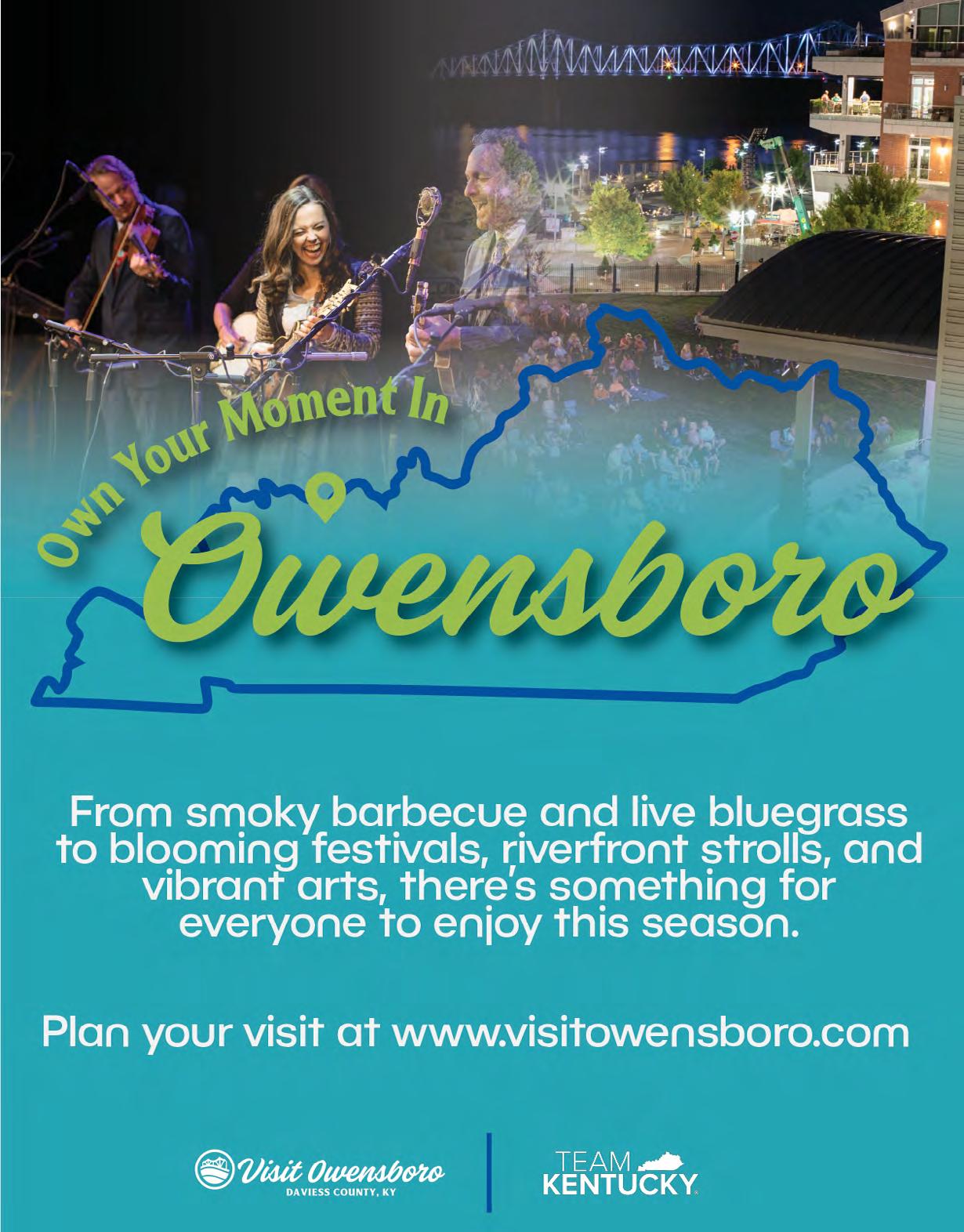
Sitting along the Ohio River, Owensboro blends outdoor fun with deep rooted culture and a soundtrack of bluegrass in the background. Start at Smothers Park, an award winning riverfront space known for its “Lazy Dayz” playground and sunset views. From there, dive into local flavor at Green River Distilling Co. one of Kentucky’s oldest distilleries or explore music history at Bluegrass Music Hall of Fame & Museum. Need a breather? The Western Kentucky Botanical Garden offers a slower pace, with vibrant blooms and peaceful walking paths. Owensboro’s riverfront redevelopment has been a major focus in recent years, connecting parks, walkways and cultural attractions into a cohesive public space. The Ohio River continues to play a central role in the city’s identity, supporting both recreation and regional commerce while providing a scenic backdrop for events and everyday life. Summer is when Owensboro really shows off. Events like the BBQ & Barrels and
ROMP Festival bring together food, music and community in a way that feels authentic and not staged. As the sun sets over the riverfront, Owensboro proves that some of the best summer memories are made in places that still value community, tradition and time spent outdoors. Whether it’s kayaking along the river, listening to live music downtown or simply enjoying the view from the park, the city offers a refreshing mix of adventure and relaxation without sacrificing excitement and adventure.
A SUMMER ENDING WORTH REMEMBERING
In the end, Owensboro reminds travelers that the best summer destinations are often the ones that feel the most genuine. Between the riverfront views, outdoor spaces and local festivals, the city offers an experience that feels both exciting and easygoing at the same time. To plan your next adventure visit, www.visitowensboro.com.
Danville, Illinois
You Decide What’s Possible
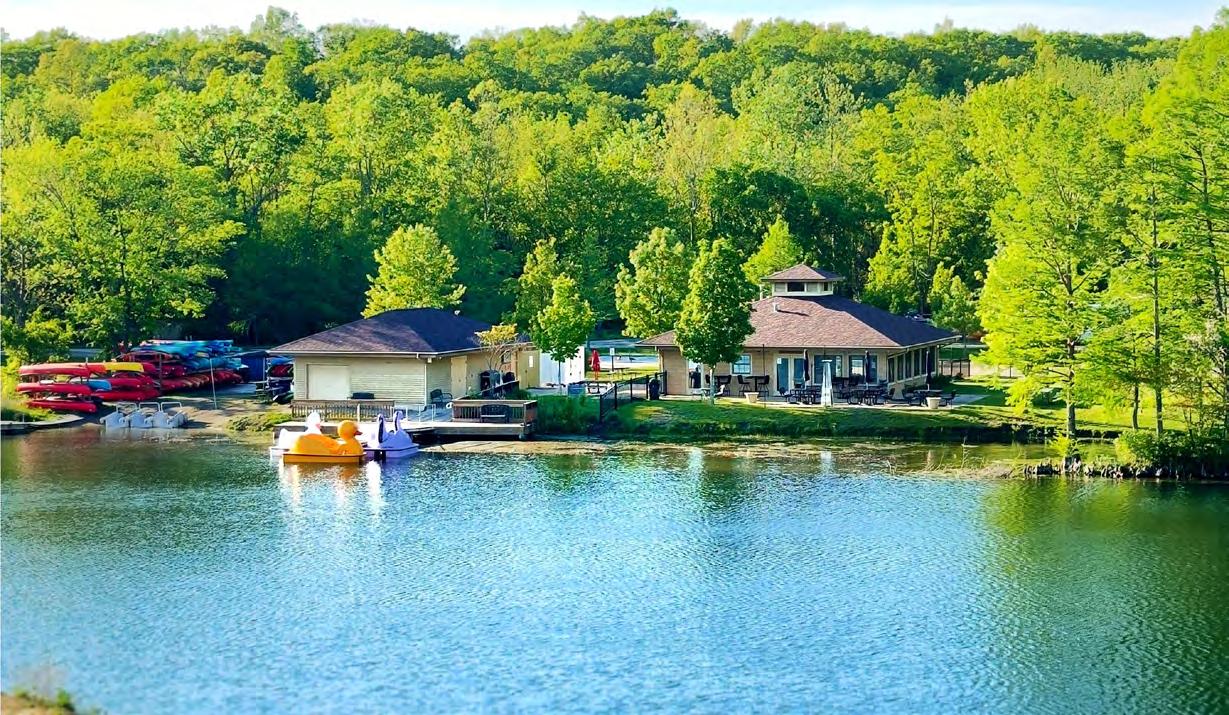
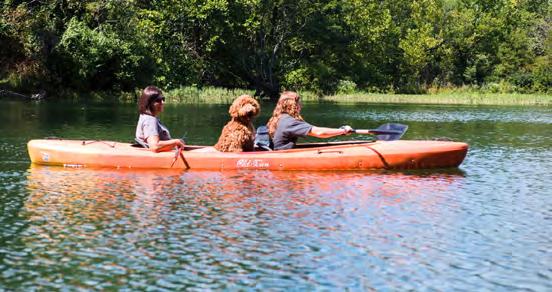
The first glance of Danville feels like a classic Midwest town with a historic downtown, local diners and friendly faces. But spend a day here, and you’ll realize it’s quietly packed with adventure. Outdoor lovers can explore miles of trails across Kickapoo State Recreation Area and Kennekuk County Park, where kayaking, mountain biking and even midnight canoe rides keep things interesting. The nearby Middle Fork Vermilion River offers scenic paddling and some of the best wildlife spotting in the region. Danville’s park system is built on reclaimed land, including former strip mines that have been transformed into lakes and trails. This gives the area a unique mix of open water, wooded paths and prairie landscapes, supporting a wide range of outdoor activities and wildlife habitats that draw anglers, hikers and bird watchers alike. And then there’s the community itself. Local clubs, from mountain biking to disc golf, actively welcome newcomers. “It’s neat to see the groups reach out to get
people involved in something they might be uncomfortable doing on their own,” Executive Director Rhonda Ellis said. “We also have 15,000 acres of park, which you don’t find in surrounding areas. Danville is a very community-driven attitude.” Between summer festivals, live music and local staples like Royal Donut and Custard Cup, Danville delivers a desirable adventure getaway all year. To plan your next summer adventure, visit www.visitdanvillearea.com.
QUIET TRAILS AND RIVER VIEWS
In Danville, the outdoors feel open and easy to explore, with parks, trails and river views that invite you to stay awhile. Whether you’re walking along the Vermilion River, exploring green spaces or discovering the downtown, Danville delivers a peaceful kind of adventure that often becomes the highlight of the entire trip.
Boonville, Missouri
Miles from Ordinary
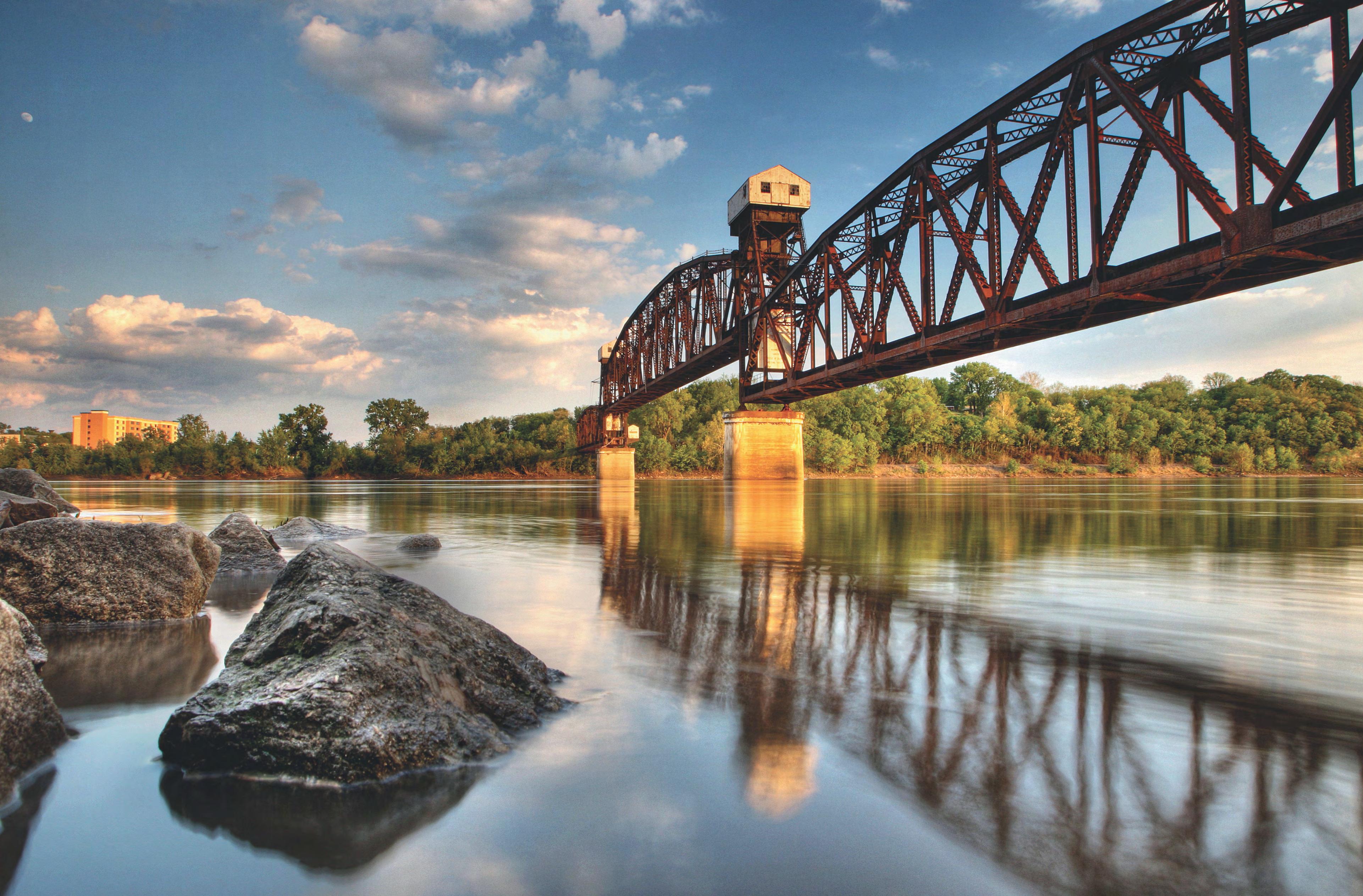
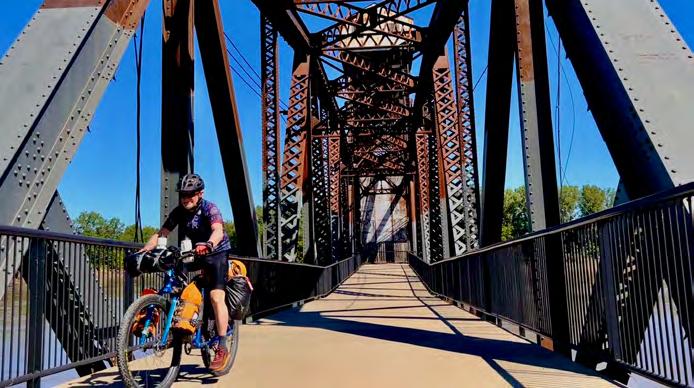
Nestled along the Missouri River, Boonville has quietly become one of the Midwest’s hidden gems for outdoor adventure and small town charm. Surrounded by rolling hills, scenic river views and miles of open countryside, the community offers visitors the perfect mix of recreation, history and relaxation. Whether you’re looking for a weekend escape or a stop along a larger Missouri road trip, Boonville delivers an unforgettable experience filled with natural beauty and authentic hospitality.
One of the area’s biggest attractions is Katy Trail State Park, the nation’s longest developed rail trail stretching more than 240 miles across Missouri. Boonville serves as a major hub along the trail, welcoming cyclists, runners and hikers from across the country. Travelers can spend the day exploring scenic bluffs, river overlooks and peaceful wooded stretches before relaxing in the town’s locally owned restaurants and shops. Another must see destination is Warm
Springs Ranch, the official breeding facility of the world famous Budweiser Clydesdales. Visitors can tour the ranch, meet the majestic horses up close and learn about the history and care behind one of America’s most iconic symbols. The ranch combines Missouri heritage with a unique family friendly experience that can only be found in Boonville. To plan your next summer adventure, visit www.goboonville.com.
MISSOURI ADVENTURE AWAITS IN BOONVILLE
From biking and hiking to river adventures and historic exploration, Boonville continues to stand out as a top adventure town in Missouri. Its welcoming atmosphere, picturesque landscapes and nationally recognized attractions make it a destination that encourages visitors to slow down, explore and reconnect with the outdoors.
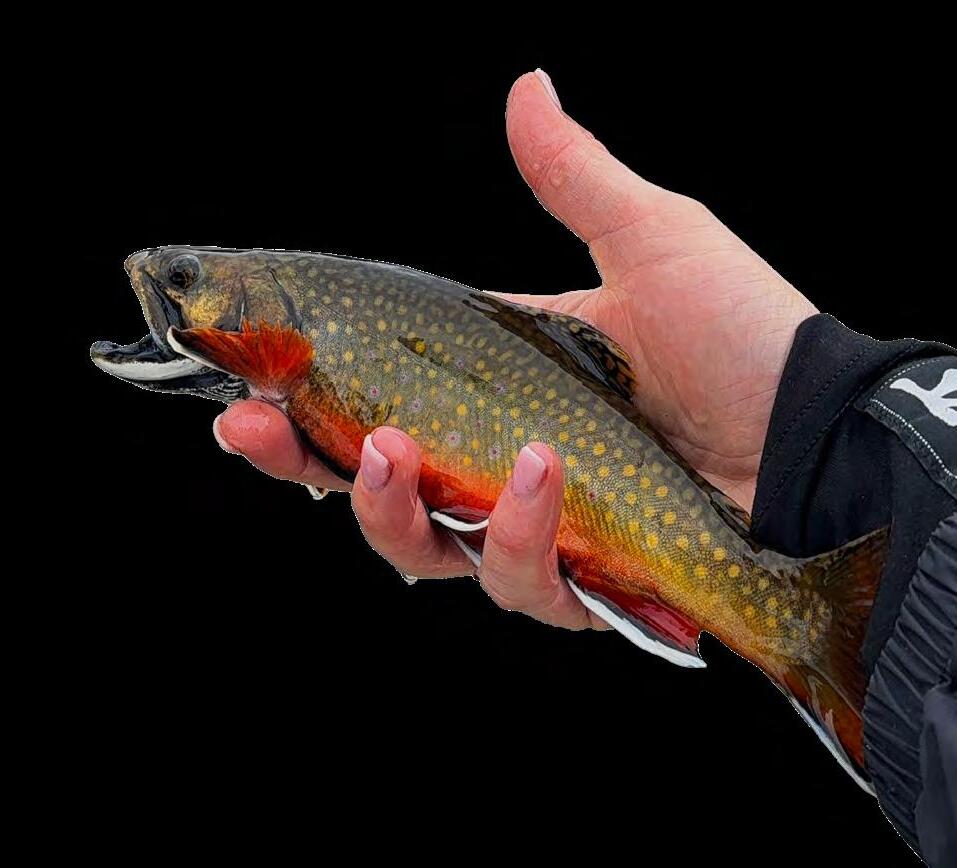
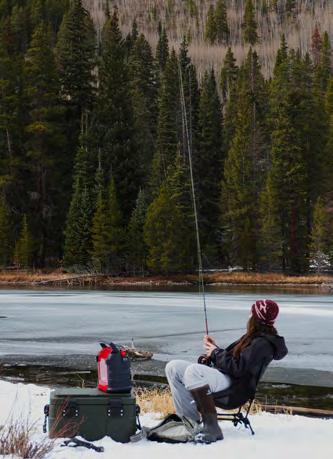
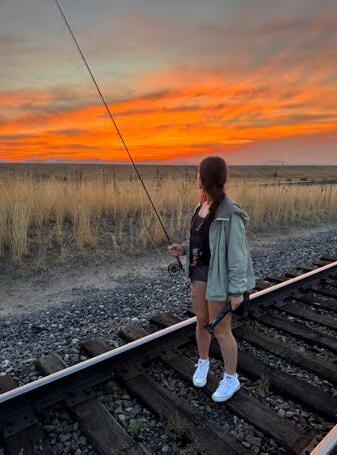
PATIENCE ON THE WATER
FISHING LIFESTYLE WITH @WILDBYSOFIA
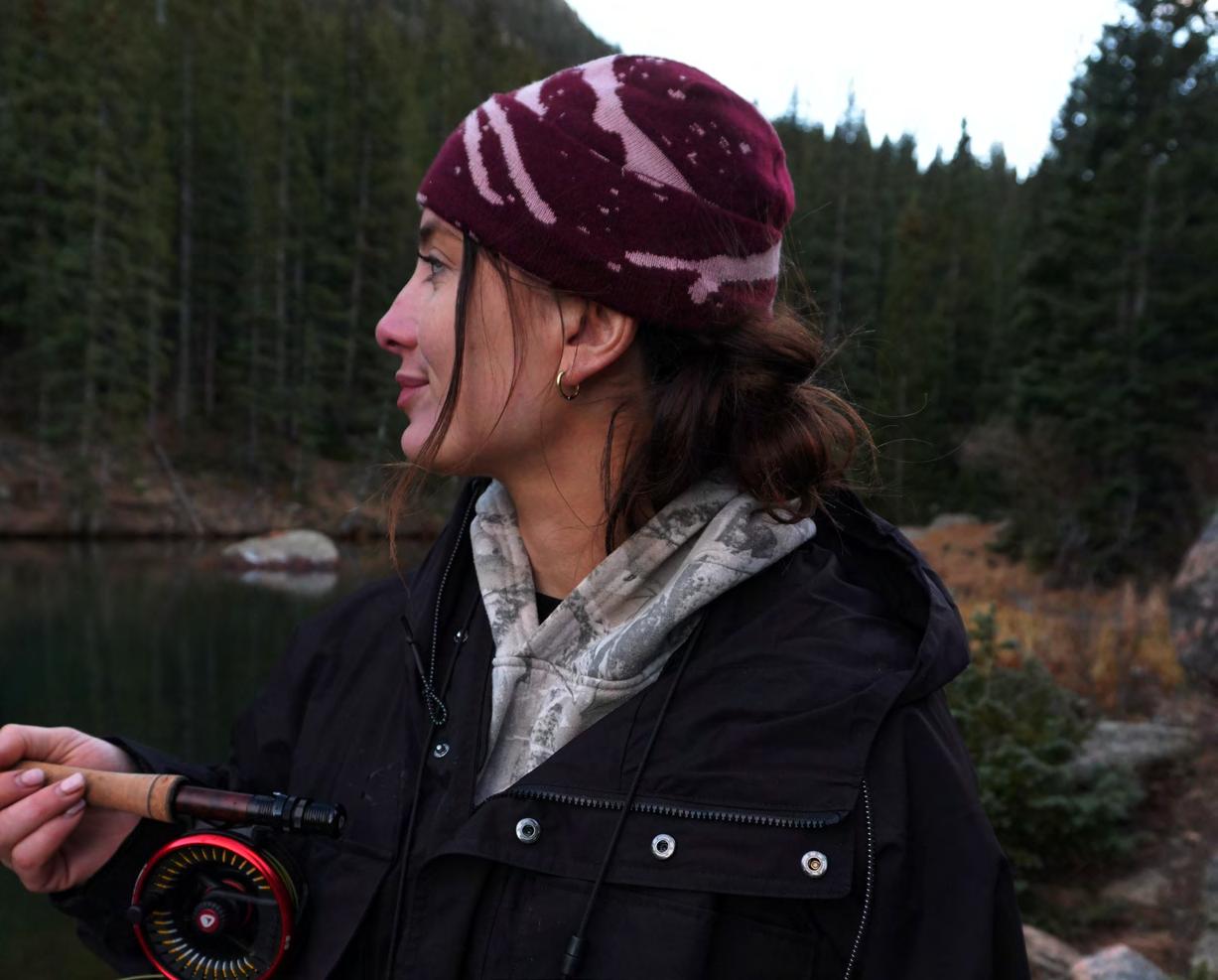
On Instagram, Sofia (@wildbysofia_) shares a window into a life shaped by fishing, camping and wandering through remote places. She’s part of a new wave of anglers mixing real outdoor skills with storytelling, all while keeping a strong focus on respecting the land and leaving it better than they found it.
exercise in patience and observation that reveals how aquatic ecosystems actually work.
“I think fishing is about learning to respect nature and learn patience and at the end of the day Mother Nature is always in charge. And it’s very meditative and keeps the mind super busy. Anything could happen at any time.”
Unlike many anglers who inherit fishing traditions through family members, Sofia found it on her own. Her interest developed as she spent more time outside, where mountains and undeveloped terrain provided a sense of scale that made everyday problems appear less immediate and consuming.
Fishing gradually became the anchor for these experiences. For Sofia, it’s less about the catch and more about slowing down, an
Time spent deep in these environments tends to reshape how people think about conservation. Immersed in it all, anglers start to see fish as part of a bigger system, where water quality, habitat and seasonal cycles all work together to keep things in balance. Environmental responsibility is central to Sofia’s time outdoors. She follows Leave No Trace principles and local regulations,
keeping her impact light—packing out waste, respecting catch limits and staying mindful of the rules that help protect fish populations for the long haul. “Immersing yourself in the ecosystem changes the way you see everything. You learn to respect the fish, the animals and the balance they live within. It makes you more mindful of the food we eat and the work behind what we buy.” On multi-day trips, her camping routine stays simple, shaped by the weather and whatever gear she has. Cold mornings usually start slow in the tent, where getting out of a warm sleeping bag takes some convincing. Coffee comes first. Quick, hot and enough to get moving. Once the stove’s going, breakfast follows, typically something easy like eggs and bacon that can be cooked with minimal gear. Food
at camp stays intentionally simple. Meals are usually built around fresh meat picked up before the trip, cooked in a single pan over a camp stove or a small, controlled fire.
Her fishing approach on these trips is all about reading the moment. Sofia leans into a simple rule many seasoned anglers know well: if a spot isn’t produc ing bites, move on and try new water.
“For fishing, if you’re not catch ing anything, move. If you get at least one bite you have to stay, or you will probably be skunked the whole day.”
Fishing also builds patience. Hours can pass with nothing happening, and sometimes the only catch shows up right before packing up. Sofia’s first time fly fishing even turned into an eight-hour lesson in untangling line. Silence is part of it too. She often skips music on the water, choosing instead to stay tuned into the natural sounds around her.
“Nature can be harsh, yet incredibly fragile. Move with care, knowing mistakes are part of learning. Practice Leave No Trace and respect the rules that protect the places you’re in.”
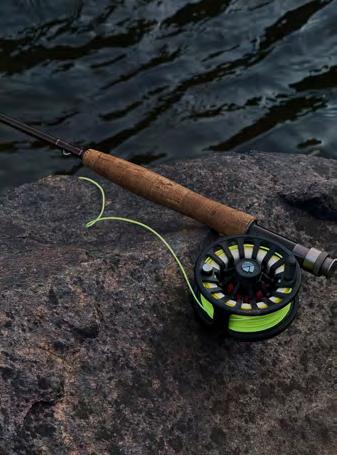
Equipment is a key part of both comfort and safety in the field. Sofia highlights a few essentials from her multi-day trips: a porta ble propane heater like a Mr. Buddy heater for cold nights and mornings, a durable field knife for food prep and gear repairs, a metal pot or cup for hot drinks and simple meals, and a Sierra Slammer lure for freshwater fishing. High-calorie snacks help during long ses-
sions. For beginners, she suggests starting simple: a fishing rod and tackle box, a
where even a single fish can turn a quiet day into something meaningful.
You are encouraged to follow Sofia’s continued journey and adventures
Instagram: @wildbysofia
Youtube: @Wildbysofia
FRANKLIN & NANTAHALA
Offer something that’s getting harder to find—space to breathe, slow down, and reconnect with what matters.
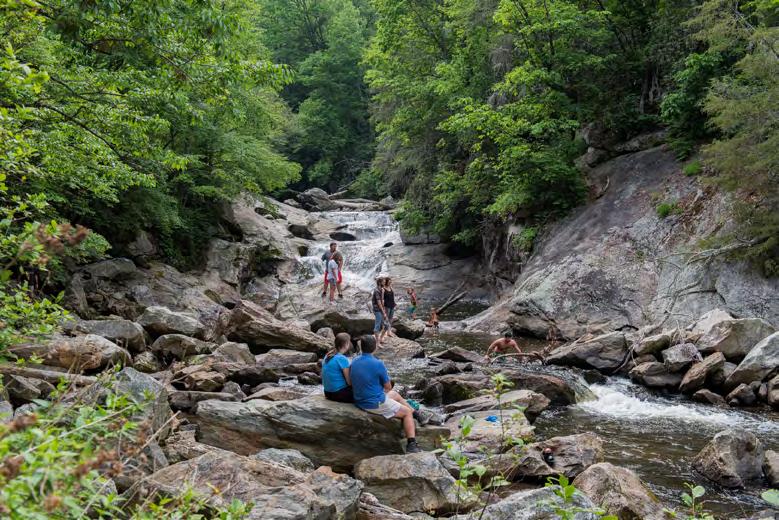
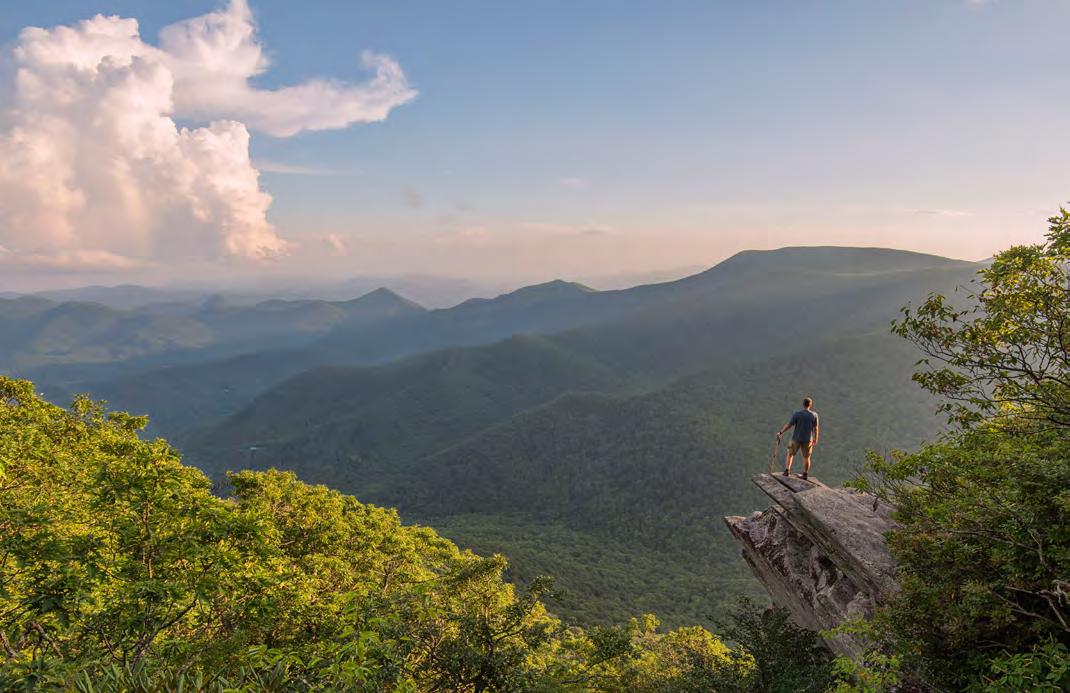
Tucked in the mountains of Western North Carolina, this area is a natural fit for those who crave time outdoors and a break from constant noise. Mornings start with cool air and quiet trails, whether you’re hiking to a waterfall, casting a line in a clear mountain stream, or simply enjoying coffee with a view of rolling ridgelines. Days unfold at your pace, exploring the Nantahala National Forest, paddling the river, or wandering through small town Franklin with its local shops and laid back charm.
Here, unplugging isn’t a trend, it’s a way of life. Cell service fades in the best way possible, replaced by birdsong, rushing water, and the kind of silence that resets your mind. Evenings bring campfires, porch conversations, and skies full of stars you forgot you could see.
What makes Franklin & Nantahala special isn’t just the scenery, it’s the feeling. It’s the freedom to step away from schedules and screens, and the simplicity of being outside, present, and grounded.
If you’ve been looking for a place where life feels a little more real and a lot less rushed, you’ll find it here.
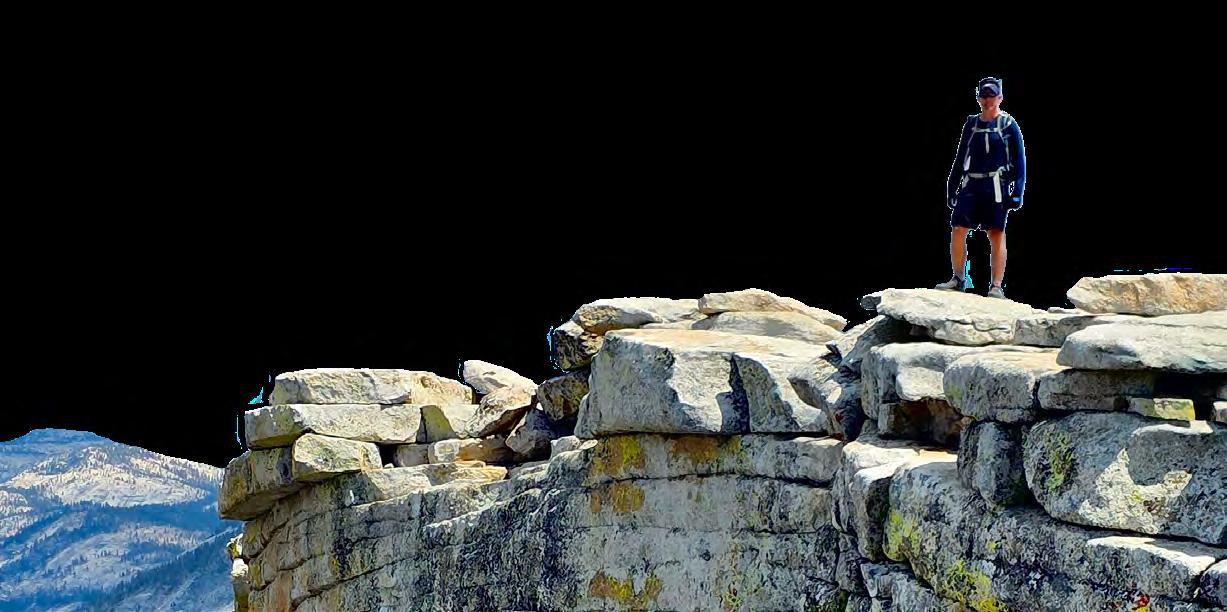
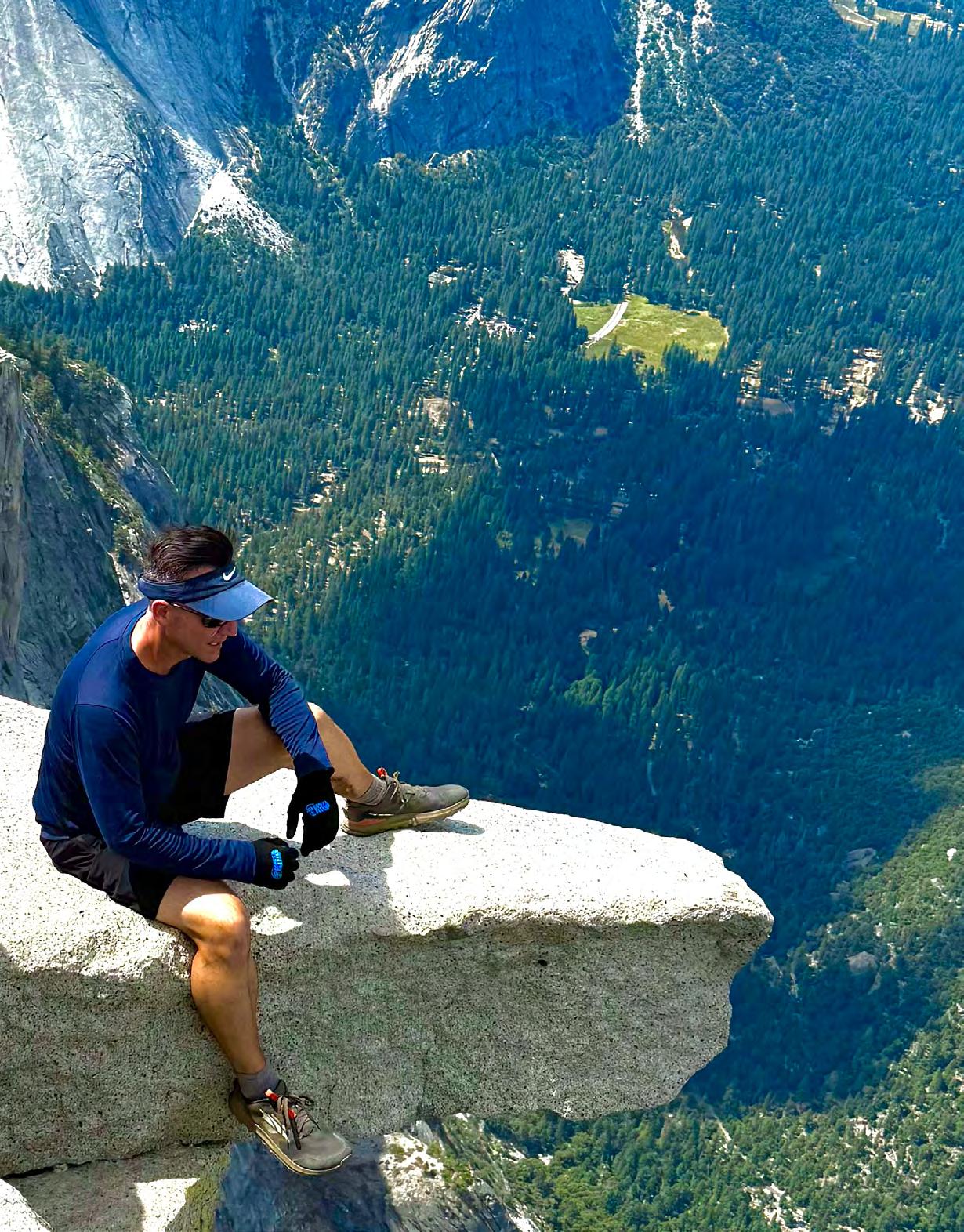
WE CLIMBED HALF DOME
There are hikes… and then there’s Half Dome. You know the one. That insane granite beast in Yosemite that looks like it was carved by gods who were bored and mildly unhinged. Yeah. That one.
For Johnathan Rockwood, it wasn’t just “on the bucket list.” It was sitting up there in his mind for years like a quiet challenge he hadn’t quite said yes to yet.
“As I’ve become a more experienced hiker, Half Dome has always loomed large as one of the most iconic hikes in the United States, but I think I doubted my ability to conquer such an intimidating hike,” he says.
Until one random Sunday. He’s scrolling, probably half awake, half dreaming, reading about mileage, elevation gain, cables that look like they belong in a construction site not a national park… and then he does something simple that changed everything:
He texts his older brother, “I want to hike Half Dome.” And just like that, the idea stops being an idea. The guy who already knew suffering… just not this version of it.
Johnathan isn’t new to hard things. Former Navy pilot. Stationed in Oahu years ago where hiking weekends basically became a lifestyle. Grand Canyon rim-torim? Done. Multiple mountain summits? Also done. But Half Dome? It’s the hike people talk about like, “yeah I survived that.”
“This would be a new personal record in terms of elevation gain in one day. Half Dome is a 14–16 mile round-trip hike with nearly 5,000 feet of elevation gain.” The permit system finally comes through like
ONE VERY REAL LESSON IN WHAT “TOO LATE TO TURN BACK” ACTUALLY FEELS LIKE ON YOSEMITE’S CABLES.
a golden ticket situation. August 23rd is locked in. Johnathan goes with his brother Nate (who’s done it before), his sister-in-law Tara and their friends Christian and Janine.
“Hiking in a group added so much to the experience,” Johnathan says. “There were moments where we were all in pain, but keeping a constant conversation going kept our minds off of any discomforts we were feeling.” 3:45 a.m. energy: They start in the dark. Breakfast burritos. Headlamps. Sleep deprivation. Peak excitement energy. Mist Trail hits first, those endless granite stairs that feel personally offended by your existence. Then Vernal Falls. Then Nevada Falls.
Sub Dome said: not today
By the time they reach Sub Dome, rumors are already floating down the trail.
“As we were making our way to Sub Dome, several hikers on their way down told us that the cables were closed due to weather. I refused to believe them, and we kept hiking.”
Then reality shows up in ranger form. Closed. They wait. Rest. Watch the sky. Eat snacks. And then… conditions shift.
“We pushed forward. I remember really feeling my leg muscles during the climb up Sub Dome. Some hikers believe this is the hardest part of the trail. Once we reached the base of Half Dome, we saw that it was deserted, no one was on the cables. Once we reached the cable portion, there were several people at the base, keeping an eye on the weather, trying to decide what to do.”
The cables: where it stops being hiking
This is the part everyone talks about. The cables. About 400 vertical feet of pure upper-body regret. “The cables are by far the most physically demanding portion,” Johnathan says. “I remember gripping the cables and immediately feeling my triceps start to burn. My heart rate was elevated, and I couldn’t catch my breath.” You pull. Step. Pull. Step. No real exit. No shortcuts. Just granite, metal and decisions. And mentally? It’s locked in. No distractions. Just you and the mountain. One pull. One step. One more. Until suddenly, you’re there.
Summit energy
Johnathan reaches the summit ahead of the others, accompanied by two fellow hikers. For a brief moment, they have the peak entirely to themselves. He later admits the experience stirred unexpected emotion. Because how do you even process standing on top of something that felt impossible a few hours ago?
“I took it all in and just felt an overwhelming sense of accomplishment. Standing on top of Half Dome, 8,839 feet above sea level, you feel like you’re on top of the world.”
Because Yosemite weather does not care about your achievement arc, thunder- clouds roll in fast. Lightning starts showing up. They descend. And quickly. Downclimb
urgency turns into soaked clothing, heavy rain, aching joints and that very real “okay I am done now” feeling. Fourteen hours total. Start to finish. “This was the first time I started really feeling emotionally and physically exhausted. I wanted to be done. We stopped several times on the way down to hydrate.”
The part that stayed with him
It wasn’t just the summit. It wasn’t even just the cables. It was everything stacked together, the uncertainty, the group, the weather, the decision-making, the pushing through when things got uncomfortable. He talks about it like it recalibrated something in him.
“This hike changed how I see my limits. At 48, I proved to myself that I’m capable of more than I thought. This is a tremendous physical accomplishment for me, however, it also greatly increased my appreciation for Yosemite and the beauty of nature.”
And the view from the top? “Worth every single step I questioned on the way up.”
Follow Johnathan Rockwood: @johnathan_explores
WHERE YOU UNPLUG TO RECONNECT
in Crawford County
If you’re craving a place where time slows down and your senses come back to life, Crawford County, Pennsylvania, invites you to unplug and rediscover what it means to be - not just do. Tucked into the rolling hills of northwestern Pennsylvania, this quietly stunning region offers the perfect balance of natural beauty, small-town charm, and off-thegrid experiences. Crawford County isn’t built for hustle. It’s built for hammocks, kayaks, conversations under the stars, and walks that last hours. With 200,000 acres of public land and the state’s largest natural lake - legendary Conneaut Lake - the region is a playground for outdoor enthusiasts. Paddle through misty morning waters, hike the trails of Ernst Trail or Oil Creek State Park, or spread a blanket under an old maple tree and do nothing at all.
No Wi-Fi? No Worries.
Even with plenty of cell coverage, we still encourage you to put down the phone and pick up a fishing rod. Swap scrolling for strolling through the covered bridge at the BaldwinReynolds House Museum or the streets of Meadville’s historic district. Tour Titusville and Linesville, and find
In Crawford County, time slows down and life starts to feel full again.
treasures in antique stores, boutiques, and mom & pop shops. And while you’re off the grid, your taste buds won’t be. Crawford County’s food scene is steeped in tradition and local pride. From maple syrup farms and cideries to cozy diners serving hand-cut fries and homemade pie, eating here feels like coming home. Local coffee roasters, farm-totable restaurants, and an old-fashioned soda fountain keep things deliciously grounded.
Slow Down. Stay Awhile.
Accommodations are part of the experience. Sleep in a lakeside cottage, a restored Victorian bed and breakfast, or a cabin deep in the woods where owls and crickets are your only neighbors. Many lodging options are familyowned and rooted in hospitality that feels personal, not programmed. To deepen the unplugged experience, the county offers immersive retreats and wellness getawaysthink forest bathing, meditation on the lakeshore, or yoga in converted barns. Whether you’re looking to reset your nervous system or spark your creative fire, there’s space here for stillness and inspiration. Crawford County is also where you’ll find fresh produce, local honey, handmade soaps, and the occasional pie that tastes like summer.
Real Connections Happen Here
In a world of noise,Crawford County is a rare quiet space. It’s where strangers wave from porches, farmers markets are events, and you’re more likely to hear the call of a loon than a notification. So bring your hiking boots, your journal, your family, your dog - or just bring yourself. Crawford County doesn’t ask much of you. Just that you slow down, look up, and breathe deep. Here, unplugging isn’t about going without - it’s about finally having enough.
SLOW DOWN
STAY AWHILE
In a world of noise, Crawford County is a rare quiet space. Strangers wave from porches, farmers markets are the talk of the town, and the only thing you’re expected to do is slow down and breathe.
Come As You Are. Leave With Something More. In Crawford County, you don’t have to perform, compete, or impress. You just have to be. Let the trees, trails, lakes, and people welcome you into a different rhythm - one where the best things happen when you unplug from the world and plug back into yourself. Whether you come seeking stillness, adventure, or inspiration, you’ll find something in Crawford County that stays with you long after you leave.
NOT DEFEATED: A RETURN TO THE COLORADO TRAIL
By the time Robert J. Hill stepped back onto the Colorado Trail at Monarch Mountain, exactly one year after leaving it, the place was familiar and completely changed. The ridge lines were the same. The exposure was the same. The thin air was not forgiving. Hill first walked away from the Colorado Trail in 2024 with unfinished business. He and his wife had set out to hike the trail together, adjusting expectations when time allowed them only the first half. While his decision to stop at Monarch Mountain made sense then, it did not last.
Hill is no stranger to long-distance hiking. In 2022, he completed the Pacific Crest Trail, an experience that reshaped how he thought about endurance, identity, and community. That 2,650-mile journey recalibrated his sense of what mattered and confirmed his attraction to dramatic terrain, unpredictable weather, and the kind of effort that strips life down to essentials.
“I knew I wanted another hike, something that would bring me back to that
version of myself I discovered on the PCT, but without stepping away from my life for six months. The Colorado Trail felt like the obvious choice.”
The Colorado Trail, at just under 500 miles, offered a different scale but no shortage of intensity. Much of the trail runs above 10,000 feet. Even modest mileage days carry weight at altitude, where the air is thin and recovery comes slowly. Hill describes nights where climbing 3,000 to 4,000 feet felt like far more by the time he reached camp. That contrast between beauty and hardship defines much of the Colorado Trail experience. The effort required to move through the state on foot exposes hikers to extremes that do not register from a highway pullout or a short day hike. Hill found that walking through Colorado revealed transitions that felt both subtle and profound.
“The PCT showed me how pushing myself physically opens up a deep well of emotion, and the Colorado Trail reaffirmed that. You experience the full
range of human emotions on long trails because it is indescribably hard at times.”
Hill began his southbound return alone. Friends who had planned to join him didn’t, leaving Hill to settle into the first days solo. With nearly 4,000 trail miles behind him, solitude was not unfamiliar. Still, the prospective journey alone carried an emotional charge. He had learned how valuable shared experience could be, especially after hiking part of the trail with his wife the year before. Thankfully, about 100 miles in, Hill met and connected with a group of people who went on to be his trail family for the rest of the hike.
“The start of the second half of the CT brought some unexpected challenges. I knew there were incredibly epic landscapes ahead of me, but there were also a lot of big unknowns.”
At the same time, Hill noticed how differently his body responded. Living at sea level in Portland, Oregon, he expected the elevation to hit hard. Instead, consistent off-trail training paid off. Within days, he was logging
Read the expanded digital article at
consecutive 26- to 29-mile days. Weather quickly reasserted itself as the dominant variable. Hill hiked the Colorado Trail during the shoulder season, when summer gives way to fall and conditions can shift without warning.
“Thunderstorms are simply part of daily life there… I was wicked surprised by how fast Colorado storms move and tend to exist in pockets rather than as large widespread systems.”
Thunderstorms were not confined to afternoons. Lightning, sleet, hail, and sudden temperature drops arrived at all hours, often at elevation. He emphasized that cold temperatures were a critical factor in navigating progression along the trail. Over time, Hill learned to read the sky and wind more closely, adjusting plans on the fly. Though, rather than fighting the volatility, he worked with it. That approach shaped the rhythm of his second half, which included multi-day breaks to wait out storms before heading back into the high country. On the Colorado Trail, it showed up in widespread beetle kill,
prompting questions about land management and the absence of natural fire cycles.
“Thru hiking has shown me that having a meaningful perspective on environmental change without spending time immersed in nature feels out of integrity,” he says, “These long treks have made me believe even more strongly that deeper connection to the land is part of the solution and that requires immersing in it.”
Hill is careful not to position himself as an expert on climate or land management. Still, crossing six wilderness areas and drinking from five major waterways along the CT sharpened his sense of responsibility as a trail user. Gear choices reflected that focus on intention. Hill carries a streamlined kit, refined over thousands of miles. One item stands apart: his camera. A photographer for over two decades, Hill left his camera behind on the PCT, a decision he later reconsidered. On the Colorado Trail, he carried it the entire way. The images he values most are not of
ridgelines or passes but of the people he met and the relationships formed mile by mile. When Hill returned home, the adjustment followed a familiar pattern. Long trails slow his internal pace, creating clarity that contrasts sharply with modern life. Coming back often triggers a period of reflection, not depression, but integration.
“The trail strips things down,” he says. “Coming home is about figuring out how to live that truth in the world you left behind.”
For those considering a longer journey, Hill sees the trail as both introduction and invitation. Walk far enough, pay attention, and the landscape begins to give something back. Not answers, exactly, but a clearer sense of how far the body can go and how much the mind has underestimated it all along.
Read the expanded digital article online at www.unplugmag.com | Follow Robert’s work on Instagram: @robertjhill
Find Peace In Find Peace In
Your UP NORTH adventure starts here
DOCUMENTING THE FORGOTTEN GRASSLANDS OF THE AMERICAN
Conservationist and Photographer Christopher, recognized online as @landofthelonesome, spends extended days crossing the High Plains with a film camera and a field biologist’s discipline, documenting grassland ecosystems across the American West and High Plains often overlooked in mainstream coverage.
Christopher approaches fieldwork in a manner that resembles ecological surveying. He spends most of each trip driving between predetermined coordinates
that he has marked on satellite imagery before heading out. He maps location orientation to the trajectory of the sun and builds loose itineraries that allow for rapid changes when weather shifts. The goal is to maintain a steady rate of documentation rather than wait for a particular set of conditions that may never materialize.
He shoots exclusively on film, which requires a level of discipline that often aligns with the constraints of biological field studies. Film limits volume and forces
previsualization before committing to an exposure. Christopher relies on 35 mm and 50 mm prime lenses because they approximate human visual perspective and require him to physically reposition himself to reframe rather than correct errors in post production. His process is built on removing variables in order to preserve clarity in the field. He prefers to keep edges clean, avoid unintentional alignments of horizons or structures, and construct images that reflect deliberate decision making.
“Just getting down on my knees and admiring the plants and insects that can survive on such a harsh landscape or that meadowlark calling from the top of a yucca… a world full of beauty is revealed.”
Christopher’s professional background in conservation biology is a core influence on this shift. He has spent several years working on avian research and habitat monitoring in Colorado, including monitoring Bald Eagles through the breeding season in the heavily developed urban corridor along the Front Range. His primary assignment was to document survival and reproductive outcomes at nests exposed to construction, human activity, and other pressures. The project demonstrated how adaptable raptors can be in fragmented environments. Workers at the construction sites followed the birds closely and shared their own observations
Keaton O’Neil
with him, creating a model for community engagement that persists in his memory.
“Seeing the excitement and enthusiasm for these birds and how they were able to thrive even in the midst of such heavy human activity was an impactful experience for me.”
His personal connection to these environments began long before his conservation career. Growing up in Florida, he spent summers in the field with his father, who worked in environmental management. As a child he researched ranches for sale across the High Plains and interior West, imagining landscapes he had never visited. These early interests formed a foundation that later shaped his environmental values and informed how he interacts with public lands today. He has since visited and documented many of the places he studied from afar, deepening his understanding of their ecology and cultural history.
“My connection to the land is a direct result of how I was raised by my parents, in particular my dad… That personal connection to place and my understanding of the ecology has completely shaped my environmental ethos.”
A recurring theme in his work is the need for public awareness of federal lands outside national parks. Christopher stresses
that many well-known parks across the West are bordered by national grasslands or Bureau of Land Management territory that often exceeds the park in size and ecological significance. Badlands National Park covers about 244,000 acres, but the surrounding Buffalo Gap National Grassland contains roughly 600,000 acres of similar terrain. These areas are open to the public without entrance fees and are more vulnerable to policy changes and land transfers. Christopher states that public engagement often focuses on parks because they are more familiar to travelers, while adjacent landscapes remain overlooked despite being ecologically connected:
“While our national parks are at risk, they’re by far the most protected of our public lands and will be the last places to fall so if you love these spaces, do some research into the lands that surround your favorite park. Those are the places that need to be advocated for and are far more likely to slip under the radar.”
Through his photography and conservation background, Christopher aims to provide viewers with an understanding of these systems as functioning landscapes rather
than empty spaces. His work documents the interaction between light, landforms, vegetation, and human influence across regions that are often excluded from mainstream outdoor narratives. The “Postcards From” series continues to expand as he revisits locations, explores new terrain, and applies the same principles of field observation used in ecological research. His images serve as records of place, shaped by methodical planning, scientific training, and a commitment to documenting environments that receive limited attention. “I adore grassland ecosystems, particularly the short grass prairie of the High Plains and the sagebrush of the American West and I believe that passion and understanding allows me to see beauty in a place so often overlooked.” Christopher’s approach reflects the intersection of field science and visual journalism. His work offers a consistent record of changing conditions across vast grassland regions and highlights the need for public awareness of these landscapes. By presenting them with accuracy and restraint, he provides a reference point for understanding their ecological value and their vulnerability in an era of rapid environmental change.
B i B d Visit t he
WHERE THE DESERT MEETS THE STARS
Named for a deep curve in the Rio Grande River, the Big Bend region of West Texas is a land of striking beauty. The Big Bend region consists of five distinct communities including Marathon, Lajitas, Study Butte, Terlingua and the Big Bend National Park–each with their own unique West Texas flavor
Far from any major city, the Big Bend is one of the world’s last frontiers. With a population density of less than one person per square mile, the Big Bend is an ideal place to rediscover the simple pleasures of silence, solitude and open space
Nearby State Parks and Preserves guarantee access to over 1,000,000 acres of Public Lands Big Bend National Park preserves more than 1,100 square miles of the Chihuahuan Desert Big Bend has more species of birds, plants, cactus, butterflies, bats and reptiles than any other US National Park
Big Bend, along with the adjacent Big Bend Ranch State Park, are both International Dark Parks with some of the darkest night skies in the continental United States which makes for perfect stargazing opportunities
People come to the Big Bend region to participate in numerous outdoor activities including hiking, river trips, horseback riding, mountain biking, birding, golfing, photography and even ATV tours Big Bend is also one of the most popular destinations for motorcycles any where in Texas with miles of open roads and little traffic
But scenery is not all you will find in Big Bend. It has also become a haven for both artists and musicians Visitors find an eclectic collection of shops and galleries, along with a selection of restaurants, bars and hopping night spots with live music daily
GEAR GUIDE
Rugged Road 65 Cooler
WEBSITE: RUGGEDROADOUTDOORS.COM
INSTAGRAM: @RUGGED_ROAD_OUTDOORS
FIELD-TESTED IN THE MOJAVE DESERT
CHUK Outdoor Kitchen
Most serious coolers are built like tanks and carry like them too. The Rugged Road 65 changes that.
Weighing in at just 13 pounds, less than half the weight of comparable coolers, it delivers serious performance without the burden, holding ice for days in real-world conditions. It fits 65 twelve-ounce cans plus ice, and the exterior features a proprietary coating originally developed for military-grade applications, proven tough where it counts.
It floats upright to keep contents dry and accessible, the reversible lid doubles as a cutting board and cup holder station, and a lifetime warranty backs it all.
This is the cooler you reach for when the terrain is demanding and your back already has enough to carry.
WEBSITE: CHUKOUTDOORS.COM
INSTAGRAM: @CHUKOUTDOORS
FIELD-TESTED ACROSS THE SOUTHWEST
Camp cooking shouldn’t mean digging through bins in the dark, wondering where the spatula went.
It folds out into a solid, stand-alone cooking station with dedicated drawers and shelving built around your gear. No wasted space, no guesswork, just a clean, organized system that keeps your vehicle and your campsite dialed in.
Setup is fast. Breakdown is faster. Everything has a place and stays there.
Whether you’re cooking for two at a quiet desert pullout or feeding a crew after a long day on the trail, CHUK brings order to camp and lets you get back to the fire where you belong.
Disc-O-Bed Cot System
If you’ve ever spent a night in a sleeping bag on uneven ground, the Disc-O-Bed is a clear upgrade.
The military-grade cot system converts from bunk beds to two singles or a bench without tools and in minutes. Its powder-coated steel frame supports up to 500 pounds per bunk, while the tensioned sleeping surface is designed to reduce sag and eliminate the need for a center support bar.
Whether set up in a backcountry wall tent or a family campsite after a long drive, the Disc-O-Bed is designed for repeated use in outdoor environments.
WEBSITE: DISCOBED.COM
INSTAGRAM: @DISCOBED
FIELD-TESTED IN THE MOJAVE DESERT
Animus Works Cooler & Lunch Setup
This one stands out for pure versatility, built for camping, but just as at home with anglers and hunters who need every inch of space to earn its keep.
The Animus is a true 5-in-1 system, combining an insulated cooler with dedicated storage for food and water, gear compartments, a sealed dry drawer, and a reinforced seat rated to 350 pounds, all in a compact, upright design that saves space where it matters most.
Rod holders and tools mount directly to the unit, valuables stay protected in the dry drawer, and cold water is always within reach, with a raised spigot for better access. This rig easily provides 48+ hour ice retention backed by commercial-grade insulation; it delivers where it counts.
We recommend it for both camping and fishing, especially when space is limited and your setup needs to be dialed in from the moment you drop the tailgate.
WEBSITE: ANIMUSWORKS.COM
INSTAGRAM: @ANIMUS_CREW_NV FIELD-TESTED IN THE MOJAVE DESERT