FELIX GONZALEZ-TORRES
March 25 – December 30, 2022
Marjorie Barrick Museum of Art
University of Nevada, Las Vegas
Published by UNLV Integrated Graphics Services
Integrated Graphics Services
University of Nevada, Las Vegas Box 1028
4505 S. Maryland Pkwy. Las Vegas, NV 89154
Copyright © 2024 Marjorie Barrick Museum of Art
Marjorie Barrick Museum of Art
University of Nevada, Las Vegas Box 4012
4505 S. Maryland Pkwy. Las Vegas, NV 89154
Artworks by Felix Gonzalez-Torres, Valley High students: Ahtziry Alcocer-Amaro, Monica Benitez-Espinoza, Stephanie Bray, Diana Cardenas, Johanna Cooke, Craig Deaderick, Salvador Diaz-Morones, Angelique Esparza, Nakalyah Fabello, Gloria Miranda, Kylee Mitchell, Idali Olmos Rosas, Kimberly Ordonez, Erandi Rendon, Nevaeh Sitton, Juliana Soto Hernandez, Chance Smith, Ezer Soulimen, Dafne Valderrama © 1991 by Felix Gonzalez-Torres. 2022
Catalog designed by Chloe J. Bernardo
All rights reserved. No part of this book may be reproduced or used in any manner without the prior written permission of the copyright owner, except for the use of brief quotations in a book review.
March 25 – December 30, 2022
Marjorie Barrick Museum of Art
University of Nevada, Las Vegas
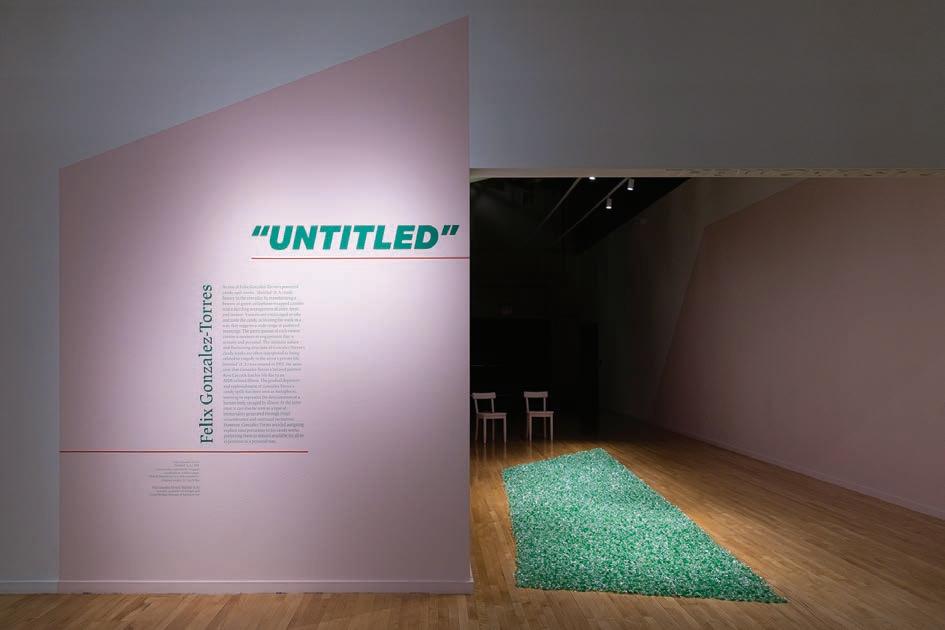
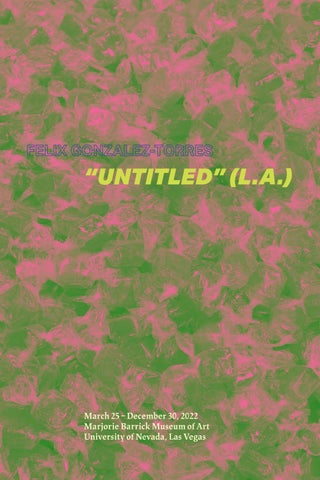
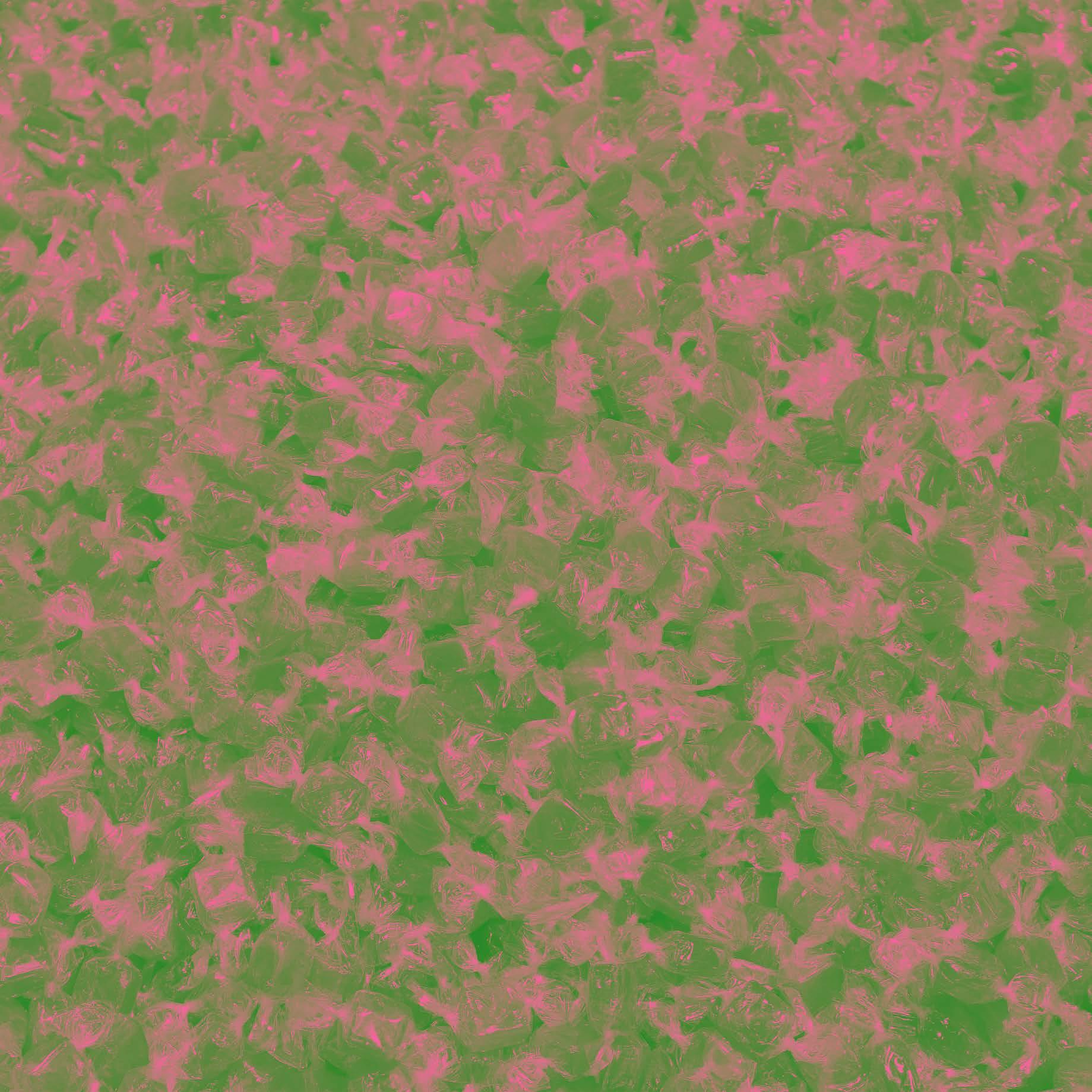
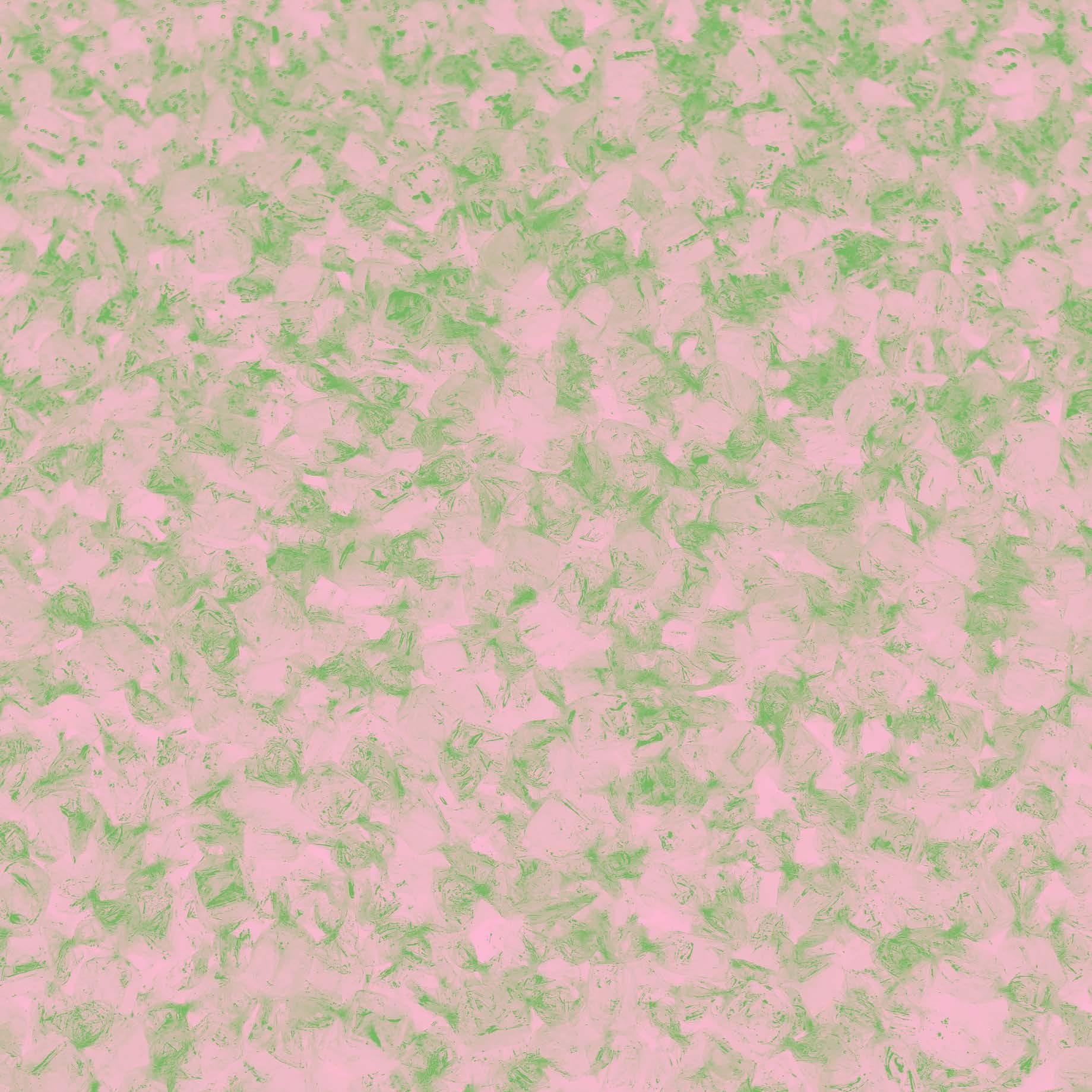
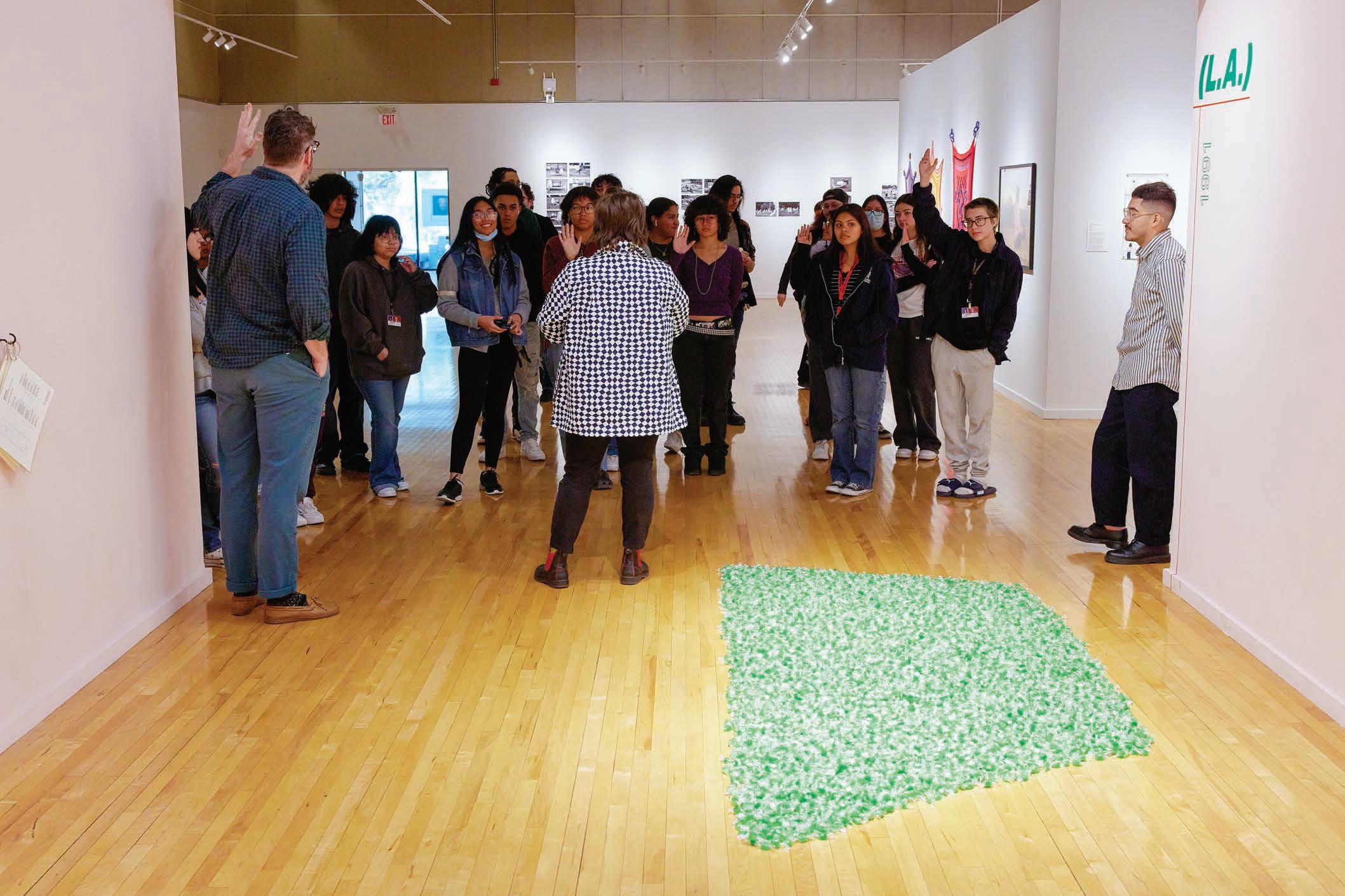
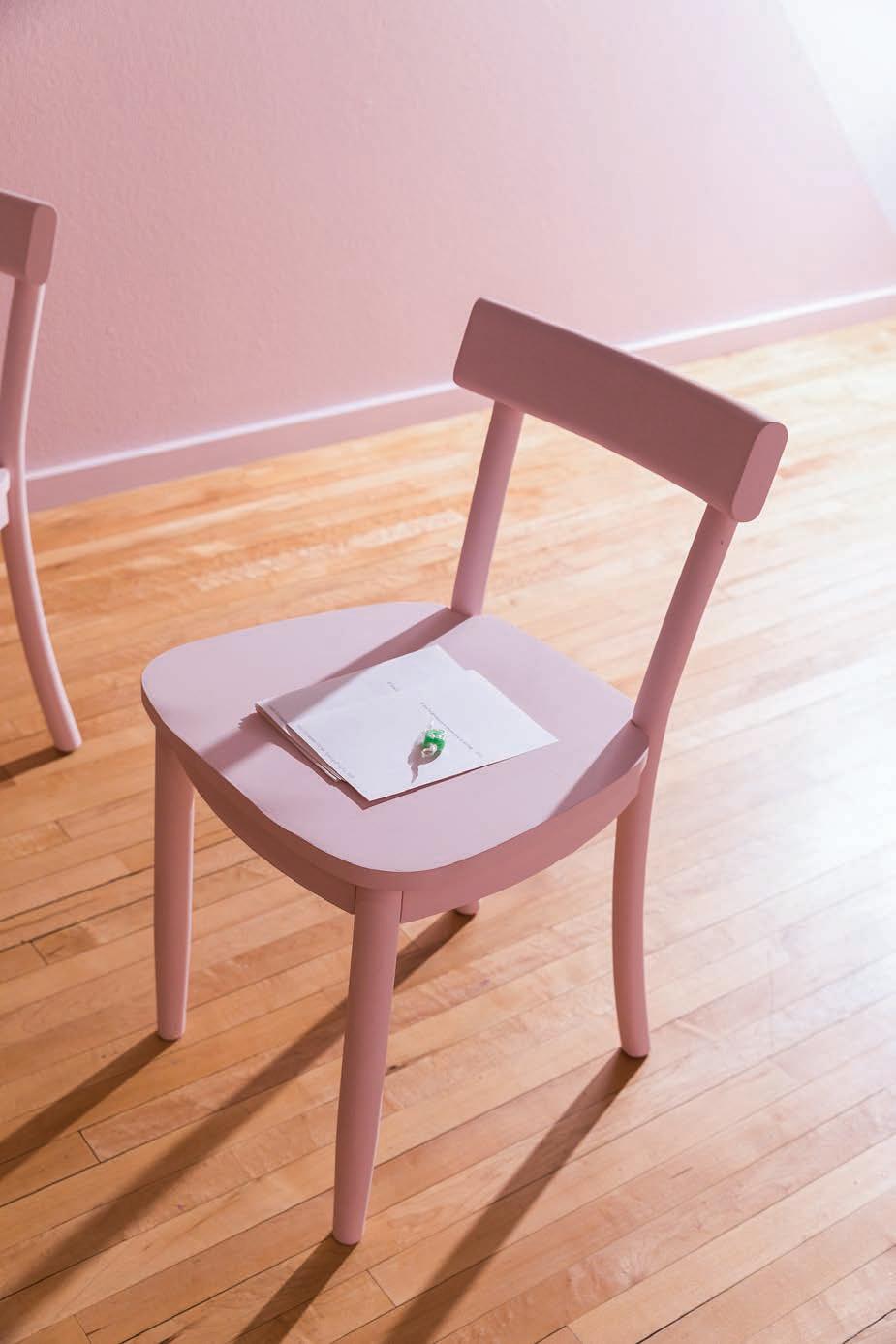
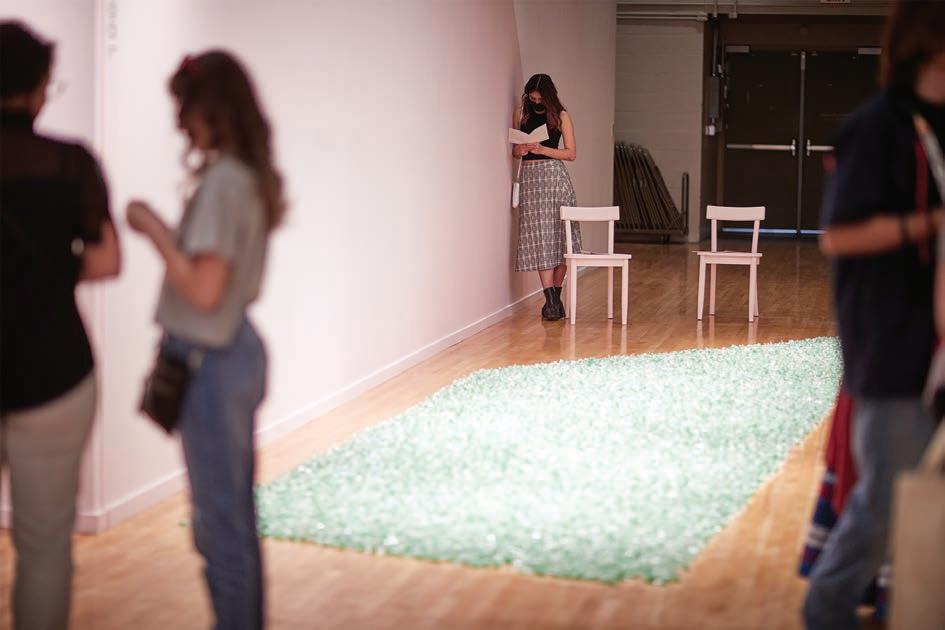
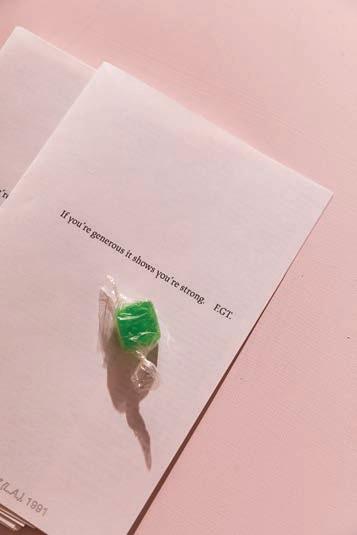
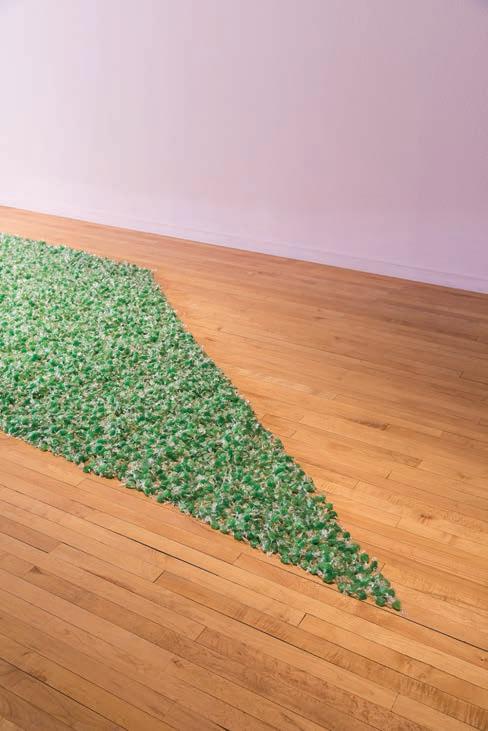
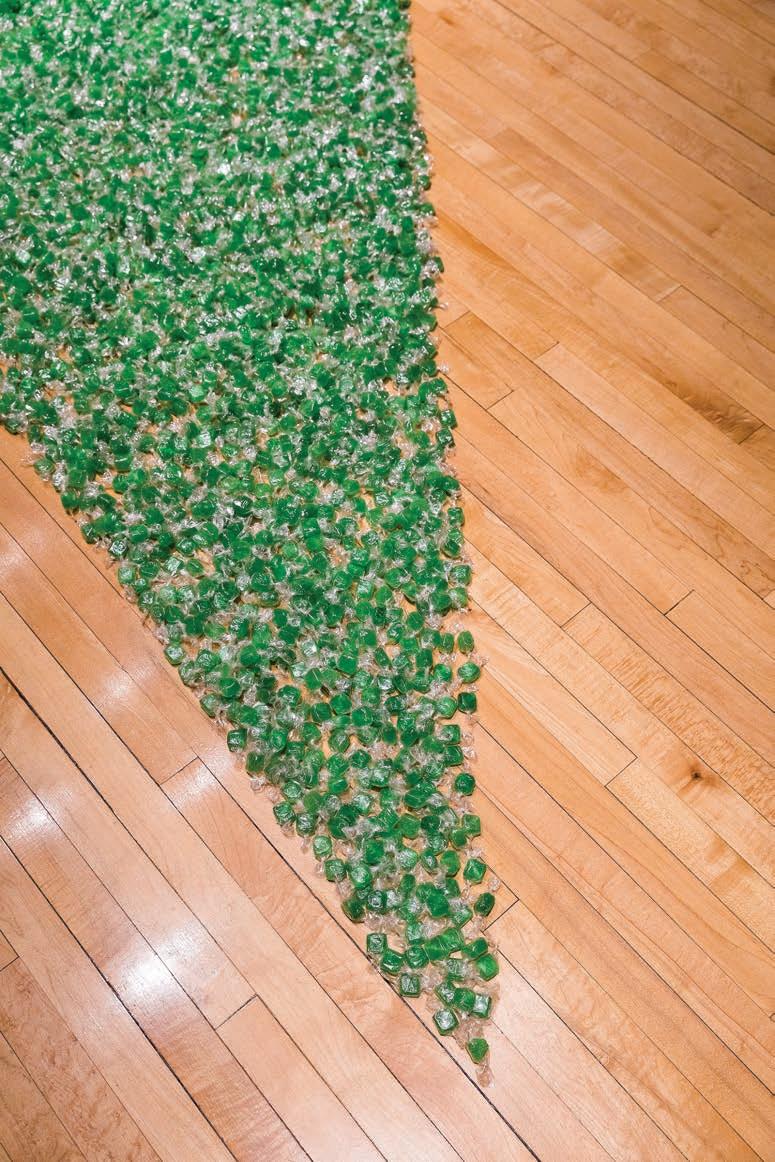
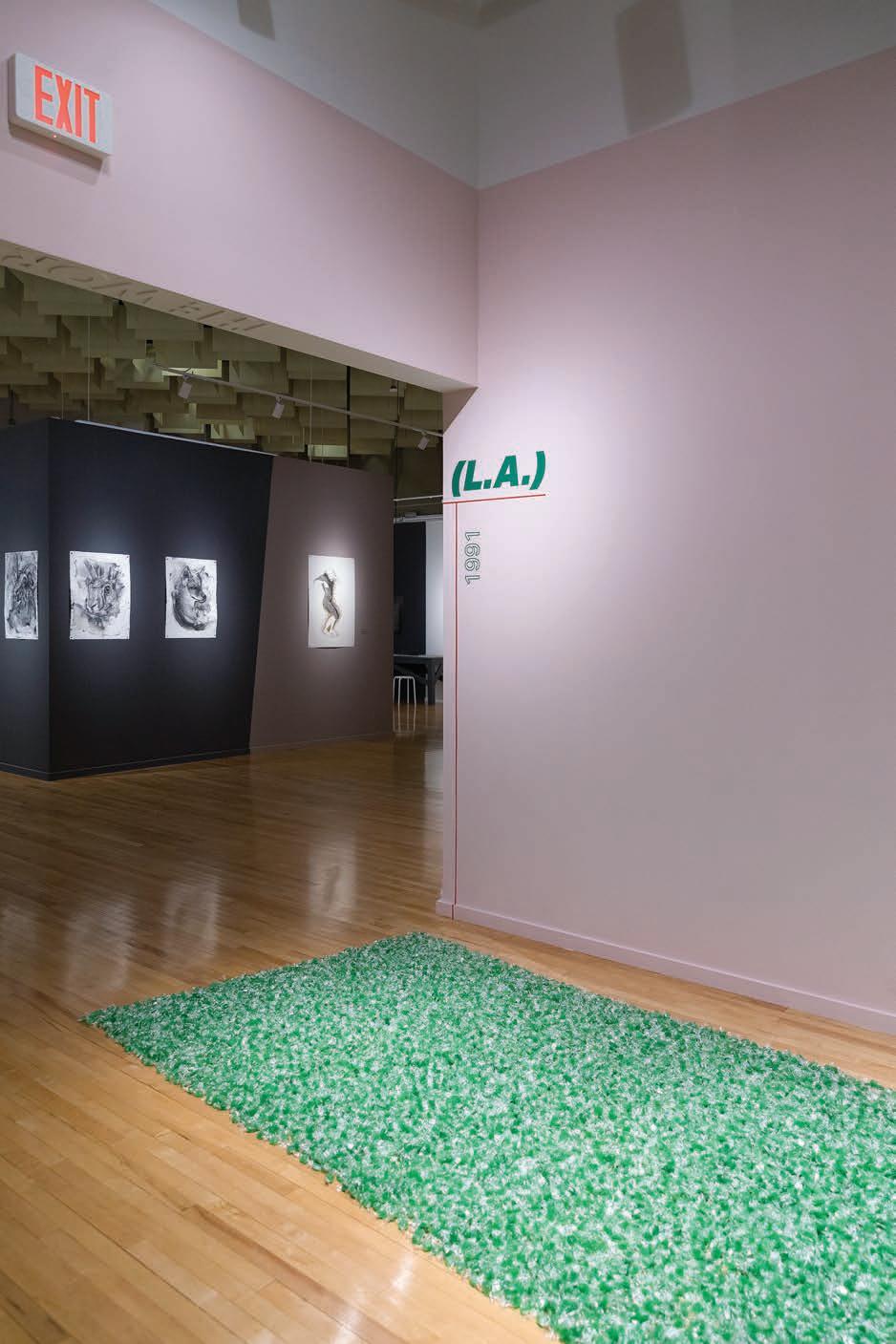
As one of Felix Gonzalez-Torres’s powerful candyspill works, “Untitled” (L.A.) finds beauty in the everyday by transforming a bounty of green, cellophane-wrapped candies into a dazzling arrangement of color, form, and texture. Viewers are encouraged to take and taste the candy, activating the work in a way that suggests a wide range of profound meanings. The participation of each viewer creates a moment of engagement that is sensory and personal. The intimate nature and fluctuating structure of Gonzalez-Torres’s candy works are often interpreted as being related to tragedy in the artist’s private life. “Untitled” (L.A.) was created in 1991, the same year that Gonzalez-Torres’s beloved partner Ross Laycock lost his life due to an AIDS-related illness. The gradual depletion and replenishment of Gonzales-Torres’s candy-spills has been seen as metaphoric, seeming to represent the deterioration of a human body ravaged by illness. At the same time, it can also be seen as a type of immortality generated through ritual remembrance and continual recreation. However, GonzalezTorres avoided assigning explicit interpretations to his candy works, preferring them to remain available for all to experience in a personal way.
Felix Gonzalez-Torres says I.
I have put something sweet in someone’s mouth and that is very sexy.
I was very impressed by the biography [of the painter Ad Reinhardt], how he mixed historical events with his life. I’ve never seen that so thoroughly done. That touches me because I believe social, political and historical issues should be part of the “studio,” the same way that these issues shape who we are.
I love placing my work where it’s unexpected, the places where I have less authority.
I enjoy that danger, that instability, that in-betweenness [in the work]. I think if you want to relate it to a personal level, as a gay man that has a lot to do with my way of being in which I’m forced by culture and by language to always live a life of “in-between.”
I was telling my students, “Your limitations should be your strengths.” When I first started making art in 1987, I had no money. I had a little tiny studio [apartment] smaller than this kitchen.
I question someone who tells me what I’m supposed to do or be. I always feel like asking them why don’t they do it?
I think more than anything else I’m just an extension of certain practices, minimalism or conceptualism, that I am developing areas I think were not totally dealt with.
I’m not really much into materials. It’s always very confusing to me when people start to have a physicality with material, especially sculptors, who have that very weird language about playing with space.
I was very influenced by the writing [of Walter Benjamin] and the relevance of that writing in our time, in our culture, and I wanted to make a work that took some of those ideas into consideration. That work doesn’t really exist; therefore, the work can never be destroyed because there’s never an original.
I may make objects without language, but everything in culture happens within language. Nothing happens outside of language. The dominant narrative is not static. It changes very quickly. It requires new modes of contestation.
I wanted people to have my work. The fact that someone could just come and take my work and carry it with them was very exciting. Freud said that we rehearse our fears in order to lessen them. In a way this “letting go” of the work, this refusal to make a static form, a monolithic sculpture, in favor of a disappearing, changing, unstable, and fragile form was an attempt on my part to rehearse my fears of having Ross disappear day by day right in front of my eyes.
I am someone who tries to be honest with … I mean with the way I feel; at least I try.
I’ve become burnt out with trying to have some kind of personal presence in the work. Because I’m not my art. It’s not the form and it’s not the shape, not the way these things function that’s being put into question. What is being put into question is me.
I started making those [paper stack] pieces to deal with very specific, crucial issues, with how information is transformed into meaning. Right now we have an explosion of information, but an implosion of meaning.
I think the artistic position is as good as any to start from for change, and it can be measured in so many different ways that it’s really no problem. […] Che Guevara once said that whatever your profession or position, that is your trench. The struggle is at many levels. Not everyone can be in the front line.
I was very lost [in 1991]. It was the end. The world was just closing in.
I do not want to be outside the structure of power, I do not want to be the opposition, the alternative. Alternative to what: to power? No. I want to have power. It’s effective in terms of change. I want to be like a virus that belongs to the institution.
I just take any position that will help me best express the way I think or feel about a particular issue. Formal strategies are there for your use.
I’m not a good token [Latino]. I don’t wear the right colors. I have my own agenda.
I do take into consideration art history. […] Art history is very exciting and you can learn to reinvent the wheel from it or to reinvent the wheel and use it in a different way.
I go to the flea market because it is full of small, hidden histories.
I’m not afraid of making mistakes, I’m afraid of keeping them. I have destroyed a lot of pieces—I like the excitement of fucking up royally.
I don’t think periods of nonproductivity have ever happened because I don’t measure my work by the object produced—I’m always working.
I admire artists that break the rules, that break with the expected functions of an artist, that push the limits of artistic practice; artists that can recite economic facts at the drop of a hat …
I have had a very good life. I have lived this life well. Very well. And I’m an atheist. I’m one-hundred-percent atheist.
I see myself almost like a theater director directing a very spontaneous performance. […] when the viewer takes the candy and eats it and shits, you know, the candy piece at the end, because that is the final piece when the candy or the sweet gets eaten and then is spilt as shit from the body, that is also, you know, again an ultimate collaboration, because I am actually giving energy to the body to function.
I’m Brechtian about the way I deal with the work. I want some distance. We need our own space to think and digest what we see. And we have to trust the viewer and trust the power of the object. And the power is in simple things.
I need the public to complete the work. I ask the public to help me, to take responsibility, to become part of my work, to join in.
I suppose I would be satisfied if they took action sometimes, or if it caused them to be critical, moved, inspired. Or to celebrate difference and the idea of change and renewal, the chance for love. I’d like to propose once more the “radical” idea that we can make this a better place for everyone.
I keep my optimism by having two cats.
I don’t attach sentiment to massproduced materials or objects, they already have it. I just make them obvious.
That’s why I make work, because I still have some hope.
I realize again how successful ideology is and how easy it was for me to fall into that trap, calling this socio-political art. All art and all cultural production is political.
BIBLIOGRAPHY
This writing was assembled from various sources. You can read most of them at https://www.felixgonzalez-torresfoundation.org.
Felix Gonzalez-Torres and Joseph Kosuth. Andrea Rosen Gallery, Jan. 20 – Feb. 18, 2005. www.felixgonzalez-torresfoundation. org/exhibitions/felix-gonzalez-torres-and-joseph-kosuth
Gonzalez-Torres, Felix and Ross Bleckner. “Felix Gonzalez-Torres.” BOMB, no. 51 (Spring 1995)
Gonzalez-Torres, Felix and Hans-Ulrich Obrist. “Felix Gonzalez-Torres.” Hans-Ulrich Obrist: Interviews. Vol. 1 Edited by Thomas Boutoux. Florence and Milan, Italy: Fondazione Pitti Immagine Discovery, 2003
Gonzalez-Torres, Felix and Nena Dimitrijevic. “Interview.” Rhetorical Image. New York: The New Museum of Contemporary Art, 1990
Gonzalez-Torres, Felix and Tim Rollins. “Interview by Tim Rollins.” Felix Gonzalez-Torres. Edited by Bill Bartman. New York: Art Resources Transfer, Inc., 1993
Nickas, Robert. “Felix Gonzalez-Torres: All The Time In The World.” Flash Art International Nov. – Dec. 1991
Spector, Nancy. Felix Gonzalez-Torres. New York, NY: Solomon R. Guggenheim Museum, 1995
Storr, Robert. “Felix Gonzalez-Torres: être un espion. Interview by Robert Storr.” Art Press 198 (January 1995)
UNTITLED (VALLEY HIGH SCHOOL)
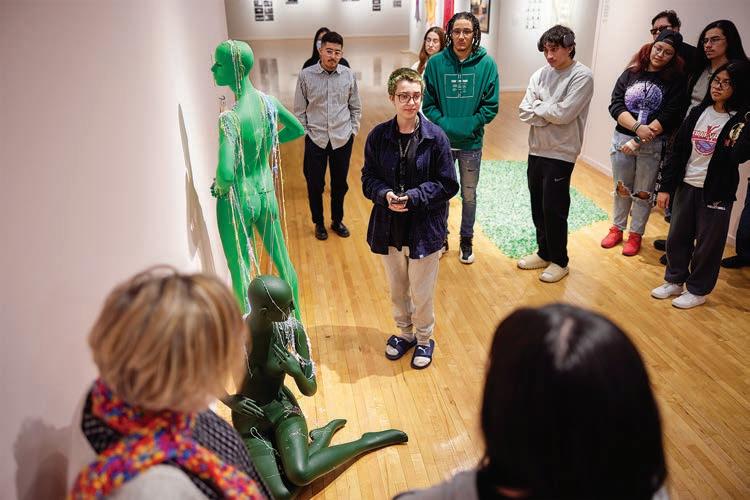
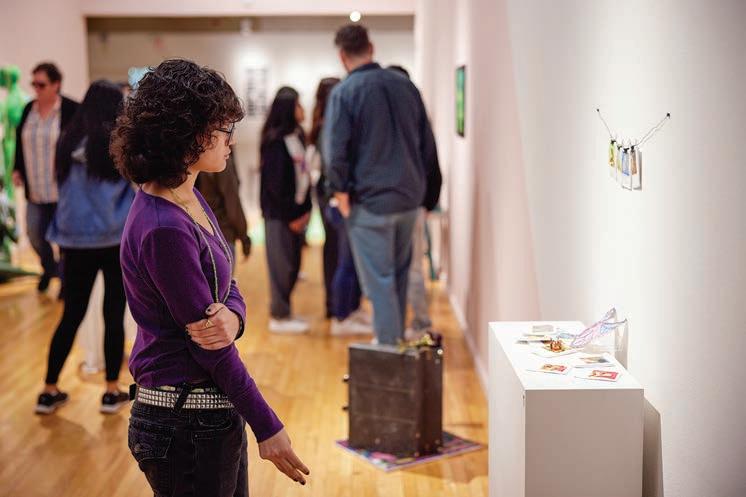
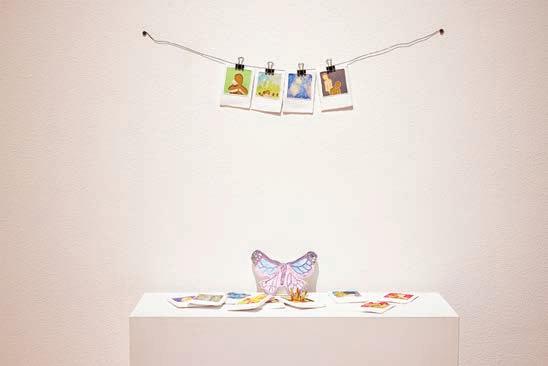
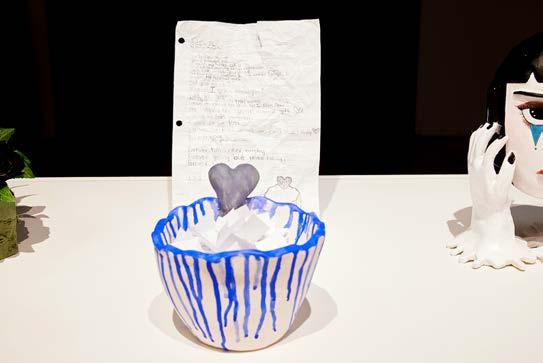
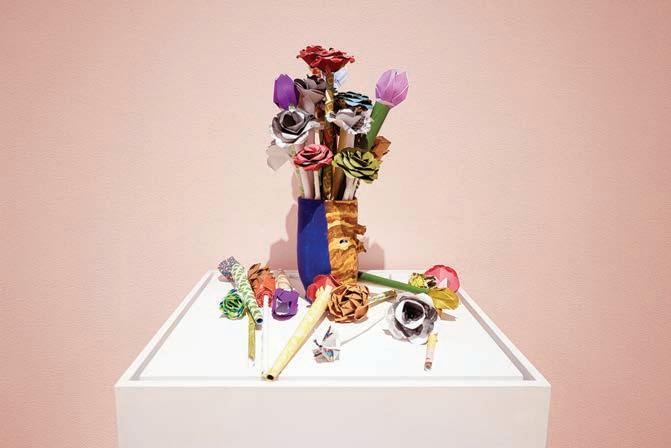
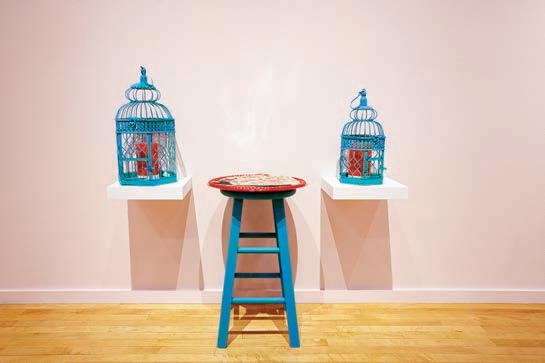
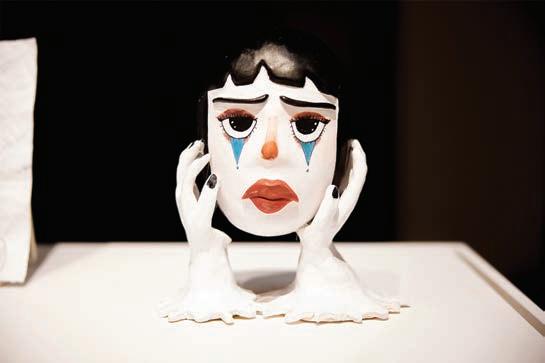
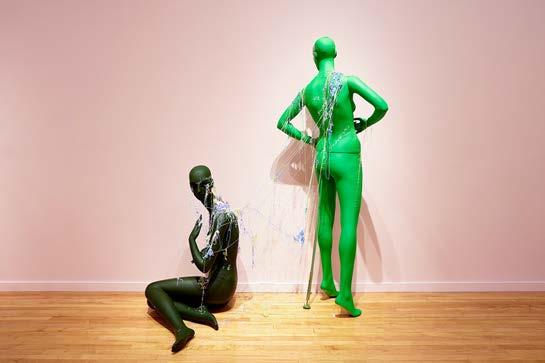
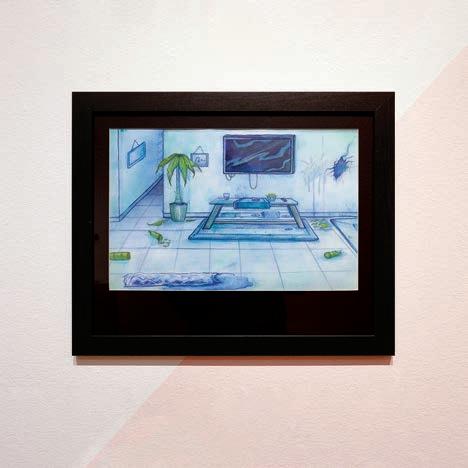
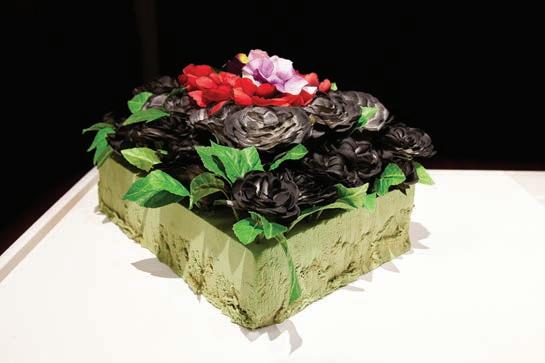
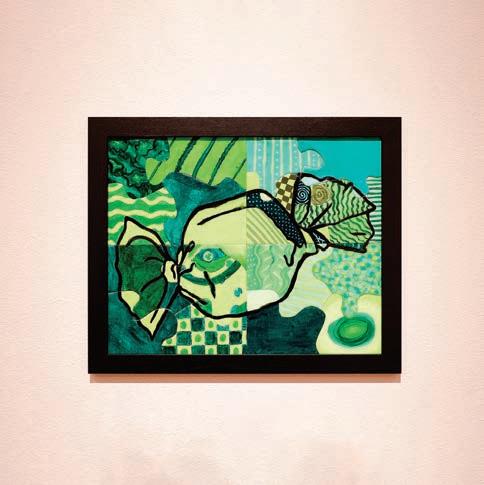
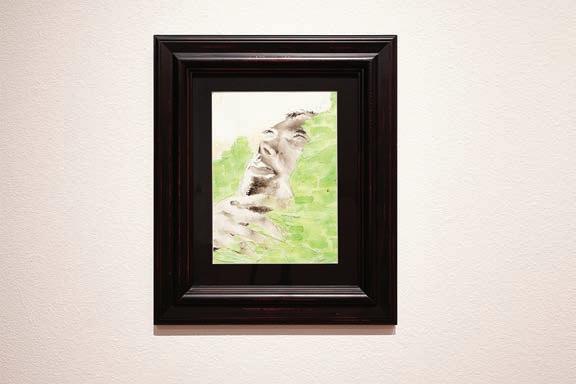
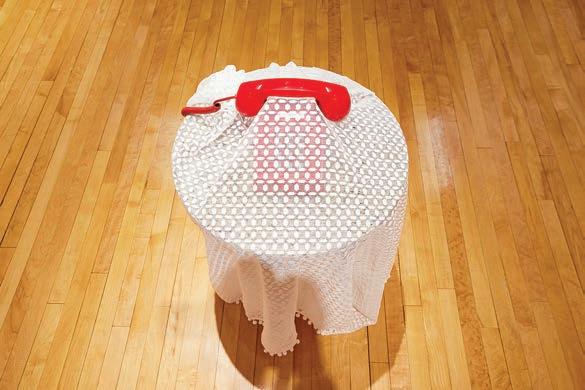
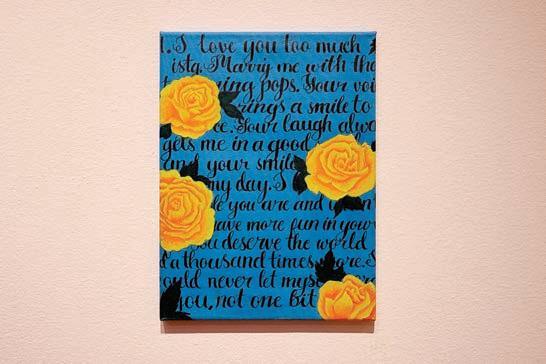
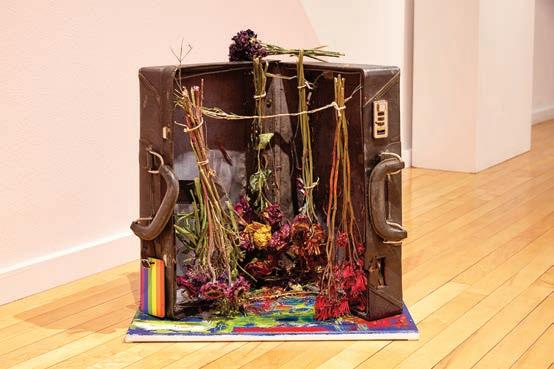
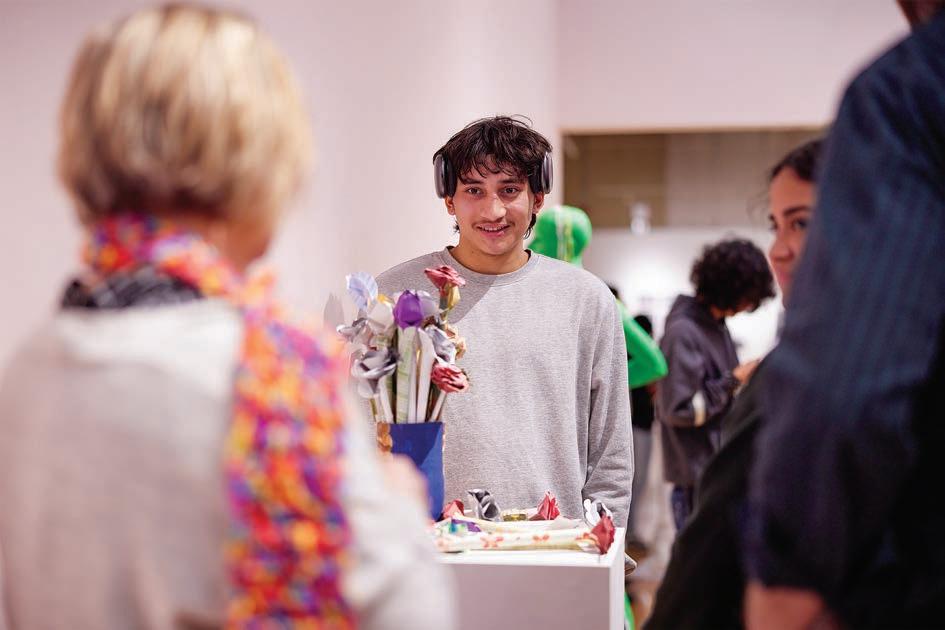
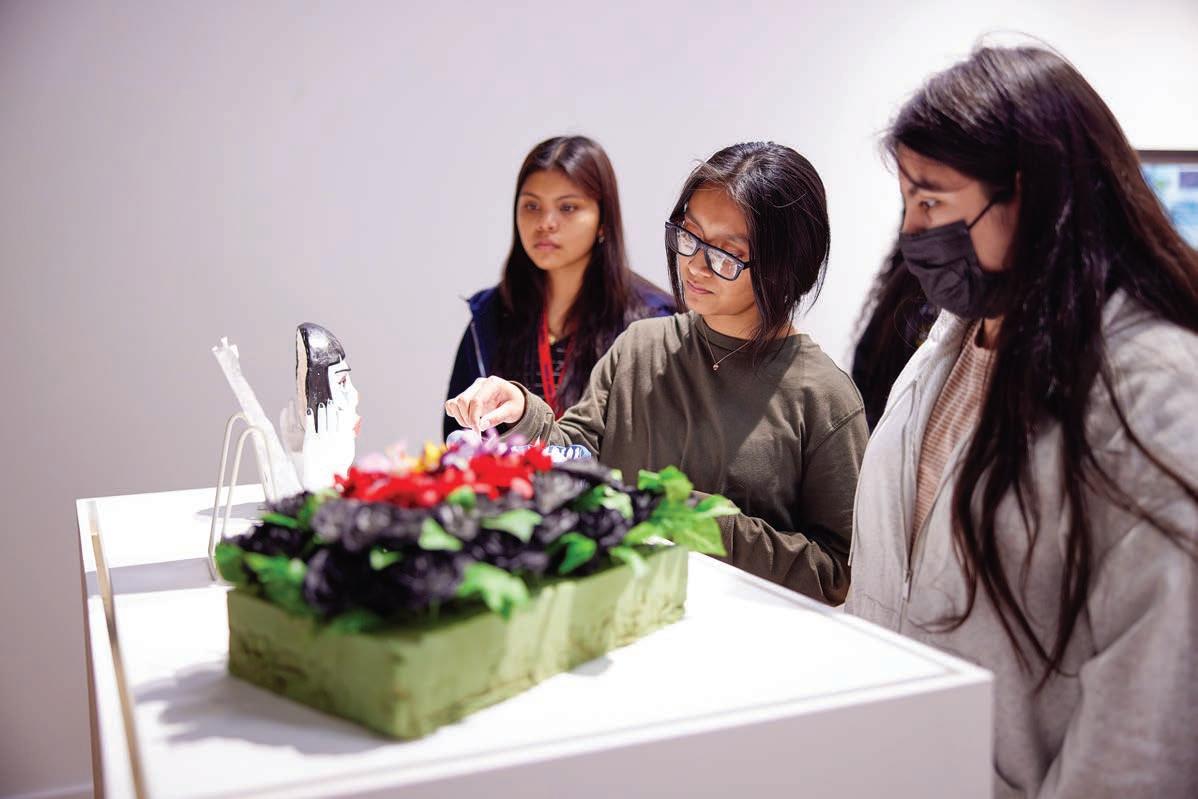
In October 2022, the Marjorie Barrick Museum of Art invited a group of art students from Valley High School to create work in response to “Untitled” (L.A.). The students’ interpretations of Felix Gonzalez-Torres’ ideas were on view next to the piece from January 17th – 28th, 2023.
Dafne Valderrama
Untitled (L.V.) 1, 2022
Ceramic
Ahtziry Alcocer-Amaro, Diana
Cardenas, Craig Deaderick, Salvador Diaz-Morones, Angelique
Esparza, Nakalyah Fabello
Untitled (L.V.) 3, 2022
Mixed media
Gloria Miranda
Untitled (L.V.) 2, 2022
Paper, ceramic
Stephanie Bray, Johanna Cooke, Kylee Mitchell
Untitled (L.V.) 4, 2022
Mixed media
Juliana Soto Hernandez
Untitled (L.V.) 5, 2022
Ceramic
Kylee Mitchell
Untitled (L.V.) 7, 2022
Mixed media drawing
Nevaeh Sitton
Untitled (L.V.) 6, 2022
Mixed media
Johanna Cooke
Untitled (L.V.) 8, 2022
Mixed media
Monica Benitez-Espinoza, Kylee
Mitchell, Erandi Rendon
Untitled (L.V.) 9, 2022
Mixed media
Chance Smith
Untitled (L.V.) 11, 2022
Mixed media
Ezer Soulimen
Untitled (L.V.) 10, 2022
Mixed media
Idali Olmos Rosas
Untitled (L.V.) 12, 2022
Acrylic on canvas
Ordonez
Kimberly
Untitled (L.V.) 13, 2022 Mixed media
MARJORIE BARRICK MUSEUM OF ART
The Marjorie Barrick Museum of Art believes everyone deserves access to art that challenges our understanding of the present and inspires us to create a future that holds space for us all.
Located on the campus of one of the most racially diverse universities in the United States, we strive to create a nourishing environment for those who continue to be neglected by contemporary art museums, including BIPOC and LGBTQIA+ groups. As the only art museum in the city of Las Vegas, we commit ourselves to leveling barriers that limit access to the arts, especially for first-time visitors. To facilitate access for low-income guests we provide free entry to all our exhibitions, workshops, lectures, and community activities. Our collection of artworks offers an opportunity for researchers and scholars to develop a more extensive knowledge of contemporary art in Southern Nevada. The Barrick Museum is part of the College of Fine Arts at the University of Nevada, Las Vegas (UNLV).
Alisha Kerlin
Chloe J. Bernardo
Paige Bockman
LeiAnn Huddleston Emmanuel Muñoz
D.K. Sole
Marjorie Barrick Museum of Art University of Nevada, Las Vegas Box 4012
4505 S. Maryland Pkwy. Las Vegas, NV 89154
702-895-3381 www.unlv.edu/barrickmuseum
ACKNOWLEDGMENTS
“Untitled (L.A.)” was produced with the assistance of the Marjorie Barrick Museum of Art staff: Alisha Kerlin, Chloe Bernardo, Paige Bockman, Lauren Dominguez, Tracy Fuentes, Dan Hernandez, LeiAnn Huddleston, Emmanuel Muñoz, and D.K. Sole. Further assistance was provided by the Museum’s graduate assistants, volunteers and interns: Lille Allen, Emily Espanol, Michael Freborg, Maricela Lopez, Charlene Gassett, Micah Haji-Sheikh, Andrea Noonoo, Naes Pierrott, Diane Lozano Tovar, Romina Villarreal, and Mahtab Zargari.
The Marjorie Barrick Museum of Art would like to thank the Felix Gonzalez-Torres Foundation, Valley High School, and Valley High School art educators Stephanie Bray, Chance Smith, and Alissa Ward. This project was supported by the Art Bridges Foundation.
PHOTOGRAPHY CREDITS
Images by Josh Hawkins/UNLV Creative Services and Mikayla Whitmore, courtesy of the artists.
Josh Hawkins Pages 5 (top), 19 � 25
Mikayla Whitmore Pages 2, 4, 5 (bottom), 6 � 8