From square dancing to laughing on Plaza Park’s lawn with family, Summer in the Park has given San Marcos 40 years of free concerts and bringing the community together. Summer in the Park is a series of free weekly concerts held throughout June, July and August, at San Marcos Plaza Park. Each week features a different artist and musical genre, bringing together community members with a variety of musical tastes to enjoy live performances and a fun, family-friendly activity without the cost of admission. Staying dedicated to the community, Summer in the Park is produced by a collaboration of various local organizations and non-profits like Summer in the Park 501c3 non-profit, and various other San Marcos non-profits.
The anniversary marks another milestone for an event that has become a staple in the community’s summer itinerary. Summer in the Park has slowly grown in attendance, artistic quality and reputation throughout the years. Barry Brittain, Summer in the Park director, said the event’s key to success over the last 40 years is the commitment to a familyfriendly environment and upholding local values.
San Marcos becomes first city in Texas to prohibit data centers
By Arabella DiChristina News Editor
San Marcos became one of the first Texas cities to ban data centers within city limits, utilizing its home rule authority.
During its June 16 meeting, the city council updated the Land Development Code and Design Manual, effectively
banning data centers while setting restrictions on this type of future development, making it not possible for a data center to be built in the city. The decision came after months of discussing the future of data centers and a denied data center proposal.
Cities with populations over 5,000 and have adopted a home rule charter, like
San Marcos, have home rule authority, which them the right to create their own zoning codes and control development within their jurisdiction, however, their authority is not absolute with county regulations and state preemption, or higher authority.
University Police announces new parking permit system ahead of Fall
By Madison Winzer News Contributor
Texas State University Police Department is implementing a new parking permit system for the 2026-27 academic year, allowing students living on campus
to purchase a permit to an assigned parking lot near their hall with guaranteed parking availability.
According to UPD, the permit changes follow recommendations from a recent parking study that gathered feedback from
students, faculty and staff. Now, permits will be priced by semester rather than a full year, billed through student accounts and provide students with guaranteed parking availability within their assigned lot.
Texas State University has officially gone west after joining the Pac-12 Conference on July 1, 2026.
The Bobcats transitioned out of the Sun Belt Conference in hopes of strengthening their national brand.
The Pac-12, a 110-year-old institution and former power conference, returns as a non-power conference following notable exits from Texas and Oklahoma to the Southeastern Conference.
The newly rebuilt conference has been working to re-establish itself nationally.
Texas State is one of nine schools competing in the rebuilt Pac-12, featuring two original members, Oregon State and Washington State, five Mountain West schools:
Boise State, Utah State, San Diego State, Colorado State and Fresno State and Gonzaga, a non-football member but basketball powerhouse.
Texas State’s 13-year tenure in the Sun Belt comes to a close after a long saga stretching back to September 2024, culminating with an official invite from the Pac-12 which led to the Texas State University System Board of Regents approving the $5 million exit fee to the SBC just a little over a year ago.
The Bobcats joined the Sun Belt in 2013 after only one year in the Western Athletic Conference (WAC), with the transition happening after the WAC stopped sponsoring football. Texas State had moved up to the Football Bowl Subdivision a year prior, the top-level in collegiate play.
Texas State wrapped up its time in the SBC as the highest-ranked team in the conference in the 2025-26 Learfield Directors’ Cup, a way to rank college athletic programs’ overall success, and placing 93rd overall out of 299 Division I schools.
SOPHIE GERKE | CREATIVE SERVICE DIRECTOR
San Marcos residents dance to the music in the summer in the park concert,Thursday, June 18, 2026, at Plaza Park.
ABEL BARCENAS | STAR PHOTOGRAPHER
STAR FILE PHOTO
Assisted living residents evicted after facility drops Medicaid
By Peyton Till News Reporter
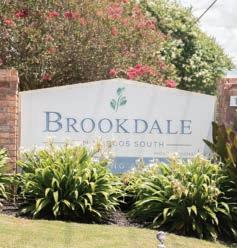
Nearly a dozen older residents faced eviction after Brookdale San Marcos South, an assisted living facility, was purchased by Gemstone Senior Living, causing residents on a Medicaid program to lose housing.
Gemstone Senior Living, an assisted living and memory care facility for older residents, left 11 residents of Brookdale South San Marcos vulnerable and faced with eviction after acquiring the company and no longer accepting the Medicaid waiver program. The deal between Gemstone and Brookdale was finalized on June 30, and residents in the program were ordered to move out that day.
The Medicaid waiver program allows for community and home based services to provide long-term care to individuals with disabilities or special health care needs in a community setting. The program provides medical or non-medical services from Texas Health and Human Services.
Alora Ferniz, the granddaughter of a Brookdale resident who resided at the facility through the Medicaid waiver program for 13 years, said residents and their families were informed of the sale of Brookdale to Gemstone at the end of May, and that Gemstone would not be honoring the Medicaid waiver program, giving the residents less than a month to find housing.
“Brookdale said they would help with moving and housing, but all they did was send us a list of skilled-nursing facilities and their help with hiring movers was on their timeline, and that timeline was shorter than the 30 days,” Ferniz said.
A Brookdale Spokesperson sent a statement to The Star that the incoming owners of Gemstone made the decision to end the Medicaid program was related to the operation plans, not a decision made by Brookdale.
“Gemstone has never taken Medicaid, Brookdale was fully aware that they were never going to continue a Medicaid contract, and that this would displace these people, and it is a financial thing,”
FROM FRONT PERMITS
The change in parking permits is designed to simplify and improve the campus parking experience, according to Cat Hoyt, alternative program coordinator for UPD.
“By eliminating the confusing multi-colored permit system, we are reducing the time students spend on searching for open spaces,” Hoyt wrote in an email to The Star. The changes apply to residential student permits, while employee and commuter permit options will remain unchanged.
Hoyt wrote that residential students will now have guaranteed parking. Students will be able to choose an assigned lot when they purchase a permit, and those spaces will be reserved for them 24/7.
“To ensure a spot is always available, we cap permit sales strictly at each lot’s physical capacity. For example, if a lot has 100 spaces, only 100 permits will be sold for that specific lot,” Hoyt wrote.
If a resident returns to campus and finds their assigned lot full, Hoyt advises students to contact UPD to scan the lot using License Plate Recognition (LPR) technology.
“Any unauthorized vehicles will be ticketed and towed. We maintain a zero-tolerance policy for parking violations in assigned residential spaces to protect your parking privileges,” Hoyt wrote.
Texas State enrolled 44,596 students in fall 2025, with nearly 10,000 students living on the San Marcos campus, according to
Trinity Building 203 Pleasant St. San Marcos, TX 78666 (512) 245 - 3487
History: The University Star is the student newspaper of Texas State University and is published every Tuesday of the spring and fall and once a month in the summer semesters. It is distributed on campus and throughout San Marcos at 8 a.m. on publication days with a distribution of 3,000. Printing is by the New Braunfels Herald-Zeitung.
Brookdale San Marcos South, assisted living facility sign sits at 1401 Wonder World Drive, July 3, 2026, in San Marcos. Brookdale San Marcos South was purchased by Gemstone Senior Living in late May 2026.
Ferniz said. “I understand they have a different business model, but Brookdale had different options that they could’ve taken.”
The spokesperson for Brookdale stated their priority remains the health and well-being of residents throughout this transition, stating that they provided notice consistent with state requirements and have been working individually with each impacted resident and family to help them identify and secure an appropriate new home.
“They haven’t addressed anything. In their public statements to other news organizations, they said, ‘we did legally the bare minimum’, and they did nothing to protect their residents … we didn’t get even an eviction notice, it was just verbal over the phone,” Ferniz said. “Both companies knew that they were displacing 11 people.”
Hays County Judge Ruben Becerra sent letters to company leaders stating that these residents face displacement from their homes, caregivers and support networks, with many having no option other than placement in more restrictive nursing facilities despite having thrived in an assisted-living facility.
“As a Hays County Judge, I am deeply concerned by disturbing reports that 11 seniors are being forced out of Brookdale South San Marcos, a place they have called home for years, because the facility has been sold to Gemstone and will no longer honor the Medicaid waiver program,” Becerra wrote.
According to Ferniz, due to these evictions, her family had to move her grandmother, one of the 11 former Brookdale residents, into a skilled nursing facility in New Braunfels.
“The facility she’s at now is more like a hospital, she doesn’t even have access to a courtyard. I feel like I dropped her somewhere and she’s been stripped of everything. All of her freedom and her independence has been taken away, they’ve taken everything from her, her entire home, it’s devastating,” Ferniz said.
“I’ve been talking to corporate employees of Brookdale and Gemstone, and through both of these folks, I’ve come to find out that there were 19 bids on the property, Gemstone was one of 19. Brookdale could not tell me if any of the other bids were capable or willing to continue the Medicaid contract, which I think is really wrong,” Ferniz said.
Gemstone Senior Living declined to comment on the matter.
“I wish they would’ve come to the table to come to a solution that would serve all parties, including the 11 residents, so that they wouldn’t be ripped from their homes and belongings,” Ferniz said. “I would say that we as Americans and as Texans need to do something about the way we care for our elders, especially when we can’t bring them home with us. We need change and that needs to happen at the government level, because these private companies are not going to be the ones to do it.”
university enrollment data.
“The parking study is presently in the editing and review phase; one of its early recommendations is to implement assigned residential parking,” Hoyt wrote.
The new permit system also introduces financial changes.
“This is especially beneficial for students who may be graduating early, studying abroad, or changing their housing arrangements mid-year. Furthermore, by routing payments directly through the student bill, it eliminates immediate out-ofpocket expenses during registration,” Hoyt wrote.
The parking permits were updated to accommodate the growing campus, focusing on-campus residents having access to efficient and reliable parking, Hoyt wrote.
Editorial Staff
Editor-in-Chief: Andrew Bencivengo stareditor@txstate.edu
Managing Editor: Meg Boles starmanagingeditor@txstate.edu
Life & Arts Editor: Cady Clements starlifeandarts@txstate.edu
Opinions Editor: Regina Orozco Lopez Forment staropinion@txstate.edu
Design Editor: Jen Nguyen stardesign@txstate.edu
Aubrie Smith, elementary education sophomore, said finding parking can be difficult during weekdays when classes are in session and believes that the new system could improve parking access for residential students.
“I think it’s beneficial for Texas State,” Smith said. “A lot of [parking] is closer to your dorm, easier to carry things, and you don’t have to fight for a spot with somebody or park 20 minutes down the road.”
Hoyt wrote that employee and commuter options are unchanged with UPD streamlining residential parking and protecting student spaces.
All previous colored residential permits have been condensed into two options: Residential Assigned Permits and Residential General Permits.
Engagement Editor: Tatum Pou starengagement@txstate.edu
PIR Director: Keely Florez starpr@txstate.edu
Creative Service Director: Sophia Gerke starcreative@txstate.edu
TV News Director: James Phillips startvnews@txstate.edu
purchasing the correct permits, sales will occur in phases due to limited availability and lot capacity restrictions. Phase 1, which opened June 30, allows permits in assigned residential neighborhoods or in remote lots on Thorpe Lane and Mill Street. Phase 2 allows students to purchase permits outside their neighborhood based on availability, lastly Phase 3 opens all remaining permits to all students.
With Residential Assigned Permits, priced at $350 a semester, or $700 for the academic year, students can select one specific designated lot within their residential zone, with a guaranteed spot within the specific lot. This permit costs $215 more than the previous residence hall permit, which was priced at $485 annually.
Residential General Permits, priced at $85 a semester, grant students access to the remote lots on Thorpe Lane or Mill Street, with shuttle access and Safe Rides to get on campus. Commuter permits are priced at $85 per semester and motorcycle permits at $118 annually.
UPD is currently finalizing the new parking sign designs.
Students can purchase permits through the Texas State Parking Services website or through student billing in their MyParking account.
Publication Info
Copyright: Copyright Tuesday, July 7, 2026. All copy, photographs and graphics appearing in The University Star are the exclusive property of The University Star and may not be reproduced without the expressed written consent of the editor-in-chief.
Corrections Policy: Errors appearing in the pages of The University Star and brought to our attention will be corrected as soon as possible.
Recently, Hays County commissioners passed a mostly symbolic resolution on June 23, to pause the development of data centers due to water scarcity.
Counties are limited by the state’s local government code and are without home rule authority, which restricts their powers to regulate development within their borders, including a lack of general zoning authority.
According to Councilmember Amanda Rodriguez, the prohibition is a change to the development code itself, with no loopholes or workarounds as well as an approval from the council for heavy industrial zoning.
“Therefore, if a developer approaches us as a city now, it doesn’t matter if they say ‘hey, I have a great project, I’m going to put it over here.’ It does not matter. It is not allowed in the city, that is an authority county do not have,” Rodriguez said.
This is the second attempt to pass an amendment to the Land Development Code and Design Manual to ban data centers. Rodriguez attempted to pass an identical amendment, but it failed 3-4 in March.
The new resolution, brought forward by Councilmember Lorenzo Gonzales, passed 4-3, with Councilmembers Joshua Paselk, Matthew Mendoza and Mayor Jane Hughson dissenting.
Hughson said during the meeting that she did not want to remove the possibility of data centers completely and was hopeful they would improve with time.
“As long as these are required to come before us, I’d like to leave the opportunity ... I’m holding out hope that as time goes on, that the technology will be better, and things will shake out,” Hughson said during the meeting.
Rodriguez said there are only a
few heavy industrial zoning districts left within San Marcos. Currently, the city doesn’t have any active data center proposals.
“It is not my job as a politician to force-feed a certain type of development that people just don’t want,” Rodriguez said.
As one of the first cities in Texas to pass an out-right ban on data centers, Rodriguez said she felt surreal to see her proposition go so far.
“I felt that it’s one thing for us to deny data center, but it’s another thing to sit here and figure out how can we additionally substantively address this issue of data centers, whether it be a full out ban or regulating what they would look like in the future should they come,” Rodriguez said.
Zachary Tyndall, a San Marcos citizen and member of the Data Center Action Coalition, said the complete ban was a welcome surprise from the council.
“It’s felt really good to see the changes in city council to where, you know, a year ago many of them didn’t seem very concerned about data centers and over that year through the advocacy of the community, seeing their perspective change, whether it’s a true change of heart or just bowing to the public pressure, whatever it is, it’s good to see that council is more and more responsive to these concerns from the community,” Tyndall said.
Tyndall said it is important that other cities realize that they can do a total ban on data centers, just like San Marcos.
“I think we’ve made more progress on [the fight against data centers] than I would have expected, as far as I know we’re the first city in Texas to effectively ban data centers,” Tyndall said.
A possible workaround when data centers go outside of city bounds, like the Cloudburst Data Center sitting on
the edge of the city limits, Rodriguez said the centers need a lot from cities, from wastewater, electricity and general water to the point where they will turn to counties for resources.
“[Cloudburst is] wanting things from us as a city too, they’re already talking about potentially approaching us for reclaimed water,” Rodriguez said. “So that idea that they can just exist without connecting to something it’s just not there, it’s not the reality.”
Rodriguez said while the ban may feel like a win at the moment, data
centers are a persistent issue, and the fight has to be taken to the next levels of government to be taken seriously.
“This cannot be an issue that just ends with San Marcos …It is incumbent on us to take this discussion to the state and plead with the state to allow our counties to strike a balance, to have more regulatory authority and to dictate what is allowed in their counties,” Rodriguez said.
James Philips contributed to this article.
MADELINE CARPENTER | STAR ILLUSTRATOR FROM FRONT
Regina Orozco Lopez Forment
Opinions in The University Star are not necessarily those of our entire publication, Texas State University’s administration, Board of Regents, School of Journalism and Mass Communication or Student Publications Board.
Project Overwatch may harm minority students
By Mark Gabrielides Opinion Columnist
As students return to campus in the fall, they will be greeted by a new student operated form of surveillance across campus.
Having students monitor their peers raises potential privacy and discrimination concerns.
“Project Overwatch,” a program launched by the Texas State University Police Department, will seek to expand monitoring by hiring students to watch approximately 900 cameras on both the San Marcos and Round Rock campuses.
The initiative will aim to identify suspicious behavior and provide immediate information to UPD officers with hopes of speeding up response times to potential emergencies across campus. To ensure constant coverage, the program will employ students to monitor security cameras for their assigned shifts.
While the concept of having students monitor security cameras allows for greater job opportunities, it is important to recognize the potential sociological consequences of allowing students to monitor their peers. Students may begin to feel judged by their peers in classroom settings and throughout campus as trust is potentially lost between them.
By not knowing which one of their peers may be observing them across campus at any given time, a
panopticon effect may be created, creating an environment in which students are aware that they are being monitored but are left unaware of who may be watching and what their agenda may be.
Surveillance has become more prevalent in our day-to-day lives with the improvement and spread of security cameras. Much like the panopticon, constant surveillance has been found to increase anxiety, paranoia and create changes in behavioral patterns in those aware of their surveillance, according to sources such as The Harvard Magazine.
Texas State students may begin to feel the weight of these impacts when engaging in acts of protest on campus, as they may become more anxious to voice their opinions due to paranoia commonly associated with surveillance. Texas State has upheld their sentiment that freedom of speech and inquiry are protected on campus. With the implementation of “Project Overwatch,” students may begin to feel a greater sense of anxiety when engaging in these activities on campus.
When hiring students to monitor cameras, it is crucial that training be very specific in defining ‘suspicious’ behavior in order to prevent students from having to overthink their behavior and combat the potential for racial profiling to occur.
Texas State Sociology Professor, Dr. Nathan Pino, said that students from minority groups have the potential to be more impacted by the initiative.
“I would say students from
marginalized groups are more likely to be negatively impacted by it [Project Overwatch] than others.” Pino said.
In addition to a potential increase in unease and breach of personal privacy, this initiative furthermore raises concerns for minority students. With almost three-quarters of collegeaged black men having reported being subject to traffic stops due to suspected racial profiling, concern for the safety of visible minorities being monitored closely across campus becomes apparent.
While student employees will be trained in emergency dispatch procedures, emergency communication and how to listen to radio traffic, students will not receive extensive training on bias.
In a study conducted by PubMed Central, researchers found that racial bias was largely present in white participants, whether they were conscious of their bias or not. It is crucial that Texas State students employed under “Project Overwatch” remain aware of detrimental, systematic racial stereotypes in order to maintain a safe environment on campus for all.
Racial profiling could additionally cause suspected crimes to be overreported. If threats are frequently incorrectly reported, fear-mongering may occur as students begin to perceive an increase in danger on campus when this is not necessarily the truth.
“The definition of suspicious is in the eye of the beholder,” Pino
said. “So there’s a danger there that might lead to more enforcement of minor infractions that get blown out of proportion.”
Students at Texas State deserve to feel safe and comfortable across campus and inside of the classroom. As an institute that proudly serves a diverse student body, Texas State should be a sanctuary for all students without fear of discrimination.
With “Project Overwatch” coming to fruition, it is important that unconscious racial bias is challenged in order to keep minority students on campus safe and without unnecessary intervention.
-Mark Gabrielides is an English and education sophomore
Stigmatization hinders student addiction recovery
By Syghlas Morales Opinion Columnist
Trigger Warning: Mentions of substance abuse in this article.
In college environments, casual partying can silently turn into addiction before a student realizes, leading them down a road of isolation, self and social scrutiny.
Substance use disorders (SUDs) are defined as the uncontrolled use of a substance despite harmful consequences such as withdrawal, which has painful and sometimes fatal side effects and dependency. However, the physical aspects of addiction are not the only part of the struggle; the stigma that comes with SUDs can be an entirely separate mental battle.
According to PubMed, SUDs are conditions that 21.8% of college students struggle with. College students can be especially susceptible to SUDs as a consequence of academic pressure, Greek life and peer pressure.
The National Institute of Drug Abuse (NIDA) characterizes stigma as the discrimination against an identifiable group of people. The stigma around SUDs is often founded in false ideology, such as “addiction is a personal failure” or “those who struggle can’t be helped.”
These misconceptions singlehandedly misrepresent SUDs and discourage struggling students from looking for support for fear of judgment and discrimination, making recovery all the more difficult.
According to a study done by the Center for the Study of Drugs,
Alcohol, Smoking and Health, as few as 5% of college students who meet SUD criteria seek help due to stigma and psychological distress.
Life-saving drugs like Narcan, a nasal spray that reverses the effects of an opioid overdose, have also been scrutinized as a result of addiction stigma. Despite its lifesaving capabilities, Narcan often goes unused, unrecognized, and heavily criticized by the public due to negative assumptions about SUDs. Many believe that Narcan’s qualities will only “enable” users.
Alicia Rosas, a Texas State health promotion specialist with University Health Services, said that changing the way students view SUDs is essential in de-stigmatizing addiction.
“Substances are built to be highly addictive for people ... there are a lot of physiological components to substance use disorders as well,” Rosas said. “So being able to move from seeing a SUD as an individual ... personal or
Letters to the Editor Policy
moral issue to a more medical sciencerelated condition that somebody can be treated for can help reduce that stigma.”
The way we talk about addiction also plays a key role in breaking down stigma. By avoiding stigmatizing language, we reduce shame, encourage users to seek help and create a space where recovery is possible.
“We recommend using personfirst language when talking about any health condition, especially SUDs... instead of saying that a person in recovery is ‘clean,’ refer to them as ‘a person in recovery’ or ‘a person seeking recovery,’” Rosas said. “This helps reduce historical stigma around substances being seen as ‘dirty’ or ‘dangerous’ and instead shifts the focus to the person who is seeking or receiving support.”
In order for struggling students to overcome shame and selfstigmatization, they must be able to access proper support. Texas State
Submissions that do not include this information cannot be published. This information is seen only by the editors and is used to verify the identify of the letter writer. It is not used for any commercial purpose.
offers a variety of support programs designed to help struggling students access the care they need.
The Student Recovery Alliance is a support group for students in recovery. The group utilizes Self-Management and Recovery Training (SMART) recovery tools, plans sober activities, and helps connect individuals seeking recovery to additional communitybased support, in partnership with Cenikor, a San Marcos-based recovery center.
Texas State also hosts Alcoholics Anonymous (AA) meetings every Wednesday in Lampasas Room 302 from 5 p.m. to 6 p.m. Other substance support links leading to Narcotics Anonymous (NA) meetings in the San Marcos area are also available on the university website.
“Recovery [methods] are not one size fits all, and accessing help for substance use recovery can be different for every single person,” Rosas said.”... In reality, any path to recovery, for any individual, is the best way for them if it is helping them stay in recovery and get the resources that they need.”
SUDs are treatable medical conditions that students should not feel ashamed about. Stigmatization is one of the greatest obstacles while facing addiction, but with proper help, it can be overcome. Making sure that students who battle addiction know they are supported lies in the hands of not only Texas State professionals but also other students. Never be ashamed to reach out for help; recovery is possible.
-Syghlas Morales is a wildlife biology sophomore
Letters become the property of The Star and may be republished in any format. The letter may be edited for length and clarity. An editor will contact the letter writer if their letter is a candidate for publication. The Star will not run letters that are potentially libelous, discriminatory, obscene, threatening or promotional in nature.
Letters can be submitted to staropinion@txstate.edu or by mail to Attn: Opinion Editor, The University Star, 601 University Drive, San Marcos, TX, 78666.
MILLA DEUR | STAR ILLUSTRATOR
Holeman’s mission to make TXST a contender
By Juan Pereira Casanoba Sports Reporter
Steve Holeman arrived in San Marcos four years ago as the new head coach for Texas State women’s soccer with the daunting task of revitalizing a program that hadn’t made the NCAA tournament in over a decade.
His reputation as a program builder in the college soccer world spoke for itself. A roster builder with over 30 years of experiences, he served as the first-ever head coach for Auburn and Ole Miss alongside coaching jobs with Georgia and Lamar, encompassing 283 wins with eight NCAA tournament appearances prior to Texas State.
After four seasons at the helm, Holeman and the Bobcats left the Sun Belt Conference as tournament champions following a 1-0 shutout against Louisiana-Monroe in the 2025 SBC Championship game, earning Texas State its first NCAA Tournament bid since 2011.
Despite a 3-0 loss in the first round to Baylor in the NCAA Tournament, the 2025 season was an outstanding success for the program.
Now Holeman, whose contract was extended through the 2030 season, has the unique opportunity to build hype around the program and make Texas State a powerhouse soccer school.
“If you’re at Texas State, you have the opportunity to see a very good soccer team, defending a tournament title,” Holeman said. “So come out and watch us compete in the new Pac-12.”
Holeman’s work has led to an unique advantage; most of his 2025 SBC championship roster is returning for 2026 in spite of big departures like French forward Mady Soumare, who is now playing professionally for FC Porto in Portugal.
For now, Holeman is looking internally to replace his star striker,
FROM FRONT PAC-12
The Bobcats have high expectations as they make the jump west, with goals such as football making a college football playoff appearance, consistent NCAA tournament appearances for men’s and women’s basketball and hopes of baseball and softball hosting regionals per the university’s pitch to the conference.
Texas State will also significantly increase its investments across athletics and facilities, with an estimated revenue share for student-athletes to be $7 million by 2029, along with a stated goal to increase the annual athletic budget by 2035 from $58 million to $91 million.
The Pac-12’s new media deals will have Texas State games across linear television, featuring three different networks: CBS, USA Sports and The CW. All of which offer easy-to-access games for football alongside men’s and women’s basketball.
It is unclear at this current moment how sports outside of these will be available to watch.
Texas State’s share of the media rights deal between them and the other members is also unclear; however, fans will have a greater accessibility to games than they previously had.
Texas State will also have the opportunity to host postseason tournaments, as well as competing on the road at new places.
While the top seed in football will host the title game, basketball will hold
with senior midfielder Victoria Meza as one of the potential options.
“Meza [is] so versatile, she was the preseason midfielder of the year, and through necessity, we played her in the back,” Holeman said. “She’s a natural...[Meza] has all the makings of a good player anywhere on the field.”
Meza, who also plays for the El Salvador National Team, is one of many players with international experience at Holeman’s disposal. This has become a strength for the Bobcats, especially as Holeman hasn’t been afraid of using international talents.
One such example of this philosophy is Japanese midfielder Matsuri Tsutsui, who was ranked the 67th best freshman in TopDrawerSoccer’s 2025 rankings. Tsutsui is just one of the many success
its tournaments at the MGM Grand Garden Arena in Las Vegas, Nevada, featuring all nine teams in a ladderstyle format. Texas State will also host the softball conference tournament in Spring 2027.
The move to the Pac-12 has also begun paying dividends for the Bobcats’ recruiting efforts, while also bringing the first DI women’s gymnastics program to Texas.
Texas State has captured higherranked talent across sports, such as football, where Texas State’s recruitment of three-star and some four-star talent has become more commonplace, headlined with the program’s highest-ever ranked recruits in four-stars La’Keyleon Graves and Daylon Gordon, among many other high-ranking three-stars.
The university recently announced the return of their women’s gymnastics program after a 40-year absence, and this time competing in Division I. After this, the program announced the hiring of Sarah Brown out of Penn State as its new head coach.
A new conference with new faces should allow an evolving Texas State to place themselves in the national conversation. Texas State’s fight song says it best, with the university continuing to push “Until the whole world knows [its] name. No doubt about it.”
stories he’s had.
“When you bring a kid in like that as a freshman, you just never know how they’re going to adjust, especially coming all the way from Japan,” Holeman said. “She’s so creative and she just has the ability to unlock defenses, and she made us better. So, we’re excited to have her coming back for three more years.”
Holeman’s leadership was in fact a crucial factor in Tsutsui’s adjustment to the NCAA Division I level, which for any student traveling far from home, isn’t a guarantee.
“He has had a huge impact on me,” Tsutsui said. “One of his greatest qualities is that he genuinely cares about our team, both on and off the field. He also creates a great level of intensity in training, which helps us maintain a high quality.”
Holeman’s recruitment and on-field successes led to his extension with Texas State, who now hope that he’ll be the man responsible for raising the team’s national relevance in a new conference.
“I have complete confidence in Coach Holeman leading our soccer program as we continue building on the incredible momentum of the past four years,” Texas State Director of Athletics Don Coryell said. “As we enter a new era in the Pac-12, I’m excited about the future under his leadership and all that lies ahead for Bobcat soccer.”
2025 was the culmination of a project that intended to turn Texas State into a winner. But now, the Bobcats will have the chance to ride a wave of soccer hype in the U.S. thanks to the World Cup being hosted here in the States. The importance of this new season in a new league following the biggest World Cup yet cannot be understated. Positive results could set the program up for years to come.
Of course, Holeman can’t guarantee results, just like any other coach, but he can guarantee a process. As he’s shown throughout his time with the Bobcats, his process includes hustle, drive and an expectation of success.
“The expectation is always to compete as well as we can, as hard as we can, and to have an extremely high work ethic,” Holeman said. “I think all nine teams could say we expect to make the [conference] tournament, but one of our objectives is to get there and be able to compete for a conference title.”
Soccer will be the first team to officially start the 2026-27 athletic year for Texas State with an exhibition game on Wednesday Aug. 5 at 9 a.m. against Texas State Mexico in Querétaro, Mexico.
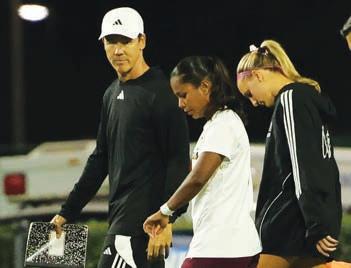
Texas State soccer head coach Steve Holeman (left) walks back to the sideline with junior midfielder Victoria Meza (4, right) before start of the second half against Baylor in the NCAA Tournament, Friday, Nov. 14, 2025, at Betty Lou Mays Field in Waco, Texas. The Bears won 3-0.
AYDEN OREDSON | SPORTS EDITOR
SOPHIE GERKE | CREATIVE SERVICE DIRECTOR
A mural celebrates Texas States move to the Pac-12 Conference, Friday, July 3, 2026 in San Marcos, Texas.
BOLES | MANAGING EDITOR
LIFE & ARTS
Readers’ top 3 SMTX summer activities
By Cady Clements Life and Arts Editor
The University Star conducted a poll between June 26 and June 28 on its Instagram, asking readers about their favorite activities to do in San Marcos during the summer months. Out of the responses, The Star highlighted the top three answers, exploring what each option has to offer.
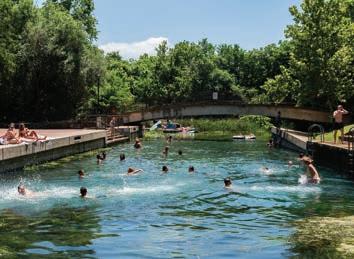
Sewell Park is a staple in the San Marcos community for all ages. Sewell is a university-owned park along the San Marcos River located at 601 University Drive, which hosts a large lawn space, sand volleyball and an activity center where students, alumni and faculty can rent a tube for 6 dollars, which are half off when the weather hits above 100 degrees.
Readers shared some of their favorite ways to spend their summers on the river. Some readers said that
they enjoy getting lunch on the Square and lounging by the riverside. Others said grabbing an iced latte and floating the river is the best way to stay cool.
Sewell Park was established in 1916 by a mathematics professor who decided with a university so close to the San Marcos River, Texas State needed a park and swimming area. Though the river was only three feet deep at the time, students took it upon themselves to make the park fit for summer activities, according to Texas State. It was called Riverside Park until 1946, when it was renamed in honor of its founder, Professor S.M. Sewell.
The park was built by students, but holds a special place in all of the San Marcos community’s hearts as a family friendly spot to hang out and enjoy the sun and water.
SEWELL PARK THE SQUARE
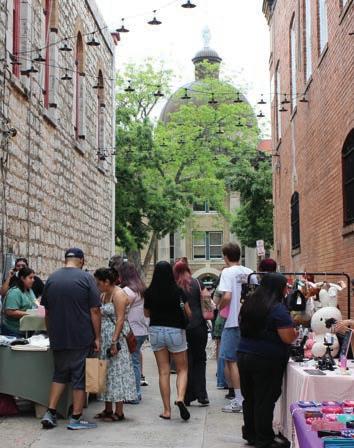
The historic downtown San Marcos, lovingly known as The Square, located in the center of town, hosts a multitude of fun activities during the summer including places to grab a sweet treat, Saturday markets and some of San Marcos’ staple restaurants.
The Square is the embodiment of San Marcos culture, blending art, with the city’s affinity for fun and leisure. From the San Marcos Art Center to The Taproom to Rhea’s Ice Cream, The Square has something
for everyone.
Some favorite Square activities include walking around with an iced coffee or grabbing something to eat which pairs well with floating the river, according to our readers.
The Square often hosts markets like the recent Trinket Girl markets and farmers markets, giving families a place to relax, shop and spend an afternoon.
San Marcos residents can hear the sounds of our city anywhere in town. From grunge bands to indie, San Marcos never fails to have live music hidden in every corner.
Readers shared some of their favorite activies include going to live shows in San Marcos and creating music of their own.
San Marcos has venues for every genre, including The Marc for bigger EDM shows, Private Park for more intimate grunge shows and Cheatham Street for a good night of line dancing
bringing artists from across the country. San Marcos is rich in culture which allows for every type of music to be played across town.
The venues mean nothing without the many bands that make up San Marcos’ scene. The Trips and others play more indie music, while Bicurious George is self-described as “SMTX loser pop”. Mousch, Cuerno and others play a more hardcore type of music, but all share a connection through the tight-knit music community in town.
LIBBY ALLEN | STAR PHOTOGRAPHER
“I think that this represents our town really positively. There’s nothing negative about this. You go out here and see the people enjoying themselves,” Brittain said. “There’s nobody trying to sell them anything ... It doesn’t matter what kind of music it is. What they’re going to see here, it’s going to be really well done.”
The event began at the San Marcos Activity Center in 1987. Over the years, the community’s interest and performance artistry grew, so the event was moved to a larger venue. Since then, the event made it’s home at San Marcos Plaza Park.
“It started out as a very small, local, sort of a family event ... and it’s just it grown in interest as soon as it moved ... to this stage. Got more people, the acts got better,” Brittain said.
When Brittain took on the project in 2011, his goal was to keep the small-town charm that San Marcos offers, but also to up the quality of the acts to create a better show and increase attendance both locally and outside of the community.
“Part of our funding comes from the hotel occupancy tax, so clearly there’s a tourism element … You want to have people come to San Marcos,” Brittain said.
FEATURE
“Maybe spend the night in a hotel, enjoy the concert ... float the river, enjoy what we have here.”
The concert series offers a reason to gather together.
This year highlights not only the longevity of the event but also its role in creating an accessible summer activity that has become a seasonal favorite in the community.
Local vendors and organizations are also impacted by the series’ success. Terri Hendrix, past Summer in the Park performer
and non-profit founder, set up her interest booth along with other local vendors outside the performance.
Hendrix said the growth of the event and the results of accessibility have been inspiring to see over her 38 years of San Marcos residency.
“It has really grown. It used to be, maybe, happy to have 200 people. Now it’s probably 2,000 people or more. So, it’s been great to see it grow,” Hendrix said. “The arts thrive by
having accessibility. And accessibility is beyond race, it’s beyond the school, genre, it’s truly about the gathering of the arts.”
As the series celebrates 40 years, Brittain hopes it continues serving as a summer tradition for years to come.
“I’m hoping that whatever people step forward ... they represent a younger generation that takes this thing into the next whatever it’s going to be,” Brittain said. “Nobody knew what it was going to be
when I took it on. And right now, I feel pretty good about what I’ve been able to do with this.”
Mercedes Smith, Texas State alumna and San Marcos native, said the sight of hundreds of people filling San Marcos Plaza Park left an impact on her and let her remember what makes the city so special.
“I love outdoor events, and getting the family together, and seeing people that I haven’t seen in a whileespecially since I did grow up in San Marcos,” Smith said. “I think San Marcos is a very community centered town. And this is exactly that. It’s all about bringing people together, dancing, listening to music, getting different organizations together.”
Community members and out-of-towners can continue to enjoy Summer in the Park every Thursday at 7 p.m. throughout the month of July and wrap up summer with the final concert of the summer scheduled for August 13.
SMTX community jams out at Make Music Day
By Camilla Groves Life and Arts Contributor
Free concerts echoed through Downtown San Marcos this year as the city celebrated its third Make Music Day on June 21.
Make Music Day, or Fête de la Musique, is a holiday started by France’s Ministry of Culture in 1982. Its purpose is to fill cities with free concerts for everyone by anyone every year on the summer solstice. In recent years, it has made its way across the Atlantic Ocean and into local musical communities around the country like San Marcos.
Steve Anderson, Destination Services Coordinator at Visit San Marcos, the city’s Convention and Visitor Bureau, for eight years. He manages the city’s music promotion on their website and social media through a directory of local venues and performances called Listen San Marcos.
The program is a partnership with the Texas Music Office, a branch of the Governor’s Office of Economic Development and Tourism that focuses on promoting “musical businesses, musicians and communities by strengthening the state’s music industry and fostering economic development through music,” according to their website.
“We have our own website and social media that share where you can find live music any day of the week,” Anderson said. “We also hold music meetups, networking events, as well as educational events for musicians and businesses throughout the year.” Anderson said.
At an annual conference for the Texas Music Office about four years ago, Anderson learned about Make Music Day, and began working with his team to host it for the first time in 2024. This year there were 33 performances at six different venues including Embassy Suites, The San Market, The Porch, The Parlor, Wineaux and the San Marcos Art Center.
“It’s good for everyone who participates,” said Anderson. “We just want to see it grow because in France and other places who have done it a lot longer, it really is a big citywide
celebration of music, and you can’t really escape it.”
David Rosenblad is a Texan musician who moved to San Marcos in 2025. He has a home studio where he plays piano and guitar, produces for himself and other artists, and works on film scores and sound design.
According to Rosenblad, his connection to the San Marcos music and art scene is growing, allowing him to perform at local venues like the farmers’ market, Wake the Dead Coffeehouse and Wineaux.
“I keep meeting more and more people,” Rosenblad said. “I just kind of walk into a place. ‘Hey do you have live music?’”
This was his second year doing Make Music Day. He signed up as soon as he got the email and ended up performing five times throughout the day.
“I’m exhausted,” said Rosenblad. “Because this is my fifth gig today, if you count my earlier one at the Holiday Inn Express. Then I jumped across the street to Embassy Suites, and they had a full stage setup with lights and sound.”
Rosenblad was also celebrating
Make Music Day online, with the organization’s hashtag, #MySongIsYourSong, where musicians on social media play each other’s songs. He did an international song swap with a band from Melbourne, Australia called Aqua Strangers.
“I was really intrigued by covering someone else’s song, putting it on a video, and having them do the same for one of mine,” said Rosenblad. “It was just a really good communication, and we need that. Music is the healing elixir of the universe.”
Max Rouch is a musician and visual artist from Central Texas and plays drums and vocals in a band called Bicurious George, that performed at the Porch for Make Music Day.
“The San Marcos art scene and music scene are super important in bringing people together,” Rouch said. “I’ve loved getting to network and connect with all the other venues and musicians and people who come to the shows. It’s a very community-oriented thing that is especially important for San Marcos.”
Bi-curious George was reached out to by AndBops, friends of Rouch’s
and coordinators of community music events, who organized the Make Music Day event with the Porch and Mango Beat, an agency that coordinates Latin live music events.
“This is a very accessible, community-oriented event.” Rouch said. “I hope that we have some synergy happening of the different fan bases and artists coming together, meeting each other, forming community.”
Anderson said that the most challenging part of coordinating Make Music Day is advertising to the community. He said he noticed that there are typically more musicians who want to get involved every year than anyone else.
“Some people were just playing for family and friends,” said Anderson. “But they were playing for them through big speakers in a courtyard at an apartment complex and things like that are different from just playing in your living room at home.”
Since last year’s Make Music Day fell on a Saturday with the farmers’ market and Bubble Bash, the turnout was different, according to Anderson. Downtown San Marcos was full of families and music lovers.
“If it happens to fall on a day where there’s a lot of other stuff going on in the community, it helps out a lot,” said Anderson. “This one was a little more of a struggle, but I went around to everything and everywhere seemed to have some people. It wasn’t bad for a Sunday.”
Since it is early in San Marcos’ Make Music career, Anderson has plans for it to grow. These plans include holding an in-person workshop a few months ahead to explain the purpose and process of the event and having people who have participated in the past to speak about it and how it affects their businesses and musical careers.
“I think San Marcos as a whole has a very vibrant music community and there’s live music every night of the week and that’s great,” Anderson said. “I think the spirit of Make Music Day is for everybody and anybody to come out and experience music.”
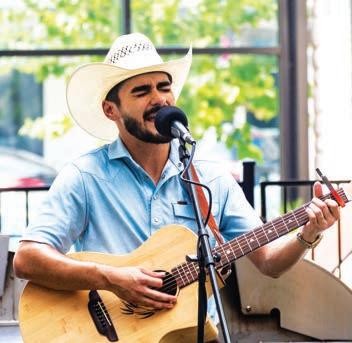
Singer Ian Moore is performs at Summer in the Park, Thursday, June 18, 2026 at Plaza Park.
ABEL BARCENAS | STAR PHOTOGRAPHER
Musician Sam Garcia performs during Make Music Day, Sunday, June 21, 2026, at The Parlor.