THE ROBERT L ARNER, M.D. COLLEGE OF MEDICINE AT THE UNIVERSIT Y OF VERMONT
DRIVEN TO
DISCOVER RESEARCH WITH PURPOSE
FALL 2026
CONTENTS
THE ROBERT L ARNER, M.D. COLLEGE OF MEDICINE AT THE UNIVERSIT Y OF VERMONT
FALL 2026
LARNER NEWS 2 Faculty News
FALL 2026 The Robert Larner, M.D. College of Medicine at the University of Vermont Published November 2026
5 Remembering Russell Tracy
Dean Richard L. Page, M.D.
8 Spotlight: Gary An 10 Student Voices
Senior Associate Dean for Research J. Kathleen Tracy, Ph.D.
13 Pride Parade, Orientation
12 Commencement
Senior Associate Dean for Finance and Administration Brian L. Cote, M.B.A.
FEATURES
Editorial Director John Turner
16 Kate Tracy Interview
Contributing Writers Joshua Brown, Jane Teeling Chou, Janet Essman Franz, Stephanie Knific, John Turner Art Director Ann Howard Production Assistance Lucy Gardner Carson
RESEARCH WITH PURPOSE
6 Spotlight: Davi Bock
Senior Associate Dean for Medical Education Christa Zehle, M.D.
Senior Associate Dean for Clinical Affairs Ramsey Herrington, M.D., FACEP
DRIVEN TO
DISCOVER
14 Research with Purpose 19 Research by the Numbers 20 Research Landscape 22 Policy Matters
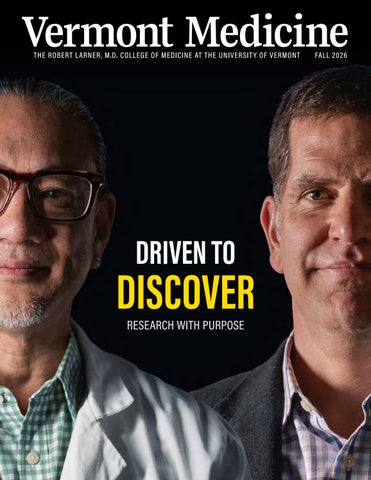
ON THE COVER Larner researchers are driven to discover. Read two spotlights on pages 6 and 8.
HALL A 32 President’s Corner 33 Class Notes 34 Development News 35 A Note of Thanks 37 In Memoriam
24 The Business of Research
38 Medical Alumni Association Awards
26 Breathing Easier
39 Medical Reunion
28 Meet the New Chairs
40 Moment in Time
Contributing Photographers Joshua Defibaugh, Andy Duback, Janet Essman Franz, Ceilidh Kehoe, Ryan Mercer, Jeff Paxton, David Seaver, UVM Health Send Us Your Stories If you have an idea for something that should be covered in Vermont Medicine, please email vmstories@med.uvm.edu Visit Vermont Medicine online Find current and past issues at go.uvm.edu/vm Vermont Medicine is published by the UVM Larner College of Medicine. Articles may be reprinted with permission of the editor.
instagram.com/uvmmedicine facebook.com/UVMLarnerMed linkedin.com/school/15201497 youtube.com/UVMCollofMedicine x.com/UVMLarnerMed
Medical student Amalia Sanches takes the stage at the Class of 2030’s White Coat Ceremony in the Ira Allen Chapel.
FROM THE DEAN
A
utumn in Vermont brings gorgeous fall colors, leaf peepers, and a chill in the air that signals the multiple phases of winter ahead (although I lose track after “Stick Season”). Ever since my first week at Larner in 2018, autumn reminds me of our mission to educate the next generation of physicians as we host our White Coat Ceremony. Celebrated in the beautiful Ira Allen Chapel on October 9, this event brought together families and friends from all over the world to acknowledge this milestone in our future doctors’ careers. Our students, just two months in to their medical education, emerged from the ceremony looking like the physicians they will become. This edition of Vermont Medicine concludes with a twopage photograph of the White Coat Ceremony. Before you get to the end, I hope you will take the time to appreciate the many accomplishments and stories featured throughout this issue. On our cover are Gary An, M.D., and Davi Bock, Ph.D., whose groundbreaking research projects have secured some of the largest externally funded research awards in the history of the college and university. Their projects tackle vastly different challenges. Dr. An is developing AI-powered “digital twins” that could transform care for critically ill patients, while Dr. Bock is helping create a national observatory to reveal the brain’s connectome and ultrastructure in unprecedented detail. What unites their efforts is the scale, their reliance on emerging computational and AI capabilities, their extensive multiinstitutional collaborations, and support from federal agencies outside the National Institutes of Health. The following stories reflect our commitment to research with purpose. Under the leadership of Senior Associate Dean for Research Kate Tracy, Ph.D., the college’s research enterprise has navigated a challenging environment while continuing to thrive, surpassing $100 million in research funding in fiscal year 2026. This issue explores Larner’s strengths across the research spectrum, with featured stories on rural health services research, perioperative
lung health, and the journey of moving discoveries from laboratory to market where they will have the greatest patient impact. In partnership with Ramsey Harrington, M.D., senior associate dean for clinical affairs and president of the UVM Health Medical Group, we recruited two distinguished, national leaders—Peter Calabresi, M.D., and Judy Schaechter, M.D., M.B.A.—to chair the Departments of Neurological Sciences and Pediatrics, respectively. Their arrival marks an important investment in our academic and clinical enterprise. In these pages, they share their vision for what lies ahead. Please also take a moment to celebrate the many awards and accolades earned by our faculty over recent months. Among them are the Alumni Association Awards, recognizing two outstanding medical students, several distinguished alumni, and Professor Emeritus of Pathology and Neurological Sciences William W. Pendlebury, M.D.’76, 2026 recipient of the A. Bradley Soule Award. I hope you enjoy catching up and learning about how Larner is advancing health and improving lives through education, clinical care, and research. This work is made possible by the generosity, commitment, and partnership of our alumni and friends, for which we are profoundly grateful. If any of these stories spark your interest, I encourage you to be in touch. And whenever you are in Vermont, no matter the season, please come visit.
RICHARD L. PAGE, M.D. Dean
U V M L AR N ER C O LLEG E OF M E D IC I N E
1
LARNER NEWS
Elevating Scholarship Christopher Berger, Ph.D., professor of molecular physiology and biophysics, was appointed dean of the Graduate College and postdoctoral studies in July.
International Recognition Mark Nelson, Ph.D., University Distinguished Professor and chair of pharmacology, was named a 2026 Fellow of the Academy of Medical Sciences, the United Kingdom’s equivalent to the National Academy of Medicine in the U.S. The induction took place in June at the Royal Society of Medicine in London, England. Fellowship in the academy celebrates biomedical and health scientists for their outstanding contributions to advancing medical science through discovery, research, translational work, and the application of scientific knowledge in ways that deliver tangible benefits for patients and the wider public. Nelson joined the UVM Department of Pharmacology in 1986 and was named chair in 1996. He holds a secondary appointment as professor in the Department of Molecular Physiology and Biophysics and a tertiary appointment as professor in the Department of Surgery. He holds a part-time professorship at the University of Manchester in England and has served as a Visiting Professor of Pharmacology at the University of Oxford since 2012. Nelson’s research investigates the link between calcium signaling and vascular function in both health and disease, with particular emphasis on the control of blood supply to the brain. His work over three decades clarified the mechanisms by which cerebral blood flow meets the ever-changing demands of active neurons and how these mechanisms are disrupted in small vessel disease—a major cause of stroke, Alzheimer’s disease, and related dementias. The Nelson Laboratory at Larner discovered local calcium signals, or “sparks,” which counter-intuitively oppose vasoconstriction, and uncovered the precise biophysical mechanisms by which small-vessel disease of the brain develops. They identified specific points where targeted medicines could work to slow cognitive decline. “There can be little doubt that the members of the Academy of Medical Sciences will have intense interest in Mark’s groundbreaking work,” wrote Nelson’s nominator David Eisner, D.Phil., professor of cardiac physiology at the University of Manchester. “Indeed, were a member of the Academy to be responsible for the world’s first drug which slowed dementia by improving small artery function in the brain, this would bring wide reputational benefit.” 2
V ER MON T M ED ICI N E FALL 2 026
A highly collaborative leader with extensive experience in graduate education administration, Berger formerly served as associate dean for academic affairs and innovation in the Graduate College. He had previously served as associate dean for undergraduate and graduate education and postdoctoral training at the Larner College of Medicine and as director of the campus-wide Cell and Molecular Biology Ph.D. program. In these roles, Berger led the development of interdisciplinary Ph.D. programs and established innovative, evidence-based approaches to mentoring, career development, and student success. Berger earned his Ph.D. in biochemistry from the University of Minnesota and completed postdoctoral training at the University of Pennsylvania before joining UVM in 1994. He built an internationally recognized research program in
biophysics, focusing on molecular motors and intracellular transport, supported by sustained external funding from the National Institutes for Health. A dedicated educator, Dr. Berger has taught extensively and mentored numerous graduate students and postdoctoral fellows. In 2023, his commitment to mentorship was recognized with the Larner College of Medicine Dean’s Excellence in Research Award in the Research Mentor category.
LARNER NEWS
Anthony Charles, M.D., M.P.H., professor and vice chair for faculty development in the Department of Surgery at the Larner College of Medicine, was invested as the inaugural holder of the Green and Gold Professorship of Faculty Development in Surgery on April 2, 2026.
INVESTITURE
Anthony Charles, M.D., M.P.H., Invested as Inaugural Green and Gold Professor of Faculty Development in Surgery
Dr. Charles completed his M.D. at the University of Lagos College of Medicine in Lagos, Nigeria, followed by an M.P.H. at the Gillings School of Global Public Health at the University of North Carolina (UNC)–Chapel Hill. Prior to joining Larner in 2025, he was a professor of surgery at the UNC–Chapel Hill School of Medicine and an attending surgeon at the UNC Medical Center. A member of several professional organizations and societies and the recipient of numerous awards, he has authored more than 250 peer-reviewed papers and mentored dozens of graduate and medical students, fellows, residents, and junior faculty members. The Green and Gold Professorship of Faculty Development in Surgery, established by the surgery faculty, will provide Charles with support in his role as vice chair for faculty development, fueling the growth, mentorship, and success of faculty across the department. “Since his arrival here in 2025 … Dr. Charles has exemplified all of the characteristics that we expect in an academic, surgeon, and leader,” stated Mitchell Norotsky, M.D., Stanley S. Fieber, M.D.’48, Chair of the Department of Surgery.
INVESTITURE
Toshiko Uchida, M.D., Invested as Inaugural Dr. Yvette Pigeon Professor in Medical Education
Larner Associate Dean for Curriculum and Professor of Medicine Toshiko Uchida, M.D., was invested as the inaugural Dr. Yvette Pigeon Professor in Medical Education on March 11, 2026. This endowed professorship, established by Fred “Chico” Lager in honor of his wife, Yvette Pigeon ’80, G’87, Ed.D.’99, supports a distinguished faculty member who demonstrates dedication to educating and mentoring students pursuing doctoral degrees. Omar Khan, M.D.’03, shared, “Yvette’s impact on my life and career is profound. Her work led to my improved skills and outcomes in communication, clarity, transparency, and hopefully medical humility … She was a cheerleader in her inimitable way—quiet, thoughtful, offering words of wisdom, and encouraging me to remain connected to what brought me to this work: taking care of patients.” As the inaugural holder of this professorship, Dr. Uchida demonstrates exceptional leadership and dedication to advancing the field. She joins Kathryn Huggett, Ph.D., M.A., holder of the Robert Larner, M.D.’42, Professorship in Medical Education, in strengthening UVM’s national reputation for innovation in medical education. “Dr. Uchida’s selection for this prestigious distinction is a testament to her extraordinary commitment to teaching, her impactful scholarship, and her national visibility and productivity in medical education,” said Christa Zehle, M.D., senior associate dean for medical education and professor of pediatrics at the Larner College of Medicine and director of UVM Health education.
U V M L AR N ER C O LLEG E OF M E D IC I N E
3
LARNER NEWS
Irvin Receives Thoracic Society’s Highest Honor Charlie Irvin, Ph.D., professor of medicine and molecular physiology and biophysics and former director of the Vermont Lung Center at the Larner College of Medicine, is the 2026 recipient of the Edward Livingston Trudeau Medal from the American Thoracic Society (ATS). The award, which acknowledges exemplary professionalism, collegiality, and citizenship in the ATS community, is considered a career-defining achievement in respiratory medicine. It not only honors the recipient’s lifetime contributions but also underscores their role in shaping the future of the field through collaboration, innovation, and service. The medal was presented to Dr. Irvin at the ATS 2026 international conference in May in Orlando, Florida.
RECOGNITION
RECOGNITION
Cushman Elected President of International Society on Thrombosis and Haemostasis
Weiss Assumes Presidency of the International Society for Cell & Gene Therapy
The International Society on Thrombosis and Haemostasis (ISTH) announced the election of Mary Cushman, M.D.’89, M.Sc., as the ISTH president for the 2028–2030 term. Her tenure will begin with a term as ISTH president-elect from 2026 to 2028, working closely with incoming ISTH President Wolfram Ruf, M.D., to support the ISTH Council and provide strategic direction on the activities of the society. Per the ISTH leadership structure, Dr. Cushman will begin her role as ISTH president in 2028 at the conclusion of the ISTH 2028 Congress. Cushman is a University Distinguished Professor of Medicine and Pathology and Laboratory Medicine at the Larner College of Medicine, where she also serves as vice chair for emerging researchers in the Department of Medicine, director of the Thrombosis and Hemostasis Program in the Hematology-Oncology Division, board director of the Cardiovascular Research Institute, and co-director of the Vermont Center for Cardiovascular and Brain Health, which is a National Institutes of Health (NIH)-funded Center of Biomedical Research Excellence. As a longstanding leader at the ISTH, Cushman has served on a variety of ISTH committees and currently sits on the ISTH Council. From 2016 to 2023, she was the inaugural editor-in-chief of Research and Practice in Thrombosis and Haemostasis (RPTH). She has published more than 800 peer-reviewed articles, 25 guidelines or society statements, and more than 70 reviews.
4
V ER MON T M ED ICI N E FALL 2 026
Pulmonary and critical care specialist Daniel Weiss, M.D., Ph.D., professor of medicine at the Larner College of Medicine, affiliate professor of biomedical engineering in the College of Engineering and Mathematical Sciences, and an internationally known expert in lung regenerative medicine and stem cell biology, began his term as president of the International Society for Cell and Gene Therapy (ISCT) at the organization’s annual meeting in May in Dublin, Ireland. He will serve a two-year term from May 2026 to May 2028. Dr. Weiss has a long history with ISCT, having served in numerous leadership roles, including as the organization’s inaugural chief scientific officer. He is also the recipient of the 2024 ISCT Darwin J. Prockop Mentoring Award. With more than 5,000 members across five geographic regions and representation from over 60 countries, ISCT brings together a global community committed to advancing the field of cell and gene therapy.
LARNER NEWS
IN MEMORIAM
Remembering Russell P. Tracy, Ph.D.
The Larner College of Medicine honors the passing of Russell P. Tracy, Ph.D., a beloved member of the Larner faculty and a towering figure in the field of chronic disease molecular epidemiology. He was University Distinguished Professor emeritus in the Department of Pathology and Laboratory Medicine and, among many leadership roles at UVM and UVMMC, was senior associate dean for research emeritus at Larner. Forty years ago, he founded the Laboratory for Clinical Biochemistry Research, which grew into a globally leading lab in the field and an invaluable resource for many through its connection to the Molecular Epidemiology and Biostatistics Core. Dr. Tracy’s research focused on the molecular, cellular, and genetic epidemiology of chronic diseases, studying the roles of inflammation, immunity, and
the coagulation system. His research fundamentally advanced our understanding of the etiology of atherosclerosis and coronary heart disease, as well as other chronic diseases of aging. He was among the earliest to identify inflammatory and immune mechanisms in heart disease, HIV/ AIDS, and aging, integrating biochemistry with large-scale epidemiologic and clinical studies in ways that transformed the field. He authored more than 840 manuscripts which have been cited over 200,000 times. He was a generous mentor, rigorous thinker, and collaborative leader who believed deeply in team science and the training of future investigators. He was a “go-to” person for ideas among scientists across his field. We extend our heartfelt condolences to his family, friends, and colleagues.
Larner Researcher Named Pew Biomedical Scholar Osama Harraz, Ph.D., Bloomfield Professor in Cardiovascular Research and assistant professor of pharmacology at the Larner College of Medicine, was named a 2026 Pew Scholar in the Biomedical Sciences. Pew scholars are chosen from applicants nominated by leading academic institutions across the United States. This year’s class of 21 was selected from 211 nominees. The incoming scholars join a legacy of more than 1,000 scientists supported by the program since 1985. During their time as scholars, they will meet annually with fellow Pew-funded scientists to build connections across a wide variety of disciplines. “I am honored to be named a 2026 Pew Biomedical Scholar. This award provides critical support to pursue bold, high-risk questions at the interface of vascular and neural biology, with the goal of uncovering new approaches to combat neurodegeneration,” said Harraz. “It also connects our lab to an exceptional community of innovative scientists whose creativity and collaboration continually drive discovery.” The award will provide four years of flexible funding to advance Harraz’s early-career research exploring how naked mole rats are naturally protected from neurodegeneration. The findings could help identify new strategies to prevent cognitive decline and neurological diseases such as Alzheimer’s and Parkinson’s.
U V M L AR N ER C O LLEG E OF M E D IC I N E
5
LARNER NEWS
Unlocking the Secrets of Neurobiology Larner Spotlight
UVM launches national observatory to pioneer ultra-high-resolution ‘connectomics’ brain mapping tools to answer questions across the life sciences.
How does learning change the wiring of your brain? How does a shark’s eye make sense of its underwater world? How does a singlecelled parasite cross the barrier that protects the brain? What might neurodegeneration look like at ultra-magnified scale?
T
he University of Vermont will serve as the national coordinating hub for a new, $19 million, five-year National Science Foundation project that will design and build an observatory to allow researchers to investigate these questions, and others, by revealing some of life’s smallest structures in three dimensions. The goal is to make imaging capabilities that are currently concentrated in a handful of specialized laboratories accessible to many scientists across the country—and from many fields of biology, medicine, and the life sciences. Led by neuroscientist Davi Bock, Ph.D., associate professor of neurological sciences at the Larner College of Medicine, with co-principal investigators Doug Taatjes, Ph.D., M.S., director of UVM’s Microscopy Imaging Center, and Mark Ellisman, Ph.D., of the University of California–San Diego, the National Connectomics and Ultrastructure Volume Observatory (NCUVO) will bring together advanced electron microscopy, artificial intelligence, and powerful computing networks. The effort will integrate state-of-the-art high-throughput electron microscopy at Larner, with expertise in sample preparation and complementary advanced microscopy techniques at UC–San Diego’s National Center for Microscopy and Imaging Research, and data management and processing at the San Diego Supercomputer Center. Together, these partners will design a system that connects biological samples to usable scientific data for researchers nationwide. “This exciting project exemplifies UVM’s commitment to studying what matters: values-driven, innovative research that can change the world for the better,” said UVM President Marlene Tromp, Ph.D., M.A. “The work of this observatory will help answer vital questions about the natural world, with discoveries that can help us better understand all life on this planet. This is transformative research that UVM is proud to lead on a national level.” For two decades, Dr. Bock has helped develop the science of “connectomics”: mapping the wiring of brains and nervous systems down to individual neurons and the synapses connecting them. His laboratory acquired the electron microscopy images that an international collaboration used to produce the first wiring map of an adult fruit fly’s entire brain—a scientific landmark reported in Nature in 2024. That work required enormous gains in imaging speed and computing power. While electron microscopes can reveal extraordinarily small structures, the challenge for next-generation neuroscience has been assembling and aligning enough images to follow the branching paths of neurons through substantial volumes of tissue—and turning those millions of images into useful maps. Having accomplished that, the opportunity now is to expand that capacity both in terms of what problems it can be used to address, and the number of scientists with access to it.
6
V ER MON T M ED ICI N E FALL 2 026
Scan QR code to read more about the project
(above) Davi Bock, Ph.D., with several transmission electron microscopy images showing fruit fly brain maps.
This exciting project exemplifies UVM’s commitment to studying what matters: values-driven, innovative research that can change the world for the better.” – UVM PRESIDENT MARLENE TROMP, PH.D., M.A.
U V M L AR N ER C O LLEG E OF M E D IC I N E
7
Our goal is to give clinicians a more precise understanding of what is happening within an individual patient and provide information that could help them select the right treatment at the right time.” – GARY AN, M.D.
8
V ER MON T M ED ICI N E FALL 2 026
LARNER NEWS
Your AI Twin Could Save Your Life Larner Spotlight
UVM awarded up to $38M to build ‘Digital Twins’ for treating critically ill patients.
What if doctors could test a customized treatment on a virtual version of a critically ill patient before administering it in real life? That’s the promise of medical “digital twins.” Gary An, M.D., a UVM trauma surgeon and researcher at Larner, has received a research and development contract worth up to $38 million to develop artificial intelligence-powered digital twins to help clinicians personalize treatment for critically ill patients. The research award is the largest in UVM history.
F
unded through the Advanced Research Projects Agency for Health (ARPA-H)— a federal agency within the U.S. Department of Health and Human Services that supports pioneering, high-impact medical research—the anticipated five-year initiative aims to transform how clinicians diagnose and treat critical illness by modeling a patient’s unique immune response in real time. The project is part of ARPA-H’s Critical Illness Immunological Reprogramming and Control Point Learning Engine program. If successful, researchers believe the technology could reduce intensive care unit (ICU) length of stay by at least 25 percent. Currently, 4.6 million Americans are treated in ICUs annually, costing up to $70 billion each year. Dr. An’s project, known as ReSCUED, or Reprogramming Severe Critical Illness Using Extensible Digital Twins, seeks to address one of medicine’s most persistent challenges and correct the disordered immune response that drives diseases of the ICU, such as severe trauma, burns, or sepsis. Under the ReSCUED approach, researchers will measure a critically ill patient’s immune and inflammatory state through frequent blood samples and physiological monitoring, create a digital twin that models the patient’s condition, and evaluate potential treatment strategies using FDA-approved medications before those treatments are administered. The goal is to provide clinicians with an individualized tool that can help them understand how a patient’s illness is evolving and use that information to guide care. “The complexity of critical illness exceeds what any individual can interpret in real time. Artificial intelligence gives us a way to evaluate those complex biological dynamics and determine how existing treatments might be used more effectively for a particular patient,” said Dr. An. “Our goal is to give clinicians a more precise understanding of what is happening within an individual patient and provide information that could help them select the right treatment at the right time.” The Larner College of Medicine will serve as the lead institution in this multidisciplinary initiative, which brings together clinical, computational, and biotechnology expertise from universities and companies across the country.
(left) ReSCUED team members Gary An, M.D., and Chase Cockrell, Ph.D., at the Vermont Advanced Computing Center.
Scan QR code to read more about the award
9
LARNER NEWS
Three Minutes. Two Goals. One Cellular Grand Theft Auto. A Ph.D. in Three Minutes. by Matthew Owens
Working toward a Ph.D. is really composed of two very different, but intertwined, goals. Preparing for UVM’s Three-Minute Thesis (3MT) competition made me realize I needed to apply both of these goals to be successful. The first goal is to develop as a scientist. This means testing ideas across the boundary of what is known into the unknown, contributing to a field of science, and proving you can be both deductive and inductive in your thought processes. The second goal is to develop as a communicator of science and understand your science well enough to distill it for any audience. Both goals presented their own sets of challenges as I prepared for the competition; they required me to think critically about my scientific question and to be able to clearly describe my research. Effective communication is the basis of all scientific literature and discussion; it’s how we talk about new ideas and share results. In preparing for my talk, I learned that communication inherently requires us to know our audience, to take complex ideas and translate them into digestible portions that everyone can understand. For example, describing a virus to experts in the field is just as unique and nuanced a challenge as describing it to a middle-schooler. Each of these experiences requires a different level of communication. So, when I heard about the 3MT competition, I knew it would be an excellent exercise in talking to a diverse audience about my research and why it’s important.
Student Voices
A Biological Carjacking I approached my talk at the preliminary 3MT competition, wanting to find a way to craft the complex virology, molecular biology, cellular biology, and biochemistry findings into a story that anyone could close their eyes and understand—a tale of a city, delivery trucks, highways, drivers, and hijackers who steal trucks to deliver their own packages. As I began preparing, I tested different ways of describing my research. If I told you, “I’m trying to identify the specific amino acids that govern host protein Rab11a’s ability to bind the influenza protein PB2,” that might be the right tone for an academic conference, but not for the 3MT competition. If I told you, “I’m studying the molecular mechanisms that govern how 10
V ER MON T M ED ICI N E FALL 2 026
I used my single slide as an aid to tell my story, drawing parallels between complex cellular mechanisms and a busy city street becoming fraught with carjackings, taking the listener on an adventure through viral infection and cellular cargo.” – MATTHEW OWENS
the influenza virus disrupts the endocytic recycling pathway, trafficking its genetic information to the site of budding at the plasma membrane,” that might be suitable for a different audience. But if I told you that the influenza virus commits cellular Grand Theft Auto, I bet I have your attention now. In your mind, you might be picturing a busy city and a tiny cartoon virus hijacking a taxicab or a delivery truck. Finding the right framing became one of the most important parts of my preparation. Practicing my framing for a diverse audience was another equally important part. I asked my peers, family, and friends to listen to my 3MT competition presentation and offer advice on what aspects were easy or hard to understand, and what worked and didn’t.
Matthew Owens is a Ph.D. candidate in the Cellular, Molecular, and Biomedical Sciences Program. As the winner of Larner’s preliminary round of UVM’s 2026 Three-Minute Thesis (3MT) competition, and People’s Choice Award winner of the UVM Graduate College’s final round of the 2026 3MT competition, he reflects on his participation and what he learned.
Practice, Practice, Practice Once I had a story I wanted to tell, it all came down to practice and memorization. I used my single slide as an aid to tell my story, drawing parallels between complex cellular mechanisms and a busy city street becoming fraught with carjackings, taking the listener on an adventure through viral infection and cellular cargo. I wanted to paint a picture in the mind of my audience to help them understand how the influenza virus uses the machinery inside our cells to transport its own cargo; a process that is essential for replication and spread.
Learning and Growing From a training and growth standpoint, I highly recommend participating in the 3MT competition if you’re interested in developing as a scientist and as a communicator of science. Three minutes is by no means enough time to describe your research in the kind of detail suitable for a dissertation; the 3MT competition teaches you how to effectively condense your science into a digestible format for anyone to understand. It will prepare you to discuss your research with a diverse audience in an outside-the-box, engaging way in only three minutes, and it will push you to think about new ways to connect with your audience that you will carry with you throughout your Ph.D. U V M L AR N ER C O LLEG E OF M E D IC I N E
11
LARNER NEWS
L-R: Shruthi Santhanakrishnan, M.D.’26, and Alex Tran, M.D.’26
L-R: Albert ‘Joe’ Hebert, M.D.’74, Devin Hebert, M.D.’26 and Chris Hebert, M.D.’02
UVM 2026 COMMENCEMENT WEEKEND
Larner Graduates Honored at Ceremonies Students, families, friends, faculty, and staff gathered May 16 and 17 to celebrate the next generation of biomedical scientists and health professionals.
On Saturday May 16, University of Vermont master’s and doctoral degree recipients—including 50 students who earned their degrees at the Larner College of Medicine—were hooded at the Graduate College Ceremony at the Champlain Valley Exposition. Their degrees included master of public health, master of science (M.S.) in microbiology and molecular genetics, M.S. in pharmacology, M.S. in medical science, doctor of philosophy (Ph.D.) in cellular, molecular, and biomedical sciences, and Ph.D. in neuroscience. On Sunday afternoon, May 17, the Larner community celebrated the 119 members in the Class of 2026 who received doctor of medicine (M.D.) degrees at the Robert Larner, M.D. College of Medicine’s commencement ceremony, held in the historic Ira Allen Chapel. The event marked the completion of their medical school training and transition to residencies in a wide range of medical specialties, including family medicine, pediatrics, psychiatry, and surgery.
12
V ER MON T M ED ICI N E FALL 2 026
L-R: Kassandra Mastras, M.D.’26, George Mastras, M.D.’59 and Dean Mastras, M.D.’89
The ceremony included remarks from UVM President Marlene Tromp, Ph.D., M.A., Larner Dean and UVM Chief Medical Affairs Officer Richard L. Page, M.D., and Senior Associate Dean for Medical Education Christa Zehle, M.D.’99, as well as a keynote address by Lewis First, M.D., M.S., professor and chair of the Department of Pediatrics at Larner and chief of pediatrics at Golisano Children’s Hospital at UVM Health, and a student address by Maisie Laud, M.D.’26. For two graduating students, Devin Hebert and Kassandra Mastras, it was a noteworthy family affair as two prior Larner alumni generations joined each of them for the ceremony.
Scan QR code to read more about Larner’s Commencement ceremonies or visit uvm.edu/larnermed/commencement
LARNER NEWS
We Support Everybody: UVM Students, Faculty, and Staff Join Vermont Pride Fest Students, faculty, staff, and family members marched together representing UVM’s Larner College of Medicine, when thousands of people turned out for the 44th annual Pride Vermont Parade and Festival in Burlington, VT.
ORIENTATION
Welcome Class of 2030 For 124 new medical students, Orientation Week marked the beginning of their journey at the Larner College of Medicine. From August 10-14, Larner welcomed its 203rd medical class with a week of activities designed to build community, introduce students to the college’s learning environment, and familiarize them with the academic programs, resources, faculty, staff, and classmates who will shape their medical school experience. Larner College of Medicine Dean and UVM Chief Medical Affairs Officer Richard L. Page, M.D., welcomed the Class of 2030 on
Students in the Class of 2030 were selected from a record-breaking pool of 11,609 applicants
their first day, affirming that they had earned their place at Larner and will be supported throughout their medical school journey. “I want you to take something home from this greeting: You belong here,” said Dean Page. “We are thrilled to have identified you as the Class of 2030, and we are committed to your success. We are here to support you.” Selected from a record-breaking pool of 11,609 applicants, members of Larner’s Class of 2030 come from 28 states, ranging from Vermont to Alaska. They are fluent in 15 languages in addition to English, represent
43 majors from 73 colleges and universities, and bring more than 375,000 hours of clinical and medical experience. The class also reflects a wide range of professional backgrounds, including ICU nursing and other health-related fields. “With 11,609 applicants, this is the most selective class we’ve ever assembled,” said Leila Amiri, Ph.D., associate dean for admissions. “They were chosen not because they were the most polished on paper, but because we believe they embody Larner’s mission and values and share our understanding of what medicine is meant to be.” 13
RESEARCH WITH
PURPOSE Research is one of the most powerful engines of progress in medicine. Over the past two centuries, biomedical discoveries have transformed our ability to prevent, diagnose, and treat disease, improving and extending millions of lives. Throughout its 200+ year history, the Larner College of Medicine has contributed to that progress, advancing scientific knowledge and translating discoveries into meaningful improvements in patient care in Vermont and around the world. These gains did not happen by chance. They are the result of decades of sustained investment in biomedical research, supporting the curiosity, innovation, and perseverance that lead to breakthroughs in understanding human health and treating disease. Today, with the headwinds research now faces, it is more important than ever to recognize the value of this work and the far-reaching impact it has on patients, communities, and society. Scientific progress is cumulative, with each discovery building on the foundation laid by those before it. Research deepens our understanding of health and disease, accelerates innovation, improves health care outcomes, and strengthens our ability to respond to future challenges. The stories that follow highlight the breadth and impact of research at the Larner College of Medicine, showcasing how faculty, scientists, and trainees are turning discovery into action by advancing new therapies, informing public health solutions, improving care, and changing lives.
By Janet Essman Franz, Stephanie Knific, and John Turner
U V M L AR N ER C O LLEG E OF M E D IC I N E
15
THE POWER OF
CONNECTION
RESEARCH WITH PURPOSE
When Kate Tracy, Ph.D., arrived at the Larner College of Medicine nearly four years ago as senior associate dean for research, what stood out to her most was not any single area of scientific excellence. Instead, it was the extraordinary potential that existed at the intersections.
L
arner’s expertise spans seven signature areas: rural health, cancer, immunology, pulmonary and environmental health, cardiovascular science, brain health, and aging and longevity. Tracy saw the potential to tell a larger story about how those strengths connect to create new possibilities for discovery. “Cancer research plays a central role as we work toward National Cancer Institute designation, while aging and longevity are especially relevant here in Vermont,” Tracy explains. “Much of our work intersects across disciplines, creating opportunities for collaboration that can lead to discoveries no single discipline could achieve alone.” That belief has helped Tracy shape a vision for Larner’s research enterprise centered on connection: connecting fundamental science to patient care, researchers to one another, trainees to mentors, communities to academic medicine, and discoveries made in Vermont to advances that improve health around the world. For Tracy, the true measure of a research enterprise is how effectively discoveries move beyond the lab to improve health. That journey depends on strong connections among basic scientists, clinicians, engineers, public health experts, and community partners. Strengthening those connections has become a defining focus of her strategy. While Larner is known for excellence in basic science, Tracy has worked to expand clinical, translational, and community-engaged research. “As an academic medical center embedded within a health system and closely connected to communities across Vermont, Larner is uniquely positioned to bridge research and real-world health challenges,” she says. But supporting that vision requires more than talented investigators. It requires building an environment where collaboration can flourish. In partnership with Associate Dean for Faculty, Rebecca Wilcox, M.D., Tracy launched the Office of Research and Engagement (ORE) last year to serve as a centralized hub for faculty and trainee development. Co-led by Drs. Renee Stapleton and Michael Toth, ORE serves as a connector
across the research enterprise, bringing investigators from all over the academic health system together with the resources, expertise, and professional development opportunities needed to advance their work. Researchers can access grant-writing support, scientific communication training, mentorship, leadership development, and proposal guidance. Shared resources lower barriers to discovery by providing investigators access to advanced technologies and expertise without requiring individual labs to build those capabilities on their own. Perhaps the most visible examples of these connections emerge when discoveries move beyond the laboratory and into patient care. The journey from scientific insight
Much of our work intersects across disciplines, creating opportunities for collaboration that can lead to discoveries no single discipline could achieve alone.” – KATE TRACY, PH.D. to effective treatment often spans decades, requiring collaboration among scientists, clinicians, industry partners, and patients to transform promising discoveries into real-world solutions. One such success story involves Dave Warshaw, Ph.D., a renowned cardiovascular researcher, University Distinguished Professor, and chair of the Department of Molecular Physiology and Biophysics at Larner. Warshaw was part of a multidisciplinary team whose foundational research on cardiac myosin helped pave the way for the blockbuster medication Camzyos, the first-in-class treatment for obstructive hypertrophic cardiomyopathy (oHCM), a condition in which the heart muscle thickens and struggles to relax. Warshaw’s story illustrates how fundamental scientific questions can lead to therapies, medical devices, and Continued on page 18
16
V ER MON T M ED ICI N E FALL 2 026
KATE TRACY, PH.D.
U V M L AR N ER C O LLEG E OF M E D IC I N E
17
Continued from page 16
approaches to care that improve lives. It demonstrates the essential role academic medical centers play in connecting basic science to clinical impact. Advances like these highlight the importance of bringing together expertise from multiple disciplines and across academic institutions. Increasingly, the most significant scientific questions cannot be solved within a single lab or field. They require collaboration among biologists, clinicians, engineers, data scientists, and public health experts. That need for collaboration is perhaps most evident in artificial intelligence (AI), which Tracy sees as one of the most transformative opportunities in biomedical research. “With a relatively small and highly connected population, comprehensive health records, and an integrated health care system, Vermont offers an ideal environment where researchers can study population health in meaningful ways,” she says. Those connections across patients, providers, and data systems create new avenues to better understand disease, predict outcomes, and improve care. Yet, Tracy emphasizes, the future of AI is about more than technological capability. “Just because we can do something doesn’t mean we should,” she says. As artificial intelligence becomes increasingly integrated into research and health care, questions surrounding ethics, privacy, sustainability, and responsible use become essential. R1 designated universities, in particular, have an important role to play in bringing together expertise from medicine, science, public policy, and the humanities to ensure these powerful tools are used wisely. Beyond artificial intelligence, Tracy sees tremendous promise in regenerative medicine, digital twins, connectomics, and large-scale cellular mapping initiatives, all areas where Larner scientists are already making their mark. Two awards announced within a week of each other this fall show just how far that work has come. The Advanced Research Projects Agency for Health (ARPA-H) awarded Gary An, M.D., a trauma surgeon and researcher at Larner, a contract worth up to $38 million, the largest research award in UVM’s history. An’s project, Reprogramming Severe Critical Illness Using Extensible Digital Twins (ReSCUED), will create AI-powered digital twins, real-time virtual models of a patient’s immune response that allows clinicians to test treatments before administering them to patients with severe trauma, burns, or sepsis, where rapidly changing conditions can outpace even the most experienced care teams. The five-year effort links Larner with clinical partners at Wake Forest University School of Medicine, the University of Alabama at Birmingham, and Washington University School of Medicine, along with technology partners. If successful, the team could significantly shorten intensive care stays and improve outcomes for critically ill patients. Days earlier, the National Science Foundation awarded $19 million to Davi Bock, Ph.D., associate professor of neurological sciences, to lead the new National 18
V ER MON T M ED ICI N E FALL 2 026
Connectomics and Ultrastructure Volume Observatory. Bock’s lab helped create the first complete wiring diagram of an adult fruit fly brain, work that now supports a new national observatory for high-throughput 3D electron microscopy. Anchored at UVM and supported by the Vermont Advanced Computing Center, the observatory aims to expand access to advanced imaging technologies across the country. The effort could accelerate discoveries about how cells, tissues and neural networks are organized, our understanding of Alzheimer’s disease and other complex conditions. Both projects are also expected to bring highly skilled research jobs to Vermont and strengthen the state’s growing biotechnology and AI sectors. For Tracy, the awards say as much about Larner’s culture as about its science. “We are not the biggest medical school, and we don’t need to be,” she says. “What these awards show is that a close-knit, collaborative institution in Vermont can lead national efforts on some of the hardest problems in medicine, and that the benefits come home to our patients, our trainees, and our state.” (See related articles on Drs. Bock, page 6 and An, page 8.)
Larner is uniquely positioned to bridge research and real-world health challenges. Discoveries like these also need a path to the people and companies that can put them to use. That is where UVM’s partnership with Cambridge, Massachusetts-based BioLabs comes in, creating new pathways for ideas to move from the bench to the marketplace. Opened in 2025, the BioLabs Innovation Center at UVM gives life-science startups access to the university’s world-class facilities, research expertise, and scientific community. By bringing entrepreneurs and researchers together, the center helps ensure innovation sparked in Vermont can grow in Vermont. Although digital twins, brain mapping, and startup incubation may seem unrelated, Tracy sees them as examples of the same principle: breakthroughs emerge when disciplines, technologies, and people connect. “The future of medicine will be shaped not by any single laboratory or discovery, but by the convergence of disciplines. Institutions that can bring those fields together will be best positioned to address the health challenges of the future,” Tracy said. At Larner, that work is already underway. Across laboratories, clinics, classrooms, and communities, researchers are building the connections that transform ideas into discoveries, discoveries into treatments, and research into better health for people in Vermont and far beyond. VM
BY THE NUMBERS
RESEARCH WITH PURPOSE
Research Impact Academic Organization
976 12 Faculty
Cinical Departments Anesthesiology / Emergency Medicine / Family Medicine / Medicine / Neurological Sciences / Obstetrics, Gynecology & Reproductive Sciences / Orthopaedics & Rehabilitation / Pathology & Laboratory Medicine / Pediatrics / Psychiatry / Radiology / Surgery
4
Basic Science Departments Biochemistry / Microbiology & Molecular Genetics / Molecular Physiology & Biophysics / Pharmacology
157,000 Net Square Feet of Dedicated Research Space
$105.9M
Larner Total Extramural Research Funding (FY2026)
$222.6M UVM Total Extramural Research Funding (FY2026)
~50%
Larner’s Proportion of UVM’s Total Research Portfolio
$400M+ Annual Economic Impact in Vermont
2,600+ 300+ Jobs Supported in Vermont
Active Clinical Trials (2025)
Research Funding: A Decade of Growth
$42M
E xtramural Funding FY2015 Baseline
$99.9M+ Annual Research Funding (FY2025)
137%
Funding Growth Over 10 Years
45+
Federal Agencies Funding Larner Research
6x
Return per $1 of Philanthropic Start-up Capital
Since 2022, Larner faculty members have submitted 67 invention disclosures,
received 26 U.S. patents, and helped launch 7 health science
and biotech-related startup companies. Of the 10 UVMaffiliated startups from the last five years, 9 are health-related.
U V M L AR N ER C O LLEG E OF M E D IC I N E
19
Recent career development awardees (left to right) William “Gabe” Tharp, M.D., Ph.D., Debora Kamin Mukaz, Ph.D., Ashley Volaric, M.D., Peter Hyson, M.D.
20
V ER MON T M ED ICI N E FALL 2 026
RESEARCH LANDSCAPE Currently research at Larner is predominantly driven and focused around seven main areas, and supported by a robust infrastructure, and network of resources and partnerships. 1. RURAL HEALTH As Vermont’s only academic medical center, Larner is uniquely positioned to address the urgent health needs of rural and underserved populations. Three dedicated centers focus on rural health equity, access, and outcomes. 2. AGING AND LONGEVITY Aging is one of the most significant drivers of health, disease, and health care utilization, making it a critical focus of research at Larner. Building on research strengths, investigators study the mechanisms of aging, age-related diseases, and factors that promote healthy longevity. 3. CARDIOVASCULAR AND BRAIN HEALTH Larner’s cardiovascular and brain health research is among the most active in the Northeast, linking heart disease, hypertension, and vascular biology to cognitive outcomes. 4. NEUROSCIENCE AND BEHAVIORAL HEALTH Vermont’s behavioral and neurological health crisis demands research that is both scientifically rigorous and communityrelevant. Larner’s behavioral health research is nationally recognized for its translational impact. 5. IMMUNOBIOLOGY AND INFECTIOUS DISEASE Backed by federal grants and industry partnerships, Larner’s infectious disease and immunobiology faculty have built a program with genuine global relevance that translates basic science into preventable disease. 6. PULMONARY AND ENVIRONMENTAL DISEASE The Vermont Lung Center has a proud tradition of research in lung health and, along with the Cystic Fibrosis Foundation Therapeutic Development Network, is dedicated to research and training that will improve health related to respiratory disease and critical care illnesses. 7. CANCER The Vermont Cancer Center reduces the burden of cancer through research, clinical care, community outreach, and education, also offering interventional, observational, and behavioral therapy trials.
RESEARCH WITH PURPOSE
INFRASTRUCTURE Shared Core Facilities State-of-the-art shared instrumentation, laboratory, and specialized research resources available to Larner investigators and collaborators. Clinical Trials Office Infrastructure supporting 300+ active trials across interventional, observational, and behavioral domains. Office of Research and Engagement Centralized hub for accessing resources related to the research, scientific communication, and leadership skills necessary to succeed in an R1 institution. Research Data Enclave A first-of-its-kind joint initiative with UVM Health enabling large-scale, privacy-protected clinical data research. NNE-CTR Network The Northern New England Clinical & Translational Research Network connects researchers with regional and national networks. Centers for Biomedical Research Excellence Grants Competitive NIH infrastructure grants build sustainable research capacity in key biomedical domains. BioLabs Specialized turnkey laboratory and office space for biomedical start-ups.
REGIONAL AND NATIONAL PARTNERSHIPS • National Institutes of Health • UVM Health • Vermont Agency of Human Services • National Science Foundation • Industry and Biotech Companies • Dartmouth-Hitchcock and Northern New England Network U V M L AR N ER C O LLEG E OF M E D IC I N E
21
ERIKA ZILLER, PH.D.
22
V ER MON T M ED ICI N E FALL 2 026
RESEARCH WITH PURPOSE
POLICY MATTERS Understanding rural communities, driving better health care
H
ealth care can look different depending on where you live. Access to providers, transportation, economic opportunity, and community resources all influence a person’s well-being. In rural communities, these factors often intersect with geographic isolation and higher rates of certain health-related behaviors, creating challenges that affect everything from preventive care to chronic disease management. Rural populations are also aging rapidly, driven by aging in place, retirement migration, and the out-migration of younger residents. This trend contributes to increased demand for health services. These challenges lead to higher rates of chronic health conditions in many rural communities compared with urban communities, disparities that have been growing since the mid-20th century. These challenges include limited access to physical and mental health care, inadequate health care infrastructure, low rates of participation in leisure physical activities, and restricted availability of healthy food. For Erika Ziller, Ph.D., associate professor of medicine, understanding and addressing those challenges has been the focus of a career dedicated to improving rural health. As director of the University of Vermont Larner College of Medicine’s Health Services Research Center (HSRC), Ziller studies how health care is delivered in rural communities and how policy can improve access and outcomes. With almost two thirds of Vermonters living in rural communities, the highest percentage of any state in the nation, the importance of Ziller’s research cannot be understated to the citizens of Vermont and across northern New England.
Ziller’s work gained ground with the launch of the Northeast Rural Health Research Center (NeRHRC). Supported by a $2.8 million grant from the Federal Office of Rural Health Policy, the center examines some of the most pressing issues facing rural health systems and produces research that informs federal policy and programs. Ziller’s commitment to this work is rooted in personal experience. Raised in the small town of South Paris, Maine, she grew up in a family with limited resources. The local library became a refuge, where books fueled her curiosity and strengthened her sense of empathy. “I grew up with this fire in my belly to do good,” she says. Initially drawn to social work, Ziller focused on health education and family planning in rural communities, witnessing firsthand the barriers many people face in accessing care. Those experiences inspired her to pursue a Ph.D. in public policy at the University of Southern Maine (USM) and eventually lead the university’s Maine Rural Health Research Center.
I grew up with this fire in my belly to do good.” –ERIKA ZILLER, PH.D.
After 25 years at USM, Ziller joined UVM to lead the HSRC. Today, through both research centers, she helps ensure that health policies reflect the realities of rural life. Her work demonstrates how academic medicine can shape stronger, more equitable health systems and improve health outcomes for rural communities nationwide. VM
U V M L AR N ER C O LLEG E OF M E D IC I N E
23
THE BUSINESS OF RESEARCH
RESEARCH WITH PURPOSE
Advancing Larner biomedical discoveries to improve health care
THE OPPORTUNITY
24
V ER MON T M ED ICI N E FALL 2 026
AS
a part of UVM’s ongoing investment in research, Corine Farewell, D.V.M., M.B.A., director of UVM Innovations, leads a team that provides guidance and support to the academic community on all aspects of protecting and commercializing university innovations. Across campus, Farewell’s team helps unearth the commercial potential of a discovery, brings together UVM faculty and researchers with intellectual property (IP) attorneys to protect IP, market it to potential licensees or help facilitate setting up a commercial enterprise or company. “Intellectual curiosity is the fuel for our knowledge-based economy, with intellectual property providing the tangible assets for successful technology translation from the lab to market,” said Farewell. “Innovation and entrepreneurship are a fast-growing component of everyday life at UVM and Larner.” “Our role at UVM is to work with our faculty and their students, to help identify the outcomes of their research that are able to be translated into realworld use. For those who work with us and have the desire to see their research have impact beyond publications, it starts with identifying the technology and working with the researcher on the best path forwards,” said Farewell. “It could be a patent, it could be a copyright, it could be just publishing, or it could be open-source licensing. There are many different paths to take a technology from being a wonderful idea and move it forward.” Larner researchers have been particularly active contributors to UVM’s innovation ecosystem. Since 2022, Larner faculty members have submitted 67 invention disclosures, received 26 U.S. patents, and helped launch seven health science and biotech-related startup companies. Of the 10 UVM-affiliated startups from the last five years, nine are health related and developing novel medical technologies, diagnostics, therapeutics, or digital health solutions.
MAKING MARKET-READY
M
edical innovation rarely begins in a boardroom or manufacturing plant. More often, it starts in a university laboratory, a clinic, or a conversation between researchers seeking answers to some of health care’s most pressing challenges. At academic medical centers, discoveries that once ended with publication are increasingly advancing beyond the pages of scientific journals, finding new pathways to patients through technologies, treatments, startups, and industry partnerships. As the pace of biomedical innovation accelerates, the opportunity to translate research into realworld impact has never been greater. According to a 2025 Precedence Research report, the global medical devices market size alone will grow from $678 billion in 2025 to nearly $1.14 trillion by 2034. Driven by aging populations, technological advancements, advanced diagnostic tools, minimally invasive solutions and connected health care devices, the opportunities to translate research into new therapies, policies and health care solutions that meaningfully impact lives and improve outcomes are numerous. Faculty and scientists at the University of Vermont (UVM) and the Larner College of Medicine (Larner) have long been at the forefront of groundbreaking research. In 2025, as a result of sustained investment in cutting-edge research and development, faculty excellence, and academic innovation, UVM was designated as a R1 institution by the Carnegie Classification of Institutions of Higher Education.
UVM’s commitment to accelerating research impact has recently been reinforced through two major federal awards. This fall, the university received a National Science Foundation (NSF) Accelerating Research Translation (ART) award to establish INVEST (Identifying and Nurturing Vermont’s Emerging Strategic Technologies), a university-wide initiative designed to help researchers translate discoveries into practical applications, products, and companies while strengthening Vermont’s innovation economy. UVM also won the Growth Accelerator Fund Competition prize (GAFC) from the U.S. Small Business Administration (SBA) to support development of a cross-campus entrepreneurial hub focused on strengthening intellectual property management, researcher-to-entrepreneur pathways, and startup creation. UVM researchers can draw on a growing network of entrepreneurial programs, including SPARK-VT, UVM Ventures, the IDeA Entrepreneurship program known as iTrep, and UVM’s participation in the U.S. National Science Foundation Interior Northeast Innovation Corps Hub (I-Corps). Building on these efforts, the NSF-funded INVEST initiative is expanding opportunities for graduate students, postdoctoral fellows, faculty researchers, and clinicians to develop translational research and entrepreneurial skills. For entrepreneurial learners seeking a formal academic pathway, Larner’s new Biomedical Entrepreneurship micro-certificate of graduate study combines two online, applied courses: MED 5010, Foundations in Biomedical Entrepreneurship, and MED 5011, Biomedical Venture Development. Together, these offerings allow participants to progress from initial curiosity to advanced venture planning while connecting with UVM’s broader innovation and commercialization ecosystem. “These investments position UVM to build a more robust innovation ecosystem while creating economic opportunities throughout Vermont,” said Farewell. “These outcomes illustrate the growing culture of intellectual property development, entrepreneurship, and translational research within the health sciences and demonstrate the value of providing researchers with clear pathways from discovery to societal impact.”
IN THE MARKETPLACE
RECENT
examples of innovations launched commercially by Larner faculty include a portable, non-invasive, brain-cooling device from NeuroCool Technologies, targeted cancer therapeutics from TR Beta Oncology founded by Frances Carr, Ph.D., childhood mental health and emotional wellness digital health and wearable-sensor technologies from Biobe, a diagnostic test that identifies patients at higher and lower risk of thrombotic events (heart attack, stroke, and death) from Prolocor, and CoreMap—a startup company that just closed an oversubscribed Series C funding round—and
who are focused on developing advanced tools to improve the treatment of atrial fibrillation (AFib) and enable patient-specific treatments. CoreMap was cofounded by Peter Spector, Frances Carr, Ph.D. M.D., a Larner professor of medicine along with medical technology executive Sarah Kalil in 2016, based on research Spector was conducting at Larner. He had created a system for mapping the electrical activity in the
Innovation and entrepreneurship are a fast-growing component of everyday life at UVM and Larner.” – CORINE FAREWELL , UVM INNOVATIONS
heart during AFib, which allowed physicians to precisely identify the sites that perpetuate AFib and thus target those sites for treatment. Spector received a SPARK grant in 2018 to help move the platform a step closer to Peter Spector, M.D. the marketplace. CoreMap is now funded completely by private investors. The Series C financing round, which is a late-stage financing step meant to fuel aggressive growth and provide investors with an opportunity to buy equity, raised $37 million from several investors, reflecting strong confidence in the company. Health technology innovator Medtronic, which sells cardiac mapping and ablation systems, contributed the largest investment, along with other institutions and individuals from the Vermont investment community. “I’m excited by the success and acceleration of several UVM startups and our ability to build an ecosystem of entrepreneurs, investors, industry partners, and translational research programs that can help discoveries reach the people who need them,” Farewell said. “The recent NSF ART and SBA GAFC awards further validate the progress UVM has made in building a culture of innovation and entrepreneurship. Together, these investments allow us to better support faculty and students as they transform research discoveries into technologies, companies, and health care solutions that create public benefit for Vermont and beyond.” VM U V M L AR N ER C O LLEG E OF M E D IC I N E
25
BREATHING EASIER
A
Patient Care Research to Improve Perioperative Lung Health
new way of helping people breathe during surgery may help prevent lung damage and improve post-surgical recovery, reducing the time patients spend in the hospital. The development of a personalized lung protective breathing method by William “Gabe” Tharp, M.D.’14, Ph.D.’13, associate professor of anesthesiology at the Larner College of Medicine, is supported by a $923,000 award from the National Institutes of Health. This new technique will be especially helpful for patients who are at high risk for post-operative lung damage. This includes people who have obesity, people who have experienced chest trauma, or those with lung diseases such as asthma, chronic obstructive pulmonary disease, emphysema, or cardiovascular dysfunction. The method may be particular effective for patients undergoing surgical procedures in which they are placed in a head-down position for surgery. This means the technique could be used daily in operating rooms around the world. “During some common surgical procedures, such as removal of ovarian and prostate cancers, the surgeon tilts the patient’s head down so that the patients organs and innards fall away from the surgical site. This places physical pressure on the chest and abdomen that can restrict normal mechanical breathing patterns and cause damage to the delicate gas exchange surfaces of the lungs” explained Tharp, who is an investigator in the Vermont Lung Center. Over the past nine years, Tharp’s research team has measured the forces impacting the lungs during surgery for gynecologic or prostate cancers. They have found that patients with obesity are at high risk for lung damage during these procedures and are more likely to need a lengthy stay in the hospital and sometimes the Intensive Care Unit (ICU). During surgery, anesthesia causes a patient’s spontaneous breathing to cease. The anesthesiologist uses a mechanical ventilator to deliver breaths to the patient’s lungs while monitoring key settings, such as the positive end-expiratory pressure (PEEP)—the pressure remaining in the airways and alveoli at the end of exhalation. Standard PEEP settings keep a small amount of air pressure in the lungs during the resting phase of breathing to prevent the tiny air sacs in the lungs— alveoli—from fully collapsing when the patient exhales. This stops the air sacs from opening and closing repeatedly, lowering the effort needed for the next breath. Tharp’s research shows, however, that standard PEEP settings are too low for many patients, leading to lung bruising and tissue tears that make it difficult to breathe after the surgery. “The way we help people breathe needs to be adjusted 26
V ER MON T M ED ICI N E FALL 2 026
RESEARCH WITH PURPOSE
for different body types, and there’s a ton of science and sophisticated imaging that support giving more PEEP,” Tharp said. “Our work has shown that patients exposed to potentially injurious ventilation forces during surgery demonstrate biochemical evidence of alveolar-capillary damage, a sign of lung injury. These data are important because they clearly show that the current paradigm of mechanical ventilation does not prevent injury in a high-risk patient population undergoing a common surgical procedure.” Tharp’s new study focuses on measuring air movement during each mechanical breath, and piloting the intervention— increased PEEP. Tharp is recruiting patients scheduled for ovarian or prostate cancer surgeries at the University of Vermont Medical Center. Participants will agree to having tissues from
The way people breathe needs to be adjusted for different body types.” – GABE THARP, M.D., PH.D.
their lungs sampled during surgery, using a bronchoalveolar lavage. Some of the patients will receive standard PEEP while others will receive increased PEEP. The researchers will assess the lung samples for molecular evidence of tissue damage and white blood cells involved in inflammatory reactions. They anticipate recruiting more than 50 subjects for the study over the next five years. “This potential intervention is elegantly simple and generally safe, it just falls way outside the normal guidelines we use for ventilation,” Tharp said. “These factors make the work very cutting-edge with the potential for rapid translation from research to the operating room.” Beyond this specific study, Tharp’s research team will use the biochemical data generated to answer questions about pulmonary dysfunction in obesity. This builds on Tharp’s doctoral dissertation work at the Larner College of Medicine, which focused on obesity and the molecular pathology of neurodegenerative diseases. Tharp’s current research team includes post-doctoral fellow Dylan Casey, Ph.D.’23, who is working on refining the tools and methods for Tharp’s intraoperative respiratory monitoring techniques. Tharp is the inaugural holder of the Michael O’Reilly, M.D.’90, G’89, Green and Gold Professorship in Anesthesiology. Dr. O’Reilly is an internationally renowned expert in medical technology. VM
GABE THARP, M.D., PH.D.
Anesthesiology professor Gabe Tharp, M.D., Ph.D., received nearly $1 million from the NIH to develop a new way of helping people breathe better during surgery.
U V M L AR N ER C O LLEG E OF M E D IC I N E
27
Meet the New Chairs Two esteemed physicians recently joined the Larner College of Medicine as new chairs of the departments of Neurological Sciences and Pediatrics. As chairs, they are responsible for the departments’ clinical, research, and education missions, including education and training for students, residents, and fellows. At University of Vermont Health, their responsibilities include
leading physicians, residents, fellows, and staff at the network’s locations across Vermont and northern New York. We sat down with Drs. Calabresi and Schaechter to learn about their backgrounds, what inspired their careers in medicine, and what excites them most about joining the Larner College of Medicine and UVM Health.
Peter Calabresi, M.D.
Dr. Calabresi joined the University of Vermont in October 2025. An expert in neuroimmunology and multiple sclerosis, Calabresi has studied therapeutic targets on immune cells for more than 30 years, starting with a fellowship at the National Institutes of Health and appointments at the University of Maryland School of Medicine and
28
V ER MON T M ED ICI N E FALL 2 026
Johns Hopkins School of Medicine. He most recently served as professor of neurology, neuroscience, and ophthalmology at the Johns Hopkins University School of Medicine; director of the Richard T. Johnson Division of Neuroimmunology and Neurological Infections; and co-director of the Johns Hopkins Precision Medicine Multiple Sclerosis Center of Excellence.
Dr. Schaechter, M.D., M.B.A., joined the University of Vermont in July, 2026 as professor and chair of the Department of Pediatrics. She previously served as director of the Centers for Disease Control and Prevention Division of Violence Prevention. Her career has included leadership roles at the American Board of
Pediatrics and the University of Miami Miller School of Medicine. She spent a year as a Robert Wood Johnson Foundation Health Policy Fellow, participating in the legislative process with the United States Senate Health, Education, Labor, and Pensions Committee, Subcommittee on Children and Families.
Judy Schaechter, M.D., M.B.A.
U V M L AR N ER C O LLEG E OF M E D IC I N E
29
Four Questions with Peter Calabresi, M.D., professor and chair of the UVM Department of Neurological Sciences What is the breadth and scope of the neurological sciences department at the University of Vermont Larner College of Medicine and UVM Health? PC: The neurological sciences department encompasses nearly 60 faculty members who are committed to a shared tripartite mission of providing outstanding clinical care, conducting cuttingedge research, and educating the next generation of physicians and scientists. We are very fortunate to have such a strong academic neurological sciences program in Vermont. That combination of clinical excellence, scientific discovery, and education was one of the things that attracted me to UVM after my time at Johns Hopkins University. I saw tremendous opportunity here, along with an extraordinary group of people who are deeply committed to improving the health of the communities we serve. Our first responsibility is to provide the very best neurological care to people throughout Vermont and the surrounding region. At the same time, our academic mission gives us the opportunity to advance knowledge and develop new approaches to neurological disease. Larner is one of the oldest medical schools in the country and attracts outstanding students, bringing together people with diverse backgrounds, experiences, and perspectives. Our faculty play an important role in educating undergraduate students, medical students, residents, and fellows. In addition, the department oversees the medical school’s anatomy program, providing expert education to students and health professionals across a range of disciplines. Was there a moment when you decided to become a doctor of neurological sciences? What is your ‘why’? PC: As a teenager, I began reading philosophy and was struck by Descartes’s cogito, ergo sum—“I think, therefore I am.” I began to appreciate that the brain represented perhaps the ultimate frontier, the biological basis of who we are. 30
V ER MON T M ED ICI N E FALL 2 026
The brain makes us human. It shapes our behavior, our thoughts, our personalities, and our ability to understand the world. It also allows for an extraordinary diversity of ideas and perspectives. I believe that diversity is something to embrace because we are stronger when people with different experiences and viewpoints work together. During medical school, I also became acutely aware of how devastating neurological diseases can be. Simultaneously, it felt as though neuroscience was on the cusp of an era of tremendous progress. That combination—an enormous unmet need and the possibility of making a difference—drew me to the field. It has been incredibly rewarding to see how far we have come. Diseases for which we once had few or no effective treatments can now be prevented, treated, or placed into long-term remission. The pace of scientific and technological advancement over the past 30 or 40 years has been remarkable. I believe strongly in the power of science to make the world a better place. But scientific progress also comes with a responsibility to be good citizens—to work together, to respect different perspectives, and to harness these advances for the benefit of society.
You recently published findings in Nature Neuroscience on the specific molecular process that leads to cell death at lesion sites. What is next for your research team? PC: Publications are important landmarks in science, but they are really milestones in a much longer journey. Discovery is a continuum, built on the contributions of many people and generations of scientists, and ultimately our goal is to translate those discoveries into better lives for patients. Our laboratory is expanding its efforts beyond understanding how nerve cells die. We are increasingly interested in whether we can protect oligodendrocytes—the cells that make
myelin—from injury during inflammatory attacks on the brain and spinal cord. If we can keep these cells alive, we may be able to preserve or enhance the brain’s own capacity for myelin repair in people living with multiple sclerosis. What is particularly exciting is that these biological pathways may extend well beyond MS. We are learning that myelin-producing cells have unexpected supportive and regulatory roles in the brain, and similar mechanisms may be relevant to other neurodegenerative diseases. I am excited about the potential to apply what we learn in MS to diseases such as Alzheimer’s and Parkinson’s disease and related disorders.
What is the value of a neurological sciences team being part of an academic health system? PC: The integration of neurological sciences within an academic health system is extraordinarily valuable. One of our greatest strengths is having clinicians and scientists working side by side. At many institutions, clinical medicine, health care research, and basic neuroscience can become siloed. When these disciplines are closely connected, however, discoveries can move much more rapidly from the patient to the laboratory and, ultimately, back to the patient. For example, our clinicians recognize the remarkable heterogeneity of neurological diseases and can identify meaningful clinical subtypes and obtain carefully characterized biospecimens. Those samples can then be studied by scientists using modern molecular, genetic, cellular, and imaging technologies to understand the biological pathways underlying disease. We can begin to connect what happens to an individual patient with genetics, environmental exposures, lifestyle, and other factors that influence disease. That kind of integration accelerates discovery and creates opportunities for truly translational research. For me, that is one of the defining strengths of an academic health system— and an important part of our vision for the Department of Neurological Sciences at UVM.
Four Questions with Judy Schaechter, M.D., M.B.A., professor and chair of the UVM Department of Pediatrics You have seen health care through a national lens. How does that inform the work you do here, and what are some of the common themes that you feel carry over to our rural health care environment? JS: Prevention is the bread and butter of pediatrics. We are concerned about the future health of our patients, minimizing the negative and optimizing the positive childhood experiences that support their growth, development, and emotional, social, and academic health. We focus on reducing the risks to children, such as injuries from car accidents or burns or violence. That’s a national lens applicable at the very local level, through partnerships and community-based initiatives. One of the things that I love about Vermont is that medical professionals here understand the intersection between individual health and public health, and that we are all part of taking care of children and families. We have a responsibility that is not only at the medical center, not only in the exam room, but also connected with those who provide services to children—teachers, early childcare providers, dentists, community organizations, and, of course, families—everyone who makes decisions that affect children and the people who love and take care of them. Health care in rural regions presents a lot of challenges and our health system is currently experiencing those challenges. What do you want families to know about pediatric health care in our region today, and in the future? JS: Every rural hospital in America is under duress right now, and that has been happening nationwide for a while. What I most want people to know is that our children’s hospital is committed to taking care of our children, and we want children and families to have access to the best pediatric care in their community, close to home. We practice at a high-quality level of excellence that we measure and that is nationally recognized. We follow our metrics and use best practices, and
we work on continuous improvement every day. The Golisano Children’s Alliance found us because we are reaching children across this region and bringing families and patients into the conversation so that we get continuously better. The Golisano funds help mitigate some of the financial strain, but it’s really meant to help us go further as an academic child health center rooted in this community. We will continue to focus on ways we can be more efficient and increase access to provide for everyone. We are expanding care for children with chronic disease and medical complexity, to support families first, as well as their primary care doctors and specialists. We are bringing in, for the first time, a dedicated pediatric allergist, because there’s an increasing need in terms of environmental and food allergies. Our subspecialists in pulmonology and gastroenterology are expanding their practice sites. We recently welcomed a new pediatric neurologist. We want to make sure that we’re addressing all the needs of all our children. No child should slip through the cracks in this community. I love that our health network is focused on working with the state to figure out how we do this very complex thing that no one in the United States has really figured out, of providing the highest quality comprehensive care in the most compassionate way, with dignity to all our patients, and to do so with innovation and efficiency. In partnership with the Larner College of Medicine, we are educating the next generation to carry that vision forward.
What is the value of a children’s hospital being part of an academic health system? JS: Academics means we’re constantly aiming to improve health care, education, and we are constantly pushing the envelope in terms of discovery. The concept of the physician-scientist is important in pediatrics because we need research informed by clinical care, and clinical care needs science to improve
I love that our health network is focused on working with the state to figure out how we do this very complex thing that no one in the United States has really figured out.” health. We’ve had amazing advances in, for example, childhood cancer treatments, care of premature infants, and congenital cardiac disease. That kind of bidirectional inspiration and operationalization only happens in an academic health system, such as Larner College of Medicine and UVM Health. Education of medical students, residents, and fellows similarly thrives in that context, where learners benefit from an environment that is at the cutting edge, that seeks to do better every day. And we, as the educators, are challenged by their minds, their questioning. Academic medical centers such as ours feel a deep responsibility to ensure the future will have the trained workforce we need. Our faculty are teaching the next generation of medical providers the facts of medicine, the inquiry and interpretation of science, and the art of doctoring—what it means to be a good communicator, a caring physician.
What issue in child health care worries you the most? JS: Gun violence. It is the single largest cause of death for children and has been for almost 10 years now, and it’s totally preventable. Gun violence is America’s most preventable disease. It doesn’t just kill and injure; it takes away dreams. Both fatal and non-fatal gun injury destroys families and communities. This isn’t a problem children can fix for themselves. We as adults have to change environments to protect children, to truly care for and about them. VM
U V M L AR N ER C O LLEG E OF M E D IC I N E
31
HALL A
PRESIDENT ’S CORNER
A
UVM Larner College of Medicine Alumni Association Executive Committee Officers (Two-Year Terms)
President
Heidi Schumacher, M.D.’10 (2026–2028)
President-Elect
Pramila R. Yadav, M.D.’99 (2026–2028)
Secretary
Kelly McQueen, M.D.’91 (2026-2028)
Members-at-Large*
(Six-Year Terms) Halleh Akbarnia, M.D.’98 (2024–2030) JJ Bivona, Ph.D.’22 (2022–2028) Annie Coates, M.D.’07 (2024–2030) Brian Cunniff, Ph.D.’14 (2026–2029) Desiree N. DiBella, M.D.’19 (2024–2030) Seth Dorsky, M.D.’10 (2026–2029) Janice M. Gallant, M.D.’89 (2021–2027) Jeffrey H. Lawson, M.D.’90, Ph.D.’92 (2026-2029) Danie Leahy, M.D.’17 (2024–2030) Anand Parthasarathy, M.D.’02 (2022–2028) Cordelia Ross, M.D.’16 (2022–2028) Nicholas J. Sears, M.D.’78 (2024–2030) Andra S. Stevenson, Ph.D.’01 (2024–2030) James Louis Vayda, M.D.’87 (2026-2029)
Community Member (Three-Year Term) Paul J. Mayer, M.D. (2024-2027)
Ex-Officio Members Richard L. Page, M.D., Dean Ginger Lubkowitz, UVM Foundation
Heidi Schumacher, M.D.’10 President, University of Vermont Larner College of Medicine Alumni Association
s I begin my term as president of the Larner College of Medicine Alumni Association, I am honored to serve a community that has shaped my life and career. I am grateful for the leadership and guidance of Michael Upton, M.D.’94, whose thoughtful stewardship strengthened our Association and provided a strong foundation for the exciting work ahead.
Being a third-generation family member with close ties to UVM and Larner, one of my priorities as president is strengthening the connections between our alumni and today’s medical students. Larner alumni represent an extraordinary network of physicians, researchers, educators, and healthcare leaders whose experiences can provide invaluable guidance to our students as they navigate their medical education and prepare for their careers. Whether through networking, career advising, or sharing insights from clinical practice, our alumni can make a lasting impact, and I look forward to expanding opportunities for these meaningful connections. Our alumni also play a vital role in sustaining the excellence of the Larner experience. I encourage each of you to remain engaged with the college by attending events, reconnecting with classmates, mentoring students, and supporting initiatives that advance our mission. Your involvement will help ensure that Larner graduates leave with the same strong foundation that prepared so many of us to become compassionate physicians, innovative researchers, dedicated educators, and positive changemakers in our communities. While a medical student at Larner, my class and I received an outstanding education both in the classroom and in the community, as we were surrounded by colleagues and mentors who embodied a dedicated commitment to scientific excellence and the betterment of health and society. Since returning to Larner as a pediatric faculty member, I have been inspired and humbled to witness that continued commitment from today’s faculty, students, alumni, and staff, and am reminded that our collective future is bright. The strength of the Larner community has always been rooted in its people and its commitment to service. I am excited to partner with our alumni, students, faculty, and college leadership in the years ahead, and I look forward to hearing your ideas and perspectives as we continue to build a vibrant and engaged alumni network. I welcome you to reach out to me directly with ideas or questions at heidi.schumacher@med.uvm.edu! Thank you for your ongoing commitment to the Larner College of Medicine and for all you do to improve the lives of patients, families, and communities.
*Members as of September 1, 2026
With thanks to the ongoing support of readers like you, we can continue to share printed copies of Vermont Medicine. If you would like to support our students, our college, our alumni network, and Vermont Medicine, please consider a gift to the UVM Larner College of Medicine Fund. Please scan QR code to learn more >
32
V ER MON T M ED ICI N E FALL 2 026
Class Notes
ALUMNI NEWS
1960s
1970s
ALUMNI NOTES
1990s
’65 medicine and is moving from
Robert J. Hobbie, has retired from
’73 note in July, summer is well un-
Jim Betts writes “As I pen this
’99 practicing neurosurgeon in Newport
Connecticut to Richmond, Virginia where his twin daughters’ families live. Daughter Melissa just became a circuit court judge, and her twin, Karen, has retired from academic medicine and now owns three horses and does competitive adult division shows. Her husband Brian is chief of pediatric heart surgery at Virginia’s Children’s Hospital. The two live 15-minutes apart, and Robert and wife Joyce will live between them. At the time of writing, they were looking forward to the October 2026 wedding of their eldest granddaughter, who is a psychiatric APRN. He is proud of his family and is looking forward to seeing them more often.
derway, with perfect conditions for wildland fires. Currently there are many around the state, throughout the country, and globally. I am still in pediatric surgical practice, although after 44 years at Children’s Hospital Oakland, I have relinquished night call to other partners. Congratulations to Steve Kunken, a stellar member of our baseball team who was also our class president and involved in numerous campus activities. President Marlene Tromp’s energy and enthusiasm have galvanized everyone. Among many early accomplishments, she has directly integrated our College of Medicine and Dean Page into administrative leadership. I hope all reading might be able to visit campus and to donate to a program or project which inspires you, and that our paths will cross in the not-too-distant future.”
Beach, California and – uniquely – plays a strategy board game called Catan. He entered the tournament scene and last year won the 2025 US Catan Tournament. The win earned him opportunities to represent the USA in international tournament play at the 2026 Catan Americas Tournament and the 2027 World Catan Tournament. He then participated in the 2026 Catan Americas Tournament in Iguazu Brazil which brings together the top champions from nations in North, Central, and South America. As a proud Catamount, he was honored to share also having won that and will represent the USA at the World Catan Tournament next year - where he’ll be aiming for the triple crown!
David Byrne, writes about the
’69 life and passing of his brother
Richard Byrne, M.D.’69, who passed away in December 2025. Richard practiced orthopedic surgery in Sonora, California, where he fought forest fires for seven summers prior to his M.D. degree. As a U.S. ski team physician, he traveled with teams to Europe and South America. David reports that in April he had a total knee replacement done by Dr. Michael Morwood ‘07, M.D.’12 and enjoyed an excellent result, adding that he gives five stars to him and his team at Atlantic Orthopedics. As a retired primary health care M.D., he shares that he strongly recommends Medicare for all.
William Spina writes that he is, “still living the good life off the grid in the Kingdom and seeing patients. Enjoying my three grandchildren. Now a widower. Love to hear from Nancy Baker and Pan Howell!”
’78
Thomas Boduch writes that he
’79 continues in solo family practice
in Kingston, Tennessee – serving as the Medical Examiner for two counties and conducting over 500 death investigations annually.
UVM Continuing Medical and Interprofessional Education Conferences
For information, please contact: University of Vermont Continuing Medical and Interprofessional Education 802-656-2292 uvmcmie@med.uvm.edu uvm.edu/larnermed/cmie 401 Water Tower Circle, Suite 102 Colchester, VT 05446
Burak Ozgur writes that he is a
2020s Gabe Clarke writes that after
build a career centered on public health, education, and service to others. “One of the most meaningful chapters of my professional journey was working with the AIDS Institute branch of the NY State Department of Health. That experience deepened my commitment to advancing public health and making a meaningful difference in people’s lives.” He also had the privilege of serving as a
HOSPITAL MEDICINE February 3-5, 2027 Stowe, Vermont
44TH ANNUAL PHYSICIAN ASSISTANT ACADEMY OF VERMONT CONFERENCE January 25-27, 2027 Stowe, Vermont
VERMONT EMS CONFERENCE March 5-7, 2027 Burlington, Vermont
MICROSURGICAL TECHNIQUE AND STRATEGY CONFERENCE January 28-31, 2027 Stowe, Vermont
38TH ANNUAL EASTERN WINTER DERMATOLOGY CONFERENCE January 28- 31, 2027 Stowe, Vermont
Dan Diamond and David Felske
’21 graduating he was fortunate to
EMERGENCY UPDATE CONFERENCE January 19-22, 2027 Stowe, Vermont
college academic advisor, helping students navigate their academic journeys, explore career opportunities, and gain confidence in their futures. In 2025 and 2026, he enjoyed memorable travels throughout Vermont’s ski destinations, New Hampshire’s Mount Washington and Flume Gorge, and along the Maine coast. This winter, he is looking forward to traveling back to Europe to explore and to meet up with old friends. “Looking back, I am incredibly grateful for the education, mentorship, and opportunities that the UVM Larner College of Medicine provided me. The experiences and values I gained there helped shape me both personally and professionally, inspiring me to dedicate my career to public health, education, and serving others. If I have learned anything, it is that a meaningful life is built by using one’s knowledge, opportunities, and experiences to make a positive difference in not only the life of others, but also in my own life.”
’23 tied the knot at the Essex Resort
& Spa in August 2026. They currently live in South Burlington, Vermont. Dan is starting his 14th year as an elementary school teacher at Gertrude Chamberlin School, and David is an attending physician at UVM Health.
Share Your News! go.uvm.edu/medclassnote
UVM MEDICAL CENTER VASCULAR AND CARDIAC FORUM April 27, 2027 South Burlington, Vermont RURAL EMERGENCY MEDICINE CONFERENCE May 13-14, 2027 Woodstock, Vermont
GERIATRICS CONFERENCE March 11, 2027 South Burlington, Vermont DIABETES 2027: UPDATES ON MANAGEMENT AND TREATMENT April 23, 2027 South Burlington, Vermont
U V M L AR N ER C O LLEG E OF M E D IC I N E
33
DEVELOPMENT NEWS
Transformative Gift Argosy Foundation Gift Advances Research to Prevent Strokes The Argosy Foundation made a transformative $2 million gift to the University of Vermont’s Vermont Center for Cardiovascular and Brain Health (VCCBH) to support groundbreaking research aimed at preventing strokes in people living with atrial fibrillation (AFib). The gift honors the memory of former Vermont resident Mary Abele and reflects the foundation’s longstanding commitment to improving lives through philanthropy. Led by Mary Cushman, M.D.’89, co-director of VCCBH, the two-year project is seeking to develop more precise ways to identify people with AFib who are at greatest risk for strokes. Researchers are analyzing blood samples and clinical data from a large national health study to uncover biological markers that could help physicians personalize prevention strategies and improve patient outcomes. The gift comes at a pivotal time as AFib rates continue to rise worldwide. By supporting innovative research, the Argosy Foundation is helping Cushman and fellow scientists pursue new
approaches to preventing one of the leading causes of death and disability while advancing knowledge that could benefit patients everywhere. Founded by entrepreneur and philanthropist John Abele, co-founder of Boston Scientific, the Argosy Foundation supports programs that strengthen communities and improve lives. The gift honors the legacy of Mary Abele, whose own experience with stroke inspired a commitment to advancing research and raising awareness about its impact on families. “Mary’s experience gave our family a firsthand understanding of how life-altering stroke can be,” said John Abele. “By supporting this research in her memory, we intend to accelerate discoveries that will help doctors prevent these events before they happen—and ultimately spare other families the uncertainty and hardship that accompany these conditions.”
Mary Cushman, M.D.’89
Honoring a Legend The Russell P. Tracy Fund in Clinical Pathology Honor among colleagues reached a pinnacle at the UVM Larner College of Medicine with the establishment of the Russell P. Tracy Fund in Clinical Pathology. Following the passing of their beloved colleague and friend, founding donors Barbara Winslow Grant, M.D., and Edwin G. Bovill, M.D., had a vision to create a legacy in Dr. Tracy’s memory that would both honor his work and inspire the next generation of scientists to follow in his larger-than-life professional footsteps. With the creation of the fund by Dr. Grant and Dr. Bovill’s lead gift, they were quickly joined by additional fellow supporters who shared their commitment to advancing clinical pathology education, research, and innovation. Together, these contributions create a lasting tribute to Russell P. Tracy, Ph.D., who passed away in April, 2026, and whose pioneering research, mentorship, and leadership shaped generations of scientists, physicians, and trainees. The endowed fund will support priorities in clinical pathology, strengthening opportunities for research, education, and academic excellence while carrying forward Tracy’s dedication to discovery, collaboration, and mentorship. An internationally recognized scientist, Tracy served as University Distinguished Professor Emeritus in the Department of Pathology and Laboratory Medicine and Senior Associate Dean for Research Emeritus at Larner. Forty years ago, he
34
V ER MON T M ED ICI N E FALL 2 026
founded the Laboratory for Clinical Biochemistry Research, which grew into a world-renowned center for studying the roles of inflammation, immunity, and coagulation in chronic disease and became a cornerstone of the Vermont Center for Cardiovascular and Brain Health. Over a distinguished career, Tracy authored more than 840 scientific publications that have been cited more than 200,000 times, fundamentally advancing understanding of cardiovascular disease, aging, HIV/ AIDS, and other chronic conditions. “Russ Tracy’s contributions to medicine and biomedical research have had a profound impact on our institution and the broader scientific community,” said Richard L. Page, M.D., dean. “This gift ensures that his legacy will continue to inspire innovation and support future generations of physicians and scientists.”
Russ Tracy, Ph.D., (above) at the 2010 Commencement ceremony
DEVELOPMENT NEWS
Asha Clinic Brings Specialized Suicide Care New clinic expands treatment access to Vermont and Northern New York People struggling with suicidal thoughts and behaviors or mental health conditions associated with elevated suicide risk, have access to new resources locally with the opening of a specialized outpatient clinic featuring a team of internationally recognized clinical experts providing leading-edge therapies. Launched earlier this summer in Burlington, UVM Health’s Asha Clinic is the only program in the region focused exclusively on suicide care. It connects patients with effective treatments proven to reduce suicide attempts and improve quality of life. The clinic’s work is led by Craig Bryan, Psy.D., ABPP, professor of psychiatry and holder of the UVM Chair in Suicide Care. A renowned clinician-researcher, for more than two decades Dr. Bryan, has helped shape clinical practices nationwide and advanced the science of suicide prevention. The Asha Clinic is supported by Four Pines Fund, a Vermontbased philanthropic organization dedicated to expanding access to evidence-based suicide care in the U.S. The fund was founded in 2023 by physicians Bill Gottesman, M.D., and Debra Lopez Gottesman, M.D., following the loss of their son, Alan, to suicide in 2015.
A Note of Thanks
L–R: Leslie Halperin, Four Pines Fund; Robert Althoff, M.D., Larner and UVM Health; William Gottesman, Debra Lopez Gottesman, Four Pines Fund; Craig Bryan, Asha Clinic director; and Alison Krompf, Four Pines Fund
Vermont has the opportunity to show the rest of the nation what highquality, integrated, and effective suicide care looks like.” – Debra Lopez Gottesman, M.D.
Stanley Dunwell and Schweitzer Fellow project partner Miranda Graves
Growing up, I was always inspired by how freely my family gave back to others and their community, so when I learned about the Schweitzer Fellowship and its focus on working alongside community members, I knew it would allow me to lean into those same values. I’m incredibly grateful to the Dismas House for continuously opening their doors showing us their raw, unfiltered experience of living in America after incarceration. Sitting at their dinner table has taught me how to build trust with someone who has every reason not to trust a system, and how much of health is shaped by circumstances that a medical chart may never capture. The Schweitzer Fellowship and the Dismas House continue to keep my focus on the very reasons I wanted to become a physician.” – Stanley Dunwell, Class of 2029
< Support scholarships and educational opportunities for students like Stanley and Miranda here, or visit go.uvm.edu/lcomscholar
U V M L AR N ER C O LLEG E OF M E D IC I N E
35
DEVELOPMENT NEWS
James Gerson, M.D. (right) and Julian Sprague, M.D. (below)
“ CAR T-cell therapy has given hope to me and other patients with multiple myeloma.”
Patient Gift to Support Cancer Therapy Program Rachel and Mark Stewart relocated from rural New York to Chittenden County, Vermont, to live near major medical centers. Ready access to world-class academic cancer care felt paramount: Rachel faced a diagnosis of multiple myeloma, a blood cancer in which white blood cells grow out of control, crowd out healthy cells and threaten the bones, kidneys, blood and the immune system. Multiple myeloma is usually not curable, but CAR T-cell therapy, a novel cancer treatment brought to UVM Cancer Center only three years ago held the promise of controlling the disease and prolonging Rachel’s life. James Gerson, M.D., brought CAR T-cell therapy to UVM from University of Pennsylvania, where he had worked directly with the research team who created it. “CAR T-cell therapy is an innovative therapy for certain types of blood cancers that engineers a patient’s own infection-fighting white blood cells (T cells) to target and kill cancer cells,” says Dr. Gerson. 36
V ER MON T M ED ICI N E SPR I N G 2 026
– RACHEL STEWART
“The several steps involved in treatment often trigger upheaval in patients’ lives since multiple episodes of care are required over the course of three to six months,” says Dr. Gerson. “Bringing CAR T-cell therapy to our region is an important milestone in UVM Cancer Center’s rural health care mission because CAR T ultimately acts as a living, breathing treatment that resides in them for years. Of the patients we have treated since we launched the program, 55% are from rural geographies, and many remain cancer free today.” For Rachel Stewart, CAR T-cell therapy—and the supportive care of her hematologists and oncologists—had such a transformative impact that she and her husband, Mark, decided to make a generous bequest to support the evolution of CAR T. “Mark and I are extremely grateful for the compassionate care teams and the brilliant research by the physicians, notably: Dr. Sprague and Dr. Gerson at UVM Cancer Center,” says Stewart. “In particular, CAR T-cell therapy has given hope to me and other patients with multiple myeloma. Our financial bequest is our way of supporting cancer research and its future discoveries.”
IN MEMORIAM CLASS YEAR
PERSON
CLASS YEAR
PERSON
1940
Jay E. Keller, M.D.
1976
William M. Sargent, M.D.
1956
Mark I. Pitman, M.D.
1976
Tommy Sogbafai Stevens, M.D.
1960
Richard G. Caldwell, M.D.
1978
Anne D. Ehrlich, M.D.
1964
Frank Platt Bolles, M.D.
1979
Stephen Donald Rioux, M.D.
1965
Gordon S. Perlmutter, M.D.
1981
Jacques Gedeon Larochelle, M.D.
1966
Leonard James Swinyer, M.D.
1987
Susan Carol Sharp, M.D.
1967
Carl F. Rosenbloom, M.D.
1989
Elizabeth Sosna White, M.D.
1969
Richard Byrne, M.D.
1990
Sara Jane Packard, M.D.
1970
Edward Norman Bailey, M.D.
1997
Clifford Arthur Chapin, M.D.
1972
John E. Butler, M.D.
2009
Michelle Marie Paavola, M.D.
mini med
SCHOOL
Mini Med School is a program that explores health topics that matter to you and our community. Learn from distinguished UVM faculty about life-changing research and advances in clinical care happening here in pediatrics, cardiology, cancer, and more. For information, please visit: go.uvm.edu/minimed
U V M L AR N ER C O LLEG E OF M E D IC I N E
37
2026 UVM LARNER COLLEGE OF MEDICINE
Alumni Association Awards The UVM Larner College of Medicine Alumni Association Awards are presented every year at the Celebration of Achievements Awards Ceremony during reunion weekend. More details about the awardees can be found at go.uvm.edu/awards26
A. Bradley Soule Award
William W. Pendlebury, M.D.’76
Presented to an alumnus/a whose loyalty and dedication to the Larner College of Medicine most emulate those qualities as found in its first recipient, A. Bradley Soule, M.D.’28.
WILLIAM W. PENDLEBURY, M.D.’76, completed his undergraduate degree at Brown University and his medical degree at UVM, followed by a neurology residency and a neuropathology fellowship at UVM and UVM Medical Center. Appointed to the UVM medical school faculty in 1984, his positions at UVM and the medical center include director of neuropathology (1986–2018); medical director of the Memory Program, which he founded in 1991; Ernest Hiram Buttles Endowed Professor of Pathology (1994–99); medical director of Elder Care Services (2002–08); and director of the UVM Center on Aging (2008–17). The author, co-author, or editor of more than 150 manuscripts, abstracts, and book chapters on Alzheimer’s, he has presented at national and international meetings and has been an invited speaker at hundreds of local, regional, national, and international symposia. He has received grants from the National Institute on Aging, the Muscular Dystrophy Association, private foundations, and pharmaceutical research divisions.
Professor Emeritus, Departments of Pathology and Neurological Sciences Larner College of Medicine, University of Vermont
Excellence in Continuing Medical Education Award, and the Vermont State Medical Society’s Founders Award. He has served on the Governor’s Commission on Alzheimer’s Disease and Related Disorders and belongs to several professional organizations, including the American Association of Neuropathologists, the American Academy of Neurology, and the American Neurological Association. He also served as president of the Northern New England Neurological Society. His service to Larner includes prior participation on the admissions, advancement, student fitness and faculty standards committees, and he helped develop the Vermont Integrated Curriculum. He currently serves on the UVM Foundation Leadership Council.
Among his awards and distinctions are election to Alpha Omega Alpha and Sigma Xi, the United States Public Health Service Commissioned Officer Award, Larner’s Basic Science Teacher of the Year Award, the Larner Alumni Association’s Distinguished Academic Achievement Award, the Alzheimer’s Association’s Community Leadership and Activist Award, the UVM Medical Group’s
Together with his wife, Mary Cushman, M.D.’89, Pendlebury’s gifts to the UVM/UVM Medical Center Foundation have helped fund the pathology student fellowship program and have created a fund to support the ongoing needs of the Memory Program; he also was a principal in the awarding of a $5 million gift to UVM to endow its Center on Aging.
Distinguished Academic Achievement Award
David R. Hootnick, M.D.’71 Orthopedic Surgeon
38
V ER MON T M ED ICI N E FALL 2 026
Steven Paul Meyers, M.D.’86, Ph.D., FACR
Bobbi Sue Pritt, M.D.’01, M.Sc.
Professor of Imaging Sciences/ Radiology, Neurosurgery, Neurology and Otolaryngology University of Rochester School of Medicine and Dentistry University of Rochester Medical Center
Professor of Laboratory Medicine and Pathology, Mayo Clinic College of Medicine and Science
Service to Medicine and Community Award Calling All
Alumni!
We’d love to hear from you— please share your stories with us by phone, email, and/or online. Phone
802-542-2486
Online
go.uvm.edu/medclassnote
Lawrence C. Kaplan, M.D.’81, ScM, FAAP, FRCPCH
Richard A. Marfuggi, M.D.’76, DMH
Bonita Ann Palmer, M.D.’76, MFT, MDiv
Senior Consultant and Professor, Community Pediatrics Program Royal Free Hospital in London
Retired plastic surgeon, Medical Director WBB Research Institute
Jungian Psychotherapist, Spiritual Director, and Palliative Care Consultant
Early Achievement Award
Distinguished Graduate Alumni Award
Robert Larner, M.D.’42 Student Award
Mutlay Sayan ’11, M.D.’16
Joseph Brayden, Ph.D.’82
Assistant Professor of Radiation Oncology, Harvard Medical School; Radiation Oncologist, Dana-Farber Cancer Institute/Brigham and Women’s Hospital
Professor Emeritus, Department of Pharmacology, Larner College of Medicine, University of Vermont
medalumni.relations@med.uvm.edu
Harsimran Multani
Amir Zafaranian
UVM Larner College of Medicine, Class of 2027
UVM Larner College of Medicine, Class of 2027
Medical Reunion 2026 saw alumni return to campus where they caught up with college news and classmates through many events including the Alumni Association Awards Ceremony, class dinners, medical student-led tours of the main college research facilities, Sim Lab open house, a presentation with Dean Page, staff, faculty and students, Rally’s Rally, and a celebratory brunch.
U V M L AR N ER C O LLEG E OF M E D IC I N E
39
40
V ER MON T M ED ICI N E FALL 2 026
MOMENT IN TIME
October 9, 2026 1:59 p.m. Jason Leong celebrates receiving his iconic white coat at the Class of 2030’s White Coat Ceremony, marking the future physician’s official entry to the medical profession.
U V M L AR N ER C O LLEG E OF M E D IC I N E
3
Non-Profit Org. U.S. POSTAGE PAID Burlington VT Permit No. 143
VERMONT MEDICINE 89 Beaumont Ave. Burlington, VT 05405
16 The Power of Connection
26 Breathing Easier
28 New Leadership
Larner’s research leader reflects on nearly four years at the helm.
Patient care research to improve preoperative lung health.
Meet the chairs for the departments of Neurological Sciences and Pediatrics.