CATALYST
Spring 2019
Department of Chemistry
Science at Its Source
Interviews with Distinguished Alumni
Honoring Joel Harris
Hatch Prize
Graduate Endowment
Aaron Puri’s Research
New Faculty Member
Churchill Scholar & Student Achievements
Cambridge, Braunshweig, and Research Labs
Michelle Williams
Kurt Zilm
Bill Jack
Methane-Eating Bacteria
CATALYST
Dear Friends of Utah Chemistry,
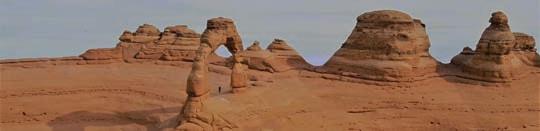
Above is a view from the other side of Utah’s iconic arch. To get there, you head up the usual trail, but at the top of the big open slab of sandstone, you turn right, leaving the beaten path, and then scramble up a rocky outcrop to a precipitous point SW of the arch. From the point, you have an uncommon view of a magni cent structure.
Of course, I show this photo from a hike Scott and I did last November because it’s a metaphor for what we are trying to accomplish in the Department of Chemistry: uncommon views of magni cent structures are what we hope to see in the lab every day, and views om the other side are educational goals in the classroom to get beyond textbooks and wikis. As the semester ends and graduation ceremonies near, we are proud of our accomplishments in the classroom and the lab this past year. e number of B. S. students graduating this spring is up 18%, the overall number of majors is up 6%, the number of incoming graduate students for Fall ‘19 is up 30%, and federal research dollars are robust, although the federal shut-down delayed some start dates, making exact comparisons di cult.
Diversity is also on the rise in Chemistry; this summer we’ll add our 10th tenure-line woman faculty member, Jessica Swanson (biophysical theory), and an o er is out to number 11. Members of underrepresented groups continue to join our ranks at all levels from undergraduate through faculty. Importantly, they are award-winning teachers and researchers.
Alumni have played monumental roles this year by donating to the Simons Endowed Chair (55 individual gi s so far). Mike and Sally Hunnicutt surprised Joel Harris on Valentine’s Day with the announcement of the Harris Endowed Graduate Scholarships. Retiring Distinguished Professor Dale Poulter and Professor of Law Susan Poulter established an endowed professorship in their names. We are grateful to all!
Our donors have been able to further advance our department’s impact on the world, whether it be a building for our faculty and students, a chair for an accomplished faculty member, or a scholarship that allows us to recruit brilliant students. Your contributions have made a tremendous positive impact on the Department, that will in return, have a great impact on society. ank you for your investment in us!
In this issue, read about award-winning science and scientists, and learn about e orts to transform the educational experience. Students, faculty and sta are doing amazing things, with help from your e orts as alumni and supporters of our goals. Our distinguished alumni event was particularly poignant as we reunited Bill Jack, Michelle Williams and Kurt Zilm—students of the ‘70s-80s—for celebratory events.
is is my last issue of the Catalyst for which I write as Department Chair; on July 1st, a er 2 x 3-year terms, I will hand over the keys to Distinguished Professor Matt Sigman to lead us to new heights. Looking back, this has been a period of growth, not so much in size as in quality. Huge strides have been made in solving energy-related problems, developing new catalysts and materials, treating antibiotic resistance and understanding cancer. Personally, I look forward to a sabbatical stay at the Curie Institute in Paris; Scott will spend time in Adelaide, Australia—how’s that for poor planning on the map! Nevertheless, we’ll be back and forth and participate here in Salt Lake when we can, and I hope to remain in touch with you.
ank you f the great journey!
Cynthia J. Burrows
Distinguished Professor and Department Chair atcher Presidential Endowed Chair of Biological Chemistry
Faculty Awards
Ryan Steele
Shelley Minteer
Marc Porter
Shelley Minteer
Michael Grünwald
Holly Sebahar
Joel Harris
Luisa WhittakerBrooks
Michael Morse
Valeria Molinero
Luisa WhittakerBrooks
Rodrigo Noriega
Luisa WhittakerBrooks
Luisa WhittakerBrooks Department of Chemistry
Science at Its Source
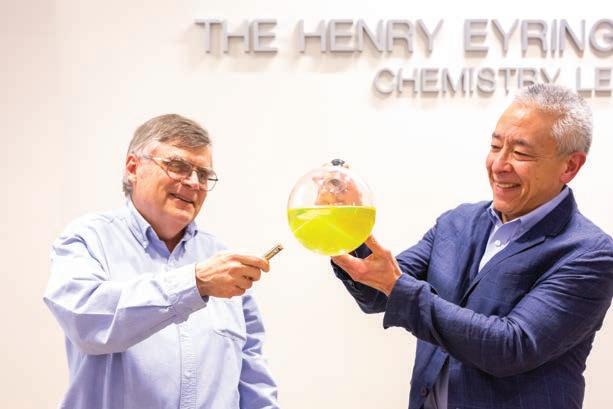
Valentine’s Day 2019 turned out to be a memorable day for Professor Joel Harris. Not only did he hear the news that he had received the Hatch Teaching Prize (the University’s most prestigious teaching award), but he was also surprised by a vistit from a former student, Michael Hunnicutt, and his wife Sally. At the conclusion of Joel’s Distinguished Faculty Colloquium lecture, Dr. Hunnicutt announced that he and Sally would be establishing an endowment to support graduate students in the analytical chemistry program in honor o f Joel’s extensive in uence on many people’s lives and careers.
is generous gesture is evidence of the strong connections built and fostered through the Department of Chemistry as well as Joel’s legacy as the founder of the Analytical Chemistry Program at the University of Utah over forty years ago.
roughout four decades, his dedication to teaching and mentorship has contributed to the success of more than 2,500 students who have learned from him in the classroom and over 100 undergraduate and graduate students, postdoctoral associates, and collaborators who have done research in his lab.
Please join us in supporting analytical chemistry graduate students
Thank you for your support!
Chemical Ecology: How Bacterial Communities Sequester Methane
Just like there are good bacteria that exist in our gut microbiome to help us control our weight, ght infection, and regulate our sleep, there are good bacteria within the earth microbiome that strive to keep their environment healthy. e Earth Microbiome Project has identi ed around 300,000 unique microbial 16S rRNA sequences–a signi cant catalogue.
e Puri Lab Research Project
Groups of bacteria are responsible for many important processes on earth, om human health to carbon cycling. While a great deal of progress has been made identifying the bacterial species that are involved in these activities, in most cases how these bacteria actually interact remains a mystery. We are interested in determining the molecular details of how these bacteria interact with each other and their environment.
Beyond Mapping & Into the Chemistry
Puri’s lab is at the forefront of understanding how these bacteria interact to perform this important ecosystem function. eir experiments go beyond the list of microbial sequences and investigate interspecies interactions in order to discover new natural products and determine how these compounds are biosynthesized. is will then lead to the discovery of new chemistry that can be used to make novel compounds from renewable feedstocks in the future.
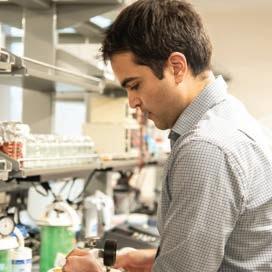
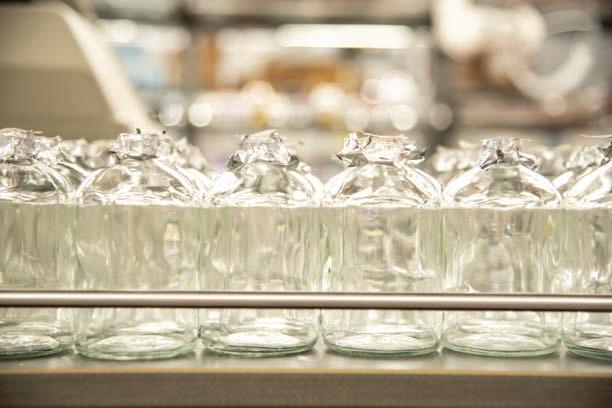
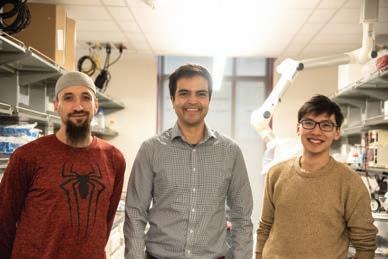
His lab, located in the Crocker Science Center, isolates the greenhouse gas-eating bacteria in Puri’s experiments in order to get a more mechanistic understanding of how they use small molecules to interact. whether they’re signaling molecules, or go out and grab nutrients or antibiotics to a ect their environment.
Introducing Oxygen: How to mimic the natural environment
Bacteria need both oxygen and CH4 (methane) to live in an environment. Rather than conducting experiments only in test tubes, Puri is re-introducing oxygen into his process in order to mimic the bacteria’s natural environment. With a syringe as an auger, he can add methane to the tests, allowing oxygen to surface so the bacteria can grow where they would naturally. By doing so, he has observed that the rst thing the bacteria do is turn methane into methanol.
Puri at e U
Dr. Puri came to the University of Utah in January 2019. He completed his B.S. at the University of Chicago, his PhD at Stanford University School of Medicine, and his post-doctoral research at the University of Washington in Seattle where he was co-mentored by Mary Lidstrom and Pete Greenberg and worked on genetic tools and chemical signaling in methane-oxidizing bacteria as part of an NIH K99 Pathway to Independence Award.
e draw to the University? e people in the chemistry department and the opportunity for interdepartmental collaboration (although maybe the mountains had something to do with it as well).
Department of Chemistry
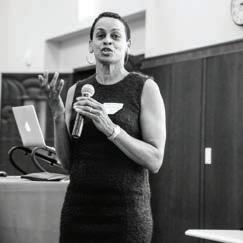
Michelle’s story sounds like it must have been deliberately calculated and executed. How else does someone go from Jamaica at an all-girls boarding school to college in New York City to graduate school at the University of Utah to Global Group President of Arkema, a billion-dollar subsidiary of Altuglas International? Turns out, Michelle had zero plans whatsoever to lead an international company along her career path. Instead, she thought she might like teaching. As she says, “Plan A never works out, and sometimes it’s Plan H or Plan G that nally works!”
She came to the University of Utah a er breezing through college so much so that it was all a blur, and she found herself in Dr. David Grant’s research group at the age of 19. “I had no idea what I was getting into.” She, like most 19-year-olds, was looking for adventure and eagerly said goodbye to her teary-eyed mother at the airport. Michelle was checking o her adulting list: she rented an apartment–her own place; gured out her schedule; supported herself on her teaching and research stipend; and she made her way, “I mucked my way through it.”
Michelle is emphatic that “this is where I grew up.” Only second to her decision to have children, coming to the University of Utah Chemistry Department was the best decision she ever made. Despite her overwhelm when she began her graduate research, she was quick and willing to ask for help, and she’s continued to do so throughout her entire career. “ e reality is that I have always found that there are people who will help you. ere are always people who see something in you.”
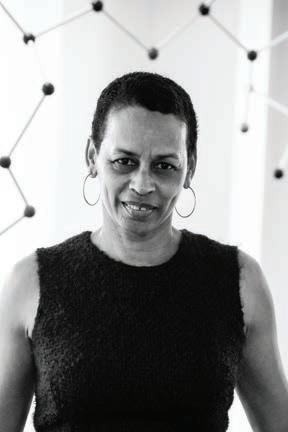
As she was completing her PhD research and dissertation defense, Michelle began casually interviewing with companies while she waited for her experiments to nish. She turned down a job o er from Dow Chemical though the interview was one of the most impactful conversations she would have about her career. e interviewer advised her, “young lady,” at which Michelle rolled her eyes, “you’re going to have opportunities and opportunities, and you need to nd a company that has the right personality to match your personality.” She eventually accepted an o er from Rohm and Haas.
e job at Rohm and Haas was a continuation of the sense of community she had come to love at the University of Utah. It was a small enough, family-owned company where she could build relationships, and the focus was on learning, training, development and growing people. From a young age, Michelle has developed and followed her core values through every step of the way.
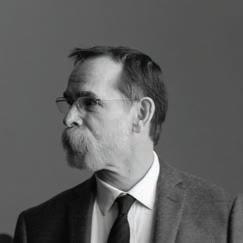
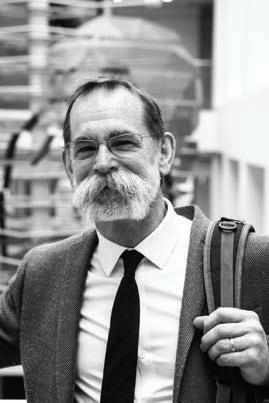
As Yale’s current Chair of the Chemistry Department, it seems clear that Kurt has always understood what the foundation of a successful chemistry department is built on: human connection, collaborative research, and investment in students. As a graduate student in Dr. David Grant’s research group at the University of Utah, Kurt also took advantage of Professor Ted Eyring’s time, knowledge, and generosity. In hindsight, Kurt realizes he had a unique and intimate look into how academia worke, and how this Chemistry department allowed him to grow steadily into the position as Chair of the Chemistry Department he now has at Yale. He’s spent the past 16 years as the Director of Undergraduate Studies at Yale University, and has committed to creating an environment for students that allows them to indulge their curiosity--just as he was able to do with Professor Eyring.
A er being at Yale for 38 years, Kurt has recently been part of a renaissance in their College of Science as they renovate and build facilities that give all students the opportunities and experiences they need in order to establish themselves as serious chemists and innovators. e department’s investments have made it possible for every undergraduate in organic chemistry to have their own hood with an updated condenser system that delivers chilled water back through a separate gravity-fed drain system--saving 150,000 gallons of water per year. Kurt has moved his lab three times in the past few years with all the renovating, but of course, is already seeing the extensive bene ts to student research.
Since 1995, Yale has made a big push to provide more opportunities for women, minority, economically underprivileged, and other historically underrepresented students in STEM through their STARS Program. Zilm has seen the impact of this program on the science community, and the stats reveal that students who participate in this program continue on in the sciences with a signi cant impact.
Kurt’s own research is on the cusp of exciting results that he will be publishing in the near future. For one project, he’s been collaborating with a team at Dartmouth trying to gure out what it is that makes infectious prions infectious and how to di erentiate them from non-infectious prions.
He’s also been working with a team at Yale’s Medical School to understand the molecular mechanism of Alzheimer’s Disease--which he thinks they now understand, and have drugs that seem to work with mice.
ese research projects have been 90% of Kurt’s work over the past ve years, and it’s all nally starting to bear some fruit. He is quick to talk about the importance of collaboration:
“ ese projects are really starting to bear fruit only because we’re collaborating with these two teams, and we have the right people and the right facilities to work on this. None of us could have done it on our own.”
For Zilm, it’s all connected: from the similar molecular origins of his two projects, to the investment in students and facilities, to his beginnings at the University of Utah, and the collaborations he’s been part of in the past, present, and future.
Bill Jack’s undergraduate experience at the University of Utah’s Chemistry Department was foundational and avored his graduate school and professional path. In hindsight, Bill also recognizes the in uence of the few humanities courses he participated in where discussions on James Joyce and American Literature altered his perspective on the world. His only regret about his undergraduate years here at the U, is that he did not slow down and take advantage of broader educational opportunities to learn as much as he could in both the humanities as well as in chemistry.
During one undergraduate summer, Bill was inspired by a single sentence in a physics course that would in uence the way he approached the world. e instructor, Dr. Swaggart, began his class by telling the students, “I’m going to teach you about a new way to look at the world.” Bill integrated this sentiment in a variety of di erent subjects since then, whether in math, social studies, literature, chemistry, anything really. “It’s a di erent way to see the world, and that broad background just increases your appreciation of the world,” says Bill.
Bill’s educational foundation led him to a graduate program at Duke University where he thought he would begin a career as a physical biochemist a er “tailing” Sidney Velick all summer, but, in an e ort to simplify his newlywed life, he asked to work in a lab which quickly altered his path. He ended up being a graduate student with Paul Modrich researching an enzyme that ended up being one of the enzymes that is foundational at New England Biolabs--the only “real” job he’s ever had a er he completed his graduate and postdoc work.
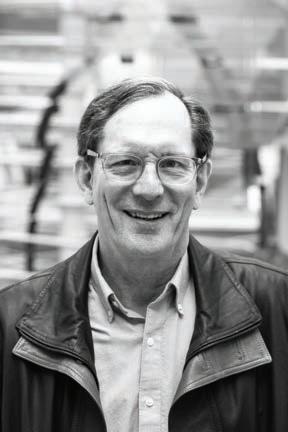
Bill has been working at NEB for the past 31 years, and now enjoys the freedom to take risks in his research. He con rms that the company’s founder is absolutely right when he claims that, “New England Biolabs scientists can’t wait to get to work each morning to see how their experiments turned out.” Bill’s latest project is admittedly risky, but that’s what makes it so exciting. e possibility that something might work as he tries to wrap his mind around di erent ways of analyzing and changing the environment to nd a solution for such a fascinating biological phenomena keeps him pushing new boundaries.
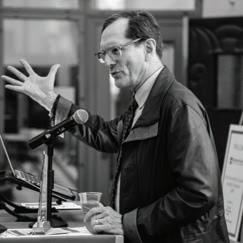
Bill is collaborating with a team at Columbia University with an expertise in the biology of the DNA sequence he’s investigating. ey’re growing, breaking, and piecing back together the sequences to try to replicate in a test tube the DNA splicing that happens naturally. “I believe that there will be steps along the way that we will have insights into other organisms, other processes whether they be normal ones or ones that cause disease, and there’s also even prospects from a commercial perspective that some of the enzymes involved will be useful in advancing other molecular biology techniques. e company I work for takes enzymes that occur in nature, pulls them out, and characterizes them so they’re available in other work ows to prepare DNA sequences.”
Distinguished Alumni Awards Dinner 2019 & Ragsdale Scholars
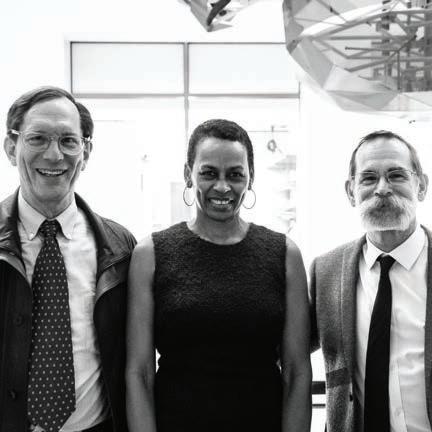
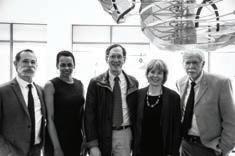
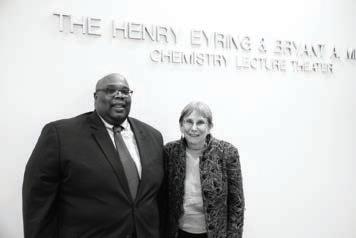
e dominant themes of the events and gatherings surrounding our distinguished alumni were community, connection, and values. Bill Jack, Kurt Zilm, and Michelle Williams all had fond and inspirings stories to recount about their time here at the University of Utah.
As they wandered the halls of the “old” chemistry building, they noticed things that were de nitely still the same, but were excited about all that is new since their time here. Not only have the green tiles in the Henry Eyring Building stood the test of time, but so have the relationships and the education these three took with them throughout their careers.
eir journeys embody the standard of excellence the Chemistry Department at the University of Utah strives to instill in all of its students and faculty.
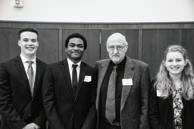
As each of them spoke brie y and powerfully at the dinner, they reminded all of the guests how personal educational opportunities are foundational for exceptional career possibilities.
Kurt Zilm told stories about the easy and frequent access he had to Professor Ted Eyring, and his generosity of knowledge and time. It’s no wonder Zilm is heavily involved with undergraduate students at Yale University.
Michelle Williams spoke about the Chemistry Department’s dedication to helping girls become women in a eld that can still be di cult to break barriers and stereotypes. She was given a community and an experience that allowed her to bind her passions of people and chemistry--the essence of her position as Global Group President at Arkema.
And Bill Jack inspired all in attendance as he repeated what he learned in an undergraduate course here at the U: how to look at the world in a new way. Again and again, he applies this to his research at New England Biolabs, a company that fosters and believes in beautiful and ethical research to lead to more sustainable solutions.
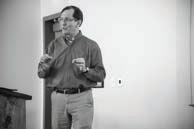
Nuclear magnetic resonance has proven invaluable in characterizing all sorts of functionally important macromolecular aggregates from amyloids to membrane-less organelles. In this talk I will describe the discovery and characterization by NMR of multiple phase states of prion protein1 (PrP ) with relevance to Alzheimer's disease (AD) and prion infectivity. e binding of amyloid-beta oligomers (Aβo) to PrP has been demonstrated to lead to synapse loss and the onset of symptoms in an animal model of AD. Biophysical investigation of the mode of PrP /Aβo association found formation of a stoichiometric complex, which was subsequently shown by magic angle spinning (MAS) NMR to be a hydrogel phase. In this phase we nd liquid-like mobility for PrP in the hydrogel, while the Aβo instead behave as a rigid molecular solid.
Association of PrP to Aβo is mediated via lysine clusters, which can be detected by observation of large di erential mobility between bound and unbound lysines by 15N MAS NMR. Exploration of the PrP /Aβo phase space has further led to discovery of a PrP rich viscous liquid phase. Each of these distinct phases is accompanied by speci c changes in PrP secondary structure. I will discuss how these ndings are proving relevant to development of possible treatments for AD. Compounds that disrupt the hydrogel phase have been shown to relieve memory de cits in AD mice, and make it possible to detect the selective dissolution of the hydrogel phase in Alzheimer's brain lysates. ese same studies are also proving relevant to explaining the requirement for the presence of anionic co-factors in preparation of synthetic infectious prions, and point to plausible molecular sources for the observation of distinct prion strains.
1Kostylev et al, Mol. Cell, 2018 Nov 1; 72(3) 426-443
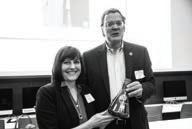
e central biological role of DNA polymerases is to copy DNA in a complete and accurate manner, allowing transmission of the encoded genetic information. ese polymerases have also been exploited in molecular biology applications to incorporate modi ed nucleotides, a usage which can be at odds with the inherent delity of the enzyme. My lab has analyzed the kinetics of incorporation of alternative nucleotides to better understand native nucleotide discrimination, and to develop molecular biology tools that better incorporate modi ed nucleotides.
Numerous studies have analyzed the impact of DNA polymerases on encountering template damage during replication. A related, but little studied issue is replication on modi ed templates, for example the glucosylated hydroxymethylcytidine (ghmC) genome of T4 phage. It is well accepted that at least one function of these modi cations is to block host restriction of the modi ed DNA substrate. We are currently exploring whether replicative polymerases encoded by phages with modi ed genomes are adapted to copy the modi ed template.
Alumni pdates
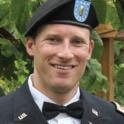
Tanner was accepted to Rocky Vista University School of Osteopathic Medicine in July of 2015. Upon acceptance, he was granted the HPSP scholarship with the US Army. He will graduate from medical school this May, and will be attending his residency training at Tripler Army Medical Center in Honolulu, HI in the eld of radiology in June.
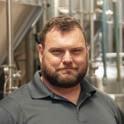
In 2018, Adam was named Co-Chief Operating O cer for the Wasatch and Squatters Brewery. He has worked at the brewery for the past 19 years as brewing was the sole reason he decided to pursue a chemistry degree. Once he received his degree, he was quickly promoted to Director of Production. He held that position for three years until he was made Co-C.O.O. in May of 2018.
Lawrence is enjoying 16 years of retirement in El Dorado Hills, CA. He taught chemistry at Santa Clara University from 1970 - 2003. He has enjoyed a bit of travel, lots of golf, and some free tutoring of high school chemistry teachers.
Robert J. Hargrove PhD
Bob was Peter Stang’s rst student. When he arrived to work with Professor Stang, his rst task was to unpack boxes and help set up the lab. A er graduating from the University of Utah, Bob was persistant in his drive to nd a position at a small college as a professor. He had sent out about 1,100 application letters before he received his PhD at the U. He started out with a visiting position at Dickinson College in 1974 teaching organic chemistry to undergraduates. e following year, he started a tenure track at Mercer where he is to this day. Bob continues to encourage students to pursue career goals even if they seem impossible. ere is always a way. He wishes all the graduates “fair winds and following seas.”
Joe graduated with a BA in Chemistry in 1972, the year he entered medical school at the U of U. He worked in biochemistry before and a er graduation until medical school was too demanding. He practiced cardiology in Salt Lake City until 2003, at which time he began a second career in writing novels while practicing much less in neighboring states. In REAP 23, he used his chemistry and physics background heavily in this science ction epic. In his novel to be published in 2020, Malady of Man, there is also a great deal of science, mostly biology and anthropology. Dr. Perry says his education at the U provided a solid foundation for both practicing medicine and writing, as most of his novels revolve around either medicine or science.
Recently granted tenure teaching chemistry at Pierce College in Washington state. Congratulations, Alyssia!
Tanner Coleman PhD, OMS IV
Lawrence Nathan PhD
Joe Perry : JJ Perry (nom de plume) BA, MD
Adam Curfew BS
Alyssia Lambert Snow PhD
Alyssia Lambert Snow
Joe Perry
JJ Perry
Spring 2019 Seminars In Review
Ryan Stowe, Michigan State University
“Moving Beyond ‘Critical inking’: Supporting and Assessing 3-Dimensional Learning in High School and College”
Resa Kelly, San Jose State University
“Exploring how students make sense of con icting animations of the submicroscopic level of a precipitation reacion”
Jessica Swanson, University of Utah “Reframing Multistep Kinetic Mechanisms in Biology: A Case Study on CI-/H Exchange in CIC Antiporters”
Ayse Asatekin, Tu s University
“Next generation membranes through polymer self-assembly”
Mu-Hyun Baik, KAIST
“Computer Assisted Design of New Catalytic Reactions: Catalytic Borylation of Methane and Other Reactions”
Steven Malcolmson, Duke University
“New Strategies for the Catalytic Enantioselective Synthesis of Chiral Amines and Other Challenging Sca olds”
Abraham Badu-Tawiah, Ohio State University “Panoptic Mass Spectrometry: How and Why?”
Joel Harris, University of Utah 2019 Distinguished Faculty Colloquium “Spectroscopy through the Microscope: Chemical Analysis at Liquid/Solid Interfaces”
John Hartwig, UC-Berkeley
“Selective, Catalytic Functionalization of C-H Bonds with Small and Large Catalysts”
Amanda Hargrove, Duke University, NC
“Deciphering patterns in selective small molecule:RNA interactions”
Steve Sibener from University of Chicago “Gas-Surface Scattering: Ice, Isotopes, and Interfacial Chemical Dynamics via Visualization”
Federico Rabu etti, Wayne State University
“Synthesis, Crystal-Chemistry, and Reactivity of Bimetallic Fluoroacetates: From Serendipity to a New Family of Organic-Inorganic Hybrids”
Chris Mundy, Paci c Northwest National Laboratory “ e Initial Stages of Nucleation of CaCO3 Revisited”
Abraham Badu-Tawiah, Ohio State University “Panoptic Mass Spectrometry: How and Why?”
Steve Sibener from U Chicago
“Gas-Surface Scattering: Ice, Isotopes, and Interfacial Chemical Dynamics via Visualization”
Chris Mundy, Paci c Northwest National Laboratory
“ e Initial Stages of Nucleation of CaCO3 Revisited”
Karen Goldberg, UPenn, Parry Lecture
“Molecular Oxygen as a Reagent in Late Transition Metal Organometallic Chemistry”
Nathan Jui, Emory
“Radical Reactions for Control Freaks: New Synthetic Methods Involving Aryl Radicals and Strong C-F Bonds”
JoAnne Stubbe, MIT, Henry Eyring Lecture
“Radicals: Your life is in their hands”
Squire J. Booker, Penn State, Bryant A. Miner Lecture
“Moving Beyond Methionine Synthase: New Insights Into Cobalamin-Dependent Methyltransferase Reactions”
Jessica Hoover, West Virginia
“Catalytic Oxidative Decarboxylative Coupling Reactions: Development and Mechanistic Insights”
Susan Odom, University of Kentucky
“Organic Molecules as Charge-Storing Materials for Redox Flow Batteries”
Steve Whitelam, Molecular Foundry, Lawrence Berkeley
National Laboratory
“Growth and self-assembly processes ‘far’ from equilibrium”
Michele Coote, Australian National University
“Catalyzing and Controlling Chemical Reactions with Electric Fields”
Brett VanVeller, Iowa State University
“Sur ng the excited state energy surface towards new applications in photochemistry and biomedicine”
Michael Van Stipdonk, Duquesne University
“Using the Ion Trap as a Reaction Vessel AND Sample Cuvette for Chemical and Structural Studies of Uranium Species”
Adam Urbach, Trinity University
“Sequence-Predictive Recognition of Peptides and Proteins”
Gunther Andersson, Flinders University
“Electronic Structure of Titania Surfaces Modi ed by Metal Clusters and Application in Photocatalysis”
Kurt Zilm, Yale University, Distinguished Alumnus “ e Many Phases of Prion Protein as Observed by NMR”
Bill Jack, New England Biolabs, Distinguished Alumnus “DNA Polymerase Activity with Modi ed Nucleotides and Templates”
Tom Wenzel, Bates College
“Active Learning: Why it’s justi ed. How to implement it”
Ben Rogers, Brandeis University
“Characterizing dynamic pathways in colloidal self-assembly”
James Frederich, Florida State
“Exploiting Natural Products to Design Protein-Protein Interaction (PPI) Stabilizers”
Jim Mayer, Yale
“Proton-Coupled Electron Transfer in Molecular Electrocatalysis of Oxygen Reduction and in Interfacial Reactivity”
The Future of Chemistry
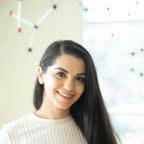
Marisa Asadian Senior, Class of 2020
Marisa was born in Iran near the Caspian Sea, and, as a child, her mother gave her books lled with images of the galaxy and stars in an attempt to satisfy her insatiable hunger for learning about the world. Marisa’s passion for growth and learning is as in nite as it gets. A er becoming bored as a medical assistant, Marisa decided it was time to begin a college degree and moved back “home” to Utah where her family had lived previously to attend the University of Utah.
She thought she’d eventually nd her way to medical school, but fell in love with chemistry along the path. Why chemistry? “Because chemistry is everything!” She’s passionate about the interdisciplinary role of chemistry and how it “interferes” with her other loves of physics and biology. Marisa joined Dr. Peter Armentrout’s research group where her project is on a lanthanide metal ion known as dysprosium cation to establish periodic trends, electronic structure studies, and to get a fundamental understanding of metal bonding characteristics such as bond energies of dysprosium cation containing molecules.
Marisa cares deeply about the environment, and wants to make a signi cant impact on discovering catalysts for new energy storage and sustainable fuel sources. She has been accepted to study microbial electrochemistry and biological fuel cells at Braunschweig University of Technology this summer. Marisa is looking forward to the entire experience and says, “I’m excited to grow. I know when I come back, I’m not going to be the same person.”
Most of all, Marisa feels it’s most valuable that, here at the University of Utah, she has “learned how to learn. I’ve learned how to discipline myself. I’ve learned a lot about the resources here at the university, and have had so many opportunities in the Chemistry Department.” Don’t be surprised if you see Marisa as Dean of the College of Science one day. She knows what she wants, and she’ll nd a way.
Bryan Banuelos
Freshman,
Class of 2022
Senior, Class of 2020
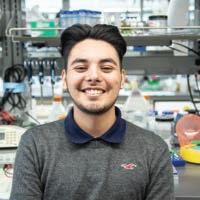
It’s always impressive when a student earns a scholarship--the dedication, focus, and all-around excellence is inspiring. Not only is Bryan Banuelos a hard-working recipient of scholarships at the U, but, as a freshman, he has already found grant money that he immediately put towards a scholarship fund at his high school for undocumented students. Originally from Mexico, he is eager to give back a er all the doors that have opened for him--especially here at the U’s Chemistry Department.
Bryan is already working as a lab assistant in Dr. Ming Hammond’s lab in the Crocker Science Center where he has been welcomed, mentored, and supported. He’s able to meet with Dr. Hammond to ask about speci c questions in the lab, or anything concerning his future career as a chemist. He’s also been working with a graduate student who is a recent transplant from UC Berkeley. anks to Hammond’s research group, Bryan has high expectations about what kind of people he’d like to work with in labs in the future.
Before coming to the U to study Chemistry, Bryan had been studying chemistry for three years both in Mexico as well as in Utah. Since he was a kid, he has always been curious about the world and how it works. He o en found himself reading science books and watching videos on the internet to help him understand more. He struggled in AP Chemistry, but continued on in the subject at the U. A er his rst year here, he’s nding clarity and opportunities to pursue his passions in chemistry. Bryan sees himself studying genetics and earning a PhD.
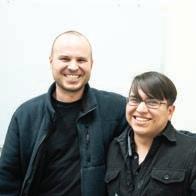
Hector Torres started his educational and career path headed towards pharmacy. He took some chemistry courses before applying and getting accepted into a pharmacy program. Sadly, Hector’s father passed away which led to Hector withdrawing from the program as he reoriented his path. He found himself back at the University of Utah in the chemistry department where he stumbled upon his calling in life: teaching.
ough it had been a few years since he had taken any chemistry courses, Hector thought he could jump right back in and signed up for O-Chem II. He quickly realized that he had lost a lot of what he had learned all those years back, and found himself thinking, “I’m going to fail unless I do something crazy.” at something crazy was a simple conversation with Professor Holly Sebahar where he asked for help. She lent him a book and connected him to a tutor with whom he met with daily until he felt con dent in O-Chem I principles. He ended up with an A in the class.
Why does Hector want to continue on to a chemical education graduate program? Because “all the O-Chem teachers are amazing.” When the department academic advisors saw how much Hector was TA-ing, they encouraged him to pursue teaching. Not only does Hector enjoy helping other students understand their coursework, but he wants to see more diversity in classrooms. As a Latino student, Hector is o en one of a few in classes with hundreds of students. He wants to be part of changing that, and is inspired by faculty who draw diversity to their classrooms.
Hector Torres (right)
Cameron Owen of Boise, Idaho, a senior majoring in chemistry and physics and minoring in mathematics, has received the prestigious Churchill Scholarship to study at the University of Cambridge in the United Kingdom. He is one of only 15 students nationally to receive the award this year and is the fourth consecutive Churchill Scholar from the U.
“Cameron’s achievement is a testament to his scienti c curiosity and diligence in his undergraduate research,” said Dan Reed, senior vice president for Academic A airs. “A fourth Churchill Scholarship award in as many years demonstrates the value of undergraduate research and mentorship experiences at the U, and that our students are among the best and brightest in the world.”
e Churchill Scholarship, established in 1963 at the request of Winston Churchill, provides undergraduates with outstanding academic achievement in the science, technology, engineering and math elds the opportunity to complete a one-year master’s program at the University of Cambridge. Students go through a rigorous endorsement process in order to apply, but only a er their home institution has been vetted with the Churchill Foundation. e U was added to the foundation in 2014.
Owen, a recipient of a 2018 Barry Goldwater Scholarship, came out of high school with an interest in chemistry. He joined the lab of Peter Armentrout, Distinguished Professor of Chemistry, a er hearing about Armentrout’s research in his honors science cohort.
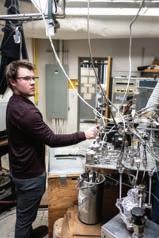
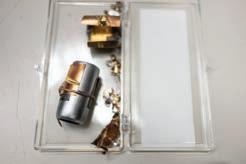
While at the U, Owen has published his research and traveled twice to the Netherlands as part of the National Science Foundation Research Experience for Undergraduates program.
Owen and Armentrout, in an ongoing collaborative e ort with the Air Force Research Laboratory, are currently studying the activation of methane by metal atoms, particularly gold, in the gas phase. Methane activation, the process of breaking the carbon-hydrogen bond of methane, and subsequent functionalization could eventually be used to convert the enormous amounts of methane from natural and shale gas feedstocks into usable products like methanol or ethane. “I want the activation of methane into liquid fuels and other viable products to be environmentally bene cial and economically advantageous,” Owen said. “Current processes that activate methane are exorbitant in both time and energy.”
At Cambridge, Owen will explore how methane chemically attaches to the surfaces of certain metals. “My project will be purely theoretical,” he said. “But I'll be able to apply what I’ve learned about certain metals that react with methane in the gas phase to potential catalysts of the future. You can extend those results to better understand the activation of other greenhouse gases in order to create more e ective real-world catalysts.”
Henry White
John A. Widtsoe
Presidential Endowed
Chair in Chemistry
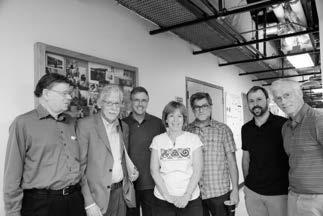
President Watkins appointed Henry S. White as the holder of the John A. Widtsoe Presidential Endowed Chair in Chemistry, e ective July 1, 2019. is chair was recently held by our now emeritus colleague Dale Poulter. Henry has had an extraordinary career here for the past 25+ years. He essentially invented the area of nano-electrochemistry with groundbreaking work in ultramicro-electrodes, electroactive lms, glass nanopores and nanobubbles. A hallmark of his work is a “deep conceptual understanding coupled with exquisite experimental design,” according to outside experts in his eld. Henry will soon complete 11 years of service to the Department and College as chair and dean, a time during which enormous growth in facilities has taken place as well as very strong growth in the quality of research and education.

Thank you for all your support!