Letter from the Chair
Dear
Chemistry Friends and Family,
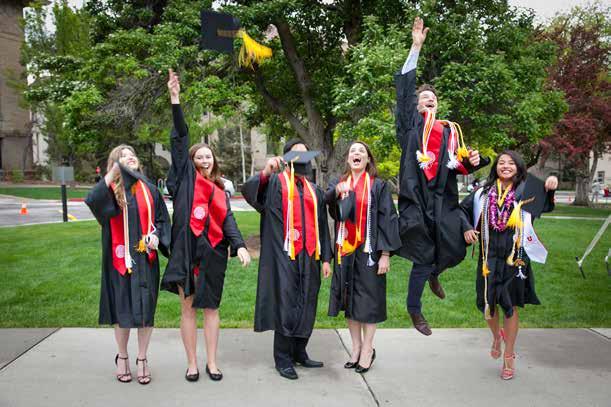
Chemistry Rules! As you will see in this newsletter, Chemistry at Utah continues to thrive thanks to the collective efforts of outstanding students, brilliant faculty, excellent staff members, and caring alumni. In early May, we graduated an impressive class of bachelor’s, master’s and doctoral degree recipients. Not only do we host the largest PhD program on campus, we also produce a high number of ACS-certified B.S. degrees (ranked 11th nationally in 2013), and Chemistry is the 2nd most popular minor on campus (~150 students per year).
General Chemistry continues to be a cornerstone of undergraduate programs in Science, Engineering, and pre-Health professions. Major improvements in our teaching of chemistry are underway as we continue to refine and evolve the process of providing a rigorous but exciting program for students. Key parts to this program involve additional training for teaching assistants, as well as the evolution of the General Chemistry Laboratory course under the guidance of Butch Atwood and David Thomas. Advanced lecture and lab courses are also changing to meet the times as we add new courses in the Chemistry of Materials and in Chemical Biology. Important to our success in providing outstanding undergraduate and graduate education is the partnership between formal coursework and laboratory research. This spring, the Utah legislature approved capital funding for the renovation of the George Thomas Building on President’s Circle to build the new Crocker Science Center. Chemistry looks forward to partnering with Biology, Math, and Physics & Astronomy to build a world-class center for undergraduate education in basic science and for research in labs that will house two chemists (Profs. Jen Heemstra and Mark Ji) in the Center for Cell & Genome Science.
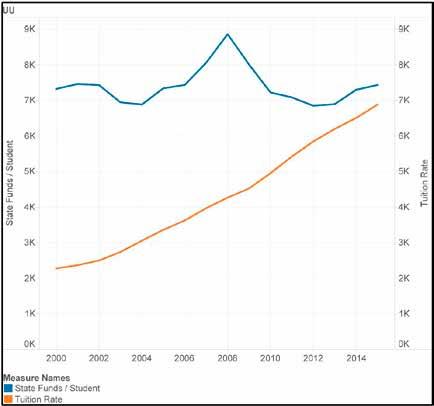
At the same time, we struggle to keep the costs of higher education under control. As you see in the graph below, the contribution of the State of Utah to the cost of educating a student is the same in 2015 as it was in 2000. Over the same period, tuition has more than doubled, imposing a higher and higher fraction of the costs on students. These graphs will cross soon, with tuition dollars outstripping the legislature’s contribution. Even so, the average undergraduate tuition of $7.5K is still a great bargain compared to our peer group of Research I state institutions, which average $11.3K per year. Nevertheless, the rate at which the financial burden for students is growing highlights our need for philanthropic contributions from alumni and friends. We are delighted to celebrate the more than 200 donors to the Ronald and Eileen Ragsdale Undergraduate Scholarships! These funds provide the equivalent of six annual scholarships; however, many more are needed for
our ~350 majors studying Chemistry. I urge you to consider this giving opportunity before the 1:1 match expires in December 2015, and I thank you for your continuing generosity.
As this newsletter goes to press, I am delighted to announce that Professor Vahe Bandarian, currently at the University of Arizona, has accepted an offer to join our department in July 2015. Vahe is an expert in the field of biosynthesis of modified purine nucleosides, and as such, his work has important ramifications in antibiotic chemistry as well as RNA biochemistry. He will occupy new laboratories on the third floor of the Thatcher Building for Biological and Biophysical Chemistry.
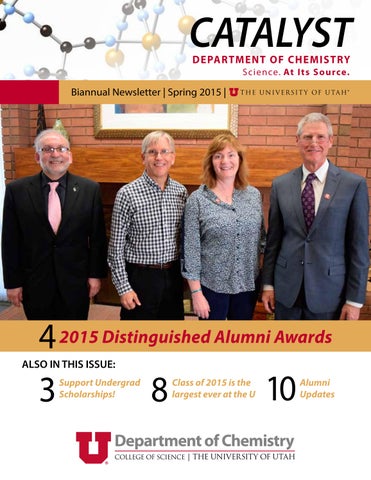
In April, we celebrated the outstanding achievements of four of our alumni (see cover story).
We heard how their time spent as undergraduates, graduate students or postdoctoral fellows had a transformative impact on their development as scientists, teachers and entrepreneurs. Our goal is to continue to grow as a fertile training ground for thought leaders and innovators in the molecular sciences. Thank you for partnering with us in these endeavors.
Have a great summer!
Cynthia J. Burrows
Distinguished Professor and Chair
Thatcher Presidential Endowed Chair of Biological Chemistry
200 Donors Support Undergraduate Scholarships!
The University of Utah has made an unprecedented commitment to match, dollarfor-dollar, the current and future Ragsdale Scholarships from any donations given by December 31, 2015.
With less than a year remaining to seize this opportunity, we need your help to ensure significant aid is available for our students far into the future. Undergraduate scholarships are vital to support students as they complete their education. The Ragsdale Scholarship Endowment provides $5,000 scholarships to assist chemistry and chemical education majors with their academic expenses. As a unique component of this scholarship, recipients design, carry out, and report on a scholarly research project under the guidance of a faculty member. This opportunity provides an essential experience in independent research early in the student’s career.
So far, nearly 200 individual donors have supported the Ragsdale Endowment. Department faculty members have also contributed over $100,000 to the fund. Join these donors in supporting undergraduate chemistry scholarships by the end of the year to have your impact matched.

A donation of $10,000 or more can be used to create a named scholarship to honor a loved one or mentor. Contact Alyssa Geisler at ageisler@chem.utah.edu or (801) 585-7896 for more information about this opportunity. Other donations will be pooled to create more Ronald and Eileen Ragsdale Scholarships.
Current Named Scholarships:
Ronald and Eileen Ragsdale Scholarships
Edward M. Eyring Scholarship
Charles L. Burdett Scholarship
Don and Rebecca Reese Scholarship
Richard Fred Smith Scholarship
Mary Ann White Scholarship
Thank you to the donors who have made these undergraduate awards possible!

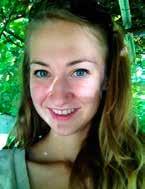
Congrats Ragsdale Scholars! Marisol Zarate, Sang Hoon Oh, April Anamisis.
2015 Distinguished Alumni Awards
On Monday, April 20th, the Department of Chemistry honored four former students as our 2015 Distinguished Alumni: Joe Gardella, Diane Parry, Don Reese, and Kirk Ririe. The Distinguished Alumni were recognized at an awards dinner at the Alumni House.
Each alumnus also had a chance to speak to current undergraduate and graduate students.
Joe Gardella gave a seminar entitled “Chemistry Research, Teaching and Civic Engagement: A Life Forward from Experiences in Salt Lake City,” impressing students and faculty with his ability to maintain a world-class research program while being heavily involved in K-12 education and service-learning.
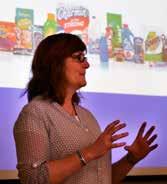
Diane Parry led “Analytical Chemists in Industry,” a short course developed by Procter & Gamble scientists to make students aware of the different industrial roles held by analytical chemists and give them a chance to test their own problem solving abilities on actual industrial dilemmas.
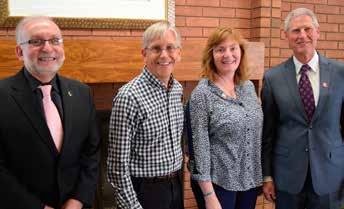
The Department of Chemistry’s 2015 Distinguished Alumni: Joe Gardella, Kirk Ririe, Diane Parry, and Don Reese
Don Reese addressed students and faculty at the annual Department Awards Ceremony. His talk was entitled “The More Things Change… the More Things Stay the Same,” and included photos of his time as a student as well as advice for current students on Emotional Intelligence.
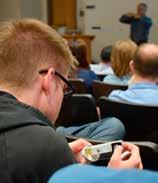
examines
Kirk Ririe gave a seminar called “How FilmArray Almost Killed Its Creators,” speaking on the FilmArray invention process and his career as a biotech entrepreneur. Visit chem.utah.edu/news/2015distalums.php for more photos from all the 2015 Distinguished Alumni events.
Professor Joseph A. Gardella, Jr. received his Ph.D. in Analytical Chemistry at the University of Pittsburgh and completed postdoctoral research in Physical Chemistry at the University of Utah working with Ted Eyring in 1982. He then joined the faculty at University at Buffalo, State University of New York, where he is now a Distinguished Professor and the John & Frances Larkin Professor of Chemistry. Joe’s research interests are in quantitative analysis and surface chemistry, broadly applied to the study of environmental effects at polymer surfaces and tissue engineering with synthetic biomaterials. He is also director of the Interdisciplinary Science and Engineering Partnership (ISEP), which brings together the University of Buffalo, 21 public schools, the Buffalo Museum of Science, and Buffalo State College to increase hands-on learning in science classes.
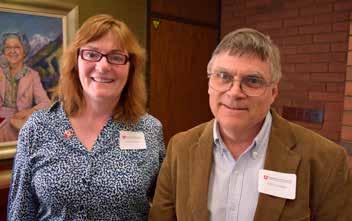
Diane B. Parry obtained her Ph.D. in Physical and Analytical Chemistry at the University of Utah with Professor Joel Harris in 1989, followed by postdoctoral research with Mike Philpott at IBM's Almaden Research Center in San Jose, CA. She has worked at the Procter & Gamble Company for 26 years, leading many areas within Research & Development including supply chain innovation, process design, consumer understanding and formula design. Diane is currently a Research & Development Associate Director; her Department includes Chemists, Physicists and Engineers and stretches across six countries. Diane is also the
President of the Society for Applied Spectroscopy. She has been involved in FACSS and SciX for more than ten years, including as the Governing Board Chair in 2006, and started organizing sessions on “Analytical Chemists Easing World Poverty” in 2010.
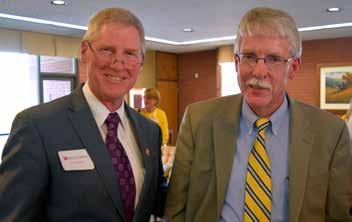
Don L. Reese, MD received his B.S. in Chemistry from the University of Utah in 1973. He then attended medical school at the University of Utah, earning his Doctor of Medicine degree in 1977. He completed a dermatology residency at the University of Minnesota in 1981. In 1983, Don started his own private practice in dermatology, working in the field until his recent retirement. Don and his wife Rebecca have been champions of undergraduate teaching and research at the U. They have generously endowed a scholarship in science teaching with the College of Science and a chemistry scholarship through the Ragsdale Fund. Their contribution to the Thatcher Building established the Department’s advanced undergraduate laboratories. Don and Rebecca are also founding members of the Curie Club.
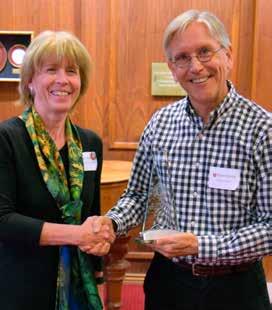
Kirk M. Ririe pursued a broad education in chemistry, engineering, languages, and communication, receiving his B.S. in Chemistry from the University of Utah in 2005. He founded Idaho Technology, Inc. in 1990, to develop products with a firm commitment to eliminate disease through smart thinking and product innovation. Kirk’s latest invention, the FilmArray® System and Respiratory Panel, a user-friendly PCR system for the point-of-care diagnostic market, received FDA clearance in 2011 with the ability to test for dozens of different organisms simultaneously in under an hour. In 2012, Idaho Technology changed its name to BioFire Diagnostics, Inc. The FilmArray technology drew the attention of bioMérieux, a world leader in the field of in vitro diagnostics, who acquired BioFire in 2014. BioFire was then split into two subsidiaries of bioMérieux, with BioFire Diagnostics focused on the FilmArray and BioFire Defense focused on supporting the U.S. Government and defense industry. Kirk serves as CEO of BioFire Defense.
Joe Gardella did postdoctoral research in Ted Eyring’s lab in 1982
Diane Parry completed her PhD in Joel Harris’s group in 1989
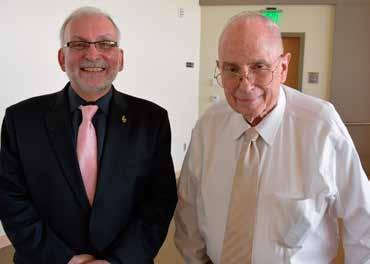
Don Reese with Dean Henry White at the Distinguished Alumni Awards
Cindy Burrows presents Kirk Ririe with his award
A student
Kirk Ririe’s FilmArray panel
Diane Parry leads her short course
Curie Club Supports ACS Student Chapter
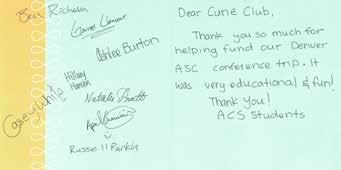
The Curie Club has provided funding for several undergraduate women to travel to national ACS meetings in Dallas, San Francisco, and Denver as part of the American Chemical Society Student Chapter. Experiencing a national ACS meeting as an undergraduate is a unique opportunity to gain insight into higher-level chemical research and industry around the country, and these students could not attend without the support of Curie Club members.
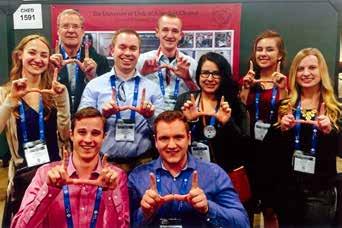
At these national meetings, the group presents posters on their activities as an outstanding example of a successful undergraduate student chapter.
Throughout the year, over 60 members host outreach events at the U and around the Salt Lake Valley, including the large annual Chemistry Festival and Science Power events. The group also hosts a weekly science show at Primary Children’s Hospital, which is the hospital’s most attended event. The children staying at the hospital can participate in hands-on demonstrations, and the show is also broadcast to patient rooms for those too sick to experience the show in person. The club also received a 2014 “Commendable Chapter Award” from the American Chemical Society.
3 Students Win Pre-Doctoral Fellowships
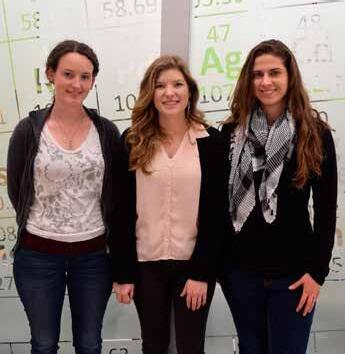
Three students from the Department of Chemistry have won 2015 pre-doctoral fellowships from the National Science Foundation Graduate Research Fellowship Program and the National Defense Science and Engineering Graduate Fellowships.
• Alexandra Kent, graduating senior, is a recipient of an NSF pre-doctoral award. Alexandra is presently doing research with Jen Heemstra and will head to UC-Irvine for graduate school this summer
• Christine Nervig, a first-year graduate student with Matt Sigman, is also receiving a 2015 NSF pre-doctoral award
• Victoria Russell, a first-year graduate student working on a joint project in the Minteer and Sigman labs will receive a National Defense Science and Engineering Graduate Fellowship Congratulations to these spectacular young scientists!
Jack Simons’ 70th Birthday Symposium
The Department of Chemistry and the Henry Eyring Center for Theoretical Chemistry hosted “A Celebration of the First 70 Years of Jack Simons” Symposium on Saturday, April 11th, 2015.
The Symposium featured presentations by top-notch theoretical chemists, including the Department’s own Ryan Steele and Michael Grünwald, as well as Phill Geissler (UC Berkeley), Nandini Ananth (Cornell), Tom Miller (Caltech),
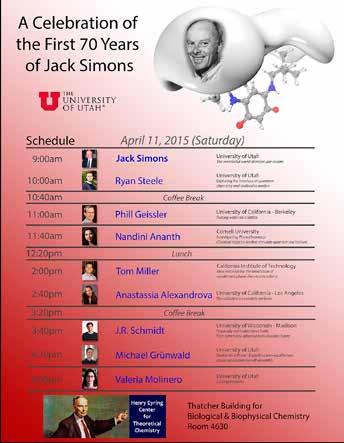
Anastassia Alexandrova (UCLA), and J.R. Schmidt (Wisconsin).
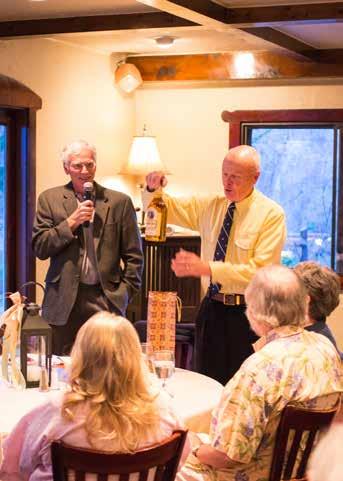
On Friday night, before the symposium, the speakers and faculty members joined Professor Emeritus Jack Simons for a birthday dinner at Millcreek Inn.
Happy 70th Birthday, Jack!
New Stang-Burrows-Sessler Lectureship
The Stang-Burrows-Sessler Lectureship was recently established by Jonathan L. Sessler, PhD, Roland J. Pettit Centennial Chair in Chemistry at the University of Texas, Austin. Prof. Sessler created the new lectureship to recognize his long-term friends and colleagues Distinguished Professors Peter Stang and Cynthia Burrows, two remarkable researchers in the Department.
The lecture will provide a significant new educational and research opportunity for the
Department’s students, engaging them with pioneering science from around the United States and the world. The Stang-Burrows-Sessler Lecture will host leading voices in non-traditional areas of organic chemistry for many years to come.
Additional gifts to recognize Prof. Stang, Prof. Burrows, and Prof. Sessler are welcome. With a matching gift from Prof. Stang, the endowment created by Prof. Sessler will be a robust resource to invite the world’s top chemists to the University.
Above: a thank you card from the ACS students who traveled to Denver
Right: Students from the group flash the U in front of their poster
Students Christine Nervig, Alexandra Kent, and Victoria Russell
News from the Department
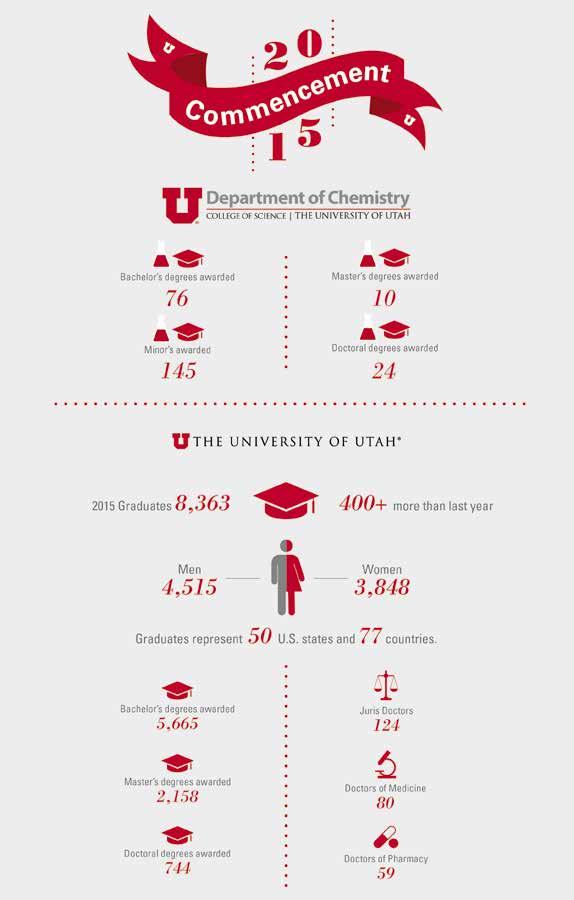
Graduation by the Numbers - Congratulations Class of 2015!
Jennifer Heemstra Honored with Cottrell Scholar Award
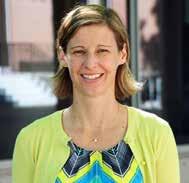
Assistant Professor Jennifer Heemstra has won a Cottrell Scholar Award of $75,000 – a prize aimed at early career, physical sciences faculty who are committed to excellence in research and undergraduate teaching.
“In addition to funding for my research program, I’m very excited that this award provides the opportunity to become a long-term member of the Cottrell Scholar community, which is dedicated to pursuing innovation and change in science education,” Prof. Heemstra said.
Heemstra wants to develop tools to understand the patterns and ways RNA “localizes” to particular places within living cells. Disruption of RNA localization patterns have been tied to cancer, Alzheimer’s and Huntington’s diseases, and other disorders.
Prof. Heemstra is among 15 new Cottrell Scholars. To win the award, she submitted research and education proposals.
The research proposal focuses on developing new methods to fluorescently label RNA in cells without disrupting its structure or function. RNA is critical to translating the genetic instructions in DNA into proteins to carry out nearly every function in a living organism. Working with Julie Hollien, an assistant professor of biology, Prof.
The core of Prof. Heemstra’s teaching proposal is the Advanced Chemical Biology Lab course for undergraduates, started during her College of Science Professorship. The students undertake a group research project with the goal of publishing the results in a peer-reviewed journal.
The Cottrell Scholar Awards are given by the Research Corporation for Science Advancement, founded by scientist-entrepreneur-philanthropist Frederick Gardner Cottrell in 1912. The awards are aimed at creating “a culture shift in research universities towards valuing the teacher-scholar model,” attracting more undergraduates to science and retaining them, and increasing the number of undergraduates who pursue graduate degrees.
Shelley Minteer Wins International Bioelectrochemistry Award
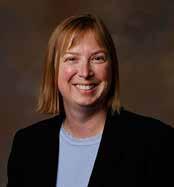
Shelley Minteer, USTAR professor of chemistry and materials science and engineering, will receive the Luigi Galvani Prize of the Bioelectrochemistry Society, an honor given once every two years for research in the field of bioelectrochemistry.
Prof. Minteer will accept the prize in June during the society’s symposium in Malmo, Sweden, and is the first professor from the U to receive the award.
“I was definitely happy to get the email,” she said.
“It gives you a feeling of validation for your research efforts that you don’t get from just publishing papers.”
Prof. Minteer and her team, which includes seven postdoctoral fellows, eight graduate students, and six undergraduate students, are being honored for their research in developing bio-batteries, specifically, using metabolic pathways to convert chemical energy into electricity. The batteries could be used for portable devices from musical greeting cards to television remote controls, just about any device that uses AA or AAA batteries.
The benefit of using bio-batteries over traditional batteries, which are made with toxic chemicals and metals, is that they are biodegradable and therefore better for the environment. Unlike metal-based batteries, they are safer and will not produce chemical burns or explosions. The technology also is cheaper because it doesn’t require manufacturers to mine metals as they do with typical batteries – they simply just grow more microbes in a lab.
“What is nice about biofuels is they are really high in energy density and therefore can produce longer lasting battery technology,” said Prof. Minteer.
Currently, she and her team are making prototypes and working with companies to commercialize the research. She believes that the first products can emerge in about five years.
The Bioelectrochemical Society is a non-profit scientific association of scientists researching the application of electrochemical concepts and techniques to the study of living systems.
News from Chemistry Alumni
Los Alamos National Lab Names Two Alumni Lab Fellows
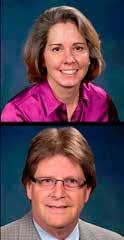
Jaqueline Kiplinger (PhD ‘96) and David Moore (BS ‘74) were appointed to the rank of Fellow at Los Alamos National Laboratory.
“The sustained scientific excellence demonstrated by the work of… Jaqueline and David exemplifies the outstanding people and capabilities we apply to today’s national security mission, and positions the Laboratory to be prepared to meet future challenges,” said Laboratory Director Charlie McMillan.
Fellows are chosen on the basis of sustained, high-level achievements in programs of importance to the Laboratory; a fundamental or important discovery that has led to widespread use; and status as an authority in the field.
Top: Jaqueline Kiplinger
Bottom: David Moore
Dr. Kiplinger obtained her PhD in Tom Richmond’s group in 1996. She is a recognized pioneer in uranium and thorium chemistry, and her research has significantly expanded the broad understanding of actinide and lanthanide chemical bonding and reactivity. Her synthetic innovations, often accomplished through chemistry previously thought impossible, have been adopted by researchers around the world. For her internationally recognized work, Dr. Kiplinger has been named a Fellow of both the Royal Society of Chemistry (FRSC) and the American Association for the Advancement of Science (AAAS). She has received the Los Alamos Fellows Prize for Research. Dr. Kiplinger’s scientific achievements have been paralleled by her 15 years of dedicated service
to the Laboratory. Her innovative “green” methods for preparing actinide materials have earned two R&D 100 Awards and two NNSA Best-in-Class Pollution Prevention Awards. Dr. Kiplinger’s sustained excellence in mentoring numerous students and postdocs has been recognized by Los Alamos’ Student Distinguished Mentor Award, STAR Award, and Postdoc Distinguished Mentor Award.
Dr. Moore received his bachelor’s degree in chemistry at the U in 1974 before pursuing his PhD at Wisconsin. His laser shock experiments have opened the field of materials at extremes in pressure and temperature to a wide range of researchers. He has made it possible to study shocked materials in research labs with tabletop lasers, as well as to use de minimus quantities of materials to map out their equations of state under extreme conditions. Dr. Moore has contributed also to the lab through a continuous record of community service through mentoring and committee work, exemplified by Fellowship in the American Physical Society and International Union of Pure and Applied Chemistry, as well as a Los Alamos Fellows Prize for Leadership. He has contributed to national security through his work on explosives detection and by his work with a team initiating the lab’s homemade explosives course. Dr. Moore has performed high-impact work on national security in both the weapons program and the threat reduction directorate.
Peter Siddoway Named New Partner at Myers Bigel
Myers Bigel Sibley & Sajovec, P.A. (Myers Bigel), the largest independent patent law firm in North Carolina, is pleased to announce that attorney Peter Siddoway has been named a new partner. Siddoway received his bachelor’s degree in chemistry at the U in 2000 before heading to the University of Minnesota.
Mr. Siddoway is a member of the firm’s busy Litigation practice. His bachelor’s degree and prior industry experience as a chemist enable him to address intellectual property disputes, and particularly patent litigation. He is admitted to practice in both Ohio and North Carolina, as well as before the United States Court of Appeals for the Federal Circuit and the U.S. Patent and Trademark Office. Mr. Siddoway’s experience in patent litigation involves a wide range of technologies, including digital cameras, automotive components, chemical compounds, and LEDs, and has litigated matters involving trademarks, restrictive covenants in employment agreements, and trade secrets. He also has significant experience in the field of Inter Partes Review and other contested proceedings in the Patent Office.
Started a new job? Won an award or had a cute baby? We want to hear from you! Send alumni updates to Alyssa Geisler at ageisler@chem.utah.edu to be included in the Catalyst’s next issue.
Jaqueline Kiplinger Receives F. Albert Cotton Award from ACS
Los Alamos National Laboratory scientist Jaqueline Kiplinger was the 2015 recipient of the F. Albert Cotton Award in Synthetic Inorganic Chemistry, sponsored by the F. Albert Cotton Endowment Fund. Dr. Kiplinger earned her doctorate in organometallic fluorocarbon chemistry from the University of Utah with Professor Tom Richmond in 1996.
“To be nominated and selected for the Cotton Award by my American Chemical Society colleagues is such an extraordinary honor,” Dr. Kiplinger said. “I have found so much joy in actinide chemistry research, both in advancing fundamental knowledge for the nation, and in training future generations of scientists.”
The award recognizes outstanding synthetic accomplishment in the field of inorganic chemistry. The American Chemical Society presented her with the award at the Society’s 249th ACS National Meeting in Denver, Colorado on Tuesday, March 24, 2015.
Dr. Kiplinger was honored for her work in establishing synthetic routes to novel uranium and thorium compounds that have opened new
frontiers in understanding the nature of bonding and reactivity in actinides.
“Collaborations have been critical to my success, and I have been privileged to work with many talented and motivated staff, post doctorates and students who have helped me advance this experimentally challenging area of chemistry; none of these discoveries would have been made without them,” said Dr. Kiplinger.
Clifton Sanders Named SLCC Provost of Academic Affairs
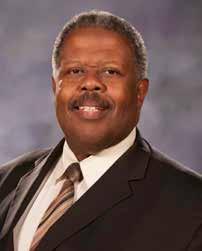
Clifton Sanders, PhD, has accepted the position of Provost of Academic Affairs at Salt Lake Community College (SLCC). Professor Sanders received his PhD in organic chemistry in Professor Evan Allred’s lab in 1990. He worked for 3M and in private industry, coinventing innovations that led to several patents for medical devices.
For the past 20 years, Prof. Sanders has been a faculty member, division chair, dean and an interim vice president at SLCC.
“His leadership in engaged learning, securing grants, workforce integration, cross-departmental collaboration and social justice practices are and will continue to be an asset to the College,” said SLCC President
Prof. Sanders’ vision for the post is a continued increase in certificate and degree completion rates while focusing on “deep learning, proficient workforce skills, transformative citizenship and a hunger for lifelong learning.” He said SLCC has several highlyregarded programs and initiatives that have contributed to the institution awarding more than 30,000 certificates and degrees over the past decade. SLCC is the largest source of transfer students to Utah’s four-year institutions, a Top 10 college nationally for total associate degrees awarded, and the sole provider of applied technology courses in the Salt Lake region.
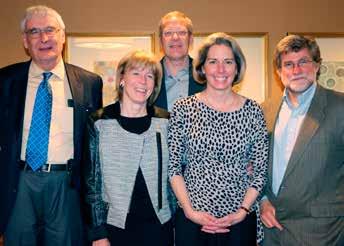
Peter Stang, Cindy Burrows, Tom Richmond, Jackie Kiplinger, and Scott Anderson at the ACS award presentation in Denver in March.
Deneece G. Huftalin.
Clifton Sanders, Provost of Academic Affairs at Salt Lake Community College
315 South 1400 East
Salt Lake City, UT 84112-0850
Address Service Requested