Letter from the Chair
Dear
Chemistry Friends and Families,
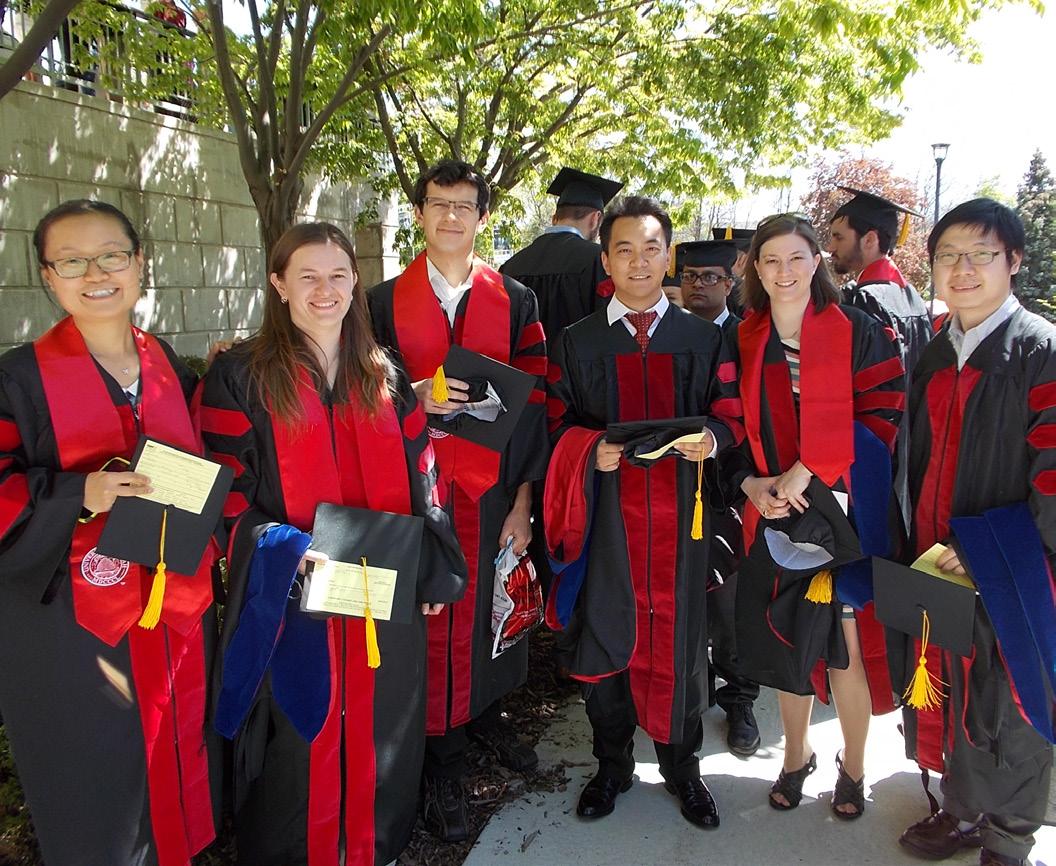
Commencement exercises remind us of the extraordinary accomplishments of our students and serve to celebrate the beginning of the next stage of their careers, be it in graduate or professional schools or in the scientific or education workforce. The Department graduated 57 undergraduate chemistry majors this spring, as well as 27 PhD students and 15 masters students over the last calendar year. We also gave over 40 national, university-wide, and department awards to our students this spring to recognize exceptional teaching, research, service, and scholarship.
Three former students were recently recognized with the 2014 Distinguished Alumni Award; Professor David Clemmer, Dr. Jerry Murry, and Mr. Thomas Thatcher were honored at a dinner celebrating their successful careers. It was wonderful to have these alumni back to visit the department, to inspire our students through seminars and talks, and to reflect on their own “commencements” as chemists some years back.
Faculty members in Chemistry have received several major awards in teaching, research, and service in the past few months; here I will list just a few. Joel Harris received the University of Utah Distinguished Teaching Award, which recognizes outstanding teaching during his nearly four decades at the U. Jen Heemstra was awarded a College of Science Professorship for which she will spend the next year developing a new interdisciplinary course in chemical biology. Jeff Statler received the Excellence in Education Award, a campus-wide honor selected by vote of the LDS Student Association. Gary Keck was named a Distinguished Professor at the U, as well as a Cope Scholar by the American Chemical Society. Peter Stang will be appointed the David P. Gardner Presidential Chair in Chemistry on July 1st. It is an honor to work with such a dynamic faculty and see them recognized with these well-deserved awards. Later this summer, we will welcome two new faculty members to our department. Dr. Luisa
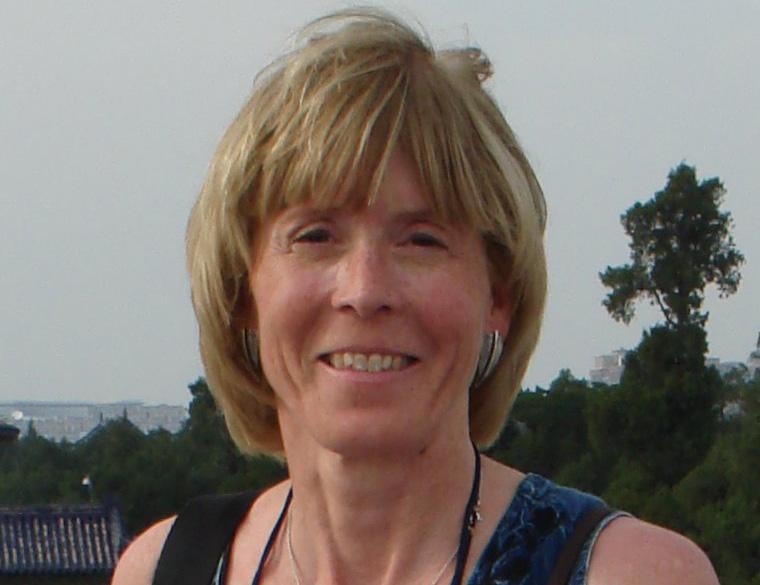
Whittaker-Brooks, currently a postdoctoral fellow at Princeton University, will establish a research program in solid-state inorganic chemistry with a focus on solar cell materials and nanostructure design. Dr. Michael Grünwald, currently at the University of Vienna, will join the Henry Eyring Center for Theoretical Chemistry, bringing his expertise in theory and computational research in the area of self assembly and nanoscience. It is my pleasure to announce that the former chair of the Department of Chemistry, Distinguished Professor Henry White, will serve as the next Dean of the College of Science. Henry is internationally renowned for his research in electrochemistry and was celebrated locally last fall with the award of the 2014 Governor’s Medal of Science and Technology. He will begin his new role on July 1, 2014. Henry will lead the College of Science to great places and leap tall buildings in a single bound!
With the sun setting on this academic year, we look forward to a summer of continued research and classes, as well as our Summer Chemistry Enrichment Program where high school students gain collegelevel chemistry credits on campus. I hope you have a wonderful summer ahead of you as well!
Sincerely,
Cynthia J. Burrows
Distinguished Professor and Chair Thatcher Presidential Endowed Chair of Biological Chemistry
Curie Club Sponsors Three Graduate Awards Women Chemists Honored with Additional Prestigious Awards
Several women undergraduate and graduate students from the Department of Chemistry have won important awards in the past few months. Please help us congratulate these students on their success!
The Curie Club sponsors three awards for women graduate students in the Department. The first, the Ronald and Eileen Ragsdale Curie Club Graduate Research Award, honors outstanding graduate research. This year’s winner is Anna Wolna, a fifth year graduate student in Prof. Cindy Burrows’ lab. Anna’s research focuses on studying DNA cross-links using singlemolecule nanopore technology. Before she joined the graduate program at the University of Utah, Anna completed her undergraduate degree at the University of Connecticut with a double major in Chemistry and Molecular and Cell Biology.
There are two Curie Club Graduate Teaching Awards, sponsored by Anthony W. Czarnik and Craig and Linda Lee. These awards each recognize an outstanding Teaching Assistant for their hard work and dedication to educating other students. This year, the recognized TAs are Kirsten Meek and Annika Pecchia-Bekkum.
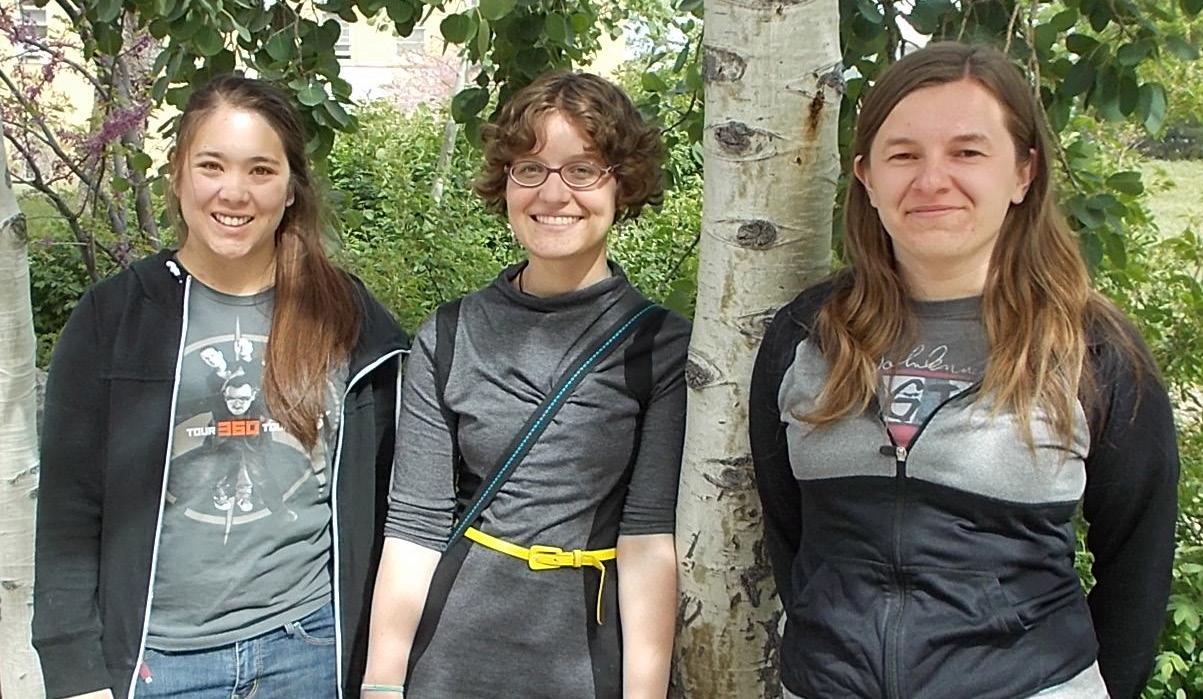
Kirsten Meek earned her BS in Chemistry from Whitworth University in Spokane, Washington. She currently works in Prof. Jennifer Heemstra’s lab developing a self-alkylating ribozyme for RNA labeling. After graduate school, Kirsten wants to be a professor of chemistry at a liberal arts university like the one she attended.
Annika Pecchia-Bekkum, a 2013 graduate of the Department and current graduate student, also won a
prestigious Gates Cambridge Scholarship to pursue a Ph.D. in medical science at the University of Cambridge. She is the second Gates Cambridge Scholar for the University of Utah. Annika graduated summa cum laude, earning both an Honors bachelor’s degree in English in 2012 and an Honors bachelor’s degree in chemistry in 2013. She plans to research therapeutics for autoimmune diseases at Cambridge, then return to the U.S. for medical school and ultimately become a pediatric immunologist working with patients in a clinical setting.
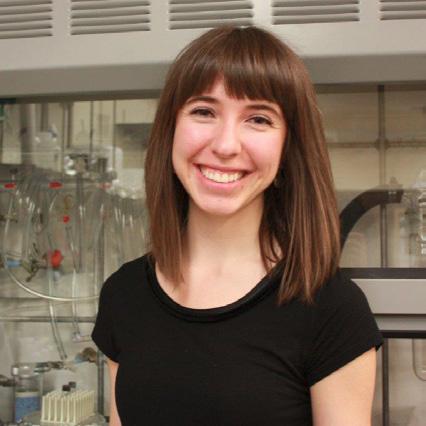
Elizabeth Bess won the Iota Sigma Pi Anna Louise Hoffman Award, a national award recognizing outstanding achievement in chemical research by a woman graduate student. Elizabeth works in Prof. Matt Sigman’s lab researching the mechanisms that govern enantio- and site-selective chemical reactions, and applying that understanding to the directed evolution of enzymes. She aims to pursue a career in academia.
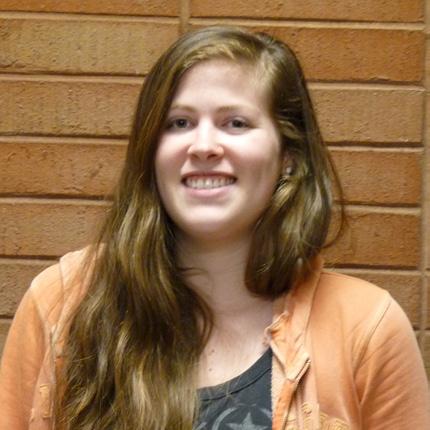
Senior Elizabeth Ward is this year’s American Institute of Chemists Award winner, recognizing her as the top graduating chemistry major. She is also graduating summa cum laude with a GPA about as close to a 4.0 as you can get. Elizabeth is working in Prof. David Blair’s research lab conducting biochemical analysis of the flagellar secretion apparatus of Salmonella and E. coli.
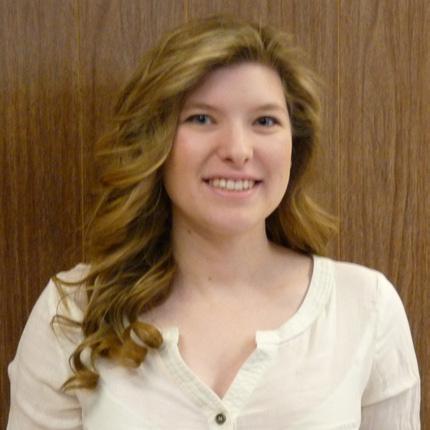
Junior Alexandra Kent won a Barry Goldwater Scholarship, which are awarded to college students who intend to pursue research careers in science, math, and engineering. Alexandra works in Prof. Jennifer Heemstra’s lab researching small molecule detection using DNA split aptamers. She plans on attending graduate school after finishing her bachelor’s next spring.
Kirsten Meek, Annika Pecchia-Bekkum, and Anna Wolna
Research Spotlight - Gary Keck and Bryostatins
Answer: Chemistry, music, and golden retrievers.
Question:
What are some of Gary Keck’s passions?
We didn’t get to golden retrievers, but music – especially country music, and especially that of Merle Haggard –surfaced a few times in my chat with Gary Keck, Professor of Organic Chemistry here at the U, and 2014 Arthur C. Cope Scholar Award recipient. I found that one needn’t look hard to find a little music/chemistry cross-pollination in Keck’s work: his efforts to synthesize the natural products known as bryostatins have led to a series of analogues that he’s dubbed “Merle compounds”.
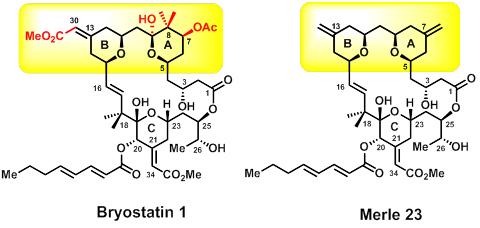
But there’s nothing frivolous about Merles, or bryostatins. Bryostatins are compounds found in marine organisms – tiny filter-feeders known as bryozoans – that have been thought for decades to have cancer fighting potential. More recently, they’ve shown signs of possible effectiveness against HIV and Alzheimer’s disease. However, the flagship compound, bryostatin 1, required tons of marine animals to yield just grams of the compound, hence efforts by researchers like Keck to provide access to these materials by total synthesis. Here Keck and his group provided a new asymmetric pyran synthesis termed “pyran annulation”, as well as an effective overall strategy for bringing together two complex subunits using this process. In 2011, Keck and his coworkers achieved the first total synthesis of bryostatin 1.
Bryostatin 1 is able to modulate the activity of enzymes in the family known as protein kinase C (PKC). Intracellular PKC signaling governs critical metabolic activity, including cell replication, differentiation, and death. Some PKC activators, notably phorbol esters, trigger PKC responses that can promote rapid tumor growth. Bryostatin 1’s binding to PKCs is similar to that of phorbol esters, but in contrast it does not promote tumor growth, and can effectively block the action of phorbol esters. Encouragingly, in some in vitro studies it induced apoptosis (cell death) in tumor cells. However, that effectiveness has not yet been replicated in clinical trials using human patients.
To illuminate the connection between bryostatin activity at the molecular level and biological responses at cellular and higher
levels, Keck notes the importance of studying analogues. His group has shown that small variations in bryostatin structure can lead to very different cellular responses. For example, fluorescently tagged PKCs can be watched as they translocate within a cell, in response to different activators. Translocation differences, in conjunction with other kinds of detailed biological characterizations, can help in deconstructing processes that Keck likens to a Rube Goldberg machine. Though in this case it’s more like a “twenty-story building full of Rube Goldberg machines, all interacting with each other,” Keck says.
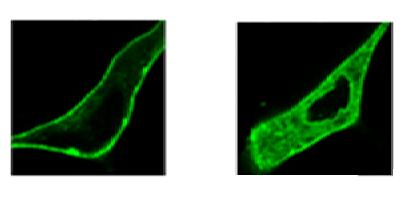
or
More analogues means more tools in the toolbox for tinkering with that machine; enter the Merle compounds. Keck and his team have synthesized these bryostatin kin with various simplifications and substitutions. An example is Merle 23, another potent PKC binder, which has a similar structure to bryostatins but gives biological responses more like those of a phorbol ester. Its structural differences from bryostatin 1 help to identify which features of that molecule are responsible for the distinctive biology associated with bryostatin 1.
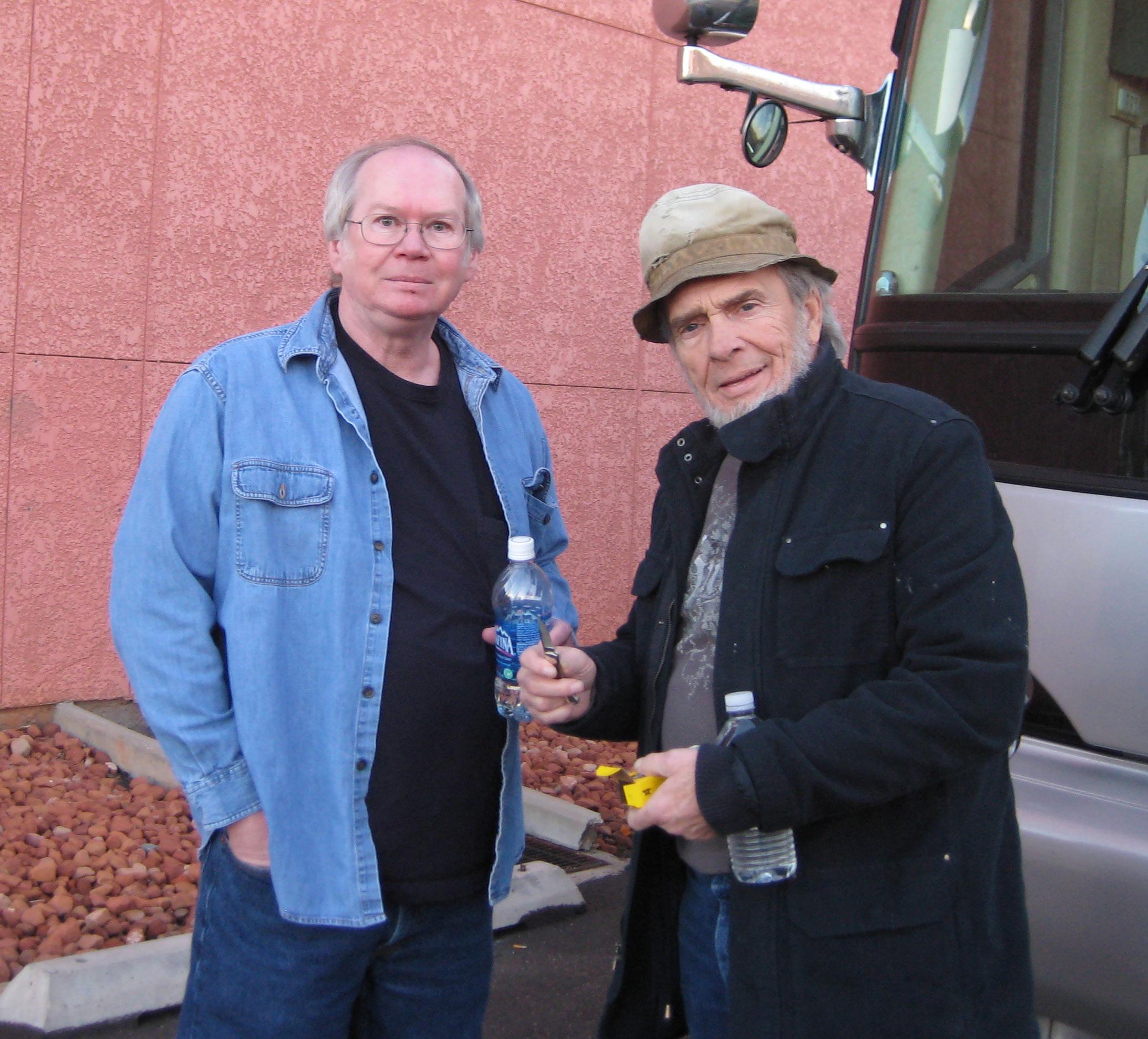
While I digest this overview from Prof. Keck, he browses for images on his computer to show me models of bryostatin/Merle variations and micrographs of tagged-PKC translocation results. Along the way, he proudly displays photos of his all-access pass to Merle Haggard shows, and
of him and Merle in front of Merle’s touring bus. “He calls me ‘ol’ Gary’. Which, by the way, is not the same as ‘old Gary’.” I imagine ol’ Merle is pleased to have namesake compounds that may someday unlock treatments of cancer, HIV, or Alzheimer’s. Story by Paul Bernard
RECOGNITION OF GARY KECK
This year, Gary Keck will be recognized as a Distinguished Professor by the University of Utah. The Department of Chemistry has the most faculty with the rank of Distinguished Professor on campus (9).
Keck will also be recognized as an American Chemical Society Cope Scholar at the ACS meeting in San Francisco this fall. This award is given to elite researchers in the field of organic chemistry. Congratulations Gary!
Prof. Keck with musician Merle Haggard, after whom Keck has named several compounds
Figure 1 - Translocation of fluorescently tagged PKCs after exposure to the phorbol ester PMA (left)
byrostatin 1 (right).
2014 Distinguished Alumni: Professor David Clemmer,
OnApril 21, the Department of Chemistry honored three former students as our 2014 Distinguished Alumni. Professor David Clemmer, Dr. Jerry Murry, and Mr. Thomas Thatcher were honored at a dinner celebrating their successful careers. Over 80 alumni, students, faculty, and friends of the department attended the event.
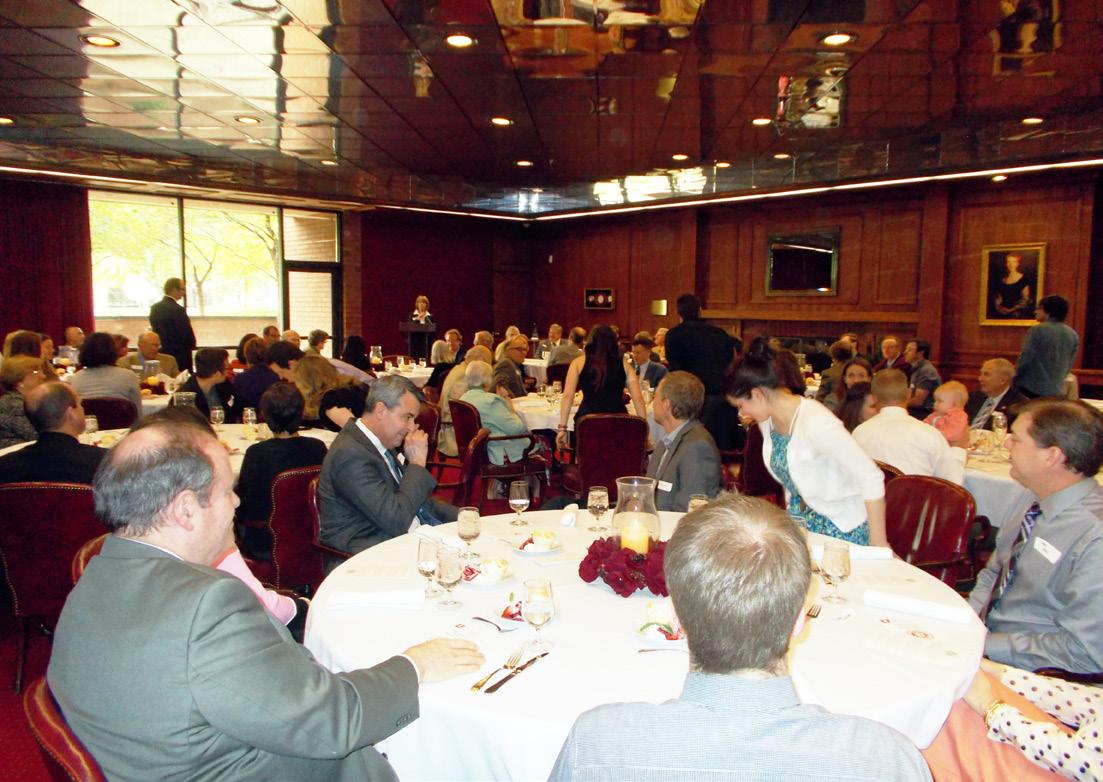
Department Chair Cindy Burrows recognizes the award winning students and alumni that attended the event
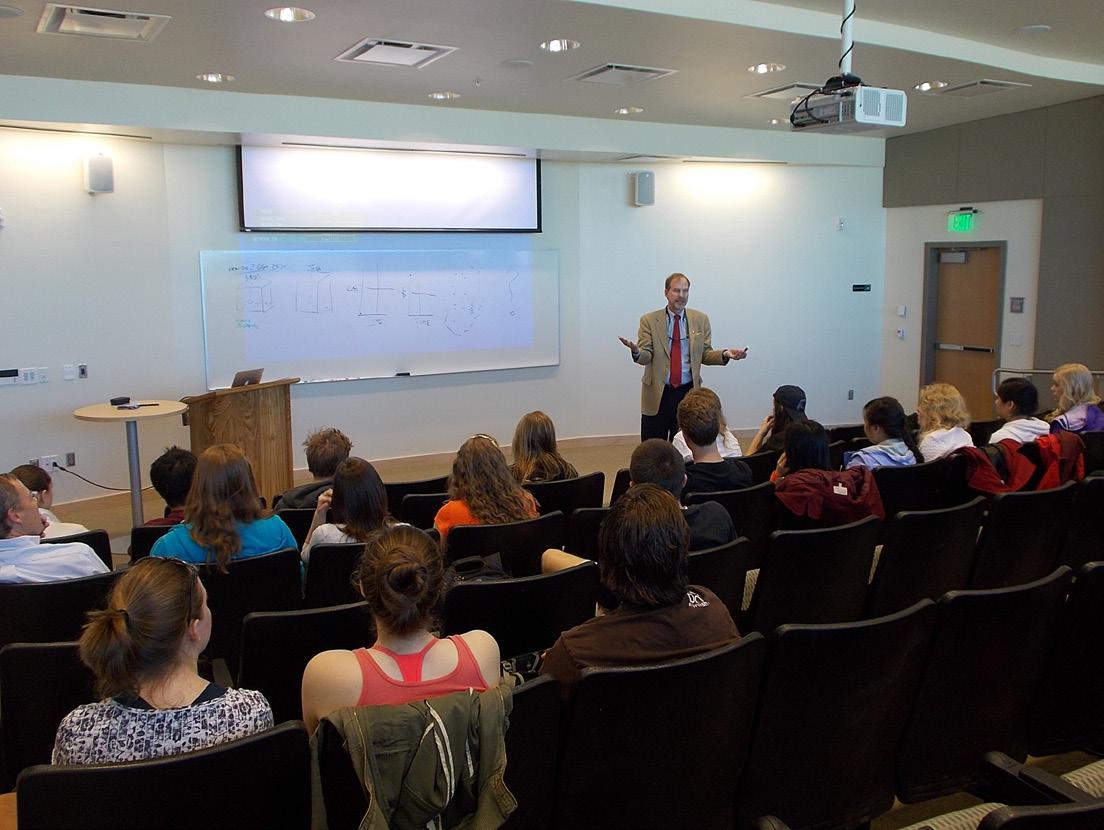
David Clemmer and Jerry Murry also gave seminars to the Department during their visit. Clemmer focused on nested IMS-MS measurements while Murry spoke on current challenges and opportunities in biotechnology. Tom Thatcher met with the Honors General Chemistry class to speak about the importance of both chemistry and well-rounded “soft” skills to further career opportunities.
The Department is honored to have such accomplished alumni and looks forward to recognizing a select few each year. To recommend a Distinguished Alumnus or Alumna, please contact Alyssa Geisler at ageisler@chem.utah.edu or 801-585-7896.
Congratulations to our 2014 Distinguished Alumni!
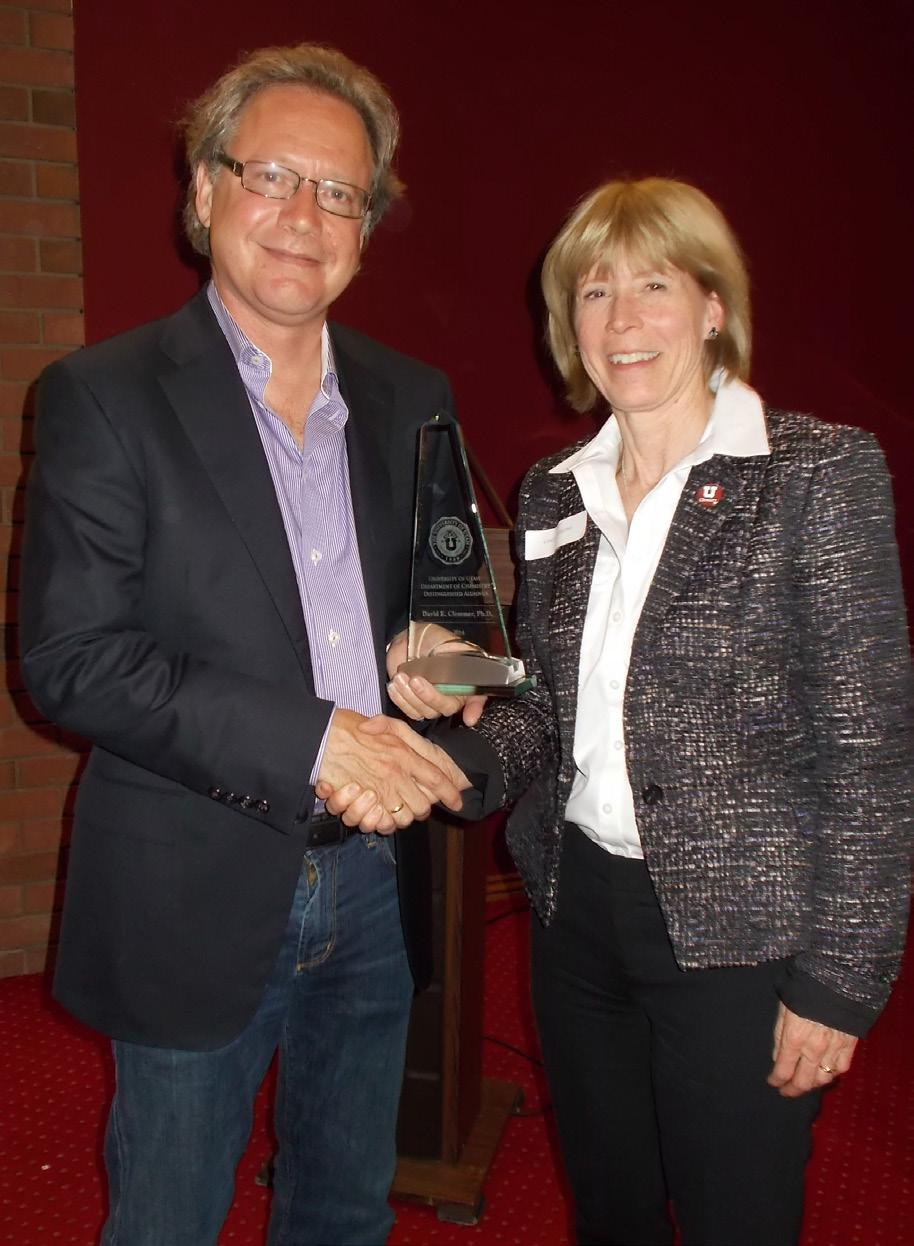
Dr. Jerry Murry, and Mr. Thomas Thatcher
Professor David Clemmer
David Clemmer grew up in the southwest and studied Chemistry at Adams State College (B.S., 1987) and the University of Utah with Professor Peter Armentrout (Ph.D., 1992). He spent a year in Japan as a Japan Society for the Promotion of Science Fellow at the Himeji Institute of Technology, and two years as a postdoctoral student at Northwestern University. He joined the Chemistry faculty at Indiana University in 1995. From 2002 to 2006 he served as the chair of the Chemistry Department. His research involves the development of methods for studying the structures of complex low-symmetry systems in the gas phase. These methods are being applied to several types of problems including elucidation of fundamental issues associated with how a protein folds, as well as studies of complex mixtures of proteins - the emerging field of proteomics. David has published more than 175 papers and his work has been recognized with several awards, including the Fresenius Chemistry Award. He has also been a member of the US Defense Science Study group.
Mr. Thomas Thatcher
Thomas Thatcher received his B.A. in Chemistry from the University of Utah in 1985, along with an emphasis in Japanese. He served as a missionary for the LDS Church in Fukuoka, Japan from 1980 to 1982 in capacity as Assistant to the President. In 1987, he obtained his MBA from Brigham Young University. He worked for 27 years at the Thatcher Company, and was General Manager of Thatcher Pharmaceutical from 1999-2012. Currently, Tom is the founder and CEO of Intuitive Funding, a company focused on helping startups succeed. He has been a member of the Rotary Club since 2006, serving as the Chairman of the International Service Committee and leading humanitarian efforts in Bolivia. He is currently on the Rotary Club’s Board of Directors and is a Paul Harris and Richard L. Evans Fellow. He is a member of the College of Science Advisory Board, the March of Dimes Board of Directors, and the Chairman of the Salt Lake Chamber of Commerce Business Board, which bridges the gap between education and business.
Dr. Jerry Murry
Jerry Murry obtained his Ph.D. in synthetic organic chemistry at the University of Utah with Professor Gary E. Keck in 1994 and completed an NIH post-doctoral fellowship with Professor David A. Evans at Harvard University. He started his industrial career at Pfizer Central Research in roles of increasing responsibility with a focus on process development supporting numerous preclinical and early development programs. Jerry then worked as the Director of Process Development at Merck Research Laboratories, where, in addition to leading a large functional process development group, he chaired several cross-functional development teams through various stages of drug development. He joined Amgen in 2006, where he is now Vice President of Small Molecule Process and Product Development. In this capacity, Jerry oversees the development of the manufacturing processes, product formulations and analytical methods for all of Amgen’s clinical and commercial small molecule programs. During his career, Jerry has authored more than 50 scientific publications, contributed to more than 10 patents and more than 30 regulatory filing documents including 4 New Drug Applications.
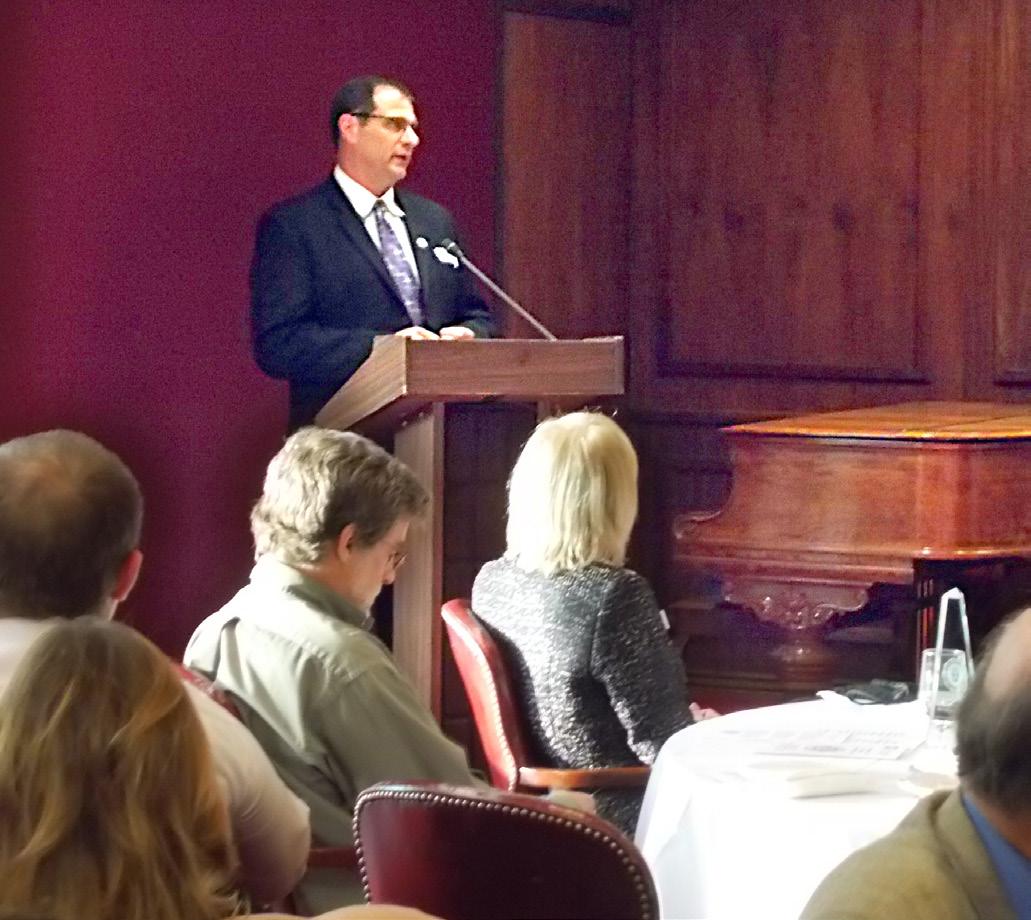
Above - Distinguished Alumni Thomas Thatcher addresses the honors General Chemistry class taught by Tom Richmond
Right - Professor David Clemmer accepts his award from Professor Cindy Burrows at the Alumni House
Jerry Murry tells the guests at the Distinguished Alumni Awards dinner about the practical jokes Gary Keck played on him as a grad student
The Electronics Lab in its 42nd Year
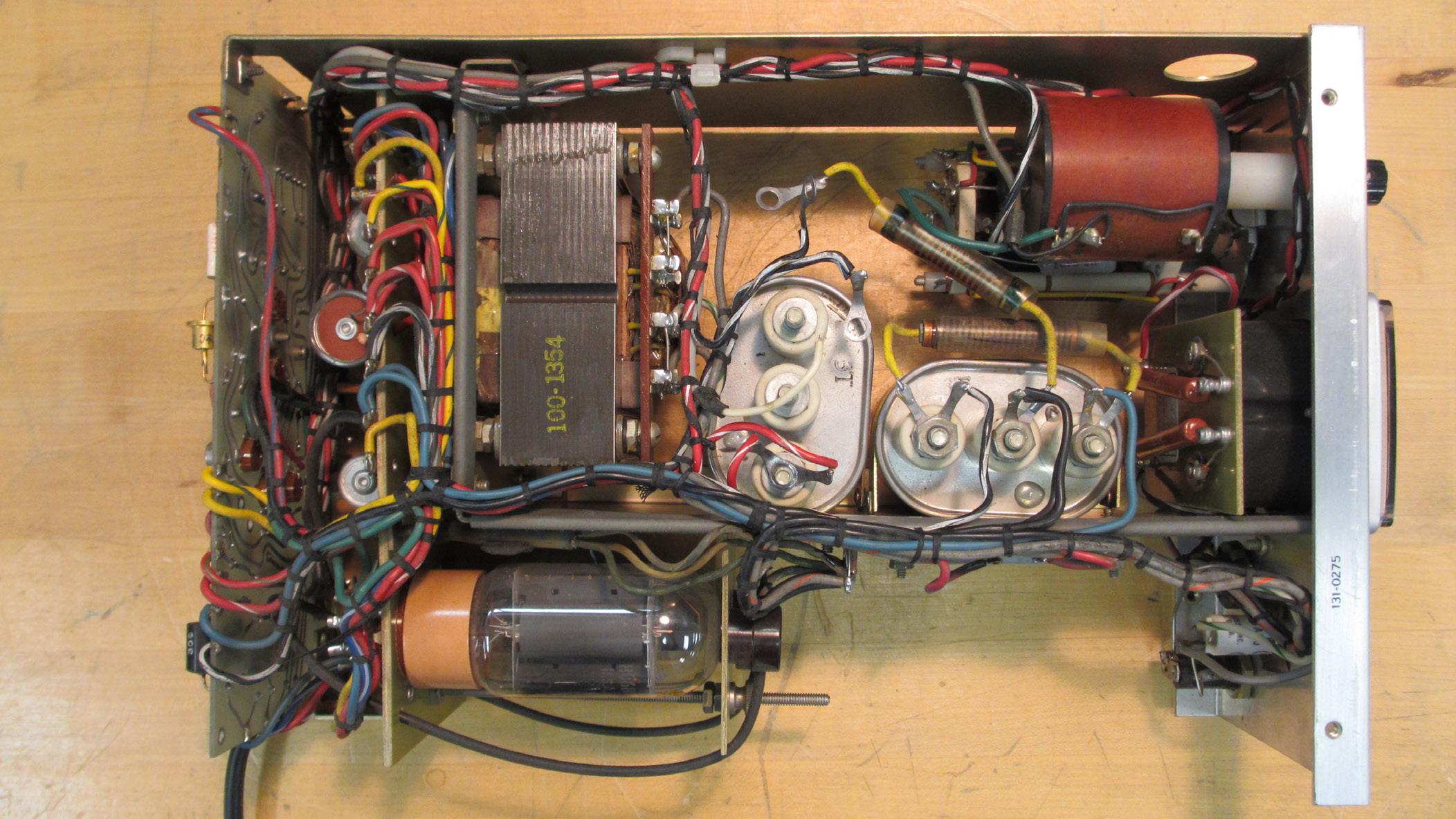
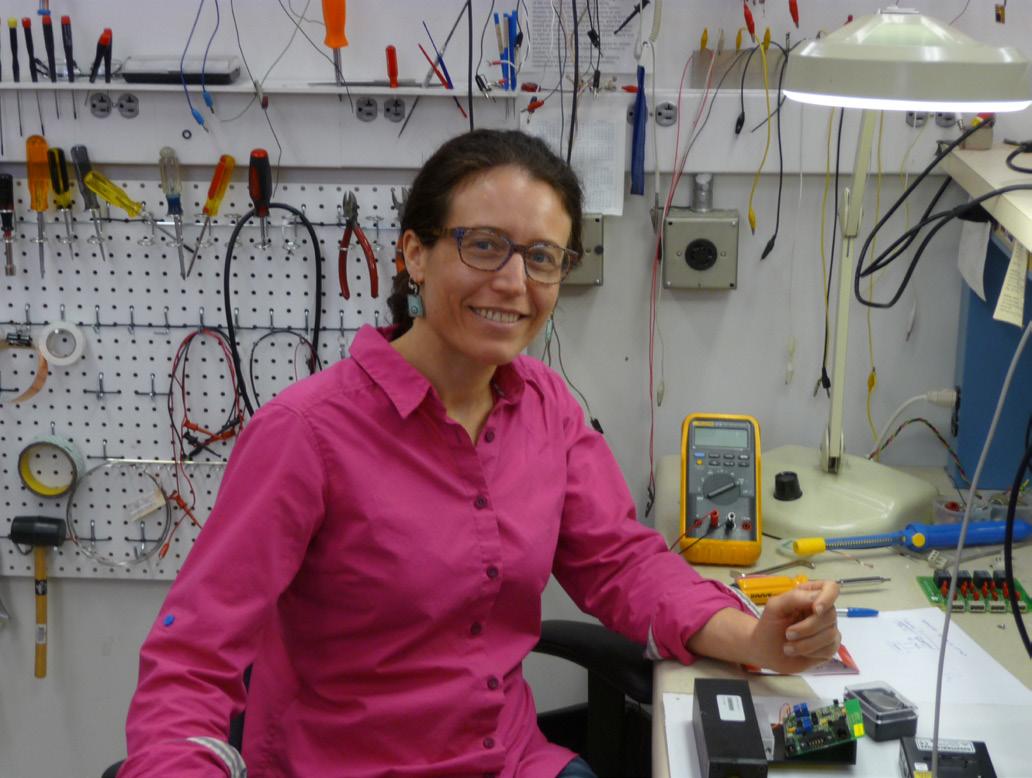
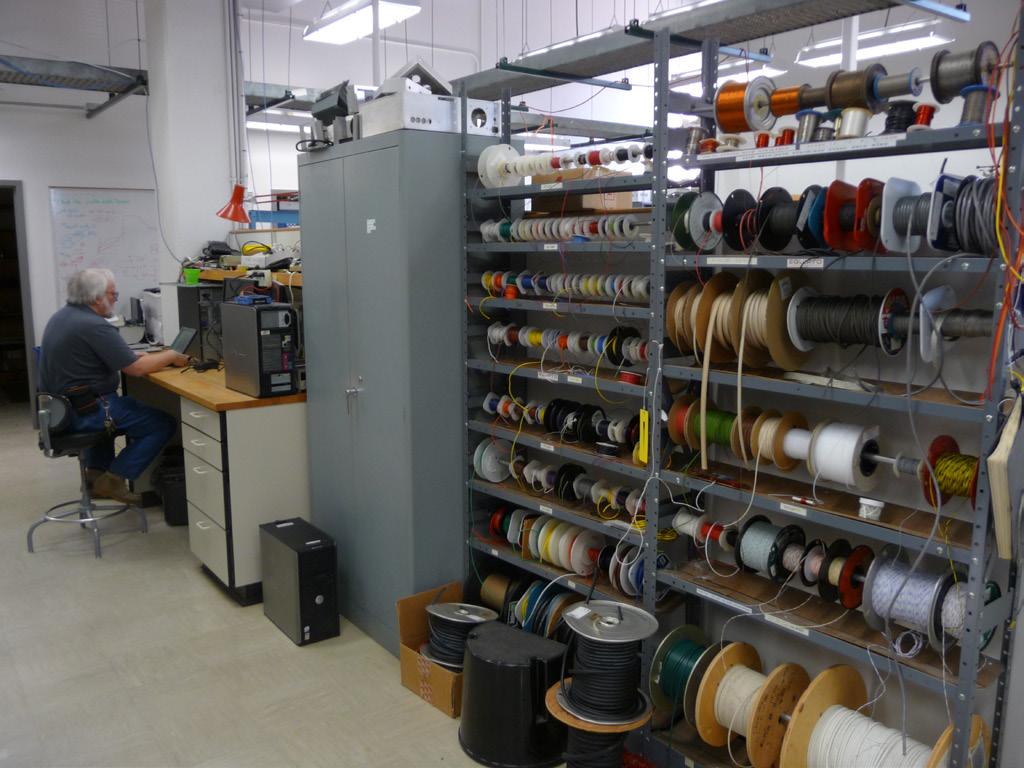
Willow Toso of the Electronics Lab, Department of Chemistry, points to a device containing vacuum tubes. ”We keep older equipment in service because replacement can be costly.” Although she’s the Lab’s newest member (arriving in the summer of 2013), she clearly enjoys working with some of its oldest equipment.
local research and medical communities. The Lab provides data acquisition and control systems, signal conditioners, transducers, custom software, repair, and computer support for the Department of Chemistry. Physics, Biology and many departments in the Colleges of Engineering, Mines and Earth Sciences, and Health also call on the Lab for design and repair needs. Beyond the campus, the Lab supports equipment used in exercise physiology programs at the nearby VA Hospital, and has licensed device designs and software to local Research Park startups. “We also run two large student PC labs, and are involved in AV equipment acquisitions,” notes Dale Heisler. Dale, the Lab’s current director, has seen 35 years of its history. Rounding out the team are Mike Scott, with 30 years in the Lab doing repairs and computer support, Shawn Laughlin, network administrator, and Dennis Edwards, department NMR service engineer with close ties to the Lab.
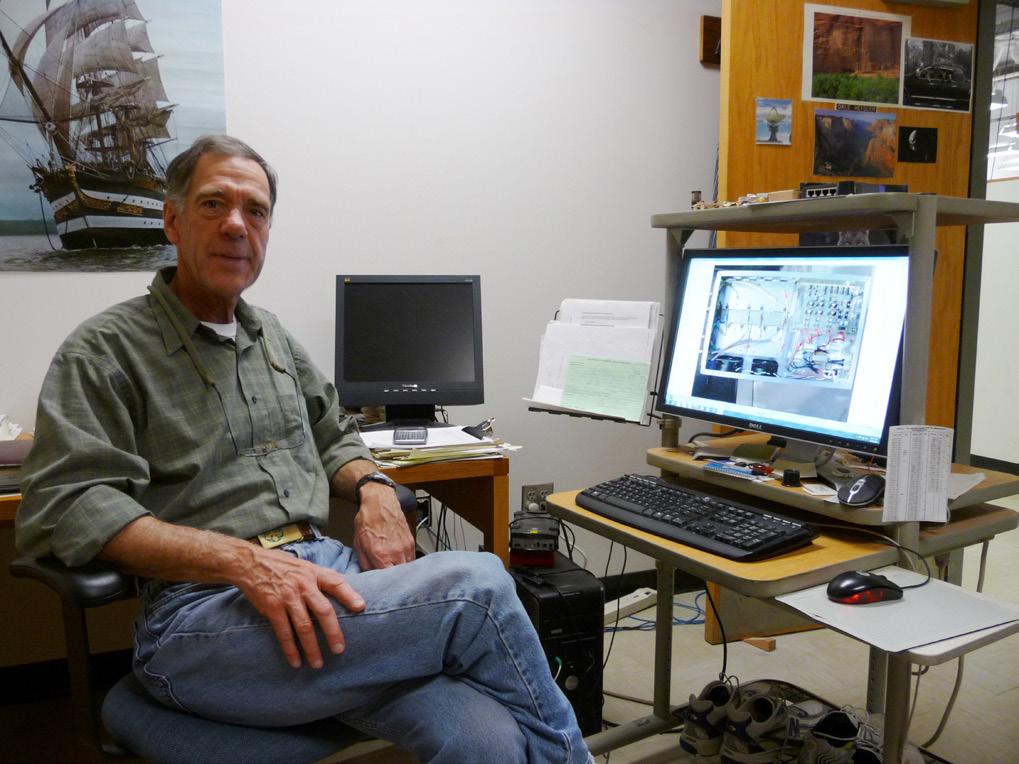
Dale Heisler, Director of the Electronics Lab
When the signal is a muscle impulse, it doesn’t hurt to have a prior career as a biologist -- as Willow does.
Dale is understandably proud of the Lab’s varied roles, and its successes in developing, maintaining, and acquiring equipment and software. And he enjoys the rapportbuilding that occurs when graduate students turn to the Lab for help with their experiments. “You forge gratifying connections,” he notes. Of course the students depart eventually,… but then there are new students and new problems to solve.
For her part, Willow is looking forward to teaching a planned electronics-for-chemists class. Topics will certainly include device shielding and grounding. “Some students will be interested in how [a device] works. Others would just like it to stop blowing up,” she says. But when it does “blow up,” the Electronics Lab will continue in its fifth decade of putting things back together.
Story by Paul Bernard
are matched for gifts received by end of 2014
THE RAGSDALE SCHOLARSHIP ENDOWMENT
• $1.2 million goal to reach by December 2014
• $200,000 lead gift from Ron and Eileen Ragsdale
• $100,000 donated by Department faculty
• $808,937 needed to complete endowment
YOUR DONATION
• $60,000 provides an annual scholarship
• $30,000 provides a scholarship every two years
• $15,000 provides a scholarship every four years
• $10,000 provides a scholarship every six years
• Named scholarships can be created to honor or remember a family or community member
• Donations can be spread over 5 years
DONATE ONLINE AT www.chem.utah.edu/community/donate.php
The Electronics Lab has a long history – 42 years’ worth of offering its diverse services to the University and to the
As I speak with Dale and Willow, I glean their shared interest in instrumentation that serves science. That is, this is a group that’s comfortable with science as well as engineering. They enjoy building the bridges that yield meaningful data from experiments. “We acquire, measure, and process electrical signals; it’s all about how to get the data,” says Willow.
$1,200,000 Goal
$391,063 Raised
Willow Toso, newest staff member of the Electronics Lab
One example of the devices the Electronics Lab maintains and repairs
News from the Department
Chair Cynthia Burrows Elected to National Academy of Sciences
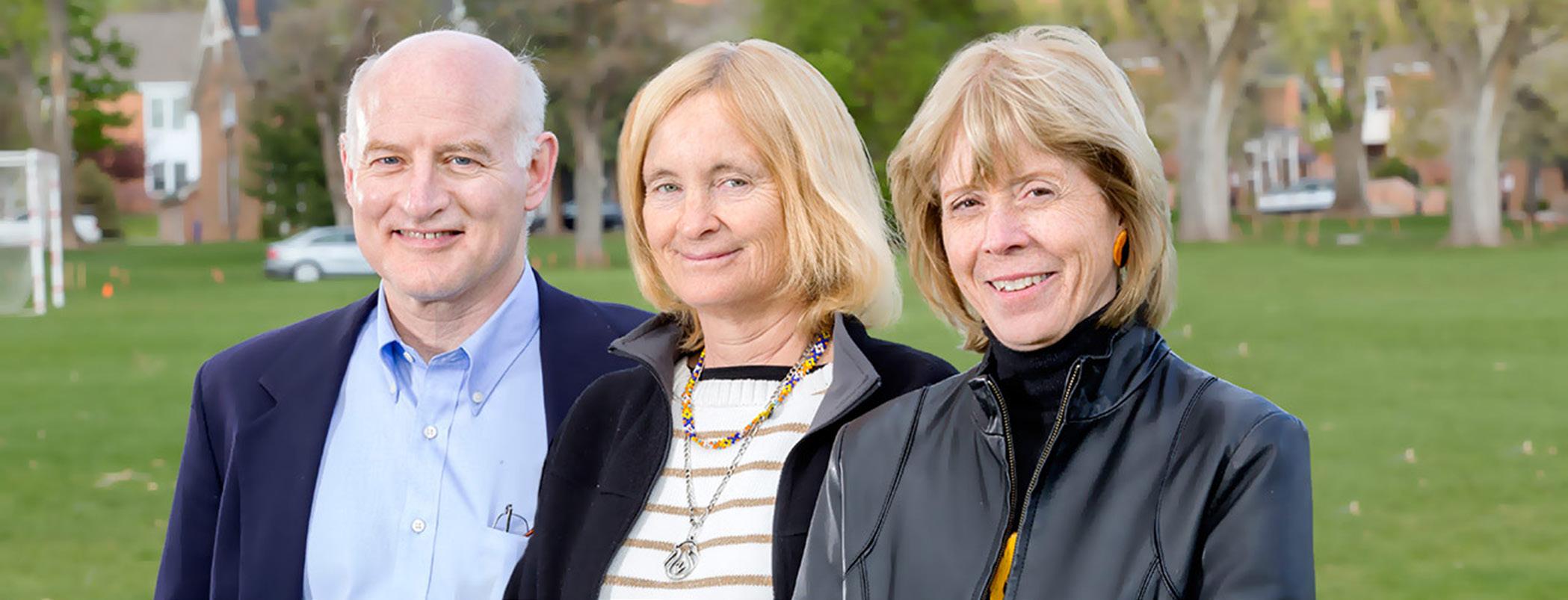
of Utah chemist Cynthia
Sundquist and anthropologist Polly Wiessner were elected to the prestigious National Academy of Sciences on April 29, 2014. Prof. Burrows’ election to the Academy brings the number of chemistry faculty who are members to 3 (the other members are Peter Stang and Dale Poulter), and confirms the outstanding national reputation of our department.
“Thrilled!” was the reaction from Prof. Burrows. “It’s wonderful recognition for the work of my students and great news for the Department of Chemistry.”
Prof. Burrows joined the University of Utah in 1995 and became chemistry chair this past July. She studies the chemistry of the four DNA bases – G for guanine, A for adenine, T for thymine and C for cytosine.
“Guanine is the most easily damaged by oxidative stress and free radicals,” she says. “The chemistry by which this occurs helps us understand mutations and cancer.”
Her current efforts are aimed at finding the damaged bases in DNA that lead to mutations and cancer by passing strands of DNA through a molecule-sized pore known as a nanopore. She also studies how DNA’s structure affects the propensity of guanines to be oxidized, for example, in telomeres at the end of genes. Premature loss of telomeres has been linked to shorter lifespan.
President Abraham Lincoln signed a congressional charter establishing the National Academy of Sciences in 1863. It recognizes achievement in science and advises the federal government about science, engineering and health policy.
Chemistry-Business Working Group Established to Connect Salt Lake Business Sector with Campus
Distinguished Alumnus Tom Thatcher, through his role on the College of Science Advisory Board, identified a need for more meaningful connection between the higher education community in Utah and local Utah businesses. Utah companies are finding there are not enough top quality candidates for jobs coming from Utah schools, while many graduating students have difficulty finding jobs.
The purpose of the Chemistry-Business Working Group
is to find ways to bridge this divide between the academic and the business worlds in Salt Lake City. If you have questions or comments for the group, please contact Joel Harris at harrisj@chem.utah.edu.
The Salt Lake City Chamber of Commerce is also developing a new website that will help connect businesses to academic contacts on campus, and graduates to potential job opportunities in the Salt Lake Valley.
Revamped 2013 Faraday Lectures Bring a Bang to Program
In the tradition of Michael Faraday, the University of Utah Department of Chemistry has presented the annual Faraday Lectures since 1981.
Faraday – the discoverer of electromagnetic induction, magneto-optical rotation, the laws of electrolysis, the isolation of benzene, and liquefaction of gases – was born in London in 1791. Faraday served as director of the Royal Institute in London and enhanced its reputation as a center for scientific research and education. A gifted lecturer, he began presenting his Christmas Lectures for Children at the Royal Institute in the 1820s. With Faraday as their guide, audiences entered wholeheartedly into the world of science.
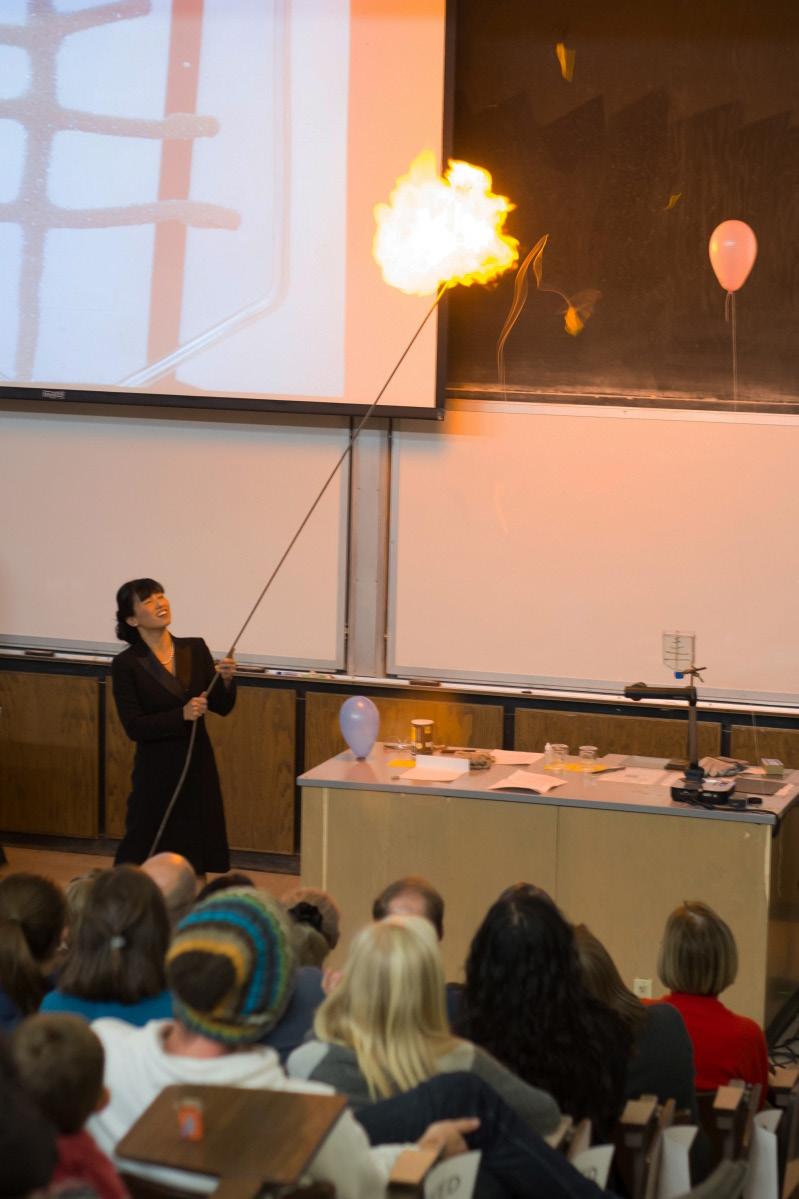
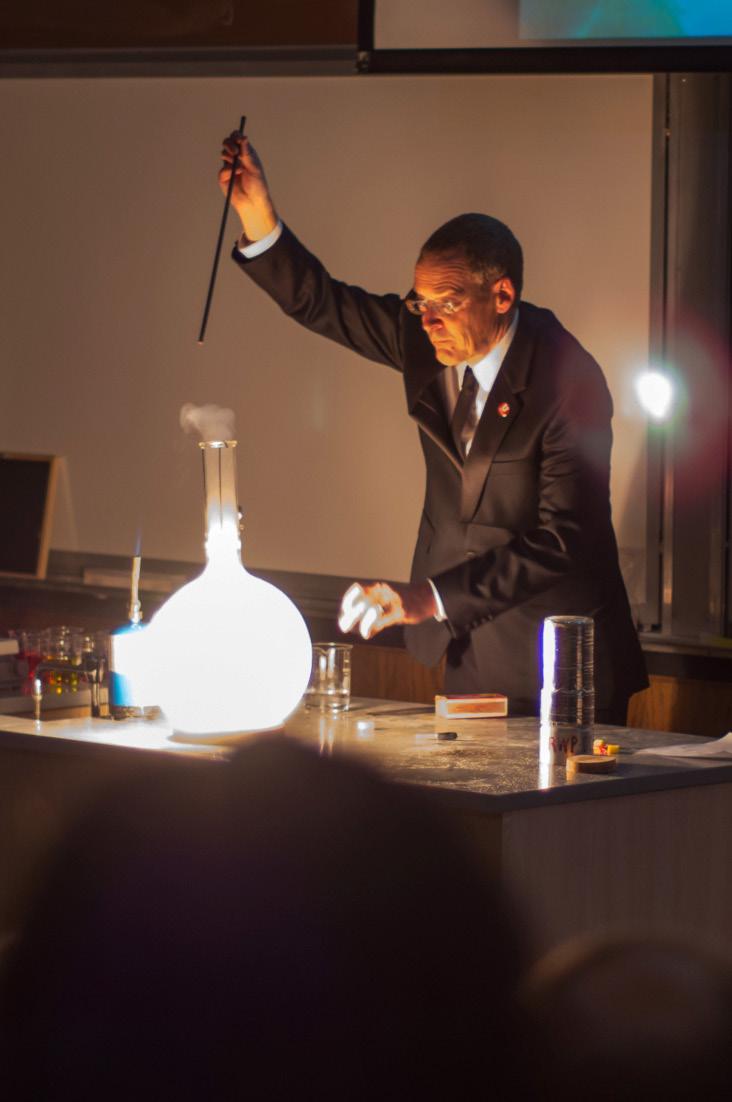
In December 2013, the Department hosted the annual Faraday Lectures for the public. Professors Janis Louie and Tom Richmond recreated the program to incorporate new demonstrations of chemistry and more audience interaction. Full of flames, explosions, bangs, colorful solutions that change hues on their own, and plenty of audience “oooooooos” and “ahhhhhhhhs,” the reimagined program brought chemistry to life in front of the viewers’ eyes. Both nights of the performance were sold out.
If you would like to attend the 2014 Faraday Lectures, mark your calendar now for late September, when the free tickets will become available. Contact Alyssa Geisler at ageisler@chem.utah.edu or 801-585-7896 for tickets.
University
Burrows, biochemist Wesley
Prof. Janis Louie asks: Was that helium or hydrogen?
Prof. Tom Richmond displays the glowing power of phosphorus
Newly-elected Academy members: biochemist Wesley Sundquist, anthropologist Polly Wiessner, and chemist Cynthia Burrows
South 1400 East
Salt Lake City, UT 84112-0850
Address Service Requested