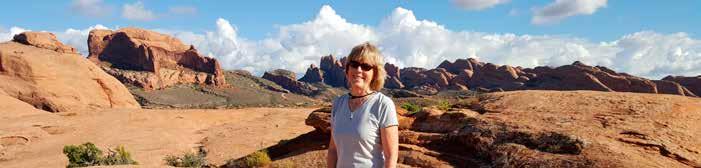
Dear Colleagues, Alumni and Friends of Chemistry,
At this time of the year, those of you who have moved out of state are seriously wondering why. Salt Lake City and its surroundings present arguably the best cross-product of excellent science and geographical attractions of any university setting in America. Autumn in Utah brings spectacularly clear skies, crisp mornings, and the anticipation of snowcaps on the Wasatch. Only a few hours away, the southern desert beckons.
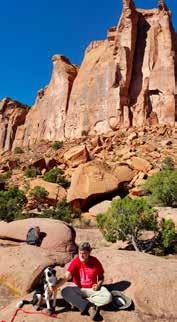
On a recent weekend, husband Scott (physical chemist), Tillie (rabbitherding canine) and I explored new territory in Day Canyon just west of Moab. Sketchy literature told us where to park and begin. After crossing the railroad tracks and diving into the tamarisk jungle at the mouth of the canyon, we needed some considerable route-finding skills to find a suitable pathway through overgrown sagebrush, around waterholes and boulders, and over quicksand and logjams. Occasionally we found ourselves in a side box canyon with unscalable rock walls and had to backtrack to find a completely new route. Finally, after a decidedly endothermic climb, we emerged at the top of the canyon to 360o views of vertical cliffs and the canyon floor. We had reached our goal! Perhaps it is obvious to you why I’m recounting this story—it mirrors the challenges we face at a Research I university in pushing the frontiers of research and education. Each day in the classroom and in the lab, we explore new methods to make or break chemical bonds, to create new molecules, tools, and assemblies and to understand properties and pathways in materials and biomolecules. Each project progresses by fits and starts, requiring a combination of curiosity and tenacity to find the solution to the problem, the pathway to our goal.
To explore Day Canyon, we needed only water, sunscreen and a comfortable pair of boots. To solve chemistry problems in drug discovery and alternative energy, we need talented students working with exceptional faculty and staff in modern research facilities. We are grateful to have the support of the University of Utah administration along with federal grants for research and education to supplement the State budget for higher education. Many of you know that those funds are not enough; our wonderful donors have risen to the challenge of providing additional funds to recruit students and faculty, to support our research and education programs, and to build an outstanding chemistry department at the U.
In this issue of The Catalyst, you will read about some of the incredible accomplishments of our students, faculty and alumni, and see how donors like yourself are making a difference as we reach new heights. THANK U for your support!

Cynthia J. Burrows
Distinguished Professor and Department Chair
Thatcher Presidential Endowed Chair of Biological Chemistry
Distinguished Professor Robert W. Parry was a giant in our profession. In his 60-year career, Bob taught thousands of undergrads and mentored over 60 Ph.D. students and postdocs. Together with Henry Eyring and Cheves Walling, Bob played a key role in the growth and development of chemistry at Utah.
To celebrate Bob’s life and career, the Department has endowed the Robert W. Parry Lectureship in Chemistry. The Parry Lectureship will invite eminent inorganic chemists to present their cutting edge research to our students and faculty at an annual event that honors Bob’s memory. Professor Harry Gray of Caltech will give the inaugural Robert W. Parry Lecture on April 12, 2016. Thank you to those who made the Parry Lectureship possible:
American Chemical Society
Peter Armentrout & Mary Ann White University of Utah
Charles & Judy Atwood University of Utah
John Bercaw Caltech
William & Julie Breckenridge University of Utah
Cynthia Burrows
& Scott Anderson
University of Utah
Louis Centofanti
David Clemmer
Indiana University
Roger Clough
Alan Eastman
GreenFire Energy
Richard Eisenberg
University of Rochester
Richard & Chariya Ernst University of Utah
John Fackler
Texas A&M University
Friends of Goji Kodama
Rolland Grabbe
Harry Gray
Caltech
Joel & Frances Harris
University of Utah
Proceeds are matched for gifts received by end of 2015
THE RAGSDALE SCHOLARSHIP ENDOWMENT
• $1.2 million goal = 20 annual scholarships
• $200,000 lead gift from Ron and Eileen Ragsdale
• $100,000 donated by Department faculty
• $617,564 needed to complete endowment
YOUR DONATION
• $60,000 provides an annual scholarship
• $30,000 provides a scholarship every two years
• $15,000 provides a scholarship every four years
Frederick Hawthorne
University of Missouri
C. W. Heitsch
Narayan Hosmane
Northern Illinois University
Jaqueline Kiplinger
Los Alamos National Lab
Josef & Sara Michl
University of Colorado
Joel & Elaine Miller
University of Utah
Joseph & Karen Morse
Western Washington University
Robert Paine
University of New Mexico
Marjorie Parry
Ronald & Eileen Ragsdale
University of Utah
Thomas Richmond & Cynthia Squire
University of Utah
John Rosemergy
Jean'ne Shreeve
University of Idaho
John & Margaret Simons
University of Utah
Peter & Christine Stang
University of Utah
Henry White & Joyce Garcia
University of Utah
• $10,000 provides a scholarship every six years
• Named scholarships can be created to honor or remember a family or community member
• Donations can be spread over 5 years
To make a donation, contact Alyssa Geisler at 801-585-7896 or visit us online at www.chem.utah.edu/community/donate.php
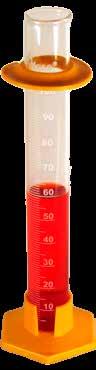
$1,200,000 Goal
$582,436 Raised
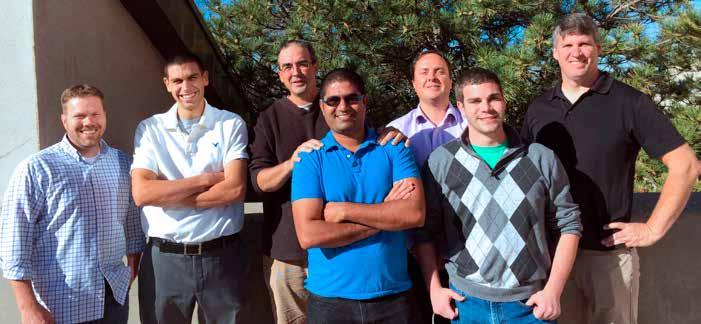
Development of new antibiotics has been dwindling at a time when we need them most. Antimicrobial resistant infections are estimated to cause 10 million annual deaths around the globe (more than cancer), at an economic cost of $100 trillion, by 2050.
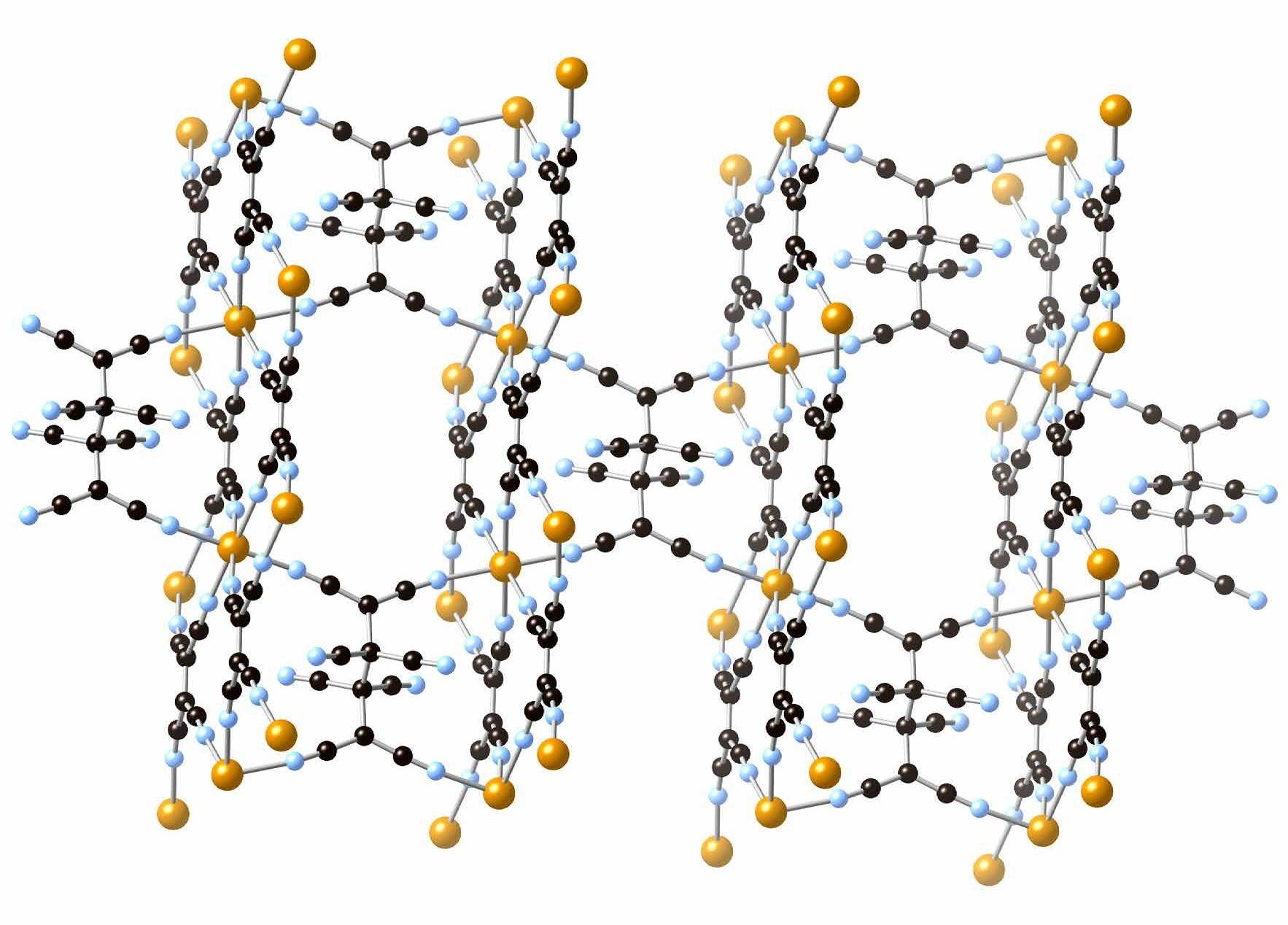
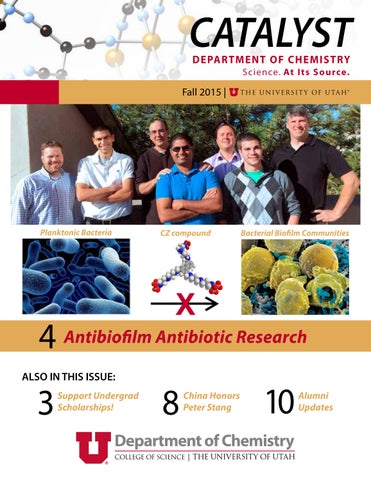
Professor Ryan Looper is working to address this looming crisis. Research in the Looper lab has led to two promising compounds for antibiotic development – a new compound that hits a new site in the ribosome, and an antibiofilm antibiotic called CZ-99.
“These are two concepts that are fundamentally interesting in terms of understanding how the molecules work and what they do,” Looper said. “That alone is something that the antibiotic development community needs, because we’ve seen a complete lack of new directions in this field.”
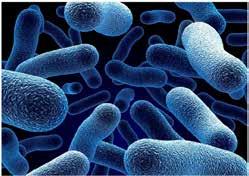
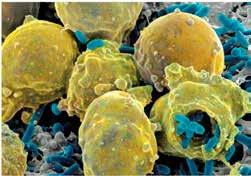
Biofilms, one focus of Looper’s research, are a leading cause of antibiotic resistance. First, the drug can’t break through the protective biofilm to kill bacteria. Then, the surviving bacteria, closely confined in the biofilm, much more efficiently transfer the developed resistance from bacterium to bacterium. In fact, bacteria in biofilms are up to 1,000 times more resistant to antibiotics. Research in the past ten years has concentrated on how biofilms are formed. Only recently have scientists started thinking about how to disperse biofilms. According to Looper, nobody has ever
They’re also very effective. CZ compounds disperse and kill MRSA biofilms better than Vancomycin, our “last line of defense” in antibiotics.
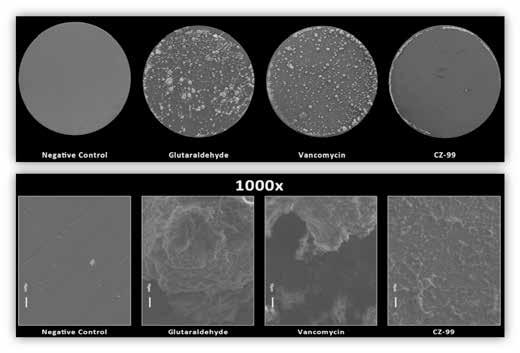
developed a drug specifically for biofilms.
“It turns out that is very different than developing a drug for planktonic bacteria.”
Looper began tackling this challenge in collaboration with Dustin Williams, co-director of the Bone and Joint Research Lab in the VA Medical Center and Assistant Professor in the Department of Orthopaedics.
Over time, bacteria in biofilms become resource limited. Eventually they disperse themselves to go feed, and then hunker back down into a biofilm.
The literature suggested that as biofilms matured, polyamines become increasingly expressed, and once their concentration gets to a certain point, the biofilm will disperse.
The Looper group identified some specific attributes of the polyamines that help biofilms disperse, and then focused on merging that dispersal with elements of known antibiotics.
“We were looking for compounds that can interact with the protective layer of the biofilm, but also interact with the cell membrane of the bacteria, because there are some chemical correlations between the compositions of those two,” Looper explained. “The idea was to design a molecule that can interact with both, so that you disperse the biofilm and you disperse the bacteria cell walls, killing them. Essentially these become very specific, very selective detergents for bacterial cell membranes and bacterial biofilms.”
The synthesis of this molecule, CZ-99, is a huge accomplishment in and of itself. Now it faces the road to FDA approval and commercialization. That’s where partner pharmaceutical company Curza Global steps in. Curza will head preclinical development and safety studies, leading to an Investigational New Drug (IND) Application and getting CZ-99 into big pharma’s hands. They are a bridge over what Looper calls “the valley of death of academic drug discovery.”
Part of that process is also identifying where CZ-99 also has the most profound use. Biofilms are a problem in paint, in oil pipelines, in chronically infected knee implants, cystic fibrosis infections, diabetic foot ulcers, and tuberculosis. A very promising aspect is its efficacy against Borrelia, the bacterium behind Lyme disease. These spirochetes form biofilms, allowing Lyme disease to persist in low chronic levels of infection over long periods of
time. CZ-99 may accelerate the dispersal of those spirochete biofilms.
“The ultimate hope is that these sorts of chronic infections can be helped by this new class of drugs,” Looper said.
Because no other antibiofilm antibiotics currently exist, CZ-99 will first have to be approved as a traditional antibiotic. Ideally, this compound’s approval will help understand biofilm-related infections and how to prove clinical success of treating them. In the future, antibiofilm drugs that have synergy with traditional antibiotics, like CZ99, may have specific FDA guidelines for approval.
Peter Stang, 2015 China’s Friendship Award - Read more on page 8
Ryan Looper, Teva Pharmaceuticals Scholar
This award (administered by ACS and funded by Teva Pharmaceuticals) supports academic scientists at Ph.D.-granting institutions in the U.S. Awardees receive $100,000/year for three years to support research with potential or direct connections to medicinal chemistry.
Amy Barrios, chemistry alumna (BS ‘95) and U of U Professor of Medicinal Chemistry, is also a 2015 Teva Pharmaceuticals Scholar. Two out of the three Teva awards went to the U this year!
Ryan Looper, U of U Presidential Scholar
The Presidential Scholar award supports the work of exceptionally promising mid-career faculty across campus, providing funding for three years for research, teaching, and outreach.
Luisa Whittaker-Brooks, Marion Milligan Mason Award
Prof. Whittaker-Brooks is one of four outstanding women chemists recognized with the inaugural Marion Milligan Mason Awards from the American Association for the Advancement of Science. The award provides early-career faculty with $50,000 for research.
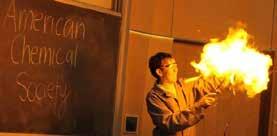
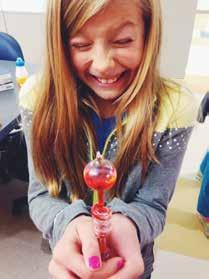
The University of Utah’s American Chemical Society Student Chapter (ACS-SC) is a robust organization that prides itself on its mission to engage K-12 students in the sciences through hands-on science activities and demonstrations.
For example, ACS-SC hosts the U’s Chemistry Festival each year. The Chemistry Festival is one of ACS-SC’s largest events and gives members the opportunity to engage children and adults of all ages in handson activities and experiments such as CSI-style forensic investigations, DNA extractions and rocket building. Hundreds of local students have attended the annual Chemistry Festivals over the past few years.
“Now I can jump in front of crowds of hundreds of kids and only have my heart beat increase ever so slightly. ACS-SC has helped me connect with professors who seemed impossibly intimidating to approach but are now my mentors, and I speak with them as I would a friend,” said Kiley.
The Reuben and Eunice Kronstadt Scholarship supports undergraduate students in the Department of Chemistry, and requires scholars to participate in outreach and research. Many thanks to the Kronstadt family for sponsoring this generous award!
How has the Kronstadt award affected your life?
Michael Kiley, who has been an ACS-SC member for three years and currently serves as copresident, said leadership in ACS-SC has benefited him tremendously by improving his public speaking skills.
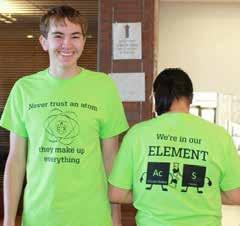
The group also hosts a weekly science show at Primary Children’s Hospital to provide a fun and educational experience for kids receiving ongoing medical treatment. Children can participate in the demonstrations in person, and the show is broadcast to each room for patients who are unable to attend. The show is the most-attended event at the hospital. Currently, there are nearly 200 members and the chapter is always eager to welcome more. Find out about upcoming events via the chapter’s Facebook page: www.facebook.com/uofuacssc.
ACS-SC was recently featured on KUTV 2 News during their fall Chemistry Festival. You can see the clip on the Department’s homepage under “News.”

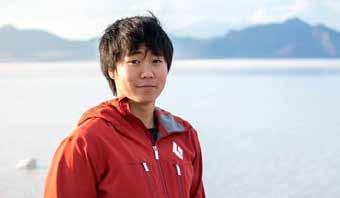
What do you love about chemistry?
Chemistry inspires a greater understanding of the world. It is the knowledge of how life works at the molecular level and beyond. From quantum to inorganic to biochemistry, the fields are almost endless, and chemistry significantly contributes to areas like drug development, renewable energy, agriculture, and more.
What are your potential career plans?
As a physician scientist, I will contribute to the scientific field, while also helping people with their health. I envision drawing on the strengths of a scientist to become a better physician and vice versa. Creating science as a researcher and applying it directly to patients as a doctor is the best of both worlds.
The Kronstadt award frees me to pursue opportunities without the worry of financial constraints. I am able to learn and study without working a second job, giving me more time contributing in a research lab. I am also able to spend more time with my family who I love dearly. I am grateful for this scholarship and in the future I intend to contribute to students like me, so they can experience what I have from the Kronstadt award.
What are your favorite activities with ACS-SC?
My favorite activity is the chemistry demonstrations we perform. At Primary Children’s hospital every Friday, we do science shows for the patients. I enjoy the look of excitement on the children’s faces when they see “Elephant Toothpaste” or “Ghost Bubbles”—enthusiasm, curiosity, and the realization that science is fun. It makes me happy that I pursed chemistry and get to help teach it.
What are your hobbies?
I like to river raft, rock climb, and run. I once got my raft stuck on a rapid on the San Juan River for three hours. I love teaching.
Reuben and Eunice Kronstadt Scholars
Sarah Clair and Scott Khu, 2015
Sabrina Aderibigbe and Julianne Hatt, 2014 Natascha Knowlton, 2013 Miles Roberts, 2012 Mark Burgess, Chelsie Conrad, Royce Davidson, and Kylee Tokita, 2011
On Oct. 30, the Curie Club hosted Dr. Gretchen Domek for a talk about her road from the U to Rhodes Scholar to Harvard Medical School to her current medical practice and research.
Domek is the U’s most recent Rhodes Scholar (HBS ‘03, MPhil Oxford, MD Harvard). Now she splits her time evenly between clincal hours as a pediatrician at Children’s Hospital Colorado and research with the Center for Global Health, University of Colorado. Her project, Creciendo Sanos or “Growing Healthy,” focuses on child and maternal health in the Trifinio region of Guatemala. Domek travels there several times a year to train local nurses who conduct neonatal home visits and group health visits for children, and lead care groups with mothers and children (birth-36 months) focused on health, nutrition, and development. There are currently over 700 children enrolled in this life-saving program.
By Lee Siegel
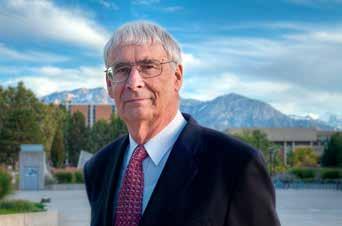
As if it wasn’t enough to make a trip to the White House and collect a National Medal of Science from the president, U organic chemist Peter Stang and his wife just spent four all-expense-paid days in Beijing attending a celebration in his honor.
Stang won the 2015 China’s Friendship Award, which the Chinese Academy of Sciences says is “the People’s Republic of China’s highest award for foreign experts who have made outstanding contributions to the country’s economic and social progress.”
The award is the latest in a string for Stang, a distinguished professor of chemistry and former dean of science. In 2011, President Barack Obama hung a National Medal of Science around Stang’s neck during a White House ceremony, and a year
later Stang won the highest honor from the world’s largest scientific group: the 2013 Priestly Medal from the American Chemical Society.
Stang has for years maintained collaborations with Chinese chemists, and he believes that is a key factor in winning China’s Friendship Award, which he accepted during the Sept. 28-Oct. 1 celebration in Beijing.
“I am deeply honored, humbled and delighted to receive this most prestigious award,” he says. “As I understand it, this is not just for my chemistry but also – and perhaps even more so – for facilitating scientific collaborations between the U.S. and China.”
Stang is a pioneer in the field of supramolecular chemistry, which involves the spontaneous formation of large, complex molecules from predesigned, simple molecules that Stang compares with building blocks. Many compounds he built this way have antitumor activity, he says.
Stang’s numerous ties to China include working closely with Chinese chemists in his role as editor of the Journal of the American Chemical Society; serving as a foreign member of the Chinese Academy of Sciences; leading a 2005 American Chemical Society delegation to China to boost collaboration; and maintaining collaborations with chemists at the Chinese academy’s Institute of Chemistry, Hunan University and Zhejiang University in Hanghou.
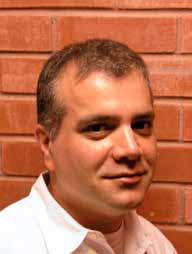
Vahe Bandarian received his PhD in Biochemistry from the University of Wisconsin-Madison in 1998, working under the direction of George Reed. He was a NIH postdoctoral fellow in the lab of Rowena Matthews at the University of Michigan prior to joining the faculty at the University of Arizona in 2003. Bandarian moved his research program to Utah in July. Bandarian’s research interests are centered in developing molecular level understanding of biosynthesis of complex natural products. Specifically, his lab has reconstituted the key steps in the biosynthesis of the modified transfer RNA base, queuosine, which is found in all kingdoms of life. Future directions in this area will include probing the biological role of this and other ubiquitous RNA modification. Additional new areas of research being initiated will focus on mechanistic studies of enzymes involved in complex radical-mediated transformations.
This semester, the Department of Chemistry welcomed a new undergraduate academic advisor. Natascha Knowlton is a graduate of the department. Now she has returned to advise our current students.
“I’m honored to be able to work with such a great faculty and high-quality students in the Department of Chemistry,” Knowlton said. “It will be a rewarding experience to help guide our young chemists toward their bright futures.”
Research Scholarship, and the Reuben and Eunice Kronstadt Scholarship.
While a student at the U, Knowlton worked as an undergraduate teaching assistant, winning the “Chemistry TA of the Semester” award in Summer 2012. She also worked as a lab assistant in Joel Harris’s lab for three years. She won numerous awards as a student, including the inaugural Thatcher Company Scholarship, an Undergraduate
Knowlton graduated in 2014 with an Honors BS in Chemistry and a BS in Physics. Following graduation, Knowlton taught chemistry and physics at Bingham High School in South Jordan, UT before joining the Department as the Academic Advisor this fall. The Department looks forward to the great support Tascha will lend to our students.
On Sep. 18, ACS on Campus visited the Department—home to the Journal of the American Chemical Society, the Journal of Organic Chemistry, and Accounts of Chemical Research. Led by Editorsin-Chief and faculty members Peter Stang, Dale Poulter, and Cindy Burrows respectively, the journals and their presence on campus set the tone for a full day of interesting discussions and dynamic engagement between ACS staff, journal editors,
and our faculty, students and campus librarians. Sessions focused on how to maximize research, get published, and build skills for careers in the sciences. The event drew over 120 students and faculty. ACS on Campus is an outreach program that helps students, post-doctoral scholars, and faculty advance their careers by bringing leaders in chemistry, publishing, and science communications to university campuses worldwide.
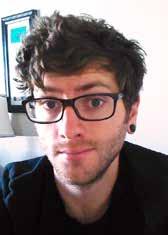
Jay Kitt, a PhD student in the Harris Group, won the Society for Applied Spectroscopy Barbara Stull Graduate Student Award, which recognizes a graduate student for outstanding research in spectroscopy and is presented in honor of longtime SAS colleague Barbara L. Stull.
Kitt is pursuing a Ph.D. in Analytical Chemistry in the Harris Lab using confocal Raman microscopy to probe interfacial environments within nanoporous materials and optical-trapping confocal Raman microscopy to investigate phospholipid vesicle phase-transitions. In 2012, he was awarded an NSF-IGERT research fellowship, and, as a teaching assistant in analytical chemistry, he was honored with the 2012 W.W. Epstein Outstanding Educator award. The Coblentz Society recognized Kitt’s research in Raman spectroscopy with a Coblentz Student Award.
Alan Eastman (BS ‘71, PhD ‘75)
Alan Eastman is the co-founder and chief scientist of a startup geothermal energy company, GreenFire Energy, that uses supercritical CO2 instead of water to bring geothermal heat to the surface where it can be turned into electrical energy. This endeavor is still in the early stages but has working partnerships with national laboratories, as well as the interest of the Geothermal Technologies Program of the DOE. This fall, Eastman is also teaching a class on alternative energies through the U Department of Continuing Education’s Osher program.
David Wilson (BA ‘74/PhD ’84)
Dr. David Wilson received the prestigious “Hero of Chemistry” Award from the American Chemical Society. Wilson and his colleagues led the development of INSITE™ catalyst, a revolutionary technology for highly-tailored materials bridging the properties of plastic and rubber. These polymers are used in consumer markets including automotive, building and construction, and consumer packaging.
Wilson graduated magna cum laude with his bachelor’s in ‘79, and earned his PhD with Prof. Richard Ernst in ‘84.
Dixon Woodbury (BA ’80)
Dixon Woodbury graduated with a BA in Chemistry from the U in ‘80, then a PhD in Physiology & Biophysics from UC-Irvine in ‘86. After a postdoc in the Boston area, Woodbury became an assistant professor at the Medical School at Wayne State University (Detroit). In ‘01, he joined the Department of Physiology and Developmental Biology at BYU, and was appointed chair in ‘13.
Zlatko Bačić (PhD ‘81)
Zlatko Bačić, together with colleagues at NYU and NYU Shanghai, organized the inaugural 2015 Shanghai Symposium on Frontiers in Computational Chemistry, held in August in Shanghai, China. The symposium provided a platform for promoting international collaboration and exchange, and presenting novel research directions and methodologies. Speakers included leading theoretical chemists Todd Martinez, Weitao Yang, Martin Head-Gordon, Keiji Morokuma, David Tannor, Michael Collins, and Donghui Zhang. The next symposium is scheduled for summer 2017.
Ellen Fisher (PhD ‘91)
The ACS named Ellen Fisher to its 2015 Class of Fellows. Fisher is professor of chemistry at Colorado State University. She received her doctoral degreee in ‘91, working with Prof. Peter Armentrout. Her research focuses on understanding the fundamental chemical processes that take place during plasma processing and chemical vapor deposition. She works to improve solar cell efficiency, develops composite nanomaterials, and explores environmental applications for plasma chemistry.
Andrew Leavitt (PhD ‘94)
Dr. Andrew J. Leavitt has been named the 11th chancellor of the University of Wisconsin Oshkosh. He received his PhD in ‘94, working with Prof. Thomas Beebe, Jr. While a chemistry professor at the University of West Georgia, Leavitt was twice named Outstanding Faculty Member of the Year (‘99, ‘05) by the Student Government. Most recently he served as VP for University Advancement at the University of North Georgia and CEO of the University of North Georgia Foundation, Inc.
Amy Barrios (BS ‘95)
Amy Barrios is an Associate Professor of Medicinal Chemistry in the College of Pharmacy. She was recently named co-Director of the Women in Medicine and Sciences group at the U’s Health Sciences Center, which promotes faculty development, mentoring and advocacy of women faculty in all stages of their careers. Barrios, along with Prof. Ryan Looper, is a 2015 Teva Pharmaceuticals Scholar. She and Alex Clark (BA ‘95) recently welcomed their third child, David, in September ‘14.
Robyn Seely (BS ‘04)
Robyn Seely graduated in ‘04 with a B.S. in Chemical Physics, then received a Doctorate of Pharmacy from Northeastern in ‘09. She is currently the Director of Pharmacy Drug Utilization for the UT Department of Health, where she writes policies for the Pharmacy benefit portion of Utah Medicaid and contributes to and interprets state and federal rules, statutes, and legislation. She has a 16-month-old son who is the happiest, easiest baby ever and a 4-yearold daughter who is the smartest, most beautiful girl in the world.
Barron Reyes (BS ‘05)
Barron Reyes graduated with a degree in biochemistry and attended the University of Vermont School of Medicine. He graduated as chief resident of the emergency medicine residency program at the Maricopa Medical Center in Phoenix, AZ. Reyes now works as an attending emergency medicine physician in Wyoming.
Bo Zhang (PhD ‘06)
Bo Zhang, who received his PhD with Prof. Henry White in ‘06, was recently promoted to the rank of Associate Professor with tenure in the chemistry department at the University of Washington, Seattle. He has a research group of 10 working in the areas of nanoscale electrochemistry, fluorescence-enabled electrochemical microscopy (FEEM) for imaging, and neuronal communication. Zhang and his wife Wei Zhao love living in Seattle but miss Salt Lake City and the U! Their son Andy just started kindergarten.
Trent Ohman (BS ‘07)
Trent Ohman graduated in ‘07 with a BS in biochemistry and began working in the mass spec lab at ARUP laboratories. For 8 years, he worked in various roles in mass spec and earned an ASCP medical technologist certification along the way. This August, Ohman started as the senior scientist at the Highland Springs Clinical Toxicology lab in Salt Lake City where his team uses mass spec to confirm presence or absence of drugs in urine.
Jared Frandsen (BS ‘08)
Jared Frandsen received his BS in chemistry in 2008 after nearly ten years doing nuclear engineering on submarines for the US Navy. He received his Doctorate of Pharmacy from the U in 2015 and currently works as a Nuclear Pharmacist for the Department of Radiology at the U of U Hospital.
Jonathan Penfield (BS ‘09)
Jonathan Penfield graduated in ‘09 and went on to a master’s degree in Biochemistry at UBC Vancouver in Canada. He worked on structure and kinetics of bacterial steroid metabolism. Penfield returned to the states this summer to work at Codexis in California as a Research Associate in enzyme engineering for its use in green chemistry.
Our community continues to be incredibly generous and supportive of our programs and research. Thank you to the many individuals, families, businesses, and foundations that made gifts to the Department this past year (Nov. 2014-Oct. 2015).
Radon Level
($1,000,000+ Lifetime Giving)
Lawrence E. and Helen F. Thatcher and Family
Thomas F. and Kathlyn Thatcher
Xenon Level
($50,000+)
George D. and Camilla Smith
Jonathan L. Sessler
Peter J. Stang
Krypton Level
($10,000-$50,000)
Curza Global
C. Dale and Susan R. Poulter
Mitchell T. and Diana M. Johnson
Merle “Bub” Carlson
R. Scott Stephens
Argon Level
($5,000-$9,999)
American Chemical Society
Charles H. and Judy J. Atwood
Rodney H. & Carolyn
Hansen Brady Foundation
Friends of Goji Kodama
Larry H. Miller Charities
Jerry Murry
Marjorie N. Parry
Rebecca A. Uhlig and Thaddeus B. Eagar
Neon Level
($1,000-$4,999)
Scott L. Anderson and
Cynthia J. Burrows
Bradley M. and Maria C. Andreason
Michael and Aditi Risbud Bartl
Carlos M. and Ann C. Bowman
Stephen and Nancy Castellino
Deseret Book Company
Harry B. Gray
David C. Hanley
Jacobsen Lake Foundation
Jaqueline L. Kiplinger
Craig V. and Linda M. Lee
Joel S. and Elaine J. Miller
RJay Murray
Robert T. and Bonnie P. Paine
Bryant and Betty Rossiter
Travis and Carrie Wager
Dennie Welch
Helium Level
($100-$999)
Terrell N. and Virginia L. Andersen
Karen L. Anderson
Edward I. and Florence Aoyagi
John E. Bercaw
Louis Centofanti
Roger L. and Dorothy H. Clough
Daryl P. and Lydia R. Cobranchi
Mark G. and Linda L. Conish
Marshall J. and
Kathie M. Coopersmith
Ronald W. and Mava Jones Day
Jeffrey D. and Jane Driggs
Alan D. and Vickie S. Eastman
Richard and Marcia Eisenberg
Thank !
John P. and Naomi Fackler
Steven A. Fleming
Peter F. and Carla M. Flynn
Mary Lane and Jim Grisley
Robert J. and Carolyn B. Hargrove
Joel M. and Frances N. Harris
Kenneth C. and Michele T. Hartner
Frederick Hawthorne
Narayan S. Hosmane
John M. and Judith A. Hughes
William E. and Judene Jack
Kathryn L. Jansen
John W. and Inga Kenney
Matthew T. Kieber-Emmons
Marsha M. and William E. Kilgore
Lucinda Kindred
Carol Korzeniewski
Armin P. Langheinrich
Shelley D. Minteer
David S. and Viera I. Moore
Karen and Joseph Morse
Lori Nixon
Ruth L. Novak
Allen K. Oshita
Timothy T. Parker
Carl J. Popp
Kathryn S. and Carl L. Robinson
Peter E. Rogers
John C. Rosemergy
Patrick A. and Deborah F. Shea
Mark Hull Sherwood
Eileen M. Spain and
Nathan F. Dalleska
Richard D. and Elizabeth B. Streeper
W. Marvin Tuddenham and
Ellen H. Johnson
Erin L. and Jacob T. Umbriaco
Gregory M. Wallraff
Michael A. and Jan Weaver
Michael A. and Gloria Weibel
Lisa A. Wenzler and Kenneth A. Savin
Henry S. White and Joyce Garcia
Yuehong Xu and Zijing Du
Tamara Zagorec-Marks and Andrew F. Marks
OF
SCIENCE. AT ITS SOURCE.
315 South 1400 East
Salt Lake City, UT 84112-0850
Address Service Requested
Nonprofit Organization
U.S. Postage PAID
Salt Lake City, Utah Permit Number 1529
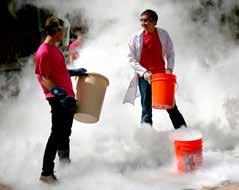
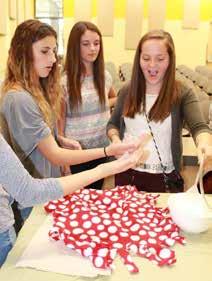
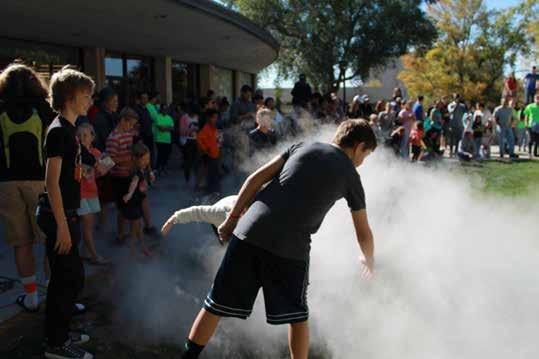
K-12 students at the annual Chemistry Festival reach out to feel a cloud made from liquid nitrogen.
The ACS Student Chapter organized and hosted the “Chemistry Colors Our World” outreach event on Oct. 24th. It featured over an hour of science demonstrations, several hands-on activities and experiments, and liquid nitrogen ice cream.