
Dear Chemistry Friends and Family,
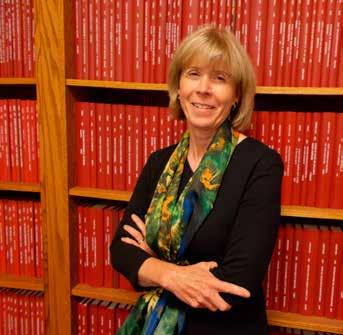
See all those red books behind me? They are the PhD dissertations of generations of U students who provide the foundation of our Department’s strong reputation. The very first Ph.D. given at the University of Utah was in chemistry, to Dr. James M. Sugihara in 1947. Since then, we have awarded doctorate degrees to more than 1,100 students. Today, the Department of Chemistry is the largest PhD-granting department on campus. The history of the Department and the tradition of excellence our students and faculty have built over the past 67 years is truly impressive. I am happy you are a part of that history and tradition.
In an effort to continue strengthening the Department, we are currently raising money for two new endowed funds in the Department. The Robert W. Parry Lectureship in Chemistry is in memory of Professor Bob Parry, a faculty member from 1969 to 1997. This lectureship will invite prominent inorganic chemists to speak on campus at an annual lecture.
The Gary E. Keck Endowed Graduate Fellowship recognizes Professor Keck’s distinguished career and dedication to mentorship at the U. The Keck Fellowship will be awarded to one graduate student each year. Both of these funds will benefit generations of future students at the U. I hope you will consider giving your support to one or both of them.
In addition to educating and training so many successful PhD students, our undergraduate scholars are also integral to the Department. The Curie Club recently held a chemistry career panel to guide more students toward declaring the “central science” as their major, whether they go on to become scientists, engineers, medical doctors, pharmacists, or entrepreneurs.
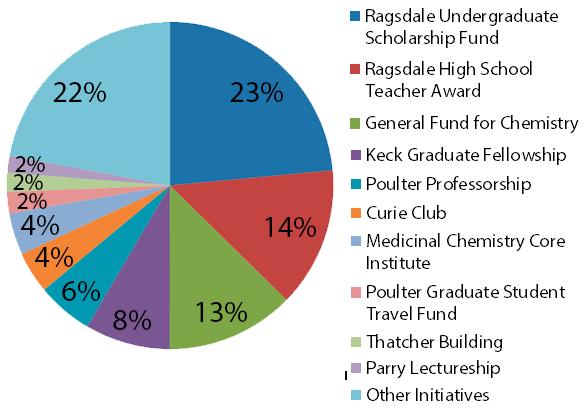
As the holidays and the end of the year approach, I would like to extend my deepest thanks to everyone who has supported the Department of Chemistry in 2014. We received over $362,000 in support from our alumni and friends this year. The chart to the right shows the Department’s fundraising initiatives in more detail.
Additionally, our wonderful donors from November 2013 to November 2014 are recognized on the last page of the Catalyst. This year’s holiday gifts will be acknowledged in next fall’s newsletter.
Much of the research, education, and outreach that we do would not be possible without your support. Thank you for your continuing generosity. Happy Holidays!
Sincerely,
Cynthia J. Burrows
Distinguished Professor and Chair
Thatcher Presidential Endowed Chair of Biological Chemistry
The Fourth Annual Distinguished Alumni Awards will be presented at a banquet on April 20, 2015. The Department is pleased to announce that four alumni will be honored at next year’s awards. Please congratulate our Distinguished Alumni. Joseph Gardella, Postdoc ‘81, Distinguished Professor and John and Frances Larkin Professor
of Chemistry at the University at Buffalo, State University of New York
Diane Parry, PhD ‘89, Associate Director, Household Care R&D, The Procter & Gamble Co.
Don Reese, BS ‘73, Physician
Kirk Ririe, BS ‘05, President & CEO, BioFire Diagnostics
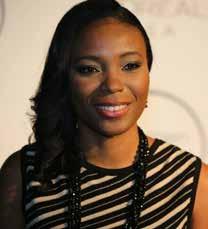
Luisa hails from Panama. She received her PhD in Materials Chemistry at the University at Buffalo, State University of New York, where she was also a Fulbright Fellow. After completing her PhD, Luisa became a Postdoctoral Research Scholar in the Department of Chemical and Biological Engineering at Princeton.
Her research interests are driven by two of the greatest challenges of our time – energy resources beyond fossil fuels, and environmentally-friendly low cost electronics for daily use applications. She plans to embark in these new endeavors by synthesizing well-defined and high-quality materials for applications in solar energy conversion, thermoelectrics, batteries, and electronics. She will also test and develop new hybrid concepts in terms of integrating several technologies that can simultaneously perform multiple tasks. For example, she envisions fabricating a multimodal energy device that can scavenge different kinds of energies for driving micro/nanosystems thus increasing the power conversion efficiency of energy devices.
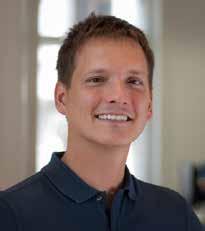
Michael received his PhD in Computational Physics from the University of Vienna, Austria, working with Christoph Dellago in 2009. With support of an Erwin Schrödinger Fellowship of the Austrian Science Fund, he joined the lab of Phillip Geissler at UC Berkeley as a postdoctoral researcher. Prior to starting his position at the University of Utah, he was a senior postdoctoral scientist at the University of Vienna.
Michael’s research is focused on understanding the dynamic processes that shape the structure and function of nano-materials.
• How can the atomistic structure and composition of nanocrystals be manipulated to obtain a desired property?
• What types of nanoparticle interactions and experimental protocols lead to the reliable selfassembly of a desired target structure?
Research in the Grünwald lab aims to answer these questions with the help of computer simulation and statistical mechanics.
Professor Janis Louie always knew that research was for her, before she knew what a career in research even meant.
“I had some idealistic notion that research and development would be just so cool,” Louie remembers. “I had absolutely no idea what research and development meant, zero. I don’t know where that idea came from – no one in my family does research – but somehow it just seemed like a good idea. Luckily for me, I didn’t choose wrong.”
In high school, chemistry was the first class that really challenged Louie. She recalls studying and studying for a midterm, only to throw up her hands, get a good night’s sleep, then ace the test. After that, chemistry really clicked with her, and she started seeing it everywhere.
“Of all the sciences, it’s the best,” she said. “One of my pet peeves is when I hear ‘Oh, I love biology or I love physics or I love math, and I HATE chemistry.’ Chemistry is the whole reason all of this works! I find it so frustrating that chemistry has a bad rap because everything around us is chemistry. If you can touch it, then it’s chemistry.”
Louie took her love of chemistry with her to her undergraduate studies at UCLA. When she took organic chemistry, her decision was solidified.
“If my favorite class is the class that everybody hates, then clearly this is for me,” Louie remembers thinking.
After also enjoying inorganic chemistry, Louie decided to combine the two and study catalysis. She did her graduate work at Yale with Professor John F. Hartwig (now at UC Berkeley), followed by a NIH postdoctoral fellowship with Professor Robert H. Grubbs at Caltech.
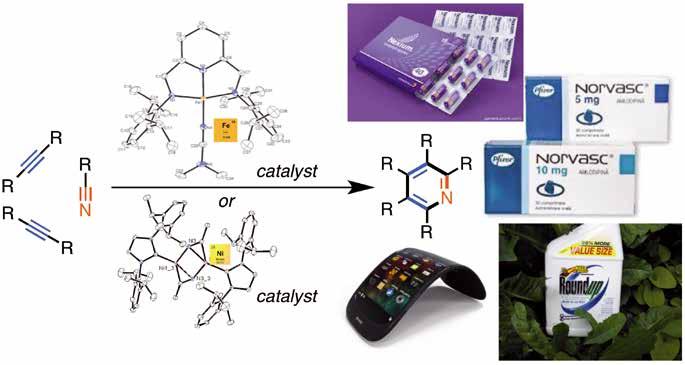
Now as a faculty member, Louie’s research group develops new transition metal catalysts that are based on earth abundant metals such as iron and nickel. These catalysts are tools for other synthetic chemists to make heterocycles (a cyclic compound with a heteroatom) in an easier, cheaper, faster, or more efficient way.
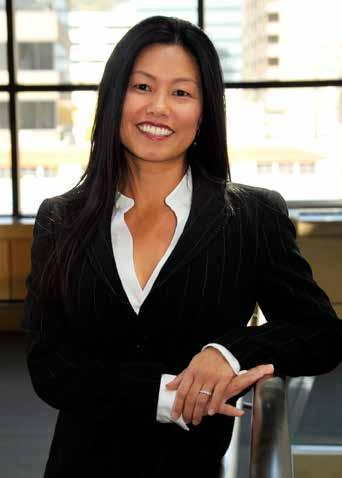
These heterocycles have uses in pharmaceutical, agricultural, and even electronic industries.
Typically, the catalysts that are used most in industry are based on precious metals like palladium, platinum, ruthenium, rhodium, or iridium. Although these precious metals are very expensive, they work very efficiently and as such, constitute almost all catalysts used in fine chemical syntheses.
“My group has taken the approach of trying to coax the more abundant metals, such as iron and nickel, to do more,” Louie explained. “They may not be as efficient, but they’re so abundant that you don’t need them to be as efficient to be more cost effective.” She compares it to making catalysts from rust rather than your precious wedding ring.
Not surprisingly, these abundant metals often behave differently than precious metals. Louie’s group tries to develop catalysts that can completely replace precious metal catalysts. However, sometimes they have orthogonal reactivity. That’s okay too.
Wouldn’t it be better to use rust as your catalyst, rather than using your precious wedding ring? “ ”
“For a synthetic chemist, a builder if you will, that’s actually good, because you want many tools that do totally different things,” Louie said. She describes it as a two-pronged approach: either we’ve made a better hammer that will replace all the really expensive hammers out there, or we’ve made a mallet, and it’s kind of hammer-like, but it’s different.
“It’s a perfect opportunity to find new tools, whether to replace ones that we have or to expand the existing toolbox.”
The foundation of this research was a desire to do something better for the environment. One of Louie’s first projects centered on finding a catalyst that could utilize carbon dioxide as a substrate.
“Carbon dioxide is responsible for all sorts of
environmental problems. But if you think from a synthetic point of view, carbon dioxide would be the ideal C1 starting material,” Louie explained. “It’s safe, nontoxic, dirt cheap, and readily available (in fact, it’s a waste product). Maybe we won’t use it on enough scale that we change the amount of carbon dioxide in the atmosphere, but it’s a great resource we can tap into.”
This idea led to the development of a nickel catalyst that could utilize carbon dioxide as a C1 source. As Louie’s group continued to push the catalyst, it turned out that the nickel catalyst could be used to make a wide variety of heterocycles. She still has a project examining the interaction between nickel and carbon dioxide and what it can do, as well as a project using iron as a catalyst to make heterocycles.
The synthetic chemists using Louie’s earth abundant catalysts must be happy that she never swayed from her desire to do fundamental research. She’s adding new tools to the toolbox of chemistry.
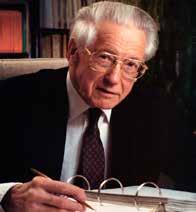
Distinguished Professor Robert W. Parry was a giant in our profession. He was the founding editor of Inorganic Chemistry in 1960. Next year will be the 50th anniversary of his 1965 ACS Distinguished Service Award in Inorganic Chemistry. He served as the President of the American Chemical Society in 1982, won the first Utah Governor’s Medal in Science and Technology in 1987, and received the American Chemical Society’s Priestley Medal in 1993.
Bob’s 60-year career combined excellence in education, research, and service. He received a Ph.D. in inorganic chemistry from the University of Illinois in 1946. Later that year, Bob joined the chemistry department at the University of Michigan and started his career in inorganic chemistry. In 1969, he joined the faculty at the University of Utah as Distinguished Professor of Chemistry, and remained at Utah until his retirement in 1997, when he became an emeritus professor.
in the growth and development of the Department of Chemistry at the University of Utah.
To celebrate Bob’s life and career, the Department of Chemistry is raising funds to endow the Robert W. Parry Lectureship in Chemistry. The Parry Lectureship will invite eminent inorganic chemists to present their cutting edge research to our students and faculty at an annual lecture that honors Bob’s memory.
A $10,000 matching gift is available for the Parry Lectureship through one donor’s generosity. Right now, all gifts to the lectureship will be matched one-to-one. Please consider joining us and fellow chemists who have been influenced by Bob by making a gift to the Parry Lectureship, knowing that the impact of your gift will be doubled through this generous match.
Gifts and pledges can be made online to the Robert W. Parry Lectureship in Chemistry at www.chem.utah.edu/community/donate.php.
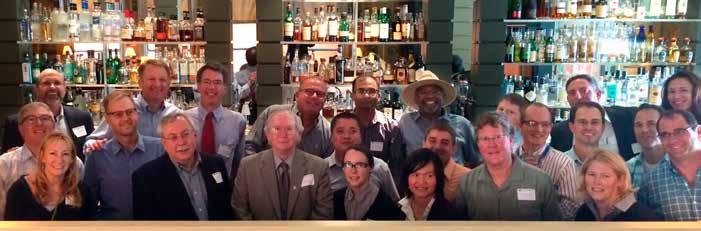
Our friend and colleague Gary Keck was deservedly recognized as a Distinguished Professor this year. Gary also recently received the Arthur C. Cope Scholar Award, presented by the ACS Division of Organic Chemistry. To celebrate this award, many former “Kecklings” and other friends joined Gary at an awards luncheon at the American Chemical Society meeting in San Francisco this summer.
Both at Michigan and Utah, Bob taught chemistry to thousands of undergraduates and mentored over 60 Ph.D. students and postdoctoral fellows, many of whom became leaders in both academia and industry. Together with Henry Eyring and Cheves Walling, Bob played a key role
Pledges of $2,500 or more can be extended over a three-year period. Additionally, corporate matching programs are a potential way to double the impact of your gift.
Please consider supporting Bob’s enduring legacy by making a gift to the Robert W. Parry Lectureship in Chemistry.
Currently, any gifts intended for graduate student recruitment will be matched by the Department of Chemistry and the Graduate School for triple the impact!
Graduate recruitment funds allow us to offer special incentives to top graduate candidates who are considering the University of Utah. Excellent graduate students improve the reputation of the department both nationally and internationally.
To recognize Gary’s impact on the Department and the broader world of chemistry, we are launching an initiative to establish the Gary E. Keck Endowed Graduate Fellowship. The Keck Fellowship will support one graduate student pursuing a Ph.D. in Chemistry each year. As an endowment, this fellowship will not only be a great endorsement of Gary, but will continue to benefit generations of future students. This is a fitting tribute for Gary, an excellent mentor to so many outstanding chemists over his 37 years at the University of Utah.
I will always be grateful to Gary for the support and encouragement he has given me, for teaching me the value of discipline, rigor and taking responsibility for your work, and for showing me the importance of aiming high in life.
Michael Wiley, Ph.D. ‘88
Research Fellow
Eli Lilly and Company
Please celebrate Gary’s exceptional career and accomplishments with us by giving to the Keck Fellowship. Gifts and pledges can be made online to the Gary E. Keck Endowed Graduate Fellowship at www.chem.utah.edu/community/donate.php by clicking on the “Give Now” button. Pledges of $2,500 or more can be extended over a three-year period. Additionally, corporate matching programs are a potential way to double the impact of your gift. Join me in the creation of this endowment, honoring Gary and supporting opportunities for deserving students.
*The required minimum amount to establish an endowed fellowship at the University of Utah is $300,000. In the event that the $300,000 needed to establish the endowment has not been raised by December 31, 2016, the funds raised will be used to support graduate fellowships in Gary’s name until exhausted.
His work has greatly extended our ability to form carbon-to-carbon bonds with control of both position and three dimensional orientation – the most challenging aspect of synthesis. The logical beauty and significance of his papers are stunning.
EJ Corey, Ph.D.
Professor Emeritus, Harvard University Nobel Laureate (Chemistry 1990)
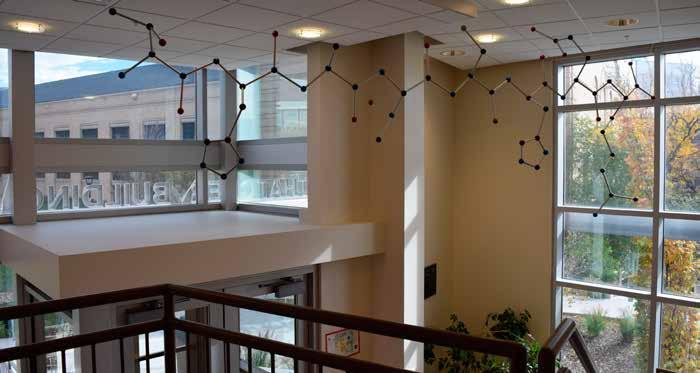
This peptide sculpture now hangs over the entrance to the Thatcher Building for Biological and Biophysical Science. The peptide spells out “Thatcher” in amino acids, in recognition of the generosity of the Thatcher Family, who made the new building possible. The sculpture was built in our very own machine shop, supervised by Dennis Romney.
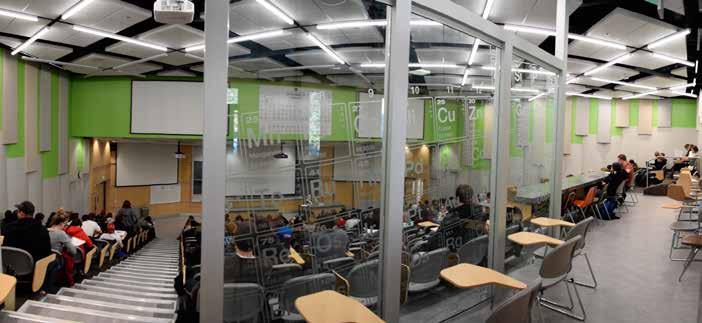
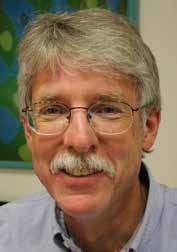
Please join the Department of Chemistry in congratulating Dean and Distinguished Professor Henry White, the first winner of the Allen J. Bard Award in Electrochemistry!
This award honors Dr. White for pioneering innovations furthering scientific knowledge and understanding of nanometer scale electrochemistry, micron-scale magnetohydrodynamic flow, ion transport across membranes, and electroanalytical applications of glass
nanopore membranes. The award will be given in Chicago at the 227th Electrochemical Society Meeting in May 2015.
The award is named in honor of Allen J. Bard, in recognition of his outstanding advancements in electrochemical science. Dr. Bard is the Norman Hackerman-Welch Regents Chair in Chemistry in the Department of Chemistry at The University of Texas at Austin, and the Director of the Center for Electrochemistry.
In addition to lectures and labs, high school students in the Department’s Summer Enrichment Program also went on several field trips to see chemistry in industry. They visited Dugway Proving
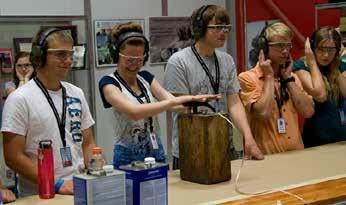
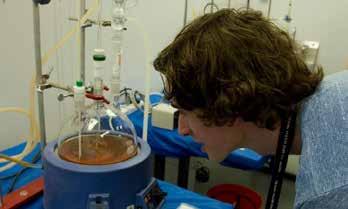
Ground, ATK, and the Tooele Army Depot. The program, led by Professor Butch Atwood, exposes high school students to college-level chemistry and gives college credit to its participants.
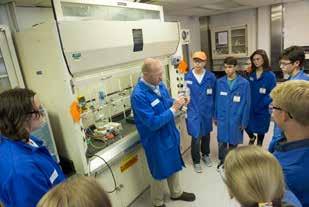
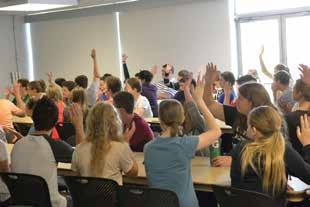
The Curie Club has had a busy fall. First, in September, members of the group attended a behindthe-scenes tour at the Utah Museum of Fine Arts. The tour was led by the museum’s conservator, Robyn Haynie, who spoke to the Curie Club last spring about the role of chemistry in art conservation. The tour included viewing current conservation projects up close, learning about the processes involved in art
conservation, and seeing thousands of pieces of the UMFA’s collection in storage.
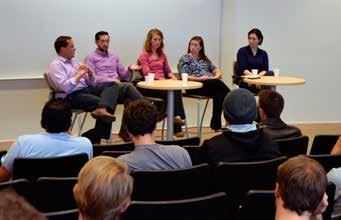
In November, the Curie Club hosted a panel on Careers in Chemistry. Panelists included:
• Chad Testa, PhD ‘02, VP of Research and Development, Echelon Biosciences
• Brandon Bacon, HBS ‘13, medical student at the University of Utah School of Medicine
• Kara Stowers, BS ‘06, Assistant Professor of Chemistry, Brigham Young University
• Robyn Seely, BS ‘04, Director of Drug Utilization Review for Medicaid, Utah Department of Health
• Anna Schibel, PhD ‘11, Research Scientist, Electronic BioSciences
Panelists told the students in attendance about their time in the Department and how their career paths unfolded to where they are today. Each panelist also offered a piece of advice they would have liked someone to tell them when they were a student here at the U. Then they answered questions from the audience.
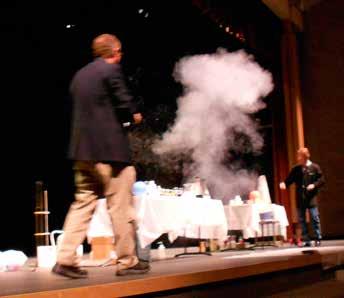
On Saturday, November 1st, Professors Butch Atwood and Jeff Statler entertained and educated students of all ages at a special Chemistry Night at Vista Heights Middle School in Saratoga Springs. About 110 children and parents attended the event. Prof. Atwood and Prof. Statler are very active in community outreach events for the Department.
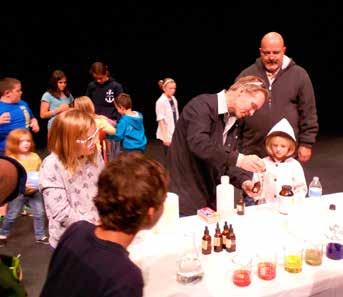
Their demonstrations at this event included the ceremonial exploding of the carbide cannon, many color-changing and gas-forming reactions, as well as breathing sulfur hexafluoride. The concluding demonstration was certainly a loud crowd-pleaser, namely red phosphorus reacting very exothermically with potassium chlorate.
Our community continues to be incredibly generous and supportive of our programs and research. Thank you to the many individuals, families, businesses, and foundations that made gifts to the Department this past year (Nov. 2013-Nov. 2014).
Radon Level
($1,000,000+ Lifetime Giving)
Lawrence E. and Helen F. Thatcher and Family
Thomas F. and Kathlyn Thatcher
Xenon Level ($50,000+)
Ronald and Eileen Ragsdale
Krypton Level
($10,000-$50,000)
Curza Global, LLC
C. Dale and Susan R. Poulter
R. Scott Stephens
Argon Level ($5,000-$9,999)
Scott L. Anderson and
Cynthia J. Burrows
Steven M. Kuznicki
Amgen, Inc. - Jerry Murry
Kay E. Stremler
Rebecca A. Uhlig and Thaddeus B. Eagar
Ultradent Products, Inc.
Henry S. White and Joyce Garcia
Neon Level ($1,000-$4,999)
Bradley A. and Maria C. Andreason
Anonymous
Charles H. and Judy J. Atwood
Michael H. Bartl and Aditi Risbud Bartl
Mihir K. and Stephanie Bhayani
Carlos M. and L. Ann C. Bowman
The Rodney H. and Carolyn
Hansen Brady Foundation
Victor J. Cee and Holly Rausch
Jeffrey D. and Jane Driggs
Edward M. and Marilyn M. Eyring
E. Dean and Teri H. Flanders
David C. Hanley, Sr.
Joel M. and Frances N. Harris
Gale A. and John L. Haslam
Jennifer and John Heemstra
Heber S. Jacobsen and Christine Lake
R. Kent and Terri N. Jex
Sylvia Kronstadt
Craig V. and Linda M. Lee
RJay Murray
Phillip J. and Ruth L. Novak
Thomas Richmond and Cynthia Squire
Kenneth A. Savin and Lisa A. Wenzler
Matthew S. Sigman and
Deborah L. Burney-Sigman
John P. and Margaret A. Simons
Peter J. and Christine S. Stang
Carrie and Travis Wager
Michael R. and Jan Weaver
Helium Level ($100-$999)
Ahmed F. Abdel-Magid
Amgen Foundation
Edward I. and Florence Aoyagi
Zlatko and Vesna Bacic
Scott W. and Susan T. Bean
John E. Bercaw
William H. and Julie A. Breckenridge
Chwen-Mei and William Chen
Hanning Chen
James D. and Alice B. Clark
Daryl P. and Lydia R. Cobranchi
Cynthia Conner
Marshall J. and Kathie M. Coopersmith
Jonathan Aron Covel
Antoinette H. and Vincent Jo Davisson
Ronald W. Day and Mava Jones Day
Tilani De Costa and Aravinda Wijesinghe
Janice H. and Eric G. DelMar
Alan D. and Vickie S. Eastman
Richard and Marcia Eisenberg
Enefit American Oil Co.
Thank !
Stephen and Pamela Flanders
David Thomas Fox
Ingrid Fritsch and Charles Wilkins
Carolyn B. and Robert J. Hargrove
Hans J. Holland
William E. and Judene Jack
Kathyrn Lynn Jansen
Randy L. and Elizabeth M. Jensen
Dane R. and Susan Jones
Jaqueline L. Kiplinger
Peter L. and Kristin L. Kraus
Lawrence N. and Margaret C. Kremer
Andrew J. and Karen Leavitt
Maly Lab at the University of Washington
Karla McCain
Jeanne L. McHale and Fritz J. Knorr
Christopher S. and Jenette Meldrum
Josef and Sara Michl
Shelley D. Minteer
Earl M. and Sharlene W. Mortensen
Keith C. and Martha A. Murdock
Allen K. and Anne Kitamura Oshita
Anandan Palani
Homer L. Pearce
Carl J. and Barbara Popp
Yam Bahadur Poudel
Peter E. and Susan E. Rogers
John C. Rosemergy
Bryant and Betty Rossiter Trust
Arnab Rudra and Kusumika Mukherjee
Caroline Saouma
James W. Sewell
Jean’ne M. Shreeve
Amos B. and Janet D. Smith
Richard D. and Elizabeth B. Streeper
Kenneth R. and Alice A. Sundberg
Temple University
W. Marvin Tuddenham and Ellen H. Johnson
Janice R. Ugaki and R. Douglas Greally
Jacob T. and Erin L. Umbriaco
VMI Nutrition
Derek C. Walter and Ena Ladi
Michael A. and Gloria Weibel
Steven L. Weighall
T. Maenad Widdershins and Wayne L. Chandler
John Wiley & Sons, Inc.
Tamara Zagorec-Marks and Andrew F. Marks
S CIENCE. AT I TS S OURCE.
315 South 1400 East
Salt Lake City, UT 84112-0850
Address Service Requested

Utah
Q: What NMR phenomenon is represented by the photo on the left, featuring the Burrows-Anderson and Louie-Cantwell families?