Letter from the Chair
Dear Chemistry Friends and Families,
It is a pleasure to take the reins of one of the very best departments at the University of Utah. My predecessor, Henry White, had a transformative impact on the Department of Chemistry with the hiring of 11 new professors (1/3rd of our tenure-line faculty) including 4 women, as well as the completion of the $24M Thatcher Building and the establishment of 3 new endowed chairs. Our department ranks 11th nationally for the graduation of B.S. chemistry majors with ACS-certified degrees, and twenty-somethingth for its PhD program.
We welcome new assistant professors Matthew Kieber-Emmons, most recently at Stanford, who is setting up a research program in bio-inspired inorganic catalysts for energy utilization, and coming in January, Caroline Saouma from the University of Washington, who will investigate transition metal-activation of small molecules (O2 and CO2). Department Manager Renée Laws arrived in June 2013 to fill the vacancy created by Shari Zinik’s retirement after many years with us. We also welcome Willow Toso to the Electronics Shop, Tom Gudmundson to the Machine Shop, and Alyssa Geisler as our new Development Officer.
Challenges remain for our department at a time when federal funding for science is tightening and the state funding model is in transition from legislative appropriation to tuition-based funding. Rising costs place a special burden on Utah families, and we seek ways in which to encourage students to pursue the “Central Science” of Chemistry, whether they ultimately become scientists, engineers, medical doctors, pharmacists, or entrepreneurs.
Over the next 13 months, the Department has a special opportunity to strengthen our support of students through the Ron and Eileen Ragsdale Scholarship Endowment Fund. Scholarship support generated by this fund will be matched by the
University, doubling the impact of each gift that is received before December 31, 2014. Contributions above the $10,000-level have naming opportunities Please see the accompanying article for more details. We are grateful to the ongoing support of Ron and Eileen Ragsdale, as well as so many other friends of the department for their generous donations.
Our department is only as strong as its raw materials—its students, faculty, staff and alumni. I see excellence in all quarters, and I look forward to our growing strength as a flagship department at the University of Utah.
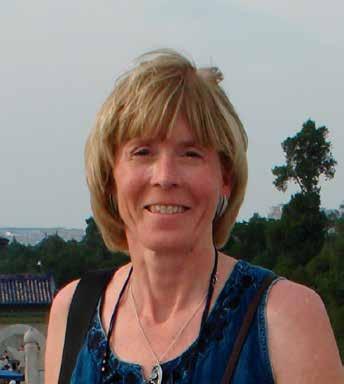
Cynthia J. Burrows Distinguished Professor and Chair Thatcher Presidential Endowed Chair of Biological Chemistry
Support Undergrad Chemistry Scholarships
Proceeds are matched for gifts received by 2014
With the rising costs of higher education, undergraduate scholarships are vital to assist top students seeking a degree in chemistry.
A recent gift from Ron and Eileen Ragsdale started the Ron and Eileen Ragsdale Scholarship Endowment Fund. Undergraduate scholarships from the endowment will be used to attract and support the best students –from the state of Utah, from around the country, and from around the world – to the Department of Chemistry at the University of Utah. The University Administration has made an unprecedented commitment to match, dollar-fordollar, the current and future payouts from the endowment, doubling the impact of this fund in supporting students.
A unique component of these scholarships, recipients must develop, carry out, and report on a scholarly research project under the guidance of a chemistry faculty member. This scholarship program provides a unique experience for chemistry majors, introducing them to independent research at an early stage in their education.
Our goal is to raise a total of $1.2 million to fully fund the Ragsdale Scholarship Endowment by the end of 2014. We are making great progress toward this goal, starting with the lead gift from Ron and Eileen Ragsdale of $200,000 and continuing with contributions from current Chemistry Department faculty of nearly $100,000. The remaining funds to be raised to complete the endowment are $822,000.
Gifts to this Endowment Fund in amounts greater than $10,000 can be used to establish a named scholarship to honor or remember esteemed members of your family, the community, or the University. For example, the Edward M. Eyring Undergraduate Scholarship was established earlier this year under this endowment to celebrate Ted Eyring’s 50+ years of service to the Department of Chemistry and the University of Utah. For more information on how to establish a named scholarship under the terms of this Endowment Fund, or donate to the fund, please contact Alyssa Geisler at (801) 585-7896 or ageisler@chem.utah.edu. Making a donation online is also safe and easy - visit tiny.cc/GiveToUChem.
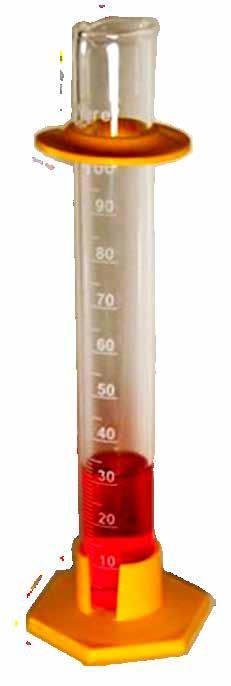
$1,200,000 Goal
$378,000 Raised
THE RAGSDALE SCHOLARSHIP ENDOWMENT
• $1.2 million goal to reach by December 2014
• $200,000 lead gift from Ron and Eileen Ragsdale
• $100,000 donated by Department faculty
• $822,000 needed to complete endowment
YOUR DONATION
• $60,000 provides an annual scholarship
• $30,000 provides a scholarship every two years
• $15,000 provides a scholarship every four years
• $10,000 provides a scholarship every six years
• Named scholarships can be created to honor or remember a family or community member
Unraveler: Professor Bethany Buck-Koehntop
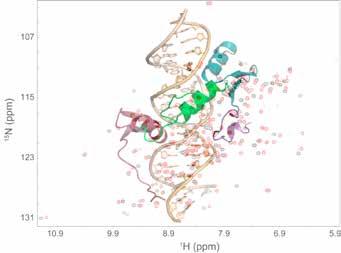
AsI edge closer to what looks like a stainlesssteel beer fermentation tank, I’m warned by my guide to stay behind a set of hazard cones. “Your credit cards might get erased,” says Bethany Buck-Koehntop, Assistant Professor of Chemistry and large-magnet enthusiast. We’re in a large laboratory space in the “Gauss Haus,” the University of Utah’s David M. Grant NMR (nuclear magnetic resonance) Center.
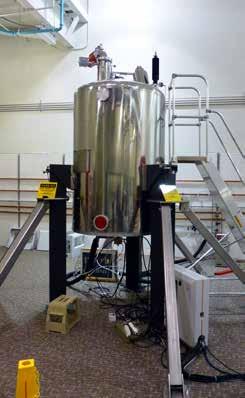
There’s no beer being brewed here: the tank is the enclosure of one of several impressive superconducting magnets at the facility, which are cryogenically cooled. These magnets are one component of the NMR spectrometers that generate intense magnetic fields, which, in conjunction with selective rf (radio frequency) irradiation, elicit absorption spectra that can be used to probe the structures and dynamics of biomolecules such as proteins
spectra
and nucleic acids. The resulting experimental data can lead to threedimensional structures of such molecules, which can in turn reveal atomic-level detail of binding interfaces between macromolecules.
The interactions that
interest Buck-Koehntop are those that are involved in the interpretation and translation of epigenetic DNA signals. Epigenetic alterations are reversible surface chemical modifications that control the ways in which DNA is packaged (i.e., the form of its chromatin structure) and therefore the degree to which genes are expressed.
The switching on or off of genes partially controlled via methylation of cytosine DNA bases plays an important role in the normal development and functions of cells, and can serve to permanently suppress harmful genes. However, methylation error—the silencing of crucial genes in conjunction with activation of harmful genes—is linked to disease, including cancer.
Buck-Koehntop and her colleagues are studying a set of three methyl-CpG binding proteins (MBPs) known as the ZBTB family, all of which are associated with cancer progression via their regulation of gene expression at methylated DNA sites. The team takes a multidisciplinary approach, combining in vitro biophysical and in cell genomic studies, to identify and characterize the activities of the ZBTB family of MBPs in cancer. The ultimate goals of such studies are identifying new epigenetic-based biomarkers for improved cancer diagnostics, and facilitating the design of cancer therapeutics directed against ZBTB protein regulatory pathways.
Those are long-term prospects, but Buck-Koehntop is optimistic. Here in the Gauss Haus, the optimism feels well founded.
Story by Paul Bernard
Waters Lab Dedication and Mass Spec Symposium
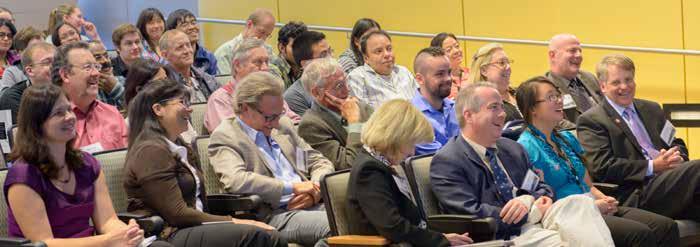
OnSeptember 20, the Department of Chemistry hosted a symposium on Innovations in Biological Mass Spectrometry and dedicated the new Waters Advanced Mass Spectrometry Laboratory.
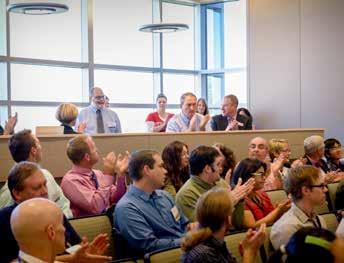
The symposium was a very engaging and well attended event organized by chemistry alumnus Dr. John Gebler at Waters and members of the Utah faculty. Over 120 people participated in the event, and a video-feed overflow room was necessary to accommodate all the attendees. Waters Corporation, which donated the state-of-the-art Xevo G2-S QTof instrument to the University, joined the department for the event, along with leading researchers in the field. David Clemmer (Indiana), Julie Leary (UC-Davis), Joseph Loo (UCLA), John McLean (Vanderbilt), Natalia Tretyakova (Minnesota), and Peter Armentrout (Utah) highlighted diverse aspects of biological chemistry that are revealed through mass spectrometry. A lunchtime poster session
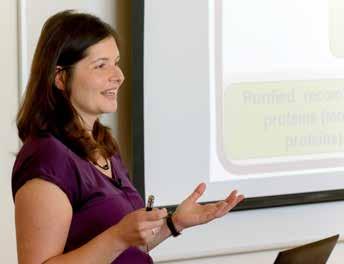
featured the research of the Department’s undergraduate and graduate students, as well as that of local scientific companies and other area academic institutions.
The event also featured the dedication of the Waters Advanced Mass Spectrometry Lab in our new Thatcher Building for Biological and Biophysical Chemistry with the participation of the University of Utah’s Senior Vice President for Academic Affairs, the Vice President for Research, and the Vice Dean for Research of the School of Medicine.
It was a day filled with wonderful new science and a chance to celebrate the scientific frontiers that will be explored in the new Waters Lab. Special thanks are due to our partners at Waters Corporation for their generous donation of the mass spectrometry instrument and their support of this event.
Visit the Department’s facebook page to see more photos: www.facebook.com/chemistry.utah
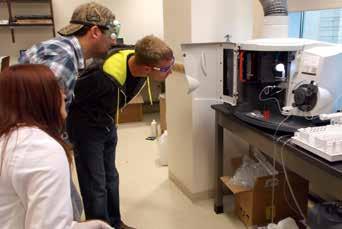
The 800 MHz NMR spectrometer is located in the D.M. Grant NMR Center, also known as the Gauss Haus.
Overlay of a high-resolution 3D protein:DNA structure on 2D NMR
Symposium participants and guest speakers laugh at a joke during Dr. Joseph Loo’s talk.
Dr. Natalia Tretyakova, University of Minnesota, speaks at the symposium. Attendees thank Dr. Jim Muller, Director of the Mass Spectrometry Facility.
John Gladysz and Janet Bluemel Fund Future Endowed Chair of Chemistry at the University of Utah
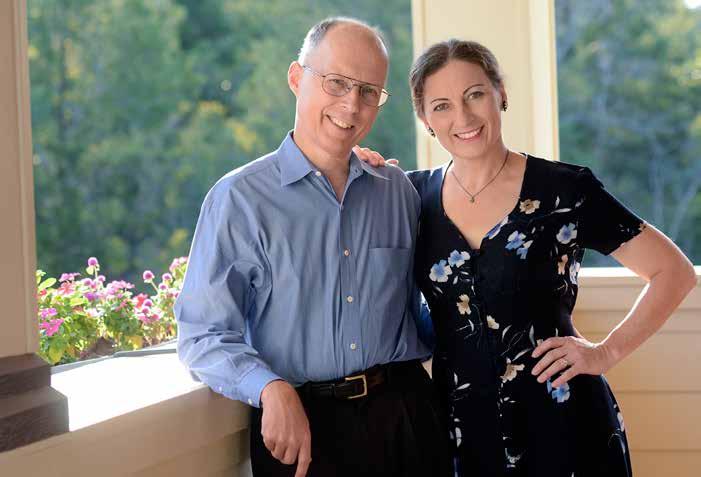
Former University of Utah Chemistry faculty member John Gladysz and Janet Bluemel have made provisions in their estate plan for a future endowed chair in the Department. John and Janet, professors at Texas A&M University and husband and wife, are world leaders in the fields of inorganic and organometallic chemistry.
John and Janet wanted to leave a lasting impact on the institutions that were integral to their careers as professors and scientists. “Chemistry has always been an important and exciting part of life for both of us,” Janet said about why the couple will leave this gift. John further explained, “We wanted to do something that would help chemistry in the future, as well
as subsequent generations of chemists.” The couple also made significant bequests to the chemistry departments of Texas A&M, the University of Michigan, and Western Michigan University.
Chemistry has always been an important and exciting part of life for both of us. “ ”
By creating an endowed chair in the Department, John and Janet hope to bolster the future of science. “Both Janet and I think a lot about the crucial role of fundamental
research, and we hope that our gift will help this to continue in Utah, where twenty years down the road, who knows what the budget situation will be. Our gift will allow basic studies to carry on regardless,” said John. The John A. Gladysz and Janet F. Bluemel Chair of Chemistry will be filled by an outstanding researcher in any area of organic or inorganic chemistry, and funds from the endowment will support the teaching, research, service and professional development of the holder.
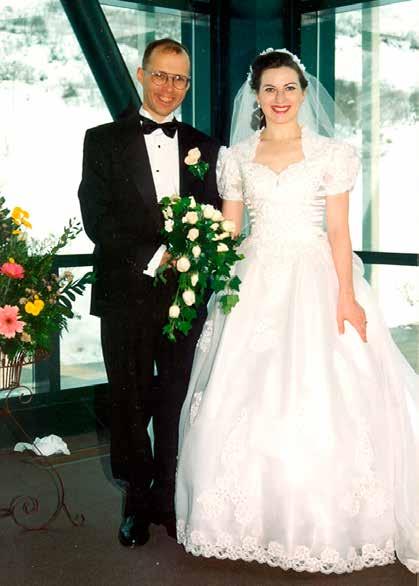
John, now a Distinguished Professor who holds the Dow Chair in Chemical Invention at Texas A&M, was a faculty member in the Department from 1982 to 1998. He and Janet, also a Professor at Texas A&M, were married in the University of Utah’s Red Butte Garden in 1997.
“I essentially planned the entire event,” John remembers. “Due to Janet’s teaching obligations, she could only fly in about three days before, right around Christmas. So my research group and I taste tested the champagne, selected the menu, found the preacher, and hired the musician. I’d never done anything like that, but we just approached it like anyone with chemistry training would in terms of organizational deployment. And it turned out to be a magical afternoon.”
“We’ll always remember that Red Butte wedding with the research group, colleagues, departmental alumni, and close relatives who had grown fond of visiting Utah. It was sad just a few months later to tell so many of those individuals goodbye,” John said. From Utah, the couple moved to Germany for ten years, and then back to the States to join the faculty at Texas A&M. John looks back on his time as a professor at the U fondly. “I always viewed Utah as an extremely welcoming place for faculty. It didn’t matter if you were a junior faculty member or a mid-career hire, we did a great job making people feel like they had a supportive department and
a superb place to do research. I always felt it was an incredibly enabling atmosphere.”
Planned giving is a vehicle for leaving a legacy that will continue to strengthen the world of chemistry far into the future. And according to John Gladysz and Janet Bluemel, “establishing that legacy at Utah was an obvious choice.”
Leaving a gift to the U through your will or trust is one of many ways to make a planned gift. To learn more about creating a legacy of your own in the Department of Chemistry, contact Development Assistant Alyssa Geisler at 801-585-7896 or ageisler@chem.utah.edu.
John Gladysz and Janet Bluemel will benefit generations of future Utah faculty and students with their planned gift endowing the John A. Gladysz and Janet F. Bluemel Chair of Chemistry.
John Gladysz and Janet Bluemel at their wedding in Red Butte Garden in 1997
Marc Porter: USTAR Professor and Space Cadet
Marc
Porter, University of Utah
Professor of Analytical Chemistry, fondly recalls the time he spent on one of NASA’s weightlessness simulation aircraft. They’re better known by the nickname “vomit comet,” because the repeated parabolic trajectories they employ induce nausea in about twothirds of passengers.
“Yep, I got sick,” Porter admits. But the accompanying smile reveals his satisfaction at having participated in the microgravity tests of his device. The device is a water-quality monitor that his research group and colleagues at the Johnson Space Center NASA developed for use on the Space Shuttle and the International Space Station. It rapidly determines the iodine and silver levels in a water sample (both are used in space exploration as sterilizing agents) and warns if the levels are outside the acceptable range for crew health and safety.
computer hard drive reads magnetic field variations on a spinning disk. Alternatively, gold nanoparticles can perform the target binding, enabling detection via surface-enhanced Raman scattering (SERS), a highly sensitive optical spectroscopy method. By combining nanoparticles targeted at different markers, the ones that constitute a disease’s signature can be read concurrently—a technique known as multiplexing.
Curie Club Hosts First Fall Event
The Curie Club opened the fall season on October 22nd with a Career Panel highlighting diverse pathways from the PhD to rewarding careers.
That device’s development goals—small, ultrasensitive, simple, quick, accurate, and low-cost—are still present in Porter’s more recent efforts, aimed at the detection of disease indicators that can lead to early diagnosis of cancer, tuberculosis, and other illnesses. He envisions suites of targeted nanoparticles, each type designed to bind to the surface proteins of a different disease marker. In one scenario, the particles are superparamagnetic: After they bind to target molecules, they can be “read” by the response induced in a sensitive magnetoresistor, akin to how a
As an example application, imagine walking into your local drugstore someday in the future. While you sit for an automated blood-pressure reading, a serum test evaluates your blood for multiple disease markers. In moments, you have either a clean bill of health or a warning that you have indications of, say, pancreatic cancer. That use-case, or “vignette” in the parlance of Porter’s team, is one of several application possibilities motivating their research. In another arena, Porter and his colleagues are working to develop diagnostic tests for infectious disease that can be used at the point-ofneed in resource challenged regions of the world. The goal is to enable the diagnosis of tuberculosis and other diseases at early stages of infection: the earlier a drug regimen can begin, the greater the likelihood of a successful outcome for the patient, as well as reduced transmission of the infection.
Since nanoparticles and nanoscale measurements are at the heart of Porter’s research, it’s no surprise that he’s also the Director of the Nano Institute of Utah, a Universitybased collaboration dedicated to driving interdisciplinary nanoscale device research and commercialization in Utah. The University is consistently one of the nation’s top institutions in terms of fueling startup formation, and the Nano Institute works to help maintain that stature through various entrepreneurial ventures.
While vignettes and startup possibilities offer compelling practical outcomes, Porter’s team also keeps in mind a numerical goal: 10-24 (or, for visual effect, 0.000000000000000000000001). That’s the concentration at which they’d like to detect a target, equivalent to one virus in a liter of water. Some find it whimsical, but Porter clearly likes to aim high… or in this case, aim small.
Story by Paul Bernard
Dr. Susan Poulter (Ph.D. organic chemistry and J. D., Prof. Emerita, U of U) spoke about how her scientific background prepared her for a career in environmental law and intellectual property using the common skillsets of data collection and the formulation of reasoned arguments. Prof. Jen Heemstra (Asst. Prof., U of U) reflected on how combined experiences in academia and industry led her to select wisely a postdoctoral experience that prepared her for beginning her independent academic career. Dr. Carrie Kelley (instructor at the U of U and AMES) described a multistep teaching career that has included the small college atmosphere of Concordia College, the large classrooms of general chemistry at the U, and the unusual setting of
a science-oriented charter high school. Dr. Carol George, the Governor’s Science Advisor for the State of Utah, gave tips on opening uncommon doors by being willing to look outside her PhD training in molecular biology and stem cell research to a career in public service.
The four panelists answered questions posed by the audience of more than 40 women and men— undergraduates, graduate students and postdoctoral fellows. One of the big “take-home” messages of the evening was that careers can transition over time, and one should always be open to new opportunities. The Curie Club plans to have other career preparation events for students and post-doctoral fellows, so please contact Alyssa if you are interested in being a career panelist, providing advice on resume writing or interview techniques, or attending future Curie Club networking events.
New Teaching and Research Instrumentation
Operating under the slogan “Instruments by Thermo Fisher Scientific, Chemists by the University of Utah,” a new lab designed to provide Utah chemistry students hands-on access to the latest in scientific instrumentation has opened in the Thatcher Building for Biological and Biophysical Chemistry. The lab includes UV and FT-IR spectrometers, liquid (HPLC) and gas (GC) chromatography systems linked to single quadrupole mass spectrometers, an automated solvent extraction system and an ion chromatograph.
The idea for the laboratory arose out of conversations with chemistry graduate Arni–Elei Costa, who is now a Technical Sales Representative for ThermoFisher Scientific. He recognized the need for chemistry students to have access to the type of instrumentation they would encounter in their careers in the chemical industry.
Linda De Jesus, ThermoFisher Vice President of Global Strategic Sales noted that “this is an example of our company’s longstanding tradition of supporting and collaborating with academia. Like most things, technology for chemical analysis is constantly evolving and it is important that future generations of chemists are educated using the right tools.”
Already, students in Professor Tom Richmond’s Honors General Chemistry class have used the instruments to analyze water samples taken from around campus and
beyond. Honors student Karlee Stokes employed the IC instrument to check for nitrate levels in both the Weber River and well water in her hometown of Morgan, Utah.
“This has been an issue with our well water for some time and seeing firsthand how to perform the analysis was extremely interesting.” Stokes said.
The instruments were immediately put to use by students in the Quantitative Analysis (CHEM 3000) course and will also be used in the Advanced Laboratory sequences. They will be particularly valuable as students design “special project” capstone labs in these courses. Instruments in this new facility are also used in “Science Friday” outreach efforts to pre-college students in the community.
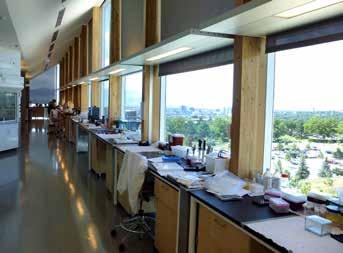
The James L. Sorenson Molecular Biotechnology Building, home of the Nano Institute of Utah and Prof. Porter’s lab
Students
News from the Department
Associate Professor-Lecturer Laya Kesner to Retire after Two Decades of Teaching
After nearly 20 years teaching in the Department of Chemistry, Professor (Lecturer) Laya Kesner is retiring at the end of this year. Kesner’s association with the Department is of even longer duration. She started as a graduate student at Utah in 1967 and completed a Ph.D. working on the then-new method of field-flow fractionation under the direction of Professor J. Calvin Giddings in 1974.
After graduation, Laya struggled to find a position in industry or education – as she says, “It was a more difficult time to be a woman scientist in Utah.” After a postdoctoral position in Chemical Engineering with Dr. Richard H. Boyd and several different part-time jobs, Kesner began teaching Chemistry and AP Chemistry at Rowland Hall-St. Mark’s School. When a full-time teaching position opened in the Department of Chemistry, Kesner was selected for the position.
When Kesner came to work for the Department in 1994, Professor Robert Parry defined her focus as “to update and revitalize the labs for General Chemistry I and II.”
“I really enjoyed making those labs interesting to students,” Kesner said. “They broadened the students’ knowledge and skills and helped make the connection with the material of their lecture courses.”
Since then, Kesner has taught a wide variety of classes including General Chemistry II, Environmental Chemistry, Pre-nursing Chemistry, and Quantitative Analysis. She has taught thousands of undergraduates in the past two decades.
One of those students was Dr. Rebecca Uhlig. Dr. Uhlig wanted to show her appreciation for her association with Kesner as she prepared to become a Doctor of Optometry.
“As my professor so long ago, Dr. Kesner was a genuinely caring person. She wanted to see me succeed not just
in my understanding of chemistry and passing her class, but also in my career goal of becoming an eye doctor,” Dr. Uhlig said. “She gave generously of her time... I wanted to ensure that for once, a mentor would be thanked for their time spent!” So Dr. Uhlig created the Laya Kesner Awards, presented annually at the end-of-theyear Department Awards Ceremony to deserving undergraduate women (and some men) chemistry majors who enhanced the learning climate in the Department of Chemistry.
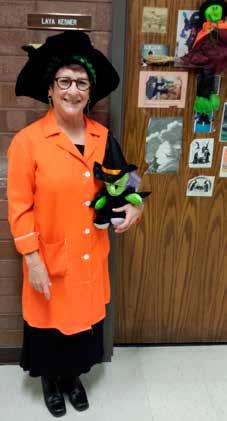
Besides being known for her classroom work, Kesner is also renowned for dressing up as a witch on Halloween. Her office door is decorated with cartoons and images of witches, many given to her by students.
The costume started when Kesner had a job at University Hospital. None of the lab coats were small enough for Kesner, who is petite, so a new one was ordered. When it arrived, to her surprise, it was a bright hunter’s orange. So, Kesner made the most of it by wearing the lab coat with a black dress and a cheap witch’s hat that Halloween. After a few years, her husband enhanced the costume by presenting her with a sturdier Professor McGonagall witch’s hat. Now, the costume is a Department Halloween highlight.
During retirement, Kesner hopes to keep teaching. She currently teaches religious school for 4th graders at her synagogue. She would also like to teach about environmental issues, “which are so important now,” she noted. Her husband Ray, a professor in the Department of Psychology, will also retire in June, and they plan to travel more, as well as spend time with their two children and two grandchildren.
Thank you, Laya, for your contributions to education at the University of Utah!
Dr. Marilyn Marquis, First Woman to Earn a Ph.D. from the College of Science, Passes Away
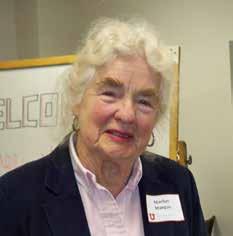
Marilyn Grace Alder Marquis, Ph.D., passed away with her family by her side on August 26, 2013.
Dr. Marquis was the first woman to earn a Ph.D. in the College of Science at the University of Utah. She received her undergraduate degree in Chemistry from the U, then returned to study with Dr. Henry Eyring. Dr. Marquis worked on dynamic mechanical testing of polyamides and the relationship between their rheological response and their chemical structure and completed her Ph.D. in Chemistry in 1951.
Dr. Marquis worked for several large corporations and government labs including Utah’s Dugway Proving Ground. Her research contributions are broad, including arc plasma processing of chemicals, synthesis of tetrafluoroethylene, synthesis of polymer intermediates from low btu
methane, kinetics and mechanism of ozone reactions, and solvent effects in molecular decomposition reactions. She also earned an MBA in Finance and Management from Golden Gate University in San Francisco and was the founder of Alderwood Associates, a consulting firm specialized in technology management and financial planning. In 2012, Dr. Marquis was inducted into the second class of Distinguished Chemistry Alumni. She visited the Department a number of times in recent years, impressing the faculty with her energy, intelligence, and wit.
Dr. Marquis’s interests ranged from fly fishing to classical piano to gardening and wildflowers. During retirement, she spent every moment possible with her children and grandchildren sharing her love of learning.
New Presenters Will Bring a Bang to the Annual Christmas Faraday Lectures - Earplugs Recommended!
This year at the Faraday Lectures, Professors Janis Louie and Tom Richmond will introduce a dynamic new series of chemical experiments that will educate and entertain audiences of all ages with explosions, combustions, and radical chemical reactions!
Michael Faraday – the discoverer of electromagnetic induction, magneto-optical rotation, the laws of electrolysis, the isolation of benzene, and liquefaction of gases – was born in London in 1791. Faraday served as director of the Royal Institute in London and enhanced its reputation as a center for scientific research and education. A gifted lecturer, he began presenting his Christmas Lectures for Children at the Royal Institute in the 1820s. With Faraday as their guide, audiences entered wholeheartedly into the world of science. In that tradition, the University of Utah Department of Chemistry has given the annual Faraday
Lectures since 1981.
This beloved event is a great way to usher in the holidays. Tickets for this year’s lectures have all been reserved, but mark your calendar for next year! The Faraday Lectures are free and open to the public after reserving tickets. They will be available starting in September by calling 801-585-7896.
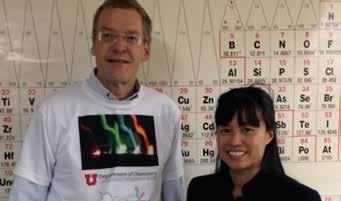
Associate Professor-Lecturer Laya Kesner
315 South 1400 East
Salt Lake City, UT 84112-0850
Address Service Requested