CATALYST
DEPARTMENT OF CHEMISTRY
Biannual Newsletter | Fall 2012 |
One of a Kind
U Chemist Receives High Honors
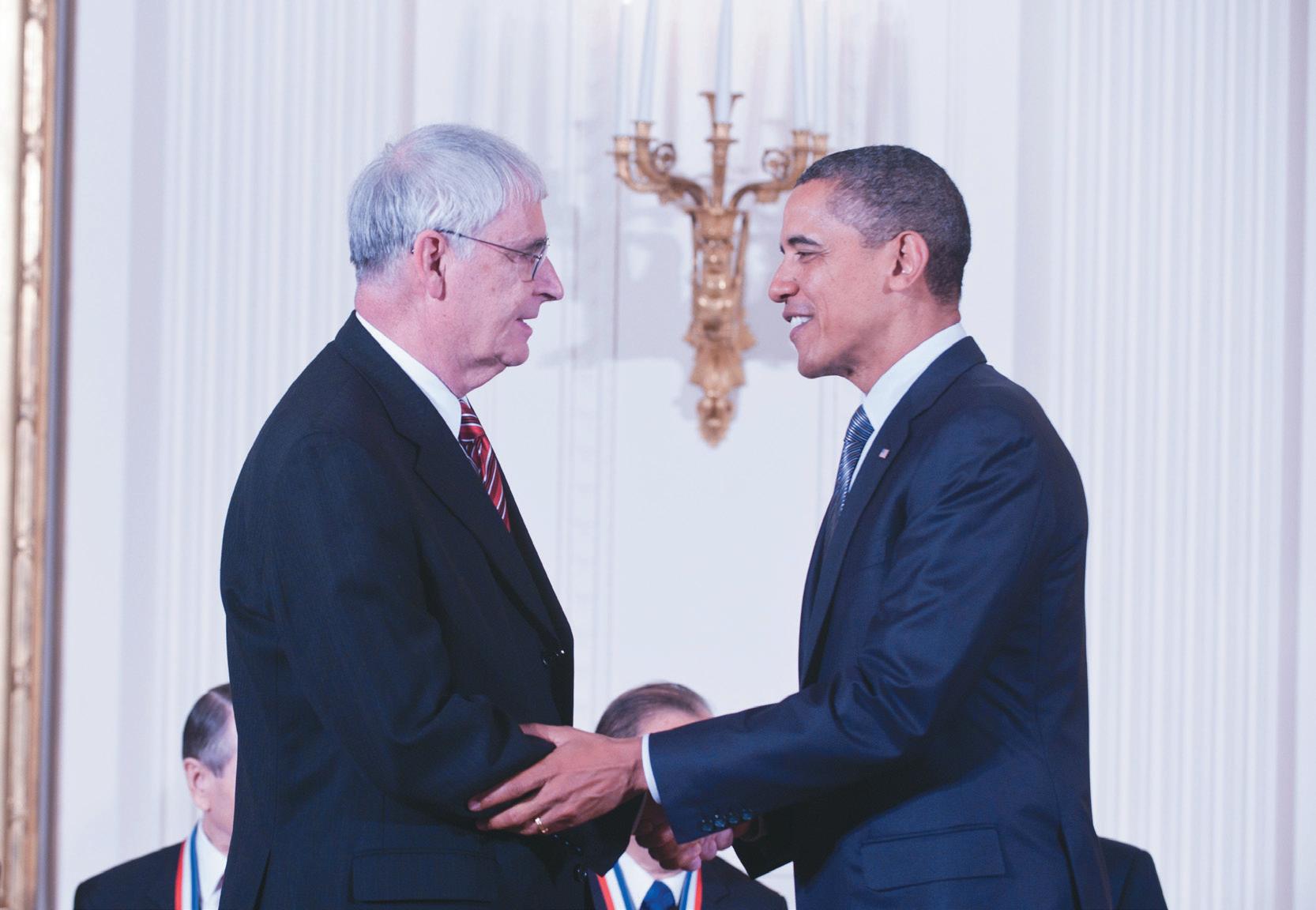
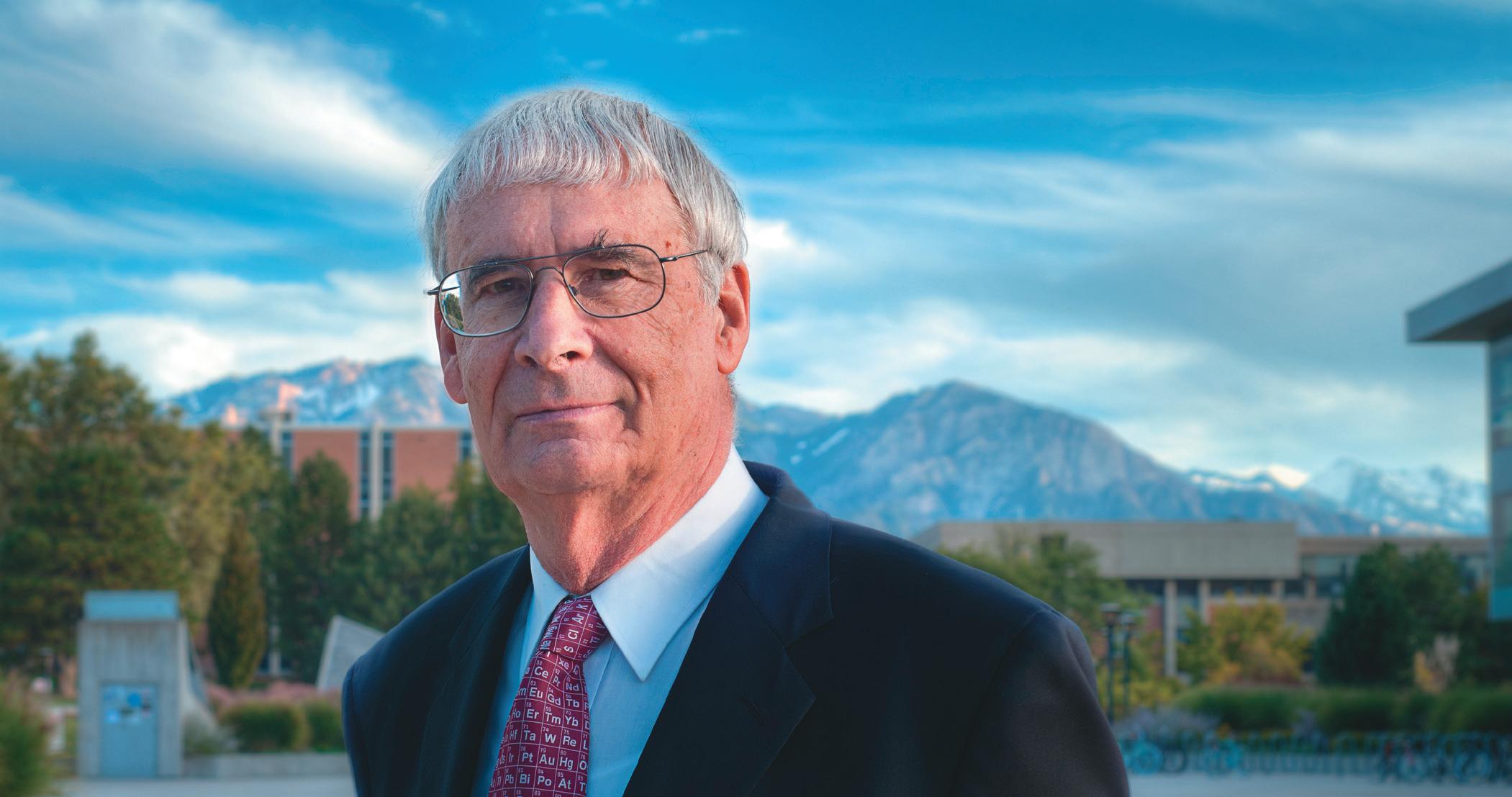
In September 2011, University of Utah organic chemist Peter J. Stang received the National Medal of Science – the highest U.S. honor for a scientist or engineer – and was honored by President Barack Obama at the White House in October 2011.
“I am very humbled, honored and pleased,” said Stang, 69, a Distinguished Professor of chemistry. “ To date, I have had approximately 100 postdoctoral students and Ph.D. students whom I mentored, and this recognizes their work too.” Stang has been a member of the Chemistry Department since 1969, and was a previous Department Chair and Dean of the College of Science.
Stang was cited by the White House “for his creative contributions to the development of organic supramolecular chemistry and for his...record of public service.”
President Obama said: “Each of these extraordinary scientists, engineers and inventors is guided by a passion for innovation, a fearlessness even as they explore the very frontiers of human knowledge, and a desire to make the world a better place. Their ingenuity inspires us all to reach higher and try harder, no matter how difficult the challenges we face.”
(continued on page 2)
President Barack Obama congratulates Distinguished Professor Peter Stang on receiving the National Medal of Science
One of a Kind
(continued
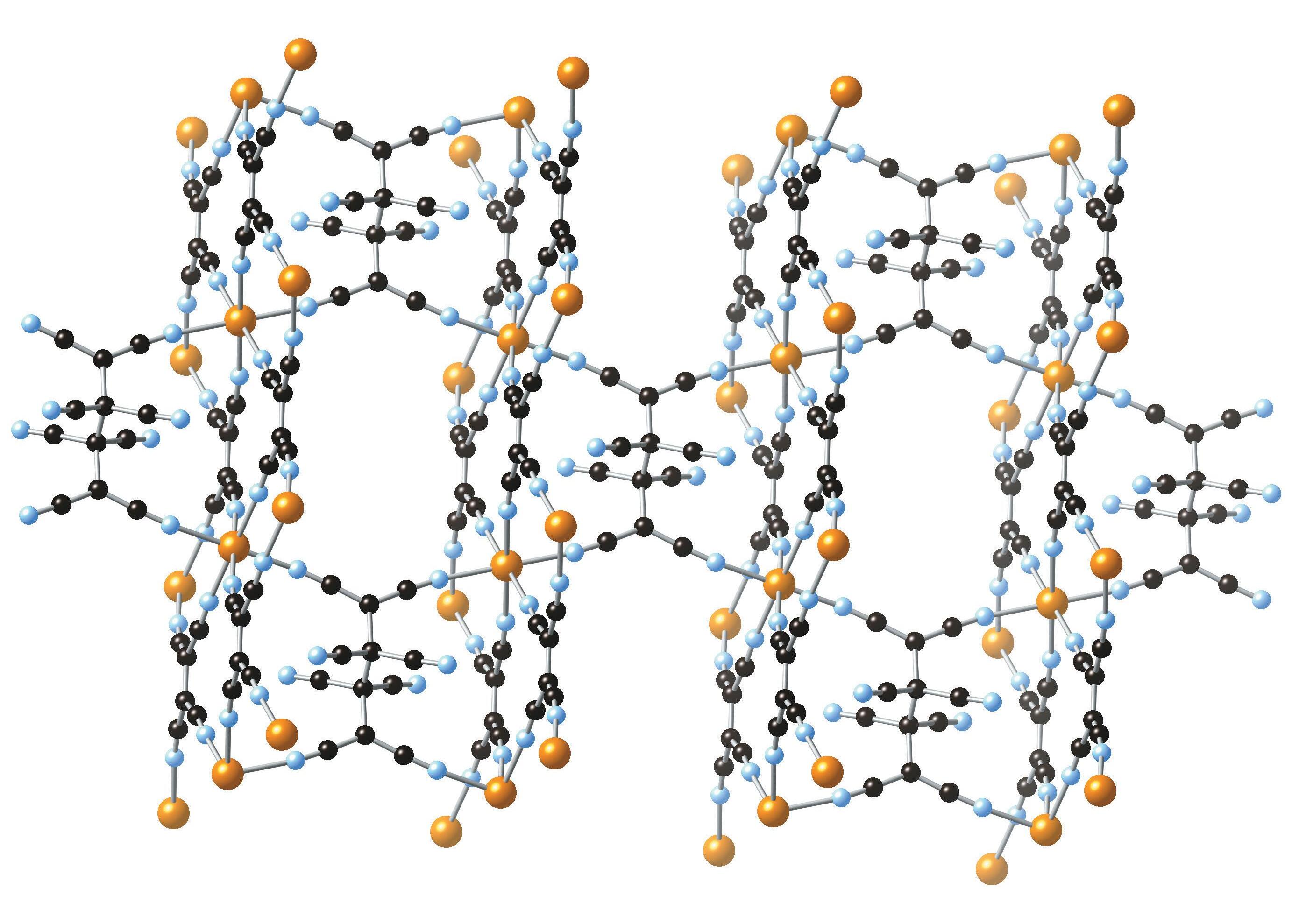
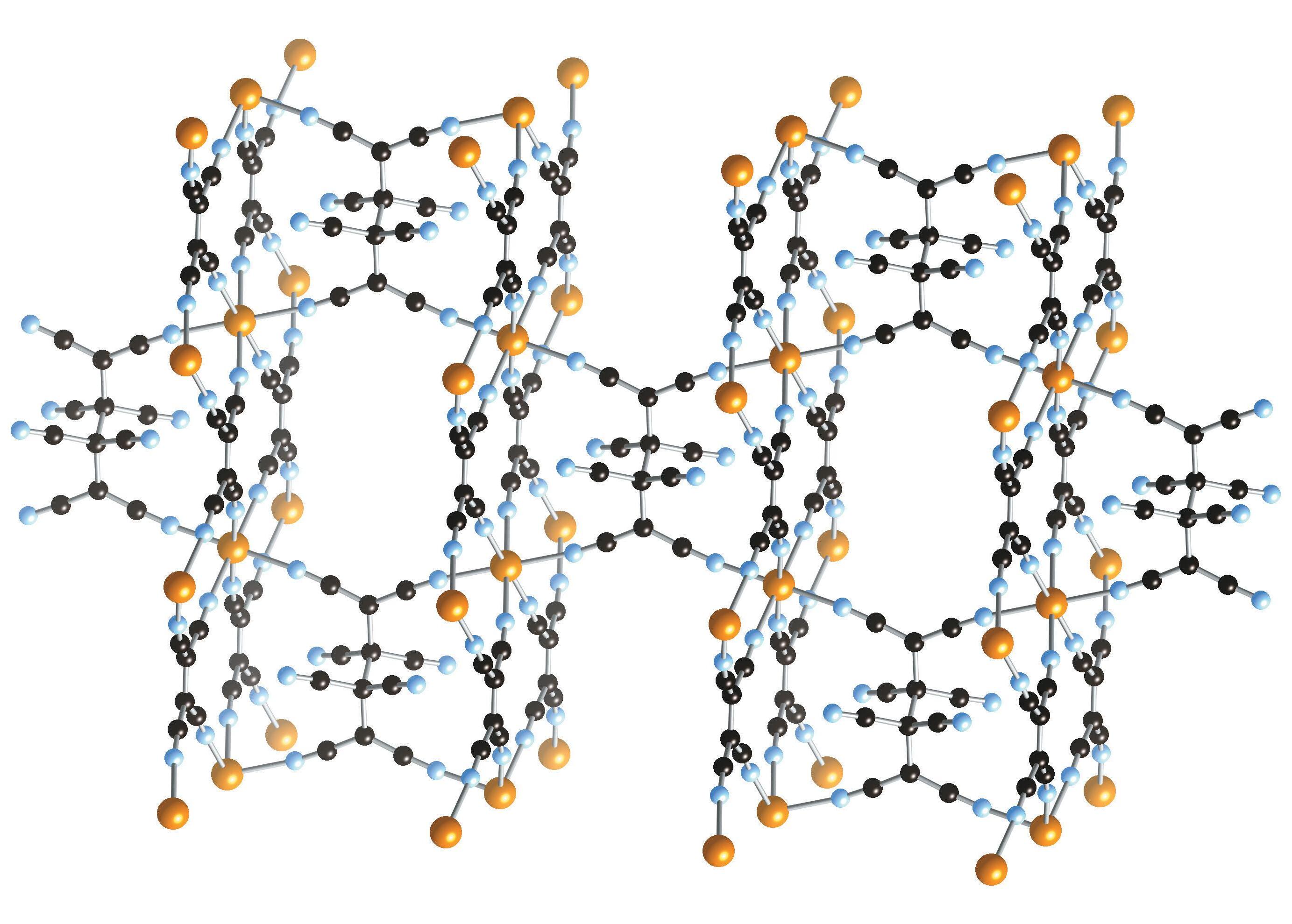
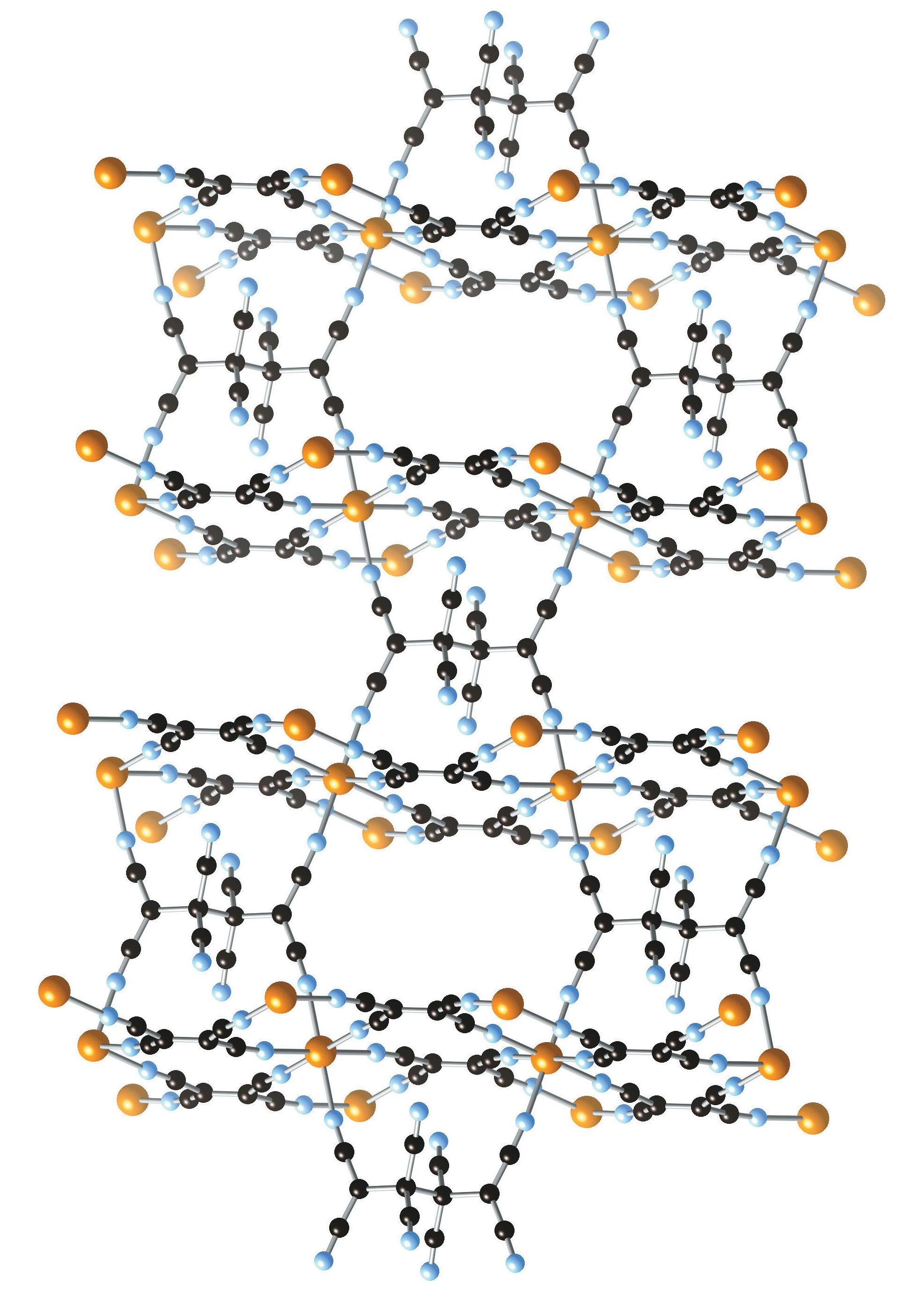
Stang has pioneered new methods in a field called “supramolecular chemistry” for the self-assembly of molecules – large molecules that mimic nature and build themselves from a mixture of pre-designed chemical building blocks.
“It’s like a Lego set with individual building units,” Stang says. “You can make complicated structures and systems.”
Only months after collecting the National Medal of Science from President Barack Obama, Stang also won the highest honor from the world’s largest scientific group: the 2013 Priestley Medal from the American Chemical Society.
The medal - basically a lifetime achievement award for chemists - “recognizes Stang’s cutting-edge research that has had far-reaching implications for many areas of science, including drug development and more efficient ways to produce gasoline and home heating oil,” the 164,000-member society said in announcing the honor.
“I am truly delighted and honored to receive this most prestigious American Chemical Society Award,” says Stang.
“It is humbling to be listed among the distinguished previous recipients. Of course, much of the credit belongs to my able and dedicated undergraduate, graduate and postdoctoral co-workers, who actually carried out the experimental work over my 43-year career at Utah,” he adds. “This award also indicates that it is possible to do cutting-edge, world-class research at the University of Utah.”
University of Utah President David Pershing, applauds Stang. “I am exceedingly proud of Peter, and this is a fitting tribute to his lifelong dedication to chemistry,” Pershing says. “He is absolutely committed to the highest research standards and the best education for his students.”
Stang says he is “grateful to the citizens of Utah for affording me the opportunity to educate and work with young people and be a member of the faculty of the University of Utah for over 40 years.”
Story
Credit: Lee Siegel
Did You Know...
...Miss Utah is a Chemist?
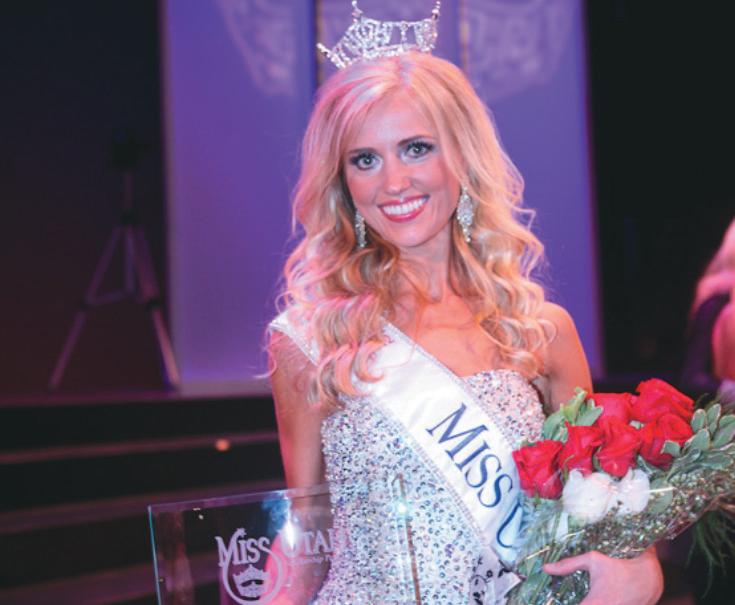
Kara Arnold, Miss Davis County, was crowned Miss Utah on June 16, 2012. Arnold graduated with a degree in Chemistry and a minor in music in August from the U. She will receive a $10,000 scholarship to help her toward her goal of becoming a physician. Kara also won the preliminary talent award for her Chopin piano piece and the academic excellence award. This year Arnold will promote her platform, “Discover Your Potential — Step Up with STEM (science, technology, engineering and math),” and serve as an ambassador for the Children’s Miracle Network Hospitals. Watch for her as she travels the state and competes for the title of Miss America January 2013.
...Elementary Students Can Do Chemistry?
Through the Adelante Partnership Associate Professor Holly Sebahar and chemistry students promote college awareness to Utah elementary schools. Outreach participant Mark Burgess said, “I wish college kids came to my elementary school. Several times the students express a sincere interest and say they now want to be chemist. It’s really fun to contribute back and get kids interested in science.” According to Sebahar, “We present exciting experiments and hands-on activities that have a big ooh and aah factor.” Sebahar expresses excitement for plans to meet regularly with middle school students through the same program.
...How Utah Chemistry Ranks?
Chemistry is a leader at the U:
• 25% of U students take chemistry courses.
• 38 U majors require chemistry.
• Ranked among the top 25 chemistry programs in the nation.
• Ranked among the top 1% annually in awarding undergraduate degrees certified by the American Chemical Society.
• 9 chemistry faculty members have the rank of Distinguished Professor.
• #1 annual producer of Ph.D. degrees at the U.
• U Chemistry faculty are known leaders worldwide in chemical research.
Kara Arnold, U Chemist, is crowned Miss Utah
Photo credit: Chad Braithwaite, Faces Photography
First grader enjoys a hands-on chemistry experiment
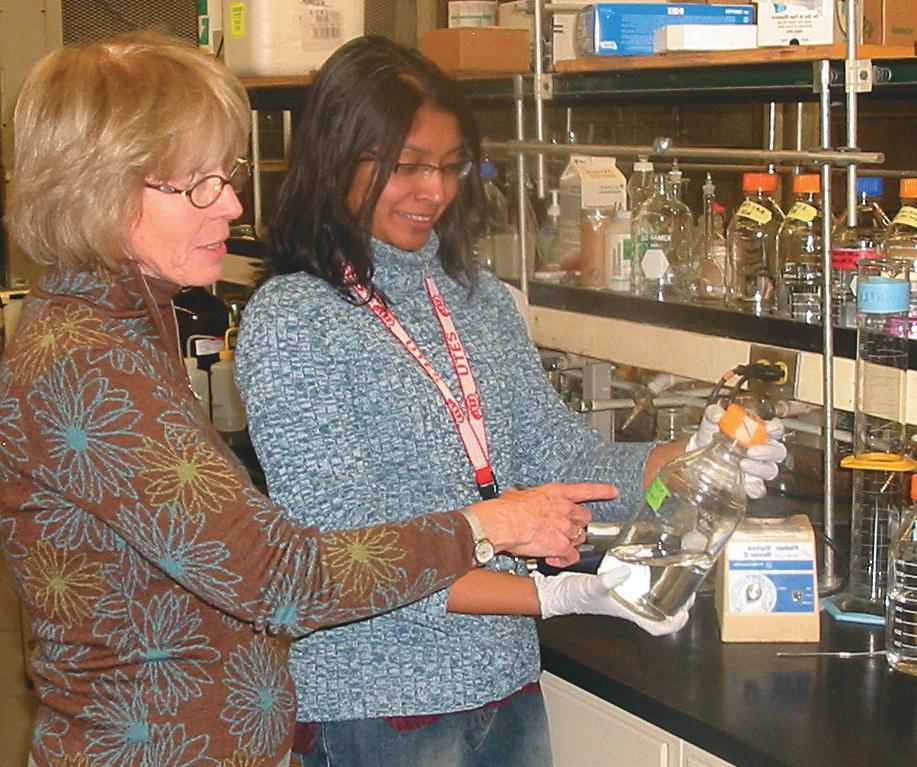
Distinguished Professor Cynthia Burrows discusses chemical properties with a postdoctoral fellow
Distinguished Professor Peter Stang receives the National Medal of Science and the 2013 Priestley Medal from the American Chemical Society

Making Progress
Remember the announcement of the Thatcher Building for Biological and Biophysical Chemistry in 2009? The groundbreaking in the Fall of 2011? Well, a few years later and the building is near completion.
Thatcher Building Close Up:
• Fourth floor, 94-seat lecture hall with a floor-to-ceiling curtain wall for views to the west.
• Reception space
To show off the progress of the building, on August 14 the Department hosted its first official Thatcher Building tour. Among other attendees, gracious donors from the Thatcher family attended, including father Lawrence Thatcher, son Tom Thatcher, and daughter Teri Flanders.
Attendees were impressed by the progress of the building. The south end of the building already has windows in place. The construction team mentioned later that week the concrete for the stairs will be installed. The building may lack instrumentation, but picturing completion proved to be easy since all framing is complete and nearly all dry wall is in place.
Though the building is due for completion by January 2013, the Ribbon Ceremony is tentatively scheduled for March 2013 to allow move-in time for equipment, staff, and faculty.
The Tradition Lives On
Ron Ragsdale Retires and Leaves a Legacy
It has finally happened. At the College of Science Convocation in May 2012, Professor Ronald O. Ragsdale accepted a certificate from Dean Pierre Sokolsky that finalized his appointment as Professor Emeritus. In September 2012, he was honored for his life long contributions to the Department, the State of Utah, and indeed the world of chemistry by his colleagues.
His legacy – and legend – will certainly remain when one considers the staggering number of undergraduates (50,000+), high school students (4,000+), summer enrichment students (2,000+), and chemistry high school teachers (100+) he has taught and mentored over the years.
The Faraday Lectures represent another legacy for Ron.
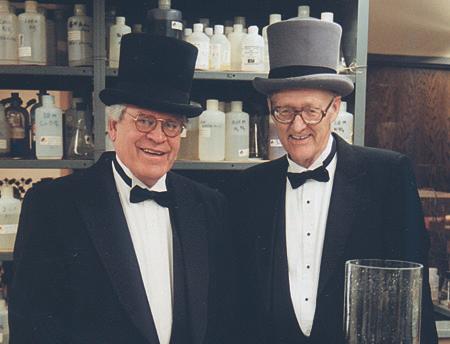
The annual Christmas Faraday Lectures which featured Ron and lecture demonstrator Dr. Jerry Driscoll in top hat and tails provided a public venue for science outreach to children of all ages for nearly a quarter of a century. Fortunately, Professors Peter Armentrout and Chuck Wight now try to live up to the standards set by Ron and Jerry.
In addition, the appointment of Charles “Butch” Atwood to the Ronald and Eileen Ragsdale Endowed Chair for Chemical Education allows the Ragsdale tradition of excellence in teaching general chemistry and outreach to high school students be maintained. This has lead to renovated teaching labs for the thousands of students who take general chemistry courses annually.
Finally, the Ronald and Eileen Ragsdale Endowment will provide scholarship support to outstanding chemistry majors. The importance of this effort to the department is indicated by the fact that chemistry faculty members have already contributed over $100,000 to this scholarship fund. The University of Utah will match all donations to this fund through December 2014. Thus any gift will essentially be doubled and allow the department to provide significant ($5,000) scholarships to chemistry undergraduates learning and discovering new chemistry.
Interested in contributing to the Ronald and Eileen Ragsdale Endowment? Visit https://umarket2.utah.edu/ ugive/ and designate Ragsdale Endowed Scholarship in Chemistry.
• Nine research labs for Bio-Analytical, Bio-Physical, and Bio-Organic Chemistry
• Theoretical Chemistry research space
• Offices for faculty, grad students, and research teams
• Three teaching labs
• Study spaces, a lounge space and an active learning center
• Registered under LEED Green Building Rating System
Interested in a tour? Please contact Stephanie Thompson at 801-585-7896 for details.
With construction in its final phases, now is the time to sponsor a room, research laboratory, lounge, or office.
For donation options see the enclosed pledge or contact Stephanie Thompson 801-585-7896.
Original Faraday Lecture
Dr. Jerry Driscoll (L) and Dr. Ron Ragsdale (R) suit up for one of the first Faraday Lectures over 25 years ago.
Department Hosts Construction Tour of Thatcher Building
Southwest view of the new Thatcher Building for Biological and Biophysical Chemistry
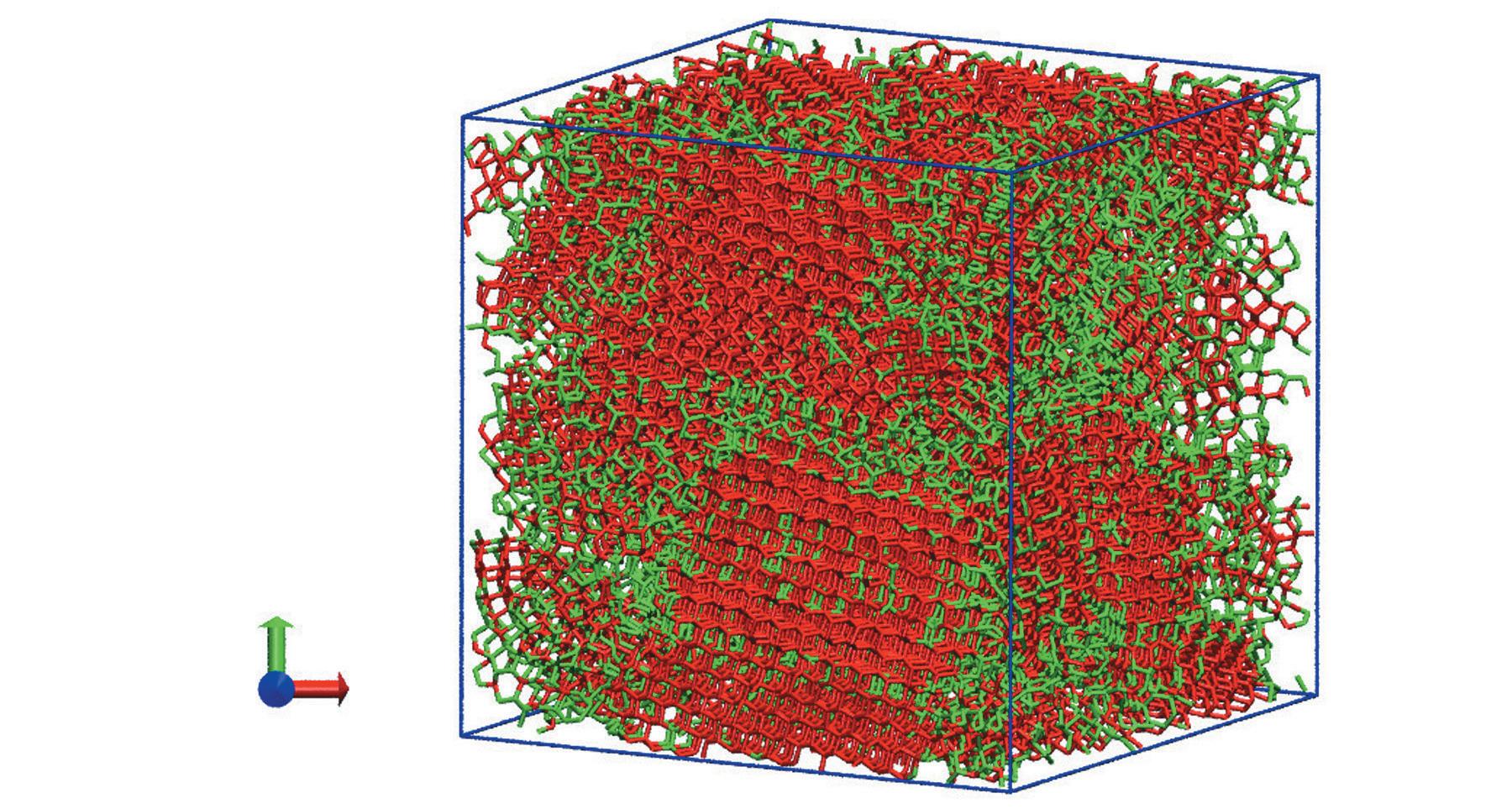
Regular ice crystals (red) are mixed with “intermediate ice” (green) near the end of the process of crystallizing from supercooled water.
Professor Selected as 2012 Camille Dreyfus Teacher-Scholar by the Camille and Henry Dreyfus Foundation
Understanding H2O is Supercool
Since joining the faculty in 2006, Valeria Molinero has lead a group of talented graduate and undergraduate co-workers in developing computational tools to understand perhaps the most fundamental molecule of life – water. Her recent work reported in Nature with Emily Moore showed supercooled water must become ice at -55 °F (-48 °C). Molinero and Moore developed a computational model for water that is 200 times faster than its predecessors. This new technology made it possible to determine the kinetics of ice crystallization and to simulate the behavior of water and calculate its density, heat capacity, and compressibility as it is supercooled. Both the thermodynamics of water and the rate of crystallization are controlled by the change in water structure at the phase transition. The Molinero group continues to use similar tools to understand the behavior of water when it is confined at the nano-scale and to elucidate the fundamentals of nucleation and growth of clathrate hydrates. Molinero is working to solve the puzzle of the growth mechanisms of clathrate hydrates in which polar water molecules encapsulate non-polar gases such as methane and carbon dioxide and are thus important with respect to global energy concerns.
In addition to her promotion to Associate Professor with tenure in 2012, Molinero was the first recipient of the College of Science Myriad Faculty Award for Research Excellence from Myriad Genetics. On a national level, she was selected as a 2012 Camille Dreyfus Teacher-Scholar by the Camille & Henry Dreyfus Foundation. In addition to a substantial unrestricted research award, designation as a Teacher-Scholar is one of the highest honors that a young faculty member can attain in the chemical sciences.
Molinero notes, “These awards are very significant to me for their emphasis on the integration of research and education. “ However, she quickly shifts the focus to her co-workers, “I have been honored to work with more than 20 graduate, undergraduate, and high school students since I came to the U. These students have presented the exciting result of their research in publications, international and national conferences, workshops, and to Utah’s legislators. The Myriad and Dreyfus awards provide not only recognition for our achievements as a group, but also funds to support undergraduate students as they develop into researchers.”
Curie Club
Supporting Women in Science
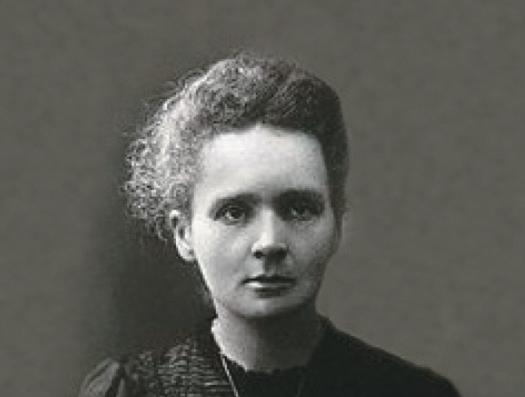
A century ago, Marie Curie became the first scientist ever to win two Nobel Prizes. Her spectacular scientific career was achieved in spite of the obligations of family, extreme prejudice against women, a relentless search for research funding, and the constant battle for recognition that was her due.
Thousands of women today continue to face similar struggles as young scientists, researchers, professors, and leaders in their fields.
Last year the Curie Club was founded by passionate, successful, civic-minded, and intellectually engaged women to help overcome those barriers, support women scientists, and encourage more young women to pursue a life of the mind. In addition, the Curie Club’s mission is to create public platforms for women scientists, establish the first Endowed Chair for a female chemistry professor, name the new Learning Lab in the Thatcher building after Marie Curie, involve corporations and foundations in mentorships that help women scientists, and finally, serve as a seed organization for women in all areas of science.
2012-2013 Events:
December 17 Faraday Reception and Lecture
February 2013 Chemistry of Chocolate Culinary Class
March 2013 Thatcher Building Ribbon Ceremony
April 2013 Mother/Daughter Lab
May 2013 Energy Lecture and Tea
Curie Club members are invited to attend a reception at 6 pm on December 17 before the Faraday Lecture at 7 pm. Tickets are required for this event. Please RSVP to Stephanie Thompson.
RSVP:
If interested in attending Curie Club events contact Stephanie Thompson 801-585-7896 or Cynthia Burrows (burrows@chem.utah.edu).
Marie Curie
”Nothing in life is to be feared, it is only to be understood.”
Associate Professor Valeria Molinero develops a better understanding of water
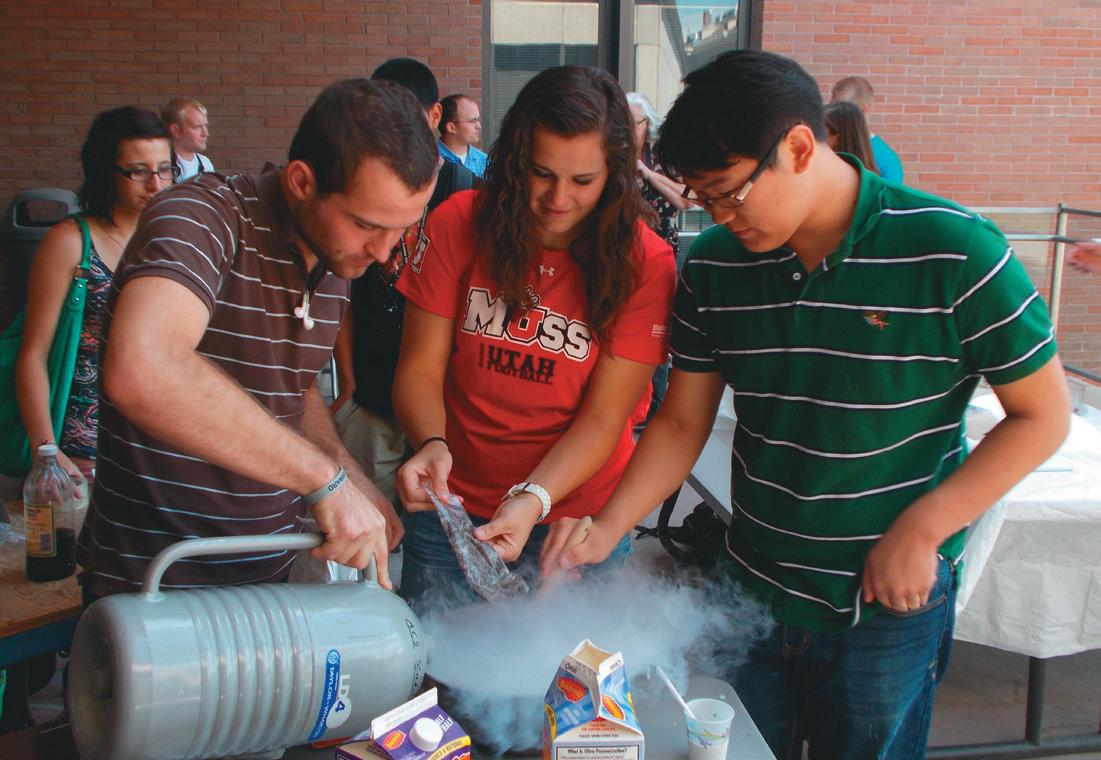
American Chemical Society Student Chapter makes ice cream with Liquid Nitrogen
Greetings from the Chair
Dear Alumni and Friends,
In the last three years the department announced a building expansion, hired 6 new faculty, retired 7 faculty, and initiated the Curie Club, an organization to promote young female scientists. We continue strong with 180 Ph.D. students mentored by a faculty of 32 world-class chemists, over 350 undergraduate Chemistry majors, and over 1,200 General Chemistry freshman enrollments each fall semester!
Chemistry faculty receive numerous national awards each year – the National Medal of Science, the Priestly Award, the Nakanishi Prize, the Governor’s Medal for Science and Technology, elected Fellows of the American Academy of Arts and Sciences and the National Academy of Sciences – just to name a few. Accompanying this superb research and education effort is the opening of the new expansion to the chemistry complex in January 2013 and the establishment of two new endowed chairs in our Department.


www.facebook.com/chemistry.utah
The Department continues to shine through our alumni and friends. Your support contributes greatly to the success of the Chemistry Department, so thank you! The Department is blessed with such great alumni, friends, and supporters.
On behalf of the faculty and staff in the Department of Chemistry, I hope this newsletter finds you well. Keep in touch and stop by next time you’re on campus. I’d be glad to show you the new and exciting research programs, our new building expansion, and introduce you to new and old faculty.
Warmest regards,

Henry S. White