
DEPARTMENT OF
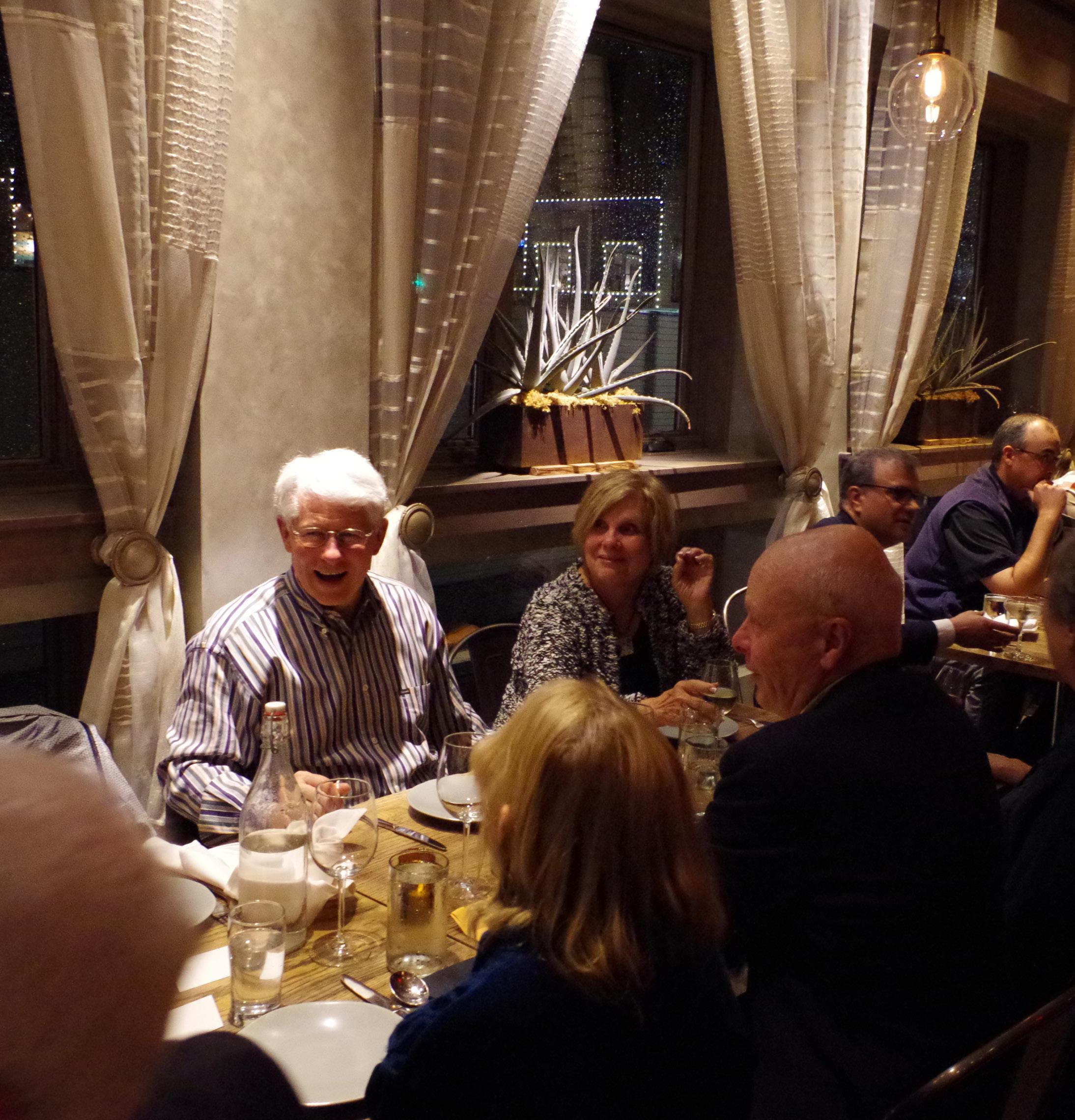
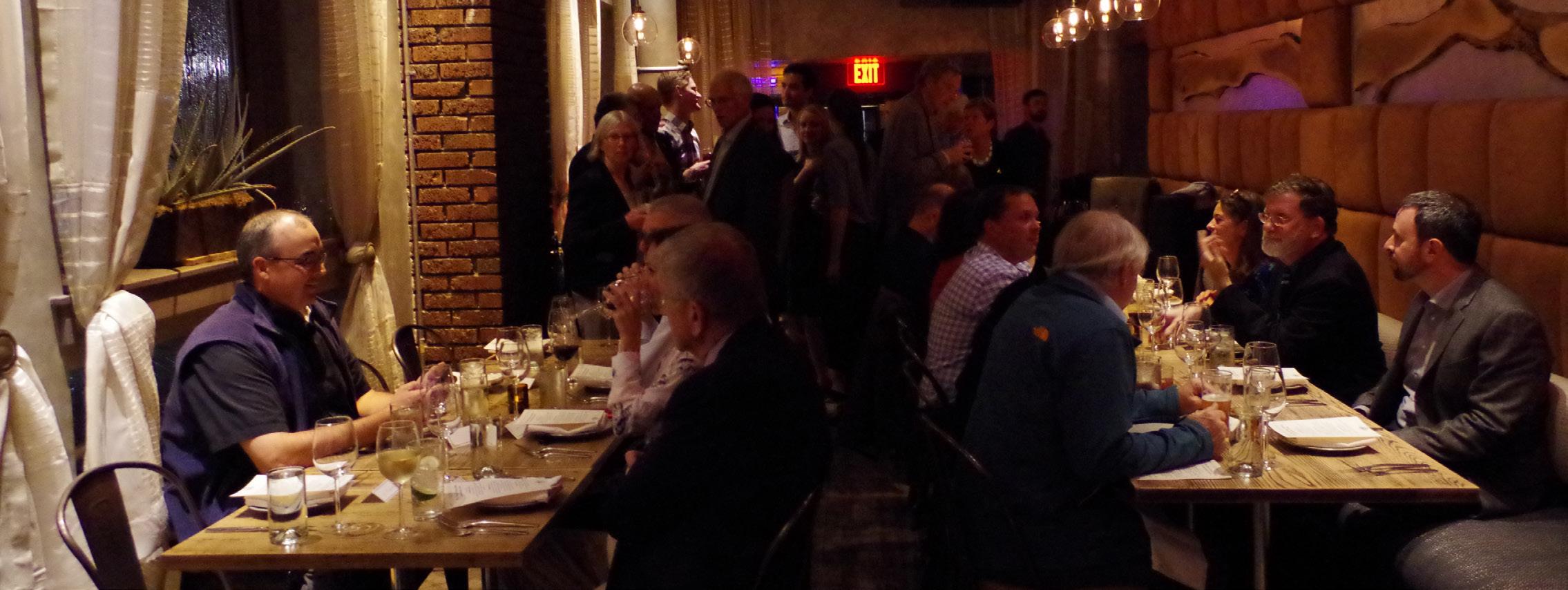
Dale and Susan Poulter and friends celebrate the inaugural symposium for the Dale & Susan Poulter Endowed Lectureship in Biological Chemistry (pg. 9)


Dear Colleagues, Alumni and Friends of Chemistry,
Spending more than 90% of one’s lifetime involved in public education is not terribly uncommon for faculty members, but rarely to do we see the level of accomplishment so well exemplified as in the career of Distinguished Professor Dale Poulter. On October 4th, we celebrated Dale’s nearly 50 years as a professor at the University of Utah, which followed upon his higher education studies at Louisiana State, UC-Berkeley and UCLA. In January 2019, Dale will ‘graduate’ to the rank of Widtsoe Distinguished Professor Emeritus.
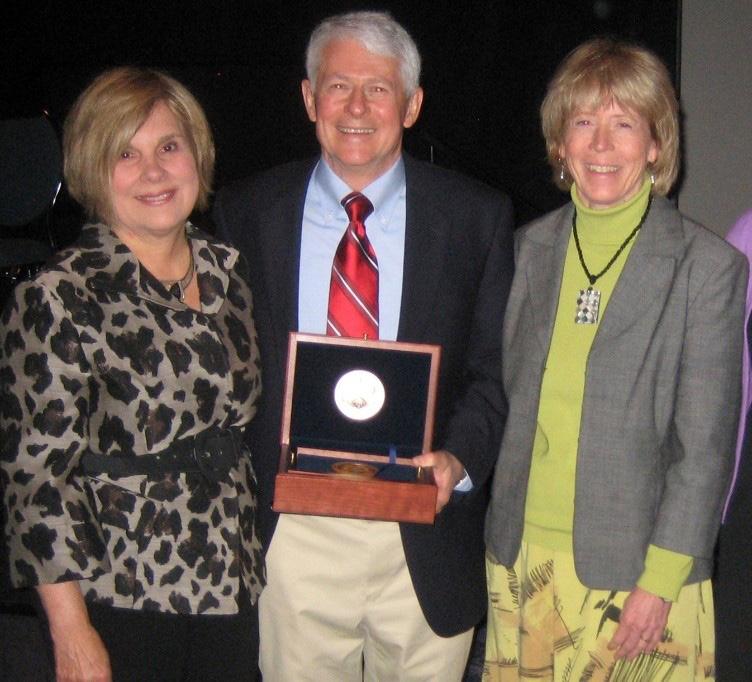
Dale’s research spanned many disciplines as he focused on revealing the biosynthetic pathways, enzyme mechanisms and protein structures involved in isoprene and steroid biosynthesis. His long-tenure NIH grants fueled one of the largest research teams in the Department for many years, and this led to seminal discoveries, highly-cited papers and numerous national awards in organic and biological chemistry. From the ACS, these accolades include the Cope Scholar Award, Repligen Award, James Flack Norris Award in Physical Organic Chemistry, Ernest Guenther Award in Natural Products and the Nakanishi Prize (see photo above) as well as membership in the American Academy of Arts and Sciences and the National Academy of Sciences. He was named to the Widtsoe Presidential Chair in 1994. Dale served as chair of our department from 1995-2000, and was also highly engaged in national service including more than 25 years as journal editor, most recently as Editor-in-Chief of the Journal of Organic Chemistry. Dr. Susan Poulter, PhD, JD, former instructor in Chemistry and Professor Emerita of Law, is a noted expert in environmental and patent law.
Dale and Susan have generously donated two major gifts to the Department. On October 4th, we hosted a symposium in honor of the Dale and Susan Poulter Endowed Lectureships in Biological Chemistry with John Kozarich (ActivX) and John Gerlt (UIUC) as the inaugural lecturers (read more about this on page 9). Secondly, I am delighted to announce another gift that establishes the Dale and Susan Poulter Endowed Chair in Biological Chemistry. Coming just after the establishment of the Jack and Peg Simons Endowed Professorship in Theoretical Chemistry (see page 4), these gifts enhance research and education in chemistry in monumental ways. Endowed chairs and professorships provide our most creative faculty members with extra flexible funding that permits them to jump onto a new project, a timely problem or a national priority.
In this issue of The Catalyst, you will read more about the incredible accomplishments of our students, faculty and alumni, and see how donors like yourself are making a difference as we reach new heights. In September, the University launched a comprehensive “Imagine New Heights” campaign with the ambitious goal of raising $2B over the next few years. We reach out to you to participate in this worthy cause. THANK U for your support!
Cynthia J. Burrows
Distinguished Professor and Department Chair
Thatcher Presidential Endowed Chair of Biological Chemistry

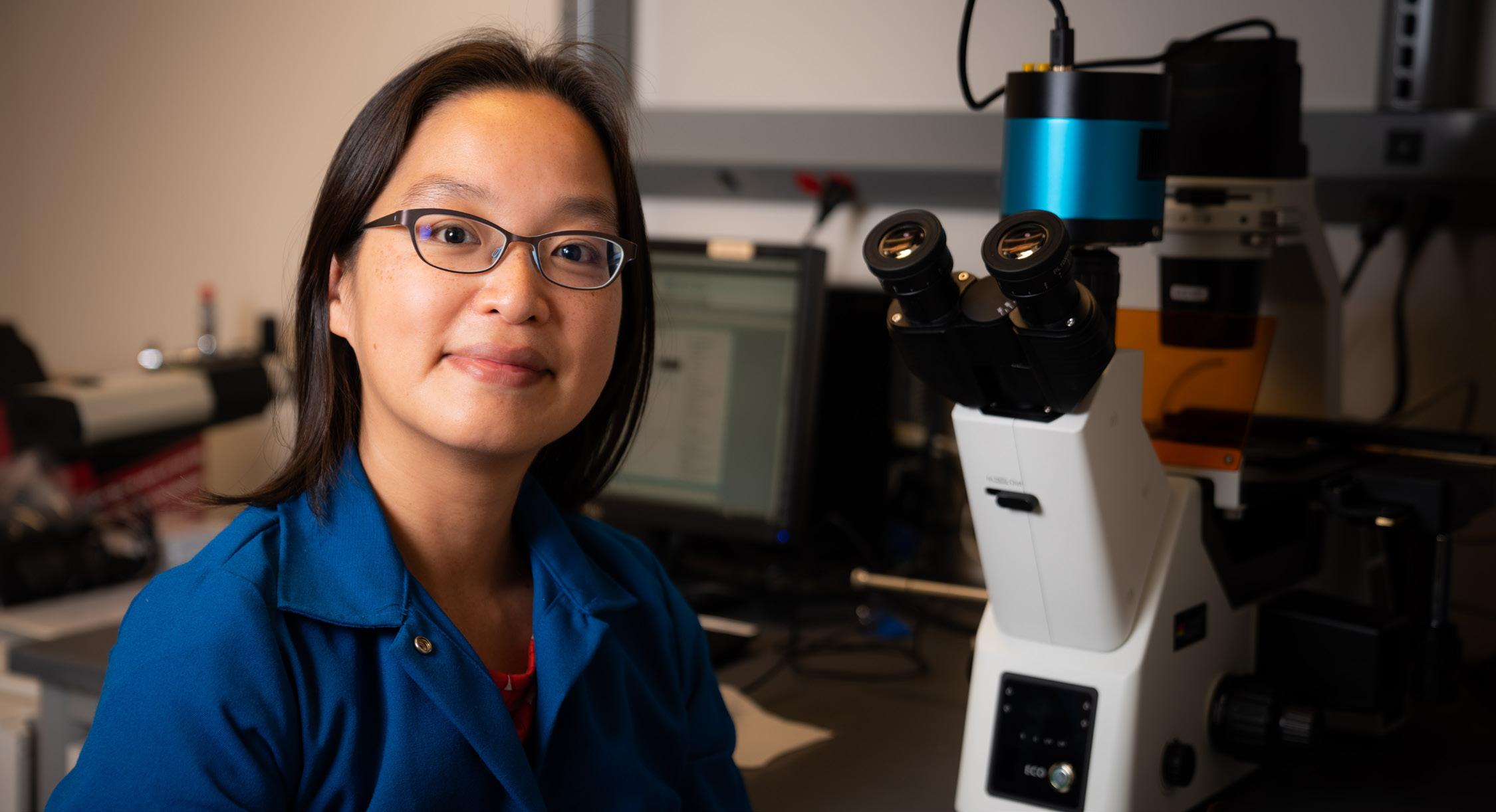
Professor Ming Chen Hammond, a new tenured associate professor in the department, recalls what first drew her to the field.
“What I love about chemistry is that you get to use your powers of deduction, like being a real world Sherlock Holmes. As a synthetic chemist, you are figuring out how to create new molecules that have never existed before to try to solve real-world problems in medicine, sustainability, and energy .”
Prof. Hammond comes to the University of Utah from the University of California, Berkeley, where she started her independent career as an assistant professor in the Chemistry and Molecular & Cell Biology departments. While at Berkeley, she built a strong research program that was recognized by the NIH Director’s New Innovator Award, the Women in Science Award from the Chau Hoi Shuen Foundation, and one of her discovery papers published in the Proceedings of the National Academy of Science was selected as a ‘2015 Signaling Breakthrough of the Year’ by Science Signaling. She officially joined the U as an associate professor in July 2018, accompanied by her entire research group, and has lab space located in the Henry Eyring Center for Cell and Genome Research in the new Crocker Science Center.
Hammond describes her lab members as “fearless,” and appreciates how supportive they are of each other. “Interdisciplinary science can be really challenging, in terms of the variety of techniques, systems, and analysis methods,
but my students always have been incredibly gung-ho about learning whatever they need to in order to make progress on their projects. They are collaborative and invested in making the lab a great environment for each person to learn and grow.”
These days, the detectives in training in the Hammond lab are trying to understand how bacteria and immune cells use chemical signals to make decisions. “We focus on a class of compounds called cyclic dinucleotides, which control bacteria forming sticky, hard-to-remove biofilms and also help immune cells detect cancerous or infected cells, for example. By combining synthetic chemistry and nucleic acid engineering in creative ways, we are making biosensors that allow us to ‘spy’ on those cyclic dinucleotide signals in living cells.”
Prof. Hammond hopes that the mysteries they are solving at the interface of chemistry and biology may one day lead to new ways to combat antibiotic-resistant pathogens, harness bacteria for energy production and environmental cleanup, and enhance the effectiveness of cancer immunotherapy treatments. “People in the department and the U community I have met have been really warm and welcoming to me and my group.” And unlike the greatest fictional detective, Prof. Hammond doesn’t work alone, but looks forward to growing her research group and teaming up with other UoU labs. We are very happy to have Dr. Hammond and her group here with us at the University of Utah!

Matthew Sigman, Peter J. & Christine S. Stang Presidential Endowed Chair of Chemistry, received a Humboldt Research Award from the Humboldt Foundation based in Berlin, granted in recognition of academics whose fundamental discoveries, new theories, or insights have had a significant impact on their own discipline and who are expected to continue producing cutting-edge achievements in the future. In addition to the award, winners were invited to carry out research projects of their own choice in cooperation with specialist colleagues in Germany.
Janis Louie, Professor of the Department of Chemistry, received the 2018-19 College of Science Award for Teaching Excellence. The CoS Award for Teaching Excellence recognizes extraordinary skill in university teaching with an emphasis on outstanding accomplishments and commitments to science and/or math education.
The U.S. Department of Energy announced Luisa Whittaker-Brooks as one of 84 recipients of the U. S. Department of Energy Early Career Research Program award. The award will assist Whittaker-Brooks in investigating the properties of two-dimensional hybrid organic-inorganic materials for their use as detectors of low-energy infrared photons. Luisa was also named one of C&EN's Talented 12 young scholars during the Fall 2018 ACS national meeting in Boston, giving a TED talk that morning and participating in an award celebration later in the afternoon. Whittaker-Brooks, aptly-named a "sustainability powerhouse" by C&EN, earned her spot among 11 other bright chemists for her research in finding alternative ways to provide power.
MINTEER
President Watkins has authorized the appointment of Valeria Molinero as the first Jack and Peg Simons Endowed Professor of Theoretical Chemistry. The appointment began on July 1, 2018, and has been established with a generous gift from Jack and Peg Simons and in recognition of Jack’s outstanding contributions to theoretical chemistry. Annual donations will accelerate this endowment to the level of an endowed chair within the next several years.
On August 21, 2018 Shelley Minteer was awarded the 2018 ACS Division of Analytical Chemistry Award in Electrochemistry, which was given at the ACS meeting in Boston. She is one of six awardees for the division, and is the third professor from the University of Utah Department of Chemistry to receive this award, following Henry White and Debra Rolison. Shelley has also been named the next David Grahame Awardee in Physical Electrochemistry, a significant award given by the Electrochemistry Society in memory of an iconic figure in the field. The award will be presented in May 2019 in Dallas with a symposium and reception.
NOV. 13, 2018:
DEC. 7, 13-14, 2018:
APR. 15-16, 2019:
The University of Utah Department of Chemistry has a long history of excellence in research and teaching. In 1971, Jack Simons was recruited to Utah from MIT where he had completed his postdoctoral fellowship. At the young age of 26, Jack joined chemistry legends Henry Eyring, Josef Michl, and Frank Harris to further build the Theoretical Chemistry program at the U.
During Jack’s illustrious 40-year career at the U, he advised and mentored more than 60 undergraduate, graduate, and postdoctoral students and hosted numerous visiting scientists. He published more than 335 scientific papers and five textbooks on theoretical chemistry. Jack also served as the Department Chair from 1986 to 1989, during which time the department hired seven new faculty members.
Through his hard work and dedication, Jack was frequently honored and received numerous awards, including:
• University of Wisconsin’s Hirschfelder Prize in Theoretical Chemistry (2013)
• The U of U Graduate Student and Postdoctoral Mentor Award (2010)
• The University of Utah Rosenblatt Prize (2005)
• The Case Western Reserve University’s Distinguished Chemistry Alumni Prize (2003)
• The inaugural Henry Eyring Chair (1989)
• The U of U Distinguished Research Award (1985)
• The International Academy of Quantum Molecular Sciences Medal (1983)
• The John Simon Guggenheim Fellowship (1979)
• The Camille and Henry Dreyfus Fellowship (1977)
• The Alfred P. Sloan Fellowship (1973)
Dr. Peg Simons was at Jack’s side throughout his prominent career. The two met at the University of Wisconsin when Jack was earning his doctorate and Peg was also a graduate student in chemistry. Over the years, Jack and Peg’s careers complemented each other. After Jack accepted a position at the U, Peg decided to continue her education and completed an MD at the University of Utah School of Medicine followed by a residency at Stanford University. An accomplished radiologist, Peg has practiced since 1979 and served several years on the University of Utah’s radiology faculty.
Jack is proud of the theoretical chemistry legacy at the University of Utah. He believes the Chemistry Department provides a unique ecosystem that brings together great people and great ideas in a collegial atmosphere.
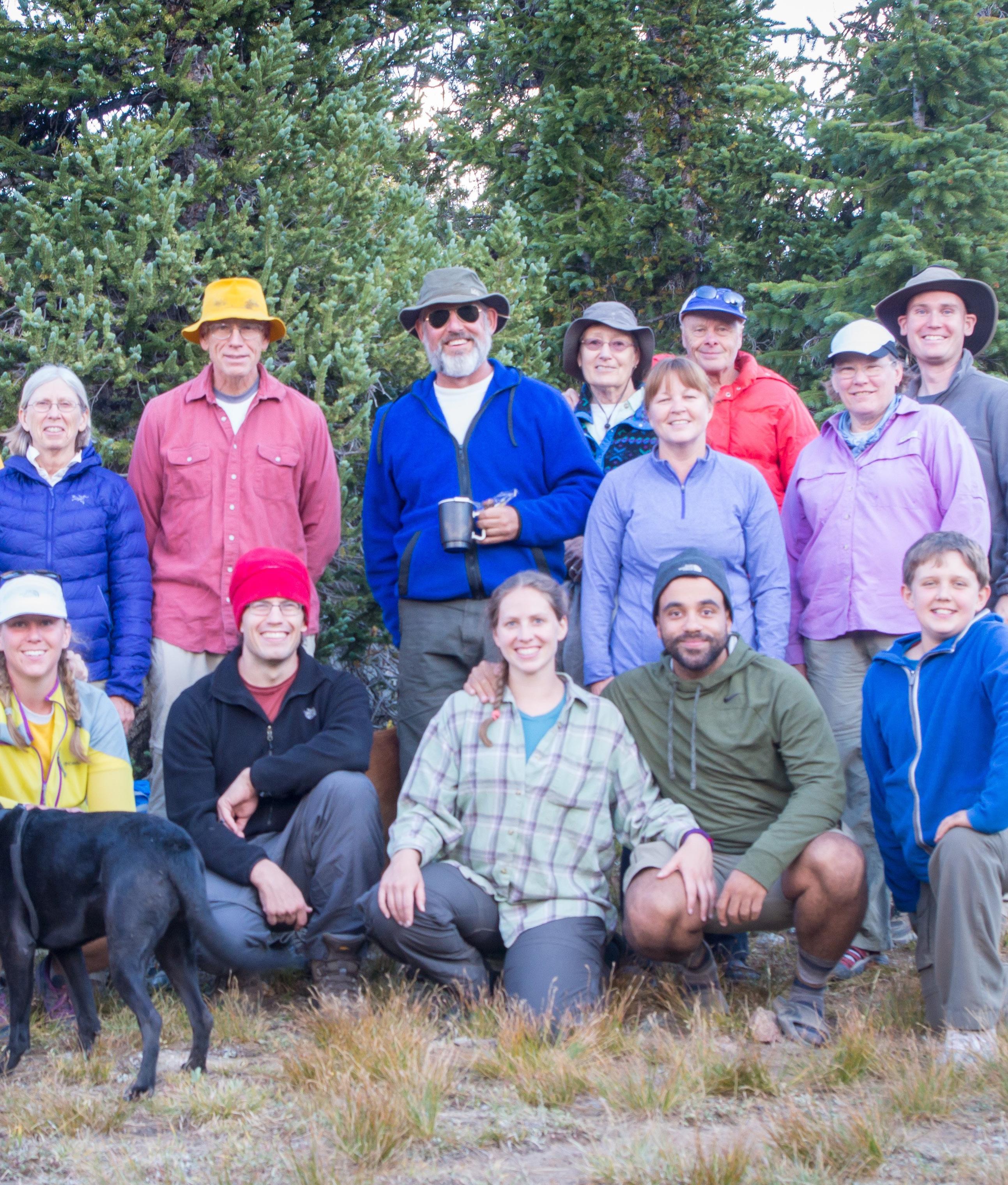
One particular opportunity in the Department – created by Jack in the early 1970s after being introduced to the mountains by the late Distinguished Professor David M. Grant – is the annual summer backpacking excursion to the Utah or Wyoming mountains. These multi-day hiking trips allow faculty members and their families to bond in a unique way. This past summer, the chemistry back packing trip celebrated its 46th anniversary and is
now under the leadership of Distinguished Professor Peter Armentrout.
In addition to their remarkable careers, Jack and Peg Simons have another legacy of which they are proud –their philanthropic legacy. In 2007, Jack and Peg founded and led the endowment campaign for the Telluride Schools in Theoretical Chemistry, a week-long intensive course for recent and soon-to-be doctorate students in Colorado.
In 2018, they generously established the Jack and Peg Simons Endowed Professorship in Theoretical Chemistry at the University of Utah. They plan to continue to contribute and help raise additional funds toward the ultimate goal of increasing this endowment to the level of Endowed Chair.
“Peg and I are happy and proud to honor and support a University of Utah theoretical chemistry superstar faculty member, and to bolster the education of future generations of theoretical chemistry students through the endowments we are building,” says Simons.
In July, Chemistry Professor Valeria Molinero was appointed as the first Jack and Peg Simons Endowed Professor of Theoretical Chemistry. Molinero was chosen for the honor upon the recommendation of a committee of senior faculty who enlisted support from theoreticians around the world, and with the endorsement of the Dean of the College of Science and the President of the University.
Molinero specializes in the use of computer simulations and statistical mechanics to develop new models to investigate the interplay between microscopic structure, dynamics and phase transformations in disordered materials. She is particularly well known for her work on the structure and anomalies of liquid water and its solutions and the mechanisms of ice crystallization. She also is the director of the Henry Eyring Center for Theoretical Chemistry at the U.
Due to the thoughtful and generous philanthropy of Jack and Peg Simons, the celebrated legacy of theoretical chemistry at the U will continue.
You can support the Jack & Peg Simons Endowment and add to their legacy through a gift or a pledge!
visit
https://chem.utah.edu/community/donate.php or contact Heather Burkhart at 801-585-7896 or heather.burkhart@utah.edu to donate
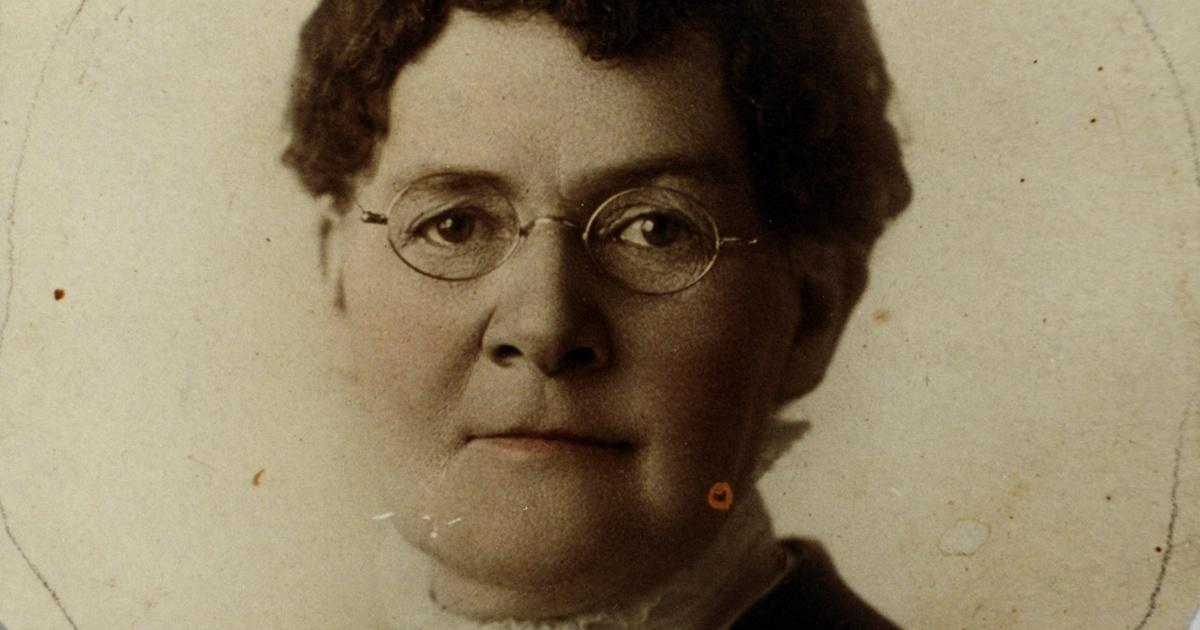
The United States Capitol is home of the National Statuary Hall Collection, an impressive assemblage of 100 statues, two from each state, honoring notable figures from their respective histories. Utah's statues currently consist of Brigham Young, 2nd President of the Church of Jesus Christ of Latter-Day Saints and Utah settler, and Philo T. Farnsworth, American inventor and pioneer of the all-electronic television. Every ten years, however, the states are allowed to change their statues in the National Statuary Hall Collection as is seen fit, and a University of Utah (back when it was known as the University of Deseret) alumna is about to take the stage.
Martha "Mattie" Hughes Cannon was born in Wales on July 1, 1857, emigrating to Utah in 1861 when her family joined the Church of Jesus Christ of Latter-Day Saints. She expressed an interest in medicine from an early age, and was encouraged by both her family and leaders of the LDS Church to pursue an education in medicine, even though the medical field was, at that time, dedicated solely to men. She enrolled as a pre-med student at the University of Deseret in 1873, at only 16 years of age, receiving her chemistry degree in 1878.
From there she went to medical school at the University of Michigan, making beds and washing dishes at a boarding house in order to cover her tuition. In 1882 she entered the University of Pennsylvania's Auxiliary School of Medicine, where she was the only woman in a class of 75 to graduate with a bachelor of science degree. Aside from this, she also enrolled in the National School of Elocution and Oratory in order to improve her public speaking skills, receiving a bachelor of oratory as well.
Upon graduating, she returned to Utah to open her own practice, but was shortly after called to be resident physician of the Deseret Hospital in Salt Lake City, a position she held until she went into voluntary exile as a result of her controversial plural marriage. Upon her return, however, she dedicated herself to her medical career, building a training school for nurses, as well as participating in a new venture: politics.
Utah had granted women the right to vote (along with the rights to divorce and own property) in 1870, a right the rest of the country's women did not possess, and an act that Congress revoked in 1887 in an effort to rid the territory of polygamy. Once Utah achieved statehood in 1896, Cannon ran for state senate against her husband Angus and won, becoming the first female senator (24 years before women officially had the right to vote), the political defeat not negatively affecting her relationship with her husband, either.
She served as senator for two years, promoting public health initiatives and introducing bills ensuring the education of deaf, dumb and blind children, and creating the State Board of Health. Even after leaving the Senate, she didn't stop fighting for women's rights, speaking at conventions and before congressional committees, continuing to practice medicine until she died in 1932 at age 75.
In recognition of Martha Hughes Cannon's acceptance into the National Statuary Hall Collection, the Curie Club will be joining in the celebration, honoring her legacy and accomplishments, which stand as a testament to the lives and work of all our extraordinary women here at the University of Utah.
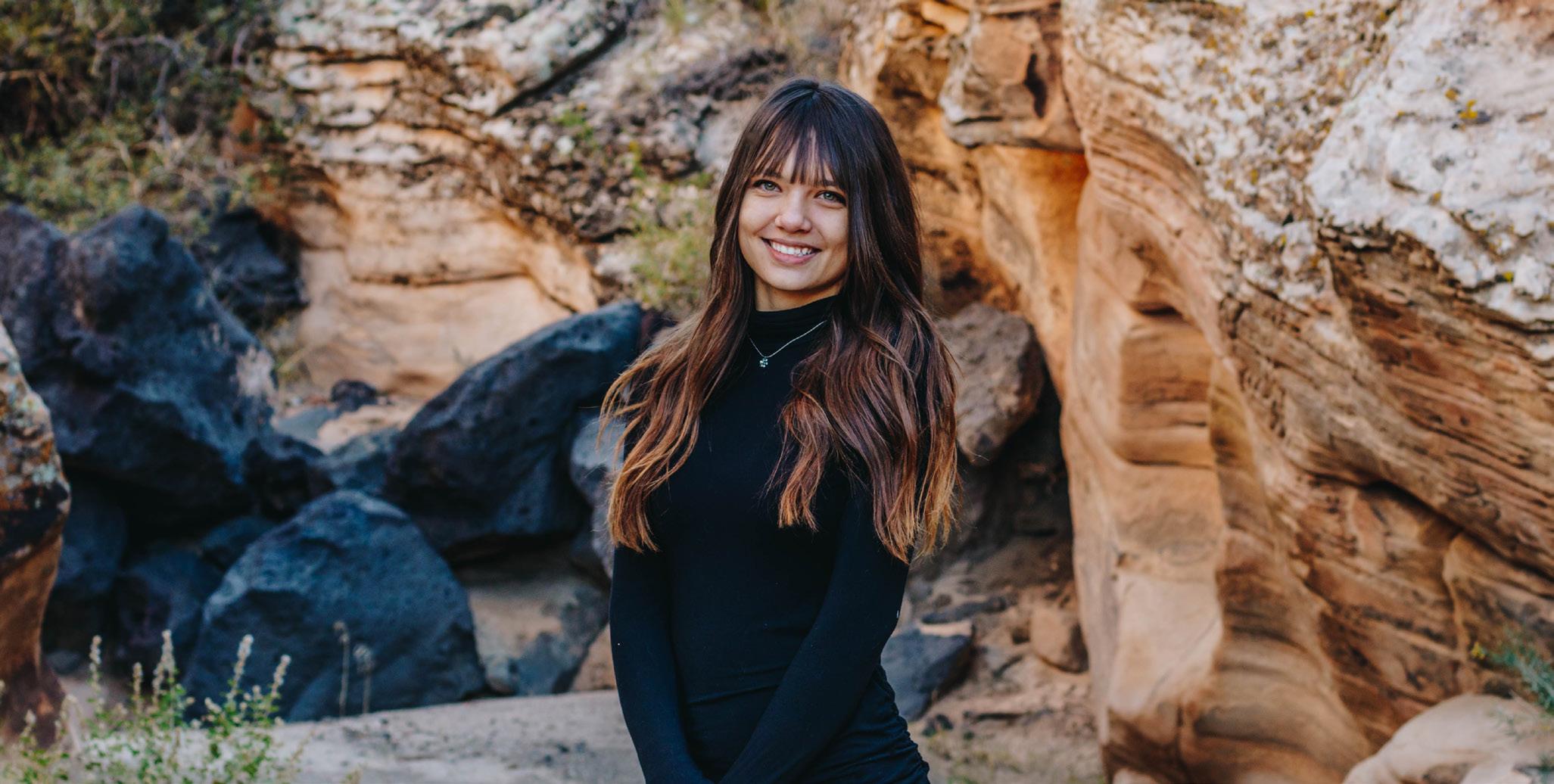
What made you decide to study chemistry?
When I was little, I was always that kid with a million impossible questions. My mother, raising me as a single parent, always did her best to satiate the full force of my curiosity (mostly by quickly Googling things). Now, pursuing chemistry, I get to ask all of those same questions about how and why the world works and the people answering them don't look at me like I'm crazy. They either give me an answer or we get in the lab and figure it out together.
What’s your favorite subject in chemistry? What research do you enjoy most?
Electrochemistry is by far my favorite. Talk about having a lightbulb moment. The field is endless and I love all the potential for new discoveries that could one day become a part of my everyday life. In Dr. Minteer’s Lab I spent a large portion of my time helping create a predictive model for active material crossover rates in organic redox flow batteries. That project in particular and the reading I did surrounding the topic really opened my eyes to the future of renewable energy storage as well as the full capacity of the energy crisis we are facing right now. I fell in love with the idea of being able to combine my love of science and research with my love for nature that could one day lead to a big, sustainable impact on our world.
What do you plan to do with your chemistry education?
My grandma says I’m going to be a permanent student. I plan to pursue a Ph.D., but I hope my grandma’s statement holds true even after I get all the degrees. As the first in my family to even attain a degree, that seems ambitious,
but as long as I have questions I’ll continue to be here looking for answers. I hope to do research, in some field, forever. However, it is likely that for the foreseeable future, fuel cells and batteries will keep me very entertained.
What do you enjoy most about the chemistry department here at the U, and about the U in general?
The U is really an undiscovered gem that I appreciate a little more every day I get the privilege to attend here. Big enough that I get the research experience of a tier one research university. Small enough that numerous opportunities are still available for underclassmen who are willing to look for them, all for a price that won't leave me drowning in student debt. Not to mention the outdoorsy culture of the area catalyzed by our beautiful surroundings. It’s a dream come true. The chemistry department here at the U is provided with first class equipment (that I get to use!), world renowned professors (that I get to converse with!) and beautiful facilities (that I get to nap in when finals come!). As if these things weren’t enough to guarantee your success in the department, our advisors for chemistry are the most caring and genuine people I have ever met. They keep me from overextending myself while making sure I reach my full potential.
What are some extracurricular activities you are involved in, and why?
I feel like I learn best when I have a network of people who are there to support me and hold me accountable. This has led me to get very involved on campus. I am a part of an outdoor leadership community through the honors college that surrounds me with great people out-
side my major who get me to do crazy things like rock climb hundred foot walls or white water raft some class three rapids. They keep me sane between studying. We have monthly family dinners and lots of lunches between classes to stay connected.
I’m an ambassador for the College of Science. I also work with the ACCESS Program for women in STEM. I was a part of the program my freshman year and had the privilege to TA for the class this last summer. Many of the girls and me are great friends and support each other in all of our classes with study groups and food. I also had the opportunity to assist in the founding of the club in-STEM as well as participating in several others across campus.
Can you tell us a little about being an Ambassador for the College of Science?
Being an ambassador is so fun. I get the opportunity to know my college and all its departments inside and out,
working closely and forming friendships with some of the best student leaders on campus. We participate in outreach, service, and various student success events. It's honestly been the best experience and I wouldn’t trade it for the world.
Anything else you’d like to share?
The above kind of makes me sound like I never leave my house. I have a philosophy that I believe keeps me from burning out: at least 24 consecutive hours out of every week are mine to do what I want with. This usually means a one night camping trip with friends, a full day spent climbing up a canyon, attempting to break in my new mountain bike without breaking a leg, or taking a spa and sleep day in my apartment. Time management is a great skill, and part of that is knowing when to take a break so you can work harder next week!
Dear Chemistry Colleagues:
It is a pleasure to announce that Distinguished Professors Peter Armentrout and Scott Anderson have been appointed by President Ruth Watkins as holders of Henry Eyring Presidential Endowed Chairs in Chemistry.
A brief history regarding the Eyring Chair: The endowment for the Henry Eyring Presidential Chair was started in 1981/82 with a goal of raising $750k to fund a chair to recognize or hire an exceptional faculty member in Chemistry. David Gardner was the University President at the time and approved the request from Chemistry to establish this chair through private donations. The endowment has grown over the decades and is now currently slightly more than $3M. The two chairs that Peter and Scott will hold each have an endowment of $1.5M.
The Eying Chair was initially conceived as a tribute to the legendary Henry Eyring, who came to the U in 1946 as a professor and the first Dean of the Graduate School, the latter position he held for 20 years. The endowment agreement highlights Henry Eyring's first-rate "teacherscholar” qualities. As you all know, Eyring is best known for his absolute rate theory, one of the cornerstones of chemical reaction rates. The endowment agreement also emphasizes his many legendary contributions to education and teaching. Eyring supervised over 140 graduate students during his 50-year career, and is quoted as saying “I’m here to help students, not myself.” His contributions as a world-class scholar-teacher clearly impacted many students, colleagues, and friends. It is this group who honored Henry Erying by generously contributing to
the endowment for nearly 40 years! We are very fortunate for their generosity, and their support of the Chemistry Department.
I am sure that Henry Eyring would be delighted with the appointments of Peter and Scott as the Eyring chair holders. Peter and Scott are world-class physical chemists in their own right, outstanding mentors and educators, and are always willing to provide service to the department and university. It is a pleasure to see their contributions at the U recognized by this honor.
Please join me in congratulating Peter and Scott on this occasion!
With best regards, Henry White Dean, College of Science
The following lists represent gifts of at least $100 made to the Chemistry Department between November 10, 2017 and October 25, 2018
RADON
$10,000 +
Amgen PAC
Peter B. Armentrout and Mary Ann White
Cynthia J. Burrows and Scott L. Anderson
Michael and Sally Hunnicutt
Diana M. and Mitchell T. Johnson
Valeria Molinero and Diego P. Fernandez
C. Dale and Susan R. Poulter
John P. and Margaret A. Simons

XENON
$2,500 - $9,999
Carlos M. Bowman
Rodney H. and Carolyn Hansen Brady Foundation
Charities Aid Foundation of America
Craig V. and Linda M. Lee
Joel S. and Elaine J. Miller
Peter J. and Christine S. Stang
Rebecca A. Uhlig and Thaddeus B. Eagar
KRYPTON
$1,500 - $2,499
John Haslam
Jacobsen Lake Foundation
Jan E. and Gunnel Linderberg
Derek C. Walter and Ena Ladi
ARGON
$500 - $1,499
D. Wain and E. Rebecca Allen
Zlatko and Vesna Bacic
William H. and Julie A. Breckenridge
Victor J. Cee and Holly Rausch
Chwen-Mei and William Chen
David T. Chuljian
Community Foundation of Utah
Mark G. and Linda L. Conish
Keith Pasker
Sheila S. David and Peter A. Beal
Joel M. and Frances N. Harris
Chen C. Hsu and Nancy Lai
Patricia A. and Dennis L. Lombardi
Clifton D. and Terrie T. McIntosh
Josef and Sara Michl
Shelley D. Minteer and Robert Churchwell
David S. and Viera I. Moore
Anita M. Orendt
Thomas G. Richmond and Cynthia Squire
Kathryn S. Robinson
James W. Sewell
Mark H. Sherwood
Hyung Kyu and Young Ai Shin
David P. and Kimberly K. Sorensen
Streeper, LLC
Jacob T. and Erin L. Umbriaco
Chin H. and Li-Rong Wang
Michael R. and Jan Weaver
Lisa A. Wenzler and Kenneth A. Savin
HELIUM
$100 - $249
Christine M. and Albert G. Anderson
Karen L. Anderson
Florence and Edward I. Aoyagi
Virginia C. and Brent Beall
Jerry Boatz
Guy W. Dadson
Ronald W. Day and Mava Jones Day
Steven H. and Terri S. Erdman
Sarah and Garth Garrison
Michael and Laura Gruenwald
Kenneth C. and Michele T. Hartner
Harry G. Hecht
John W. and Inga Kenney
Jianping Liu
Kathryn J. and Paul A. Loncle
Vance A. and Heidi R. Lyon
Joseph R. Madsen and Ilonna Rim
Raed Badran Saffarini
Robert A. Sanchez
Dennis J. and Barbara B. Saturnino
Yifan Shi
Rick and Sheila Steiner
NEON
$250 - $499
Jerald S. and Marilyn B. Bradshaw
Daniel P. and Kara Cherney
Ruggiero S. Costanzo
Richard Todd Darrington
Kevin P. Dockery and Kelly Reynolds
William E. Jack
Randy M. and Mary Jensen
William E. and Marsha M. Kilgore
Carol Korzeniewski
A. Wayne and Angela M. Middleton
Joseph V. Ortiz and Karen Fagin
Allen K. and Anne Kitamura Oshita
Carl J. and Barbara Popp
Peter E. Rogers Living Trust
Shauna Frances Roman
Dennis T. and Charlotte J. Sauer
Lane J. and Rhonda L. Wallace
James A. Stewart
Jeanne A. and Gary G. Stroebel
David R. and Jennifer Wilson
Ted Allan Young
John Kozarich, ActivX Biosciences, Inc. “Reflections of an Enzyme Mechanic”
Jackie Winter, University of Utah “Developing Heterologous Expression Platforms for Elucidating Fungal Natural Product Biosynthesis.”
Jeffrey Rudolph, University of Florida “Biosynthesis of the Antibiotics Platensimycin and Platencin”
John Gerlt, University of Illinois “Discovery of Novel Enzymes in Novel Pathways”
Later in the evening a dinner was held in celebration of Dale and Susan's careers, accomplishments and contributions to the University of Utah and chemistry in general, while friends and colleagues shared memories, toasts, and gifts in their honor.
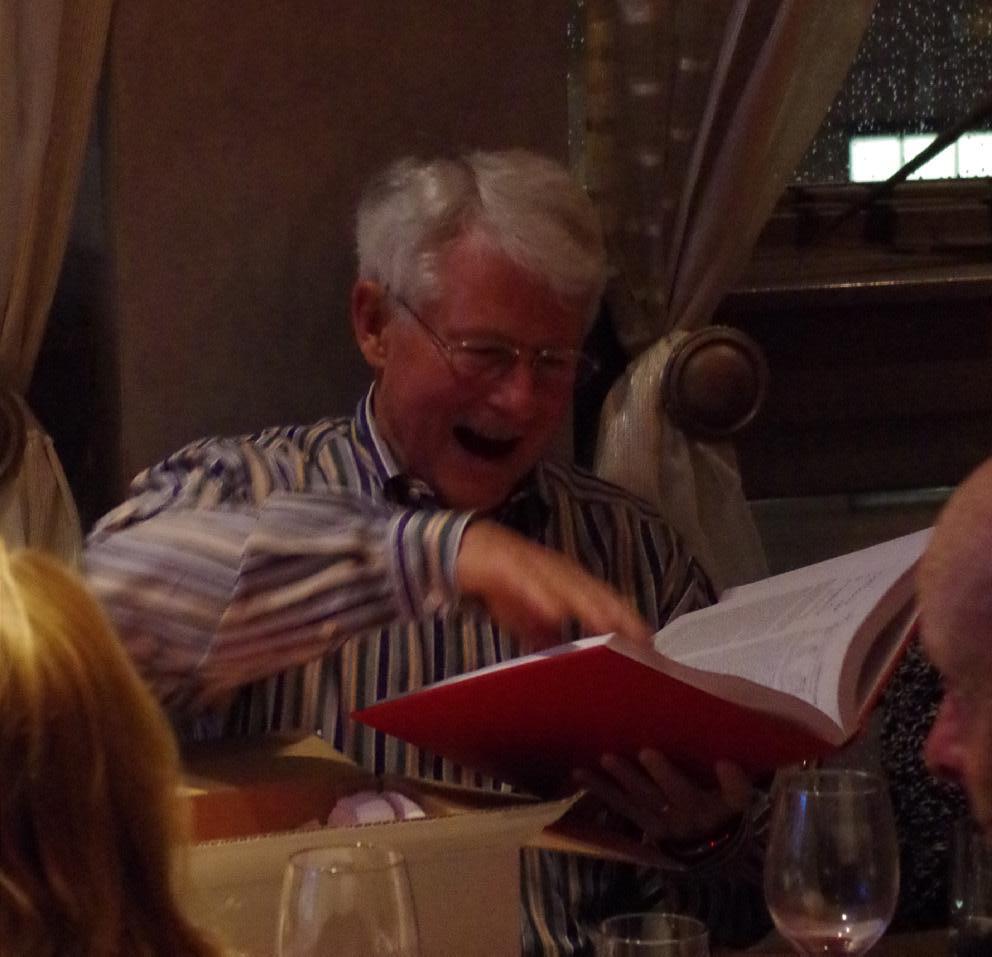
Bound volumes of his nearly 300 papers, with space for more to come, were a surprise gift to Dale

You can donate to the Department of Chemistry and leave your own legacy that will impact hundreds of current and future chemists every day! Contact Heather Burkhart at (801) 585-7896 or heather.burkhart@utah. edu to find out how you can make a positive change at the University of Utah.
You can also make a donation on our website at chem.utah.edu/community/donate.php
315 South 1400 East
Salt Lake City, UT 84112-0850
Address Service Requested

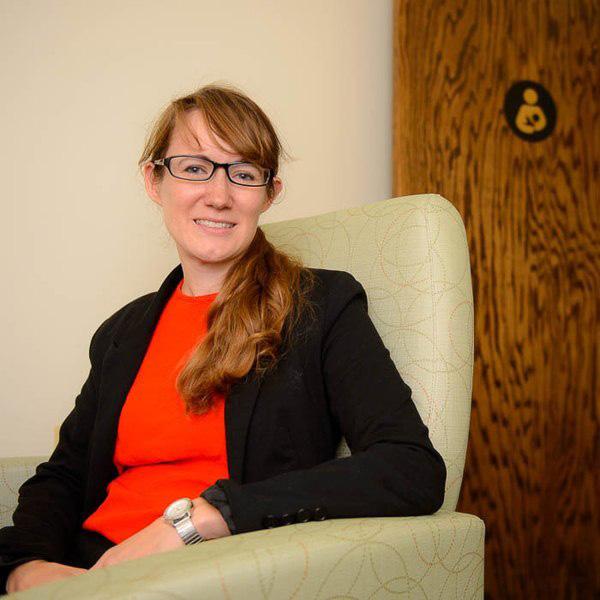
Grad student Megan Browning helped establish a lactation station in TBBC, making campus a little more accommodating to new moms.
Organization U.S. Postage PAID Salt Lake City, Utah Permit Number 1529