
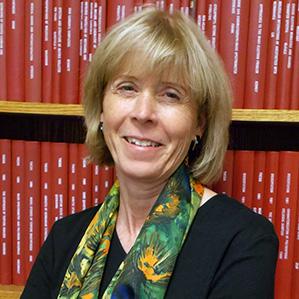
Dear Chemistry Friends and Family,
As you will see in this newsletter, Chemistry at Utah continues to thrive thanks to the collective efforts of outstanding students, brilliant faculty, excellent staff members, and caring alumni. In early May, we graduated an impressive class of bachelor’s, master’s and doctoral degree recipients. Not only do we host the largest PhD program on campus, we also produce a high number of ACS-certified B. S. degrees (ranked 9th nationally in 2015!), which speaks to the high quality of our program.
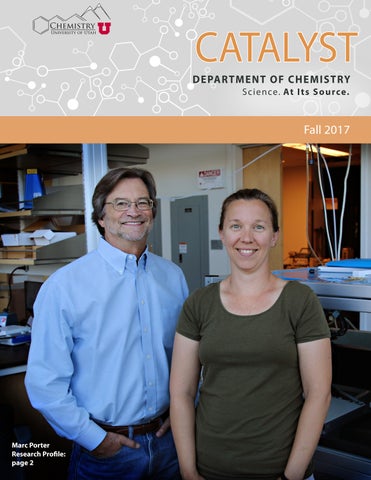
Our faculty of 30+ in the tenure-line ranks keep the laboratories humming with more than 250 research students at all levels from high school to postdoctoral. Recent research efforts have led to new approaches to catalysis, advances in antibiotic research, visualization of cellular chemistry, breakthroughs in nanoscience for energy applications, and new materials with specialized properties. In this issue, we highlight work by Prof. Marc Porter to advance low-cost medical diagnostics.
At the same time, we struggle to keep the costs of higher education under control. To compete for the best students and the best professors requires 21st century facilities. The ageing Henry Eyring Building is undergoing Phase 1 renovation (>$3M) on the 3rd floor, and this process is to be repeated on 8 more half-floors over the next several years. We also seek to expand our facilities, and planning is underway to accomplish this. Meanwhile, the financial burden on families for the education of their children remains high as students see ever-higher tuition costs. Gifts from alumni and friends of the department help offset this burden with funding for fellowships, travel awards, and endowments that help our students soar to great heights while lowering the cost of their education. In this issue, we urge you to consider giving opportunities at any level, and we celebrate those that have donated at “Noble” levels.
We hear from alumni how their time spent as undergraduates, graduate students or postdoctoral fellows had a transformative impact on their development as scientists, teachers, medical professionals, and entrepreneurs. In this issue we highlight two outstanding alumni, Dr. Diane Parry and Dr. Regina Frey, who have both excelled in their careers in industry and education. Our goal is to continue to grow as a fertile training ground for leaders and innovators in the molecular sciences. Thank you for partnering with us in these endeavors.
Best wishes,

It’s estimated that about 788,000 people worldwide died of liver cancer in 2015, the second-leading cause of cancer deaths, according to the latest statistics from the World Health Organization. One of the major challenges in combatting this disease is detecting it early because symptoms often don’t appear until later stages.
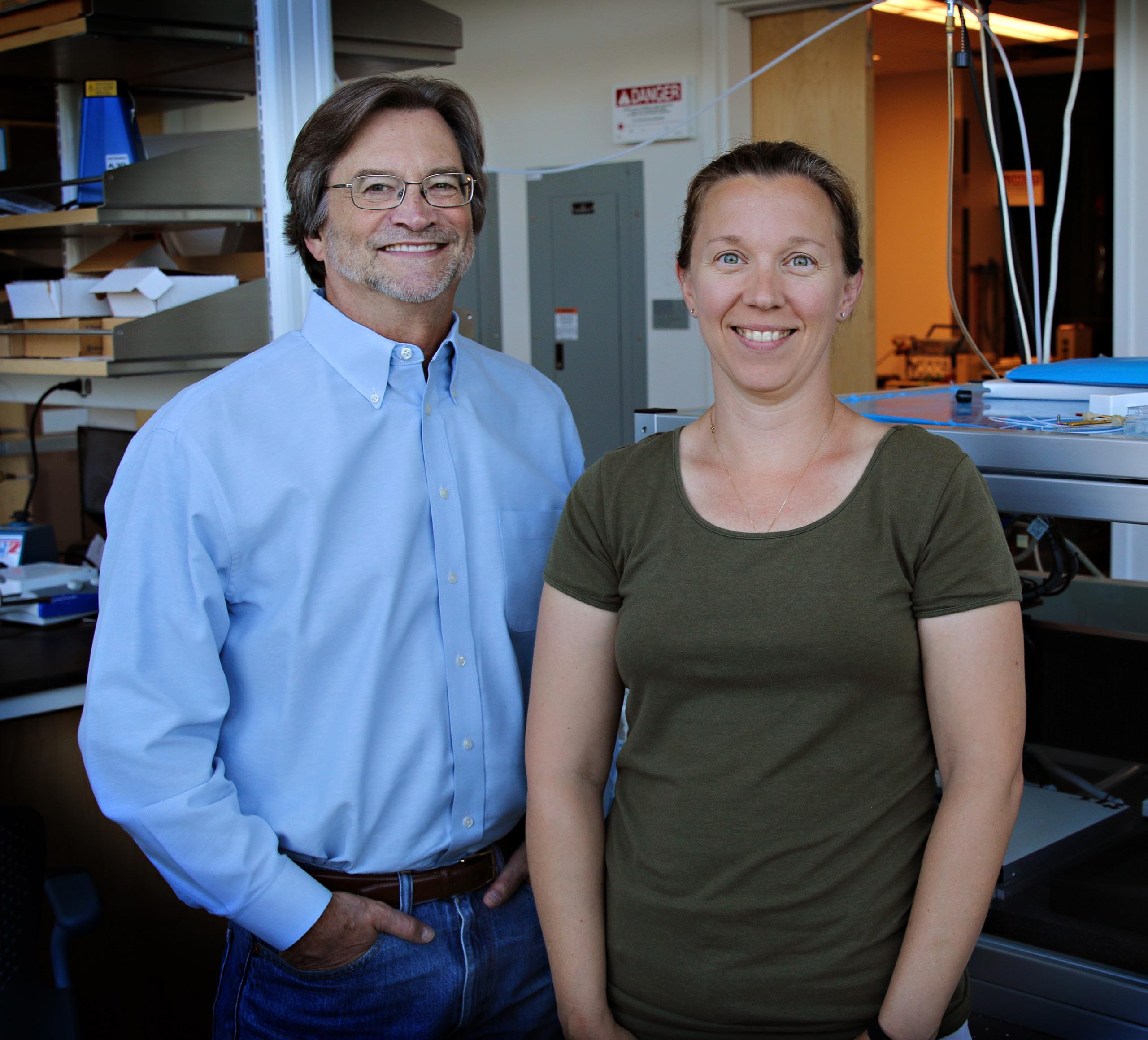
But a team of researchers led by University of Utah chemical engineering and chemistry professor Marc Porter and U surgeon and professor Courtney Scaife has developed a rapid portable screening test for liver cancer (hepatocellular carcinoma) that doesn’t involve sending a specimen to a blood lab and cuts the wait time for results from two weeks to two minutes. This new and inexpensive test — the team is working to lower the cost to about $3 per test — can be administered wherever the patient is, which will be particularly valuable in developing nations with little access to hospitals.
The U’s team — which includes Nano Institute of Utah research associate Jennifer Granger, chemical engineering doctoral student Alex Skuratovsky and U surgery assistant professor Jill E. Shea — published their research in
the latest issue of Analytical Methods describing how the test works for alpha-fetoprotein, a widely-used marker of liver cancer.
Currently, testing for liver cancer involves lab-based blood tests and ultrasound imaging, both of which require traveling to major cities and can often cost more than a month’s salary in low and middle income countries.
“If we can develop a rapid test that performs at a high level of clinical accuracy,”Porter says, “then we’ve got something that can have an impact on human lives.” Researchers also believe the test can be easily modified to detect infectious diseases such as tuberculosis, malaria and dengue fever, a mosquito-borne tropical disease that can be life-threatening.
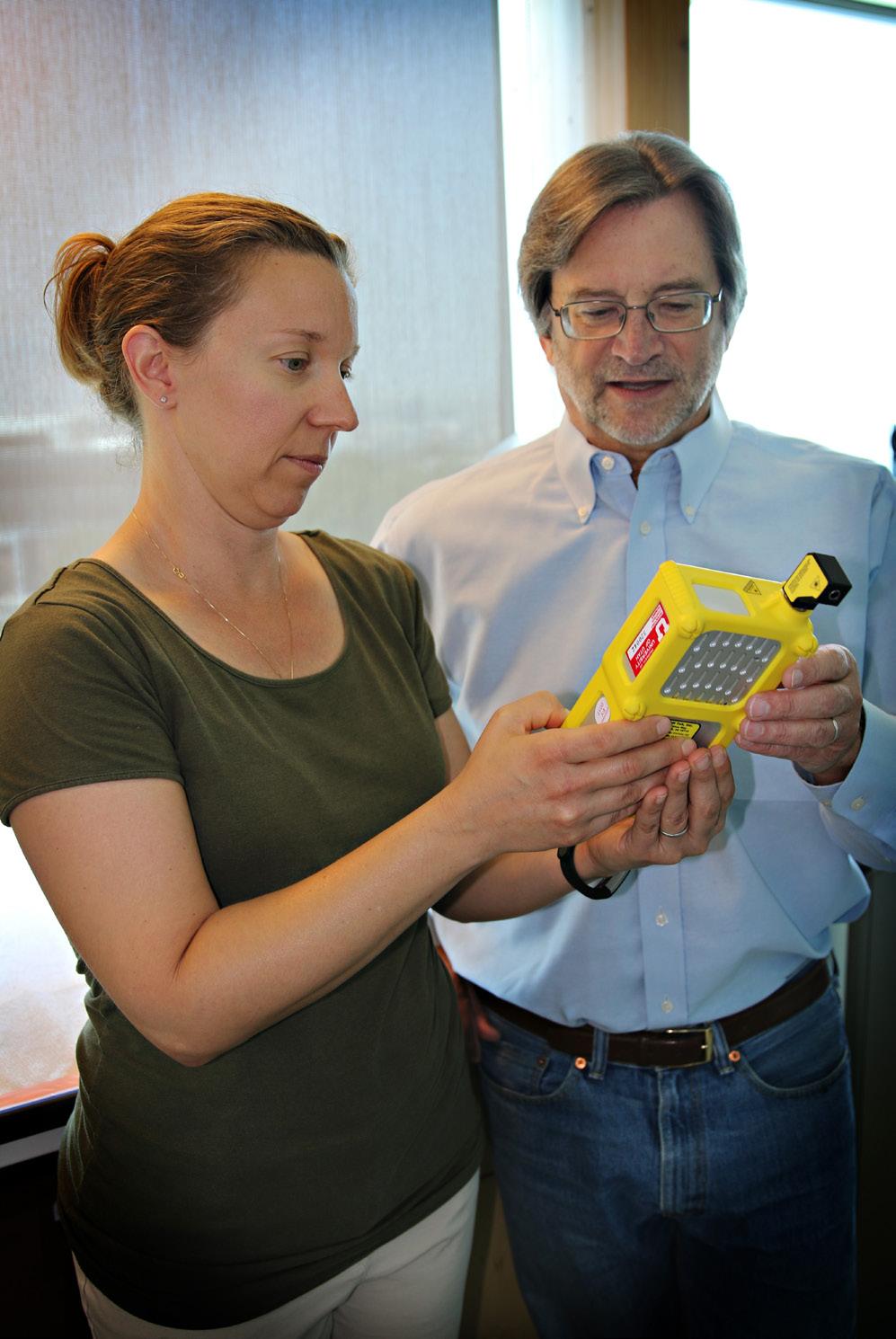
The test uses a small domino-sized plastic cartridge containing a paper mambrane that selectively traps biomarkers (proteins specific to a certain disease) from biological fluids. A small droplet of blood, saliva, or urine, or even a teardrop, from the patient can be dropped onto the membrane. This is followed by a droplet of gold nanoparticles, which tags the biomarkers trapped in the membrane. If the biomarkers are present, a red spot appears, signaling the patient has the disease and should seek more testing and possible treatment.
“The concept is similar to a home pregnancy test, but instead of flowing laterally, it flows through the membrane,” says Granger, the lead author on the paper.
A handheld spectrometer manufactured by project collaborator B&W Tek, a Delaware-based manufacturer of mobile spectrometers, can analyze the membranes and measure how much of the biomarkers is present, which in the future could determine the severity of the disease or how a patient is responding to treatment.
The idea for the test is a spinoff of a similar test Porter developed eight years ago that astronauts on the International Space Station used to test the cleanliness of their drinking water. “This is a smarter offshoot of that,” says Porter.
Now that the team has proven the concept with liver cancer and built a prototype test kit, they plan to evaluate the technology in Mongolia in spring of 2019. The East Asian country has the highest rate of liver cancer in the world.
The project was funded by grants from the National Institutes of Health, the National Cancer Institute through the Affordable Cancer Technologies Program and the Huntsman Cancer Institute. The team also received funding from Utah-based nutritional supplement company USANA which is interested in using a form of the test for customers with certain vitamin deficiencies.
what we've been up

Professor and Chair of the Department of Chemistry Cynthia Burrows has been awarded the James Flack Norris Award in Physical Organic Chemistry for 2018, an award administered by the American Chemical Society. She, along with the other ACS award recipients, will be honored at an Awards Ceremony on Tuesday, March 20, 2018, in conjunction with the 255th ACS National Meeting in New Orleans, LA.
Professor Rick Ernst, along with Benjamin Harvey, research chemist at the Naval Air Warfare Center, China Lake, were invited to supply the cover for Volume 2017, Issue 9 of the European Journal for Inorganic Chemistry (EurJIC), which featured a major result of their research: the first-ever recognition of C–C agostic interactions with a transition metal center.
Professor Luisa Whittaker-Brooks has been named a Scialog Fellow by the Research Corporation for Science Advancement for 2018. She has also been awarded the Ovshinsky Sustainable Energy Fellowship, an award given by the American Physical Society in order to recognize and support promising exploratory research in the area of energy sustainability. Whittaker-Brooks also received one of the L'Oreal USA For Women in Science grants, which will support Young & WISE (Women in Science and Engineering), an outreach program started by the Whittaker research group that mentors young female students at Kearns High School in Salt Lake City, Utah.
Professor Ryan Steele has been awarded the 2017 PCCP Emerging Investigator Lectureship from Physical Chemistry Chemical Physics (PCCP). The lectureship was created in order to reconize and support an emerging scientist working in physical chemistry, chemical physics or biophysical chemistry who is making an outstanding contribution to their field and is at an early stage of their career, and also acts as a platform to showcase their research to the wider scientific community.
In 2014 we launched an initiative to establish the Gary E. Keck Endowed Graduate Fellowship in recognition of Gary's impact on the Department and the broader world of chemistry. Thanks to generous donations from many of you, we have surpassed our halfway mark and are still going strong, but we need your help to make this goal a reality!
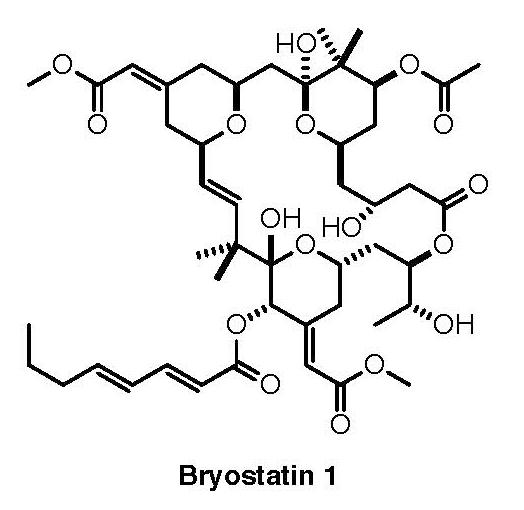
The Keck Fellowship will support one graduate student pursuing a Ph.D. in Chemistry each year. As an endowment, this fellowship will not only be a great endorsement of Gary, but will continue to benefit generations of future students. This is a fitting tribute for Gary, an excellent mentor to so many outstanding chemists over his 37 years at the University of Utah.
Although Gary's impact on organic chemistry might be measured by the remarkable number of "name" reactions discovered in his group, a better metric might be the large number of "Kecklings" who, based on their rigorous training at Utah, have gone on to outstanding careers particularly in the pharmaceutical industry.


Please celebrate Gary’s exceptional career and accomplishments by giving to the Keck Fellowship. Gifts and pledges to the Gary E. Keck Endowed Graduate Fellowship can be made online by visiting https://chem.utah.edu/community/donate.php and by clicking on the “Gary E. Keck Endowed Graduate Fellowship" link. Pledges of $2,500 or more can be extended over a three-year period. Additionally, corporate matching programs are a potential way to double the impact of your gift.
Please join us as we continue to honor Gary and help provide educational and research opportunities for deserving students.
$300,000.00
$225,000.00
$153,018.04
$75,000.00
$0.00
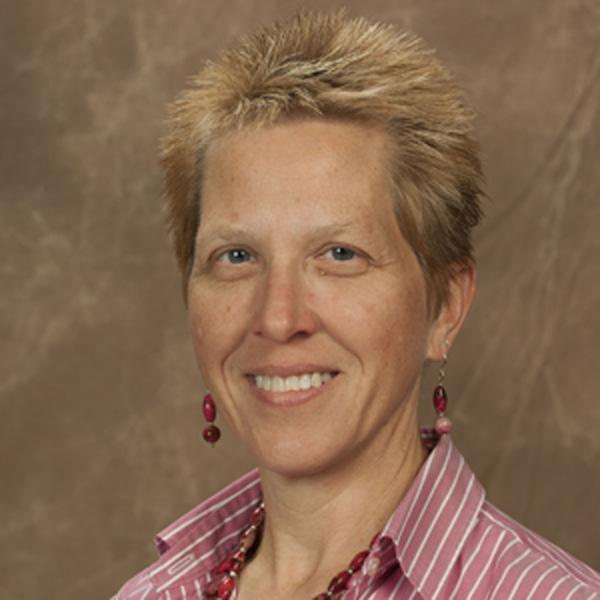
Regina (Gina) F. Frey, PhD’86, was born and raised in Chambersburg, Pennsylvania. She was the seventh of eight children, and the only one to earn a Ph.D. degree. Frey chose to attend Clarion State University, in northwestern Pennsylvania, for her undergraduate education. Clarion is a small state university that is known for its teaching mission and its superb chemistry and math departments. Frey pursued a double major – math and chemistry – and received a junior-year summer internship at the University of Minnesota working with David Dixon in computational chemistry. “After that summer, I knew that was the field for me…I could combine chemistry, math, and computer science,” she remembers.
"When I started looking at graduate schools, I looked for faculty conducting research in theoretical chemistry. Jack Simons is one of the best in the country, and he had a diverse range of research projects. Plus, having a top university in a great city and close to the mountains could not be beat,” says Frey. She arrived at the University of Utah in 1982. At the U., Frey specialized in quantum chemistry and the study of molecular clusters exhibiting the dynamic Jahn-Teller effect. The Jahn-Teller effect occurs when the lattice structure of a molecular complex changes to a lower symmetry when the complex is cooled to a low temperature. Her doctoral dissertation focused on the molecular dynamics of gas-phase clusters. Frey met her husband, William (Bill) E. Buhro, at the U while they were both graduate students in chemistry. They were married in Big Cottonwood Canyon in August 1986. Frey completed postdoctoral studies at Indiana University and went to work for the IBM Corporation as a scientific support specialist from 1989-1992. In 1992 she put her chemical expertise to work for Biosym Technologies, Inc., helping them develop chemical modeling application software.
After Bill accepted a faculty position at Washington University in St. Louis, the couple moved there in 1994. Frey is currently the Florence E. Moog Professor of STEM Education (in Chemistry), co-Director of the educationresearch center (Center for Integrative Research on Cognition, Learning, and Education; CIRCLE), and Executive Director of The Teaching Center at Washington University. She teaches multiple courses including General Chemistry and Women in Science. Frey’s work focuses on implementing and evaluating collaborative-learning pedagogies and other active-learning strategies that improve student learning and help students in STEM to transition to college-level learning. She led the implementation of Washington University’s Peer-led Team Learning (PLTL) program, now offered in General Chemistry, Calculus, and Biomedical Engineering, which resulted multiple papers and book chapters about the evaluation of and student discourse within chemistry PLTL groups.
Frey has been PI or co-PI on numerous education grants from the Luce Foundation, Teagle Foundation, Association of American Universities, National Science Foundation, HP, and most recently, as the PI, received an HHMI grant for Inclusive Excellence in Science.
“This past fall, my colleagues, Mark McDaniel and Mike Cahill, and I published an article in Journal of Chemical Education, which was on the journal cover, about students’ concept-building approaches and how their conceptbuilding approach affects their performance in chemistry, especially in organic chemistry. From basic cognitivescience research, some students tend toward algorithmic concept learning (exemplar learners) and others tend to use concept learning that abstracts the underlying ideas or theories (abstraction learners). Using an online concept-building task, we were able to distinguish between students based on their concept-learning approach, and track their chemistry course performances. Abstraction learners consistently outperformed exemplar learners, especially as the content material requires more abstraction. Hence, how students approach learning concepts is critical for success in chemistry courses. We are currently studying the effect of students’ learning approaches on performance in other science courses,” says Frey.
Frey co-authored a high-school chemistry textbook, Modern Chemistry, 2006 and 2009, by Holt, Rinehart, and Winston. In September 2017, Frey presented the Hugo Rossi Lecture at the University of Utah, titled "ConceptBuilding Approaches: How do Students’ Approaches Affect their Performances in Chemistry Courses?"
Gina and Bill have two sons, Walter, 26, who is a highschool physics teacher in New Jersey and Jonathan, 14, who is in 8th grade and an avid football and basketball player.
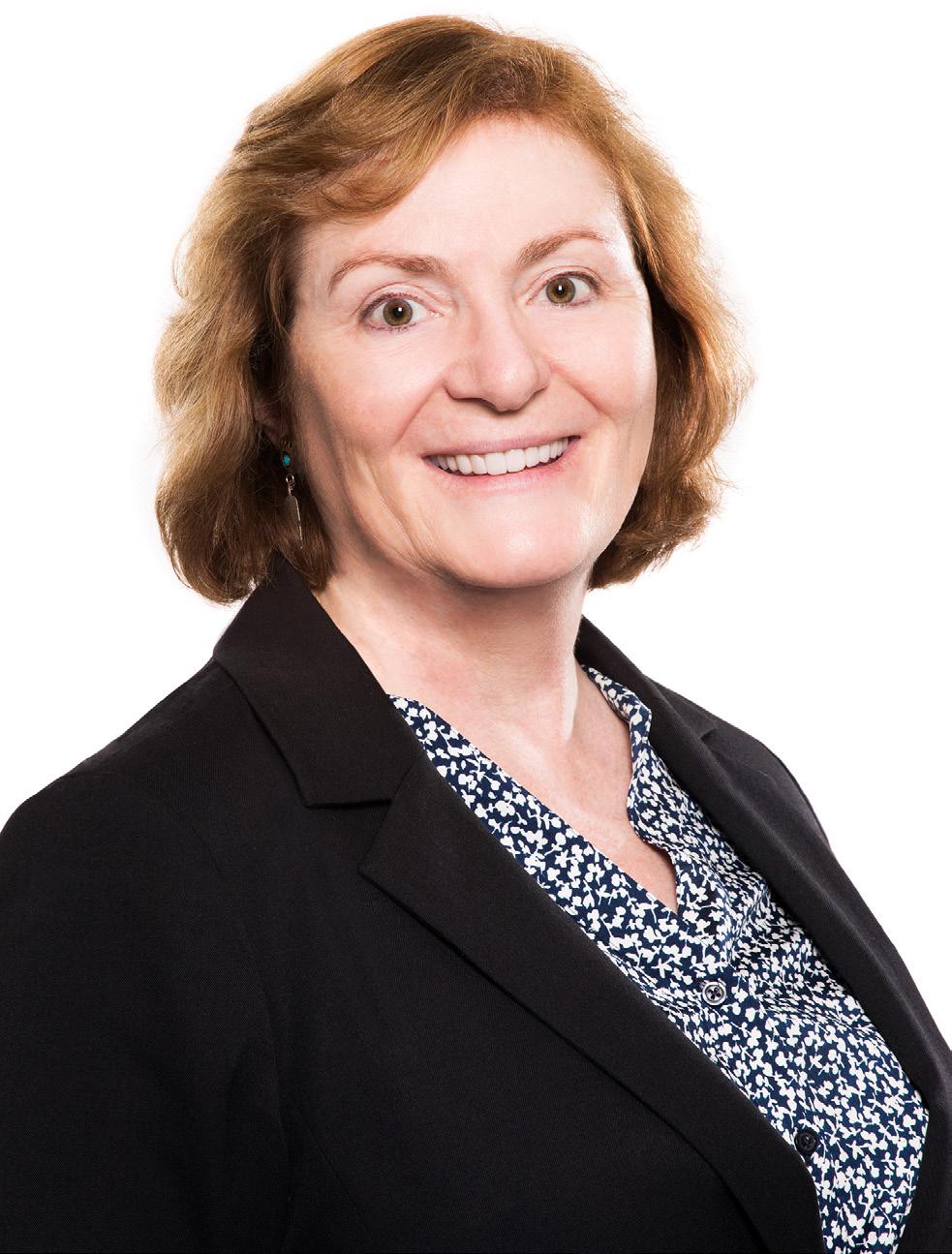
Diane Parry, PhD’89, moved to Utah to study chemistry and ended up gaining a family in more than one sense of the word. As she studied with Joel Harris during her time in Utah, he said to her that he is her “father in science,” and introduced her to others: her grandfather in science, her aunts, uncles, brothers and sisters. This family has been important to Parry for over 30 years, and she hasn’t forgotten the responsibility they all feel to help each other succeed. Not only did she meet her science family in Utah, but her husband, Kevin Ashley, who was also studying chemistry at the U. Their first daughter was born while Parry was still in graduate school, within two weeks of Joel’s biological (versus “in science”) son. Her years at the U were very positive, memorable years in almost every way, especially the openness between the departments on campus – Parry would regularly use equipment from Bioengineering and that free-flowing exploration of science made her feel that that is the way science is supposed to work.
Parry moved on to San Jose, CA in order to do postdoctoral research with Mike Philpott at IBM’s Almaden Research Center. She has since worked at Proctor & Gamble for 28 years in Research and Development, where she has chosen to expand her knowledge and experiences by sampling many facets of the work to deliver products to market, all around the world. “I have been working on applying science in the consumer goods industry to meet the changing needs of consumers, while doing all I can to protect their safety and the safety of the environment. Occasionally, I have been involved in far upstream research, where available knowledge is insufficient to resolve an important challenge. At other times, I have been part of a team fighting current business fires, working against the clock to manage issues, when things are not going as they should.” She has also enjoyed developing new skills. When Parry was still a student, if you had told her that working on packaged goods could be exciting, she would probably have been skeptical. “Over years of digging into the wide range of product details in the US, Europe and Asia, I can honestly report that it is sometimes downright thrilling to manage chemistry at the kinds of volumes required to deliver P&G’s goods to market. I have developed quite a bit of admiration for my corporate colleagues and have developed international friendships where I know we can count on each other’s help.”
In 2004, Parry became the Associate Director of Global Research and Development, and has been in this position ever since. As an Associate Director, she no longer directly managed everyone in her department. Instead of either telling people what was needed or doing the work herself, she had to learn to influence her Section Heads and
technical experts by setting inspirational and challenging visions. “Every job I have had as an Associate Director has generally required some fast technical learning – something I love. I have led Analytical, Product Design, Process Design, Modeling and Simulation, Digital Innovation and Front End of Innovation or “Breakthrough” teams. I am currently working on upstream development projects across businesses and with Marketing.”
Parry believes that valuing employees means developing their skills and keeping them competitive, and that valuing yourself as a scientist also means continuing to learn. Keeping up with training becomes a bigger and bigger time challenge, as fewer people try to cover a wider range of work, but Parry encourages employees to keep their training current, regardless. “As an example I can share of the need for evolution, many years ago I had a first meeting with an employee in a new group I was asked to lead. This employee wanted me to find ways for the company to leverage his expertise in high resolution mass spectrometry (MS). High resolution MS certainly still has some utility, however, in most high throughput Analytical labs, techniques that separate analytes before the mass spectrometer, like GC-MS and LC-MS, have replaced high resolution MS. I had to suggest that this employee add some new techniques to his mass spectrometry rep-
ertoire, so that he was not waiting for the rare circumstance when his favorite technique was required to make an impact. Most ideally, this MS expert would have been the one to tell me how he could help the business more.”
Outside of immediate job responsibilities, since 2011 Parry has been involved in organizing sessions at conferences to celebrate the efforts of analytical chemists to help ease world poverty. Through these sessions, she has come to understand that there are some challenges that analytical chemists need to overcome to increase the impact they can make, particularly in developing countries. Specifically, the World Health Organization (WHO), which calls for the application of consensus standards to the problems they seek to address, often requires data from instruments (like mass spectrometers), which do not work well in difficult circumstances, e.g., in regions without reliable power sources. For critical determinations, like pharmaceutical safety, there are separate consensus methods for hundreds of materials, and re-writing standards to use more durable approaches would take 2 to 6 years per method. After a few years of studying the issues and talking to some of the people directly involved, Parry has begun discussions with Engineers without Borders to see where they might work together to overcome some of the world’s existing data collection barriers.
In 2015, Parry was one of the recipients of the University of Utah Department of Chemistry Distinguished Alumni awards. Parry was also recently honored with the Federation of Analytical Chemistry and Spectroscopy Societies (FACSS) Distinguished Service Award, remarking that she was very flattered and surprised to receive it. She states that, while the award celebrates her contributions to FACSS (and the SciX Conference it hosts), she has received at least as much as she has given. "FACSS really has developed me as a scientist. I am sometimes credited with being a creative scientist. If this is the case, many of my ideas have come from being exposed to the thoughts of others and making new connections. People generally need to play in traffic to be hit by a truck, and similarly, when I attend SciX with problems that I would like to solve in my head, I have found that I often run into experts who have solutions. Playing in Analytical traffic will continue to keep me up to date on advances in measurement science, moving forward. Because data from measurements can drive mankind to action, I know that we are talking about important matters at the FACSS’ SciX Conference. Personally, I plan to keep looking for smart solutions to the WHO measurement challenges. I will also look forward to seeing other scientists from the U of U at future conferences!”
Dec. 7 - 9, 2017
THE FARADAY LECTURES
CURIE CLUB: PANEL SERIES
Check our website for updates! TBD Spring Semester
Apr. 16 - 17 2018
DISTINGUISHED ALUMNI AWARDS
Apr. 20, 2018
CROCKER SCIENCE CENTER GRAND OPENING
Radon
$10,000 or more
Peter B. Armentrout and Mary Ann White
Fidelity Charitable Gift Fund
Mitchell T. and Diana M. Johnson
Camilla and George D. Smith
Marvin Tuddenham Living Trust
Xenon
$2,500 - $9,999
Amgen PAC
Carlos M. Bowman
The Rodney Brady Family Foundation
Eastman Chemical Company
Marcus G. and Constance R. Theodore
Rebecca A. Uhlig and Thaddeus B. Eagar
Jiang H. and Hanju Wang
Henry S. White and Joyce Garcia
Krypton
$1,500 - $2,499
Charles H. and Judy J. Atwood
Cynthia J. Burrows and Scott L. Anderson
Jacobsen Lake Foundation
RJay Murray
Schwab Fund for Charitable Giving
Carrie and Travis T. Wager
Derek C. Walter and Ena Ladi
Argon
$500 - $1,499
Carla M. and Peter F. Flynn
Joseph A. Gardella
Narayan S. and Sumathy R. Hosmane
Robert C. and Gloria Livingston
Ryan and Meghan Looper
Zoltan A. Schelly
Streeper, LLC
Gregory C. Turpin and Laura M. Foot
The following lists represent gifts of at least $100 made to the Chemistry Department between January 1, 2017 and November 10, 2017
Neon
$250 - $499
Ruggiero S. Costanzo
Randy M. and Mary Jensen
William E. and Marsha M. Kilgore
Shelley D. Minteer and Robert Churchwell
Jonathan M. Rubin and Gretta Spier
Michael A. and Gloria Weibel
Helium
$100 - $249
Randy Adachi
Karen L. Anderson
James and Carolyn Campbell
Hanning Chen
Mo Chen
Ronald W. Day and Mava Jones Day
David Thomas Fox
Mark E. Johansen
Richard Burr Johnson
Armin P. Langheinrich
William C. McCalla, Jr.
Sharlene W. and Earl M. Mortensen
William L. and Raquel Nikolai
Ella R. and Christian Olsen
Laura Daly Steffens
Greg A. K. Stillman
Paul Landry Wiggins
David R. and Jennifer Wilson
Want to leave a legacy of your own?
You can donate to the Department of Chemistry and leave your own legacy that will impact hundreds of current and future chemists every day! Contact Heather Burkhart at (801) 585-7896 or heather.burkhart@utah.edu to find out how you can make a positive change at the University of Utah.
You can also make a donation on our website at chem.utah.edu/community/donate.php
315 South 1400 East
Salt Lake City, UT 84112-0850
Address Service Requested
Organization U.S. Postage PAID Salt Lake City, Utah Permit Number 1529
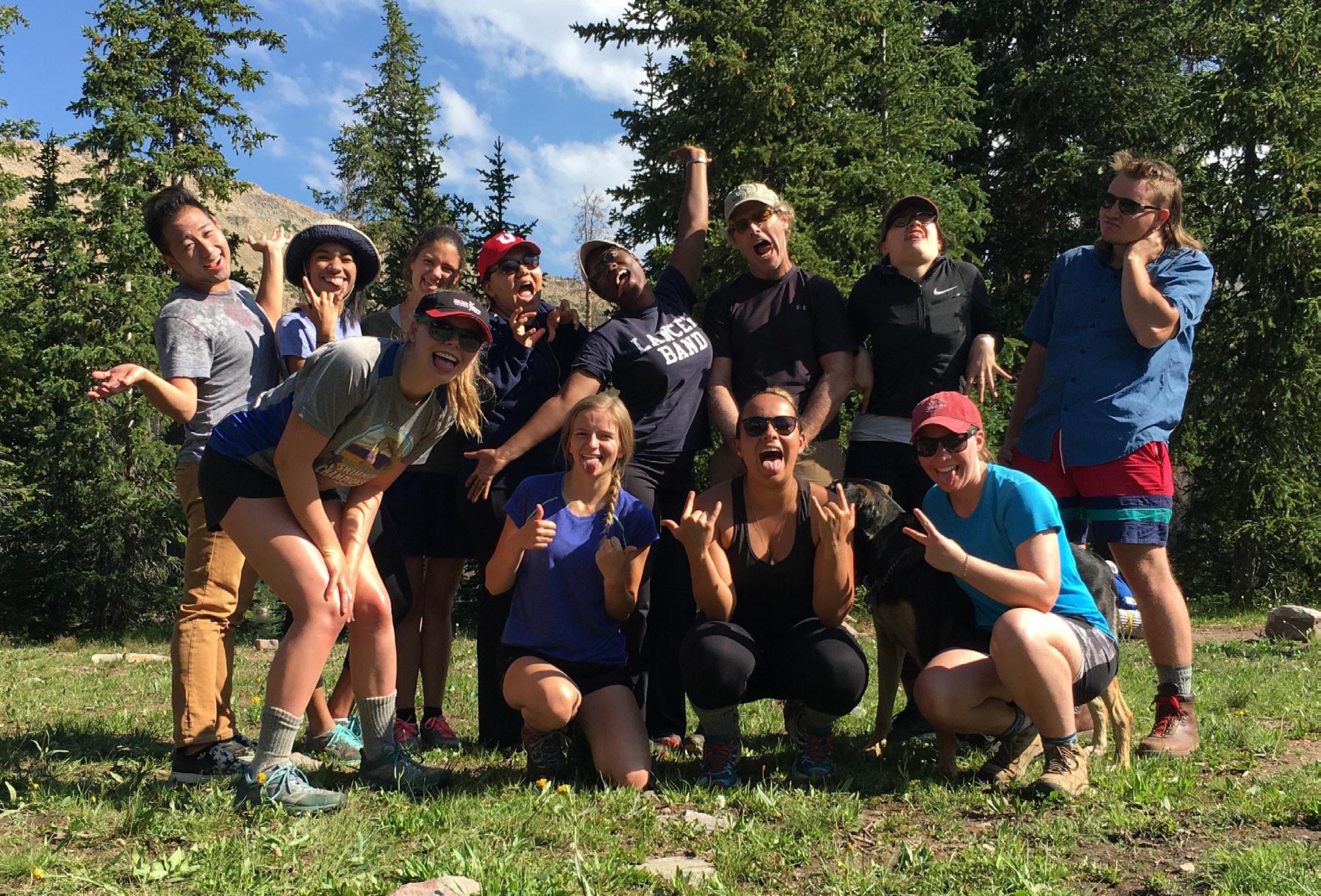
The Department's Research Experiences for Undergrads (REU) group, led by Professors Jon Rainier and Janis Louie, took a time out from the lab this summer to go on a camping and hiking trip to the Uinta Mountains.