Embedding student creativity into purposeful teaching design
Dr Marguerite van der Merwe, Dr Kyle Rath 2
THEME
2
Reimagining experiential learning through exoskeleton technology
Dr Pooveshni Naidoo-Pillay, Dr Marlize Cochrane-Boeyens 5
Socrates meets artificial intelligence: When your GPT becomes a questioner
Prof Werner Cordier 8
Empowering autonomy in postgraduate supervision
Dr Celeste Pretorius 11
Moulding understanding: Enhancing musculoskeletal anatomy through hands-on student-centred learning
Lané Prigge 14
Advancing radiography through high-fidelity simulation
Zanelle Kruger 17
From lectures to leaderboards: Levelling up large-class teaching through gamification
Dr Evangeline Nortje 20
Beyond the lecture hall: Immersive learning for future chemical engineers
Dr Naadhira Seedat, Elizbé du Toit 23
THEME
APRIL 2026
Learning with purpose: How community engagement shapes socially responsive health professionals Prof Vanessa Steenkamp 26
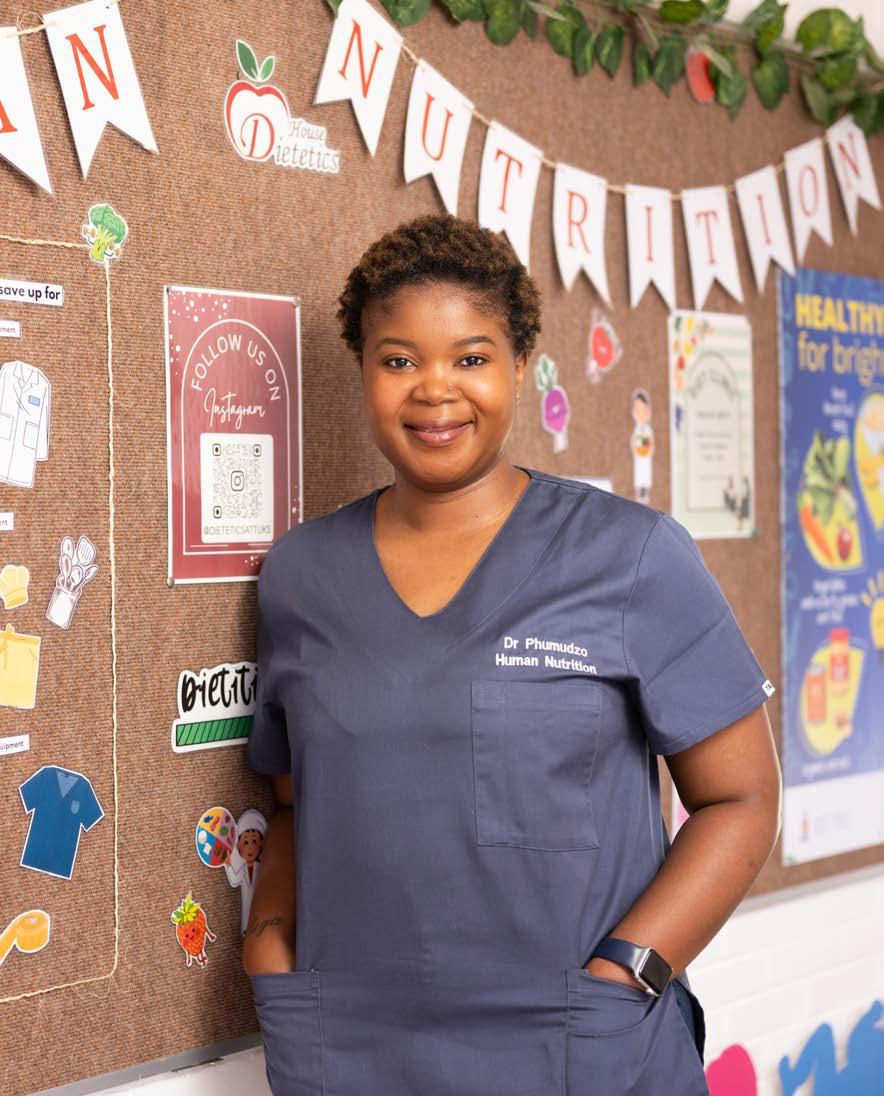
Prioritising maternal health through proper nutrition
Dr Phumudzo Mamphwe Tshiambara 30
Marketing that matters: Adventuring and learning beyond the classroom
Dr Bianca Frost
From classroom to community: Award-winning social work in action Simone Robinson
Think tanks in action: Transforming accounting students into critical decision makers
Dr Corlia Joynt 39
Teaching ethics as practice in clinical, counselling and educational psychology
Prof Jarred Martin, Prof Tharina Guse, Prof Linda Theron 43
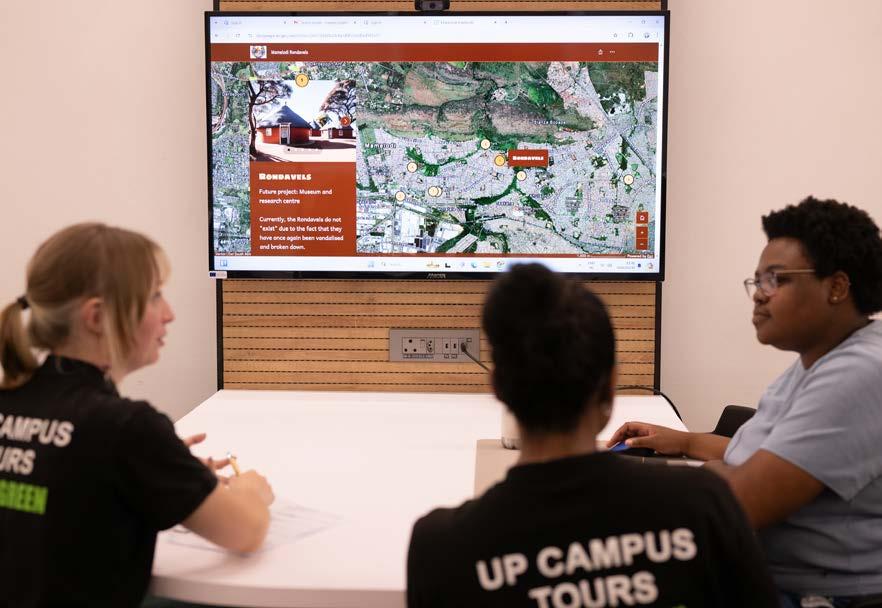
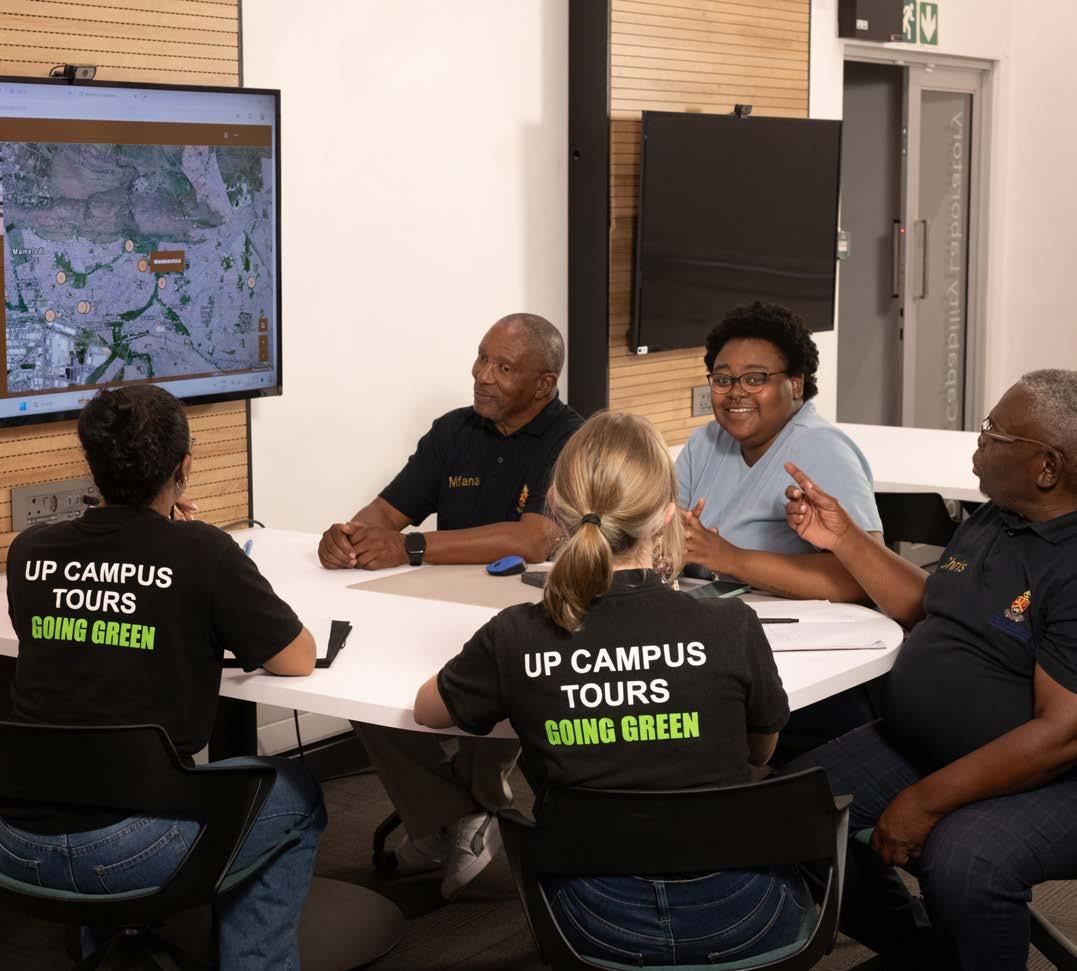
Bridging heritage and innovation to serve the community Hannes Engelbrecht, Dr Charlene Herselman,
Dr Martina Jordaan, Rev Chris Nkomo, Mfana Mathibela 46
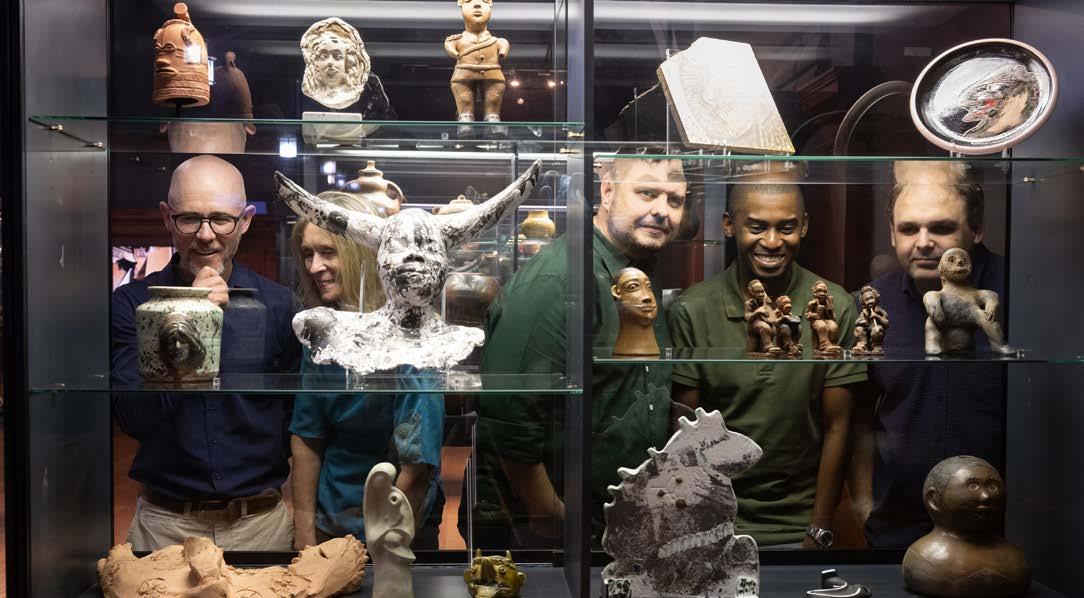
From artefact to analysis: Teaching world historythrough objects Dr Cornelis Muller, Prof Karen Harris, Prof Ian Macqueen, Dr Abe Mlombo, Dr Sias Conradie 51
THEME 5
Bridging languages, building disciplines through multilingual pedagogy
Dr Helena Kruger-Roux, Dr Elmien Claassens, Dr Corlia Joynt
INTRODUCTION
Teaching and learning at the University of Pretoria (UP) are guided by the ambitions outlined in Thrive UP2038, which provide a clear direction for a future-focused, inclusive and socially responsive academic commitment. Central to this strategy is a commitment to excellence in teaching and learning that prepares graduates to navigate complexity and contribute meaningfully to society. The contributions in this third edition of Teaching Matters demonstrate that, in many respects, this work is already taking shape across the University.
Teaching and learning at UP are continually evolving as we respond to a rapidly changing world – one shaped by technological advances, shifting student needs and an increasing responsibility to remain socially relevant. The third edition of Teaching Matters reflects this journey, bringing together a range of practices that show how knowledge is being reimagined, shared and applied across our university.
What stands out in this edition is a strong move towards more active, meaningful forms of learning. Learning is no longer confined to lecture halls or online platforms; it increasingly takes place in communities, professional settings and immersive digital environments. Whether through simulation, design-based learning, community engagement or the use of artificial intelligence, these approaches aim to help students think more deeply, act responsibly and engage with the world in thoughtful and practical ways. This edition also speaks to a shift in how we see the roles of both students and staff. The boundaries between lecturer and student, theory and practice, and even between disciplines are becoming more flexible. Students are not only learning – they are contributing, creating and shaping knowledge alongside their lecturers. At the same time, staff are drawing on research and experience to design learning that is both rigorous and responsive, ensuring that innovation is meaningful and grounded.
Another important thread running through this edition is the role of context. Our local realities influence the way we teach, our institutional priorities and the broader global challenges we face, particularly in areas such as health, education and engineering. Together, these contributions reflect a shared commitment to preparing graduates who are not only knowledgeable, but also adaptable, ethical and responsive to the needs of society.
Finally, this edition invites us to reflect on what it means to teach well today. There is no single approach that defines good teaching. Rather, it lies in a willingness to try new ideas, to work collaboratively and to keep refining our practice based on what we learn. The insights shared here will spark conversation and inspire new ways of thinking about teaching and learning across the University.
Prof Loretta Feris Vice-Principal: Academic
Embedding student creativity into purposeful teaching design
As higher education increasingly engages with complex, abstract knowledge in online and blended environments, the question of how students learn becomes as important as what they learn. At the same time, graduates are expected to communicate ideas clearly across disciplinary boundaries, audiences and contexts. These challenges informed a transdisciplinary teaching and learning initiative that explored what happens when students learn by designing educational resources for others.
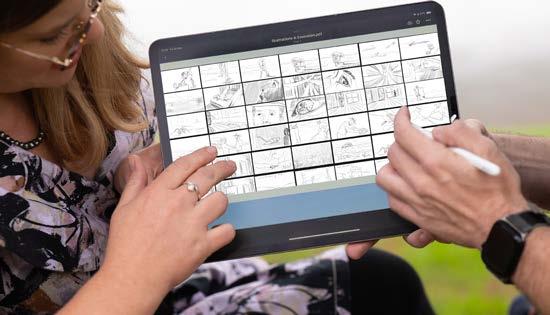
Funded through a Scholarship of Teaching and Learning (SoTL) research grant, ‘Moving knowledge: Investigating how design students learn through creating educational videos’ provided an opportunity for third-year students in the BA Information Design programme in the Faculty of Humanities to develop animated educational videos (infomotions) that could be included in the learning material of the new Postgraduate Diploma in Higher Education, to be launched in the Faculty of Education in 2027. These infomotions were developed to explain key teaching and learning concepts drawn from the new curriculum.
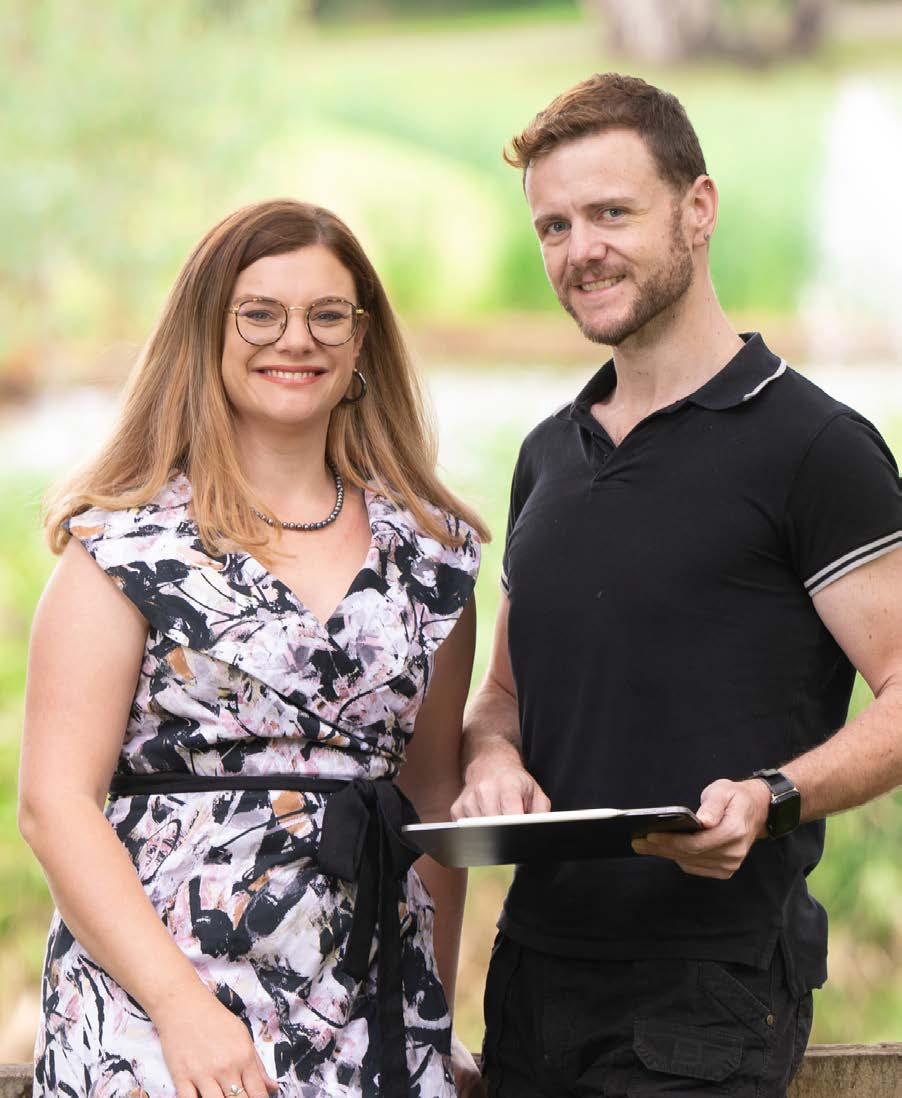
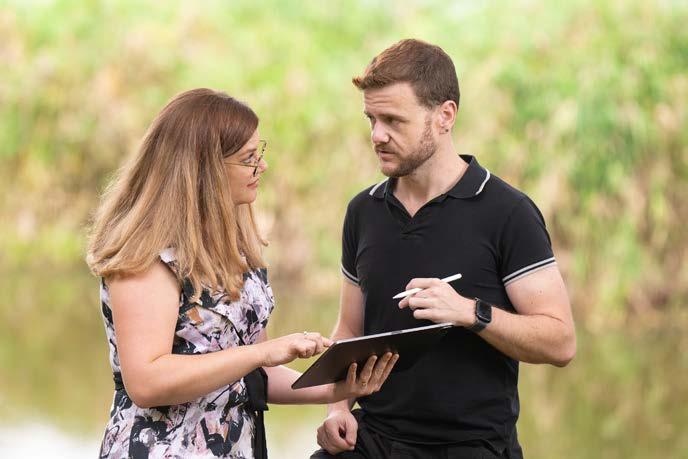
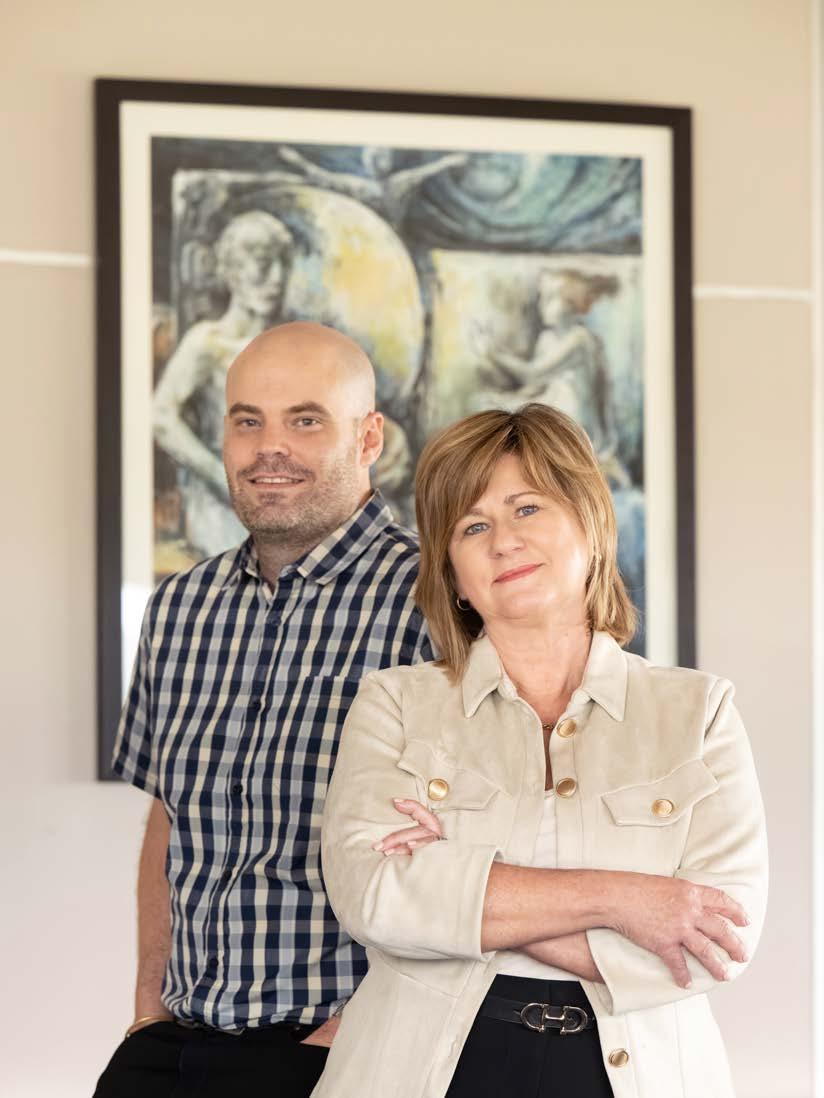
Facilitated by Information Design lecturers, Dr Kyle Rath and Alexander Melk, the students gained practical experience working with a real-world client. The client, in this case, was Dr Marguerite van der Merwe, a lecturer in the Department of Humanities Education, who is developing the learning material for the new postgraduate programme. This exercise forms part of the Department of Information Design’s objective of preparing its graduates for the world of work.
Rather than positioning infographics and animations as supplementary teaching tools, the project reframed design itself as a learning process. Dr Van der Merwe explains that, by asking students to translate higher education theory into concise, accessible visual narratives for an authentic academic audience, the project sought to enrich student learning, while simultaneously contributing to curriculum development. “The project offered a transferable model for lecturers interested in integrating studentcreated educational resources, design-based learning tasks, or collaborative approaches into their own teaching contexts.”
DESIGN-BASED LEARNING
At the heart of the project was a carefully designed learning task. According to Dr Rath, the students worked in pairs over a six-week period to design infomotions that explained topics such as constructivism, authentic assessment, academic citizenship and postgraduate supervision. “While these concepts were central to the curriculum of the new postgraduate diploma, they were outside the primary disciplinary domain of Information Design.
“This intentional shift in content focus was pedagogically significant. Students had to engage in depth with unfamiliar theoretical material and make strategic decisions about narrative structure, visual metaphor, pacing and clarity,” says Dr Rath. In doing so, they encountered the intellectual labour of teaching: selecting what matters, structuring explanations and anticipating how others might understand, or misunderstand, a concept.
From a teaching and learning perspective, the task mirrored professional design contexts, where practitioners are often required to rapidly process, synthesise and communicate complex information for diverse audiences. “In this way, the project supported both conceptual learning and professional preparation.”
RESEARCH-INFORMED PEDAGOGICAL DESIGN
Grounded in a SoTL research framework, the project examined how learning unfolds during the design process. “The associated research explored students’ reflections at multiple points during the project to better understand how designing educational infomotions could shape conceptual understanding, reflection and meaning-making,” explains Dr Van der Merwe.
Insights emerging from this project reinforced the pedagogical value of the approach. “Designing educational materials required students to interrogate their own understanding, identify conceptual gaps and refine ideas through visual translation. The iterative processes of storyboarding, animation and feedback supported learning as developmental and reflective rather than linear.” An important element of the project was that it provided a strong justification for the teaching design itself. “Designing for teaching purposes creates conditions for deeper engagement and conceptual clarity, turning content-heavy information into knowledge that is less complex and more accessible to the user.”
By emphasising pedagogical intent, the project demonstrated how motion, sequencing, narration and visual hierarchy can support understanding. Dr Van der Merwe explains that the completed infomotions will be embedded in the new postgraduate curriculum, and will serve as reusable learning resources for postgraduate students studying higher education pedagogy. “This integration demonstrates how student-generated content, when carefully scaffolded and academically aligned, can enrich curriculum resources, while maintaining rigour.”
She observes that, as higher education continues to respond to increasingly more visual and digital knowledge environments, a project such as this can offer a transferable model for integrating student creativity, scholarly rigour and purposeful teaching design. “It shows how interdisciplinary pedagogical innovation can move and deepen knowledge across media and learning contexts.”
IMPACT ON STUDENT LEARNING
Dr Rath explains that an exercise such as this enables students to interpret a client’s needs, and to learn to distil information that is text-heavy, and present it visually to the target audience in a manner that is easy to understand. “This requires the students to gain a thorough understanding of the content, and to develop a narrative or other story-telling technique that can turn static information into a more dynamic medium, such as a video.”
As one of the students remarked: “Motion design provides a good opportunity to use metaphors, idioms, personification and other figures of speech with very little limits. This increases the potential of explaining a topic clearly and ensuring a good understanding of it.”
Reflecting on how their understanding of the topic grew as they started designing for it, the students made the following observations:
Being forced to create examples and ensuring that they are academically correct made me understand the topic deeper.
We looked at the topic in a different light. Instead of simply understanding an entire theory, we understood the topic through examples and a story. Visually showing the theory made it easier to understand.
The students acknowledged that the process of teaching others through design deepened their own knowledge of the topic. It also shaped their thinking about the role of designers as educators. Beyond the immediate project outcomes, Dr Van der Merwe explains that the initiative offered broader insights into curriculum innovation and teaching practice at an institutional level. “It demonstrated how student-developed educational resources could be thoughtfully integrated into formal curricula, supporting learning across programmes, while reducing reliance on static or textheavy materials.”
The project also provided a model for sustainable collaboration, showing how disciplinary expertise can be leveraged to address shared teaching and learning challenges. By positioning students as contributors to curriculum development, it highlighted the potential of student-staff partnerships to enrich learning environments and create resources with lasting value.
Reflecting on the project, Dr Van der Merwe believes that it succeeded in demonstrating how learning can be enriched when students are invited to learn through teaching and by translating complex ideas for real academic audiences. “By combining design practice with pedagogical intent, the project fostered deeper engagement, conceptual understanding and professional insight.”
Reimagining experiential learning through exoskeleton technology
What if learning about biomechanics, balance and movement against gravity did not start with diagrams on a slide; but with your own body, suspended, supported and moving in space? This is the challenge that Physiotherapy lecturers decided to embrace by using a novel exoskeleton to teach students about the patient’s rehabilitation process.
WHAT IS THE EXIT SUIT EXOSKELETON?
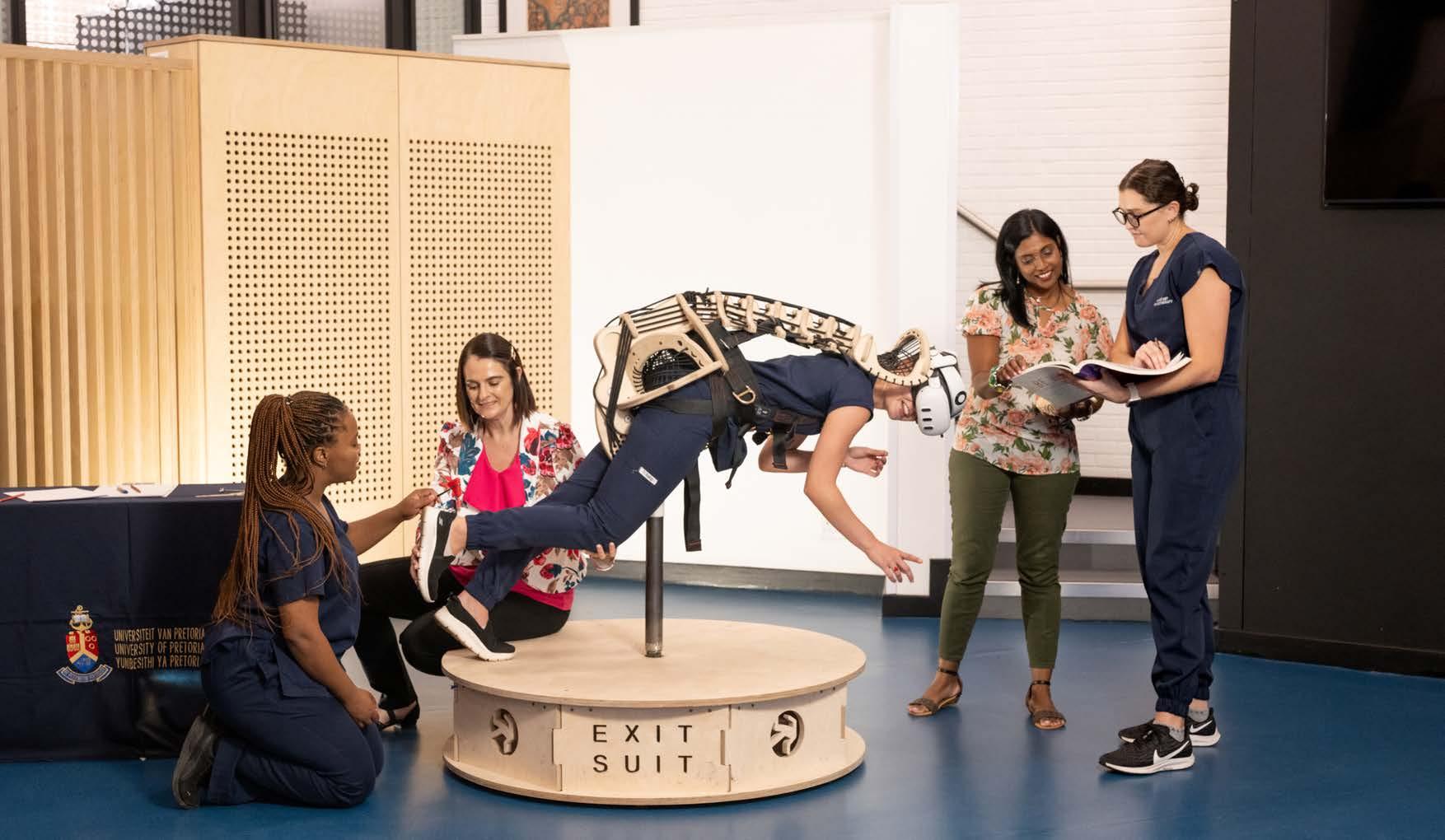
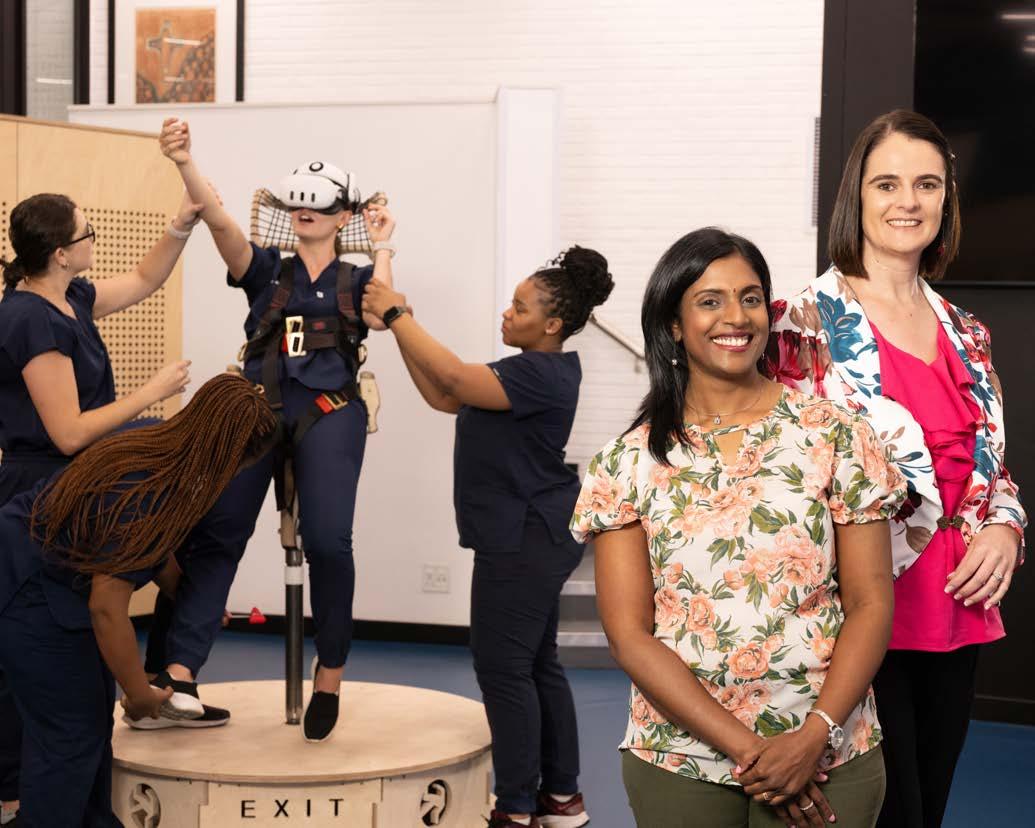
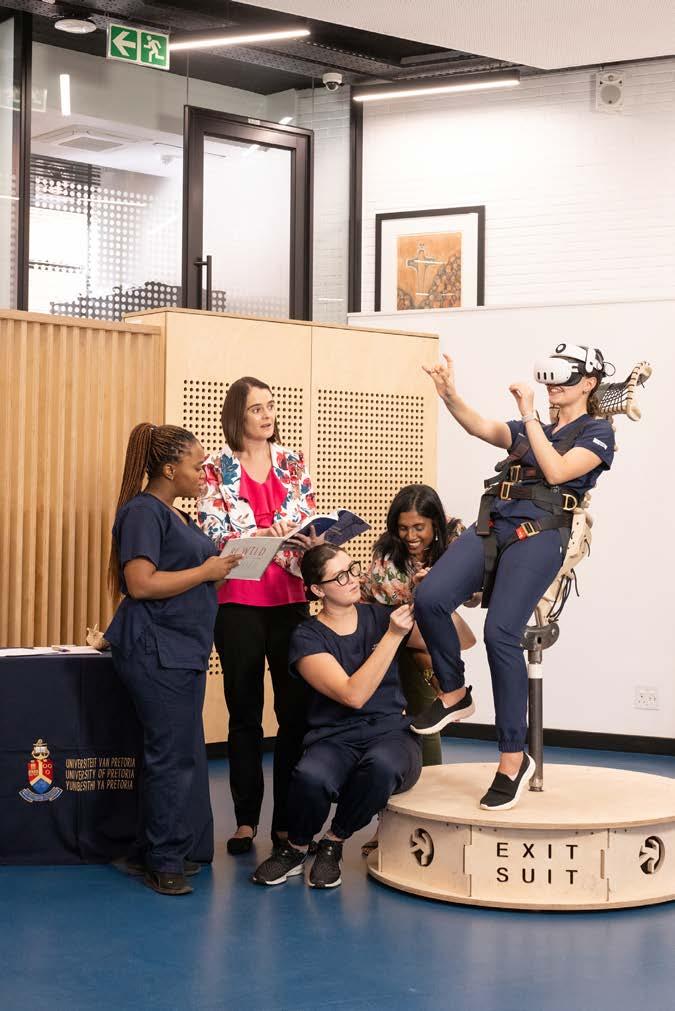
Designed as an affordable, whole-body support system, the EXIT suit represents a shift towards immersive, experiential learning grounded in real-world clinical relevance. Koos de Beer, the Faculty of Health Sciences’ Extended Reality (XR) Manager, explains that an exoskeleton is a mechanical structure worn over the body that supports movement and posture. “Unlike many commercially available robotic exoskeletons that target only movement of the upper or lower limbs and come at significant cost, the EXIT suit is a full-body system designed to support the user’s weight, while allowing movement against gravity.”
Mounted on a fixed structure, the suit uses harnesses and support lines to offload body weight, enabling upright positioning, stepping, reaching and controlled movement in individuals who would otherwise struggle to perform these activities independently. The design makes it particularly relevant for neurological rehabilitation, where impairments in balance, strength, coordination and postural control are common.
DR POOVESHNI NAIDOO-PILLAY, DR MARLIZE COCHRANE-BOEYENS
The EXIT suit is a Creative Commons initiative developed by an inventor in the UK. Originally designed for ease of construction from basic materials like plywood and bungie cords, it can be adapted for specific academic uses. De Beer explains that when he saw the EXIT suit at an international business enterprise show in 2023, he immediately identified its potential for use as a teaching tool in the Faculty. “Although it was designed as a virtual reality (VR) experience suit, I realised that it could easily be incorporated into the Faculty’s suite of XR tools.”
De Beer and his team therefore built the Faculty’s own EXIT suit, which they are modifying to meet the needs of specific academic teams. “As it is being implemented in a range of controlled practical exercises, we are able to evaluate its effectiveness, and determine how it can be modified for specific purposes.” It is currently located in the Faculty’s Living Lab – an extension of the Skills Laboratory – where Dr Pooveshni Naidoo-Pillay and Dr Marlize Cochrane-Boeyens, lecturers in the Department of Physiotherapy and Health Professions Education, respectively, are experimenting with its use to teach elements of the finalyear Physiotherapy curriculum.
EXOSKELETONS IN REHABILITATION: FROM THEORY TO PRACTICE
Dr Naidoo-Pillay and Dr Cochrane-Boeyens explain that, in clinical rehabilitation, exoskeleton-assisted movement has been shown internationally to support early mobilisation, improve confidence and enable task-specific practice in patients with neurological conditions such as stroke, spinal cord injury and traumatic brain injury. By providing controlled support, exoskeletons allow patients to experience standing and movement earlier in their recovery journey, often enhancing motivation and engagement.
They say that the EXIT suit builds on these principles, while offering a flexible and accessible platform for exploration. “Current research at the University is investigating the safety, feasibility and clinical potential of the suit when paired with VR,” says Dr CochraneBoeyens. “VR environments introduce an additional layer of engagement by simulating functional tasks and real-world scenarios, such as walking through a home, navigating uneven terrain or performing activities of daily living.”
Combined with VR, the exoskeleton creates a space where movement, cognition and perception intersect, mirroring the complexity of real rehabilitation without exposing patients or students to unnecessary risk.
WHY THIS MATTERS FOR EXPERIENTIAL LEARNING
For students in the health sciences, particularly in physiotherapy and related disciplines, many foundational concepts are notoriously difficult to visualise and internalise. Ideas such as centre of mass, postural control, degrees of freedom, anti-gravity movement and cardiovascular effort are often taught theoretically long before students encounter them in clinical practice. “The EXIT suit offers an opportunity to change this,” says Dr Naidoo-Pillay.
“By experiencing supported standing and movement themselves, students move from learning about biomechanics to feeling it.” When this physical experience is paired with immersive VR scenarios, learning becomes embodied rather than abstract. Students are no longer passive recipients of information, but active participants in their own learning process. There is potential to expand its use to other movement-related sciences and even the dramatic arts.
An added benefit is that it aligns strongly with contemporary principles of experiential learning, which emphasise active engagement, reflection and the integration of theory with practice. It also reflects a growing shift in health professions education towards immersive, technology-enhanced, student-centred learning environments.”
RESEARCH-LED TEACHING IN ACTION
What makes this initiative particularly powerful is that it lies at the intersection of teaching and research. The EXIT suit is currently being investigated through a phased research study, beginning with safety testing in healthy participants, progressing to feasibility studies using VR, and ultimately exploring its clinical application in patients with neurological conditions.
Insights gained from this study will directly inform how the technology can be used responsibly and effectively in teaching contexts. In turn, student engagement with the exoskeleton contributes to broader conversations about curriculum innovation, learning design and the future skills required of health professionals. “This is research-led teaching in its truest sense: where inquiry drives innovation, and learning environments evolve alongside evidence,” observes Dr Cochrane-Boeyens.
PREDICTED BENEFITS FOR STUDENTS
Although the practical exposure related to the use of the EXIT suit has not been formally incorporated into the curriculum, a small pilot study launched in 2025 revealed that engagement with the EXIT suit can offer students a deeply transformative learning experience by bridging the gap between theoretical knowledge and embodied understanding. “Through first-hand interaction with supported movement, students can internalise complex biomechanical and physiological concepts, such as balance, postural control and movement against gravity, in ways that traditional teaching methods cannot easily achieve,” observes Dr Naidoo-Pillay.
The integration of VR further enhances this process by situating learning within realistic, context-rich scenarios that promote clinical reasoning, problem-solving and decision-making. In addition, exposure to innovative, research-driven technology fosters adaptability, curiosity and confidence, equipping students with the skills needed for contemporary health care environments. “Ultimately, this approach not only deepens conceptual understanding, but cultivates reflective, patient-centred practitioners who are better prepared for the complexities of clinical practice.”
LOOKING AHEAD
Following the research that formed part of the pilot study, in which elements such as its safety parameters are confirmed, and the experiential learning outcomes determined, the Faculty will formally integrate the EXIT suit exoskeleton into selected teaching, learning and research activities. Beyond the immediate benefits for student learning, the project signals a broader commitment to innovation that is locally relevant, ethically grounded and future focused, challenging traditional boundaries between classroom and clinic, theory and practice, teaching and research.
Socrates meets artificial intelligence: When your GPT becomes a questioner
In the academic space, time is an important and often scarce commodity. Unfortunately, this can detract from focus on and attention to various responsibilities, including postgraduate supervision and mentorship. Recognising this challenge, Prof Werner Cordier, a Full Professor in the Department of Pharmacology and Academic Lead of the Academic Excellence Office, investigated the viability of using a Generative Artificial Intelligence (GAI) chatbot to support postgraduate students, while easing the postgraduate supervisor’s academic load.
He explains that, depending on their background and skill sets, postgraduate students require unique, individual attention to support their personalised development. However, the institutional ecosystem does not always allow adequate time to properly support each student, given lecturers’ broad responsibility panel, which includes teaching, administration, research and clinical service. “This can become challenging when a student may not yet have an adequate background to navigate a new research project, complex scientific processes or different expectations.”
FACULTY OF HEALTH SCIENCES
PROF WERNER CORDIER
Reflecting on his own supervisory style, Prof Cordier states that he likes to make use of Socratic feedback to encourage students to delve deeper into a research problem. This is an approach where questions are posed to learners to promote reflective discourse and critical thinking. “As a supervisor, this allows me to moderate the complexity of my questions depending on each student, reinforce conceptual learning, promote self-discovery and focus on personalised learning pathways.” However, this is a timeconsuming process, which becomes increasingly complex as more students are enrolled, and parallel academic responsibilities grow.
THE PharMentor CHATBOT
Given the realities that are faced in the Department of Pharmacology, GAI provided Prof Cordier with an innovative way to follow the Socratic approach as a preparatory, anytimeanywhere platform for postgraduate student support. The PharMentor chatbot was developed using ChatGPT’s GPT editor. “With a simple series of prompts, supported by an
underlying TPACK framework, I created a platform that allowed students to discuss their pharmacology projects with a virtual soundboard. Importantly, safeguarding was included to ensure that students are kept aware of its role relative to the supervisor as a supporting agent, and not as a replacement."
The chatbot encourages students to use it as a sounding board to help prepare for their supervisory meetings and to question their knowledge about their research topic. It also reminds them that it is only there to assist, and not to take over. In doing so, it emphasises its specific scope of support to not interfere with supervisor responsibilities, philosophies or outcomes.
When students interact with PharMentor by providing details about their research project, including the specific postgraduate level, it develops a series of personalised questions that spans theory, methodological frameworks, known challenges and practical implications.
Students are afforded an opportunity to answer each question based on their understanding, after which
the GPT unpacks their answer with follow-up questions according to the Socratic method. By aligning to this philosophy, it also ensures that it only questions, and never provides direct answers, where the latter may undermine the Socratic approach and self-discovery process, or potentially provide incorrect, contradictory or hallucinated information. As a consolidation system, it also provides students with brief notes on their engagement to provide further feedback for continuous improvement.
ENCOURAGING
CRITICAL THINKING
Aligned to the National Qualifications Framework (NQF), PharMentor navigates complexity by ensuring it takes students’ postgraduate level into consideration. Alignment to NQF levels promotes discourse appropriate for the postgraduate programme's expectations, and thus does not undermine or overcomplicate discussions for new students.
Prof Cordier reflects that this exercise has shown him that GAI,
when used appropriately, can both support and augment supervisory preparation. “Without investing time in learning new skills, stagnation can occur. This is where it can be convenient to develop supporting tools that allow one to attend to all one’s academic and administrative tasks, without neglecting one’s supervisory duties.”
He furthermore explains that this system is not only applicable to Pharmacology, but can be applied in other fields of study as well. As an inquiry-based approach, it is also useful when the supervisor’s opinion is not required, but students only need to be guided to higherorder questions, thus minimising the potential of low-quality questions or superficial concepts taking up precious time during such meetings.
“I believe it gives students the best possible opportunity for learning within their field when a supervisor is not immediately available.” This also frees up a lecturer’s academic time, and indirectly promotes better-quality learning by making the lecturer available to attend to other academic tasks.
IMPACT ON STUDENT LEARNING
As a long-term investigation, Prof Cordier wishes to incorporate such a Socratic system into UP's learning management system, affording more learning analytics and the potential to develop a personalised student dashboard. “Efforts are currently being directed towards proper research in the platform using an ADDIE-based approach, with the goal of ultimately integrating it with the Blackboard learning management system to allow for analytics, topical categorisation and determination of learner growth.”
Observing the particular questions students repeatedly ask enables the development of a personal student profile that supervisors can use to gain more insight into the developmental needs of their candidates, thus strengthening the quality of training that can be provided.
Anecdotal feedback on the use of the platform has been very positive, which highlights its potential for future use.
Several students have shared their experiences, indicating support with ideation, development and alternative views. However, it does indicate potential wishes for the future, such as parallel support for writing assessment and answer provision:
After changing my research topic, I found PharMentor to be extremely useful in the development of the foundations of my updated topic. It helped to refine my thinking on the finer details of the proposed methodology that I did not consider, which could possibly impact the results. It also highlighted points of confusion that I didn’t realise I had, so it was a great guide for defining the objectives of my meetings with my supervisors. I appreciate the engagement score and the evaluatory report that I received at the end as it was nicely summarised. I gave quite specific prompts; however, I did find some questions that were unrelated or delving too far into the topic and had to sift through those and, at times, the responses can become too long and complex to respond to all at once, but other than that, it was easy to use and useful, and I’ll be using it a bit more in the future.
SOCRATIC FEEDBACK CYCLE
It has a clear and interactive transfer of information, without making me feel like I am “cheating” with my research. The chatbot provides a very informative and helpful evaluative report that analyses the information provided in the prompt, identifies gaps and offers constructive criticism. It has helped me refine my thinking about aspects of my topic that I had not previously thought about.
Studentsupervision interaction
Students discuss with supervisors
Reflective learning
Students engage critically with resources
I would like it to be possible to upload certain sections of my protocol or write-up and for it to ask questions, directly identifying gaps within my writing, and possibly have it criticise my writing from a literature point of view and not the content necessarily. Knowing what to say, but not knowing how to say it to make it easy to read and connect the dots is a problem I struggle with.
Actionable recommendations
AI provides tailored guidance
Iteration
Process repeats until conversation ends
Student input
Students describe their research topic
AI dialogue
AI asks clarifying questions
Student responses
Students reflect and respond
Empowering autonomy in postgraduate supervision
Postgraduate supervision plays a critical role in shaping the quality, success and sustainability of higher education systems. Beyond the completion of a dissertation or thesis, effective supervision contributes to the development of independent, critically reflective researchers who can contribute meaningfull y to their disciplines and society.
After attending a course on strengthening postgraduate supervision, lecturers in the School of Health Care Sciences engaged in collaborative discussions to develop an integrated postgraduate study guide that could support postgraduate supervision across the Faculty of Health Sciences. The teaching team who recognised the need for such support in the Faculty were Dr Celesté Pretorius (Radiography), Prof Kitty Uys (Occupational Therapy), Prof Elzette Korkie (Physiotherapy), Prof Zelda White (Human Nutrition), and Prof Carin Maree and Prof Mariatha Yasbeck (Nursing Science).
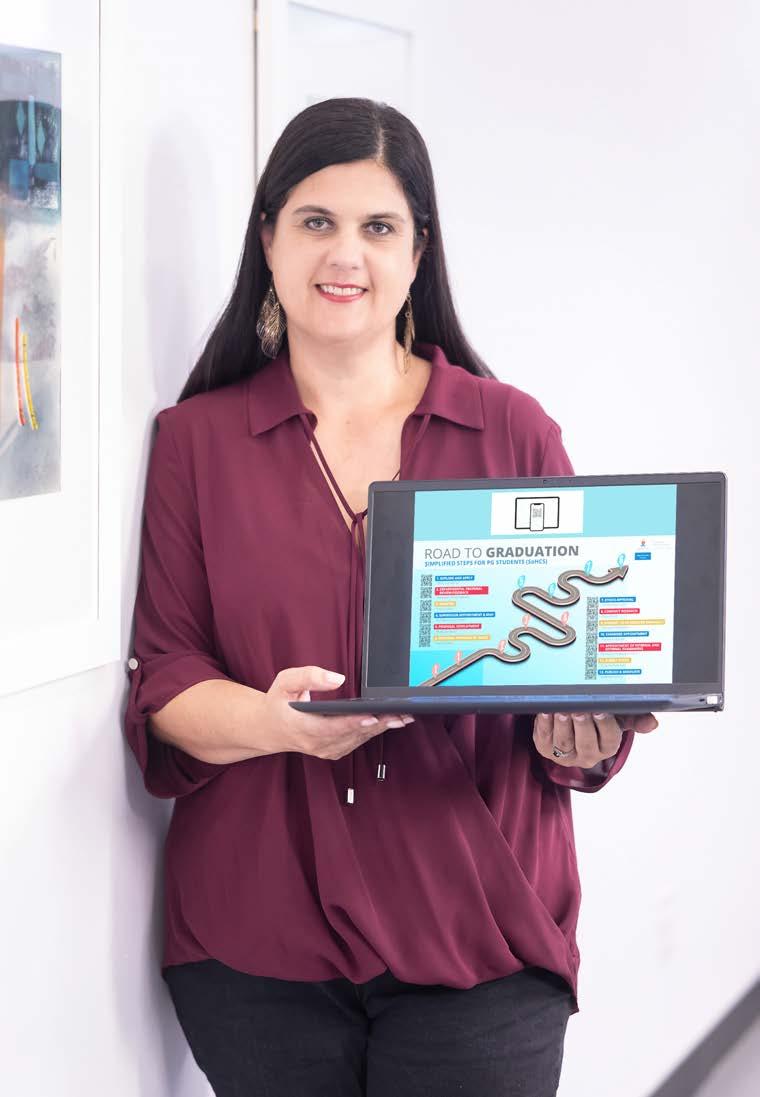
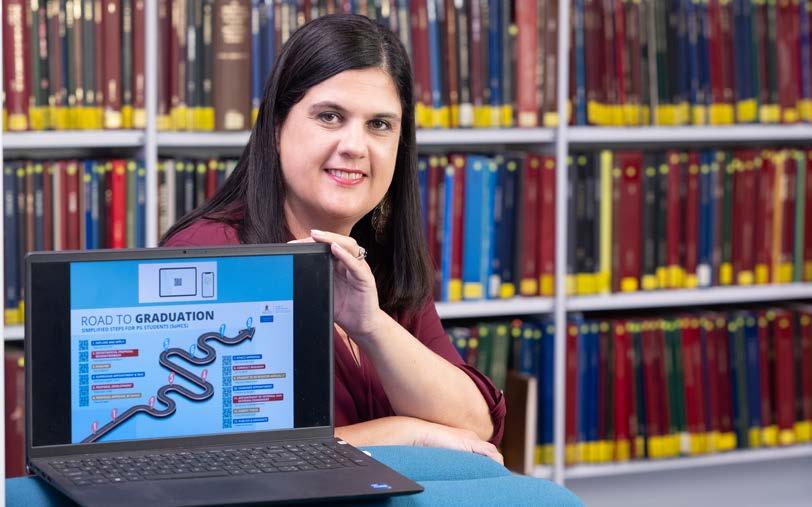
Dr Pretorius was subsequently invited to lead the teaching and learning development project that resulted in the design and implementation of an interactive postgraduate study guide, grounded in educational theory. She sought to demonstrate how thoughtfully designed pedagogical tools could meaningfully enhance postgraduate supervision, while supporting supervisors and strengthening the postgraduate research environment. The interactive study guide has subsequently been aligned and integrated across postgraduate programmes in the Faculty’s five schools, and is available as a clickUP Ultra module called ‘Road to Graduation’.
She explains that increasing postgraduate enrolments, diverse student cohorts, pressure to improve throughput rates and evolving institutional expectations have exposed limitations in traditional, hierarchical supervision models. “These challenges necessitated an innovative, student-centred approach that could support both postgraduate students and their supervisors.” The project represents a pedagogical shift from supervision as instruction to supervision as partnership, where responsibility for learning is progressively transferred from supervisor to student within a structured and supportive framework.
STRENGTHENING
POSTGRADUATE SUPERVISION
The primary purpose of this initiative was to strengthen postgraduate supervision by embedding autonomy-driven learning principles into a practical, accessible and scalable resource. The project acknowledges that supervision is not solely about producing a research output, but about developing the researcher. “While supervisors remain central to academic guidance and quality assurance, over-dependence on supervisor input can unintentionally limit students’ capacity for independent inquiry and self-regulation.”
The interactive study guide therefore aimed to equip postgraduate students with the tools, structure and clarity needed to take ownership of their research processes, while supporting supervisors by clarifying expectations, standardising guidance and enabling more facilitative supervisory practices. “It reconceptualises postgraduate supervision by shifting from a hierarchical, supervisor-driven model to a facilitative partnership that develops independent researchers. Ultimately, it enhances student confidence, improves research quality, and contributes to more timely and satisfying postgraduate completion experiences.”
THEORETICAL AND PEDAGOGICAL FOUNDATIONS
Dr Pretorius explains that the project is underpinned by Benner’s Novice-to-Expert Framework. “This framework acknowledges that students enter research degrees with varying levels of experience (ranging from novice to expert) and require differentiated support as their competence evolves.”
Complementing this is the prepare-engage-consolidate pedagogical structure, where students build foundational knowledge and understanding through guided readings, examples and clearly articulated expectations (prepare); inquiry-based learning is promoted through questioning, discussion, peer feedback and active engagement with research concepts (engage); and reflection, synthesis and self-evaluation enable students to integrate learning and develop independent research competence (consolidate).
Together, these frameworks ensure that the interactive study guide can offer structure without rigidity, allowing supervision to adapt to students’ developmental stages, while maintaining academic rigour and consistency.
UNIQUE FEATURES OF THE INTERACTIVE STUDY GUIDE
A defining strength of the interactive study guide lies in its practical design, which translates educational theory into usable supervisory and learning tools. Other features include step-by-step templates that break complex research tasks up into manageable, clearly sequenced steps, structured rubrics that articulate criteria for quality and progression, reflection prompts and checklists that encourage ongoing self-evaluation, goal setting and critical reflection on learning and progress, while scaffolding research competence, and a visual and conceptual “road to graduation” that outlines key milestones, departmental decision points and responsibilities. The interactive study guide is intentionally positioned as a compass, not a map, providing direction and clarity, while allowing space for disciplinary variation, personalisation and scholarly creativity. This balance ensures that autonomy is supported rather than constrained.
IMPACT ON STUDENT LEARNING
By embracing supervision as a developmental partnership rather than a directive process, the interactive study guide has contributed to the development of more confident researchers, more effective supervision, and a more resilient and responsive higher education system. In the process, it has established an inclusive and innovative learning environment by accommodating diverse postgraduate backgrounds and fostering reflective, self-directed learning.
Launched in 2025 as a pilot project, it is being implemented as a voluntary module that all postgraduate students in the Faculty can follow. It was introduced to students and staff during a roadshow, where users could observe its features. The feedback from students relates particularly to its convenience, as it saves them having to consult their supervisor excessively. This allows supervisors to focus on the more critical aspects of teaching and supervision. Additionally, it provides supervisors with feedback in terms of the types of questions that are asked, and whether they need to intervene. “During its voluntary use by students, we have been able to identify gaps that will allow us to improve the module, as well as what additional material can be included in the interactive study guide. This will enable us to update it regularly.”
Dr Pretorius presented the interactive study guide at the Congress of the Society of Radiographers of South Africa (SORSA) and the International Association of Forensic Radiographers (IAFR) in September 2025, where it got the Best Oral Presentation Award.
It was received very enthusiastically by students and supervisors alike, with some students indicating that they would consider enrolling at the University of Pretoria if that meant they could access this resource.
By clarifying expectations, demystifying research milestones, and enabling self-paced progression across the postgraduate journey, the interactive study guide has improved students’ accountability and self-regulation. The structured guidance and opportunities for reflection enable students to make informed decisions about their learning strategies. Furthermore, the interactive study guide reduces uncertainty and anxiety, particularly for novice researchers, while encouraging progressively independent scholarship as competence grows. By supporting the development of critical thinking, selfregulation and lifelong learning skills, students are able to engage more constructively with their supervisors.
From a supervisory perspective, the interactive study guide supports a move towards facilitative supervision, where supervisors act as mentors and partners rather than the sole drivers of progress. The interactive study guide gives supervisors structured guidance, allowing them to know when to step back, which fosters student growth without compromising academic standards. It also promotes fairness, transparency and consistency across supervision practices. This has contributed to improved research quality, enhanced postgraduate throughput and a sustainable culture of excellence.
Moulding understanding: Enhancing musculoskeletal anatomy through hands-on student-centred learning
Musculoskeletal anatomy is a cornerstone of undergraduate education in the health sciences, yet it is frequently perceived by students to be one of the most challenging areas of study due to the large amount of content to be mastered within a period of only five weeks. The complexity of three-dimensional (3D) relationships between bones, muscles, joints and soft tissue often makes learning abstract and overwhelming, and content difficult to retain.
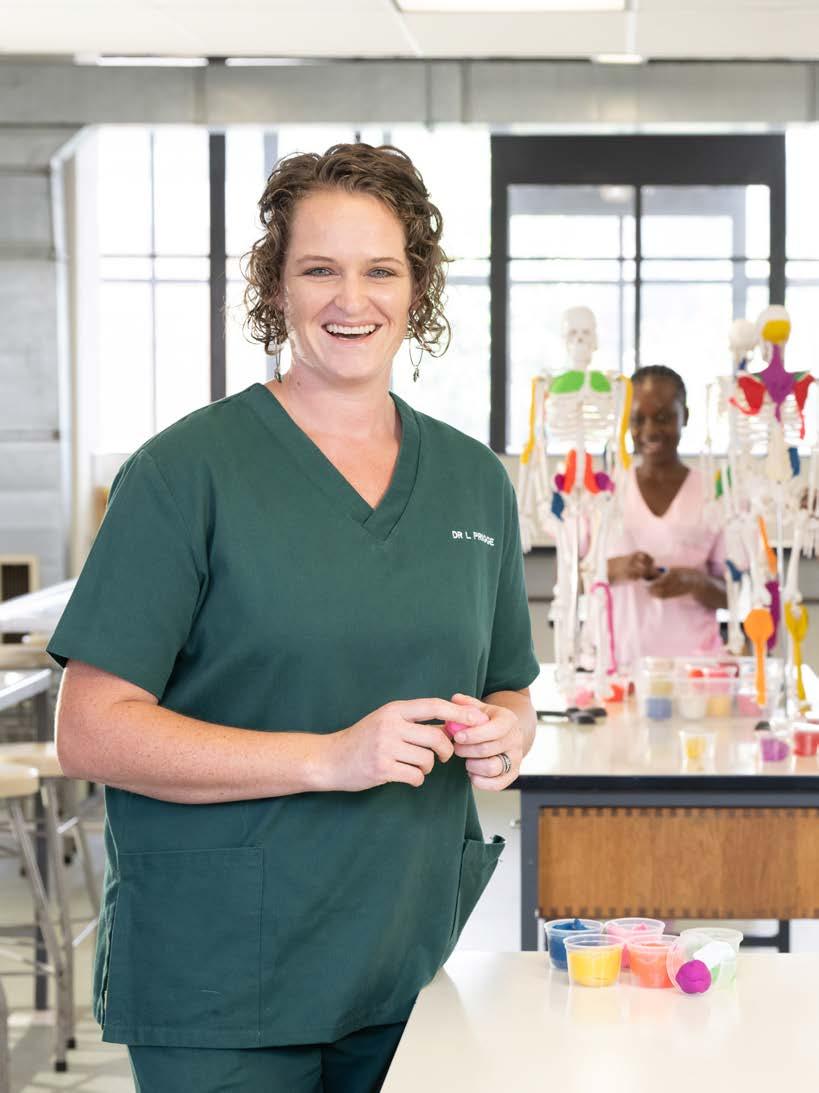
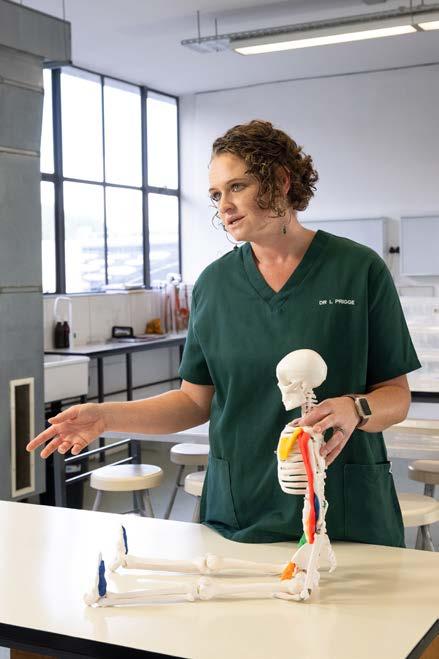
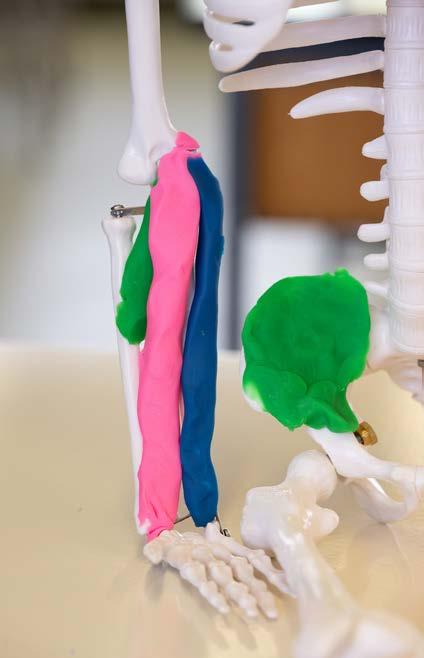
In response to these challenges, Dr Lané Prigge considered various interventions to improve student understanding of musculoskeletal anatomy. In 2025, she introduced a simple, low-cost, interactive, hands-on approach by using coloured plasticine (clay) and small articulated skeletons. She implemented this approach in her first-year Human Anatomy class for students following the Physiotherapy, Occupational Therapy and Nursing Sciences programmes in the School of Health Care Sciences. The ANA 152 module (Musculoskeletal Anatomy of the Limbs) focuses on the anatomy of the appendicular skeleton, and introduces students to the muscles, blood vessels, nerve supply, lymph drainage, and joints of the upper and lower limbs. She also used this approach with the second-year Anatomy students following the BSc (Medical Sciences) degree.
The primary aim of this intervention is to enhance student engagement, understanding and perceived retention of musculoskeletal anatomy through active learning. Rather than relying solely on traditional 2D resources or passive observation, students were encouraged to construct muscles directly onto plastic skeleton models. They used different colours to illustrate muscles, and participating students visualised attachments, orientations and relationships, thereby promoting deeper conceptual understanding.
Not only was this learning effective, according to the students, but it was great fun. Working in their smaller practical groups, the students actively engaged in their own learning through doing, discussing and reflecting with the other group members. Working together as a team encouraged students to ask questions, test their understanding and correct misconceptions among themselves, all within a supportive, low-pressure setting.
This sentiment was echoed by a student who remarked:
It was definitely one of my favourite stations, and we were always excited as a group to participate together, which often helped me learn as we all fed off of each other’s answers and placements. It also allowed for a slight break from the cadaver stations, which sometimes got slightly overwhelming, so this station was always a fun way to reset to continue the practical with a better mindset.
Dr Prigge considers an important element of this fun and interactive teaching intervention to be that it was designed to complement, rather than replace, existing anatomy teaching methods. “Cadaveric material, prosected specimens and traditional teaching resources remain invaluable; however, opportunities to revisit, rebuild and reimagine anatomy using physical models allowed students to consolidate learning in new and meaningful ways.”
By requiring students to physically construct anatomical structures, she explains that the intervention supports kinaesthetic learning, while the combined use of colour, tactile modelling, verbal discussion and reflection promotes multimodal literacies, enabling students to develop a 3D anatomical understanding through tactile, visual and collaborative meaning-making. “Together, these approaches enhance engagement and deepen conceptual understanding, while working with their hands helps them to remember what they have learnt.”
One of the participating students stated:
I liked how it helped me visualise
the muscles in
3D and understand their exact placement on the skeleton. It made it easier to connect theory to something practical.
Student feedback to inform and refine innovative teaching practice formed a central component of evaluating the project’s success, thereby amplifying the student voice. Reflections collected following the practical intervention indicated high levels of enjoyment and engagement. Many students described the activity as fun, memorable and different from their usual learning experiences:
Working with specimens for the first time can be a bit overwhelming. The clay and skeletons were really a little bit of a more relaxing way to figure things out.
More importantly, students reported that physically building muscles helped them understand anatomical relationships that had previously felt confusing when viewed in textbooks or slides. “Several reflections highlighted improved confidence in recalling muscle attachments and visualising anatomy during subsequent study,” says Dr Prigge.
While the overall response was highly positive, student reflections noted that it was not all fun and games. Some students noted frustration with the plasticine’s adherence, but the most common theme was the lack of time…. They wanted more time to learn (and play).
According to one of the students:
To practically apply theory, for example, the origin and insertion of the clay, was a fun way to facilitate sensory engagement in the work content.
Dr Prigge says that, in response to the feedback received, these models will be integrated into more practical stations to afford students more time to learn through these multimodal literacies, while enjoying kinaesthetic learning.
She found that using reusable materials that can easily be integrated into existing curricula and adapted across disciplines offers a sustainable and scalable teaching model. “The materials used are inexpensive and durable, making the approach accessible even in contexts of increasing student numbers and constrained resources.” The emphasis on tactile, 3D engagement contributes to the preparation of future-ready health sciences graduates. It supports the development of spatial awareness and anatomical reasoning, which are core competencies required in real-world clinical practice.
She furthermore explains that the activity can easily be adapted to different anatomical regions, levels of study or professional programmes, and can be integrated into existing practical sessions without the
need for major curricular restructuring, an approach that is already being explored for broader curricular implementation.
She emphasises that studying Anatomy does not have to be the same every time. “It made our practical sessions fun and exciting. It was something different than just looking at a bunch of muscles in cadavers”. The intervention also demonstrated that effective teaching does not always require sophisticated technology or extensive resources. “Sometimes, the most powerful learning occurs when students are given the opportunity to slow down, build, touch and reflect.” By making Anatomy tangible, collaborative and engaging, a traditionally challenging subject has been transformed into a more approachable and memorable learning experience.
Quoting from the Disney film, Mary Poppins: “In every job that must be done, there is an element of fun. You find the fun and – snap! – the job’s a game.”
Learning musculoskeletal anatomy is part of the job for most health professionals, but Dr Prigge believes one can definitely have some fun while doing it.
Advancing radiography through high-fidelity simulation
Radiography education is most effective when students can move beyond theory and engage with the realities of clinical practice in a safe, structured environment. Recognising this need, the Department of Radiography introduced a high-fidelity, theatre-based learning initiative that transformed traditional skills laboratory teaching into an authentic clinical simulation experience.
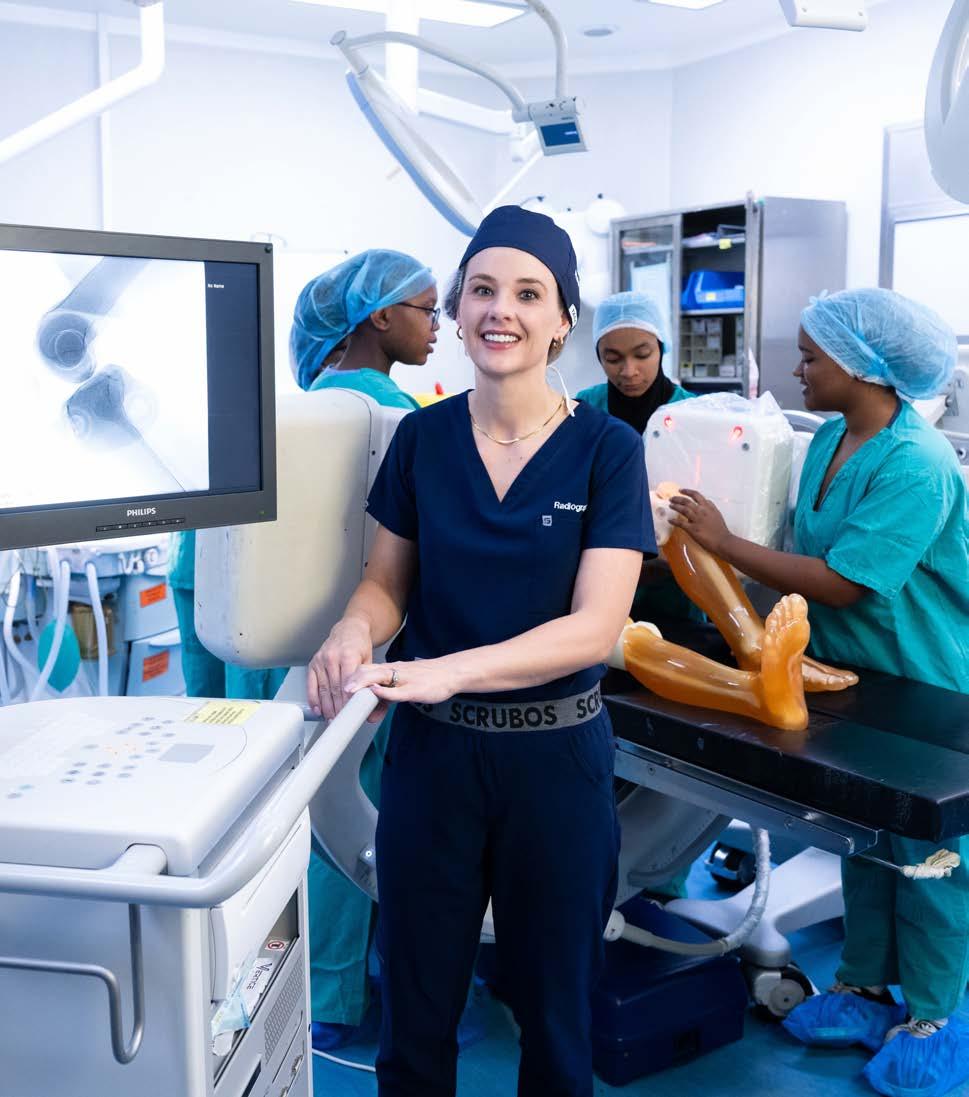
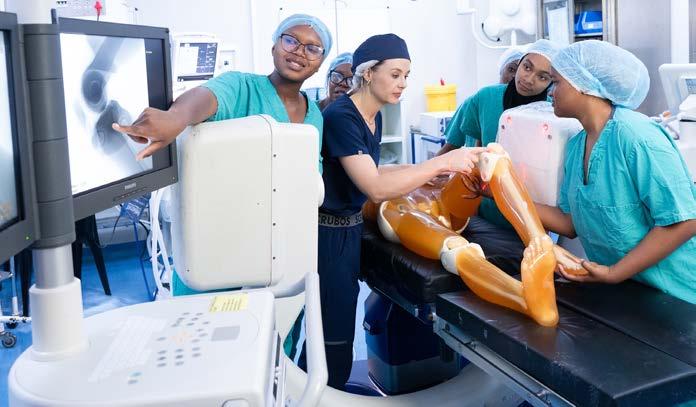
The initiative placed second-year Radiography students in a real theatre environment at Steve Biko Academic Hospital, where they worked with a full-body phantom and C-arm imaging equipment. Rather than relying only on classroom demonstrations or observation, students were guided through the complete workflow of theatre radiography – from entering the theatre complex correctly to image acquisition, postprocessing and digital image transfer.
ZANELLE KRUGER
Zanelle Kruger explains that the initiative's purpose was to bridge the gap between theory and practice, while developing students’ confidence, competence and professional identity.
“Students often move from classroom learning to real clinical responsibility with limited opportunity to practise in between. We wanted to create a space where they could learn by doing, ask questions, make mistakes and build confidence before entering a real case.”
A STRUCTURED INTRODUCTION TO THE THEATRE ENVIRONMENT
The learning experience began before any imaging took place. Students were first introduced to the professional and infection control expectations of working in the theatre. They were guided on changing correctly into theatre attire, ensuring full hair coverage, and maintaining appropriate theatre protocol.
Students were then taken through the wider theatre complex to understand patient flow and the broader clinical context, including the waiting area, operating theatre and recovery area. The relevance of mobile radiography in recovery spaces was also discussed.
MASTERING THE
C-ARM EQUIPMENT IN CLINICAL PRACTICE
A key focus of the session was helping students become comfortable with C-arm technology. Students were guided through the controls, functions and movements of the unit, including how to safely and efficiently operate the machine within a confined theatre space.
By learning to interpret colour-coded controls, movement indicators and system logic, students developed transferable skills that could help them adapt to different C-arm models in future workplaces.
They were also shown how to connect the C-arm to the monitor system and how to position both the monitor and equipment strategically for different procedures, while confirming preferences with the surgeon.
UNIQUE FEATURES OF THE INITIATIVE
Several distinctive elements differentiate this project from conventional skills lab activities:
The simulation was conducted in an operational theatre, exposing students to spatial limitations, real equipment layout and authentic workflow patterns.
The full-body phantom allowed for realistic C-arm positioning and anatomical orientation without patient risk, enabling repeated practice and error correction.
Implementation required securing theatre access, coordinating fluoroscopy equipment across departments and levels, obtaining management permissions, and managing logistical considerations such as transport and lift access. This required significant cross-departmental planning and coordination, which resulted in high student engagement and meaningful hands-on participation. This behind-the-scenes planning modelled professional collaboration and systems thinking.
The phantom was later utilised in a ward setting to simulate mobile and bedside imaging. This broadened exposure reinforced adaptability and the contextual transfer of skills.
Rather than passive observation, students rotated through operational roles, navigating equipment, refining positioning techniques and making post-processing decisions. This active, participatory learning model shifted the learning dynamic from instructor-led demonstration to student-driven engagement.
IMPACT ON STUDENT LEARNING
The impact on student learning was immediate and meaningful. Many students entered the theatre environment feeling anxious or intimidated, but left with greater confidence and readiness for clinical practice.
Before entering the theatre environment, I felt quite anxious, intimidated, and unsure of myself…. By the end of the session, I felt much more self-assured.
Students repeatedly highlighted the value of hands-on learning. Working directly with the C-arm helped them understand equipment movement, positioning principles and workflow in ways that classroom teaching alone cannot achieve.
It was really valuable to get hands-on experience…that is not something that can be taught on a PowerPoint.
The realistic setting also strengthened teamwork, communication and problemsolving. Students learnt from one another and developed the situational awareness required in complex clinical spaces.
Before, theatre was extremely daunting, but now I think it might be the modality that I am most excited about.
I learnt so many new things by watching my classmates. Teamwork and communication played an important role. When communication was clear, tasks were completed more effectively.
Importantly, the simulation reduced fear while increasing preparedness for real placements. Attendance and participation rates exceeded faculty targets, reflecting strong engagement. The hour-long skills lab session was attended by 95% of the students. Students worked in small groups, ensuring that each learner had the opportunity to participate directly in a procedure using the equipment. Student feedback indicated strong engagement with theatre- and skills lab-based training, with students reporting that the activities supported hands-on projection practice, consolidated key concepts and prepared them for theatre practice. The sessions were described as informative, beneficial and valuable for reinforcing content covered in class.
REIMAGINING RADIOGRAPHY EDUCATION
Kruger believes the initiative reflects a broader shift in health sciences education: moving from passive teaching approaches toward immersive, student-centred learning. “When students feel safe enough to try, fail, reflect and improve, they develop more than technical skills. They develop confidence, resilience and the mindset needed for professional practice.” The project demonstrates that when education becomes experiential, students do not simply learn procedures; they begin to see themselves as future professionals.
From lectures to leaderboards: Levelling up large-class teaching through gamification
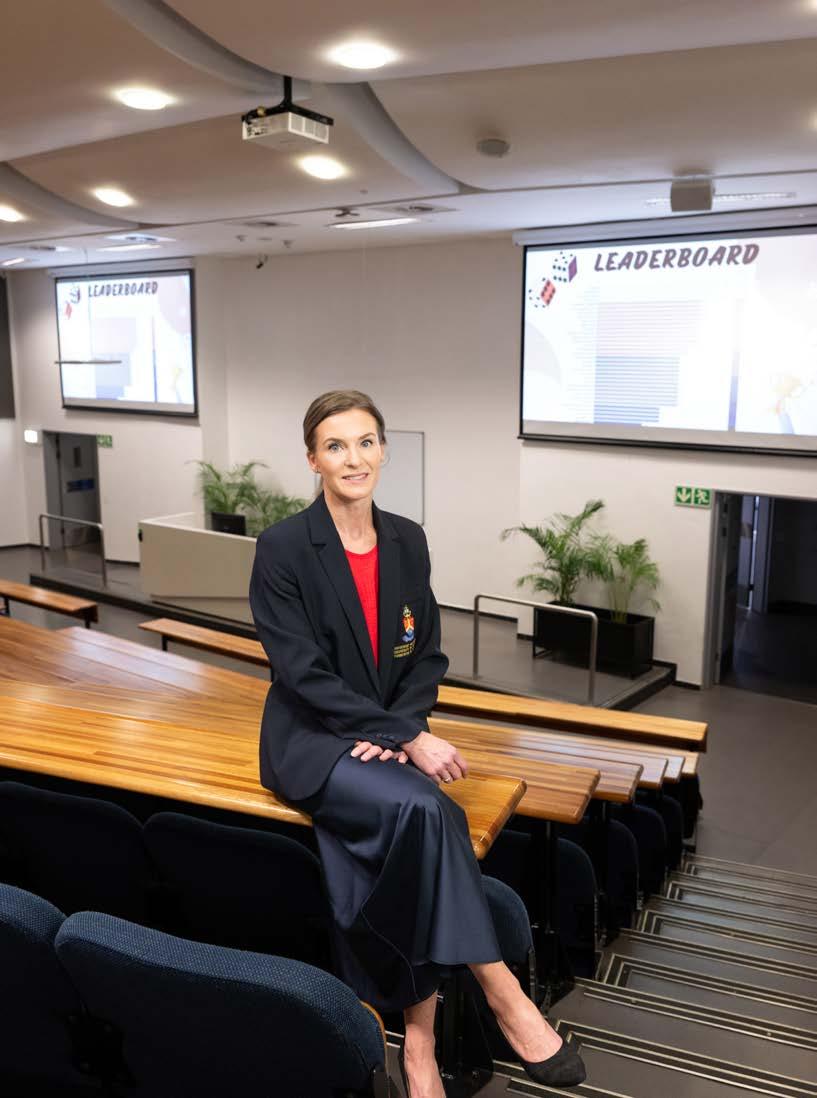
Teaching large classes presents a familiar challenge: How does one keep students visible, engaged and actively learning in a space where it is easy to withdraw? In the third-year, second-semester Applied Pathophysiology module in the Faculty of Natural and Agricultural Sciences, Dr Evangeline Nortje, a lecturer in the Faculty of Health Sciences addressed this by turning the class into a semesterlong collaborative game – with teams, points and a leaderboard.
This initiative follows on a previous one in which she started to investigate the viability of gamifying learning to enhance engagement in large classes. Expanding on the lessons she had learnt during this exercise, she developed and implemented this new teaching innovation, focusing not only on engaging the learners in a large class through gamification, but also on systematically capturing its impact using structured student feedback and validated survey instruments. She included more concrete principles, while the inclusion of the survey enabled her to formalise the project. This also assisted her in determining how the initiative had helped the students, and whether it had a measurable impact on them, such as on their intrinsic motivation and generic skills development.
She explains that the initiative aimed to make participation the path of least resistance. “Students self-enrolled into stable teams of five to six members at the start of the semester via a QR-code sign-up,” she explains. “From that point, they sat together, worked together and were treated as teams – not just groups.” Lectures included in-class tasks that required team input, and most activities were time-bound, structured and required role division. These roles included those of leader, checker and designer. Teams earned points for completing tasks, which were tracked on a weekly leaderboard. The semester ended with a recognition ceremony for top teams, in which they received certificates and trophies, reinforcing the importance of consistent participation.
The semester-long team-based gamification system therefore transformed a large Physiology lecture into an active, accountable and collaborative space, without relying on high-tech tools. The classroom design prioritised visibility, momentum and low-stakes competition, making participation feel natural and rewarding, especially for students who might otherwise disengage. The intervention could therefore offer a replicable, data-informed model for using playful, structured competition to make engagement visible and measurable in large-class teaching.
Dr Nortje describes the five core engagement strategies she used, each one varying in complexity, pace and cognitive demand:
Timed pop quizzes: These activities projected rapid-fire questions on screen with countdown timers. Teams discussed each question, recorded answers on worksheets, and swapped their worksheets with their neighbours for peer marking. Correct answers earned leaderboard points. The result was a fast-paced, accountable environment where participation was both structured and social.
Infographic co-creation: Teams were asked to produce visual one-pagers to summarise key topics, using pre-class materials and curated resources. This moved teams from passive note-taking to creative synthesis, developing both conceptual understanding and information literacy.
Peer teaching rounds: In structured rotations, teams volunteered to teach short concepts to the class. Bonus points were awarded to presenting teams, teams that asked relevant questions, and teams that could rescue the presenter if they got stuck – normalising collaborative correction and reinforcing peer explanation as a valued learning tool.
Role-play simulations: To make difficult pathways stick, teams acted out physiological processes using labelled stickers for neurons, neurotransmitters and receptors. This physical embodiment helped students strengthen memory and improve conceptual clarity.
Clinical detective cases: Based on clinical scenarios, teams worked through diagnostic clues using physiological reasoning. These activities helped students apply theoretical knowledge to scenarios that required logic, collaboration and content integration.
IMPACT ON STUDENT LEARNING
The effects of the low-tech gamified approach were formally evaluated. Students reported significant increases in motivation, enjoyment, emotional engagement and perceived learning. This was based on the results of a structured post-course survey, in which students completed a validated ‘then’ vs. ‘now’ retrospective questionnaire in class, using adapted subscales from the Student Engagement Questionnaire (SEQ), Intrinsic Motivation Inventory (IMI) and Student Course Experience Questionnaire (SCEQ).
The largest improvement (+1.06 on a fivepoint scale) was in students’ agreement with the statement “I was excited about the idea of a semester-long gamified course.” This suggests that even students who were sceptical initially found value by the end. Items related to emotional investment, effort, skill application and enjoyment of activities each increased by +0.8 or more, showing strong shifts in cognitive and affective engagement. Intrinsic motivation scores were high across the board. Students found the gamified activities enjoyable, effortworthy and valuable to their learning.
In the teaching quality and skills (SCEQ) section of the survey, teaching was rated particularly positively. The statement “The teaching staff worked hard to make the class interesting” averaged 4.69/5, and students reported growth in generic skills such as teamwork, problem-solving and planning (scores above 4.1).
The approach also increased peer accountability and attendance organically. Because each lecture had a visible, structured team activity tied to collective outcomes, students arrived ready to participate. The leaderboard added a light layer of competition that made effort visible without tying it directly to formal grades. This lowered performance anxiety, while increasing consistency.
One of the questions students had to respond to required them to describe the most impactful moment during the module; a specific activity or moment in the ‘game‘ that most helped (or hindered) their learning. Some of the responses included the following:
It boosted our team’s confidence to find the right answer and work as a team to accomplish the goal.
Speaking in front of the class had a huge impact on me. I wanted to win the game, so it motivated me to talk in front of the class. I did not think I would have the confidence, but I really enjoyed it.
“It helped to put ourselves out there to find a way to get the correct answer, and be brave and confident enough to share it.
The infographic activity helped a lot. To explain something in a picture, you really need to understand it. I feel like now I don’t even have to study it again.
Working together as a class motivated me and helped me to understand the work.
The
quizzes at the end of the lecture helped to test my understanding of the work, and made it easier for me to remember afterwards.
“All the activities gave a clear idea of what to expect in the assessments.
The success of this initiative lay in its use of playful, low-tech structures to fundamentally shift student engagement in a large-group setting. By designing for interaction, collaboration and recognition, it redefined what participation could look like – not as an individual burden, but as a shared, energising process.
Comparing this intervention to the game-based approach she had presented to her students in the previous year, Dr Nortje could clearly see that the more formal, concrete format had a positive impact on the students’ performance. She plans on continuing to use the gamified approach to learning, as it extends the learning experience beyond traditional teaching strategies, which is particularly effective in engaging large classes.
Beyond the lecture hall: Immersive learning for future chemical engineers
Chemical engineering education has long grappled with a persistent tension: how to meaningfully connect abstract theoretical knowledge with the complex realities of industrial practice. This tension becomes even more pronounced in large first-year classrooms. Increasing enrolments, financial constraints, safety regulations and restricted access to industrial plants limit students’ exposure to authentic, real-world environments. Yet experiential and authentic learning remain central to developing competent and confident future engineers.
This is the challenge that Dr Naadhira Seedat and Elizbé du Toit, lecturers in the Chemical Engineering programme, sought to address. “As lecturers reflecting on our classroom practice, we recognised that students frequently expressed a desire for site visits and greater exposure to real industrial environments,” observes Dr Seedat. “However, the large number of first-year students and financial constraints made this increasingly infeasible.”
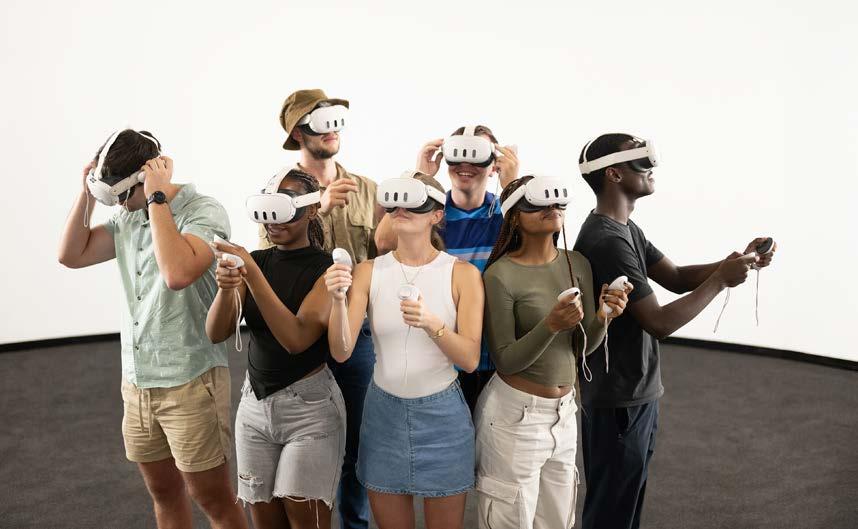
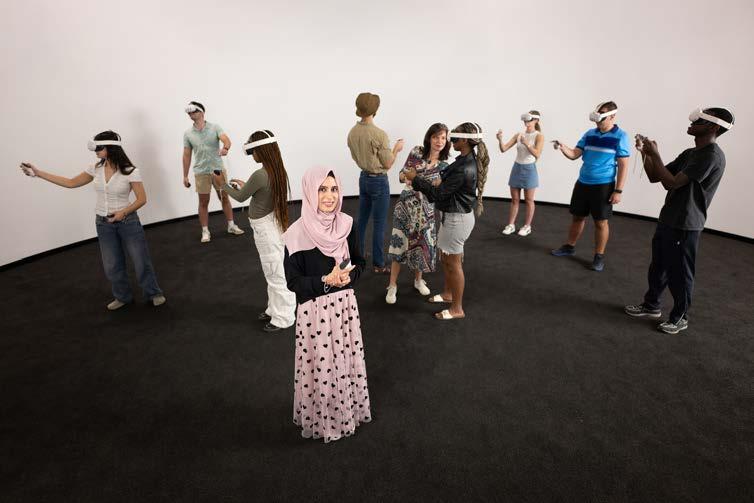
Rather than viewing this limitation as insurmountable, they decided to investigate whether Fourth Industrial Revolution (4IR) technologies, specifically virtual reality (VR), could serve as a pedagogical bridge between theory and practice. VR offers a scalable, safe and costeffective alternative to traditional industry site visits. “We therefore sought to determine whether VR could enhance experiential and authentic learning in a chemical engineering classroom in South Africa.”
Their investigation took the form of an explorative action research
exposed the students participating in the project to the core engineering concepts found in a thermal power plant and an oil refinery plant. The selected content immersed the students in real-world chemical plant operations, bridging the gap between theory and practice. The Department of Mining Engineering’s VR headsets were used for the experiment.
Although a sample of 30 students in the Chemical Engineering 123 module was anticipated, only 21 students volunteered to participate, since it was outside the normal curriculum activity.
structured and guided, ensuring that the students could interact effectively with key engineering concepts. It included facilitated engagement and postintervention reflection through surveys and focus groups.”
project, made possible through a Scholarship of Teaching and Learning (SoTL) grant, to determine the viability of implementing VR in the first-year programme as a substitute for industry visits. “It entailed more than just introducing the students to the technology. It was about critically examining the educational value of VR, refining its implementation and developing a framework for its sustainable integration.”
Appropriate VR content was procured from a company in India that specialised in chemical engineeringrelated VR content. The simulations
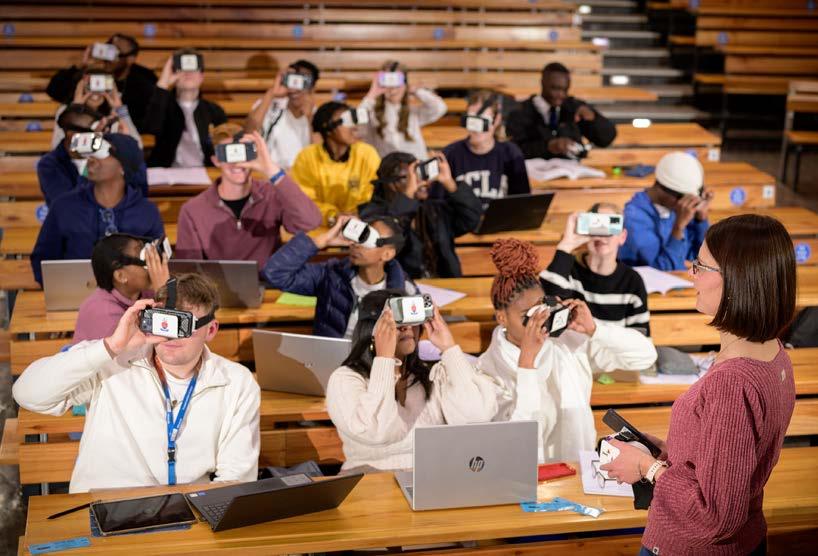
Before the VR experience, the students were provided with a manual explaining how to use the VR equipment. This was to ensure that they were well prepared and able to immerse themselves fully in the hour-long VR experience. During the intervention, students navigated largescale industrial environments, visualised unit operations and observed system interdependence in ways that are not possible through traditional lectures or textbooks.
The implementation of VR was found to strengthen the students’ ability to connect abstract theory with realworld chemical plant operations, says Dr Seedat. “The intervention was
What became immediately evident, both observationally and through data collection, was the powerful visual and spatial impact of VR. “The immersive VR experiences significantly enhanced experiential and authentic learning. Students repeatedly highlighted how seeing piping systems, equipment scale and operational processes in three dimensions transformed their understanding of previously abstract equations and diagrams.”
The immersive nature of VR allowed the students to contextualise the theoretical content within authentic industrial settings. Rather than memorising processes, they began to conceptualise them. “The students in the sample group reported increased motivation, engagement and career inspiration after exposure to realistic industrial simulations.”
Quantitative findings of the study demonstrated strong agreement that VR enhanced understanding, promoted experiential learning and
INNOVATIVE LEARNING ENVIRONMENT
strengthened authentic engagement with industry-linked content. The participants reported that VR helped them connect classroom fundamentals to real-world applications and made them more enthusiastic about engaging with the module. “Notably, a significant proportion indicated that the experience strengthened their sense of competence and career inspiration as future chemical engineers.”
The qualitative findings of the study provided deeper insight into why this occurred. “Students described VR as immersive, engaging and visually powerful. They emphasised the value of seeing processes unfold, understanding the scale of the plant and appreciating system integration across plant operations. For many, this was their first realistic exposure to what working in a chemical plant might entail.” The experience shifted learning from passive reception to active exploration.
Critical reflection revealed areas for improvement. Participants identified limitations in interactivity, linear simulation design and cognitive load associated with dense narration. Some experienced motion discomfort. Others expressed the need for stronger integration between VR content and weekly theoretical topics.
“These reflections informed the development of a four-pillar implementation framework to guide future VR integration in the first-year programme, emphasising enhanced interactivity and realism, improved usability and accessibility, stronger curriculum alignment and positioning VR within a blended learning ecosystem.”
The unique feature of this experiment lay not only in the use of VR, but in its systematic evaluation within a South African chemical engineering context. “While global literature has explored VR for simulation and safety training, limited research has examined its combined impact on experiential and authentic learning within local higher education constraints.” The project therefore provided contextually grounded evidence that VR can serve as a scalable, safe and cost-effective alternative to site visits in large classes.
Beyond cognitive gains, participants expressed enjoyment, curiosity and renewed motivation. Their enthusiasm during the VR sessions suggested that immersive technologies, when thoughtfully integrated, can reshape not only how students understand engineering, but how they imagine themselves within it. The initiative therefore reinforced the importance
of a purpose-driven pedagogical innovation. “VR represents a deliberate response to a clearly articulated educational gap. Through structured evaluation and reflection, it has the potential to meaningfully link theory and industrial applications in chemical engineering education.”
Ultimately, this action research project affirmed that when experiential and authentic learning opportunities are constrained by physical and logistical realities, thoughtfully implemented immersive technologies can open new pathways, allowing students to step into the environments they are preparing to shape. However, this is still a theoretical exercise.
Based on the data collected, adjustments will need to be made to enhance the VR experience by refining content and delivery methods. Such improvements will be guided by student feedback and learning outcomes, ensuring a more effective experiential and authentic learning model.
Implementing such immersive sessions in a large first-year class would need to be preceded by the coverage of the relevant theory to be illustrated practically during the VR exercise. It would also need to focus on the module outcomes that are at the core of chemical engineering. This would enable the students to recognise the authenticity of the intervention.
Learning with purpose: How community engagement shapes socially responsive health professionals
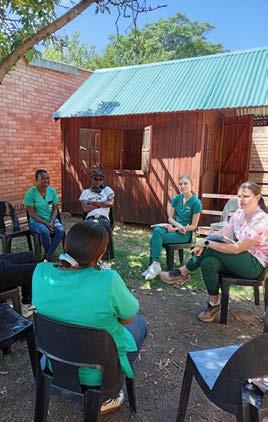
Preparing future health professionals requires more than technical competence. It calls for graduates who understand social context, inequity and their responsibility to the communities they serve. Within the Faculty of Health Sciences’ four schools (Dentistry, Health Care Sciences, Health Systems and Public Health, and Medicine), community-engaged learning has become a powerful vehicle to achieve this goal, intentionally linking academic learning to real-world community needs.
Prof Vanessa Steenkamp, the Faculty’s Deputy Dean: Teaching and Learning, is of the view that community-engaged learning integrates structured community engagement directly into the curriculum, enabling students to apply disciplinary knowledge, while developing leadership skills, teamwork and social awareness. It furthermore enhances students’ understanding and sense of purpose.
By integrating it into the curriculum, course-based community engagement has been identified as the dominant and most effective pathway for student participation.
“Rather than viewing the University as separate from society, community-engaged learning positions students as active contributors to the communities in which they learn and will one day practise.”
PROF VANESSA STEENKAMP
The Faculty of Health Sciences’ involvement in curricular community engagement projects is the most prominent of all the University’s nine faculties. Up to 140 modules within the Faculty’s four schools include community engagement initiatives in their formal curricula. In 2025, a total of 88 lecturers were involved in community engagement or social responsibility activities, together with 7 544 students, who visited a total of 298 community sites. Many students continue with their community engagement activities on a voluntary basis.
The Faculty’s involvement in community health serves a dual purpose. It not only improves community wellbeing, the sustainable development of communities and their primary care, but prepares students for the real world of health care, where they will serve as practitioners. It gives them a better understanding of the needs of these patients, which is indispensable when they start working in a hospital, clinic or in their own practice. It also prepares them for their compulsory year of community service before they can graduate as health care professionals.
Several initiatives that started off as a mandatory element in the curriculum have developed into established programmes with a widely felt impact.
These include the following:
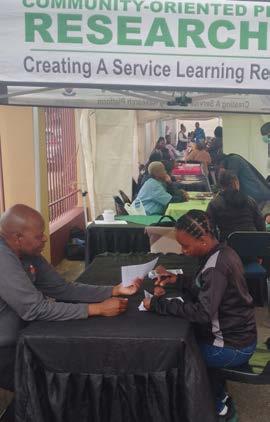
The Department of Family Medicine’s Community-oriented Substance Abuse programme (COSUP), which provides a community-based, low threshold response to the use of drugs. It is integrated in the primary health, HIV and social services of the City of Tshwane.
The Daspoort Policlinic, which has developed into an integrated health-academic platform that supports the community through the service of students in Family Medicine, Nursing Science, Human Nutrition, Occupational Therapy and Physiotherapy.
The Community Nutrition programme of the Department of Human Nutrition, which serves to improve the nutritional status of community members, while empowering them to care for their own health.
The Department of Clinical Medical Practice’s workplace-based learning programme, in which students help qualified health professionals at rural hospitals and clinics in Gauteng, Mpumalanga, Limpopo and KwaZulu-Natal.
The School of Health Care Sciences’ Integrated Health Care Leadership programme, which develops health care leadership in the community health care context among students in Human Nutrition, Occupational Therapy and Physiotherapy. They work particularly in the informal settlements around Pretoria.
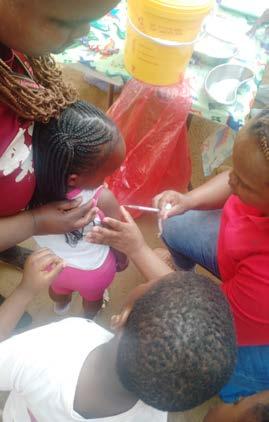
The School Health Nursing and Geriatric Care programme of the Department of Nursing Science, in which students visit schools in Pretoria to assess the health needs of primary school children. They also assess the health needs of senior citizens at retirement homes.
The Department of Community Dentistry’s community outreach projects, which focus on preventing common oral diseases and promoting oral health education.
The School of Dentistry’s Public Oral Health programme, which includes visiting schools in rural areas, and delivering dental health services by means of a mobile dental unit in a school-based setting.
The Faculty’s Phelophepa train, which enables oral hygiene and dentistry students to integrate their services with those of students in optometry and nursing.
To better understand how students experience these opportunities, Prof Steenkamp engaged in a facultywide study, in collaboration with Dr Marlize Cochrane-Boeyens, Manager of the Faculty’s Health Professions Education Office, to explore undergraduate health sciences students’ participation in, and perceptions of communityengaged learning.
The findings of this study were both encouraging and affirming.
Almost 90% of participating students reported involvement in community engagement activities, with most engagement occurring through course-based learning. Students who participated in community-engaged learning consistently reported stronger learning experiences, greater career-relevant skill development, a deeper sense of purpose in their studies and a greater awareness of cultural differences. Students also highlighted the broader value of community-engaged learning to foster leadership, teamwork and social responsibility.
“These attributes are central to producing socially accountable health care professionals,” says Prof Steenkamp.
Students identified the following benefits of community-engaged learning:
It helped me understand knowledge, skills and values in my degree programme.
It has helped me gain meaning and purpose in my degree.
Working with communities should be part of all undergraduate courses.
It has helped me develop skills for my career, such as leadership and teamwork.
It has made me aware of local inequalities in the surrounding community.
Beyond individual learning, students clearly linked community-engaged learning to social accountability and global responsibility. Planetary health and the United Nations' Sustainable Development Goals (SDGs), particularly SDG 3 (good health and wellbeing) and SDG 4 (quality education), were identified as key drivers of meaningful community engagement. “These insights reflect a growing awareness among students of the interconnected nature of health, education and social development.”
Prof Steenkamp emphasises that the study also provided valuable direction for institutional growth. “While students valued community-engaged learning highly, they identified the need for stronger structural and logistical support to enable more effective community engagement.” Differences in participation across the Faculty’s four schools and degree programmes further highlighted the importance of the consistent, faculty-wide integration of community-engaged learning within curricula.
“Together, these findings reinforce the role of leadership, curriculum design and institutional commitment in ensuring that community engagement is not a peripheral activity, but a meaningful, supported and sustainable component of teaching and learning,” she reflected.
By embedding community-engaged learning across programmes and nurturing reciprocal partnerships with communities, the Faculty continues to advance its mission of producing health care professionals who are not only clinically competent, but socially responsive and ethically grounded.
Prioritising maternal health through proper nutrition
Maternal health remains a critical public health priority, with far-reaching implications for both maternal and infant outcomes. Optimal maternal nutrition, appropriate weight management, adequate micronutrient supplementation, regular physical activity and effective breastfeeding practices are essential components of comprehensive maternal care. However, in many community settings, gaps in knowledge, limited access to resources and persistent stigma continue to negatively influence maternal health behaviours.
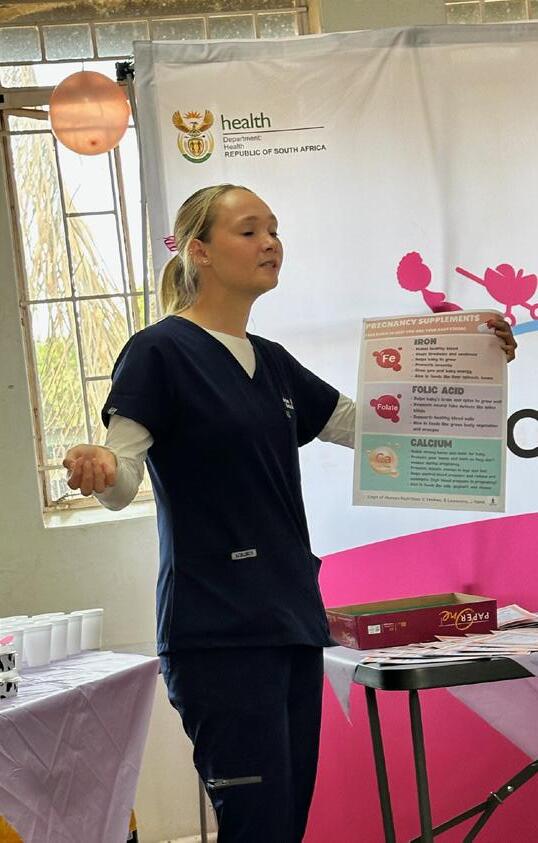
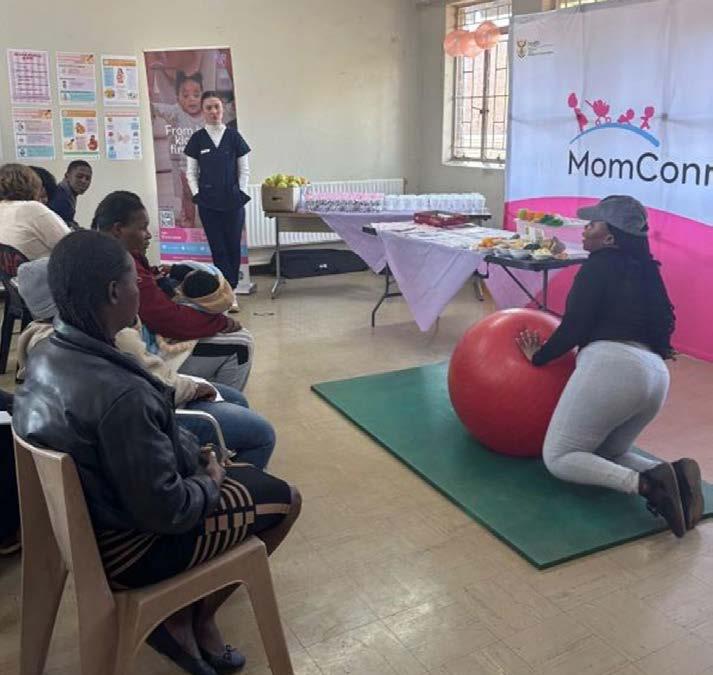
The final-year Community Nutrition students of Dr Phumudzo Mamphwe Tshiambara in the Department of Human Nutrition, under the guidance of senior students Jordan Hand, Bianca Louwrens and Carmen Teubes, responded to these challenges by presenting a maternal health promotion day titled ‘Mom 2: Fuel Your Body, Feed Your Future’ at the Laudium Community Health Centre.
“The primary objective of the initiative was to advocate for maternal health, emphasising that mothers’ health and wellbeing is just as important as that of their infants.” The intervention aimed to empower women with evidence-based information, while fostering a supportive and participatory learning environment.
This meaningful, student-led intervention was embedded in a seven-week supervised communitybased internship. It was conducted within the community served by the community health centre. “It provided a valuable opportunity to apply theory to practice, develop professional competencies and engage in preventative health promotion. At the same time, it allowed students to engage meaningfully with community health needs over an extended period.”
The involvement of students in community nutrition is part of one of the core modules in the Bachelor of Dietetics programme. It is introduced in the second semester of the third-year programme. The internship takes place at community clinics in Laudium, Daspoort and Eersterust towards the end of the first semester of their final year of study, and is preceded by a 10-week theoretical programme.
Dr Tshiambara explains that the internship requires students to plan, implement and evaluate nutritional challenges within the community they serve. They need to work closely with community health workers, and join them on home visits. After assessing the patients that present themselves at the community facilities, the students identify the patients’ nutritional needs and present their findings. They then prioritise a particular nutritionrelated challenge, such as maternal health, and plan an intervention that can address this challenge.
Working closely with the Tshwane District Health Services, they are also involved in other health awareness interventions that are linked to the
Department of Health’s annual calendar, such as during Breastfeeding Week. However, the presentation of the maternal health promotion day highlighted the importance of prioritising maternal health as a strategy to improve household and community wellbeing. It demonstrated the effectiveness of structured, supervised community-based learning in addressing real-world maternal health challenges.
Together with registered dietitian, Marion Beeforth, Dr Tshiambara provides academic oversight, mentorship and quality assurance throughout the internship. “Supervision includes guidance during the needs assessment, the planning of educational content, developing resources and implementing activities, and postintervention reflection.” She emphasises that this supervised internship ensures that all activities are conducted ethically and professionally.
It is followed by a feedback session in which the students share their findings in the form of a portfolio. This includes the material they have developed, and requires them to demonstrate the effectiveness of the intervention in solving the identified nutritional challenges. Dr Tshiambara adds that the extended duration of the internship enables students to build a rapport with health care staff and community members, gain a contextual understanding of maternal health challenges, and design interventions that are responsive to local needs. “This approach strengthened both the quality and sustainability of the intervention.”
NEEDS ASSESSMENT AND RATIONALE
The planning of the maternal health promotion day was informed by consultations and informal interviews conducted during the internship with staff of the community facilities, including pregnant women, community health workers, and antenatal care and maternity obstetric unit health care providers. “These engagements revealed notable knowledge gaps among pregnant and post-partum women,” she observes.
In addition, health care providers highlighted ongoing misconceptions and stigma related to supplementation and breastfeeding. “This was often influenced by cultural beliefs and misinformation.” The provision of culturally responsive health education contributed to the promotion of active participation and peer learning among the mothers.
Language barriers were identified as a key challenge to effective communication, reinforcing the need for visual, practical education strategies. This included the use of visual aids, demonstrations and interactive methods to enhance understanding.”
Another important lesson was that communitybased programmes rarely run strictly according to schedule. Flexibility, adaptability and responsiveness were essential to the intervention’s successful implementation within the community context.
PROGRAMME ACTIVITIES AND LEARNING OUTCOMES
Dr Tshiambara explains that the finalyear Community Nutrition students facilitated the health promotion day under her supervision. “The sessions were structured to encourage active participation, and mothers were provided with opportunities to share experiences, ask questions and engage in open dialogue. This fostered peer learning and empowerment.”
It comprised a series of interactive health talks and educational sessions to address the identified gaps. “Topics included maternal nutrition during pregnancy and the post-partum period, healthy weight gain and weight management, micronutrient supplementation, physical activity recommendations, breastfeeding practices and available support services.” It was advertised through the Mom Connect platform, as well as through community health workers and nurses at the community health centre, and was attended by 30 to 40 mothers.
Dr Tshiambara adds that a multidisciplinary approach was central to the success of the intervention as it enabled a holistic and integrated approach to maternal health care. Stakeholders included dietitians, antenatal care and maternity obstetric unit nurses, physiotherapy students, a speech therapist and representatives from the Mom Connect platform. “This collaborative engagement reinforced the importance of integrated care within a primary health care setting.”
As part of the intervention, the students developed and launched a maternal progress tracking tool for pregnant and post-partum women, known as the ‘Mama Map’. “This was designed as an adult-equivalent resource to the Road to Health Booklet used for children, and aimed to promote self-monitoring, health literacy and engagement with health care services.”
In addition, the students developed and demonstrated a nutrient-dense chicken liver, lentil and spinach curry recipe. This enabled them to support the community with practical, sustainable maternal nutrition. The recipe was aligned with maternal nutritional requirements, particularly
iron and micronutrient needs, and was served to participants. “The meal was well received, highlighting the value of practical, culturally appropriate nutrition education.”
The intervention was aligned to the module’s learning outcomes in that it represented a general nutrition intervention to address global nutrition challenges related to micronutrient malnutrition through the development of a nutrition programme.
It revealed an evident knowledge deficit among mothers regarding supplementation and breastfeeding, as well as persistent stigma around these topics.
As an academic service-learning project, it concluded the students’ academic programme, and prepared them for their compulsory community service year, which follows their final year of study, and is a requirement for their qualification as professional dietitians.
Marketing that matters: Adventuring and learning beyond the classroom
Graduates from the University of Pretoria (UP)’s Marketing Management programme are highly sought after by industry since they have a thorough understanding of what is required of them as marketing practitioners. This is due to the Faculty of Economic and Management Sciences’ commitment to ensuring that its students leave the institution ready for work.
Supporting her honours students to apply what they have learnt in the classroom to a real-world project, Dr Bianca Frost developed a community engagement initiative that combined disciplinary learning, professional development and contribution to society in a single experience. As the development of a marketing campaign forms an important element of a marketing manager’s job, the intervention entailed the development of a marketing campaign for a non-profit organisation (NPO).
Explaining the rationale behind this intervention, Dr Frost observes that marketing is not just about making a profit. “It is also a powerful tool that can be used to empower and uplift communities.” She has been embedding this intervention in the Marketing in Practice module since 2023. “It is designed as an authentic, community-engaged learning experience, giving students the opportunity to apply theory, develop professional skills and create meaning social impact.” While each year’s project is different, depending on each beneficiary organisation’s individual needs, the students’ involvement in the project contributes to their personal development as socially responsible individuals.
The beneficiary of the project in 2025 was the Rainbows and Smiles Childhood Cancer Organisation. The honours students designed and executed a community-focused digital marketing campaign for its flagship fundraising initiative, Run-for-a-Reason. This is the organisation’s signature event, which is dedicated to raising awareness of childhood cancer.
The organisation is dedicated to improving the lives of children with cancer and their families by providing emotional, practical and financial support. It hosts its annual fundraising event each year in September to mark Childhood Cancer Awareness Month. The month-long virtual event combines movement, community engagement and fundraising, with a new theme each year.
For the 2025 event, the honours students were tasked with designing a novel event theme and developing a digital marketing campaign to increase awareness, participation and donations across diverse audiences. “Working from a live client brief,” says Dr Frost, “students applied marketing theory, storytelling principles and digital strategy, while navigating the ethical and emotional considerations of causerelated marketing.”
The students were randomly divided into seven teams of approximately six students each, which had to develop a campaign for the NPO. The project comprised three assignments. The first was the development of the theme for the year. The second assignment entailed the development of the digital content, while the last assignment involved their participation in the day.
Each team functioned as a student agency, who had to pitch their campaign concepts to the client, represented by the founder of the organisation, Bonni Suckling, and its director, Nadia Lewis. The agency Rainbows End Creative came up with the winning proposal to be implemented for the event. It centred around the theme ‘Safari Adventure’. The campaign demonstrated how student work can move beyond theory and make a real-world impact.
IMPACT ON STUDENT LEARNING
Dr Frost explains that the project aimed to bridge theory and practice through authentic assessment. “Students were positioned as consultants tasked with proposing evidence-based solutions to a live societal challenge.” This approach encouraged creative thinking, ethical reasoning and professional decisionmaking.
The module drew on experiential and constructivist approaches, particularly Kolb’s experiential learning cycle, where knowledge emerges through experience, reflection, conceptual understanding and experimentation. “Working with authentic constraints required iterative problem-solving, mirroring professional marketing practice, while maintaining academic rigour.”
LEARNING OUTCOMES
For many students, this was their first engagement with an NPO, prompting a shift in how they perceived marketing:
Working with Rainbows and Smiles opened my eyes to how valuable marketing can be to causes for good. It made me realise that I want to be able to use what I gained throughout my journey to help those who need it. The feeling of knowing the video my team and I created helped promote the cause is indescribable. It’s even more special as I needed to learn how to create a captivating video with limited resources and time.
– Zahra Teladia
This experience opened my eyes to the real impact of childhood cancer. Working with Rainbows and Smiles made storytelling feel profoundly meaningful and changed how I see the non-profit space and my future as a marketer.
– Gia Eichstädt
Students reported it being difficult to replicate the development of skills in traditional coursework, including stakeholder communication, collaborative leadership, creative problem-solving under time constraints and accountability in real-world contexts. These reflections on their participation in the Safari Adventure Challenge highlighted transformative learning, the fostering of ethical awareness, collaborative leadership and professional purpose.
Following the strategic conceptualisation phase, the students executed elements of the digital marketing campaign, creating content to announce the Safari Adventure theme, encourage registrations and communicate logistics.
The initiative also produced measurable outcomes. In 2025, event entries increased by more than 200 participants compared to the previous year, demonstrating tangible impact, and measurable social and organisational outcomes, and reinforcing the authenticity of the assignment.
Dr Frost reflects that student learning extended beyond the campaign design. At the end of the Childhood Cancer Awareness Month, on 30 September 2025, the students participated in their own Safari Adventure Challenge; running, walking, skipping and documenting activities to raise awareness and show solidarity to the cause. “This final day of the intervention honoured children who had lost their lives to cancer, deepening the emotional and ethical dimensions of learning.” The students described the project as one of the most meaningful components of their academic journey.
CURRICULUM INSIGHTS
Dr Frost believes that the project highlighted the value of community-engaged assessment in fostering deep, durable learning. Over time, the students’ focus shifted from conventional campaign metrics to responsibility, representation and audience sensitivity. “Observing the students go beyond the formal requirements of the programme into voluntary engagement underscored the role of authentic projects in professional identity formation.”
Insights from the initiative have informed subsequent curriculum design, reinforcing the importance of scaffolded experiential learning, authentic assessment and student partnership in honours-level teaching. “The project intentionally supported key UP graduate attributes, such as critical thinking, ethical reasoning, effective communication, digital literacy, collaboration and leadership, and engaged citizenship.”
Situating learning in a real societal context helped students develop both marketing expertise and a broader understanding of its potential to drive social good. “By foregrounding student voice, reflection and authentic engagement, it offered a model of higher education pedagogy that is rigorous, socially responsive and future-focused, showing how marketing can truly make a difference beyond the classroom.”
From classroom to community: Award-winning social work in action
The nature of social work is embedded in supporting individuals, families, groups and communities to function effectively in society, promoting social change, and empowering people. The teaching and learning initiatives of the Social Work section of the Department of Social Work and Criminology in the Faculty of Humanities therefore have a strong focus on upholding social justice and human rights, and promoting sustainable communities.
Social Work in Practice (MWP 261) is a core module in the second year of the Bachelor of Social Work programme. It entails work-integrated learning in group and community work in various social work practice contexts. Through a unique awareness-raising project, the second-year lecturers have found a way to connect theory and practice. Under the guidance of Dr Juliet Sambo (secondyear coordinator), Simone Robinson, Lehlogonolo Poopedi and Luvuyo Teko, students undertake awareness campaigns to reach individuals in the University’s neighbouring suburbs of Hatfield, Brooklyn, Sunnyside, Groenkloof and Arcadia.
These awareness campaigns do not emerge in isolation. Students first conduct awareness walks and engage in dialogue with community members in these suburbs.
DR JULIET SAMBO, SIMONE ROBINSON, LUVUYO TEKO, LEHLOGONOLO POOPEDI
Robinson explains that, through these engagements, the students identify pressing concerns, including mental health, crime, substance abuse, homelessness and gender-based violence. “This participatory process ensures that the students’ campaigns reflect lived realities rather than abstract theory.” The issues selected are grounded, relevant and responsive to both campus and community contexts.
Although this initiative forms part of this module every year, she remarks that the 2025 group seemed to engage better with the concept than students had done in previous years. “Creativity featured strongly in the design of their campaigns, and the activities they planned displayed signs of innovative thinking.”
The practical component of this initiative is preceded by a study of the theory of community work, after which the students are taken through the process in the field. “The students adapted the theoretical frameworks from their social work coursework into appropriate interventions with the guidance of their lecturers, who coached them on appropriate techniques to use, such as interviews, to identify issues in the community
that were potentially hazardous to individuals’ physical and mental health.”
Mental health awareness initiatives included relatable scenarios and the clear signposting of available support services. Crime and substance abuse campaigns focused on prevention, community accountability and collective responsibility. Discussions around homelessness and gender-based violence centred on dignity, advocacy and structural inequality. “Each campaign reflected the thoughtful integration of theory and practice.”
Robinson reflects that an important element of the awareness campaigns was the way in which they embodied core social work values. “Empathy guided the framing of messages. Advocacy appeared in the clear calls for social responsibility and systemic awareness. Empowerment surfaced through efforts to equip peers with information and practical pathways for support and action.” Social justice remained central to each campaign, with students positioning social issues within broader structural and community contexts.
Reflecting on the students’ execution of the programme in comparison to that in previous years, she identifies
the fact that the practical intervention took place later in the year, once the students were better acclimatised to the theory, as a contributing factor to their improved engagement with the communities. Linking the students with existing organisations who work in the communities was another factor that led to improved outputs.
LEARNING OUTCOMES
The students’ campaigns extended beyond raising the awareness of community members about pressing social concerns. An Implementation Day event, hosted on the Piazza of the Hatfield Campus on 1 August 2025, also made students and staff aware of the challenges experienced in these neighbouring communities, and the engagement of the secondyear students with individuals in these communities.
“The event transformed the Piazza into a vibrant site of dialogue, awareness and social action.” Robinson observes that what began as a structured community work process, as required for the students’ practical education, developed into an event marked by initiative, critical engagement and meaningful public impact.
The Implementation Day event demonstrated how academic learning can translate into public engagement. The students designed interactive displays, facilitated peer-to-peer conversations, incorporated visual storytelling and used accessible messaging to draw in passersby. “Their approach encouraged reflection and dialogue rather than the passive consumption of information.” Staff, students and visitors encountered not only facts, but invitations to think critically about their role in addressing social challenges.
Robinson confirms that resourcefulness shaped the execution of the event. “Working within time and budget constraints, the students collaborated across groups, shared materials and improvised where necessary.” They used the open Piazza space strategically, ensuring visibility and accessibility. Their teamwork and adaptability highlighted essential professional competencies, including communication, coordination and problem-solving under pressure.
From a teaching and learning perspective, she believes that this initiative illustrates the value of experiential learning. “The community Implementation Day bridged classroom theory and lived experiences.
Students did not only learn about community engagement. They practised it. They did not only analyse social problems. They engaged with those affected and translated insight into action.” This alignment between curriculum, professional identity formation and community responsiveness strengthens both competence and confidence in the Department’s developing social workers.
The impact of the event extended beyond a single day. “Conversations initiated at the Piazza continued in lecture halls, student residences and informal spaces across campus.” Peers reported increased awareness of available resources and a deeper understanding of social challenges affecting the University and its surrounding neighbourhoods. “The ripple effects reflect the power of well-structured, student-led engagement.”
Reflecting on their participation in the initiative, three students commented as follows:
So, for me, it was a very good experience, I had to get out of my comfort zone and talk to strangers. I got to work with lots of different people with whom I wouldn’t normally work!
– Casey Pepler
I learnt that community work is not just about fixing problems for people, but about helping people realise the skills and strengths they already have to create long-lasting change.
“The second-year community work project was a valuable learning experience. It helped me understand the importance of engaging with communities directly, and working collaboratively rather than just imposing solutions. I learnt the value of active listening, teamwork and respecting community voices in identity needs and solutions. The project strengthened my understanding of linking theory to practice in real community settings. At the same time, it highlighted challenges such as coordination, participation from community members themselves and resource limitations, which are common in community-based work. Overall, it contributed to my growth in understanding community social work practice.”
AWARD-WINNING SOCIAL WORK
The student’s efforts were later recognised nationally when the Association of South African Social Work Education Institutions (ASASWEI) honoured them with an award for Social Justice and Community Engagement for 2025 at its annual conference.
The ASASWEI Award affirms the significance of the students’ work. “It recognises not only the quality of the campaigns, but the underlying view of the second-year Social Work in Practice lecturers that supports student agency, critical thinking and ethical commitment.”
The award signals that undergraduate students, when supported through structured experiential learning, are capable of meaningful and nationally recognised contributions.
Robinson joins the other second-year lecturers in confirming that they remain proud of their students’ growth and willingness to engage beyond the minimum requirements. “They transformed an academic task into a platform for advocacy and public education. Their work sets a benchmark for future cohorts and reinforces the value of integrating community engagement into undergraduate teaching.” She concludes that this project shows what becomes possible when teaching prioritises participation, reflexivity and realworld application.
– Phindile Mathobela
– Mathube Chabalala
AND LEARNING CULTURE
Think tanks in action: Transforming accounting students into critical decision makers
Professional accountants operate in environments that are characterised by complexity, uncertainty and ethical tension. In such contexts, technical proficiency alone is inadequate. Graduates must demonstrate disciplined reasoning, reflective judgment and defensible decision-making. In response to this professional imperative, a structured critical thinking curriculum – known as think tanks – was developed in the Faculty of Economic and Management Sciences, and embedded within the Accounting Science programme to enhance students’ decision-making skills.
Dr Corlia Joynt, coordinator of the first-year Accounting programme, explains that the initiative emerged in recognition of the fact that first-year students often enter university with uneven reasoning skills and limited experience in structured argumentation. “Rather than assuming that critical thinking develops implicitly through exposure to content, the programme positions decision-making acumen as a core component of professional competence by explicitly teaching, scaffolding and assessing this skill.” Critical thinking is therefore conceptualised not as an abstract graduate attribute, but as a measurable professional skill that must be intentionally cultivated within disciplinary contexts.
DR THERESA VAN OORDT, PROF MADELEINE STIGLINGH, DR MADELYN CLOETE, DR CORLIA JOYNT, PROF HANNEKE DU PREEZ, ANNELI DELPORT
PURPOSE OF THE INTERVENTION
Dr Joynt describes the primary aim of the think tank's curriculum as strengthening professional judgment in Accounting students from the outset of their studies. “Professional competence demands more than the accurate application of accounting standards; it requires students to interpret financial information, evaluate competing explanations, assess risk, consider ethical implications and justify recommendations clearly and logically.”
The think tank's curriculum was therefore designed as a deliberate, research-informed response to the evolving demands of accounting education to cultivate analytical rigour, evidence-based reasoning, ethical sensitivity, structured argumentation and collaborative problem-solving. “This integrated approach ensures that cognitive development is aligned with the expectations of the accounting profession.”
A distinctive feature of the initiative is its intentional structuring of the
learning environment to foster belonging and intellectual engagement at scale. It forms part of the firstyear Business Acumen module, and extends over 12 weeks, during which time students are exposed to content that demands them to think critically.
The full cohort, about 480 students, is divided into six smaller groups of approximately 80 students each. These groups are each facilitated by seasoned lecturers, Prof Madeleine Stiglingh, Prof Hanneke Du Preez, Dr Theresa van Oordt, Dr Madelyn Cloete, Dr Corlia Joynt and Anneli Delport. Within these groups, students form teams of no more than five members. This fosters belonging, eases first-year transition anxiety, strengthens learning culture and demonstrates the power of collaborative problem-solving.
“Such a layered collaborative structure serves several pedagogical purposes,” she explains.
First, it reduces the anonymity often associated with large firstyear classes. By situating students within identifiable subgroups, the programme fosters a sense of belonging and academic identity. This is particularly important during the transition from school to university,
where students frequently experience uncertainty and anxiety. The smallergroup model alleviates transitionrelated stress by creating stable peer networks and predictable collaborative structures.
Second, the structure strengthens a shared learning culture. Students engage repeatedly with the same small team, enabling the development of trust, accountability and intellectual confidence. Over time, these teams become spaces where students feel safe to test ideas, challenge assumptions and refine arguments.
Third, the design demonstrates the collaborative power of teamwork. “Professional accounting practice is inherently collaborative. By working in structured teams of five, students experience interdependence, role differentiation and collective responsibility. They also learn that complex problems are better addressed through diverse perspectives rather than isolated effort.”
This pedagogical architecture ensures that cognitive development occurs within a supportive social framework, says Dr Joynt. “Critical thinking is thus cultivated not only as an individual skill, but as a collective intellectual practice.”
INNOVATIVE INSTRUCTIONAL STRATEGIES
Within this collaborative framework, the programme employs a range of innovative teaching strategies, including the jigsaw method, live debates, case-based analysis and peer teaching. These strategies simulate real-world professional scenarios where judgment must be articulated and defended, deepening analytical reasoning and strengthening argumentation.
With the jigsaw method, students first engage individually with preparatory materials. Each member must then master a particular aspect of critical thinking concepts and theories. During group sessions, students teach their component to peers. This reinforces mastery. The team then synthesises the elements in a coherent analysis, which strengthens integrative reasoning. This promotes accountability and depth of understanding. Because each student is responsible for a specific dimension of the task, passive participation is minimised.
Live debates further extend these skills. “Students defend positions on contested societal issues or ethical dilemmas, drawing on professional standards, codes of conduct and established conceptual frameworks.” These debates require students to construct structured arguments, anticipate counter-arguments and respond critically under pressure.
TECHNOLOGYENHANCED LEARNING
With this intervention, digital tools are strategically integrated to support preparation, reflection and interaction. Through clickUP Ultra, blended learning is facilitated by enabling asynchronous engagement with readings, case materials and prompts that stimulate reflection and personal growth. The integration of guided engagement with artificial intelligence (AI) also supports digital literacy and evaluative judgment. “Technology therefore supports, rather than replaces, cognitive effort. It enhances access and promotes preparation.” This ensures that students interrogate rather than passively accept technological inputs.
A central innovation of the think tanks model is the explicit integration of critical thinking into curriculum design and assessment. “Learning outcomes clearly articulate reasoning, evaluation and justification as core competencies.” Assessment rubrics prioritise the quality of argumentation, use of evidence and logical coherence alongside technical accuracy.
This intentional alignment ensures that students recognise critical thinking as integral to professional formation, not supplementary to it. “This structured and contextualised approach enhances engagement and intellectual development in first-year students.” By embedding these practices early in the programme, the initiative establishes a developmental trajectory that supports advanced modules and professional readiness.
By combining intentional cognitive development, structured collaboration and technology-enhanced engagement within a carefully designed grouping model, the initiative strengthens decision-making acumen, while fostering belonging and resilience. In doing so, it prepares future accountants not only to calculate accurately, but to think critically, judge responsibly and collaborate effectively in complex professional environments.
IMPACT ON STUDENT LEARNING
The relevance and impact of the think tank’s curriculum have been formally recognised. The development and implementation of this critical thinking framework, which has enhanced students’ professional judgment and their ability to navigate complexity with ethical and intellectual maturity, contributed to Dr Joynt receiving the Laureate
Award for teaching excellence. This recognition reflects both innovation in pedagogy and demonstrable impact on student learning. “Evidence within the award portfolio highlighted improvements in students’ analytical confidence, structured reasoning and engagement. Students reported greater clarity in their thinking and increased confidence in defending their judgments – key attributes for aspiring professional accountants.”
INCLUSIVE TEACHING AND LEARNING CULTURE
She adds that the benefits of the think tanks initiative extend far beyond improved academic performance.
“By engaging students in a structured analysis of authentic accounting and business dilemmas, the programme strengthens their decision-making acumen, enabling them to approach complex problems systematically and with intellectual discipline.”
The consistent emphasis on justification and evidence-based argument cultivates sound professional judgment as students learn to defend their conclusions logically rather than rely on intuition or surface-level reasoning. “Through the debates, ethical case studies and multi-perspective analyses, students deepened their ethical reasoning and became more aware of the moral dimensions embedded in business decisions.”
The structured team-based model further developed collaborative competence, mirroring the interdependent nature of professional accounting environments where collective insight enhances the quality of outcomes. “The integration of cognitive, collaborative, ethical and technological elements ultimately develops well-rounded graduates, who are capable of navigating ambiguity,
complexity and professional responsibility with confidence.”
REFLECTION
Since the implementation of this module in 2023 as part of the redesign of the BCom (Accounting Science) curriculum, Dr Joynt has observed its added value in each consecutive cohort. “Each year the curriculum is further refined to ensure that our students are equipped to meet the demands of their future employers.”
The 2023 and 2024 cohorts provided a valuable opportunity for Accounting lecturers to formally assess the development of students’ critical thinking following their exposure to the first-year module. These cohorts formed the basis of a structured research initiative to evaluate the effectiveness of intentionally embedding critical thinking into the curriculum.
An empirical study was conducted using a pre-test and post-test quasiexperimental design to measure students’ critical thinking abilities before and after participation in the intervention. The results revealed statistically significant improvements
in students’ abstract, verbal and numerical critical reasoning abilities, highlighting the value of intentionally embedding critical thinking within the accounting curriculum.
While no definitive cause-and-effect conclusions can be drawn, the findings provide strong evidence of the positive contribution of this approach. Notably, this work has been recognised in an A-rated, double peerreviewed publication, underscoring
both its academic rigour and its relevance to the broader accounting education landscape.
“We can therefore confidently conclude that, through its integrated design, the think tanks initiative has transformed critical thinking from an aspirational outcome into a structured, practised and assessable professional skill,” she says.
Teaching ethics as practice in clinical, counselling and educational psychology
In the education and training of postgraduate students in professional psychology, ethics and law are often encountered as dense regulatory material. Students are expected to master the guidelines, professional rules of conduct and legislation of the Health Professions Council of South Africa (HPCSA), frequently in preparation for their Professional Board Examinations.
Prof Jarred Martin, an Associate Professor in the Department of Psychology, explains that, while this knowledge is essential, ethics can be experienced as something to memorise rather than practise. “In professional life, however, ethical decision-making is rarely solitary, theoretical or straightforward. It is dialogical, contextual and frequently requires consultation across disciplinary areas of competence and expertise.”
This is a challenge encountered by master’s students in the two streams of Psychology presented in the Faculty of Humanities (clinical and counselling psychology), as well as in educational psychology, which is presented in the Faculty of Education. To shift this paradigm, lecturers in the three individual psychology disciplines at the University of Pretoria (UP) – Prof Jarred Martin (clinical psychology), Prof Tharina Guse (counselling psychology) and Prof Linda Theron (educational psychology) – designed and facilitated an interdisciplinary three-day workshop for postgraduate students, which provided an opportunity to rehearse collaborative and ethical decision-making.
It modelled the interdisciplinary cooperation that students are encouraged to enact in their own ethical decision-making. “Rather than teaching ethics as policy,” says Prof Martin, “the workshop treated ethics as a simulation of professional practice.”
Although the workshop has been presented in the Department of Psychology since 2020, a change came about in 2025 when it was positioned within the Interdisciplinary School of Psychology (ISOP), a collaborative initiative that connects psychologyrelated departments in different faculties at UP to support shared teaching, research and practice. This enabled the presenters to break down disciplinary silos in professional psychology training through structured cross-programme case consultations. It also illustrated how interdisciplinary collaboration in teaching can mirror the collaborative realities of professional psychology. When ethics is taught as practice rather than policy, it becomes a powerful space to prepare future psychologists for the complexities of real-world professional life.
ETHICS AS A LIVE, SOCIAL PROCESS
Prof Martin explains that the students’ preparation begins long before the workshop starts. In accordance with the practical, interactive nature of the workshop, students work together in programmespecific groups. “Instead of passively reading the HPCSA’s guidelines and legislation, they co-create concise visual legislative summaries of allocated sections, transforming dense regulatory content into
a shared applied knowledge base.” These summaries become a collective knowledge base for the cohort. “Students move from being recipients of regulatory information to authors of learning resources for their peers.” The process requires them to interpret legislation, identify guiding principles and simplify complex legal language. “By the time the workshop begins, students have engaged deeply with the material as it applies to ethics and the law, and have contributed to a shared interdisciplinary repository that many later report using to prepare for their Professional Board Examinations.
The first day of the workshop introduces contemporary models of ethical decision-making. This is followed by a formative case scenario with multiple overlapping ethical dilemmas. “Students form interdisciplinary groups to analyse the scenario, drawing on the summaries they created with their peers. The opportunity to collectively apply ethical decision-making foregrounds ethical mindfulness that is sensitive to the complexity of practising psychology in the South African context.”
What follows over the next two days is not a series of lectures, but a rehearsal of professional ethical reasoning. Groups work through progressively complex case scenarios, which require the application of legislation, HPCSA rules of conduct and ethical principles, while negotiating differences in disciplinary competence between clinical, counselling and educational psychology. This process mirrors real professional consultation, where psychologists must ask: Whose expertise is most relevant? What does the law require? What would constitute an ethical
violation? What course of action is in the best interests of the patient or client? “Students begin to experience ethics not as a checklist, but as a nuanced process of reasoning that benefits from multiple perspectives.”
LEARNING FROM REAL COMPLAINTS
Prof Martin observes that the focus on real-world malpractice complaint cases has become increasingly prominent in recent years, and is a source of anxiety for many candidates. However, a session facilitated by Dr Hanlé Kirkcaldy, Head of the University’s Student Counselling Unit, who has conducted extensive research on psychologists’ experiences of malpractice complaints, grounds the workshop in professional reality. It provides students with insight into how ethical breaches are investigated, how complaints unfold at the Regulator, and the professional and personal impact these processes have on practitioners. “This perspective transforms ethics from an abstract requirement to a matter of professional responsibility, accountability and care, reducing ethics and law anxiety, while strengthening professional judgement.”
Prof Martin remarks that students frequently enter the workshop with apprehension about ethics and legislation. “Many report feeling overwhelmed by the volume of legal material, and express anxiety about becoming the subject of complaints or litigation once they are qualified and registered.” Ethics and law are often experienced as threatening domains that highlight professional risk rather than guidance.
“Paradoxically, engaging directly with these realities reduces this anxiety. As students work through case scenarios, consult across disciplinary expertise, and hear firsthand accounts of complaints processes, ethics and legislation shift from being abstract sources of fear to practical tools that support responsible decision-making.”
Ethical principles are reframed as aspirational guidelines to act in the client’s best interests. Students begin to see that ethical dilemmas are rarely resolved by individual certainty, but through careful reasoning, consultation and an understanding of professional scope. “What initially appears as intimidating legal complexity becomes a framework that can be navigated with confidence.”
PRACTISING PROFESSIONAL IDENTITY AND COLLABORATION
On the final day of the workshop, the focus shifts to professional identity, registration categories and disciplinary competence. Students reflect on how their areas of expertise shape ethical responsibility and how consultation with colleagues from other psychology disciplines strengthens ethical decision-making.
This co-facilitation across the three psychology disciplines models the collaborative practice expected of future registered psychologists. They therefore gain first-hand experience of the scope of the profession. They understand the limits of their own specialised competence and the value of peer input, rehearsing the interdisciplinary conversations psychologists regularly engage in when faced with complex dilemmas.
Working
with students from other psychology disciplines really showed me how important collaboration is. It made ethics feel like something you can actually figure out together.
– Clinical Psychology student
Informal feedback consistently highlights how different this experience feels from traditional ethics teaching.
Many students note that the workshop is the first time that ethics “makes sense” as something they will do rather than write about. Others report that creating summaries for peers deepened their understanding more than reading documents alone.
I thoroughly enjoyed the ethics workshop, particularly the structured, step-by-step guidance in engaging with ethical dilemmas. It transformed ethics from something theoretical into a practical process.
– Educational Psychology student
Before the workshop, ethics and law felt really overwhelming because the ethical code is so long and there are so many different laws to keep track of. But working through real ethical and legal dilemmas and hearing how others think about them made it feel much more manageable and actually relevant to how I’ll work one day as a psychologist.
– Counselling Psychology student
Pedagogically, the workshop achieves several outcomes simultaneously. It transforms legislation into applied reasoning, positions students as collaborators in learning, fosters interdisciplinary consultation, and supports preparation for Board Examinations as a by-product rather than the primary goal.
Most importantly, it contributes to professional identity formation. “Students do not leave with only knowledge of the rules that govern psychology; they leave having practised being psychologists who can navigate those rules together.”
In professional life, ethical decision-making rarely happens in isolation. It is shaped by context, consultation, legislation and professional judgment. By simulating this reality in the classroom, the workshop bridges the gap between regulatory knowledge and professional practice. By the time students leave, they have moved from reading about ethics to rehearsing ethical practice. They begin to understand that ethical competence in psychology is not only about knowing the guidelines, but about knowing how to think, consult and act within them as part of a professional community.
AND LEARNING CULTURE
Bridging heritage and innovation to serve the community
In the rapidly shifting landscape of global travel, the management of heritage and cultural tourism is no longer just about preserving the past; it is about navigating the future.
At the University of Pretoria (UP), the honours module EFK 758 (Managing Tourism) in the Department of History, Heritage and Cultural Tourism, previously the Department of Historical and Heritage Studies, stands as a flagship for this evolution.
Lecturer Hannes Engelbrecht explains that, by intertwining technology-enhanced teaching, research-led instruction and community engagement, the module creates a transformative educational ecosystem that prepares students to be more than just graduates. It prepares them to be ethical future leaders.
The module was established in the early 2000s to promote a more socially conscious and anthropological view of tourism. However, it has undergone significant changes over the years. In 2022, Engelbrecht, in collaboration with research associate Prof Berendien Lubbe and Dr Martina Jordaan (Head: Community-based Research and Postgraduate Studies, Mamelodi Campus), spearheaded the redevelopment of the module to include a curricular community engagement component that involved the active participation of community members from Mamelodi in the research and digitisation of the community’s history and heritage.
TEACHING MATTERS
University of Pretoria
HISTORY, HERITAGE AND CULTURAL TOURISM STUDENTS, REV CHRIS NKOMO, DR CHARLENE HERSELMAN, MFANA MATHIBELA, HANNES ENGELBRECHT, DR MARTINA JORDAAN
Rev Chris Nkomo and Mfana Mathibela of the Historical Society of Mamelodi were also involved in this process. Dr Charlene Herselman joined the teaching team in 2024 and has since further developed module content and added artificial intelligence (AI) activities.
Engelbrecht reflects that these changes added a transdisciplinary layer to the module. “As a teaching approach, it developed an oftenneglected aspect that is part of greater human development: civic responsibility.”
This is particularly relevant to the United Nations’ Sustainable Development Goal (SDG) 11: Sustainable cities and communities. “It guides student thinking towards the development of heritage and tourism in the service of the community in an inclusive and transformed way, which asks questions first before it imposes a potential solution.” The honours module is a collaborative effort that includes multiple stakeholders to reimagine teaching and learning hierarchies by incorporating different forms of knowledge and knowing.
He emphasises that the teaching philosophy centres on the principles of practical, active, experiential and enquiry-based learning, integrated with the transformation of the teaching and learning environment into a collaborative space where students, communities, businesses and teachers act as co-creators of knowledge.
CO-CREATION OF KNOWLEDGE
The inclusion of the Historical Society of Mamelodi in the development of the module’s curriculum started off as a research project that had the potential to incorporate practical engagement with the community, facilitated by the Communitybased Research Office of Mamelodi Campus.
Dr Jordaan explains that the Historical Society was established by Rev Nkomo in 2021 to help preserve the area’s rich heritage. “An important aim of the Society is to capture the stories of Mamelodi digitally. This has resulted in the development of videos created by community members, as well as story maps about Mamelodi.”
The initial idea was to compile a book containing stories, photographs and other information from Mamelodi’s past, she says. “However, when we introduced Rev Nkomo to the idea of a digital, easily accessible online archive by making use of ArcGIS StoryMaps software, he was very excited.” This software allows users to create interactive maps using visuals and text that document and highlight often neglected local histories digitally. These could be included on the Society’s website.
The story maps are related to a theme or topic that connects a chosen site to a larger heritage landscape and potential tourism route, informed by current scholarly and industry-specific approaches to heritage landscape and tourism route development, and guided by community needs. The honours students played an important role in assisting the community partners with the production and publication of these story maps. It also provided the students with an additional skill, which contributed to their own empowerment.
As part of Mamelodi Campus’ skills development initiative in the local community, Dr Jordaan provided training to members of the Society, and presented workshops for high-school learners to assist the Society with the development of the story maps. These workshops were funded through a Tailloires Network Engaged Research Grant. “It was very satisfying to see how the use of university infrastructure and skills could play a role in helping to create an easily accessible digital record of Mamelodi’s past.” Rev Nkomo says that the community members found the training to be very valuable, as it enabled them to share their stories, while learners found the experience enriching.
DEVELOPING INDIGENOUS HERITAGE RESOURCES
A benefit of this approach is that it recognises that heritage resources or tourism attraction features rarely exist in a vacuum and are subject to processes and products of larger socio-political, economic and environmental contexts. In addition, students conduct interviews that reflect on community perspectives of heritage production, reproduction and meaning-making.
The involvement of community members through the Historical Society is integrated into the functioning of the module, acting in various roles, including as teachers, assessors, guides, liaisons and coresearchers, explains Engelbrecht. The community partners act as intermediaries, liaising with other local community members who can share specialised local and indigenous knowledge on heritage-related topics, ranging from education, art, music, spiritual life, politics and the natural environment, among other things.
RESEARCH-LED TEACHING
At the heart of the module is UP’s commitment to researchled teaching, where students are at the forefront of the academic discourse. “This approach ensures that the curriculum is never static; it is constantly fed by the latest findings from students who are not just consumers of knowledge. They are junior researchers who conduct their own research through site visits, community interviews and archival work.” This ‘teaching through research’ develops a high level of critical thinking, allowing students to analyse the construction of identity and the responsible use of heritage as a tourism resource.
The module supports sustainable innovation by focusing on the ‘knowledge triangle’ (the interconnection between education, research and innovation, which is essential for fostering a knowledge-based society). In the process, it encourages innovations that support regional development and environmental preservation.
Engelbrecht explains that a further aim of the module is to dissect the complexities of tourism and heritage resource management through the lens of economic, cultural and environmental sustainability. “In a world where ‘overtourism’ and cultural homogenisation threaten local identities, it serves as a critical laboratory, challenging students to move beyond the theoretical and engage with the real-world tensions in the heritage and tourism sectors.
This ensures that heritage remains a living, breathing asset for South Africa.”
Gugulethu Ndhlovu, one of the module's honours students, reflects that what impressed her the most about the module was the way in which it served as a platform for the voiceless Mamelodi community, transcending its role as an academic module.
During my EFK 758 experience, I got to engage with the Mamelodi community, and I learnt a lot about their history, culture and heritage, all of which have shaped the township’s identity. Despite the Mamelodi community’s rich tangible and intangible heritage, the module also made me aware of the contemporary challenges it faces, particularly infrastructural issues that have slowed down its economic growth. Some of these community members would also share that the course helped them have a voice in academia. This experience was such a turning point in my academic journey, as I learnt that the module was not only focusing on tourism being about attracting tourists, but also about giving the voiceless a chance to share their stories and perspectives, while protecting heritage and potentially creating opportunities for communities to grow. Thus, I decided to focus my master's research on Mamelodi and its potential as an inclusive tourism destination. Although the dissertation is still a work in progress, I hope that my study can contribute to the development of more inclusive and sustainable policies for township tourism, without sidelining the voices of locals.
– Gugulethu Ndhlovu
PARTNERING WITH THE COMMUNITY
Perhaps the most unique feature of the module is its commitment to the ‘third mission’ of higher education: community engagement. “The module transforms students into consultants for local community partners to ensure a human-centric design.” By working directly with communities, students learn the ethical nuances of cultural representation, ensuring that tourism development empowers rather than exploits local populations.
The collaborative work by students, lecturers and community members also culminated in several contributions to online teaching and learning resources. For example, it led to the Department’s involvement in an Erasmus+ co-funded research project titled ‘Strengthening university-enterprise cooperation in South Africa to support regional development by enhancing lifelong learning skills, social innovations and inclusivity’ (SUCSESS).
The final output of this project was a digital handbook, which served as a practical guide for teaching and learning, published in May 2023. It featured the collaboration of students and community members to develop story maps on various topics related to the history and heritage of Mamelodi. The project also featured in a chapter in the Routledge anthology Museum studies in a post-pandemic world, titled ‘Mapping memories and making meaning: Community-engaged heritage studies and research’.
Dr Herselman remarks that students, lecturers and community members have found this to be an extremely rewarding process, leading to skills development for the students and empowerment for community participants. “Each year, the students incorporate new information on additional topics that are identified by the community members.” She explains that the module’s revision and community engagement elements have significantly improved the teaching and learning environment with continuous innovation sparked by teacher reflections, community and student involvement, and a flexible, engaging learning environment that continuously refines teaching practice.
INCLUSIVE TEACHING AND LEARNING CULTURE
She emphasises that this approach enhances graduates’ employability. “Our graduates possess a unique mix of digital literacy, research acumen and practical experience, making them highly attractive to employers who value ‘work-ready’ professionals.” By implementing technology-enhanced teaching, the module also prepares students for the digital fluency that is required in the modern tourism value chain.
Students often informally reflect positively on their experiences, and some have even been inspired to continue their postgraduate research on related topics. The convergence of teaching, learning, research and community engagement creates a unique value proposition for students. Those who complete the module emerge with a diverse toolkit of skills and competencies, including adaptability, problemsolving, digital literacy, critical thinking, empathy, practical experience and research skills.
The module’s recognition as the co-winner of the University’s 2025/26 Community Engagement Award is a testament to what modern higher education should be: a blend of high-tech innovation, deep academic inquiry and grassroots social responsibility. It does not just teach heritage and tourism; it redefines it, ensuring that the next generation of managers is equipped to protect our past, while pioneering our future.
TEACHING AND LEARNING CULTURE
From artefact to analysis: Teaching world history through objects
How does one teach an introductory course in history that begins with the origins of the universe and ends in the contemporary world? This is the challenge at the heart of GES 110, a first-year module in the Department of History, Heritage and Cultural Tourism, which surveys the making of the modern world, and spans an extraordinary chronological and geographical range.
After numerous interventions by colleagues that transformed the course from its former 20th-century Western-centric focus to an inclusive global overview, the module underwent another collaborative, synergistic redesign in 2025, led by Prof Karen Harris, Prof Ian Macqueen, Dr Cornelis Muller, Dr Abe Mlombo and Dr Sias Conradie. This forms part of the ongoing transformation of the curriculum to embrace the latest topics and trends in world history at tertiary level.
Prof Macqueen explains that one of the central pedagogical questions faced was how to design a single research assignment that would make intellectual sense within such a vast scope: one that would anchor students in the discipline of history without reducing the richness of the global narrative the academic team was intent on presenting. Prof Harris indicated that the assignment needed to be inclusive of the skill sets that are integral to the course, such as reading for meaning, analysing texts, corroborating
evidence and collating information effectively and logically. It was also important for students to realise that history can be interpreted in different ways.
It was proposed that the task should be structured around individual historical objects or artefacts, says Prof Harris. Introducing an object-based research assignment that positions a vast world history survey in concrete material evidence offered an elegant solution. “Rather than prescribing a single, potentially narrow research question for the entire cohort, each student would be allocated a different historical artefact.” This would ensure the preservation of thematic diversity, while maintaining conceptual coherence across the module. This also aligned well with the second-semester module (GES 120), which surveys Africa and South Africa, and where each student is required to write a brief historical biography of an African personality.
PROF IAN MACQUEEN, DR CORNELIS MULLER, PROF KAREN HARRIS, DR ABE MLOMBO, DR SIAS CONRADIE
EXPLORING WORLD HISTORY THROUGH OBJECTS
The resulting first-semester research assignment, ‘Exploring world history through objects’, draws its inspiration from the book A history of the world in 100 objects by Neil MacGregor. It presents a bold, original approach to human history, exploring past civilisations through the objects that defined them. It was originally developed as a landmark BBC radio series and curated from the collections of the British Museum. “MacGregor’s project demonstrates how material objects, from prehistoric stone tools to modern credit cards, can illuminate two million years of human history by tracing patterns of exchange, belief, migration and power,” explains Dr Mlombo. It offered a compelling model for the pedagogical design of the assignment.
The assignment, which was piloted in 2025 and incorporated into the curriculum in 2026, required students to investigate a specific artefact or object. Students had to examine when the object was created, its original purpose and its
wider historical significance. They then had to connect their allocated object to the global processes, exchanges, belief systems and power structures explored throughout the module. “The assignment was not an exercise in description and content reproduction,” says Dr Muller, “but in historical interpretation and argument construction, where the different interpretations, as well as the often layered history of the artefact or object, are investigated and appraised.”
One example of the 100 artefacts used in the research assignment was the Gweagal Shield. “A student allocated this object was not required to simply describe a piece of carved and decorated bark made by an indigenous Australian in the late 18th century,” explains Dr Conradie. “They had to situate it within global histories of indigenous societies and lifestyle, European exploration, colonisation and indigenous resistance, tracing its encounter with James Cook in 1770,
its incorporation into imperial collections and its later display in the British Museum in London.”
Questions students needed to consider included: Why did this object end up in Britain? What does its presence in a European museum reveal about empire, collecting practices and asymmetries of power? How might contemporary debates around repatriation reshape its meaning?
UNDERSTANDING
LAYERED HISTORIES
This is precisely the kind of analytical work the assignment is designed to produce: moving from the artefact or object itself to the broader historical forces that developed and shaped it and that it, in turn, illuminates. Prof Harris adds that it demonstrates how an artefact or object from any corner of the world, and any moment in time, can serve as a window into the themes at the heart of the module. “It also inspired students to understand layered histories and how, at different times and in different places, an artefact or object can be interpreted differently.“
The assignment is underpinned by a carefully designed digital infrastructure that makes it workable within a very large first-year cohort of more than 1 000 students. “With only 100 objects available,” explains Dr Muller, “it would be impractical for students to select topics freely.” Using clickUP Ultra, he therefore developed an allocation system that randomly assigns objects across the cohort. This process required students to click on the assignment, and be randomly assigned an object that represents the history of a particular space on the globe.
By distributing the objects evenly, the activity makes sure that the class’s research effort is spread across the full range of available material. “This also prevents large concentrations of students writing on a single popular object, and prevents lecturers’ fatigue by marking the same topic repeatedly.”
At the same time, it introduces an element of intellectual serendipity: students must engage seriously with the object they are given rather than gravitating towards the most familiar or obvious choice. “It also encourages students to share the information garnered in their research with each other during tutorial sessions.“ In this way, the digital system is not merely administrative: it assists in ensuring fairness, academic integrity, diversity of inquiry and manageable assessment within a large cohort, while fostering ownership and independent analysis.
The digital dimension of the assignment extended beyond the allocation system. The introductory essay from A history of the world in 100 objects was integrated into the module’s opening lecture, where its emphasis on global interconnection through material culture complemented the thematic focus on trade, migration, empire, religion and cultural exchange.
“Students were discouraged from seeing objects and artefacts in isolation, but to consider them as nodes within wider networks of connection. This approach mirrors the relational conception of world history at the heart of the course,” says Prof Macqueen. The British Museum’s online exhibition, which is freely accessible to all students, extends the learning environment beyond the classroom and supports independent inquiry and analysis.
FROM ARTEFACT TO ANALYSIS
Pedagogically, the assignment marked a deliberate shift from content consumption to historical interpretation and analysis. “Rather than reproducing lecture material,” says Dr Conradie, students conduct independent research, synthesise scholarly perspectives and construct an argument about why their artefact matters and how it has been interpreted.” The movement is from artefact to analysis, from description to interpretation. It also integrates digital museum resources to connect global processes such as trade, empire migration and belief systems to tangible objects. This reflects a broader
commitment to cultivating analytical thinking, research competence and intellectual independence from the very first year of study.
The response from the student cohort was overwhelmingly positive and enthusiastic. “They appeared to enjoy the hype about being randomly allocated one of 100 objects,” says Dr Mlombo. “They found doing individual research on their assigned topic engaging and illuminating as they saw the object in a new light and were able to position it within world history.” The success of this research project, both in terms of the clickUP digital dimension and the work produced, led to the same approach being applied in the second-semester module.
The collaborative nature of the curriculum redesign was essential to its success, particularly the way in which it succeeded in producing an assignment that is both intellectually coherent and practically sustainable. By anchoring global processes in carefully selected artefacts and supporting student inquiry through the thoughtful use of university digital tools, it transformed the scale of world history from something overwhelming into something investigable: one object, one argument, one student at a time.
Bridging languages, building disciplines through multilingual pedagogy
The University of Pretoria (UP) serves a linguistically diverse student body, yet the majority of teaching and assessment takes place in English, which is often students’ second or third language. According to Dr Helena Kruger-Roux, Project Manager of the University’s Language Development Plan, research consistently shows that language barriers limit epistemic access.1 “Students may understand a concept in their home language, but struggle to engage with it in English, particularly when they encounter discipline-specific terminology for the first time.”
This challenge is not confined to the humanities. It affects every discipline offered at the University where the precise understanding of technical terms is essential for professional competence. The degree to which this challenge is embraced by many of the University’s academics indicates a changing mindset throughout the institution, with many lecturers developing proactive initiatives to enhance multilingualism in their programmes.
1 The UP Language Development Plan is part of the national University Capacity Development Programme under the leadership of Prof Bassey Antia at the University of the Western Cape. Language development projects at universities are co-funded by the Department of Higher Education and Training (DHET) and the institutions.
DR CORLIA JOYNT, DR HELENA KRUGER-ROUX, DR ELMIEN CLAASSENS
INSTITUTIONAL RESPONSE
The University’s institutional response to this challenge came in the form of the Language Development Plan. This was guided by the promulgation of the Language Policy Framework for Public Higher Education Institutions in 2020, which mandates all public South African universities to develop indigenous languages as academic, teaching and administrative tools.
“According to the framework,” explains Dr Kruger-Roux, this development promotes inclusivity, redress and social cohesion, moving beyond English/Afrikaans dominance to improve student success and epistemic access.”
She explains that the University’s Language Development Plan provides a structured framework to integrate multilingual approaches into mainstream teaching and learning.
“A key objective of the plan is to move beyond isolated language courses towards embedded multilingual practices across all faculties and departments.” Prof Prof Rantoa Letšosa, Dean of the Faculty of Theology and Religion, has been nominated as the Plan’s language
champion, and engagement regarding language rights is encouraged.
In 2025, the Language Development Plan trained 26 staff members in multilingual pedagogies, while enrolling 768 participants (staff and students) in conversational Sepedi courses and 878 in Afrikaans courses.
“The Language Development Plan has also established a multilingual terminology knowledge base.”
These initiatives demonstrate that multilingualism is not merely a policy aspiration at UP – it is becoming active classroom practice.
THEORETICAL
UNDERPINNING
Translanguaging theory posits that multilingual speakers do not operate with separate, bounded language systems, but draw on a single integrated linguistic repertoire.
In pedagogical practice, this means allowing students to use their full range of linguistic resources (including their home languages) to access, process and demonstrate understanding of academic content.
“Rather than treating non-English languages as obstacles to be
overcome, a translanguaging approach reframes students’ home languages as cognitive assets that can deepen conceptual understanding across disciplines,” explains Dr Kruger-Roux. The Language Development Plan’s multilingual pedagogy training therefore equips lecturers to design learning activities that deliberately leverage students’ linguistic diversity by creating translanguaging tutorials that enable students to draw on their full linguistic repertoires for deeper conceptual understanding.
EMBRACING THE CHALLENGE
Several staff members recognised this challenge in their own academic disciplines, and decided not to wait for it to become official policy, but to act proactively by developing tools to help their students address the language barrier. Two exceptional case studies can be found in the Department of Social Work and Criminology in the Faculty of Humanities, and the Department of Accounting in the Faculty of Economic and Management Sciences.
Application in Social Work
Dr Elmien Claassens, a senior lecturer in Social Work, explains that social work education requires students to master both theoretical frameworks and the interpersonal communication skills needed for professional practice. “For many Afrikaans-, isiZulu- and Sepedi-speaking students, the transition to English-medium instruction creates a double burden. They must simultaneously acquire new disciplinary knowledge and learn to articulate it in a language that is not their own.”
This led Dr Claassens to integrate multilingual strategies in the MWT 110 module (Introduction to Social Work Theory) to support first-year students to bridge conceptual understanding across Afrikaans, Sepedi, isiZulu and English. “We developed a vocabulary bank with foundational concepts from the module in collaboration with the Language Development Plan, starting with English as the source language.” This vocabulary bank is being used in lectures, where all four languages are projected on slides, as well as in the module’s tutorials.
To assess the impact of this initiative, Dr Claassens designed a vocabulary quiz at the end of the module for
students to demonstrate their understanding of key concepts in English. “Student feedback on the module will include a dedicated section on the vocabulary bank, capturing students’ voices and experiences to inform the adaptation of the strategy in subsequent years”. By creating space for students to engage with complex concepts in their home language before transferring their understanding to English, this approach helps build the conceptual bridge that strengthens both academic performance and emerging professional identity. “With this initiative, our message to students is that language is your ‘superpower’, as it can break down barriers. We anticipate this intervention making a big difference in students’ academic performance.”
Application in Accounting
Dr Corlia Joynt, a senior lecturer in Accounting, explains that accounting is often perceived as a purely numerical discipline where language plays a secondary role. “Yet, accounting education is deeply language-dependent. Students must interpret complex standards, construct professional arguments and communicate financial information clearly.” Recognising the barrier that language presents in enabling students
to access academic content, Dr Joynt decided to include a multilingual intervention in the redevelopment of the Business Acumen module for first-year BCom Accounting Sciences students. “This demonstrates that multilingual pedagogical strategies are not only applicable, but valuable in this context.”
One of the key strategies Dr Joynt used is a structured ‘concept column’ activity. “Students record unfamiliar accounting terms, use AI tools to obtain explanations in their home language, and then paraphrase those meanings in English to demonstrate understanding.” They verify their interpretations with peers or with the lecturer, reinforcing both accuracy and collaborative learning. “This process is supported by multilingual glossaries that define technical terminology in Afrikaans, isiZulu, Sepedi and English, ensuring that students can access disciplinary language through familiar linguistic frameworks.” It shows what embedded multilingualism looks like in practice.
She reflects that students’ responses suggest that recognising the value of their home languages fosters a sense of belonging and intellectual participation, positioning students not
merely as recipients of information, but as active constructors of knowledge. “Framing the students’ responses as AI-generated drafts has also reduced anxiety and increased willingness to contribute, since students feel less personally judged when sharing answers.”
Although the evidence of impact is currently anecdotal rather than statistical, many students reported improved confidence, stronger academic engagement and greater belief in their academic capability. Structured assessment is built into the initiative to generate evidence of impact going forward. This indicates promising potential for future systematic study.
CROSS-DISCIPLINARY SIGNIFICANCE AND THE WAY FORWARD
Dr Kruger-Roux reflects that initiatives such as these demonstrate that multilingual pedagogy is not a niche concern for language departments. It is a teaching innovation with relevance across the disciplinary spectrum. “The fact that lecturers in both Social Work and Accounting have independently
found value in creating multilingual classroom spaces suggests significant potential for wider adoption at UP.”
She sees the development of a dedicated plan to accommodate multilingualism as a move from an institution that almost exclusively presents its programmes in English, according to its existing Language Policy, to one that sends a message to students that they are welcome with their own language.
Following the finalisation of the Language Policy Implementation Plan, the next step will be the development of a university-wide Language Implementation Plan, to be rolled out in all the faculties, and the establishment of an entity for Language Development and Policy, through which the University can scale its multilingual initiatives.
The practical experience of lecturers such as Dr Claassens and Dr Joynt offers valuable evidence that embedded multilingual approaches can enhance epistemic access, support student success, and enrich the teaching and learning environment across faculties. They also put theory into action by communicating the message that multilingualism matters.