Address: GU Journal, University of Gothenburg, Box 100, 405 30, Gothenburg, Sweden
e-mail: gujournalen@gu.se
Circulation: 4 000
ISSN: 14029626
Translation: Språkservice
Swedish-Italian network.
Contents
News 04–09 04 Doctoral students critical of support. 06 New rules for migration. 07 Visit from Ukraine.
08 Hopes to attract international talents. 09 Swedish-Italian network
Profile 10–13
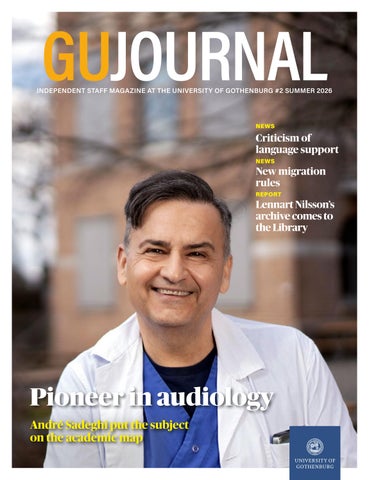
10 André Sadeghi created his own research field.
Report 14–17
14 Lennart Nilsson's archive donated.
16 How social media influences politics.
17 Solemn celebration of new professors.
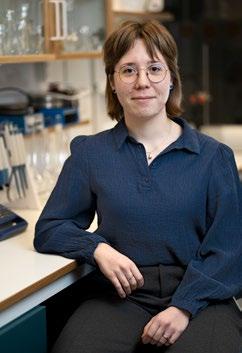
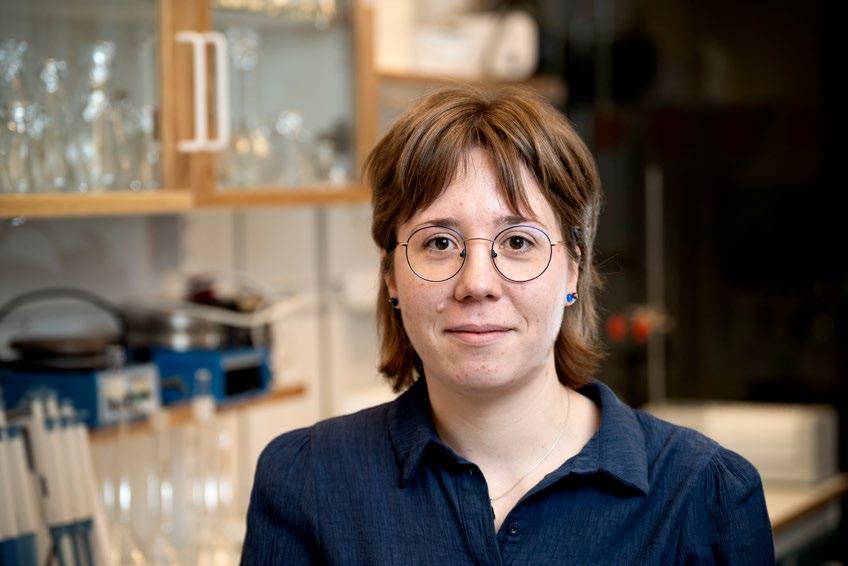
Doctoral student Tabea Mumberg.
Where quality and creativity can flourish
ast week, several important meetings revolved around a common question: how do we build a university where people, knowledge and ideas can develop in a sustainable and long-term way?
At our Vice-Chancellor’s Strategy Meeting, we discussed, among other things, how to develop world-class education and research environments. The discussions were based on an important shift in perspective: work environment, talent recruitment and development, and academic leadership are not issues that exist alongside our core activities. They are fundamental to the quality of both research and education.
Research also shows that many of the factors that characterize successful academic environments are the same factors that create healthy and sustainable workplaces. These include trust, clarity, strong collegial support, developmental leadership, and environments where people feel encouraged to think creatively and challenge one another.
Supportive environments make it possible to take greater intellectual risks. It is often in such settings that creativity and truly innovative ideas emerge.
I often describe a good academic environment as a really good hamburger: the organizational frameworks and structures are the bun that holds everything together and provides stability. At the same time, within those frameworks there must be room for creativity, diversity and experimentation, the elements that make academia vibrant and forward-looking. And sometimes we also need to accept that truly good ideas can be a little messy.
The same theme also characterized the joint workshop held by the Local Work Environment Committee and the Central Work Environment Committee.
The workshop provided valuable opportunities to bring together different perspectives on how we can strengthen our work and study environments. A sustainable university is not built through isolated efforts but through continuous dialogue, shared responsibility and a culture in which both employees and managers contribute to development and improvement.
This collaborative approach is particularly important. When different experiences and perspectives come together, we are better able to identify both challenges and opportunities—and to find solutions that work over the long term.
The week concluded with a highly ceremonial and inspiring visit to the Tjärnö Marine Laboratory in connection with the inauguration of the Crown Princess’s Professorship in Biodiversity.
It was a great honour to welcome Crown Princess Victoria to an environment that so clearly illustrates the university’s importance for research, collaboration and societal development.
Biodiversity is one of the most critical challenges of our time and an area in which universities have a central role to play. Addressing the complex challenges we face requires not only scientific knowledge, but also legal, economic, behavioral and societal perspectives.
As a comprehensive university, the University of Gothenburg is particularly well positioned to bring these areas of expertise together and contribute both new knowledge and new forms of collaboration. The ambition is to strengthen research while also ensuring that knowledge benefits society and supports sustainable long-term decision-making.
The visit to Tjärnö also served as a powerful reminder of the university’s role as a convening force—bringing together academia, the public sector, civil society and other societal stakeholders to address shared future challenges and develop sustainable long-term solutions.
Outrage drives clicks
utrage machines is what Sergei Guriev calls social media platforms that seek to make us quickly like, share and click on the next alarming post. Together with two colleagues Sergei Guriev, a professor at London Business School, studied political development between 2007 and 2018, a period during which mobile broadband spread across the world. This technology enabled almost anyone to both produce and consume online content. In several countries, this has led to major protests against exposed corruption and abuses of power. But false news, exaggerations and outright propaganda can now also be spread at the touch of a button.
There are, however, simple ways to encourage people to think twice before, for example, sharing a link. Platforms could introduce small prompts such as “Are you sure this is accurate?” or “Have you actually read the article?” Deliberately spreading false information is something that most people strongly disapprove of, Sergei Guriev noted during a lecture at the School of Business, Economics and Law on 12 May.
Lectures, discussions, concerts, exhibitions and other events, featuring both international stars and our own staff and students, are among the things that make it exciting to work at a university. During the summer, there is also an opportunity to catch up on the podcasts you may not have had time to listen to during the semester.
The editorial team wishes all readers a wonderful summer!
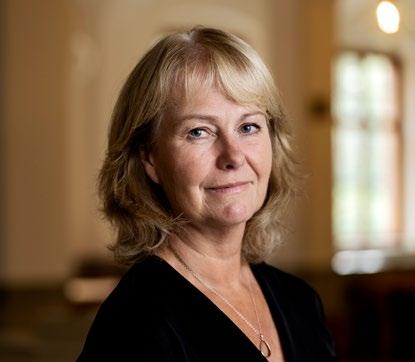
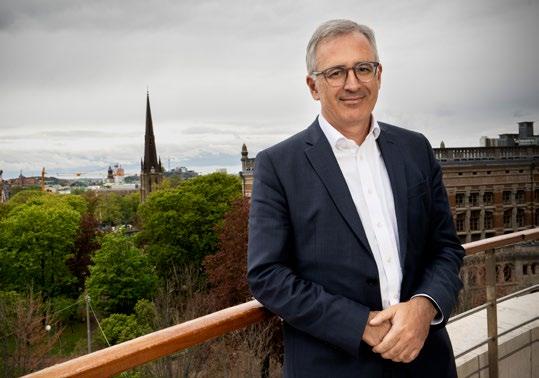
ViceChancellor MALIN BROBERG
Language support questioned by doctoral students
The University of Gothenburg wants to broaden the support for academic language and writing which will reach more students. But the proposals are met with criticism.
A COMMITTEE, headed by Therése Skoog, Professor of Psychology and member of the University Board of Education, have drafted proposals for a new structure in providing support for academic language and writing aimed at students of all levels – in line with the university’s decision to form a new support body and to change the organisation around academic language and writing.
– Our aim is that students, including doctoral students, will receive as good and relevant an education as possible within the available financial scope, and which is based on principles of equality and accessibility, she says.
A core aspect of the committee’s work has been to develop solutions that are more scalable and able to reach more students.
– Our task was to propose approaches and principles that work in accordance with the different needs and which can be adapted over time, says Therése Skoog.
BUT THE COMMITTEE has not been tasked with surveying the needs of students.
– No, we do not know precisely what the needs are or will be in the future, but the committee included people with a variety of roles and backgrounds, which provides a relatively good indication of
how the support is currently being used.
The proposal will involve a change compared to the current expanded operations within Academic Language and Writing (ASK). The individual support will more or less cease and there will be a greater focus on group-based and digital resources, while the responsibility for students’ academic writing to a greater extent will fall on teachers and supervisors at departments and faculties.
– Doctoral students already receive significant individual support from their supervisors. The question is to what extent the university can also provide individual support from the centre, says Therése Skoog.
»None of this will be equivalent to the expertise developed by ASK over more than a decade. If you increase the workload of supervisors without providing more hours, what have you gained?«
Sanskriti Chattopadhyay
At the same time, representatives of doctoral students criticize the change, arguing that individual support risks disappearing altogether.
– Our main concern is that all the expertise that ASK has developed over the years will vanish, says Tabea Mumberg.
SHE IS A DOCTORAL STUDENT in earth science and secretary of the Doctoral Council at the Faculty of Science and Technology, and she describes a process where doctoral students participate in meetings but lack any real influence.
– It has created an impression among doctoral students that it is not possible to save ASK’s operations, which has led to some frustration.
According to her, petitions, appeals and other initiatives from the students have not led to any changes.
But Therése Skoog does not agree with the notion that doctoral students have not had any influence.
– The committee included a representative of the doctoral students who was encouraged to present proposals and perspectives from other postgraduates.
For a long time, ASK has offered support in academic writing through individual supervising, courses and so-called writing retreats –something that many feel has been crucial to the doctoral students’ work.
– A lot of our work involves writing and reading academic text. Many doctoral students have been very satisfied with this support, and to some of them it was crucial for finishing on time and reducing stress, says Tabea Mumberg.
»This
proposal will be discussed in several different forums before any final decision is taken.«
Therése Skoog
GUDK, THE UNIVERSITY’S own doctoral committee is also critical. Chairperson Sanskriti Chattopadhyay argues that doctoral students have indeed been involved in the process –but without being listened to.
– Our representatives have been informed, attended meetings and opposed the proposal several times. Our input has not been considered, she says.
But Therése Skoog argues that the proposals met no opposition from doctoral students during the course of its work.
– The new unit, which will start operations on July 1, will involve more focus on the skills and training of teachers and supervisors with regard to teaching and supervising academic language and writing.
But some alternatives that are now being discussed –such as clearer responsibilities for supervisors, the introduc-
»Our main concern is that all the expertise that ASK has developed over the years will vanish«
tion of student employees and digital solutions – are met with some scepticism.
– None of this will be equivalent to the expertise developed by ASK over more than a decade. If you increase the workload of supervisors without providing more hours, what have you gained? Sanskriti Chattopadhyay asks.
– Supervisors are experts within their fields, but are not always trained in academic writing. And they are already under a lot of pressure, says Tabea Mumberg.
THE COMMITTEE PROPOSES to employ students who will receive support and mentoring from language advisors at the new Unit for Academic Teaching (EAL).
– There is research indicating that “peer learning” can work well. The idea is that language advisors will ensure quality, while students
employees can contribute to ensuring that the support will reach more people, says Therése Skoog.
At the same time, the committee also highlights that AI tools could play a more prominent role in the future, which is something that doctoral students see as a major challenge.
– There are ethical boundaries around how AI can be used. For example, if a student uses AI to improve the language in their own ideas, how should this be assessed? And the tools cannot manage a longer text, such as a doctoral thesis. AI-generated language models, such as Chat GPT, cannot replace more specialised support, says Sanskriti Chattopadhyay.
The proposal also means that the university-wide support is located at the University Library, in order to improve accessibility.
The unions and doctoral students describe the changes as a cost-saving measure rather than as an educational reform, not least in light of the fact that the proposed new budget for the unit will be cut by a quarter in 2027 compared to 2026, which the employer says will entail redundancies corresponding to 14 full-time positions. But matters concerning the budget have been outside of the committee’s mandate, Therése Skoog stresses.
Meanwhile, the work on designing the new support in practice is ongoing. One important matter is how to manage the transition.
– It takes time to design new solutions. During that time, we risk being left without any functioning support. How can the support be improved when it is actually a major saving?, says Tabea Mumberg.
THE DOCTORAL STUDENTS also see a risk of the change impacting their work environment.
– Doctoral students are employed by the university. We need to ask what it may entail when we remove support that so many people depend on, says Sanskriti Chattopadhyay.
Therése Skoog also stresses that the proposal is not a final one. And the measures will be monitored and followed up over time.
– If the changes do not lead to an improvement they will have to be reviewed and changes proposed. This proposal will be discussed in several different forums before any final decision is taken. The most important thing is whether the support will help students and post-graduates to reach their learning outcomes, she concludes.
Text: Allan Eriksson
Photo: Johan Wingborg
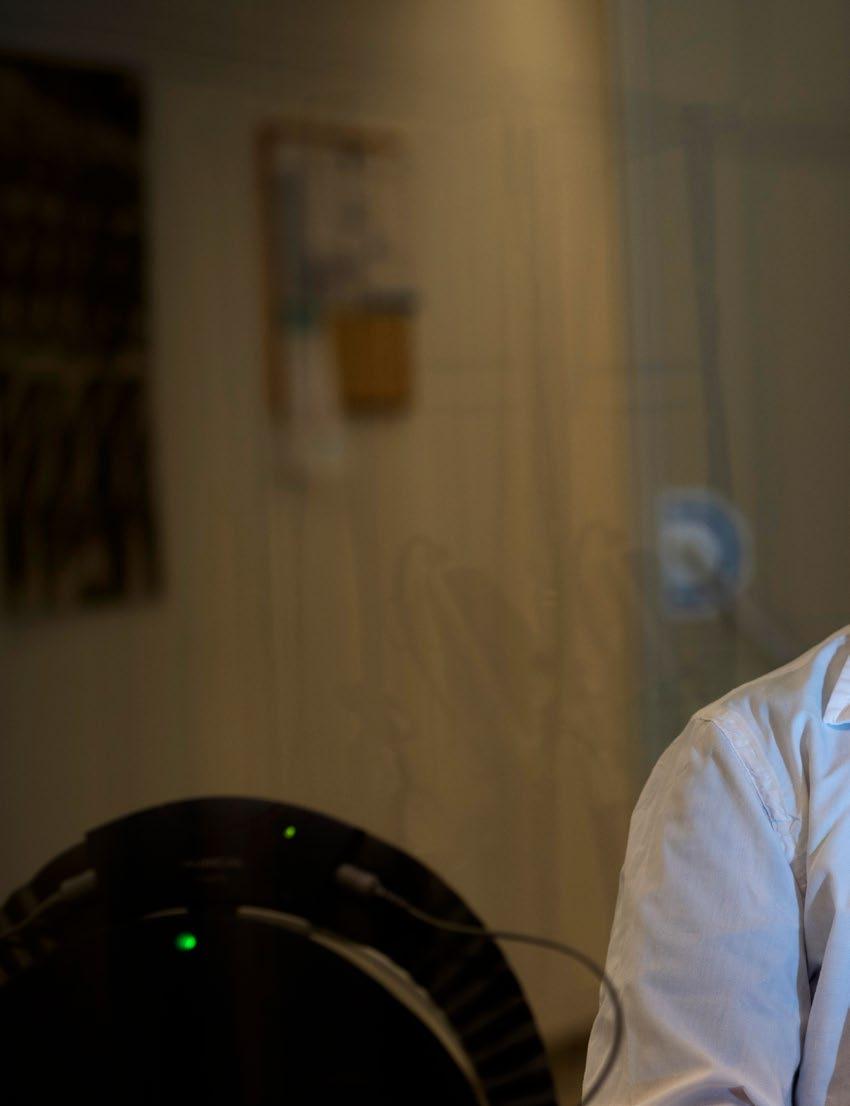
Tabea Mumberg argues that the new language support is a clear deterioration.
New migration rules
Easier for researchers and doctoral students to stay
It will be easier for researchers and doc toral students who wish to remain in Sweden, but there will be stricter performance requirements for students. Those are proposed amendments to the migration regulations coming into force on June 11. Throughout the spring, the International Centre has launched several information initiatives concerning the new rules in order to support students and staff.
THE NEW BILLS have two aims: on the one hand making Sweden more attractive to doctoral students, researchers and students, and on the other countering abuse, where studies become a back door to coming here for work.
One important change is that international doctoral students, according to the bill, may be given residence permit for research, rather than studies as is the case today, explains John Molander, project manager at the International Centre.
– This aligns better with the situation in reality, as being a doctoral student is an actual job. Through the new rules, doctoral students will be able to include their four-year period in their application for a permanent residence permit, which is not currently possible.
THE BILL ALSO addresses the problem for “research babies”, says Ida Strid, International Officer at the International Centre.
– The term is used about researchers who become
parents during their stay in Sweden and who then need to travel abroad in order to apply for residence permit for their child. According to the new rules, it will be possible to apply for residence permit in Sweden.
In order to keep or renew their residence permit, a student under the current regulation must achieve no less than 15 credits during their first year of studies. The new rules raises the minimum requirement for acceptable progress to 37.5 credits, which is in line with what is required for CSN support, says Ida Strid.
– It may be seen as a reasonable requirement. But as the regulation, when it is introduced, will take immediate effect, there may be students who need to step up the pace in order to make their credits.
THE NEW RULES will also put an end to students’ possibility to work as much as they would like. After June 11, students will be allowed no more than 15 hours of work per week during semesters. According to the government, one argument for this is that international students have shown that they can support themselves when they applied for residence permit and do not therefore need to work. But Ida Strid finds this to be a fairly poor argument.
– You do not only work for monetary gain, but also in order to gain work experience, learn the language and integrate into society. The higher performance requirements will also mean that most students will not have time to work very much
outside of their studies. The law could be a deterrent for high-performing students who can manage to both work and study, and it also risks increasing incentives for working illegally.
The International Center does not share the view of the government that there is currently widespread abuse of residence permits for studies, says Ida Strid.
– Instead, it is often about students acting within the confines of current legislation but not in the way it is intended.
The new bill will also mean that it will no longer be possible to switch from resident permit for studies to residence permit on other grounds until the studies have been completed.
Ida Strid and John Molander think the new rules are good but also see some problems.
Visit from war-torn Ukraine
THROUGHOUT THE SPRING, the International Center has initiated several communication efforts aimed at employees who are in contact with international students, says John Molander.
– Out newly admitted students are not immediately impacted, as the requirements for being granted a residence permit for studies remain unchanged for now. The new rules will mainly become relevant for extensions. At the same time, it is important to make the information available, as the changes will mean stricter requirements, even if the conditions will be the same for students who follow their syllabus.
Text: Eva Lundgren
Photo: Johan Wingborg
→ Facts: The draft from the Council for Legislation Bättre migrationsrättsliga regler för forskare och doktorander samt åtgärder för att motverka missbruk av uppehållstillstånd för studier proposes the following: It should be possible to grant residence permits to researchers and doctoral students sooner. The possibility for researchers and doctoral students, and their family members, to apply for residence permit while in Sweden should be extended. The possibility to work with a residence permit for studies will be constrained. The requirements for acceptable progress in studies will be made stricter. The amended legislation is expected to enter into force on June 11, 2026.
How is Ukraine handling the destruction of buildings, land and waterways that has been brought on by the war? This was the focus of a seminar arranged by the Department of Earth Sciences at the beginning of May. Two researchers from Kyiv, Marharyta Radomska and Lesia Pavliukh, talked about the problems, but also about possible solutions.
RESTORATION OF areas damaged by military operations was the heading of an open lecture at Natrium on May 6. The speakers was Professor Lesia Pavliukh and Associate Professor Marharyta Radomska at the National Aviation University in Kyiv. Lesia Pavliukh explained how all the destroyed homes, industries, roads and military hardware generate enormous amounts of scrap material.
– The widespread destruction of cities like Bucha, Irpin, Borodianka and Vorzel threatens both land and water.
And outside the cities we see extensive land damage, such as from bomb craters. The land across which tanks and armoured vehicles have travelled has becomes densely compacted, which reduces the flow of air and water in the ground. And the risk of erosion has increased due to destruction of vegetation.
– Add to this various substances that pollute the soil, such as heavy metals and toxic residue from explosives as well as fuel and lubricants from destroyed hardware. The chemicals threaten the groundwater, while major fires have destroyed fields and crops.
ONE PROBLEM is that Ukraine lacks a national strategy for handling war waste, Lesia Pavliukh explained.
Lesia Pavliukh and Marharyta Radomska worry about the environmental destruction caused by the war.
– And the public is not very well informed about the existing problems. For this reason, the authorities need to launch information campaigns around the handling of scrap and waste, and also provide opportunities for people to participate in rebuilding.
One possible solution for the problem with waste is recycling, says Lesia Pavliukh.
– Crushed concrete can be turned into new roads, metal can be smelted and made into new products. Our ability to plan and finance decontamination will require databases with information about the destroyed objects in an area. In addition to recycling, we can also learn to grow new crops, replace monoculture with more varied vegetation and take steps to adapt to climate change.
Of course, people in Ukraine would like nothing more than for the war to end and many imagine that most of what is in ruins will be rebuilt, Marharyta Radomska explained.
– But we need to realise that this will not always be possible. Some areas are so utterly destroyed that it will not be financially viable to restore them. And rebuilding takes time, both in terms of the restoration work but also in terms of training people to handle it
correctly. There is so much to do, and we need to prioritise.
THE WAR HAS a direct impact not only on Ukraine, but on many other countries as well. Besides Ukraine and Russia, other countries bordering the Black Sea include Georgia, Turkey, Bulgaria and Romania. All these countries suffer from the environmental problems and ecosystem threats brought on by the war, Marharyta Radomska told us.
– Ukraine is one of the world’s most important exporters of cereal and other agricultural produce, such as maize, wheat and sunflower oil. Many African countries, for example, depend on our produce. So the war risk leading to a global disaster for both humans and the environment.
Text: Eva Lundgren
Photo: Johan Wingborg
→ Facts: The visit from Ukraine is part of an exchange agreement between the Department of Earth Sciences and the National Aviation University in Kyiv. The agreement covers incoming students but also staff mobility. Two Ukrainian students will be studying at the department in the autumn.
Investment to strengthen competence
In order to strengthen the university’s research sector and long-term skill supply the vice-chancellor will be investing in associate senior lecturers. Each faculty can apply for up to two million krona per year for five-year positions.
The investment aligns with the government’s target of increasing the share of career-development positions at universities, strengthening recruitment of new researchers and promoting academic mobility.
IT IS A STRATEGIC investment for recruiting internationally qualified associate senior lecturers with a focus on the highest scientific quality and increased internationalisation, Pro-Vice-Chancellor Carina Mallard explains.
– The vice-chancellor finances up to 2 million krona per year over five years for two or more senior lecturers per faculty.
The investment is one way of achieving the target set by the government for the University of Gothenburg that 3 percent of research and teaching staff should be associate senior lecturers by 2028, says Carina Mallard.
– But above all, we are hoping to attract skilled, young researchers who can contribute to the long-term skill supply of the receiving faculty or department. The investment will also provide the researchers with good opportunities for developing their independence and earning their scientific and educational qualifications for a position as senior lecturer.
THE RESEARCH COUNCIL will also invest in associate senior lecturers. It concerns four notifications, the first of which was announced in January. The next one will be announced in August and the other two next year.
– The criteria for nomination state that no less than
half of the applicants must have been employed mainly outside of Sweden over the past four years and at least 40 percent must belong to an under-represented gender. Each grant is for 3 million krona per year over five years, with an opportunity to extend it at the level of associate senior lecturer for an additional five years. The receiving university will contribute no less than 50 percent of the wage.
JUST LIKE OTHER
major universities, the University of Gothenburg has been given the opportunity to nominate ten candidates for the Research Council initiative, says Carina Mallard.
– We are currently waiting for the outcome of the first advertisement which will be out in June. Meanwhile, the faculties are preparing to nominate candidates for the second round.
The investment by the university is separate from the Research Council initiative. But some dates have been adapted to align with the Research Council’s notifications.
– Some of the associate senior lecturers we will be hiring through the university-wide initiative will be nominated for next year’s notifications from the Research Council. But our own notification is a separate process.
Adding one or more young researchers to faculties has
several benefits, Carina Mallard argues.
– The management hopes that they may perhaps form a network where they can support and learn from one another. Creating a larger environment with colleagues who are in the same situation can be a way of making the associate senior lecturers feel that they operate in a context in which they would like to remain and help develop.
AT THE START of the autumn, there will be a joint notification issued by all participating faculties. In addition to the university’s own initiative, Sahlgrenska Academy has also issued a notification for nine associate senior lecturers.
Text: Eva Lundgren
Photo: Johan Wingborg
→ Facts: In order to strengthen the university’s research sector, the vicechancellor will be investing in associate senior lecturers. When hiring two or more associate senior lecturers the initiative entails an investment of up to 2 million krona per year per faculty over five years. When hiring a senior lecturer the funding will amount to 1 million krona per year.
The joint notifications will be issued in early autumn.
Some of the dates in the university’s investment will be adapted to the ongoing investment into associate senior lecturers from the Research Council, but remains a separate initiative.
Carina Mallard hopes that GU will attract talented young researchers.
Wants to strengthen ties with Italy
Do you have Italian roots or are you involved in a project with Italian colleagues? Then perhaps Sweden’s first scientific Swedish-Italian network is for you.
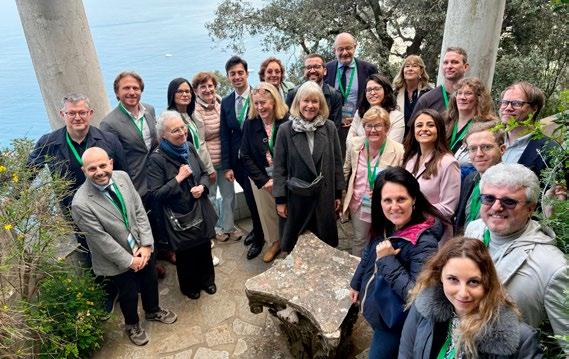
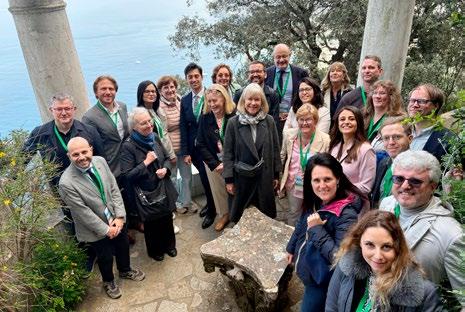
The Swedish-Italian Network for Advanced Partnership in Science and Education (SINAPSE) is an initiative with the aim of strengthening scientific as well as cultural collaboration between Sweden and Italy.
THE NETWORK WAS launched on March 20 at the Italian embassy in Stockholm in the presence of Ambassador Michele Pala and Scientific Attaché Augusto Marcelli, who also supported the initiative. There are many reasons for starting a bilateral organisation, argues Daniela Esposito and Emanuele Bobbio who are behind the initiative.
– Both Emanuele and myself are physicians and researchers and we have several colleagues who would like to go to Sweden or Italy for a shorter or longer stay. But all the rules as well as practical circumstances can make exchanges difficult, and that is where a network with experienced members may be able to help. There is a great deal of interest as shown by the fact that we already have members from all around Sweden, and within all kinds of disciplines, such as chemistry, physics and languages, says Daniela Esposito.
SINAPSE is able to assist researchers in creating exchange programmes or supporting
younger colleagues in their networking efforts. And coming into contact with researchers who are involved in research similar to yours, is of course important, Emanuele Bobbio argues.
– But it is also interesting to meet other experts from completely different fields, such as archaeology, conservation or linguistic research. SINAPSE is open to all teachers and researchers, regardless of discipline. And we also want to create more tangible partnerships that may lead to joint projects and scientific results.
AND STUDENTS ARE also welcome to join the network.
– Both Daniela and myself came to Sweden as Erasmus students and that is something we wish to encourage new students and post-graduates to do as well. But we are also there for anyone working in the culture sector or the arts.
SINAPSE has already begun their journey.
– In April we organised our first workshop i Naples and on Capri,
Fakta: The SwedishItalian Network for Advanced Partnership in Science and Education (SINAPSE) is the first SwedishItalian scientific network in Sweden.
Chair: Daniela Esposito, endocrinologist at the Sahlgrenska University Hospital and the University of Gothenburg. Deputy Chair: Emanuele Bobbio, endocrinologist at the Sahlgrenska University Hospital and the University of Gothenburg. Secretary: Katri Gelati, Solicitor in Milan with an international profile and extensive experience of Swedish and European partnerships. Other founders include Veronica Lattanzi, researcher at Lund University; Eduardo Bossone, Scientific Attaché at the Italian embassy in Houston; Giuseppe Limongelli, Professor at the Università degli Studi della Campania. You can find out more at: https://sinapse.se/.
where researchers from Sweden and Italy gathered to discuss common research matters. The meeting generated tangible scientific initiatives, such as a joint Swedish-Italian white paper on Fabry disease, with the aim of improving diagnostics and treatment through a more integrated approach. At Capri we also had an opportunity to visit Villa San Michele together with the Swedish Honorary Consul Kristina Kappelin, which provided a nice symbolic backdrop to the cooperation between Sweden and Italy, says Emanuele Bobbio.
SINAPSE has ambitious plans for the future, planning and developing scientific activities with the support of the network’s scientific committee, headed by Gianluigi Savarese.
– It involves annual workshops, the next of which is planned for Stockholm in the spring of 2027. But it is also about developing tangible research projects, education initiatives and opportunities for mobility between the countries. We simply hope that SINAPSE will be a meeting place, not only for new contacts but also for creating actual results, says Daniela Esposito.
Text: Eva Lundgren Photo: Alex Maxia
The conference at Villa San Michele, Anacapri, Naples.
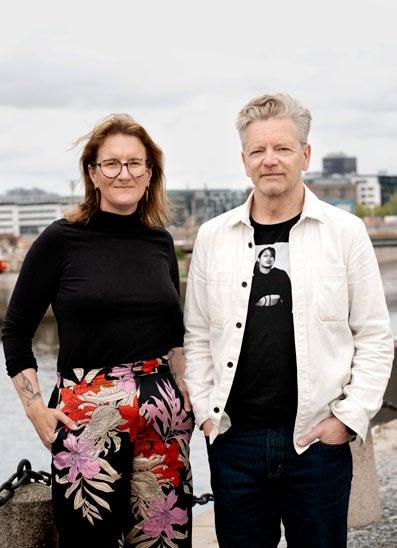
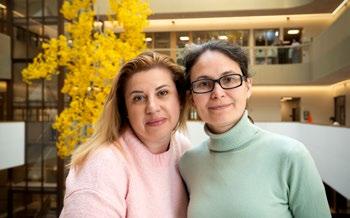
Daniela Esposito
Emanuele Bobbio
Between clinic and technology
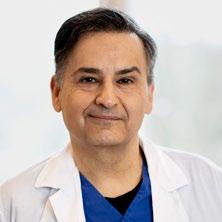
– Audiology combines medicine, technology and behavioural science. While you work with advanced technology, you also get to meet people in their day-today lives.
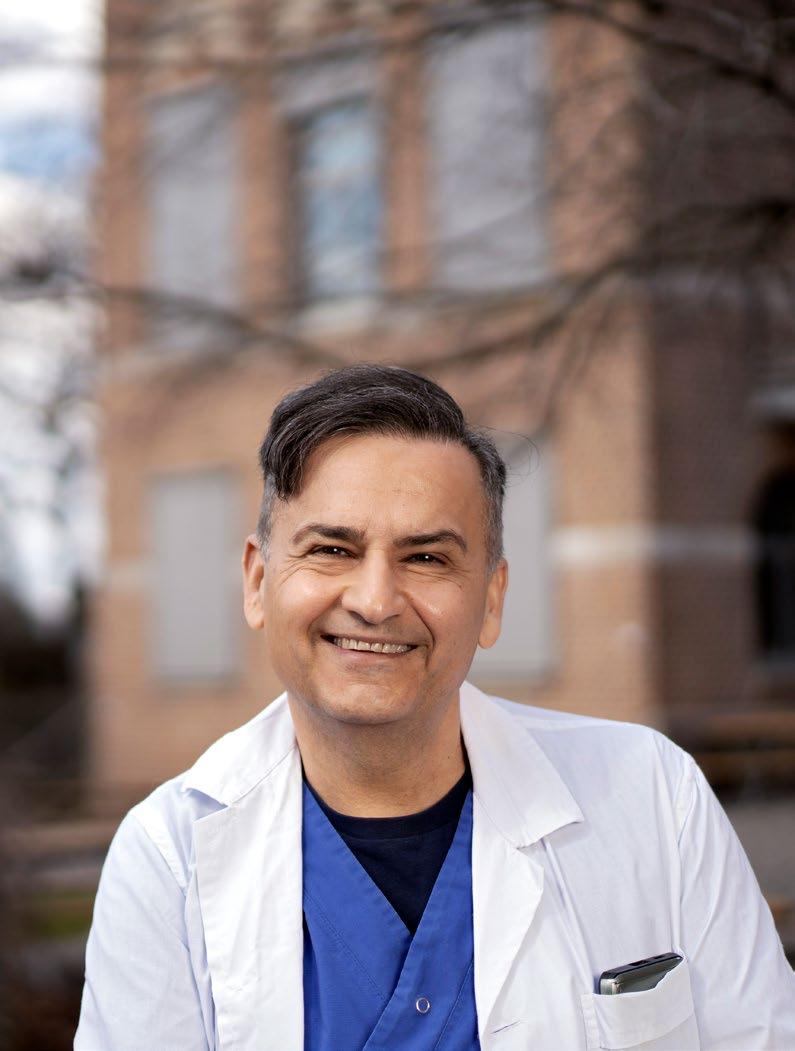
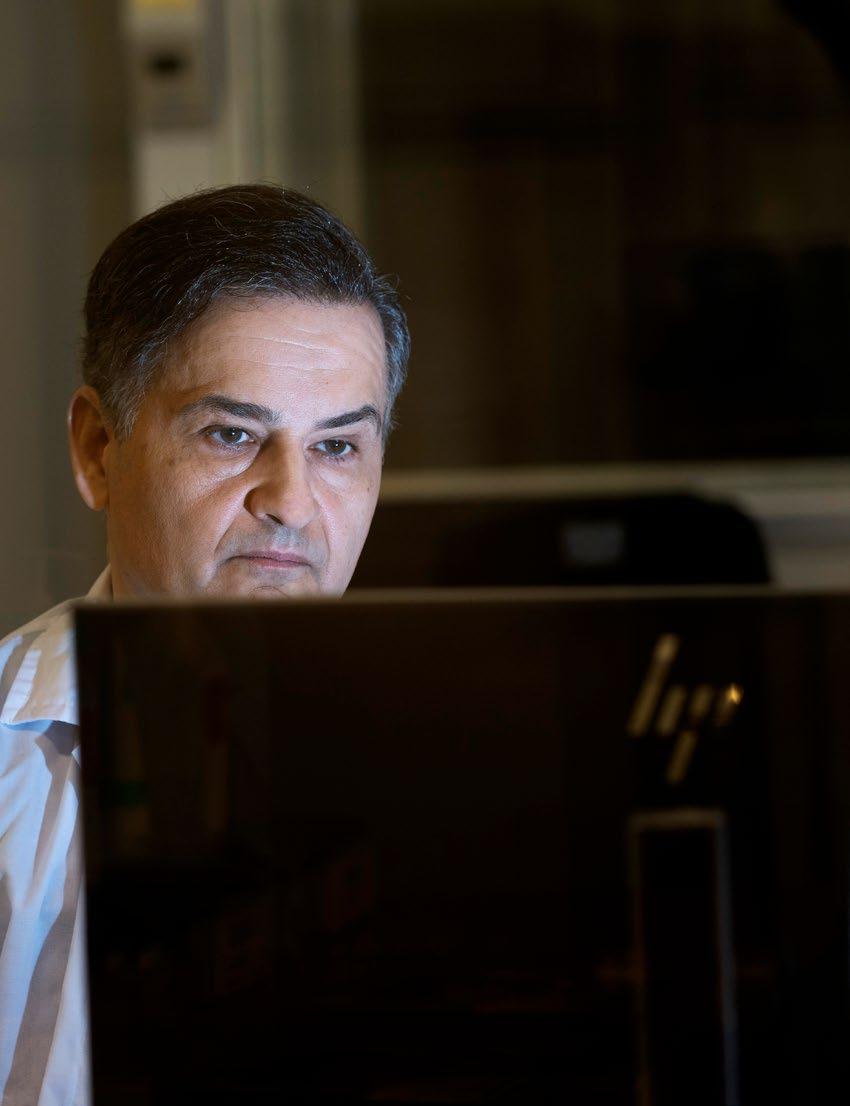
We are talking to André Sadeghi. He is the first audiologist in Sweden to be appointed Professor of Audiology. He is very much behind the current strong academic grounding of this subject.→
Text: Eva Lundgren Photo: Johan Wingborg
t is by his work in the overlap between academia, healthcare and industry where André Sadeghi has contributed, not only to audiology education and research, but also to its technical development.
Now being a professor is thus not only a personal milestone but also an important step for an entire profession.
It all began in 1998 when André Sadeghi graduated as an audiologist and wanted to continue with a master’s degree.
– It turned out that no such programme existed. So I decided to design my own programme, and in 1999 I became one of the first audiologists in the country with a master’s in audiology. That enabled me to continue with post-graduate studies at the University of Gothenburg.
He received his PhD in 2005 with a thesis on Usher’s Syndrome, the most common cause behind deafblindness.
– In my doctoral studies I combined epidemiology, clinical data and genetic analyses to map the prevalence of the syndrome in Sweden. It involved highlighting the link between ten or so genotypes and three phenotypes, meaning how the genes are expressed in an individual. Alongside my post-graduate education I also trained in genetic counselling, and the same year I received my PhD I got a master’s degree in this field as well.
When André Sadeghi attended his post-graduate education he learned that humans probably have around 100,000 genes.
– Now we know that the number is closer to 20,000–25,000. This means that genes have not only one but often several functions, which may contribute to more complex treatments of genetic diseases: One gene, changes to which may cause a serious illness, may also be absolutely essential, which means that its expression or function cannot be changed without some consequences. But some genetic changes can be treated using gene therapy, which opens up new possibilities and a very interesting perspective going forward. If the trend continues we may eventually be able to change how some diseases are treated and perhaps even affect how we age. In the long term, it may possibly mean that people could become 200 years old: what is today science fiction may become science fact.
After his thesis defence André Sadeghi worked for a few years at Sahlgrenska University Hospital.
– At the time, there were rapid developments taking place within both old and new hearing-aid technology. It involved things such as cochlea implants, where sound is converted into electrical signals which are sent to the auditory nerve in the inner ear. But it also involved bone-anchored hearing aids that lead sound
»If the trend continues we may eventually be able to change how some diseases are treated and perhaps even affect how we age.«
ANDRÉ SADEGHI
via the cranial bone directly to the inner ear, a technology developed by Chalmer researcher Bo Håkansson. I started working for the Cochlear company and working with engineers and other experts I contributed to the development of the world’s first digital bone-anchored hearing aid.
The most recent versions can be described as small computers, with advanced signal processing, real-time analysis of soundscapes and connections to mobile phones, computers, TVs, tablets and smartwatches, André Sadeghi explains.
– They no longer operate solely as an amplifier, but as an integrated part of a person’s everyday digital life. One example is the new solution where the microphone is placed in the ear canal, which makes better use of the natural function of the outer ear and provides a more natural auditory experience.
And there are rapid developments at clinics as well.
– Today, we examine the hearing of all newborns. So any impairment will be discovered immediately, and within six months the infant will be fitted with an implant. This means that the child in most cases will have normal hearing and speech development. You could almost say that there are no deaf children in Sweden today.
The work within the industry was both interesting and well paid. And yet, André Sadeghi chose to return to academia.
– In 2011, I received a phone call from the University of Gothenburg. The audiologist programme had been inactive for several years, because of a lack of teachers with a PhD and a weak academic structure. Now, the university wished to start it up again and were in need of skilled staff.
But the foundation was somewhat shaky.
– I was offered a six-month temporary contract with an option to extend. Leaving the industry was not a decision taken lightly, but I had a vision of building a strong academic setting for audiology students. I was given an opportunity to contribute to this and felt that I
could not turn it down. Working with my colleagues we created a programme with a clear scientific foundation and strong links to clinical operations.
It soon became apparent that something was missing, a coherent environment where education, research and clinical applications could meet, André Sadeghi tells us.
– Through external funding and close collaboration with audiology clinics I created an audiological training and research laboratory at Sahlgrenska Academy. The initiative became a hub for developing both education and research.
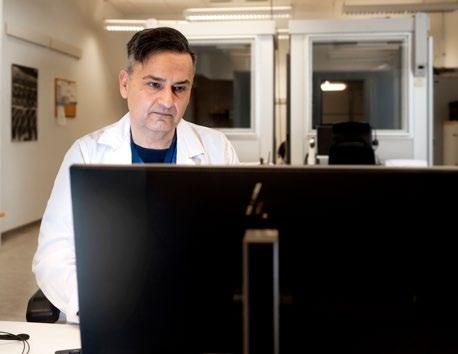
Currently, he has a combined role where he works about 80 percent within academia and 20 percent clinically.
– To me, these are not two separate roles, but two parts that reinforce one another. The clinical work provides a direct understanding of patients’ day-to-day lives and the issues that are most relevant to them, while the research provides opportunities for a more systematic analysis that will contribute to long-term developments. It is also important to students that we, as teachers, do clinical work as it strengthens the link between theory and practice.
André Sadeghi also heads to H70 Hörsel Research Team.
– Around 1.8 million people in Sweden have a hearing impairment, a majority of whom are elderly. This is due to things such as degenerative changes in the hair cells of the inner ear and in the nerve cells involved in hearing. Initially, only the hair cells that register higher frequencies are affected, which makes it harder to hear things like birdsong. But there is great variation between individuals of the same age. Hearing is not solely a matter of your age, it is a complex interaction between genetics, epigenetics, lifestyle, health and environment.
One important insight is that impaired hearing is not only a medical problem, but just as much a social one, André Sadeghi stresses.
– For someone who is hard of hearing it may be difficult to participate in conversations and other social settings. Many people, particularly the elderly, risk being isolated. That is why it is important to disseminate information about the aid that is available.
Last year, André Sadeghi became Sweden’s first audiologist to be appointed professor of audiology.
– When I learned via email that my application had been approved I was working at the clinic. After all my years of study and work the feeling was almost unreal. Of course the professorship was important to me personally. But I also believe that both colleagues and students may need a reminder that nothing is impossible.
ANDRÉ SADEGHI
Current position: Professor of Audiology at Sahlgrenska Academy and licensed audiologist at the audiology clinics in the Västra Götaland Region.
Background: Designed in Iran, developed in Sweden.
Family: Wife Negin Behnam, 19-yearold daughter Shania and Danté the Cat. Lives in: Partille.
Latest book: The Beekeeper of Aleppo by Christy Lefteri.
Latest film: Paper Spiders.
Hobbies: Exercise, tennis, travel, books and spending time with family and friends.
New home for Lennart Nilsson's archive
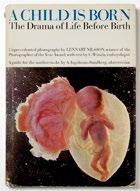
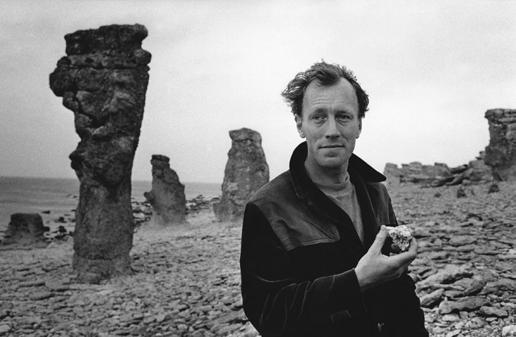
Making the Invisible Visible is the title of a photo book by worldfamous photographer Lennart Nilsson. His work A Child is Born is one of the most sold photo books in the world. But he also lifted the veil from many other things, such as the unknown world of ants, the personal side of wellknown politicians and the harsh reality of mental health services.
And now, the University of Gothenburg has received 1.3 million krona from the Hasselblad Foundation in order to take over and make available his very comprehensive archive.
The fact that there is an archive of Lennart Nilsson’s oeuvre at all is very much down to the work of the great photographer’s stepdaughter, Anne Fjellström. Since 2001 she has identified, arranged and digitalised the vast material, as well as creating lists with references to where and when the pictures were published. The collection comprises negatives, slides, books, magazines, correspondence, notes and documents,
from the 1940s up until Lennart Nilsson’s passing in 2017. We are talking to Niclas Östlind, Professor of Photography. – Lennart Nilsson grew up during the golden era of photojournalism and became fascinated with the medium when he was but nine or ten. Describing the world in stories where pictures, rather than the text, played a crucial role was something new. A strong belief in the universality of photography, the fact
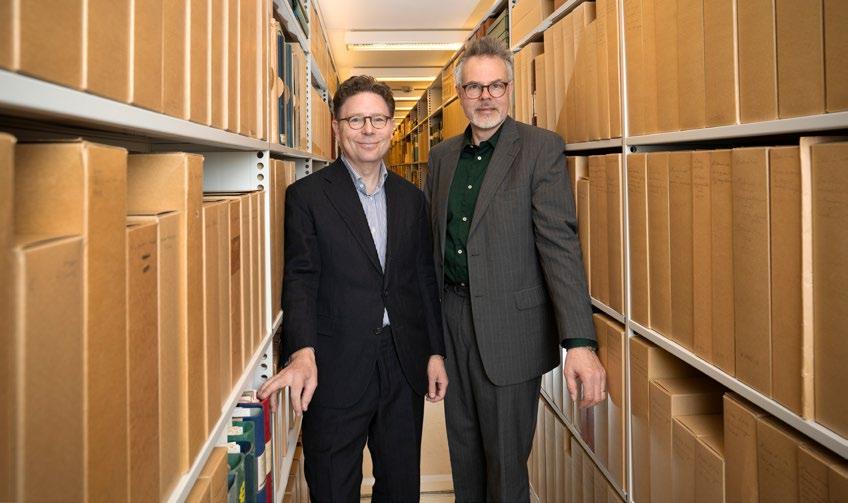
Niclas Östlind, professor of photography, and university librarian Morgan Palmqvist are looking forward to taking over the archives of world-famous photographer Lennart Nilsson.
that it could be understood regardless of education, class or nationality, provided a window to the world for a wider audience.
In partnership with researchers Lennart Nilsson photographed everything from insects to brain surgery.
– He is an important example of how art can be used within research, not merely as illustrations, but as a way of explaining and visualising scientific contexts as well as contributing to new knowledge.
But being a photographer was also a way for Lennart Nilsson to come into contact with people from different walks of life, such as midwives, forest workers and members of the Salvation Army Orchestra. This is also how he got to travel the world: Among his photos we find depictions of polar bear hunting in Spitsbergen and perch fishing in Congo. But also pictures of an exhausted Birgit Nilsson and of Olof Palme comforting his young son.
Lennart Nilsson’s work ethic was strong, Niclas Östlind explains.
– A picture is not complete as long as there is more to tell, he argue. But he was also curious about technical innovations and the creative possibilities they offered. Many of Lennart Nilsson’s pictures were published in the most prominent international photography magazines, such as Life, where his photos appeared numerous times on the cover.
The archive is a gold mine for anyone interested in photography, says Niclas Östlind.
– But the material also describe a piece of science history, societal developments of the 20th century and, not least, how to become a successful entrepreneur.
Having the Hasselblad Foundation financing the archive is no coincidence. Lennart Nilsson was a personal friend of Erna and Victor Hasselblad, and in 1980 he was the first recipient of the asselblad
Award. In addition, the University Library at the University of Gothenburg is a very appropriate guardian of the archive. The library has extensive experience of working with large collections and also has its own digitalisation operation, which is responsible for cataloguing and managing meta data, Head Librarian Morgan Palmqvist tells us.
– Managing Lennart Nilsson’s archive is an excellent example of what can be achieved through good cooperation, in this instance between the library and HDK-Valand, as well as GPS400, which is host to five faculties as well as the Hasselblad Foundation. Perhaps the Lennart Nilsson Archive can also inspire Sahlgrenska Academy to join. The library will now focus on digitalising and making the archive available. It will subsequently be published in the university library’s system as well as in the National Archives Database. They are hoping to make the entire material available to researchers and the public by 2029.
Facts: The University of Gothenburg has received 1.3 million krona from the Hasselblad Foundation to manage the extensive archive of photographer Lennart Nilsson (1922–2017). It will be managed and made available by the University Library, and be linked to the internationally renowned Centre for Collaborative Visual Research (GPS400). It is a partnership between five faculties – the Faculty of Arts, the Faculty of Fine, Applied and Performing Arts, the Faculty of Social Sciences, the Faculty of Education as well as the Faculty of Science and Technology – and the Hasselblad Foundation. GPS400 will also collaborate with a number of cultural heritage institutions.
The fact that the University of Gothenburg will host the archive of one of Sweden’s most renowned photographers, is interesting in itself. But it also puts the finger on a problem: Unlike for example Norway and France, Sweden has no overarching plan for the preservation of photography as a cultural heritage, Morgan Palmqvist points out.
– Having different stakeholders at the university, in partnership with the Hasselblad Foundation, joining forces to save an important collection may perhaps act as an example to others. Without such interventions we risk losing our collective visual memory, the protection of which is becoming increasingly important these days, when the possibilities for cheating and manipulation are greater than ever.
Text: Eva Lundgren
Photo: Johan Wingborg
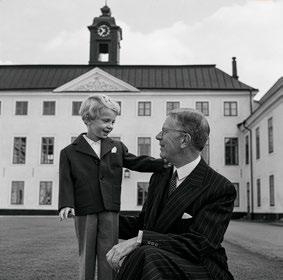
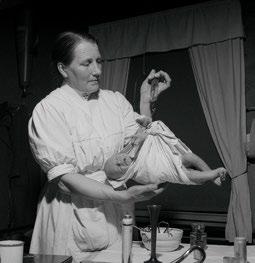
The Crown Prince with his grandfather, actor Max von Sydow, and a midwife who has just delivered a baby are some famous images. The book A Child is Born from 1966 is one of the world's most famous and translated photo books.
Social media and politics
Fifteen years ago, only four percent of the global population had access to mobile broadband. Today, that figure is around 95 percent. This has led to an enormous boom for social media. How this affects society and politics was the topic of this year’s Tore Browaldh Lecture, held by Sergei Guriev, a professor at the London Business School.
The launch of the 3G networks at the start of the 2000s made surfing, streaming and uploading videos possible on your mobile phone. The development of social media made rapid progress which led to changes in the public’s relationship with the powers that be, Sergei Guriev explained.
– New technology has always had an impact on us, of course. But broadband technology is a somewhat special case. Creating a blog or a YouTube channel does not require much in the way of know-how, money or technical equipment. And the content creator can be in direct contact with the recipients. The elite that previously controlled media is now under attack.
Examples of politicians that skilfully used social media include Klaus Johannis who became the “Facebook President” of Romania in 2014 and Jair Bolsonaro who became the “WhatsApp President” of Brazil in 2018. Another example is Aleksei Navalny’s very successful anti- corruption campaign on YouYube in 2017.
Alongside his colleagues Nikita Melnikov and Ekaterina Zhuravksaya, Sergei Guriev has conducted a study in which they looked at all European elections from 2008–2017 and compared them to the local development of mobile broadband. The study shows that the more people have access to mobile broadband, the less confidence they have in incumbent politicians.
– The winners are populist parties, primarily on the right but also on the left. However, in the small number of regions
Facts: Every year since 1989, the School of Business, Economics and Law presents the Tore Browaldh Lecture, where an invited speaker highlights topics such as the relationship between economy, economic theory or economic system on the one hand and social ideology, political system and philosophy on the other. This year’s lecture, The Political Economy of Social Media: Incentives, Disinformation, and Incumbency in the Mobile Era, was held by Sergei Guriev, Professor of Economics and Dean at the London Business School. The Political Economy of Social Media – Seminar with Professor Sergei Guriev is available on YouTube.
where populist have gained power they soon lose the public’s trust.
The researchers recently also presented a study of elections to the American congress.
– The U.S. is very different from Europe, with a two-party system where members of congress have been able to hold on to their seats for ever. But over the past 10–15 years, something has happened. Suddenly, the risk of losing one’s seat has increased for members who represent the same party as the incumbent president. My prediction therefore, is that it will go badly for President Donald Trump in the upcoming mid-terms in November.
Social media thrives on generating strong, tumultuous feelings. They are indignation machines of a kind, Sergei Guriev points out.
– That is why fake news are so easily disseminated online. But our research shows that you can use simple methods to reduce the sharing of false information. It is about getting people to stop and think, such as by asking someone
»The winners are populist parties, primarily on the right but also on the left. «
SERGEI
GURIEV
if they really want to forward a link, by providing warnings about the possibility of this information being incorrect or by publishing a fact-checking link. Most people want to be reliable sources of information and if they find out that a piece of news is false, they tend to hesitate before passing it on.
Today, we mostly see not yet established politicians using social media, says Sergei Guriev.
– But this will probably change. And social media can be used for all kinds of purposes, both for good ones and for ones less so.
Text: Eva Lundgren
Photo: Johan Wingborg
Solemn inauguration of new professors
– Everyone knows that the times we live in are far from uncomplicated; they are marked by uncertainty, rapid change and major questions with no easy answers. In such a time, I reflect on what academia can contribute. For me, it is about hope.
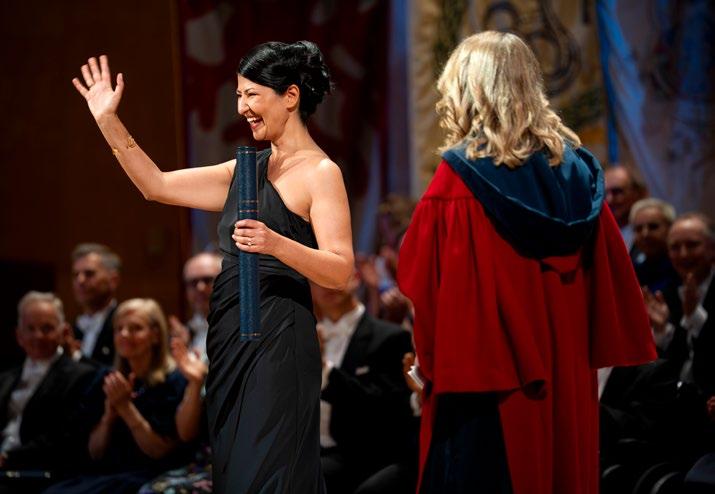
With these words, Vice-Chancellor Malin Broberg opened this year’s Inauguration Ceremony, which took place at the Gothenburg Concert Hall on 29 May.
58 professors were formally installed and nine were welcomed. In addition, three excellent teachers and three recipients of pedagogical awards were recognised.
Niclas Östlind, Professor of Photography, delivered the professors’ speech and Petrus Hagby, Chair of the University of Gothenburg Students Unions, spoke for the students.
Students from the Academy of Music and Drama provided musical entertainment, together with the Gothenburg Brass Quintet and the Gothenburg Academic Chamber Choir.
Inauguration of Hanna Augustin, Professor of Nutrition.
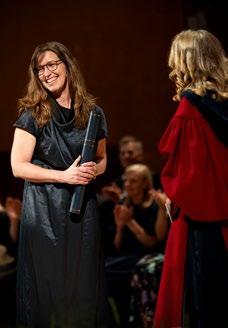
Nina Tahmasebi, Professor of Computer linguistics, receives applause from the audience.