THE UNIVERSITY OBSERVER

HEAD TO HEAD: FREE SPEECH ON CAMPUS COMMENT PAGE 7
UCD DID NOT IMPLEMENT ALL GUIDELINES FOR A SAFE RETURN TO CAMPUS.
AN investigation into the Implementation Guidelines for Public Health Measures in Higher Education Institutions (HEI)s and the measures taken by UCD in response to the guidelines has left many questions surrounding whether the management of UCD truly planned on reopening campus. The questions particularly concern social distancing, the provision of adequate oncampus healthcare, and the student seat tracking.
REOPENING
On Friday, September 18th, it was announced that Dublin would be facing Level 3+ restrictions. In an email for UCD Registrar Mark Rogers, all classes were moved online “unless you are specifically informed that it will occur”. These restrictions were initially put in place for three weeks.
In an email to students on Wednesday, September 23rd, UCD Residences promised;
“Once the restriction level for Dublin reduces to Level 2, the University will revert to the plans made previously for our return to on-campus teaching and learning, unless we are given other specific directions by the Government”. No direct instructions were given by the Government, however on October 6th, an email to all staff was circulated announcing that the remainder of trimester would be held online; “In so far as possible, on-site provision should be minimised to avoid bringing large numbers of students together”. It took another day for students to be notified.
TIMETABLES
On July 6th all Heads of School were required to submit their timetables. On July 8th it was announced that 40% - 60% of undergraduate students, and 75% - 100% of Postgraduate students would be taught on-campus. This gave UCD administration a single day to go through every timetable and
come to this conclusion as to how they could manage socially-distanced learning. Frank Jones, Deputy General Secretary of the Irish Federation of University Teachers (IFUT) told RTÉ News that he had “no idea” as to how the figures were arrived at. A member of UCD academic staff told The University Observer it takes “half the summer” to plan timetables when there isn’t a global pandemic. IFUT told RTÉ “We don’t know what they mean and we don’t know what public health concerns were considered” about the July 8th estimates.
The Implementation Guidelines for Public Health Measures in Higher Education Institutions (HEI)s outlined; “To the greatest extent possible, the entry and exit from teaching space and taking of seats should be managed to avoid congregation at the entrance and exit. This is likely to be quite challenging”. The Implementation Guidelines further advised; “It may be helpful to give more time to enter and exit so that scheduling an hour with a maximum of 40 minutes of teaching may support this”. In a twelve-week taught trimester, that accounts for a loss of two hours of teaching. Modules remained to be scheduled as 50 minute periods. To date, students have not received any communication that teaching time could be reduced by 10 minutes per in-person lesson if a return to campus were possible. In order to accommodate the teaching hours required for students to earn their programme credits, entirely new timetables would have to have been created.
SOCIAL DISTANCING
According to the Implementation Guidelines, “A physical distance of 2m should be maintained under all circumstances possible...There will be circumstances under which teaching cannot be delivered while maintaining 2m distance between students, and under such circumstances, the distance between student seats or workstations may be reduced to (but not less than) 1m, with
appropriate precautions to minimise the risk of viral transmission, and specific provision made for vulnerable students”.
According to the Implementation Guidelines, “A physical distance of 2m should be maintained under all circumstances possible...There will be circumstances under which teaching cannot be delivered while maintaining 2m distance between students, and under such circumstances, the distance between student seats or workstations may

be reduced to (but not less than) 1m, with appropriate precautions to minimise the risk of viral transmission, and specific provision made for vulnerable students”.
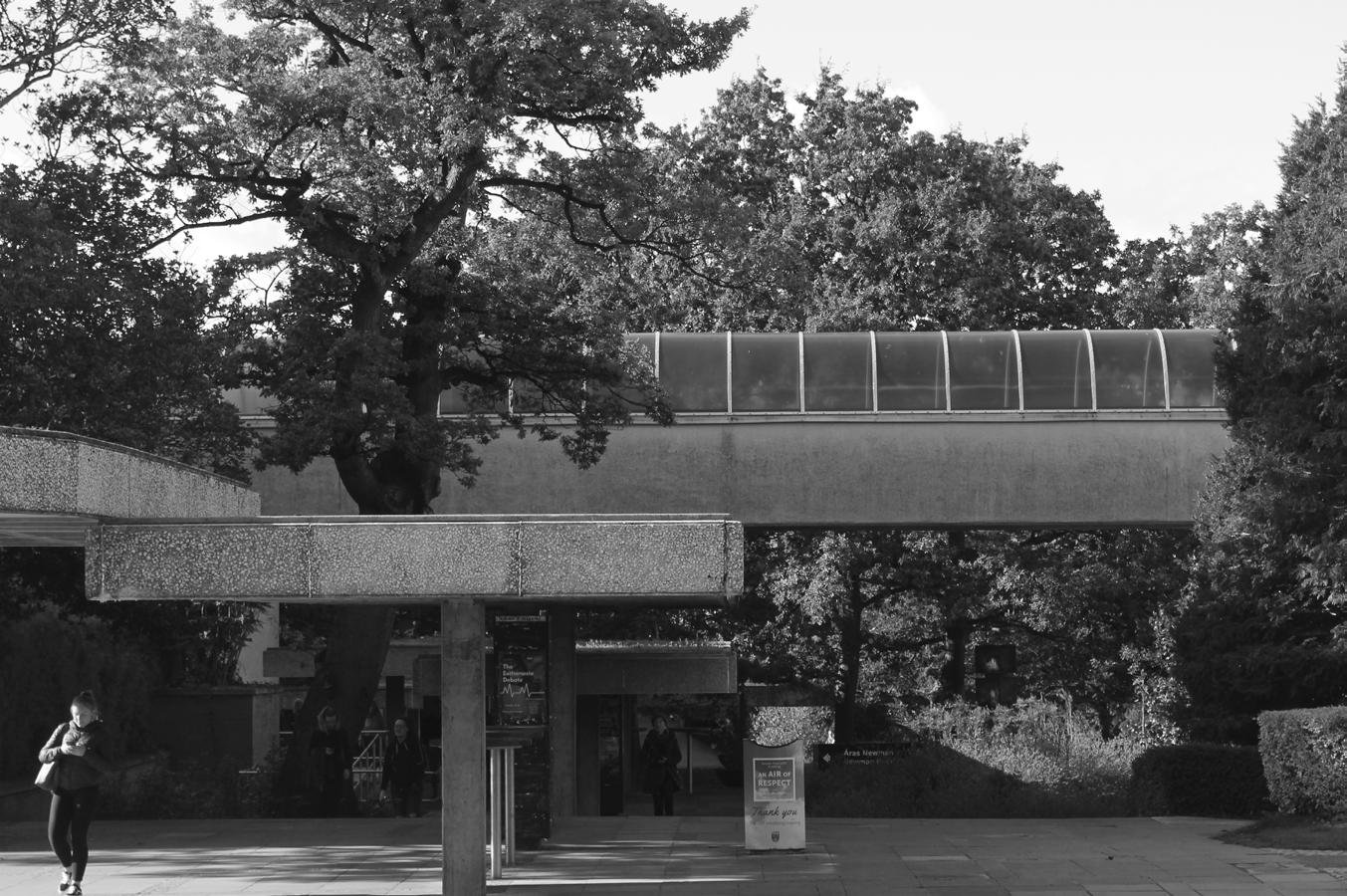
On a tour through the buildings of UCD The University Observer discovered that every classroom it had access to was set up following the capacity as outlined by 1m social distancing; for instance Room 116 in the UCD School of Veterinary Medicine, and classrooms in Newman (Fig 1 and 2). In some classrooms, the number of seats set out even exceeded the maximum capacity outlined on the door. In room H1.51 in the Science Hub, there were 62 chairs set out despite stating the capacity held 56 (Fig 3).

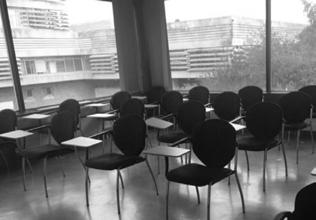
“The HEI should have a protocol in place to enable safe access to indoor space. Where practical a one-way system and or marked lanes should be used to separate flow of people into, out of and within the building”.
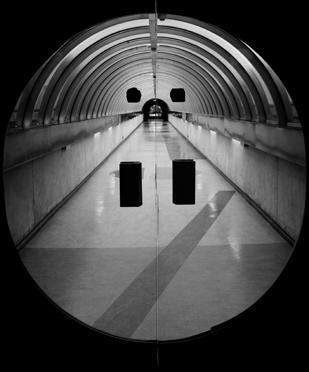
While most buildings highlighted one-way systems on stairways or the front doors, there were little to no signage throughout any of the buildings. Upon entering, there was no visual indicator that one-way systems should be observed. This was coupled with a low number of hand sanitizers provided throughout the buildings, even when walking through numerous ‘pull’ doors and necessary touch-points.
Many of the buildings visited byThe University Observer differed in their approach to social distancing, one-way systems, capacities, and spacing. Even within the different wings and storeys of Science, the standards differed. It leads to the question; who is in charge of the implementation of Covid-19 restrictions in UCD?
UCDSU HOUSING OFFICER NOT REPLACED
SOPHIE FINN
THE UCDSU chose not to renew the contracts of several Student Union staff, including the housing officer. The decision was made due to lack of income following the closure of UCDSU shops due to Covid-19.
The former Housing Officer was let go at the end of their contract. They had undertaken specific training programmes in order to offer qualified accommodation advice and support to UCD students.
During their time employed by UCDSU, the previous Housing Officer campaigned for student renters, as well as offering students significant support and advice with housing issues and problems.
When asked for comment, UCDSU President Conor Anderson stated that the Students’ Union “have not yet employed a new Housing Officer and will likely be
PHOTOGRAPH CREDIT: DOMINIC DALY
unable to until our finances get back to normal”. Anderson expressed regret at the “sad circumstances” of having to let the Housing Officer go due to the current realities of UCDSU’s “economic crunch”.
Anderson outlined that until a replacement is employed, “housing will fall under the remit of myself and [Welfare Officer]Ruairí Power”, adding that UCDSU will “continue to work closely with our partners in Threshold to provide that advice and advocacy”. This will add a significant increase to Power and Anderson’s responsibilities within UCDSU.
Although now sharing the role of Housing Officer, Anderson admitted that he and Power have not had specific housing advocacy training. However, he added that the Student Union is “in line for more training”.
The need for accommodation support and advice is particularly heightened with the current
(CONTINUED ON PAGE 2)
pandemic. Following UCD’s recent decision to maintain online learning for the remainder of the trimester, many students have found themselves stuck with year-long leases in rented accommodation in Dublin when they could have remained at home, and are now seeking ways to end these leases. Students in UCD accommodation may also need advice as to what exactly they can and can’t do to avoid sanctions, for example, it’s common practice for students in accommodation to frequently mingle with other apartments and buildings, and this may now result in sanctions.
ELECTORAL COLLEGE EXPLAINED LAW AND POLITICS PAGE 14

ATTENTION TURNS TO ATHENRY FOR SHEEP WEEK AGRICULTURE & RURAL PAGE 11
OTWO INTERVIEWS: JACK RUA FEATURE OTWO PAGE 1

OTWO REVIEWS: THE DEVIL ALL THE TIME FILM & TV OTWO PAGE 10

22ND SEPTEMBER 2020 1
OCTOBER 13TH 2020 VOLUME XXVII ISSUE 2 UNIVERSITYOBSERVER.IE
DOIREANN DE COURCY MAC DONNELL
BREAKDOWNS ON RACIAL AND ETHNIC DIVERSITY IN UNIVERSITY STAFF IN IRELAND TO BECOME COMPULSORY P2
UCDSU MAINTAIN CLASS REP NUMBERS, DESPITE COVID CONCERNS NEWS, PG 3
ROEBUCK CASTLE CLOSED NEWS PG 3
FIG. 3
FIG. 2
FIG. 1
PHOTOGRAPH CREDIT: DOMINIC DALY
STUDENT TRACKING
According to the Implementation Guidelines; “The HEI, to the greatest extent possible, should record attendance at all events and retain records for 4 weeks in case required for contact tracing purposes”. This is understood to mean, in practical terms, that the seat of every student within every theatre hall and classroom should be tracked and retained for four weeks. The Implementation Guidelines indicate that it is the responsibility of the University. However, the limited number of signs which highlight that seat numbers should be recorded, designate it as the responsibility of students. One of very few signs The University Observer saw asking students to record their seat number was on the front door of Science West. None of the signs on the doors of the Newman auditoriums or Quinn classrooms asked students to record seat numbers.
While some posters are hanging asking students to use the COVID Tracker App, the feeble attempts to plan to record student movement within lectures are jarring.
ACCOMMODATION
According to the Implementation Guidelines; “Residents in student accommodation should be given clear direction as to who to contact and an immediate pathway of access to an area where they can effectively self-isolate if required”. “Control of access to student accommodation is particularly challenging because if students are unwell and need to self-isolate and rest it is natural that they will go to their residence. If this is to be discouraged, it may require that there is some alternative residential space that can be made available at short notice to students in campus residences who develop symptoms of COVID-19”.
When asked “What protocols are in place for students when they are a suspected case?” and “In the UCD Residences FAQs, it explains that a Covid-19 quarantine area has been established. Where is it and what are the protocols” no direct answer was given. A spokesperson for UCD Estate Services responded: “When there is a suspected case, the student should follow all HSE guidelines and also inform the University Duty Manager by calling 7999 who will offer guidance on the steps they should take to ensure their wellbeing and the wellbeing of their fellow students”.
While the Implementation Guidelines stated; “Students who share a common food preparation area should be advised to limit time spent with others in the shared space and to wear face coverings other than when eating”, the guidance outlined in the UCD Residences COVID FAQs stated that; “Within the apartments, the shared spaces (living room, kitchen etc) are the responsibility of each student.” A student in accommodation told the University Observer that at no stage was she told that she should wear a mask within her own apartment.
MEDICAL
“The HEI should encourage all members of its community to register with a GP (student health unit or other GP) to whom they have access if they require medical attention for COVID-19.”
“Pathways for access to healthcare should be clear so that people know who to contact for access to healthcare at any time if they develop symptoms of illness”.
“The HEI should encourage members of the campus community to signal to a central point in the HEI early if they are diagnosed with COVID-19 according to the Implementation guidelines”.
On September 17th The University Observer was told by a source within Trinity College that Trinity was planning to open a Covid-19 testing centre in anticipation of the return to campus. At the time of publication, it is believed that UCD does not have the provision for testing in place, despite the Implementation Guidelines highlighting the need for them.
On the 8th of October The University Observer asked UCD Student Services;
1. Are there Covid-19 testing facilities in the UCD Health service? If so, when were they established?
2. As part of UCD Health services, are there isolation facilities available to students/staff?
3. Do you believe that, with the measures that were in place prior to the introduction of Level 3 restrictions on September 18th, UCD intended to return students to campus as promised?
At the time of publication, The University Observer had received no reply.
FEES
The first instalment of fees for autumn trimester for all students was due on September 27th. While the Government imposed Level 4 restrictions on UCD three days prior to the commencement of the academic term, the announcement that UCD will not return to campus did not come until after all fees were due. Reflecting on the spring trimester of 2020, a Masters student told The University Observer; “I didn’t get the quality of the degree that I paid for, nor the experience that was meant to come with it”.
The spokesperson for UCD outlined;“Given our commitment to maximising the student campus experience and the amount of effort we had put in to planning this experience over summer, it was therefore with great sadness we complied with this direction. While initially there was hope that Level 3 restrictions would only last three weeks, recent developments have indicated that these restrictions will most likely last most of the coming trimester, and so it was with deep regret that we decided to confirm that the current arrangements will continue to apply for the entire trimester”
When asked “Did UCD intend to return students to campus as promised, prior to the introduction of Level 3 restrictions?” UCDSU President, Conor Anderson, responded: “Officially, yes, UCD had every intention of following through on all of its in-person offerings and was prevented from doing so only because of the increase in government restriction. However, given what I know of the planning that was going on at school level across the University, and the predictions of both myself and the other campus unions when it came to the likelihood of a second wave, I have a hard time believing that official line.
“If I, as a 31 year old with a Master’s in Archaeology, was able to correctly predict that we were going to end up in this position (of a second wave and a second lockdown forcing classes online), I don’t understand how the UMT, consisting as it does of multiple senior academics, were truly blind-sided by this development. It is of course only speculation, but my suspicion is that UCD management were more cognizant of the risk than they let on”.
The University Observer asked The Office of the President; “Did UCD intend to return students to campus as promised, prior to the introduction of Level 3 restrictions?”. A spokesperson for UCD responded:
“Many UCD faculty and staff spent the Summer preparing to maximise on-campus teaching for students within the constraints of public health guidelines. UCD was intimately involved in the negotiations which led to the issuing of the document ‘Implementation Guidelines for Public Health Measures in Higher Education Institutions (HEIs)’ which was released on August 6 2020. Our plans were modified to ensure compliance with these guidelines and timetables were prepared accordingly.
“Our guiding principle always was and continues to be to provide the best possible student learning journey and to maximise the student experience to the greatest extent possible under public health guidelines and Government direction.”
The question asked by The University Observer to the Office of The President, Andrew Deeks, The Registrar, Mark Rogers, and The UCD Student Health & Counselling Services was “Did UCD intend to return students to campus as promised, prior to the introduction of Level 3 restrictions?”. At the time of publication, the Registrar and UCD Student Services had not replied. The answer from the President was not ‘yes’.
This would lead The University Observer to believe that the answer is ‘no’.
The statement from UCD has been published in full online.
EUROPEAN COMMISSION SUGGESTS THAT IRISH DEFAMATION LAWS HINDER THE MEDIA

MIKE STEBENS
THE European Commission warns that the freedom of expression and a free press are severely limited by current Irish legislation.
The Commission recently published its ‘2020 Rule of Law Report’, which pointed the finger at Ireland’s defamation law, asking for reforms. A process of review of defamation legislation has been underway for a long time and is likely to come to a conclusion in the near future.
The main object of concern is the 2009 Defamation Act. The Act makes Ireland one of the most restrictive countries in Europe on the issue. Ireland is, for instance, the only country in the EU where defamation cases are brought before a jury. This creates a situation where defamation cases can be extremely expensive for publishers to defend. However, since they are not only linked to high costs but have become frequent as well, it is feared that the media ends up censoring itself. This poses a serious threat to investigative journalism. The report by the European Commission also makes it clear that corruption is a problem in Ireland, stating that ‘Ireland’s defamation laws raise concerns as regards the ability of the press to expose corruption’.
If a publisher were up against a wealthy person, the latter individual would be able to bankrupt the former. In practice, once proceedings are issued in court, there are two options. Either the trial ends up before a jury, where no one can be sure what the final verdict will be, or an agreement is reached between both sides, with the publishing company retreating, apologisingand reaching for a settlement. At some point, most publishers will be forced to go for the second option if they do not want to risk ruining their finances. An immensely wealthy opponent can choose to prolong the trial for a long time, which can force the publishing company to settle, thus winning the case, regardless of whether they are right or wrong. The whole process can end up costing the publishing house hundreds of thousands of euro.
The consequence that the report draws from this is that defamation cases may have “a chilling effect on media’s right to freedom of expression and therefore require particularly careful scrutiny” -the threat of being possibly sued would be sufficient to provoke anticipatory obedience by journalists. NewsBrands, who represent the national news publishing industry, say that “the media’s role as the public’s watchdog and its
ability to reveal matters of important public interest” are constrained. They regret that in the past, some matters of public concern have not been revealed, due to the current laws and what they entail.
The present administration has promised to reform the defamation laws to find a middle ground between the legitimate protection of one’s reputation and freedom of the press. The content of this proposed reformation remains unclear. It must abide by the message that the Committee of Ministers of the Council of Europe promoted in 2016, when it declared that every member state needed “a comprehensive framework that enables journalists and other media actors to contribute to public debate effectively and without fear”.
NewsBrands has proposed more concrete ideas. They demand that claimants should first have to prove serious harm to their reputation before a case will proceed to court. Furthermore, they call for a cap on damages to get more in line with other European countries and to abolish the juries, since these prolong the trial unnecessarily, thus increasing the costs, and because of their unpredictable judgment.
BREAKDOWNS ON RACIAL AND ETHNIC DIVERSITY IN UNIVERSITY STAFF IN IRELAND TO BECOME COMPULSORY
SOPHIE FINN
THE Higher Education Authority (HEA) has outlined that third-level institutions must provide an annual breakdown of ethnic diversity among University staff from December 2020.
The HEA has also outlined that it will be collecting information on race equality amongst higher education staff through a national survey. The categories of data that will be collected were chosen with the involvement of higher education institutes, through the Athena SWAN Ireland Intersectionality Working Group.
In September the British Council in Ireland and the Royal Irish Academy issued a report emphasising the urgency of publishing breakdowns of ethnic diversity among Irish academia in order to highlight and tackle the lack of diversity. The group welcomed the news that the HEA would begin collating and publishing these figures, stating that it’s “really positive” to see this progression.
Before this implementation, there was no centralised database providing information on the ethnic and racial diversity in Irish academia.
The report by the British Council in Ireland and the Royal Irish Academy was carried out with the aim to help bring about change in the academic community and involved a discussion on ethnicity, race, diversity and inclusion. The paper discussed ideas to encourage greater inclusion of underrepresented groups such as the Irish Travelling community, Black, Asian and other ethnic minorities.
In creating the report, the group utilised the limited data on diversity breakdowns available from university websites and the HEA. The lack of data on race and ethnicity in Irish Higher Education was highlighted, it was emphasised that a lack of data collection has hindered the HEA in ensuring sufficient diversity, and increasing the involvement of underrepresented groups.
The report also indicates that based on the limited
data Ireland appears to suffer from a severe lack of diversity in Higher Education Institutions. The report suggested that there is only one full-time Black female professor employed in Ireland, however, there is no nationally verifiable data available to confirm this. Data on whether Irish Travellers, Asians, and other ethnic minorities are present in academia is also not verifiable but it is thought to be equally low.
Dr Ebun Joseph, a Nigerian-Irish lecturer and creator of the first Black Studies module in Ireland, which can be found in UCD, emphasised to The Journal the importance of the collection of this data, as without it Universities have the ability to avoid dealing with a diversity issue.
The report indicated that figures from the UK suggest that 16% of all UK academics identified as Black in 2019, and in 2018-19 out of those working in managerial roles in academia, twenty-five people identified as Asian, mixed or other ethnicities, while none identified as Black.
As Ireland does not have specific data for diversity in Higher Education, these figures were contrasted against a 2018 study by the Irish Human Rights and Equality Commission and the ESRI. The study found that those from the Black non-Irish group are less than half as likely to be employed than the White Irish group, and five times as likely to experience discrimination in the search for work. People from the Black Irish group are twice as likely to experience discrimination when seeking work, and just under three and a half time as likely to experience discrimination in the workplace in comparison to the White Irish group.
The Black non-Irish and Black Irish groups were also much less likely to hold a managerial role. The Asian Irish group was found to have similar rates of employment compared to the white Irish group, but are almost twice as likely to experience workplace discrimination.
The report also found that members of minority groups feel an immense personal sense of responsibility to push for greater equality and change in their Higher Education Institute, and the pressure of this advocacy role was difficult to balance with the academic work and career goals. Although there was no verifiable data regarding Irish Travellers in Irish academia, the report suggests the data would likely mirror the low rate of Irish Traveller students attending Higher Education Institutes.
UCD has a range of initiatives to support multiculturalism as part of the University’s Equality, Diversity and Inclusion Policy (EDI), including the Multicultural Employee Network of UCD and the, currently in the works, Ethnic Diversity/Race Working Group. UCD also participates in national networks which address EDI issues, such as the National Athena Swan Committee.
13Ú DEIREADH FÓMHAIR 2020 2 NEWS
PHOTO CREDIT: DOMINIC DALY
(UCD
DID NOT IMPLEMENT ALL GUIDELINES FOR A SAFE RETURN TO CAMPUS: CONTINUED FROM PAGE 1)
NATIONAL STUDENT MENTAL HEALTH AND SUICIDE PREVENTION FRAMEWORK LAUNCHED ON WORLD MENTAL HEALTH DAY
ON World Mental Health Day, October 10th, The Department of Further and Higher Education, Research, Innovation and Science launched a new National Framework to tackle the issue of mental health and suicide in students of further and higher eductation.
The Framework has been developed in conjunction with the Higher Education Authority and the Department of Health’s ‘Connecting for Life - Ireland’s National Strategy to Reduce Suicide’. According to the Department of Further and Higher Education, it is design to help ‘address any gaps which might exist in the prevention of suicide in higher education’.
In a statement put out by the department, Minister Simon Harris said: “The theme this year is Mental Health for All –Greater Investment – Greater Access.
“Mental health has been defined by the World Health Organization as ‘a state of wellbeing in which the individual recognises their own abilities and is able to cope with normal daily stresses in life. This framework builds on this premise and encourages our HEIs to act in nine specific areas – to lead, collaborate, educate, engage, identify, support, respond, transition and improve.
“The number one health issue for young people in Ireland today remains concerns or worries around their mental health. These concerns have been compounded by the isolation and [uncertainty] brought forward by the COVID-19 pandemic... We know many students face mental health difficulties but we also know some students will face greater challenges than others including those in the LGBTQ+ community, international students, asylum seekers, mature students”.
A text service has been established to support students in distress. The text number 50808 is a free and anonymous service, supported by 300 volunteers; “50808 is a free text service, providing everything from a calming chat to support for people going through [...] mental health difficulties. Volunteers are available 24/7 for anonymous, supportive text conversations. Text your institution keyword to 50808”.
Ruairí Power, UCDSU Welfare Officer, welcomed the launch of the National Framework: “The Students’ Union welcomes the launch of the Framework and commend the work of all those involved, particularly Dr. Tríona Byrne, Clinical Lead of the UCD Student Counselling Service. We also thank the UCD Psychology department for their immense contribution to Youth Mental Health research that has played a huge role in the development of the framework.
ROEBUCK CASTLE CLOSED
ROEBUCK Castle will cease to operate as on-campus accommodation for this trimester, the University Observer has learned.
In an email to prospective tenants on Wednesday, September 30th, two days after classes had commenced for first-year students and over a week after the rest of the taught programmes in the university had started back, UCD Commercial, Residential, and Hospitality services informed residents that; “In light of the current environment we regret that it is no longer possible to offer a catered option for students in the Roebuck Castle residences. We understand that this may be disappointing for you, however it is a difficult decision we have to take”.
Students were offered to relocate to their Roebuck Castle booking to other on-campus accommodation, which could be either an en-suite room or a cheaper shared bathroom.
Roebuck Castle is the only catered accommodation offered on-campus. Residents were informed that “Whilst [the alternative accommodations are all] self-
catering option[s], you will be refunded your Roebuck Castle Catering fee”. However, in a follow-up email sent on Thursday October 8th, students were informed of a “potential catering alternative to that offered by Roebuck Castle”.
“The catering would be supplied by Pi Restaurant and due to the reduced opening times on site it would differ from the old Roebuck meal plan. The Pi Restaurant can offer a meal plan which includes two meals every day from Monday to Friday in Pi Restaurant itself. The breakfast would include a hot five item breakfast with tea or coffee and lunch would be a hot main course with tea/coffee/ water each day.
“The cost would be €13 per person per day and students would need to pay in Pi on Monday for the week ahead. Please note, it’s not possible to include this meal plan in the original Roebuck Castle catered payment. Also, due to the current COVID-19 restrictions it’s currently only possible to pay in weekly installments for the foreseeable future”.
“The need for a University-Wide Mental Health Oversight Taskforce is recognised in the framework and is a model which this year’s sabbatical team Students’ Union have advocated for since the start of our term.
“In order to cope with additional demand for student mental health supports, the University must make a clear commitment to increasing the capacity of the Student Counselling service as a matter of urgency. We are calling for a fully costed plan for the future of mental health support services and initiatives on campus to be developed, which will set out clear funding and recruitment targets for UCD.
“The Students’ Union also recognises our role in promoting positive mental health among students and doing whatever we can to support those who are experiencing mental health difficulties throughout what is an incredibly difficult period for students. We look forward to working with support units across campus to achieve this.”
Prior to the closing of Roebuck Castle, the catered option offered “lunch and evening meal, Monday to Friday, with brunch on Saturday and Sunday. Meals are served in the Eat AT UCD Cafe on the Ground floor of Roebuck Castle residence. Lunch entitlement on weekdays can also be claimed in other Eat at UCD Cafes including PULSE Cafe and Earls Deli across the Belfield campus”. If used every week day, in the same way a student would have used Roebuck Castle, the new plan offered will cost €65 a week for 10 meals, and €975 for the same 15-week period as outlined by the UCD Residences website for the autumn trimester.
According to the UCD Residence Webpage ‘Living at UCD’, “When you pay rent in catered accommodation, you are paying for your accommodation and a set number of meals in advance and you will get 12 meals per week”. When directly compared with Glenomena residences, which also house en-suite rooms, Roebuck Castle was advertised as €1005 more expensive on the relevant UCD Residences websites. Presuming this extra fee would go towards the cost of catering, the cost of catering per week for the 15 weeks indicated would have been €67 for 12
meals. In addition to the two extra meals per week, this would have included a main evening meal as opposed to a breakfast.
While the number of students relocated is unclear, there was appropriate space throughout the rest of the student accommodation to accommodate all prospective tenants. When asked why Roebuck Castle was closed, and whether all students had been relocated on-campus, a spokesperson for UCD Estate Services told The University Observer “The low number of students in Roebuck Castle have been relocated to alternative residences”.
UCDSU MAINTAIN CLASS REP NUMBERS, DESPITE COVID CONCERNS
HEATHER REYNOLDS
CLASS Representative nomination numbers have only decreased by 4.5% on last year’s numbers at this time, despite worries of a much larger decrease due to COVID restrictions.
At present, UCDSU has received 231 valid nominations for Class Reps, 92 of which were uncontested and so have automatically received their seats. This is a noticeably small downturn from last year’s numbers at the initial Class Rep Election. They had 242 valid nominations, across 94 constituencies, in comparison to this year’s 89 constituencies. The three most heavily contested constituencies are Stage 1 and 2 Science, with 16 and 11 students respectively running for a total of 6 seats, and Stage 1 Engineering, with 11 students running for 3 seats.
In previous years, Class Rep nominations and elections have been one of the SU’s primary goals in the early stages of the academic year. Throughout Orientation Week and Freshers Week, Sabbatical Officers, SU staff, and Campaigns Officers spend hours handing out nomination forms and promoting this central aspect of the SU council using every platform available to them. This year, none of the in-person promotion has been possible.
Leighton Gray, this year’s Campaigns and Engagement Officer, spoke to The University Observer about how glad they are with this outcome, particularly since there was an “active interest from first-years to graduate students”, which was “a welcome surprise since we could not meet these students face to face.”
Commenting on previous years, they said: “Our main advertisement for Class Rep recruitment is at Orientation Week, Freshers Week, Dean’s welcomes, lecture addressing, and the student email, none of which were available during the nomination period this year.” As for their process this year, Gray says that “I’m glad we were able to reach as many interested students as possible with all of our activities online.”
They hope to further expand the SU Council in the upcoming by-elections, “which already have had significant interest”, as well as through the upcoming Campaign and Ents forum elections, for which the nominations are already open. Nominations for these positions close at midday on October 19th.
The remaining 127 candidates will be voted upon on the 14-15 of October via http://vote.ucdsu.ie. Ents and Campaign forum elections are due to take place the week of October 19th.
BREACHES OF SOCIAL DISTANCING HAVE OCCURED IN STUDENT RESIDENCES.
HEATHER REYNOLDS
UCD Residences have confirmed in an email that there have been breaches of COVID-19 guidelines in student residences that are currently being processed as per the residential policies.
In an email to The University Observer, a spokesperson from UCD Estates stated “There have been some breaches of the residential policies are they are currently going through the appropriates processes as detailed in the residential policies” Currently, the nature and number of these breaches is not confirmed, however it should be noted that what qualifies as a breach in student residences is different to that in the general population at Level 3. As it stands, students in UCD residences are not permitted to allow guests of any sort in their accommodation, contrary to current guidelines which allow for one visitor from one other household, nor are they allowed to visit the apartments of other students, This is enable each apartment to act as a “pod” to contain the spread of Covid-19.
Students in residences are instead encouraged to socialise outside, or in the open shared spaces on campus. The decision to not permit guests in student residences will be reviewed upon changes in government guidelines on social distancing.
There are three categories of breach in UCD residences, which can result in any of the following: a verbal warning, a formal meeting with a member of the Estate Team, and finally a formal referral to the Registrar or Dean of Students. These processes can end in reprimands, fines, and terminations of license, among other outcomes.
Any fine or revoking of license can be appealed within 7 days of the sanction occuring. The decision at the end of this appeal will be considered final.
13TH OCTOBER 2020 3 NEWS
DOIREANN DE COURCY MAC DONNELL
DOIREANN DE COURCY MAC DONNELL
PHOTO CREDIT: SINÉAD MOHAN
PHOTO CREDIT: SINÉAD MOHAN
IRISH UNIVERSITY STUDENTS FACE EXPULSION FOR BREACH OF PUBLIC HEALTH GUIDELINES
SOPHIE FINN
University College Cork (UCC) confirmed that they have handed down temporary suspensions to 11 students pending the outcome of a hearing. The students have been suspended following the receipt of complaints from Campus Watch regarding a breach of student rules. In a statement issued on October 1st, the university outlined that “every case is considered on its merits and the principle of natural justice applies”. It is being considered whether the Campus Watch committee, which is comprised of UCC staff and student union members, or the Student Discipline Committee will handle the complaint. Students have a right to appeal any decision. UCC’s president, Professor John O’Halloran, warned students that a breach of Covid-19 guidelines could result in expulsion.
Following the controversial scenes at the Spanish Arch on Monday the 28th, National University of Ireland Galway (NUIG) has also stated that students may face expulsion for breach of public health guidelines.
However, it’s unclear what powers colleges have in relation to off-campus gatherings. As outlined by University of Limerick (UL), the feasibility of expulsions for students who organise activities off-campus is uncertain.
The Gardaí have been taking an active role in shutting down off-campus house parties. Gardaí reportedly shut down 35 parties in the Castletroy area of Limerick during the University’s Freshers Week, resulting in the arrest of 5 people for public order and trespass offences. Professor Kerstin Mey, President of UL, has reportedly accompanied the Gardaí on patrol to remind students of the importance of adhering to guidelines. A spokesperson for Professor Mey told The Irish Examiner that action can be taken through the Code of Conduct against students, outlining that, although there is no set sanction, potential penalties include “monetary, academic, suspension, and expulsion”.
However, Professor Mey told The Times that universities will find it difficult to penalise students who organise off-campus gatherings. Mey outlined that the difficulty arises due to the fact it’s impossible to find out what institution the students are from. She explained that as a university, they do not have the policing power to enter houses and ask for identification. The university is reliant on receiving complaints about students offcampus in order to take action. She said universities have the power to govern on-campus behaviour, but described the off-campus situation as more complex.
UCD Student Union (UCDSU) told The University Observer that they have already been contacted by UCD students living in student accommodation who have been affected by sanctions for breach of guidelines.
UCDSU President Conor Anderson explained that there has been a lack of clear communication from UCD to the students regarding what exact guidelines must be followed in UCD accommodation.
Anderson further outlined that although students must behave responsibly regarding public health, it is UCD who is at fault. He emphasised UCDSU’s position that it is UCD who is blameworthy for bringing students back in the middle of a pandemic, outlining that it is unreasonable to invite young students back to campus, then expecting them not to participate in social life.
There have not yet been any severe penalties imposed on UCD students. However, Anderson stated that if expulsion is threatened for breach of guidelines, UCDSU will be opposed to the measure.
UCD has outlined that if a student fails to adhere to public health guidelines the matter may be considered “through the disciplinary procedure of the UCD Student
LEAVING CERTIFICATE PREDICTED GRADES SYSTEM FOUND TO CONTAIN SIGNIFICANT ERRORS
KATIE LARKIN
TWO errors found in the coding system which was used in the standardization process of Leaving Certificate grades.
This information was announced on the 30th of September by Minister for Education, Norma Foley. This announcement was made over three weeks after the initial results came out, on September 7th. The error was found by Canadian firm Polymetrika International. It affected how students’ Junior Certificate grades were included in the calculation process. These errors resulted in 6,100 students receiving lower grades than they should have.
On Monday 5th of October, a third error was found which has led to almost 8,000 students receiving a higher grade than they should have. Foley has stated that no student will suffer consequences from the coding errors. The Labour Party have called for an enquiry into the coding system to establish if there are any further errors. US firm ETS has now been employed to look into additional errors within the coding system.
Students affected by their grades being lowered as a result of the error were to receive notice of this on Sunday, 4th of October. However, some students failed to receive justification of the changes from grades submitted by teachers.
Since the announcement was made in May by previous Minister for Education Joe McHugh that students were to receive predicted grades instead of sitting exams, uncertainty has loomed over the class of 2020. This uncertainty has not ended for some.
Around 6,000 students received a grade increase on Sunday. This is good news for the students who may have missed out on CAO offers due to the coding system. Round 1 of the CAO offers came out on the 11th of September, with the majority of college places filled by now. Up to 450 students will be hoping for a new CAO offer in Round 4 on the 8th of October as a result of a grade increase. It is reported that some colleges will authorise the CAO to issue offers to applicants that received an upgrade.
It will be difficult to allocate new places on high demand courses, such as Medicine and Dentistry. Students may have to defer until next year, said Norma Foley. Some 2,500 students have applied to the Department to sit their exams starting November 16th.
Professor Kerstin McKay, President of the University of Limerick has said while every effort will be made to accommodate extra students onto their programmes, “it may not be possible to accommodate everyone.”
Technological University Dublin President, Professor David Fitzpatrick, has said his University would make every effort to ensure these students are accommodated on their chosen courses as much as they can. Fitzpatrick has also said that students hoping for courses with mandatory placements, such as health and education related courses, will struggle the most to receive an offer for this year. He said dialogue is required with providers of placements to see what can be achieved for these students.
UCD are yet to comment on how they hope to accommodate any students receiving an offer in round 4.
DIASOC HOLD FORUM ON DISABILITY RIGHTS AT UCD
ANDREA ANDRES
THE Disability and Inclusion Awareness Society held a “Student Discussion Forum about Disability Rights at UCD” through Zoom on the 1st of October 2020. Its purpose was to discuss issues of accessibility and gather student opinion on this matter. It was chaired by Scout Graves. The forum was attended by nine participants overall, three of whom were from the UCD Students’ Union: Hannah Bryson, Education Officer, Carla Gummerson, Graduate Officer, and Ruairi Power, Welfare Officer.
Participants detailed their issues of general accessibility and how online learning is very disorganised. Participants also brought up the difficulty of navigating Brightspace and browsing the UCD website, with one participant describing the website as a “circle of pages that redirect each other”. According to participants, this disorganisation can make it very difficult for those who are neurodivergent.
Participants also discussed their experience of having the accommodations prescribed for them ignored or violated by academic staff. According to several participants, If they complain to university administration or UCD Access and Lifelong Learning (ALL), who prescribe the accommodations for students with disabilities, ALL suggests that they advocate for themselves, and there are no consequences for professors who have violated the accommodation.
During an investigation into the supports offered to students with disabilities last year, Dr. Anna Kelly, Director of ALL, told The University Observer “ “Students are assured that we have an ‘open door’ policy, and they are strongly encouraged to contact us when they need information, assistance, guidance or supports...
Following the student’s needs assessment, we contact the Module Coordinators each semester, outlining their responsibilities in supporting students with disabilities.
Information is also sent regularly to all University staff and faculty, and we also provide ongoing training opportunities”. It was not stated in that correspondence whether these training opportunities were compulsory, if staff had come to ALL looking for specific training, or what the exact nature of the training was.
Students in the forum also revealed the difficulties of being a disabled international student. Proving that their disability affects them is very difficult as their medical records are not Irish and they are required to be diagnosed by an Irish doctor.
The DIAsoc hope to host more online forums in the future.
COLLEGE TRIBUNE MOVE ONLINE FOR TRIMESTER
NATHAN YOUNG
THE College Tribune has announced that, due to teaching and learning remaining online for the remainder of the trimester, they shall also remain online only.
In a notice posted to their website on the 9th October, co-editors Luke Murphy and Stephen Kisbey-Green stated: “we regrettably can confirm The College Tribune will be posting content on our website only for the rest of the year”. In an email to The University Observer Murphy said that the decision was made “based on the
decision by UCD to remain online for the rest of 2020”
and that they are “hopeful that the turn of the year will re-introduce students to campus, and we will of course start printing when this happens”.
Last year the College Tribune projected a yearly expenditure of €8,014 before the closure of campus. When asked what impact this decision would have on finances, Murphy stated “We’re happy with how our finances are. We have a team who works incredibly hard
to ensure we’re in a strong financial position”. Speaking to The University Observer, Murphy also stated that content will not be affected, saying “we have strong and enthusiastic writers in all of our sections who have been putting out quality content”.
13Ú DEIREADH FÓMHAIR 2020 4
NEWS
PHOTOGRAPH CREDIT: DOMINIC DALY
Code of Conduct”. The compulsory student health declaration is also part of the body of the university’s Covid-19 response.
STUDENTS LEFT BEHIND YET AGAIN
MICHAEL TUOHY
Michael Tuohy delves into new figures which show a rise in Mental Health appointments, and asks who is to blame.
THE uncertainty around the return to college, with many students told only at the last minute that their course would be online, has led to a rise in anxiety, experts have said.
Jigsaw, a youth mental health charity, said that in July alone it offered 2,000 appointments to young people struggling with their mental health, a 50 per cent increase compared with the same month last year. It also offered 2,000 appointments in August, and Mike Mansfield, the charity’s director of communications and fundraising, said the “demand keeps going up”. People were “absolutely hugely anxious” because of the uncertainty about returning to college, Mr Mansfield added.
stay in accommodation that they no longer actually need. Some also have to deal with online learning with inadequate internet, if they even have access to the internet or a computer. And this isn’t even considering people who enjoy college as an escape from abusive or crowded homes. This is an absolute mess that UCD and the State have manipulated the student populace into, with no consideration for them in their decision-making.
are pressures that past generations have never had to deal with and will never fully understand. When all these issues pile up, where can we go? Mental health services are hard spots to find in the best of times. And once we step into lockdown again, these services will almost certainly all be full up and completely inaccessible for most. The effect this has on the young people of this country is solely on the shoulders of this government, and UCD shouldn’t be let off either. Their absolute greed means students will be isolated from their families and short on money for absolutely no reason other than to line the college’s pockets so that they can build an extension onto Deeks’ already lavish office. This is on UCD management’s head too.
If you are suffering with mental health difficulties at this time, please reach out to a friend, a family member, or someone you trust. There are also a number of services available to support you, such as Jigsaw (jigsawonline.ie), Pieta House (pieta.ie/contact), Mental Health Ireland (info@mentalhealthireland.ie), and several others which can be found on the HSE website (https://www2.hse.ie/services/mental-healthsupports-and-services-during-coronavirus/). Stay strong.
Niteline Dublin, an out-of-hours peer support service for third level students, said that calls relating to mental health had risen significantly on this time last year.
Since the service resumed last week, calls relating to mental health have made up 17.4 per cent of all calls, up from 3.1 per cent on the same week last year. Calls relating to stress also increased from 2.48 per cent last year to 8.7 per cent this year.
Although many students were told that they would have at least some classes in person, it was announced a fortnight ago by the state that all of the third-level institutions had been classed as Level Three under the Covid-19 Health Guidelines. At the time this meant that almost all lectures and most tutorials would be carried out online for between two and three weeks due to a rise in cases of the Coronavirus cases across the country. Then last week, UCD announced that all classes would be held online for the entire trimester. This has put students in a horrible position, with some having to pay for and
At the absolute best of times, UCD is a mess. A management body in charge that actively doesn’t care about its students has made life hard for everyone on campus that doesn’t have a rich family member paying extra cash into a fund for them. Money is constantly being put into new buildings that aren’t needed over necessary facilities, for example, Mental Health Services on campus. These services have been left behind in UCD, and this country in general, so it’s no surprise that no thought has been put into the subject by either party during the current pandemic. And where is there any mention of this in the media? Surely there would be some massive outcry about the effect this is having on the group of people that have been the lifeblood of this country throughout this pandemic? Nothing? Of course, nothing. The public would rather listen to the government-line of accusing young people (when they’re not giving out about Sinn Féin or laughing about the state of healthcare anywhere outside of Dublin) of flouting the rules and dragging us further into the abyss. No mention of the government’s absolute incompetence with their handling of outbreaks in meat factories, which were never shut down or checked despite screams over safety concerns from the workers inside them. No mention of their blatant uncaring attitude towards inhumane conditions in Direct Provision Centres. No attack on the shocking underfunding of healthcare services all over this island, especially the little to no investment in ICU beds that will lead us into another countrywide lockdown in just a few short days or weeks. Young people are to blame as always for all the ills of society. Of course, the constant blame and shame of being young and wanting to live a normal life in this country would lead to people having mental health issues. We can’t even try and build a life for ourselves without serious luck and an incredible amount of work. There
DEMOLITION OF O’RAHILLY HOME SPARKS DEBATE
Pleanála is or may be concerned’. He described it as ‘inappropriate’ for him ‘to make any comment on this matter as the law simply precludes me from doing so’.
Deputy Ward expressed his fears that “if this developer goes unpunished and is not punished in the strongest possible terms, then it will give the green light for more of our historical and cultural heritage to be destroyed”. Deputy O’Callaghan also appealed to the Minister to look at the bigger issue. Ireland would have “to recognise the importance of our revolutionary period”. He urged local authorities to determine which buildings are of historical importance in order to be able preserve Irish revolutionary history.
These statements lead us to ask if developers are generally too powerful, and whether Ireland is giving up too much of its history and culture to corporate housing firms? Clearly, it can be difficult to make the argument for the preservation of historic buildings in a city like Dublin that finds itself in a severe housing crisis. However, it is doubtful whether luxury apartments and ‘aparthotels’ will do much to address the issue. And what is the price that has to be paid?

Ireland is a country proud of its history, yet regularly seems to have trouble to preserve it. Last month’s prompt and controversial demolition of the O’Rahilly family home serves as the latest example. Michael Joseph O’Rahilly, better known under his pen name ‘The O’Rahilly’, was an Irish nationalist and Republican who participated in the 1916 Easter Rising in Dublin, where he was shot down by British machine guns. Not only had the house in question served as the home of O’Rahilly and his family from 1910 to 1916, it had also served as the headquarter for planning the revolt and hosted many of its leaders such as James Connolly and Patrick Pearse.
The National Trust for Ireland, An Taisce, argued the house was historically and socially significant and that it was “an attractive Edwardian villa-type design characteristic of the development of the inner suburbs in the late 19th and early 20th century”. Hence, according to the Department of Culture, Heritage and the Gaeltacht, the Edwardian building contributed to the preservation of the cultural identity of Ballsbridge. Multiple residents’ associations and heritage organisations had previously voiced their strong wish to keep the house standing. Despite this, An Bord Pleanàla decided to allow the O’Rahilly house to be torn down in order to be replaced with an apartment building and an ‘aparthotel’ complex.
Many politicians also have argued the case to conserve the historical site. The Dublin City Council had signalled that it was willing to put the house on the list of the National Inventory of Architectural Heritage. Development company Derryroe Ltd., aware of the fact that in all probability the O’Rahilly house would be put under heritage protection, decided to act fast and proceed with the demolition. It seems the company has a good chance of getting away with this act of malevolence that angered many Dublin residents without having to fear major consequences.
During a discussion in the Dáil, Taoiseach Michael Martin called the destruction wrong, as well as ‘absolutely shocking and unacceptable’ and said that he was ‘of the view that such iconic historic buildings and locations should be preserved’. Many other parliamentarians showed themselves to be appalled also. Fianna Fáil’s Jim O’Callaghan said that ‘the act of bulldozing was completely against the historical interests of the people of Dublin and Ireland’. Sinn Féin’s Mark Ward agreed and spoke of ‘an act of wanton vandalism on our revolutionary history’, which left him ‘shocked and saddened’. He declared that the house was ‘not significant in an architectural sense’, but ‘immensely important in an historical and cultural sense’. Both deputies stressed that it had only been a matter of time until the Dublin City Council would have put the building on the protected
structures list. Ward condemned ‘the arrogance of the developer to completely ignore the democratic will of the people’ and denounced the ‘systemic greed of some developers today’. O’Callaghan demanded the government to clarify how it would ‘ensure that buildings such as this, which exist throughout the country, are protected because of their historical importance’.
Peter Burke, Minister of State with responsibility for Local Government and Planning, referred to the Dublin City Council as the authority in charge which will start an investigation. Ward’s appeal for the Department to assist the council was rejected by Burke, who explained that ‘Ministers of State are specifically precluded from exercising any power or control in relation to any particular case with which a planning authority or An Bord
In its recent state, the O’Rahilly building may not have been much more than a quirky, old house in Ballsbridge, Dublin 4. It could however have been restored ,and even if it would probably have been impossible to turn into a tourist magnet, the site could have served as a small museum, recounting the life of O’Rahilly and his role in the Irish Revolution.
Generally speaking, if an application for a development project is made in such a place, then it should become standard that the responsible planning authorities instruct several historians to make a historical assessment of its cultural value. With public history and cultural heritage studies gaining in popularity in recent years, there are certainly more than enough experts that can comment on the value of historic places.
To end on a more positive note, members of Dublin City Council are currently demanding that the O’Rahilly house be rebuilt. Some are even asking for the development firm to pay the costs of the reconstruction.
13TH OCTOBER 2020 5
“At the absolute best of times, UCD is a mess”
COMMENT
“Of course the constant blame and shame of being young and wanting to live a normal life in this country would lead to people having mental health issues”
Mike Stebens examines whether Ireland is actually proud of its history
MIKE STEBENS
“…it is doubtful whether luxury apartments and ‘aparthotels’ will do much to address the issue”
ILLUSTRATION CREDIT: WILLIAM MURPHY
PHOTOGRAPH CREDIT: SINÉAD MOHAN
A WORLD TURNED UPSIDE DOWN?
BRIANNA WALSH
With the after-effects of the Covid-19 pandemic set to majorly affect the poor, Brianna Walsh asks whether it’s time we change how the world economic system works.

WHEN NPHET advised an imposition of level 5 restrictions across the Irish state, the contentiousness of Covid-19’s economic impacts could not have appeared starker. The discourse continues to rage on Twitter and throughout the media, sparring outrage across society as we encounter division; save lives or save the system we depend on to survive in the first place? Our businesses and livelihoods versus our health. A face off which leaves scars either way. What many politicians, journalists and tweeters fail to realise, however, is that the debate is long settled. This pandemic is not just the cause of economic devastation, it is a consequence of a structure that has been broken for years now. A structure that is in urgent need of reform.
What I have found notable since the very beginning of this catastrophe is how quickly we dismissed its existence until it coughed its way all over our own front doors. The disease and its effects have not sparked global economic disaster; they have opened the Western world’s eyes to a harsh economic reality that has always been there. One that we have been fortunate enough to get away with ignoring thus far. Dare I say we benefit from our ignorance?
Irish and Western economy. Recession looms, jobs are lost, and weak healthcare systems fail to carry Covid-19 on their backs. We are left to wonder why it all fell apart so swiftly. Covid-19 is arguably comparable to natural disaster, entrenched impoverishment, or colonial legacy. When such disaster hits, the exchange value system our economy is built upon crumbles, and those at the bottom find themselves buried.
What is “exchange value” though? Essentially, this is the idea that markets are the best way to run society, under which material productivity is the priority. The focus is on the facilitation of exchanges; producing goods and services that serve no wider purpose to society, but certainly make money. It is founded on the belief that people will purchase things that they want or need, and that consequently, these things are valuable or of “use”. In reality, all this does is stimulate economic growth for the wealthiest and reduces the quality and quantity of essential societal services, as privatisation and pointless employment prevail. Covid-19 has shone a light on what happens when this fragile system is hit and there are insufficient structures in place to deal with the aftermath, be it to our health or our wealth. What those at the helm must rapidly understand is that the world economic system has to change and not just in a minor way. At least if the Global North wants to survive another tragedy of this scale. As for the developing world and the environment; perhaps they will be the ones reaping long-awaited benefits as a result!
But how could the economy possibly be re-imagined?
Our market-focused economy that favours privatisation, globalisation, supply chains, and a capitalist agenda has been detrimental to human and environmental rights for decades. The 26 richest people on earth in 2018 had the same net worth as the poorest half of the world’s population, some 3.8 billion people. Global extractivist policies trap the Global South’s most vulnerable in cycles of poverty, in which their resources and labour, indiscriminate to age, are exploited at the expense of basic needs, adequate social structures and ecosystems.
All of a sudden, as a result of Covid-19, the poorest within more developed economies are starting to experience effects of a similar scale. Recent escalation highlights the impact that Coronavirus has had on the
And what may restrain this as we look forward to a hopefully brighter future? Currently, states such as the UK, Spain and Denmark are adopting a “state capitalism” approach, in which exchange value remains the focal point of the economy, but the state steps in to support the market in crisis. For example, the extension of welfare supports and the nationalisation of certain services. However, the longevity of this approach is questionable as a vaccine remains a distant goal. In addition, it does little to implement the sustainable cooperation needed to affect the global change necessary on a wider level.
If these measures are to be extended, this pandemic could provide the platform to make significant socio-economic change in the adaptation of a state socialist system. Despite the persistent wariness of authoritarianism, if done well, such an economic shift could successfully refocus society’s gaze from growth to sustenance, so that when disaster does strike, basic provisions such as healthcare and housing are prepared and freely available for those most
affected. In addition, this is an opportunity to finally make concrete efforts to tackle the impending climate crisis. Amsterdam’s authorities are planning to adopt Raworth’s “doughnut” model in efforts to mend their post-Covid economy. The doughnut contains the minimum we need to lead a good life at its centre and places the ecosystem at its outer ring. In the middle lies the balance; where everyone’s needs are met without damaging the resources of our planet that we rely on.
STUDENTS MISLEAD BY UCD AND GOVERNMENT
begin to reassess and restate their policies on allowing students back up to campus. Initially, it had been the hope and intention of colleges to accommodate for as many on-campus classes as possible, but changing circumstances have left them with no other choice but to now lockdown for the entire trimester. Who could have predicted this? It’s not like people have been saying it since the beginning of the year, definitely not. Why would UCD lie to us about being on campus just to make sure people shell out for their ridiculously high rent accommodation?
Students are angry, and students have every right to be.
The Coronavirus has shown us one thing for definite; namely, what we should not be doing. The dangers of a capitalistic market economy has finally hit home. The Coronavirus has shaken us in a way that the financial crisis of 2008 and eco-degradation clearly never could. It has taken the elderly and sick from us, exhausted our frontline workers and made many more redundant. The focus on economic growth, privatisation, and global value chains is no longer just unsustainable for the Global South and the environment, it is unfeasible for everybody. What we should replace the system with is still up for discussion. It is essential that we have this conversation, and that we have it together. The final thing this pandemic has taught me? In times of urgent, universal deprivation, we have the capacity to do a lot more than we think. Willpower, resources, and human solidarity are there if we really need them. So why wait for necessity? Why wait for a third wave?
IT was all going a little too well, wasn’t it?
Schools had reopened relatively successfully, colleges were looking to push on with the 2020/21 academic year, and students across the country were looking forward to getting their first taste of normality in 7 months.
But alas, in politics, resting on your laurels is akin to the swimmer who gets tired of fighting the waves, preferring instead to tread water. It doesn’t take long for the sharks to start circling.
And circle they have. The reopening of schools has been jeopardised by rising cases of Covid-19 in cities such as Dublin, Cork, and Limerick. Leaving Cert students were left understandably surprised and upset when earlier this month it was revealed that a computing error had downgraded some 6,500 students. Finally, even colleges had to
At the heart of the issue is the problem of accommodation costs. Many students around the country and internationally in the build-up to the academic year were sold accommodation on- and off-campus under the pretence that it would be necessary for the year ahead. On-campus accommodation is a notoriously pricey undertaking, and so for it to be suddenly declared non-essential means that many people have now been fraudulently sold accommodation that they do not need. It’s been written and discussed for months that it was clear this would happen. UCD had to have known this was coming. Fundamentally, it seems that a case of opportunism on the colleges’ behalf and at the expense of the students has taken hold.
Of course, campus accommodation can easily be cancelled, and though the rent for the time spent hoping campus would reopen can’t be reclaimed, the rest of the costs can be. However, for students who were not lucky enough to receive an offer of oncampus accommodation, and instead were forced to invest in private accommodation, the path to reclaiming payments is not so rosy. With many locations having a minimum lease of one year on private properties, few provisions have been made for students who now find themselves without a reason to attend college. At the time of writing, the government has yet to give a definitive reassurance to these students directly, leaving them in dire uncertainty, and at the mercy of opportunistic landlords.
Students are angry at the situations that their colleges have left them in with regards to accommodation, but it also seems that students are being unfairly penalised for breaching Covid-19 regulations. Students as a whole are one of the categories of people that are the least likely to suffer severe consequences from the disease but have been roundly criticised in the media for attending house parties and the like. Indeed, in the past week, there have been numerous student house parties shut down by Gardaí, including a single night in Limerick where 35 such parties were shut down. In addition, UCC attracted widespread controversy last week when it came to light that 11 students had been suspended for breaching Covid-19 guidelines, while figures such as Judge Séamus Woulfe faces only minimal disciplinary measures for similar offences. At the same time, a 500 person gathering, protesting the use of face coverings, was allowed to take place in the centre of Dublin with little to no restraint by Gardaí. Why then, is it one rule for students, and another rule for the general public?
Students did not cause this pandemic, but they certainly have had to sacrifice an enormous part of their social, academic, and financial development in order to contain it. Perhaps disproportionately so. By all accounts, the reopening of colleges has been bungled by poor management, blatant opportunism, and a lack of regard for student’s wellbeing. The government has been supporting students in rhetoric certainly, but it seems that this support has not translated to much action.
Students work in our hospitals for free, they do the essential jobs in retail we couldn’t survive without, and they enrich our society with fresh ideas and thoughts. We shouldn’t be taking them for granted like this.
13Ú DEIREADH FÓMHAIR 2020 6
With UCD announcing that campus will be closed for the entire Trimester, Michael Bergin talks about the unsteady place this has put students into.
MICHAEL BERGIN
“The 26 richest people on earth in 2018 had the same net worth as the poorest half of the world’s population, some 3.8 billion people”
“Students did not cause this pandemic, but they certainly have had to sacrifice an enormous part of their social, academic, and financial development in order to contain it”
PHOTOGRAPH CREDIT: DOMINIC DALY
PHOTOGRAPH CREDIT: PIXABAY, MATRYX
COMMENT
“The coronavirus has shown us one thing for definite; namely, what we should not be doing”
HEAD TO HEAD
IN LIGHT OF RECENT CONTROVERSIES IN UCD’S LAWSOC AND TCD’S HISTORICAL SOCIETY, SHOULD DEBATING SOCIETIES PRIORITISE MEMBERS’ “COMFORT” OVER FREE SPEECH?
MICHAEL TUOHY AND NATHAN GEORGE YOUNG
FOR AGAINST
MICHAEL TUOHY NATHAN GEORGE YOUNG
THE Hist, the Trinity College Historical Society, is well within its rights to prioritise the welfare of its members over symbolic ‘free speech’. I’d further add that free speech does not mean everyone is owed a platform. The Hist can support individuals having the right to express themselves without owing them a medal and an audience. Particularly when the groups Dawkins targets and belittles are groups that have historically not been well represented in college debating societies. You do not need to write an article to criticise every decision made by a large society. This is not censorship. They can decide to invite and disinvite someone. They are not obliged to give everyone a platform. Something worth noting is that Dawkins was allegedly offered the opportunity to engage in a debate back when this arrangement was originally made, but according to former Hist committee members, he refused. He would only give an unquestioned talk. For everyone saying how The Hist can’t stomach debating ideas it doesn’t agree with, it doesn’t seem that Dawkins can either, not even with students. This makes a lot of sense since his blatantly hateful comments had no reasoning either. I don’t consider this to be about left or right-wing views (and in fact, Dawkins identifies as left-leaning) - I consider it to be about offensive, xenophobic views that would ostracise members of society who are already ostracised. I do not consider disinviting a speaker to be an affront to free speech. I think when Dawkins has called Islam the greatest force for evil in the world, it probably goes beyond discomfort. There are plenty of speakers of consequence who haven’t made incendiary and horrible statements like that and I think it’s quite right he not be given a medal and an audience, and that the Hist will still find plenty of thinkers of consequence to invite. Dawkins has continually said he believes Islam and Muslims are a threat to peace and a force for evil. I think that is pretty dehumanising. And he is not a valued expert on Islam, he is an evolutionary biologist. I am almost certain you can find a speaker of value who has managed to not dehumanise a large group of people if you really need to. But if you can’t, you can probably weigh-off someone’s contribution to discourse, and Dawkins being famous because he aggressively hates a religion while also an academic doesn’t actually cut the mustard. Personally, I would rather all the students who might have been ostracised and put off by his invitation feel free to engage with The Hist than Richard Dawkins get to address what would likely end up being an echo chamber of students who support him unequivocally.
In terms of the issues around the UCD LawSoc comedy debate over who’s better, Culchies or Dubs, it applies almost equally to what’s happening with Dawkins. There are major issues within UCD and especially in notably more middle to upper class membered societies like LawSoc, of casual classism and racism. These have gone on for years with everyone’s knowledge, with little to no fightback against it. When there were barbs thrown at them for it, these would be met with sneers, saying that people had no humour, that it was just a joke. But when you’re already a marginalised person in society, or when you’re already clearly being looked down upon for the colour of your skin, your accent, how you choose to act or dress, then these “jokes” just aren’t funny. They’re unnecessarily mean-spirited. The advertisement LawSoc put up on their Instagram never actually said anything that could be in any way construed as offensive to Dubs. It was horribly weighted, a chance for more privileged people to pile on the backs of people who already have a tough enough time in this country trying to do anything. That’s why there was such pushback, and all of that pushback was wholly warranted.
Everyone is entitled to their own opinion, and everyone is entitled to make a joke. The context of those opinions and jokes, and the after-effects of those opinions and jokes, need to be paid attention to. If you’re just going out of your way to be mean-spirited, then what’s the point? What does society gain from having a point of view that spouts hatred and violence? Absolutely nothing. So why let anyone have access to that point of view? It’s fine to have it as a tool to learn that “this isn’t the right way to go about this stuff” but we have major issues if people start agreeing with these messages. So kill these messages off. What use do we have for them?
THE perennial issue of free speech may seem tiresome, especially when viewed in the context of another two debating society controversies. Old hat it may be, but what only makes it all the more irritating is that serious analysis is lacking. While the exact details of each controversy matter, they matter less than the overall question of whether free speech is a worthy principle, and if it is, whether student societies are bastions of it.
The Dubs vs Culchies debate hosted online by the UCD Law Society (LawSoc) was clearly designed to assign the majority of students into one of two tribes and ask them to make cheap jokes at each other’s expense. This year it has been called classist by bored people online, apparently forgetting that Dublin has a large working-class population and that many of our most corrupt and scummy business owners and wealthy people live outside the pale.
As for the slightly more meaningful controversy around Professor Richard Dawkins, there are a few points that need addressing. For those unaware, Dawkins was recently disinvited from a speaking gig for the College Historical Society (Hist) in Trinity. First off, it is laughable to claim to have not been aware of Dawkins views on Islam, as the Professor is most famous in popular culture for his critiques of religion and the religious. Granted, the cited views on sexual assault presumably refer to his stupid “Dear Muslims” blogpost, which most people who weren’t big into new atheism in 2011 are not aware of. Nasty and insensitive as this blog post may have been, it wasn’t an expression of support for assault as is implied.
These details don’t matter much, however, as the reason for the revoked invite is not that Dawkins words would lead to harm, but that his speaking at the event would be at odds with “the comfort of [the Hist’s] membership”. Hist auditor Bríd O’Donnell has also pointed out that it was the previous committee and not her who chose to invite the Professor. This does little to change the circumstances of the disinvitation, save to justify her claim of ignorance of Dawkins’ views. That O’Donnell rescinded an invitation on the basis of members’ comfort remains.
There is a difficult question as to how organisations and media outlets choose who to give voice to. It is clearly the case that not all opinions need nor deserve an airing on all platforms. Besides, even if one were to believe in a Milsean view of free speech, it is simply impossible
to allow all views on all subjects the same platforms. It is further the case that university debating societies are neither the largest nor most culturally impactful of forums. That being said, the claim that disinviting people for their views is not a form of censorship is ridiculous. The difference between a rescinded invite and one never sent is that the former declares publicly that the speaker’s views are disallowed; the latter declares nothing.
There is not enough space on any newspaper page to write all the reasons that free speech is a worthy principle, but consider that the social and scientific progress of the past few hundred years required breaking with orthodoxy for the sake of reason and free inquiry. The enlightenment may be too oft mythologist in the liberal mind, but everything from medical dissections to queer liberation are only possible due to taboos being thwarted.
Dawkins, of course, will be able to express his views elsewhere. Far from this showing that there is no censorship, it shows that the censorship has failed. It confirmed every stereotype about students being overly sensitive. David Quinn got the opportunity once more to declare students overly sensitive on Today FM. The lessons of Nigel Farage’s infamous invitation and disinvitation, where the withdrawal of a platform made one of the most well-known bigots in Europe appear to be a martyr, were not learned.
Meanwhile, as students on the left declare that they care not for free speech, and debating society guests remain the only public battleground for these conversations, academics in the US who support the BDS (Boycott, Divestment and Sanctions) movement remain the single largest cohort denied academic freedom. UCD proposed changing its academic freedom policy document to appease the Chinese government, and Ireland’s libel laws make journalism aimed at rich and powerful people a dangerous game. It sure would be nice to have a principled position to fight these threats from.
REBUTTAL AGAINST REBUTTAL FOR
NATHAN GEORGE YOUNG
IT would truly be lovely to be able to discuss free speech and censorship without the advocate for the latter claiming they favour the former. To say that one supports free speech except if it’s offensive or harmful is to say one is in fact in favour of censorship.
That The Hist reserve the right to disinvite speakers is not in question. Again, the difference between not inviting a speaker, and inviting one and then disinviting them, while citing comfort of members, is the difference between choosing what activities best suit The Hist and publicly announcing support for censorship.
As for the Culchies vs Dubs debate being a genuine affront to good taste, I again say that class is not measured by proximity to cattle, and that the comparisons with racism and bigotry are a tad extreme. The most offensive part of LawSoc’s advertising is that the jokes employed are tired.
The concept of killing a message off is interesting. When Nigel Farrage was disinvited from The Hist, his message was hardly killed off in Ireland. Instead, he appeared martyred. From German Federal Law to American campus rules, censorship regimes that have ever had any efficacy against bigoted views have always been more effective in rooting out communist sympathisers or woke liberals. If a weapon truly capable of killing a message exists, your enemies will find it, and use it.
MICHAEL TUOHY
FIRSTLY, my opponent really glosses over the issues relating to the LawSoc debate. Painting Dublin as purely a haven for the well off, while not recognising the majority working-class population, and directly insulting anyone from outside of Dublin while just saying “Haha, Dubs like expensive coffee” is an inherently classist outlook, and it comes from a society who are well known for being inherently classist. We can’t just let people away with that behaviour when they have a history of it already. Classism is meaningful, especially in the Ireland we live in today, and it doesn’t deserve to be glossed over.
In relation to their comments about Richard Dawkins, Freedom of Speech does not mean Freedom from Consequences. It’s very likely the Hist Auditor didn’t know of Dawkins’ views on Islam before they were brought to them, and once brought up, they had every right to rescind the invitation. Dawkins can spout whatever hateful rhetoric he wants in a million places across the globe. Having him in and allowing him to talk about his horrible views would have given more credence to them than completely shutting it out. The Right don’t and haven’t listened to any left-wing politician or thinker in years. So why should we try and engage with that side when they won’t give an inch to us?
13TH OCTOBER 2020 7
COMMENT
WOMEN IN YOUTH WING POLITICS
NIAMH FINNEGAN
With only 36 female TDs, Niamh Finnegan asks if the number of women involved in youth wings can be translated into seats in the Dáil.
THE 2020 General Election saw 36 female TDs win seats in the Dáil. Despite a record number of women running for election (almost one in three candidates were women) female TDs only make up 22.5% of the Dáil. There are many young women involved in youth politics in UCD and other universities around the country. The women interviewed for this piece cite helping people and changing things for the better as their main influences for becoming involved in politics. The main concern is encouraging these university students to pursue a career in politics and stay engaged after they graduate.
Three out of five committee members in the UCD Social Democrats are women. When asked how they have encouraged young women to join their party, ViceAuditor Sophie Linnane, says that she never felt that she received targeted advertisements for her to join based on her gender, but also highlights how nice it is that the leaders of the main political party are both women, stating that she thinks this must have influenced her in some way. Linnane also highlighted how important equality and respect are in the society, “everyone is very much equal and everyone can say what they want to say”, and that everyone is encouraged to bring forward ideas.
Equality in the party is a key issue for Labour’s ViceChair and Events Officer, Lhamo Fitzsimons. “It’s a safe space, women can speak out, women are always at the forefront…, we’re not just on display.” Fitzsimons also highlights how at the beginning of every National Labour Youth meeting there is Safe Space training which encourages people to share their pronouns and identify the words or statements that people at the meeting might find offensive. This serves to create a more welcoming environment for everyone in Labour Youth.
Fitzsimons mentioned how delighted she was when she saw how many women were involved in youth politics in UCD, however, she pointed out that the 33rd Dáil has fewer female TDs than the 32nd. Fitzsimons would like to see training provided to women who don’t have family links to politics: “For a lot of people politics is hereditary, networking, it’s who do you know or who was your grandfather and for some women, they don’t
want to have to be depending on who their grandfather was.” She wants separate training and networking opportunities for women which would provide support and assistance when fighting what appears as “a huge old boys club”.
Both UCD Social Democrats and UCD Labour mention contact with the main political parties as one of the most positive and helpful parts of being involved in youth politics. Fitzsimons spoke about how people elected to the National Youth Wing sit on a council with the National Party and are encouraged to run social media campaigns for the main party. Labour Youth are a valued part of its senior party. “Our youth wing can be ahead of the charge when it comes to our National Party… sometimes we’re more progressive than the National Party itself but we’re great at leading the National Party forward… some of the older members might be slower to know an issue is there or to adopt an issue and we can help them with that.”
NUIG Welfare Officer, Róisín Nic Lochlainn, has also highlighted the “lad’s club” element to Ógra Shinn Féin. Nic Lochlaninn has been vocal about her experiences in youth politics and highlights how the misogyny experienced by her and fellow female members have resulted in some of them leaving the party. Speaking to The University Observer she mentions how three women on the National Youth Committee have resigned from their posts. Nic Lochlainn believes that there could always be more done to encourage more women into politics and says that there has to be more done to solve the misogynist behaviour of some of the members, to make Ógra Shinn Féin a more welcoming place for women. When asked what advice she would give to young women interested in getting involved in politics, she suggests trying to avoid youth wings ‘unless you want secondary school drama’. However, Nic Lochlainn still advises young women to get involved in politics, saying that if there’s a party that aligns with one’s values it’s worthwhile to try it out.
Linnane is hopeful that many members of the UCD Social Democrats will pursue a career in politics. She expressed how surprised she was at the level of contact
THE UNIVERSITY CLUB
BRIANNA WALSH
between the youth wing and the main party, mentioning Jennifer Whitmore, TD for Wicklow, attending their virtual AGM and meeting Róisín Shortall in the Dáil. As far as Linnane is concerned, the Social Democrats are aware of the need for young women in politics, and there is an effort to encourage young women from the youth wings to progress into mainstream politics. The Social Democrats are a relatively new party, only established in July 2015, but Linnane believes that there will be a pathway created in the next few years for women and non-binary people coming from the youth wing to join the main party and pursue a career in politics.
Labour’s Women and Trans Officer, Róisín Reid believes that to a certain extent the party’s message encourages women to join. She also highlights how Labour champions women’s rights, pointing out that they were the first political party to campaign for the removal of the Eighth Amendment. Before Covid-19 emerged she had plans to ask influential women to speak at UCD Labour events on issues such as FGM (female genital mutilation) and sexual liberation. She had also planned to invite Shawna Scott, owner of the Sex Siopa and an OnlyFans content creator to events in order to encourage more women and trans people to join Labour Youth.
Reid also believes that there could be more done to increase female and trans representation in politics. She highlights the lack of representation of Black women and women of different ethnicities and believes that “the fact that there is no representation” is a problem in Irish politics. When asked what she would like to see done to encourage women and trans people of different ethnicities to get involved in politics she thinks that it should start on a smaller scale with friends encouraging friends to speak up and educate themselves about issues that affect them. Reid believes that a call across social media platforms for women and trans people from different ethnic backgrounds highlighting the need for diverse representation would result in a more equal playing field.
Among those interviewed there is a hope that more women, trans, and non-binary people will join youth politics and will pursue a career in politics. With support from members in youth wings and from the main political parties, it is clear that pathways will be created for these groups to enter into the political world.
Following the controversial opening of the The University Club in May 2019, Brianna Walsh investigates how the pandemic has affected club operations.
AMIDST a Phase 4 UCD lockdown virtual classrooms, library bookings and online learning have become the new normal. No aspect of university life has escaped impact, as students and staff alike face the repercussions of this pandemic. The University Club, despite its express exclusivity, is as much a target of the tragedy as the rest of us. In examining the effects that Covid-19 has had on the operation of the elite club, old questions arise from the dead with a bitterly fresh face. In the context of Covid’s consequences for students, is there any merit behind the multimillion-euro construction, or is it merely a castle propped upon a slowly sinking cloud?
The opening of a new University Club beside the O’Reilly Hall faced controversy from its very conception. The Students Union was vehemently opposed to the idea at the time, citing concern over the expense associated with the building, while mental health and library services encountered serious disregard. UCD academics were angered that the production of this new facility meant the destruction of the old club and Common Room. The old club and Common Room served as an informal space where staff could mingle freely and control their own membership costs.

It appears that the pandemic has not phased the club’s enthusiasm, with increased advertising of their new operating guidelines in response to Covid-19 health regulations. Since re-opening in August, the Club Café have been offering takeaway services and outdoor dining facilities, with seating available for up to 15 people. Rooms have been “reconfigured to accommodate a physical distance of 2m between attendees of events”, while members are urged to “host your next hybrid or virtual event at UCD… where digital and physical events meet.” The amenity’s social media does indicate another sorry side to the story, however, with little evidence of any actual occasions taking place, apart from the promotion of online Zoom series run by UCD Alumni Relations. Most jarringly, a Facebook video invites its audience to meet beside the lake, the camera panning to highlight an array of empty seats.
Associate Professor Wolfgang Marx contended that the club is “very much in the red”. The Historical Musicology lecturer disclosed that letters were sent out to local alumni, automatically and freely making them honorary members to attract business, but “the President would never admit to that”. Although he does not know the full extent of staff consensus, he asserted that he has not observed much interaction with the club and has taken a pledge to never enter it himself. Despite the “battle being over”, he still misses the informality of the old Common Room, with a view of the new setting as a place for official guest events rather than mingling. Guest events that are now unlikely to occur due to the pandemic.
President Andrew Deeks defended the club at the time, holding that “most world-class universities have a venue of this nature” and the club would address a “significant gap”. He stated in his 2019 President’s Bulletin, that the club “presents many opportunities for building our community and engaging externally.”
The club was confirmed to have cost just under 12.4 million euro by The College Tribune, coming in under budget. The website describes the venue as a “comfortable setting in which to socialise, dine and entertain.” It is a space for distinguished guest events, private meetings, and connecting with other members; staff, alumni, associates, and corporate guests are invited to join, at a cost of €125 per year. The club first opened in May 2019. The university finance committee predicted that income from the clubhouse is estimated to pay for the cost of its construction within 22 years.
Professor Marx rendered the club a paradox; “while it looks exclusive, it’s desperate to get anyone in who will pay for a coffee”. Paying regard to the impact of the pandemic, he is “not convinced of how the thing is ever going to recoup its investment – maybe it will meet its running costs”.
The exact number of current members remains unknown, as do the true economic impacts of Covid-19 on the club’s operations.
UCDSU President Conor Anderson dubbed the University Club a “vanity project”. He cited the ongoing inadequacy of mental health services and library facilities, areas that suffered further at the club’s expense. In particular, he emphasised the controversy around UCD’s “upfront and affirmative statement” that there would be no refunds or fee decreases this academic year, despite the lack of accessibility to campus for many students and the switch to online learning. He mentioned the disproportionate consequences for international and graduate students, who face higher costs than any other. The university held that students are “not paying for an experience, they are paying for a degree.” Interestingly, Anderson noted the plethora of marketing material that “does nothing but advertise the UCD experience!”
Professor Marx indicated that the University Club was funded by “university reserves”, the exact details of which are confidential. Online information from the UCD Finance Office shows that fees provide the highest income for the college, followed by state grants. The site states, “If we earn additional fee income, we have
scope for allocating additional resources”, 50% of which goes to the University Performance Based Funding Mechanism (UPBF). The UPBF is a “small level of funding that may be applied at the discretion of the UMT and the President”.
The University Club does provide a fantastic space for hosting events and honorary distinguished guests. Furthermore, the club is designed to “foster relationships with alumni, other institutions and industry partners”, and perhaps the benefits of this are not to be underestimated. Honing alumni relations in particular can have a positive impact in terms of donations towards student-centred causes. Last year alone, the UCD Foundation contributed €180,000 towards mental health services. How much of this can be attributed to the club however is uncertain and Anderson concludes that while there may be a place for it, “there are many more pressing issues” and the “money and space could have been better used”.
Covid-19 is indifferent to health, wealth, or library seats. It seems that its impact on the University Club only serves to render injustice more palpable, as it sits quietly alongside UCD students, who are Zooming-in from expensive campus bedrooms and paying full university fees.
13Ú DEIREADH FÓMHAIR 2020 8 FEATURES
“The exact number of current members remains unknown, as do the true economic impacts of COVID-19 on the club’s operations.”
“Dr Marx rendered the club a paradox; “while it looks exclusive, it’s desperate to get anyone in who will pay for a coffee”.
PHOTOGRAPHY CREDIT: SINÉAD MOHAN
PHOTOGRAPHY CREDIT: LAOISE TARRANT
IS UCD PRIORITISING ITS ‘GLOBAL’ REPUTATION OVER ITS GLOBAL STUDENTS?
CAOILFHINN HEGARTY
International students find themselves facing a more challenging year than usual, is UCD rising to their needs?
President Clíodhna Peters of the Erasmus Student Network (ESN) at UCD says that she personally has “not heard from UCD at all regarding international students’ wellbeing” and admits that she is “concerned that UCD may expect that between ESN and ISS [International Student Society], its international students are being supported without [the university] reaching out to either of the societies”. As far as she is aware, the ISS auditor, Gavin Cheung, has not been contacted either. Peters’ appreciates that the UCD Student Societies Council “are as overwhelmed as the rest of us” but worries about the lack of support being extended to societies that cater to international students.
Caoilfhinn Hegarty reports
THIS autumn the normally bustling campuses of Ireland’s universities and institutes have been largely deserted. For the country’s approximately 225,628-strong student population this will be a semester of adapting and compromise, perhaps for no one more than international students.
UCD has long prided itself on being ‘the number one ‘university of destination’ for international students coming to Ireland’, with 30% of its student-body coming abroad, from 136 different countries, to earn their degrees at its Dublin campus. Given that the figure for international student’s value in export earnings for Irish universities closes in on €400 million a year - and that UCD has a predicted a loss of up to €100 million for itself in 2020 as a result of the pandemic - it comes as no surprise that the university has been making serious efforts to keep its global students engaged this year despite the complications and uncertainties. But has it been enough?
In a statement given over the summer, UCD Students’ Union President Conor Anderson expressed concern that the university’s plans for this year’s Autumn trimester were “overly ambitious in the hopes of attracting international students and filling on-campus accommodation”. This was a line of thinking that also appeared to occur to a large number of international students themselves. A Students’ Union-supported petition for the compensation of fees was launched in May, with 82.5% of the respondents being foreign students. According to Anderson, some of these students pay ‘upwards of €30,00’ a year for their UCD experience.
In the experience of Lithuanian student Mirija Vaškytė; “It certainly is difficult for international students to comply with fees and accommodation, especially for those coming in with visas. UCD is more open for European countries considering lower fees and funds, but for those coming from outside of Europe, it is less accessible”.
Anna Blackburn, from the United States, concurs with this assessment, pointing out that “while it does make sense that international students should pay more because they do not pay Irish taxes, the tuition fee difference is significant. As a student from the US, I am paying the same amount of money to attend UCD as I would to attend a University in the US”. As Vaškytė noted “the price of every residence did not drop, as it would be expected according to financial difficulties during the pandemic, but got more expensive”. Both she and Blackburn feel that the international students have been taken advantage of, Vaškytė in particular highlighting the difficulty for students who “did not know what to expect this year and even this semester, having to book a whole semester in advance, [which] for many students closed the possibilities to return to their home country in the case that the whole semester will be on a virtual platform”. Blackburn put it bluntly: “yes, I do think that international students are being taken advantage of”.
Belgian student Manon Joris, on the other hand,
HALLOWEEN IN DUBLIN 2020
ANDREA ANDRES
does not blame UCD for the uncertainty regarding accommodation, “but rather the government for not implementing these measures [regarding accommodation pricing] on colleges before the start of the academic year”. She understands that “the university still needs money to maintain the campus amenities and pay professors”, but finds it frustrating that despite paying increased fees to live on campus, students are not “welcome to stay as long as we want in the library and that classes are restricted”. The class restriction was particularly disappointing as this is Joris’ final year and she has had to “take classes that do not suit my interests completely because of the limited number of places available”.
Paula Martinez Pavon feels that “the university has at heart a lot of interest in us and they try to be good also because our fees are so high”, but she also suspects that UCD was “not that honest with online versus face-to-face classes this year [...] because they did not want more international students to not come and choose UCD”, a strategy which she characterises as “a bit misleading”.
Martinez Pavon also highlights struggles with virtual classes that are unique to international students who are learning through a language that is not native to them: “it is so different trying to understand a language that is not your own in person rather than having to be super attentive through bad zoom calls”.
UCD does provide supports to its international students through its Global Office, which Anna Blackburn praised as being “quite helpful” describing how it “helped with making sure I have all my immigration papers in order so that I can remain in Ireland for each year that I am studying”. However, Mirija Vaškytė and Paula Martinez Pavon both found student supports hard to get in touch with this year, with Vaškytė saying they “seem rather less reachable since not much information was received on how to contact them or make online appointments”. Martinez Pavon tells of how she “had to cancel [her] accommodation and I emailed them seven times and they kept telling me that because I didn’t tell them I had to pay anyways and then I wrote to them an eighth time being like ‘I cannot pay and I messaged you seven times’ and then they were like ‘oops okay’”.
The running theme between these four student’s testimonies seems to be poor communication, whether that is by misleading statements from the university or supports being simply inaccessible to contact, giving weight to President Clíodhna Peters’ worry that “when one leaves students in the dark, it is even darker for International students”.
Halloween has a major commercial and cultural impact on the country, with festivals usually held throughout October. Andrea Andres interviews one of Dublin’s biggest Halloween festivals to see what they have in store this year.
thought-provoking, and that was our guiding principle in programming this year - in the absence of communal experiences, how do we bring the spirit of the festival into people’s homes? We think we’ve achieved this
ILLUSTRATION CREDIT: LAOISE TARRANT

SOMETHING may be missing on the 31st of October. Under the watchful eye of the full moon, there won’t be any incessant knocking and doorbells ringing. The night will be devoid of laughter of children and their little voices greeting “Happy Halloween!”; asking for their ‘trick-or-treat’s. The novel Coronavirus has plagued the entire world and has put many festivals and events, not just Halloween celebrations, to a standstill. Dublin City Council has already cancelled many events such as Finglas Fright Night, The Ballymun Otherworld Festival, and other events in the Docklands and Ballyfermot. In a statement from the Dublin Press Council: “Dublin City Council will not be organising large scale events this year. We are working with communities and youth projects to maximise what we can achieve together given the constraints we are all operating under, and that the list of these is not yet finalised”.
Despite the virus and the restrictions caused by it, the Bram Stoker Festival has found a way to thrive. The Bram Stoker Festival has experienced immense success over the last number of years with 50,000 attendees
and according to the co-director of the festival Tom Lawlor, “we were expecting an increase this year”.
Other than social distancing restrictions, the festival organizers faced a lot of challenges. Lawlor says that: “In the last few months, capacities for both indoor and outdoor events changed, which has obvious implications on festival programming”. The travel restrictions also mean that their audience is different this year - typically, up to 20% of attendees at the festival are international visitors to the city. However, these challenges were “opportunities” for the festival as the organizers “found ways to adapt the programme to these shifting parameters”.
Another challenge was trying to keep the atmosphere of the festival intact despite its shift to the virtual realm. The co-director admitted that they were “in some ways” worried about losing the feeling of the festival.
“The feeling audiences and artists get at live events and experiences which bring people together can’t be replicated at home. But, this doesn’t mean athome experiences and events are not as enjoyable or
with many of the programme elements, which rely on participation and involvement by audience members, and not just on streaming or watching”.
In lieu of physical events crammed with as much participation and interaction as possible, the festival has opted for experiences a person can enjoy in solitude and away from crowds such as ‘ETERNAL’ which has been described as an “immersive audio experience” one can experience while lying in bed and ‘DracuHA!’, a walking, self-guided, audio tour; “here listeners will be guided by some of Ireland’s most celebrated writers, humourists and comedians” (including Tony Cantwell, Seamus O’Reilly and Hannah Mamalis).
At night, various places in the city will be illuminated by animations and projections. These projections and animations are provided by The Project Twins, Holly Pereira, and Lightscape; all Irish artists which the festival has been conscious to support. Lawlor says: “much of our programme was determined by late February and featured predominantly Irish artists and
arts organisations” They spent the next few months adapting the programme and their events so that they could work in this new framework, and the vast majority of this year’s programme has been “conceived and produced by Irish artists”.
Other events such as Dracula’s Disco for children will utilize streaming, while Curse Hunters will be played through a phone with “interactive tasks, puzzles, and creative challenges”. They also felt that the restrictions made them more creative in how to deliver the festival.
“We, alongside the artists we work with, were forced into considering how to adapt and change what they usually do so that it worked in a new environment. We’ve had to find many creative solutions to problems that just didn’t exist last year” says Lawlor.
Even as the news cycle is permeated by death and illness caused by the virus, the festival hasn’t fully avoided the subject of the pandemic as they plan to screen I AM NOT LEGEND, a film-art by Andrea Mastrovito which showcases the talents of Irish composers Matthew Nolan and Stephen Shannon. The film is “a radical reinterpretation of George Romero’s classic Night of the Living Dead” that “is a commentary on the loss of identity and meaning, a reflection on the pandemic”. Lawlor says that: “Bram Stoker Festival has always been irreverent and rooted in Stoker’s life, legacy and the supernatural. We have always veered towards the celebratory and the innovative, and the tone and associated imagery this year reflects that core principle”.
As the virus ravages Ireland, Lawlor sees this festival as a form of escapism and something to give people reprieve from reality. “Festivals offer a sense of fun and enjoyment, but also an opportunity to pause real life and enter a new realm.” Given their timing, he hopes people will “devour the programme and find lots to occupy them” over the mid-term and Halloween weekend.
13TH OCTOBER 2020 9 FEATURES
“However, these challenges were “opportunities” for the festival as the organizers “found ways to adapt the programme to these shifting parameters.”
“when one leaves students in the dark, it is even darker for International students”
“UCD has long prided itself on being ‘the number one ‘university of destination’ for international students coming to Ireland’, with 30% of its student-body coming abroad from 136 different countries”
PHOTOGRAPHY CREDIT: SINÉAD MOHAN
DOES HEALTHCARE NEED A REFORM?
JACK COLLUM
The HSE has been perceived to be an ill-functioning service for the last number of years, Jack Collum examines why the HSE needs adequate reform.

As we move towards the winter season, the annual overrun of the health system, consisting of surplus patients on trolleys in Emergency Rooms and a lack of hospital beds, is expected. But, with Covid-19 there is a sense of fear stretching from the upper echelons of the health service to the ordinary person about what is about to come.
Covid-19 aside, in its natural state, the Health Service Executive (HSE) is considered to be an inept and inefficient service by many. From long waiting times for urgently needed appointments to the widely excoriated bureaucracy which run the HSE, calls for reform across multiple sectors of the service are ever-present. The institution is criticised by not only disgruntled members of the public but across the 110,000 people the HSE employ, from healthcare assistants through to doctors and the management.
In 2019, the HSE announced in the coming year, following approval from the government, a serious reconstruction of HSE would be occurring. It was approved, and the plan brings about a structural change. According to the then Minister for Health Simon Harris, the plan will bring a long-needed change to the structure of the HSE which was previously “not workable”. The new reform of the HSE splits the country into six different zones, named from Zone A to Zone F, with the intention of providing a more people-centred system of health and social care. These new Zones are set to come into effect following the 2021 budget.
Some would argue that these reforms are inadequate and not what is needed to better the HSE, that more of a change is needed in the management who run the service as opposed to restructuring the geographical boundaries of the HSE’s regional areas. CEO of the HSE Paul Reid argues that the geographical changing of the HSE’s regional area’s boundaries will allow for health service staff to “plan hospital and community services together”, thus providing “more integrated care at both regional and local level”.
Capital Credit Union has 10 x €1,500 Higher Level Education Scholarships to give away this October and all UCD students can apply.

These reforms do not answer the general concerns of the population regarding the reoccurring issues that nag the HSE. Particularly, it fails to highlight how specific sectors of the service will be fixed.
A prime example of this is the Child and Adolescent, and the Adult Mental Health services the HSE operate. The logistical issues of the Mental Health services seem to be something which these reforms alone simply will not be able to resolve. The disparity in the care which can be provided on the bases of the patients’ geographical location is a problem at the core of the dysfunctional psychiatric services. The lack of psychiatrists and psychologists required for the service to optimally operate creates a back-log in the frequency in which patients can be seen. This results in obscene waiting lists, even closed waiting lists, excluding people from being seen for even their first appointment. The geographical restructuring of the regional areas will do little to nothing to fix this problem. With the same sort of supply and demand issues being experienced across an array of the services the HSE provide, for instance care of older persons, it only reinforces the claims that these reforms are not enough.
Based in South Dublin, Capital Credit Union has 9 branches and over 50,000 members. For the past 2 years they have worked with UCD Students Union to promote a range of financial services and especially their higher-level education scholarship. The scholarship is:
• Free to enter
• Random, everyone has an equal chance
• And the only requirement is to be a member of Capital Credit Union
A consistent issue which arouses public dismay is the issue of beds, particularly the lack of them. The forefront issue is the insufficient numbers of beds available to patients who are not in a critical state. The second side of this coin is treating patients that require treatment
which the HSE was involved in, in 2018. Ireland is aware of the stories of the many women who received negative results when in fact they were positive for cervical cancer. Ireland is less aware of the fact that from 2018 to 2019, 434 cervical cancer tests expired before they had the chance to be screened due to “unprecedented demand”.
The HSE is currently unable to carry out the services it intends to. Some of the main causations of the HSE’s ill service are the lack of apt staff and the right numbers of certain specialised staff to name only a few, which put a strain on the service. This prevents it from functioning as the most reliable and robust health service it could be.
in Intensive Care Units. Back in 2009, the HSE made a statement announcing the country needed at least 579 for the optimal functioning of hospitals throughout the country. Prior to the outbreak of Covid-19 in March, the ICU capacity in the country stood at 225 beds. With the surge in the number of severe Coronavirus cases nationally between March and May 2020, the HSE was able to increase the number of ICU beds to 354. After the national decrease in the virus, the number of ICU beds was reduced to 280. The HSE plans to bring this number up to 287 as part of their Winter Plan to deal with the expected increase in Covid-19 cases. The initial number of 579 was provided before we entered the world of Covid-19. For many winters past, the Health Service has been pushed to near breaking point. The times which are soon to come will be the true test.
The HSE has been embroiled in a number of scandals which have questioned the aptness of the service to carry out what is discerned as basic health care services. The most infamous in recent times that gripped the attention of the nation was the CervicalCheck scandal
For anyone interested in applying for the scholarship you can do it all online along with your membership application. If you are interested in joining Capital Credit Union, go to www.capitalcu.ie where you will find the join option.
Alternatively, if you are already a member go to the Youth section and you will find a link to the Scholarship. The deadline is the 14th of October so there is no time to waste!
13Ú DEIREADH FÓMHAIR 2020 10
FEATURES
“The lack of psychiatrists and psychologists required for the service to optimally operate creates a backlog in the frequency in which patients can be seen”
PHOTOGRAPHY CREDIT: SINÉAD MOHAN
ADVERTISEMENT
ATTENTION TURNS TO ATHENRY FOR SHEEP WEEK
Noel Bardon synopsizes the 2020 virtual Sheep Week
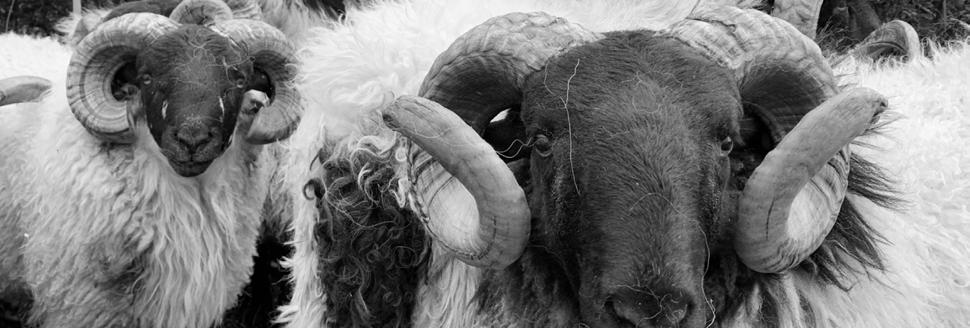
The week’s Tuesday proceedings covered flock breeding with the accompanying topic of genetics. Eamonn Wall of Sheep Ireland discussed the current situation regarding the performance recording of production relevant traits along different strata of the breeding pyramid. Emphasis was placed on the recording of data around the busy lambing period when it can be difficult for farmers to allocate labour to performance recording. Aine O’Brien of Teagasc Moorepark covered the complexities encountered when improving low-heritability traits, such as mothering ability or lamb vigour, which, while these traits may be largely swayed by environmental factors, do have scope for genetic improvement.
Tim Keady gave an update on the findings of the status of mineral deficiencies of herbage grazed by sheep flocks, in tests carried out on a sample of farms representative of the differing soil types of the country. Unsurprisingly to many, he noted that 75% of farms surveyed had forage Cobalt deficiencies with the remaining 25% showing only marginal levels of the nutrient essential for the thrive of lambs in particular. This study also found, however, that none of the farms tested had low enough copper levels to be classified as deficient and in need of supplementation.
THE Teagasc Virtual Sheep Week commenced on Monday, September 21st from the Sheep Research Centre Athenry, with the aim of sharing up-to-date flock management information with farmers and advisors. Daily hour-long webinars covering all aspects of Irish sheep production replaced the annual Athenry Sheep Open Day, which had originally been scheduled for June, due to government coronavirus restrictions. Different farmcentred topics were discussed by each of the five panels with researchers, industry professionals, and Teagasc Better Sheep Farmers all contributing throughout the week.
The online event began on Monday with the discussion centring on the grassland management of sheep farms.
John O’Connell, farmer panellist and former IGA Sheep Grassland Farmer of the Year, examined the path to higher outputs available to producers through correction of soil fertility issues, the use of grass measuring technologies, and the implementation of temporary electric fencing systems. The importance of following through with an autumn rotation planner was highlighted as an essential component of good grassland management. “Know when you have pushed your limits and know when you have reached your target, that’s it” stressed Micheál O’Leary of Pasturebase Ireland, when referencing the 77 kg DM/ha drop in opening grass covers seen for each week of delay in closing.
The importance of white clover in reducing input costs, as well as improving overall system sustainability, was covered by Philip Creighton, researcher at Athenry Animal & Grassland Research and Innovation Centre. The findings of ongoing clover trials under differing N regimes were discussed, with the data cited giving confidence to farmers in their decisions on its inclusion in swards on sheep farms. Creighton expressed optimism for the herbage production of the lower N treatments matching that of the higher N as a “very positive result”, whilst stressing the “major implications from both the financial and environmental point of view”.
‘FOOD HARVEST 2020’ - A DECADE ON
HANNAH WOODS
Over 50% of Sheep Ireland’s performance recorded data now comes from commercial flocks, improving the robustness of the Euro-Star index across various production systems.
Wednesday saw focus turn to the increased profitability of hill flocks. Wicklow farmer, Patrick Dunne, explained the steps taken in the overhaul of his system over the last number of years. A plan focused on returning ewes to the hill for a greater proportion of the year has seen output drop, but margins grow, as costs are greatly reduced. Technical advice was provided by Teagasc officials Frank Campion and John Cannon, both involved in different capacities in the Teagasc Better Farm programme. Weight was given to the importance of condition scoring ewes at important stages of the production cycle. The potential benefits to hill farmers in crossing ewes to non-hill sires to improve lamb price at sale received attention. The increasing demand for half-bred breeding sheep from lowland farmers nationwide, in particular, was noted by Cannon, who advises farmers in Co. Donegal, as a means of increasing revenue in the late summer months.
The health conversation on Thursday saw the panel consider the subjects of anthelmintic resistance, iceberg diseases, and mineral supplementation. Researcher Orla Keane advised farmers on maintaining the efficacy of dewormers and minimising the chance of a loss in the ability of current chemicals to control worm populations.
The prevailing message throughout the week was for farmers to make science-based decisions in flock management. Tools and technologies are widely accessible at justifiable costs, be it around ewe nutrition, soil fertility, or genetic improvement.
Agricultural policy and the environment formed the central subjects of the final webinar. Those who had tuned in heard opening remarks from Minister for State Pippa Hackett. The Junior Minister’s comments were for the main part optimistic in their detailing of the opportunities available to sheep farmers through efforts promoting biodiverse land-use and carbon sequestering grazing management of marginal lands.
Kevin Hanrahan, Head of Rural Economy Development Programme, outlined the reasons behind a rise in lamb prices. A Europe-wide drop in demand following the Coronavirus pandemic was offset by lower lamb imports from outside the Union, owing to the increased need for imported protein in China following African Swine Fever culls.
The Virtual Sheep Week had good levels of engagement from farmers, who asked questions via the comment sections of their chosen viewing platform during the webinars. It has yet to be seen whether issues arose around older, less tech-savvy farmers being able to access the week’s content, illustrating the need for a continuation of traditional methods of communication such as print and demonstration days for full reach.
On the 10th anniversary of Food Harvest 2020, Hannah Woods looks at whether the aims have been met and the agri-food industry improved.
JULY 2010 saw a committee of key Irish agri-food companies and agricultural representatives established. Along with Bord Bia and the Department of Agriculture, Fisheries and Food, industry figures came together to put forward a plan to improve the livelihoods of Irish farmers and to get firm grounding for Irish produce in the international markets. The ideal foresaw Irish companies recognising that sharing resources through strategic initiatives would be central to knowledge generation, pursuing the consumer, and diversifying market trends.
In the decade preceding FH 2020, difficult economic circumstances saw farmers and fishermen bare the brunt of a dramatic fall in primary sector returns. From this, the committee thought an organised strategy may be a good option for sectorial planning. Research, creativity and innovation were at the forefront of this paradigm, ensuring the industry generated increased employment opportunities in processing and production, improved income stability and secured reasonable returns for primary producers and for agrifood businesses. The main aims of Food Harvest 2020 were to “act smart, think green and achieve growth”
Looking at the dairy sector, a 50% increase in milk production was seen to be a major challenge of the plan, but with milk quotas abolished in 2015, and the rise of better herd genetics, this has not been as
difficult to meet as first thought. In 2009, the average milk production was at 5 billion litres of milk. We now place our yearly production estimate at 8.3 billion litres. In addition, there is an increase in both fat and protein levels of Irish milk. The Irish dairy sector is striving to be a global leader in the development of a high value, environmentally sustainable dairy industry based on our grass-based system. In 2019, Irish dairy exports reached €4.4billion, making it the largest food and drink export category. Although volatile Brexit negotiations continue with the ongoing Covid-19 pandemic, global exports have undoubtedly slowed down here in Ireland, with a 9% decline in exports overall. However, previously the export target of €12 billion for the sector was already reached with an export growth of €13 billion in 2019. Due to the impact of the Coronavirus, food and drink
exports are down by €126 million this year but such a large blow could never have been projected.
The value of the beef output from the dairy herd now equals approximately 60% of the total beef output, due to the vast expansion of the dairy herd. This growth is beginning to dominate the Irish beef sector. However, a viable suckler herd of sufficient size is fundamental for the development of the beef industry with the Irish Cattle Breeding Federation (ICBF) predicting that the profitability of the existing suckler cow herd could be increased by €200 million by 2020, or so was thought by the committee of the Food Harvest 2020.
In 2014, the first beef crisis hit in relation to dropping beef slaughter prices. The Minister for Agriculture at the time, Simon Coveney, put in place a care package of €40 million to see farmers through and to keep on track with the goals of the FH 2020 plans. The unity between factories and beef farmers had, however, taken a sharp turn again late in 2019, with further beef protests in Dublin demanding a better price per head. Since 2010, Irish beef exports have greatly risen from €1.5 billion to €3.9 billion. Undoubtedly, this is good news for Irish beef globally and the sector has exceeded the growth targets for FH 2020. Some are now beginning to see Irish beef as an agri-food processing industry, separate from the farming sector. Many now feel the industry has
forgotten the signals of FH 2020 to keep small suckler farmers and small beef enterprises relevant. This was seen as a major goal of the plan, to unite industry and primary producers, offering them stability and support in hard times.
In relation to sheep, the 2010 estimation of sector financial worth was around €250 million, with FH 2020 planning to increase this by 20%. In 2018, these targets were accomplished with total export costs reaching €315 million, however, this has been decreasing slightly over the last 2 years. Like beef, many sheep farmers’ livelihoods have not improved from the proposed action of FH 2020. The central aim was to link farmers with industry, a collaboration whereby farmers get to set the price rather than just take the first deal offered to them. Farmers are still settling for the prices given to them rather than being the price setters they hoped they might become.
Food Harvest 2020 was meant to bring about an allround community atmosphere within agriculture, rather than see the position of primary producers fall beneath that of processors, as many believe to have happened. Although we can take Food Harvest 2020 as a success in terms of boosting the overall value of the Irish export market and expanding our international brand, it has failed to increase producer-industry cooperation.
REPS – THE FOUNDATION OF AGRI-ENVIRONMENTAL SCHEMES
NOEL BARDON
Noel Bardon takes a look at the history of REPS and the future of GLAS
THE Rural Environmental Protection Scheme (REPS) was the first mainstream agri-environmental scheme opened to Irish farmers. The farm payment scheme, accompanied by a complement of novel ecological conservation measures, was introduced in 1994 and continued, following two revisions, until the ending of REPS 3 in 2010. Subsequent post 2003-reform environmental schemes, namely the AEOS and GLAS, borrowed heavily from REPS both in terms of scheme content and those subscribed to the policy.
European agriculture underwent immense intensification during the production centered Common Agricultural Policy of the 1960s to the late 1980s. Farm output and food commodity prices guided the direction of the agricultural policy of Brussels, as well as that from the parliaments of the member states. Ireland experienced a gross agricultural output surge of approximately 50% in the period of its joining of the EEC in 1971 to the year 1990. Changing European-wide attitudes on the societal function of farm subsidies, combined with increased public environmental awareness, led the Commission to legislate on the mandatory inclusion of agri-environmental schemes in member states’ policies, coming into effect in 1994.
REPS focused farmers on eleven key environmental measures. The scheme sought to educate farmers on the unintended impact of their activities upon the ecosystem, whilst allocating the funds needed to implement changes to preserve these same ecosystem services that were being lost or degraded. Farmers were required to compile a five-year nutrient management plan with trained consultants to improve the input efficiency of their enterprises and rectify emerging threats to water quality. This was an important step for many producers in familiarising themselves with the newly adopted Nitrates Directive. Further measures tasked farmers with preserving wildlife habitats and protecting areas of archaeological significance present on their farms, with the respective aims of preventing further losses of biodiversity and ensuring the survival of public goods.
REPS 1, the original scheme, saw average payments to farmers reaching close to half of overall farm income at £5,000, with additional funds made available to applicants farming in Special Areas of Conservation, Natural Heritage Areas, and those grazing commonage. The scheme was particularly well subscribed to by small to medium sized drystock farmers, based mainly in the
West, who had begun to struggle to compete in the single market without financial aid supplementary to their headage payments. One third of the agricultural area of Ireland was being managed under the initial REPS measures which was a significant achievement for a non-production focused farm payment.
Glas is the agri-environment scheme which was put in place as part of the Rural Development Programme 2014-2020. Uncertainty surrounding the replacement or extension of GLAS after 2020 grew as government agencies and interest groups diverted attention towards the immediate task of guiding the sector through the disruption of the pandemic combined with precarity of Brexit negotiations.
Few details of the proposed “new REPS” alluded to in the Programme for Government have been solidified at this point, however it appears likely that GLAS will be extended until the specifics of the replacement scheme and funding allocations have been finalised.
IFA Rural Development Chairman, Michael Biggins, highlighted the need for the continuation of supports to farmers currently enlisted in the scheme to avoid the challenges encountered in prior transitions between
agri-environmental schemes. He stated “there must be no gaps in payments. Gaps occurred in the past, and these had a detrimental impact on farm incomes”, during a period of poor government clarity regarding the future of farm agri-ecological schemes.
The policy’s intention will likely continue to remain on the core REPS areas of biodiversity and water quality, with GHG emissions from food production playing an increasingly important role. The main challenges to a new REPS could include securing high enough payments to justify farmers’ enrolment in the scheme. Under a potentially reducing CAP budget, the allocation of ring-fenced carbon tax revenue will play an essential role in the Irish Exchequer’s contribution to agrienvironmental schemes in future budgets. Encouraging farmers from all enterprise types and scales to enter the scheme may also present difficulties, particularly large tillage operators and intensive dairy producers, owing to the lower dependency of these enterprises on farm payments, as a proportion of farm income.
13TH OCTOBER 2020 11 AGRICULTURE & RURAL
NOEL BARDON
“Over 50% of Sheep Ireland’s performance recorded data now comes from commercial flocks, improving the robustness of the EuroStar index across various production systems”
“The main aims of Food Harvest 2020 were to “act smart, think green and achieve growth””
PHOTOGRAPH CREDIT: SINÉAD MOHAN
SCIENCE
RESEARCH REPORT: AN INTERVIEW WITH DR GAVIN STEWART

Dr Gavin Stewart is a professor in the School of Biology and Environmental Science and has spent four years as Head of Teaching and Learning in this school. He spoke with The University Observer about some of his current research as well as his thoughts on teaching and learning in UCD.
Dr Stewart graduated from the University of Leeds with a degree in human physiology. Subsequent to this he did a PhD focussing on renal chloride channels in kidney cells which later allowed him the opportunity to obtain a postdoctoral position at Kidney Research UK. Here, he continued his focus on urea transporters which were to become an integral part of his research work for the next 20 years.
During his time as a fellow, he researched how urea transporters operate in the colon by using rumen tissue from the stomach of a cow as a proxy. This work tracked how urea - a protein by-product - was transported into cells and broken down into nitrogen, which is an essential energy source in ruminants. In the rumen, urea is broken down into ammonia by gut bacteria which creates short-chain fatty acids that constitute 70% of the cow’s energy source - a high urea-nitrogen salvaging rate. The cow rumen can be used as a model for the human colon, which only recycles 10-20% of its urea, but this urea is more important for colonic health than energy generation as it produces acetate and butyrate that interact with the cell cycle and can reduce the likelihood of getting colon cancer. In UCD his research aims show the importance of urea transporters to human health and how the natural gut microbiota interact with the body and can cause direct impact health.
Stewart’s current research is being done in collaboration with Dr Simone Ciuti, Assistant Professor in the School of Biology and Environmental Science, to understand the behaviour of deer in the phoenix park. They are working together to understand if the diet of the deer affects their behaviour, with particular focus on the length of papillae in the deer rumen. These papillae are used for absorbing food and there are many gender-specific and physical differences that can be seen between them in wild versus captive populations. Stewart maintains that it is essential to, “always look at the tissue level as well as the cellular level” as this provides a broader view of the analysis and by measuring the length of the papillae you can see obvious physical differences that may be missed in other comparative analysis.
Professor Stewart also expressed some commentary on how teaching and research should be intertwined in UCD. As a teaching university, UCD requires all
academic staff to be involved in their own research as well as having an involvement in teaching. In Stewart’s opinion creating a balance between the two can be complex and one is often prioritised over the other. To maintain the level of enthusiasm needed to keep students interested and to have a fresh take on teaching modules year on year and the staff need to focus on teaching, saying that, “If you can maintain interest in what you are doing it never really feels like work”.
Stewart comments that the flexibility of modules is a great addition to a student’s degree but expresses how it can lead to a lack of focus and less detailed learning from first year, as from his experience the vast majority of students know where they are going to be when they enter college, however, he does admit that this changes based on each individual student. He compares the four-year degree cycle with that of the four-year Olympic cycle where it is important to build good habits in first year which will help in the final years. The large variety of choice can lead students to only learn for the module rather than to gain the knowledge itself. He uses the example of referencing which is explained in many first-year modules but often not remembered as a skill further along in the degree, as many students have not maintained this information after the module ends; “students don’t learn in a long term manner unless they are invested in it”.
Despite being Head of Teaching and Learning in his school, Stewart displays doubtfulness in the system and its ability to accept changes. He notes that the fees paid by students are taken for granted and are seemingly non-refundable, which was made evident during the COVID-19 situation. As an example, he explained how the Master’s students that work in his
department usually have six weeks of lab work over the summer, and that this was reduced to two or three weeks. Originally Dr Stewart asked higher faculty levels if it would be possible for one of the Master’s students to be offered a partial refund due to their lack of laboratory work, as approximately one thousand euro of their fees are set aside for consumable materials. This request was not entertained by higher faculty, and the decision was made to have the students return to college over the summer despite having a reduced experience and COVID restrictions. When asked as a staff member does [he] have any influence on these matters and can [he] make changes from [his] position he replied simply that “you can say things in meetings if you like but it makes no difference whatsoever” and states that “You can have strong opinions on what should happen but you can’t go and change the opinions of others with facts and logic”, which is the converse of what students would expect of faculty in science.
On PhD students, he notes that many are now being told how many papers they should produce from the first day and that this is not conducive to proper learning and can damage the idea of a PhD which is to encourage independent learning and research. Publishing papers as a prerequisite to a degree is in effect producing a product, which Stewart expressed his distaste of as
it can lead to a dilution of the scientific learning and a simplification of the science being produced. This leads to many ‘career scientists’ who work in science because they see it as a good career option rather than because they are passionate about science. Many job applications now ask, ‘how many papers have you published rather than the actual process’ which leads to many students doing a Master’s degree so they can apply for a particular job in the industry rather out of scientific curiosity.
Having worked in UCD for just over a decade, Dr Stewart has been highly involved with both faculty and students and seems to have a good understanding of UCD. He expressed a love of his research but also some suggestion that he would be open to more opportunities that facilitate teaching. His requests for UCD to provide some extra support for his students was disregarded which leads to concern that UCD is overlooking the concerns of lecturers as well as their students. As a university, these two groups of people should be of the utmost importance. One could wonder who UCD is catering to when it implements decisions. As Dr Stewart notes, “the same set of situations can elicit very different behaviours, but it is the behaviours that affect what people experience”.
‘A QUALITATIVE STUDY OF LGBTQI+ YOUTH HOMELESSNESS IN IRELAND’
ANDREA ANDRES
Apropos of a report by UCD researchers Professor Michelle Norris and Dr Aideen Quilty, Andrea Andres investigates the prevalence of homelessness among the LGBTQI+ community.
HOMELESSNESS is a pervasive and far-too familiar issue in Ireland, but there has been little study on how homelessness affects young people among the LGBTQI+ community. To combat this, a report by UCD researchers Professor Michelle Norris and Dr Aideen Quilty, in conjunction with Focus Ireland and BeLonGTo, aimed to shed light on the matter. The study titled ‘A Qualitative Study of LGBTQI+ Youth Homelessness in Ireland’ revealed that a breakdown of familial relationships due to parents’ rejection of their child’s sexual orientation and gender identity is one of the triggers that lead to LGBTQI+ homelessness. Additionally, the report outlines how the impact of homelessness on the mental health of LGBTQI+ youth can lead to self-silencing and self-stigmatisation.
The impact of being kicked out left was often sudden
and many were unprepared for a loss of stable housing. Participants generally had a lack of knowledge of what services were available for them to access and this is a reflection of many who unexpectedly became homeless. Other triggers to homelessness also involved a deterioration of a relationship with their partner after coming out as trans, substance abuse due to internalised homophobia, and simply being unable to pay rising rents because they lost their job or were just unable to afford rent anymore.
Participants also experienced a ‘double closet’ in which they were hiding their sexual orientation or gender identity and that they were homeless. As one participant puts it: “You start to hate yourself because of the situation you’re in. And hiding that you’re gay, hiding that you’re homeless. It’s difficult”(Participant 1). This traps them between not being able to come out as homeless to their peers for fear of being excluded in an LGBTQI+ community, and not being able to come out as LGBTQI+ in homelessness context for their own personal safety.
The report revealed that over half of the participants (13 out of 22) disclosed mental issues, with five experiencing acute mental ill-health. Homelessness has a strong influence on the participants’ mental health, stress, and anxiety as they try to walk a tightrope of trying to keep safe and thinking of when they should come out while trying to find a home. Those who are queer, trans, or non-binary especially experienced uneasiness with finding a place with appropriate roommates for fear of experiencing transphobia and homophobia from them.
Twenty-two LGBTQI+ participants between the age of 18 to 30 were interviewed by volunteers across Ireland. A key factor leading to LGBTQI+ youth becoming homeless was parental rejection of gender identity or sexuality. They were either asked to leave, given an ultimatum to stay, that usually relied on them rejecting their sexuality or gender identity, or they left because they could no longer endure their living situation. A participant noted that “It was always not-great in the home. It was always at a level where it was really bad, I would have to leave eventually. But when I came out, I just felt like they felt that they didn’t know me. And that I was completely alien to them. She’d always say that she was very positive about the whole thing, but from my experience and from my point of view and my truth, she was disgusted by it and horrified by it. Everything got worse” (Participant 8).
Mental health is also further exacerbated by loneliness due to feeling the shame and stigma of both being homeless and LGBTQI+. For one participant, this feeling of loneliness caused them to turn to drugs. The stress and anxiety of homelessness or a precarious housing situation had profound effects on their education, work as well as relationships. It also hindered their ability to navigate the system of services available to the homeless such as registering themselves as homeless, getting the Housing Assistant Payment (HAP), and getting a place of their own through the system.
To mitigate the problem of LGBTQI+ youth homelessness, the report has set out some recommendations. As a preventative method, the report has suggested that the latest “Youth Homelessness Strategy” should include LGBTQI+ homelessness, and the government should put support in place in youth
services, education, and family services to help prevent homelessness among LGBTQI+ youth. It also suggested that mediation workers and frontline staff should receive specialist training to support homeless LGBTQI+ youth.
The report recommends the creation of LGBTQI+ friendly spaces that have clear branding to show that the staff are trained and these spaces are safe and inclusive for LGBTQI+ youth. It also suggested that an independent body look over the process of collecting and publishing data on risk factors and risk groups, including the LGBTQI+ youth. Dr Quilty emphasised that it is “important that we listen to and hear carefully the voices of these courageous young people...We have a responsibility to ensure their stories matter and that we respond through targeted, appropriate actions.”
Despite its prevalence, the issue of homelessness in the LGBTQI+ community has not often been addressed and the authors of this report hope that more visibility
of the issue will lead to more efficient management of the homelessness sector by policymakers and management. Professor Norris said that “The report demonstrates that LGBTQI+ young adults face additional risks of becoming homeless due to conflict with parents and caregivers regarding sexuality and gender identity, in addition these young adults face additional barriers to accessing services when they do become homeless and building strong relationships with service providers,” There needs to be inclusion in this area of society which also allows people to know that they are welcome to access supports and to be aware of what supports are available. The ultimate goal is to prevent LGBTQI+ homelessness in the first place and by shining a light on the issue, it marks a crucial stage of moving from gathering evidence to action.
13Ú DEIREADH FÓMHAIR 2020 12
JADE NORTON
“If you can maintain interest in what you are doing it never really feels like work”
“Homelessness has a strong influence on the participants mental health, stress and anxiety as they try to walk a tightrope of trying to keep safe, thinking of when they should come out while trying to find a home. “
PHOTOGRAPH CREDIT: GAVIN STEWART
PHOTOGRAPH CREDIT: MARIA STRAINS
PHOTOGRAPH CREDIT: SINÉAD MOHAN
A WRITTEN TOUR OF THE O’BRIEN CENTRE FOR SCIENCE
 TATYANA SINAISKY
“YOUR first lecture will be in the O’Brien Centre for Science,” It all sounds pretty straightforward, right? Then you see the size of the building and feel daunted. It seems impossible to find anything but this is not the case. This place, like science, it’s a puzzle; with the right formula, you’ll know your way around in no time. Stroll in through the double doors of the East entrance facing the lake. On your left is the Moore Auditorium. On your right, marked on the wall, are the names of people who helped to contribute to the O’Brien Centre we have today. Behind this wall is the Pi restaurant, a warzone at 1pm as everybody fights to get a good seat. Coupled with the restaurant is the Assembly, a quirky food stall serving different foods from all types of cultures each week (some argue ramen week is top, others say its burrito week). Near the entrance of Pi, you’ll find Nico’s, home to arguably the best hot chocolate on campus. If you want extra marshmallows, you have but to ask.
The real centrepiece of Science East is the staircase, inspired by the design of a double helix. It climbs resolutely up to the fourth floor where you are met with a view of the ocean, and to top it all off, a grand piano. If you arrive early enough on campus, you might be lucky enough to hear some beautiful melodies echoing through the building. In a world of theories and principles, the arts still find a way to maintain their place.
The School of Biology and Environmental Science and the School Biomedical and Molecular Science are situated on this floor. Research up here is currently focused on bacteria to produce valuable compounds from waste materials, according to a member of staff. A quick step down to the third floor will find the Centre for Data Research and down again another level holds the biology labs which stretch along the right corridor, and the classrooms run down the left.
The heart of the O’Brien Centre is known as the ‘Hub’. Most likely, every UCD science student will have a lecture in this area at some stage, whether it is on the first floor in the Icon, Lynch, or Intel Theatre or the second floor in the Elan, O’Connor, or Accenture Theatre. These lecture halls can accommodate well over 200 students. On a Monday morning, you risk becoming hypothermic in one of these rooms due to lack of activity and heating over the weekend, but this is balanced with Friday afternoons when the heat becomes unbearable. There’s no natural lighting in these theatres, so don’t be surprised if you come out of a lecture feeling like a vampire. Also, note that you’re in
the right room before your lecture starts as they all look relatively similar and many a student has wandered into the wrong one.
From the first floor of the Hub, you can go left to Science South, or continue straight into Science West. Science South is the location of the School of Chemistry and by the ground floor entrance there is a display of commonly used equipment in chemistry laboratories, coupled with a nostalgic photo of first year UCD chemistry students back in February of 1970. On the first floor you will arrive at the physical chemistry labs. and round another two sets of stairs up to the third floor you’ll find the Synthetic Chemistry labs where the research centres around nanomaterials, catalysts, and synthesis of molecules. The second floor of Science South is home to the Institute of Food and Health, who recently partnered with Food for Health Ireland to examine the impact of long-term consumption of melted cheddar on cardiometabolic health. Here’s hoping for good news cheese lovers!
Should you end up in Science West, you will find the School of Earth Science, who work closely with the school of Biology and Environmental Science. This is one of the older parts of the building, but it still retains its charm. On the second floor you will find displays of taxidermy mounts, ranging from tadpoles to the skeletal head of a crocodilian. Some will be fascinated; others may prefer to stay away.
From Science East, step out into the courtyard facing the restaurant for a breath of fresh air before turning right to Science North. You’re greeted with an homage to Sheila Tinney, the first Irish female to receive a PhD in maths. Pass the lifts to go right through the double doors into the School of Mathematics and Statistics where research posters line the wall, applying solutions to everyday life such as weather forecasting and market investments. Above the ground floor, physics labs are scattered across from the staircase. In the opposite corridor, you’ll find that the left-hand wall is lined with
a brief overview of physics since the 15th Century. Wander up another level to view stunning images of astronomical objects, such as the Orion Nebula and the ‘Ghost of Jupiter’ that you can appreciate their beauty regardless of your physics knowledge. I invite you to explore the O’Brien Centre for Science yourselves in the future and discover what it has to offer.
LIVE OR LET DIE? 68% DECLINE IN ANIMAL DIVERSITY DUE TO HUMAN ACTIVITY
JADE NORTON
Jade Norton investigates the staggering decline in wildlife diversity and annual WWF Living Planet Report

“THE living world is a unique and spectacular marvel, yet the way we humans live on earth is sending it into a decline” This quote from David Attenborough delivers a simple yet effective message and through his Netflix movie “A Life on our Planet” Attenborough appeals to us to protect Earth before it is too late. This visual medium is the latest appeal to humans to save the world and it comes alongside the World Wildlife Fund for Nature’s (WWF) 2020 Living Planet Report, which gives the statistics and measurable effects on the biodiversity of our planet. This report is released annually and provides a comprehensive sciencebased overview of the health of our planet and the impact of human activity. This year the message was possibly bleaker than before, as a tallying up of data and scientific knowledge showed that there has been
humans have driven at least 680 species of vertebrates to extinction since 1500, as seen on the International Union for Conservation of Nature (IUCN) Red List.
The increase in global trade, consumption, and human population growth over the last 50 years has been done under the shadow of the enormous move towards urbanisation and is central to the destruction of nature. There has also been a huge increase in the population spread with about 50% of the population living in cities. Since 1970, our Ecological Footprint has exceeded the Earth’s rate of regeneration and our carbon footprint has been constantly increasing. The rate of consumption is not currently sustainable as many of the products consumed on a daily basis are not reusable or recyclable and break the cycle of regeneration on earth that has kept species alive before us. Despite this huge waste, there are more than 820 million people who face hunger or food insecurity. This is in stark contrast to the societal consumerism that has infected most of the western world.
an average 68% fall in monitored vertebrate species populations between 1970 and 2016. The sizeable fall can be attributed to the detrimental effect human activity is having on the planet resources and reducing the space available for biodiversity to thrive.
The diversity of animals is measured by the Living Planet Index which tracks the abundance of the almost 21,000 animal populations on this planet. Its data starts from 1970 and is currently reflective of how the destruction of natural habitats is drastically reducing the number of species in the area. This is particularly evident in Latin America and the Caribbean, where there has been a 94% decline in species. This is particularly evident in the tropical subregions of the Americas, with specific depletions of populations of reptiles, amphibians and fish. Overexploitation of these biodiverse natural areas derives from hydropower development, climate change, and deforestation. A fascinating result of this report is the belief that humanity’s influence on the decline of nature is so great, scientists believe we are entering a new geological epoch, the Anthropocene. This belief is substantiated by the knowledge that
Nature is essential for human existence and most importantly cohabitation with our speciated neighbours leads to a better quality of life as we rely on animals and plants more than they rely on us. The current perception of what we use is changing as many people look for greener ways to live and less harmful ways to exist with the realisation that living on this planet is non-negotiable. The products that we value are all supplied by the earth and many are finite. Incorporating regulation of the use of the world resources can reduce overexploitation which in turn allows regeneration. This cycle is found in all natural systems across the world and the WWF emphasises that it is essential for businesses and us as a species to understand this and work together to provide a sustainable future. A healthy planet means a healthy people - increased human health and well-being. Having this decline due to unregulated exploration and alteration of the worlds natural systems would undo these successes. Biodiversity is fundamental to food security- of which healthy eating can contribute to; this can be obtained from a reduction in overconsumption of natural sources.
A New York art piece recently made headlines as it shows a countdown clock ticking down to the date at which it is too late to make changes to prevent catastrophic climate change. Currently, this time is set at seven years from today and it is based on calculations by the Mercator Research Institute on Global Commons and Climate Change. The 2027 date is more emblematic than a literal date for catastrophe, but it aims to be a catalyst to bring about change. The breakthroughs and golden age of technology that we live in are often being touted as a golden opportunity for all, yet we need the
platinum option. Our current computing power allows us to digitally map out the future, and model scenarios have been created that show the solutions that can be implemented to save the natural systems on Earth and its biodiversity.
The results of this report come amidst unsettling global feeling and a sense of insecurity. The key message from these pages has always been that nature is on a decline and it is due to our habits. Over the millennia there have been many mass-extinctions of species and catastrophic events that decreased diversity; however, these events were usually geographical and due to a natural changing of the planet. The rapid changes composed by humans are leading to cacophonous changes that are overwhelming the Earth systems. Our want for constant improvement and rapid success is reflected across society as countries are striving to be bigger and better. As we look at the decline in natural spaces and the loss of species who survived the dinosaurs but not the human-era we can wonder if these activities are a mirror to who we are as a species or has our current society given away our choices to a select few with other more nefarious ideals?
13TH OCTOBER 2020 13 SCIENCE
“there has been an average 68% fall in monitored vertebrate species populations between 1970 and 2016.”
ILLUSTRATION CREDIT: CIARA O’BRIEN
PHOTOGRAPH CREDIT: NEIL TARRANT
Tatyana Sinaisky takes us North, South, East and West through the heart of science study and research in UCD.
PHOTOGRAPH CREDIT: SINÉAD MOHAN
“This place, like science, it’s a puzzle; with the right formula, you’ll know your way around in no time.”
“Nature is essential for human existence and most importantly cohabitation with our speciated neighbours leads to a better quality of life as we rely on animals and plants more than they rely on us.”
ELECTORAL COLLEGE EXPLAINER
Grace Donnellan digests the US voting system ahead of the 2020 Presidential Election.
THE Electoral College is a concept that confuses almost everyone, even the most politically aware among us. This has led to a barrage of different attempts at explaining the practice, even Kendall Jenner has taken it upon herself to try and educate her followers about the complex voting system. As US election season rolls around again, The University Observer is undertaking its own Electoral College Explainer, in the hopes of clarifying the process for our readers.
To put it simply, the Electoral College consists of a group of people, so called electors, appointed by each state who then formally elect the President and Vice President. Not confusing at all! When Americans go to the polls in November, they are actually voting for these electors who will then vote for the President. The Electoral College has its origins in the creation of the United States. Article 2, Section 1, Clause 2, of the US Constitution establishes the system and describes how many electors each state is allowed to have. The system was a compromise between a public vote and allowing lawmakers in Washington to choose the president. It was imagined that the College would act as an intermediary that public opinion could be filtered through. However, today the electors simply follow the election returns and cast their ballot without engaging in any discussion regarding the candidates.
Since 1964 there have been 538 electors. This is equal to the total voting membership of the US
Congress. Each Presidential candidate is trying to gain over 270 total electoral votes in order to win the election. Generally, states award their electoral college votes to the candidate who wins the popular vote in the state in a winner-takes-all approach. States are granted discretion in this area, Maine and Nebraska divide up their electors in proportion to the number of votes each candidate receives.
Each state is granted a certain number of electors based on population size. The population of a state is taken from the US Census, therefore, states may lose or

gain a couple of votes after each Census. California has the largest number of electors with 55, Texas follows closely behind with 38 electors, while New York and Florida tie for third with 29 electors each. The system was created in an era when the size of the United States and difficulty of communication made it impossible to elect the president via a national public vote. The system was favoured by southern states, where a large proportion of the population was made up by slaves. These slaves did not have the right to vote, but under the Electoral College system, due to their larger populations southern states would be granted more sway regarding the potential president. Many now consider the system outdated and ineffective.

If a candidate won Georgia, California, Florida, and Texas they would have 138 Electoral College votes. If they won Montana, Idaho, both Dakotas, Wyoming, Utah, Nevada, Vermont, Delaware, and Kansas they would only have 40. Due to a small number of states holding such a large number of electors, campaigning is mainly focused in these locations. Candidates neglect the vast majority of ‘safe’ Democratic or Republican states that are either considered won or lost before the election even occurs. Instead focus is put on these states with higher numbers of electoral votes, especially when these are considered swing states. A swing state is a state that has switched between voting Democrat and Republican in recent elections, an example being Florida or Ohio. This can cause problems as the needs and interests of the people of Florida are weighed more heavily than those of citizens of other ‘less important’ states.
Occasionally a candidate may win the popular vote and lose the election. This has happened in 1824, 1876, 1888, 2000 and 2016. The 2000 and 2016 election results led to more public scrutiny being placed on the Electoral College system. In 2008 Al Gore, the Democratic candidate, won 48.4% of the popular vote, with George Bush only securing 47.9%. Despite being the more popular candidate Gore ultimately lost the election, winning only 266 Electoral College votes. In 2016 Hillary Clinton met a similar fate. Nationally, she won about 2.9 million more votes than Donald Trump. However, she only received 227 Electoral College votes. This has led to critiques that the system is undemocratic and can lead to drawn out recounts and even court actions, as was the case with the 2000 election.
It is impossible to predict how the Electoral College will vote in the 2020 election. Both Michigan and Pennsylvania, two states that had voted Democrat since Clinton’s first election, voted for Trump in 2020. Nonetheless, the focus of campaign and media attention is still on swing states such as Florida and Ohio. As well as this, the issue of mail-in voting will greatly impact this November’s result. Over the past few months problems with the UPS, legal battles regarding restrictions on mailin voting, and Trump’s refusal to confirm he will commit to a peaceful transfer of power, have shown us that this is an election that will not be won easily.
THE FUTURE OF THE PUP: A STUDENT’S PERSPECTIVE
With Budget 2021 on the horizon, Lorcan Kelly explores the future of the Pandemic Unemployment Payment and how this may impact students
IN March, the Pandemic Unemployment Payment (PUP) was employed swiftly and indiscriminately. By April 6th, approximately 507,000 people were in receipt of the €350 weekly payment as a result of lost jobs. With another 207,000 individuals receiving some other form of social welfare payment, an estimated 28.2% of the labour force was considered unemployed in April.
The PUP was designed as an emergency response to buoy incomes for those who had lost their jobs as a result of the pandemic. Initially, the Department of Finance utilised the previous year’s significant budget surplus to cover the sudden costs of both the PUP and the payroll initiative then known as the Temporary Wage Subsidy Scheme (TWSS). As spending continued into the summer, Paschal Donohue, Minister for Finance, announced that the department was committing to record levels of borrowing to finance public expenditure, despite Fine Gael’s warnings against the dangers of rising debt levels and unworkable interest rates.
All the economic indicators agreed with this strategy. Countercyclical economic theory aside, this increased fiscal spending on welfare was given the European blessing - the ECB had previously announced that it was making approximately €750 billion available to EU members to borrow at 0% interest. This fund would be allocated specifically to finance the costs of the Covid-19 crisis across the European Union, hopefully aiding a Europewide recovery. Furthermore, Angela Merkel and Emmanuel Macron united behind a €500 billion recovery plan in May, which most notably proposed mutualising debts across the EU. Fiscally, it seemed that Europe was going with the “all in this together” approach, despite some pushback from more fiscally frugal countries like the Netherlands and Denmark.
With the government supposedly spending as much as it can, how have students been affected by its welfare schemes?
Students across the country have transitioned back into college life, with many availing of accommodation away from home in anticipation of (albeit reduced) hours of in-person teaching and the social benefits of club and society life. Unfortunately, with the Department of Higher Education announcing that most third-level teaching would be online, and UCD announcing that online will
last at least until Christmas, many students have been left hung out to dry financially. This, paired with the significantly reduced presence of on-campus club and society activities, leaves little reason for many students to bear the costs of living away from home at all.
Youth employment has been affected disproportionately by the pandemic. The CSO reported that the monthly unemployment rate for those aged 15-24 was 18.9% in September, while it was just 3.8% among those aged 25-74. For comparison, the unemployment rate for those aged 15-24 was 12.2% in 2019. One could argue that this was to be expected – employment is typically more tenuous at a young age, and Ireland has now entered a severe recession with increased levels of unemployment. One might expect that young workers would be the first on the chopping block for many businesses struggling to cover costs.
According to analytics conducted by the National Youth Council of Ireland (NYCI), in response to figures published by the Department of Employment Affairs and Social Protection, revealed that 6 out of 10 young people were now on the lower rate of PUP, with almost a third of people under 25 on the lowest rate of €203. This compares to almost two thirds of older citizens receiving the highest rate of €300. In a statement released by NYCI, James Doorley, NYCI Deputy Director, said:
“We are calling on the Government to either restore all those who lost their job as a result of the pandemic to the highest rates or alternatively deliver a massive injection of funds in education, training and access to apprenticeships in Budget 2021 to counteract the impact of the pandemic on the employment and future career prospects of young people.
“With 36.5% youth unemployment, young people comprising 21% of those on the PUP (despite only making up 11% of the workforce), a further 28,777 young people on the live register, the pandemic has hit the employment prospects of young people hard.
“And from our analysis the cuts brought in by Government in recent weeks are a further hammer blow falling disproportionately on the young. It is important to remember that all the young people on the PUP now had a job in March, and for very good public health reasons Government took measures to protect us all from the pandemic, instituted measures which led to young people leaving employment temporarily and now 6 months losing those jobs. Therefore, the Government has a duty to either put young people on the higher rate of PUP or alternatively provide a large
investment in education, training, career guidance and the roll out of a national access to apprenticeship scheme in the Budget next week to give young people hope and alternatives in the coming months.
“We are facing into a grim period for young people on the employment front with the traditional option of emigration now also largely closed off. It is vital that we provide the young people who lost their jobs in March - and who are unlikely to return to those old positions - opportunities and supports to enhance their skills, retrain and look at new and alternative career options. We cannot afford to abandon them to the corrosive social virus of long-term unemployment”.
For many students, the PUP could act as a safety net against sudden unemployment. With job opportunities becoming increasingly volatile, the PUP is undoubtedly a significant feature of many students’ financial backup plans. However, the government appears to be placing third-level students’ receipt of the PUP (currently amounting to approximately €24 million) under review ahead of Budget 2021. This does not bode well when considering the recent coverage of students by the Irish media.
In light of the media outrage surrounding the recent scenes at Galway’s Spanish Arch, it may also be politically advantageous for the government to (whether explicitly or implicitly) exclude third-level students from its unemployment scheme in some manner. One might argue that this would be an act of
barefaced discrimination. Nevertheless, with Budget 2021 being published within the week, the image of hundreds of students packed tightly together in Galway City will remain fresh in the minds of politicians and citizens alike. This all takes place on the backdrop of a rapidly increasing public deficit, making reductions in public expenditure ever more appealing to economic bureaucrats. A reduction in welfare payments to thirdlevel students is far more publicly palatable now than it was in previous months, regardless of ethical or economic considerations.
This reluctance to pay out emergency welfare also manifested in the government’s recent refusal to impose level 5 restrictions nationwide, despite advice from NPHET to do so.
Third-level students have become the Irish media’s most recent scapegoat of the pandemic, following holidaymakers, irresponsible restaurateurs, publicans and Covid deniers. Despite the media’s response, the fact still stands that unfavourable labour market conditions and uncertain social welfare qualifications will make it difficult for many students to make ends meet this academic year. Students should not be penalised financially on the basis of a single incident, just as pubs should not be (and were not) penalised following the scenes at Dublin’s Berlin D2 bar back in August. While the PUP could support many students, the current socio-political climate may not permit this to be the case.
13Ú DEIREADH FÓMHAIR 2020 14 LAW AND POLITICS
“If a candidate won Georgia, California, Florida and Texas they would have 138 Electoral College votes. If they won Montana, Idaho, both Dakotas, Wyoming, Utah, Nevada, Vermont, Delaware and Kansas they would only have 40”
KELLY
LORCAN
GRACE DONNELLAN
- Republican - Democrat 2016 ECV - 2020 ECV forecast- Republican - Democrat 262 306 375 163
“Despite the media’s response, the fact still stands that unfavourable labour market conditions and uncertain social welfare qualifications will make it difficult for many students to make ends meet this academic year.”
PHOTOGRAPH
CREDIT: SINÉAD MOHAN
Map
indicating geographical size of each State
Map
indicating size of each State proportionate to number of Electoral College votes
ILLUSTRATION
CREDIT: DOIREANN DE COUCRY MAC DONNELL, LAOISE TARRANT
NOVAUCD - WHERE “THE CREAM RISES TO THE TOP”
PRIMARILY, as we all know, UCD is a university, designed and established to teach and train generations of (mainly) young people. However, it is so much more than simply another step on the education ladder. Academics teach yes, but primarily, they research, they innovate, they ask and answer socially seismic questions. Students take academic courses and learn facts and theories. However, as we’ve recognised especially this year, the university experience fosters so much more than academic excellence. It improves social and soft skills. It inspires people beyond their books. It is also home to the birthplace of many of Ireland’s most exciting enterprises.
NovaUCD is “a community of entrepreneurs and supports around entrepreneurs to help them grow and expand their operations”, according to the hub’s Director of Enterprise and Commercialisation, Tom Flanagan. These entrepreneurs come from all parts of the UCD community and are dedicated individuals working on the commercialisation of both faculty and student innovation.
A hotbed of Irish and international talent, it is really no surprise that the University has adopted the “recognised international best practice” of setting up a dedicated entrepreneurship programme and incubator, according to Caroline Gill, Innovation Education Manager at NovaUCD.
Establishment
NovaUCD was established in 2003. A university strategic review recommended that “from a infrastructure and staff point of view, a team and a space” should be provided to help researchers and academics commercialise their innovations. Dr Patrick Frain succeeded in attracting funding to put into the NovaUCD building - near the now disused athletics track, in the south-east corner of campus. Six investors; AIB, Arthur Cox, Deloitte, Ericsson, Goodbody Stockbrokers, and Xilinx, provided the principal funding, with the balance provided by Enterprise Ireland and UCD itself.
Crediting Dr. Frain, Flanagan comments that “he was extraordinary in keeping it going, keeping engagement going. He started it off; it was [his] baby, I’m just here for the teenage years. [It’s] grown from nothing at all, from a clean sheet of paper, to quite a substantial operation”.
Expansions
These adolescent years, as he calls them, have been abundantly more productive than traditionally associated with teenagers. Since his arrival over 3 years ago, Flanagan has been tasked with taking “Nova to the next level, growing in different ways, expanding in different ways, and supporting more entrepreneurs and students”.
Inevitably, the metrics by which the success of programmes like NovaUCD will be measured are the number of spin-outs and companies emerging from the programme. This has seen remarkable upturns in the past few years. The average annual number of spin-outs has been doubled “from 3 to 6” with notable successes including Logentries, a big data start-up acquired for €68 million in 2015, and Output Sports, a sports science and wearable technologies firm. Speaking to The University Observer in 2019, Dr.Martin O’Reilly, Output’s CEO, confirmed that the key advantage of being part of a community like NovaUCD “is the support network of such a diverse array of academic experts”.
In terms of companies based in Nova, there has also been an increase - from 55 to 75. In recognition of these advances, €6.7million of UCD funding was allocated to NovaUCD to allow it to expand its space, and cope with this new demand.
As well as improving existing programmes, NovaUCD, much like the investors it supports, aim to stay at the coalface of innovation and research methods. Getting “extra funding for additional new projects” has been a key focus for the team. Last year they ran a “5G accelerator programme, for startups in the 5G space”, managing to attract Vodafone and Ericsson as key sponsors. This programme included a 10-week course of group workshops and one-to-one mentoring, as well as trial opportunities with the two communication giants. One of the participant businesses, Iamus Technologies, were named Best Start-Up at last month’s Enterprise Ireland Innovation Arena Awards. This company’s area of interest, agri-tech solutions, also leads into another of NovaUCD’s newest projects. €4 million has been invested in creating the AgTech Connector Innovation Hub at UCD’s own Lyons Farm. The idea of such an expansion is, according to Flanagan, to “take Nova and expand its operation onto the farm, so ag-tech type projects have on-farm access to test new projects, and they have our supports” in-situ.
These developments are, according to Flanagan, only right for an organisation like UCD. Coming from his previous role with Dublin Institute of Technology (now Technological University Dublin), where he had set up “Hothouse”, an incubator and tech transfer space similar to NovaUCD, he felt UCD had greater responsibility, as well as opportunity, to expand and develop their entrepreneurial piece. “UCD is a bigger institution, both in terms of students,…research, and ambitions. It’s a different environment, a bigger platform.”
Engagement with the UCD Community
Promisingly, greater focus on UCD student entrepreneurship has also been a hallmark of Flanagan’s tenure. To make the NovaUCD model “actually accessible to students”, there has been a shift from isolated entrepreneurship programmes and competitions to “year round support for students who have business ideas”. This has, according to Gill, “been a really great addition, leveraging the expertise and experience ...built up over 15 years. (...) [We] can help them realise that there are models to get their ideas into the real world.”
The NovaUCD Student Enterprise Competition is one of NovaUCD’s leading opportunities for student engagement. The competition aims to “assist students in refining their start-up ideas” through workshops, mentoring and ongoing support. While at one stage it ran for 4 weeks only, last year it was expanded to continue over the summer and beyond. Flanagan emphasises that “it’s not just a competition, to just pitch on the day - although there is that - you get some funds out of it, and it’s about how you spend those funds to grow the business.” One leading example of this is Zipp Mobility, the e-scooter start-up founded by Charlie Gleeson in 2019, which came into NovaUCD in the Student Enterprise Competition. Flanagan speaks fondly of the company; “Charlie has done a great job there, attracting in over a million in funding” and getting approval for use in UK e-scooter trials.
Gleeson is a graduate of the UCD Lochlann Quinn School of Business, one group within the wider UCD community which NovaUCD have been working very closely with in recent times. As an example, Flanagan cites a new scholarship organised with the Quinn school where “one or two students get funded for a year to work with some of our startups and do some work with us”. In addition to this internship “directly with NovaUCD”, many of the start-ups within the space are “attracting in interns”. They can all benefit from “having bright new talent supporting them. [It] is exactly what they’re after and we support them in that.” The variety of these internships, which are incorporated in a range of different programmes and subjects across UCD, match well to the varied pursuits of NovaUCD’s start-ups.
Other good channels for NovaUCD are the Innovation Academy and dedicated academics. Gill explains that while the Innovation Academy “delivers accredited programmes, which is a differentiation between their operation and ours, they’re really strong on encouraging that same sort of creativity within students and sending them in our direction”. Academics meanwhile, who teach across UCD, who are themselves interested in entrepreneurship often “bring [that] through in their teaching. We would be able to work with them to get access to students to [sic] say, if you have an idea, come and talk to us”.
Unsurprisingly, NovaUCD also looks to tie-in with the Investors & Entrepreneurs Society, often having staff members sit on judging panels of their Startup Accelerator programme. This culminates in a Dragons Den style “pitch-off” before a winner is chosen. Often, participants are encouraged to continue their enterprise and apply for the Student Enterprise Competition in early spring.
Student Entrepreneurs
Speaking to Gill and Flanagan, their passionate belief in the capacity of student entrepreneurs was evident. In fact, there was a sense that the pair would prefer the ‘student’ moniker to be dropped from ‘student entrepreneurs’. To them, they should be accorded the same levels of respect and inquiry as any budding entrepreneur. NovaUCD is an enterprise hub, which just happens to be located on a University campus. Whilst students are encouraged to get in touch, the rub is the same for them as any other enterprise; if it
doesn’t cut the mustard, it will not move forward. Flanagan explains: “We treat them all in the way the same way, whether they’re students or not, regardles of their age or sex. We’re really trying to keep that bar high to check that they really are the right person to lead this venture and whether that venture is viable. We’re not any softer on students than any other groups.”
Even when pitching to external parties or investors, these 3rd parties “don’t think ‘this is just a student project’; they ask ‘whether it’s a viable project?’, and we certainly do, if we’re supporting it.” Students do not, according to the pair, generally suffer from working simultaneously with NovaUCD whilst studying for a degree. Flanagan explains the reason for this succinctly “the ‘exception’ is the type of person we’re after. The high-performing individual who is very capable, can manage a start-up business while being extraordinary in class”. Going to “college in the day and [coming] over to NovaUCD in the afternoon, to work and connect with people” quickly becomes the norm. Flanagan emphasises that their job “is to support and spot talent. Once you can see the talent is there (...), it’s [about] trying to challenge them and support them at the same time”.
Although NovaUCD has had its headline-making successes, a key part of the pair’s work is about building resilience in prospective entrepreneurs. Even where the idea pursued in NovaUCD isn’t the “best idea in the world”, entrepreneurs learn so much as they’re developing it, so “that the next time a good idea comes up, you’re better able to spot it and know what to do with it”. Flanagan points out that “most entrepreneurs that are really successful - it’s not their first gig (...) Being given the time and potential for it succeed or fail” is really important. As Gill says “what’s the worst that can happen?”
Practical Benefits
UCD updated its overall Intellectual Property policy in 2018; UCD does not assert “any rights to IP created by students in a project that is entirely initiated by the student”. Therefore, as Flanagan explains; as a student “if you’re coming in with a great idea, you [can] just get advice from other people, we’ll support you on that, but it’s your idea, it’s your IP”. The generosity of terms reflects the spirit of openness, participation and support they seek to foster in their community.
Another reason to get involved with NovaUCD is their ability to accelerate the learning process. While students can “absolutely go their own way, that might be a good approach for them, they might also benefit from engaging with the community of entrepreneurs and from the team that surrounds the entrepreneurs at NovaUCD. We can take them and support them through challenges and accelerate developments, avoid having to learn some things the hard way and learn shortcuts to succeed”. Unlike other groups, students are willing to “roll up their sleeves to tackle new things that [they] really don’t know [and] things that [they] don’t know that [they] don’t know”. NovaUCD strives to make sure they don’t learn these things “the wrong way”.
Gill adds that the “physical space at NovaUCD is really useful.” Citing an example of a student who would, when working on their business project, commute into town to work at a parent’s office, the utility of a dedicated on-campus space becomes self-evident. There’s conference rooms, office space and even lab space for scientific research. Although impacted by Covid-19, the main purpose of the space (“to create collision opportunities, for people to bump into and learn from each other”) continues, either socially distanced or through e-conferencing.
As NovaUCD matures, the community is, increasingly, spanning generations of entrepreneurs. Alumni are “really eager to come back” to NovaUCD, according to Gill. Many are “still connected” in the NovaUCD community and want to work “with the new population of students, because they see that they’re the people that are going to be the ones to go out and make [sic] changes in the future.”
A good example of this community is the annual UCD VentureLaunch Accelerator programme, the final of which showcases “the latest things that are coming out of UCD”. Last year’s event saw over 250 people, including alumni, industry experts, and entrepreneurs come into UCD. The details of this year’s event are yet to be confirmed.
We conclude on a similar theme as we began, the resilience and capabilities of students. “The cream rises to the top” says Flanagan. “If you’re putting out the net far enough, giving people the opportunities that we are here to support, you’ll see the Charlie Gleesons and Shane Curran [founder of Evervault], the people who have the capacity to lead” coming to the fore.
Gill, as the lead contact for students at NovaUCD, has, unsurprisingly, some apt final words; “There [are] more students out there; the message is that we’re open for business for students with bright ideas. No matter what the idea is, no matter what stage it’s at - it doesn’t need to be figured out - that’s what we’re here for. (...) University students and graduates are the future leaders of the country and beyond. They’re going to go on to do amazing things.”
13TH OCTOBER 2020 15 BUSINESS
Rory Clarke chats to Tom Flanagan & Caroline Gill of NovaUCD about all things innovation, enterprise and the potential of students.
“NovaUCD is “a community of entrepreneurs and supports around entrepreneurs to help them grow and expand their operations”
RORY CLARKE
“There [are] more students out there; the message is that we’re open for business for students with bright ideas. No matter what the idea is, no matter what stage it’s at - it doesn’t need to be figured out - that’s what we’re here for. (...) University students and graduates are the future leaders of the country and beyond. They’re going to go on to do amazing things.”
NOVA UCD
STUDENTS UNION
BELGROVE ASHFIELD JAMES JOYCE LIBRARY
SUTHERLAND SCHOOL OF LAW ENGINEERING & MATERIAL SCIENCE
GLENOMENA ILLUSTRATION
NEWMAN MERVILLE O’REILLY HALL
CREDIT: LAOISE TARRANT
MISE
FOSTA, UCD & AN GHLUAISEACHT IN AGHAIDH
NA NDROCHÚSÁIDE GHNÉASACHA
SHANE MACDOMHNAILL
Cé go bhfuil íomhá fáilteach, spraoiúil ag an saolréim thraid, tá taobh dorcha le bhraith nuair nach bhfuil ceoltóirí - gur mná den chuid is mó díobh - sábháilte ón gcineál fhoréigean ghnéasach seo. Tuairisciú ó Shane MacDhomhnaill.
I 2017 a tháinig scaipeadh ollmhór ar an haischlib #MeToo i ndiaidh na líomáintí i leith Harvey Weinstein maidir le drochúsáid ghnéasach. Trí bliana níos déanaí a tháinig an ghluaiseacht #MiseFosta chun cinn. Is éard atá ann ná ghrúpa ceoltóirí thraidisiúnta in Éireann atá ag tabhairt aghaidh ar chultúr an chiapadh is an drochúsáid ghnéasach laistigh den tionscal cheoil agus rince thraidisiúnta.
Thar an tsamhraidh, tháining grúpa mná amach lena gcuid scéalta maidir le ghnéasachas, ciapadh agus drochúsáid ghnéasach a rinneadh orthu agus iad ag gigeanna agus ag féilte. D’fhás an ghluaiseacht ó ghrúpa ceoltóirí óga ag baint úsáid as an haischlibagus anois tá siad ag tarraingt ard ar an fhadhbh seo agus ag cuir iachall ar daoine aghaigh a thabhairt ar an fhadhbh céanna. Is ghrúpa scaoilte iad atá bainteach leis, le thart ar fiche ceoltóirí - fireann agus baineann araon - á stiúradh. Tá siad ag cur in iúl don tír nach bhfuil ciorcail cheoil thraidisiúnta imdhíonach ón ngalar seo. Cé go bhfuil íomhá fáilteach, spraoiúil ag an saolréim thraid, tá taobh dorcha le bhraith nuair nach bhfuil ceoltóirí - gur mná den chuid is mó díobh - sábháilte ón gcineál fhoréigean ghnéasach seo. Ar leathanach Instagram na gluiseachta seo, deirtear gurb iad na éilithe atá uathú ná:
“To fight the various forms of abuse which for too long have gone unchecked within the Irish traditional music scene.”
I rith mí Lúnasa, rinne PrimeTime Investigates faisnéis ar an obair atá na daoine bainte le Mise Fosta ag déanamh, agus na scéalta atá acu i leith a taithí den drochúsaid ghnéasach. Mná amháin a labhair ná Éilis Murphy, a labhair maidir le ionsaí ghnéasach a rinneadh uirthi agus i ocht mbliana déag d’aois. Mhúscail sí i leaba óstáin i ndiaidh cheolcoirm agus ionsaí ghnéasach á dhéanamh uirthi ag ceoltóir eile. Dúirt sí leis an gclár:
“I woke up and my dress was up to my breasts and his hand was down my underwear. I thought, am I dreaming, am I hallucinating? I was freaked out, I jumped up, ran out of the hotel room. I was shaking. I was going to get sick. I was just horrified. It was so strange and so disturbing that he waited until I was unconscious to make a move on me.”
Shéan an fear go ndearnadh sé ionsai ghnéasach uirthi, agus rinne Éilis an cinneadh gan dul chuig na Gardaí lena scéal - cheap sí gur ócáid aonarach a bhí ann. De réir dealramh, áfach, deir beirt mná eile go ndearnadh an fear céanna ionsaí ghnéasach orthu, freisin.
“Tá ceartas de dhíth orthu siúd a bhfuil ag fulaingt - is iad ár ndeirfiúracha, ár máithreacha, ár n-aintín, ár gcairde.”
Cé go bhfuil aitheantas ag an saolréim thraid go bhfuil sé cairdiúil, beomhar agus spraoiúil, is cosúil go bhfuil géarghá aghaidh a thabhairt ar an gcineál eachtra seo. Ní hé go bhfuil na daoine a dhéanann na sórt ionsaithe seo i bhfolach sna scáthanna - a mhalairt atá fíor. Tá na daoine a dhéanann ionsaithe ghnéasach mór thimpeall orainn agus b’fhearr dúinn ar fad an fhírinne sin a aitheant.
Le roinnt seachtanaí anuas, tá scéalta tagtha chun cinn maidir le drochúsáid ghnéasach agus ciapadh i UCD. Tá sé tuairiscithe ag an University Observer le
déanaí go bhfuair Melissa Plunkett, iar-Oifigeach Leasa an choláiste, 363 ghearrán i leith an chiapadh is an drochúsáid ghnéasach i rith na scoilbliana 2018-19.
Deir Plunkett gur ligeadh síos í ag an gcoláiste nuair a rinne sí iarracht ard a tharraingt ar na ghearrán seo.
Tagann sé seo i ndiaidh scéal Aoibhinn Ní Shuilleabháin, a ndéanadh ciapadh uirthi thar tréimhse dhá bhliain ag ball foirne UCD agus í i mbun oibre sa choláiste. Rinne sí gearrán maidir leis an gciapadh seo go dtí an choláiste, ach bhí drogal ar UCD aon ngníomh a dhéanamh. Bhí ar Ní Shuilleabháin a scéal a thabhairt chuig na nGardaí. Mhair an ciapadh dhá bhliain i ndiaidh di na h-eachtraí a chuir in iúl don choláiste.
Seoladh ríomhphost ag Déan na Mic Léinn, Jason Last, chuig mic léinn UCD ar an 2ú Deireadh Fómhair ar son an ghrúpa UCD ESHTE (Ending Sexual Harrassment and Violence in Third-Level Education).
De réir dealramh, is iarracht é seo chun cosc a chur ar ionsaithe ghnéasach i UCD. É sin ráite, an dá scéim atá curtha san áireamh ag an ngrúpa, is modhanna iad chun eachtraí a thuarisciú - i ndiaidh dóibh tarlú. Ach más féidir bhraith ar stair an choláiste bheith ag deileáil le h-eachtraí go dtí seo, ní féidir linn bheith muiníneach as na modhanna nua thuairiscithe seo. Ní leor a thuilleadh físeán a thaispeáint chuig Freshers maidir le cupán tae a bhrú ar dhaoine - is gá dúinn comhrá fíor a bheith againn lena chéile maidir lenár gcuid tuiscint ar toiliú ghnéasach. Tá muid ag ligean síos mná mór thimpeall na tíre nuair a dhiúltaíomar an chomhrá sin a bheith againn. Is tríd an obair atá á dhéanamh ag Mise Fosta agus a leithidí de Éilis Murphy a thiocfaidh athrú ar ár tsochaí. Tá éilithe na h-eagráin le bhraith go soiléir ar a leathanach Instagram. Lorgaítear go ndéanadh admháil nach bhfuil an saolréim thraid imdhíonach ón gcineál drochúsáid seo; go labhródh amach maidir le na h-eachtraí seo; chun oiliúnt maidir leis an gcineál
iompar seo a bheith ag daoine ionas gur féidir an chultúr seo a athrú. Níl an fhadhbh seo srianta go aon rian faoi le den tsaol - tá sé le bhraith go bhforleathan i ngach áit. Tá sé de dhualgais orainn mar sochaí dul i ngleic leis an fhadhbh seo chun go bhféadfaimis aicíd na ndrochúsáide ghnéasach a ghlanadh uainn. Tá ceartas de dhíth orthu siúd a bhfuil ag fulaingt - is iad ár ndeirfiúracha, ár máithreacha, ár n-aintín, ár gcairde. Tá céimeanna tógtha againn le blianta anuas - a leithidí de aisghairmiú na h-ochtú leasa atá ar intinn agam. Ná titimid ag an gcliath seo.
Is féidir dul i dteagmháil le Mise Fosta tríd a gcuntas Instagram - @misefosta - no tríd ríomhphost a sheoladh go misefostarunda@gmail.com.

GEMMA O’DOHERTY AGUS NA H-AGÓIDÍ I GCOINNE NA DIANGHLASÁLA
DANIELLE NIC GILL FHINNÉIN
Nuair a laghdaigh na cásanna ar ais ag tús mí Iúil, tháinig laghdú ar méid na hagóidí ach anois agus muid ar éirí níos measa arís, tá na hagóidí agus an foréigean ag éirí i bhfad níos measa. Cuireann Danielle Nic Gill Fhinnéin an cheist, cad a dhéanfar anois?
“NÁ déan dearmad ar do chlúdaigh aghaidhe agus tú ag dul isteach áit ar bith.” Seo cad atá á rá ag rialtas na tíre, dochtúirí, múinteoirí agus úinéirí siopa. Is cuimhne é an gnáthshaol agus muid ag maireachtáil leis an gcoróinvíreas anois le sé mhí anuas. Cé go raibh daoine bréan den chineál saol a bhí againn agus muid faoi dhianghlasáil ar ais i Mí Márta, rud nua agus i mbealach sceitimíneach a bhí ann. Ní raibh taithí againn ar an saol seo.
Ach le himeacht ama, thuig daoine nach mbeidh an víreas mistéireach seo ag imeacht go luath nó go héasca. Thosaigh daoine ag éirí míshásta leis an rud ar fad. Bhí daoine ann ar fud an domhain nach raibh go hiomlán sásta rabhadh an WHO a ghlacadh.
Thosaigh siad ag tabhairt neamhaird ar na rabhaidh seo.
Bhunaigh grúpa daoine feachtas in aghaidh an rialtas agus ordú dianghlasála. Is í Gemma O’Doherty ceann de na daoine a bhí i gceannas ar an bhfeachtas seo agus tá drochthionchar aici ar go leor daoine, go háirithe na daoine nach bhfuil sásta na rialacha a leanúint.
Iaririseoir ab í Gemma O’Doherty a bhíonn ag cruthú go leor fadhbanna ar fud na tíre. Go háirithe le déanaí, tá sí go hiomlán i gcoinne an rialtas agus an iarracht atá á dhéanamh acu méid na cásanna ó Covid a laghdú. Tá tuairimí Gemma seanchaite agus éagórach gan dabht. Tá sí tar éis dul i bhfeidhm ar dhaoine na laethanta seo agus anois faoi láthair tá agóid chuile sheachtain i mBaile Átha Cliath le Gemma í féin agus a lucht leanúna ag léirsiú i gcoinne na srianta atá le fáil faoi láthair sa chontae agus muid ag maireachtáil i leibhéal a trí.
Chomh maith leis na hagóidí atá le fáil sa chathair, bíonn siad taobh amuigh de ceanncheathrú RTÉ chun léirsiú a dhéanamh i gcoinne craoltóir na hÉireann. Meon Gemma ná go bhfuil RTÉ ag cur Covid agus rialacha an rialtas chun cinn agus gur bhreagnuacht an rud ar fad. Is minic go mbíonn sí amuigh ag ceanncheathrú RTÉ ag bagairt foréigin ar mhórchraoltóir na hÉireann. Is grúpa contúirteach í agus a lucht leanúna. Leis an grúpa, Anti-Corruption Ireland (ACI), bíonn sí ag spreagadh agus ag moladh iad chun leanúint ar aghaidh leis an bhforéigean seo. Anois, agus cásanna ag éirí níos airde arís, tá imní ar fud na tíre go bhfuil an foréigean seo chun éirí i bhfad níos measa. Nuair a laghdaigh na cásanna ar ais ag tús mí Iúil, tháinig laghdú ar méid na hagóidí ach anois agus muid ar éirí níos measa arís, tá na hagóidí agus an foréigean ag éirí i bhfad níos measa.
“Meon Gemma ná go bhfuil RTÉ ag cur Covid agus rialacha an rialtas chun cinn agus gur bhreagnuacht an rud ar fad.”
Chuaigh O’Doherty agus John Waters chomh fada le rialacha an rialtas a cheistigh ag an Ard-Chúirt, rud nár oibrigh amach dóibh agus anois tá siad fágtha le bille mór le híoc. Ach níor chur sé seo stop ar bith
SEANFHOCAIL NA H-IRISE
leo. An cheist atá ag formhór na tíre seo ná: conas go bhfuil sí tar éis an cáil seo a bhaint amach le déanaí?
Ní rud neamhghnách é go mbeidh an t-ainm Gemma O’Doherty ag treochtáil ar Twitter anois agus arís. Bíonn físeán nó dhó ag baint le seo, de ghnáth di féin ag argóint le duine éigin nó garda bocht nach bhfuil ag cothu trioblóid ar bith ach atá ag iarraidh a bpost a dhéanamh.
Bhí iompar ainrianta ag baint léi fiú sular tháinig Covid ar an bhfód. Ní bheidh dearmad déanta agam ar an bhfíseán a ghlac sí agus í isteach i mbúistéir Moslamach ag magadh fúthú agus ag cur as dóibh. Ní fhéadfaí glacadh leis an iompar seo nó an fochaid chiníoch a bhíonn ar siúl aici. Tá mé féin chomh maith le formhór na tíre seo tiomanta don chomhionannas deise do gach duine. Ach tá roinnt daoine nach bhfuil ar chomhthuiscint linn. Sin í Gemma O’Doherty agus a lucht leanúna agus tá sí í féin ag cur leis an bhfuath sin.
Thar an deireadh seachtaine bhí agóid eile sa chathair le níos mó ná 1,000 duine i láthair. Iad suite ar an talamh ar Shráid Grafton ag béicíl mar a bheadh gealt ann. Ag béicíl in ard a ngutha ag tabhairt orduithe do dhaoine chun na clúdaigh aghaidhe a bhaint. Chomh maith le sin, bhí roinnt mná ansin chun léirsiú in aghaidh na scoileanna agus na rialacha nua atá ag baint leo. Bíonn ar na daltaí clúdaigh aghaidhe a chaitheamh agus iad sa seomra ranga. Ní raibh siad sásta imeacht ó Shraid Grafton. 1,000 duine ag suí gár dá chéile. Ní raibh oiread agus clúdaigh aghaidhe amháin le feiceáil. Cad is gá dúinn a dhéanamh mar thír agus muid ag maireachtáil
(kneel / sear-sha /gu / sear-sha/ na / mon)
leis an mbagairt seo ná tuilleadh comhoibriú ach leis na léirsithe seo tá an chuma air go bhfuil an tír ag dul in olcas.
Coicís ó shin, bhí lucht leanúna O’Doherty thar a bheith sásta leo féin nuair a thit argóint amach le bean aerach sa chathair i lár na hagóide. Réab foréigean de bharr an argóint seo agus thit an bhean bhocht ar an talamh agus bhí sé ag cur fola go trom. An oíche sin, bhí an eachtra ag treochtáil ar Twitter agus lucht leanúna O’Doherty ag magadh faoin mbean agus ag ceiliúradh na bhfoiréigine seo. Léirigh an eachtra seo cé chomh dáinsearach agus contúirteach is atá na daoine seo. Is cosúil go bhfuil O’Doherty tar éis cur ina luí orthu foréigean a dhéanamh ar pé duine nach aontaíonn leo agus a seasamh polaitiúil.
Cad a dhéanfar anois? Sin í an cheist. Cé nach bhfuil ach grúpa mionlaigh ag baint leo, nuair a thagann siad le chéile ag na léirsithe seo, is ábhar mór buairt iad. Scaipeann an víreas seo go héasca agus tá seans láidir go raibh duine nó beirt ag iompar an víreas ag an léirsiú. Samhlaigh má scaip sé idir an ngrúpa agus anois beidh na daoine sin ag lorg cabhair óna dochtúirí agus na haltraí atá ag obair go díograiseach ó thús mí an Mhárta chun daoine a shábháil. Ní féidir linn ach misneach a bheidh againn go tiocfaidh feabhas ar chúrsaí.
There will be no freedon, until women have freedom 1. Is iad ár mháthaireacha, ár ndeirfiúracha, ár n-aintín, ár seanmháithreacha, ár gcairde atá á ligeann síos againn. Tá turas le taisteal agus ní mór dúinn mná na tíre agus mná an domhain a choimead inár n-aigneacha agus ár gcroíthe againn.
13Ú DEIREADH FÓMHAIR 2020 16
Ní saoirse go saoirse na mban.
GAEILGE
SHANE MACDOMHNAILL
MISE FOSTA LUAITE MAR GHRIANGHRAFADÓIR
HARPY CARTOON

ARTHUR’S DAY DECLARED NATIONAL HOLIDAY
LORD DANGLE SMEAR
LAST Sunday, the Irish public were rattled by the news that NPHET was to recommend a nationwide Level Five lockdown. The reaction of many to such disheartening news was that age old-Irish cure, drinking oneself into oblivion.
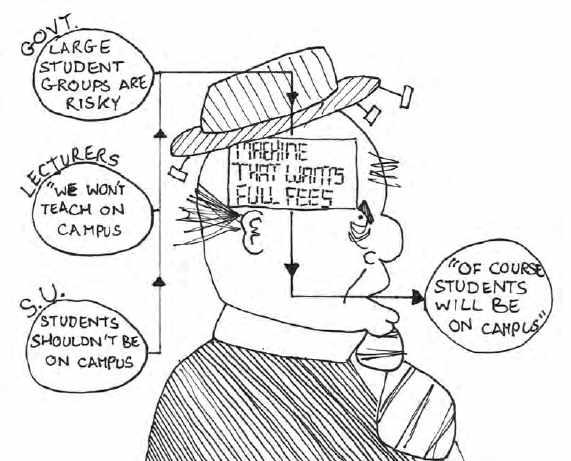
The following morning a cabal of dreary-eyed journalists gathered for Mehole Martin’s press briefing. Their faces were a puffy red mess and their eyes were bloodshot from last night’s shiraz. Mehole Martin took to the podium. His face often winced as the aroma of stale Guinness and spice bag filled the air. Mehole began, “The Cabinet met this morning and decided we were in no mood to take any ‘serious’ decisions. We believe that at this time of great crisis and despair we could all use a little pick me up, so we have decided to introduce a new national holiday”.
“The cabinet has decided to introduce Arthurs Day as our new national holiday!” exclaimed Mehole. The journalists arose in a raucous celebration. “To Arthur” they shouted, “To Arthur”.
Later in the evening The Harpy caught up with Minister for Sport, Tourism, Arts, Culture, Sport, the Gaeltacht and the bog down in the valley-o, Catherine Martin. Ms Martin seemed confused as she rustled through her documents before eventually collapsing in a lather of sweat.
Leo Varadkar took to Twitter to say; “Delighted to announce Arthur’s Day as our new national holiday. However, it’s important to not allow ourselves to lose sight of the true meaning of Arthur’s Day, not to give in to commercialisation. Arthur’s Day is all about the achievements one can make when they inherit vast swathes of property and land! I remember my first Arthurs Day, absolutely sending it with the lads. Belting out the ‘San Diego Song’ by The Coronas in the summer of ‘12. What a time!” ADVERTISEMENT
All serious questions were dropped as the press instead questioned the nature of this holiday. When asked if the new holiday would commemorate 1916, Mehole scoffed and stated “You are aware of who our coalition partners are, aren’t you?” Another journalist arose, his monocle falling as he did so. He steadied himself and asked. “Will it be in honour of our great literary traditions? Perhaps a national Bloomsday holiday?” “No, now I will have none of that chat!” replied Mehole as he signalled to two priests to have the unruly journalist removed. Mehole gestured to the rabble to take their seats; they did so and listened eagerly with bated breath.

13TH OCTOBER 2020 17 ENTERTAINMENT
ELLEN NUGENT
“UCDSU, Vodafone X & Lovin’ have organsied a free online gig for UCD Students on 15th Oct. Head to www.ucdsu.ie/whats-on
AT LEAST TWO SIDES
STREAM OF CONSCIOUSNESS
GAVIN CASSELLS ADESEWA AWOBADEJO
A lot of you will have moved into student accommodation for the first time recently or are planning to do so as soon as this pandemic passes. I just wanted to take the time to think about the stresses of living with people and what strategies we can use to make the experience more comfortable for everyone.
People come with baggage. That can be literal; the gym gear or the shoe collection, emotional; college and life can be difficult, or cultural; food or practices you find strange or uncomfortable. But that stuff is mostly obvious and can be dealt with in a macro way by choosing who you share with, if that’s an option, or being aware that it’s something you have to accept at least for the duration and thus you make a direct effort to accommodate it. It’s a known, you might not like it, but you can accept it and you have to deal with it.
I want to talk about the stuff that can cause the real conflagrations - expectations. You come into a new accommodation situation with a whole rake of expectations set by your parents and siblings or whoever informed your previous experiences. That is true for your new roommates too, and they are going to be different.
There is research by Daniel Kahneman, a Nobel Laureate in economics, and Amos Tversky, who died young (they don’t award Nobel prizes posthumously) that estimated that people were 2.25 times more sensitive to losses than gains. These were choices under uncertainty, but I contend that people are much more sensitive to the expectations not being met than they are to their expectations being exceeded. So, it is important to set expectations correctly.
In the course of researching this column (I know, you’d never believe it…), I spoke to some people far more knowledgeable than me on this subject and they recommend that within the first few days/weeks that you all sit down and create a Housemate Agreement. I know that this sounds a bit Sheldon Cooper, but I’m going to try and outline why this is such a spectacularly good idea.
Living with people has costs and benefits for everyone. Obvious benefits should hopefully involve not being cold and being able to get some comfortable sleep. Other benefits can be mental health-related if you enjoy company. Costs obviously include rent but also compromise and potentially some mental distress
UNIVERSITY LIFE DURING THE COVID19 PANDEMIC: A FIRST YEAR’S PERSPECTIVE CIAN CAREW


As expected, university life is a major transition from secondary school. We no longer sit in the same few classrooms being told exactly what paragraphs to highlight for the upcoming class test. We now have this sudden feeling of independence where it is entirely our responsibility to attend lectures, take notes and even feed ourselves in university accommodation.
However, this year university life has even more challenges. After the schools closed last March as a result of public health restrictions, we had to immediately adjust to the idea of online learning, virtual classrooms, and Zoom calls. Initially we were under the impression that these fixtures would be temporary and we just had to persevere to get the necessary points for university. However little did we know that 7 months on, we would be still watching prerecorded lectures and meeting our new classmates for the first time via Zoom.
Aside from the difficulties associated with getting used to the new online systems and virtual classrooms, one of the most difficult aspects of this transition has been the social aspect of university life. From doing orientation from our bedrooms at home to all the various society events being cancelled, it has been incredibly difficult to make friends and meet new people. Aside from the few housemates living with me, any other interactions with students have been primarily via break out rooms on Zoom or large WhatsApp groups with over 120 members.
A second thing which I have found extremely difficult is the fear associated with visiting my parents and family at the weekend. From hearing of the experiences my relatives have had in previous years, the ‘normal’ college experience often includes trips home at the weekend to stock up on food, clean clothes, and Sunday dinners. In contrast this year, going home at the weekend is a completely different scenario. Last weekend was my first weekend home and included isolating in my bedroom for meals and wearing a mask while watching tv with my family. Despite my parents encouraging me to come home every weekend, I now feel that the fear of passing on anything to my parents is just too much and would prevent me from going home for a number of weeks.
if you don’t enjoy company. This relationship will only continue to function well as long as all parties perceive that the benefits outweigh the costs.
What the Housemate Agreement allows people to do is to develop a set of agreed expectations. It’s important to be forthright on what you need for your benefits to exceed your costs and to listen to your roommates and seek to find areas of compromise so it works for them too. But it’s not over at that point. Now that you have a set of agreements it is important that you live up to your side of the bargain and try to be aware of social norms that may not have been explicitly agreed upon. If you’re not sure of a social norm, ask some friends. If you are still unsure, then be cleaner, especially in group spaces, but be aware that if your area of the house is particularly bad that it will spill over into public areas or other people’s private spaces (in economics this is called a negative externality).
What do you do if others are not reaching the expectations that were set? Here communication and information are key. A lot of us want to be liked and so our gut instincts lead us to not wanting to rock the boat or cause any upset, but no two households are the same and adjusting expectations downwards on the fly is a recipe for stress and spiralling relationships.
You can informally mention it, you can inquire if something has changed or you can ask others about it, but only in a fact-finding way, don’t just talk about the person behind their back and take satisfaction in that. What you are trying to do here is establish why they aren’t living up to the expectation set. If you are satisfied that the person still has the capacity to deliver on the expectations set and you are secure in terms of any power imbalance within the relationship you should then address it directly with the person. Privately, if you think that will work best, but most likely better to have a housemate meeting if there are more parties involved.
On power imbalances, it should also be noted that many students live in uncertain conditions with informal contracts for their accommodation leaving them open to eviction without any means of redress. There are supports for students who are fighting with their landlords but there are no supports for students who are fighting with each other. If you recognise that you are in that type of situation you should pay particular heed to this advice.
CULTURE is really interesting. I think, for the most part, I never truly understood the complexity of it. It’s easy to reduce this multifaceted concept to visible artefacts and stereotypes. The celebration of different cultures usually involves colourful presentations of food, flags, and traditional clothing. While these things are all part of a culture, there’s much more.
Culture feeds into our being and shapes our personal identity. It affects our ways of thinking and learning, ways of communicating and our cognition and emotions. As a result, growing up with more than one cultural identity can offer a more multi-layered perspective and insight, based on the plethora of worldviews you have been exposed to. However, it can also be challenging. I know one of the biggest challenges of having more than one cultural identity is never feeling fully part of a particular culture. It’s easy to conflate cultural identity with this idea of essentialism, that in order to ‘be’ a particular thing one has to need to meet a list of requirements. In other cases, I can imagine this feeling coming from a sense of not being fully understood or integrated or even feeling disconnected from a particular culture.
For diasporans, like myself, there can be this want to reconnect to their culture. A want to attain knowledge or simply extend appreciation. Movies, historical sources, music or visiting a particular place are all great ways of delving into a culture. For me, I felt the most connected to my Nigerian self through reading fiction. We underestimate the power of fiction when we see it solely as a method of escapism or a realm world that doesn’t exist. I’ve found that literature brings to life experiences and ideas that no other medium can capture.
I’ve read books written by Nigerian authors from different generations and I’ve seen themes such as motherhood, marriage, and even death take on different meanings. The concepts weren’t entirely different, a lot of them I was actually familiar with. There were many fascinating themes discussed in the context that I understood. I could connect to the distinct voices and perspectives many of the characters presented.
Apart from themes and subject matters, even down to the minute details of the speech and mannerisms of characters, I saw how parts of my identity were affirmed by these books. The books didn’t just bring deeply buried memories to life and they weren’t just relatable, but I actually learnt things.
I didn’t grow up learning about Nigeria’s postcolonial past and civil war in a classroom. Even if I did, the cynic in me can imagine a one-sided history lesson. I’ve read fiction about postcolonial realities and they were riddled with oppression, poverty and hardship, and this notion that political independence didn’t bring the nation stability or prosperity. Even now, 60 years after Nigeria’s independence, the 1st of October is where social media erupts over the discussion of whether Nigeria should celebrate its independence as a state.
Surprisingly, I understand it. I read a book where its author symbolised Nigeria to be a child who didn’t want to be born, but also who will fight with death. The amalgamation of over 250 ethnic groups by the British birthed a country that probably shouldn’t exist but is existing anyhow. I understood the paradox of the history of what it means to be Nigerian through a book that has made-up characters and originated from imagination.
Literature provides us readers with a unique experience. Whenever we discuss art expressions, the role of the recipient is typically underestimated. There’s a sort of agency that comes with reading, where through our interpretations we can navigate how we let a book speak to us. We execute the images of settings and characters in our minds. We can choose to disagree, to question things, and to talk back at narrators. We can choose to draw things out while ignoring other things, we can dictate when we stop reading, or read more than once. I have books that I haven’t gotten past the first chapter and books that despite having read cover to cover, I keep going back to.
There’s a freedom to interpret books, not in a way where we no longer see the author as the instigator of a speech act, but in a way where we allow our intuition to receive the message. In a way, we can extend this agency to our identities. Where we choose what we relate to, the parts we reject and the parts we embrace.
One would ask why I don’t cancel my accommodation and conduct my studies from home. However, the clear uncertainty associated with the world we live in today means that I have no idea when or if we will be back on campus. If I was to cancel last week and then found out this week that we would be commencing on-campus learning, I would then have to scramble to find a place to live in the hope all the student accommodation isn’t booked up. A second reason for choosing campus accommodation was that it would provide me with some form of third-level student experience.
Despite many viewing activities like Freshers Week as merely an excuse to consume alcohol, I have realised from the postponement of Freshers Week this year that it is in fact the main opportunity for students to get to know one another, find common interests, and settle into university life. Despite plans for a virtual Freshers Week, which is the best possible scenario, given the circumstances, watching a Lawsoc debate from your bed is no comparison to the sheer energy and excitement present in the auditorium.
As a first year entering UCD for the first time, it will undoubtedly be difficult to adjust to this new life with restrictions and strict public health guidelines. But as a society and as a country, I think we will all agree that the health and safety of our family, friends, and loved ones is much more of a priority than an ‘in person’ coffee morning or debate. As students, we can spend the entire year feeling angry, frustrated and annoyed, uttering phrases like ‘why this year?’ but the reality is that this year is and will be different for all. We must instead make the most of any opportunities offered to us, remove the virtual barriers of awkwardness on Zoom calls, participate in the wide range of society and sports activities being held online and above all else, we must try to identify the small positives in our lives to add a sense of light to what can often seem like doom and gloom. That might involve going for a socially distanced walk on campus or having a Zoom quiz with your course members. This year will test and try us but we must as best we can rise above it and look forward to the future, where we will hopefully be able to resume on-campus learning, meet our peers face to face and breathe in that UCD campus air.
TALLEYRAND
CHARLES MAURICE DE TALLEYRANDPÉRIGORD
What ho, ye saucey youths, ‘Tis I Talleyrand! The Most Reverend Charles Maurice de Talleyrand-Périgord. Back once more from my opium induced stupor to haunt Belfield. The smooth brained Editors of this esteemed bog-roll have allowed me to once more pronounce upon the pitiful SU and their so-called achievements thus far. This time, however, a certain Editor has requested I shy away from cheap homophobia. I told that poof to make me.
Last time I ranked the SU in order of import, so this time I shall rank them in order of efficacy, from best to Hannah. Having managed to avoid being bullied out this time, the only mixed race member of the executive must face immense discrimination and imminent deportation. Hopefully one of the councils she sits on can give her space to air these grievances.
Since last we spake, Sarah “Settler” Mitchalek has achieved absolutely nothing, putting her in the top three most productive sabbatical officers of all time. The online Ents ball was a stunning success, earning slightly less than one week’s PUP for some charity. Philanthropy of this sort earns pride of place on a CV.
Layton Gay has been working hard using the SU to become an influencer, hoping their whitness can get them a place in the GO house. Unfortunately, they respect women too much for that gig. Also they have no influence. Or Screen presence. It’s full time TikTok and Instagram Live for now. How down with the youths!
Speaking of TikTok, the only TikTok Carla knows is the tick tock of her biological clock. She Definightly has been working hard though, keeping scroungers abreast of how to claim social welfare while in college. Tally approves, as any money spent by students on alcohol is money not being spent on Ministerial Advisors. Or in Bummerson’s case, Marlboro Gold.

Ruairí “White” Power of the SuckDems is truly following in the footsteps of his hero, Minister for Health Stephen Donnelly by abandoning all morals to win office. Truly the best sabbatical officer in a long time, Ruairí has yet to take a single woman’s opinion on board. Marvelous!
I see Conor Blanderson is still here. It makes him seem like he is actually doing something other than enjoying Deeks’ company, celebrating the fact that two white, foreign CEOs are running the university.
As is well known by those who know, however, Sabbatical officers have very little actual control over the Union. Instead, those decisions are made by a team of dedicated corridor staff. Dedicated to doing no work and taking home a fat cheque, that is. I shall now inspect the changes these hard workers have made.
Due to UCDSU successfully ending homelessness and reversing the increases to campus accommodation rent, they have decided that it is finally time to end the role of Housing Officer. Instead, Bitchalek has provided a short list of a suitable candidate for “Pints Officer”.
A little off the record source told me that all Sabbatical officers have undertaken the Mandated SAFEtalk training, so that they know what to say to a distressed student. Jokes aside, this is excellent news, as speaking to any one of these bores is one of the most distressing activities possible. Unrelated, but have you heard track 3 from Elton John’s Honky Chateau?
As has happened in each of the many of the years I’ve haunted this hellsite, UCDSU has always spent the first three weeks grooming freshers. Unlike other years, this year it’s only so they can run for Class Rep.
I have heard through the tunnels that the UCDSU has had its finances slashed. I see that they have squandered what few millions they still have on the update of their website. The SpaceJam inspired performance art that now exists where once there was a functional website is the finest satire ever published.
I see the College Tripeune has gone online. At least that’s one less thing the UCD Estate Staff will have to bin.
To close my very balanced and restrained opinions, I will share with you the beginning of my comedic endeavours. A woman and a homosexual attempt to edit a newspaper. The end.
13Ú DEIREADH FÓMHAIR 2020 18
COLUMN
EDITORIAL
We at The University Observer believe that there is every chance that UCD Management had no intention of returning to campus. We believe that the lack of communication, mess with registration, and general disdain for academic staff and students all lay-bare the University’s apathy for student presence on campus.


It is not surprising that students will not return to campus. Unfortunately the pandemic which has swept the globe and upturned societies and economies does not appear to be ebbing. In no reality would it be reasonable to require 30,000 students come in and out of UCD everyday - using public transport, travelling from all parts of the island, putting themselves, their families, and the country at unnecessary risk. However, what we take issue with is that UCD insisted that students should expect to return, despite every indicator and criticism that it was blatantly unrealistic.
Students are suffering. Many of our friends, siblings, and peers are struggling with the monotony of working from home through a screen. We do not place blame on the tutors,







lecturers, and professors of UCD who for the most part are doing their utmost to provide an education in difficult circumstances.
While, regardless of what the University was saying in June, this was always going to be the case, it does not help that staff and students’ hopes were raised by the university, who appear to have had no intention of keeping their promise. How convenient that a lockdown was announced just days before the proposed return to campus. The investigation published on our front page spells out the myriad of reasons we at the University Observer find it hard to believe this was just an unfortunate coincidence. And perhaps the students studying at home are the lucky ones. Countless members of our staff and contributors have moved to Dublin, signing long leases under the pretence they will have some in-person tuition. Whatever about Irish students, students coming from other countries must feel especially cheated. They had no choice, they could not
LETTERS TO THE EDITOR
Dear Editor,
I am writing this letter in response to the recent opinion piece by Michael Tuohy (“UCDSU has been an ineffective mess so far,” published online 5 October 2020). I want to largely agree with Mr. Tuohy’s broader point, but to offer an additional perspective.
To put it bluntly, the Sabbatical Officers, being six individual students, can only ever accomplish so much. A good sabbat can be very effective as an advocate for individual students. A good sabbat can even, with a great deal of time and energy and some luck, shepherd a project through the morass of UCD’s bureaucratic structure and create some kind of small, lasting change (Niall Torris’s two-year effort to get a postgraduate student adviser hired being a good example). But the kind of change that Mr. Tuohy asks for in his column can only ever be accomplished by concerted, mass organizing on the part of the student body itself (a fact he himself recognizes). And that is a difficult thing to achieve; look at last year’s rent protests. I certainly view them as a success, but Andrew Deeks looked at our turn-out and dismissed us out of hand. What is 150 students gathering on the quad compared to a student body numbering in the tens of thousands?
I agree that this is the time in which students can take back some control of the University. It will require numbers and commitment on a scale UCD has not seen in years. Everything that I have been doing as SU President over the past months has been with an eye on facilitating that change. I hope that the publication of our communications with management
about the speculative figures of in-person class time establishes some credibility. Even though the campaign run by Students for Fees Compensation never took off, I hope that students will remember it when the next bad decision by UMT is handed down. My consistent message to every student who has approached me with these and other concerns has been “talk to your classmates, bring them together, and get organized.”
Now, I will say that I disagree that the SU has been an “ineffective mess” so far. The students who have approached me since taking office, who are interested in organizing with their classmates around issues of fee hikes and unfair treatment, I think would also disagree. Yes, the SU has a chronic problem of connecting with the student body atlarge, but I believe that this year’s team is well-positioned to start addressing that problem. And, of course, it is difficult to organize a protest when students are out of class, as they are during the summer!
Some might say that it is the SU’s job to organize students, and that is true in a sense. Our job is to provide a platform for students, to provide advice and support in formulating their demands, and to bring our resources to bear in promoting those student’s efforts. But none of that can be done without students first coming to us.
I have been working with students across multiple schools and colleges since the beginning of summer, and though I can’t tell you about the details just yet, I believe we are in a strong position to start making demands of UCD for better treatment, lower fees, and more accountability.
commute to Dublin for the day to do a single tutorial. They had to move to Ireland, not knowing what was to come, as their ‘scheduled classes’ required in-person attendance.
The university is a corporation, and unfortunately that’s what it all comes down to. Money. While clearly there is a perennial funding problem with our Higher Education system if the institution is forced to lie to students in order to garner enough funds for the year. However, that is no excuse.
“The mission of UCD is to advance knowledge, to pursue truth and to foster learning, in an atmosphere of discovery, creativity and innovation, drawing out the best in each student and contributing to the social, cultural and economic life of Ireland in the wider world”. We at the University Observer believe words are cheap. For the autumn trimester of 2020, UCD’s cheap words have been very lucrative.
My great hope is that one win will beget the next win. When students see what can be achieved when they pull together and draw on their inherent power as the singlelargest constituent group in UCD, they will go on to demand more and better.
I look forward to seeing you, and many others, on the front lines of this struggle.
Le meas, Conor Anderson, UCDSU President
13TH OCTOBER 2020 19 EDITORIAL
Editor Doireann de Courcy Mac Donnell Art and Design Editor Laoise Tarrant News Editor Heather Reynolds Deputy News Editor Sophie Finn Comment Editor Michael Tuohy Features Editor Caoilfhinn Hegarty Deputy Features Editor Adesewa Awobadejo Science, Health, and Technology Editor Jade Norton Eagarthóir Gaeilge Shane Mc Donnell Agriculture and Rural Affairs Editor Noel Bardon Law and Politics Editor Grace Donnellan Business and Careers Editor Rory Clark The Harpy Editor Ernest Rimmington Sports Editor Christine Coffee Chief of Investigations Andrea Andres Chief of Photography for News and Current Affairs Sinéad Mohan Chief of Videography for News and Current Affairs Doug Clinch Chief of Illustrations Samaneh Sadeghi Marasht Chief of Podcasting Matthew Tannem-Elgie Deputy Editor Nathan Young Columnists Gavin Cassells Adesewa Awobadejo Editorial Cartoonist Ellen Nugent Contributors Mike Stebens Katie Larkin Michael Bergin Brianna Walsh Niamh Finnegan Jack Collum Hannah Woods Tatyana Sinaisky Lorcan Kelly Danielle Nic Gill Fhinnéin Lord Dangle Smear Cian Carew Shauna Fitzsimons Cahal McAuley Ronán Daly Ciara O’Brien Maria Strains Neil Tarrant OCTOBER 13TH 2020 VOLUME XXVII ISSUE 2 UNIVERSITYOBSERVER.IE Celebrate the launch of our new online store with up to 15% OFF the three most popular student devices: With over 200,000 products selected by educators, Wriggle have created a new online store with exclusive discounts on technology and accessories for the education sector. Only available while stocks last. Discount available via the Wriggle HEAnet store. Visit: www.wrigglestore.ie/cms/about to claim your discount GET UP TO 15% OFF STUDENT TECHNOLOGY ON WRIGGLE’S NEW ONLINE STORE! Start your journey with us today. Visit www.wrigglestore.ie to avail of these amazing discounts while stocks last! RRP €1209. Only €1028 inc VAT on www.wrigglestore.ie MacBook Air 13.3” 256 GB SSD 8GB RAM Core i3 with Retina Display. 15OFF % UPTO MacBook Air 13” RRP €569. Only €481 inc VAT on www.wrigglestore.ie Surface Go 2 64GB eMMC 4GB RAM Pentium Gold 4425Y 10.5” Display. 15OFF % UPTO Surface Go 2 64GB RRP €695. Only €589 inc VAT on www.wrigglestore.ie Lenovo ThinkPad Yoga 11e (6th Generation) 128GB SSD 4GB RAM Core m3 8100Y 11.6” Display. 15OFF % UPTO Lenovo 11e OFF 15% STUDENT UP TO DEVICES
Letters,corrections,and clarifications pertaing to articles published in this newspaper and online are welcomed and encouraged. Letters should be addressed to: The Editor, University Observer, UCD Student Centre, Belfield,
Correspondence may be sent to editor
ADVERTISEMENT
Dublin 4
@universityobserver.ie
SPORT
DUNDALK FLYING HIGH ON FILIPPO’S ‘KAMIKAZE MISSION’
RONÁN DALY
Despite struggles in the Airtricity Premier Division and managerial switch-ups, Dundalk FC have earned themselves a spot in the Europa League group stages. Ronán Daly charts Dundalk FC’s recent journey from a dominant and consistent side under Kenny to their recent poor domestic form and European delight behind closed doors.
When Kenny left to take up his dream job as Ireland U-21 Manager his number 2 during his time at the Lilywhites, Vinny Perth, was trusted to take control of first team matters. The appointment of Perth was made complicated as he didn’t have his UEFA pro license, so former Manager, John Gill, was brought back as a coach and video analyst Ruadhrí Higgins was promoted to the position of assistant manager.
FOUR years ago, a 1-0 victory against Maccabi TelAviv for Dundalk was a first European group stage win by an Irish club. The side, now with Filippo Giovagnoli at the helm, will hope for similar success on their upcoming European run, after beating Faroese side KÍ (Klaksvíkar Ítróttarfelag) to become only the third Irish team to advance to the European group stages
Remarkably, Dundalk currently sit 6th in the league of Ireland (at time of writing), 20 points off runaway leaders Rovers and have reached the Europa League group round despite their stuttering domestic campaign. When Shamrock Rovers qualified for the same competition in 2011, they were coming off back to back league titles, and the last time Dundalk made it to the group stages they were at the peak of their powers under Stephen Kenny.
In his first season as manager, Perth’s side clinched the league title, league cup and defeated Latvian Champions, Riga, in the first qualifying round of the Champions League. It looked like Perth had successfully made the transition from assistant to manager. However, a run of three defeats and a draw in four league games after the LOI restart in July and an embarrassing 3-0 defeat to unseeded Slovenian champions, Celje, saw him suddenly out of a job.
To many, sacking Perth after a five game run of bad form would seem harsh and many of the Lilywhite faithfuls were unhappy with the news, however, the cracks had begun to show. Before the LOI was called to a halt in March due to the ongoing pandemic, Dundalk had started relatively well, picking up 4 wins in their opening 5 games. With clubs ready to return to action in July, Perth was hit with an unexpected curveball when his trusty assistant,
Ruadhrí Higgins, was recruited by Stephen Kenny for his Ireland set up. Despite completing his UEFA pro license during lockdown, Perth was dismissed shortly after the resumption of matches.
Along with losing his right-hand man there was upset in the dressing room over the treatment of certain players. Perth also had to contend with his new American CEO, Bill Hulsizer, signing players he didn’t want, namely American duo Taner Dogan and Josh Gatt - the latter he claimed to have signed because he was moved by an interview he did with ESPN. Eventually the on field performances and off field unrest took its toll and Perth was shown the door, along with John Gill and Alan Reynolds, who had only just been appointed as assistant manager following Higgins departure.
As opposition fans revelled in Irish football’s dominant force falling apart, the Lilywhite faithful eagerly awaited the name of the man who was going to rescue their season. To the surprise of everyone, an Italian name began to be linked with the job, Filippo Giovagnoli.
This is Giovagnoli’s first venture into senior football. Previously he had worked as the technical director on AC Milan’s summer camps, the U19’s coach of Serie C side Gubbio 1910 and was the director of coaching at New York’s Metropolitan Oval academy. Not exactly the pedigree Dundalk fans had hoped for.
In his first interview with Dundalk on their media channels he was asked if Dundalk fans had a right to be worried and he responded “they should be concerned” and before he landed in Ireland he messaged a friend telling them he was on a “Kamikaze mission”. Giovagnoli hit the ground running in the border town by winning his first game 2-0 away to Cobh Ramblers. He followed this up with a 3-2 league victory over Shelbourne and a 1-0 second round Europa league Qualifier victory against Andorran champions Inter Club d’Escaldes.
I was one of the fortunate few to be in the Aviva to witness my hometown club’s heroics, finding myself to be a lonely figure in the Lansdowne road end for the majority of the evening. A completely different atmosphere to when Dundalk beat BATE Borisov in a sold out Tallaght stadium in 2016, but a truly special night for the town and Irish football all the same.
The victory meant Dundalk were awarded with a glamour tie against Premier League giants Arsenal as well trips to Vienna and Norwegian side Molde. The man now locally adored as “Papa Filippo” is reaching heights no one could have imagined on his Kamikaze mission in Ireland.
CASTER SEMENYA: SPORT’S UNANSWERABLE QUESTION
EVER since she burst onto the scene with a stunning victory at the 2009 World Championships, Caster Semenya’s career has been characterised by scrutiny and intrusion. Although she won gold in the 800m at both the London 2012 and Rio 2016 Olympic Games, her achievements have been largely overshadowed by her life off the track.
Semenya was raised and identifies as female, but was born with a rare genetic condition classified under 46 XY ‘disorders in sex development’ (DSD). Having two different sex chromosomes (XY) is typically associated with males and Semenya, like other similarly classified athletes, tend to have higher levels of testosterone than those who possess the XX chromosomes found in most females.
The latest World Athletics rule change bans DSD athletes such as Semenya from taking part in the women’s division over distances from 400m to a mile, without taking medication to bring their natural testosterone levels below the required threshold. This means, as things stand, Semenya will not be permitted to compete for a third consecutive gold medal at the Tokyo Olympics in her strongest event, without agreeing to this hormonal therapy, as the 800m race falls within this restricted category.
Due to her glittering career and continued opposition to the World Athletics’ decisions, Semenya has become the figurehead of the controversy, but she is far from being the only high performing athlete affected by the rulings. In 2019, both of Semenya’s fellow podium finishers at Rio 2016, Burundi’s Francine Niyonsaba, and Kenya’s Margaret Wambui, revealed that they also had XY chromosomes and have had their eligibility to compete in the women’s division questioned.
These events have sparked the debate over whether athletes such as Semenya should be allowed to compete in the women’s division as many claim their genetic traits give them an unfair advantage over the vast majority of women in the division. With all three podium positions in Rio having been won by DSD athletes, it is difficult to argue these women do not have an advantage over the rest of the division. However, there are glaring problems with the World Athletics’ response to the issue.
The first is with the issue of sex testing of athletes. Following her incredible win at the 2009 World Championships, an 18-year-old Semenya was quickly requested to take a sex verification test to prove that she was female. Rumours and leaks in confidentiality meant that Semenya’s first world championship victory was overshadowed by suspicion and scrutiny surrounding her sex.
CLUB FOCUS- UCD BOAT CLUB
SHAUNA FITZSIMONS
Currently, sex testing is arbitrarily carried out based on physical appearance. If sex testing is to be carried out it must be done by all athletes and not just those who do not fit society’s standard definition of ‘womanlike’. These tests must also be carried out with a level of discretion which has never been given to Semenya.
An even greater issue with the World Athletics’ recent actions is their offering of testosterone suppressing medication to Semenya and other athletes. This potentially harmful medication is nothing more than sanctioned doping and unsurprisingly Semenya is refusing to take it.
World Athletics asking athletes to take medication to reduce their performance levels to be able to compete is wholly unethical and avoiding the issue at hand. The current problem was not created by Semenya and athletes like her being born different, the issue comes from the flawed system of classification of athletes.
To ensure a level playing field and the integrity of the women’s division, perhaps athletes like Semenya should not compete in the women’s division. Regardless, all athletes deserve to compete at their full ability, without having to take drugs to lower their natural sporting potential.
Semenya has unsuccessfully challenged World Athletics’ ruling, most notably in the Court of Arbitration for Sport (CAS) and most recently in the Swiss Federal Supreme Court. Although there are still more legal avenues her team can use to try and overturn these verdicts, the effect this current ruling will have on DSD athletes and the women’s division as a whole remains to be seen.

Of course, this is an incredibly difficult situation, but World Athletics’ response still leaves much to be desired. Not much is certain in this complicated debate but one thing that is clear is that suppressing athlete’s performance through drugs is not the solution. Alternate competition formats, perhaps a new intersex division, could be considered.
For over a decade, Caster Semenya has been hard at work on two fronts, excelling on the track to become a two time Olympic and three-time world champion. But she has also had to fight to defend her identity from intense scrutiny, face lies about the purpose of tests being performed on her and face repeated instances of misgendering from the media.
Through all this Semenya has carried herself with grace and dignity, refusing to give up her fight to compete and in the process becoming a hero to many in South Africa and around the world, which makes hers and others situations so frustrating to witness and this question so difficult to answer.
In this issue’s Club Focus, Shauna Fitzsimons talks to the UCD Boat Club about returning to the water, preparations for the upcoming season and training during lockdown
with major wins at home and abroad. However, like many sports clubs around the country, their competitive calendar would be impacted far beyond what anyone anticipated that Thursday in March.
As the nation moved into lockdown the club was, like everyone, forced to change plans, but they sought to maximise the opportunity for alternative sessions.
12th of March 2020 is a day that will live long in Irish memories. As Leo Varadkar addressed the nation from Washington about the measures planned to fight Covid-19, UCD Men’s Boat Club was gearing up for a battle of their own on the Liffey, racing Trinity for the annual Colours Boat Races. Within hours of that speech the race, like much of Irish life, was cancelled. The season had started in optimistic fashion, with the club riding high after a successful 2018/19 campaign that saw them capture the coveted Men’s Senior 8+ Irish Championship for just the 2nd time in 45 years, along
Coach Niall Farrell mentions “squad discussions on various topics such as time management, motivation techniques and mindfulness”, which “allowed the group to share, learn and discuss how they are dealing with the lockdown”. Zoom, Slack, ErgWorld, and Strava were used to maintain their sense of community and ensured their members were supported during this time apart. Being one of the few clubs in UCD whose season runs through into summer, they were able to continue training, (albeit alone), and made significant progress during this time with various indoor individual tests that ran throughout the lockdown in many homes across the country.
During the lockdown, the UCD Sports Awards took place online, honouring over 340 athletes across all sports in UCD. The Men’s Boat Club took home the “Elite Team of the Year” and the “Elite Club of the Year” as a result of the success of the 2019 Senior 8+ and the entire club’s achievements throughout the season at various University and National events.
The club doesn’t seem to be letting lockdowns or setbacks get in the way of powering on and were back out training as soon as it was safe to do so. “UCD Sport were very supportive and helped ensure that each step was taken safely and in line with government and Rowing Ireland guidance” says Captain Rob Brown. Unfortunately, this was then curtailed on the 5th of August when Rowing Ireland announced that the Championships would not be able to proceed in September as planned as the allowance for numbers at outdoor gatherings were not sufficient to run a regatta of that size.
Despite this, Farrell says they are “extremely lucky” that the sport is non-contact and predominantly outdoors, which allows them to carry out the majority of their training at their main boathouse in Islandbridge. The membership of the club continues to grow for a number of reasons, with incoming first-year students from other rowing clubs and retention of athletes presumably influenced by the club’s success in the most recent season. This is something committee member Max Browne accredits to the hard work put in by the coaches, Captain, committee and notably, the club’s Covid Officer. Training sessions are to be staggered to ensure all the guidelines are followed; not a bad problem in the midst of a lot of disruption to sport all over the country.
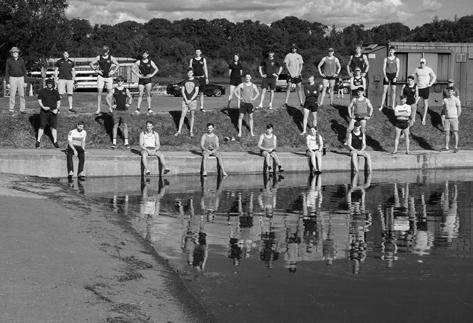
The morale seems high, with ‘Sunday Story Time’ a regular feature in the weekly calendar. Alumni from winning Henley boats, World Champions, and Irish Olympians and coaches gather via Zoom with members past and present to discuss the club’s successful history. It seems to have strengthened the culture of the club despite turbulent times. As the club faces a winter of uncertainty, one thing the club seems certain of is that they will find a way through what comes their way, having gained a lot of experience from the lockdown.
UCD Boat Club is known for taking in a large group of novices with no experience in the sport, some of whom go on to win National Championships in the summer, and hope that this year will be no different. Medical student and Novice 8+ All Ireland Champion, Joe Keirns said he joined the club for all the usual reasons, wanting to make new friends and “rowing sounded pretty neat”. After joining the club a few weeks late he quickly immersed himself into the club; “Being part of UCD Boat Club has allowed me to form strong bonds with peers in my course, as well as giving me the platform to develop friendships that extend beyond my faculty and will extend beyond my degree. Ad Astra”
13Ú DEIREADH FÓMHAIR 2020 20
“Semenya was raised and identifies as female, but was born with a rare genetic condition classified under 46 XY ‘disorders in sex development’ (DSD)
PHOTOGRAPH CREDIT: HTTPS://WWW.FLICKR.COM/PEOPLE/11085937@N02
PHOTOGRAPH CREDIT: UCD BOAT CLUB
PHOTOGRAPH CREDIT: SEXITONI
CAHAL MCAULEY
OTwo
OTwo Interviews
Jack Rua
Nathan Young
Irish glam-pop sensation Jack Rua chats with Nathan Young about his new single Isolation, as well as his creative process, life in lockdown, and queerness in Irish music.

Normally, one could ask an artist what inspired their latest project. With the world being in the state it’s in, it’s not hard to see what Jack Rua was thinking about when he wrote Isolation, his new single. Instead, we began by discussing what his thoughts on the interplay between this shared experience and his art were. “The song was written organically, I didn’t really plan it, it’s just kind of what happened” he tells me. “I was just sitting with it for so long, and the song was always stuck in my head, so I was like ‘I think this is something I need to put out’, because I just really enjoyed the song, I really enjoyed the song writing process, and it really felt organic to me”. Jack Rua released his album Narcissus in June. Full of club-bangers, it was written before the world succumbed to pandemic. While promoting that project, Jack Rua noticed a problem; “I would often read on the sites it was like ‘Do not send us quarantine themed music’ and that was me knowing full well that that was going to be the next thing”. He stuck to his creative independence, as he put it “to be quite honest I don’t really think that anyone has the right to police you on what to do”.
quite a lot, which I know a lot of people can empathize with. For me I was just really looking forward to being back on stage and then it was like ‘Baam!’, you know?” Despite having all of his in-person shows cancelled, Jack Rua has had the chance to perform as one of the artists featured on Hot Press’s Y&E (Young and Emerging) online concert series, supported by the Department of Culture, Heritage and the Gaeltacht. I asked him about this experience. “I thought that was a good initiative, I tune into them all the time. I was actually kinda dreading it because I didn’t really know what to expect. When I get on stage I don’t really plan things, I don’t really rehearse, I just feed off the energy in the room, which can be really detrimental at times because if there’s no energy in a room I’m just standing on stage like “Hello everyone”, but with that one I didn’t really know what to expect but once I got into the situation I just played up to it. It’s just a bit funny, you’re just in a room dancing around and singing, pretending there’s a crowd there, and then just waving to your phone. It’s a bit funny”. Physical intimacy, or lack thereof, is the main theme of Isolation. He tells me that “the story of that song is that I’m in a relationship, but that was two months into our relationship, or a month into our relationship, where it’s just that honeymoon stage, and it was instantly taken away and we didn’t get to see each other for a few months. For me personally there was massive desire within me to be around them, [but I couldn’t be] for a reason that was completely outside my control....it was incredibly frustrating. This space that I was in was incredibly claustrophobic, as a result of the lack of people around me, so that’s what I was trying to communicate in this song and also in the video. I do think it’s been really hard for a lot of people and why, especially back in march, people where expressing this existential depression and it was just, we’re social beings and we need that not even physical affection, just the intimacy of being close to people and I think a lot of people really missed that”.
I asked him if he thought there were unique challenges for queer artists, and he immediatly said “absolutely”. He elaborated on this with reference to the report on Gender Disparity on Irish Radio by Linda Coogan Byrne, published in June. The report found that only one station, RTÉ Radio 1, had parity between male and female artists. He told me “Highlighting this issue is great and there was this massive kind of like uproar and people started making changes and that was great... but for me I was kind of sitting their like “It’s not just boys vs.girls, its heteronormativity in my opinion, it’s not just men vs. women, it’s this indie, sort of alt thing, that is definitely kind of favoured [over] a more queer aesthetic or pop-leaning thing” he adds “I just wish it was a little bit more inclusive of the different identities and the different minorities that aren’t getting a look in. That is quite annoying and we are under represented in the scene”.
MakingBelfield// Laura Stevenson// Trashion // AMarvel-lessYear // EatingforPMS//
// Jack
travel // Bike touring and individual efforts to reduce CO2 // pg 14

On the pandemic as inspiration, he says “I kinda got the shock out of my system with that song ‘Isolation’ and another EP I made with an artist in the US. I don’t really sit down to write a song and I’m like ‘I want to write about being in lockdown’ or ‘I want to write about being in isolation’. I’m very much a feeling-driven songwriter, which is quite detrimental at times because sometimes you’re just going about your day, and then it’s really hard to sit down at a piano and write a song. I’m actually in self-isolation at the moment, so I don’t really have a massive amount going on in my life so as a songwriter, I was just writing a song about going out and clubbing... sometimes it’s like pretend, it’s like theatre”. It’s hard to imagine how Jack Rua could have ignored the pandemic in his work. A concert celebrating his Narcissus album, The Narcissus Ball, was meant to be performed in March. This gig was cancelled, along with so many live music events. “I remember I was meant to be doing a gig in March which was my big headliner in Whelan’s, and I’d done a lot of planning, we’d done a lot of rehearsals, I had a full band, and then that got cancelled like two weeks before because of the very first lockdown. So that was rather damaging”. It’s happened again since. A launch gig for ‘Isolation’ was due to take place in the Button Factory, but had to be cancelled as Covid-19 case numbers rose and restrictions tightened. “So the gig was meant to be last week, and the song was meant to come out next week, so it was meant to be my big reveal, being like ‘Here’s the new single, woo!’ but obviously that didn’t happen so I don’t get my grand magicians trick. That was annoying, but to be honest it was probably the seventh gig that I had cancelled this year so I’m just like whatever at this point”. I enquire if he’s resigned to shows being cancelled for even longer. “Sure it’s already rescheduled, but even that reschedule date is probably going to get cancelled the way things are going. Luckily that gig was only meant to be me and my friend Chris...so there wasn’t a massive amount of damage....This one was more just we had all the songs rehearsed. It’s just disappointing, I do miss performing

Queerness and sexuality are themes of great import to Jack Rua’s work, with singles such as ‘Rise’ and ‘Curious’ confronting sexual desire and curiosity head on. ‘Isolation’ is also inherently queer, as he says “I’m just a queer person who is expressing those feelings and that makes it inherintly queer”. He tells me that, for him, “Everyday is not like Pride, everyday is not like ‘Born this way, hey!’, it’s not always ‘Baby you’re a firework’. It’s not always coming-out stories. It’s not always ‘I have a secret love and he’s a boy’...Those are all valid narratives, but for me, what I try to address in my songs is not necessarily a queer narrative, I’m just a queer person who’s saying them so therefore they’re inherintly queer”. He admits that “artists get very bogged down in the sort of niche marketing side of queer music...it’s a little bit vague to me”, concluding “I think the thing about queer music, and the thing about queer people, is that we are regular people...we’re not walking Pride marches all the time”.
Speaking about how the rest of his work is impacted, Jack Rua explains that “The thing about making music in the modern day is that it is kind of all digital. The traditional outlets of promoting or marketing your music are sort of, not obsolete, but when you’re at an independent level digital, social media are the only ways to really go so those have been even before lockdown, even before Covid, those are the ways we excel. Especially me, especially because I don’t try to appeal to the Irish performing Arts scene, so I try to appeal to online communities like the people who really love queer music, the people who really love pop music. The only thing I’d say is that it’s incredibly difficult to run a social media page and to run a PR campaign. Even I’m in the middle of it now and it’s so damn frustrating when people don’t reply to your emails and you have put years of work into something and they don’t even bother to open it. It’s something that you have to be prepared for. It’s disheartening sometimes. It’s not really what I enjoy about being a musician most to be perfectly honest with you”. And for Irish music as a whole?“To be honest I don’t really know what the future is. Obviously for the time being we need some kind of great innovation when it comes to performing. I can’t really think of what the future might be for the performing industry because it needs some great innovation. Like, it’s an industry, it’s a service that people need. It’s like escapism so it really needs some sort of innovation from...Obviously I think the upper echelons of the political world see the performing arts as almost a hobby, it’s what that British chancer [Chancellor of the exchequer Rishi Sunak] was saying yesterday. Like , why don’t you just get another job, while you’re waiting? Like, shut up. I just think that’s completely the wrong attitude to it, it’s a vital service that people do need. We need entertainment. I know I do. It’s been since I’ve seen a proper gig. Well, actually I went to a pretty cool one. The answer to that very convoluted answer to that is I don’t know what the future might hold. I really hope someone innovates. I think online gigs are pretty cool but it’s not really the same and it’s not very sustainable so something needs to change.
Pandemic or no pandemic, Jack Rua’s creativity is firing on all cylinders. As a final question, I asked what was next for him. “Well the thing about me, I’ve quite a hive mind when it comes to music, like I write all the time and I wish I had a bit more of a focused mind because it would mean that I finish projects a lot more but i’m constantly writing and I have probably the next single done, I’ve an EP, I’ve written a whole album that I want to record next year which is like ‘grants, please’ pending. I’m constantly writing, constantly recording, collaborating, and I’m currently studying a digital marketing post grad, so it’s all very ‘Go’”.
“It’s not just isolation”.
music // Charts, change and Covid-19 // pg 7 games // War games - the next gen battle// pg 13

art & architecture // The Tiny House Movement in Ireland // pg 3

1
inside
issue two / octoberfest / 13 october 2020 / xxvii
to be quite honest I don’t really think that anyone has the right to police you on what to do ”
“
PicturedAbove
Rua
Credit // Pure Grand
”
“
I’m just a queer person who is expressing those feelings and that makes it inherintly queer
contributors //
Aoife Rooney
Lauren Cassidy
Mike Stebens

Joe Kavanagh
Robyn Murphy
Joyce Dignam
Mystic Mittens
Liam Ferguson
Sophia Finucane
Rory Galvin
Zan Smirnov
Fahad Ijal
the team
editor // Doireann de Courcy Mac Donnell deputy editor // Nathan Young
art and design editor //


Laoise Tarrant
otwo co- editors //


Andrew Nolan
Ellen Duggan
literature & drama editor // Anna Blackburn
music editor //
Isabella Ambrosio
art & architecture //
Sinéad Keating
fashion editor // Ellie McCreanor
film & tv editor // Odin O’Sullivan
games editor // Keogh

travel editor // Killian Conyngham
food & drink editor // Sophie Tevlin


chief of illustration // Samaneh Sadeghi Marasht
chief of photography for arts and culture //
Nurina Iman Nizam
chief of videography for arts and culture // Phillip Du Moulin


agony aunt // Joanne Joanne
Mystic Mittens
Capricorn Its strongly, STRONGLY advised that you don’t risk that hot sauce on your pork-belly deluxe burrito. For the love of god, little cap, resist the urge this week.
Aquarius This season is looking spooky for you. Your moon is pulling the tide of a new dawn your way. It is a spooky new dawn.
Pisces
There’s a very clear indication this season that you’re going to be drawn to either a sexy barrister, or a sexy barista. Order a Starbucks and/or sue someone to find out.
Aries
You may have recently been looking into joining a skipping rope club, close to where you live. This is the sign you needDO IT.
Taurus
Your love of domineering is getting very old, Taurus. Try swallowing your pride, and let someone else be on top for once. Submission is a quirk too!
Oh
Howdily doodily, and welcome back to another issue of the OTwo Arts and Culture supplement!
It’s safe to say that things have been a little hectic for us all so far since the new college year began. In hindsight, I think we took the summer just gone, and the time off that came with it, for granted. The weeks are coming on in double time now, and the workload is thick and strong already. Though, it does help having a “broken webcam”, allowing you to stay in bed, drifting back to sleep while the sound of
probably important lecture notes soothes the soul away. C’mon lads, surely I’m not the only one doing it. Over the last week, it has come to light that the remainder of the trimester will be held online, coinciding with the strange back and forth we have all just seen regarding what level of restrictions we’re being pushed to. Overall safety has to be a priority, but it’s very easy for this whole situation to become a bit too heavy at times. You could read the headlines, the angry comments, and religiously watch each announcement as they’re made and still have very little idea as to what’s going on. Generally, it’s not helpful for so many wishy-washy guidelines and recommendations to be suggested without the consideration of how your day-to-day life in college will change. It’s absolutely each to their own; some people enjoy the online experience and being allowed the freedom to carry on with your work at your own devices. But some rely heavily on the inperson lecturer-to-student relationship to fully embrace their studies and get the most out of their resources. No matter what side of the coin you fall on, it cannot be understated how important it is to take the time to take care of yourself, and during such a situation, even more so. Stress is naturally at an all-time high, so if you feel like you’ve been spaced out, or struggling to maintain the same workload as before, please don’t be too hard on yourself. Working yourself to the point of exhaustion isn’t helpful for you, both physically and mentally, so please take the time to relax and allow yourself to unwind. Besides, we’re in college. Deadlines might be scary but sure look; it’s nothing that a can of Red Bull and a few cheeky Google searches won’t sort out in the end. Mind yourself, you’ve got this. Hopefully, there’s something for you in this issue to help remedy that. Ellie McCreanor sits down with Alba Mullen of Trashion to discuss the movement behind sustainable clothing. If you’re more of a games buff, this issue contains pieces looking at the new generation of consoles and Microsoft’s acquisition of Bethesda. Robyn Murphy dives into how cinema might look with a year absent of Marvel releases. And of course, the lovely Joanne Joanne offers another batch of advice for student living. Another packed-out issue that we hope you enjoy!
Lotsa Warmthness, Andy and Ellen
Andrew Nolan
Taking the time to unwind is imperative to keeping yourself healthy during a stressful period, even if it’s just cleaning your room after a hectic week has kept you too busy to do so. Finding such a distraction brought me to a wonderful
channel on YouTube; Watercolour by Shibasaki. Affectionately dubbed the “Japanese Bob Ross” by some of his 700,000 subscribers, Shibasaki presents a calming atmosphere by speaking softly over videos of himself drawing. These videos have English subtitles, so his content is widely approachable. His videos are broken into four tiers; art for relaxation, art for cooking, five-minute painting guides, and guides for beginners, which he began after receiving comments from viewers thoroughly enjoying his content, but disheartened in their own sub-par ability to draw.


I do highly recommend the channel, but it isn’t the only reason I’m writing about him. In a video named “I’m wondering if I should continue”, he speaks to his audience candidly and honestly, questioning whether his channel benefits his viewers, citing ill health and self-doubt as to whether his videos truly serve a purpose. There is a succinct authenticity, and a clear passion as he speaks about how much helping his viewers means to him. In response, the comments were flooded with an immeasurable support for him, as they replied in droves with just how positively his videos had affected them. As Shibasaki reaches out to his audience for help, the same help he has provided so many of them, they reciprocated en masse. Maybe it’s just me, but seeing such an outpouring of support for someone who’s so clearly passionate, was striking. Scrolling through just some of the 10,000 comments, and seeing how many he took the time to reply to, shows how appreciated these wholesome interactions are.
*If you have an uplifting story you would like to be shared, please send it to andrew.nolan@universityobserver.ie or ellen.duggan@universityobserver.ie.
Cancer
Spooky season may find this crab clutching on to your shell. Remember that where there is fear, there is guided curiosity. What may seem to go bump in the night will hardly make a dent in the morning light.
Leo Your emotional pride may isolate you at times this month, sweet Leo. Bear in mind that when you feel most driven to problem solve, you are at your most vulnerable. It is possible to hold your head high, whilst still bowing down to your feelings.
Virgo
Your daily routine is where your energy sits pretty. Recent changes in daily structure may have left you questioning your place in the world, but focusing on a glimmering light of joy, no matter how small, is the key to resourcing yourself.
Libra
Balance may be your strong suit, but it is not your duty! Sometimes inner balance looks like honouring the connections you have made, by walking away and giving yourself a pat on the back.
Scorpio
You are a sorceress of love this month, darling Scorpion. Although you may not realise it, others are looking over their shoulder at you, as much as you look at them. Creep away- but remember, you are the epitome of loving kindness that predates mystery.
Sagittarius
You normally need to place a fist in your mouth to prevent a verbal waterfall, dear Sag. But recent restrictions have left your lips masked and your eyes downcast. Write it out. Act it out. Dance it out. All will give you the release you deserve!
2 OT OT
OT
wo
OTwo featured interview //
1 // art & architecture // pg 3 // literature & drama // pg 4 music // pg 6 // fashion // pg 8 // film & tv // pg 10 // games // pg 12 // travel // pg 14 // food & drink // pg 15 // staff writes // pg 16 contents
Vol. XXVII Issue two
pg
Editors letter from the
w peak
weekthe
of
Watercolour by Shibasaki
//
Gemini
you poor, sweet little gem. Things are looking a little bleak in the revolut account, aye? This month brings with it a turn in the financial winds, my friend. Treat yourself to a candle. Thank Mystic Mittens later.
art & architecture
An ‘ugly’ UCD building explained : Newman
Joe Kavanagh
The Newman (or Arts) building of Belfield is a complicated yet functional arrangement of blocks that is hard to define as a structure. Designed by architect Andrzej Wejchert, and built in 1970, it is a labyrinth of blocks. Almost every student will admit to getting lost between the alphabetical names and coloured lines. It is perhaps the most misunderstood building on campus. To understand the design agenda of the architect it is important to note that the University had set certain limitations. The building was to be no higher than four levels to keep the students close together. No common spaces or social areas were allowed as these were to be saved for the Student Centre that followed in the 1980s. The University also wanted the building to be easily expandable, so it has the structure to support future added storeys, as well as space at ground floor level for the addition of new blocks. However, none of these spatial extensions materialised.
The Tiny House Movement in Ireland
Sinead Keating
Lifestyle or fad? Sinead Keating explores the rising tiny house movement


Yet to become mainstream in Ireland, the tiny house movement is catapulting across the cUnited States and Australia, convincing young people that it is an alternative to renting, older couples that downsizing is viable, and the travellers at heart to change their lifestyle and take their home on the road.
Generally, a tiny house is under 37 square metres or 400 square ft. It can be built on foundations or on a trailer. A tiny house on wheels must be road worthy, as a trailer pulled by a jeep, so height, width and weight restrictions apply. Larger tiny houses are built on lorry trailers and so are less restrictive. Internally there is typically a main space used for living and kitchen downstairs, as well as a separate bathroom. The bedroom is a loft above half the space, often accessed by ladder or a steep flight of stairs. Imagine a painted garden shed with a normal house roof and some wheels under it, and you have a tiny house. In many ways they are a caravan dressed in nicer clothes.
Conversations around tiny living exist in several texts, the earliest being Henry David Thoreau’s book Walden. He explores historically tiny residences like labourers’ cottages, not unlike the whitewashed cabins which housed Ireland for centuries. Although they had far fewer appliances and less personal space, these dwellings provided everything required. The concept of a tiny house on wheels was popularized in the US by Jay Shafer. He first designed and lived in a tiny house in 1999 at eighteen years old, to avoid the costs of rent or a mortgage. He went on to establish two companies that manufacture tiny houses on wheels. Like Thorreau, his philosophy is that the core needs of housing are shelter, safety and storage, which can all be provided to a satisfactory extent by a tiny house.
Contrary to the construction industry, the movement was boosted by the financial crash of 2007. Across the US, people who could no longer afford their rent or mortgage repayments, and those who had lost their homes, turned to tiny house living due to its affordability. Another positive cited by tiny house owners is the ability to build a small space tailored to specific lifestyles and tastes. This provides the freedom of home ownership, without the mortgage.
OTwo Reviews
Making Belfield: Space and Place at UCD
Doireann de Courcy Mac Donnell
Doireann de Courcy Mac Donnell reviews Making Belfield, a beautiful publication charting the history of UCD on the Belfield campus, compiled in conjunction with the 50th anniversary celebrations of the Newman Building and move to Belfield.
Making Belfield: Space and Place at UCD is a collection of essays, a series of studies of some of UCD’s most iconic structures, and a compilation of writings on the richness of the little-known UCD Collections. The book was edited by Finola O’ Kane, Professor in UCD School of Architecture, Planning and Environmental Policy (APEP), and Ellen Rowley, Assistant Professor in Modern Irish Architecture in UCD School of APEP. Prior to the publication of the book, there was a significant gap in the written history of the architecture, landscape, collections of Belfield and, according to Professor Donal McCartney of the UCD School of History, “Making Belfield is certainly a significant contribution to that history”.
CreditLaoise Tarrant
If the limited space is not a deterrent, the biggest barrier to tiny house living is their legality. Planning authorities in most countries specify the minimum size of a dwelling built on a foundation. For tiny houses on wheels it is more difficult to understand which laws actually apply. In the UK, they are classed as caravans, and if they comply with weight and size restrictions, they are fine for permanent residence. More restrictions apply in Northern Ireland and the Republic so planning applications are decided on a case-by-case basis. Changing the legality of tiny living in Ireland has the potential to allow developers to create tiny apartments like those of Tokyo or Shanghai, where space is at a premium. However one could argue that the housing crisis in Dublin is bad enough without more tiny two-room studios being built.
CreditDoireann de Courcy Mac Donnell
Newman is better labelled as a megastructure rather than a building. It is all about circulation. Spaces on the bottom are for larger crowds but as students move up to smaller rooms it becomes more private and intimate. One downfall of the building is the lack of social spaces. It is not intended for students to stop and talk with friends, but more to move about and mix in corridors. The building’s design is always pushing them back out into the campus or through into passage to the James Joyce Library. However, in between classes students find themselves tethered to the walls, plugged into the sockets with laptops or phones charging. While externally appearing as quite an austere building, the internal finishes are detailed and carefully chosen. The floors are a warm terracotta tile, the lecture hall entrances are adorned with fine brass lettering. The ground floor walls are lined with grey silicate brick and the ceiling is exposed concrete waffle slab. The woodwork, including the original furniture, is made from hardwood Afrormosia. Cedar has been used for acoustics within the larger lecture halls.
The entrance to the Newman is not a grand one as one would expect for a building that houses so many departments. It must be understood that this building is part of a wider campus, not a standalone building. It connects to the covered walkways that run through Belfield; glass tunnels connecting Newman to the neighbouring Tierney Administration Building and the James Joyce Library. At the opening of the building by President Éamon De Valera in 1970, it was not just a home for the Humanities, but also the Law and Commerce faculties. This was a hub of interdisciplinary action; even if a student did Geography and another did Commerce, it was a lot easier to cross paths back then. This was following the idea that the different students would mix and mingle, and in turn that ideas from different areas of study would transfer. The whole idea of further education is to expand the students’ knowledge and open themselves to new experiences. Newman was to foster this exploration. Newman is an essential part of the student’s university experience. It knows college life is more than a 9-5 office job. It is forcing students back out onto campus, to meet new people, both within and outside of their area of study. Newman wants them to go to the library, the Sports Centre or at the very least go for a smoke at the lake where, who knows, they might meet the love of their life.
The book begins with a series of eight essays discussing topics such as UCD’s landscape history, the move to suburbia, the international context for university design, and detail history of the architectural design from authors like Sean Phillips, the Librarian of UCD from 1978-2008, and Hugh Campbell, Professor of Architecture and Dean at the School of APEP.
In Architectural Review in 1957, Lionel Brett “posited that universities were ideal cities, having to accommodate many but without the bother of urban dross such as traffic”.Although UCD Belfield first housed students in Downes’ Science building in 1964, and the official move to the campus was completed in 1981 when UCD students of Architecture moved to their new building in Richview, 2020 was chosen as the year to celebrate the 50th anniversary of the University College Dublin Belfield campus as it marks 50 years since the opening of the Arts, Law and Commerce Building, now the Newman Building. As part of ‘Building Studies’, Rowley discusses ten of UCD’s buildings, from the Arts, Law and Commerce (Newman) Building in 1970, to the 1972 Water Tower, and the 2018 Confucius Institute for Ireland.
One of the gems of Making Belfield: Space and Place at UCD, is the portion dedicated to UCD’s Collections. Chapters include discussions on the UCD Archive, The National Folklore Collection and ‘The challenges of establishing’ a space for Irish within an academic context; “Bhraith spás na Gaeilge i UCD go mór ar cheannairí tíre agus teanga a chloígh le feachtas leanúnach a raibh
Lower cost of living is a big draw to the movement. A smaller living space leads to lower heating and electricity costs. Early in the movement people built their tiny house out of recycled and secondhand materials, further reducing costs. However, with the rise of companies providing fully fitted out tiny houses, the cost for a tiny home on wheels ready to live in comes to an average of $90,000 (€77,000). While this is certainly an easier and quicker way to go tiny, it loses the environmental and cost-effective factors at the heart of the movement.
Central to the movement is environmental impact. Tiny houses have much lower consumption rates and therefore gather resources through rainwater collection and solar panels. Having no connections to public services makes it easier to pack up a tiny house and travel. Even a sewage connection is typically avoided, with a composting toilet being by far the most common option. It involves a sealed unit for breaking down waste in an odour and water free process. European law does not allow composting toilets due to human waste management restrictions. For those averse to composting toilets, a costly yet effective alternative is the incinerating toilet. This is one of many technological innovations specific to tiny living to maximise the limited space and resources.
A large downside to tiny house living for many is the difficulty of raising children. Many young couples move into a regular home with the arrival of their first child due to added space and privacy requirements. The lack of space also makes accommodating visiting friends or family difficult. The question needs to be asked; why is the movement not as popular in Ireland? It would seem that Irish people have an expectation of home being a house with a garden. Apartment living has been slow on the
uptake here, outside of social housing. In turn, stigma in relation to social housing or the travelling-community lifestyle has hindered the movement. In Australia and the US, many people build large decks around their parked tiny houses that offer an extension to living space. The colder and wetter Irish climate renders these decks useless for most of the year, negating the surplus space benefit. After spending so much of this year confined to our homes in lockdown, it is difficult to imagine it being the motivating factor for many Irish to downsize.
treoirphlean don Ghaeilge mar theanga phobail agus mar dhisciplín acadúil mar thorach air”. These collections can often be forgotten in the day-to-day running and development of the greater UCD population, however many, including the UCD Art Collection, are of national importance and their recognition is vital to their retention.
Unfortunately for the oppressed student activist, in the book’s introduction Rowley and O’ Kane debunk the riot-proof and ‘protest preventative’ theories that surround many of the main structures. While UCD’s own Gentle Revolution in 1969 joined the chorus of student activism globally at the time, the masterplan for the Belfield campus, (in particular the iconic walkway shelter structures and the long steps which force you to take large strides or two awkward steps per level) predate the revolt by some twenty-five years. Although Making Belfield emphatically “put[s] to rest... any subsequent myths around Belfield’s design as a spatial translation of UCD’s anti-student revolt/anti-mass gathering agenda” it is likely that the rumors and imaginings of student might against oppressive bureaucracy will persevere.
Not only is Making Belfield: Space and Place at UCD, a wonderfully engaging read, but it is also a beautiful publication, filling an important gap in the record of the history, art and architecture of UCD.
Making Belfield: Space and Place at UCD is published by UCD Press and retails at €40

3
“ Newman is better labelled as megastructure rather than a building
Generally a tiny house is under 37 square metres or 400 square feet... Imagine a painted garden shed with a normal house roof and some wheels under it, and you have a tiny house. In many ways they are a caravan dressed in nicer clothes.
CreditUCD Press
”
” “
“ universities were ideal cities, having to accommodate many but without the bother of urban dross such as traffic ”
Broadway via broadband: streamed musicals
With people consuming more television than ever before, and live performances being put on hold, Aoife Rooney examines what this means for the accessibility and experience of musical theatre

what to read book nook :
Best known for her imaginative storytelling in the international bestseller Room (2010), Emma Donoghue’s ninth novel The Wonder (2016) similarly defies genre expectation, interweaving elements of historical fiction, the gothic, and a psychological thriller.
The concept of attending musicals and plays in person has become somewhat of a pipedream post Covid-19.
Earlier in the year, when spending an extended period at home was seen as a novelty rather than a sentence, people turned their attention to the arts and filled their days with movies, television, and the general consumption of media otherwise reserved for weekends. Due to the recent change from the serialisation of television shows, from episodes being released weekly to the drop of an entire season, combined with the audience’s pick of subscription viewing services, there has never been an easier way to consume entertainment. This accessibility was not always available, especially regarding traditionally live performances such as musicals, plays and concerts. During the past six months musicals have thoroughly felt the effects of closures of theatres, leaving many musicals not only postponed until 2021, but some runs cancelled altogether. In New York, all Broadway theatres are closed until January of next year, and many, including Mean Girls and The Lion King, will return next year when it is safe to do so. However, some productions, including Frozen and Who’s Afraid of Virginia Woolf, have been cancelled altogether. On the heels of many productions not returning, and upcoming musicals being cancelled before ever beginning, many fans are missing out on the opportunity to see shows live. This begs the question: should musicals and plays be made available online for viewing? There are both drawbacks and benefits associated with each option, with funding being an overarching issue in both camps. A good example would be the Broadway production of The Lion King. he musical is celebrating its 22nd year on Broadway in November and is currently on hiatus due to Covid-19. The musical sits as the third longest running musical in Broadway history, citing over 8,500 performances over two decades. This is emblematic of the musical’s popularity and ability to endure the test of time, not feigning in popularity yet. There are many logistical issues associated with the transfer of mode of consumption of this performance going from live to ‘as-live’. Theatre and musicals are designed in such a way as to cater to a live audience. Especially in recent years, props and sets have become increasingly interactive with the audience to further pull the viewer into the world of the production. There are aspects of production that are impossible to replicate. Whether it be the bass you feel in your feet that slowly makes its way up to your stomach, as Scar attempts to weasel his way into his so-called birthright, or the heat of the Saharan sun on your cheeks, there is a lived experience that comes included in the price of the ticket. This factor also lends well to the fact that the way in which sets are constructed. The lighting and how actors project and cater to all ends of the theatre, musical productions are very much created with the audience in mind, and care is taken in an attempt to accommodate the viewing experience. While this could arguably be altered for a filmed musical, these are factors that, when taken away, alter the idea of what a musical is supposed to be. There is also a major issue with the cross-over between streaming services and live performances from a financial point of view. Successful musicals that have seen record demand in the past few years, such as Hamilton and Harry Potter and the Cursed Child, also brought with them very high ticket prices. For example, when Hamilton had its run in Chicago performing for over 1,300 people over 171 weeks, ticket prices have been reported to be as much as one thousand dollars. With audience members spending that much money to see shows, the production is able to put more money into tech, costumes, sets and casting, all of which make a show more spectacular.
There are many other comparable examples, but it shows that if a musical like The Lion King, which has been proved to be consistently successful for over two decades, the price that would need to be paid by streaming services such as Netflix or Disney+ could be exponential. This contrasts with a film that has a six-week run in cinemas worldwide, or a streaming service paying a flat fee for a film released exclusively on said service; the potential for further revenue, short of a sequel, ends there. The same cannot be said for The Lion King. Over the course of its production, there have been so many different actors given the opportunity to play these roles, providing jobs in the arts industry, and also doing a lot for the tourism industry, with many people travelling to cities such as London and New York with musical and theatre tickets already booked. This has positive ripple effects for restaurants, bars and hotels, something that would be remiss if people were watching from home.
Set in the mid-nineteenth century, The Wonder follows Lib Wright as she travels to a rural Irish village. As a respected English nurse, Lib believes she has been employed to tend to a member of the Anglo-Irish gentry. However, she soon finds out that she has been deployed to spy on a Catholic peasant child; Anna O’Donnell, an eleven-yearold girl who has not eaten for days, bordering on weeks. Surrounded by a zealous community, Anna’s family, friends, and neighbours hail her as a divine miracle. Pilgrims travel from all over to pay homage to this living, breathing wonder. However, things are not as they seem.
At the story’s beginning, Lib works tirelessly to expose Anna as a fraud. Slowly beguiled by the child’s optimism and good nature, Donoghue’s protagonist develops a maternal affection for her charge. Becoming increasingly disturbed by the situation, Lib implores others to help her stop Anna’s fast, fearing she has unwittingly become complicit in the murder of an innocent child.
The Wonder’s most striking element is its sense of suspense and suspicion. Donoghue’s language is laced with scepticism, intrigue, and mystery. As you follow Lib
through the narrative, it’s difficult to figure out who you can trust. The O’Donnells? The local priest? Their doctor? Even Lib’s judgement can be questioned. Paranoia drips from Donoghue’s pages, putting the reader on edge. The novel has serious Hitchcock vibes, and I can’t help but think he would have had a field day with this book.
The cadence of Donoghue’s narrative voice is utterly bewitching; like a literary siren pulling you deeper into a stark, post-famine landscape and the story itself. The Wonder unfolds slowly at the start, drawing the reader in. However, the tempo picks up mid-tale as Lib realises she is against the clock. It’s an agonizing juxtaposition; Lib’s rapid flight around town to enlist help, any kind of help, and Anna’s slow, daily pilgrimage towards death. As a reader, it is excruciating and thrilling to occupy both temporalities at once. Time screeches to a halt at the novel’s conclusion, as Donoghue reveals startling, deafening truths about her characters.
This book is about the past in more ways than one. It’s about how we edit personal histories, slicing memory to help us cope with the present, to help us fit into wider narratives, to make us a little more palatable for those around us.
I stayed up all night to finish this novel. While it can be a bit of a slow burn at the start, the pay-off is worth it. It’s only at the very end that you will kick yourself for not following The Wonder’s breadcrumbs close enough. Clues are scattered throughout Donoghue’s narrative. The Wonder’s mystery could be solved within its first two chapters, if you only look a little closer, delve a little deeper beneath its careful subtext.
I’d recommend this book to anyone interested in mysteries, psychological thrillers, historical fiction or feminist revision.
Despite all of this, the one redeeming aspect of musicals being put on streaming services is that it makes an aspect of arts and culture that many fans cannot afford, more easily available to enjoy. The location and price of tickets (a standard ticket to The Lion King typically comes to over €120) are often barriers in consumption of musicals, which is problematic. In seeing the positive reception Hamilton has received after being streamed on Disney+, there is clearly a demand for the distribution of theatre to those facing these barriers. I believe that musicals, like movies, film, television, and music, are meant to be enjoyed universally. And if the more widespread distribution of various musicals means that more people get to enjoy a universal experience, the cost of a lower production value is a small price to pay, along with your streaming subscription. The streaming of musicals online has brought with it a positive change for those who otherwise would not have access to the show, but it is still very important to support the theatres that are making the production possible, to ensure that they are able to return to inperson performances at some point in the future, where the intended form of viewing can be enjoyed by fans.
where to read it
This novel was read late at night, in a room I was just beginning to make my own. Having moved to a new city for college, I looked to one of my favourite authors to provide a sense of familiarity and comfort. After long, cold, uncanny January days, I found myself sinking into its depths with a sense of euphoric escapism; beneath a crisp, new duvet; or perched on top of a still-bare study desk, slowly gaining a post-it-note fringe and keepsakes; or sprawling out on worn carpet with the words spread out in their inky constellations, like skies known from some vague childhood dream, but uncharted until that moment.
As strings of pound-shop twinkly lights glimmered in the backdrop, I was transported to another century, becoming immersed in Donoghue’s dark, detailed nights where real stars could still sparkle, without the dense, blinding fog of light pollution or drawn curtains. In the cramped quarters of student accommodation, I was able to reach into The Wonder’s vast imaginative space, pulling mystery, wonder, and suspense into an environment that still felt very mysterious, wonderful, and frightening. Reading from the cosy comfort of my new dwelling, which, with each turn of the page became more and more familiar, I began to feel like a voyeur. Peering into another century, a closed community, a private family, and a lost history; I realised how easy it was to lose myself in another world, from the safety of my now very homey nook.
4 literature & drama
Lauren Cassidy
Lauren Cassidy discusses The Wonder by Emma Donoghue, and where to read it.
“ ”
The Wonder by Emma Donoghue
Aoife Rooney
there is a lived experience that comes included in the price of the ticket.
“ ”
“
Theatre and musicals are designed in such a way as to cater to a live audience.
”
Paranoia drips from Donoghue’s pages, putting the reader on edge
“ ”
Reading from the cosy comfort of my new dwelling, which, with each turn of the page became more and more familiar …
CreditSamaneh Sadeghi Marasht
OTwo Interviews
DramSoc
Anna Blackburn
Changing the platform of societies to an online format is a challenging task. Anna Blackburn sat down with the Auditor and Events Manager of DramSoc to hear their thoughts.

All returning societies have faced the dramatic challenge of dissecting how their previously regular activities, events and ethos can be translated into an online format. When I first gauged interest in speaking with society-heads on how they managed this transition, the Drama Society (DramSoc) came to mind immediately. How can the connective power of performance be translated in such a way so that new members feel at ease to include themselves? To answer this, I sat down with DramSoc Auditor Niamh Scully and Events Manager Colin Smyth to learn more. Beginning with the onset of Trimester one, Freshers week, and the challenges its online adaptation may bring in appealing to incoming students, Smyth spoke about the importance of their Public Relations Officer Ryan Haran, in ensuring their social media posts attracted the largest audience possible. Smyth assured us that “All of our events went up on the University’s website to reach the widest audience possible”.
On the planning of events within this online format, Scully spoke about a recent ‘Theatre Makeup Workshop’ that was held online, and an upcoming collaborative event between themselves and the Musical Society (MusicalSoc), which will take the form of a ‘Virtual Pub Quiz’. Scully stressed the importance of “collaborating with other creative societies” due to their shared demographic of Freshers Students. Smyth spoke about their excitement surrounding upcoming virtual coffee mornings as well as Creative Weekly Workshops for those interested in either stage writing or the art of improvisational theatre. They have not shied away from bringing their creative projects to an online format, as they hosted the ‘DramSoc Diaries’ on Instagram over the summer, in which students were encouraged to submit monologues to then be performed by UCD students with a penchant for drama. These monologues were paired with any UCD student who expressed interest in the performance of them, allowing for both writers and performers of all stages of their study to enjoy the fruits of creative collaboration. The many varieties of engagement that DramSoc employs are, in Smyth’s opinion, what makes it such a “supportive society” for incoming freshers.
This past week DramSoc has put together their own version of Freshers’ Week in order to virtually introduce incoming members to their society. Their events included the aforementioned Makeup Workshop and Coffee Morning, but Smyth told us that their events change weekly to keep up members’ interest. Smyth also mentioned that DramSoc plans to put together a Writers Workshop and an Improv team. However, they expressed their struggles with this. These types of workshops are better suited in person, but Smyth told us that they are working to “make sure we have as many practical workshops and social events as we can on a weekly basis.”
This is good news for everyone hoping to join DramSoc! Over the past two years, Scully and Smyth have been on the committee as Freshers Representatives and they agreed that is easiest to get involved early on. Joining societies early in the year can make it easier to make friends and learn about events because everyone in the society is new and, even if they are returning members, societies come up with new events every year.
Sully made a point to say how lucky they were in being able to use the DramSoc theatre in the Students’ Union to “go in with small working groups, and record workshops with our tech managers and process managers so that it is easier for people to get involved at home and so that when we are allowed back in the theatre, we are able to put shows on that people have a bit of interest in already.”
OTwo Interviews LitSoc
Anna Blackburn
Virtual Societies, a LitSoc Interview with Auditor Kelsey May Daly and Events Manager Jordan Feeley by Anna Blackburn
Shows are the biggest and most exciting part of DramSoc. For those of you who have been lucky enough to see a show performed by the members of DramSoc, the society plans to do their Freshers Projects online this trimester. Scully explains the Freshers Projects as “a new cast of Freshers every single day for a twenty-minute show where older society members basically crash the play and make them improv with them and like throw them into these weird circumstances, which is really good fun”.
It’s clear that Scully and Smyth have the society’s best interests at heart, with loads of workshops and social events planned for the rest of the trimester. While online events are a blessing, especially for those who have chosen not to come back to Dublin, there’s so much missing from societies this year. I asked Scully and Smyth what they missed most, now that DramSoc is online. Scully said that she missed Karaoke which the society puts on during Freshers Week. It’s usually a B.Y.O.B. event in a full theatre and she said “It’s iconic, really. It’s just so fun to end up laughing and singing along with a stranger next to you.” Smyth agreed that there’s nothing like Karaoke night, but he would enjoy a collaborative workshop with MusicalSoc done in the theatre. He says that “there’s nothing like being in a full theatre. The amount of people that are there with the same energy and feeling the same sort of excitement is just the best way to get to know people. That’s what’s really missing.”
In Scully’s words “[DramSoc] has something for everyone”. She expands on this statement by ensuring all incoming students that it is passion, not experience, that they look for as a society. She states: “the people who love DramSoc most are people who perhaps have never done anything theatre-related before and just happened to have a friend who brought them down to the theatre and they then ended up falling in love with tech, or building sets.”
For their parting words, Smyth describes the DramSoc as self-sufficient.“What holds our society together is the people that love connecting with people who love the theatre, we just want it to be a welcome and happy place for everyone”.
You heard it here folks - get joining!
Keep up with DramSoc on their Facebook page UCD DramSoc and on Instagram @ucddramsoc
Coming back into another new year is a fresh opportunity for societies. Pitching up at the society tents, advertising different events, and being able to approach new people; all standard procedures for attracting new members. This would normally be the case, but as we all know, this year has proved difficult for societies to operate under their usual circumstances. To get insight into how the English Literary Society (LitSoc) is reacting to such challenges, I sat with Kelsey May Daly, the Auditor, and Jordan Feeley, the Events Manager, to understand how they are going about a semester of restrictions. Of course, with the latest announcements, we now know that the remainder of the trimester will be conducted entirely online. While these anxieties have been present in our minds for some time now, the confirmation of this solidifies the difficulties societies may face. Though, this is something LitSoc has prepared for, as Feeley explains: “I think it’s important to have as many events as we can, despite it being online, but the three main things that we’ll be doing is Writer’s Bloc, Book Club and Coffee Evenings which will be occurring every week around the same time.”
LitSoc is hosting their Monday Coffee Evenings with a bit of a twist this year. Starting in week four of the trimester, LitSoc will be doing virtual quizzes during the Coffee evenings. The Literary Quizzes will be different each week and the members are working hard to provide fun topics that everyone will know.
Feeley also noted that social media is playing a big role for LitSoc this year: “We’re putting special emphasis on social media because, of course, it’ll be difficult to get people to join our events because we can’t talk to them face to face and we can’t advertise properly.”
LitSoc posts weekly events on their Instagram page and reminders on their story of the event of the day.
Seeing how virtually all societies are facing a similar dilemma, they highlighted the importance of collaborative efforts between themselves and other societies, with events being organised alongside DramSoc and many other societies to create events that interest lots of students.
Book Club is a new weekly event that the society has developed in response to limitations. LitSoc posts a poll each week to ask members what they are reading and what they would like to discuss. Members meet online to discuss what they have been reading and to provide inspiration and recommendations to fellow society members. When asked about the ideas behind Book Club, they cited an alumni book club which ran through the summer, where former students would meet online to hold similar discussions. Daly describes Book Club as “an open space to talk about books and share your favourites with other society members”.
One widely recognisable facet of LitSoc is Caveat Lector, a recurring literary journal for students to have their stories published. Caveat Lector is an award-winning journal, having received the Publication of the Year Award at the UCD Society of the Year Awards multiple times, and been nominated for a Student Media Award in 2017. This is one of the best ways to get involved in LitSoc. You can submit an original story, poem, or artwork, and if chosen, your piece will be published. Having published last semester’s instalment online exclusively, Daly mentioned how that will be the case again this semester, but they are hopeful to put out a physical copy next semester.
At the end of October, LitSoc is co-hosting the Stand Student Festival 2020 with the Literary and Debating Society from NUI Galway. Stand is a nonprofit organization whose goal is to inform and empower third level students on justice and equality issues. This year the festival is focusing on climate change and migration. They are holding a discussion on the new anthology “Correspondences”, edited by actor Stephen Rhea and poet Jessica Traynor, on Tuesday 20th October from 1-2 pm. They will also be running a creative writing workshop with Sarah Richarson, focused on writing about climate change and migration that Friday 23rd October from 1-2 pm. Both events are free with registration and will be hosted online via Zoom. LitSoc is avidly promoting this event because writing is one of the most powerful forms of expression and when combined with the issues regarding climate change, together we can make a difference.
Feeley, Daly, and the rest of the LitSoc committee are ready for the upcoming semester and hope to see all fans of literature and the arts at their events. To the incoming Freshers and members of Literary society, Feeley says, “LitSoc is a great opportunity for students of all studies to meet up. It is a great way to get imaginations flowing in our Writer’s Bloc evenings and give yourself a chance to write creatively. It is a nice way to relax outside of classes with our coffee meetups and to chat about anything you’re reading outside of class or for our Book Club. We are also planning some surprise events throughout the year. Absolutely everybody is welcome to our wonderful world of LitSoc”.
Be sure to keep up to date with LitSoc through their Facebook page UCD LitSoc and on Instagram @ucdlitsoc! Follow Stand on Instagram @stand.ie and use the hashtag #STANDupformigrants.
5 literature & drama
Absolutely everybody is welcome to our wonderful world of LitSoc
“ ”
What holds our society together is the people that love connecting with people who love the theatre, we just want it to be a welcome and happy place for everyone
“ ”
OTwo Interviews
Laura Stevenson


Isabella Ambrosio
Isabella Ambrosio chats about life, music, and labelling with Long Island singersongwriter Laura Stevenson.
Sit Resist (Remastered Deluxe Edition) by Laura Stevenson, released in September of 2020, captures everything that would make any listener fall in love with her work. My first exposure to Stevenson was in 2018. Standing in the back room of a local Chicago bar with black x’s drawn across my hands, I watched as she took the stage for the first time with her band. I was completely entranced by Laura Stevenson – her lyrical capabilities, her stunning vocals and her ear for instrumentals that suit her vocals to near perfection.
Her voice is absolutely magical – an instrument I had always thought, and was able to express this to Stevenson during a Skype interview. She sat in her New York home, beginning the interview with easy conversation before we both shared a flow of commentary on the modern political climate, the pandemic, and the state of the world.
“There’s a contagious, global nightmare,” she laughed. To lighten up the conversation, she showed me her sixmonth-old daughter. Her daughter made numerous appearances throughout our interview – once including a little accident where Stevenson then hands the child off to her husband and happily bids her goodbye; “Bye baby!”.
The Emo Revival
Andrew Nolan

Central Bank is still closed for renovation and My Chemical Romance’s Kilmainham reunion has been postponed; Andrew Nolan investigates the reality of the emo revival.
Having seen dozens of false dawns over the years, it’s hard to look at the concept of an emo revival without it feeling overzealous. It seems like any amount of time could pass and somewhere, way off in the distance, a blog-post will crop up with a link to a mid-Western math-rock band’s catalogue with vivid proclamations of how they will single-handedly revive the genre.
Let’s say for a second that such a resurgence is possible, how would it even look today? The broad variety of what constitutes “emo” has changed drastically, and trying to imagine everyone reaching the same conclusion and accepting any one movement seems ludicrous. Though, there are a certain number of possibilities. As much as nostalgia has become a commodity to be packaged and sold, you cannot argue with the effect older, more recognisable names have on these ideas. You can be as hipster as you like, reviling anything with a significant following, but let’s look on an objective basis; Paramore still sell records to no end, and tickets to My Chemical Romance’s outdoor reunion sold out entirely in mere minutes. Whatever opinion you may have on their sound, these are still the names many think of when the discussion about emo bands come up.
This marketability carries its own set of pros and cons though. On one hand, they will sell albums and shows to the nth degree. Tried, tested and reliable; these names have ingrained themselves in the memory of enough people to rack up excitement at the mere mention of something new. But say a band does decide to make a fabled reunion, or produce a new record, any direction taken could go either way. One can rigidly stick to their guns (I wrote that for all two-and-ahalf of you to appreciate, don’t worry about it) on the matter, and release music as if 2005 never ended. In theory, an excellent idea, right? Produce more of what people recognise, and the demand for sheer memory association will be rife. This does run on chance, however. Don’t be upset, but I think that time has been and gone. Bring back a pop-punk classic, let them sing about pizza, and hating their hometowns and skating, and we can have a jolly time. By we, I mean those who already have a pre-existing appreciation for this subgenre of rock. In a realistic case, though, it would be difficult to see the mass effect this would have on the modern landscape of music. Would it be enjoyable for long-time fans? Sure, absolutely. But an overall, earth-shattering return to fame for a sleeping beast of a genre? Fairly doubtful.
Her most recent work is the rerelease of her 2011 album Sit Resist with demos, live recordings and alternative versions. Her music doesn’t scream any type of genre – Stevenson simply writes, records and puts her music out there. I expressed to Stevenson that I never associate genre with her music, especially this album – she presents music in the way of just bringing something to the table for you to listen to. I asked her if genre played a role in her music, as past interviewers and reviewers seemed to heavily focus on her punk roots and current ‘genre’. “I guess it’s always been so kind of all over the place in terms of my influences from so many different genres that now I’m considered an ‘indie’ artist, and I feel indie just means independent, it means you create the thing yourself. So, it doesn’t make much sense to me as a genre, you know, because it’s just a way of bringing music into the world. But I guess, that’s how punk was also. Punk for me meant DIY, doing it yourself, and whatever. So, I guess genre is tricky… I just am trying to write the song; I’m not really thinking about how you can categorise it – I’m just creating the thing.” Lyrically, Stevenson has a style akin to poetry – every word counts. Every word has a place, a meaning and a purpose behind its placement, and it’s evident in the way she presents the lyrics. I asked her about the process. “The process is the thing. Sometimes, it depends if I’m singing and playing guitar at the same time. And I’m like, by myself, and I have a lot of sonic space and no one can hear me, so I can just sing, sometimes I make vowel sounds, and some vowels sound nice in this melodic section. And with those sounds, I can find words that kind of wrap around those sounds, and then kind of puzzlepiece them together and make it make sense and make it fit. That’s one way of doing it. Other times I’ll have a
melody or I’ll have a chord structure that I like and I’m kind of working a little melody and then I’ll grab a notebook that has a bunch of shit I had written, and I’ll leaf through it and pick out words and pick out sections and change things and do it that way. It really, honestly depends.” Sit Resist is a beautiful example of Stevenson’s ability to create melodies and write lyrics, and structure so much around these lyrics and her own vocals. Her band and other instruments are structured around what she has created: “Because vocals are first, always, always. The vocals and my guitar, everything needs to be built around it. They’re all in service of that. All of the arrangement is in service of the crux of the song, which is the vocals.” In particular, strings are incredibly important to Stevenson: “A lot of times, especially for strings, I sing the string parts to the string players so those I have a very clear idea of the tambour of the string and what I want.” Stevenson’s passion and eye for detail is prevalent in her music, as each part of the song, whether it’s lyrics, her vocals or the instrumentals, are able to be heard throughout the length of the song. It’s a meticulous presentation of music. Her layered vocals and harmonies are intentionally used by Stevenson, “When I want to create an atmosphere, I will keep layering vocals on.” The way she constructs her lyrics is very precise: she chooses which words to use, where, and fits them together like puzzle pieces. Her instrumentals are placed in front of the listener in a simple, but effective way. Laura Stevenson’s Sit Resist is a beautiful showcase of her talents as a singer and songwriter, and the magic she creates with the music she brings to the table.
The landscape has changed, and such a sound just isn’t seen in the same vein anymore. The juggernauts of the genre will hold sway for as long as their original fans are there to appreciate them. This might not exactly be enough to dislodge a fresher status quo however. Plus, the longer some of these bands stick around, the less fans can miss them. Bands like Blink 182, who have adopted Matt Skiba of Alkaline Trio fame to replace original vocalist and guitarist Tom DeLonge, have been a persistent presence in the scene throughout the years. And what has that resulted in? A newer sound that half-lends itself to mainstream attention at the cost of abandoning their root sound, doing little in reclaiming some of the magic that captured the hearts of their fanbase with their first few albums. This results in a largely middling response to later releases. Despite some evidence to the contrary, the concept of an emo revival isn’t entirely lost. After all, old favourites always tend to crop up again after a while; Stranger Things, and artists like The Weeknd show a certain affinity to the 80’s, and mullets are back again. Cool. No matter the success of the old guard, it is entirely possible that any type of revival will come from something newer, better suited to the current climate.
Put simply, the genre and identity are too broad to lock into any one subgenre. What makes up an emo sound in 2020; a fan-favourite reeling out the classics, or $uicideboy$ rattling off albums like My Liver Will Handle What my Heart Can’t?
The thought of that will make some of you wince, I am well aware. But ignoring the new age of artists putting out these angry, emotion-riddled songs is a form of blindness to the whole situation. These artists are putting out heavyhitting albums with a fresh viewpoint and identity, taking inspiration in some of the more well-established artists and being able to spin it. And guess what? They resonate with people. A lot. Seriously, look at some of the comments on forums or those left under videos and look at the sheer admiration and devotion people have for them. A massive example of what I’m trying to exemplify in this article falls under this premise. While blasphemy to some, I couldn’t mention a modern version of an emo revival without talking about one artist in particular; Lil Peep.
What makes up an emo sound in 2020; a fanfavourite reeling out the classics, or $uicideboy$ rattling off albums like My Liver Will Handle What my Heart
Making his start on Soundcloud, Lil Peep began his career making music that sounded, admittedly, safe. After aligning with different artists, his sound began to grow; the meat of his lyrics began to focus on the misery he sees within his own life. And people attached themselves to it immensely. Talking about him in relation to emo is easy; he features samples from the likes of the bands Three Days Grace and Pierce the Veil. The inspiration is clear to see. With humble beginnings, he would eventually become a torchbearer for the emo-rap scene, and the documentary of his life Everybody’s Everything even had a select theatrical release.
No matter the distance, I wouldn’t lose hope for such a revival if you’re holding out for one. To solidify this idea, I’ll leave you with a fun fact: Limp Bizkit have sold around 40 million albums worldwide. Limp. Bizkit. Mate, anything is possible.
6
music
I feel indie just means independent, it means you create the [music] yourself.
“
”
Credit Laura Stevenson
“ ”
“
Credit Laoise Tarrant
music Charts, change and Covid-19
 Isabella Ambrosio
Isabella Ambrosio dissects how Covid-19 has affected modern music. While the world seemed to halt in March 2020, the music industry kept going. Even with cancelled festivals, tours and contests – as well as thousands made redundant –the artists themselves were finding new meaning. Some released their albums early, some rescheduled them for later release, and others dropped new albums with no warning. Artists have created albums inspired by the pandemic or released music as a way to comfort themselves as well as others. They found themselves with excessive amounts of time and the ability to be creatively free was at their fingertips. But, looking at the music charts, many of the singles topping them don’t make any mention of the virus. Between the weeks of March 27 to October 25, BTS’ ‘Dynamite’ and Justin Bieber and Ariana Grande’s ‘Stuck with U’ are two of many that topped the charts in the Official Top 40 Charts in Ireland, while Tyga’s ‘Bored in the House’ and Cardi B’s ‘WAP’ dominated social media outlets like Instagram and TikTok. The music industry is booming, but many different ways.
For Charli XCX, she created her latest electro-pop album
How I’m Feeling during lockdown. It was created in the span of six weeks in collaboration with her fans and had a very transparent creative process. She had quick video updates on her YouTube channel and allowed fans to pick songs to be put on the album. Her lyrics capture the feelings that have been brewing in all of us. ‘Anthem’ expresses the ennui of being stuck at home, unable to see anyone, and ‘Claws’ talks about trying to take care of yourself while in such a situation. In an interview with Stereogum, she said “I didn’t just do the album to fill up my time. I did it because, for me to feel positive, I need to be creative. But also, I kind of wanted to document how I’m feeling and my emotions and experiences during this time. Obviously, it’s something the entire world is going through”.
OTwo reviews
‘Stuck with U’ by Justin Bieber and Ariana Grande debuted at #1 on the Billboard Top 200 list, their music video featuring tons of stars such as Demi Lovato, Kendall and Kylie Jenner, 2 Chainz, Lil Dicky and more - but what stands out the most, is the fact that it was a charity single. The proceeds were donated to the First Responder’s Children Foundation, which provides scholarships for children whose parents are first responders during the Covid-19 pandemic. While the lyrics touched on being stuck at home, and not wanting to be stuck with anyone else, there was no direct mention to quarantine as compared to some of Charli XCX’s songs on her most recent release. Then there are other artists, like BTS, who completely avoided mentioning the virus, as they were “discouraged by the situation so [they] took on a new challenge which was ‘Dynamite’”. The single is a light, 70s-inspired, disco-pop track which evokes the carefree, chill feeling of summer. But it wouldn’t have released when it did if the pandemic didn’t happen. Talking on The Tonight Show with Jimmy Fallon about their upcoming album BE (Deluxe Edition), they discussed how they saw the song as something for them, but also for their fans who “they wanted to energize and give joy to”. The positive energy is radiated throughout the song and it gives a sensation of being carefree, a stark contrast to reality, but a lovely thought.
Ultra Mono
Mike
Stebens
Bristol band IDLES released their third album Ultra Mono on 25 September 2020. They have been known to combine their electrifying rock with blunt, leftist political messages. The opener War is a punch in the face, with its compressed sound that is noisy and gnarly setting the benchmark for what is to come: high energy rock that is hard to put into a genre box. It is not necessarily postpunk like many critics branded it, but better fits under the banner alternative/indie rock.
The album’s sound remains the same throughout and the songs can appear repetitive, maybe too much so. It does sound like one 45-minute-long song, which can have a certain appeal, but may become bland after a couple of listens. Still, there are a couple of bangers on this political album. Model Village makes fun of small-minded England (“Snitches snitchin’ on snitches”) as it rejects homophobia, senseless nationalism and everyday racism. ‘Mr. Motivator’ has enough energy to accompany people on their running or biking trips. ‘Ne Touche Pas Moi’ is denouncing catcallers and a call to women-friendly gigs, ending in consecutive shouting of ‘Consent!’. One of the best songs is the slow ‘A Hymn’, serving as a welcome counterpart from the otherwise loud songs on the album. There were high expectations for Ultra Mono after its predecessor Joy as an Act of Resistance was received positively. The highly awaited Ultra Mono may not fulfil everybody’s expectations, but hopefully the record will come to life when performed live.
Tyga’s track falls in between Charli XCX’s most recent release and ‘Stuck With U’ in terms of lyrical content. “Okay I’m bored in the house, and I’m in the house bored/ Bored in a house and I’m in the house bored” Tyga x Curtis Roach’s song “Bored in the House” states, existing as an ode to safety orders and government lockdowns. Compared to Charli’s songs, it’s a lighter take, but it still discusses how a lot of people actually feel about quarantine - they’re goddamn bored. The song feels like a bit of comedic relief between Bieber and Grande’s love ballad in quarantine and Charli XCX’s blunt commentary on the pandemic. Oftentimes, popular music tends to have patterns such as similar beats and themes, especially during the summer and winter. One may expect that Covid-19 would be a common theme within new music but there is no real distinctive pattern. Songs like ‘Bored in the House’ and ‘Anthem’ are distinctively about quarantine, whereas songs like ‘WAP’ and ‘Dynamite’ have absolutely nothing to do with Covid-19. Justin Bieber and Ariana Grande straddled the line with ‘Stuck with U’, not directly mentioning quarantine, but being stuck indoors with someone they love and using the proceeds to donate to charity.
OTwo reviews
Nectar

Andrew Nolan
Album: Nectar Artist: Joji
I don’t think it can be understated just how sharply Joji has risen over the years. Honestly, go listen to anything from his days of writing edgy, dark-humoured songs under the guise of Pink Guy, and compare that to something like Slow Dancing in the Dark. It is almost baffling that they’re both written by the same person, and it highlights the distinct growth of Joji’s sound over the years.
This growth is definitely apparent in his latest release, Nectar. The 18-track album shows an artist, having firmly come into his own, hit it out of the park again with another stellar release of slower, more heart-felt tracks. Anticipation was high for the album, with the lead single ‘Gimme Love’ amassing nearly 40 million views since its release, and I personally feel such excitement was justified. Each song plays its part in fleshing out his sound, with some tracks adding a particular flavour to a now-established feel. Listening to Nectar’s title track ‘Ew’ had me sold on the album’s step forward within the opening minute. Nectar also features cameos from big names such as Diplo and Lil Yachty, who more than justify their respective appearances.
It would be easy, and honestly tempting, to go track-bytrack and explain why this album is just as good as it is, but I’d sooner recommend you listen for yourself. Nectar is a solid release, breathing life into Joji’s familiar sound while consistently providing what fans have come to love from him.
Covid-19 and quarantine have truly been interesting influences on the music scene. Whether people are listening to music more or less because of isolation, new or old artists, finding a different meaning within music, Covid-19 has changed music’s relationship with pretty much everyone. If anything, the variety of music that is topping charts and blowing up on social media is the variety of music that everyone is consuming right now. There is no specific genre, so many people’s music tastes are evolving and growing and the variety on the charts reflect that. While there is no singularly distinct influence of Covid-19 on the music industry, the music industry is beginning to hold up a mirror to their audience’s taste - changing and varied.
7
the music industry is beginning to hold up a mirror to their audience’s tastechanging and varied.
”
“ ”
it’s a lighter take, but it still discusses how a lot of people actually feel about quarantine - they’re goddamn bored.
Credit Nurina Iman Nizam
“
Model Village makes fun of smallminded England (“Snitches snitchin’ on snitches”) as it rejects homophobia, senseless nationalism and everyday racism.
Album: IDLES Artist: Ultra Mono
“ ” “ ”
It would be easy, and honestly tempting, to go track-by-track and explain why this album is just as good as it is, but I’d sooner recommend you listen for yourself.
OTwo Interviews
Trashion
Ellie McCreanor
In an interview with Ellie McCreanor, Alba Mullen chats about how Trashion was born and her top tips on staying sustainable during lockdown.
Over the past few years, the world has slowly but surely been moving towards a more sustainable planet. With the announcement of Ireland’s Waste Action Plan in early September, it is apparent that the Irish government has taken note, and Ireland’s fashion scene has been no exception. Speaking to the OTwo, Alba Mullen or Trashion as she is known to her Instagram followers, shared her journey into the sustainable fashion world.
“Things really kicked off when I watched the True Cost documentary one Sunday when I was super hungover (highly recommend the documentary, highly discourage watching it hungover)! It really opened my eyes to the atrocities of the fashion industry, particularly fast fashion and the unethical practices that the industry very much has embedded within it” she says. “ I volunteered with Suas Educational Development in Bengal, India for six weeks during the summer of my first year in college, and as a lot of the “True Cost” is based in Bangladesh, it brought back a lot of memories... The women who featured [really resonated with me], as they very much reminded me of women that I myself had worked with in India and when I realised that my actions – buying a shirt in Zara – directly impacted their quality of life, that was it for me. I was fully out. I pretty much quit fast fashion that very day, started following more sustainable fashion accounts, watching YouTube videos about the industry, I redownloaded Depop and joined the Nuw platform.”
Not only did this influence Mullen to change her clothing attitudes, but it sparked the idea for what is now the Instagram page Trashion - the bible for all things sustainability and slow fashion. She Told OTwo “I was actually buying exclusively second-hand clothing for
about
After spending three years studying in Dublin city centre, Mullen is well acquainted with the best spots for second-hand shopping; “I lived on campus in final year so ended up being dangerously close to Geroge’s Street!” - George’s street being arguably the best street for charity shopping in the city centre. She emphasises that, when shopping sustainable fashion, “Charity shops, charity shops, charity shops – are literally the best and only way to go! When people think of ‘sustainable fashion’ I think they envision super eco-warrior girlos from California floating around in flouncy skirts, or superchic and cool fashion divas in designer vintage and I really think both are just not true! For me, I truly have only ever saved money by ditching fast fashion. I used to buy lots and lots of weekly hauls from the Missguided, PLT and Nasty Gal sales that I thought were cheap at the time but they are far less so if, like me, you wear them once or not at all! Instead now I buy a few items maybe once or twice a month and they are always things I either absolutely love or really need. Charity shops are God’s gift – especially if you’re from outside of Dublin because the prices are so inflated in the city.”
Mullen’s focus on swapping and re-wearing as the most sustainable option really is at the heart of sustainable fashion, in that a huge aspect of it is reducing your impact on the planet through consuming less and reusing more.
“I would also urge people not to forget that buying something new, or preloved, should really be a backup idea – instead try swapping with friends (or strangers on the internet through apps like Nuw), borrowing family’s clothes or just upcycling and mending what you already have. All options that are completely free!”
Making the transition from fast to slow fashion can be tough for a multitude of reasons including variety, trends, and cost. However, Mullen offered her second-hand solutions. When asked what her favourite vintage shops in Dublin were, she replied; “During my final year I also worked in Nine Crows, so I would have to be biased and say them! I found some of my most cherished and funky vintage items while processing stock in the Temple Bar store or sorting rails in the Pembroke Thrift shop and I really do think the quality of the vintage pieces are second to none! The owner Emma is an actual inspiration (serious girl boss) and I couldn’t recommend them enough –there is something for everyone with their lad’s section White Noise and now, with the two thrift stores, they’ve made it so much more affordable to get serious stuff on the cheap.”
Second-hand, although maybe the best option for the planet, is not always ideal for basics that get worn daily. Our fashion shoot this month with Irish sustainable brand Pure Clothing is an example of the amazing sustainable Irish brands out there. Mullen’s sustainable pick is ;“I think one of my favourite sustainable clothing brands would have to be Stripe & Stare! They are a sustainable, ethical underwear company who literally make the comfiest knickers I have ever owned. I’m pretty sure the company is Irish, it’s female-owned and the knickers are compostable – so when you’re finished wearing them to death you don’t need to throw them in [the] landfill. Literally the dream, right?!”
We love an Irish sustainable moment, and between the comfy loungewear by Pure Clothing and Mullen’s underwear recommendations we will all be set for another four months of lockdown. On that note, Mullen offered an insight into her pandemic shopping habits; “Two words –Depop & dangerous! I also succumbed to the quarantine hauls and probably allowed final year stress to enable me to buy a lot more clothes than I really needed. Depop was amazing during lockdown because so many people were clearing out old wardrobes that they hadn’t touched in years and I really found some amazing pieces. Lots of vintage shops in Dublin like Nine Crows, Tola, Finders Keepers Bray and Spice Vintage (among others – we’re really lucky in Ireland to have a super selection) were also selling online which made it all the easier to indulge. I really think that sustainable fashion is just about changing your mindset and your environment – once I accepted that I wasn’t buying fast fashion anymore and actively searched for alternatives, I have never had the desire to go to those websites.”
Mullen and so many others with her same passion for sustainable fashion show that the small changes we make to something as simple as our wardrobes can not only make a huge difference to the environment and country’s policies, but to people’s quality of life globally.
8
fashion
two months before I even thought about making an Instagram account. I was complaining to one of my friends that I had all these really cool, sustainably sourced clothing but nowhere to brag about them and she quite literally said – start an Instagram?... I guess it was in that moment – over a shared smoke before Trinity Ball – that the idea for Trashion was born!”.
“ ”
when I realised that my actions – buying a shirt in Zara – directly impacted their quality of life, that was it for me. I was fully out.
9 fashion
Credit ModelZan Smirnov, Fahad Ijal StylistEllie McCreanor
PhotographerNurina Iman Nizam Clothing brandPure Clothing
Photo editorNurina Iman Nizam Laoise Tarrant
The New Chick-Flix
Aoife Rooney
Despite many film critics calling time of death on the romcom as a genre in the 2000s, a slew of Netflix originals is breathing life back into the genre.
Every week, there seems to be a new teen Rom Com cropping up on Netflix. They all follow a strict storyline template: girl and boy meet, dislike each other, before suddenly liking each other, overcoming an obstacle, and inevitably walk into the sunset hand in hand. That is of course, until they return for the sequel and do it all over again. There is a formulaic aspect linked to the success of these franchises, such as The Kissing Booth (2018, 2020, forthcoming 2021) movies and the To All The Boys I’ve Loved Before (2018, 2020) adaptations. Both sets of films have enjoyed international success, with the latter’s first instalment becoming one of Netflix’s most viewed original productions. Part of the recipe responsible for their success is the inherent innocence and universality of their central premise; a popular boy falling in love with a shy girl. This, combined with a good soundtrack and star-studded cast equals the achievement of a blockbuster cinema release
OTwo reviews






























The casting of both films is also responsible for a lot of their success, for both the movies and actors, respectively. In The Kissing Booth, we get the first look at Jacob Elordi, who plays love interest and bad boy, Noah Flynn. This role, the first that saw him receive major success, has undoubtedly benefited his career which saw him move into television in 2019 to star as Nate in Emmy award winning Euphoria. In the same vein, but on an arguably larger scale, Noah Centineo became a household name starring as Peter Kavinsky in To All The Boys I’ve Loved Before. 2018 was extraordinarily busy for Centineo, who also appeared in Sierra Burgess Is a Loser and Swiped, followed by The Perfect Date and Charlie’s Angels in 2019. There is a high demand for these movies, with all three films from both trilogies on track to be released within the next two years. After the overwhelming success of To All The Boys I’ve Loved Before, the decision was made to film the second and third instalment at the same time, which in hindsight, given the closure of movie sets and productions due to current restrictions, was a wise decision as the release date will likely remain unchanged.
The Devil All The Time












Joyce Dignam








With most of the big releases this year being moved to streaming services, Joyce Dignam reviews the much-anticipated Netflix release, The Devil All The Time.
Adapted from the novel of the same name, and narrated by its author Donald Ray Pollock, Netflix’s new release The Devil All the Time, is a slowburning and wide-reaching look at good and evil in rural Ohio and West Virginia. Following an eclectic cast of characters through the 1950’s and 60’s, this film is stylish and action-packed from the beginning, however leaves something to be desired in terms of plot and character development.
The story begins with Willard (Bill Skarsgård) who has recently returned from war to his hometown, where he meets and starts a family with Charlotte. Willard’s story is not the story of this film. No character’s story is. With an ensemble cast, we jump from character to character, following storylines that eventually connect, but always seem to be cut a little too short. The film’s darlings aren’t safe for long - very soon on, we gather that no one is safe from the bizarre and quick ways in which they are removed. Although this type of constant action keeps you on your toes, it can sometimes feel like the film is packed with lots of activity, but no real substance. We are therefore simultaneously drawn into the compelling violence and conflict, yet not really allowed the time to care for any of the characters.
The Devil All the Time is gothically atmospheric throughout. The characters’ sinister nature hides behind a familiar and friendly exterior. This sense of the uncanny runs throughout, from a serial-killing couple photographing their victims, to a dog sacrifice, to a particularly creepy and predatory preacher, the action in this film is bizarre and gory. Though, the effects of this can suffer from overuse. Viewers are not on the edge of their seats wondering if something is coming; they know it is. Carnage becomes the norm and unexciting about halfway through the film. The film is really about what it means to be ‘good’seeking redemption if you are not, or vengeance if you have been wronged. These themes are wrapped up in religious devotion and often confusion, but are mostly represented by Arvin (Tom Holland), the seemingly only ‘good’ character, (although not without fault) who attempts to seek justice for the wrongdoings of his loved ones. The gem of this film is its acting, with big stars giving performances you wish you got more of.
The Devil All the Time is a disturbing look at human nature: engrossing but not especially memorable.
Both projects are adaptations from books which were very successful in their own right, especially the To All The Boys I’ve Loved Before trilogy by Jenny Han, first released in 2014. The books remain very well represented on screen, with little changes made, so those who are waiting for the final instalment will likely get a good idea of how things will unfold if they pick up the book. In contrast, The Kissing Booth, written by Beth Reekles, was just a singular title. Only when the movie was made did Reekles begin to write the sequels. Part of the reason these stories are seeing such success could also be down to the fact that there was something of a gap in the market for this genre of film. They are slightly more accessible age-wise than 13 Going on 30, but much more sophisticated than Camp Rock, for example. They have a truly successful formula that I find hard to see fault with; both trilogies deal with grief and loss, independence, finding yourself, and have a distinct air of coming-of-age and nostalgia to them. Largely unproblematic, these films can be enjoyed whether you are thirteen or twenty-three, making them enjoyable for a wide audience.
over rated under
Crybaby

















Odin O’Sullivan makes the case for the critically underrated Crybaby

Although Depp is the titular character there is a wealth of unforgettable supporting characters, including Iggy Pop as Uncle Belvedere
Have you ever thought about what Grease would be like if it were written by a gay catholic boy from Maryland, with a penchant for transgressive cinema and the thinnest moustache you have ever seen? Well look no further because John Waters is that boy and Crybaby is that movie. A woefully underrated satire of not just the musical/teen rebel genre so popular in the 1950s and 1970s, but also a polemic against classism, racism, and inequality. As Johnny Depp’s first starring role after 21 Jump Street, he is provided with the perfect vehicle to subvert and lampoon his heart throb image (his pickup move involves crying a single, solitary tear). Although Depp is the titular character there is a wealth of unforgettable supporting characters, including Iggy Pop as Uncle Belvedere who we are introduced to as he soaks in a much-too-small tin bathtub, and the hilariously weedy antagonist Baldwin (Stephen Mailer) and his band “The Wiffles.” Critically underseen upon its release in 1990 the film is now on Netflix and is rightfully considered a cult classic by many. Smart, transgressive, and a lot of fun. Watch this movie before Netflix inevitably removes it for being too good.
10 film & tv
The Devil All the Time is a disturbing look at human nature: engrossing, but not especially memorable
“
“ ”
This sense of the uncanny runs through the film, from a serial-killing couple photographing their victims, to a dog sacrifice, to a particularly creepy and predatory preacher
”
Part of the recipe responsible for their success is the inherent innocence and universality of their central premise; a popular boy falls in love with a shy girl
They are slightly more accessible age-wise than 13 Going on 30, but much more sophisticated than Camp Rock
“ ”
“ ”
CreditLaoise Tarrant
In defence of Riverdale: The highs and lows of teenage drama
Liam Ferguson
Liam Ferguson offers a defence of the much-maligned teen drama
As Riverdale, the much ridiculed but extremely popular ‘Archie Comics’ adaptation, is now filming its fifth season, it is poised to become even more ridiculous than ever before. The inclusion of a supposed seven-year time jump highlights this. At the time of writing, I am about halfway through the fourth season of the show, and I started watching it a little under two weeks ago. The show is beyond addictive; its consistently escalating storylines always leaving you wanting more. The strong performances from most of the cast and its overall self-awareness adds to the appeal. There is, of course, a lot to criticise - from the cheesy dialogue to the overall absurdness of it all - but if you can get past that there’s a lot to love about the show. The storytelling within Riverdale is, of course, the main reason I haven’t been able to stop watching. Season one of Riverdale is normal. It is a thirteen-episode murder mystery that focuses on a small town rattled by the disappearance and subsequent death of a teenager. The narrative is tight, focused, and does a good job of introducing the characters and world in a convincing way. It focuses on developing the relationships between our main characters Archie, Betty, Jughead, and Veronica, and provides a strong, if slightly derivative, murder mystery. Season two, however, is when the real rollercoaster begins. Riverdale’s second season focuses on the mystery surrounding The Black Hood, a serial killer terrorising the town. Archie embarks on a revenge quest against him. Betty receives calls from him nearly every day, Veronica deals with her father, Hiram Lodge, who has recently been released from prison, and Jughead continues to be a weird weirdo who is never seen without his stupid hat. To add to the drama, Betty is revealed to have a secret long lost brother who is a sociopathic cam-boy and Archie begins to work with Veronica’s criminal Daddy. The show keeps you guessing about the identity of The Black Hood right until the very end with a reveal that will make you kick yourself if you didn’t guess it. The twists and turns in season two are constant and riveting, with plot threads changing rapidly between episodes.

A Marvel-less Year
Robyn Murphy
Season three continues this pace and turns up the bizarre to eleven. It revolves around a Dungeons & Dragons (re-named Gryphons and Gargoyles) inspired romp, in which the creature/man/legend/cosplayer known as the Gargoyle King is coercing drug fuelled teens into murdering one another. Yet again, the show introduces a million plot threads alongside this, including a Jonestown-like cult and a prison arc. Somehow, these plot threads all come together and make a decent
amount of sense, but there’s no denying that the show bends a lot of logic to get to the end result. This only fuels the show’s addictiveness. Seasons two and three, while almost double the length of season one, progress at such a rapid pace that they have to constantly shake up the formula and introduce new elements to keep the audience glued to the screen - making that click on ‘next episode’ that much easier. As I mentioned above, I’m currently only halfway through the fourth season so I won’t comment too much on it. However, I will say that I still have no idea who or what the main antagonist is, and I know it won’t be resolved as the season was cut short due to COVID-19. It was certainly a much messier season than the previous three and this could honestly have something to do with the writers running out of crazy ideas.
Regardless, there is no way I could talk about Riverdale without discussing its musical episodes. Once per season Riverdale goes all out with a fully-fledged musical episode a la Glee. The three musical episodes so far are Carrie, Heathers and Hedwig & the Angry Inch. They feel like watching a train crash in the best way possible. The Heathers episode, for instance, is jammed into the middle of season three and attempts to solve a breakup
between two characters after they have had a fight. Characters swap between roles on the fly, half the cast sings off-key and it really does feel like a subpar high school production of Heathers. It’s exactly what you want it to be. It is with these bombastic episodes that the show truly knows what it is; an over the top, hyper-camp high school drama first, and a murder mystery second. In conclusion, while the singing is off-key, the logic is flawed, and characters change personalities on a whim, Riverdale is a lot of fun. It escalates to no end, while somehow never truly losing focus and wrapping up each season with a nice little bow. It may not be high art, but it is certainly worth a watch.
experience a greater variety of screenings at their local cinema. Marvel films are often accompanied by long cinema releases, with Avenger’s Endgame even receiving multiple releases. These long releases can affect other films coming out alongside Marvel blockbusters, as they tend to take up multiple screens, giving smaller, independent films a lesser chance to stand out or even play in cinemas. While it is hard to fully estimate the effect which the lack of Marvel releases will have on other film’s box office success this year, in large part due to the ongoing pandemic and its effect on cinemas and the film industry in general, from looking at last year’s highest grossing films at the US and UK box offices, the lack of a Marvel release in November 2019 seems to have benefitted films like Last Christmas and Midway, which were able to claim the top box office spot. For die-hard fans of the MCU who are missing their multiple film fixes, they can look forward to Marvel’s upcoming television releases which will be streamed on Disney+ from December of this year. The series which have been announced so far include WandaVision, The Falcon and The Winter Soldier, She-Hulk, Loki, and Hawkeye, and will feature many of the MCU’s most popular stars. It is expected that the television series will have strong ties to the upcoming films by introducing many new characters and setting up pivotal plot points. While this will be great for devoted fans, who will have an abundance of additional material to obsess over, it could run the risk of alienating casual viewers. At the best of times it can be difficult to fully understand an MCU film on its own without prior knowledge of the overarching story of the franchise. By introducing more plot lines and standalone franchises, which are required viewing in order to fully comprehend the plot of upcoming films, Marvel Studios run the risk of turning away new viewers as well as audiences who may not have an interest in the television shows, and subsequently feel that they then can’t enjoy the films.
With the news that the release date of Marvel’s Black Widow has been postponed again until May 2021, 2020 will be the first year since 2009 without a Marvel Studios film released in cinemas. Robyn Murphy looks at the positives and negatives of this break from Marvel’s cinematic onslaught.
The last Marvel Cinematic Universe (MCU) film to be released in our cinemas was Spider-Man: Far from Home, which landed in cinemas July 2019 and marked the end of Phase Three of the franchise. Black Widow’s delay, and its position as the starter film of Phase Four, means that there will be no MCU film released in cinemas for almost two years. Given the franchise’s cinematic dominance for the last ten years, this prolonged gap between films could be
seen as either a positive or negative thing. While most die-hard fans will see the lack of releases as a disappointment, for the films which had been poised to open against the MCU films on opening weekends it could mean an increased opportunity to succeed both domestically and globally.
Since the release of Iron Man in 2008, even the most casual film fan has come to expect multiple Marvel releases in cinemas in a given calendar year.
The studio has come to dominate both the genre and the box office, with the 23 films released so far making over 22 billion US dollars at the global box office combined. Even the emergence of a similar extended universe from rival comic book company DC has done little to dispel this dominance and popularity. As the franchise has grown, audiences have become accustomed to seeing numerous films released in a single year, typically one in the spring and winter and often two in the summer. While some
audience members may be feeling some weariness relating to the sheer number of films released by the studio, this is not reflected in their box office returns or popularity, with the last 3 films to be released, Spider-Man: Far From Home, Avengers: Endgame and Captain Marvel each earning over 1 billion dollars at the global box office. As well as their dominance in the film industry, Marvel’s heroes have embedded themselves in all kinds of popular culture, meaning it’s likely that one could name a number of Marvel heroes even if they aren’t a fan of the franchise or have never seen the films.
The answer to the question of whether the industry and audiences are feeling some fatigue relating to the general onslaught of Marvel films will depend on who you ask. For fans, it seems there will never be enough new movies, but ordinary film goers may welcome the break from the barrage of superheroes. It may afford them the opportunity to
The sheer amount of Marvel superhero narratives in cinemas for the last decade is something unlike anything we have seen before in film. While audiences have grown accustomed to successful science fiction and action franchises like Star Wars and Indiana Jones dominating at the box office, the sheer number, speed, and frequency at which Marvel Studios are creating and releasing films is unparalleled. It may be hard to even remember a time when you wouldn’t expect four two-hour MCU films in a given year, but ultimately, I think most people will appreciate the break from Marvel’s dominance. Not only can it afford other films the opportunity to stand out amongst busy cinema listings, but it could also prove beneficial for Black Widow when it is finally released. After such a long wait there could be a stronger appetite for a blockbuster superhero film than ever.

11
film
& tv
Jughead continues to be a weird weirdo who is never seen without his stupid hat
Somehow, these plot threads all come together and make a decent amount of sense, but there’s no denying that the show bends a lot of logic to get to the end result
“ ”
“ ”
CreditSamaneh Sadeghi Marasht
Since the release of Iron Man in 2008, even the most casual film fan has come to expect multiple Marvel releases in cinemas in a given calendar year
“ ”
OTwo nostalgia review
Style Boutique
Sophia Finucane
Sophie Finucane reminisces about the 2008 joys of her very own fashion boutique.
I will never forget the first time I saw the TV ad for Style Boutique in 2008. From that day on, I would find it in the in-store Argos catalogues while my mum was shopping, and just stare at the picture of the box, until I finally got it on that portentous day.

The excitement I would get when I had the confidence to tell a customer to ‘try on’ a garment without even ‘taking a look,’ she would love it, and rose petals would explode onto the screen, would fill my whole body with pride. A quick glance at YouTube comments have shown that it’s not only me who felt that way. You were being rewarded for your own unique creation. Unguided, you picked an outfit with your eye for choosing which brands fit each customers’ needs. It came easily to me, when the supposedly ‘logical’ aspects of navigating many games really stumps me, and I imagine some would find that unguided approach difficult. In retrospect, having a game like this, that appeals to maybe more ‘lateral thinkers,’ seems to be another great product of these creative and design-based, so called ‘girl’s games.’
Rage Quit: Fall Guys
Keogh
Keogh takes us through Fall Guys, a battle royale sure to leave your controller worse-for-wear.
The individual boutiques’ musical themes make me nostalgic for a much simpler time of hiding the DS under the pillow when I heard my mum coming. As is the case with the fake brand names that I can still probably quote reel off, ‘Sonata,’ ‘Alvardo,’ ‘Pure Cloth’… if you played the game, these names are no-doubt giving you flashbacks right now. But something definitely stuck, or was at least validated - I found myself genuinely using the methods of presenting outfits to clients when I worked in a real boutique for four years. I think this ultimately shows the impact that this game had on my real life. From a word with fellow players I spoke to before writing this, I am not the only one.
There have been multiple studies on why many girls from Primary School age become more inclined towards the domestic, creative sides of play, and I won’t go into that here as there is a much wider conversation that needs to be had than this article can provide. One thing I will say, though, is that I am now learning the value of combat and the confidence it can teach. A friend has been introducing me to the classic games like The Legend of Zelda, Metal Gear Solid and Mario, the latter intimidating me just as much as the others, because I’m so scared to mess up and die. Now, I think games can be a healthy tool for children to overcome fear of performance and I wish I’d played these games earlier. I also wish, though, that those who never played the more domestic and fashionbased games (stereotypically, but of course not always,
boys) could play them too. Of course, there is the issue in Style Boutique of the characters all being unrealistically shaped, and I don’t doubt that that can do some harm to young children, only seeing bodily representation as such when playing this game. There is also the issue of the main goal being to have commercial success with your shop. However, there is no whiff of mean competition, and all of the mini goals in the game are based around having nice outings with friends and designing window dressings and outfits that bring people aesthetic pleasure. This game, that means nothing to most of the gaming community had, indeed, a huge impact on a certain demographic of DS owners at a certain time, and possibly even a real-world impact too.
the fact that I’m losing a game designed for kids while hackers take the win, I’m ashamed to say is why my controller now has a permanent left drift.
I absolutely despise Fall Guys. The game was released on the 4th of August on PS plus as one of the free games for the month. My friends and I weren’t entirely convinced by its childish appearance. Seeing as it was free though, we decided to give it a try.

That was the first mistake. The game gained a massive following during its run as the free PS plus game. So much so that within hours of being released it was bombarded by new users flocking from games like Fortnite. Servers were overloaded and it was nearly impossible to get a game going. The three of us wondered if it was even worth the trouble trying to join, but I was determined to get on this rip-off Total Wipeout meets Mario Kart mess of a game.
After two hours, and my mates leaving the discord call, I finally got connected to a server. It felt oddly familiar trying to dodge swinging balls and run through the barricades in order to try being the lucky few that advance to the next round; all those years of watching Ninja Warrior had been worth it. The way I’m describing it doesn’t do the rage the game induces justice. Playing with fifty people who all can grab you and throw you off into the hot pink liquid that the ecstatic little Tellytubby style characters are killed by
is absolutely maddening. All fifty players are equipped with annoying little skins, emotes and ear-piercing little screams of their own nonsense language. Players are eliminated in droves every round until there are 17-7 players left in the final round. I kept getting eliminated in the first easier rounds thanks to kids with usernames I don’t understand. I hate this game.
All fifty players attempt to run at the same time to the finish line of the first round. There’s twenty-four maps for the Battle Royale style game. The most common of maps to be used for the first round are See-Saw, The Whirligig, and Gatecrash. There are more maps, but these seem to be the only ones I got while playing twenty games. The second round is a combo of team events; Jinxed, Rock N’ Roll, Egg Scramble, and Team Tail Tag. Survival games are usually left till the third round, if there is one, as the number of rounds and maps are randomly generated. They are the likes of Jump Club, Block Party, and Tail Tag. The final round is one of three. Fall mountain, Tail Tag (but this time only a single player can possess the tail and whoever has it after two minutes wins the crown), and Hex-A-Gone.
Every map is easy enough to get through. The added pressure of not losing to 12 year olds and having 5 people grabbing you at any one time, and the fact that the player has bought his whole skin-set with actual money, has the power to glitch through the walls and fly up Fall Mountain to grab the crown, actually boils my blood. I’m so bad at battle royales in general, but the fact that I’m losing a game designed for kids while hackers take the win, I’m ashamed to say is why my controller now has a permanent left drift. It was no match for the kitchen tile I absolutely belted it off. I managed to keep the tail until one second was left and the maroon coloured guy appeared through the base of an obstacle. It’s an absolute waste of 7.4 gigabytes. I never want to play it again.
12 games
“
The individual boutiques’ musical themes make me nostalgic for a much simpler time of hiding the DS under the pillow when I heard my mum coming ”
” “
CreditKeogh CreditLaoise Tarrant
games
War games - the next gen battle
Rory Galvin
With the next suite of consoles imminent, Rory Galvin looks at the pros and cons of the Playstation 5 and Xbox Series X/S. Which is the best choice?
The next generation of gaming is here, with the newly announced and long awaited PS5 and Xbox series X and S. With that comes a horrifying dilemma: are you getting an Xbox or a PlayStation? Who will come out on top? And which one should you really be getting? Microsoft has the most interesting offerings this time round, with two SKUs hitting the market at once: the Xbox Series X and Series S. To compare, it’s akin to Apple releasing two new iPhones at once, one being more powerful, and the other being sold at a more reasonable price. With 16gb of GDDR6 RAM, a more powerful CPU and GPU, the Series X is no joke and will easily be able to run games at 4K resolutions, at 60 frames per second and beyond. The new Xbox is without a doubt the most powerful console coming to market, but that doesn’t mean the PS5 is far behind.
The series S is around half as powerful as the X. Running games at a lower resolution and missing the disc drive are the trade-off. The PlayStation 5 is barely behind in the CPU and GPU department, but has one trick up its sleeve: a blisteringly fast SSD. The drive that comes with your console is so fast that there is currently nothing on the market that can beat it. Between the Series X and PS5, the differences are marginal, but Microsoft would get a point here. For the most part, you would only notice the difference in select multi-platform titles.
Pricing and the cost of gaming is a huge factor that usually helps consumers get off the fence, and yet again, Microsoft is being bold with their products. Both the PlayStation 5 and Xbox Series X will cost €499, but there are cheaper ways to enter this new era of home entertainment. Sony are keeping it simple with a digital PS5, removing the disc drive for a steep €100 discount, while Microsoft are selling their Series S at an extremely competitive €299. It is very possible that Microsoft is taking a loss on each Series S, a loss leader like the series S can get many gamers in the door and onto your ecosystem.
The absolute state of Bethesda
Keogh
Keogh discusses what the Microsoft buyout
means for the future of fan favourites like Fallout and Skyrim
On the 21st of September 2020, in a shocking move, Microsoft acquired Zenimax media, the parent company of the better-known publisher Bethesda Softworks. The buyout cost Microsoft a hefty 7.5 billion USD. Bethesda has produced some of the best games in the last twenty years, but with each new release comes a series of bugs, glitches and overall unfinished games. Regardless of this, titles like Fallout, The Elder Scrolls series, Doom, and Wolfenstein have become fan favourites over the years. There have been exceptions to the rule however, such as the garbage-fire that was Fallout 76.
Cofounder of Bethesda, John McCarmack, says that he might be able to re-engage with old games now that Microsoft has acquired the parent company, also stating that they have been very good to intellectual property that they’ve acquired in the past. For executives in both Bethesda and Zenimax, the deal was amazing, as they will be keeping their jobs, but whether the lower ranks of the developers will be reshuffled has yet to be seen.
So how will the surprising buyout impact the future if these games? As of now, it’s unlikely that already announced titles will be an Xbox exclusive. However it is a possibility that Microsoft would do this in an effort to get customers to purchase an Xbox to play their new additions to their ever-expanding library of games, which seem to be mostly comprised of games with a niche following. The smarter choice for Microsoft, and the most likely choice for them, is that the newer games will be available on both PS5 and Xbox series X and S. What will get consumers to invest in a next gen Xbox is adding all the previous instalments and the newer games to Xbox Game Pass. The more attractive 14.99 dollar a month for Xbox Games Pass Ultimate would mean that players can play their games on phone, pc and Xbox, and includes Gold Membership.
Both Sony and Microsoft had awful pre-order systems in place, meaning hundreds will miss out on the next gen consoles. However, it is still very easy to place an order for a Series S as they’re not sold out. This shows that the more hardcore audiences are less interested in this kind of budget system, but it could be a hit once a more general consumer base sees them in stores. You can imagine the look of horror on kids’ faces when Santa gets them a Series S instead of an X.
Hardware is one thing, but that’s not usually where the companies make their money, software is the main game.
Microsoft has the incredibly affordable Game Pass service; a Netflix-style subscription which provides you with a huge library of titles that is constantly being updated. Sony’s offering, PlayStation Now, offers a similar service, but is world’s away from the Game Pass’ appeal. This ensures that their means of selling titles predominantly relies on the traditional means of disc or download, and this is where a huge issue comes in - Eighty. Euro. Games.
Titles do get price increases alongside inflation and growing budgets, with the last jump being around 15 years ago, but this is clearly ridiculous. American consumers are also getting a price hike, but only to 70 dollars, meaning, when converted, we Europeans are paying 24 more dollars than the American gamer. This applies to their exclusives for now, but it sets a dangerous precedent for game prices in Ireland and Europe, making Game Pass even more attractive.
You’ve heard about pricing and specs, but at the end of the day, we use these consoles to play games. This is, pricing aside, where Sony delivers. The PlayStation 5 has arguably one of the strongest launch line-ups in the past few console generations, with sure to be hit titles such as Spider-Man: Miles Morales, Demon’s Souls and the pre-installed Astro’s Playroom. There will be plenty of variety at launch serving different age groups playing on day one and Christmas - Sackboy: A Big Adventure is sure to be a fun game for anyone. Microsoft has an issue with their offerings because there really are none. Halo Infinite was supposed to come November 10th but has been pushed to next year after a poor and disappointing showing, panned by longtime fans online. They have no exclusives that convince the consumer to buy their console over the competitor’s. The third-party titles coming at launch also seem promising, with games like Assassin’s Creed Valhalla, Yakuza: Like a Dragon and Call of Duty Black Ops: Cold War. Plus, with backwards compatibility on both consoles, newer releases like Cyberpunk 2077 will be fully playable and enhanced by the hardware. Microsoft has put a huge focus on backwards compatibility, but it’s a feature only around half of Xbox owners have tried. So, when it comes to games at launch, Sony gets a clear win here, but in the future, they may have some competition with Xbox’s ever-growing Game Studios.
To conclude, what should you get? Well, it all depends on how you feel right now. Are you invested in the PlayStation 4 and the exclusive franchises? Then stick to that platform. Are you a devout Xbox fan? Then there is no reason for you to jump ship. Both companies have fantastic-looking offerings, and with two quitedifferent mindsets: tradition versus an open ecosystem.

The PS4 has an install base of over 112 million consoles, record breaking in recent years - Microsoft stopped giving sales numbers for the Xbox One in late 2015, having an estimated 50 million sold in its lifetime. With a greater than 2:1 ratio, will enough PlayStation fans swap sides to give Microsoft the edge?
Consumers will almost definitely prefer to pay the fee for the streaming subscription over buying a whole other console just to play a few select titles, and for the included price, you can play Xbox games completely without a console. Not to focus too much on the Xbox side of things, but Microsoft’s profit margin will be benefited by adding more games to its game pass, rather than by selling consoles.
The more important aspect of the buyout is will these games survive under the new ownership of Microsoft? Or will they fall victim to the same issues that plagued Minecraft once Microsoft gained control? Well, the games released by Bethesda have oftentimes been released unfinished. Riddled with bugs and glitches, Fallout, for example, utilised very clever ways to make the game work,
as do many other games. The metro train in Fallout 3 was actually a man, wearing the train like a hat, running along the tracks. It’s not strange to see game developers use smart tactics like this to cut production corners.
For this, past examples of buyouts and games made by Microsoft need to be examined. The biggest example that everyone would know is the acquisition of Mojang on November 6th, 2014. Fans were divided on the decision, as the future for the game wasn’t certain. Rumours of the game being a PC and Xbox exclusive ran rampant. Microsoft knew this wasn’t the direction they wanted the game to go, and making it exclusive would mean millions playing on PS3 and PS4 would no longer be able to purchase skins and maps in game currency. If anything, the acquisition has improved Minecraft. Although it was roughly the same developing team that stayed on, functionality and cross play improved a lot. PS4 doesn’t play as well with Minecraft, since it doesn’t support realms and updates arrive slower, but for the most part, Minecraft has become so much of a better game since the acquisition. There was a brief period for the Switch version of the game where the online was inaccessible due to the high volume of users having to register their accounts with Microsoft, but here’s hoping they’ve learned from this blunder.
Bethesda’s games don’t always play-nice with consoles. Thousands of users complained that some of the Fallout games were unplayable, with game-breaking glitches riddled throughout. Bugs and glitches are ever present in all of Bethesda games; the Elder Scrolls and Fallout are the most well-known games to suffer from Bethesda’s laziness. Bethesda rarely jumps to fixing their games, with many gamers saying the only thing that could get them to play any Bethesda game was the modding community, as they were players who modded their way into making such titles playable. Bethesda still uses a twenty-one-year game engine on Fallout 76. The studio did nothing for a long while and refused refunds for people who bought the game, despite Bethesda advertising the game in a false manner. Gamers ended up with a pay-to-win game rather than what they had promised fans of the series. The effort that the studio does (or doesn’t) put into their games speaks volumes, and the takeover by Microsoft hopefully means that there will be a quicker response to issues players have with games. After all, Microsoft has a reputation to uphold here.
The more classic Halo and Gears of War games are regarded as masterpieces in their own right, and while they have received negative reception at the time, like Halo 2, they’re now regarded as the best games in the series. No game studio has a clean record in terms of a game’s reception. This goes for double if their fanbase is comprised of gamers who grew up on their games, and play for pure nostalgia, but Bethesda’s is awful, with all evidence pointing to negligence in development. It’s hard to predict the future of a company, but hopefully Microsoft will be able to salvage Bethesda’s planned releases and will do the games justice in the future.
13
“
With a greater than 2:1 ratio, will enough PlayStation fans swap sides to give Microsoft the edge? ”
It’s hard to predict the future of a company, but hopefully Microsoft will be able to salvage Bethesda’s planned releases and will do the games justice in the future
“ ”
The metro train in Fallout 3 was actually a man, wearing the train like a hat, running along the tracks. It’s not strange to see game developers use smart tactics like this to cut production corners.
“ ”
CreditAmber Leigh
CreditLaoise Tarrant
Bike touring and individual efforts to reduce CO2
Killian Conyngham
Killian Conyngham discusses individual environmental responsibility when travelling through the story of a bike touring trip across Germany.
I suppose I should start by mentioning that I like to travel a lot, and that I would like to think I care about the planet. I should also likely mention that I believe individual reductions in carbon footprint cannot be regarded as a viable solution to our climate crisis, when so much pollution is institutional. Nonetheless, I think that these individual efforts to reduce personal emissions are worthy, if not vital undertakings, especially for someone born into privilege as I was. I mention these things to lay bare my biases and provide a starting point for the story I’m going to tell. A story about a trip I took where I attempted not to fly and chose instead to mostly cycle to cut down on my own emissions. It’s been on my mind recently, as travel is mostly off the menu, and I sit at home planning far off future trips and reflecting on past ones. I will say that I don’t intend this story to form a call to action on climate change. That is something I hope people can find for themselves. Nor is my stance intended as an all-out critique of more traditional forms of travel. No, what I hope to achieve here is to offer an exploration of a more sustainable form of travel which I personally am very new to, yet utterly taken by, in the hopes that others might explore their own options too. So that, when travel is back on the menu, we might see the heavily polluting travel industry begin the slow process of getting on track to sustainability.
It is sometime after dusk. I lie in my tent, still awake, and feel a certain simple happiness. Things seem easier, and they all make a bit more sense. This sensation, nice as it is, is however underpinned by an underlying anxiousness. This happiness feels borrowed, stolen almost. It doesn’t seem like I can just get away with it. ‘It’ being both the feeling, and the fact we are wild camping in a forest just outside of Munich, something which is not permitted in Germany. I wonder to myself whether it will feel like this the whole way up. It’s only early days of the trip, and so I decide to hold off on making a judgement on the whole thing, but the sensation lingers. It feels like a part of me is waiting for the catch. It feels like a part of me wants a catch, so I can write this whole idea off, and go back to the much more comfortable existence I had only a week ago. But a catch doesn’t magically materialise. I am left to figure things out for myself. The next morning, we set off on our bikes. That is what we are doing, by the way. We are cycling to Berlin. Well, more specifically, I am trying to cycle home, and I have met up with a friend named Kai who wants to cycle with me as far as Berlin. But cycling; that’s the point of it all, or at least it’s all for there to be a point about. We are on a cycle tour, an experience/lifestyle/mode of transport, that involves carrying everything you need on the back of your bike, and, well, cycling to wherever you want to go. It is a style of travel which, although comparatively less popular than many others, especially for long distances, has a significant niche audience. While myself and Kai both mention the planet as a significant factor in our choice of transport, and try to keep our trip consistent with that, it isn’t what we find ourselves talking about as we make dinner by our tents in the evenings. Instead the conversation almost always turns to the conversations we have had with randomers along the way. These conversations with inquisitive locals, seasoned bike tourers and everyone in between always provide a huge boost of energy. I initially prescribe their frequency to the interest of those around us, but quickly come to see they are a product of a much more fundamental aspect of bike touring.

I will call this aspect awareness. Sometimes it is the friendly greetings that you get from people. Sometimes it is stopping for a second to look at a map and being offered real directions from a local. Sometimes it’s answering questions as you lock up your bike. And sometimes it’s seeing a cathedral spire far in the distance. It’s knowing that it’s where you have to go, and sharing a sense of awe with many who have come before you, at how far it can be seen from. Suddenly feeling you understand a lot better why it was all important in many European cities that nothing was built taller than the cathedral, and smiling to yourself as it grows larger in the distance, eventually becoming one of the many buildings in a town you normally wouldn’t give a second glance as you drove through. Whatever form the awareness takes, it’s a luxury I soon come to adore, dragging me into the moment and the world around me, as I slowly pedal my way through the landscape. Bringing it right back to the planet, this awareness not only changes the way things are while on the road, but also how they are when you arrive. Normally, arriving at a sight, particularly one of natural beauty, I step out of a car or a bus, and straight into the sight, with maybe a short walk to get there. Almost immediately I have arrived. The sight exists in a bubble, separated from the world around it. I think this approach builds up a sort of implicit use-based value system of nature. As we jump out of our car or bus and walk up to a vantage point, feeling a sense of wonder swell in us, it can be easy to imagine that this sense of wonder is what makes nature so very worth saving. But this way of thinking is fundamentally limited. Imagining the primary value of nature to be in its use or appreciation ignores the fact that any given view is contained within a fragile ecosystem, sustained by many more mundane natural features all around it. More importantly, this approach creates a separation, where people view themselves as fundamentally one step removed from the sights they see. Approaching places by a day’s cycle I experience this separation begin to slip away. As we get into our second week of cycling, everything becomes breath-taking. Small, unnoteworthy rivers and forests strike me with grand-canyon-esque awe, as my sense of self-importance slowly gives way to a daily appreciation of my limitations. This sense of appreciation also extends to historical and cultural sights, and the towns we pass through, as my
newfound intense awareness gives me giddy excitement whenever I see something even slightly interesting. Every day on the bike sees me with a stupidly wide grin at some point, my camera filling up with photos of random fields. Of course, talking about the awareness bike touring brings without mentioning what creates it is only a half story. To have your self-importance slip away requires a humbling experience. With bike touring this comes in the daily struggle of having to achieve every centimetre travelled with your own power. It’s tiring, it’s exhausting, and sometimes it makes you want to give up. Everything hurts at some point, and you quickly have to become an expert in your own body, as you ask yourself whether a specific ache is just the usual, or something more serious which needs looking at. Our trip was not luxurious. We showered by jumping in a river, were often covered with bugs and even used the occasional cathole. In terms of actual price, cycle touring is interesting. Once you are on your bike, with your gear on the back cycling across the countryside, it doesn’t get much cheaper than travelling by bike. As we hit our stride in the second week some days only cost us a few euros for food as we ask politely for water and use the world as our campsite. But that is not the whole story. Cycle touring involves significant upfront investment. Buying a bike, rack, suitable bags and all the other equipment can come to a hefty price. People do it on cheap second-hand bikes, with homemade pannier bags and not much else, but chances are, when starting off with bike touring, there’s going to be significant costs involved. For me, in need of a new bike anyway, and planning to continue touring into the future, the investment proved worthwhile, but it can be a significant hurdle to overcome. Getting off the island of Ireland without using planes tends to be a money sink too. Ferries to the continent can cost around 100 euro with your bike, which while reasonable, is likely more than a Ryanair flight. These expenses could easily make this type of travel unaffordable for many, and so bike touring and other travel alternatives should be taken on by those who have the time and money to do so, rather than being prescribed to those who may not. Ultimately, a cycling trip is a less carbon-intensive way to travel. But that’s not really the point. As we arrive in Berlin after two long weeks it’s clear to us that cycle touring cannot really be considered just an alternative. Travelling by bicycle brings with it a whole different style of travel. It is not a green replacement for the plane, the bus, the train or even the car. When it comes to travel, choosing to do so by bike is not so much a choice of type of transport as it is a choice of journey itself. In the end, I had to get a flight home from Berlin as bad news struck. Thinking back on the whole thing, in the context of my original goal for the trip, I could easily have considered this a failure. But if you only take from an experience answers to questions you asked yourself before it, you can miss out on a lot of what that experience has to offer. Bike touring gave me a new perspective, brought me closer to the natural world than I have felt since running through a forest with a stick as a kid, and imbued me with a whole new energy and optimism for sustainable alternatives. Going back to when this trip was just an idea, when I was looking at bags for my bike, I remember coming across a review that perplexed me. It was a man who had taken some bags across the mountains of Patagonia. His review listed a few minor gripes he had with the bags, as well as some positives, before describing how, on multiple occasions, the supposedly waterproof bags had let in water and drenched every piece of clothing he owned. This review scared me slightly, and I ended up not buying that brand as a result. What stuck with me though wasn’t anything about the bags, but the rating this review had given. 4 stars. To my mind that was a clear one-star experience, a trip ruiner. In retrospect, the disparity makes sense. Our perspectives were completely different. Of course, that seemed like a 1-star experience to me, when I had only done a few day trips by bike. Because what I hadn’t been exposed to was cycle touring’s ability to put you in tune with your most pressing needs, and strip away some of the more stubborn demands of comfort you have built up.
I hadn’t experienced cycle touring. I hadn’t experienced pitching a tent in the dark as my pinky was locked in place with trigger finger, or lying in a tent near the Czech border hearing dogs and helicopters into the night, or waking up in the morning to a knife stuck in a tree next to our campsite. I hadn’t experienced any of those things, and I hadn’t realised how non-awful they could be when
CreditKillian Conyngham
CreditLaoise Tarrant
my mindset was to just roll with the punches and appreciate the novelty of it all. I was still thinking in terms of how awful it would be if on a normal day I came home to a cupboard of wet clothes. I hadn’t considered that what cycle touring might do was make me respond to such situations with good natured pragmatism, once I had gotten into the rhythm of it anyways. The rhythm of each pedal getting you closer to your goal. The rhythm of waking up every morning and packing your tent away before dawn to avoid being spotted. The rhythm of a more immediate, more deliberate way of travel. And in that way, more than any other, I think cycle touring and similar activities have a part to play in addressing the issue of climate change. Because in the words of Naomi Klein: “to confront this crisis truthfully is to confront ourselves - to reckon, as our ancestors did, with our vulnerability to the elements that make up both the planet and our bodies. It is to accept (even embrace) being but one porous part of the world, rather than it’s master or machinist.” Bike touring is a phenomenal experience, and it is also a terrifying one. I believe any experience that humbles you, that connects you to our world in a relationship that sees it as a precious caregiver, and not a machine to be conquered, is a worthwhile experience. A worthwhile experience which will hopefully inspire the real, boots on the ground, skin in the game type of activism that saving the planet needs. I give cycle touring 4 out of 5 stars.
14
“
When it comes to travel, choosing to do so by bike is not so much a choice of type of transport as it is a choice of journey itself.
”
travel
Cupboard Love: Tinned Tomatoes
Doireann de Courcy Mac Donnell
In this issue’s Cupboard Love, Doireann de Courcy Mac Donnell takes us through her chopped tomatoes love affair.
They say the way to tell whether an Italian restaurant is worth eating in or not is by testing their Arrabiata. This is a basic tomato and chili pasta dish. While this might sound a bit mad to us Irish (sure if you’ve ordered your dinner there’s no ‘testing’, just eating), the Italian Primi Piatti is the answer. While a bowl of pasta is a perfectly acceptable meal in Ireland, traditionally Italians eat a smaller pasta, risotto or soup before their meat or fish main course. And so, it is a good indicator of how good the pricey steak will be.
Shawn, the main Chef of Dimmi’s Bar and Trattoria in Yorkville, Toronto (an Italian restaurant where I worked for a summer and probably the best service job I’ve ever had) told me he used to slow roast garlic in olive oil overnight to create an infused oil to use in the Dimmi’s tomato sauce. Dimmi’s primarily served a variety of pasta and pizza dishes and was the best Italian food I’ve ever tasted. I still dream about Shawn’s Arrabiata.
I lived in Italy myself, you know. Balsamic Vinegar and Valpolicella course through my veins. Well I lived in Venice for a grand total of eight days before the global pandemic hit. All the same, I can say I lived in Venice. Now as a tourist you don’t come across too many proper supermarkets, however rest assured, they exist. When doing a grocery shop in Venice you will find aisles upon aisles of pasta and tomatoes. Don’t bother trying looking for any remotely Asian ingredients (including rice), but you can choose between 40 different types of tinned tomatoes. And boy are their tomatoes good. I would never usually use passata (a thick, strained tomato puree) as is, it would need salt or a little basil and garlic. But in Venice I could.
The humble tinned-tomatoes should grace every cupboard. You can get chopped, whole, halved, and peeled tomatoes. You can buy tinned tomatoes with mixed herbs, tomatoes with basil, tomatoes with chilli, there are any number of variations. However for this recipe all you need is the simple can of chopped tomatoes and whatever you have knocking around.
To begin I generally start with a generous dollop of olive oil. While a 1cal spray will stop the sticking, the same taste and depth just won’t be there. When appropriately warm, I add chopped garlic. Leave the garlic quite chunky, if it’s too fine it can burn and ruin the whole thing. However if you think that you will not blend your sauce maybe make your garlic a little smaller so that it’s not a big ole chunk when you go to eat it.
If I’m using fresh ingredients I add them to the oil before the tin of chopped tomatoes. I feel the whole thing infuses better, and so this would be the time I add chopped onion, fresh basil, delicious beef tomatoes, or even sundried tomatoes if I’m feeling fancy. If it’s in your fridge, you can also add a squidge of tomato paste now. Once everything is nicely caramelizing it’s time to add the tin of chopped tomatoes.
Tomatoes need sugar. Just a pinch mind, this isn’t a strange dessert, but the sugar will offset the acidity of the tomatoes. I had been making tomato-based dishes before I had learned this and it makes a significant difference. If using fresh tomatoes, I usually need a little more.
How to read a wine label
Ellen
Duggan
Ellen Duggan demystifies the jargon and gibberish on your wine bottle.
Who would have thought, so many years ago, that cigarette packets would stare back at us with a gloomy, grey, and homogenized aesthetic?
Call me paranoid, but if this is possible for cigarettes wine labels may face a similar fate. Let us pretend that it is our mission to bask in their colourful and expressive beauty while they last, in order to decode their mystical language, before it is too late.
Running through all of the compulsory facts included on a wine label may seem like the last thing you want to do at 21:59 on a Monday evening in your local Off Licence, but through noticing what subtleties you appreciate, you can save yourself from ordering the house red and pouring half a can of coke into it, before the restaurant sommelier spots you and slaps you on the wrist.
Decoding that wine bottle may not seem so difficult to translate, even whilst under the influence, after some quick key pointers.
“
Eating Best for PMS
Ellen Duggan
Looking at recent literature on the subject, Ellen Duggan explores how best to feed our bodies during PMS.
The moment we first encounter our menarche, the formal word for the first day of our cycle, at whatever age we may have been - we are usually alone.
The emotions that may follow this occurrence, as we are locked in a school bathroom cubicle, may leave our uninformed selves wondering if something is seriously wrong with us, or perhaps the glow of euphoric glee of burgeoning adulthood.
This initial encounter with our period, seems to be frozen in time as it repeats, cyclically, with every experience we have with it and our changing PMS symptoms, throughout our lives. We are usually alone, wondering how we can numb the cramps internally in order to appear as unencumbered as we may visually present ourselves as being on the outside.
It may come as no surprise that little to no studies have been done into the cycle of the PMS. However, as of late, several women specialising in the fields of sports science, have allowed us to take a previously shunned lens to what exactly occurs in our systems, before, after, and during our periods. Women such as Stacey Simms have begun outspokenly advocating listening to and caring for your body as it moves through cycles - in order to abate PMS symptoms and leave us feeling NOT like our womb has been trampled on by a crowd at a Walmart Black Friday sale.
PHASES!
Our cycles can be divided into two 14-day phases: the low hormone phase, occurring in the two weeks directly after our period ends, and the high hormone phase, which occurs two weeks directly before. These two broad phases can be divided into a further four: Luteal, Follicular, ovulation and last but not least, menstruation herself.
Tracking your period on an app such as ‘My Flo’ can assist you in seeing where exactly in your cycle you are, track your symptoms and assist yourself in developing holistic ways to treat PMS. All of these phases require different forms of attention and care in terms of our nutrition. PMS symptoms usually begin to occur 5 days before our menstrual cycle begins, during which our estrogen levels are at their highest. During this phase, you may find that your body requires more carbohydrates than usual, in order to maintain energy levels. Lean into this! Your system is speaking to you and I will be damned if you do not honour her.
Before I get down and dirty, I have a brief task for you, dear reader. Take a deep breath, put down the Huawei, navigate yourself to the closest mirror and stare at yourself.
Stare at yourself in that mirror and practice, with a straight face, exiting your colleagues recently-planned ‘virtual pub zoom call’ with your newfound, unbelievably fair excuse.
‘Apologies guys, I am in the depths of my luteal phase!’
Luteal phase:
The last two weeks of your cycle. When your ovaries release a golden egg and just before your period starts. Eating the recommended foods below, may prevent the feeling that someone is slowly turning a key in the beautifully ominous lock that is your womb.
The thing about cooking (and the reason why it’s preferable to baking) is that you can taste as you go. For something like a tomato sauce the more you taste, the better the result will be. After maybe throwing in a little basil or rosemary and a generous hand of salt, it is your taste buds which will tell you what to do. Does it need a dash of balsamic vinegar or red wine? Do you want a deep smoky flavour from a little parmesan cheese? Perhaps you’re looking for something a little lighter and so fresh herbs will suffice.
A big moment for your tomato sauce is the decision to blend or leave as is. Blending the sauce really has an impact on the taste. If you decide to whizz it, it will probably need a little more salt and TLC to get it to the flavour you want.
And there you have it - your very own tomato sauce. Depending on what you fancy (and what’s in your cupboard of course) you can make many different iterations. If I’m making Parmigiana, a tummy-hugging layered aubergine dish with plenty of parmesan, I would add a dash of balsamic. If it’s bolognese, a healthy glug of red wine and an extra pinch of sugar will do the trick. A cheat tip I have is if your cupboard is running very bare is that you can use a stock cube to pack a heavier punch.
Disclaimer: I imagine neither Shawn nor Luigia and Marco Panfili (real Italians I am very fond of. Italians are really great - straight-talkers but very warm) will give a true Italiano stamp of approval to my tomato sauce but nevertheless it’s very tasty and is sure to serve your cupboard well.
The release and recent popularity of books such as ‘Woman Code’ by Alisa Vitti or ‘Eating for endometriosis’ by Dian Shepperdson Mills, have shed light on the importance of recognising your body’s own expression of its experience of Premenstrual Symptoms, how they may shift and change from month to month and the importance of tracking them and easing yourself in to understanding what your body may be attempting to communicate through every cramp or craving. Granted that we now live in a world in which we may not have time to listen to the language of our bodies, a Panadol and hot water bottle will definitely cut it, but over time, we may find signals from our systems that become too loud to ignore.
PMS is not something to ‘fight’ or ‘overcome’ but something to work with in a way that will allow you to understand aspects of your body that may have dipped below the radar previously. Particularly strong or painful symptoms of PMS that may interfere with your life, given you have no underlying health issues, can be your body’s way of communicating stress or nutritional deficiencies. We are all too familiar with ‘diets’ and the pain they cause, particularly at the age during which women experience menarche, so it is important to stress that eating in a way that serves your body’s natural cycles means the gentle introduction of vitamin rich foods, as opposed to the eradication of any specific food group. Taking the same imperfect style as our bodies and our lives: our symptoms can develop slowly, with ease, or hot and fast, seemingly out of nowhere.
Recommended: Vitamin E and vitamin B packed foods, such as: Nuts, seeds, Leafy greens.
Probiotic rich foods: Sourdough, yoghurt. Side tip: Holland and Barrett do a mean strawberry flavoured chewable Probiotic Acidophilus, coming in at around 6 bucks for a jar of 60.
Folicular phase:
Just before Ovulation. Rev your engine.
Recommended: Lean proteins, for non-meat eaters: tofu and beans are right as rain. Fruits and vegetables. DUH
Ovulation:
When your well matured egg is released from the warm nest of your ovaries and, given you have not been impregnated, patiently travels through the fallopian tubes, through the uterus and out into the blinding lights and big smoke that is the vagina.
Recommended: Fibre rich fruits and vegetables. Brussel Sprouts, Asparagus. All of the greats. Also, try and incorporate some antioxidant rich foods such as berries or coconut, if you are in anyway inclined.
Menstruation:
Our family favourite! That’s right kids, it’s when the blood hits the fan.
Recommended: Omega 3 fatty acids, fish, nuts and seeds and plant oils. Low glycemic fruits and vegetables, such as broccoli, spinach, mushrooms, and aubergine.
1.Country This one is fairly self explanatory, if you see ‘produit de France’ I am sure you can assess its country of origins and do not need my help. Through understanding the wine’s birth place, you will be able to narrow down the potential grape type and typical wines of the country in question like a pro. For example, if you are in a rush and see ‘Product of New Zealand’ and it is under 12 bucks, rest assured it is probably a sauvignon blanc.
2.Brandname/vineyard
If you are looking at an old and expensive wine, that is titled, for example, ‘Chateau de blah blah’ what you may be looking at is the ‘blah blah’ vineyard, which is, coincidentally, the brand name. Take pride in your chateau, every chateau can be transformed into a dream wedding destination, or stay firmly printed on the label of your favourite bottle of red, that now serves as an ambient candle holder on your study desk.
3.Region The region indicates from where the grapes were sourced. This could be Bordeaux in France, or Marlborough, which is an area in New Zealand that produces Sauvingon Blanc. This is considered a ‘new wine’, as it is in the grape harvested area of New Zealand. Figuring out which region you like could be the first step to finding your drinkable true love.
4.Alcohol Percentage
Wines can range from around 7-20%. The lower the percentage, the sweeter the wine. A dessert wine will traditionally be a low percentage, as not all of the grape sugar will have been fermented into alcohol. The higher the percentage, the drier the wine. A dry wine tastes, as I am sure you can imagine - not so sweet. Sticking to around 11.5-13.5% is a safe bet in my eyes.
5.The grape(s) Some popular grape names you may have heard through the grapevine, include ‘Tempranillo’ and ‘Merlot’. Some wines consist of only one variety of grape, whilst others can include several. A revero, for example, is 70% Pardina and 30% Macabeo. Some can include a multitude of four varieties of grape, adding a more varied taste.
6. Vintage
The vintage simply means the year that the grapes were harvested. N.V, as is seen on champagne labels, signifies a ‘Non Vintage Wine’, as Champagne is traditionally made through blending multiple grapes harvested in different year’s together. A region’s weather patterns in a specific year may positively or adversely affect the grape typeleading to a wine that some experts may describe as a ‘good’ or ‘bad’ vintage.
And now you’re good to go! Pour yourself a glass, it’s on the house.
15 food & drink
“ Decoding that wine bottle may not seem so difficult to translate, even whilst under the influence, after some quick key pointers
”
Credit Laoise Tarrant
staff writes


worst day in work
Anyone who has ever worked in retail will tell you how rough the whole ordeal can be. While I have heard plenty of “the customer is always right”s in my day, they tend not to stand out so much.
The last couple of months has been demanding in computer repairs, as people are worrying about their laptop’s functionality should they be made to work from home. With this, there has been an increase in older PCs being brought in.
I’m not sure whether it was panic or forgetfulness that caused it, but one surprisingly common thread with such devices is how many people leave, uh, let’s say adult content, running.
Mind you, I’m not snooping. I’d love nothing more than to do my job and go home. But if I had a euro for every time I’ve opened a customer’s browser to see a wall of incognito tabs open, I could probably afford to quit and never have to touch their probably-not-sanitised laptops ever again. If you take one thing away from this one-sidedtherapy-session let it be this; clear your history, and please clean your laptops. An IT guy somewhere in the distance will thank you, I promise.

soapbox
Different tastes, still pretentious
Andrew Nolan
One thing I absolutely love about talking to people is finding out their little niche specialist topic. For example, you could speak to someone who may not be the most avid cinema goer, but they have a select range of movies they view as absolute classics regardless of consensus. Maybe it’s just me, but I love seeing people get insanely passionate about their one chosen pocket of media consumption, even if I don’t especially care about what the band’s guitarist
ate during the morning they recorded their favourite song. The line between this joy and disdain can be very thin, however. I don’t think I really need to introduce this next type of character. You could be talking about any semipopular artist from within the last decade, as they rise from their seat, grinning ear to ear, as they prepare to declare their superiority over you. And why are they doing so?
Isabella Ambrosio
Training is a part of every new job - but I don’t think any amount of training could have ever prepared me for this horror story. Working at a makeup store in Tennessee last summer, I had been dealing with a range of customers, and I didn’t know what to expect when a woman in her 80s walked up to the counter with a very blank expression on her face. Before I knew it, she slapped her hand on the counter and said: “I want you to stop everyone in this store and tell them that is false advertising,” as she points to an ad in the window with a 20 year old model wearing a new foundation, “It made my skin look nothing like that.” I spit out the typical customer service response, “I’m so sorry. Would you like to return the product?”
“I already have.”
“Is there anything I can help you with, ma’am?”
“Honestly, I wish I were dead so I don’t have to deal with this shit.”
I stopped in my tracks, mouth parted, batting my false eyelashes at this woman who told me in a serious tone she wished she were dead. I opened my mouth to respond, but goddamnit I don’t think I got a word out.

Because their favourite band or movie is very different, and unheard of, and most importantly, cool. Which, in return, makes that person, also really, really cool. There is absolutely nothing inherently wrong with finding your own tastes and embracing it. Like I said before, we all have some micro obsession that we claim as our own. The issue only starts to arise when you see people begin to use it as something of a status symbol. They will air out their refined tastes and stand proudly over the fact, expecting that such a choice is exemplary as to why they are, simply put, just better than you. In every single way imaginable. Should you try to quell the conversation in any way, and by quell, I mean simply not giving them the perfect amount of attention in response, it usually won’t end well. Because what you’ve now done is open up a peculiar window of opportunity for themselves to rant and rave about why being a fan of this one particular band is super special, usually accompanied by a passing note about how other music is just inferior to their God-tier choices. The issue is, without the snide commentary to accompany it, I would absolutely love to hear someone out on their tastes. Finding a new band or movie to get
Staff recommends Meal Deal:
Meal Deal: Tesco
Sinéad Keating
Every time I pay more than €4 for a sandwich or salad, I am starkly reminded that the only good deal out there is the Tesco lunch deal. The supermarkets and the little Tesco Express shops are quite literally everywhere so it is so easy to pick it up. You could be a student on a budget, an office worker picking up something quick for lunch, anyone really. For a simple €3.99 you can get three courses! Well, three different things. The wraps are always more appealing to me than the sandwiches. They may look small, but they pack flavour. As for the second piece, I don’t know if anyone ever chooses a piece of fruit over crisps or a chocolate bar, but I thank Tesco for the option all the same. Maybe one day I’ll make the perfectly healthy choice. In fairness, I normally get an innocent fruit juice as my third option, so it balances out. That is also a key point, get an innocent juice worth €2.12 as part of the deal and you’re saving a fortune. For me, it is definitely the best deal out there for value and for the variety of options.
Meal Deal: Dominos
 Ellen Duggan
Now that I live out of home, I bulk buy like a trucker delivering to Musgraves and I freeze everything I touch. The only meal deal I have any relationship with is one from my past: the ‘Mega Deal’, from Dominos. Growing up, my Mam had the kind of food rules that you realise, the second you develop critical thinking, are nutritionally sub par. We ate KoKa noodles and boxes of mini cupcakes excessively, but were never allowed takeaways.
The first time I tried Dominos, I was 12 years old and scraped all of the cheese off my slice of pizza with a fork whilst my classmates watched in horror. I honestly think I might have thought that the coating of dairy was some form of icing, as icing was all I knew. Despite this, it was love at first bite.
I immediately knew that I would need more, or I would have to emancipate myself. The next week, I pulled a ferris bueller style sickie-on a day I knew that my Mam would be in work and my sisters in school-and ordered the mega deal with my Christmas savings.
Once finished, I destroyed the evidence at the bottom of our black bin. Even now, when I think of the mega deal, I think of rebellion.
“Hi Joanne Joanne, I‘m a 3rd year college student and everything should be grand. I have a great group of friends from my course and I’m going out with a girl in that group of friends. I think I’ve just recently discovered that I’m gay and I don’t know what to do about it - I really care about my girlfriend and know my friends would take it badly if out of nowhere just came out. I feel like my whole life that I’ve made for myself since coming to UCD is falling apart. I’m a member of a sports team in UCD and it makes me so scared to go back to that if I do come out. Also being gay seems to have just come out of nowhere but I just know haha. Thanks”
This is a difficult question, but in short; the people in your life will ultimately be okay with you being gay if they truly care about you. They may be shocked, but if, and when, the day comes that you tell people, do not be afraid to cut people off for being homophobic if you need to. Granted, if you’re not ready to come out, that’s fine, and you should only come out when you are absolutely sure you’re ready to do so. There are ways to meet and talk to other queer people without others necessarily knowing - the LGBT society in UCD was a big part of me being as okay with myself as I am now. They’ve been running online events for the past few weeks, and whenever we return to campus, they will continue their banner-free events - events without a society banner outside the room like THIS ROOM IS FULL OF HOMOSEXUALS. A lot of their events also aren’t specifically gay-themed, so you can easily go to them and not once have to mention out loud that you’re gay. You can also call the national LGBT Helpline at 1890929539. Stay safe. Be kind to yourself. Stream ARTPOP.
Doireann de Courcy Mac Donnell


I loved my job in my local supermarket. Living in a rural seaside village, the supermarket is the hub of local activity. You get to know the locals and their habits. This story concerns one particular character who will remain anonymous, but who is a distinct member of the community. For the purpose of the retelling, we’ll call them Desmond. Desmond survives on a diet of 99s and occasionally a Fanta. Anyone who worked the cash register knew Desmond’s ice-cream order before he even reached the till. He lives a hermit-esque life right in the centre of the village with no running water or electricity, and therefore is unquestionably smelly.
So Desmond the smelly ice-cream man was coming to my till to get his ice-cream cone. Other staff members refused to serve him (partially for valid reasons and partially because of the smell), however I was a soft-touch.
I wasn’t convinced that smelliness was a valid reason to refuse someone their daily ice-cream meals. Anyway, on this particular day after asking “A large cone?” and holding my hand out for the money, the €2 coin was taken out of Desmond’s mouth and dropped into my open palm. Smelliness isn’t a valid reason to refuse service, but saliva is. I loved my job in my local supermarket, most of the time.
stuck into is something I genuinely look forward to, but seeing how much pretentiousness can go into something as passive as what was recommended on your Spotify that one time, pulls me right out of the situation.
So, have you recently been really feeling a particular band, something about them just standing out apart from everyone else? Brilliant! Liking a niche form of media shouldn’t really be your only personality-piece, though. Please stop telling us how much better than everyone you are. Thanks.
Side note: Some of the cases of this have been insane to me. Oh, you only listen to bands like Tame Impala? You mean the band whose most popular song has roughly 632,000,000 Spotify listens? Good for you!
Meal Deal: The SU
Laoise Tarrant
A very quick disclaimer preludes this Staff Recommends. am not going to have the same quality of recommendations as my fellow writers. Not only am I vegan, but I’m a picky vegan at that - every convenient food distributor’s worst nightmare. Being completely honest, I’m not awkward about being vegan as much as I was at the start. I really couldn’t care less, and after working in the service industry for three years, you learn that most people are difficult with their dietary requirements. I write this recommendation, hoping it’ll reach some socially awkward, self-conscious vegan who cringes every-time they ask, “Can the feta wrap come without feta?”, or “Does the carrot soup have a meat-stock?”.
Obviously, if you’re reading this, you’ll be familiar with the UCD deli pre-made foods from the SU. My favourite wrap is the falafel beetroot wrap. Don’t let the bright purple colour turn you off. Team that puppy with Manhattan popcorn, and drink of choice, you’ve got yourself a completely vegan friendly, socially acceptable, better- than-thou meal deal.
Of course, if you are really serious about the whole world dying, you’d stop wasting plastic and use up your leftovers. Whatever sits well with you, I suppose.
“Dear Joanne Joanne, There is no subtle way to put this, I want a dildo. However, still live at home with my parents and am not prepared to be questioned on what package is in my package if I were to order one online for delivery. I also am a pretty anxious person and am not sure if I have the balls to go into a sex shop. Any advice you could give me?
Thanks hun x”
There’s a couple of solutions I can think of to this problem.
The first is probably the most boring - if there’s a Parcel Motel anywhere near you, you can order the dildo, have it shipped to there and then pick it up when you’re ready. I do think they charge a small fee for every use, but if you really can’t stand your parents knowing you ordered a twelveinch oozing horse cock then it’s probably your safest bet.
If you’re afraid to go into a sex shop, it might calm your nerves a bit to go in with a friend. Obviously, you should be as safe as you can because of Covid-19, but if you’re afraid of being seen walk into a sex shop it might be some relief if you’re not walking in alone. Realistically anyone who happens to walk past is not going to care that much, and you’re not going to be judged by the people who are already in the shop. Glass houses and all that. Worst case scenario, those TIGER shops in town sell vibrating back massagers for like three quid. Get creative!
My worst experience at work? It must be last week. In work, because of guidelines from the HSE both the server and the customers must wear masks, unless they’ve a breathing problem. At that point, because the shop is so small, we offer the customer outside service to protect both parties. I’ve been reported by plenty of people for asking them politely to wear a mask. If they’ve forgotten it, we offer them a disposable one. This woman burst in the door, and before I could ask, she said, “get me 20 British gold”.
I asked as politely as possible if she would please wear a mask. At that point she started screaming words we can’t actually put into print. Among the things I can, were disgusting, sheep, stuck up, entitled young people. I said I could serve her outside if she couldn’t wear a mask due to underlying conditions, and she continued to curse at me about how disgraceful I was, and she was going to complain to the owner. She got closer and closer until I backed away from the till. She rang my manager in front of me.

I could hear him telling her where to go.
Meal Deal: Chinese Takeaway
Nathan Young
When one considers the purpose of the meal deal, it is usually to get the cheapest food available while out and about on a busy day. For your humble servant, however, it is to get the greasiest food available while still maintaining an illusion of haute cuisine.
For that reason, I cannot recommend “Meal A” highly enough - or whatever equivalent your local chinese takeaway serves. Any chicken or beef dish, rice or chips, a starter, and, in especially generous joints, a can of coke. It’s not authentic, it’s certainly not healthy, but it is multiple courses and delicious.
Consider this: you have been drinking with your housemates, or a friend from one other household, or all your buddies over Zoom, and you now need dinner. You are too drunk to cook it yourself. Along comes Meal A, straight to your door, with a spring roll starter to make you feel fancy, followed by far more chicken in hot garlic sauce than a single person should eat. Then, in the morning as you nurse your hangover you remember it! The other half of the chinese is waiting in the fridge to be microwaved and eaten. Perfect takeaway and the breakfast of champions for €12, get it you.
That’s all from me this time! If your question wasn’t answered this time don’t let that stop you from sending them in. If you would like to ask for my advice, you can find the link to my Tipbox on the UO’s “Contact Us” page and their social media pages. You can find me (and the link to the Tipbox) on Instagram at @joannesquared, and you can catch me on Saturdays downstairs in the Newman Build-
I am incredibly nosy!

16
Andrew Nolan Keogh
AGONY A NT AGONY A NT AGONY AUNT AGONY AUNT AGONY AUNT AGONY AUNT AGONY AUNT
college or
else via submissions
Tipbox - do send your questions in! Nothing
too weird!
Hello! My name is Joanne Joanne - drag legend, eleven-time Grammy winner, full-time resident of the tunnels in the Newman Building. This is the first instalment of what will be OTwo’s best ever Agony Aunt column - that’s right, the good people at The University Observer saw the way 2020 has gone, thought about who can be there as a light in the dark for the struggling students of UCD, and settled on a twenty-year-old drag queen from the backarse of County Wicklow. I’m as delighted as you are! I’ll
be answering your questions on love, sex,
anything
in my
is
fatal fourway
CreditLaoise Tarrant
