

John Kizorek
Shorewest Realtors
715.890.0368
John@MinocquaProperty.com www.MinocquaProperty.com 8262 US-51
Minocqua, WI 54548

John Kizorek
715.890.0368
John@MinocquaProperty.com www.MinocquaProperty.com 8262 US-51
Minocqua, WI 54548
You are receiving this edition of The High End because your property represents exactly the kind of asset this publication and my practice were built around. I wanted to take a moment to introduce myself personally, and to share what I believe makes this an exceptional time to explore your options in the Northwoods luxury market.
My name is John F. Kizorek. I specialize exclusively in luxury residential real estate across Oneida and Vilas counties, operating under the Shorewest Luxury Portfolio International affiliation, one of the most respected networks for high-end property marketing in the country. I also hold the Luxury Homes Certification from the Residential Real Estate Council, a credential that reflects a focused commitment to the distinct demands of this market segment.
What distinguishes my approach is what happens before a buyer ever walks through the door. Over the past six years, I have personally photographed and documented more than 500 properties throughout the Northwoods. As an FAA-licensed drone pilot, I produce cinematic aerial imagery that captures a lakefront estate or wooded retreat the way it deserves to be seen in full context, with scale and setting intact. Every listing I represent receives a complete media package: professional photography, aerial drone footage, a 360° virtual tour, a full home video, and social media content crafted to reach qualified buyers wherever they are, including live remote walk-throughs for out-of-area clients.
The buyers seeking properties in this region are discerning. They expect a presentation that reflects the value of what they are considering. I built my practice around delivering exactly that — and around protecting the interests of the sellers who trust me with their most significant assets.
If you have been considering a sale, or simply want an honest conversation about where the market stands and what your property could command today, I would welcome the opportunity to connect. There is no obligation, only a candid, informed discussion between professionals.
With respect and appreciation,
John F. Kizorek


MANAGING EDITOR
Ke Stamey
ART DIRECTOR
Dimitri Vaughan
SENIOR EDITORIAL & ADVERTISING MANAGER
Jamie Yoos
DIGITAL ADVERTISING & OPERATIONS
Nicole Echevarria
EDITORIAL OFFICE
704.497.6427 uhproduction@uniquehomes.com
ADVERTISING
The High End is published by Unique Homes Media, Inc. If you would like to use The High End in your marketing plans, contact one of our representatives.
Emma Gahagan, 704.247.7723 emma@uniquehomes.com
Bri Zawada, 704.247.6170 bri@uniquehomes.com
PRESIDENT Ramses Meijer, 877.688.1110 ramses@uniquehomes.com
By Roger Grody
Because distinctive design enriches the guest experience, these hotel developers are enlisting worldclass architects for signature projects.

The most memorable hotels far exceed basic expectations of hospitality. Gracious service and generous amenities elevate a stay, but imaginative design plays an outsized role in shaping the overall experience. Presented here are new and soon-to-open hotels whose bold architectural statements are designed to dazzle.
For some travelers, design is only subconsciously experienced, but others are so energized by it that hospitality brands are focusing on accommodating those enthusiasts. Marriott promotes a collection of architectural properties that includes Hotel Marqués de Riscal, a stunning vineyard-adjacent property in Spain designed by Frank Gehry, while Airbnb curates overnight experiences that include homes authored by Frank Lloyd Wright, Oscar Niemeyer and Shigeru Ban.
The research of Wan Yang, Ph.D., a professor at The Collins College of Hospitality Management at California State Polytechnic University, Pomona, confirms that architecture has a profound impact on guest satisfaction. “It shapes how people feel throughout their stay
and even if guests don’t remember specific details, they’ll remember how that place — and its design — made them feel,” she explains.
The professor recognizes that commissioning celebrity architects is an investment that pays off in the luxury lodging market.
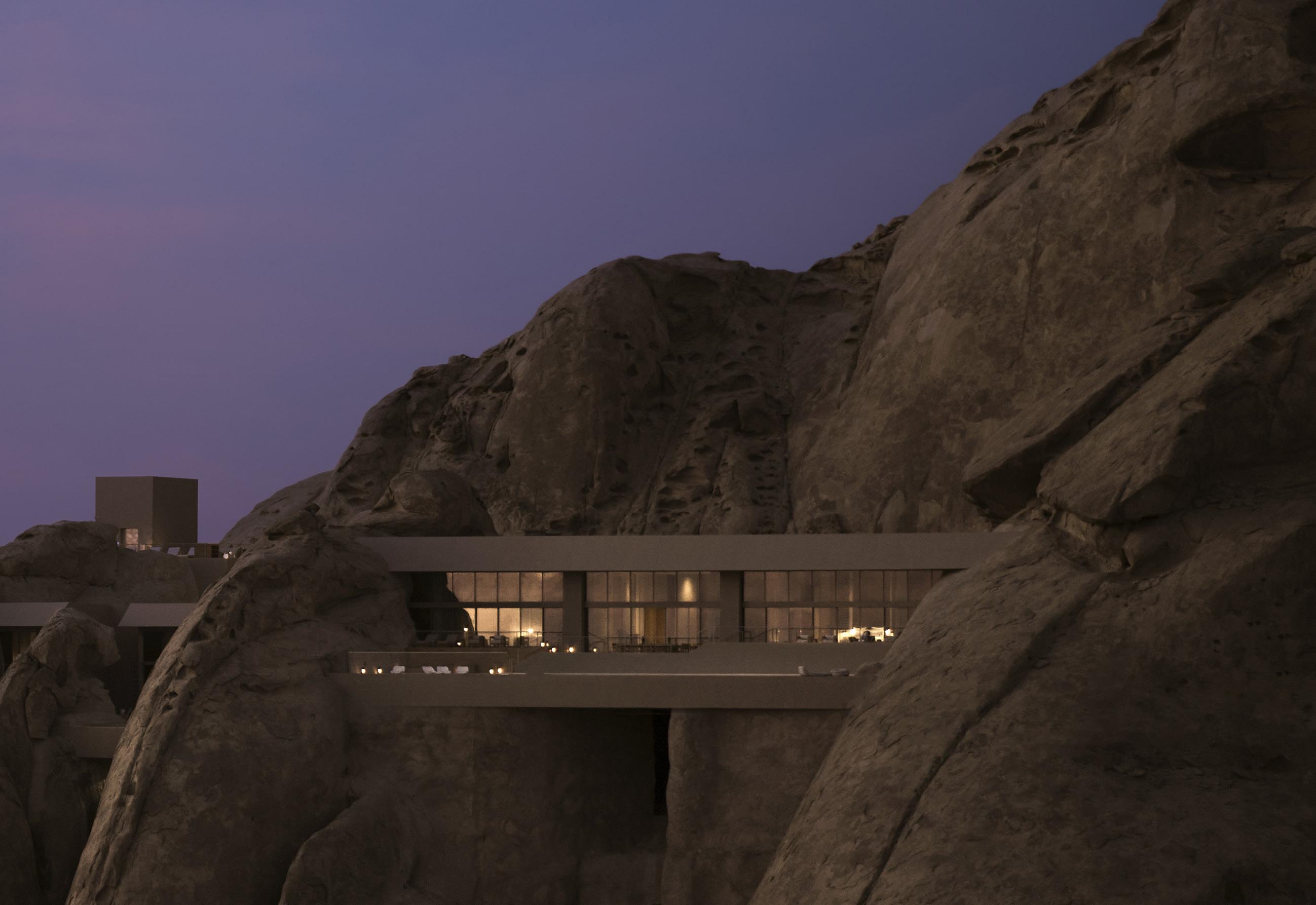
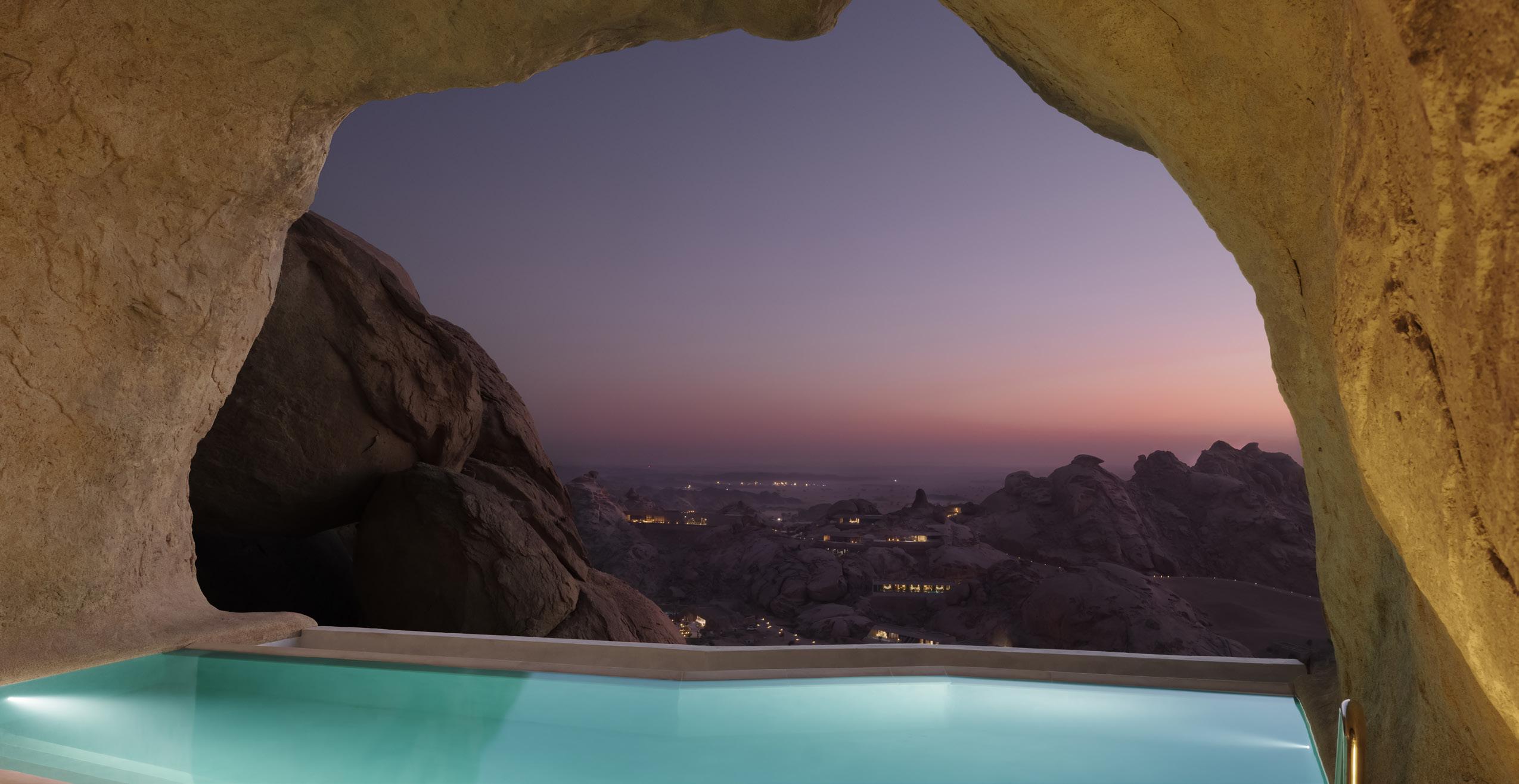
Elegantly integrated into Saudi Arabia’s rugged Hijaz Mountains is Desert Rock, whose opulence is tempered with sustainability and a profound connection to the unspoiled landscape. Designed by Miami-headquartered Oppenheim Architecture, the resort is literally carved into rock formations. Founding Principal Chad Oppenheim explains, “At Desert Rock, the intention was to build with the land, not on it.” Luxury guestrooms, suites and common areas practically disappear into crevices or caves, reminiscent of the ancient Nabatean civilization that once inhabited this beguiling landscape.
Noting that guestrooms are essentially extensions of nature, Oppenheim explains, “What makes it immersive is that the guest is constantly aware of the terrain — the scale of the rock, the silence, the sky.” It’s less about looking
at the desert and more about being inside it,” maintains the eco-conscious architect. “The architecture heightens your awareness of the environment while leaving it essentially intact.”
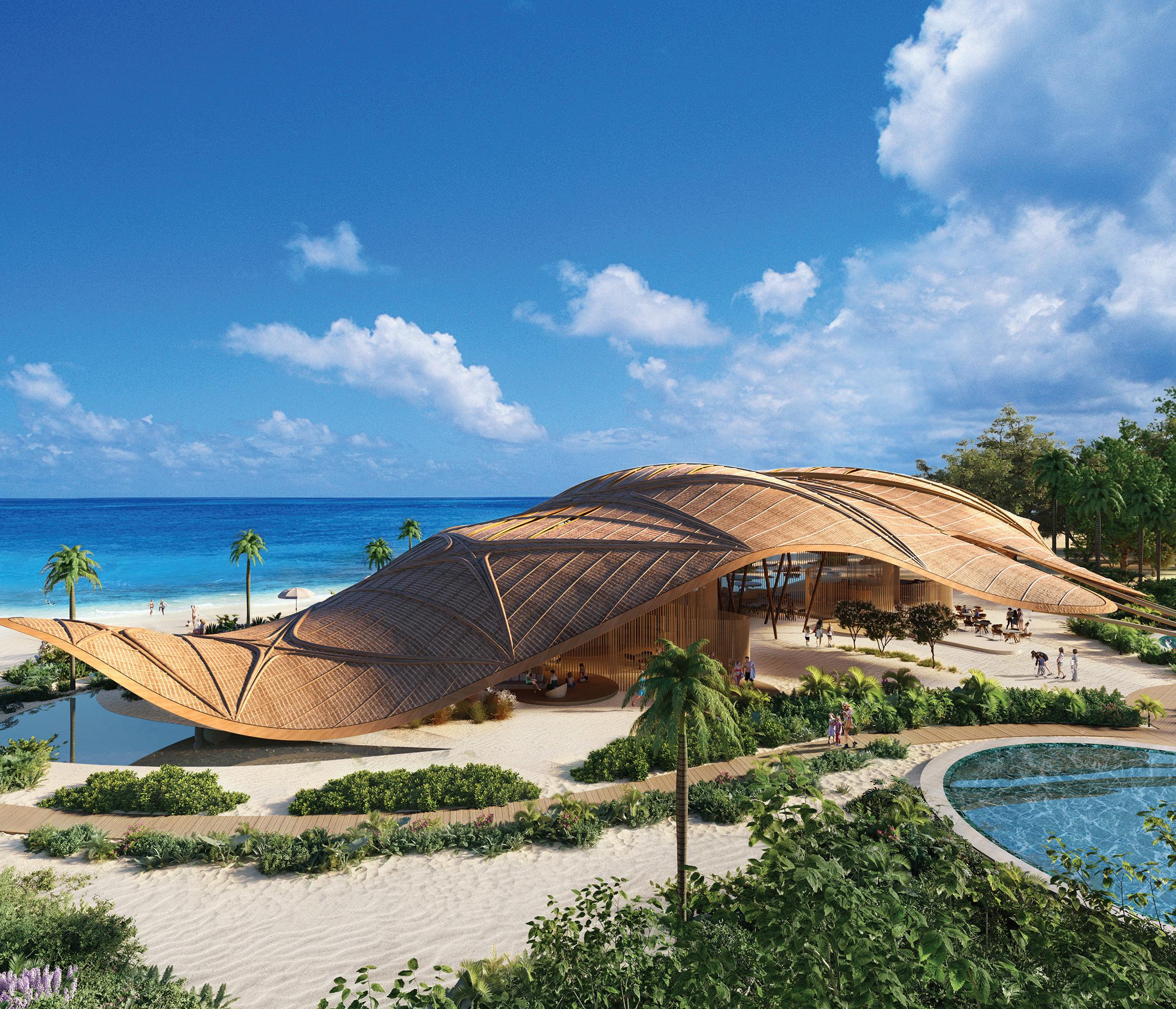
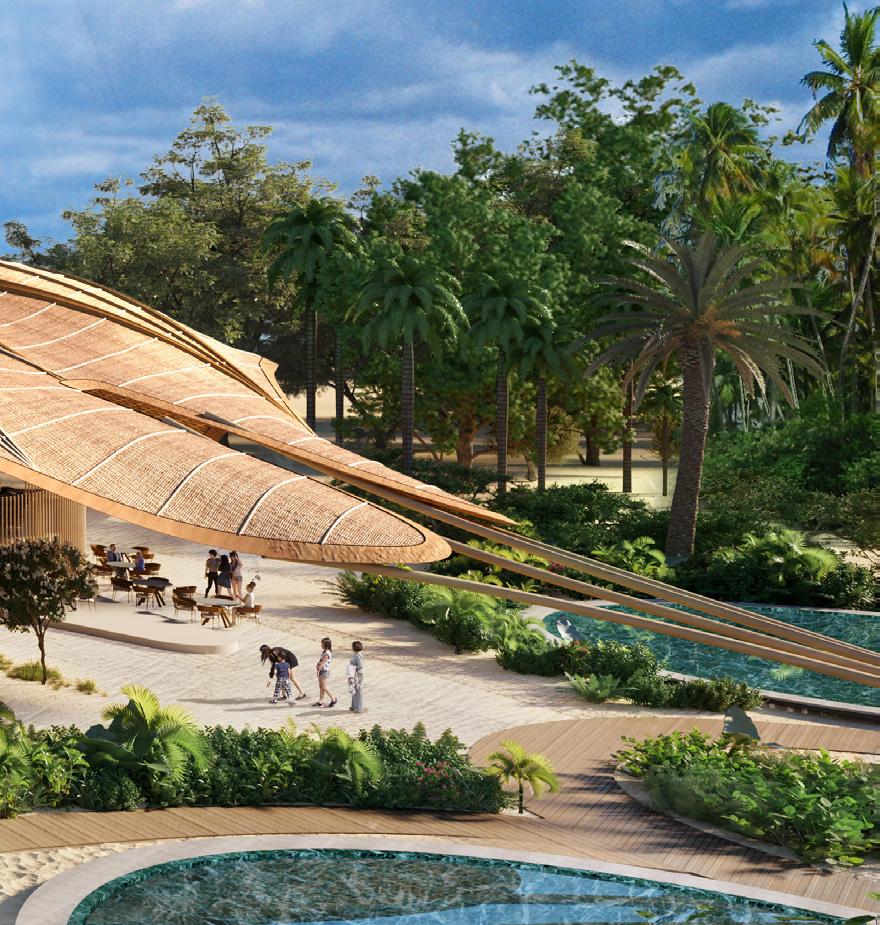
Corinthia Hotels opted for a bold architectural expression for its forthcoming Maldives property. HKS, a global design firm with an impressive hospitality portfolio, created a dramatic concept that conveys a connection to the pristine archipelago and its legendary diving culture. Looking forward to the resort’s debut, Corinthia Hotels CEO Simon Naudi stated, “Together with our partners, we will work to create a unique architectural statement that will delight the senses.”
Adam Hopkins, regional practice manager, hospitality at HKS, reports the design was driven by the natural beauty of the Maldives. “The building reflects the flora and fauna guests encounter on their visit, giving the resort a sense of place,” he says. The forms were inspired by the graceful curves of the manta ray, a gentle creature ubiquitous to the warm, sapphire-hued waters of the Maldives. “The
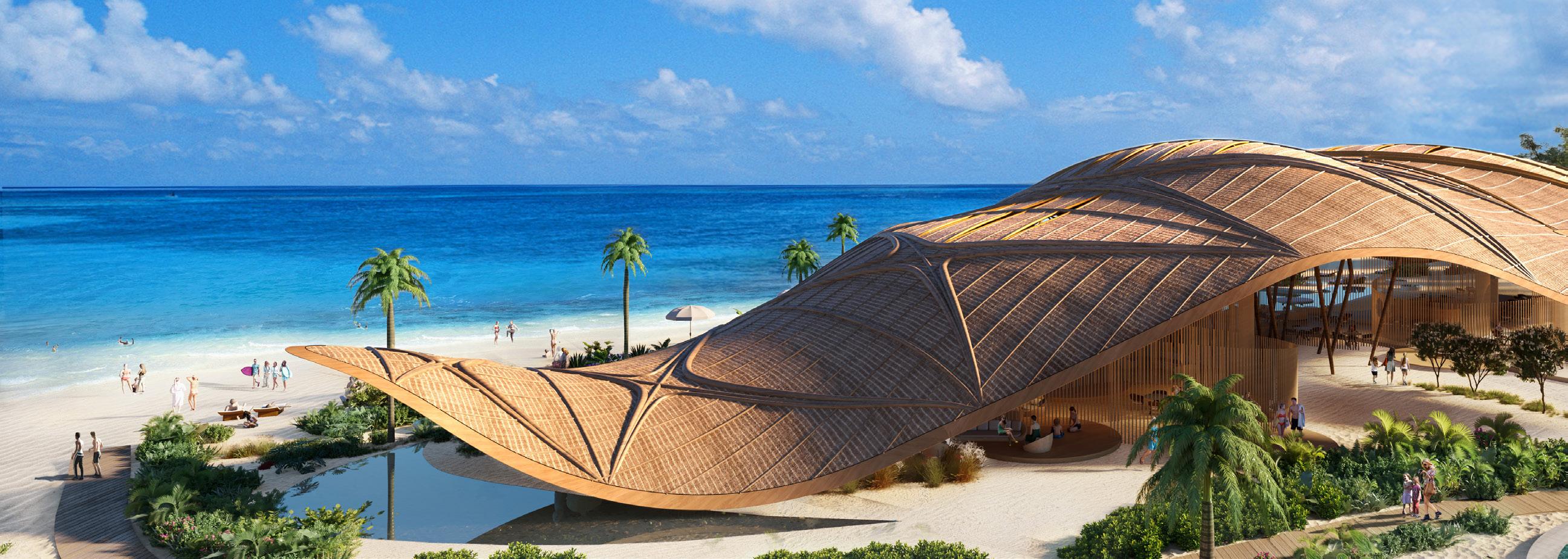
design creates a seamless connection between the built environment and the ocean, reinforcing experiences guests will hold onto long after their visit,” says Hopkins.
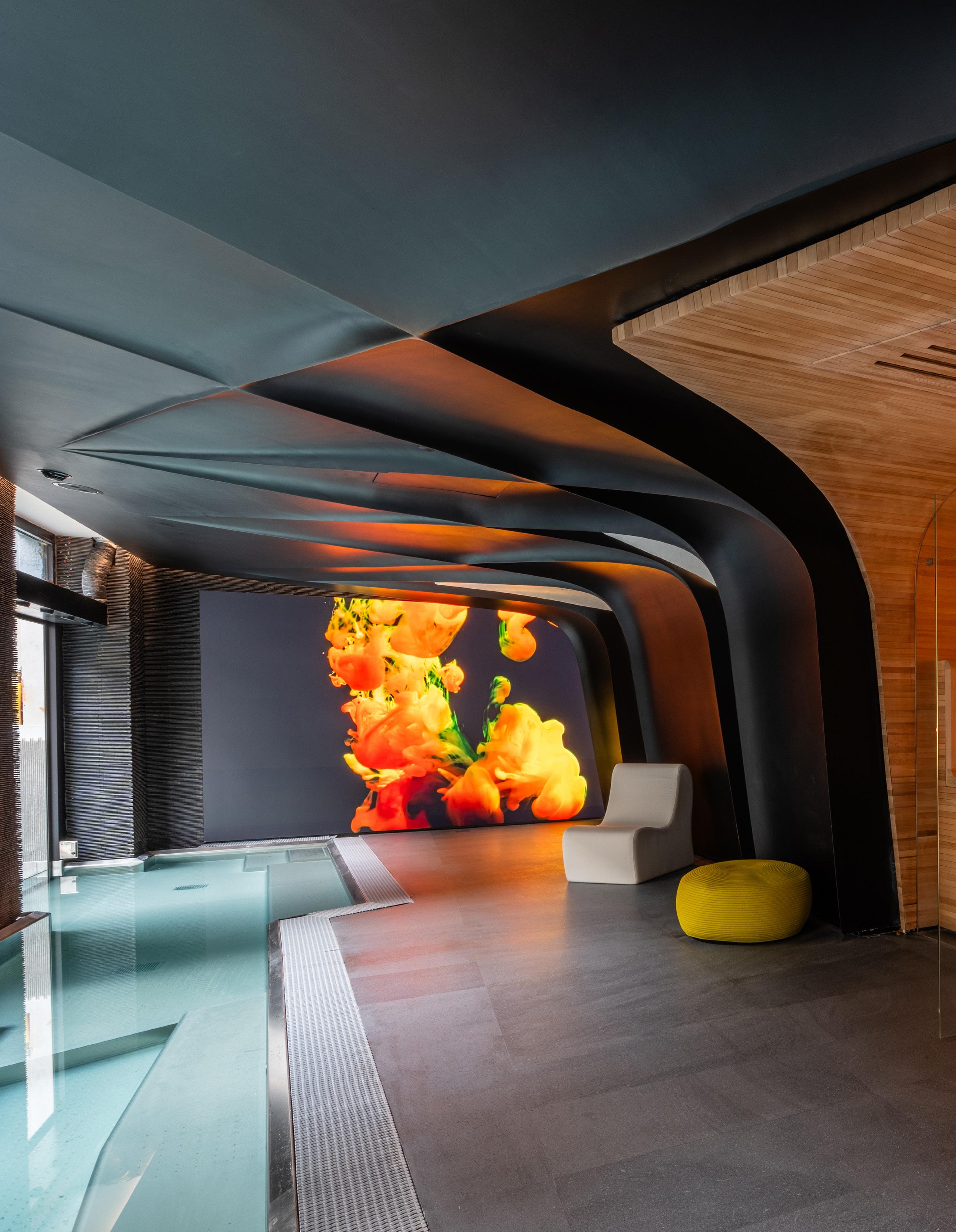
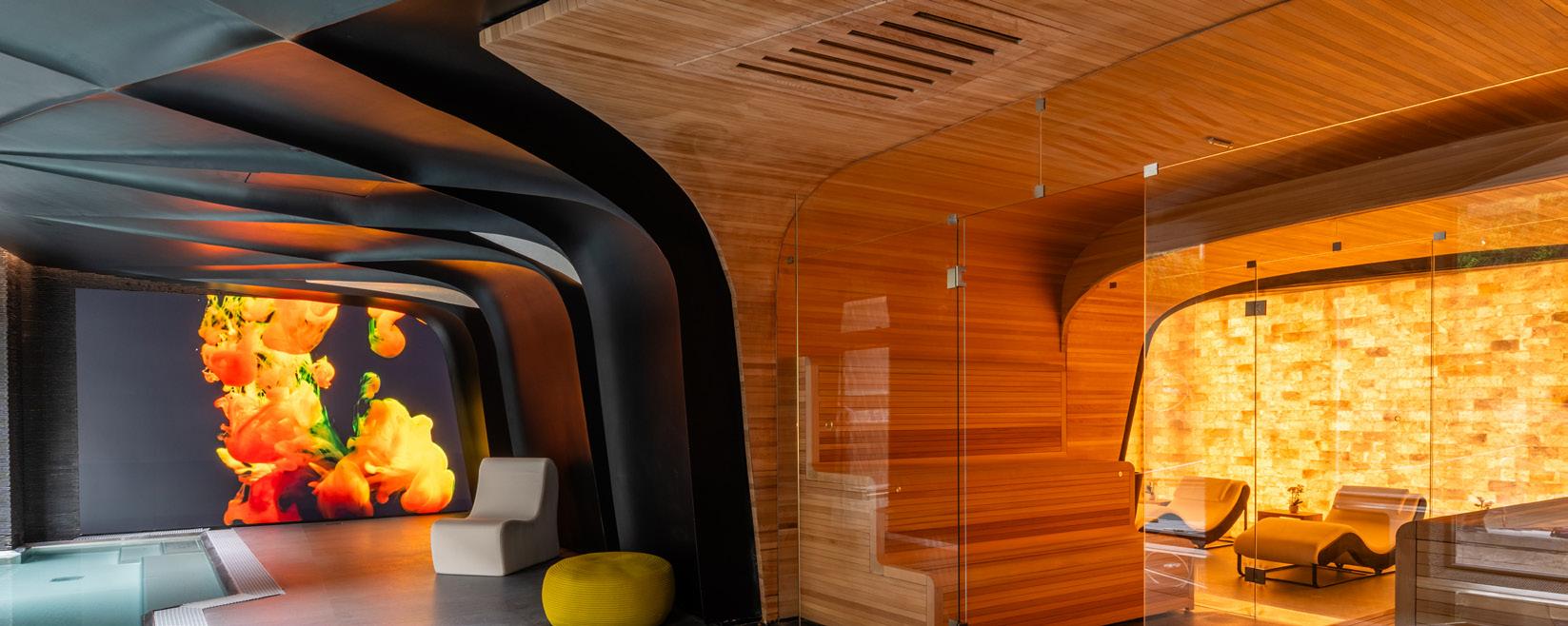
The ROMEO Collection, an Italian hotel group, elevates its high-end properties through world-class design. “We position luxury hospitality as a cultural and sensory experience, enriching the guests’ stays while offering moments of discovery and reflection,” explains architect Ivan Russo of ROMEO Design. “Each hotel, the result of collaborations with internationally renowned architects such as Kenzō Tange, Zaha Hadid or Kengo Kuma, becomes a living gallery where art, architecture, design, and history coexist.”
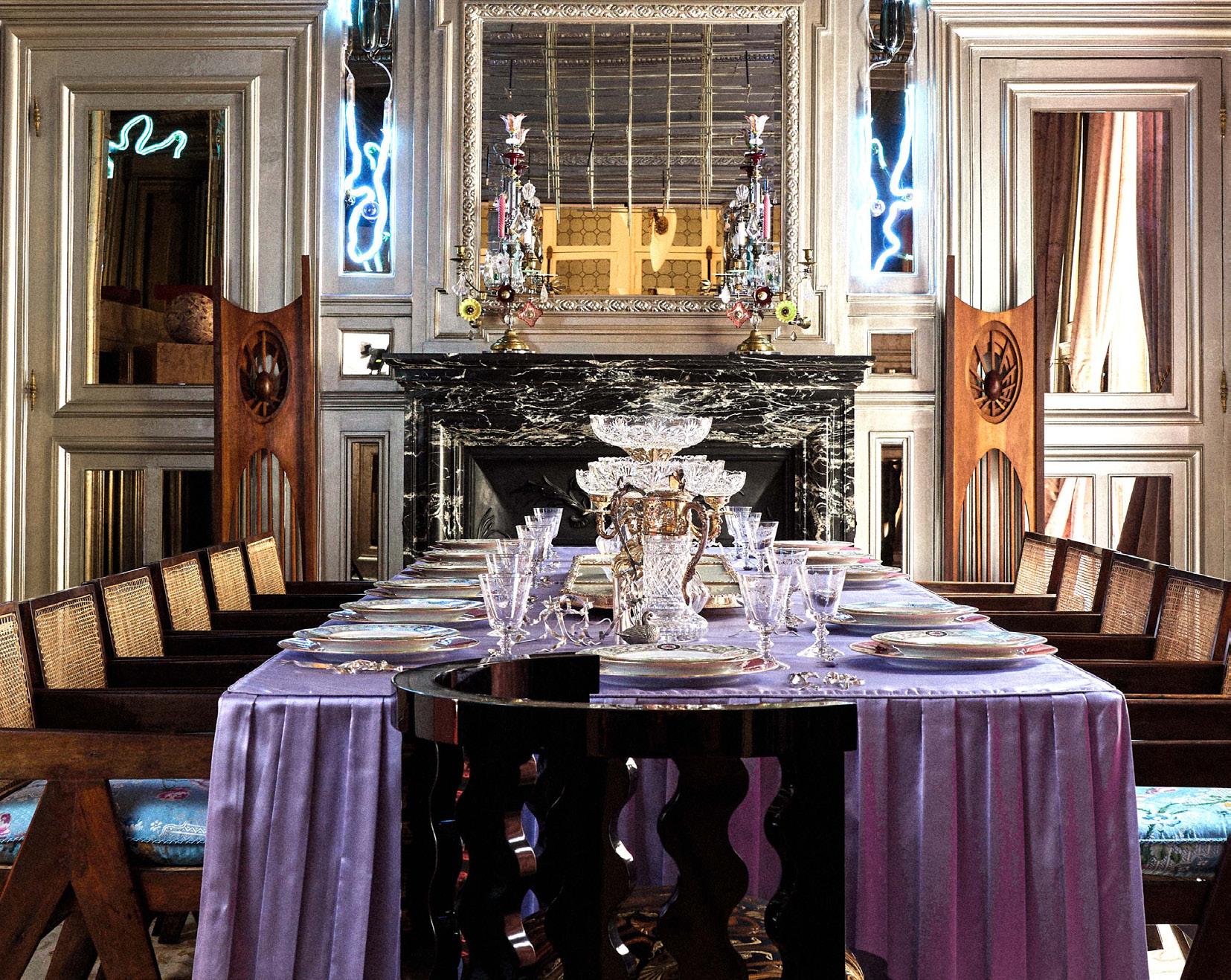
Occupying the 16th century Palazzo Capponi is ROMEO Hadid Roma, which London-based Zaha Hadid Architects (ZHA) transformed into a defiantly modern environment without compromising the Baroque landmark’s heritage. “The renovation has preserved Palazzo Capponi’s most significant historical elements, seamlessly integrating them within a modern,
fluid and dynamic language characteristic of Hadid’s style,” says Russo. The hotel’s lobby, Alain Ducasse restaurant, spa, and opulent suites all possess the signature curves and contemporary sense of drama associated with the legacy of architect Zaha Hadid.
Aman Resorts is recognized for understated aesthetics that allow guests to feel immersed in the natural beauty that surrounds many of its properties. For Aman Nai Lert Bangkok — the hotel lies within tropical gardens in the heart of the city — the company commissioned architect Jean-Michel Gathy to create tranquil, refined interiors that reflect the hospitality brand’s signature vibe. “Aman’s design aesthetic is rooted in a sense of serenity, defined by space, natural light and a deep connection to place,” says Aman Nai Lert General Manager Ted Tucker, who reports that in Bangkok, the philosophy is expressed through a seamless blend of contemporary design and Thai heritage.
“Layered with tone-on-tone palettes, soft curves and carefully framed spaces that
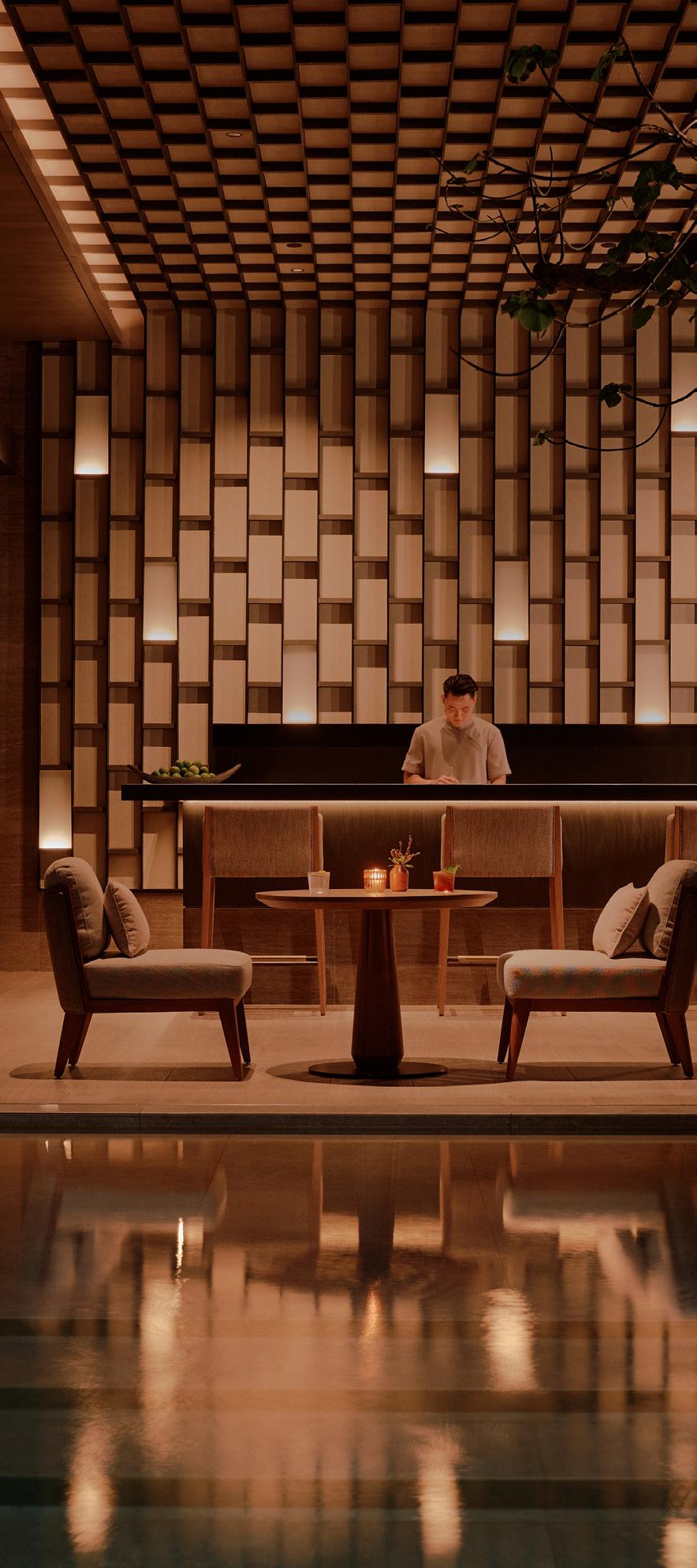
balance openness with privacy, the interiors create a calming, immersive sanctuary that feels both timeless and deeply connected to its surroundings,” explains Tucker. Gathy, whose Kuala Lumpur-based firm Denniston was commissioned for Singapore’s iconic Marina Bay Sands and multiple Aman properties, is renowned for his expertise with luxurious hotel interiors. While minimalism permeates this property, over-the-top design elements include a 40-foot-tall Chamchuri tree sculpture — 6,000 metallic leaves transition from gold to black — that is positioned in a soaring atrium.
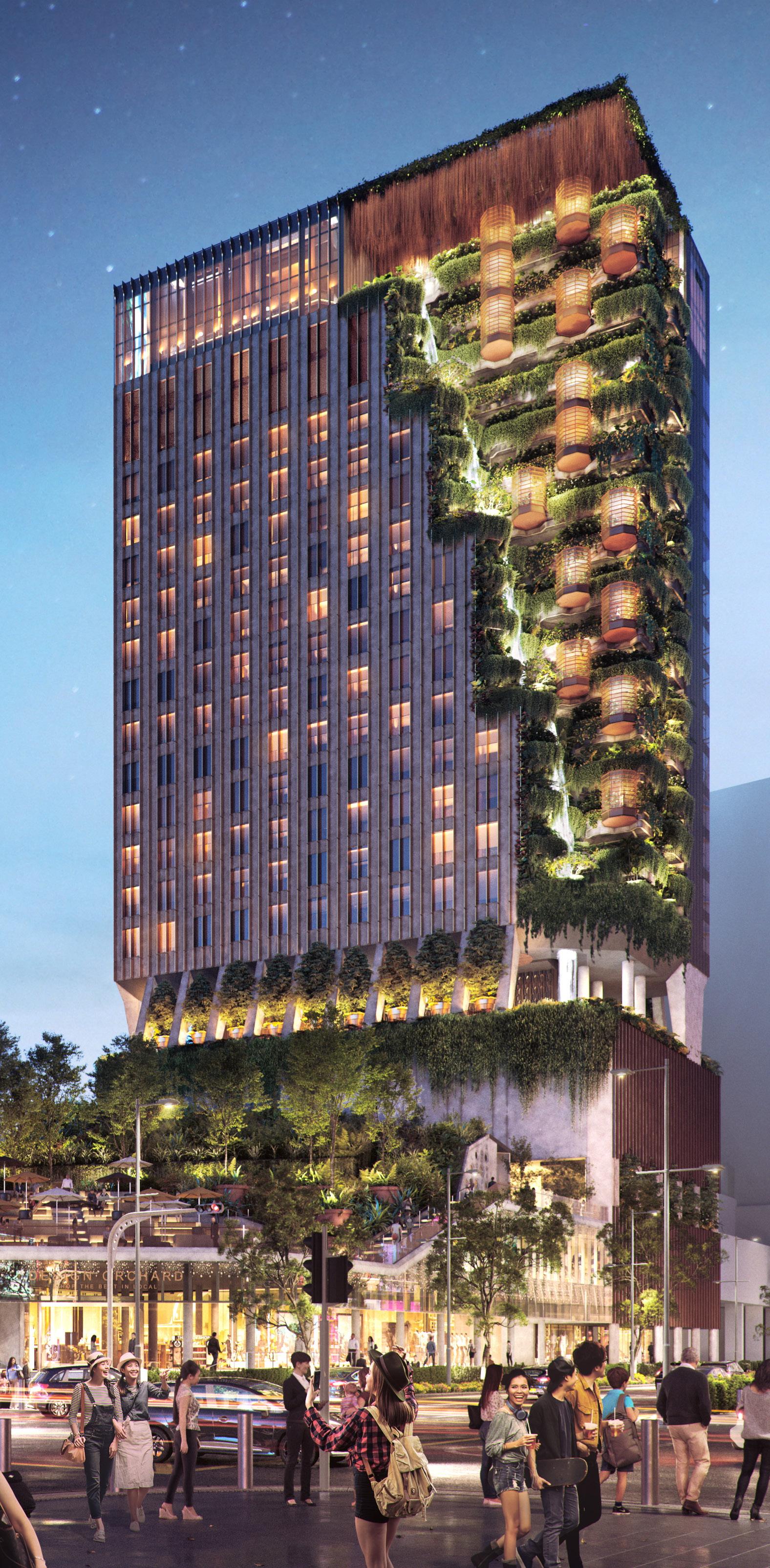
Trend-conscious NoMad hotels exhibit elevated aesthetics and world-class art, and this year the boutique chain (now part of the Hilton portfolio) debuts a stunning Singapore property consistent with the city-state’s leadership in sustainable architecture. The biophilic structure was designed by WOHA, the Singaporeheadquartered firm responsible for some of the world’s greenest structures.
Balancing the tower’s Art Deco elements will be a vertical landscape — complete with a dramatic 14-story cascading waterfall — that will be as integral a part of NoMad Singapore’s façade as concrete and glass. Liam Wee Sin, group chief executive of Singapore-based UOL Group Limited, the project developer, states, “Our commitment to biophilic design at the upcoming NoMad Hotel will resonate with today’s travelers, who are increasingly mindful of sustainability, inclusivity and socially responsible experiences.” Consistent with those principles will be the hotel’s collection of artwork by Singaporean artists with special needs.
By Ellen Paris
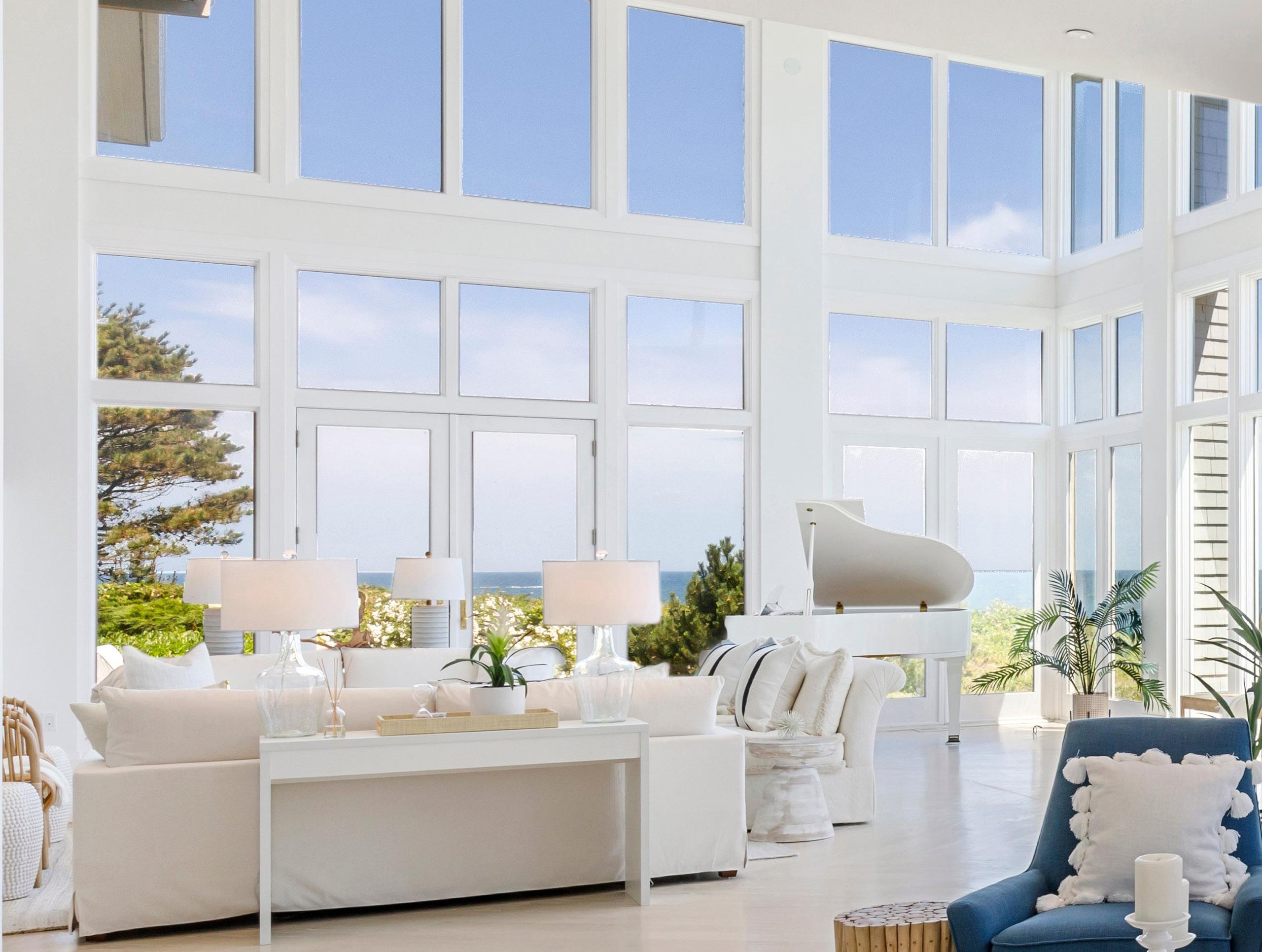
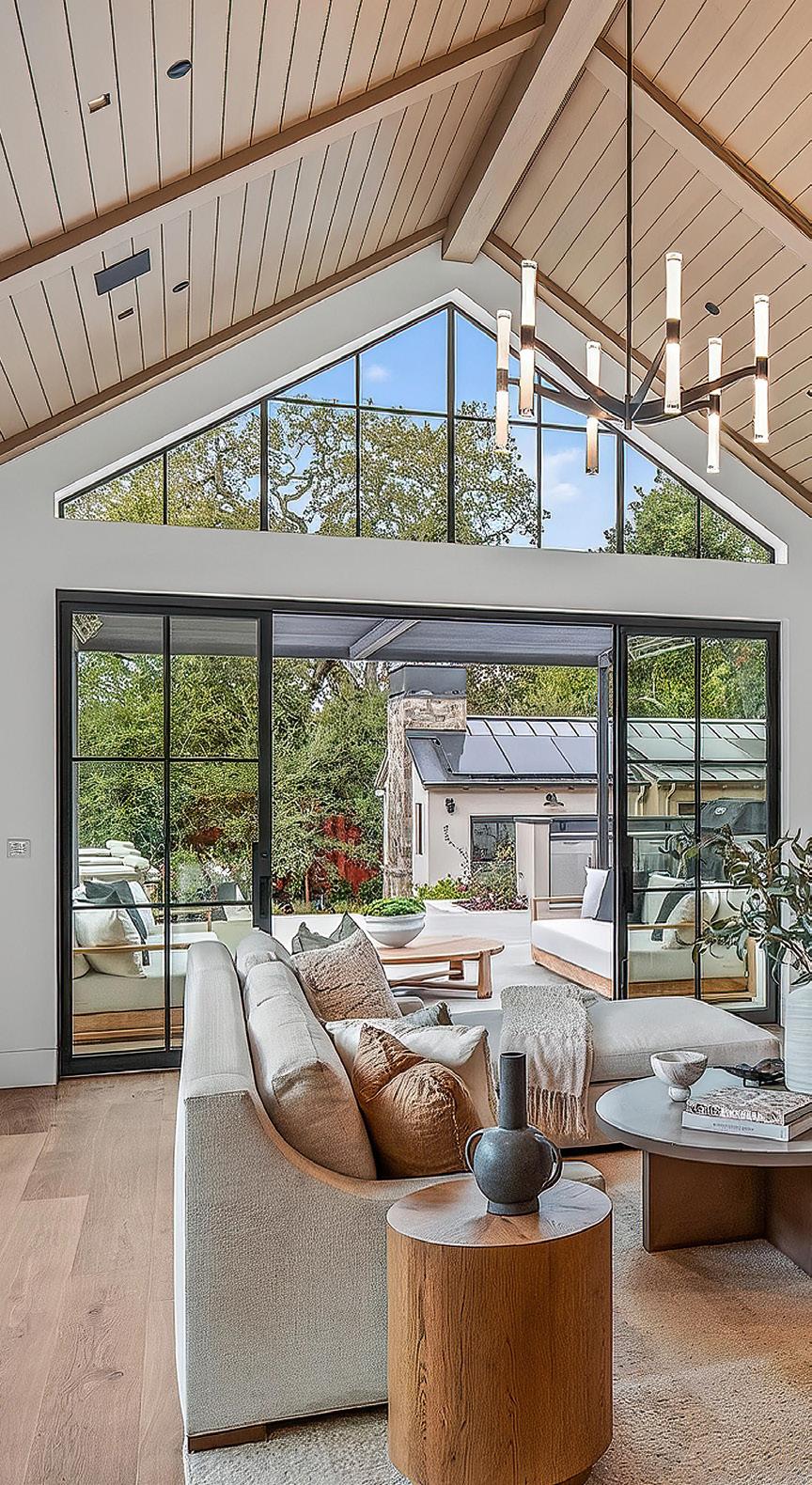
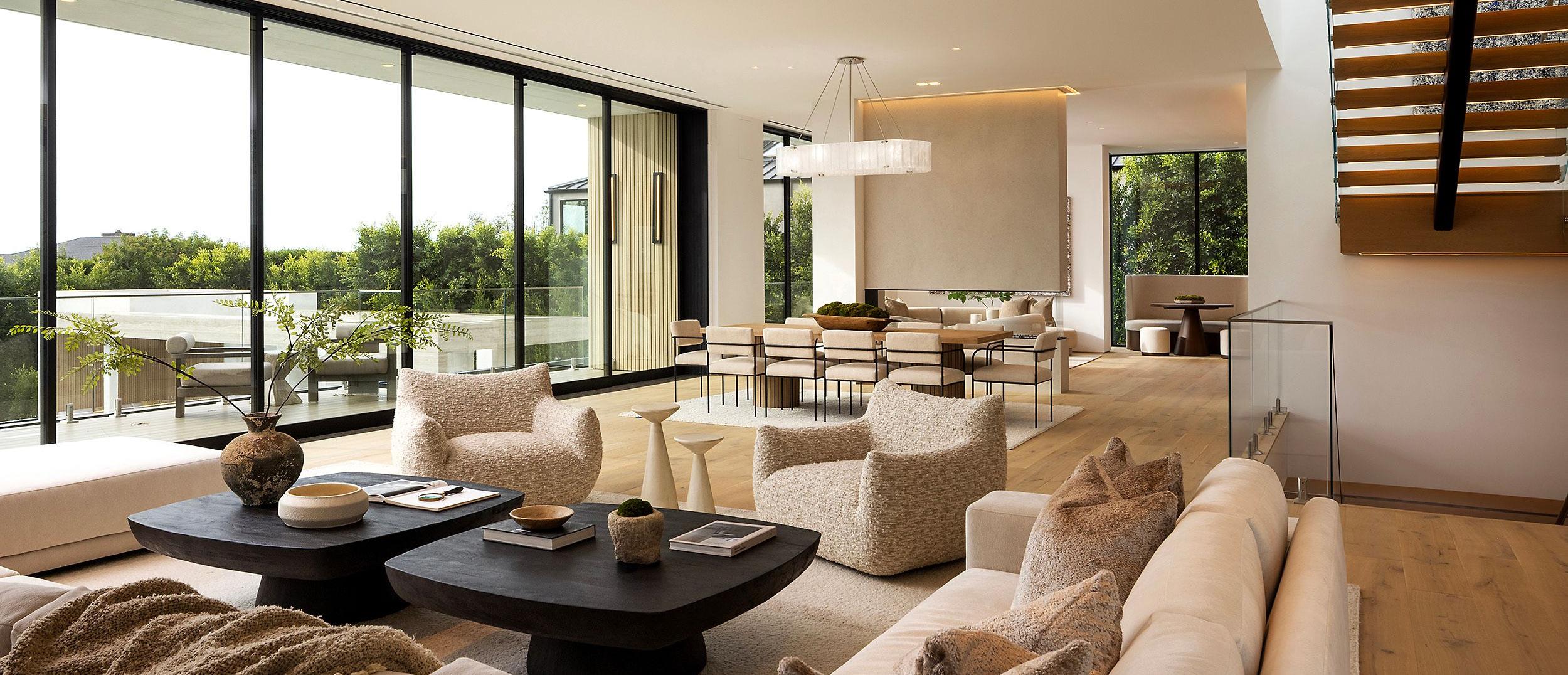
In the luxury market, potential buyer expectations are high. That “wow” first impression counts. Today, many luxury real estate agents are leveraging the expertise of professional home stagers to create a lifestyle homebuyers can envision living their best life in.
Paul Grover is co-founder and principal broker of Berkshire Hathaway HomeServices Robert Paul Properties. Grover has multimilliondollar oceanfront estate listings around Cape Cod — for which he uses professional staging. “It is easy to underestimate just how hard staging is. It’s an art and takes a really talented person to be able to do it successfully,” Grover explains.
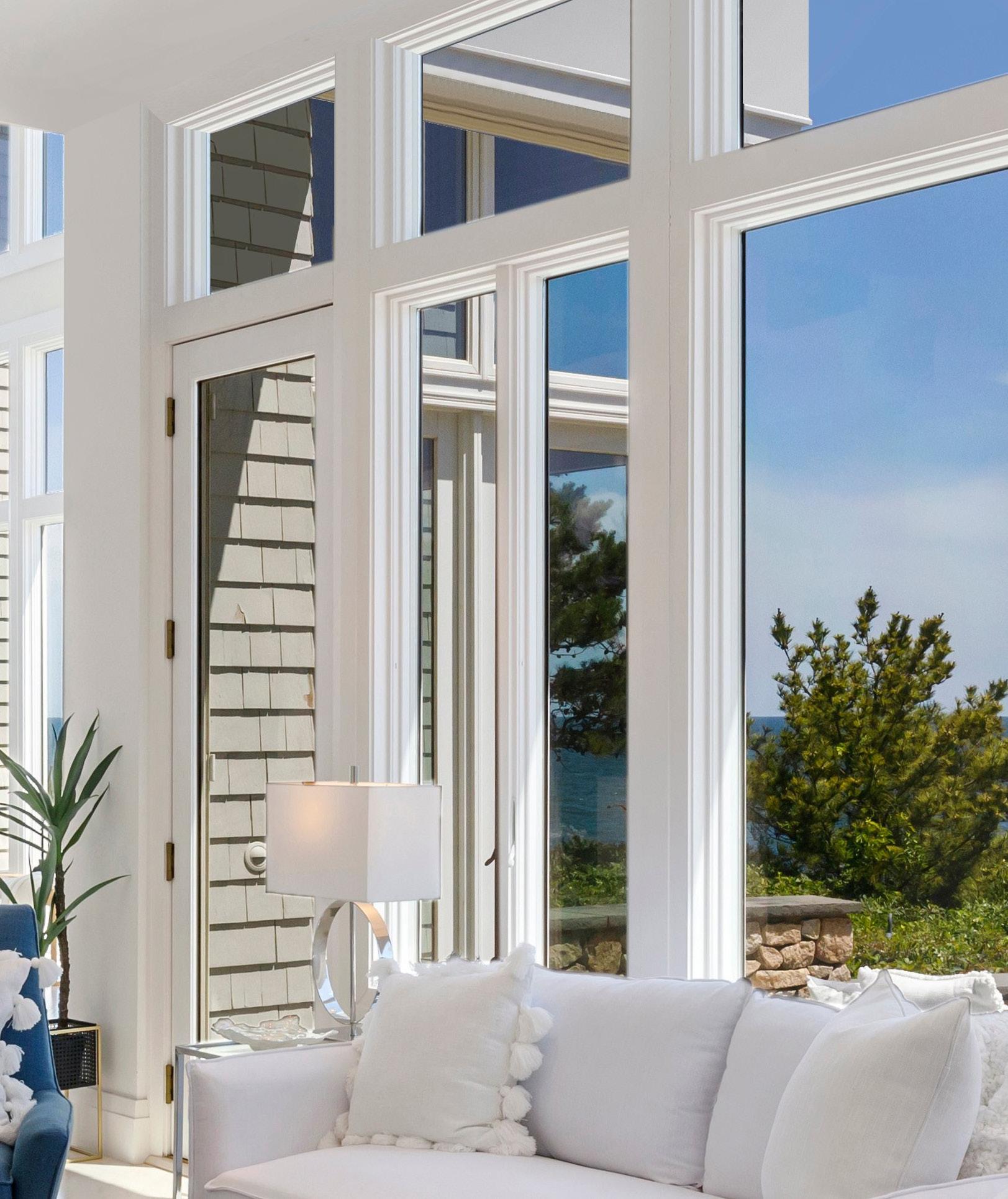
Perched on a bluff overlooking Nantucket Sound, Grover collaborated with his luxury stager to create that knockout experience throughout an 11,659-square-foot waterfront estate. Interior layouts highlighted spectacular ocean views. A neutral color palette with bold accents defined the home’s five-star lifestyle.
The effort was a success, as the property traded for $7.3 million. “Our goal is to create a space that anyone can picture themselves living in,” Grover says. “We want it to appeal to as wide an audience as possible while feeling fresh, clean and inviting. Excellent staging should elevate the home, while feeling natural and drawing little attention to itself.”
“In the luxury market, buyers aren’t negotiating vision — they’re responding to experience. Staging creates that experience, and the numbers back it up,” says Shell Brodnax, chief executive officer of the Real Estate Staging Association (RESA), the North American independent trade association for professional home stagers. According to Brodnax, homes priced between $750,000 and $1.49 million achieve the strongest performance, averaging 9-10% over asking, while even properties under $500,000 are seeing 7-8% over list price.
A case study from RESA member Liz Pensiero with Staging and Design of Cos Cob, Connecticut, may illustrate the power of professional home staging. A 5,356-square-foot custom-built home in Cos Cob, over an acre, listed at $3,295,000. It went under contract in just seven days for $3,345,000.
Meridith Baer of Meridith Baer Home, a premier luxury home staging and interior design firm, often works on celebrity and high-profile properties. Baer shares her core principles on staging: “The primary goal is to create an emotional connection. Buyers should be able to walk into a space and immediately understand how they would live there — and more importantly, how it would feel to live there.” In addition, Baer explains, “we aim to highlight the home’s best features, enhance natural light, and create a sense of ease and flow throughout. Ultimately, staging is about positioning the property at its highest perceived value.”
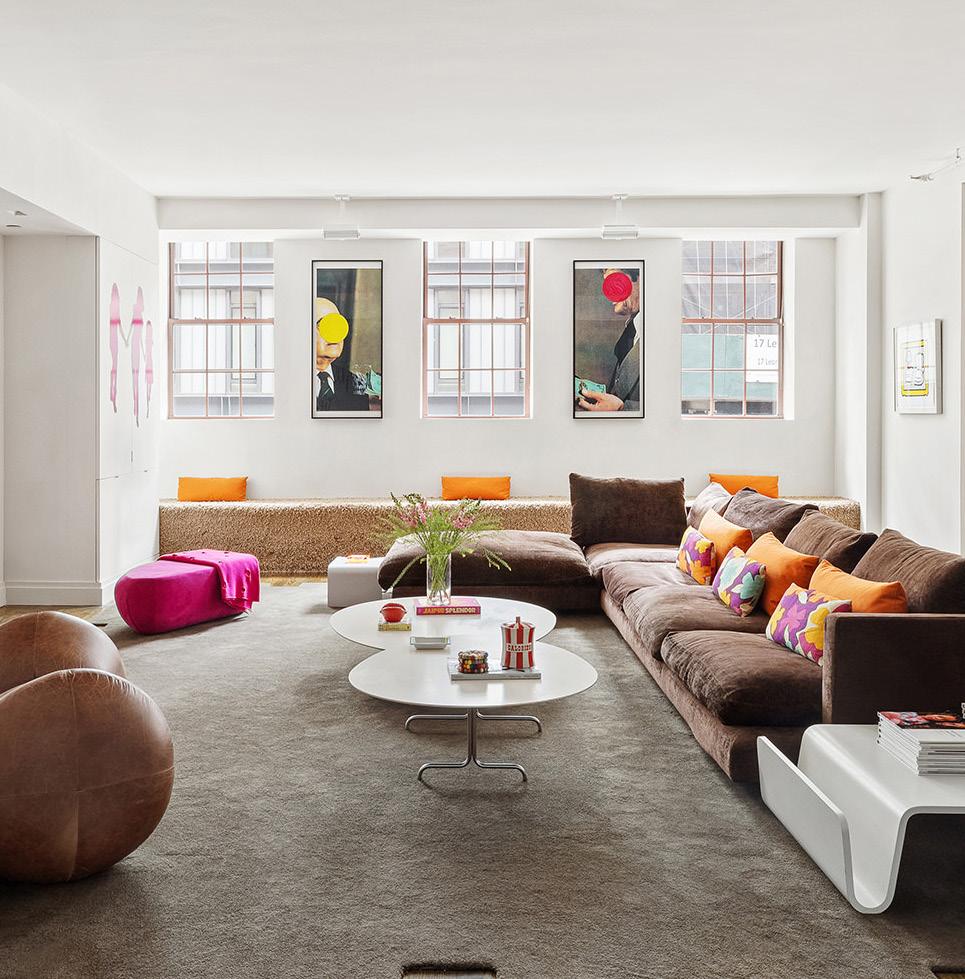
Nina Hatvany, founder of San Francisco’s Team Hatvany, draws upon her three decades of experience in real estate to offer her advice. “Almost every home would benefit from professional staging. Even if you have incredible, valuable furniture and art, often, this is distracting for people,” says Hatvany, whose team ranked as San Francisco’s No. 1 real estate team by RealTrends Verified from 2017 to 2025. “Most furniture serves a functional purpose (for example, a large sectional couch) that may work perfectly for hosting family gatherings, but makes the space appear smaller to a prospective buyer.” There are of course homes that can skip the staging step, according to Hatvany. “If you have beautifully curated furniture, typically by an interior designer, that has a cohesive aesthetic and vibe in every room, and minimal art and personal items visible — basically (your home is an exception) if you live in a staged home already.”
Hatvany points to a few useful insider strategies any seller could tap into. For example, “always put beds in rooms that could be bedrooms, even if you feel that people could envision a bed in that space. People tend to perceive that beds take up a lot more space than they do, so it’s helpful to have a bed in the room for scale.” As well, do stage outdoor spaces, even if they aren’t expected to be used. “Buyers buy into the dream of how they might live, and this includes outdoor tables and chairs, plants, exterior furniture, and bar carts to set the scene of how one might entertain al fresco,” Hatvany says.
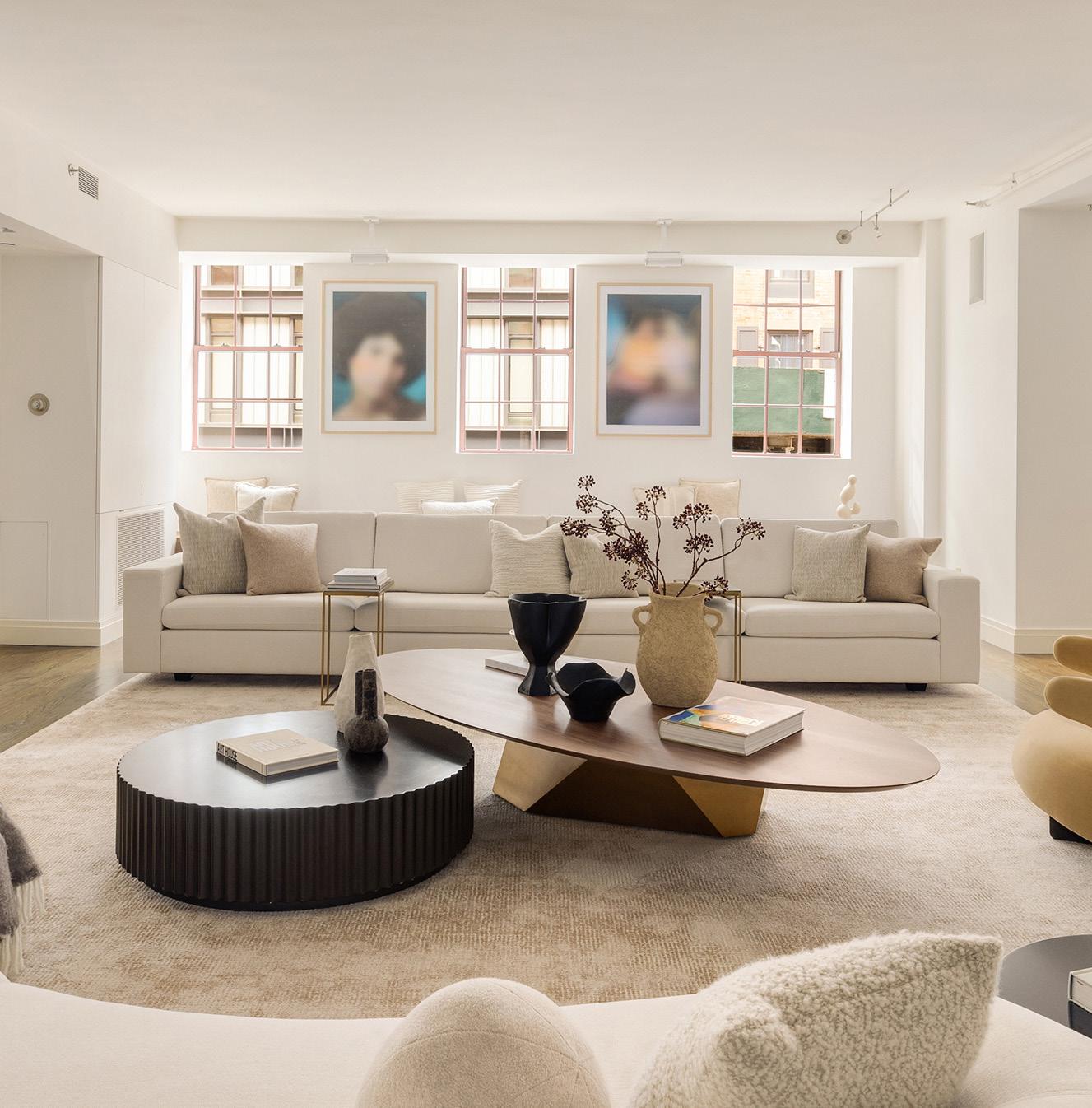
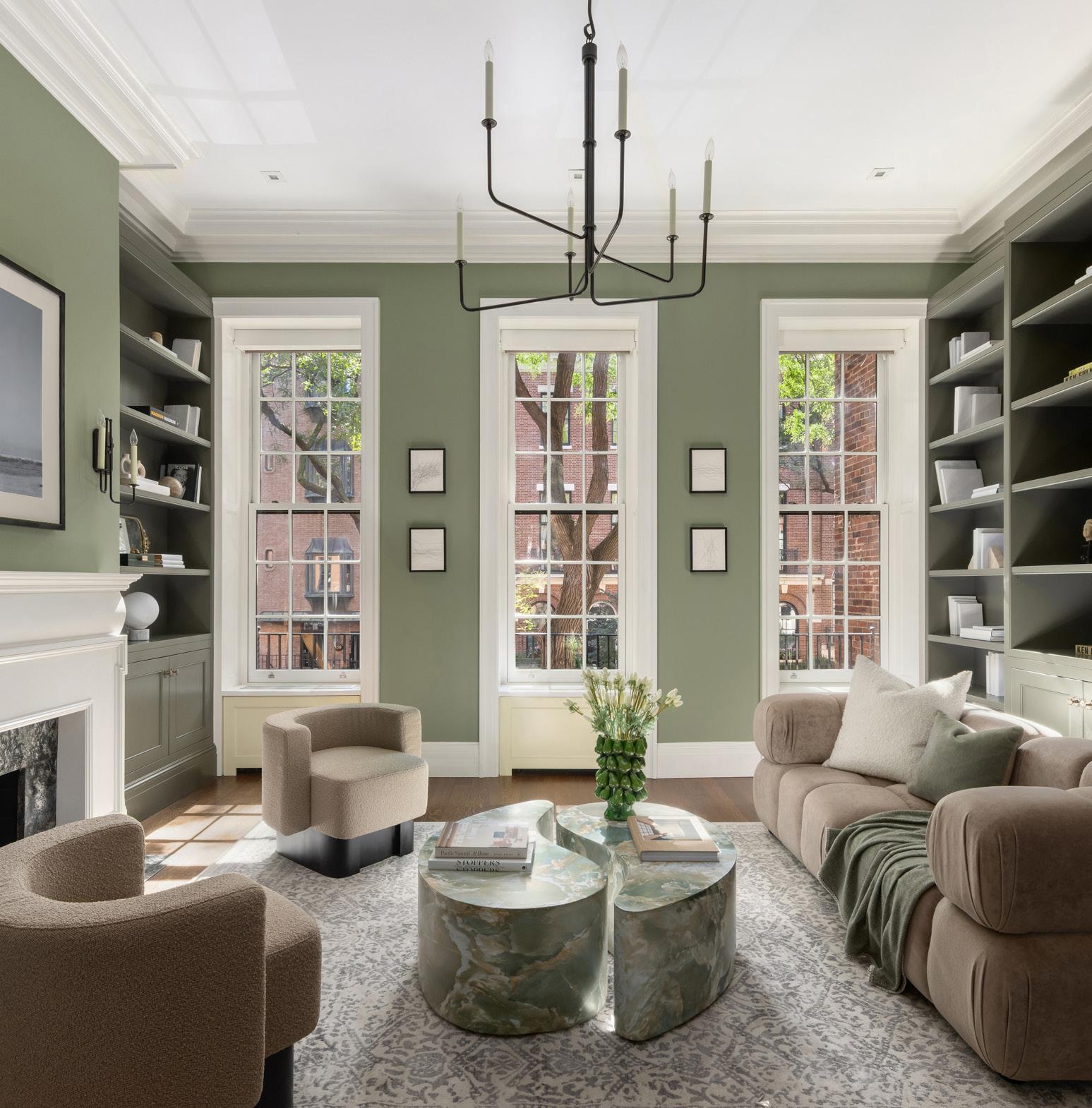
Compass’ Paradigm Advisory is a firm that collaborates with luxury clients in New York’s competitive marketplace to ensure properties trade at their highest price. Two luxury listings were recently growing stale with other agents; enter, Paradigm and their staging services. “Strategic staging can reset a listing and bring it back to life, even after (it) sits on the market for years,” Paradigm Co-founders Mark Jovanovic and Scott Hustis note. “In many cases, that shift in perception is what drives renewed interest and stronger pricing, often above asking.”
At 157 East 65th Street, for example, two other real estate agents listed without success
for years. The Paradigm team took a different approach. They used professional staging to reveal the home’s understated elegance. Paradigm observed a significant surge in interest. The home went under contract quickly, breaking a $10 million sales record in that building.
After a Tribeca residence was on the market for months, its owners similarly agreed to bring in a Paradigm staging team to reimagine the interiors. After staging, the home sold for $6 million within two weeks, above the asking price. Every detail was curated to help buyers emotionally connect and envision themselves living in the space.
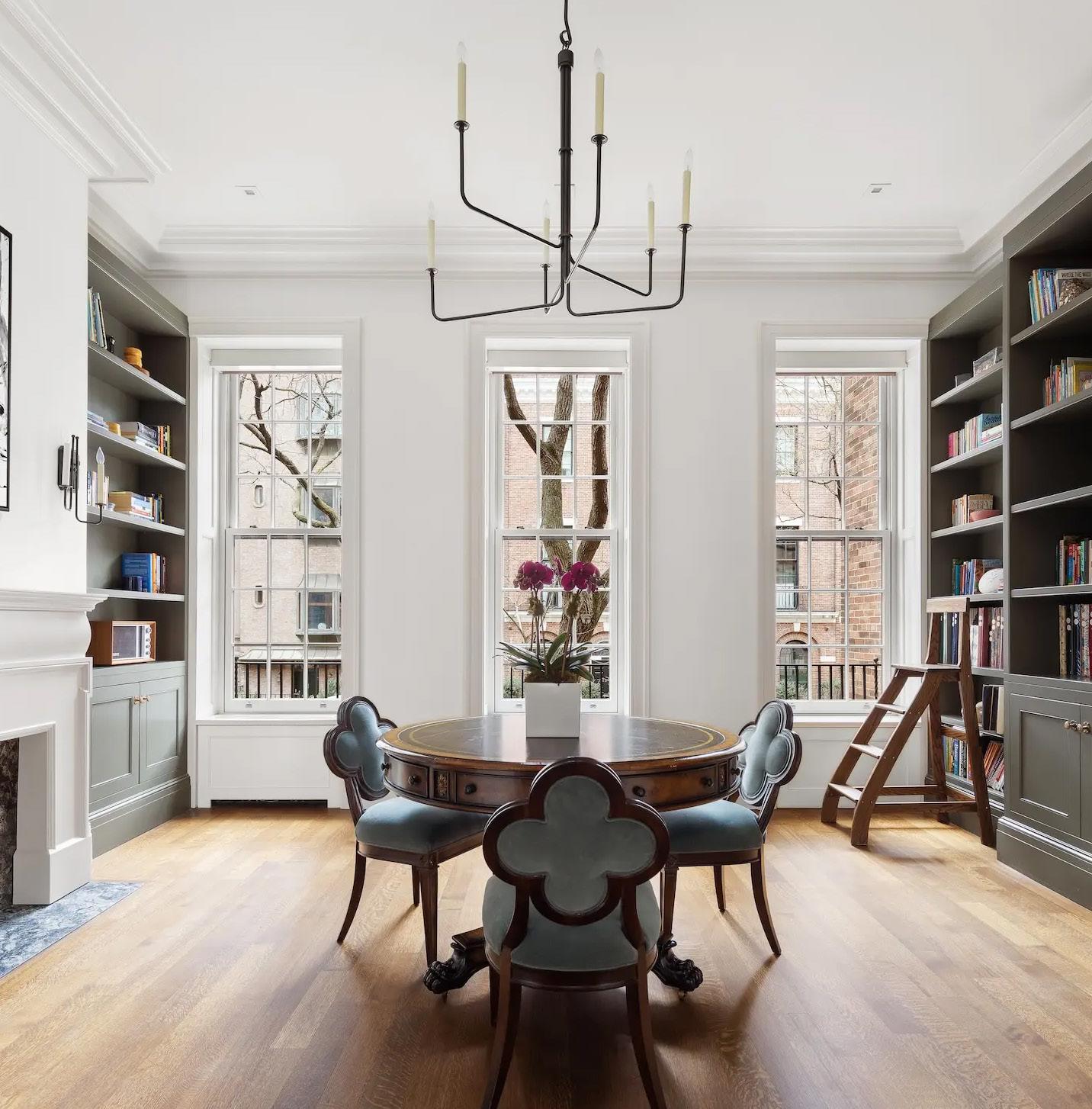
The intrinsic value a talented and experienced luxury stager brings to marketing a property may be well worth the investment. “You need a stager who has vision and can truly understand how a space flows to create a sense of cohesion while incorporating design trends and aesthetics that speak to today’s buyers,” Grover says. “My biggest tip is that a good stager is worth their weight in gold. They’re like miracle workers in our industry.”
By Roger Grody
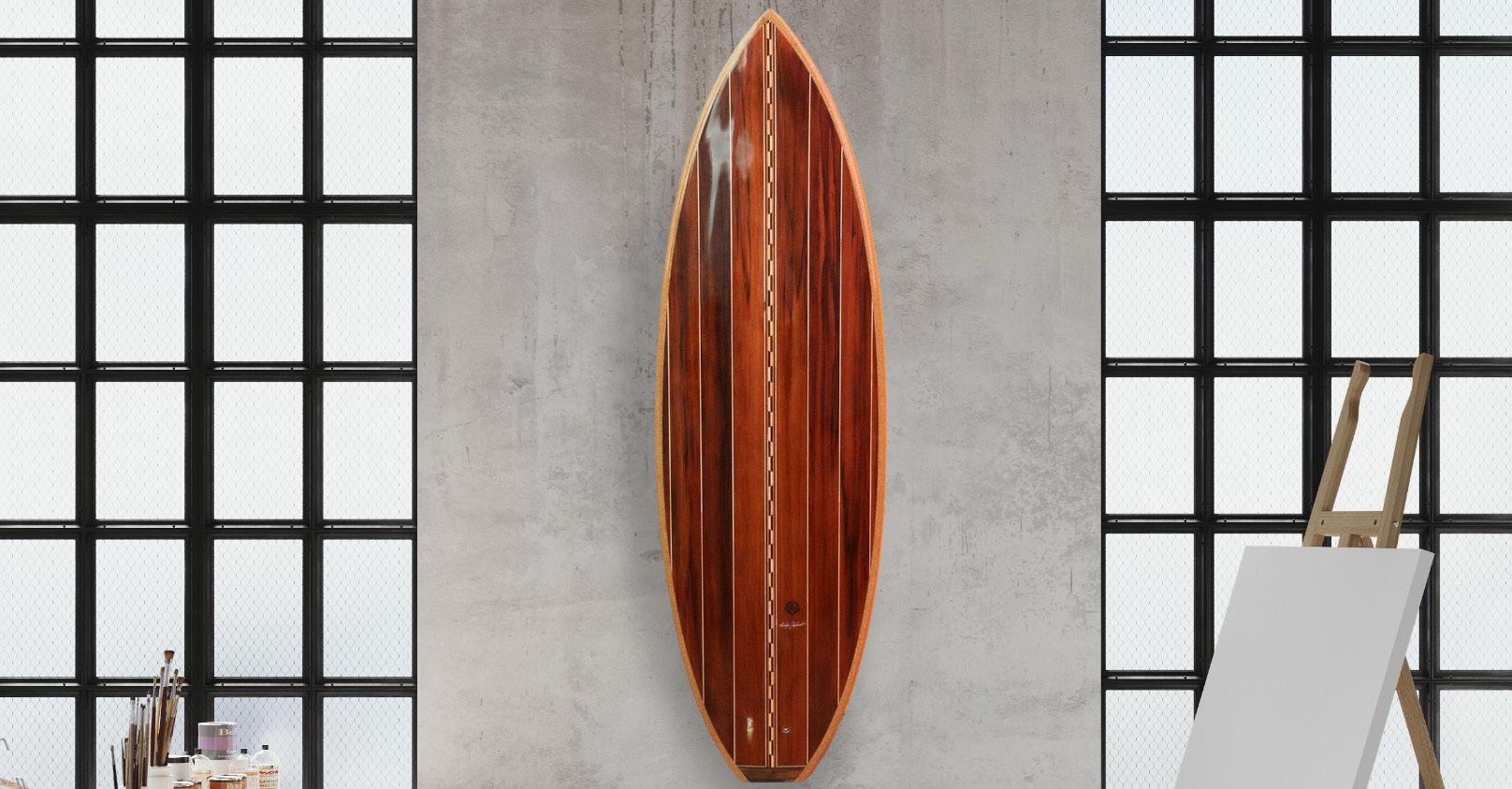
Ventana
surfboard craftsmanship is elevated to works of art.
Riding the waves is the quintessential metaphor for escape. “Surfing is pure presence — you’re not following a script, you’re responding to a living ocean in real time,” explains David Dennis of Ventana Surfboards & Supplies. “That mix of self-direction and surrender is about as close to freedom as most of us ever get.”
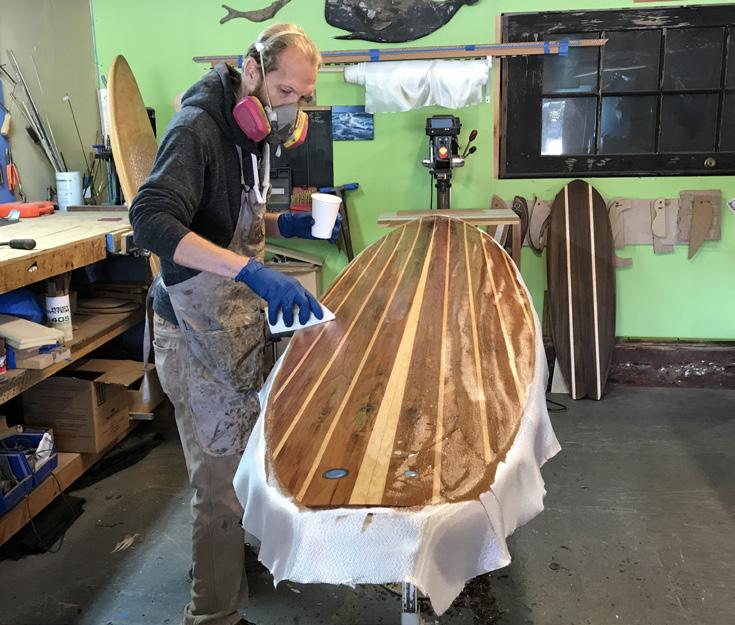
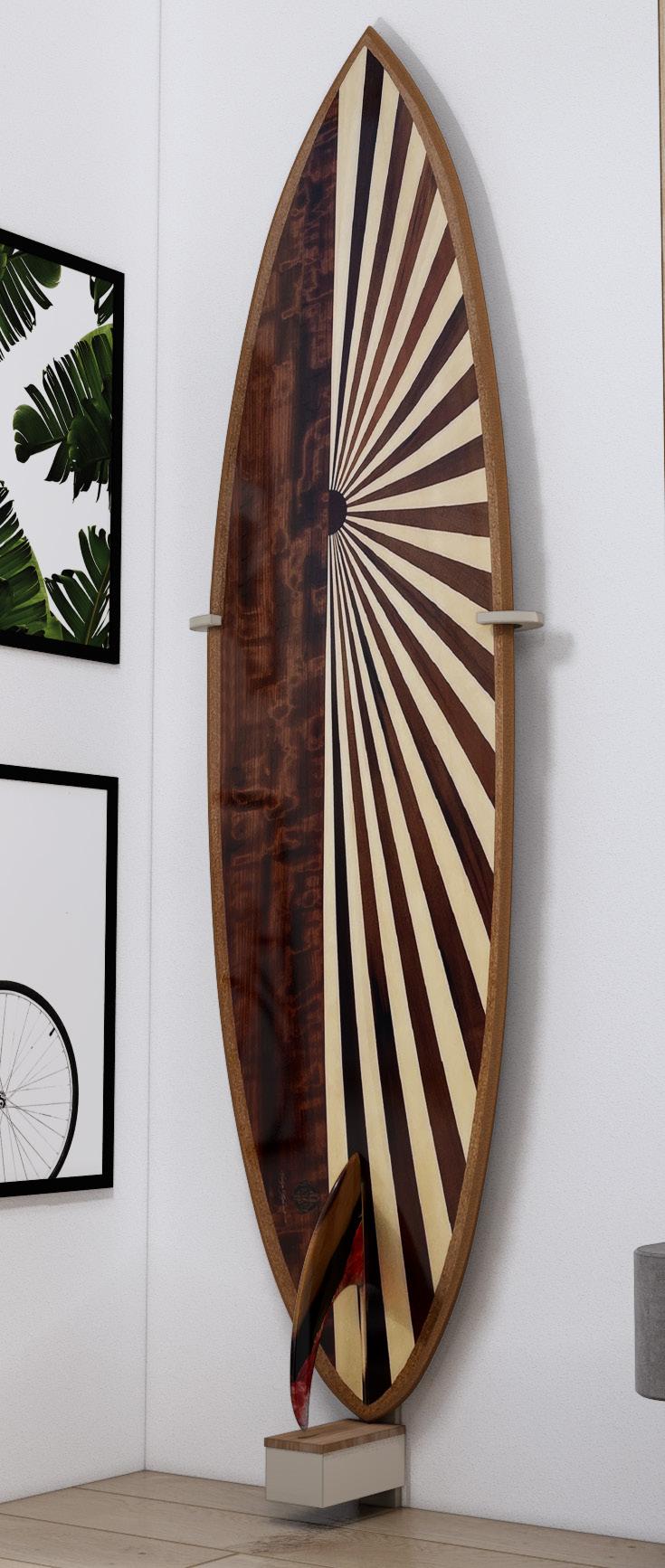
Dennis, a California native, co-founded the company with South African-born artisan Martijn Stiphout. Their boards are handcrafted in Santa Cruz, California — the laid-back birthplace of mainland surfing — from reclaimed, historic and exotic wood. While the aesthetics are breathtaking, Ventana boards are designed as much for performance as glamour, with Stiphout combining the artistry of a sculptor with the expertise of a hydrodynamic engineer.
Reinforcing the sport’s romanticism, Dennis reports the firm’s most extravagant boards contain white oak or Douglas fir salvaged from the Western Flyer, the boat author John Steinbeck sailed into the Sea of Cortez in

1940. Other salvaged wood includes offcuts from legendary Santa Cruz Guitar Company’s shop floor. “Each board is built from reclaimed woods with real history, so the material already carries narrative and soul,” explains Stiphout. “It becomes a story — giving new life to wood that might otherwise end up in a landfill.”
The craftsmanship that is the signature of Ventana Surfboards is so exquisite that, despite the boards’ water-worthiness, some customers buy them for décor, as pieces of sculpture. “The balance comes from honoring both: beauty that earns its place in the water, and function elevated by artisanship,” says Stiphout. Custom boards are generally priced between $8,500 and $25,000, and each is one of a kind.
“Surfing gives us the rhythm, intuition and respect for the ocean that guides our design choices, while woodworking gives us the medium to turn that connection into something tangible,” says Stiphout. “The two passions feed each other, but the art exists because surfing inspires it.”

By Eric Grossman
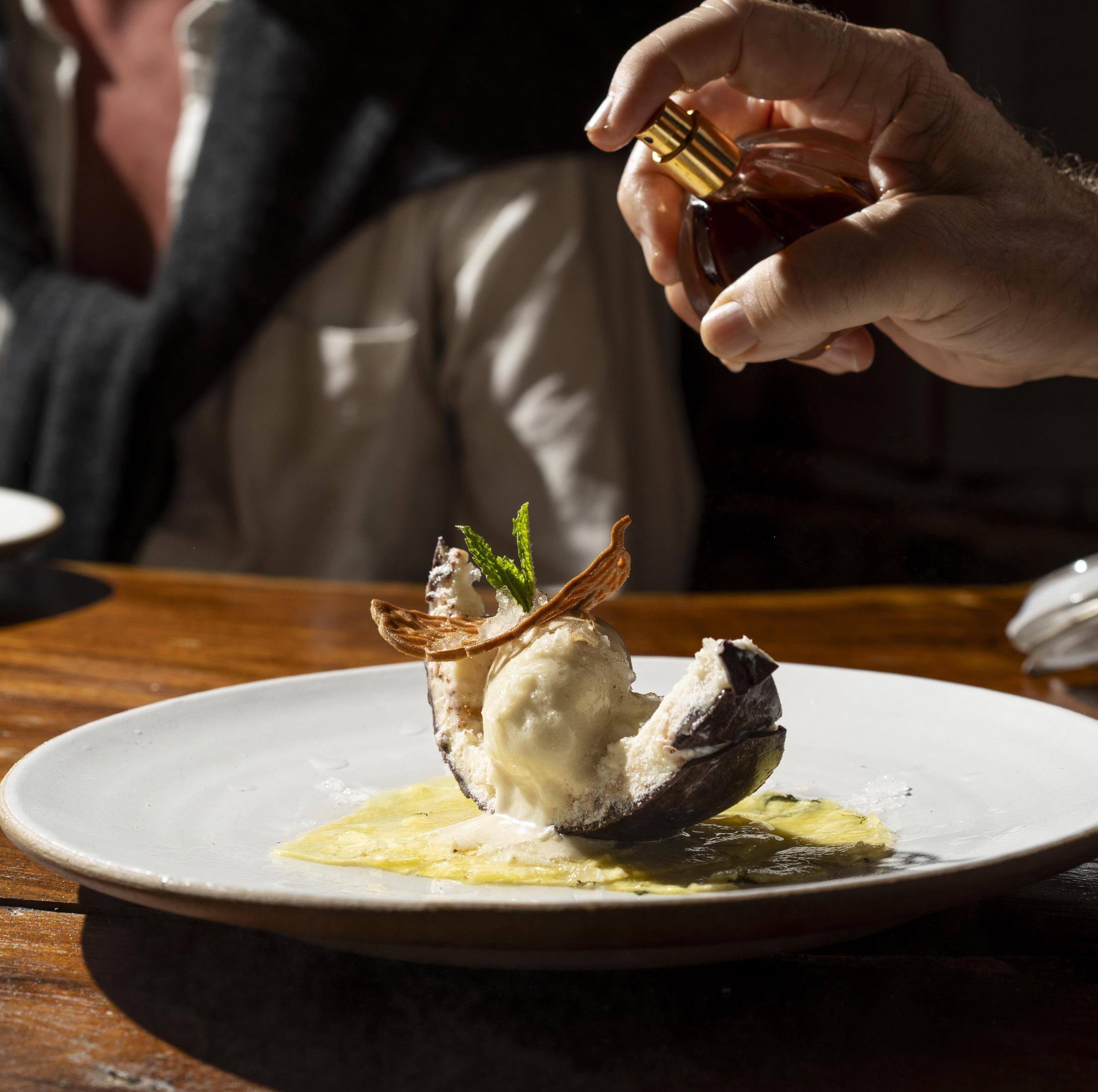
These dining destinations redefine the tasting menu experience by offering leisurely, choreographed productions, with luxurious surprises and thrilling extras.
In the rarefied world of fine dining, the tasting menu has evolved into something far more ambitious than a sequence of courses — it’s now a fully orchestrated performance. Around the world, a new echelon of chefs is redefining the format with immersive, multi-hour experiences that blur the lines among cuisine, theater and art. Expect not just precision and seasonality, but spectacle: tableside flourishes, bespoke service rituals, rare ingredients flown in at their peak, and unexpected interludes that heighten anticipation between bites.
These are not meals to be rushed. They unfold deliberately, each course building on the last in a crescendo of flavor, texture and narrative. This is the modern tasting menu at its most thrilling: immersive, extravagant and unforgettable.
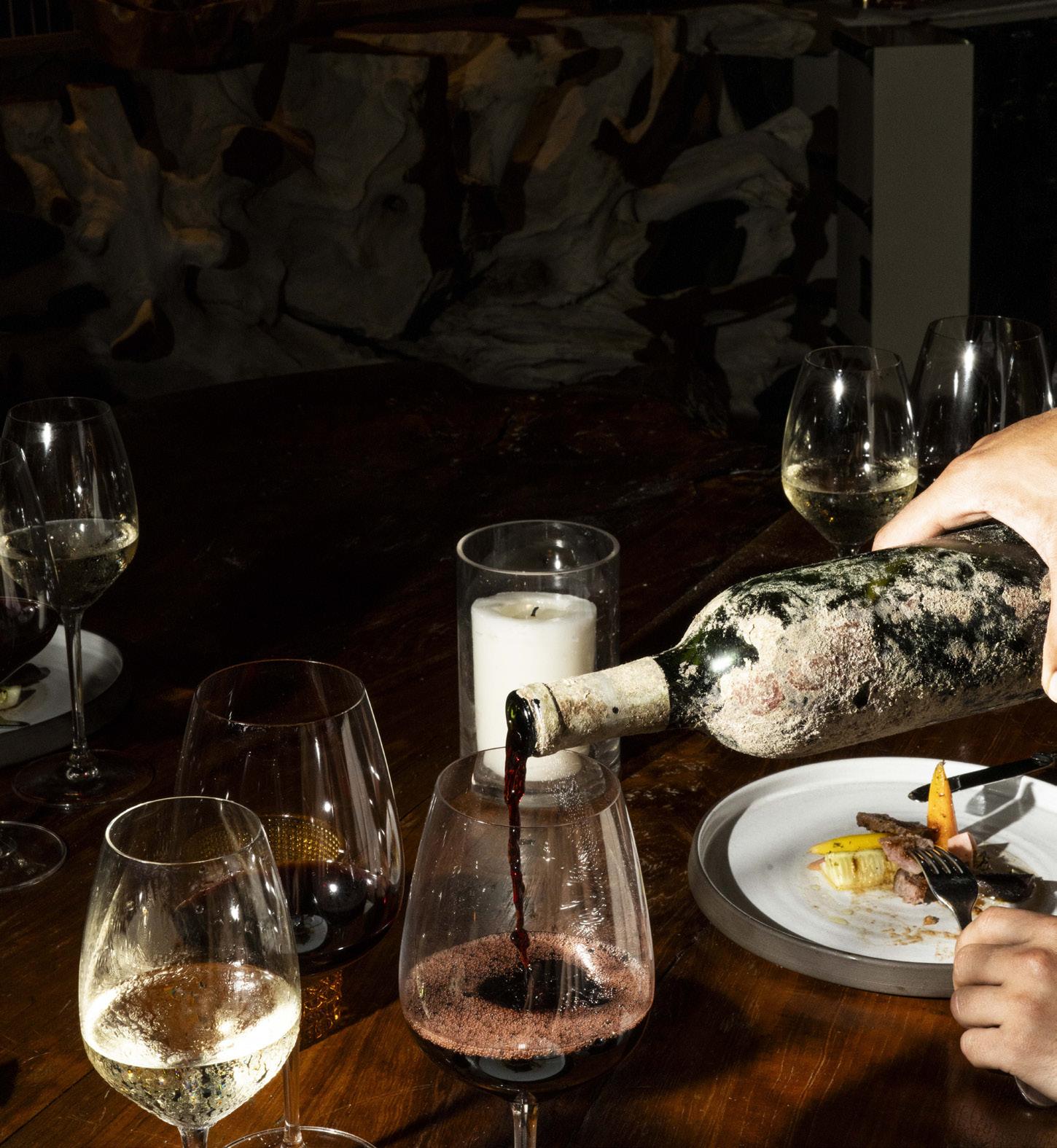
At Rosewood Little Dix Bay in the British Virgin Islands, the resort’s Chef’s Table is a 10-course experience that unfolds like a treasure map, guiding up to six guests through Caribbean flavors with moments of surprise woven throughout. Diners are blindfolded through one course, heightening their senses and shifting focus entirely to the flavors and textures of the dish. Later, the element of chance takes over when diners roll a set of dice to determine their final course, and based on the outcome, the chef creates a custom dessert on the spot. Each course uses ingredients from the resort’s organic farm and is informed by local fishing traditions and the flavors that define the region. Expect freshly caught lobster, conch, snapper and tuna, as well as a stunning lamb
course (cooked for 72 hours) that is finished tableside. What truly sets the experience apart is the beverage program — the menu is paired with the resort’s exclusive Little Dix Bay red wine, aged for six months in the Caribbean’s only underwater wine cellar. Each evening, the chef personally retrieves bottles encrusted with coral and marine life, no two alike.
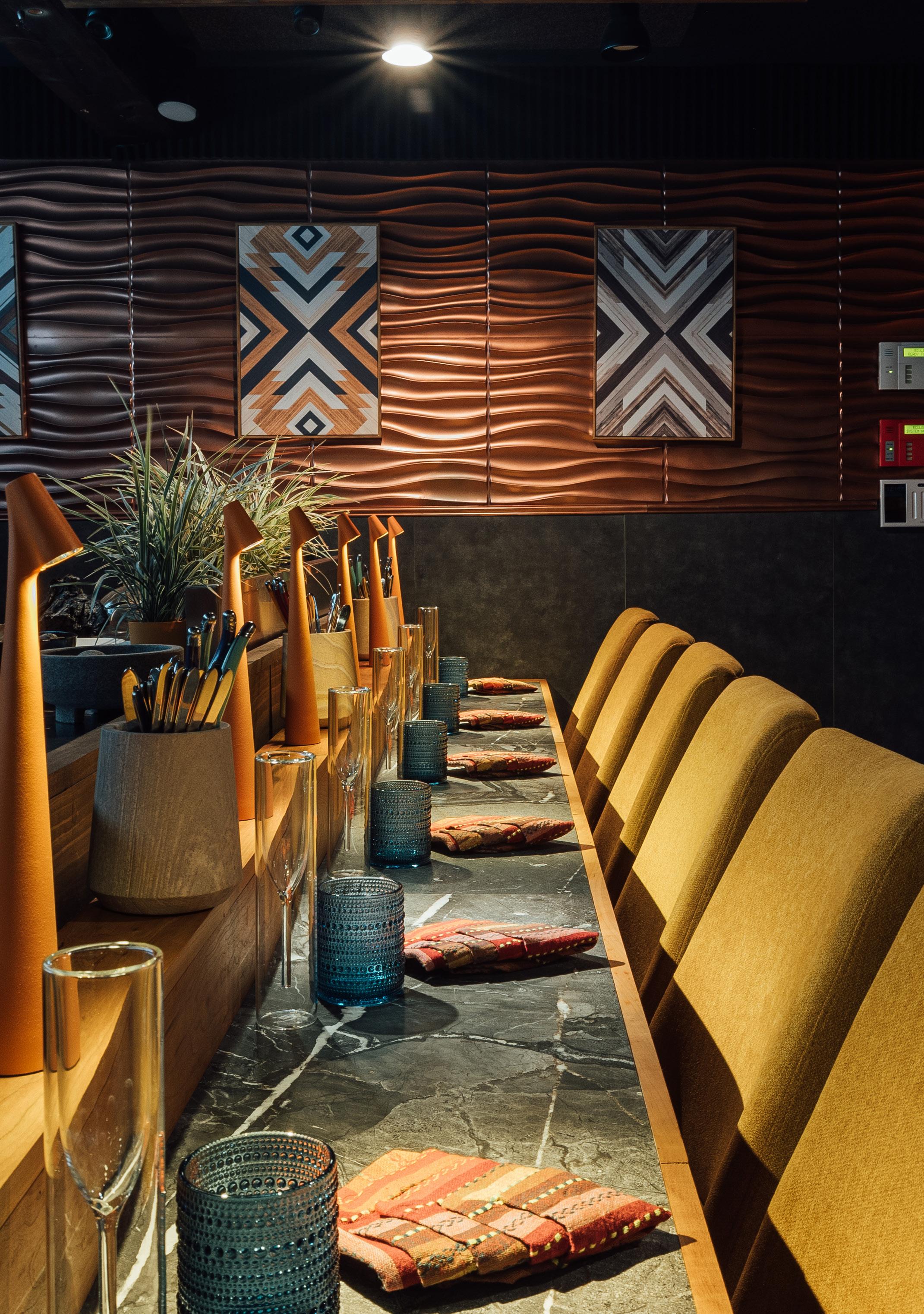
One of Texas’s most exciting culinary newcomers, Kappo Kappo, provides an intimate, chef-led tasting experience. Nestled away in the Austin Proper Hotel, this 25-seat restaurant is built around a 15-seat chef’s counter, emphasizing direct engagement between the chef and guest. Each dish is prepared and plated in front of diners in traditional Kappo “cut and cook” style, blending classic Japanese technique with refined French influence — a
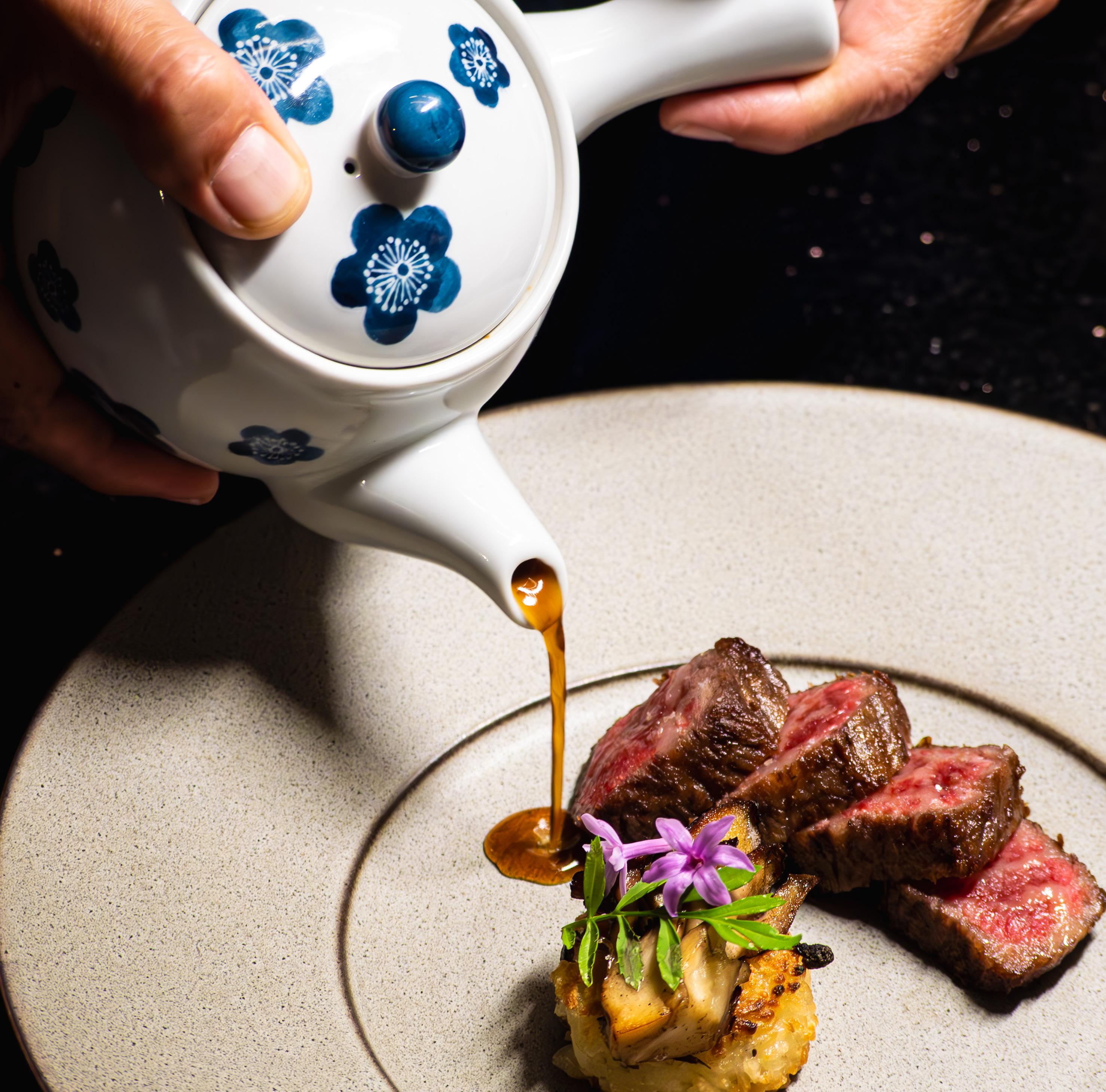
cross-cultural approach gaining momentum as chefs move beyond rigid formats toward more intuitive, market-driven menus. Kappo Kappo is led by twin chefs Haru Kishi and Gohei Kishi, whose backgrounds reflect this French–Japanese lens. Set within a design-forward space by Kelly Wearstler, the experience keeps the focus on craft, pacing and the intimacy of the counter.
In a region awash with lauded tasting menus, Violetto — the signature fine-dining restaurant at Alila Napa Valley — stands apart for its irreverent, experimental approach. Though only in his thirties, Executive Chef Mark Shoemaker carries a wealth of fine dining experience. At the heart of the restaurant is L’orto Violetto, an on-site culinary garden just steps from the dining room. Nestled among old
vines and fertile valley land, the garden informs every element of the experience, supplying shade-loving herbs, edible flowers, native plants and a diverse collection of salvia that move seamlessly from soil to plate. Hotel guests can often find him in the garden each day, harvesting ingredients that shape the restaurant’s four- and eight-course tasting menus.
One of Hawaii’s most inviting and indulgent tasting experiences can be found at Mugen, which is tucked away in ESPACIO The Jewel of Waikiki, a luxurious, omotenashiinspired (Japanese hospitality) hotel in the heart of Honolulu. Guests can choose among three tasting menus: the five-course Jade, sixcourse Emerald, and seven-course Sapphire. Executive Chef Colin Sato incorporates luxury ingredients such as dry-aged prime tomahawk
ribeye, Toriyama A5 wagyu, and Maine lobster, with deft pairings selected by Sommelier Douglas Priesel, who oversees the restaurant’s Wine Spectator “Best Of” award-winning wine collection.
In Kemah, Texas, Choctaw Chef David Skinner is the visionary behind Ishtia, a deeply personal Native American tasting menu experience. With seating for up to eight guests, the multi-course journey — which often features anywhere from 15-20 courses and runs up to three hours — celebrates indigenous ingredients and techniques, weaving together lesser-known elements with modern approaches and cultural reverence. The tasting menu showcases the diversity and richness of a variety of indigenous
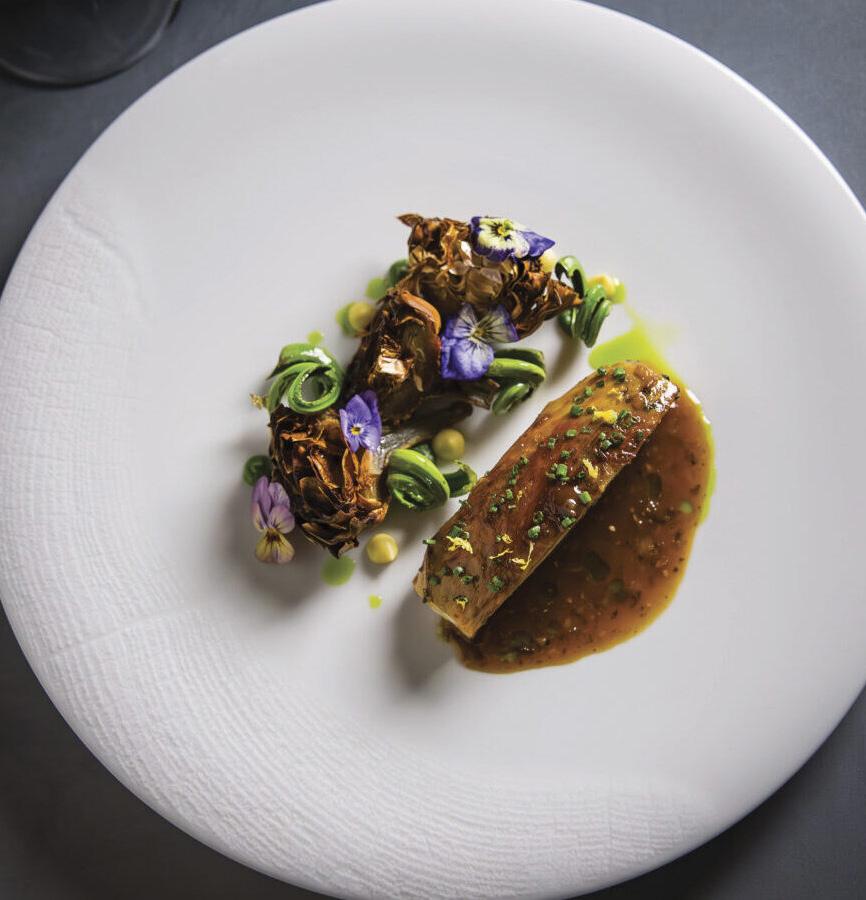
cuisine. The menu includes ingredients indigenous to North and South America and some colonial imports, illustrating how these elements transformed cultures and influenced the destinies of indigenous peoples. Standouts include the Nan okcha̱ki Kashuffi (“smudge salad” with greens and walnuts) and I tek Tuchina (scallops, squash, corn, beans).
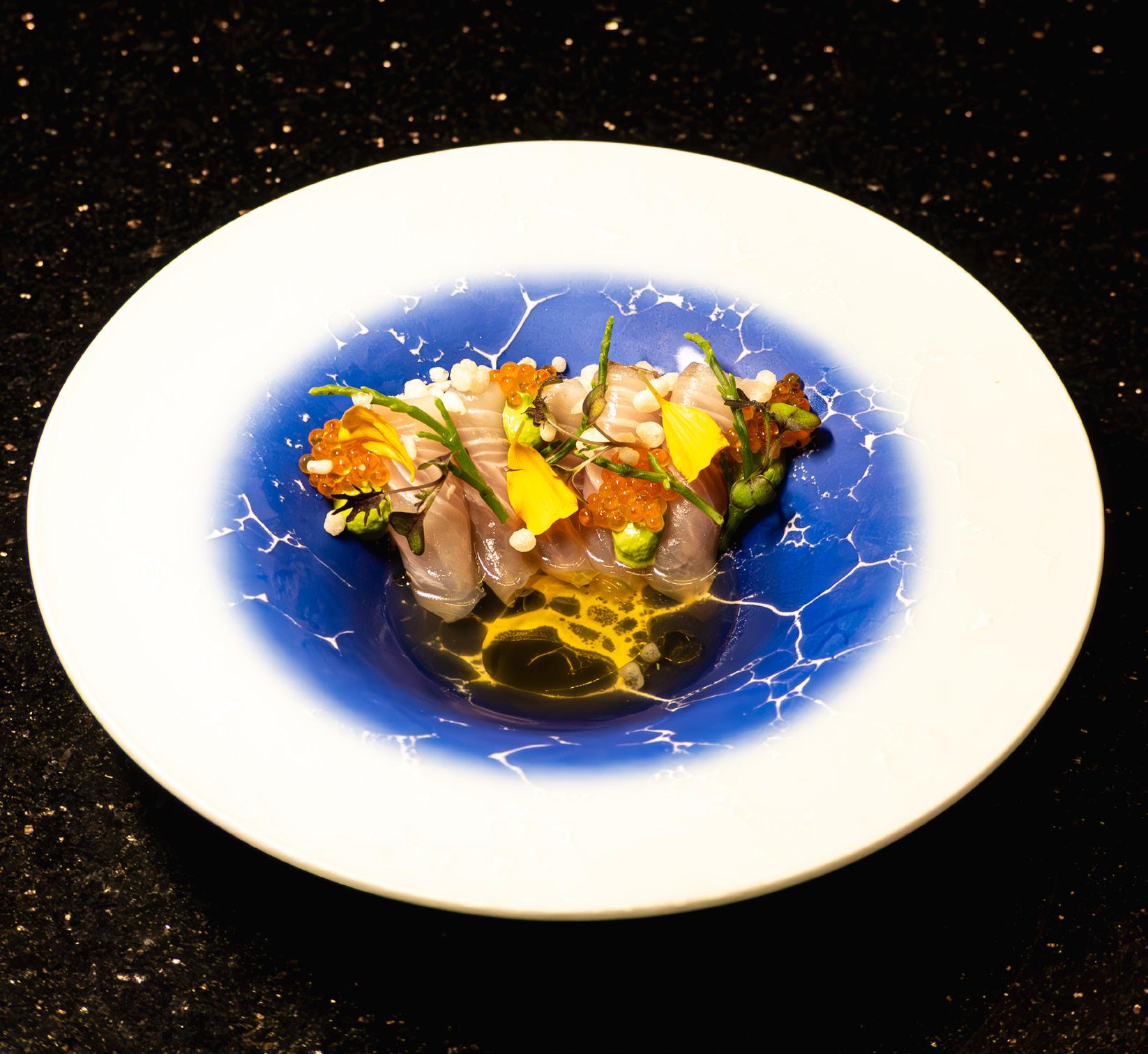
Jungsik New York — the first Korean restaurant in the U.S. to earn three Michelin stars — offers a modern and elevated approach to the tasting menu format. Chef Jungsik Yim has helped redefine how Korean cuisine is experienced on the global stage, bringing an innovative lens to traditional flavors and techniques. The tasting menu unfolds as a series of reimagined Korean touchstones. For example, Kimbap — traditionally a comfort food — is refined with yellowtail, nestled into a custom porcelain plate and paired with crisp seaweed bugak and truffle rice. The menu’s choreography carries into the beverage program, notably through Jungsik’s “Ban-Ban” pairing — a seamless interplay of wine and nonalcoholic pours designed to move in step with the menu.
Rising above the Chao Phraya River, lebua Bangkok combines award-winning accommodations, breathtaking views and curated experiences across multiple floors in one of Thailand’s tallest towers. With two Michelin-starred restaurants and some of the highest alfresco dining venues in the world, lebua creates memorable experiences for gourmands, romantics and global tastemakers. On the 61st floor, Chef’s Table by lebua redefines the open-kitchen concept entirely. Every one of the restaurant’s seats is oriented toward the kitchen, where each service becomes a quiet dialogue between Executive Chef Vincent Thierry and his guests. The tasting menus are built on produce sourced from both local Thai artisans and select international purveyors — single-origin vegetables grown by small farms, sustainably raised proteins, foraged herbs. Four floors higher, Chef Ryuki Kawasaki’s Mezzaluna by lebua offers a different kind of splurge: hyper-exclusive ingredients rarely found outside of Japan. His signature Niigata Murakami Wagyu — from a rare cattle breed raised on rice straw and hay in Kawasaki’s hometown — anchors a seasonal tasting menu where French classical technique meets Japanese precision and soul, served in an iconic half-moon dining room with sweeping skyline views.
By Camilla McLaughlin
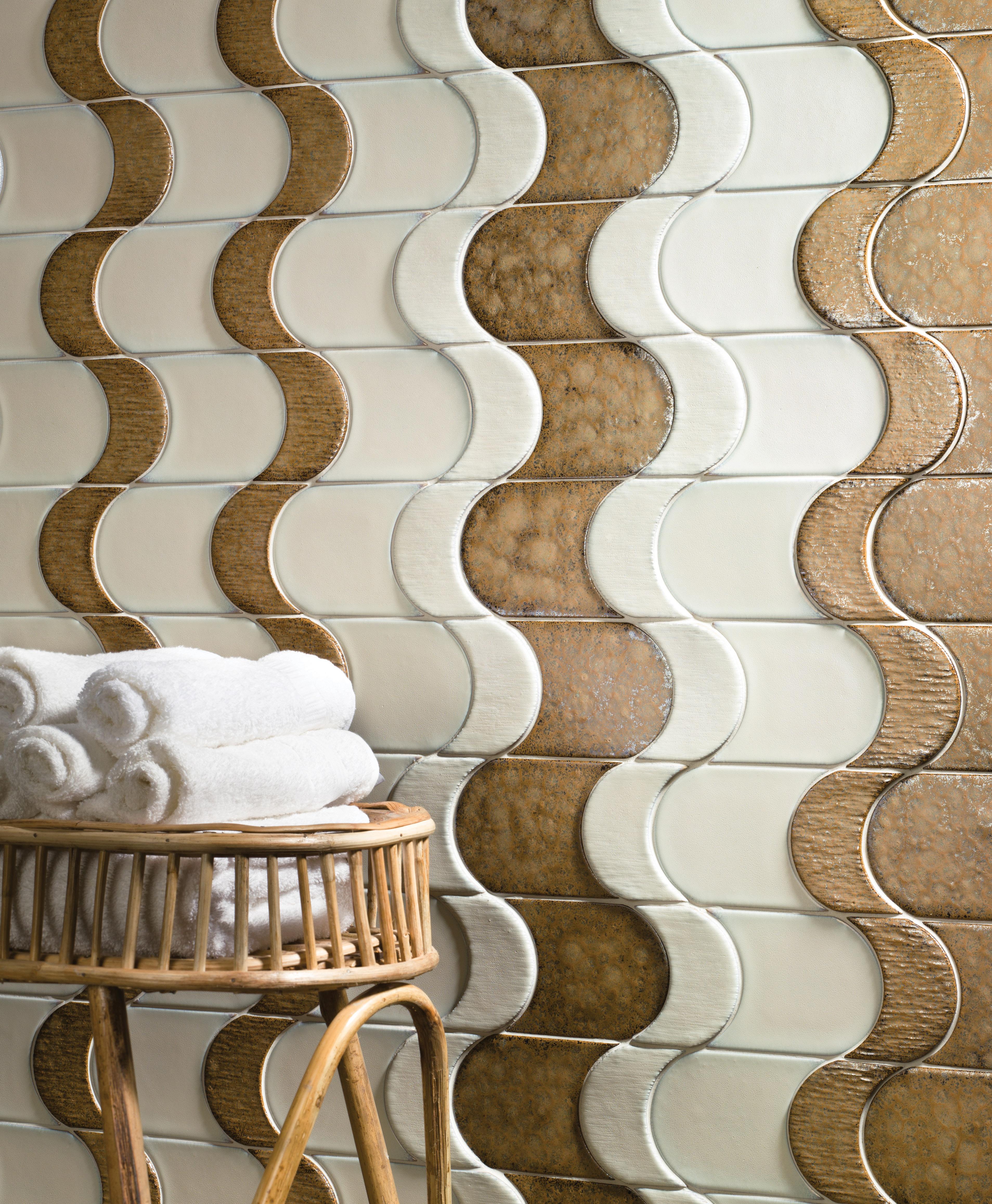
Design’s most enduring materials, tile and stone, are among the most versatile, with a history spanning hundreds of years and an array of cultures. Novel iterations and technologies are turning this timeworn classic into something that brings movement, depth and dynamism to interiors.
A good example is the Mistral Collection from Lunada Bay Tile, which reinterprets the heritage of Zellige tiles for today’s applications. Zellige, a process that dates to the 9th century in modern-day Tunisia, is a mosaic style made from individually hand-chiseled pieces of tile in distinct colors, fitted together to create infinitely repeating forms. In Lunada Bay’s collection, rich and lead-free Italian glazes are applied to carefully crafted tile pieces to achieve a fresh palette.
A popular trend highlighted at this year’s Coverings Expo was the shift from tile as a relatively static material to one that incorporates movement and tactility, with undulating surfaces and embossed ridges.
The MADE Billow tile collection from Ann Sacks plays with pillowed forms and fluted details that catch light in ways that shift throughout the day. Designer Kelly Wearstler explains: “The whole thing started with texture. I was looking at these vintage puffy jackets and thinking about how certain surfaces just demand to be touched. There’s something so satisfying about creating that same tactile invitation in tile — making something architectural feel unexpectedly soft and approachable. It’s about bringing warmth to walls.”
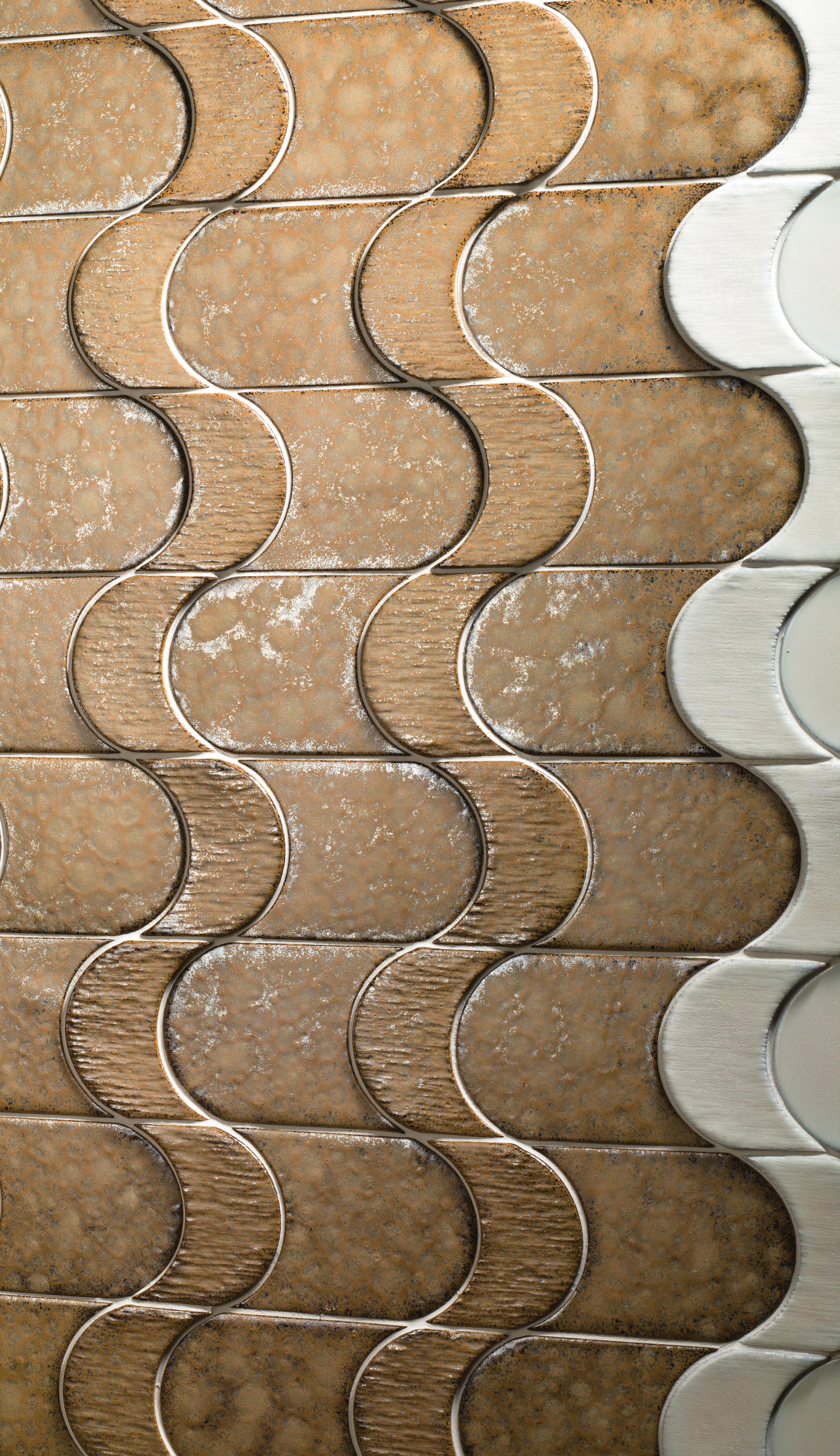

The contradiction became an obsession, Wearstler says. “How do you make something as hard as ceramic feel tactile and responsive? I wanted to create surfaces that confuse expectations, that make you question what you’re seeing.” In Billow, bulbous forms play tricks with light and shadow.
According to Wearstler, the sense conveyed by Billow stems from the unpredictable ways reactive glazes respond to curves and valleys, producing incredible variations in color and texture. The net effect is a sense of opulence and indulgence. “It’s about pushing materials beyond what they’re supposed to do — and finding beauty in that defiance,” Wearstler says.
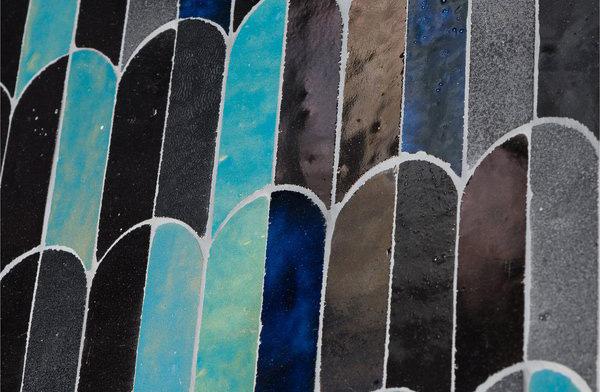
Equally representative of the movement trend is a product that won a Best of International Builders’ Show (IBS) Award at 2026’s Design and Construction Week in Orlando. Award winner Martel, part of E by Emser Tile’s luxury collection, combines artisanal character with modern versatility, blending an extruded porcelain scalloped edge with a special glass finish. Four nature-inspired tones and two shapes offer options for arrangements and installations in a variety of patterns. The scallop shape, variety of sizes and striking colors bring a visual sense of movement evocative of the natural rhythm of the sea and earth. Each tile features a handcrafted look enhanced by a unique glaze, ensuring no two pieces are alike.
By Camilla McLaughlin
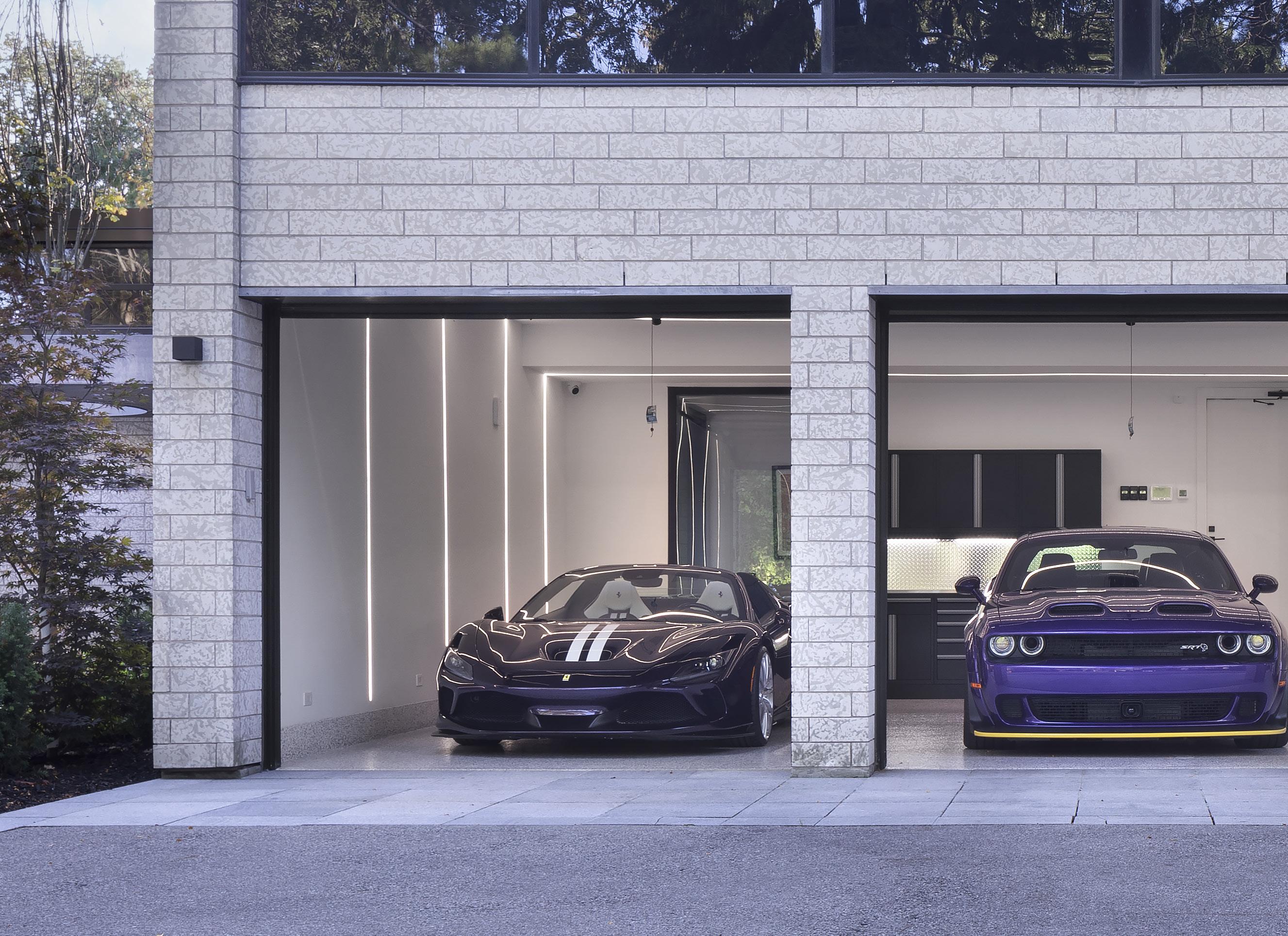
The traditional view of the garage as a dark, oil-stained “junk drawer” for the home has been parked in the past as a new perception of the garage as a multi-functional, high-value extension of the living space takes shape. In this new paradigm, garages become the Swiss Army knives of home plan design.
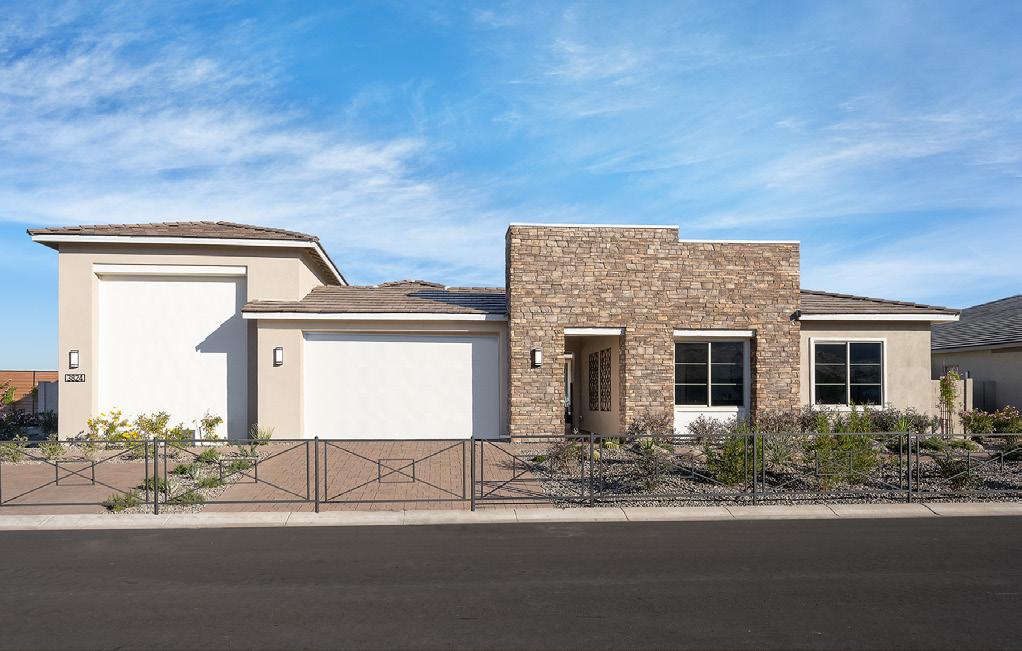
“We consistently see garage space among the most requested features in homebuyer feedback. The garage has evolved well beyond simple vehicle storage, and today’s homebuyers increasingly view it as flexible, usable square footage within the home,” says James Attwood, division president, Tri Pointe Homes Arizona.
“Expectations are evolving, and homebuyers today seek garages that feel more intentional and functional, rather than a plain space with bare drywall and a concrete slab,” he says, noting strong interest in taller ceilings, wider bays and semi-finished spaces. “Homebuyers want to see upgrade offers like epoxy-coated floors, built-in storage systems, enhanced lighting and dedicated electrical circuits.”
Even though the average new home today is smaller than the post-pandemic highs, according to the National Association of Home Builders, two-car garages remain a must-have for buyers, with three-car layouts or multiple garages becoming standard in many markets.
As home sizes decline and the duration of residency increases, a home’s ability to adapt to changing lifestyles has become a characteristic prized by owners and builders. New home plans today often include “flex space,” but experts urge owners not to overlook the garage.
“You’re never going to find a space as large and open in the home as you will in the garage,” says Aaron Cash, president of Garage Living, a garage storage and organization business, who emphasizes it’s the perfect place to customize.
When Cash founded his Toronto-based company 20 years ago, few products or services catered to this facet of a home. “There was even less awareness of the potential of the garage space being quite valuable to homeowners and valuable real estate,” he says. Today, Garage
Living has more than 47 locations across North America, testimony to a growing awareness that the garage space should be prized and can offer endless possibility, which Cash says reflects a shift in how we live.
Individuals looking to revamp a garage often want more than well-planned storage and upscale flooring, and options are as diverse as owners. EV charging setups are a common ask. Adding a mudroom area as an indoor-outdoor transition is popular, as are workout spaces, dog-washing stations or dedicated zones for hobbies. Regional climate also plays a role in preferences. Cash says golf simulators are growing in popularity. One lavish request was a batting cage for a student athlete, for example. In Chicago, Garage Living has received calls to create specialized space to overwinter plants.
For clients who have a passion for vehicles and want to put a collection on display, Cash says a revamp project “becomes much less about the function of everything around it
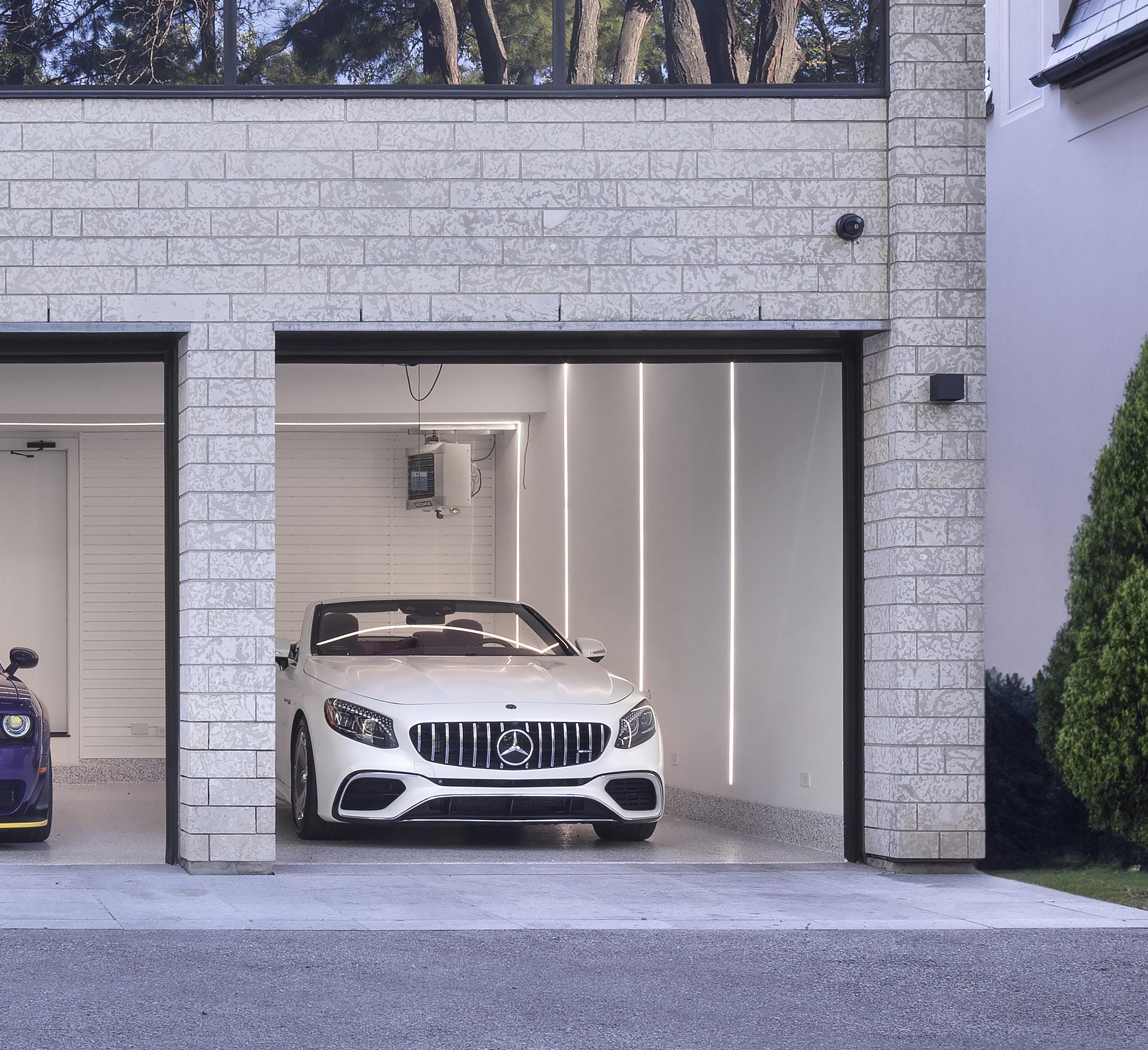
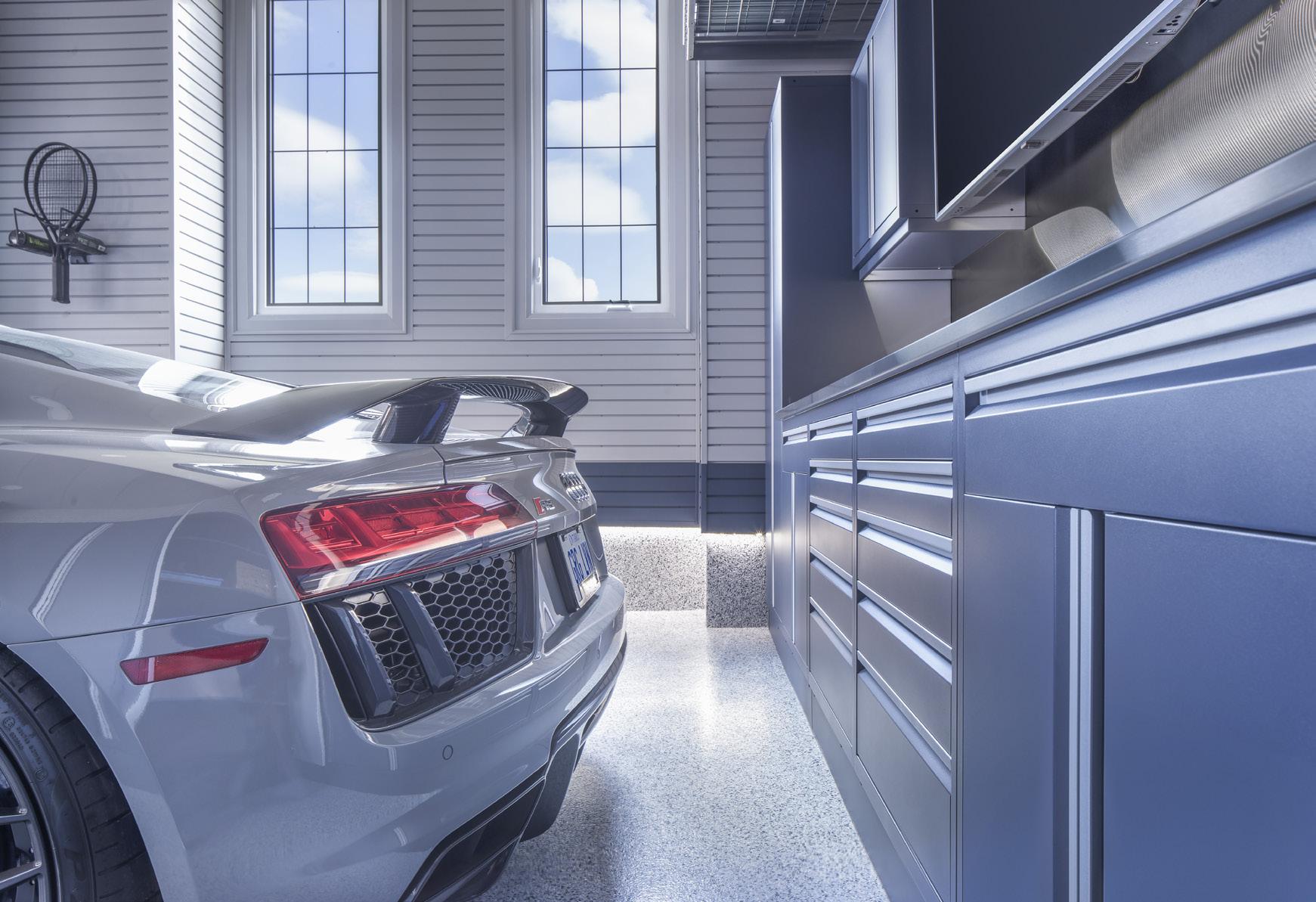

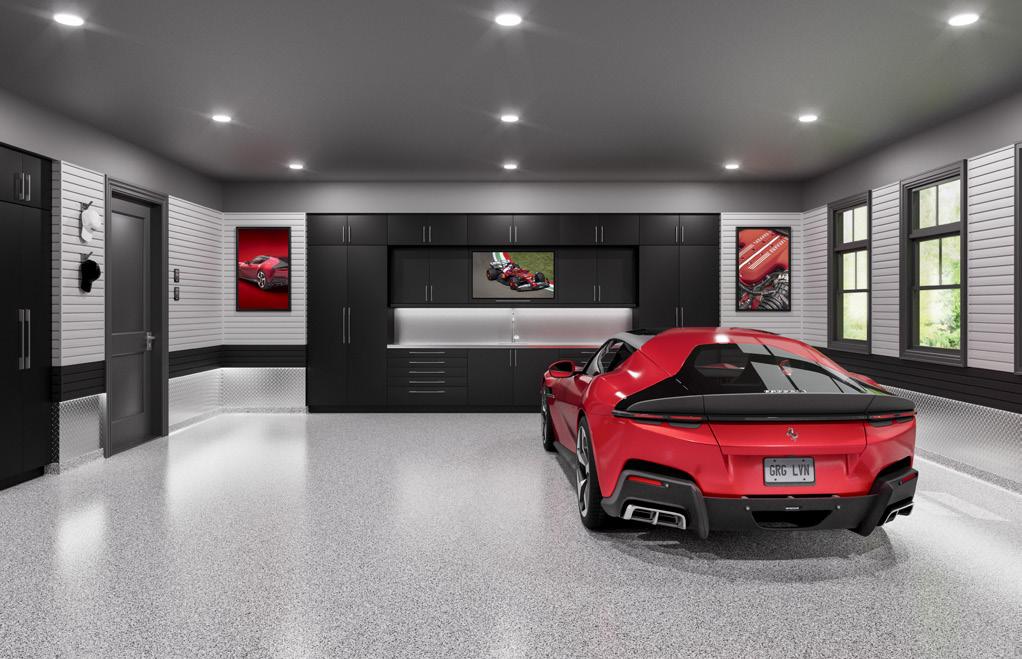
because it’s not a working garage, it’s a collection space. The garage floor is a key element; it’s about having a clean, very highend-looking floor. Lifts are something we install regularly.”
At the luxury end of the market, exemplified by projects like the Pagani Residences in North Miami, the garage has transitioned from a utility to a lifestyle statement. “For this segment of the market, garages have evolved from a utility to a core part of the lifestyle offering,” says Pagani Residences’ developer Mikael Hamaoui of real estate
firm Riviera Horizons. “Many of these buyers are collectors. They don’t just own cars; they curate them. The expectation now is that the garage becomes an extension of the residence, something that can be experienced, not hidden away.”
Designed and personally curated by Italo-Argentine automaker Horacio Pagani, the automotive aesthetic is woven into the spirit of the building and individual residences. “That means privacy, security, proper environmental conditions, and increasingly, a level of design that allows the space to function almost like
a gallery,” Hamaoui says. “Lighting, finishes, proportions and even sightlines matter.”
Hamaoui takes the garage trend a step further by incorporating a higher level of service, which he says is as important as the other anticipated features. “It’s not about parking cars in a branded building. It’s about creating an environment where the lifestyle of a collector or enthusiast is understood and supported at the same level as the design of the residence itself.”
By Kassandra Burr
A bespoke experience where wellness meets adventure, this Seattle-based company is reimagining a ritual that transcends borders.
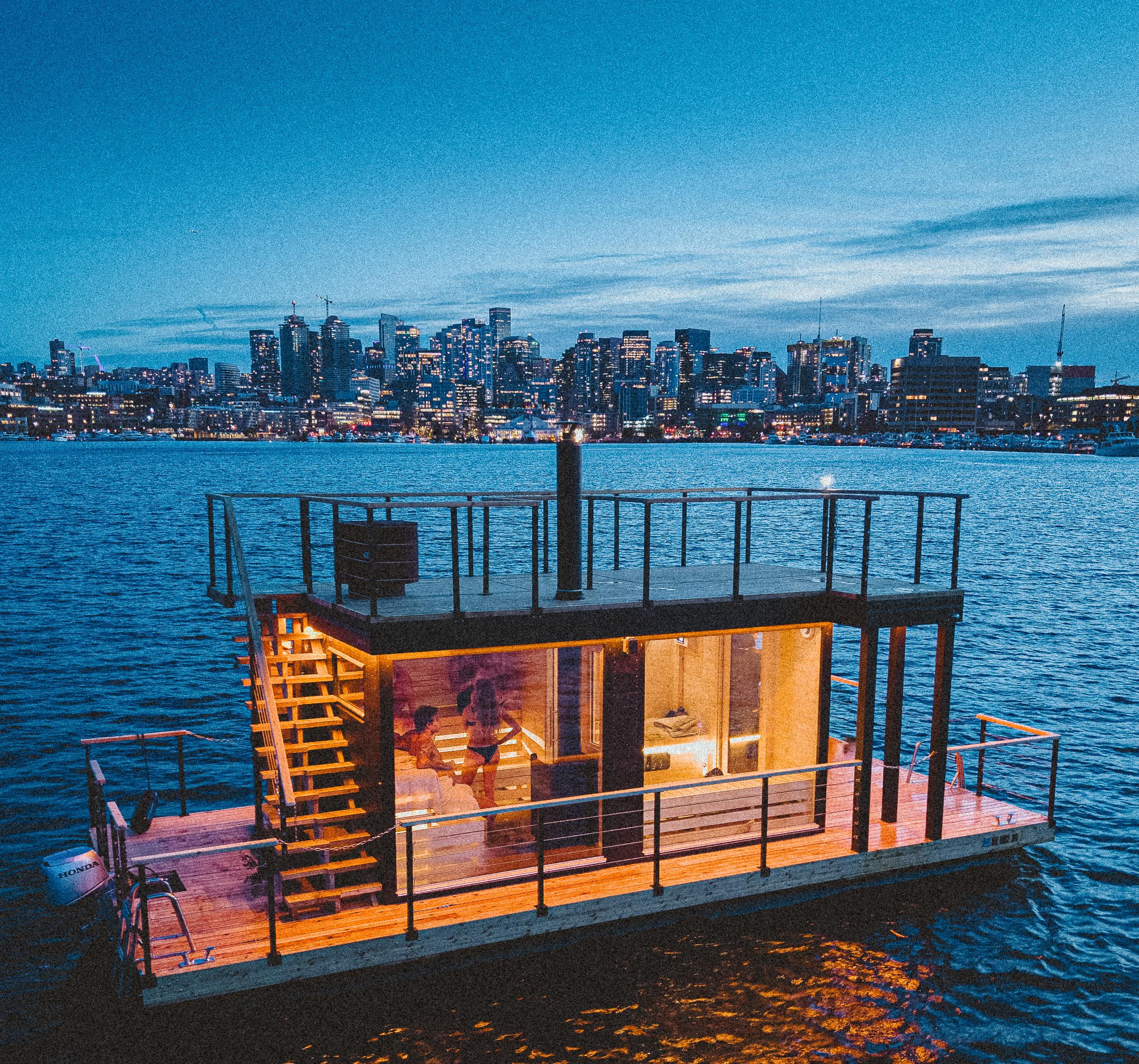
Quickly gaining traction in both Northern Europe and North America, floating saunas offer a unique way to rejuvenate. The coolest part? The necessary contrast therapy — the cold plunge — is just outside.
Launched in January 2025 by a group of seven friends, Wild Haus Floating Saunas is one such enterprise that delivers a luxury sauna experience inspired by Nordic sauna culture. “Our approach adds our own twist that speaks to the maritime roots of the Pacific Northwest, while still staying true to the traditional Finnish style of sauna,” says Co-founder Emma Griffith.
The idea of gathering on the water to connect with one another, Griffith says, is one of the main reasons she and her friends founded Wild Haus—and after witnessing the rise of floating saunas across Northern Europe, the group knew they wanted to bring the sauna-cold plunge experience to Seattle. What better way to utilize the city’s frigid lakes?
To bring their vision to life, the team collaborated with Finnish marine sauna designer Jonatan Tuori. Their two boats, Aspen and
Ember, were built in Ballard with the help of family and friends.
Nordic Tradition, Reimagined
Sauna culture focuses on unplugging from the noise of everyday life, especially our digital lives, prioritizing introspection and socialization. Being on the water, Griffith says, naturally encourages guests to disconnect from their phones.
Drawing inspiration from a traditional Finnish wet sauna, the boats employ a wood-
fired stove to heat the sauna’s rocks. Guests can add water to the rocks to create a plume of steam that instantly boosts humidity and temperature, an invigorating experience that Finlanders call löyly.
Unlike a traditional sauna, which isolates the sauna bather from the outside world, the floating saunas Wild Haus’ team designed feature sleek glass walls, fostering connectivity to the water and the city. “Our floating sauna offers a different kind of experience, one that’s curated for guests who want to enjoy the heat and wellness of sauna culture while also taking in the luxury of being on the water and seeing the city from an entirely different perspective,” Griffith says.
Guests can choose between two experiences: a 1.5-hour communal voyage along

Lake Union or a 1.5- to 2.5-hour private voyage along Lake Union or Lake Washington. With just six passengers per voyage, the experience remains intimate, encouraging guests to socialize and connect with one another.
Those seeking the benefits of contrast therapy can cool off with an on-board bucket shower, or for the intrepid sauna-goer, follow the lead of the Norwegians and take the plunge straight into the lake.
“Guests can move between the heat of the sauna and the cold water, set their own pace, and enjoy a unique moment on the water that feels tailored to them rather than a one-size-fitsall spa visit,” Griffith adds.
If the heat of the sauna becomes too much, but the lake water doesn’t beckon, guests can
move to the attached warm cabin to relax—or take to the upper Sky Deck to take in the view of the stunning Seattle skyline. “We give guests the opportunity to create their dream experience on the water,” Griffith says. “Every detail is designed to feel elevated and intentional, with the sauna acting as the centerpiece that ties it all together.” From plush robes to curated snack boards, the sauna experience at Wild Haus is nothing short of luxurious.
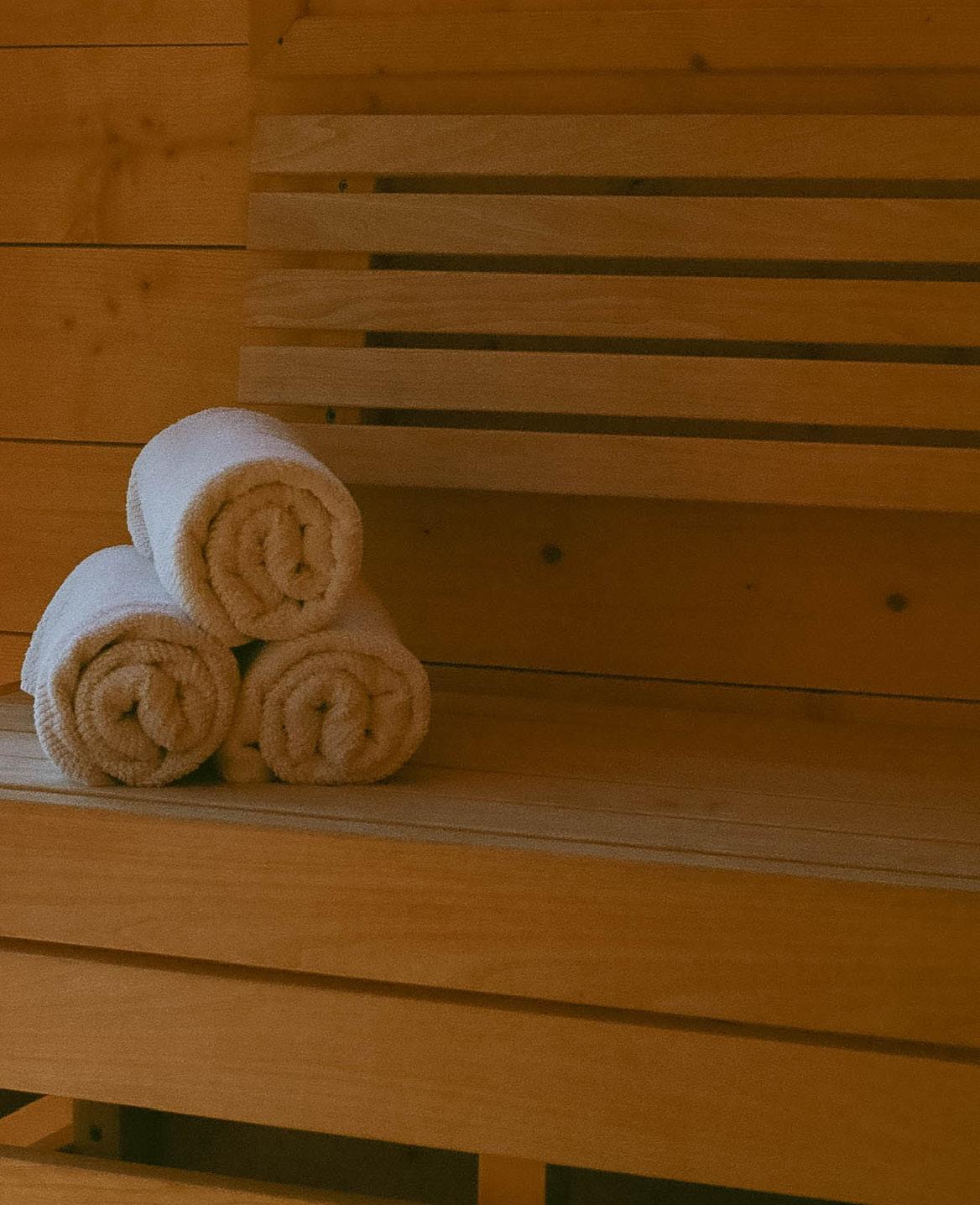
Floating saunas hark back to a Viking-era ritual in which one heats up in a sauna or hot spring before jumping into an icy body of water. This early form of contrast therapy (alternating between hot and cold exposures) is said to aid in muscle recovery, reduce inflammation and improve mood.
Americans are no stranger to the Nordic tradition of plunging into icy water. Trending in American wellness culture, cold plunge pools are everywhere in the United States, from spas and wellness centers to our backyards.
But there’s something freeing about plunging straight into a natural body of water. “Floating saunas combine two things people are craving right now: wellness and connection to nature,” concludes Griffith. “Being able to move from the heat of the sauna directly into open water, and share the moment with friends, turns a simple sauna session into a full experience.”
Named one of the biggest travel trends in 2026 by Condé Nast Traveller, Viking wellness, which encompasses Scandinavian-inspired wellness rituals emphasizing natured-based experiences, is piquing the interest of wellness
enthusiasts across the globe. People are embracing these ancient Nordic practices, not only for the health benefits, but also as a way to restore. If you’ve been longing for a reset on the water, a trip to Seattle may be in store.
By Lisa Levi
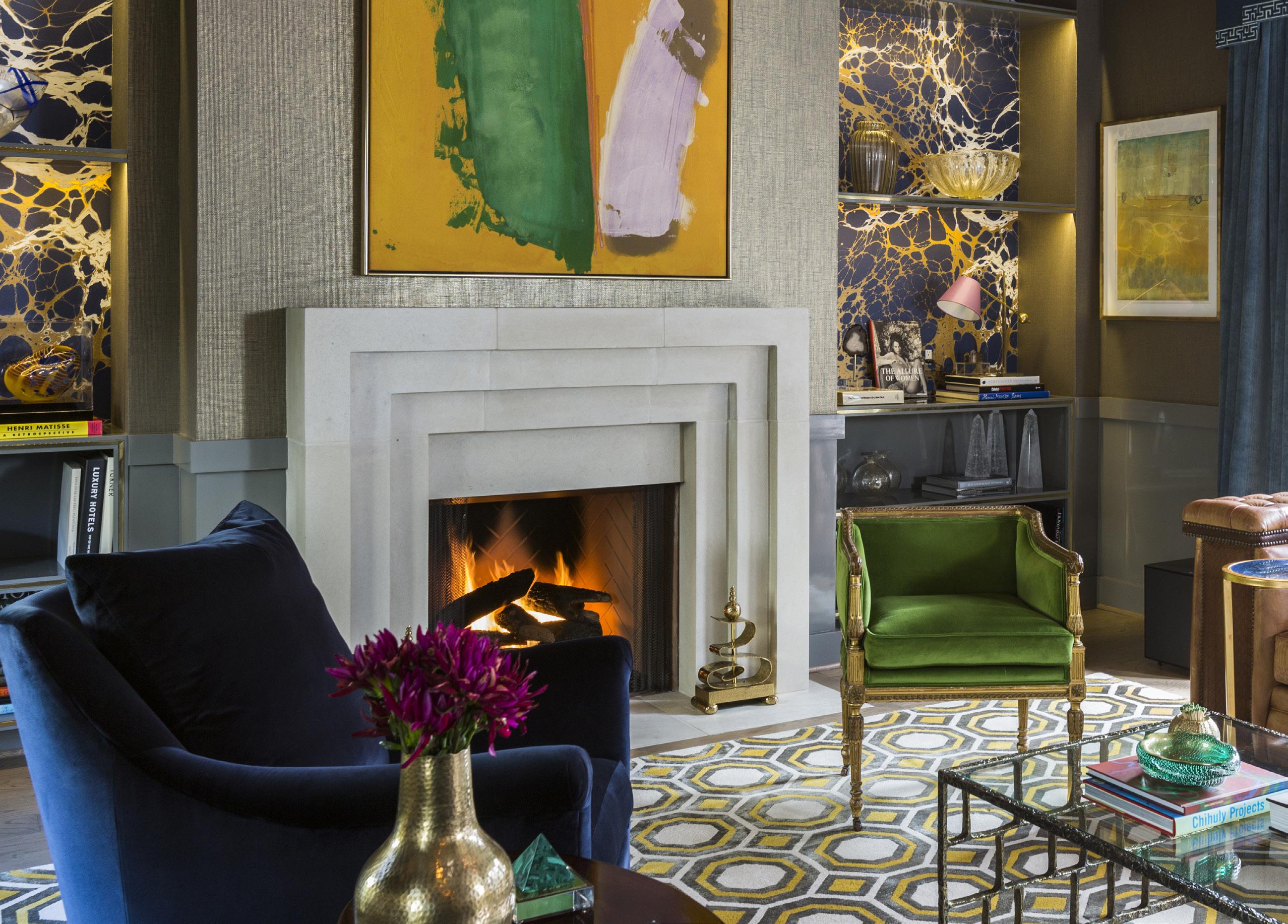
Minimalism’s reign as the standard of highend taste might be finally drawing to a close. For some time, the height of luxury has looked like the aerodynamic curve of an unadorned sofa, and the near-colorless expanse of a mostly empty room. Living with so little implied that one had plenty — and no need to prove it through ostentatious displays.
“For many years, design leaned toward restraint, often at the expense of color and narrative,” explains Lisa Shaffer, CEO and creative director of design firm Lisa & Leroy. But while some thrive with a spartan approach, others have struggled to get on board with an aesthetic that left little room for self-expression. Now, homeowners are rebelling against those restrictions, demanding spaces that reflect the warmth of real life rather than a fabricated tranquility. This is the new age of maximalism, transforming homes from someone else’s idea of peace into a true reflection of the self.
Maximalism in 2026 is “much more intentional” than previous versions of the style, according to Julien Sebban, founder of Uchronia, a multidisciplinary architecture and design collective. Rather than excess for its own sake, maximalism’s current iteration provides “a
narrative construction in which each element has a purpose.”
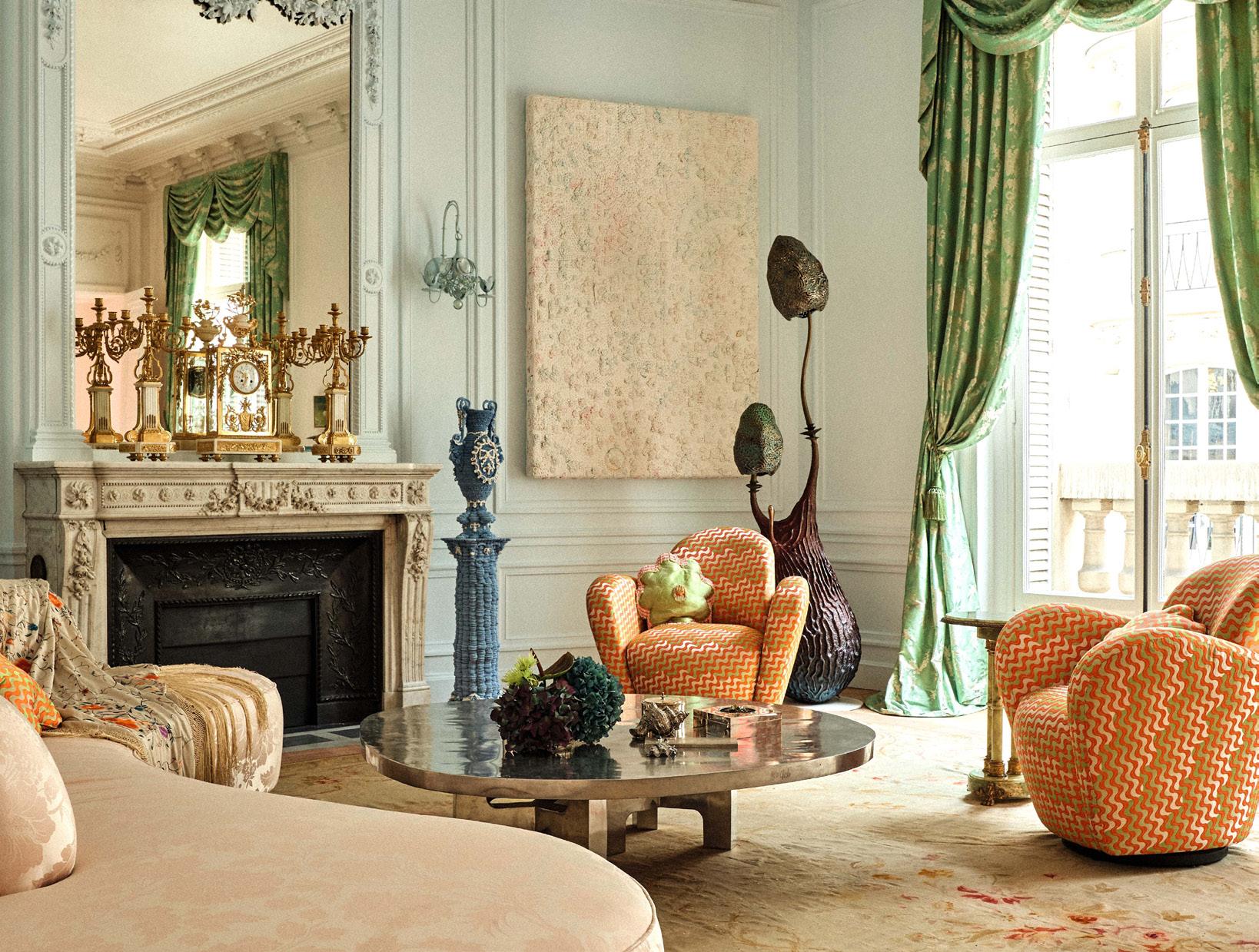
Personally meaningful objects are an ideal point of departure, says Courtnay Tartt Elias of Creative Tonic Design. “My clients want to celebrate their hobbies and passions, whether that’s needlepoint or tennis, or even collections of family heirlooms. (It’s) about being free to really lean into whatever it is that brings a smile to your face.” Shaffer adds the new maximalism values craftsmanship as much as storytelling. “The craft of the finish has taken on new significance. There is a renewed appreciation for artisan techniques, custom furniture and trades that are increasingly rare. The result feels layered and surprising in the best way.”
Because maximalism “adapts to cultural contexts,” Sebban explains, homeowners can also draw upon their location for inspiration. “In New York, it is more urban and experimental; in Miami, more colorful and influenced by Caribbean and Latin American cultures. In Europe, it engages more with history, heritage and collective memory.” Shaffer agrees that “each city carries a distinct design language. Washington, D.C., (where Lisa & Leroy is based) often reflects a more timeless, classical
approach, while London and Miami take more risks with dramatic moments.”
Tartt Elias observes these differences have “a lot to do with the architecture and actual structure of the buildings.” She points out the different aesthetics of a prewar New York apartment versus a historic European home, and how they lend themselves to different expressions of maximalist design. “In Houston, we have an incredible freedom to blend all these influences in homes that tend to be larger in scale,” she continues. “Houston’s maximalism is generous and warm, and a bit fearless.”
Whether you prefer old-world grandeur or cosmopolitan chic, a visitor to your home should recognize it instantly as yours. Sebban confirms this thirst for personalization is a pendulum swing back from the other extreme. “After years of minimalism and standardization, people want spaces that tell a story, reflect their identity, and embrace the complexity of the contemporary world.”
Maximalism is meeting the moment, turning homeowners’ physical spaces into celebrations of their personal histories and inner worlds. Tartt Elias adds that “there’s a real hunger for
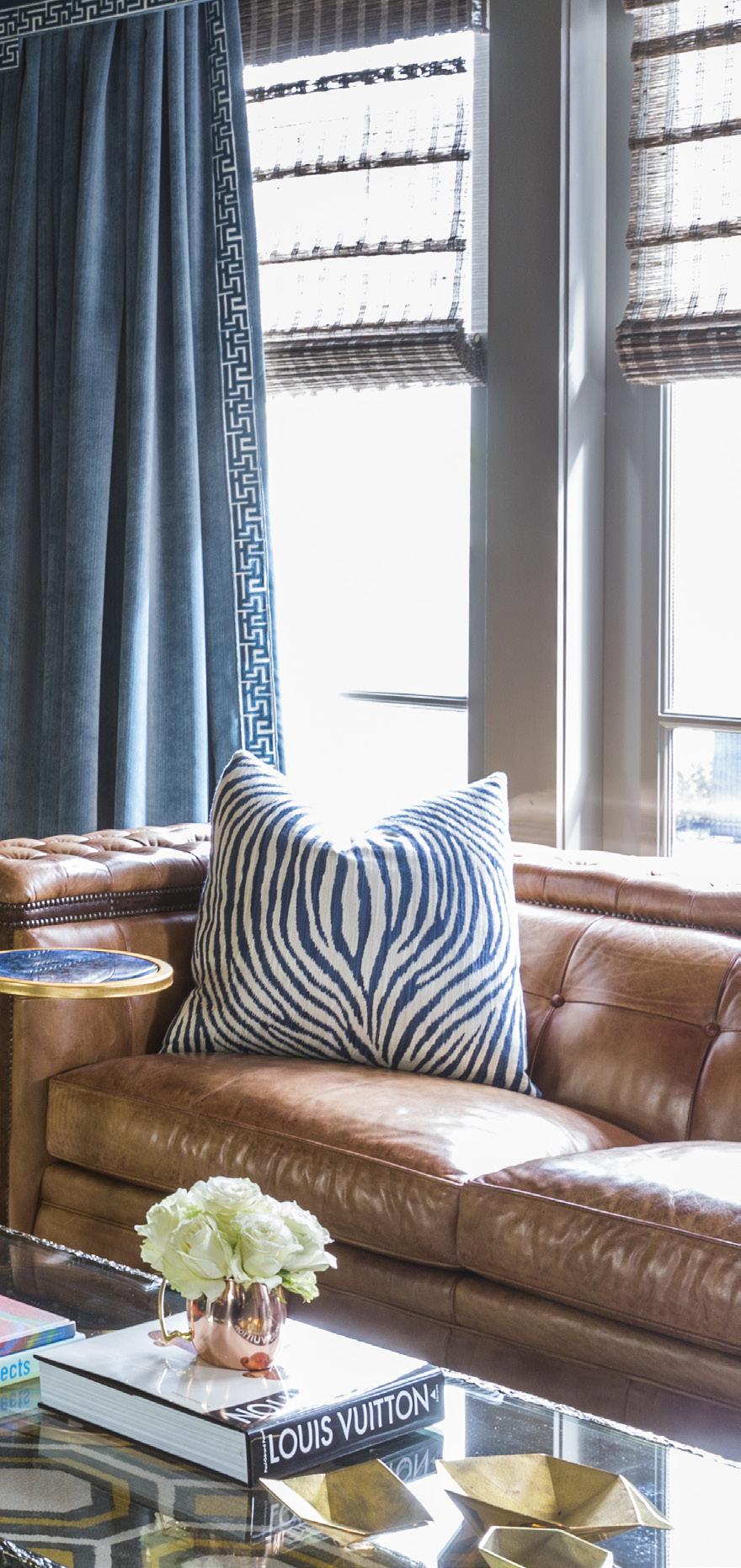
warmth, personality and spaces that feel like they reflect the people who actually live in them. Maximalism gives you permission to really highlight what you love.”
Detractors claim that maximalism is cluttered and chaotic, citing practices such as pattern mixing — a technique of which Tartt Elias is especially fond. “But there are definitely rules to it,” she explains. “Variation in scale, cohesive colors and at least one grounding element that anchors everything else.”
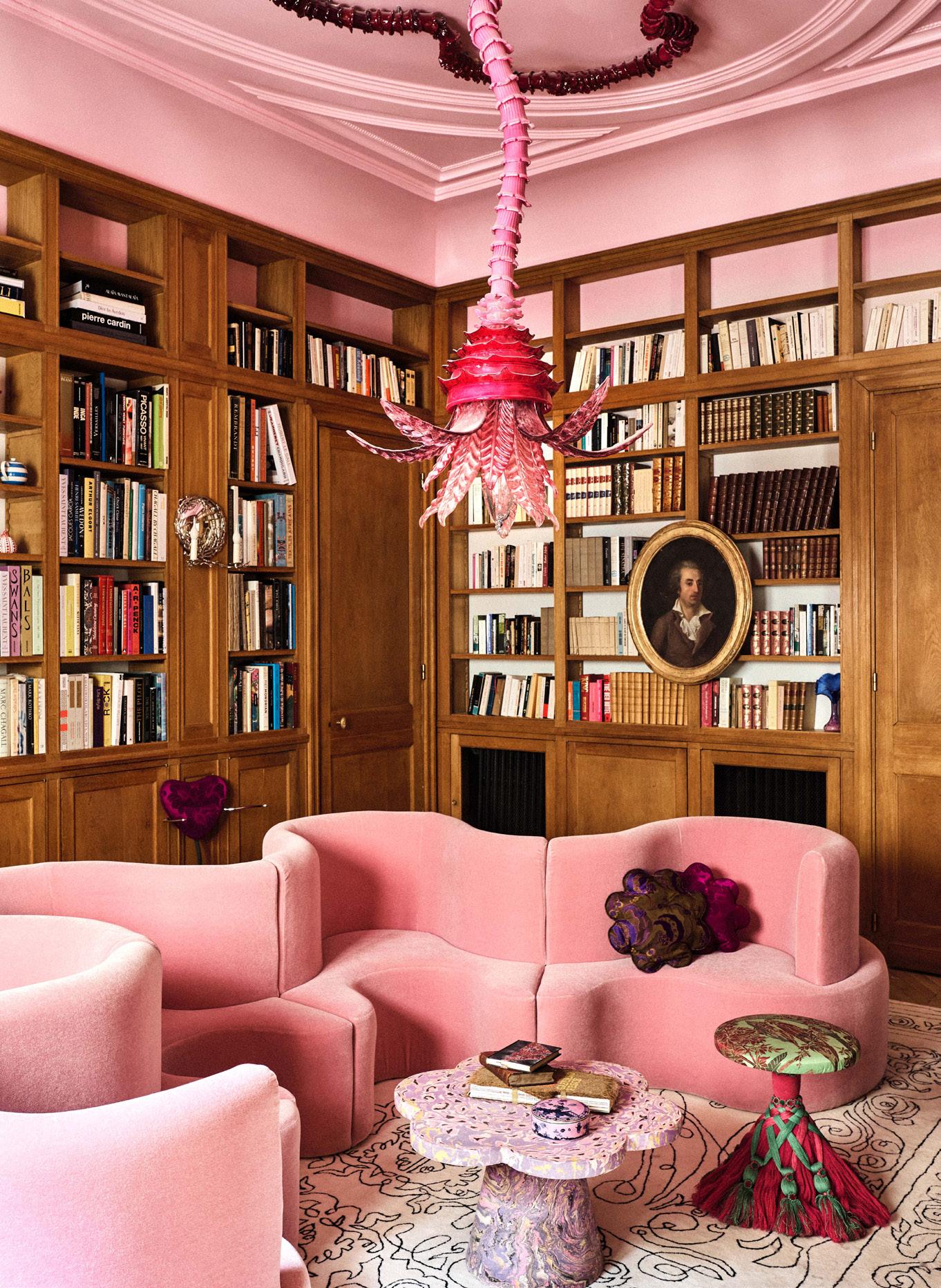
Shaffer emphasizes that “a clear point of view is essential from the outset. If you look closely, there is always a unifying thread.” Individual décor elements must not only spark interest, but be woven together into a richly layered visual and tactile experience. As the interplay between contrast and harmony pulls the viewer in, the effect is dynamic and energizing. Sebban concludes that “everything depends on consistency. Maximalism works when it is orchestrated, not accumulated.” In the right hands, it can give you a home as unique as a fingerprint.
By Kassandra Burr

These luxury railways are romanticizing travel with storybook settings and elevated dining experiences.
Take a step through time and discover the uniquely luxurious charm of 20th century rail travel, modernized. Enjoying a moment in North America, luxury railways capture the essence of leisure travel, inviting passengers to focus a little less on the destination and relish the journey.
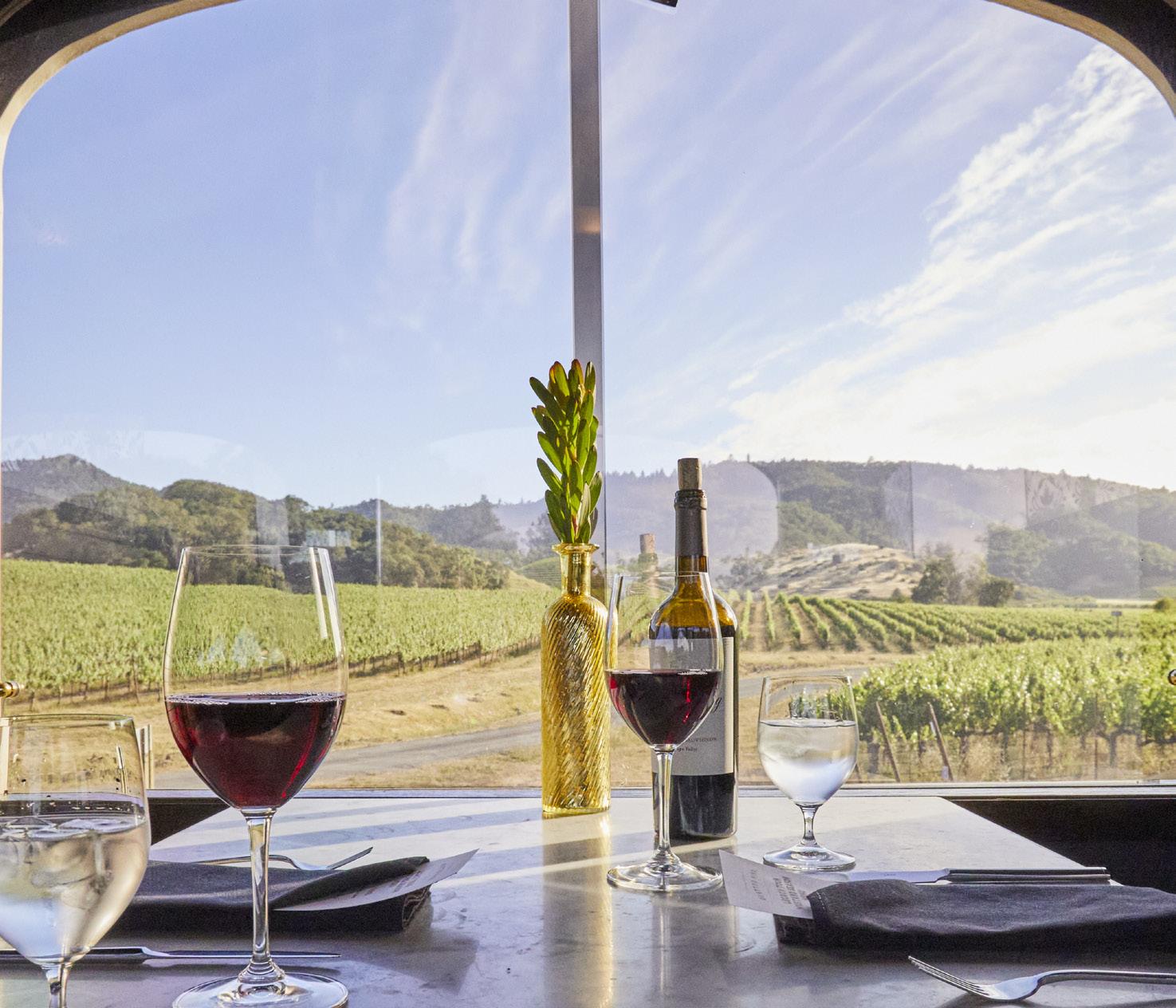
Visitors to Wine Country can tour the area the old-fashioned way aboard an impeccably restored 100-year-old Pullman train car.
Launched in 1989, the Napa Valley Wine Train — which once took passengers to a spa resort in Calistoga — offers a 36-mile roundtrip from Downtown Napa to St. Helena and back. Guests can choose among 14 curated experiences, ranging from two and a half to six hours in length.
Travelers can gaze upon sun-soaked vineyards as they indulge in a thoughtfully designed menu crafted to reflect the journey through the valley. Guests shouldn’t miss the chance to elevate their meal with curated wine pairings, notes Area Marketing Manager Brittni McCorkle.
On board the Legacy Train, passengers can enjoy a six-hour excursion complete with four gourmet courses and three wine tastings, the first of which is enjoyed in the open-air car. After lunch, guests disembark in the picturesque

town of St. Helena for a guided wine tasting at the historic Charles Krug Winery, followed by a third and final tasting at V. Sattui Winery. Dessert and dancing in the open-air car round out the journey. “There is simply no better way to slow down and enjoy the valley,” says McCorkle.
Travelers to the Canadian Rockies can choose to voyage through the unspoiled wilds from the luxury of a glass-domed coach, retracing the route of the 19th century pioneers as hosts bring the landscape to life with captivating stories. Amid unparalleled views of snow-capped mountains and glacial lakes, travelers may spot iconic wildlife, like bighorn sheep, moose and elk and enjoy gourmet meals paired with local wines and signature cocktails.
Named World’s Best Luxury Train of 2025 by Travel + Leisure, Rocky Mountaineer has guided passengers through the inspiring Western Canadian landscape since the 90s. “I’m incredibly proud of the legacy that has been built over the past 35 years,” said Tristan Armstrong, CEO of Armstrong Collective, Rocky Mountaineer’s parent company.
Guests can choose among four rail routes, each leading to spectacular destinations, such as Jasper National Park in Alberta or the quaint mountain town of Whistler, British Columbia.
Every journey includes breakfast and lunch, as well as midpoint destination stays with select hotel partners.
Rocky Mountaineer’s Rockies to the Red Rocks rail route, its American Southwest excursion that launched in 2021, has rebranded itself as Canyon Spirit for the 2026 operating season. “Although the name of our train is changing, our world-class service and onboard experience will remain the same,” says Armstrong.
An elevated way to explore the rugged Southwest landscape, Canyon Spirit takes guests alongside the majestic Colorado River through captivating terrains arguably best traveled by rail. On board their glass-domed coaches, passengers can enjoy panoramic views of desert canyons and mountain vistas while indulging in regionally inspired cuisine, such as honeyglazed Colorado trout.
Route highlights include Mount Garfield, rising above lush fruit orchards and flowering rabbitbrush, and the dazzling Ruby Canyon, largely inaccessible to visitors who aren’t traveling by rail. From Utah’s Mighty Five National Parks to Colorado’s soothing hot springs, travelers will find both adventure and relaxation upon reaching their destination.
By Mikhal Weiner
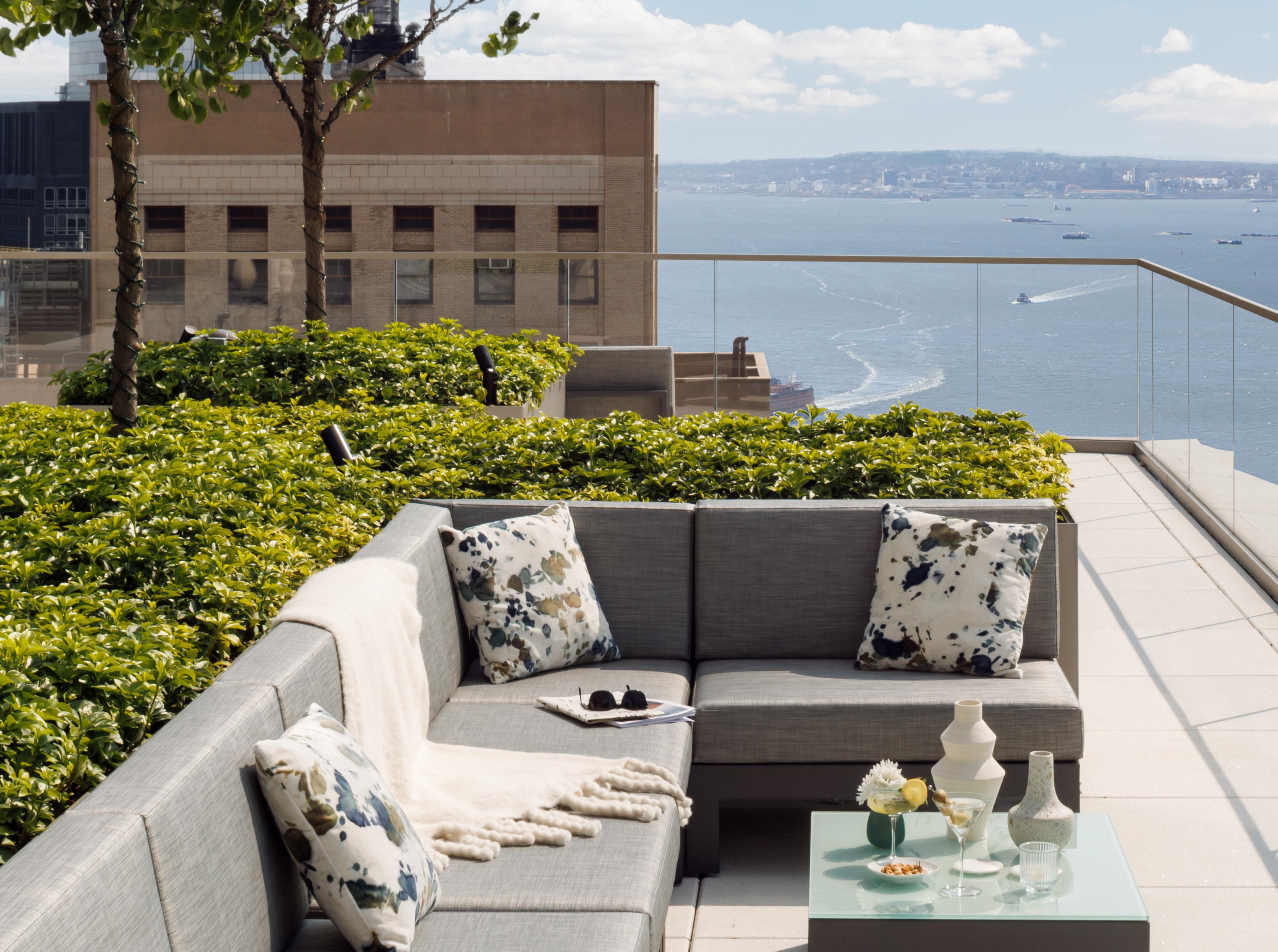
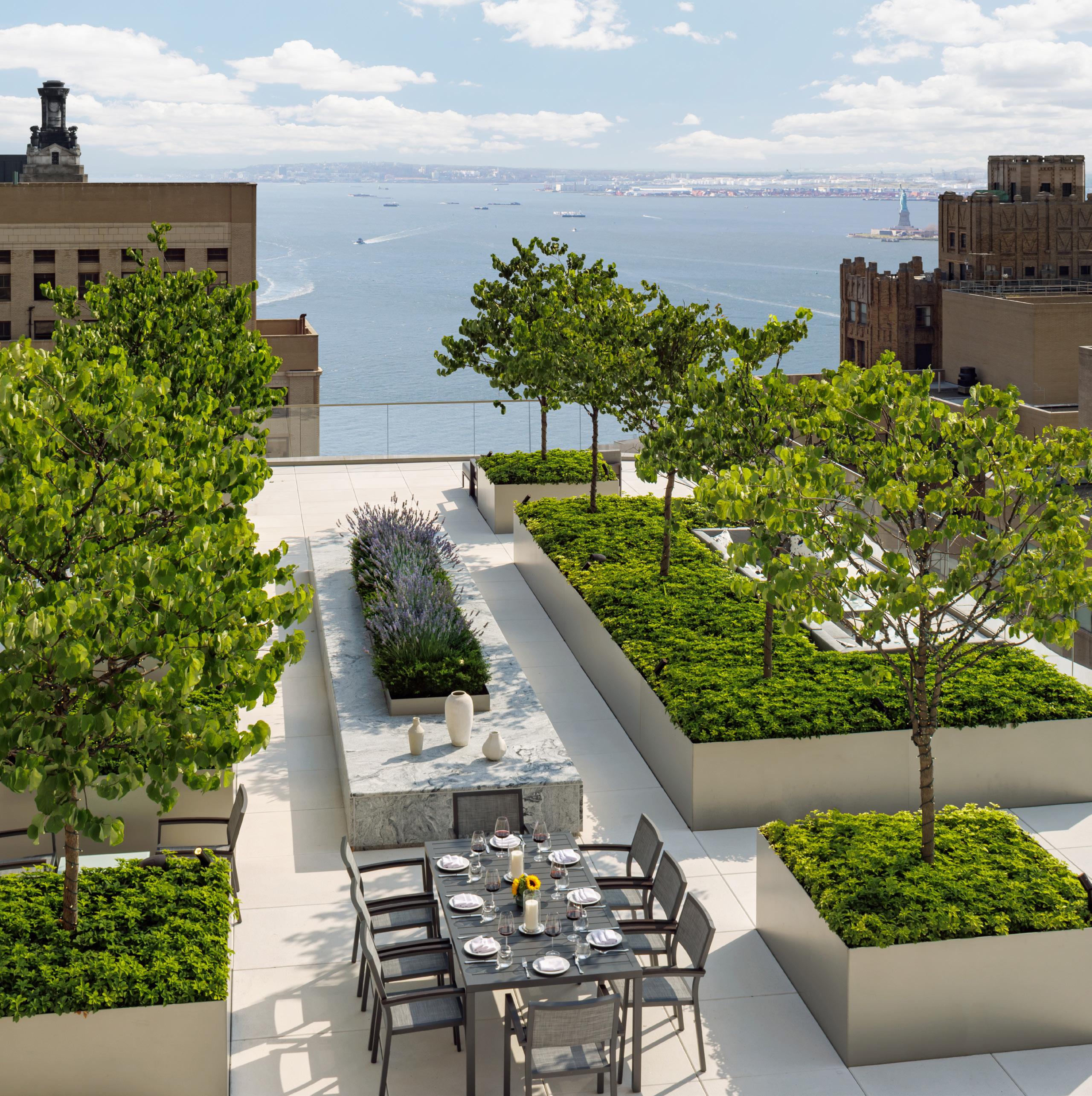
Imagine stepping off a wraparound terrace into a corridor of trellised fig trees, their branches fanned flat against sun-warmed stone, or pressing your fingers into the cold loam of a kitchen bed thick with heirloom tomatoes, lemon thyme and Tuscan kale, a hundred floors beneath the Manhattan skyline. This is edible landscaping: the art of designing outdoor space where beauty and harvest are not competing values, but one and the same. Herbs curl over pathway edges. Fruit trees frame sightlines. What looks, at first glance, like an impeccably composed garden turns out, on closer inspection, to be brunch.
The concept is centuries old, but the intentional blending of edible plants into welldesigned, lavish gardens is more prevalent in the upper echelons of residential design than ever before.
The pioneers of this approach were ahead of their time. Think of Sting and Trudie Styler, who have spent decades cultivating
their 350-hectare Tuscan estate, Il Palagio, into a fully biodynamic farm producing award-winning wines and olive oil. Or Russell Crowe, whose 560 acres of restored New South Wales land has been alchemized into a regenerative orchard and garden. These are extreme examples, spearheaded by leaders who seek to bring high-class living in line with their ecological values.
Berkshire Hathaway HomeServices anticipated this shift into edible landscaping in their 2022 Luxury Landscape Report, noting that high-net-worth buyers were moving beyond square footage and finishes, seeking instead “a deeper connection to the outdoors.” More properties were cropping up where passion and investment converge. By 2025, that prediction had not merely come true; it had become architecture.
At
developers declined to demolish a historic Art Deco tower and instead rebuilt it from the inside out. The project is eco-friendly by design, including energy-efficient systems and residential layouts that maximize light, flow and private outdoor access. But the rooftop terrace is where the edible landscaping flourishes — even in the Big Apple. Residents maintain a garden on a 4,500-square-foot terrace. The plants grown on this rooftop oasis are later used in dishes and cocktails at the private, residentonly restaurant.
In Costa Rica, the W Residencies at Reserva Conchal go further: a private desalination plant, active reforestation, solar power, composting systems, and an on-site apiary housing 2.5 million bees. In Brazil, the $16 million Terra dos Ventos beachfront estate runs entirely on solar power, its grounds folding productive landscape into the visual drama of Atlantic Coast design. Both feature native, edible plants heavily in their landscape design. In this way, residents can enjoy the delicious natural
beauty and know they’re contributing to the well-being of the natural habitat at the same time.
What connects these projects is the embrace of biophilic design: a philosophy that positions the built environment not in opposition to nature, but as an extension of it. Biophilic design holds that human beings have an innate biological affinity for natural systems, and that spaces that honor that affinity produce
measurable benefits for health, mood and longevity. The edible landscape is perhaps its purest expression: not nature as backdrop, but nature as participant.
The appetite for that participation is growing. As climate consciousness deepens, as food provenance becomes a marker of sophistication rather than rusticity, and as luxury buyers increasingly define abundance in terms of access, slowness and meaning, the productive garden has become one of real estate’s most legible symbols of arrival. What
was once the province of celebrity estates and agrarian dreamers is now woven into the fabric of the world’s most ambitious residential developments.
Where land meets table: That is where luxury is headed next. We cannot wait to see what grows there.

By Lisa Levi

There will always be something magical about summer vacation. No matter how long it’s been since the school door last closed behind us, summer still feels like freedom. Of course, as adults we now have the privilege of choosing our own adventures — and the company we want to bring along. If your preferred travel companion has four legs and a wagging tail, rest assured it’s never been easier or more fun to see the world together.
Gone are the days when most pets slept in haylofts and dog houses. Today, 97% of American pet owners say their pets are part of the family, and nine out of 10 include them in travel plans. Travelers want their animals to enjoy the same luxe experiences they expect for themselves.
Air travel traditionally presented significant challenges for pet owners, especially in the summer when cargo holds become too hot for safe transport. Some airlines allow smaller pets in the cabin, as long as they fit in a carrier; but for larger animals, there used to be few other options.
Thankfully, demand has led to innovation. Now, dedicated air travel companies exist to pamper your pup in carrier-free luxury. BARK Air is perhaps the most well-known, with a thriving operation that serves both U.S. coasts as well as several major European hubs. Their tagline is Dogs Fly First, and it shows in their attention to every detail. Hernan Giraldo, BARK Air’s SVP of customer experience, says “dogs are truly the VIPs,” enjoying in-flight treats and wellness services. For more nervous flyers, he says, “access to various aids such as noise-canceling earmuffs and calming jackets ensures a stress-free and enjoyable flight.”
The New York BARK lounge even boasts a HigherDOSE infrared PEMF pet bed to help dogs relax pre-flight. There are dog behavioral specialists on crew, and every flight is preceded by socialization time that determines seat assignments according to puppy preferences.
BARK Air’s destination list is based on guest demand, and new cities are added periodically. If you wish to access more far-flung locales, it is worth considering a shared or private jet charter. Private aviation company VistaJet offers options that can “combine ultra long-range flying with a fully tailored, petfirst experience,” according to a company spokesperson. “Our fleet can fly up to 7,700 nautical miles nonstop, without layovers or unnecessary disruptions. This means pets remain comfortably in the cabin with their owners for the entire flight, avoiding the stress, handling and separation associated with cargo travel or complex connections.”
The VistaPet program caters to VistaJet’s one in four members who fly with a pet, ensuring companion animal comfort and safety. VistaPet offers gourmet meals for both dog and human guests, as well as toys and amenities to keep canine travelers relaxed and happy. Their spokesperson notes that since many members’ pets become frequent flyers, cabin hosts “often remember their favorite treats or toys, and make sure they’re waiting on board.” VistaJet also trains cabin hosts in pet first aid — a reassuring perk for worry-prone pet parents at 45,000 feet above the nearest vet.
Giraldo also notes that while BARK Air’s service is primarily designed for dogs, “the team has also flown dog siblings, including lizards, birds, cats and even bunnies.” VistaJet also welcomes animals of all kinds, from cats to chameleons.
When it comes to canine companions, neither VistaJet nor BARK Air have any size or breed restrictions, although the destination might. Both VistaJet and BARK Air offer concierge services to help

clients navigate the pet entry documentation process.
While more hotels accept pets, there is a difference between merely allowing animals and embracing them. In the heart of Madrid, Hotel Casa de las Artes, Meliá Collection is proud to do the latter. Each canine guest is greeted with personalized welcome amenities and cozy bedding, and pet parents can order healthy meals for their pups from room service. The Casa de las Artes team (GEX Experience) offers “curated recommendations and tailored guidance so guests may explore Madrid alongside their dogs with ease and inspiration,” says Laura Martinez, guest experience manager.
Martinez says the hotel is “a place where dogs naturally shape the rhythm of the hotel in the most charming and unexpected ways,”
recalling a particularly delightful dachshund. “Every morning, without exception, he would make his way to reception as if it were his first and most important appointment of the day. He would greet each member of the team, accepting attention and affection, before finally settling down once he felt he had properly acknowledged everyone. Only then did he appear fully satisfied, as if the day could officially begin. It became something we all looked forward to just as much as he did.”
Across the Atlantic, the InterContinental Miami carries dual honors as Newsweek’s 2025 No. 1 Pet-Friendly Hotel in the U.S. and 2024’s Best Dog-Friendly Hotel by Roch Dog, the world’s first dog-friendly certification program. “We roll out the red carpet for our furry guests and their human companions,” says Gina Genna, sr. area director of marketing at InterContinental Hotels & Resorts. The highlight of any visit is the weekly Paws Patio event,
billed as “Miami’s Best Doggie Party.” Every Wednesday evening, the terrace transforms into a joyful “canine fiesta” complete with complimentary pup cups — and more traditional happy hour refreshments for the two-legged.
“We host specialty events throughout the year,” says Genna, referring to a canine-focused series of seasonal events. “We also host our annual Paws Patio Food Fest. April 2027 will mark our sixth year.” These celebrations, beloved by the hotel’s guests, have also become anticipated annual affairs for the wider Miami community.
From Miami to Madrid, and all the sky in between, travelers with pets want their best friends to feel safe and loved. As summer approaches, bringing chances for adventure with your pet in tow, remember you have a wealth of options to keep you both in the utmost comfort.


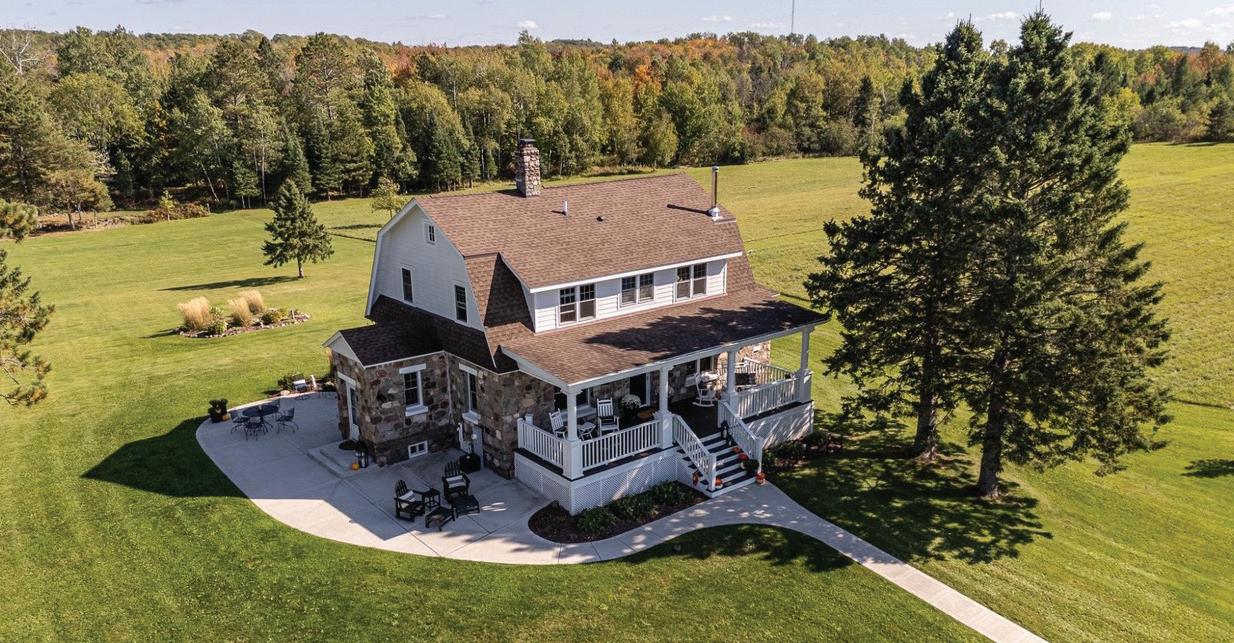
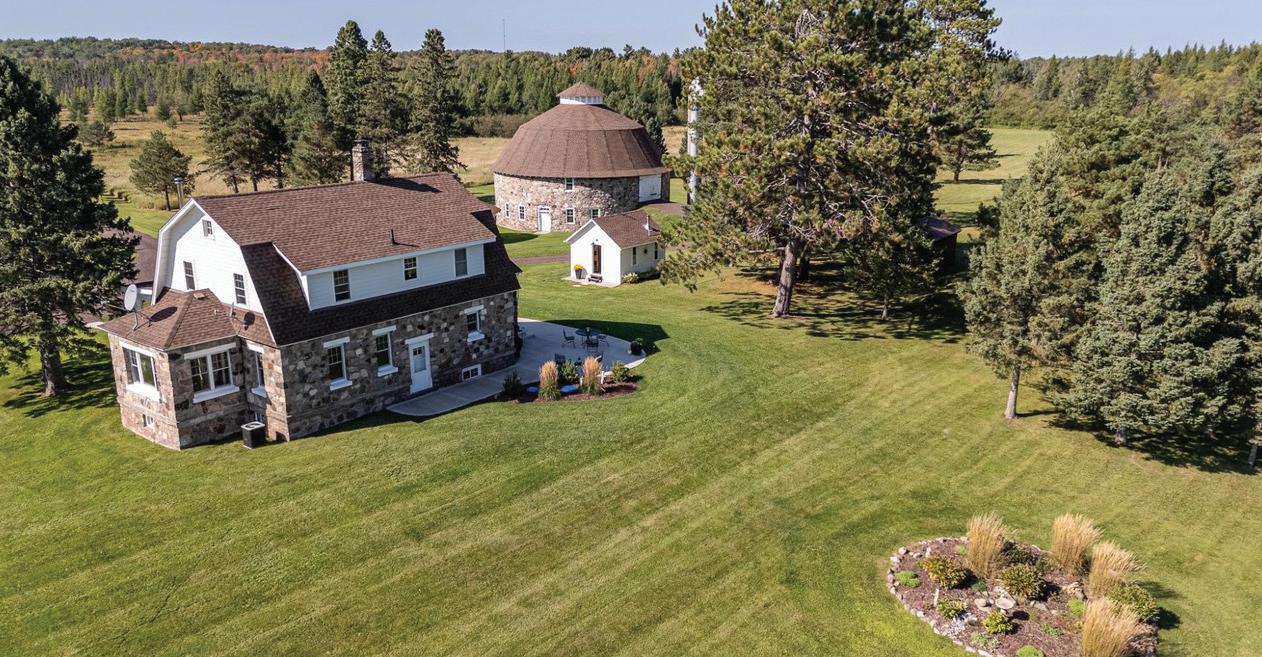
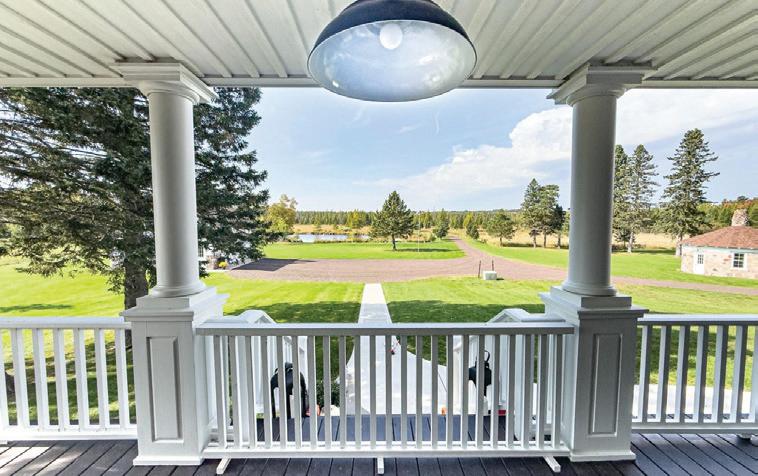
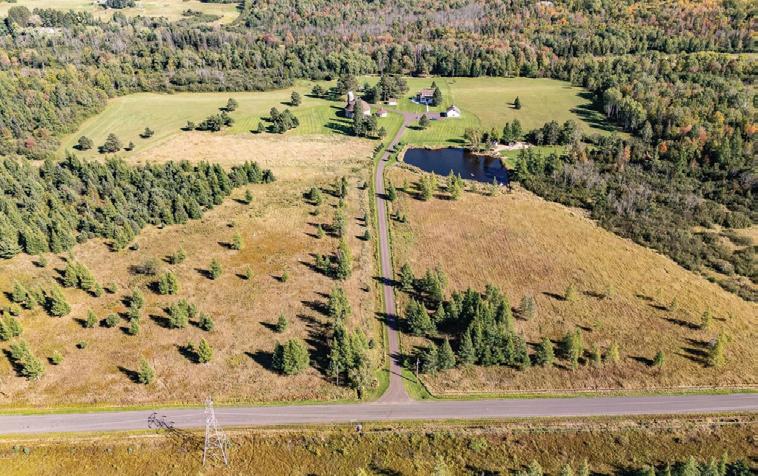
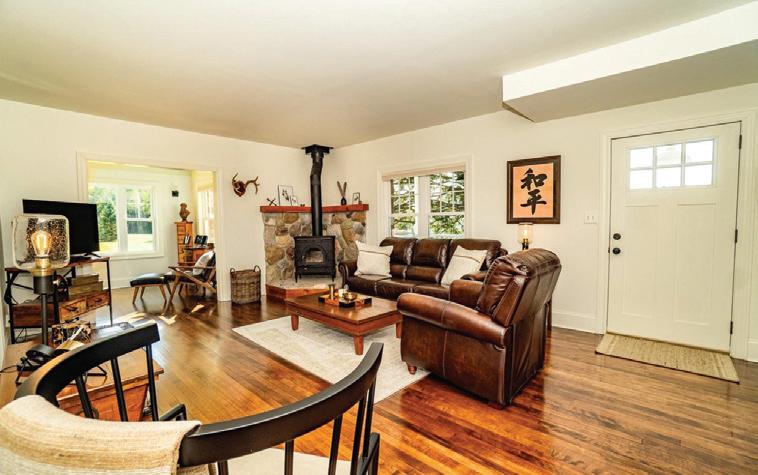
An extraordinary Northwoods estate on the Montreal River, this rare offering is anchored by the iconic 60-foot Annala Round Barn, completed in 1928, beautifully restored, and proudly registered as a Historical Site. A true showpiece, the barn is complemented by a restored 20-foot milkhouse and a beautifully restored 5-bedroom, 2-bath farmhouse with luxury finishes throughout and views of a landscaped pond from the classic covered porch. A newer 2-car garage with loft storage, multiple sheds, a cozy woodstove retreat, and finished sleeping quarters add charm and versatility. Groomed trails wind through apple trees, gardens, and beautiful landscaping, while the snowmobile trail out back invites 4-season recreation. With 1,300-feet of pristine Montreal River frontage, this remarkable property offers history, beauty, privacy, and unforgettable Northwoods living. $1,350,000
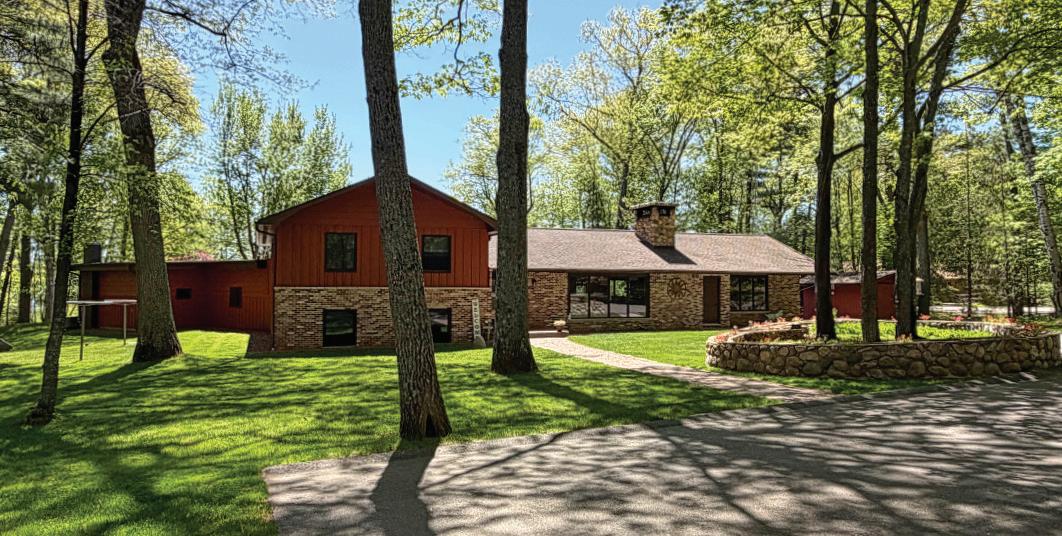
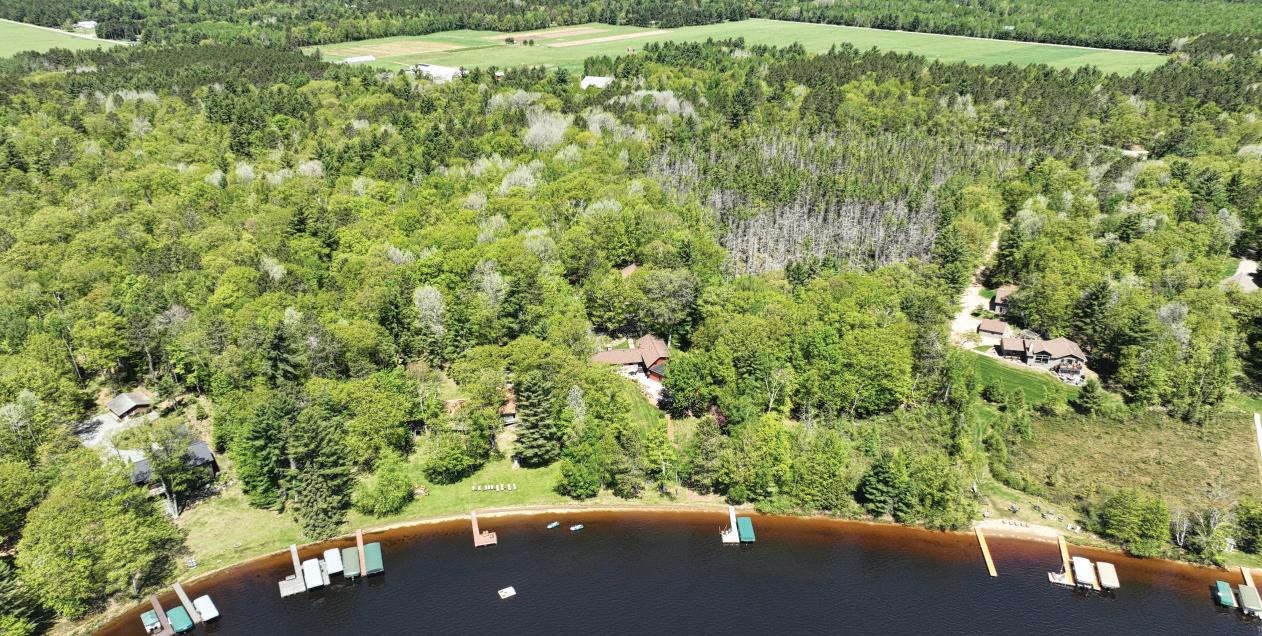
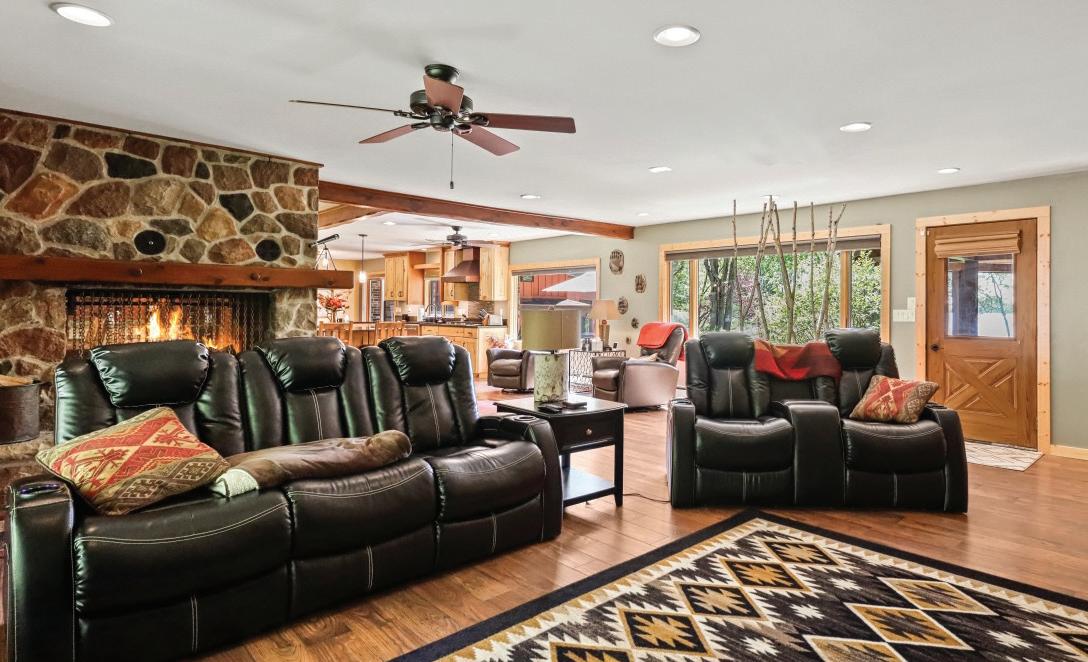
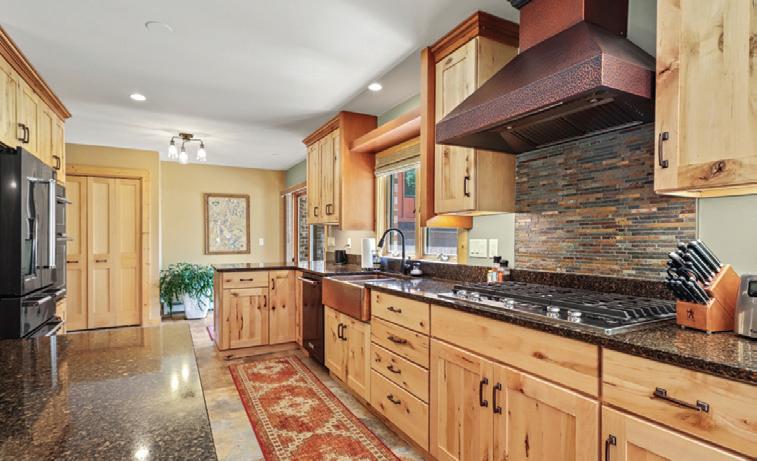
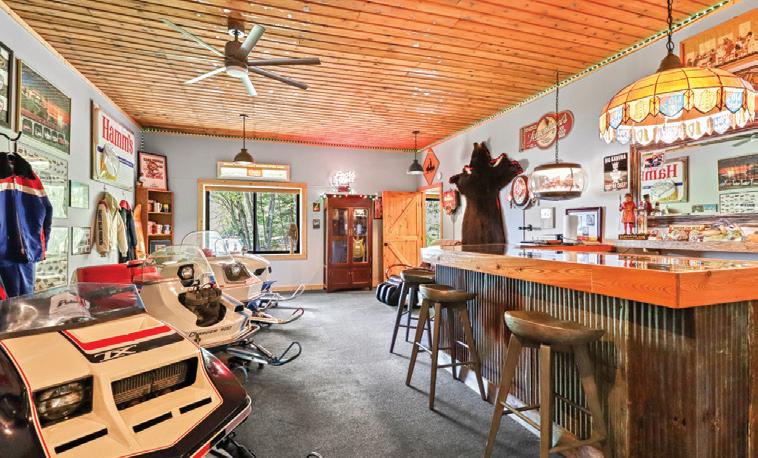
Remarkable find on the Three Lakes Chain — truly one-of-a-kind. This exceptional Planting Ground Lake estate offers some of the most level, pure sand frontage you will ever see, paired with 35-plus acres of
and 299 feet of stunning
and an
John Kizorek
Shorewest Realtors
8262 US-51
Minocqua, WI 54548

Luxury Home Specialist · Shorewest Realtors · Northwoods Wisconsin
When it comes to luxury real estate in the Northwoods, John F. Kizorek brings a rare combination of market expertise and visual storytelling that sets your listing apart. Based in Minocqua, Wisconsin, John specializes in premium properties across Oneida and Vilas counties — from pristine lakefront estates to secluded woodland retreats.
As a licensed REALTOR® with Shorewest Realtors, John understands that marketing a luxury home requires more than a yard sign and an MLS listing. Over the past six years, he has photographed and documented more than 500 homes throughout the Northwoods, building one of the region’s most comprehensive portfolios of professional real estate imagery.
John is also an FAA-licensed drone pilot, giving his clients access to cinematic aerial photography and videography that captures a property’s full scope — sweeping lake views, wooded acreage, and architectural details that simply can’t be conveyed from the ground. This in-house capability means faster turnaround, tighter quality control, and marketing materials that consistently stop buyers mid-scroll. His full-service marketing approach goes well beyond still photography. Every listing has the potential to include immersive 360° virtual tours that let buyers explore a home at their own pace, full-length home videos that showcase the property from driveway to dock, and professionally edited social media reels designed to reach buyers wherever they’re scrolling. For out-of-area and remote buyers — a common reality in the Northwoods vacation and second-home market — John also conducts live video walk-throughs, giving clients a real-time, guided experience of a property no matter where they are in the world.
Whether you’re ready to list your lakeside retreat or searching for your next Northwoods sanctuary, John is committed to delivering a seamless, elevated experience from first consultation to closing day.
• 360° virtual tours
• Full home videos
• Live remote walk-throughs
Social media reels
• Aerial drone photography
• Professional photography