www.LuxuryState.com 8290 West Sahara Avenue, #100 Las Vegas, NV 89117
Welcome to the World of Extraordinary Living
Luxury today feels less about excess and more about sustenance: spaces that nourish the spirit, craftsmanship that feeds our desire for beauty, and experiences that reconnect us to the physical world. This issue is devoted to that sustaining kind of luxury.
In Architecture, we begin by looking upward — both literally and figuratively — at inspiring churches and temples, where architecture has long served as spiritual sustenance. For millennia, places of worship have been among humanity’s most ambitious and poetic structures, designed to shelter and uplift.
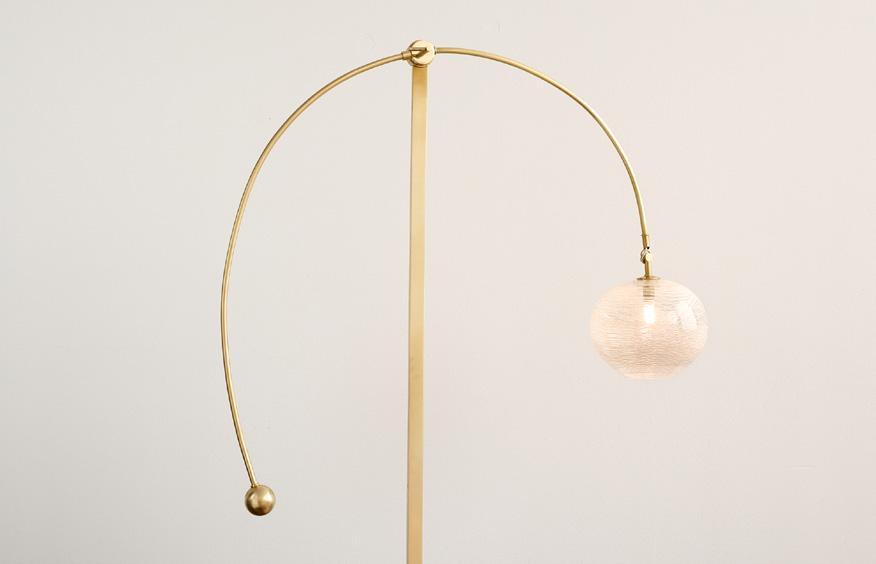
From these monumental structures, we turn to Treasures for a more intimate nourishment of artisanal craft with a spotlight on Joseph Pagano Studios. Based in New York’s Hudson Valley, Pagano creates lighting that aims to enrich daily life. Each piece offers a visual and emotional sustenance, reminding us how thoughtful design can quietly support how we live, work, and gather.
Finally, we explore Passport for sustenance in its most literal and elemental form with our feature on luxury agritourism and the high-end farm lifestyle. In an increasingly virtual world, the pull toward the land has become a powerful counterbalance. Refined agritourism destinations offer curated experiences rooted in soil, season, and place. These retreats provide not just escape, but restoration: feeding the body, grounding the mind, and renewing our sense of connection.
Together, these stories explore how luxury can sustain us through spaces, objects, and experiences that are as nourishing as they are beautiful. Linger, reflect, and be replenished.
We hope you enjoy this issue of Luxury State with our compliments.
The Clemens Team
Sustenance
MANAGING EDITOR
Kesley Stamey
ART DIRECTOR
Dimitri Vaughan
SENIOR EDITORIAL & ADVERTISING MANAGER
Jamie Yoos
DIGITAL ADVERTISING & OPERATIONS
Nicole Echevarria
EDITORIAL OFFICE
704.497.6427 uhproduction@uniquehomes.com
ADVERTISING
The High End is published by Unique Homes Media, Inc. If you would like to use The High End in your marketing plans, contact one of our representatives.
Emma Gahagan, 704.247.7723 emma@uniquehomes.com
Bri Zawada, 704.247.6170 bri@uniquehomes.com
PRESIDENT Ramses Meijer, 704.497.6427 ramses@uniquehomes.com
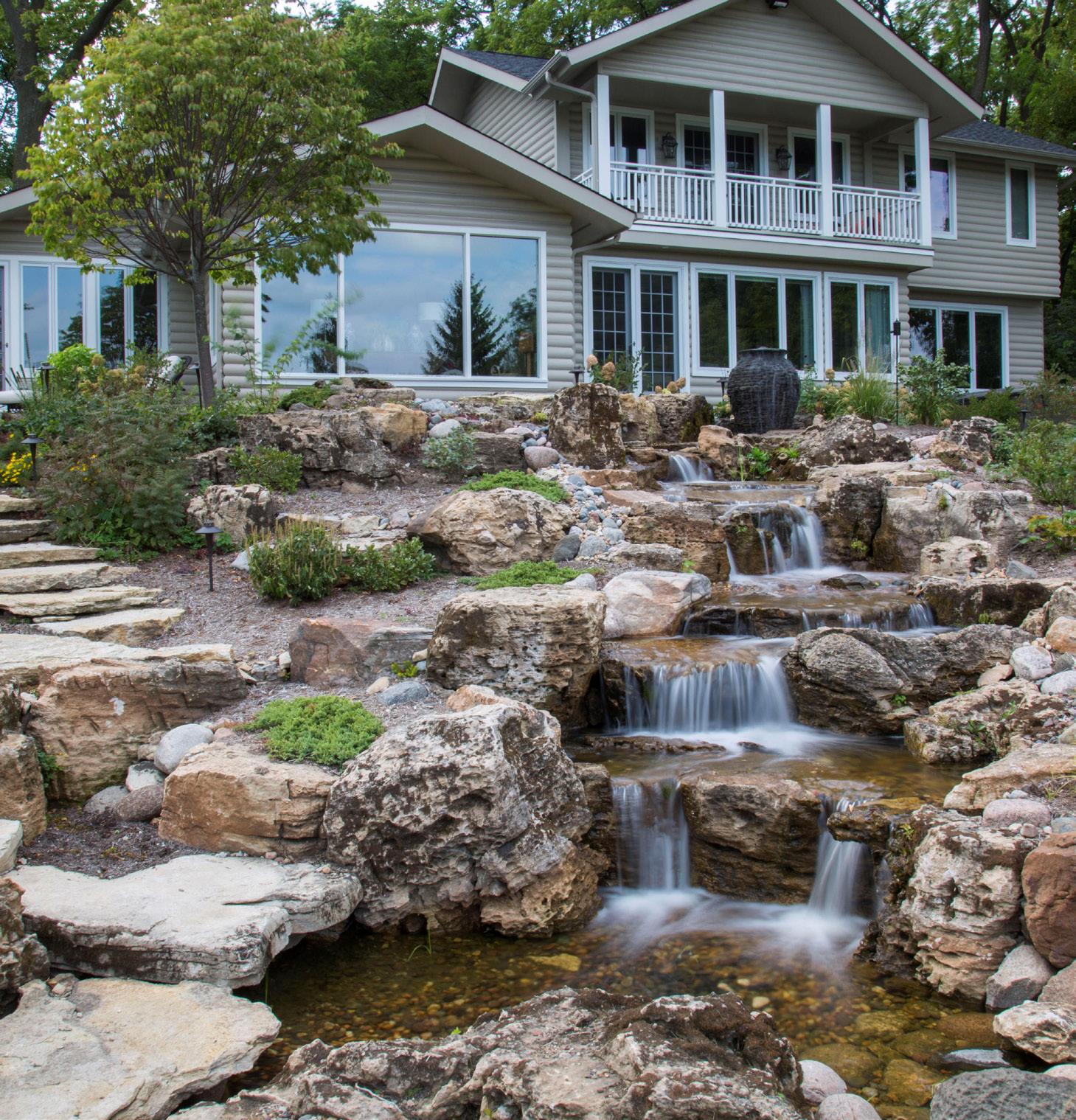
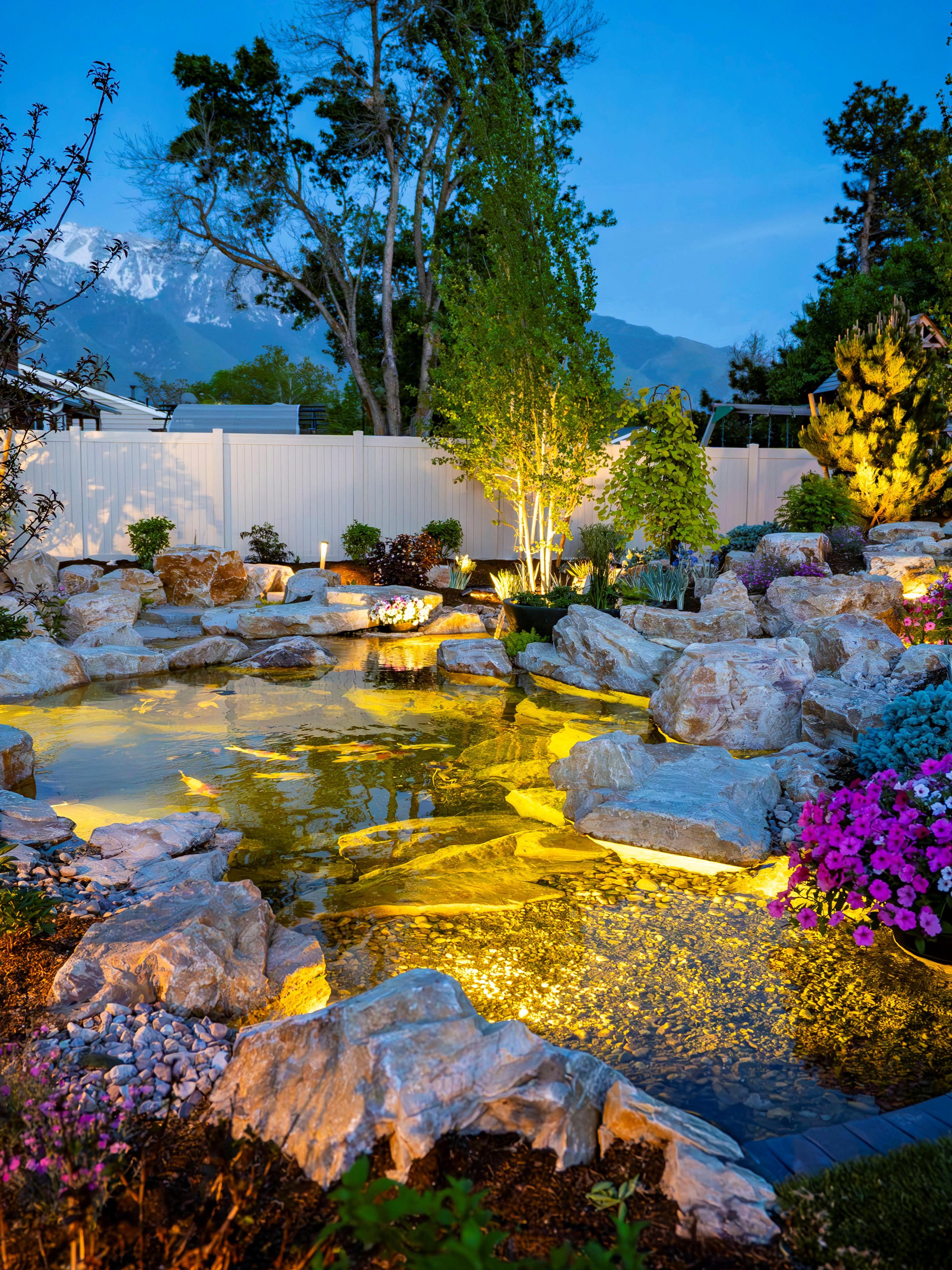
PHOTO COURTESY OF AQUASCAPE INC.
PHOTO COURTESY OF HARBOR HOUSE INN
DIVINE
By Roger Grody
Form and faith intersect in the creation of inspired houses of worship.
Successful architects accommodate the needs of their clients, but designers of religious facilities are charged with conceiving spaces that nurture faith and inspire the soul. For millennia, many of the world’s most iconic architectural achievements have been driven by religion, including Gothic cathedrals in Europe and ancient temples throughout Asia. As contemporary architects continue to express faith through design, the results can be heavenly.
Julio Bermudez, a leading architectural scholar and author of the book Transcending Architecture: Contemporary Views on Sacred Space, states, “At its best, architecture produces the impossible, which is effortlessly catapulting us into the metaphysical, into God.” Bermudez explains that Christianity, Judaism and Islam all have a tradition of prioritizing size for their houses of worship. “It’s pretty safe to say that the most important element is the scale of a building, especially if you want to achieve a sense of awe or transcendence,” he says. Bermudez, who is a professor of architecture at The Catholic University of America, notes that height — demonstrated by towering spires and minarets around the world — is an important component of scale.
Modern Mastery
Frank Lloyd Wright demonstrated that modern design could convey the same spiritual consciousness as medieval cathedrals. Unity
ARCHITECTURE
Design
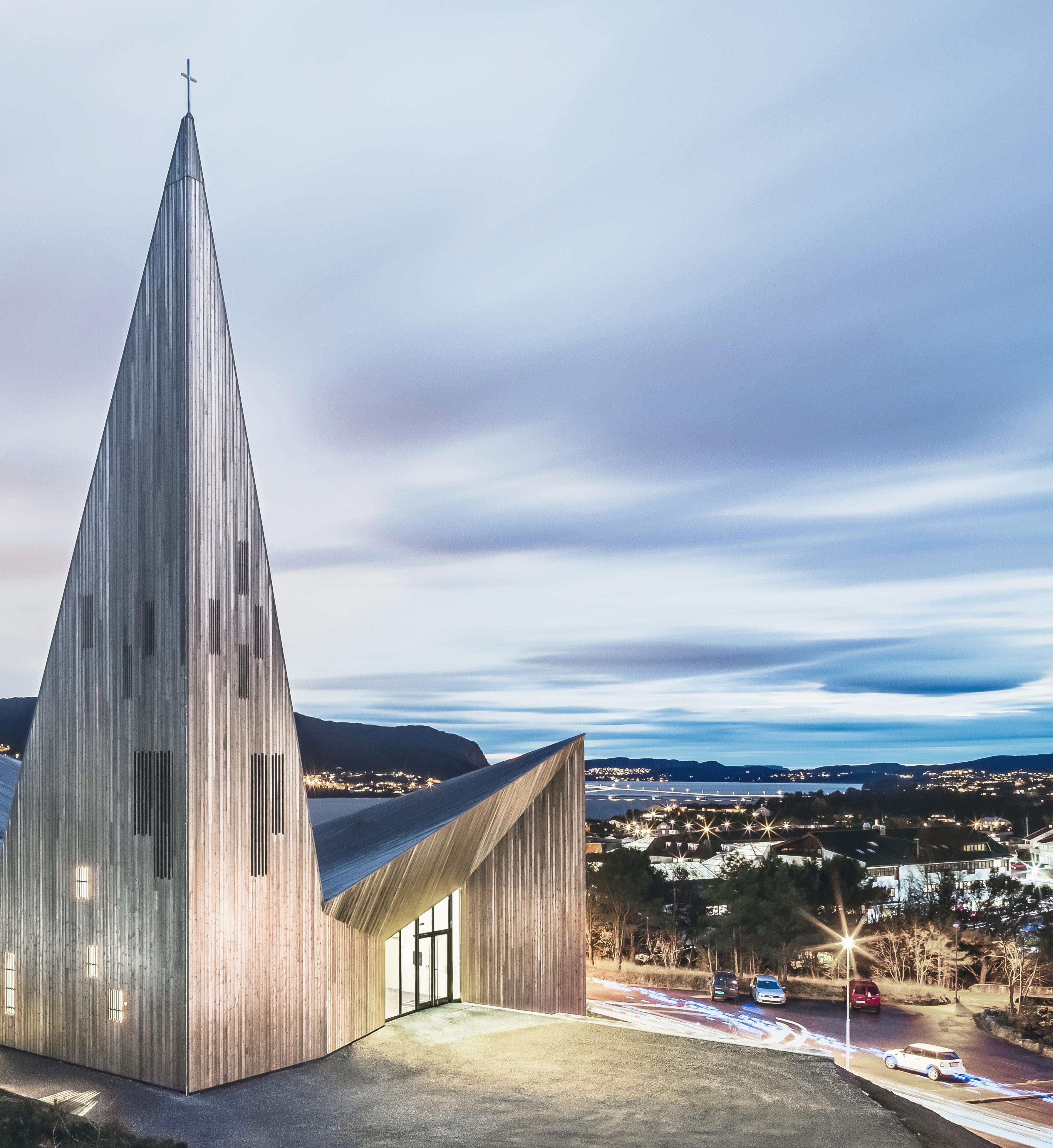
Knarvik Church in Norway (exterior)
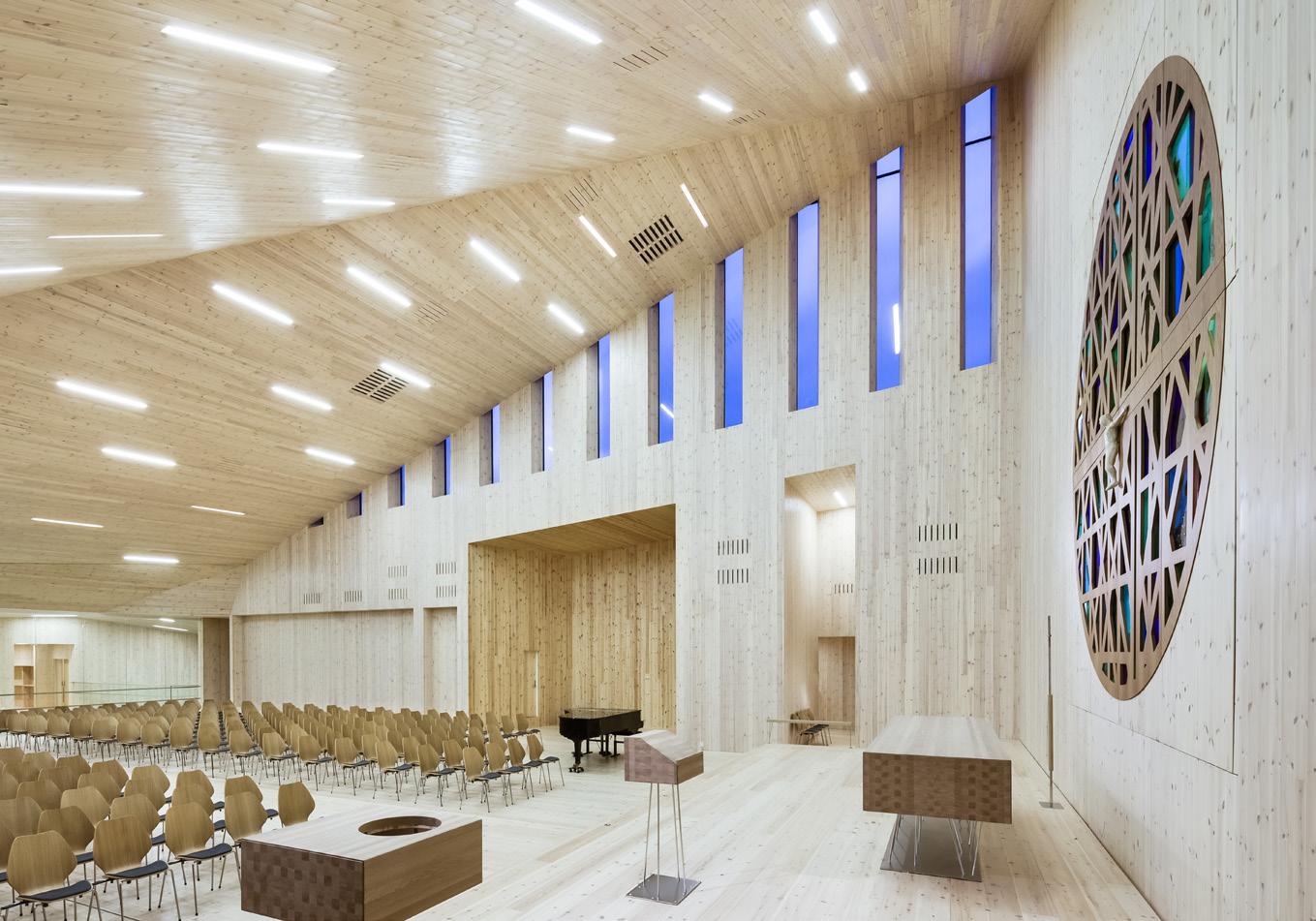
Knarvik Church in Norway (interior)
Temple, a church in suburban Chicago, and Beth Shalom Synagogue outside Philadelphia are examples of the master’s ability to imagine sacred spaces through a modern lens. The striking Chapel of the Holy Cross — built into dramatic red rock formations in Sedona, Arizona — is another example of divinity expressed through contemporary design. It was designed by architects Richard Hein and August K. Strotz and completed in 1956.
Serving a Unitarian Universalist congregation is Unity Temple in Oak Park, Illinois, Wright’s most famous church project. The building was dedicated in 1909 and is now a UNESCO World Heritage Site. Developmental lead minister Roger Bertschausen reports the church’s architecture inspires worshipers and that many discovered the church community through the building. Wright was raised in a Unitarian household, and the seating design enhances the denomination’s emphasis on human connection and unity. “Everybody has a clear view of the pulpit, but they also see
each other, creating a sense of intimacy,” says Bertschausen, who states that Unity Temple is the only UNESCO-designated church in the U.S. still used for its original purpose.
Sacred Spaces on a Global Scale
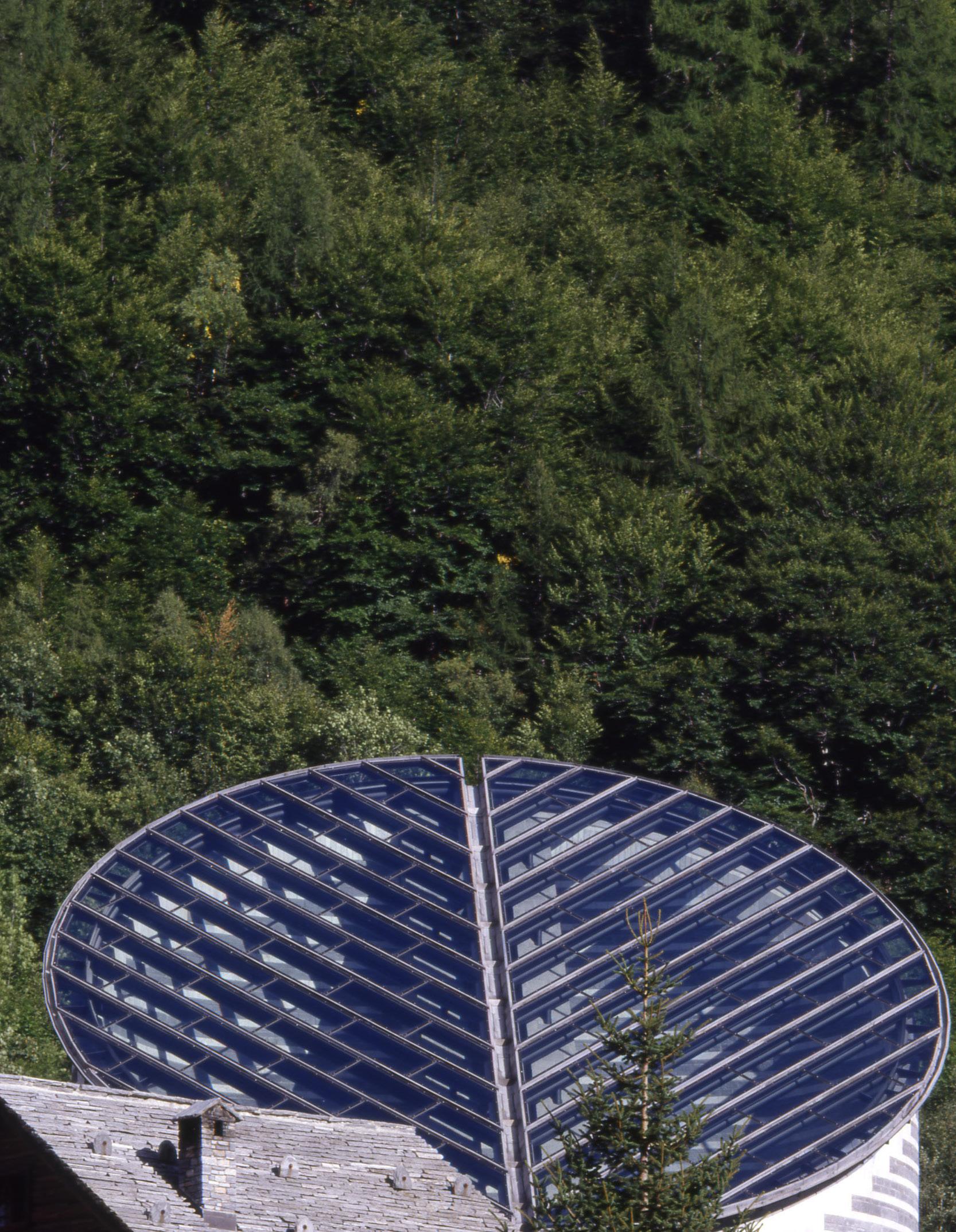
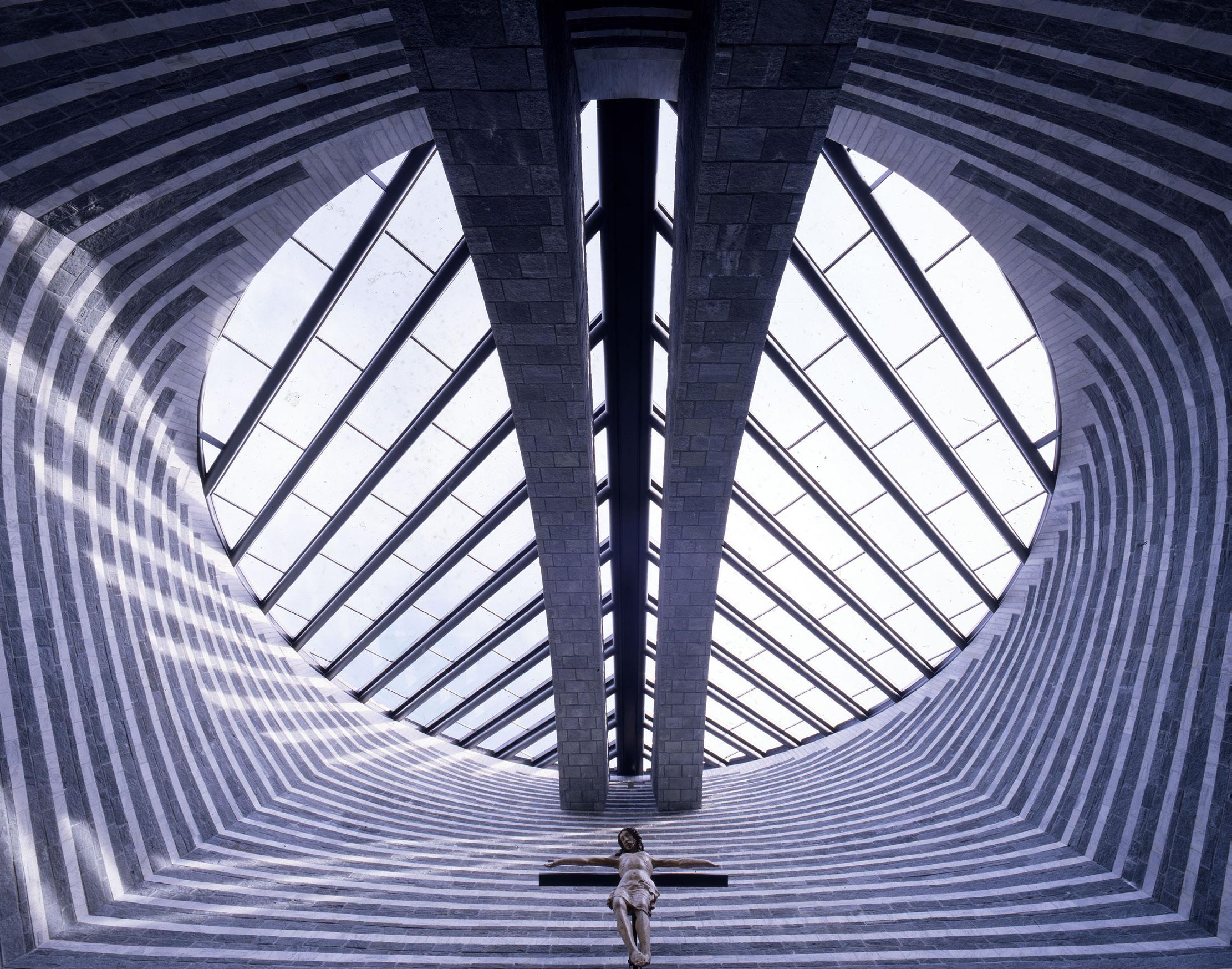
When an avalanche destroyed the 17th century Church of San Giovanni Battista in the Swiss Alps, renowned Swiss architect Mario Botta was commissioned to replace it with an intimate but audacious design. The elliptical house of worship, clad in alternating dark gray and white stone, crushes perceptions of traditional Catholic sensibilities but maintains a timeless sense of place.
For the sprawling Church of the Holy Family campus in Brazil, Brasilia-based architectural firm ARQBR created four distinct structures, including a sleek circular sanctuary and monolithic bell tower. The raw concrete forms provide a nuanced relationship with the surrounding Brazilian Highlands. In contrast,
PHOTO BY ENRICO CANO
Church of San Giovanni Battista in Switzerland.
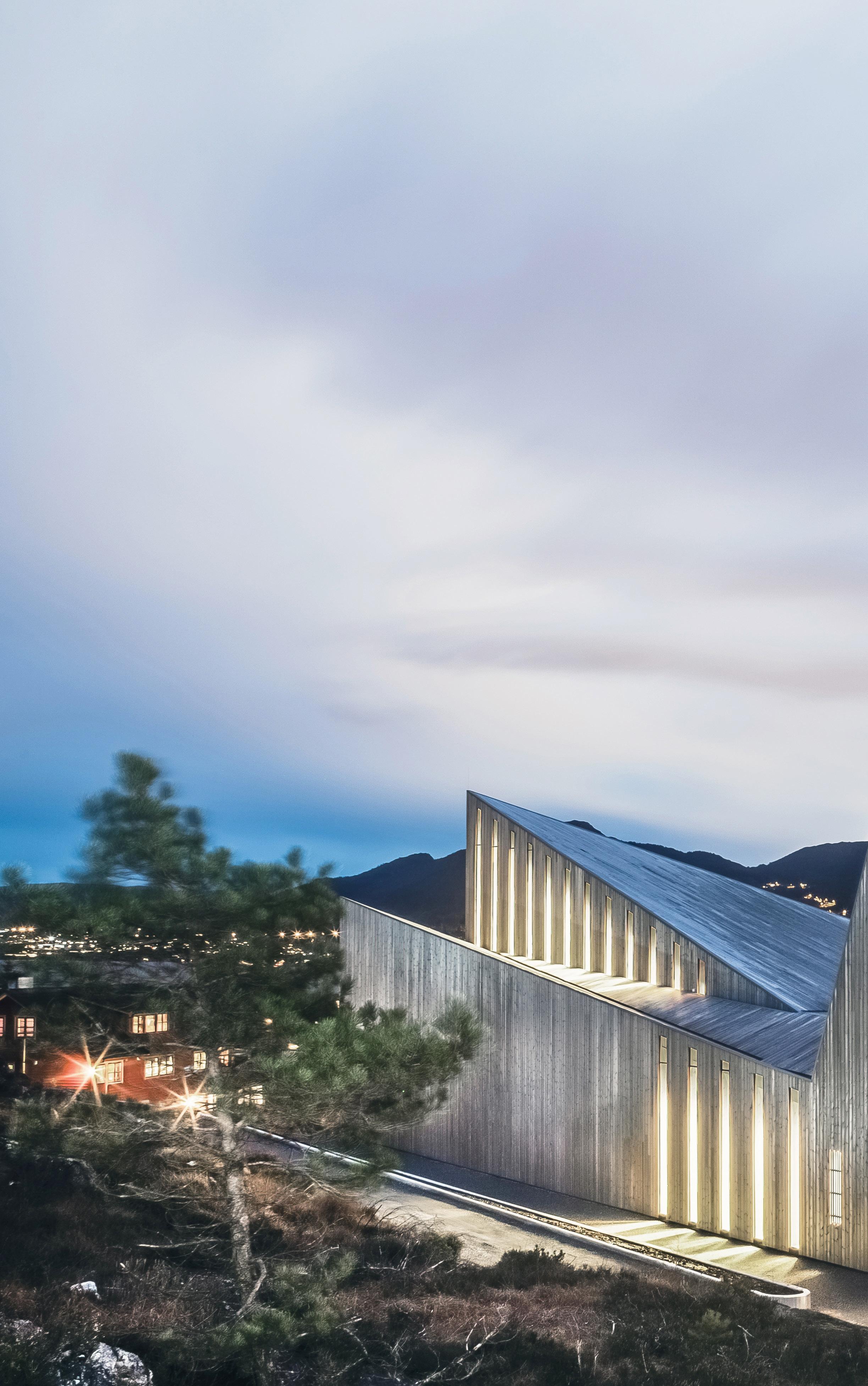
the severe angles of Norway’s Knarvik Church were wrapped entirely in weathered pine by Reiulf Ramstad Architects, representing another dramatic architectural expression of spirituality.
Designing Jewish Places of Prayer
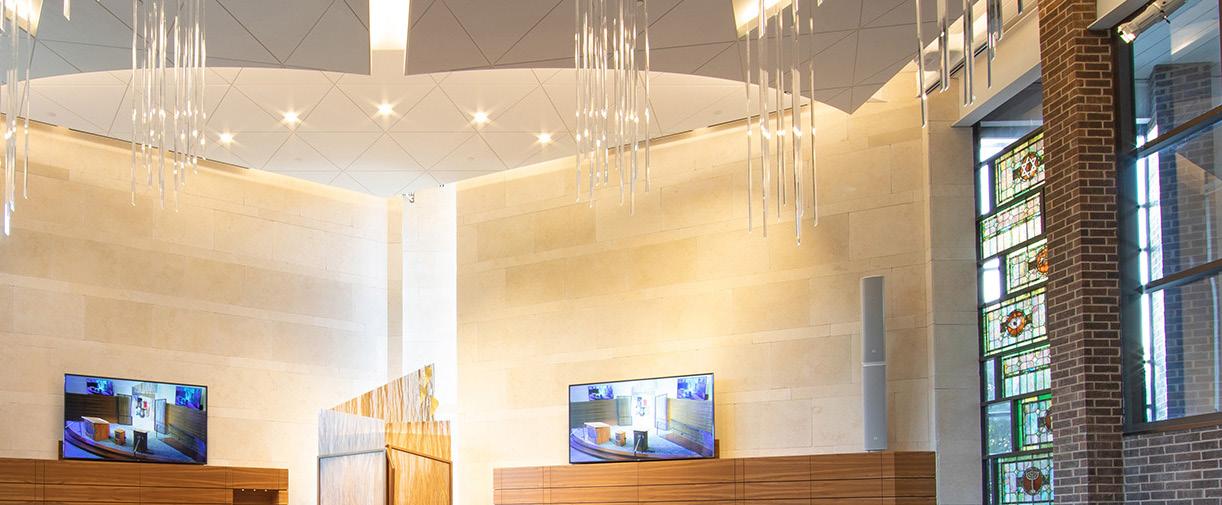
Specializing in the design of Jewish synagogues is Princeton, New Jersey-based Landa|Zinder Architecture, whose projects often reflect contemporary sensibilities. Managing Partner Joshua Zinder says his firm designs both traditional and modern synagogues, and that orthodox congregations are just as likely to favor contemporary aesthetics as more progressive ones. “The designs reflect the communities and congregations we work with, but in all cases, clients are looking for transcendent spaces where they can connect to God,” says Zinder. He further explains, “More clients are seeking a sense of intimacy, and we can create that without losing a feeling of grandeur or awe.”
Landau|Zinder brought a modern aesthetic to suburban New York’s Scarsdale Synagogue, which Rabbi Jeffrey Brown reports was universally well received. He explains, “It was time to come into the 21st century, consistent with our values and the kind of Judaism we’re practicing.” Noting that people form an emotional attachment with the building in which they worship, Brown appreciated the architects’ ability to repurpose materials or architectural details valued by longtime members. “People want to take pride in their spiritual home, just as they do their own houses,” explains the rabbi.
Temples and Mosques with “Presence”
The portfolio of Salt Lake City-
headquartered FFKR Architects includes hotels and sports arenas, but the firm maintains a studio dedicated to faith-based projects. The Church of Jesus Christ of Latter-day Saints (LDS) has commissioned FFKR for projects around the world, including monumental temples in Utah, Idaho and Arizona. Principal Steve Goodwin explains that while LDS sabbath services are held in relatively humble “meetinghouses,” in the spirit of New England churches, the more grandiose temples are reserved for special ceremonies. “The Church looks for sites that have a presence, sometimes a higher elevation, which contributes to their prominence and transcendence,” says the architect, noting that towering temples have become landmarks in many cities, including Los Angeles and San Diego. Inside, secular spaces transition to more holy spaces, with the “Celestial Room” representing heaven. Conceding a prevalence of classical aesthetics, Goodwin acknowledges that “modernism isn’t frowned upon, but traditional styles are more consistent with the Church’s current approach.”
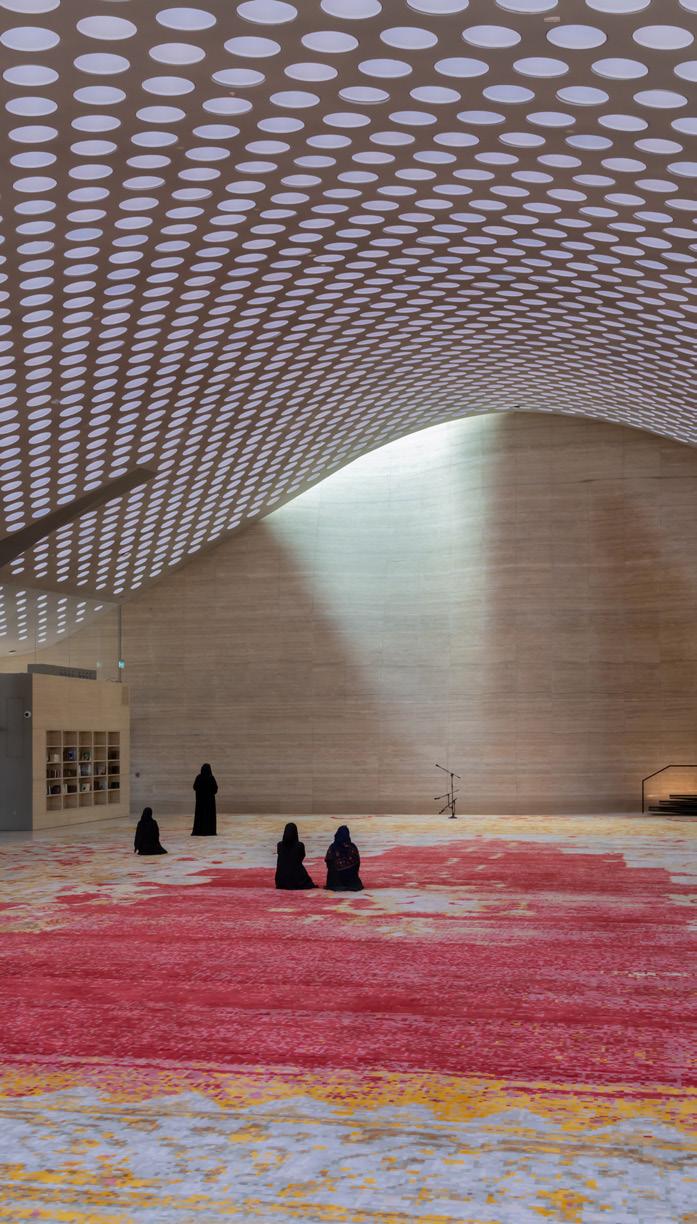
Shattering architectural clichés in Islamic mosques, however, designers are creating ultramodern spaces that forfeit ornate minarets and domes for sleek, streamlined environments. New York-based Diller Scofidio + Renfro, designers of High Line in New York and The Broad in Los Angeles, created Al-Mujadilah Center in Doha, Qatar. It was the renowned firm’s first house of worship and the Muslim world’s first contemporary women’s mosque. Capping the multifaceted project is a gently undulating roof perforated by 5,000 wells that diffuse natural light through the main hall. Principal Elizabeth Diller explains, “The design was partially inspired by Islamic art and
architecture, in which abstraction serves to represent the transcendent nature of the divine.”
The Bahá’í Faith operates religious centers around the globe and its House of Worship in New Delhi, India is a modern interpretation of a lotus flower, with 27 massive white marble “petals” reaching for the sky. Designed by Iranian-American architect Fariborz Sahba, this modern landmark is yet another reminder that spiritual inspiration comes in many forms. ♦
Below: Al-Mujadilah Center in Doha, Qatar
BY
PHOTO
IWAN BAAN
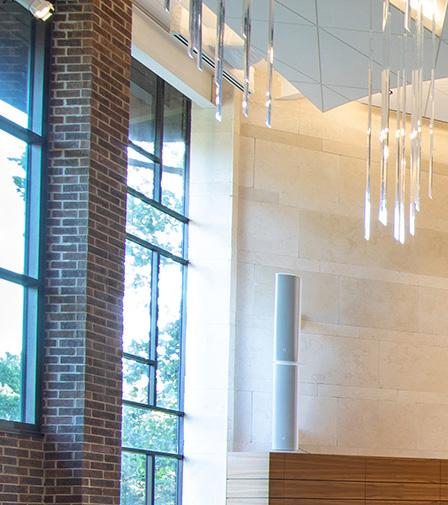
Sinai Temple in Illinois
NATURALRadiance
By Roger Grody
Lighting artisan Joseph Pagano leverages nature as his inspiration.
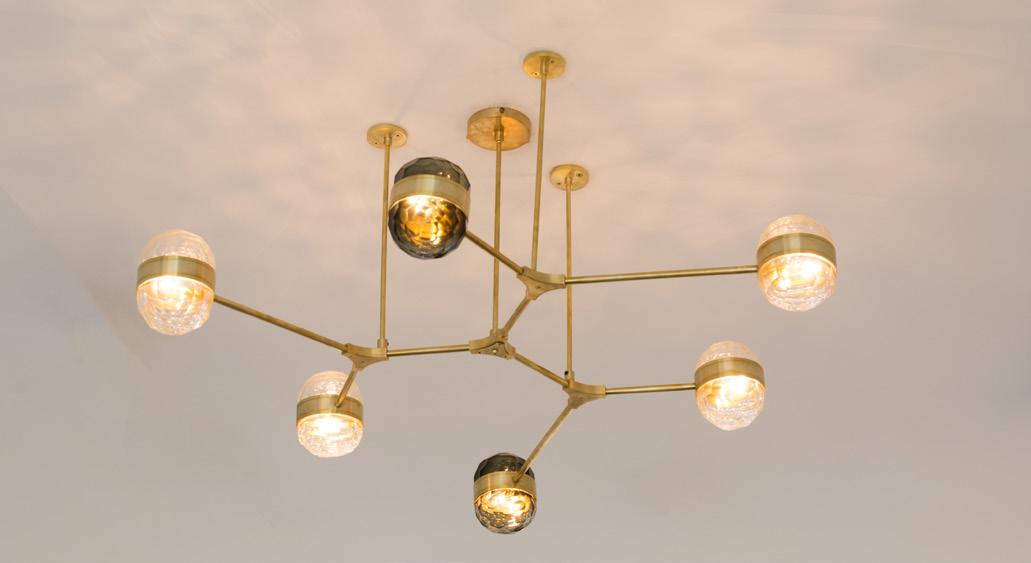
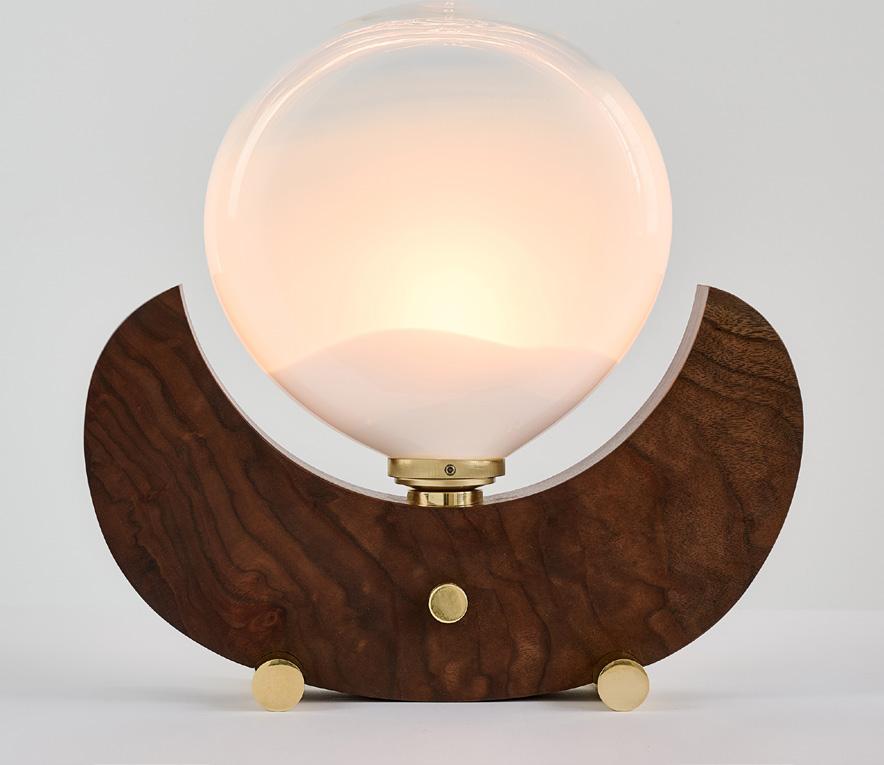
Many high-end lighting designs combine ancient techniques with cuttingedge innovation, and artisan Joseph Pagano is an expert at that approach. In his work, he translates old-world craftsmanship into modern designs coveted by leading architects, interior designers and luxury homeowners. At Joseph Pagano Studios in New York State’s scenic Hudson Valley, Pagano’s exquisite handblown glass is juxtaposed with organic materials to create distinctive lighting fixtures. Every piece is custom-designed and fabricated by hand.
Pagano explains that the marketplace has caught up to the vision he and other elite lighting designers have been cultivating. “In the exclusive, high-end market, people are now more understanding of what we’re doing — they get it,” says the artist. “People recognize these aren’t simply lighting fixtures but heirlooms that will be in their families forever.”
Much of Pagano’s lighting is created through a process he playfully refers to as “spontaneous design and controlled
accidents,” which allows raw materials to reveal their hidden, sometimes unexpected potential. Every chandelier, sconce and lamp created at Joseph Pagano Studios is produced by hand to the exacting standards demanded by prominent interior designers. Custom architectural pieces can assume massive dimensions, such as a cluster of pendants hanging 30 feet over a sculptural staircase.
Pagano’s Mantis collection blends sleek modernism with organic forms, and the shades on some of the artist’s products feature a mesmerizing pattern reminiscent of richly grained hardwood. Desk lamps with handblown shades include elements created from an array of different woods or stones, a Pagano signature. For example, a Matsuri Collection desk lamp features an asymmetrical block of spalted maple as a pedestal, its imperfections adding a compelling dimension. “These are personal, one-of-a-kind creations from start to finish, with my hands only,” says Pagano, and adds, “I’ve made matching bedside pairs, but no design is ever repeated.” ♦
Wellness,Elevated:
THREE ARCHITECTURAL ESSENTIALS
TO NURTURE BODY AND MIND
By Lisa Levi
Discover how thoughtful design elements, such as water, light and fluid space, can transform a home into a sanctuary that promotes balance, vitality and holistic well-being.
Whether a homeowner’s architectural preference leans toward Beaux-Arts or midcentury modern, one of the biggest advantages of a custom-built home is a chance to spotlight an individual aesthetic and idea of beauty. Increasingly, high-end homeowners also expect a residence to offer more than form and function. A man’s home is not just his castle, as it turns out, but his sanctuary too — and just as important as the image it projects is how a
home makes you feel: rested, energized and attuned to the rhythms of life.
True luxury is weaving wellness, once an afterthought relegated to the spa, directly into a home’s architecture. By leveraging the beneficial effects of water, natural light and transitional spaces, you can build a home that nurtures the body, calms the mind and uplifts the spirit.
The Serenity of Water
Few elements evoke tranquility as instinctively as water. Whether still or in motion, water creates a sensory experience that soothes the soul. People now spend 90% of our lives indoors, disconnected from the natural world. Water installations bring the outdoors
in — restoring the disrupted bond between human and nature. A 2021 systematic review by the World Economic Forum of the scientific evidence to date found living near “blue spaces” is proven to lower stress, elevate mood, and improve psychological wellbeing.
In luxury residences, innovative water features are being incorporated into the architecture itself. Indoor reflecting pools mirror sky and surrounding landscape, and soothing sounds from vertical water walls mask the noise of the world outside. Outdoor pools and streams, integrated into a building’s design, flow around, under or through living areas — or even form luminous ceilings of water refracting light. Built into a home, water becomes both visual poetry and a tool for wellness, bringing stillness and equilibrium.
The Power of Light
We live in an industrial world, but our bodies remember the wild. Humans were designed to live by the rising and setting of the sun; but with so much of our time now spent indoors, our circadian rhythms have become disrupted, with serious consequences for quality of life. Because our bodies respond to it so profoundly, indoor environments that harness light strategically can elevate your wellbeing to new heights.
Daylight is the gold standard of lighting options for a home, proven to improve mental health, ease pain and even promote healing. For example, one 2020 study in the Journal of the American Heart Association showed exposure to sunlight reduced systolic blood pressure in hemodialysis patients. Architectural
practices like solar orientation — which positions a house to take advantage of the sun’s trajectory — allow homes to bring the natural rhythm of the day indoors. Smart circadian lighting systems, engineered to mirror the natural progression of daylight, also help by regulating sleep cycles, enhancing cognitive function and improving mood.
Living Without Boundaries
Perhaps the most iconic feature of wellness architecture is the integration of transitional spaces that blur the boundary between indoors and out. Walls of glass create visual continuity between a home’s interior and the surrounding landscape, dissolving the presence of a physical barrier between them. Movable walls allow fresh air to breathe life into stale rooms. Covered walkways and shaded courtyards
extend a home’s living space outward, encouraging interactions with nature and creating havens for connection.
Luxury Redefined
For discerning homeowners, wellness architecture is not simply a design choice, but a philosophy. It is a promise that the home itself will care for its inhabitants.
Circadian light restores rhythm. Water restores calm. Nature restores connection.
Together, they create a dwelling that is not merely lived in, but lived through — one that nurtures body and mind, elevating every moment into a life of true abundance. ♦
TRAVEL THAT FEEDS THE SOUL: THE RISE OF
Luxury Agritourism
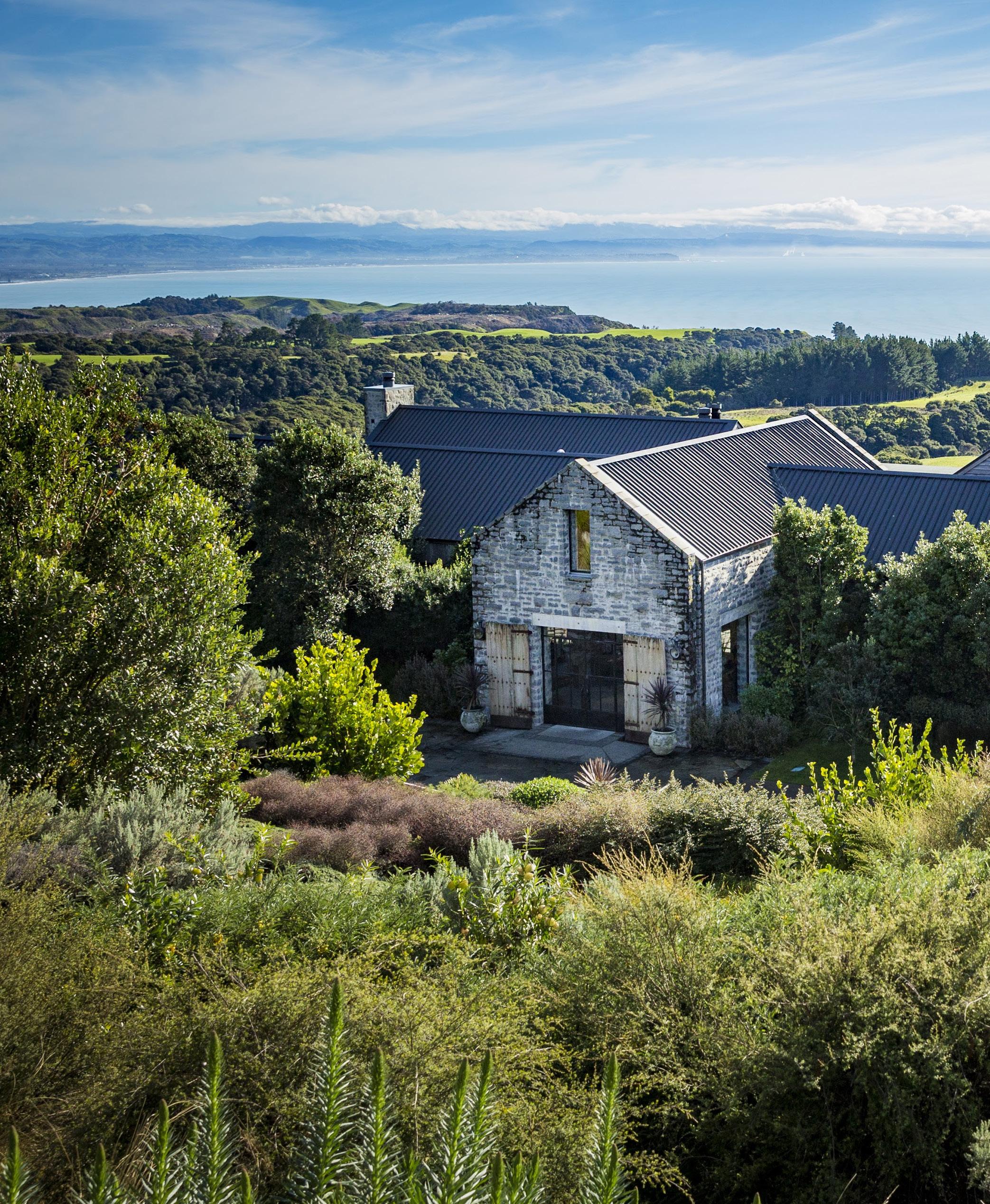
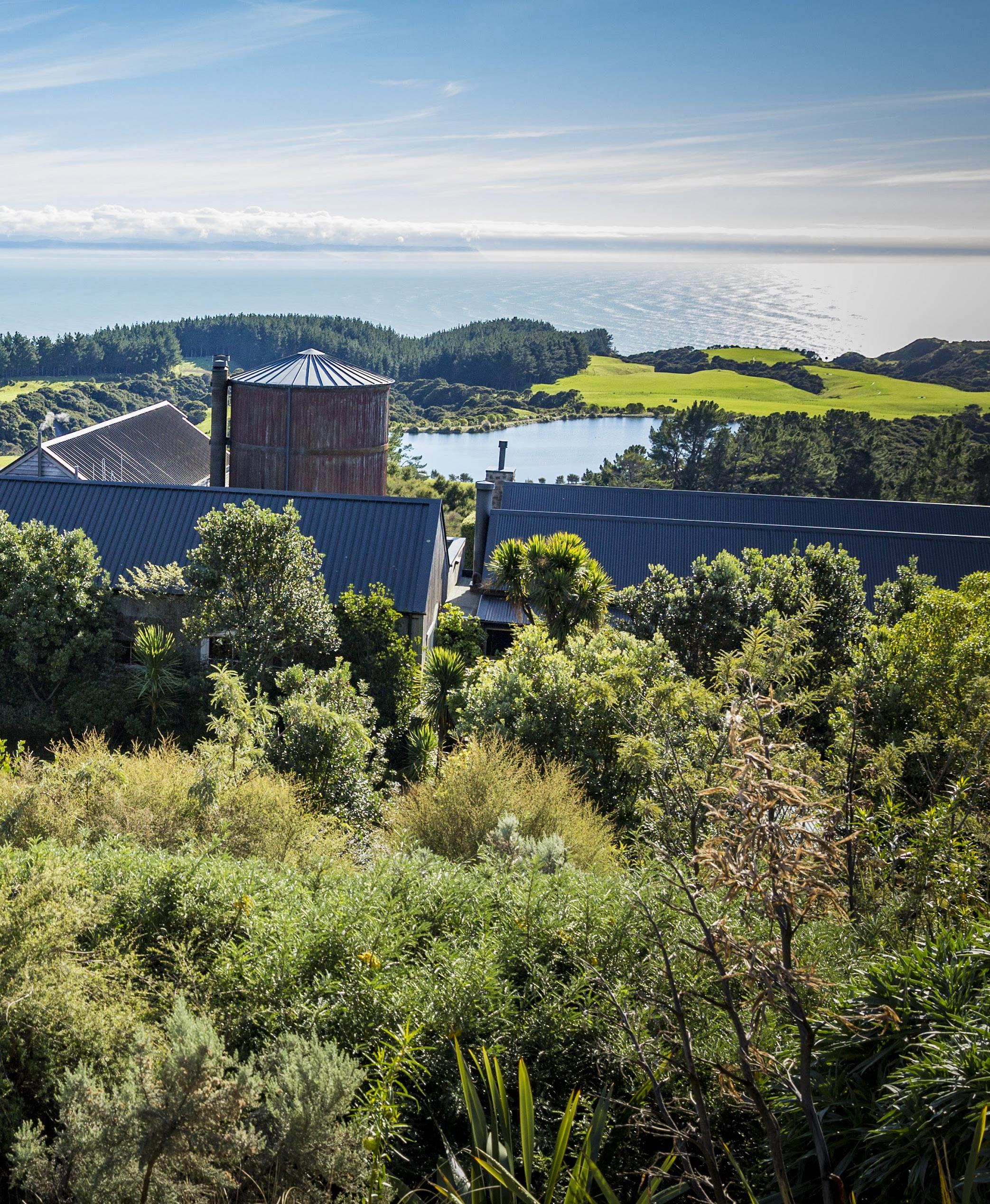
Guests can enjoy the art of slow living at Rosewood Cape Kidnappers.
Agritourism
Ask any five people why they love to travel, and you might well receive five different answers. The adventures we crave vary as widely as the seas that some wish to sail, and some wish to admire from a white sand beach. Yet as different as we are, leisure travel serves the same fundamental purpose for all of us: to nourish the soul. And for a growing number of travelers, that desire for nourishment has become literal. With so much of our lives spent in virtual spaces, people yearn to connect with the tangible — especially the food traditions that sustain us. Agritourism vacations satisfy this longing with a curated taste of a simpler time, and for high-end travelers, luxury agritourism offers a way to partake in ancestral ways of life while enveloped in five-star comfort.
Agritourism has traditionally encompassed everything from hayrides at the pumpkin patch to full-on farm stays. Long a niche market for people wanting to get their hands dirty for a day or two, the industry has now evolved, offering a breathtaking array of experiences to tempt any palate or pocketbook. A 2026 report from Fortune Business Insights anticipates the
agritourism market will reach $197.4 billion by 2032. For those who value creature comforts, luxury agritourism offers the best of both worlds: a chance to connect with the land while enjoying lavish amenities. If you want to try harvesting grapes or pressing olive oil, you can do it with a private spa and concierge service at your disposal.
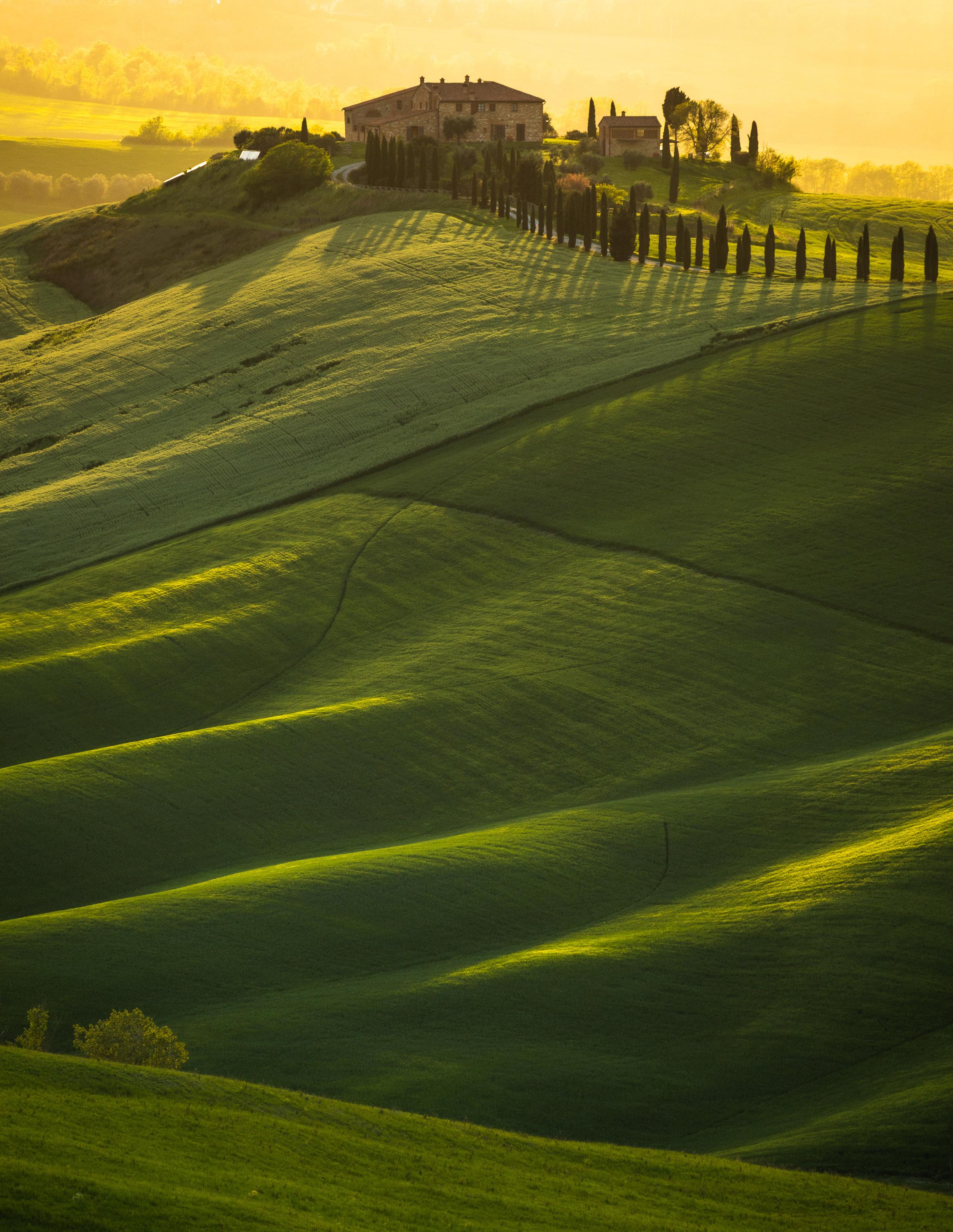
Based on the sumptuous guest accommodations, you would never guess that most luxury agritourism resorts are true working farms. In Europe, it is common for agritourism guests to be housed in historic castles, chateaux or villas. Sweeping hillsides covered in olive groves or vineyards can create the perfect setting for a getaway focused on satisfying the senses.
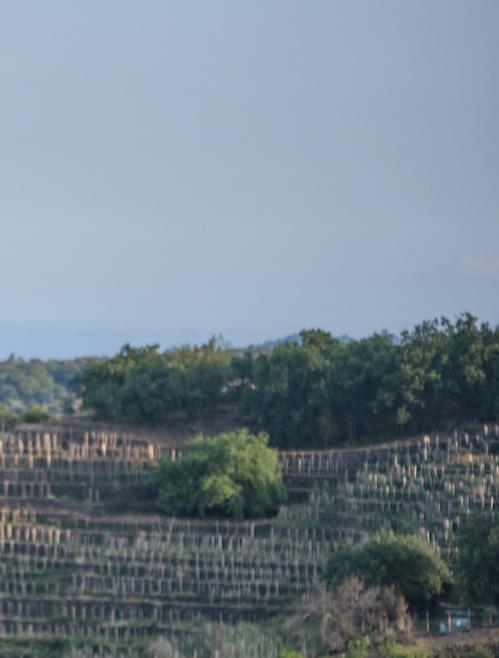
In Sicily, the Relais & Chateaux Monaci delle Terre Nere is one such example. The property inhabits 62 acres of vineyards, orchards and gardens terraced into the lavastone hillside. Originally home to a 17th-century monastic order, the villa and farmhouses have been reimagined into a luxury retreat that, in
the words of Guest Experience Manager Nuwan Prasad, embodies “authenticity elevated to its highest expression.”
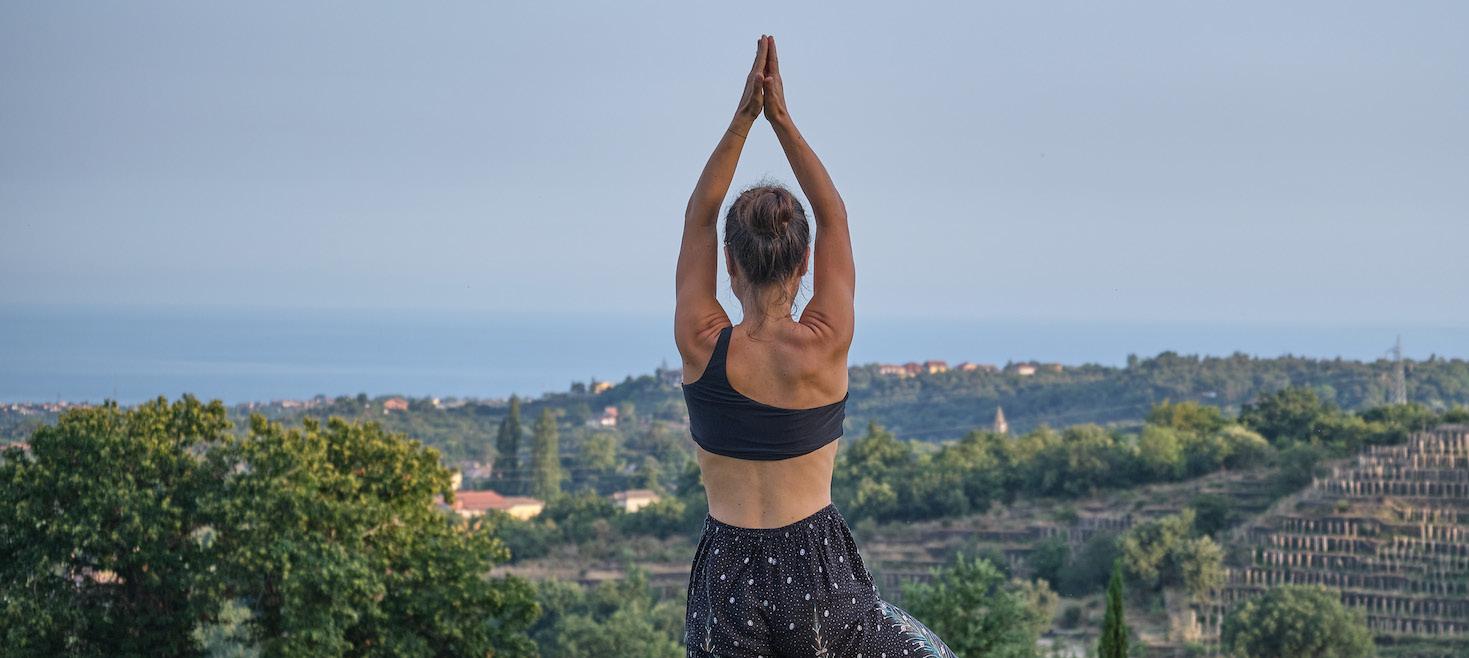
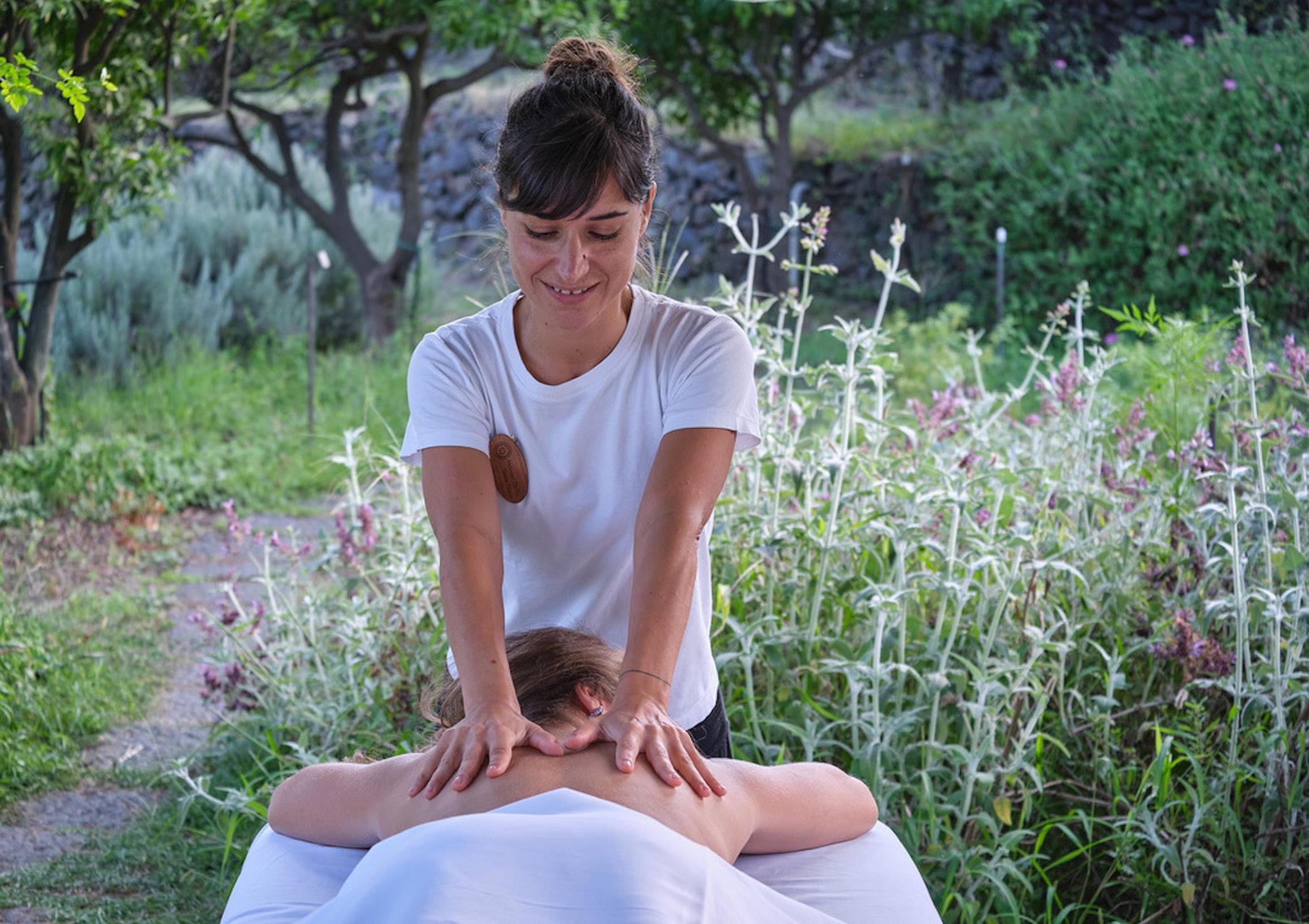
The property boasts stunning views of neighboring Mount Etna and the Ionian Sea. “Being immersed in a living landscape, one shaped by volcanic energy, centuries of agriculture, and local tradition, creates a sense of belonging that no conventional luxury resort can replicate,” Prasad explains. “True luxury today is space, silence, time and a genuine connection to nature, without giving up comfort, beauty or impeccable service.” Monaci delle Terre Nere proves its commitment to that philosophy by inviting guests to “take part in [the farm’s] rhythm” through hands-on activities. At the same time, guests can relax in the resort’s infinity pool with a view of the sea, and enjoy tailored wellness treatments and private yoga instruction.
Just west of Barcelona, Cava & Hotel Mastinell lies nestled in the coastal Penedès hills famous for producing cava, Spain’s beloved sparkling wine. Unlike many European agritourism resorts, Hotel Mastinell is not a historic manor house, but a uniquely modern and striking design. Hotel Director Ricard Margalef explains the hotel is “built around a very distinctive architectural concept: the entire building is inspired by a bottle of cava, creating a space where design, territory and wine culture merge naturally.” The interior follows the same
sleek, minimal aesthetic, and enormous round windows make the vineyards just outside the central focus of every room.
Proudly focused on environmental sustainability, this five-star retreat offers a variety of massages and wine therapy treatments, as well as a swimming pool surrounded by gardens and grape vines. In the on-site restaurant, you can enjoy organic, local cuisine paired with Mastinell’s award-winning ecological cavas and wines. “We maintain our own vegetable garden,” Margalef says, “which supplies fresh ingredients directly to our restaurant En Rima, allowing visitors to taste the territory in its purest form.” For guests who want to do more than just savor Mastinell’s produce, the hotel offers “hands-on vineyard activities throughout the year, [such as] harvesting or technical walks through the estate.”
Both Hotel Mastinell and Monaci delle Terre Nere also offer cooking classes, where guests can learn to make culinary masterpieces from the garden’s produce. “Our cooking classes begin in the garden, not in the kitchen,” says Monaci’s Prasad. “Guests collect the ingredients themselves, sometimes still warm from the sun.” Monaci also offers cocktail masterclasses, which make use of botanicals foraged on the estate. “It’s a deeply sensory experience that connects luxury to place,” Prasad says.
IMAGE COURTESY OF RELAIS & CHATEAUX MONACI DELLE TERRE NERE
IMAGE COURTESY OF ROSEWOOD CAPE KIDNAPPERS
Wellness at Monaci is a way to slow down and connect with nature.
Agritourism may be most popular in Europe, but you can find luxury retreats as far afield as Morocco, South Africa, Australia and Taiwan — each shaped by its local culture, climate and landscape. In New Zealand, Rosewood Cape Kidnappers occupies 6,000 acres of windswept hills high above Hawke’s Bay. The resort was conceived as “a quintessentially New Zealand design that would evoke the spirit and atmosphere of a working farm,” says Managing Director Stéphane Massarini, “though never at the expense of comfort and luxury.” The latter is exemplified by a stunning par-71 golf course and a spa with a full range of wellness treatments and facilities, including a heated infinity pool. At the same time, the working sheep and beef farm “offers a glimpse into pastoral life” for those who seek it. Guests can take part in an epicurean garden workshop or, uniquely, a shepherding experience that demonstrates the farm dogs’ amazing sheep mustering skills. If you time your visit right, you may also get to witness the sheep shearing process or visit newborn lambs.
At Monaci delle Terre Nere, Prasad notes that “wealthy travelers are increasingly seeking experiences that are meaningful, grounding, and emotionally enriching.” Margalef at Hotel Mastinell concurs. “As a luxury agritourism destination, our philosophy focuses on experiential luxury: authentic, memorable moments rooted in the land.” Whatever corner of the globe calls to you, a luxury agritourism
vacation will satisfy your desire to connect with what can be touched, smelled, and tasted — not just viewed on a screen. It can provide, in the words of Cape Kidnappers’ Massarini, an “enriching sensory connection to an extraordinary place of wild beauty.” In an increasingly digital world, the call of such places is powerful indeed. ♦
Here, guests can witness sheep shearing at dawn and unwind in a heated infinity pool by dusk ” ”
Witness traditional sheep shearing at Rosewood Cape Kidnappers.
IMAGE COURTESY OF RELAIS & CHATEAUX MONACI DELLE TERRE NERE
IMAGE COURTESY OF RELAIS & CHATEAUX MONACI DELLE TERRE NERE
By Camilla McLaughlin
RIGHT ASRain TRENDING
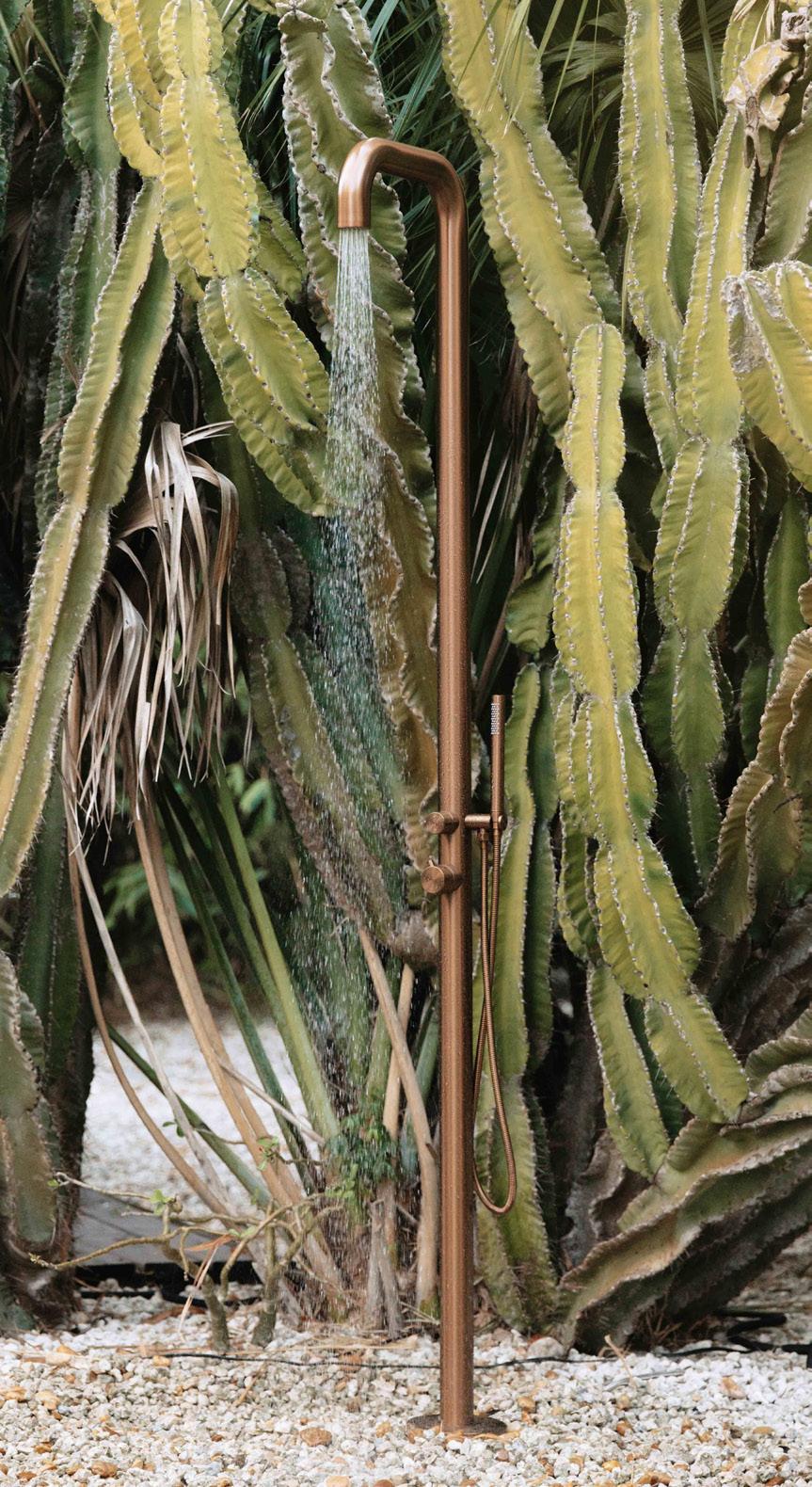
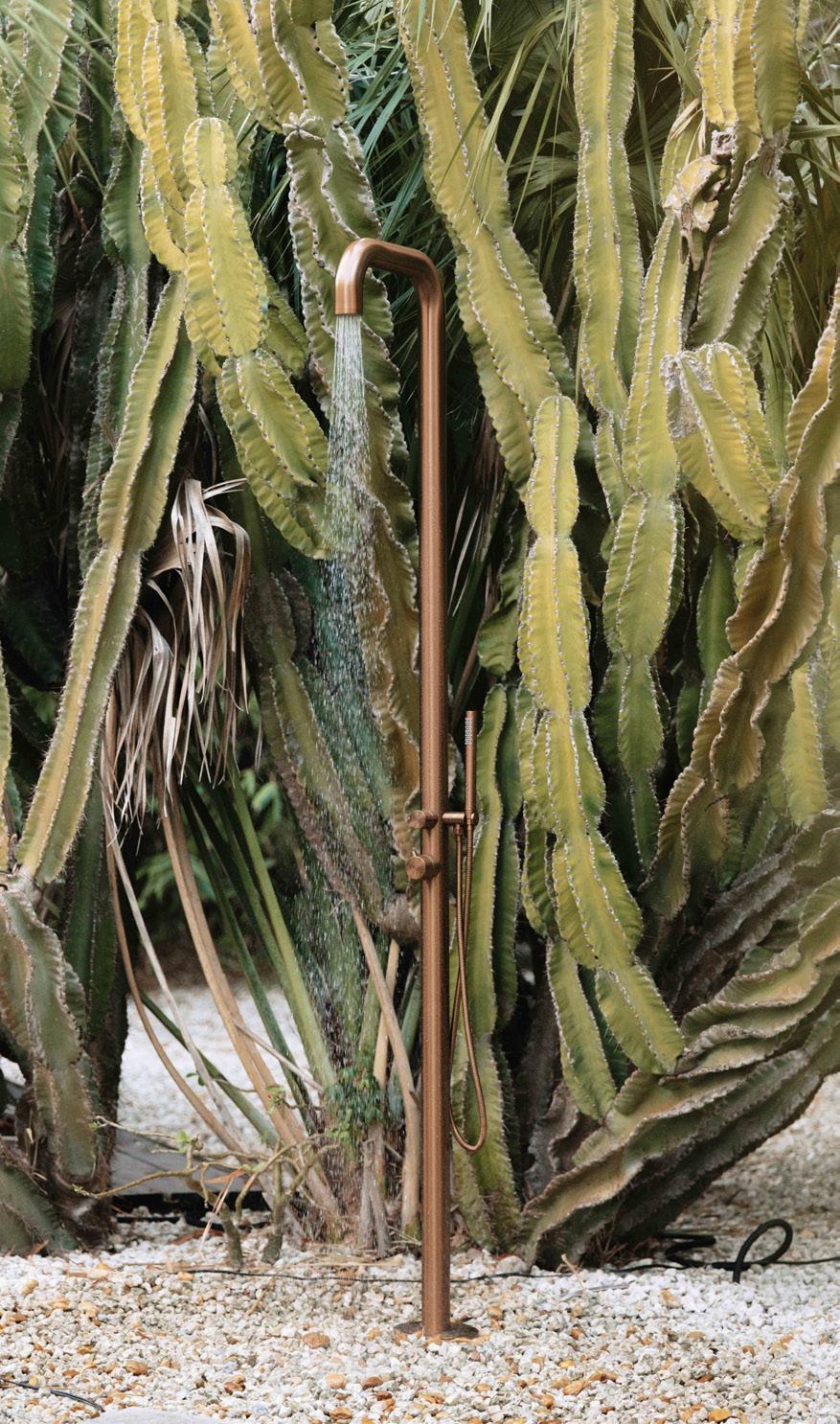
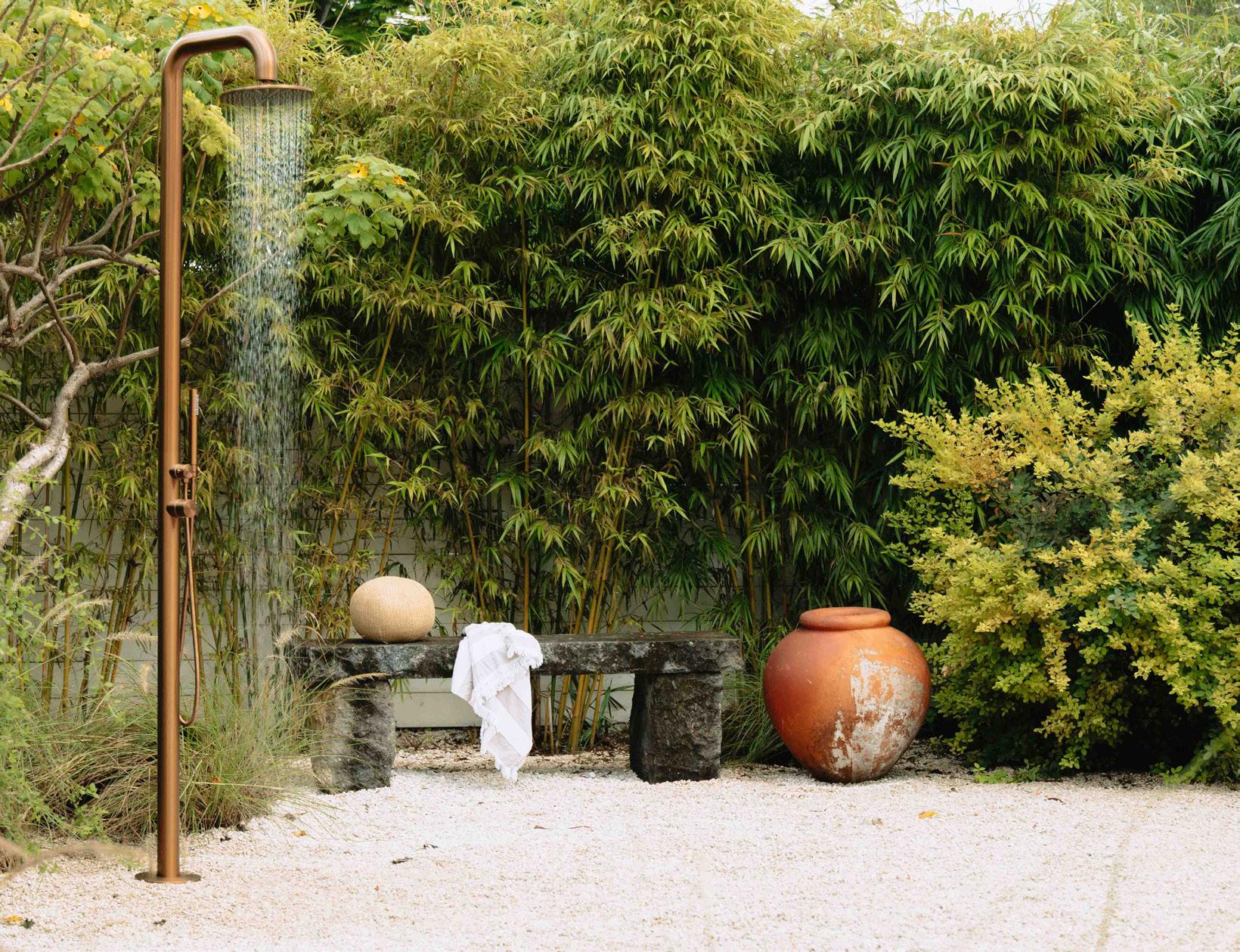
Perhaps al fresco bathing has not traditionally ranked high on homeowner wish lists, but the trending desire for our homes to incubate wellness, coupled with a growing desire to inject nature into our everyday, is inviting a reconsideration of the idea. Outdoor bathing particularly showers, are moving into a must-have category for many.
“Outdoor showering reconnects us with nature in its purest form — fresh air, flowing water and open space working together to restore balance, calm the mind and elevate everyday wellness,” says Anton Smeets, director at Watrline, a leading industry innovator. No longer considered simply a practical add-on to rinse off after the beach or pool, outdoor showers, according to Smeets, are now viewed as lifestyle elements and design features.
“Bathing in nature connects us back to ancestral rituals — a sensory reset that stimulates relaxation and endorphins,” says landscape designer Molly Sedlacek, founder of L.A.-based outdoor product design studio ORCA.
“We’re seeing outdoor spaces take on a
more intentional role, especially as extensions of primary suites and wellness areas. Expanded bathing options, especially outdoor showers, have become a much bigger part of the conversation,” says architect Kevin Lichten, founder of an eponymous architectural firm in New York, who notes client interest has doubled in recent years. A number of Lichten’s residential projects in the Hudson Valley, Connecticut, Manhattan, and on Cape Cod now include outdoor showers. “When the weather permits, clients want to be outside as much as possible, and creating outdoor areas that can shift between fitness, relaxation and everyday use makes that feel effortless,” he says.
A Therapeutic Practice
You don’t need to be someone who jumps into a freezing ocean or lake to appreciate the appeal of year-round outdoor showers. Cold therapy has become a hot button in the wellness and post-workout recovery realm. Unlike a more-severe cold plunge or ice bath, outdoor showers combine hot and cold water, offering customizable options that users can adjust to their own tolerances without compromising the
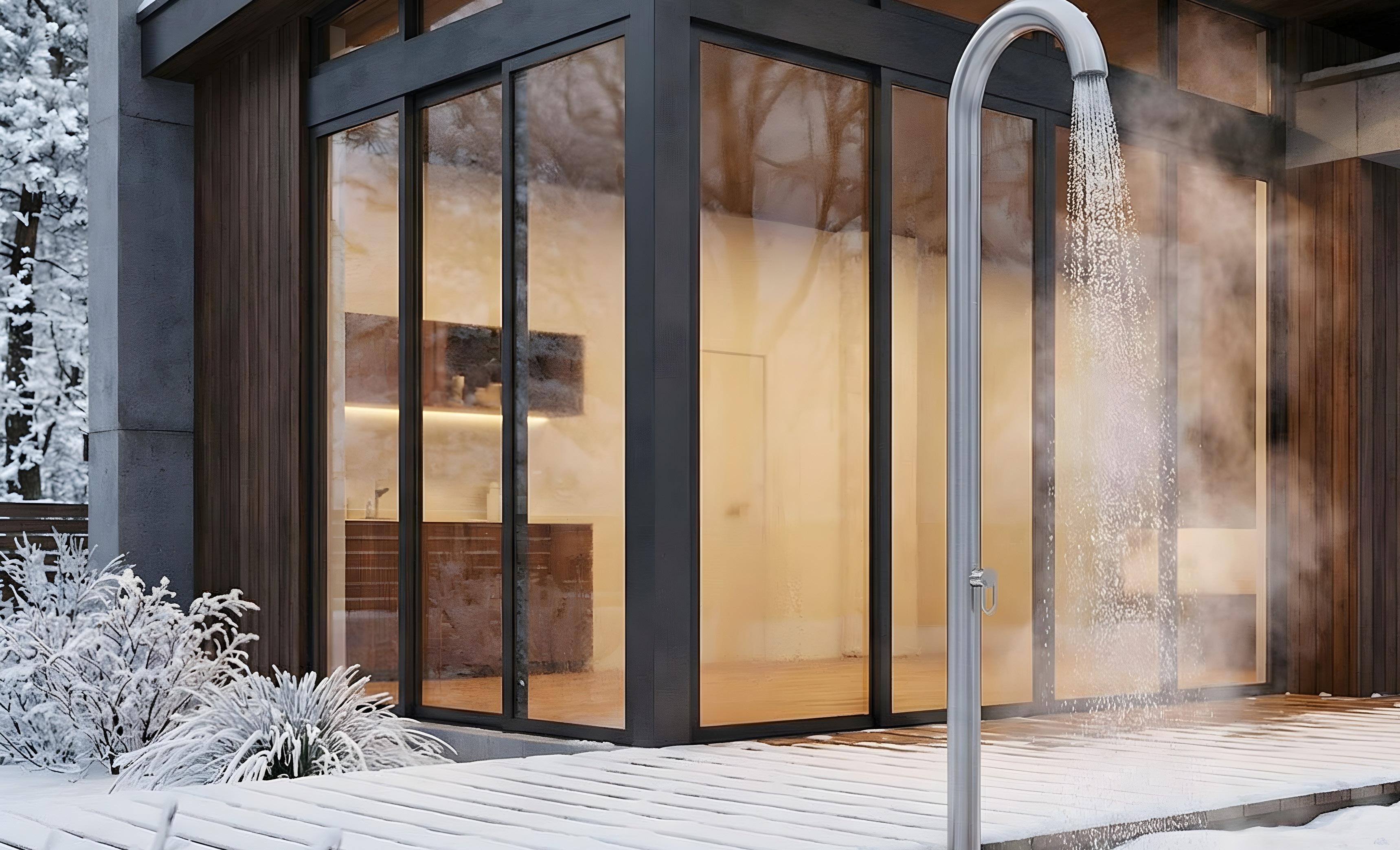
Watrline’s frost-free system, prevent pipes and valves from freezing.
Location, Location, Location
By the sea, sheltered by trees on the edge of a forest, adjacent to a spa, or just outside an indoor fitness area — the best locations for an outdoor shower are those that match the owner’s objective, whether for warm seasons or yearround use. Pull-down shades, decorative panels and a range of innovative options provide privacy when needed. Installation options include wall-mounted or freestanding units that can serve as sculptural elements. According to Watrline, other recommended are sites near pools, boat docks or gardens. Wall-mounted units are great for small places connect a unit to existing plumbing.
TRENDING
experience in nature.
“When you step outside naked, you are immediately vulnerable to the environment in a way that wakes up ancient parts of the brain,” says Joel Blackstock, clinical director of Taproot Therapy Collective in Alabama. “The ultimate luxury today is not comfort but sensation. We are so numb from screens and sitting that feeling something intense — even if it is cold — feels incredible. The ritual of bathing outside connects us to the circadian rhythm and the seasons. It forces you to be present in your body rather than trapped in your head. We recommend this (practice) to high-functioning executives constantly because it is often the only time in their day when they are purely in the physical world.”
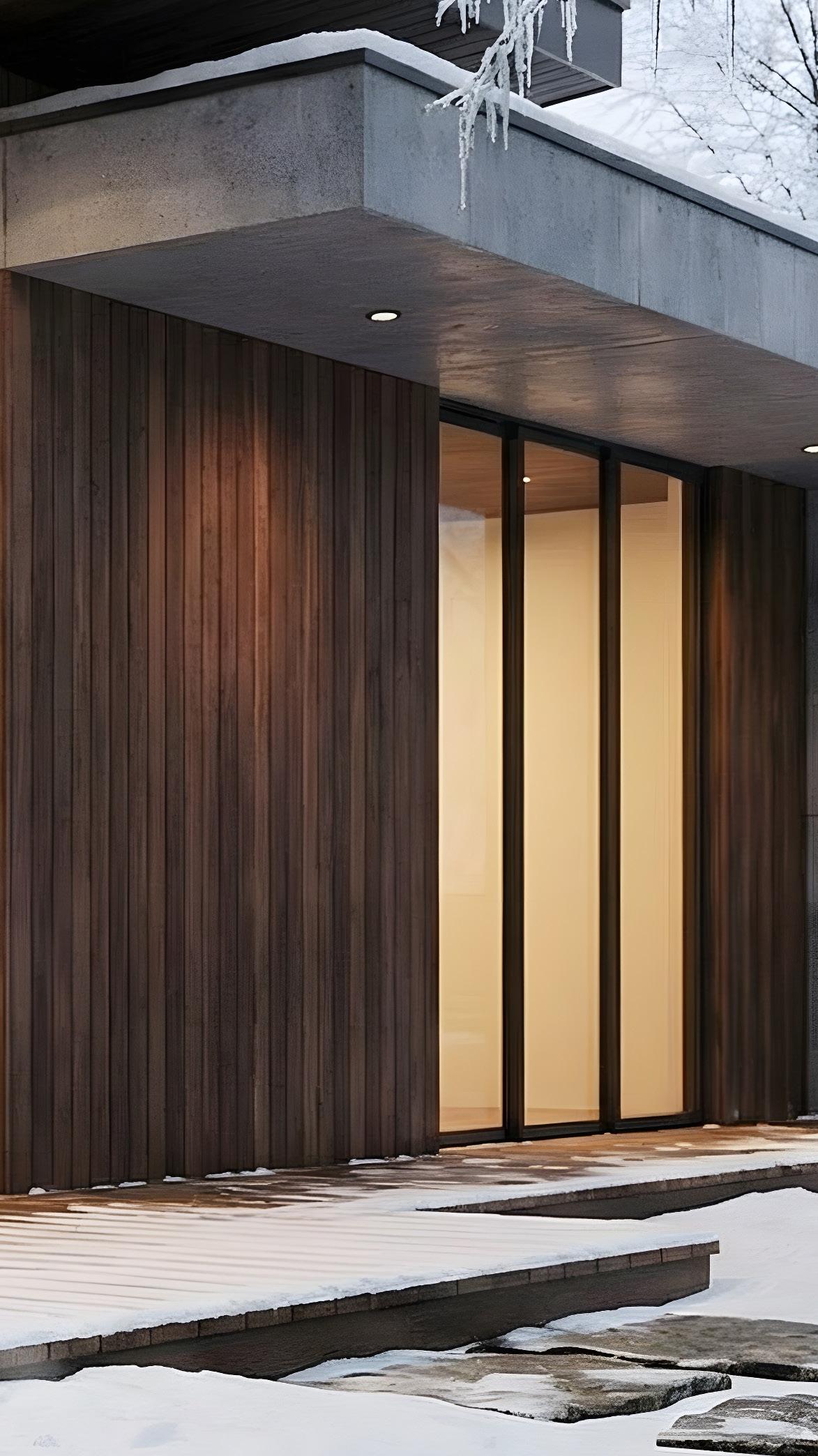
Outdoor showers are not limited to homes in hot climates, either. Bathing outside surrounded by snow might sound improbable, but today’s systems are designed to perform beautifully in harsh climates. Innovations in materials and design enable outdoor showers to operate in the coldest climates. Built-in heating elements, such as those incorporated in
For example, Lichten is currently working on a home in the Hamptons where the outdoor shower connects to an indoor shower, allowing for an easy transition back into the house without tracking water and sand throughout the space. The outdoor shower also connects to the deck and beach walkway, making it part of a larger circulation path. “Together, it creates a seamless, intuitive flow that makes coming home from the beach cleaner, easier and more comfortable,” he says.
All of this gives new meaning to the simple act of taking a shower. ♦
An open-air escape where nature and design meet in effortless harmony.
PHOTO COURTESY OF WATRLINE
PHOTO COURTESY OF WATRLINE
Necia Bunnell
6570 Aurora View
GO WITH THE
Flow
By Ellen Paris
Intentional water features transform homes into serene retreats.
DECOR
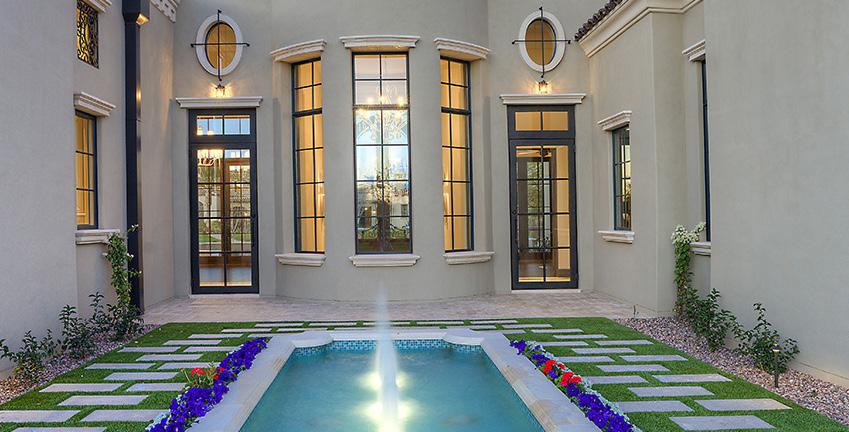
A sculpted courtyard where still water mirrors timeless architecture.
The inclusion of water in luxury home design is an opportunity to create retreats of serenity. Water features, including water gardens, pondless waterfalls, and decorative fountains, often add a quiet sophistication to a home.
Ilene Chase of Ilene Chase Design prefers incorporating water features whenever the opportunity arises. “Water offers an ability to balance drama and serenity within a space,” says the Chicago-based interior designer. “Beyond their visual impact, water features create design-architecture while supporting relaxation, enhancing entertaining areas and introducing the powerful element of sound therapy, which is increasingly recognized for its wellness benefits.”
“At Fratantoni, our homeowners usually want water features that feel truly custom to their estate and built into the architecture from day one,” a spokesperson notes for Scottsdale-based Fratantoni Luxury Estates, one of Arizona’s premier luxury builders. Clients of Fratantoni covet features like grand entry fountains, elegant courtyard basins and refined pool spillovers that instantly elevate the property.
Designing For Sound and Movement
“I often incorporate water features into my projects, both inside and outside the home,
because of their unique ability to connect architecture, nature and emotion,” Chase explains. In interior spaces, water serves as a powerful tool for sound therapy. A gentle flow helps calm the nervous system while creating a sense of balance. Visually, these features introduce movement and reflection, serving as a natural counterpoint to structured design.
At Fratantoni, interior designers and architects source premium materials, including natural stone and marble, for custom water features. The water flow is engineered to produce a soft sound that is relaxing, not overpowering. “When we design quieter reflective areas, we focus on privacy and gentle water movement,” notes a Fratantoni designer.
Think shallow reflecting pools, narrow channels or simple wall spillways that work well in tucked-away courtyards or side gardens. Balanced layouts, soft lighting and comfortable seating draw attention to the water without forcing it. The result is a calm focal point allowing you to slow down, think, and enjoy the surrounding environment.
Bold Approaches To Outdoor Installations
“Outdoors, water elements offer a different but equally impactful experience. The layered sounds of cascading waterfalls provide
IMAGE COURTESY OF FRATANTONI LUXURY ESTATES
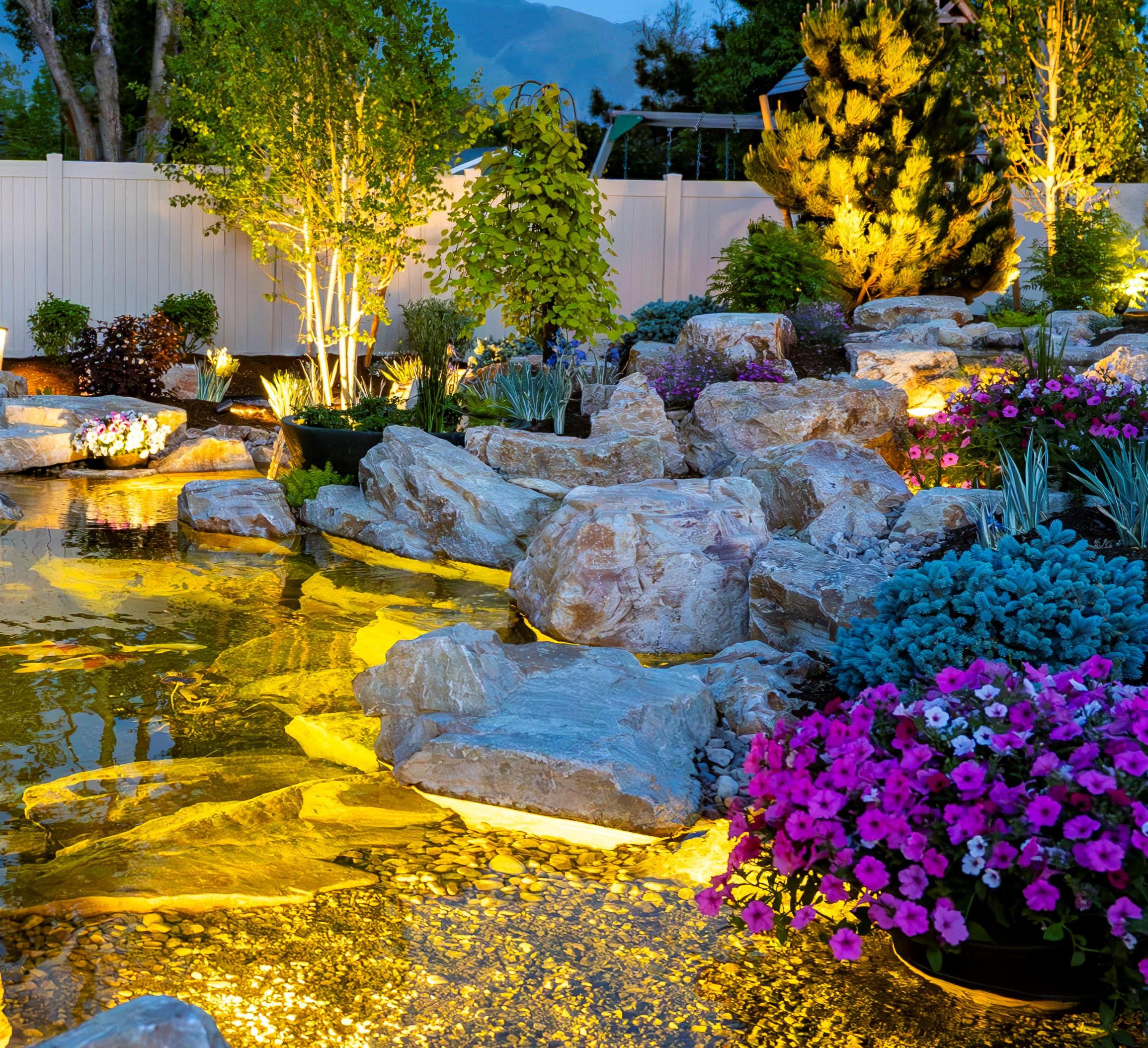
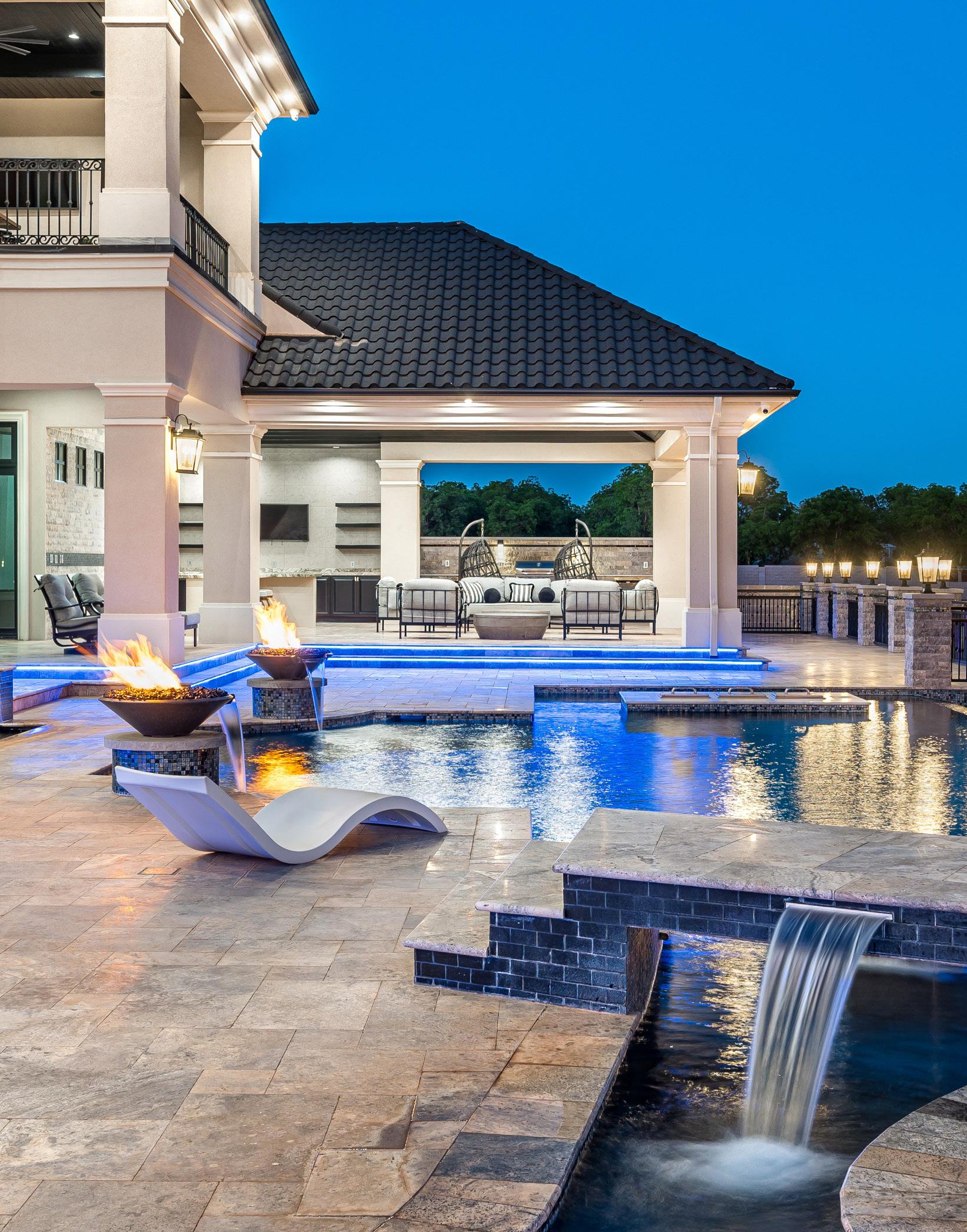
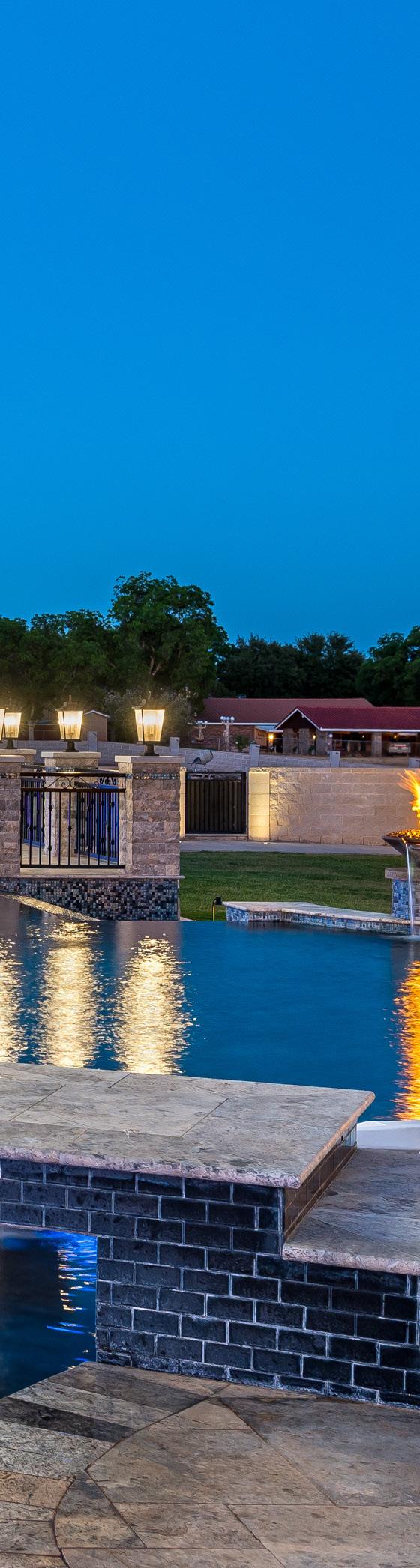
an immersive backdrop for relaxation and entertainment,” says Chase. Combined, these interior and exterior elements create a sense of continuity, grounding the home in nature and reinforcing a wellness-driven lifestyle. Aquascape, a water features manufacturer noted for design and product sustainability, specializes in pondless waterfalls, pond design and water gardens. These features can transform backyards into spaces of serenity, regardless of the home’s architecture or footprint. Combined fire and water features meld basic elements of nature to create a unique backyard experience.
“Luxury homeowners are looking for custom, low-maintenance water features that create a private retreat on their property,” says Jennifer Zuri, marketing communications manager at Aquascape. “Ponds and waterfalls should feel as though they’ve always belonged in the landscape, with crystal-clear water made possible through proper filtration.” A feature must be thoughtfully integrated into the overall outdoor design, whether that means placing a pond beside a patio, complementing an
ABOVE: A private world shaped in stone and water.
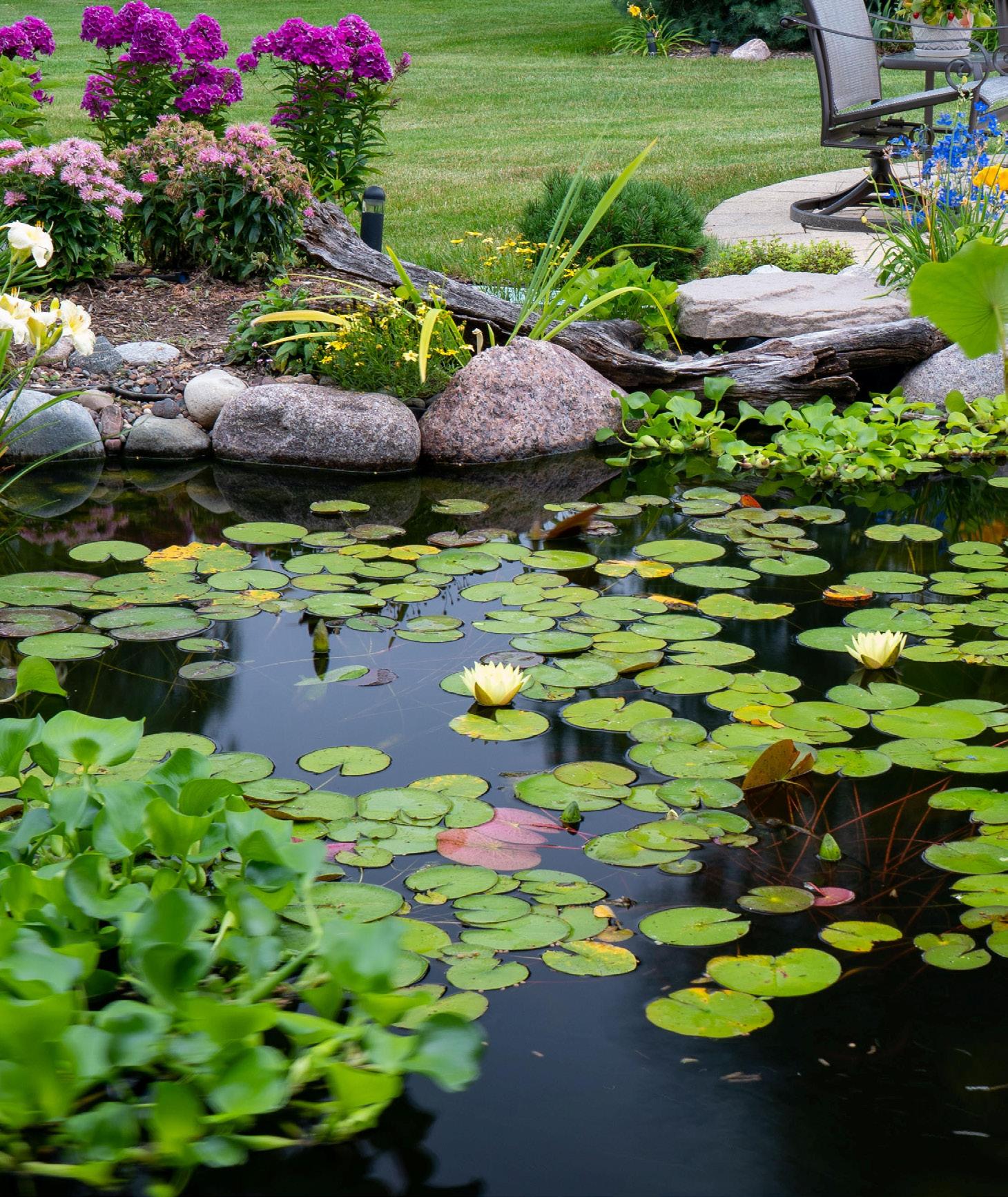
BELOW: Lily pads drift across mirrorstill water, softening the landscape.
outdoor kitchen with a waterfall, or creating a tranquil water garden setting designed for relaxing and entertaining.
Recreational ponds are one of the fastest-growing trends, according to Zuri. “Homeowners are looking for a more natural alternative to traditional swimming pools. These larger, deeper ponds function as natural swimming environments, relying on biological balance rather than harsh chemicals to keep the water clean and inviting.”
Water Feature Design Details and Placements
It is no surprise that there is demand for designs that blend natural and contemporary elements to be both organic and refined. Homeowners are drawn to ponds that combine rugged stone edges on one side with clean, straight lines, such as a modern patio or architectural hardscape, on the other. “A water feature often becomes the focal point of an outdoor living space and a natural connector to the surrounding landscape,” says Zuri. “Instead of being hidden away, ponds, waterfalls and fountains are best placed close to the home, near patios or decks, and positioned so they can be enjoyed from inside as well.”
COURTESY OF CREDIT AQUASCAPE INC.
IMAGE CREDIT AQUASCAPE INC.
Aquascape aligns waterfalls with windows to allow homeowners to see and hear the moving water indoors, reinforcing a sense of calm throughout the house. “Designs that encourage interaction deepen that connection to nature. Seating areas along the water’s edge invite relaxation, while features like small bridges, cantilevered decks or shallow edges create opportunities to touch the water, feed koi or linger,” Zuri says. These environments naturally attract birds, butterflies, frogs and other wildlife, creating a multi-sensory experience that feels peaceful and deeply connected to nature.
Designing a water feature for meditation and introspection starts with intentionally shaping the sound, movement and flow of the water. Slower-moving, shallow streams create a gentle rhythm that encourages stillness and reflection, while carefully placed rocks soften the water’s movement and define tranquil spaces. Stronger waterfalls can also play a role, as their increased flow rate releases negative ions that are known to promote relaxation and a sense of well-being. Incorporating curves, bends, and subtle transitions within streams adds visual interest and creates quiet pockets along the water’s edge: ideal spots for sitting, reflecting or meditating in peace. ♦
By Roger Grody
Sugar, Spice, & Island Delights
Anybody with a sweet tooth will appreciate Bahamian cuisine, and innovative local chefs are elevating the islands’ traditional desserts for international visitors.
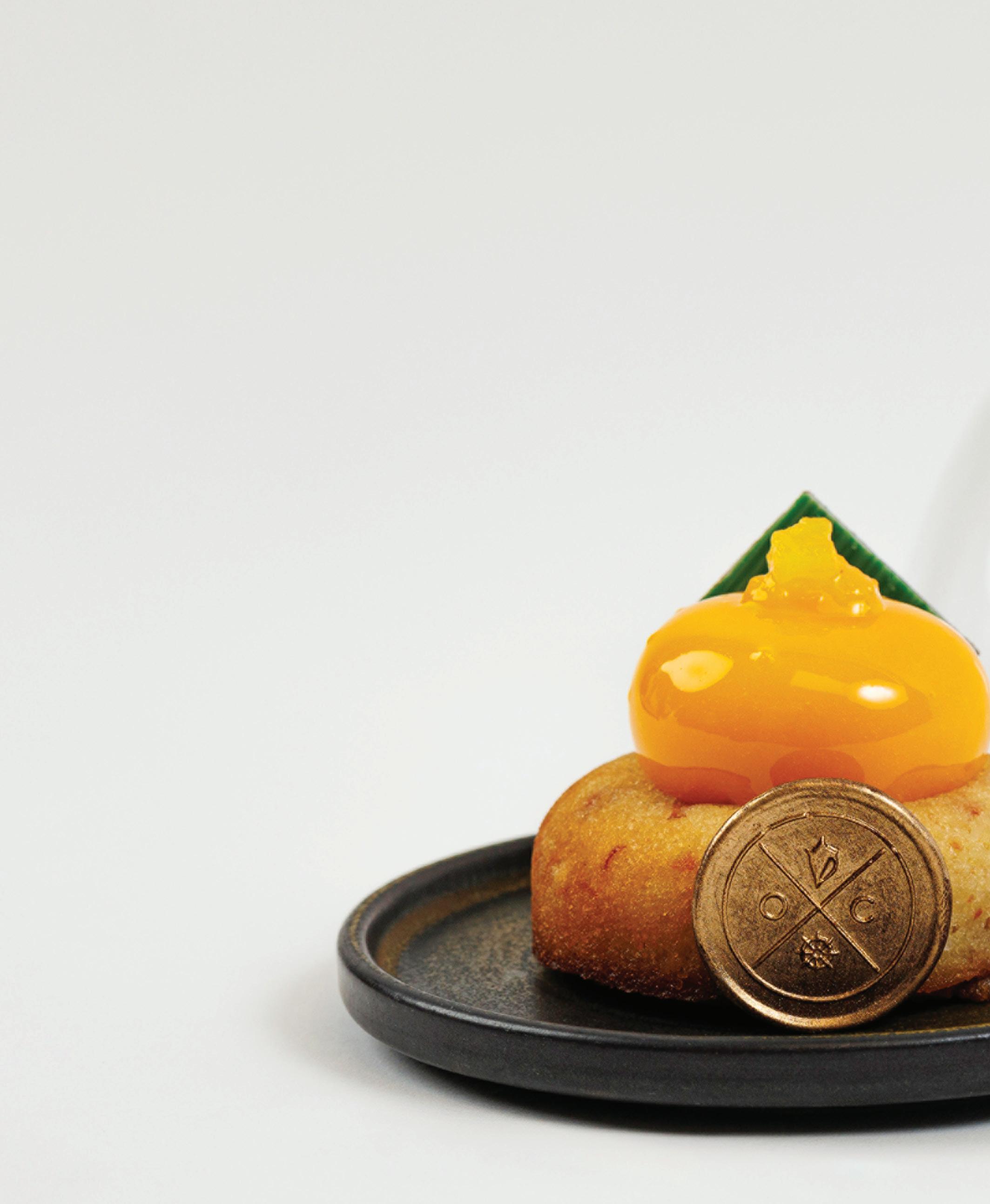
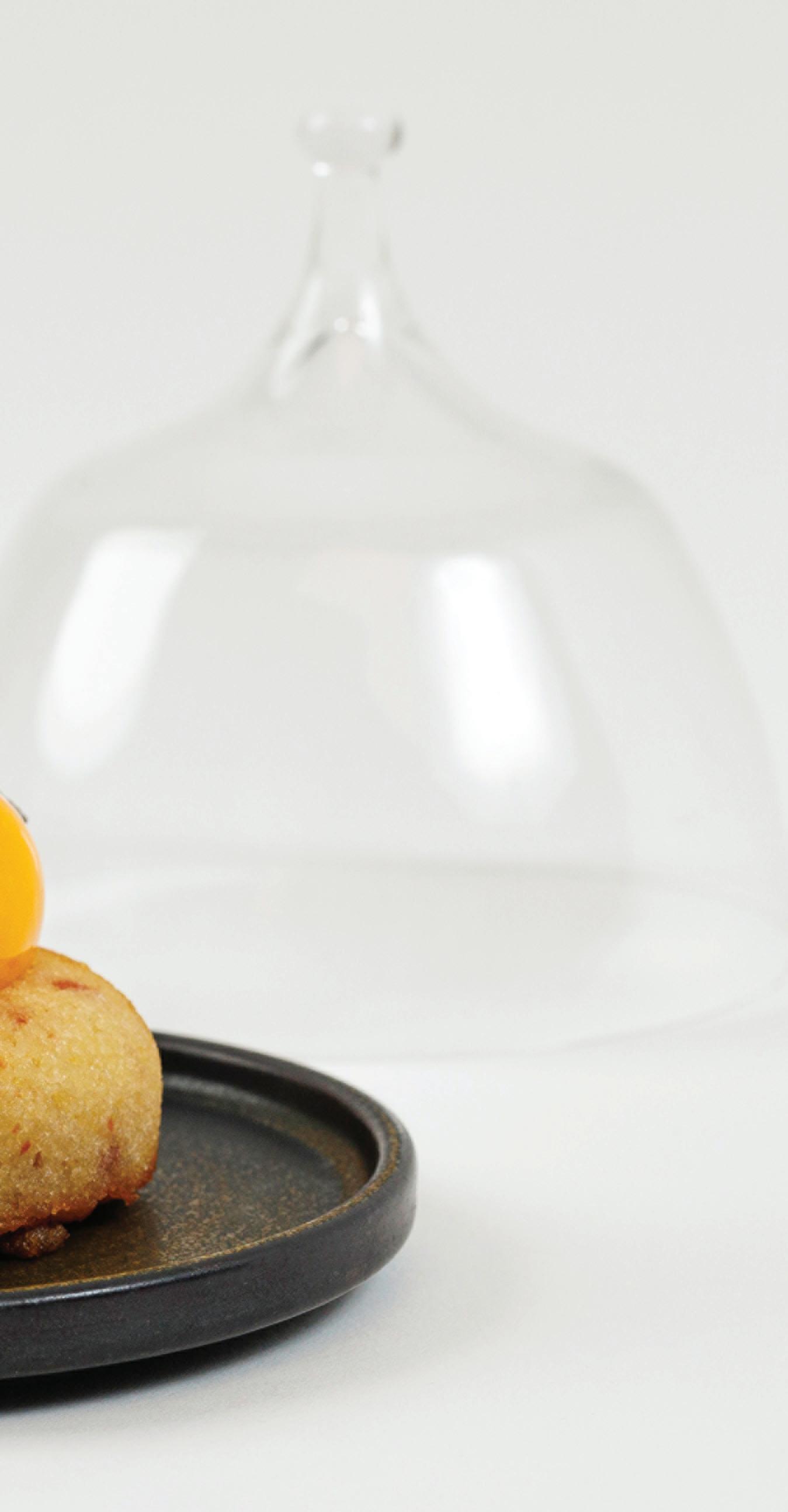
Dessert at The Ocean Club.
DISCOVERIES
The Bahamas is renowned for its beaches— mesmerizing turquoise waters lapping against sugar-white sand—as well as an elite yachting culture, a collection of luxury resort hotels, and casino action. This idyllic galaxy of islands in the Caribbean also has a rich culinary heritage, and while the nation’s abundant seafood takes center stage, desserts are also a local passion. Now, Bahamian chefs are reimagining some of the nation’s traditional sweet treats.
The cuisine of the Bahamas is a product of diverse influences: West Africans, colonists from Spain and Britain, and even migrants from the American South. Fresh seafood—particularly conch, grouper, and spiny lobster—dominates menus, but items such as bread pudding, coconut tarts, benny cake (sesame seed brittle), and the iconic “duff” grab attention for desserts. Celebrity Bahamian chef, food writer, and Emmy Award-winning television producer Simeon Hall Jr. reported, “Bahamian desserts are typically a unique combination of two or more seasonal fruits, baked and steamed doughs, chilled butter sauces, and rum.” He also shared that sweets are constantly evolving, thanks to the imagination of local chefs willing to break with tradition. “Bimini, known as the ‘baking island,’ highlights our love for bread and ‘dough-like’ treats such as duff,” said Hall.
The duff—it is usually composed of guava, though other seasonal fruits can be incorporated—has been called the “national dessert” of the Bahamas. Historians suggest duff was derived from a Scottish dish called clootie dumpling, and that Bahamian cooks added rum or brandy to sweeten it. Typically, pastry dough is rolled with guava paste, seasoned with cinnamon or other spices, then steamed and served with a rum sauce. Hall stated, “Duff is the quintessential Bahamian dessert, beloved for its rich and indulgent flavor by locals and tourists alike.” He explained that contemporary chefs are deviating from duff’s traditional shape and cooking technique, with innovative interpretations that even include Asian-inspired bao bun versions. “It has also been reinterpreted with savory twists, such as crab duff and short rib duff with demi-glace butter,” said Hall. “Other local desserts that chefs love to reimagine are coconut tarts and cakes,” explained the chef, who offers a coconut tart granola at his Brews & Brunch pop-up restaurant, plated with whipped coconut yogurt and coconut-macerated seasonal fruit.
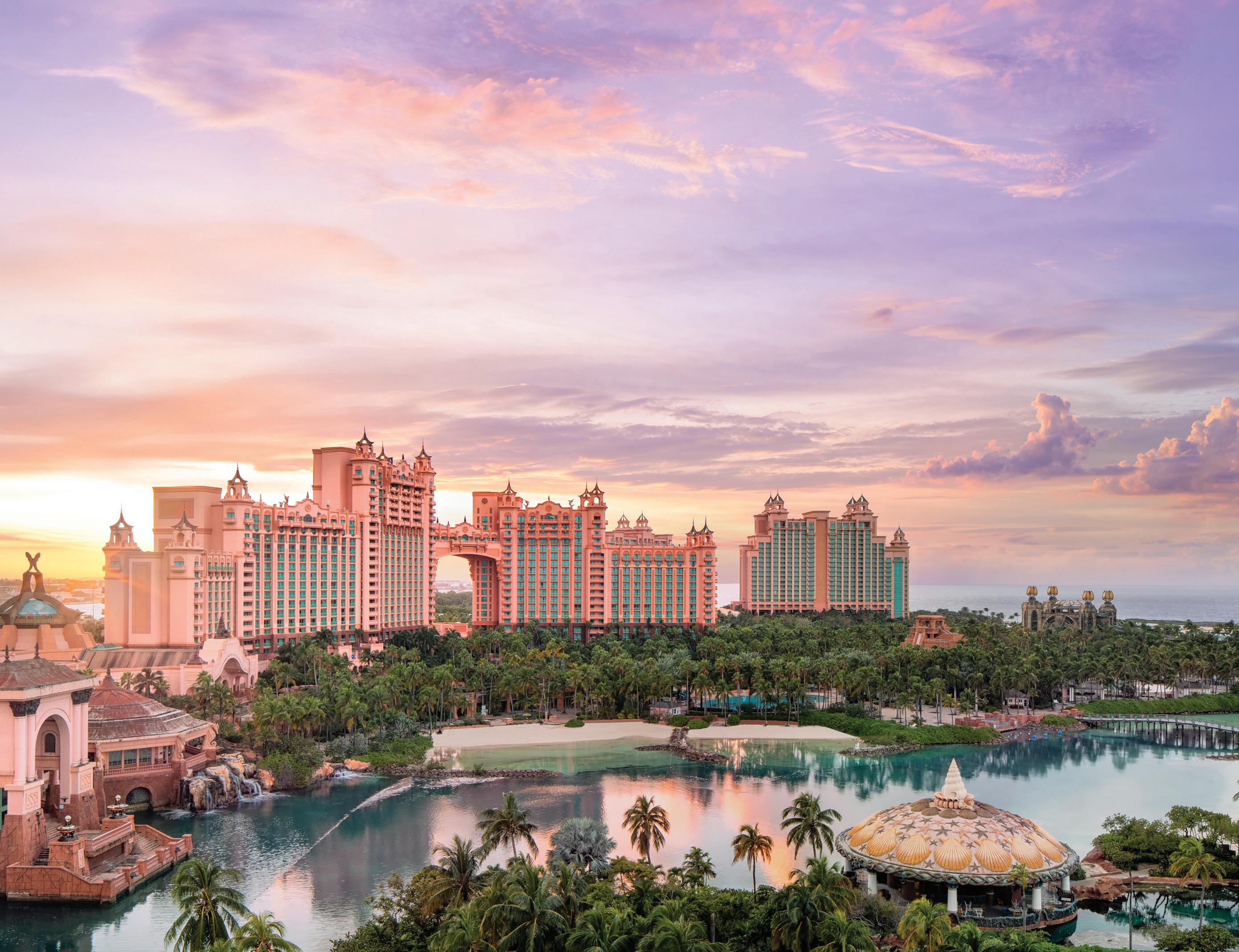
Cynthra Smith-Ariscar, Executive Pastry Chef at the iconic Atlantis Paradise Island resort, advised, “My desserts are designed to not only tantalize the eyes, but take guests on an adventure through their palates.” Balancing tradition with innovation, the native Bahamian chef tweaks the classic duff by incorporating
fresh coconut into guava compote, then folding it into a dough, cutting it into slices, and steambaking. “I pair it with a smooth, creamy, guavainfused cheesecake and vanilla bean Chantilly cream,” she added.
Making over the traditional Bahamian rum cake, Smith-Ariscar uses fresh pineapples and lime zest to heighten the flavor of the batter, which she bakes in Bundt-shaped molds, then soaks with coconut-rum syrup. “The contrast of flavors and textures creates complexity, and tastes fantastic,” she said. “As pastry chefs, we must continue to develop new and exciting concepts while adhering to timeless old favorites,” maintained Smith-Ariscar. Traditional Bahamian desserts are not typically showcased at The Ocean Club, a glamorous Four Seasons resort whose signature restaurant
is a project of Michelin-starred chef JeanGeorges Vongerichten. But The Ocean Club Executive Pastry Chef Phil Warden sometimes prepares a coconut tart that combines local ingredients with sophisticated European techniques, exquisitely plated with pineapplemint compote, pineapple sorbet, and a fresh mint tuille.
“If I was to serve bread pudding, I’d probably switch out the bread for croissant or panettone, but load it with local spices,” said Warden, who suggested serving it with a Bahamian John Watling’s rum crème anglaise and coconut johnny cake croutons for a little crunch. ♦
We honor tradition by reimagining it—layering classic flavors with fresh, local ingredients. ” ”
Gorgeous sunset at the Atlantis Paradise Island.
Relax WITH INTENTION
By Jamie Yoos
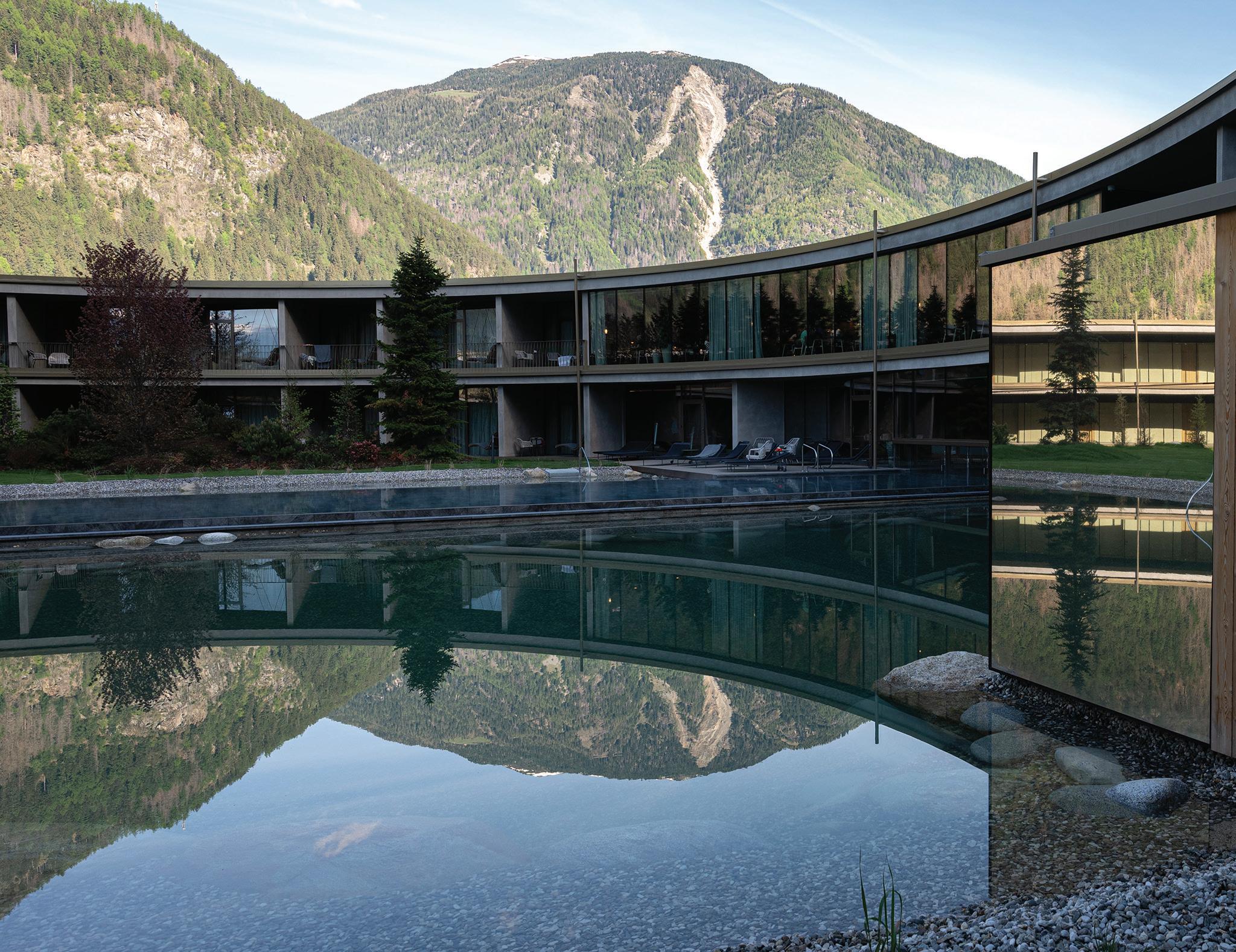
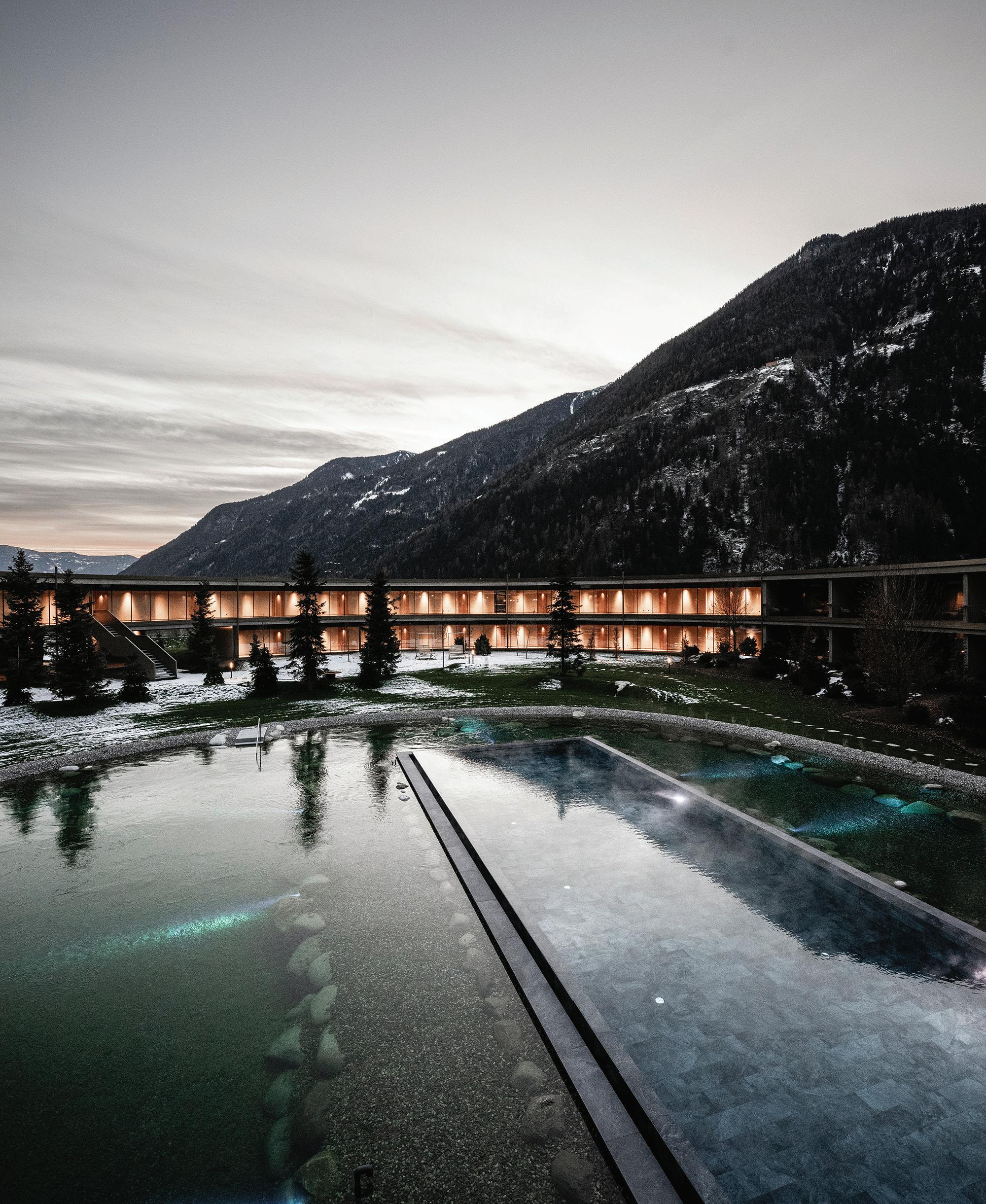
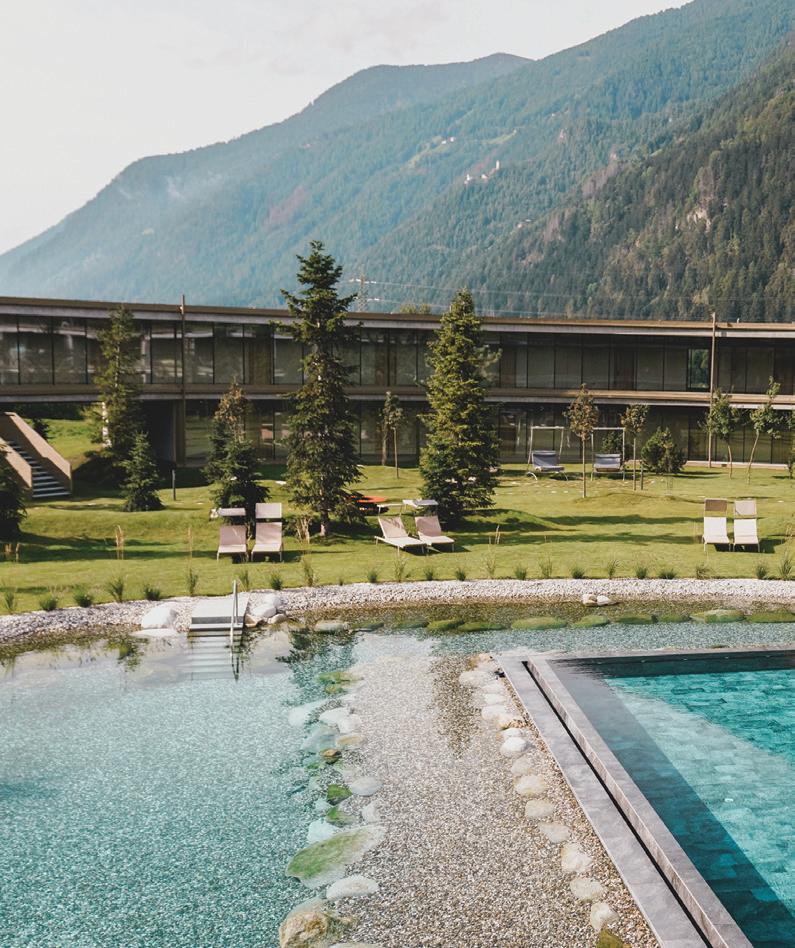
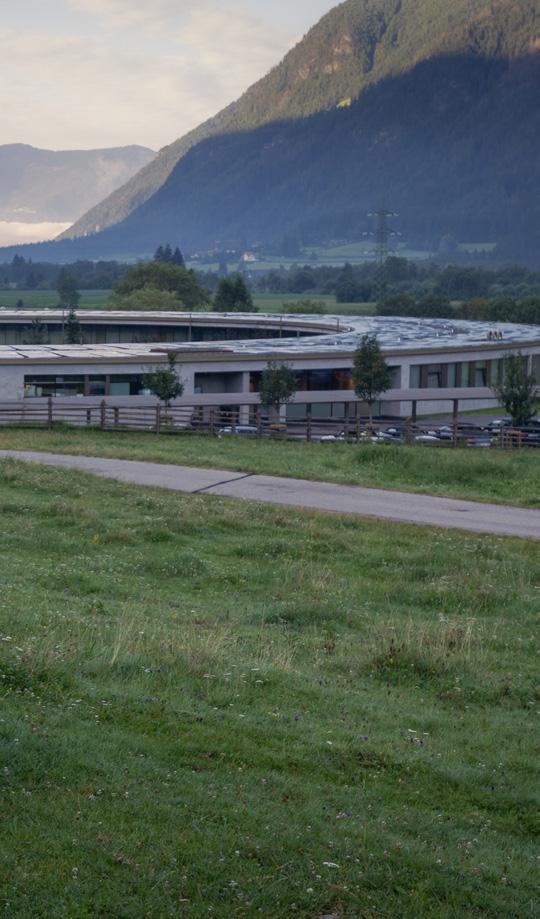
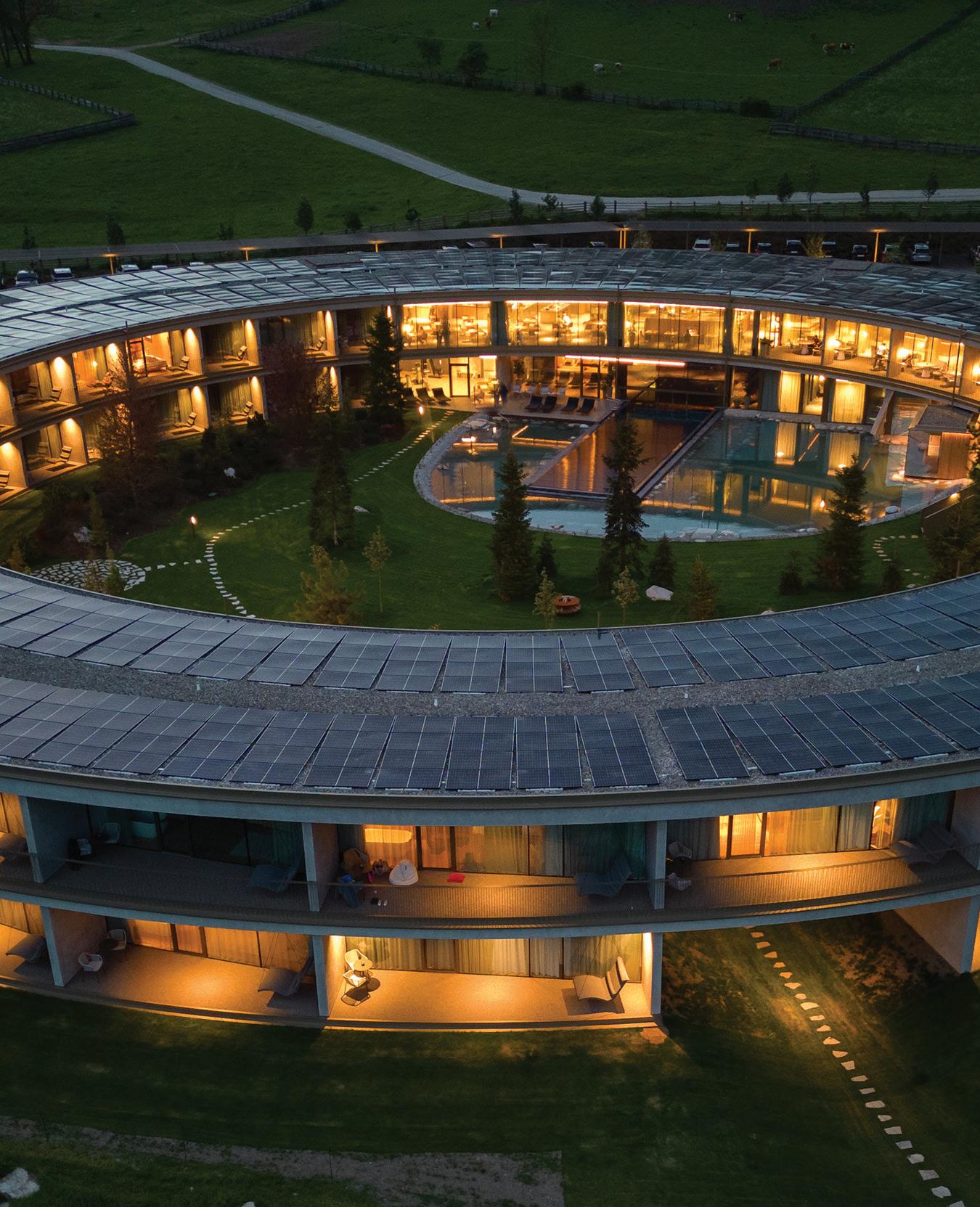
Set against the picturesque backdrop of the Italian Alps, OLM Nature Escape is an “eco aparthotel” unlike any other. With its distinctive ring-shaped design symbolizing nature’s endless cycles, the hotel is a destination in harmony with its surroundings. Located on the former site of a flour mill in South Tyrol, OLM’s two-story concrete structure spans 45,200 square feet and is bordered by lush farmland and meadows.
The distinctive circular architecture at OLM Nature Escape aparthotel offers visitors an idyllic, rejuvenating getaway.
“The first idea was to build something really special, not just another hotel,” says Stephanie Gastager, manager at ART Redaktionsteam, a tourism and hotel industry PR agency. “The vision was to create something you have never seen before, something innovative and new, and to link the rural region with a modern concept.”
Designed by architect Andreas Gruber, and recently named Hotel of the Year 2026
GREEN
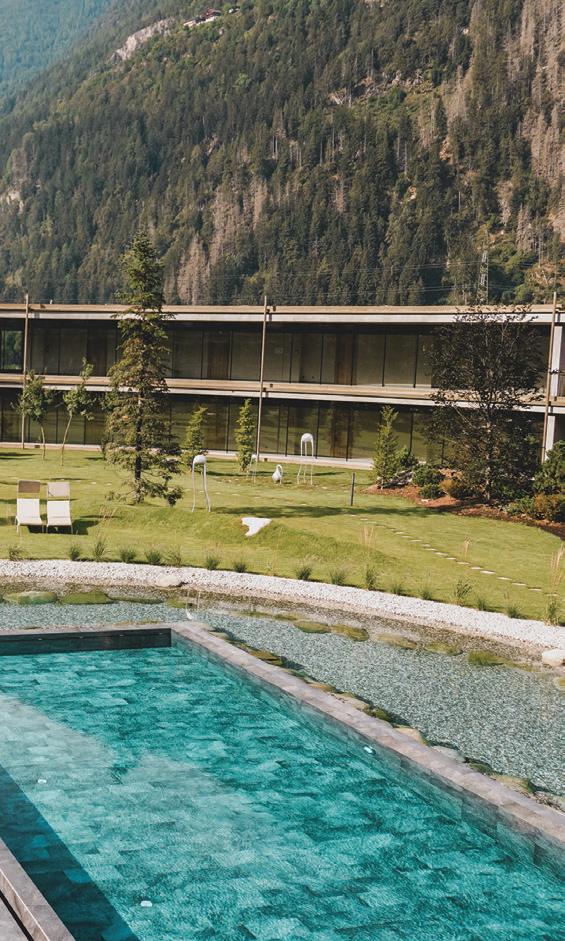
by France’s Gault & Millau guide, OLM offers stunning views of the tranquil landscape at almost every turn. Each room is equipped with a kitchen and a patio or balcony and is designed to evoke the feel of a cabin, clad almost entirely in untreated larch wood for a warm, earthy ambiance. Many rooms feature a glass-enclosed sauna. At the heart of the hotel is its magnificent courtyard with a lap pool, a natural swimming pond, a mirrored outdoor sauna, and more.
Sustainability is a priority at OLM, underscored by its rooftop covered with 1,200 solar panels. It’s the first self-sufficient hotel in the region, according to Gastager. “What we do here is a combination of hydrodynamic power, photovoltaics and geothermal energy.”
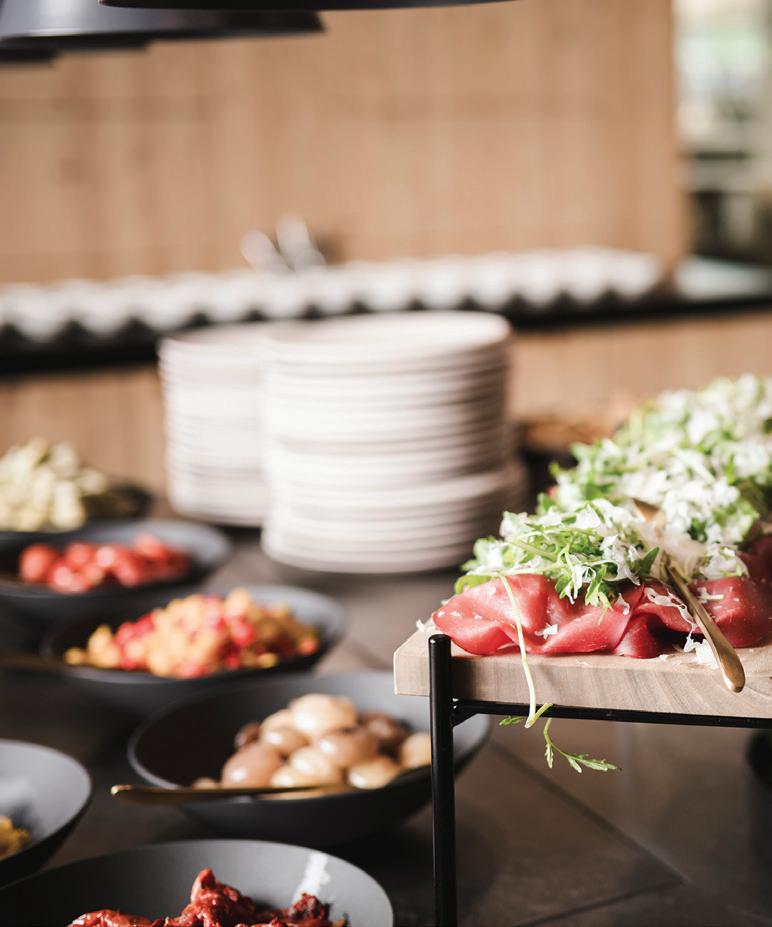
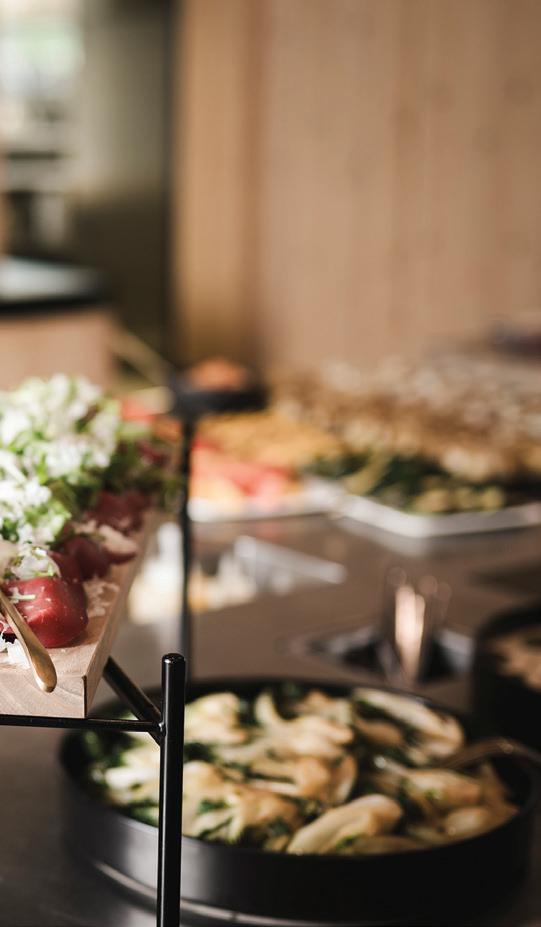
During their stay, visitors can slow down and find serenity through sound healing sessions, a relaxation garden, and a Kneipp hydrotherapy path. And no visit is complete without a meal at the hotel’s restaurant, Prenn°, which serves organic, locally sourced cuisine.
In other words, guests are only responsible for taking their time and relaxing deeply, according to host Astrid Hellweger, who admits “the OLM makes you addicted to slowing down.” ♦
PHOTO BY CHRISTIAN ELZENBAUMER
PHOTO CREDIT: HANNES NIEDERKOFLER
PHOTO CREDIT: JULIA RIECK
By Eric Grossman
WHERE DINING IS THE DESTINATION: Foodie Hotels
For
a certain kind of traveler, the
intended stop isn’t a city, beach or mountain range — it’s a table.
In the upper echelons of luxury travel, a quiet shift has taken place: the hotel restaurant is no longer an amenity — it’s often the reason for the journey. Around the world, a select group of upscale hotels, boutique inns and intimate resorts have reimagined hospitality through the lens of gastronomy, placing the dining experience at the heart of a stay. Here, chefs are the headliners and table reservations are as coveted as the best suites. At these foodie hotels, a stay isn’t just about where you sleep, but what you savor, transforming travel into a journey defined by unforgettable meals.
From a historic European haunt and luxe beachfront resorts to a remote seaside hideaway, here’s a curated tour of the most notable properties where dining is the destination.
Grand Velas Los Cabos - Cabo San Lucas, Mexico
At Grand Velas Los Cabos, culinary excellence is the centerpiece of an all-inclusive resort experience. Set against the dramatic shores of
the Sea of Cortez, this sprawling oceanfront sanctuary pairs a sophisticated setting with a gourmet program that rivals the country’s finest standalone restaurants. Central to its foodie fame is Cocina de Autor, the Michelin-starred restaurant where inventive tasting menus unfold like edible narratives of place. Beyond this culinary flagship, the resort orchestrates a world of flavors across its bespoke dining venues — from Frida’s vibrant Mexican reinterpretations to Lucca’s refined Italian-Mediterranean classics and Velas 10’s ocean-facing seafood and steak indulgences. Each option is a destination in its own right, offering distinct atmospheres and thoughtful service that complement the sweeping seaside backdrop.
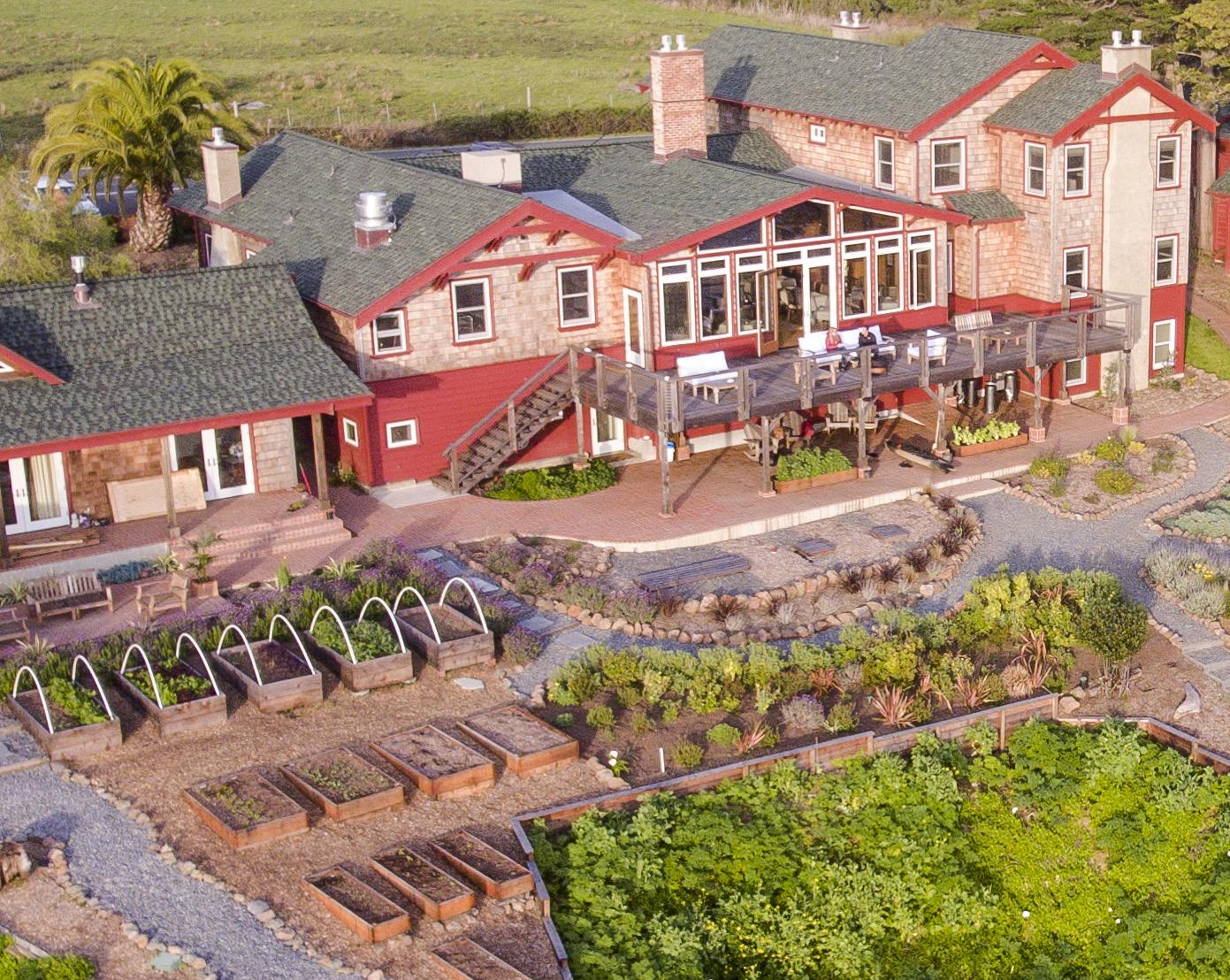
Harbor House Inn - Elk, California
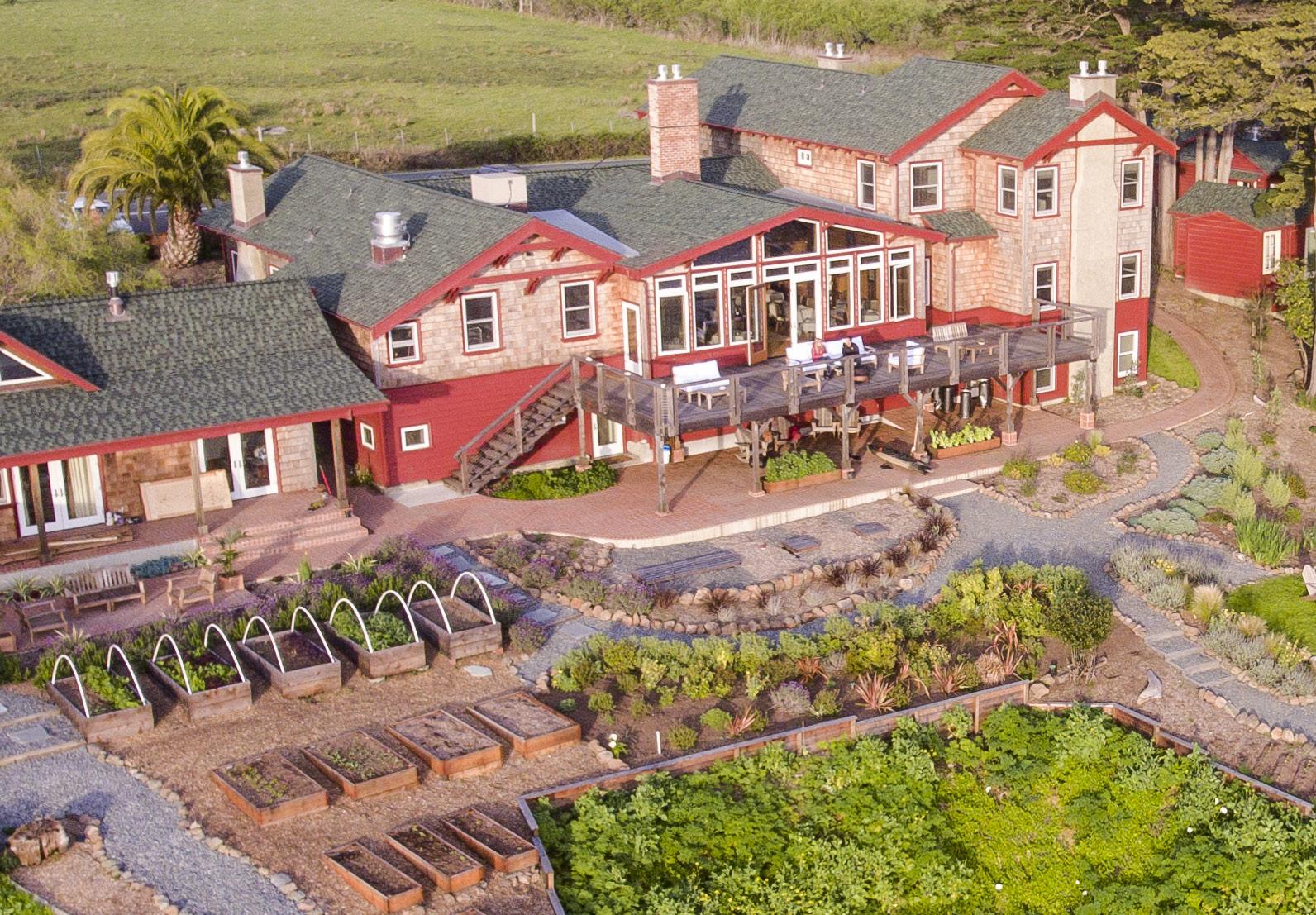
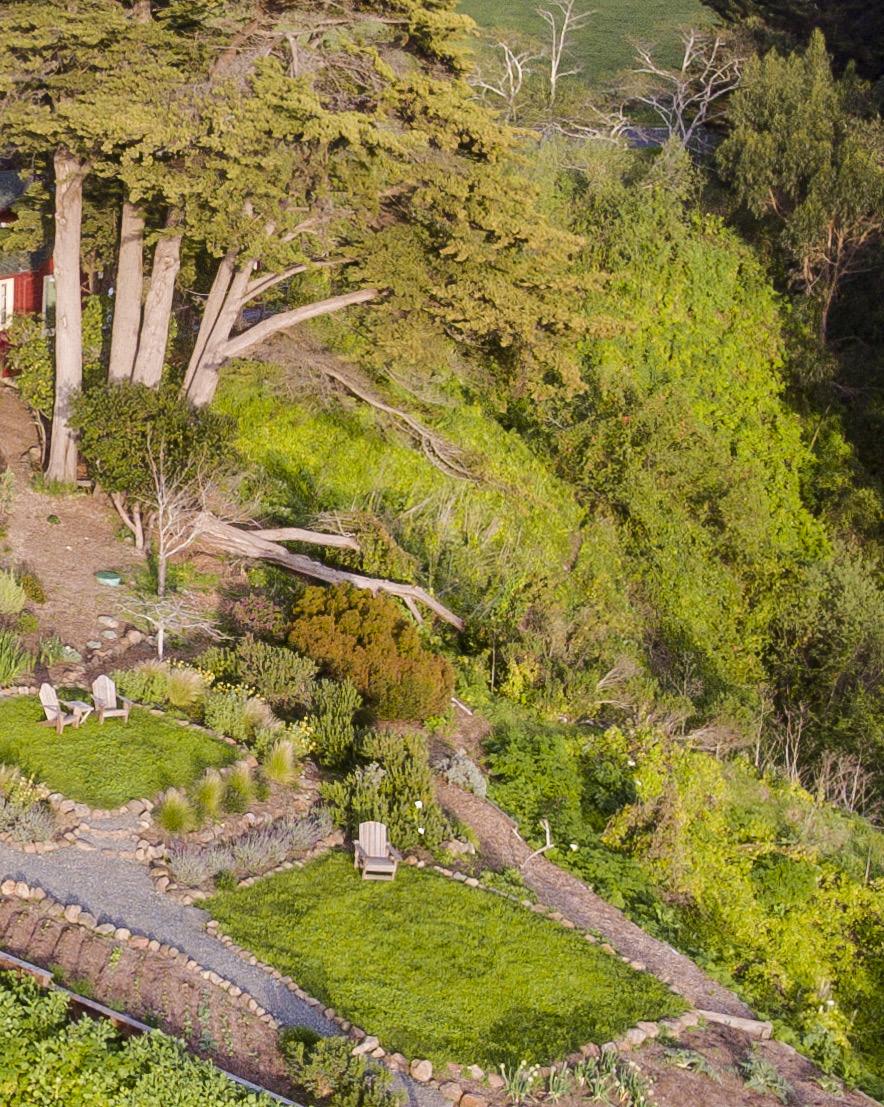
Perched dramatically on Northern California’s rugged Mendocino coastline, this intimate inn has become a gastronomic pilgrimage for discerning travelers and culinary connoisseurs alike. At the heart of its allure is the 25-seat dining room, led by visionary Chef Matthew Kammerer, whose hyper-local,
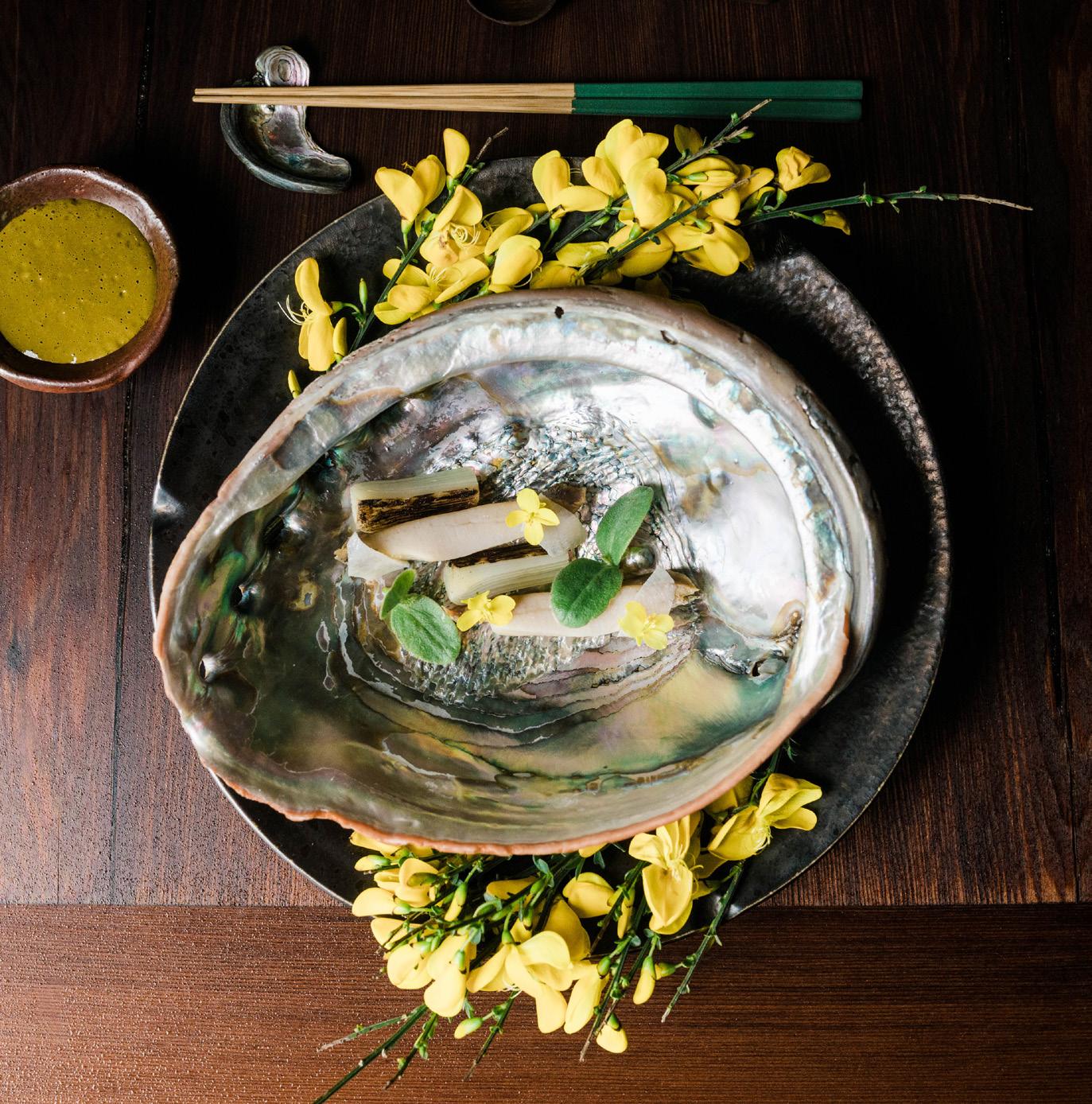
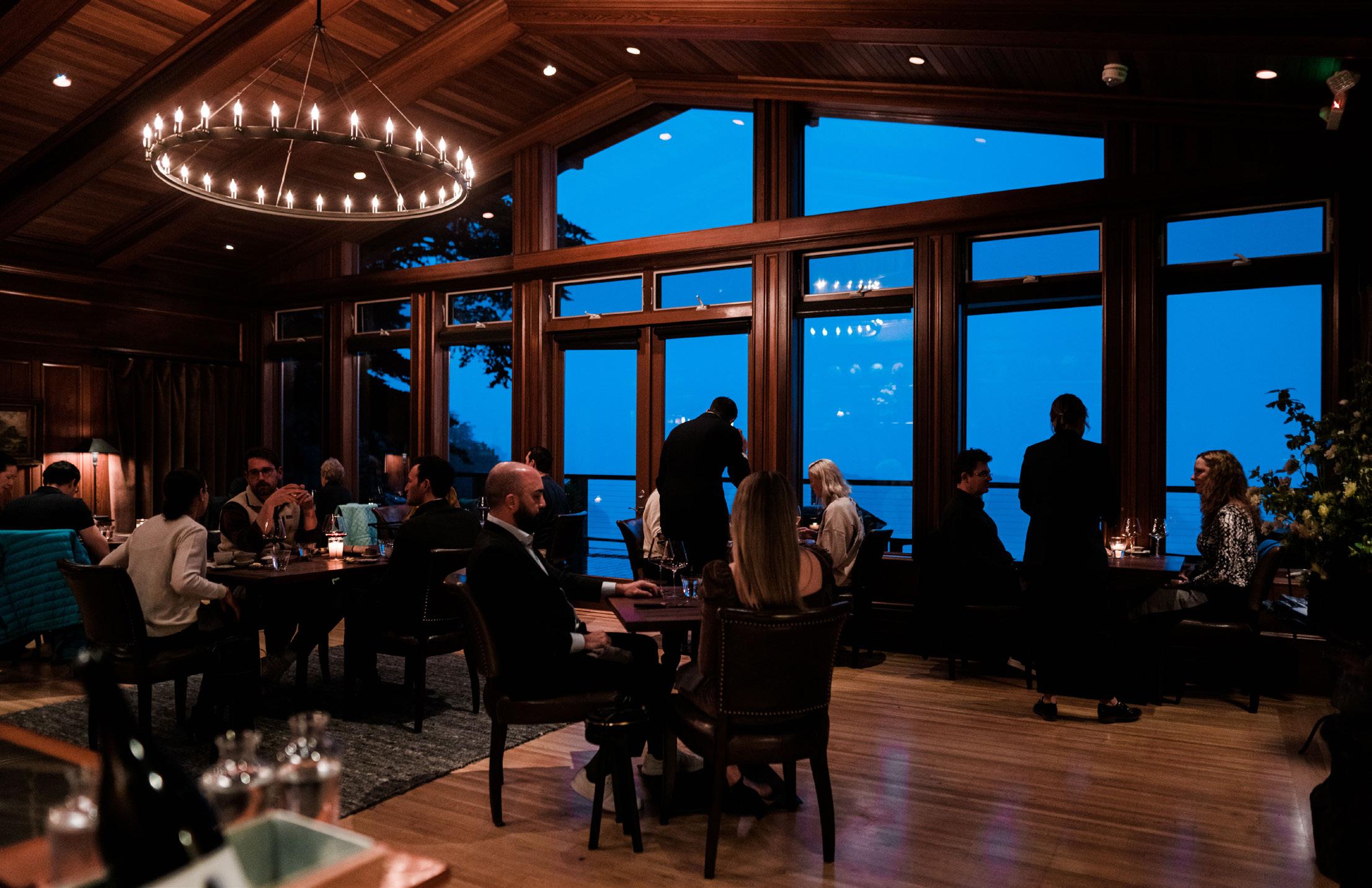
ingredient-driven tasting menus have earned a plethora of awards, including a Michelin Green Star for sustainability. Dishes are shaped by what the land and tide generously offer, including foraged sea vegetables and oceanharvested seafood, as well as produce from the inn’s own farm. Here, every meal is an immersive narrative of place: a tasting menu that changes with the seasons, paired with a wine list curated to complement the terroir of the North Coast, served within a minimalist yet warm dining room that frames sweeping Pacific views. Staying overnight means extending the culinary journey — morning breakfasts, private in-room dinners and wandering the grounds or private cove between courses. It’s a sensory experience where nature, craftsmanship and culinary mastery converge.
Capella Taipei - Taipei, Taiwan
In Asia, Singapore-based Capella Hotels & Resorts sets a high bar when it comes to culinary delights. Among its newest openings is Capella Taipei, the Taiwanese capital’s first luxury hotel opening in a decade. Dining takes
FOOD
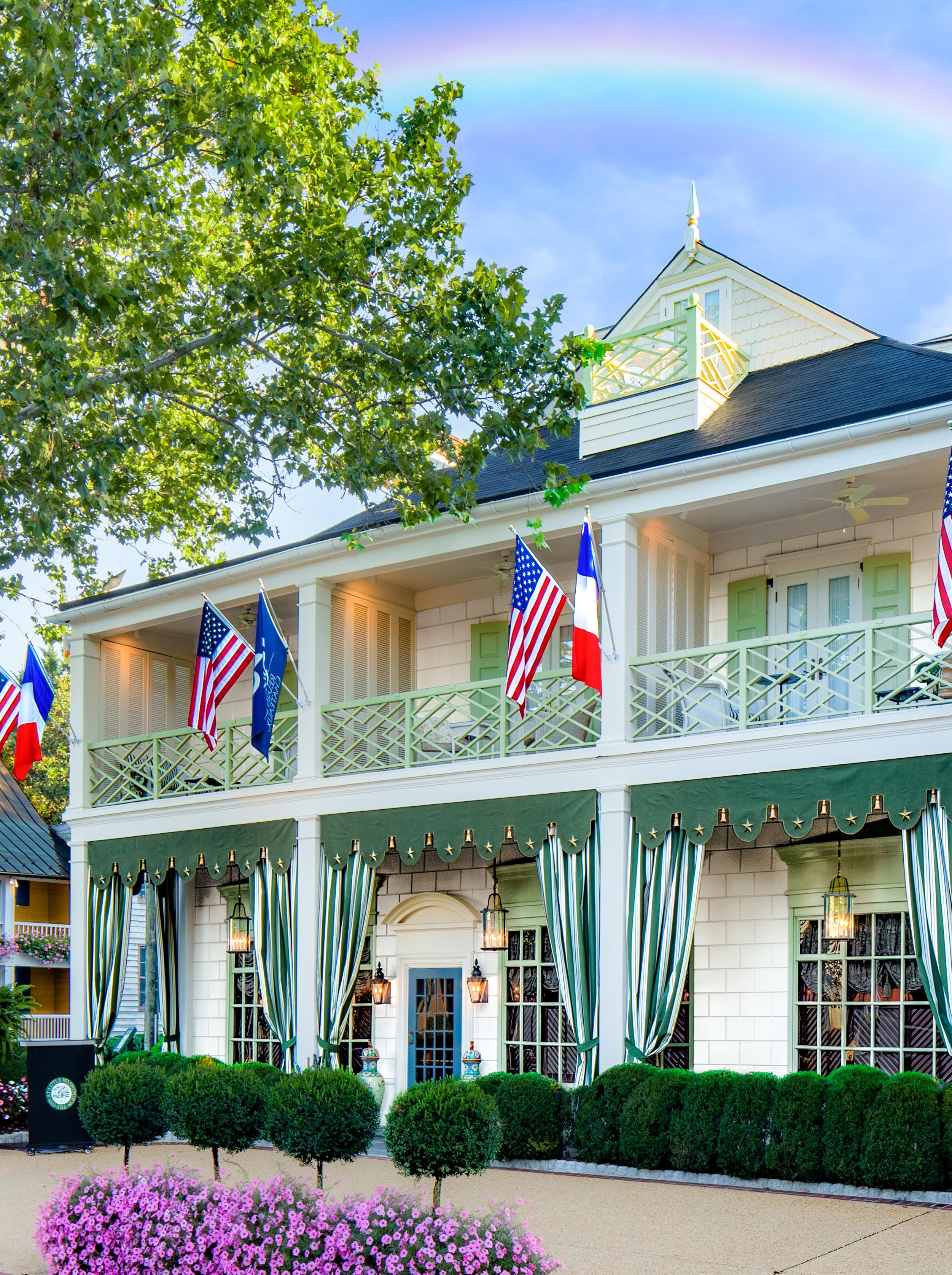
The Inn at Little Washington exterior view.
Harbor House Inn, exterior.
center stage, as guests of the 86 exquisitely crafted rooms and suites can choose among five restaurants and a gorgeous, tri-level bar complex known as The Glasshouse. Highlights include Rong Ju, a refined Cantonese restaurant honoring the island nation’s rich culinary heritage; Atelier Plume, an artisanal patisserie celebrating the delicate intersection of tradition and contemporary craftsmanship; and Mizue, an intimate sushi omakase restaurant offering the serene hospitality of a traditional ryokan.
Hotel De L’Europe - Amsterdam, Netherlands
Rarely considered a culinary heavyweight in the past, Amsterdam has now established itself as one of Europe’s most exciting dining destinations. Among those leading the charge is the iconic Hotel De L’Europe, which in recent years has reinvented itself to become one of the city’s top addresses for high gastronomy. Positioned majestically along the banks of the Amstel River in the heart of Amsterdam, the historic, 130-year-old hotel now features five
distinctive F&B outlets, including Michelinstarred Restaurant Flore, showcasing “conscious fine dining” with a focus on sustainability; Brasserie Marie, offering French cuisine in a luxury setting along the water; Trattoria Graziella, celebrating the Italian art of leisurely dining with fresh, seasonal ingredients; and Chapter 1896, providing a speakeasy cocktail experience with the largest open selection of Macallan whiskies in continental Europe.
Blackberry Farm - Walland, Tennessee
Set against the rolling foothills of the Great Smoky Mountains, Blackberry Farm epitomizes American farm-to-table sophistication. This 4,200-acre luxury resort features 68 guest accommodations, ranging from estate rooms to hill cottages and multi-bedroom houses. An abundance of pastures, gardens and woodlands supply ingredients for the celebrated cuisine found throughout the property. Meals serve as seasonal narratives: guests dine on trout caught that morning, served with heirloom vegetables harvested at peak. Dinner is an event — long,
unhurried and paired with wines chosen to heighten the essence of place. Culinary workshops and foraging excursions ensure guests understand not just what they’re eating, but where it came from.
The Inn at Little WashingtonWashington, Virginia
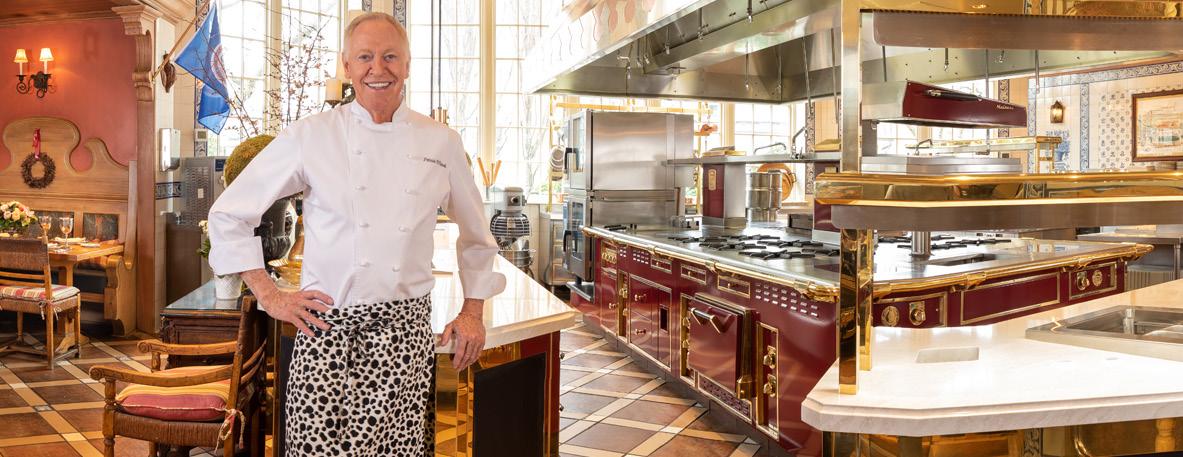
A long-held secret among Washington D.C.’s jet set, this highly awarded hideaway was founded in 1978 by chef and proprietor Patrick O’Connell. Located in the quiet town of Washington, Virginia, the Michelin-starred Inn pairs world-class cuisine with refined accommodations, immersive design and a sense of whimsy. Each of the 24 luxurious guest rooms and suites serves as a testament to local history, though many guests are simply drawn to the food, which can be enjoyed via three distinct tasting menus or an interactive kitchen table experience. Seasonal courses often draw on ingredients from the Inn’s own recently expanded farm, and the kitchen frequently showcases heritage recipes such as the “paw
paw posset,” featuring a fruit once favored by George Washington. Other highlights include a luxurious caviar experience and a dedicated water menu, a somm-style offering that presents fine bottles, each described with tasting notes, origins and even “vintages.”
Rosewood Mandarina - Riviera Nayarit, Mexico
As an example of a resort expertly created with a focus on world-class culinary experiences, look no further than Rosewood Mandarina, which opened last year along a stunning stretch of Nayarit’s coast, where the jungle meets the sea. With its most luxurious suites costing five figures a night, the resort is attracting high-minded travelers who are familiar with the standards set by the world’s hottest tables. Toppu, the crown jewel restaurant, offers a stunning cliffside dining experience featuring Japanese dishes and techniques shaped with local Mexican flavors. La Cocina Mandarina captures the essence of true Mexican home cooking — who doesn’t love handmade tortillas hot off the comal? — and Buena Onda is a beachfront oasis serving Spanish coastal fare (think grilled seafood, tapas, paellas) with cocktails and sangria by the Pacific. ♦
Farm raised abalone with a sauce of its offal and nori.
Harbor House Inn, interior of the dining room.
PHOTO BY MATT MORRIS
PHOTO BY MATT MORRIS
ELEVATING EVERYDAY Elegance
In the refined world of luxury living, even the most functional pieces are crafted to be just as beautiful as they are practical. The high-end step stool selections available today exemplify this premium feel, with a variety of fine materials, thoughtful architectural designs, and sculptural aesthetics that seamlessly fit into the styling of any curated space and even double as works of art, leaving no need to stow them away after use.
The Odette Lucite Stool - Alice Lane Home
The Odette Lucite Stool from Alice Lane Home is a showcase of pure, crystalline luxury. crafted from clear, rounded acrylic and embellished with a rich, gold trim, it transcends mere functionality. It can be slipped into modern interiors as a chic accent piece, and the simplistic design makes this a timeless addition.
Hasegawa Lucano 2-Step LadderHasegawa Ladders
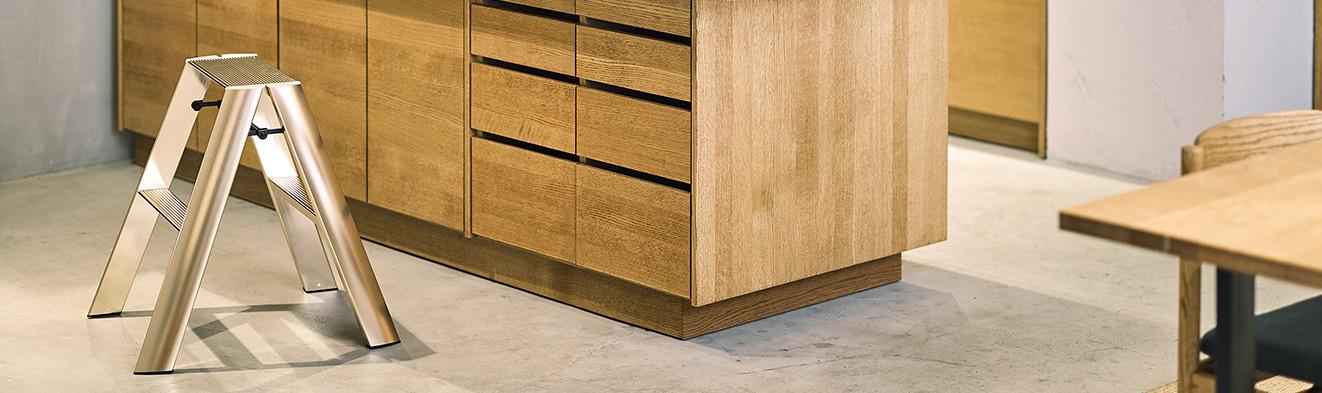
Those seeking a minimalist aesthetic with a luxury flair need look no further than the Hasegawa Lucano 2-Step Aluminum Step Stool. Boasting sleek lines and a dreamy gold finish, this stepladder is perfect for incorporating an extra touch of elegance as a practical, lightweight accent piece, crafted with safety in mind. A room with gold accents is best suited to accompany this sophisticated stool.
Kartell Upper Step Stool - Perigold
Another sleek, minimalist option, the Kartell Upper Step Stool is available in playful primary hues to serve as a vibrant pop of color in an otherwise muted space, or it can fit right in with a bright maximalist space. It also comes in a plain acrylic version for a more understated look.
Margot Step Stool - Häti Home
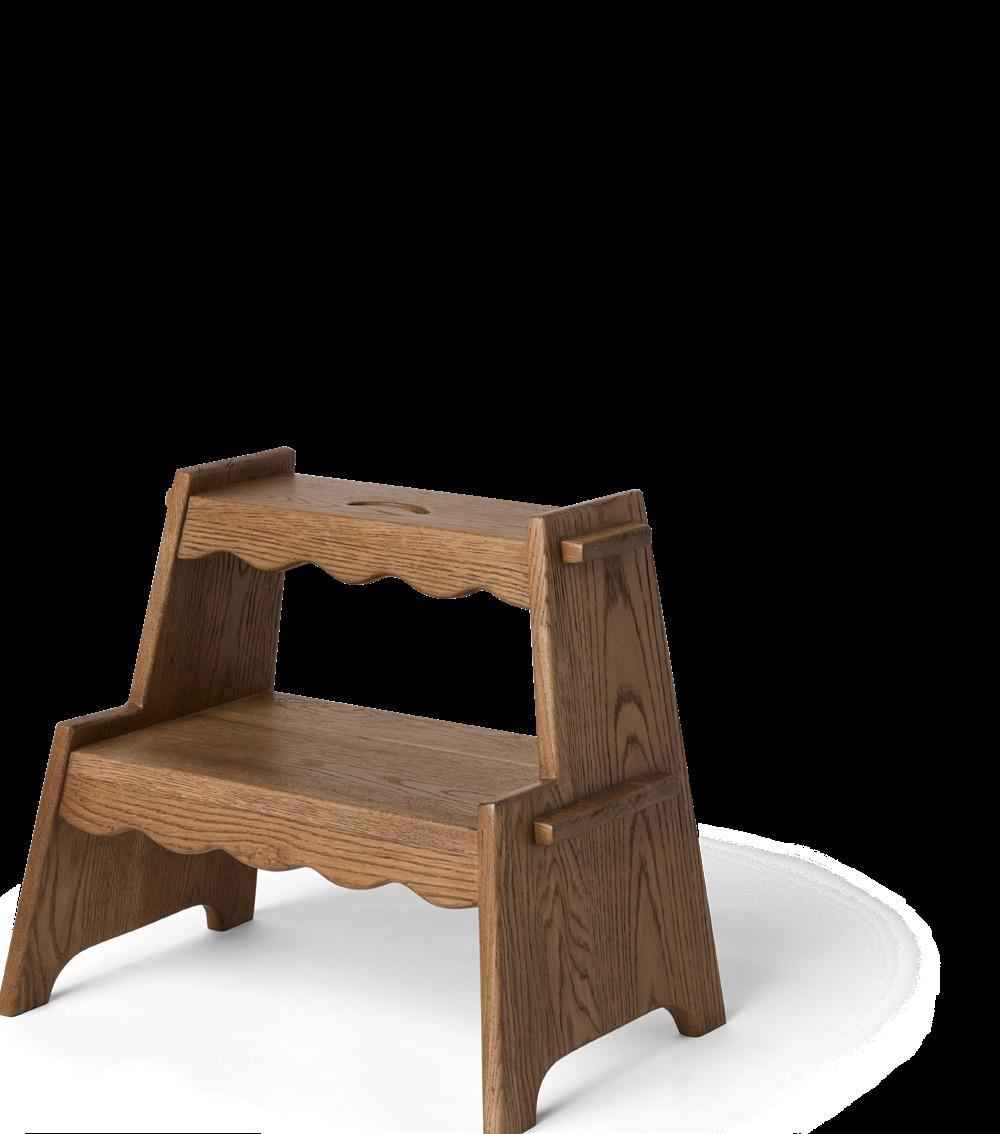
The Margot Step Stool from Häti Home is rich with craftsmanship and hand-carved detailing in a stunning, elegant honey oak. This spin on a classic wooden stepstool boasts scalloped accents, complete with a convenient top handle.
A Step Up in One’s Lifestyle
This collection of pieces is evidence that in the realm of luxury, every functional touchpoint can also embody refinement. These stools are not just utilities, but extensions of taste, sophistication and lifestyle. After all, to live luxuriously is to find beauty not just in life’s grand gestures, but in the quiet details that surround us daily. Why should reaching the top shelf be anything less than a moment of elegance?
(Left) Hasegawa’s Lucano Premium Step Ladder in Gold
LIFESTYLE
PHOTO
PHOTO COURTESY OF HASEGAWA USA, INC.
LUXURY STATE
Coldwell Banker Premier Realty
8290 West Sahara Avenue, #100
Las Vegas, NV 89117
Your extraordinary home deserves representation of an equally extraordinary caliber.
Experience the superior levels of local expertise, personal attention and utmost discretion that comes with the power of Coldwell Banker Global Luxury.