



The Power of Social Learning : Why Learning Together Matters Workspace vs Worksphere
Reprendre la main sur l’algorithme : Protéger le travail à l’ère numérique



The Power of Social Learning : Why Learning Together Matters Workspace vs Worksphere
Reprendre la main sur l’algorithme : Protéger le travail à l’ère numérique
The 2023 USF Congress in Alicante asked the USF organs to pay more attention to how digitalisation affects our members’ work relationships and environment. Meanwhile, new questions about Artificial Intelligence arose and await analysis and action. All authors and interviewees in this AGORA edition contribute to this debate. Artificial intelligence challenges all workers, including those in the public sector, as well as unions and their officials. Employers will not always help us identify where our members need support. Unions in the (international) public service must be ready to ask the right questions and ensure that worker dignity, employment conditions, and social dialogue are preserved. Fortunately, the European Union is beginning to recognise these changes. The EU AI Act sets an initial framework (Reg. EU 2024/1689). Our federations, EPSU and ETUC, do valuable work at the EU level, supported by the ETUI.
As digital communication is available anytime, anywhere, the notion of “work environment” blurs and even disappears beyond the context of remote work at home. “Work environment” is gradually replaced by “working sphere”. Permanent availability leads to permanent stress and to employers’ expectations. Efficiency gains obtained at the expense of workers’ health may also lead to a cynical situation in which workers are called upon to train AI systems that produce job losses amongst those who contributed to their training. These aspects alone show that the deep involvement of representatives is paramount, for instance, for monitoring the right to disconnect and for addressing early re-dispatchment issues when job cuts are considered.
The recurring key points in this AGORA edition’s contributions on AI are clear. Uphold the dignity of
the worker. Empower workers. Avoid unnecessary toxic monitoring. Build trust. Update data protection rules. Ensure deep involvement of staff and/or union representatives in all AI rollout measures. Always keep a human involved in sensitive decision loops.
Achieving the above will be our main challenge for many years to come.
Union officials and members should carefully read each article in this AGORA edition for insights into AI’s complex challenges. Further information is available. Understanding these issues, sharing knowledge, and acting together are essential first steps.
Within various international and European organisations, the unions affiliated to USF will need to understand the specificities of AI rollout in their environments and share their experience with USF so that as much action and coordination as possible can be achieved.
Enjoy the reading!

PETER KEMPEN
Secretary General of Union Syndicale Fédérale and member of SUEPO-Berlin
By Liia Kaarlõp

Do you know why “learning partnership” is a useful approach for bringing stakeholders together? To better inform government, employers, and trade union representatives about the challenges and opportunities that recent developments in AI and digitalisation bring for all of us. How to face them together?
At the End of last January, four decentralised EU agencies gathered in Brussels to gain insight into the pillars of social learning1, namely mutual engagement with uncertainty, rather than learning as the transmission of certainty (based on data, evidence, facts). Together, we explored how to increase the learning capability of each constituency - be it Union, Employers or Government representativesthrough caring about differences, paying attention to new ideas, and engaging uncertainty... an approach developed by Wenger-Trayner (Beverly and Etienne) for social dialogue/partnership.
In a world changing faster than ever, no single person or organisation has all the answers. Whether the task is improving education, guiding local development, or coordinating different institutions, progress depends on people learning together. This idea lies at the heart of social learning, an approach championed by Beverly and Etienne Wenger Trayner. It encourages people from different backgrounds to share what they know, reflect together, and build solutions that make sense in real life.
1. The concept of Social Learning is widely developed in the “Communities of Practice within and across organisations. A Guidebook”, by Etienne WengerTrayner, Beverly Wenger-Trayner, Phil Reid, Claude Bruderlein, 2023, available for free at: https://www.wenger-trayner.com/wp-content/uploads/2024/03/2402-21-CoP-guidebook-second-edition-final-2.pdf (accessed 19.02.2026)
Many organisations still divide people by role, hierarchy, or location. These divisions help the administration, but often create silos. Social learning breaks barriers by uniting people who care about the same issue, regardless of department or job. In these spaces, policymakers, practitioners, researchers, and frontline workers share lived experiences. This diversity is a strength, not a complication. It leads to trust. When people feel safe to speak honestly, they admit challenges, question assumptions, and explore new ideas together—something rare in formal meetings. This trust forms the basis for real collaboration.
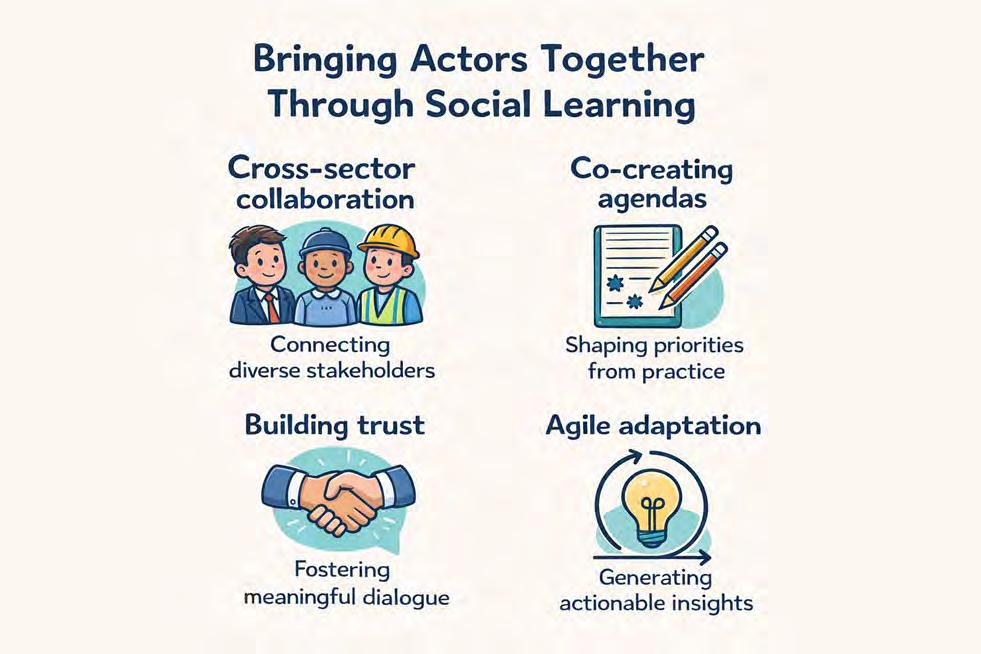
A strong agenda is not just a to do list. Especially when we bring together different constituencies. Agenda can be built on a shared understanding of what matters most and what can realistically be achieved. Social learning helps create these agendas by starting from real experience rather than abstract plans. People bring stories from their daily work—the problems keeping them “up at night.” These insights help shape priorities that reflect actual needs. It is through real-life stories that the common agenda for tripartite/multilateral cooperation is shaped.
The agenda is therefore built with the group, not for them. Because participants help shape it, they feel ownership and are more committed to putting it into action. The agenda also evolves over time as new ideas emerge. It stays flexible, which is essential in fast changing environments.
Social learning succeeds because it taps into people’s natural motivation, according to Wenger-Trayner, during the 2-day onsite training on Social Learning. Participants join because the topic matters to them - not because they were told to attend. This creates energy and creativity. These conversations allow people to learn from mistakes without fear, test ideas quickly, and strengthen their understanding through shared language and tools. There is a range of easy-to-use facilitation tools (e.g., lean café/ world café, debate, fishbowl…) to help different people and groups converse with each other.
Organisations that adopt social learning often see real improvements, as confirmed by Wenger-Trayner. Decisions become better informed, collaboration grows stronger, and learning becomes continuous instead of
occasional. Participation becomes more inclusive, giving a voice to those closest to the ground. New ideas emerge more easily, and people feel part of a shared professional identity, improving morale and motivation.
Simply gathering people in a room isn’t enough. They need structures that help them learn from each other meaningfully. Social learning provides that structure. It turns groups into communities, conversations into shared understanding, and fragmented experiences into actionable plans. In a world defined by uncertainty, social learning is not just useful - it is essential.
When people connect through shared practice, reflect together, and co create their future, they build agendas that are meaningful, realistic, and capable of creating real change.

LIIA KAARLÕP
Liia Kaarlõp is a member of the ETF Team on Social Partners, on Skills Governance, and on Quality Assurance. Chair of the ETF Staff Committee and Secretary of the ETF-USF
L'Union Syndicale soutient souvent des affaires qui mettent en évidence cette mutation des lieux de travail traditionnels vers de nouveaux espaces de travail contemporains. L'une d'entre elles, décrite ci-dessous dans le strict respect de l’anonymat, a pu bénéficier du soutien juridique de notre syndicat. Un sujet que nous ne pouvons plus ignorer.
Ma réflexion s’inscrit dans une perspective attentive aux réalités vécues par les travailleurs, sans prétendre à une neutralité absolue ni à l’exhaustivité des approches possibles. Elle met l’accent sur les risques psychosociaux liés à la déterritorialisation du travail et sur le rôle potentiel des syndicats, tout en reconnaissant que le télétravail et la worksphere peuvent également offrir des opportunités en termes de flexibilité et d’autonomie.
Au printemps 2020, alors que la pandémie de COVID-19 bouleverse l’Europe, PJ travaille à l’Institut européen d’innovation et de technologie (EIT). Son poste est officiellement à Budapest, où elle réside habituellement, tandis que sa famille vit à Cologne avec son conjoint et ses deux enfants. Avant la crise sanitaire, elle maintenait un fragile équilibre en rejoignant sa famille chaque week-end en Allemagne tout en retournant travailler en Hongrie. Cet arrangement, bien qu’éprouvant, était soutenable et conforme à ses obligations statutaires. L’expérience de PJ, confrontée à la crise pandémique, illustre ainsi l’enjeu central de ce chapitre : analyser comment l’organisation du travail, historiquement fondée sur l’ancrage territorial et la présence physique, est remise en question par la généralisation du télétravail et par la nécessité d’articuler sphère professionnelle et vie familiale, posant ainsi les bases pour examiner les tensions structurelles entre droit du travail territorial et nouvelles formes de mobilité professionnelle à l’échelle européenne.1
La généralisation du télétravail change la donne. Bien que la numérisation accélérée dans les institutions de l’UE permette le travail à distance, les règles internes de l’EIT se durcissent. Le télétravail depuis l’étranger devient exceptionnel, la présence physique restant la
1 « Les travailleurs à distance et leur droit à la déconnexion: la réglementation du télétravail dans l’UE. » EURES. 2022. Accessible le 02/03/2026
norme, même en pandémie. Cependant, quarantaines, vols annulés et restrictions rendent le retour régulier en Hongrie quasi impossible pour PJ. Elle demande donc une autorisation temporaire pour télétravailler depuis Cologne, en attendant la stabilisation des mesures sanitaires.
L’EIT oppose à deux reprises un refus à cette demande, en avançant des justifications succinctes, peu étayées par les nécessités effectives du service. Les difficultés familiales et psychologiques rencontrées par PJ – éloignement de ses enfants, exposition accrue aux risques sanitaires, fatigue liée aux déplacements – ne sont pas véritablement prises en considération. Avec le soutien de l’Union Syndicale, PJ saisit le Tribunal de l’Union, qui se trouve alors confronté à la question de savoir si, dans le contexte exceptionnel de la crise sanitaire, l’Administration peut maintenir une exigence stricte de présence territoriale alors même que les conditions matérielles du travail ont été profondément modifiées.
La Cour relève que la décision du directeur de l’EIT manque de justification, que la situation de PJ soulève une question « inédite et délicate » quant à l’interprétation de l’obligation de résidence du personnel des institutions européennes, et que l’impact sur sa vie familiale constitue un préjudice grave et irréparable. Elle ordonne donc la suspension de la décision de l’EIT et autorise le télétravail depuis le lieu où se trouve sa famille.
L’affaire PJ c/ EIT met en évidence une tension structurelle qui traverse aujourd’hui l’ensemble des systèmes

juridiques et des organisations : d’une part, un droit du travail historiquement structuré autour de la notion de lieu – qu’il s’agisse du lieu d’affectation, de la résidence obligatoire, de la résidence fiscale ou du lieu de prestation – et, d’autre part, une réalité contemporaine où le travail tend à s’organiser selon des modalités distribuées, flexibles et transnationales.
Cette affaire illustre la mutation qu’il nous faut appréhender. Il faut changer de perspective et s’appuyer sur un cadre théorique différent : la worksphere. Dans leur étude WorkplaceReloaded.EnsuringWell-Beinginthe Modern‘Worksphere’, présentée lors de la 6e conférence annuelle de l’ETUI sur «The Future of Work », L. Ratti, A. Kornadt, N. Potocka-Sionek et C. Vögele introduisent la notion de worksphere où les transformations technologiques, organisationnelles et sociales ont rompu l’ancrage spatial du travail, autrefois centré sur un lieu unique — l’espace de travail — lieu de production, supervision et sociabilité. L’identité professionnelle ne se comprend plus comme dépendante d’un espace de travail fixe, mais s’intègre à un écosystème de lieux privés, numériques et transfrontaliers.
Ce modèle laisse place à une sphère professionnelle disséminée, fluide et distribuée, où les frontières entre espace privé et professionnel deviennent poreuses.
Cette théorie révèle un décalage structurel : le travail est déterritorialisé et la régulation juridique reste attachée à la localisation géographique de la prestation.
Ainsi, l’affaire de PJ révèle, de manière éloquente, à la fois les limites d’un droit attaché à la territorialité et la pertinence de mobiliser la worksphere comme cadre théorique pour repenser les normes de résidence, de présence et d’organisation du travail, à l’aune des dynamiques réelles du travail contemporain.
Selon cette grille d’analyse qui nous a été présentée par Luca RATTI, professeur associé en droit du travail européen comparé à l’Université de Luxembourg, Les trois traits de la worksphere sont: disséminée, fluide, distribuée.
Disséminée : le travail n’est plus localisé dans un unique espace matériel (le bureau, l’usine, l’administration), mais il se répartit dans une multitude de lieux physiques ou numériques. Le domicile devient un lieu de travail. Les transports, les tiers lieux, les plateformes numériques deviennent des lieux possibles d’activité professionnelle. Les frontières entre les espaces personnels, familiaux et professionnels se superposent, parfois jusqu’à se confondre.
Fluide : la worksphere n’a pas de forme stable. Elle évolue en fonction des besoins organisationnels, des contraintes personnelles et des contextes sanitaires, économiques ou technologiques. Cette fluidité se traduit par la variation constante des lieux de travail, des horaires flexibles, des modes de présence multiples (synchrone, asynchrone, hybride) et la capacité à passer rapidement d’un rôle personnel à une tâche professionnelle. Elle implique aussi une porosité des temps : travail, repos, famille et mobilité ne sont plus cloisonnés. Le travail traverse la vie
La Worksphere impose aux syndicats de redéfinir en profondeur leurs priorités en matière de prévention et de gestion des risques psychosociaux (RPS).
quotidienne, faisant de la worksphere un environnement mouvant, davantage une dynamique qu’un espace.
Distribuée : la worksphere n’est plus centrée sur un seul endroit ni sur une seule instance organisationnelle. Elle se situe partout où l’activité professionnelle peut être réalisée. Cela signifie que le travail s’étend géographiquement (échelles transnationales, travail à distance, équipes dispersées), structurellement (multiplicité des plateformes, des dispositifs numériques, des réseaux organisationnels), et fonctionnellement (travail réparti entre plusieurs environnements, outils, supports). Dans cette perspective, l’unité du lieu de travail disparaît au profit d’un écosystème d’espaces interconnectés, et, dans les institutions et organisations de l’UE, souvent transfrontaliers.
La contribution de Ratti et de ses coauteurs fournit ainsi un cadre conceptuel pertinent pour analyser la manière dont la régulation juridique, encore centrée sur la localisation géographique, se confronte désormais à la réalité d’un travail digitalisé et distribué.
Cette tension, qui s’inscrit au cœur de l’évolution du travail contemporain, conduit à interroger la pertinence des concepts juridiques traditionnels tels que le lieu de travail, la résidence, la présence physique ou le lieu de recrutement. Il s’agit désormais d’adapter ces notions à une économie où la production s’inscrit dans une sphère d’activité élargie, englobant de façon simultanée les dimensions professionnelles, personnelles et familiales.
La Worksphere impose aux syndicats de redéfinir en profondeur leurs priorités en matière de prévention et de gestion des risques psychosociaux (RPS).
La déterritorialisation du travail fragilise les repères collectifs traditionnels : elle étend l’activité dans des lieux privés, multiplie les temporalités, accroît la porosité entre vie personnelle et professionnelle, et expose les travailleurs à de nouvelles formes de charge mentale: isolement, précarité organisationnelle et hyper disponibilité. Dans ce contexte, les syndicats se doivent de développer des outils pour cartographier cette dispersion et ses effets. Il leur faut évaluer l’impact des mobilités contraintes, des injonctions contradictoires du travail hybride, des risques d’autosurveillance liés au télétravail intensif et des tensions familiales dues à l’absence de déconnexion. Ils doivent aussi renforcer leur intervention
dans la sphère numérique (surveillance, charge cognitive, fragmentation attentionnelle) et adapter le dialogue social lié à la prévention des RPS en intégrant la gestion émotionnelle, la santé mentale, la stabilité géographique et la prévention de l’isolement. Pour faciliter le passage de la théorie à la pratique, les syndicats peuvent mener plusieurs actions concrètes. Mettre en place des groupes de travail mixtes réunissant représentants du personnel, experts et volontaires pour cartographier les besoins spécifiques liés au travail distribué. Lancer des enquêtes auprès des travailleurs afin de recenser les situations à risque et les attentes prioritaires. Expérimenter ou piloter des outils de signalement anonymisé pour détecter rapidement les situations problématiques. Organiser des ateliers d’échange de pratiques sur la prévention des risques psychosociaux liés au télétravail et sur la gestion des situations familiales complexes. Demander à l’employeur l’ouverture de négociations dédiées à la définition de protocoles de déconnexion et de stabilité géographique. Ces premières mesures offriraient déjà un socle opérationnel pour renforcer la protection des travailleurs et ancrer les nouvelles réalités de la worksphere au sein de dispositifs collectifs.
L’enjeu est double : il s’agit, d’une part, d’assurer une protection effective des travailleurs dans un environnement où les risques évoluent, se diffusent et se complexifient, et, d’autre part, de repenser les normes collectives telles que le droit à la déconnexion, les garanties contre la mobilité forcée ou l’encadrement du télétravail transnational. L’objectif est de veiller à ce que la flexibilité structurelle de la workspherene se traduise pas par une vulnérabilité accrue pour les travailleurs. Dans cette perspective, les syndicats occupent une position centrale dans la négociation de cadres de prévention adaptés à un travail qui s’inscrit désormais dans une sphère en constante évolution.
Sur le plan juridique, ces démarches rencontrent fréquemment des obstacles importants. Les textes statutaires, les règlements internes ou la jurisprudence peuvent s'opposer à l'assouplissement des règles territoriales, en invoquant des obligations de résidence, des contraintes fiscales ou l’intérêt du service. Les employeurs peuvent également justifier leur position par la nécessité d'une harmonisation administrative ou par des préoccupations liées à la sécurité des données et à la gestion des équipes à distance. À l’opposé, certaines directions dans les agences de l’UE se réfugient derrière la
tutelle de la Commission européenne, tout en revendiquant les prérogatives de leur autonomie en matière de RH. Dans ce contexte, les représentants syndicaux doivent anticiper les marges de négociation, se préparer à des échanges soutenus avec la direction, mobiliser une argumentation étayée sur la faisabilité organisationnelle, et, si nécessaire, recourir à des expertises juridiques indépendantes pour soutenir leurs revendications. Parallèlement, il ne faut pas sous-estimer l'impact de la rigidité des cadres statutaires sur la santé mentale et l'équilibre psychosocial des salariés concernés. L'impossibilité d'adapter le lieu de travail à leur réalité de vie peut accroître le stress, laisser se développer un sentiment d'injustice, engendrer une fatigue liée à des déplacements forcés et, parfois, un isolement social aggravé. Ces difficultés démontrent que les résistances juridiques et les risques psychosociaux se nourrissent mutuellement, soulignant la nécessité d'une réponse coordonnée entre équipes juridiques et acteurs de la prévention.2
Pour rendre la prévention effective, il apparaît nécessaire que les syndicats déploient un ensemble cohérent d’outils, en hiérarchisant leur mise en œuvre selon l’urgence et l’impact potentiel afin d’optimiser l’allocation des ressources. Par exemple, la mise en place de dispositifs de signalement anonymisé et l’élaboration de protocoles de déconnexion constituent des priorités, dans la mesure où elles permettent une détection rapide des situations critiques et offrent une protection immédiate de la santé mentale.
Les cartographies de mobilité et les diagnostics RPS « nouvelle génération » constituent également des leviers majeurs pour cibler les actions syndicales là où les risques sont les plus marqués. ("Cartographie des positionnements des syndicats sur la santé mentale au travail" 2023) Dans certaines administrations, des instances existent déjà et il n’y aurait qu’à les renforcer :
→ Dispositifs de signalement anonymisé
Canaux sécurisés dédiés aux difficultés du travail hybride: surcharge numérique, isolement prolongé, conflits d’horaires, tensions familiales liées à l’absence de déconnexion, contraintes transnationales.
→ Cartographies des trajectoires de mobilité
Recueil et analyse des déplacements professionnels (hebdomadaires, transfrontaliers, soumis à des aléas sanitaires ou logistiques) afin d’évaluer leurs impacts sur la fatigue, le stress et le temps de vie, et d’objectiver les demandes de stabilité géographique.
→ Diagnostics RPS “nouvelle génération”
Intégration de variables spécifiques à la worksphere: charge de coordination numérique (réunions en série, multitooling), fragmentation attentionnelle, disponibilité permanente (messageries instantanées, fuseaux horaires), isolement relationnel.
→ Audits ergonomiques du domicile
Évaluation volontaire et confidentielle des conditions matérielles du télétravail (espace dédié, bruit, équipement, sécurité), avec recommandations et mesures correctrices cofinancées (équipements, insonorisation, fauteuils, écrans).

→ Protocoles de déconnexion et heures de silence numérique.
Ces heures de silence numérique ont montré des effets bénéfiques sur la santé : une étude menée à l’Université de Bielefeld en 2022 constate, par exemple, une réduction notable des niveaux de cortisol chez les télétravailleurs bénéficiant d’un protocole d’interruption numérique strict, ce qui traduit une meilleure gestion du stress et une protection accrue de l’équilibre psychique. En liant explicitement la règle aux bénéfices observés en santé, les syndicats facilitent l’adhésion managériale et renforcent la légitimité des protocoles de déconnexion.
Définition de plages de non-sollicitation opposables, par exemple un créneau protégé de 20h00 à 7h00 pendant lequel aucune sollicitation professionnelle (emails, messages, appels) n'est tolérée, sauf urgence explicite. Limitation des notifications, paramétrage technique automatique (statuts, envois différés), indicateurs de charge partagés en CPPT / Comité paritaire.
• Ateliers de prévention des risques numériques Formations sur la gestion des e mails, la prévention de l’hyper connexion, les stratégies attentionnelles (batching, quota de réunions, caméras facultatives, durées maximales), l’hygiène numérique.
• Soutiens dédiés aux situations familiales complexes Cellules d’appui (juristes, psychologues, RH) pour les cas de garde transfrontalière, de proches dépendants ou de résidences multiples, avec procédures de dérogation encadrée aux règles de présence.
• Comités hybrides de suivi du travail à distance
Instances mixtes (médecin du travail, HSE, juriste, psychologue, élus) chargées d’un suivi continu des effets de la dispersion géographique, de la détection des risques émergents et de propositions d’ajustement immédiates (pilotes, revues trimestrielles).
Ces dispositifs, articulant écoute, évaluation et négociation, permettent de rendre visibles des risques souvent invisibles et d’ajuster la prévention aux réalités évolutives de la worksphere. Ainsi, un dispositif de signalement anonymisé offre la possibilité à des agents isolés de faire remonter rapidement des difficultés psychosociales liées au télétravail intensif. Cette démarche peut conduire l’employeur à adapter l’organisation du travail ou à proposer un accompagnement psychologique approprié.
L’affaire PJ c/ EIT constitue une illustration concrète d’une transformation structurelle : la disparition progressive du lieu de travail traditionnel au profit d’une worksphere disséminée, fluide et distribuée. Ce cas met en évidence les limites des normes fondées sur la territorialité et souligne la nécessité de repenser les catégories juridiques telles que le lieu de travail, la résidence ou la présence, à l’aune d’un travail délocalisé et connecté. La théorie développée par L. Ratti et ses coauteurs fournit un cadre conceptuel solide pour appréhender l’écosystème réel du travail et en déduire de nouvelles exigences normatives. Pour les syndicats, la tâche consiste à la fois à concevoir des outils adaptés aux risques liés à la mobilité et à renégocier les garanties collectives. Ils deviennent ainsi les acteurs d’une prévention globale, capable de prendre en compte les trajectoires, les temporalités et les vulnérabilités d’un travail désormais sans ancrage fixe. C’est à cette condition que la flexibilité de la worksphere pourra s’accompagner de garanties effectives en matière de protection, de dignité et de santé au travail.
Face à ces défis urgents, il est temps d’agir concrètement. Que tous les élus du personnel et les représentants syndicaux initient le dialogue au sein de leur institution. Qu’ils inscrivent ces sujets à l’ordre du jour ou lancent, même à titre expérimental, l’un des outils présentés ici. Chaque action, même modeste, contribue à construire des réponses collectives et à garantir que les transformations du travail ne se fassent ni au détriment des travailleurs ni sans leur voix.

Emmanuel Wietzel est un formateur expérimenté auprès des acteurs syndicaux européens (entre autres la Cgt, FSESP, ETUI, USF, FERPA, Eurocadres). Il aide les syndicats et leurs dirigeants à analyser les enjeux européens et à élaborer des stratégies collectives pour faire face aux transformations du travail. Il s'intéresse actuellement à l'impact de l'IA sur le monde du travail et au rôle renouvelé du syndicalisme. Alliant engagement pratique et expertise analytique, il contribue activement aux débats sur l'avenir du travail et sur la négociation collective en Europe.
By Agnieszka Piasna
Digitalisation is changing the reality of work in every sector. New tools, platforms and computerised systems are shaping how tasks are organised, how decisions are made, and how workers are monitored and evaluated. For trade unions, these changes matter because they directly influence members’ rights, working conditions and collective strength.
While technology offers job improvements, it also creates new pressures and blurs boundaries between work and private life. These impacts underscore the need for unions to have reliable, accessible evidence to respond effectively—through collective bargaining, organising, or policy advocacy.
With these concerns in mind, this publication offers a brief overview of a more extensive working paper that examines these issues in greater depth. It focuses on aspects of digitalisation most relevant to trade union work and highlights key findings to support negotiations and campaigns.
We suggest readers read the full findings, in-depth analysis and complete methodology in the original full working paper “Job quality and digitalisation” here
Digitalisation is a major driver of change in today’s labour markets, with digital technologies increasingly permeating sectors and occupations. Evidence from the European Company Survey (Eurofound 2019) confirms that digitalisation is both widespread and accelerating, a trend further reinforced by the Covid 19 pandemic, which expanded the use of ICTs across diverse work settings. Digitalisation affects labour markets directly through changes in employment relationships and work organisation—altering the duration, place and nature of work—and indirectly through shifting power dynamics, product and service innovation and broader structural changes in occupational composition, including job loss and the emergence of new roles.
Debate has centred on digital technologies’ potential to automate human labour (Frey and Osborne 2013), raising concerns about unemployment but also offering the possibility of reduced working hours (Piasna 2023a). Other research focuses on how technological change interacts with workers’ skills, shaping outcomes by occupational class, education or experience. These shifts may generate labour market polarisation in terms of demand, productivity and earnings between skilled and unskilled workers (Autor et al. 2003; Frank et al. 2019). While this literature illuminates the economic implications of technological change, it does not fully explain how digitalisation affects the qualitative dimensions of work or workers’ lived experiences. Although the job-quality effects of technological change have prompted considerable debate, many claims remain poorly grounded in empirical evidence.
This paper contributes to this gap by empirically testing key hypothesised effects of digitalisation on job quality. Using a multidimensional job quality index enables examination of how technology influences different dimensions of work and helps identify trade-offs and synergies. The focus is on digital technologies that shape what workers do—those affecting work processes—rather than on tools that merely support task performance. The approach incorporates a broad range of technologies without restricting analysis to specific job types. Digitalisation is conceptualised through two main lenses: the role of computerised systems and algorithmic management in shaping working time, task allocation and work intensity; and the impact of digitalisation on job demands and resources. The analysis draws on data from the 2021 EWCTS covering the 27 EU Member States.
Continuous working days increasingly fragment into short, irregular units of paid time interspersed with unpaid periods...
Adoption of digital technologies in the workplace takes many different forms, so a common set of outcomes for all workers is unlikely. Rather, the impact of digitalisation depends on the type of technology used and its purpose, where and for whom it is applied, but also how its use is managed and regulated. In this paper, the focus is on the use of computerised systems at work – that is, programmable and/or connected devices – and on the contexts in which such computers influence what workers do. While still broad and, in principle, applicable to most, if not all, occupational classes, this approach to digitalisation aims to map its impact by comparing workers in similar jobs and institutional settings who are exposed to such digital technology with those who are not.
Digital technologies are reshaping the temporal organisation of work by enabling new forms of measuring, standardising and quantifying labour (Altenried 2020). They allow work to be broken into small time units and allocated in real time to match staffing needs (Lambert et al. 2019), while enhanced computational capacities make large scale task–worker matching both feasible and cost effective. These systems can compress task durations, reducing breaks and increasing work intensity (Green et al. 2022).
Such tools are transforming established time regimes. Continuous working days increasingly fragment into short, irregular units of paid time interspersed with unpaid periods, as employers exclude what they deem low value activities (Standing 2023). Workers describe this as experiencing ‘atomised’ and ‘punctuated’ time (Piasna 2023a). The platform economy illustrates this dynamic through algorithmic management (Kellogg et al. 2020), but similar scheduling and monitoring practices are now common in traditional workplaces as well, contributing to more unpredictable hours and hectic work rhythms (Scheele et al. 2023).
These efficiencies rely on workers being available to take up scattered units of paid activity, creating pressure for ‘incessant availability’ (Piasna 2023a). This often results in spillover into private time, extending work beyond contractual hours and blurring work–life boundaries, with negative consequences for work–life balance (Piasna 2023a). Digital technologies reinforce this through automated management and portable devices that bring work into personal spaces. Research highlights this risk in remote work (Arabadjieva and Franklin 2023), platform work (Schor 2020; Pulignano et al. 2021) and other digitally enabled work forms.
Where employment is highly individualised—such as among freelancers—digital tools can intensify pressures for self directed overwork, contributing to the ‘autonomy paradox’, in which autonomy feels like an obligation to work more (Mazmanian et al. 2013; Ivanova et al. 2018).
Overall, digitalisation tends to increase the unpredictability of working time, fragment the standard workday and intensify work. It also encourages extended availability, leading to longer hours and further spillover into private life. Although such processes predate digitalisation and have been linked to deregulation and flexibilisation, digital technologies appear to reinforce these patterns. The empirical analysis that follows examines differences in job quality among otherwise similar workers facing varying degrees of digitalisation.
The digitalisation of work introduces both new resources and new demands, reshaping power relations between workers, managers and organisations. One major potential benefit lies in upskilling: as technological developments raise skill requirements, workers increasingly need competencies to use and develop digital tools (Gallie 2007; ILO 2021). This shift is associated with more autonomous, creative, and innovation-driven jobs, suggesting a structural move towards higher-skilled, more autonomous work (Hancock et al. 2023).
However, digital technologies also expand employers’ capacities for supervision and control, which may undermine worker autonomy (De Stefano 2018; ParentRocheleau and Parker 2022). In platform work, algorithmic management combined with precarious contracts severely restricts workers’ ability to choose when and what they work on. The autonomy outcomes of digitalisation therefore depend strongly on employment quality, potentially creating a divide between secure workers who
benefit from digital tools and precarious workers facing growing constraints and limited discretion.
Where education systems fail to meet rising skill demands, skilled workers gain bargaining power, which can translate into improved wages and career prospects. This aligns with evidence that digitalisation increases productivity and profitability, provided workers have sufficient leverage to negotiate gains (Tahlin 2007; Berg et al. 2023). Yet, while wage effects are well documented, the impact of digitalisation on aspects such as income stability or predictability remains less understood.
Digitalisation also affects job content, potentially reducing tedious or dangerous tasks (Jetha et al. 2023). At the same time, it introduces new psychological, psychosocial and ergonomic risks associated with digital device use (Wixted et al. 2018). As some physical risks decline and others increase—such as strain from prolonged computer use or demands imposed by automated machinery—overall effects may cancel out, explaining findings of no net change in physical risk factors (Antón et al. 2023). This underscores the importance of examining specific risk categories separately.
Finally, access to collective voice and representation remains a critical resource for job quality (Hyman and Gumbrell-McCormick 2020), especially for vulnerable workers (Piasna et al. 2013; Kirov 2015). Worker consultation may help ensure that digitalisation supports improvements in job quality. Yet digitalisation’s impact on representation is ambiguous: workplace fragmentation may weaken collective structures (Weil 2019), but firms where negotiation is possible may be more inclined to adopt new technologies with less resistance (Mengay 2020). As such, the relationship between digitalisation and worker representation remains an open empirical question.
control tend to show higher exposure to the controlling aspects of digitalisation.
The impact of digitalisation on job quality is assessed using the JQI. It is a multidimensional index of job quality developed by ETUI researchers, allowing comparison across EU countries (Leschke et al. 2008; Piasna 2017). Centred on workers’ well being, it captures aspects of work linked to health and safety, work–life balance, and psychological and economic well-being.
The index comprises six equally weighted dimensions: income quality; forms of employment and job security; working time and work–life balance; working conditions; skills and career development; and collective interest representation and voice. These draw on multiple data sources, including the European Working Conditions Survey (EWCS/EWCTS), the Labour Force Survey (LFS) and the ICTWSS database.
Because this working paper focuses on individual-level associations between technology use and job quality, only 2021 EWCTS individual data are used for the analysis. The analysis includes 58,403 employed adults aged 16+ and covers 27 EU countries. Further methodological details can be found in the original working paper.
Digitalisation in the workplace is measured through two indicators: use of ICT at work and the influence of computerised systems on work. ICT use is measured by how frequently workers use devices such as computers, tablets, or smartphones, coded from 0 (“never”) to 100 (“always”). The degree to which computerised systems influence work is measured separately on a five point scale, including the option that such systems do not apply. This second measure—central to the analysis—captures workers’ perceptions of how digital technologies shape their tasks.
Workplace digitalisation varies strongly by job type. ICT use is highest among clerical workers, professionals, managers, and technicians, and much lower in elementary occupations. The influence of digital systems mirrors ICT usage, though in lower skilled manual jobs—such as operators, assemblers and elementary occupations— digital technologies exert relatively high control despite lower overall use, suggesting disproportionate exposure to algorithmic management and technology driven pacing of work.
Differences also emerge across employment relationships. Employees with indefinite contracts use ICT most frequently, while the self employed—especially freelancers—use ICT often but report lower influence of computerised systems, similar to securely employed workers. Part time workers consistently show lower exposure to digital technologies than full time workers, even when accounting for job type and individual characteristics. Among full-time workers, women are more likely than men to use computers and experience their influence, a difference not observed among part time workers.
Significant cross national variation exists as well. Romania and Greece show notably low ICT use at work, while eastern, central and southern European countries generally display lower digital diffusion, with exceptions such as Croatia, Hungary and Czechia. Finland, followed by Sweden, shows the highest technology adoption. Importantly, the way digital technologies shape work tasks does not correspond directly to their frequency of use. For example, Germany, Luxembourg and the Netherlands exhibit high ICT use but low influence of digital systems on workers. Conversely, countries such as Romania, Lithuania, Spain, Poland and Portugal show lower ICT use yet strong technological influence on work organisation.
These patterns reflect broader institutional structures. Countries with historically weaker individual-level control (Gallie and Zhou 2013) tend to show higher exposure to the controlling aspects of digitalisation. By contrast, stronger industrial relations frameworks can moderate technological control, supporting more worker protective integration of digital tools. These findings align with research showing that the effects of digitalisation depend heavily on national institutional contexts (Kornelakis et al. 2022; Minardi et al. 2023).
Before analysing job quality differences related to digital technologies, we first provide an overview of how job quality varies between different groups of workers. The focus is on employment status because it affects both the precariousness of work and exposure to technology.
No labour market segment has the best outcomes on all aspects of job quality simultaneously. Employees on indefinite contracts feel most secure about their jobs and have largely predictable incomes, but only average prospects. Employees on non-standard contracts report similar prospects but lower job security and lower predictability of earnings. The self-employed are most optimistic about prospects (with little difference between freelancers and other self-employed). Their job security is lower than that of workers with indefinite contracts but slightly higher than that of fixed-term and other employees; freelancers feel less secure than other selfemployed. Self-employment is generally associated with very low income predictability.
The work intensity index (including work at high speed, to tight deadlines, and working in free time to meet work demands), together with the need to work at short notice, moves in parallel with work autonomy across employment statuses: more autonomy is associated with more intense and less predictable work. This pattern is strongest among freelancers and other self-employed, suggesting self-directed work can lead to self-exploitation where job and income security are low. Employees with fixed-term contracts have the least autonomy and a less intense pace of work.
The impact of digital technologies is first assessed in terms of working time – the temporalities and rhythms of work. Where computerised systems influence work organisation—through algorithmic management or automated allocation, evaluation or scheduling—working time is treated as discrete units rather than continuous periods. Digital technologies make managing such units easier and cost-efficient, enabling closer matching of labour supply and demand and resulting in punctuated working time.
This is evaluated by comparing how often workers are required to work at short notice. Overall, the analysis confirms a significant positive relationship between digitalisation and the frequency of working at short notice. This holds true for different aspects of digitalisation:
automated management as well as the use of computers as tools for performing work tasks. To discern potential confounding compositional effects, all analyses are carried out while controlling for individual characteristics, job and contract type, as well as country fixed effects. An additional disaggregation of the results by broad economic sector reveals that digitalisation is linked to more frequent work at short notice, in particular in education, health care and financial services.
Therefore, automation enables fragmentation of working time and its scheduling at short notice to match peaks in demand and workload. This results in intensification of work. The results show that workers strongly affected by computerised systems most often work at high speed and under tight deadlines. The effect is observed across all sectors and is most pronounced in construction, manufacturing, health care and other services, and less manifest in transport.
In sum, when computer systems influence what people do at work, working hours are more punctuated, fragmented and unpredictable, and work is more intense. The extent of technological impact matters: a larger impact is associated with the most intense work and the most frequent short notice work. This supports claims that digital technology achieves efficiency gains by tightly matching tasks to fragmented time units, leading to effort biased technological change.
The literature suggests a paradoxical impact of digital technologies: they support more efficient allocation of work by closely matching tasks to workers, yet simultaneously push workers to extend their availability (as noted in platform work and in more general technology mediated contexts). In many cases, workers struggle to disconnect, as work follows them into private time and spaces via portable devices.
The first test of this presumption concerns the spillover of work beyond paid hours, reflecting blurred work/nonwork boundaries. Results show that workers experiencing any influence of computers on their work are significantly more likely to work in their free time to meet demands than those reporting no influence. The extent of this influence does not substantially change the frequency of spillover. An exception is the education sector, where spillover rises more clearly and linearly with the degree of computer influence.
A second measure of extended availability is the number of weekly working hours, particularly the incidence of very long weeks exceeding the 48 hour legal limit. Results indicate that workers exposed to computer influence work more hours per week and are more likely to exceed 48 hours than workers not exposed at all. As with work spillover, the main difference is simply between presence versus absence of computer influence; the extent of influence does not produce a consistent linear pattern.

Extended availability can also be seen through self reported work–life balance—how well working hours fit with family and social commitments. Results show that workers whose work is influenced by computer systems report significantly worse work–life balance. Notably, this negative effect of digitalisation is stronger for men than for women.
Overall, work with digital technologies that shape work organisation is associated with greater spillover into private time, including more frequent work in free time, longer working hours and poorer work–life balance. These outcomes do not appear to increase with greater levels of computer influence, which is puzzling. Although the analysis controls for individual characteristics, job types and employment status, some unobserved factors may remain and warrant further investigation.
Given the significant impact of digital technologies on the temporal structure and demands of work, it is important to assess whether digitalisation also provides workers with additional resources. Digitalisation has been linked to upskilling and the removal of mundane, dangerous or unpleasant tasks, suggesting that jobs with greater ICT penetration might offer better quality at least in some respect.
Setting aside the general positive correlation between computer use and earnings—which partly reflects that higher skilled professionals are more likely to use computers—the results show a significant positive relationship between digitalisation and income predictability when compositional effects are controlled for. Workers who experience the influence of digital technologies have more predictable earnings, even when comparing very similar jobs.
However, greater income predictability does not translate into higher job security. The results show that job security declines as computer influence increases; workers exposed to such influence are more likely to think they could lose their job within six months. At the same time, they report more optimism about career prospects, particularly those experiencing a moderate degree of computer influence. It is unclear whether this optimism stems from perceived employability linked to digital skills or from expectations about growth in digitalised occupations.
Digital technologies also influence worker autonomy. While professionals who use computers often have greater autonomy, this is largely a compositional effect. The results show only small increases in autonomy among workers strongly affected by computers, and these differences disappear once job characteristics are controlled for. Digitalisation appears to increase managerial control and monitoring in many contexts, potentially limiting autonomy.
This varies significantly by employment status. The results indicate that employees do not show notable autonomy differences in relation to digitalisation once compositional factors are controlled for. For freelancers, however, digitalisation has a net negative effect on autonomy, suggesting increased control and subordination rather than entrepreneurial freedom. Given that freelancers are more exposed to digital technologies, this is concerning. In contrast, other self employed workers (such as directors or managing partners) experience increased autonomy with digitalisation.
Digital technologies also affect physical and psychosocial risks. The index of physical risks includes exposure to noise, chemicals, infectious materials, tiring postures, lifting and moving people, and carrying heavy loads. A separate measure captures repetitive hand or arm movements linked to computer use. The results show that low and moderate exposure to digitalisation is associated with more physical risks than no exposure. Only workers heavily influenced by computer systems report lower exposure to traditional physical risks, but they face the highest exposure to repetitive strain. This suggests limited overall substitution of risky tasks by technology, with trade offs between traditional hazards and computer-specific risks.
Finally, access to collective representation is examined, focusing on employees (since self-employed workers were not asked relevant questions in the survey). In general,
collective representation is linked to improved job quality (Piasna 2023b) and may help workers negotiate the challenges of digitalisation. The results show that workers more exposed to computer systems have greater access to representation and voice mechanisms, even after accounting for compositional factors. However, there are no substantial differences in how access to representation moderates job quality outcomes across different levels of digital exposure.
The growing use of digital technologies in European workplaces is clear, yet their precise impact on work remains under examination. While research has shown that digitalisation transforms job structures through changes in task content, automation and the creation of new occupations (Frey and Osborne 2013), this working paper focused on its consequences for job quality and workers’ experiences. It examined differences between digitalised and non-digitalised work settings among otherwise similar jobs.
Digitalisation’s impact was conceptualised through two perspectives: the role of computerised systems and algorithmic management in shaping working time, task allocation and work intensity; and changes in job demands and resources for workers. Job quality was assessed using
the multidimensional European Job Quality Index, applied to data from the 2021 EWCTS across 27 EU Member States.
The results empirically support claims that digitalisation disrupts existing time regimes. Computerised systems were associated with more unpredictable, hectic, and intense work rhythms, work encroaching on private time, longer working hours, and poorer work–life balance. These effects were observed even among similarly skilled workers in similar jobs, with technology use as the main differentiating factor. This aligns with the thesis that digitalisation produces more “atomised” and “punctuated” working time and enables employers to tightly match workloads to staffing needs, while workers respond by extending their availability (Piasna 2023a).
The analysis also revealed a complex relationship between digitalisation and workers’ resources and bargaining power. After controlling for compositional factors, digitalisation was linked to greater income security and better career prospects, but also to lower job security. This corresponds with broader trends of fragmented labour markets and shifts away from stable employment, but the study shows that technology-related differences appear even within otherwise comparable jobs.
The findings likewise challenge the assumption that digitalisation increases autonomy: any observed rise in discretion stems from compositional factors rather than technology’s direct effects. Particularly concerning is the
autonomy loss observed among freelancers—an already vulnerable group heavily exposed to digitalisation— echoing insights from the platform-economy literature (De Stefano 2018; Piasna and Drahokoupil 2021).
The analysis further highlighted trade-offs between traditional and emerging risks. Some physical risks are less common in digitalised work, but new risks linked to automation and prolonged computer use are rising, underscoring the need for closer monitoring and appropriate regulation. A more positive finding concerns access to collective representation, which increases with the intensity of computer influence on work. However, the direction of this relationship still needs to be better analysed. It is uncertain whether workplaces with stronger representation are more likely to adopt new technologies, or whether digitalised environments foster solidarity and participation, as suggested by Vandaele and Piasna (2023). Nevertheless, this suggests that workers facing new challenges and risks may also have opportunities to negotiate a more worker-centred digital transition.
For reference, please refer to the original working paper here.

Agnieszka Piasna is a senior researcher in the Economic, Employment and Social Policies Unit at the ETUI. A labour sociologist, she studies job quality, labour market regulation, digitalisation, and gender equality. She coordinates the ETUI Internet and Platform Work Survey, contributes to the European Job Quality Index, and researches working time reduction. She has advised Eurofound, EIGE, ESAC, Eurostat, and the ETUC, and holds a PhD in sociology from the University of Cambridge.
By Véronique Michel
Artificial intelligence storms into our lives, reshaping economies, workplaces, and democratic norms. No longer just a breakthrough, AI now raises key questions: who gains, who loses, and who sets the rules as it spreads across offices, factories, and government.
Amid discussions of productivity and innovation, another story unfolds. Workers face new job insecurities, employers manage tools they barely understand, and governments struggle to regulate technology that outpaces their rules. Employees, unions, and public sector staff—often overlooked—offer insights more valuable than bold claims about automation.
To explore these issues, we spoke with three experts studying AI's impact on power, work, and governance. Journalist Karen Hao highlights how large AI companies reshape job markets and worker control, but notes growing collective organising. Cybersecurity expert Dr Valentin Weber warns of expanding, quiet AI workplace surveillance that threatens privacy and trust. Philosopher Simon Goldstein predicts faster job loss than in past tech cycles and urges unions and governments to prepare now.
Together, their insights show that technology is moving forward quickly, but our ideas about work are struggling to keep pace. These interviews remind us that the future of AI is not set in stone. It will depend on the decisions we make now and whether workers have a say in what happens next.

Karen Hao is an award-winning journalist, bestselling author, and MIT-trained engineer at the forefront of global AI coverage. A former Wall Street Journal foreign correspondent and senior AI editor at MIT Technology Review, she now writes for The Atlantic. She co-created the Pulitzer Center’s AI Spotlight Series and is the author of the bestseller Empire of AI, a bold, agenda-setting examination of power, politics, and the future of artificial intelligence.
AI is often presented as a tool for efficiency and innovation, but your work highlights how power and decision-making are concentrated in a small number of actors. From your perspective, what are the most important risks this concentration poses for workers and employees across different sectors?
The concentration of capital, data, energy, land, and power in a few AI companies threatens democracy. That’s why I call them ‘empires.’ The risk to workers and employees is a loss of agency and control over their livelihoods, as well as the ability to influence the future.
We are already seeing this. AI is creating cracks in the economy: layoffs have increased while job growth has slowed. Those still working face more precarious positions, with bosses demanding higher productivity from AI—even when those tools aren’t helpful—or threatening layoffs.
By using required tools, workers provide data that AI companies can use to train models that might replace them. Employers also stand to lose. With enough data, AI companies could consume the services and products of other industries.
We need to engage in collective action to push back against the exploitation and extraction of the ‘empires,’ and their facilitation of democratic backsliding. For workers and employees, that can mean organising to demand better labour rights and protections against AI use and automation, as we saw with the Hollywood writers’ strikes.
AI industry workers have also used their collective power to protest employer actions. For example, over 1,000 Amazon employees signed an open letter criticising leadership for an “all-costs-justified, warp-speed approach to AI
development” that threatens democracy, jobs, and the earth. We need more of this.
Public debates about AI frequently focus on future job losses or spectacular breakthroughs, while the lived realities of workers receive less attention. What aspects of AI’s impact on the world of work do you think are currently underestimated or misunderstood?
Recently, the US jobs report showed the economy restructuring due to the AI industry’s impact. Job growth has slowed across nearly all sectors—CEOs directly credit AI for the slowdown. One exception is data-centre construction. In my reporting, I’ve spoken to many people, especially young people, who are struggling to find work and are bombarded by job ads for data annotation. These two data points reveal an overlooked story: As the AI industry consumes the traditional economy, it profits from new waves of precarious workers, most of whom take gig and contract jobs that support the industry itself. This shows the industry’s imperial logic.
Do you think AI will destroy jobs or, as some believe, will move people to other jobs?
Past waves of automation show that some jobs disappear while others emerge—typically at higher or lower levels than before. In factories, for example, robots eliminated assembly-line jobs but created more managerial positions as output increased and more robot supervisors for handling dangerous edge cases when robots fail. In other words, automation breaks the career ladder.
We are already seeing the same thing play out with AI. Entry-level 9-to-5 jobs are disappearing, making it harder for youth to enter well-paying industries. Those who entered before have access to higher-level jobs, while many others are relegated to contract-based work with increased precarity.
Employees and trade unions often feel excluded from decisions about the design and deployment of AI systems in their workplaces. What concrete mechanisms—legal, institutional, or organisational—could help ensure that workers have a meaningful voice in how AI is introduced and governed?
Workers must organise and push management to listen. The entertainment industry offers strong examples, such as the Hollywood writers’ strike and the recent Creators Coalition on AI, an industry-wide group of actors and directors that is establishing new norms and rules for AI development, adoption, and impact.
Crucially, the Coalition takes a broad view. It focuses not only on issues like consent over creative work, but also on protecting precarious workers and planning transitions for those affected by automation. Equally important, it aims to build solidarity across industries. At launch, the Coalition invited everyone who shares its values to help realign AI with respect for humanity.
These examples show workers can build collective influence over AI-related decisions by organising for a stronger voice at the table.
Looking ahead, what would a more democratic and worker-centred approach to AI look like in practice?
Exactly as you phrased it in your question above – having governance structures that include workers in decisions about the design and deployment of AI systems at every level.
Are there examples, principles, or policy directions that give you hope that AI could be developed and used in ways that genuinely benefit employees rather than disempower them?
One thing I feel strongly about: We need to shift AI development away from the pursuit of so-called artificial general intelligence. It’s ill-defined, resource-intensive, and leads to an extractive, exploitative supply chain. This quest frames the goal as replacing humans, which can only disempower workers—and everyone else.
AI doesn’t have to be that way. Many forms of AI— especially smaller, specialised systems—can assist rather than replace humans. If we want technology to empower employees, we must start there.

Dr Valentin Weber is a senior associate fellow at DGAP’s Centre for Geopolitics, Geoeconomics, and Technology and a China Foresight Associate at LSE IDEAS. His research focuses on cyber norms, the geopolitics of cyberspace, advanced surveillance technologies, and the intersection of cyber and national security. He has held visiting and fellowship positions at Columbia University and Harvard University’s Berkman Klein Centre, contributed to a White Paper for the US Joint Chiefs of Staff, and published in outlets including DieZeit,DeutscheWelle,SouthChina Morning Post, and the Associated Press. He holds a PhD in cybersecurity from the University of Oxford and studied at Sciences Po, Johns Hopkins University, and the London School of Economics.
Unions should push for a culture of trust at work.
AI is increasingly being used for workplace surveillance. From a governance and policy perspective, how can we ensure that AI systems used for monitoring do not infringe upon workers’ privacy and freedom?
To ensure that AI monitoring systems do not infringe on employees’ rights, we must first ensure that, when used, their deployment is strictly necessary and proportional. Whenever possible, employees' work processes should not be surveilled. Instead, a focus on work output should be prioritised. In many cases, a good output can be achieved with zero surveillance. When AI workplace monitoring tools are deployed, workers should be notified about it. If those tools are used to reprimand or fire them, they should have full insight into the data that led to this decision.
You’ve spoken about AI’s role in surveillance. How do you think AI tools for monitoring workers in public administration could affect their rights, job satisfaction, and overall work culture?
As AI tools for surveillance are rolled out, worker satisfaction will decrease. More surveillance means that employers do not trust their employees. If there is a sense that employees are not trusted, their work quality will suffer. Unions should push for a culture of trust at work. AI should empower employees, not monitor them. The major challenge with AI surveillance is that massive amounts of employee data are being processed, often without their knowledge (infringement of privacy and anonymity), and it is unknown what exactly is considered “unproductive” behaviour by AI. What is more, AI tools can be used to continuously monitor an employee’s online behaviour outside work, which is something that has been prohibitively expensive for companies until now.
Should there be global regulations governing AI surveillance in the workplace, or should this be left to individual countries or companies?
Finally, global regulations on AI workplace surveillance are desirable, but in the current geopolitical climate, they are unlikely to materialise. What might be useful, however, is for the most advanced countries to share the best practices they have developed with less advanced countries. In this way, lessons learned can diffuse quickly across the globe. In short, the onus is on countries to pass regulations on this and make sure that AI surveillance is only introduced when absolutely necessary, and even then, to a minimally invasive extent and ideally only for strictly limited time horizons.

Simon Goldstein is an Associate Professor in the Department of Philosophy at the University of Hong Kong, where he also serves as Postgraduate Coordinator.
He is a leading scholar in AI safety, epistemology, and the philosophy of language, blending deep analytic philosophy with cutting-edge debates in technology. Educated at Yale (BA) and Rutgers (PhD), he explores how artificial intelligence interacts with human reasoning, ethics, and communication. Goldstein has held research roles at the Centre for AI Safety and published widely on risk, ethics, and dynamic semantics. At HKU, he contributes to advanced AI research and to the education and mentorship of graduate students from around the world.
There’s significant concern that AI will replace many jobs. Do you think that entire job categories will disappear entirely due to automation?
AI may impact jobs differently than past technologies. Many AI labs focus on developing agents designed to directly replace human workers. The risk is job disappearance rather than mere transformation—unlike with other technologies.
The transitions could happen quickly. If an AI lab suddenly develops an AI agent that is as good as humans at a particular task (say, customer service), that agent could be deployed quickly and widely across the sector.
Why think such AI agents could be coming soon? Two recent measures are particularly relevant. First, OpenAI’s GDPval benchmark measures model performance on economically valuable tasks across 44 occupations. The newest models can perform as well as human industry experts on roughly half the tasks. Second, METR’s time horizons capture the length of software engineering tasks that AI models reliably perform. Notably, the newest models can now complete tasks that take human expert software engineers about 5 hours, achieving 50% reliability. More importantly, the time it takes AI models to complete tasks is doubling every 7 months
Overall, we face significant uncertainty about which jobs will be automated, how many, and when automation will occur.
Trade unions have historically fought for workers’ rights against automation. How do you see trade unions playing a role in the ethical governance of AI systems in the workplace?
In the face of this uncertainty, one important role for trade unions will be to lobby governments. Their aim will be to develop economy-wide solutions addressing potentially widespread automation. Specifically, trade unions must advocate preemptively for policies that protect workers across all industries, since no single industry is differentially affected by automation risks. If automation impacts any one industry, it may be too late for unions in that sector alone to mount an effective response.
Perhaps the two most important government solutions to these problems could be strengthening unemployment insurance and developing a universal basic income. These kinds of economy-wide solutions could help the workers who will be displaced when new AI agents automate an entire sector of the economy.

Véronique Michel is an elected staff representative for IPSO, the Trade Union of the European Central Bank. She is a committed advocate for diversity and inclusion. Over the past eight years, she has organised numerous on-site and online events in her Institution, creating space for open dialogue and bringing together leading experts on a wide range of topics.

Par Emmanuel Wietzel
Partout où l’humain rencontre la machine, nos droits doivent précéder le code. La promesse de performance ne doit pas se payer en stress et en opacité. Du diagnostic aux solutions, l’Union Syndicale, avec l’International des Services Publics, propose un outil pour négocier, encadrer et protéger la santé au travail.
Cet article met délibérément l'accent sur les risques, car ceux-ci sont sousestimés dans le discours dominant sur « l'innovation », et non parce que les effets positifs sont inexistants.
Le management algorithmique (MA) s’impose désormais dans l’ensemble des secteurs d’activité professionnelle, bien au - delà des plateformes, en pilotant de plus en plus de décisions quotidiennes de travail (planification, affectation, évaluation). Parce qu’il opère à l’interface humain - machine, il reconfigure l’autonomie, la transparence et la prévisibilité du travail et peut affecter la santé et le bien-être (charge mentale, stress, sentiment de contrôle), comme le montrent les synthèses récentes en psychologie du travail et en politiques publiques. Autrement dit, dès qu’un outil numérique distribue les tâches, surveille l’activité ou mesure la performance, les effets sont là, dans l’industrie comme dans les services, qu’il s’agisse d’un algorithme d’ordonnancement, d’un tableau de bord RH ou d’une appli de productivité.
L’article qui suit s’appuie sur les recherches récentes1 pour éclairer les risques, les leviers d’action et les conditions d’un déploiement démocratique de ces technologies. L’idée est de proposer des pistes concrètes pour l’action syndicale, notamment lors des négociations collectives ou dans les CPPT (droits sur les données, transparence des paramètres, recours humain, clauses d’audit et de correction), afin de remettre la voix des travailleurs au cœur de la gouvernance algorithmique. Avant d’exposer les outils à disposition des syndicats, il est utile d’examiner ce que nous enseignent les pionniers du travail sous algorithme.
Travail sous algorithme : quand le management numérique fragilise les travailleurs
L’essor des plateformes numériques a profondément transformé les conditions de travail dans de nombreux secteurs, en particulier celui des taxis et de la livraison. Dès l’apparition des premières formes de travail sous algorithme, les chercheurs ont observé un glissement du pouvoir décisionnel : les entreprises ne s’appuyaient plus sur des superviseurs humains, mais sur des systèmes automatisés chargés d’évaluer, de diriger et parfois même d’exclure les travailleurs. Si cette évolution a été présentée comme une avancée technologique apportant flexibilité et autonomie, les expériences des travailleurs révèlent une réalité bien différente. En effet, le management algorithmique [AK1.1]s’accompagne d’une série de problèmes structurels qui affectent profondément le bienêtre, la sécurité et la dignité au travail.
79 % estimation globale de l'OCDE concernant la prévalence des outils de gestion algorithmique dans les pays européens
Dans un premier temps, il est apparu que les systèmes algorithmiques introduisaient une forme de gestion déshumanisée qui ne tient pas compte des conditions concrètes d’exercice du travail. Les plateformes se sont mises à collecter d’immenses quantités de données sur les travailleurs, à analyser en continu leur activité et à imposer des rythmes intensifs sans offrir de soutien en retour. Cette surveillance permanente a généré un sentiment d’épuisement et de pression constante, d’autant plus que les travailleurs n’ont accès qu’à une infime partie des informations collectées sur eux. Ainsi, au lieu d’apporter davantage de contrôle aux travailleurs, l’algorithmisation du travail a surtout renforcé leur vulnérabilité face à des règles opaques et à un pilotage automatisé centré sur l’efficacité économique plutôt que sur la santé humaine.
À mesure que ces pratiques se sont enracinées, un autre problème majeur est devenu évident : les plateformes ont construit un système d’incitations qui s’apparente à un mécanisme de gamification manipulatoire. En intégrant des logiques empruntées aux jeux vidéo, comme les niveaux, les récompenses variables, les badges ou les « challenges » hebdomadaires, elles encouragent les travailleurs à multiplier les heures et à accepter des courses peu rentables, au risque de leur propre santé. Les conducteurs et livreurs se retrouvent ainsi entraînés dans une dynamique où ils doivent continuellement « jouer » pour espérer gagner davantage, alors même que les règles du jeu changent sans cesse et que les meilleures primes sont souvent réservées aux nouveaux venus. Cette gamification, loin d’être un divertissement, devient alors un instrument de contrôle sophistiqué, capable de pousser les travailleurs à tenter de repousser leurs propres limites tout en donnant l’illusion d’un choix volontaire.
Parallèlement, l’asymétrie d’information constitue l’un des rouages les plus critiques du management algorithmique. Les plateformes savent tout ce qu’il y a à savoir sur leurs travailleurs : leurs temps de pause, leurs déplacements, leurs taux d’acceptation, leurs
revenus horaires, leur rapidité, et même leurs zones de stationnement préférées. En revanche, les travailleurs ne disposent que d’une vision fragmentaire de l’information nécessaire pour prendre des décisions éclairées. Ils ignorent généralement la destination des courses avant de les accepter, ne comprennent pas les critères de répartition des trajets, ne peuvent vérifier l’exactitude des calculs de rémunération, et n’ont aucune visibilité sur les mécanismes qui influencent leur notation. Cette asymétrie crée un rapport de force profondément déséquilibré, dans lequel les travailleurs doivent naviguer à l’aveugle malgré les risques de perte économique ou de mise en danger physique. La promesse d’une relation équilibrée entre « partenaires indépendants » apparaît d’autant plus vide que le pouvoir de décision reste concentré entre les mains d’un système technique opaque et inaccessible.
Enfin, l’un des effets les plus insidieux du travail sous algorithme réside dans l’individualisation radicale du travail, qui conduit à un isolement organisé. Contrairement aux lieux de travail traditionnels, où les salariés peuvent échanger, s’entraider ou se mobiliser collectivement, les travailleurs des plateformes exercent seuls, dans leur véhicule ou dans la rue, constamment en mouvement et sans espace commun. Les algorithmes assignent les tâches individuellement, évaluent individuellement, récompensent individuellement et sanctionnent individuellement. Ce morcellement systématique non seulement fragilise la capacité des travailleurs à construire des solidarités, mais empêche également l’émergence de stratégies collectives pour faire face aux injustices structurelles. L’isolement devient ainsi une composante intégrée du modèle économique des plateformes, limitant la possibilité de contestation et affaiblissant la voix collective des travailleurs.
En somme, le management algorithmique transforme profondément le rapport au travail en imposant un modèle combinant une surveillance intensive, une manipulation par les incitations, une opacité structurelle et un isolement social. Si les plateformes mettent en avant l’innovation
et la flexibilité, les travailleurs, eux, témoignent d’une dégradation de leurs conditions de travail et d’une perte de contrôle sur leur propre activité. Ce décalage révèle un enjeu central : la nécessité urgente de repenser la place de l’algorithme dans l’organisation du travail, afin de remettre les droits, la dignité et la santé des travailleurs au cœur du débat public et syndical.
La gamification ne concerne plus seulement les entreprises privées. Elle entre désormais dans les administrations publiques, où elle contribue à impliquer les citoyens et les employés grâce à des mécanismes de récompense, de défis ou de compétition. Ce glissement témoigne d’une transformation plus large des pratiques managériales à l’heure de la numérisation du service public.
Dans un premier temps, cette approche semble séduire de nombreuses institutions, notamment dans le domaine de la formation professionnelle. En France, par exemple, les organisations mobilisent de plus en plus les plateformes gamifiées pour améliorer la motivation et susciter l’apprenance des agents, même si les résultats scientifiques restent contrastés selon les études comparatives . Mais la gamification dépasse aujourd’hui le cadre de la formation. Bienvenue à la gamification managériale ! Celle-ci s’immisce dans les recrutements, les outils d’innovation interne et même les démarches d’accompagnement du changement au sein des administrations. Les revues spécialisées de la transformation publique documentent ainsi la création de jeux de rôle pour les entretiens, de « serious games » pour

former au design de service, ou encore d’outils ludiques visant à accélérer certaines décisions publiques. Cette évolution nous révèle de sérieux enjeux syndicaux. Car derrière son apparence ludique, la gamification demeure un outil d’orientation des comportements. Elle introduit une logique de performance individuelle et de compétition qui peut entrer en tension avec les valeurs fondamentales du service public : coopération, égalité de traitement, sens du collectif. En outre, elle peut devenir un instrument de contrôle managérial plus subtil, susceptible d’intensifier le travail ou de conditionner les pratiques sans véritable débat.
Ainsi, si la gamification peut être un levier intéressant lorsqu’elle soutient l’apprentissage ou la créativité, elle ne doit en aucun cas servir de substitut à la reconnaissance professionnelle, ni masquer des transformations managériales qui fragiliseraient les agents. À l’heure où les services publics affrontent des défis majeurs, l’enjeu reste de préserver le sens du travail et l’éthique professionnelle, bien au-delà du vernis ludique que pourraient apporter de nouveaux outils numériques.
Les chauffeurs, livreurs et travailleurs de plateformes de micro-tâches ont été les premiers à expérimenter le management algorithmique, et leurs expériences constituent aujourd’hui un avertissement précieux pour l’ensemble du monde du travail. Dans un rapport sur « La numérisation et les services publics : une perspective syndicale », daté de 2019, l’Internationale des Services Publiques (ISP), en collaboration avec la Fondation Friedrich Ebert, souligne par ailleurs que les conséquences sociales des technologies dépendent entièrement de la manière dont elles sont implantées, encadrées et négociées, ainsi que de la capacité des syndicats à influencer leur gouvernance. Les problématiques identifiées dans les secteurs pionniers sont désormais connues. Il est possible de les classer en deux grandes catégories de risques. Celles qui présentent un risque pour les droits :
• opacité des algorithmes, créant un pouvoir unilatéral de l’employeur ;
• dérégulation déguisée, où la technologie sert à contourner les protections collectives.
• déséquilibre de l’information, totalement à l’avantage de la plateforme ; et celles qui présentent un risque pour la santé et/ou les conditions de travail :
• absence de contrôle des données, utilisées pour surveiller, évaluer ou sanctionner ;
• travail isolé et individualisé, qui affaiblit l’organisation collective ;
• gamification manipulatoire, transformant les incitations en outils d’intensification du travail ;
L’ISP a lancé en 2023 un outil inédit accessible en français, anglais et espagnol : le Portail de négociation sur la numérisation , première base de données mondiale regroupant des clauses de négociation réelles, des accords-cadres, des conseils syndicaux et des ressources internationales pour aider les syndicats à négocier sur tous les enjeux liés à la transformation numérique du travail. Pensé comme un véritable centre de ressources stratégiques, ce portail permet aux syndicats d’accéder à des contenus classés par thèmes — droits liés aux données, gouvernance des outils numériques, conditions de travail en télétravail, IA et algorithmes, santé, sécurité, inclusion, consultation des travailleurs — et de s’appuyer sur des clauses déjà négociées dans d'autres pays ou secteurs. Il constitue ainsi un instrument essentiel pour reprendre la main face à des évolutions technologiques qui transforment en profondeur l'organisation du travail.
Le Portail offre des clauses de régulation de la transparence algorithmique, permettant aux syndicats d’exiger des informations sur les décisions automatisées, à l’image des luttes menées par les chauffeurs VTC pour comprendre les mécanismes de distribution des courses. Les pionniers ont montré que l’opacité technologique crée un pouvoir arbitraire ; l’ISP y répond en citant des exemples de clauses imposant la consultation préalable des agents ou l’explicabilité des systèmes d’IA. Mais elle formule aussi des recommandations aux syndicats, comme l’utilisation d’un langage restrictif qui impose des limites aux outils et aux technologies, ainsi qu’à la manière dont ils sont utilisés au travail.
«Ilestimportantd'êtreexplicitesurlamanièredontles technologiesetlesoutilsserontutilisés,maisilesttout aussiimportantdeprécisercommentilsneserontpas utilisés.Denombreusesconventionscollectivesidentifiées incluentunlangagesurlesutilisationsacceptablesdes technologiesetimposentdeslimitesàleurutilisation.En cequiconcernelesrestrictions,lessyndicatsveillerontà cequelestechnologiesnesoientpasutiliséesàdesfins de surveillance ou de sanction. »
Les expériences du travail sous algorithme ont montré l’importance cruciale de maîtriser les données, notamment pour éviter qu’elles servent de base à du micro-management. Le Portail propose ainsi des clauses relatives à la protection des données, à la limitation de leur usage et à la mise en place de garde-fous contre la surveillance abusive des travailleurs publics.
La gamification agressive utilisée par les plateformes pour orienter les comportements fournit un exemple clair des dérives possibles d’un management numérique non négocié. En rassemblant des clauses portant sur l’organisation du travail, les rythmes, la charge réelle et les objectifs, le Portail aide les syndicats à bloquer l’introduction de dispositifs incitatifs toxiques ou à les encadrer strictement.
Exemple de clause négociée par Unite au Royaume-Uni en 2017 :
Il est entendu que la mise en place de toute nouvelle technologie doit respecter l’ensemble des procédures pertinentes permettant de traiter les problèmes en matière de santé et de sécurité et ayant fait l’objet d’un accord entre l’employeur et le syndicat, ainsi que toutes les lois relatives à la santé et à la sécurité au travail. L’employeur accepte d’informer le syndicat de toute répercussion éventuelle sur la santé et sécurité des travailleurs et travailleuses engendrée par cette nouvelle technologie, et de le faire dans les plus brefs délais et dans un esprit d’ouverture.
Le syndicat et l’employeur reconnaissent le rôle essentiel de la coopération et coordination des représentant·es syndicaux·ales pour garantir que les protections en place pour la santé et la sécurité des travailleurs et travailleuses soient aussi efficaces que possible concernant cette nouvelle technologie. À cette fin, une évaluation des risques associés à cette nouvelle technologie sera effectuée en impliquant pleinement l’ensemble des représentant·es syndicaux·ales pertinent·es avant de mettre en place, comme convenu, toute nouvelle technologie sur le lieu de travail.
L’évaluation des risques associés à la nouvelle technologie comportera notamment :
→ Tout impact potentiel sur la santé mentale des travailleurs et travailleuses.
→ Tout impact potentiel en lien avec les travailleurs et travailleuses en situation de handicap physique.
→ Toute nocivité ou effet secondaire potentiel en lien avec les produits chimiques ou biologiques pouvant être utilisés dans le cadre de cette nouvelle technologie.
Par ailleurs, l’ensemble des représentant·es syndicaux·ales en santé et sécurité et des responsables de la nouvelle technologie se verront accorder du temps pour participer à des formations validées par les syndicats et en lien avec la nouvelle technologie.
Cette clause montre qu’il est possible d’imposer un cadre clair pour toute nouvelle technologie.
Les travailleurs des plateformes, tout comme les télétravailleurs, ont mis en lumière l’enjeu central de l’isolement numérique, qui fragilise la capacité collective d’action. Les travailleurs et les syndicats ont toujours cherché à protéger leur droit d’organisation. À l’ère numérique, les travailleurs et les syndicats doivent veiller à ce que ces droits soient protégés. Le Portail présente des outils permettant de protéger la représentation syndicale, la communication interne et le droit à l’organisation dans des environnements de travail numérisés.
Concernant les enjeux de santé et de sécurité, Le Portail recommande une approche globale des risques psychosociaux (RPS) qui découlent directement de l’introduction d’outils numériques, de l’IA et des algorithmes : pression accrue liée aux outils de suivi, risques induits par les nouvelles organisations du travail (dont le télétravail), surcharge mentale liée à la gestion
d’informations (infobésité numérique), ou encore effets des dispositifs numériques sur le stress et le bien-être.
L’ISP met l’accent sur la prévention des risques liés à la surcharge informationnelle, à la surveillance accrue, aux cadences imposées par les outils numériques et aux nouveaux environnements de travail, notamment en télétravail. Ces risques sont abordés dans la Section 7 du Portail qui fournit des références concrètes pour exiger des évaluations d’impact, des mesures de protection, des formations adaptées et des dispositifs visant à réduire le stress ou les risques psychosociaux. La santé et la sécurité doivent rester des obligations centrales dans les processus de transformation numérique. La négociation collective reste indispensable pour encadrer ces technologies et protéger durablement les agents du service public.
Dans les services publics comme ailleurs, certains outils numériques aggravent les RPS, en particulier ceux qui imposent une hyperconnexion permanente, tels que les messageries instantanées (groupes WhatsApp, Signal, Teams…), les systèmes de notification ou les plateformes collaboratives (style SharePoint), qui entretiennent une culture de l’urgence et de la disponibilité continue, source de surcharge mentale et de stress chronique. À cela
s’ajoutent les outils de gestion qui prescrivent le rythme et l’organisation du travail, réduisant l’autonomie des agents et renforçant la pression liée à la performance automatisée, un phénomène largement observé dans les environnements fortement numérisés. Enfin, les dispositifs de surveillance numérique (caméras, claviers, capteurs de présence ou de mouvement), de géolocalisation (traqueurs GPS, applications géolocalisées, AirTags…) ou de suivi des activités amplifient le sentiment de contrôle permanent et détériorent le climat psychologique au travail, tandis que le télétravail intensif, structuré par ces mêmes outils, accroît l’isolement et brouille les frontières entre vie privée et vie professionnelle.
La numérisation n’est pas une fatalité, pas plus qu’un destin technologique inéluctable auquel les travailleurs devraient s’adapter sans condition. C’est un choix collectif, une construction sociale qui peut être discutée, négociée et encadrée. Les expériences des plateformes montrent clairement qu’un déploiement sans régulation produit surveillance, isolement, stress et perte de contrôle. Mais elles montrent aussi l’inverse : quand les travailleurs reprennent la main, quand les syndicats imposent de la transparence, du contrôle humain, des garde-fous sur les données et des limites à l’usage de l’IA, l’algorithme cesse d’être une menace et redevient un outil. Le Portail de négociation développé par l’ISP donne justement les moyens de transformer ces leçons en clauses concrètes, en droits opposables, en protections effectives. À l’heure où les services publics s’équipent massivement en technologies numériques, l’enjeu n’est pas d’accepter ou de refuser ces outils : l’enjeu est de choisir comment ils seront utilisés, au service de qui et dans quelles limites.
Reprendre la main sur le management algorithmique, c’est rappeler que la démocratie au travail ne disparaît pas lorsqu’un code remplace un cadre : elle doit simplement se réinventer. Dans le service public, la technologie est un outil. Le travail, lui, reste œuvre humaine.
Emmanuel Wietzel est un formateur expérimenté auprès des acteurs syndicaux européens (entre autres la Cgt, FSESP, ETUI, USF, FERPA, Eurocadres). Il aide les syndicats et leurs dirigeants à analyser les enjeux européens et à élaborer des stratégies collectives pour faire face aux transformations du travail. Il s'intéresse actuellement à l'impact de l'IA sur le monde du travail et au rôle renouvelé du syndicalisme. Alliant engagement pratique et expertise analytique, il contribue activement aux débats sur l'avenir du travail et sur la négociation collective en Europe.

By Emmanuel Wietzel
This brief arms union reps with the tools to expose and curb unfair AI at work.
The EU AI Act (Regulation 2024/1689) establishes the world’s first comprehensive framework for governing artificial intelligence, including stringent protections for workers subjected to algorithmic management. A clear and concise reference sheet on the EU AI Act is valuable for trade union representatives, as it equips them with the knowledge necessary to anticipate and challenge the impact of algorithmic management on workers. Given that AI systems increasingly influence hiring, evaluation, and daily management practices, accessible guidance enables representatives to safeguard fairness, transparency, and dignity at work.
While the EU AI Act serves as the primary instrument regulating algorithmic management, the General Data Protection Regulation (GDPR) remains a foundational layer of worker protection, especially in contexts involving automated decision-making. Article 22 of the GDPR grants individuals the right not to be subject to decisions based solely on automated processing that significantly affect them, explicitly covering scenarios such as hiring, promotion, or dismissal driven by AI tools. Together, these frameworks establish a complementary protective regime: the AI Act governs the design and use of highrisk employment AI systems, whereas the GDPR ensures workers’ procedural rights, transparency, and recourse when automated decisions affect them.
The EU AI Act will enter into force in stages. Understanding this timeline is essential for anticipating employer obligations and ensuring timely protection for workers.
Prohibitions and AI Literacy Requirements Apply
Prohibited AI practices, such as emotion recognition in workplaces and manipulative AI, become legally binding. Additionally, AI literacy requirements come into effect.
General-Purpose AI Model Obligations Apply
Requirements for general-purpose AI models, including documentation and risk controls, come into force.
Most High-Risk Obligations Apply, including Employment AI
This milestone is critical for workers. All obligations for high-risk systems, including recruitment tools, performance evaluation algorithms, task allocation systems, and dismissal-supporting AI, become enforceable. This encompasses full compliance with Articles 9 to 15, covering risk management, data governance, transparency, human oversight, logging, accuracy, and robustness.
Remaining Obligations Apply
The final provisions of the Act enter into force, completing the regulatory framework.
From August 2026 onward, trade union representatives should be ready to demand specific documentation from employers, such as risk assessment reports, data mapping inventories, and records of human oversight procedures. Identifying and requesting these concrete documents can serve as strategic bargaining triggers, helping unions prepare evidence-based dossiers to hold employers accountable and negotiate stronger protections.
The EU AI Act defines AI systems used for recruitment, candidate screening, performance monitoring, or decisions affecting employment terms as high-risk. This classification ensures that employers cannot deploy such systems without fulfilling strict legal obligations designed to protect fundamental rights and prevent discriminatory or opaque decision-making. For example, employmentrelated AI systems—such as those used in hiring, evaluation, task allocation, promotion, or termination— are explicitly classified as high-risk under Article 6(2) and Annex III, Category 4, thereby triggering the Act’s strongest safeguards.
Employers must assess, document, and mitigate risks throughout the AI system lifecycle to reduce harms such as bias, discriminatory scoring, and unjustified termination.
AI systems must maintain detailed logs, enabling workers and regulators to audit decisions, contest outcomes, and identify systemic issues.
To help turn this requirement into practical action, union reps can use the risk assessment process as an opportunity for dialogue. For example, during a review, representatives might ask questions such as: Which protected characteristics were tested for bias? How were risks of unfair treatment in hiring and evaluation identified? What steps were taken to ensure data quality and relevance? Who participated in the assessment, and were workers consulted? Are there clear procedures if a worker wants to challenge an AI-driven decision? By posing these types of questions, representatives can make risk management a concrete and constructive topic of engagement with employers.
The Act requires high-quality, representative, and unbiased datasets for employment AI, thereby mitigating risks of discriminatory hiring or evaluation outcomes.
Comprehensive system documentation supports accountability, facilitates worker consultations, and enables investigations into unfair algorithmic decisions.
For example, in one case, log data provided a clear timeline showing that an automated dismissal decision was triggered by a data input error, allowing a worker to challenge and ultimately reverse the firing. (Spanish court annuls firing over AI-generated dismissal letter, 2024) Concrete examples like this show why early access to logs under Article 12 is essential and can motivate representatives to request this evidence as part of routine oversight.
Workers gain visibility into how AI systems function, the data they use, and how automated decisions are made. This helps address hidden decision rules that would otherwise keep workers in the dark about how AI impacts them.
Employers must ensure meaningful human involvement in AI-driven decisions. Fully automated firing, rating, or disciplinary actions are prohibited, safeguarding worker dignity and due process.
High-risk AI must be accurate and resilient, reducing erroneous evaluations, misclassifications, and other harmful outcomes for workers.
The Act prohibits certain practices deemed to pose unacceptable risks to fundamental rights, safety, and public interests. These include:
• AI systems using subliminal techniques to manipulate behaviour.
• Exploitation of vulnerabilities of specific groups, including children and individuals with disabilities.
• Social scoring based on personal characteristics that results in discriminatory outcomes.
• Prediction of criminal behaviour based solely on profiling (WelcometoMatrix)
• Untargeted scraping for facial recognition databases.
• Emotion recognition in workplaces and educational institutions, except for medical or safety reasons. (WelcometoBladeRunner)
• Biometric categorisation to infer sensitive attributes, except for lawful law enforcement purposes; and
• Real-time remote biometric identification in public spaces for law enforcement. (WelcometoRobocop)
Despite the promise of robust protections in the EU AI Act, significant gaps remain. The Act offers unions new leverage to address algorithmic management, but its safeguards are not automatic or all-encompassing, and many protections take effect only in the future. This tension between promise and reality sets the stage: unions gain powerful legal tools, but the burden remains on representatives to secure real workplace change. Effective enforcement will depend on how unions use these provisions and how employers comply. To help union members feel both warned and empowered, it is important to pair each limitation of the Act with a practical, immediate organising step.1
The table below outlines key gaps and corresponding actions representatives can take right now:
1.
Protections do not cover all current AI systems until August 2026
No automatic right to access documentation, transparency reports, or system logs.
Human oversight may be superficial or lack independence.
Employers and providers largely selfassess and self-report; risk of information asymmetry.
Enforcement depends on proactive reporting; unions may bear the burden of proof.
Map and monitor active workplace AI deployments; document concerns and press employers to follow GDPR and existing laws in the interim.
Formally request access to these materials in works council meetings or collective bargaining; prepare model requests and escalate if refused.
Demand meaningful oversight by advocating for external or worker-appointed reviewers, and ask for training documentation to verify oversight is genuine.
Organise training sessions for members to spot hidden or indirect uses of AI, and exchange information with other unions for collective intelligence.
Set up confidential channels for workers to report problematic AI practices and gather supporting evidence to trigger regulatory complaints.
This approach enables trade union representatives to respond proactively to the Act’s limitations and turn legislative shortfalls into immediate areas for organising.
Representatives can rely on the Act’s strict obligations for high-risk employment AI. However, they must recognise that most provisions affecting workplace AI will only become enforceable from August 2026 onward, leaving many current systems unregulated in practice until then. During this interim, employers may adopt or expand AI systems that unions can contest only indirectly through the GDPR or existing laws, such as the Platforms Directive.
Although the Act requires documentation, transparency, and logging, it does not grant workers or unions automatic access to these materials. Requesting access will likely become a point of negotiation or conflict, particularly in institutions where employers claim confidentiality or intellectual property protections. While the Act’s transparency obligations apply to deployers, the extent of information workers will receive in practice remains unclear.
Human oversight requirements may appear reassuring; however, the term “meaningful human oversight” is vaguely defined, permitting tokenistic oversight or mere rubber-stamping of algorithmic decisions. The Act does not guarantee that the human reviewer will be independent, empowered, or trained to challenge AI outputs, despite the prior enforcement of general AI literacy obligations. Consequently, the “human-in-the-loop” clause risks remaining procedural rather than substantive.
To anchor these negotiation challenges in concrete terms, union reps may propose specific bargaining clauses such as creating a joint algorithm review committee, requiring advance notification to unions prior to any deployment or major update of high-risk AI systems, or mandating a standing right for union-appointed experts to audit technical documentation and log files. Additional clauses could include requirements for employerunion co-drafting of transparency reports or joint oversight of algorithmic bias monitoring. By embedding these levers in works council agreements or collective bargaining, representatives can move beyond theoretical rights toward practical, enforceable access to information.
To address this, union reps can go beyond confirming that human oversight exists and instead probe its quality. A simple checklist can help assess whether oversight is truly meaningful: Is the reviewer independent from the system provider or subject to conflicts of interest? Does the human reviewer have real authority to challenge or overturn AI decisions? Has the reviewer received adequate training to understand AI outputs and risks? Using such criteria, inspired by ethical audit frameworks, can help representatives push for substantive and effective oversight rather than mere box-ticking.
Furthermore, the Act’s risk and compliance-based framework places significant responsibility on employers and AI providers to self-assess, self-document, and self-monitor. Unions should anticipate asymmetries of information and power, particularly in complex workplaces where algorithmic management is embedded within proprietary systems. Even the prohibition of emotion recognition and other manipulative AI practices, though legally enforceable today, will require active monitoring and reporting by workers, with the burden of proof potentially resting on unions.
Finally, although Article 22 of the GDPR provides a crucial right to challenge fully automated decisions, this right is narrow, contested, and often poorly implemented in practice. Many employers argue that decisions influenced by AI—but not formally “solely automated”—fall outside the GDPR’s protections. AI-supported decisions in hiring or performance evaluation often blur this distinction, complicating workers’ ability to demonstrate when an AI system was decisive. (Capasso et al., 2025) For these reasons, the EU AI Act is not a panacea. It provides significant tools; however, their effectiveness depends on unions’ capacity to:
• Demand access to documentation, logs, and risk assessments, even when employers are reluctant.
• Monitor workplaces for hidden or indirect uses of AI that the Act may not explicitly capture.
To ease this burden and foster a culture of participatory vigilance, unions are encouraged to build collective skills among members. One practical step is to co-create simple checklists or spotting tools that help identify workplace AI systems, questionable practices, or potential violations. By involving workers in designing these shared tools, unions can strengthen members’ confidence to detect, document, and raise concerns together. This collaborative approach turns monitoring from passive surveillance into active community learning, making workers key partners in securing compliance and advancing worker protection.
• Negotiate collective agreement clauses that extend beyond the Act to address gaps in oversight, access to information, and worker participation. Use the GDPR strategically where the AI Act falls short or has not yet entered into force.
In summary, the EU AI Act opens new challenges/ opportunities/backdoors; however, unions will require persistence, expertise, and collective pressure to realise these benefits. Regulations provide useful tools but do not guarantee outcomes. Trade union representatives remain essential in translating legal obligations into effective worker protection.
Emmanuel Wietzel is an experienced trainer for European trade union organizations (including the CGT, EPSU, ETUI, USF, FERPA, and Eurocadres). He helps trade unions and their leaders analyze European issues and develop collective strategies to address changes in the world of work. He is currently focusing on the impact of AI on the world of work and the evolving role of trade unionism. Combining practical engagement with analytical expertise, he actively contributes to debates on the future of work and collective bargaining in Europe.

2025 Internal Survey Report on
In early 2025, USF launched an internal online survey to gather insights into ongoing digitalisation efforts across its Member Organisations. The initiative aimed to assess the current state of digital transformation within the USF community and to better understand its impact on both teleworkers and office-based colleagues. The primary objective was to collect a robust set of qualitative and quantitative inputs to support the development of a digitalisation Vade mecum—a collection of practical recommendations and best practices.
The survey was distributed internally among USF Member Organisations and completed on a voluntary and anonymous basis, encouraging open and experiencebased feedback. The questionnaire combined structured questions with open-ended responses, allowing participants to report on digital tools, working practices, communication processes, and perceived benefits or challenges associated with digitalisation.
Survey results 1 constitute a key resource for the USF Member Organisation Committee, enabling the identification of both effective approaches and areas requiring further reflection or improvement. Data were analysed using a descriptive approach, with aggregated results highlighting common trends and qualitative responses providing contextual insights and illustrative examples.
While the findings are not intended for external publication or statistical generalisation, they play a central role in strengthening internal communication and supporting informed discussion within the USF community. This report presents an overview of the main responses, trends, and insights emerging from the survey, with the aim of fostering shared understanding and guiding future actions related to digitalisation.
1. Find the complete report here
The internal survey developed by the USF working group on digitalisation was launched early 2025 and provided an overview on the situation in the various member organisations. The revealing details of this survey are taken together with the general comments and analyses available in the media to draft a set of recommendations for the future.
The Covid crisis boosted all technical developments allowing telework from home like no other event. The gathered experience opened up an entirely new chapter of work relationships worldwide with a deep impact on everyday life. As soon benefits and dangers appeared clearly and led to a broad discussion throughout the society, both benefits and dangers were identified and sometimes overrated. The challenge that remains is to find a balance, identify the important details and get as many of these details as possible of the work arrangements right. A key question is how deep the involvement of staff representatives will be appropriate.
• As USF committed to more attention for the carbon footprint issue, one first benefit of telework is achieved by reducing the commuting of workers to their workplaces and back.
• Commuting time is mostly lost for workers and generates costs for the employee, which is a further point of consideration.
• Families with small children or responsibility for elderly family members welcome the additional flexibility and saved time.
• Many other employees with lower family constraints welcome the flexibility offered by teleworking achieving a better work-life balance.
• Considering the diversity of personal situations of workers and the advantages enumerated above, it appears unwise to take a dogmatic stance against or in favor of telework.
• Employers take advantage of the reduced need for office space. Objecting to this consequence as such is not easy, as reduced costs through less office rental may also allow for a higher efficiency of the organisation which will be welcomed by users or citizens.
All considerations above apply to international staff organised in USF branches, with some additional aspects to be considered: expatriation may cause additional challenges for workers caring for elderly or children. Telework opportunities, including working from abroad, may be assumed of easing some situations. It appears thus right for USF to focus on the details of telework circumstances and arrangements, avoiding dogmatic positions against (or in favour of) telework.
• The media reported amply on the negative side of teleworking. Isolation is to be named, particularly dangerous for students and young professionals. Poor equipment working at home, leading to various health problems are mentioned.
• The loss of office space mostly comes along with hot-desking, which is mostly unpopular due to its flavour of anonymity in the work environment. Hot desking weakens the bond with the workplace and may also raise issues with ergonomics.
• A further issue is arbitrariness granting or refusing the option of telework, which calls for the examination of two essential questions:
- which tasks are suitable for telework.
- where and how should this question be assessed, and a decision taken (administrative or legal redress).
These two question are inextricably linked to the ability or inability of middle management to trust their employees and linked to acceptable levels of control from a remote place, avoiding excessive micro management.
The issue of the right to disconnect is particularly relevant for teleworkers, as the traditional boundaries of the employer’s premises become blurred. This fluidity can
lead managers to request additional work at any time of the day—or night—while, at the same time, the recording and monitoring of working hours may become unclear when teleworking. From the employees’ perspective, the loss of clear boundaries between work and private life is frequently reported, with workers themselves finding it difficult to disconnect. As a result, this situation often leads to excessive working hours, reduced motivation, and an increased risk of fatigue and burnout.
A further important consideration is the great variety of tasks even within one organisation. Blanket agreements to be applied to all workers are therefore difficult to establish, even within one single organisation with an open-minded management. Only the right to disconnect, non-discrimination and similar fundamentals can be identified and kept in agreements. First and foremost, the Agreement on digitalisation of EPSU and the European National Administrations (USF resolution of the 2023 Alicante congress) is to be considered at local level.
A further problem reported upon is the lack of skills of middle management, who more than often fall into the trap of excessively micro-managing teleworkers. Leadership based on trust is not a given. Special training of managers to this effect may be a sound demand of staff representations. These fundamental considerations are well reflected in the USF internal survey and lead, together with the survey results, to the following analysis.
Tasks one could consider as comparable or similar do not lead to harmonised practise throughout our organisations. One organisation stands out with two 60 days per year rules, asking for 60 days in office per year and allowing 60 days of telework abroad (in one of the member states). Another organisation allows for a substantial time of teleworking but ask for office presence every other week, which considerably reduces the options available to employees caring for children or elderly family members. Other organisations offer very limited options.
Rationality does not appear to be the guiding principle in the design and implementation of telework systems. Instead, practices often depend largely on the personal— and not necessarily rational— preferences of higher management or supervising body representatives, leading to inconsistent and sometimes random outcomes, especially when staff representatives were insufficiently involved in the decision-making process.
There are obviously several similarities with the practise and constraints known from national public services. However, as expatriate employees of international organisations mostly have old family members in home countries and / or children with special needs, the issue of teleworking in a member state for longer periods can be an essential option when trying to improve work-life balance.
The resolution of the 2023 Alicante Congress resolution contains the essentials of our policy on digitalisation and telework. Addressing the problems experienced and making the best use of the technically available options require first and foremost the deep involvement of local staff representatives who are familiar with the tasks in question.
Indeed, staff representatives are aware of the nature of the tasks involved and are able, more than any other actor in this context to give guidance to management and provide colleagues with support.
This support is two-fold, as the telework options made available to communities must be appropriate to the nature of the tasks performed. Arbitrariness in the granting or rejection of telework requests calls for individual support by staff representatives, as well as for clear conflictresolution procedures. In organisations where a single employer encompasses multiple task categories, several distinct staff communities may coexist: some may be able to telework extensively, while others may have limited access to telework due to the specific requirements of their tasks.
The focus on the tasks is essential, as even the same employee may well be entrusted with tasks that require office presence while others are perfectly suitable for telework.
The loss of bonds and creativity at the workplace may call for regular meetings of procedures or other compensation measures (campus days, social events etc). The shape, frequency etc of these meetings must be reasonable and adequate; arbitrariness must be ruled out. Again, involvement of the local staff representatives is the right approach to improve the efficiency and fairness of these meetings or other compensation measures.
Health and safety rules and procedures must be extended to the new source of potential problems related to telework. This includes the mandates of the existing committees and their agendas that must be updated to match the new challenges.
Leaving the whole definition of telework options and its application to management alone would be the worst situation for all actors and must be avoided under all circumstances.
Deep involvement of both staff committees and unions is a must, for the current situation and for the future, both in the drafting of internal telework rules and their application in daily life.
By Suzette Saint- Marc
The introduction of AI, digitalisation and new technologies has the potential to positively transform public services and the jobs of public service workers. USF is not against these new tools as easier access to services and increased participation of citizens can be combined with better quality jobs, and repetitive work can be replaced with more fulfilling tasks. Digitalisation and AI nonetheless also pose risks. As mentioned in our Article on IA in Agora no 95, “artificial intelligence must not replace workers — and certainly not without proper consultation, protection, and planning”. There is a crucial need for regulating those tools at the workplace, where AI has already been deployed without proper regulatory frameworks. It is important for trade unions to address this new reality swiftly.
In this context, as a member being represented in EPSU’s executive Committee, USF follows closely and supports EPSU’s action on this issue. USF also supports EPSU “Public Services Emergency” campaign leading up to Public Service Day on 23 June, in which EPSU calls for fighting for quality public services, notably as regards digitalisation and IA. You will find below a few highlights on the action led by EPSU (and supported by USF) on digitalisation and AI.
For EPSU, trade unions can get the best from the digital transformation if they have workers’ rights to information and consultation respected and collective bargaining genuinely applied. Digitalisation must be implemented through social dialogue and with the full involvement of workers and their representatives.
This is why EPSU is following closely the issues of digitalisation and the application of IA to workplaces. In September 2025, it urged the European Commission to prioritise public ownership of digital infrastructure and strong worker involvement while developing its new Apply Artificial Intelligence Strategy. This strategy focuses on public administrations, health, judiciary, and education.
EPSU warns that “this plan would create cybersecurity and even national security risks without strong public ownership and worker involvement. Sensitive data from hospitals, schools and courts cannot simply be fed into systems run by private tech giants or stored on UScontrolled clouds. EPSU calls then for “publicly owned digital infrastructure and democratically governed public clouds”.
USF supports EPSU’s Public Services Agenda, adopted in May 2025, in which EPSU urges European institutions to “guarantee algorithmic transparency in AI-driven public services” and to “regulate the use of AI at work in line with the EU Central Government Social Partner agreement on digitalisation". EPSU argues that AI must strengthen public services, not replace public service workers. That means full implementation of the EU AI Act, strict protection of personal data, consultation and bargaining with workers over any AI deployment.
Public service workers must shape how these tools are introduced, with time and training provided. More broadly, instead of handing essential services to private corporations and feeding them with public money, Europe must choose public investment, democratic control and digital sovereignty to ensure that AI serves people and planet, not profit.
EPSU welcomed the European Parliament report on digitalisation, artificial intelligence and algorithmic management in the workplace – shapingthefutureof work, adopted in December, which acknowledged the importance and urgency to regulate IA and called for a European legal framework. For EPSU, this framework would provide legal certainty and predictability and would be in line with Europe’s social model and workers’ fundamental rights, at a time when workers are impacted by the roll-out of artificial intelligence tools in the workplace. Automated human resource programmes, including for dismissals, surveillance, and the use of algorithms to decide on work, over which workers have limited or no say, are already applied. For EPSU, if the European Commission promotes the use of AI through its Apply AI, it has done little to strengthen workers’ rights and employers’ obligations to go with this development.
A number of employees have no confidence in their employers and their motives for the use of AI.
Along with EPSU, USF supports ETUC’s call on the Commission to include a Directive on AI at the workplace in its Quality Jobs Act proposal, which should respect inter alia “theimportanceofhumanauthorityoverartificial intelligence”
Back in November 2022, an agreement had been adopted between the European employers and the unions on digitalisation, telework, and AI at the place of work. Since then, the signatories have been seeking legislative action, in order to set common minimum standards, ensure equal treatment for all workers, and guarantee uniform enforcement across the EU.
The implementation of the agreement has been delayed by the Commission, which has conditioned it upon completion of the consultation of social partners on telework and right to disconnect, in which EPSU took part actively. Since this agreement has been approved, EPSU has been pushing for its implementation via a directive, which would be meaningful as the EU Apply AI Strategy targets public administrations, judiciaries, health and in general public services. EPSU issued its response after the European Commission published its second-phase consultation on telework and the right to disconnect in the fall of 2025.
USF agrees that this agreement would provide a strong basis for EU action on the right to disconnect, in particular a general right not to engage with work communications outside working time, integration with occupational safety and health and working time frameworks. implementation through social dialogue with negotiated modalities, and enforcement mechanisms. More generally,


USF is following closely EPSU’s work on digitalisation and AI in the workplace at the EU level.
EPSU attended the February meeting of social partners in central government administrations in Brussels for their first meeting of the year. Among issues discussed was the (non) implementation of “the digitalisation agreement, which is still pending. It has been more than three years now. Following the questions of the social partners, the Commission confirmed that the implementation is now linked to the publication of the Quality Job Act, expected not before the end of 2026.”
Earlier in February, EPSU had joined a broad coalition calling on Members of the European Parliament, EU Member States and the European Commission to reject a proposed change in the AI Omnibus that would weaken a key transparency safeguard in the EU AI Act.
In February, EPSU also participated in the ETUI Future of Work Conference in Brussels, which brought together researchers, trade unionists, policymakers and practitioners from across Europe to explore how digitalisation and technological transformation are reshaping work, labour relations and regulatory frameworks. A key interdisciplinary forum, it highlights the implications of digital tools, artificial intelligence (AI), and algorithmic management for job quality, collective rights, occupational health and safety, and social dialogue. A prominent theme was job quality and discussions underscored that AI and algorithmic management should be scrutinised for their effects on work conditions, career prospects, and worker wellbeing, emphasising the importance of worker voice, co-determination and regulatory pathways in managing AI at work.
At the end of February, EPSU had signed a joint letter with 28 other civil society organisations urging EU institutions to resist digital deregulation and to enforce existing
rules that protect people’s rights, consumers, and fair competition. “The letter (..) warns that Europe’s growing dependence on a handful of dominant platforms leaves the digital backbone of society vulnerable.”
In November 2025, EPSU joined 126 civil society organisations, unions and public-interest groups urging the European Commission to rethink its forthcoming “Digital Omnibus”, as the proposals would reopen and weaken cornerstone laws such as the GDPR, the ePrivacy framework and the AI Act.
Read more on EPSU's work on IA and digitalisation

Member of USF Executive Committee from SACE (Syndicat des Agents du Conseil de l’Europe) as well as Member of the EPSU Executive Committee from USF SUZETTE SAINT-MARC
It is with great sadness that Union Syndicale Brussels informs you of the passing of our long standing member, Henri Speybrouck.
Henri was a founding member of our non profit organization, La Maison de l’Union Syndicale — the headquarters of Union Syndicale. Thanks to his vision and dedication, we have a home where the core activities of our organisation have been carried out ever since.
He was also a founding member of Union Syndicale Bruxelles, serving for decades as treasurer and as a committed member of the Board. Over his 57 years of involvement, Henri remained a steadfast and loyal representative of the USB. He was always attentive, offering thoughtful perspectives and sound advice whenever it was needed.
For those who knew him, Henri will be remembered for his kindness, his integrity, and his lifelong commitment to the values of solidarity and public service. And for those who did not know him personally, know that if you are a member of our trade union today, you are connected to him through his unionist spirit. His dedication helped shape the very foundations on which Union Syndicale stands.
The Executive Committee of Union Syndicale Bruxelles extends its sincere condolences to Henri’s family. We wish them strength and comfort during this difficult time.
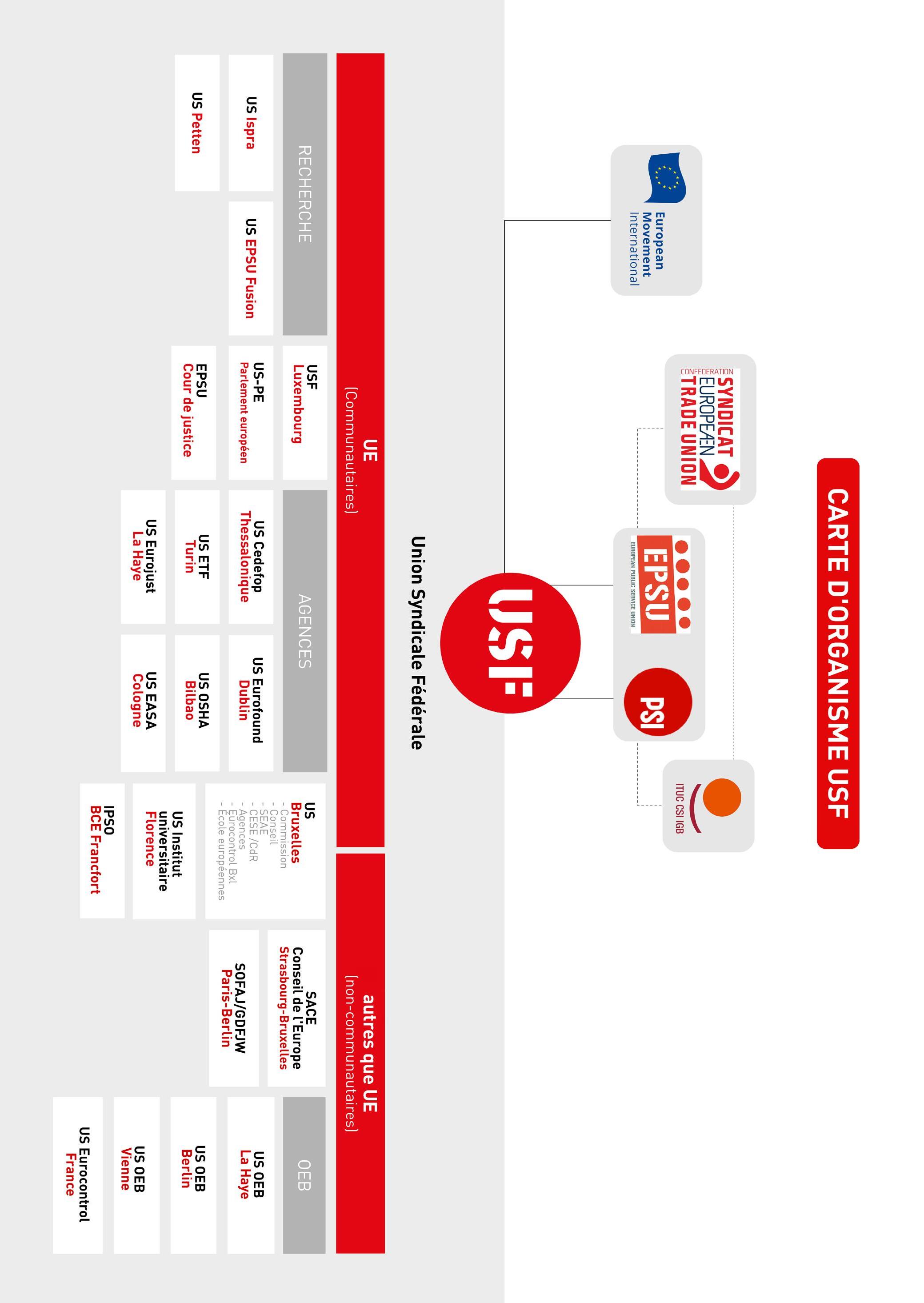

Union Syndicale Fédérale
Les opinions exprimées et les propos tenus dans les différents articles de ce numéro d’Agora n’engagent que leurs auteurs et ne pourraient refléter la position de l’Union Syndicale Fédérale dans son ensemble.
The opinions expressed and comments made in the various articles in this issue of Agora are solely those of their authors and do not reflect the position of Union Syndicale Fédérale as a whole.