Volume 21
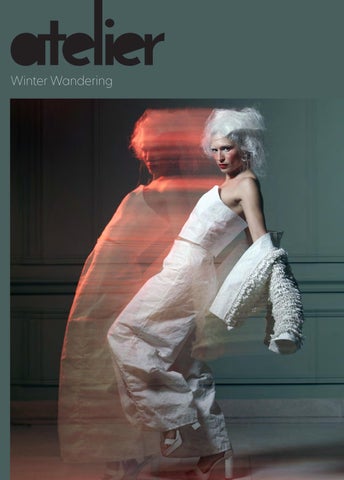
Winter Wandering
Volume 21
Publishing Editor Omar Vella
Design
Joellson Bezzina
Printing & Publishing Union Print Co. Ltd. www.unionprint.com.mt
Proof Reading
Ramona Vella Cini
Photos
Steve Muliett Model
The world is changing. The world is evolving. And in the midst of such changes, people’s preferences and lifestyles are constantly changing, influencing the way they dress, the way they design their homes and in they way live. People are shifting towards comfort, individuality, sustainability, and self-expression. They are also moving towards more personalised, practical, and comfortable living spaces, with a focus on natural materials and modern designs. These changes reflect how people are adapting to modern lifestyles while finding new ways to express their personalities through their way of living. In this constantly evolving context fashion is adapting; architecture and interior design are adapting; the beauty industry is adapting by offering products and services that combine beauty, functionality, and personal expression. Changes and adaptions which are spelt out through the stories of various professionals who have shred their stories in the Atelier winter edition.
Model
Ludovica Loda
Hair
Clinton Attard
Make up
Krista Paris
Styling
Linda Boranga
Designer
James Dimech
Disclaimer: Particular attention has been given to ensure that all the content of this magazine is correct and up to date as on date of issue. The views expressed in the articles, interviews and photogrphs are those of the authors and are not neccessarily endorsed by the publisher. While every care has been taking during production, the publisher does not accept any liability for errors that may have occurred. Copyright© 2022.
1
FOUR MINDS. ONE VISION.
Clinton A�ard
James Dimech
Krista Paris
Linda Boranga
Four ar s c iden es. Four crea ve languages. One collec ve expression.
An ar s c vision may begin in a single mind, but it does not necessarily reach its fullest expression there.
When crea ve individuals from different disciplines come together, something unexpected can happen. Materials become conversa ons, techniques become interpreta ons, and individual perspec ves begin to influence one another. The result is not simply a combina on of talents, but an expression that could not have existed in precisely the same way without each contribu on.
This is the philosophy behind Four Minds. One Vision, a crea ve collabora on bringing together paper ar st and designer James Dimech, hair ar st Clinton A ard, makeup ar st Krista Paris, and stylist and ar s c director Linda Boranga.
2
3
Photo: Steven Mulie�
Paper Couture The star ng point was Textures of the Sea, James Dimech's 2026 collec on. Inspired by the textures, movements and organic forma ons of the marine world, the collec on explored the possibili es of
Photos: Jus n Ciappara
paper as a sculptural medium, transforming an unconven onal material into wearable ar s c forms.
4
Photos: Jus n Ciappara
Yet, while the collec on provided the ini al inspira on, the inten on was never to allow the garments alone to dictate the final visual expression. Instead, the crea ve process invited four dis nct ar s c perspec ves to interpret a common vision, each contribu ng through an independent language of form, texture, character and composi on.
For Dimech, whose ar s c prac ce has evolved through years of experimenta on with paper manipula on, the rela onship between material and form is fundamental. Folding, cu�ng, layering and mouldings become methods of expression, challenging the percep on of paper as something fragile, ordinary or temporary. His work moves between fashion, sculpture and installa on, o�en ques oning the boundaries that tradi onally separate these disciplines.
5
A similar fascina on with transforma on can be found in the work of Clinton A ard, whose career began in the tradi onal surroundings of his grandfather's barbershop. From those early founda ons, his ar s c journey has developed into an interna onal career encompassing educa on, fashion and avant-garde hairstyling. A member of the milk_shake Global Ar s c Team, A�ard approaches hair not merely as a feature to be styled, but as a material capable of crea ng volume, structure, movement and sculptural
Photos: Jus n Ciappara
iden ty.
6
7
Photo: Mark Soler
8
Photos: Steven Mulie�
9
Where paper establishes form and hair extends its possibili es, makeup introduces another dimension: expression. For Krista Paris, makeup ar stry is deeply connected to storytelling. Her background in theater, performance and special-effects makeup has shaped an approach in which the face becomes a canvas for character and emo on. With experience spanning fashion, television and interna onal film produc ons, her contribu on moves beyond conven onal beauty to explore the expressive possibili es of ar s c
10
Photos: Steven Mulie�
makeup.
11
Comple ng this crea ve dialogue is Linda Boranga, whose experience as a stylist and ar s c director brings together the different visual languages into a coherent narra ve. Trained at IED Rome and experienced in fashion editorials for na onal and interna onal publica ons, Boranga approaches styling as an exercise in visual storytelling. Her philosophy dis nguishes between following fashion and possessing style, recognizing originality and courage as essen al ingredients of a meaningful ar s c iden ty. It is within these different approaches that the true value of collabora on begins to emerge. The objec ve is not for four crea ve minds to think alike, but for each to contribute something that the others would not necessarily have imagined. This dis nc on is important. Ar s c collabora on should not require individuality to be sacrificed in favour of uniformity. On the contrary, it is precisely the differences in experience, interpreta on and technique that can give a collec ve project its dis nc ve character. A garment may suggest a hairstyle, while an unexpected makeup interpreta on may change the percep on of the en re silhoue�e. The ar s c direc on may reveal rela onships between elements that were not immediately apparent, allowing the final composi on to develop beyond the original concept. 12
Photos: Steven Mulie�
13
In this process, crea vity becomes a dialogue rather than a sequence of separate assignments. Each discipline retains its iden ty while contribu ng to an evolving visual language. There is no sugges on that four ar sts necessarily produce something be�er than one. Art cannot be measured through the number of people involved, nor should collabora on be confused with compromise. Its value lies elsewhere: in the possibility of discovering an outcome that would have remained unexplored through an individual perspec ve. Ul mately, Four Minds. One Vision. is less about the presenta on of a fashion collec on and more about the rela onship between crea ve iden
es. It is an explora on of what happens when cra�smanship,
experimenta on, imagina on and ar s c direc on meet on equal terms. The photographs become the visible result of that exchange, capturing not only garments, hair, makeup or styling, but the rela onship between them.
14
15
Photos: Steven Mulie�
Because a shared vision does not mean seeing the same thing. Some mes, it means allowing different ways of seeing to create something en rely new.
Protecting our environment through better fashion choices
16
The fashion industry has a significant environmental impact, from the extraction of raw materials and production of textiles to the disposal of unwanted clothing. As the volume of textile waste grows, so does the pressure on waste management systems and the loss of valuable materials. Making more sustainable choices can help reduce this impact and make better use of the resources already available.
The way clothing is designed and produced also matters. Using materials efficiently can reduce fabric offcuts, while designing garments for durability, repair and reuse can extend their lifespan. Designers can also consider what happens at the end of a garment’s life, including whether it can be dismantled and its materials recovered. These considerations can help reduce waste throughout a garment’s life cycle.
A garment’s environmental footprint begins long before it reaches the consumer. Producing textiles requires raw materials, water and energy, while manufacturing and transportation generate greenhouse gas emissions. When clothing is discarded after a short period of use, much of what went into producing it is lost. Extending the life of garments can therefore reduce the need for new materials and the impacts associated with producing replacements.
Upcycling offers another way to give textiles a new purpose. Existing garments, fabric offcuts and other unwanted materials can be transformed into new clothing, accessories or other products. This could involve redesigning a garment, combining fabrics from different items or finding new uses for textile remnants. By keeping materials in use for longer, upcycling can help reduce the amount of textile waste requiring treatment or disposal.
One of the most effective ways to tackle textile waste is to prevent it from being generated in the first place. This is also a key principle in the waste hierarchy, which prioritises prevention before re-use, recycling and other forms of recovery. Choosing durable clothing, avoiding unnecessary purchases and taking proper care of garments can help them last longer. Damaged items can often be repaired rather than replaced, while unwanted clothing in good condition can be donated, exchanged or sold, allowing someone else to make use of it.
These approaches reflect the principles of a circular economy, which seeks to keep products and materials in use for as long as possible while reducing waste and reliance on virgin resources. The circular economy is an important part of Malta’s approach to waste management, with the Environment and Resources Authority (ERA) supporting measures that promote waste prevention, re-use and more efficient use of resources.
Malta’s Long-Term Waste Management Plan 2021-2030 places emphasis on preventing waste, maximising the value of resources and improving waste management systems. For ERA, this means looking beyond how waste is managed once it is generated and supporting approaches that reduce waste at source and keep products and materials in circulation for longer. Textiles are also receiving increased attention at European level, with measures aimed at improving their separate collection, re-use and recycling. These efforts seek to reduce the amount of textile waste sent for disposal and encourage a more circular textile sector. ERA’s work on waste prevention and management contributes to Malta’s efforts in this area and supports the wider shift towards more sustainable resource use. For consumers, small changes can make a difference. Buying fewer, better-quality garments, choosing secondhand clothing, repairing damaged items and donating or exchanging unwanted pieces can all help extend the life of textiles. Upcycling can take this a step further by turning existing materials into something new, helping to reduce waste while making use of resources that have already been produced. These ideas will also be explored through the Upcycling in Fashion Design fashion show, organised by ERA in collaboration with MCAST and taking place on 24 October at the Malta International Contemporary Art Space. The show will feature garments created using upcycled materials, highlighting how existing textiles can be creatively transformed into new designs while reducing waste.
17
The Art of Being
Unforgettable Interview with Paolo Cangialosi Part hairstylist, part creative visionary and unmistakably a child of the eighties, Paolo Cangialosi has developed a distinctive identity that goes far beyond the salon. For this Sicilian talent, hair is a language of self-expression, transformation is an art, and success is built on much more than technical ability. Where to begin with Paolo Cangialosi? A quick glance at his Instagram reels is enough to transport you back to the eighties, an era of unapologetic glamour, larger-than-life personalities and infectious pop anthems. There is the unmistakable pop-star appearance, the striking ice-blue eyes, the thick moustache and, of course, the unmistakable Sicilian accent. Yet behind the theatrical image lies a hairstylist with a deeply considered creative vision and an instinctive understanding of hair as a medium for artistic expression. Paolo is one of those personalities who refuses to be confined to a single definition. A hairstylist, educator and increasingly influential creative presence, he approaches his profession with an eye for detail and a desire to challenge the ordinary. Through texture, colour, volume and structure, he transforms
18
hair into something deeply personal, creating looks that celebrate individuality rather than conform to convention. His work is not simply about changing someone’s appearance; it is about revealing a personality, creating an attitude and giving a transformation its own identity. His journey from a young Sicilian with a dream to a professional whose work reaches audiences across the world has been shaped by perseverance, ambition and an unwavering belief in his abilities. Paolo is the first to acknowledge that luck has played its part, but he is equally convinced that opportunity means little without determination. Describing himself as perhaps overly ambitious, he admits that achieving a goal brings only temporary satisfaction before another challenge begins to take shape. It is this constant appetite for progress that keeps him moving forward. Despite his strong personality and demanding approach to his work, Paolo is also keen to acknowledge a more sensitive side. His attachment to Sicily, his roots and everything he has built along the way remains central to his identity. Wherever his career takes him, that sense of belonging continues to inform the person and professional he has become.
19
An eighties state of mind Creativity, for Paolo, begins with emotion. Inspiration can come from the most unexpected places: a particular song, a memorable film scene or an encounter with someone whose personality sparks an idea. He is especially drawn to the eighties, not simply for their music, fashion and cinema, but for the freedom of expression that characterised the decade. It was a time when individuality was celebrated, boundaries were challenged and personal style was anything but understated. Paolo identifies with that spirit, finding inspiration in people who have the confidence to be different and are unafraid to express themselves. When developing a new look, he rarely considers the hair in isolation. Instead, he imagines the entire character: how the person might move, the attitude they might project, the clothes they might wear and even the music that would accompany the transformation. It is a holistic approach that explains why his creative output often feels more like a carefully styled visual production than a conventional hair makeover. For him, technique is essential, but it should never become a limitation. It provides the foundation on which ideas can be built, while imagination gives them their individuality. His signature lies in transformation, in studying a face and its features and imagining possibilities that perhaps the person sitting in front of him has never dared to consider. Movement, volume and expressive styling are recurring elements of his aesthetic, often with a nostalgic nod to the decade he so admires. Yet there is no interest in reproducing the same look over and over again. Personality is what matters most. As Paolo sees it, every transformation should have a soul. This philosophy also extends to his educational work. His Masterclasses, particularly those dedicated to colour and lightening techniques, reflect his desire to simplify complex processes and make professional knowledge more accessible to hairstylists internationally. For Paolo, education is not merely about demonstrating a technique; it is about sharing a way of thinking and encouraging others to develop their own creative confidence. Beyond the scissors The hairstyling industry has changed considerably, and Paolo is particularly conscious of how much professional success now depends on the ability to communicate. Technical excellence remains indispensable, but he believes that being exceptionally skilled with scissors or colour products is no longer enough to establish a distinctive identity. His own experience offers an interesting illustration of this evolution. When he began his career, he never imagined that videos showcasing his work would eventually reach millions of people around the world. The turning point came when
20
he realised that hairstyling could be presented through a broader creative narrative, bringing together his passions for music, cinema and fashion with his own personality. The result was something that resonated beyond the professional hair community. People who might never have considered themselves particularly interested in hairstyling began following his content because they connected with the energy, atmosphere and emotions it conveyed. It reinforced his belief that the modern hairstylist is no longer simply offering a service. There is an experience to create, a story to tell and an emotional connection to establish. Social media has opened up extraordinary opportunities for professionals to showcase their talent, but Paolo believes that the most compelling content comes from authenticity rather than carefully constructed personas. His videos are an extension of who he is: the music he listens to, the way he dresses, his energy and even his sense of humour. He has little interest in trying to please everyone. Instead, he believes in having the confidence to show his true personality, trusting that genuine expression will find its audience. Communication, however, is not limited to the digital world. In the salon, it begins with listening. A client might arrive requesting a particular haircut, but what she is really looking for may be something much more personal: a renewed sense of confidence, a change in attitude or simply the feeling of seeing herself differently. Understanding that distinction requires sensitivity and an ability to look beyond the immediate request. The same philosophy informs his approach to teaching. Paolo enjoys sharing the experiences behind his achievements, including the mistakes that have helped shape his career. He wants participants in his Masterclasses to leave with more than technical knowledge. Ideally, they should also feel inspired to trust their abilities and pursue their own ambitions. The discipline behind the creativity For someone whose work is so closely associated with creativity and spontaneity, Paolo places remarkable importance on discipline. In fact, he believes it is far more valuable than motivation. Motivation, he explains, provides the initial impulse, but discipline is what makes consistency possible. There are mornings when he wakes up full of ideas and enthusiasm, ready to take on anything. Then there are days when exhaustion sets in, perhaps following a demanding week of travelling, working and fulfilling professional commitments. Regardless of how he feels, however, the work still has to be done, and it has to be done well.
21
22
23
24
This is particularly important when leading Masterclasses. Those attending have invested both time and money in the experience, and Paolo feels a responsibility to deliver the very best, regardless of how many hours he has spent travelling or how tired he might be. For him, discipline is ultimately an expression of respect: respect for his profession, for his own standards and for the people who place their trust in him. It is also a lesson learned through experience. Behind every achievement, he recognises, there have been years of sacrifice, compromises, mistakes and moments when the easiest option might have been to give up. The profession has taught him to believe in himself while remaining willing to question his own decisions and abilities. Learning to accept criticism has been another part of that journey. When you invest so much of yourself in your work, negative comments can be difficult to detach from. Over time, however, Paolo has learned to distinguish between feedback that can contribute to personal growth and opinions that are best left behind. Perhaps the most revealing lesson has been understanding that success does not necessarily translate into happiness. For someone constantly looking towards the next objective, learning to appreciate the present and enjoy what has already been achieved can be surprisingly difficult. It is something he continues to work on, recognising that the journey should be as meaningful as the destination. A bigger vision If Paolo’s ambitions are anything to go by, there is little danger of him becoming complacent. His dreams for the future are numerous, and his enthusiasm for new opportunities remains undiminished. International expansion is high on his agenda. He hopes to bring his distinctive style and educational approach to more countries, connecting with professionals from different cultures and sharing his knowledge with an increasingly global audience.
One destination, in particular, occupies a special place in his imagination: the United States, and Miami above all. He would love to establish something of his own there one day, perhaps a salon that fully reflects his creative vision and personal aesthetic. It is an ambition that would bring together his professional expertise, entrepreneurial spirit and unmistakable sense of style. Television and entertainment also hold considerable appeal. His experience in television has allowed him to explore another dimension of his personality and profession, and he remains fascinated by the possibilities of working within that world. Yet beyond the prospect of new ventures, international recognition and professional expansion, Paolo’s greatest ambition is perhaps the most meaningful: to build something lasting. Something that goes beyond personal achievement and inspires others to believe in their own potential, regardless of their background or where they began. Looking back at the young Sicilian who set out with little more than a pair of scissors and an enormous determination to succeed, Paolo believes that his younger self would be proud of what has been accomplished. It is a reflection that carries both gratitude and a quiet sense of achievement, although there is little suggestion that he intends to slow down. And perhaps that is what makes Paolo Cangialosi such an interesting creative personality. His flamboyant aesthetic may evoke another era, but his outlook is firmly contemporary. He understands that talent needs discipline, that creativity needs freedom and that professional success increasingly depends on the ability to connect with people on a human level. He may draw inspiration from the unapologetic glamour of the eighties, but his greatest achievement is something much more timeless: the ability to turn a profession into a personal signature, and a simple hair transformation into an expression of identity. For Paolo, the next chapter is already taking shape. And if his journey so far is anything to go by, it promises to be anything but ordinary.
25
4-8 NOVEMBER 2026
MFCC TA’ QALI \ FREE ENTRANCE @MALTABOOKFESTIVAL \ KTIEB.ORG.MT
UNCOVER THE STORY
SKOPRI AKTAR publicservice.gov.mt
BEYOND FINANCIAL PERFORMANCE:
A LEGACY OF COMMUNITY IMPACT For more than 50 years, Bank of Valletta has helped shape Malta’s economy while remaining closely connected to the communities it serves. Beyond financial performance, this sense of responsibility has long formed part of the Bank’s identity. This commitment continues through the BOV Foundation, launched in 2024 with the aim of creating meaningful, lasting value for society. Built on five pillars: Social Inclusion, Ethical Conduct, Education, Environmental Sustainability, and Culture and Heritage, the Foundation supports initiatives that strengthen communities and generate positive impact across Malta and Gozo. Every pillar reflects a different aspect of the same purpose: to use the Bank’s reach and resources to support initiatives that leave a positive mark on people, places and communities. The Foundation builds on the Bank’s long-standing commitment to corporate social responsibility, while giving that work a more focused direction. One of its main priorities is social inclusion. By working with community organisations, educational institutions and NGOs, it supports initiatives that create opportunities, promote well-being and help more people feel part of community life.
The Launch of the BOV Girls Water Polo Academy
28
For BOV, social inclusion goes beyond financial support. It is about opening doors and building relationships. Merging sport with social is a perfect recipe, as it ensures people do not feel forgotten. The BOV Volleyball Marathon in aid of IdDar tal-Providenza is the perfect example. It means giving time, sharing skills or simply being present. This is where volunteering can have a powerful effect. When colleagues from different parts of the Bank work alongside an NGO, job titles matter less. What matters is the shared aim of making someone’s day, or someone’s situation, a little better. The same spirit of inclusion can be seen in sport. The Bank supports a range of sports and their respective associations, with a particular focus on grassroots participation and active community involvement. One recent example is the BOV Girls Water Polo Academy, established in collaboration with the Aquatic Sports Association (ASA), which aims to encourage more girls to take up water polo and help strengthen the sport’s future in Malta. Over the years, the Bank’s connection with sport has grown across different disciplines, including football, basketball, water polo, golf, horse racing, and bowling to mention a few.
Unveiling the Restored 15th-Century Pala d’Altare For the BOV Foundation, sport offers a practical way for values to be learned and lived. Discipline, fairness, respect and teamwork do not stay on the field. They influence how people approach school, work, family life and the wider community. This connects naturally with ethical conduct and the Foundation’s belief that achievement matters most when it is pursued in the right way. Whether in sport, education, culture or the environment, lasting progress depends on integrity, responsibility and respect. For the Foundation, ethical conduct is not treated as a separate idea from community impact. It is the thread that runs through every initiative, from how partnerships are chosen to how projects are delivered. It reinforces the importance of doing good in a way that is transparent, responsible and respectful of the communities being served. The Foundation also has a strong commitment to Malta’s culture and heritage. These are not treasures to admire from a distance. They are part of the places people know, the stories communities share, the folklore and the identity passed from one generation to the next. By supporting restoration and conservation projects, the Foundation helps keep important cultural treasures alive, accessible and meaningful.
One such project is the restoration of the 15th-century pala d’altare at the Parish Church of St George in Qormi. Completed over three years, the work revealed important historical and iconographic details and ensured that this remarkable artwork can continue to be appreciated by parishioners, visitors and future generations. This commitment is also reflected in the Foundation’s partnerships with NGOs such as Din l-Art Ħelwa and Fondazzjoni Wirt Artna, supporting the restoration and preservation of Malta’s cultural heritage. The same long-term view shapes the Foundation’s work in environmental sustainability. At its heart, this is about care: supporting people who are already taking action, helping communities protect the spaces around them and making sure that what is passed on to future generations is stronger than what was inherited. A clear example is the BOV Rebbiegħa initiative. Launched as part of the Bank’s 50th anniversary, it invited NGOs to propose environmental projects with real local impact, focusing on biodiversity, urban greenery, environmental education and climate mitigation.
29
L-Istrina BOV Piggy Bank Campaign
BOV Employees Giving Back Through Volunteering
30
Education is another key pillar because learning gives people the confidence and tools to participate more fully in society. It does not begin and end at school. It continues throughout life, especially today, as technology, digital transformation and changing economic realities reshape how people live, work, communicate and manage their daily lives. Once again, we see the merging of two pillars, Education and Social. The BOV Piggy Bank Campaign is a great testament, showing how schoolchildren from a young age contribute to the Malta Community Chest Fund Foundation.
By investing in people, supporting communities, protecting heritage, promoting responsible behaviour and encouraging lifelong learning, the BOV Foundation is helping to build a legacy that goes beyond banking. It is a legacy shaped by care, responsibility and the belief that real progress is strongest when business success and community well-being move forward together. In this way, the Foundation gives structure to the Bank’s community commitment, turning longstanding values into focused action across the areas where support can make a lasting difference.
Within this wider context, financial literacy has become one of the most important life skills people can develop. Knowing how to save, budget, plan, recognise risks and make informed choices can make everyday decisions feel less overwhelming. For BOV, financial literacy is not only about understanding numbers. It is about helping people feel more confident, more prepared and more in control of the choices that shape their future.
Issued by Bank of Valletta p.l.c., 58, Triq San Zakkarija, il-Belt Valletta VLT 1130. Bank of Valletta p.l.c. is a public limited company regulated by the MFSA and is licensed to carry out the business of banking in terms of the Banking Act (Cap. 371 of the Laws of Malta).
The BOV Volleyball Marathon in Aid of Id-Dar tal-Providenza
31
5 Days at Lake Garda, Italy:
A Family Trip to Remember Day 1: Staying in Bardolino We chose Bardolino as our base, staying in a little house surrounded by vineyards and Italian hills. Our host welcomed us with a lovely bottle of local wine, and we immediately felt at home. Bardolino is a beautiful town on the eastern shore of Lake Garda, known for its charming streets, waterfront and local wine. We spent our first evening strolling along the promenade, enjoying pizza and gelato by the lake. The highlight was watching the sunset over the water. It was honestly one of the most beautiful sunsets I have ever seen! Day 2: A Family Adventure at Parco Natura Viva With a young child, we wanted to include something fun for the whole family. We chose Parco Natura Viva, a wildlife park where you can explore animal habitats on foot and enjoy an African-style safari by car. We spent most of the day discovering the animals and stopped for lunch at the park’s restaurant. It was a lovely family experience and a great option for anyone visiting Lake Garda with children.
32
Lake Garda is one of those places in Italy that captures your heart with its beautiful scenery, charming towns and relaxed atmosphere. We visited during the Easter holidays in April, when the weather was perfect for exploring, and spent five wonderful days discovering the area with our little one. We flew into Milan Linate Airport, rented a car and drove around an hour and a half to Lake Garda. With vineyards, rolling hills and picturesque lakeside towns, it was the perfect setting for a family getaway.
Gardaland is another popular attraction nearby if you are travelling with older children or looking for a theme park adventure. Day 3: Verona – The City of Love Verona is one of my favourite Italian cities and makes an easy day trip from Bardolino. We started our morning at Giardino Giusti, a beautiful historic garden with elegant pathways and lovely views over the city. Afterwards, we headed towards Via Mazzini, Verona’s famous shopping street, before visiting Casa di Giulietta, associated with Shakespeare’s Romeo and Juliet. The queue was too long for us, so we admired it from outside. For lunch, we enjoyed fresh pasta at Miscusi, followed by a coffee and Italian pastry at Caffè Borsari, a charming stop in the historic centre. Verona is a city best explored on foot, with beautiful piazzas, historic architecture and little streets waiting to be discovered. It is perfect for a relaxed day of sightseeing, shopping and Italian food
Day 4: Lazise – A Charming Lakeside Town Lazise is a lovely little town just south of Bardolino, famous for its medieval walls, historic harbour and picturesque old town. We spent the day wandering through its narrow streets, browsing the little shops and enjoying the beautiful lake views. It is the perfect place for a leisurely lunch followed by gelato beside the water. For lunch or dinner, Ristorante Vecchia Dogana is a lovely option to consider for Italian and Mediterranean cuisine near the historic harbour. I would recommend booking ahead during the Easter holidays. Lazise is a wonderful place to slow down and enjoy the simple pleasures of Italy.
Our five days at Lake Garda were the perfect mix of family adventures, beautiful scenery, charming towns and delicious Italian food. From the unforgettable sunsets in Bardolino to the romantic streets of Verona and the beauty of Sirmione, every day offered something different. April was a wonderful time to visit, with comfortable temperatures for walking and exploring. Renting a car also gave us the flexibility to discover the region at our own pace. If you are looking for a family-friendly Italian escape filled with nature, culture, great food and beautiful lake views, Lake Garda is definitely worth adding to your travel list!
Day 5: Sirmione – One of Lake Garda’s Most Beautiful Spots Our final stop was Sirmione, a stunning town set on a narrow peninsula extending into Lake Garda. We explored the historic centre, admired the impressive Castello Scaligero and wandered through the little streets filled with cafés, boutiques and gelaterias. The turquoise water and surrounding mountain views make this town especially beautiful. For lunch, L’Arcimboldo is worth considering for Italian dishes in the historic centre. Alternatively, Trattoria La Fiasca is another option for a traditional Italian meal. If you have extra time, visit the Grotte di Catullo, the remains of a Roman villa at the tip of the peninsula, or take a boat trip to admire Sirmione from the water. Before heading back, make sure to enjoy one last gelato and lakeside stroll! Final Thoughts 33
The Underlying Grid of a City Interview with Derry Ainsworth
Originally working in architecture, Derry Ainsworth took the bold decision to quit his job to pursue a career in photography. A shift he defines more of tools rather than a career change. Truly so, because the principles of how he uses his photographic lens to focus on specific subject matter remain the same. Yet, his lens also offers him the possibility to capture the amazing scenery in Hong Kong and Asia. Moreover, it helps him focus on details that lie between the crazy urban dense streets and unique architecture of Hong Kong. Derry shares with Atelier his professional shift to photography an his journey through the busy streets of Hong Kong.
34
35
You initially practiced architecture before fully transitioning to photography. How did your background define your photographic style? Working in architecture trains your brain to read cities like blueprints rather than just scenery. When you spend years thinking about spatial hierarchies and how people move through a room, you stop looking at buildings as static objects and start seeing them as living systems. Moving into photography was less of a career change and more of a shift in tools. Instead of drafting lines to create space, I use the frame to dissect it. That background is why I gravitate toward strict structural geometry, visual compression, and elevated perspectives. I am always looking for the underlying grid of a city, then waiting for a single human silhouette to break that rigid order and give the scale meaning.
36
You recently noted that photography should be about one’s own personal journey. Can you elaborate on that? In an era where millions of images are uploaded every minute, it is easy to fall into the trap of shooting for an algorithm or chasing someone else’s visual checklist. Treating photography as a personal journey means using the camera as a compass for your own curiosity rather than a tool for external validation. My archive from the last decade is essentially a visual diary of how my relationship with urban space has evolved. Early on, I was fascinated by sheer verticality and spectacle. As I settled in and slowed down, my lens naturally shifted toward quieter cultural nuances and disappearing heritage. If the work doesn’t reflect how you are personally changing, the viewer will feel that disconnect.
37
38
What role does music play in your inspirational process? Music helps me tune out the noise of the city and focus when I am out shooting. Walking around with headphones on sets a steady pace, which changes how I observe the streets and wait for people to move into the frame. It is just as important during post-production. Putting on the right playlist helps me lock into a specific mood while editing and tweaking my colours, keeping the tone of a series consistent from start to finish. How do you keep finding new inspiration? When you document the same city for over a decade, the biggest creative danger is familiarity. To counter that, I force myself to change either my physical vantage point or my creative constraints. Sometimes that means shifting from street-level intimacy to high elevated perspectives, where familiar neighbourhoods suddenly transform into abstract, geometric mosaics. Other times, it means giving myself a hyper-specific thematic focus, like tracking down traditional Dragon Gates (Lung Mu) or documenting the kinetic energy of local festivals. I also look outside traditional still photography toward cinematography and colour theory in film to refresh how I see through the viewfinder.
39
40
41
You have recently noted that photography often lacks the representation it deserves at major art fairs compared to traditional mediums like painting or sculpture. Why? There is still a lingering misconception in the traditional art market regarding the barrier to entry and scarcity. Because everyone carries a camera in their pocket today, people often conflate the act of taking a picture with the craft of fine art photography. With a painting or sculpture, the physical labour and singular nature of the object are immediately obvious. With photography, the years of spatial study, the weeks spent waiting for exact atmospheric conditions, and the precision of the printmaking are largely invisible to the casual observer. Curating the Pieces of Hong Kong showcase at the Affordable Art Fair was rewarding precisely because it challenged that bias, showing collectors that photographic prints carry just as much conceptual weight and permanence as a painting canvas.
42
43
44
What makes Hong Kong such an intriguing place to document through your photographic lens? Hong Kong is a masterclass in spatial paradoxes. Nowhere else packs that level of hyperdense verticality right up against dramatic mountain terrain and open water. Visually, the city is a relentless collision of textures and eras, where futuristic glass towers cast shadows over century-old tenements and ancient rituals play out under modern flyovers. The light here is also extraordinary. Because the buildings are so tall and tightly packed, sunlight slices through the streets in razor-sharp beams, creating natural high-contrast stages where everyday commuters look like actors in a noir film. It is a city in a state of perpetual change and rebuilding.
45
46
I recently read that whilst spending more time in Hong Kong, you discovered a deeper world beneath the glossy surface. What story does that deeper world tell about the city? When you first arrive in Hong Kong, your eyes are naturally drawn to the spectacle: the Victoria Harbour skyline, the monumental infrastructure, and the fast pace of the financial district. It is very easy to stay on that surface and photograph the city purely as a modern, futuristic metropolis. After living and shooting here for over a decade, my focus naturally shifted away from the skyline and into the spaces between the towers. Beneath that sleek exterior, the city tells a wonderful story of continuity, warmth, and cultural heritage. You see it in the older neighborhoods and historic estates, where multi-generational shopkeepers and local craftsmen continue to thrive and anchor their communities right in the heart of a modern metropolis. You see it in how traditional wisdom blends seamlessly into contemporary design, like the Lung Mun dragon gate cutouts built into residential blocks so positive energy can flow from the mountains to the water. And you feel it during local celebrations, like the Tai Hang or Pok Fu Lam Fire Dragon dances, where centuries-old traditions bring entire neighborhoods together in a massive cloud of incense and festive energy. That deeper world reveals that Hong Kong’s true character isn’t just in its steel and glass. It is in the harmony between hyper-modern progress and a deep-rooted pride in local history, community, and tradition, where the old and the new don’t just coexist, they enrich each other.
47
The
Subject Matter
Interview with Laurin Strele
48
49
There is something that sets Laurin Strele apart from other photographers. It is not only about his style. It is about his belief in documentary photography that should raise awareness, give voice to the voiceless, and prioritize empathy and respect over the hunt for exotic imagery. Above all, he stands out of the crowd in his way of approaching subjects by observing quietly and building personal trust rather than intruding. Laurin shared with Atelier his philosophy, his work ethic and the critical role observation plays in his photographic process.
50
51
52
You have recently noted: “The subject comes first, then light and composition.” Can you elaborate on that? For me, a photograph begins with the person or situation in front of the camera. Light and composition matter deeply, but they should serve the subject rather than turn the subject into an aesthetic device. I first ask what is happening, why it matters, and what responsibility I have towards the people involved. Only then do I think about how the frame can communicate that honestly. A visually beautiful photograph is not successful if it simplifies, romanticises or distorts the reality it claims to show. Can you share with us your “Leica Look” philosophy? I do not think of the Leica Look as a preset or a single visual formula. In my own work, it is connected to natural light, colour, texture, restraint and a feeling of presence. The camera should allow me to stay close without becoming intrusive. Leica equipment is valuable to me because it is compact, quiet and intuitive; it lets the technical process recede so that I can remain attentive to the person and the moment. The look comes less from the camera alone than from the relationship between distance, timing, light and intention. What type of empathy do you seek to evoke through your photographs? I am not looking for pity. Pity creates distance and often reduces people to what has happened to them. I hope for recognition: the understanding that a person living through war, displacement, poverty or loss is never defined only by that circumstance. People remain complex, humorous, proud, contradictory and fully themselves. If a photograph can make someone look longer, question an assumption and recognise another person’s dignity, then it has done something meaningful.
53
In what way are method and instinct not opposites? Method creates the conditions in which instinct can work. Research, access, patience, ethical reflection and technical discipline all happen before and around the decisive moment. Instinct is what allows me to respond when reality changes unexpectedly. The more thoroughly I understand a place and the more present I am, the more precise that instinct becomes. One is preparation; the other is response.
54
55
What role does observation play in the photographic process? Observation is the foundation of the work. Before photographing, I try to understand the rhythm of a place: how people move, who relates to whom, what changes when a camera enters the room, and what remains unspoken. Often the most important moments appear only after the initial awareness of my presence has faded. Photography begins long before I raise the camera. You often stress the role of consent in your work, not just in the legal sense, but in the human sense. Why is it so important? Consent is not simply a signature or a single yes. It is an ongoing relationship. The person being photographed should understand my presence and have a real possibility to refuse, especially where there is vulnerability or an imbalance of power. In conflict and post-conflict situations, publication can have consequences far beyond the moment the image is made. My responsibility is therefore not only to obtain access, but to protect dignity, consider possible harm and remain accountable for how the photograph is used. Why is truth the only foundation of documentary photography? A documentary photograph is never completely neutral: the photographer chooses where to stand, when to press the shutter and what to leave outside the frame. Truth, for me, means being honest about those choices and about the circumstances in which the image was made. It means not staging or manipulating reality in a way that misleads the viewer, and not removing context simply because a more dramatic story is easier to sell. Without that honesty, documentary photography loses the trust on which its social value depends.
56
57
What’s next? I am continuing my long-form documentary work across conflict, post-conflict and cultural contexts, with a particular interest in how people preserve dignity and rebuild ordinary life after violence. I am also developing my next book, Witnessing Conflict, alongside exhibitions, lectures and small-group documentary workshops. The direction remains the same: to work slowly, return to places when possible, and build stories that go beyond the immediate news cycle.
58
We desalinate 77,000 m3/day of sea water Every drop counts. So does every investment.
WSC is investing in new water sources, smarter networks, and greener operations to secure Malta’s water for generations to come.
Sustainability is not a promise. It is how we work every day.
59
Between Tradition and the Para-Baroque A Conversation with Mario Abela, Gozitan Artist and MCAST Educator By Caroline Balzan, Communications Manager
A Gozitan visual artist and MCAST lecturer at the Institute for the Creative Arts, Mario Abela’s artistic practice centres on painting and drawing, often evolving through a process of sustained experimentation and exploration. Before dedicating himself to fine art, he spent over fifteen years working as a freelance graphic designer. This experience continues to influence his artistic approach, particularly in the way he examines how images are constructed, disseminated and interpreted within contemporary visual culture.
60
Over recent years, Mario Abela’s work has gained international recognition. In 2025, he was awarded the CREA OPEN Prize in Venice and the PRISMA Art Prize in Rome, while in 2023 he was shortlisted as a finalist for the Hopper Art Prize. While appreciative of these achievements, he views such accolades less as final destinations and more as opportunities that allow the work to travel, connect and enter broader international conversations. Reflecting on the role of international platforms such as biennales and global art prizes, he believes Maltese artists and designers should approach them not as “Olympic podiums,” but as starting points for dialogue and engagement. According to Abela, the real challenge is to remain authentic rather than attempting to imitate dominant international trends. Maltese creatives, he argues, should resist the pressure to dilute their identity in pursuit of visibility. Their greatest contribution lies precisely in bringing something culturally and personally specific into the global artistic discourse. In this sense, events such as
international biennales become meaningful not simply for the recognition they offer, but because they provide spaces where Maltese artists can actively participate in shaping conversations surrounding art, culture and society. Working across painting, drawing and digital media, he also reflects deeply on the growing presence of artificial intelligence in contemporary visual culture. He sees AI as an inevitable part of the evolving visual ecosystem, much like photography or digital technologies were in previous generations. While acknowledging its ability to accelerate image production, he warns of the danger of visual homogenisation and the flattening of difference. For him, the central issue is not whether artists will use AI, but how consciously they engage with it. Abela believes image-making should first emerge from within the human psyche before encountering external tools. Once an image leaves the body, technologies such as AI can shape, transform or expand it. However, if
61
the image is generated entirely outside the human experience from the outset, something fundamental is lost. “You can no longer truly feel it,” he explains. In his view, the enduring value of artistic practice lies in slowing things down and allowing uncertainty to remain present within the creative process. AI may become useful, but if every image becomes immediate and fully resolved, artists risk losing the very space where meaning is formed. Rather than replacing artists, he believes AI will ultimately force creatives to redefine what remains essential in their practice. This philosophy also informs his teaching approach at MCAST, where Abela works to balance traditional design principles with contemporary digital experimentation. He sees technical skill and experimentation not as opposing forces, but as inseparable components of creative literacy. Drawing, composition and software proficiency provide students with the necessary foundation, while experimentation allows them to push boundaries and engage critically with emerging technologies, including AI-driven workflows. For Abela, the balance comes through structure and critical thinking. Students are encouraged not only to master techniques, but also to question the systems and processes behind image-making itself. The goal is not simply technical perfection, but the development of individuals capable of critically understanding both the images they create and the broader systems in which those images operate. Looking ahead, he envisions his own artistic practice becoming increasingly distilled rather than merely expanded. The themes that already define his work, namely ambiguity, contradiction, instability and the tension between image and meaning, are likely to deepen further over time. He is particularly interested in creating works that resist immediate consumption and images that unfold gradually and remain unresolved rather than fully explained. Central to this evolving vision is a concept he refers to as the “para-baroque.” Rather than reviving the historical Baroque style, he describes it as a condition that mirrors the instability of the present era. Just as the Baroque period emerged amidst religious conflict, political tension, theatricality and excess, he sees contemporary society as similarly saturated with spectacle, fragmented realities, emotional overload and an endless flow of images and information. In his words , the para-baroque, reflects how individuals attempt to navigate and make sense of this instability while constantly confronting fractured realities. As his practice evolves, he hopes his work will continue to engage with these conditions in increasingly demanding ways. Rather than offering definitive answers, he seeks to create spaces where uncertainty, tension and reflection can coexist.
62
Beyond his personal artistic career, he hopes his teaching and practice will contribute to a broader shift in mindset among the next generation of Maltese creatives. He encourages students and emerging artists to move away from the constant pursuit of approval and instead cultivate a more self-aware and critically engaged approach to making art. In today’s fast-paced creative industries, he believes younger artists are particularly vulnerable to consumerist pressures. The demand to constantly produce, remain visible, follow trends and endlessly reinvent themselves for attention. However, he argues that longevity in art does not come from chasing novelty, but from sustaining an authentic voice over time. That voice may evolve naturally, but it should never be compromised by external systems, markets or expectations. If there is one lasting impact he hopes to leave behind, it is the cultivation of resilience. The ability to sustain a practice across decades, embrace uncertainty, and remain intellectually honest. Most importantly, he hopes younger creatives learn to protect their voice at all costs. “In the end,” he says, “that voice is the most valuable thing an artist truly owns.” Following his recent international success, he also hopes to see broader opportunities emerge for Maltese artists and designers. For him, visibility should not simply mean exposure, but access. Access to networks, institutions, residencies and critical conversations that allow artists to develop meaningful international connections. At the same time, he cautions against viewing awards and biennales as declarations of artistic superiority. Their real value, he believes, lies in the relationships and dialogues they generate long after the event itself. International prizes become meaningful when they help create long-term structures that support artistic continuity and development, rather than isolated moments of recognition. Ultimately, he hopes future international attention directed towards Maltese artists will contribute not only to individual careers, but to strengthening Malta’s wider creative ecosystem for generations to come. The Institute for the Creative Arts at MCAST offers a wide range of programmes from Foundation level to Degree and selected postgraduate studies. Areas of study include Fine Arts, Graphic Design, Photography, Fashion, Games and Multimedia, Performing Arts and Interactive Digital Media. Through a combination of practical training, creative exploration and industry-oriented learning, students develop the skills and knowledge needed for further studies and careers in the creative and cultural sectors.
63
64
Volume 21
Winter Wandering
Volume 21