













PRODUCTION
EDITORIAL
ADVERTISING PRODUCTION COORDINATOR
Prema
ASSOCIATE
CIRCULATION









JOHN SENIOR
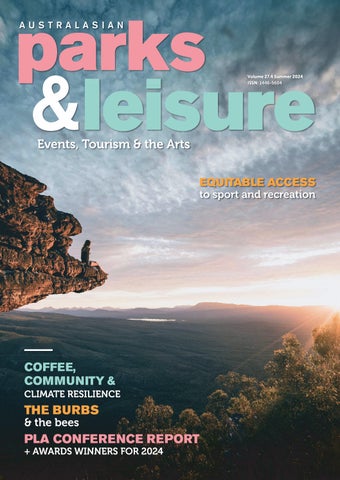
This edition predictably has its main focus on this year’s Frank Stewart Honorary Award winner (congratulations Paul Jane), PLA’s 2024 National Award of Excellence winners (well done to all winners), and to a review of the National Conference

As we step into the vibrant summer months, it is a true pleasure to welcome you to this special edition of the Parks and Leisure Australasia Journal, dedicated to events, tourism and the arts — three pillars that play a profound role in shaping the health, wellbeing and liveability of our communities.
Australia is a nation blessed with remarkable natural landscapes, rich cultural heritage and dynamic communities. Our parks, community facilities, places and spaces are not only backdrops for leisure, they are the heart and soul of our cities, towns and neighborhoods. In every corner of this vast country, public spaces serve as
held in Brisbane, together with a range of images from the conference event and awards dinner.
We have a real variety of articles from around the country; three on the value of birds, bees and butterflies in our suburbs, and two on the increasing move to utilise cemeteries as open space. Then there is a focus on how Melbourne councils are supporting equitable access to sport and recreation, and another on Hornsby Shire Council’s transformation of Beecroft Village Green with play, exercise and recreational facilities for all ages.
From overseas there is a description on how Denmark is combining goals for sustainability and placemaking in urban greenspaces, as well as an interesting item on an approach to biophilic design for schools in the USA. This is based on
the biophilia hypothesis that proposes that most humans have an innate love of nature (we long for it and without connecting with it, our health could suffer), so biophilic design is an applied solution to appease this desire for nature by integrating natural elements and processes into the built environment.
Another article from the US covers an announcement about the unprecedented amount of $254 million USD being pledged for local parks, the largest investment ever in the history of the Land & Water Conservation Fund’s Outdoor Recreation Legacy Partnership Program — something our government could learn from!
John Senior Editorial Coordinator
important gathering places where people can reconnect and share experiences that strengthen our social fabric.
The importance of our parks and green and blue spaces has never been more evident. Research continues to confirm the countless physical and mental health benefits of spending time in nature. Whether it’s a stroll through a local reserve, water sports at an iconic beach, an outdoor fitness class or a family gathering under the shade of century-old trees, these moments enrich our lives. They are opportunities to disconnect from the rush of daily life, recharging both body and mind.
As we celebrate the arts, events and tourism in this edition, we are reminded of how cultural activities contribute to a sense of place and community pride. Festivals, concerts, markets, public art trails and installations, these events inspire creativity, foster connection and drive tourism that sustains local economies. They showcase the diversity and creativity that define Australia, inviting both locals and visitors alike to experience the unique blend of natural beauty and cultural vibrancy that sets us apart on the world stage.
Looking ahead to an exciting and prosperous 2025, I am thrilled to share that our new CEO, Anand Pillay, is now
We thank our national sponsors and partners:



in full swing, driving Parks and Leisure Australia forward. With Anand’s visionary leadership and unwavering commitment to the growth and sustainability of our sector, we are ready to take on new initiatives that enhance the impact of parks and leisure services nationwide. His dedication to innovation and inclusivity ensures that our organisation will continue to meet the evolving needs of our members and communities, elevating our mission to new heights.
In this summer issue, you’ll find inspiring stories of communities embracing their parks and public spaces in fresh, creative ways, whether through nature-inspired events, eco-friendly tourism, dynamic facilities or collaborative projects. I hope these stories encourage you to explore the spaces that make our communities so special and to support the teams and individuals dedicated to their care and development.
Thank you for joining us in celebrating the essential role of parks and leisure in creating a more connected, healthier and more resilient Australia. Together, let’s continue to champion these cherished places that bring joy and vitality to our lives.
Kristin Davies, National President, Parks & Leisure Australia




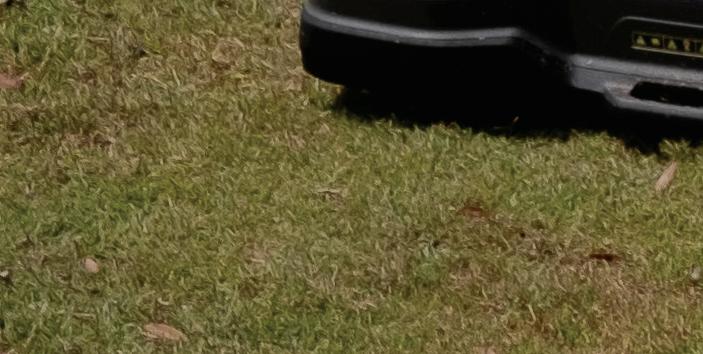
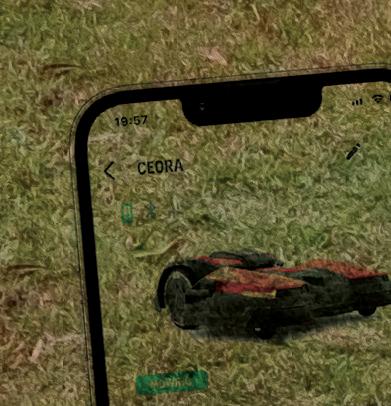

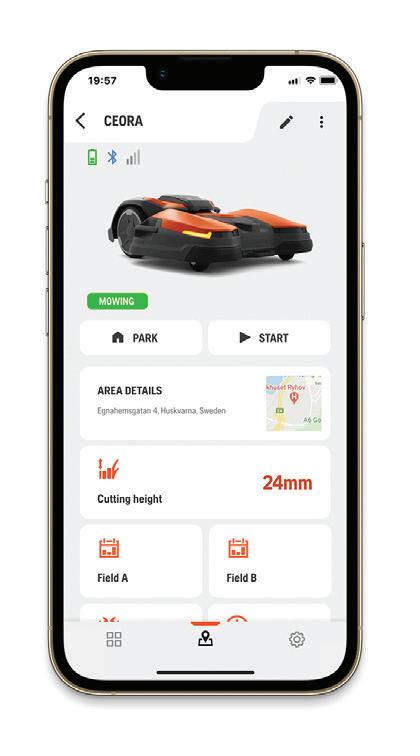
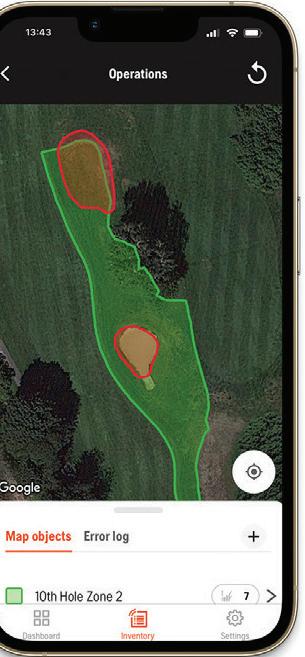
Perfect conditions, every morning with CEORA
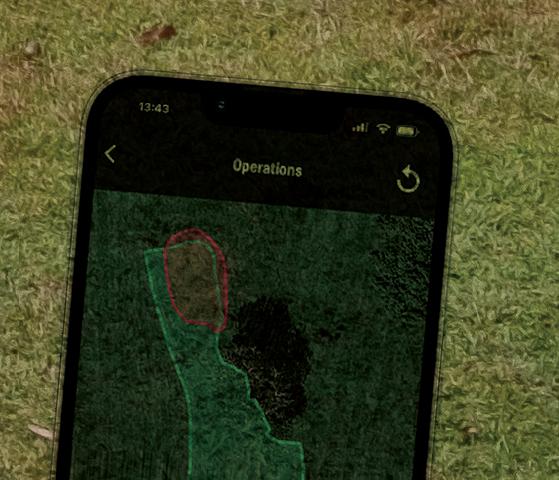
Wouldn’t it be nice to arrive, each morning, to freshly cut turf? A fairway or semi-rough that’s cut in a way that – compared to conventional petrol and diesel machines – saves on equipment and maintenance expenses, and that produces zero CO2 emissions during use? With Husqvarna CEORA™ robotic mowers you get a perfectly cut golf course every morning, every day, CEORA™. Read more at husqvarna.com/au



BOBBY CLARK-HEU & KIRSTY KNOWLES
Kei ngā awa koiora, ngā maunga whakahī, tēnā koutou katoa (to all the rivers of life and prominent mountains, greetings to you all).
This year has been a busy one for the Recreation Aotearoa Board, with the pace accelerating over the last few months. As we write, we are just weeks away from our Annual General Meeting. Here, Recreation Aotearoa members will vote on whether to adopt a new constitution. This is the culmination of over a year of work by the Board, staff and Mahi Ngātahi Governance Review working group. It’s a significant milestone in our journey to bring to life our bicultural strategy, Te Whai Oranga, and uphold our commitment to Te Tiriti o Waitangi. This journey begun more than five years ago

SARAH MURRAY
In Aotearoa, we are fortunate to be surrounded by outstanding natural environments that provide opportunities for play and recreation. You don’t need to look far to find mountains, rivers, lakes, forests and coastlines to explore and connect with nature. Getting out into the hills or bush is a treasured New Zealand pastime, especially in the summer months. Unfortunately, for the one-in-four disabled New Zealanders, heading off on an outdoor adventure is not so easy — despite an overwhelming number of people telling us that’s what they would like to do more of.
Together with our Outdoor Accessibility Advisory Group, we have been working hard to create comprehensive guidance to support the sector to create more accessible outdoor opportunities. This is the culmination of several years of work, supported by the
when members voted to acknowledge Te Tiriti o Waitangi in the constitution. We’ve come a long way since then!
As a Board, we’ve been focused on ensuring that we honour the whakapapa (heritage) and strong foundations of Recreation Aotearoa, while ensuring our governance settings reflect our deep commitment to the partnership between Māori and non-Māori in Aotearoa. We’ve taken the opportunity to ensure our constitution is fit for purpose, futureproofed and meets new legislative requirements – something all incorporated societies in New Zealand are currently working through. As co-chairs, we are hugely grateful for the mahi (work) of everyone involved in this important project, and we’re excited about what the future holds.
One of the wonderful things about our sector is the willingness of people to roll their sleeves up and get involved. We are constantly in awe of members who willingly give their time to support others and advance recreation, whether that’s serving on a
committee or advisory group, contributing to conference and events or hosting local gatherings. One of those people is longstanding board member Michele Frey.
In November, Michele will finish her third and final term on the Board. During this time, she has been Deputy Chair, Chair and, mostly recently, Co-Chair. Michele has been an influential leader in a time of significant change for the organisation. She has been instrumental in the development of Te Whai Oranga and has contributed to the success of the Te Hau Takitahi Co-Chairs Trial. We offer our heartfelt thanks for Michele’s dedication and wish her all the best for the future.
Lastly, to all our members and colleagues. Thank you for your ongoing commitment to the sector. Nā ngā mahi a rēhia e whai oranga mō tātou katoa (through recreation, we seek wellbeing for us all).
Bobby Clark-Heu & Kirsty Knowles Co-Chairs, Recreation Aotearoa
Sport NZ Disability and Inclusion Fund, and informed by the lived experiences of more than 700 people with disabilities who shared their views with the project.
Alongside this, we’ve worked with the wonderful crew at Adapt Mtb and Accessible to pilot new ways of capturing and sharing online accessibility information. These fantastic new resources are designed to help recreation providers remove barriers and support everyone in Aotearoa to experience our great country. If you haven’t come across them yet, check out our website and be part of making the New Zealand outdoors wildly accessible.
The last few months of the year are a particularly busy time for the team at Recreation Aotearoa. August sees us come together with the aquatics sector for our annual Waves conference and, of course, the New Zealand Aquatics Awards. This year, we celebrated some amazing people and projects. One was the winner of the Innovation Award, Napier City Council, for their No Limits ParaTry-Athlon. This event is a great example of the magic that happens when we take an inclusive approach and remove barriers to participation. We also joined the Generate Network in Queenstown for their biggest ever conference.
In September, we headed to Hoani Waititi
Marae in Auckland to deliver Māui Hīanga, a two-day gathering of Tākaro (Māori play) practitioners. In October, we joined forces with Te Papa Tākaro Te Arawa to deliver another Ngā Niho Taniwha wānanga, aimed at building sector cultural capability. In November, we’re back in Auckland for Recreation Conference, the annual Recreation Awards, and our AGM.
We say it every year, but 2024 seems to have flown by. As I write this, the ink is beginning to dry on our Annual Impact Report for the 2023-24 year. Financially, it was one of our toughest years in a while — something I know many of our members relate to. Despite that, we were able to deliver an impressive range of member events and services, including some new programmes.
As we move into the warmer, and for many busier, summer months, I want to acknowledge everyone working hard to provide safe, accessible recreation opportunities for everyone in our community. Ngā mihi nui ki a koutou. I hope you find a moment or two for your own rest and recreation while the sun is shining.
Sarah Murray Recreation Aotearoa, Chief Excecutive

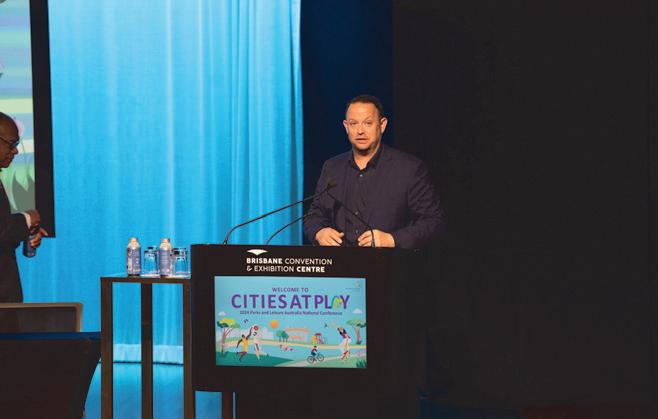
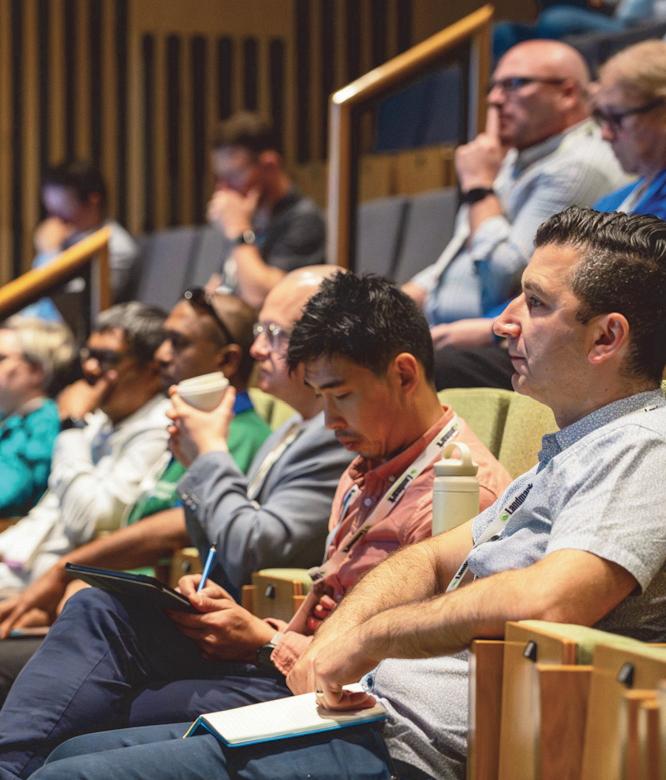
Under the main theme Cities at Play, this year’s PLA National Conference program was divided across five streams: Sports & Physical Activity, Facilities & Future Planning, Open Space & Horticultural Gardens, Innovation & Sustainability, and Leadership & Development. With the recent Olympic and Paralympic Games in Paris, and with Brisbane to host the 2032 events, sport was obviously very much on the program, with speakers from the range of elite to local community involvement.
The two-day main program was once again excellently MC'd by popular television and radio sports broadcaster Brett Phillips, and was attended by 416 delegates.
Across the two main program days, there were 57 presentations, four by keynote speakers, together
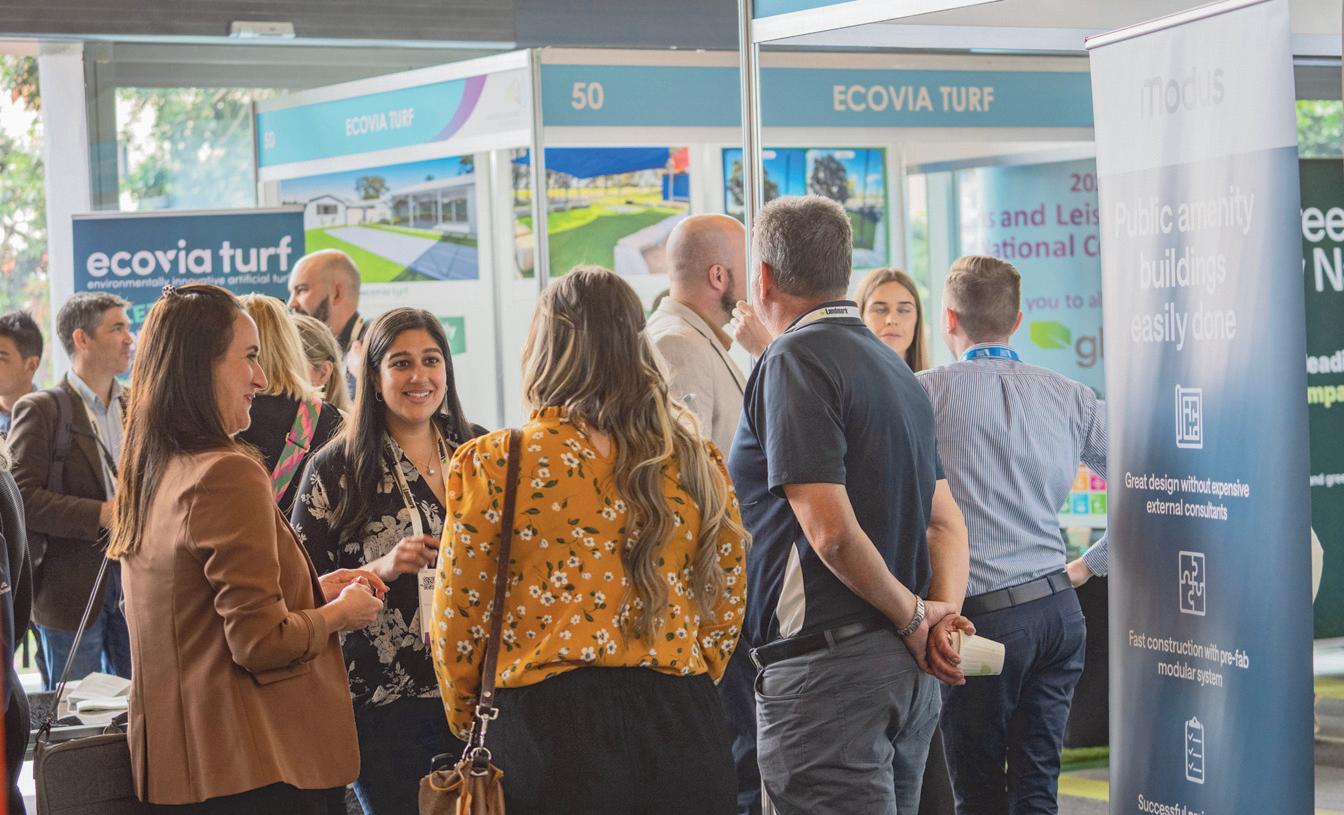
with six double session workshops. Additionally, there was an informative Sports Panel plenary session. Delegates benefitted from 52 exhibition booths from trade, manufacturers and consultants, all in a venue that provided a nicely consolidated area of session rooms, expo space and catering.
At the opening reception event for delegates on Sunday evening, Brisbane City Councillor Tracy Davis, Civic Cabinet Chair for Parks, Environment and Sustainability, provided a warm welcome.
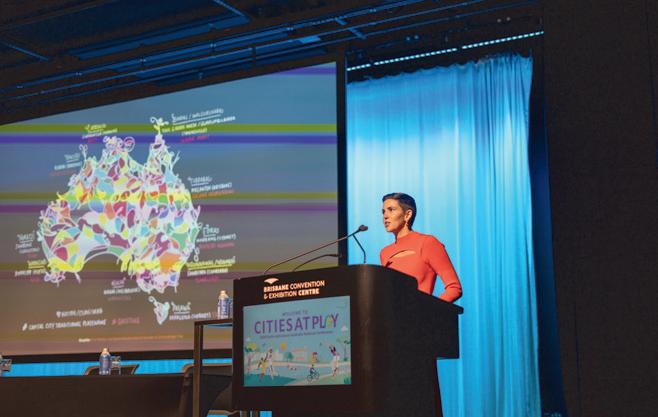
Day one of the program started with a keynote presentation from Ashleigh Morris, CEO at Corero, Australia’s most awarded sustainability and circularity
consultancy. Ashleigh is also serving on the Brisbane 2032 Olympic and Paralympic Games legacy committee.
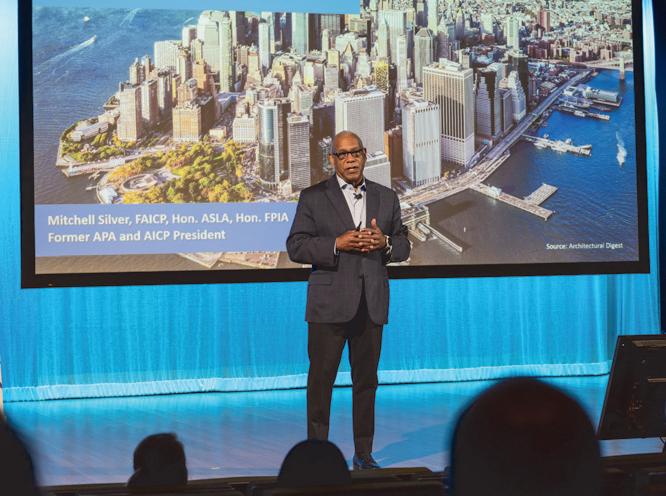
Following Ashleigh was Mitchell Silver, Principal at McAdams, a US land planning and design company. Mitchell’s role for many years was as the Commissioner for the New York City Department of Parks and Recreation, and it was in that role that he served as a speaker at past PLA national conferences.
Day Two’s keynote speakers were Lucinda Hartley and Steven Bradbury. As an urban futurist, Lucinda advises government, businesses and technology leaders on innovation strategies for smart cities. She has worked with Google, UN-Habitat, Planning Ministers, MPs and major Property Developers. Lucinda is a cofounder of Neighbourlytics, a social analytics platform for neighbourhoods with proprietary technology that taps into the digital footprint of a neighbourhood to understand its lifestyle and wellbeing.
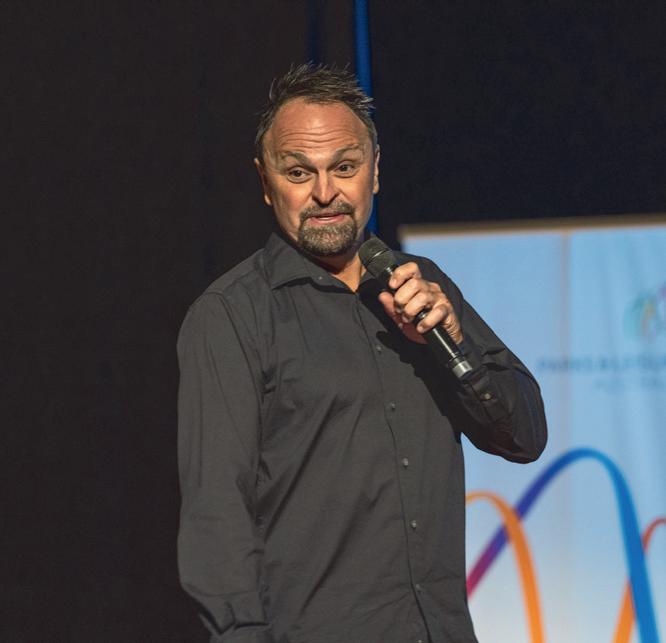
When Steven Bradbury took to the stage, the audience were treated to an entertaining presentation by the former Winter Olympics speed skating gold medallist. With great humour and stage presence, Steven revealed his life story and how he got to win that medal in 2002 after a decade of slog and many injuries.
Day two concluded with a plenary presentation by Councillor Krista Adams, Brisbane’s Deputy Mayor, on how the city is taking the future hosting of the 2032 Olympics as an opportunity to secure a positive parks and play legacy.
As has become our practice at past conferences, a conference statement, the Brisbane Statement, was produced to help guide and reinforce our strategic park, recreation and leisure initiatives in the coming year. You can view this statement at the end of this article.
The Day Two program was capped off with everyone’s favourite event, the Awards Gala Dinner. Hosted by television presenter Melissa King of Better Homes and Gardens, the national awards are the annual culmination of superior work awarded by the regions throughout the year. To find out who the big winners were on the night, turn to page 12.
After the awards were handed out, delegates sampled some fabulous food and then danced the night away to the musical stylings of the band Love, Note, Music.
The final day of the conference saw the Technical Tours take place. A total of 73 delegates enjoyed five technical tours hosted by Brisbane City Council staff The tours included a variety of sports venues, riverside open space, playspaces, major Brisbane Parks (Victoria and Barrambin) and the Botanical Gardens.
continue to evolve and grow.”
“Hearing from global experts who shared innovative approaches to urban design was both informative and inspiring, prompting deeper reflection on the broader impact of parks within city environments. Together, these insights reinforced the idea that well-designed public spaces are essential for fostering vibrant, connected communities.”
“Several workshops provided practical, hands-on insights, while networking opportunities facilitated valuable exchanges with professionals passionate about urban planning and
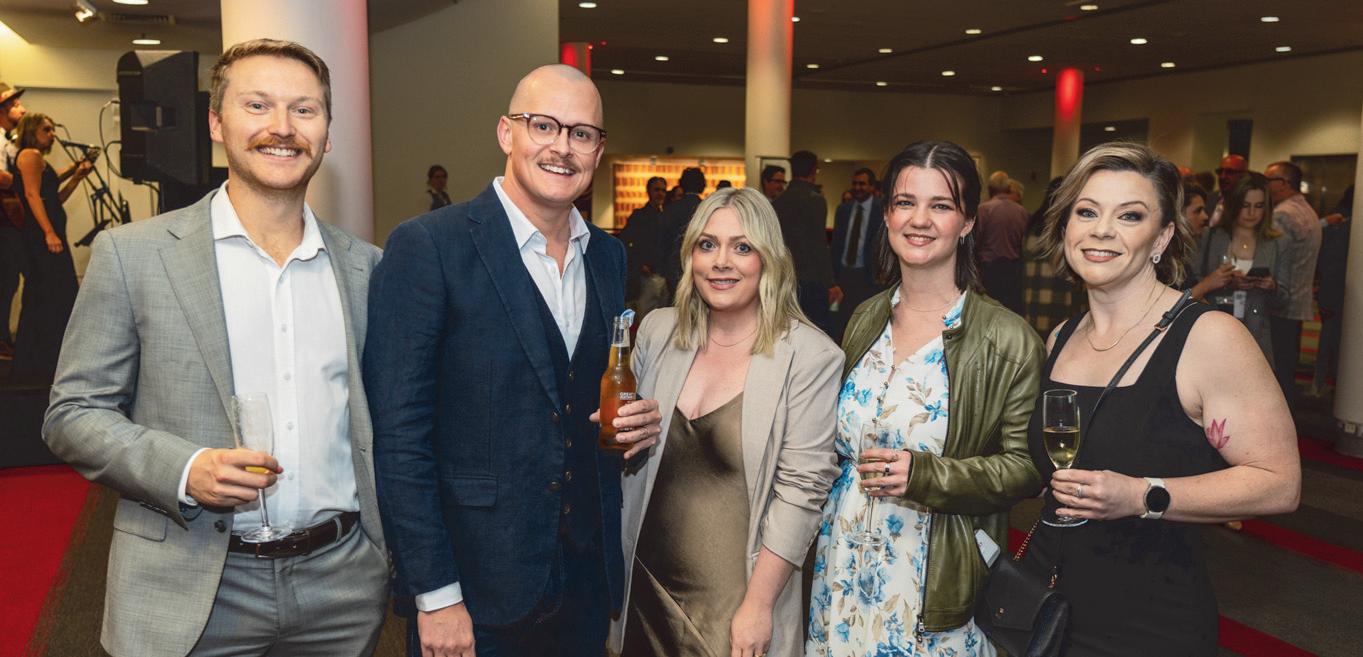
A few observations gathered from delegates note:
“Attending the PLA National Conference in Brisbane was a thoughtprovoking and motivating experience. The conference’s focus on how urban spaces can encourage play, community inclusion and sustainability felt particularly relevant as cities

park management. The conference underscored the idea that cities can be transformed into vibrant spaces that promote play, engagement and a sense of community, especially when public spaces are designed to be inclusive and resilient.”
“I left with renewed inspiration and practical strategies for making urban environments more dynamic and people-centred.”
“It was evident from the range of conference speakers that it is people that make places and communities vibrant hubs of connection, ideation and imagination.”
“With Brisbane 2032 on the horizon, a range of speakers outlined learnings from Sydney and Paris and detailed their visions and hopes for the future, not only for the Games itself but the environment and communities that will be around long after the event has concluded.”
“It was a pleasure to connect with so many passionate people within parks, leisure, recreation and sport — truly The People Behind the Places.”
For me, some of the highlights of this year’s PLA Conference were:
• The interesting, informative and inspiring messages delivered by each of the four key note speakers. Steven Bradbury was particularly entertaining and just a little bit edgy.
• The extensive involvement of the Australian Sports Commission with the conference, as both presenters and participants. Both of our organisations are closely aligned and share the same values in getting people more active. I look forward to seeing a strong, ongoing, mutually beneficial relationship develop with the ASC.
• The PLA Advisory workshop about managing park and leisure
construction cost increases. This workshop, which was presented to a full house, enabled great discussion about what various conference participants are currently experiencing in their workplaces in relation to infrastructure costs and ideas to help manage cost increases.
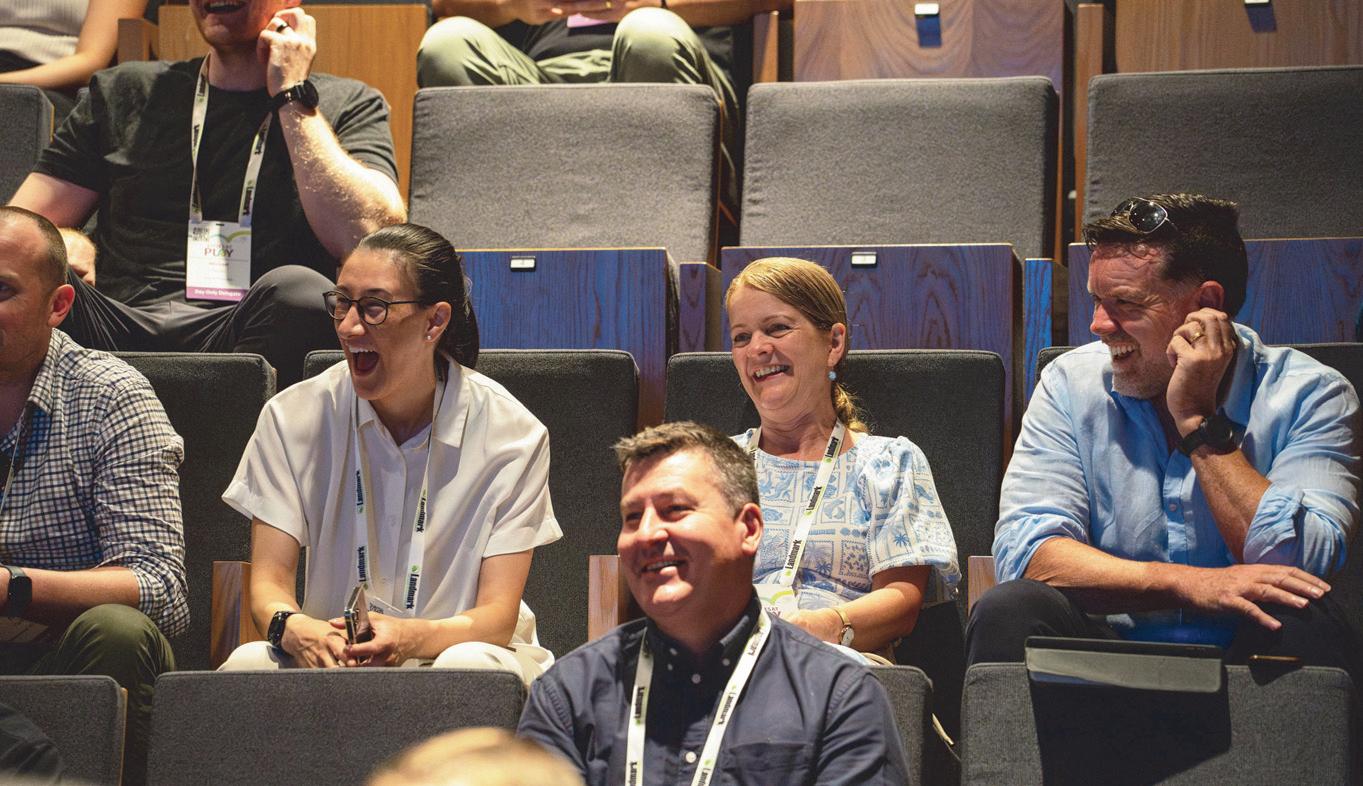
• The networking between conference attendees at the various social functions organised, as well as during morning tea, lunch and afternoon tea. It was particularly good to see so many new faces.
• The extensive range of suppliers who showcased their products and services. It’s always great to see first-hand some of the products or to discuss them directly with the people who know them best.
• The playspace technical tour. I particularly love the fact that we were asked to come along and test out the playspaces — which were amazing, particularly the awardwinning Bradbury Park.
• Hearing about all of the great projects happening around the country at the awards night — and letting our hair down on the dance floor.
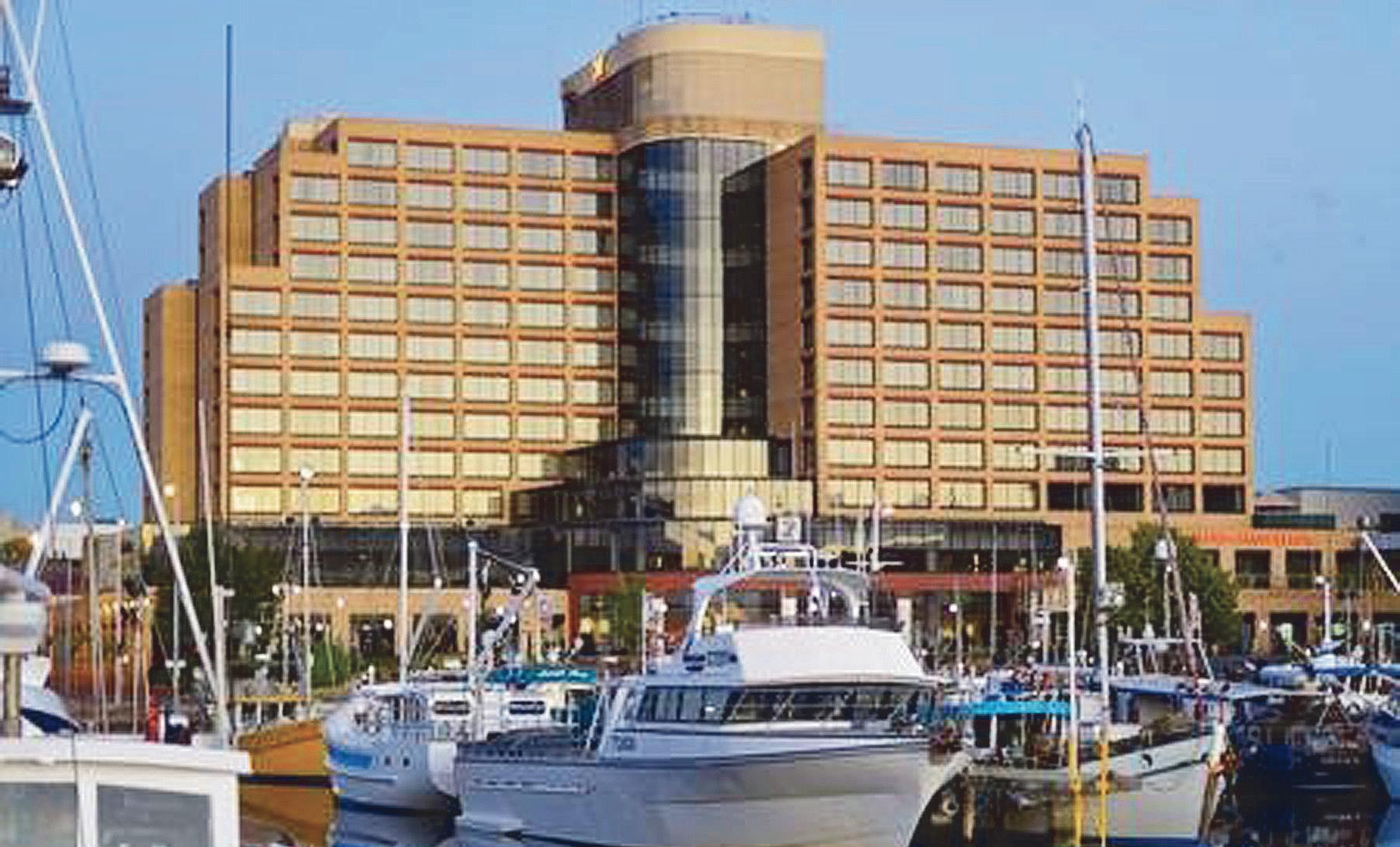
At the conclusion of the 2024 conference, the location of next year’s event was announced. The 2025 PLA National Conference will be held in Hobart, Tasmania, from 8-12 November at the Grand Chancellor Hotel. We look forward to seeing everyone there.


Foster Collaboration
Promote Sustainability Advocate for Equity
Embrace Innovation
Champion Health and Wellbeing Community Engagement
share concerns and

BEST REGIONAL/RURAL INDUSTRY CONTRIBUTION AWARD
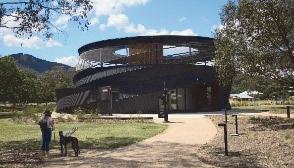
Ned Kelly Discovery Hub. Rural City of Wangaratta
The Ned Kelly Discovery Hub fuses innovative technology with Australia’s rich history. This world-class visitor attraction is future focused, but also acknowledges, respects, and pays tribute to the complexities of our past. By integrating the dramatic story of Ned Kelly with the area’s cultural heritage and natural beauty, it offers a comprehensive, accessible educational experience that enriches understanding of the bushranger era. This project not only preserves the legacy of a national legend but also revitalises Glenrowan, promoting sustainable tourism and deeper historical engagement.
BEST USE OF TECHNOLOGY AWARD
Digital Revolution with Auditing, Softfall Testing Pty Ltd
Independent Comprehensive Audit of City of Melbourne playground assets, using Playground 123 to collect all the auditing, asset and location data for the first time on a large scale.

COMMUNITY BASED INITIATIVE OF THE YEAR AWARD
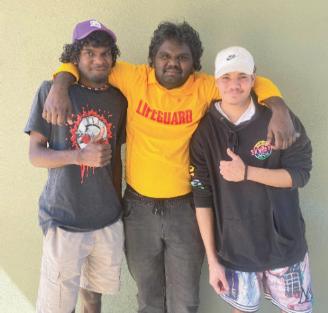
’Olgeta Deadly’ Sport and Recreation Program, Sport and Recreation - Department of Tourism and Sport, Queensland
The Deadly Active and Torres Strait Community Sport and Recreation Programs represent a transformational shift in the delivery of physical activity programs to discrete First Nations communities in Queensland. These programs empower Aboriginal and Torres Strait Islander Queenslanders to have a genuine say in how physical activity programs are delivered to them in line with the Queensland Government’s commitment to self-determination for Australia’s first peoples..

COMMUNITY FACILITY OF THE YEAR AWARD
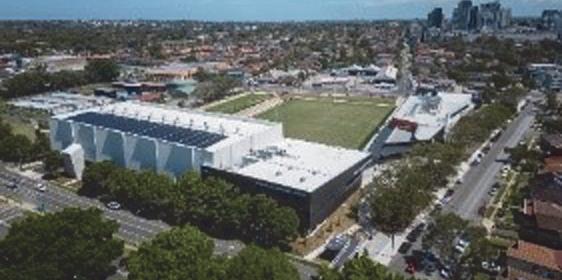
Concord Oval Community and Sports Precinct, City of Canada Bay Council
The Concord Oval Community and Sports Precinct, a remarkable once-in-ageneration project. This transformative world class facility, funded by the NSW Government, the City of Canada Bay, and other partners, now stands as a vibrant recreational hub for the community. With an indoor recreation centre, open green spaces, community rooms, and upgraded sporting facilities, it exemplifies Council’s commitment to quality community infrastructure, offering mixed recreational opportunities for everyone.

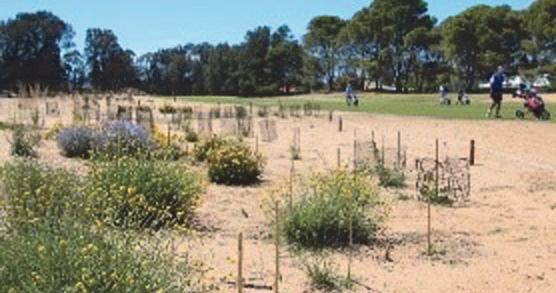
Monina Gilbey, Golf Australia
Monina’s impact at Glenelg Golf Club goes beyond golf and beyond Australia. At local to global stages, including the 2023 World Parks Congress, she strategically communicates sustainability efforts and fosters biodiversity awareness. Member updates, Golf Australia channels, and collaborations expand initiatives. Engagement with #WildlifeWednesday and the GEO Foundation, featuring on their website, creates international recognition. Monina’s speaking engagements and awards highlight her leadership, positioning her as an environmental sustainability leader in golf and internationally.

Paradise Recreation Plaza, Campbelltown City Council & JPE Design Studio
Paradise Recreation Plaza in Paradise South Australia provides an exciting and dynamic space for people of all ages, abilities and skill levels to enjoy.It offers a new safe, accessible and highly functioning recreation destination providing high quality play, skate/ scooter, bike/BMX, parkour, ninja adventure, hardcourt space, kick-about grassed area and picnic/BBQ facilities. The redevelopment was completed in December 2023 at a project cost of $3.89 million, with $1.52 million awarded from the South Australian State Government’s Planning and Development Fund Open Space Grant.
PLAYSPACE (UNDER) $500K AWARD
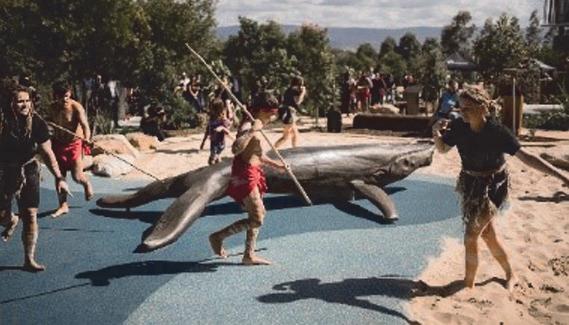
Yirran Muru Aboriginal Interpretative Playspace, Fiona Robbé Landscape Architects
From the escarpment of the Merrigong mountains (the Illawarra Escarpment) to the sea, Yirran muru (many pathways) Playspace is a collaboration of Dharawal knowledge celebrating 65,000 years of Dharawal connection to Country, Dreaming stories, travel routes, and language. The playspace builds on extensive consultation and provides a complex and layered map of the area, comprising inclusive physical, social, and sensory play challenges along with discoverybased learning opportunities. The immersive journey of discovery at Yirran muru Aboriginal Interpretive Playspace is the first of its kind.
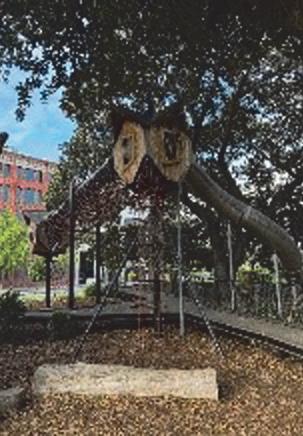
Bradbury Park Playspace, Brisbane City Council
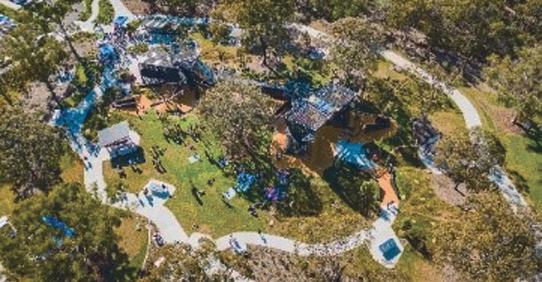
The Bradbury Park Playspace redefines playtime and is unlike anything else in Brisbane, South East Queensland or even Australia. At the heart of the captivating playspace is the ‘biological city’ theme, which explores and celebrates the complexity and interconnectivity within nature. When its array of byways and cleverly integrated surrounds are explored by the community, and visitors from across the country, the playspace bursts with life! While providing significant development opportunities deliberately aimed at older children, the playspace includes inclusive features enjoyed by all.

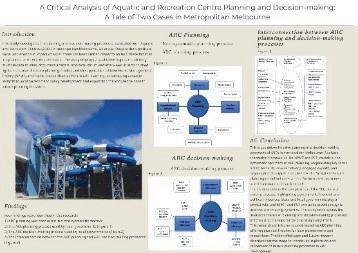
A critical analysis of aquatic and recreation centre planning and decision-making: Dr Katie McDonald, Victoria University
A critical analysis of aquatic and recreation centre planning and decision-making: A tale of two Cases in metropolitan Melbourne, is derived from a PhD research project completed by Dr. Katie McDonald at Victoria University. This research provides a comprehensive analysis, examining the multifaceted interactions between public sector management theories and local contextual factors. By uniquely applying local government theories the study uncovers insights into the influences shaping ARC planning and decision-making by providing actionable recommendations for optimising ARC planning.

Chahana Paudel, Deakin University and Whitehorse City Council
Chahana is a PhD student at Deakin University, and a Recreation and Open Space Project Manager at Whitehorse City Council. With both research and practice experience, Chahana consistently demonstrates a commitment to bridging the gap between academia and practice. Her proactive approach in translating research findings into practical solutions showcases her dedication to advancing the parks and leisure sector. She excels at fostering a team-
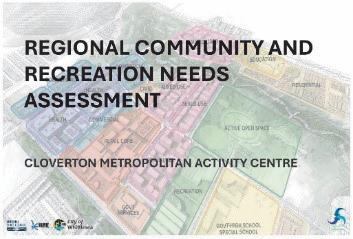
Cloverton Regional Community and Recreation Needs Assessment, City of Whittlesea, Mitchell Shire Council and Hume City Council
The Cloverton Regional Community and Recreation Needs Assessment outlines the infrastructure required to service a new community the size of Canberra in Melbourne’s north. It will result in over $300M of economic benefit and the construction of 12 vertical indoor courts, an aquatics centre, four sports fields, six outdoor
courts and broader recreation facilities such as playspaces and a performing arts centre. This project resulted in the first ever joint Council meeting and will ensure that Whittlesea, Mitchell and Hume residents have access to quality regional infrastructure in the future.

based environment, navigating diverse stakeholder interests, and prioritising inclusive community engagement to ensure projects align with community needs.



Paul Jane is a multidisciplined leader with over twenty-five years’ experience building and applying skills in strategic planning, project management, engagement, negotiation and team building across the parks and leisure industry in government and the not-for-profit and sport sectors.
A strategic thinker who collaborates with all stakeholders to deliver lasting outcomes, Paul has applied his craft and dedicated his time to all levels of Parks and Leisure Australia, at the regional level, nationally and on the international stage.
Parks, recreation and sport are Paul’s life passions, and his commitment to the people behind the places is second to none. Paul served as National President of PLA and put the “people behind the places” ethos at the forefront of his mind. His leadership occurred during a tumultuous and transformative time in PLA’s history. He was voted in by the National Board and members to serve an extended term as President, in recognition of the important business continuance work he was leading during the unprecedented global pandemic and recovery.
Paul’s leadership not only allowed PLA to survive but to thrive during this time. His work was critical to the ongoing sustainability of the organisation. What can only be characterised as a challenging time in governance and operations, Paul’s strategic thinking, passion for developing a positive culture and mobilisation of those around him saw the organisation come out the other side when many are still recovering.
If you ask Paul, his biggest achievement is the PJ Alumni — his development and enhancement of his people. The culture king, Paul provided the balance between care and challenge, to instil the trademarks of integrity, reliability, frankness and fearlessness, and leaning into the comfortable to make real change when required. He ingrained a deep sense of responsibility and giving back to the industry that has gone on to serve the broader sector.
In 2018, Paul re-established Generate Network Australia, PLA’s commitment to new professionals and emerging leaders to connect with industry, opportunities and each other. This investment in emerging leaders has led to the cohort growing from seven to over 200 people, and some emerging leaders have gone on from this initiative to become leaders in their own right, learning the importance of industry connection and contribution. This direct impact includes three PLA National Board Directors, the current PLA National President and PLA Advisory representatives, to name a few. From an industry perspective, there are a generation of professionals contributing in a meaningful way to community, government and the private sector, fostering collaboration and integration across the industry.
Paul’s impact in forming genuine culture, fostering leadership attributes and a legacy of responsibility in all who work with him, has no doubt lead to the development of high performing teams everywhere.
Paul has had a dynamic and game changing career that has demonstrated a high level of professionalism and outstanding leadership. His development of and willingness to share game changing initiatives has impacted the industry and has been replicated across many areas, such as:
• Delivered and managed hundreds of sport, recreation and open space projects.
• PLA leadership and transformation.
• International MOU’s.
• Industry contributions replicated as best practice.
• National award-winning approach to sports development — Armstrong Creek, sports development plan, changing the way the way industry plans for greenfield developments and new communities.
• Fair Play equity policy, pressing re-set on sweetheart deals and bringing equity to standard provisions, levels of service and levels of subsidy (fees and charges).

• Kardinia Park Trust establishment and handover, supporting the interests and protecting the employment of existing staff
• Establishment of the Great Ocean Road Coast and Parks Authority and the development of two authorising bills to legislate GORCAPA’s powers and operationalise the Great Ocean Road Environs and Protection Act.
• Established platforms for constructive industry collaboration (G21 Sport and Recreation Pillar 5 regional local governments), Deakin Sports Advisory Board.
• Strengthened international relations and collaboration through the development of international MOUs with USA, Canada, NZ, South Africa, the UK and in progress with Mexico.
• Established National partnerships with Sport Australia (ASC) and World Urban Parks that continue to open doors for PLA.
His contributions have represented his lived behaviours of what Parks and Leisure Australia is all about, his diverse and ongoing contributions to industry in a technical sense are so evident and ingrained that the origin is not always immediately known. However, his biggest contribution to industry is the development of his people — our current and future leaders — modelling and driving what it means to be the people behind the places. Congratulations, Paul.
WORDS NAPIER AQUATIC CENTRE
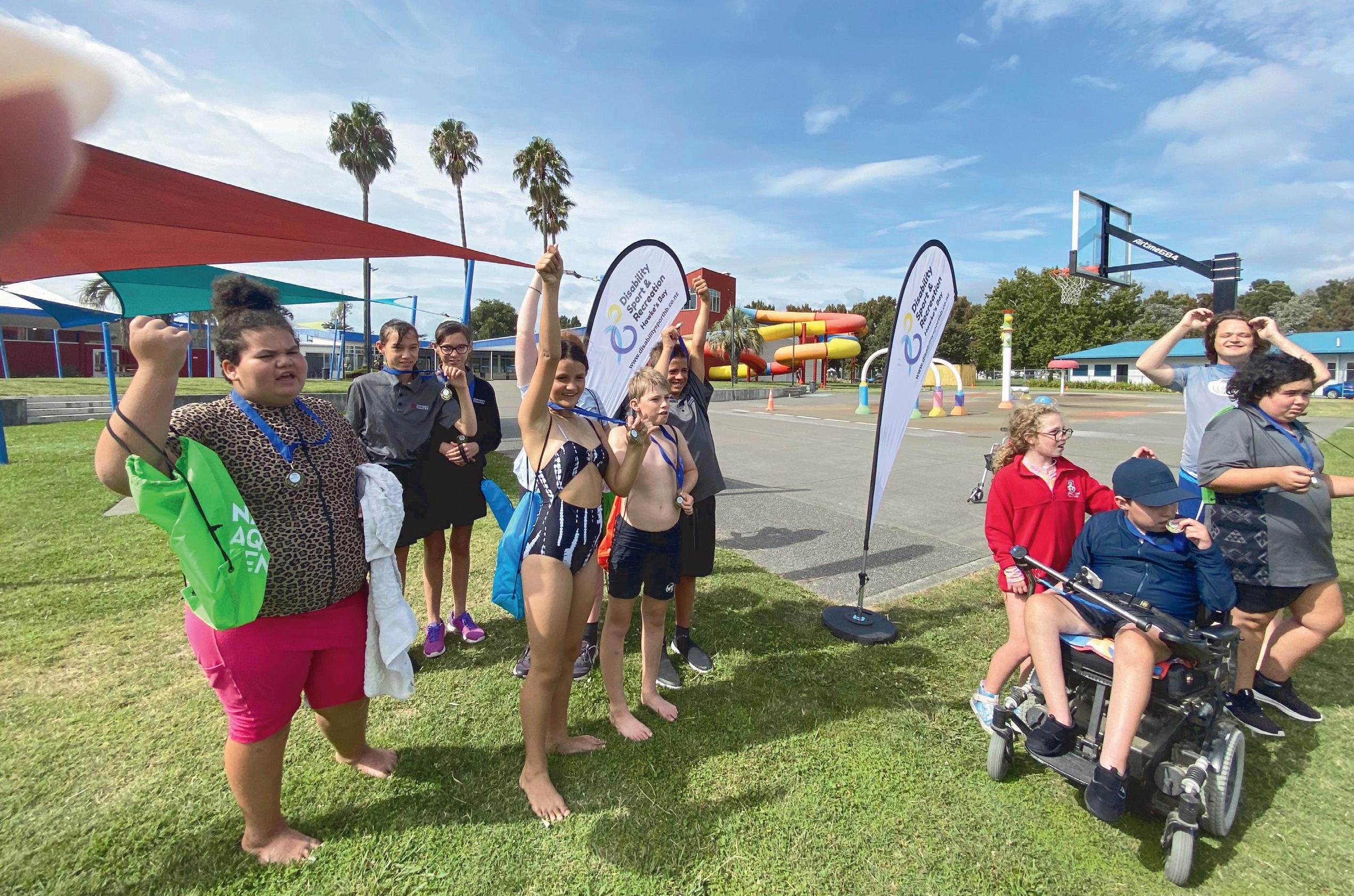
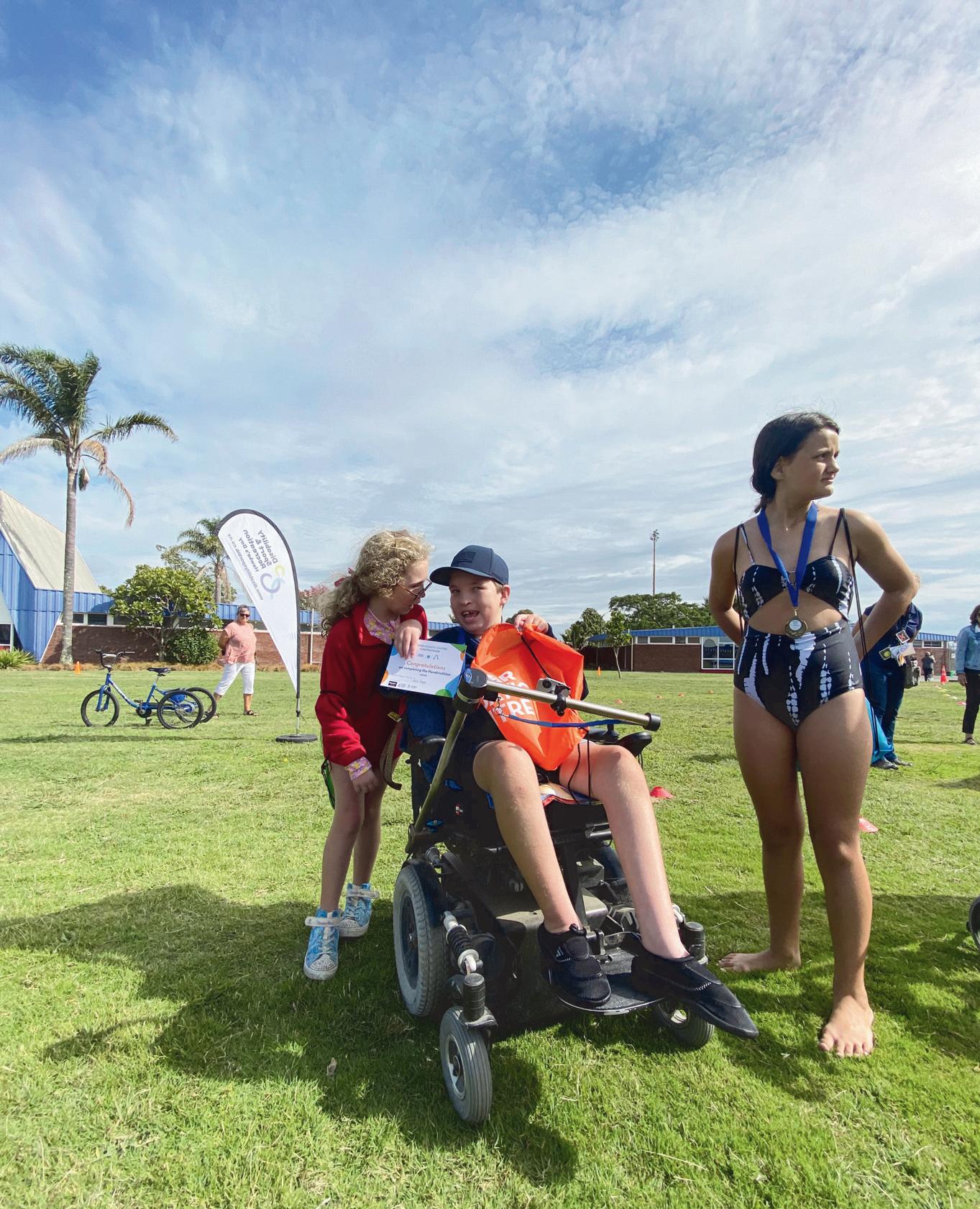
The No Limits Para-Try-Athlon is an inclusive multisport event for primary and intermediateaged tamariki (children) who require specific accommodations to participate. The programme aims to break down barriers to participation and plans to expand across other aquatic facilities. Hayden Kennedy, Acting Centre Manager for Napier Aquatic Centre, pioneered this event.
“When we were planning for the Para-Try-Athlon we came up with the tagline, No Limits. This tagline became our focus and the very heart of the project. We wanted to make it clear that all potential barriers that tamariki and whānau (families) may have encountered with aquatic spaces, or in sports and recreation, would be worked through in partnership. This approach meant we could make sure every participant had the same opportunities to access the event,” states Hayden.
Multisport has long been popular in mainstream schools and sporting clubs, but those who experience physical or intellectual barriers, or who are neurodivergent, have had limited opportunities to join in. No Limits Para-Try-Athlon centres on embracing diversity and inclusivity. It’s a multisport experience for tamariki who require specific accommodations to compete in one or all of the three legs. Our main aims are to:
• Introduce multisport to the primary / intermediate school sector in a fun, challenging and achievable atmosphere.
• Work with whānau and tamariki to break down any barriers that may prevent them from participating in multisport.
The No Limits Para-Try-Athlon removes potential barriers by
accommodating individual specific needs. This project is unique in that it caters for a demographic that currently has far fewer opportunities to participate in multisport. For many organisations and clubs, accommodating such a wide range of needs can often be seen as too challenging. But, for whānau of children with intellectual or physical disabilities, missing out is a common experience. At Napier Aquatic Centre, we work closely with this community to support everyone and create an inclusive, welcoming environment.
The inaugural No Limits event was held in February 2024 at Napier Aquatic Centre. Based in Napier, we extended an invite across the Hawke’s Bay. It was a huge success and has laid the foundation for more opportunities for more tamariki who may require modifications or adaptions to participate in multisport.
For our first No Limits, tamariki were given the option to participate as an individual or take on the challenge as part of a team. They could take race competitively or set out to achieve their own personal goal. The most important part was that everyone was having fun and getting involved.
For the swimming leg, tamariki had the option to swim, paddle, walk, kick or float on a giant mat, while their carer pulled them across the pool.
The traditional bike leg was modified to a wheels leg. Bikes, trikes, scooters, skates and wheelchairs were all considered forms of movement. Napier Aquatic Centre is fortunate to be located next to a netball court, so this leg was held on a smooth, flat surface — perfect for all types of wheels.
Tamariki had two courses to choose from in the running leg. The first course was a grass track around the pool grounds. The second was on a netball court — suitable for tamariki who required a walker to complete the track. In this leg, one of the competitors set a personal best by walking the furthest he ever has!
Like other triathlons, everyone who participated received a special medal when they crossed the finish line.
A lot of planning and preparation went into this event. Our team at Napier Aquatic Centre wanted to create a positive experience, prioritising health, safety and wellbeing. We engaged with Sport Hawke’s Bay and Disability & Recreation Hawke’s Bay at each stage of the programme. We also engaged with Fairhaven School, a specialist school, to propose the event and gather feedback on our initial ideas. The insights and expertise we got from our partners were invaluable in the early stages of planning.
The voices of parents, teachers and carers was important. Early on there was a high level of caution, as this type of event had never been attempted before. We understood and appreciated these concerns. By working closely with schools, parents and whānau, we were able to communicate our processes and ensure that safety was top priority.
A great deal of thought went into the online registration for this event. We wanted to establish a clear partnership between Napier Aquatic Centre and whānau to remove any barriers and put systems in place that catered to each child’s specific needs. It was essential that whānau felt
confident in our approach and trusted that we prioritised their child’s physical and emotional wellbeing.
Our engagement with families, schools, carers, and the participants themselves, continued after the event. Feedback showed an interest in increasing the number of participants, raising awareness of No Limits and supporting those who wanted to compete individually in future events rather than as part of a team.
The vibe on the day was very much indescribable. The pure joy on the faces of participants will stay with our team at Napier Aquatic Centre forever. It motivates us to continue the work we’re doing. We look forward to collaborating with schools and kura, whānau and carers across Hawke’s Bay to help break down barriers in aquatics and multisport.
With the support of Sport Hawke’s Bay, Disability & Recreation Hawke’s Bay, staff, whānau and the tamariki who participated in our first event, we’ve demonstrated that multisport can be enjoyed by everyone. Our goal is to build on this success.
These pioneering tamariki have smashed down so many potential barriers, paving the way for more tamariki and rangatahi (teenagers)
across Aotearoa to participate in future No Limits Para-Try-Athlons.
Our aim is to continue growing this event at Napier Aquatic Centre, and to work with other aquatic facilities to offer similar events. We plan to hold this event twice a year, during Terms 1 and 4, when the weather is warmer. I’d love to build a No Limits community, where participants train for the Napier Aquatic Centre No Limits Para-Try-Athlon, then compete in regional events.
Future plans include collaborating with Hohepa Adult Care Facility to involve rangatahi and adults in multisport. Our next event is scheduled for late November, and we’re expecting an even higher turnout based on the positive experience of tamariki and their support crew. We hope to see plenty of tamariki, rangatahi and whānau at Napier Aquatic Centre cheering on our amazing athletes.
We hope the word about No Limits continues to spread. For whānau, it provides an opportunity to see how accessible and inclusive our pools are, and how much their tamariki enjoy the water. By hosting this event, we hope specialist schools and education providers will contact our team at Napier Aquatic Centre for support with any aquatic activities. napieraquatic.co.nz
WORDS ROB STOKES, INDUSTRY PROFESSOR, ENVIRONMENT AND SUSTAINABILITY, MACQUARIE UNIVERSITY, NSW
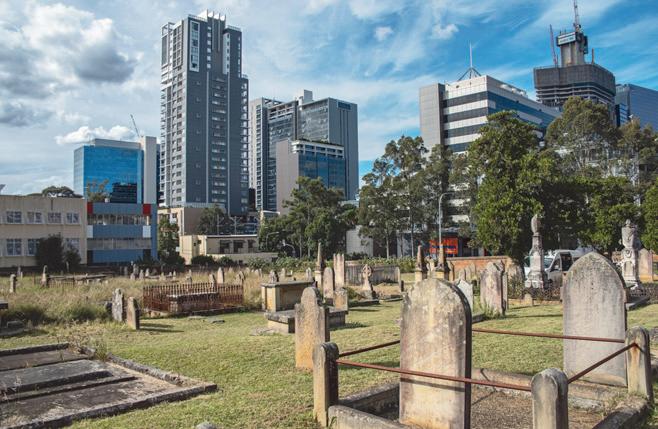
Old graveyards and cemeteries are a forgotten land asset that can find new life as urban parks in crowded cities. As the density of our cities increases, efficient use of urban land becomes paramount. In particular, land for urban parks becomes more important and harder to find.
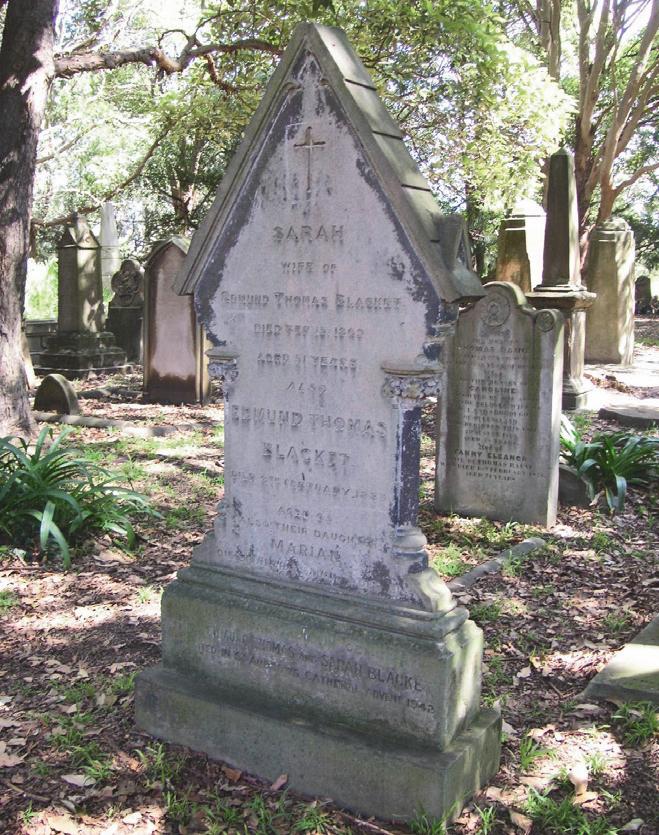
Church graveyards are one of the land assets left behind as dead space in our cities. Most were closed decades ago as the burial industry created cemeteries and memorial gardens away from churches. Large necropolises are now being reimagined as urban parks while continuing as active burial grounds. In contrast, dormant graveyards are largely overlooked as urban pocket parks. Yet these sites are often found in some of the most densely populated parts of cities.
Many cities have long experience converting burial spaces into urban parks. Famous examples include Washington Square Park in central Manhattan, which was converted from a common burial ground to a public park in 1827. Bunhill Fields was a burial space for non-conformist Christians in London from the 1660s until converted
into public gardens in the 1850s.
In many instances, cemeteries fulfil the dual role of accommodating new burials while also being public parks. Assistens Cemetery in the Danish capital of Copenhagen was founded in the 1750s. Since the early 19th Century, it has also served the city as a public park.
As urban planning emerged as a separate discipline in the early 20th Century, city planners sought to identify and separate discrete land uses. Large allotments on the city fringes were set aside as burial spaces styled as urban parks. Their ancillary use as passive open space was implied in their name — lawn cemeteries or memorial gardens.
Urban growth and increasing density has led some cities to examine ways to maximise recreational and community uses of these large institutional burial sites. The untapped potential of urban churchyards. The potential for shared use of small church graveyards remains largely overlooked.
There are 2,265 cemeteries in New South Wales. Most are small church graveyards, which have not been used for interments for many decades. Across Greater Sydney, the Catholic and Anglican churches own and manage more than 100 cemeteries and columbaria (memorials housing urns
of cremated remains). Most are closed to new burials. Many of these sites are located in areas facing a deficit of open space as building densities increase.
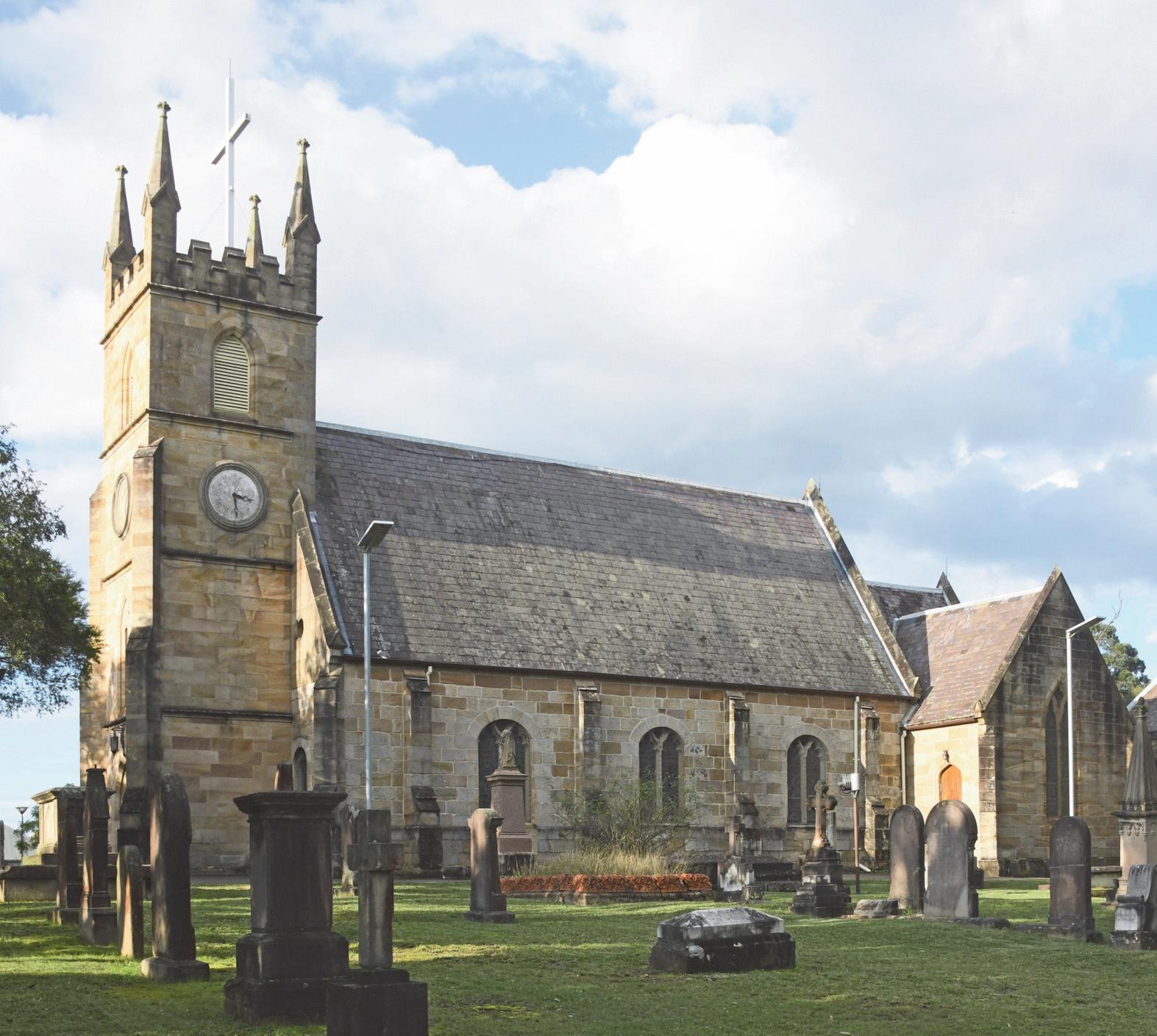
One example of this is St Anne’s Church graveyard in Ryde. Established in 1826, it was subject to a partial land resumption for road widening and closed to new interments in the 1950s. The graveyard is next to high- and medium-density residential apartments. If converted to open space, this area of more than 4,200 square metres would provide extra open space to complement the Ryde Memorial Park to the east of the site.
St Paul’s Anglican Church is about 600 metres from Canterbury Metro station in inner south-western Sydney. The cemetery at St Paul’s was established in the 1860s and measures more than 2,200 square metres. Only the columbarium is still operating. The site does not adjoin the active church buildings. If converted to open space, the St Paul’s cemetery site could supplement Canterbury Park to the north-west. The surrounding areas of housing have been earmarked for high-density residential development.
Despite the potential of such sites, there are legal, planning and environmental obstacles to converting unused graveyards into public spaces. Because graveyards are much smaller than cemeteries, and are integrated with other land uses, they face a more complex regulatory environment. Neighbours may oppose change, preferring to live next to a quiet graveyard rather than an activated parkland. Many urban church graveyards are zoned for infrastructure purposes, with conversion to parkland requiring development consent.
Social attitudes such as respect for the dead, or fear of creepy places, can also create discomfort at converting graveyards to parkland. As graveyards often include significant heritage items, conversion processes can be complex and costly.
Church graveyards may also include habitat for biodiversity. The
presence of at-risk species often limits opportunities for greater public use.
Decaying monuments, decrepit headstones and crumbling masonry also create public liability concerns for church management. The safety of monuments in areas used by children is of particular concern.
Despite the complex challenges involved in converting graveyards to parks, there are examples of effective transformations. St David’s Park is the site of the first church in Hobart, Tasmania, and was used as a burial ground from 1810 to 1872. In 1919 the site was converted into a public park. Tombstones were relocated and conserved along park boundaries to create usable public open space.
Campderdown Cemetery in Newtown, NSW, was founded in 1848 by the Sydney Church of England Cemetery Company. It was converted into public parkland from 1948, becoming a crucial piece of inner-city public space.
Similar conversions have been proposed for other unused urban graveyards. One of these is St John’s Cemetery in central Parramatta, NSW. It was proposed for conversion to a public park in the 1950s. The architectural historian Keith Eggener observed that cemeteries occupy liminal space where life meets death, nature meets city, present meets past. As our growing cities become even more dense, church graveyards may provide valuable community open spaces for the next generation alongside resting places for generations past.








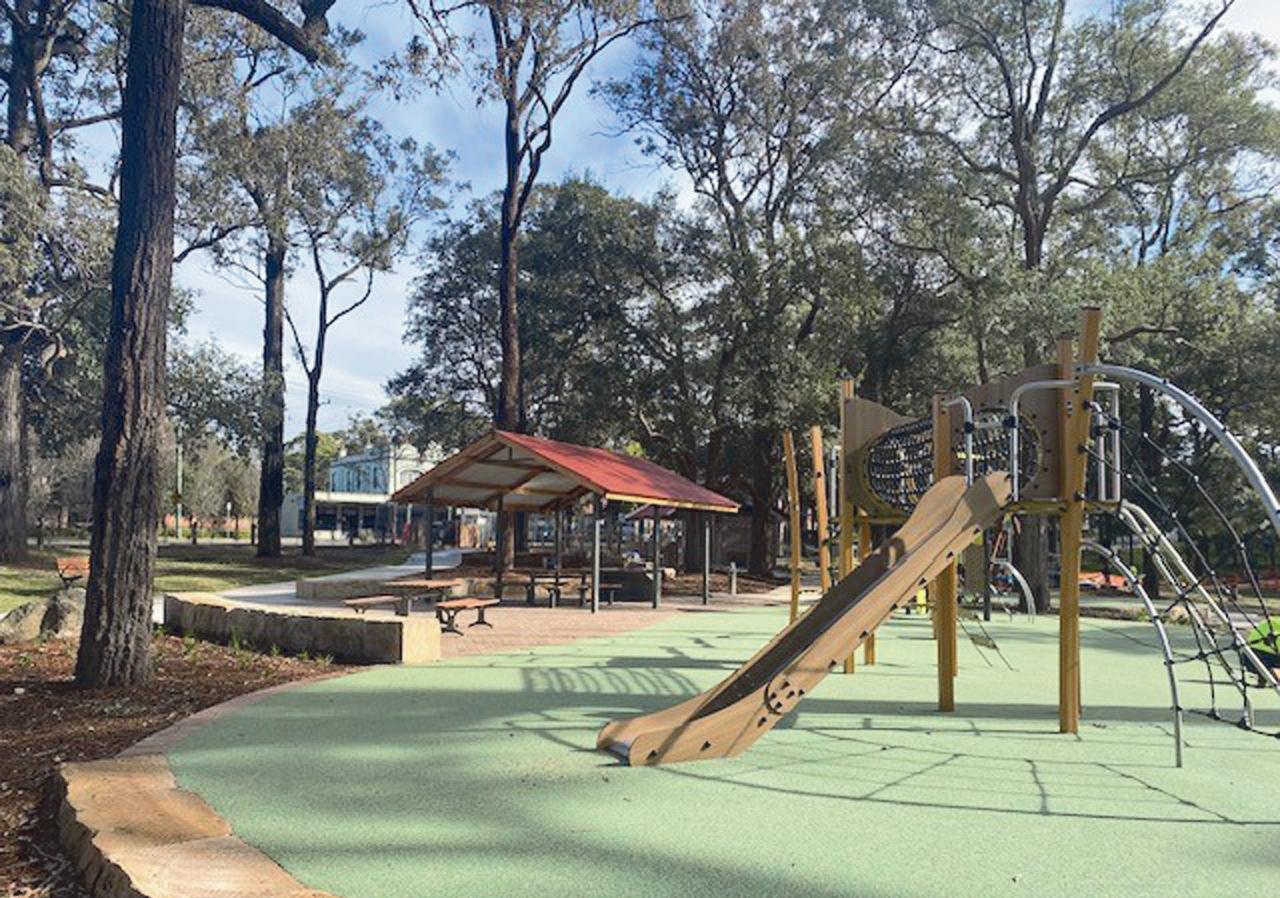
WORDS ZOE COOKE, LANDSCAPE ARCHITECT/PROJECT MANAGER, HORNSBY SHIRE COUNCIL, NSW
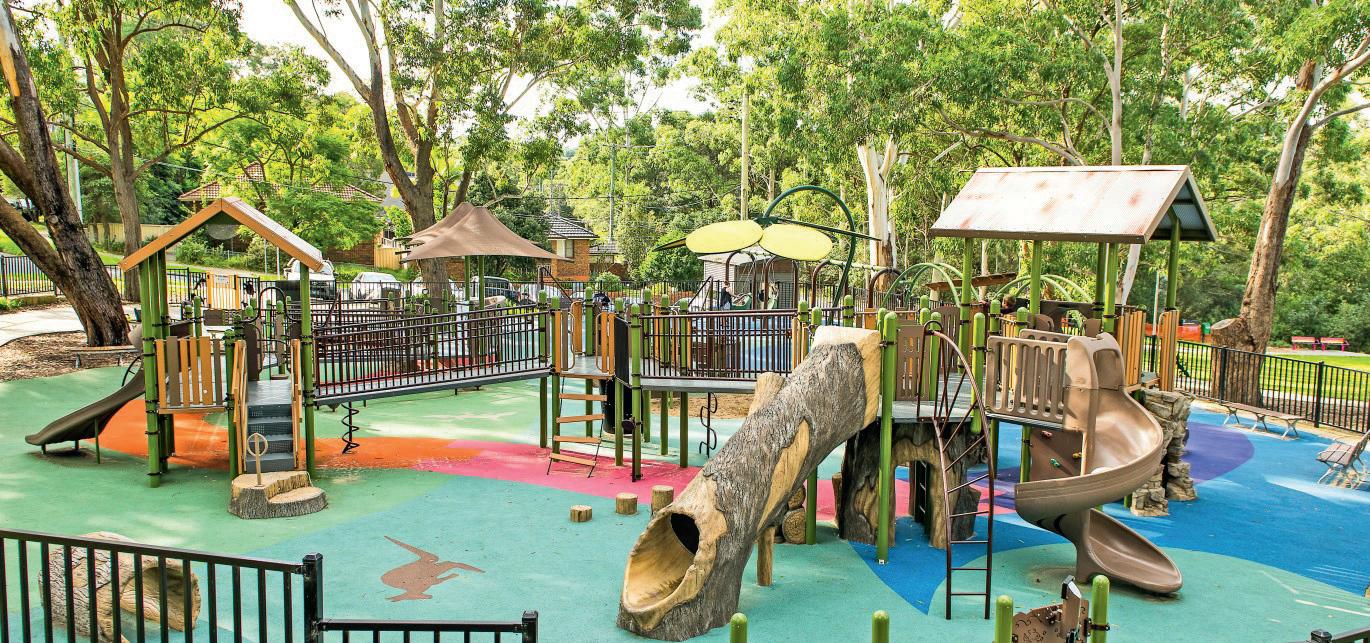
Atransformative renewal of Beecroft Village Green by Hornsby Shire Council reaffirms its role as a cherished community gathering space. Established in 1886 and marked as a “reserve” on historical maps, this linear park of approximately 1.4 hectares has long been an important part of the recreational and social life of the Beecroft area; a suburb 22 kilometres north-west of the Sydney central business district. The recent revitalisation project not only enhances the park’s functionality but also respects its significant heritage value and natural beauty.
While the community held great affection for the Village Green as a tree-filled park, feedback indicated that thoughtful improvements could further enhance visitors’ experience. The existing public toilet block was no longer fit for purpose and did not meet current accessibility standards or complement the site’s heritage character. Additionally, the playground and picnic facilities were due for renewal, and there was no provision for older children.
Following requests from the community and strong advocacy by councillors,
Beecroft Village Green was scheduled for renewal as part of the Council’s capital works program.
The renewal of Beecroft Village Green was guided by a process of community consultation, emphasising the importance of local input in shaping the park’s future. The first stage involved an online survey, allowing residents to express their preferences for new features. The community was asked to rank their top priorities for the park and this feedback was used when developing the draft Master Plan, which articulated a vision for the park’s transformation.
The results of the consultation indicated that activities for teens and older children were the highest priorities. Opportunities for outdoor games and fitness, along with larger picnic shelters, were also ranked highly. The community expressed their desire to see the site retained as a community open space with enhanced opportunities for play, exercise, recreation and social gatherings. While not the top of any survey, when combined the highest ranked request was for replacement of the existing public toilet.
Community engagement did not stop with the survey. A second round of consultation sought public feedback
on the draft Master Plan before its final adoption by Council. This collaborative process ensured that the park’s renewal was aligned with community desires and needs, reflecting a shared vision for its future.
In addition to consultation, some state and local guidelines were also of primary importance to the design philosophy. These included:
• NSW Government Everyone Can Play Guidelines (2021, updated 2023)
• Hornsby Council Urban Forest Strategy (2021)
• Hornsby Council Play Plan (2021)
Located within the BeecroftCheltenham Heritage Conservation Area, Beecroft Village Green has local heritage significance due to its historical, aesthetic, and social values. Heritage Conservation areas are recognised by the community for their distinctive historic character and are protected under the Hornsby Local Environment Plan 2013.
The park conserves a stand of mature trees from the critically endangered Sydney Turpentine-
Ironbark Forest vegetation community, which are not only a vital part of the park’s ecological landscape but also a living link to its historical past.
With this in mind, Hornsby Shire Council approached the park’s renewal with sensitivity. The design centred around the large, mature trees scattered throughout the park. Key features, such as the toilet block and basketball court, were strategically placed in clearings to minimise disturbance to the trees and a project arborist was present throughout construction to provide advice and oversee excavation work. The team avoided major tree roots in siting the toilet building.
An interesting aspect of the park’s renewal was the preservation of two young trees. These trees were grown from seeds collected from a White Mahogany tree, which was removed from a nearby development site and planted as part of National Tree Day about 10 years ago. Now integrated into the park’s design, these trees symbolise a commitment to preserving the park’s natural heritage while delivering contemporary upgrades.
Upgrading the public toilet was considered a high priority by the community, so design of a new building was carefully crafted by local architects to compliment the park’s historic character. The brickwork of the new structure draws inspiration from surrounding heritage buildings, ensuring that while the park evolves, it maintains a connection to its past. This thoughtful design underscores a broader commitment to preserving historical aesthetics amidst contemporary improvements.
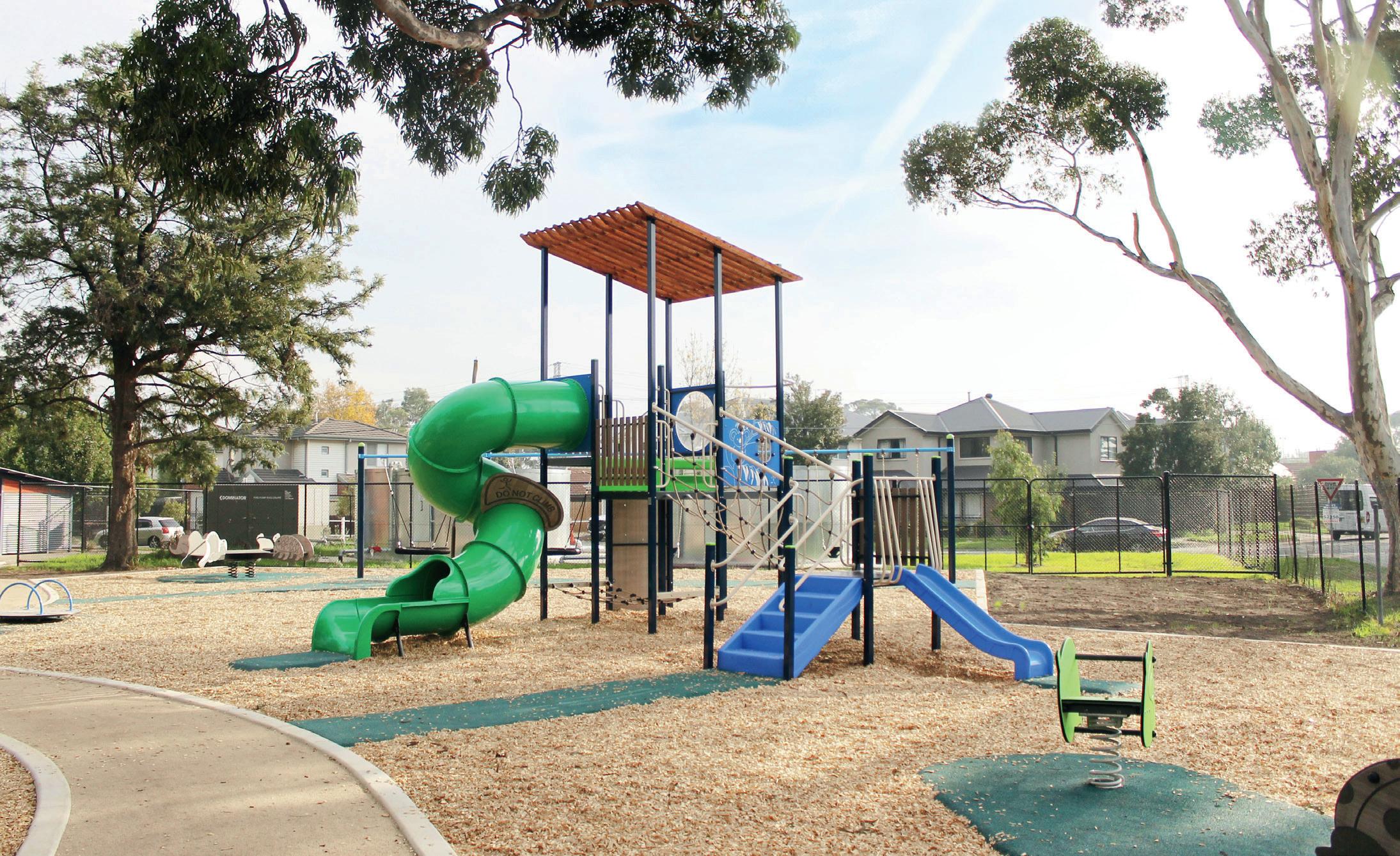
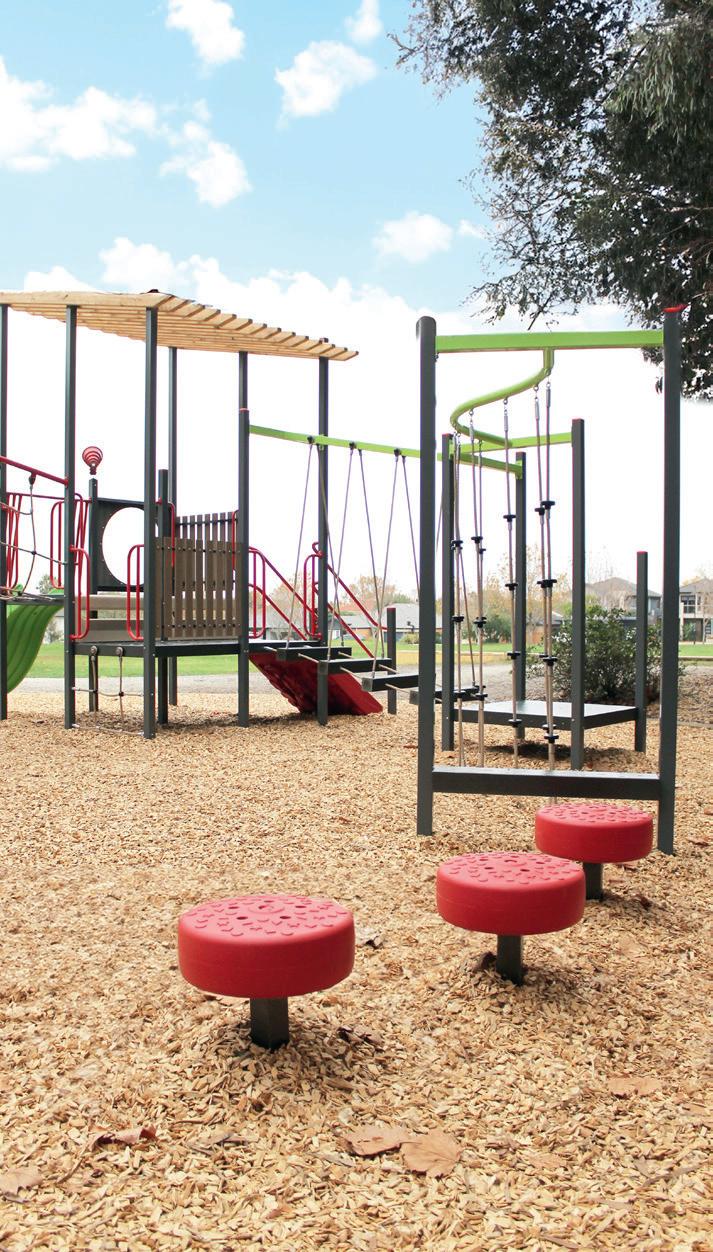
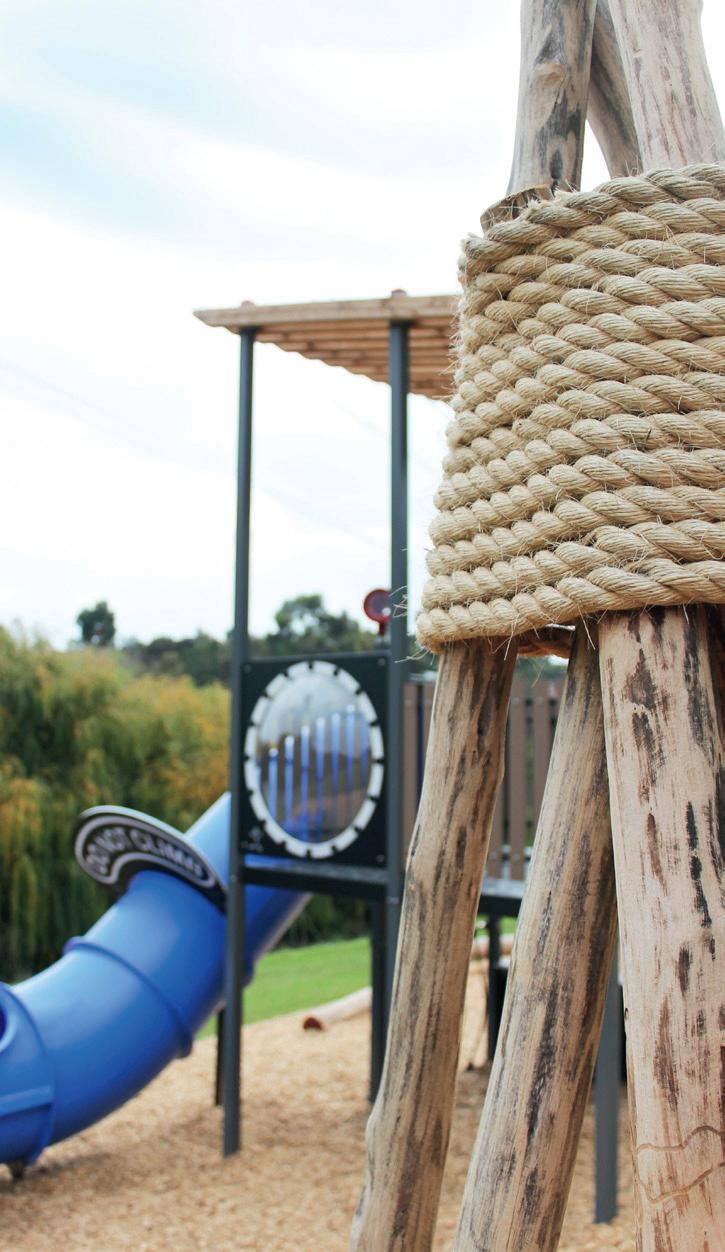
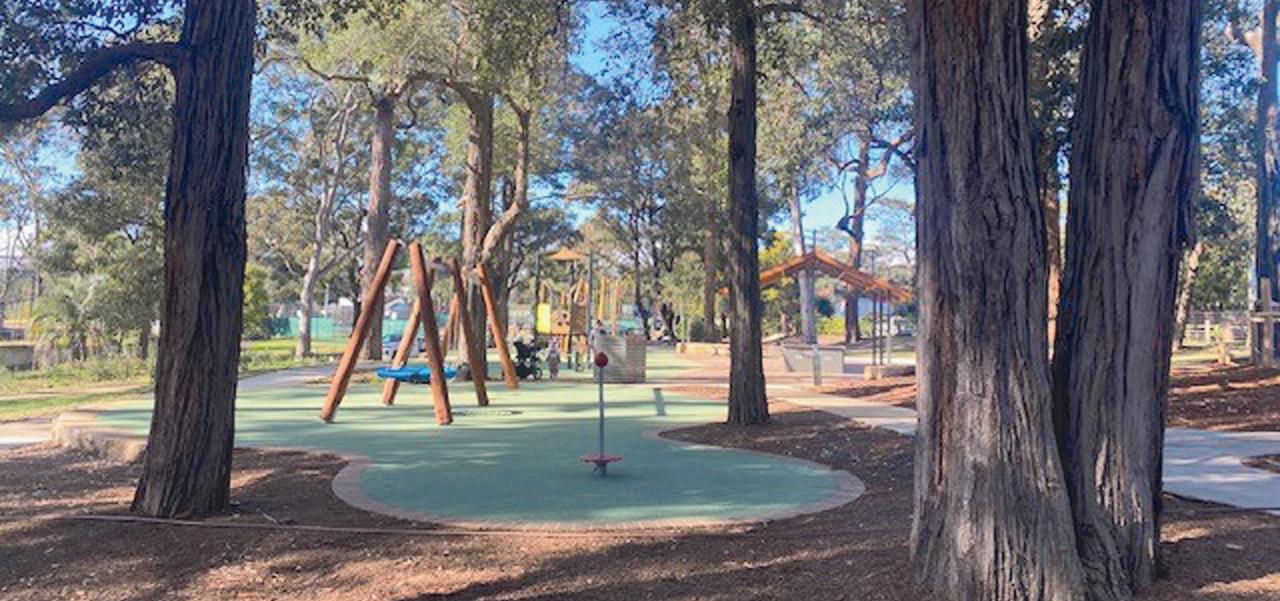
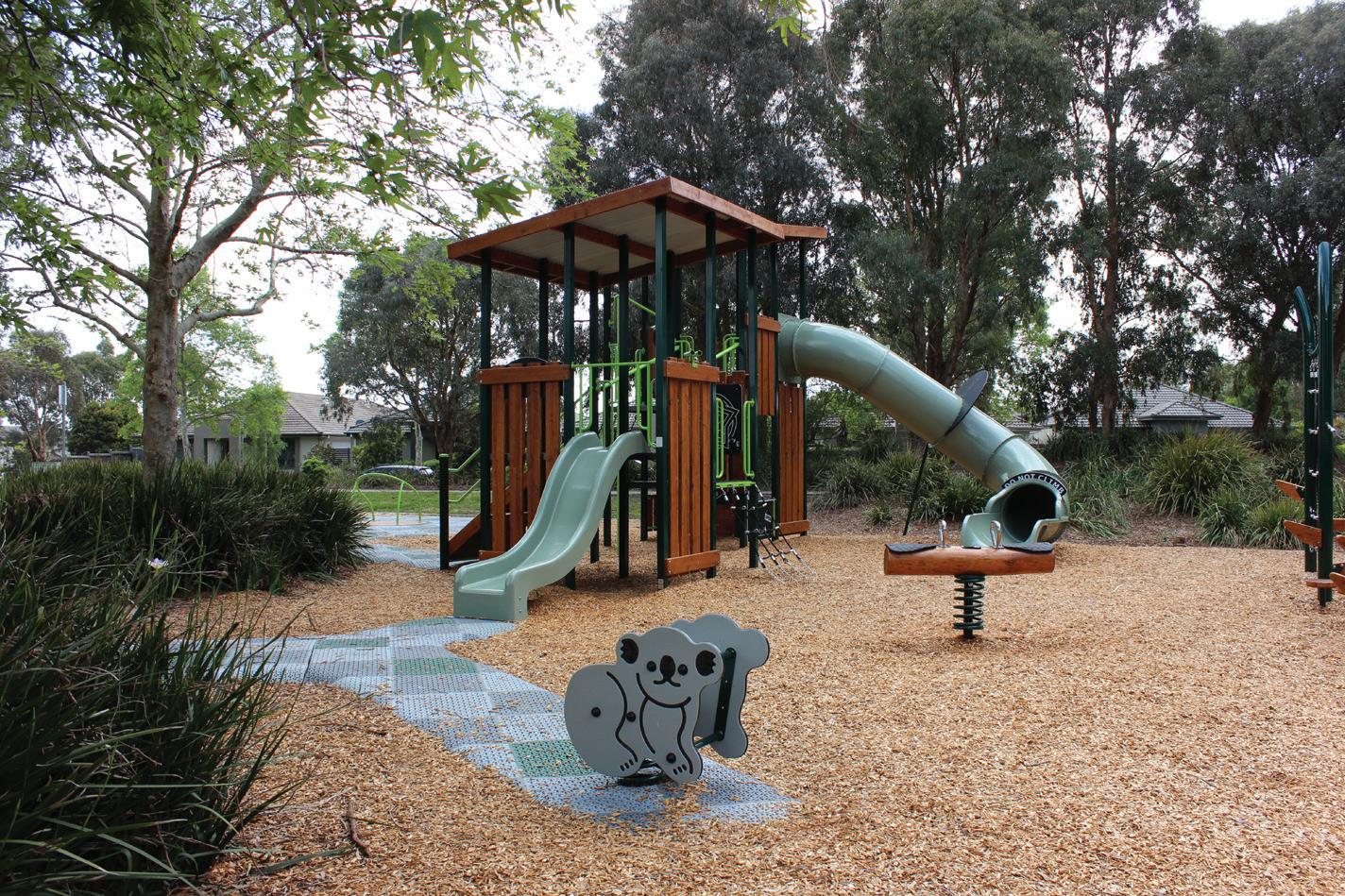
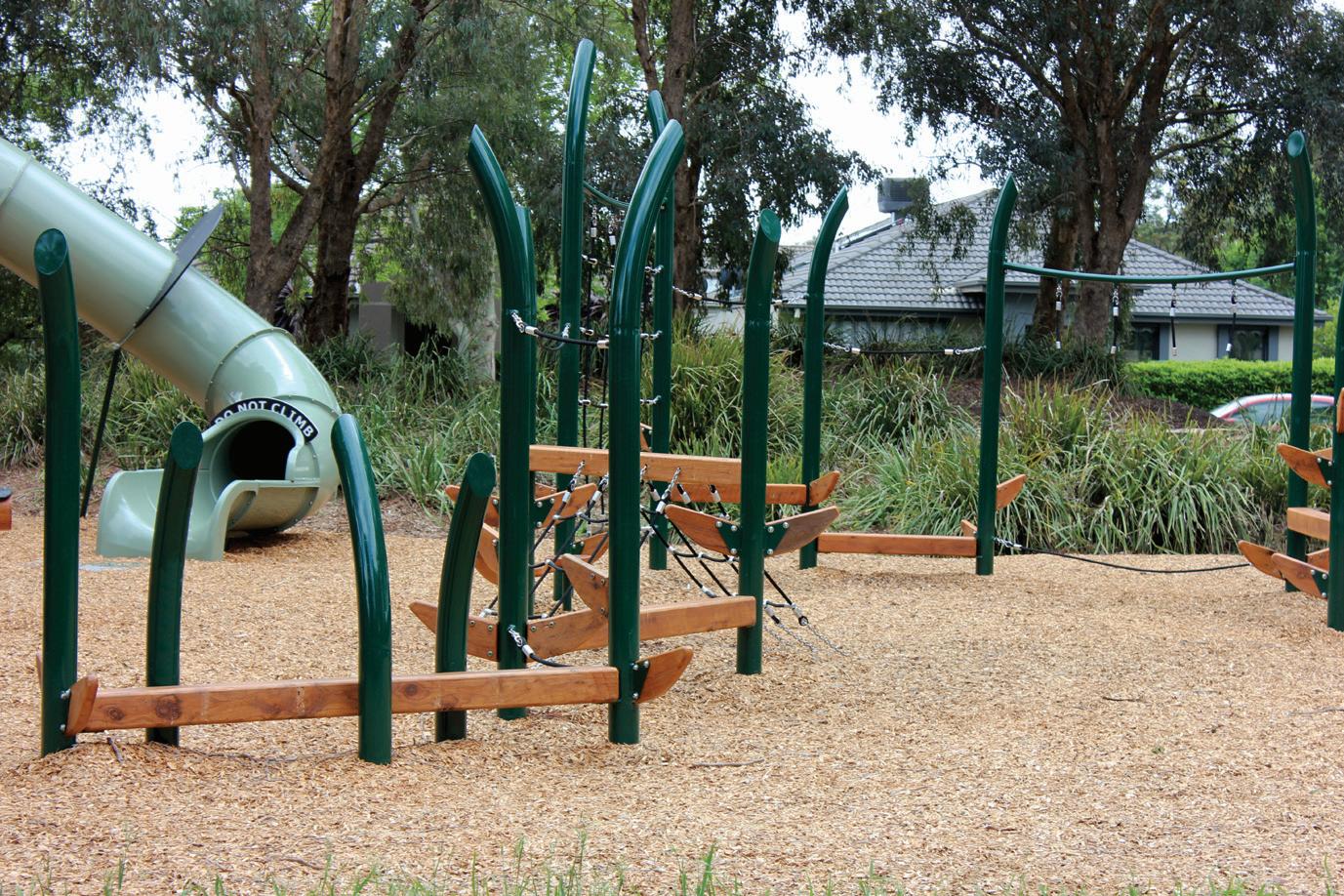
It was crucial to feature amenities that catered to a diverse range of user groups in the renewed Beecroft Village Green. The park’s new playground equipment is a notable highlight, designed to offer nature-inspired play experiences and play opportunities for older children, which were previously missing. Features such as balance beams, swings, and a hammock were thoughtfully integrated amongst the mature trees to encourage both imaginative play and physical activity. Adventure play equipment for older children and toddler-specific equipment ensure that the park caters to all age groups, making it an ideal space for families. Central to the revitalisation was the addition of a new basketball half court, expanding the parks offerings and its appeal to older children and teenagers who are often looking for more active recreational options.
Outdoor fitness equipment, funded through a NSW Government grant, is another significant addition. This new equipment, alongside the upgraded BBQ facilities and picnic areas, has transformed Beecroft Village Green into a comprehensive recreational destination for all. Families and individuals alike can now enjoy a range of activities, from outdoor workouts to leisurely picnics and children’s parties.
The park’s location between a railway line and a busy roadway has historically seen it used primarily as an access corridor. A recently installed three-meter-wide shared path is a
major step towards improving active transport connectivity between Beecroft and Cheltenham railway stations, enhancing pedestrian and cyclist access while integrating the park more seamlessly into the local transportation network. Final works on the shared path project are expected to be complete in 2025.
Accessibility improvements extend beyond the shared path. The addition of accessible toilets and well-planned picnic areas ensures that all visitors can enjoy the park’s amenities comfortably. These enhancements reflect a broader commitment to inclusivity and ensure that Beecroft Village Green serves as a welcoming space for everyone.
The renewal of Beecroft Village Green exemplifies a thoughtful approach to urban renewal, by enhancing the park’s amenities and connectivity, while respecting its historical and ecological significance. The result is a revitalised space that not only serves as a recreational setting but also as a local landmark, linking past and present in a vibrant community setting.
The project reflects a broader commitment to community engagement, accessibility, and ecological stewardship, ensuring that Beecroft Village Green remains a beloved and vital part of the local landscape for generations to come.
To learn more about Beecroft Village Green, visit hornsby.nsw.gov.au/council/ noticeboard/works/park-playspaceprojects/beecroft-village-green
WORDS DR JACINTA HUMPHREY, URBAN ECOLOGIST AND POSTDOCTORAL RESEARCHER, ICON SCIENCE GROUP, RMIT UNIVERSITY, VICTORIA.
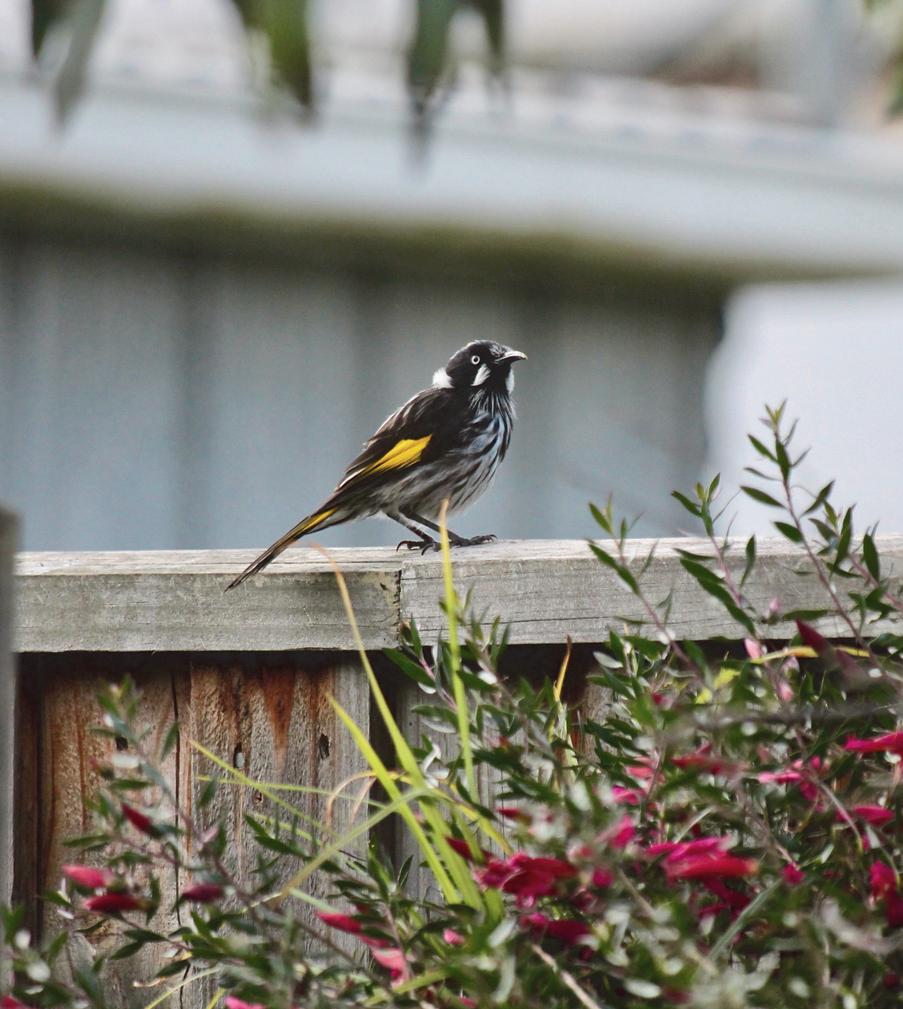
Today, more than half of the world’s human population live in cities — a trend expected to increase in the coming decades. Continued population growth and urbanisation transform the natural environment, often resulting in the loss of suitable habitat and resources for wildlife. Despite these challenges, urban areas support a wide range of plants and animals, including some threatened species. This is especially true for birds, which are often widespread and abundant in cities and towns. However, it’s clear that some neighbourhoods provide better habitat for birds than others.
Similarly, some species have adapted well to life in the suburbs, while others struggle to persist. So, how do birds respond to urban development? Why do some species cope better than others? And what can we do to better support the more sensitive species?
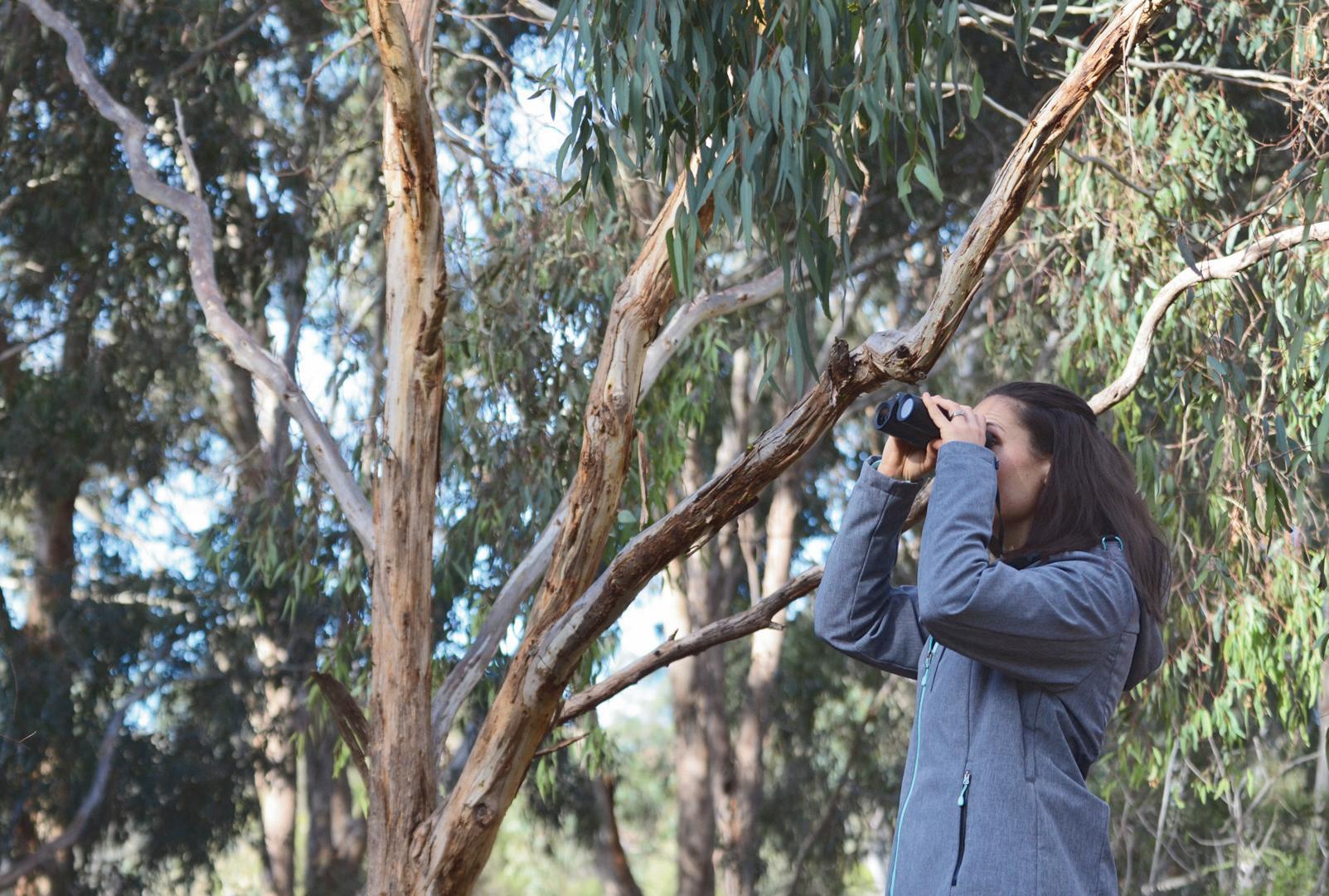
A recent study explored these questions and aimed to determine how to improve habitat for native birds in urban areas. The researchers conducted 1,500 bird surveys in residential streets, urban parks, streamside areas and bushland patches
in 30 suburbs of Melbourne, Australia. These suburbs were selected to represent a range of housing cover (9-39%) and canopy tree cover (1363%). This article summarises their major findings and recommendations.
Cities are comprised of a range of land uses that include industrial land, residential streets, gardens, parklands, creeks and patches of bushland. Typically, areas close to the city centre have a greater cover of houses, shops and roads, more people and a greater proportion of exotic trees. In contrast, areas near the urban fringe tend to have less housing, more tree cover and a greater extent of native bushland. All these changing environmental conditions have the potential to influence the diversity (or number) of bird species that live in a suburb.
In this study, researchers found that housing cover was the strongest driver of bird diversity. Suburbs with more housing supported fewer bird species. This is likely because housing cover reduces the amount of land available for
other, more suitable habitats like gardens and bushland. Suburbs with more houses also have more human-related disturbance from traffic, artificial light at night and domestic pets.
The amount of bushland surrounding a suburb was also important for bush birds (species known to depend on native vegetation like woodlands and forests). Suburbs surrounded by more native vegetation recorded a greater diversity of bush birds. These patches provide specialised habitat and resources that birds cannot find elsewhere in cities.
As well as reducing the overall diversity, urbanisation can also alter the composition or make-up of bird communities. Over time, this can result in communities in modified environments becoming more similar to each other — termed biotic homogenisation. This is a concern for bird conservation because it leads to
the dominance of a small subset of species that thrive in cities.
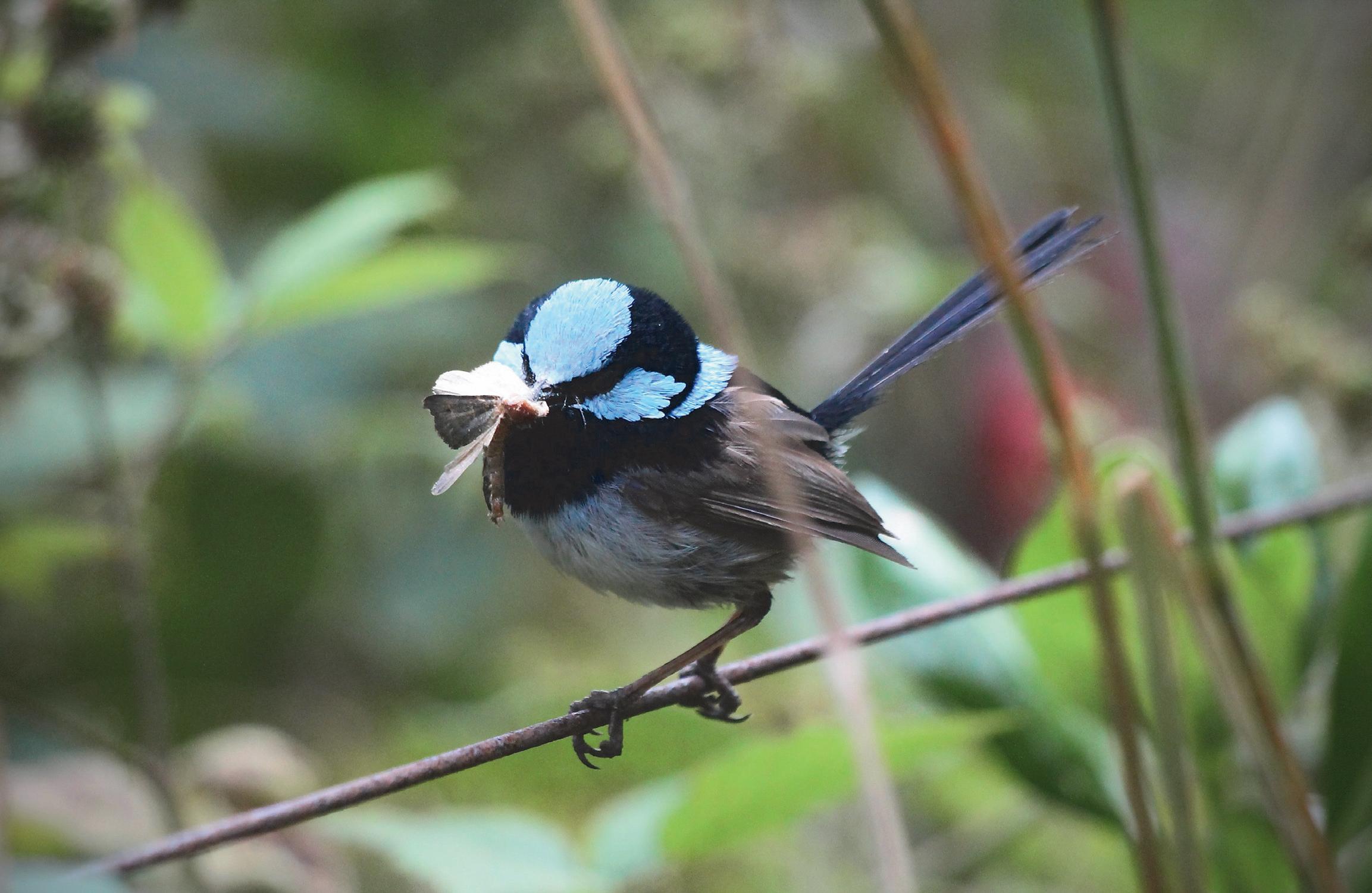
In this study, researchers found that bird communities were indeed more similar to each other in suburbs with high-density housing, compared to those with low- or medium-density housing. This change was largely due to the loss of bush bird species, which declined by up to 51 percent from low-density to high-density housing suburbs. This suggests that only more tolerant bird species, such as the Rainbow Lorikeet, Australian Magpie or Noisy Miner, can persist in heavily developed areas. More vulnerable species, the Superb Fairy-wren, Crimson Rosella and White-plumed Honeyeater for example, are slowly disappearing from our suburbs.
Birds require a range of resources to survive in urban areas: food, water, shelter and nesting sites. Some species have specific needs that are not easily met in cities and so they are often rare or absent. These birds are called urban avoiders. Others are flexible in their requirements and can adapt to urban environments: urban adapters. A select few species thrive in cities and become common and abundant; these are called urban exploiters and often include introduced species.
This study found that birds from all three groups responded negatively to housing cover. Avoiders, adapters and exploiters were all less likely to occur in suburbs with greater housing. Birds classified as avoiders and adapters, such as the Yellow-faced Honeyeater and Laughing Kookaburra, were more likely to occur in suburbs with greater tree cover. Some species showed a stronger positive response to trees in areas with more housing, suggesting that canopy trees are particularly important in more developed suburbs.
Bush birds are vulnerable to urbanisation because they rely on patches of native vegetation that are often removed from cities. In Melbourne, researchers found that bush birds were most likely to occur in bushland areas and streamside habitats, as opposed to residential streets or parklands. In fact, bush bird species were rarely encountered in urban parks likely due to the lack of understorey vegetation.
In addition, the study showed that bush birds preferred locations with a greater cover of native trees, midstorey vegetation and shrubs. These three layers of vegetation provide habitat structure, food resources and places to shelter and nest.
The Noisy Miner was also found to have a strong influence on the occurrence and diversity of bush birds at sites across Melbourne. This aggressive native species thrives in urban environments and is known for its territorial behaviour, often excluding smaller birds. This study revealed that where Noisy Miners were common, bush bird species were scarce.
1. Protect native bushland These areas provide critical habitat for bush birds and help vulnerable species persist in and around our suburbs.
2. Restore vegetation along streams Streamside habitats can act as natural wildlife corridors for birds and other animals, allowing them to move safely through the urban landscape.
3. Increase native tree cover Planting more native trees can provide food and shelter for a wide variety of birds and may help more sensitive species.
4. Protect big old trees These trees are increasingly rare in cities but are vital for birds that require tree hollows for nesting.
5. Replant open areas By adding more understorey vegetation to open spaces in parks, we can increase habitat complexity for bush birds.
6. Increase shrub cover in gardens Native shrubs offer food resources,
shelter and nesting sites and may help to protect smaller birds from the aggressive Noisy Miner.
7. Keep cats contained Keeping cats indoors or in a secure outdoor enclosure can help reduce predation on birds.
8. Install nest boxes and bird baths These simple additions can provide important resources for birds in cities.
9. Participate in citizen science Initiatives like the Aussie Bird Count encourage people to contribute data on their local birds, which enables scientists to monitor populations and conduct important research.
Urbanisation is a major challenge for the birds that share our suburbs, but together we can help make our cities more bird-friendly.
WORDS HELEN TUTON, HORTICULTURE ASSETS MANAGER, SOUTHERN METROPOLITAN CEMETERIES TRUST
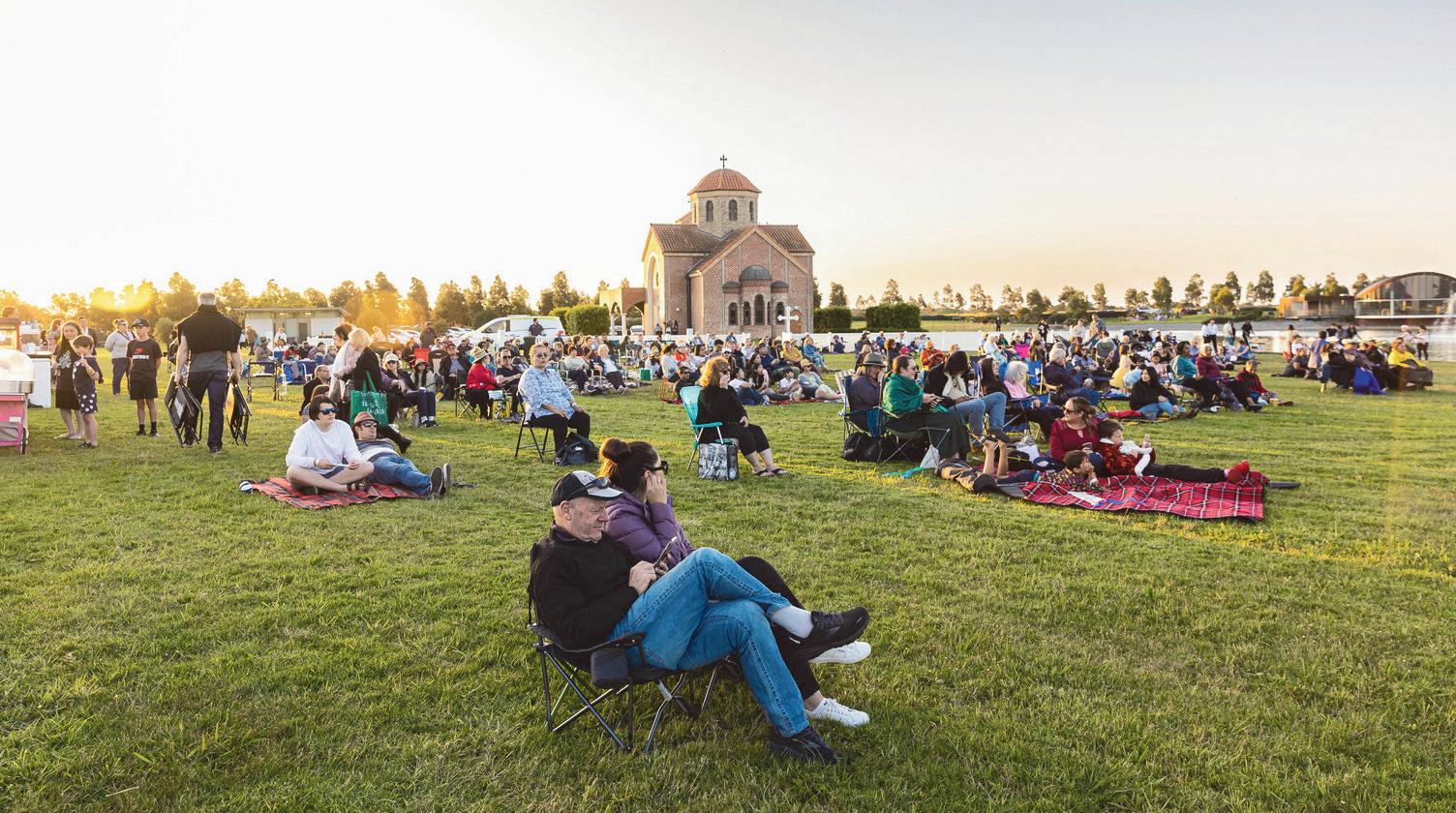
While many Australians regard cemeteries solely as a space for the dead to rest, there is a growing need for these, often large, parcels of land to offer more for the living, particularly in heavily urbanised areas.
Cemeteries as active, public open spaces may seem a challenging, almost disrespectful concept to some, but many older, traditional cemeteries were designed as gardens with open spaces to encourage passive recreation. Rotundas, tree-lined avenues, winding paths and areas of manicured lawns invited people to spend time, explore, relax and celebrate the connection between the living and the dead.
Growing pressures relating to space to inter the dead has seen much of this original design intent disappear from metropolitan cemeteries; however, these older cemetery landscapes continue to remain complexly connected with our urban form and memories. As Australia’s population grows, there is an increasing demand for public cemeteries to be used more wisely to cater for growing
communities and expand the offering of the space to cater for both the living and the dead.
Southern Metropolitan Cemetries Trust (SMCT) is a public entity reporting to the Minister for Health that is purposed with providing cemetery, cremation and related support services to the community on the government’s behalf. Overseeing the management of nine iconic cemeteries and memorial parks across the greater-Melbourne area, SMCT continues to actively rethink and reinvent the role the spaces under their care can play in local communities.
Managed by SMCT, Springvale Botanical Cemetery, located in Melbourne’s south-eastern suburbs, is a 169-hectare space that holds an important place in the history of cemeteries and cremation activities in Australia. A horticultural destination and sanctuary for local wildlife, boasting over 12,000 trees and areas of remnant vegetation, Springvale Botanical Cemetery is recognised as
a critical parcel of publicly accessible greenspace within the City of Greater Dandenong municipality.
More broadly, this cemetery is significant in its role as a multi-use site for the wider community, through offerings and activities not generally associated with the traditional cemetery environment. A bustling café and florist offer a meeting place for social interaction, tree tours and rose-pruning demonstrations provide insight and information, and passive recreation is encouraged, with dog walkers, social walking groups and even yoga sessions a common occurrence.
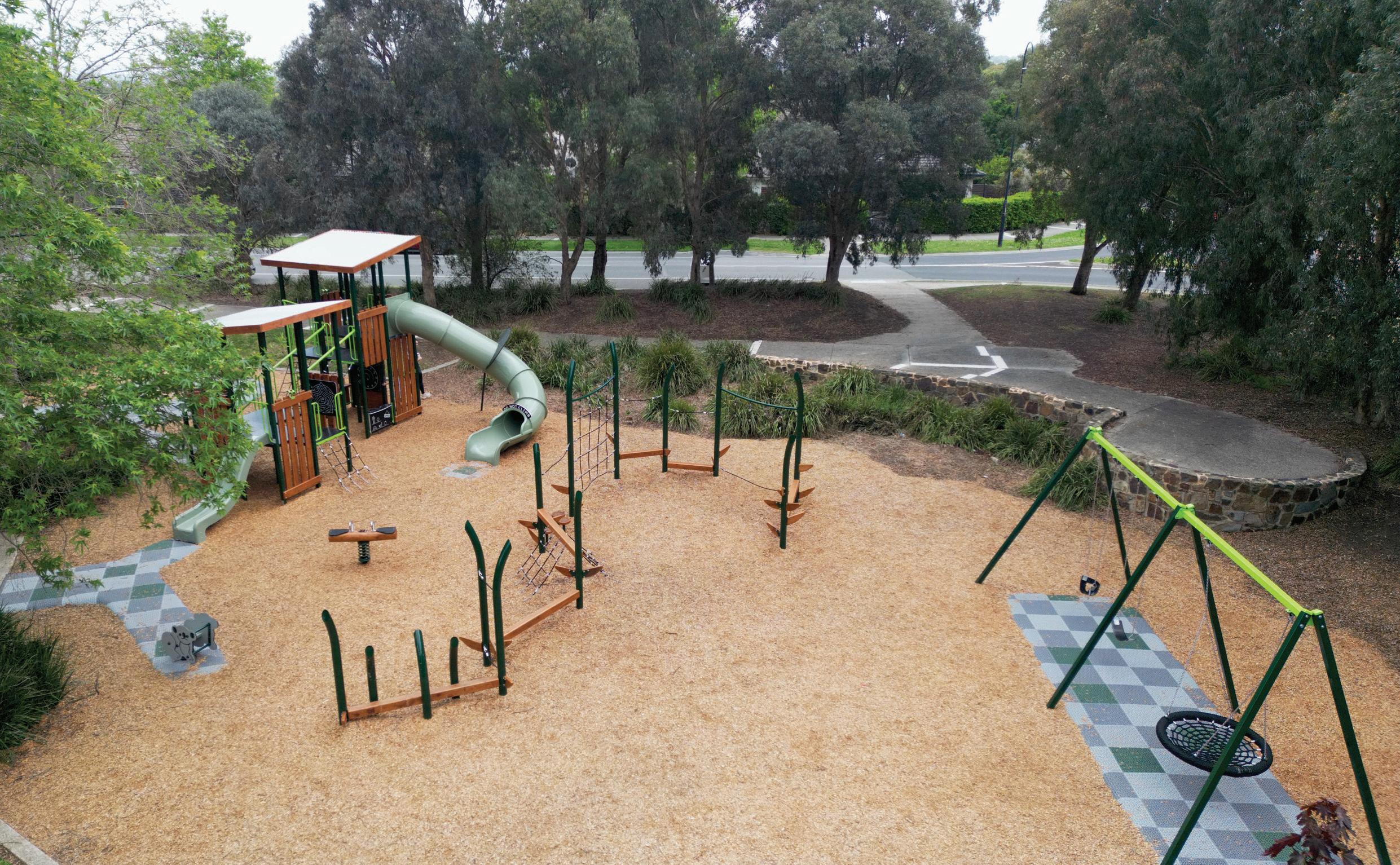
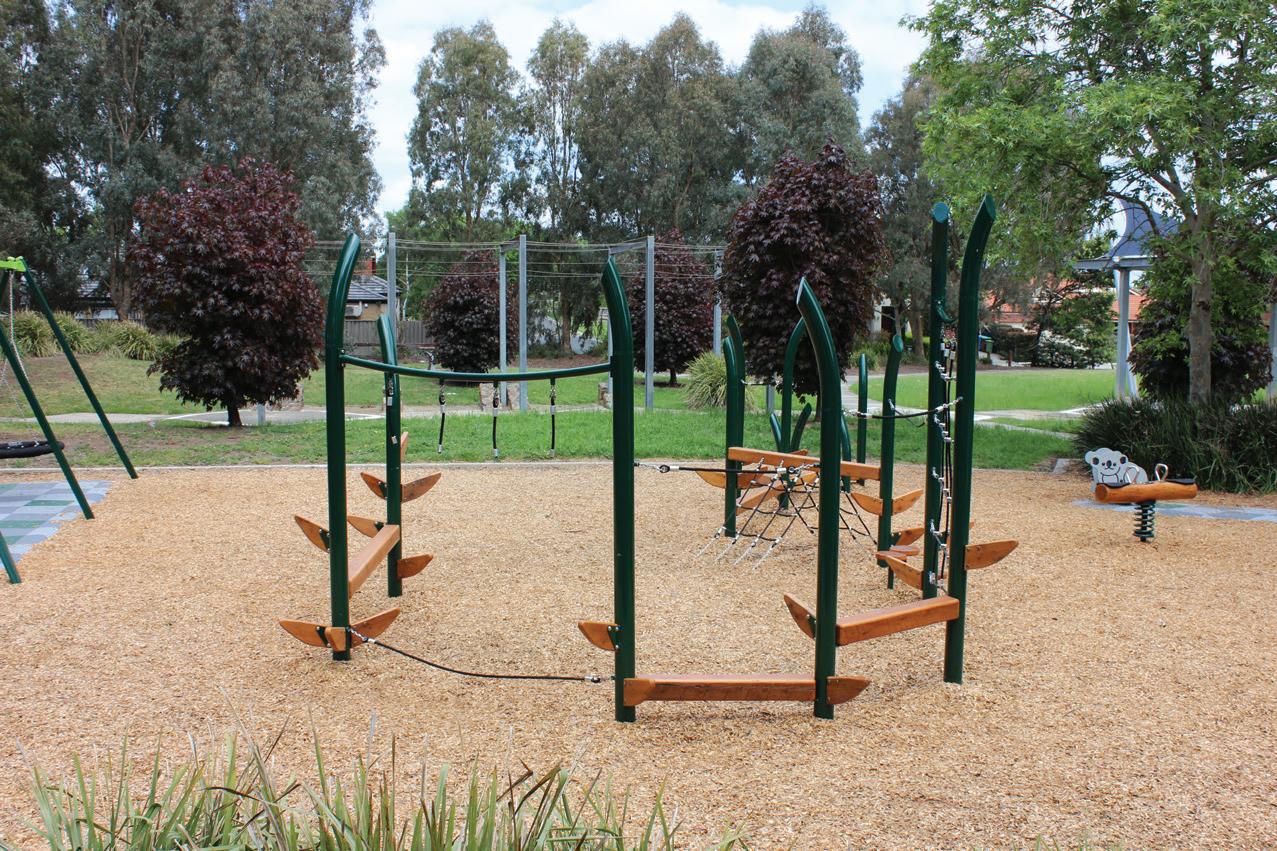
Children’s playgrounds throughout the cemetery allow for the demystification of cemeteries for young visitors, encouraging play and joy in a space where this type of activity may once have been viewed as taboo. Sculptures and art pieces installed throughout the site have a similar impact, removing the perception of cemeteries as dark, intimidating places, rather places for exploration, contemplation and discovery.





For SMCT, placemaking has relied on a collaborative, multidisciplinary approach and development of places and programs over time, with community central to the process. One of the innovative and inclusive ways SMCT supports the community is through the innovative and inclusive Community Care & Wellbeing program. Through carefully chosen partnerships, SMCT provides tools and resources that empower people through grieving, creating a safe space to connect community to a broader support network. The program also includes various wellbeing and general-interest activities designed to normalise conversations about death and dying and foster a connection with SMCT cemeteries and memorial parks. Through these actions and offerings, Springvale Botanical Cemetery is now positioned as a key resource and asset for the surrounding communities.
While not classified as open space under the Melbourne Metropolitan Open Space for Everyone Strategy, the accessible public land of SMCT cemeteries is utilised for a range of secondary purposes akin to those offered by traditional public open spaces. Social, health and wellbeing benefits for local communities sit alongside positive outcomes in terms of biodiversity, environmental and climate change preparedness.
Bunurong Memorial Park, designed in 2016, sits in a peri-urban setting in Melbourne’s south-eastern suburbs and has been developed to integrate opportunities and offerings for social engagement, passive recreation and environmental protection and promotion.
With much of the surrounding area having been cleared for farming purposes, Bunurong Memorial Park provides valuable areas of remnant vegetation, with publicly accessible wetlands providing an important habitat corridor within the region. The memorial park is a noted birdwatching hotspot with over 70 native bird species recorded at the site in the last 12 months. Twitchers attend the site regularly, hoping to catch a glimpse of three vulnerable species that call the space home: the Musk Duck, Hardhead and Blue-billed Duck.
This memorial park places community at the centre of its ethos and design, allowing for the respectful coexistence of both memorialisation of
the dead and celebration of the living. Picnic and barbecue areas, playspaces, water features, walking paths and landscapes featuring native plants to attract wildlife, deliver the concept of a publicly accessible flourishing greenspace to a diverse community in a rapidly developing region.
This type of reimaging of cemetery spaces and their multiuse potential is not just reserved for newer sites like Bunurong Memorial Park. Opened in 1853, the iconic Melbourne General Cemetery (MGC) is regarded as one of Australia’s most significant cemeteries. Located just minutes from the Melbourne CBD, MGC is a 43-hectare site, with almost half being un-gardened, un-turfed monumental areas featuring large numbers of unmarked graves, redundant dirt pathways and dirt-topped monuments. These areas, like many cemeteries of similar age and layout, have been largely managed through regular broadscale application of herbicide.
Valid concerns both within SMCT and externally around the short- and long-term impacts of herbicide application of this scale called for a radical, sustainable, meaningful solution that could be managed and maintained into perpetuity. With that in mind, SMCT launched Project Cultivate, an exploratory pilot program with the aim of re-establishing the endemic grasslands that dominated much of Victoria pre-European contact.
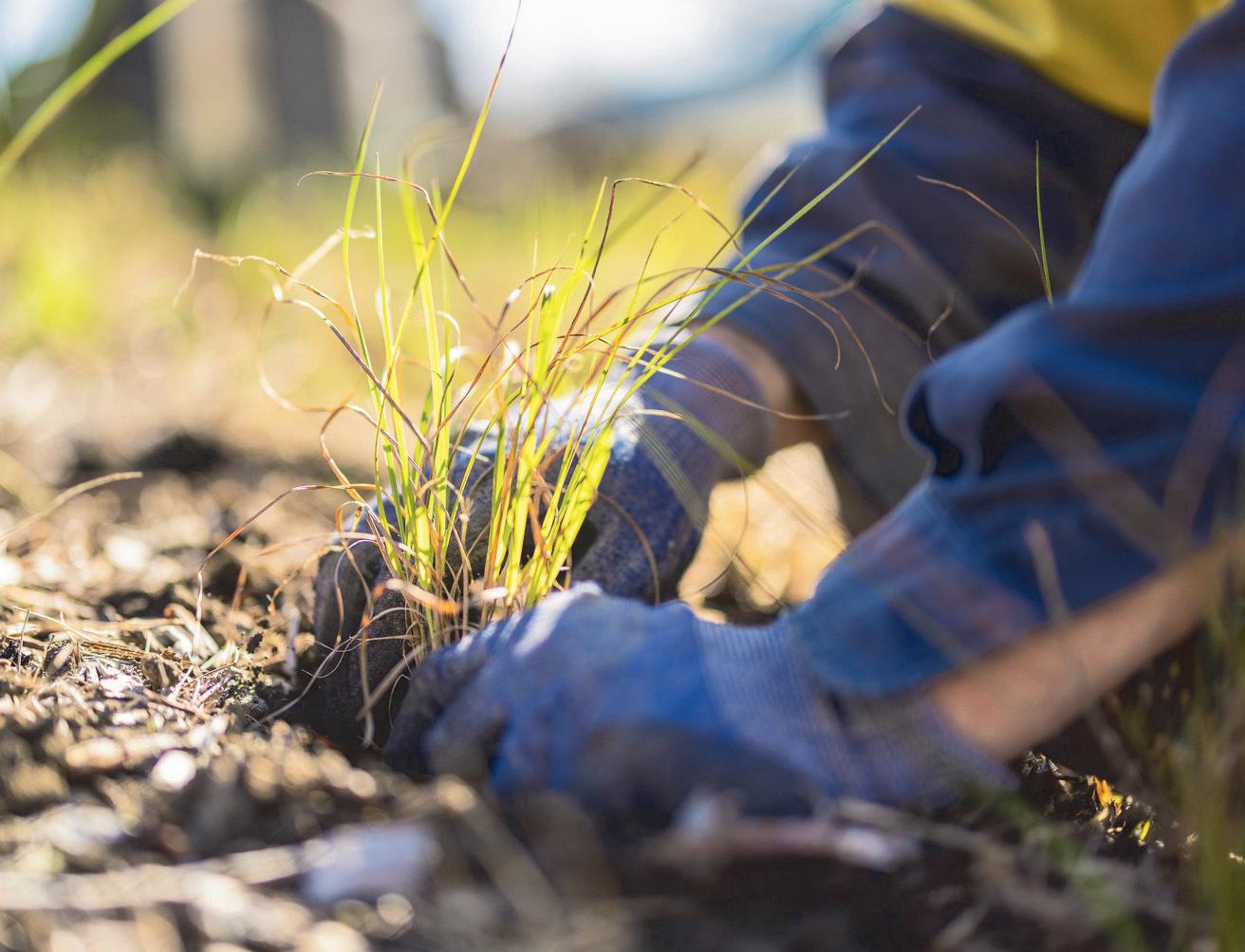
Since the project commencement in June 2023, 227,000 indigenous grassland plants representing 25 species have been planted on unmarked graves across just over 20 acres of the site. The initiative has already yielded some impressive environmental benefits, including reduction of runoff, reduction in ambient temperatures of the planted areas by three degrees, 70 percent reduction in herbicide usage at the site, and a marked and obvious increase in biodiversity.
While demonstrating what can be achieved by cemetery managers in terms of ecological contribution to the health of urban landscapes, Project Cultivate, and other similar SMCT initiatives such as the recently installed microforest at Springvale Botanical Cemetery, represent an increased opportunity for community, Traditional Owner and stakeholder engagement through activations, planting events, citizen
science opportunities and coordinated education sessions.
By prioritising sustainability, biodiversity and improving local ecology, SMCT have been able to use the landscape to drive placemaking, drawing in local community who are proud to connect with these cemetery spaces in non-traditional ways.
The reimaging of new and historic cemetery sites, whether through the creation of significant, publicly accessible greenspaces or providing opportunities for community connection, education and engagement, sees cemeteries remain vital parts of the broader community, regardless of whether they are open to additional interments and burials. Cemeteries can very much remain special places, both for the dead and the living who cherish them.





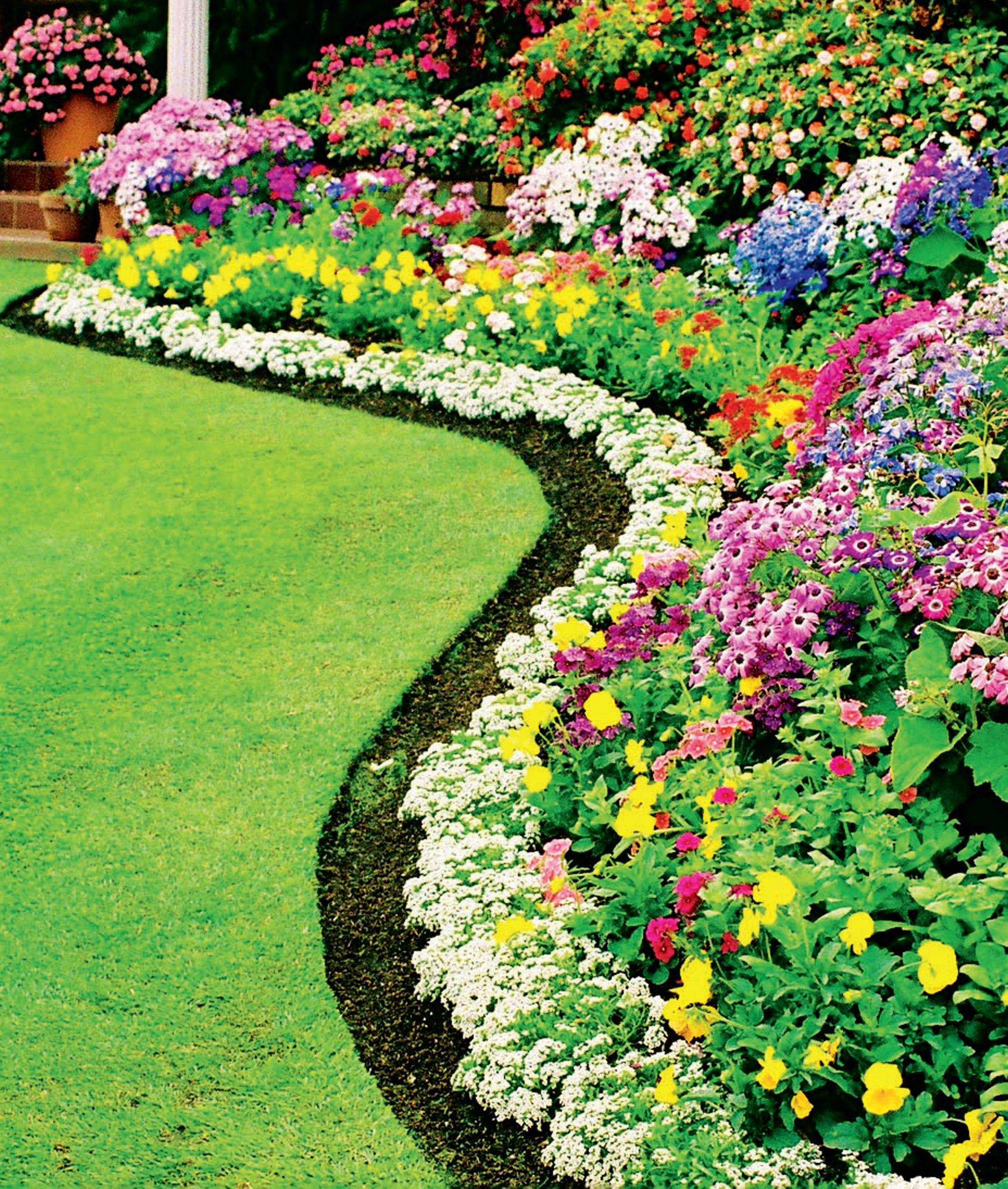

• Replaces gypsum, lime and dolomite
• Reduces watering, spraying and wear and tear



• Improve soil structure, plant establishment and plant health
• Recommended for all soils, safe for all plants and turf
• Used by professional landscapers, councils, turf farms, wholesale growers and industry experts






“We have found that our gardens require less water, and the plants take up the natural nutrients in the soil much quicker, giving us better colour and foliage in all our plants. We strongly recommend using EarthLife products as Best Practice in all our projects, and highly recommend adding it to your next landscaping project list.”
JasonKay,ownerofiLandscape
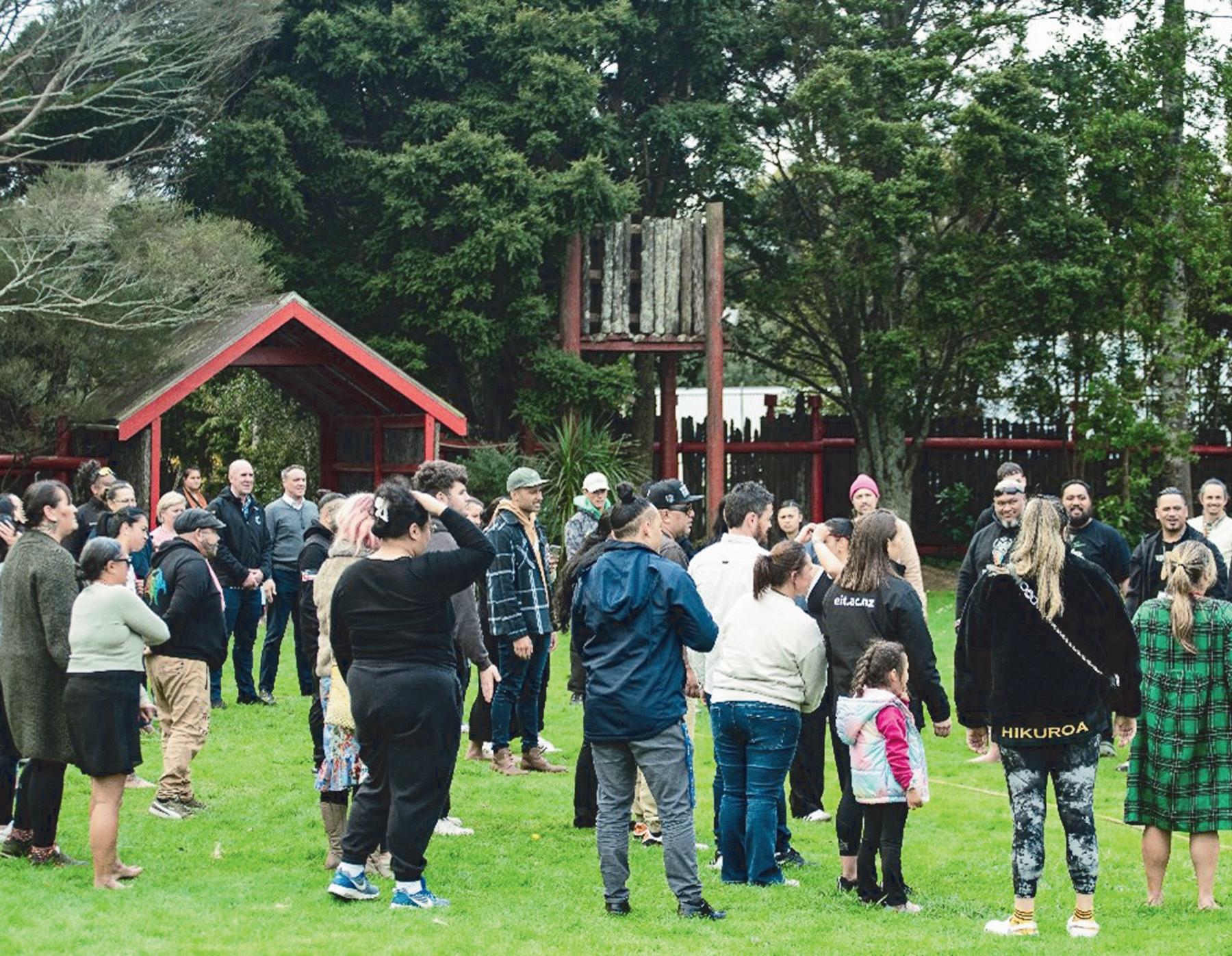
Māui Hīanga: Te Hui Taonga Tākaro was held on 12-13 September 2024 at Hoani Waititi Marae. The hui was led by Recreation Aotearoa and Toi Tangata, with support from Sport New Zealand Ihi Aotearoa.
Māui Hīanga marked a significant milestone in the celebration and revitalisation of tākaro Māori. Bringing together over 100 participants from across Aotearoa on its first day, the hui showcased the depth and richness of Māori recreation, while highlighting the boundless potential of tākaro Māori as a tool for cultural connection and nation-building.
Kuruho Wereta, Recreation Aotearoa Kaiwhakahaere Whaihua Māori, shares insights about tākaro
TĀKARO MĀORI TRULY DESERVES THE SPOTLIGHT, E TE WHĀNAU.
The journey to the Māui Hīanga kaupapa didn’t come about from just one idea pulled out of thin air. Ehara! It was the culmination of years of hard work and wānanga by those doing the mahi in the communities. I want to shout out to all those individuals, organisations, trusts, and whānau practicing and holding it down, creating tākaro environments across the motu. So, my respect and gratitude extend to all of you.
When Recreation Aotearoa was approached and asked if we wanted to support the delivery of this kaupapa, we were honoured. We also knew this was a bit of an unknown space for us. Nevertheless, we entered willingly and with excitement. We want to showcase to the recreation sector that tākaro Māori is a key to understanding our Te Tiriti commitments and that we actively
support and advocate for tākaro Māori. One way or another, we see it as recreation. Our commitment to this way of thinking comes from our strategy, Te Whai Oranga.
HONOURING TĀKARO MĀORI: MORE THAN
Tākaro Māori is far more than just play. It is a living, breathing connection to whakapapa, wairua and tikanga, deeply rooted in the natural environment.
Māui Hīanga emphasised how tākaro Māori can be a profound vehicle for understanding indigenous knowledge within the recreation sector. As one participant reflected, “Connecting to whakapapa, identity, language, tikanga, and tīpuna uplifts my wairua. Standing with my feet on the whenua, creating using natural resources in spaces where te reo is alive, I feel connected to who I am.”
Up to 97% UVR block across the range
A diverse range of 14 modern colours
A 100% recyclable product that won’t rot




This link to te Taiao, using materials such as stones, rākau, harakeke, and raupō, sets tākaro Māori apart from mainstream recreation. Tākaro Māori reconnects participants to the land, their whakapapa, and their cultural identity, offering a holistic approach to well-being.
The theme of the hui, ‘Ngā Tūmanako o Māui’, captured the aspirations of tākaro Māori, with Māui serving as a metaphor for the innovative and disruptive nature of play. The kaupapa connected not only to the wharenui of Hoani Waititi Marae but also to the wider aspirations of tākaro across Aotearoa.
Discussions at the hui ranged from the whakapapa of tākaro Māori to exploring the atua Māori associated with it, such as Rēhia, an atua associated with recreation, leisure, and the performing arts. Participants delved into the intersection of tākaro, kapa haka, and other cultural practices, recognising how these elements are interwoven in Māori life.
Māui Hīanga provided a space for the sharing of knowledge across
generations, with contributions from organisations like Whare Tū Taua o Aotearoa, Toi Tangata, and Sport NZ. From insights on warrior training to intergenerational learning through play, the hui was a platform for exploring the vast potential of tākaro Māori in strengthening whānau and community ties.
Māui Hīanga underscored the importance of continuing this vital work. Tākaro Māori has the potential to carve out its own distinct space within the recreation sector, much like kapa haka and the whare tū taua have done. The challenge now lies in ensuring its growth remains grounded in tikanga and mātauranga Māori.
One reflection from the hui beautifully summarised the potential of tākaro Māori: “The ability to walk in the footsteps of our ancestors can’t be understated. Indigenous ways of being are what can heal this world.” This sentiment highlights the role of tākaro in not only enhancing Māori outcomes but also contributing to the broader decolonisation and wellbeing of Aotearoa.
MMāui Hīanga has laid the groundwork for future discussions and collaborations. The aspirations for tākaro Māori are boundless, and with continued dedication and support from the whānau, organisations, and communities involved, this powerful practice will continue to flourish.
Tākaro Māori deserves its rightful place in the spotlight, as a source of pride and growth for all who participate. Ngā Tūmanako o Māui — the hopes and dreams of tākaro Māori — will continue to inspire and shape the future of recreation in Aotearoa.
Special thanks to the whānau at Hoani Waititi Marae, ngā kaikōrero, Whare Tū Taua o Aotearoa, Toi Tangata, Sport NZ, and everyone who contributed to this kaupapa.
To read an overview of the hui head to the Toi Tangata website and read toitangata.co.nz/2024/09/18/ maui-hianga/. You can also watch the event on Vimeo at vimeo. com/1020769097
WORDS WAIPĀ DISTRICT COUNCIL
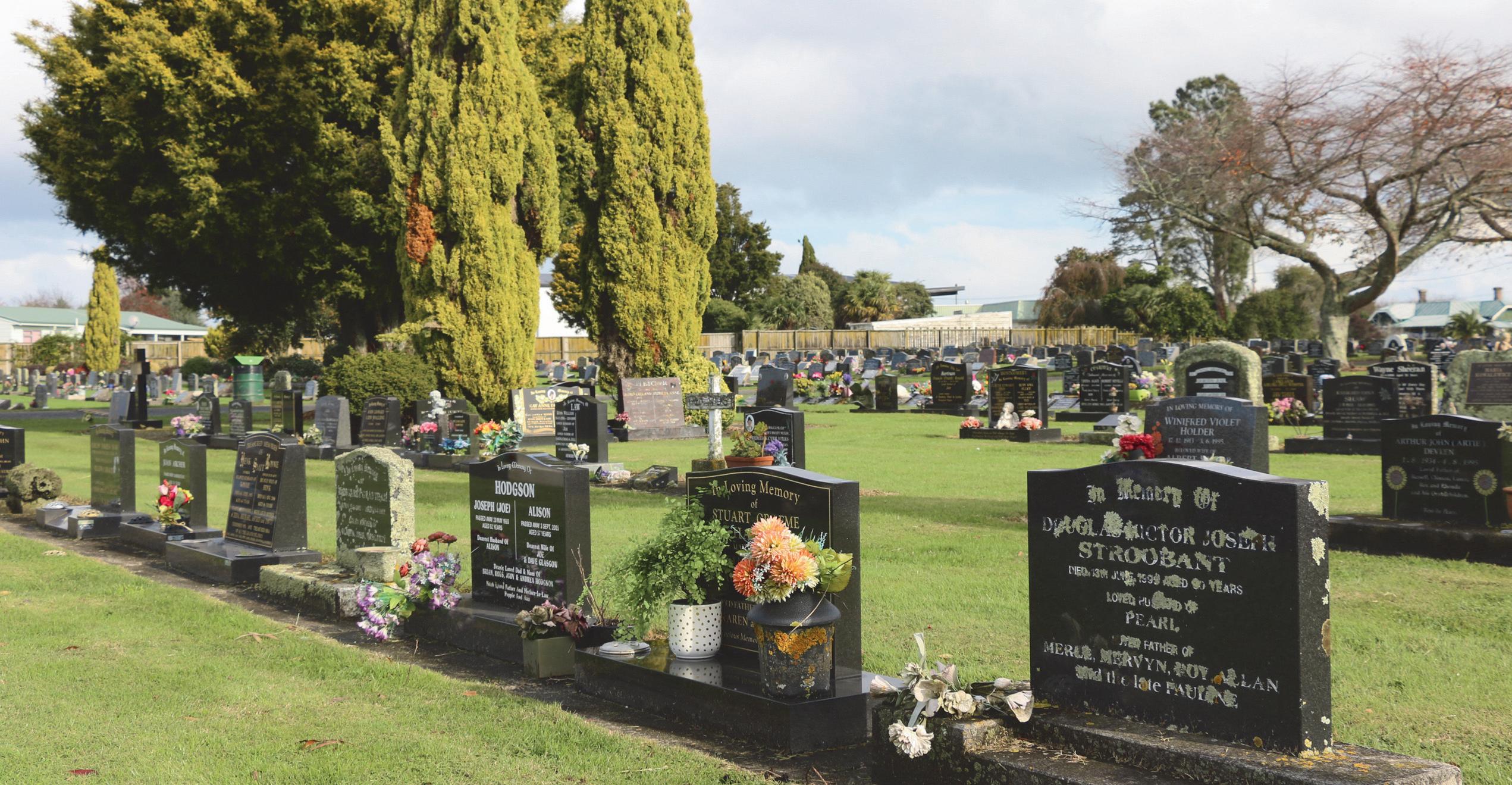
No longer simply burial grounds, cemeteries are increasingly seen as public spaces, which require thoughtful planning and management to allow for the growing diversity of use by communities.
Waipā District Council, in the heart of the Waikato, has 10 public cemeteries, and recently developed its first strategic concept plans to guide their development and management over the next two decades.
The district has an increasing population and a high ratio of standard burials to ash interment. A high-level capacity analysis, undertaken by SGS New Zealand, showed almost all 10 cemeteries would be full by 2048 without any further development, with Te Awamutu, Hautapu and Paterangi all reaching capacity by 2038.
New Zealand councils have an obligation under the Burials and Cremations Act 1964 to provide suitable
cemetery space. Waipā District Council considered the concept plans an opportunity to explore and encourage ash interments to help extend the capacity of the current cemeteries, while still providing space for standard burials.
The concept plans were also a way to address amenity issues, including the provision of seating, shade, accessible pathways, infrastructure for tikanga (Māori customary practices) and mitigation of maintenance challenges and problems caused by antisocial behaviour.
The council engaged outdoor space specialists, Xyst to develop the plan, which also looked at land challenges, including changes to adjoining land and the potential loss of land for roading projects.
Several cemeteries have natural peaceful settings providing views to surrounding maunga (mountains), rural landscapes and / or native bush. Others
have existing or future adjoining land uses, such as high traffic and speed roads, industrial land development, and residential intensification that affect, or may affect, the amenity of the cemeteries. Through thoughtful landscaping, working with the council’s transport team and adjoining landowners, many of these effects could be mitigated to enhance the cemetery visitor experience.
The project had two rounds of consultation, receiving 124 pieces of feedback in total. This process included engaging with mana whenua (indigenous peoples of the area), the local Royal New Zealand Returned Services Association, funeral directors and the wider community.
A range of burial services are offered in Waipā, including headstone monument berms, plaque monument
berms, garden of remembrance plaques and natural burials.
Natural burials are becoming increasingly popular. With only one of the 10 cemeteries currently offering this initiative, the concept plans sought to enable five more cemeteries to provide this option for those looking to have minimal impact on the whenua (land) once they pass.
Natural burials are currently only available at Leamington Cemetery. Everything used for a natural burial is biodegradable to return the body to the earth as fast as possible. Families can choose a native tree to be planted to mark the site instead of a headstone so, over time, the body will be part of a natural bush setting in the cemetery.
Leamington Cemetery also has an area for eco ash interments, which require the ashes to be treated to reduce their acidity and salinity. The ashes must be in a fully biodegradable urn, and native grasses or shrubs are planted over the site.
Design principles were created in the concept plans to offer clear guidance and direction for all parties involved in the planning, design and operation of cemeteries. They provide a consistent set of goals and objectives to ensure consistency across the cemetery network. The principles include:
• Maintaining accessible cemeteries that are safe and peaceful.
• Using the land as efficiently as possible.
• Considering a range of interment
options while also allowing for future innovations, should central government legislation change.
• Considering alternatives to lawn interments, particularly for ash interments that are high maintenance and carbon heavy.
• Providing soil stockpile/operational areas at each cemetery for sextons.
• Suggesting perennial, low maintenance flower beds for people to handpick, to reduce the use of plastic flowers.
The concept plans will guide cemetery development over the next 20 years, including prioritising future actions for each cemetery. This includes enhancing the visitor experience, so people want to stay longer. Toilets should be provided in urban cemeteries and accessibility improved, with a focus on seating and shade.
The council hopes to increase diversity by providing alternative interment options, such as ash walls or memorial gardens, and providing water at exit points at all cemeteries to enable tikanga. Safe access and way-finding signage is to be improved to reduce calls and requests for plot locations.
There is also a focus on enhancing biodiversity by lowering carbon emissions, improving water quality and soil health in cemetery grounds.
As part of the concept plans, a species palette was created for each type of planting in a cemetery to provide guidance to sextons, with a focus on natives.
The council created detailed design plans for cemetery developments to ensure all are aligned with the broader picture for cemeteries and surrounding areas.
The project was a great opportunity for the council to build and strengthen relationships with mana whenua, key stakeholders, adjoining landowners and the community to better understand their views, requirements and aspirations.
At the same time, it was a chance for these groups to learn and understand the Waipā district’s cemetery challenges and opportunities.
Future burial options are to be explored to improve operational efficiency, enhance the environment, and make public cemeteries more accessible and enjoyable.
Prioritisation of actions is based on individual cemetery burial demand and supply, health and safety risks, public feedback, detailed design, consent requirements and budget constraints.
Asset renewals will be consistent in the look and feel across the cemeteries, ensuring they are to the same standard and level of service.
Outcomes from the concept plans included more accurate identification of remaining burial space in the network and clear priorities for acquiring more options to meet the legal requirements for Waipā residents.
For more information visit waipadc. govt.nz/your-waipa/majorprojects/ past-projects/waipa-cemeteryconcept-plan
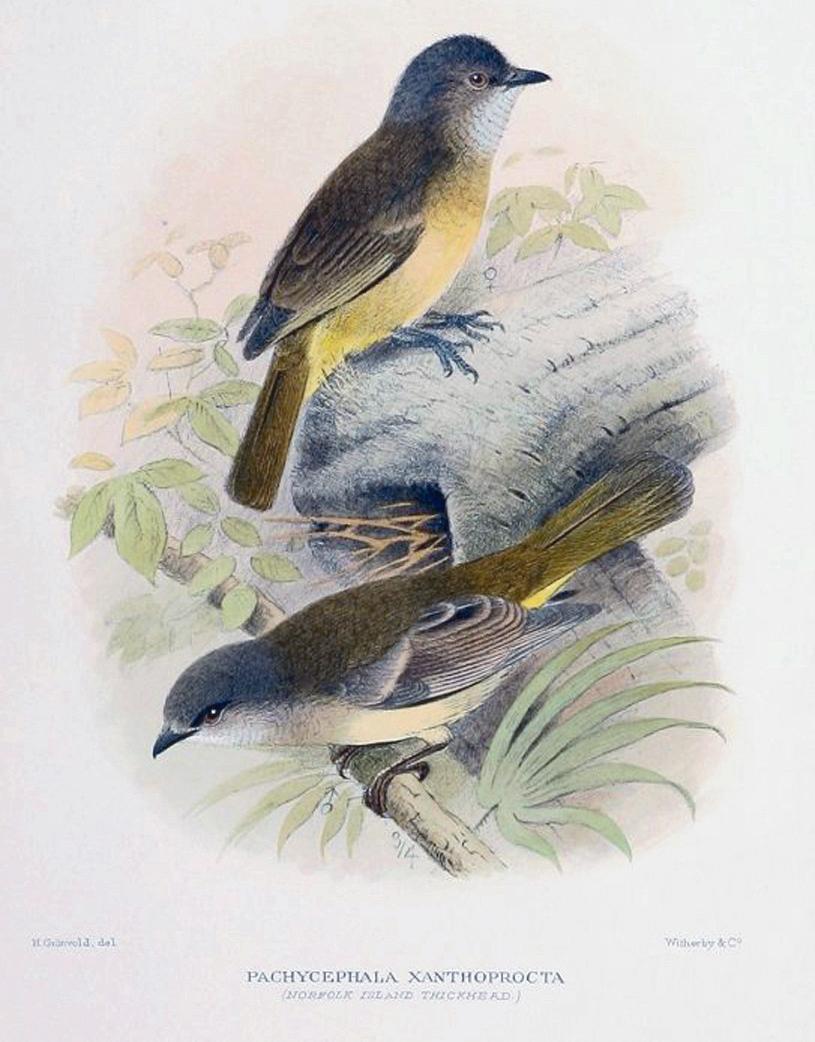
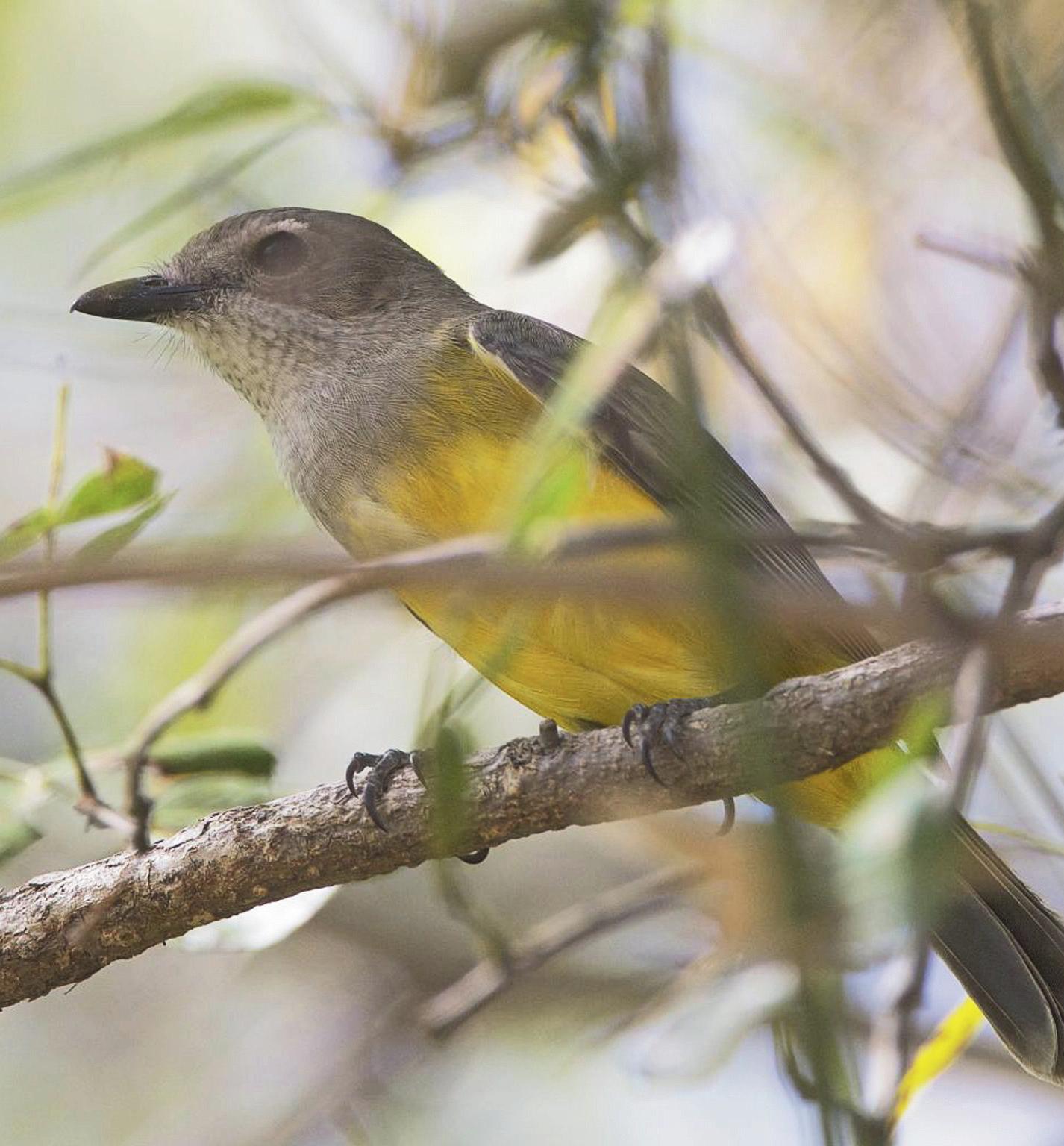
WORDS RUTH DAWKINS, MERRI CREEK MANAGEMENT COMMITTEE
Whenever I’m lucky enough to see a Golden Whistler, it’s always because I’ve heard it first,” says Adi Tudor, a wildlife photographer who enjoys regular walks along Merri Creek in Melbourne’s northern suburbs. “They’ve got a very beautiful, melodic song. It always takes me by surprise, but it’s such a delight.”
Small insect-eating birds like Golden Whistlers have a preference for habitat where there is dense understorey and mid-storey shrubs, which provide protection from larger, more territorial birds. While they are a relatively common species, and not under imminent threat, it’s unusual for them to be seen in the inner-north part of Merri Creek.
The adult male Golden Whistler is bright yellow on the underside, olivegreen on the back and wings, black on the head with a bright yellow collar. The throat is white, separated from the yellow chest by a broad black band. The bill and legs are black. Females lack bright plumage. They are generally grey above, with a pale olive tinge, and paler grey below with a buff wash. The bill is dark brown and the legs greybrown. The eye is red-brown in adults of both sexes. Young Golden Whistlers
are rufous (reddish-brown in colour). As they mature, the plumage comes to resemble that of the female, other than some rufous edges to some wing feathers, which are later replaced as the bird matures.
Golden Whistlers feed on insects, spiders and other small arthropods. Berries are also eaten. Feeding is usually done alone and most food is obtained from the lower or middle tree level, where it is picked from leaves and bark.
The Golden Whistler’s voice is strong, musical and varied. Songs include a we-we-we-tu-whit, the last note being stronger and whip-like, with a rising seep.
Male and female Golden Whistlers share the nest building duties. The nest is a shallow bowl made of twigs, grass and bark, bound together with spider web and lined with finer grass. The nest is placed in a fork in a bush or tree up to six metres above the ground. Only one brood is raised in a season, and both sexes share the incubation of the eggs and care of the young.
Its why Adi, and her fellow photographer Gabrielle Pounsett, have been so excited by sightings of the Golden Whistler over the last few months. “When you’re walking in
that wintery landscape, it’s wonderful to see the bright-golden male pop up,” says Adi. “It’s like a little bit of magic, and it brings me real joy to see something like that at Merri Creek.”
As a long-term visitor to the creek, Adi has been able to observe changes over several years. She believes that recent planting work that was undertaken along the east bank around Thornbury could be what has started to attract the Golden Whistler to the area.
According to Chris Geary, Ecological Restoration Program Coordinator for Merri Creek Management Committee (MCMC), this is a plausible explanation, although it can be challenging to tie specific observations to such a recent project when the shrubs are still establishing.
“We got some grant funding in 2021 through Melbourne Water’s Corridors of Green program to work on revegetating a strip of the Merri Creek around Thornbury,” Chris explains.
“There was a stretch of bank that had some tree canopy but it was lacking a dense mid-storey. It was just grass and weeds, no shrub layer at all. We focused on that area to improve habitat for the Pink Robin,
but then obviously there’s a flow-on benefit for other small birds like the Golden Whistler too.”
As well as weed control and erosion reduction, the revegetation project involved planting 400 mid-storey shrubs, including Acacia paradoxa, a spikey mid-storey wattle; Correa glabra, a dense shrub with flowers that are highly attractive to honey-eaters; and Myoporum petiolatum, often referred to as Sticky Boobialla.
This on-ground work was led by Chris’s colleague Tony Bracey, a team leader with MCMC’s Ecological Restoration Program. “Those spikier shrubs we’ve planted are great for small birds like Golden Whistlers to hide from territorial invasive birds like Noisy Miners,” Tony says.
“That’s really important because if they’re getting harassed by Miners and they’ve got nowhere to seek refuge, they’ll just move somewhere else.”
The project began after members of the community, including Friends of Merri Creek, got in touch with us to share their observations of Pink and Rose Robins from the late 2010s. The birds were using shrubby vegetation near
Strettle Lagoon (a few hundred metres upstream of the project site) and the Friends of Merri Creek encouraged us to plant more shrubby vegetation as habitat for these birds.
Quarterly bird surveys undertaken by Friends of Merri Creek provide valuable data for MCMC to explore the impacts of ecological restoration programs such as the one in Thornbury.
“The Friends of Merri Creek have been doing bird surveys there since 2008,” says Tony. “We’ve got 16 years of data, which is an incredibly useful resource. There’s been a very obvious increase in bird biodiversity. We’re seeing quite a few small birds in the area that haven’t been spotted so much, especially Pink Robins and Rose Robins, and there’s also a Sacred Kingfisher that comes through in October and has been spotted in the area.
“Birds are a great indicator,” adds Chris. “Because when you improve habitat structure they move in quite quickly, usually within three or four years.”
That’s good news for photographers like Adi, who love to capture images of the birds in the area. With a challenging
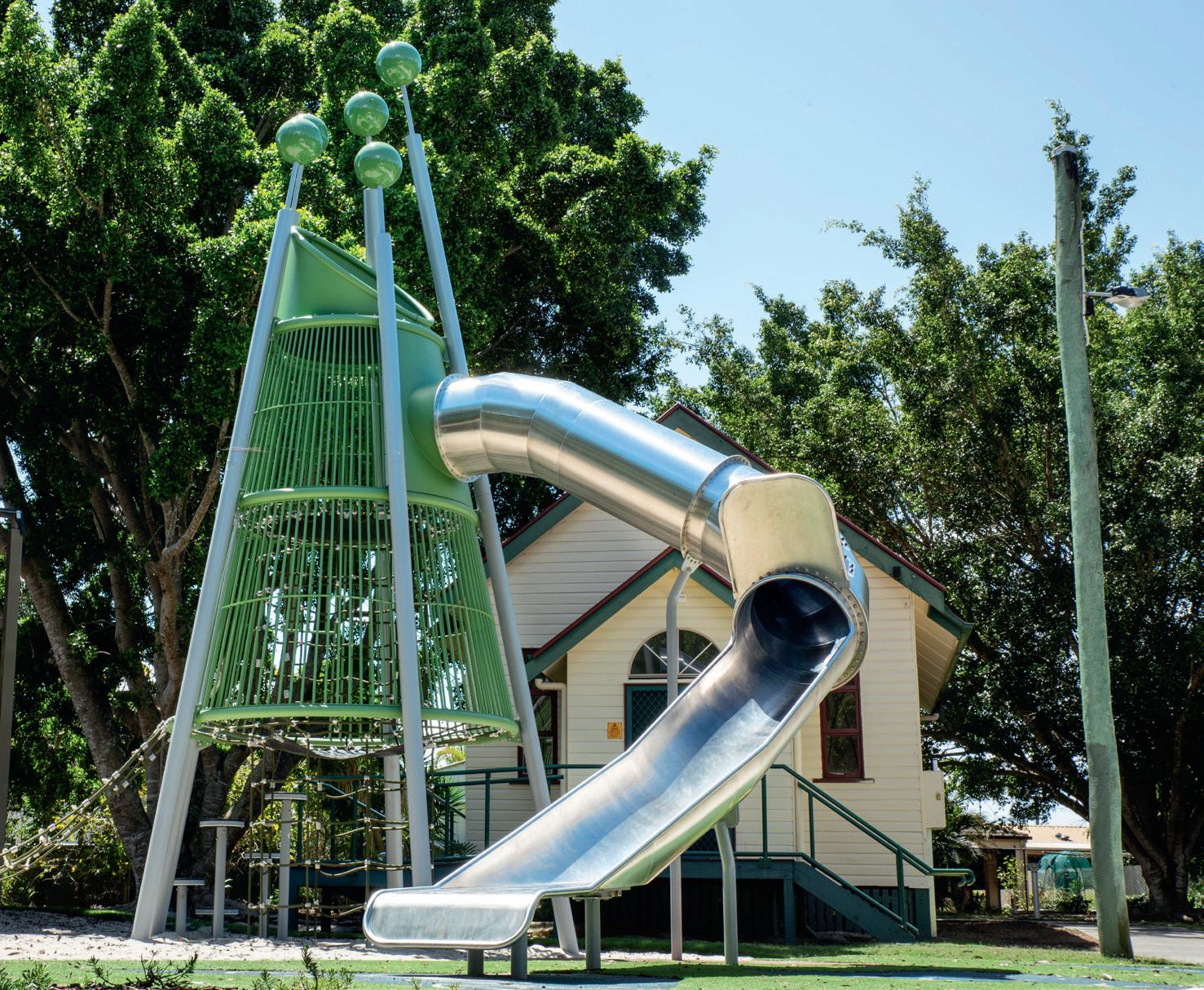
job as a social worker, taking an evening or weekend stroll along Merri Creek and keeping an eye out for her beloved Golden Whistler is an unrivalled joy.
“My interest in the birds of the creek built up quite gradually, but now I’ve really fallen in love with them,” Adi says. “Carrying my camera around and capturing something of their beauty is a perfect way for me to have some downtime. There’s been so much planting done that’s contributed to wildlife coming back, and that enables me to have the wonderful experiences I do at Merri Creek.”
In what Adi describes as her way of saying thank you for her experiences, she produces an annual Birds of Merri Creek Calendar, with half of the profits donated to the Merri Creek Environment Fund. “For myself and some of my fellow bird watchers and artists on the creek, I think what we get from nature is it really fuels our creativity and imagination,” Adi states.

“There’s nothing much better than seeing the male Golden Whistler looking so beautiful amongst the wattle. He made it into the 2024 calendar, though, so he might have to wait another year or two to be featured again.” Starting as a hand drawn sketch, it evolved through meticulous design into an innovative, robust play tower. Constructed with marine-grade stainless steel and alloy, it’s built to endure the elements.
WORDS MELBOURNE EASTERN
This four-year policy was developed collaboratively by six Eastern Region Councils: Knox, Manningham, Maroondah, Monash, Whitehorse and Yarra Ranges. It aims to ensure a consistent, fair approach to the allocation of community sport and recreation infrastructure across the eastern region, while implementing principles of the Victorian Government’s Fair Access Policy Roadmap.
Mayor of Maroondah, Councillor Kylie Spears, said the Fair Access Policy also aims to address barriers known to be experienced by women, girls, transgender and gender diverse people when accessing and using community sports and recreation infrastructure.
“Council is pleased to endorse the Melbourne East Region Sport and Recreation Fair Access Policy, in collaboration with our fellow eastern region councils.
“While recent trends show there has been a significant increase in girls and women participating in sport and recreation activities across Victoria, feedback has also shown that gender inequity continues to be a major barrier, with women and girls in traditionally male-dominated sports often being denied access to premium sporting infrastructure or given access at inconvenient times. By identifying and addressing participation barriers such as these, the Fair Access Policy will help support gender equitable access to sporting and recreation facilities in Maroondah and throughout the eastern region while also fostering a culture of gender equality for everyone in our communities.”
Each council in the eastern region will implement the Fair Access Policy’s principles in their municipality, while using diverse approaches and working
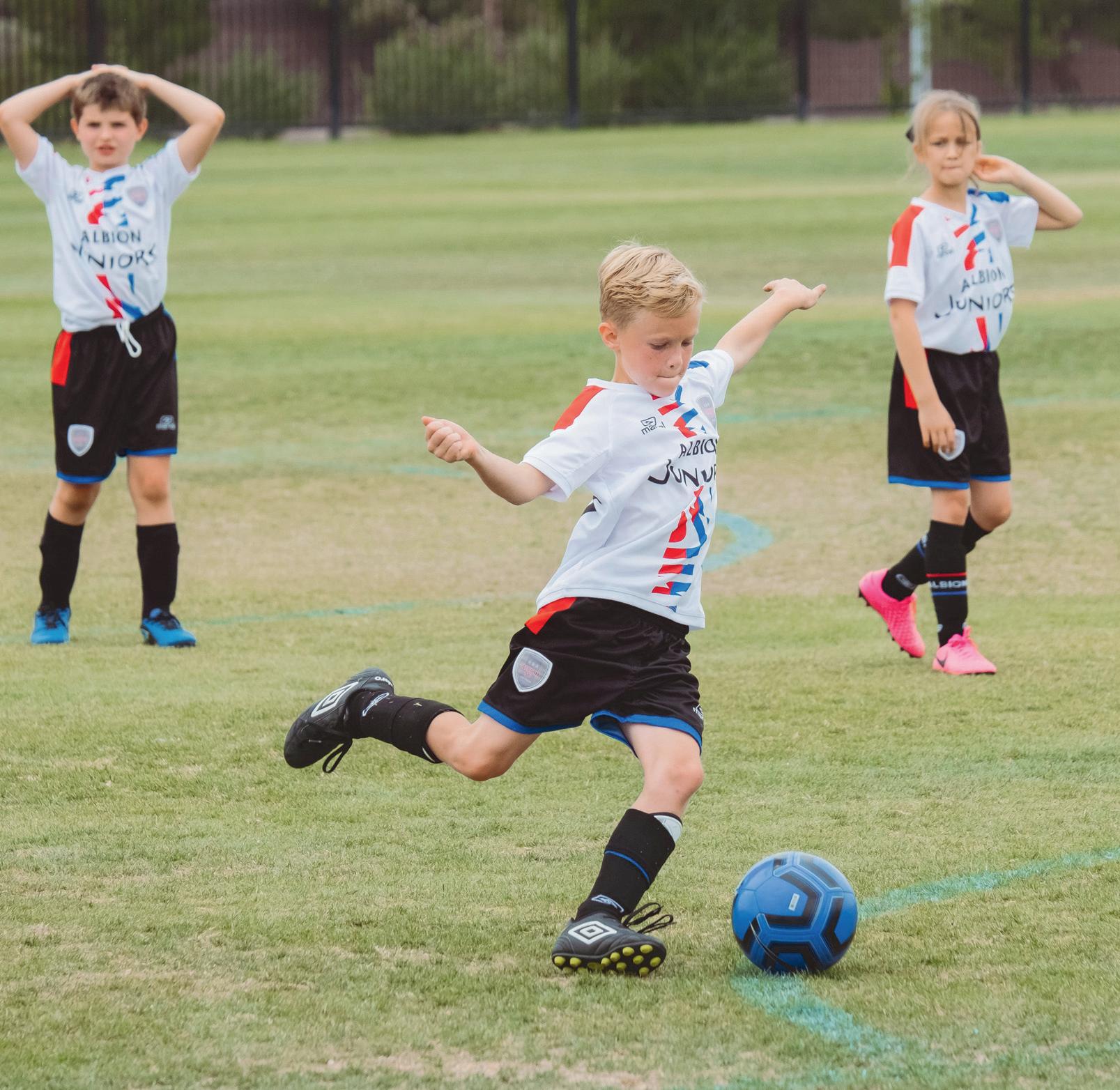
in partnership with local and state sports and recreation leagues, associations and clubs to achieve gender equality for people of all genders.
The Fair Access Policy follows on from the Melbourne East Regional Sport and Recreation Strategy, which was also developed by the eastern region councils and endorsed in December 2022.
The purpose of the Melbourne East Region Sport and Recreation Fair Access Policy addresses known barriers experienced by women and girls, transgender and gender diverse people in accessing and using community sports and recreation infrastructure. The Policy aims to progressively build the capacity and capabilities of the Melbourne East Regional Sport and Recreation Strategy (MERSRS) Group and associated stakeholders in identifying and eliminating systemic causes of gender inequality in policy, programs,
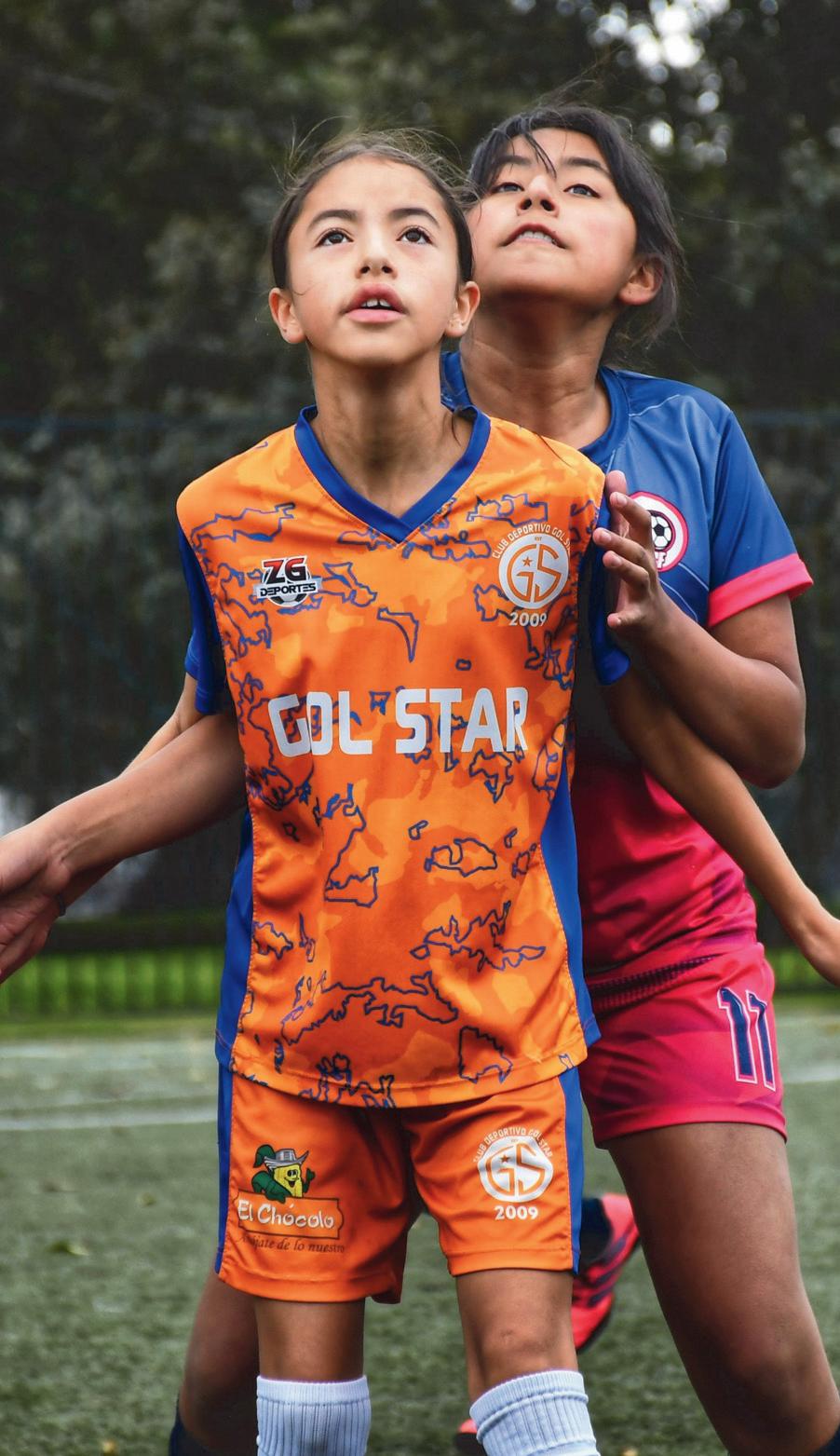
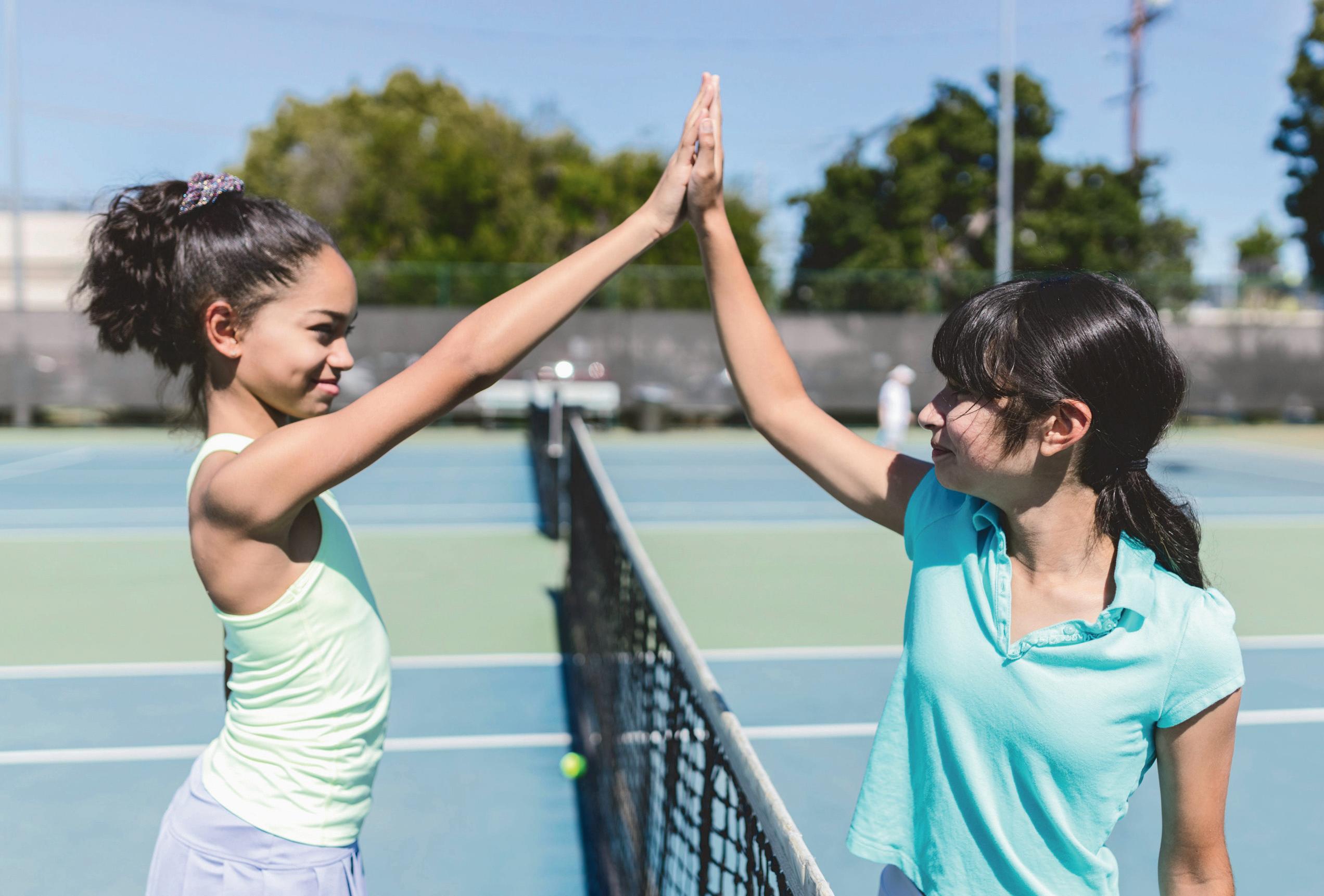
communications and delivery and allocation of community sports and recreation infrastructure. This policy has been developed in response to the 2022-2032 MERSRS recommendation to implement the Victorian Government Fair Access Policy Roadmap consistently across the region. It provides a consistent platform for the integration of the requirements of the Gender Equality Act 2020, the Local Government Act 2020 and Public Health and Wellbeing Act 2008 across the eastern region councils.
Melbourne East Region Councils acknowledge:
• The disadvantaged position some individuals have had in the sport and recreation sector because of their gender and gender identity, and
• Achieving gender equality will require diverse and intersectional approaches from councils, state sporting associations, local sports associations and leagues, and local sports and active recreation clubs to achieve similar outcomes for people of all genders.
The expectation that gender equality is considered and prioritised in all current and future planning, policy, service delivery and practice related to community sports infrastructure. It further recognises that gender equality
is attaining equal rights, responsibilities and opportunities for women and girls, men and boys, transgender and gender diverse people. Equality does not mean that women and girls, men and boys, transgender and gender diverse people will become the same but that their rights, responsibilities, and opportunities will not depend on their gender.
Gender equity is the provision of fairness and justice in distributing benefits and responsibilities based on gender. The concept recognises that people may have different needs and powers related to their gender, and these differences should be identified and addressed to rectify gender related imbalances.
The policy’s vision is that women and girls, transgender and gender diverse people in Melbourne’s east region will have equal participation, access, power and resources in sport.
The Policy objectives include:
• Participation opportunities are inclusive for all.
• Access to safe facilities and welcoming sport environments.
• Women and girls, transgender and gender diverse people have power and representation in leadership and decision making.
• Resources are distributed in a fair and transparent manner.
• Addressing intersectionality through design and participation.
• Eliminating systemic causes of gender inequality and discrimination across the seven Melbourne East Region Councils’ sport and recreation services.
• Women and girls, transgender and gender diverse people will be treated with respect and fairness.
The Policy Framework aligns with State Government’s six guiding principles under the Fair Access Policy Roadmap, which are:
1. Infrastructure
2. Roles in Sport
3. Allocation and Scheduling
4. Leadership
5. Culture and Environment
6. Reward, Celebrate and Prioritise
The Melbourne East Region Sport and Recreation Fair Access Policy can be accessed via monash.vic.gov.au/files/ assets/public/v/3/edms/things-to-do/ sport-recreation/melbourne-eastregion-sport-and-recreation-fair-accesspolicy-2024.pdf
It isn’t easy maintaining gardens in city streets. Plants are trampled as people get in and out of cars, small gardens dotted across the landscape can be tricky to keep track of, and the reinvasion of weeds never seems to stop. So why should we bother?
Greening our streets brings many benefits, particularly when done with biodiversity in mind. The improved health and welling that comes from connecting with nature, natural pest control, the creation of a unique sense of place, and cleaner rivers and creeks are just the beginning. But what do the birds and the bees think about it? Can streets really be useful places for habitat?
We know that Australian native and locally indigenous plants are essential for maintaining a diversity of Australian animal species in cities. Native animals such as birds, bats and insects, especially native bees and butterflies, evolved with our native plants and need them for food, shelter, nesting places and other essential life functions.
It’s no surprise, then, that urban greenspaces with a higher proportion of native or indigenous plants have been found to have more insects, which then become food for animals higher up the food chain such as birds and insectivorous bats. But what about
when those native plants are small pockets in harsh urban streetscapes?
A significant unrealised opportunity to increase urban greening and improve biodiversity lies on urban streetscapes, but urban streetscapes are difficult places for any plants to thrive. Growing conditions often include compacted, poor or contaminated soils, air pollution, high nutrient levels, frequent disturbance and exposure to extreme wind, heat or shade. Streetscapes are not normal growing conditions. They’re not typical revegetation or restoration sites where it is possible to reinstate precolonial vegetation communities.
And then there’s the other challenge with native plants: limited horticultural information. Australia is home to over 21,000 plant species and many have a limited history of cultivation with the knowledge of it held by too few people. This can make many species difficult to acquire, establish and successfully maintain, particularly for busy city gardening staff and contractors.
To help understand the habitat potential of urban streets, the City of Melbourne asked University of Melbourne horticulturalist and ecologist experts to develop a plant palette specifically designed to survive
on inner city streets and provide habitat for local wildlife. Plant species were selected for their horticultural attributes, tolerances to streetscape growing conditions, and documented resources they provide to native bees, butterflies and birds.
To share this knowledge more widely, this palette and plant attribute database was published on the City of Melbourne website in a section called the Urban Nature Planting Guide. The Guide covers more than 100 species, with filters including growing conditions, tolerances, plant characteristics, resources provided to wildlife, horticultural and maintenance requirements and design and aesthetic attributes.
The information in the Guide was tested to measure increases in the abundance and diversity of native bees, butterflies and birds. For this experiment, we established a BeforeAfter-Control-Impact (BACI) study. This is a common technique to assess ecological impacts but is rarely used in urban landscape management. Four streets in the City of Melbourne were selected from a longer list scheduled to receive streetscape upgrades and these were planted with species from the Urban Nature Planting Guide. For each of these impact sites, three
nearby “control” sites with similar surrounding land-use and street trees but no understory planting were also measured, giving a total of 16 sites.
Each site was surveyed for bees, butterflies and birds before and after planting occurred using standard ecological survey techniques of sweep netting (for insects) and timed observations. Surveys occurred four times before planting in autumn and late spring/early summer 2017. Four surveys occurred after planting, twice in late summer and twice in late spring/early summer. This process was then repeated twice more over subsequent years.
Another goal of the project was to collect information on the challenges of implementing biodiverse streetscapes so that the lessons learnt could be reintegrated into city operations and strategies.
The results of the 5-year experiment were very encouraging. The number of bees and bee species increased
at the impact sites in the first year after planting and remained stable thereafter, despite fluctuations at the control sites. The number of butterflies also increased, but not the number of species. The reason for this is probably because the regional species pool was severely reduced by urbanisation, so there were no new species in the area to colonise the plantings. There was no evidence of bird species responses to the streetscape plantings yet. Species of larger bees, which are known to be most negatively impacted by urbanisation, benefited more from the streetscape plantings, but species with specialised feeding traits were not specifically impacted.
Key to the long-term success of biodiverse streetscape plantings was thorough soil preparation and weed management before planting, and the implementation of a clear, ecologically sensitive management plan. In order to support this plan, suitably qualified and experienced landscape maintenance
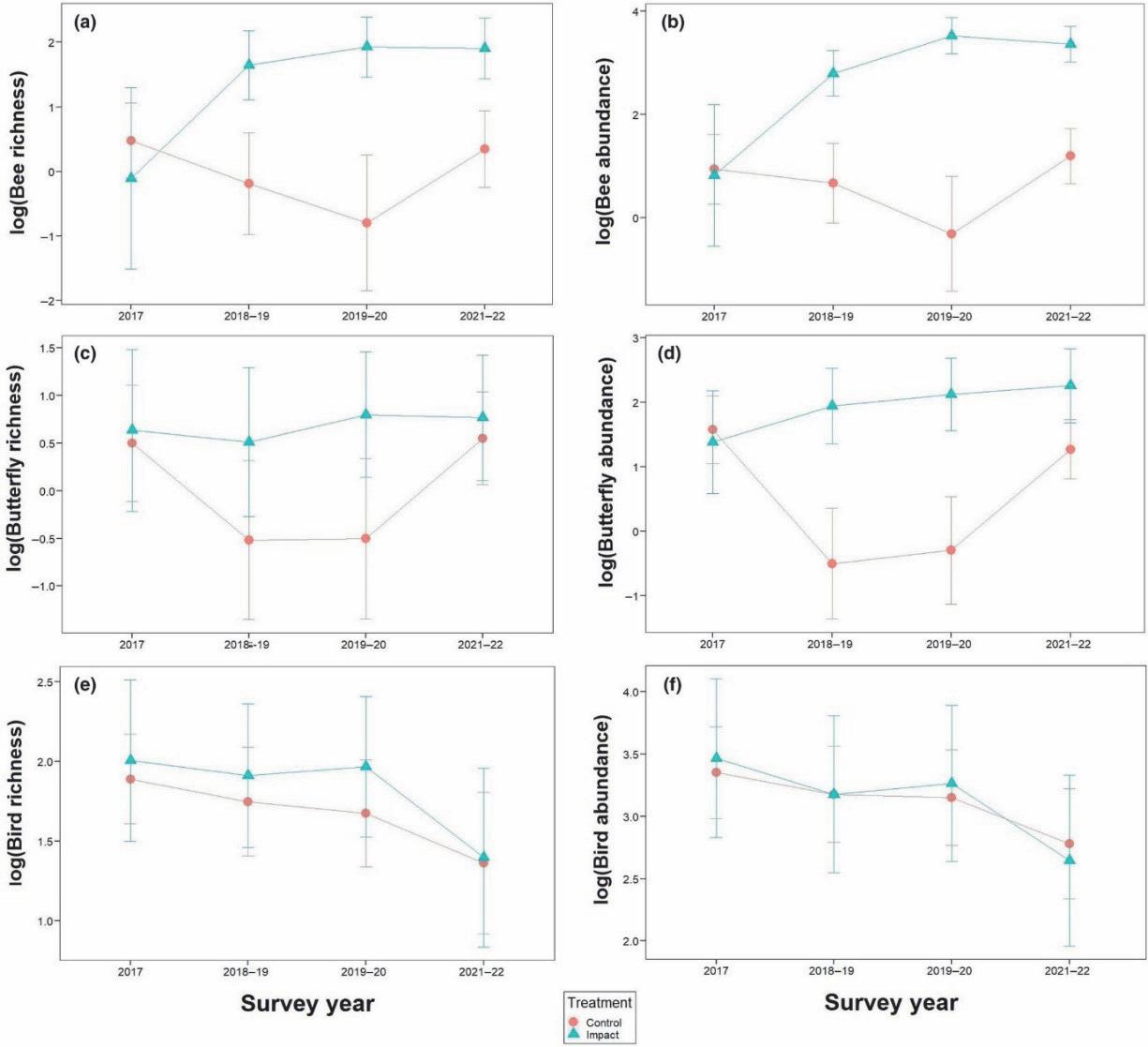
1. Bee, butterfly and bird responses to road verge biodiversity plantings through time. Interaction plots show the average (with 95% confidence intervals) species richness (a, c, e) and abundance (b, d, f) of bees (a and b), butterflies (c and d) and birds (e and f) recorded at control (red circles) and impact (blue triangles) sites in each survey year. Note that 2017 is prior to planting.
staff were essential, particularly those with experience working with indigenous and native plant species. In highly urbanised areas with little remnant vegetation, staff contracted to manage standard streetscapes and parks typically do not have the skillset or experience required to effectively manage diverse native plantings. Overcoming this problem would result in more effective maintenance and better, more cost-efficient outcomes. Moreover, it is important to regularly share knowledge between horticultural maintenance teams and ecologists monitoring biodiversity to adapt management processes as required.
The project also highlighted some conflicting priorities of local authorities and ecological researchers, and the trade-offs required to successfully conduct practice-led research, meet realistic goals and co-create more biodiverse urban landscapes.
Find out more at melbourne.vic.gov. au/urban-nature-planting-guide
Acknowledgements Thanks to the many people who have worked on this project particularly Lee Harrison, Hui-Anne Tan (City of Melbourne) and Julian Brown, John Rayner, Jess Baumann (University of Melbourne) and Caragh Threlfall (Macquarie University).
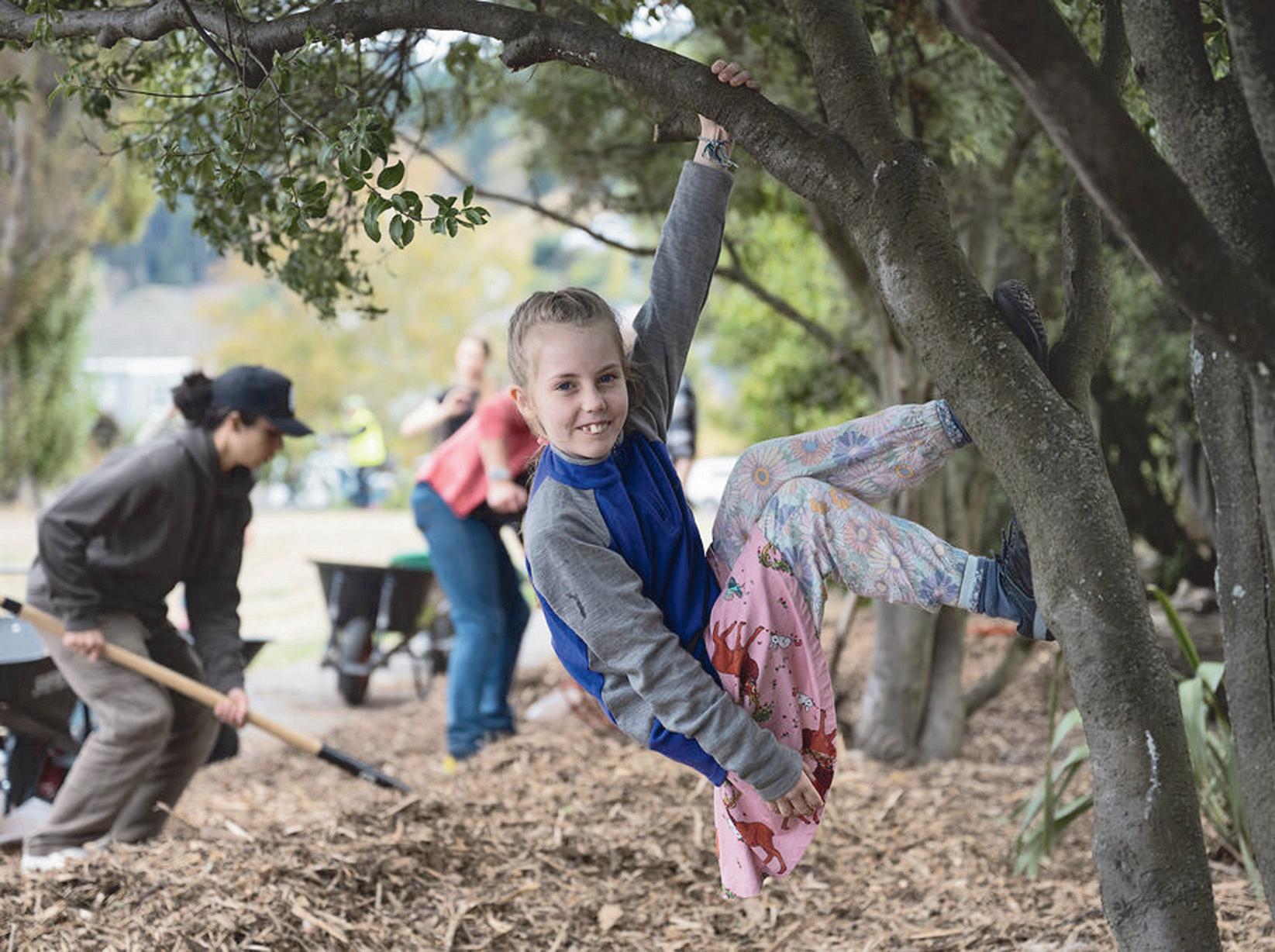
WORDS
CELIA HOGAN, LITTLE KIWIS NATURE PLAY FOUNDER
Visiting the local playground with my children often meant a brief stint on the swings and slides before they scampered off into the nearby bush, climbing trees and exploring hidden corners. Although the space wasn’t particularly inviting, and it was ambiguous whether children were allowed to venture in, I encouraged their curiosity.
Over time, I noticed other children following suit. Yet many parents would rush in to pull them back, exclaiming “you’re not meant to be in there,” or “it’s not safe!” As a passionate advocate for nature play, this piqued my interest. Could we transform this underutilised space into something more welcoming?
I connected with our local park ranger, Heidi, and we discussed the potential of the area. To my surprise, I discovered that community members could volunteer to help maintain public spaces. That conversation
marked the beginning of our journey.
In recent years, encouraging nature play has gained traction as communities recognise its multifaceted benefits –not only for children but for families and neighbourhoods at large. Nature play spaces, which allow children to explore and learn from their natural surroundings, are essential in our fastpaced, technology-driven world. These spaces foster relationships, enhance community engagement, stimulate children’s development and cultivate wellbeing, making them a critical investment for any community.
Our vision came to life through a strong partnership with local council. We kicked off with a vision session where we clearly outlined our goals and signed a volunteer land use agreement. This empowered us to take actionable steps towards our shared dream. To spread
the word, we created a Facebook group and reached out to local schools, early childhood education centres and parenting groups through emails and social media.
Shortly thereafter, we held our first nature play working bee, where families came together to weed an area. Framing this as a family-friendly event encouraged participation and strengthened the bonds within our community.
The commitment of volunteers is vital in grassroots projects. Their dedication not only brings ideas to life but also foster a sense of community ownership. Our working bees were designed to be inclusive, allowing children to play freely while adults engaged in meaningful tasks. This flexibility facilitated connections among families, resulting in new friendships forged through casual conversations — a truly therapeutic
experience for everyone involved.
Initially, I struggled with providing clear instructions, which led to varying interpretations of tasks. However, I quickly learned that precise guidance and clear communication were essential for maintaining focus on our objectives, such as distinguishing between seedlings and weeds during our gardening sessions.
Our collaborative efforts flourished, bolstered by partnerships with local businesses and organisations. The council providing essential resources such as tools, bark mulch, and even organising a celebratory barbeque for volunteers.
Schools contributed by engaging students in hands-on experiences that intertwined weeding and play, reinforcing their connection to nature.
Local ākonga (students) completing the William Pike Challenge fulfilled their community service hours at our project, highlighting the vibrant network of support enriching everyone’s experience.
As our project evolved, securing resources became increasingly crucial for sustainability. A local arborist provided logs for our play areas, while nearby Facebook groups became invaluable for sourcing additional materials like branches and small log rounds.
However, logistical challenges often arose — especially with my broken trailer limiting transportation efficiency. While I pursued funding to acquire necessary resources, the added responsibilities of paperwork only heightened my workload alongside existing commitments. These challenges underscored the complexity of maintaining a grassroots initiative and the ongoing need for organisational support.
A nature playspace transcends mere physical play. It invites exploration and deep connections with the environment — key components of child development. Children are biologically wired to learn through exploration, shaping their understanding of the world through play. This experience aligns with schema development principles, where children engage in repeated patterns of behaviour to solidify their learning (Brownlee, 2016).
The risks associated with nature play, often referred to as Risky Play Theory, play a critical role in
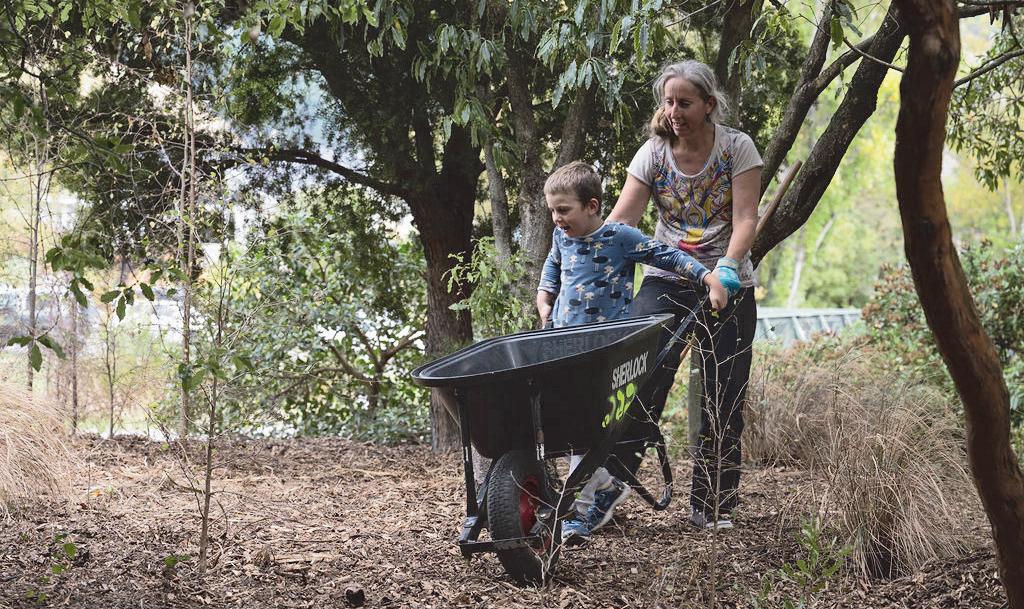
development (Hogan, 2022). Children instinctively push boundaries, honing skills such as crawling, walking and climbing without direct instruction. Engaging with high places, hidden corners and natural elements enhances sensory awareness and critical thinking abilities, fostering independence and resilience (Hogan, 2022).
Many local supporters may not physically participate in weeding, but they often stop to commend our efforts or share childhood memories of wild play, reminiscent of the space we are creating. This brings the community together and supports a deeper sense of belonging.
To amplify grassroots initiatives like our nature playspace, local councils and organisations can implement several supportive measures. Establishing strong, open relationships with councils is essential for facilitating projects that bolster community engagement. Organisational support is critical for accessing necessary resources, such as tools and trailers, and for connecting with local service providers (ie. arborists).
Effective communication remains a challenge for many grassroots projects. Councils can play a pivotal role by promoting events on social media and sharing community achievements to enhance visibility. Moreover, creating environments for local grassroots groups to gather, exchange experiences and build networks can encourage learning and inspire collaborative endeavours. Simple acts of support, like participating in a working bee or inquiring how to assist, foster goodwill and deepen community involvement.
Furthermore, making funding applications more accessible, along with providing guidance through often-complex processes, can reduce barriers for small projects, ensuring they access the necessary resources
for sustainability. Finally, showing appreciation through community events, like barbecues for volunteers, can significantly boost morale and convey that their efforts are valued.
Ultimately, initiatives like our nature playspace play a vital role in cultivating stewardship and nurturing deeper connections to te Taiao (the natural world), enhancing a sense of identity and belonging. Through engaging in nature play, we are sowing the seeds for resilient, well-rounded individuals who will become the future guardians of our whenua (land).
With collaborative efforts, shared visions and robust community support, we can create environments that delight children and transform our communities for the better. The essence of these projects lie in crafting lasting legacies that promote environmental stewardship and community wellbeing.
• Brownlee, P, & Crisp, K. (2016). The sacred urge to play. Good Egg Books.
• Hogan, C. (2022). The importance of risky play. Little Kiwis Nature Play. littlekiwisnatureplay.com/importanceof-risky-play/
Celia Hogan is the founder of Little Kiwis Nature Play, a provider of professional development programmes focused on embedding outdoor philosophies and nature-based education into early childhood education centres and primary schools across New Zealand. She is an engaging public speaker and has over 25 years’ experience working in outdoor education across early childhood education, primary, secondary and tertiary. littlekiwisnatureplay.com/
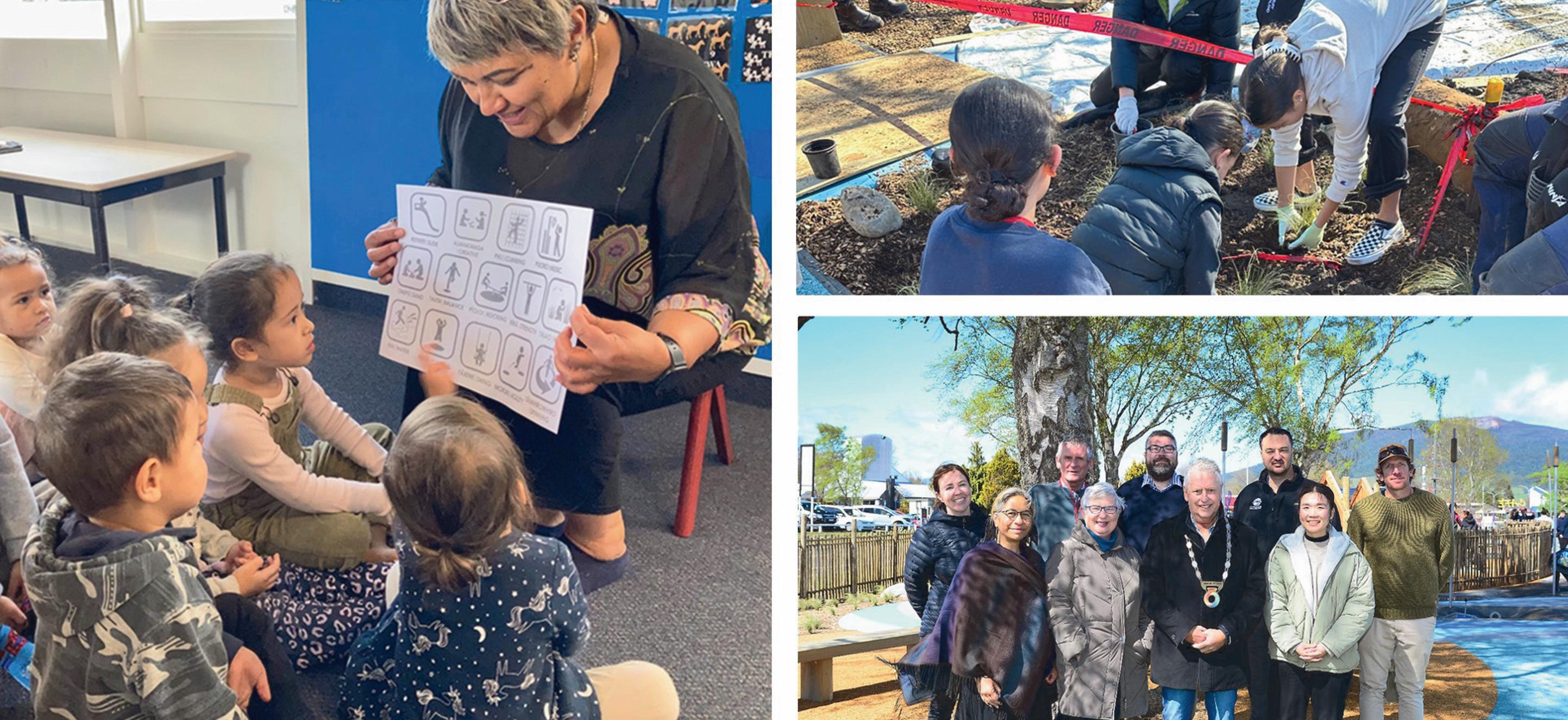
Kieran Smith, Parks, Play & Open Spaces Programme Manager for Recreation Aotearoa, spoke at the 2024 PLA National Conference in Meanjin (Brisbane), Australia in October 2024. Attending as part of a delegation from Aotearoa (New Zealand), Keiran shares insights and ideas from his session below.
“As PLA’s pinnacle event, the conference brought together current and future leaders in the recreation and leisure sector from Australia and internationally. It included workshops, advisory discussions, knowledge sharing, and keynote speakers who challenged your current perceptions and left you empowered to make a positive difference.
“I attended as part of a delegation from Recreation Aotearoa, along with board members Amanda Davies and Brittany White. Our goal? Capture insights and learnings from an Australian perspective that I could share back home. Oh, and execute a flawless presentation on my behalf, of course.
“It was a fantastic conference. I met some truly passionate people doing great work. I came home inspired and energised. Brisbane is a beautiful city, with great recreation spaces available for communities to use. I was heartened by the positive feedback I received from delegates who attended my session. So, in the interest of knowledge sharing, I’ve pulled this article together.
If you’re interested in seeing my presentation pack, please don’t hesitate
to get in touch with me via email at kierans@nzrecreation.org.nz”
In Aotearoa, there are examples where re-indigenising open spaces goes far beyond ticking a box. It’s about genuinely weaving indigenous knowledge and cultural values into the very fabric of how we design, manage and engage with our parks, playgrounds and public areas.
When we draw on the deep connection that tangata whenua (indigenous peoples) have with the whenua (land), we create spaces that honour and reflect the heritage. These are not just play areas, they’re living, breathing parts of our communities that carry stories, traditions and a sense of belonging. True re-indigenisation requires listening, learning and acting with intention.
The small town of Tūrangi is nestled in the headwaters of Lake Taupō in Te Ika-aMāui (New Zealand’s North Island). Here, the local iwi (tribe), Ngāti Tūrangitukua, has been working in partnership with Taupō District Council around decisionmaking for their rohe (district). Set up as a Mana Whakahono ā Rohe Partnership Agreement, Ngāti Tūrangitukua and Taupō District Council work together on
resource management matters, planning and decision-making under the Local Government, Reserves Acts and the Ngāti Tūrangitukua Settlement Agreement, and in the council’s co-government structure. This partnership earned them an award, Te Tohu Waka Hourua — The Buddle Findlay Award for Māori-Council Partnerships, in 2022.
Their story is a powerful example of what’s possible when local councils and iwi (tribe) come together as equals. After being shut out of decision making on their own whenua (land), co-governance and co-design were more than just concepts for Ngāti Tūrangitukua. They were the foundation for building mutual respect, trust and understanding.
Through shared leadership, both parties could embrace each other’s values, navigate challenges and create a lasting partnership that benefits both community and environment. This approach ensures that projects aren’t just imposed, they emerge from collaboration, with cultural principles integrated at every step.
Global awareness of the richness that indigenous practices bring to modern spaces is rising. We see this in initiatives like the LEGO Foundation’s funding of play projects. The LEGO SPIRIT (Supporting Play and Intergenerational
Relationships with Indigenous Tradition) highlights indigenous traditions, including partnerships in Aotearoa, Australia, British Columbia and the United States of America. By supporting intergenerational play spaces, these projects are not only creating fun environments, they are also reclaiming cultural narratives and strengthening community ties. This trend points to a broader movement, where indigenous knowledge systems are seen as integral to addressing
modern challenges — whether that’s in environmental stewardship, education or community wellbeing.
At the end of my session, I outlined a wero (challenge) to attendees, and I’ll pose the same challenge to you. I encourage you to do some research around the topic of re-indigenising playspaces.
• How can we shift from seeing
indigenous involvement as an “addon” to it being central to how we design and manage public spaces?
• What barriers exist in engaging with indigenous peoples in your space? How can these barriers be dismantled to foster true partnership?
• Who will ensure that future generations understand the cultural significance of the land they play on, and how will you empower them to continue that legacy?
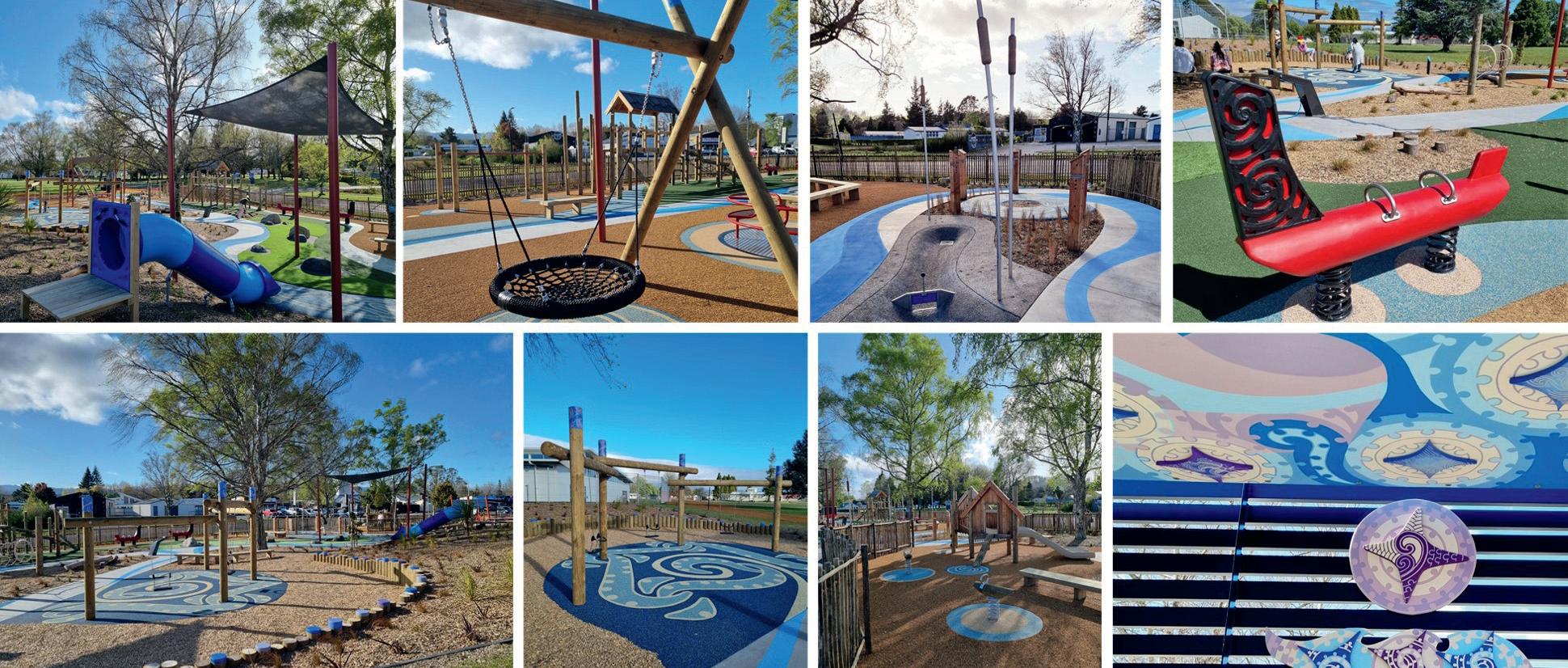










































































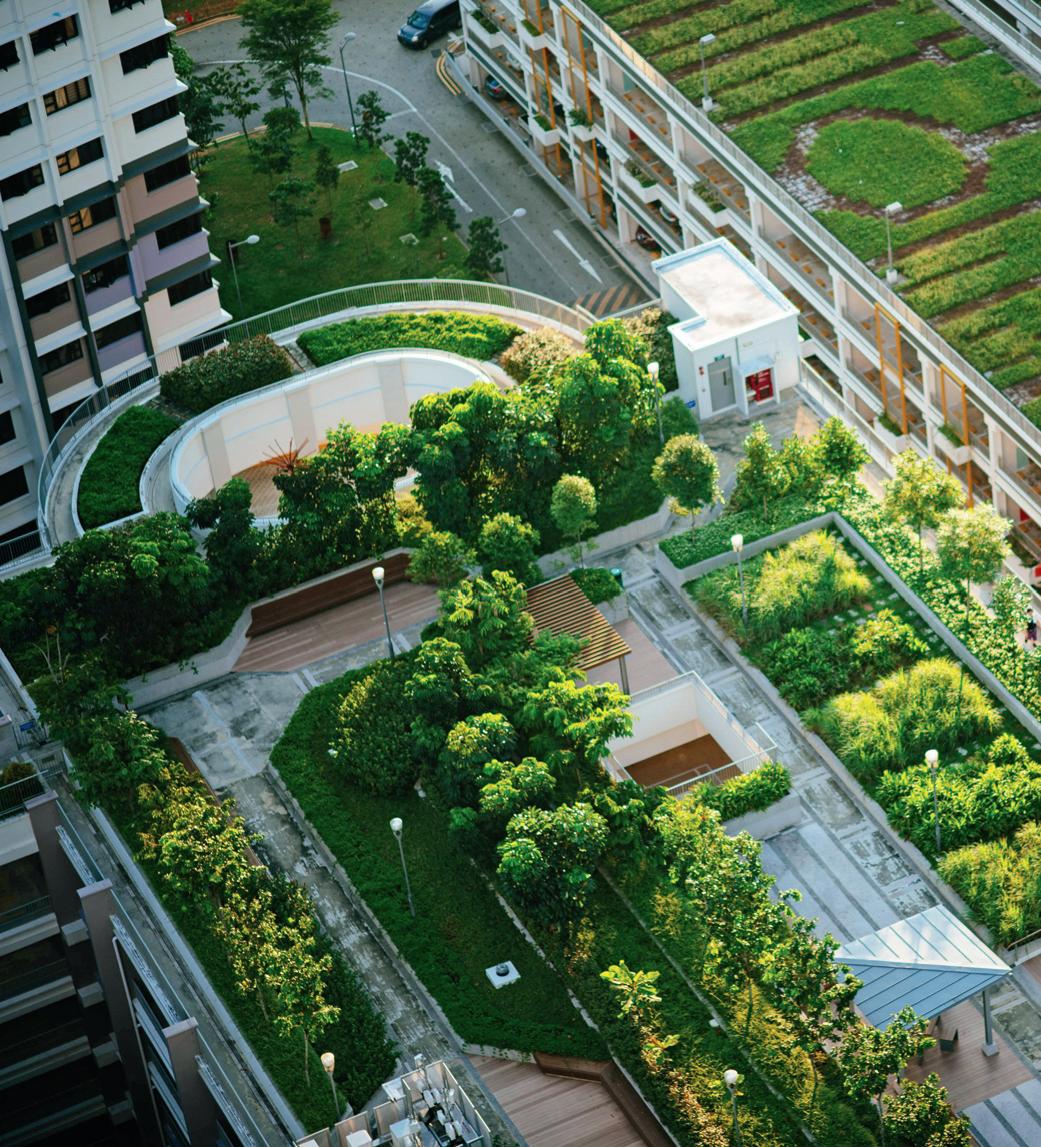
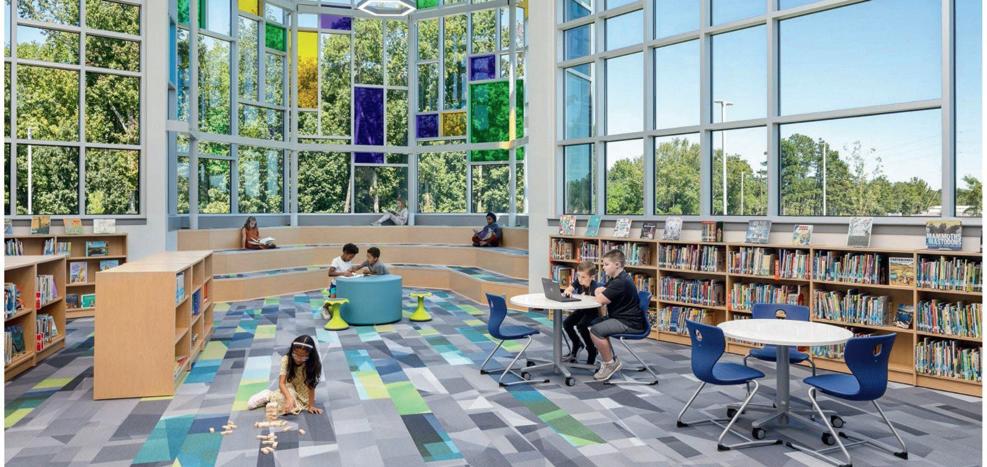
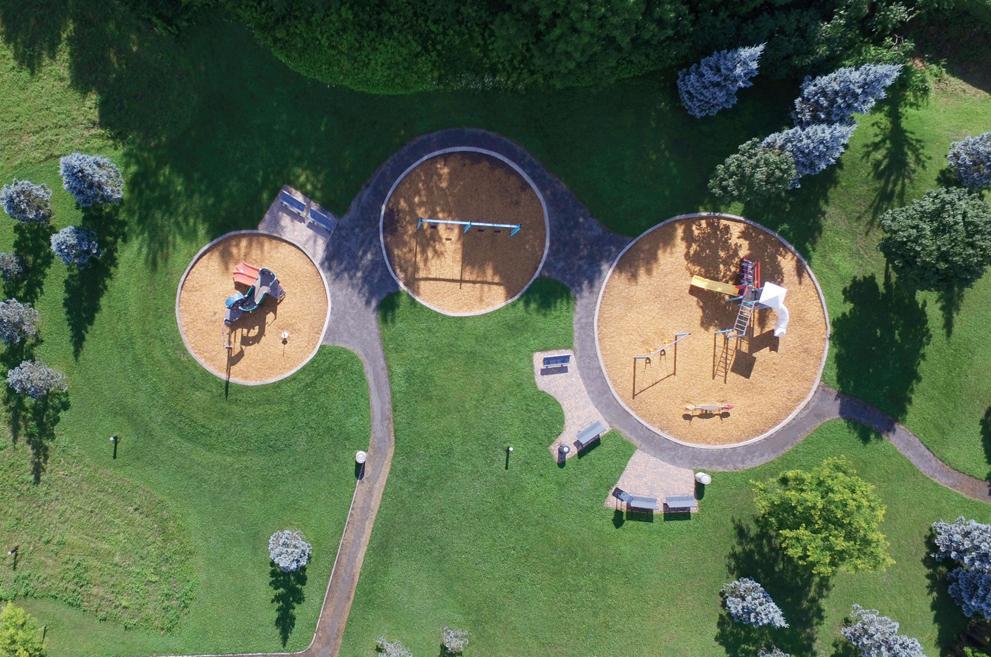
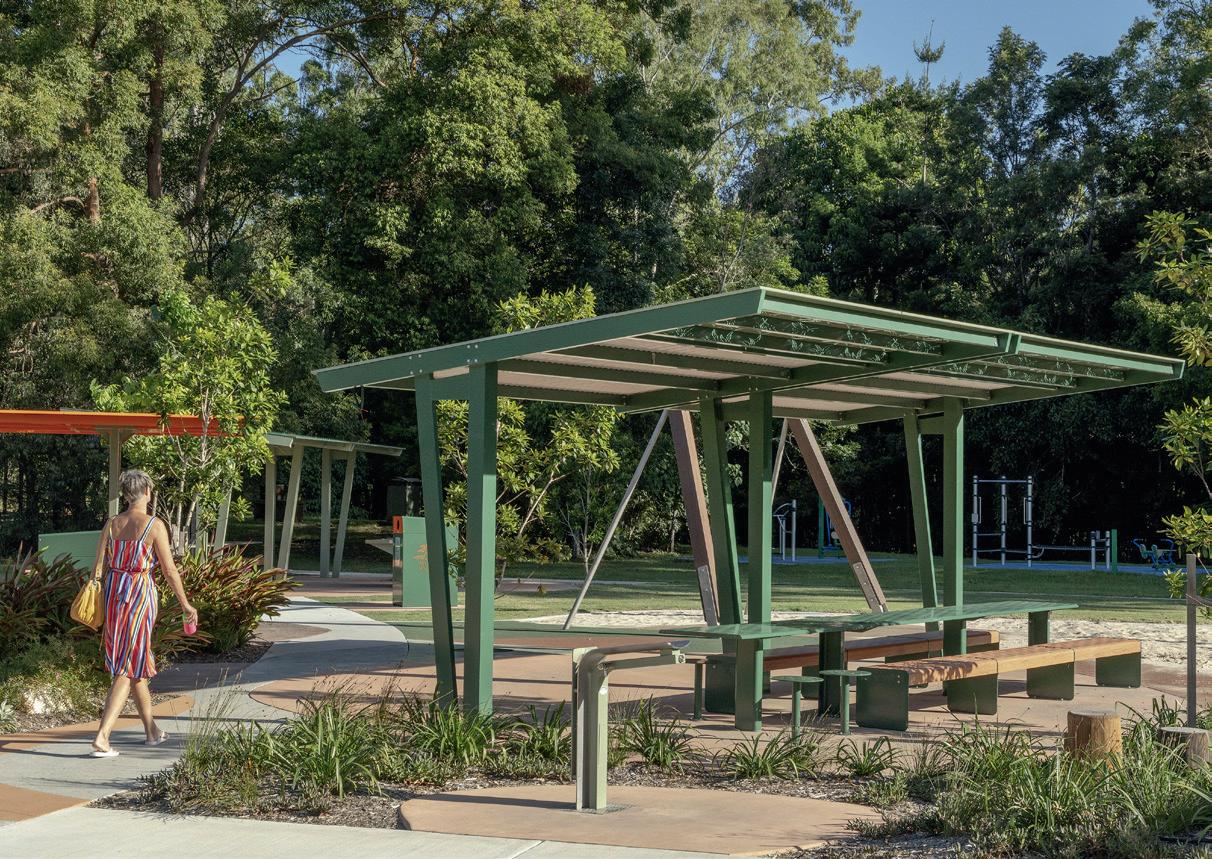

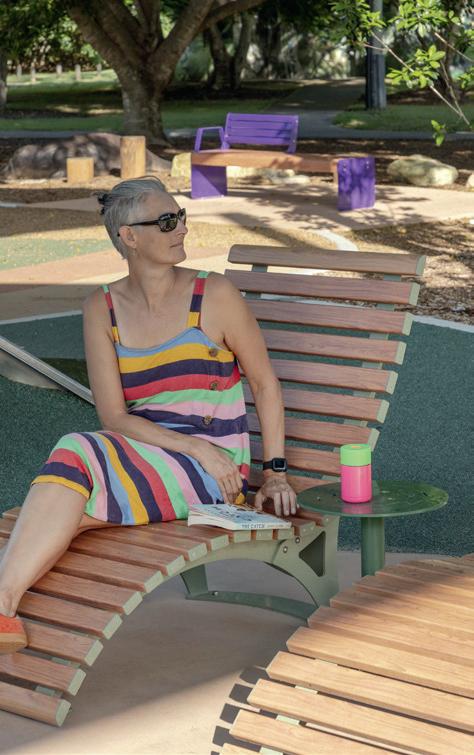
As more people move into urban areas and environmental issues become more pressing, cities will have to rethink their systems and their environmental impacts. Many cities around the world have already begun to adopt more eco-friendly practices.
As cities worldwide are increasingly growing in population and built environment, the question arises: how do we become sustainable and provide more areas for green public spaces? This paper investigates the issue of sustainable European cities through the lens of politically driven aims and strategies to become green. With the cases of two capital cities, Copenhagen and London, the paper examines two municipal visions and strategies for reaching similar green city goals. This research is supported by examples of concrete “green public space” projects in each city.
In recent years, many cities have recognised the importance of greenspaces and developed goals for being green cities by the year 2050.
Some of the initiatives taken include strategies to increase urban nature, protect existing parks and to promote green roofs.
Case of Copenhagen, Denmark
Urban nature is an important resource for Copenhagen and Copenhageners. The city’s parks, nature areas and trees help make our city a great place to live.
In 2015, the City of Copenhagen adopted an ambitious, though not fully funded, policy: Urban Nature in Copenhagen 2015-2025. This policy defined specific effects, goals, efforts and conditions to reach their visions concerning urban nature.
The city’s vision is twofold and combines quantitative and qualitative measures to (1) create more and to (2) improve the quality of urban nature in Copenhagen. With a somewhat human-centred focus, the city has been working tremendously on the city’s climate adaptation strategy and on addressing both the climate and
biodiversity crises with the help of urban nature: “We aim to use urban nature as an active means of adapting the city to future climate conditions, enhancing biodiversity and creating optimal settings for an active urban life — to the benefit of current and future generations.” As the city is expanding, it is challenged to find space for new green areas, incorporating nature into the fabric of the city every time new plans are made. The city’s ambition is to see more trees along the streets, more green courtyards, and urban nature on roof tops, facades, municipal and nonmunicipal lands to transform the city.
In this regard, “the green planning tool” and “the tree policy” are two major political initiatives taken by the Municipality. The first is a tool that calculates a “green factor” for all publicly driven projects including construction sites and local development plans. The factor includes both quantitative and qualitative values of urban nature for each site. The second comes with a goal to plant 100,000 new trees within a decade (City of Copenhagen).
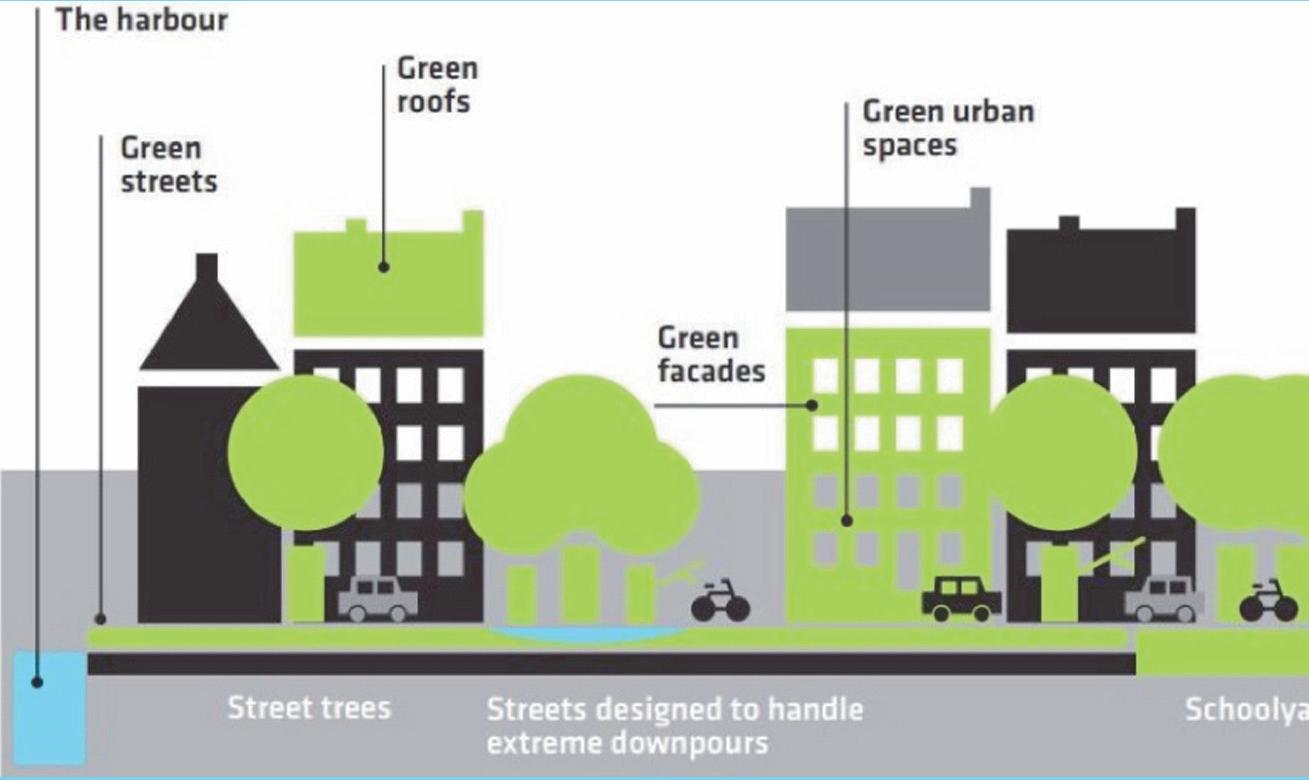

In Copenhagen, the recently completed project, Bryggervangen and Sankt Kjeld’s Square, is an example of an urban space that creates a connection between nature-based climate adaptation and recreational meeting places for the residents (figure 2). The project defines a special urban nature that learns from characteristic Copenhagen biotopes and uses their processes rationally and aesthetically in the city centre. According to the landscape architects behind the project; “The result is an urban nature that is aesthetic and functional, biodiverse and sustainable, green and blue, climate adaptable, and creates a sense of community. An urban nature, which gives the Copenhageners a strong aesthetic feeling of nature right on their doorstep.”
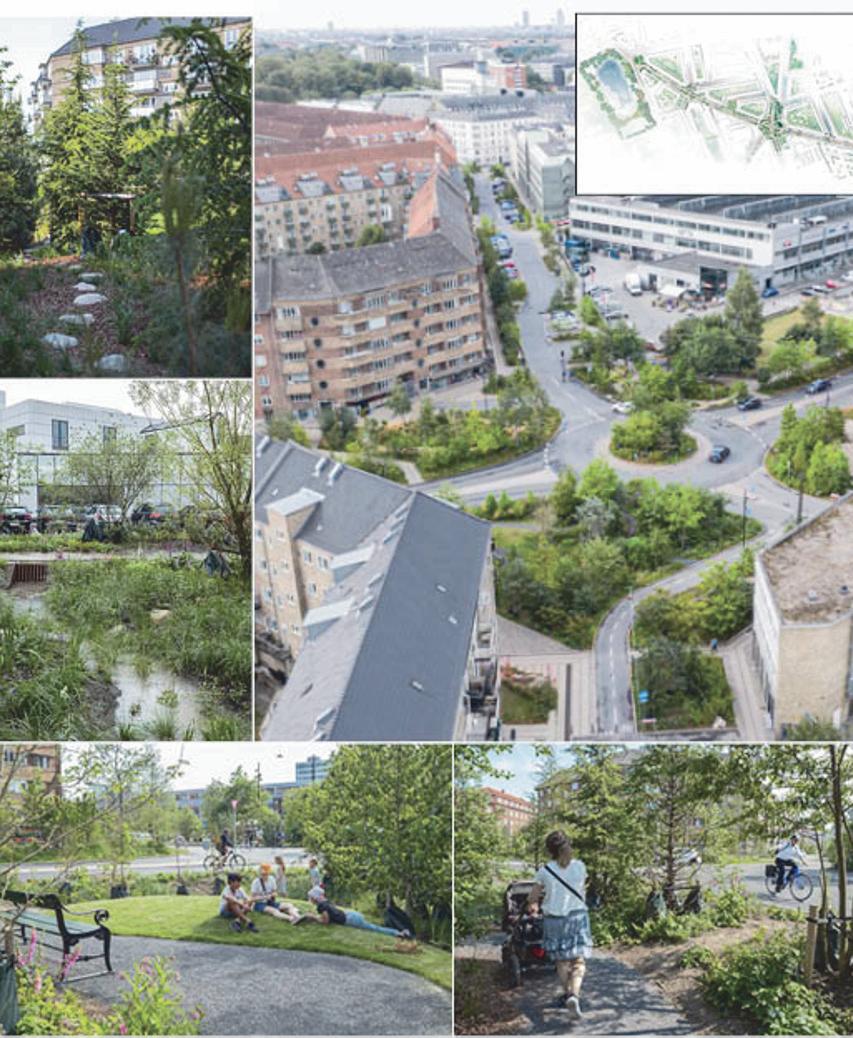
Creating a greener city is good for everyone — it will improve people’s health and quality of life, support the success of businesses and attract more visitors to London. (Greater London Authority).
Recognising that the environment has a big influence on people’s quality of life, a goal is to make new connections between the environment and the city. The strategic approach of developing the city’s green infrastructures, meaning “the network of parks, greenspaces, gardens, woodlands, rivers and wetlands (as well as features such as street trees and green roofs)” include objectives to: “make more than half of London’s area green by 2050” by protecting and enhancing green areas in the city; “conserving and enhancing wildlife and natural habitats” by protection of core network sites and biodiversity net gain; and “value London’s natural capital as an economic
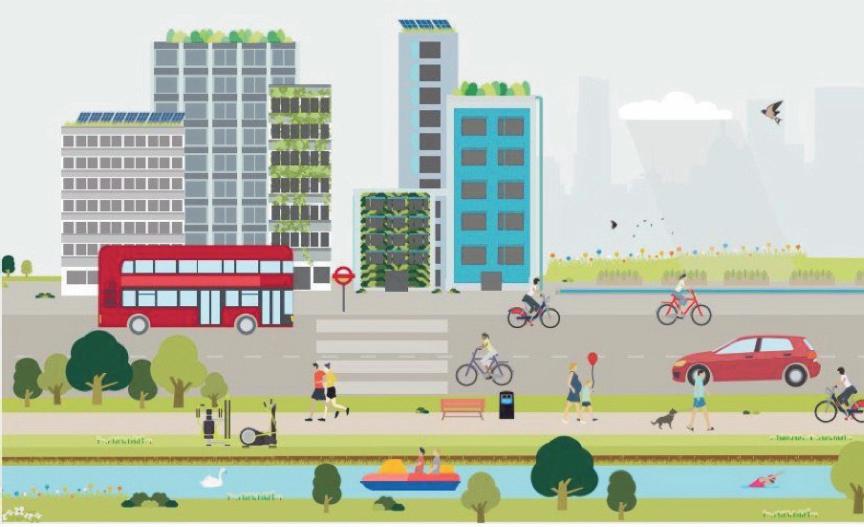
asset and support greater investment in green infrastructure by improving managements and new business models.
Central London is known for its dense development, which has led to an increasingly fragmented and sparse natural landscape over time. In response to this, the West Ends’ largest property owners are working together in a partnership on the project “Wild West End”. As “an exciting opportunity to demonstrate the positive impact of urban green infrastructure” with a key aim to create new green corridors to connect existing green spaces, which allow wildlife to better move between
Many cities have already begun incorporating nature into their landscapes, serving to improve the life of its citizens. It is evident that developed cities face great challenges to find space for green infrastructure and have met this challenge through innovative, integrated and technically-advanced solutions. By investigating the cases of Copenhagen and London, we see how both are incorporating environmental strategies that contribute significantly to the UN’s global sustainability goals. The authorities are adopting green
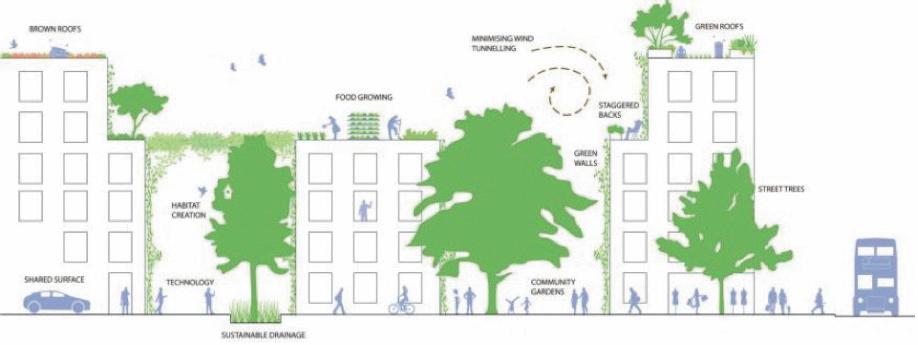
them and to provide people increased access to nature
The project has “delivered an additional 2,500 square metres of greenspace since 2016, equivalent to almost ten tennis courts. This includes more than sixty green roofs, fourteen green walls, ten garden squares, two pocket parks and one allotment” (IEMA, 2019, para. 9). In addition, monitoring results from the biennial bird survey have indicated the use of new greenspaces by a range of urbanadapted bird species.
infrastructural strategies of becoming green cities, with more and qualitatively better urban nature. Both cities have adopted similar objective strategies of promoting their greenspaces and nature.
The green city initiatives appear to be incorporated as the cities’ self-branding of being green and sustainable by 2050. Although the promotion and conservation of greenspaces is partly meant to benefit the climate and biodiversity, it is clear that the prime target are (human) inhabitants, businesses and
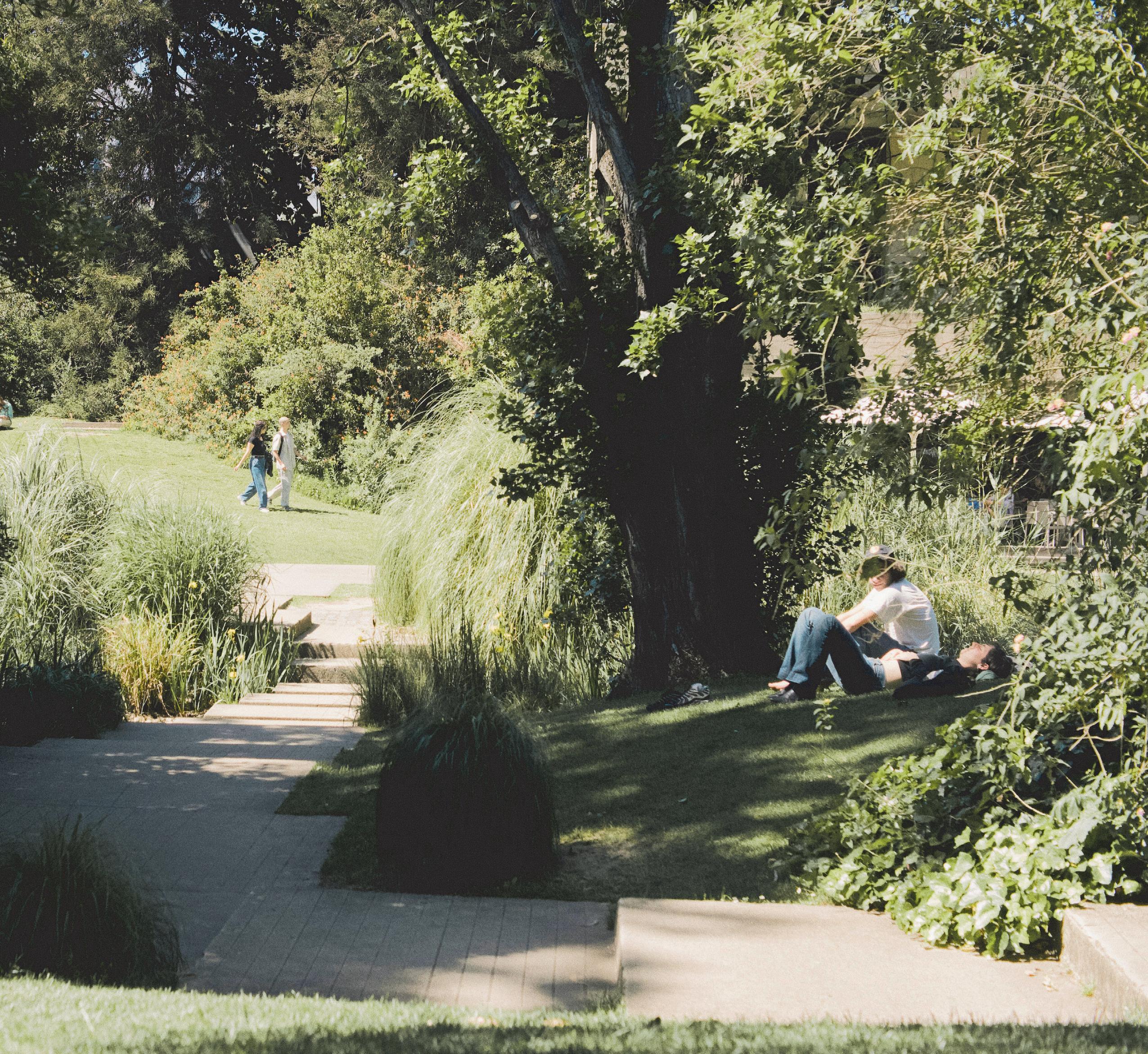
visitors. In seeking to help the survival of endangered species, for instance, the overall concern is the health and wellbeing of Londoners, and for the City of London to prosper through positive branding, such as becoming the world’s first National Park City; zero carbon city, zero waste city and greenest city in the world. Similarly, urban nature in Copenhagen is described as a resource for “the good life” of Copenhageners, to benefit current and future generations.
Preserving natural areas within city
limits will slow habitat destruction, conserving the ecosystem as cities expand. Increasing the green space in an area will help improve air quality through respiration in plants. With more birds and insects, it will be easier for cities to maintain urban gardens, providing an eco-friendly food source.
Urban green spaces benefit people’s quality of urban life and they effectively tackle larger city problems. Therefore, many city authorities emphasise the importance and value of green spaces while moving towards future
development of sustainable green cities in 2050.
Urban greenspaces require careful planning and sound knowledge on how nature and biodiversity can be integrated in a city’s limited space. The case studies in two capital cities with a dense built environment how space can be altered and optimised.
Based on our findings, bringing greenspace to urban landscapes can promote and inspire better relationships with the environment while supporting important services.
To learn more about the details of the design interventions, study methods and results of biophilic design for schools, read the full article by Browning and Determan in Architecture/MDPI @ mdpi. com/2673-8945/4/3/26
WORDS BILL BROWNING, TERRAPIN BRIGHT GREEN FOUNDER
For a special issue of Architecture entitled, Biophilic School Design for Health and Wellbeing, Terrapin’s Bill Browning teamed up with Jim Determan of Craig Gaulden Davis Architecture to explore the results from a yearlong study of biophilic measures in a sixth-grade mathematics classroom in Inner-city Baltimore.
Biophilia is the theory that humans are innately connected to nature. As a basis for forming built space, biophilic design has been proven to reduce stress, improve cognition and enhance mood — essentially, it makes us happier. In the last 20 years, research in learning spaces has
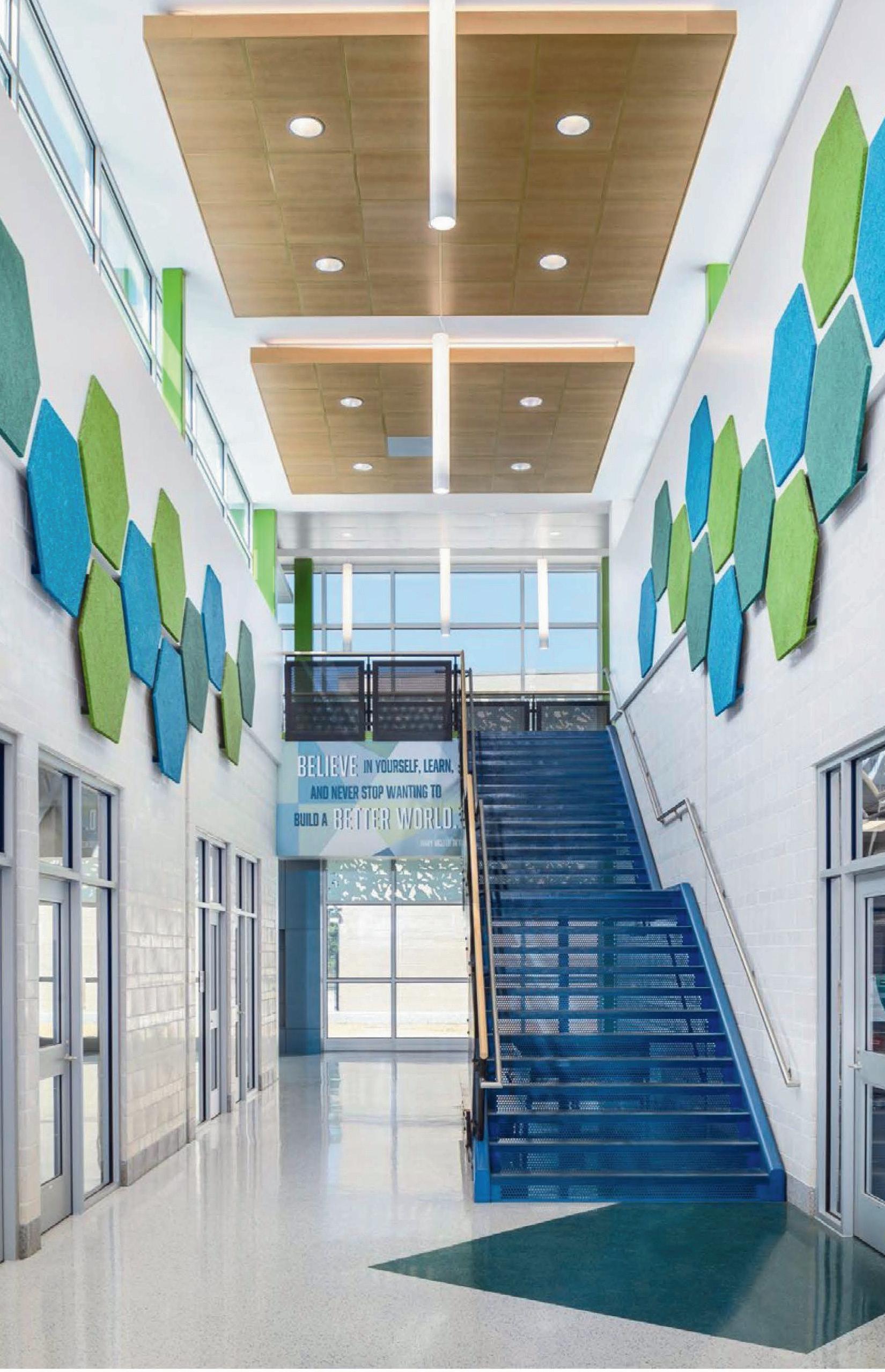
shown an association between biophilic design and student mood, calmness and improved standardised test scores.
Just pre-Covid, a group of architects, scientists and educators led an experiment involving sixth-grade math students at the Green Street Academy in Baltimore, which found that student stress was significantly reduced and learning significantly improved in a classroom enriched with biophilic strategies.
The architects applied these strategies to the design of Bethel Hanberry Elementary School. After a year of occupancy, an independent assessment found positive perceptions of the biophilic design, fewer behaviour
referrals, better teacher retention, lower absenteeism and improved test scores.
In a controlled research experiment and in real-world application, the design of learning spaces, using biophilic strategies, has a significant impact.
Our hypothesis is that simple low-cost biophilic design interventions could improve academic and other outcomes in schools. This paper summarises the results of two studies. The first focused on a single classroom at the Green Street Academy in inner-city Baltimore, Maryland. The second study, building on the lessons of the first study, was an entirely new school, Bethel-Hanberry
Elementary School, which replaced an existing school in Blythewood, South Carolina.
Our methods for measurement included comparisons of preand post-intervention academic outcomes, surveys and interviews of students and faculty. In the Baltimore study, biometric testing of stress recovery characteristics was conducted using heart rate variability (HRV) measurements. Since the Blythewood study involved an entire school, comparisons of absenteeism, behaviour and teacher retention were also made.
The Green Street Academy is a locally funded public charter school in Baltimore, Maryland, in the United States. The school uses a STEAM (Science, Technology, Engineering, Arts, Mathematics) curriculum. The selected location for the school was in a shuttered City of Baltimore public school building in an underserved neighbourhood. The 1925-era school was renovated and redesigned by architect Jim Determan of Craig Gaulden Davis Architects. Biophilic additions included indoor koi ponds, green houses and artwork of local ecosystems.
The Baltimore study at the Green Street Academy documented improved
learning outcomes measured over the course of the year. The study also included biometric testing of stress recovery characteristics, which found that the students had better stress recovery measurements at the end of a class period than at the beginning. That outcome is also reflected in interviews and surveys where the student expressed that being in the biophilic classroom made them feel calmer.
A team from the University of South Carolina Upstate conducted a yearlong study of outcomes for students and faculty. The Bethel-Hanberry school replaced an existing school so the researchers were able to compare outcomes against the data from the prior school. They found a significant drop in chronic absenteeism and improved learning reflected in MAP scores.
From research experiments to real-world application, we see the benefits of biophilic design in learning spaces. If minimal design interventions in the classroom can help make students happier, healthier and improve learning, and if they can improve teacher retention, reduce absenteeism and curtail bad behaviour, why would we not do this in all schools?
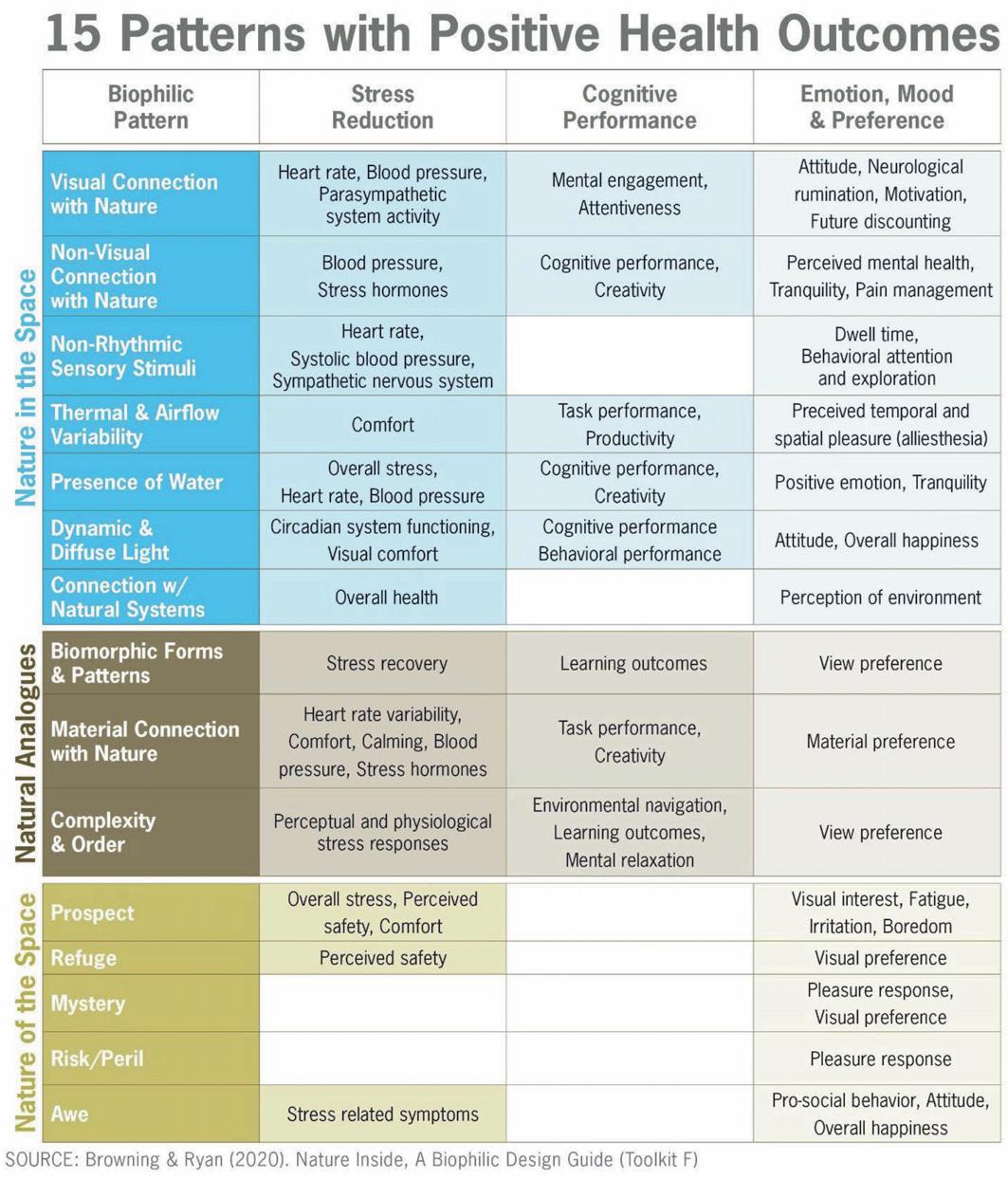
Every effort to help improve a young person’s capacity to learn and enhance their social-emotional wellness will pay dividends to them as individuals and for us as a society.
Schools at the turn of the 20th century were daylit and naturally ventilated by operable windows. This typically allowed for views of trees, clouds and other outside activity. In the 1960s, the US education system perpetuated the belief that views were “distractions” and that the attention of children should be focused on activities within the classroom. Henceforth, the construction of windowless or transom-window classrooms became pervasive in practice, particularly among temporary modular structures — many of which are still in use decades later. Bringing access to daylight, views to nature and the use of biophilic elements in the classroom clearly have a measurable benefit for the learning environment.
David Orr, an emeritus professor of Environmental Studies at Oberlin College in Ohio says that buildings are “crystalised pedagogy”; they inherently tell us about the belief systems that led to their design. Biophilic design can be leveraged as a philosophy of education and design that helps support improved academic performance and a greater connectedness between buildings and nature.
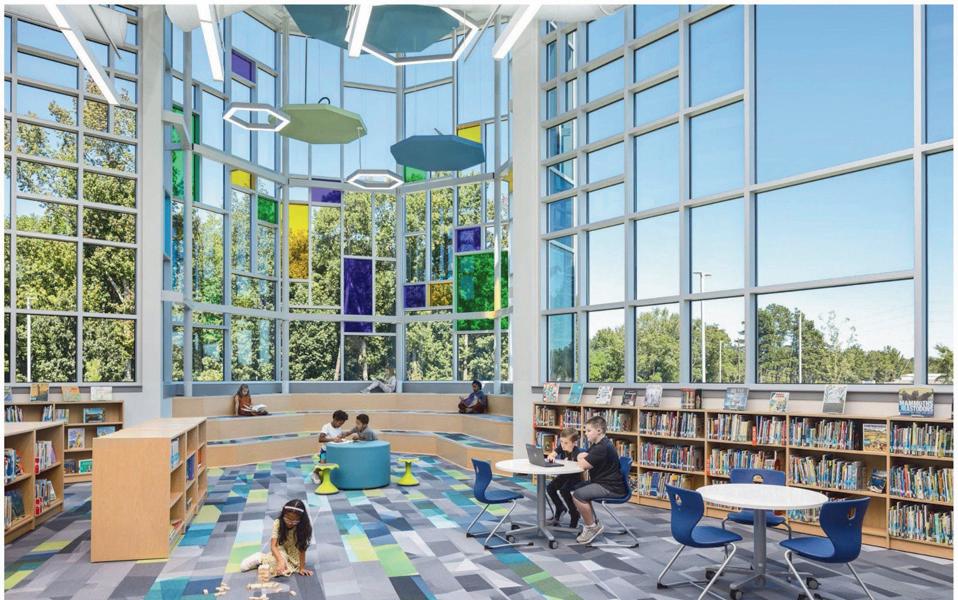
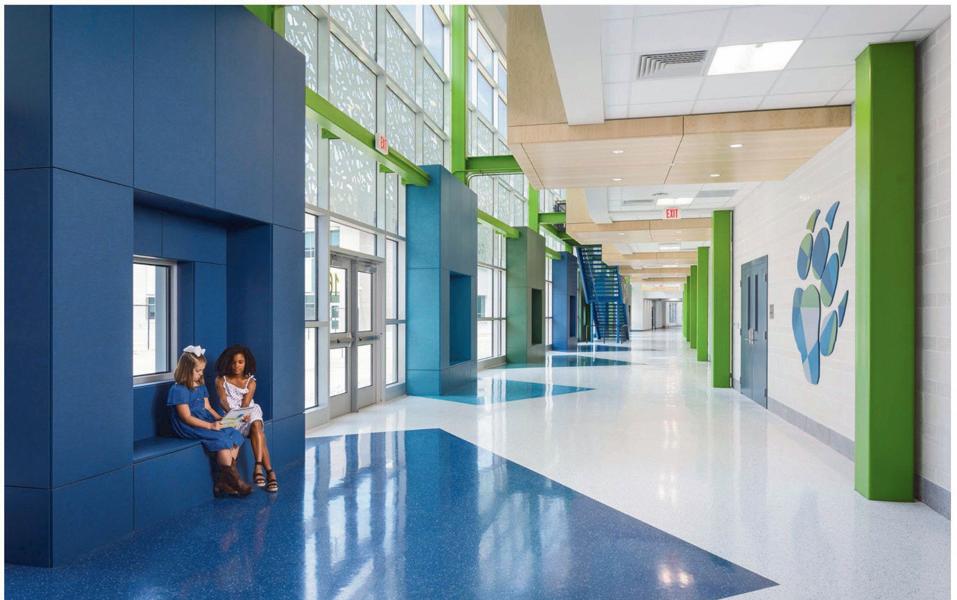
The Department of the Interior announced today the single largest grant investment ever from the Land and Water Conservation Fund’s Outdoor Recreation Legacy Partnership Program (ORLP). Through ORLP, the National Park Service (NPS) will invest US$254.68 million into over 50 projects in 24 states for the redevelopment or creation of new local parks.
The ORLP program advances President Biden’s America the Beautiful initiative, a locally led, voluntary conservation and restoration effort that aims to address the nature and climate crises, improve equitable access to the outdoors, and strengthen the economy. Providing safe outdoor spaces for communities that are park-deprived is one of six areas of focus.
The program also helps advance the Administration’s Justice40 Initiative, which aims to have 40 percent of the benefits of federal funding flow to disadvantaged communities.
“Everyone deserves to experience the restorative power of nature, but increasing access to public outdoor spaces has not always received the investment and drive needed to make an impact. Supporting the communities that benefit from the Outdoor Recreation Legacy Partnership program has been a top priority for our Administration, and a critical step to bringing more green spaces to urban and disadvantaged communities” said Secretary Deb Haaland. “Today, this program makes history with the largest investment since its inception.”
“The enthusiasm for this program is wonderful, with the highest number of applications we’ve ever seen,” said Assistant Secretary for Fish and Wildlife and Parks Shannon Estenoz. “After traveling across the United States to increase awareness of the Outdoor Recreation Legacy Program, I’m thrilled to see so many cities receive grants for the first time.”
In August, Secretary Haaland and Assistant Secretary Estenoz toured ORLP projects underway in the Raleigh, North Carolina area. They visited Yeargan Park and Smoky Hollow Park, where investments from the program will construct new part infrastructure, upgrade trails, and expand play and picnic areas, cultivating community connection and outdoor access.
Today’s announcement follows a nationwide tour by Assistant Secretary Estenoz to hear directly from community members on the need to connect communities with access to the outdoors, and to encourage state participation in the ORLP program. This latest round of funding draws from the greatest number of applications received by the NPS in the program’s history.
“It’s great to see such an increase in community investment in the Outdoor Recreation Legacy Partnership program,” said NPS Director Chuck Sams. “This investment into these 54 locally led projects is a prime example of the vital work the National Park Service is doing to improve access to the outdoors in your community and beyond national park borders.”
The ORLP program, established in 2014, is a nationally competitive, dollarfor-dollar matching grant program that aids disadvantaged, urban communities that lack access to close-by outdoor recreation. The program provides grants for community sponsored park projects where population is greater than 30,000 residents. Managed by the NPS and funded through the LWCF, the program provides matching grants up to 50 percent of total project costs.
The money is going to 54 projects in 24 states for the creation or redevelopment of local parks. National Park Service Director Chuck Sams said in a statement; “This investment into these 54 locally led projects is a prime example of the vital work the National Park Service is doing to improve access to the outdoors in your community and beyond national park borders.”
Five projects will get $15 million each, the largest amounts of the 54 projects: Bryte Park in West Sacramento, California; Puente Hills Landfill Park in Los Angeles County; 11th Street Bridge Park in Washington, DC; Regional Park in Rock Hill, South Carolina; and Martin Luther King Jr Park in Bakersfield, California.
Burnett Bayland Park in Houston will get $11,353,000, and Jordan Downs Central Park in Los Angeles County $10,999,000. Cleveland’s Irishtown Bend will get $10,813,000. The smallest grants are $750,000 for Quail Valley Nature Park in Menifee, California, and $390,000 to Cain Park in Cleveland Heights, Ohio.
This edition of Research Connections provides nine articles that have been assessed as being of value for the delivery of park and leisure experiences. The four Australian articles explore issues related to health and fitness centres, leisure and human rights, and two activity focuses articles (ie birding and cricket). The international articles include children and school holidays, New Zealand sport policy, women’s participation. We have also provided something totally different about the Leisure Society podcasts.
A SYSTEMATIC REVIEW OF THE WELLBEING BENEFITS OF BEING ACTIVE THROUGH LEISURE AND FITNESS CENTRES (2023)
Authors Leila Heckel, Rochelle Eime, Adam Karg, Heath McDonald, Carleigh Yeomans & Ian O’Boyle
Abstract The aim of this systematic review was to provide an overview of the scientifi c evidence for psychosocial wellbeing benefits for individuals who are active through settings like leisure centres, gymnasiums or swimming pools. The level of physical activity required to achieve wellbeing outcomes through centre usage was a focal point. Nine electronic databases (AUSPORT, SPORTDiscus, EMBASE, MEDLINE, CINAHL complete, PsycINFO, Web of Science, PubMed, Scopus) were systematically searched to identify relevant literature, including all articles published in English from January 2011 to December 2021. A total of 1667 manuscripts were identifi ed of which 31 articles were included in this review. Mental health was the most investigated psychological outcome, followed by stress reduction and relaxation; bonding with family/friends was the most frequently studied social outcome. Regular physical activity at leisure/fitness centres may be associated with increased social and psychological wellbeing. Participation in group programmes seems to be superior to individual activities in achieving health benefits due to its social nature. Findings from this review confirm that outcomes of being active
through leisure/fitness centres go beyond physical benefits. However, scientifi c evidence is limited and more longitudinal studies with larger samples, and a focus on the dose–response relationship issue are recommended. Publication Leisure Studies, 43(4), 545–561
Download doi.org/10.1080/026143
67.2023.2243654
Cost FREE
Authors AJ Veal & Atara Sivan
Abstract The 1948 Universal Declaration of Human Rights (UDHR) declared leisure time and cultural participation to be human rights, but the idea of leisure rights has not featured signifi cantly in the fi eld of leisure studies, including the sociology of leisure. The recent revision of the World Leisure Organisation’s Charter for Leisure provides an opportunity to reconsider this omission. The article comprises fi ve main sections: an introduction to the place of leisure in the UDHR and related treaties; an overview of the disciplinary contexts within which human rights have traditionally been conceptualised; an outline of the United Nations human rights system in international law and the obligations it places on member states; the WLO Charter for Leisure revision process and how it sought to align the charter more closely with the UN system; and a sociological perspective on the link between human rights and the study of leisure.
Publication Annals of Leisure Research, 27(3), 327–342
Download doi.org/10.1080/117453
98.2022.2114918
Cost $53 (USD)
Author Randler, C & Dutour, M
Abstract Birding as a nonconsumptive, nature-related outdoor activity is becoming increasingly
popular. Here, using an online survey of Australian birders, we focussed on birding as a construct of recreation specialisation and considered three aspects: perceived level of skill/knowledge, behaviour, and involvement. We analysed demographic effects (age, degree and payment for birding services) in relation to level of birding specialisation, as well as leisure satisfaction for the fi rst time in Australian birders. We further studied the “Big Year”. Birders can be classifi ed into three groups: casual/ novice, intermediate and advanced. Their satisfaction with birding as a leisure activity was generally high. More highly skilled and committed birders reported higher satisfaction, as did birders who participated more frequently. We also found that paid birders reported higher skill/ knowledge compared to unpaid birders. Most respondents never participated in a Big Year, but if they did, it was most often in their local geographic area. From a theoretical viewpoint, leisure activity satisfaction should be studied on the general (trait) level as well as on the situational place level in situ. As a managerial implication, institutionalising a local Big Year in a nearby birding hotspot (with minimal travelling time and costs) may be an enhancing and satisfying task.
Publication World Leisure Journal, 1–16 Download doi.org/10.1080/16078055. 2024.2382439
Cost FREE
AUSTRALIA’S CODE OF CONDUCT AND THE NEED FOR A “CLEAR FAMILY RESEMBLANCE” IN PURPOSE, VALUES AND PRINCIPLES (2024)
Authors Pearce, S; Sanderson, J; Fleischman, D; Cameron, C & English, P
Abstract This article examines Cricket Australia’s (CA) Code of Conduct and draws theoretical connections to Enterprise Risk Management (ERM). In so doing, the article considers the nature and scope of CA’s Code of Conduct, and challenges for the effective implementation of the code. The purpose of a Code of Conduct is
to set out expectations for behaviour and disciplinary processes for failure to adhere to these standards. However, while public image and popularity remain central objectives of the Code, there is ambiguity and confl ict between these objectives and the third objective: integrity, an ethical value that underpins codes of conduct. Our recommendation to remove public image and popularity from the purpose of the Code of Conduct is consistent with The Ethics Centre 2018 Report that recommended a ‘core consistency (a clear ‘family resemblance’) between How We Play, the Spirit of Cricket, and any additional Ethical Framework applying to elite players’. We suggest that ‘core consistency’ starts with a clear and consistent purpose in the Code of Conduct, one that is not clouded by public image and popularity, and one that is focused on the ethical values of integrity, transparency, and accountability.
Publication International Journal of Sport Policy and Politics, 1–16 Download doi.org/10.1080/19406
940.2024.2404213
Cost FREE
CHILDREN’S RIGHT TO LEISURE DURING SCHOOL HOLIDAYS (2023)
Author Chambers, S; Smillie, S; & Watson, N
Abstract Leisure and health are human rights that apply to both children and adults. Leisure can enhance health and enable people to participate fully in leisure activities. One of children’s main opportunities for leisure is during school holidays. Little previous research has focused on this time in children’s lives. This paper presents a review of the literature surrounding school holidays, providing a critique of educational and public health approaches that focus narrowly on children’s future outcomes that may be associated with how they spend their time during these leisure periods. It argues that a more sociological understanding, rooted within childcentred approaches to leisure, provides the opportunity for children’s agency,
participation and citizenship to be investigated more fully.
Publication Annals of Leisure Research, 27(3), 399–416
Download doi.org/10.1080/117453
98.2023.2250473
Cost FREE
Authors Lane, J; Richards, J & Tomlinson, A
Abstract This article reviews ways in which leisure and sport provision have been seen as a social necessity or public good, or an element of a citizen’s rights in a single democratic society. We present a case study of the development and implementation of sport policy in Aotearoa New Zealand (NZ). We highlight the specifi city of socio-political influences upon the emergence of state support for leisure development, and the creation of forms of access to leisure activity for the wider population. In the development of sport policy in innovative and sustained partnerships NZ has established a state-based approach to sport, with the wellbeing potential of sport integrated into cross-government thinking, planning and policy; this has prioritised the right to access sport for all sectors of the population, with recognition of signifi cant wellbeing and health benefits for all.
Publication Annals of Leisure Research, 27(3), 417–434
Download doi.org/10.1080/117453
98.2023.2278140
Cost FREE
OF WOMEN: AGENDA SETTING IN SWISS SPORTS FEDERATIONS (2024)
Authors Buser, M; Müller, S; Schlunegger, S & Nagel, S
Abstract Following observations that efforts to promote female participation vary across sports federations, this study employs the multiple stream model to analyse agenda setting towards promotion programmes in Swiss sports federations. Through qualitative expert interviews in three
case studies (football, ice hockey, and badminton), the study analyses why and when gender policies encouraging female participation at the grassroots level appear on a sports federation agenda. The findings show that the availability of external funding and the adaptation of external projects are essential opportunities for promotion activities. Engaged actors institutionalised within federations or emerging from personal commitment play a crucial role in seizing and exploiting opportunities.
The study provides a conceptual contribution to the analysis of agenda setting of policies outside federations’ daily business and offers empirical insights to assist stakeholders in promoting women’s participation. Recommendations include involving committed individuals, especially in male-dominated sports, and securing (external) support to facilitate structural changes at the grassroots level.
Publication International Journal of Sport Policy and Politics, 16(3), 465–479
Download doi.org/10.1080/19406
940.2024.2378146
Cost FREE
Authors Räikkönen, T & Hedman, J
Abstract The article introduces a novel conceptual framework that enables grasping the special qualities of sports and argues that current storytelling revolving around sports overshadows its true force in community building. By relying on Finnish pilot data, the paper builds a dialect between theory and practise, leading to identifying sports as a unique social space where communities come together. A shared place where individuals — in this case, adults engaged or involved in the collective action within local sports clubs — create and reinforce convivial interactions and community relationships, also enhancing their willingness and ability to address problems and opportunities collectively (ie. community competence) and meet
their needs for belonging and purpose (ie. sense of community). Building on the developed conceptual framework and pilot data, the paper demonstrates how the special qualities of sports can be scrutinised and validated at the local level through empirical analysis and further harnessed into service of knowledge informed decision making. More generally, the paper offers means to (re)identify, (re) interpret, and (re)construct the central societal relationships within the fi eld of sports, which in itself underscores sports’ ability to cultivate profound connections, promote personal growth, and foster community cohesion within local communities.
Publication International Journal of Sport Policy and Politics, 1–19.
Download doi.org/10.1080/19406
940.2024.2396836
Cost FREE
Authors Magoc, D; Renner, J; Valenzuela, A & Ordaz, E F
Abstract The lack of physical activity has become one of the major public health concerns in the general population leading to obesity, which has signifi cant consequences on health and the economy. Programs focusing on increasing opportunities for active living are a powerful way to prevent obesity and promote a healthy lifestyle. This project aimed to promote the existing Playa Drain Trail as a safe place for active living among low-income communities in El Paso, TX. A total of 281 adults attended four community events and completed post-event surveys regarding their awareness and the use of Playa Drain Trail. Although two thirds of the attendees indicated they were aware of the trail’s existence, most attendees reported not using the trail regularly, primarily due to safety and motivational reasons. This project demonstrated that in lessresourced communities, well-designed and regularly evaluated campaigns with high visibility can be an effective first step in increasing population
participation in physical activity.
Publication World Leisure Journal, 1–15
Download doi.org/10.1080/16078
055.2024.2392088
Cost $53 (USD)
SOCIETY
We are thrilled to announce that Season 2 of the Leisure Society Podcas t is now complete and ready for you to enjoy!
Hosted by Sandro Carnicelli, Editorin-Chief of the World Leisure Journal, this season offers thought-provoking conversations with some of the brightest minds in the field. Each episode explores a unique aspect of leisure, from digital nomadism to Indigenous perspectives on leisure, offering rich insights for both scholars and practitioners.
Here’s a list of the episodes and guest speakers from this season:
• EP1 | Rasul Mowatt | Leisure, Policing and Surveillance
• EP2 | Aarti Ratna | Sport and Leisure Cultures of British Asian Girls and Women
• EP3 | Dave Cook | Digital Nomadism and the LeisureWork Boundaries
• EP4 | Carla Luguetti | Sport, Paulo Freire and Co-design
• EP5 | Dan Henhawk | Leisure, Indigeneity and Struggle
• EP6 | Aby Sene-Harper | Tourism, Imperialism and Nature Conservation in Africa
• EP7 | Carlos Monterrubio | Leisure, Interspecies, and Global South
• EP8 | Louise Mansfi eld, Rasul Mowatt, Tom Fletcher, and Andy Adams | Methodologies and Future of Publishing in Leisure
We invite you to listen to these insightful conversations, which are packed with fresh perspectives and practical applications for leisure management and research. Each episode dives deep into the current issues and challenges that shape the leisure landscape today.
AVAILABLE IN SPOTIFY
Feel free to share with and promote this podcast to colleagues, students or anyone interested in leisure studies. Spreading the word will help the community grow and encourage broader discussions on the important topics faced by leisure management.
ABSTRACTS AND REPORTS
Abstracts of research projects and reports of interest to PLA members are always welcome. Please forward material or enquiries to PLA Advisory Research research@parksleisure.com.au
Have you completed a report that may be of interest to your Australian parks and leisure colleagues? You can share it via PLA’s PaRC platform at parksleisure.com. au/library/. For more information contact PLA Advisory Research at research@ parksleisure.com.au
This edition was compiled by John Tower of PLA Advisory.
WORDS DR JOHN TOWER, PLA ADVISORY CHAIR
Iam writing this column just after the dynamism and enthusiasm of the PLA National Conference. It is good to catch up with many colleagues and once again confirm the park and leisure sector is in good shape. The Conference provides us with the opportunity to share insights, find out we have common challenges and gain new knowledge from the presenters and trade sponsors. The Australian Sport Commission staff had an important presence at the Conference as they shared their initiatives designed within the Play Well Strategy. There are some great initiatives, such as more rigorous data collection and analysis, designed to support and guide the park and leisure industry to deliver better programs, facilities and services. There are other articles in this edition of the Journal about the Congress, so I want to focus on PLA Advisory’s recent activities.
The 2024 Brisbane Conference Statement used the United Nations Universal Declaration of Human Rights as the anchor point to recognises the right of all to enjoy leisure and to freely participate in community culture. The Conference theme of Cities at Play and its logical extension to Communities at Play built on the foundation of the 2023 International Congress Adelaide Statement by focusing on the six Pledges of i) Foster Collaboration, ii) Promote Sustainability, iii) Advocate for Equity, iv) Embrace Innovation, v) Champion Health and Wellbeing and vi) Community Engagement. The full Brisbane Statement is available from parksleisure.com.au/ wp-content/uploads/2024/09/BrisbaneStatement_A4_Sep2024.pdf
We encourage PLA members to draw on the Brisbane Statement to guide and reinforce our strategic park and leisure initiatives. We recognise the importance of the learnings from this Conference by using the Brisbane Statement to inform our colleagues, our organisations, and our political representatives about the importance of parks and leisure experience delivery.
The PLA 2024 member survey identified the increased construction costs as the
most important issue for PLA members. So, Advisory delivered a workshop titled, “Managing Park and Leisure Construction Cost Increases”. The workshop was well attended, and a range of very positive ideas were generated in the workshop’s discussion. Six themes, ie. multi-purpose design, management models, thinking differently, challenging expectations, broader opportunities and advocacy, were the foundation for the workshop participants to explore strategies to better manage construction costs. A range of strategies were explored and will be used to inform an Advisory Discussion Paper. The workshop participants’ contact details were gathered and they will be invited to contribute more insights to address the challenge of construction cost increases. More details about the project will be shared via the monthly PLA News.
The Advisory team had our second face-to-face meeting for the year the day before the National Conference when we reviewed our activities and set priorities for ongoing initiatives. The following projects continue to be works in progress:
Advocacy | We continue to focus on PLA’s capacity to advocate for the value and status of the park and leisure industry. We will continue to use the Adelaide and Brisbane Statements to guide our advocacy initiatives. We recognise our capacity to contribute to many public policy initiatives across the park and leisure sector.
Parks and leisure industry profile | Advisory recognise the importance of collating a range of information to document the current state of the park and leisure industry. The nature of information we would like to report includes a workforce profile, park and leisure activity participation, value of the participation, discrete insights about specific target groups, etc. The intention of this project is to collate existing data (eg. AusPlay, Australian Bureau of Statistics, Institute of Health and Welfare) to establish an annual report to support park and leisure developments at a local, state and national level. The report will be an important step to inform PLA’s advocacy messages.
Parks and leisure sector relationship with higher education | Advisory with input from a working group including university and P & L industry representatives have been working on this project over the last twelve months. The vision is to establish a range of documents (probably available via a PLA and/or Australian and New Zealand Association of Leisure Studies [ANZALS] website) to guide park and leisure, and university staff to establish a relationship for student placements, graduate positions and industry-based research. The following diagram illustrates the roadmap for the project’s development.
We have completed the first three steps and are currently focused on the fourth step in the process. More project details will be shared via the monthly PLA News.
Research connections | The Advisory team continue to review recent research journal articles to share in the Research Connections section of the Journal. We try to feature as many Australian research articles as possible and are happy to include relevant research reports that may be of interest to our members. PLA members are invited to share any relevant research by sending an email to research@parksleisure.com.au
You can also access past Research Connections’ articles via the Parks and Recreation Collection (PaRC) at parksleisure.com.au/researchconnections-2/
Production of Research Connections has been going for many years. We would value any member feedback regarding how you may have used the column’s content to inform your park and leisure experience delivery. Please send an email to research@parksleisure.com.au to share your feedback.
I also want to thank Advisory members who have contributed this year. The Advisory team is Anand Pillay, Stephanie McCallum, Neal Ames, Lucilla Marshall, Wendy Holland, Cathy Kiss, John Senior, Laura Shaw and me (Chair). Everyone on the Advisory team shares a commitment to our industry and volunteer our time to help PLA to achieve its Mission.
Are you interested in joining the PLA Advisory team? Please contact John Tower via john.tower@vu.edu.au to express your interest
NSW/ACT & QLD 2025 REGION CONFERENCE: IMAGINATION & INNOVATION
7 May 2025
Newcastle City Hall, NSW parksleisure.com.au/ event/2025conference_nswactqld/
PARKS AND LEISURE AUSTRALIA NATIONAL CONFERENCE 2025 8–12 November 2025
Hotel Grand Chancellor Hobart, TAS
NATIONAL SPORTS & PHYSICAL ACTIVITY CONVENTION 2025
25-26 June 2025
Melbourne Convention and Exhibition Centre, Victoria nationalsportsconvention.com.au
18TH WORLD LEISURE CONGRESS 25-28th August 2025
Breda, Netherlands worldleisurenl.com
NPRA ANNUAL CONFERENCE 8-10 October 2024
Atlanta conference.nrpa.org







































































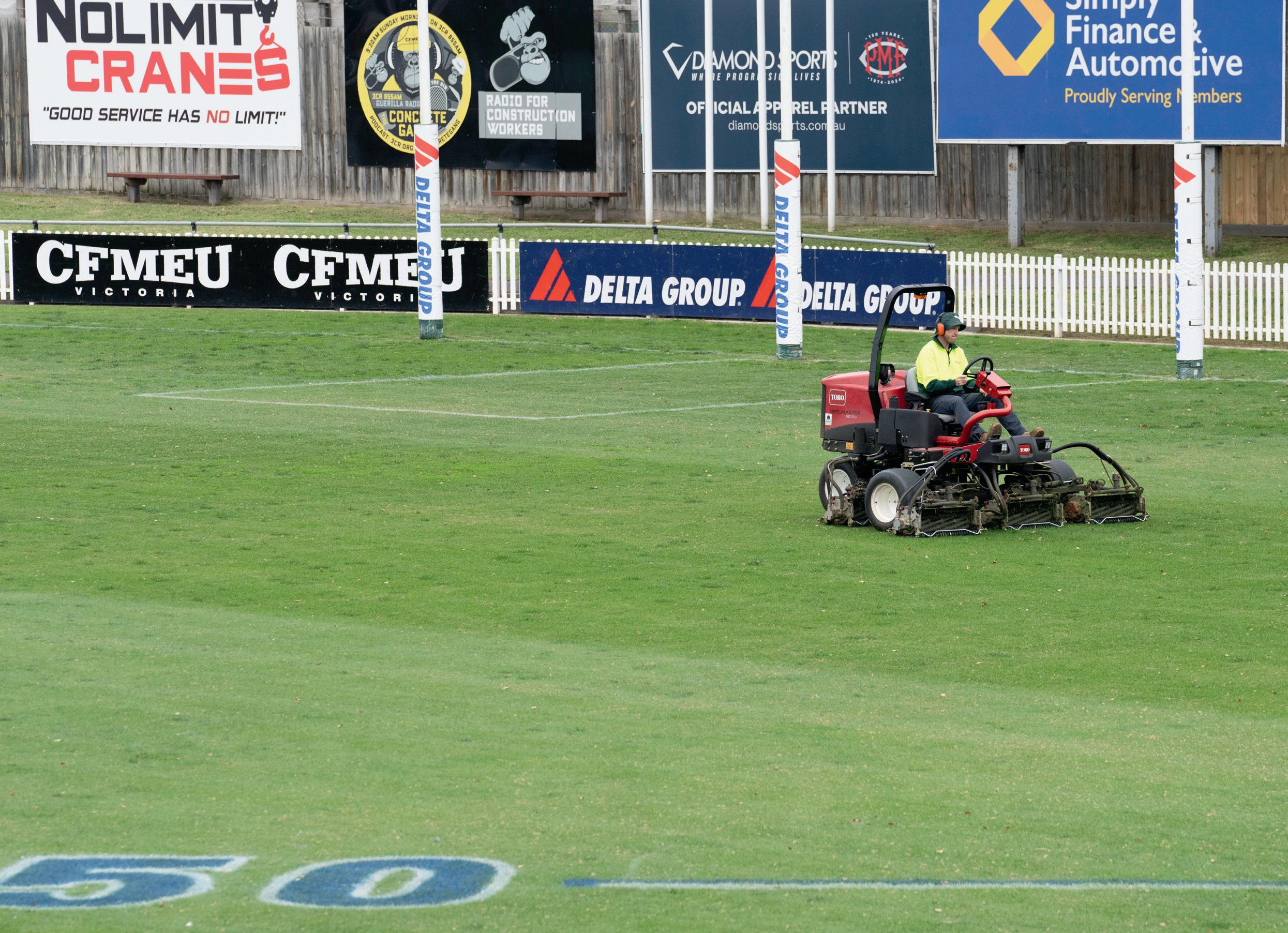
Join our Facebook community to:
• Get the best bits of the quarterly Australasian Parks & Leisure journal
• See photos of regional and national award winners and guests
• Read about topical industry news
• Stay abreast of national conference activity before, during and after the conference
• Discover what seminars and events are going on in your area
Follow
@ParksLeisureAus to:
• Receive news and live updates from official PLA events
• Access quick, up-to-the-minute conference news
• Speak one-on-one to managers in your PLA community about your organisation’s projects
• Discover and network with like-minded people in your industry
• Unearth industry seminars and events going on in your area
• Read hand-picked articles from the quarterly Australasian Parks & Leisure journal that matter to you, your organisation and your industry








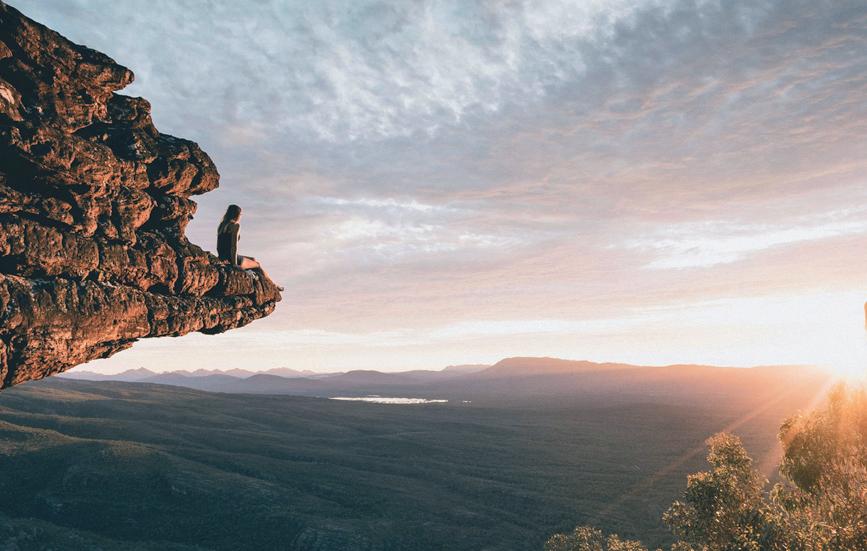


























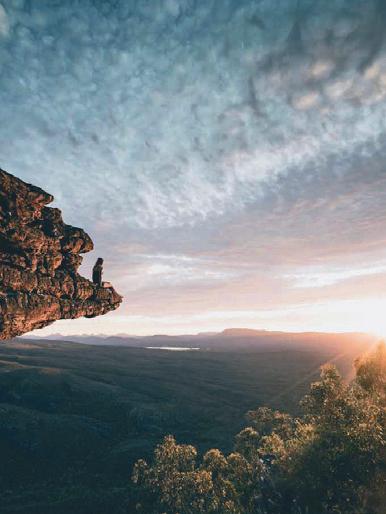


















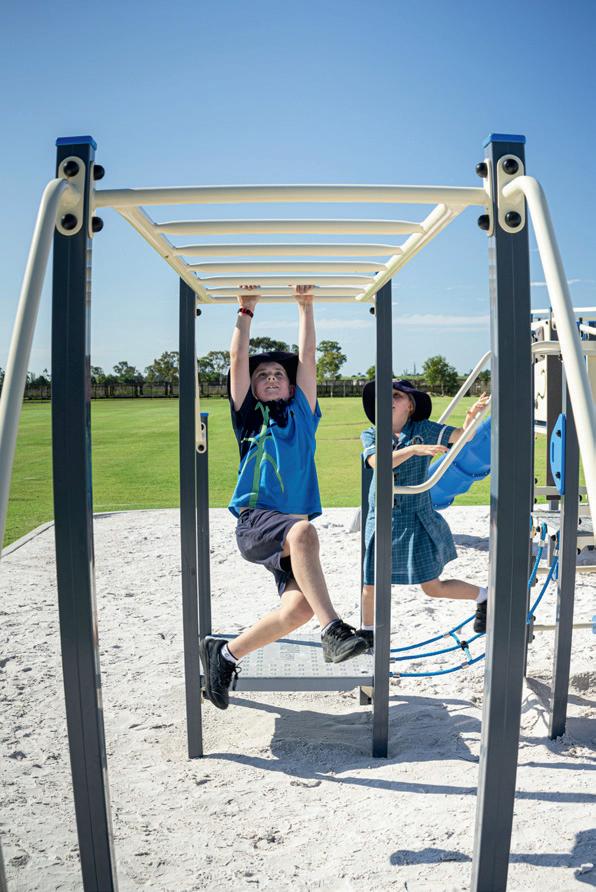
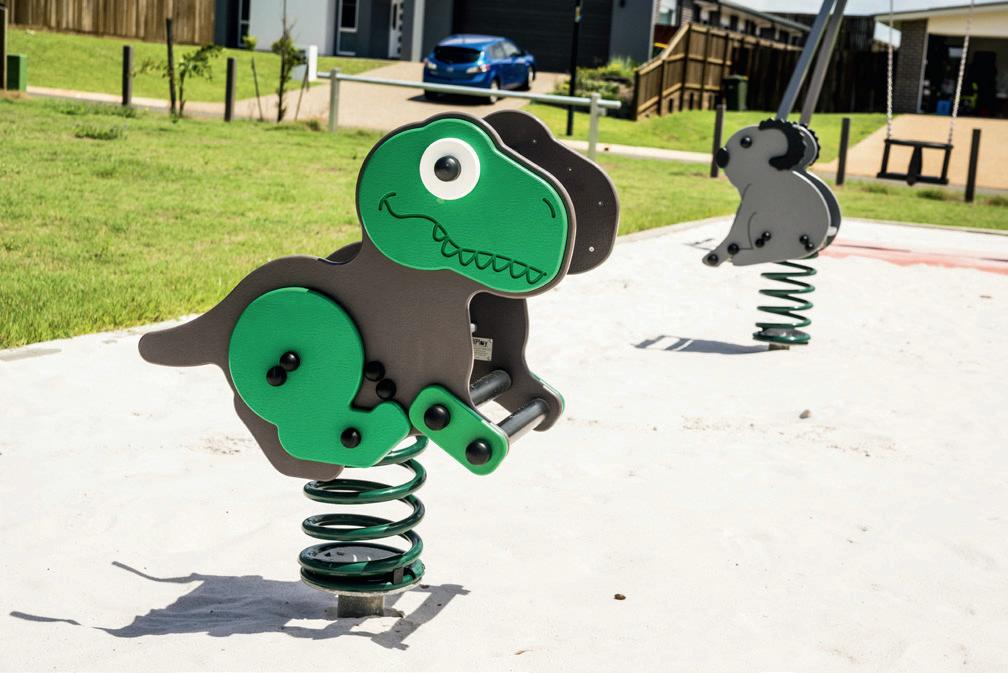
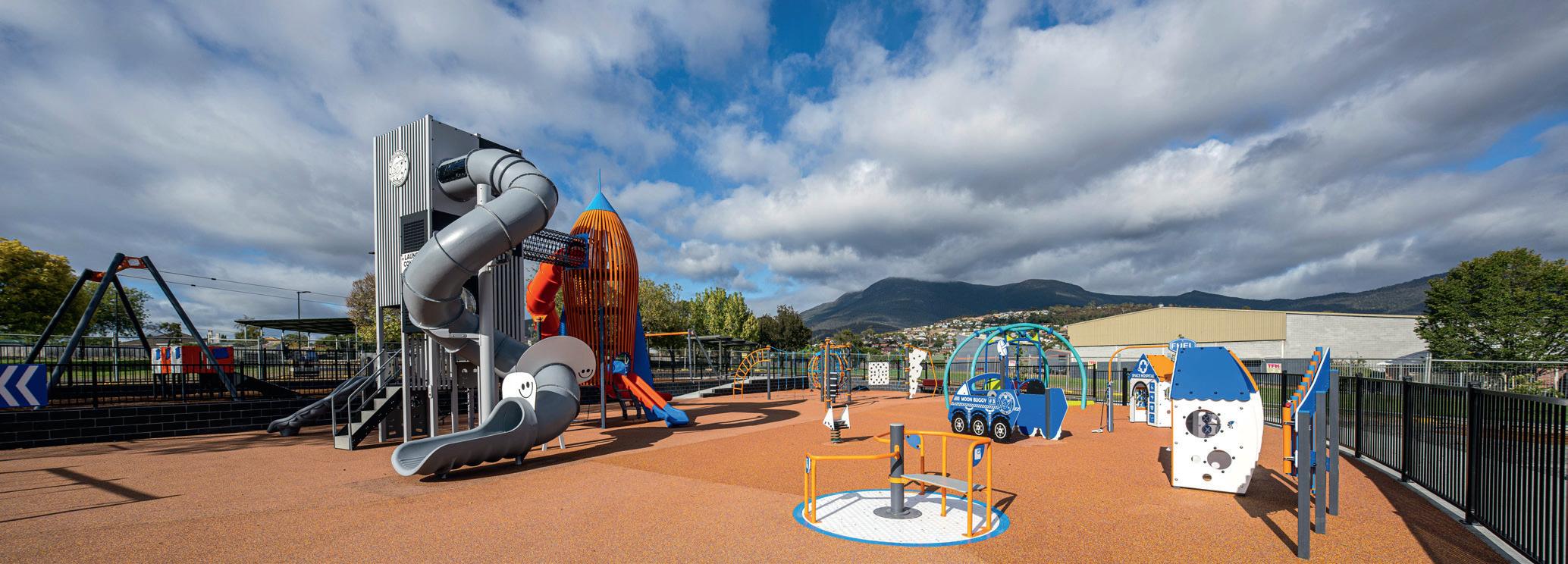
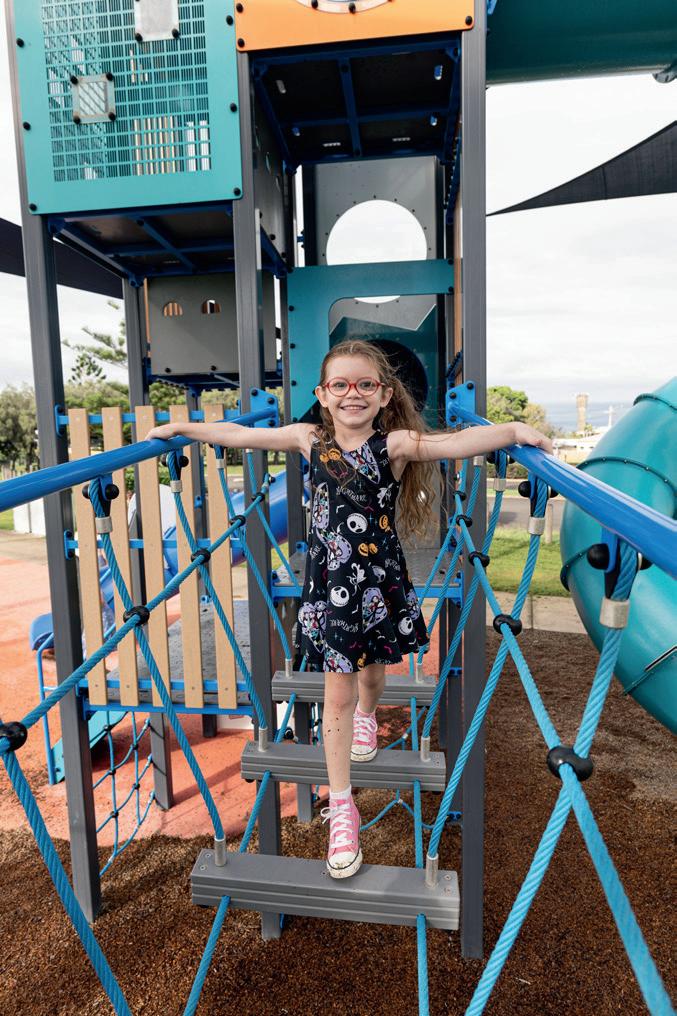
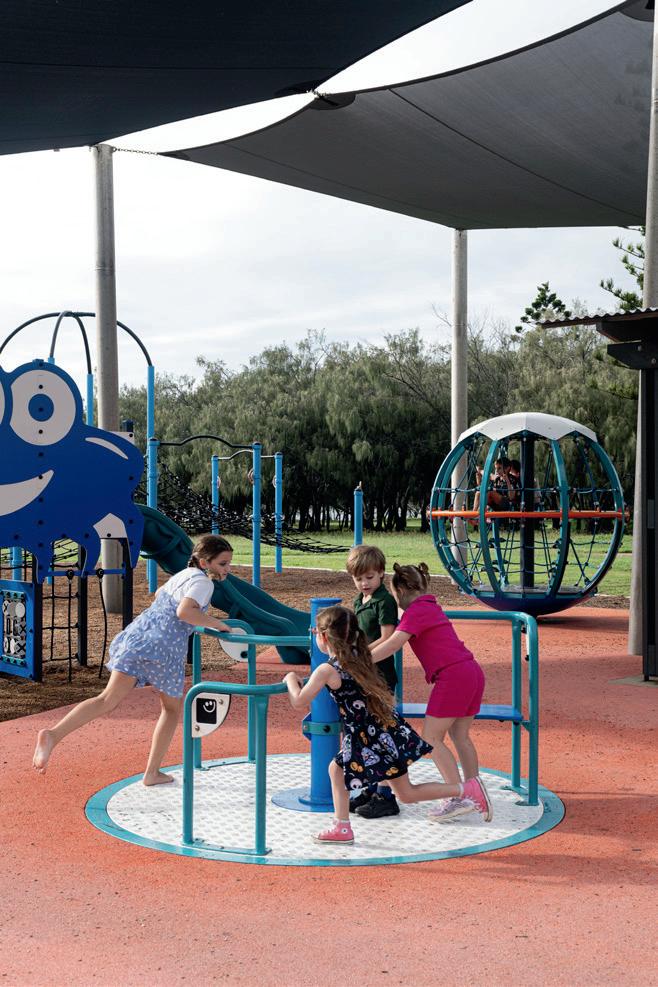
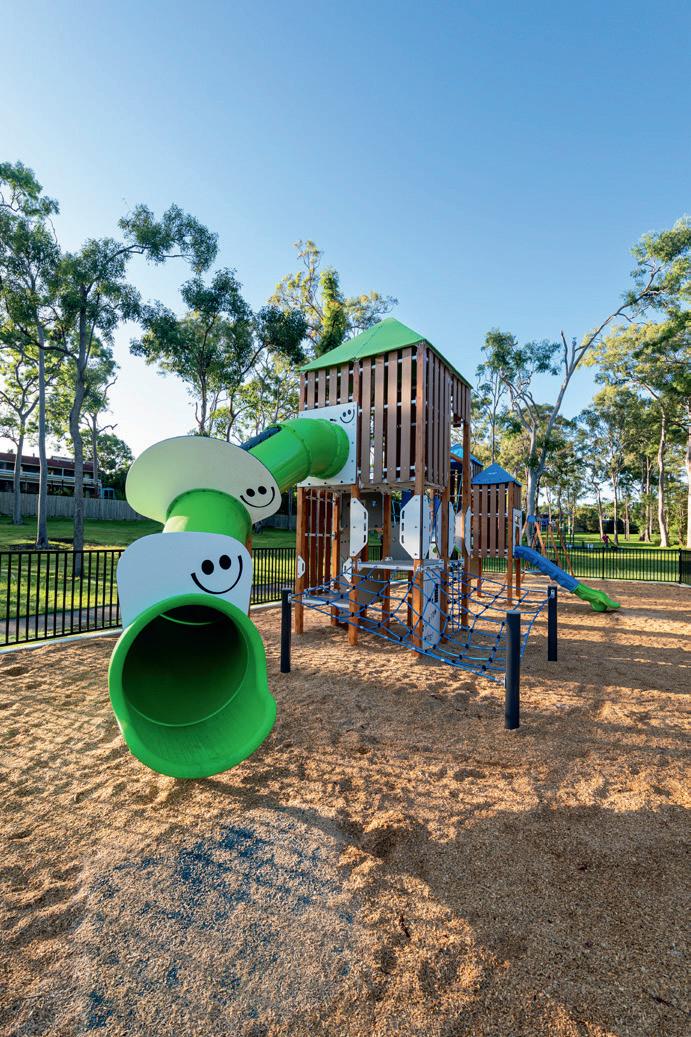
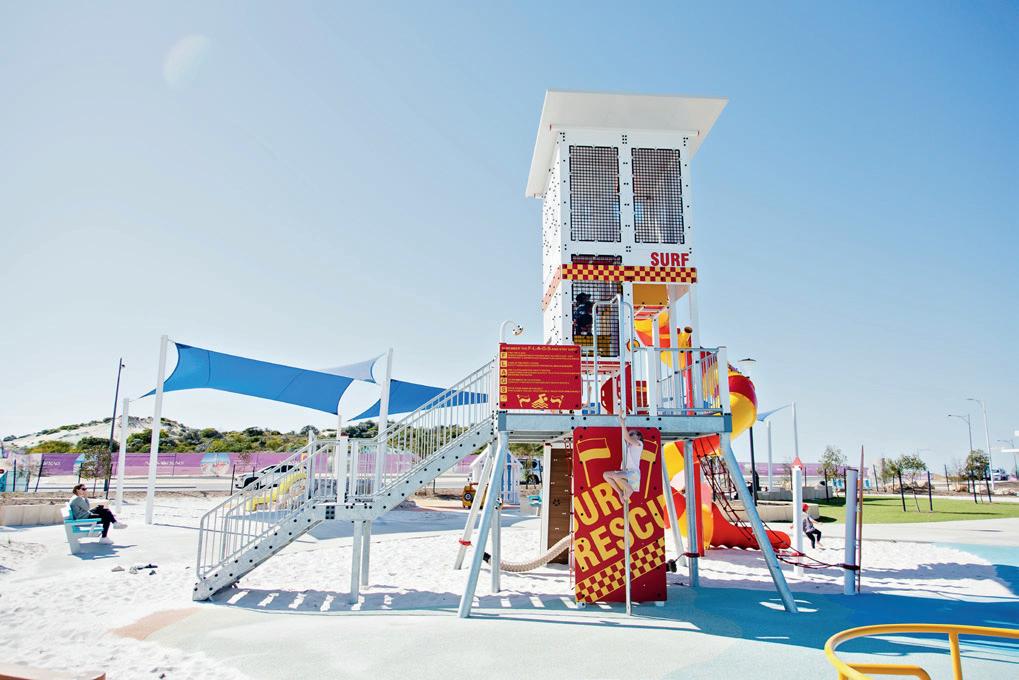
•Playground Equipment
•Outdoor Fitness Equipment
•Street Furniture and Shade
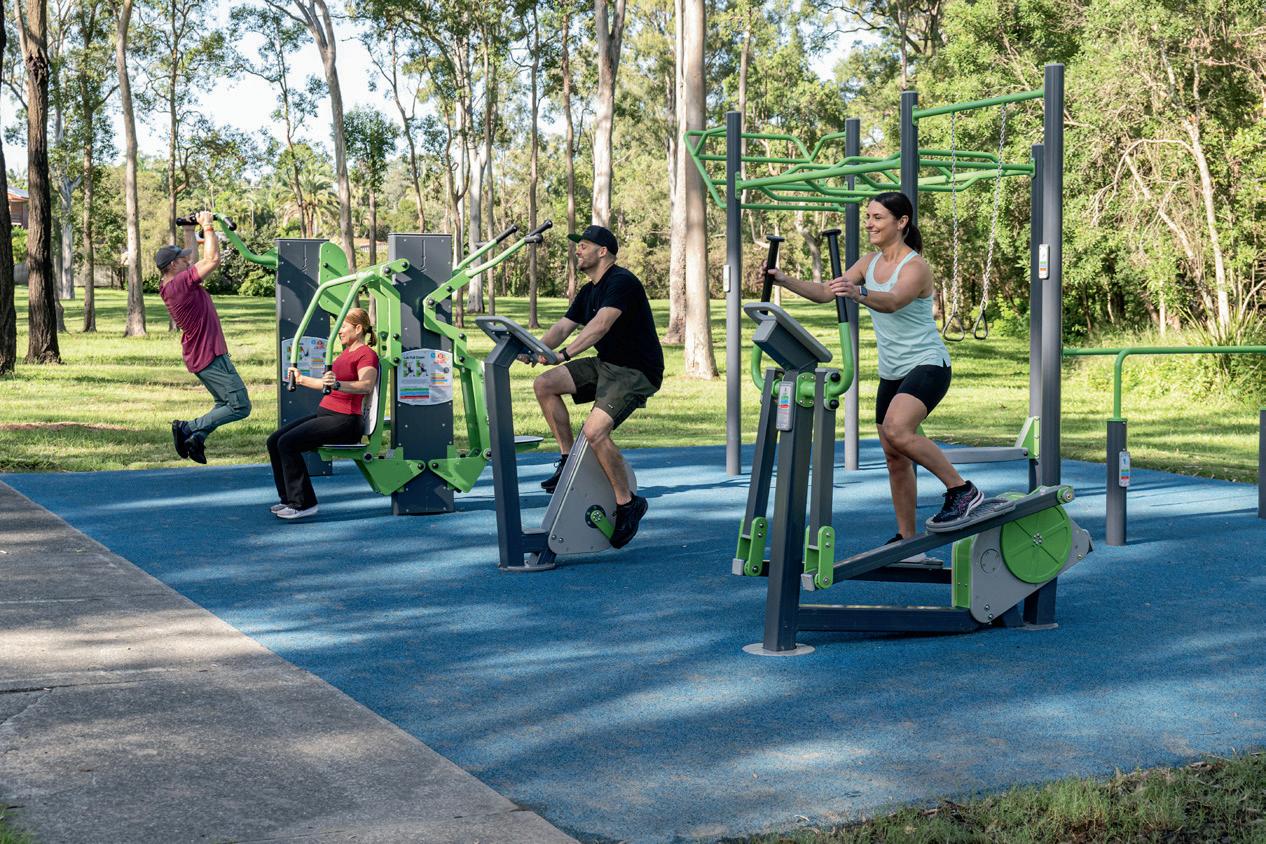
•Family-owned Australian business
•Comprehensive Design, Manufacturing and Installation services
•Australian Made
•Manufactured in Regional Queensland
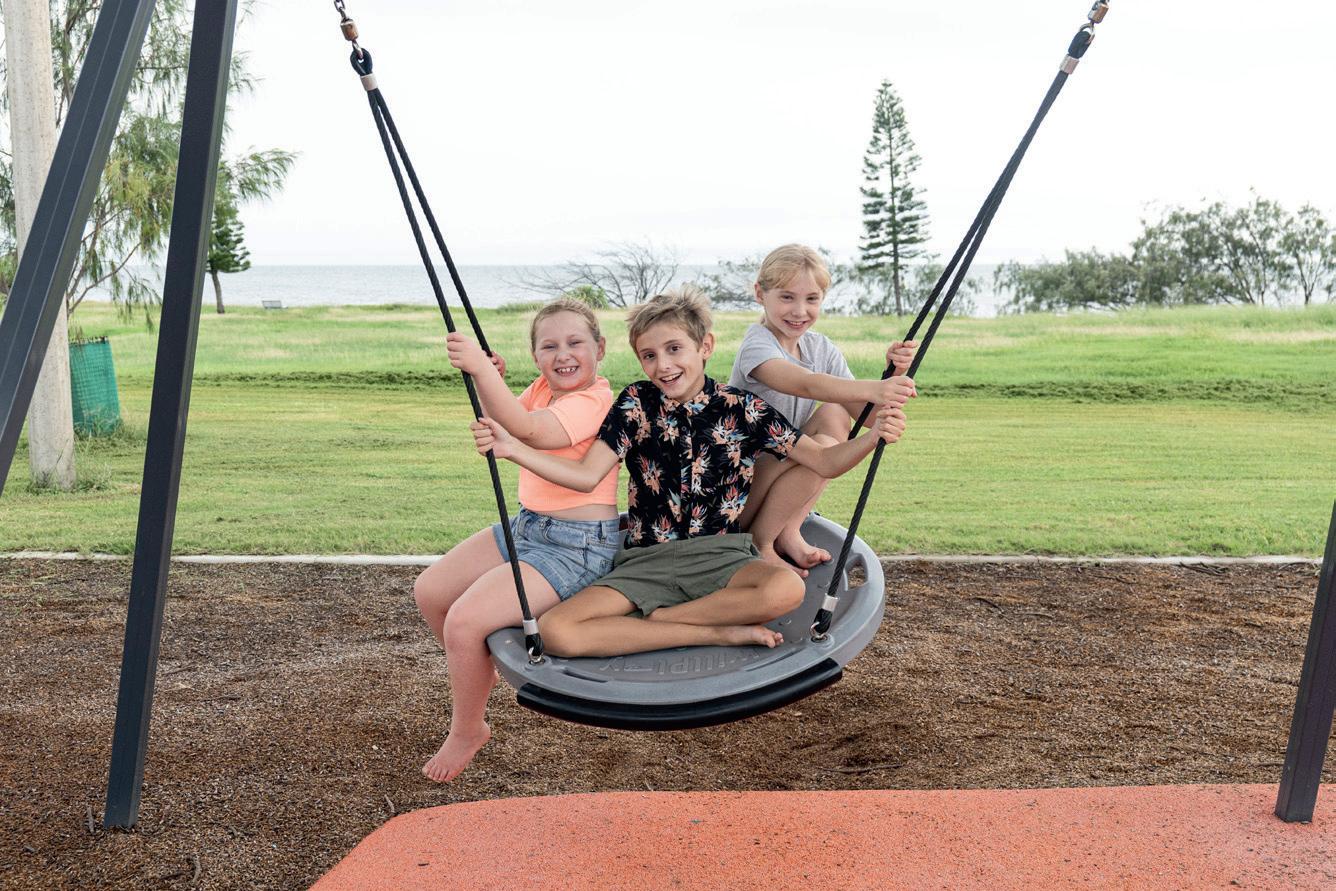
•Commitment to Quality, Safety, and Environmental Responsibility
•Premium materials such as Aluminium, Stainless Steel, and UV Stable HDPE
Our team brings extensive industry experience to deliver complete "turn-key" solutions for recreational spaces of all shapes and sizes. We dedicate ourselves to delivering spaces that are not only innovative and safe, but also perfectly aligned with our clients' visions.
Contact us today to transform your playground visions into reality. 1300 132 047

www.willplay.com.au
info@willplay.com.au
L e a d e r s i n Leaders in
P r o p e r t y S e r v i c e s Property Services & O p e n S p a c e & Open Space
M a n a g e m e n t Management
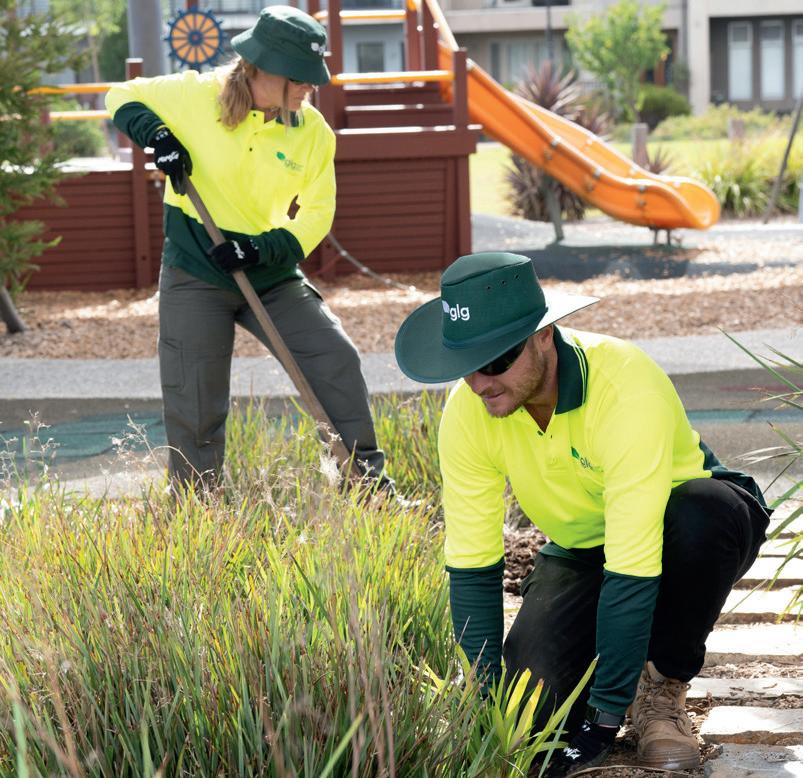
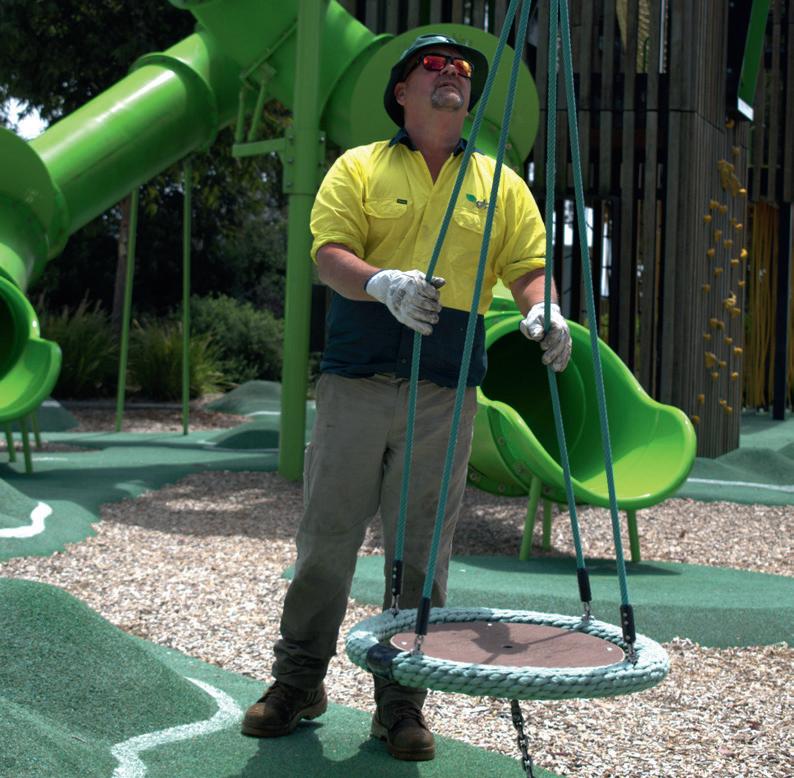
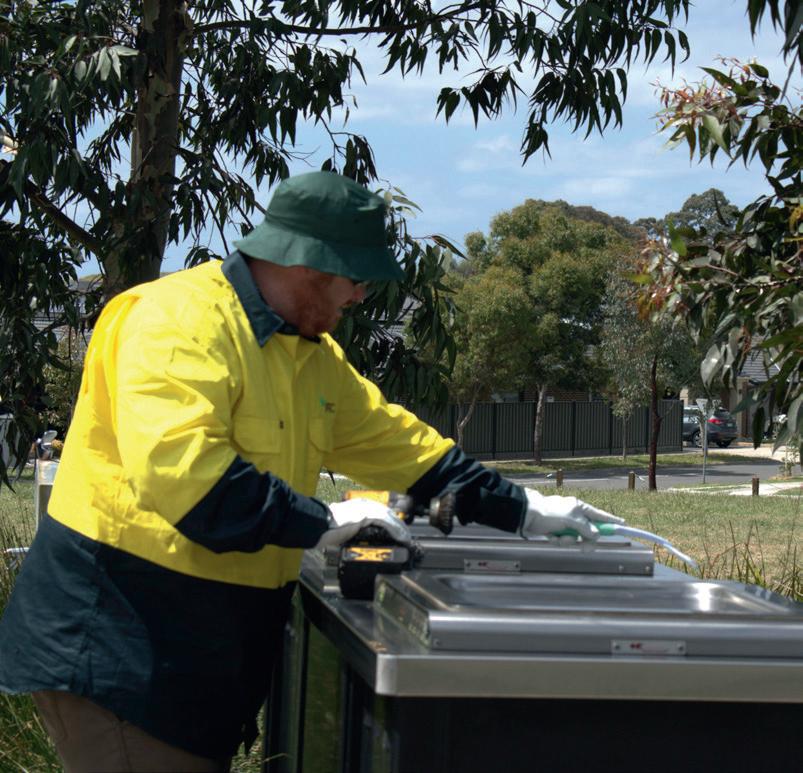
G r e e n L i f e G r o u p p r o u d l y GreenLife Group proudly
d e l i ve r s a w i d e ra n g e o f delivers a wide range of
i n t e g ra t e d co m m e r c i a l integrated commercial
l a n d s c a p e a n d h o r t i c u l t u ra l landscape and horticultural s e r v i ce s t h r o u g h o u t Au s t ra l i a . services throughout Australia. www.glgcorp.com