parks &leisure AUSTRALAS IAN
Volume 24.1 Autumn 2021 ISSN: 1446-5604
Community & Urban Planning
2020 PLA AWARDS OF EXCELLENCE WINNERS
YOUMEUS SPOTLIGHT ON SUSTAINABILITY
INFORMAL SPORT + WILD PLAY BUILDING A HEALTHIER AUSTRALIA
Australian Made
AN APP FOR AUSTRALIAN PLAYGROUNDS • Combing technology with traditional play • Augmented reality app • 5HWURÀWWHG WR DQ\ SOD\JURXQG • Games are designed to be played using playground equipment info@bibaplayaustralia.com.au
www.bibaplay.com.au
Proudly Australian made • Custom designed play spaces • All equipment manufactured in house
1800 812 027
info@omnitech.com.au
www.omnitech.com.au
Follow us on:
CONTENTS FEATURES
INTERNATIONAL
8 2020 PLA Awards of Excellence Winner: Park & Play Categories 14 2020 Professional of the Year & Franks Stewart Award Winners 16 Spotlight on Sustainability 18 The Great Ocean Road Coast & Parks Authority 20 Covid & Parks 22 Activating Healthy Parks for Healthy People 24 Green Flag Award Winners 26 Building a Healthier Australia Through Play 28 Project Play 29 Vale Brendan Sheehan 30 Informal Sport 32 Wild Play 34 Parking the School 36 YOUMEUS
38 International News 39 The London Greenspaces Commission 42 Pandemic Response in a City Under Urban Transformation
REGULARS 4 From the PLA President and CEO 6 From the Recreation Aotearoa Chair and CEO 44 Research Connections 50 Join Us on Social Media
34 8
24
PRODUCTION EDITOR Nicole Mulloy nmulloy@umco.com.au EDITORIAL COORDINATOR John Senior journal@parksleisure.com.au
ADVERTISING ART DIRECTOR Martha Rubazewicz ADVERTISING PRODUCTION COORDINATOR Ellie Busby
CIRCULATION BUSINESS DEVELOPMENT MANAGER Mark McTaggart CREATIVE DIRECTOR Kate Podger
EDITORIAL & PRODUCTION MANAGER Shireen Dawankar marketing@parksleisure.com.au DESIGNER Michaela Primiano
CHAIRMAN/CEO Prema Perera
PUBLISHING MANAGER Marcus Hucker
PUBLISHER Janice Williams
SALES/ACCOUNT MANAGERS Marcus Hucker (NSW) 0410 338 119 Antonia Bewley (QLD & WA) 0418 424 410 Pilar Danlag (VIC & SA) 0414 468 243
CHIEF FINANCIAL OFFICER Vicky Mahadeva ASSOCIATE PUBLISHER Emma Perera
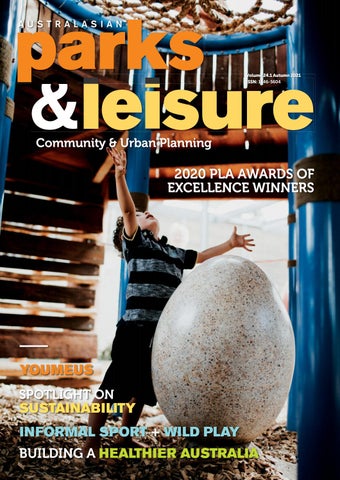
COVER IMAGE Deep Water Point Reserve, Perth WA
Circulation enquiries to our Sydney head office 02 9805 0399 PLA Journal is published by Universal Magazines, Unit 5, 6-8 Byfield Street, North Ryde 2113. Phone (02) 9805 0399, Fax (02) 9805 0714. Melbourne office, Suite 4 Level 1, 150 Albert Road, South Melbourne 3205 Phone (03) 9694 6444, Fax (03) 9699 7890. Printed by KHL Printing Co Pte Ltd, Singapore. This book is copyright. Apart from any fair dealing for the purpose of private study, research, criticism or review as permitted under the Copyright Act, no part may be reproduced by any process without written permission. Enquiries should be addressed to the publishers. The publishers believe all the information supplied in this book to be correct at the time of printing. They are not, however, in a position to make a guarantee to this effect and accept no liability in the event of any information proving inaccurate. Prices, addresses and phone numbers were, after investigation, and to the best of our knowledge and belief, up to date at the time of printing, but the shifting sands of time may change them in some cases. It is not possible for the publishers to ensure that advertisements which appear in this publication comply with the Competition and Consumer Act 2010 (Cth) and the Australian Law. The responsibility must therefore be on the person, company or advertising agency submitting the advertisements for publication. While every endeavour has been made to ensure complete accuracy, the publishers cannot be held responsible for any errors or omissions. This magazine is printed on paper produced in a mill that meets Environmental Management System ISO14001 * Recommended retail price ISSN 1446-5604 Copyright © Universal Magazines MMXXI ACN 083 489 463 umco.com.au Please pass on or recycle this magazine.
Autumn 2021 | AUSTRALASIAN PARKS AND LEISURE 3
FROM THE PLA PRESIDENT
PAUL JANE
W
ow, wasn’t 2020 a year to remember, and in many cases a year to forget. Welcome to the first edition of the Australasian Parks and Leisure Journal for 2021. There can be no doubt the past 12 months will shape our actions for many years with regard to the way we plan, play and participate in our industry.
While divided as separate nations, the past 12 months has shown us how strong our links are to our friends over the ditch in both culture and the resilience of our people, moving through the Covid-19 crisis, suffering some significant liberty restrictions but emerging (hopefully) as an example to the world of what can be achieved in an environment and national ethos that makes sacrifices to save the most venerable among us. 2021 offers a new horizon for Parks and Leisure Australia as we renew our strategic plan and set forth the road map for the next three years. Initial consultations have taken place with strong directions in gender equity and partnering with our First Nations people. The opportunity for the parks and leisure sector to drive change in these areas is significant and our industry’s role in managing land, much of which has strong ancestral connections, cannot be understated or ignored. 2020, in all its haze, did however give us the opportunity to reflect on where we are at and forced change in our outdated thinking in many areas. Last year gave us to opportunity to gain: • Access to the world via the internet.
Our regional members were able to participate and connect in ways they had never dreamt of without a 6-hour round trip. • International connections. We created an MOU with the National Parks and Recreation Association America, and are now planning to share learnings — without the 18-hour flight. • Renewed community support for our parks and open spaces as many formal sports and activities were abandoned. • Catalytic change to our city streets as the conversion of parking spaces to pop-up parks and cafes became business as usual. • An understanding of our fragility with Covid-19 and the worst bushfires in a generation, helping us to refocus on what was most important to us, not the building, not the programs, but the people. I would like to thank all our members, sponsors and supporters who stuck with us in 2020. Let’s make 2021 a year to remember for lots of good reasons. Paul Jane PLA President
FROM THE PLA CEO
A
MARK BAND
s we move into the autumnal months, our team is busy planning for the upcoming 2021 PLA National Conference in Sydney. Hopefully by now we have got on top of Covid-19 and all the restrictions it has brought about — although the way we do things has certainly changed. This year’s conference aims to be a hybrid of both face-to-face and streamed speakers as we continue with the uncertainty of international travel. Regardless, the event will be a great way for us all to reconnect in a safe and enjoyable manner and do what we as parks and leisure professionals love to do, share our experiences, work, projects and the ideas that make our communities great places to live. No
We thank our national sponsors and partners:
4 AUSTRALASIAN PARKS AND LEISURE | Autumn 2021
more so than the urban form and all we do in creating liveable and vibrant places and spaces that have been so important to all of us over the last 12 months. The term the “people behind the places” has perhaps never been as important as it is now. It’s you, our members that truly are the ones that continue to work behind the scenes in making our towns and cities so liveable. This edition of the journal is about that, and is packed with great ideas and stories from across Australia and New Zealand. Please enjoy it, continue to stay safe, and continue doing what you do best as the people behind the places. Mark Band PLA CEO
PRICKLZ
®
B Y RICK Y
Climbing Prevention Spikes Pricklz® by Ricky is a rigid PVC with spikes designed to minimise harm while providing maximum deterrence. When including Pricklz® in shade structure projects you can help discourage people climbing up the structure and therefore reduce vandalism. Pricklz® is recyclable and this easy to install product will last for years under all Australian weather conditions.
Contact your Technical Textiles expert today, call 02 9735 3333 rickyrichards.com.au
FROM THE RECREATION AOTEAROA CHAIR
MARK BOWATER
K
ia ora koutou. Like many, I am very pleased to be embracing a new year and a different outlook from the last year dominated by Covid-19. It was certainly a challenging one for most of us, but it also had its positive times. I am constantly impressed with how our sectors adapted and evolved. We are certainly fortunate to live as island nations in the South Pacific, and our isolation and ability to control our international borders has been a huge advantage in our journey to control the pandemic. It has also been a year when we have actually grown closer through common purpose, both nationally and internationally. We are now feeling more connected to international organisations and colleagues than ever before. At a governance level, Recreation Aotearoa has been focused on creating our new strategic plan and how we lift this to the next level to embrace our future. The board has been on a positive governance journey and set a clear expectation of how we would advance our commitment to Te Tiriti o Waitangi/Treaty of Waitangi
(our country’s founding document) — a commitment to reflect the principles of the Treaty within our governance and operations across the areas of Participation, Protection and Partnership. The formation of a Māori Advisory Group (Te Kahui Kura Māori) was initiated to help guide, inform and shape our strategic plan and direction. The board has worked closely with Te Kahui Kura Māori on developing a dual strategic plan, which is an exciting new approach in how we can work in partnership with Māori. The new strategic plan launched in November 2020. Our new mission is Te Whai Oranga — Enhancing wellbeing through recreation. With Te Tiriti o Waitangi as our foundation, we have woven together two world views into the following three strategic outcomes: • Manaaki Whenua | The whenua (land), and recreation spaces and places, are cherished and sustained through the mahi (work) of the recreation sector. • Manaaki Tangata | The recreation sector has the capability to enhance the wellbeing of tangata (people) through recreation. • Te Tiriti o Waitangi | The recreation sector has the capability to bring to life the principles of Te Tiriti. The new strategic plan incorporates a stronger focus on mātauranga Māori (Māori knowledge and cultural points of view) and environmental sustainability. Healthy land
and healthy people are strongly integrated and interdependent. To view the Strategic Plan visit nzrecreation.org.nz Covid-19 changed a lot of things during the last year. Our key industry conferences were either cancelled or reshaped and delivered online. The organisation’s finances were affected due to a loss of revenue, and costs were reduced accordingly. Despite all the challenges, new ways of reaching and informing our membership emerged. Webinars took off and we strengthened our international connections through World Urban Parks, sharing and learning around the world. During the lockdown periods, the value of parks and recreation for health and wellbeing rose dramatically. Our professional challenge now is to maintain that momentum and keep working on the value proposition our industry delivers. We are now looking forward to Green Pavlova, our primary parks industry conference, in May 2021, and jointly providing the World Urban Parks AsiaPacific Region Congress. It will be a hybrid event, both face-to-face and virtual. I’m sure many of us will be looking forward to being able to come together again as professionals to share and network and enjoy each other’s company! Noho ora mai (stay well). Mark Bowater Recreation Aotearoa Chair
FROM THE RECREATION AOTEAROA CEO
ANDREW LESLIE
I
n 2019, Recreation Aotearoa made a constitutional commitment to the principles of Tiriti o Waitangi and an aspiration to developing working partnerships with Māori whānau, hapū and iwi to realise this commitment. Significant steps in this journey were the appointment of a Board member
to bring an understanding of Te Tiriti at the governance level, building the capability of Recreation Aotearoa staff, and the establishment of Te Kāhui Kura Māori — a group with understanding and experience in promoting Māori engagement in recreation, hauora Māori (health and wellbeing including the physical, spiritual, mental and social dimension), engagement with the natural environment and education. The Board and Te Kāhui Kura Māori set out to co-create this strategy. We have learnt much during this process, including the importance of engaging from the beginning, the richness of marae-based wānanga (workshop) and the value of meeting kanohi-ki-kanohi (face-to-face).
6 AUSTRALASIAN PARKS AND LEISURE | Autumn 2021
Recreation Aotearoa engaged widely throughout the sector and among members through online surveys and regional and conference workshops to gauge the aspirations of our key stakeholders for recreation in New Zealand. During this same period Te Kahui Kura Māori held wānanga at various marae across the motu (country). We are excited about what the future holds for recreation in Aotearoa. With Te Tiriti as our foundation we have captured two world views and bound them together in one plan. You can view Te Whai Oranga, our 2020-2025 Strategic Plan at nzrecreation.org.nz Andrew Leslie Recreation Aotearoa CEO
Tom Murphy Reserve, Mortlake
Innovation is all about change, and understanding that solutions can only come from the ability to recognise that nothing is impossible. City of Canada Bay wanted a shelter designed which would complement the small park area but also showcase the area’s bayside location. An industrial designed T-shelter was proposed by Stoddart infrastructure using powder coated perforated steel panels, to let light through but show sky, clouds and shadow cast across the concrete, supported by substantial timber posts. Stoddart Infrastructure has the knowledge and experience to transform any urban space - whether it be a park, road-side, urban space or street scape with innovative solutions in outdoor infrastructure.
Installed by Twenty Four Seven Building Services
Deep Water Point Reserve
2020 PLA AWARDS OF EXCELLENCE WINNERS: PARK AND PLAY CATEGORIES
D
espite a tumultuous year filled with uncertainty and so much unknown, the 2020 Parks & Leisure Australia Awards, which recognise outstanding initiatives and innovative efforts across the industry, still managed to showcase some incredible work in the parks and leisure sector. Take a look at the 2020 winners in the park and play categories.
DEEP WATER POINT RESERVE PLAYSPACES: WINNER PLAYSPACE <$500,000 Deep Water Point Reserve sits adjacent to the Canning River in Perth, Western Australia. It attracts a diverse range of users, creating a space where people can interact with each other while enjoying the Canning River environs through swimming, boating, walking, cycling or hanging out with family and friends. In 2018, a large café renovation, along with jetty renewal, foreshore revetment and a boat ramp extension were completed. These works created a number of challenges to ensure the value of the recreational area, open views to the river and the flexibility of the space were not lost. This
required the new infrastructure to be visually permeable and nestle into the surrounding landscape of trees and river. The new Deep Water Point Reserve playspaces form three distinct play nodes, moving away from a traditional centralised space. Each node was designed to sit within a broader dynamic landscape of the river foreshore, the café, the shared path network and boat launch facilities. One space is specifically designed for older children features an off-the-shelf rope climbing frame that holds seating baskets among the mature eucalyptus trees. It primarily provides climbing play that assists with upper body strength development. This unit was specifically chosen to work within the space available, ensuring the protection of the trees and their root systems. The area’s open design and wooden frame allow it to merge into the environment, retaining visual permeability while providing play for a multitude of older children and adults all at once. Residing directly adjacent to the new café is a second playspace designed for use by younger children. Designed by a local artist, Scape-ism, it is themed
8 AUSTRALASIAN PARKS AND LEISURE | Autumn 2021
around an old jetty, deconstructed and adapted into a nest, with the Little Black Cormorant as the central character. Key elements reference this little bird to inspire and excite the imagination. A feature limestone wall marks the entrance to the third playspace.
Deep Water Point Reserve
The wall separates it from the busy shared-use path, linking the park to the greater river foreshore. The wall was built specifically to allow for visual permeability through to other parts of the park, adding a textured and organic form that also functions as low seating. With multiple swings under the Moreton Bay Figs, including a basket swing and a high-backed accessible-swing, this area allows for greater intergenerational and all-ability enjoyment. All of the playspaces are pushed back from the river’s edge and have purposely been left unfenced to enable easy flow through to other parts of the reserve, encouraging an exploration of nature play. Locally recycled jetty and salvaged timbers have also been integrated into the site. These unique timber products have been crafted into play items and used to create chunky seating and tables specifically designed for the site and fabricated locally, to offer a variety of user experiences. From a sustainability point of view, Council worked with a local artist to provide a graphic storyline to repurposed rubbish bin surrounds silhouetted along the path network through the site. The path acts as the connecting ribbon to explore and interact with existing art onsite, the individual playspaces and the existing mature trees. Deep Water Point Reserve continues to be enjoyed by individuals, families and groups. Key features work to bring people together yet enable people to explore the site on their own, offering a layered opportunity for accessible experiences. The space facilitates open-ended play, storytelling and relaxation, as well as encouraging engagement with the surrounding natural environment and maintaining flexibility of foreshore activities along this dynamic riverfront reserve. Words Nikki Stringer and Janine Ahola, City of Melville Landscape Design Team.
TOWN BEACH FORESHORE REDEVELOPMENT: WINNER PLAYSPACE >$500,000 The recently completed Town Beach Foreshore Redevelopment has raised the bar on picturesque and funcational spaces for local families to enjoy in the iconic Town of Broome in Western Australia. The Shire of Broome, with vital support from funding partners Lotterywest and the WA Government, has transformed a previously tired precinct into a major drawcard for the tourism town. The $24 million Town
Town Beach Foreshore Redevelopment
Town Beach Foreshore Redevelopment
Beach Foreshore Redevelopment project transformed the precinct over an 18-month period and now provides an inviting and highly functional space for the Broome community. The construction of a rock revetment seawall, coastal footpath, groyne, grassed terrace area and youth-focused facilities have upgraded the site, and a new $6 million jetty promises to be the final piece in the puzzle. While the entire area has been greeted with an abundance of positive feedback, the most glowing comments from residents and visitors alike have been reserved for the Town Beach playground. Since its opening, the new playspace has attracted the whole community. Children of all ages, nationalities and cultures congregate to use the scooter track, basketball court, trampolines and large wooden play structures. On any afternoon or weekend, the park attracts children, families and at-risk youth organisations to the park to play and enjoy a barbecue. Town Beach has always been a hub for the
Broome community, but the project set out to expand and redevelop the space into a regional public space that attracted locals and tourists to the site. The new development includes shade shelters and barbecues overlooking Roebuck Bay. These have been key in drawing families and the local Indigenous community to the site. The Town Beach Foreshore playspace provides a unique nature-based environment that interprets the site’s history and the context in a fun and interactive way. The playspace provides a range of equipment for all ages and abilities. The basketball court with surrounding hangout elements cater for adolescent users, while sand play, basket swings and balancing logs are for younger children, and approximately one third of play equipment is universally accessible. These play experiences are intertwined to create a social, safe and inclusive environment for everyone. The use of timber makes this playspace unique within the north west
Autumn 2021 | AUSTRALASIAN PARKS AND LEISURE 9
of Australia. Typically difficult to source, the Shire of Broome retained timber logs fallen due to a cyclone the year before. The facilities and amenities surrounding the playspace enhance the user experience and make the space functional for a range of circumstances. The new site includes a space purpose-built for market events. This includes power, lighting and the ability to close the internal road network for food vendors. Town Beach is also home to several other community events, including Australia Day celebrations and the Dragon Boat Regatta. The redeveloped site is also attracting new events such as the Shinju Festival Art installations and Shorebird giant puppet shows. The project included engaging Broome’s Traditional Owners, Nyamba Buru Yawuru, and the Broome Historical Society to develop an art and interpretation plan. This has seen several community artworks projects across the site helping to create ownership. The Shire of Broome is also working to formalise a Place Activation Strategy for the area to ensure it remains activated throughout the year. Words Gareth McKnight, Marketing & Communications Coordinator, Shire of Broome.
Chinchilla Botanic Parklands
Chinchilla Botanic Parklands
Chinchilla Botanic Parklands
CHINCHILLA BOTANIC PARKLANDS: WINNER PARK OF THE YEAR Chinchilla Botanic Parklands is the destination park for the township of Chinchilla in the Western Downs Regional Council area. It provides visitors and locals with an opportunity to experience a range of educational, cultural and play elements. Spread across 4.2 hectares, the parklands include an extensive network of different experiences for all ages, encouraging outdoor activity and social connectivity to boost active and healthy lifestyles. It hosts a state-of-theart water park, parkour elements, event spaces and the new Regional Botanic Gardens, which showcases the region’s rich variety of endemic flora. We made a special effort on this project to undertake meaningful community engagement, beyond the ‘concept’ and ‘engagement’ phases, throughout the park design process. Besides the more obvious engagement outcomes, such as the water-play area being themed around the town’s celebration of all things watermelon (being the future home of the biennial Watermelon festival, which attracts 15,000 people). We also directly
connected to the younger generation by giving them opportunities to be involved in the park design, so they felt an ongoing sense of ownership of this space. Some of the initiatives and activities included a 3-hour parkour demonstration and activity session; engaging the high school arts class to design park shelter screens based on local cultural or ecological themes, and connecting Council with the high school agricultural teachers with a view to classes adopting a crop circle to showcase and demonstrate local crops that can be seen while driving across the Western Downs. The site was previously an important historic Queensland Rail (QR) depot, integral to opening up Western Queensland. A spur line led to what is now the last remaining piece of QR infrastructure — a concrete siding wall for stock loading. Nineteenth
10 AUSTRALASIAN PARKS AND LEISURE | Autumn 2021
century hand-drawn plans show the original timber stockyards and loading area, a steam engine maintenance shed and coal storage and loading facilities which featured on the site. These structures are all long gone, but the original drawings and industrial elements informed the design response to the parkland’s rail history. The QR stencil fonts on the historic drawings, the shape and scale of the concrete siding wall and the leftover steel rails onsite were used as inspiration for the base design language for hard landscape elements and were repeated in entry features, signage design and park furniture elsewhere onsite. One of the most important engagement outcomes was a result of our persistent and ongoing effort throughout the design process to make sure we engaged respectfully and authentically with the local
Earthlife Soil Balance: The New Best Practice Improve soil structure and reduce watering • Replaces gypsum, lime, and dolomite • Reduces watering, spraying and wear and tear • Improves soil structure, plant health and plant establishment • Recommended for all soils, safe for all plants and turf “We have found that our gardens require less water, and the plants take up the natural nutrients in the soil much quicker, giving us better colour and foliage in all our plants. We strongly recommend using Earthlife products as Best Practice in all our projects, and highly recommend adding it to your next landscaping project list.” Jason Kay, owner of iLandscape
1800 819 003 | earthlife.com.au
Rockingham Beach Foreshore Revitalisation
Aboriginal community. The new parkland designs provided an ideal opportunity for improved trust, cross-cultural connections and understanding, and physical expression of reconciliation activities. Amazingly, even though the site Chinchilla Botanic Parkland site is in the middle of town, there exist five culturally significant Aboriginal scarred trees on site. In the vicinity of the scarred trees, across multiple workshops, together we created a design for an Indigenous Cultural Area and yarning circle. The outcome uses interactive and playful experiences to connect and educate people about the original Barunggam culture, language and generally, ongoing First Nations’ connection to country and nature. The key ecological design principles for the park included promoting healthy land and healthy water, improving biodiversity, retaining as many mature trees as possible, rehabilitating the ephemeral creek channel, testing and ameliorating onsite topsoils for reuse, using locally endemic/native species where possible to support local wildlife and strengthen sense of place/ local character. These biodiversity improvements have already supported a vast increase in wildlife. The new Regional Botanic Garden within the parklands showcases bioregion flora for tourists and locals, supports local biodiversity while educating visitors about the rich variety of regional species and landscapes. The Botanic Gardens provide a broad economic benefit for the local community, while the Chinchilla Botanic Parklands has created increased opportunities for event and tourism development both locally and regionally, as well as boosting economic benefits for local businesses and fellow attractions. Words Mandy Rounsefell, Director Rounsefell Design
ROCKINGHAM BEACH FORESHORE REVITALISATION: WINNER COMMUNITY FACILITY OF THE YEAR An elderly man pushes an elderly woman in a wheelchair, descending the ramp alongside the grassed slope to the concrete pad set at the same level as the beach. They make their way out on the beach matting to the end where the old man parks the chair. Coming around he kneels in front of the old lady and gently takes off her shoes and socks. Helping her to her feet, despite his own frailty, the man helps her over the last few metres to the shoreline, shuffling through the sand. She paddles her feet in the calm water, taking a moment before turning around and shuffling back. After settling back into the chair, the couple gradually make their way back onto the beach matting, up the ramp and away. The elderly couple had come here to write their own story. A story that hadn’t been possible until completion of the Rockingham Beach Foreshore Revitalisation project. The Rockingham Beach area had been in trouble for many years. There was a lack of investment, low (to no) employment growth, uninviting streetscapes and a lack of cohesion between the beach, parks and commercial elements. Then the City of Rockingham had a BIG IDEA — revitalise the foreshore. Bring visitors back, drive investment, and with it improved business viability and employment. It started with a Masterplan for the full four kilometres of Rockingham Beach. The core focus remained at the centre where the parks, beach and shops all met. The Masterplan suggested that development could occur in stages, and divided the concept into a number of districts. An economic impact review and successful National Stronger Regions Fund grant application was attained and Stage 1 of the Rockingham Beach Foreshore Revitalisation was begun. It addressed the streetscape of Railway
12 AUSTRALASIAN PARKS AND LEISURE | Autumn 2021
Rockingham Beach Foreshore Revitalisation
Terrace, developed a pedestrian focussed events plaza and expanded an existing promenade between restaurants and the beach into a broader boardwalk. Extensive community consultation developed the future stories of the development area. The design created ten distinct places within the project. Each place to have its own character and set of uses, yet all to come together in a coordinated and seamless design that brought the much-loved, tree-shaded grassy parks, uniquely north facing sheltered beach and retail areas into a single public place. Being innovative and taking risks was essential to stand out in a crowded marketplace on a relatively small budget. The project has gone well above legislated requirements to make the entire area functionally accessible. The gently sloped, umbrella-shaded grassed bank right to the beach has proven hugely popular, along with the slide from the boardwalk to the beach. Immediate impact and natural shade comes from transplanting five mature Norfolk Pines into the events area. Colour, impact and placechanging impact through movement of the bespoke moveable furniture elements continually freshens the area and provides new interest. There are numerous power outlets in all areas to facilitate activation, and use of recycled timber has increased the sustainability and longevity of the development. The Rockingham Beach Foreshore Revitalisation was opened to the public in September 2019. It has proven immensely popular and initial feedback from businesses shows a 20 percent improvement in turnover compared to preconstruction trading. Investment is occurring and jobs are being advertised. Best of all, people from all generations are enjoying themselves and visitors to the foreshore are writing their own stories. Words Michael Wilson, Senior Projects Officer, City of Rockingham
2020 DAVID ALDOUS YOUNG PROFESSIONAL OF THE YEAR
S
teph McCallum is the Principal Project Officer (Partnerships), Sport and Recreation, Department of Tourism, Innovation & Sport and serves on PLA’s Queensland Regional Council and PLA Advisory Research Working Group. Her career path has been fairly linear to date, working in a variety of roles in government following the completion of undergraduate study at Griffith University. Majoring in Sport Management, Steph undertook a minor in Politics and Government, as during her studies she realised that working in the public sector was a good fit for her values and interests. An amazing opportunity arose for Steph as a Sport and Recreation Coordinator at Mount Isa City Council. Moving 1800 kilometres across Queensland, though a challenging experience, gave her a solid foundation and set her path for a great early career in service delivery. After a few years with Council, Steph felt like she was ready for a new challenge and undertook a short contract with Queensland Government Sport and Recreation — a natural move where she
could continue to work with clients she had built relationships with, cover a few more towns in the area, as well as work with a great team of people as part of the Northern Region. Steph’s manager in this role is a name widely known in PLA circles, Anand Pillay. It was his suggestion to supplement Steph’s industry knowledge and build connections by joining the PLA Queensland Regional Council. More recently, Steph has been involved in the PLA Research Working Group and is a big believer in the power of social media to share research, information and connect to others across the industry. After her time in Mount Isa came to an end, for her first few years back in the “big smoke” Steph worked in grants development within Sport and Recreation. Being employed in a temporary capacity, she was keen to broaden her knowledge base and undertook study in a Master of Governance and Public Policy at the University of Queensland. Shortly after shifting from grants development to a policy and research role, Steph was
fortunate to have an opportunity to work on a big policy piece developing the Queensland Government’s first 10-year sport and recreation strategy (Activate! Queensland). The 10 months spent on the strategy taught her some great lessons, such as the importance of research and evidence, the value of consultation and codesign, and the power of visual communication. Currently, Stephanie is in the Partnerships team, working in collaboration across government and industry on Covid-19 measures and support. As for the future, who knows? She has always been keen to learn more through education and has an interest in research, so some more study might be on the cards. For the moment, Steph is focused on working with and learning from good people and good leaders.
2020 FRANK STEWART AWARD
T
his year’s winner of the Frank Stewart Award is Martin Lambert. Marty began his career with the completion of a Wilderness Reserves and Wildlife Associate Diploma at Gatton Agricultural College (now University Queensland). The two-year course was unique in that it had been designed with the industry to train and deliver rangers skilled for the multiple tasks required and was an intense course that included natural sciences and practical skills. He learnt a phenomenal amount in a short time and it began his desire to understand not just the natural world but the way society interacts with it. Marty felt fortunate to be employed at Brisbane Forest Park. After a stint on the tools, he became very involved in environmental education and interpretation. Marty worked on multiple programs, including a very special program for newly arrived migrant children that involved writing a training manual for volunteer guides and interpreters, and helping to establish the successful Go Bush and Bushranger Tours programs.
After a short break living and travelling overseas, Marty returned to Brisbane Forest Park and decided on a career move to Brisbane City as a Community Recreation Officer. Brisbane City was a revelation. It was here that Marty truly learnt the power of asking questions, learning from other disciplines and challenging the status quo. He started more study, completed his degree in Parks and Recreation (Charles Sturt) and then later started his Masters in Social and Environmental Education at Queensland University of Technology. When he started, he was empowered by words to the effect of “go out and get things happening, don’t worry if you make mistakes, we have your back.” It was an incredible time where much was learnt and Marty quickly realised that all the programming in the world wouldn’t make up for a lack of decent parks and sporting areas or under-investment in facilities and gaps in civic planning. He started asking questions, challenging assumptions and learning about the planning system — quite probably offending many engineers and town planners in the process.
14 AUSTRALASIAN PARKS AND LEISURE | Autumn 2021
Marty became a recreation planner by need and found his passion in the process. He also realised that we had to change how the industry was perceived and how we related to other disciplines. This began his involvement in the Royal Australian Institute of Parks and Recreation. Leaving Brisbane City Council in 1997, packing up the family and heading 2000 kilometres north, Marty and his family began life consulting. After running his own consulting business, Marty joined forces with David Mason to expand Strategic Leisure before starting Otium Planning Group. “I have learnt so much from all the people I have worked with and yes, I am still asking questions,” says Marty.
ECO-SOFT The leader in organic softfall playground surfacing Used by over 30 councils in QLD and NSW!
•
Exceptional Critical Fall Height
•
Complies with AS/NZS 4422:2016
•
Outstanding cushioning with zero rebound or bounce
•
100% organic, naturally termite resistant and aromatic
•
Forms a crust preventing the concealment of contaminants such as syringes and broken glass
•
Specified and preferred supplier to city and regional councils including Toowoomba, Tamworth and City of Sydney.
“The impact test did not have any energy restitution or rebound. I think this is the best product I have tested so far. Very nice product.” Grant Humphreys Acoustoscan
ENQUIRE NOW FOR PLA MEMBER R ATES!
CONTACT Patrick Hennessy 0408 493 304 | Gunnedah NSW | universalcomposts.com.au
SPOTLIGHT ON SUSTAINABILITY REMOTE CAMPGROUNDS OFTEN POSE CHALLENGES WITH POWER AND CONNECTIVITY BUT THESE HURDLES CAN PRESENT AN OPPORTUNITY TO MEET SUSTAINABILITY GOALS WORDS JULIET WOODWARD, MEDIA AND COMMUNICATIONS OFFICER, BELGRAVIA LEISURE
T
wo such campgrounds are North Head and Dalmeny along the South Coast of New South Wales, managed by BelgraviaPRO on behalf of Eurbodalla Council. These two remote sites have seen great success with sustainability initiatives, which include the installation of solar power and a recycling system. BelgraviaPRO, a division of Belgravia Leisure, is a management services company specialising in the operation of tourism properties, from campgrounds to large-scale tourist parks. North Head Campground is a designated primitive campground. Among other things, this means it has no 240-volt power supply for electrical equipment or appliances. Richard Lykke of Belgravia Leisure’s Green Team was determined to overcome these issues, while also improving sustainability on the campground. “From contract commencement, in late 2014, office equipment, which included a laptop
computer, lighting, EFTPOS machines and a mobile phone, were charged by a portable generator. Generators are typically expensive to purchase, expensive to operate, require ongoing maintenance and are attractive to thieves,” explained Mr Lykke. “Most guests at primitive campgrounds are seeking a peaceful retreat to nature and the concept of running a noisy generator and polluting the environment with CO2 emissions is incompatible with the fundamental concept of a primitive campground,” he added. In 2017, the team began exploring the possibility of replacing the generator with a solar system to tap into the environmentally friendly, sustainable and free power available from the abundant sunshine in the area. Inspired largely by the 12-volt solar systems common on modern caravans, camper trailers and boats, and informed by some online research, they purchased a 120-watt
16 AUSTRALASIAN PARKS AND LEISURE | Autumn 2021
solar panel and installed it on the north facing office roof, connected via a 30amp regulator to a 105-amp/hour deep cycle battery. “This involved some trial and error over time, experimenting with different components and specifications, but the end product enabled us to harness an unlimited supply of free, sustainable and environmentally friendly power,” said Mr Lykke. “This system has provided ample power to charge and run the office equipment for several years without a hiccup.” Dalmeny campground, located just over an hour away from North Head, has also made headway with their sustainability initiatives with the introduction of a bottle, can and glass recycling system. The best news about this story is that all proceeds from the recycling scheme go towards supporting the local Rural Fire Service. Belgravia Leisure’s Green Team is made up of representatives from Belgravia Leisure venues who are
passionate about implementing sustainability initiatives at the venues in which they work. The Green Team, led by Belgravia Leisure’s Business Improvement Manager Alexia Morgan, is integral to Belgravia reaching its sustainability objectives. Anyone who has an interest in reducing their site’s environmental impact is encouraged to join the green team. “Since the formation of Belgravia Leisure’s Green Team, we have successfully rolled out a variety of sustainability initiatives,” claims Ms Morgan. “These initiatives include a reduction in single-use plastics, through not using straws or plastic cutlery at our inhouse cafes, bringyour-own keep cup/water bottle initiative, water collection and recycling projects, and the introduction of reverse vending machines to collect and divert bottles, cans and glass from landfill. One of our sites in NZ recycles swimwear as well.” Belgravia Leisure has embraced a 5-year sustainability plan in relation to energy and water use. Sustainability is also embedded into the company’s normal business practice to ensure objectives are met. Sustainability and environmental management have been adopted into Belgravia’s
BELGRAVIA LEISURE HAVE EMBRACED A 5-YEAR SUSTAINABILITY PLAN IN RELATION TO ENERGY AND WATER USE procurement and evaluation matrix before purchases are made to ensure that holistic supply chain sustainability expectations are met. Ms Morgan explains that auditing is essential to reaching sustainability goals. “A companywide sustainability audit is in place to gather information and establish a best practice approach to sustainability across all Belgravia Leisure managed sites. There are also environmental management plans in place at sites and a communication strategy and plan in place using various
channels to connect with staff and patrons regarding our sustainability objectives, wins and projects. “In the coming year, we are looking to further improve our sustainability initiatives by working closely with our contract partners. Many of our partner organisations have set greenhouse gas emission targets and have completed energy audits on the sites we operate. Working with our partners to undertake approved projects that reduce our energy consumption or water use is high on the priority list.“
CLIMBING STRUCTURES
PARK FURNITURE
WATERPLAY & SHADE
NATURE INSPIRED PLAY
INCLUSIVE PLAY
FITNESS EQUIPMENT
Let our team from Parkequip create an exciting outdoor space for you! 02 9725 5604
info@parkequip.com.au
www.parkequip.com.au
Autumn 2021 | AUSTRALASIAN PARKS AND LEISURE 17
THE GREAT OCEAN ROAD COAST AND PARKS AUTHORITY WORDS PAUL JANE, PROJECT MANAGER, GREAT OCEAN ROAD MANAGEMENT REFORM, VICTORIAN DEPARTMENT OF ENVIRONMENT, LAND, WATER AND PLANNING
I
t started with an idea and a vision from the Barwon and Great South Coast Regional Assemblies (a group of business and community leaders in the Barwon region of Victoria), to simplify the complex and duplicated management arrangements for the Great Ocean Road. It’s clear that this duplication and complexity has resulted in years of locally based funding interventions with little or no focus on the management of the entire stretch of the coastline, and no recognition that it was one complex interrelated system that required a singular integrated management approach. The national heritage listed Great Ocean Road is one of the world’s most scenic and iconic coastal touring routes and Victoria’s most significant tourism asset. It is one of Australia’s most popular destinations and attracts more visitors than the Great Barrier Reef and Uluru combined. Like many international tourist destinations, the Great Ocean Road and its landscape is challenged by increasing numbers of visitors, forces of nature and impacts of climate change. One of Victoria’s most loved places was in danger of being loved to death. With so much at stake, the Victorian Government supported the creation of a taskforce to review the effectiveness of current governance arrangements and recommend governance reforms.
The taskforce was co-chaired by the Hon Peter Batchelor (Victorian Minister for Transport from 1999 to 2006) and the Hon Terry Mulder (Victorian Minister for Public Transport and Minister for Roads from 2010 to 2014) and included nominees of the Traditional Owners of Country for the Great Ocean Road (the Eastern Maar and the Wadawurrung), and experts from local government, tourism and costal management. The Taskforce set about their work with early identification of the critical issues and opportunities, releasing an Issues Paper, undertaking community consultation and, after significant deliberation, reporting back to government. As part of the report, the co-Chairs examined the governance models of several places with high visitation around the world and found that each had adopted arrangements that best suited their location and circumstances. It was clear there was no model that could be transplanted from another location and the response required would be unique to Victoria and the Great Ocean Road. The co-Chairs report captured 26 specific recommendations that were founded in 5 specific policy objectives being: Protect the ecological and landscape integrity of coastal and marine environments, increase Traditional Owner inclusion, protect distinctive areas and landscapes, grow the local, state and national visitor
18 AUSTRALASIAN PARKS AND LEISURE | Autumn 2021
economies, modernise governance. The work of the Taskforce confirmed that the coastal land and waters of the Great Ocean Road are unique — and priceless. There is no place in the world like the Great Ocean Road and in order to protect it for future generations it required very specific focus management arrangements. The Victorian Government supported all 26 of the co-Chair recommendations and released the Great Ocean Road Action Plan in response. The Action Plan proposes to implement the recommendations through five major reforms: 1. Legislation to protect the Great Ocean Road, its land and seascapes as the one integrated and living entity. 2. A new, dedicated, marine and coastal parks authority with the primary purpose of managing and protecting the land and seascapes of the Great Ocean Road, to manage visitation and to coordinate delivery of associated government investment projects. 3. A new overarching planning framework for the region that legislates community involvement in the development of shared objectives and a framework to provide future direction to the region. 4. A better planning approval process with an independent expert advisory committee that streamlines planning approvals for appropriate development
projects and stops inappropriate proposals in their early stages. 5. A range of supporting initiatives. These major reforms will be delivered through 18 specific actions. Under the leadership of Hon Lily D’Ambrosio Minister for Energy, Environment and Climate Change, a reform team was established within the Department of Environment Land, Water and Planning to implement the Plan. This group was supported by a coordinating ministers forum, which includes Minister for Roads and Road Safety, Minister for Tourism, Sport and Major Events, Minister for Planning, Minister for Regional Development and the Treasurer signalling the importance of the project and the need for a coordinated government response. The Great Ocean Road Reform team commenced work on the first two reforms as the facilitating actions for the implementation of the full set of reforms, working in partnership across government to enact the reforms and engaging with the community to support and test assumptions around engagement mechanisms for future community environment and mapping community aspirations. Aligned to the organisation design was
the creation and the delivery of specific legislation to support the creation of the authority. This legislation has been split into two Bills, with the first entered into the Victorian Parliament in December 2019. In June 2020, The Great Ocean Road and Environs Protection Bill 2019 was passed. The legislation effectively achieves the following: • Creates the Great Ocean Road Coast and Parks Authority • Establishes the protection principles being: - General and economic principles - Aboriginal inclusion principles - Environmental principles - Social principles • Creates the reporting mechanism for the strategic framework plan Importantly, and linked to the spirit of the policy objectives, the legislation has a preamble from both traditional owner groups in their native language. On 1 December 2020, the Great Ocean Road Coast and Parks Authority came into existence with the creation of a skills-based board covering governance, finance, conservation, tourism and a nominee from the Eastern Maar and the Wadawurrung. The organisation on day one was the amalgamation of two existing coastal
PlayAudit Audit survey enables rapid data FROOHFWLRQ LQ WKH ȴHOG ZLWK SUHGHȴQHG TXHVWLRQV WKDW DOORZ IRU XQLIRUPLW\ RI WKH GDWD FROOHFWHG RQ D VPDUW GHYLFH IRU $XVWUDOLDQ 6WDQGDUGV
PlayMovement 3URYLGH KXPDQ PRYHPHQW GDWD WR help better understand the actual use RI SDUNV DQG SOD\JURXQGV
PlayScan3D /DVHU VFDQ RI WKH SOD\JURXQGV ZLWK *Ζ6 ORFDWLRQV
PlayStrategy 8WLOLVLQJ GDWD IURP PXOWLSOH SOD\ VSDFHV DV D VWUDWHJLF SODQQLQJ WRRO
WWW.P LAYGROUND123.COM . AU
committees, the Great Ocean Road Coast Committee and the Otway Coast Committee, with all staff transferring to the Great Ocean Road Coast and Parks Authority. To support the organisation’s formation, the Victorian Budget 202021 provided $18.3 million to upgrade visitor infrastructure and $23.8 million to construct a new iconic walking trail from Fairhaven to Grey River. Planning is now underway in preparation for the growth of the Great Ocean Road Coast and Parks Authority to deliver on its mandate and grow to its full operational extent, which will include: • An organisational digital transformation. • Asset management implementation. • Partnership development with government entities to ensure a singular approach to services along the coast. • Implementation of self-determination framework with Traditional Owners. • Development of a second Bill to provide the Great Ocean Road Coast and Parks Authority the necessary powers to manage its lands effectively. • The development of the Great Ocean Road Coast and Parks Authority – Coordinator General role for visitation management. • Creating and organisation culture and values that mirrors the aspirations of the community and stakeholders.
PlayStore &ORXG EDVHG GRFXPHQW VWRUDJH V\VWHP IRU DOO \RXU SOD\JURXQG KDQGRYHU GRFXPHQWV DOO ORFDWHG LQ WKH RQH VDIH SODFH
PlayOops &XUUHQW VWDWLVWLFV DQG GDWD RI LQMXULHV UHODWLQJ WR SOD\JURXQGV DQG SDUN DFFLGHQWV
3RZHUHG E\
Autumn 2021 | AUSTRALASIAN PARKS AND LEISURE 19
COVID AND PARKS AUCKLANDERS SHED SOME LIGHT ON HOW LEVEL 4 LOCKDOWNS AFFECTED INTERACTIONS WITH LOCAL PARKS WORDS AMY TSAO, AUCKLAND COUNCIL
F
or the first time in New Zealand history a nationwide lockdown was imposed on 25 March 2020, in response to the spread of a newly discovered infectious disease — Covid-19. A highly contagious virus, Covid-19 can lead to severe complications and in some cases death. At the time of writing this article, there was no cure for Covid-19. While newly developed vaccines are currently being rolled out in several countries, it will still be many months before restrictions can be relaxed in many countries. A four-level system of measures for controlling the spread of Covid-19 was introduced by the New Zealand Government on 21 March 2020. These four alert levels are: • Level 1 Prepare. The disease is contained in New Zealand. • Level 2 Reduce. The disease is contained but the risk of community transmission remains. • Level 3 Restrict. High risk, the disease is not contained. • Level 4 Lockdown. Likely the disease is not contained. The Alert Level 4 rules specifically restricted all personal movement, except when: • Leaving home to access essential services such as, groceries, banks or pharmacies.
• Going to work as an essential worker. This includes workers at emergency and health services, supermarkets, petrol stations, utilities and goods transport services. • Going for exercise and to enjoy nature in the local area. The Level 4 lockdown restrictions began at midnight 25 March 2020 with a State of National Emergency declared on the same day — another first in New Zealand history. This lasted until a nationwide Level 3 was announced for midnight 27 April 2020. New Zealand moved into Level 1 on 8 June 2020, after no more active cases of COVID-19 in New Zealand were reported. A research project was undertaken, with the support of a scholarship from Xyst and Generate Network, to investigate the impact of the Covid-19 Level 4 lockdown on Aucklanders’ interaction with parks. Auckland Council is the largest park agency in the Southern Hemisphere with over 4000 parks covering more than 50,0000 hectares under its care. For this research, people living on the North Shore of Auckland were invited to complete an online survey on how the Covid-19 Level 4 Lockdown affected their interactions with local parks. The online survey received 201 responses. The majority of respondents
20 AUSTRALASIAN PARKS AND LEISURE | Autumn 2021
reported that being able to visit local parks during the Level 4 lockdown had a positive impact on their physical and mental wellbeing. People responded that during such stressful times, they needed “space and fresh air and a chance to see nature. [Parks are] an amazing stress release.” This in turn made visitors to local parks value and appreciate their local parks more, because “without parks, the negative impact of Covid-19 would be more significant.” It is widely recognised that getting outdoors and exercising is beneficial for mental and physical wellbeing, and there is a large amount of peer-reviewed research supporting this. While many respondents found visiting parks during lockdown to be a form of stress release, paradoxically others found it ‘stressful’. Some park visitors felt they were unable to safely maintain the 2-metre physical distance required in the Level 4 lockdown rules, especially when using park walkways and tracks. This inability to safely maintain physical separation led to a decrease in satisfaction overall with park visits during the time people were in lockdown. There were other reasons that led to people being unhappy with their local parks during the level 4 lockdown, including confusion over whether parks and facilities, such as toilets were open
or not. Other research around the world, including England, has reported similar findings. So, how do we make sure people are comfortable visiting parks should a lockdown situation happen again? The findings from this research suggest local authorities, both here in New Zealand and globally, need to enable people to maintain a safe physical distance at parks during lockdown situations. Local authorities also need to better communicate what facilities are open. The most important facilities people need to know about are pathways, playgrounds, toilets and carparks.
ACCESS AND PATHWAYS Pathways should ideally be widened to at least 2.5 metres to allow room for the 2-metre Covid-19 physical distancing requirements. Directional and physical markers need to be installed to allow for safe physical distancing. In many places this might not be possible (such as on narrow bush tracks), so installing clear signage would help inform people where physical distancing is not possible. Visitors can then decide whether they are comfortable using the track. On tracks that are close, a clear and simple explanation should be on signage to explain why.
TOILET FACILITIES The closure of toilet facilities during lockdown was of real concern for park visitors. Toilets were one of the most common amenities that respondents said they would like to see more of in their local parks — those that were available were generally closed and inaccessible. Visiting parks was found to be a great stress relief during the Covid-19 lockdown and an increase in usage was seen during this time. Therefore, in order to ensure people can continue to visit parks, toilet facilities need to remain open. This is especially so for young children, and physically challenged and elderly people, who described it as “awful” not having access to toilets. So, procedures need to be put in place to ensure toilets can remain open during pandemic situations, which will require more frequent cleaning and sanitisation services. There are also self-cleaning toilets available such as Exeloos, which could be considered as replacements for manually serviced facilities. People need to be able to continue visiting parks and feel safe while doing so during future pandemic situations. With the increased frequency of daily visitors to local parks during lockdown, it would be wise for councils to implement measures in parks that improve customer
experience and reduce insecurities. These include widening paths and introducing physical distance markers, providing self-cleaning toilets that can be sanitised between use, and having better signage and communication about park closures. If implemented, council’s parks and outdoor recreational facilities would remain accessible and safe to visit, should a similar situation occur again in a future pandemic. Acknowledgements to Dr Philip Shambrook PhD, formerly of Xyst, for his mentorship in this research.
Discover a colourful panoramic world Dynamic in its look and loaded with play value, the NEW SkyTwister is an ever-changing playground tower. With posts that twist towards the sky, and panels that change colours with the light this eye-catching structure will attract little explorers from near and far. www.kompan.com.au
Curious? Scan to learn more.
Autumn 2021 | AUSTRALASIAN PARKS AND LEISURE 21
ACTIVATING HEALTHY PARKS FOR HEALTHY PEOPLE WORDS TONY VARCOE, SHAUNA JONES & ANDREA DEE, PARKS VICTORIA
C
reated by Parks Victoria in 2000 and now a global movement, Healthy Parks Healthy People (HPHP) highlights the importance of contact with nature as essential for human emotional, physical and spiritual health and wellbeing, while reinforcing the crucial role that parks and protected areas play in nurturing healthy ecosystems. The HPHP approach builds on the generations of knowledge by Traditional Owners — that a connection with and stewardship of nature is critical for our physical, mental, social and spiritual health. The body of evidence about the benefits of nature and greenspaces for human health and wellbeing has grown exponentially over the past decade, showing benefits across all life stages1. In addition to the physical health benefits of being active in nature, including reduced blood pressure, improved heart health, improved immune system and reduced risk of diabetes, is increased life satisfaction. The health benefits derived from time spent in nature will also translate into economic benefits such as avoided health care costs, for example, estimated upwards to $145 billion per annum in Australia1. Victoria’s parks network, including national, state, marine, urban and historic parks and waterways, plays a key role as community infrastructure for the prevention of physical and mental ill health by providing settings and services that encourage outdoor recreation and relaxation, volunteering, learning and discovery, and cultural and spiritual connection. In 2020, to further activate HPHP in Victoria and guide priorities, Parks Victoria published a new Healthy Parks Healthy People Framework2: parks.vic.gov. au/healthy-parks-healthy-people In activating parks for health and wellbeing benefits, HPHP reinforces the need for stronger partnerships between the environment, health and community sectors in creating integrated policies, communications, research and on-
ground program partnerships. Driven by Victorian Government strategies and policy, including the Victorian Public Health and Wellbeing Plan 2019-23 and the Biodiversity 2037 plan, the Framework highlights the critical role that Victoria’s parks can play in encouraging healthier, more liveable and more connected communities that are connected to and want to act for nature. It is underpinned by the Victorian Memorandum for Health and Nature, a statement cosigned at the World Public Health Congress in 2017 by the then Minister for Health and the Minister for Energy, Environment and Climate Change, to provide stronger connections between environment and health policy. The Framework includes five pillars for action: Healthy Places and Settings, Program Partnerships, Information and knowledge, Leadership and Advocacy, and Healthy Workplaces. It recognises the broad spectrum of health and wellbeing benefits afforded by parks through participation in everyday recreational, volunteering and outdoor education activities, to the role of nature in providing settings for rehabilitation and recovery. Not all people in the community have equal access to the benefits of nature. The Framework prioritises cohorts including young people, people with disability, new migrants and refugees, seniors, and families from lower social advantage. Partnerships that enable greater connection to Country for Aboriginal communities is also a high priority. Cross-Sector Integrated Policy and Planning | Critical to the success of the Victorian Memorandum on Health and Nature and the implementation of HPHP by Parks Victoria, is the creation of partnerships with health environment and community sector organisations, state and local government partners, research partners, volunteers and diverse service providers to deliver accessible, inclusive services and facilities, and to conserve the natural and cultural values of parks. The
22 AUSTRALASIAN PARKS AND LEISURE | Autumn 2021
following established programs focus on early intervention and prevention and target highly vulnerable community groups. They support increased community participation and are free for participants. Programs are scalable as required (with funding for program management and coordination), as most take place outdoors. Parks for all abilities | With the incidence of disability in Australia at 20 percent of the population and a disproportionate number of people with disability having mental ill health, partnerships with organisations such as AMAZE (social scripts for children with autism), Blind Sports and Recreation Victoria (Walk in the Park program) and the YMCA (all-abilities camping), are actively working to reduce the inequities in accessing parks, providing positive and memorable nature-based experiences. Welcoming new migrants and refugees | With new migrants and refugees experiencing higher rates of social isolation and unemployment, partnerships with organisations, including AMES (Adult Migrant Education Service) Australia, the Brotherhood of St Lawrence and the Southern Migrant & Refugee Centre, can connect new migrant and refugees to parks through gardening, conservation, food production and internships. Dementia-Friendly Forest and Sensory Trail | Recognising the mental and other health challenges for people with dementia and their carers, a new dementia-friendly forest and sensory trail is currently being constructed at Woowookarung Regional Park near Ballarat in partnership with the Australian Dementia Association (VIC), the Friends of Canadian Corridor group and the Bigger Hearts Community group of Ballarat. Nature connection for children | There is compelling evidence that outdoor and nature-based play, learning and discovery generates many physical and mental health benefits. Parks Victoria’s Junior Ranger program occurs at over 100 parks
across the state during school holidays, connecting children and their families to fun nature-experiences. Digital Resources | Parks Victoria’s website has been updated to provide a strengthened focus on HPHP and has also developed a suite of evidence-based fact sheets on mental health, social connection, physical health and walking benefits for use by health professionals for reference in support of social prescribing and referral of clients and patients into park-based experiences. A wide range of new and emerging partnerships and programs underpinned by the HPHP Framework have already commenced, including: • Initiation of the first Live Life Get Active green exercise and yoga program in parks, which will commence at Braeside Park in February 2021. • Partnering with organisations including Heart Foundation, Bushwalking Victoria and Victoria Walks as well as enthusiastic volunteers in creating the Park Walks program that includes introductory guided walks. • Partnering with Headspace, including a pilot program at Bairnsdale to undertake walks and mindfulness activities. • Working with Primary Healthcare Networks to encourage and include park settings and programs in social prescriptions.
• Continuing to work with organisations including YMCA and Outdoors Victoria in development of programs that enable improved outdoor skills. • Partnering with Guide Dogs Victoria on the innovative Blind Square wayfinding app for park visitors with low vision or blindness. • Development of a Mindfulness walk, and video (Kinglake National park). • Expansion of parkrun events in parks. • Supporting People and Parks Foundation’s Live Nature-wise campaign. Governments around the world have recognised that the Covid-19 pandemic has had a significant impact on the social and economic wellbeing of their populations and that some groups have been affected more than others. At the same time, parks and nature are becoming increasingly recognised as essential social infrastructure that promote positive health and wellbeing3. In fact, evidence suggests that demand for parks increased significantly during the pandemic4. By working with many stakeholders across the environment, community and health sectors, there are great opportunities for Parks Victoria to continue its leadership role in HPHP through building partnerships that deliver nature-based solutions to current and emerging social, health and economic challenges. More opportunities now exist
to leverage the history, the partnerships, the research, and the tested strategies in new ways, with new innovative approaches taking place in our existing parks and nature-based settings.
REFERENCES 1. Buckley et al., Economic Benefits of Parks, 2019 2. Healthy Parks Healthy People Framework, Parks Victoria, 2020. 3. Twohig-Bennett, C and Jones A, 2018, The health benefits of the great outdoors: A systematic review and meta-analysis of greenspace exposure and health outcomes, Environmental Research, Volume 166, October 2018, Pages 628-637; Townsend, M, Henderson-Wilson, C, Warner E, and Lauren Weiss Healthy Parks Healthy People: the state of the evidence 2015, Prepared for Parks Victoria by, School of Health and Social Development, Deakin University; Davern, M., Farrar, A., Kendal, D. & Giles-Corti, B. (2016). Quality Green Public Open Space Supporting Health, Wellbeing and Biodiversity: A Literature Review. Report prepared for the Heart Foundation, SA Health, Department of Environment, Water and Natural Resources, Office for Recreation and Sport, and Local Government Association (SA). University of Melbourne: Victoria. 4. Geng, D (Innes, J., Wu, W. et al. Impacts of COVID-19 pandemic on urban park visitation: a global analysis. J. For. Res.(2020). https://doi. org/10.1007/s11676-020-01249-w; https:// www.smh.com.au/environment/conservation/ good-for-the-soul-visits-to-nsw-nationalparks-soar-amid-covid-19-20200805-p55iu8. html
LIGHT, WIFI, VIDEO AND OTHER SERVICES AVAILABLE WHEN ELECTRICAL POWER IS NOT Easy to install Durable Dependable Sustainable Low cost Remotely Monitored
www.orionsolar.com.au (07) 5559-1666 Autumn 2021 | AUSTRALASIAN PARKS AND LEISURE 23
GREEN FLAG AWARD WINNERS PARKS AND LEISURE AUSTRALIA IS PROUD TO CONGRATULATE ALL AUSTRALIAN AWARD WINNERS IN THE GLOBAL GREEN FLAG AWARDS
W
ith over 2000 entries from fifteen countries including New Zealand, USA, Belgium, UK, Republic of Ireland and Finland, Australia won nine awards at this year’s Green Flag Awards, which included Roma Street Parkland and South Bank Parklands. The Green Flag Award is the internationally recognised standard for well-managed parks and greenspaces. In November 2020, Roma Street Parkland was included in the International Top Ten voted parks as part of the People’s Choice 2020, the only Australian park to make the list. City Parklands Services manages both parklands on behalf of Brisbane City Council through a parkland management agreement with the Queensland Government. Brisbane City Council established City Parklands as a commercial entity to ensure focused delivered of the obligations of the management agreement, one of which is the maintenance of a “sustainability certification” by an independent party. Both Roma Street Parkland and South Bank parklands have participated in the Green Flag Award assessment process since 2014, receiving the Award each subsequent year. The Green Flag Award was chosen by City Parklands as the mechanism to achieve the sustainability certification due to the holistic nature of the assessment process, which encompass a welcoming place, healthy, safe and secure, well-maintained and clean, environmental management, biodiversity, landscape and heritage, community involvement, marketing and communication, and implementation of a management plan. The assessment process, either onsite or through the mystery shopper exercise has proved to be invaluable for providing a foundation for continual improvement, business planning, and capital funding applications. Having an external expert assess the operations of the parkland
enables the parkland to share our best practices and learn from others. The value and role that parks play in everyone’s lives has arguably become more valued over the past 12 months as we all work through the impacts of the global pandemic. Visitor numbers were hard hit in the first couple of months of early lockdown, especially at South Bank where international and interstate visitors who usually enjoy the city’s waterfront parkland became non-existent. The lockdowns however provided an opportunity for Brisbane residents to ‘rediscover’ their local greenspaces, with Roma Street Parkland experiencing a year-on-year increase in visitor numbers during May and June. As life returns to the ‘new norm’, and visitors return to not quite pre-Covid-19 numbers, the focus for City Parklands will be to harness this renewed local community engagement through a suite of events meeting local audience demand, and for those who are still facing ongoing travel restrictions. Shaun Walsh, the outgoing CEO of City Parkland Services has been a strong advocate for Roma Street Parkland and South Bank Parklands participation in the Green Flag Award. “The Green Flag Award supports the principle that quality parks are so much more than just a beautiful space. Receiving the Green Flag Award demonstrates that a park has met a standard that covers the full spectrum of parkland management and curation including visitor experience, horticultural and asset management practices and sustainability. “I am extremely proud that Roma Street Parkland and South Bank Parklands has maintained this internationally recognised accreditation for a seventh consecutive year. Having a standard that we can work towards, and continually improve upon is extremely valuable to our company, the parklands and our visitors. It provides a recognised quality marque for visitors to all parks across the
24 AUSTRALASIAN PARKS AND LEISURE | Autumn 2021
world and also recognises the dedication of our staff and volunteers who work tirelessly to maintain the standard.” Carl McClean, International Development Manager for the Green Flag Award said, “City Parklands Services has embraced the Green Flag Award program in Brisbane for seven straight years. Their approach is highly commendable — while gaining national recognition and showcasing the high standards the park is kept to, they also use the judges annual feedback reports strategically in developing and improving their management, maintenance and visitor experience. “It was fantastic to see Roma Street Parkland make it in to the top ten of our International People’s Choice competition — voted on by thousands of members of the public every year.” South Bank is Brisbane’s premier lifestyle and cultural destination. Located on the southern banks of the Brisbane River, it’s 17 hectares of lush parklands, popular eateries, stunning river views and hundreds of events all year round. Built on the former site of Expo 88, the parkland was designed to be the People’s Park, and over its 28-year history has transformed into a greenspace with a number of distinct areas and purposes attracting in the region of 13 million visitors per year. Encompassing the area that was once Brisbane’s main rail and goods yard, a flower and produce market and the historic Albert Park, Roma Street Parkland celebrates its 20th anniversary in 2021. The 16 hectare parkland provides its 2 million visitors with an urban subtropical experience with a mixture of large open spaces, lush subtropical planting and historic landscapes creating a series of ‘garden rooms’. It is this horticultural experience that distinguishes Roma Street Parkland from other parks and gardens in the city, indeed the world, showcasing unique subtropical vegetation in comparative displays.
CLYDEVALE ESTATE, CLYDE NORTH
CONTACT US NOW FOR YOUR START TO FINISH BUILDING SOLUTIONS NO JOB TOO BIG OR SMALL!
DESIGN
LANDSCAPING
PLAYGROUNDS
SHADES
& MORE
Follow us on: Ph: 1800 062 541
office@activityplaygrounds.com.au
www.activityplaygrounds.com.au
BUILDING A HEALTHIER AUSTRALIA THROUGH PLAY WANT TO SEE A CONNECTED AND HEALTHY AUSTRALIA WHERE PLAY IS A PART OF EVERYONE’S DAILY LIFE? WORDS KIERAN BROPHY, ASSISTANT DIRECTOR, PLAY AUSTRALIA
T
his is the vision that Play Australia is committed to realising as the organisation launches a bold new five-year game plan to build play in Australia, as we move toward life postCovid-19. In Australia, the health and wellbeing of our children and young people is at crisis point. When we consider that only 1 in 3 Australian children engage in free play outdoors daily (Natural Fun, 2010) and the overall health of Australians is at all time low levels, it is of great concern. Play is fundamental in building physical activity habits in our children and young people, which in turn increases the likelihood of them being active throughout their adult lives. If we consider the ever-increasing federal government focus on building a more active nation, starting with our children and young people, unstructured play is the ultimate early intervention to build Australia’s declining physical literacy — particularly through outdoor play. Research shows that there is a clear correlation between the time children spend outside and their levels of physical activity (Carver et al, 2008) demonstrating that the more time children have to engage in unstructured outdoor play, the more physically active they will be. We also recognise that children should experience twice as much unstructured time as structured play experiences (Patte, 2020) to support their healthy development. Play supports children to explore
their own physicality, their relationships to others and helps them learn about the world around them, providing an essential opportunity to explore risk in the outdoors to climb trees, jump from heights, roll down grassy hills, and enjoy rough and tumble play, to name just a few activities. Interestingly, those children who do not develop their propensity towards risk during outdoor play may have a greater inclination to disengage with physical activity (including sport and recreation) later in life (Brussoni et al, 2015). Play must not be dismissed as being frivolous. Play is essential for the health of children and the long-term health of communities.
FIVE YEAR STRATEGY Play Australia’s five-year strategy positions play as a national health priority and calls for all Australians to value and support play, particularly for our children and young people. As a growing national organisation that represents play throughout Australia, we are proud to embrace a strong advocacy role within our broad remit of work. Our key advocacy initiatives include our Play Today campaign, 1000 Play Streets movement, and Playground Finder. • Play Today | A campaign to get more Australian children playing outside everday. • 1000 Play Streets | A movement for Australians to reclaim their streets as places to play and connect.
26 AUSTRALASIAN PARKS AND LEISURE | Autumn 2021
• Playground Finder | A platform to connect families with playgrounds throughout Australia. All these initiatives promote the importance of children’s outside play and explore how we all work better together to: • Afford permission, time and space for children and young people to play freely outside every day. • Foster stronger connections with neighbours to build more social play opportunities and increase perceptions of neighbourhood safety and feelings of belonging. • Give our children and young people more freedom to explore roaming ranges, from backyards to streets to parks, encouraging curiosity and placing trust in them as they explore the world around them. • Support environments for play throughout our communities. • Challenge policy and legislation that fails to prioritise the health of communities.
WANT TO KNOW MORE? View the full five-year strategy from Play Australia at: file: playaustralia.org.au/sites/default/files/ PLAYAUS-Strategic-Plan-2020.pdf Stay up-to-date with the latest Play Australia updates by subscribing to our fortnightly eNews at playaustralia.org.au/subscribe Follow us on Facebook, Twitter, LinkedIn or Instagram. For those who wish to join Play Australia and help protect the rights of children to play everyday, become a member today — visit playaustralia.org. au/become-a-member-new
LET’S SHIFT GEARS FOR A MOMENT…
• Ultimately enhance the health and wellbeing of all Australians. Play Australia is committed to driving the play agenda at all levels — global to community — embracing a systems approach that values collaborative partnerships, healthy environments and healthy policy, with a focus on supporting unstructured child-led play opportunities, particularly for those members in our communities who need more support to play. Our Play focus is on child-led play that is either supervised or unsupervised by parents/caregivers. This means we promote the value of independent play that sees children (when they are ready) playing unsupervised by adults and having the opportunity to roam freely beyond their home safety net. This kind of play is important because it builds more confident, independent and ultimately more resilient children and young people, which means better health and wellbeing outcomes for communities. In addition to the initiatives outlined above, Play Australia will continue to celebrate and foster all the things we love about our organisation over the coming years, such as our enduring connections
My name is Kieran. I am the Assistant Director at Play Australia and the proud, sometimes exhausted, father of three children, all under five years. It is probably no surprise to hear that I am engrossed in play at all times of the day, whether it be advocating for play in my time working or being involved in play during family life. “Can you play with me?” is always the question of the day. Sometimes I say “no”, citing to my wife that it’s important for our children to be bored so they can explore their creativity, however most of the time I say “yes” because I love it. I feel closer to my children because we play together. When I think about my wishes for their future, I find myself reflecting on my own childhood play and wondering if they will have similar experiences of their own in the coming years. Playing spotlight in the long grass at night, building forts on different sides of the backyard with my brother and spending afternoons just throwing stuff at each other, exploring the tunnels through all the blackberry bushes around our neighbourhood, or climbing trees, picking plums and throwing them at my brother and sister — there’s a theme here. These are some of the experiences that shaped my childhood and they are intensely personal memories. I grew up in the 1980s and now feel quite
to the people and groups who have helped our wide-reaching work to date. We have a unique and longstanding connection to playspace designers, developers and managers in our communities Australia-wide and, through our training and advisory support, we will continue to promote and support the quality design of playgrounds to ensure all Australians can access quality places to play. We’re also keen to team up with our extensive play networks and engage with Australian young people who have a lack of public space available for their play, to test codesign approaches alongside local government to create more opportunities for young people to connect and play, in their own way. We have an exciting five years ahead as we launch our bold new game plan to
lucky that I did. I recognise I was afforded a level of freedom to roam my neighbourhood that the majority of today’s children do not have. During grade 3 or 4, I began riding my BMX to primary school and had the freedom to go wherever I pleased, as long as I was home by dark or gave mum a call if my plans changed. Upon reflection, I recognise this meant my parents gave me permission, time and space to play outside everyday. I had roughly a five square kilometre roaming range at this time, which would be a much smaller roaming range than my own parents’ baby boomer generation, however it was significant enough to provide me with a huge feeling of independence. It allowed me to connect with neighbours and other community members in my own way, and it gave me opportunities to play, always. I imagine this kind of experience was likely shared with many readers. Fast forward to now and roaming ranges have shrunk to next to nothing, for a number of reasons including, but not limited to, a lack of time to roam because children are over scheduled; parental fears regarding the threats posed by traffic, stranger danger, and/or parental concerns over how they will be perceived and judged by others in the community if they let their children roam. So, how can we create a brighter play future for the ‘trapped’ children of today?
build PLAY in Australia. We ask that you not only read it but join us in our mission to promote the value of play and support all Australians to play everyday, so we can all create a brighter play future for our children and communities.
Autumn 2021 | AUSTRALASIAN PARKS AND LEISURE 27
NOTES This research was funded by an Australian Research Council Discovery Project (DP170100188). Jenny Veitch is supported by a Future Leader Fellowship from the National Heart Foundation of Australia (ID 101928). The contents of this manuscript are the responsibility of the authors and do not reflect the views of the funding bodies. We gratefully acknowledge Keren Best, Nicole Biggs and the team of research assistants who gathered the data as well as the parents and youth who participated in this study.
PROJECTPARK HARNESSING PARKS FOR ACTIVE LIVING AND SOCIAL CONNECTEDNESS WORDS ASSOCIATE PROFESSOR JENNY VEITCH (DEAKIN UNIVERSITY), ALFRED DEAKIN PROFESSOR ANNA TIMPERIO (DEAKIN UNIVERSITY), ALFRED DEAKIN PROFESSOR KYLIE BALL (DEAKIN UNIVERSITY), PROFESSOR BENEDICTE DEFORCHE (GHENT UNIVERSITY), ELISE RIVERA (DEAKING UNIVERSITY), MOVEMENT AND NUTRITION FOR HEALTH AND PERFORMANCE RESEARCH GROUP
N
eighbourhood parks that are well-designed and maintained, and that have diverse facilities play a critical role in providing opportunities for people of all ages to be active and interact with others — activities that are essential to good health. Unfortunately, many neighbourhood parks are not well-used, especially by particular age groups. For example, our research has shown that older adults and teens are the least frequent visitors to our parks1. Modest improvements to parks can result in significant increases in park visits and physical activity2 and can be a cost-effective way of increasing physical activity3. It is therefore critical to understand which features are most
important to include in future park (re) developments to ensure optimal use by all age groups. Park design and park features should be prioritised to meet the needs of all age groups and genders — improved park design will lead to more socially connected communities and improved physical and mental wellbeing for all Australians. This 3-year project (2017-2020) identified the relative importance of park features that attract children (8-12yrs), teens (13-18yrs) and older adults (65+ yrs) to visit parks, and to be active and social during their time in the park. The research included multiple phases. In the first phase, walk-along interviews were conducted with children (n=30), teens (n=34) and older
28 AUSTRALASIAN PARKS AND LEISURE | Autumn 2021
adults (n=30) in nine diverse parks in Melbourne, Australia. While walking through one of these parks, participants spoke about features that were important to them and features that could be changed or added to enhance their park visits and increase their active and social park use. They also described their ‘perfect’ park. Children | Features most valued for visitation included challenging and interesting play equipment, a pond/ water play area, and trees/greenery. Features most valued for physical activity included sports courts, ovals and equipment, open space, and trees to climb. Features most valued for social interaction included a large size, playgrounds, and picnic areas4. Adolescents | Features most valued for visitation included natural features, sport features (eg sport courts, and playgrounds. Features most valued for physical activity included sport features, fitness equipment, and walking/cycling paths. Features most valued for social interaction included barbecue/picnic areas, sport features, and seating. Older adults | Features most valued for visitation included a wellmaintained, peaceful and attractive environment with established trees, gardens and birdlife, seating, and pleasant paths. Features most valued for physical activity included walking paths, organised activities, and fitness equipment. Features most valued for social interaction included picnic/ barbecue facilities, organised events, and a café5. The second phase involved two surveys with children, teens and older adults. In the first survey, participants (752 across the 3 age groups) rated about 42 different park features according to how much the feature made them want to visit, be active and be social in the park. In the second survey, participants (739 across the 3 age groups) were presented with a series of choices to make between sets of parks with different park features based on which of the parks would encourage them to be active in the
park (Adaptive Choice-Based Conjoint tasks). Teens and older adults also completed these tasks in relation to features that would encourage them to visit and be social in the park. Findings from this phase have not yet been published but some high-level findings indicate that physically challenging and adventurous play equipment and sport-related amenities are most important for children and youth and that walking infrastructure and peaceful and attractive surroundings are most important for older adults. In the third phase, interviews were conducted with 23 key stakeholders employed in park design, planning and management. The interviews explored factors that contribute to decisionmaking and design of new parks and potential strategies for translating evidence regarding important park characteristics into policy and planning practice. Stakeholders highlighted barriers to using evidence in park planning, which included time and cost constraints, difficulties accessing research, and limited research relevant to specific needs6. They suggested developing partnerships between
researchers and park developers and researchers providing evidence in a more accessible format, such as short summaries/reports, infographics, presentations, research updates and dedicated research databases to facilitate greater use of evidence in park design and planning. *Refer to the publication for further details. An infographic showing key findings for each age group and a summary report have been produced. Please contact jenny.veitch@deakin.edu.au to be placed on the mailing list for these dissemination materials and future publications arising from this research.
REFERENCES 1. Veitch, J., et al, How active are people in metropolitan parks? An observational study of park visitation in Australia. BMC Public Health, 2015. 15: p 610. 2. Veitch, J., et al, The REVAMP natural experiment study: the impact of a play-scape installation on park visitation and park-based physical activity. International Journal of Behavioral Nutrition and Physical Activity, 2018. 15(1): p 10. 3. Lal, A., et al, The impact of a park refurbishment in a low socioeconomic area on physical activity: a costeffectiveness study. Int J Behav Nutr Phys Act, 2019. 16(1): p 26. 4. Veitch, J., et al., Exploring Children’s Views on Important Park Features: A Qualitative Study Using WalkAlong Interviews. International Journal of Environmental Research and Public Health, 2020. 17(13). 5. Veitch, J., et al, Designing parks for older adults: A qualitative study using walk-along interviews. Urban Forestry & Urban Greening, 2020. 54. 6. Veitch, J., et al, Increasing translation of research evidence for optimal park design: a qualitative study with stakeholders. International Journal of Behavioral Nutrition and Physical Activity, 2020. 17(1): p 49.
VALE BRENDAN SHEEHAN
B
rendan Sheehan was a stalwart of the sport and recreation industry in Victoria over so many years and he will be greatly missed. In his 20+ years with Sport and Recreation Victoria (SRV), he managed funding agreements and project development of hundreds of sport and recreation facility developments throughout the length and breadth of Victoria. Brendan was a leader and the first industry expert on synthetic sports surfaces. He authored SRV’s Artificial Grass for Sport Guide (2015), which was the first resource of its type, and has been used throughout Australia and internationally. Victoria led Australia with the emergence of the use of synthetic sports surfaces during Brendan’s time at SRV — having had more synthetic hockey pitches per capita in Melbourne than any other city in the world! Prior to his time at SRV, Brendan was the Leisure Manager at Melton City
Council, where he oversaw the delivery of the Melton Waves Leisure Centre (the first wave pool in Australia). During this time, he was instrumental in introducing leisure water into Australian aquatic leisure centres, following a landmark aquatics conference he organised and delivered, which subsequently has influenced dozens of new and upgraded aquatics centres over the years. Brendan was also a pioneer for women and girls in sport, as well as for equal opportunities and treatment in community sport settings, often pushing organisations to do more for women. Of course, Brendan’s ‘real’ passion was hockey. Such was his service to the sport, he was awarded Life Membership to both the Footscray Hockey Club and Hockey Victoria. He is held in such high regard by the Footscray Hockey Club that in 2016 the club named their original hockey pitch the Brendan Sheehan Field. Brendan has been remembered by colleagues particularly for his care and mentorship of young people just starting out in the sector. Past colleagues consider themselves very fortunate to have worked with Brendan. “...a gentleman, a mentor and a good bloke...”
Brendan passed away on 24 November 2020 following a long illness. We have lost a great person. On behalf of all PLA members and industry colleagues, we offer our sincere condolences to Brendan’s wife, Julie Anne, and his family.
Autumn 2021 | AUSTRALASIAN PARKS AND LEISURE 29
INFORMAL SPORT IS INFORMAL SPORT THE FUTURE OF AUSTRALIAN SPORT PARTICIPATION? WORDS ASSOCIATE PROFESSOR RUTH JEANES, MONASH UNIVERSITY & PROFESSOR DAWN PENNEY, EDITH COWAN UNIVERSITY
T
he Informal Sport as a Health and Social Resource for Diverse Young People1 research project investigates the contribution of informal sports participation to the wellbeing of diverse young people and considers how governments, sport and health agencies can support this participation. The project has been undertaken against the backdrop of broader societal change, with participation in sport and physical activity necessarily becoming more flexible to fit people’s time-poor lifestyles and their desire for less rulebound participation opportunities. Participation is increasingly being individually negotiated to better match ability with performance expectations, to have a greater focus on health, restoration, and the body and to further enhance social connectivity. Performative sporting outcomes are consequently not the prime focus and people are finding their own ways and means to participate in what this project terms ‘informal sport’. Data provided by the Australian Sports Commission, AusPlay data (2020), suggests that a significant proportion of the top traditional sports in Australia are not being played through sporting clubs or associations. Ninety six percent of
runners for example, participate outside of a club, as do some 96 percent of cyclists. The percentage of non-club participation is also significant in many sports typically designated as team sports. Fifty six percent of basketball participants, 41 percent of cricketers, 57 percent of netballers and 49 percent of soccer players are not part of a club or association. The research project discussed in this article was developed in response to these trends and a general lack of data or understanding of informal participation in an Australian context. The research is being conducted in Victoria and Western Australia and comprises three phases. Phase One has involved policy analysis of federal, state and local government policy documents pertaining to provision for and participation in informal sport and over 100 interviews with key stakeholders including representatives for state sporting associations, state government, local government, community organisations and informal group leaders. Phase Two, which is currently underway, focuses on detailed data collection with informal groups and observational work in 16 case study locations. In the final phase of the project, the research team will facilitate key stakeholders coming together to
30 AUSTRALASIAN PARKS AND LEISURE | Autumn 2021
codesign guidance and resources for government and other stakeholders, to assist with managing and supporting informal sport in ways that maximise benefits for all. This article summarises the key findings arising in phase one of the project. Who is participating in informal sport and why? All stakeholders acknowledge the informal sport phenomena and, particularly at Local Government Assocation (LGA) level, recognise that it represents a significant proportion of sport participation within their areas. While informal sport seems to be appealing to a broad demographic, it is notable that stakeholders suggest this format is particularly engaging culturally and linguistically diverse communities. Participants are usually male, but we have found some examples of groups that are attracting large numbers of women and girls. Informal groups tend to revolve around one or two key individuals who manage and organise activities, usually through social media. Informal sport is appealing for a number of reasons: It is relatively low cost — young people do not have the expense of memberships, uniform, travel, and social events associated with traditional club-based sport. It is usually undertaken locally or at sites easily accessible by public transport and sites that the group determine are convenient. This removes the necessity to find transport as another key barrier to traditional sport participation. Informal sport offers further flexibility in that it does not require individuals to have to commit to regular participation and groups can determine times that best suit their needs on a weekly basis. It allows participants to play sport for the love of doing so, with no coaches and without emphasis on technical skills. Group members can determine the level of competition, which can range based on group need. In summary, informal sport can offer a more inclusive, flexible form of participation, particularly for young people from culturally and linguistically diverse and low socioeconomic backgrounds. What are some of the challenges facing informal sport participants? The overwhelming issue affecting informal sport groups is the ability to access appropriate space and facilities to participate regularly in a way that is flexible and suits their needs. Systems and requirements for formal group booking for local government managed spaces and facilities often present barriers. Booking usually requires public liability insurance that most informal groups do not have. Even when this can be navigated (usually
through a community organisation hiring facilities on a group’s behalf), the cost of hire is often prohibitive for young people. Rather than formally booking facilities, groups therefore generally adopt a ‘rockup-and-play’ approach, which can cause tensions between formal sporting clubs that consider they have priority over existing facilities and the informal groups. How are key stakeholders responding to informal sport? Current sporting systems, including policies, funding and infrastructure do not engage in any depth with informal sport participation. While all stakeholders recognise the importance and growth of informal sport and are able to point to its connection with numerous health, sport and community policies at a national, state and local government level, very few policies explicitly name informal sport as a vehicle to achieve particular policy agendas. At local government level, some policies may constrain informal participation further. For example, allocation policies that prioritise existing or affiliated sporting groups or seasonal use policies that remove important infrastructure such as goal posts or cricket pitches when informal groups are looking to participate all year around. Sporting stakeholders suggest that the current sport-funding model is not
compatible with supporting informal sport. Existing funding streams for sport tend to be linked to affiliated participation numbers and informal participants consequently fall outside of the count for membership and subsequently funding purposes. Similarly, funding for facility development is heavily skewed towards facilities to cater for formal club-based sport participation. The decision to invest in certain facilities is often based on data that may not adequately capture the extent of informal sport provision. Lack of data relating to informal participation is identified by LGA facility planners as making it challenging to make informed decisions regarding community demand for facilities. Project data suggests that informal participants may require different types of space than traditionally planned for in sporting provision. For example, groups often do not require full-sized facilities but they do require quality supporting infrastructure such as toilets, lighting and parking, which are all important in supporting safe and inclusive participation. Embracing informal sport in the future? The study to date has illustrated that informal sport can potentially play an important role in achieving important health and social inclusion agendas but that this potential is currently largely
untapped and unrealised. We suggest that informal sport is a significant sector of sport participation in Australia that intersects with and complements formal sport, contributes to multiple policy agendas but currently struggles for recognition, access to funding, investment. In thinking about informal sport as a legitimate sector and valuable part of the sports participation landscape we can begin to consider how it might be better supported across multiple layers of government. The next stage of our research is focusing on collecting indepth and detailed data from informal groups and undertaking a cost-benefit analysis to quantify the value of informal sport participation within communities. We hope this will begin to provide the evidence required to bring informal sport into the dialogue of key agencies and stakeholders to better support this growing form of participation in the future.
KEEP IN TOUCH Follow project updates on twitter @ informal_sport or via our website at monash.edu/education/research/projects/ informal-sport-health-social-resourcefor-diverse-young-people
Urban+ has created smart and sustainable programs for our drinking fountains to lead the way for our industry and drive the circular economy.
Our programs Choose your Urban+ experience Select from our subscription, service & maintenance and ownership models
Restore + Refill program Join our restoration program and restore your Urban+ drinking fountain to ‘like’ new
Urban+ conservation Help us reduce waste by increasing drinking fountain use and driving water conservation
Find out more about our programs
urbanff.com.au
mak a ing ing g li life fe e bet be e ter. ter r.
Autumn 2021 | AUSTRALASIAN PARKS AND LEISURE 31
WILD PLAY PLAY (TĀKARO) IS A VITAL PART OF CHILDREN’S DEVELOPMENT AND THE RIGHT TO PLAY IS ENSHRINED IN THE UNITED NATIONS CONVENTION ON THE RIGHTS OF THE CHILD1 WORDS LUCY ATKINSON AND ROBYN COCKBURN, LUMIN
D
o children get enough opportunities to play in ways adults consider “risky”, and what are the benefits? A combination of the absence of easily accessible greenspaces, busy activityfilled lives and anxiety about real or perceived dangers means wild play outdoors has decreased exponentially over decades2. In response, an international movement towards increasing ‘wild play’ for children has formed. At Craft Lab nature school in Auckland, it’s been called re-Wild Your Child” (in other countries it has different names).
DEFINING PLAY Play is defined as activity that is: • Engaging with high levels of involvement, engrossment and intrinsic motivation. • Imaginative, creative, and non-literal. • Voluntary or freely chosen, personally directed (often child-initiated) and free from externally imposed rules. • Fluid and active but also guided by mental rules and high levels of communication about communication, which give it structure. • Process-driven rather than productdriven, with no extrinsic goals3. In essence, play is spontaneity, freedom and fun. When playing we may get so involved we lose sense of time and place, but at the same time, we learn through play.
WHAT IS WILD PLAY? Nature-play is intrinsically motivated, childcentred and comes from the innate desire in children to engage with their immediate environment on their own terms. It involves children immersing themselves in an outdoor environment. Wild play gives children the chance to engage in activities outdoors, with a certain amount of risk and freedom. Adults are present but they are supporters and guiders, rather than directors in this environment.
BENEFITS OF PLAY The benefits of play have been well documented4 and include: • Wellbeing | Physical and mental health. • Academic and cognitive benefits | Play supports exploratory skills and discovery, the use of abstract thought and symbols, communication and oral language skills, verbal intelligence, imagination and creativity. • Social and emotional benefits | Social skills and the ability to build resilience. Participating in play has broader social outcomes, enhancing cultural knowledge, improving health outcomes and building social capital. • Physical benefits | Large and small muscle development and motor skills; the physicality of play impacts on cognitive function, behavioural and cognitive control. Wild play in the outdoors, sometimes
32 AUSTRALASIAN PARKS AND LEISURE | Autumn 2021
called “risky play”, has its own particular set of benefits. Tim Gill, a UK scholar and advocate for children, identified six supported claims in a review of the benefits of play in nature: 1. Spending time in natural environments as a child is associated with adult proenvironment attitudes and feelings of being connected with the natural world and is also associated with a stronger sense of place. 2. Living near to greenspaces is associated with greater physical activity. 3. Spending time in nearby nature leads to improvements in mental health and emotional regulation, both for specific groups of children (such as those with ADHD) and for children as a whole. 4. Children who take part in school gardening projects improve in scientific learning more than those who do not — and have healthier eating habits. 5. Experience of green environments is associated with increased environmental knowledge. 6. Play in natural environments leads to improvements in motor fitness for preschool children5.
FACILITATING WILD PLAY What are the elements that conspire to allow wild, or risky play to occur? How can we promote and encourage these? People, knowledge, attitudes and good design can all facilitate free or wild play opportunities.
PLAY ENVIRONMENTS Environments impact on play. Well-designed, accessible outdoor environments close to home help to create more opportunities for children to engage in wild play. Around 85 percent of New Zealand’s population lives in urban centres, while 66 percent of Australian children live in major cities6. Access to natural neighbourhoods in the local community is vital, particularly for children from lower income families who may otherwise miss out7. Design of the built environment should be child-friendly8. For example, streetscape, playgrounds and parks, as well as less managed, more wild spaces including water, bushland and open space that children can easily access. A Finnish model “characterises child-friendliness in terms of – on the one hand – the experiences on offer in a neighbourhood and – on the other – children’s ability to access those experiences.”9 Places that resonate with children’s culture and heritage will be more appealing to them. In Auckland, for example, Mara Hūpāra10 (a playspace that incorporates traditional Māori play elements) was developed with guidance from Harko Brown.
RISK VS SAFETY An intense focus on ‘safety’ in children’s environments influences attitudes to perceived risk in playspaces11. Imposing too many restrictions on children’s wild play may hinder their development. We should be talking about keeping children “as safe as necessary” not “as safe as possible”, say researchers. Canadian research identified that hazards should be eliminated, but not all risk. This approach allows for “a situation that allows the child to recognise and evaluate the challenge and decide on a course of action that is not dangerous, but may still involve an element of risk.”12
ATTITUDES TOWARDS PLAY Attitudes and valuing play impact on children’s access to opportunities. Adults play a role in facilitating play by providing the right environments, time, space and permission to play. They may also unwittingly act as barriers to play through being unable to provide suitable environments, or for learned attitudes that do not place a value on free play, or fearful attitudes relating to the potential consequences of outdoor free play.
ADULTS PLAY A ROLE IN FACILITATING PLAY BY PROVIDING THE RIGHT ENVIRONMENTS, TIME, SPACE AND PERMISSION TO PLAY. THEY MAY ALSO UNWITTINGLY ACT AS BARRIERS TO PLAY... Among other things, adult facilitators need to consider the following: • Time, space and permission to play are key elements in providing the conditions for children to play freely13, wherever they are. Adults can help by providing these three vital elements. Where adults overtly value and permit outdoor play it will happen, because to children “every place is a play place.” • The weighing of benefits of play vs perceived risks means providing opportunities for children to make mistakes and take risks in the outdoors. • Parental attitudes to nature and outdoor play influence how much time children spend outside playing14. In NZ research15, parents in general lacked the confidence to allow their children to engage in risky play and were fearful of being judged as bad parents.
THE WILD PLAY MOVEMENT “We don’t want kids to die! But hurting themselves is a good thing. Kids can take a lot of cold, wet, mud, murky, and they seem to thrive on it. They’re OK!”16 Anxious to encourage more parents to get children outside, British dad, David Bond, made an award-winning film called Project Wild Thing in 2012. The film led to the creation of The Wild Network17 — a global movement of more than 25,000 people with the goal of getting kids to lead nature-rich lives. “A free wonder product: The outdoors,” he claims in the film. Play space such as The Land in Wales18 allow children to experiment with ‘risky’ play, under the watchful eye of an onsite playworker. Children can experiment with different materials, construct things, light fires, and build things in play initiated by them (facilitated by the playworkers). Encouraging managed risk-taking in early childhood includes supportive staff, and good collaboration between staff members helps to ensure that children get opportunities for managed risk in preschool settings. Richard Louv, a long-time advocate of Nature Play, coined the term “nature deficit disorder” reflecting a deep anxiety about the amount of time modern children spent indoors — or the lack of time they spent outdoors in non-urban spaces.
PLAY ENVIRONMENTS Whatever shape nature takes, it offers children an older, larger world, separate from parents. Nature does not steal time, it amplifies it.”19 The award-winning documentary Nature Play: Take Childhood Back20 features kids playing in nature in Denmark and the benefits of this; “exposure to forests and nature is considered to be part of a good upbringing.” There are significant differences between the amount of time that children spend outside. For example, in Denmark, children attending primary school play outside in all seasons for up to 40-60 percent of the time. In the United States, children on average get 25 minutes for breaks, and in some areas they get no time at all. Not having time to be outside or a greenspace to be in deprives those children of the chance to benefit from wild play and, in the long term, impacts their personal, social and cultural development. The Ian Potter Children’s Wild Play Garden21 in Centennial Parklands, Sydney, opened in 2018. In the research22 on what makes this playspace so popular, children identified their favourite things to do in the garden, including: • Getting wet • Jumping off tunnels in the sandpit • Going through the tunnel • Playing, exploring, crushing things • Cubby building • Collecting sticks and leaves One child photographed the moving bridge that connected the treehouse to the giant slide, and when researchers asked him why said, “Because it was so scary and I like scary stuff.” For a full list of references and to find out more visit Lumin at lumin.co.nz
FACILITATORS Glenn Browne, an Auckland City Council ranger, promotes Wild Child: Love our Nature and Wild Family Nature Network programmes at Murphy’s Bush Reserve in Botany23. The programmes enable parents, teachers, caregivers, siblings to facilitate play. Playworkers provide passive oversight and support where necessary. “Wild Child is about giving kids skills to have their own adventures.”
Autumn 2021 | AUSTRALASIAN PARKS AND LEISURE 33
Images supplied by Briony Barr (Scale Free Network) and Merri Creek Management Committee
PARKING THE SCHOOL LEARNING ABOUT COUNTRY FROM THE GROUND UP WORDS ANGELA V FOLEY, SPECIAL ENGAGEMENT PROGRAMS COORDINATOR, MAKING OUTDOOR CLASSROOMS IN URBAN PARKLANDS
N
ot-for-profit organisation Merri Creek Management Committee has been a major contributor to Merri Creek’s parklands becoming one of Melbourne’s most treasured assets. Creekside parks in urban places also set the stage to meet the idea of Wurundjeri Country and local Aboriginal culture. It’s a no-brainer to grasp the nearby ongoing reality of Country among the pockets of indigenous biodiversity in Merri Creek’s parklands. Although more people than usual flocked to Merri Creek’s natural comforts of dappled light, birdsong and water during 2020’s Covid-19 lockdowns, consider how most Australian children experience schooling in early years settings as well as primary and secondary school. They are places of learning dominated by synthetic materials. As a counterpoint, throughout 30 years of indigenous biodiversity restoration, Merri Creek Management Committee’s staff have shown educative leadership with schools for many thousands of students in urban parks around Merri Creek. Just like parking the car, we park the school and walk away from conventional classrooms and their array of concrete and bitumen playgrounds. This is no minor thing. For example, on average, Australian children spend about 800 hours per year for seven years in constructed primary school grounds, making up about 5600 hours
of childhood. As a leader for Merri Creek Management Commitee’s educative mission, I’m mindful of and responsive to educational developments. We use an age-old concept of learning together sometimes known as a “community of practice” for cooperative learning among and about nearby nature. We acknowledge where we are as Wurundjeri Country as we think through urban impacts on nature, local history and identity and build ecoliteracies of creek life and indigenous biodiversity. Our practice of learning and engagement harmonises with the Victorian Government’s 2019 Education State vision, which asks for networks of educational leadership to share knowledge, experience and resources. Many relationships between Merri Creek Management Committee and schools in the Merri Creek catchment stretch back over three decades of assembling alternative and ephemeral classrooms. We take pride in every occasion of leaving no footprint as we learn from the ground up. In 2018, I was invited to share in the creation of an ambitious whole-ofschool park-based learning program with Dr Sarita Gálvez for Moreland Primary School in suburban Coburg. Her idea was to create and coordinate a yearlong cycle of learning through Country connected to nearby Merri Creek with an assembled cast of specialist educators.
34 AUSTRALASIAN PARKS AND LEISURE | Autumn 2021
On the surface, this initiative was familiar to me, being based on collaborative communities of practice in outdoor creekside settings. With funding settled in 2018, we began in January 2019 in unchartered waters. Even though the school year had barely begun, a group of students across seven year levels (F-Grade 6) created and led a whole school assembly to announce the new project, through a performance of the saltwater-freshwatersaltwater life cycle of iuk (Woi wurrung for short-finned eel). In this way, we began with a shared sense of Wurundjeri Country and started to create a long series of cooperative learning plans with the school’s educators that would take place mainly beyond Moreland Primary’s school grounds. The project became known as Creekulum — a play on words with curriculum. A core group of educators from Woi wurrung Cultural Heritage Aboriginal Corporation, Scale Free Network, Merri Creek Management Committee and others, including Aviva Reed and Adrienne Kneebone, began to flesh out and negotiate schedules and learning goals with school staff. Our sprawling ideas affected what we asked, who joined in conversations, and promised to influence what and how we shared what we were coming to know together. However, the plan was not just
bigger than anything any of us had ever undertaken before (in that it would involve an entire school community across a year). At its heart were some very big concerns. Some of Creekulum’s big ideas were non-negotiable for a project that could be otherwise interpreted as walking to the creek for some environmental education. There was one very big idea, at the heart of what began as the Future makers and the Merri Merri Creek project, that Dr Gálvez always emphasised as “ecologies of knowledges”. Key to the ecologies of knowledges concept is the principle of democratising and decolonising learning, especially in relation to science. This came to mean that the small core of educators reexplored the nature of leading inquiry in the park for Creekulum. Gradually, questions about ecology, nature, history, environment and conservation were placed within a framework of Country. For Aboriginal and Torres Strait Islander peoples, Country is a way of knowing home and being in relation to all living things. We needed to keep tangible and intangible matters at the front of our minds, such as watching out for Wurundjeri seasons and Woi wurrung language as we formed our own local stories to express belonging and
connection to Wurundjeri Country. In these ways and more the student’s January iuk performance was not just enthusiastic theatre. It was a student-led statement of student’s interest in being part of making school learning and having a place and a voice in a community of practice. Their iuk storying signalled a student appetite for learning in the sense of ecologies of knowledges. It asserted their eagerness to embrace local Aboriginal knowledge in creative ways. A big timetable for the year anticipated creekside learning for May and June with Years 1 and 2, July with Years 5 and 6, August and September with Years 3 and 4, and Preps in October. Other plans involved in-school related activities such as the school play, student exhibitions, student publications, and other aspects of inquiry. In a low-tech, no impact model of emergent, relational colearning, we made and remade outdoor classrooms that connected Traditional Owners, one school community, the local Neighbourhood House, and parks beside Merri Creek. As we paid close attention to the formal school curriculum with the school’s educators, we noticed Wurundjeri seasons in the heat, the rain and the wind, had surprising adventures with people, dogs, moths, flowers,
waterbugs, leaves, fire, micropscopes, Tawny Frogmouths, soil macro organisms called nematodes, flooded gutters, and smoke! Students published a story book, several zines, made and hosted an in-school exhibition, and displayed the local creatures they made with local grasses and wool in the Moreland City Library. The annual school play came together like never before to celebrate over 60,000 years of people’s local connections instead of the blinkered post-contact story of just 200 years. What are Australian parks for? In environmental education circles when we refer to our skies, forests, oceans, deserts and wetlands, it is often in a commentary about loss of species, with narratives of fear, anxiety and trauma in response to climate emergencies and ecological crises. Through the Creekulum approach, when we walked the streets from school to our local urban park, we came to take pride in our place on Wurundjeri Country. We were out there so often in different configurations noticing nuances in what was around us. This drove fresh curiosity and new questions. It brought us joy, insight, connection, and a straight forward way to think about our identity. And we still left no footprint!
Pro-Knit Industries proudly manufactures and supplies Monotec Shadecloth, the only Australian-made fabric designed for use in commercial shade sails and structures across Australia and the world
Monotec Shadecloths | Engineered to Outlast 7 Tombo Street, Capalaba QLD 4157 07 3245 5607 | sales@pro-knit.com.au | www.monotec.com.au
Autumn 2021 | AUSTRALASIAN PARKS AND LEISURE 35
YOUMEUS ENHANCING COMMUNITY CONNECTION TO LEISURE BY EMBRACING PEOPLE LIVING WITH DISABILITY WORDS SIMRAN PANDE AND NATALIE VU, BELGRAVIA LEISURE
S
port and leisure activities are a key part of Australian social and community culture. Despite this, many individuals from marginalised groups, particularly those with a disability, tend to be underrepresented or lack access to appropriate services within leisure facilities. A key barrier to participation is the level of support and attitudes of people surrounding the underrepresented individual. This is not a recent phenomenon but a seemingly intractable situation that has persisted for several decades. Belgravia Leisure is an Australian owned and managed leisure management organisation with an overarching aim of providing inclusive opportunities to marginalised communities. The organisation employs 6000 team members across 225 sites in Australia and New Zealand. Specifically, 45 percent of the workforce (2700) are
under 24 years of age; highlighting the emphasis the organisation places on fostering youth employment. As team members within leisure centres are the main point of contact with customers, including people with a disability, these people directly influence the level of inclusion into leisure facilities, programs and services of these underrepresented groups. Research has shown that team members who utilise inclusion strategies and techniques can have a large impact on the uptake of sport and leisure activities among people with disability, contribute to outcomes desired by communities and local governments, as well as business outcomes like enhanced revenue. Disability awareness training is a positive opportunity for any business or organisation to take the lead in ensuring the organisation is as harmonious, co-operative and non-discriminatory as
36 AUSTRALASIAN PARKS AND LEISURE | Autumn 2021
possible. For this reason, the YouMeUs online training program was developed to upskill and provide all team members at Belgravia Leisure with the knowledge, confidence and capacity to promote and implement inclusion strategies within community facilities, including leisure centres. YouMeUs was an underutilised online program that was created by a collaboration of six local governments within South-East Melbourne. Its main purpose was to assist in the training of council members, community volunteers and leisure staff on inclusive behaviour and strategies tailored for people with a disability. In mid-2017, Belgravia Leisure partnered with the YouMeUs developers, working together to refine and create a program that aligned with the evidencebased practice model underpinning successful inclusion called 7 Pillars of Inclusion. This renowned model highlights
A grass so water smart, they approved it. The name says it all – TIFTUF™ is tough! This variety has a very fine leaf blade with dense growth, making it ideal for a wide variety of applications. Its density enables it to handle high wear situations like backyards, parks and sports fields, while its fine blade ensures shade tolerance and a very soft leaf to walk on.
scientific testing and research for decreased water use and outstanding drought tolerance, TIFTUF™ has now been formally recognised and certified with the Smart Approved WaterMark.
WHY CHOOSE TIFTUF™?
TIFTUF™ Hybrid Bermuda has become the new benchmark for measuring the drought tolerance of turf, being bred to stand up to drought conditions and save water.
Q
Q
Needs a fraction of the water other varieties require to get established
TIFTUF™ has recently received certification & is the first and only turfgrass to ever receive the Smart Approved WaterMark in Australia (excluding WA and NT). This means your customers are getting a sustainable, water efficient turf variety available when they have TIFTUF™ installed.
Q
Outstanding drought tolerance requiring on average 38% less water than other varieties
Q
It was hand selected from over 30,000 different varieties and not a renamed or rebranded old turfgrass variety
Q
There is 25+ years of research conducted by world-leading turf grass scientists
Q
It’s the perfect turf solution for our tough Australian conditions
Q
TIFTUF™ has a beautiful deep green colour and soft fine leaf, making it the perfect compliment to any home.
In order to receive the Smart Approved WaterMark, there is a significant process that is undertaken and a strict set of criteria the product needs to adhere to. After several years of extensive independent
Can take root in less than 7 days, up to 75% faster than other varieties
TIFTUF™ is only available from Lawn Solutions Australia members & accredited suppliers.
seven key elements to inclusion and is developed by Play by the Rules, an entity funded by Australian and State governments to encourage fair, safe and inclusive sport. This not only benefits staff, but also customers with disabilities and has impacts that are felt at every level of the community and organisation. Traditionally, like in many sectors, the leisure sector has relied on faceto-face training as the most common approach to provide training to staff and volunteers. When delivered in a way that adheres to good instructional design, face-to-face training can be effective, however it is often costly, incapable of supporting the training of large numbers of people, is challenging to achieve consistency in terms of quality assurance, and is inaccessible to many due to cost, location, and scheduling. Recognising these constraints, Belgravia Leisure has embraced an online training approach to address both workforce challenges, good financial management, accessibility and the differing characteristics within leisure centres. Online modules such as the YouMeUs program can not only be accessible from any computer, tablet or hand-held device at any time, it also allows team members to complete the modules at their own pace, without the pressure of attending allotted time sessions at specific locations. Additionally, the online format and time-friendly approach is extremely accommodating to younger adult learners, a cohort representative of a large portion of the Belgravia Leisure team. In comparison to face-to-face training, the online modules consist of an improved learning structure. It automatically assesses quiz answers, and scenarios used within the modules have been designed to be relatable to Belgravia Leisure centres and team
members. The repeatability of this module also allows for ongoing quality control. Team member willingness (or refusal) to welcome, support and include people with a disability into sport and leisure activity has been determined by research to be based on their feelings of confidence and capability toward inclusion. Consequently, this self-confidence can also be linked to an individual’s level of knowledge and understanding about disability, support needs, learning strategies and communication. Following a research field trial with 309 Belgravia Leisure team members from a sample of representative states and leisure centre types, the training modules were found to be received very positively by team members. Post-training surveys revealed that the program was effective in improving the knowledge, attitudes, confidence and ability in team members to welcome, support and include people with a disability in leisure centres, services and programs. The research field trial undertaken by Belgravia Leisure provided evidence that the YouMeUs program led to improved confidence and capability toward inclusion among team members, was affordable, efficient, aligned with evidence-based practice, and readily accepted by users. Noting that available evidence supporting the YouMeUs program, Belgravia Leisure adopted the training as a core part of its training requirements for all team members, and systematically scaled-up the training. This resulted in excess of 4500 team members having benefitted, who in turn have been able to welcome, support and include thousands of people who have made tens of thousands of visits into venues managed by Belgravia Leisure. Communities that participate in sport and leisure grow healthy social bonds, are safer localities, and their residents are commonly stronger and happier than in places where physical activity isn’t a priority. Undeniably, continual participation in health-related physical activity promotes mental and physical wellbeing among people — be they living with a disability, older, of any cultural background, the ill, injured or infirmed, or residents of urban, rural or remote communities. Through training provision, staff knowledge and understanding about disability, support needs and communication is improved, directly allowing for underrepresented groups in sport and leisure recreation to be supported, included and actively involved. Belgravia Leisure’s YouMeUs initiative is the first to have systematically trialled,
38 AUSTRALASIAN PARKS AND LEISURE | Autumn 2021
refined, evaluated, confirmed and scaled-up an organisation wide evidencebased online training program within the leisure industry. The inclusion program has contributed towards improvements in key outcome measures, including social engagement and support, sense of purpose and feelings of pride and accomplishment by people with disabilities and their families. Findings across various Belgravia Leisure managed centres have noted a pronounced increase in facility, program and service participation by underrepresented populations (ie people with disabilities). Similarly, according to survey responses, staff found the training to be “refreshing” and “empowering”, and a source of “invaluable advice” for those new to disability-related work. Elements of the module also acted as a “necessary reminder” for those familiar in the field. Through the YouMeUs inclusion program, Belgravia Leisure has reinforced wellbeing among people with a disability and resilience and capability among team members. These attributes are positively impacting communities in the present and will continue to provide opportunities for communities in the future. With the ever-evolving dynamic of the digital world, the benefits of online training are becoming even more evident. The YouMeUs training modules provide an array of flow-on impacts and future implications for both inclusion and online training. As mentioned, the YouMeUs program will assist in increasing awareness of the lack of inclusion among people with disability and provide team members with the appropriate strategies and capabilities to be more inclusive in their work. When team members become more inspired and self-assured in their abilities to include people with disability in sport and leisure programs, this will increase the number of facilities that will be able to provide inclusive services. Consequently, this may enable leisure centres to become more accessible for these underrepresented groups, potentially instilling a sense of empowerment and drive to participate in more physical and recreational activities. People who have a disability are then provided a greater number of opportunities to improve social connections, involve themselves in the community and improve their physical and mental health. Regular use, evaluation and development of YouMeUs will provide us with the necessary experience to form even better online training tools in the future. Following this, development of learning materials for the inclusion of other specific marginalised groups in sports and leisure centres then becomes possible.
INTERNATIONAL NEWS
T
his edition of the Journal’s international news focuses on two main contributions. We explore Tirana as it recovers from the impact of the Covid-19 pandemic and what it is doing to regain prosperity. We also delve into UK happenings as we read the final report on London’s Greenspaces Commission. Enjoy the read! John Senior Editorial Coordinator
THE LONDON GREENSPACES COMMISSION WORDS PETER NEAL, LANDSCAPE CONSULTANT, UK
L
ondon can justifiably claim to be one of the greenest cities in the world. It has invested in its parks and greenspaces throughout the centuries, including the great Royal Parks of inner London, the People’s Parks built by the Victorians and, for the London 2012 Olympics, the creation of the Queen Elizabeth Olympic Park. Most recently, these green credentials have been strengthened by the designation of London as the world’s first National Park City1. But such generous open space provision comes at an ever increasing cost. Over the last decade, some £4 billion has been cut from the funding of public services across the London boroughs, while expenditure on parks has reduced by more than 30 percent to just £159 million. At the same time, the population of London has continued to grow by some 900,000 people (around 11 percent), increasing the tension between rising demand and reducing resources. In response, the Mayor of London launched a Green Spaces Commission in spring of 2019, to consider the growing pressure on the city’s parks and greenspaces and, in particular, the increasing challenge to fund and manage park services sustainably into the future. This autumn, the Commission published its final report2.
The growing pressure on funding is reflected nationally and is evidenced by two national studies on the State of UK Public Parks published in 2014 and 20163. While London has fared better that many other English regions, over 90 percent of local authorities have faced declining budgets with some park managers reporting cuts of 50 percent or more. At the start of the decade it was reported
40 AUSTRALASIAN PARKS AND LEISURE | Autumn 2021
that a quarter of senior parks posts had been lost across 33 London Boroughs in just 18 months4. By the end of the decade the London Assembly’s Park Life report5 suggested that some London councils could have to cut their entire greenspace funding to meet their responsibilities for statutory public services. While such an extreme scenario has yet to be reached, this set a
challenging context for the work of the Commission. It met regularly for 18 months to consider how London Boroughs could be supported to transform the management and funding of their parks services. It also considered how investment could be increased within current public sector funding constraints. Evidence was received from across the boroughs along with structured interviews with councillors, chief executives and borough officers. The Commission also undertook targeted research providing a review of current funding and governance, an assessment of the skills gaps across the sector, and options on the governance and resourcing of a potential panLondon parks body. The launch of the final report was delayed by the Covid-19 pandemic. This only served to emphasise the fundamental importance of urban parks and greenspaces on health and wellbeing during the year, a trend recognised worldwide. For London, the pandemic also underscored growing inequalities of provision, particularly within more deprived and ethnically diverse neighbourhoods. This is especially apparent in the inner London and eastern boroughs such as Islington, Hackney, Tower Hamlets and Newham. Such deficiency is illustrated by the online Green Space Index6 GIS tool created by Fields in Trust (FIT) and first published in 2019. It has recently been updated and maps a recognised national minimum standard of greenspace provision set by FIT per 1000 head of population. To avoid repeating previous studies the Commission’s final report was intentionally concise, offering just two clear recommendations backed up by a series of more detailed objectives. The first focuses on the creation of a Centre of Excellence for London’s Parks and Greenspaces to champion the sector and secure future investment. This will support and coordinate the work of the individual boroughs and help facilitate a more joined-up approach aligned with strategic planning, design and management of the wider public realm. Such a body is needed to continually maintain awareness and stimulate citywide and cross-sector commitment. A pan-London body will have a stronger voice and more unified message compared to the influence of individual districts, working as an advocate, shaping policy and securing greater powers and responsibilities for the sector. It also offers economies of scale, preventing the risk of duplicating or reinventing
approaches in every borough, sharing best practice and promoting a more collaborative use of resources. A Centre of Excellence should also be charged with establishing, building and allocating a London-wide Greenspace Investment Fund that can support strategic funding at a greater scale than can be achieved by individual boroughs. The second recommendation concentrates on developing a Future Greenspace Skills Programme. This is needed to raise the stature of parks services and ensure practitioners are equipped with the knowledge and expertise needed to tackle changing priorities. These include addressing the dual environmental challenges of the climate and ecological emergencies alongside the need to improve public health and build greater community capacity for decision-making and management. The impact of this year’s pandemic only increases a need to provide training, employment and support to those that have been affected the most socially and economically. A future skills programme should be aligned with innovative projects and programmes that extend and diversify the way future greenspace workforce will be trained and managed. As a practical first step the Skills for Londoners Board that advises the Mayor should integrate the sectors needs into strategic work on skills and a Green New Deal. Furthermore a Future Skills Plan is needed to expand the skills of the existing greenspace workforce and develop new models for in-role training delivery as well as the potential for a sector ‘quality mark’ for apprenticeships and skills development. To inform its work the Commission undertook research into the most suitable pan-London body to coordinate the delivery of the recommendations and identified several organisations currently providing advice and coordination within the sector. While it is often tempting to establish a new body charged with leading a future programme of work, the Commission chose to adopt a more pragmatic route, embedding delivery either within an existing organisation or the through the activities of the Greater London Authority. The outcome identified Parks for London7, which works on an independent and charitable basis, as the best organisation to build a new Centre of Excellence. The organisation has acted as a champion for London’s parks and greenspaces for more than two decades and has steadily built a network of support across the London Boroughs
and community groups. It already provides a broad range of resources for the sector including asset management systems and tools, a programme of benchmarking for income and expenditure and a greenspace quality manual for improving the standard of park management and maintenance. Its flagship initiative is the publication of an annual Good Parks for London8 report, with the latest edition launched in November 2020. This provides a comparative assessment of parks services across all London boroughs based on a set of ten criteria that includes public satisfaction, health and wellbeing, nature, community, sustainability and strategic planning. At the start of 2021, Parks for London will look to develop its governance structure and expand the expertise on its board of trustees. This will be the first steps towards developing a Centre of Excellence for London and starting to take forward several of the detailed recommendations of the Commission. For a full list of references and to read the full report visit london. gov.uk/WHAT-WE-DO/environment/ environment-publications/londongreen-spaces-commission-report
Autumn 2021 | AUSTRALASIAN PARKS AND LEISURE 41
PANDEMIC RESPONSE IN A CITY UNDER URBAN TRANSFORMATION WORDS ANUELA RISTANI, DEPUTY MAYOR, CITY OF TIRANA, ALBANIA
I
n 2020, City of Tirana became 100 years young. We had planned the best calendar of events for the year, which unfortunately turned into a calendar of unprecedented crisis management and emergency response. We had two devastating earthquakes in November 2019, where many lives were lost and thousands of buildings needed reconstruction. The Albanian government declared a state of emergency. In the following three months, the city administration and leaders worked under extremely intense conditions to fast-track approvals and procedures for assistance packages, social housing, rental bonuses, building inspections, together with a relentless campaign of awareness and fundraising for food. With relief efforts under way, right in the middle of these crises, we faced the Covid-19 pandemic. In a moment of reflection, we had to accept the new normal and augment our ongoing efforts towards building a more sustainable and resilient city. Considering the same coin always has two sides, new challenges and hard times must always be faced with a mindful pursuit for opportunities for change. Limiting beliefs should be turned into a mindset that can adapt fast to a new reality, one that not only strives to survive but to do better than before. This is exactly what we did, turning one of the most devastating moments of our history as a capital into an ecological overdrive in a short period of time, which would have otherwise taken us many years to complete. It was a litmus test for our policy reforms broached in past years. Over the past 30 years Tirana has faced a rapid population increase, hence urbanisation developed faster than the infrastructure needed to support its growth. The population of Tirana increased from 280,000 in 1989 to 1
million today. The urban sprawl did not respect the standards of sustainable living, rather it created a wrong philosophy where housing and business construction were the only things that mattered, everything else such as green or public space was undermined, creating a notably uneven distribution of greenspaces versus buildings. In 1925, Italian designer Armando Brasini created a visionary masterplan to transform our city, but the plan did not fully materialise. In 2018, in collaboration with yet another an Italian architect, Stefano Boeri, we approved Tirana 2030 Local Plan (TR2030), which seeks to define a new era in our capital; incorporating controlled development, advanced infrastructure, green corridors, and an enhancement of the city’s architectural heritage. To support the masterplan, in collaboration with EBRD we adapted the Green City Action Plan (GCAP), with short term goals that translated into five strategic objectives for sustainable development. Fast actions were necessary to make public transport more appealing, thereby encouraging citizens to leave their cars at home and shift from passive to active transport. For instance, our
42 AUSTRALASIAN PARKS AND LEISURE | Autumn 2021
surveys showed an Albanian family spent on average more on their car than on expenses related to children. We had to shift that mindset. We then decided to raise awareness through all channels to emphasise the pollution caused by cars, while providing facts through smart-meters installed in main traffic crossroads in Tirana. By using participatory budgeting, we first committed to listening to parents, kids, caretakers, teachers, everyone, especially the ones with the weakest voices. Keeping in mind most people don’t own a car, we budgeted for most people. Consequently, we improved public spaces and focused more on parks and recreation, playgrounds, bike lanes, sidewalks, green corridors, tree planting and so forth. We revisited every idle space in Tirana, so each neighbourhood would have a patch of green. Under the the initiative Play Tirana, we built 54 new state-of-the-art playgrounds within 54 months and reconstructed 30 poorly maintained ones — a city acupuncture of playgrounds. For every new playground, we got better at providing play for all ages and different abilities, while also creating sitting areas for grandparents to aid intergenerational interaction.
We think in terms of a 15-minute city, meaning that everyone should be able to access all public services, parks and schools within a close walking area. For the first time, we introduced sustainable mobility by adding a minimum grid of new bike lanes and wider sidewalks in an attempt to lower the dominance of automobiles in favour of pedestrians and cyclists. We call them main-walks. The answers to difficult questions are hidden in the data; a child who plays outside is a happy child, and a happy child is motivated to do better at school, so we must not push for more test scores but we should build more playgrounds, as in the end everyone likes to play. Grownups are not much different. We all enjoy nature and a clean environment with less air pollution and disturbing noises. Therefore, we followed an ambitious goal called The Orbital Forest. It envisions planting 2 million trees that will embellish urban Tirana with a ring of parks, forests and agricultural land to limit urban sprawl while expanding greenery and biodiversity. Tree planting season became one of the most loved campaigns and through 60 percent donations and crowdfunding, we managed to achieve all our yearly targets. This project created a sense of community as kids can plant a tree for their birthdays, for their
FOR THE FIRST TIME, WE INTRODUCED SUSTAINABLE MOBILITY BY ADDING A MINIMUM GRID OF NEW BIKE LANES AND WIDER SIDEWALKS grandparents, or young couples starting their life together. We are now up to half a million planted trees and we have a long way until we reach the final goal, but we know it’s achievable. Lockdown speeded small interventions in the city infrastructure. As crisis means difficulties, these difficult times bring the community together. When we as citizens of the same city face a challenge, it makes us have the same purpose and motivates us to cooperate for common wellbeing. We created digital and creative ways to make everyone feel closer to nature during lockdown, by using social media and spreading awareness on the importance of vegetation and hosting
other activities such as online yoga, online competitions for balcony flowers, and neighbourhood concerts for a sense of togetherness. 2020 was an opportunity for everyone to join forces, to come closer together, to do better and work harder towards a more environmentally friendly and resilient city. We enforced our conviction in the importance of sustainable, well designed and well-planned cities. This was also an important moment that created space for change. It showed us our policies were headed in the right direction and that if we work together while having the right mindset, we can grow, listen and learn together like we have never done before.
LOCAL UNDERSTANDING, GLOBAL KNOWLEDGE, TRUSTED ADVICE Otium Planning Group is a contemporary sport and leisure consultancy providing trusted advice to the sport, recreation and leisure industries in the following areas.
FACILITY PLANNING AND MANAGEMENT ADVICE
URBAN OPEN SPACE, SOCIAL INFRASTRUCTURE PLANNING
FEASIBILITY, BUSINESS CASE AND FUNDING
STRATEGIC PLANNING FOR SPORT AND RECREATION
EVENTS, TOURISM AND COMMERCIAL RECREATION
COMMUNITY ENGAGEMENT AND MARKET RESEARCH
To find out more please go to www.otiumplanning.com.au, call Head Office on (03) 9798 7300 or contact one of our offices via email: Melbourne vic@otiumplanning.com.au Brisbane qld@otiumplanning.com.au New Zealand nz@otiumplanning.co.nz Cairns cairns@otiumplanning.com.au Perth wa@otiumplanning.com.au Canberra act@otiumplanning.com.au Sydney nsw@otiumplanning.com.au Darwin nt@otiumplanning.com.au
PROUD SPONSOR OF GENERATE AUSTRALIA – SUPPORTING YOUNG AND EMERGING PROFESSIONALS Autumn 2021 | AUSTRALASIAN PARKS AND LEISURE 43
RESEARCH CONNECTIONS AUSTRALIA AND NEW ZEALAND
EXAMINING COLLECTIVE BOARD LEADERSHIP AND COLLABORATIVE SPORT GOVERNANCE (2020) Authors David Shilbury, Ian O’Boyle & Lesley Ferkins Abstract Rationale/Purpose: The purpose of this paper is to examine how a board of a National Sport Organisation perceives collective board leadership in order to govern collaboratively in a federated sport network of state/ regional sport organisations. Design/ Methods: A sample of three boards from the golf network in Australia was used to investigate the presence of collective board leadership and collaborative governance. Sixteen interviews were conducted with directors from Golf Australia, Golf Victoria and Golf South Australia to explore their perceptions of leadership practice by boards across the golf network. Findings: Respondents offered a view of leadership that seemed to align with a leader-centric perspective, as distinguished from collective leadership. This finding suggests that the concept of collective board leadership may be too new and does not yet resonate with directors in this study. Practical Implications: Provides a focus on the place of leadership in the study and practice of governance. Published Managing Sport and Leisure, 25:4, 275-289 Download doi.org/10.1080/23750472.2 020.1713198 Cost $44 (US)
GOVERNING URBAN GREENING AT A METROPOLITAN SCALE: AN ANALYSIS OF THE LIVING MELBOURNE STRATEGY (2020) Authors Sebastian Fastenrath, Judy Bush & Lars Coenen Abstract As Australian cities face challenges of increased size, density and a range of environmental issues, compounded by climate change impacts, integration of greening is receiving increased attention. Greening, in the form of parks, gardens, waterways, water-sensitive designs and
green roofs, contributes to liveability, sustainability and resilience, and habitat for non-human species. Local governments are responsible for the day-to-day management of much of Australia’s urban public spaces and are developing strategies for these areas. However, local-scale planning risks piecemeal, uncoordinated and ineffective approaches, particularly for biophysical systems that have little relationship with municipal boundaries. How can a metropolitan-scale approach be applied to green space planning and governance? This paper presents a case study of Living Melbourne metropolitan urban forest strategy, developed by Nature Conservancy and Resilient Melbourne. Resilient Melbourne brings together Melbourne’s 32 local governments to plan and advocate at the metropolitan scale. While the Living Melbourne strategy provides a metropolitan-scale approach, questions of governance, including how the strategy will be implemented and how local context is understood, are highlighted. Further, in developing a metropolitan-scale approach, how are the voices of local communities included? The paper analyses who is governing Melbourne’s urban greening, and the benefits and risks of a metropolitan-scale approach. Published Geoforum 116, pages 63-72 Download doi.org/10.1080/07293682.2 020.1739093 Cost $44 (US)
ARE INDEPENDENT AUTHORITIES THE ANSWER TO INTEGRATED CITY PLANNING? (2020) Author Michael Buxton Abstract This paper argues that the capacity for metropolitan wide integrated planning coupled with underpinning governance ideology, not an independent planning authority, is most important for successful city planning, using Melbourne, Australia, as a case study. Advocates of independent planning commissions argue that such bodies are more likely to plan a city as a unitary system on the basis of evidence, expertise and policy in place
44 AUSTRALASIAN PARKS AND LEISURE | Autumn 2021
of political considerations. However, such bodies are not the only effective means of achieving metropolitan governance. Three alternative successful urban governance models are examined: vertically integrated models, coordination of independent powerful local authorities, and state control over metropolitan governance coupled with regulatory land-use policies. The model of planning governance adopted for Melbourne in the 1980s combined strong centralised government overview of the planning system with crosssectoral policy while delegating defined powers to local authorities. Its regulatory provisions were an explicit rejection of neoliberalism and led to accountable, efficient decisions from democratically elected state and local governments. Its eventual replacement by neo-liberal governance was a key factor leading to fragmentation and an end to continuity in metropolitan wide urban planning. Published Australian Planner, 56:2, 149-152 Download doi.org/10.1080/07293682.2 020.1739099 Cost $44 (US)
GREEN DREAM: EXAMINING THE BARRIERS TO AN INNOVATIVE STORMWATER AND PUBLIC OPEN SPACE STRUCTURE PLAN ON PERTH’S SUBURBAN FRINGE (2020) Author Julian Bolleter Abstract The Wungong Landscape Structure Plan (LSP), currently under construction on the fringes of Perth, embodies a number of innovations with respect to Public Open Space (POS) provision. These include the proposition of a holistic, interconnected POS system that transcends individual property ownership, an integrated POS and stormwater management system, and the use of a POS system as the primary guidelines for development. There has been significant resistance to these innovations from within the urban design and planning disciplines, the land development industry, and from regulatory bodies. This paper examines these various barriers to implementation to inform future
Proudly partnering with PLA to make Australia’s local parks the best in the world. GreenLife Group (-( is an open space facility services specialist. Our services include:
» 1301&35: ."*/5&/"/$& » (306/%4 » 8&&% $0/530» 4-"4)*/(
» 410354 563' » 53&&4 » -"/%4$"1& » &/7*30/.&/5"-
Learn more about GLG at www.glgcorp.com
B UI LD | MAI NTAI N | S U S TA IN
suburban projects that attempt related innovations. Published Australian Planner, 56:1, 22-36 Download doi.org/10.1080/07293682.2 020.1739090 Cost $44 (US)
THE INFLUENCE OF STATUTORY LAND USE PLANNING ON WATER SENSITIVE URBAN DESIGN PRACTICES (2020) Author Don Williams Abstract Regulation, including statutory land use planning law, is seen as an important way to encourage the adoption of water sensitive urban design (WSUD) practices. Despite this, there has been little empirical investigation of how statutory land use planning influences the uptake of WSUD practices, and how planning frameworks could be redesigned, to better support WSUD. The influence of statutory planning on WSUD practices was investigated in four case studies, two from Victoria and two from Western Australia. The case studies considered how statutory planning influenced four discrete components of WSUD practice. In the case studies, statutory planning did encourage the adoption of WSUD practices. The capacity of statutory land use planning to encourage WSUD practices was enhanced when statutory planning included specific quantitative targets and when it encouraged the adoption of these practices at the localised, street scale. The research also found that statutory land use planning interprets the WSUD concept, by encouraging specific practices. These practices, in turn, reinforce our assumptions about what WSUD might be. Published Australasian Journal of Water Resources, 24:1, 60-72 Download doi.org/10.1080/13241583.2 020.1746173 Cost $51 (US)
STRATEGIC ENVIRONMENTAL ASSESSMENT OF URBAN PLANS IN AUSTRALIA: THE CASE STUDY OF MELBOURNE URBAN EXTENSION PLAN (2020) Authors Zobaidul Kabir, Salim Momtaz & Richard Morgan Abstract This paper aims to understand the procedural effectiveness of strategic environmental assessment (SEA) of urban planning in Australia. The SEA has been practiced in Australia over the last two decades under the Environment Protection and Biodiversity Conservation (EPBC) Act of 1999. After the reform of EPBC Act in 2006, the application of SEA in urban sector has been widened.
By evaluating the procedural practice of SEA of Melbourne Urban Extension Plan using a set of evaluation criteria, the study shows that most of the procedural requirements were confirmed by the SEA of the plan. There were some shortcomings including, among others, inadequate consideration of cumulative impacts, socio-economic impacts and the analysis of alternatives at different stages of SEA. The possible reasons behind these shortcomings were explained based on the context of SEA in Australia. Furthermore, this study explored some key features of SEA system in Australia those may influence the SEA practice. The findings of the study can be useful to the application of SEA of urban planning in addition to practitioners, academics and policy makers in Australia or elsewhere. Published Impact Assessment and Project Appraisal, 38:5, 368-381 Download doi.org/10.1080/14615517.20 20.1762389 Cost $51 (US)
PLANNING FOR COOLER CITIES: A PLAN QUALITY EVALUATION FOR URBAN HEAT ISLAND CONSIDERATION (2020) Authors Alaa Elgendawy, Peter Davies & Hsing-Chung Chang Abstract City strategic plans and enabling policies provide a framework for and inform future development across multiple scales. An exemplar city strategic plan will be one based on evidence, enabled by complementary policy outcomes, and built on the knowledge of the existing landscape. This study evaluated the plan quality of eighteen metropolitan strategic plans for city members in the 100 Resilient Cities initiative. A protocol was developed containing thirty-two indicators to assess plans capacity to act as a strategic planning tool to develop, analyse and implement strategies for the Urban Heat Island (UHI) and climate change mitigation and adaptation. The evaluation indicated that strategies addressing the UHI are rarely included in metropolitan plans. Strategic plans showed a lack of evidence-base to inform the potential actions. Urban warming is often linked to extreme weather events anticipated under climate change, not the UHI as a systemic and increasing phenomenon. We recommend that the pathway to addressing UHI mitigation and adaptation may lie in its nexus to aspects of climate change that concurrently can serve to support liveable and resilient cities. Published Journal of Environmental Policy & Planning, 22:4, 531-553
46 AUSTRALASIAN PARKS AND LEISURE | Autumn 2021
Download doi.org/10.1080/152390 8X.2020.1781605 Cost $44 (US)
THE POWER OF COLLABORATIVE PLANNING: HOW A HEALTH AND PLANNING COLLABORATION FACILITATED INTEGRATION OF HEALTH GOALS IN THE 30-YEAR PLAN FOR GREATER ADELAIDE (2020) Authors Michael McGreevy, Patrick Harris, Toni Delaney-Crowe, Matt Fisher, Peter Sainsbury & Fran Baum Abstract This article examines the relationship between theories of urban governance, strategic planning and collaborative planning and the preparation of a strategic spatial plan for the greater Adelaide region. In particular, it analyses the extent to which health professionals involved in the collaborative processes used to formulate the plan were able to advocate for health-related objectives. The analysis was undertaken using data collected in interviews with actors directly involved in the collaborative processes that produced the plan. Interview responses were analysed to understand how factors that can derail or conversely facilitate successful collaborative planning processes were dealt with. Published Urban Policy and Research, 38:3, 262-275 Download doi.org/10.1080/08111146.20 20.1776693 Cost $44 (US)
URBAN GREEN SPACE QUALITY AND OLDER ADULT RECREATION: AN INTERNATIONAL COMPARISON (2020) Authors Faysal Kabir Shuvo, Xiaoqi Feng & Thomas Astell-Burt Abstract Association between urban green space quality and older adult outdoor recreation may vary across contrasting community contexts, but few international comparisons have been made. Data on older adult outdoor recreation and the quality of thirtytwo (32) green spaces were collected using established tools (Systematic Observation of Play and Recreations in the Community and the Community Park Audit Tool) adapted for the cities of Sydney, Singapore and Dhaka between February to May 2017. Descriptive statistics and Poisson regressions were used to analyse the association between older adult recreation and measures of green space quality in each city. Higher quality green space was associated with more sedentary activity (β = 0.02,
Some young people need that extra motivation to encourage them to play and be active in the outdoor environment.
Yalp Interactive products are cleverly designed to encourage social interaction, fun and learning as well as a new way to play. Designed to all age groups, and social settings – like parks, shopping centres and schools – these heavy duty products are developed to withstand our harsh Australian environment. Dancing, math quizzes, improving kicking accuracy or learning how to spin tracks like a DJ – there’s something to suit everyone.
To get in touch or visit our website scan the QR code and follow the link
p < 0.005) and walking (β = 0.034, p < 0.005) after adjusting for differences between cities. Further tests suggested both sedentary activity and walking were higher in parks scoring more favourably on safety. Vigorous recreational activities were more common in parks scoring more favourably on accessibility, safety and landscape quality. Differences in associations between older adult recreation with each quality indicator were observed between cities. Interestingly, the expected association between quality and recreational activity could be different where high-quality urban green spaces are abundant. Published Published online: 11 Jun 2020. Cities & Health Download doi.org/10.1080/23748834.2 020.1766781 Cost $44 (US)
GRANDFATHERS AT MELBOURNE MUSEUM: SHINING A SPOTLIGHT ON OVERLOOKED MUSEUM VISITORS (2020) Authors Alison Herron & Andrew Jamieson Abstract This article discusses a visitor research project conducted at Melbourne Museum in 2017. The aim of the study was to gain a better understanding of the perceptions and experiences of older museum visitors. The project research design entailed collection and interpretation of data from 39 semi-structured interviews and a short survey of 103 older visitors aged 60 years and over. A significant finding was the theme of museums as places of intergenerational experiences: visits with grandchildren were a major factor in older people coming to the museum. Of particular note were the qualitative interviews with 19 older male visitors. In the context of concerns about older men’s health and risk of social isolation following retirement, interpretation of the project data suggests that museums can play a valuable role in catering to this specific cohort which is often overlooked in programing. Museums provide a space for such visitors to have a purposeful and respected elder role as grandfathers where they can bond and enjoy relationships with their grandchildren as teachers, guides, and fellow learners. Recommendations focus on object-centred learning as a programing approach to create more memorable and meaningful experiences for grandfathers and grandchildren visiting museums together. Published Visitor Studies, 23:2, 101-119 Download doi.org/10.1080/10645578.2 020.1772616 Cost $44 (US)
PLANNING FOR OLDER PEOPLE IN A RAPIDLY WARMING AND AGEING WORLD: THE ROLE OF URBAN GREENING (2020)
Download doi.org/10.1080/23750472.2 020.1750100 Cost FREE
Authors Claudia Baldwin, Tony Matthews & Jason Byrne Abstract Rapidly ageing populations are coinciding with urbanisation and climate change providing a global challenge. Older people experience higher rates of mortality and morbidity from extreme heat. Climate change is expected to magnify urban heat island effects. Green infrastructure is increasingly recognised as capable of mitigating urban heat and could alleviate some heat burdens on seniors. This research investigated the enablers and barriers to green infrastructure provision in aged care facilities in Australia with senior management from four large national aged care providers. While potential multiple advantages were identified, providers need evidence-based research to justify investment in future green infrastructure interventions. Published Urban Policy and Research, 38:3, 199-212 Download doi.org/10.1080/08111146.20 20.1780424 Cost $44 (US)
DANCE FOR HEALTH: THE IMPACT OF CREATIVE DANCE SESSIONS ON OLDER PEOPLE IN AN ACUTE HOSPITAL SETTING (2020)
INTERNATIONAL
COVID-19, NETWORKS AND SPORT (2020) Authors Daniel Parnell, Paul Widdop, Alex Bond & Rob Wilson Abstract This commentary serves to provide a rapid analysis of the impact of coronavirus disease 2019 (COVID-19) on sporting mass gatherings. The focus of this commentary surrounds sporting mass gatherings and strategies to mitigate the spread of COVID-19, with a particular focus on the UEFA EURO 2020 competition. Further references to the 2020 Olympic Games, and community recreational football are made. The intention is to stimulate discussion, analysis, interest and research on what the initial impact of COVID-19 has on sport. COVID-19 could fundamentally change the way sport operates in the future and requires further analysis. We hope this commentary provides an interesting record and reference point for future research and practice of those operating in sporting organisations. Learning lesson from this crisis, must ensure sport managers and practitioners are better prepared in sport and society for similar events in the future. Published Managing Sport and Leisure. Published online: 31 Mar 2020
48 AUSTRALASIAN PARKS AND LEISURE | Autumn 2021
Authors Hilary Bungay, Suzanne Hughes, Clare Jacobs & Jufen Zhang Abstract Background: This service evaluation examined the impact of Dance for Health, a programme of weekly group dance sessions for older patients, which took place on wards in an acute hospital setting. Methods: Qualitative and quantitative observations using the ArtsObs scale were undertaken of 64 dance sessions over a 12-week period involving seven different hospital wards encompassing 313 patient attendances. Results: Statistically significant improvements were observed in the mood of the majority of patients taking part. People engaged mentally and physically with the activity were distracted from their medical condition and from what was happening on the ward. Patients appeared relaxed and were willing to express themselves creatively. Conclusion: The Dance for Health programme had a positive impact on group participants, promoting movement and physical activity for older patients. It is a meaningful and enjoyable activity, which encourages social interaction and provides respite from the medical environment. Published Arts & Health. An International Journal for Research, Policy and Practice. Published online: 06 Feb 2020 Download https://doi.org/10.1080/1753 3015.2020.1725072 Cost FREE
CALL FOR ARTICLE ABSTRACTS Abstracts of research projects of interest to PLA members are always welcomed on forthcoming themes, in particular, for the 2021 Winter edition, research relating to: •
Planning for Sport at all Levels
•
Health and Well-being Strategies
•
Facility Management
•
Integrated Planning
•
Trends and Future Directions
•
Outdoor Recreation
•
Aquatic Recreation
•
New Technologies and
•
Asset Management Systems
Abstracts are required by March 1st 2021. Please forward material or enquiries to John Wood at jwcs@bigpond.net.au
The Original Iconic Australian Public Barbecue
CHRISTIE BARBECUES HAVE BEEN A PART OF AUSTRALIAN OUTOOR LIVING FOR OVER 50 YEARS. Our safe, energy-efficient gas and electric barbecues are specifically engineered for communal use in outdoor urban and park environments.
dachristie.com
Superior Barbecue Technology
JOIN US ON SOCIAL MEDIA FACEBOOK
Join our Facebook community to:
Follow @ParksLeisureAus to:
Follow Parks & Leisure Australia to:
• Get the best bits of the quarterly Australasian Parks & Leisure journal • See photos of regional and national award winners and guests • Read about topical industry news • Stay abreast of national conference activity before, during and after the conference • Discover what seminars and events are going on in your area
• Receive news and live updates from official PLA events • Access quick, up-to-the-minute conference news • Speak one-on-one to managers in your PLA community about your organisation’s projects
• Discover and network with like-minded people in your industry • Unearth industry seminars and events going on in your area • Read hand-picked articles from the quarterly Australasian Parks & Leisure journal that matter to you, your organisation and your industry
SUBSCRIBE ANNUAL SUBSCRIPTION (4 issues) print OR digital Digital only Print only (Aust) Print only (Int)
$40 AUD $45 AUD $55 AUD
*All prices exclude GST
To subscribe or submit an article visit parksleisure.com.au or call +618 8332 0130 twitter.com/ParksLeisureAus
50 AUSTRALASIAN PARKS AND LEISURE | Autumn 2021
facebook.com/parksandleisureaustralia m/parksandleisureaustralia
PARK INFRASTRUCTURE SPECIALISTS For over 30 years Grillex have been trusted partners with landscape architecture, design and construction companies to provide open space solutions for their projects.
shelters
With a holistic approach, we support the landscape and external works industries in creating innovative and inviting outdoor space projects with our 100% Australian made, complete park infrastructure solutions – backed by our 20 Year 100% satisfaction promise.
bin enclosures smart bbqs
park & street furntiture
1300 552 102 grillex.com.au/makesyourday
drinking fountains
Taking REGIONAL PLAYGROUNDS
to new heights
CURTIS PARK - ARMIDALE The new inclusive Regional Playground and Family Space at Curtis Park, Armidale NSW is a stunning example of the Design, Manufacture & Construct process that Moduplay can bring to your community spaces. Let us help you on this amazing journey of “Bringing Play to the World for the well-being of people and communities”.
1800 806 145
info@moduplay.com.au
moduplay.com.au