

LETTER FROM THE EDITOR SPRING/SUMMER 2026
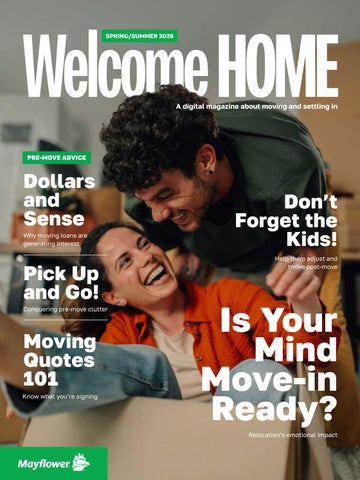
LETTER FROM THE EDITOR SPRING/SUMMER 2026
Spring and summer have a way of inviting change.
The windows open a little wider. The days stretch longer. And for many of us, this season brings movement — sometimes literally. A new address. A new neighborhood. A new chapter that looks good on paper, even if it still feels unfamiliar at first.
That feeling is what this issue is about.
Moving is often framed as milestones you check off — boxes packed, truck loaded, keys exchanged. But as you’ll see throughout these pages, the real work of moving happens after move-in day. It happens quietly, in the routines you rebuild, the emotions you didn’t expect and the moments when a house slowly begins to feel like home.
We explore the emotional side of moving — the mix of excitement and doubt that can exist at the same time and the subtle sense of loss that can show up even when the change is a positive one. We talk about helping kids adjust, knowing that they experience a move through feelings first, not logistics. And we share ways to make a new space feel more familiar, not all at once, but piece by piece.
What ties all these stories together is the reminder that transition takes time. There’s no single moment when everything clicks. There’s a series of small shifts. One room that feels finished. One routine that feels normal again. One day when you stop thinking so much about where things go, because they already feel right.
Mayflower has understood this for generations. Moving isn’t just about getting belongings from one place to another. It’s about supporting the people who live around those belongings as they settle into something new. That support doesn’t end when the truck pulls away. It extends into the days and weeks that follow, when questions come up and life finds its rhythm again.
As you read this issue, we hope you feel seen in the in-between moments. The not-quite-there days. The quiet progress that doesn’t always announce itself.
Whether you’re in the middle of a move, just finishing one or simply thinking about what’s next, we’re glad you’re here. Welcome home — wherever home may be, and however long it takes to feel that way.
Warmly,
JENNIFER OLVERA Editor-in-Chief
SPRING/SUMMER 2026

2 CLEANING BEFORE YOU PACK
It’s a big job. Give yourself time, emotional distance — and think big picture.
3 HOW TO MAKE A NEW HOUSE FEEL LIKE HOME FASTER
How to get past the “moved in” phase and settle in comfortably.
4 HELPING KIDS ADJUST AFTER A MOVE
Same move, but the reality is different for kids. Here’s how to help them get through it.
7 THE EMOTIONAL SIDE OF MOVING
It’s more than just boxes and checklists. It’s a whole new headspace, too.
8 BIG OPPORTUNITY, SMALL CITY
Are “superstar” cities losing their luster? For many people, smaller is better.
10 UPSCALE YOUR MOVE
Why paying for your move over time could be a smart investment.
12 THE LONG-DISTANCE TIPPING POINT
Our recent survey reveals the challenges, trade-off and triumphs of closing the distance.
14 WHICH MOVE FITS YOU BEST
Hands-on, hands-off or a bit of both? See which type of move fits your needs and personality.
15 YOUR FIRST 30 DAYS IN A NEW HOME
Use that first month after a move to find your groove, explore possibilities and shift into your new life.
16 YOUR MOVE ISN’T OVER ON MOVE-IN DAY
Bridging the gap between functional and familiar takes time, effort and support.
18 BINDING VS. NON-BINDING ESTIMATES
Choosing wisely can help avoid unexpected twists and turns down the road.
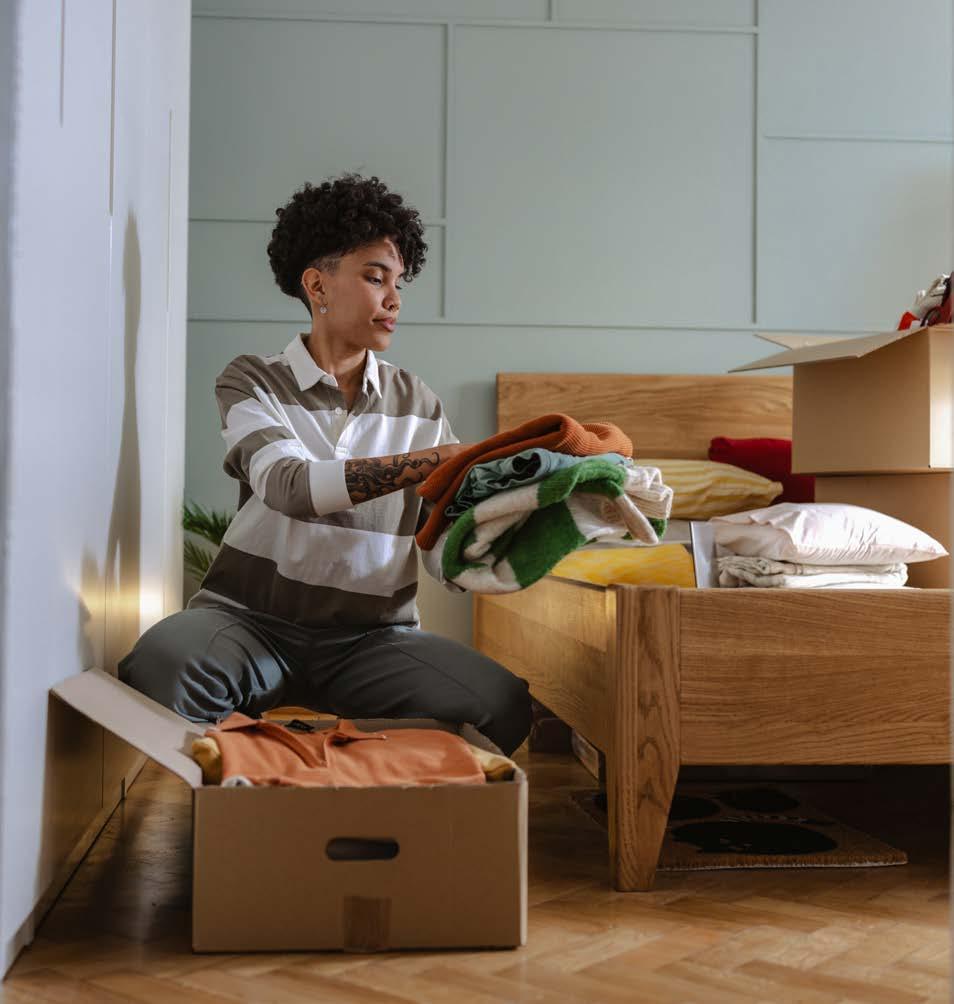
Most people don’t realize how much they own until they move it. That’s when everything shows up at once. Closets you haven’t opened in years. Drawers full of things you forgot you kept. Shelves that quietly collected more than you noticed.
The instinct is to move fast. Sort quickly. Pack faster. Figure it out later. That’s usually where regret sets in. Cleaning before a move isn’t about getting rid of things for the sake of it. It’s about making better decisions while you still have the space and time to do it well.
Not because the work takes longer, but because your judgment improves when you’re not rushed.
When deadlines are looming, every decision feels urgent. Starting earlier gives you breathing room. You’re more thoughtful about what earns a spot in the moving truck and what doesn’t.
Instead of going room by room, look at how much you’re moving. Large furniture stands out, but volume builds quietly through smaller items. Books. Kitchenware. Clothes you haven’t worn in two seasons but still think you might someday.
When you see the total, decisions get clearer. It’s easier to understand what’s worth bringing along.
If you’re unsure about something, don’t stand there debating it. Set it aside. Then, come back to it later, even the next day if you can. This is especially true for items you feel obligated to keep, not the ones you use.
Clearing things out during the final week of a move can feel productive, but it’s usually reactive. You’re tired. You’re short on time. You’re more likely to keep things you don’t need or let go of things you might have handled differently.
Thoughtful editing works better when it happens over time, not all at once.
It’s easy to justify bringing something because it fits in a box. That’s not the right test.
Ask yourself if you’ll want to unpack it on the other side. If the answer is no, it probably doesn’t need to come with you.
Moving lighter isn’t just about cost or efficiency. It changes how quickly your new space comes together — fewer boxes, fewer decisions waiting for you, and more room to settle in and feel at home.
There’s often a stretch of time after a move when everything technically works, but nothing quite feels settled. You know where things are. You can get through your day just fine. And still, the space feels temporary, like you’re passing through instead of truly living in it. That feeling doesn’t disappear overnight. More often, it shifts gradually through small, everyday choices.

It’s tempting to focus on how the space looks first.
But comfort usually comes from repetition, not decoration. Familiar routines tend to ground you faster than any design decision. Make your coffee the same way you always have. Sit in the same spot in the morning. Take your usual walk, even if the route is new.
Those small habits help reconnect daily life before your new home fully catches up.


The first setup is rarely the one that sticks.
Furniture gets placed where it seems logical, then a few days later you realize it doesn’t match how you live. A chair blocks the light. A table feels slightly off. The room looks done, but it doesn’t feel right yet.
That’s normal. Give yourself permission to adjust early.
Pay attention to how you move through the house during a regular day. Notice where things slow you down or feel awkward, then change them. It doesn’t need to be final. It just needs to work a little better than it did yesterday.
Trying to finish the whole house at once usually means living in half-done rooms longer than you expected. Instead, pick one space and bring it to a stopping point. A bedroom. A corner of the living room. Even a small workspace.
When one area feels complete, it changes how the rest of the house feels. You’ve got a place to land at the end of the day that feels intentional and settled, even if everything else is still coming together.
Not everything needs to go on the wall or find a permanent place right away.
The pieces you add over time often end up meaning more than the ones placed quickly just to fill space. A photo goes up when it feels right. A favorite book settles onto a shelf. A corner starts to reflect how you live instead of how you planned it to look.
That’s usually when the shift happens. You stop thinking about where things belong and realize they already do.


Kids do not experience a move the same way adults do. While adults tend to focus on logistics, kids are paying attention to what appears different. For example, their room looks unfamiliar; their school has changed; and the people they see every day are not the same.
Even when kids are excited about what’s ahead, there is often a layer of uncertainty underneath. The goal is not to remove that feeling, but to help make it manageable.
Consistency plays a powerful role in helping kids settle into a new environment.
In the first few weeks, keep routines as familiar as possible. Meals, bedtimes and small daily habits provide stability when everything else feels new and unpredictable.
Simple decisions can make a meaningful difference. Unpacking a child’s room early, for example, gives them a space that feels like theirs right away and helps establish a sense of comfort faster.
Some kids talk openly about how they feel. Others show it instead.
You might notice changes in mood, energy or behavior. That does not automatically mean something is wrong. It often means they’re processing the transition in their own way. Try to give them room to sort through those feelings without pushing for instant enthusiasm or reassurance.

Meeting new people takes time, especially after a big change.
Rather than rushing to social situations, look for natural entry points. School activities, neighborhood interactions and familiar interests that carry over into the new environment can create low-pressure opportunities to connect.
Younger kids often settle into new friendships more easily. Teenagers may need more time. Both responses are completely normal.
There doesn’t need to be one big conversation. Short, ongoing check-ins tend to work better. Ask simple questions and listen without feeling the need to solve everything right away. Often, kids are looking for acknowledgment rather than immediate solutions.
Some kids feel settled within a couple of weeks. Others take longer, especially if the move meant leaving close friendships or long-standing routines behind.
What matters most is consistency. As the environment starts to feel predictable again, confidence and comfort usually follow.
Keep the focus simple and concrete. Let them engage with what they can see and touch.
“This is your new room. Where should your favorite toy go?”
“Do you want to help unpack your books or your stuffed animals first?”
Invite sharing without steering the response.
“What feels different about the new house so far?”
“What’s something you’re curious about here?”
Keep conversations direct and respectful and avoid forcing a positive spin.
“What do you think will take the most getting used to?”
“Is there anything you want to figure out first, like school or activities?”
Across every age, the goal is to open the door to conversation in a way that feels natural, not required.
There’s a version of moving that gets talked about a lot — a fresh start, new space and a clean slate. And then there’s the one most people don’t expect.
You’re standing in a home that’s yours now, surrounded by familiar belongings, and something feels just slightly off. Not wrong. Just new in a way your mind hasn’t fully caught up with yet.
That gap can catch people by surprise.
It shows up in small ways. You reach for something that isn’t where it used to be. You drive a route out of habit and realize it no longer applies. Or maybe you open a box and feel more tired than you expected.
None of this means the move was a mistake. It means you’re in transition.
You can feel good about the move and still question it in quieter moments. You can look forward to what’s next and still miss what you left behind. Those feelings don’t cancel each other out. They tend to sit side by side for a while — and that’s normal.
With the right support, it’s easier to hold both — and keep moving forward.
You’re not just leaving a place. You’re leaving routines, familiarity and a version of your day that didn’t require much thought.
Even when a move is the right decision, something is still being released.
That’s why having experienced movers who understand what this moment carries — not just the logistics, but the emotional weight of it — can make a meaningful difference.
By the time you arrive, you’ve made dozens of decisions in a short window — packing, scheduling, coordinating details. That mental load doesn’t disappear once the last box is inside. Remember that it’s common to feel a little flat or overwhelmed in the first few days, even when everything goes smoothly.
This is where a trusted partner matters most — one who handles the details, anticipates needs and gives you the space to land in a timeframe that’s unique to you. Your body and your mind are simply catching up.

You need a little time and a few steady anchors.
Start small. Make one room feel finished. Reestablish one daily routine — morning coffee in the same spot, a short walk at the same time each day. And lean on the people and support systems that got you here.
Most importantly, give yourself permission not to feel fully settled right away. That part rarely happens on day one.
For most people, the shift comes gradually, when your place becomes easier to move through, routines return and what’s unfamiliar starts to feel like yours.
And then, almost without noticing, something else changes, too.
The move didn’t just change your address. It changed your rhythm. With the right support behind you, you may just find yourself settling into it with more ease than you’d expect.

Traditionally, the American relocation story centered on a handful of “superstar cities” like New York, Los Angeles and Chicago and their surrounding suburbs. But increasingly, movers are discovering that opportunity doesn’t have to include skyscrapers and traffic jams. In fact, some of the most popular destinations today are mid-size cities that offer a powerful blend of affordability, quality of life and career flexibility.
Places like Dover, Delaware, Springfield, Oregon, and Wilmington, North Carolina are attracting newcomers who want more space, less congestion and a better balance between work and life. These cities may be smaller in scale, but they’re big on momentum. Growing job markets (especially in tech, healthcare and advanced manufacturing) are creating first-rate opportunities without the premium price tag found in larger hubs.
Affordability is often top-of-mind. Housing dollars stretch further in mid-size cities, whether you’re renting or buying, making it possible to upgrade easily for more space. A lower cost of living frees up income for travel, savings or simply enjoying
your day-to-day. That’s especially important for first-time long-distance movers looking to build stability without sacrificing lifestyle.
But it’s not just cost savings. Quality of life is a major factor behind the trend. Mid-size cities tend to offer shorter commutes and easier access to outdoor recreation. And despite prevailing “wisdom,” you’re probably just as likely to find a thriving arts scene or a standout restaurant, without the crowds or the wait times found in larger cities.
Flexibility is another factor. With remote and hybrid work now firmly part of the landscape, more people have the freedom to choose where they live based on how they want to live. This opens the door to destinations that might have been overlooked in the past. A city like Wilmington or Springfield can offer proximity to nature, a vibrant downtown and a growing economy all in one package.
In a nutshell, when it comes to move destinations it’s smart to think beyond the obvious. The “right” destination may not be the biggest or the busiest. It’s the one where you’ll be happiest.


Moving is full of decisions and one of the biggest often comes down to budget. For many households, the idea of upgrading to a full-service move complete with packing, storage and other value-added options can feel out of reach. That’s where loans designed especially for movers can make all the difference.
Instead of paying the full cost of your move all at once, a moving loan allows you to spread payments over time, making it easier to access the services that simplify your move and
reduce stress. Rather than cutting corners or taking on the physical and logistical headaches yourself, you can invest in a smoother, easier move experience without breaking your budget.
With Mayflower, this flexibility comes through our partnership with Acorn Finance. Through Acorn, you can explore financing options that fit your budget and timeline, turning a
large, one-time expense into manageable monthly payments.
The result? More freedom to customize your move based on what you need, not just what you can pay for right away.
For example, that can mean adding professional packing services to protect your belongings, opting for custom crating for high-value items, or incorporating storage-in-transit when your movein timing doesn’t quite align. It can also mean choosing value-added services like debris removal, furniture assembly, or electronics setup that help you settle in faster and with less hassle.
Of course, financing isn’t just about access; it’s about planning. Understanding your terms, monthly payment and overall cost is essential to making a confident decision. When used thoughtfully, financing can be a powerful tool that helps you balance today’s needs with tomorrow’s budget.
At Mayflower, we believe moving should feel manageable, not overwhelming. By combining our century of trusted expertise with flexible payment solutions from Acorn Finance, you can design a move that works for your life and your budget.
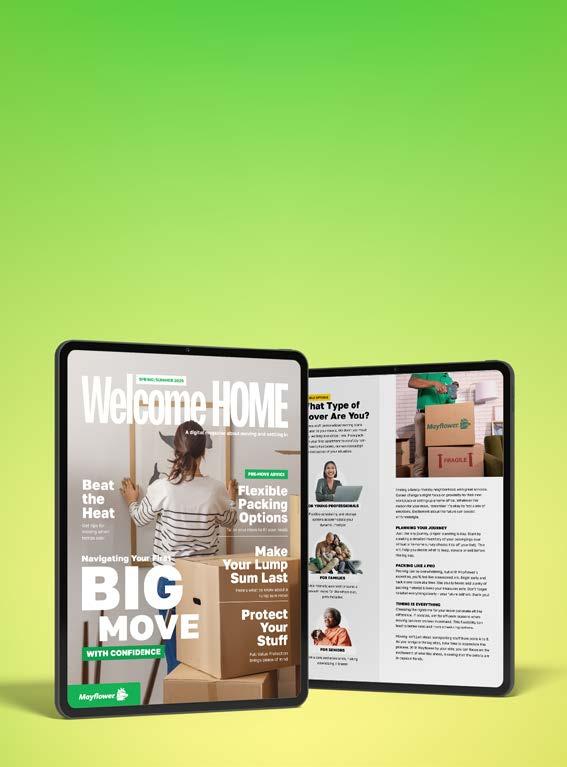
At first glance, a moving quote might look quite cut and dried. However, behind that number is a detailed breakdown of services, logistics and protections designed to get you from point A to point B with a minimum of fuss and surprises.
A professional moving quote typically starts with the transportation cost, which will be based on factors like distance, shipment weight and timing. From there, any additional services you’ve selected such as packing and unpacking, custom crating for fragile or high-value items, storage-in-transit, and specialty handling come into play. Depending upon your mover, labor, fuel and access considerations (stairs, elevators or long carries) may also affect the final estimate.
One of the most important components of your quote is valuation coverage. Options like Mayflower’s Full-Value Protection help safeguard your belongings, offering repair, replacement or compensation if something is lost or damaged. Be sure you fully understand what level of protection is included and what upgrades are available.
Equally important to understand is the move tariff. The tariff is a legal document detailing your mover’s rates, rules and responsibilities as well as your rights as a customer. It shows how charges were calculated, what services are included and how delays, storage or additional labor will be handled. Taking the time to read the tariff ensures you fully understand what your quote covers and what it doesn’t.

At Mayflower, we strive to be as transparent with our pricing as possible, so you’ll know exactly what to expect, start to finish. Wherever you’re headed, we’ve got you covered.

Take a deeper dive into the survey.
For couples separated by miles, love has always required effort — plane tickets, weekend visits and time together carved out between work and everyday life. But something is shifting.
According to Mayflower’s recent “Will You Go the Distance?” survey, conducted by Talker Research, long-distance relationships can be both emotionally demanding and financially unsustainable. And that reality is changing how — and how quickly — couples decide to take the next step.

Long-distance couples now spend an average of nearly $7,000 on travel over their relationship. Visits happen about once every three months, a pace that can make connection harder to maintain.
Over time, the math catches up. What starts as a commitment begins to feel like a tradeoff between sustaining distance and building a shared life. Nearly three-quarters of long-distance respondents (74%) say rising travel costs influenced their decision to move in together — a shift researchers are calling the Long-Distance Tipping Point.
Moving in together has always been tied to love. That hasn’t changed. What has changed is how couples think about the decision.
While 68% say romance is the primary driver, many are also weighing practical factors, including the cost of living and whether a shared space fits both partners’ lifestyles. The result is a decision that feels more deliberate than spontaneous.
And it’s happening sooner.
Couples report discussing moving in together around 10 months into dating. For those living further apart, that timeline often moves even faster, shaped by the reality of maintaining two separate lives.
Ask people what makes longdistance relationships difficult, and the answer goes beyond travel. One respondent put it simply: “High travel costs, missing physical proximity and feeling disconnected from daily life.”
That sense of disconnection is what lingers.
Couples not only miss the big moments, but also the everyday routines, shared space and quiet time that fosters connection.
When couples decide to close the distance, many choose to start fresh.
More than half (51%) plan to move into a new home together, creating a shared environment from the beginning rather than stepping into one already established.
It’s a choice that reflects balance and a desire to build something jointly.
Some couples take a measured approach, weighing each option carefully. Others keep it simple — about 6% even say they flipped a coin.
Either way, the goal is to build a life that works for both people.
While the outcome is exciting, the process can feel overwhelming.
One in three respondents say they’ve experienced a “moving mental breakdown” in the past. Anxiety is common, especially when combining households and expectations at the same time. Still, optimism carries through.
Eighty-five percent say moving excites them, and 63% say it gives them hope.
That mix of stress and anticipation defines the experience for many couples taking this step.
For couples closing the distance, moving in together is about building a shared life that no longer depends on calendars, travel budgets or time apart. It’s waking up in the same place, settling into a rhythm and letting connection happen without planning every moment.
As more couples reach that tipping point, they’re looking for ways to make the transition feel manageable.
With more than a century of experience, Mayflower supports couples through every stage of the move — helping simplify the process so they can focus on what comes next.
Because in the end, closing the distance is about more then being closer. It’s about finally living life in the same place.
Not every move looks the same. Whether you want to hand off every detail or stay hands-on, the right approach depends on your time, budget and comfort level.
A full-service move is ideal if you’re juggling personal or professional responsibilities or managing a long-distance relocation. A hybrid move offers flexibility — you choose the tasks you want to tackle yourself and let the mover handle the rest. Prefer total control? A DIY move can save money, but it requires more planning, physical effort and potentially unforeseen challenges. The key is finding the balance that keeps your move efficient, cost-effective and as stress-free as possible.

Best for Convenience & Long-Distance Moves
Packing, loading, transport and unloading handled for you
Ideal for long-distance or complex moves
Less stress, more time to focus on your transition
Potentially more expensive


Best for Flexibility & Control
You pack, pros handle heavy lifting and/or transport
Services customized to fit your needs and budget
Great middle-ground option
Potentially lower out of pocket cost but requires more effort
Best for Small Budgets & Local Moves
You manage packing, loading, driving and unloading
Full control over timing and process
Can be lower cost, but more physical and logistical challenges
Best for smaller, local moves

Move-in day is full of momentum. Boxes are opened. Decisions happen fast. There’s a sense that if you just keep going, you’ll be settled by nightfall. Then reality slows things down. By the end of the first week, you start noticing what’s still missing. The routines you haven’t rebuilt yet. The small comforts you didn’t realize mattered until they weren’t there.
The first 30 days are less about the move-in to your house and more about easing into it.
Start with the basics that make day-to-day life work. Make sure utilities aren’t just on, but actually doing what you expect. Test outlets. Run the shower. Check that Wi-Fi reaches the places where you will spend time, not just the room with your router.
Unpack with intention. Focus on what supports your daily rhythm: bedding, kitchen essentials, everyday clothes, a real place to sit. Everything else can wait.
If you’ve got kids, prioritize
their spaces early. Familiar items and routines help everyone feel grounded, even if the rest of the house is still a work in progress. You don’t need perfect. You need functional.
This is when the new place starts to feel less unfamiliar. You figure out where you’ll grab coffee. When traffic builds. Which grocery store will become your default — at least for now.
Your days begin to take shape again, whether that means school drop-offs, commutes or quiet mornings at home. The house starts working with you instead of against you.
This is also a good moment to say hello to the people around you. It doesn’t need to be formal. A short conversation goes a long way toward feeling connected.
The goal isn’t to socialize. It’s to feel oriented.
By now, the obvious tasks are mostly behind you. What’s left are the things that didn’t feel urgent at first.
Address updates. Medical transitions. Scheduling services you’ll rely on. These details matter more once life settles into a rhythm.
You may also start noticing items that don’t quite belong in your new space. Furniture that feels awkward. Things you brought out of habit rather than need.
That’s normal. Let the house teach you what works.
This is where things start to click.
You hang something because you know where it belongs. You rearrange a room because you’ve lived in it long enough to understand the flow. You stop thinking about where things are.
You’re not completely settled, but you’re no longer adjusting every day. And that’s the transition point.
A move doesn’t really end when the boxes are gone. It ends when your routines return and the space begins to reflect how you actually live.
At first, it’s not about comfort. It’s about getting through the day.
Beds are assembled. Kitchen basics come out of boxes. You figure out where to sit, where to eat and how to start the morning. It’s practical, slightly uneven and completely normal.
You’re not settled yet — you’re operational. Mayflower customers often tell us this stage feels like running on momentum. That’s okay.
The goal right now is to function rather than achieve perfection.
Once the basics are in place, the details start to surface.
You notice what’s missing. You shift furniture. You rearrange a drawer that didn’t make sense after day one. New routines begin forming quietly in the background.
This is when the house responds to how you live in it, not how it looked on paper.
It’s also the phase that takes longer than most people expect. That’s okay because transitions take time.
At some point, something subtle changes. You stop
thinking about where things are. You move through your home without pausing. You know which cabinet you reach for. You drive to the store without double-checking directions.
Nothing big announces the shift — it just feels easier since the space finally is working with you instead of around you.
Even after move-in day, there are still moving parts.
Questions come up. Small adjustments need attention. Life settles in layers, not all at once. Having a moving partner who stays connected beyond delivery helps bridge that space between arrival and feeling at home.
That’s part of Mayflower’s approach. The move doesn’t end when the boxes come off the truck. We can help you with debris removal and even claims support. Additionally, we offer immersive state and city guides that help you feel like a local from day one.
Because a successful move isn’t defined by timing alone. It’s defined by how confidently you settle into what comes next.
That part often takes a little time.
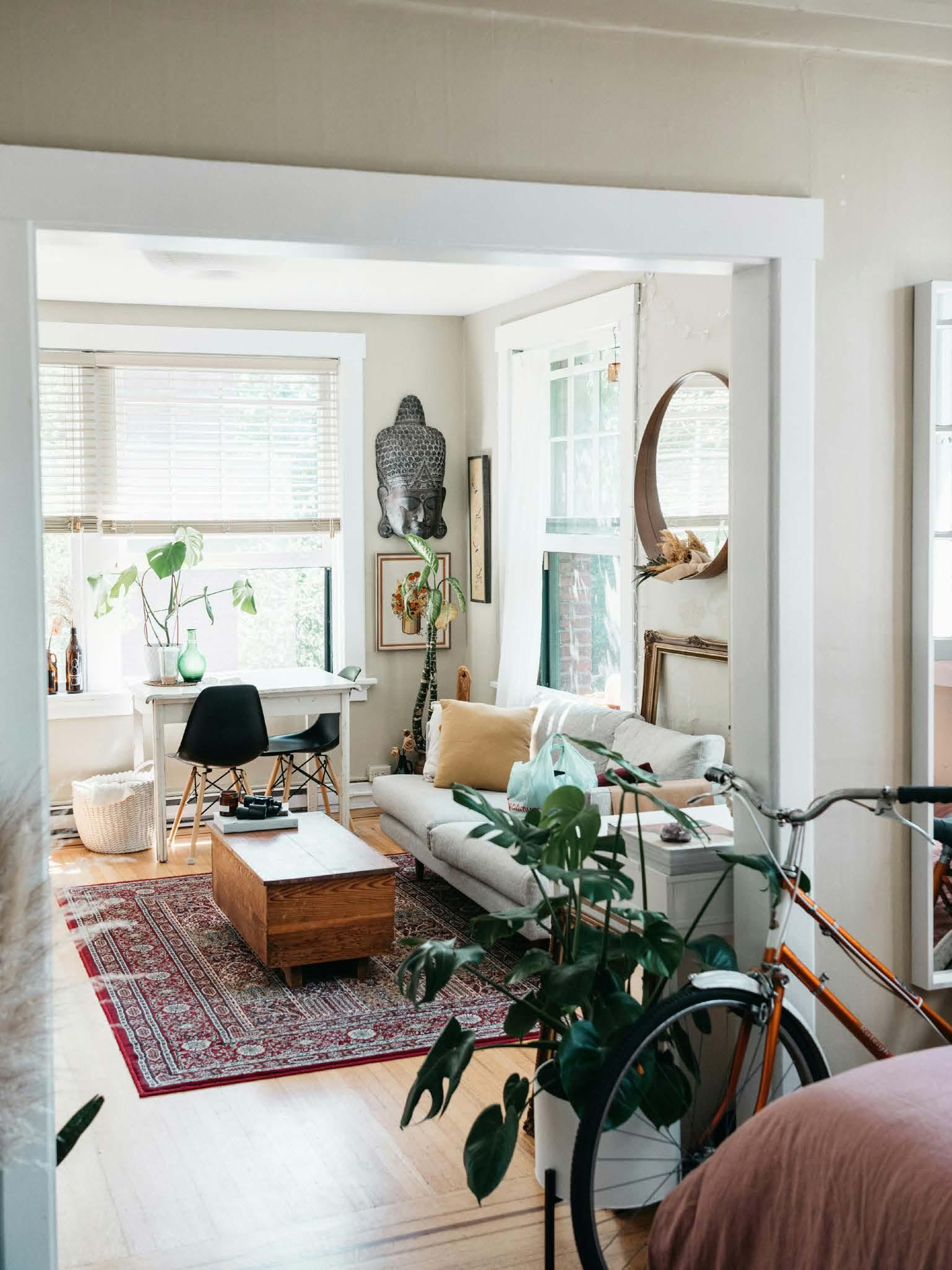
When planning a move, one of the most important things to understand is binding vs. nonbinding estimates. Knowing how each works can help you go with the option (and the mover) that fits your comfort level. Here’s a quick rundown to help you decide.
With a binding estimate, you’ll receive a single, allin-one price based on the details of your shipment and the services you select. The benefit here is you’ll know your total cost upfront, making it easier to plan financially and avoid unexpected expenses.
A binding estimate is especially suitable for long-distance moves and corporate relocations, where weight, distance and fuel can introduce variables you may not have considered.
Unless a new estimate is established with your mover, your price is locked in. Just so you know, Mayflower offers only binding estimates. We find they work best for most moving situations.
On the other hand, a nonbinding estimate means your final cost is not locked in. The cost of your move can vary depending on the exact weight of your shipment, the time it takes to load and unload and any additional services you requested. While this model offers flexibility if you are unsure of how many belongings you are moving, it’s also subject to cost fluctuations, both up and down. For example, if your shipment ends up heavier than it was originally estimated or there is an extra flight of stairs at your destination, your final bill may be much higher than you expected. Proceed with caution.
If you value certainty and want to lock in your budget, a binding estimate is the right way to go. If you prefer flexibility, have just a few items to move and are comfortable with some variability, a nonbinding estimate might make sense, particularly if it’s a local or relatively simple move.
Whichever path you choose, transparency is key. Be sure to review your move estimate carefully and understand what’s included. Also take time to read the mover’s tariff, which will outline rates, rules and responsibilities. It provides critical context for how your move will be priced and what happens if plans change.
When you’re getting ready to move, it’s often the smallest items that create the biggest headaches. Screws, cords, remotes and specialty tools are easy to misplace, yet essential for getting your new space ready. That’s why we recommend creating a dedicated parts box: a simple, effective way to keep everything organized and at-the-ready.
Start with the basics. As furniture is disassembled, bag and label all screws, bolts and fasteners using plastic zip-top bags. Label the bags room by room to ensure nothing gets mixed up.
Next, turn your attention to electronics. Label power cords and adapters for each device, and take the extra step to tag HDMI, coaxial and AV cables so you know exactly where they belong.
Equally important, place TV and entertainment remotes in labeled bags and add them to your box. Misplacing these items can be extremely frustrating, so be as thorough as possible.
Your parts box should also include the tools you’ll need on the other end. Allen wrenches and any specialty tools required for reassembly should be kept here for easy access when it comes time to reassemble.
Finally, create a simple inventory sheet listing the entire contents of your parts box. Keep a marker and tape or label maker inside as well, so you’re always prepared for lastminute additions.
Finally, make a plan for transport. Your parts box should travel with you or be clearly marked “load last” for immediate access on move-in day.
Do a little organizing beforehand and you’ll enjoy a smoother, less stressful experience on move-in day.
A new home is more than a destination; it’s a fresh start. Mayflower brings the experience, attention and trusted support you need to help you begin your new life with confidence. For 100 years, customers have counted on us to move them with less stress and more peace of mind. We’ll do the same for you. Every Move. Every Moment. Every Step of the Way®.