
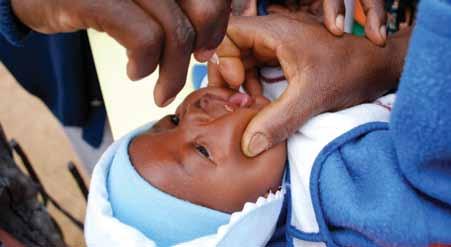
AN END TO POLIO?
Read about global efforts to eradicate this disease Page
4
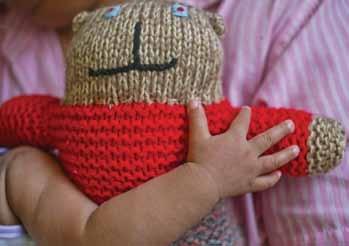
FIND OUT HOW IKEA IS SUPPORTING UNICEF Page 3
THE UNICEF GLOBE
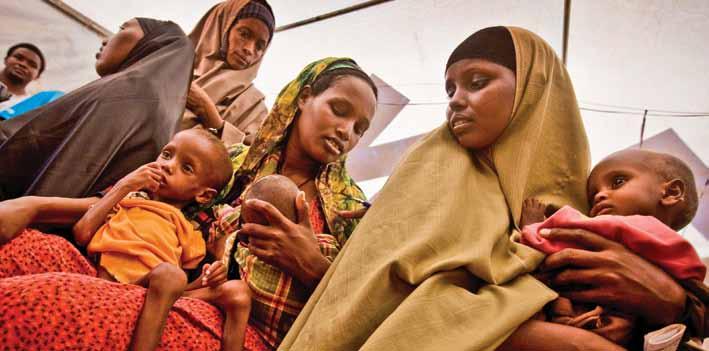
FAMINE RELIEF EFFORTS INTENSIFY IN EAST AFRICA
UNICEF has dramatically intensified famine relief efforts across East Africa over the last three months keeping hundreds of thousands of people alive. The UNICEF family of supporters and partners mobilised rapidly, and 250,000 more people received food assistance in August, taking the total people supported to more than one million. Half of those assisted were malnourished children who received life saving therapeutic food.
Yet tragically the crisis is escalating. Somalia has suffered its worst harvest in 17 years. Animals are dead. Crops are bare. A sixth famine area has now been declared in the Bay region bringing the total number of Somalis in crisis to 4 million – half the entire country’s population.
Whilst October rains are imminent, if they do come, they greatly increase the risk of malaria and water borne diseases such as cholera. During the last famine, October rains inflicted a wave of mortality and it’s a factor that UNICEF is preparing for by pre-deploying malaria nets and ensuring clean water supplies are available.
This famine is a crisis of child survival. Child malnutrition rates are amongst the worst ever recorded. The average global acute malnutrition rate in the Bay region is affecting six in every ten children - four times the WHO emergency threshold of 15 percent.
UNICEF has over forty years experience in Somalia and our local networks mean we are one of the very few organisations who can get access to the worst affected areas. The massive UNICEF scale-up in July and August leaves us well positioned to further strengthen our relief efforts, but the crisis is complex and reaching every child remains a massive challenge.
Services must continue to be delivered to Somali communities to stop them from moving to already overcrowded camps. At the same time, urgent life saving interventions in these camps are needed to keep children alive and prevent outbreaks of disease.
In the next four months our 800 feeding centres will double the number of severely malnourished children we can reach. UNICEF is rolling out blanket supplementary feeding with the aim of reaching every child and their family in target areas. To protect children from disease outbreaks, UNICEF is targeting two million children with vaccinations, Vitamin A supplements and de-worming tablets. We are also expanding provision of safe water and access to sanitation for 300,000 children and their families. This is a once in a generation crisis and we need your ongoing support to save the lives of innocent and vulnerable children. Please pledge your support at www.unicef.org.au
By Kate Wheen
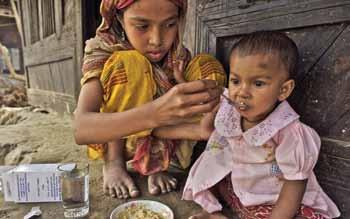
Maternal deaths falling in Bangladesh
A national study in Bangladesh has found that new mothers are almost twice as likely to survive today than they were ten years ago thanks to the commitment of organisations like UNICEF.
Innovative maternal health programs developed by UNICEF with support from the Australian Government’s aid arm AusAID are now reaching 38 million women, and have played a key role in reducing maternal and infant mortality rates.
ON THE FRONT OF THE FRONT LINE AGAINST CLIMATE CHANGE
UNICEF is supporting Kiribati’s youth to participate in global climate-change debates, providing them with the skills and resources they need to speak out.
“We are at the front of the front line”, says Taeko Otia a Kiribati student leader. “We want people to listen to what is happening to us.”

Three-year-old Ali Noor Gedi (in orange shirt) sits with his mother, Madina Ibrahim, at a refugee camp in Dadaab, Kenya waiting to be seen by a health worker.
Eleven-year-old Taslima and her baby niece in South Khali village, Bangladesh

A MESSAGE FROM THE CEO
I am constantly overwhelmed by the generosity of Australians. Whenever there is a need Australians will do all they can to help. Despite what the media or our politicians say, it is something we see in our work again and again.
Whether it be a domestic need such as the floods or bushfires or international disasters like the tsunami or the current crisis in East Africa, Australians reach out when others are in need. And tragically, the number of emergencies is growing - and that generosity characteristic of so many Australians is being tested.
I was recently in Pakistan monitoring the situation a year on from the horrendous floods of 2010. The journey was filled with hope and heartache. Seeing schools that UNICEF has built through your support; where teenage girls were getting an education for the very first time, filled us with joy. To see their proud faces, inspires us and shows we are making a real difference to people’s lives.
Agriculture in Pakistan has been dreadfully affected by the flooding. Many families who rely on subsistence farming for their food and meagre income are still struggling to recover. In the Southern Punjab we stood beside the bed of a three year old girl, desperately clinging to life. She had been rushed from one of the sixty UNICEF feeding centres to this specialist facility for treating malnutrition. Of the 196 severely malnourished children who had been treated there all but one had survived.
Looking into the vacant eyes of that beautiful young girl filled me with heartache. For the price of what the average Australian spends on lunch, she could have been saved.
It’s the most challenging side of our work; dealing with the terrible tragedy of a dying child. Particularly because we know our interventions are making such a massive difference. In 1990 more than 36,000 children were dying every day due to poverty. Today that number is reduced to 21,000. Yet every single child’s life is precious and with your help we can reduce these unnecessary deaths to zero.
In this update you will see UNICEF having remarkable success in reducing child mortality in Bangladesh, keeping alive hundreds of thousands of children in East Africa, supplying more than half of the global immunisations and bringing clean water for the first time to communities in Laos.
We are saving more children’s lives and we can bring the basic rights of food, clean water, education, health and protection to all children – but we need your ongoing support to do so.
Thank you for your commitment to the world’s children. Together we are making an incredible difference to millions of lives.
Norman Gillespie Chief Executive
ZUMBA FOR A CAUSE
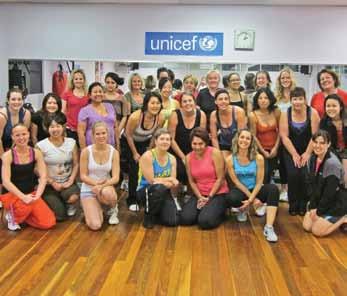
Anna Clark and Tanya Moreira are both regular donors to UNICEF but when they heard about the devastating crisis in East Africa, they were moved to do more so they organised a “Zumbathon” at their local gym (pictured below).
“I am very passionate about the African crisis given I was born in South Africa,” said Tanya. “Anna and I have made a great effort to make known the devastating issues in East Africa.”
The idea for a Zumbathon came from Anna, a dancer and Zumba instructor at Body Shape Gym on Sydney’s northern beaches. Each person donated $10 on the day and other donations were made through the ‘Zumbathon Divas’ fundraising page, raising over $1,900.
By Bohdana Szydlik
(continued from page 1)
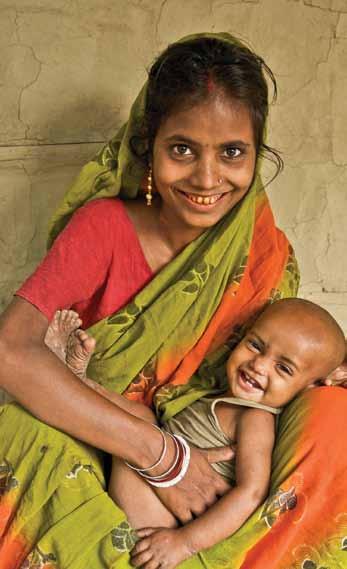
The Maternal, Neonatal and Child Survival Project has developed a massive network of Community Health Groups across Bangladesh. Volunteers trained through the groups are taking practical measures such as encouraging breast-feeding and training birth attendants to deliver home-based care. Today in Bangladesh, three quarters of women give birth at home, making community-based programs particularly effective.
Ukyaching Marma is the secretary of one Community Health Group. “Parents are reluctant to send their daughters and daughters in law to hospital because they’re afraid of the high costs involved,“ he says. “So the pregnant woman and the newborn baby suffer greatly.”
UNICEF has played a key role in reducing annual maternal mortality rates, down from 322 to 194 deaths per 100,000 live births since 2001.
Mukta Ahkter is 19 and about to give birth for the first time. “I know the community health volunteer has delivered babies before,” she said.“It makes me less anxious about the delivery”.
By Kate Wheen
Australia needs to listen to our kids
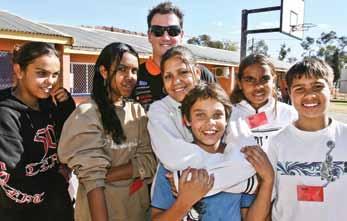
“I am fifteen and I personally do not feel as though I have a voice. I want to be heard, but I just feel as if I don’t have the chance” - young female, Northern Territory.
Australia is known as a lucky country, yet not for all its children. Rising inequality and discrimination mean a growing number of children are unable to access the protection, education and health services they need to develop to their full potential.
The recently released Listen to Children report reveals this is due to consecutive Australian Governments failing to listen to children. Three groups of children in particular are missing out: Aboriginal and Torres Strait Islander children, children in out-of-home-care and children seeking asylum in Australia.
Listen to Children was compiled by the Australian Child Rights Task Force, co-chaired by UNICEF Australia and The National Children’s and Youth Law Centre. The report is compiled every five years in response to the Australian Government’s report to the UN committee into child rights.
This report is an important opportunity to tell the ‘real story’ of children’s rights in Australia and make sure Australian children have their voices heard.
To learn more, please visit www.unicef.org.au and take action for the rights of children in Australia.
By Monique Hughes
MARK HORSBURGH
Kochoni Robidas smiles as she holds her one-year-old son, Anando, outside their mud house in Porbo Sadarghar Village, Bangladesh
Youth participants in the UNICEF Australia health program, Alice Springs.
Climate change is eating away at young peoples’ futures (continued from page 1)
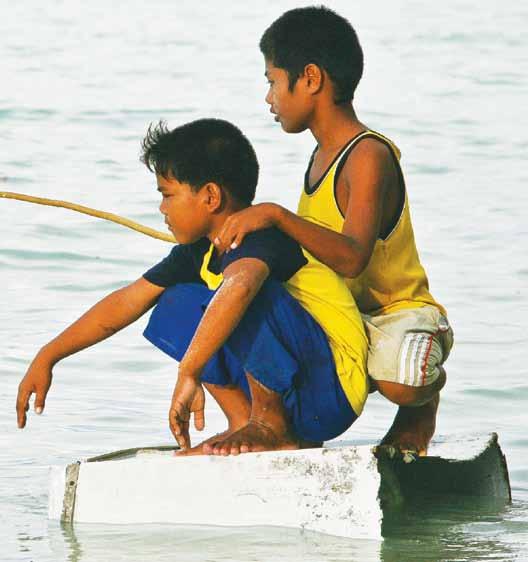
Rising sea levels in Kiribati, home to 100,000 people, have contaminated water sources and are destroying limited patches of fertile land. The young people are witnessing a creeping disaster that is steadily eroding their culture, their home and their future.
UNICEF has supported students to run workshops in communities and is improving internet access and web skills so that students can use facebook and other online media to send messages to world leaders about the future they face.
Their message is relevant across the globe: Climate change is eating away our children’s future.
By Kate Wheen
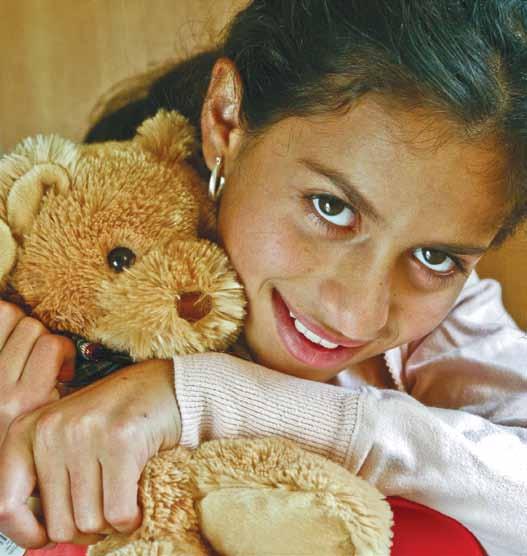
IKEA SOFT TOYS FOR EDUCATION
Helping the most important people in the world –our children.
IKEA Soft Toys are great to have on this year’s holiday list. In November and December, for every Soft Toy or children’s book you buy at IKEA, the IKEA Foundation will donate one euro to UNICEF education programs.
UNICEF and IKEA believe that education is simply the best investment you can make in a child’s life. It empowers children to stand on their own two feet, to get a future job and contribute to their communities. Since 2003, the annual IKEA Soft Toys for Education campaign has raised an amazing total of $35.2 million euro, which has helped more than eight million children in over forty countries get better schools, books, pencils and well-trained teachers.
By Toni Bennett
TRANSFORMING LIVES THROUGH CLEAN WATER IN LAOS
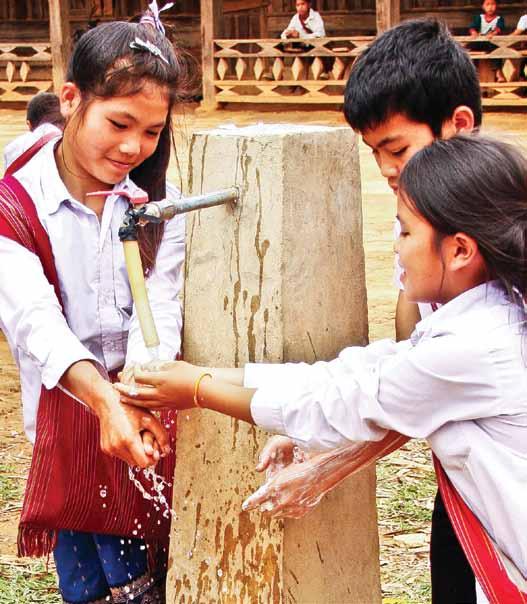
Today, Sinsai only has to walk a few steps to collect water. Yet it wasn’t long ago that he was scrambling down hills and across rice paddies to reach the nearest fresh spring, a water supply shared between 32 households.
“It took a long time to collect the water,” says Sinsai, who would make two or three trips before school and then many more during the day. “At school, every student has to collect the spring water for use in the toilet and for the school gardens,” he says.
But thanks to UNICEF, a new water system is carrying clean water directly from a nearby mountain to water points in the village. The Gravity-Fed System brings clean water into a tank before the piped system distributes it directly to households.
Providing safe water to more than 30 households, the villagers themselves are in charge of managing the maintenance and operations, ensuring its sustainability.
Sustainable WASH programs like this are being rolled out across Laos, one of the poorest countries in South East Asia, with support from UNICEF. The villagers contribute the labour, sand, stone and wood, while UNICEF provides technical support and harder-to-access materials, such as concrete and polyethylene piping.
The new system is having immediate benefits for the women and children in Keung village. For children like Sinsai, they can finally spend less time collecting water and more on studying and preparing for a brighter future.
By Martha Tattersall
Two boys fish in a lagoon near Tarawa, the capital of Kiribati.
Sinsai, 12, and fellow pupils wash their hands at newly-installed waterpoint at Meesai villageXieng Khouang province, Laos
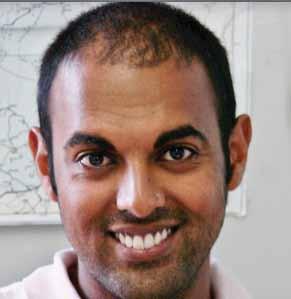
Child Protection Specialist Reports from Bangkok
Vijaya Ratnam-Raman (pictured above) is an Australian Child Protection Specialist working for UNICEF in Bangkok. Based in the East-Asia and Pacific Regional Office, his work involves supporting 14 Country Offices working on children’s rights in 28 countries.
“In our region I think we face two big challenges in terms of child protection. One, realising that child abuse is rarely a “one-off”. In reality these problems don’t happen in isolation. Children who are trafficked are more likely to have been abused or neglected at home and a child who has been abused is much more likely to come to the attention of police.
“Secondly, child protection isn’t really seen as a critical issue for Governments. The prevalence of child abuse in this region is at shocking levels and will only get worse unless we do something about it. Child protection has to be seen as a priority and a public issue – not a ‘private’ matter that only affects a few families.”
Read more from UNICEF field workers at www.unicef.org.au
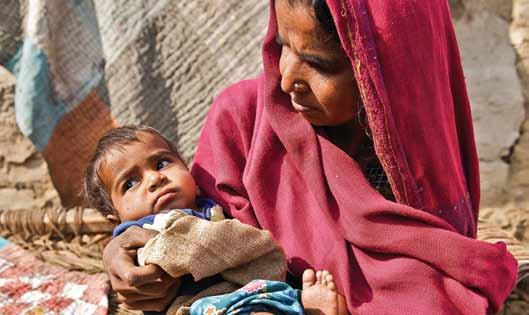
END OF POLIO NEARS
When the devastating floods struck Pakistan in 2010 they brought with them a deadly scourge: Poliomyelitis. Polio as it is more commonly known, is a highly infectious viral disease that attacks the nervous system. Children under five are the most susceptible and temporary camps, where sanitation is poor, is the perfect breeding ground.
Wajid (pictured above), was just an infant when he contracted polio following the crisis. Immediate detection and treatment by UNICEF partners means that the danger of long term complications is unlikely.
UNICEF has been key in the global battle against polio, spearheading efforts over the last fifteen years to immunise every child in the world, stopping transmission and making the world free from this deadly disease.
In that time nearly five million children, who otherwise would have been paralysed are now walking and polio free. Globally the number of polio cases has decreased by over 99% – from 125 countries in 1990 to just four countries today.
But the work is not complete. Pakistan is one country where the disease is still endemic.
UNICEF has joined with the Global Poverty Project to lobby governments to raise the US$590 million required to finally ensure the disease is eradicated. Keep up to date with the campaign at www.unicef.org.au and find out how you can lend your support to ensuring polio becomes a problem of the past.
By Victoria Jack
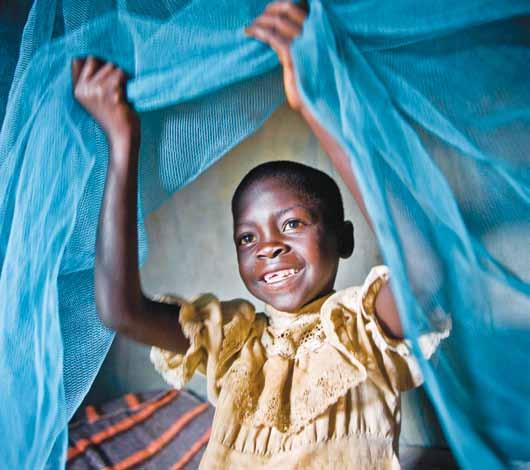
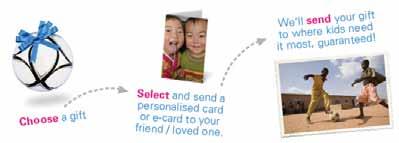
Inspired Gifts are life-saving and life-changing charity gifts that UNICEF distributes to children and their communities around the world. When you buy an Inspired Gift for friends or family, they will receive a personalised gift card by email or post, with a photograph and description of the gift you have chosen. Depending on where the need is greatest, your charity gift will be despatched to one of the 155 countries where UNICEF works.
From water pumps to footballs, vaccinations to school books, Inspired Gifts are especially valuable in emergency situations. In the face of the greatest food crisis facing the world today –caused by drought, conflict and rising food prices in the Horn of Africa and especially southern Somalia –therapeutic paste is saving hundreds of thousands of young lives.
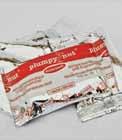
Ready-to-Use Therapeutic Food, or Plumpy’Nut®, has fast become the most powerful weapon against acute malnutrition in the poorest countries in the developing world. Over 800 metric tonnes of therapeutic food have been shipped to East Africa, enough to treat 56,000 children with severe acute malnutrition.
© Maggie
Hallahan