
Children with Disabilities


FOREWORD
Is there a child who does not dream of being counted and having her or his gifts and talents recognized? No. All children have hopes and dreams – including children with disabilities. And all children deserve a fair chance to make their dreams real.
This edition of The State of the World’s Children includes contributions by young people and parents who show that, when given that chance, children with disabilities are more than capable of overcoming barriers to their inclusion, of taking their rightful place as equal participants in society and of enriching the life of their communities.
But for far too many children with disabilities, the opportunity to participate simply does not exist. Far too often, children with disabilities are among the last in line for resources and services, especially where these are scarce to begin with. Far too regularly, they are the objects simply of pity or, worse, discrimination and abuse.
The deprivations faced by children and adolescents with disabilities are violations of their rights and the principle of equity, at the heart of which lies a concern for the dignity and rights of all children – including the most vulnerable and marginalized members of society.
As this report documents, the inclusion of children with disabilities in society is possible – but it requires first a change of perception, a recognition that children with disabilities hold the same rights as others; that they can be agents of change and self-determination, not merely the beneficiaries of charity; that their voices must be heard and heeded in our policymaking and programmes.
We contribute to their exclusion by failing to gather enough data to inform our decisions. When we fail to count these children, we are failing to help them count for all they should in their societies.
Fortunately, progress is being made – albeit unevenly. This report not only examines the challenges involved in ensuring that children with disabilities have the fair access to services that is their right. It also explores initiatives that show promise in such areas as health, nutrition, education and emergency programming – and in the data collection and analysis needed to improve policies and operations in all these fields. Other chapters also discuss principles and approaches that can be adapted to advance these children’s inclusion.
Somewhere, a child is being told he cannot play because he cannot walk, or another that she cannot learn because she cannot see. That boy deserves a chance to play. And we all benefit when that girl, and all children, can read, learn and contribute.
The path forward will be challenging. But children do not accept unnecessary limits. Neither should we.
Anthony Lake Executive Director, UNICEF
The new normal PERSPECTIVE
By Claire Halford
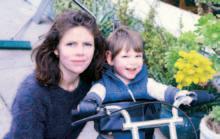
My son’s birth, at full term, was incredibly traumatic. When he finally entered the world, he could not breathe. His brain was deprived of oxygen. He was resuscitated and ventilated, and for two weeks he was swapped between intensive care and special care. He had his first seizure at 1 day old. Until he was 2 years old, epilepsy invaded our lives all day, every day.
In those early days, the only shining light in all this shocking darkness was Owen’s beautiful personality, infectious laugh, obvious engagement with the world around him and emerging handsome looks.
Everybody hopes for a healthy baby when expecting a child. When asked, “What are you having?” expectant mums and dads respond, “Oh, we don’t mind, as long as it’s healthy.”
I remember the first-trimester milestone with my first-born son, Owen: I told the midwife that I had stopped smoking and drinking, ate a healthy diet, exercised moderately and felt pretty good about carrying a child. “That’s great,” she said in a reassuring tone. “After all, what can go wrong with a healthy female in a first-world country in professional medical care?” Little did I know that in about six months I would find out exactly what could go wrong.
My son was diagnosed with cerebral palsy (CP) at 5 months. Cerebral palsy is a broad term describing a brain injury that can occur in utero, during birth or in early childhood. In Australia, CP is the most common cause of physical disability in childhood, and it is a disability that affects children in all countries whether they are affluent or poor. The condition mostly affects movement and muscle tone. Owen has severe CP: He cannot sit, roll, walk or speak.
Following his diagnosis, correspondence from doctors arrived in the post on an almost weekly basis. Initial letters delivered brutal realities, using medicalspeak like ‘spastic quadriplegic’, ‘cortical visual impairment’ and ‘globally developmentally delayed’ – terms that were completely foreign. Every online search ended in ‘prognosis poor’.
The first year was very hard. Anger – no, rage – and disappointment, devastation, loneliness and disbelief lurked at every corner. As the midwife had suggested, this wasn’t supposed to happen to me, to him, to us – this was a mistake! Friends and family could say or do nothing right, so I sought out others who were in a similar position, through support groups in my area and on the Internet.
Around the time of Owen’s diagnosis, I received a phone call from the university at which I had once worked, asking if I’d like to return to teach life drawing and design part-time. This job was to have been my ticket out of employment in retail; it was to have been something meaningful I could sink my teeth into. I declined. I had new work: Now I was a full-time caregiver.
It turned out that Owen had intractable seizures that did not respond to epilepsy medication. So we started 2-year-old Owen on a medical diet for
Claire Halford lives in Melbourne, Australia, with her partner and their two children. She worked in fashion and the visual arts before becoming a full-time caregiver for her son Owen.
epilepsy. The ketogenic diet is an incredibly strict high-fat, lowcarbohydrate diet. In a bizarre, unexpected stroke of grace, it worked. My poor suffering son went from having up to 200 seizures a day to almost none in the first three months. He has been virtually seizure-free since.
My partner and I have since had another son, a healthy toddler whom we love as dearly as we do Owen. He has brought us another perspective on life. Our family life has come to define us. The connection we have makes us stronger – to us, our lifestyle is normal; we carry on. It’s normal to drive all over town to do physical therapy many times a week; it’s normal to haul heavy equipment like standing frames and bath chairs from room to room every day. We know the children’s hospital like the backs of our hands and are familiar with many of the top specialists in various fields of paediatric medicine.
I call myself my son’s ‘personal assistant’ because he has a never-ending stream of paperwork, funding applications, doctor’s appointments, therapy sessions, check-ups and blood tests. I do most of his personal care, such as feeding and bathing. My partner helps when he can, but he works very long hours to keep us all afloat financially – so that I can care for Owen and we can have a comfortable life. We try to keep busy on the weekends, doing family things
like visiting the farmer’s market, going out for Vietnamese food or checking out a kids’ show. Owen has a pretty fun and busy life for a 5-year-old. Yet no matter how good things can be, he has a long and difficult journey ahead of him.
We are hoping to place Owen in a mainstream primary school with the support of the Cerebral Palsy Education Centre, an early intervention programme. Owen has shown vast improvement in communication and movement since he started going there. He also attends activities at the Riding for the Disabled Association, which we both love. Over the years we have spent so much money and time on therapies and services –some of them good, others not that helpful. We’re learning as we go, and we’re getting better at making practical rather than emotional decisions. It’s still hard for us, though; I’m always fighting or waiting for something he desperately needs, sometimes for years.
The hardest battles have to do with people’s perceptions of Owen. I just want him to be treated and spoken to like a regular kid – but I also want him to receive special attention, and for people to be more patient. I want my friends and family to help him and engage with him more. Many of them tend to focus on how I am doing or on something else that’s less challenging than Owen’s very real problems. It’s hard for them,
too – with everything he has going on, I sometimes think he should come with an instruction manual.
I’ve often feared that the things that defined me before I became a caregiver – work, creative interests and a social life – have been lost down a well of grief and exhaustion. More often than not, however, I feel like my life before Owen was born was comparatively superficial. Becoming a caregiver for my own child has been an overwhelmingly profound and joyful experience. We celebrate small accomplishments feverishly, and my expectations of what success entails have been smashed and rebuilt into something beautifully simple: Owen sitting unaided for five seconds, or, as he watches the Paralympics on television, hearing the words ‘cerebral palsy’ and ‘champion’ in the same sentence. I have grown through caring for Owen – above all, perhaps, in my ability to empathize.
I have learned that no matter what a child can’t do, she or he will still always have an identity and a character that will leave a distinctive brushstroke on this world. If we want to be an enlightened society, our job is to believe and encourage. Only then can children who have such difficult limitations grow. And then we can all come to see that things that ‘go wrong’ are sometimes just different –and often amazing.
THE STATE OF THE WORLD’S CHILDREN 2013
CHILDREN WITH DISABILITIES
EXECUTIVE SUMMARY
Key recommendations
International commitment to building more inclusive societies has resulted in improvements in the situation of children with disabilities and their families, but too many of them continue to face barriers to their participation in the civic, social and cultural affairs of their communities. Realizing the promise of equity through inclusion will require action to:
1 Ratify – and implement – the Convention on the Rights of Persons with Disabilities and the Convention on the Rights of the Child.
2 Fight discrimination and enhance the awareness of disability among the general public, decisionmakers, and those who provide essential services for children and adolescents in such fields as health, education and protection.
3 Dismantle barriers to inclusion so that all children’s environments – schools, health facilities, public transport and so on – facilitate access and encourage the participation of children with disabilities alongside their peers.
4 End the institutionalization of children with disabilities, starting with a moratorium on new admissions. This should be accompanied by the promotion of and increased support for familybased care and community-based rehabilitation.
5 Support families so they can meet the higher costs of living and lost opportunities to earn income associated with caring for children with disabilities.
6 Move beyond minimum standards by involving children and adolescents with disabilities and their families in evaluating supports and services designed to meet their needs.
7 Coordinate services across all sectors so as to address the full range of challenges facing children and adolescents with disabilities and their families.
8 Involve children and adolescents with disabilities in making decisions that affect them – not just as beneficiaries, but as agents of change.
9 Promote a concerted global research agenda on disability to generate the reliable and comparable data needed to guide planning and resource allocation, and to place children with disabilities more clearly on the development agenda.
The ultimate proof of all global and national efforts will be local, the test being whether every child with a disability enjoys her or his rights – including access to services, support and opportunities – on a par with other children, even in the most remote settings and the most deprived circumstances.
An AGEnDA FoR ACTIon
As the nations of the world have repeatedly affirmed their commitment to building more inclusive societies, the situation of many children with disabilities and their families has improved. But progress has varied across countries, and too many children with disabilities continue to face barriers to their participation in the civic, social and cultural affairs of their communities. Realizing the promise of equity through inclusion will require action in numerous areas and by many actors.
Ratify and implement the Conventions
As 2013 began, 127 countries and the European Union had ratified the CRPD and 193 had ratified the CRC, thereby showing a commitment to all their citizens.
Ratification alone will not be enough; honouring commitments in practice will require not only diligent enforcement but also rigorous monitoring, accountability and adaptation. The process will require effort on the part of national governments, local authorities, employers, disabled people’s organizations and parents’ associations. International organizations and donors can align their assistance with these international instruments.
Fight discrimination
Discrimination lies at the root of many of the challenges confronted by children with disabilities and their families. Affirmations of equal rights and non-discrimination in law and policy need to be complemented by efforts to enhance awareness of disability among the general public, starting with those who provide essential services for children in such fields as health, education and protection.
States parties to the CRPD and the United nations and its agencies have committed themselves to
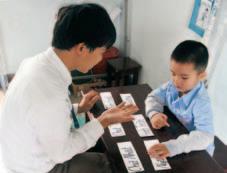
prepare for admission to inclusive mainstream schools.
© UnICEF/Viet nam/2012/Bisin
conducting awareness-raising campaigns, and they are also required to provide information to children and their families on how to prevent and report exploitation, violence and abuse.
International agencies and their government and community partners can help overcome prejudice by providing officials and public servants with a deeper understanding of the rights, capacities and challenges of children with disabilities. Parents’ organizations can play a pivotal role and should be reinforced so that children with disabilities are valued, cherished and supported by their families and communities.
Discrimination on the grounds of disability is a form of oppression. The establishment of a clear, legal entitlement to protection from discrimination is vital in reducing the vulnerability of children with disabilities. Where legislation banning discrimination does not exist, disabled people’s organizations and civil society as a whole will continue to have a crucial role to play in pressing for such laws.
nguyen, who has autism, attends a class specifically tailored to his needs at the Da nang Inclusive Education Resource Centre in Viet nam. Such centres were set up to help children
Dismantle barriers to inclusion
All children’s environments – schools, health facilities, public transport and so on – can be built to facilitate access and encourage the participation of children with disabilities alongside their peers. When children interact and understand each other across levels of ability, they all benefit. Universal design – which promotes usability by all people to the greatest extent possible
– should be applied to the construction of all public and private infrastructure, as well as to the development of inclusive school curricula, vocational training programmes, and child protection laws, policies and services.
Governments have the decisive role to play in introducing and implementing the legislative, administrative and educational measures necessary to protect children with disabilities from all
Convention on the Rights of Persons with Disabilities and Optional Protocol: Signatures and ratifications
COUNTRIES HAVE SIGNED THE CONVENTION* 128
Afghanistan
Albania
Algeria
Andorra
Angola
Antigua and Barbuda
Argentina
Armenia
Australia
Austria
Azerbaijan
Bahamas
Bahrain
Bangladesh
Barbados
Belarus
Belgium
Belize
Benin
Bhutan
*Includes
COUNTRIES HAVE RATIFIED THE CONVENTION* 91
COUNTRIES HAVE SIGNED THE PROTOCOL 76
Bolivia (Plurinational State of)
Bosnia and Herzegovina
Botswana
Brazil
Brunei Darussalam
Bulgaria
Burkina Faso
Burundi
Cambodia
Cameroon
Canada
Cape Verde
Central African Republic
Chad
Chile
China
Colombia
Comoros
Congo
Cook Islands
COUNTRIES HAVE RATIFIED THE PROTOCOL
Costa Rica
Côte d’Ivoire
Croatia
Cuba
Cyprus
Czech Republic
Democratic People’s Republic of Korea
Democratic Republic of the Congo
Denmark
Djibouti
Dominica
Dominican Republic
Ecuador
Egypt
El Salvador
Equatorial Guinea
Eritrea
Estonia
27
COUNTRIES HAVE NOT SIGNED
Ethiopia
Fiji
Finland
France
Gabon
Gambia
Georgia
Germany
Ghana
Greece
Grenada
Guatemala
Guinea
Guinea-Bissau
Guyana
Haiti
Honduras
Hungary
Iceland
India
forms of exploitation, violence and abuse. It is not appropriate to create separate systems for children with disabilities – the goal must be inclusive, high-quality protection mechanisms suitable and accessible to all children.
one such mechanism is birth registration, an essential element of protection. Efforts to register children with disabilities – and thereby render them visible – deserve priority.
End institutionalization
Institutions are poor substitutes for a nurturing home life, even if they are well run and monitored. Immediate measures to reduce overreliance on them could include a moratorium on new admissions. This should be accompanied by the promotion of and increased support for family-based care and community-based rehabilitation. Making public services, schools and health systems
Indonesia
Iran (Islamic Republic of)
Iraq
Ireland
Israel
Italy
Jamaica
Japan
Jordan
Kazakhstan
Kenya
Kiribati
Kuwait
Kyrgyzstan
Lao People’s
Democratic Republic
Latvia
Lebanon
Lesotho
Liberia
Libya
Liechtenstein
Lithuania
Luxembourg
Madagascar
Malawi
Malaysia
Maldives
Mali
Malta
Marshall Islands
Mauritania
Mauritius
Mexico
Micronesia (Federated States of)
Monaco
Mongolia
Montenegro
Morocco
Mozambique
Myanmar
Namibia
Nauru
Nepal
Netherlands
New Zealand
Nicaragua
Niger
Nigeria
Niue
Norway
Oman
Pakistan
Palau
Panama
Papua New Guinea
Paraguay
Peru
Philippines
Poland
Portugal
Qatar
Republic of Korea
Republic of Moldova
Romania
Russian Federation
Rwanda
Saint Kitts and Nevis
Saint Lucia
Saint Vincent and the Grenadines
Samoa
San Marino
Sao Tome and Principe
Saudi Arabia
Senegal
Serbia
Seychelles
Sierra Leone
Singapore
Slovakia
Slovenia
Solomon Islands
Somalia
South Africa
South Sudanδ
Spain
Sri Lanka
Sudanδ
Suriname
Swaziland
Sweden
Switzerland
Syrian Arab Republic
Tajikistan
Thailand
The former Yugoslav Republic of Macedonia
Timor-Leste
Togo
Tonga
Trinidad and Tobago
Tunisia
Turkey
Turkmenistan
Tuvalu
Uganda
Ukraine
United Arab Emirates
United Kingdom
United Republic of Tanzania
United States
Uruguay
Uzbekistan
Vanuatu
Venezuela (Bolivarian Republic of)
Viet Nam
Yemen
Zambia
Zimbabwe
accessible and responsive to the needs of children with disabilities and their families will reduce the pressure to send children away in the first place.
Support families
Disability in the family is often associated with higher costs of living and lost opportunities to earn income, and thus may increase the risk of becoming or remaining poor. Poverty makes it harder for children to obtain needed services and assistive technology.
Social policies should take into account the monetary and time costs associated with disability. These can be offset with social grants, subsidies for transportation or funding for personal assistants or respite care. Cash benefits are easier to administer, more flexible at meeting particular needs, and also respect the decision-making rights of parents and children. Existing cash transfer
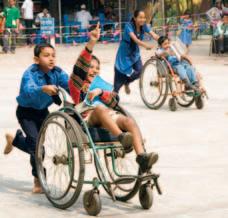
Children with and without disabilities participate in school festivities in Bangladesh.
programmes can be adapted so that families caring for children with disabilities are not excluded or offered insufficient support.
Move beyond minimum standards
Existing supports and services should be continually assessed with a view to achieving the best possible quality – not just meeting minimum standards. Attention needs to focus on serving the individual child as well as transforming entire systems and societies.
In this process of evaluation, the importance of participation by children with disabilities and their families cannot be overstated. Children and young people with disabilities are among the most authoritative sources of information on what they need and whether their needs are being met.
Coordinate services to support the child
The effects of disability cut across sectors, requiring coordinated services to address the full range of challenges facing children with disabilities and their families. A coordinated programme of early intervention across the health, education and welfare sectors would help to promote the early identification and management of childhood disabilities. Earlier interventions have been shown to lead to larger gains in functional capacity, and removing barriers earlier in life lessens the compounding effect of the multiple barriers faced by children with disabilities.
Improvements in ability will have greater impact if school systems are willing and able to accept children with disabilities and meet their needs, while inclusive school-to-work programmes as well as economy-wide efforts to promote the employment of people with disabilities will make acquiring an education more meaningful for them.
Conventions, optional protocols, signatures and ratifications
A Convention is a formal, multilateral agreement between many States parties.
An Optional Protocol to a Convention is a legal instrument intended to supplement the original agreement by establishing additional rights or obligations. Such a protocol is optional in the sense that States parties to a Convention are not automatically bound by its provisions, but must ratify it independently. Thus, a State may be party to a Convention but not to its optional Protocols.
In most cases, a State becomes party to a Convention by following two steps: signature and ratification.
By signing a Convention, a State indicates its intention to take steps to examine the Convention and its compatibility with domestic law. A signature does not create a legal obligation to be bound by a Convention’s provisions, but it indicates that a State will not take actions that would undermine the purpose of the Convention.
Ratification is the concrete action by which a State agrees to be legally bound by the terms of a Convention. The procedure varies according to each country’s particular legislative structure. In some cases, a state will accede to a Convention or optional Protocol. Essentially, accession is like ratifying without first having to sign.
More detailed definitions are available at <http://treaties.un.org/Pages/overview.aspx?path=overview/definition/page 1_en.xml>.
The Convention on the Rights of Persons with Disabilities is available at <http://treaties.un.org/doc/Publication/CTC/Ch_IV_15.pdf>.
The Optional Protocol is available at <http://treaties.un.org/doc/Publication/CTC/Ch-15-a.pdf>.
Involve children with disabilities in making decisions
Children and adolescents with disabilities belong at the centre of efforts to build inclusive societies –not just as beneficiaries, but as agents of change. They are uniquely qualified to provide information on whether their needs are being met.
States parties to the CRC and CRPD have affirmed the right of children with disabilities to express their views on matters concerning them and to be consulted when legislation and policies concerning them are developed and implemented. To that end, decision-makers will need to communicate in ways and using means that are easily accessed and used by children and young people with disabilities.
The right to be heard applies to all children. A child who is able to express herself or himself is much less likely to be abused or exploited. Participation is especially important for such marginalized groups as children who live in institutions.
Global promise, local test
In order to fulfil the promises of the CRPD and the CRC, international agencies and donors and their national and local partners can include children with disabilities in the objectives, targets and monitoring of all development programmes.
Reliable and objective data are important to assist in planning and resource allocation and to place children with disabilities more clearly on the development agenda. To give impetus to the necessary statistical work, international donors can promote a concerted global research agenda on disability. In the meantime, programmes and budgets can be designed to allow for modifications as additional information is made available.
The ultimate proof of all global and national efforts will be local, the test being whether every child with a disability enjoys her or his rights – including access to services, support and opportunities – on a par with other children, even in the most remote settings and the most deprived circumstances.
TABLE 10: THE RATE OF pROGRESS
Lao People’s
SUMMARY INDICATORS#
s Due to the cession in July 2011 of the Republic of South Sudan by the Republic of the Sudan, and its subsequent admission to the United Nations on 14 July 2011, disaggregated data for the Sudan and South Sudan as separate States are not yet available for all indicators. Aggregated data presented are for the Sudan pre-cession (see Memorandum item).
# For a complete list of countries and areas in the regions, subregions and country categories, see page 98.
DEFINITIONS OF THE INDICATORS
Under-5 mortality rate – Probability of dying between birth and exactly 5 years of age, expressed per 1,000 live births.
Reduction since 1990 – Percentage reduction in the under-five mortality rate (U5MR) from 1990 to 2011. The United Nations Millennium Declaration in 2000 established a goal of a two-thirds (67 per cent) reduction in U5MR from 1990 to 2015. This indicator provides a current assessment of progress towards this goal.
GDP per capita – Gross domestic product (GDP) is the sum of value added by all resident producers plus any product taxes (less subsidies) not included in the valuation of output. GDP per capita is GDP divided by midyear population. Growth is calculated from constant price GDP data in local currency.
Total fertility rate – Number of children who would be born per woman if she lived to the end of her childbearing years and bore children at each age in accordance with prevailing agespecific fertility rates.
MAIN DATA SOURCES
Under-5 mortality rate – United Nations Inter-agency Group for Child Mortality Estimation (UNICEF, World Health Organization, United Nations Population Division and the World Bank).
GDP per capita – The World Bank.
Total fertility rate – United Nations Population Division.
NOTES
− Data not available.
u A negative value indicates an increase in the under-five mortality rate.
x Data refer to years or periods other than those specified in the column heading. Such data are not included in the calculation of regional and global averages.
Somewhere, a child is being told he cannot play because he cannot walk, or another that she cannot learn because she cannot see. That boy deserves a chance to play. And we all benefit when that girl, and all children, can read, learn and contribute.
The path forward will be challenging. But children do not accept unnecessary limits. Neither should we.
Anthony Lake Executive Director, UnICEF
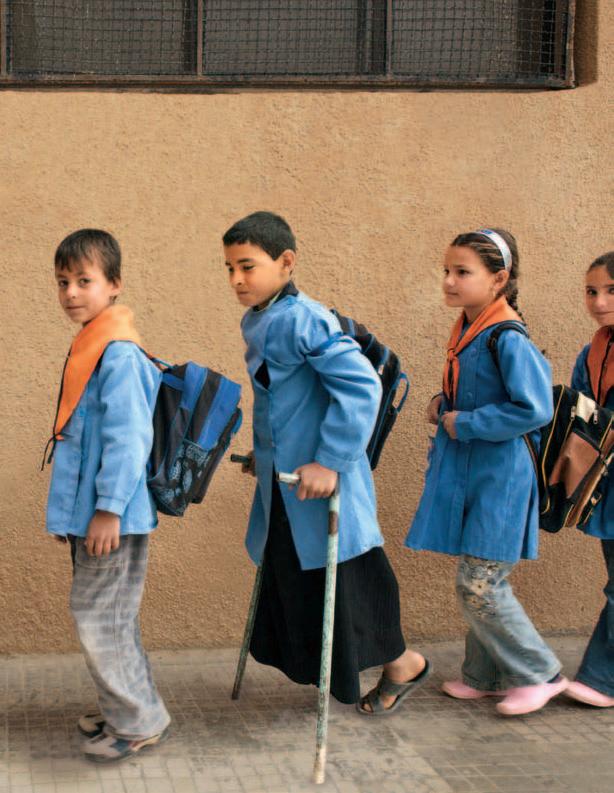
Cover photograph: Schoolchildren queue to enter their classroom in this 2007 photograph from the Syrian Arab Republic. © UNICEF/HQ2007-0745/Noorani
Design by Prographics, Inc.
United Nations Children’s Fund 3 United Nations Plaza New York, NY 10017
pubdoc@unicef.org www.unicef.org/sowc2013
© United Nations Children’s Fund (UNICEF) May 2013

To read this report online, scan this QR code or go to www.unicef.org/sowc2013