UNICEF Australia acknowledges the Traditional Custodians of the land and communities in which we and our partners work throughout Australia, and their connection to their lands, waters, and communities. We pay respect to Aboriginal and Torres Strait Islander peoples and cultures, and to Elders past and present, and to the children of today who are the Elders of the future.
A MESSAGE FROM THE CEO
At
UNICEF Australia, our purpose is to improve the lives of children, especially the most vulnerable and disadvantaged, so that every child has the opportunity to thrive. This commitment sits at the heart of everything we do.
Our work in Australia is guided by international standards like the United Nations Convention on the Rights of the Child and the United Nations Declaration on the Rights of Indigenous Peoples. These guides focus on, participation, culture, and making decisions that are best for children, shaping how we think about our responsibilities as an organisation.
We know that reconciliation is critical to the realisation and protection of the rights of Aboriginal and Torres Strait Islander peoples. Achieving this requires genuine, sustained effort from all, to address systemic inequity and exclusion particularly where these continue to affect Aboriginal and Torres Strait Islander children, families and communities.
At UNICEF Australia, we have worked in partnership with Aboriginal and Torres Strait Islander communities to support children and families. We’ve learned that real change comes from listening, respecting community leadership, and building trust.
I am proud to introduce our first Reflect Reconciliation Action Plan an important step in strengthening our commitment to reconciliation with Aboriginal and Torres Strait Islander peoples.
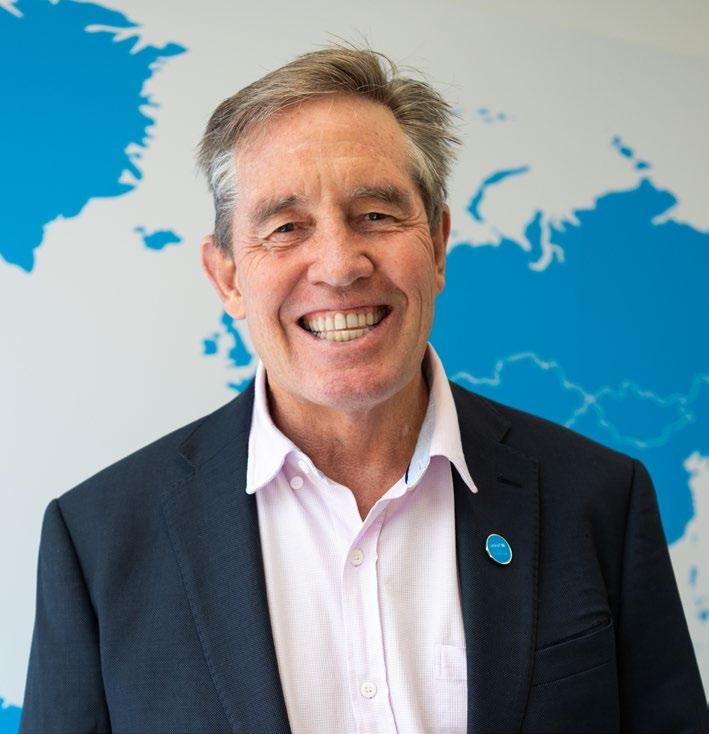
Tony Stuart, Chief Executive Officer, UNICEF Australia
This Reflect RAP is our first formal Reconciliation Action Plan. It represents a deliberate commitment to accountability, learning and change. It provides a clear framework to strengthen our understanding, deepen relationships and continue to strengthen our foundations for future action grounded in genuine partnership. As we begin this formal RAP journey, we do so with respect, curiosity and a genuine commitment to partnership. I ask our people, supporters and partners to do so alongside us as we reflect, learn and take meaningful steps toward reconciliation.
STATEMENT FROM CEO OF RECONCILIATION AUSTRALIA
Reconciliation Australia welcomes UNICEF Australia to the Reconciliation Action Plan (RAP) program with the formal endorsement of its inaugural Reflect RAP.
UNICEF Australia joins a network of more than 3,000 corporate, government, and not-for-profit organisations that have made a formal commitment to reconciliation through the RAP program.
Since 2006, RAPs have provided a framework for organisations to leverage their structures and diverse spheres of influence to support the national reconciliation movement. The program’s potential for impact is greater than ever, with over 5.5 million people now working or studying in an organisation with a RAP.
The four RAP types – Reflect, Innovate, Stretch and Elevate — allow RAP partners to continuously develop and strengthen reconciliation commitments in new ways. This Reflect RAP will lay the foundations, priming the workplace for future RAPs and reconciliation initiatives.
The RAP program’s strength is its framework of relationships, respect, and opportunities, allowing an organisation to strategically set its reconciliation commitments in line with its own business objectives, for the most effective outcomes.
These outcomes contribute towards the five dimensions of reconciliation: race relations; equality and equity; institutional integrity; unity; and historical acceptance.
It is critical to not only uphold all five dimensions of reconciliation, but also increase awareness of Aboriginal and Torres Strait Islander cultures, histories, knowledge, and leadership across all sectors of Australian society.
This Reflect RAP enables UNICEF Australia to deepen its understanding of its sphere of influence and the unique contribution it can make to lead progress across the five dimensions. Getting these first steps right will ensure the sustainability of future RAPs and reconciliation initiatives, and provide meaningful impact toward Australia’s reconciliation journey.
Congratulations UNICEF Australia, welcome to the RAP program, and I look forward to following your reconciliation journey in the years to come.
Karen Mundine Chief Executive Officer Reconciliation Australia
Every child in this world deserves the right to feel safe, be seen and be heard, that is a basic right that should be felt by all.
– Michelle Jackson
MEET THE ARTIST
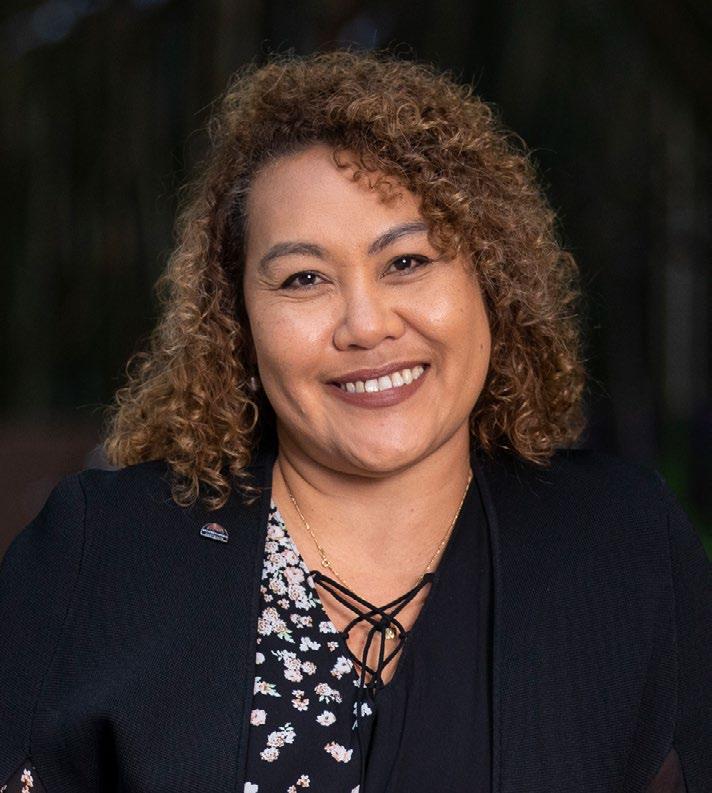
Michelle Jackson
Proud Gamilaraay Woman, Mother, Artist. Michelle Jackson is a graphic designer, art director, artist and creative Director with over 20 years experience within the fashion and magazine editorial industry. The majority of that time being spent as Art Editor/Director at ELLE Australia and Harper’s Bazaar. Seamlessly moving between designing pages to Art Direction on set for cover shoots and fashion/beauty editorial.
With a strong passion for colour and creating outside the expected, she is currently enjoying creating hand drawn/illustrated artworks for her studio La Terre Press and working alongside brands to create bespoke magic together.
Always inspired by Mob and her proud Gamilaraay roots, pushing boundaries and weaving a twist on traditional elements wherever possible. As well as sharing Language whenever she can. Her two daughters are her inspiration for everything and the reason she does it all. “Every child in this world deserves the right to feel safe, be seen and be heard, that is a basic right that should be felt by all. Our children are at the absolute heart of community, without their happiness and safety the entire foundation falls, they are the present and the future and should always be nurtured and protected.”
PHOTOGRAPHY: Sevak Babakhani.
OUR RAP DESIGN
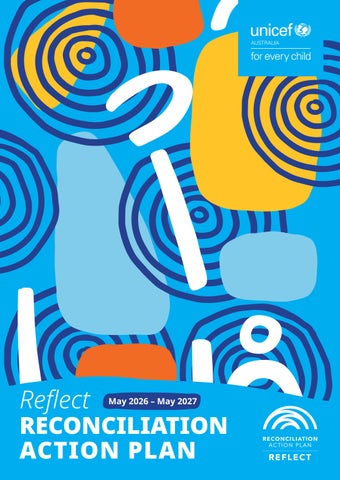
This artwork uses UNICEF’s organic shapes to represent people coming together and building a strong, grounded foundation. To me, reconciliation is about unity, trust, and creating a community where Indigenous and non‑Indigenous people support, listen to, and lift one another.
The white shapes draw from traditional symbols for family, woman, human, and child, reinforcing the central
importance of family and community. Children, especially, remain at the heart of this story. They are the most important and often the most vulnerable members of our community, and they deserve our constant protection.
“In every conversation about reconciliation, I believe children should always be at the front of mind.”
– Michelle Jackson
I joined the RAP Committee as even in some small way I wanted to contribute towards reconciliation in Australia. I think it’s important to hear and learn more about reconciliation, what it means and why it’s important.
Julia Donnelly, Campaign Manager, Domestic Programs and Advocacy, UNICEF AustraliaUNICEF Australia
OUR BUSINESS
UNICEF is the world’s leading children’s charity, working to protect and improve the lives of every child in over 190 countries. For 80 years, UNICEF has championed children’s rights, as mandated by the United Nations General Assembly and anchored by the United Nations Convention on the Rights of the Child (UNCRC).
Working alongside local partners, UNICEF delivers lifesaving support and drives sustainable, long lasting change for children in both emergency and development contexts. UNICEF Australia supports this global ambition by helping to ensure that every child in need across the Asia Pacific and beyond is healthy, educated, and safe. Funded entirely by voluntary donations, we deliver essential healthcare, nutrition, education, clean water, child protection, and lifesaving emergency support for children affected by crisis.
UNICEF works with governments at community, national and regional levels, including in Australia, to realise children’s rights and ensure they are at the heart of efforts to achieve the Sustainable Development Goals by 2030. UNICEF Australia delivers priority programs that address the critical needs of children and young people, particularly in underfunded programs in neighbouring countries. Through local partnerships, these programs build strong foundations from early childhood, protect children’s rights and support them to
I’m involved in the Reconciliation Committee because reconciliation is something I’ve seen the importance of first hand through meeting and learning from Elders in the past. I believe it’s our responsibility to listen, learn and act with respect.
Natasha Poulos, Senior Marketing Executive, Community Fundraising and Events, UNICEF Australia
reach their full potential. In Australia, we work to raise children’s voices and defend their rights. We undertake strategic advocacy on child rights priorities, playing an active role in advancing reform through policy submissions, evidence generation, partnerships, child and youth engagement, direct government engagement, and public awareness campaigns.
In Australia, we work to raise children’s voices and defend their rights.
UNICEF Australia employs a dedicated team of 130 professionals, primarily based at our main office in Pyrmont, New South Wales, with some team members working remotely across Australia. While we currently have no known staff who identify as Aboriginal and/or Torres Strait
Islander people; however, we have two volunteer young ambassadors who identify as Aboriginal people. We always strive to foster a diverse and inclusive workplace that supports the growth and development of our staff and are committed to increasing the recruitment, retention, and professional development of Aboriginal and Torres Strait Islander people within our organisation.
Established in 1966 to support and advance UNICEF goals through fundraising, advocacy and education, UNICEF Australia now has a significant presence across the country, yet our work extends beyond national borders, as we collaborate with global partners to advocate for the rights and wellbeing of every child, no matter what.
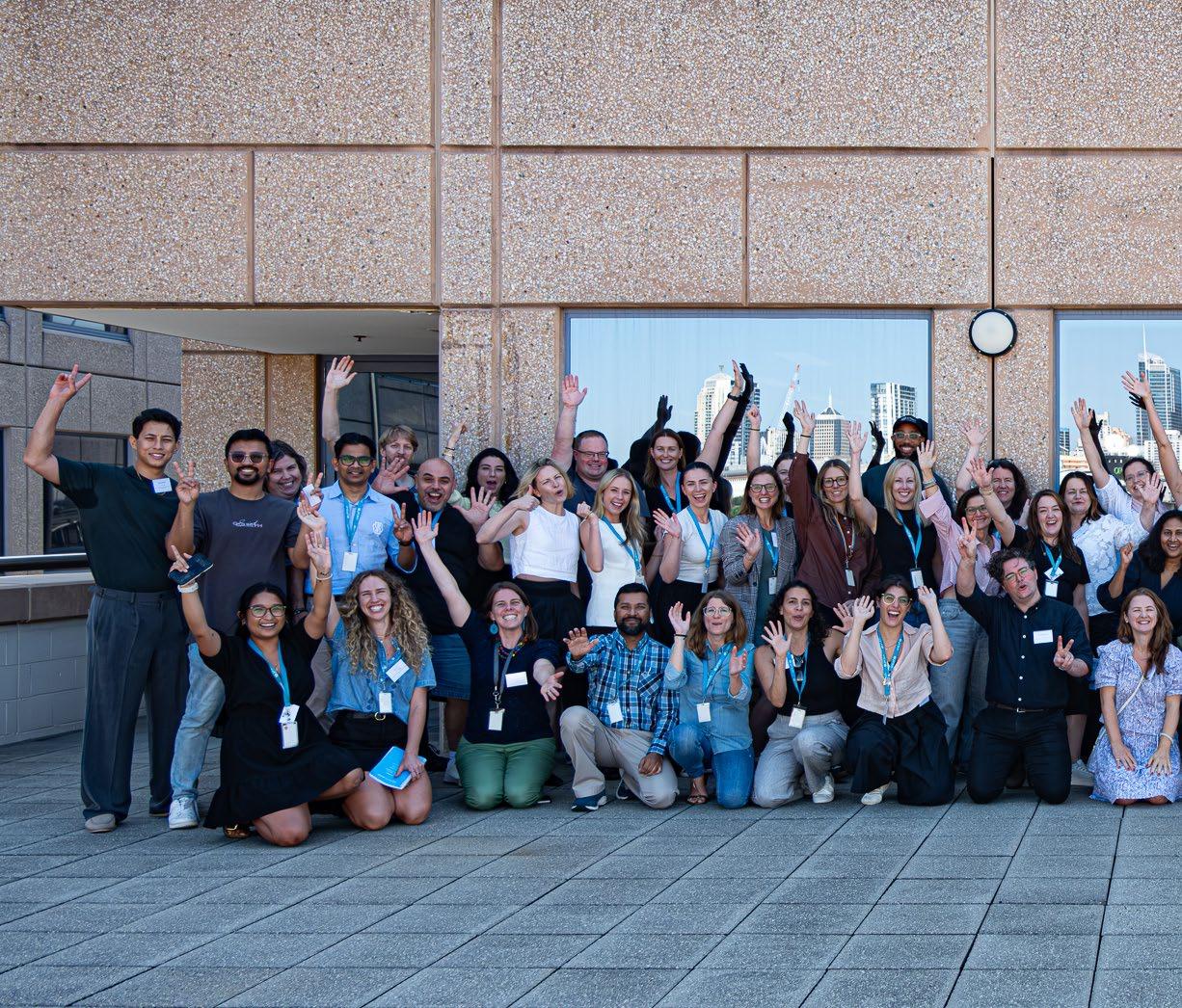
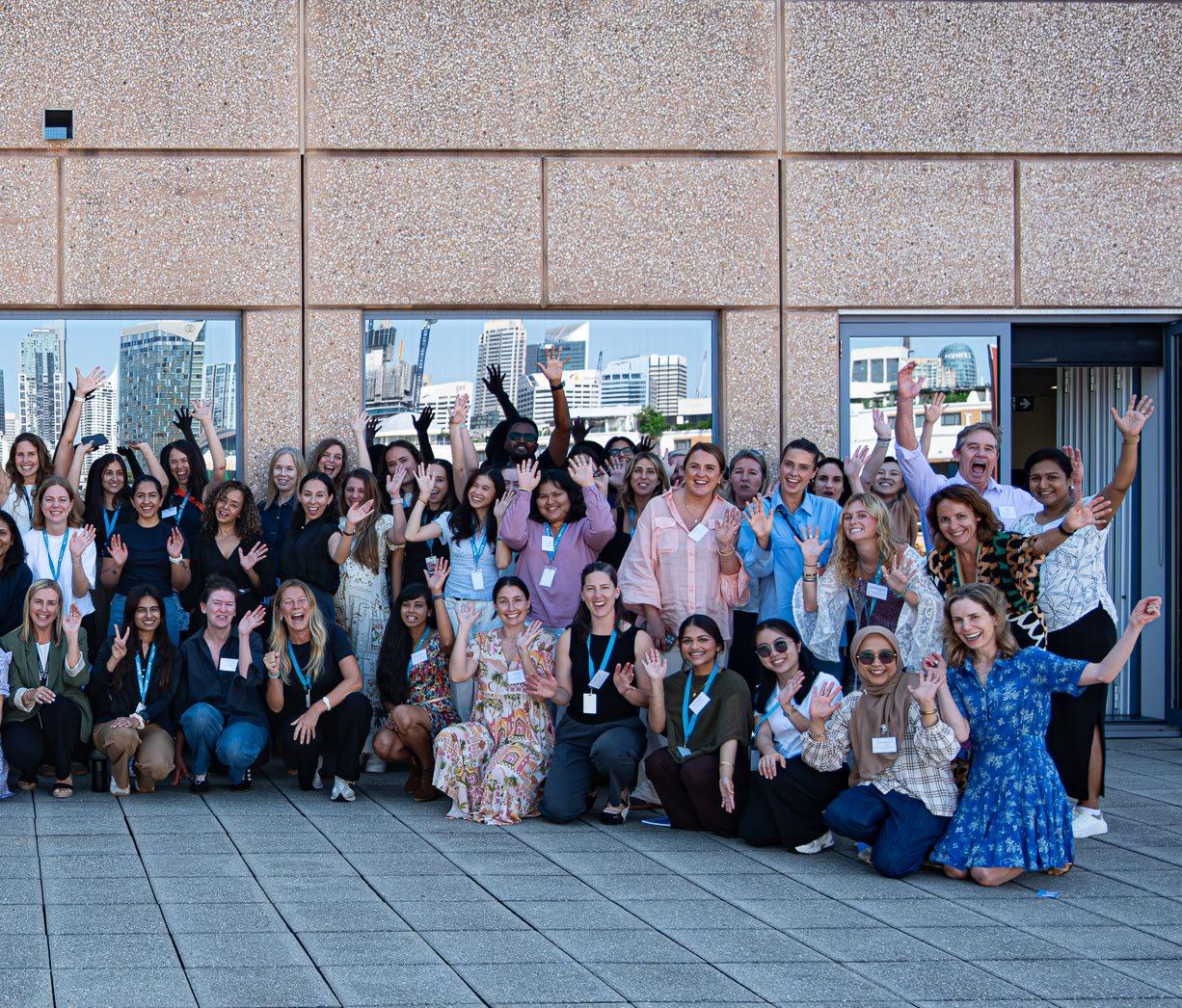
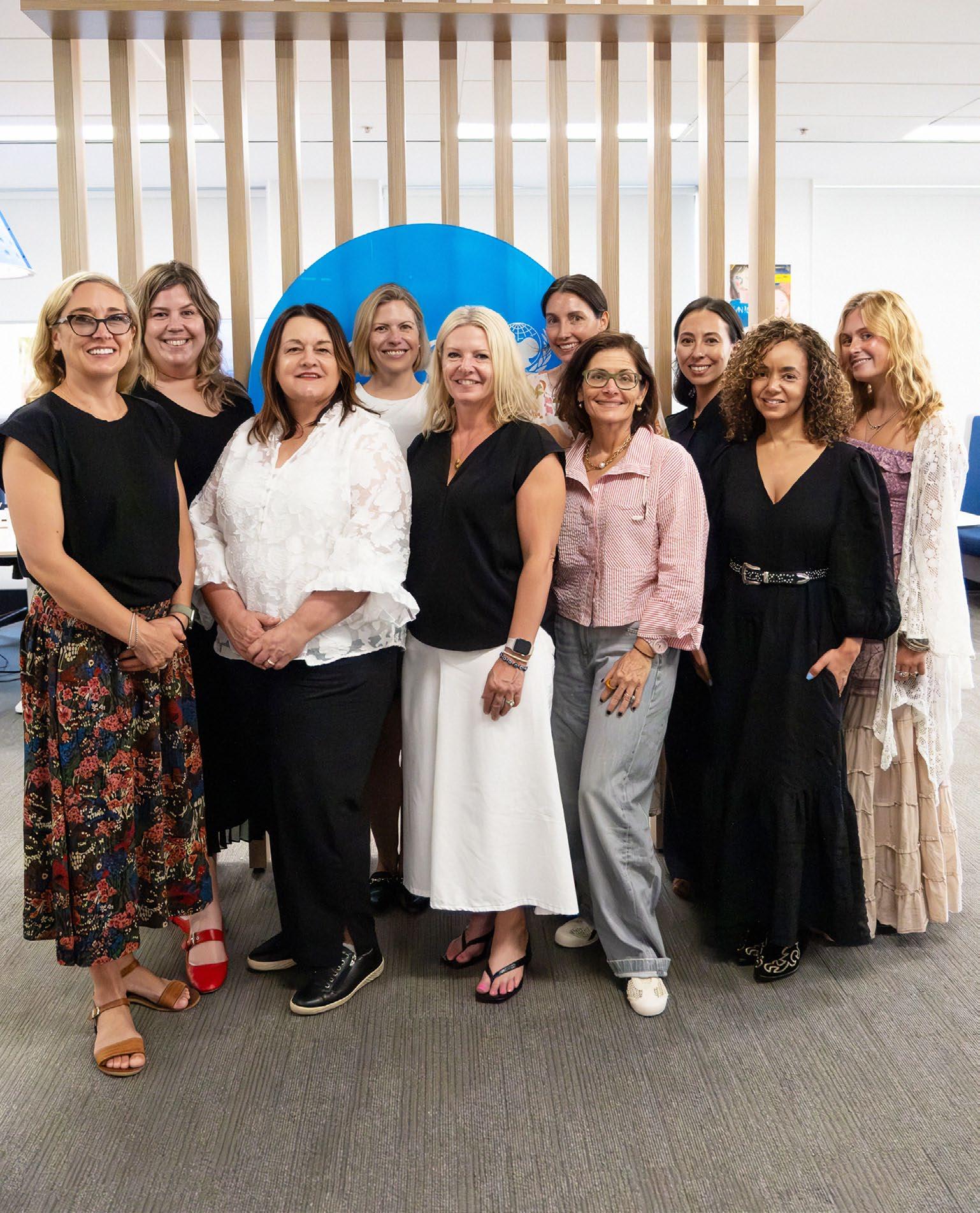
UNICEF Australia team
OUR RECONCILIATION ACTION PLAN
UNICEF Australia plays a crucial role in mobilising resources and raising awareness of children’s rights and the issues affecting them around the world.
Guided by our mandate under the UNCRC, we recognise our responsibility to advocate for the rights of all children, everywhere, regardless of religion, race, gender or their geographic location. In recent years, this commitment has led to a growing focus on our domestic work, ensuring that children in Australia can realise their rights and thrive.
In Australia, Aboriginal and Torres Strait Islander children and young people hold inherent rights under the UNCRC and the United Nations Declaration on the Rights of Indigenous Peoples (UNDRIP), including the right to be safe, supported and grow strong in their culture and identity. Yet systemic inequities mean these rights are not always fully realised, deeply impacting outcomes for Aboriginal and Torres Strait Islander children and young people across the country.
UNICEF Australia acknowledges that structural challenges demand structural change. As we deepen our domestic engagement, we are committed to transforming not only what we do, but how we do it, guided by principles of equity, cultural integrity, and autonomy. Evidence consistently shows that Aboriginal and Torres Strait Islander led solutions are the most effective in supporting children, families and communities. Our role is to listen, build respectful relationships, and collaborate in ways that enable community leadership and amplify Aboriginal and Torres Strait Islander voices.
As an international non government organisation, operating within the global UNICEF network, UNICEF Australia recognises that our mandate places parameters around what we can do domestically. This makes strong partnership and relationship building so important, ensuring we are using our sphere of influence, platforms and voice responsibly to support meaningful and tangible change for Aboriginal and Torres Strait Islander communities.
For us, reconciliation is a key part of our commitment to achieving equal rights and opportunities for all children in Australia.
UNICEF Australia is embarking on this Reflect RAP to better understand where we have come from, where we are now, and where we need to go in contributing to better outcomes with Aboriginal and Torres Strait Islander communities. We will use this plan as an opportunity to have conversations as an organisation, examine existing practices and policies, and build a shared vision for reconciliation in partnership with the Aboriginal and Torres Strait Islander peoples.
Our reconciliation journey is critical to ensure our organisational culture respects and celebrates Aboriginal and Torres Strait Islander cultures, and to ensure our engagement is meaningful and appropriate as we work to secure better outcomes for children and young people. • Es
Our RAP will be championed by our Director of People, a member of the Executive Leadership Team, who will lead internal engagement and awareness with the support of our RAP Committee.
Working with UNICEF Australia has helped me find my voice, connect with other passionate young people, and step more deeply into leadership grounded in culture, truthtelling and community care.
Sian McCowan, Young Ambassador, UNICEF Australia
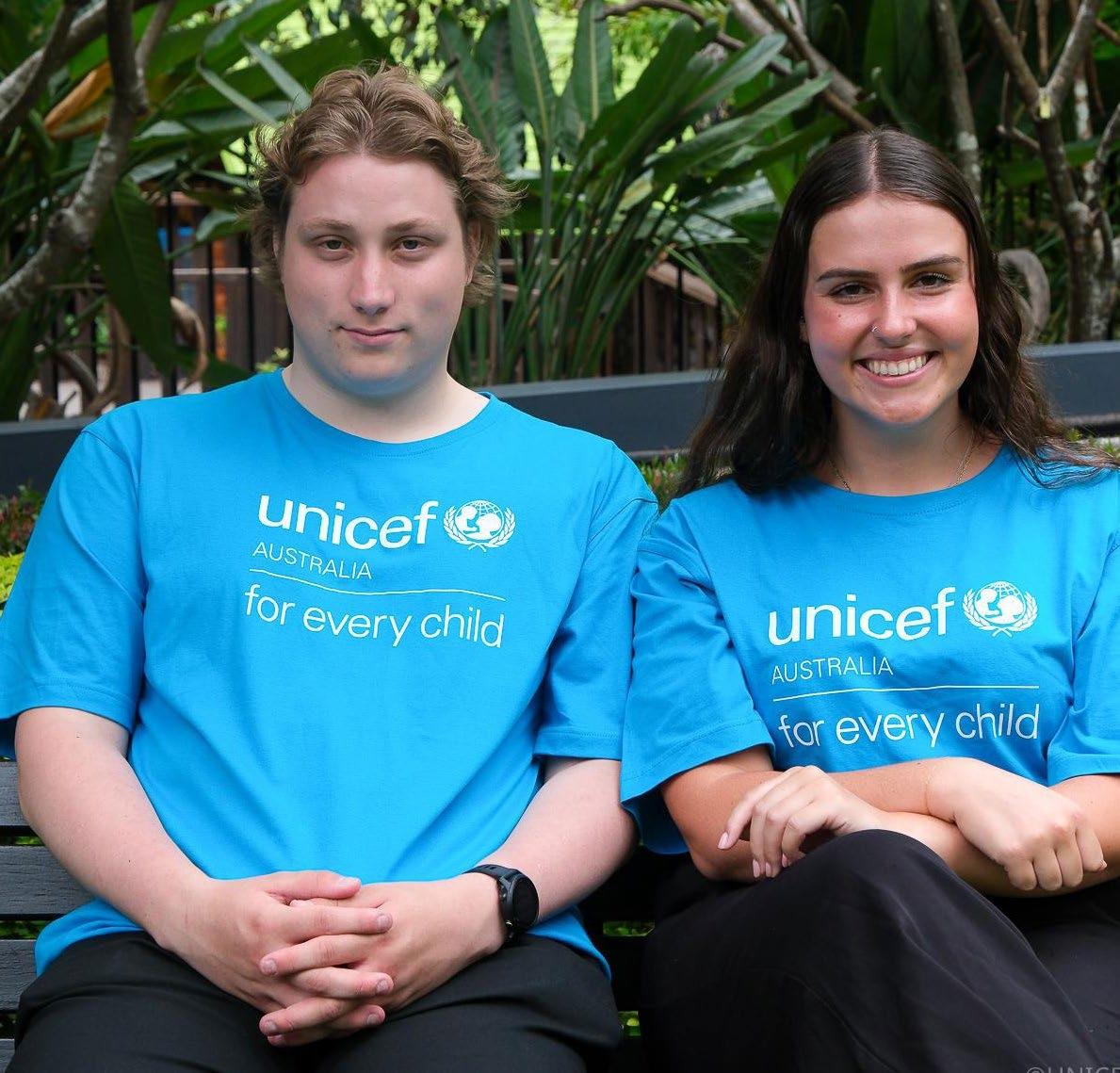
UNICEF Australia Young Ambassadors Reede Adams Beckett and Sian McCowan
THIS REFLECT RAP MARKS A FOUNDATIONAL
STEP
IN EMBEDDING RECONCILIATION INTO THE FABRIC OF OUR ORGANISATION. WE ARE COMMITTED TO ENSURING THAT THIS PLAN IS NOT JUST A DOCUMENT, BUT A LIVING COMMITMENT TO MEANINGFUL CHANGE.
Our approach to implementation includes:
Establishing a cross-functional RAP Committee
We have established a dedicated RAP Committee with representatives from each department, including People and Culture, Fundraising and Communications, Australian Programs and International Programs, to ensure that reconciliation deliverables are embedded throughout the organisation. Two Young Ambassadors who identify as Aboriginal people are also members of the Committee. Co Chaired by our Senior National Manager, Corporate Strategy & Growth and the Advocacy & Policy Manager, and supported by our RAP Champion and Executive Sponsor, the Committee will guide, monitor and champion the implementation of our RAP across UNICEF Australia.
Engaging with Aboriginal and Torres Strait Islander stakeholders
We will actively seek guidance and advice from Aboriginal and Torres Strait Islander peoples and organisations, with a particular focus on the voices of children and young people. This includes engagement through youth led initiatives and the ongoing contribution of our Aboriginal Young Ambassadors , whose insights will help guide and inform the development and implementation of our RAP.
Promoting active participation in reconciliation initiatives across teams
Reconciliation is a shared commitment and responsibility across UNICEF Australia. We will continue to ensure representation from each department on the RAP Committee, deliver organisation wide initiatives and events, and invest in learning and development to build cultural understanding and responsiveness among all staff.
Regular reporting and accountability
We will report regularly on RAP progress through internal updates, staff briefings, and formal submissions to Reconciliation Australia. The RAP Committee will track deliverables and ensure transparency in how we measure, reflect on and communicate our impact.
I’m involved in the Reconciliation Action Plan at UNICEF Australia to help make reconciliation part of how we engage with communities and Aboriginal and Torres Strait Islander young people - ensuring access and opportunities to be involved and have their voices amplified.
Ruzika Soldo, Head of Impact and Engagement, UNICEF Australia
Living and working on Whadjuk Noongar Country, I see reconciliation as a responsibility to ensure First Nations voices and leadership guide how we work with and support children and communities.
Elaine Jung, Philanthropy Manager, UNICEF Australia
OUR PARTNERSHIPS & CURRENT ACTIVITIES
In 2023, UNICEF Australia publicly declared our support for enshrining an Aboriginal and Torres Strait Islander Voice to Parliament in Australia’s Constitution. We view this reform as consistent with the guiding principles of key international human rights treaties including the UNCRC and UNDRIP. These principles affirm the rights to self determination, participation, and decision making in the best interests of children, including the importance of listening to and respecting the voices of children and young people.
As the Uluru Statement from the Heart so beautifully articulates:
When we have power over our destiny our children will flourish. They will walk in two worlds, and their culture will be a gift to their country.
UNICEF Australia is committed to supporting the reforms called for by Aboriginal and Torres Strait Islander peoples in the Uluru Statement from the Heart. As part of our reconciliation journey, we will explore how we can meaningfully champion the principles of Voice, Treaty and Truth, building on existing partnerships while also forming new relationships where opportunities arise.
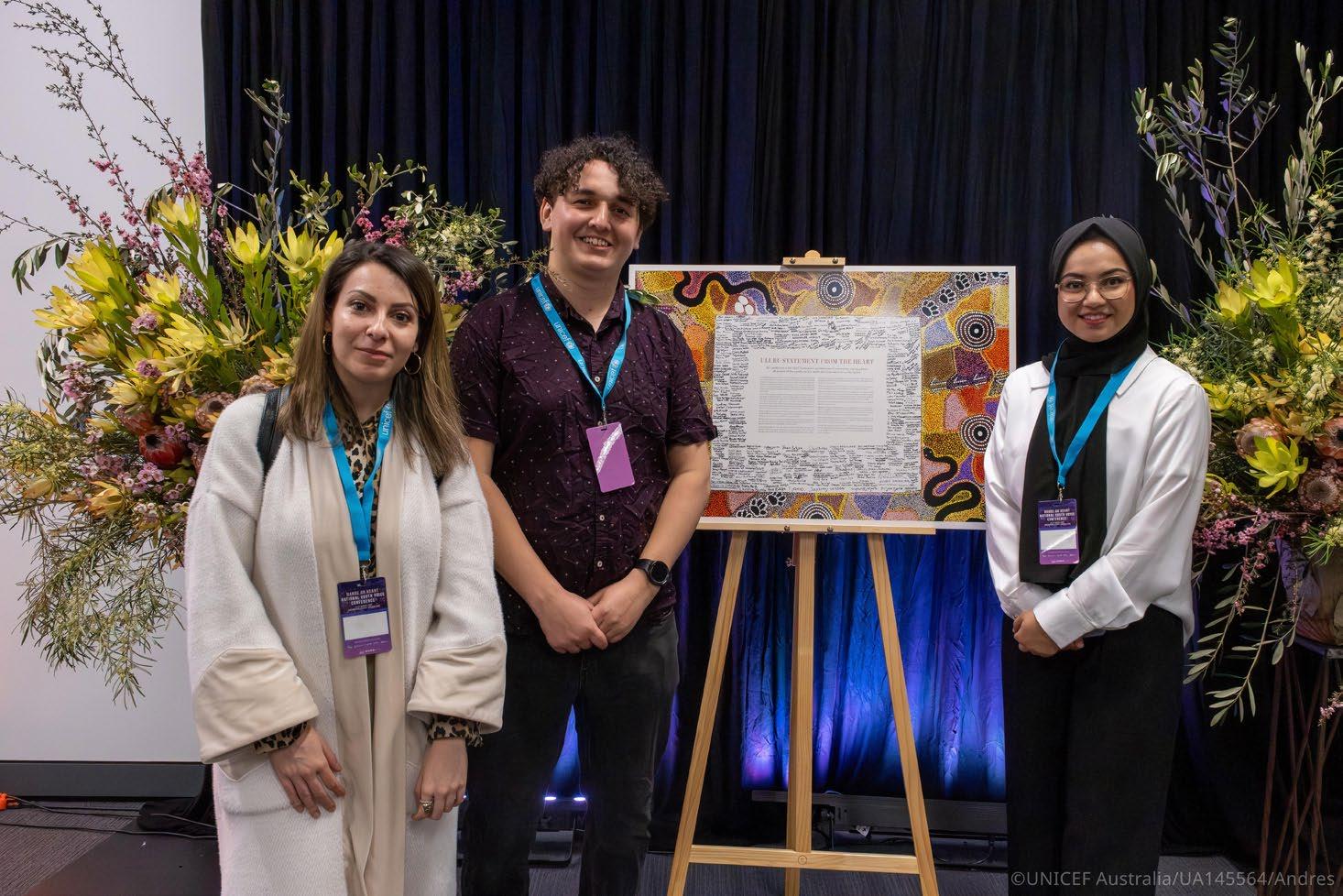
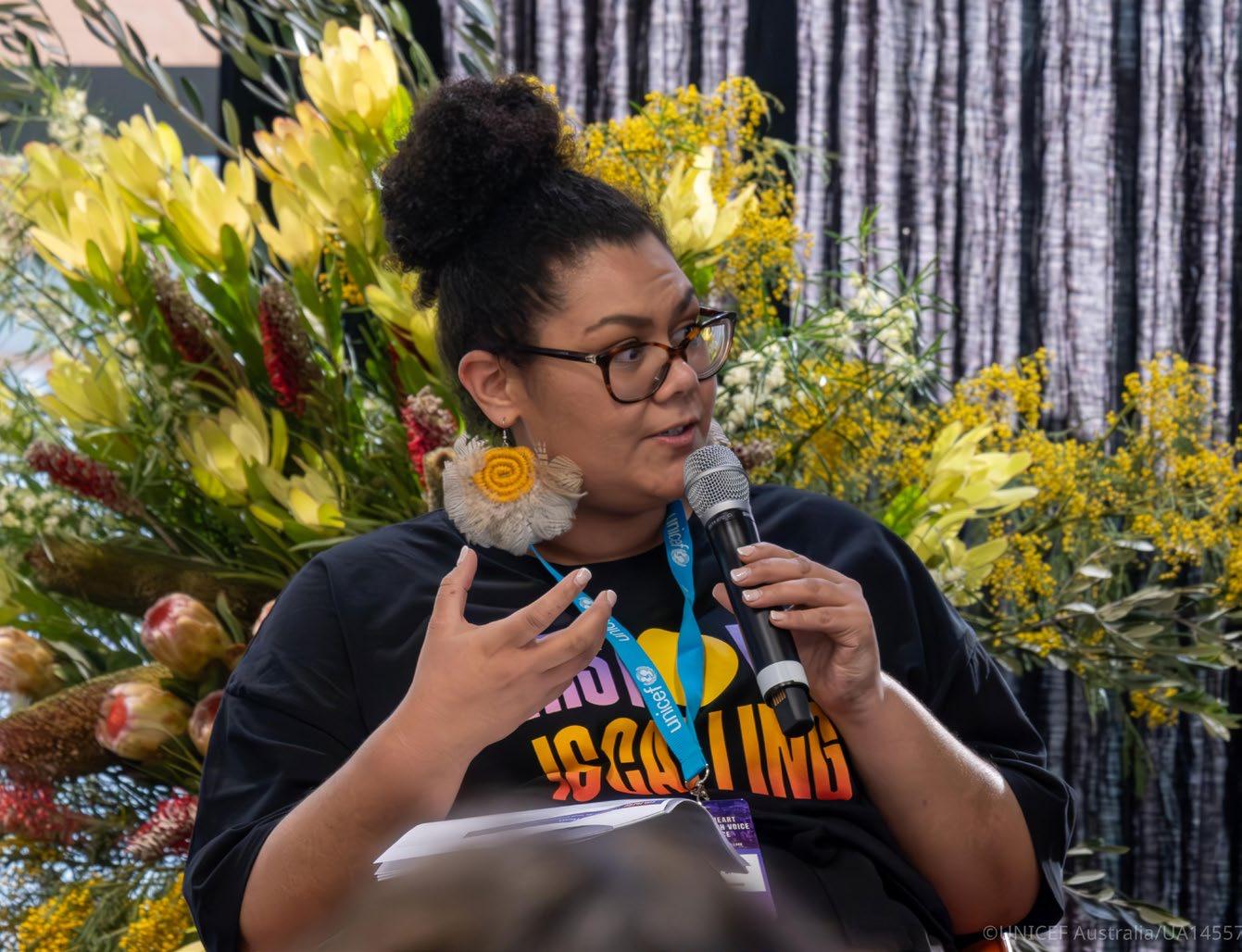
We have an established relationship with the Uluru Youth Dialogue, including our support for the Hands on Heart conference in 2023, which brought together young people from across Australia to advocate for social justice reforms. We remain committed to this relationship and to exploring further opportunities to support Aboriginal and Torres Strait Islander youth led initiatives. UNICEF Australia will also continue to strengthen relationships with Aboriginal and Torres Strait Islander organisations and leaders, including SNAICC, and the Aboriginal and Torres Strait Islander Caucus of Children’s Commissioners and Guardians. Through these partnerships, we seek to listen, learn and contribute in ways that support Aboriginal and Torres Strait Islander leadership and improve outcomes for children and young people.
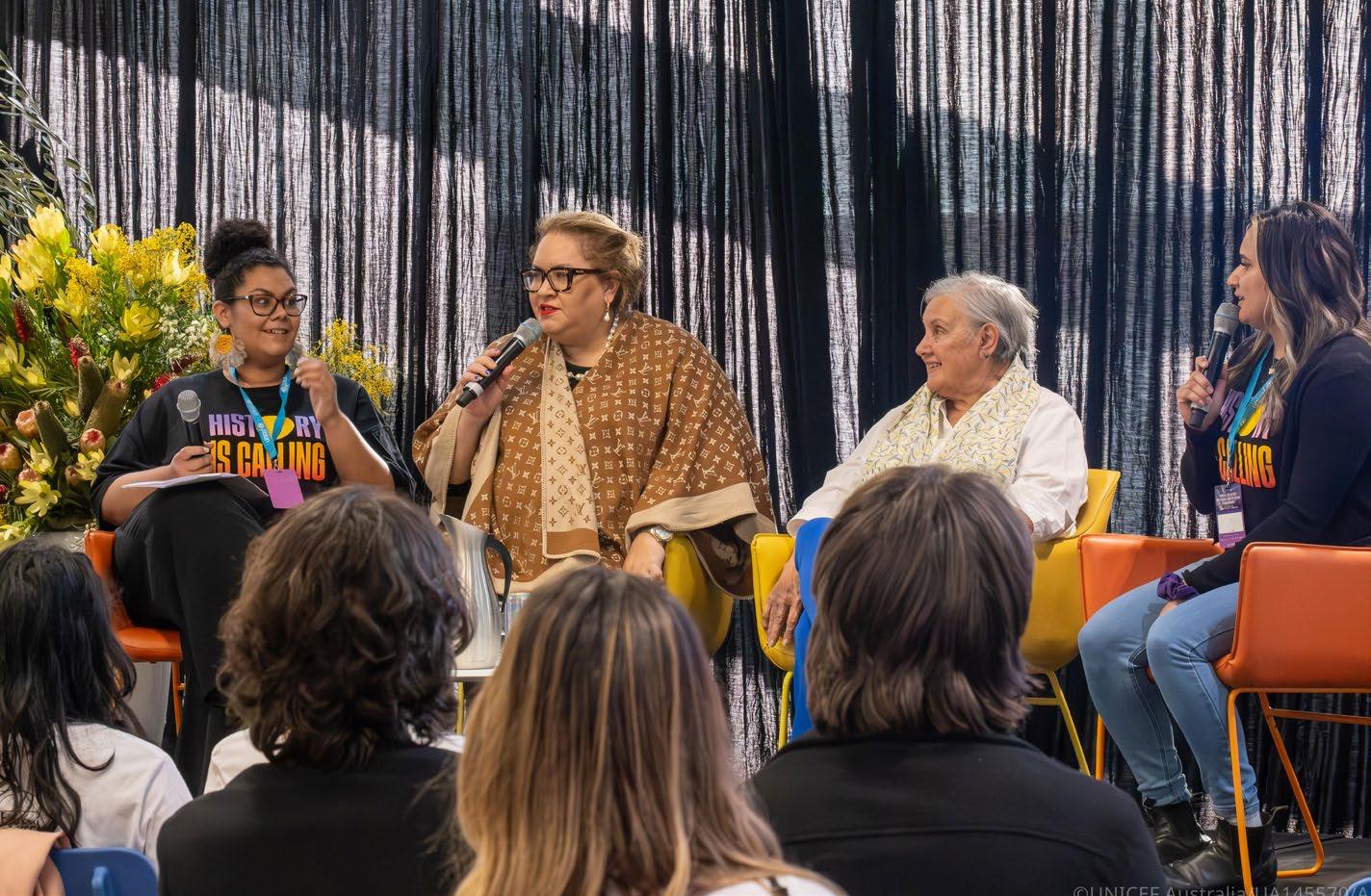
Hands on Heart Conference
Hands on Heart Conference (2023)
The Uluru Youth Dialogue partnered with UNICEF Australia, Australian Youth Affairs Coalition and Multicultural Youth Advocacy Network (Australia) to host the Hands on Heart Youth Voice National Conference at Barangaroo, Sydney on Gadigal Land.
RAP ACTIONS
RELATIONSHIPS
1 Establish and strengthen mutually beneficial relationships with Aboriginal and Torres Strait Islander stakeholders and organisations.
Deliverable
Identify Aboriginal and Torres Strait Islander stakeholders and organisations within our local area or sphere of influence.
Research best practice and principles that support partnerships with Aboriginal and Torres Strait Islander stakeholders and organisations.
Timeline Responsibility
May 2026
May 2027
2 Build relationships through celebrating National Reconciliation Week (NRW).
Deliverable
Circulate Reconciliation Australia’s NRW resources and reconciliation materials to our staff.
Campaign Manager, Australia Programs
Advocacy & Policy Manager, Australian Programs
Timeline Responsibility
May 2026
RAP Committee members to participate in an external NRW event. June 2026
All staff members to participate in an internal NRW event. June 2026
Encourage and support staff and senior leaders to participate in at least one external event to recognise and celebrate NRW.
September 2026
3 Promote reconciliation through our sphere of influence
Deliverable
Communicate our commitment to reconciliation to all staff through a position statement and publication on website
Identify RAP and other like minded organisations that we could approach to collaborate with on our reconciliation journey.
Identify external stakeholders that our organisation can engage with on our reconciliation journey (other RAP organisations).
Senior National Manger, Corporate Strategy and Growth
Marketing Lead, Community Fundraising
Senior National Manger, Corporate Strategy and Growth
Director of People & Culture
Timeline Responsibility
May 2026
June 2026
September 2026
4 Promote positive race relations through anti discrimination strategies.
Australian Programs/Corp Partnerships
Australian Programs/Corp Partnerships
Australian Programs/Corp Partnerships
Deliverable Timeline Responsibility
Research best practice and policies in areas of race relations and anti discrimination.
Conduct a review of HR policies and procedures to identify existing anti discrimination provisions, and future needs.
October 2026
March 2027
Advocacy & Policy Manager, Australian Programs
Senior National Manger, Corporate Strategy and Growth
RESPECT
5 Increase understanding, value and recognition of Aboriginal and Torres Strait Islander cultures, histories, knowledge and rights through cultural learning.
Deliverable
Conduct a review of cultural learning needs within our organisation.
Develop a business case for increasing understanding, value and recognition of Aboriginal and Torres Strait Islander cultures, histories, knowledge and rights within our organisation.
May 2027
October 2026
Senior National Manger, Corporate Strategy and Growth
Advocacy & Policy Manager, Australian Programs
6 Demonstrate respect to Aboriginal and Torres Strait Islander peoples by observing cultural protocols. Deliverable
Develop an understanding of the local Traditional Owners or Custodians of the lands and waters within our organisation’s operational area.
Increase staff’s understanding of the purpose and significance behind cultural protocols, including Acknowledgement of Country and Welcome to Country protocols.
March 2027
March 2027
7 Build respect for Aboriginal and Torres Strait Islander cultures and histories by celebrating NAIDOC Week.
International Programs Manager, International Programs
International Programs Manager, International Programs
Deliverable Timeline Responsibility
Raise awareness and share information amongst our staff about the meaning of NAIDOC Week.
Introduce our staff to NAIDOC Week by promoting external events in our local area.
RAP Working Group to participate in an external NAIDOC Week event.
June 2026
June 2026
July 2026
This RAP matters to us because reconciliation is about turning intention into action, grounded in listening, learning, and respect for First Nations Peoples for lasting change.
– Naomi Graham, Advocacy and Policy Manager, Australian Programs and Lisa van der Westhuizen, Senior National Manager, Corporate Strategy and Growth.
Marketing Lead, Community Fundraising
Marketing Lead, Community Fundraising
Supporter Experience Executive
OPPORTUNITIES
8 Improve employment outcomes by increasing Aboriginal and Torres Strait Islander recruitment, retention and professional development.
Deliverable Timeline Responsibility
Build understanding of current Aboriginal and Torres Strait Islander staffing to inform future employment and professional development opportunities.
Develop a business case for Aboriginal and Torres Strait Islander employment within our organisation.
May 2027
October 2026
Senior National Manger, Corporate Strategy and Growth
Senior National Manger, Corporate Strategy and Growth
Advocacy and Policy Manager, Australian Programs
9 Increase Aboriginal and Torres Strait Islander supplier diversity to support improved
Deliverable Timeline Responsibility
Develop a business case for procurement from Aboriginal and Torres Strait Islander owned businesses.
Investigate Supply Nation membership.
October 2026 Philanthropy Manager
October 2026 Senior Partnerships Manager
I joined the RAP Committee because reconciliation isn’t just something to acknowledge, it’s something we have a responsibility to actively contribute to, learn from, and embed in the way we work every day.
Jemma McInerney-Wand, Office Administrator, UNICEF Australia
GOVERNANCE
10 Establish and maintain an effective RAP Committee to drive governance of the RAP.
Deliverable
Finalise a Terms of Reference for the Committee.
Maintain Aboriginal and Torres Strait Islander representation on the Committee.
Maintain youth representation on the Committee
Timeline Responsibility
December 2025
September 2026
September 2026
Maintain a Committee to govern RAP implementation. March 2027
Advocacy and Policy Manager, Australian Programs
Head of Impact and Engagement, Australian Programs
Head of Impact and Engagement, Australian Programs
Director of People & Culture
11 Provide appropriate support for effective implementation of RAP commitments.
Deliverable
Define appropriate systems and capability to track, measure and report on RAP commitments.
Maintain a senior leader to champion our RAP internally
Define resource needs for RAP implementation.
Timeline Responsibility
January 2026
January 2026
August 2026
Engage senior leaders in the delivery of RAP commitments. March 2027
Maintain a senior leader in our Executive Leadership Team to champion our RAP internally.
March 2027
Director of People & Culture
Senior National Manger, Corporate Strategy and Growth
Senior National Manger, Corporate Strategy and Growth
Director of People & Culture
Director of People & Culture
12 Build accountability and transparency through reporting RAP achievements, challenges and learnings both internally and externally.
Deliverable
Contact Reconciliation Australia to verify that our primary and secondary contact details are up to date, to ensure we do not miss out on important RAP correspondence.
Contact Reconciliation Australia to request our unique link, to access the online RAP Impact Measurement Questionnaire.
Complete and submit the annual RAP Impact Measurement Questionnaire to Reconciliation Australia.
Timeline Responsibility
June annually
1 August annually
September 2026
13 Continue our reconciliation journey by developing our next RAP.
Deliverable
Register via Reconciliation Australia’s website to begin developing our next RAP.
Senior National Manger, Corporate Strategy and Growth
Advocacy and Policy Manager, Australian Programs
Senior National Manger, Corporate Strategy and Growth
Advocacy and Policy Manager, Australian Programs
Senior National Manger, Corporate Strategy and Growth
Advocacy and Policy Manager, Australian Programs
Timeline Responsibility
September 2026
Senior National Manger, Corporate Strategy and Growth
Advocacy and Policy Manager, Australian Programs
Naomi Graham Advocacy and Policy Manager, Australian Programs
email: ngraham@unicef.org.au
phone: 1300 884 233
Lisa van der Westhuizen Senior National Manager, Corporate Strategy and Growth