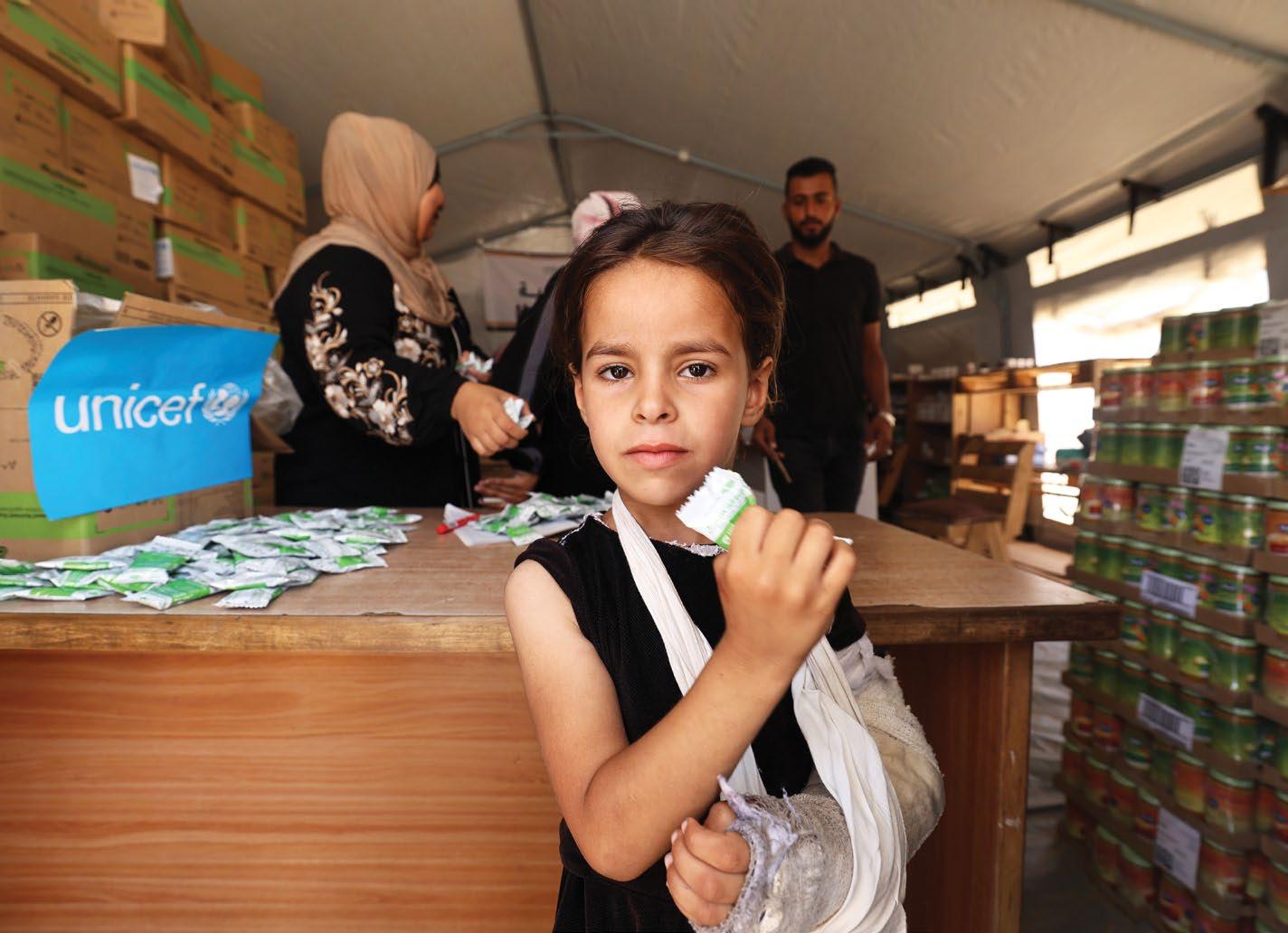
2025 saw some of the darkest days for children in Gaza since the war began.
The humanitarian situation continued to deteriorate as severe malnutrition spread across Gaza, with famine taking hold in some areas. Severe access constraints forced many families to travel long distances in search of food, including to four non-UN aid distribution sites. These journeys were often dangerous and chaotic, with many families returning without receiving assistance. At the same time, preventable diseases such as polio reemerged after decades, driven by the collapse of health, water and sanitation systems.
Even after a ceasefire was announced in October, violence, hunger and displacement persisted. More than 1 million children will be forever shaped by the trauma and deprivation of two years of war. Homes, schools and hospitals lie in ruins, and many families
are now living in overcrowded shelters or makeshift tents.
Despite immense risks, UNICEF remained on the ground. Humanitarian workers continued delivering lifesaving nutrition, health care, safe water, shelter, education and psychosocial support. Although media access to Gaza has been restricted since October 2023, six UNICEF spokespeople spent extended periods in Gaza throughout the year, reporting on famine, mass displacement, recurrent flooding, deteriorating safety for humanitarian workers, and critical restraints on medical evacuations. Among them, Australians James Elder, Tess Ingram and Hamish Young shared these realities with Australian audiences under extraordinary conditions.
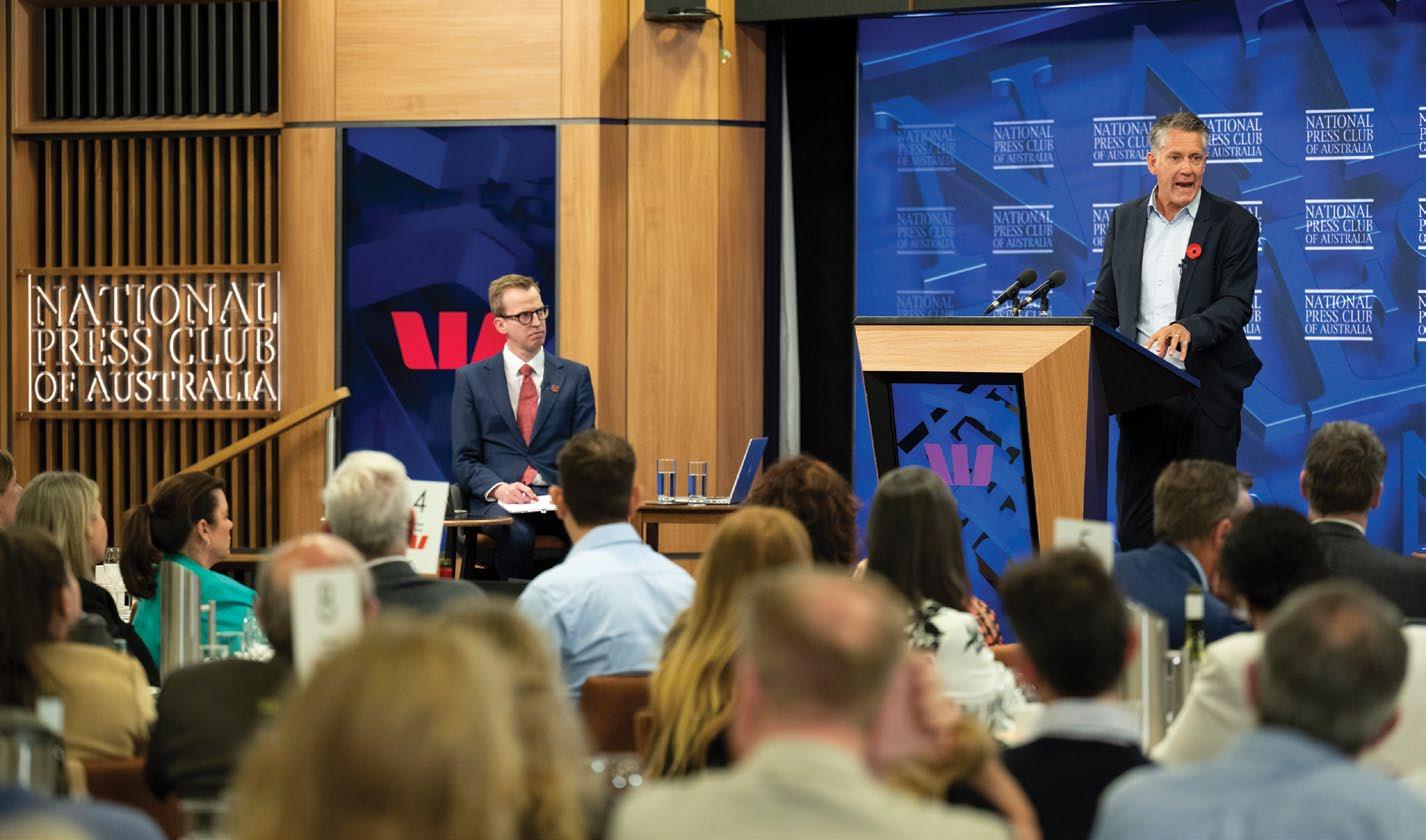
Following the October ceasefire, UNICEF Global Spokesperson James Elder addressed the National Press Club in Canberra. While the ceasefire offered a glimmer of hope, it also revealed the scale of unmet need, and the long and difficult road ahead to help children and their families recover and rebuild.
BELOW UNICEF Global Spokesperson James Elder addressed the National Press Club in Canberra.
Children at the centre of Sudan’s crisis
Since April 2023, ongoing fighting has forced millions of people to flee their homes or displacement sites – often repeatedly, within Sudan or across its borders. This has resulted in the world’s largest child displacement crisis, with around 5 million children displaced.
For families, daily life has become a fight for survival. Hunger is widespread, particularly in parts of Darfur and Kordofan, where intense fighting has cut communities off from lifesaving supplies and damaged or destroyed critical infrastructure. Unsafe water, limited healthcare and damaged sanitation systems have fuelled disease outbreaks, including cholera. Prolonged displacement has left at least 8 million children out of school and increasingly exposed to exploitation and abuse.
With limited global attention, raising awareness of this compounding emergency remained a high priority. National media coverage was secured across ABC TV News, ABC News Channel, ABC Radio, extended interviews, and Sky News. UNICEF’s Sudan Representative delivered a powerful firsthand account to ABC Radio National’s Sally Sara, highlighting the human toll of the violence in Al Fasher.
“I talked to a woman who had walked for days and days. She didn’t know where her husband was, didn’t know where her sons were. People are being displaced again and again, living with constant fear about what will happen to their children next,” Sheldon Yett, UNICEF Sudan Representative.
Thanks to generosity of Australian donors, UNICEF Australia raised over $300,000 for Sudan in 2025, with funds allocated to child protection and nutrition programs.
UNICEF Australia recognised more than $14.5 million in emergency funding to support children in emergencies around the world.
Myanmar earthquake
In March 2025, two powerful earthquakes struck central Myanmar within minutes of each other – a 7.7 magnitude quake followed by a 6.4 aftershock. More than 3,800 people, including children, lost their lives, and over 5,000 were injured.
Homes, schools, hospitals and other critical infrastructure were damaged or destroyed, forcing families into overcrowded, makeshift shelters, often without access to safe water, nutritious food, healthcare or education. For many, daily life was already shaped by conflict, displacement, and economic instability; the earthquakes only compounded the existing challenges.
By the end of 2025, more than 16.2 million people, including 4.9 million children, remained in need of urgent humanitarian support. UNICEF delivered lifesaving supplies and services across Myanmar, including health kits, medical supplies, tents, and hygiene kits. In Australia, UNICEF supporters raised $744,000 to help protect children and support recovery efforts.
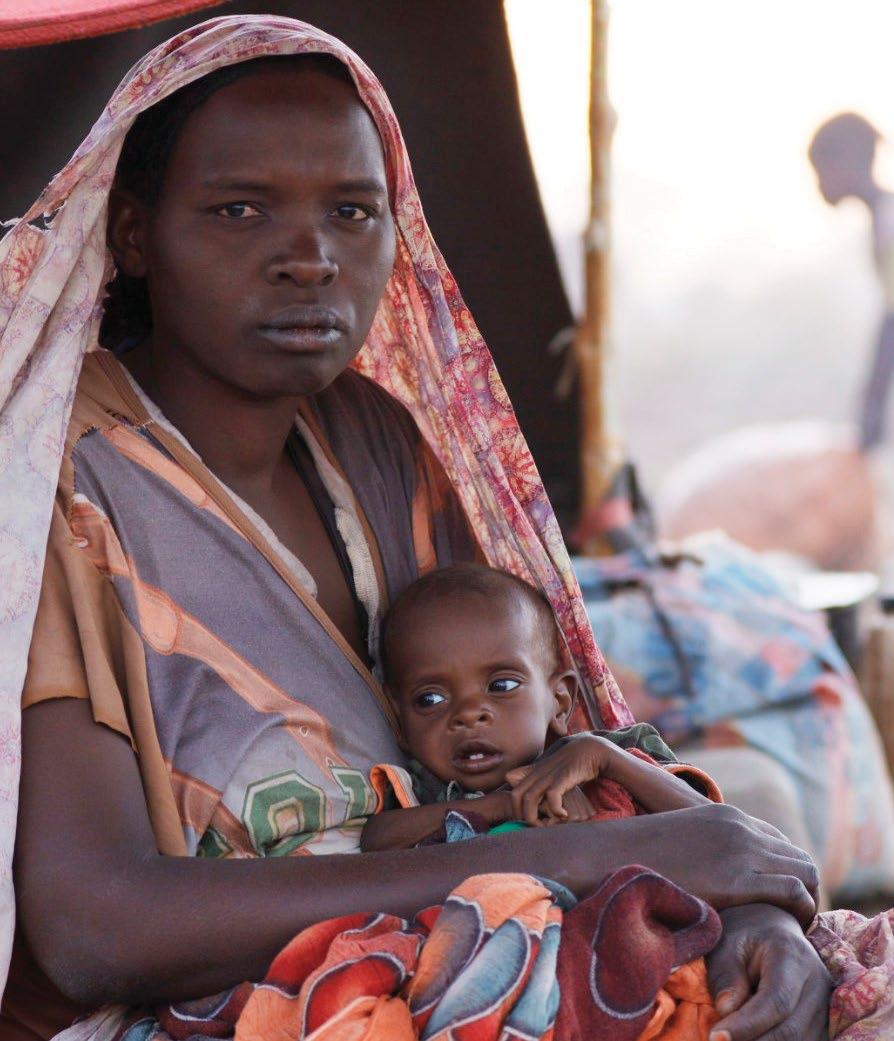
Hawa holds her son Waleed at a camp for internally displaced people in North Darfur, Sudan.
Polio
re-emerged in Papua New Guinea
After 25 years without polio, Papua New Guinea (PNG) confirmed the detection of poliovirus in May 2025. Low routine immunisation coverage left many children vulnerable, triggering a national emergency response.
UNICEF Australia’s International Programs team stepped in with hands-on technical and surge support. Two team members worked closely with UNICEF PNG, and the National Department of Health and Provincial Health Authorities to plan, monitor and deliver supplementary immunisation rounds. Their support spanned immunisation campaign monitoring, data analysis, coordination with provincial teams and donor reporting – strengthening campaign quality in high risk provinces and reinforcing UNICEF Australia’s commitment to timely, practical support during child health emergencies.
It’s not only about stopping polio now – it’s about building a stronger health system so that no preventable disease can take hold again.
– Bethany Stirling, Senior International Programs Manager, UNICEF Australia
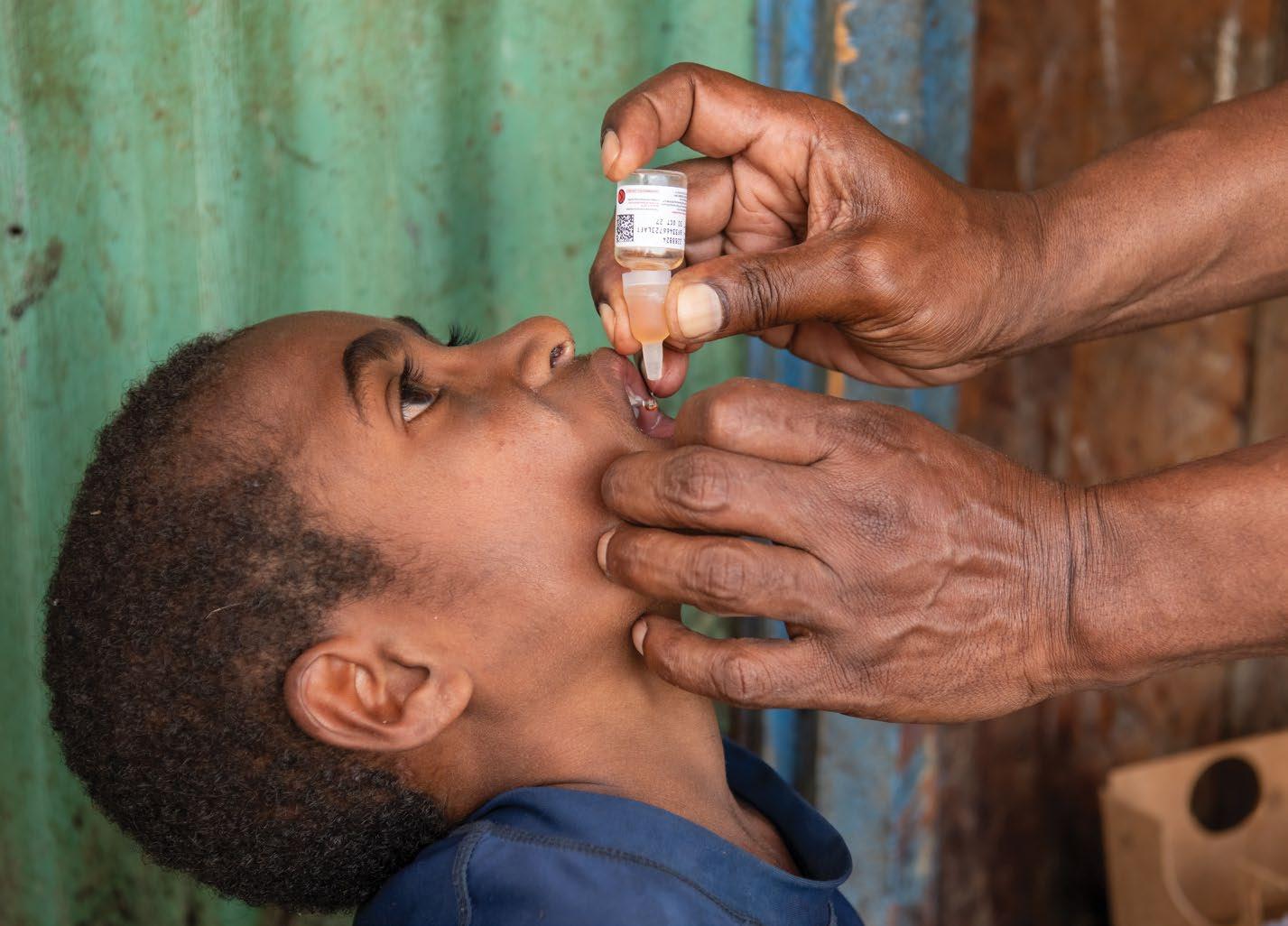
A child receives the oral polio vaccine during Round One of Papua New Guinea’s polio vaccination campaign.
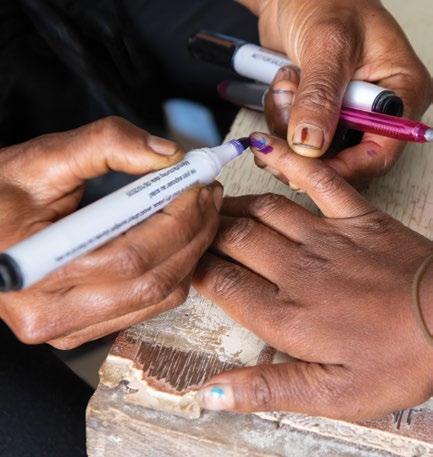
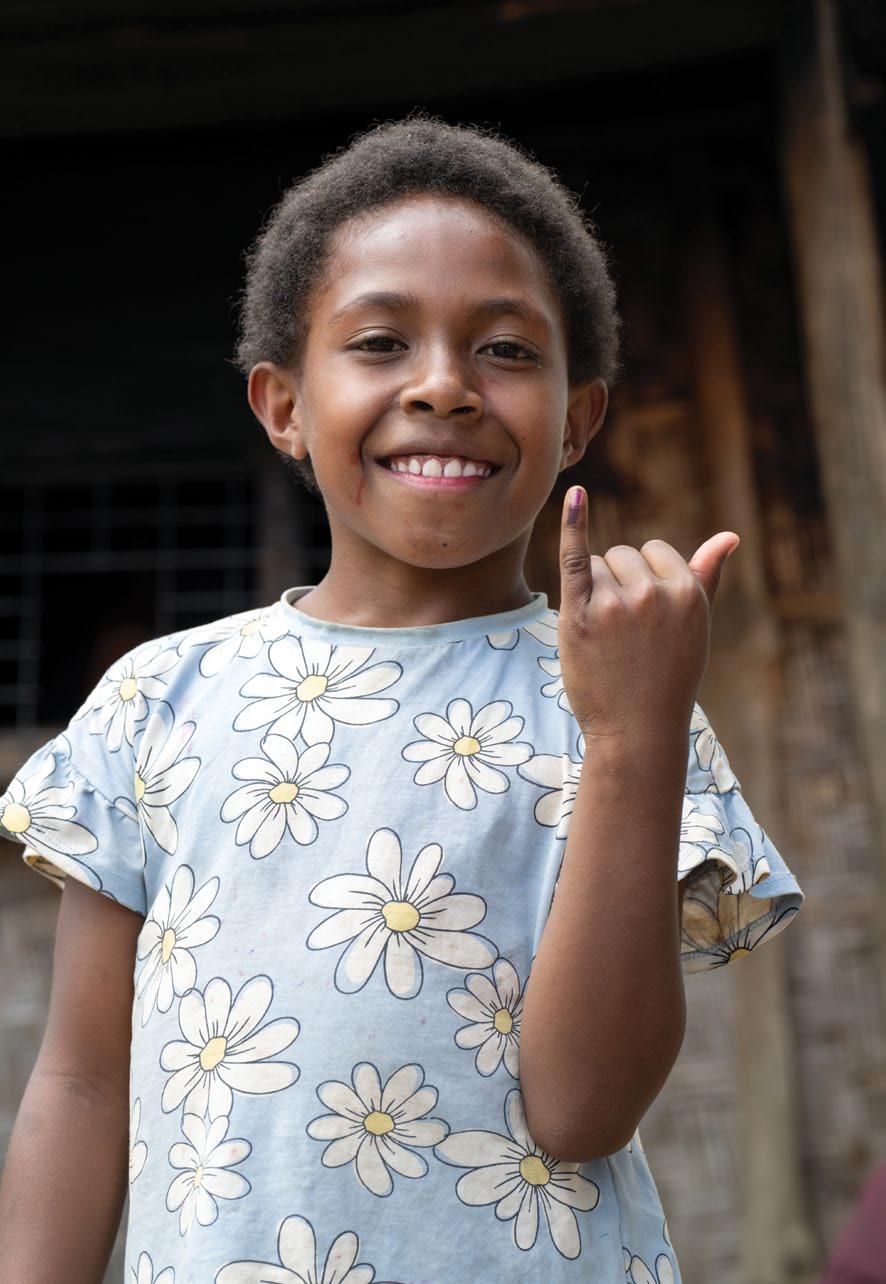
Eight-year-old Naomi proudly shows her marked finger – a sign that she received her polio vaccine.
Silent emergencies
In 2025, millions of children around the world faced immense hardship, trauma and loss – often beyond the spotlight of global news. From devastating floods in Sri Lanka and across Southeast Asia to the protracted crisis in Afghanistan, families fought against overwhelming odds to keep their children safe from harm.
In conflict and disaster, chaos and insecurity erode access to basic services. Food, water, shelter, health care and education are disrupted or destroyed, leaving families to endure mass displacement, violence, disease outbreaks, extreme climate shocks, life-threatening malnutrition and a deepening education crisis.
This reality is evident in Afghanistan, where around 22.9 million people, including 12 million children, required humanitarian support. The continued ban on adolescent girls attending secondary school and university is
also preventing 2.2 million girls from accessing education. Years of conflict, displacement and harmful social norms have left many children living with trauma and lasting impacts on their mental health and development.
In 2025 alone, more than 3 million people returned to Afghanistan from neighbouring countries, primarily Iran and Pakistan, due to rising regional hostilities and mass deportations. Severe acute malnutrition continues to devastate communities, while Afghanistan remains one of only two countries where polio is still endemic. Repeated disasters – including earthquakes and flash flooding –have wreaked havoc on homes and livelihoods.
Elsewhere, 2025 saw devastating floods across Southeast Asia, cholera outbreaks in parts of Africa and the Middle East, Ebola in the Democratic Republic of the Congo, and extreme food insecurity in Gaza, Yemen, Haiti and the Horn of
Africa. Hostilities escalated in Ukraine, Sudan and across the broader Middle East, including Syria, Yemen and Lebanon.
Amid these overlapping emergencies, UNICEF teams provided safe water, essential medical supplies and lifesaving vaccines, supported mothers to give birth safely, and worked to protect children from deadly disease outbreaks. UNICEF also helped communities recover and rebuild – creating safe spaces for children to learn and play, providing innovative shelter solutions, and delivering psychosocial support to help children process trauma and adapt to a changed world.
None of this would be possible without the generosity of Australian donors, whose support enables UNICEF to reach children and families in emergencies around the world, especially at a time when global humanitarian funding is under increasing pressure.
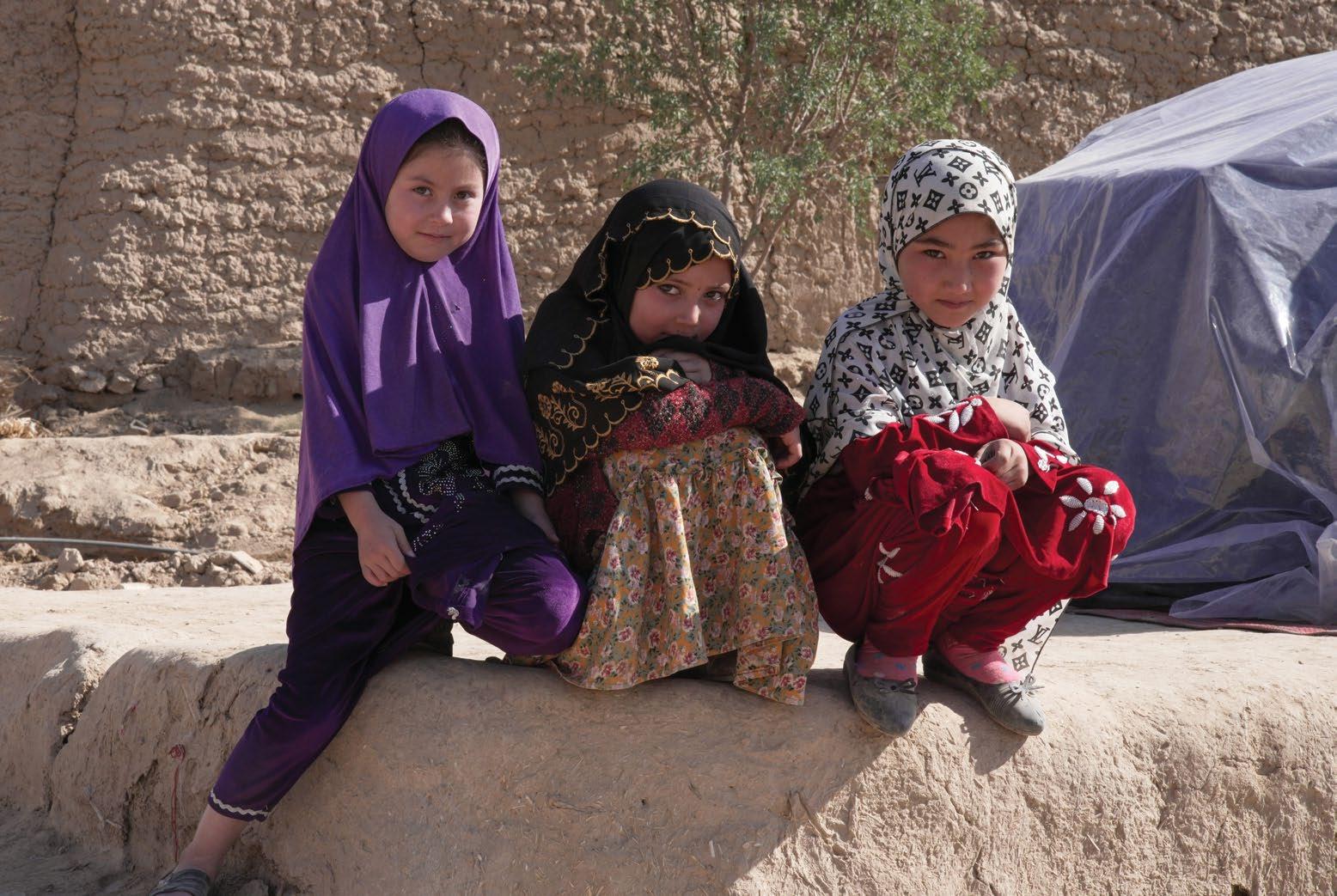
In Afghanistan, girls sit beside their belongings after their homes were shattered by a powerful earthquake.
UNICEF Australia's contribution for children
In 2025, UNICEF Australia contributed $42.4 million to support children around the world. This was made possible through the generosity of the Australian public, the commitment of valued partners, and grant funding from the Australian Government and other organisations.
Within Australia, UNICEF Australia continued to strengthen its domestic impact and advocacy efforts. In 2025, this included delivering 15 policy submissions to government aimed at improving outcomes for children and young people. Among other outcomes for children, our advocacy contributed to the Australian Government committing $10 million directly to UNICEF to support children affected by crisis.
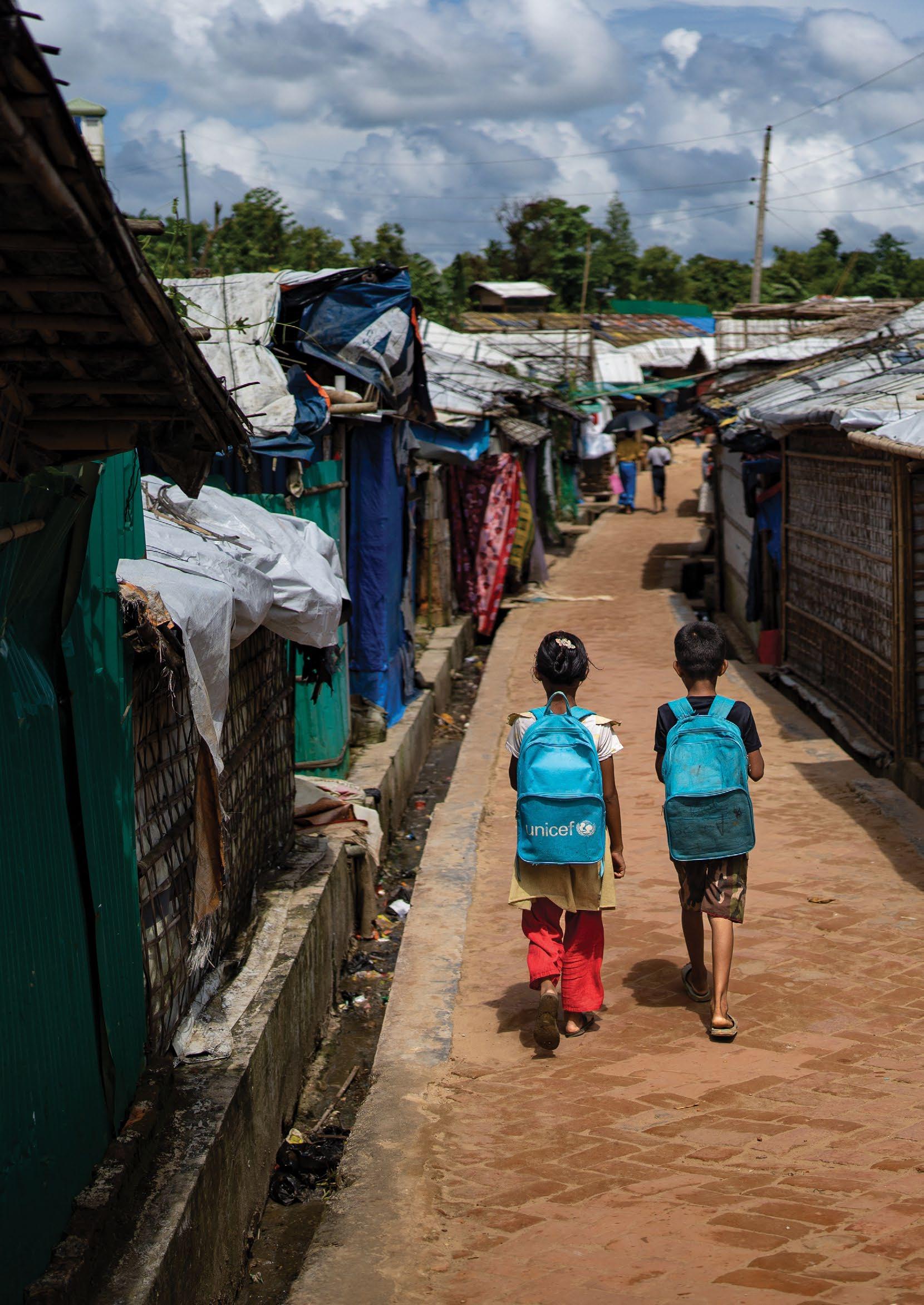
Children carrying UNICEF backpacks walk under the scorching sun through the dense shelters at the Rohingya Camp in Cox's Bazar.
xxxxxxxxxx swims in the rising tide of his Solomon Islands village, where climate change brings increasingly frequent high waters.
POSITIVE CHANGE IN OUR REGION AND BEYOND
While this Annual Report reflects activity undertaken during the 2025 calendar year, UNICEF Australia’s International Program reporting aligns with the 2024–2025 financial year.
During this period, UNICEF Australia managed 32 directly supported programs, reaching 756,890 people. In addition, 1,417,000 girls were reached through activities and digital services designed to strengthen access to menstrual health and hygiene education – an area of critical importance in contexts where health and education systems are under strain.
These programs were delivered in partnership with 10 UNICEF Country Offices, the local partners and organisations they work with, the Digital Centre of Excellence, and the East Asia and Pacific Regional Office, with the support from funds raised across both the private and public sector. Within Australia, UNICEF Australia leads advocacy, partnerships and youth engagement initiatives to advance a country where every child is healthy, educated, protected, respected and empowered to shape their future. In 2025, this included engaging 367,814 children through school-based activities and producing 11 new publications to inform stronger policies and programs for children and young people.
COUNTRY
Burundi
Cambodia
Eritrea
Fiji
Maldives
Papua New Guinea
MULTI-SECTORAL
Sri Lanka
Solomon Islands
Global
Indonesia
Kiribati
Lao PDR
Timor-Leste
Priority Programs are a selection of critical, underfunded programs supported by UNICEF Australia. These programs work in partnership with governments, local community organisations and the private sector to tackle inequity and deliver sustainable change for children and their families.
Vanuatu
Australia
PROGRAM
• Adolescents*
• Child Protection*
• Early Childhood Development*
• Adolescents*
• Water, Sanitation and Hygiene
• Child Survival
• Early Childhood Development
• Climate Change
• Child Survival
• Child Protection*
• Adolescents
• Child Survival*
• Adolescents*
• Child Survival
• Child Protection
• Adolescents*
• Climate Change
• Child Survival
• Child Survival
• Child Protection*
• Early Childhood Development*
• Education*
• Child Survival*
• Education*
• Child Protection*
• COVID-19 Response
• Adolescents*
• Child Survival
• Early Childhood Development
• In Australia, we work to create change at scale for children through advocacy, partnerships and youth engagement.
*Indicates programs receiving support from the Australian Government.
OUR WORK AROUND THE WORLD
UNICEF Australia works with partners to support programs that deliver lasting impact for children and young people, with a focus on innovation, equity, and locally-led solutions that can be scaled.
UNICEF Australia’s Priority Programs are central to this work. Through strategic investments and close collaboration with local partners, these programs reach the most vulnerable children and families across the Asia Pacific region and beyond.
Priority Programs are developed and implemented alongside UNICEF Country Offices and are guided by principles of equity, transparency and accountability, and a partnership-based model. This approach supports locally driven solutions while strengthening the connection between program delivery on the ground and engagement with the Australian community and government.
A defining feature of these programs is the combination of financial support with technical expertise. Alongside funding, we provided specialist capability across key areas including early childhood development, health and nutrition, education, child protection, gender equality, disability, child safeguarding and social inclusion. This integrated approach strengthens both program outcomes for children and broader systems and capacity at national and regional levels.
Priority Programs are jointly identified with UNICEF Country Offices based on agreed geographic and thematic priorities, ensuring support responds to country-identified needs and focuses resources and expertise where they can have the greatest impact.
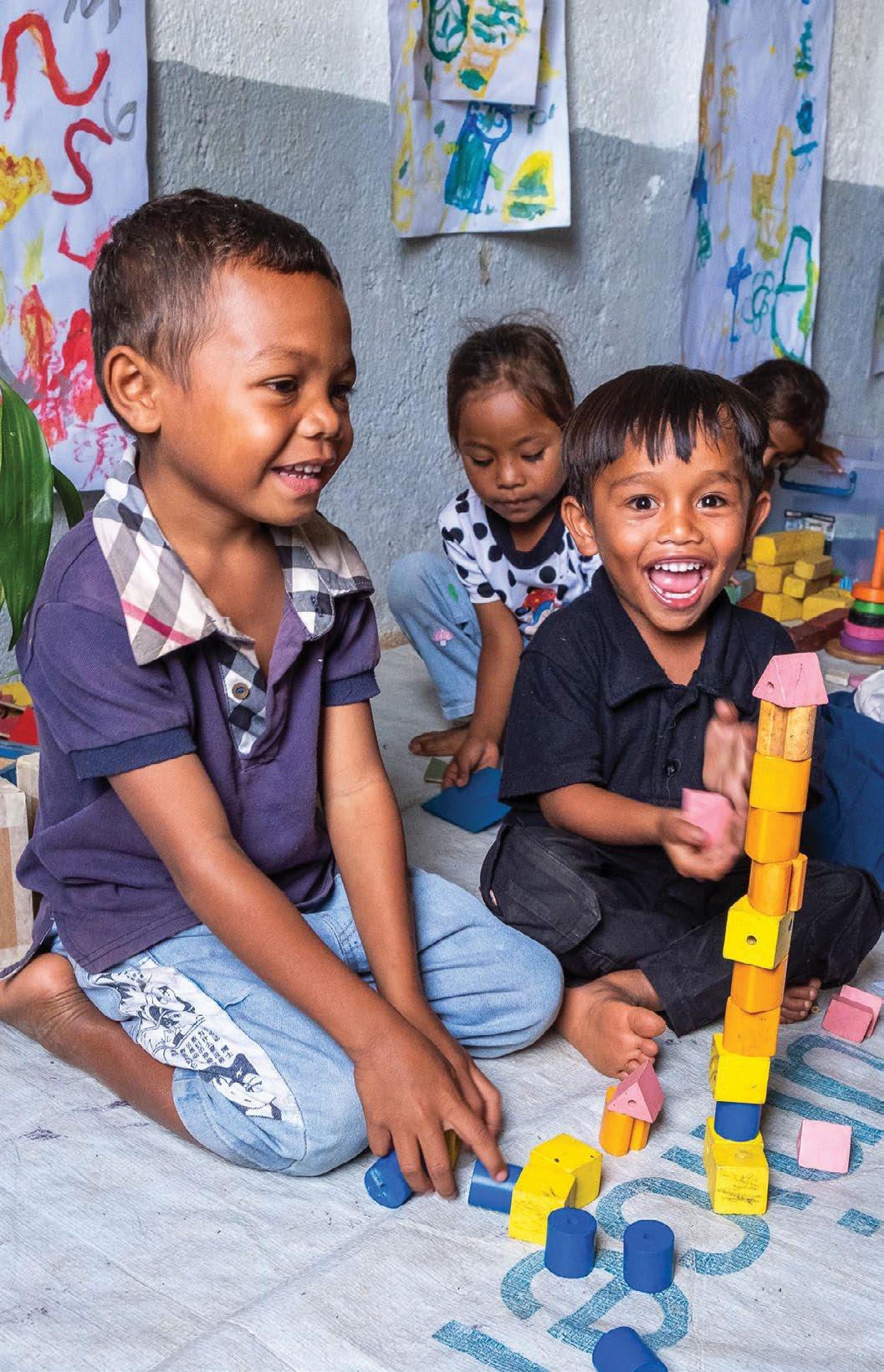
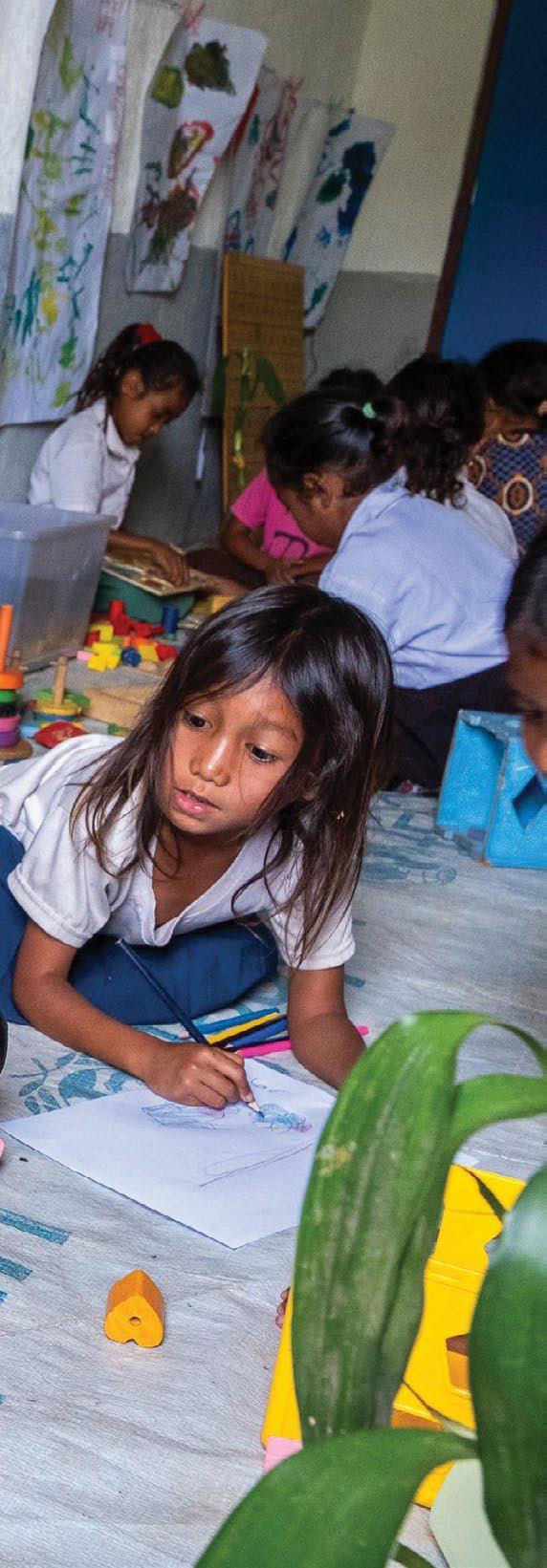
BELOW Across Timor-Leste, access to preschool is limited, with many children entering Grade 1 without early learning. UNICEF-supported community preschools to help expand access for children aged three to five.
While this Annual Report covers the 2025 calendar year, UNICEF Australia’s International Program reporting follows the 2024–2025 financial year.
In financial year 2025 (FY25), UNICEF Australia supported 32 Priority Programs across three strategic areas:
• Investing in the early years Supporting children to develop strong foundations for lifelong development.
• Unleashing adolescent potential Expanding opportunities for young people through education, leadership, and skills development.
• Protecting children from harm Strengthening prevention and response to violence, abuse, and exploitation to safeguard children’s wellbeing.
These programs were delivered in collaboration with 10 UNICEF Country Offices in Burundi, Cambodia, Eritrea, Indonesia, Lao People’s Democratic Republic (Lao PDR), Maldives, Pacific Islands (multi-country office), Papua New Guinea (PNG), Sri Lanka, and Timor-Leste, as well as the East Asia and Pacific Regional Office and the Digital Centre of Excellence.
Working with governments, civil society, the private sector, and communities, Priority Programs contribute to reducing inequality and strengthening scalable, community-based solutions. In 2025, with the support of the Australian public and the Australian Government, UNICEF Australia allocated $9.6 million to Priority Programs across the Asia Pacific region and beyond. These programs reached approximately 2.17 million people, including more than 1.3 million children.
In addition to direct program funding, our International Programs team provided technical support to Country Offices through 31 value add initiatives, including technical assistance, strategic co-financing, knowledge exchange and staff time contributions.
Key activities included supporting a Disability Programmatic Review in Cambodia, including review design, consultant recruitment, and development of a practical toolkit to inform future disability programming across the region. UNICEF Australia also provided technical support in Safeguarding and Protection from Sexual Exploitation and Abuse (PSEA) in Lao PDR, PNG, and Timor-Leste, strengthening Country Offices capacity across action planning, codes of conduct, investigation protocols and staff capacity through targeted workshops.
With funding from our generous donors, UNICEF Australia allocated $9.6 million to Priority Programs across the Asia Pacific region and beyond. These programs reached approximately 2.17 million people, including more than 1.3 million children.
Program highlights
188,202
People accessed improved maternal, newborn and child health services.
114,205
People immunised against vaccine-preventable diseases.
29,527
Children accessing early learning.
240,000+
Parents and caregivers participated in information sessions on the early years.
Investing in the early years
UNICEF Australia’s Investing in the Early Years Priority Programs delivered strong, system-level results for infants, young children and caregivers across the Asia Pacific region. In FY25, these programs reached 621,011 people, predominantly women and young children, across 18 Priority Programs in more than seven countries.
Programs focused on child survival, early childhood development and early learning through integrated, evidence-based approaches. Significant progress was achieved in policy and systems reform, including Fiji endorsing and launching its first National Early Childhood Development Policy, strengthening coordination across health, education and child protection sectors. In Cambodia, national early childhood commitments were translated into action using the National Action Plan on Early Childhood Care and Development at sub-national level.
Access to quality early learning improved in fragile and low resource settings. In Lao PDR, more than 4,800 children participated in early childhood education supported by 420 trained teachers. In PNG, six early childhood education centres were established in communities previously without formal services, including two among the first to be formally registered by the government.
Health and nutrition outcomes were also strengthened, including expanded screening and treatment for malnutrition in Fiji, Solomon Islands and Vanuatu, alongside caregiver nutrition education. More than 114,000 people were immunised against vaccine preventable diseases.
Disability inclusion was further integrated across programs, including the national rollout of Sri Lanka’s Caring for the Caregiver package.
CASE STUDY
Nurturing Care in Cambodia
In Cambodia’s northeastern province of Ratanakiri, poverty, geographic isolation and limited access to services place young children at high risk of poor nutrition and delayed development. In O’Chum District, nearly 39 per cent of children under five are stunted, and 15 per cent are wasted – among the highest rates nationally. These challenges highlight the urgency of supporting families early, particularly during the first 1,000 days of life, when setbacks to growth and brain development can be difficult to reverse.
Cambodia has adapted the global Nurturing Care Framework through a coordinated, cross-government approach. This integrated model addresses malnutrition and supports early childhood development by working with parents and caregivers across health, nutrition, stimulation, and protection. It focuses on equipping parents, including those in remote Indigenous communities, with practical skills and information, supporting improved feeding, caregiving and play practices despite distance and limited access to services.
By linking health and nutrition services with parenting support, the program strengthens caregiving practices in remote communities and helps improve early childhood outcomes.
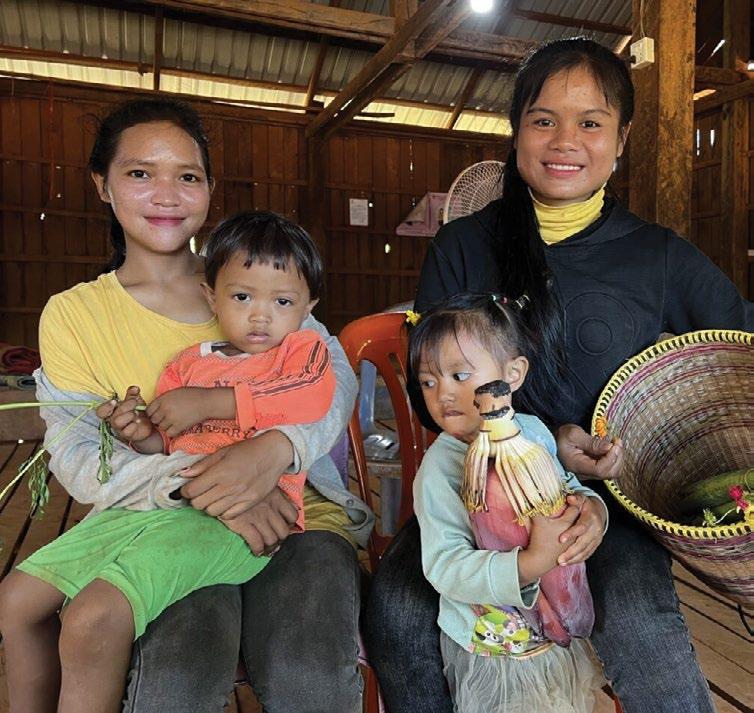
ABOVE Two mothers and their children attend a parenting session focused on nutrition, responsive caregiving, early learning, and child safety.
Unlocking adolescent potential
UNICEF Australia’s Unleashing Adolescent Potential portfolio focused on improving the socio-economic wellbeing of adolescents and young people, enabling them to build skills, exercise agency and contribute meaningfully to their communities. In FY25, the portfolio comprised eight Priority Programs, including two projects addressing climate action. Six programs operated at country level, one worked across the East Asia and Pacific region, and one spanned multiple countries across Asia, Africa and Eastern Europe.
These programs reached 1,453,558 people, including approximately 1.4 million girls supported through the Oky digital platform. Around 76 per cent of participants were children and 80 per cent were female.
Policy and systems change was a key achievement, with adolescent participation institutionalised in local governance structures in Cambodia. The Oky App for menstrual health and wellbeing was also integrated into national education systems in Indonesia and the Philippines, supporting scale and sustainability.
More than 23,000 young people participated in STEM, entrepreneurship and life-skills programs, including the Teenpreneurs initiative in PNG and 21st century skills courses in Timor-Leste. Inclusion was embedded across projects, with gender and disability inclusion mainstreamed through targeted training for frontline workers and inclusive toolkits.
Community-led engagement amplified adolescent voices, with girl-designed campaigns, including Oky radio and interactive voice response channels in PNG, reaching adolescents in remote and low-connectivity settings.
Program highlights
33
Youth and community engagement mechanisms were established or strengthened across four projects.
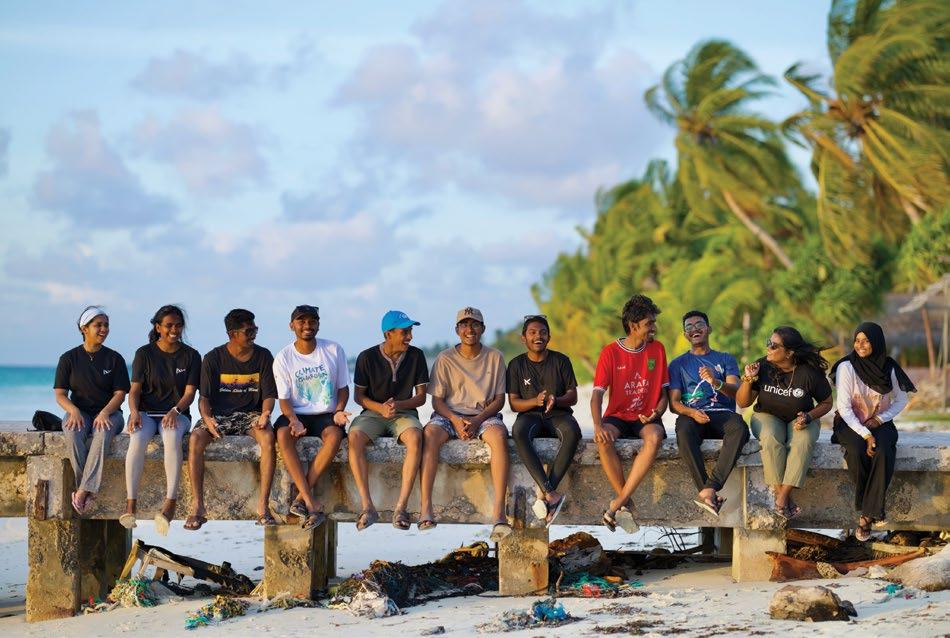
Youth-led climate action in the Maldives
As a country highly vulnerable to the impacts of climate change, the Maldives faces rising sea levels and environmental pressures affecting children and young people. Through the Climate Guardians Initiative, adolescents and local communities are empowered to take action on climate change while contributing to the policies that shape their futures.
During the reporting period, the initiative engaged 162 young people and strengthened adolescent participation in climate decision-making at both national and local levels. Young people contributed to national consultations on the Maldives’ Nationally Determined Contribution (NDC) 3.0, helping to improve its child sensitivity rating – an important step in ensuring climate policies reflect children’s rights and priorities. Three adolescent Climate Guardians also represented youth perspectives at Conference of the Parties (COP), bringing the voices of young people from small island states to the global climate stage.
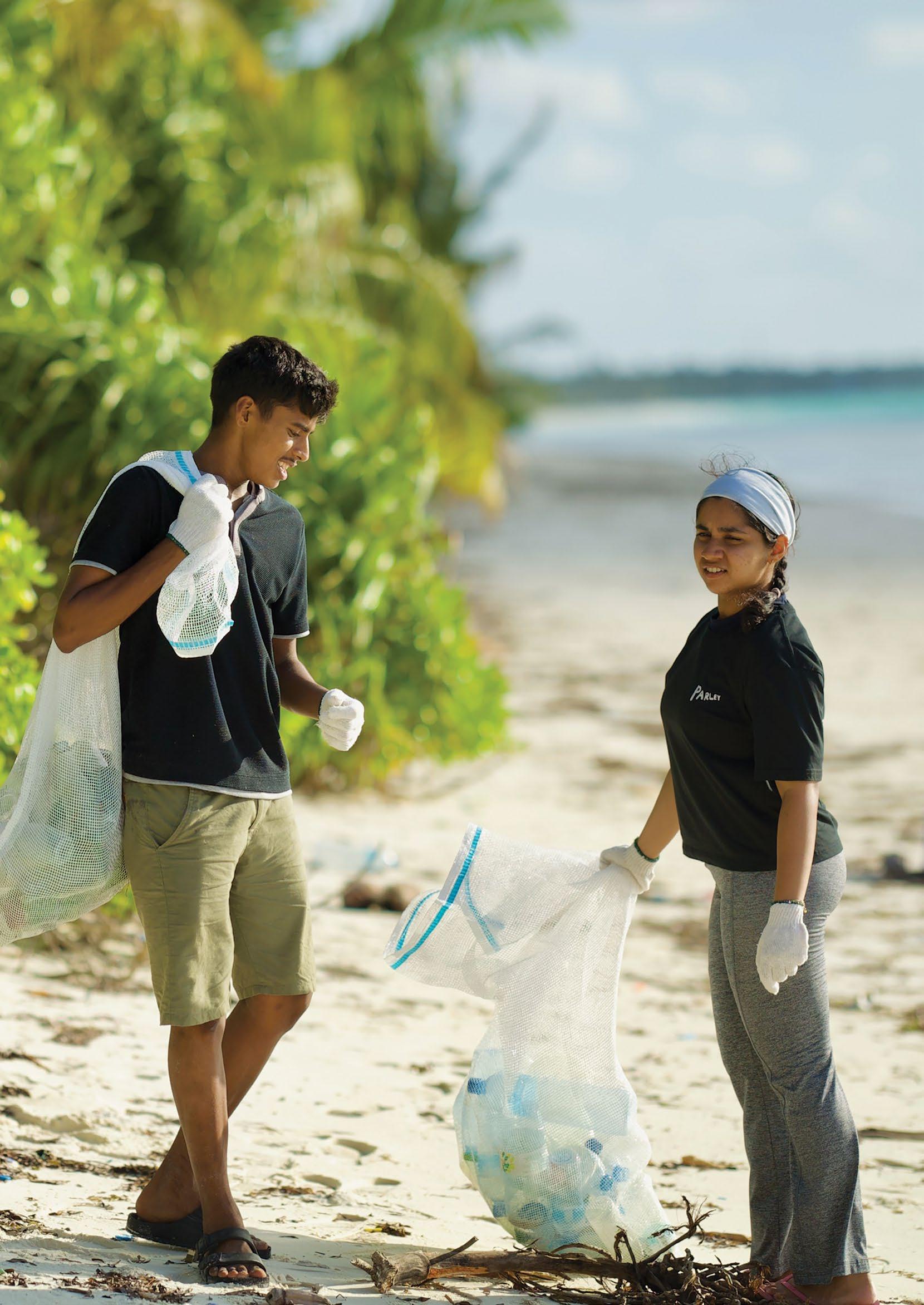
At the community level, Climate Guardians led local waste collection initiatives and supported dialogue through the Speaking Easy: Climate Edition podcast. Supported by Islamic Relief, 31 adolescents also participated in focus group discussions, sharing insights on climate challenges and solutions within their communities. These efforts strengthened youth leadership, amplified adolescent voices, and contributed to building more child-friendly, climateresilient communities in the Maldives.
18,282
Adolescents (9,901 girls) participated in activities designed to challenge social norms across seven projects.
23,436
Young people participated in skills development across nine projects.
ABOVE Climate Guardians in the Maldives relaxing after taking part in a beach clean-up.
Protecting children from harm
Program highlights
88,168
Children and adolescents benefitted from relevant child protection services, including health, social welfare, legal justice, and education.
16,718
Community members participated in sessions on prevention, education and response to violence, abuse and exploitation of children.
42
Information and Communication Technology companies supported online safety plans and initiatives across 11 ASEAN countries.
UNICEF Australia’s Protecting Children from Harm portfolio focused on strengthening child protection systems, policies and services. In FY25, the portfolio comprised six Priority Programs across four countries and a regional initiative spanning 11 Association of Southeast Asian Nations (ASEAN) member states. These programs worked across justice, health, education, counselling and social services to address violence, exploitation and neglect.
These programs reached 99,321 people, approximately 82 per cent of whom were children and adolescents.
Policy and systems reform was a key achievement, with new laws and policies enacted in PNG, Timor-Leste, Cambodia and Lao PDR, strengthening legal and institutional foundations for child protection, modernising birth registration and professionalising the child protection workforce.
More than 36,000 community members participated in violence prevention and response sessions, aimed at providing protective skills to parents and children, and shifting harmful norms and attitudes.
Disability inclusive approaches enabling direct support for children with disabilities and mainstreaming inclusive practices across child protection projects and government systems. Capacity building further strengthened the workforce, with more than 3,200 frontline workers and 1,700 social welfare staff receiving safeguarding and professional development training, with the aim to provide them with the skills and capacity to provide effective services for children.
In PNG, the integration of Parenting for Child Development into government systems marked a significant milestone, embedding evidence based parenting support nationally and strengthening long term prevention of violence against children.
Strengthening child protection through law reform
Strong legal frameworks are essential to protecting children from harm. In PNG and Lao PDR, UNICEF supported law reform contributed to system level change, strengthening child protection and improving access to essential services for vulnerable children.
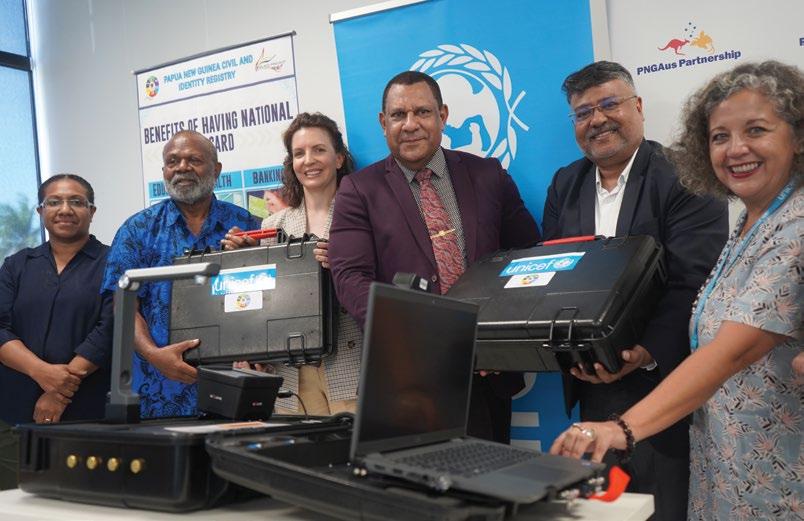
In PNG, the enactment of the Civil and Identity Registration Act strengthened the national birth registration system, making it more accessible and secure for families. As a result, more children are able to obtain legal identity, which is critical for accessing health care, education and social protection. Improved access to population data has also strengthened the government’s capacity to plan and deliver essential services. Practical changes followed, including the establishment of birth registration desks in hospitals and the expansion of mobile registration services to remote communities.
In Lao PDR, the country’s first Law on Social Work established national standards for social work practice, formalised the social service workforce, and strengthened oversight and accountability. Developed with UNICEF’s technical and financial support, the law is improving the quality and consistency of child protection services and is expected to have a lasting impact on the safety and wellbeing of children across the country.
ABOVE PNG received 44 mobile registration kits, helping expand access to birth registration in remote communities.
CASE STUDY
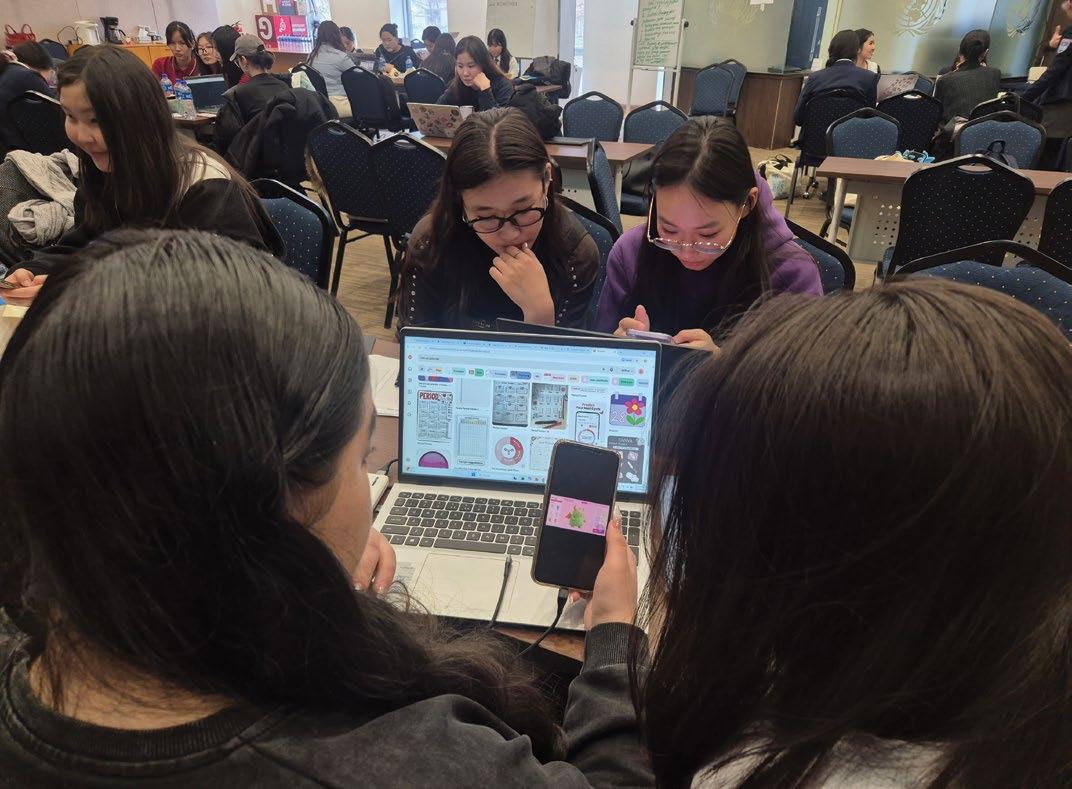
I love coding and had been looking for a hackathon. When I saw this I signed up straight away. I also wanted to improve my UI design skills and meet new people.
Nami, 17, Oky Hackathon participant
Gender, disability and social inclusion
In FY25, Priority Programs continued to advance gender equality, disability inclusion and social inclusion, helping ensure children and adolescents, particularly those facing multiple forms of exclusion, can access quality services and opportunities.
Gender equality
UNICEF Australia supported gender responsive and gender transformative approaches, helping challenge harmful norms and promote more equitable outcomes for girls and women.
A significant contribution to gender equality outcomes was the support provided to Oky, a girl-centred digital platform for menstrual health and girls’ empowerment. In FY25, 1,417,000
girls across 12 countries were reached through Oky’s digital services, improving their knowledge, confidence and access to information on menstrual health and hygiene, particularly in low resource and low connectivity settings.
Disability inclusion continued to be embedded across our programs, with 42 Organisations of Persons with Disabilities (OPDs) engaged and, 2,422 frontline workers trained on disability inclusion across nine projects, strengthening the capacity of health, education and child protection services to respond to the needs of children with disabilities. Across seven projects, 149 services improved accessibility for children with disabilities.
UNICEF Australia supported a Disability Programmatic Review in Cambodia, and the development of a practical toolkit to inform future disability programmatic
reviews. We also supported the East Asia and Pacific Regional Office and Country Offices to apply UNICEF’s Disability Inclusion Policy and Strategy, strengthening disability inclusion work across the region.
Child Safeguarding and Protection from Sexual Exploitation and Abuse (CS&PSEA)
UNICEF Australia continued to support the East Asia and Pacific Regional Office and five UNICEF Country Offices across the region to strengthen the implementation of CS&PSEA protocols. This included capacity development for partners to prevent, identify and respond to safeguarding risks, supporting timely, appropriate action when concerns arise across programs.
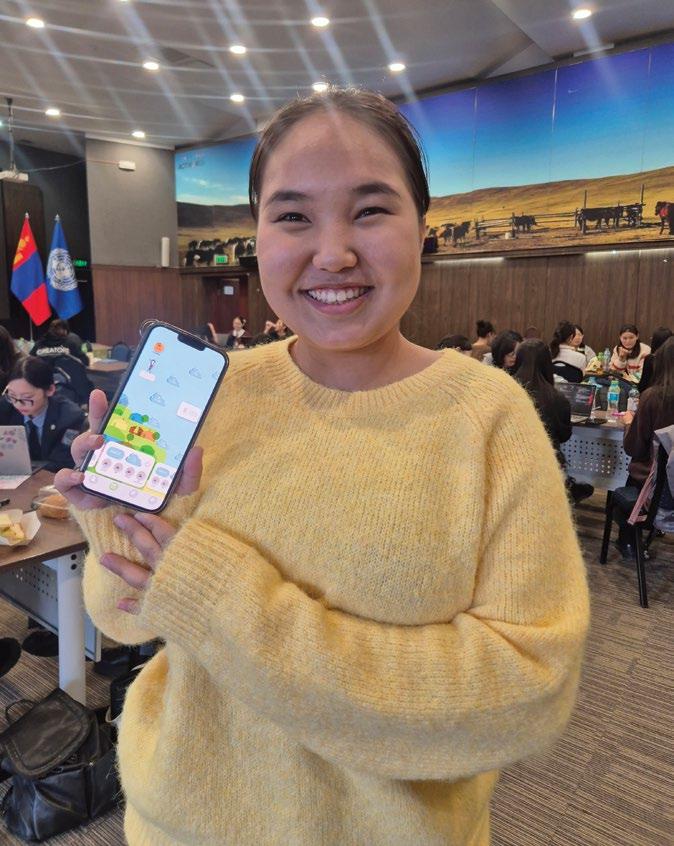
In Mongolia, UNICEF supported Oky, a period tracker and education app, created by girls for girls.
End of program reviews and evaluations
UNICEF Australia prioritises evidence and learning to understand what works, improve outcomes for children and adolescents, and strengthen program effectiveness. End of program reviews and evaluations capture results and lessons to inform future programming and scale up. Highlights from selected program reviews supported during this reporting period are outlined below.
Sport as a scalable platform for social cohesion and inclusion
The review of the Australian Government-supported Sports for Development program found that sport is a scalable, evidence-based platform for strengthening social connections and building life skills among children and adolescents in conflict affected communities in Sri Lanka’s Northern and Eastern provinces. When intentionally designed, sport can bring together children from diverse ethnic, religious and socio-economic backgrounds, reinforcing life skills, responsible citizenship and social cohesion.
The review also highlighted that embedding inclusion deliberately into program design leads to positive shifts in social norms. Targeted investment in training educators, coaches and
facilitators enabled more inclusive sporting environments, supported the participation of children with disabilities, and contributed to improved attitudes among schools, families and communities.
Integrating activities into existing school and community structures, alongside partnerships with government and civil society, strengthened local ownership, increased demand, and supported sustainability beyond the project period.
Strengthening child protection systems through reform and workforce incentives
The Child Protection project, System Strengthening through Piloting of an Incentive based System Approach, supported major child protection reforms in Lao PDR. These included progress toward the country becoming the first in ASEAN to ban all corporal punishment of children and advancing the development of a new Social Work Law. More than 10,000 children benefited from strengthened community level services, including counselling and legal aid. Strong outcomes were also recorded for children with disabilities, with 466 households receiving monthly cash transfers and 239 children accessing assistive devices, supporting their
return to school or access to specialised support.
The end of project review found that combining systems reform with an incentive based approach strengthened coordination and accountability across child protection. Sustained coaching and mentoring of the social service workforce were critical to improving service quality, while strong government ownership positioned the pilot model for sustainability and scale.
Strengthening newborn care through system wide quality improvement
The end of project review of Saving Lives and Spreading Smiles: Implementing Newborn Care in Vanuatu found that the project contributed to sustained improvements in the quality of newborn care in Malampa and Sanma provinces. Strong uptake of evidence-based early essential newborn care practices was observed, including significant increases in skin to skin care and improved adherence to safe delivery and postnatal care standards. Embedding practical training, data use and supportive supervision within provincial health systems strengthened service quality, while community engagement reinforced caregiver knowledge and demand for care.
SNAPSHOT OF RESULTS IN FY25
756,890
Program participants across 32 Priority Programs.
114,205
People were immunised to keep them safe from vaccinepreventable diseases.
1,417,000
Girls were reached with activities and digital services designed to improve access to menstrual health and hygiene education.
1,788
Children were reached with activities designed to mitigate the impact of climate change.
3,271
Frontline workers were trained on safeguarding across eight projects.
1,789
Government and NGO stakeholders across 12 programs received training to help support stronger systems for children.
149
Services were supported to become more inclusive of children with a disability across seven programs.
42
23
Priority Programs across 12 countries contributed to national or subnational legislative or policy change or leveraged increased budget contributions to improve child rights outcomes.
19
Programs advance gender equality, helping to pave the way for all children –including girls – to get the best start in life.
Organisations of Persons with Disabilities were involved across 12 projects ensuring programs were informed by lived experience and responded to real barriers and needs.
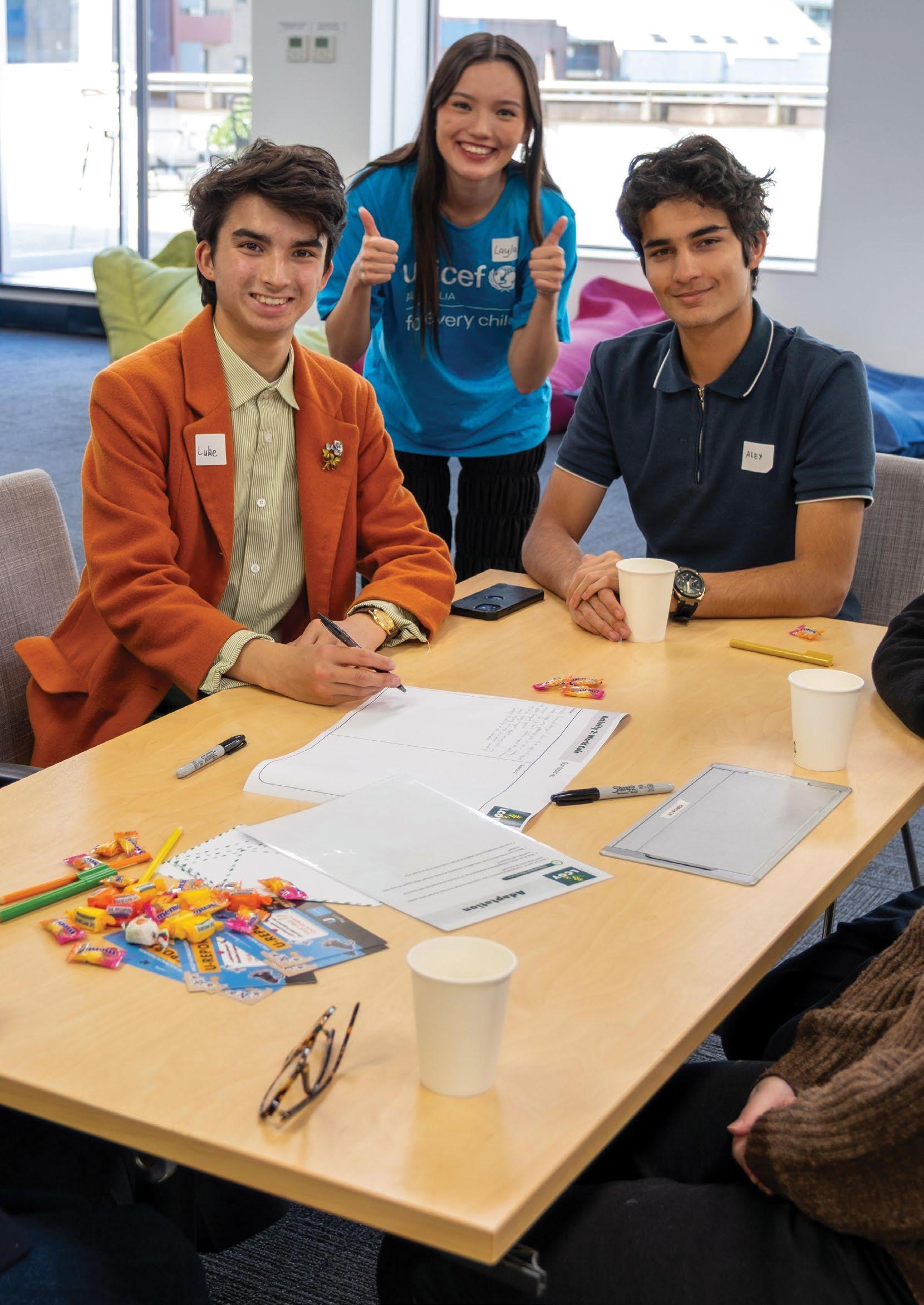
UNICEF Australia, including Young Ambassadors Ashwini, Layla, Todd and Chelsea hosted a Local Conference of Youth (LCOY) event at the UNICEF Australia office in Sydney.
OUR WORK IN AUSTRALIA
Making Australia an even better place for every child.
Australia has the resources to ensure every child can thrive, yet persistent inequalities mean too many are still being left behind. Children experiencing poverty, inequality, systemic failures and racism face significant challenges, alongside growing mental health concerns across the country. In 2025, UNICEF Australia worked with governments, partners and young people to strengthen collective advocacy – shaping reforms on online safety, AI and climate change, and elevating the voices of nearly 7,000 children and young people nationwide.
How we work
Program highlights
$10m
Committed to UNICEF by the Australian Government to better support children and young people affected by humanitarian crisis following advocacy by UNICEF Australia.
11 Government policies, practices or legislation influenced.
6,966
Children and young people consulted on key issues.
• Generate child-centred evidence on the lives and rights of children and young people in Australia to drive public awareness, support policy reform, and influence national decision-making.
• Engage with children and young people to elevate their voices, ensuring they are heard in the policies and programs that shape their lives now and into the future.
• Partner for impact to highlight critical gaps for children experiencing disadvantage.
• Advocate across all levels of government to address inequality and persistent child rights issues in Australia to drive systemic changes for children.
• Contribute to public discourse on children’s rights through research, insights and a strong, informed media presence.
Making children a national priority
UNICEF Australia is driving change to make children a national priority. We use advocacy, research and public engagement to focus attention on what matters most to children – calling for action on child protection, digital safety, youth justice, poverty, cost-of-living pressures and workplaces that better support families.
KEY ACHIEVEMENTS
The State of Australia’s Children report
In 2025, UNICEF Australia released the inaugural The State of Australia’s Children report, delivered in partnership with the Australian Research Alliance for Children and Youth (ARACY) and the Minderoo Foundation. The first national overview of its kind, the report provides a comprehensive snapshot of children’s wellbeing, drawing on the latest publicly available data and the voices of children and young people.
Grounded in the Australian Children’s Wellbeing Index, the report examines outcomes across six wellbeing domains, identifies emerging megatrends shaping children’s futures, and outlines the conditions required for every child to thrive.
The findings highlight both Australia’s strengths and key areas of concern across health, education and social supports, alongside persistent and growing inequities affecting children experiencing poverty, those living in regional and remote communities, First Nations children, and children with lived experience of out-of-home care, homelessness or discrimination.
Young people, including UNICEF Australia Young Ambassadors, shared their own experiences of wellbeing in support of the findings.
These perspectives were featured in widespread media coverage of the report during its launch week.
Launched at Parliament House in November 2025 and informed by a national Youth Advisory Group, the report received public support from all Australian Children’s Commissioners, Guardians and Advocates, and ranked among the top three social issues reports on Australian Policy Online.
What children and young people across Australia told us
Throughout 2025, UNICEF Australia, ARACY and partners conducted child and youth consultations to complement existing data for The State of Australia’s Children report. These consultations explored key gaps and incorporated perspectives from age groups who are often underrepresented in formal consultation processes.
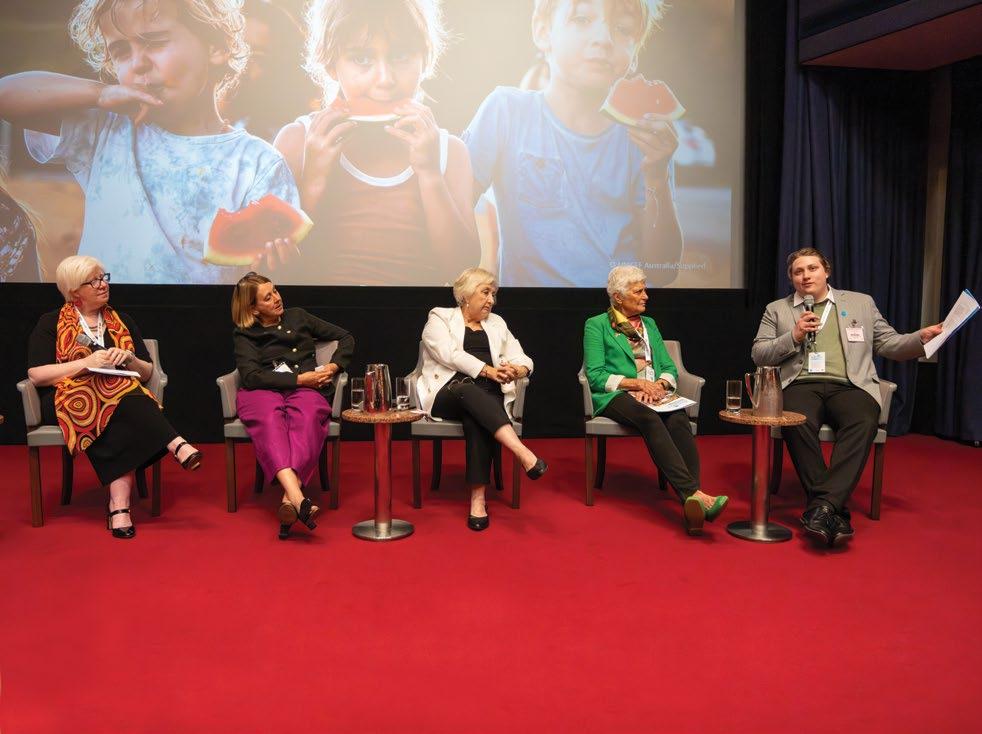
Minderoo Foundation’s Penny Daikan, University of Queensland’s Professor Karen Thorpe, Former National Children’s Commissioner Anne Hollonds, Professor Fiona Stanley AC, FAA, FASSA, FAHMS and UNICEF Australia Young Ambassador, Reede at the Parliament House launch of The State of Australia’s Children report.
The State of Australia’s Children Participatory Workshops included children aged 3-11 years.
Making Australian workplaces more family-friendly
Family Friendly Workplaces strive to reduce the tension between work and family by embedding and promoting policies and practices that genuinely support employees to thrive at work and at home.
Backed by policymakers, industry leaders, and community organisations, we empower businesses worldwide to accelerate the adoption of familyfriendly workplace policies – creating a more inclusive, productive, and sustainable future for all.
Key outcomes since 2021 include:
553
Australian workplaces benchmarked against the National Work and Family Standards, surpassing our target of 500 and collectively employing approximately 846,960 Australians, including 311,274 women.
140
Certified companies that have strengthened policies and practices, positively impacting 1,164,250 employees.
The second National Working Families Survey Report (2024), which engaged over 6,000 working families and carers, supported by seven employer case studies showcasing the benefits of familyfriendly policies across a range of industries.
Defending the rights of children
Federal election 2025
In the lead-up to the 2025 federal election and throughout the campaign, UNICEF Australia advocated for children and young people to be placed at the centre of the national policy agenda. Families across Australia were grappling with acute cost-of-living pressures, children were being overlooked in disaster responses, risks related to bullying and online harm were growing.
UNICEF Australia’s election platform outlined six priority actions the Australian Parliament could take to improve the lives of children:
• Reduce cost-of-living pressures through universal childcare.
• Improve the quality, adequacy and speed of disaster payments.
• Ensure artificial intelligence is safe and productive for children.
• Take stronger action to address online violence.
• Establish a Cabinet level ministerial responsibility for children.
• Invest in climate-smart systems and infrastructure that protects children.
By the end of 2025, three of these recommendations had been acted on, including government commitments to a universal Early Childhood Education and Care (ECEC) system, the establishment of an Australian AI Safety Institute, and the creation of a new National Antibullying Taskforce.
State of Australia's Children workshop.
Early childhood education and care
Throughout 2025, UNICEF Australia worked with the ECEC sector to advance two critical goals: making ECEC universally accessible and ensuring every child is safe in early learning environments. Increased federal investment in education signalled early progress. However, a series of highprofile safety breaches in childcare settings reinforced the urgent need for stronger child safeguarding reforms. In response, UNICEF Australia amplified expert voices conducting public advocacy through ABC Radio, the West Australian and News Corp’s Let Them Be Kids campaign, alongside policy submissions calling for systemic change to prevent harm and strengthen accountability. These events demonstrated how public awareness, evidence and political will can drive reform. UNICEF Australia remains committed to ensuring early learning environments are high-quality, safe and rights-respecting.
Children in the youth justice system
UNICEF Australia continued to advocate for youth justice reform through participation in a Federal Senate inquiry, engagement with the Raise the Age campaign, correspondence with governments, policy submissions and public communications. While progress remains uneven across jurisdictions, with some continuing to pursue punitive approaches, national momentum is building. UNICEF Australia will continue to push for systems that intervene early, divert children from detention, and uphold the rights of every child.
Where the safety of children is concerned there is no room for error, or time for inaction. Nor is there space for toothless tigers in combating and holding real accountability for abuse.
Tony Stuart, UNICEF Australia CEO
Addressing under registration of births
In 2025, UNICEF Australia sustained a strategic focus on addressing the under-registration of births. Across Australia, an average of 12,600 births each year are not registered within a child’s first year of life. Without a birth certificate, children can face barriers to education, healthcare, sport, as well as challenges accessing employment and housing later in adulthood. Through research, community engagement and collaboration with governments, UNICEF Australia is driving progress towards universal birth registration. This work was strengthened through an ongoing partnership with The Ian Potter Foundation and Pathfinders –who deliver the National Aboriginal Birth Certificate Program – helping ensure every child can access their rights from the very beginning.
Community experiences on the barriers and impacts of delayed birth registration included in research.
Digital wellbeing and safety
Building on years of work, UNICEF Australia is a leading voice in making Australia a safer place for children to go online. Our approach combines research with young people, targeted advocacy, practical resources and tools for parents and educators, and high impact campaigns that amplify children’s voices.
KEY ACHIEVEMENTS
• With support from the Telstra Foundation’s Young and Connected Fund, we surveyed more than 2,000 teenagers about their digital lives, including social media use, privacy, AI and mis- and disinformation. Findings were published in A Generation Online, with raw data shared with policymakers shaping the social media minimum age reforms and the Children’s Online Privacy Code.
• In partnership with the Alannah & Madeline Foundation, and supported by the Telstra Foundation, we developed new media literacy resources for teachers, reaching more than 20,000 primary school students nationwide.
• UNICEF Australia launched the Pass
Social media has had a positive impact as I finally found a way to communicate with others who I relate with as I’m autistic and don’t fit in.
14, NSW, Pass the Mic campaign
the Mic campaign, reaching over one million young people and amplifying their voices on what social media means to them.
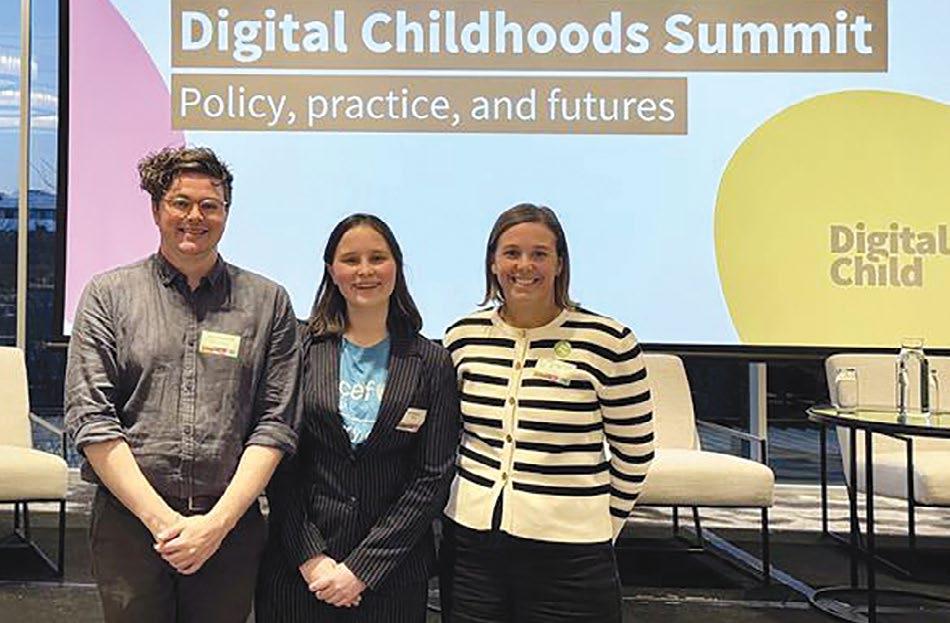
• We released, a landmark report examining how AI is already affecting children in Australia. Advocacy efforts – including a keynote at the Digital Childhoods Summit – contributed to the establishment of Australia’s first AI Safety Institute.
• Through media engagement, policy submissions, events and commentary, we elevated children’s voices and strengthened public and decision-maker focus on children’s rights in online spaces.
Key digital reforms we’ve influenced:
The Online Safety Codes
The forthcoming Children’s Online Privacy Code
The creation of the first Australian AI Safety Institute
Child and youth participation
Children and young people play a critical role in shaping and improving their communities, schools and broader society. Their ideas, energy and lived experience help build a safer, more sustainable and more equitable future. By supporting meaningful participation, UNICEF Australia strengthens children and young people’s ability to drive influence social, political and economic change – now and for generations to come.
Young Ambassador Program
The Young Ambassador Program trains young leaders from across Australia on policy processes, advocacy campaigning and how to drive change at scale with decision makers. Young Ambassadors lead consultations with children and young people across the country to understand their unique needs, concerns and hopes for the future.
The Young Ambassador program has helped me find my voice, connect with other passionate young people, and step more deeply into leadership grounded in culture, truth-telling, and community care.
– SIAN, UNICEF Australia Young Ambassador
In 2025, UNICEF Australia welcomed a new cohort of 11 Young Ambassadors, supporting them to drive youth-led impact through 115 engagements across political, educational, and community sectors. Their contributions included leading youth consultations, speaking on panels, participating in research, publishing articles online and in the press, presenting to schools and local communities and commenting in the media.
School engagement
Operation Earth Action delivers a dynamic education program that empowers children to understand their rights and take action in a changing climate. Delivered in partnership with Redlands School, the program aligns with the Stage 3 syllabus (Years 5 and 6) and combines disaster learning with real-world opportunities for students to design creative solutions that protect children’s rights.
In 2025, UNICEF Australia engaged more than 600 students through Operation Earth Action, reaching schools across New South Wales, Victoria, Queensland and the Northern Territory. Through state-based semifinals and a National Grand Final, held both in person and online, students shared solution prototypes and personal experiences of natural disasters with a national audience. Participants reported feeling inspired by learning about children’s rights and by the knowledge that “as kids, we can take action by thinking up ideas.”
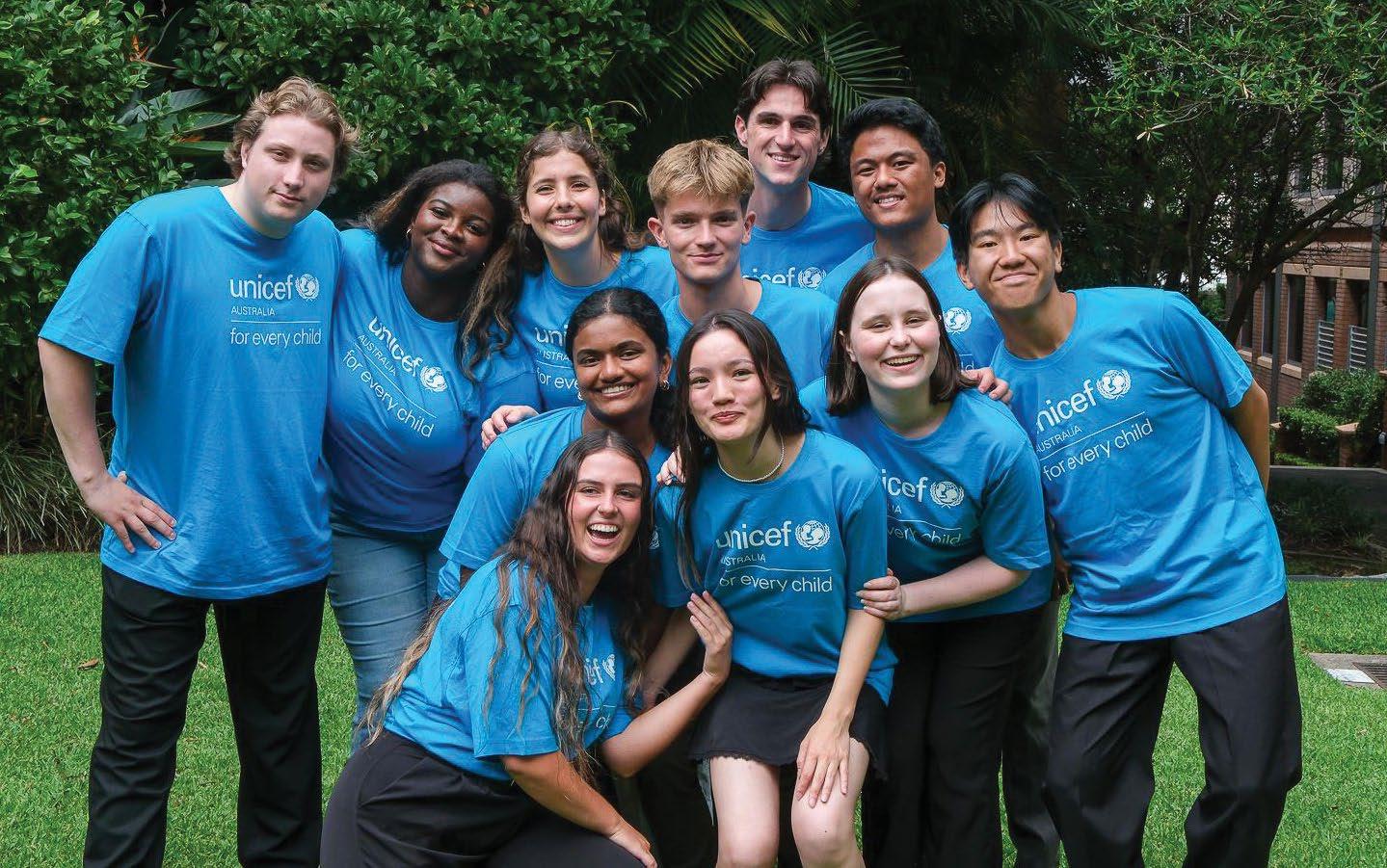
The 2025/2026 UNICEF Australia Young Ambassadors (from left to right) - Reede (TAS), Princess (ACT), Charlotte (WA), Ashwini (NSW), Sian (QLD), Max (ACT), Layla (NSW), Lincoln (VIC), Peter (NT), Chelsea (SA), and Todd (VIC).
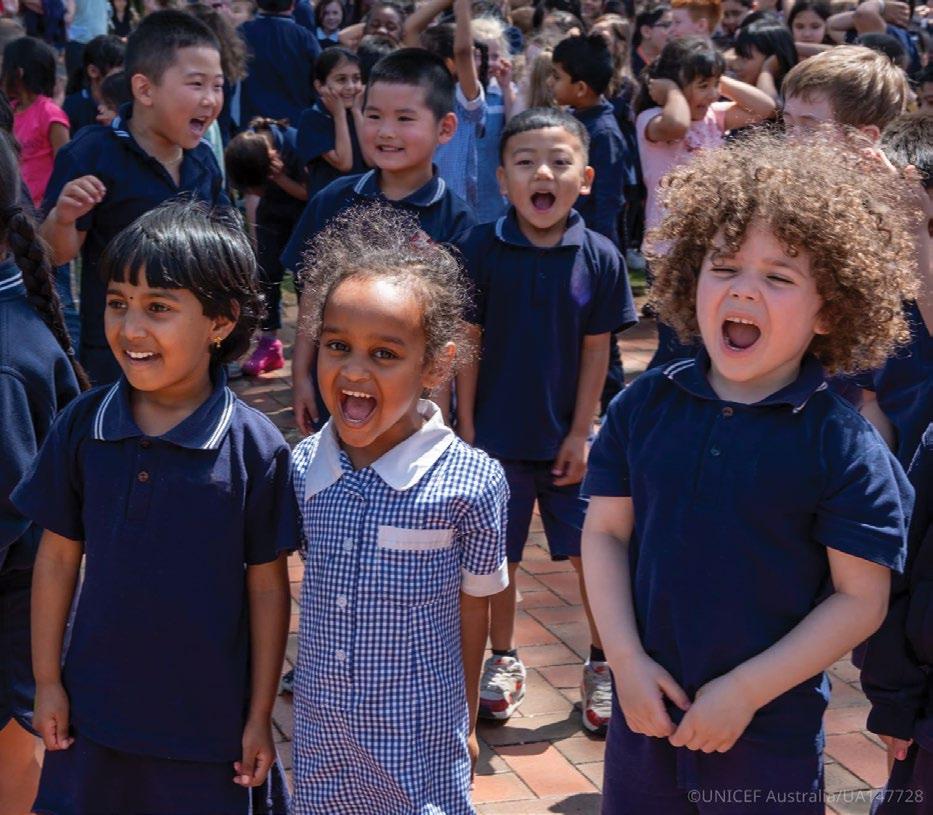
World Children’s Day, celebrated annually on 20 November, marks the adoption of the United Nations Convention on the Rights of the Child. In 2025, the day focused on every child’s right to play (Article 31) through UNICEF Australia’s A Minute of Loudness campaign. More than 1,000 schools, early learning centres and community organisations participated, engaging over 180,000 students nationwide. Schools took part through tailored classroom resources, Ambassador visits and the Minute of Loudness, where students raised their voices through words, music and song.
I
would’ve loved to get taught about how the government works in general, especially regarding the three levels of government, beyond a simple Year 6 excursion to Parliament House.
U-Reporter on the topic of civic education.
University engagement
University of Technology
Sydney partnership
Through a three-year partnership with the University of Technology Sydney’s Transdisciplinary School, UNICEF Australia co-created a real-world challenge for undergraduate students focused on reimagining society. In 2025, 650 students from diverse disciplines collaborated on solutions, with a strong focus on green skills and the role of young people in building a climate resilient future.
U-Report Australia
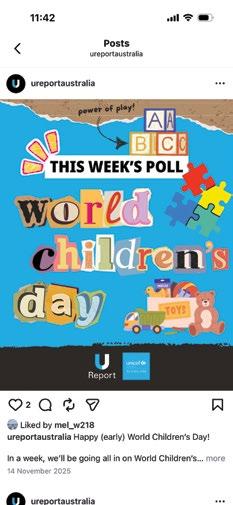
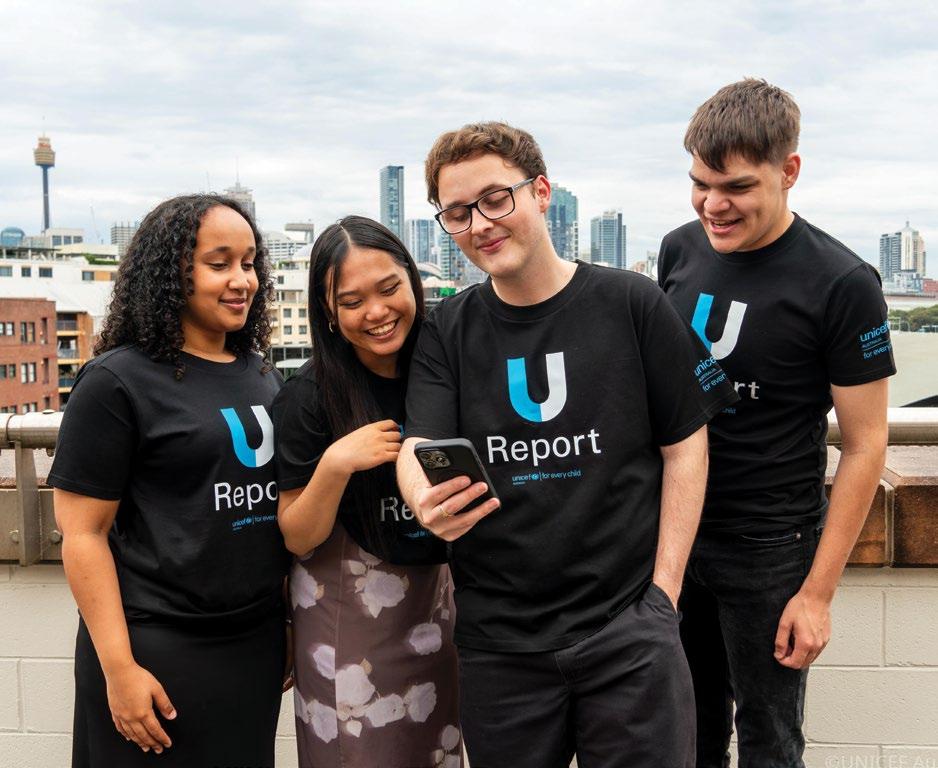
In 2025, we launched U-Report Australia, UNICEF’s digital community for young people aged 14-24. U-Report is a free, confidential digital platform that enables young people to share their views on issues that matter to them, via SMS, Instagram DMs and Facebook Messenger. Polling throughout the year captured youth perspectives on climate, wellbeing, financial literacy and civics education. U-Report will continue into 2026, supporting more young people to raise their voices and shape decisions that affect their lives.
RIGHT World Children's Day - Adelaide.
CLIMATE ACTION AND YOUTH ENGAGEMENT
I believe that young people and children are unfortunately bearing the weight of a crisis we didn’t contribute to in any significant way. And yet, we’re bearing the full brunt of its impact. It’s only through united, collective effort that we can truly address this crisis.
– Ken, climate youth advocate from Palau.
Protecting
children’s rights in a changing climate
In 2025, UNICEF Australia championed action to prepare for, protect against and prioritise children’s rights as climate-related shocks and disasters increased. We generated research and evidence to strengthen systems and services, placed children at the centre of climate policies and investments, and supported young people to prepare for the future and lead climate action in their communities.
Across Australia and our region, we invested in programs that strengthened the climate resilience of the systems children rely on, while working in partnership to drive change at local, national and regional levels.
Children faced disproportionate risks from a changing climate. Exposure to air pollution, heatwaves and diseases posed distinct threats to their health and wellbeing, while disasters increasingly disrupted education, safety and stability. Although decisions made today will shape their futures, children and young people were too often excluded from meaningful participation in these discussions. UNICEF Australia advocated for children and young people to be prioritised and included in climate and disaster strategies at every level.
LEFT Islamic Relief Australia and UNICEF Australia joining the Climate Guardians for a clean-up of one of the beach areas in the Maldives.
Our climate roadmap
In 2025, UNICEF Australia worked with partners to drive climate-smart policies, investments, and actions across Australia and the Asia Pacific region by:
• Strengthening children’s resilience to climate impacts by safeguarding the services they rely on.
• Deepening child and youth engagement in climate policymaking, placing young people at the heart of climate policies, actions, and investments across Australia and the region.
• Building awareness, knowledge, and appetite for child-centred climate action among a diverse range of stakeholders.
• Greening our own operations, progressing towards net zero and embedding sustainability across all aspects of our work.
Measuring the impact of disasters on children and young people
In 2025, UNICEF Australia continued to strengthen the national evidence base on the distinct vulnerabilities and needs of children affected by climate-induced disasters in Australia. In partnership with Deloitte Access Economics, we developed and published The Economic and Social Impact of Disasters on Children and Young People, building on our 2024 report to further examine the current and future impacts of disasters on children and young people. The 2025 report estimates the average annual cost of disasters for children and young people at $6.3 billion, with costs projected to increase as temperatures rise. The main cost drivers include disrupted education and reduced future earnings, mental health impacts, increased exposure to abuse, employment disruption and displacement. The report also models how these costs are expected to grow under different warming scenarios.
Drawing on this research, UNICEF Australia advocated for state and territory governments to adopt a national framework to support children and young people before, during and after disasters, ensuring their unique needs are better met and the long-term impacts of increasingly frequent and severe events are reduced.
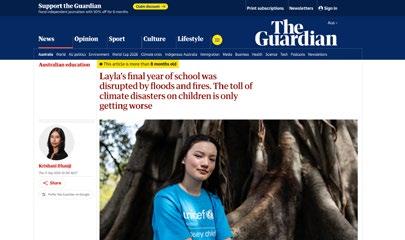
UNICEF Australia Young Ambassadors contributed to this advocacy by sharing their lived experiences of climate impacts through government engagement and the media. Layla, who experienced bushfires and flooding in her community during the final years of school, spoke publicly about the impacts on her mental health and education.
Scan to read the full article
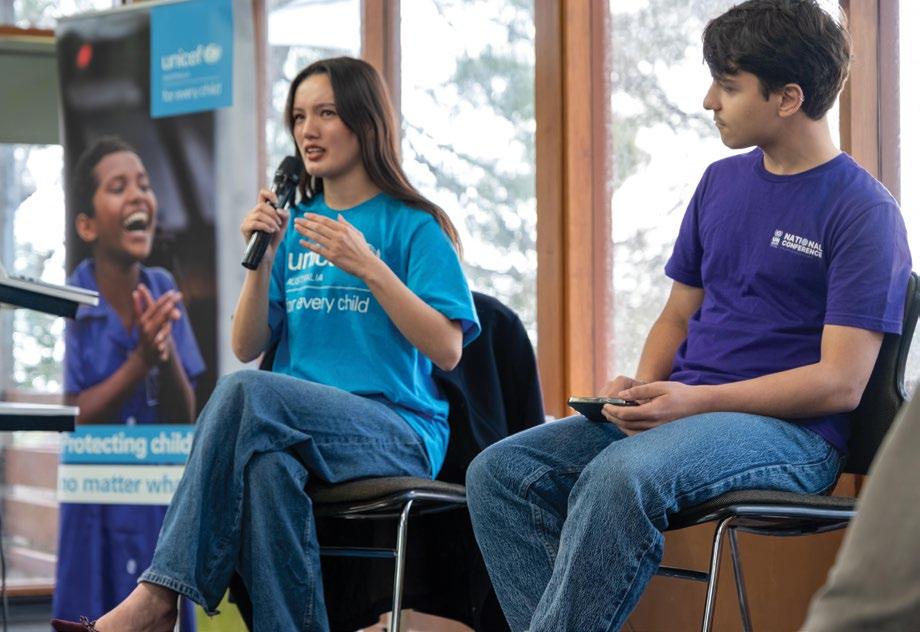
UNICEF Australia Young Ambassador participates in a panel discussion at the 2025 LCOY in Adelaide.
Advocacy during disasters
During more than three months of flooding across Queensland and New South Wales, UNICEF Australia advocated through print, online and radio media for disaster payments to be increased in line with inflation, and for the development of child-centred disaster response framework.
These pre-Budget calls were highlighted during an ABC Radio interview with the Minister for Finance and featured in commercial radio commentary ahead of the Treasurer addressing Queensland media on the economic impacts of Cyclone Alfred. When flooding affected northern New South Wales in April, regional media engaged with UNICEF Australia on the need for increased disaster payments and a child-focused disaster framework.
Building climate resilience in our region
Climate change is placing growing pressure on the systems children rely on, making it critical that health, water and sanitation, education and social protection services are designed to withstand climate related shocks and stresses.
In 2025, UNICEF Australia’s Directly Supported Programs focused on strengthening climate smart social services, building local and youth leadership for adaptation, and supporting low emissions solutions –funded through government and private sector partnerships – to protect children and communities.
Through the Solar Hub, we supported the mobilisation of technical expertise and financing across the Asia Pacific region, assisting countries with solar system design, procurement, energy modelling, and investment proposal development. This work accelerated climate responsive infrastructure, expanded solarisation and energy efficiency, and strengthened the continuity of essential health and education services during shocks and emergencies in climate vulnerable countries.
We supported youth-led climate action and local preparedness. In Cambodia, adolescents developed green and future focused skills through climate and renewable energy content embedded in school-based programs.
In the Maldives, youth Climate Guardians led local climate action, while UNICEF, with the support from partners, helped advanced child sensitive disaster risk reduction through island level disaster management planning, strengthening preparedness structures and community capacity on some of the country’s most climate exposed islands.
In Timor-Leste, with the support from partners, we supported climate resilient water systems, including communitybased water catchment management and planning for rehabilitation of rural water infrastructure, helping safeguard access to essential services during droughts and climate related water stress.
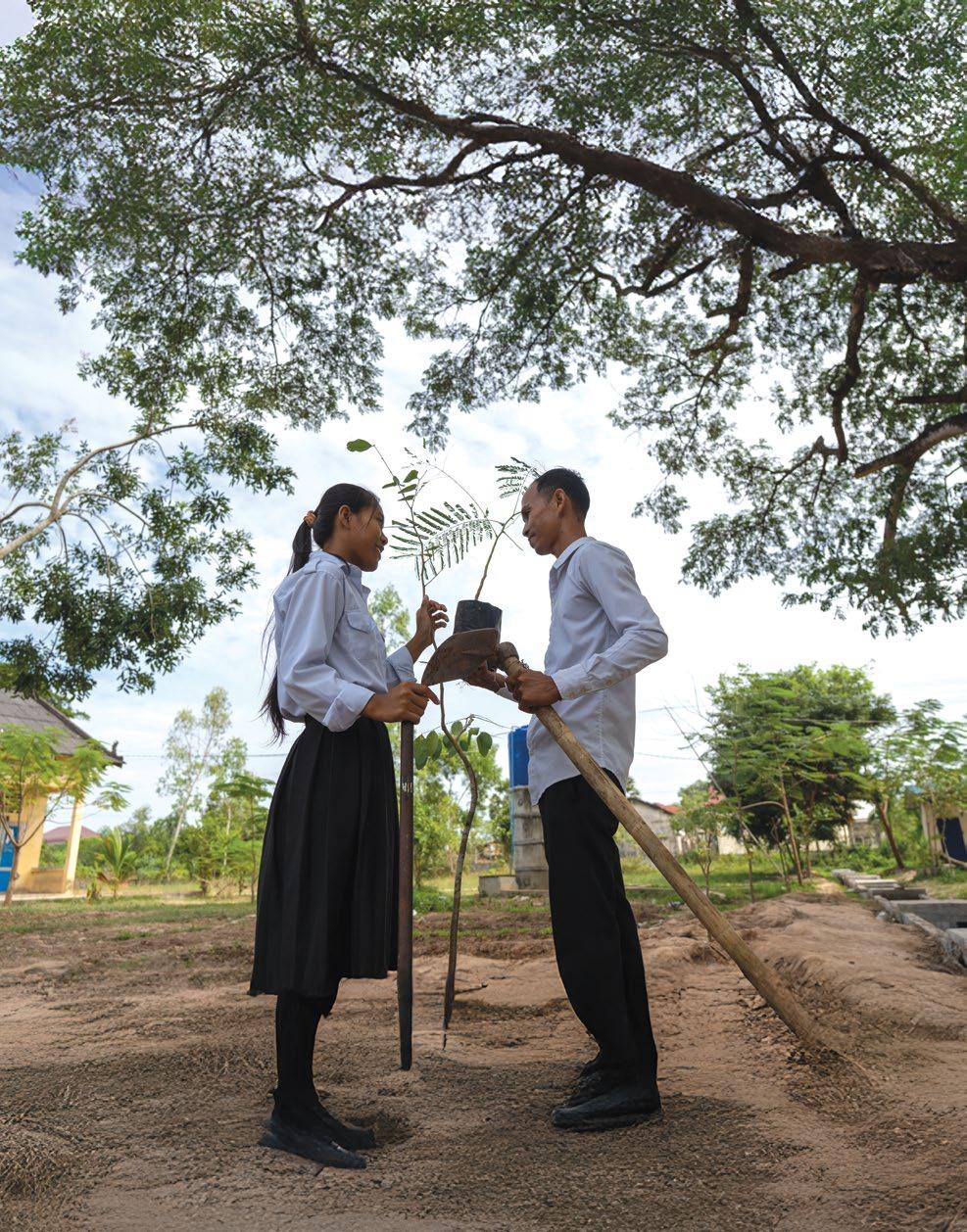
RIGHT In Cambodia, tree planting is one of the climate action activities students undertake through their local life skills education subject, supported by UNICEF.
Australia-Pacific Youth Climate Dialogue
Young people are not only among the most affected by climate change; they are also leaders, advocates, problem solvers, and innovators working to protect their communities. UNICEF’s research and consultations identified three key ways to support young people to play this role effectively:
• Building knowledge and skills to support confident engagement in climate policy, including climate science, adaptation, energy transition and decision-making processes such as Conference of the Parties (COP).
• Creating opportunities for young people to connect and collaborate, including in-person spaces to share experiences and develop shared priorities across countries and regions.
• Establishing clear pathways for young people to engage directly with decision-makers, at local, national and global levels.
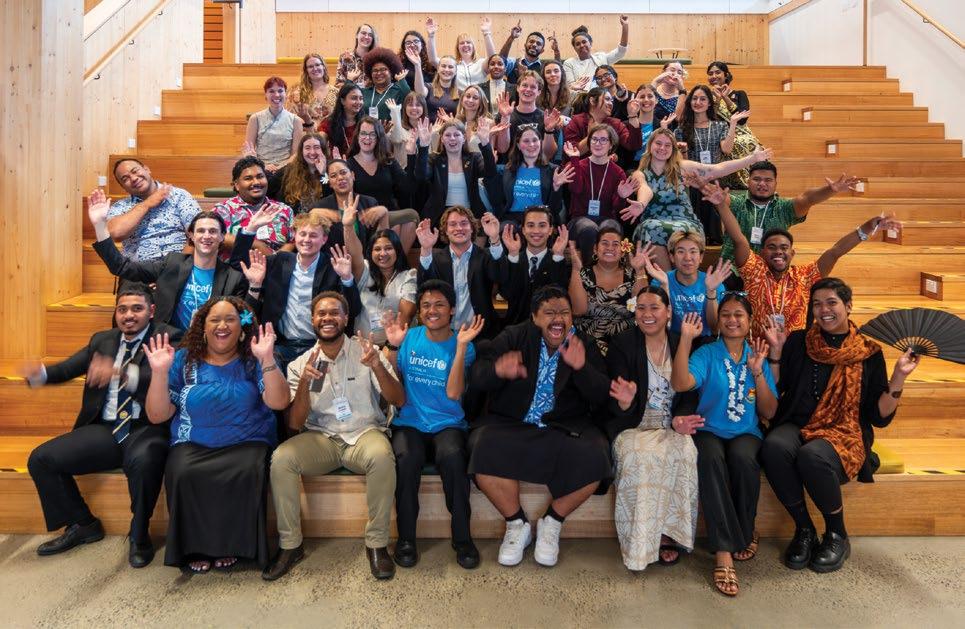
In 2025, UNICEF Australia spearheaded the inaugural Australia Pacific Youth Climate Dialogue (APYCD), bringing together 50 young climate leaders aged 18-28 from across Oceania.
Delivered in partnership with UNICEF Pacific, the Australian National University’s Department of Pacific Affairs and Institute for Climate, Energy & Disaster Solutions, and Western Sydney University’s Young and Resilient Research Centre, the three-day event enabled young people to shape policy conversations.
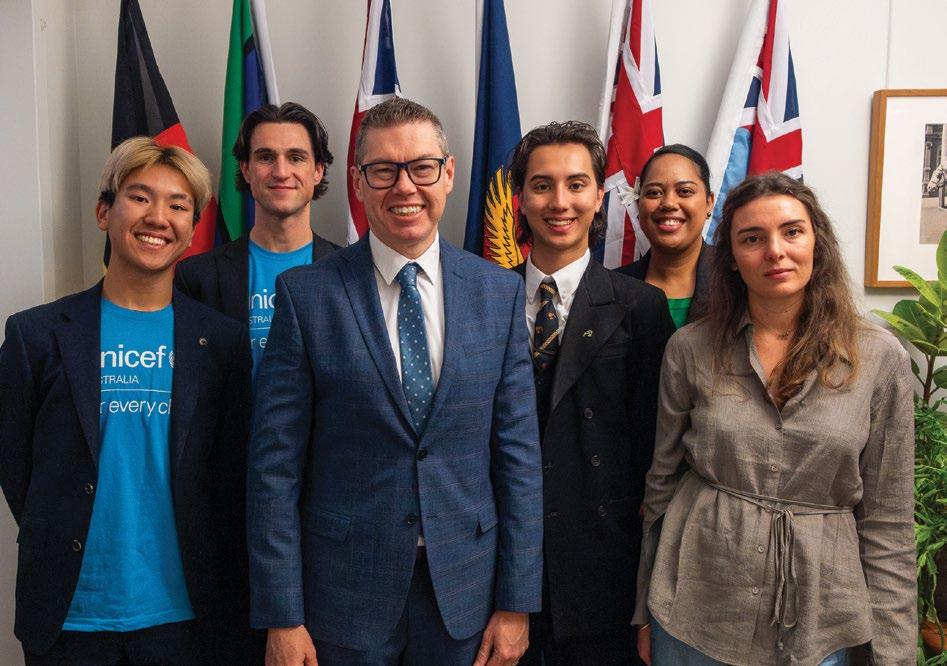
The dialogue culminated in 22 bilateral meetings with MPs and Ministers, resulting in commitments to elevate youth voices, share the Local Conference of Youth (LCOY) findings in Parliament and foster ongoing engagement with young people.
COP30
UNICEF Australia attended COP30 with a focus on advancing child-sensitive climate policy, partnerships and youth engagement. We worked with Australian negotiators to secure recognition of children and young people in key COP30 decisions, including the Global Mutirão and Loss and Damage review, and achieved commitments for agedisaggregated data.
We also engaged with public and private sector stakeholders to strengthen understanding of how climate policy and investment can be made more child-sensitive across all sectors. By championing new alliances and collaborative platforms, UNICEF Australia helped create opportunities for more coordinated action, positioning children and young people as central stakeholders in climate decision-making. With support from the Department of Climate Change, Environment, Energy and Water, two UNICEF Australia Young Ambassadors attended COP30 to engage directly with decision-makers, representing both their own experiences and insights gathered through consultation with children and young people across Australia and the Pacific, including the LCOY and the Australia Pacific Youth Climate Dialogue.
The inaugural Australia Pacific Youth Climate Dialogue.
Australian Local Conference of Youth (LCOY)
LCOY brings young people together to explore climate change and its impact on them. Held around the world, LCOYs inform both National Children and Youth Statements on Climate Change and the Global Youth Climate Statement, which is submitted to COP climate negotiations each year.
In 2025, UNICEF Australia supported Australia’s LCOY for the third time, in partnership with UN Youth Australia and the Australian Youth for International Climate Engagement (AYFICE). The LCOY engaged over 800 children and young people through 27 youth-designed and youth-led consultations, including UNICEF Australia Young Ambassadors.
Consultations were held in every state and territory, spanning all capital cities and regional locations including Dubbo, Coffs Harbour, Gippsland, and Mackay. Contributions from the Uluru Youth Dialogue added deep cultural insight. For the first time, the Dubbo consultation included children as young as 10, making it one of the youngest LCOY consultations globally. We were delighted to welcome Senator Charlotte Walker to our Adelaide LCOY in a genuine demonstration of how young leaders can be represented on the national stage.
The consultations also provided opportunity for young climate advocates to amplify the importance of youth voices through radio interviews across multiple states, explain how the LCOY process informs COP, and encourage other young people to participate.
The consultations informed the 2025 National Statement of Children and Young People on Climate Change, which was presented to Ministers and MPs across Parliament to inform future policy decisions.
Strengthening climate resilience through community-led water catchment protection in Timor-Leste
In Timor-Leste, climate variability, prolonged dry seasons and pressure on fragile water sources continued to threaten reliable access to water in rural communities, increasing risks to community health.
In response, UNICEF Australia, with funding from Australian Philanthropists and other partners, supported climate resilience in rural municipalities by investing in nature-based water conservation and community-led catchment management. In 2025, community consultations, training and construction of climate-responsive, nature-based water solutions were completed in 10 villages, benefitting 3,500 people through improved water availability during the dry season and expanding climate resilient water protection across drought-prone areas.
To support long-term sustainability, school teachers and community leaders participated in Training-of-Trainers programs in catchment management to promote collective stewardship of water resources. The initiative also enhanced climate-informed planning through environmental impact checklists, digital mapping and baseline data collection to guide future water, sanitation and hygiene planning.
Together, these measures are supporting communities to adapt to climate change, protect critical water sources, and strengthen resilience for future generations.
This Statement carries the voices of a generation no longer willing to wait – diverse yet united, with clarity, courage and conviction. In our cities and regions, from coast to coast – across this continent, young people spoke not just of rising seas and broken systems, but of what could be built in their place.
– Lincoln and Layla, UNICEF Australia Young Ambassadors.
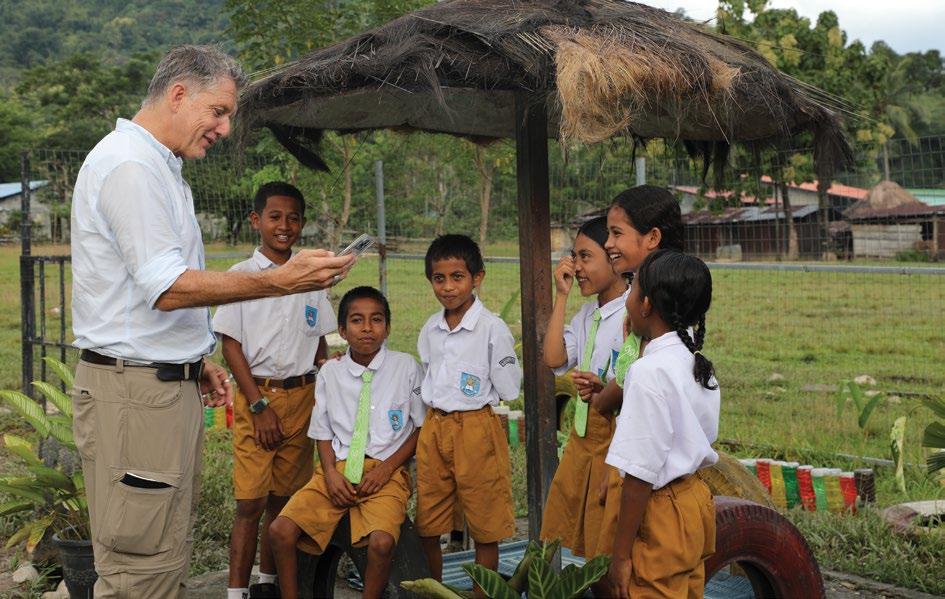
ABOVE UNICEF Global Spokesperson James Elder shows images of climate-related disasters to students in Timor-Leste.
Greening our own operations
To complement our work to protect children from climate change, UNICEF Australia strengthened how we managed our own environmental impact in 2025, focusing on measuring and reducing emissions across our operations and prioritising avoidance and reduction activities in the first instance.
Approach Target
We worked towards net zero by reducing emissions from our operations and value chain, consistent with our commitment to environmental responsibility.
Monitor
We measured and reported our Scope 1 and 2 emissions, and relevant Scope 3 emissions where reliable data was available, tracking progress year on year.
Reduce
Our approach followed a mitigation hierarchy: first avoiding and reducing emissions, then contributing funding to climate-focused UNICEF programs to help address remaining, unavoidable emissions.
2025 emissions
In 2025, our measured emissions (Scope 1 and 2, plus business travel) totalled 292tCO2e, representing a 24 per cent decline on 2024. This reduction was also reflected on a per-employee basis, with emissions decreasing by 21 per cent year on year to 2.3tCO2e per employee.
Green Power
In early 2024, we transitioned to a 100 per cent renewable electricity plan accredited under the Australian Government scheme. As a result, our market-based electricity emissions were zero in 2025, with electricity sourced from solar, wind, hydro and bioenergy.
Travel
While travel remains important to our work, we continue to embed sustainability into travel decisions. In 2025, overall travel emissions reduced by 23 per cent, driven by a noted decline in long-haul flights.
AUSTRALIAN GOVERNMENT FUNDING
We deeply appreciate our partnership with the Australian Government, which supports UNICEF’s work for children. In 2025, UNICEF Australia received Australian Government funding to help deliver impact for children in Australia, in our region and beyond.
UNICEF Australia is accredited by the Australian Department of Foreign Affairs and Trade (DFAT), the agency responsible for overseeing Australia's development initiatives. This accreditation process includes rigorous assessment of governance, financial management, risk controls, and safeguarding systems, providing
assurance of accountability, effective use of funds, and continuous improvement.
UNICEF Australia is one of 45 Australian NGOs with full DFAT accreditation and is allocated funding on an annual basis. In 2025, we received $4.9 million through the Australian NGO Cooperation Program (ANCP) for the July-25 – June26 period. This funding is combined with donations from the Australian public and the private sector to support our Priority Programs and extend our impact for children.
UNICEF is a long-standing humanitarian partner of the Australian Government, with an operational presence and
trusted access to some of the world’s most complex and high risk crisis settings, particularly where children are most affected. Through this partnership, UNICEF delivers lifesaving assistance across health, nutrition, water and sanitation, education and child protection. In response to the crisis in Gaza, Australia provided $10 million to UNICEF in 2025 to support urgent assistance for children, including the delivery of nutrition rations to address severe food insecurity among children under five.
In addition to funding received by UNICEF Australia, the Australian Government contributed more than $88.3 million in direct funding to UNICEF in 2025.
UNICEF Australia is an independent registered charity, subject to Australian regulations and Deductible Gift Recipient (DGR1) Status, and a signatory to the Australian Council for International Development’s Code of Conduct.
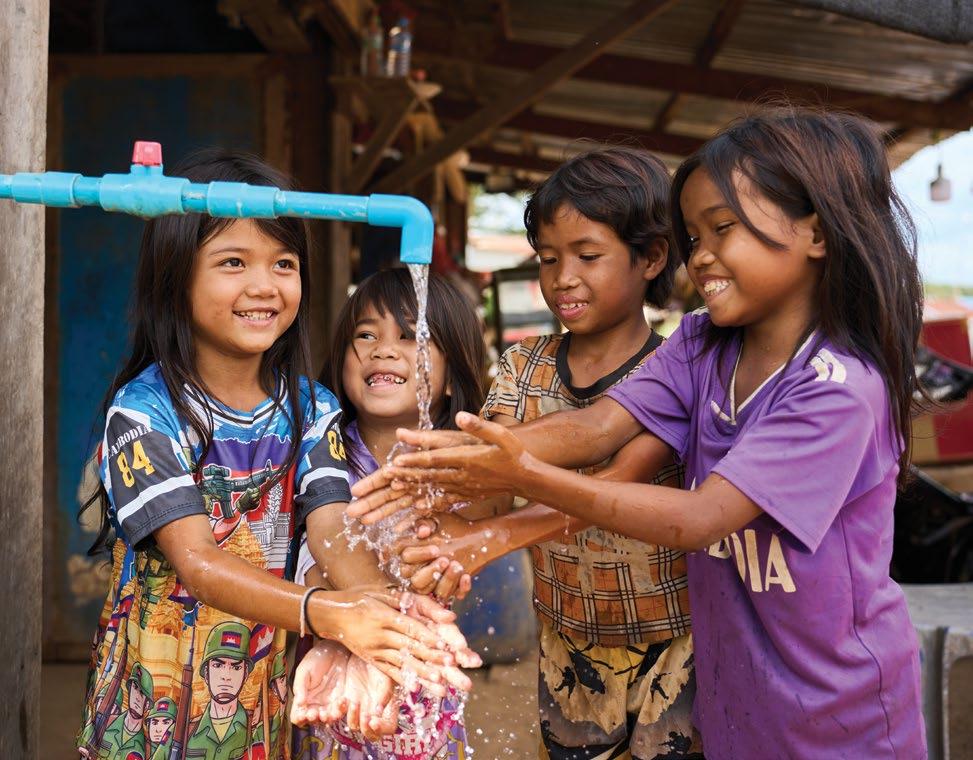
LEFT A community pipe water supply system in rural Cambodia. The system uses solar power, ensuring the water keeps flowing throughout the day and night, and is designed to withstand periods of extreme weather like flooding and drought.
PARTNERING FOR IMPACT
UNICEF Australia works with individuals, families, foundations, faith-based communities and civil society organisations who seek meaningful long-term impact for children. Together, we combine resources, expertise and influence to drive sustainable change, even in the most complex and challenging contexts.
In 2025, our philanthropic and faithbased partners supported both lifesaving emergency responses and long-term development programs. This included support for water, sanitation and hygiene services in Gaza, alongside development programs across the Asia Pacific region, from PNG to Timor-Leste. Together, these contributions supported vital nutrition, child protection and early childhood development initiatives, reaching millions of children. In Australia, UNICEF in partnership with ARACY and with support from the Minderoo Foundation, launched The State of Australia’s Children report, providing the most comprehensive, evidence-based assessment of children and young people’s wellbeing nationwide.
UNICEF Australia’s philanthropy team works closely with supporters at every stage of their giving journey, building relationships grounded in trust, shared purpose and long-term commitment. In 2025, several partners visited programs in-country, gaining firsthand insight into the impact of their support through engagement with local communities and program partners, and deepening their understanding of how sustained investment contributes to lasting change for children.
Across all its work, UNICEF works in close partnership with governments and communities, engaging at the local level to respond to the specific needs of the most vulnerable children while strengthening the systems that support long-term change. Guided by local knowledge and leadership, programs are developed collaboratively to build capacity and deliver solutions that can be sustained and scaled over time.
This life-changing work would not be possible without the support of our generous philanthropic partners. Together, we are helping to ensure that every child can grow, learn, play, and develop in a safe and nurturing environment, no matter who they are or where they live.
We extend our sincere thanks to all our partners, with particular gratitude to the Minderoo Foundation, The McCusker Charitable Foundation, Islamic Relief Australia and The Ian Potter Foundation for their exceptional support in 2025.
Where partnership meets purpose
In December 2025, UNICEF International Council Members Tonya McCusker and her children Mary, 17, and James, 25, visited UNICEF-supported programs in Timor-Leste.
Travelling to Dili, Ermera and Alieu, the family visited a communitybased preschool, a health clinic, and a water conservation project, as well as programs supporting adolescent mentoring, girls’ empowerment and disability livelihood.
In the year leading up to the trip, the McCusker family engaged in a TimorLeste – Australia youth knowledge exchange, which connected them with students through quarterly sessions. Meeting several of these students in person added depth to the visit and strengthened understanding of how long-term partnerships translate into practical, community-led outcomes for children and young people.
RIGHT The McCusker family met with students in Timor-Leste.
Faith partnerships in focus
An interfaith movement to achieve the greatest impact for children.
Faith-based and civil society organisations play a vital role in supporting UNICEF’s work, drawing on trusted community relationships to help reach children most at risk.
Minderoo Foundation again generously supported UNICEF’s water, sanitation and hygiene response in Gaza, alongside The State of Australia’s Children report, developed with the Australian Research Alliance for Children and Youth (ARACY). The flagship report brings together the latest data with the firsthand perspectives of Australia’s children and young people.
Building collaboration across faiths is an important part of strengthening these collective efforts.
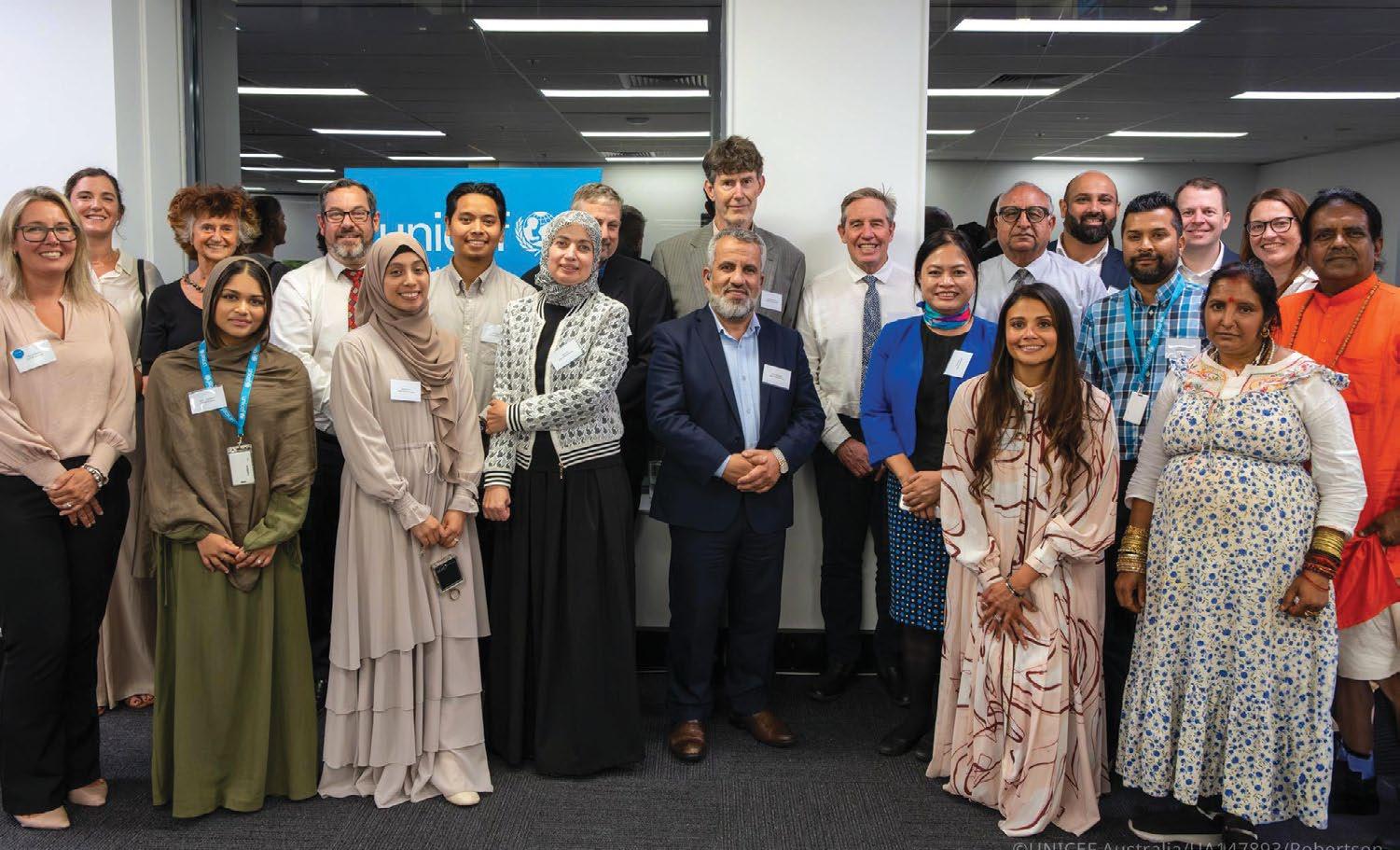
In March 2025, UNICEF Australia brought together representatives from across faith communities for an interfaith Iftar – an evening meal marking the breaking of fast during the holy month of Ramadan. The event
The McCusker Charitable Foundation supported our work across adolescent development and participation, as well as child survival and protection, including through the Girls Empowerment Program in Timor-Leste.
created space for dialogue, connection and shared learning, reinforcing the value of cooperation in advancing children’s rights and wellbeing.
Through partnerships grounded in mutual respect and shared purpose, faith communities continue to contribute to solutions that support children and families in diverse contexts.
Our long-standing partnership with Islamic Relief Australia, supports projects in early childhood development in Cambodia, child protection and birth registration in Papua New Guinea, and the flagship Climate Guardians program in the Maldives.
The Ian Potter Foundation supported our Certify Hope campaign to raise awareness and help eliminate barriers to birth registration in Australia and to provide a roadmap for systemic change.
OUR CORPORATE PARTNERS
UNICEF Australia sincerely thanks the many partners who supported us in 2025. These companies, along with their staff, customers, and stakeholders, exemplify unwavering determination in sharing our commitment to promote and protect the rights of every child, no matter what.
Cisco Foundation supports UNICEF’s Oky program across the region – a girl-centred digital innovation designed to improve menstrual health and support girls’ empowerment.
CyberCX provided services and expertise to UNICEF Australia, helping create a safer, more secure online environment. Beyond protecting data, the partnership focuses on safeguarding the children and communities we work with and support.
The CommBank Staff Foundation supports UNICEF Australia through funding for domestic programs, made possible by the generosity of CommBank employees.
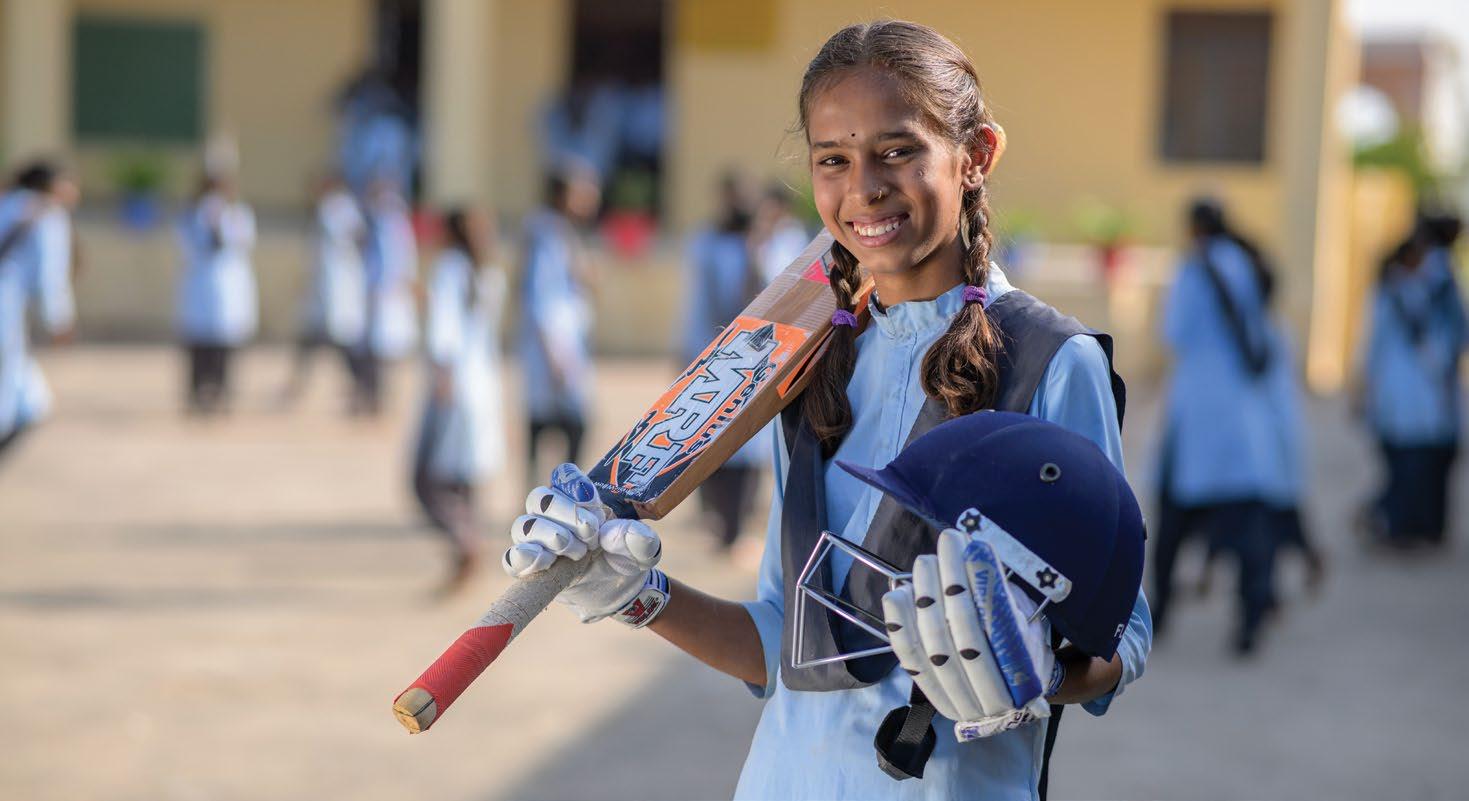
UNICEF Australia and Cricket Australia launched a strategic partnership to advance gender equality, empower girls, and build a movement through sport. Launched at the Women’s Ashes Test, it reimagined cricket’s appeal, turning every on field appeal into an appeal for equality – Until Every Girl Can Play.
eBay supports UNICEF Australia through its Give at Checkout donation option, enabling customers to contribute to the delivery of urgent, lifesaving support for children affected by crisis and conflict.
The G+T foundation supported UNICEF Australia’s emergency response, helping deliver urgent, lifesaving support to children affected by crisis and conflict – including access to safe water, health, nutrition, protection and education.
H&M raised funds in Australia through its online store, whilst internationally, the H&M Foundation partners with UNICEF to support education and early childhood development initiatives.
As UNICEF Australia’s official creative and media agency, Howatson+Company provides valuable pro-bono agency support and contributes further through their Workplace Giving program.
As a global partner of UNICEF, Louis Vuitton provides support through UNICEF's emergency programs that respond to sudden onset crises. Local teams also support UNICEF Australia by actively engaging in fundraising initiatives.
Nomura supports the Children Learning Smarter project in Timor-Leste, expanding access to education through innovative technology. This includes the Learning Passport, a flexible online and offline platform that provides continuous access to learning content and educational tools.
Haneco continued to support UNICEF Australia through regular contributions, providing flexible funding that enables UNICEF to respond quickly to emergencies and invest in long term solutions for children.
Through its active workplace engagement program, and by sharing expertise in recruitment, transformation and leadership, IKEA Australia continued to provide valuable support to UNICEF Australia’s Young Ambassador program.
As a global partner of UNICEF, Marriott International participates in the Check Out for Children program, contributing to crisis response and resilience work. Guests staying at Marriott properties across Australia can donate $2 per night, while Marriott’s W Sydney supports UNICEF Australia through local fundraising events.
PayPal makes it easy for customers to donate at checkout, in the PayPal app and on its website. In 2025, UNICEF Australia was proud to be selected as a featured charity on PayPal, helping us highlight emergency appeals.
Hand Heart Pocket partners with UNICEF Australia to support children and young people in PNG. Through multi-year funding of the Girls’ Empowerment Program, the partnership helps girls build safety, confidence and life skills, delivering measurable impact through trauma-informed support and leadership development.
As a global partner of UNICEF, Jo Malone works with us to protect and promote the mental health and wellbeing of children, young people and caregivers around the world. Support is delivered through charity candle sales, consumer checkout donations, and employee fundraising activities.
UNICEF Australia partnered with Next Practice to support maternal and neonatal health in PNG. Through the initiative Next Aid, funding is directed towards improving maternal, newborn and child healthcare, including support for Tetanus Diphtheria vaccinations.
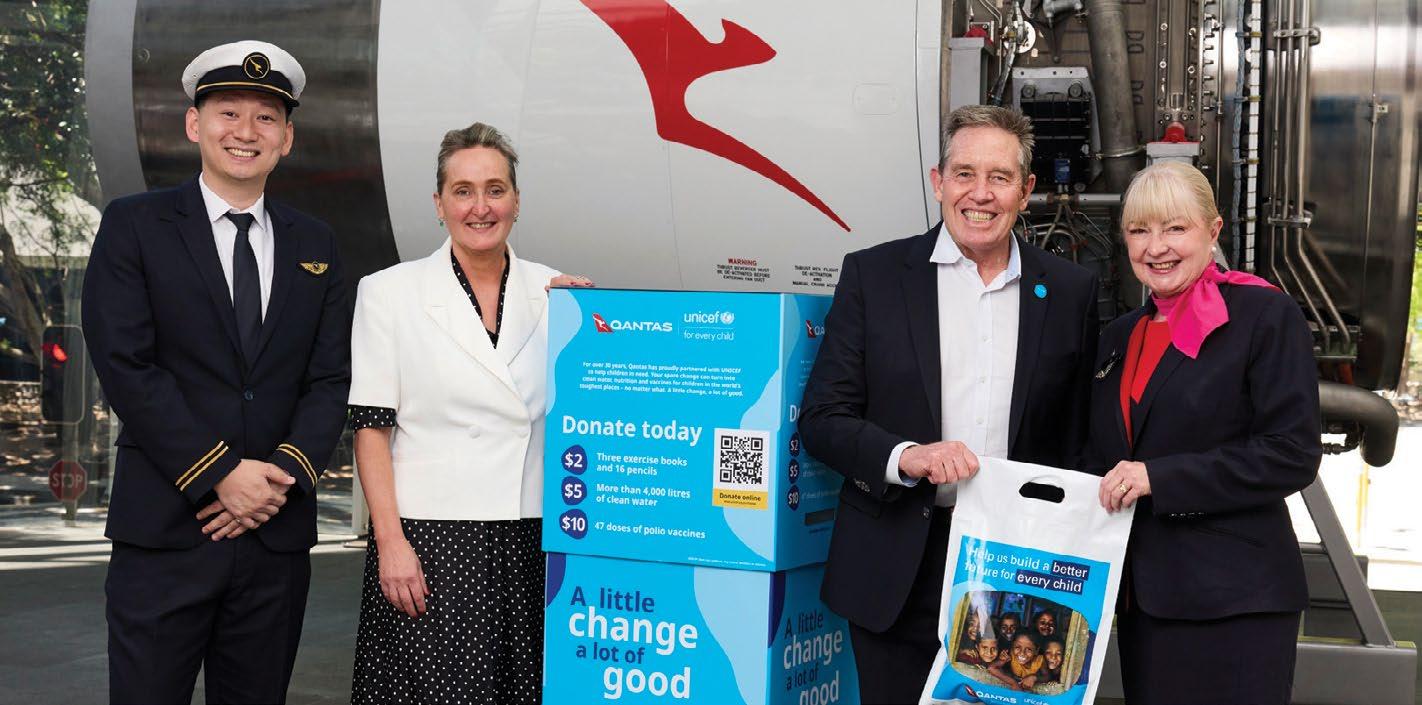
For more than 34 years, Qantas and UNICEF Australia have partnered through Change for Good. Since 1991, Qantas customers and staff have donated via inflight giving, airport donation points, digital and online channels. In 2025, the partnership reached a significant milestone, raising more than $40 million.
OUR CORPORATE PARTNERS
Rio Tinto supported UNICEF’s emergency response in Guinea following the 2025 fire that damaged the national vaccine supply and cold chain. This support helps restore vaccine storage and delivery, strengthen frontline capacity and rebuild trust in immunisation, ensuring lifesaving vaccines reach more than a million children and mothers.
UNICEF Australia partnered with Sydney Sock Project to support children in crisis. From December 2025, every pair of socks purchased from the UNICEF Australia collection (three designs available) triggers a donation.
The Rotary Give Every Child a Future project, delivered with UNICEF Australia, supports vaccination for children and adolescents most at risk across the Pacific. As a centenary initiative across Australasia, it reflects Rotary’s long-standing commitment to service and community engagement.
UNICEF Australia and the Sydney Sixers launched a three-year partnership to champion children’s right to play. Launched at the Big Bash League, the partnership turns cricket’s excitement in impact through the annual Charity Match, under the banner of Until Every Child Can Play
In 2025, the Telstra Foundation supported our digital wellbeing program through a social impact grant, advancing youth led initiatives, new research, and media literacy resources for children, families and educators.
Travel Money Oz supports UNICEF Australia through its Small Change, Big Difference foreign coin collection initiative. The program enables individuals to donate foreign currency, while Adyen Giving is also used to provide emergency funding for children in need.
Working with our partners for rapid emergency response
UNICEF Australia extends our deepest gratitude to the companies, organisations, workplace giving programs, staff and customers that have shown their ongoing commitment to children during emergencies. We would like to recognise the employees of the following companies who raised more than $25,000.
Thank you to the organisations that contributed through appeals and directly supported programs in 2025, including: NAB, Google, ING Bank, Mastercard Loyalty Solutions, Microsoft, REA Group.
We extend our sincere thanks to everyone who supports UNICEF Australia through Champions for Children – our community of small to medium-sized businesses committed to making a positive change in the lives of children. As a non-profit organisation that is 100 per cent donor funded, our work depends on the dedication of our partners. We are deeply grateful to all the stakeholders, companies, and staff who supported UNICEF Australia in 2025, enabling us to continue our vital work.
OUR SUPPORTERS
A community of supporters helping to create a brighter future for every child.
Everyday people, extraordinary impact
As an organisation funded entirely by voluntary donations, our supporters are at the heart of everything we do. From our regular giving Global Parents to children’s subscriptions like Paddington’s Postcards; from emergency responders to those leaving a lasting legacy through a gift in their Will – every act of generosity helps protect children’s rights.
Throughout the year, people across Australia responded with urgency, compassion and trust when children faced crisis. Emergency appeals for places such as Myanmar, Gaza and
Sadequl Hussain
Individual donor
Lebanon prompted an immediate outpouring of support, as individuals and families stepped forward to help children caught in conflict and disaster.
Our end of financial year campaign once again showed how strongly supporters respond when impact is clearly articulated. Giving was driven not by obligation, but by a desire to protect children’s rights and futures – supporting essential health care, education, clean water and protection for children facing the most severe challenges. These campaigns are of both long standing supporters and new donors, many of whom chose to continue giving beyond a single gift.
Paddington’s Postcards soared in popularity, driven in part by the new
Paddington movie, offering young families a meaningful way to involve children in giving. Parents, teachers and grandparents have shared with us how the program sparked conversations about empathy, fairness and how children around the world live. Many subscribers have gone on to become long term donors, highlighting the power of family-centred giving in building lasting connections to UNICEF’s mission.
What unites our supporters is a shared belief that children deserve better. Their generosity enables UNICEF to act quickly when emergencies strike, while sustaining the vital work that helps children survive, thrive and build safer futures, today and for generations to come.
Dominique Rowlands
Rivercrest Christian College, Victoria
"My students are really enjoying the Paddington Postcards, which I use in my French classes. They provide authentic, age appropriate opportunities for students to engage with global issues, explore different cultures, and develop empathy and compassion for children around the world. It also integrates beautifully with language learning, helping students make real world connections while fostering curiosity, inclusion, and global citizenship."
"The reason I regularly donate to UNICEF is because I too have children. I can only imagine how children around the world feel traumatised when they are affected by wars, famines, social injustice, malnutrition, displacement, natural disasters and other calamities. I have been donating to UNICEF for the last 25 years and the feeling of being there for a child when they desperately need help really brings some peace of mind."
The power of community
Throughout 2025, our supporters across Australia and beyond stepped up in extraordinary ways. From endurance challenges to deeply personal moments of giving, our community of fundraisers showed what’s possible when compassion meets action.
The following stories highlight just a small selection of the many inspiring fundraisers who made a meaningful impact through community fundraising during the year.
Swimming for Change: 82 Kilometres for Gaza
Young fundraisers Juno, Lucy and Elsie swam 82 kilometres over one month, the length of the Gaza Strip twice – to raise funds for children affected by the humanitarian crisis in Gaza.
Through determination, teamwork and countless hours in the water – even while sick – the girls raised more than $5,400.
Community in Action: Oíche ar son Gaza
In May 2025, the Irish National Association (INA) brought the community together in Sydney for Oíche ar son Gaza – an evening of music, culture and solidarity in support of children affected by conflict.
Hosted at the Gaelic Club in Surry Hills, the event featured live Irish musicians, a donated artwork raffle and an outpouring of community support. With more than 200 tickets sold – and additional supporters turned away at the door due to capacity – the event raised $12,000 for UNICEF and UNFPA, supporting lifesaving programs for children and families in Gaza.
There is this feeling beneath it all that you get when you understand how powerful it is to rise up for what you believe in, especially with friends to support you and something to fight for.
- Juno
raised $12,000
Juno, Lucy and Elsie – raised $5,400
Travelling by foot has taught me the importance of having food and drink. I want as many children as possible to have food and live today.
– Tomoya Matsusak
Walking for Children: Tomoya Matsusaka
In 2025, Tomoya Matsusaka, a teacher from Japan, undertook a remarkable act of solidarity with children – walking nearly 4,000 kilometres from Cairns, Queensland to Melbourne, Victoria to raise funds for UNICEF Australia.
Motivated by his experience of travelling long distances through Australia’s outback without adequate food or water, Tomoya became acutely aware of how vulnerable people can be when basic necessities are out of reach – particularly children living in humanitarian emergencies.
Tomoya connected with communities large and small, and was struck by the kindness of Australians – from offers of accommodation to help repairing his broken cart.
Tomoya – raised $66,000+
Tomoya’s journey inspired widespread support, raising more than $66,000 for UNICEF Australia. During his travels, he visited the UNICEF Australia office, where staff welcomed him and celebrated his incredible commitment to children’s rights.
Together, these stories reflect the heart of community fundraising in 2025: generosity, determination and a shared commitment to putting children first.
Phoebe’s run
New mum and first-time marathoner Phoebe ran the Warrnambool Running Festival last year, raising funds for children in Gaza. She dedicated her run to the strength of mothers raising babies in the most fragile of circumstances. “This is not a political issue – it’s a matter of human rights for children,” she said.
Phoebe – raised $3,100+
OUR PEOPLE
At UNICEF Australia, we have a team of passionate and dedicated people who are driven to improve the lives of every child.
Their commitment, wellbeing and sense of belonging are essential to achieving our goals. We continue to invest in an inclusive, flexible and human centred workplace that enables our people to thrive and bring their best selves to work.
Supporting growth and capability
Throughout 2025, our people continued to show resilience, adaptability and care for one another, while staying focused on delivering meaningful impact for children. In a challenging external environment, we remained committed to supporting our people across every stage of the employee experience, from onboarding and development to career growth and capability building –strengthening both individual potential and organisational continuity.
In a small, agile organisation, crossskilling is vital to building capability, creating pathways for growth and ensuring we can respond flexibly to
changing needs. In 2025, this approach supported 22 team members to move into new roles or assignments across the organisation. We also welcomed our first cohort of interns (14), supporting early-career pathways through structured learning, mentoring and access to meaningful work.
Engagement, wellbeing and flexibility
We continued to listen to our people through multiple feedback and measurement points, enabling us to better understand how work is experienced across the organisation. These insights inform ongoing improvements to wellbeing, flexibility and inclusion, helping ensure our people feel welcomed, supported and empowered to contribute. Workforce health and engagement remained strong throughout the year supported by our continued focus on wellbeing and preventative psychosocial safety.
The culture at UNICEF is warm, friendly, and inclusive, and the broader impact of the organisation's work is truly extraordinary.
– Exit Survey 2025
Initiatives such as our Wellbeing Expo provided dedicated time for team members to reset, connect, and focus on different aspects of wellbeing through expert-led sessions, practical one-on-one consultations, financial guidance and creative activities. Combined with flexible work practices, these efforts helped foster a secure and supportive environment where individuals can excel.
The launch of our 2030 Unstoppable Together strategy.
Inclusion, respect and belonging
Inclusion, respect and belonging remain central to our culture. In 2025, the development of our draft Reflect Reconciliation Action Plan (RAP) marked an important step in building cultural capability, strengthening relationships with Aboriginal and Torres Strait Islander peoples, and laying the foundations for longer-term action that supports our people and better outcomes for children.
Throughout the year, we focused on establishing core foundations for our RAP. This included forming a RAP Committee to guide the work and build shared accountability, alongside increasing awareness across the organisation through education and recognition of key cultural events.
Our draft Reflect RAP was circulated internally for feedback and endorsement, helping to build alignment and ownership across the organisation. These steps position us well as we move towards final endorsement and into implementation in 2026.
of our team believe strongly in the goals and objectives of UNICEF Australia
91%
sustainable engagement
wellbeing score (+3% to benchmark)
100% of new starters felt welcomed during their first six months at UNICEF Australia.
– Onboarding 2025 survey
UNICEF Australia recognition and awards
In 2025, UNICEF Australia was recognised nationally and internationally across fundraising, partnerships, brand and employee engagement.
Recognition for campaigns delivered in partnership with UNICEF Australia
The following industry awards recognised campaigns and creative work delivered by our agency partner, Howatson&Company, in support of UNICEF Australia's work.
• Mumbrella Awards – Pro Bono Campaign of the Year; Best Use of Real-Time Marketing
• Cairns Crocodile Awards
– Changing the World
• AWARD Awards – Charity
• Gerety Awards – The Work for Good Cut
• B&T Awards – Direct Response (Winner); Sponsorship Campaign; Pro Bono Campaign; Integrated Campaign
• AdNews Awards – Small Budget Media Campaign of the Year (< $500,000); Social Responsibility/ Pro Bono Award; Brand Partnership
OUR AMBASSADORS
2025 was a year of extraordinary Ambassador engagement for UNICEF Australia.
Australia Ambassador Adam Liaw ran City2Surf with his son to raise funds for UNICEF Australia.
Our Ambassadors played a critical role in amplifying UNICEF’s work and advocacy. Through their platforms and personal commitment, they helped drive awareness, support fundraising outcomes, and elevate the voices and lived experiences of children and communities – from Bangladesh, Timor-Leste and Gaza, to Myanmar, Papua New Guinea and the Philippines.
Special thanks to our UNICEF Australia Ambassadors, High Profile Supporters, and Expert Advisors for their continued commitment. With their ongoing support, we continued to unlock true impact through awareness and fundraising.
Stewardship
• Ronan and Storm Keating became UNICEF Australia Ambassadors, with a particular interest in UNICEF’s work in Papua New Guinea.
• Nikki Van Dijk and Krew Boylan were welcomed as High Profile Supporters.
• Alana King, Megan Schutt, Annabel Sutherland and Usman Khawaja supported our partnership with Cricket Australia.
BELOW Ronan and Storm Keating became UNICEF Australia Ambassadors.
UNICEF Australia Ambassadors
• Adam Liaw
• Carrie Bickmore
• Edwina Bartholomew
• Emma McKeon
• Erica Packer
• Pat Cummins
• Rachael Haynes
• Ronan & Storm Keating
• The Wiggles
UA High Profile Supporters
• Alana King
• Callan McAuliffe
• Krew Boylan
• Megan Schutt
• Nikki van Dijk
• Dr Susan Carland
• Tara Moss
• Usman Khawaja
UA Expert Advisors
• Chris Maher AO
• Dr. Elizabeth Elliott AO
• Professor Fiona Stanley
UNICEF Australia Ambassador, Emma McKeon visits a school for World Children's Day.
Fundraising
• Adam Liaw featured in our Gaza fundraising campaign, with a direct video appeal which raised over $250,000 – one of UNICEF Australia’s most impactful single-Ambassador fundraising moments to date.
• Adam also used his own networks to raise funds for multiple emergency appeals. During the Myanmar earthquakes, his social media calls to action raised more than $1,500. Adam and his son also participated in City2Surf, raising an additional $5,000 for Gaza. The story was picked up by local media, showcasing UNICEF’s work in Gaza to over 9 million people.
• In November, a performance by The Wiggles, which was followed by a Q&A session where they reflected on their visit to Timor-Leste and UNICEF’s work, raised $250,000.
• Emma McKeon hosted a private fundraising event for philanthropic donors and corporate partners at Dior HQ in Sydney, alongside Ambassador Edwina Bartholomew. The event raised $8,000 for the UNICEF Bangladesh SwimSafe program, supporting water safety education for over 800 children.
The greatest tool a child can have is the ability to swim. Swimming has always been an important part of my life – I learned at a young age, and I believe every child, no matter where they are, deserves the same opportunity I was lucky to have.
– Emma McKeon, UNICEF Australia Ambassador
• Rachael Haynes, Pat Cummins and Usman Khawaja amplified our partnership with Cricket Australia by sharing campaign content across social media, increasing reach and credibility.
• The Wiggles recorded multiple campaign videos throughout the year. Tsehay supported UNICEF Australia’s partnership with The Giving Machine, while Caterina recorded a piece for our Mother’s Day Inspired Gifts campaign, encouraging supporters to purchase gifts such as newborn care packs for new mothers in Timor-Leste. This activity raised over $5,000 in donations and reached 25,000 people.
• Pat Cummins fronted the Inspired Gifts Christmas Campaign, which reached 300,000 people and raised over $50,000.
• Adam Liaw also returned as the face of our Cook4Kids campaign, inspiring supporters to host lunches, dinners, morning teas or bake sales to raise urgent funds for children in emergencies.
RIGHT Dior hosted a special evening with UNICEF Australia ambassador Emma McKeon, who shared her experiences visiting UNICEF programs in Bangladesh. Hosted by UNICEF Australia ambassador Edwina Bartholomew.
UNICEF Australia Ambassadors, The Wiggles visited a UNICEF-supported school in Timor-Leste.
Awareness
• Videos recorded by The Wiggles for Father’s Day, International Day of Play, and the State of Australia’s Children report, supported engagement with our audiences.
• In March 2025, The Wiggles travelled across Timor-Leste with UNICEF Australia, visiting early learning centres, schools and communities. During the visit, they met with children, families and teachers, which was covered by ABC TV News breakfast, BTN and ABC Radio Australia’s Pacific Beat program.
• A Father’s Day blog featuring Pat Cummins highlighted the importance of dads participating in kangaroo care with their newborns.
• For World Children’s Day, Ronan and Storm Keating visited a school in Sydney, alongside High Profile Supporter Krew Boylan, to participate
in A Minute of Loudness. The visit was featured on Seven News. Emma McKeon also visited a school on the Gold Coast, where she joined students for A Minute of Loudness and spoke at the school assembly, with coverage on KidsNews.
• Pat Cummins’ participated in an exclusive NewsCorp feature for World Children’s Day focused on children’s right to play, alongside sharing a social media video playing cricket as a child.
• In February 2025, NewsCorp featured a long form article of Emma McKeon’s 2024 visit to Bangladesh across its weekend newspaper magazines, supported by an accompanying online news item, and video comments from Emma. The coverage highlighted UNICEF’s lifesaving work.
Ambassador activity in 2025
32m
Reached over 32 million people through social media.
140m
Reached more than 140 million people through earned media.
500k
Raised over $500,000 to support UNICEF Australia’s lifesaving work.
OUR BOARD
Ms Ann Sherry AO
Chancellor of Queensland University of Technology
• Appointed 15 November 2017
• Board and Governance, Remuneration and Ethics Committee Chair
• Attendance at board meetings: 5/5
Mr Nigel Andrade
Partner and Chair of Kearney’s Strategy, Growth and Organisation Transformation Practice
• Appointed 19 March 2019
• Governance, Remuneration and Ethics Committee member
• Attendance at board meetings: 5/5
Mr Cameron Brownjohn OAM
Chief Executive Officer of Federation Asset Management
• Appointed 12 November 2024
• Attendance at board meetings: 3/5
Mr Toby Hall
Chair of Integral Diagnostics and Director of Ingenia Communities Group
• Appointed 29 August 2017 and retired 31 December 2025
• Audit and Risk Committee Chair until 13 August 2025 and member until 31 December 2025
• Attendance at board meetings: 4/5
Ms Tharani Jegatheeswaran
Partner - National Client Relationships Leader Deloitte
• Appointed 19 March 2019
• Programs Committee member
• Attendance at board meetings: 4/5
Ms Jacqui De Lacy
Former Chief Global Development Officer of Abt Associates
• Appointed 1 May 2018
• Programs Committee Chair
• Attendance at board meetings: 5/5
Ms Sarah Goulding
Member Gender Institute, College of Experts, Australian National University
• Appointed 2 July 2025
• Programs Committee member
• Attendance at board meetings: 3/3
Ms Lesley Podesta
Chief Executive Officer Red Mitten and Kilfinan Australia
• Appointed 26 May 2021
• Governance, Remuneration and Ethics Committee member
• Attendance at board meetings: 5/5
Ms Sandra Rouse
Group Chief Financial Officer, BioPak
• Appointed 22 May 2019
• Audit and Risk Committee member until 13 August 2025 and Chair from 13 August 2025
• Attendance at board meetings: 4/5
Ms Antonia Ruffell
Chief Executive Officer, StartGiving and Managing Director Australia, Pledge 1%
• Appointed 1 May 2024
• Audit and Risk Committee member
• Attendance at board meetings: 4/5
The directors of UNICEF Australia serve voluntarily and do not receive any remuneration for their services as directors. Expenses incurred by directors on behalf of the company are reimbursed on a cost only basis.
GOVERNANCE
The Australian Committee for UNICEF Limited is committed to achieving best practice in our management of program funding and corporate governance.
A Corporate Governance Statement is available on our website which outlines the establishment and detailed governance framework of UNICEF Australia.
Our company’s directors are committed to adding value to the organisation by bringing their wide range of skills and experience to the board.
ACNC
UNICEF Australia is a registered charity with the Australian Charities and Notfor-profits Commission (ACNC) and regulated under the ACNC Act 2012.
As a large charity, we comply with the ACNC Governance Standards. As we send funds overseas, we also adhere to the ACNC External Conduct Standards. Adherence to these standards is assured through ongoing internal review.
By applying the ACNC External Conduct Standards, we ensure that our activities align with our purposes. We are effective in controlling resources, reviewing overseas activities, and maintaining good record-keeping. Moreover, we minimise the risk of fraud and corruption and protect vulnerable individuals.
UNICEF Australia is a member of the Australian Council for International Development (ACFID) and applies the principles of the ACFID Code of Conduct which set the minimum standards of governance, management and accountability for member agencies. UNICEF Australia self-assesses against the code annually.
We are also committed to ACFID’s Fundraising Charter, which requires that we are ethical and accountable in how we use fundraising information and communicate to our stakeholders.
Fundraising Institute Australia
UNICEF Australia is a member of the Fundraising Institute Australia and is committed to adhering to the FIA Code, a self-regulatory code of conduct for fundraising in Australia.
Accreditation
UNICEF Australia is accredited with the Australian Government. Accreditation is a robust assessment of an organisation’s practice in governance, program and partner management, community engagement, and financial accountability.
Gaining accreditation recognises that UNICEF Australia has the capacity and accountability to manage Australian Government funding. In 2022, we were successful in achieving reaccreditation for a further five years. Accreditation makes us eligible for government funding, including the Australian NGO Cooperation Program (ANCP).
Risk Management
UNICEF Australia considers risk management an integral part of our organisational culture and an essential component of our strategic planning and decision making.
Our risk management policy and framework enhance the identification of risks throughout the organisation, assign responsibility for assessing and managing them and specify how they should be reported. While management is responsible for responding to risks, all staff are required to identify and report risks.
UNICEF Australia recognises that cybersecurity is a significant risk that requires continuous management. The ever-present threat to our organisational data and security necessitates the implementation of increasingly sophisticated systems and processes to effectively mitigate the risks involved.
Feedback and complaints
Anyone wishing to provide feedback or make a complaint can do so via email at unicef@unicef.org.au or via (02) 9261 2811. Complaints relating to a breach of the ACFID Code of Conduct by an ACFID code member can also be made to the ACFID Code of Conduct Committee. For information on how to make a complaint see www.acfid.asn.au. UNICEF Australia also has a Whistleblower policy, with dedicated contact details available to employees and the general public via our website.
FINANCIAL SUMMARY
In 2025, a year marked by compounding humanitarian and development challenges, UNICEF Australia remained steadfast in its commitment to protecting the world’s most vulnerable children. Throughout the year, the organisation delivered critical humanitarian assistance while continuing to support long-term development programs globally. Thanks to the generosity of our donors, UNICEF Australia provided $42.4 million in funding for programs that reached children in need.
Five-year expenditure trend (by type)
Five-year revenue trend (by source)
Children receive nutrition support at a UNICEFsupported malnutrition screening and treatment point in Gaza.
Where the money comes from
In 2025, UNICEF Australia recorded total income of $70.3 million, representing a 15.1 per cent increase on 2024. This growth was driven by a 21 per cent increase in monetary donations, reflecting generous support for our humanitarian appeals and continued growth in regular monthly contributions from our Global Parent supporters.
UNICEF Australia maintained full accreditation under the Department of Foreign Affairs and Trade (DFAT) Australian NGO Cooperation Program (ANCP), through which it receives annual funding to support early childhood development, child
protection, child survival, and water and sanitation programs across the East Asia and Pacific regions. In 2025, overall DFAT revenues totalled $5.2 million, with a further $2.3 million recognised as deferred revenue at 31 December 2025 and available for use in 2026.
UNICEF Australia also receives grant funding from UNICEF to support fundraising activities that generate a strong long-term return on investment. In 2025, this funding was predominantly used towards the acquisition of new Global Parents, support for appeals, and the ongoing legacy and bequests fundraising program, all of which generate funding for UNICEF’s global programs.
*Community support income includes donations and bequests from the Australian public and corporations, both monetary and non-monetary. Grants Australian includes funding from DFAT and Other Australian Grants. Other income includes Investment Income, Commercial Activities Income, and Other Income.
Where the money came from 2025
Community Support Income*
Grants - Australian
Grants - UNICEF
Other Income
Where the money goes
UNICEF Australia’s contribution to children includes funding for international and domestic programs, alongside local program support costs and community education expenditure that informs and educates Australians about child rights. In 2025, with the generous support of our donors, UNICEF Australia’s contribution to children was $42.4 million to children – representing 76 per cent of overall expenditure (excluding non-monetary costs, other expenditure and amounts funded by UNICEF grants). This represented a $4.3 million increase on 2024, reflecting higher distributions to international programs.
This contribution supported a range of key activities aligned with UNICEF Australia’s strategic objectives.
Emergency response
Ongoing hostilities in the Gaza Strip throughout 2025 had a devastating impact on children and families, with widespread destruction, displacement and severe shortages of basics like food, water, and medical supplies. With the support of
partners and donors, UNICEF Australia contributed $8.4 million in humanitarian assistance in response to this crisis.
UNICEF Australia also supported emergency response to natural disasters, including the earthquake in Vanuatu and floods in Sri Lanka, as well as nutrition emergency in Haiti and conflicts affecting children in Afghanistan, Lebanon, Ukraine and Syria.
Partnerships and programs
With the support of the Australian community and DFAT, UNICEF Australia contributed $9.6 million (2024: $11.4 million) to priority programs across the East Asia and Pacific regions. An additional $1.4 million (2024: $4.3 million) was advanced in prepayments to support the continuation of these programs into 2026.
Consistent with our aim that all Australian children and young people have a fair chance to achieve their potential, UNICEF Australia invested $1.7 million (2024: $0.8 million) in domestic programs during 2025. These included initiatives focused on digital wellbeing and birth registration, as well as the publication of the State of Australia's Children report, which provides the most comprehensive national assessment of children and young people's wellbeing.
Advocacy
As part of its commitment to amplify the voices of children and young people, and advocate for their rights, UNICEF Australia invested $5.7 million (2024: $5.2 million) in community education activities in 2025. This included active engagement of children and young people, advocacy with governments across Australia, and efforts to raise community awareness of humanitarian, development and child rights issues.
UNICEF Australia continued to attract funding from UNICEF to finance investment in high-performing fundraising activities, with $10 million invested in 2025 (2024: $7.3 million). Combined with internal fundraising investment, this generated more than $2.70 of revenue for every $1 that we invested in the financial period.
Accountability and administration costs include essential investments required to run the organisation, including staff costs across our finance, legal and human resources functions, as well as associated costs such as insurance. Accountability and administration costs as a proportion of operating expenditure remained stable at 8 per cent in 2025 (2024: 8 per cent).
FINANCIALS
Statement of Comprehensive Income For the year ended 31 December 2025
Bequests
Statement of Financial Position As at 31 December 2025
Statement of Changes in Equity
For the year ended 31 December 2025
at 31 December 2025 6,744,735
The above Statement of Changes in Equity should be read in conjunction with the accompanying notes.
Notes:
1. The Summarised Financial Report has been prepared in accordance with the presentation and disclosure requirements set out in the ACFID Code of Conduct. For further information on the Code please refer to the ACFID website at www.acfid.asn.au . The Summarised Financial Report comprising the Statement of Comprehensive Income, Statement of Financial Position and Statement of Changes in Equity for the year ended 31 December 2025 are an extract of the Annual Financial Report of Australian Committee for UNICEF Limited (“UNICEF Australia”) for the year ended 31 December 2025. The Summarised Financial Report was extracted for the purpose of presenting the summarised financial position and performance of UNICEF Australia to its members in the 2025 Annual Report. UNICEF Australia is a company limited by guarantee. The liability of each member of the company is limited to $1. UNICEF Australia is a not-for-profit entity for financial reporting purposes under Australian Accounting Standards. The Annual Financial Report of UNICEF Australia complies with Australian Accounting Standards – Simplified Disclosures adopted by the Australian Accounting Standards Board. The Summarised Financial Report has been prepared under the historical cost basis and are presented in Australian dollars, which is the company’s functional and presentation currency.
2. For a copy of the full financial report for the year ending 31 December 2025 please contact us directly on telephone (02) 9261 2811; or email unicef@unicef.org.au
Independent Auditor’s Report
To the members of Australian Committee for UNICEF Limited
Opinion
We report on the Summary Financial Statements of Australian Committee for UNICEF Limited (the Company) as at and for the year ended 31 December 2025. The Summary Financial Statements are derived from the audited financial report of the Company (the Audited Financial Report).
In our opinion, the accompanying Summary Financial Statements of Australian Committee for UNICEF Limited are consistent, in all material respects, with the Audited Financial Report, in accordance with the basis of preparation described in Note 1 to the Summary Financial Statements.
Scope of the Summary Financial Statements
The Summary Financial Statements comprise:
• Summary statement of financial position as at 31 December 2025.
• Summary statement of comprehensive income and Summary statement of changes in equity, for the year then ended.
• Related notes.
The Summary Financial Statements are contained in the Annual Report on pages 59 to 61
The Summary Financial Statements do not contain all the disclosures required by Australian Accounting Standards – Simplified Disclosures applied in the preparation of the Audited Financial Report. Reading the Summary Financial Statements and this Auditor’s Report thereon, therefore, is not a substitute for reading the Audited Financial Report and our auditor’s report thereon.
The
Audited Financial Report and our auditor’s report thereon
We expressed an unmodified audit opinion on the Audited Financial Report in our auditor’s report dated 17 June 2026
We draw attention to Note 1 to the Summary Financial Statements, which describes the basis of preparation.
The Summary Financial Statements have been prepared to assist the Directors of Australian Committee for UNICEF Limited for the purpose of complying with the presentation and disclosure requirements set out in the Australian Council for International Development (ACFID) Code of Conduct. As a result, the Summary Financial Statements and this Auditor’s Report may not be suitable for another purpose. Our opinion is not modified in respect of this matter.
This Auditor’s Report is intended solely for the Directors of Australian Committee for UNICEF Limited and ACFID and should not be used by or distributed to parties other than the Directors of the
Company and ACFID. We disclaim any assumption of responsibility for any reliance on this Auditor’s Report, or on the Summary Financial Statements to which it relates, to any person other than the. Directors of the Company and ACFID or for any other purpose than that for which it was prepared.
Other Information
Other Information is financial and non-financial information in Australian Committee for UNICEF
Limited’s Annual Report which is provided in addition to the Summary Financial Statements and this Auditor's Report. The Directors are responsible for the Other Information.
Our opinion on the Summary Financial Statements does not cover the Other Information and, accordingly, we do not express an audit opinion or any form of assurance conclusion thereon.
In connection with our audit of the Summary Financial Statements, our responsibility is to read the Other Information. In doing so, we consider whether the Other Information is materially inconsistent with the Summary Financial Statements or our knowledge obtained in the audit or otherwise appears to be materially misstated.
We are required to report if we conclude that there is a material misstatement of this Other Information and based on the work we have performed on the Other Information that we obtained prior to the date of this Auditor’s Report we have nothing to report.
Responsibility of the Directors for the Summary Financial Statements
The Directors are responsible for the preparation of the Summary Financial Statements in accordance with the basis of preparation described in Note 1 to the Summary Financial Statements, including their derivation from the Audited Financial Report of the Company as at and for the year ended 31 December 2025.
Auditor’s responsibility for the Summary Financial Statements
Our responsibility is to express an opinion on whether the Summary Financial Statements are consistent, in all material respects, with the Audited Financial Report based on our procedures, which were conducted in accordance with Australian Auditing Standard ASA 810 Engagements to Report on Summary Financial Statements.