GenerativeAIforKnowledgeManagement: TransformingFrontline
OperationswithAI,XR,and IntelligentWorkforceSolutions
In today's fast-paced industrial landscape, frontline teams are expected to make faster decisions, solve complex problems, and maintain operational excellence all while working in dynamic environments. However, many organizations still struggle with scattered information, outdated manuals, and delayed communication. This is where Generative AI for Knowledge Management is reshaping the future of enterprise operations.
Instead of spending valuable time searching for information, modern organizations are leveraging AI-powered platforms that deliver the right knowledge at the exact moment it's needed. Combined with Extended Reality (XR), businesses can transform physical workplaces into intelligent environments where employees receive real-time guidance, collaborate seamlessly, and improve productivity without disrupting ongoing operations.
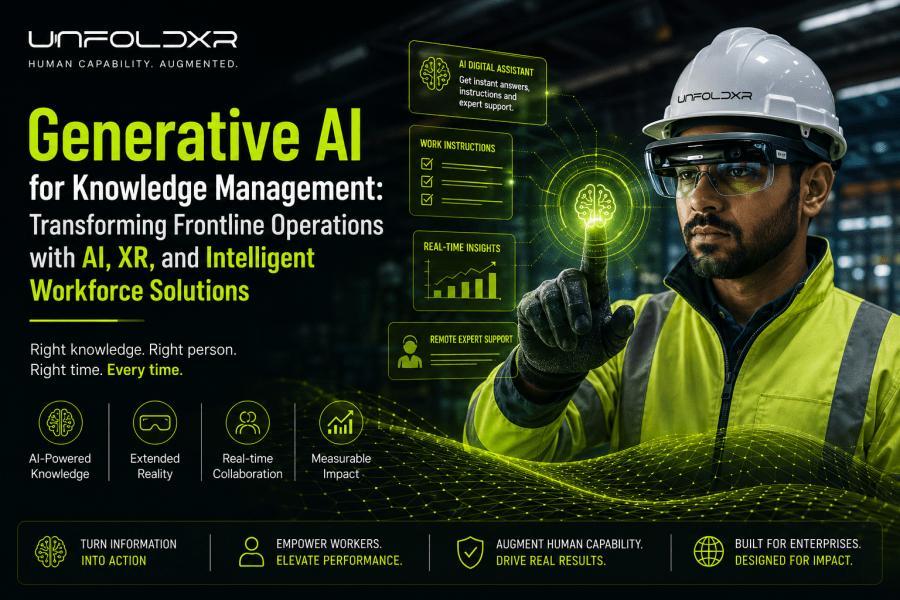
At UnfoldXR, we believe technology should empower people not replace them. Our human-first platform is designed to augment workforce capabilities by combining Artificial Intelligence and Extended Reality to create smarter, safer, and more efficient frontline operations.
The Growing Importance of AI and Knowledge Management
Knowledge has become one of the most valuable assets for every organization. Unfortunately, critical operational knowledge often remains trapped inside documents,
spreadsheets, or experienced employees' minds. When that knowledge isn't easily accessible, productivity declines and errors increase.
This is why AI and knowledge management have become central to enterprise success. Modern AI systems organize, retrieve, and deliver contextual information instantly, enabling employees to access accurate procedures, troubleshooting steps, compliance guidelines, and expert insights exactly when they need them.
Rather than replacing human expertise, AI amplifies it by ensuring that institutional knowledge is always available across departments, locations, and shifts.
How Generative AI is Revolutionizing Knowledge Management
Traditional knowledge management systems require employees to manually search through large databases or documentation. Generative AI changes this experience completely.
Instead of searching through multiple files, employees can ask natural language questions and receive contextual, accurate, and easy-to-understand responses within seconds.
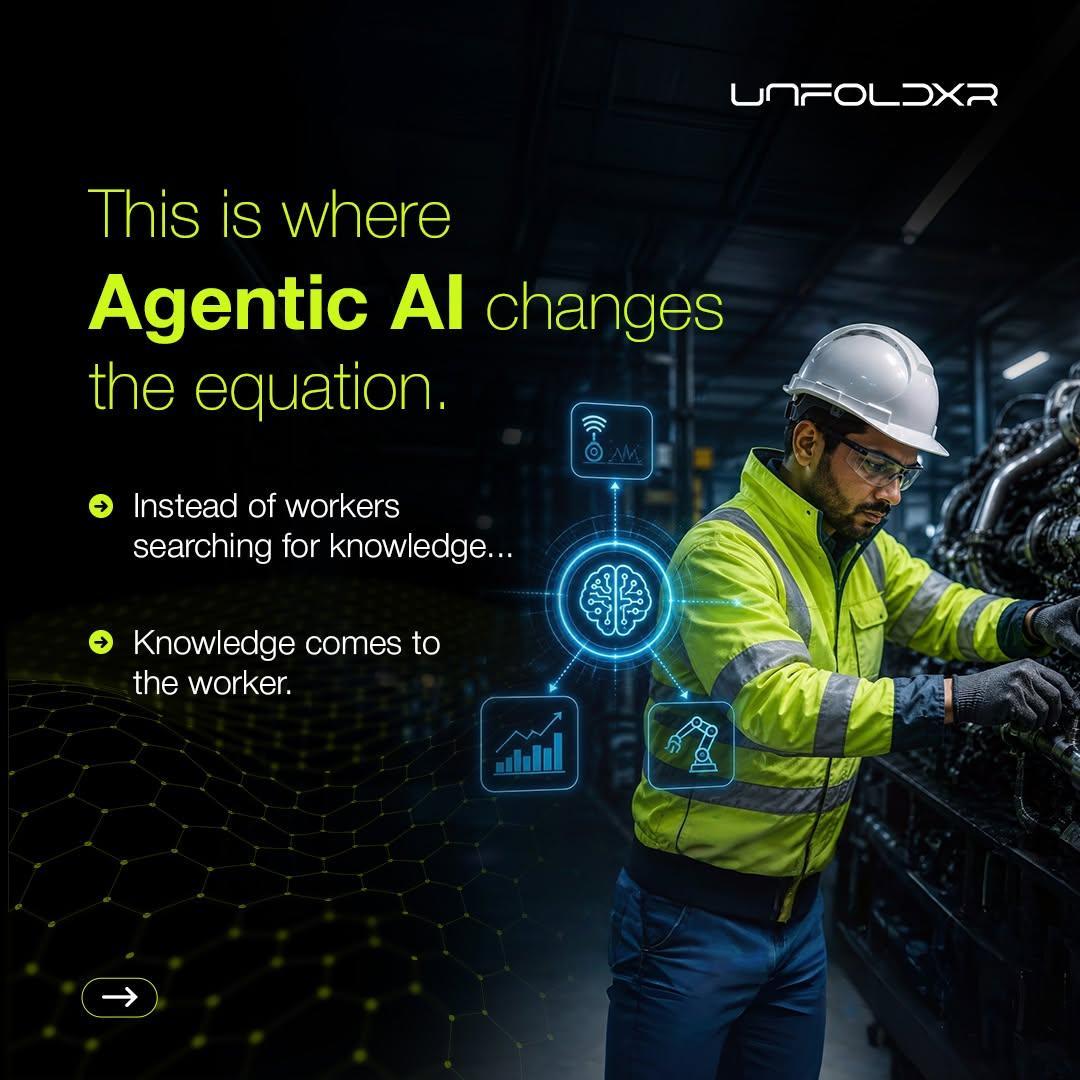
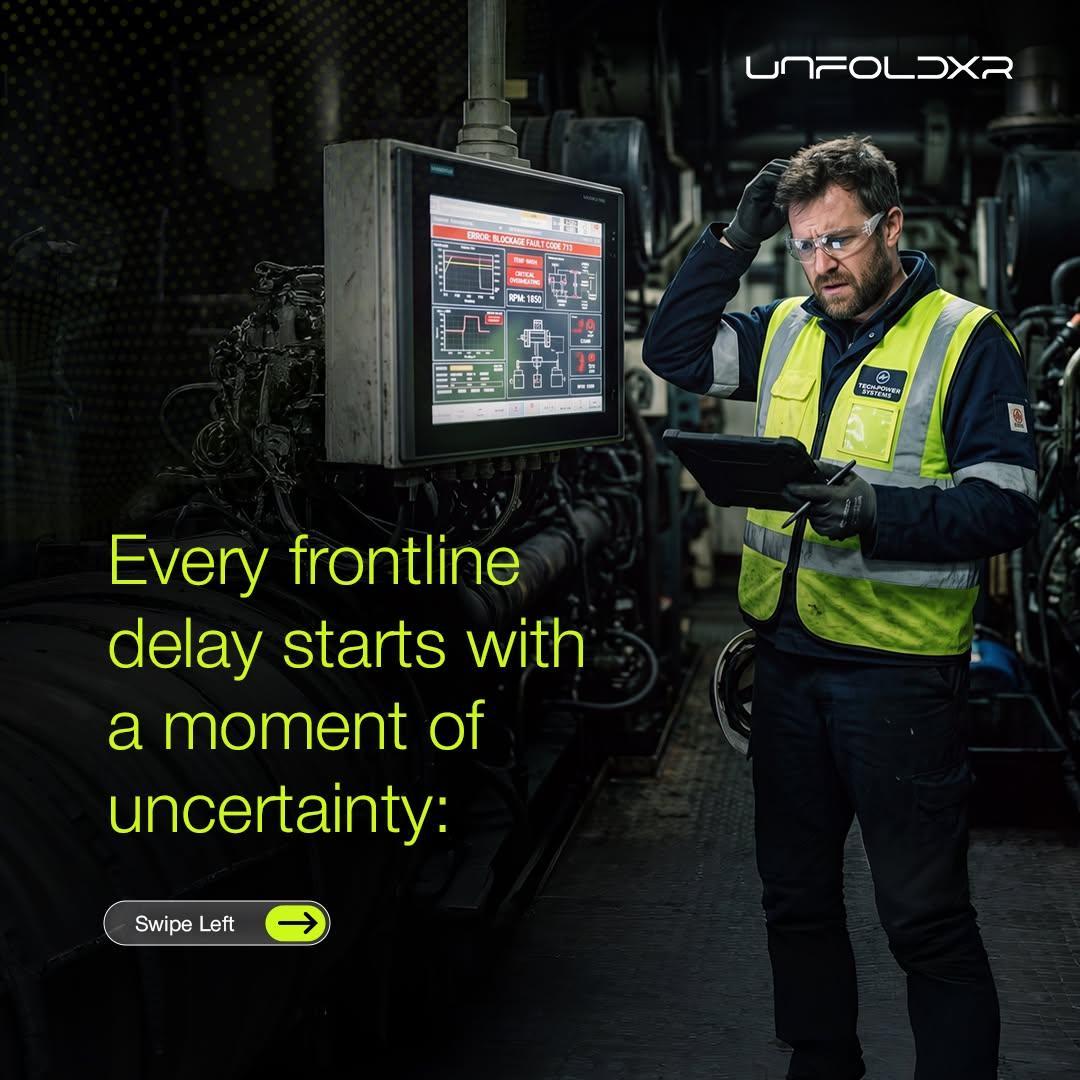
For example, a field technician inspecting industrial equipment can simply ask an AI assistant:
"What is the recommended troubleshooting process for this error code?"
Instead of opening multiple manuals, the system instantly provides step-by-step instructions based on company-approved knowledge.
This dramatically reduces downtime, improves decision-making, and enables organizations to preserve valuable expertise even as experienced employees retire or transition into new roles.
AI Workflow Automation Creates Smarter Operations
Modern enterprises are moving beyond basic automation. They need intelligent systems capable of understanding work context and supportingemployees throughout their tasks.
This is where AI workflow automation delivers exceptional value.
AI can automatically:
• Guide workers through standard operating procedures
• Trigger inspections based on predefined conditions
• Generate real-time reports
• Capture operational evidence
• Automate documentation
• Recommend corrective actions
• Reduce repetitive administrative work
By automating routine processes,organizationsallow employees to focus on higher-value tasks that require human judgment, creativity, and experience.
Enterprise Digital Transformation Starts on the Frontline
Many digital transformation initiatives focus primarily on back-office systems while overlooking frontline workers the people responsible for executing daily operations.
True transformation begins where work actually happens.
Modern enterprise digital transformation software connects employees, operational knowledge, digital workflows, and AI-powered assistance into one integrated ecosystem.
Instead of disconnected tools, organizations gain a continuous operational environment where planning, execution, collaboration, and reporting happen seamlessly.
This approach improves operational visibility while helping enterprises reduce errors, increase compliance, and make faster business decisions.
Extended Reality Makes Information Actionable
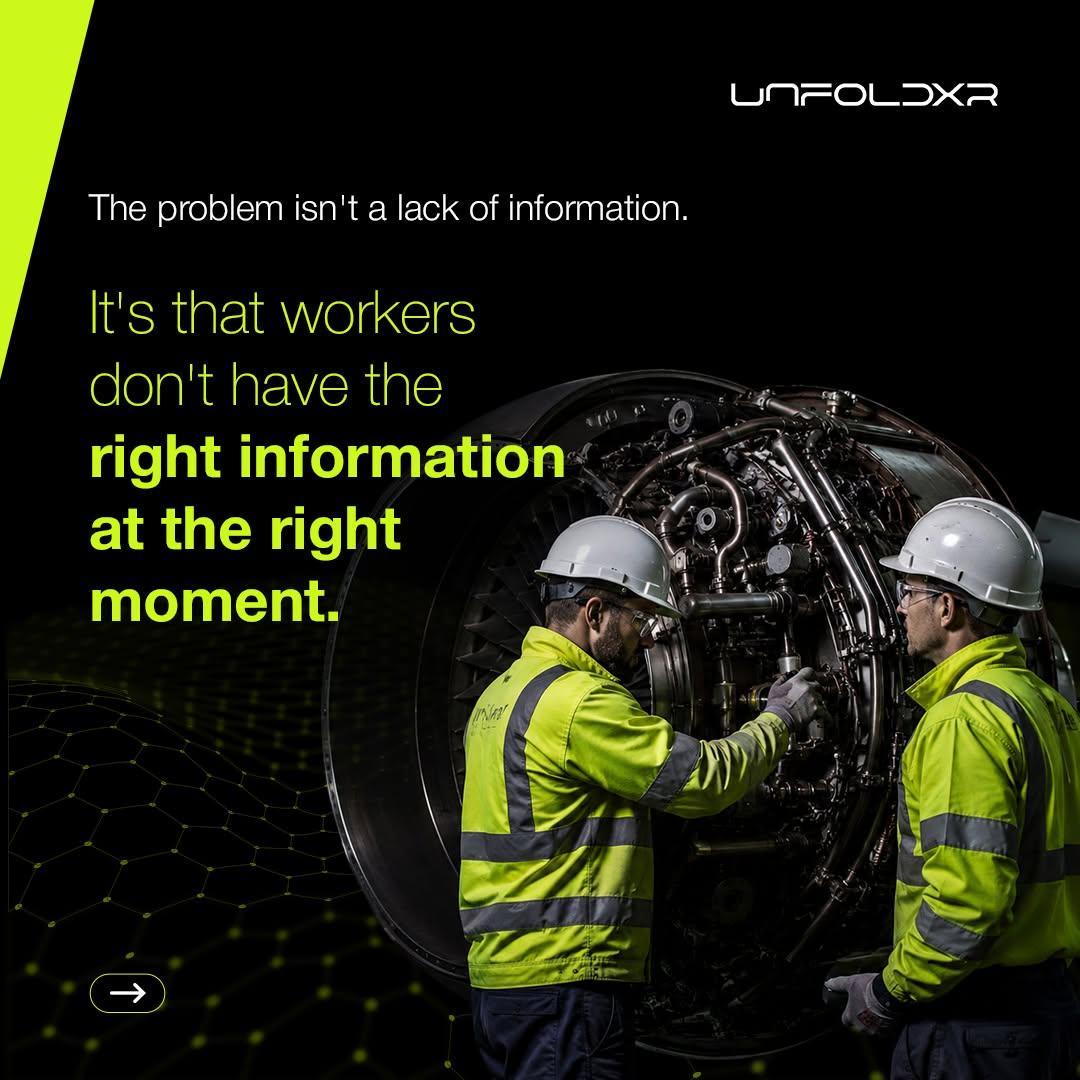
Having information available is important.
Receiving the right information at the exact moment of work is even more valuable.
That's where software augmented reality plays a transformative role.
Instead of reading lengthy manuals, employees can visualize instructions directly within their physical workspace using AR-enabled devices.
Technicianscan receive interactive guidance,identify components,verify procedures,and complete inspections with significantly greater confidence and accuracy.
By combining AI with Extended Reality, organizations create an immersive knowledge environment where learning and execution happen simultaneously.
Augmented Reality in Automobile Manufacturing
The automotive industrycontinues to adoptadvancedtechnologies to improveproduction quality and reduce assembly errors.
Augmented reality in automobile manufacturingallows techniciansto visualizeassembly instructions, inspect components, verify quality standards, and receive real-time expert assistance without leaving the production line.
This minimizes rework, accelerates training for new employees, and supports consistent manufacturing quality across multiple facilities.
Building Smarter Infrastructure with Augmented Reality Construction
Construction projects involve multiple stakeholders, complex workflows, and constantly changing environments.
Using augmented reality construction solutions, engineers and site teams can visualize digital models directly on physical structures, compare planned designs with actual construction, identify issues earlier, and collaborate more effectively.
When AI-powered knowledge systems are integrated into these workflows, teams gain instant access to project documentation, safety guidelines, inspection records, and expert recommendations improving both efficiency and compliance.
The Rise of AI-Powered Digital Assistants
Today's industrialworkforce needs more than chatbots they need intelligent operational support.
An enterprise-grade digital assistant acts as an always-available knowledge companion that helps employees answer technical questions, retrieve procedures, generate documentation, and collaborate with remote experts in real time.
Instead of replacing skilled workers, these assistants enhance confidence by providing contextual guidance during critical tasks.
This results in better decisions, reduced downtime, faster onboarding, and a more empowered workforce.
Why Human-Centric AI Matters
Technology should never force people to adapt.
Instead, technology should adapt to people.
This philosophy drives the future of intelligent enterprises.
Organizationsthat combine AI, Extended Reality, and real-time knowledge management create workplaces where employees are supported before, during, and after every task.
The result is a workforce that is more productive, more confident, and better equipped to solve real-world operational challenges.
At UnfoldXR, our mission is to transform frontline work into an intelligent, connected experience by delivering AI-powered guidance exactly where and when it's needed. By augmenting human capabilities rather than replacing them, we help enterprises unlock measurable improvements in productivity, collaboration, operational excellence, and long-term business growth.
Frequently Asked Questions (FAQs)
1. What is Generative AI for Knowledge Management?
Generative AI for Knowledge Management uses artificial intelligence to organize, retrieve, and deliver contextual business knowledge instantly, helping employees make faster and more informed decisions.
2. How does AI improve frontline operations?
AI provides real-time guidance, automates documentation, supports decision-making, reduces human error, and enables faster collaboration across teams working in dynamic environments.
3. What industries benefit from AI and Extended Reality solutions?
Industries such as manufacturing, automotive, construction, energy, utilities, aerospace, healthcare, logistics, and field services can significantly improve operational efficiency using AI and XR technologies.
4. Can AI replace experienced frontline workers?
No. Human-centric AI is designed to augment employee capabilities by providing intelligent assistance while preserving human expertise, judgment, and decision-making.
5. Why should enterprises invest in AI-powered knowledge management?
Organizations benefit from improved productivity, reduced downtime, faster employee onboarding, better compliance, enhanced collaboration, and long-term operational efficiency.
Transform Your Frontline Operations with UnfoldXR
The future of enterprise productivity belongs to organizations that empower their workforce with intelligent technology. If you're ready to modernize knowledge management,improve operationalefficiency, and build smarter frontline experiences with AI and Extended Reality, UnfoldXR is here to help.
Email: info@unfoldxr.com
Connect with UnfoldXR
• Follow us on Facebook for the latest AI and XR innovations: https://www.facebook.com/people/Unfoldxr/61588581069475/
• Join the conversation on X for industry insights and updates: https://x.com/unfoldxr
• Follow our Instagram for behind-the-scenes content and product highlights: https://www.instagram.com/unfoldxr/
• Connect with us on LinkedIn for enterprise technology trends and thought leadership: https://www.linkedin.com/company/unfoldxr/
• Subscribe to our YouTube channel for demos, product updates, and expert discussions: https://www.youtube.com/@unfoldxr
Let's build a smarter, safer, and more productive future together with UnfoldXR.