ANNUAL REPORT 2025/2026
AT THE UNC SCHOOL OF EDUCATION, WE
PROPEL THE WORLD.
At the UNC School of Education, we know people propel the world. People who imagine and persevere and create. From our home in Chapel Hill, we build people’s minds, spirits, and resolve to make the world a better place through education. Our community of scholars, students, staff, and alumni works to solve pressing problems, to better understand learning, to improve teaching, to redefine what it means to educate lifelong and lifewide. We innovate. We ask and answer tough questions — to ensure that every learner has the opportunity to reach their maximum potential. We Propel the World. Our work is guided by four pillars:
EDUCATING THE WHOLE We recognize that learning is dependent on the well-being of children, their families, and their communities. With a focus on underprivileged and underserved communities, we seek work with educators, parents, schools, communities, and beyond, in partnership with other schools and units at Carolina, to empower learners and communities to thrive.
EMPOWERING THE LEADERS OF TOMORROW We empower educators and scholars to lead; to think creatively, act with passion, and strive for excellence for all. Equipped to succeed in their professions, our graduates also emerge as leaders in their institutions and communities, and mindfully contribute toward continually improving and transforming them.
COLLABORATING FOR THE GREATER GOOD We value and foster productive and meaningful partnerships across disciplinary and institutional boundaries, working with stakeholders within and beyond formal institutions of education. A well-educated, diverse, and empowered public is critical to addressing social disparities and injustices, promoting and supporting the health and well-being of all, and ensuring the competitiveness and prosperity of our state and nation.
ADVANCING KNOWLEDGE, DRIVING INNOVATION We produce cutting-edge knowledge and pursue innovative, research-based solutions to the most pressing problems of educational theory, practice, programs, and policy in North Carolina, the nation, and beyond.
Table of Contents A MESSAGE FROM THE DEAN
2
LEADERSHIP
3
RANKINGS
4
RESEARCH
5
FACULTY
9
PROGRAMS
17
STUDENTS
21
CAROLINA COMMUNITY ACADEMY
25
DEVELOPMENT AND ALUMNI RELATIONS
27
Peabody Hall, Campus Box 3500 Chapel Hill, NC 27599-3500 Phone: (919) 966-1346 Email: ed@unc.edu Web: ed.unc.edu Produced and published by the UNC School of Education Communications and Marketing: Brittany Cowan, Morgan Ellis, and Delaney Kelly
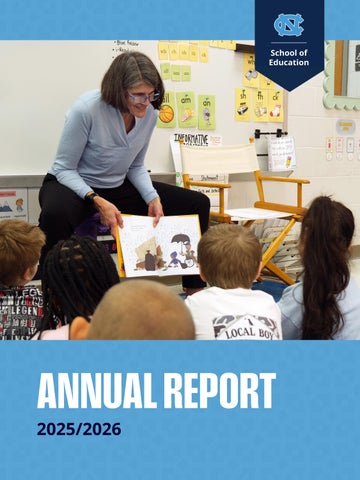
On the cover: Dean Jill V. Hamm reads to students at Carolina Community Academy, UNC-Chapel Hill’s K-2 lab school in Roxboro, North Carolina.
Our Mission The UNC School of Education is committed to realizing the transformative power of education and — in turn — is redefining what it means to educate. Education has the power to break down barriers, lift up individuals, and empower communities to rise and thrive. To that end, we inspire educators to lead, think creatively, act with passion, and strive toward equity for all.
A Message from the Dean Friends and Colleagues in Education, I am once again excited to share the great work happening at the UNC School of Education, and I hope this annual report begins to provide you with a sense of the energy our students, faculty members, alumni, and collaborators bring to work that serves students, educators, schools, and communities across North Carolina and well beyond. In the following pages, you will have the chance to read about the highlights and the outstanding achievements of our faculty, staff, students, and alumni that happened between July 1, 2025, and June 30, 2026. In December 2025, we announced the relaunch of our undergraduate elementary education program — which will provide North Carolina classrooms with the very best elementary teachers. In addition to earning licensure in elementary education, our graduates will also earn licensure in either special education - general curriculum or English as a second language — acknowledging that North Carolina needs teachers who can respond to the diverse needs of students. You can read more about the program within these pages, but I want to say here that this is what an R1 and flagship university’s elementary education program should look like. We also balance high-quality educator preparation with the highest quality research. In the past year, our faculty members have been honored with career awards and joined research projects that promise better learning, healthier children, and stronger communities. One project of note will bring much-needed mental health supports to North Carolina schools and provide us with the best ways to prevent youth suicide. From our work to prepare the next generation of scholars, educators, and professionals in fields spanning and beyond education to our research in service to schools, educators, and students, this School of Education is engaged and exceptional. We are poised to do even more. Thank you for your work to Propel the World through education.
Jill V. Hamm Dean William C. Friday Distinguished Professor of Education
A MESSAGE FROM THE DEAN / 2
LEADERSHIP The UNC School of Education is led by a dynamic team of scholars and professionals focused on the success of our School community and the academy. Below is the leadership team entering the 2026–27 academic year.
Jill V. Hamm
Jeffrey A. Greene
Dean
Associate Dean for Research and Faculty Development
Tammy Cox
Diana Lys
Associate Dean for Finance and Operations
Assistant Dean for Educator Preparation and Accreditation
Thurston “Thad” Domina
Amy Richardson
Associate Dean for Academic Affairs and Director of Graduate Studies
Director of Carolina Community Academy and PK-12 Partnerships
Morgan Ellis
Sarah Rowe
Director of Communications and Marketing
Megan Garrett Chief Development Officer
3 / LEADERSHIP
Assistant Dean for Student Affairs
RANKINGS NO.
32
NO. SCHOOL OF EDUCATION
U.S. News & World Report consistently ranks Carolina as a top school of education among U.S. schools that grant doctoral degrees. The following rankings were released in 2026.
28
PUBLIC SCHOOL OF EDUCATION
In 2026, U.S. News & World Report ranked the UNC School of Education in every education specialty area, a distinction earned by only a select group of institutions nationwide.
NO.
NO.
NO.
13
13
14
NO.
NO.
NO.
SECONDARY TEACHER EDUCATION
15
EDUCATIONAL PSYCHOLOGY
17
ELEMENTARY TEACHER CURRICULUM EDUCATION AND INSTRUCTION
SPECIAL EDUCATION
NO.
14
EDUCATION POLICY
17
EDUCATIONAL ADMINISTRATION AND SUPERVISION
NKKIIN NG GSS // 44 RRAAN
RESEARCH
Troy D. Sadler, the Thomas James Distinguished Professor of Experiential Learning, second from right, accepts the NARST 2026 Distinguished Contributions to Science Education through Research Award in Seattle in April 2026.
5 / RESEARCH
Our faculty members pursue innovative educational research and projects. They explore the nature of learning that contributes to effective teaching, data-driven classroom interventions and curricular improvements, insightful analysis leading to informed policies, and evidence-based advancements in educator preparation.
$83.18m TOTAL RESEARCH PORTFOLIO
17
NSF-FUNDED PROJECTS
33
15
NIH-FUNDED PROJECTS
U.S. DEPT. OF EDUCATIONFUNDED PROJECTS
SINCE 2024, WE’VE PARTNERED WITH 20+ SCHOOL DISTRICTS ACROSS NORTH CAROLINA AND THE NATION ON 140 PROJECTS THAT BENEFIT STUDENTS, EDUCATORS, AND SCHOOLS.
Total Annual Research Expenditures $25m $25m
$22.2m
$23.2m
$19.9m $20m
$17.1m $13.8m
$15m
$14.6m
$11.6m $10m
$5.7m
$6.2m
2015
2016
$7.5m
$5m
2017
2018
2019
2020
2021
2022
2023
2024
2025
RESEARCH / 6
RESEARCH NEWS Sadler earns NARST top honors For 20+ years, Troy D. Sadler, Ph.D., the Thomas James Distinguished Professor of Experiential Learning, has been at the forefront of educational research focused on socioscientific issues (SSI) — real-world scientific challenges that carry social, political, and ethical implications — and how they can bolster students’ scientific reasoning and how teachers can bring SSI lessons into their classrooms. For his distinguished research and commitment to improving science education, Sadler was selected as the recipient of the NARST 2026 Distinguished Contributions to Science Education through Research Award, the highest honor bestowed by the organization for improving science teaching and learning through research. Sadler received the award at NARST’s 2026 Annual International Conference in Seattle.
Marraccini publishes school re-entry guidelines to support students returning to school after mental health crises Marisa Marraccini, Ph.D., the Donald & Justeen Tarbet Faculty Scholar in Education and leading suicide prevention researcher, released “School Re-Entry Guidelines: Recommendations for Hospitals, Schools, and Families in Supporting Youth Following Psychiatric Hospitalization for Suicide-Related Crises,” in collaboration with national mental health experts — offering one of the first researchbased roadmaps to help schools, families, and healthcare providers support students during a critical period of recovery.
7 / RESEARCH
Shelton receives AERA Significant Contributions to Research Methodology Award Stephanie Anne Shelton, Ph.D., the Donald G. Tarbet Faculty Scholar in Education, was recognized at the 2026 AERA Annual Meeting with Division D’s Significant Contributions to Research Methodology Award. The annual award recognizes published research, conducted by an individual or team of researchers, that represents a significant advancement in the theory and practice of educational measurement and/or educational research methodology. Shelton and colleagues received the award for their book, “Expanding Approaches to Thematic Analysis: Creative Engagements with Qualitative Data,” which pushes the field of qualitative inquiry to understand thematic analysis — a common approach to analyzing data — as more expansive than inductive or deductive coding.
Domina named AERA Fellow Thurston “Thad” Domina, Ph.D., the Robert Wendell Eaves Sr. Distinguished Professor in Educational Leadership, was selected as a 2026 Fellow of the American Educational Research Association (AERA). Nominated by peers, Domina joined a group of 34 exemplary scholars named 2026 AERA Fellows. Fellows were selected by the Fellows Committee and approved by the AERA Council, the association’s elected governing body. The AERA Fellows Program honors scholars for their exceptional contributions to and excellence in educational research. Domina was inducted during a ceremony at the 2026 Annual Meeting in Los Angeles on April 9.
Espelage, Marraccini co-leading $16m PCORI study to reduce adolescent suicide-related risk UNC School of Education faculty members Dorothy L. Espelage, Ph.D., and Marisa E. Marraccini, Ph.D., in collaboration with Nationwide Children’s Hospital and additional partners, will lead North Carolina efforts in a groundbreaking study aimed at reducing adolescent suiciderelated risk through school-based prevention programs. The multi-state project is supported by an approximately $16 million funding award from the Patient-Centered Outcomes Research Institute (PCORI). The study, “Building Resilience in Teens through Education” (BRITE), will compare the effectiveness of two widely used school-based suicide prevention programs — Signs of Suicide and Youth Aware of Mental Health — as well as a combined approach. Researchers will examine which interventions work best overall, for which students, and in which school contexts, focusing on outcomes such as suicidal ideation, school connectedness, mental health knowledge, and help-seeking behaviors. The study will also place trained mental health interventionists in participating communities across North Carolina, Ohio, Idaho, and Washington, strengthening local capacity and ensuring all schools involved have access to an evidence-based suicide prevention program. Espelage, William C. Friday Distinguished Professor of Education, serves as the site principal investigator for North Carolina, and Marraccini, the Donald & Justeen Tarbet Faculty Scholar in Education, is the site co-principal investigator. They will lead BRITE efforts in North Carolina alongside UNC-Chapel Hill collaborators from the School of Medicine’s Department of Psychiatry: Adam Miller, Ph.D.; Danielle Roubinov, Ph.D.; and Nathaniel Sowa, M.D., Ph.D. “This award reflects the School’s commitment to a whole-child approach by addressing challenges at the intersection of education, mental health, and public policy,” said Jill V. Hamm, Dean of the School and William C. Friday Distinguished Professor of Education. “This study has the potential to strengthen school communities, expand access to mental health services, and improve the lives of adolescents and educators.”
“
Our goal is to create schools that are supportive and protective for all youth through peer support and help-seeking. BRITE Trial principal investigators include Jennifer L. Hughes, Ph.D., MPH, a clinical psychologist in the Center for Suicide Prevention and Research at The Abigail Wexner Research Institute at Nationwide Children’s Hospital, and Anna Radin, DrPH, MPH, an applied research scientist at St. Luke’s Health System in Idaho. Youth suicide remains a critical public health issue, with schools increasingly serving as the front line for prevention and early intervention. Across North Carolina and the nation, districts face growing mental health needs amid barriers including limited staffing and insufficient access to trained professionals. BRITE aims to generate practical, real-world evidence to help schools make informed decisions about supporting students’ mental health. During summer 2025, Espelage and Marraccini held 20+ listening sessions with North Carolina school districts and communities to understand local needs and priorities. These sessions informed the study’s design and led to letters of interest from potential district partners. “Findings from this study have the potential to identify which suicide prevention program is most effective for our students in North Carolina,” Marraccini said. “The research design allows all participating schools to have access to an evidence-based suicide prevention program, including trained interventionists to deliver the program, but also provides insights into which intervention works for whom. This is a rare opportunity in which we hope to see improvements in youth mental health across all participating schools but also identify practical insights into the best approach to use and strategies for ensuring success.”
RESEARCH / 8
FACULTY
Faculty member Dionne Cross Francis, Ph.D., Joseph R. Niekirk Professor, right, speaks at the 2026 UL Research Institutes Annual Conference.
9 / FACULTY
Our distinguished faculty boasts promising young scholars, visionary researchers, and experts who train effective educators. Their work advances knowledge, fosters collaboration, and empowers future leaders. They are often called on to shape educational discussions in the media, lead extensive projects, advise policymakers, contribute to top academic journals, and more.
Endowed Faculty Members Faculty members in the UNC School of Education are distinguished in their areas of research, and we recognize some of those faculty members with the distinction of either endowed professor or scholar. Brian Boyd
Sherick A. Hughes
William C. Friday Distinguished Professor of Education
Samuel M. Holton Distinguished Professor
Lora Cohen-Vogel
Todd Jensen
Frank A. Daniels Jr. Professor
Gary Stuck Faculty Scholar in Education
Dionne Cross Francis
Kathryn Leech
Joseph R. Neikirk Professor
Richard “Dick” Coop Faculty Scholar in Education
Thurston “Thad” Domina
Constance L. Lindsay
Robert Wendell Eaves Sr. Distinguished Professor in Educational Leadership
Kinnard “Kin” White Faculty Scholar in Education
Nianbo Dong
Marisa Marraccini
Guy B. Phillips Professor in Education
Donald & Justeen Tarbet Faculty Scholar
Dorothy L. Espelage
Troy D. Sadler
William C. Friday Distinguished Professor of Education
Thomas James Distinguished Professor of Experiential Learning
Jeffrey A. Greene
R. Keith Sawyer
McMichael Professor
Morgan Distinguished Professor of Educational Innovations
Jill V. Hamm
Stephanie Anne Shelton
William C. Friday Distinguished Professor of Education
Donald G. Tarbet Faculty Scholar in Education
Courtney Hattan Donald G. Tarbet Faculty Scholar in Education
FACULTY / 10
UNC School of Education welcomes new faculty members in 2026–27 At the start of the 2026–27 academic year, five new faculty members joined the UNC School of Education’s academic community, collectively contributing an array of experience, expertise, and high-impact research activities across multiple areas of education. They will work closely with students across degree levels and programs.
Leonora Kaldaras, Ph.D.
Kaldaras, an assistant professor of artificial intelligence in K–12 education, conducts research that brings together artificial intelligence, learning sciences, educational measurement, data science, and STEM education to develop systems that better understand and support how students learn. Her work focuses on theory-guided AI, an approach that embeds established learning theories into educational technologies to create more transparent, explainable, and personalized learning experiences.
Emily Kitching, Ph.D., NCC, ACS, NCSC
Kitching, an assistant professor, brings seven years of experience as an elementary school counselor, an experience that shapes her understanding of the many roles school counselors hold. Her research examines how individual experiences and organizational conditions interact to shape school counselors’ professional lives and their capacity to support young people. Her scholarship focuses on school counselor well-being, professional identity and career development, workplace supports, and the conditions that contribute to sustainable and effective professional practice.
Adjoa Mensah, Ph.D.
Mensah, a clinical assistant professor and program director of the Bachelor of Arts in Education in Elementary Education program, began her career as an elementary educator in Canada, teaching in French immersion and dual-language programs across grades K-8. Working with students in multilingual classrooms sparked her interest in how thoughtful instructional design and educational technology can broaden learning opportunities and provide meaningful support for students and teachers. Before Carolina, Mensah served as a teacher educator and instructional designer at UNLV.
Dustin Evatt, Ed.D.
Evatt joined the School in spring 2026 as a clinical associate professor. He also serves as program director of the online Ed.D. concentration in Organizational Learning and Leadership. Before Carolina, he directed the Leadership: Cross-Disciplinary Perspectives Minor within the Shelton Leadership Center at NC State. Evatt’s scholarship examines the organizational norms and structures that influence leadership practice and efforts to improve organizations by considering how people interpret and navigate organizational systems, as well as how leaders can respond thoughtfully to stakeholder needs.
Brad Smith, Ed.D.
Smith also joined the School in spring 2026 as a clinical assistant professor in the online Ed.D. program. He also serves as the program’s capstone director. In addition to his role at Carolina, Smith currently serves as president of the North Carolina Association of Colleges for Teacher Education. His research examines how leadership and change management can improve organizational performance and the experiences of individuals within those organizations.
ULLTTYY 1111 // FFAACCU
A kindergarten readiness toolkit for North Carolina’s rural childcare providers As children prepare for their first K–12 classroom, many families focus on learning the alphabet, counting, or recognizing colors and shapes. While those foundational skills certainly matter, UNC School of Education faculty member Annemarie Hindman, Ph.D., says some of the most important kindergarten readiness skills look different — going beyond the classroom to help kids have positive interactions with teachers and classmates. Children benefit from knowing how to communicate their needs, interact with peers, follow routines, and complete everyday tasks independently. These skills can help them feel more confident entering kindergarten and can give teachers more time for instruction. “Being ready for kindergarten ranges from being able to explain what you need to knowing how to open your own milk carton,” Hindman says. “Some of the most important things you can do revolve around helping kids navigate life in a classroom.” Through private philanthropy and in partnership with Person County Schools, Hindman developed the Transition to Kindergarten Toolkit, an evidence-based resource to help families, childcare providers, and caregivers support young learners before they enter the classroom.
Hindman says that in Person County — and in many rural communities — resources and professional development available to educators in center-based childcare settings don’t always reach caregivers such as grandparents, family members, or home-based providers. Throughout North Carolina, and especially in rural areas with fewer childcare centers, most children spend their days with these caregivers, making them an important part of preparing children for kindergarten. As a result, many of these adults may have less access to the tools and strategies that support early learning. In the toolkit, Hindman offers five key ways families and caregivers can help children prepare for kindergarten: • Talk with your child • Read books with your child • Teach the basics • Build social skills and independence • Get ready to move Download the toolkit at go.unc.edu/kindergarten-toolkit.
ULLTTYY // 1122 FFAACCU
Peter Halpin TWCS
DPI, State Board turn to UNC to overhaul Teacher Working Conditions Survey Every two years, the North Carolina Department of Public Instruction and the North Carolina State Board of Education conduct the Teacher Working Conditions Survey to collect teacher insights that help them inform how districts make improvements to their schools. Ahead of the 2024 survey period, Jeni Corn (’97 B.A., ’02 M.Ed.), then-DPI Director of Research and Evaluation, was tasked to overhaul it. The survey is “as high stakes as it gets for teacher working conditions,” said Corn, who now serves as Social Sciences Research Director for the North Carolina Collaboratory, and it had some pressing problems. The Department and Board ask every teacher and school staff member in the state to take the survey, but it had ballooned to 200 questions over the years, and the time commitment was a burden. The question format was inconsistent in some areas, and it included questions that were redundant or outdated, and sometimes confusing. It was time for a strategic refresh, and Corn knew she needed help, so she made some calls. She wasn’t looking for a content expert on teaching; she needed a rigorous survey methodologist, a psychometrician. That’s how she found out about Peter Halpin, Ph.D., an associate professor at the UNC School of Education who specializes in psychometrics and educational measurement. A majority of Halpin’s academic work includes developing novel ways to use psychometrics to solve new or emerging problems. This was an existing problem where he could truly make a difference. “After I talked to Jeni, I talked to some of my teacher colleagues, and they confirmed that this survey was, in fact, a huge burden,” he said. “This is exactly the kind of thing that I can help with. There were things we could do to make the survey more straightforward and clearer, to improve the experience for teachers, and to ensure that the survey reflects what’s actually going on at schools, so that school leaders can have reliable information to make decisions.” 13 / FACULTY
The main goals were shortening the survey to reduce the response burden and improving the quality of information received from teachers. Previous surveys collected a massive amount of qualitative data. Were those kinds of responses still needed? Corn and Halpin put together a working group to go through each item and collect information from stakeholders about what kinds of measurements mattered most. As a result, the survey length was cut by half and streamlined, with 99 questions retooled to enhance the quality of data collected, making it easier for leaders to make decisions about how to improve schools across 12 measured domains — areas like school leadership, student well-being, facilities and resources, equity, retention, and more. One additional significant update to the survey: Because responses are anonymous to achieve honest results, the survey had never included demographic data like race and ethnicity as just two examples. But teacher responses could certainly vary across race and ethnicity, or years of experience, Corn said. At these kinds of crossroads, Corn turned to Halpin, who she said “had the background and chops” she could trust for expert feedback and input. If they added the demographics question, but kept it optional, would that impact the reliability and validity of the survey? Halpin said they’d need a minimum of 20 percent of the 100,000 respondents answering the question to consider it valid from a methodological standpoint. They put those demographic questions in, and of the 102,082 who responded, 95 percent answered. “We were able to give that data to DPI and the Board for the first time, responses by race, content area, and years of experience, which was new data for this,” Corn said. “They had given me this task to better benefit teachers, and to have a psychometrician like Peter by my side gave me a lot of confidence that we could make changes without sacrificing reliability and survey validity.”
FACULTY NEWS
Sadler to serve as NARST president in 2027 Troy D. Sadler, Ph.D., the Thomas James Distinguished Professor of Experiential Learning, was selected president-elect of NARST, a worldwide organization for improving science teaching and learning through research and the most prominent international association of science education researchers in the world. Sadler, who has been an active NARST member for 25 years, will serve as a member of the presidential team for three years. He will be installed as president in 2027, at the 100th annual NARST meeting.
Leech joins Sesame Workshop advisory group for new lifelong learning initiative Kathryn Leech, Ph.D., associate professor and the Richard “Dick” Coop Faculty Scholar in Education, is helping Sesame Workshop shape a newly launched initiative designed to prepare young children — who will never know a world without AI — to become confident, lifelong learners. In June 2026, she joined experts convened by Sesame Workshop for a roundtable in New York City to explore the skills children will need amid rapid social, technological, and environmental change; which approaches can best nurture those skills; and what environments can help children learn and thrive.
Smith to lead as next president of N.C. Association of Colleges for Teacher Education Brad Smith, Ed.D., a clinical assistant professor, became the eleventh president of the North Carolina Association of Colleges for Teacher Education (NCACTE) effective July 1, 2026. NCACTE is the leading advocacy group for policy issues regarding teacher preparation in North Carolina, and its membership includes private and public educator preparation programs across the state.
Bolick co-authors revised foundational teacher education textbook Faculty member Cheryl Bolick, Ph.D., co-authored the newly revised edition of “Those Who Can, Teach,” a foundational teacher education textbook since 1972 that has played a role in preparing highly skilled educators to enter the profession with tools to address the needs of students and communities in today’s educational landscape. Now in its 16th edition and published by Cengage Learning, the textbook is designed primarily for preservice teachers while also offering perspective for practicing educators, particularly those in the early years of their careers.
Frederick named as ACC Academic Leaders Network Fellow Helyne Frederick, Ph.D., director of the Human Development and Family Science program, was selected as a fellow in the Atlantic Coast Conference Academic Leaders Network. Hosted by a consortium of ACC universities, the Network is an intensive leadership development program designed for experienced academic leaders, bringing together faculty and administrators from across ACC campuses to share best practices and foster cross-institutional collaboration. FACULTY / 14
Bernacki’s co-edited handbook provides educators with tools to personalize learning Matthew L. Bernacki, Ph.D., a leading scholar in learning sciences and learning analytics, brought together decades of interdisciplinary research to examine how learning can be more effectively personalized across educational settings in “The Handbook of Personalized Learning.” The co-edited handbook offers a comprehensive, theoretically grounded approach for teachers and educators to design and implement personalized learning. It draws from educational psychology, learning sciences, cognitive science, and educational technology to explore how instruction can be adapted to learners’ prior knowledge, interests, motivations, and identities.
Diliberto named Thorp Faculty Engaged Scholar Jennifer Diliberto, Ph.D., a clinical associate professor, was named to the Carolina Center for Public Service’s tenth class of Thorp Faculty Engaged Scholars, receiving funding and additional support to advance scholarship aimed at increasing literacy of students with disabilities through partnership with local schools and community nonprofits. As a faculty engaged scholar, Diliberto will collaborate with school districts to identify and implement new ways to build the foundational literacy skills of upper elementary and middle school students with disabilities.
Espelage named recipient of the Robert E. Bryan Public Service Award Hutt, Papoi named 2024-25 Teaching Excellence Awards recipients Faculty members Ethan Hutt, Ph.D., and Kristin Papoi, Ph.D., were honored as the 2024-25 recipients of the School’s Teaching Excellence Awards. The awards, given annually, recognize School faculty members who demonstrate expertise, creativity, and innovation in their classrooms; who make learning engaging, vibrant, and relevant to students; and whose work and accomplishments set a standard of excellence.
15 / FACULTY
Dorothy L. Espelage, Ph.D., William C. Friday Distinguished Professor of Education, received the 2026 Robert E. Bryan Public Service Award in recognition of her community-centered work to strengthen youth well-being across North Carolina. The award was presented April 9, 2026, during the 27th annual Public Service Awards ceremony, hosted by the Carolina Center for Public Service at the Sonja Haynes Stone Center for Black Culture and History. The Robert E. Bryan Public Service Award honors individuals and groups whose work reflects meaningful service to North Carolina through community partnership, practical impact, and lasting benefit.
STAFF NEWS Lys appointed to AACTE Board of Directors Diana Lys, Ed.D., assistant dean for educator preparation and accreditation at the UNC School of Education, was appointed to the Board of Directors of the American Association of Colleges for Teacher Education. Her 3-year term began March 1, 2026. AACTE is a leading national organization dedicated to advancing educator preparation and promoting evidencebased practices in teaching and learning. As a board member, Lys joins a distinguished group of national education leaders to help shape the strategic direction of AACTE through fiduciary oversight, development of programmatic initiatives and policies, and governance.
Massey Award winner Laurie Norman is one of Carolina’s priceless gems Laurie Norman has been a Tar Heel since she was 4, visiting her older sisters attending Carolina. She graduated in 1983 and has spent the past 35 years serving the University, now as director of alumni relations for the UNC School of Education. Her endless dedication to helping alumni, students and the Carolina community earned her the 2026 Massey Award. “She helps newcomers come to understand the history and uniqueness of what it means to be a Tar Heel in Chapel Hill and beyond. Laurie works tirelessly behind the scenes to be sure every detail is attended to and that all feel seen and welcomed,” said one nominator. “Laurie is truly one of Carolina’s priceless gems.”
Three recognized with Staff Excellence Awards Staff members Brittany Cowan (left), Ashley Murphy (center), and Maranda Nussbaum (right) were honored as the 2025-26 recipients of the School’s Staff Excellence Awards for their excellence, commitment, and contributions that enhance the School’s community and support its mission. Cowan, the communications and marketing content manager, supports the planning and creation of content across the School’s communications platforms. She was praised by nominators for her professionalism, strategic approach, and collaborative spirit. Murphy, the School’s partnerships program manager, supports Carolina Community Academy, the School’s K-2 lab school in Roxboro, and additional partnership-focused initiatives. Nominators praised Murphy as a dependable colleague and team player whose work strengthens Carolina Community Academy and the broader School community. Nussbaum, an accountant, was praised for her patience, dependability, ability to make complex processes easier to navigate, and her proactive approach. FACULTY / 16
PROGRAMS
The UNC School of Education embraces a comprehensive perspective on education, which is evident in our array of programs. From undergraduate to doctoral levels, our cuttingedge programs offer students access to leading scholars and professionals, equipping them with the tools, knowledge, and experiences to excel across organizations and fields.
HDFS students showcased their research and internship experiences during the annual HDFS Research Symposium, highlighting the diverse ways they apply classroom learning to support communities, and prepare for careers after Carolina.
17 / PROGRAMS
Academic Programs Doctoral Degree Programs Doctor of Education in Educational Leadership (Ed.D.) K-12 Leadership Organizational Learning and Leadership (online) Doctor of Philosophy in Education (Ph.D.) Applied Developmental Science and Special Education Culture, Curriculum, and Teacher Education Learning Sciences and Psychological Studies Policy, Leadership, and School Improvement Doctor of Philosophy in School Psychology (Ph.D.)
Master’s Degree Programs Master of Arts in Educational Innovation, Technology, and Entrepreneurship (M.A.) Master of Arts in Teaching (M.A.T.) Master of Education for Experienced Teachers (M.Ed.) Early Childhood Intervention and Family Support Master of Education in School Counseling (M.Ed.) Master of School Administration (M.S.A.)
Undergraduate Degree Programs Bachelor of Arts in Education in Elementary Education (B.A.Ed.)
Pathway to Practice NC is residency license teachers’ most flexible path to licensure in North Carolina. A unique collaboration between the NC State College of Education and the UNC School of Education, Pathway to Practice draws upon the expertise of leading scholars and highly effective educators at North Carolina’s top public educator preparation programs to deliver the highest quality online, competency-based education (CBE) to residency license teachers. Since 2017, Pathway to Practice has enabled more than 530 residency license teachers — working full-time in 90 of the state’s 115 school districts — to work toward licensure at a pace that works for them.
Bachelor of Arts in Education in Human Development and Family Science (B.A.Ed.)
Pathway to Practice NC earned accreditation — with no stipulations or areas for improvement — from the Council for the Accreditation of Educator Preparation in November 2025.
Bachelor of Arts in Human and Organizational Leadership Development (B.A.)
Learn more at pathwaytopractice.com.
Baccalaureate Education in Science and Teaching (BEST) Minor Education Minor
Licensure and Certificate Programs Graduate Certificate in Qualitative Studies Interprofessional Graduate Certificate in Improvement Science and Implementation Pathway to Practice NC
PROGRAMS / 18
PROGRAM NEWS
MEITE celebrates 10th anniversary At the conclusion of the 2025-26 academic year, the School’s Master of Arts in Educational Innovation, Technology, and Entrepreneurship program graduated its 10th class during the School’s graduation ceremony. For a decade, MEITE has prepared graduates to shape the future of learning for the social good — blending technology, research, and design thinking to deliver impactful solutions across schools, startups, nonprofits, and beyond.
PlayMakers, School Counseling students team up for ‘The Wolves’ PlayMakers Repertory Company and school counselors-in-training worked together for a production of “The Wolves,” which focuses on nine female teens on a soccer team and the challenges that arise when competition, perfectionism, and power dynamics come into play. When clinical assistant professor Megan Hyland Tajlili found out about the production, she reached out to the play’s director, offering to connect the cast members with her school counseling students to help the actors better understand their characters. “We have this fascinating wealth of knowledge about why teens are the way they are,” Tajlili said.
19 / PROGRAMS
ENROLLMENT
1,172
TOTAL ENROLLMENT FALL 2026
12
292
ELEMENTARY EDUCATION (B.A.ED.)
HUMAN DEVELOPMENT AND FAMILY SCIENCE (B.A.ED.)
87
152
HUMAN AND ORGANIZATIONAL LEADERSHIP DEVELOPMENT (B.A.)
EDUCATION MINOR
6
37
BACCALAUREATE EDUCATION IN SCIENCE AND TEACHING (BEST) MINOR
MASTER OF ARTS IN TEACHING (M.A.T.)
10
26
MASTER OF EDUCATION FOR EXPERIENCED TEACHERS (M.ED.)
SCHOOL COUNSELING (M.ED.)
25
36
EDUCATIONAL INNOVATION, TECHNOLOGY, & ENTREPRENEURSHIP (M.A.)
MASTER OF SCHOOL ADMINISTRATION (M.S.A.)
28
57
SCHOOL PSYCHOLOGY (PH.D.)
EDUCATION (PH.D.)
28 K-12 LEADERSHIP (ED.D.)
376 ORGANIZATIONAL LEARNING AND LEADERSHIP (ED.D.)
Preparing teachers for today and tomorrow: UNC relaunches B.A.Ed. in Elementary Education With approval from the UNC Provost and the UNC College of Arts and Sciences Administrative Board, the UNC School of Education relaunched the Bachelor of Arts in Education (B.A.Ed.) in Elementary Education program, offering its first classes in fall 2026. The program, which was developed by top researchers and practitioners and with the diverse needs of North Carolina’s elementary students in mind, will prepare highly effective teachers to create impact in today’s — and tomorrow’s — classrooms.
“North Carolina schools need beginning teachers ready to lead from day one,” said Jill V. Hamm, dean of the School. “This program is what a flagship teacher preparation program should look like — one that recognizes the increasingly diverse needs of students and a technology-driven culture that provides us with data that can improve our world. Our graduates will be ready for day one, but they will also be equipped with knowledge and experiences to transform their students’ lives throughout their careers.”
Today’s elementary teachers support the needs of all students, including exceptional and multilingual learners. The program is one of few, if not the only, in the state to require dual licensure in Elementary Education and in either Special Education – General Curriculum (K-12) or English as a Second Language (K-12). With more than 300 languages spoken in North Carolina homes and nearly 15% of all public school students receiving special education services, the dual licensure requirement ensures graduates are prepared to effectively respond to student needs and foster learning environments that serve all students.
Graduates of the new program will leave Carolina ready to meet the challenges of today’s schools — whether that means adapting instruction to individual student needs, utilizing data to make informed instructional decisions, or creating classroom communities where every learner is supported. Additional program features include:
In addition to preparing future teachers with research-based methods to ensure effective reading and mathematics instruction, the program will provide its students with coursework in data literacy and educational technology. As technologies proliferate and provide new student data, graduates will leave Carolina with skills to make data actionable.
• Sustained in-school learning experiences • Professional mentorship and networking • Proven evidence-based practices • A focus on well-being and resilience The B.A.Ed. in Elementary Education program builds upon the successes of the School’s Master of Arts in Teaching program and additional educator preparation programs. Combined, these programs have consistently produced many of North Carolina’s most effective teachers, school counselors, principals, and more.
OG GRRAAM MSS // 2200 PPRRO
STUDENTS
Students in the online Ed.D. concentration in Organizational Learning and Leadership attended an in-person immersion experience in May 2026.
21 / STUDENTS
Our students come from North Carolina and beyond, from careers in education and from a number of other fields. Each brings a passion to redefine what it means to educate and a unique perspective that enriches our classrooms, labs, and the broader Carolina community. When our students graduate, they take with them tools, knowledge, and experiences to Propel the World.
Advancing the future of STEM professionals Rich Gilliam, founder of STEM PLUG, is positioning his social impact venture — which uses literacy, robotics, and educator development — to build STEM identity and confidence among K-12 learners as a pathway for early STEM learning and workforce preparation. STEM PLUG initially began with a single children’s book. Published in 2022, “Diverse in STEM” introduced characters designed to help young learners see themselves in science, technology, engineering, and mathematics. For Rich Gilliam, founder of STEM PLUG and a 2026 graduate of the Master of Arts in Educational Innovation, Technology, and Entrepreneurship program, the book was the first step in what has become an organization focused on strengthening STEM identity among K-12 students and educators. STEM PLUG now uses children’s books, robotics kits, and educator development to help students and educators build confidence in STEM. Gilliam said his work helping young learners see themselves in STEM is rooted in his own journey — one that began with a high school project inspired by watching his aunt navigate kidney disease. “That project showed me how kidney disease affects the body and how science connects to the body,” Gilliam said. “I began to see how science really correlates to my everyday life.” That led Gilliam to earn a bachelor’s degree in biology and then build a career in science and engineering. His work in neuroscience research and laboratory engineering gave him the technical foundation and professional experience that would inform his work as an education entrepreneur. STEM PLUG began while he was still working in corporate science and engineering, but as it grew, Gilliam searched for a graduate program that could help him connect his technical background with educational standards, learning design, and entrepreneurship. Gilliam said the MEITE program provided the research-informed framework he needed to strengthen and scale STEM PLUG’s impact. “Since I’ve been at Carolina, I’ve had advisors who have been part of STEM PLUG and have given me advice, and I’ve also been able to get funding that helped move the needle for us,” he said. “It’s been a structure that has pushed us not only financially, but strategically, helping me understand education on a deeper level.” That support has helped Gilliam move STEM PLUG from an early concept to a growing social impact venture with clearer strategy, stronger partnerships, and expanding reach through campus-based pitch competitions and grant opportunities — including support connected to Innovate Carolina and the 1789, UNC’s Student Innovation and Entrepreneurship Hub — as well as funding from NC IDEA.
“
Helping kids within STEM is not just a nice-to-have; it’s a need-to-have. In 2025, STEM PLUG released “Robotic Adventures,” the first book in its STEM Solver series. The book follows its protagonist, Richie, and his classmates as they develop a robot to help clean up the environment. Alongside the story, Gilliam and his team created a robotics kit that enabled students and educators to build a hydraulic robot connected to the book’s storyline. For Gilliam, storytelling and hands-on learning are intentionally connected. Through MEITE, he said he has been able to ground that work more deeply in learning research and instructional design, applying course concepts and mentorship directly to STEM PLUG as he considers how students engage with STEM content and how educators adopt new tools in real classroom settings. That deeper understanding, Gilliam said, has shaped how he approaches STEM PLUG not only as its founder, but also as an edupreneur thinking about sustainability and educator preparation. As a MEITE graduate, Gilliam said he is focused on continuing to build STEM PLUG with the strategy and tools strengthened through his time in the program. Gilliam said upcoming projects include educator professional development offerings, a framework book titled “STEM Lit,” and exploratory work toward an AI-supported learning tool connected to STEM PLUG’s characters. Together, he sees those efforts as part of a broader ecosystem designed to help students — especially those who may not encounter STEM early or often — see what is possible. “Helping kids within STEM is not just a nice-to-have; it’s a need-to-have,” Gilliam said.
STUDENTS / 22
Building classrooms where every student feels valued Maddie LaMear, the School’s 2026 Student Teacher of the Year, says she wants her students to leave her classroom saying, “I can do hard things” and then carry that mindset with them for years to come.
Her coursework in the MAT program and the belief that “all students have the right to learn” followed her into her student-teaching placement at Pittsboro Elementary, where she taught fourth grade.
After earning an undergraduate degree in archaeology and a year spent volunteering in Cairo, Egypt, LaMear eventually moved to Durham, North Carolina, working as an instructional assistant with exceptional learners. She became increasingly curious about learning differences, the broader field of Special Education, and how schools can better meet the needs of all learners, regardless of their unique learning style.
In math lessons, she incorporated more student talk and inquiry-based learning, drawing from her coursework. She had students cut out their own paper fraction bars — an activity that helped them build a deeper — and concrete — understanding of fractions.
That experience led LaMear to the School’s Master of Arts in Teaching program to earn licensure in Elementary Education and Special Education – General Curriculum.
LaMear said her growth as a teacher was shaped by educators who supported her throughout student teaching, including her mentor teacher at Pittsboro Elementary, Shane Henderson, and her university supervisor, Sarah Cornette, a doctoral student and a former classroom teacher.
“
From the first day in the classroom, I realized that there was no other job that I would love as much as teaching. Guiding students’ learning and watching them grow is the best job in the world. 23 / STUDENTS
“I was blown away by what students were capable of when you give them the opportunity be more active contributors to the classroom,” she said.
Henderson, a 2025-26 Milken Educator Award winner (known as “the Oscars of Teaching”), helped LaMear build her classroom — organizing teaching materials, tracking student data, and creating structures to support her daily work. “Everything she does reflects a genuine focus on what is best for students academically, socially, and emotionally,” Henderson said. “She... gives real hope to the teaching profession that another dedicated educator is entering the workforce who will help change the lives of students.”
Ruel receives NSF Graduate Research Fellowship
Connecting communities, building resilience
Isabella Ruel, a doctoral student in the School’s Ph.D. in Education program who examines how caregiver language interactions can support young children’s reasoning and science learning, was awarded a National Science Foundation Graduate Research Fellowship, one of the most prestigious fellowship programs in the U.S. The fellowship will support Ruel’s work examining caregivers’ inferential talk, language that encourages children to explain, reason, and predict beyond what is directly visible.
Annabelle Oberst, a 2025 graduate of the Human Development and Family Science program, helped lead a county-wide campaign that shines a light on resiliency and brings critical awareness to 988, the national suicide and crisis helpline. The campaign, developed during Oberst’s HDFS internship at the Orange Partnership for Alcohol and Drug Free Youth in collaboration with an area advertising agency, emphasizes prevention and coping skills that strengthen mental well-being. For people local to the Chapel Hill area, Oberst’s work was in motion on Chapel Hill Transit buses. STUDENTS / 24
CAROLINA COMMUNITY ACADEMY Second-grade teacher Stephanie Watts works individually with a student during the 2025-26 school year.
25 / CAROLINA COMMUNITY ACADEMY
Carolina Community Academy is an innovative K-2 laboratory school in Roxboro and a partnership between UNC-Chapel Hill and Person County Schools. The School of Education leads a campuswide coalition of units that provide Carolina Community Academy students, families, and the community with opportunities and services that draw upon the best of what Carolina has to offer.
2025-26 End-of-Year Proficiency Literacy
Math
PROFICIENCY
PROFICIENCY
74% 70% Listening, leading, and learning: Interns turn summer camp vision into reality When Carolina Community Academy leaders began looking for ways to better support students beyond the academic year, they heard a consistent message from families: interest in summer opportunities that would keep children engaged and learning.
While Dudley was gathering family input, Lancaster was helping build the camp itself. Working alongside Richardson and other staff members, she helped research community partnerships, develop program themes, and support planning for student experiences throughout the summer.
That feedback helped inspire CCA’s first summer camp, a free three-week program launched in 2026 to support students most at risk of summer learning loss. Helping turn that vision into reality were two recent UNC School of Education graduates whose internships expanded what the lab school could accomplish.
“When I heard about it, I was like, ‘This is perfect,’” Lancaster said. “I had a summer camp background, so it was something I was very passionate about.”
Anna Page Lancaster, a graduate of the Human Development and Family Science program, and Roxanne Dudley, a graduate of the Human and Organizational Leadership Development program, contributed to the effort in different but complementary ways. For Dudley, the work began with listening. During her capstone internship, she developed opportunities for families to share feedback about their experiences and priorities. The project helped CCA better understand community needs and use that information to inform decisions, including interest in summer programming. “My capstone project created a feedback loop for improving practice at CCA,” Dudley said. “Surveys created a channel for communication from parents, helping to guide CCA’s strategy and make choices data-driven.” For Amy Richardson, Ed.D., director of Carolina Community Academy, that connection between listening and responding reflects the school’s broader approach. “What emerged is what continues to be the story of CCA: communication and collaboration between the school and families,” Richardson said.
The resulting program combined academic support with enrichment activities designed to keep students engaged during the summer months. For both graduates, the internships provided an opportunity to apply what they learned in the classroom to real challenges facing schools, students, and families, one of the most valuable aspects of the partnership between CCA and the School of Education. “Our internships push the boundaries of what we know and can do with a small school staff,” Richardson said. “Anna Page and Roxanne helped us push the boundaries this year.” Both graduates are now carrying those experiences into the next chapter of their careers. Dudley recently returned to Carolina to pursue a Master of Arts in Teaching, while Lancaster is exploring opportunities that combine her interests in youth development, community engagement, and student programming. As CCA leaders begin planning for summer 2027, they remain focused on listening to families, responding to community needs, and creating opportunities that help students thrive.
“
This summer camp checks all the boxes for a North Carolina lab school and then some. CAROLINA COMMUNITY ACADEMY / 26
DEVELOPMENT AND ALUMNI RELATIONS
The UNC School of Education proudly boasts more than 23,000 alumni across fields and professions. They are often distinguished, and many go on to earn professional distinctions in their schools, districts, and organizations. Each possesses an unwavering commitment to the foundational role that education plays in our world.
Dean Jill V. Hamm with Mike Priddy and Malbert Smith at Board of Visitors meeting.
27 / DEVELOPMENT AND ALUMNI RELATIONS
Our Alumni
23K
ALUMNI LIVING AND WORKING IN
WORKING AT ORGANIZATIONS THAT INCLUDE Alamance-Burlington School System Carolina Community Academy Chapel Hill-Carrboro City Schools Chatham County Schools Code the Dream Davidson College Durham Public Schools
ALL
50 STATES
Edpuzzle Greene County Schools Guilford County Schools Lee County Schools McGill University NC State University North Carolina Central University
ALL OF NORTH CAROLINA’S
100 COUNTIES
North Carolina Department of Public Instruction North Carolina Virtual Public School Northwestern University Orange County Schools Person County Schools The School District of Philadelphia SUNY Cortland
CAROLINA ALUMNI WORK IN
113
OF NORTH CAROLINA’S 115 SCHOOL DISTRICTS
UNC Office of Scholarships and Student Aid UNC Be A Maker (BeAM) Makerspace U.S. Department of Education Utah State University Wake County Public School System Wake Forest University Winston-Salem/Forsyth County Schools
D DEEVVEELLO OPPM MEEN NTT AAN ND D AALLU UM MN NII RREELLAATTIIO ON NSS // 2288
UNC SCHOOL OF EDUCATION
BOARD OF VISITORS Our Board of Visitors convenes some of the best minds in North Carolina’s education landscape. Collectively, members have decades of educational and philanthropic experience in North Carolina and beyond, and they graciously share that expertise as advocates for the School. Malbert Smith III (’77 M.Ed., ’80 Ph.D.) Board of Visitors Chair Executive Chairman, MetaMetrics Alison Cleveland (’03 B.A., ’14 M.S.A.) Principal, Green Hope High School Frank R. Comfort (’69 M.A.T.) Head Swimming Coach (Retired), UNC-Chapel Hill
Thomas Willis Lambeth (’57 B.A.) Senior Fellow, Z. Smith Reynolds Foundation Meghan E. Mackay Executive Director, LeveragED Foundation Tami Polge (’93 B.A.Ed., ’03 M.A.) Curriculum Consultant and Nonprofit Board Member
Fred Pfohl Crouch II (’70 B.A., ’71 M.A.T.) Social Studies Specialist (Retired), Prince George County Schools
Michael D. Priddy (’70 A.B., ’75 M.Ed., ’81 Ed.D.) Educational Consultant and Speaker, 21st Century Leadership LLC North Carolina Public Schools Superintendent (Retired)
John D. Denning (’08 Ed.D.) Senior Advisor, The John M. Belk Endowment
Bryan Smith (’96 B.A.) Director of Experiential Education, Lakeside School
Tracy Zeigler Goyne (’86 A.B.Ed.) Senior Learning and Development Program Manager, Sally Beauty Holdings Inc.
Malchus L. Watlington (’68 B.S.I.R., ’69 M.P.A.) President, City Square Consulting Inc.
Marc Gustafson (’97 A.B.Ed.) Partner, Bell, Davis & Pitt, PA Gerry House (’88 Ed.D.) Former Superintendent, Chapel Hill-Carrboro City Schools Board of Directors, Learning Policy Institute Zachary Howell (’06 B.A.) Managing Partner, Riverdale Investments Harold Kennedy III (’74 B.A.) Partner/Attorney, Kennedy Kennedy Kennedy
29 / DEVELOPMENT AND ALUMNI RELATIONS
Duncan Young (’95 B.S.P.H.) CEO, My Hot Lunchbox Katie Young (’96 A.B.Ed.) Kristen Smith Young (’01 A.B.Ed.) Director of Communications, UNC School of Data and Information Science
Ex-Officio Members Amy Rickard (’94 A.B.Ed., ’00 M.S.A.) Principal, Morris Grove Elementary President, School of Education Alumni Council
Fundraising totals:
The School deeply appreciates the generous support of our donors — individuals and organizations — who share our commitment to the transformative power of education. Every year, we receive increasing support for innovative programs and pioneering research that have the power to significantly advance our fields. These contributions empower the School to pursue promising initiatives and address pressing needs.
$3.7m FOR FY26
Fundraising by fiscal year $10m
$8.1m $8m
$5.4m
$6m
$3.7m
$4m
$2.8m
$3.3m
$3.7m
$3.5m $2.9m
$2.5m $1.9m
$2m
FY17
FY18
FY19
FY20
FY21
FY22
FY23
FY24
FY25
FY26
DEVELOPMENT AND ALUMNI RELATIONS / 30
Alumni Notes During the past year, the UNC School of Education proudly shared news from its alumni that included the following headlines: Four recent Master of Arts in Teaching graduates — Brittany Acevedo Posadas (‘23 B.A., ‘24 M.A.T.), Selah Bekele-Piper (‘24 B.A.Ed, ‘25 M.A.T.), Jenny Lee (‘22 B.A., ‘24 M.A.T.), and Sabrina Shisbey (‘24 M.A.T.) — were each named Durham Public Schools school-level Beginning Teacher of the Year. Savannah Alexander (‘14 B.A.Ed., ‘19 M.S.A.) was named Pamlico County Schools 2025-26 Principal of the Year. Latreicia Allen (‘11 A.B.Ed.) was named North Carolina’s 2026 Sandhills Regional Principal of the Year. Jessica Amsbary (‘19 Ph.D.) was named the 2025 Abecedarian Award winner by the UNC Frank Porter Graham Child Development Institute. Kelly Batten (’95 A.B.Ed., ’96 M.A.T., ’02 M.S.A., ’13 Ed.D.) was appointed superintendent of Chatham County Schools. Kristal Moore Clemons (‘09 Ph.D.) was named interim associate dean of the College of Education at Virginia State University. Alicia Curtis (‘05 BSCLS, ‘22 M.S.A.) was named Chapel Hill-Carrboro City Schools’ 2025 Assistant Principal of the Year. Lo DeWalt (‘10 A.B.Ed.) and Natalie Gwyn (‘03 B.A., ‘04 M.Ed.) were named to the 2025–2027 class of the William C. Friday Fellowship for Human Relations. Karen Erickson (‘95, Ph.D.), director of the Center for Literacy and Disability Studies and professor at the UNC School of Medicine, was featured in a Disney+ documentary as part of the “People & Places: Shorts” series. Jose Espinal (‘14 M.S.A.) was named the 2025–26 Assistant Principal of the Year for the Wake County Public School System.
Inaugural Barbara D. Day Lecture features leading cognitive psychology researcher Made possible through the generosity of Barbara Day, Ph.D., professor emerita and former chair of curriculum and instruction, the inaugural Barbara D. Day Lecture brought nationally recognized cognitive psychology researcher Daniel Willingham, Ph.D., to the UNC School of Education. The lecture series is designed to bridge educational research and practice while fostering dialogue and innovation across the School and broader Carolina community. The new lecture series extends Day’s legacy, creating opportunities for educators, students, and researchers to engage with leading voices shaping the future of education. Left to right: Day, Willingham, and Dean Jill Hamm. 31 / DEVELOPMENT AND ALUMNI RELATIONS
Natalie Faircloth (‘90 A.B.Ed.), a teacher at McDougle Elementary, was named the Chapel Hill-Carrboro Public School Foundation’s Sockwell Chair for Excellence in Teaching the Primary Grades. Karen Galassi-Ferrer (‘02 B.A., ‘04 M.A.T., ‘14 M.S.A.) was named Chapel Hill-Carrboro City Schools’ 2025 Principal of the Year. Annie Goldberg (‘16 B.A., ‘17 M.Ed.) was named one of five national finalists for 2026 School Counselor of the Year by the American School Counselor Association. Dwayne Johnson (‘20 M.S.A.), principal of Woodland Elementary, was named Person County Schools 2025–26 Principal of the Year. Shannon Massey Lowry (‘10 M.Ed.), an 8th grade English language arts and social studies teacher at Wake Young Women’s Leadership Academy, was awarded a Fulbright Association Teacher Exchange grant. Whitney Maxwell (‘09 A.B.Ed., ‘13 M.Ed.) was recognized as a recipient of the 2025 Margaret Kepner Distinguished Service Award presented by the Chapel Hill-Carrboro Public School Foundation. Jeffery McClure (‘24 B.A., ‘25 M.A.T.), a Fellow for Inclusive Excellence and a first-year English teacher, was named Beginning Teacher of Excellence at Person High School. Alexandria Organ (‘20 B.A.Ed.) was recognized as Ed Walker Middle School’s Campus Teacher of the Year in the Dallas Independent School District. Colin Richardson (‘10 B.A., ‘11 M.A.T.) was named the 2024 North Carolina History Teacher of the Year by the Gilder Lehrman Institute of American History. Elizabeth Sutherland (‘15 Ed.D.) began a new role as Head of School at Beacon School, an International Baccalaureate (IB) school in São Paulo, Brazil. Rodney Trice (‘06 Ed.D.) was named superintendent of Chapel HillCarrboro City Schools. Darren Williams (‘21 M.S.A., ‘25 Ed.D.) was named to his first principalship at Ligon Magnet Middle in the Wake County Public School System.
ALUMNI COUNCIL Officers President Amy Rickard (’94 A.B.Ed., ’00 M.S.A.)
Past President Michael D. Priddy (’70 A.B., ’75 M.Ed., ’81 Ed.D.)
The members of the Alumni Council represent a range of alumni in terms of their professional experience. They provide insights from that experience to inform our work to improve teaching and learning. The council is the governing body for the School of Education’s alumni. It includes the following members: Barbara Holland Chapman (’81 Ph.D.) Kristal Moore Clemons (’09 Ph.D.) Laura Colson McLean (’99 A.B.Ed.) Jill McFarland Cook (’88 B.M.Ed., ’91 M.Ed.) Belinda Corpening (’72 A.B.Ed., ’73 M.Ed.) Dalila Dragnic-Cindric (’20 Ph.D.)
School of Education Faculty Representative Chris Scott (’03 M.S.A., ’08 Ed.D.)
School of Education Staff Representatives Jensen Broadhurst Alena Brown Megan Garrett (’08 A.B.J.M., ’16 M.P.A.) Laurie Norman (’83 B.S.)
Nancy Farmer (’69 A.B.Ed., ’70 M.Ed., ’81 Ed.D.) Sandrika Freeman (’20 B.A.Ed., ’21 M.A.T.) Oliver Johnson (’84 Ph.D.) Larry Mabe (’93 Ed.D.) Mary Faith Mount-Cors (’10 Ph.D.) Mia Murphy (’12 Ed.D.) James Overman (’99 M.S.A.) Cindi Rigsbee (’79 A.B.Ed., ’03 M.Ed.) Carole Symons Roebuck (’63 A.B.Ed.) Paul G. Shotsberger (’79 A.B.Ed., ’93 Ph.D.) Kelli Hayner Smith (’00 M.Ed.) Sarah S. Stephens (’09 A.B.Ed., ’19 M.S.A.) Cara Faulkner Ward (’00 M.A.T.) Elizabeth Biedenbach Wood (’94 A.B.Ed.)
Honoring the School’s Distinguished Alumni The UNC School of Education honored three at its annual Distinguished Alumni Awards ceremony held Saturday, Oct. 18, at the George Watts Hill Alumni Center on the UNC-Chapel Hill campus. Recognized were Kathlene Holmes Campbell (’99 A.B.Ed., ’04 M.Ed.), Ph.D., CEO of the National Center for Teacher Residencies; Annie Goldberg (’16 B.A., ’17 M.Ed.), a school counselor at Broadview Middle in the AlamanceBurlington School System; and Willis Padgett Whichard (’62 B.A., ’65 LL.B., J.D.), a former North Carolina Supreme Court Justice, former state legislator, and lawyer. Left to right: Goldberg, Holmes Campbell, Jennifer Ritz (who accepted on behalf of Whichard), and Dean Jill Hamm. Photo credit: Rob Taylor DEEVVEELLO OPPM MEEN NTT AAN ND D AALLU UM MN NII RREELLAATTIIO ON NSS // 3322 D